With finals and papers (mostly) complete, LEAP students signed up for an adventure, an exploration of Houston. This exploration involved one of the City’s parks, a culinary adventure, and a foray into the world of architecture, all in the spirit of fun, education, and engagement.
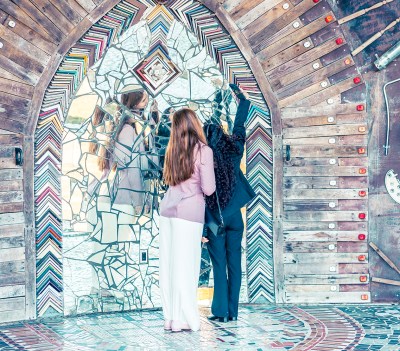
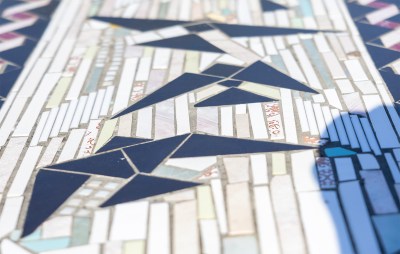
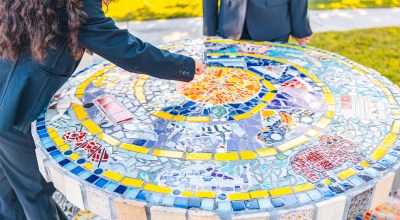
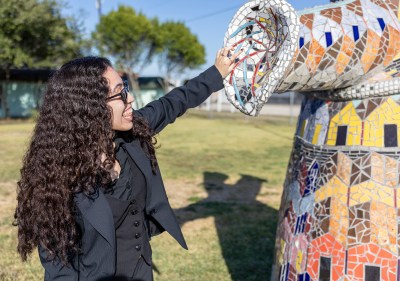
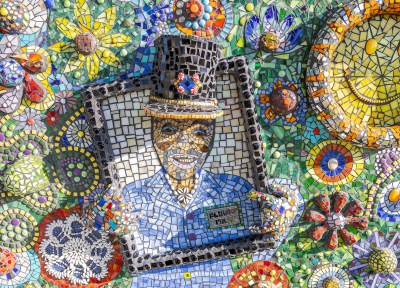
While Houston’s larger parks receive a lot of attention, Smither Park is a gem. Designed by former SHSU professor Dan Phillips, Smither Park reflects the designer’s beliefs in organic processes. “Through the use of color and composition,” Phillips once told a LEAP group on a tour, “you employ repetition to create a pattern, and soon you’ve created art.”
The art was on display throughout the Park, and the students enjoyed the process of finding art in each station, pathway, and niche.
Each student had their own favorite, but simply seeing the creativity of the designs (did you know a spatula could be a dragonfly wing?) was part of the wonder of the experience.
Indeed, it was the majority of the student’s favorite event of the day.
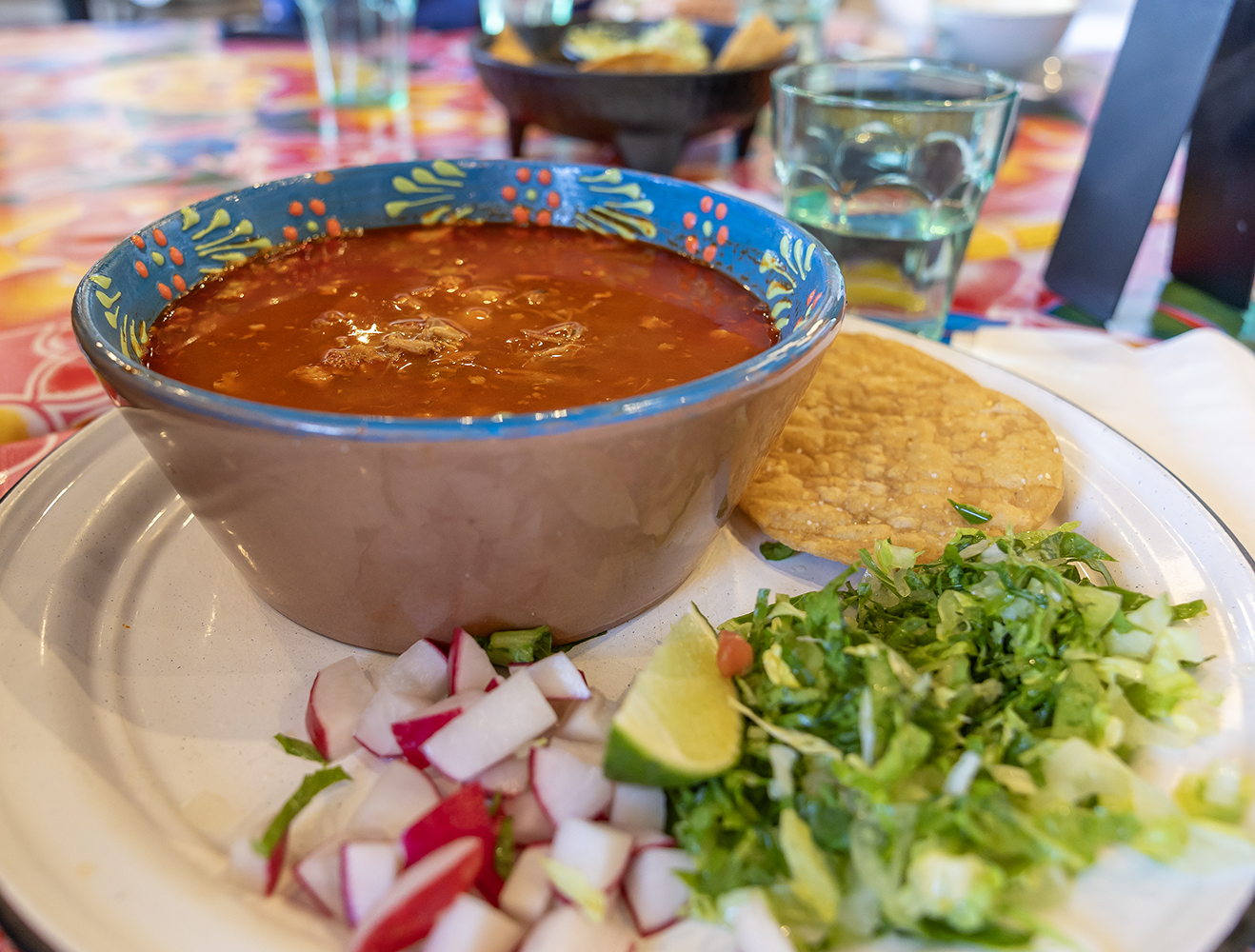
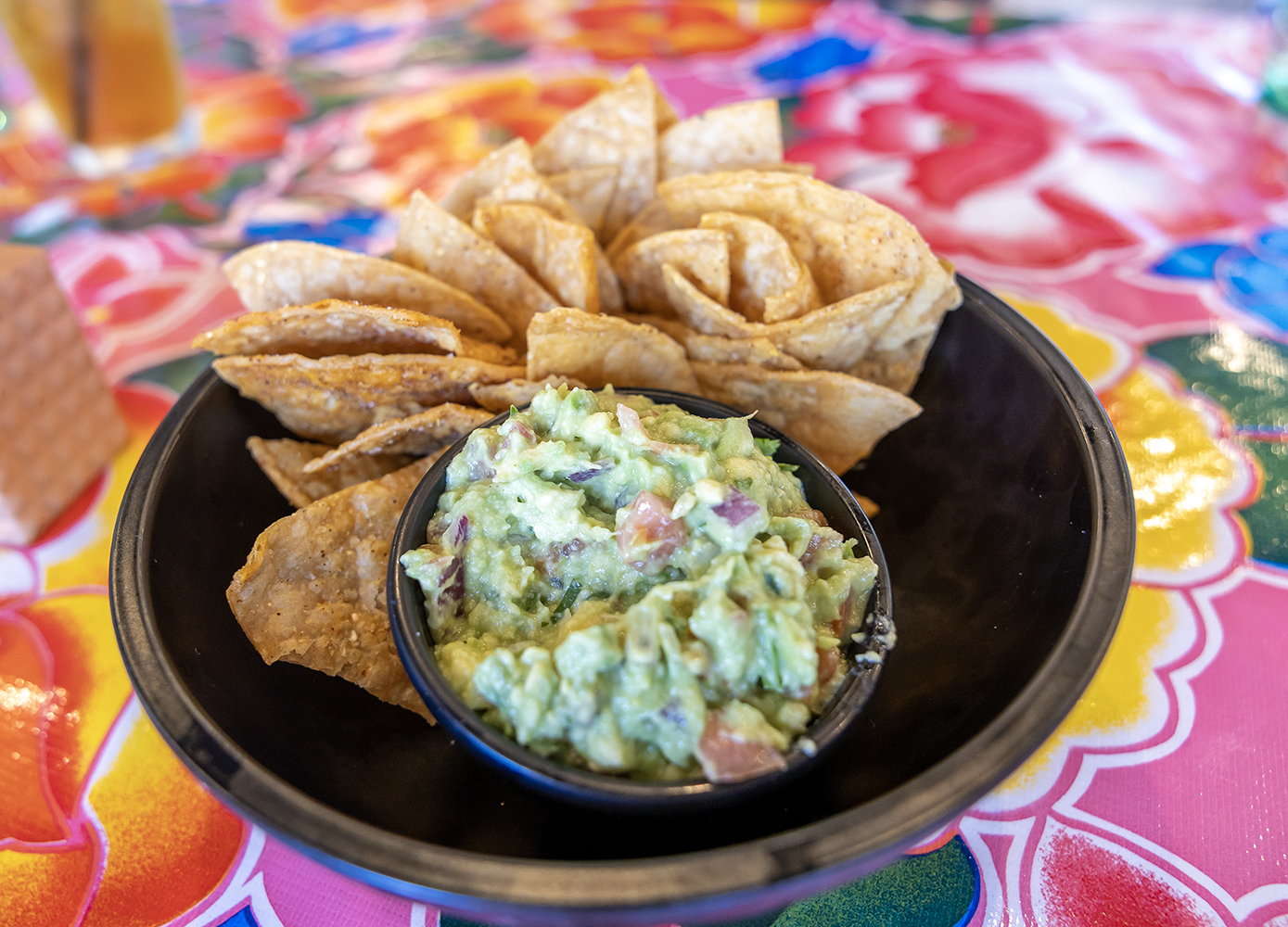
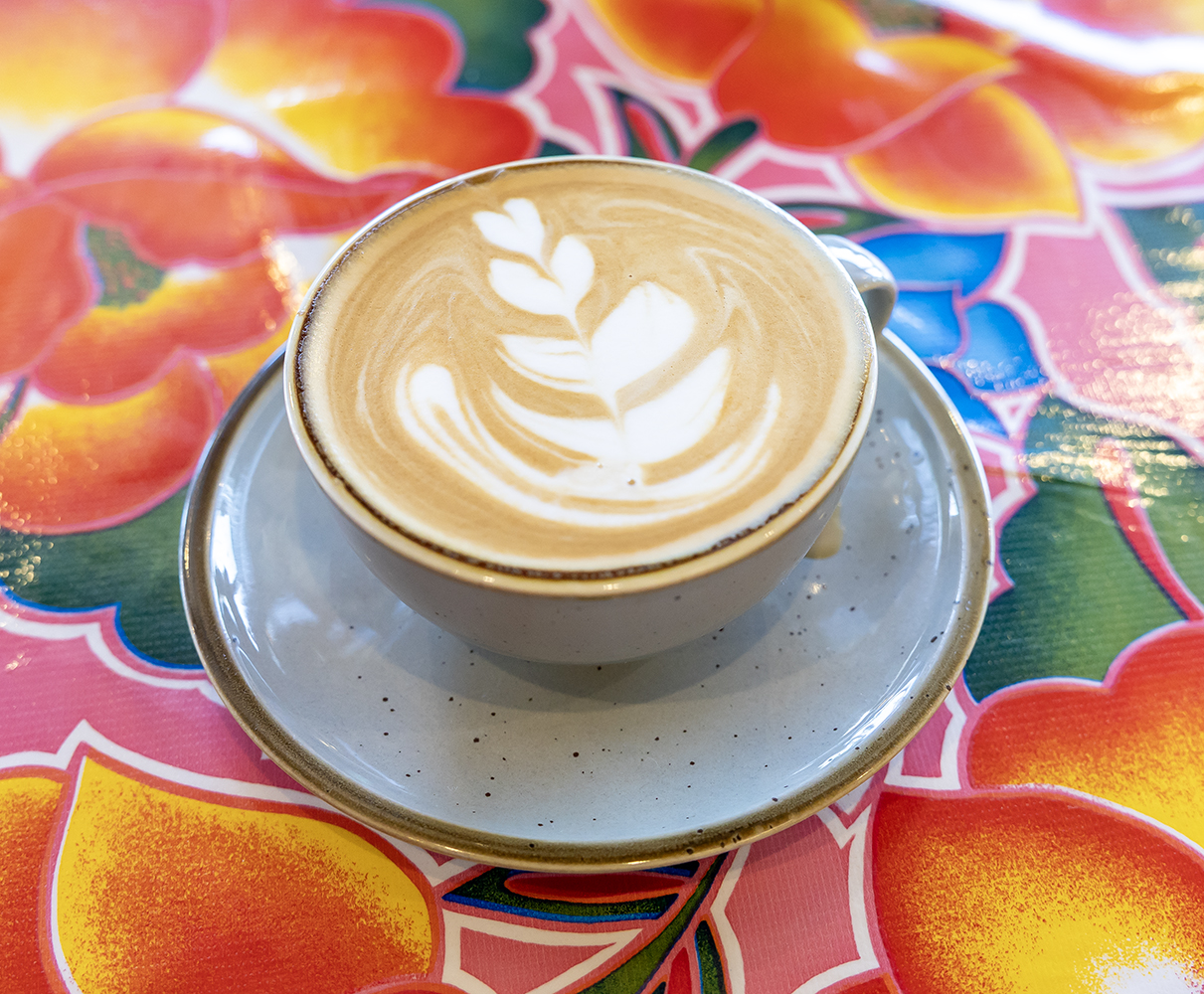
Houston is gaining a reputation for its food scene, and one of the places receiving more than its share of notices is Cochinita & Co., whose chef, Victoria Elizondo, has twice been named a James Beard semi-finalist. The attentive staff–we were recognized upon entering (“Is this SHSU’s group of Pre-Law students?”)–helped us with menu selections. Mikaela went with vegan tacos; Professor Yawn went with the Cochinita Pibil tacos; Moya went with chicken tacos; Sofia went with the excellent Posole; and Katie, needing a pick-me-up, had a Latte with her lunch. We all tried the elote and guacamole, and Mikaela got some pastries to go (allegedly to “share” with her family).
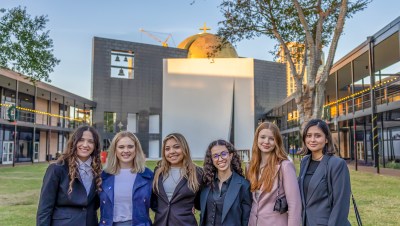
Fortified by food, we ventured into the world of architecture, stopping by The University of St. Thomas, where we visited Philip Johnson’s Academic Mall and Chapel of St. Basil. Johnson’s most notable Houston works are the ones that dot the skyline, but few are as beautiful or as textured as his Chapel. Composed of a Cube, several planes, and a sphere and adorned with rectangles, a triangle, and crosses, the structure is a visual and spiritual delight.
While we each explored the various aspects of the space, we tried to capture some of its magic through photography. Our efforts, however, didn’t quite capture the essence of the structure in the same way we did on our 2024 visit.
Part of the spirit of LEAP is to mix in new explorations while revisiting the seemingly familiar, only to find that return visits allow us to see with new eyes, a reflection of continued growth, an ongoing sense of wonder, and the promise of new possibilities.
With limited resources, LEAP layers its activities, making the most of each opportunity. Accordingly, when a learning activity took students to Houston, LEAP students sought out new experiences.
On the way to Houston, we stopped at SHSU’s College of Osteopathic Medicine in Conroe, where we introduced some of our newer students to alum James Surls. Not in person–but through his art. His work, “Pitcher with Flowers,” was designed in 2014, and it was installed at the College of Osteopathic Medicine in early 2020.
The vase with flowers, according to Surls, represents giving “life to new growth,” and, accordingly, was “perfect for the site.” It was also, we thought, a perfect introduction of Surls’ work to students who might not have gone out of their way to explore art.
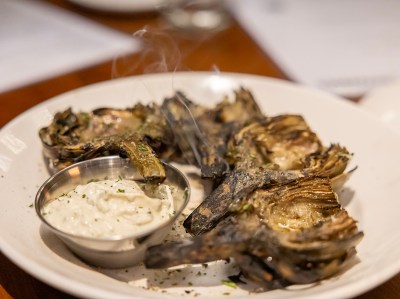
We took the same approach to food. We stopped at J.Alexander’s, which serves a wide and rich variety of food. We tried a lot of it! We began with smoked salmon, avocado bombs, and artichokes.
It was Ashton’s first time to try salmon, and for several of the students, it was the first time to try artichokes.
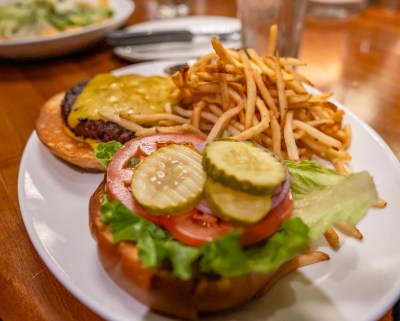
The entrees ranged from the basic (burgers and salad)…
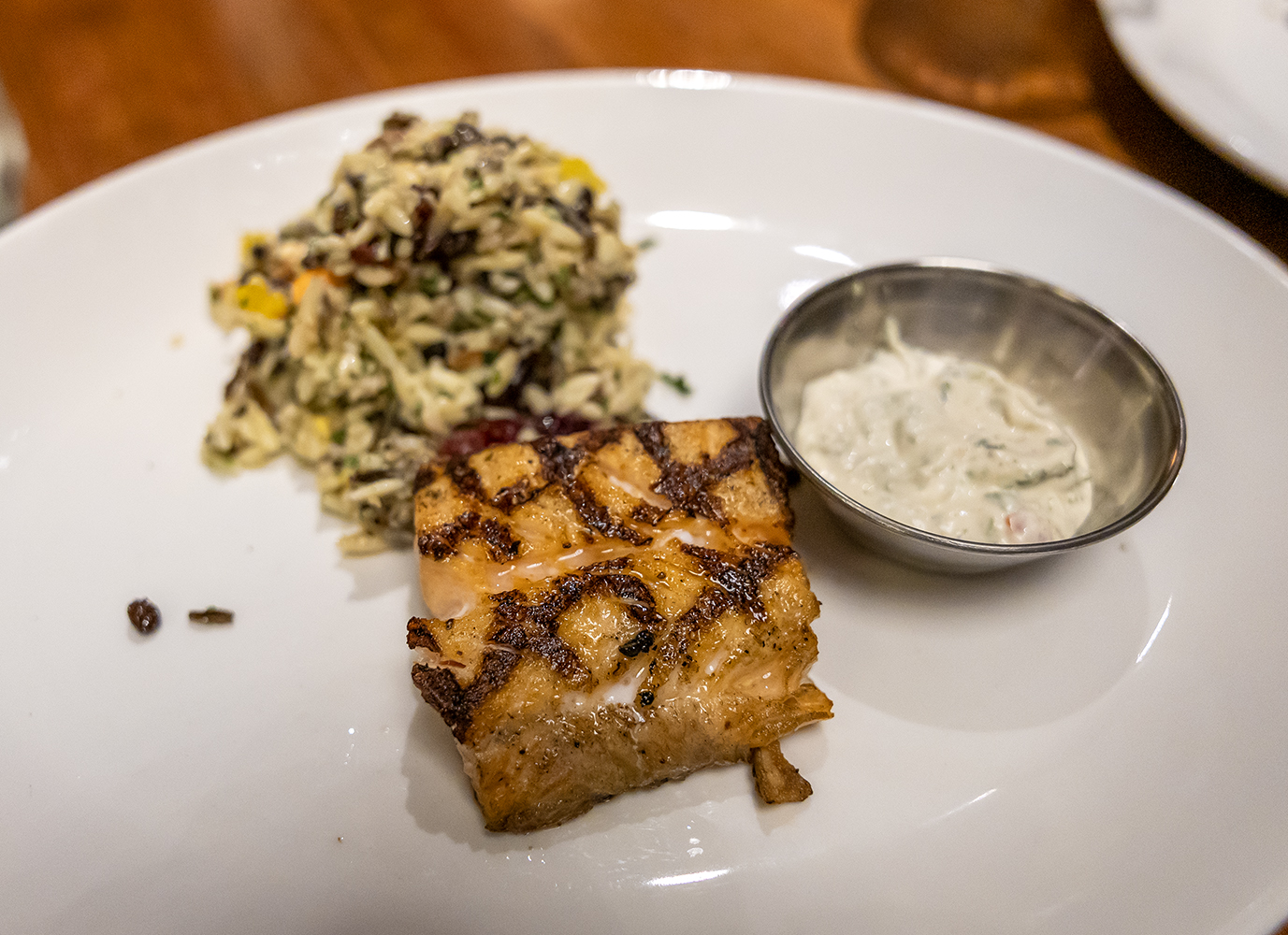
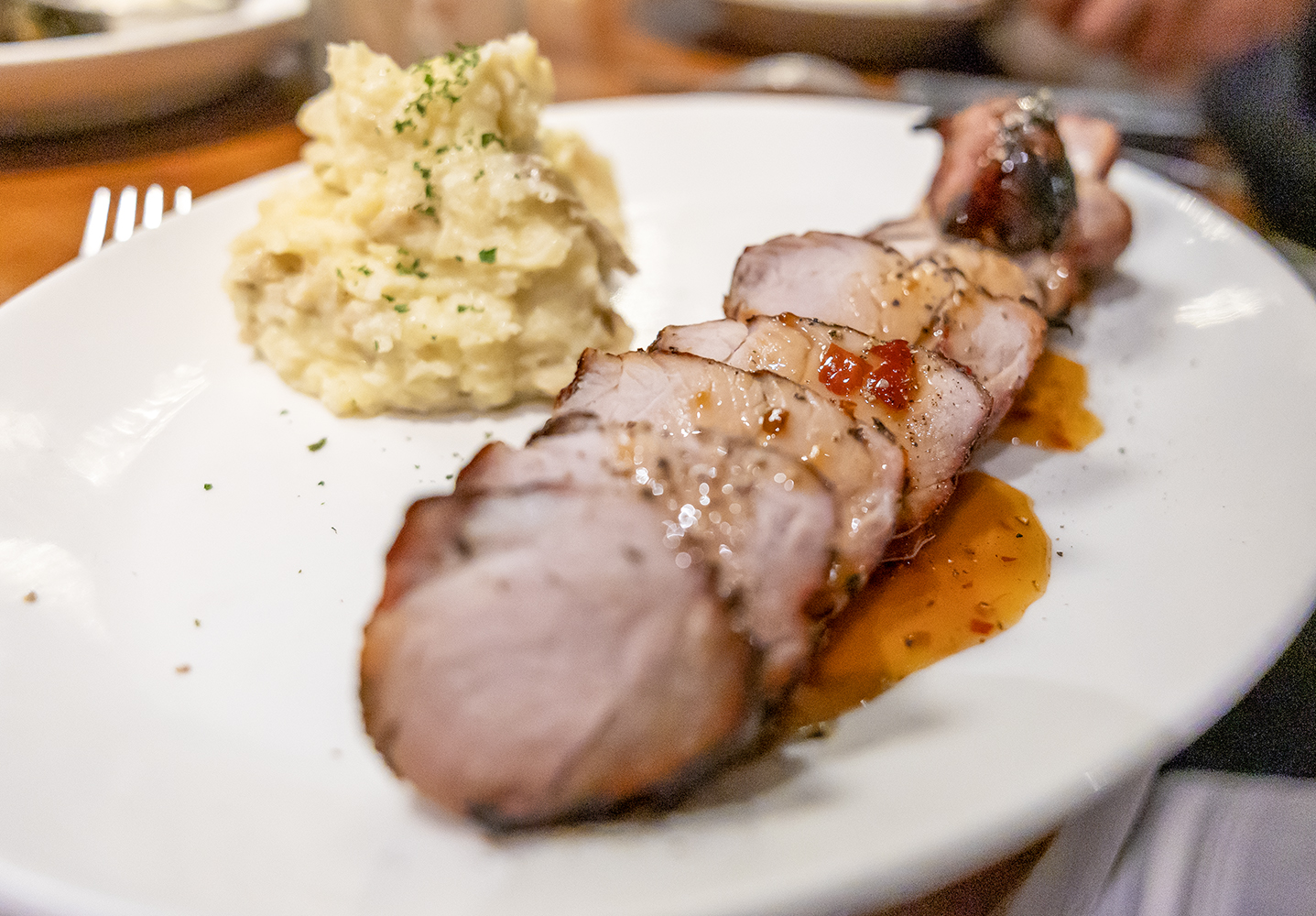
to the moderately interesting–salmon, crab cakes, and pork tenderloin.
In typical LEAP fashion, we sampled from each other’s plates, and this led to Ashton discovering a third dish she had never tried before: crab cakes. It was also her favorite!
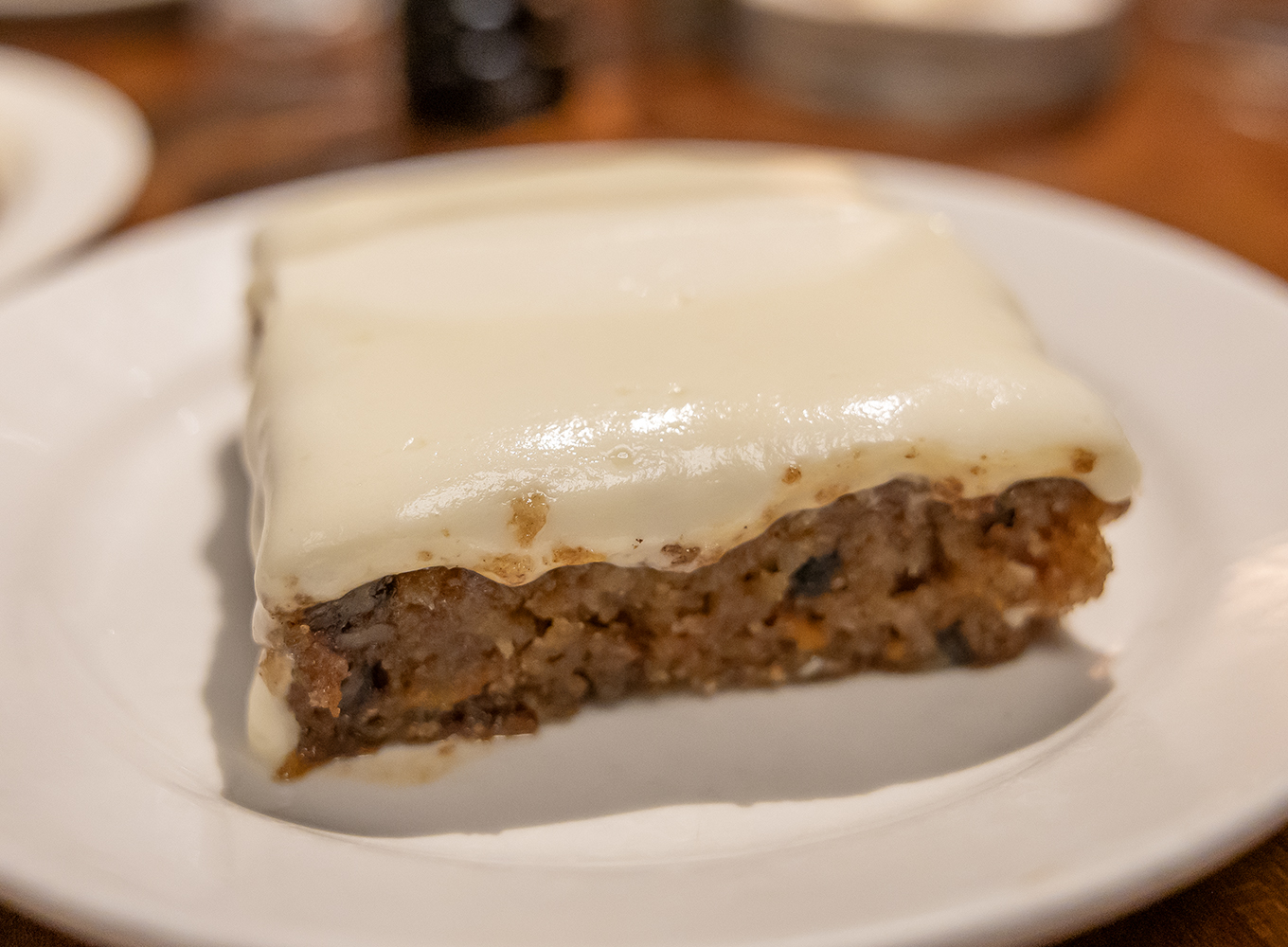
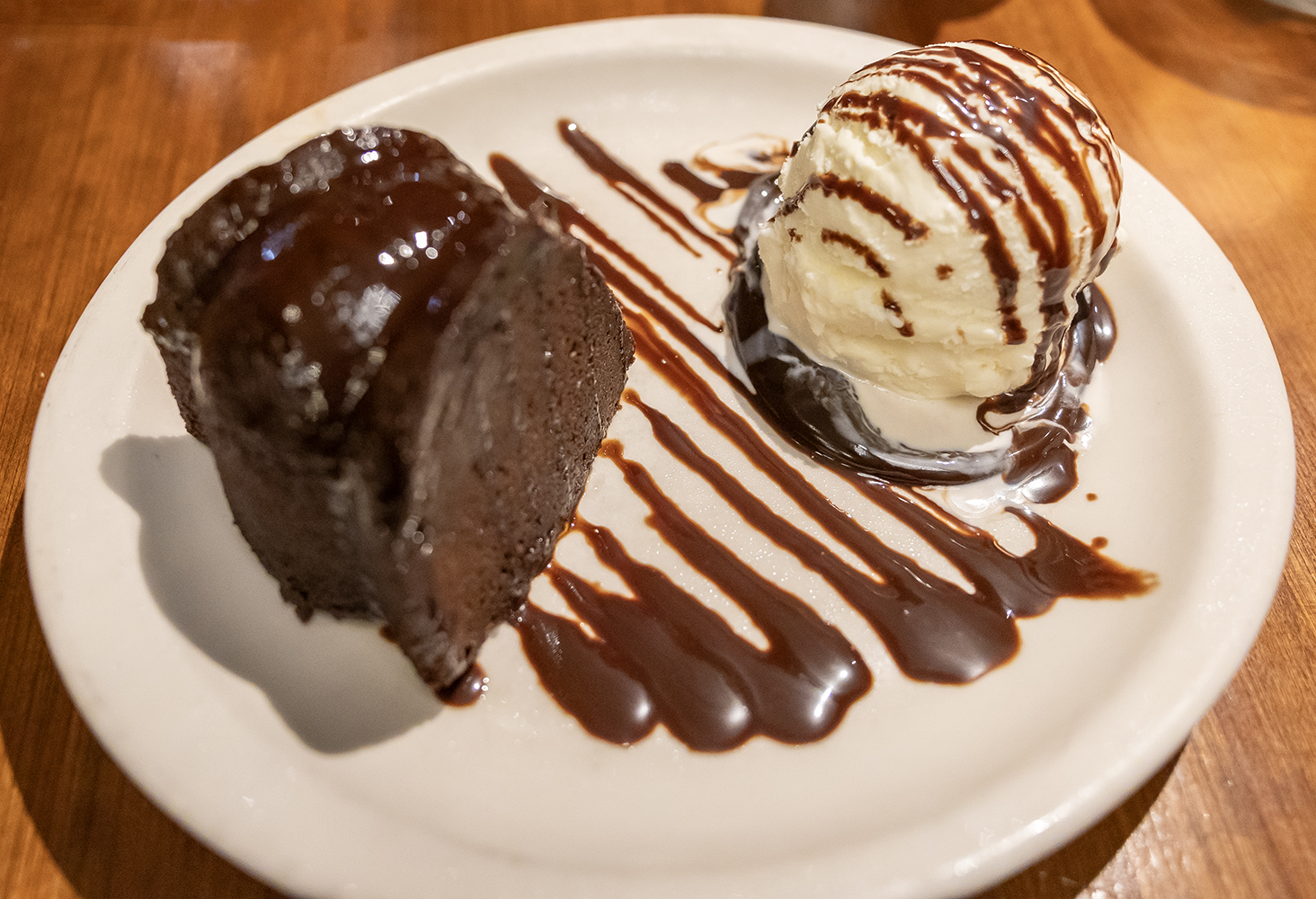
Perhaps the favorite course was the dessert, which featured carrot cake (favorites of Michelle and Mike), chocolate cake (Ashton’s favorite), peanut butter pie, and Key Lime pie.
It was a wonderful outing, complemented by the opportunity to try new foods, discuss our experiences at Sam Houston State University, and get to know one another better.
When LEAP Ambassadors have the opportunity to travel, they follow a process that is in line with their approach to education: prepare, experience, and reflect–sometimes called the P.E.R. model. In this manner, the Center promotes learning, while also providing the flexibility and individual discretion to have fun and find their experiences personally rewarding.
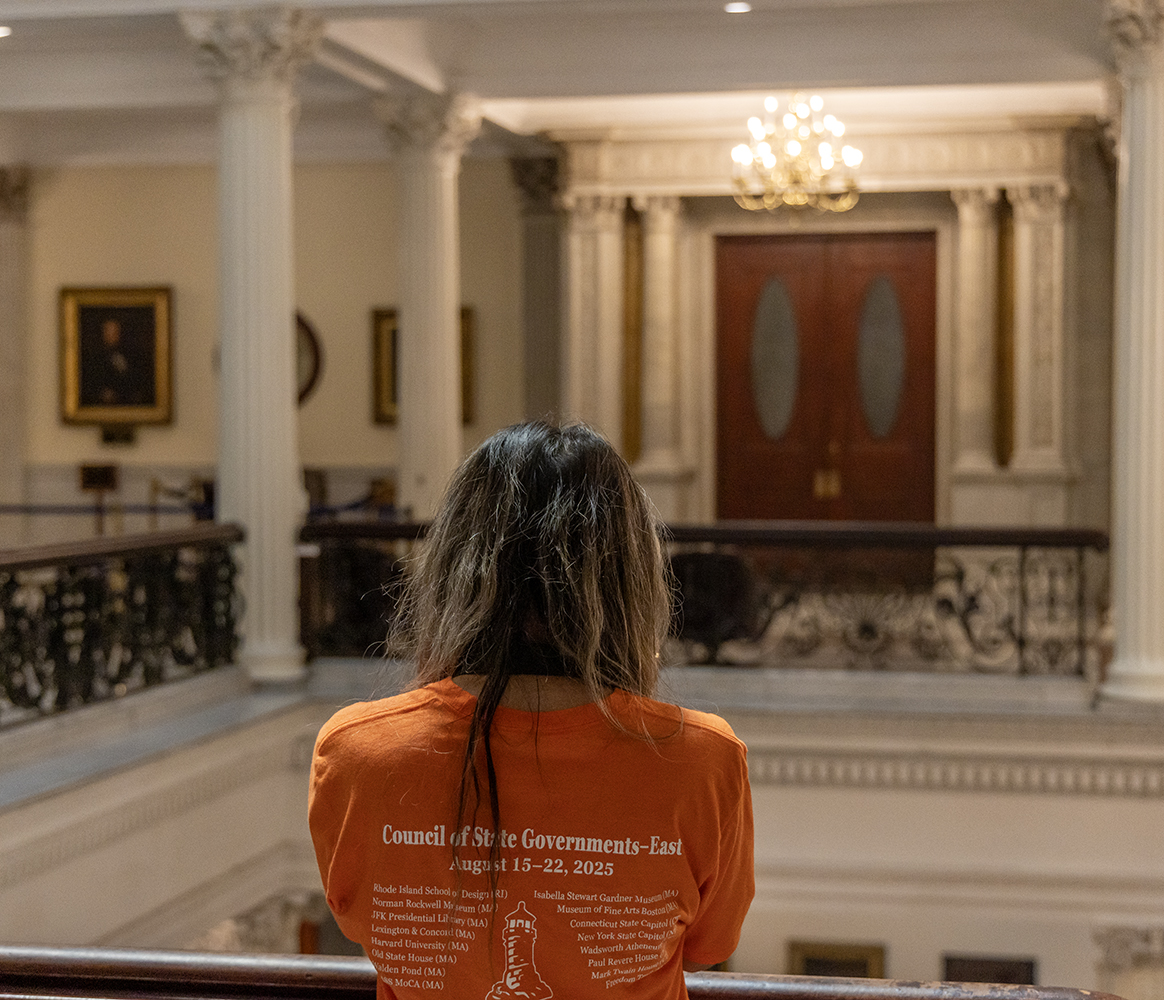
In advance of the students’ participation in the Council of State Governments Conference, they prepared by doing various levels of research on the many sites, people, and locations they would explore. For the students, this also involves research the sites, the costs, allocating their own funds, and creating the trip-themed t-shirt.
The central aspect of the learning process, however, is the experience, and there were many on this eight-day trip. To help with the refection, the students write blogs such as this one, of course, but they also select their favorite experiences from a trip–like all LEAP travel–that involved much diversity in experiences, perspectives, and geography.
Restaurants
The overwhelming favorite among restaurants was Boston’s ‘Fox & the Knife,” which is no surprise in that Chef Karen Akunowicz won the “Best Chef: Northeast,” in 2018. The service was impeccable, and the food was even better, with the Carne Cruda Crostini and the Tagliatelle Bolognese standing out as favorites, with the fried chickpeas as a surprise favorite snack.
Another favorite was Track 15 in Providence, Rhode Island, a refurbished railroad station with half a dozen restaurant choices. We made the most of these, and the combination of the food and the environment made this a favorite.
Art Museum
The clear favorite of the art museums was the Boston Museum of Fine Arts, owing no doubt in part to the Van Gogh exhibit on display when we arrived. The students had a chance to see three different Van Gogh self portraits (Olivia has seen 5-6 or at different museums across the country), a giant piece by Dale Chihuly, and explore some others that became favorites.
Most LEAP Ambassadors come into the program with little knowledge of art, and with varying degrees of art affinity. Olivia came in with a love of art, but with very little experience visiting museums. She had only visited one museum in her life–a science museum–and she has now visited approximately 80 museums across 18 states, all of which she visited on LEAP trips.
Favorite ArtPieces
A favorite among both Michelle and Olivia was Rodin’s “Eternal Springtime,” on display at the Boston Museum of Fine Arts. Interestingly, Olivia was exposed to this at both the Metropolitan Museum of Art in NYC and the High Museum of Art in Atlanta, GA, making this her third viewing of a version of this sculpture.
Another favorite was Thomas Cole’s “Expulsion from the Garden of Eden,” a good example of the Hudson River School–appropriate, since we crossed the Hudson River on this trip!
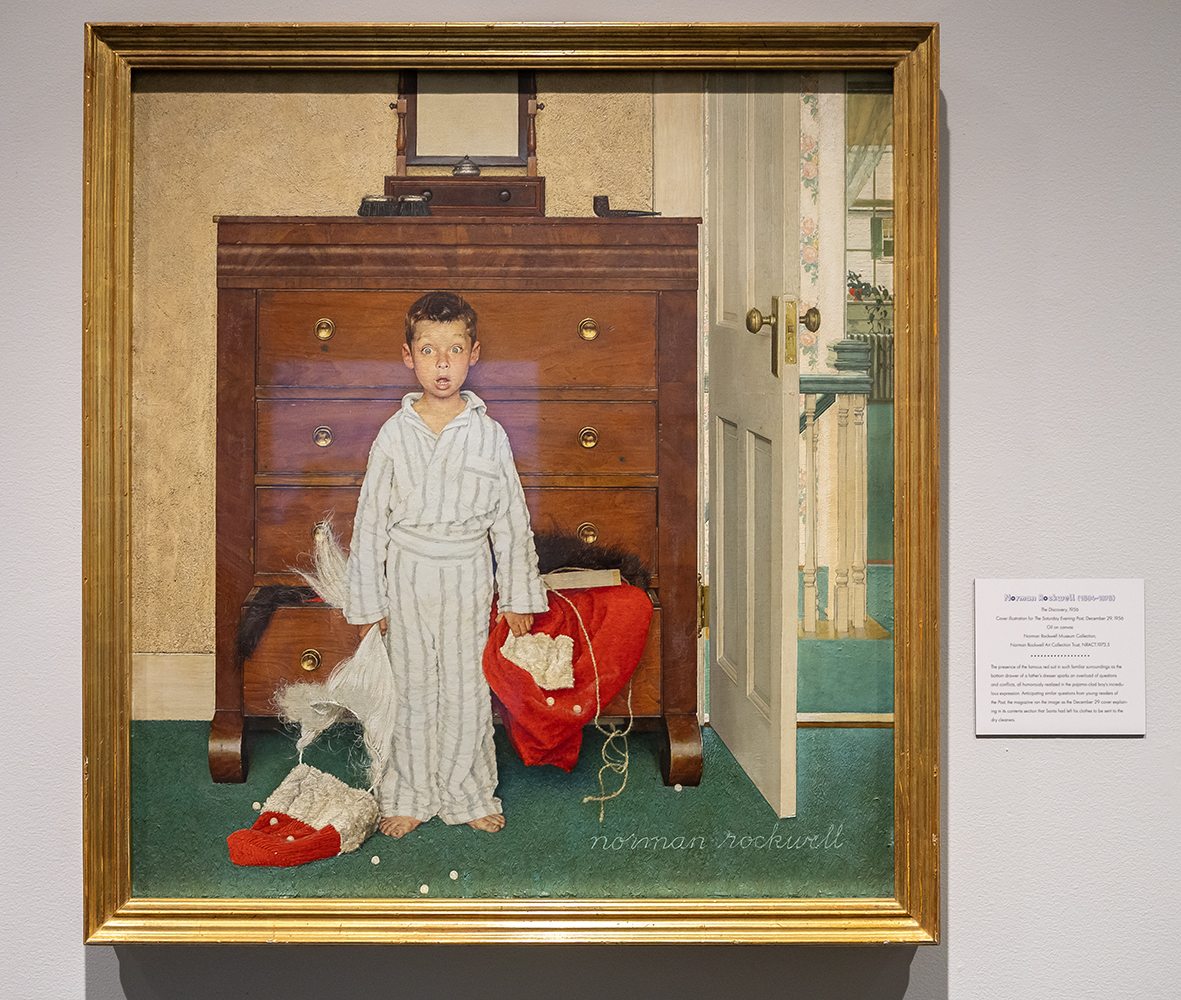
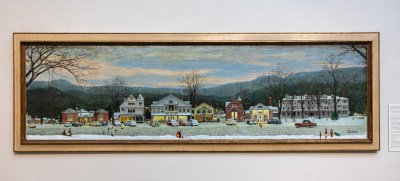
And of course, there were some “comfort favorites” from the Norman Rockwell Museum, including a rendering of Stockbridge, MA, where we stayed; his famous self-portrait; “Freedom from Want,” a copy of which hangs in Huntsville’s Wynne Home Arts Center; and “New Kids in the Neighborhood,” by Norman Rockwell.
Literary Sites
New England is rich in literary landmarks, and Ambassadors carefully planned their travel maximize their exposure to such sites. While many of these involved mere photo ops, they were able to see the homes of Herman Melville, Edith Wharton, Ralph Waldo Emerson, and Mark Twain, while also seeing the graves of Nathaniel Hawthorne, Henry David Thoreau, Emerson, and Louisa May Alcott–not to mention Thoreau’s cabin and Walden Pond!
But the favorite literary site of the trip was Mark Twain’s Hartford home.
Our enthusiastic tour guide (Josh), the home’s beauty, and the monumental stature of Mark Twain separated this site from the others we visited.
State Capitols
As students of political science, the Ambassadors made a point of visiting the capitols of the states they were in: Massachusetts, Rhode Island, Connecticut, and New York. While it’s perhaps not fair to compare (we didn’t receive full tours of all; some were self tours), the overwhelming favorite was the Rhode Island Capitol building.
Our tour guide, Tony was very knowledgeable, and when a special tour arrived, other staff from the tour office came in to relieve Tony, showing us the Museum portion of the capitol. It was a beautiful building, well complemented by the tour, and we believed, a microcosm of the state’s beauty and interesting history.
Favorite Activities
When the students weren’t engaged in conference activities or scheduled tours, they made time for additional fun and educational activities. Their favorites among these including touring the Breakers and Rosecliff (students were split on their favorite).
Of course, when Parasailing in the Atlantic Ocean is one of your activities, it is likely to be a favorite. It was both students’ first time to parasail, and it was Olivia’s first time on a boat!
They made the most of it!
Concluding Thoughts
“They made the most of it,” might just be the best phrase for capturing LEAP Ambassadors’ approach to their college education. These trips can be difficult, involving much preparation, many activities, a lot of writing, photography, and both writing and photo editing, but this is the work that goes into making the travel rewarding.
This program, however, only works with the help of generous donors and a small group of bright, motivated, and civic-minded students who are truly interested in “making the most of it.”
Introduction Our trip through New England and New York was as much a journey through art and history as it was through towns and landscapes. We ended the day in the capitol (Albany) of one of the largest states in the Union, but we began it in the Rockwellian cottage of Stockbridge, MA–the home town of Norman Rockwell.
LEAP Ambassadors at City Hall
Norman Rockwell Museum
By Michelle Moya
For our first stop in Stockbridge, we visited the Norman Rockwell Museum. Before the trip, I had watched a documentary on Rockwell’s life and career, which gave me a deeper appreciation for what we were about to see. It traced his progression from lighthearted Saturday Evening Post covers to later works that confronted civil rights and human rights, and it gave me a better foundation for understanding the galleries.
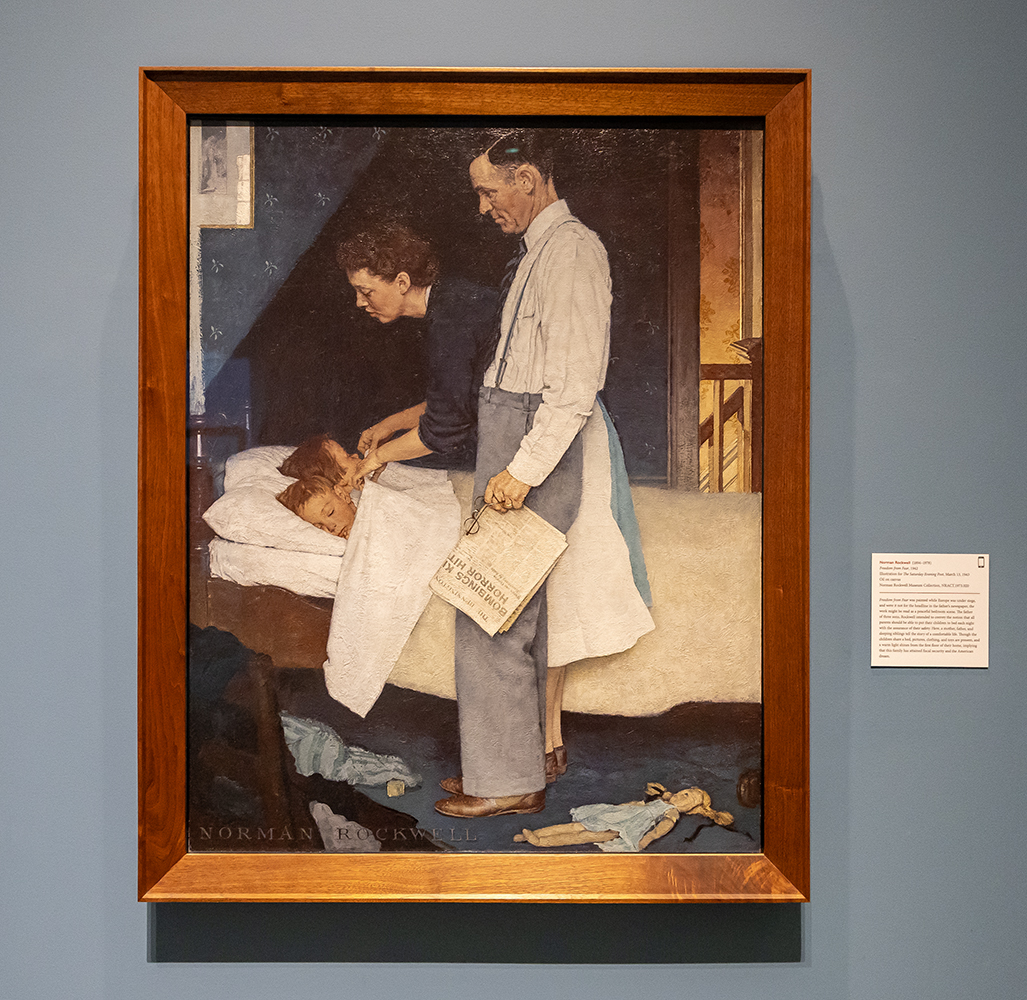
The museum’s collection highlights Rockwell’s most iconic pieces, including the Four Freedoms series. Inspired by Franklin D. Roosevelt’s 1941 speech, these four paintings—Freedom of Speech, Freedom from Want, Freedom to Worship, and Freedom from Fear—remain some of his most recognizable works. Each takes a sweeping political idea and places it in the context of everyday life.
Freedom of Speech shows an ordinary man rising to speak at a town meeting, who appears to have a modest jacket and steady expression. Freedom from Want was Olivia’s favorite: the Thanksgiving turkey at the center of the table, family gathered in warmth and abundance. Freedom to Worship and Freedom from Fear are quieter but equally moving, offering a reminder of how Rockwell could find dignity in ordinary moments.
My own favorite was Main Street, Stockbridge at Christmas, Rockwell’s portrait of his hometown blanketed in snow and glowing with holiday lights. It is a beautiful painting, and as someone who loves Christmas, I couldn’t help but imagine what it would be like to actually visit Stockbridge during the season. It captures Rockwell at his most nostalgic, and it made me want to see the town in person during my favorite holiday.
Some of Rockwell’s later and more serious work also stood out. The Problem We All Live With, sometimes called his “Board of Education” painting, shows six-year-old Ruby Bridges walking to school, escorted by U.S. Marshals. The white wall behind her, scrawled with a racial slur and marked by a thrown tomato, makes the scene even more striking.
There were lighter touches as well. The museum includes some of Rockwell’s early commercial work, such as advertisements for Edison Mazda Lamps published in The Saturday Evening Post. These remind visitors that Rockwell was as much an illustrator as a painter, and that his storytelling instincts carried across everything he created.
A special highlight was the I Spy exhibition by Walter Wick, whose intricate dioramas and search-and-find photographs were a fun, interactive touch for children and adults. The exhibit encouraged visitors to slow down and look closely, much like Rockwell’s paintings.
It was interesting to see how the Norman Rockwell Museum fully captures the range of his career. In one place, you can see the playful, the iconic, and the deeply serious. Between Olivia’s favorite “Freedom from Want” and my own liking to “Main Street, Stockbridge at Christmas,” it was clear how Rockwell continues to connect with people in different ways.
Mass MoCA
by Olivia Discon
Our final (pure) art stop of the trip was Mass MoCA (Massachusetts Museum of Contemporary Art), a museum housed in a former industrial complex that has been repurposed into one of the largest centers for contemporary art in the country.
The building itself is a bit of a maze (ed. note: she got lost), but that only added to the fun of exploring it.
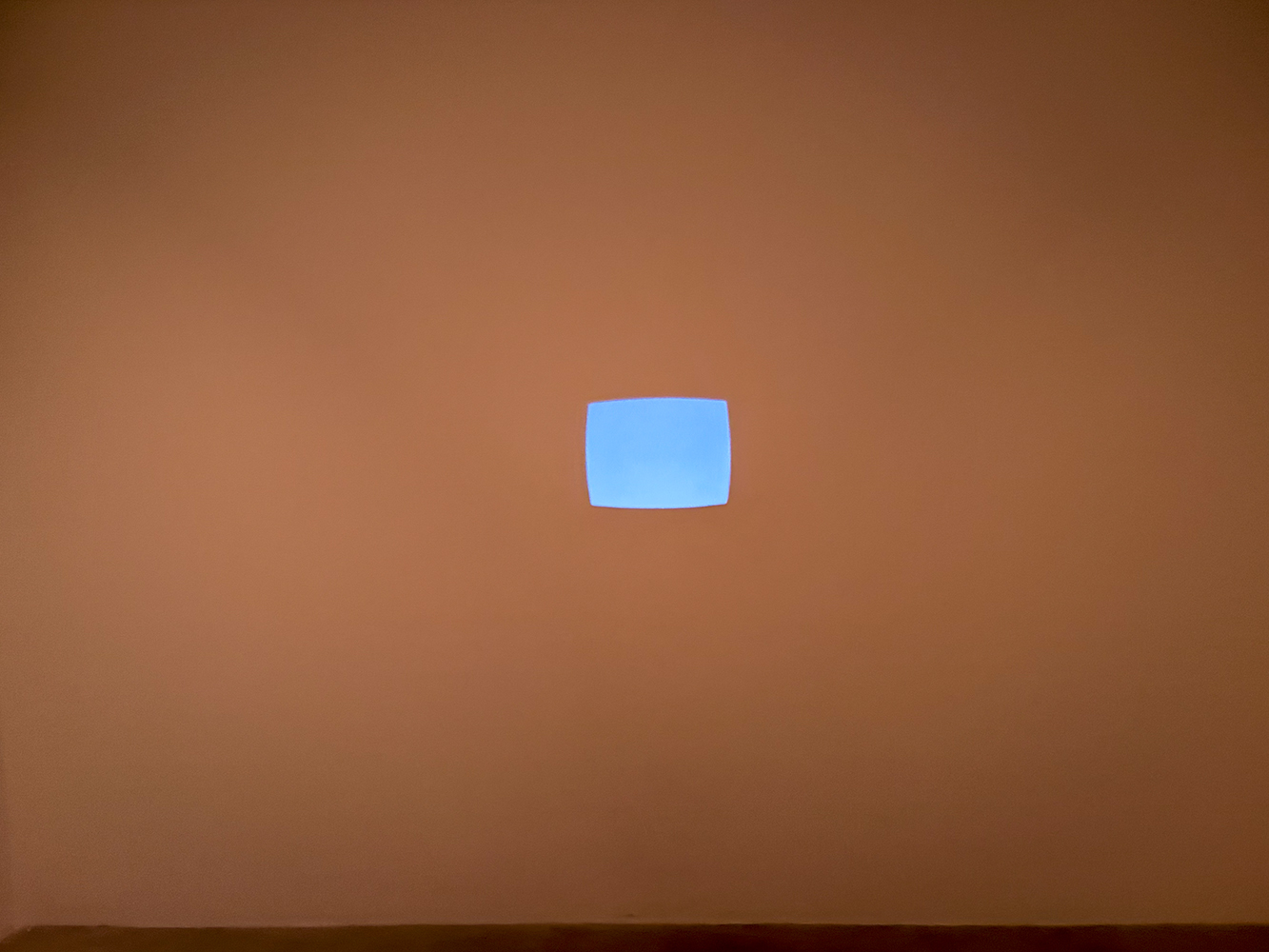
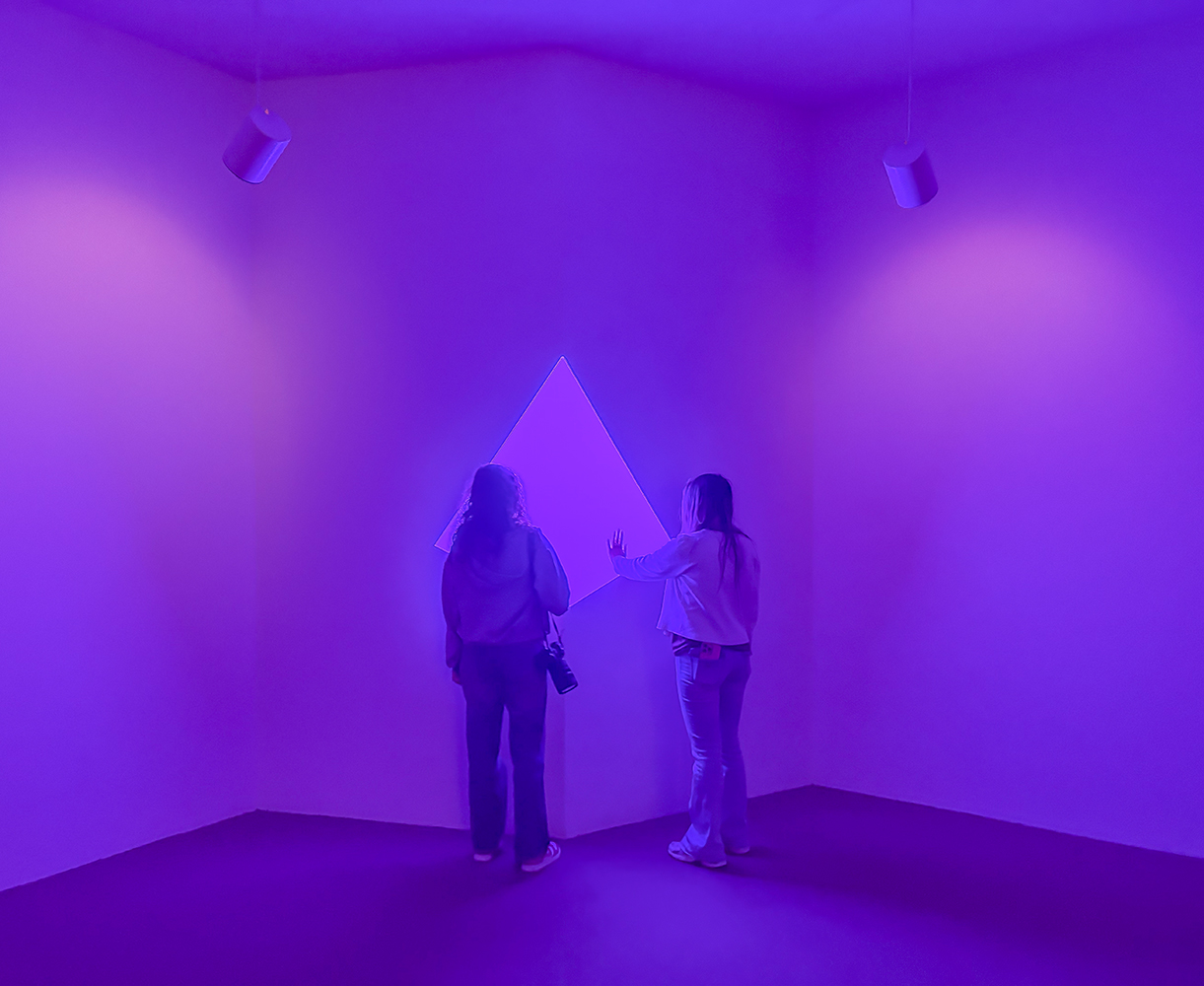
We started with James Turrell’s Roden Crater-inspired exhibit, which featured several surreal experiences centered on light and perception. One room, completely blacked out, challenged visitors to sit in total darkness for 15 minutes. While Professor Yawn and Stephanie lasted the full time, Moya and I called it quits after approximately eight minutes. In the silence, I started to see faint colors—likely just the brain reacting like when you rub your eyes too hard—but still interesting.
Other Turrell works played with color and depth perception.
One installation allowed us to walk into what looked like a glowing square of color—an endless void of pinks, greens, and yellows.
We also stepped into one of his classic Skyspaces, where the ceiling frames the sky in a way that turns shifting clouds and colors into living art.
Beyond Turrell, the museum offered much more. Louise Bourgeois’s exhibit was a highlight for me, especially her piece Entangled, which captured so much emotion through abstract form.
Sol LeWitt’s sprawling wall drawings filled a labyrinthine gallery with bold patterns in both black-and-white and vibrant colors.
We even wandered into a “music room” filled with instruments past their prime—though that didn’t stop us from making enough noise to temporarily damage our own hearing.
Mass MoCA was a perfect way to end the art portion of our trip: immersive, challenging, and just plain fun.
New York State Capitol
by Olivia Discon
For our final state of the trip, we made our way up to New York. Driving past the Hudson River on the way into Albany felt especially fitting, since the river inspired the Hudson River School painters and many transcendentalist writers, both of which we’ve touched on during this trip.
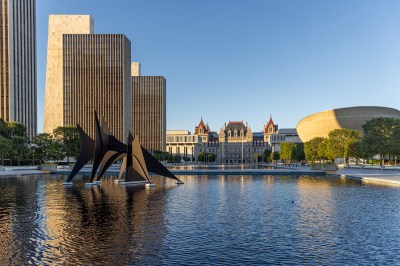
Our last stop was the New York State Capitol, one of only nine state capitols without a dome. Built over more than three decades and designed by multiple architects, the building makes up for its lack of dome with incredible stonework and elaborate detail. The grand staircase was particularly striking, lit by lamps with exposed bulbs, a symbol of modernity in its time.
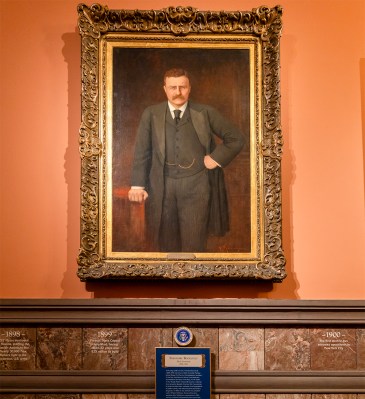
Although the House and Senate chambers were closed, we managed to peek through the glass doors. The stained glass in the Assembly chamber stood out as especially beautiful, making it one of my favorite legislative chambers we’ve seen so far. The Capitol also houses the Hall of Governors, a portrait gallery of past governors—including four who went on to serve as U.S. presidents.
Art is woven throughout the building as well. We saw numerous New York landscapes and scenes…
…along with modern sculptures outside in the Empire State Plaza. Among the recognizable artists were George Rickey, Alexander Calder…
Claes Oldenburg….
…and Ellsworth Kelly.
The New York State Capitol was a wonderful conclusion to our trip. Between the history, the architecture, and the art, it was a reminder of how much one place can tell us about both state and national identity.
Concluding Thoughts
Taken together, the Norman Rockwell Museum, Mass MoCA, and the New York State Capitol highlighted the remarkable range of American creativity and civic expression.
Rockwell’s art reminded us of the power of storytelling in everyday life, while Mass MoCA challenged us to step outside the familiar and embrace new ways of seeing.
The New York State Capitol, with its blend of politics, history, and art, grounded the trip in the institutions that shape public life.
Each stop added its own layer to our journey, leaving us with a deeper appreciation for how art and architecture reflect the spirit of their time—and continue to inspire today.
It was a day to remember: we had already luxuriated in the extravagance of the Newport Mansions; enjoyed the sun, the wind, and the rush of parasailing. And still we had much to do. We wanted to spend a little time on the beach on Aquindeck Island, seeing wildlife and enjoying the coastal breeze; trying some of Rhode Island’s tastier dinner spots; and witnessing first-hand the famed installation art Waterfire.
Aquindeck Island
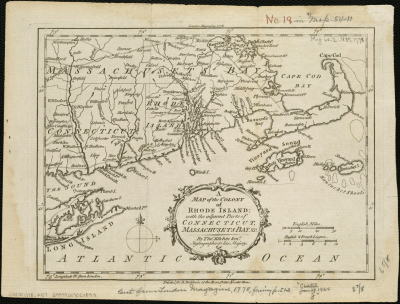
You might be forgiven if you think that Rhode Island is surrounded by water. That is, after all, the definition of an island. But the state of Rhode Island isn’t an island. Originally, Rhode Island consisted of settlements such as Newport and Portsmouth, which are, in fact, on an island, plus the territory on the mainland (Providence). This, then, is the Rhode Island in the State’s name, which was technically, “Rhode Island and the Providence Plantations.”
No one, however, used the full name of the island. Still, the State stuck with “Rhode Island and the Providence Plantations” for some 300 years, only changing its name officially in 2020.
Nonetheless, Rhode Islanders do have quick access to the shore; in fact, by our calculations, everyone in the state can get to the ocean or a bay in less than 35 minutes. It may not be an island, but it can fairly call itself “The Ocean State.”
Accordingly, as part of our Rhode Island explorations, we spent considerable time alternating between land and sea–and, as we noted in our prior blog, the air.
But we also wanted a closer, more tactile feel of the Rhode Island Coastline. So we drove along Ocean Drive, walking on the rocks; traipsing along the shore, where the wet waves tickled our feet; and overall gaining a different sensory perspective of Rhode Island.
We saw more evidence of the wealth that populates the coastline…
…and we observed and listened to some of the coastal wildlife.
It was, as the photos attest, a very different experience than the beaches with which we were familiar (e.g., Galveston).
All this touring, parasailing, beachcombing, and wildlife watching helped us build up a hunger, which made (most of) us think of seafood. To that end, we researched restaurants en route to our evening conference destination, and we found Track 15, a food court on the river.
Track 15
What kind of dining establishment, you ask, is named “Track 15?” In this case, it is a dining destination at the former Union Station (1898), which housed 14 separate railroad tracks. The food court, then, is an extension of a key transportation hub in Providence’s history, the 15th Track.
The 15th Track doubles as a “third place,” a place that brings people together while also allowing the past and present to intermingle. The restaurants are adjacent to Providence’s Waterplace Park, an urban park where the land and sea merge and people gather, coming together. Even the experience of dining is reimagined, bringing the past to the present: some of the eating establishments offer menus in the shape of arrival/departure boards of the old railroad stations; and the table tops on which we and others ate were made from wood recycled from the old rail cars.
True to Rhode Island’s proximity to the sea, we enjoyed an excellent (small) seafood platter (clams, mussels and shrimp), fish, and a lobster roll.
But we mixed it up a bit, and we also tried some pasta; true to the spirit of being in a former transportation hub, we also wanted some food more common to other places.
The food was excellent. The pasta was hand-rolled and featured subtle flavors that came together just right. The lobster was creamy and fluffy; the fish buttery and flaky; and the seafood platter a surprising variety of flavors: the clams were sweet and light; the mussels more tender and briny; and the oysters clean and less salty than one would imagine.
We also enjoyed the people watching. There is both indoor and outdoor seating, and the latter features games, versatile seating, and alcoves. People played cornhole; mothers danced and laughed with daughters; and others just relaxed and listened, delighting in the nice weather.
Following this enjoyable sensory experience, we ambled on to our next stop, Waterplace Park.
Waterfire
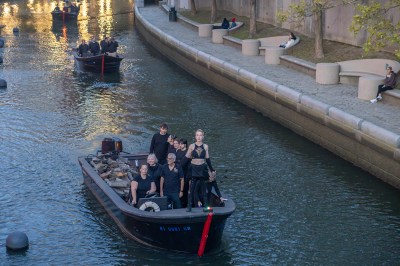
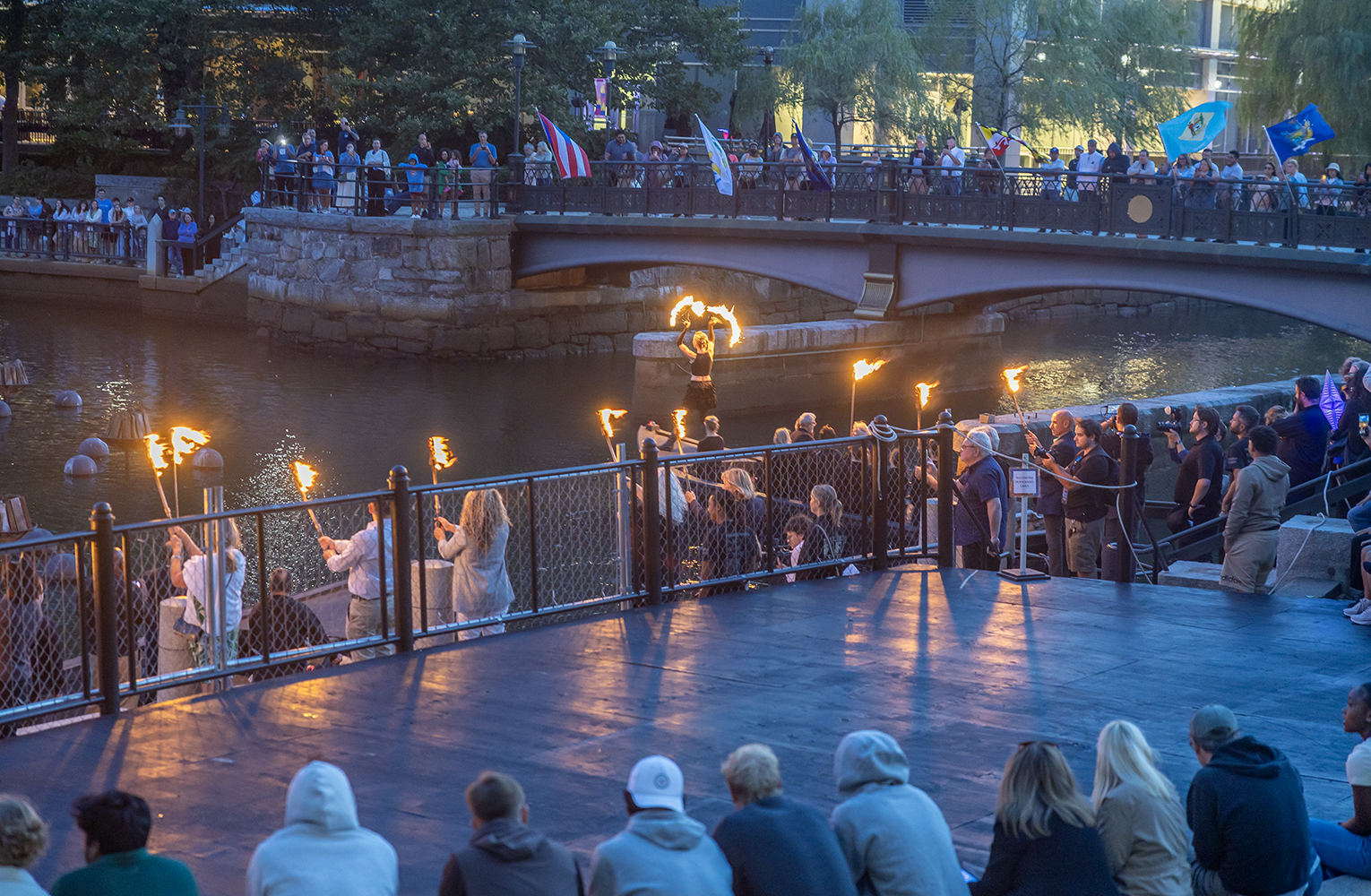
To end our day, we attended a reception in downtown Providence organized for us by the Council of State Governments and operated by WaterFire , a nonprofit dedicated to revitalizing city life through visual and performance art.
We set up stations and split into two groups to capture different photos and videos of the evening. Hundreds of people were in attendance, including legislators, conference participants, local residents, and passersby.
As the crowd filled the beautiful space, the event began with a ceremonial gong. An eclectic playlist emanated from speakers in the park. Myriad musical styles were represented: African, Latino, 60s Rock, Classical, Rap, and Alt-Contemporary. The music was selected consciously, offering a global scope to the ceremony, reflecting the goal of bringing people together.
The installation sculpture incorporates the world’s four elements. humans sit on the earth surrounding the water. The Fire Dancer enters…
…while fire starters and fire tenders light logs on fire, and as the wind sweeps along the river, sparks fly in the air.
Conceived as performance art, the ceremony is multi-sensory: the sound of the music, the touch of the wind and the heat on the skin, the smell of the fire, and, of course, the visual spectacle of a fire coming forth from water.
The event was effective in stimulating our senses, while also playing with our expectations. What we all agreed on was that it was a thought-provoking and interesting event that brought strangers and friends together while highlighting the beauty of Providence, Rhode Island.
It was a sense-sational way to end a full day in Providence, Rhode Island.
It was an excursion day at the conference, where guests had the opportunity to go to Newport, Rhode Island and see some of the Host State’s most intriguing sites. In Rhode Island, this involves a slew of Gilded Age Mansions, and we managed to fit in three separate homes: The Breakers, the Marble House, and Rosecliff.
Newport, Rhode Island has beauty, temperate summers, and its location on a picturesque coastline have made it an ideal location for summer homes for the wealthy. Over the decades, however, not all of the owners’ descendants have wanted to maintain these homes, nor is it easy to find buyers for structures worth, according to recent estimates, 500 million.
Fortunately, the Preservation Society of Newport County purchased many of these homes over the past sixty years, and they have made them available for touring to the general public. For those interested, ticket options include The Breakers + 1 or The Breakers + 2 or specialty tours (e.g., “Under The Breakers Tour”). We opted for The Breakers + 1, with the idea that after seeing the main attraction, we would “breakup” and see different houses (Moya and Discon: Rosecliff; Mike and Stephanie: The Marble House).
The Marble House
The wealthy had lived in Newport prior to the construction of “The Marble House” by William Vanderbilt, but this home was the first of the stone-built mansions that would eventually dot the coastline. An aptly-named structure if ever there was one, the Marble House was designed by Richard Morris Hunt, featured fifty rooms, 140,000 square feet of space, and 500,000 cubic feet of marble.
William Vanderbilt gave it to Alva as a gift for her 39th birthday, which makes you wonder what he would have given to her for, say, her fiftieth birthday. We’ll never know, because she divorced him not long after, and she kept the house.
Done largely in a Beaux-Arts style, the home was unparalleled in opulence when it was completed in 1892. It sits on the Atlantic coast, overlooking the ocean, features two-story Corinthian columns, and its western facade somewhat resembles the White House. With its size and splendor, the home has been the setting for many films and television shows, including The Great Gatsby (1974), 27 Dresses, The Buccaneers, and The Gilded Age.
For those visiting in person, however, the entry is through two doors (with WV on the front) that weigh one-and-a-half tons each, an entry that offers a breath-taking view of the grand staircase.
This two-level room is inspired by both the Palace of Versailles and the Louvre. The banister is wrought iron with bronze gilding, the room gleams with yellow Siena marble, and an eighteenth century mural graces the ceiling, above a gold and crystal chandelier.
Each room offers similarly notable features. The dining room–which was unlike any room we have dined in–showcases a large table with bronze chairs with gold leaf–each weighing seventy-five pounds.
The ceiling decor included game such that might be served for dinner.
The gold room is, as one might expect, predominately gold, but it is accented by green silk drapes (by Prelle) and black.
The most ornate room, however, was the gothic room, which featured Alva Vanderbilt’s collection of medieval art and artifacts, all situated in a room with gothic elements.
By itself, the Marble House offers a class in architecture, interior design, art, history, and excess.
But it is also interesting as a window to an age in which the wealthy competed with each other for even greater conspicuous splendor, which we weren’t sure was even possible until we visited The Breakers.
The Breakers
by Olivia Discon
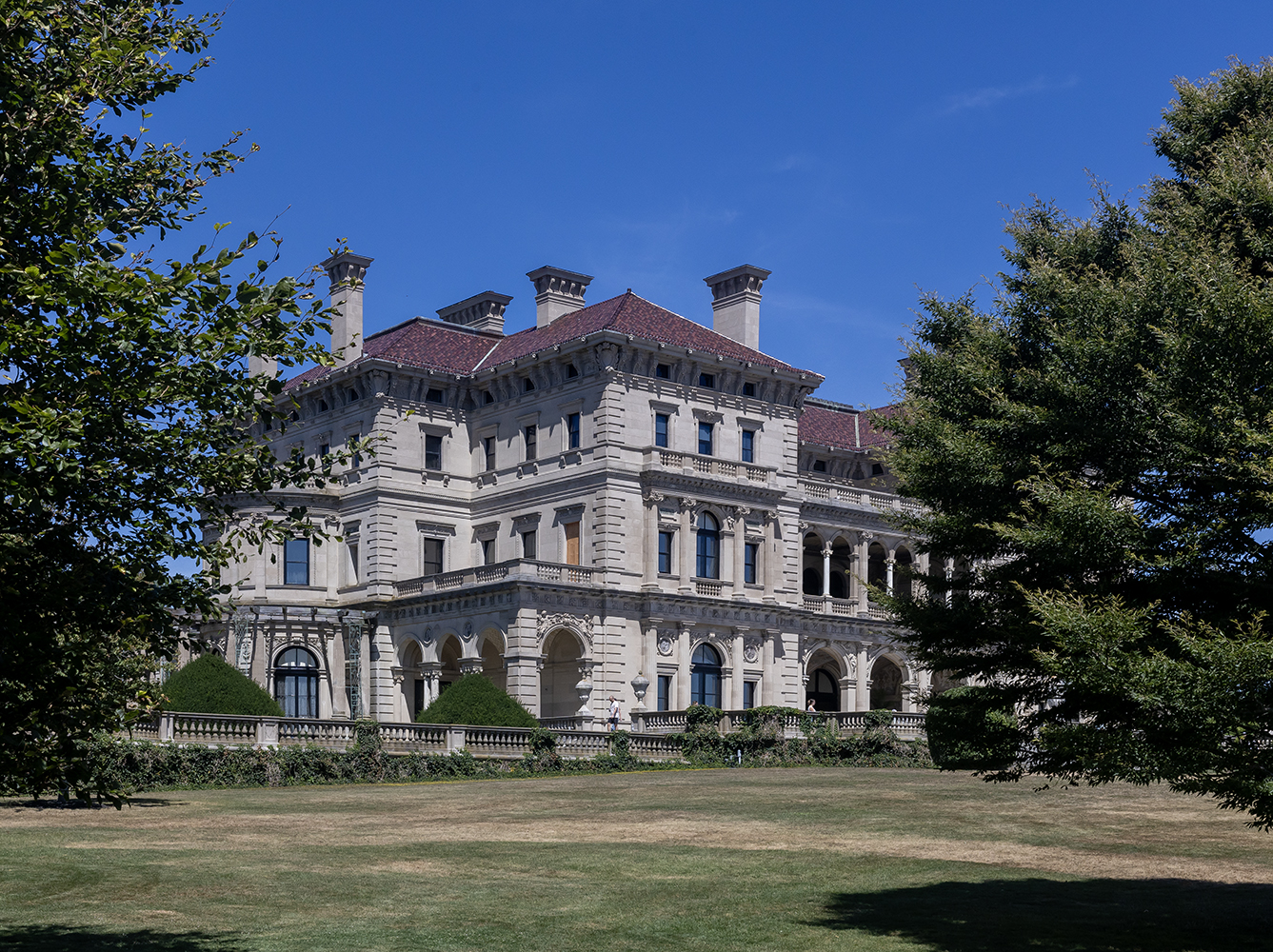
It’s difficult to select a favorite house, but there is a reason that The Breakers is common to most of the tours. Built in 1895 and designed by Richard Morris Hunt for the Cornelius Vanderbilt family, the home boasts 70 rooms and 138,000 square feet. With a fortune built on shipping and railroads, the Vanderbilts were one of America’s wealthiest families, and their wealth is evident everywhere in the home.
Visitors to the home first see “The Great Hall,” which was inspired by an Italian Courtyard. Not wanting a true open roof, the family opted for a ceiling with a trompe l’oeil mural to mimic the open sky.
Built in a perfect cube–50 by 50 by 50–this single room is larger than the average American house. The term “great” simply doesn’t do the hall justice.
The Billiard Room was another favorite of the group. The mosaic floor was adorned with coastal details, the walls featured “arches” painted in gold leaf, and the room was designed with numerous elements, making for a fun “I Spy” type game for visitors.
Although we were a bit tired from waking up so early, we couldn’t help but fall in love with the “Morning Room.” The room faces east, allowing the sun to pour into the chamber, and the warm lighting and yellow-hued adornments provided a welcoming warmth. The idea of having a room so opulent and just for the morning hours is such a Vanderbilt type of luxury.
One of most interesting aspects of the house is that each room offers intricate and elaborate details that are ripe for overlooking things. To take an example, the Morning Room features panels with cherubs, which, at first glance, appear to simply be classically-themed lagniappe. Upon closer look, however, you see that one cherub is holding an anchor; the other is holding a railroad spike and hammer. Both tie back into the source of the Vanderbilt’s income–the income that made such decor possible.
Each room offered something special. The Loggia offered a breath-taking view of the ocean;
…the bedrooms, although described by the owners as more “austere” than the public-facing rooms, were still opulent, each featuring separate baths, dressing rooms, and walk-in closets;
…and the library was perhaps the most stunning, with the wood doors that had gold leaf pressed into them to give an appearance of a storybook cover, and upper walls lined with green Spanish leather, providing the look of a hide-bound book.
It’s difficult to fathom that such a home was used for only part of the year, a reminder that we live in different worlds and a different age than the Vanderbilts.
Rosecliff
by Michelle Moya
After exploring The Breakers, Olivia and I were especially excited to visit another Newport mansion renowned for its elegance and beauty—Rosecliff Mansion—and it absolutely lived up to its reputation.
Commissioned in 1899 by silver heiress Teresa “Tessie” Fair Oelrichs and designed by architect Stanford White, Rosecliff draws inspiration from the Grand Trianon at Versailles. Its pale limestone façade and French neoclassical design create an elegant lightness that sets it apart from Newport’s other grand estates. While Olivia and I are still learning about various architectural styles, visiting both these homes provided a perfect opportunity to deepen our understanding.
Rosecliff’s history includes dramatic turns: it was sold for a mere $21,000 in 1941, but endured severe winter damage before the Monroes refurbished it in 1947. In 1971, the Preservation Society received the mansion as a donation, and it is now considered a historic house museum, event space, and more.
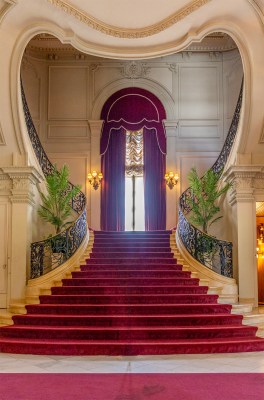
Upon entering, the first thing that caught our eye was the stunning heart-shaped frame surrounding the staircase. This feature lends the entrance hall a theatrical elegance—a design element I found particularly beautiful.
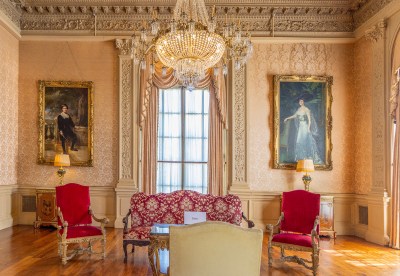
Our self-guided tour began in the French Renaissance salon, which quickly became my favorite space.
The room has coffered ceilings and classical pilasters, with chandeliers adorned by musical instruments—a homage to Teresa’s talents as a master of the flute, piano, guitar, mandolin, and banjo! Similarly, portraits of society members, painted in the grand European tradition, line the walls.
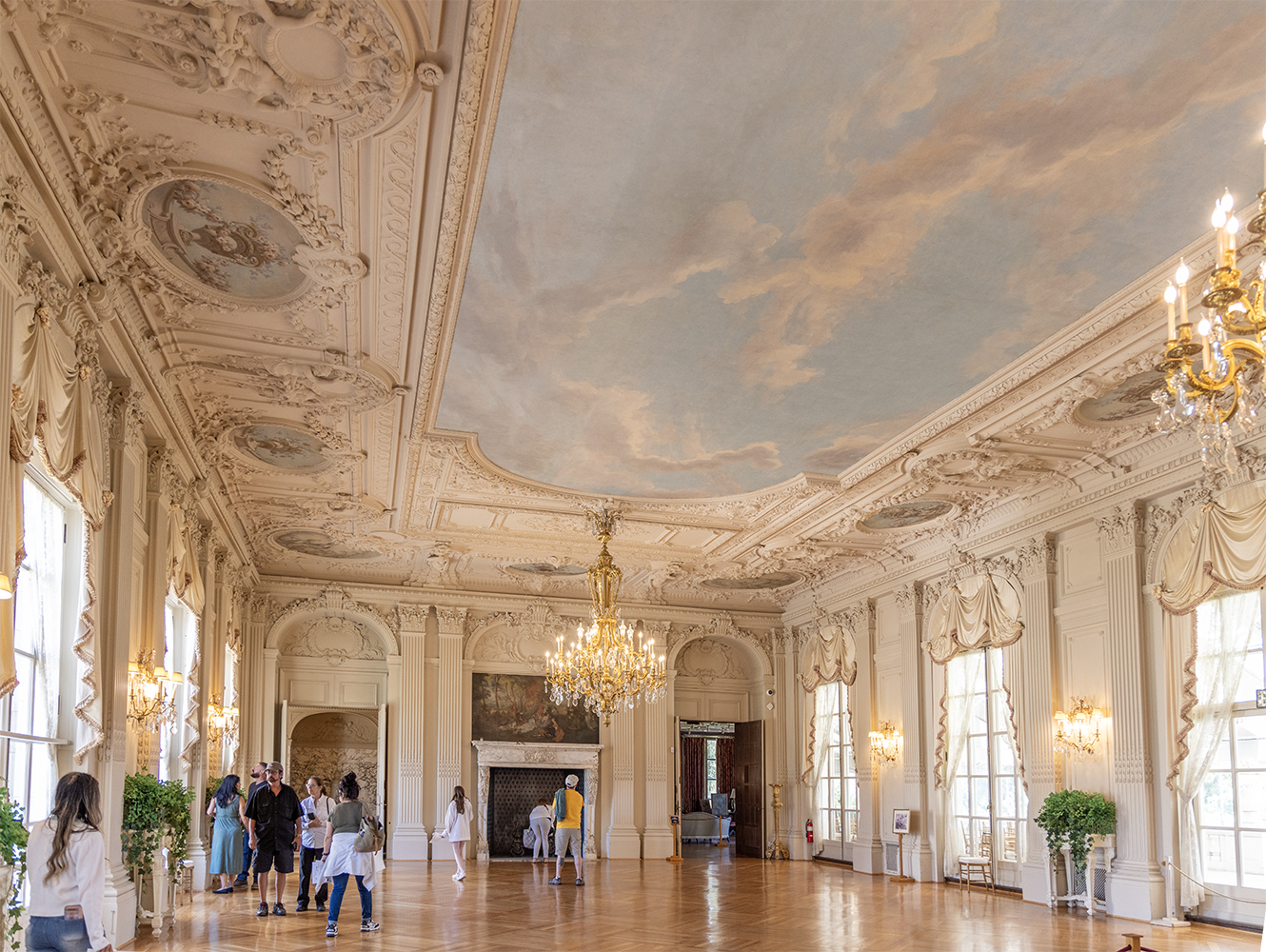
Next, the tour leads to the mansion’s crown jewel: its ballroom. The ballroom measures 40 by 80 feet with high 22-foot ceilings, making it Newport’s largest private ballroom. There are windows along both sides, creating an airy ambiance, while a masterful trompe-l’œil ceiling depicts a sky-like garden landscape. This room was Olivia’s favorite, and it’s easy to see why.
While we were reading about this space, we also learned that Teresa Fair Oelrichs truly embodied Gilded Age excess, especially in fashion. Wealthy families ordered wardrobes from Charles Frederick Worth in Paris, with ladies visiting the House of Worth twice yearly, spending roughly $30,000 per visit, the equivalent of $600,000 today. This translates to annual clothing expenditures of about $1.2 million in today’s currency, which we found absolutely crazy!
The first floor also houses the Library (or Billiard Room), showcasing Stanford White’s Jacobean styling with bleached English oak paneling and a distinctive white paint.
Additionally, the Dining Room, which is now painted white, having been originally pea-green walls, was filled gold accents, silk draperies by Jules Allard, and landscape panels.
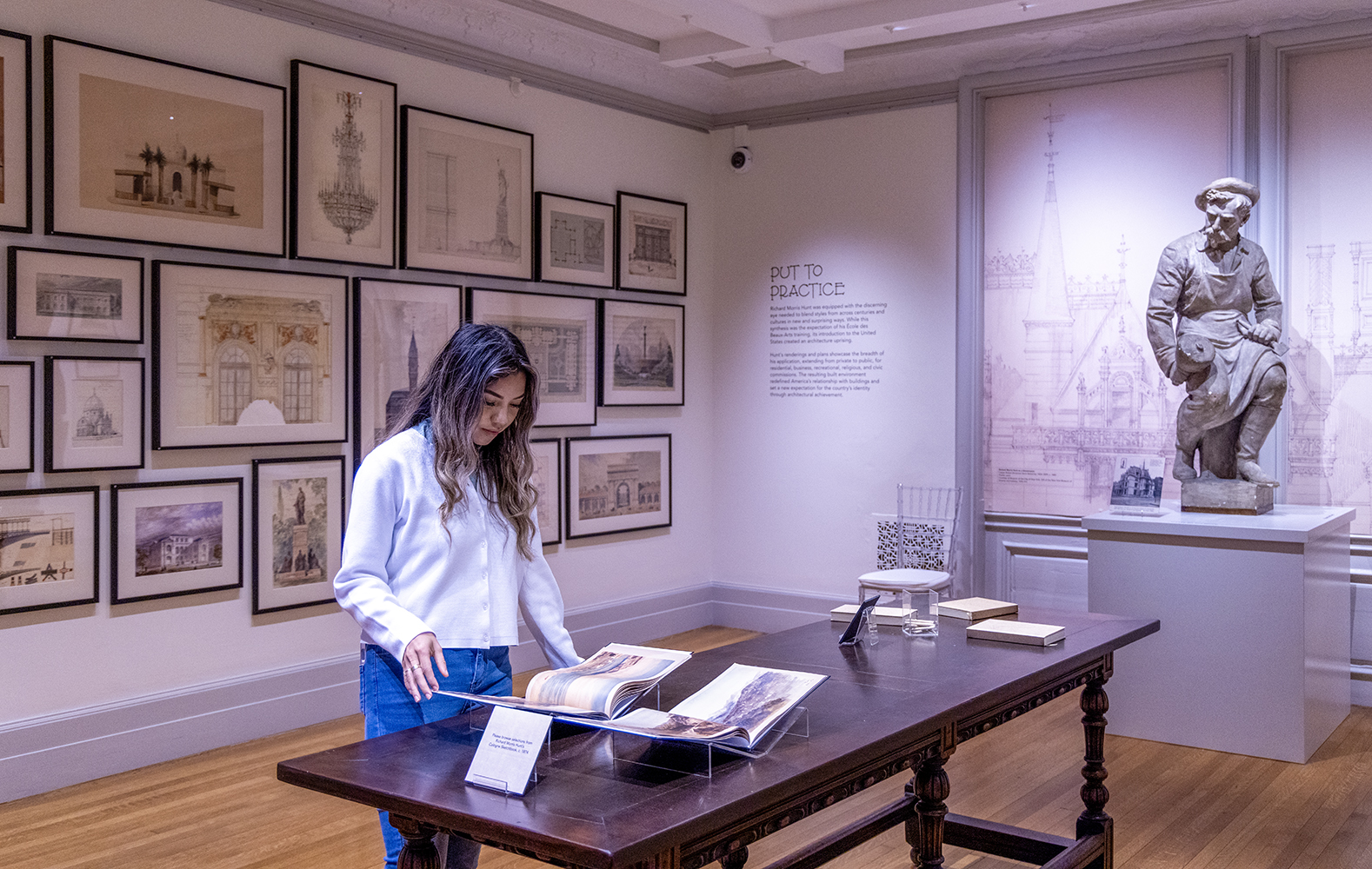
The second floor of the mansion offers additional rooms and rotating exhibits. Currently, the room hosts “Richard Morris Hunt: In a New Light,” showcasing the architect’s contributions and career.
The exhibit displayed his personal sketchbooks…
patron collections, and his creative journey…
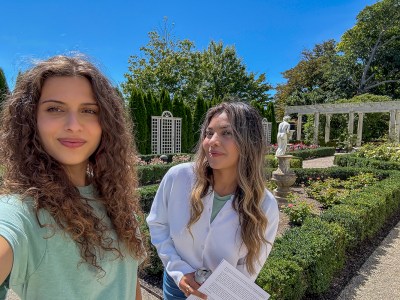
After a stop at the gift shop, the tour led us to the mansion’s rear, where a walkway opens onto breathtaking grounds—a view we both instantly fell in love with. Rosecliff’s 21 acres of formal gardens…
oceanfront landscapes…
…and beautiful rear exterior…
…create a stunning contrast between refined architecture and Rhode Island’s rugged coastline.
Today, Rosecliff continues to host elegant gatherings and has appeared in films such as the The Great Gatsby, True Lies, Heaven’s Gate, Amistad, 27 Dresses, and many more. It stands as a great reminder of Gilded Age grandeur and a cultural treasure that Olivia and I loved exploring!
Concluding Thoughts
As noted above, The Great Gatsby, written by F. Scott Fitzgerald, was filmed at various locations on the Newport Coast. The film tries to capture visually the spirit of the book, which addresses themes such as the American Dream and materialism of the Gilded Age and its vestiges that carried over through the 1920s, when the novel was written. It’s a harsh view of the United States, and it is perhaps unfair.
But our visit to the Newport Mansions did drive home a point made by Fitzgerald in a short story described as “an extension of ‘The Great Gatsby’, “Let me tell you about the very rich. They are different from you and me….They think, deep in their hearts, that they are better than we are because we had to discover the compensations and refuges of life for ourselves….They are different.”
Our visit to the Newport Mansions was a wonderful learning experience. We had a rare chance to see the splendor that only a few people ever get to experience, and even fewer have a chance to experience as a way of life. It was a moment to soak in, a chance to see the beauty, the craftsmanship, and the intricacy that the world’s great artists and architects could create, and it was a reminder that those who lived here enjoyed very different lives than the rest of us.
Our latest day in Boston was a blend of history, art, literature, and even a little fine dining. It was a journey of exploration: a first look at the pivotal battlegrounds of the Revolutionary War; a reflection on the legacy of literary giants; an in-depth look at the presidency of John F. Kennedy, and even a foray into the halls of Harvard. In short, it was a look at much of what has been and a glimpse into what can be.
This is the third presidential library I have visited, and it is the fifth that Olivia has visited. Progress in our educational travels!
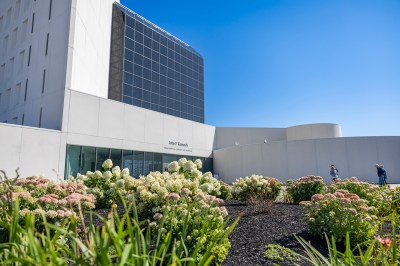
The Kennedy family is central to Boston’s identity, and this library serves as both a monument and a memorial to the 35th president. Designed by I.M. Pei and completed in 1979, the Library’s striking glass pavilion overlooks Boston Harbor, creating a contemplative atmosphere with natural light flooding the museum.
We began with Young Jack, a candid look at Kennedy’s childhood and school years. Rather than presenting a sanitized version of his youth, the exhibit honestly portrayed his struggles as a student, making his later achievements feel all the more inspiring.
From there, we watched an introductory film narrated by Kennedy himself. The film offered a clear overview of his early life, political rise, and the moment he realized his presidential ambitions, essentially guiding us through the museum experience that followed.
This led naturally into the Campaign Trail exhibit, one of my favorites, which captured the energy of the 1960 election. We explored Democratic National Convention memorabilia, many of Kennedy’s campaign signs, and a large map illustrating Kennedy’s narrow victory over Nixon–an interesting way to understand the election results in context.
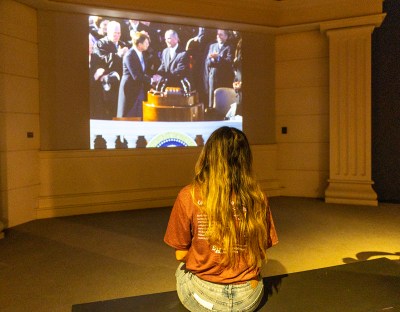
The museum then shifted focus to Kennedy’s presidency, offering multiple perspectives on his time in office. This exhibit showcased footage of his inauguration in 1961, Chief Justice Earl Warren administering the oath of office, and many stages in his life as president.
Particularly fascinating was the exhibit on Kennedy’s literary achievements, including his Pulitzer Prize–winning book Profiles in Courage, which celebrates political leaders such as Sam Houston and John Quincy Adams.
Equally impressive was the museum’s full-scale replica of the Oval Office, complete with Kennedy’s presidential desk, which gave a tangible sense of life in the White House.
The “Presidential Pets” special exhibit was an unexpected highlight, revealing the lighter side of life in the White House. From FDR’s Scottish terrier Falla to Clinton’s cat Socks–the first “First Cat” to capture widespread media attention–these animals brought warmth and personality to the presidency. The exhibit ended with an interactive display where we could add our own pet’s name, creating a fun, personal connection to the exhibit.
We wrapped up our visit with a photo in front of the American flag with Boston Harbor stretching behind us-a perfect ending to what had become my new favorite presidential library!
Boston Public Library
By Olivia Discon
Following our visit to the Kennedy Library, the torch was passed to a different type of library. The Boston Public Library rivals the best libraries in the country, and it is my favorite stop thus far in our trip.
Designed by Charles Follen McKim, the Library possesses a grandeur that leads visitors to expect much from the interior.
The entrance was breathtaking. Much like the Library of Congress in Washington, DC, the high ceilings are covered in mosaic tiles with the names of some of the greatest minds in history. In the context of this trip, it was especially meaningful to see the names of Nathaniel Hawthorne…
…and Thoreau, as well as Charles Bulfinch, the architect of the Massachusetts State House. With its yellow Siena marble, the entire building is just unbelievably beautiful.
At the top of the stairs, we were met with two lion sculptures. Stephanie, who took the lead on this tour, told us that they were actually memorials to two Massachusetts Civil War volunteer infantry units. Tradition says that rubbing the lion’s bottoms brings good luck, and with the LSAT coming up, I figured I could use all the good fortune I could get, so I did not pass up the chance.
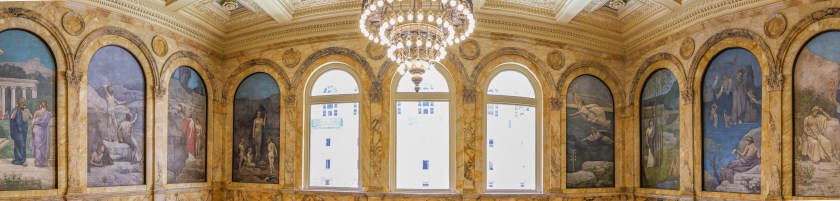
The murals along the staircase were painted by Pierre Puvis de Chavannes. Interestingly, he refused to paint them in Boston and instead created them in France, then had them shipped to the library.
We then went into the Abbey Room, which used to be a waiting room for people requesting books. Its walls are filled with Edwin Austin Abbey’s mural cycle, The Quest and Achievement of the Holy Grail. Even the waiting rooms here are more elaborate and impressive than most buildings today.
The third floor was the most awe-inspiring of all. Covering the ceiling is John Singer Sargent’s monumental series, The Triumph of Religion. It consists of 19 panels that capture key symbols and stories from different religions. In true Sargent style, the figures are powerful and striking, and the work overall is stunning.
It was moving to see a public space created with such thought and artistry during the early years of the nation. It makes sense that a young country trying to define its cultural identity would invest so heavily in these kinds of spaces.
Wusong Road
by Olivia Discon
For lunch, we stopped at Wusong Road, a tiki bar and restaurant that brought a little Hawaiian flair into our day. The bright, tropical theme made for a fun change of pace. Even if we weren’t having tiki adventures, we certainly had a culinary one!
Our table shared a mix of dishes: crab rangoon, brussels sprouts, pork fried rice chicharrón, and ceviche.
Michelle, true to her love of seafood, especially enjoyed the ceviche. Professor Yawn and I leaned toward the crab rangoon as our favorite, while Stephanie was pleasantly surprised by how much she liked the ceviche. With a mix of productivity and good conversation, we felt ready to take on the rest of the day.
A Walk Through Harvard’s Campus
On a trip filled with recurring themes of idealism, it felt fitting that Michelle, Stephanie, Professor Yawn, and I walked through Harvard University. The campus has shaped some of the greatest minds in American history, and it naturally invites reflection on what kind of nation we have become. It was also a nice touch that JFK, one of Harvard’s most famous graduates, helped us connect the political and educational themes of the trip.
The campus itself is gorgeous. The red brick buildings, many of which date to the 18th century, add the appropriate sense of history, while the modern buildings remind visitors that this is a cutting-edge educational institution.
And the campus is punctuated by green space, public art (although less than we expected), and myriad monuments.
Nearby, we saw Harvard Law School, which, for aspiring law students, is a surreal experience. It is hard to process fully how much influence this one institution has had: nearly 19 percent of U.S. Supreme Court Justices and almost 18 percent of U.S. Presidents have graduated from Harvard Law.
Harvard Art Museum
The impressive history of Harvard Law is matched by its Art Museums, which are free and open to the public! (But don’t even ask about parking.) The structure itself is impressive. Designed by Richard Morris Hunt (who also designed Biltmore, the pedestal to the Statue of Liberty, and MOMA’s fifth avenue building.
The art equaled the architecture in impressiveness. In one gallery alone, we found three Van Goghs, three Degas, two Monets, two Renoirs, and three Picassos. All of the pieces were part of Maurice Wertheim’s collection, and he, a class of 1906 graduate, donated the work to Harvard. It’s good to have successful alumni.
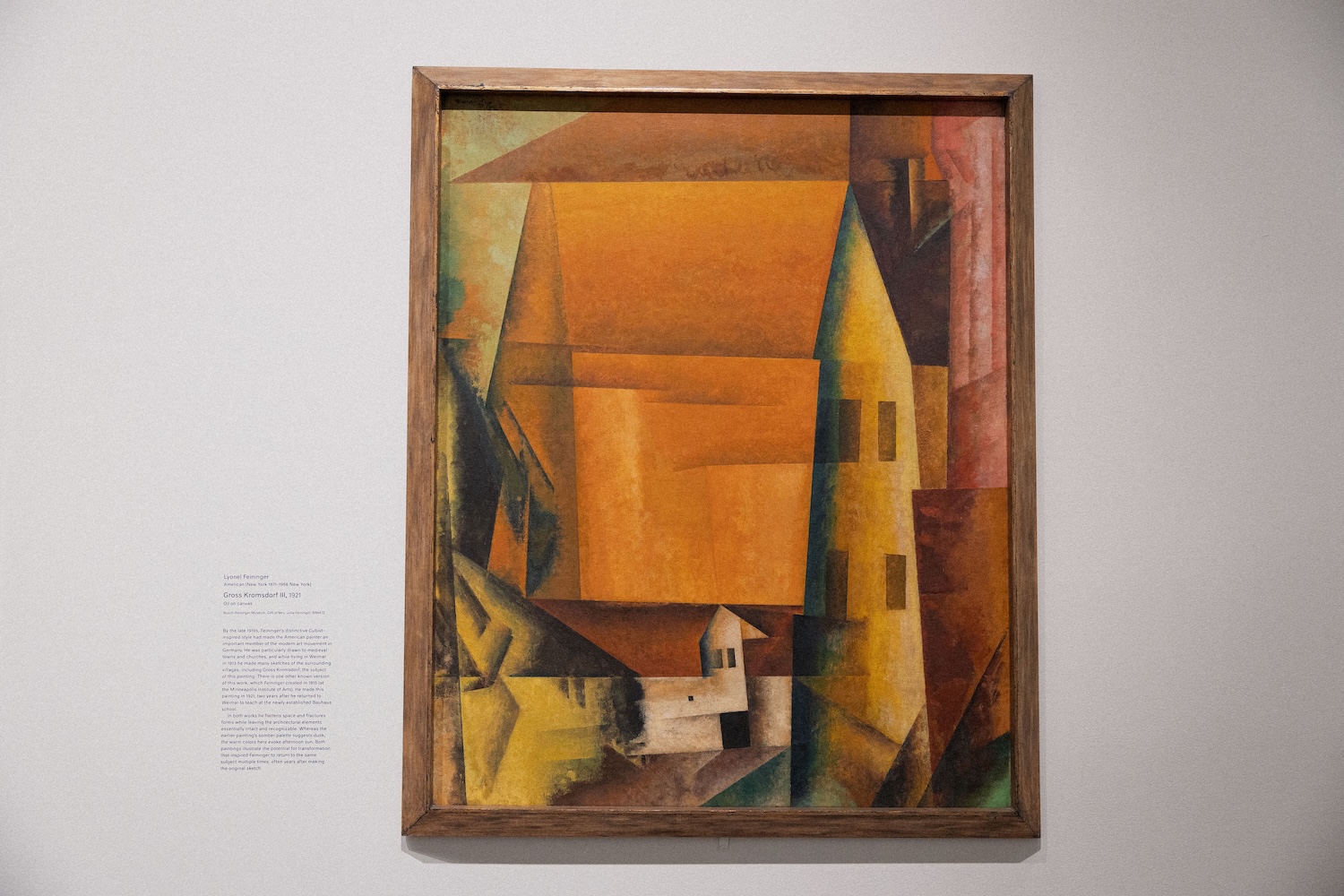
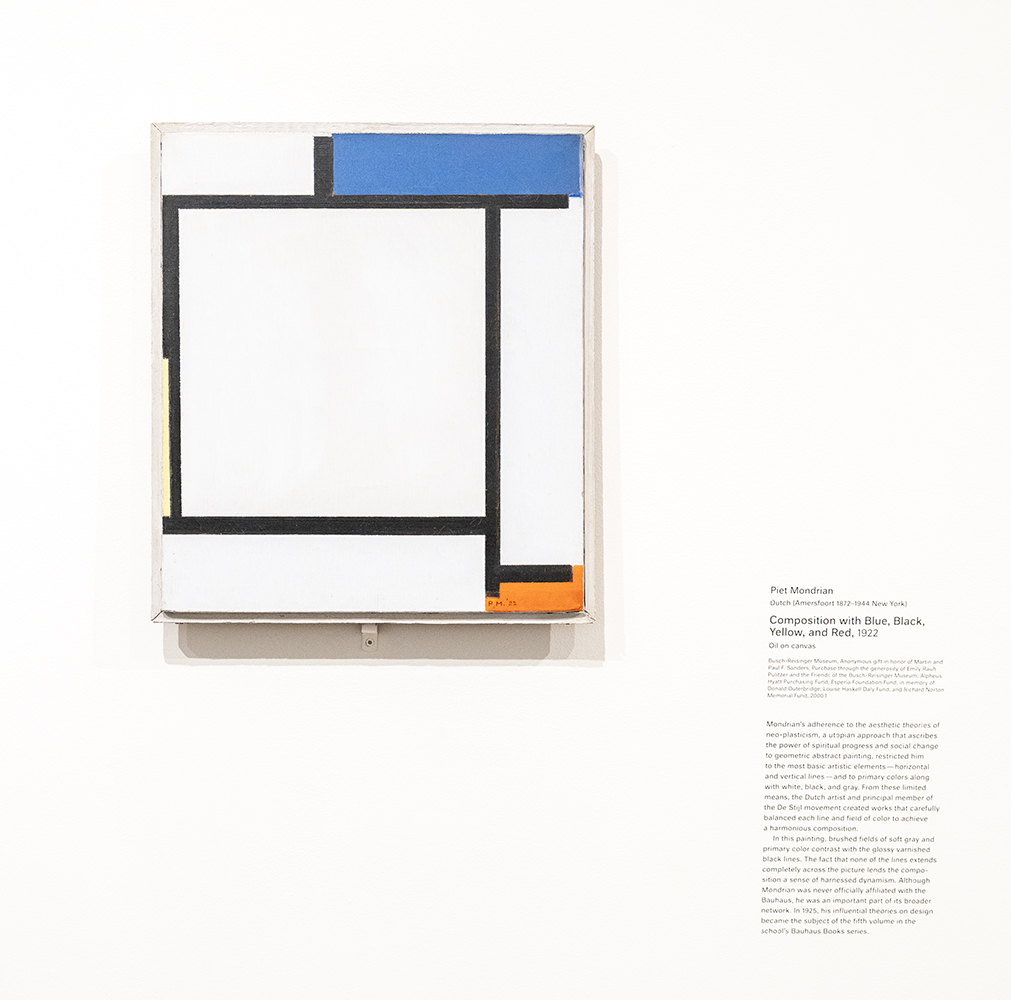
From there, the names just kept coming. Klimt, Munch, Fenninger, Pollock, Moore, Mondrian.
Olivia, on her first guess, identified the Gustav Klimt piece, an impressive feat considering its atypical color scheme.
For Professor Yawn, a favorite was by Lionel Fenninger, “The Bird Cloud.”
…while Olivia most enjoyed the Hopper piece, “Schumann House”…
…and Michelle found a favorite in Jehan Vibert’s “Apotheosis of Louis-Adolphe Thiers.”
With an art collection as impressive as Harvard’s, it was impossible to not find art to like.
The Shot Heard Around the World
Our third educational leg of the day involved a mix of history and literature, which connected in ways we did not anticipate prior to our preparation for this trip. We drove to Lexington, MA, where the first battle of the Revolutionary War took place. Having seen Paul Revere’s House yesterday, we travelled somewhat in his footsteps today, visiting the Hancock-Clarke House.
This is the home where John Hancock and Samuel Adams were staying as guests on April 19, 1775, when they were roused from sleep as Paul Revere rode by shouting, “The Redcoats are Coming.” Indeed, much of the town was roused, answering the call to arms. Later that day, the Colonial Militia—Minutemen–faced off against the professional British Army on the town’s Lexington Green, where “the shot heard round the world” was fired. Eight colonists were killed, and while the British suffered no significant casualties, the colonists believed—correctly–that they had performed creditably.
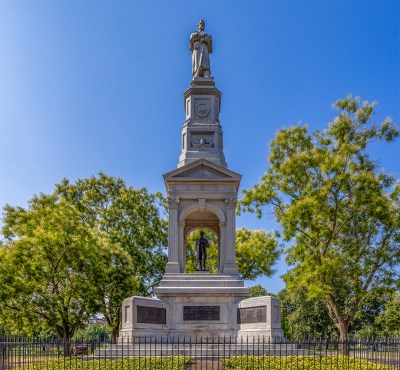
To commemorate this “shot heard ’round the world,” Lexington has preserved the space on which the battle occurred and erected a statue in honor of the colonial soldiers.
While the militia did not offer impenetrable resistance, the action helped galvanize the colonists. When the British reached Concord, they faced more aggressive, reflecting the increased preparation, enhanced training, and stiffer resolve of the colonial militias.
Some two months later, when the British moved on Boston and the colonial redoubt on Bunker Hill, the colonists were ready. Twice the British charged the hill, faced extensive casualties, and were rebuffed. Only on the third advance did the British make significant ground, and the colonial militia withdrew in organized fashion. Ultimately, the British took the Hill but at a prohibitively expensive cost: 1,000 dead or wounded.
Today, this battle site is marked by a large obelisk monument that was originally erected in 1825, on the 50th anniversary of the battle. It is 221 feet high, composed of 3,000 stones, and it weighs more than 7,000 tons. Standing on a hill overlooking the City of Boston, however, it appears even more imposing, supplemented too by the symbolic weight of the event that it memorializes.
This struggle for independence had long-lasting ramifications, not only for democratic movements the world over, but also in the spheres of philosophy and literature. Born in the aftermath of this revolution, men such as Ralph Waldo Emerson, Henry David Thoreau, and Nathaniel Hawthorne would forge their own literary path. Emerson, born in 1803, explicitly called on Americans to break with their European traditions and draw upon the “beauty, convenience, grandeur of thought, and quaint expression” of the American systems and culture to forge a “transcendent destiny”.
Henry David Thoreau took Emerson’s advice, forsaking custom and, to a large extent, society, by leaving on July 4 to live at Walden Pond, where he would remain for two years, two months, and two days.
And with Nathaniel Hawthorne, the United States would produce its first great novelist. Drawing on the young country’s history, Hawthorne explored the world of Puritan New England and themes of how the past impinges on the present and, of course, the future.
Collectively, these writers helped lay the foundations for a distinctively American literature and philosophical thought. And it was forged in the same New England atmosphere as that which spurred the citizens to revolt against the British. Emerson, Thoreau, and Hawthorne lived in Massachusetts, in and around Boston, and remarkably, all three are buried within 100 feet of one another (and from Louisa May Alcott) on “Author’s Ridge,” in Sleepy Hollow Cemetery.
And much to our delight, we had the opportunity to visit Walden Pond. Although it has suffered from development in recent years, we were able to get some photos that captured some of the magic that must have drawn Thoreau to the site in the mid-19th century.
Walden Pond, 2025
This beauty and its corresponding history prompted us to pause and to reflect on the importance of self-reliance, in both government and literature.
Winding Down
We closed a productive day with more productivity: dinner at Fox & The Knife. Although Boston has a rich Italian culinary heritage, The Fox & The Knife has set itself a part. Indeed, Chef Karen Akunowicz, a James Beard Foundation “Best Chef” winner, is known as “The Queen of Boston Pasta.”
It wasn’t that we doubted this designation; we just wanted to confirm it. We took our spirited waiter’s advice on starters, trying fried chickpeas, which were wonderfully snackable; carne cruda crostini, which offered a riot of flavors, with steak tartare, leeks, and parmesan somehow creating a balanced, intriguing, and pleasurable taste; the bietola & burrata, which was creamy and flavorful; and the prosciutto e melone, with a melange of melons and tender, savory prosciutto.
For entrees, we split two items: the arrosto di maiale vignorola, a tender fried pork dish; and the tagliatelle bolognese, which featured “wild boar” complemented by thyme and the restaurant’s flavorful parmesan.
The restaurant, we confirmed, was as advertised: a wonderful Italian culinary experience, a lively atmosphere, and a taste of the best of Boston, straight from the Queen of Pasta. It was a great way to end the day.
The Sam Houston Memorial Museum and Presidential Library (SHMM) offers visitors a chance to learn about one of Texas’ most influential figures but its newest exhibition, The Many Faces of Sam Houston, goes a step further. This week, the LEAP Ambassadors visited the museum’s latest display, which explores how Houston’s image has been crafted, challenged, and reimagined over the past 200 years.
The exhibit, which opened July 3, explores how Houston’s public image has evolved over the past two centuries. Featuring portraits, daguerreotypes, sculptures, and illustrations, the collection shows Houston not just as a political leader, but as someone who understood the significance of image. That theatrical quality becomes immediately clear as visitors move through the gallery, seeing how Houston deliberately transformed his appearance throughout his life.
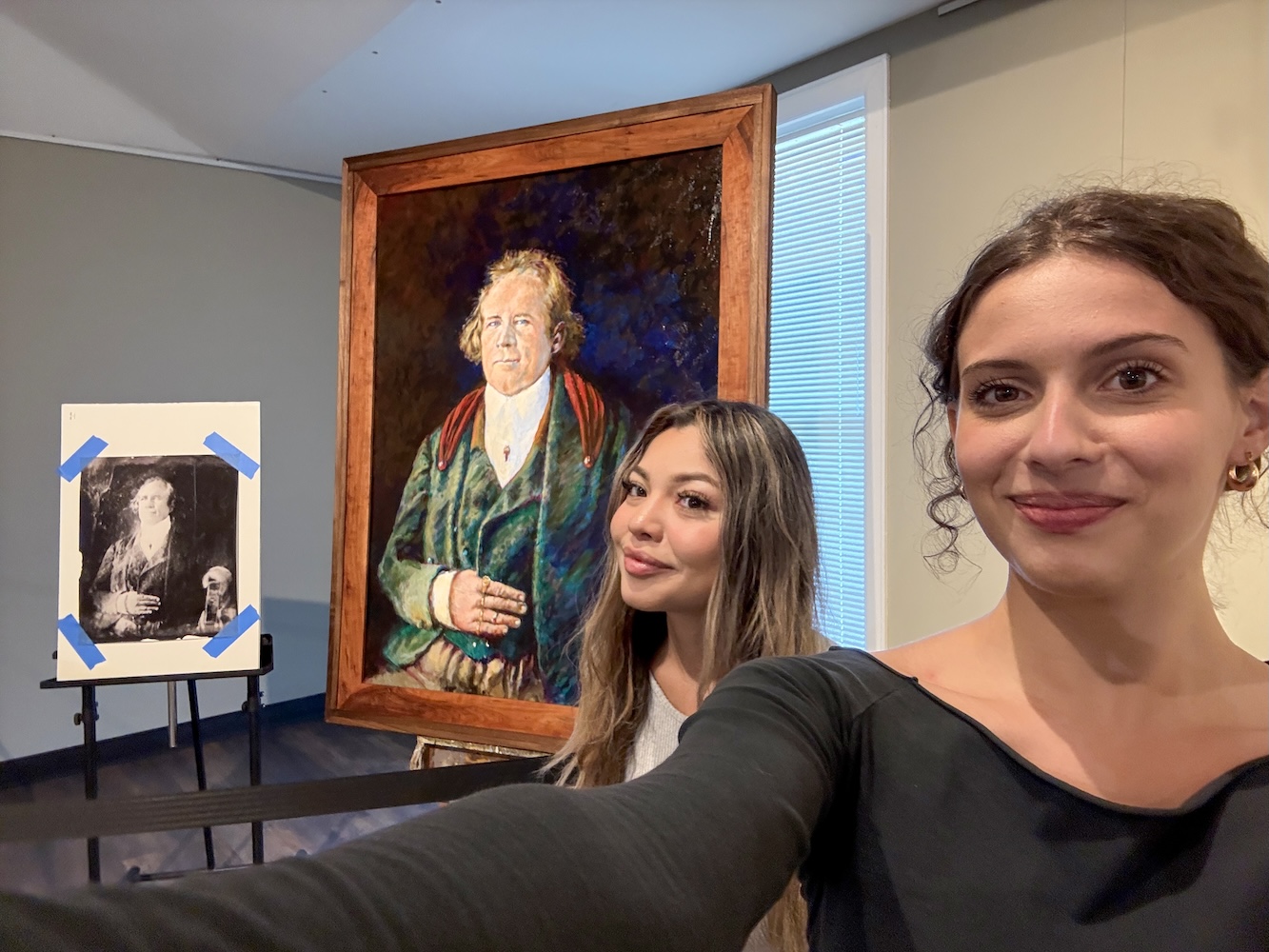
One of the featured pieces is a recently commissioned portrait by Huntsville-based artist Lee Jamison. Inspired by an early daguerreotype, Jamison portrays Houston’s larger-than-life persona in a vivid, contemporary style. Jamison’s work is familiar to many in the community; his mural located at the corner of 12th Street and Sam Houston Avenue in Downtown Huntsville has become a local landmark and tribute to Texas history.
The exhibition also includes a marble bust of Houston by sculptor Elisabet Ney, part of the museum’s permanent collection. Ney, a German-born artist celebrated for her contributions to Texas art and history, presents a thoughtful and dignified version of Houston.
She is also known for her monumental statue of Houston that stands in the Texas State Capitol, further solidifying her role in shaping the state’s visual history.
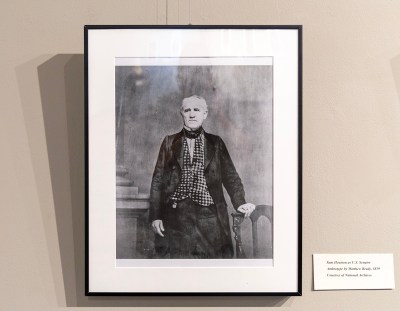
The photographer Matthew Brady was also famous for documenting history. Indeed, in addition to his famous Civil War photographs, Brady captured 18 of 19 presidents during the mid-to-late 19th century. His photograph Sam Houston, from 1850, is on display.
Another highlight is Texas artist Tom Lea’s design for the five-cent Sam Houston commemorative stamp. Though small in size, the stamp represents a different kind of legacy–one meant for daily use and mass circulation. Lea chose to depict Houston as he appeared during his presidency of the Republic of Texas, offering Americans a consistent and iconic image of their Texas hero with every letter they sent.
The exhibition also includes 19th-century book illustrations and ephemera that reveal how Houston was presented to various audiences throughout his life and long after. Each artistic decision–from clothing to posture to facial expression–reflects how artists and publishers aimed to emphasize particular traits, whether strength, wisdom, or statesmanship.
Taken as a whole, “The Many Faces of Sam Houston” illustrates how carefully Houston curated his own public image and how generations of artists have continued to reimagine him. From Brady’s realistic portrait to Jamison’s modern interpretation, each piece tells us something not only about Houston, but about the era and perspective in which it was created.
The exhibition will remain on view through August 31, 2025, in the Katy & E. Don Walker, Sr. Education Center’s exhibit gallery. It is free and open to the public, offering a rare opportunity to explore the intersection of art, history, and memory through the life and legacy of Sam Houston.































































 Center for Law, Engagement, and Politics