After being filled to our hearts desire at the Whole Hog Café, we were motivated to continue our exploration of Little Rock. Now with renewed energy we made our way to the Clinton Presidential Library and Museum. Located adjacent to the Arkansas River the Clinton Presidential Library’s exterior is almost entirely made of glass, which allows much light into the interior…
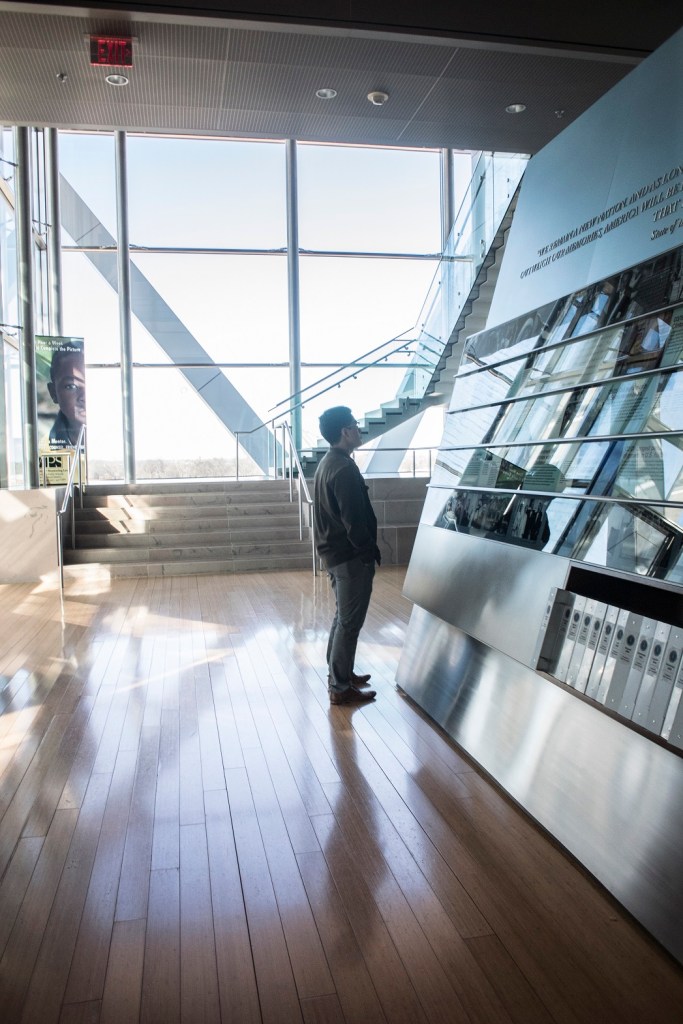
…a factor that contributed to the being designated as one of the most energy efficient and environmentally friendly places to work in the United States, regardless of the intense southern sun beating down. In addition to being the 42nd President of the United States, Clinton also served as the 42nd Governor of Arkansas and 50th Attorney General of Arkansas.
Clinton was an enormous political figure for the state in which he was born and raised and the Library not only gave written narrative of his life…
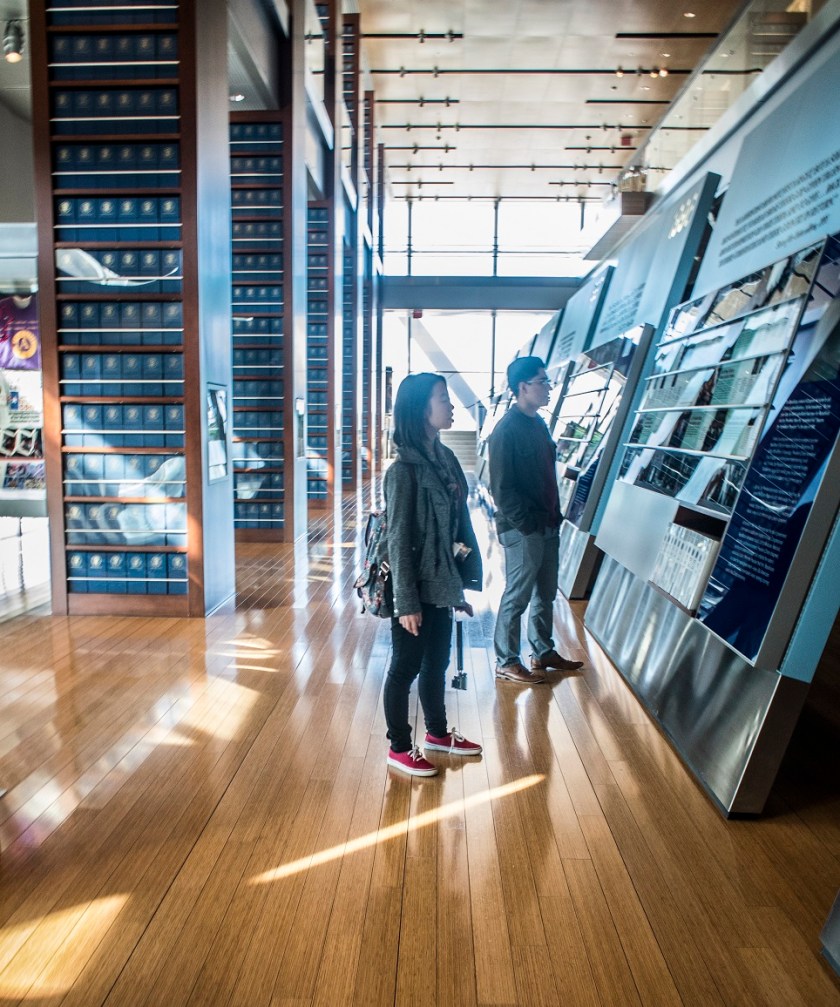
…it also used the architecture to tell the story of Bill Clinton’s life and presidency. The architecture symbolized Clinton’s, message of “building a bridge to the future”, and fit right in with the many bridges of Little Rock…

…as it had the appearance of a bridge itself. The Clinton narrative was further developing by a time line of megalithic proportions.
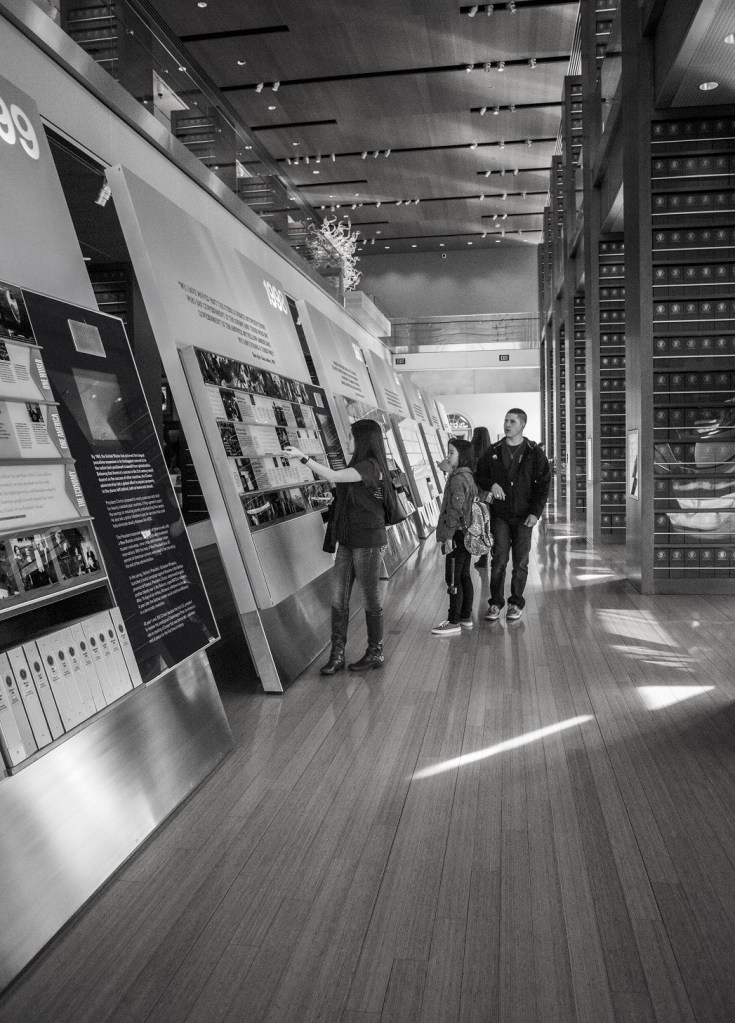
Every year that Clinton served as President had an entire wall devoted to some of the key events of that year.
Another treat of the Library was art by Dale Chihuly, one of the LEAP Center’s favorites.
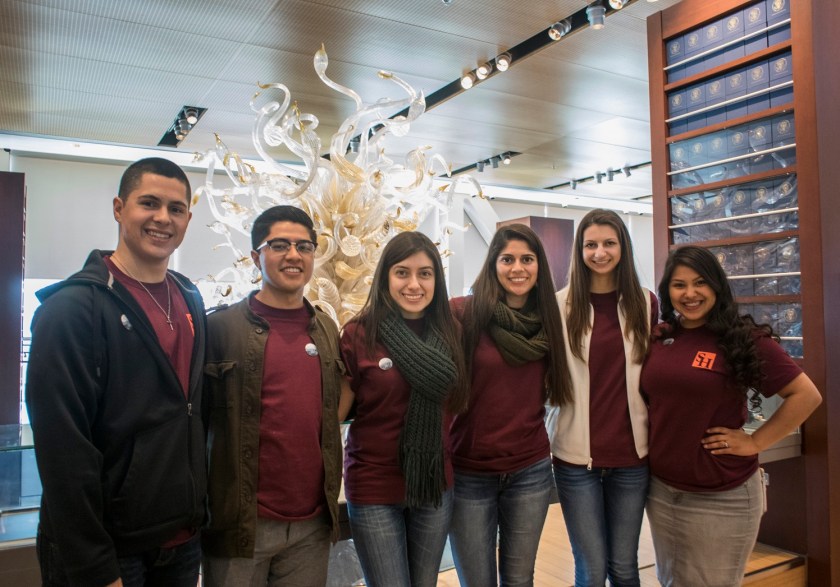
Before we knew it, it was time for our next stop of the day.
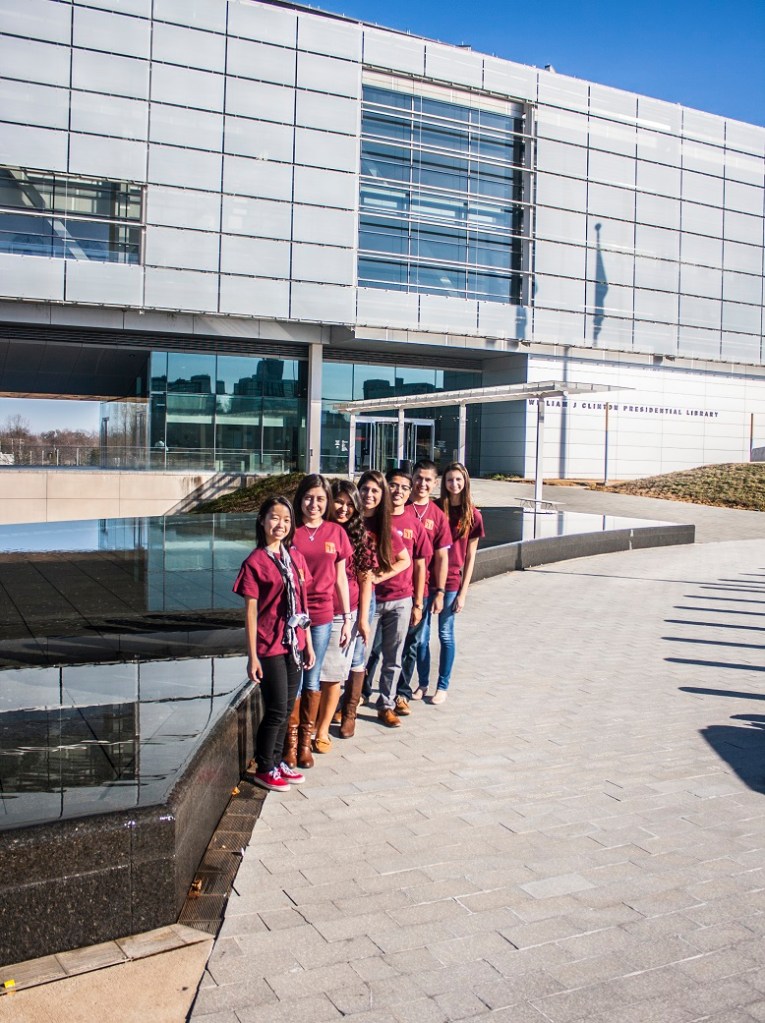
All of us walked outside and expected to climb back in the van and get going, but Professor Yawn had a different plan in mind. We were all pleasantly surprised by cardboard boxes waiting atop of one of the steep hills along side the Presidential library that were to serve as our sliding boards! Still in shock of this very spontaneous moment that Professor Yawn planned, we all chose a flat cardboard box to use as our boards. Standing at the very top of the hill, we all heard Professor Yawn shout, “GO!” and before we knew it we were all racing down the side of the grassy hill!

Sliding down the hill turned out to be more fun than we all expected, so we all raced back up multiple times and slid down in different positions which included sitting flat on the box, laying on our stomach, and even sitting inside of the box.
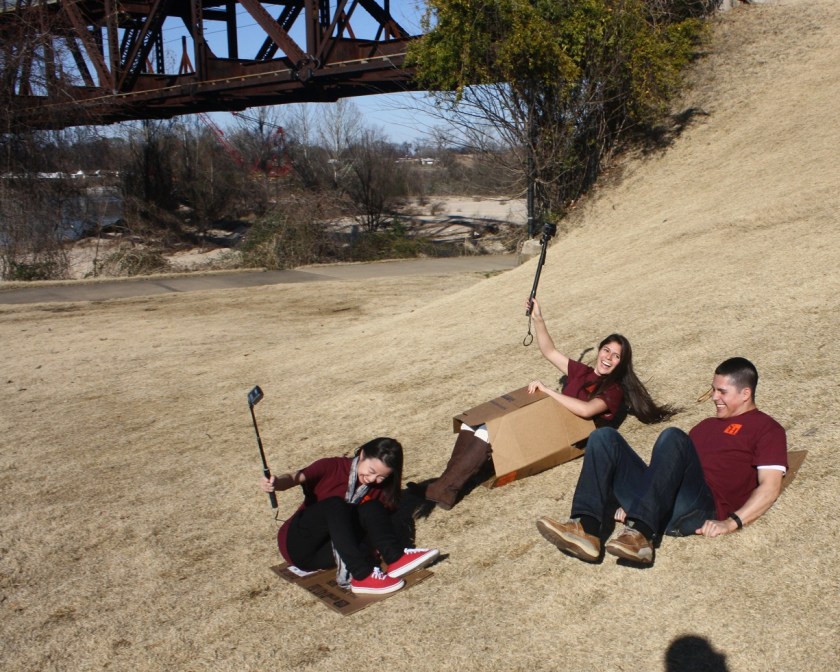
All the cheerfulness was a beneficial change to the quiet atmosphere of the library.
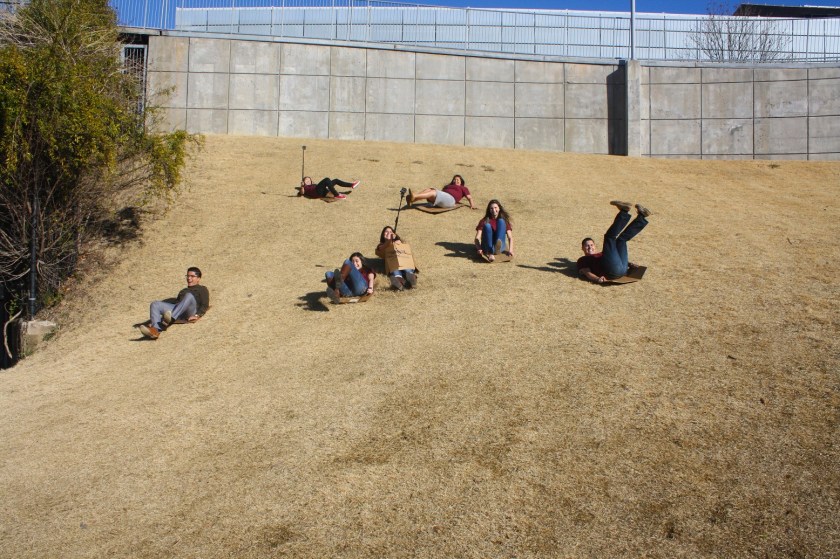
So much so, that we did it again…
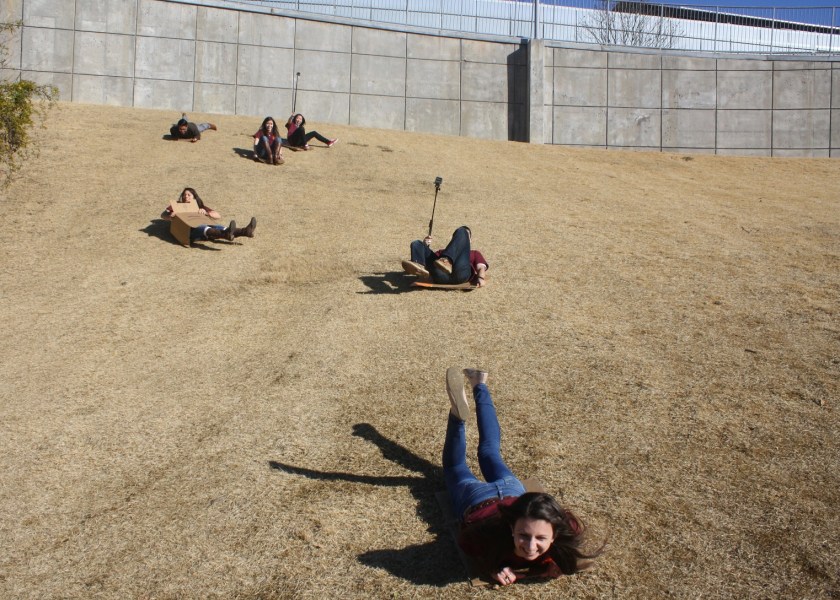
…and again…
…even Professor Yawn went down…
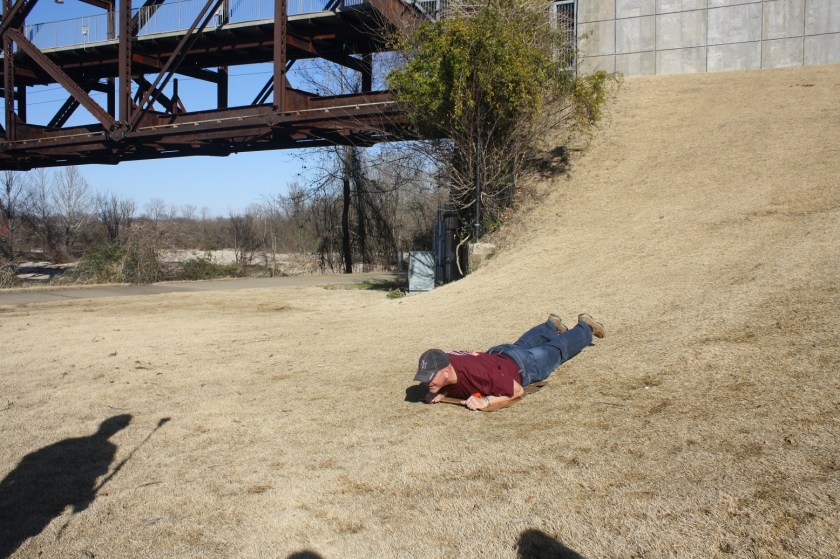
We had to finally stop…

…before someone got hurt…

With some stains on our pants, mud on our shirts, and grass in our hair, we rushed to Heifer International for our next tour.
There we learned that the non-profit organization’s mission is to eliminate poverty, a mission that is completed in an interesting way. We started our tour with a brief informational session, provided by a Heifer International volunteer named Rick Hendricks.
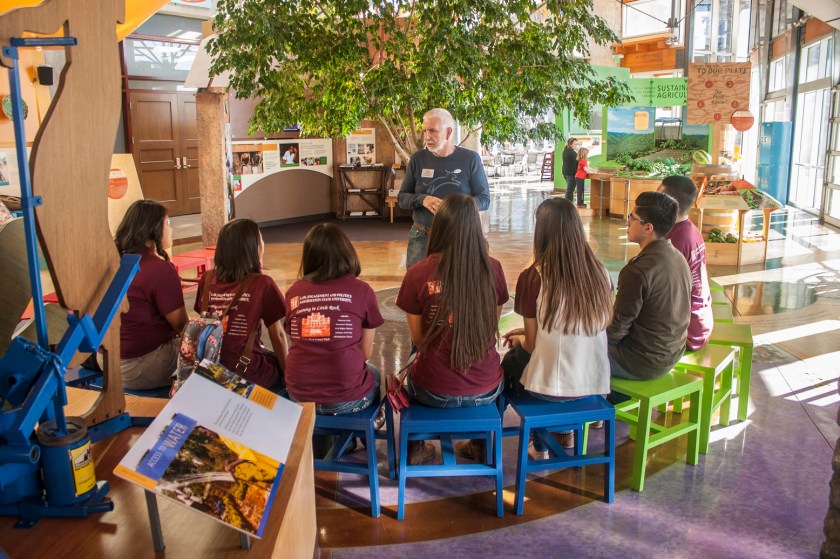
With requests of aid from all over the country, the organization is capable of helping communities in need worldwide. As hinted above, the organization’s way of providing assistance in one that is not often seen in relief organizations. In order to complete their mission, the organization dose not provide relief through the offering of money or common supplies, instead it offers one of the most valuable of virtues anyone can be offered, an education of self-sustainability.
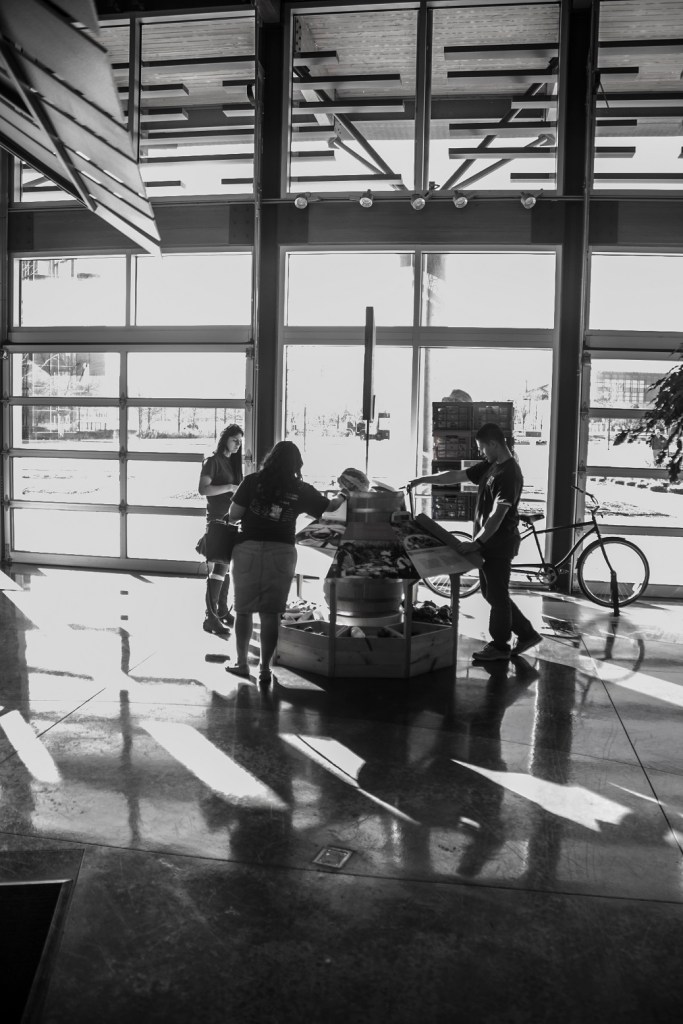
When contacted for help, Heifer International officials travel to the community in need. In order for the group in need to receive relief, they must first undergo a year-long process in which these organization officials educate the community in the various ways so they can maintain self sufficiency. After being taught the 12 Cornerstones for Just and Sustainable Development, centered on values like gender equality, improving the environment, marketing skills, and the like, the group in need is then offered an unusual donation. They are given a “living gift.” These living gifts may be a cow, seeds, sheep etc, that are indigenous to the petitioner’s home. This enables the organization’s efforts to stay local to the petitioner’s home to provide self-sustainability and resourcefulness.
With a cow donation for example, the destitute individual can now use the cow’s capability to produce 30 gallons of milk per week to provide food for his family and may also provide an income source though the sale of the milk. These marketing skills are taken further when the individual is capable of using the milk to produce more goods, such as cheese. The cow’s manure can also be used as a fuel source by using its methane emission. Additionally, in accordance to Heifer’s mission, every petitioner is required to “pass on the gift.” With the cow donation, once it gives birth to a calf, the petitioner must gift it to someone else of his/her community. Doing so provides for the growth in community welfare and economic development.
This mission of self-sustainability and resourcefulness was manifest when touring the headquarter building of the organization, a tour led by Joanne Willson.
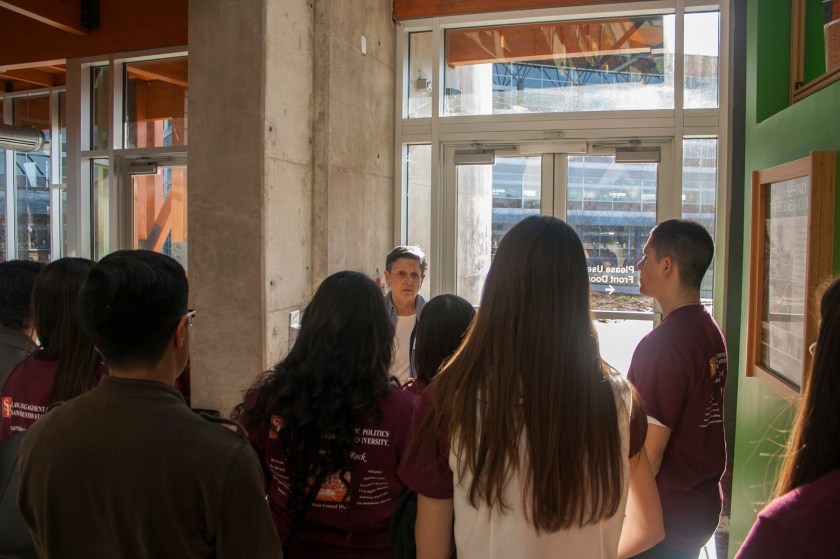
As a Platinum LEED Building, it is among the most environmentally friendly of buildings in the whole world (only 50 structures in the US have this designation). Every single architectural feature of the building is in accordance with their mission. Their roof is slanted to collect rainwater in a pool located within the building which is then used for various uses within the building. In a similar fashion the parking lot is covered in porous gravel, which allows harmful chemicals to be filtered out, allowing the water to be re-used as, for example, irrigation water. In all, the Heifer International headquarters collects 25 thousand gallons of water. Consequently, the headquarters requires no city water services, with exception of water used for drinking and hand washing. The design also allows for the sun to provide light within the building to minimize the use of artificial light. This natural light is also reflected through the use of tin (reflecting) ceiling. With the various other infrastructural modifications, the building is able to use less than half the electricity a normal building of its size would use.
When the tour of the building was concluded, we all wandered through the unique gift shop that includes many products made from areas where Heifer International helps. The gift shop offers unique buys such as paper and notebooks made from elephant dung, goat milk lotions, and many more!
In our trip to Little Rock, no activity has offered me more of a sense of passion than Heifer International. It is not enough to believe in a noble cause, it is necessary to act upon it and ensure that it will live on through the ages. Its determination to teach self-sustainability and to “pass on the gift” is inspiring.

Filled with inspiration, we decided to venture into a part of Little Rock that only Professor Yawn and Alex had seen before, the Old Mill.
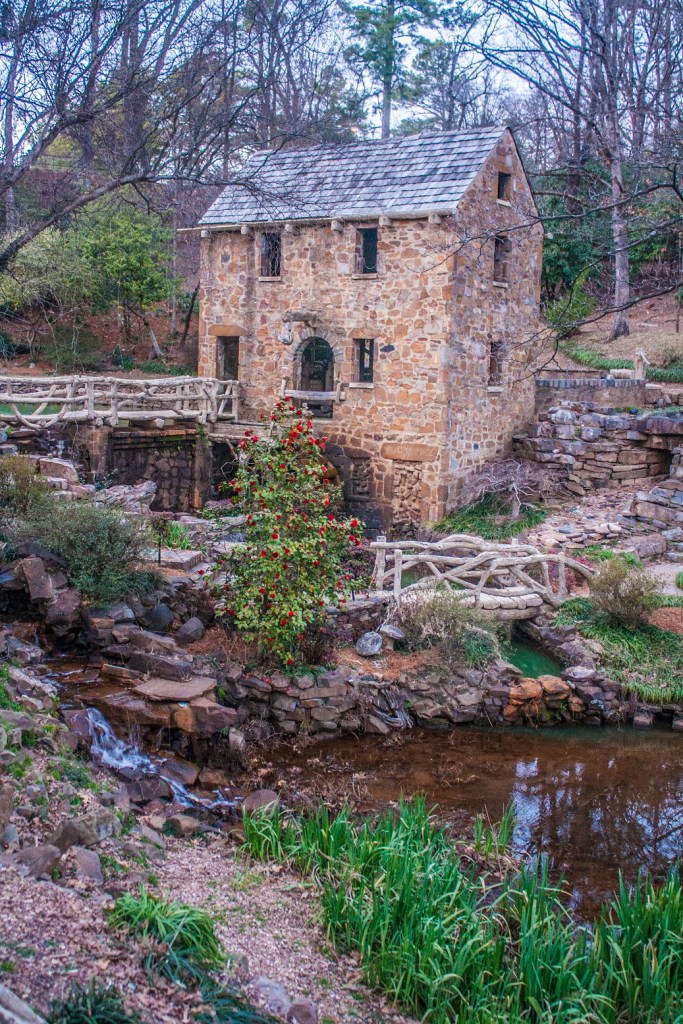
Known as the last surviving set of “Gone with the Wind,” the Old Mill’s natural beauty was picturesque even during the dreariness of February. The lighting was perfect for photographs…
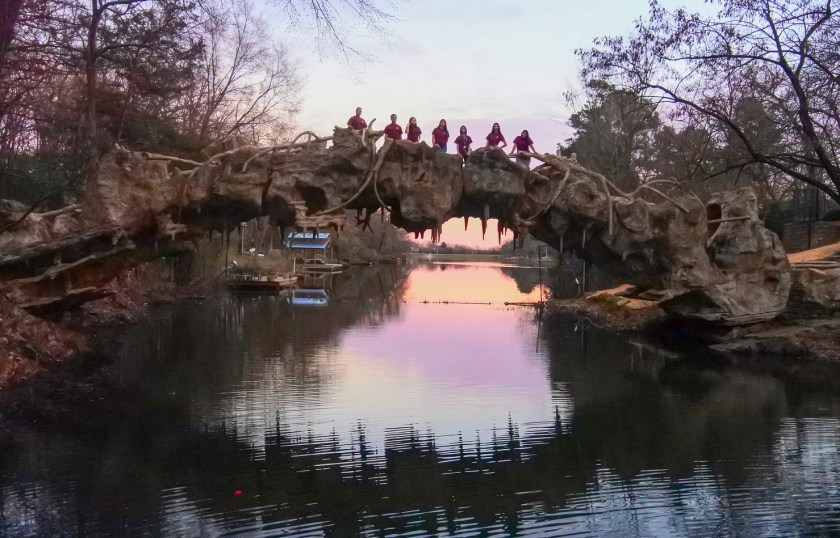
…and we took advantage of our opportunities to create memorable group photos!
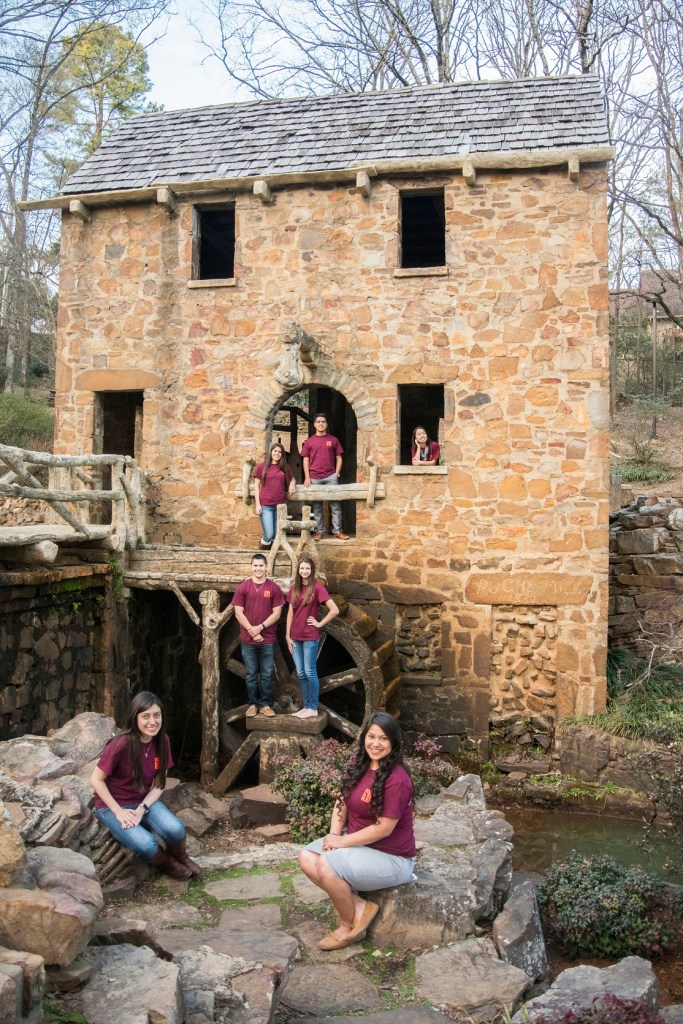
The park has various settings surrounding the mill for photographs. There is a “well…”

…various rock formations…

…a big bridge…
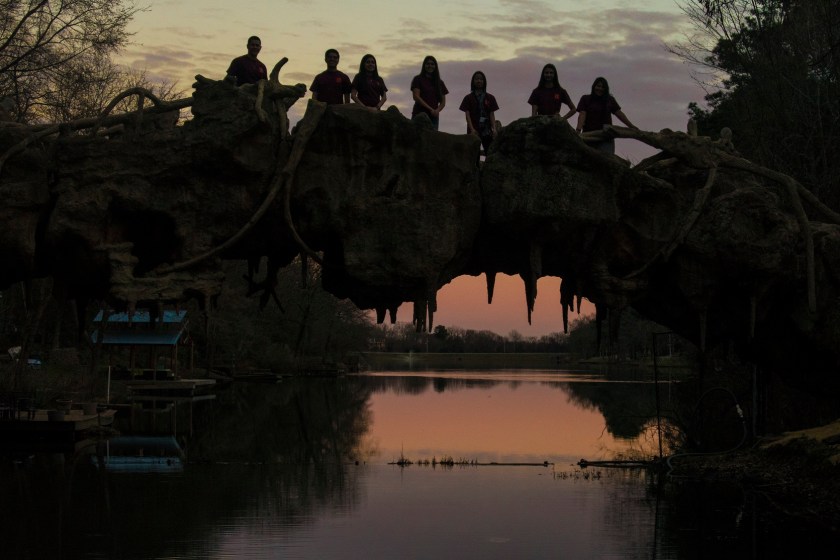
…and a small bridge…
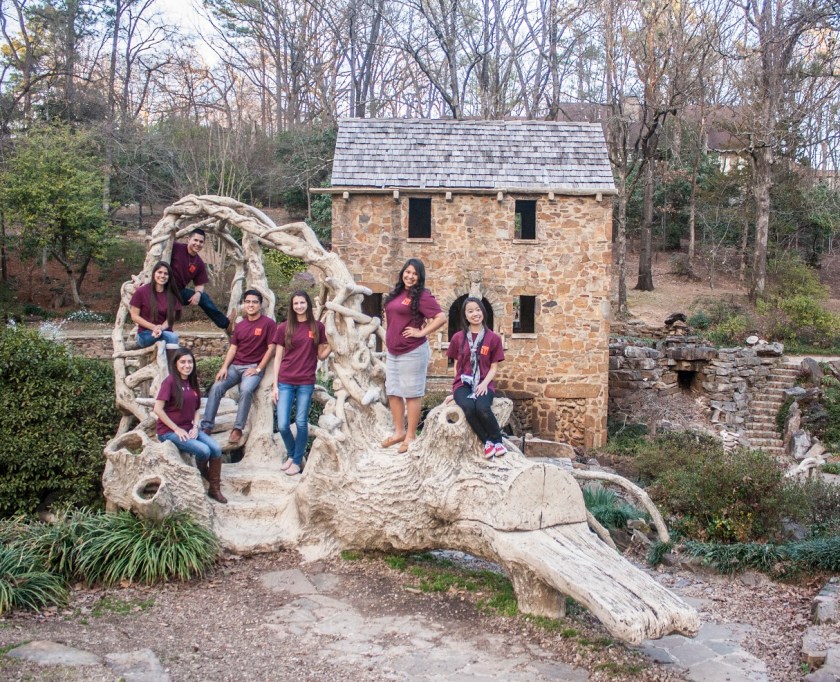
Oddly enough the Old Mill is located in the center of a nice neighborhood, but was built in 1933 as a replica of an abandoned water-powered grist mill. We enjoyed this stop and had fun amidst the chilly weather!

With the sun setting but not yet ready for dinner, we headed to the “Big Dam Bridge.” This was a nice walk up on–as its name suggests–a large dam.
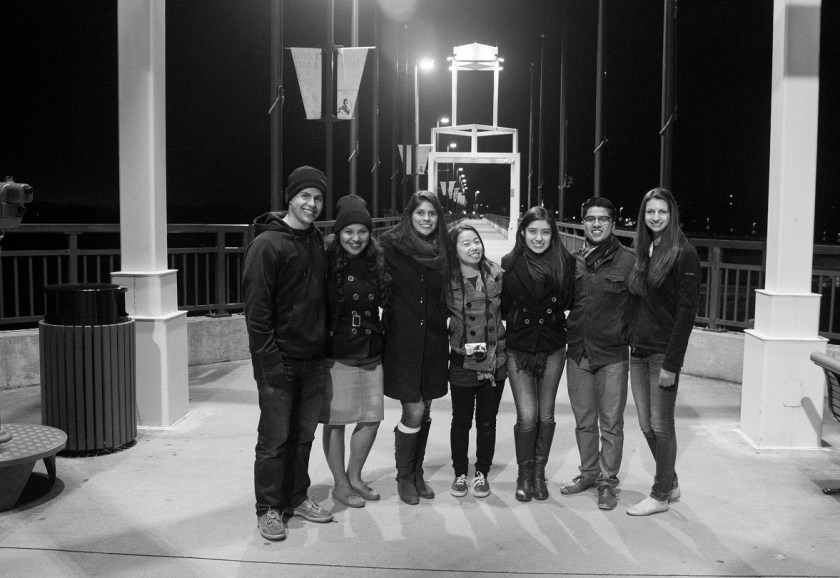
Although it was late at night and the lighting was low, the sight was impressive, but with stomachs rumbling and grumbling, we decided that it was time for dinner, turned, and headed for our last excursion of the day.

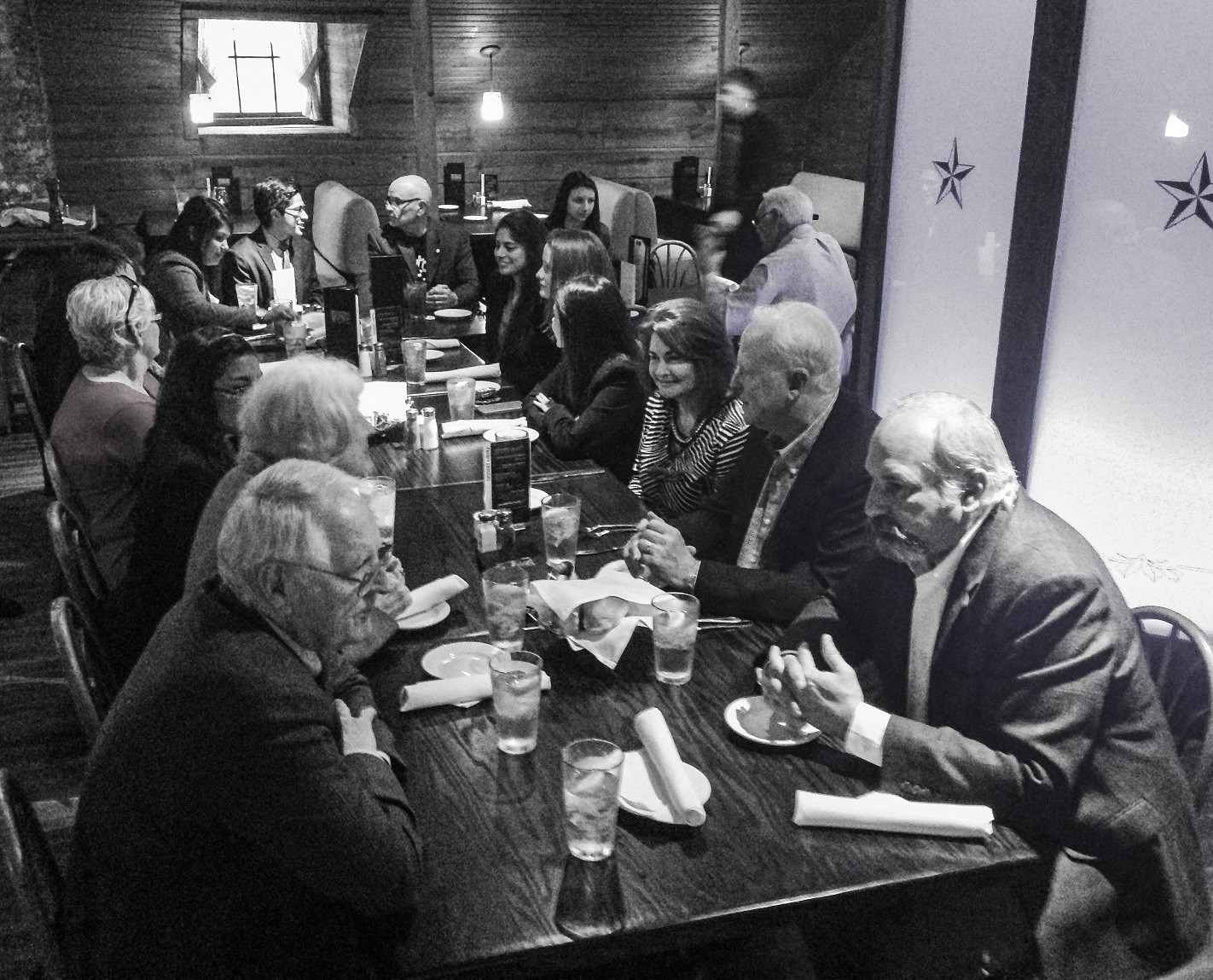
For dinner, we chose to go a fancier route in a restaurant called the Copper Grill. Although it seemed like we’ve had enough meat for the day at the Whole Hog Cafe, it didn’t really stop us from ordering meat-based meals again…
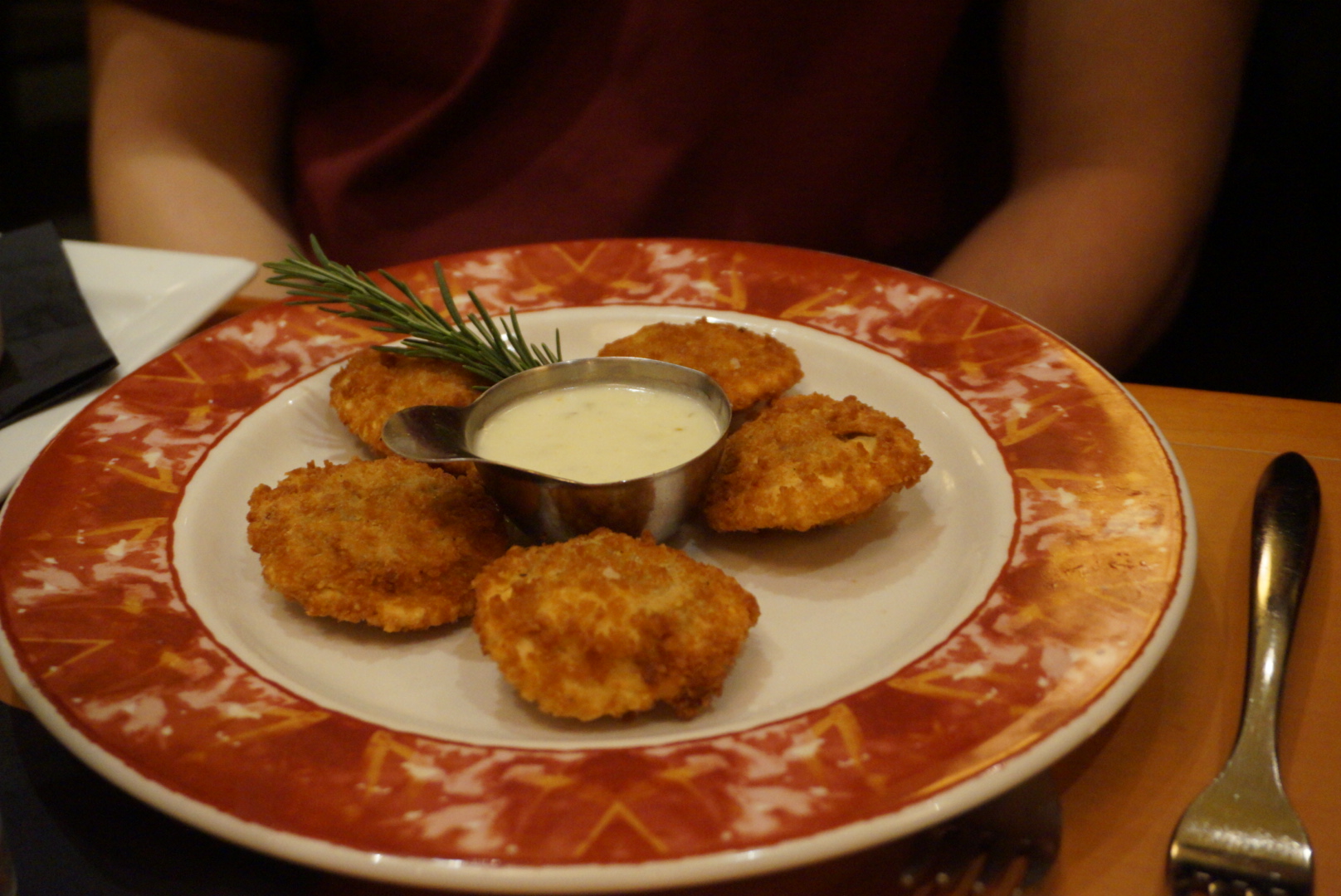
 …though we did try some seafood as well for a little bit of variety. Our meal took an adventurous route for those of us who tried oysters for the first time before our entrees arrived. The mushroom stuffed chicken, ribeye steak, bacon avocado burger, bacon wrapped shrimp, mushroom stuffed ravioli, and flat bread all looked appetizing when they arrived at our table (and they tasted as great as they looked!).

Most of us made sure to save room for the chocolate bread pudding topped with ice cream that we had for dessert…
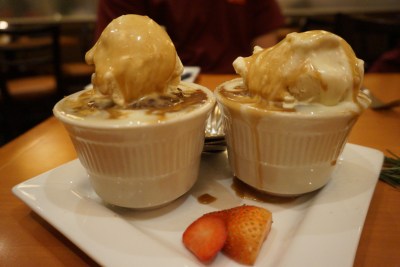
…which Alex, Mitch and I thoroughly enjoyed. It was a wonderful way to top a wonderful day.





















 Center for Law, Engagement, and Politics