Skip to content

Center for Law, Engagement, and Politics

Leap At SHSU!

  • About LEAP
  • LEAP Ambassadors
Center for Law, Engagement, and Politics

Category: Civic Engagement

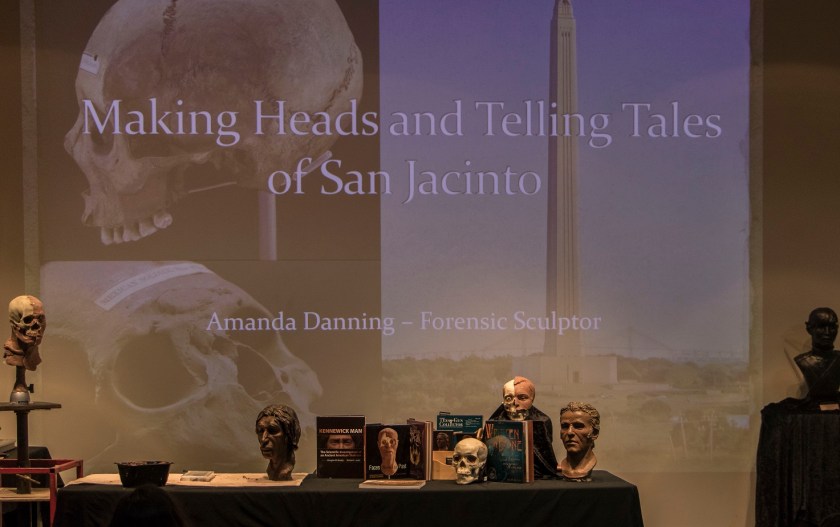
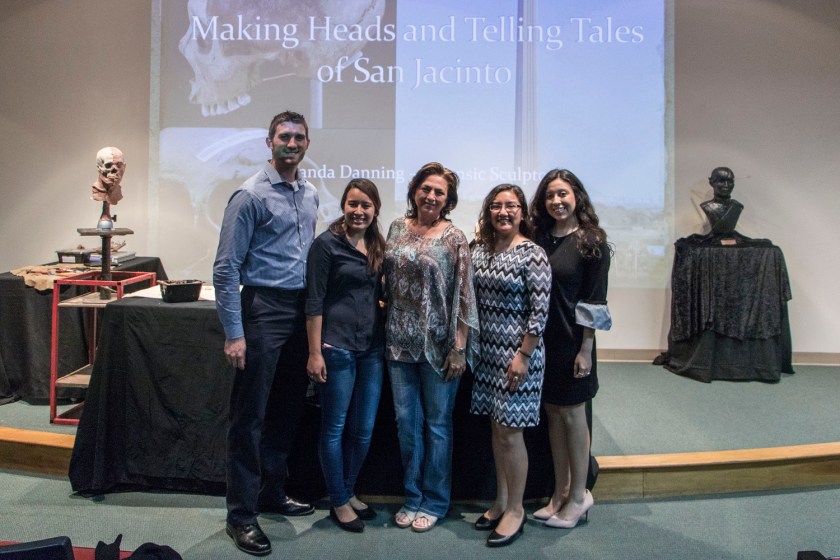
Making Heads and Telling Tales of San Jacinto

by Kaitlyn Tyra

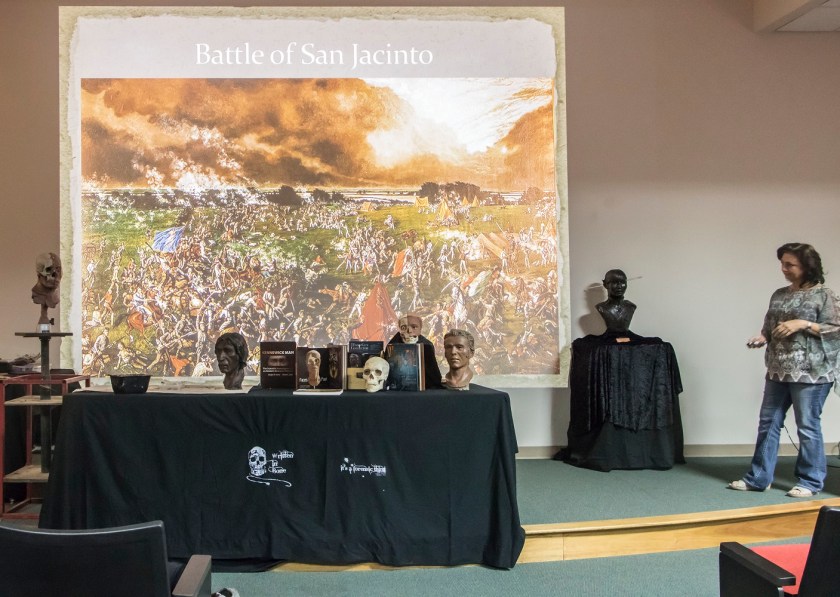
In anticipation of the 182nd Anniversary of the Battle of San Jacinto, the Sam Houston Memorial Museum brought Amanda Danning to present timely workshops on The San Jacinto Project. The Battle of San Jacinto took place in 1836 during the war for Texas Independence. Led by General Sam Houston, the battle led to the death of more than 700 Mexican soldiers, the capture of more than 730 Mexican soldiers, the capture of Mexican General Santa Anna, and, ultimately, Texas Independence.

SHSU, LEAP Center, LEAP Ambassadors, Sam Houston Memorial Museum, Forensic Art, Amanda Danning, San Jacinto

Amanda Danning, a forensic artist was has done work for the Smithsonian Museum, partnered with the SHMM to recreate five faces from skulls left behind on the battlefield.  The project benefits from Dannings’ expertise and lively style, and also from the fascinating history of the skulls.

SHSU, LEAP Center, LEAP Ambassadors, Sam Houston Memorial Museum, Forensic Art, Amanda Danning, San Jacinto

Following the War for Texas Independence, James Audubon traveled the country in search of new birds to paint for his book, Birds of America. While in the area, he visited the San Jacinto battlegrounds to collect a few skulls for his friend Samuel Morton in Pennsylvania who had a cranial collection. The skulls were preserved and recently commissioned by the SHMM to have the faces forensically recreated.

Ms. Danning showed each skulls and discussed the injuries to them, and even walked us through the causes of death.

SHSU, LEAP Center, LEAP Ambassadors, Sam Houston Memorial Museum, Forensic Art, Amanda Danning, San Jacinto

Her explanations made us feel as if we were standing on the battlefield looking in over the war-torn land.

SHSU, LEAP Center, LEAP Ambassadors, Sam Houston Memorial Museum, Forensic Art, Amanda Danning, San Jacinto

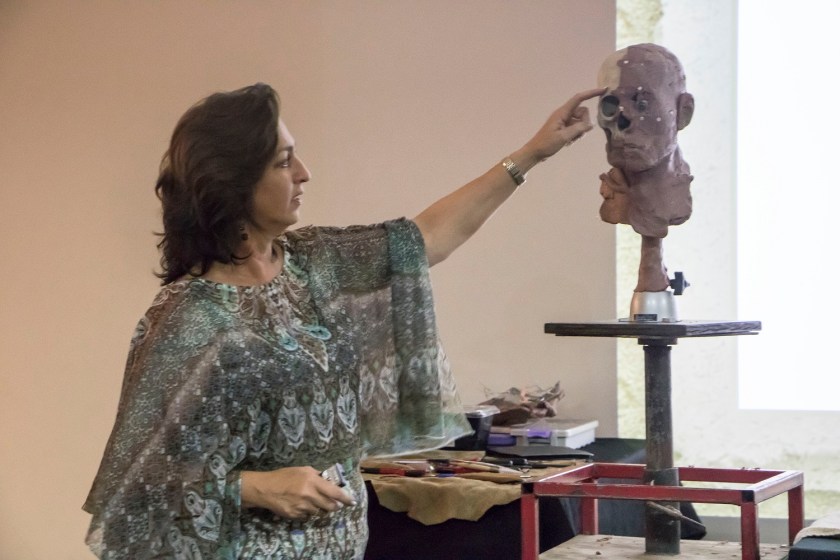
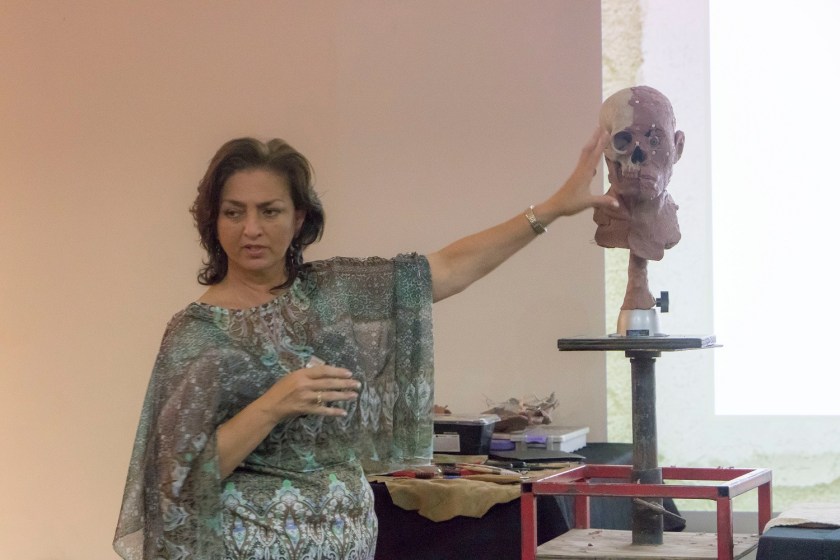
After learning about the skulls of the soldiers, Ms. Danning showed us the process for recreating faces. She begins the process by creating molds from the skulls. Once she has a good mold, she can begin adding facial features based on the indentations within the skull.

SHSU, LEAP Center, LEAP Ambassadors, Sam Houston Memorial Museum, Forensic Art, Amanda Danning, San Jacinto

Ms. Danning even explained how the indentations on the bone of the nose hole gives clues as to the shape on the nose. It was intriguing and overwhelming to learn about how Ms. Danning takes numerous scientific documents like statements from doctors, x-rays, and cat scans then translates the information into scientifically accurate art.

SHSU, LEAP Center, LEAP Ambassadors, Sam Houston Memorial Museum, Forensic Art, Amanda Danning, San Jacinto

For the Ambassador’s first exposure to forensic art, it was a very informative workshop. We learned about a new career field and one of the ways science combines with art to create realistic recreations of those whose memory would otherwise be lost. Thank you to the Sam Houston Memorial Museum for hosting this wonderful opportunity!

SHSU, LEAP Center, LEAP Ambassadors, Sam Houston Memorial Museum, Forensic Art, Amanda Danning, San Jacinto

Unknown's avatarAuthor mikeyawnPosted on May 5, 2018Format AsideCategories Art, Civic EngagementTags Amanda Danning, Forensic Art, LEAP Ambassadors, LEAP Center, Sam Houston Memorial Museum, San Jacinto, SHSULeave a comment on Making Heads and Telling Tales of San Jacinto

Justice Arrives: The 10th Court of Appeals on SHSU’s Campus

by Victoria McClendon-Leggett and Chase Kennemer

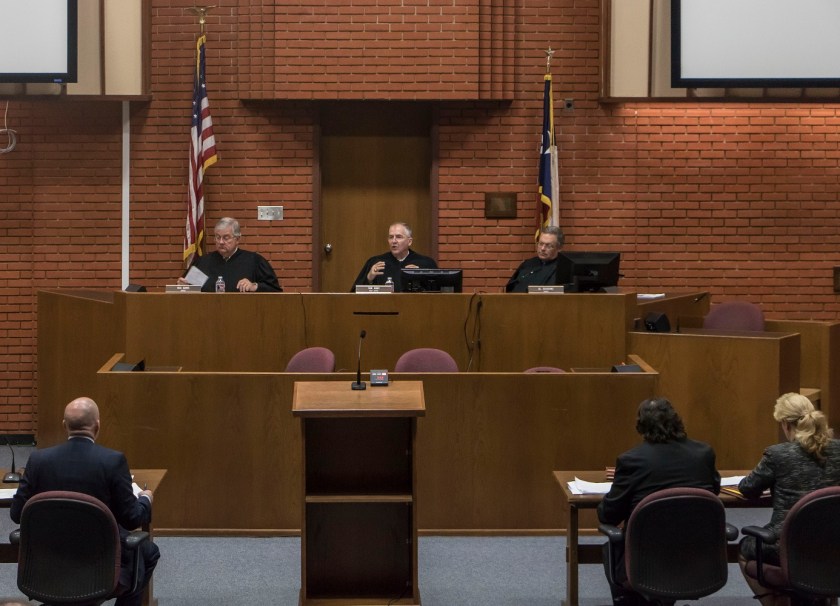
For the past eight years the LEAP Center has had the honor of bringing the Texas Tenth Court of Appeals to Sam Houston State University. The court has the privilege to travel to any county in which they have jurisdiction. Today the Court tried three trials in the Beto Criminal Justice Center’s Hazel B. Kerper Courtroom.

There were three oral arguments held there, two involving Texas A&M, and one involving a homicide case in Walker County. Students across campus packed the court room to the point where the Ambassadors gave up their seats to ensure there enough seats for people to sit!

SHSU, LEAP Center, LEAP Ambassadors, 10th Court of Appeals, Chief Justice Tom Gray, Justice Al Scoggins, Justice Rex Davis

With three separate cases at different times, we held a steady flow of people inside of the court room listening and thinking about what the outcome of the cases would be. While the veteran Ambassadors have experienced this before, we all still had a sense of awe and wonder as we watched the cases go back and forth.

SHSU, LEAP Center, LEAP Ambassadors, 10th Court of Appeals, Chief Justice Tom Gray, Justice Al Scoggins, Justice Rex Davis

As the Justices sat in their chairs, Chief Justice Gray explained the process of the Appeals Court.

SHSU, LEAP Center, LEAP Ambassadors, 10th Court of Appeals, Chief Justice Tom Gray, Justice Al Scoggins, Justice Rex Davis

The process is one of review, rather than retrying a case.  In other words, these cases have already been tried.  Their purpose here is to review the procedures followed during the original trial to determine whether they were appropriate.

These hearings are also unique in that the attorneys are given three minutes at the beginning of each hearing to turn to the audience–mostly students–and explain the facts of the case.  This segment has no bearing on the justices, but allows the audience to better follow the legal arguments.

SHSU, LEAP Center, LEAP Ambassadors, 10th Court of Appeals, Chief Justice Tom Gray, Justice Al Scoggins, Justice Rex Davis

Understanding background information of the case allowed us to better understand the oral arguments both attorneys made. Each party had approximately 20 minutes of argument time and, as we learned, the Appellant who presents the argument first, also receives five minutes for rebuttal after the Appellee has concluded his argument. During the last five minutes, the Appellant’s purpose is to counterclaim the argument(s) delivered by the other attorney.

The first case was one of wrongful death.  A TAMU student ingested cyanide obtained from a TAMU Lab, and his parents sued for wrongful death.  With the parents in the courtroom, this was a sad and somber case to hear.

SHSU, LEAP Center, LEAP Ambassadors, 10th Court of Appeals, Chief Justice Tom Gray, Justice Al Scoggins, Justice Rex Davis

The second case involved a homicide in Walker County, and featured local attorney Paxton Adams for the defense…

SHSU, LEAP Center, LEAP Ambassadors, 10th Court of Appeals, Chief Justice Tom Gray, Justice Al Scoggins, Justice Rex Davis

…and Walker County DA David Weeks (and first ADA, Stephanie Stroud) for the prosecution.

SHSU, LEAP Center, LEAP Ambassadors, 10th Court of Appeals, Chief Justice Tom Gray, Justice Al Scoggins, Justice Rex Davis

Both of these cases were packed, with approximately 125 people attending the first case (the courtroom only seats 112) and approximately 75 attending the second.

With strong attendance, interesting cases, and a unique opportunity in our midst, the court adjourned for lunch–which presented a new opportunity for the Ambassadors.

10th Court of Appeals Lunch, by Victoria McClendon-Leggett

After hearing the second oral argument, the crowds dispersed and a few of us lucky students had the opportunity to have lunch with the justices and two of our local attorneys, David Moorman and Will Durham, the latter of whom is the Walker County District Attorney Elect. We enjoyed a spread of sandwiches, pasta salad, potato chips, and iced tea as we sat around the long conference table in the Beto Criminal Justice Center on campus.

SHSU, LEAP Center, LEAP Ambassadors, 10th Court of Appeals, Chief Justice Tom Gray, Justice Al Scoggins, Justice Rex Davis

We were able to ask both the justices and attorneys about law school and what they enjoy most about their careers.

SHSU, LEAP Center, LEAP Ambassadors, 10th Court of Appeals, Chief Justice Tom Gray, Justice Al Scoggins, Justice Rex Davis

Chief Justice Gray told us that they picked these three cases especially to be heard on our campus because two revolved around another university like ours, and the other occurred here in Walker county.

SHSU, LEAP Center, LEAP Ambassadors, 10th Court of Appeals, Chief Justice Tom Gray, Justice Al Scoggins, Justice Rex Davis

The justices also praised the Criminal Justice Center’s Kerper Courtroom (thank you Dean Lyons!) and Sam Houston State University’s excellent facilities. While our university may not be as well-known as others, the privilege of having the 10th Court of Appeals hear cases on our campus is a major opportunity for pre-law students or others who like to follow the law.

We wished we were able to have more time with the justices, but our lunch time was limited because the last case was scheduled to start at 1pm. We thanked the justices for traveling all the way to our school and then got ready to sit in on the last case.

Final Case

The final case of the day involved a TAMU student who may or may not have been evading arrest.  He was found guilty by the trial court, but his attorneys argued that the jury failed to properly apply the law: that, without knowing definitively that an officer–who was on foot–was asking him to pull over, he could not be convicted of evading arrest.

This slideshow requires JavaScript.

His attorney was eloquent and made a clear case.  The state, however, argued that this was not even a case for appeal.

SHSU, LEAP Center, LEAP Ambassadors, 10th Court of Appeals, Chief Justice Tom Gray, Justice Al Scoggins, Justice Rex Davis

Although these cases are a wonderful way to see the process unfold, they do not bring resolution!  The cases may take months to be decided, so we were left wondering which side would prevail.

Wrapup

At the end of the arguments the LEAP students were able to meet with the justices again…

SHSU, LEAP Center, LEAP Ambassadors, 10th Court of Appeals, Chief Justice Tom Gray, Justice Al Scoggins, Justice Rex Davis

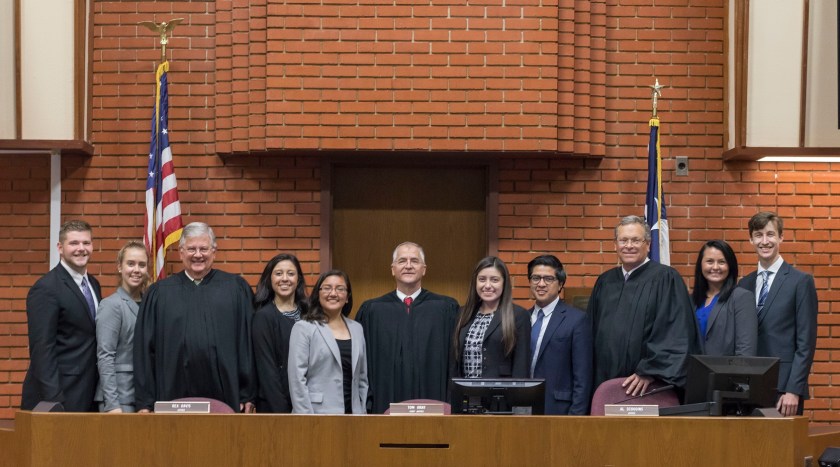
…and also to take a picture with all of the Justices (Justice Davis, Chief Justice Gray, and Justice Scoggins).

SHSU, LEAP Center, LEAP Ambassadors, 10th Court of Appeals, Chief Justice Tom Gray, Justice Al Scoggins, Justice Rex Davis

We are so grateful to all the justices to take their time to travel all the way to Huntsville and allow us to learn as much as possible from them.


Unknown's avatarAuthor mikeyawnPosted on May 4, 2018Format AsideCategories Civic Engagement, LawTags 10th Court of Appeals, Chief Justice Tom Gray, Justice Al Scoggins, Justice Rex Davis, LEAP Ambassadors, LEAP Center, SHSULeave a comment on Justice Arrives: The 10th Court of Appeals on SHSU’s Campus

Favorites from a Trip out West

It’s not easy traveling more than 2,000 miles by car, even if you have eleven days to complete the trip, but that’s what LEAP students did over their Spring Break.  In the process, they explored three states, two Capitol buildings, nine art museums, many conference sessions, and countless restaurants.  Below is their favorites from their experiences.

Favorite City:

  • Santa Fe: This won one handily, with five of the seven travelers selecting it. The town’s charm, shopping, art, and history were among the reasons this ranked high, not to mention it’s access to skiing.

SHSU, LEAP Center, LEAP Ambassadors, Santa Fe NM, New Mexico Capitol, Roundhouse

  • Denver came in second, beating out, well, Amarillo and Canyon.

SHSU, LEAP Center, LEAP Ambassadors, Denver CO, Denver Museum of Art, Luis Jimenez

Favorite Restaurants:

The top three restaurants were an eclectic bunch and reflect the diverse foods sought by LEAP Ambassadors on trips.

  • Bistro Vendome in Denver was probably the favorite experience of the bunch.  It was our first experience with French food as a LEAP group, but just one of many different cultures we have explored.
  • Also among the top restaurants was Los Potrillos, which offers “Santa Fe New Mexican.”  While it may have advertised itself as “New Mexcian,” we enjoyed some favorites of Old Mexico such as chicharrones  and nopalitos.
  • Finally, we also enjoyed the African fare at Jambo Cafe.

Favorite Museums:

The LEAP Ambassadors visited the following museums on their trip: (1) Panhandle Plains Museum, Amarillo Art Center, Cadillac Ranch, Denver Art Museum, Clifford Styll Museum, Kirkland Museum for Fine Arts, American Museum of Western Arts, New Mexico Museum of Art, Georgia O’Keeffe Museum, and the Allan Houser Sculpture Garden.

The three favorite were…

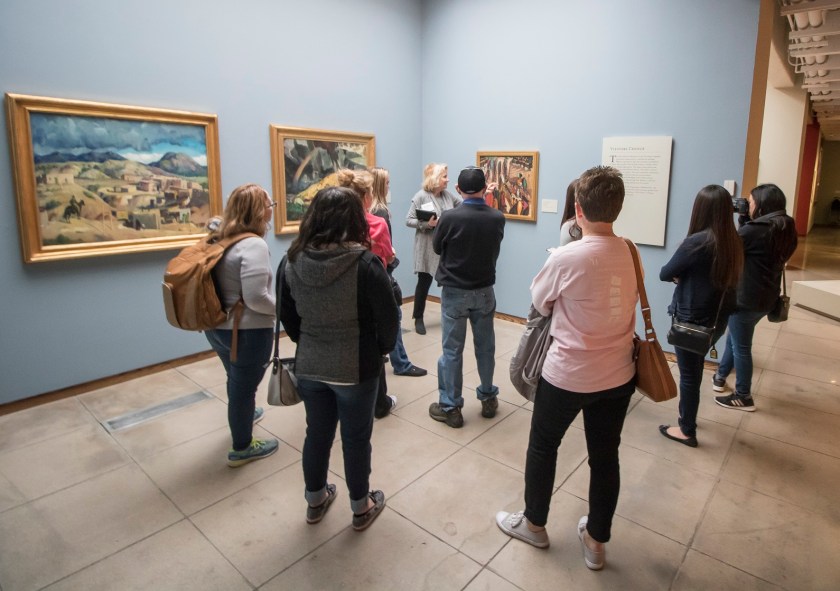
  • New Mexico Museum of Art, in Santa Fe.  While there were artists we knew (O’Keeffe, Diego Rivera, Jesus Moroles), there were also more artists from the southwest that we were less familiar with.  Examples include Alfred Morang, Gerald Cassidy, Andrew Dasburg, and Victor Huggins.  A big bonus was the tour, which was well done by our guide, and the many educational opportunities in the museum.

SHSU, LEAP Center, LEAP Ambassadors, Santa Fe NM, New Mexico Museum of Fine Arts

  • Georgia O’Keeffe: A smallish Museum dedicated to just the works of O’Keeffe, the Museum nonetheless does a wonderful job of providing a timeline of her works and exploring the different styles she worked in.  While most are familiar with her flowers and skulls, they may be less familiar with her abstracts or urban-scapes.

SHSU, LEAP Ambassadors, LEAP Center, Santa Fe, Georgia O'Keeffe Museum

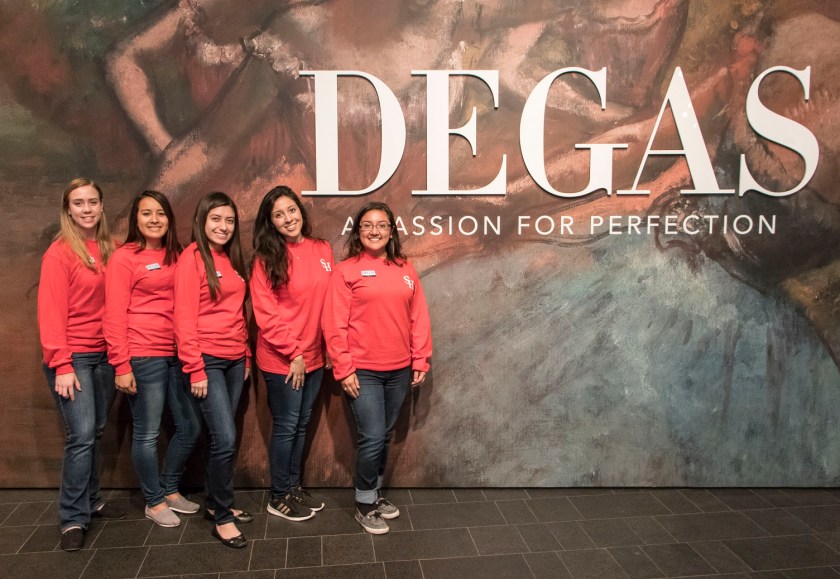
  • The Denver Art Museum had the Degas exhibit, and photos were allowed!  Without this exhibit, it’s not clear that this museum would have ranked among our top, inasmuch as much of the permanent collection was in storage.  But you cannot go wrong with Degas!

SHSU, LEAP Center, LEAP Ambassadors, Denver CO, Denver Museum of Art, Edgar Degas

  • Also of note was the Allan Houser Sculpture Garden.  This may have been the favorite of the group.  With some eighty sculptures on approximately 20 acres, it’s a great way to see Allan Houser’s work.

SHSU, LEAP Ambassadors, LEAP Center, Santa Fe, Allan Houser

Favorite Hike

  • Although we did numerous hikes, the Ambassadors’ favorite was the Rocky Mountain National Park, which offered sledding…

SHSU, LEAP Center, LEAP Ambassadors, Rocky Mountain National Park, Bear Lake

…hiking…

SHSU, LEAP Center, LEAP Ambassadors, Rocky Mountain National Park, Long's Peak

…views of wildlife…

SHSU, LEAP Center, LEAP Ambassadors, Rocky Mountain National Park

…and frozen lakes!

SHSU, LEAP Center, LEAP Ambassadors, Rocky Mountain National Park, Sprague Lake

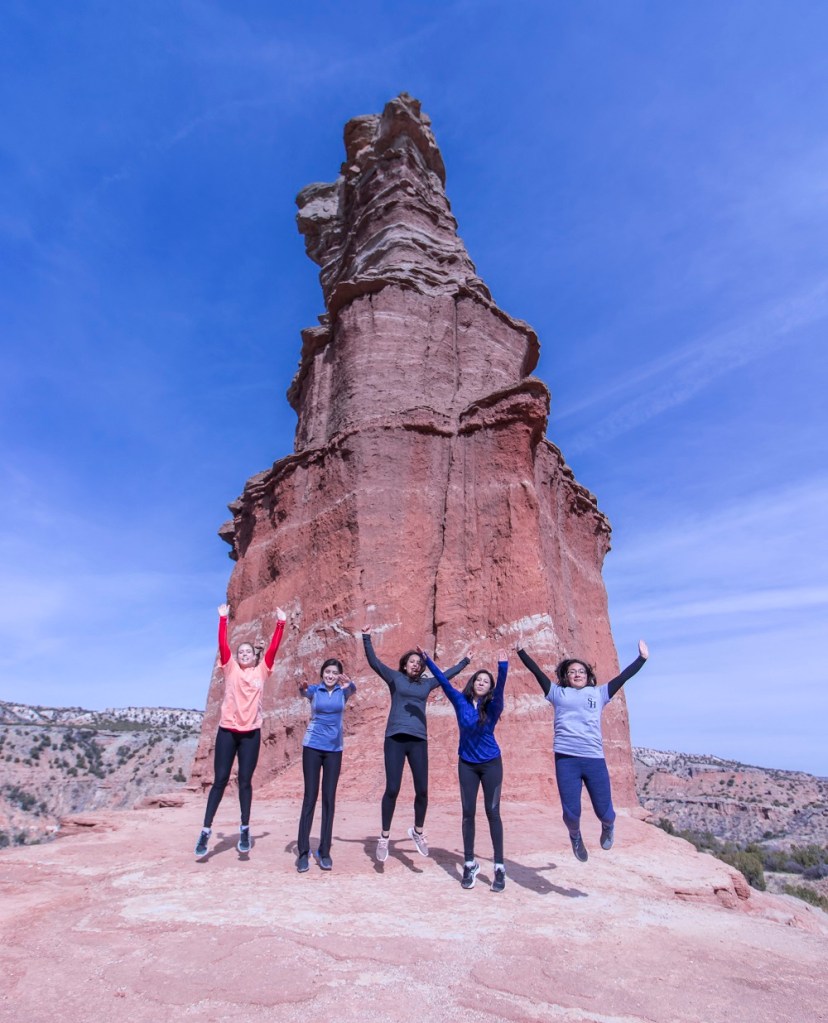
  • Two honorable mentions include the Lighthouse Trail in Palo Duro Canyon…

SHSU, LEAP Center, LEAP Ambassadors, Palo Duro Canyon, Lighthouse Trail

…and the Bandelier Monument outside of Santa Fe…

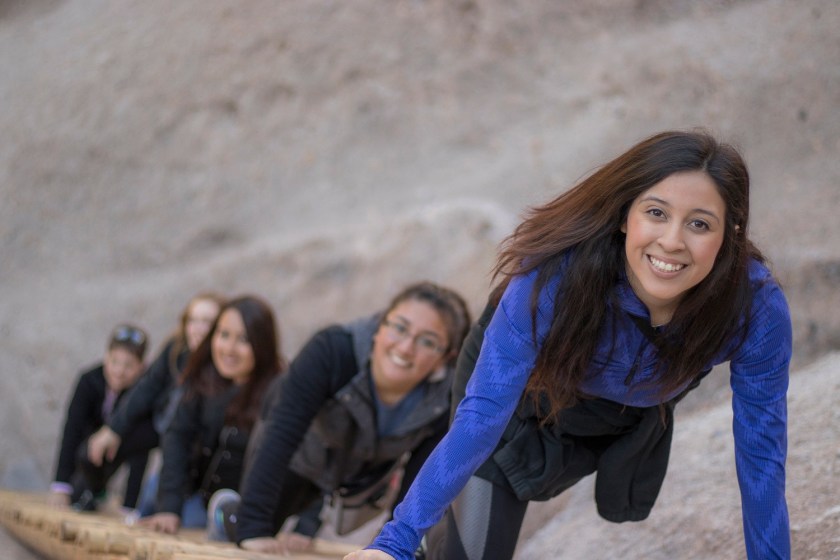
SHSU, LEAP Center, LEAP Ambassadors, Santa Fe, Bandelier Monument, Christina Perez


But of course if you are going to the western mountains early March, then skiing will be in a category of its own!  The students loved the skiing, with several of the students becoming skilled beginners!

This slideshow requires JavaScript.

Wrapping Up:

Personality studies show that “the big five” traits–(1) openness to new experiences, (2) conscientiousness, (3) extroversion, (4) agreeableness, and (5) neuroticism–are key shapers of personality and, by extension, shape our life happiness.  While everyone’s personality differs, almost all LEAP Ambassadors score high in conscientiousness, and most score high in openness to new experiences.  And it’s a good thing, because trips like this are designed to offer new experiences to those who can get the most from them.

Unknown's avatarAuthor mikeyawnPosted on April 26, 2018Format AsideCategories Art, Civic Engagement, TravelTags Amarillo TX, Canyon TX, Denver CO, Food, LEAP Ambassadors, LEAP Center, Santa NM, SHSU, TravelLeave a comment on Favorites from a Trip out West

Arts and Politics in Santa Fe

A new day in a new state! Day seven in our trip began in Santa Fe, New Mexico. We hit the road on a forty-minute drive ready to discover what Santa Fe had to offer.

Los Potrillos by Victoria McClendon-Leggett

For lunch, we stopped at a place on the outskirts of Santa Fe called Los Potrillos. It was a chance for us to sample some New Mexican fare, which is slightly different compared to the Tex-Mex we are so accustomed to back home. We seized the opportunity to taste their horchata water (rice water), which everyone agreed was the perfect blend of vanilla and a hint of cinnamon. For appetizers we ordered chicharrones (fried pork skins) in green salsa and nopalitos (cooked cactus). Both of the dishes were delicious, and we looked forward to our main courses. A few among us kept it simple and ordered gorditas, while others opted for more interesting choices like cabrito (goat meat stew), Albondigas (meatball soup), and tamal de casuela (cream of corn soup with chicken). We left the restaurant feeling a bit stuffed, but also with the energy that we needed to begin exploring the city of Santa Fe.

New Mexico Museum of Art by Bianca Saldierna

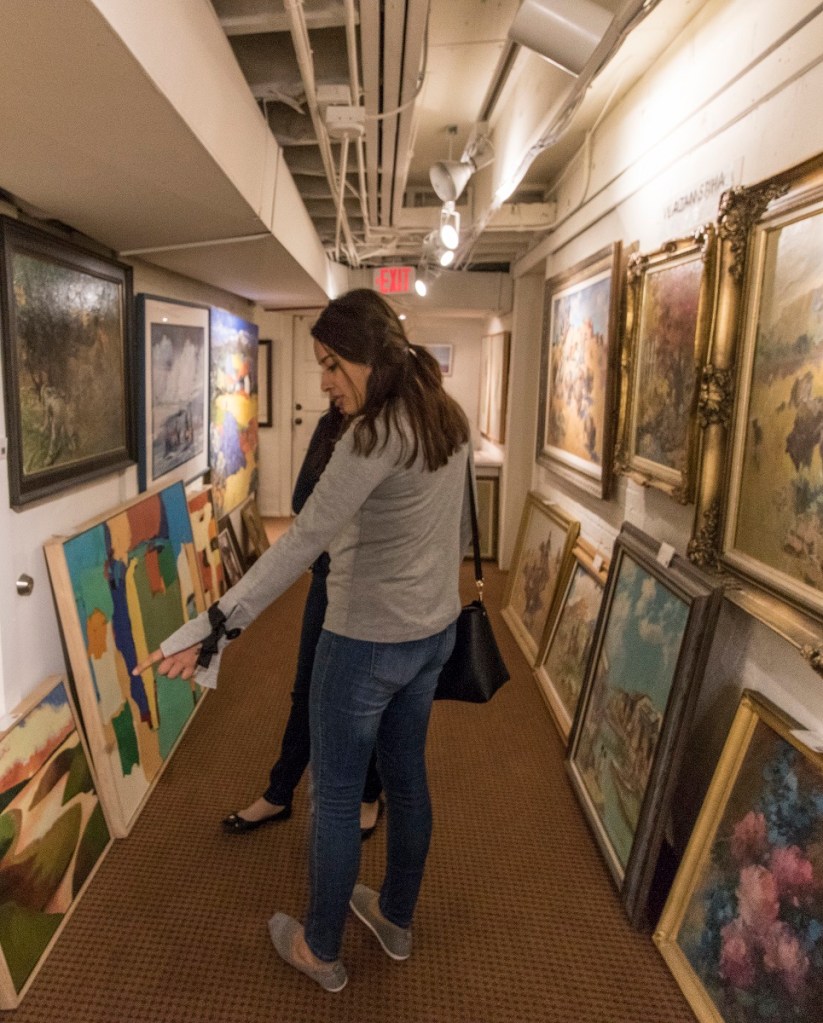
Before we continued our museum exploration, we entered our first actual art gallery: Windsor Betts, in Santa Fe.  The gallery has a host of interesting artists… SHSU, LEAP Center, LEAP Ambassadors, Santa Fe NM, Windsor Betts

…that they display across four floors of exhibit space.

SHSU, LEAP Center, LEAP Ambassadors, Santa Fe NM, Windsor Betts

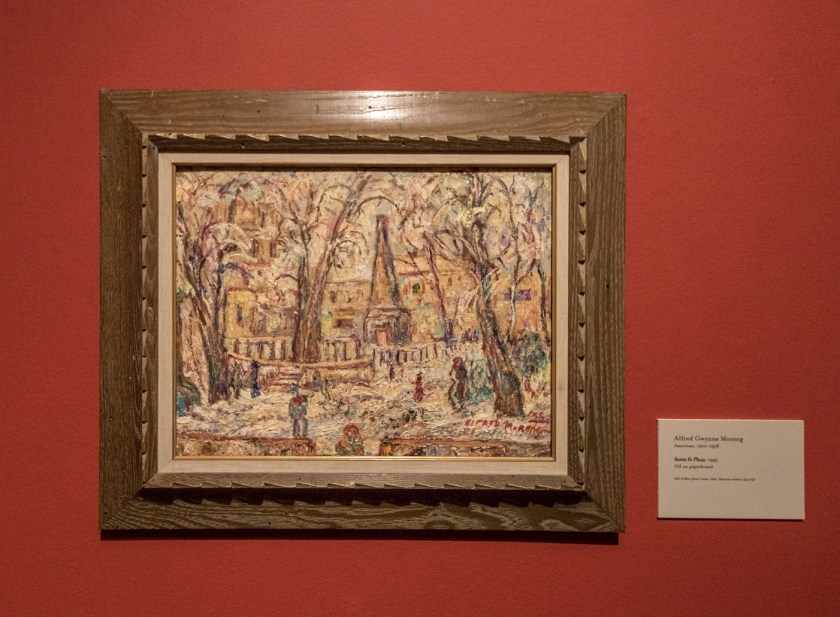
One of the artists we looked at was Alfred Morang and, indeed, our Professor, bought two of his pieces.  This would not be the last time we saw Alfred Morang art.

Following our trip through Windsor Betts, we made our way to the New Mexico Museum of Art, our 8th art museum on this trip.

SHSU, LEAP Center, LEAP Ambassadors, Santa Fe NM,  New Mexico Museum of Fine Arts

This year, the NMMA is celebrating its 100th anniversary, and interestingly, this museum is the oldest public museum west of the Mississippi. Since its opening, the museum has contributed to the development of the arts in New Mexico. Located in the museum is the St. Francis Auditorium which features a Santa Fe Pueblo Revival architecture, a regional mix of Spanish and Pueblo styles. The auditorium was built as a community center and it has historical value not only for the architectural features but also for the various cultural and musical events it houses.

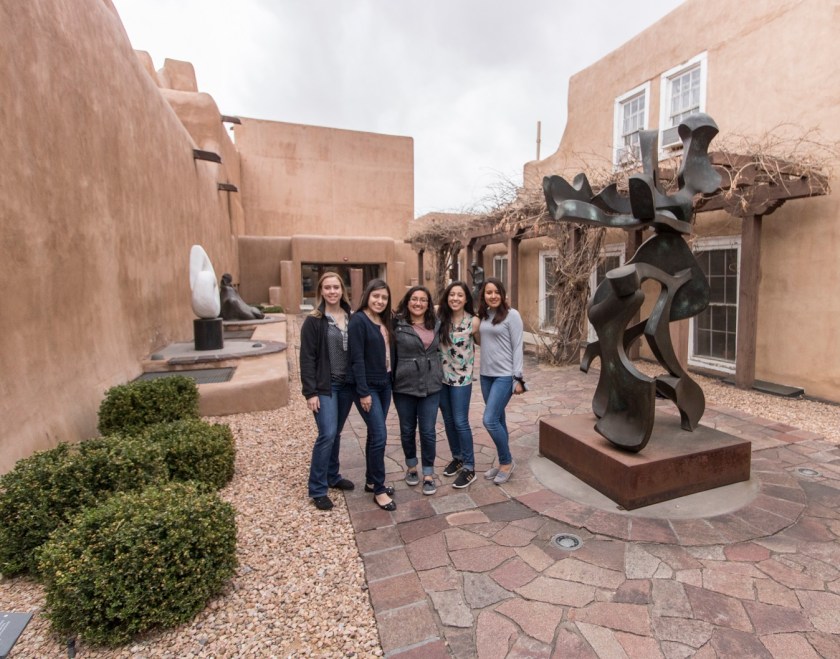
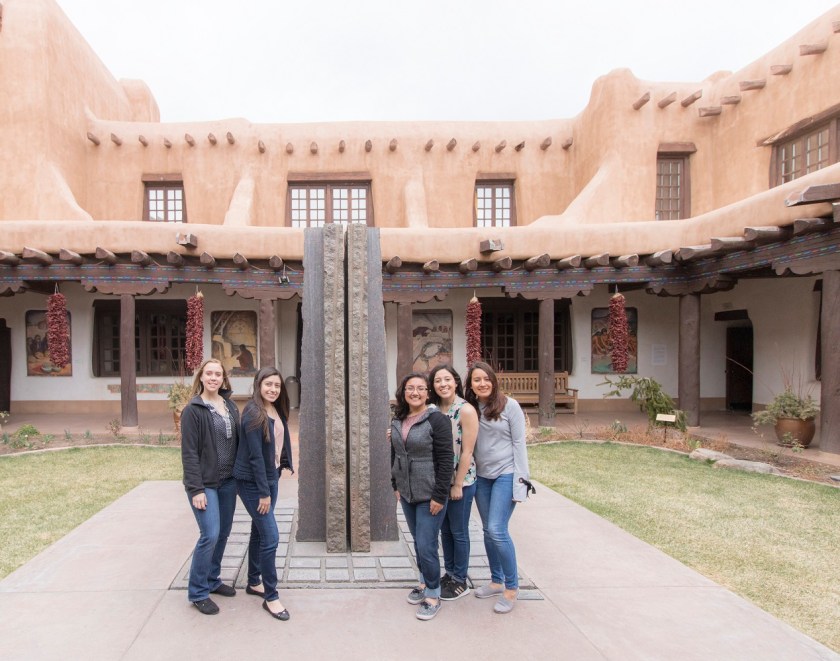
The tour continued through the interior courtyard of the museum. Our tour guide explained that interior court yards were a common architectural feature of Mexican and Spanish homes. The courtyard had an unmissable art piece by one of the best and most prominent Hispanic sculptors, Jesus Moroles…

SHSU, LEAP Center, LEAP Ambassadors, Santa Fe NM,  New Mexico Museum of Fine Arts, Jesus Moroles

…who has about 10 pieces in Huntsville! Also, the walls of the courtyard displayed several murals of Native Americans done in 1934 by Will Shuster, a local artist who was part of the Santa Fe Cinco Pintores in the 1920s. During this time, the State of New Mexico received the most amount of money for public art. Shuster was one of the first to portray the day-to-day life style and the culture of the Native Americans.

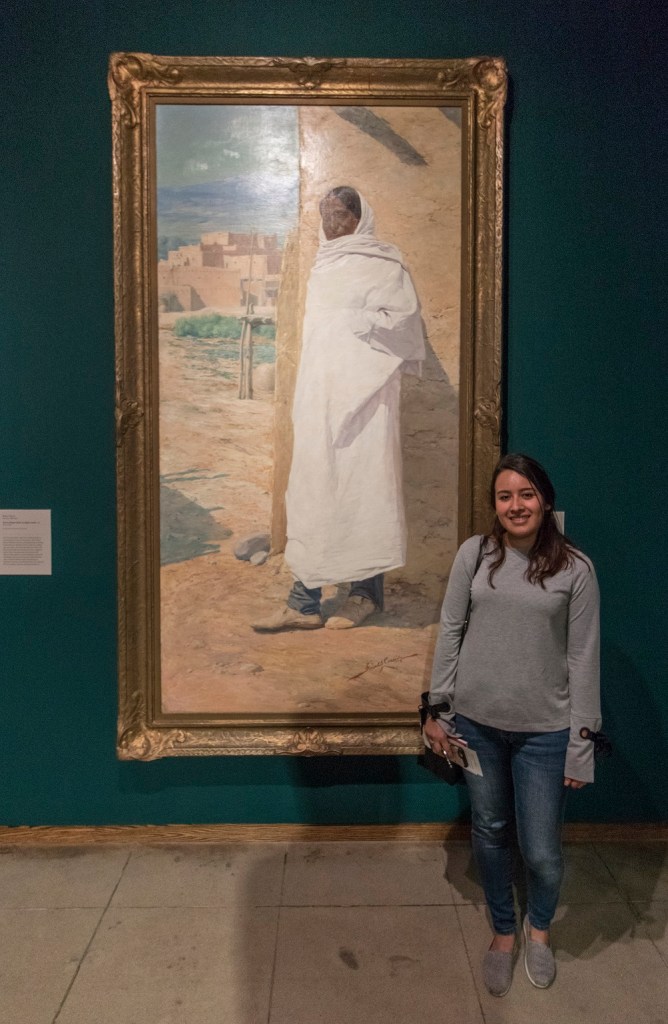
We were guided through the historical exhibit which has three themes: Collaboration, Culture and Community. One of the paintings in the exhibit depicted the archeologist and anthropologist Dr. Edgar Lee Hewett, who was the founder and director of the museum. Also displayed was an oil painting called “Cui Bono” by Gerald Cassidy, a well-known painter, muralist and designer.

SHSU, LEAP Center, LEAP Ambassadors, Santa Fe NM,  New Mexico Museum of Fine Arts

The word cui bono means “who stands,” and as we learned, it depicts Native American who stood at the entrance of their town and which represent the protection of their town, culture, and people.

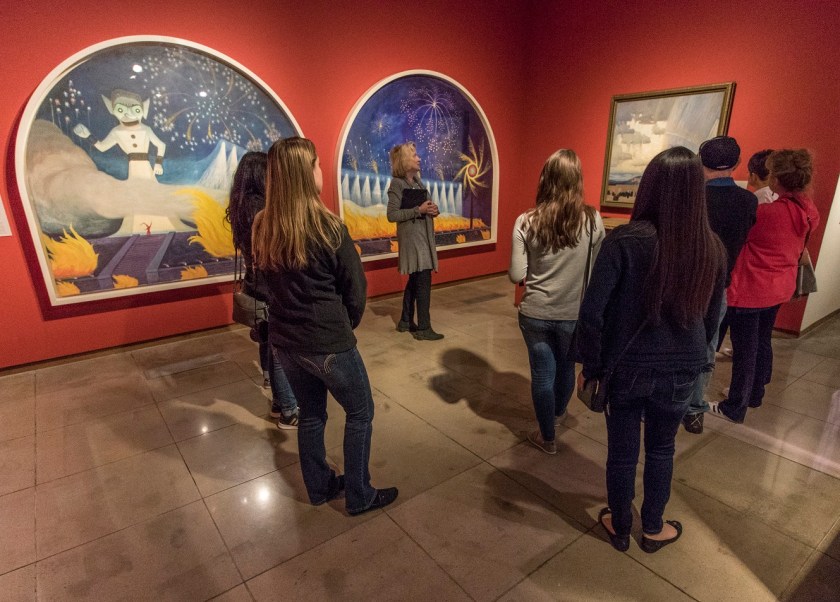
At the next exhibit, we were able to appreciate the art of Gustave Baumann who is recognized for his picturesque woodblock prints. The New Mexico Museum of Art’s collection of over 1,700 works by Baumann is the largest holding of the artist’s work in any public collection. We further learned about the muralist Will Shuster during our tour. In 1924, Shuster founded the Zozobra and Las Fiestas de Santa Fe, which is the oldest civic celebration of its kind in North America.

SHSU, LEAP Center, LEAP Ambassadors, Santa Fe NM,  New Mexico Museum of Fine Arts

As we learned, Zozobra is a fifty-foot bogeyman marionette which is burned every year to allegedly take away all the troubles and worries of the citizens.

SHSU, LEAP Center, LEAP Ambassadors, Santa Fe NM,  New Mexico Museum of Fine Arts

Once again, we were fortunate to admire pieces by renowned artist such as: Georgia O’Keeffe, Victor Higgins and even Diego Rivera!

SHSU, LEAP Center, LEAP Ambassadors, Santa Fe NM,  New Mexico Museum of Fine Arts

And, unexpectedly, we even saw a piece by Alfred Morang.

SHSU, LEAP Center, LEAP Ambassadors, Santa Fe NM,  New Mexico Museum of Fine Arts, Alfred Morang

The ambassadors left pleased to have yet added another museum to the list and to have gained knowledge about the art and culture of the State of New Mexico.

SHSU, LEAP Center, LEAP Ambassadors, Santa Fe NM,  New Mexico Museum of Fine Arts

New Mexico State Capitol by Karla Rosales

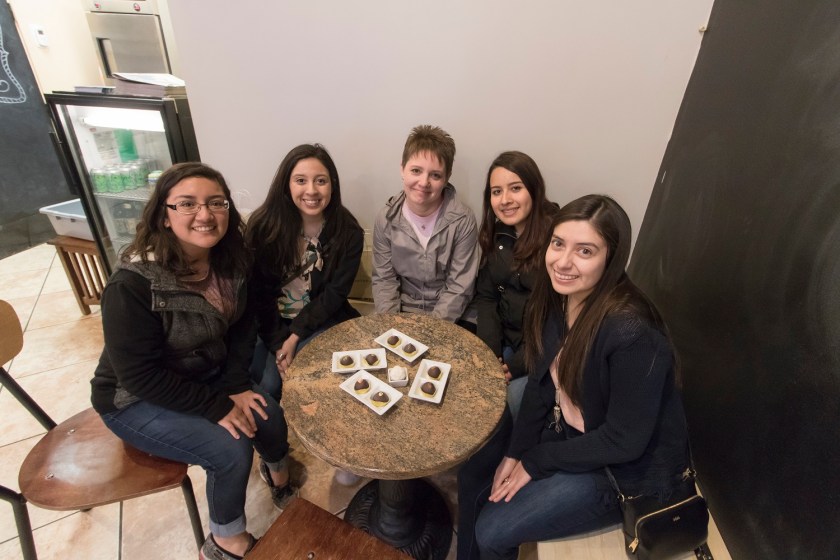
After a quick stop for some truffles and coffee…

SHSU, LEAP Center, LEAP Ambassadors, Santa Fe NM

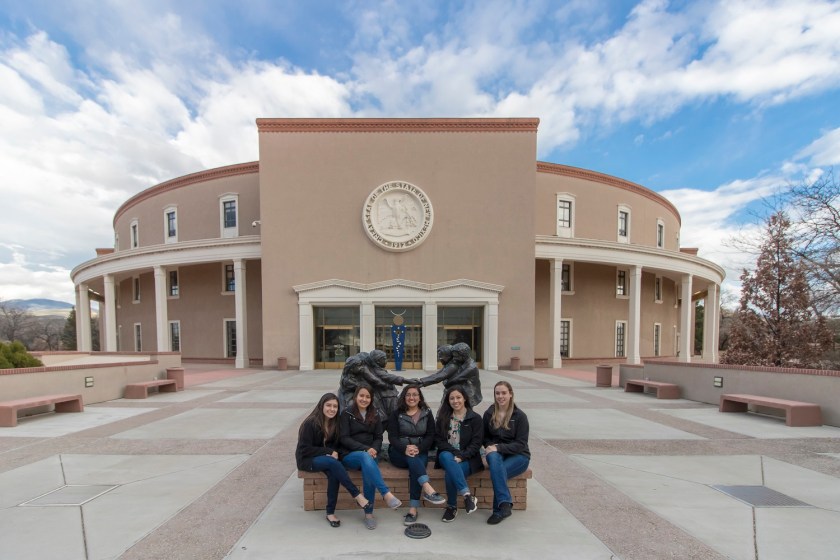
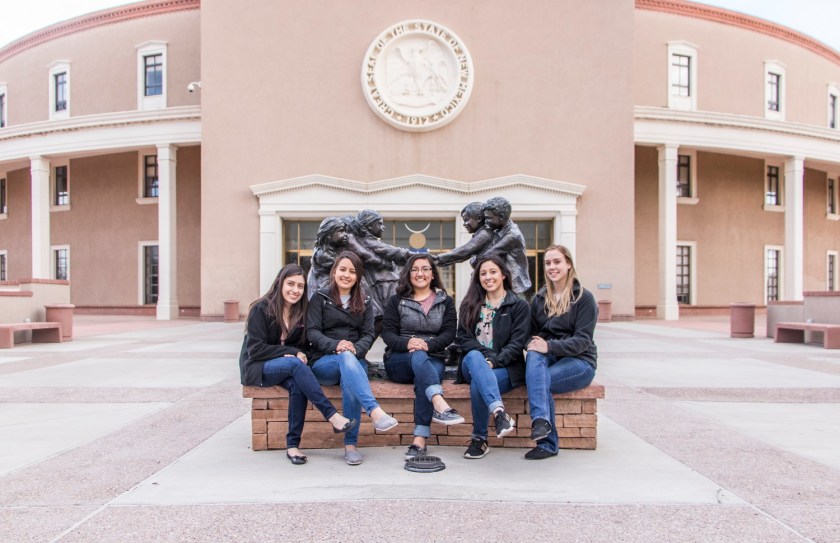
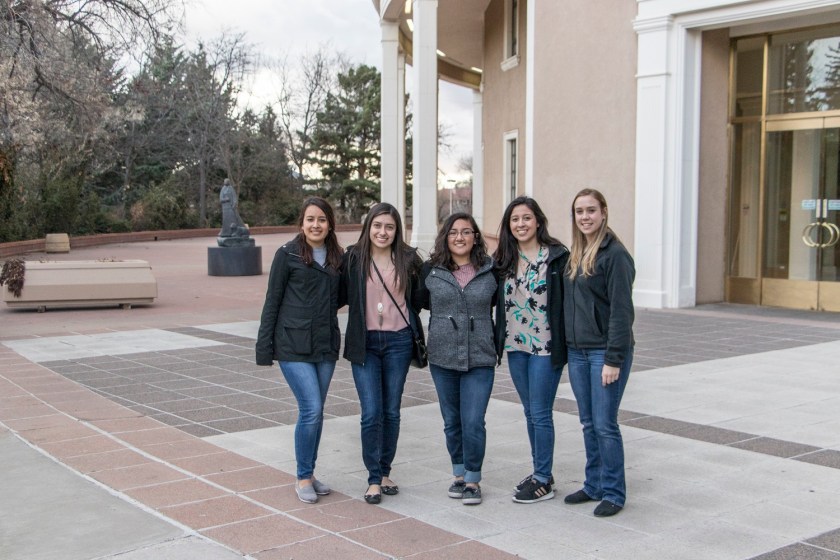
…we continued on our way to the New Mexico State Capitol. The Capitol is built in a New Mexico territorial style and Pueblo adobe architecture to fit in with the adobe architecture in Santa Fe.

SHSU, LEAP Center, LEAP Ambassadors, Santa Fe NM,  New Mexico Capitol, Roundhouse

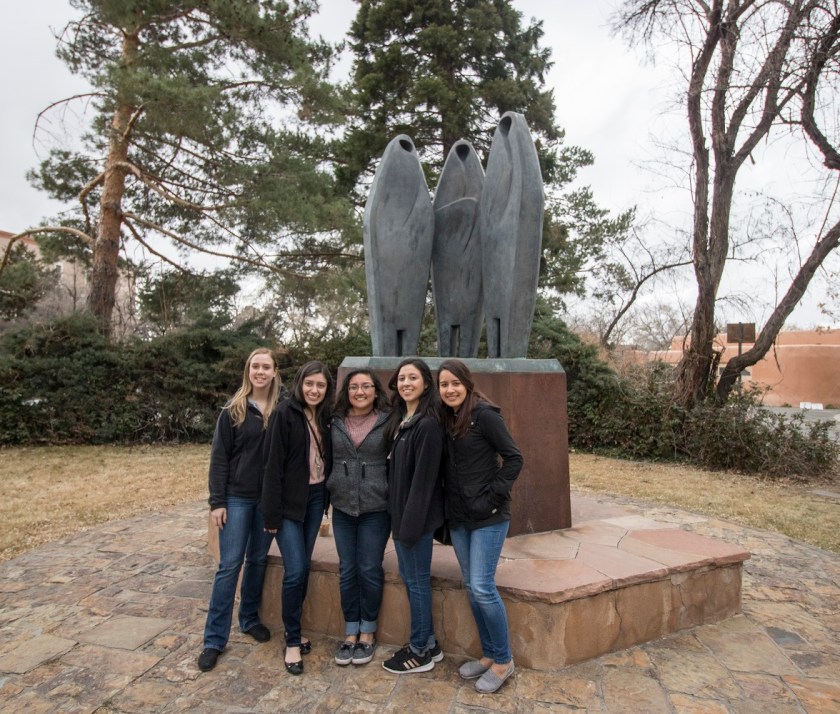
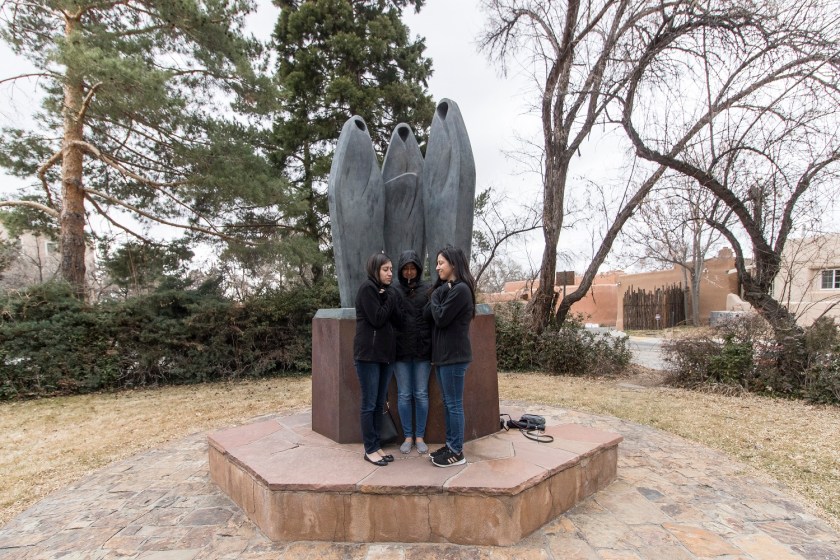
The style of the capitol was an unusual style to most of us because it lacked a dome. However, despite its peculiar architecture, we relished our tour very much. The capitol has over 600 art pieces which makes it very unique! We began our self-guided tour by admiring the exterior art. Among the recognized art pieces, we found a sculpture by Allan Houser…

SHSU, LEAP Center, LEAP Ambassadors, Santa Fe NM,  New Mexico Capitol, Roundhouse, Allan Houser

…which we decided to replicate…

SHSU, LEAP Center, LEAP Ambassadors, Santa Fe NM,  New Mexico Capitol, Roundhouse, Allan Houser

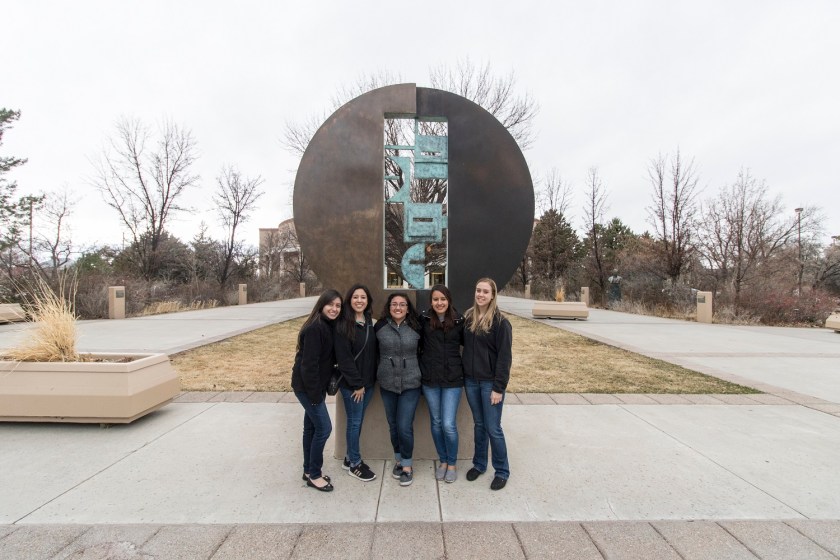
…and another by Dan Namingha…

SHSU, LEAP Center, LEAP Ambassadors, Santa Fe NM,  New Mexico Capitol, Roundhouse, Dan Namingha

…two famous local artists!

We learned there are some major differences between the New Mexico Legislature and the Texas Legislature. First, New Mexico only has 70 members of the House and 42 members of the Senate.

SHSU, LEAP Center, LEAP Ambassadors, Santa Fe NM,  New Mexico Capitol, Roundhouse

Second, the New Mexico Legislature only convenes for 60 days in odd numbered years and for 30 days in even numbered years. Third, the New Mexico Constitution prohibits any compensation to legislators other than a per diem and mileage allowance.

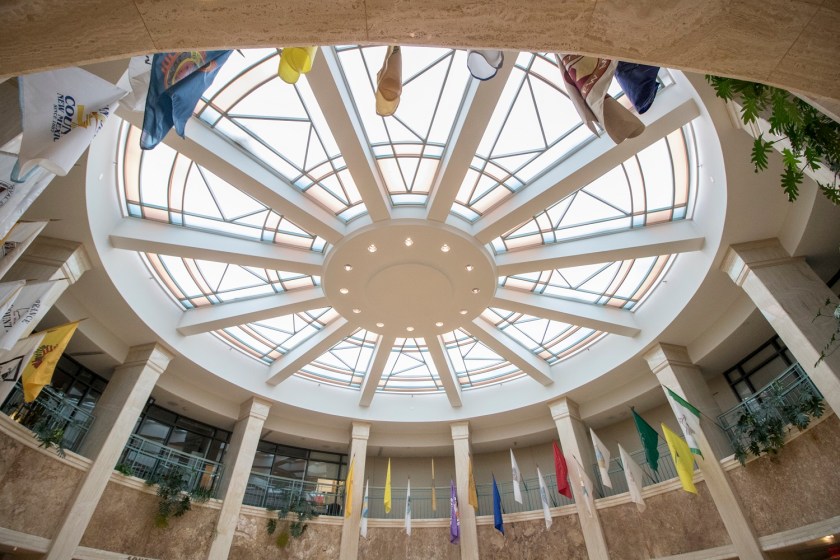
The rotunda is decorated with the flags of New Mexico’s 33 counties and with a Zia Sun symbol that represents a circular sun with linear rays extending in four directions. The number four is an important symbol to the Zia people as it represents the four directions of the earth, the four seasons of the year, the four times of the day, and the four stages of life.

SHSU, LEAP Center, LEAP Ambassadors, Santa Fe NM,  New Mexico Capitol, Roundhouse

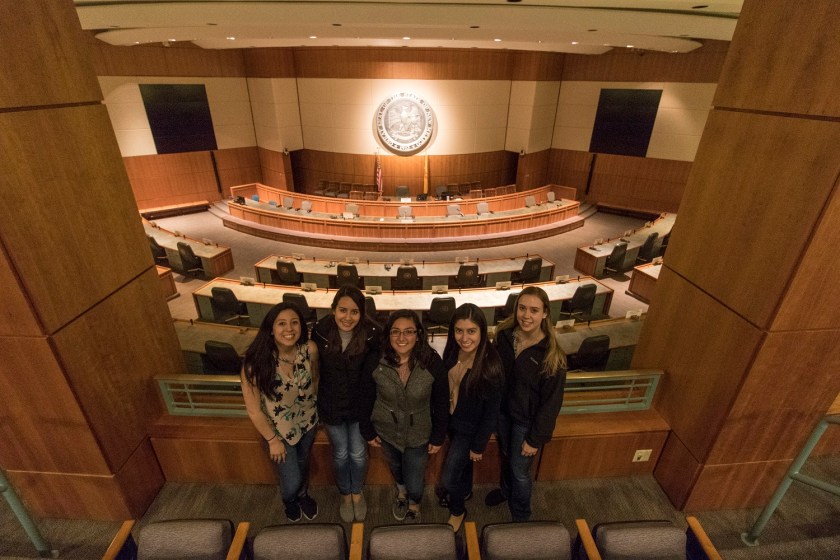
Next, we walked over to the house and senate gallery which had a very theater-like style. Almost along every wall in the Capitol we found a piece of art. Among those were pieces by Andrew Dasburg,  Glenna Goodacre…

SHSU, LEAP Center, LEAP Ambassadors, Santa Fe NM,  New Mexico Capitol, Roundhouse, Glenna Goodacre

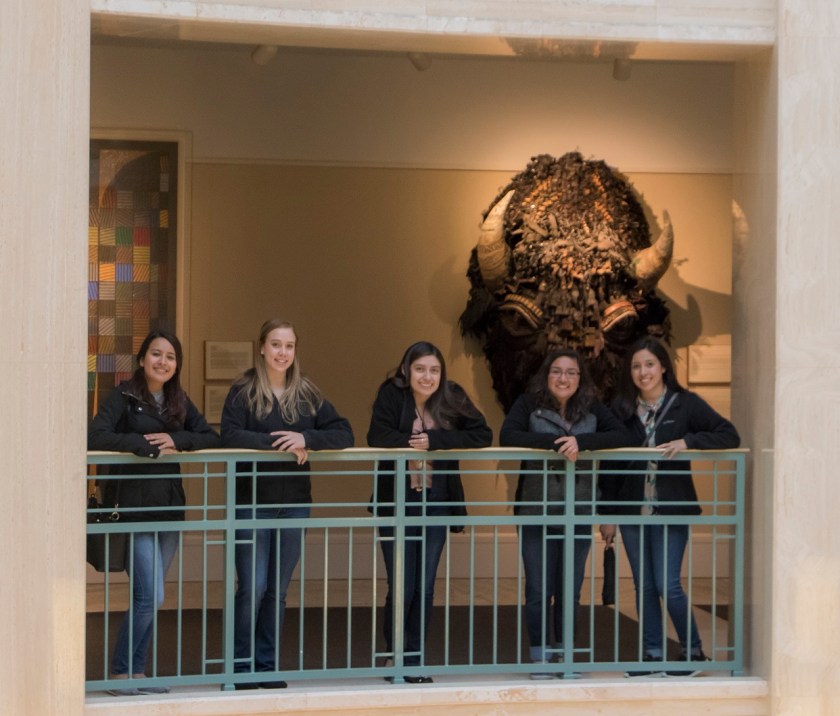
…Fritz Scholder, and the famous buffalo piece by Holly Hughes.

SHSU, LEAP Center, LEAP Ambassadors, Santa Fe NM,  New Mexico Capitol, Roundhouse

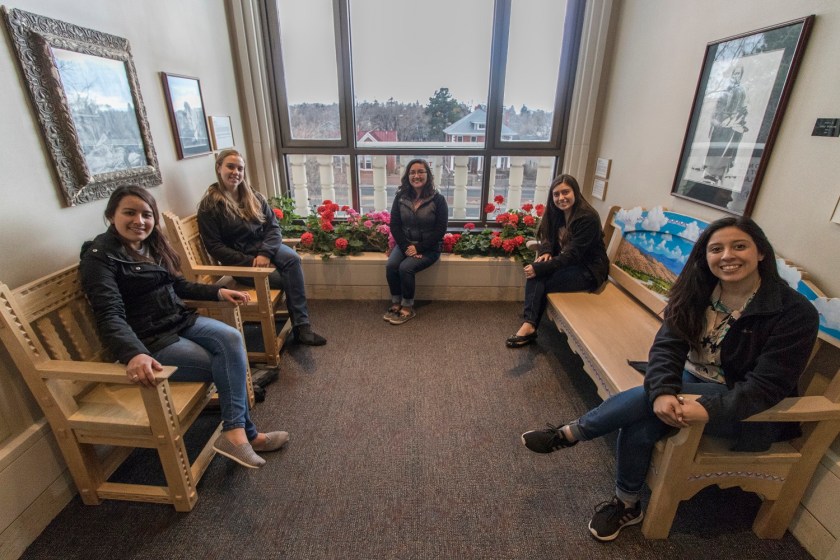
My personal favorites were the furniture pieces of art. In fact, almost every bench in the Capitol was a unique piece of art. Even though the New Mexico State Capitol is not a traditional State Capitol, its many different art pieces make it one of a kind!

SHSU, LEAP Center, LEAP Ambassadors, Santa Fe NM,  New Mexico Capitol, Roundhouse

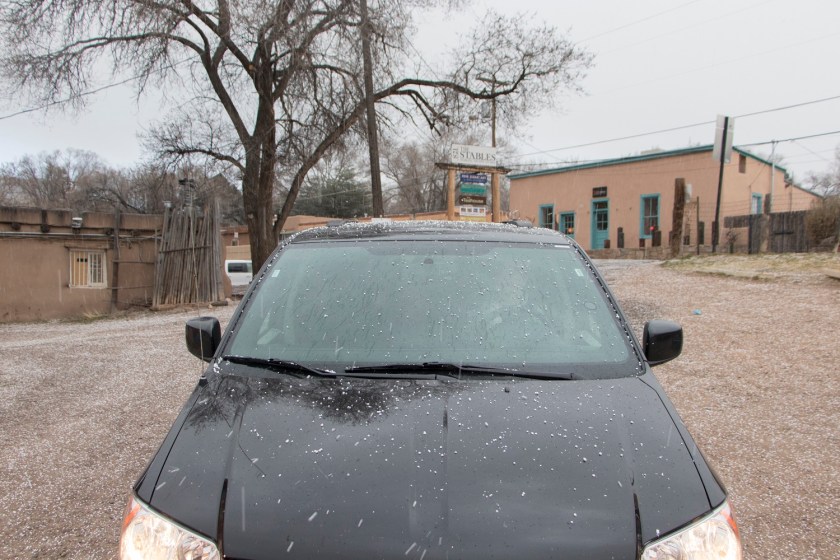
To wrap up our day we decided to drive through Canyon Road and take a quick walk around the downtown plaza. To our surprise, we learned that Santa Fe’s weather changes drastically in a matter of minutes! We began our drive through Canyon Road with sunny weather and a few moments later, the weather drastically changed to hail!

SHSU, LEAP Center, LEAP Ambassadors, Santa Fe NM,  Canyon Road

It was a nice surprise to see the road and art pieces slowly begin to be covered in white. Five minutes later the weather yet again surprised us with sun again and we decided to go for a stroll along the plaza and visit a few downtown shops, including the Worrell Gallery.  This had a personal connection for us, because Worrell did the sculpture (The Shaman) at the entrance to Seminole Canyon, which the LEAP Ambassadors have hiked.

SHSU, LEAP Center, LEAP Ambassadors, Santa Fe NM,  New Mexico Capitol, Roundhouse

After our interesting day, we headed home to rest for another busy day ahead.

SHSU, LEAP Center, LEAP Ambassadors, Santa Fe NM,  New Mexico Capitol, Roundhouse,  Allan Houser

Unknown's avatarAuthor mikeyawnPosted on March 26, 2018Format AsideCategories Art, Civic Engagement, Politics, TravelTags LEAP Ambassadors, LEAP Center, New Mexico Capitol, New Mexico Museum of Art, Roundhouse, Santa Fe NM, SHSU, Windsor BettsLeave a comment on Arts and Politics in Santa Fe

Rocking Rocky Mountain National Park

For our last day at the American Society for Public Administration annual conference, we got an early start so we could squeeze in one last half-day of learning before we made our way out to Rocky Mountain National Park. Again, the Leapsters decided to divide and conquer and tackle two different panels. “Public Service Motivation” and “Social Equity and Its Importance on Government” were our choices for our last conference day, and they were excellent ones!

SHSU, LEAP Center, LEAP Ambassadors, ASPA, Denver CO

Public Service Motivation, by Karla Rosales

One of our last conference panels was “Public Service Motivation” by Hyeong Ha, a post-doctoral fellow from the Social Science Korea Research Team-Yonsei University in Seoul, Korea, Mehmet Akif Demicioglu, an Assistant Professor at the National University of Singapore, and Taha Maneduddin, a doctoral student at Indiana University.  The panelists focused on different components that affect motivation of employees in public service from organizational image to social media use.

SHSU, LEAP Center, LEAP Ambassadors, Denver CO, ASPA

Public service motivation is a rising concept among businesses today, and various sectors have made it their mission to understand how to keep public service involvement by their employees at high levels. There are different ideas that affect motivation, but organizational image actually has a great impact on public employee motivation. Public employees are motivated by the perceived image of the organization as a whole. If the organization is seen as one with high prestige, then there is more motivation among its employees to serve the public because they have a greater sense of satisfaction when the organization is successful at accomplishing its mission. The image of the institution in this context includes both the internal and external.

SHSU, LEAP Center, LEAP Ambassadors, Denver CO, ASPA

We also learned about the effects of social media usage on an employee’s job motivation. The fact that almost all public agencies use social media makes it an important aspect when considering employee motivation. Social media affects transparency, accountability, and innovation in the public sector. Therefore, social media use by companies actually increases employee motivation because it allows for the employees to have more job engagement.

Social Equity and Its Impact on Governance by Victoria McClendon-Leggett

In the panel titled “Social Equity and its Impact on Governance,” we heard a variety of presentations from speakers from all over the world.

First was Professor Samantha Larson, University of Wisconsin-Oshkosh, and she demonstrated participatory photomapping software and how it can be used to fix issues in communities. When a picture of an issue in a community is taken, the software will save the photo and plot a point on a map where it was taken so that the local government can address it and come up with a solution.

Second, we heard about affirmative action in Brazilian higher education and how it has helped to combat social inequities across Brazil from Professor Fatima Bayma de Oliveira from the Fundacao Getulio Vargas Foundation in Rio De Janeiro.

Lastly, Professor Annie Miller from the University of Denver addressed how combating social inequity here at home can, in turn, help prevent terrorist organizations from recruiting marginalized American citizens. It was altogether a very interesting and informative panel.

We were disappointed to see the end of the ASPA conference and we couldn’t help but take one more glance behind us as we left.

SHSU, LEAP Center, LEAP Ambassadors, Denver CO, ASPA

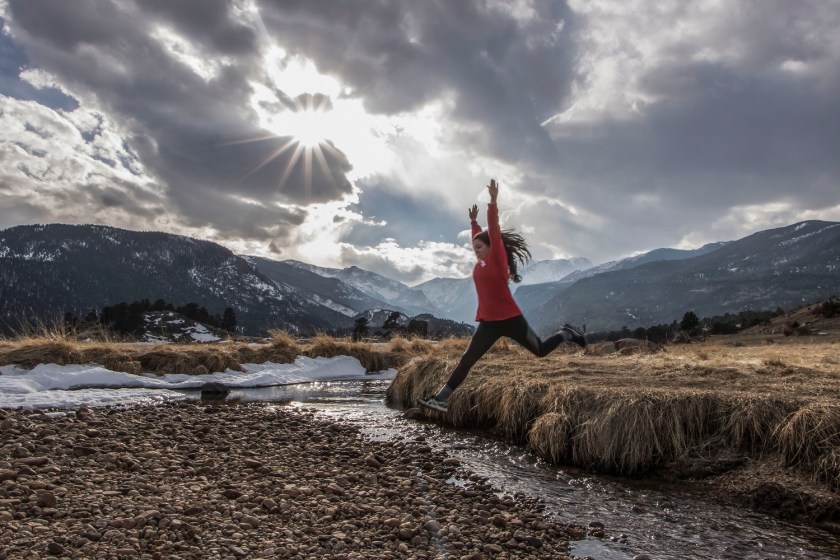
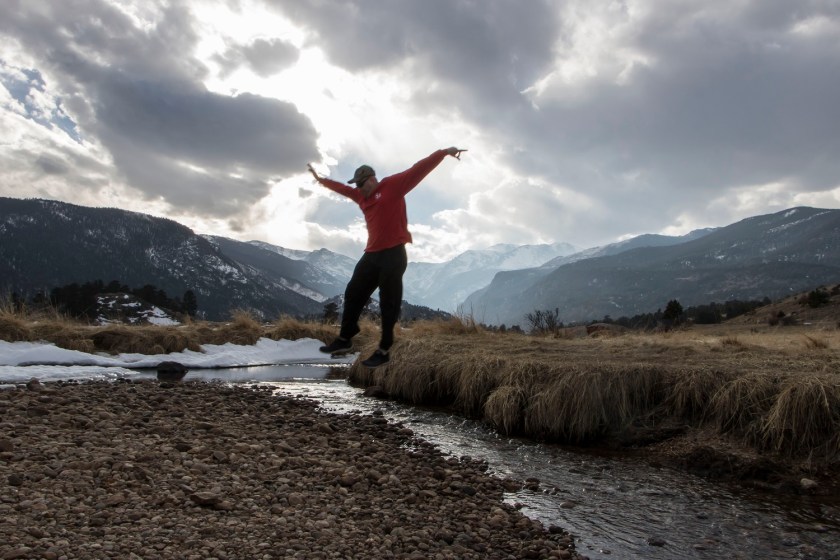
However, that disappointment was short-lived, as we looked forward to visiting a National Park.  Indeed, it made us feel like dancing.

This slideshow requires JavaScript.

Rocky Mountains, by Bianca Saldierna

Wildlife, frozen lakes, and snow sleds. Today was the day! Our long-awaited trek to the acclaimed Rocky Mountain National Park had arrived. We left our last ASPA panel and headed back to our hotel to change from suits into warmer threads, and hit the road.

For some of the LEAP ambassadors this was their eighth visit to a national park, while others among us were first-timers.

SHSU, LEAP Center, LEAP Ambassadors, Rocky Mountain National Park

Either way, the excitement among the group was palpable. After climbing trails and photographing the snow-covered mountains, we were fortunate enough to spot some of the wildlife that call some of the 358 square miles of park their home.

This slideshow requires JavaScript.

We admired elk as they grazed and the Steller’s jays with their deep blue colored bodies and black heads. Since it was our first time seeing elk, the Leapsters gave them (and the Leapsters themselves) an extensive photoshoot in their natural habitat…

SHSU, LEAP Center, LEAP Ambassadors, Rocky Mountain National Park, Elk

Although we were entranced by the Elk, we continued to look to look to our left, where we saw Longs Peak , which is the highest summit in Rocky Mountain National Park, standing proudly at over 14,ooo feet.  This peak has a special place in our hearts, because our friend Mark Burns did a wonderful photograph of Longs Peak for his National Parks Photography Project…


SHSU

…and one of our favorite paintings from the trip thus far was Birger Sandzen’s version of Long’s Peak.

SHSU, LEAP Center, LEAP Ambassadors, Rocky Mountain National Park, Birger Sandzen, Long's Peak

We did get a few photos of our own of Long’s Peak, perhaps emphasizing us than the Peak, but made for a great background!

SHSU, LEAP Center, LEAP Ambassadors, Rocky Mountain National Park, Long's Peak
SHSU, LEAP Center, LEAP Ambassadors, Rocky Mountain National Park

But, really, we had a beautiful backdrop, no matter which direction we turned…

SHSU, LEAP Center, LEAP Ambassadors, Rocky Mountain National Park

And, we took turns doing our now traditional “LEAP Photo”; by we, I mean Christina Perez…

SHSU, LEAP Center, LEAP Ambassadors, Rocky Mountain National Park

…Bianca Saldierna…

SHSU, LEAP Center, LEAP Ambassadors, Rocky Mountain National Park

…and even Professor Yawn…

SHSU, LEAP Center, LEAP Ambassadors, Rocky Mountain National Park

…who jumped the highest and the longest…and who also adds last minute changes to the blog…

SHSU, LEAP Center, LEAP Ambassadors, Rocky Mountain National Park

Although we enjoyed observing the wildlife immensely, we decided to take a break from admiring our surroundings to try our hand at sledding!

This slideshow requires JavaScript.

After a brief trek out to Bear Lake, we found a good location to hone our sledding skills. Some of the Leapsters were more successful than others, but everyone had a smile on their face, even when they fell.

SHSU, LEAP Center, LEAP Ambassadors, Rocky Mountain National Park, Bear Lake

Our last goal for the day was to photograph the sun as it slipped behind the mountains from across frozen Lake Sprague. Although we barely missed the sunset, we were still fortunate enough to witness some of its vivid colors behind the mountains, and Professor Yawn showed us all how to capture them with a camera even in low light.

SHSU, LEAP Center, LEAP Ambassadors, Rocky Mountain National Park, Sprague Lake

Without a doubt, the Ambassadors agreed that the spectacular views of the mountains were their favorite part of this trip. That magical moment would forever be imprinted in our heads.

SHSU, LEAP Center, LEAP Ambassadors, Rocky Mountain National Park

In The Mediterranean by Christina Perez

Ravenous after our time spent traipsing around “RoMo” National Park, we decided to pass through a new city to try a new place for dinner. A town of about 108,090, Boulder is home to the University of Colorado, Boulder.

Christina, surprisingly, picked out a Mediterranean place for dinner. It was called “The Mediterranean” or “The Med” for short and it is in the heart of downtown Boulder.

Although we weren’t dressed appropriately for a nicer restaurant they accommodated us without batting an eye. We began our meal by sampling several of their tasty tapas including Burrata Caprese, Ratatouille, Falafel, Baba Ganouj.

Our entrée, Paella, was served family style so we all shared the Spanish dish. Paella is traditionally cooked with a variety of different meats and seafoods in one dish, and ours consisted of chicken, shrimp, muscles, chorizo, and clams over Spanish rice.

SHSU, LEAP Center, LEAP Ambassadors, Boulder CO, The Med

While we finished up dinner we celebrated the success of one of our own. Karla, a senior LEAP Ambassador, had just received her first acceptance letter to law school earlier in the afternoon!

We left Boulder with big smiles and full hearts ready to make the most of the second half of our ten-day trip.

SHSU, LEAP Center, LEAP Ambassadors, Rocky Mountain National Park

Unknown's avatarAuthor mikeyawnPosted on March 18, 2018Format AsideCategories Civic Engagement, Civil Rights, Politics, TravelTags ASPA, Bear Lake, Elk, LEAP Ambassadors, LEAP Center, Long's Peak, Rocky Mountain National Park, SHSULeave a comment on Rocking Rocky Mountain National Park

ASPA in the Aspens

Our Monday was a full day, one filled mostly with conference panels.  But we managed to fit in a capitol tour and  dinner at a French restaurant!

Denver State Capitol Tour, by Victoria McClendon-Leggett

Approaching the Colorado State Capitol, we couldn’t help but be drawn to the breathtaking architecture…

SHSU, LEAP Center, LEAP Ambassadors, ASPA, American Society of Public Administration, Denver CO, Capitol Building, Elijah Myers

…and as we entered and our eyes adjusted to the light, we could see that the interior was also just as beautiful. Our large group of seven was unable to join the guided tour group. Luckily, we found an extremely knowledgeable and enthusiastic tour guide in Professor Yawn, who had done his research on the State of Colorado. We learned that the name Colorado means “colored red” in Spanish, and that this is the reason for many of the red designs painted into the ceilings throughout the building.

As we wandered through the halls, we couldn’t help but notice many architectural similarities between the building and our own Texas state capitol, and Professor Yawn pointed out that they were both constructed within a few years of each other by the same architect, Elijah E. Myers. We also learned that the Colorado State Capitol, in spite of being in The Mile High City, is actually only the third highest capitol in the United States in regards to elevation above sea level. Holding first place is Sante Fe, New Mexico, at 7,199 feet, and second is Cheyenne, Wyoming, at 6,062 feet above sea level. We were excited, though, when we realized we’d be able to see two of those three during this one trip!

SHSU, LEAP Center, LEAP Ambassadors, ASPA, American Society of Public Administration, Denver CO, Elijah Myers, Capitol Building

The dome itself is actually “only” 272 feet high, which is smaller than the TX Capitol’s and the US Capitol’s, but impressive nonetheless.

SHSU, LEAP Center, LEAP Ambassadors, ASPA, American Society of Public Administration, Denver CO, Capitol Building, Elijah Myers

We also had the opportunity to visit both the House and the Senate, both of which were impressive chambers….

SHSU, LEAP Center, LEAP Ambassadors, ASPA, American Society of Public Administration, Denver CO, Capitol Building, Elijah Myers

…and we even heard a real or, possibly, tongue-in-cheek on the floor, in which one member may have misheard (depending on the source) the final vote on a bill.

Not all was seriousness, however.  We had a chance, for example, to see if we could “stuff” a phone booth.

SHSU, LEAP Center, LEAP Ambassadors, ASPA, American Society of Public Administration, Denver CO

And, we dropped in on a tour…

SHSU, LEAP Center, LEAP Ambassadors, ASPA, American Society of Public Administration, Denver CO

…and learned that many visitors had, through much imagination, seen various images in the fabulous patterns in the Capitol’s rose onyx stone.  In one case, for example, visitors see General George Washington in his common three-point hat.

SHSU, LEAP Center, LEAP Ambassadors, ASPA, American Society of Public Administration, Denver CO, Elijah Myers

Also, tying some things together, we were able to see art from Allen Tupper True, whose art we’ve seen in previous museums.  In the Capitol building, he did large murals showing the history of the state.

ASPA Panel: Smart Cities, by Karla Rosales

After our self-guided tour of the capitol led by Professor Yawn, we headed to our first panel of the day at ASPA. We arrived just in time for the Presidential Panel “Smart Cities: A Comparative Examination.” The panel was presented by Julia Richman, Chief Innovation and Analytics Officer and Interim Chief Information Officer for the City of Boulder, Emily Silverman, Technical Program Manager for the City and County of Denver, and John Tolva, Principal of CityFi in Chicago.

SHSU, LEAP Center, LEAP Ambassadors, ASPA, American Society of Public Administration, Denver CO, Smart Cities

They discussed developments and difficulties that smart cities are facing. There has been a tremendous acceleration of technology in our country and as a result, smart cities are rising. Some cities are implementing technology into their policy decisions. But even though technology is advancing extremely fast, many cities are not advancing at pace. Cities must understand how to evolve to keep up with the advances: addressing slow processes, making decisions and implementing more quickly, cutting red tape, and incorporating transparency.

Some cities have hired innovation officers to assist with implementation of innovative tools for policymaking. As we learned in a previous panel, data is crucial when it comes to policymaking and luckily technology resources are advancing to improve data gathering systems. The panel pointed out that it is time for cities to evolve and begin using advanced data systems to improve data already in place. “Data is our new oil,” one of the panelists pointed out.

Data, performance management, and intelligence are the great tools to advance and grow as a smart city. Interpreting data is one of the key components to transforming city policies by analyzing what problems the particular city is facing. Some of the problems could be traffic fatalities or air quality. For example, air quality data could help us determine if there is an issue. Then, as a solution air quality sites could be implemented to keep track of the quality of air. This is especially important when determining recess time for students, especially for students suffering from asthma, among other considerations. If the sensors determine poor air quality on a particular day, there might be cause (data-based) to reduce the recess time on that day.

However, as technology evolves cities face additional, systematic problems. Security is one component that could be at risk. We must find new ways to protect data. Cities should have complete control over their data by using a secure cloud that allows for privacy and control. This is only one of the potential risks facing technology advancement. Even though data and technology advancement is very important, community involvement is also a component needed to make a difference in a city. The city needs to come together to figure out the ultimate mission and what they are hoping to accomplish.

SHSU, LEAP Center, LEAP Ambassadors, ASPA, American Society of Public Administration, Denver CO

ASPA Session: Career Fair, by Christina Perez

The four LEAP Ambassadors headed for graduation in a few short months decided to sharpen our networking skills. We headed towards the ASPA Career Fair to learn about job opportunities in the Denver area. We spoke with potential employers from The City and County of Denver, U.S. Customs and Border Protection, Adams County, Colorado, and U.S. Department of Housing and Urban Development. We handed out resumes, business cards, and shared LinkedIn information.

SHSU, LEAP Center, LEAP Ambassadors, ASPA, American Society of Public Administration, Denver CO

ASPA Session: Salary Negotiation, Christina Perez

After the Career Fair we headed to a workshop on how to be successful in salary negotiations. The presenter’s advice included a few steps to help get what you want out of the negotiation. First, he offered that the applicant should always put the ball in the hiring manager’s court—let the employer make the initial offer and negotiate from that point. Second, do your research ahead of time, which includes searching through career websites such as Glassdoor.com, obtaining information from the company’s human resources department, speaking to others with similar positions, and even looking at the cost of living in the city that you may have to relocate to.

SHSU, LEAP Center, LEAP Ambassadors, ASPA, American Society of Public Administration, Denver CO

Third, have a required and preferred salary in mind so you can have an idea of how much you want to earn. The fourth and most important tip he gave us was to never answer the following question, “What are your salary requirements?”  He elaborated on his statement and explained that answering this question would limit any negotiation. After receiving an offer it is important to take time to think about it. Overall, his tips were helpful and meaningful to the Ambassadors who will be joining the workforce in the coming months.  (editor’s note: One of the LEAP Ambassadors who attended this program had a salary negotiation meeting the next day, making the workshop particularly timely).

ASPA Panel: Evidence-Based Policy Making, by Bianca Saldierna

Our last session for the day was in fact the last Presidential Panel, and, in our opinion, ASPA saved the best for last. Speaking at the Evidence-Based Policymaking session was Bipartisan Policy Center Director of Evidence-Based Policymaking Initiative Nick Hart, who had an extensive career working for the federal government.

SHSU, LEAP Center, LEAP Ambassadors, ASPA, American Society of Public Administration, Denver CO

The heart of the panel was centered around what the bill H.R. 4174 is and its benefits.  The Commission on Evidence-Based Policymaking (CEP) was the result of a bipartisan agreement between Congress and the Obama administration, with the sole purpose of incorporating evidence into government operations to effectively create public policies. The piece of legislation understands that better use of data may improve the way government programs operate. Eight months were invested in the fact-finding process and were followed by a series of meetings and surveys. The results were distilled into twenty-two recommendations, in fact, all unanimously endorsed by all fifteen commissions (which does not happen quite often). Nick Hart cited the five principles of the Evidence-Based Policy which include: Privacy, Rigor, Transparency, Humility, and Capacity. Moreover, the themes of the commission’s final report had a large focus on improving access to data, implementing stronger privacy protections, and expanding its capacity to fill in the existing gaps. Because of the emphasis on privacy protections of data, the Nacional Secure Data Service (NSDS) was established to facilitate access to data by bringing it together in a secure and transparent way to utilize across entities. However, there was a large and well-founded concern around the idea of building a data clearing house as it had not worked in the past (1960s DataBank). Among the recommendations of the commission were modernizing privacy protections and strengthening the federal capacity for evidence building. The recommendations had over one hundred endorsements. In fact, back in January of this year, the thirty-six former heads of the U.S. Statistical Agencies endorsed the recommendations and called for a quick action. Although the legislation is currently under congressional action, it has already gone a long way as it has passed the U.S. House of Representatives and pending approval by the U.S. Senate.

Dinner at Bistro Vendome, Christina Perez

Today, we had French food for dinner at Bistro Vendome, a restaurant suggested by Victoria. We headed down 16th street mall and made our way to the smell of wonderful food.
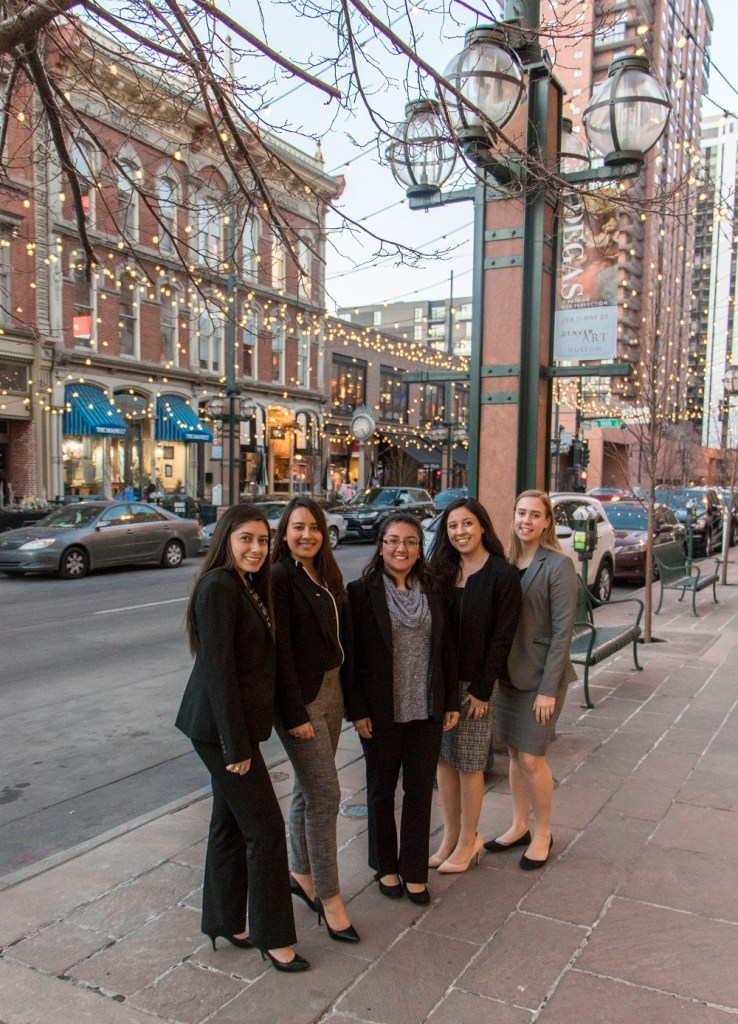
SHSU, LEAP Center, LEAP Ambassadors, ASPA, American Society of Public Administration, Denver CO, 16th Street Mall

The restaurant is named after Place Vendôme a favorite for locals in Paris. The name was picked to reflect a similar restaurant but this time in the heart of Denver. The owners desired it to be a local favorite in a historical downtown. We began our meal by trying new foods. Most of us had never had Escargot, but today was our lucky day. Karla enjoyed it and even had two! We each enjoyed trying different entrée options such as Lapin á la Moutarde that included rabbit and Venaison Sous Vide that included venison. We also had the opportunity to try duck liver, and other interesting foods. We finished our long day with some tasty dessert.  Each of us tried their famous Crème Brûlée , and Bianca, Karla, and Christina shared the Grapefruit Bavarian!

Union Station, By Karla Rosales

After leaving dinner on our way to the car…

SHSU, LEAP Center, LEAP Ambassadors, ASPA, American Society of Public Administration, Denver CO

…Bianca and I noticed a bus that read “Free Mall Ride” and drove down 16th street mall. As Stephanie pointed out, it read two of our favorite words “free” and “Mall” so without giving it second thought, we ran as fast as we could (despite the heels) to the bus stop before it departed. The ride ended at Union Station where Professor Yawn and the rest joined us for a fun walk exploration of the station.

SHSU, LEAP Center, LEAP Ambassadors, ASPA, American Society of Public Administration, Denver CO, Union Station

We have been to Washington, DC’s Union Station and to Kansas City’s Union Station (our favorite), and this was smaller, but also beautiful.

SHSU, LEAP Center, LEAP Ambassadors, ASPA, American Society of Public Administration, Denver CO

We bought a few souvenirs, reflected on a good day, and headed back to our hotel, awaiting another day of learning and fun.


SHSU, LEAP Center, LEAP Ambassadors, ASPA, American Society of Public Administration, Denver CO


Unknown's avatarAuthor mikeyawnPosted on March 14, 2018March 14, 2018Format AsideCategories Art, Civic Engagement, Law, TravelTags American Society of Public Administration, ASPA, Bistro Vendome, Denver CO, Elijah Myers, LEAP Ambassadors, LEAP Center, SHSU, Union StationLeave a comment on ASPA in the Aspens

Public Administration and Public Art in Denver

On our second day in Denver, we were greeted by a nice, chilly morning breeze that woke us right up as we headed to our 8 am panel sessions. Today, the Leapsters would separate and attend two different sessions: “Public Policy Changes” and Local Government and Engagement.”

Public Policy Changes by Karla Rosales

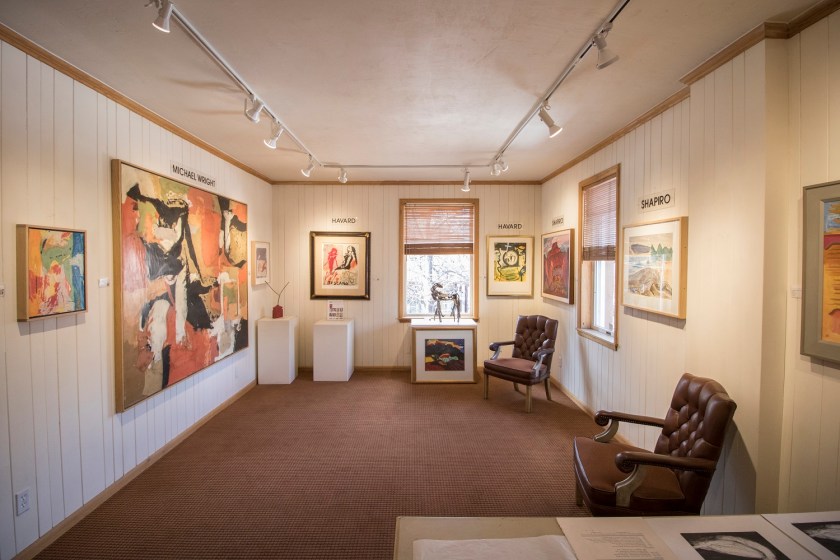
Christina, Bianca, and I began our day with the first panel of the day, “Public Policy Challenges,” presented by three doctoral students and one graduate student.

The first presenter, and our favorite, was Neomi Frisch Aviram, a Doctoral Student from the University of Haifa, Israel. She discussed the topic of Policy Entrepreneurship Behavior and focused on the fact that bureaucrats do not employ uniform strategies to push policy as politicians do. In addition, she explained the Multiple Stream Approach (MSA) framework and how the combination of three separate streams of MSA (political, policy, and problem) opens a policy window for policy entrepreneurs. However, it was found that there is a need for an increase in civic engagement and media coverage in the private sector for public policy to succeed.

The next three presenters presented on the topic of the relation of human behavior to public policy and focused on the importance of exploring human behavior to understand its effects on public policy. Humans tend to make satisfying decisions to solve problems short term, but the problem will ultimately arise in the long run. Logical reasoning is slower, our decisions are biased and guided by emotions, our first instinct. Understandably, the conclusion was that our human nature is to hold on to existing beliefs to remain in societal groupings and retain social status which is a challenge when it comes to policy making.
Local Government and Engagements by Victoria McClendon- Leggett

The topic of policy making continued to the other groups panel as well.

SHSU, LEAP Center, LEAP Ambassadors, ASPA, American Society of Public Administration, Denver CO

Beatriz and I attended the panel titled “Local Governments and Engagement”. The first presentation was about “Public Engagement by Local Governments,” and it went over the many different ways that local governments keep citizens engaged such as online engagement platforms, 311 systems, and turning over more authority to neighborhood associations. This study found that governments that placed higher importance on meeting public engagement goals ultimately had higher participations in engagement practices. The second presentation was “Citizens’ Academies: Motivations and Meaning for Public Administrators,” and it found that citizens’ academy programs have a strong correlation with public engagement and organizational adaptability in government. The third presentation was “The Impact of Collaborative Leadership on Encouraging Citizen Engagement,” and it found that citizens are more likely to be engaged when they are presented with strong responsive leadership, specifically on social media. We thought it was interesting how both the first and third presentations mentioned social media and how it can be a useful tool for local government engagement from citizens.

Both panels were very interesting to all of the LEAP Ambassadors, especially since most of us want to work or have worked in the government system. All of the policy making made us even more conscious about the importance of being a decision maker. So, we made the important decision to go eat.

Lunch in Mexico City by Karla Rosales

To spice up our morning, we opted for a Mexican food. After driving through Denver downtown, we found “Mexico City Restaurant and Lounge.”

SHSU, LEAP Center, LEAP Ambassadors, ASPA, American Society of Public Administration, Denver CO, Mexico City Restaurant

The restaurant’s extensive menu offered us some of the most traditional Mexican dishes, from menudo (a spicy tripe soup) to fried tacos. Some of us, in fact, many of us, ordered a plate that included a little bit of everything: one enchilada, one fried taco, one tostada, and some beans and rice. Others adventured into tasting their hot and spicy menudo. The Mexico City Restaurant has, for 51 years, been serving citizens of the Larimer district in downtown Denver. On a side note, Larimer district was named in honor of General William Larimer, who was a pioneer and one of the founders of the City of Denver. Our lunch was a thoroughly enjoyable experience and the perfect fuel to begin our art exploration!

Clyfford Still Art Museum by Beatriz Martinez

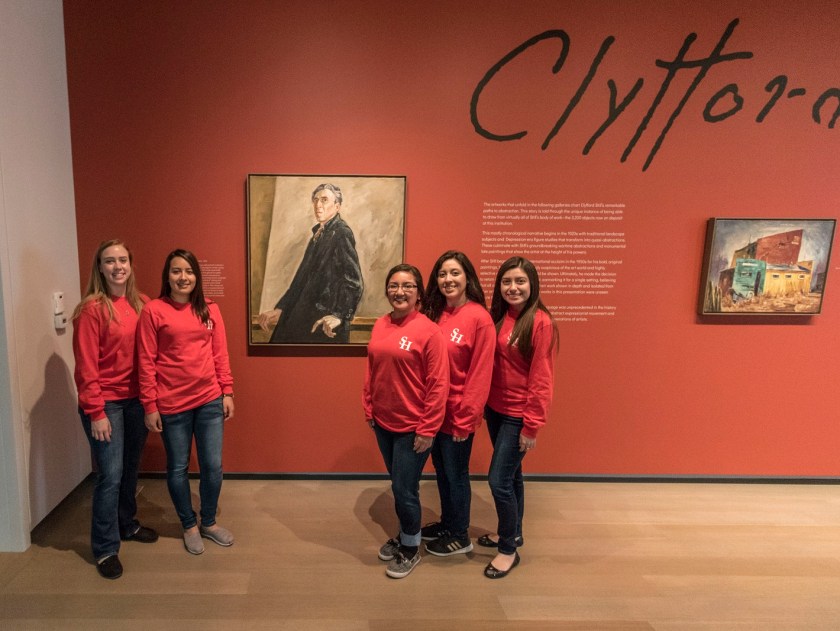
The Clyfford Art Museum was our first stop on our art tour as we got out of our panel sessions. Even before Rothko and Pollock, whose art we have seen many times on our travels, Clyfford Still was among the first generation of Abstract Impressionists after World War II. However, he did not start out that way.

SHSU, LEAP Center, LEAP Ambassadors, Denver CO, Clyfford Still
LEAP Ambassadors with a representational self-portrait by Clyfford Still

Still first began with representational painting that showcased the Depression Era with one of his first themes: the human experience.

SHSU, LEAP Center, LEAP Ambassadors, Denver CO, Clyfford Still

Slowly, he lost the definitive form of his earlier paintings to evolve into what he is now known for: Abstract Expressionism.

SHSU, LEAP Center, LEAP Ambassadors, Denver CO, Clyfford Still

Interestingly enough, Still did not believe in titles. In fact, he stopped titling his paintings after 1947 so instead they were labeled by the year that they were created. Part of the reason that Still did this was because he believed that the person that looked at his art should not restrain their interpretation of the piece because of his title. His bright colors and jagged lines allowed him to become one of the first artists to set the tone for the future generation of artists.

SHSU, LEAP Center, LEAP Ambassadors, Denver CO, Clyfford Still

It was a great experience to be able to see the timeline of his art especially since he severed ties with all the galleries in the early 1950s and his art was not displayed until 2011 when the Clyfford Art Museum opened.

SHSU, LEAP Center, LEAP Ambassadors, Denver CO, Clyfford Still

Denver Museum of Art by Christina Perez

The moment we have all been waiting for… The Denver Art Museum! The sun was shining and we were thriving. As we headed down 14th avenue we could see the “Big Sweep” by Clause Oldenburg in the distance.  Some of us had waited weeks for the opportunity to visit the museum.

As we walked in, we couldn’t help but admire the fun architecture of the building. Our special treat, their special exhibit show casing French artist Edgar Degas’ work from 1855 to 1906.

SHSU, LEAP Center, LEAP Ambassadors, Denver CO, Denver Museum of Art, Edgar Degas

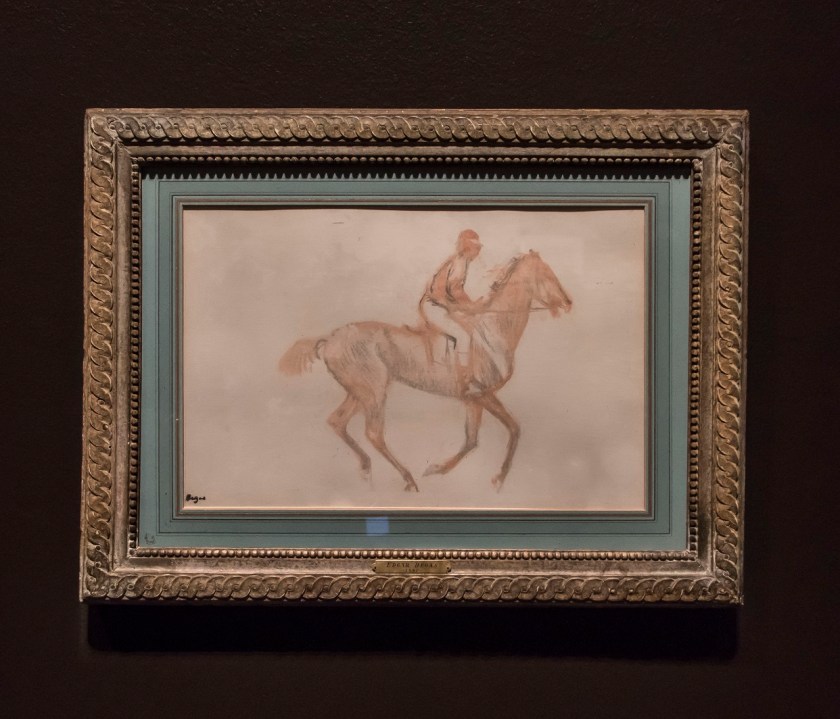
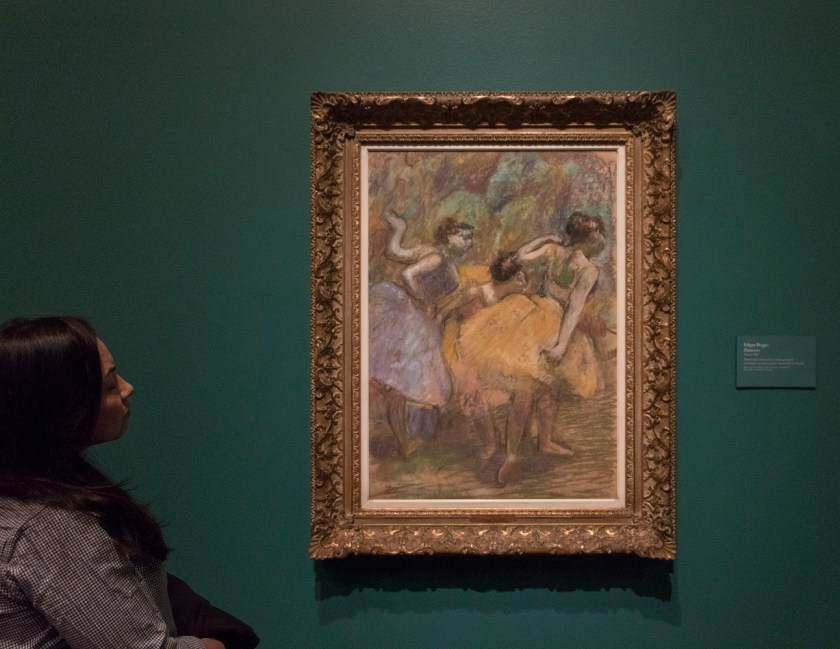
Degas is known for his fascination with movement, whether it be pretty little dancers or horses.

SHSU, LEAP Center, LEAP Ambassadors, Denver CO, Denver Museum of Art

The exhibit took us through his early work with horses through his work with his ballerinas.

SHSU, LEAP Center, LEAP Ambassadors, Denver CO, Denver Museum of Art, Degas

We definitely enjoyed learning about his art work and life as an artist, and the exhibit not only had some of his atypical works, such as “David and Goliath”….

SHSU, LEAP Center, LEAP Ambassadors, Denver CO, Denver Museum of Art, Edgar Degas

…as well as artists he influenced and artists who influenced him.

SHSU, LEAP Center, LEAP Ambassadors, Denver CO, Denver Museum of Art, Camille Corot
A landscape by Camille-Corot that influenced some of Degas’s work

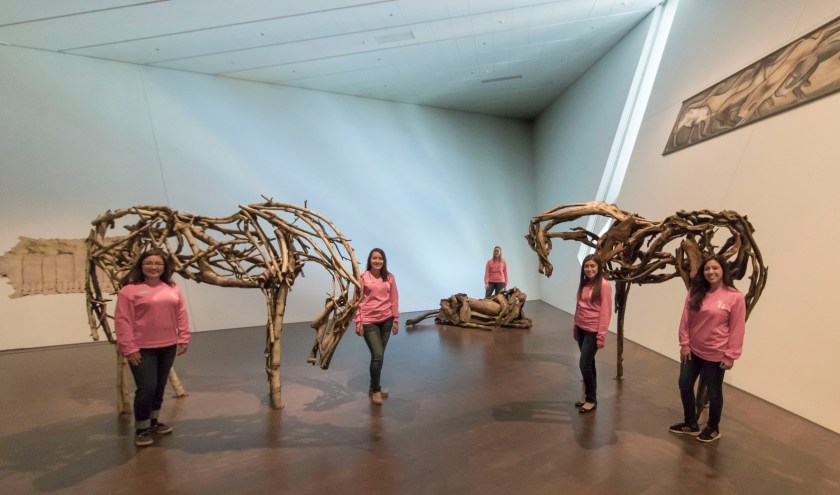
Following the Degas exhibit, we headed upstairs to the “Animals in Art” exhibit that included pieces by Georgia O’ Keeffe, John James Audubon, Norman Rockwell, Deborah Butterfield and many others.

SHSU, LEAP Center, LEAP Ambassadors, Denver CO, Denver Museum of Art, Deborah Butterfield

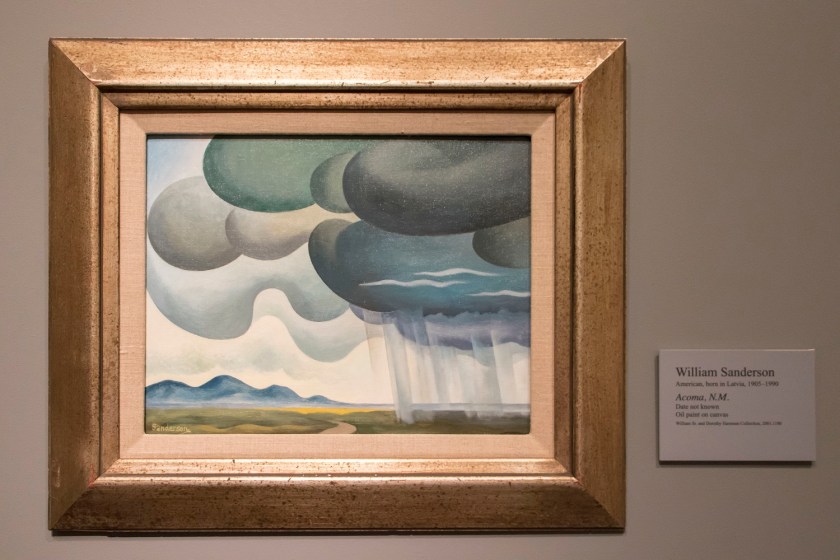
We also had an opportunity to explore some western and Regional art, where Bianca found her favorite piece, one by William Sanderson…

SHSU, LEAP Center, LEAP Ambassadors, Denver CO, Denver Museum of Art,  William Sanderson

…and we found a very atypical piece by Jackson Pollock…

SHSU, LEAP Center, LEAP Ambassadors, Denver CO, Denver Museum of Art, Jackson Pollock

…and a more typical piece by Thomas Hart Benton.
SHSU, LEAP Center, LEAP Ambassadors, Denver CO, Denver Museum of Art, Thomas Hart Benton

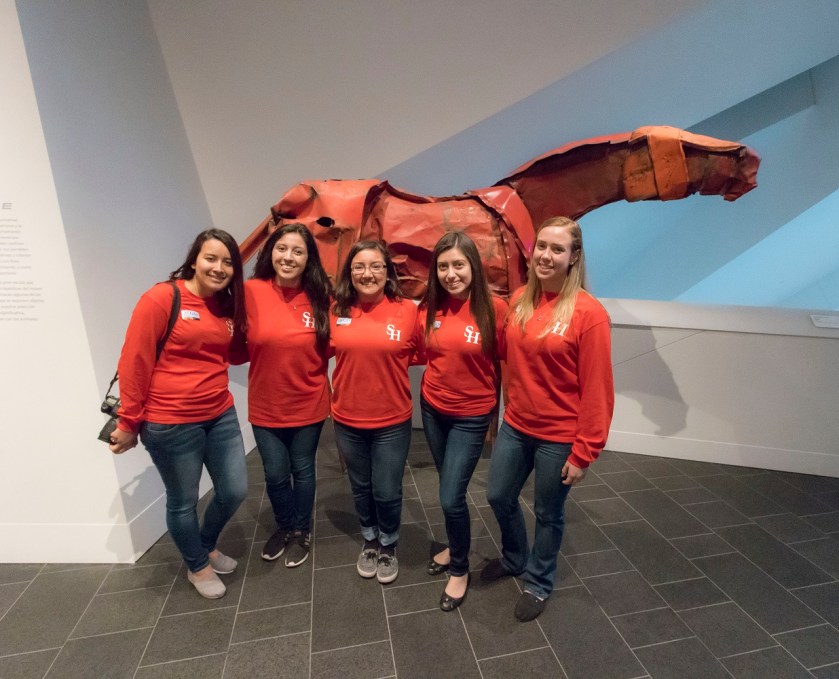
After touring the museum, we couldn’t head back to the hotel without accomplishing one of the most important components of a tourist’s experience: buying souvenirs! As we drove back to the hotel, we made a quick pit stop to the Denver airport where we were able to see the Blue Mustang created by Luis Jimenez.
SHSU, LEAP Center, LEAP Ambassadors, Denver CO, Denver Museum of Art, Luis Jimenez

After a quick picture, we hopped into the van and shared our favorite art, new artists, and our perspectives on their art.

We were very excited to have made multiple new memories! And finally, it was time to go home to grab a late pizza dinner and rest for another busy day ahead.

SHSU, LEAP Center, LEAP Ambassadors, Denver CO, Denver Museum of Art, Deborah Butterfield


Unknown's avatarAuthor mikeyawnPosted on March 13, 2018Format AsideCategories Art, Civic Engagement, Politics, TravelTags ASPA, Clyfford Still Museum, Denver Art Museum, Denver CO, LEAP Ambassadors, LEAP Center, Luis Jimenez, SHSULeave a comment on Public Administration and Public Art in Denver

Changing the World in Denver

Bright and early we awoke for our first day going to the American Society for Public Administration Conference.  The conference is being held in the Hyatt Regency, but we wanted to explore the Colorado Convention Center which was filled with various pieces of art from a Laughing Escalator” by Jim Green, “The Blue Trees” by Konstantin Dimopoulos, and a large, extremely blue and slightly nosy bear.

SHSU, LEAP Center, LEAP Ambassadors, American Society for Public Administration, Denver CO, Blue Bear

How to Change the World by Christina Perez

Our first panel of the conference was “Lessons Learned for How to Change the World.” The moderator, Jefferson Howell, Jr., and one of the three speakers, Bobby Inman and are from the Lyndon B. Johnson School of Public Administration at The University of Texas at Austin. William McRaven is the Chancellor of the University of Texas System. The third speaker was Mark Welsh III from the Bush School of Government and Public Service and Administration in College Station, Texas. The most interesting part of the introduction was that they each had some ties to Texas.
SHSU, LEAP Center, LEAP Ambassadors, American Society for Public Administration, Denver CO

Every speaker enlightened the audience on how to become better leaders and how their careers, from the armed forces to their current jobs had molded them into the leader they were. Chancellor McRaven talked about the fact that leadership is a gift given by those that you lead, which also holds you responsible for being honest and staying credible to those that follow you. Mr. Welsh added to that by stating that, “emotions never solve the problem, so it’s important to use logic.” Mr. Inman explained that everyone is different and that is why we should learn their story and figure out what motivates, angers, and interests them. The panel was perfect for the LEAP Ambassadors who have taken on leadership roles this past year and could take into consideration the advice of successful individuals who have proven that leadership is a great skill to have.

SHSU, LEAP Center, LEAP Ambassadors, American Society for Public Administration, Denver CO

After the panel session was over, three people were honored with The National Public Service Awards for their hard work in the community. The people honored were Chancellor William McRaven; Susan Raufer, Director of Newark Asylum Office; and Dean Mark Welsh.

SHSU, LEAP Center, LEAP Ambassadors, American Society for Public Administration, Denver CO

For the next time slot, the LEAP Ambassadors split up into two teams to attend the sessions, Bad Data and Social Media and Non-Profits.

Bad Data by Karla Rosales

The second session of the day was the Presidential Panel: Bad Data. It was presented by Katherine Barrett and Richard Greene who happen to be married to each other. They are both former journalists that decided to quit their jobs and work as a team. Richard previously worked as an editor for Forbes Magazine while Katherine worked for Ladies’ Home Journal as an editor too. Together they formed Barrett and Greene, Inc. and they focus on researching and analyzing state and local governments.

SHSU, LEAP Center, LEAP Ambassadors, American Society for Public Administration, Denver CO

During the panel, we learned about the importance of data. It’s important to have good and accurate data to make unbiased decisions. Government agencies and politicians are referencing data more and more each day and it is important to have accurate data to properly solve important policy issues. They have both worked with state auditors across the country and have learned about the major causes of data problems.

  • 17% problems related to technology
  • 14% management issues and lack of accountability
  • 12% poor and lack of planning
  • 11% lack of training
  • 10% data entry issues
  • 9% lack of controls
  • 7% sharing or collaboration problems

The panelists explained the three issues that they are currently studying; foster care, school absenteeism, and substance abuse. They are focusing on analyzing data to find the real factors affecting these certain government programs. For example, in the state of Kansas there is no data being recorded for families and therefore there is no good policy for placing children in the best home. When focusing on the school absenteeism issue, they found that there were serious policy changes made when there was a dramatic increase in the percentage of school absences. It was later discovered that there was a discrepancy in the data where the number of school suspensions were under reported in previous years, and students were being marked present and absent on the same day at the same school. It is important to collect and report accurate data to avoid unnecessary policy changes that might hurt the system in the attempt of fixing an issue that is not actually there. The third issue, substance abuse, related to death certificates. Even though a person’s heart failed because of a strong overdose, their death certificates are still being labeled as heart failure as cause of death. Therefore, research money is going to heart research instead of a drug problem. Data discrepancies like such don’t help in terms of public spending and misdirects attention to the wrong area. Christina, Bianca, and I greatly enjoyed this panel as it greatly provides a new perspective on the data research.

Social Media and Non-Profits by Victoria McClendon Leggett

Meanwhile, in the Social Media and Nonprofits panel there were six different panelists who presented their research. The topics ranged from “Sentiments Toward the EPA with Evidence from Twitter” to “Web-Based Accountability Measures of Texas Megachurches.”

SHSU, LEAP Center, LEAP Ambassadors, American Society for Public Administration, Denver CO

Most of the presentations centered around how using social media can either help or hinder nonprofits in securing their funding goals, and the main point of the panel was to demonstrate to the audience that social media has become incredibly important for fundraising across all types of nonprofit organizations, both community-based and nationwide. A few of the panelists acknowledged that making donations through social media platforms will likely only become easier and easier as technology advances, and that social media will become an even more powerful instrument than it is today. For Beatriz and me, this was interesting information to have because LEAP is currently planning a Charity Football Game fundraiser and being able to get an insight of how social media affects non-profits as well as their effectiveness in fundraising pointed us in the right direction. On that last note, the everyone met to go grab a quick bite to eat at the MAD Green Restaurant and heading home after exploring a little bit of downtown.

Lowry Beer Garden by Bianca Saldierna

Later in the evening, we opted for a local restaurant in the Denver area called Lowry Beer Garden for our Saturday night dinner. The restaurant comprises more than 4,500 square feet of outdoor garden area, although sadly, the 33 degrees Fahrenheit weather did not permit us to sit outside. However, the unique indoor/outdoor setup had rows of wooden picnic tables and lots of Christmas lights which gave our cold night the right warmth and ambiance. From the great selection of food, we opted for some burgers, cobb salad, and even some fried calamari. We were glad to end our Saturday night with delicious food and in friendly atmosphere! Bellies full and very content, we reminisced of the great day we had and could not wait for tomorrow’s second day of interesting panel sessions.

SHSU, LEAP Center, LEAP Ambassadors, American Society for Public Administration, Denver CO, Blue Bear

Unknown's avatarAuthor mikeyawnPosted on March 12, 2018March 12, 2018Format AsideCategories Art, Civic Engagement, Politics, TravelTags American Society for Public Administration, ASPA, Blue Bear, LEAP Ambassadors, LEAP Center, SHSULeave a comment on Changing the World in Denver

Posts pagination

Previous page Page 1 … Page 78 Page 79 Page 80 … Page 110 Next page

LEAP Ambassadors Are Involved!

This slideshow requires JavaScript.

Follow Us On Facebook!

Follow Us On Facebook!

Catch Up With Us

  • Here’s Looking at You, LEAP: A Night with Casablanca September 1, 2026
  • Behind the Mic with Governor Abbott August 27, 2026
  • The PVIL: Celebrating Athletic Legacy and Civil Rights August 26, 2026
  • LEAP Fall Retreat: Sights and Meals August 25, 2026
  • LEAP Fall Retreat: The Girl on the Train August 24, 2026

Join The Conversation!

Bob Orkand's avatarBob Orkand on Learning from Best in the West…
Linda McKenzie's avatarLinda McKenzie on There is never a dull moment a…
Multi-Platform Media… on Fun and Flavor: Chilly at the…
Highlights from the… on Glazing-A-Trail with Lauren…
The Civic Leadership… on Foundational Activities of the…

Find Previous Posts

We also have Twitter!

My Tweets

LEAPing Into LEARNing

This slideshow requires JavaScript.

  • About LEAP
  • LEAP Ambassadors
Center for Law, Engagement, and Politics Blog at WordPress.com.
  • Subscribe Subscribed
    • Center for Law, Engagement, and Politics
    • Join 480 other subscribers
    • Already have a WordPress.com account? Log in now.
    • Center for Law, Engagement, and Politics
    • Subscribe Subscribed
    • Sign up
    • Log in
    • Report this content
    • View site in Reader
    • Manage subscriptions
    • Collapse this bar
Loading Comments...