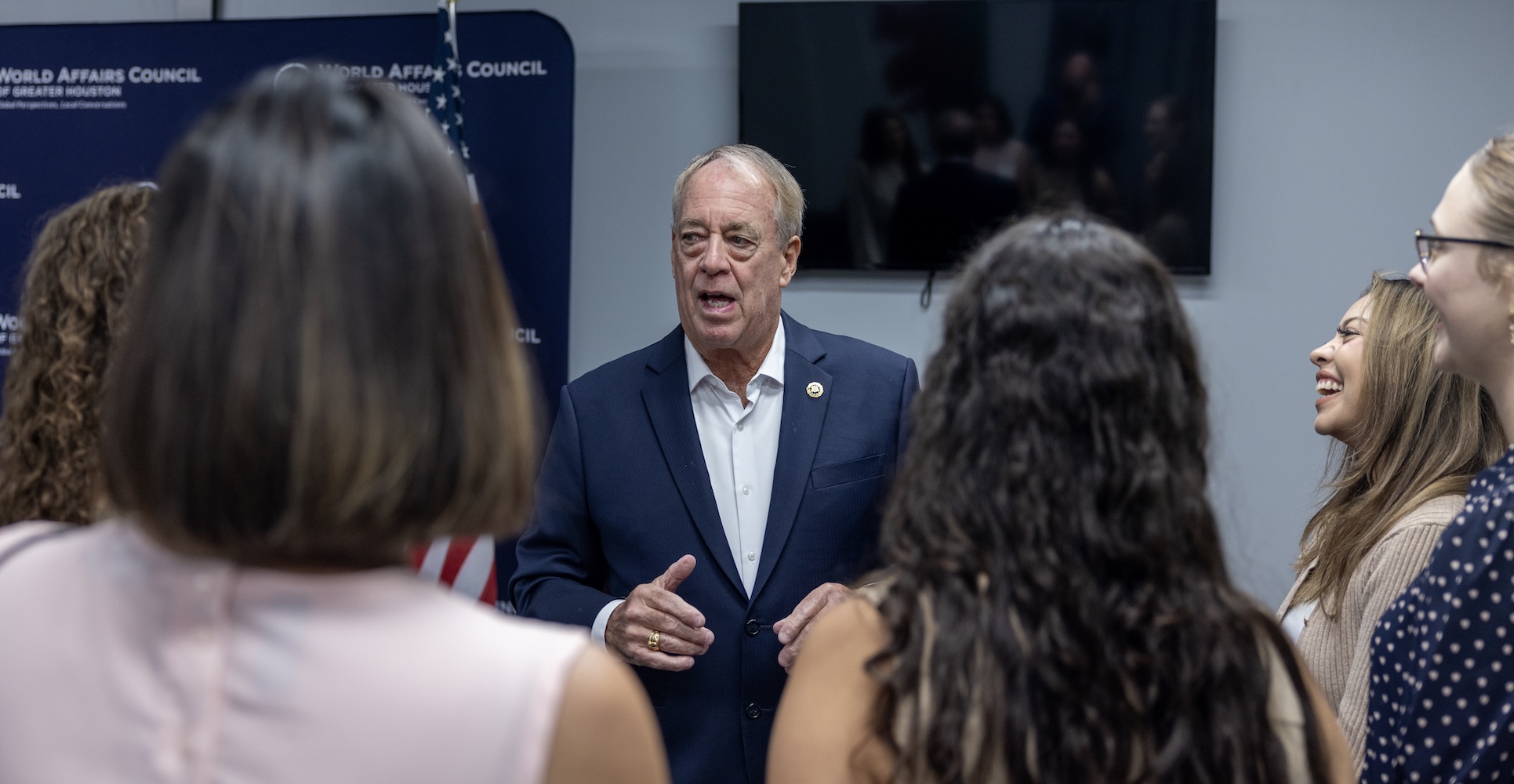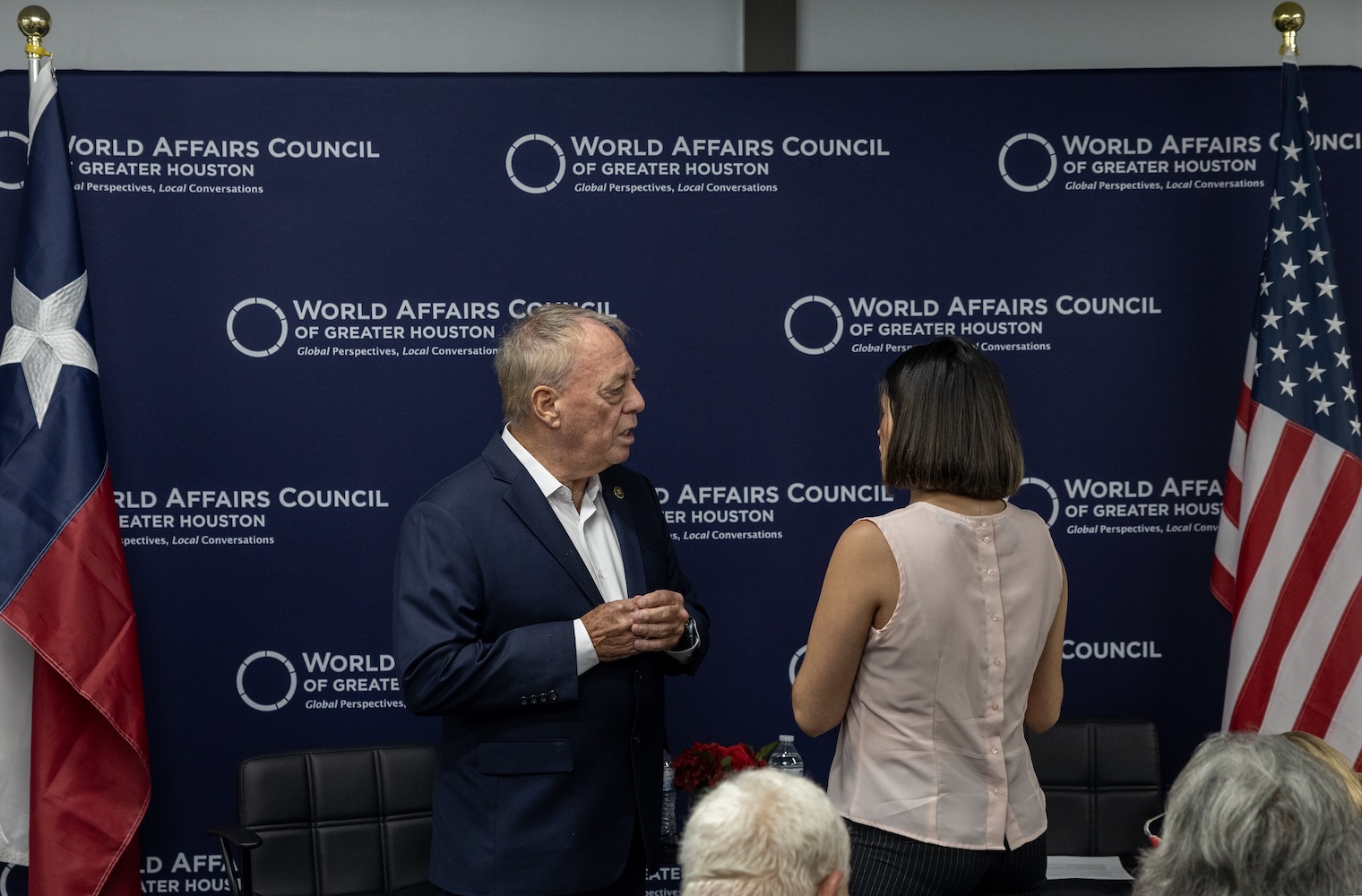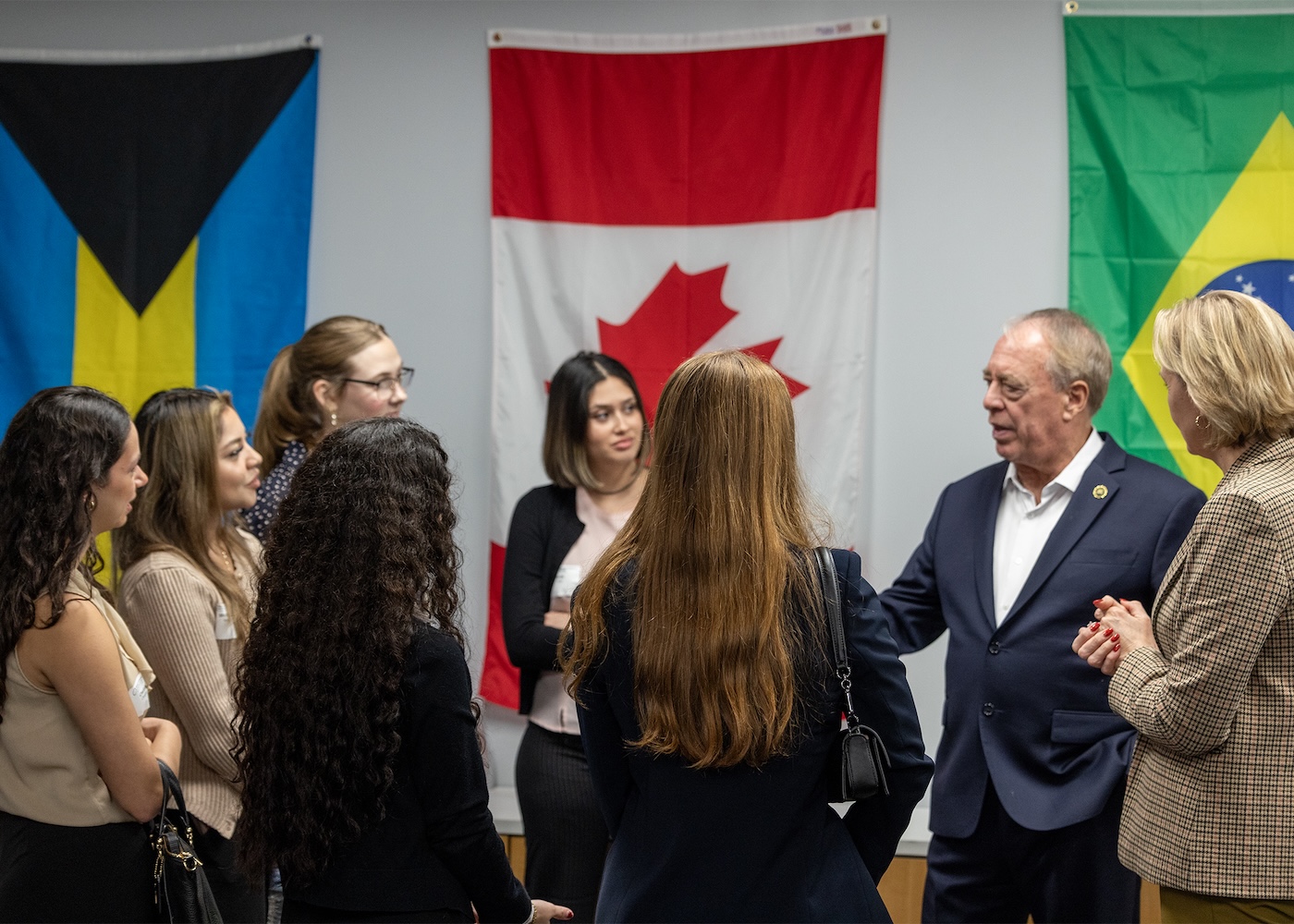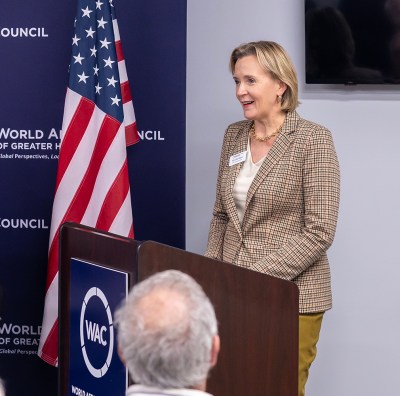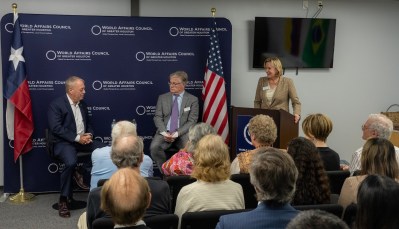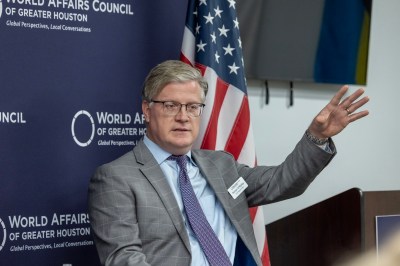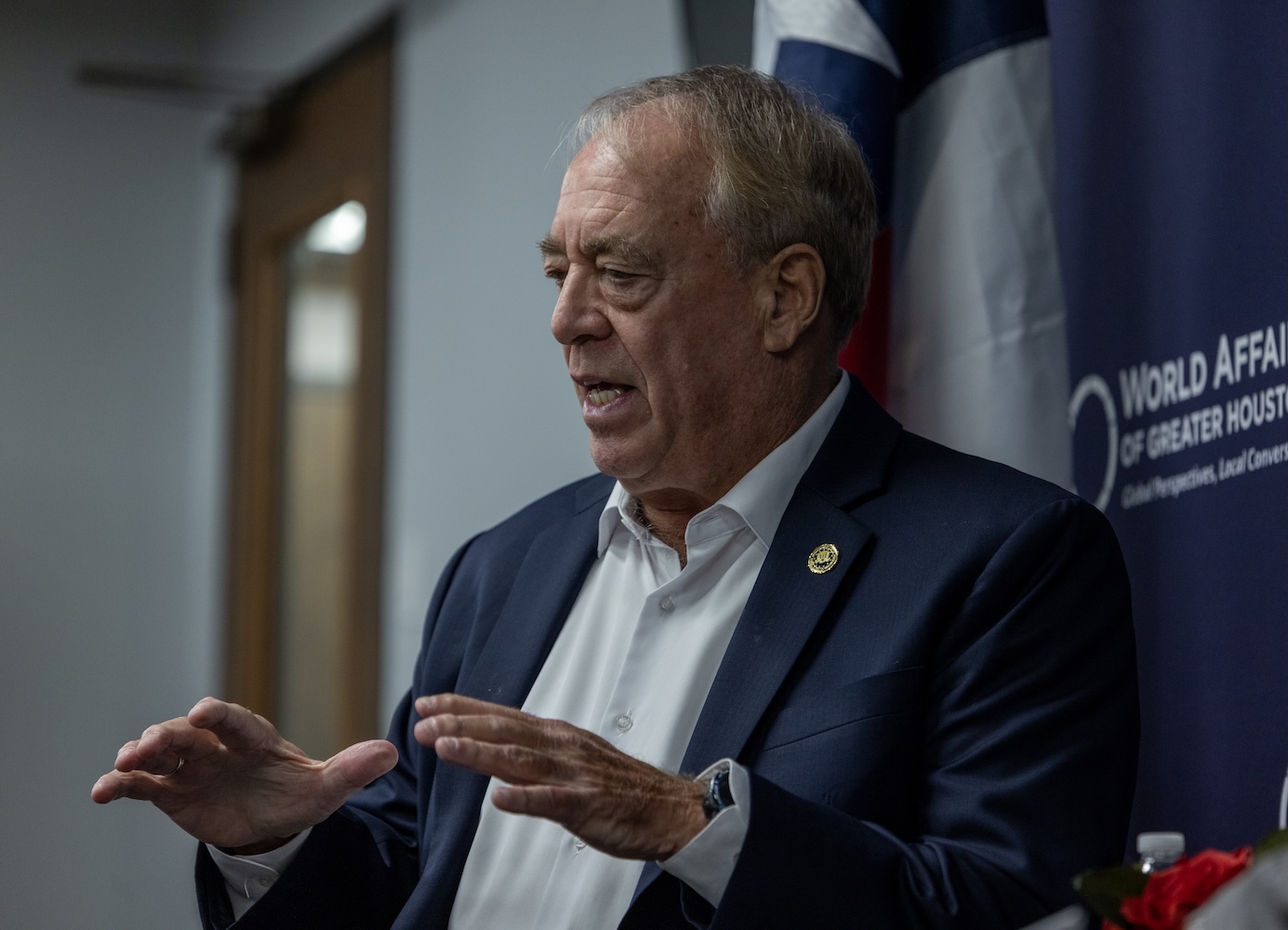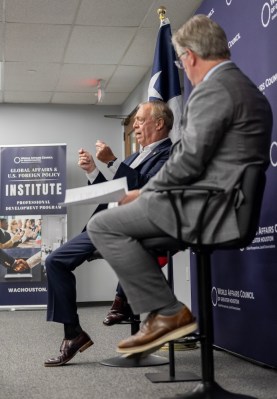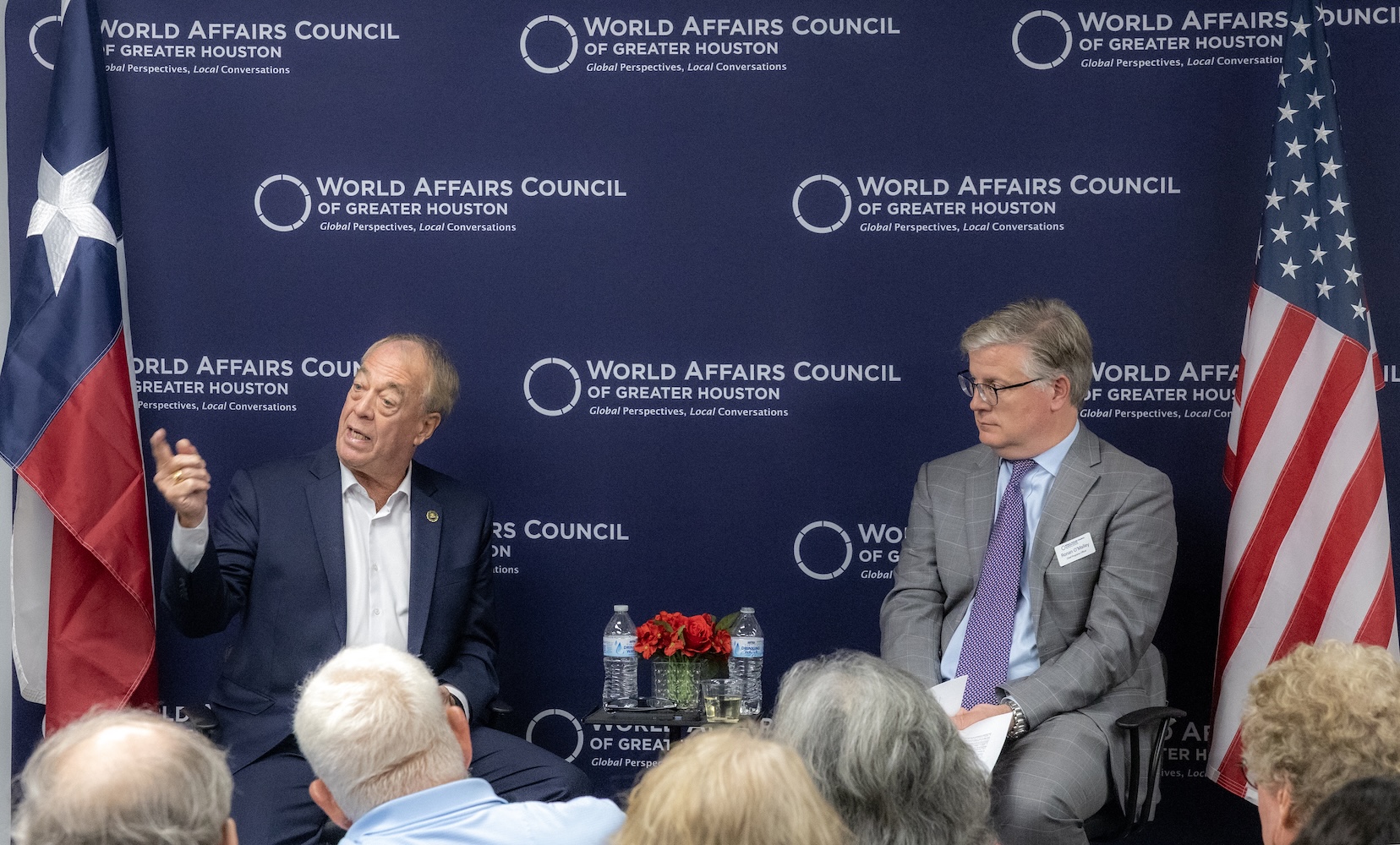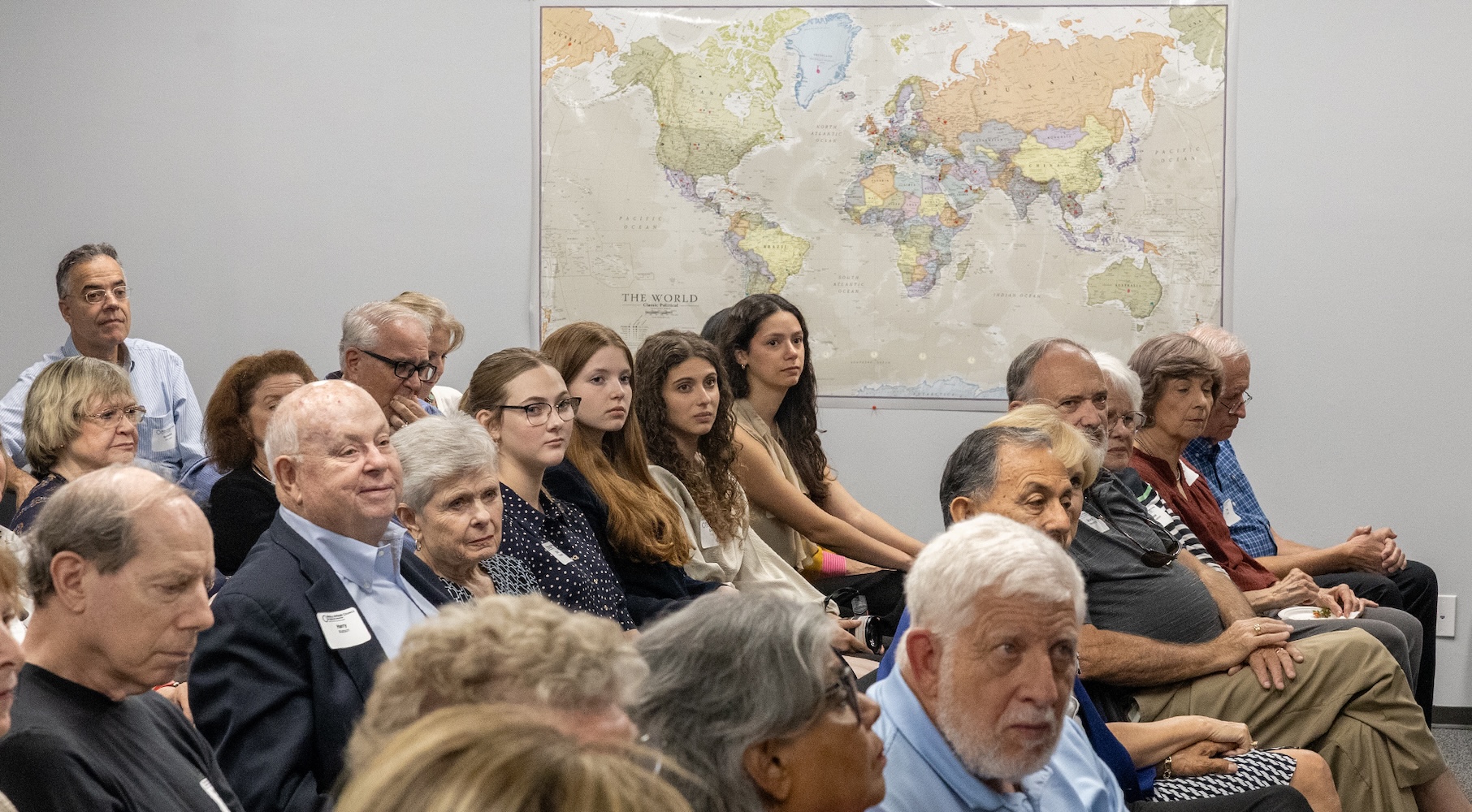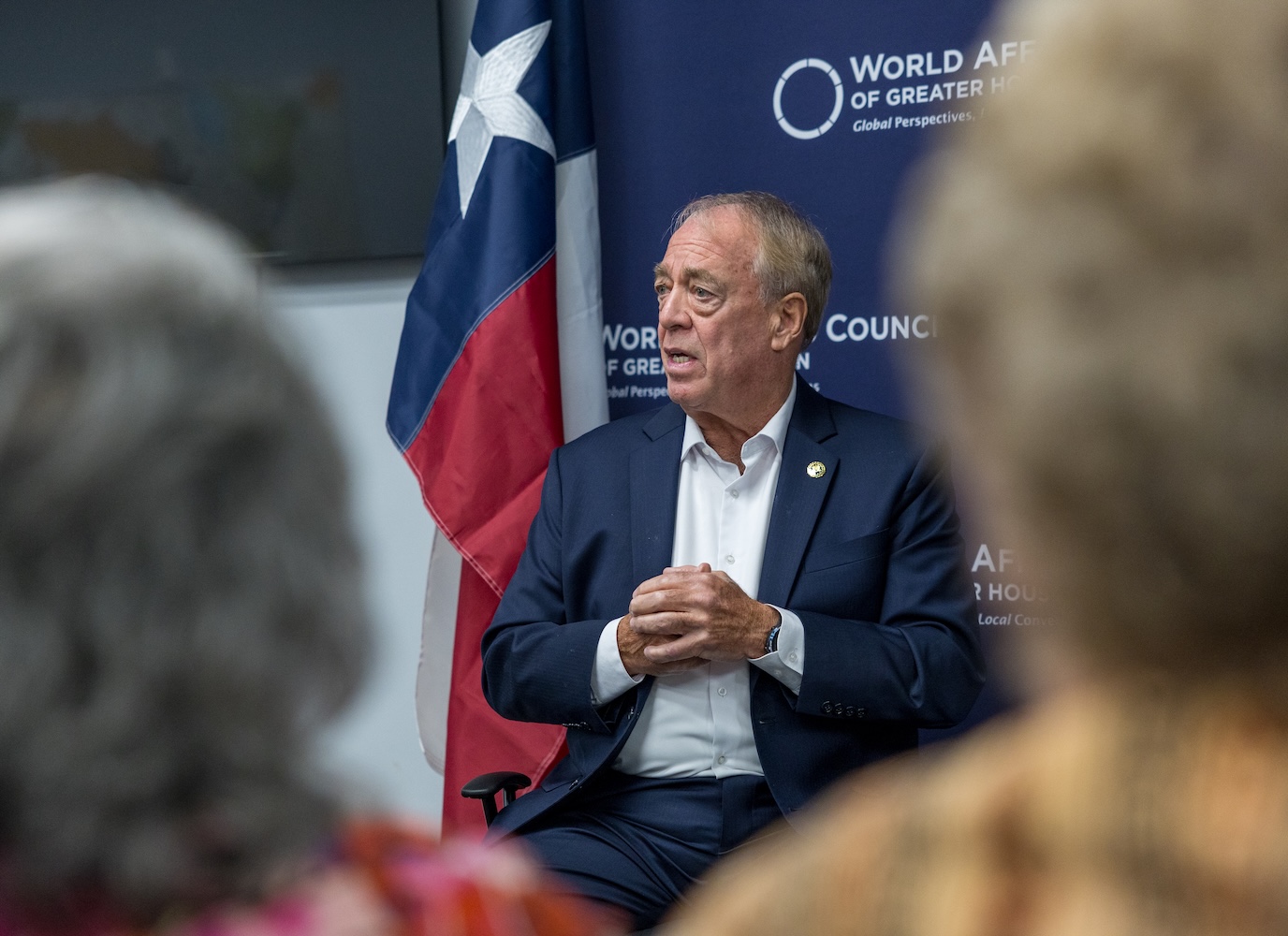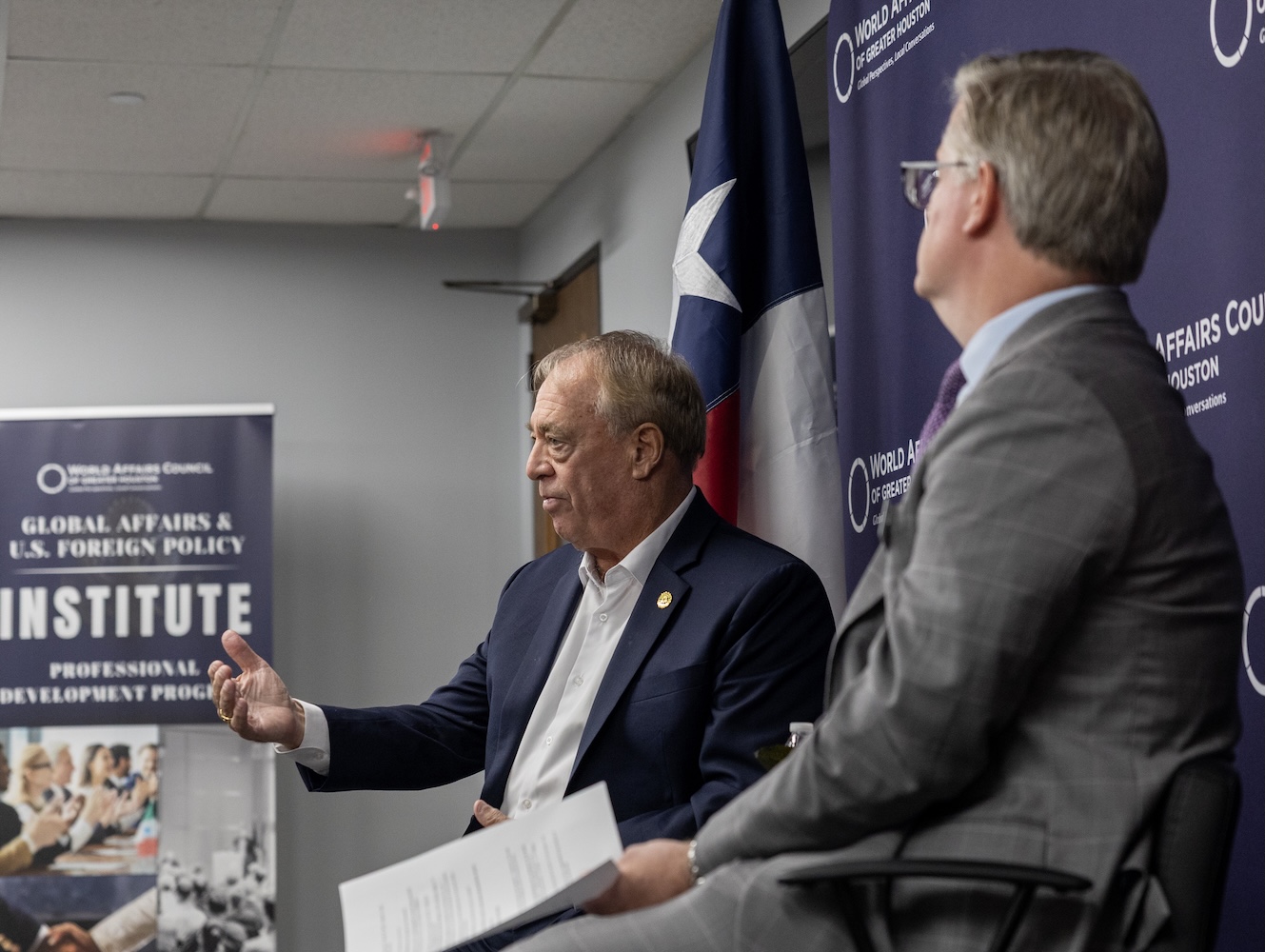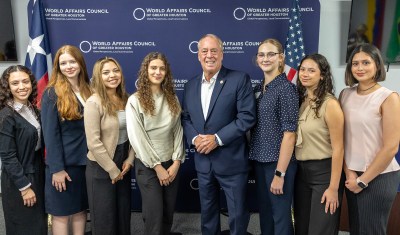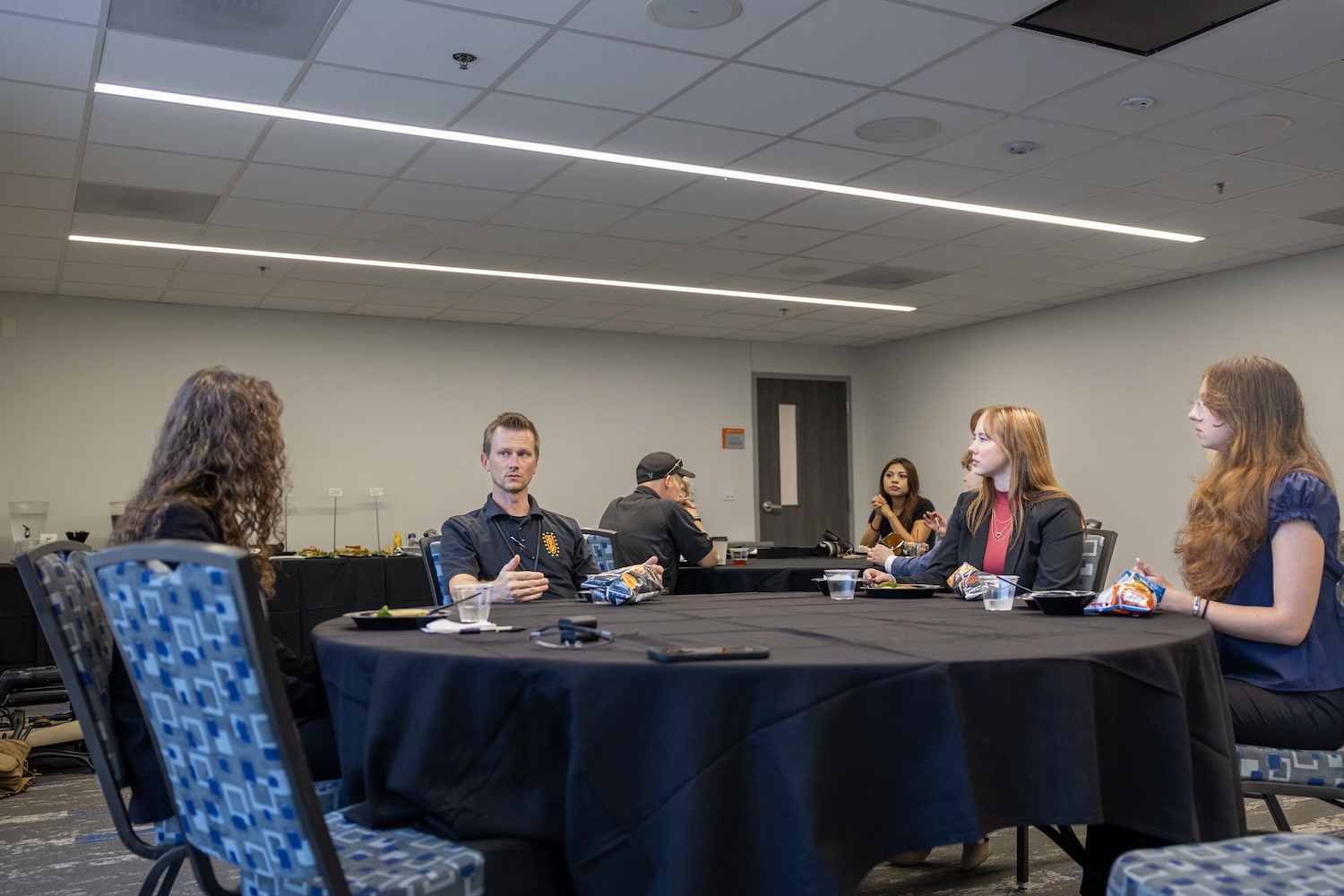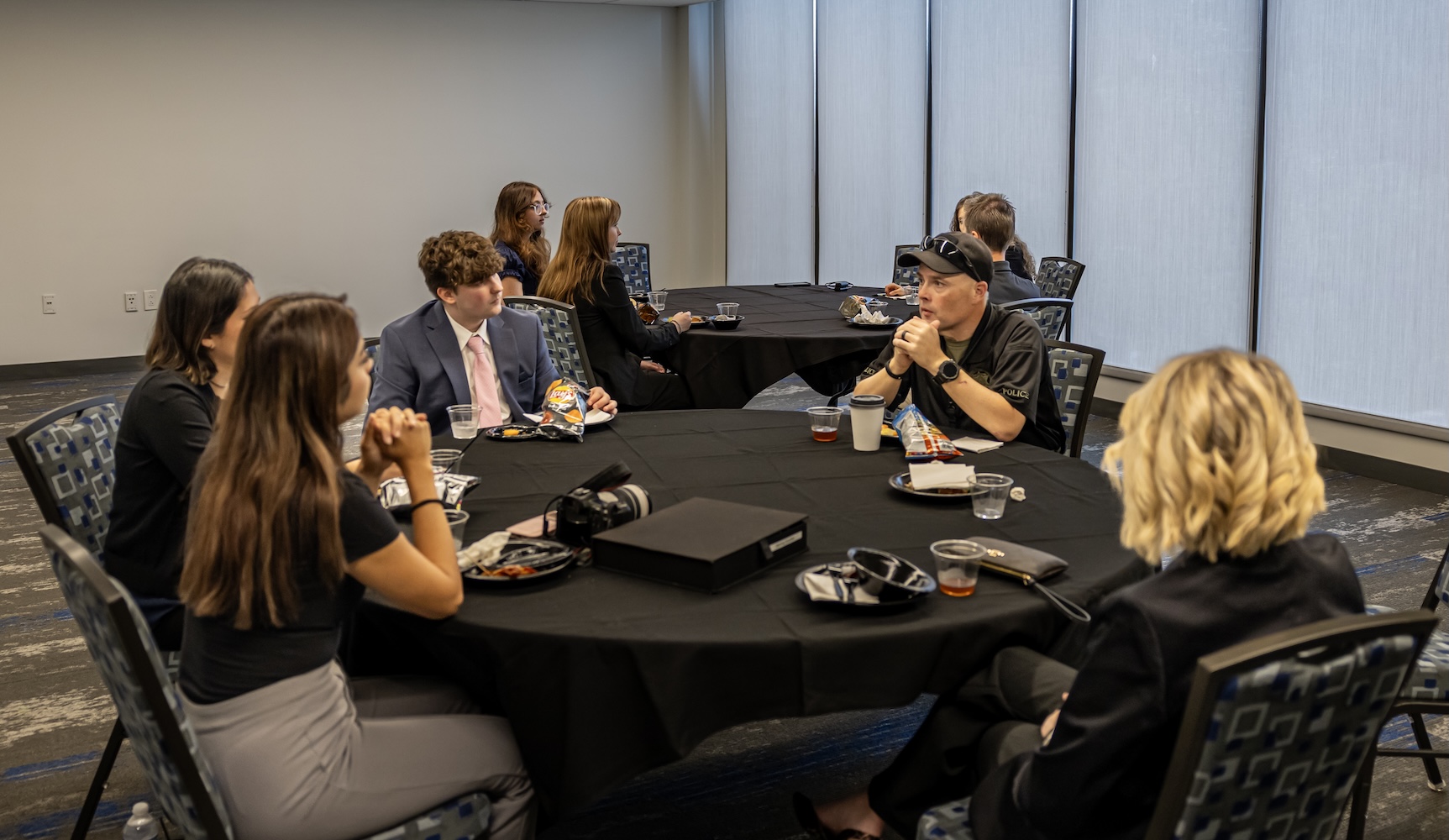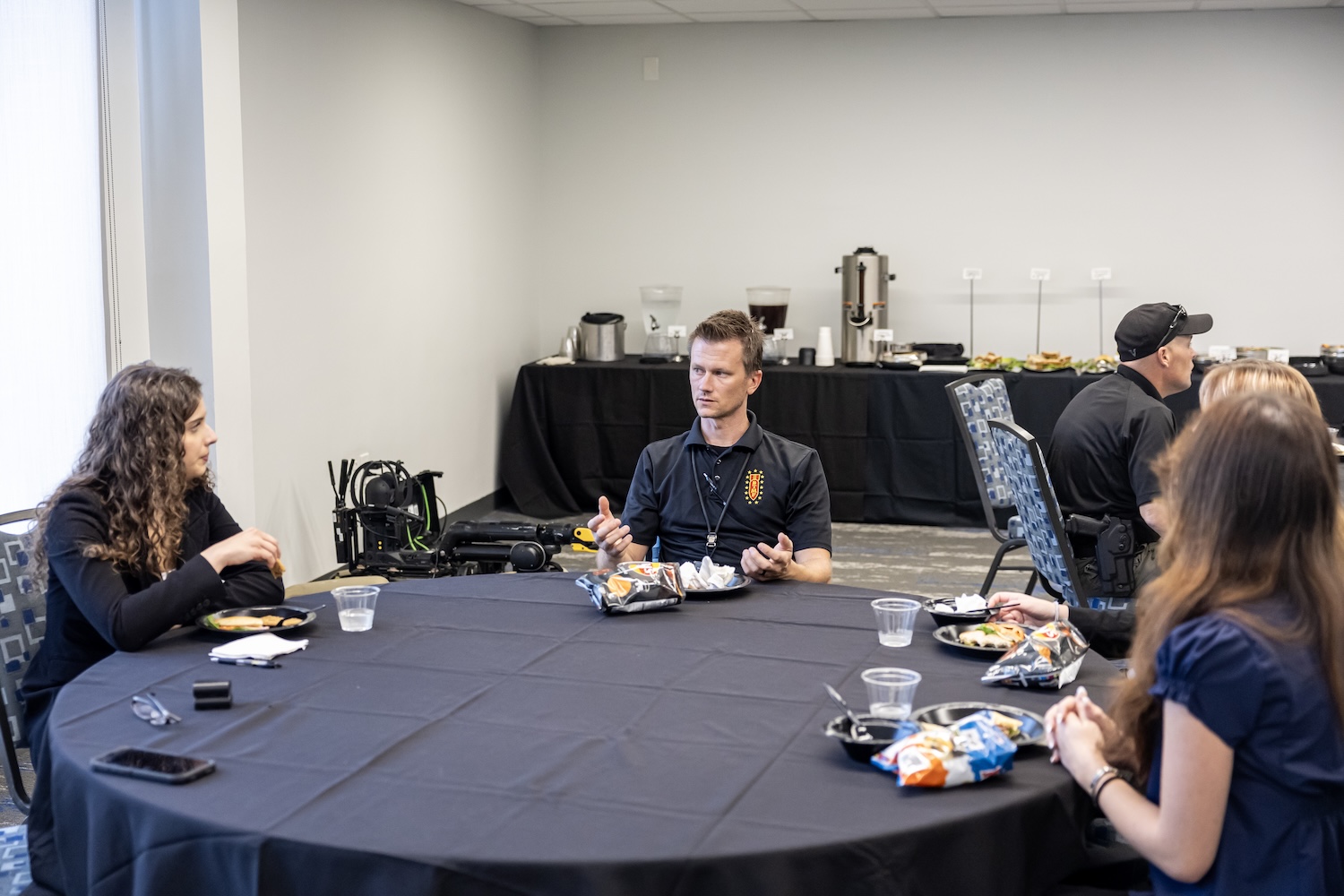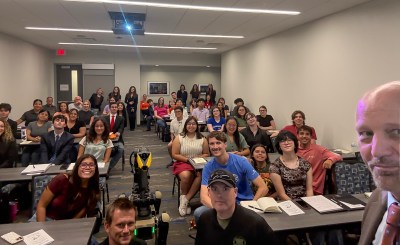
LEAP Ambassadors enjoy learning in the classroom, a fact made evident by a collective 3.81 GPA. But the special part of the program is the learning outside of the classroom, where we work to expand our professional networks, learn new information, and venture outside our comfort zones. Such outcomes were on full display at the World Affairs Council‘s “Inside the CIA” event featuring Michael Ard.
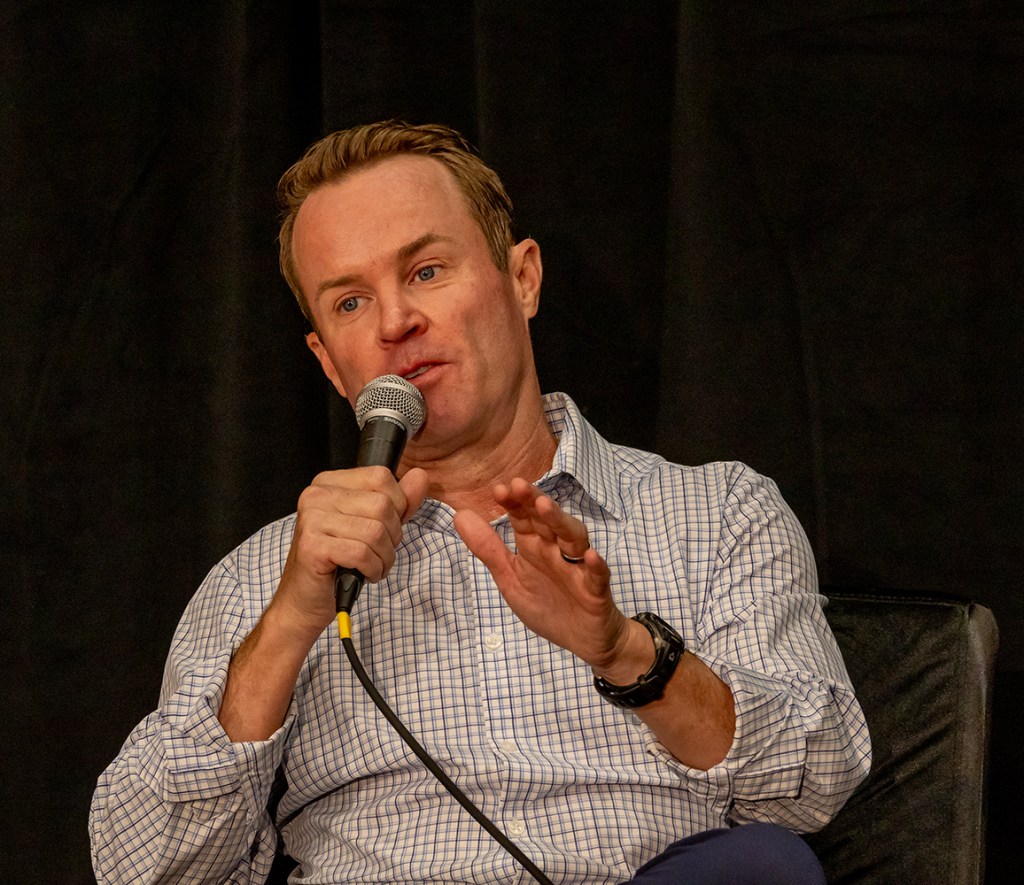
A former CIA Analyst now teaching international affairs at Johns Hopkins University, Ard took us on a far-ranging tour of the CIA and the world in a discussion facilitated by everyone’s favorite moderator, Ronan O’Malley.
The CIA oversees 11 centers and undertakes, according to Ard, four major activities:
Analysis
Collection
Covert Action
Counterintelligence
Obviously, these actions involve sensitive operations, and Ard noted that this can lead to conflict with the rest of the world, the Congress, and, most notably, the President. The President relies heavily on the CIA, and when operations do not go well, it can lead to negative consequences for the Chief Executive, which can, in turn, lead to strained relationships. Nixon, in particular, was distrustful, a fact punctuated by Ard, when he quoted Nixon: “What are those clowns in Langley doing? Reading the newspaper?”
But it wasn’t just Nixon: JFK felt burned after The Bay of Pigs disaster in Cuba; Congress was disillusioned during the Church Hearings in the 1970s, when many of the CIA’s activities came to light; and George W. Bush, according to Ard, was sorely disappointed in the CIA’s investigation into Weapons of Mass Destruction (WMD) in Iraq.
Speaking of which, during Q&A, the audience asked whether the Bush Administration put pressure on the CIA to find what it wanted to find: WMD. Ard said, “No.”
He encouraged the audience to read the Silberman-Robb report, noting that the biggest problem in Iraq was that Hussein wanted some countries (his regional enemies) to believe he had WMD, and he wanted us to believe he didn’t. This caused him to act with much furtiveness, which was then interpreted as guilty behavior. It wasn’t correct, he noted, but it was a reasonable conclusion.
Ard was also asked whether any movies get the CIA right. The former analyst noted he doesn’t watch a lot of movies, and he was generally dismissive (“they’re movies”), but he noted that “Argo” had the right feel, and “The Sum of All Fears” captured some of the banter among analysts.
Following the event, Dr. Ard put on his professorial hat, and spoke to us as students for a while.
Even as he noted the challenges associated with recent budget cuts, he was encouraging, prompting us to dream big, take opportunities, and to be assertive in putting our goals into action.
When you wake up in Boston, and you need to be at a conference in Providence, Rhode Island, there is some driving to do. Fortunately, there are some things to see in between the two cities, and LEAP specializes in exploiting targets of opportunity.
To tackle an early morning with history, some human energy is required. This came in the form of a rare stop at a chain: Dunkin’ Donuts. But not just any Dunkin’ Donuts–the first-ever Dunkin’, which was founded in Quincy, MA, in 1950. Originally, it was “Open Kettle,” but the owner, William Rosenberg, noticed that his customers often dunked the donuts (5 cents) in the coffee (10 cents), and a new brand was born. It was this history–the 75th anniversary of which is being celebrated this year–that prompted LEAP to break its no-chain guideline.
Quincy, MA is known as “The Birthplace of Presidents.” Indeed, the town meets the plural requirement because both John Adams and his son, John Quincy Adams, were born there. If you are feeling generous, you could also allow Quincy to claim John Hancock, who is most famous for signing the Declaration of Independence, but who also served as President of the Continental Congress.
But the city’s most defensible claim is being the home of the two Adamses, and their both homes are side-by-side in a residential area. John Adams’ birth home dates from 1735, although some of the lumber used to make the house dates back to the 1670s, apparently recycled from another structure. John Quincy Adams was born next door in a home that dates back to 1717. John Quincy, however, did not arrive there until 1767, when he was born on July 11. The family would live in this house until 1783.
Interestingly, the property consists of 11 structures in all, one of which was built on order from John Quincy Adams’ will, which funded the construction of a stone library. This library, completed in 1870 and made of stone to prevent fire, holds Adams’ 14,000 books (in twelve languages).
Feeling suitably dispirited about our own reading habits, we moseyed south to what Trip Advisor raters ranked as the “most disappointing attraction in the United States”: Plymouth Rock. Trip Advisor clickers aren’t known for their taste, but they have a point. The rock is a small boulder that sits on the shore of Plymouth Bay. It is caged off.
It’s a disappointing rock, but in fairness, it has been treated poorly over the years, and it probably feels a bit vengeful. Across the centuries, it was painted with the numerals “1620”. When that proved unsuitable, someone decided to chip the numerals 1620 into the rock itself. People have stolen fragments from it, reducing it in size. At another point, town leaders decided to move the rock, and in doing so they broke it. Part of it was buried, which is probably the best thing for it in terms of safety. The rock is now approximately a third of the size it was originally, or so it is believed, but who knows?
Learning from Legislators
For our first day at the CSG East Conference, we split up so that we could learn directly on those topics most relevant to us, but also learn from each other in after-the-fact debriefings.
One of the key topics we explored was education, and the importance of early childhood education in children’s later development. Panelists Caroline O’Neal (CEO, Reading Assist), CT Representative Kate Farrar, Quebec Assemblywoman Marie-Belle Gendron, and RI Senator Hanna Gallo shared their experiences fighting for education for all pre-k children.
There was not a lot of ideological diversity on the panel, and as might be expected, there was a lot of agreement. All panelists agreed that the early years, when brain development is occurring most rapidly, are the most important. Living in a healthy, vocabulary-rich environment helps children reach their potential.
What was less clear was how to achieve healthy, vocabulary-rich environments for all children. Some states rely on home visits, where social workers (often health care professionals) visit the homes and provide resources to the parents, if requested. The panel was generally in agreement that Pre-K professionals should be paid the same amount and given the same respect as K-12 teachers, although little evidence was discussed to indicate that this would increase outcomes.
Perhaps most intriguingly, Representative Farrar mentioned the “Sparkler” app which parents can download and learn about developmental milestones from the ages of two months to five years. Not only does the app offer activities that can help families achieve those milestones, it also provides informational resources to parents when a child is underachieving.
Such an app is cheaper than most options, although it like many government programs, works best when families are motivated and educated. While the entire set of programs discussed are expensive, the panelists continued their unanimity in agreeing that the “cost of doing nothing,” which includes greater costs of government services and prisons, is prohibitive. And this made for a nice segue to our next session.
Criminal Justice Challenges for Youth
by Michelle Moya
One of LEAP’s core missions is cultivating well-informed professionals who can advance in their roles while gaining practical knowledge directly applicable to their work. Attending the Council of State Governments Eastern Regional Conference exemplified this mission, providing me with valuable insights that will strengthen my work for State Representative Trey Wharton and knowledge I look forward to bringing back to Texas.
On the first day of the conference, our second session was the roundtable on Emerging Criminal and Youth Justice Challenges in the Eastern Region. The discussion featured legislators from Maine, New Hampshire, Maryland, Delaware, Massachusetts, Vermont, and Rhode Island–including Representative Mary Ann Shallcross Smith, whom we had met in an earlier session…
…as well as policy analysts from New Jersey and Texas and advocates from organizations such as Casey Family Programs.
The roundtable discussion was guided by three central questions. The first asked legislators to share their most pressing challenges. New Hampshire identified the fentanyl epidemic as its greatest concern, fueling homelessness and repeated system involvement without sustainable solutions. Maryland reported rising juvenile crime rates and overcrowded facilities, disproportionately affecting minority communities. Maine emphasized inadequate behavioral health services that leave youth in correctional facilities when what they truly need is treatment. Rhode Island lawmakers described this pattern as the “criminalization door,” where children with mental health needs must go through law enforcement before receiving help, creating trauma and leaving permanent records for youth who need care, not punishment.
The second question focused on effective approaches that have been implemented in their designated states. Maryland automatically assigns public defenders to juveniles upon arrest and has a comprehensive expungement system. Rhode Island cleared more than 40,000 records through automated expungement–both efficiently and under budget. While New Hampshire strengthened constitutional privacy protections by limiting surveillance data retention to 48 hours. Some states have also adopted juvenile hearing boards as diversion alternatives and replaced school resource officers with social workers. A shared belief was shared among many: legislation alone is not enough. Effective advocacy requires direct community engagement through measures like police ride-along and town halls. One interesting example was provided, where three police officers dispatched to address a seven-year-old who hit a teacher, an incident that could be resolved only by calling the child’s grandmother. It underscored how normal childhood behavior is increasingly treated as criminal.
Another significant concern was how media coverage and public perception often overshadow data in shaping policy. Legislators noted that sensational, negative stories drive public opinion, creating fear-based narratives that are difficult to counter, even when crime rates are declining. This makes it challenging to pass reforms supported by evidence but misaligned with public perception.
As someone working for a state legislator, I found the interstate exchange of ideas particularly valuable.
Learning how other states confront shared challenges not only provided insights that could inform Texas policy development but also broadened my perspective on issues in our state.
Housing Development Through State-Municipal Cooperation
by Olivia Discon
The housing panel at the Eastern Regional Conference brought together leaders in community development from Massachusetts, New Jersey, and Connecticut to talk about how states can work with cities and towns to expand affordable housing. Noah Kazis from the University of Michigan set the stage, and then Chris Kluchman, Colleen Velez, and David Kooris walked through what their states are doing.
In Massachusetts, zoning reform has been a focus since the late 1960s. At that time, only about 7 percent of the housing stock was affordable. Today it is closer to 26 percent, with much of it located in Boston suburbs. One of the biggest tools is Chapter 40B, which allows developers to bypass some local restrictions if they include affordable units. If a town has not met the 10 percent threshold for affordability, the state can override local opposition. While effective, these kinds of requirements can also create problems. Market changes can make projects unaffordable, and strict zoning rules sometimes backfire. At the same time, the state has continued to push forward with new programs. The Healey-Driscoll administration, for example, has committed $20 million to support the creation of 4,000 new units, and more than 140 communities have now adopted multifamily zoning after initially resisting it as an unfunded mandate.
New Jersey has a long legal history in this area, dating back to its 1985 Fair Housing Act. That law created the Council on Affordable Housing, which enforces each municipality’s “fair share” of affordable units based on both local and regional needs.
Municipalities must adopt 10-year fair share plans, and the state also supports nonprofit developers through training modules on zoning, placemaking, and housing models. In addition, the Department of Community Affairs provides pre-development funding to help those organizations get projects off the ground.
Connecticut’s challenge is different. With no county governments, coordination across its 169 municipalities is difficult. The Connecticut Municipal Development Authority was created in 2019 to bridge gaps, especially around funding for housing and infrastructure. It can support a wide range of projects, from wastewater and transportation to downtown redevelopment. David Kooris, who leads the authority, described it as a carrots system, but noted that sometimes the carrot can also be used as a stick (or as he described, a “frozen carrot”). He also pushed back on the common complaint that state action takes away local control, calling it a myth. In his view, stronger partnerships actually expand what local governments are able to accomplish.
Across these states, the theme was clear. Subsidized housing alone will not solve the problem, and there is no single fix. Instead, states are using a portfolio of tools: zoning reforms, infrastructure funding, training, and impact fees to make sure developers help cover the cost of new growth. Rhode Island was noted as a positive example for requiring third-party reviews, which reduces the chance of corruption, but also as a cautionary case since reluctance to expand wastewater infrastructure has slowed housing development.
Energy: Utility Bills and Grid Investment
by Olivia Discon
The session on energy tackled another issue with both technical and political challenges: how to keep power reliable and affordable while demand keeps growing. The speakers were Rep. Chris Rabb from Pennsylvania, Asim Haque from PJM Interconnection, and Michael Downey and Sonia Griffen from the Energy Futures Initiative Foundation.
Haque explained how PJM works. It does not own any power plants or transmission lines, but instead manages the flow of electricity across multiple states, coordinating reliability, market operations, and regional planning. Reliability is the constant concern. One reason is the surge in data centers, which consume the equivalent of tens of thousands of homes each. Add to that residential growth, new manufacturing, and federal environmental rules, and the grid faces a supply and demand imbalance. Coal has largely been replaced by natural gas and nuclear, and renewables are growing quickly, but integrating them without disrupting the system is a challenge.
Downey and Griffen argued that the grid will need trillions of dollars in new transmission investment over the coming decades. The federal government cannot cover those costs alone, so policymakers will have to create the right financing structures to attract private capital. They also emphasized that building high-voltage regional transmission lines is far more cost effective than simply adding more low-voltage local lines. Texas was cited as an example of a state that invested heavily in transmission in the early 2000s and is now benefiting from it. Best practices include planning 20 years into the future, updating plans every five years, setting clear cost-allocation rules, and communicating transparently so that the public understands the value of new projects.
Rep. Rabb brought the political dimension into focus. Pennsylvania is one of the nation’s largest energy producers but does not have a strong legislative framework for energy policy. He has called for a standing committee in the House dedicated to energy and has introduced a short, two-page bill that would require utilities to explain how their votes within PJM benefit ratepayers. While simple, the bill has attracted bipartisan interest because it emphasizes accountability and transparency in a system that often feels opaque. Rabb noted that skepticism about utility rates and decision-making is widespread, and greater visibility into those processes could help rebuild trust.
The session made clear that rising demand from data centers and industry is not going away, and that reliability will require proactive investment in transmission. At the same time, policymakers are grappling with how to ensure that utilities and grid operators are accountable to the public.
Capitol Clam-Bake
With a long day of work and learning behind us, we headed to the beautiful Rhode Island State House…
…to enjoy an evening of food, music, and mixing. The staff of the CSG put together a feast for four hundred–with clams, mussels, lobsters…
…bread, cheeses, fruit, and corn.
Oh, and hot dogs for the kiddos.
After some time, we got our plates together…
…we sat back to listen to the music.
The music was performed by young adults, a group of recent Brown graduates who prefer to sing the music of old adults. Indeed, they were originally a Beach Boys Tribute Band, and they have recently branched out to other 60s-70s groups such as the Mamas and the Papas, the Beatles, The Four Tops, and others.
They were a spirited group and, at their best, had very nice harmonies.
They also had a great attitude, and their enthusiasm spilled into the crowd, who responded well to the music. Judging by crowd reaction, the favorite of the evening was Neil Diamond’s “Sweet Caroline,” which elicited much clapping, singing, and some dancing.
In these partisan times, it was good to see the Democrats and the (few) Republicans come together and bond over music.
Bipartisanship was also the theme of the night from the elected officials, who did a good job of being gracious and brief.
Senator Elgie Sims (Illinois) was particularly gracious in reminding legislators of the importance of civility–particularly in light of the shooting of Representative Melissa Hortman and her husband Mark Hortman and Senator John Hoffman and his wife, Yvette Hoffman.
It was a unifying way to end the remarks, and it is a good lesson for all to remember.
Concluding Thoughts
It’s not often that you can learn lessons in three separate towns in the same day. It’s even less often you can learn from a stop at Dunkin’ Donuts. But LEAP Ambassadors, with their resourcefulness (and love of coffee), found a way to learn in myriad ways, from diverse places, and from the generosity of policy experts who came together to share their knowledge.
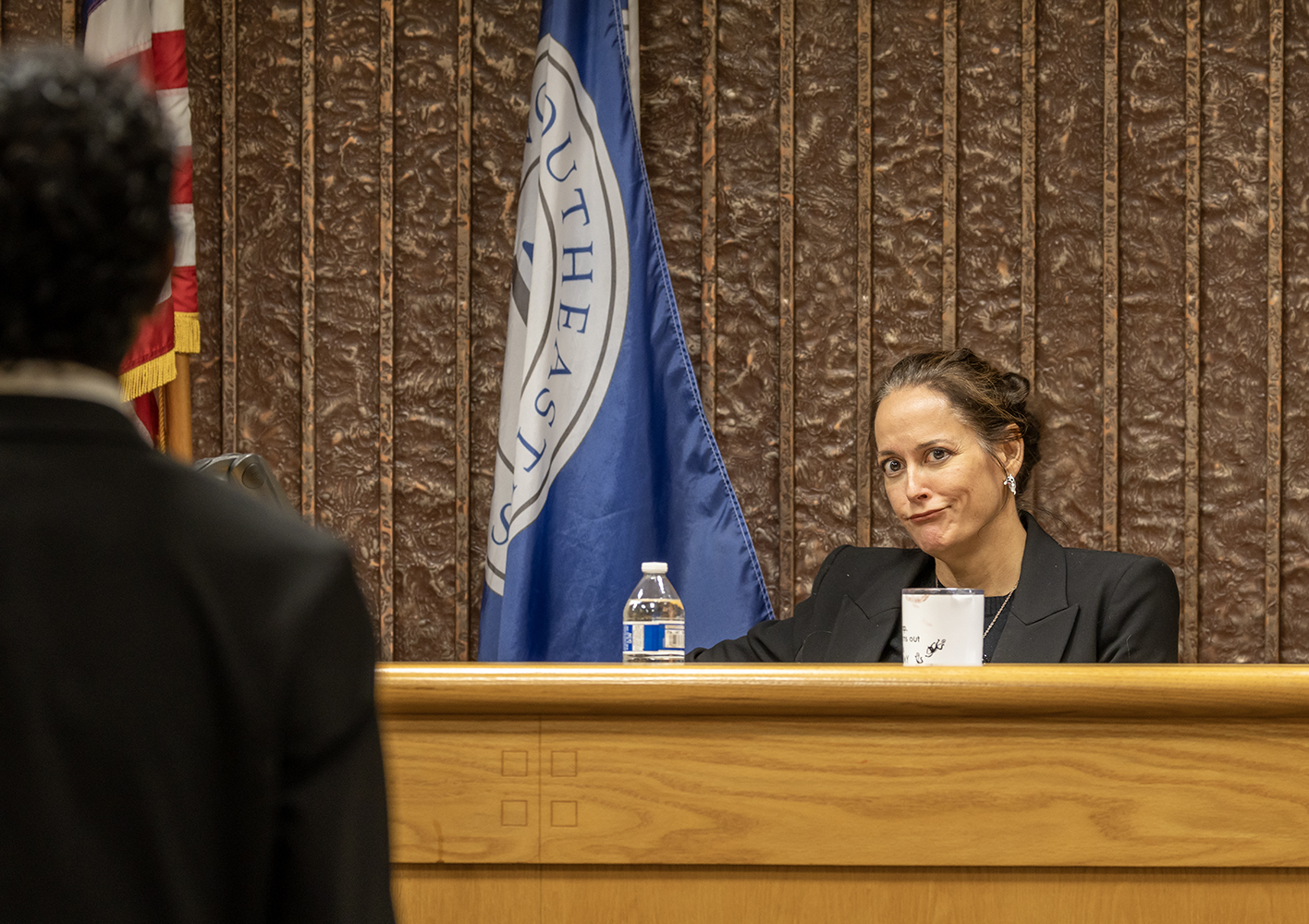
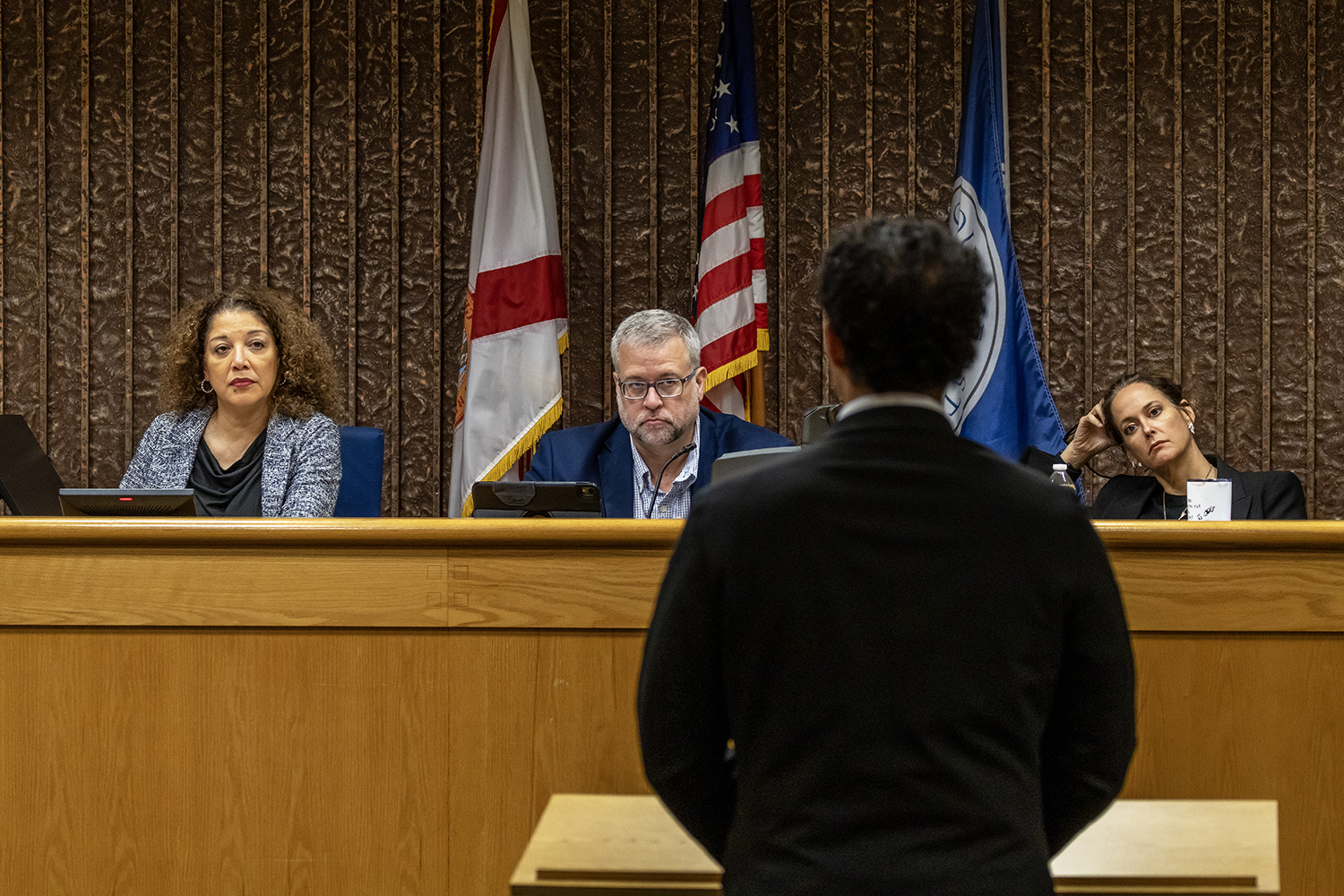
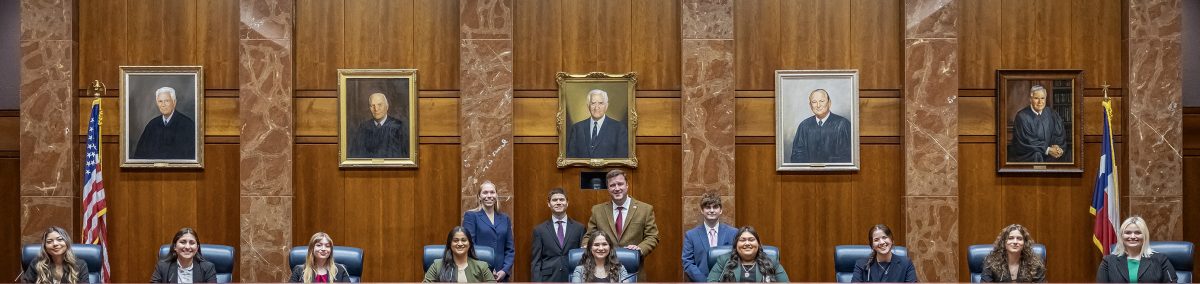
LEAP Center interns work in various capacities, from businesses, to government offices, to non-profits, but they also learn from each other and outside the workplace. Approximately twice a month, LEAP interns–“City Fellows”–meet outside the office to enhance their internship experience. This month their outside-the-workplace experience involved a “guest lecturer” of sorts: Judge David Moorman led a tour of the District Court in the Walker County Courthouse.
The tour and discussion involved an overview of the (1) County Judge (Floor 2), (2) the County Court at Law Judge (Floor 1), (3) the Grand Jury room (Floor 3), and (4) the District Court courtroom (Floor 3). Combined with their prior tours, which included among other places/venues, the Municipal Courtroom…
…the Fellows reviewed the judicial system, going over which kinds of cases make it to a JP or Municipal Court, County Court at Law, or the District Court–the latter consisting almost exclusively of felony cases.
For some of the interns, this was just one of several meetings with Judge Moorman. The Judge has generously spoken at the Pre-Law Society meetings…
…invited LEAP Ambassadors to some of his trials, joined the students at various events they have hosted…
…and is a regular attendee at the Ambassadors’ annual 10th Court of Appeals hearings.
Victoria McClendon, who was also on hand, worked for Moorman while she was at SHSU, and after her graduation from law school, he swore her into the Texas Bar.
Indeed, when Moorman walked into the courtroom, he saw McClendon and asked, “Are you returning to school?”
More seriously, Judge Moorman discussed some of those felonies that make it to his court, while also discussing other aspects of his career: his work in a law firm; his decision to run for a judicial position; how judicial proceedings can differ in smaller and larger towns; and his time prosecuting for the Municipal Court.
This discussion also ventured into advice for young attorneys. Oddly, even as Huntsville has grown over the years, the number of attorneys in the community has declined. For those attorneys who do wish to make their mark in a community, they often take their cues from more established attorneys. But in communities with fewer attorneys, such models may be lacking. But Moorman stressed the importance of gaining respect, which is earned by being prepared, taking a work-horse rather than a show-horse approach, and looking out for the best interests of your clients.
Of course, this is good advice for almost all occupations–a fitting discussion for interns with different backgrounds, working for different agencies, all of whom are contemplating their future.
With many thanks to Judge Moorman, it was a rewarding outside-of-class / outside-of-work learning experience in which the LEAP Center specializes.
The Houston Chapter of the Association of Certified Fraud Examiners met last week to discuss medical fraud, particularly as it relates to pharmaceuticals. And with former LEAP Ambassador Bianca Saldierna on the Houston ACFE Board, LEAP students found themselves at the Tanglewood Ballroom alongside approximately 25 certified fraud examiners to discuss pill mills, pharmacy shopping, and the black market.
Following an introduction by Robert Rodgers, the Director of ACFE’s In-Person events…
…featured speaker Yasir Shakoor offered an interesting–and even entertaining–discussion of the diverse types of pharmacy fraud over lunch.
Mr. Shakoor has both a BA and an MHC in Health Care Administration, and he is also a Certified Fraud Examiner, and he was clearly qualified to discuss the different types of fraud.
Following a discussion of common myths and an emphasis on the costs associated with pharmacy fraud, Shakoor made a distinction among (1) fraud–falsely representing services rendered; (2) waste–not reasonably conserving resources; and (3) abuse–which may involve exploiting gray areas in laws or policies and, while perhaps not illegal, is unethical and costly.
The case studies were perhaps the most interesting component of the presentation.
Examples included (1) an individual who hacked into an e-prescription service and issued 18,500 prescriptions (in one day) to purchase sport cars, basketball tickets, and to be “entertained” at strip clubs, (2) a doctor who would offer opioids for the flimsiest of pretenses, and (3) underground organizations that offered substandard, black-market drugs (or, sometimes, just any substance available) in place of the specified medication. It is frightening, costly, and, often, deadly.
Apart from the educational aspects of the lunch, our major reason for attending was to see Bianca Saldierna.
A key LEAP Ambassador in 2016-2017, Ms. Saldierna has remained involved in her alumni years, and she generously invited us to attend this event. With many thanks to Bianca and to ACFE, we eagerly await our next such lunch!
While the LEAP Center’s project-based internships are robust by themselves, they are supplemented with opportunities for professional development. One such opportunity occurred last week at the Huntsville Municipal Court, with guidance from Court Clerk Flor Borbor, Officer Eric Scott, Prosecutor Cody Corcoran, and Judge Devan Dawson.
To learn more about our Court system, the City Fellows–along with former LEAP President and current SHSU attorney Victoria McClendon-Leggett–journeyed to the Municipal Court building in Huntsville. With Flor Borbor facilitating the tour and Judge Dawson leading the discussion, we began by covering the basics:
The Municipal Court Judge is hired/appointed by Council, not elected;
The Municipal Court hears Class C Misdemeanors;
The Municipal Court hears Jury and Bench Trials;
Bench Trials involve six jurors.
Cody Corcoran was also on hand to discuss his approach to prosecutions, which mostly involved finding ways to work with the accused. He and Judge Dawson appeared to agree that while justice should be served, they both sought ways to achieve justice without major setbacks for the alleged wrongdoer. There was even more agreement, however–among the Judge, Clerk, Prosecutor, and Officer–that lying or being rude would lead to a harsher sentence.
The students were impressively engaged, bringing up good points, asking interesting questions, and remaining involved even when the men began arguing about who had caught the bigger fish.
Officer Scott also discussed his career in law-enforcement in general, while particularizing on his duties as a bailiff. With good humor and a disarming self-deprecation, he described his job as “secretary with a gun,” highlighting his tendency–and, in fact, all the officials in the Municipal Court–to pitch in where needed.
It was a good lesson for young people, especially this group of mostly Criminal Justice majors, many of whom are deciding between careers in law-enforcement and the legal field. The lessons of courtesy, professionalism, and pitching in are valuable across all disciplines and occupations.
Following views of the jury room, the business office, and a formal group photo, the tour came to a close. And while the tour only lasted a little more than an hour and a half, the perspectives they gained may last a lifetime.
For all Pre-Law Society members, our April was the last get together of the academic year. But for one unlucky member, it was, at least in the world of fictional fun, the last meeting ever. That’s because our social involved a murder mystery, something of a theme for our sinister solicitors.
Our officers and activity committee put together treats to bribe encourage us to attend, and it worked!
A healthy 30 or so students attended, a reflection of our growing sociality as an organization.
Mikaela Baires was the unlucky victim. Indeed, she was doubly unlucky, inasmuch as the murder weapon was a laxative, giving new meaning to Shakespeare’s phrase “murder so foul” (thankfully, we did not meet at the beautiful Wynne Home this year…).
The suspects were Mikaela’s peers: Chrissy Biello…
Jose Carreno…
Katherine Burnett…
Madison Cawthon…
Neehal Ahmed…
and Niya Thompson.
Given the suspects–any one of whom is capable of such a dastardly act–it was going to be a tough evening for our social sleuths.
Thankfully, there were four clues uncovered, and throwing Miranda out the window, the suspects were questioned without their lawyers being present.
After much debate, hand-wringing, and interrogation, the law-enforcement, apparently imitating the Keystone Kops, accused the wrong person–Katherine Burnett–perhaps motivated by a strong desire to sequester her from society for eternity, or at least until they graduate.
On a happier note, Madison Cawthon led the speed debating contest.
Befitting our status as future lawyers in society–and, perhaps, lawmakers–we spent our time arguing over trivialities ending in ludicrous judgments.
Neehal Ahmed, for example, argued that it should be illegal to text a single “k” to indicate affirmation via messaging.
The debate over whether “ttyl” should be punishable by firing squad was tabled. And thank God we didn’t even get to people who use odd text colors or emojis.
It was a fitting and fun end to a record-breaking semester. With 116 members–well, now just 115 members (sorry Mikaela)–PLS garnered its largest membership ever, donated funds to a scholarship and enrichment fund, and offered pre-law students some amazing events and programs. We can’t wait to see what never year brings!
Throughout the evening, there were multiple conversations taking place, some filled with friendly laughter, while others centered on the cases scheduled for the following day. Some exchanged thoughts on the legal questions involved, as some of the cases have some interesting aspects that could have greater implications on the legal field.
Clerk of the Court Sherry Williamson shared stories from her early career, including her time serving as clerk of the Eleventh Court of Appeals in Eastland, Texas. While reflecting on her time there, she mentioned “Ol’ Rip,” the legendary horned toad that Eastland is known for. According to local lore, Ol’ Rip survived a thirty-one-year hibernation, only to later pass away from pneumonia. The toad is now on display at the Eastland Courthouse!
Ol Rip in a custom-made coffin at the Courthouse
While speaking with SHSU LEAP students, Chief Justice Johnson shared his journey into law. He spoke about his early career as a practicing attorney and the transition into becoming a judge. He first served as Justice of the Peace in McLennan County, then as Judge of the 54th District Court for fourteen years, before being elected to the Texas Tenth Court of Appeals in 2020. During the conversation, he emphasized the importance of gaining trial experience for those who aspire to serve on the bench.
Judge David Moorman also spoke highly of the opportunity for students to observe the appellate court in action, calling it a unique and valuable educational experience.
The event served as both a warm welcome to the visiting court and a reminder of the strength and collegiality within the local legal community. The justices will hear three cases at SHSU tomorrow, including two driving while intoxicated cases and one involving injury to a child. The Center for Law, Engagement, and Politics continues to be grateful that the Texas Tenth Court of Appeals visits Sam Houston State University each year. The event offers a multitude of valuable learning experiences. You can read more about the event here.
It’s been a semester of elections, practice LSATs, simulated law classes, presentations, court cases, and there’s more to come. But on April 16, the Pre-Law Society completed its final meeting of the semester, featuring a wonderful presentation by Deborah Concepcion and Liz Miller from Lone-Star Legal Aid–as well as a cording ceremony conducted by Pre-Law Society President Olivia Discon.
Lone Star Legal Aid provides legal assistance to impoverished Texans in myriad fields of law, making it a worthy place to ply the legal trade—not to mention a valuable resource for many Texans. Ms. Concepcion spoke to her experience at both Howard University and Seton Hall University, where she earned her undergraduate degrees and JD, respectively.
With this educational foundation, Ms. Concepcion worked in various capacities of the law, adding to her professional network—but, she learned, not finding the internal rewards she had hoped for.
Through several twists of fate, she found herself living in the “warm, hospitable environment of Texas.” After the move to the Lone Star State, she opened her own practice and eventually met an attorney from Lone Star Legal Aid. After learning more about the organization and its mission, she began working with Lone Star Legal Aid—advancing the legal rights of low-income Texans and ensuring equal access to justice.
Ms. Concepcion’s narrative highlighted one of the key lessons in her presentation: to find fulfillment in legal work, we must follow our passions and allow ourselves to practice in fields and ways that align with who we are as individuals.
Interestingly, the work of Lone Star Legal Aid also includes serving as “first responders” during disasters, collaborating closely with organizations such as FEMA. From this, Ms. Concepcion explained how her work is varied, requiring her to learn and apply laws across a range of fields, from family law to assisting victims of sexual assault. She also described the clinics hosted by Lone Star Legal Aid, which aim to help community members with legal issues that fall outside the organization’s primary areas of practice.
Ms. Concepcion offered a plethora of advice for the Pre-Law Society students:
Be prepared;
Go beyond the required work;
Be intellectually curious, and satisfy this curiosity, in part, with questions.
Not to mention, she stressed the importance of being able to work with others, whether with fellow attorneys or legal staff. In fact, her Legal Secretary, Liz Miller, was also on hand, and she offered similar high-quality advice: law school, she noted, does a good job of teaching you to think, but not necessarily how to practice law. Behaving in a manner that makes a young lawyer worthy of help—by other attorneys and legal staff—is part of being a successful attorney.
Ms. Concepcion generously took several questions from PLS students, who were unusually engaged.
Following Ms. Concepcion’s presentation, the PLS officers quickly moved through the organization’s general business: Finance (Chrissy Biello, in her last official act as Treasurer)….
…Minutes (Laila Alimi)…..
…Marketing (Niya Thompson)…
… Membership (McKenna Nonnenmann)…
…And, of course, President Discon.
To cap the evening, McKenna Nonnenmann called on graduating seniors, who were corded by President Discon, and given their certificates by Niya Thompson.
Even as finals approach, PLS members prepare for their upcoming social, and pre-law students begin studying for the LSAT. In all, we were happy to take a long pause and learn from Ms. Concepcion and Ms. Miller and recognize those graduating seniors–whose hard work is sure to pay off in the coming years!