
The LEAP Center is known for its interdisciplinary adventures, and today was no different, as we visited another state capitol, the estate of literary lion, and a Guatemalan restaurant–in Hartford, CT, no less!
Connecticut State House
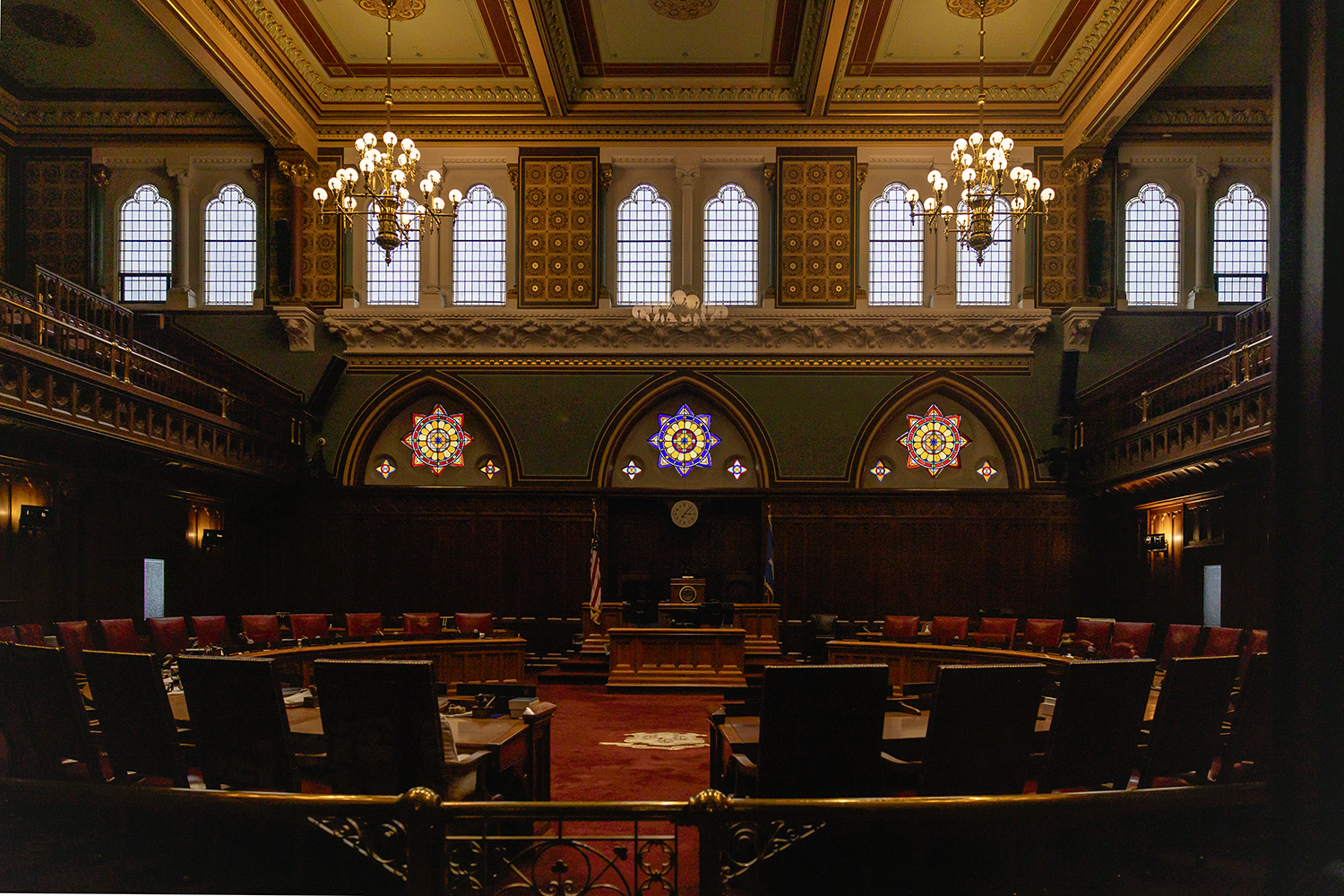
Nestled in the 41-acre Bushnell Memorial Park in Hartford, the Connecticut State Capitol first welcomed the General Assembly in January 1879 after eight years of planning and construction. A commission formed in 1871 selected architect Richard M. Upjohn, whose father also worked on the Boston Commons, providing us with generational and geographical continuity, even as we visit different sites built in different locations.

James G. Batterson supervised construction, and he significantly altered Upjohn’s design. Using marble and granite from New England, he built a beautiful sculpture that prompted the New York Times to note, that in the sun, the building “sparkled like a fairy palace of frost work.”
It didn’t sparkle on the day we visited; it rained, which also discouraged us from getting a shot of the exterior, but the LEAP Ambassadors of 2018 took a photo on a similar trip.

The building features a gold-leaf dome, and the structure is sometimes referred to as “high Victorian” and sometimes as “Eastlake,” a confusion caused, in part, by the competing visions of the architect and construction supervisor.
Both the exterior and interior feature emblems of the state’s past. One of the more interesting of these is the Charter Oak. Connecticut had a royal charter that largely gave it control over its own governance, but this was threatened in the late 1600s, when King James II tried to revoke the Charter and exert more control. When the King’s men tried to take the Charter, the colonists–Captain Joseph Wadsworth, in particular–took the document and hid it in a white oak tree, which is, not surprisingly, the state tree.
That tree became known as the Charter Oak, and although a storm toppled the tree in 1856, the wood was used to create other items, some of which can be found in the capitol. Its image is also featured on the state’s quarter and on a stamp.


Of course, the Capitol also houses both legislative chambers—the State Senate Chamber and the Hall of the House of Representatives—as well as offices for the Governor, Lieutenant Governor, and Secretary of the State.


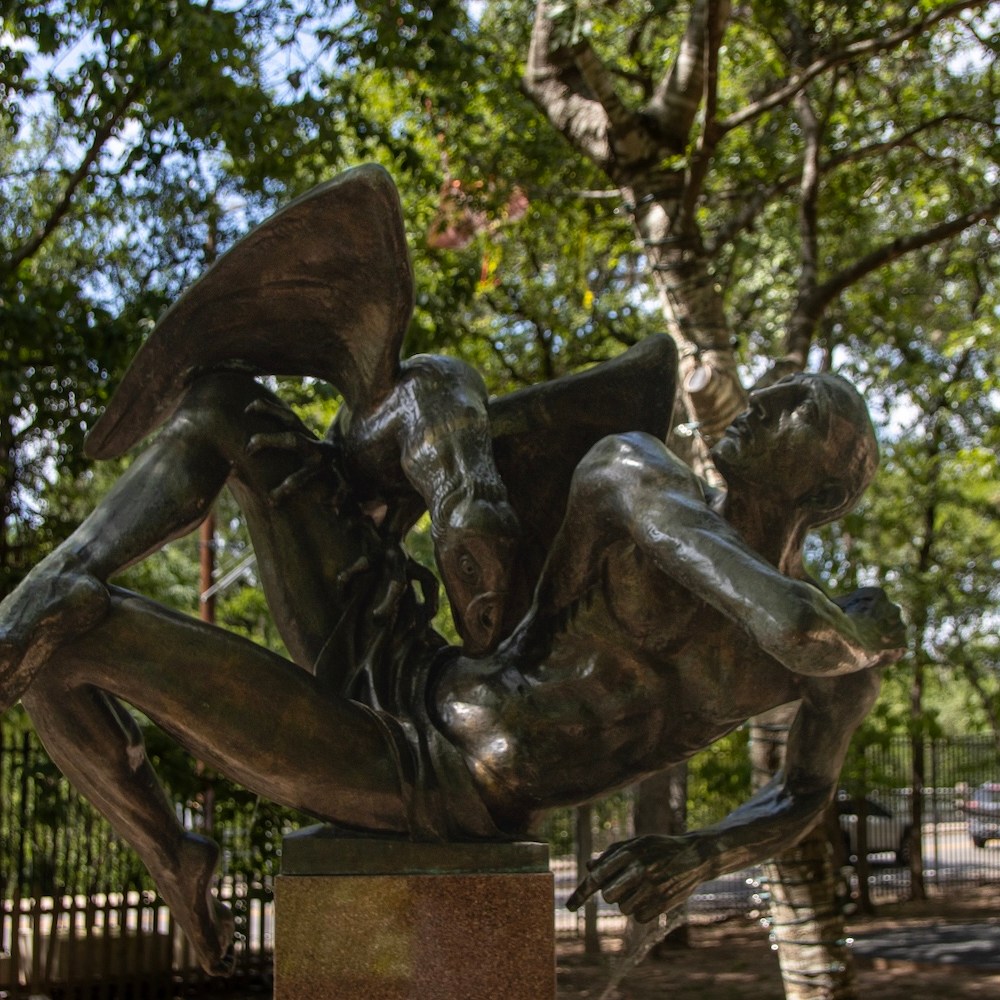
It also houses “The Genius of Connecticut,” a 17 foot, 10 inch statue created by Randolph Rogers. The winged figure holds immortalis in her right hand; a mountain laurel (the state flower) in her right; and her head is wreathed in leaves from the white oak.

Formerly, “The Genius of Connecticut” was perched atop the capitol, but she was removed following a hurricane. The statue was melted to make ammunition during World War II. Fortunately, however, the original plaster model was found, and in 2009, a replica of the original was returned to the capitol, albeit in the rotunda rather than in the cupola/dome.

Aurora’s Restaurant
Texans believe that eating Latino cuisine outside of a border state is questionable at best and potentially dangerous. But we are not faint of heart, and we know that immigrants who know food are not limited in where they settle, so we happily braved the rain to visit Aurora’s Restaurant, which serves Guatemalan food, in Hartford, Connecticut.
The staff were welcoming and courteous. They spoke Spanish when not speaking to us, adding to what would prove to be a rewarding an authentic culinary experience.
We sampled a variety of dishes, including the Burrito Bowl, Tortillas con Chorizo, an Aurora Bowl, and plantains–the latter drizzled with crema and topped with queso fresca. All of the dishes were excellent, but the plantains were among the best we had ever had.


We left with full stomachs, and also ever more aware that, to paraphrase Mark Twain, travel is fatal to preconceptions.
Mark Twain House
by Olivia Discon
Samuel Clemens—better known as Mark Twain—was one of America’s most influential authors and storytellers. His works such The Adventures of Huckleberry Finn and Life on the Mississippi are classics. But while his writing is widely known, fewer people know about the man himself, the life he led, or his stunning Victorian home in Hartford, Connecticut.

We weren’t allowed to take photos inside, but our tour guide, Josh, brought the house to life with vivid stories. The home has had many lives—at one point an apartment building, later a school, and even a library—before being restored as a museum. Over time, renovations stripped away original touches, including designs by Louis Comfort Tiffany (which, to my dismay, were once considered unfashionable). Thankfully, the museum has worked to restore the home as closely as possible to how it looked when the Clemens family lived there, guided in part by the memories of their daughter, Clara.
The library was the most charming room. Its mantelpiece, a hand-carved work from Ireland, is extravagant. Whimsical portraits—a cat, a rabbit, and a woman in blue affectionately named Eveline by the Clemens daughters–hung on the walls. Each night, Twain would spin bedtime stories using these characters. If he ever repeated a storyline, his daughters would call him out, forcing him to start fresh. According to Josh, Twain may have done this intentionally just to test whether they were paying attention. The library also included a small conservatory filled with greenery, along with a decorative frog—a playful nod to Twain’s famous short story, The Celebrated Jumping Frog of Calaveras County.
We also visited Twain’s office, which doubled as his billiard room. It was here that he wrote, smoked cigars, played pool, and paced while working through drafts. A shelf of cubbies held his unfinished manuscripts—something I secretly envied.
The house also carries the weight of the family’s tragedies. Their daughter Susy died of meningitis in the home at just 24 years old. And, owing to financial difficulties, the family eventually had to sell the home, much to Twain’s chagrin.
Even with its history of sorrow, Twain often described the Hartford house as the setting for some of the happiest years of his life. It was, he noted, “the loveliest home that ever was.” Walking through its cozy, richly detailed rooms, we found ourselves understanding that sentiment.

Photo Ops
Following our day in Hartford, we headed north, toward Stockbridge, MA, preparing ourselves for another full day tomorrow. But along the way, we stopped to see Herman Melville’s home, “Arrowhead”…

…and “The Mount,” the home of Edith Wharton.

Concluding Thoughts
It’s difficult to organize disparate adventures into a memorable and cohesive learning experience. But through some preparation, a desire for new experiences, and an open mind, we managed to see quite a lot and assimilate almost as much. A beautiful state capitol designed by Richard M. Upjohn, a great Guatemalan restaurant in the heart of Hartford, and the “loveliest home that ever was” by the quintessential American author–all in the day of LEAP Ambassador.






































































 Center for Law, Engagement, and Politics
,_Pittsfield,_Massachusetts.JPG)