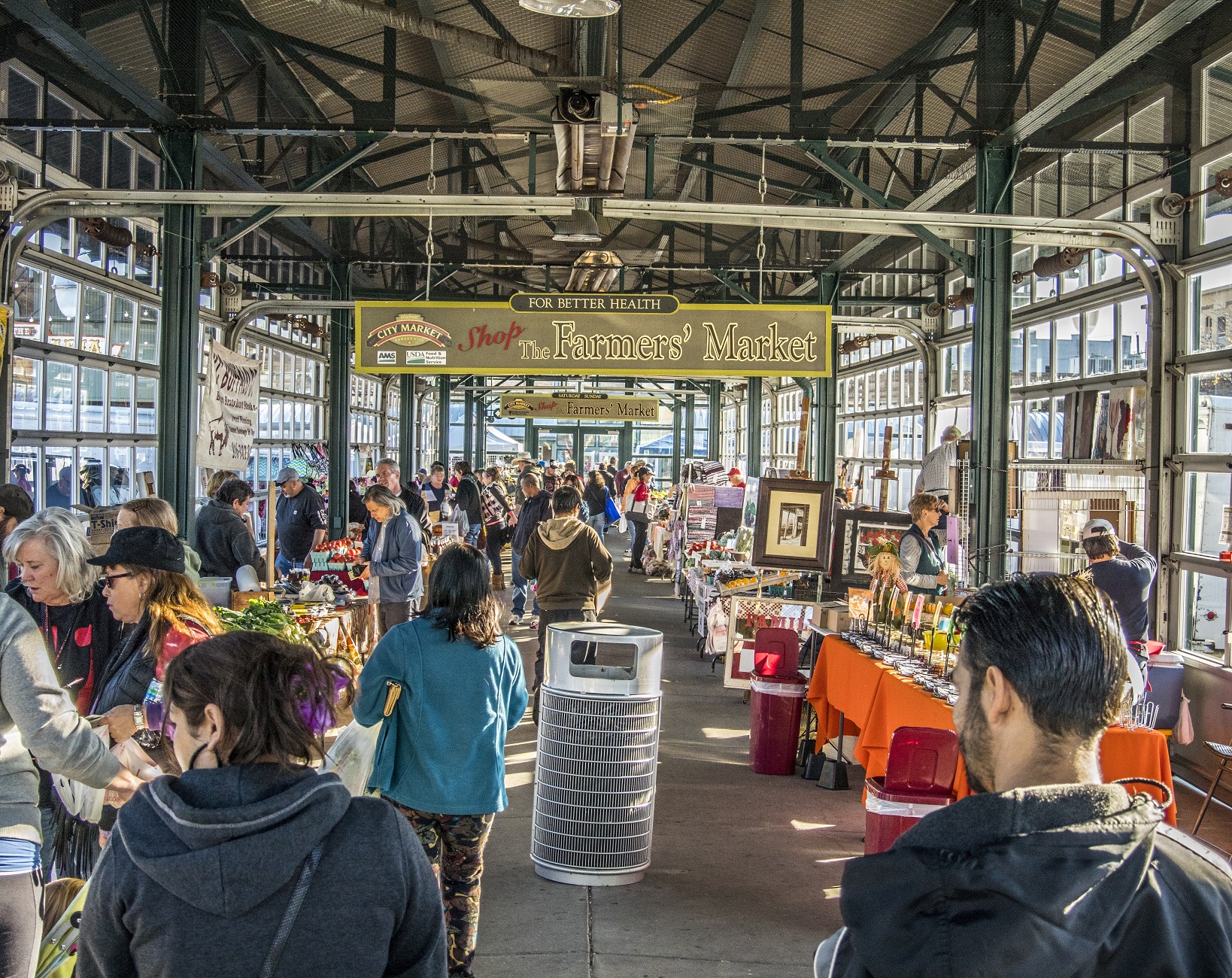
We began our Saturday morning exploring Kansas City’s own River Market. Although we arrived a bit early, we got a head start on all of the produce, cheeses, spices, and home goods that the farmers market had to offer. The brisk morning air refreshed us after a short night of sleep and we enjoyed strolling through the different vendors, smelling the fresh flowers, appreciating the colorful produce, and tasting different foods foreign to Texas.

With just a little over an hour to explore, we tried coffee at Quay Coffee and wandered through the shops open at the early hour. With our noses exhausted from the various smells permeating the market, we left to make it to our Segway tour reservation on time.
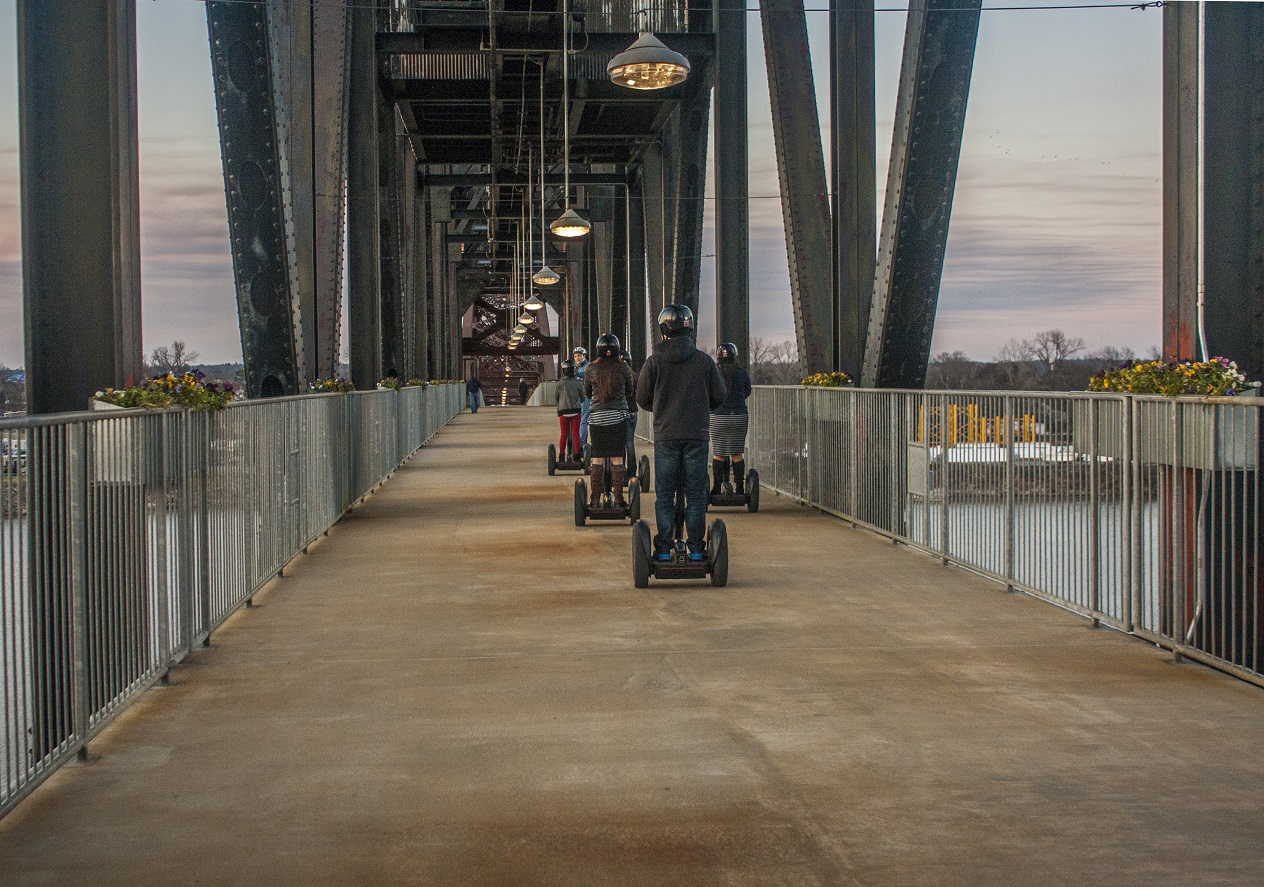
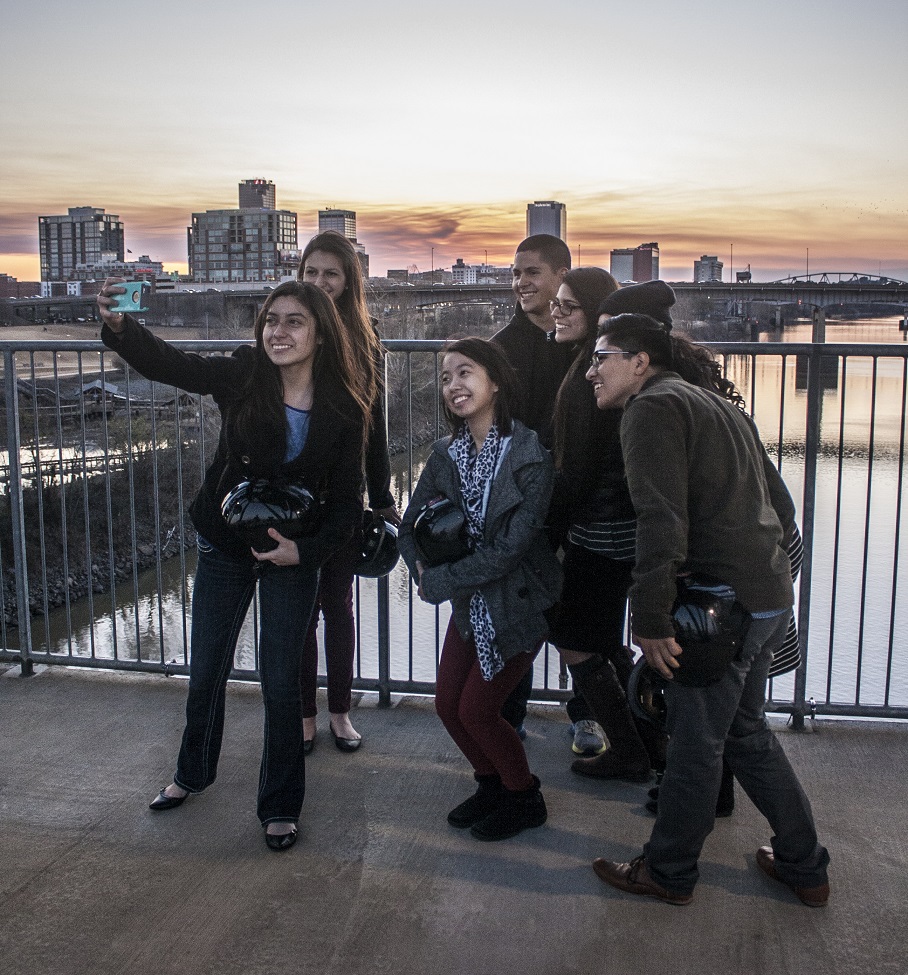
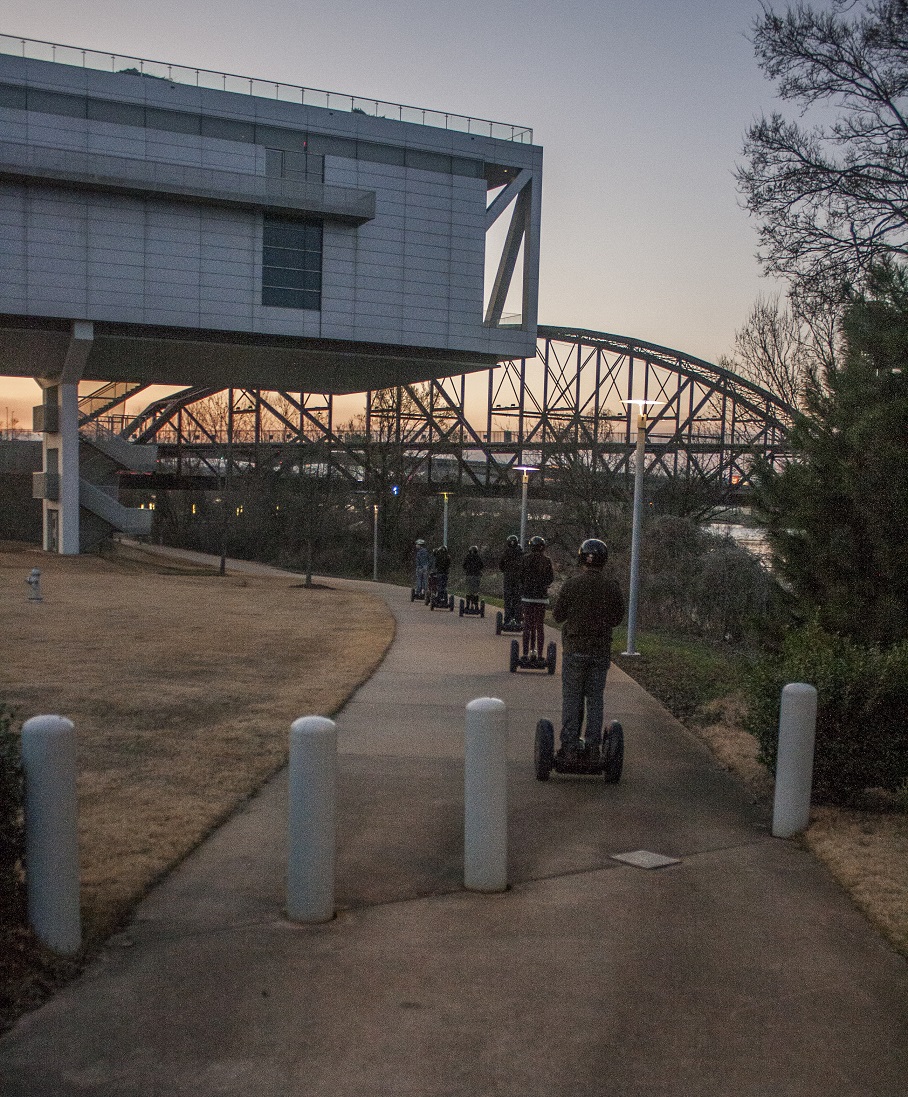
Led by Kelly, we hopped on the available segways like pros and began the tour of downtown Kansas City.
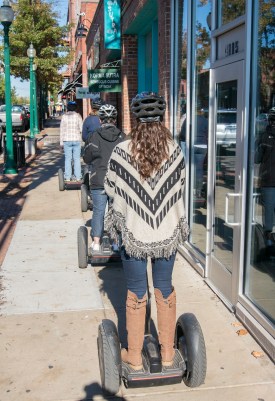
We started in an area called Westport, home to bars, shops, and many a hipster. The area prides itself on preserving its history, which we observed in the established community and some of the buildings being the oldest sanding in Kansas City. Founded in 1831 by Isaac McCoy, Westport originally sat three miles south of what is today downtown Kansas City. His son, John Calvin McCoy, is credited as the “Father of Kansas City” and we observed a statue of him during the first part of our tour. We left the area of Westport to continue our tour, segwaying past pedestrians and through a few linear parks. Kansas City, known as the least dense and city with the most green space in America, is home to many beautiful parks. We had the chance to enjoy these areas, albeit, on segway. We followed Kelly along a couple creeks, walking trails, and even spotted public work out equipment along the way. We ambled upon Kauffman Memorial Garden after visiting Westport, a clear juxtaposition to the hip, bar district we had just explored.

The garden, quiet and serene, serves as gravesite to Ewing and Muriel Kauffman, philanthropists to the city in the mid 1960s. We left the garden to continue on our tour, only after appreciating the giant chrysanthemums in the greenhouse.
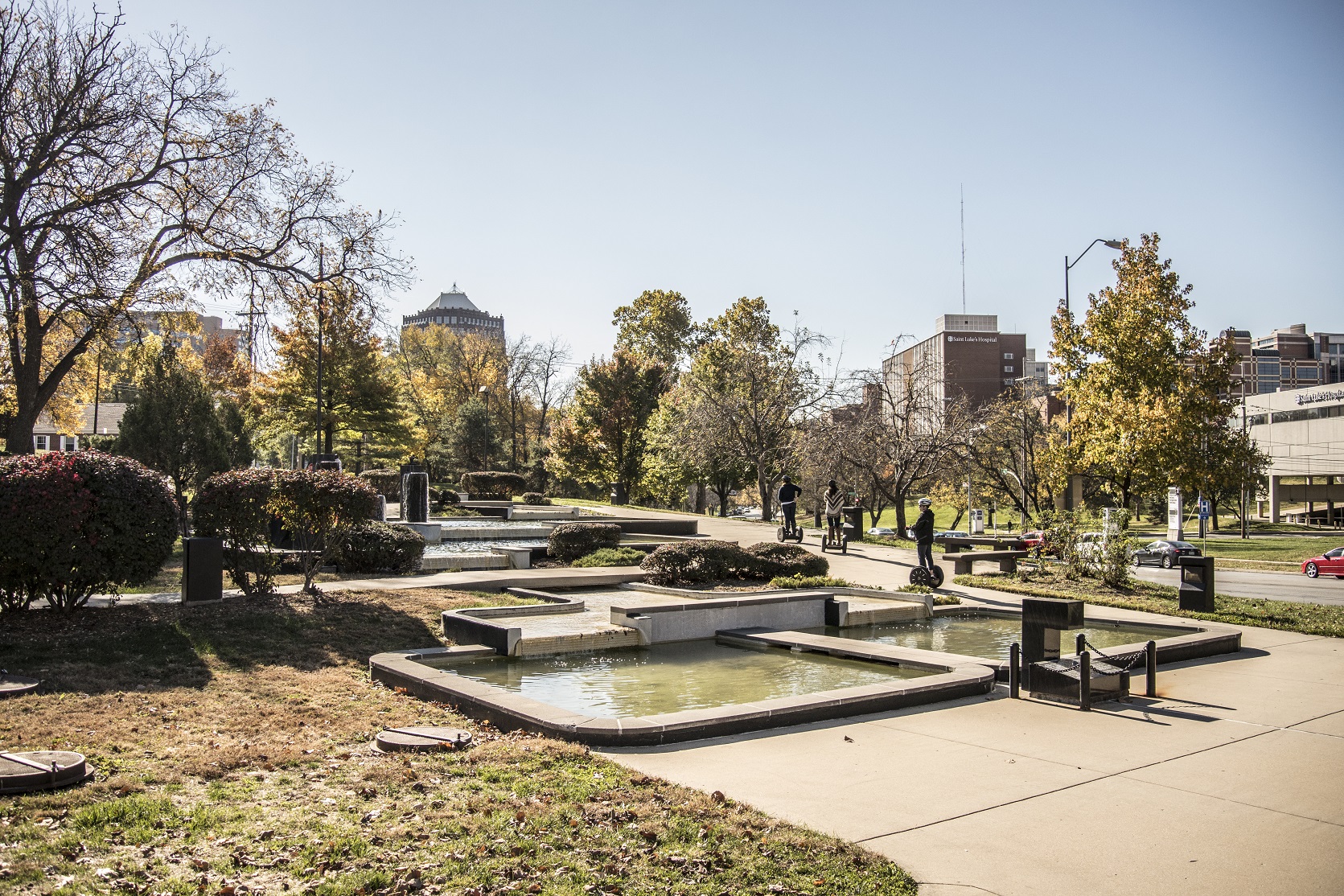
Kansas City is known as the “City of Fountains,” and one of the more interesting fountains we encountered was a memorial to the Vietnam War. It was laid out in a series of cascading waterfalls, a reference to the U.S’s cascading involvement in the war. It culminates in two pools of water at the end, a symbol for the split in public opinion over the war.

We spent the most time on our tour on the grounds of the Nelson-Atkins museum, avoiding photographers and muses as best we could. We even had the chance to explore grounds unfamiliar to Professor Yawn, home to sculptures by Ursula von Rydingsvard (Three Bowls), Henry Moore, and Roxy Paine (Ferment).

We also had the chance to get off our segways and try out Robert Morris’ Glass Labyrinth, which we luckily made it out of without running into any of the glass walls.

We left the grounds, after quite a few photo opportunities, including the chance to see a Claes Oldenburg sculpture (a shuttlecock!)….
 …and an unsettling sculpture titled “Standing Figures,” which is actually a sculpture of 30 headless men standing in rows.
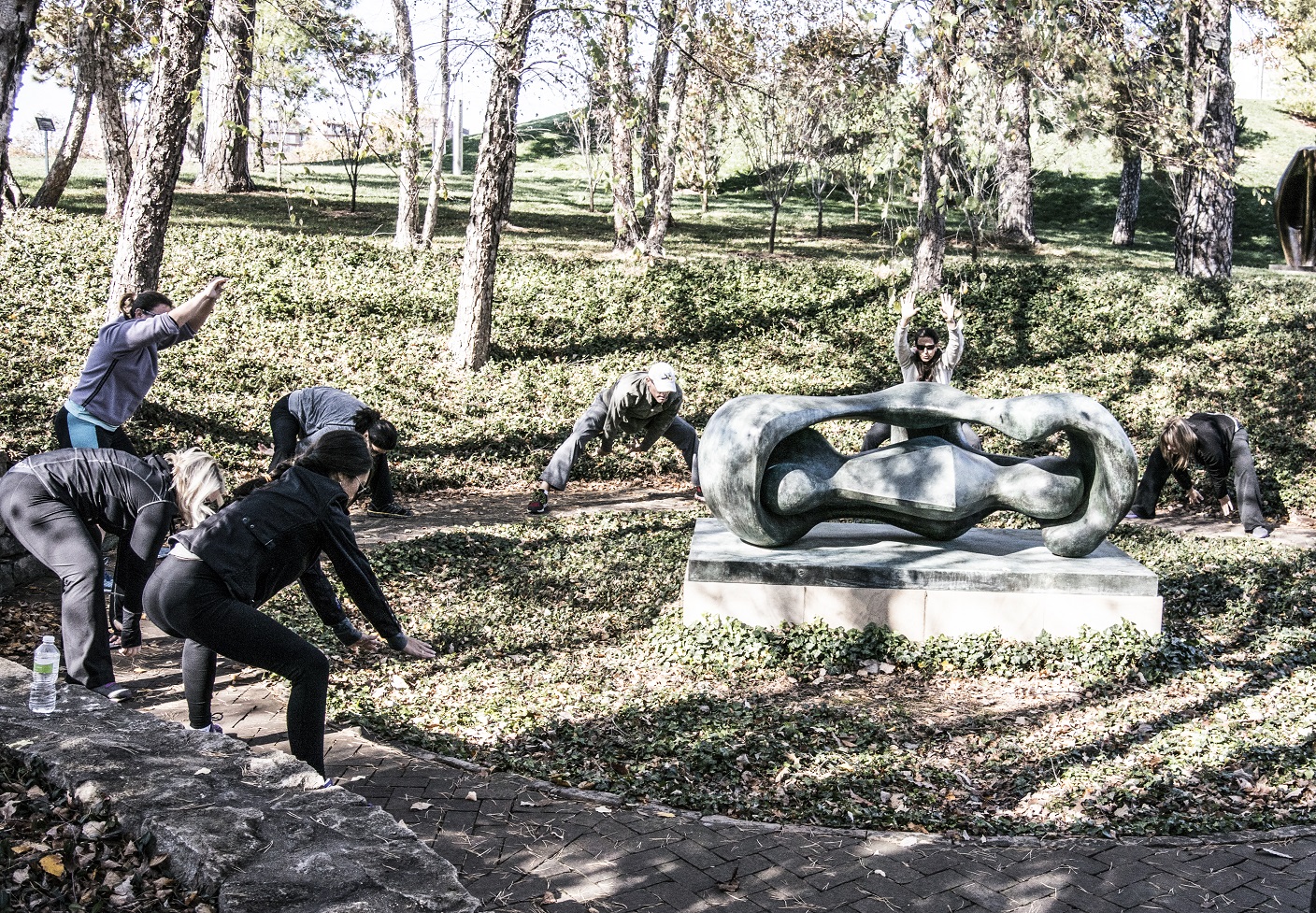
 Meandering through the parks, we also encountered some yoga practitioners, taking advantage of the peacefulness of the park (other than the speeding Segways, of course)…

From there, we made it back to the Kemper Museum of Modern Art, which we had visited the evening before but had yet to observe in daylight. We were re-acquainted with Louise Bourgeois’s “Spider”…

…as well as Tom Otterness’s “Crying Giant.”
 We had previously seen Bourgeois’s work in Iowa and in New Orleans, and we had only recently seen Otterness’s work (City Garden, in St. Louis).
That being our last stop…

…we bid adieu to Kelly and her insightful information and headed to scrounge up some lunch.
Much to the recommendation of our tour guide, we decided to eat lunch at Q39, a local Kansas City barbeque joint. We found the restaurant to be very popular and were confronted with an hour wait. With that information, Professor Yawn and Stephanie decided to let us wait and enjoy lunch while they left to grab our bags at the hotel in preparation for our departure this evening. We finally got a table, which was worth every second of the wait, once we received our appetizer of fried onion strings and meals consisting of ribs, sausage, pulled pork, and even better Kansas City barbeque sauce.

Slightly tangy and very sweet, we enjoyed the barbeque that is so different than what we can enjoy in Texas. We left the restaurant full and ready to take on the rest of our afternoon.
We spent the first part of the rest of our afternoon exploring and learning at The National WWI Museum and Memorial. We arrived just in time to sit and watch the introductory video that left us wanting to learn more, so we ventured into the museum. We began with the WWI timeline that started with the assassination of Archduke Franz Ferdinand and led to Austria declaring war on Serbia.

This led to an entanglement of treaties and soon after, the five Great Powers were at war.

The museums timeline was easy to read and separated every year. The year of 1915 showed how the momentum of the war shifted to the east and highlighted the sinking of Lusitania by a German submarine. The year of 1916 on the timeline highlighted the Battle of Verdun and the Battle of the Somme. The timeline then moved on to the year of 1917, which is when Germany began to renew their unrestricted submarine warfare. One U-boat had cost American lives, which led to America severing its diplomatic relations with Germany and having to decide upon entering the war. The first American troops landed in France on June 25, 1917 and the spirits of France were renewed. The museum also features sections on Air warfare and others. As we walked through the museum we were able to watch another more interactive video about the war which then escorted us to the back portion of the museum that highlighted the America’s role in the War. The museum was very detailed and included many aspects of the war such as every branch of the military, a woman’s position in the war, civilian’s positions in the war, and an exhibit on war propaganda.
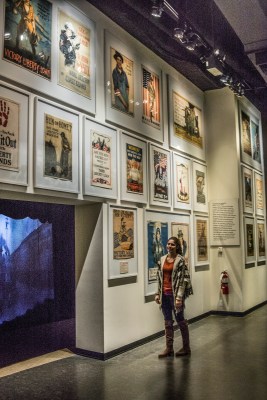 We entered a reflections box where we were able to listen to voices from the War. We then took an elevator up to the Memorial where the tower commemorating the fallen soldiers stands. After enjoying the view, we walked back over the glass bridge hanging over the poppies that represent the fallen soldiers of the War.
We left the National World War I Museum to stroll down the hill in front of it, capturing the beautiful fall afternoon with a few photographs.

We loved feeling the breeze and seeing the burgundy leaves fly through the air off the trees preparing for the first winter frost.

We walked across the street, following the museum, to enter Union Station in search of the temporary Da Vinci exhibit that the train station holds. We found the exhibit on the bottom floor of the station and proceeded to get in line, thrilled with the anticipation of learning about one of history’s most prominent inventors and scholars. We entered the exhibit and watched an introductory video about the Renaissance man. Following, we left the compression of the video space and were awed by the expansion of the rest of the exhibit, full of Da Vinci’s inventions.
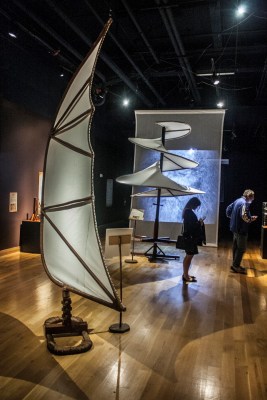
We had the chance to read about his work in military science, flying machines, scientific diagrams about the human body, civil engineering, and inventions that would make everyday work easier and more efficient. We always knew about the inventor’s paintings, “Mona Lisa”…

…and “The Last Supper,”
 …but it was even more compelling to learn about all the musings that were found in his journals ranging from thoughts about poetry to the making of the ideal city. We even had the chance to touch multiple replicas of his inventions, like a pulley and a lock system.

Following the section about his inventions, we had the opportunity to read about his artwork, which about fifteen have survived to this day due to the precariousness of Da Vinci’s experiments with new techniques. It was interesting to read about his work with the golden ration, which can be seen in his paintings and in his drawing of the Vitruvian Man. We left the exhibit awed by a man that we knew very little about before and inspired to expand our horizons just as he did during his lifetime.
We also had a chance to return to the Nelson-Atkins and see the special Thomas Hart Benton exhibit. The theme was Thomas Hart Benton and the Hollywood epic, highlighting styles that tied in with epic films, as well as the time that Benton spent working in Hollywood.
 While in the Museum, we took an opportunity to see some of the pieces we had missed the day before, such as the beautiful gardens…
 …Rodin’s “Thinker” up close…
 …and the strange, intriguing folk art of Philip Haas…

Before leaving KC, we returned to Union Station to grab a few souvenirs before beginning the drive out of town.
After a while on the road we stopped at Pie Five Pizza Co., in Topeka, KS, for a quick dinner. Constance and I shared the biggest Greek salad that I had ever seen and a pesto chicken Alfredo pizza that was delicious. We left the restaurant, and took advantage of our stop in Topeka to see the state’s capitol and other sites.

We stopped at the capitol building, standing majestically in the middle of town. We weren’t able to go into the Capitol because it was late, but we did capture a few photos. Before getting back on the road we had to make one more stop. We stopped at the Brown V. Board of Education National Historic Site. Sadly it was closed by the time we arrived, but we were able to have a glimpse inside provided by the glass doors.

In the building we saw the labels “White” and “Color” that segregated the school. Even though we were not able to go inside, it was still a very sobering experience.
We hopped back in the van, en route to our last stop for the night, Wichita, to sleep before getting back on the road in the morning for the long trek back to Huntsville.






















 Center for Law, Engagement, and Politics
