Rocking In Memphis: LEAP Ambassadors Visit Tennessee

July 7, 2016

After a long hike last night, and a much-needed sleep, we began the second day of our Midwest/Southern Tour with what is now a traditional scenic stop at The Old Mill, the final extant set of Gone With the Wind.

Old_Mill_Ambassadors_Cropped_Web

Most of us had been to The Old Mill before, but we were still very excited to jump out of the van and take in the beauty The Old Mill has to offer.  Moreover, Beatriz actually hadn’t been there, so she got her first taste of The Old Mill.

Old_Mill_Beatriz_Cropped_Web

Interestingly, the LEAP Center and Junior Fellows have photos at The Old Mill dating back to around 2006, making it almost a ritual among the organization.

Old_Mill_Ambassadors_3_Cropped_Web

After some exploration, and a few photo ops, of course, we all hopped back into the van for our next destination: the National Civil Rights Museum at the Lorraine Motel in Memphis, Tennessee.

On the way to the museum, though, we stopped by Graceland, the home of Elvis Presley, to leave a few messages on the stone wall.

Graceland_Signing_Web

And take a group photo.

Graceland_Ambassadors_Cropped_Web

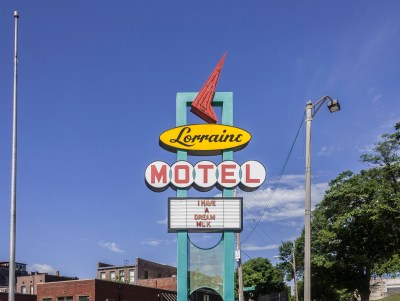
We began the tour of the National Civil Rights Museum…

Lorraine_Motel_Sign_WEb

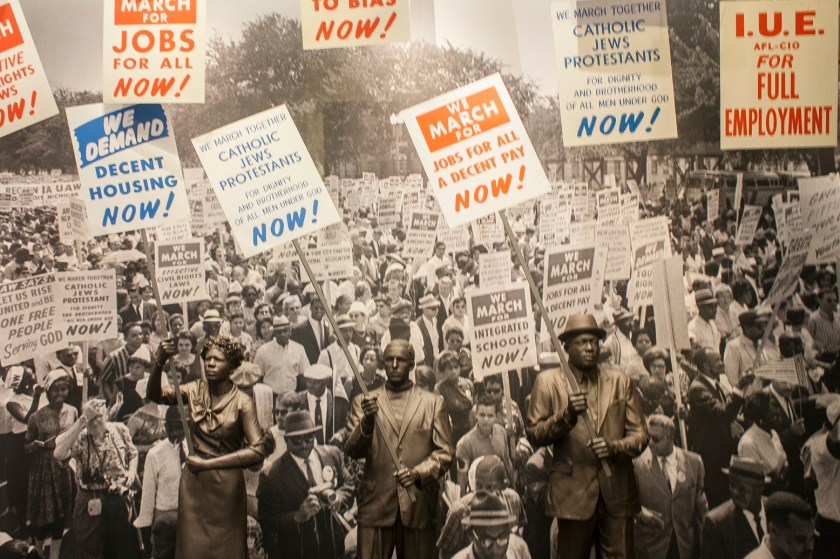
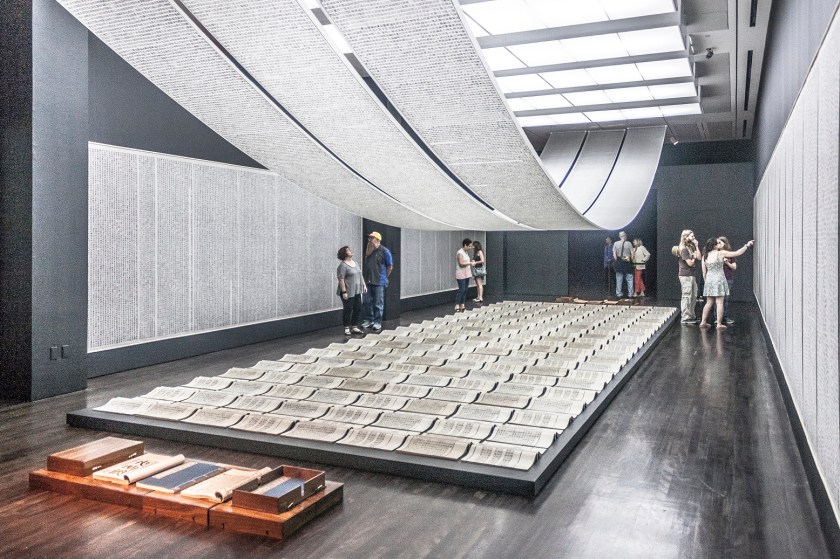
…with a special exhibit by artist Baret Boisson. Her work, themed “Inspiring Greatness through Words and Deeds,” focuses on portraits of heroes such as Mahatma Ghandi, Muhammad Ali, Rosa Parks, Abraham Lincoln, JFK, and her most recent–Martin Luther King, Jr.

The museum portrayed the process of the civil rights movement from the beginning to present in a very detailed and educational manner, and really emphasized the important role that civil disobedience and non-violent protest played thought the years.

Lorraine_Motel_Exhibit_6_Web

The museum’s first exhibit focused on the beginning of slavery. Slaves were considered property and were sold in exchange for items such as 40 pounds of gun powder, two iron bars, one copper bar, or even a mere five pieces of cotton cloth (an average cost of about $200 in the early 1800s). As they were bought they were expected to do heavy labor such as tending acres of tobacco plants.

The slave trade lasted about 366 years, and we were able to see the process of change in America through the museum’s many exhibits. The exhibits were displayed in order beginning with the Montgomery Bus Boycotts…

Lorraine_Motel_Exhibit_4_Web

…followed by Freedom Rides, and the decision in Brown v. Board of Education.

Lorraine_Motel_Exhibit_5_Web

The final exhibit included the two hotel rooms where MLK was staying at the Lorraine Motel when he was assassinated.  The rooms have been restored to what their actual state at the time, including a clear view of the balcony where he was assassinated.

Lorraine_Motel_Exterior_Web

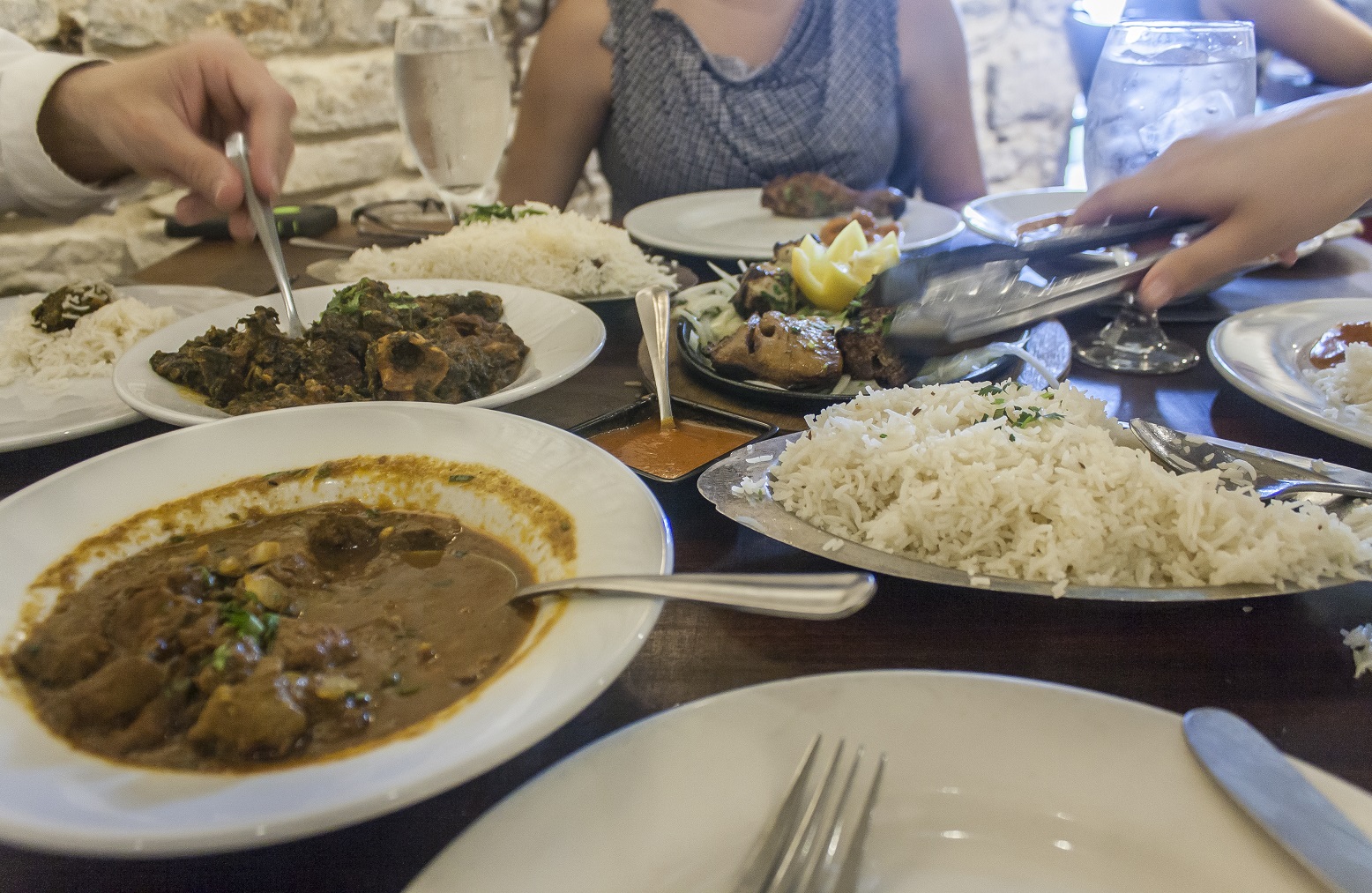
After touring the National Civil Rights Museum, we made our way through a stretch of decorative Memphis buildings to Gus’s World Famous Fried Chicken. We were astonished by how many visitors were crammed inside the small building. With elbows grazing, eager tourists and locals ready to indulge in the restaurant’s signature hot and spicy fried chicken, we LEAPsters pondered whether this chicken was worth the claustrophobia. As tables were cleared and re-filled and waiters rushed through the cracks of the narrow table arrangements, we took our seats.

Soon after ordering, our waiter made his way towards us with an arrangement of fried chicken, coleslaw, fried pickles, beans, fried okra, and seasoned fries hovering over his hand. As his arm motioned this behemoth lunch to float down to the table’s center, our senses where overwhelmed by the scent of fried heaven. Our hunger took hold of us, and after taking a second to strategize distribution of our food, we went through legs, wings, and breasts until there was only left some bones and a some shavings of breaded fibers. Each bite was an experience in itself, with the spice piercing, but not stabbing, at every taste bud, the layer of breading just right. It was clear that this meal was not the typical greasy chain-restaurant type of fried chicken. As our empty plates were lifted and our tables cleared it seemed that we were in need of more bites from this joint’s menu. We satisfied this with a shared slice of chess pie – the sweet, creamy treat was perfect to send us off onto our next Memphis adventure.

Memphis, also known as “Home of the Blues” and the “Birthplace of Rock and Roll,” boasts a small gem that has contributed to music we love and cherish, Sun Studio.

Sun_Record_Studio_Exterior

Sun Studio recorded legends during the 50’s and 60’s that most of us still know and love. After a bit of looking around on our own…

Sun_Record_Studio_Kaitlyn_Megan_Web

…and going through old records…

Sun_Record_Studio_Ryan_Web

To begin the tour, we learned about Sam Phillips, founder of Memphis Recording Services, which later became Sun Studio. Phillips originally opened the recording service using only a tape recorder to create recordings! Phillips primarily recorded blues music with artists like Howling Wolf, country music with a familiar name, Johnny Cash, and later transitioning into rock-n-roll with names like Jackie Brenston.

Sun_Record_Studio_2_Web

Even though many legends got their big break at Sun Studio, the fact that the most famous star to get his start at Sun Studio was Elvis Presley is hardly ever argued. In 1952, Memphis Recording Services transitioned to Sun Studio and began producing their own labels. Shortly after graduating high school in 1953, Elvis recorded his first tape at Sun Studio with a sliver of hope that he would be “discovered” by Sam Phillips. It took time for Elvis to win over Phillips, who was interested mainly in blues music, but with a push from Phillips’ secretary (who actually recorded the future “King of Rock-n-Roll”), he finally decided to give Elvis a chance.

Mixing old blues and country, a combination that hadn’t been experimented with yet, Elvis finally got his shot when his song (“That’s All Right (Mama)”) was played on the radio one afternoon in Memphis. The radio station’s phones were ringing off the hook.  Finally, Sam Phillips knew that he had someone special in his studio.

We visited the actual studio where Elvis recorded his music, on the last part of the tour.  Our ears were ringing with joy while listening to the original recordings of some of Elvis’ songs! Carl Perkins, Johnny Cash, and Jerry Lee Lewis were also discovered by and signed with Sun Records. Known as the “Million Dollar Quartet,” or the “Class of ‘55,” these four musicians would all shine fame on Sun Studio.

To end the tour, we had the opportunity to take pictures with the only original piece of equipment left from the heyday of Sun Records, a microphone that was most likely used by the members of the “Million Dollar Quartet,” and Elvis himself!

This slideshow requires JavaScript.

In the spirit of historical research–which has nothing to do with the fact that she finds him handsome–Megan searched out a  photo of Elvis to pose beside.

Sun_Record_Elvis_Megan

After rolling through the ages, the spirit of rock-n-roll stayed with us as we headed to Nashville and the Cheekwood Botanical Garden and Museum of Art. We began with the art museum in the Cheek mansion, which is not only large and beautiful, but is also graced by a large Steve Tobin sculpture in the front yard.

Cheekwood_Tobin_Daylight_Ambassadors_Web

The home was previously owned by Leslie and Mabel Cheek from 1933-35. Their daughter, Huldah Cheek Sharp, then offered the home to be used as a botanical garden in the 1950s. Now, the mansion is home to and furnished with many elegant works of art.

The current exhibit allowed us to roll through the various ages of art, from American Impressionism to abstract work. Also, like musicians’ attempts to provoke sensations in their audiences, these artists’ works are a direct translation of their life experiences — evident throughout the museum. Perhaps most interesting to us was a chandelier by Bruce Munro, an artist we saw at the High Museum of Art in Atlanta last year…

Cheekwood_Munro_4_Web

The compositions that filled the 55-room home were moving and memorable. Artists such as Childe Hassam used impressionistic paintings of nature that struck a different chord with art enthusiasts and provided a lasting respect for self-interpreting environmental art.

Megan: “My favorite painting was called, “Outskirts of East Gloucester.” The loose brushstrokes of a countryside brought a sense of home to me and happened to be a theme of the Cheek mansion. How often does one have the opportunity to look at beautiful art in a beautiful mansion? The garden and museum were definitely a “top hit” with the LEAP Ambassadors.”

Cheekwood_Painting_1

Still in the spirit of rock-n-roll, we began rocking the trails in search of the Carrell Woodland Trail’s sculptures (pun fully intended). The botanical garden was beautiful. Instead of arrangements of beautiful flowers, the parts we visited reminded us more of a state park. With cedar trees standing tall and proud, the sweet melody of the birds chirping and the cicada drone, we meandered across the trails looking for the sculptures.

As part of the trail, we passed the Cheekwood Prime Matter, Untitled, Steeple Dance, and Glass Bridge, among others.

Cheekwood_Siah_Armajani_Glass_Bridge_2_Web

Last on our list was James Turrell’s Blue Pesher. The whole purpose of this chamber was to create a space where one could reflect by making their perceptions more sensitive. We sat inside, staring up the hole in the ceiling, into the sky, pondering on how to face the music of our lives. As the plaque outside the Blue Pesher puts it, “In this room, discover a commentary on the heavens and what it looks like from the inside of the chamber.” (Interestingly, “commentary” is the definition of the Hebrew pesher.)

Cheekwood_Turrell_Skyscape_Web
The sky at dusk as seen from the floor of Turrell’s Skyscape, Blue Pesher

With the sunset, the symphony within ourselves had to come to a slow and soft end, as the sky could no longer be seen. We headed back to the van knowing that the melody in our hearts had been heard and that our self-perspectives would be seen in a new light.

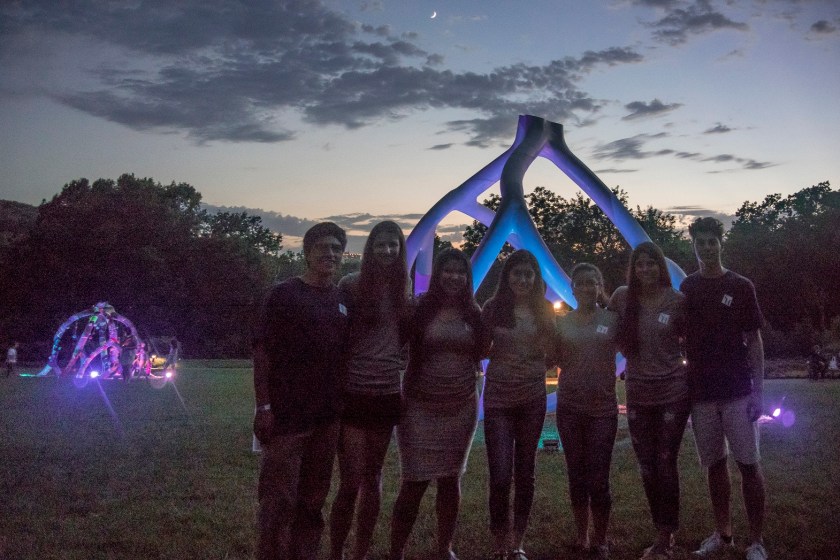
Cheekwood_Tobin_Ambassadors_Moon_Web

To continue enjoying our Nashville evening, we had dinner at Mitchell Delicatessen. Housed within a wooden facade that resembled a country home, the deli offered an eclectic assortment of sandwiches. From tofu to BBQ brisket to a Tennessee Tuna Melt to an Asian flank steak, it was a challenge to narrow down which to choose.

Megan: I chose the Asian flank steak. This renowned deli magnum opus (which was apparently featured in the Travel Channel) was unlike any other sandwich I had ever had the honor to taste. With steak smothered in provolone cheese on a bed of sliced bell, banana pepper, celery, carrots, and olives, this deli delicacy was enough to send my palate down a ride of flavorful delight. To make the experience even more interesting and add tad of an effervescente ride, my meal was accompanied by one of the eatery’s own draft cola.

We rounded out our second day of the trip with a very satisfying repast from Nashville’s culinary spectrum and headed to our hotel for a good night’s rest.

Cheekwood_Steve_Tobin_Moon_Web

A Campaign Diary, Part II: Brian Aldaco

Brian Aldaco is a freshman at SHSU who spent the last month in upstate New York working on a congressional campaign.  For a student who hadn’t spent much time outside of his home state, it was a great window into the world of politics and the opportunities of travel. 

This blog entry is his second addressing the campaign work he did in June 2016.

As the culmination of the New York District 19 Republican Primary drew near, campaign volunteers were tasked to muster up every single ounce of energy to go through our block walking assignments and ensure a Heaney victory.  As before, this included going to the various towns and villages of the district; from the Hudson Valley and through Catskill Mountains we marched from house to house in hopes of being heard.

Campaign_Sign_Truck_Web

Additionally, as a means to operate more effectively, we were  relocated to a country home in the candidate’s home town of Millbrook. With creaking wooden floors, book shelves filled with literature, and antique house decorations, we could get a feel for the home’s historic spirit. This also allowed us to experience the region’s house culture, which is replete with historic homes.  In fact, it’s not uncommon to see the year the home was built on or near the doors of the homes, with many of the years dating back to the 19th century.

Two days before the election we came together to phone bank. This tedious process included being placed on a call queue, waiting for a voter to answer, and hope that the prospective voter doesn’t hang up or yell at you.  Although these were common responses, we continued to call, ever eager to reach out to voters.  On Monday, alone, we were able to reach 1,600 voters.

As dawn broke on June 28, we awoke with a sense of excitement. Finally, the day we had all been working for had come. Finally, our month-long work was about to pay off, to hopefully gain a victory. With these high hopes, we drove 45 minutes to campaign headquarters, in Hyde Park.

Inside the office, decorated with pictures of Winston Churchill and FDR, we were tasked with completing phone banks. Thus began one of the most extensive endeavors in which I had ever participated. By this time, the voters had begun to tire of the frequent calls from candidates’ staffs, and they let us know it–loudly and frequently.  The day progressed, and an assignment of 500 calls morphed into an assignment of 600 calls, then 1,000.  Collectively, we became a calling machine, reaching more than 20,000 voters in a two-day period.

At 7:30, with a sore, throbbing ear and exhausted vocal cords, I regrouped with the volunteers, Joe Williams, and Campaign Manager David O’Connell for one last briefing. It had all come to a close; there was no more we could do but wait for the polling results and head on over to Mr. Heaney’s viewing party.

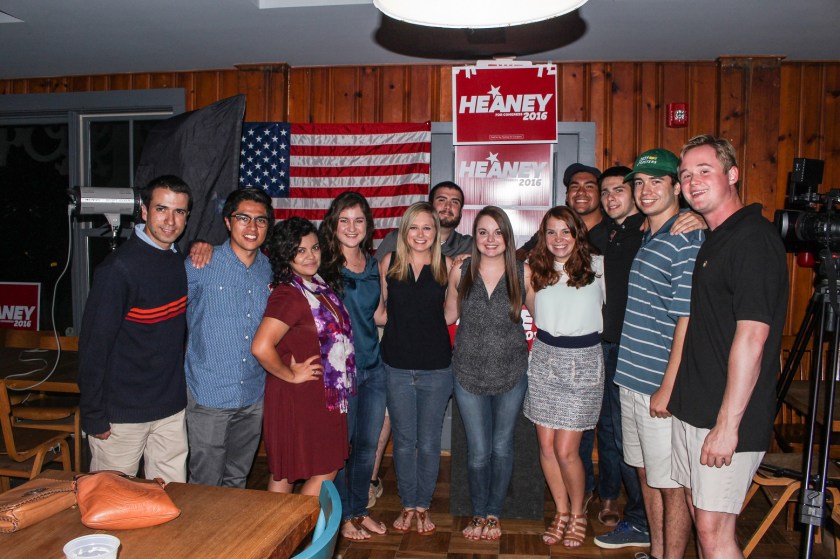
As we crossed the threshold of the bar and grill we stepped into an assembly of celebrating campaign sympathizers and friends. No matter what the polling results would yield, we had all worked just as hard, the campaign had become our purpose, every single door we had knocked and number we had dialed, we did so as to ensure Mr. Heaney’s victory. For a month we had become the campaign and on that night it would end.

Campaign_Headquarters_Web

As the Congressional District 19’s results were posted it was evident that our candidate was not receiving the support it needed to win the primary. After the majority of precincts reported the results, it was clear that Mr. Heaney would not make it to the general election.

Nonetheless, we all held our head high with pride. For the volunteers, it was the first time we had worked in such an extensive campaign. Even though I was not able to see my candidate win the primary, I was just as grateful for being part of his efforts. We all learned an extensive amount of the political world that we could not learned anywhere else. For that reason alone I am grateful to Grassroots Consultant Joe Williams, Campaign Manager David O’Connell, and Mr. Andrew Heaney.

Heaney_Speaking_Web

A Campaign Diary: Brian Aldaco

Brian Aldaco is a freshman at SHSU and a LEAP Ambassador.  After a fun and education filled first year at SHSU, Brian got a call asking for his help with a Republican congressional campaign in New York state.  Showing the adventurous spirit, Brian took the offer and set off on a 30-day learning experience.  This is the first of two blog entries from him on the trip and work.

The call came late in the campaign season.  Would I fly to New York to work on a campaign?   With only four days notice, I didn’t have much time to think.  Fortunately, I didn’t need much time to think.  Yes!

As with any far away trip, my travel began at the airport. I was to fly from the Houston Bush International Airport, transfer planes in Atlanta, Georgia to finally arrive at the Albany International Airport.

Clouds_Airplane_2_Web

At 10:00 at night, already having crossed over to the eastern time region, I arrived at my destination in the gorgeous (not-as-much-as-Texas) state of New York.  It was only my second time in a plane, and it was my first time in New York.

The campaign was for Andrew Heaney, a Republican who is running for US Congress in the Albany region of New York state.  My job was to be part of the many volunteers and staff on hand to help him win.  This includes: block-walking, phone calling, assisting with events, and other duties.

Brian_Working_Web

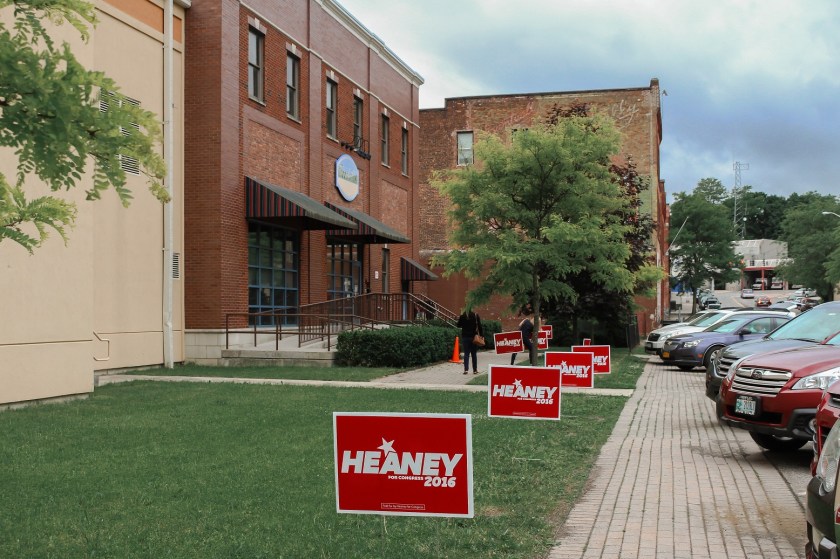
The day after I arrived, the rest of the block-walking brigade and I, a total of six students, woke up early in the morning to get a short briefing by campaign mangers Joe Williams and David O’Connell. As very experienced professionals in Get Out To Vote (GOTV) strategies, the managers delegated areas of the state’s Congressional District 19 to us. Hence we were deployed from our hotel in the village of Colonie, pumped up and ready to meet voters on behalf of candidate Heaney to ensure his victory in this June 28 Republican primary.Heaney_Signs_Web

Riding through the various towns and villages of the district has been a pleasure. As a lover of nature’s wooded paradise it has been delightful to see the congressional district composed of the counties of Ostego, Montgomery, Schohaire, Greene, Rensselaer, Columbia, Delaware, Sullivan, Ulster, and Dutchess. Amidst woodpeckers thumping in trunks, chipmunks trailing through every garden, beavers bravely rocking across the streets, and the occasional rabbit bouncing through the green fields, the Heaney block walkers have toiled through the week to encourage residents of this gorgeous country side of New York State to support us.

Road_Greenery_2_Web

Tasked with this endeavor, I have met along the way a wide variety of people along with the different tempers they offer when either rooting for our candidate or shrugging us off as if we were pesky soliciting salesman. I might add, however, that regardless of resentment for our candidate from some of the houses, there is still a sense of polite generosity whereupon most of these nay-sayers will end their farewell with a sincere “good luck.”

By traveling through these small upstate New York villages I am getting a better sense of the northern culture. This small community feel was not so much different from a town like Huntsville, for example, where it is always pleasant to visit the town square and enjoy a lunch. This first week this is how we all spent our midday breaks…

Pizza_Web

by enjoying such delicacies as Ruben wraps, Philly cheese steak sandwiches,

BBQ_Sandwich_Web

classic dinner hamburgers with fries, small town coffee-shop espressos and tea, and much other delicious treats that help illuminate the delightful taste of the different communities of New York’s 19th congressional district.

However, the highlight of the week was having the chance to meet with Mr. Heaney on Wednesday in the city of Oneonta, located in Ostego County about an hour’s drive south of Colonie. There, a debate would be held between Heaney and his opponent John Faso. With the temperature dropping to 45 degrees along with menacing rain clouds trailing along the mountain tree tops which surrounded the city, we were eager to go inside the city’s theatre production center where the debate would be held. The debate between the two New York Congressional candidates was diplomatic with minimal hostility.

Heaney_Speaking_Web

At the end of the debate we were able to shake hands and meet with Mr. Heaney. He shared how impressed he was with our work thus far, which motivated us to work even harder. This motivation would later be demonstrated when block walking through Saturday’s rainy morning. Nonetheless the evening of the debate we chose to relax over an all New Yorker pizza in Oneonta’s very special Italian restaurant Joe Ruffino’s.

Joe_Ruffinos_Web

With a week of block walking through beautiful and quirky New York villages it has been a great pleasure to have this great opportunity to be a part of an amazing campaign. Even though at times the steep mountainous roads have caused us consternation, (especially when the pavement ends) it has been rewarding to enjoy the picturesque landscapes. With so much country beauty it’s hard not to get lost in the rolling fields and piny woods of upstate New York from which I have to shake off its trance and continue on this northern grass roots mission to success.

Road_Greenery_Web