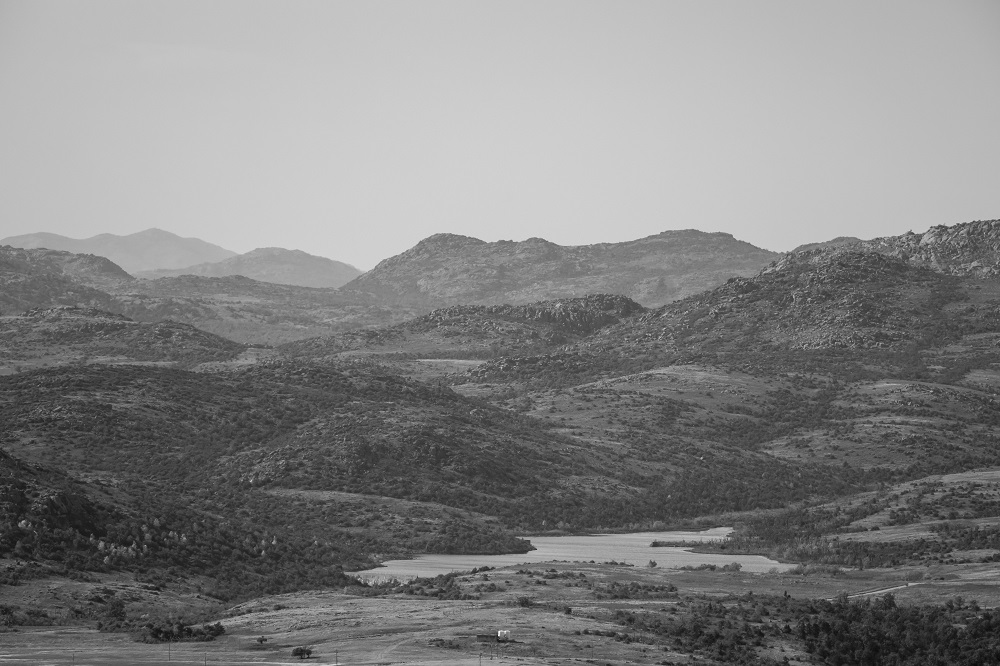
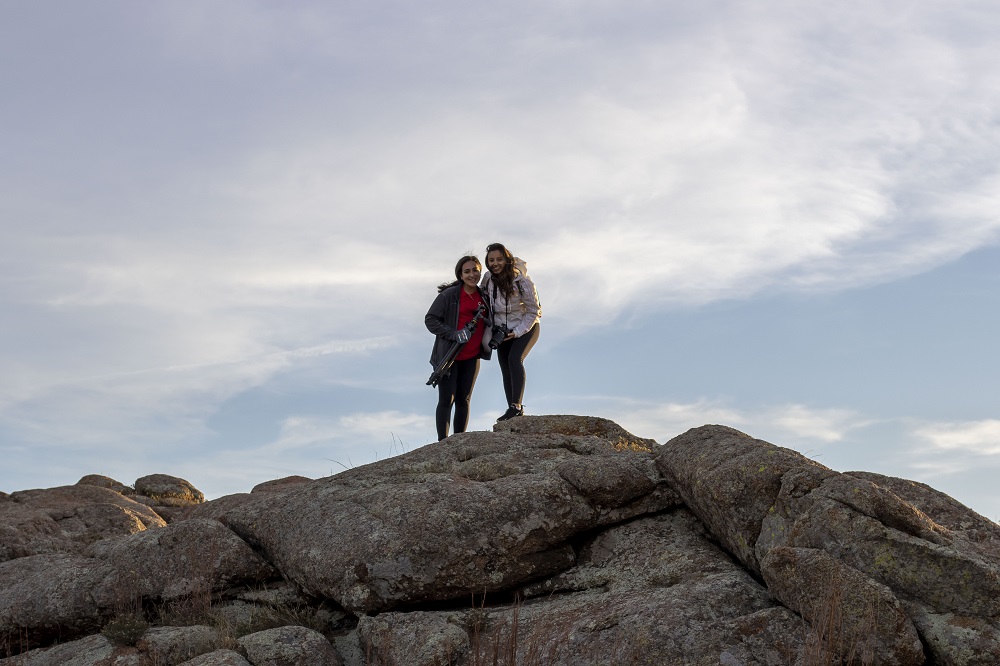
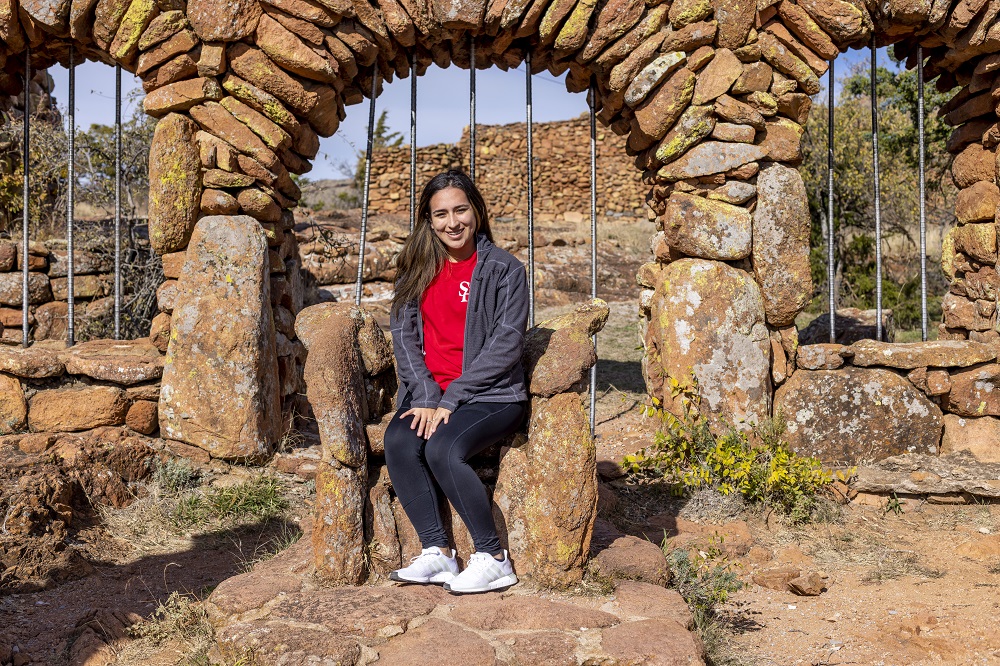
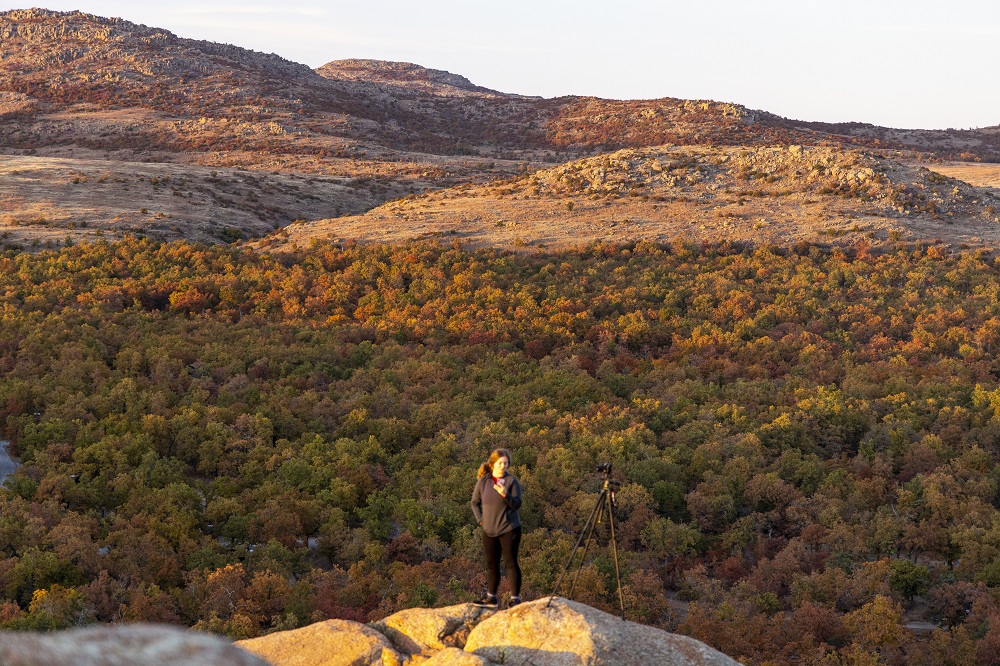
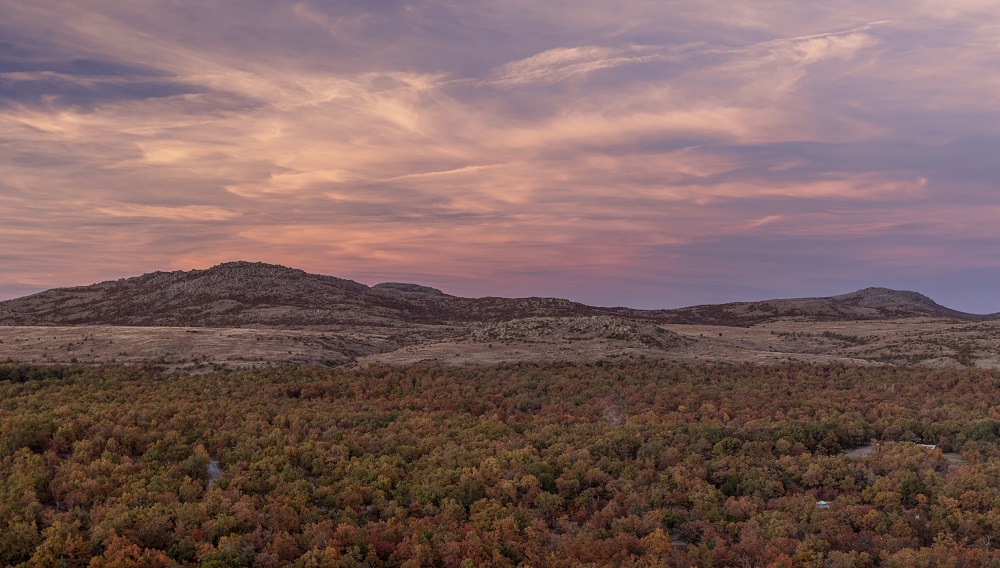
We were so excited to get there, so the LEAP Members dressed in weather-appropriate- hiking attire and headed out!
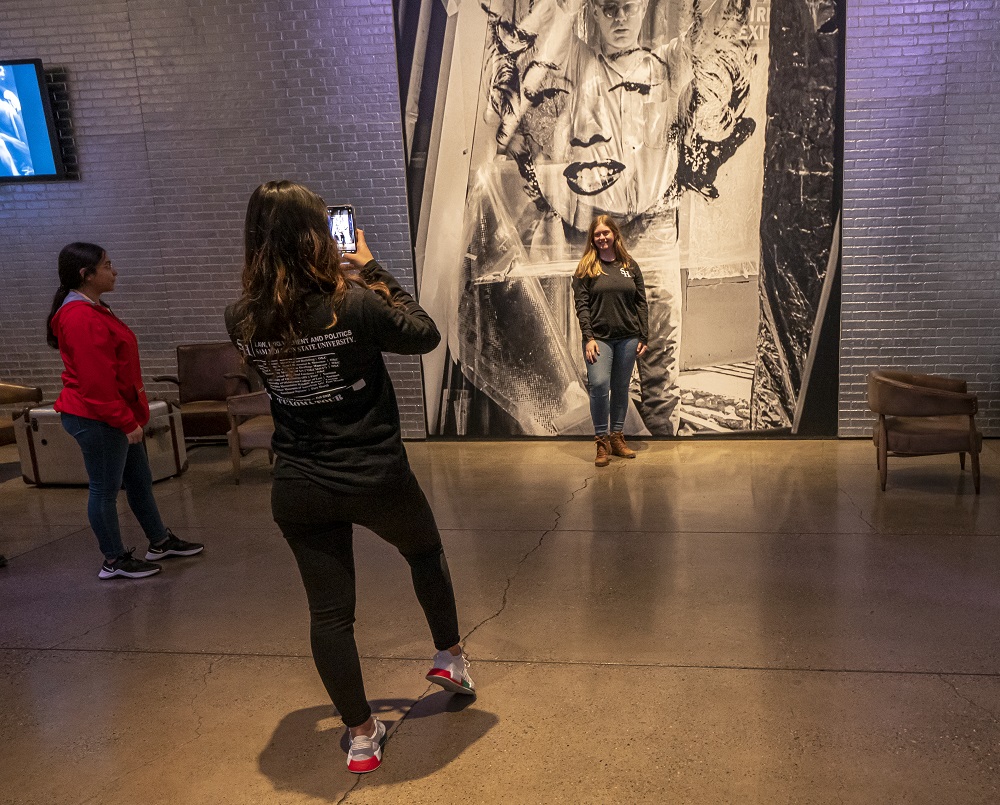
When we got to Lawton, Oklahoma, it seemed as though we stepped into a different time. The town of Medicine Park, right outside the Refuge, was founded in 1908 as Oklahoma’s first resort town. Due to the natural abundance of cobblestone, every building proudly displays this local feature in its design. Passing through Medicine Park was a great prelude to our visit to the Refuge as it properly set the tone for the trip.
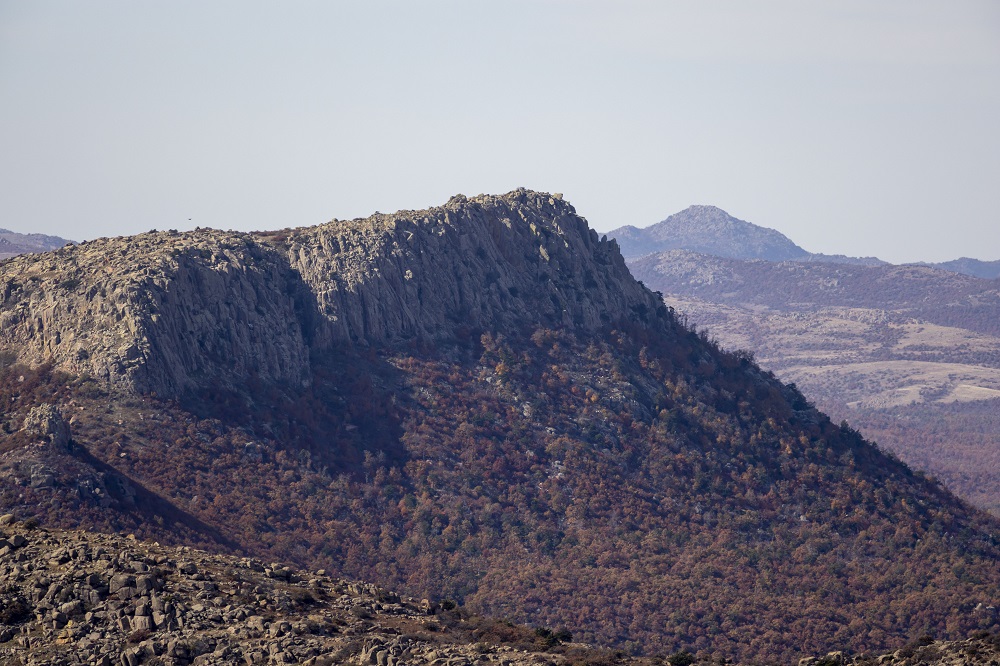
As we begin the windy climb up Mount Scott, our thoughts were of what the view might be like when we reached the top.
We were amazed by what greeted us as we made the final bend onto the top of the mountain.
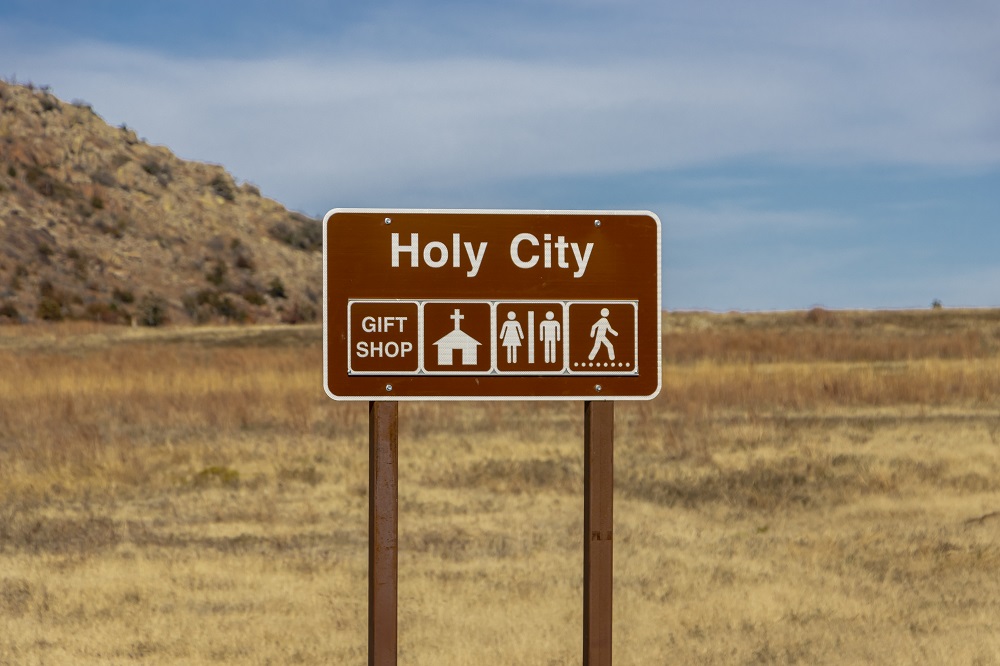
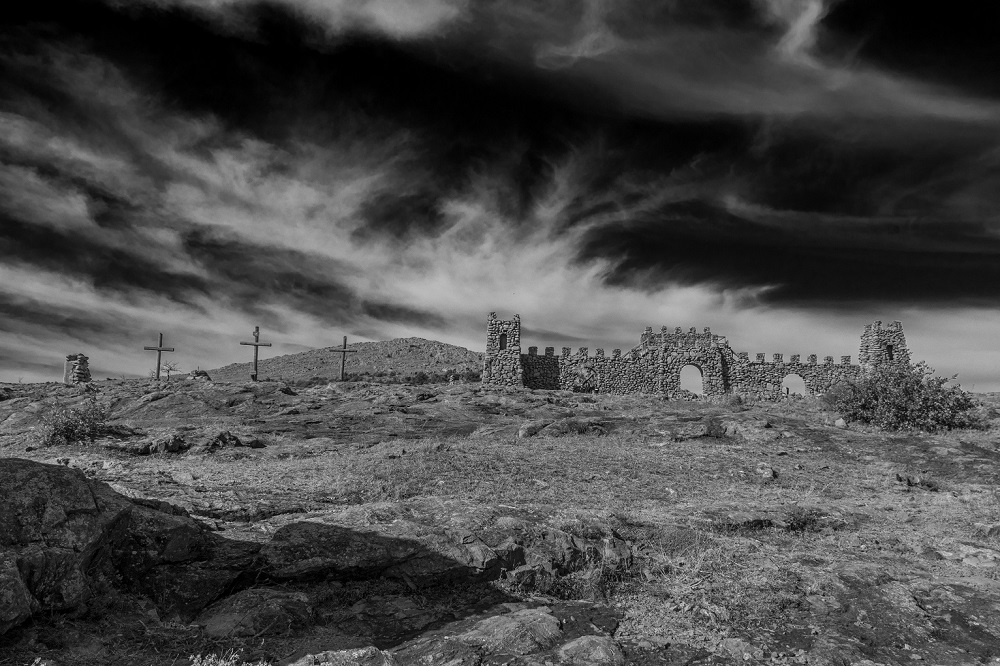
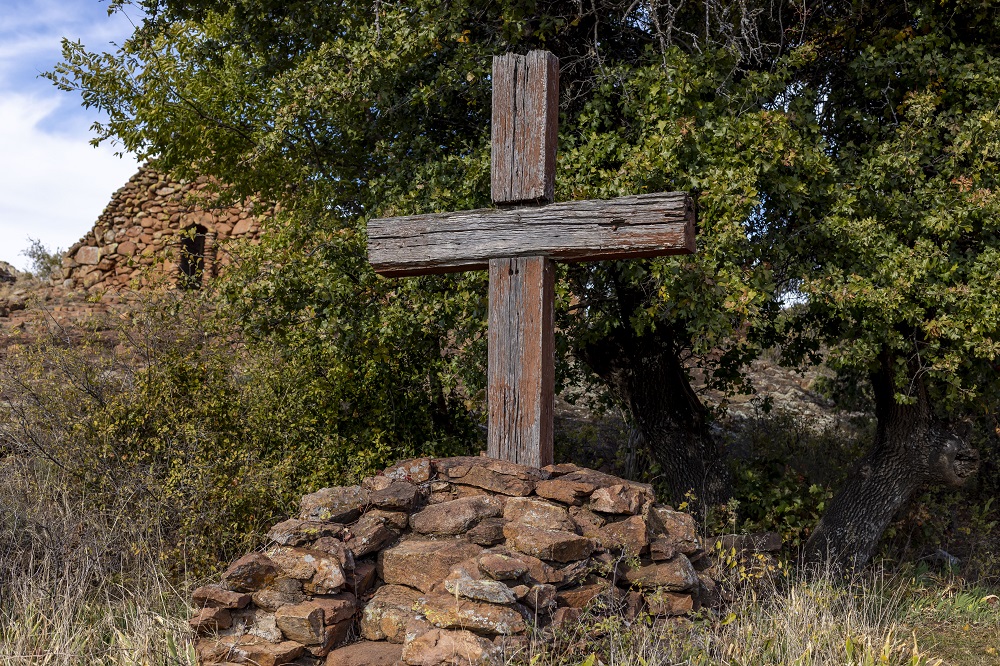
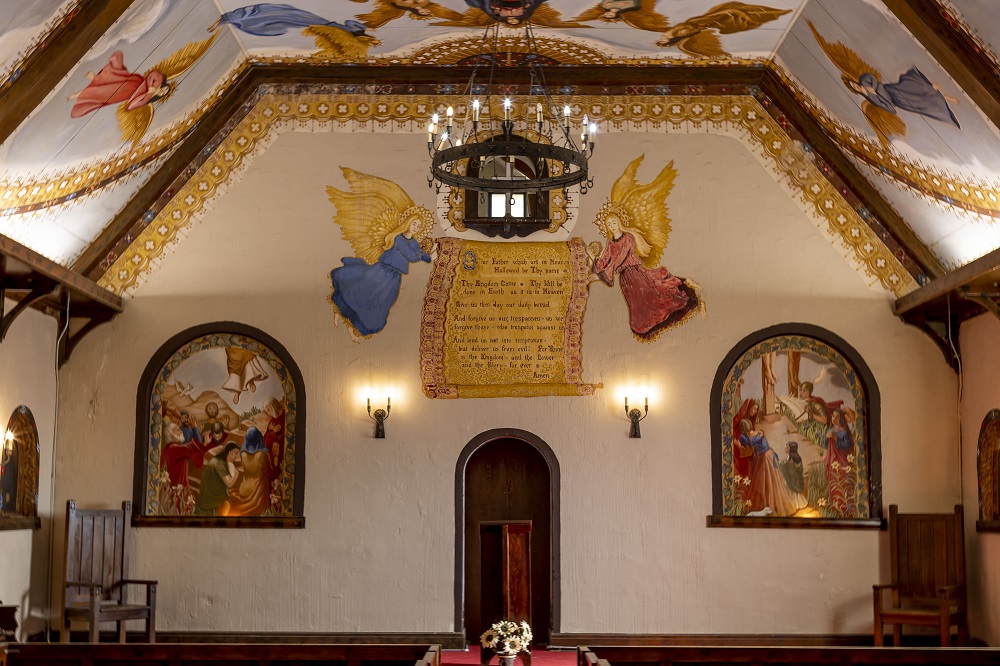
One of the biggest attractions to the refuge is found in the replicas of the Holy City.
The displays of major Biblical scenes once again transported us to a different time.
Such scenes on display included the last supper, the Garden of Gethsemane, three crosses, a whipping post, the judgment seat of Pilot, and more. This was one of Saara’s favorite places we visited because it taught her more about the Christian faith and expanded her cultural awareness.
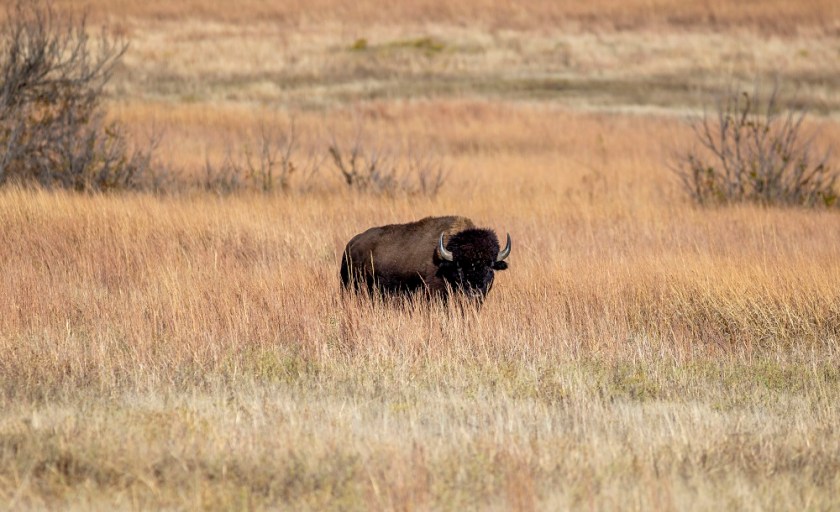
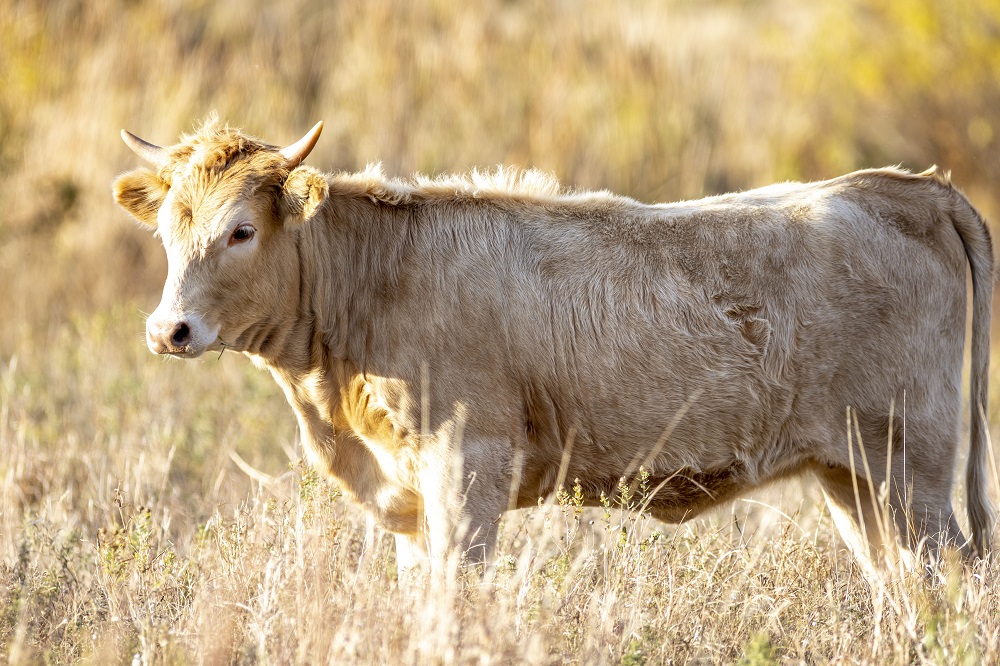
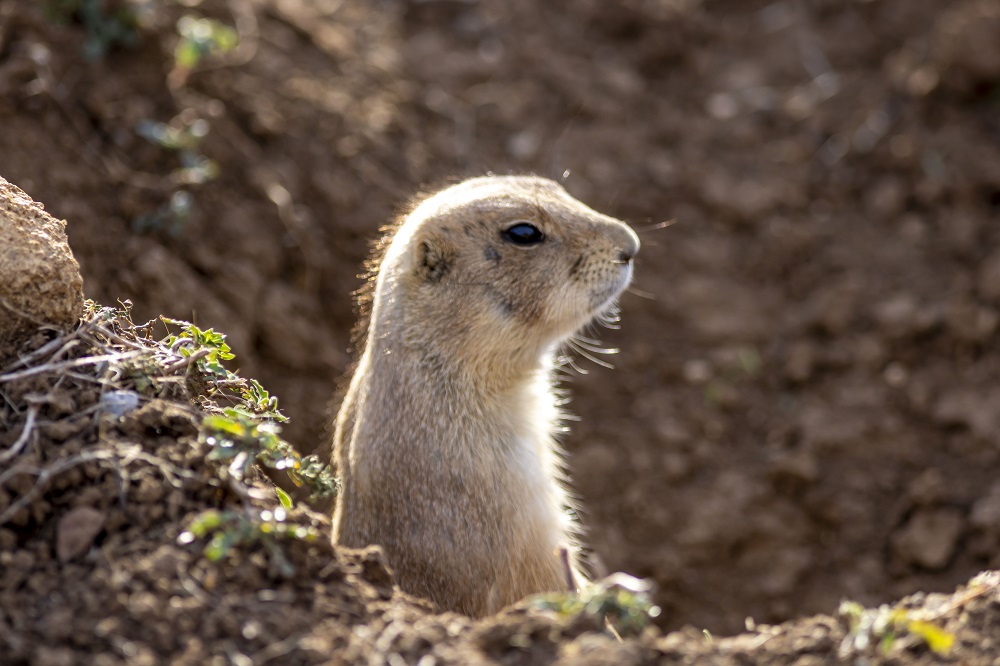
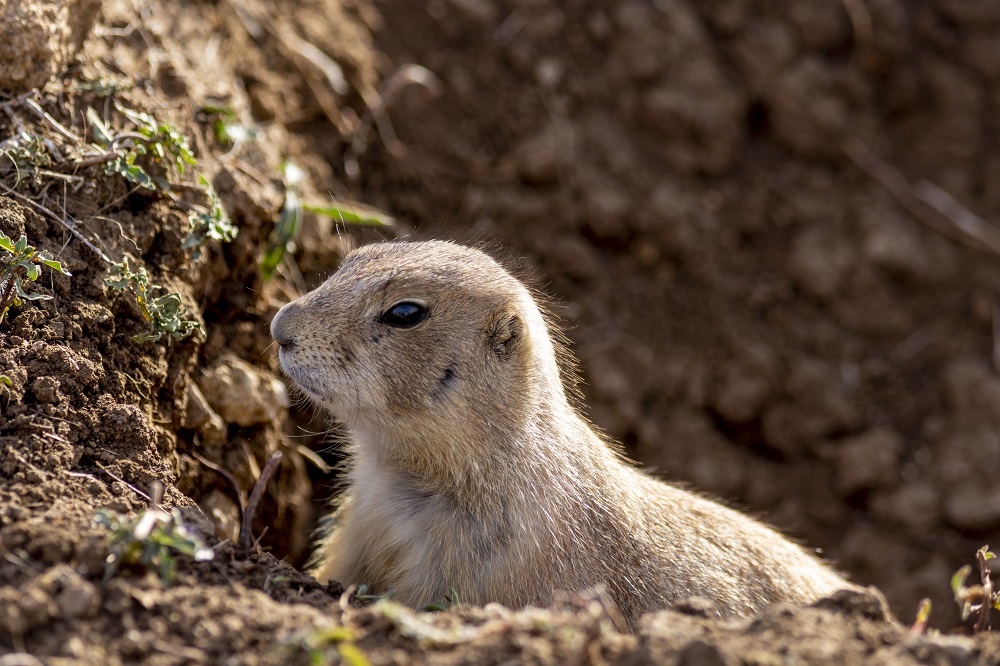
Luckily for us, the day was filled with photogenic wildlife, in all shapes and sizes. We were fortunate to see animals such as buffalo…
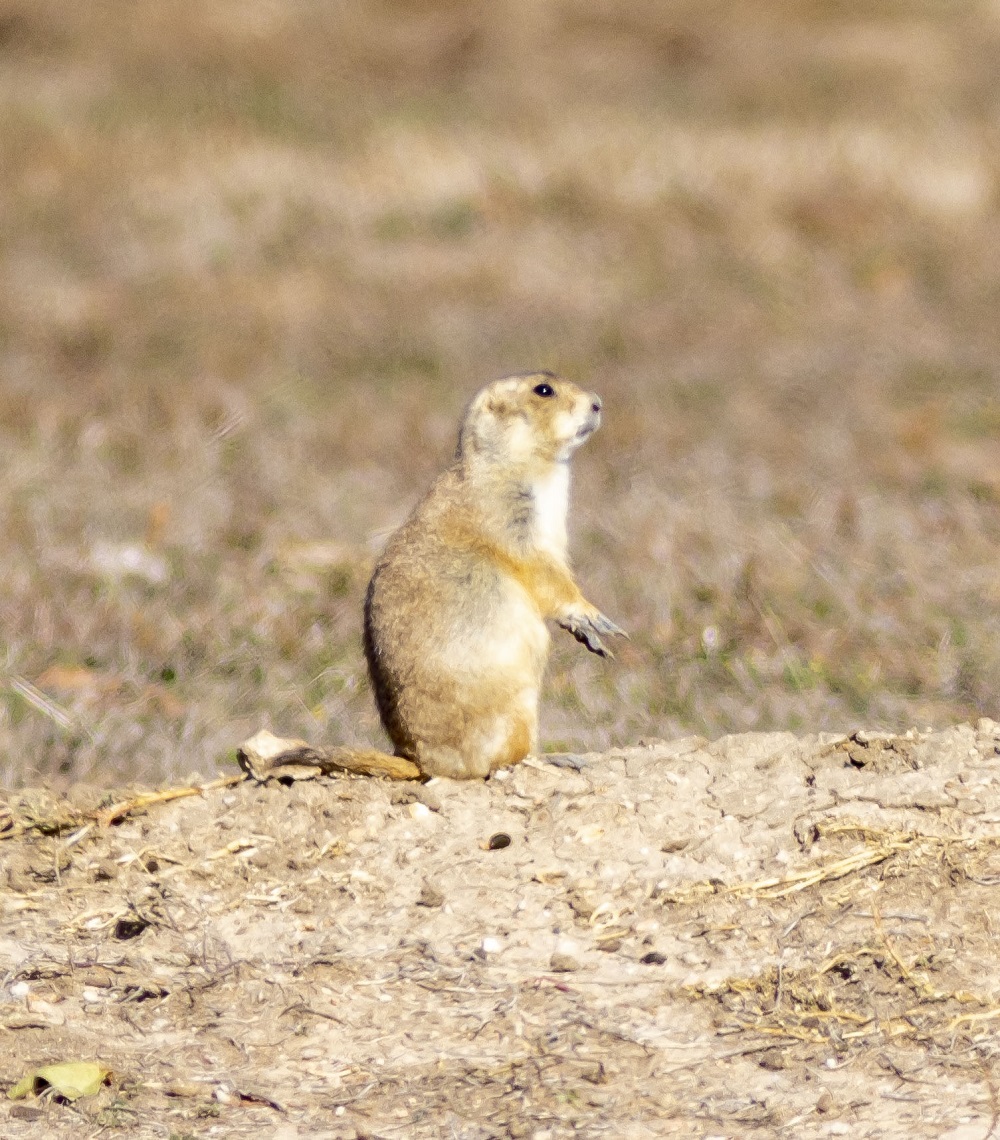
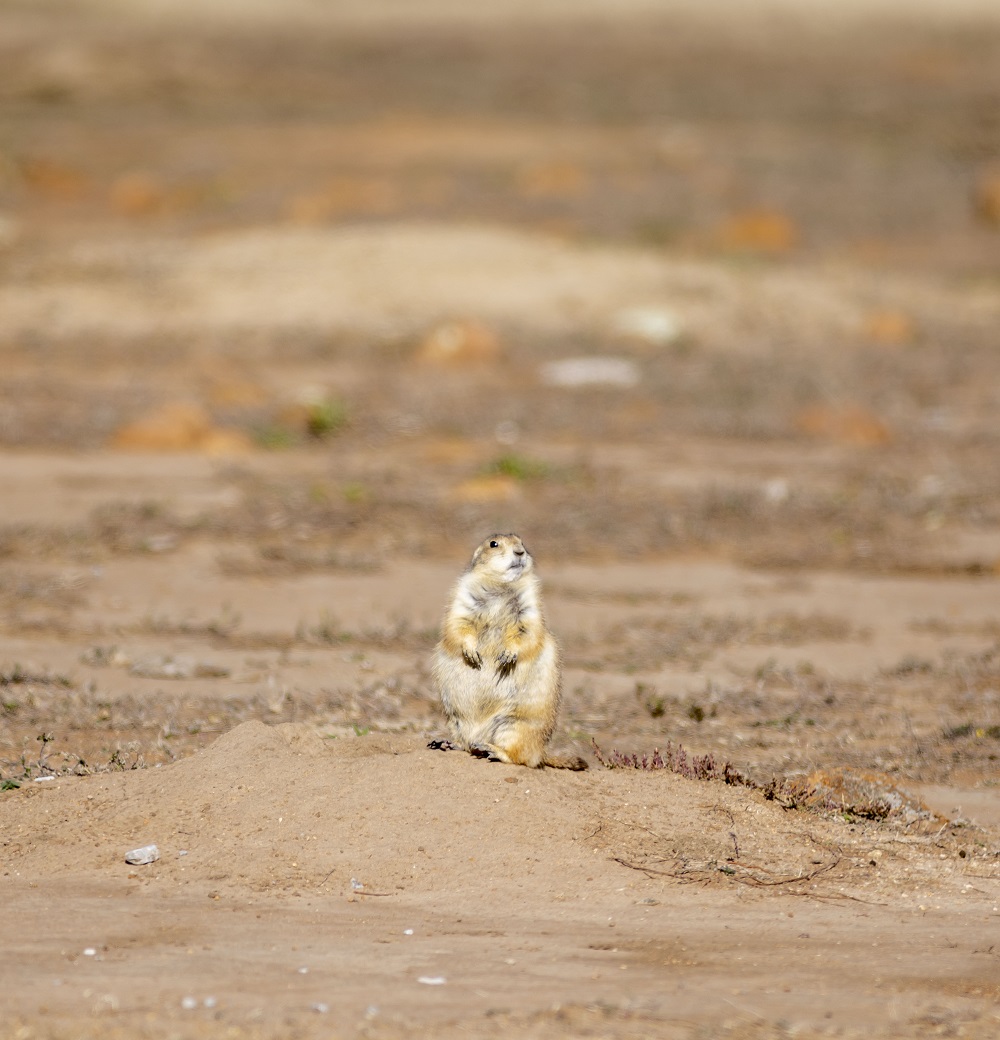
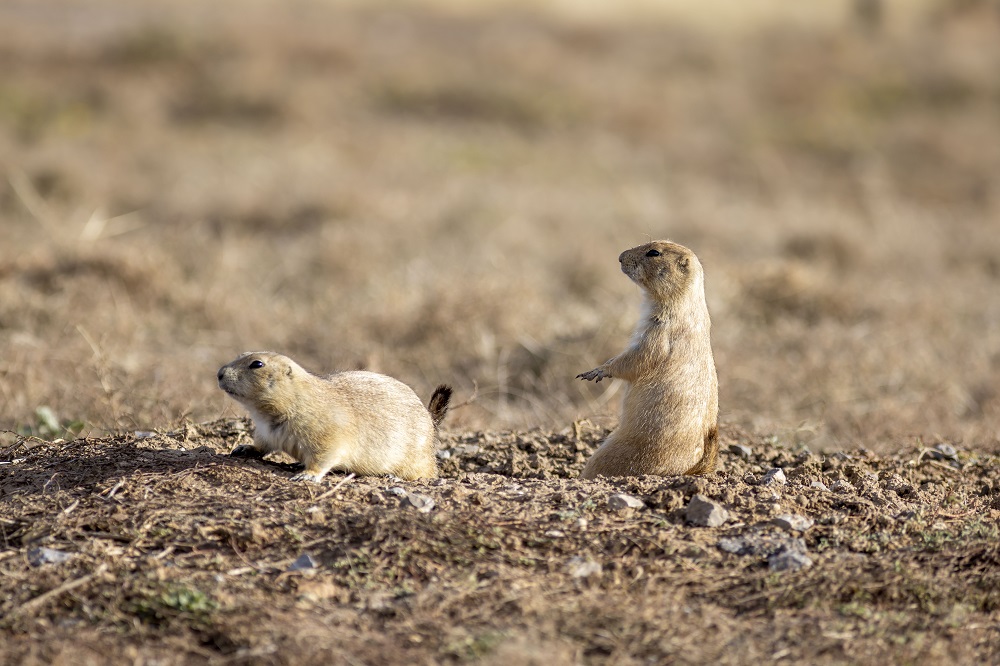
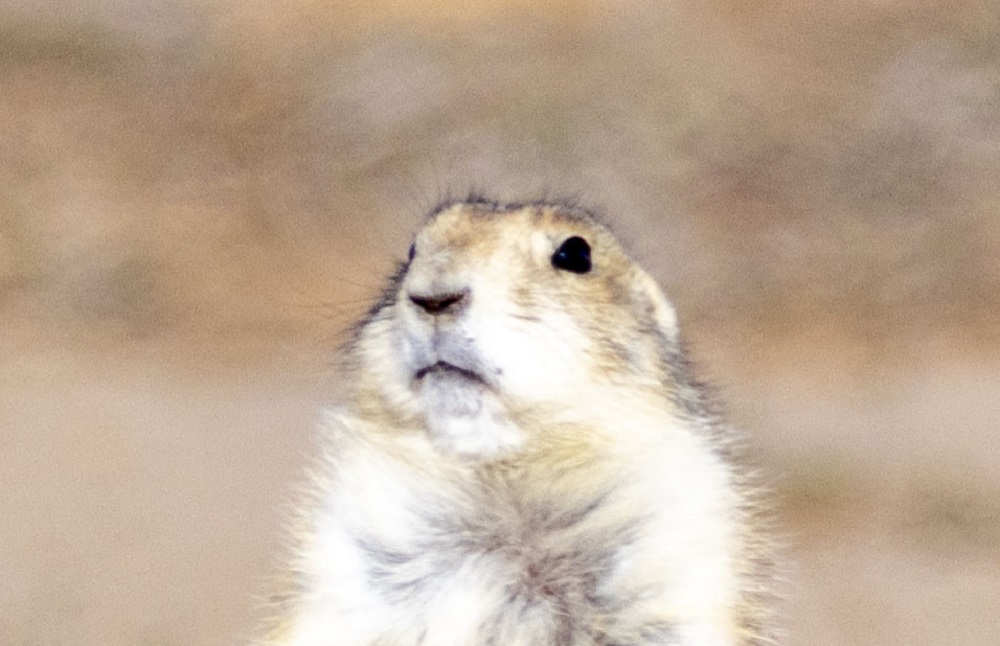
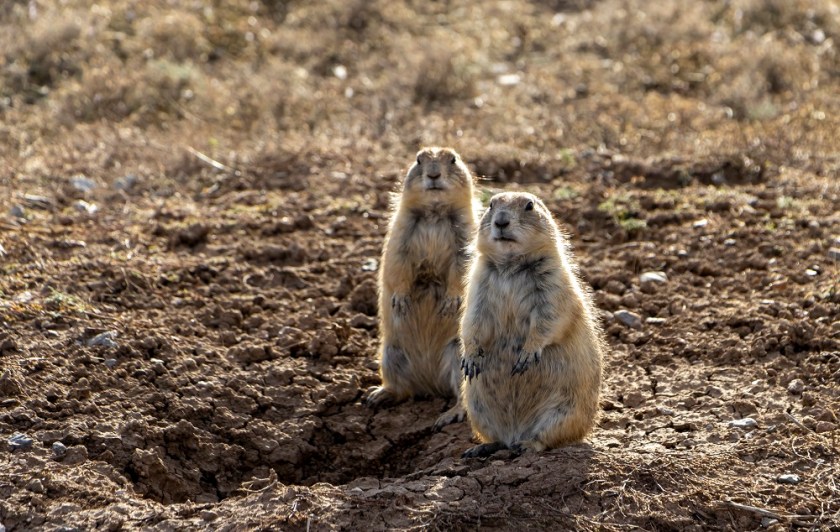
…prairie dogs…
…and longhorns.
The prairie dogs were modeling for us, standing still, and looking right at the camera.
The buffalos were a little further, but we were still able to take pictures of them. For many of us, this was our first time seeing buffalo.
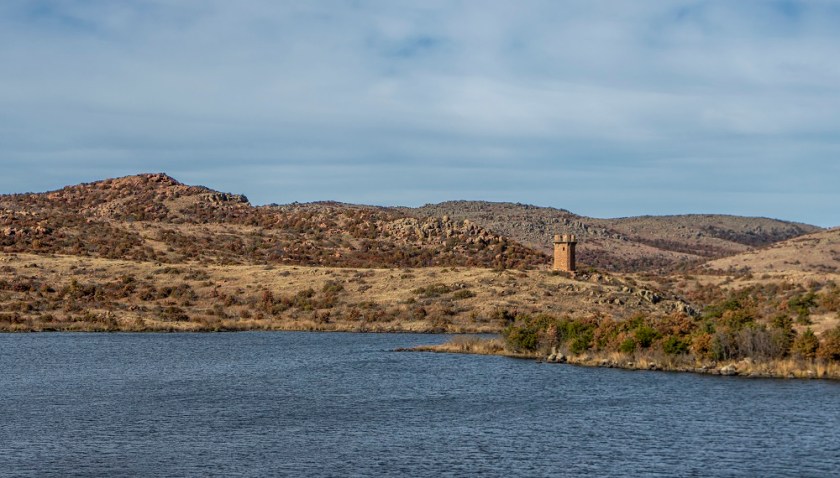
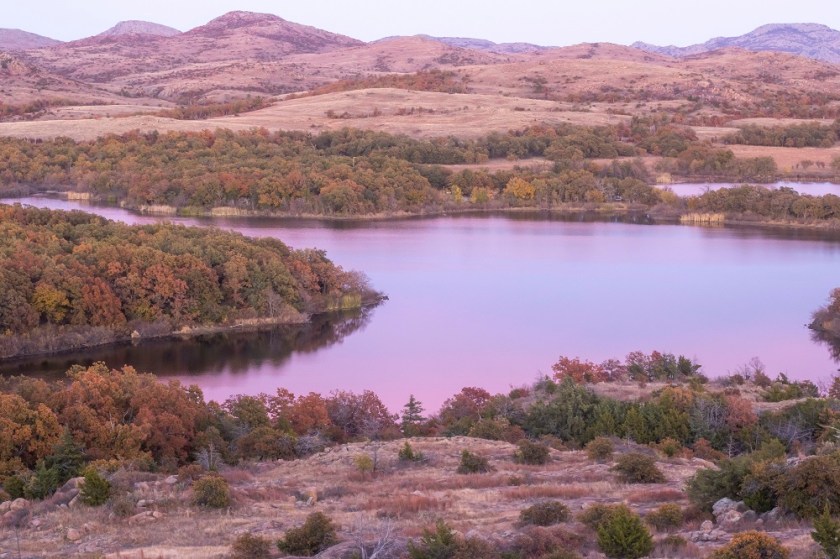
We stopped to see several beautiful lakes and one with a perfect vantage point of the watchtower.
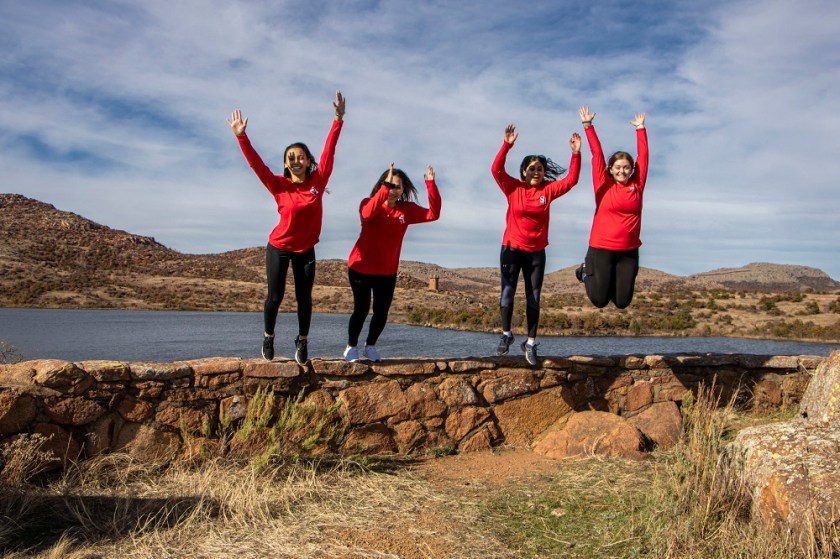
The tower was built by the Civilian Conservation Corps in 1941 and looks to be in great condition. We thought the location would be perfect for our favorite LEAPing photo, but we were ultimately unsuccessful.
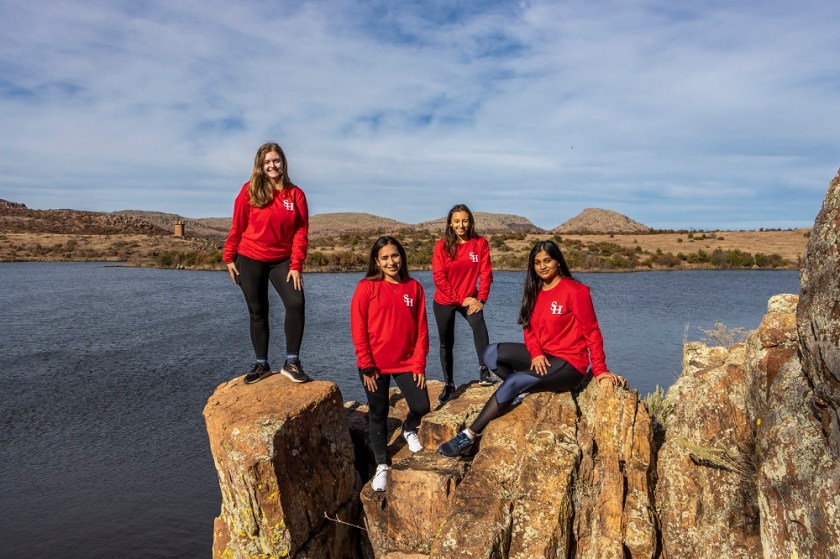
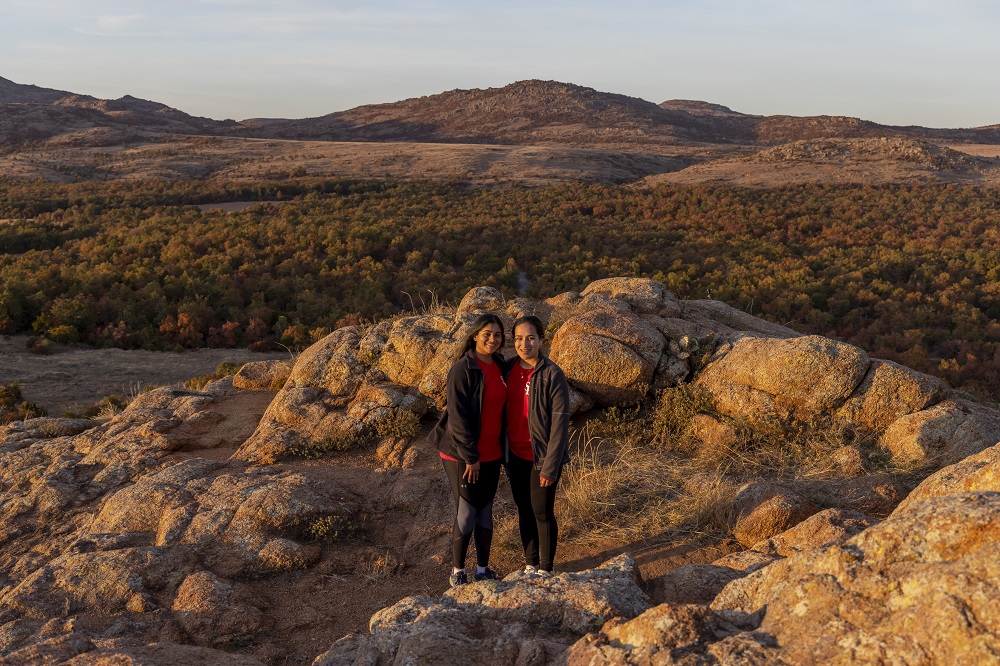
We were more successful at stationary photos.
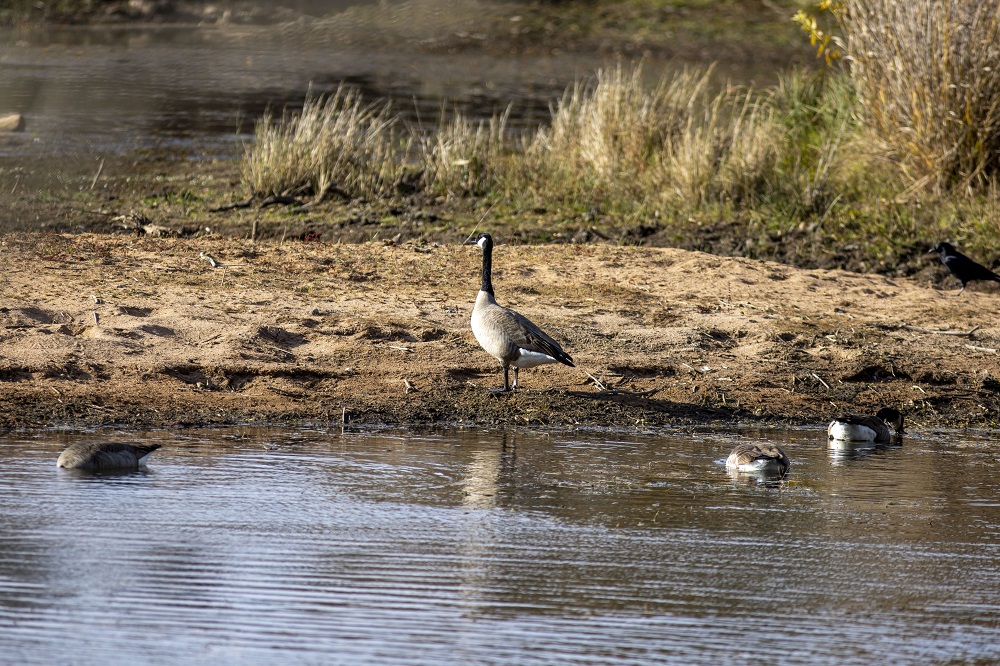
While we might have failed at being photogenic ourselves, the landscape and the picturesque scenes more than made up for it. We also discovered different types of birds including but not limited to geese, loons, and a woodpecker.
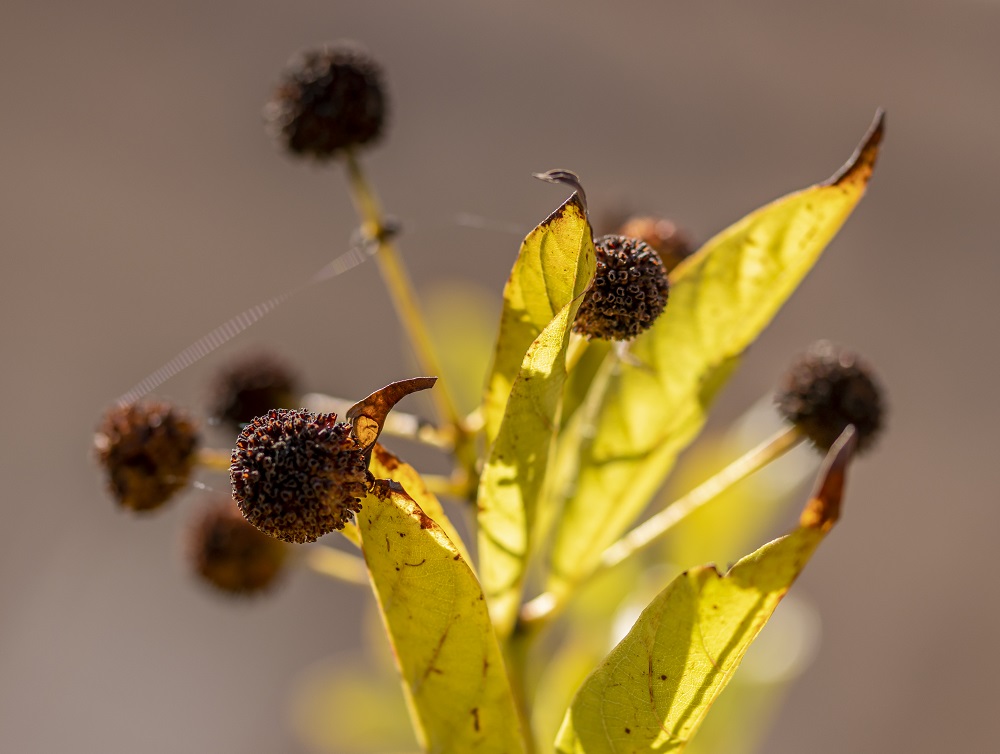
Morgan and Professor Yawn took this opportunity to practice with a new macro lens. They both found it quite difficult to photograph the still plants, but thankfully they yielded some detailed photos.
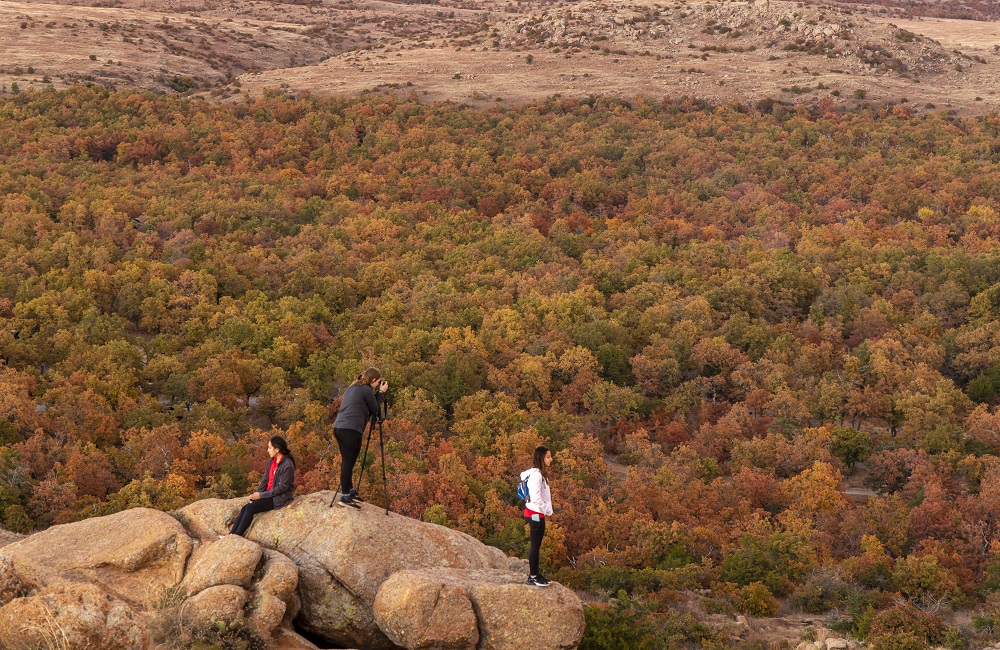
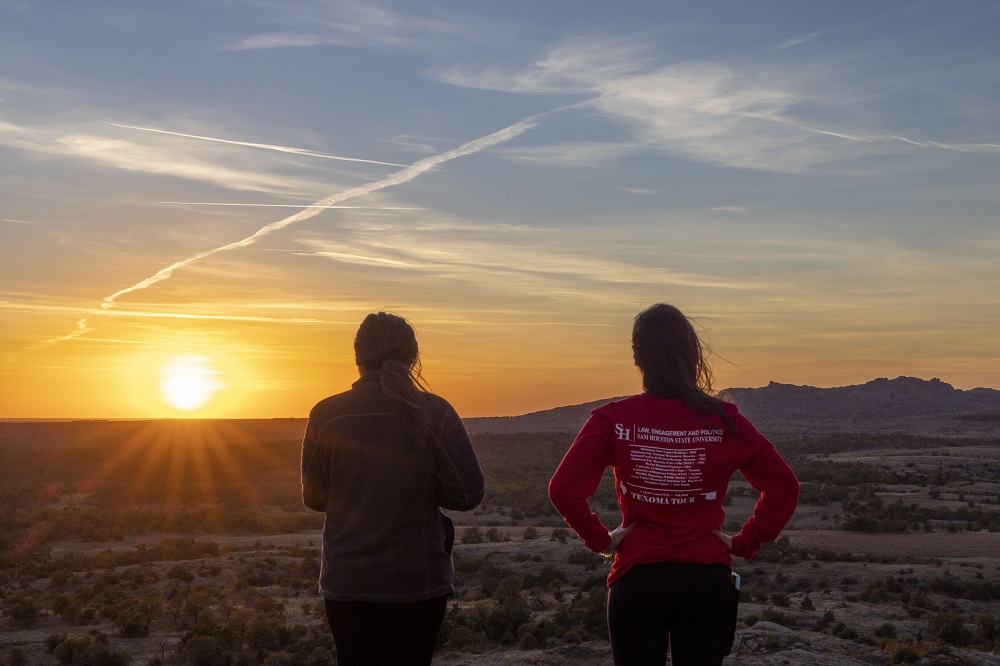
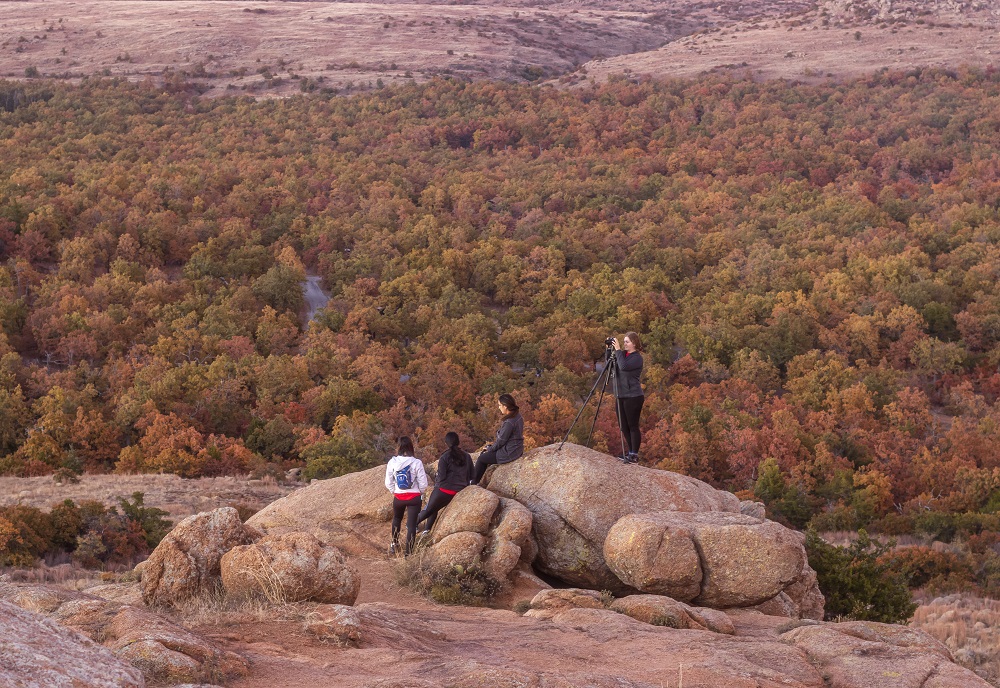
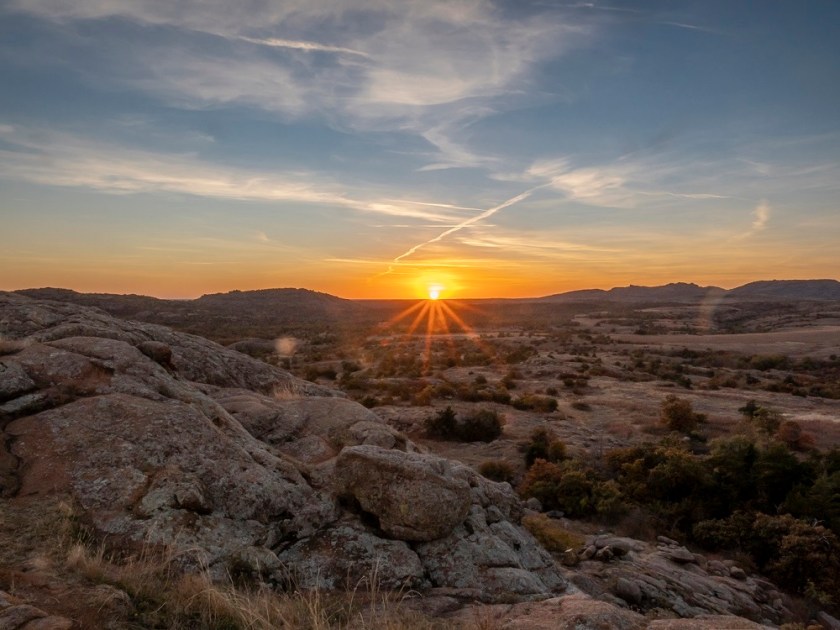
With the sun coming down at 5:20, we knew we had to find the right place to hike to admire the sunset, take pictures, and enjoy each other’s company. Yvette was the one who geared up better than anyone else, bringing her cliff bar along the hike to snack on. When we got to the top of the mountain, we set up the tripods after we caught our breath, of course.
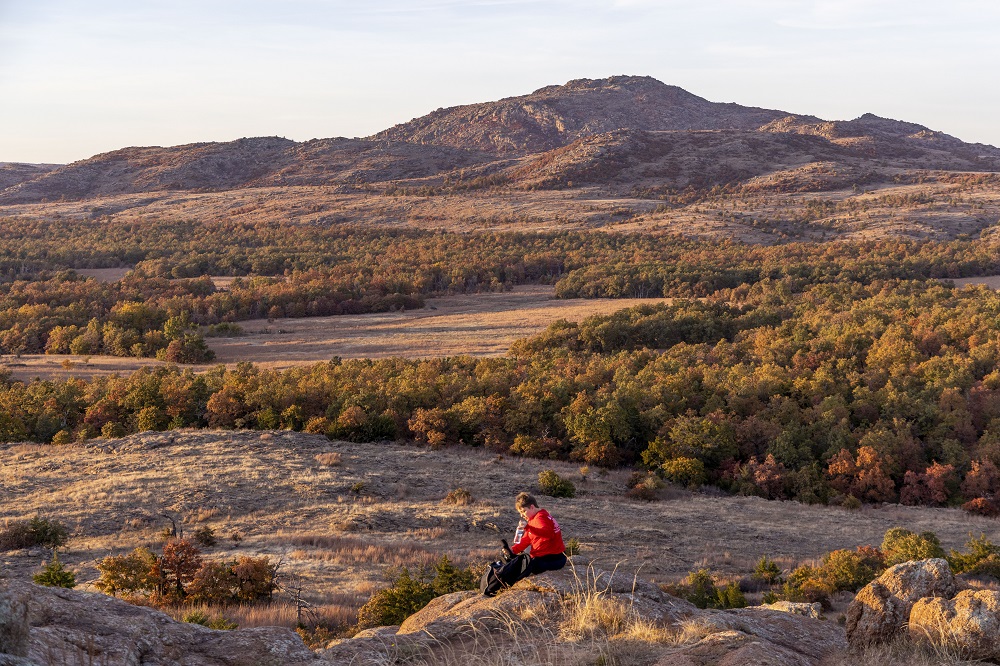
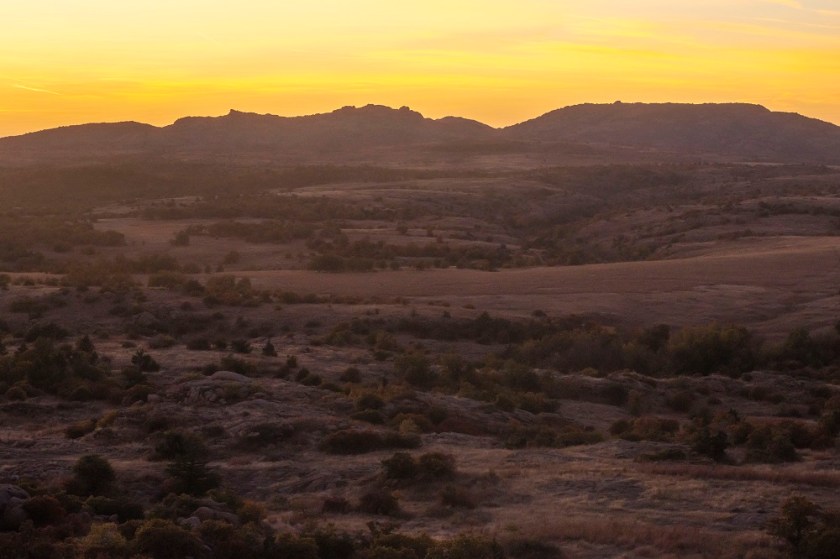
We waited for the sun to go down while enjoying the view….
…and waited for an ideal shot.
We concluded our hike with minimal stumbles and slips and only one major wipeout. (Morgan’s editors note: I successfully scaled the steep rocks with many features not adjacent to walking on a flat surface and made it to the top with no issue. It was the loose gravel, on a flat terrain that did me in on this trip). But it was a nice view and worth it.
The Wildlife reserve greatly displays the beauty found in Oklahoma, from the towering mountains to the seemingly endless plains. We were all grateful to experience this aspect of the state.
Afterward, we had a warm and filling meal at Pho Paradise, and then we ventured off to a local coffee shop called Viridian Coffee Co. The café had amazing salted caramel cookies and energizing coffee. Each bite taken of the gooey, soft, and delicious cookie followed by a sip of my hot latte macchiato, or Erin’s cold hot cholate made a great dessert!
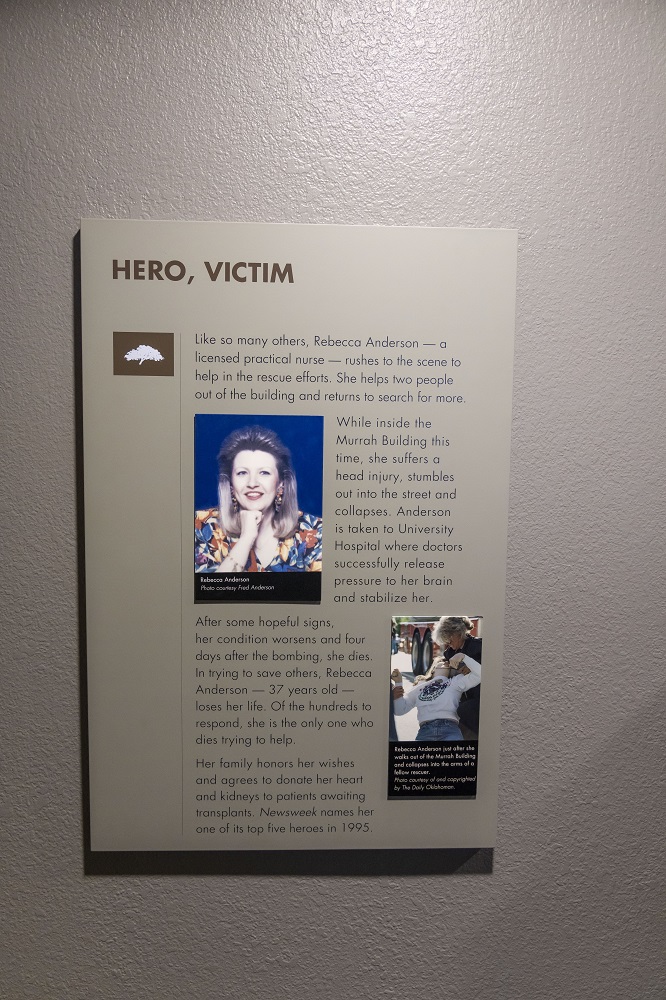
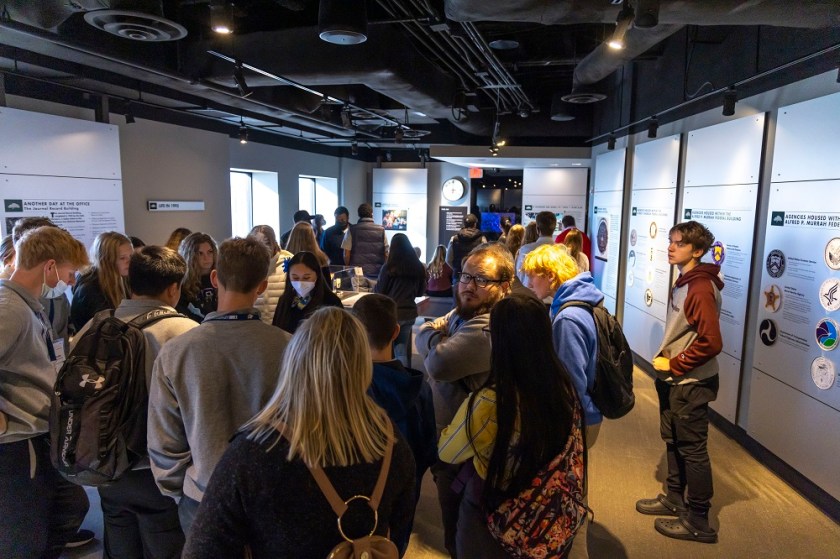
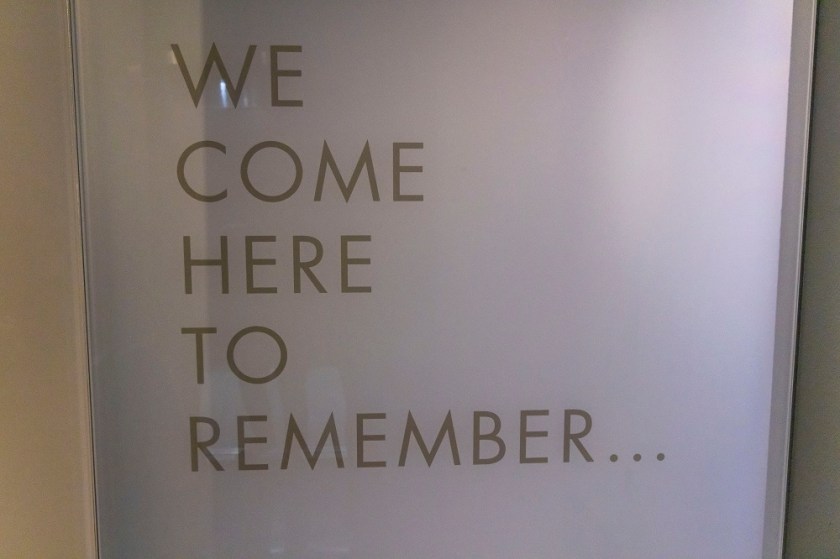
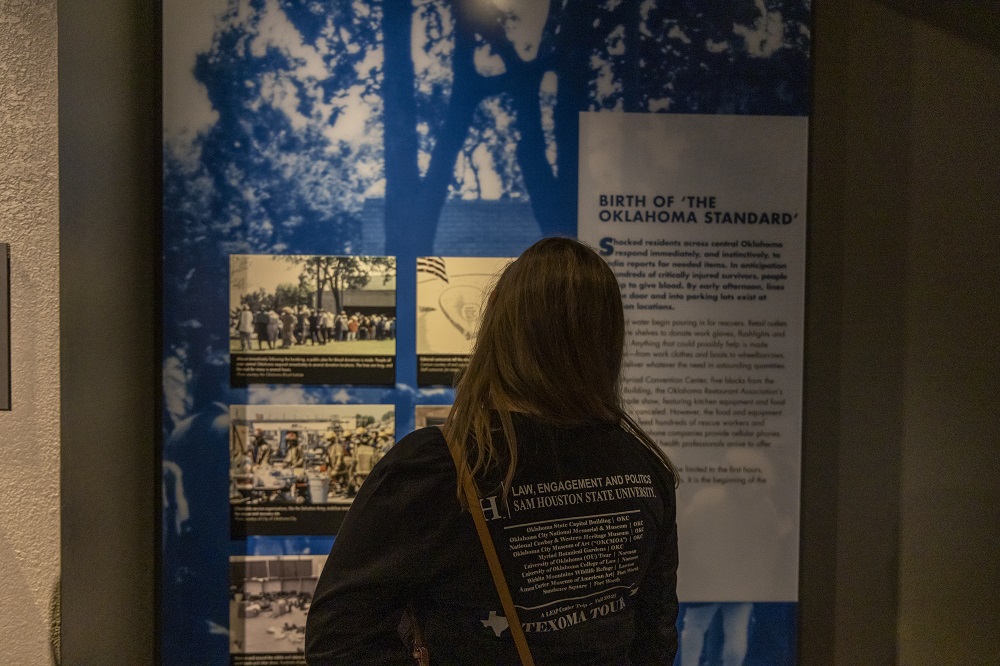
The OKC National Memorial Museum is laid out in such a fashion that reminds visitors of what happened on that day, April 19, 1995, but also stands as a tribute to both those who survived and that were lost.
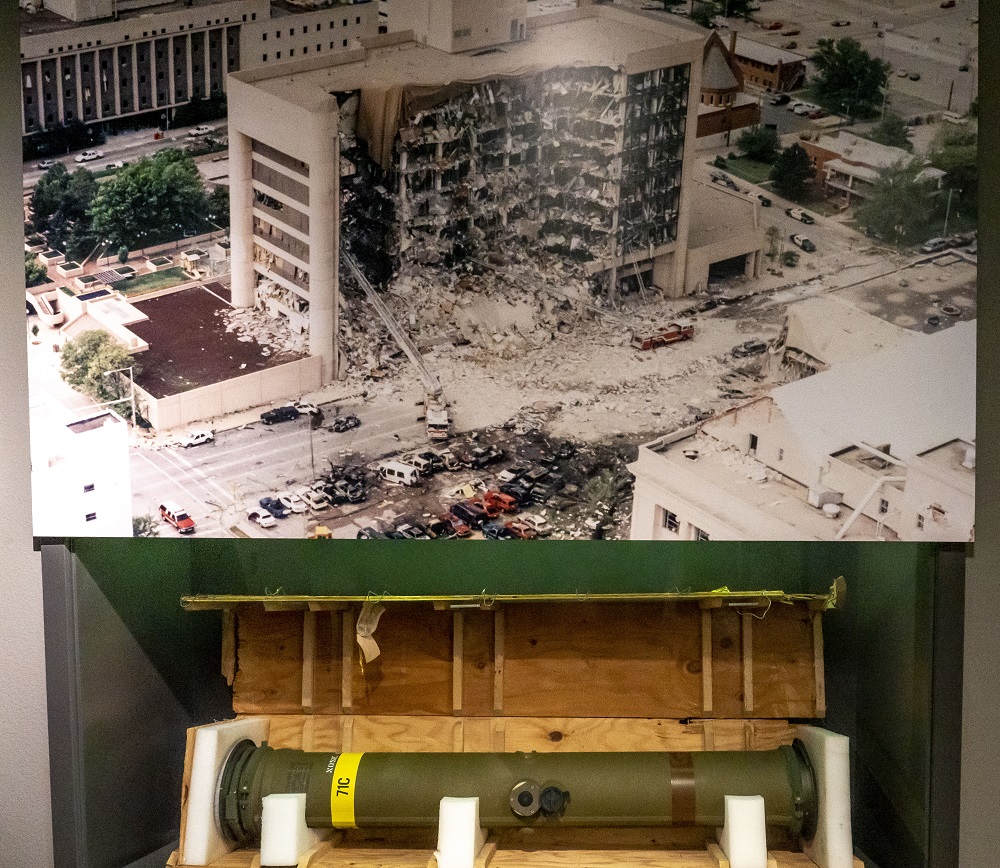
The Museum unfolds in chronological fashion, beginning with the background of the tragedy, and going through almost minute-by-minute on the day of the bombing.
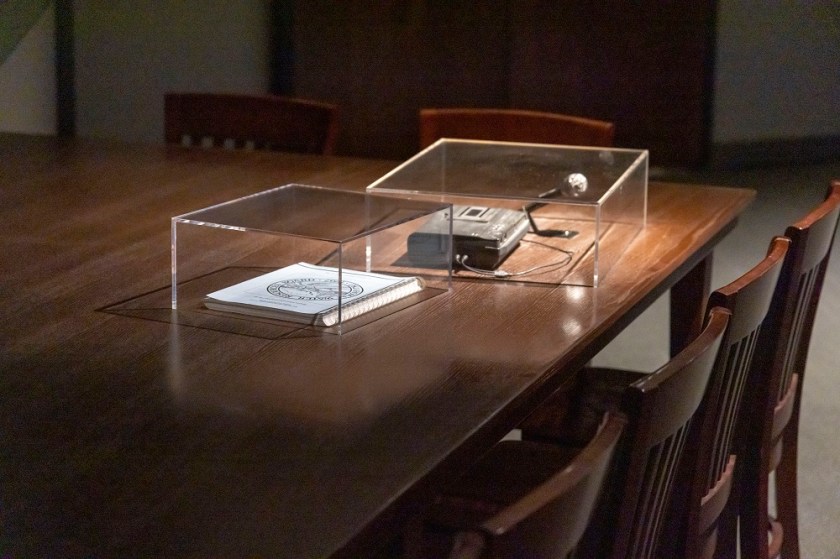
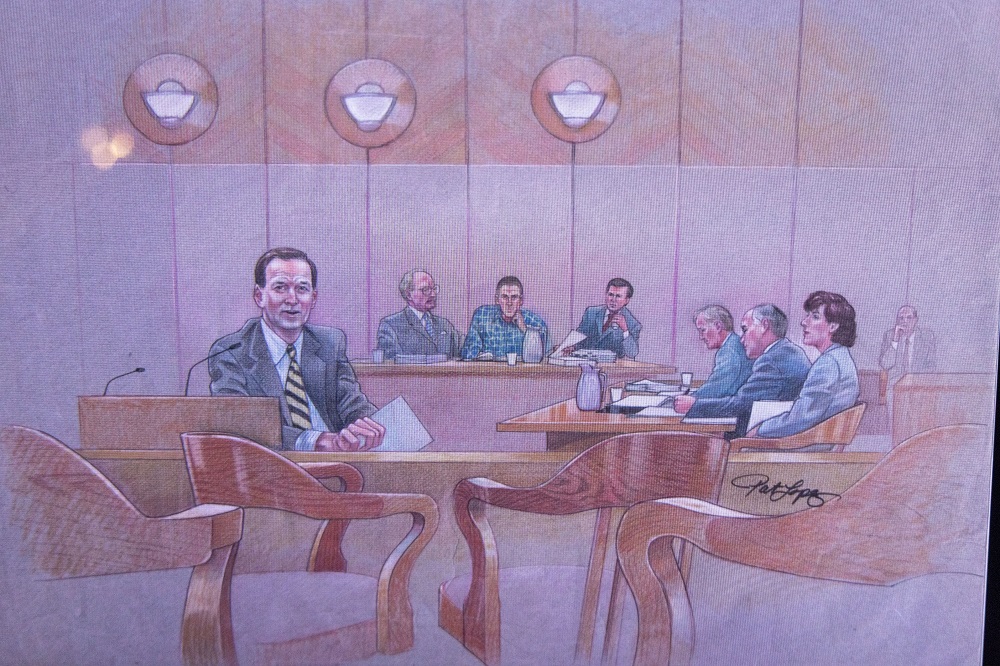
April 19, 1995 was just a nice spring day, a completely normal day in Oklahoma. One of the most difficult experiences on the tour was in the meeting room, where the Water Resource Management Committee began their meeting at 9:00am–a meeting which was recorded.
We listened to that recording, hearing the explosion, and also the screams, fear and confusion among those attending the meeting.
The lights dimmed as the explosions and screamed sounded, and then their was silence, leaving us to ponder the aftermath of that day.
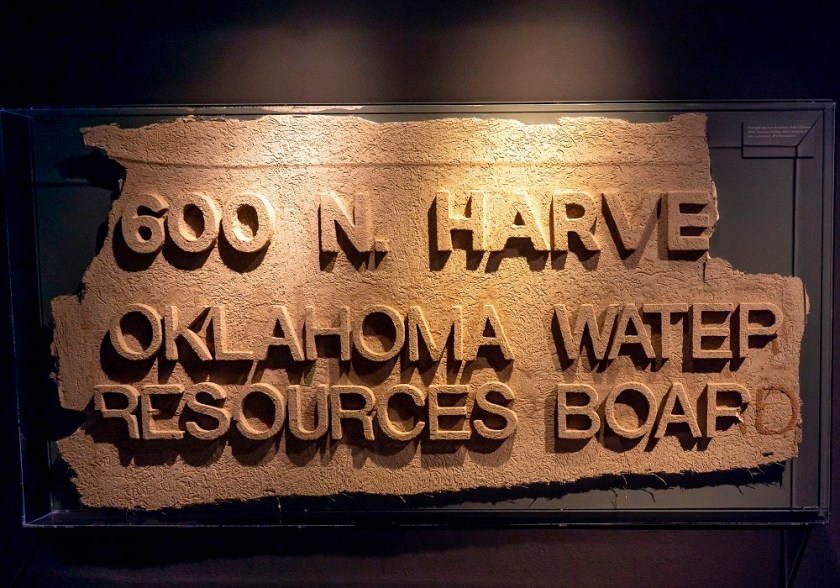
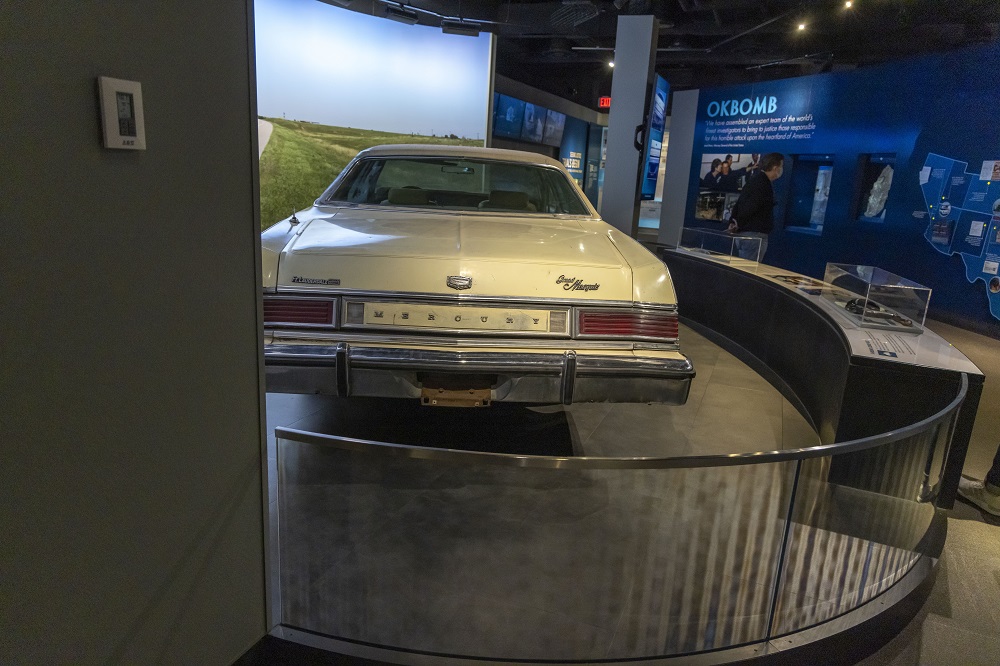
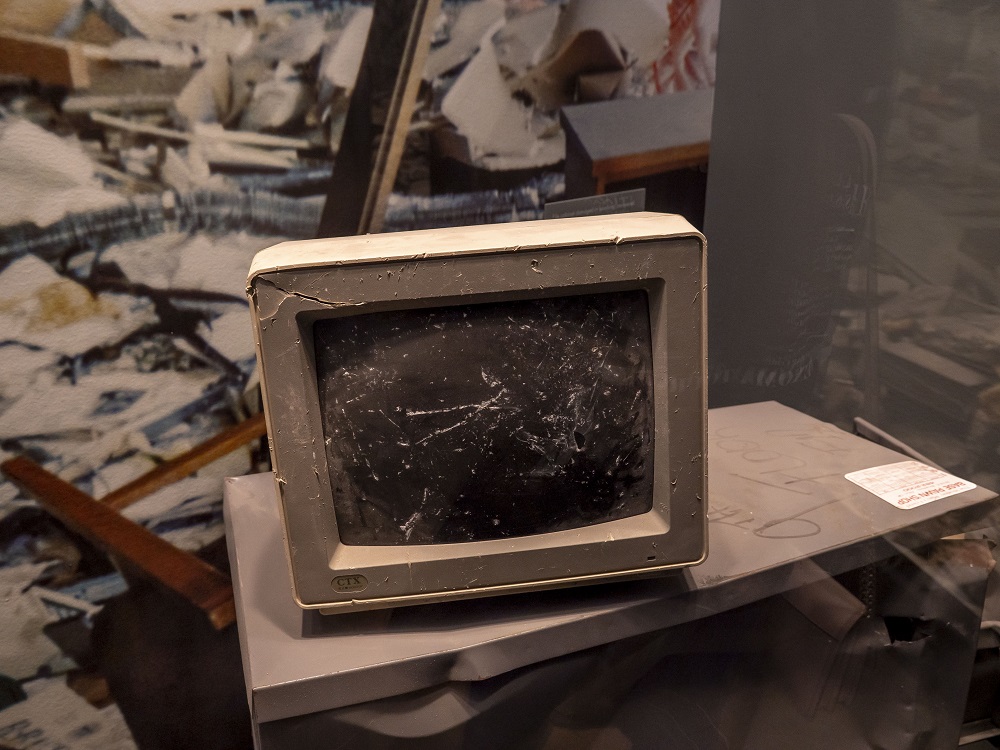
The aftermath was also vividly displayed at the Museum. Artifacts included a pile of keys, glasses, desk items, and shoes: the remains of a tragedy, forever encased in this Museum–preserved, much as people’s memories of the bombing will last forever.
The lives of the innocent are memorialized in so many ways throughout the museum, but the most impactful is the wall of pictures with personal belongings that they were able to identify as belonging to specific individuals.
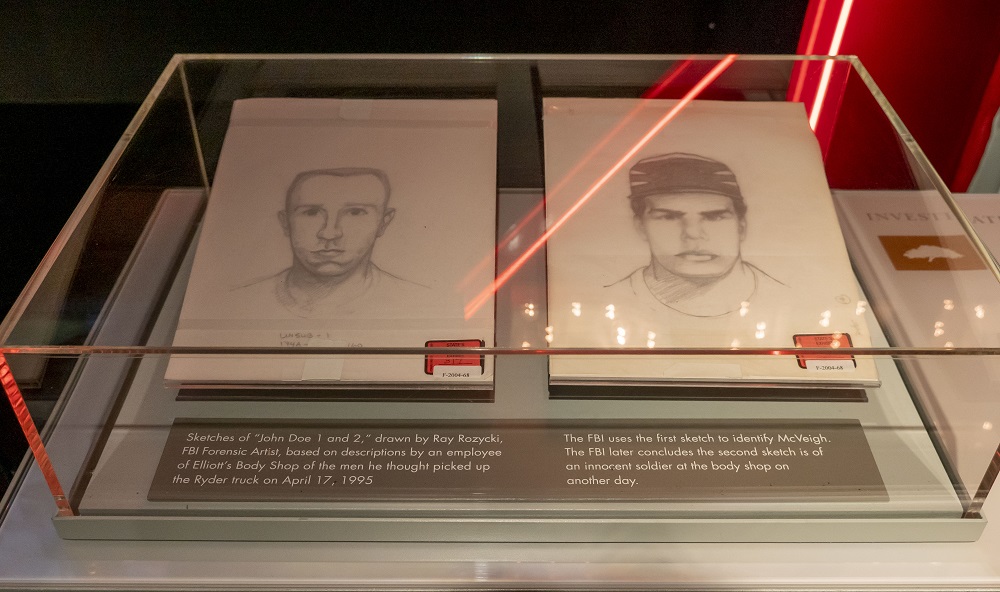
As we moved through the timeline, we were then shown the backstory of Timothy McVeigh and what he was doing leading up to the incident.
The stories of those who passed, those who died, and the heroism of the rescuers was emotional.
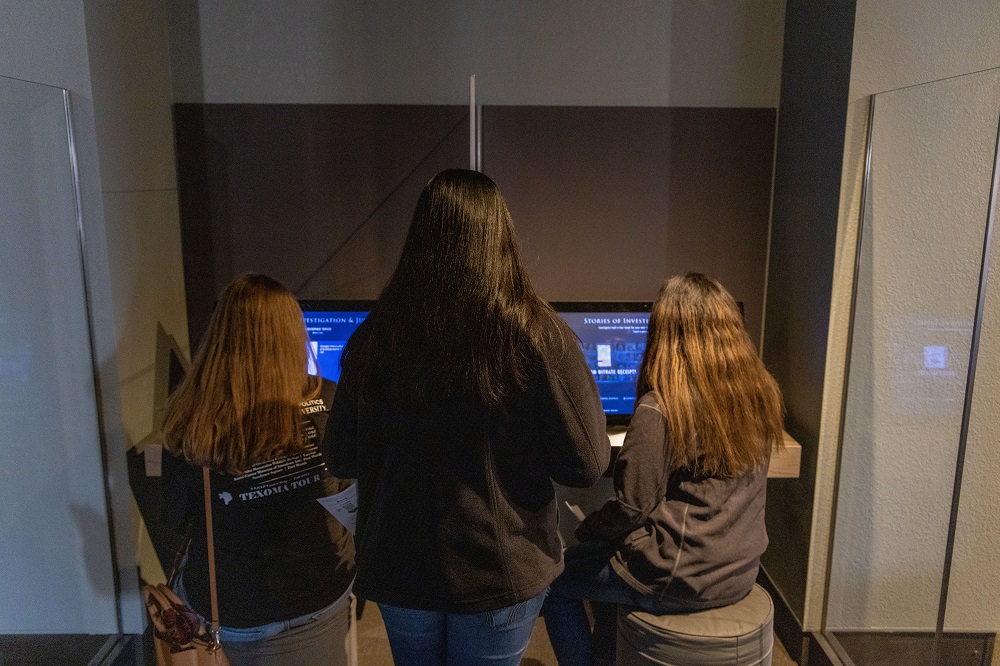
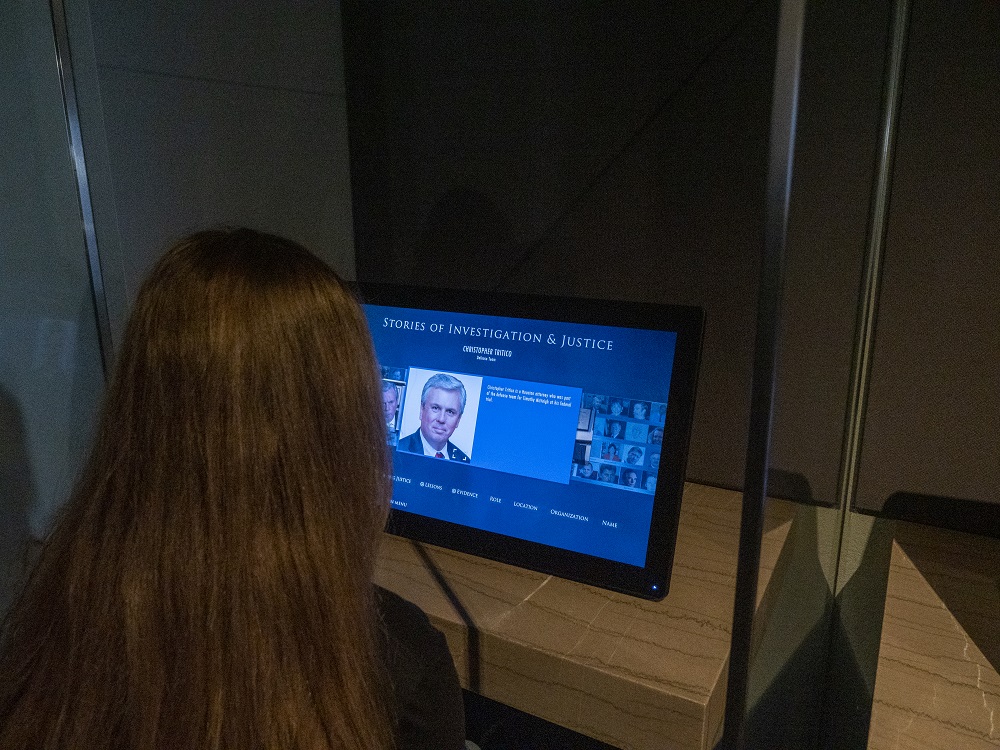
McVeigh was charged with 15 counts of murder, and he was represented by multiple attorneys, including with Chris Tritico, who is an SHSU Alumnus.
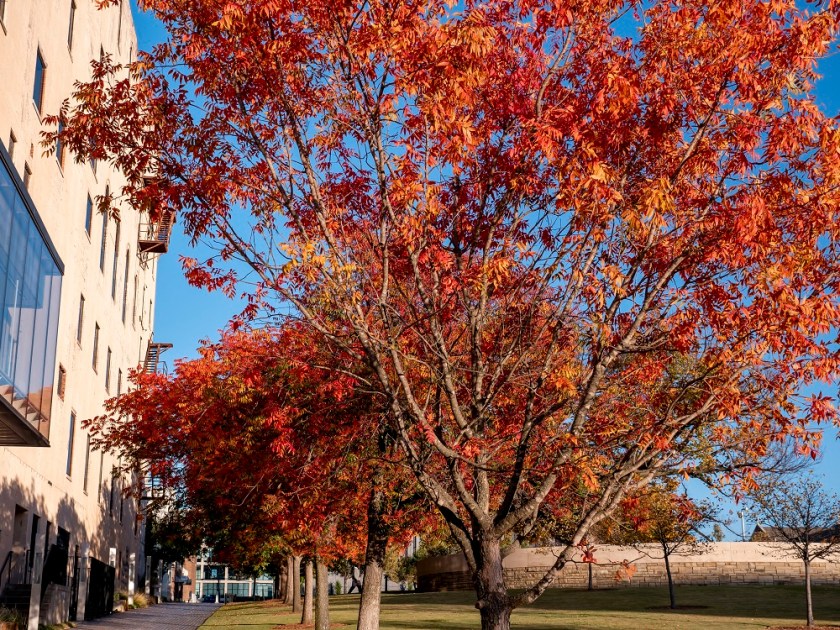
As we made our way to the outside part of the building, we experienced a great contrast to the tragedy we walked through. We breathed a sigh of relief at all the vivid fall colors of the trees and relished in the natural beauty that I believe we all needed.
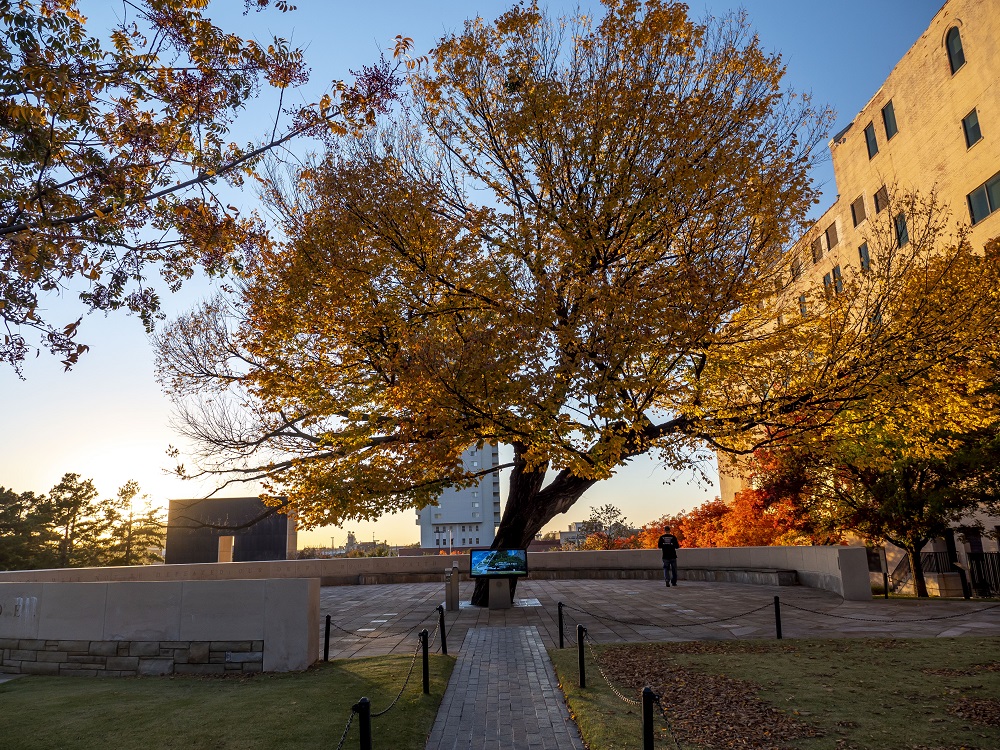
The path leads up to a single American Elm tree that is known as the Survivor’s Tree. This Elm stood through the bomb and remains strong to this day. Each year the seedlings are harvested from the tree and given in remembrance to the families impacted by this event.
An offspring of this tree was even planted at the White House.
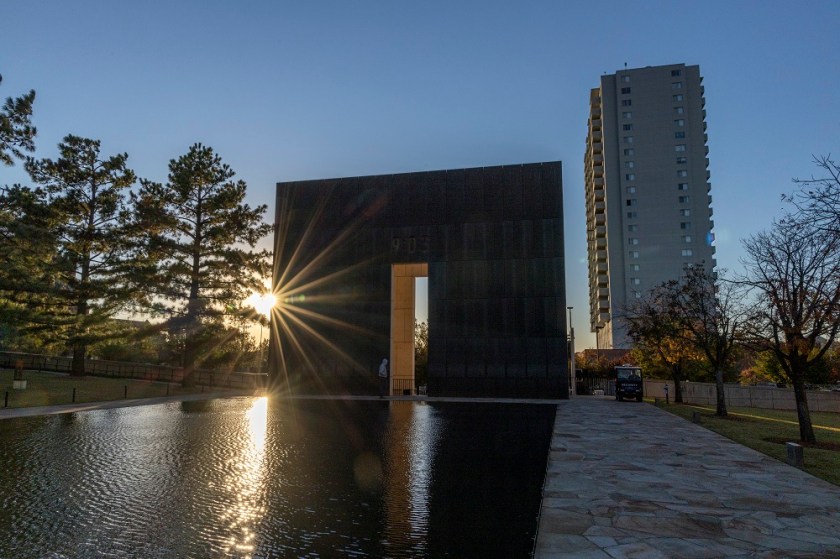
The grounds also are home to other memorial features. There is an East Gate displaying 9:01am, a reflecting pool, and a West Gate, displaying the time 9:03am.
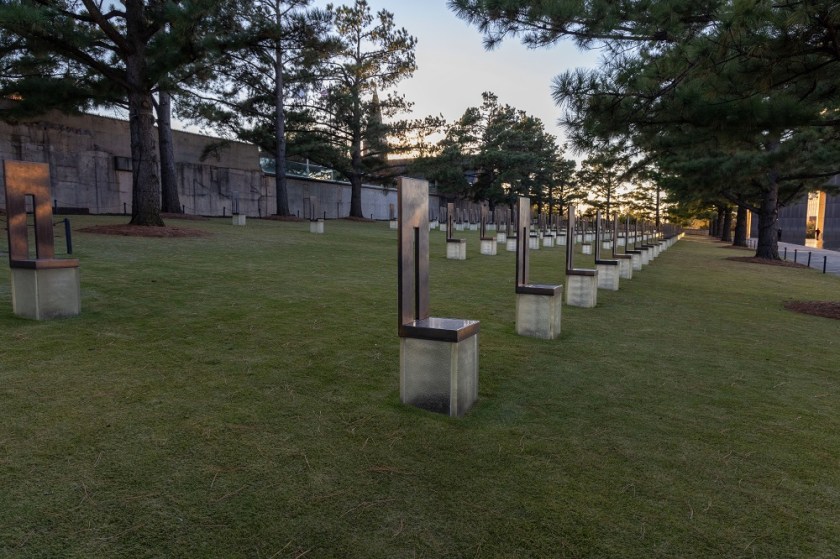
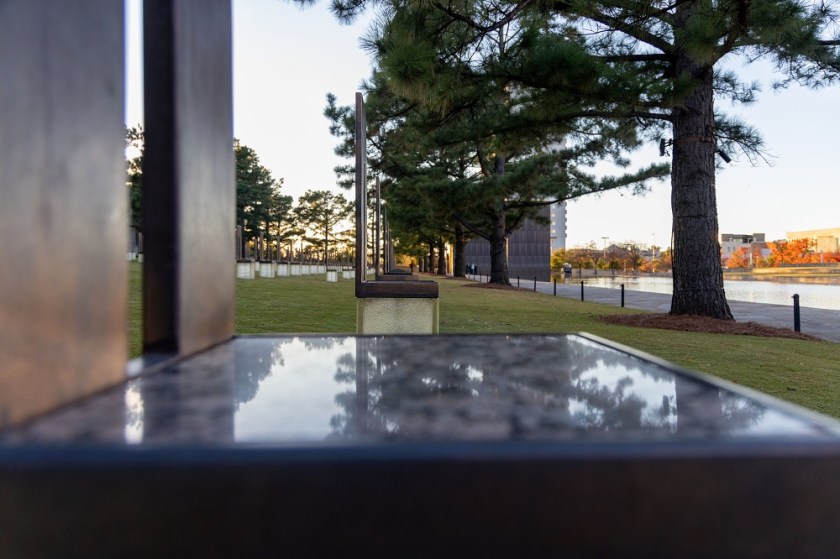
South of the walls, the lawn is lined with 9 rows of chairs representing the nine floors of the Murrah Building.
There are 168 empty chairs, representing the lives lost, including young children (which are represented by smaller chairs).
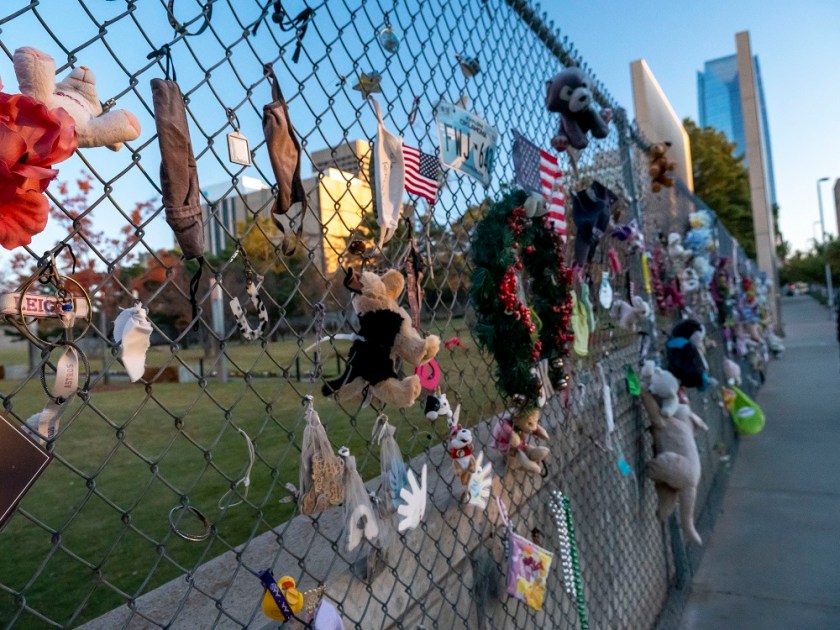
Surrounding the grounds, there was a fence with mementos that people have placed in memory of loved ones: teddy bears, bracelets, photos, and such.
We also went across the street, where a nearby church created a statue of Jesus, with an inscription of the shortest verse of the Bible: “And Jesus wept.”
This was a tour that almost brought me to tears at several places, and our hearts were heavy as we left.
Oklahoma Capitol
Saara Maknojia
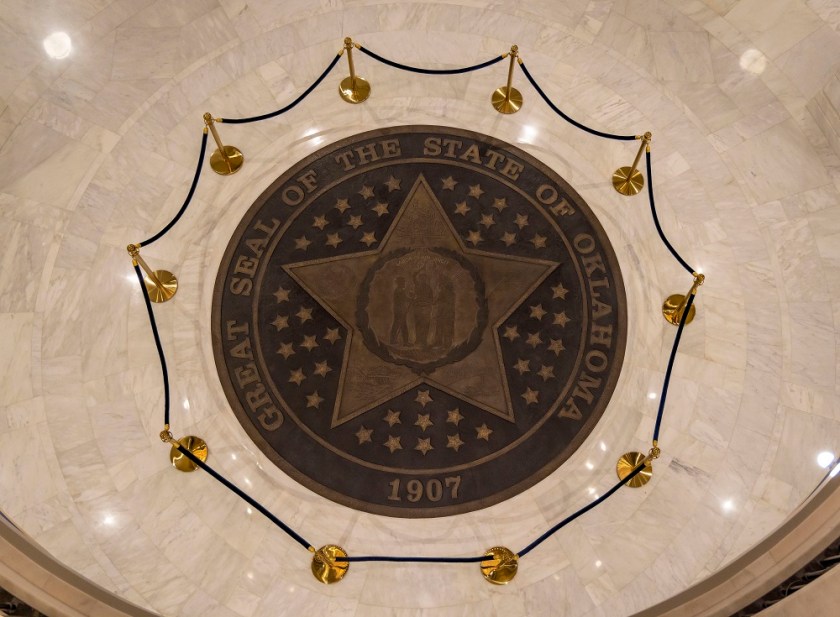
Shortly after our somber but educational tour at the Oklahoma City National Memorial Museum, the LEAP Members coasted off to the Oklahoma State Capitol. The chilly weather and beautiful sunset allowed us to better view the magnificent and historical site.
The intricate architecture of the landmark included Greek Corinthian columns, and Greek Meanders which symbolizes and means movement. The Greco-Roman structure of the state capitol was complemented with the displayed Tribal flags from Native American Peoples who have such a rich history in the 45th state.
The Oklahoma State Capitol is further enhanced with the sculpture of a Native American woman, designed by Allen Houser, which stands in front of the Capitol.
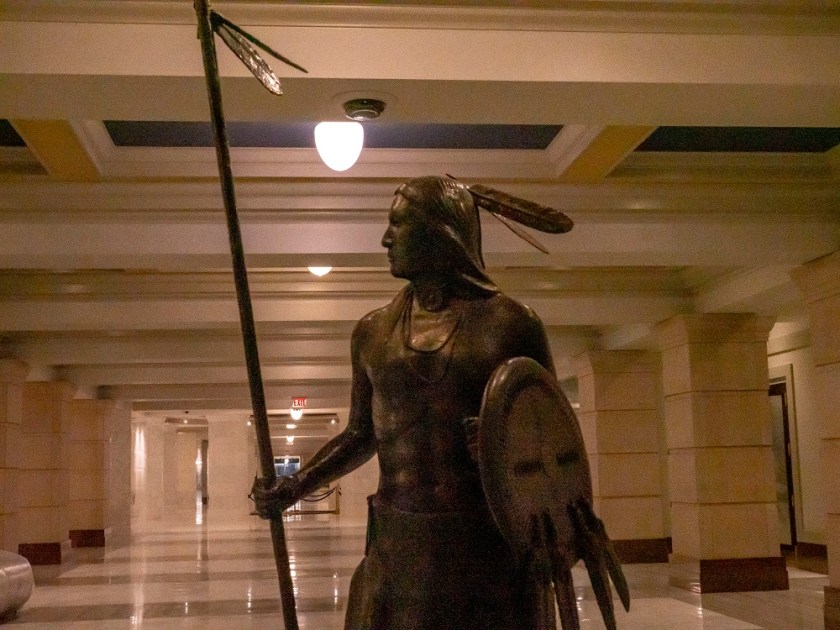
The peak of the capitol’s dome is adorned with a 17.5-foot sculpture of a Native American called “The Guardian,” by Enoch Kelly Haney, and a version of the statue is also located inside the building.
We learned the history behind some of the Oklahoma tribes as we observed the painted murals on the third floor of the capitol.
Oklahoma’s historic significance of the “Sooners” is also integrated into the state building through some of the murals. We all learned about how the name came to be and why it was such a vital point in OK history. Oklahoma State University later adapted “Sooners” as their team mascot to exemplify their patriotism towards the state.
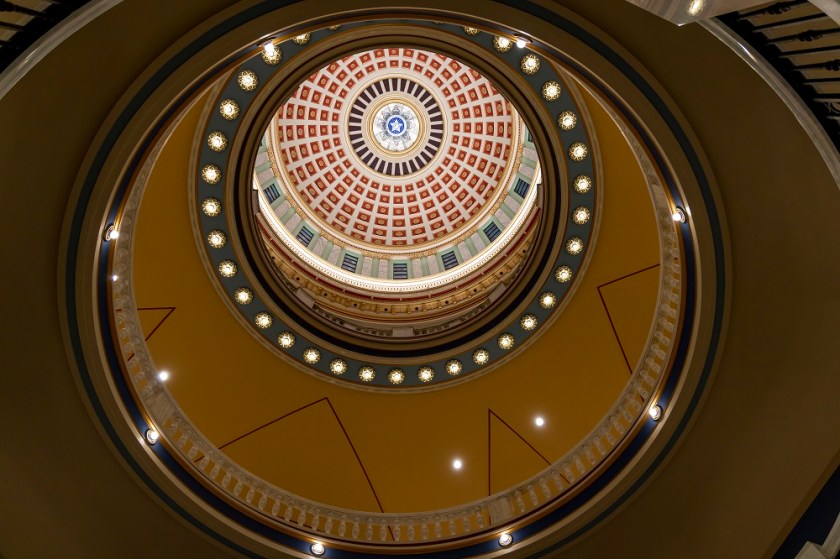
Probably the highlight of the Capitol Building is the interior dome, which is beautiful.
The LEAP Members grasped a better understanding of not only the political aspects of the Oklahoma State Capitol, but also the history and cultural diversity within the building itself and the state of Oklahoma throughout the tour!
Oklahoma City Museum of Art
Erin Juarez
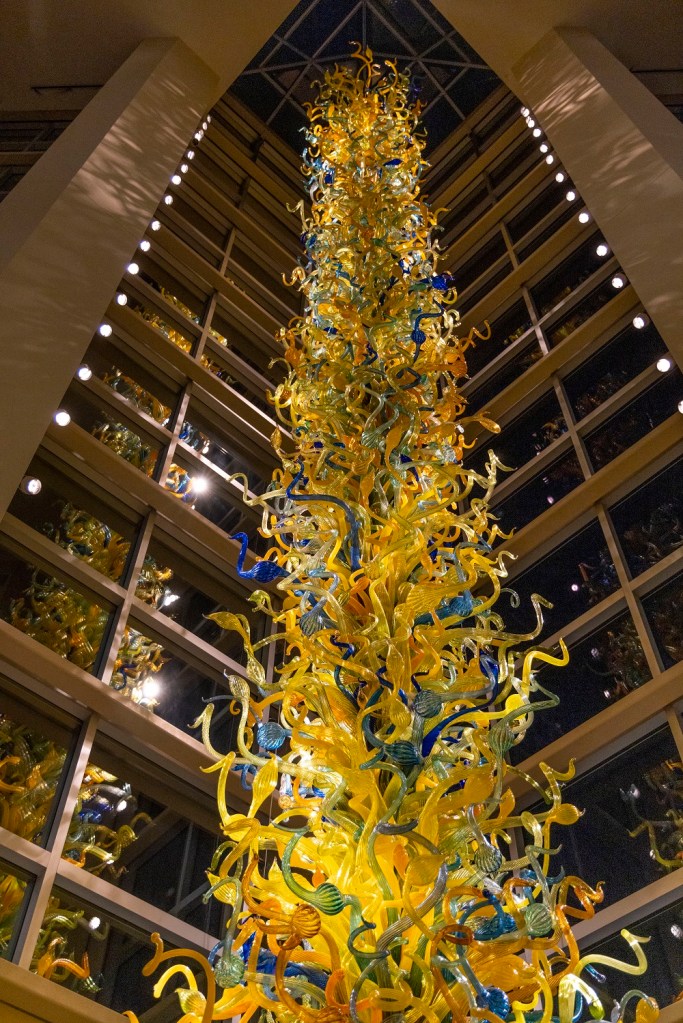
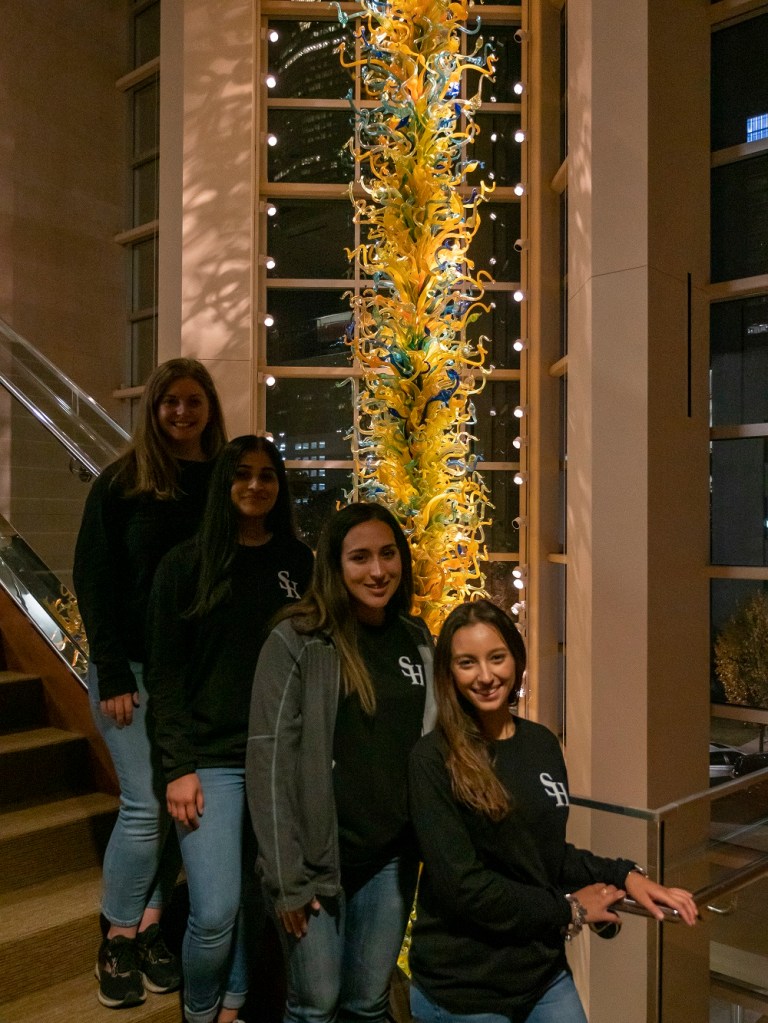
With the night still young-ish, we decided to go to the Oklahoma City Museum of Art. As we walked in, there was a fifty-five feet glass sculpture towering to the right of us, one created by renowned artist Dale Chihuly.
Yvette, a born trouble-maker, immediately got into trouble for standing on a wall so that she could better pose with the sculpture…
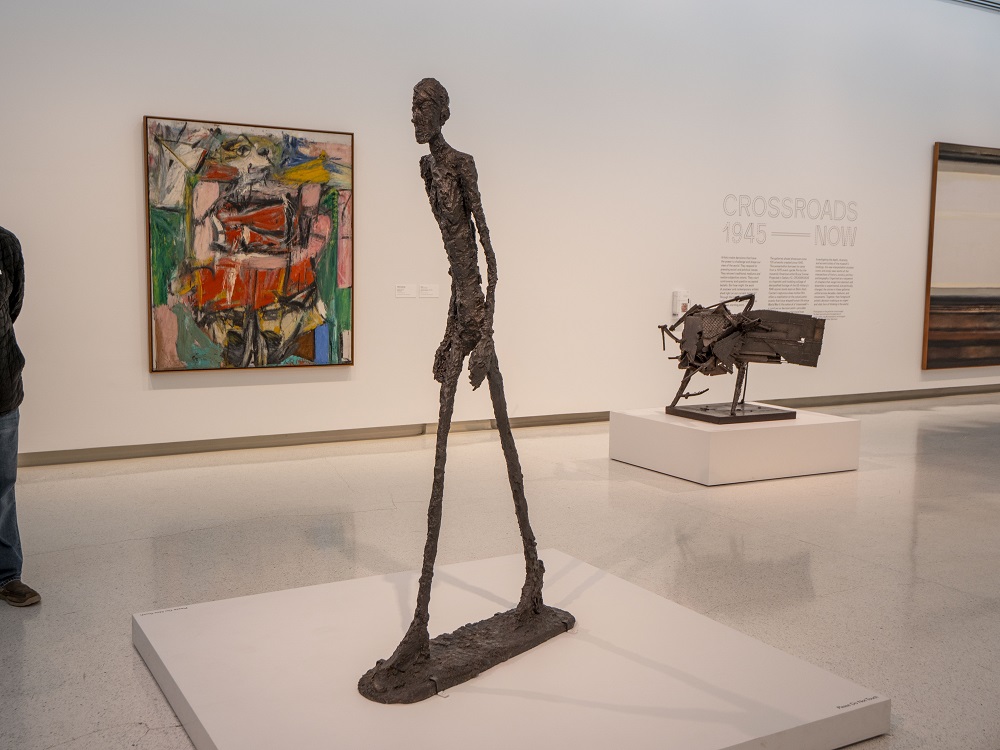
This Museum helped expose us to various types of art: impressionism, regionalism, modern, sculptures, and many other styles and artistic media. It helped me learn what type of art I most enjoy. In particular, I liked the sculptures, especially those of Chihuly. Saara also liked Chihuly, but was also drawn to the impressionists.
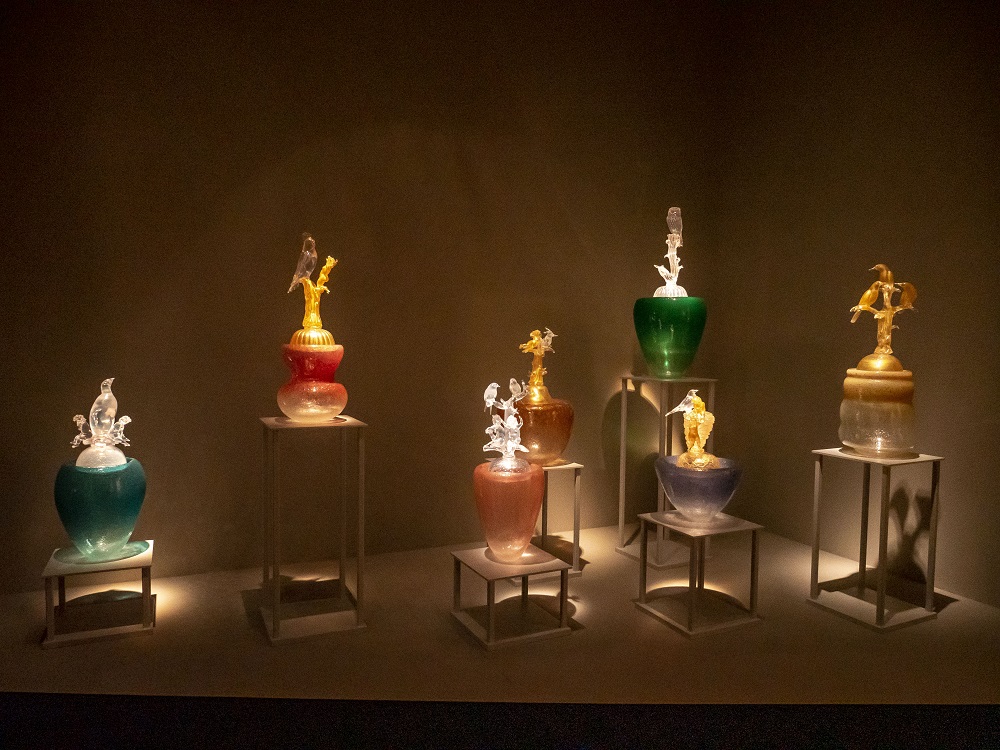
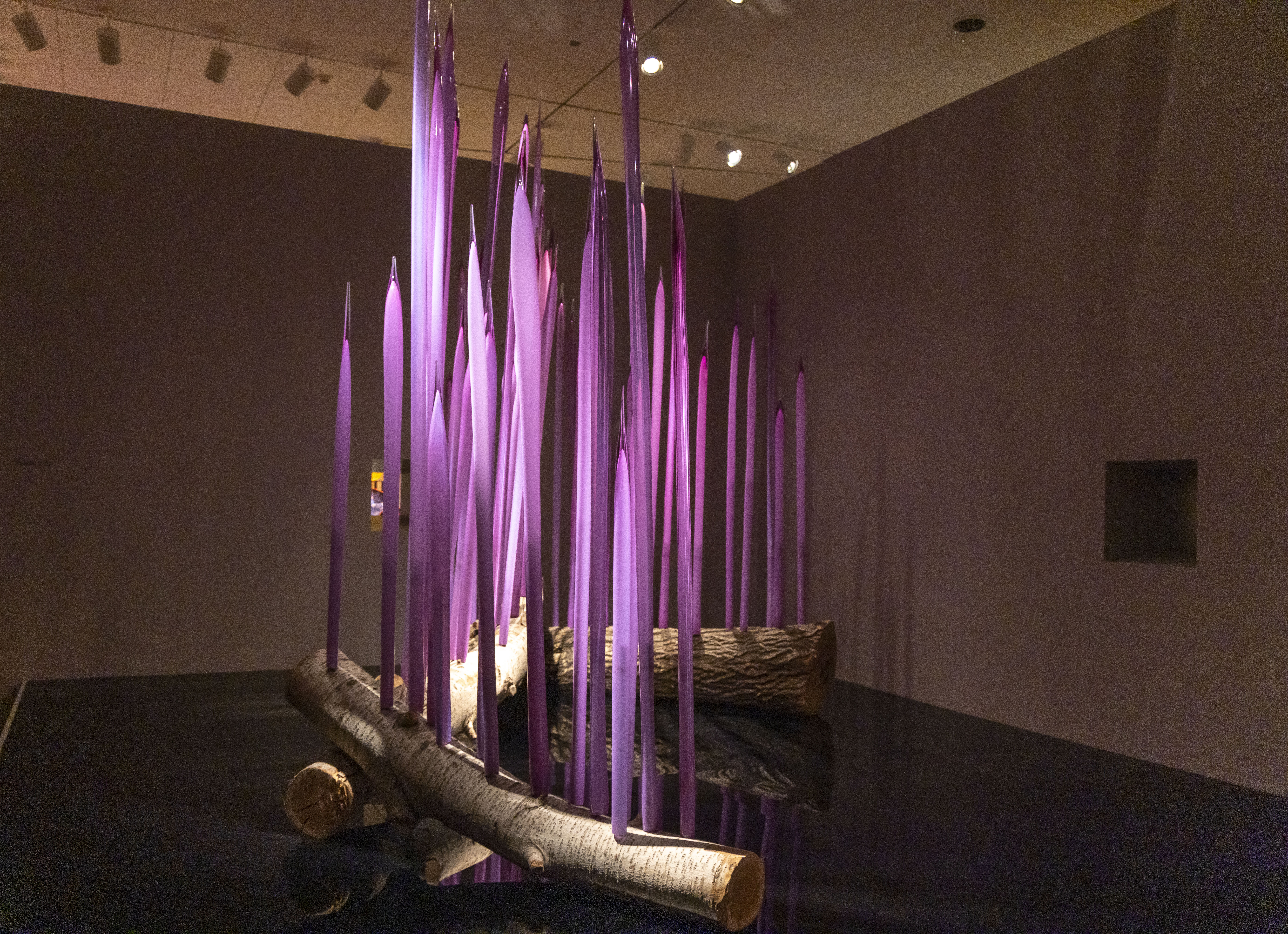
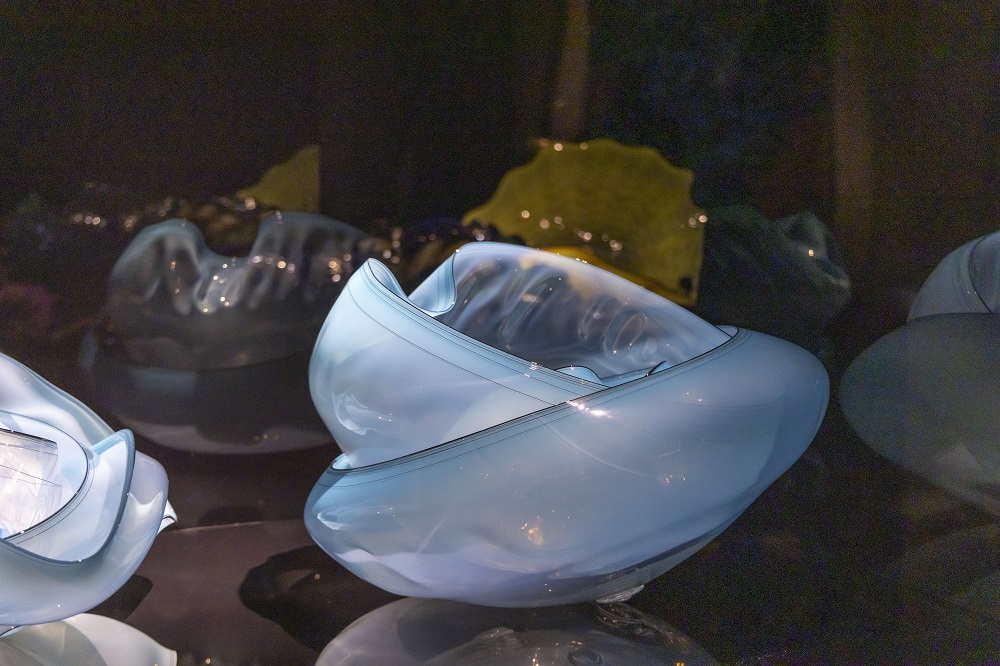
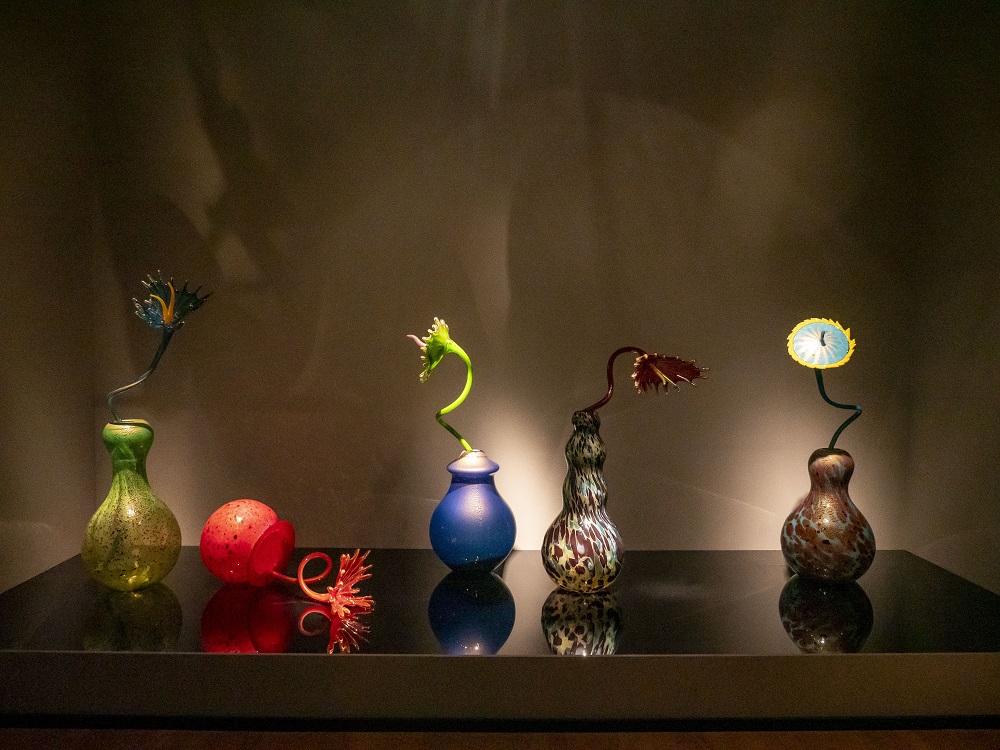
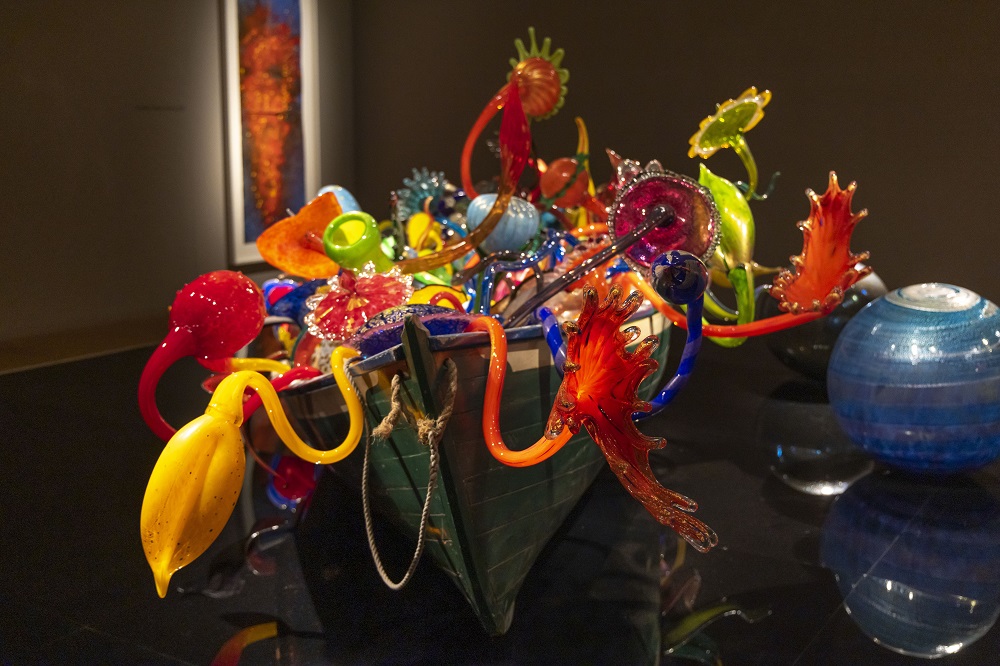
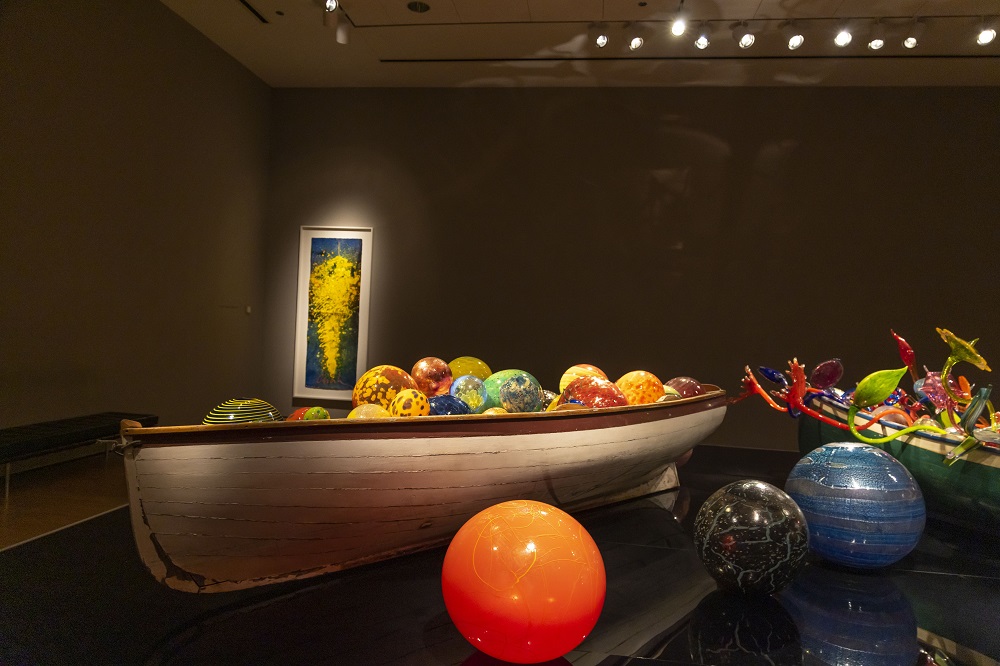
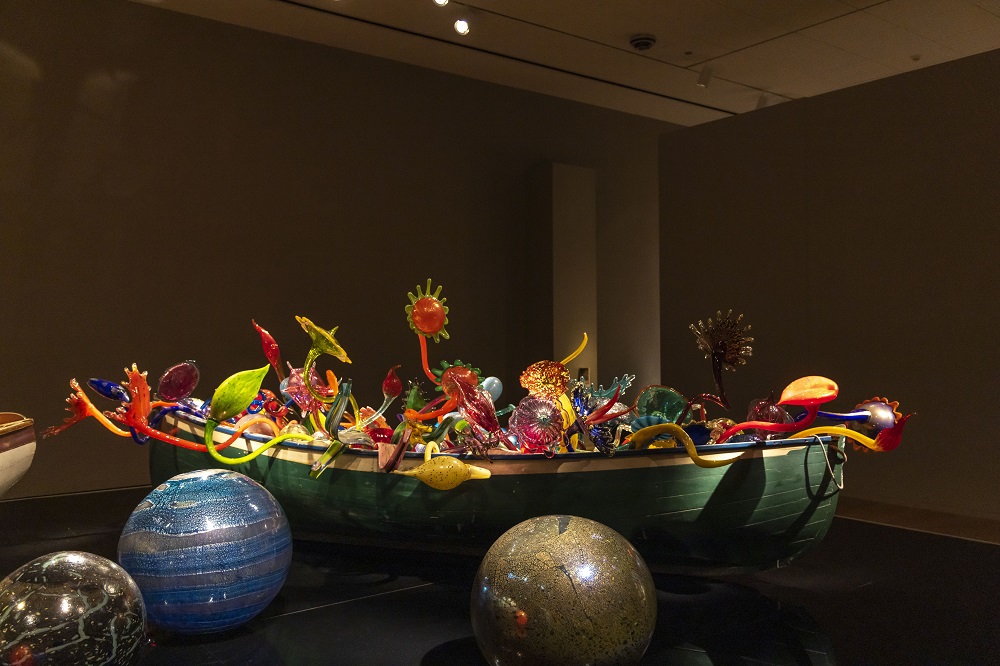
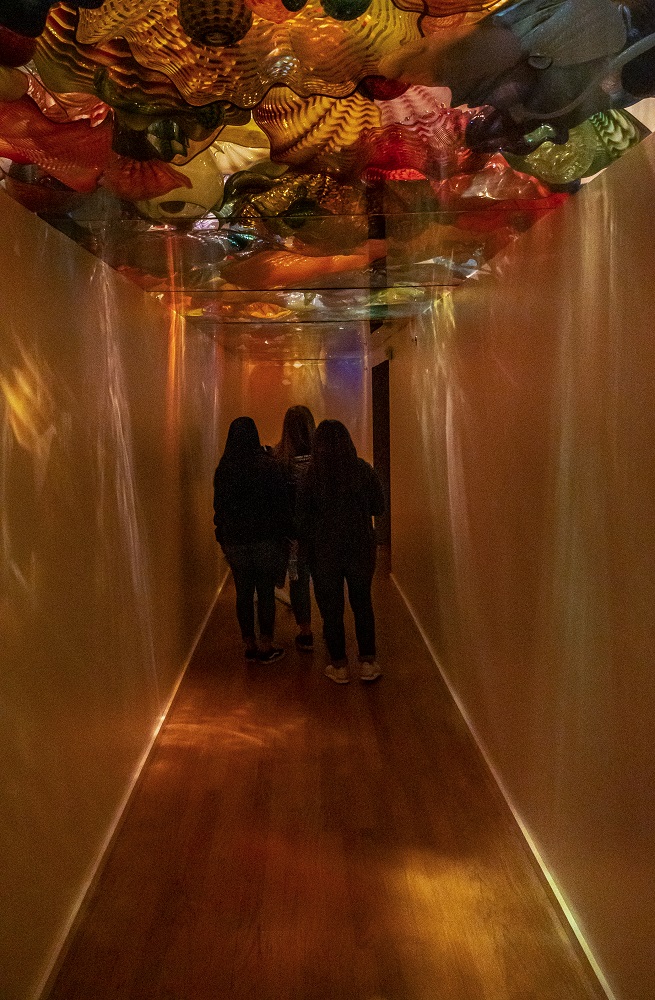
The museum is separated into four floors. On the fourth floor, our favorite artist, Dale Chihuly, work is featured in a way that flows cohesively leaving the viewer to almost forget they are in an art museum. The dark room, allowed for the lights that were strategically placed to catch the art at different angles to illuminate it differently.
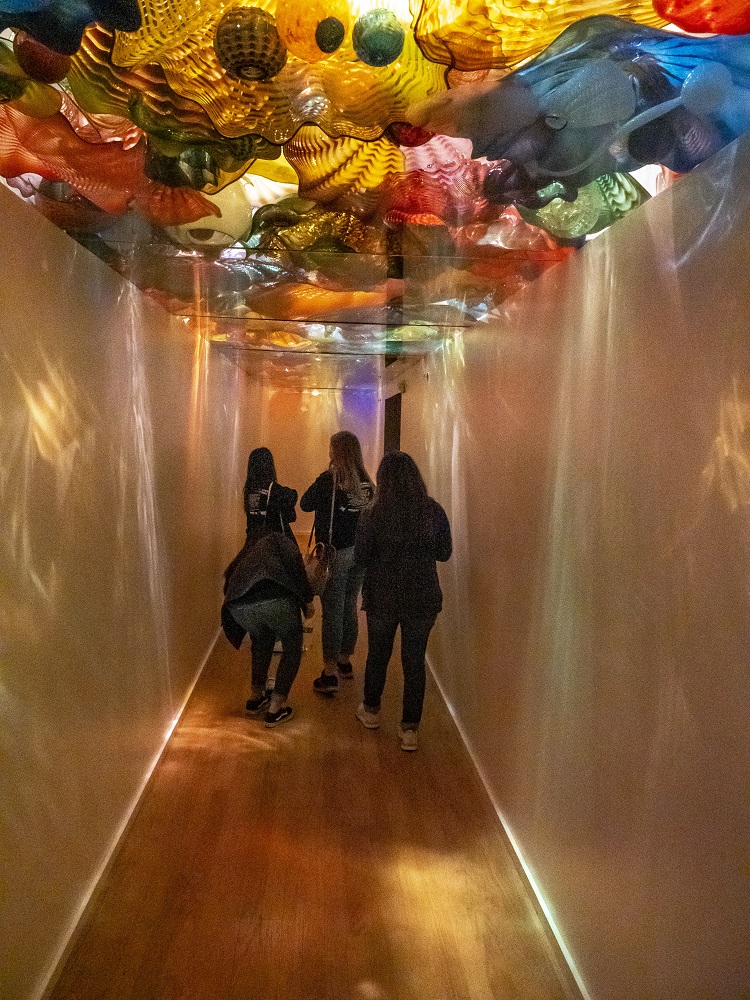
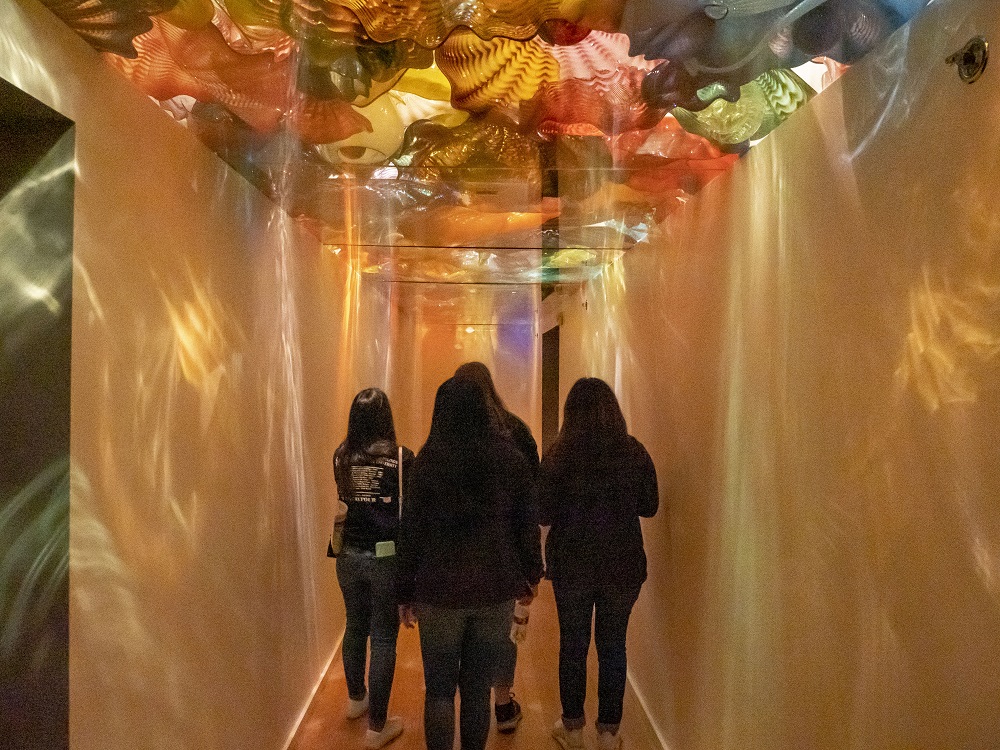
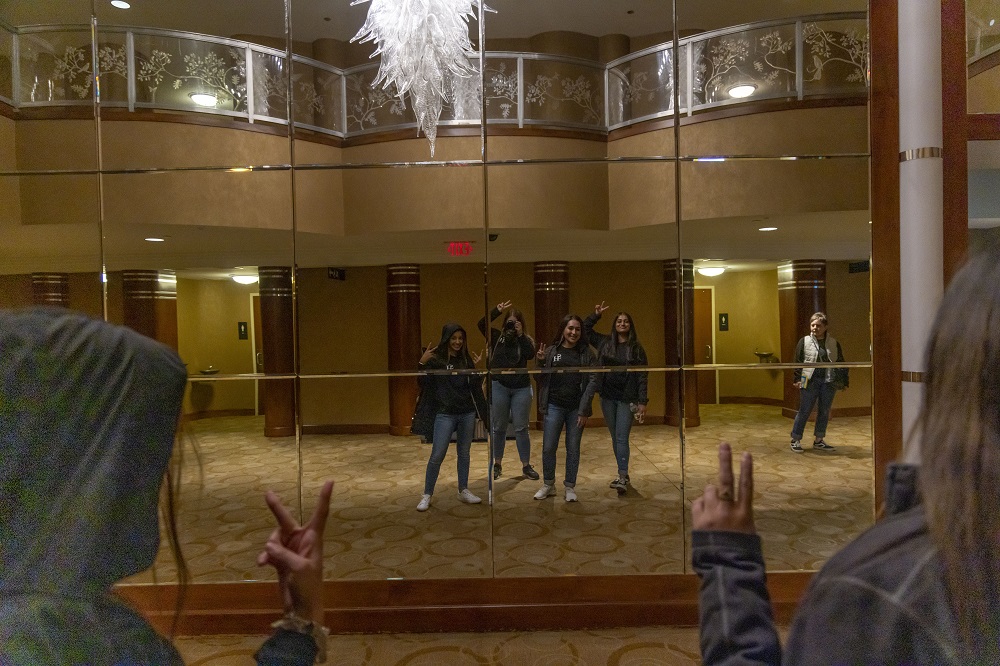
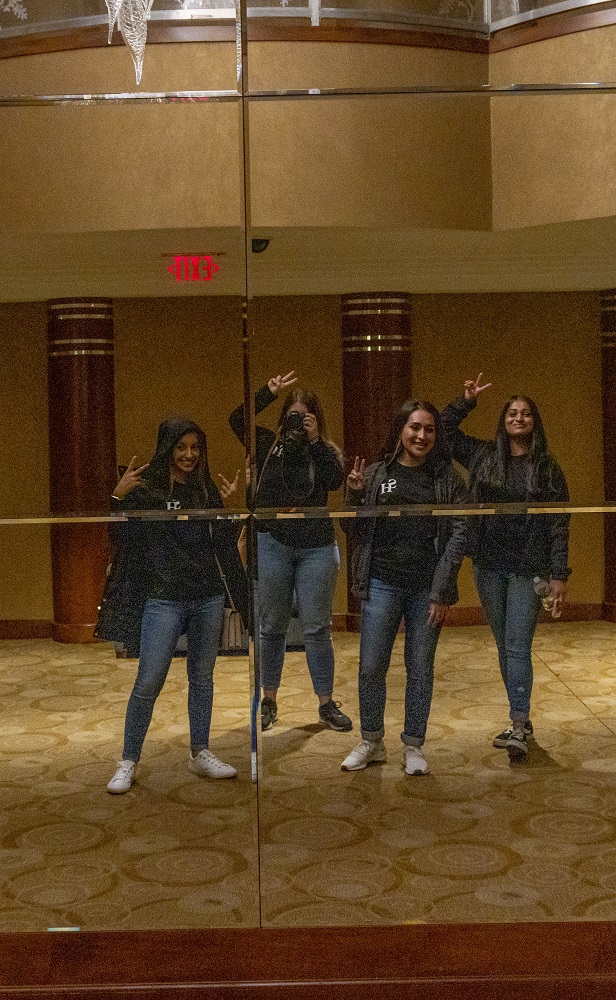
We found this exhibit to be exceptionally fun and dynamic to photograph. As a person new to cameras, it offered the opportunity to experiment with photography. The low light was a challenge, but the subjects were beautiful! We particularly enjoyed walking under Chihuly’s Persian Ceiling, which creates all sorts of interesting shadows and colors.
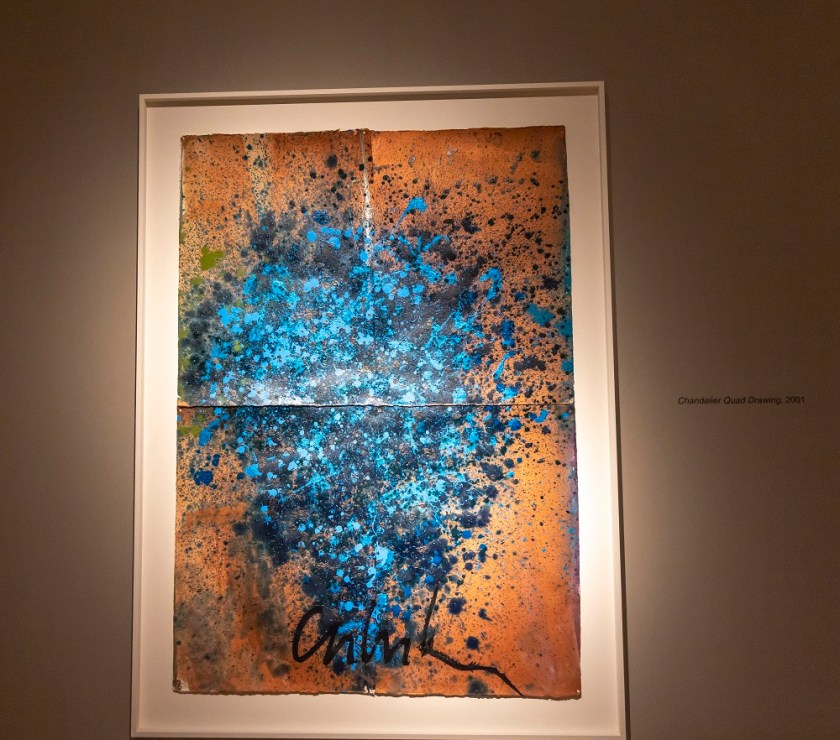
And we also had the opportunity to see some of Chihuly’s paintings–one of which, we learned, Stephanie actually owns!
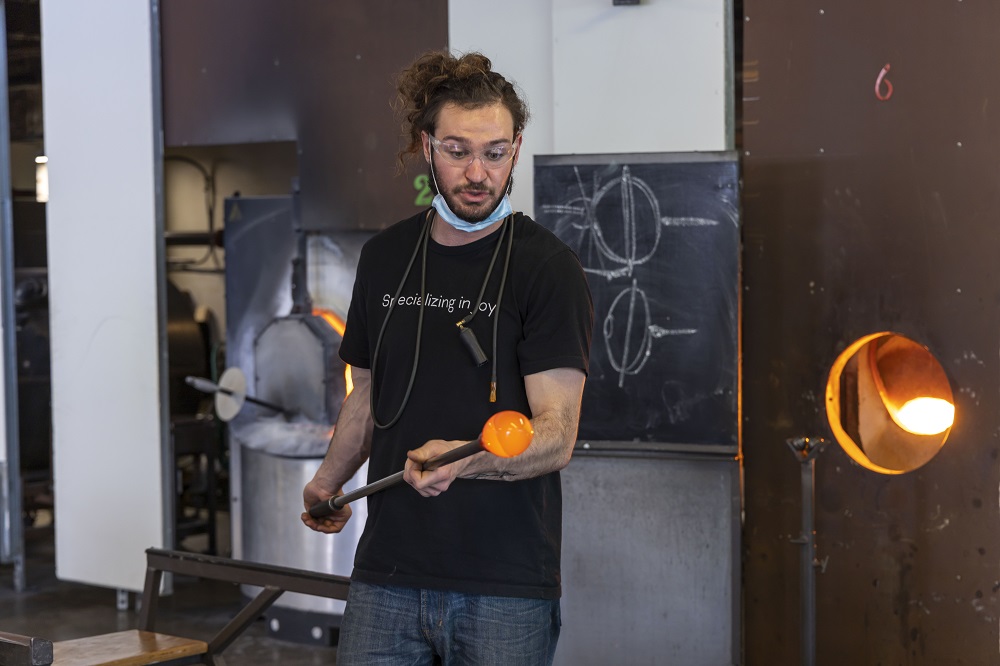
Outside of the fourth floor, there’s a video of how Chihuly gets his glass done for his art. This was very interesting. We often found ourselves asking in amazement on how he accomplished such great works, so the video was insightful.
We even found another of his chandeliers in another part of the Museum, which was also beautiful.
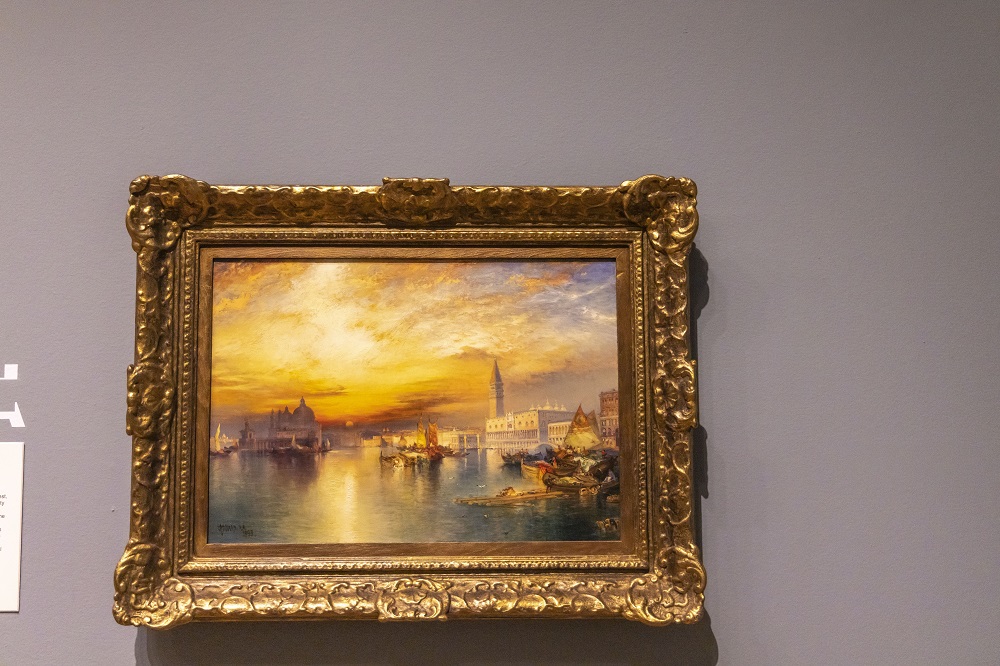
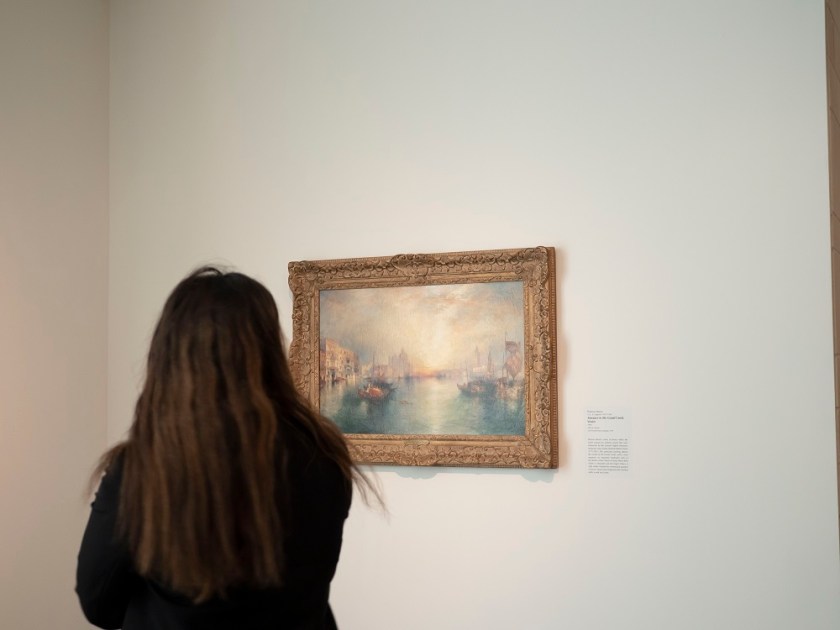
Of course, we didn’t just see Chihuly. For some of us, it was our first time to see a Thomas Moran painting…
…and Alex Katz…
…and although all of us had seen a Georgia Okeeffe…
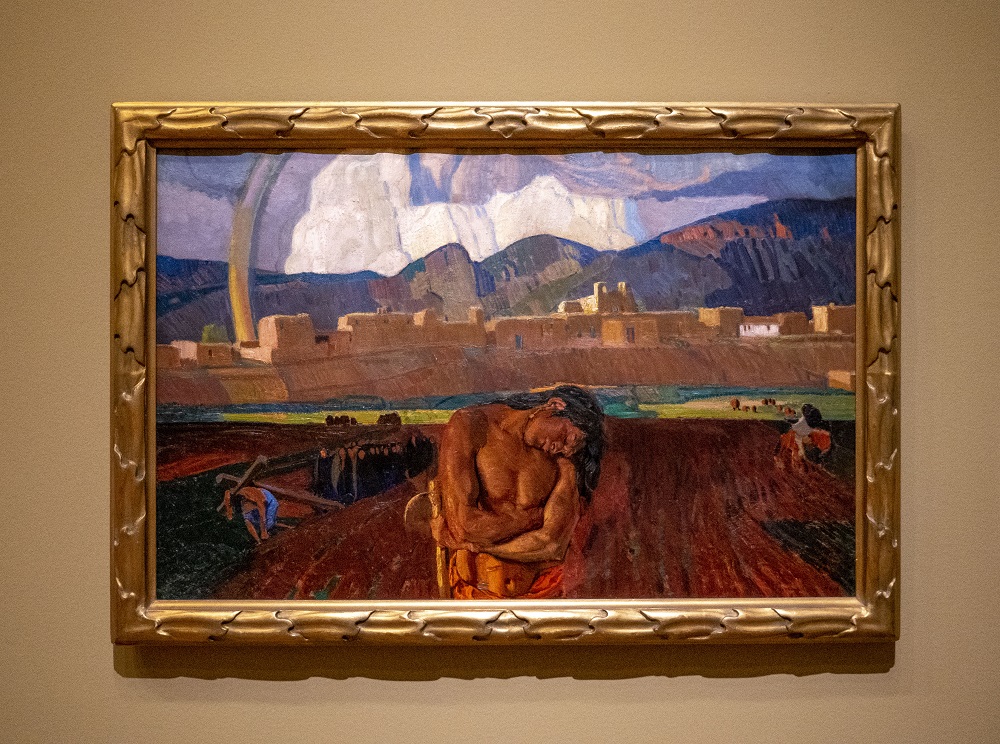
…it was our first time to see some other Southwestern artists, such as Ernest Blumenschein…
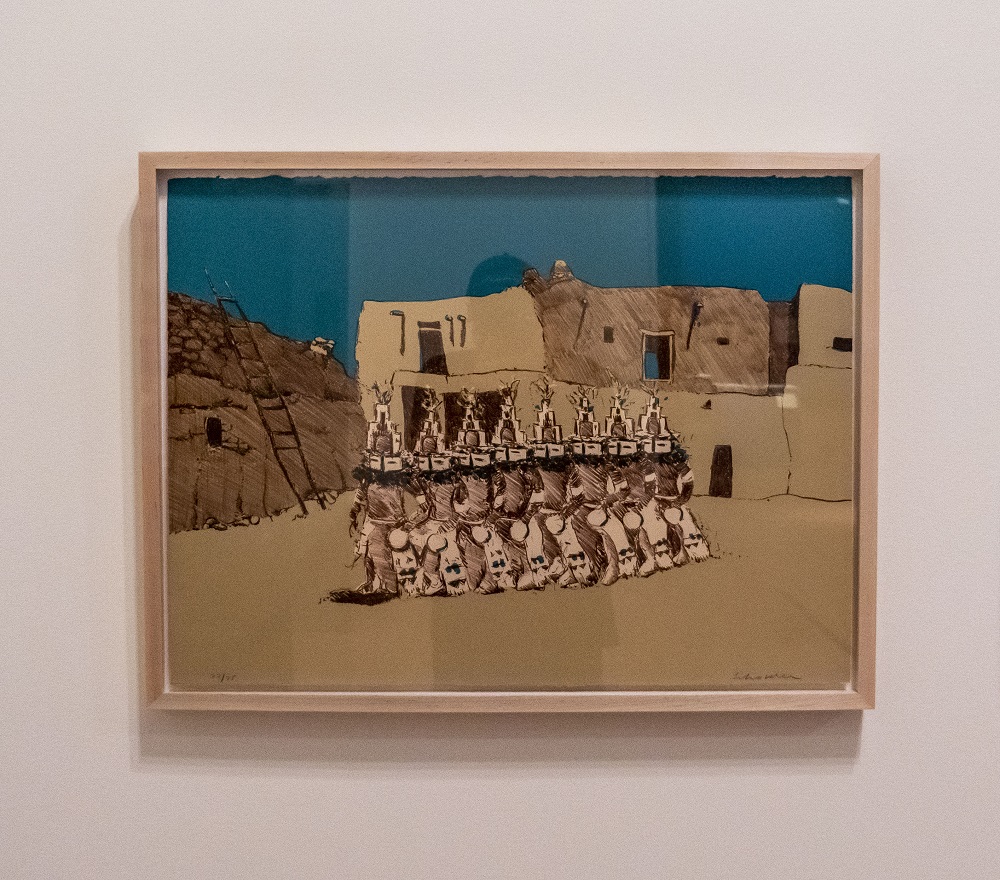
…and Fritz Scholder…
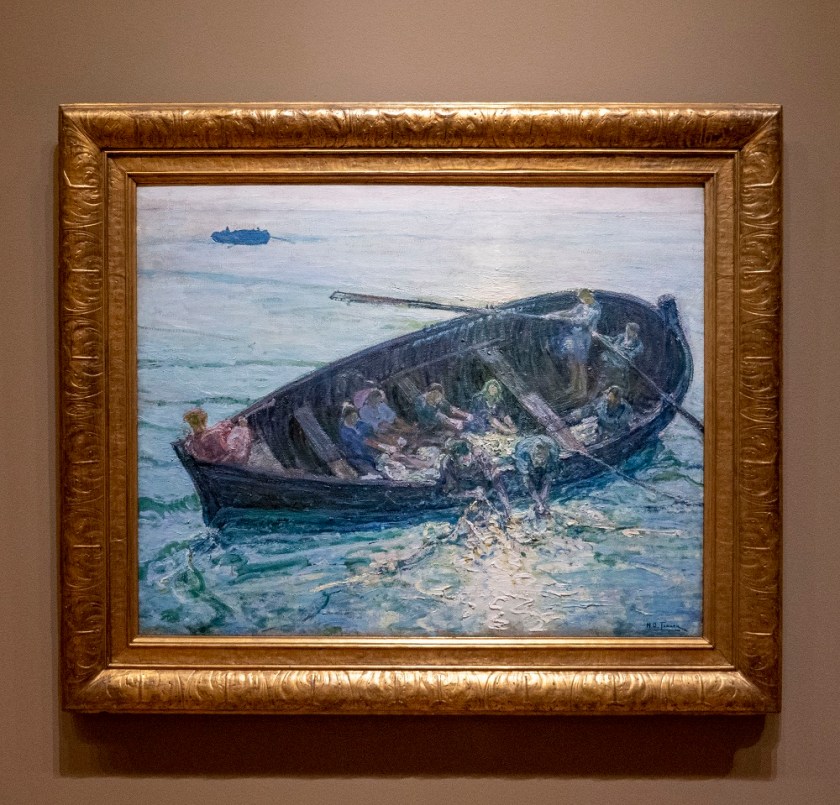
We also saw one of our favorites, which was a piece by the African-American artist Henry Osawa Tanner.
As we took one last gaze upwards at the towering Chihuly we left awed by the amazing art.
But, of course, our favorites were the various Chihuly pieces, including the largest of these, the 55-foot piece at the front of the building. This time, however, we took the photo according to the rules of the Museum, forcing Yvette to comply.
The Wedge Pizzeria
Morgan Robertson
To conclude our first eventful day, we opted for a quiet, carryout dinner. We selected The Wedge Pizzeria, which was Oklahoma City’s first artisanal brick oven pizza. Among the pizzas we selected were: The Perfect Margarita, Brisket, and we built our own Hawaiian Pizza. As we sampled each pizza, we all found we had different favorites, but we liked them all. Saara’s favorite was the brisket pizza; she described it as having the right amount of spice from the Jalapeños, and a great flavor from the brisket.
My favorite, and Erin’s favorite, was the Hawaiian Pizza. Although Hawaiian Pizza might be controversial among the general population, it has a place amongst this group of LEAP Members.
Overall, it was a great dinner and we enjoyed each other’s company as we ate.
Our first morning in Oklahoma began with an early start as we made our way toward Norman, Oklahoma. University of Oklahoma College of Law is located just a mile away from the main campus. As we got closer to the University it was clear what buildings were OU, as they were architecturally cohesive–and they were helpfully labeled.
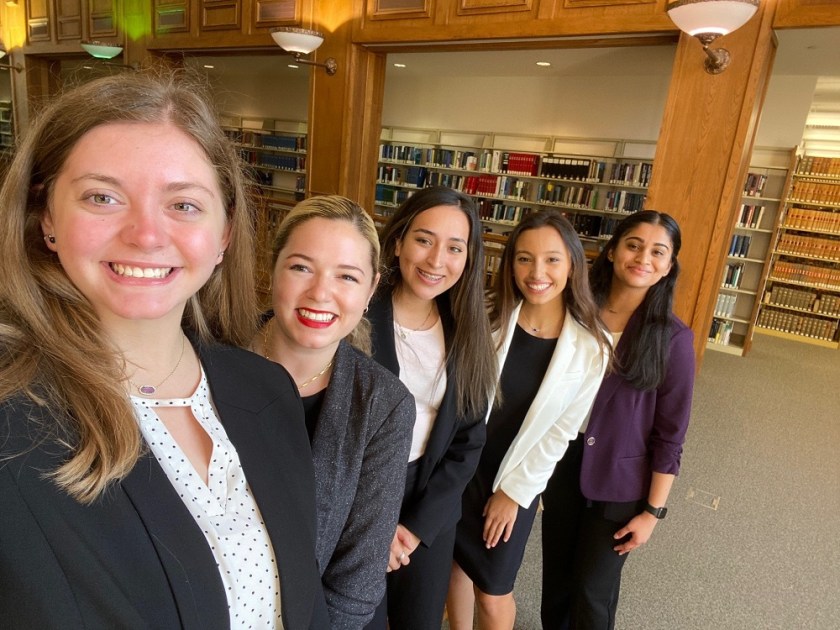
As we walked toward the school of Law Building–admiring all the fall colors and weather–we were greeted by Dean Kathleen Guzman, and the Director of Technology of Innovation, Kevin Brice. After we introduced ourselves and explained that we are SHSU students touring for the first time, Dean Guzman introduced herself and explained that she walked the campus every Friday morning, talking to the students, asking how things were going, and seeing if there were any concerns. And we thought, what a nice place to be!
We then met one of our tour guides, Maddie Farris, the Associate Director of Admissions, who welcomed us and introduced us to Grayson, a 2L and mentor at the school. As we ventured further into the Law School we asked Grayson questions about her experiences at OU, which she happily answered!
The first room we saw was the library. We learned OU Law is the only law school that is an Apple distinguished Campus. The school’s emphasis on technology is apparent when you look around the computer lab, equipped with dual monitors, VR stimulators and other technological advances. Study rooms can be found almost at every turn in the school. Grayson showed us her favorite places to study and prepare for class as we made our way to the reading room.
The reading room spanning the width of the building was lined with tables and was flooded with natural light from the massive windows on either side. This was my favorite room in the library, and we all found it to be a very photogenic spot.
As we wrapped up the tour, we thanked Maddie and Grayson for their help…
…and spent the rest of the time admiring OU’s beautiful campus, which included similarly beautiful buildings, rooms, and some fun and surprising art–including works by Allen Hauser, Jesus Moroles, and James Surls.
Fred Jones Jr. Museum of Art
Erin Juarez
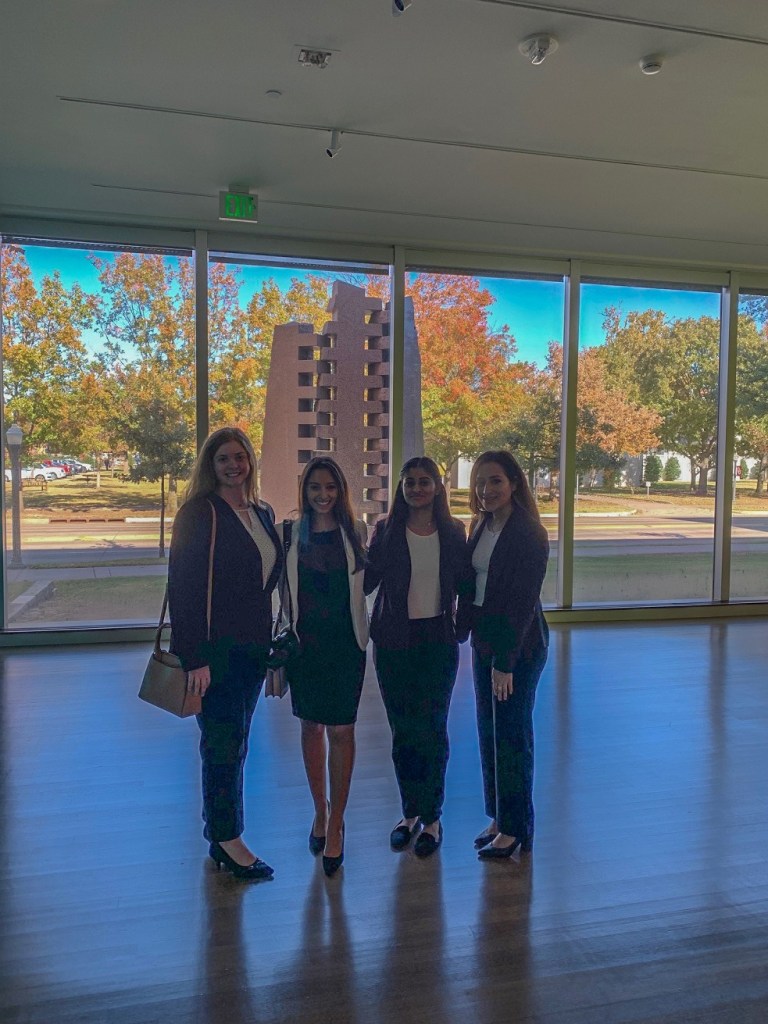
Speaking of art, Fred Jones Jr. Museum of Art definitely caught our eyes. This museum contains art and artifacts from the sixteenth century to the present. The Fred Jones Museum also acts as a comparison to the museum we visited the night before and similarly contains art from all over the world.
As we were making our way to the museum, we began to spot pieces from our favorite artists: Jesus Moroles….
…and James Surls.
As graduates of SHSU and Texans, we were happy to see how well known these two are outside of Texas.
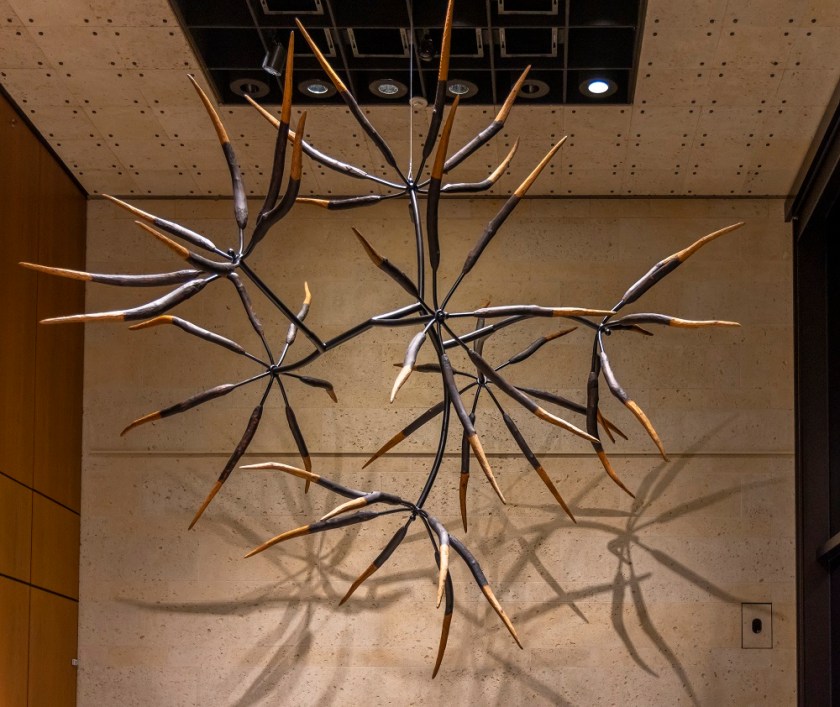
In the museum, we saw more work by James Surls, most impressive of which was the stand-alone flower shape that can be viewed from all angles.
We expanded our knowledge as learn more about different types of cultures and artists. For instance, Saara and I saw a Monet art piece for the very first time, and we began to recognize his style of impressionism.
I was able to recall who Georgia O’Keeffe was based on her style and motifs, and found that I prefer her work.
O’Keeffe began by painting her family, then expanded to flowers, landscapes, and bones. This is what makes her unique from other artists, her flowers are usually big with vivid colors, but her favorite theme is, interestingly enough, cow skulls.
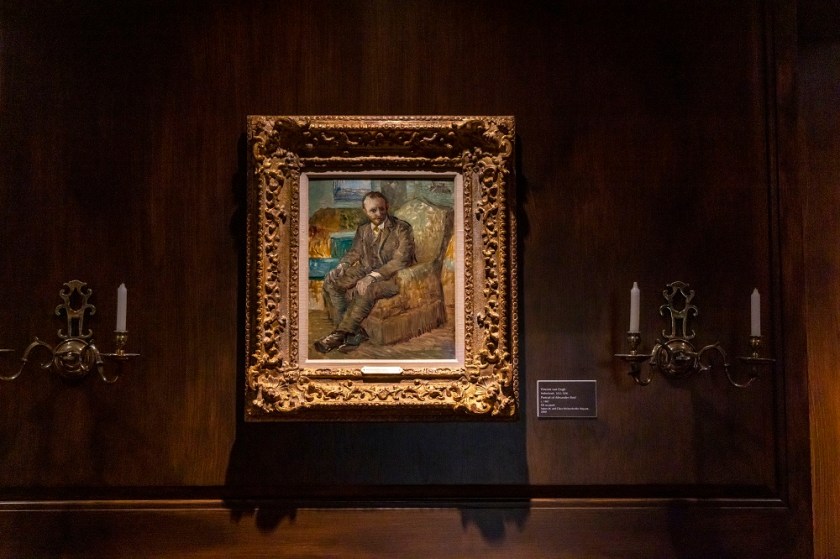
Saara’s favorite piece was the painting that hung in the model of the Jones’ house which was a Vincent Van Gogh work entitled Portrait of Alexander Reid.
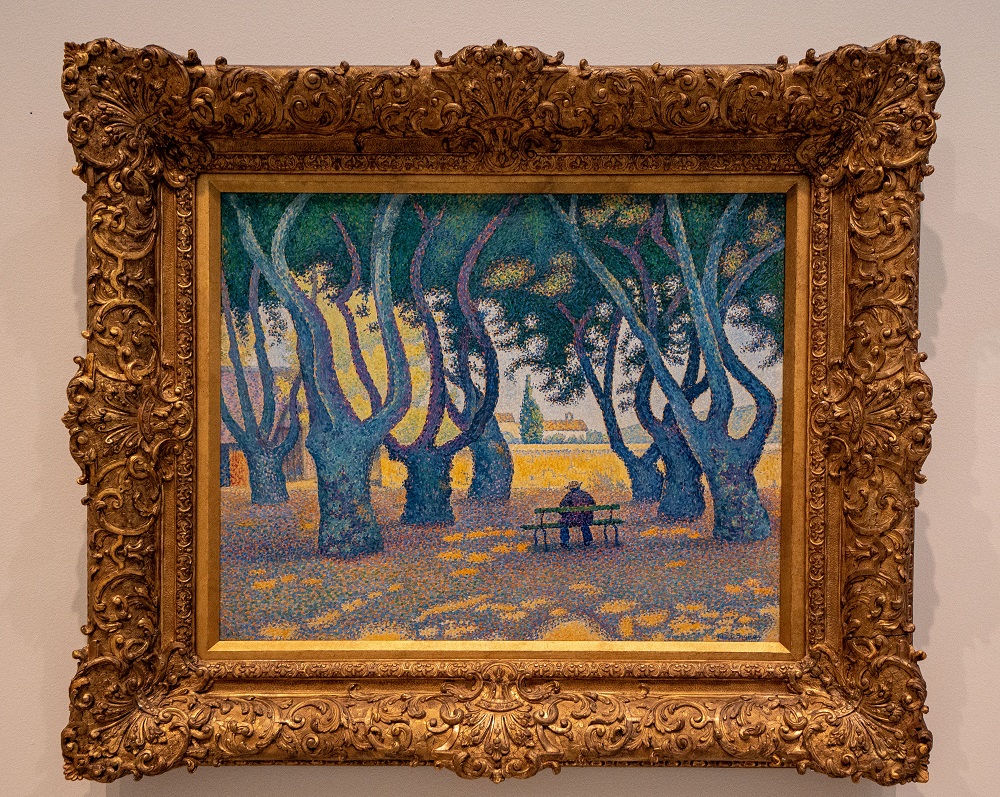
We recognized it as a Van Gogh, based on his style, right away. We also learned more about the different types of impressionism and post-impressionism,. including pointillism.
Learning more about art found on Oklahoma University’s campus was a true insight to what the University holds as values.
Greek House
Yvette Mendoza
Driving through the great college town of Norman, Oklahoma we ate at what might, at first glance, be a dive Mediterranean restaurant: the Greek House. But behind the small storefront and limited menu were massive portions and a world of flavor! As you walk in, it is impossible to miss the four rotating skewers of gyro meat that we later learned is used in almost every meal.
The hummus and chip appetizer tasted organic and fresh. The contrast of the warm, fried pita bread’s crunchy texture to the cool and tart hummus dip, enticed us even further to try more food. Morgan even commented that this was her favorite hummus that she has had. Each bite was authentic and flavorful.
The main entrees were overflowing with gyro meat, and our appetite grew much more. Everyone except for myself ordered sandwiches packed with gyro meat, spices, tomatoes, onions, and tzatziki sauce. I, on the other hand, ordered the gyro plate, which consisted of the same ingredients as the sandwich but had a much larger portion. The gyro plate also came with French fries and a salad to complement the dish.
The table grew increasingly quieter as we began getting full of all the delicious food. The LEAP members absolutely loved it, and it served as vital fuel for our wonderful day of tours and museums ahead of us.
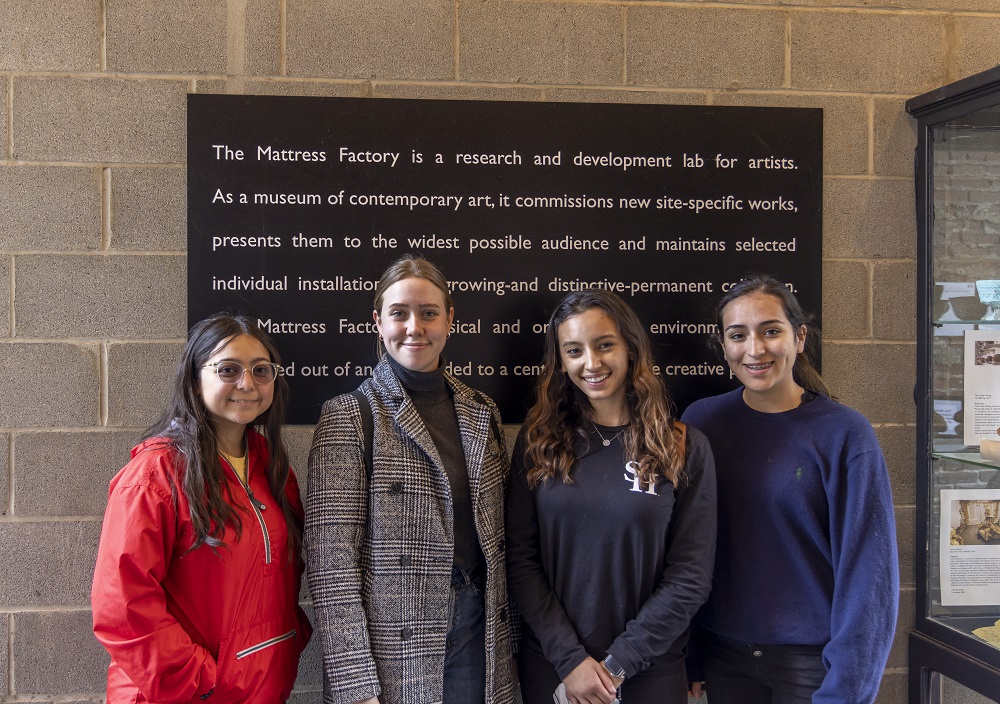
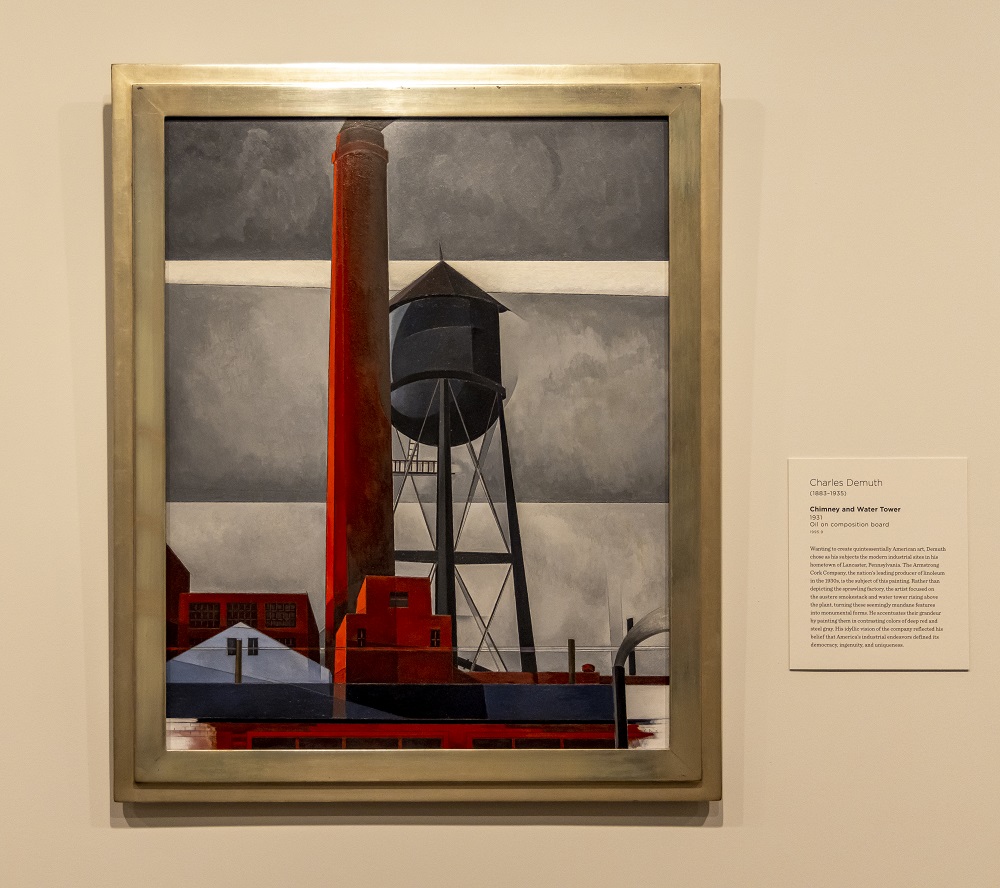
Starting off day one of our TEXOMA tour, LEAP members Saara Maknojia, Erin Juarez, Yvette Mendoza, and I began our way towards Oklahoma City. We first made an exciting and knowledge-filled stop at the Amon Carter Museum of American Art. The museum is located in downtown Fort Worth and fits in well with the surrounding architecture and the aesthetic of the city.
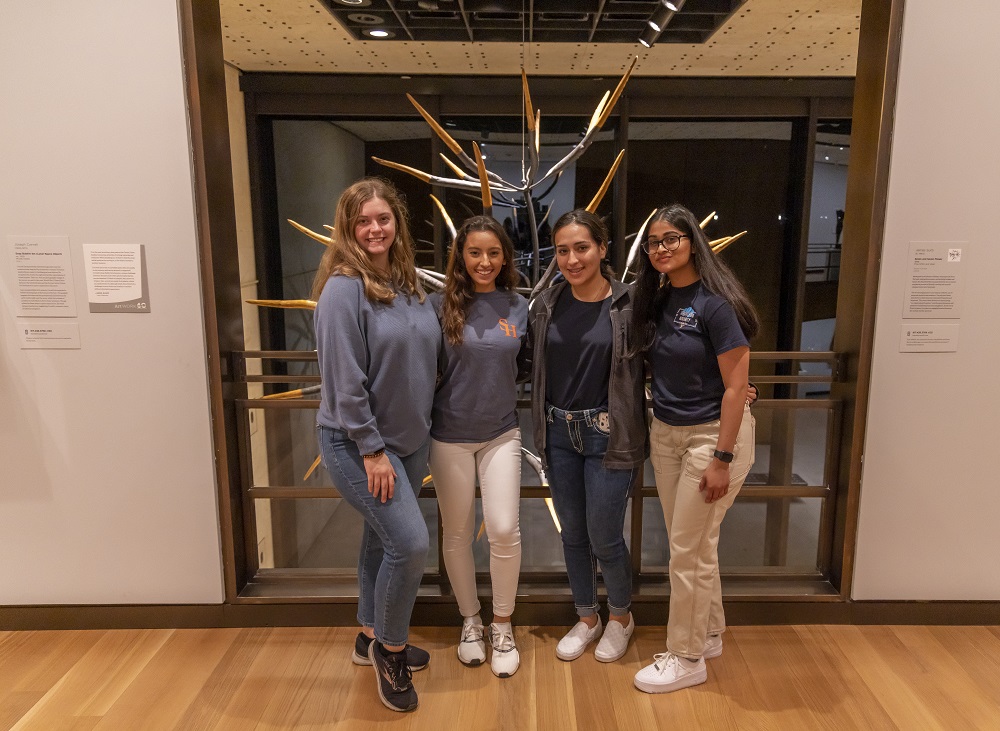
The most captivating piece upon entering the museum was a massive James Surls piece titled Seven-by-Seven.
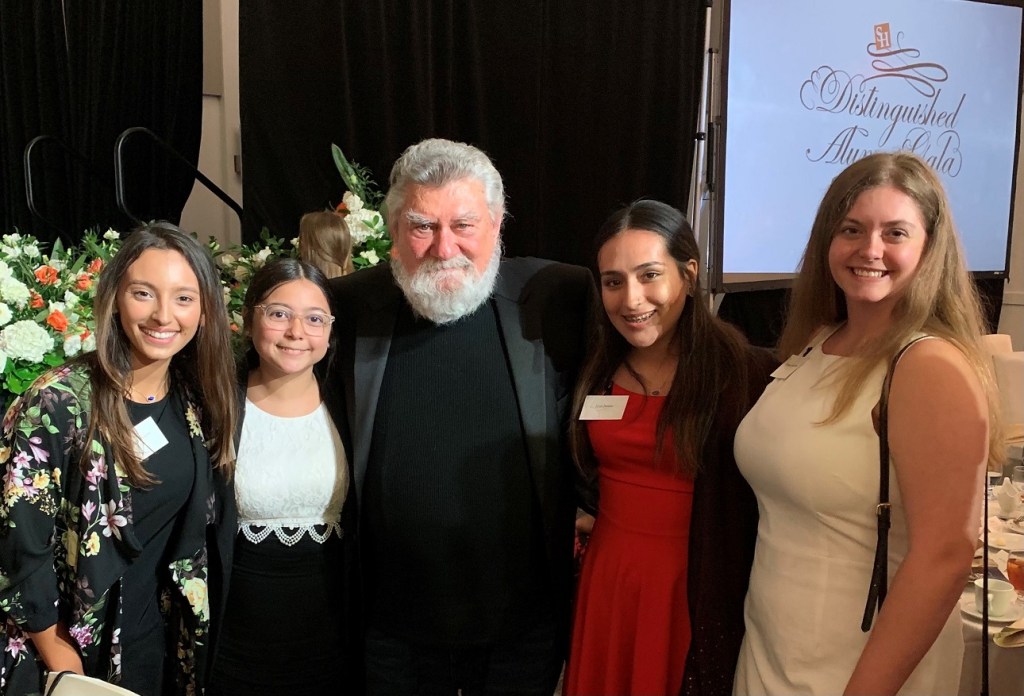
This was, for all of us, the first time to see a Surls’ piece (outside of SHSU) in person, and it was jaw-dropping! One of the things that made this so exciting is that we had a chance to meet Surls, and he was very gracious, signing some photos of his work we had produced.
Continuing through the foyer was a Daniel Chester French sculpture titled Benediction. This work of art was one of my favorites throughout the museum. French’s work often included winged women; however, he is most popular for the sculpture of Abraham Lincoln at the Lincoln Memorial in Washington D.C.
The Amon Carter Museum is also home to one of the largest collections of Frederic Remington artworks.
Remington’s western-themed work often depicts a cowboy in action, or wildlife commonly found in the west. When walking through his exhibit you are captivated by the western scenes coming to life at different times of the day.
The featured collection was “Imagined Realism: Scott and Stuart Gentling.” Yvette found her favorite piece in this collection by Scott Gentling titled Viola, Cello since she herself plays the cello. Accordingly, she was able to make a personal connection with the musical form. The collection spanned many different topics from instruments, portraits, and landscapes.
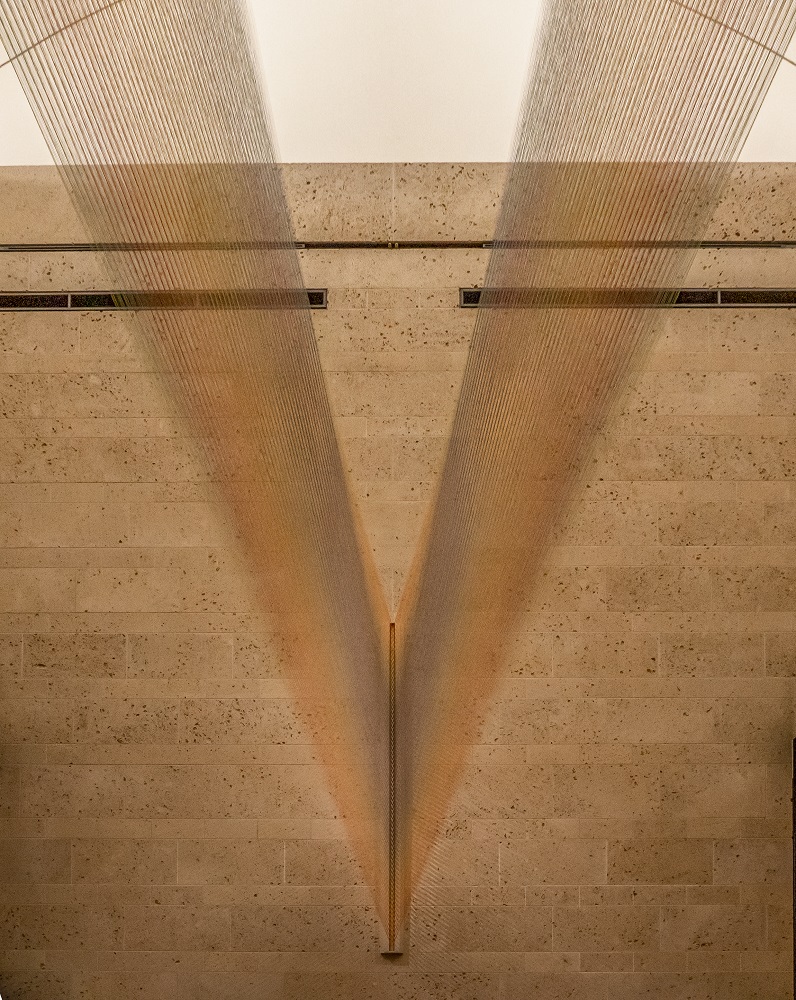
Commissioned for the Amon Carter Museum is the Plexus No. 34 by Gabriel Dawe; this suspended piece created out of thread gives viewers different perspectives from every angle. This quickly became Erin’s favorite piece, as she spent several minutes photographing different angles to see the different colors you see as you move around it.
We were also introduced to Thomas Moran, a landscape artist. Most well-known for his work featuring the national parks, Moran’s pieces seem to transport the viewer into the scenic landscape. We saw pieces he’s painted of Yellowstone and the Grand Canyon that were brought to life. Saara found Green River Cliffs to be her favorite because of the incorporation of nature in the art. We enjoyed his work and other works by landscape artists.
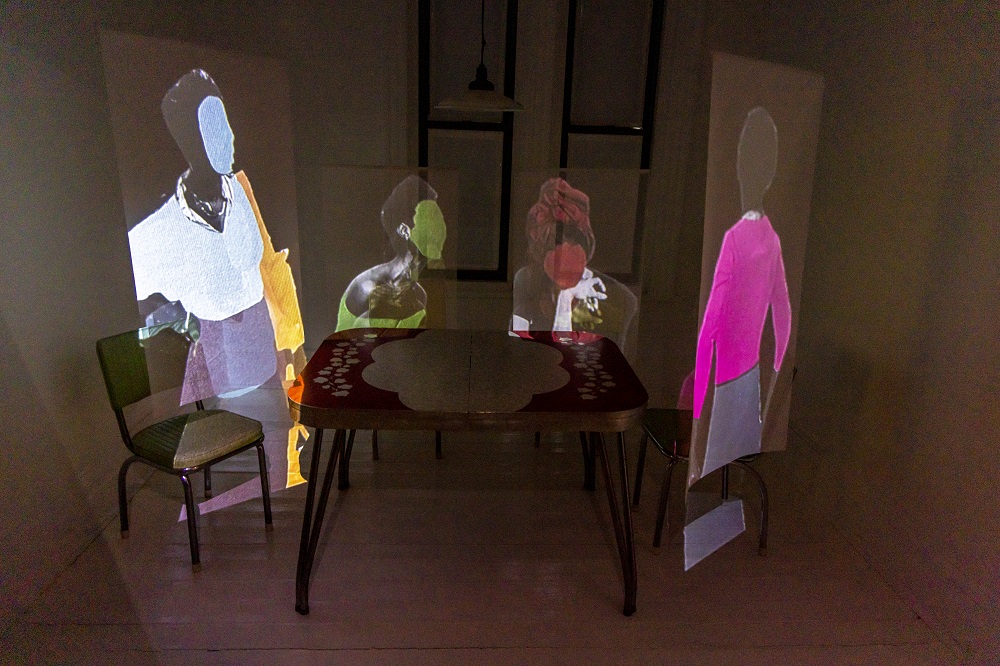
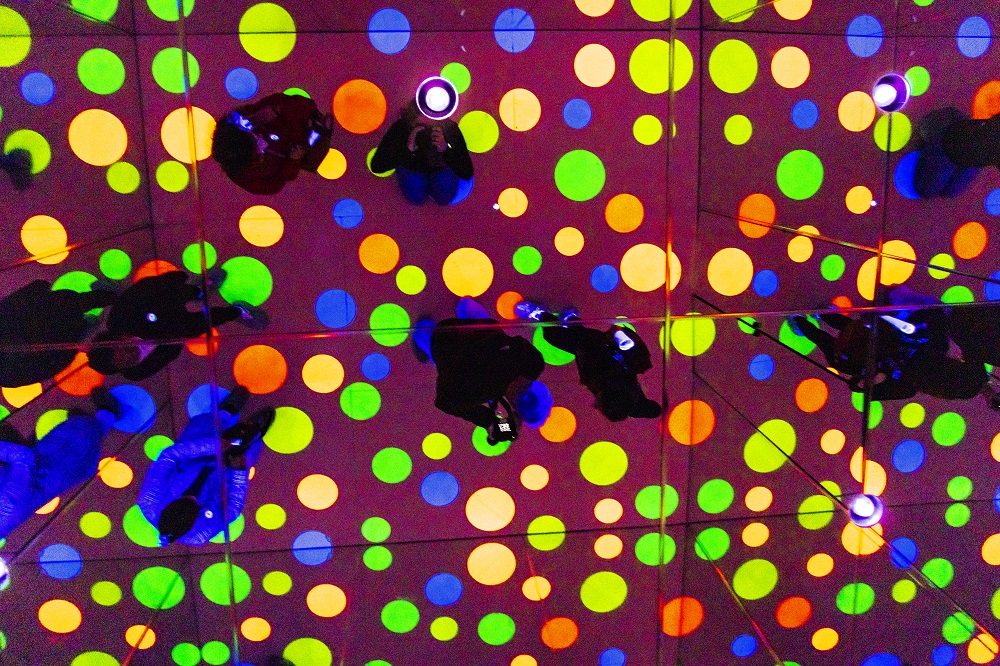
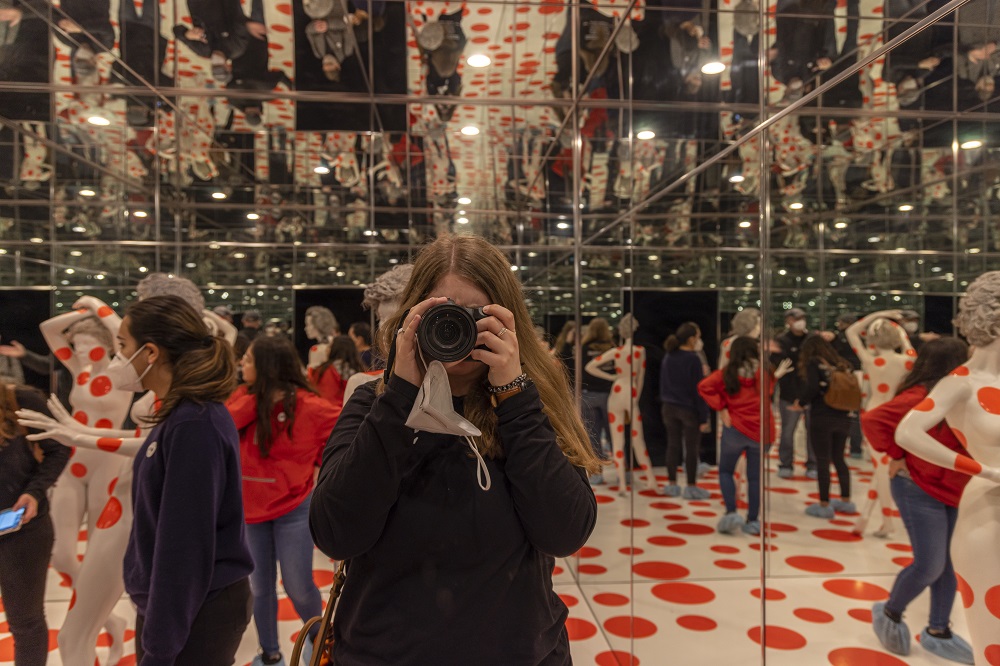
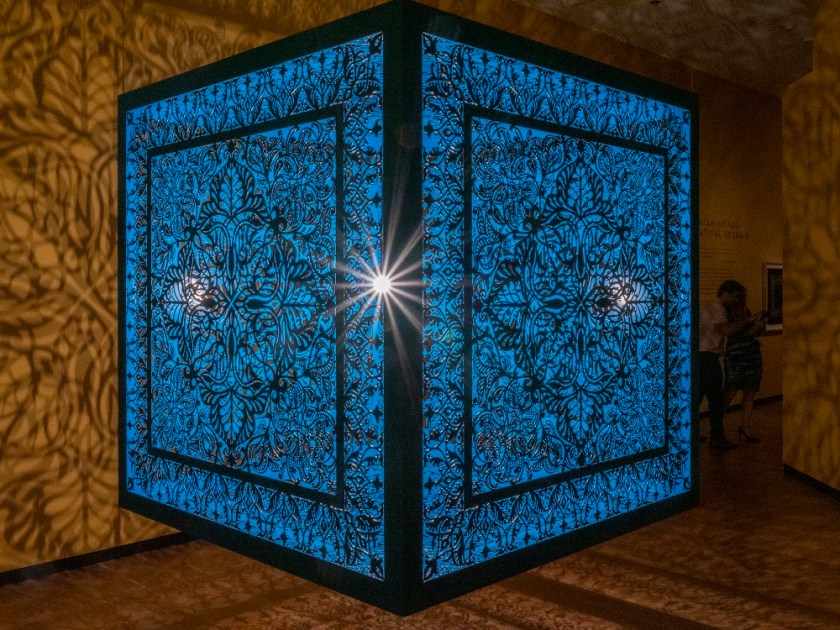
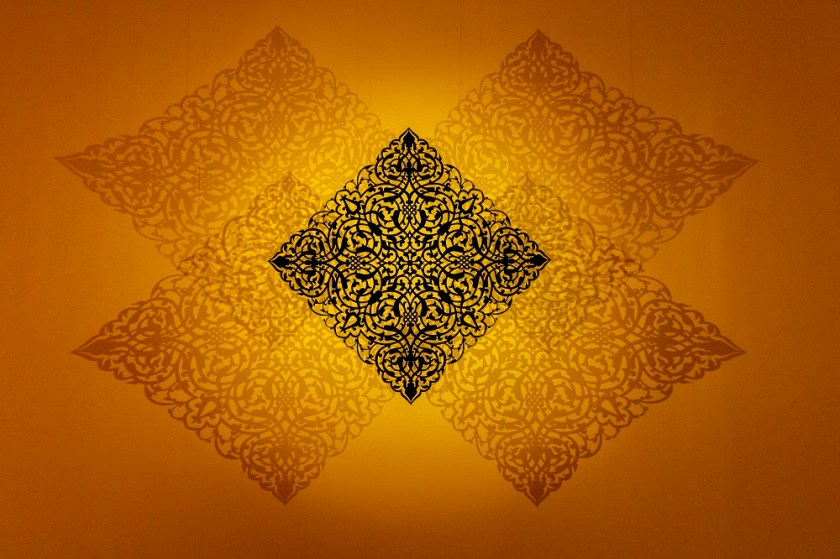
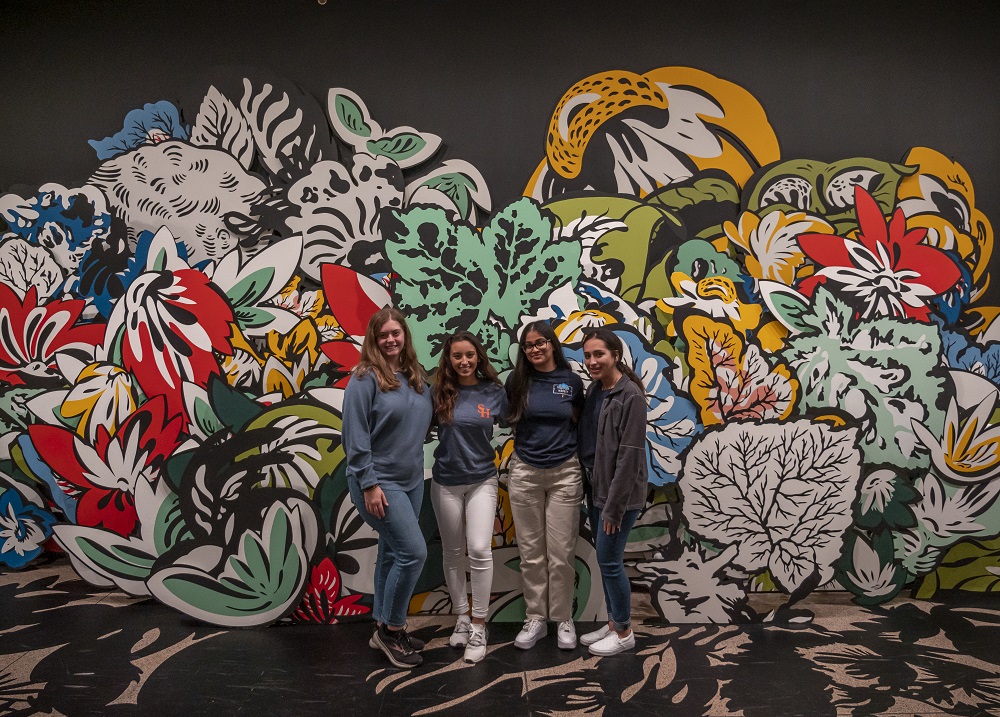
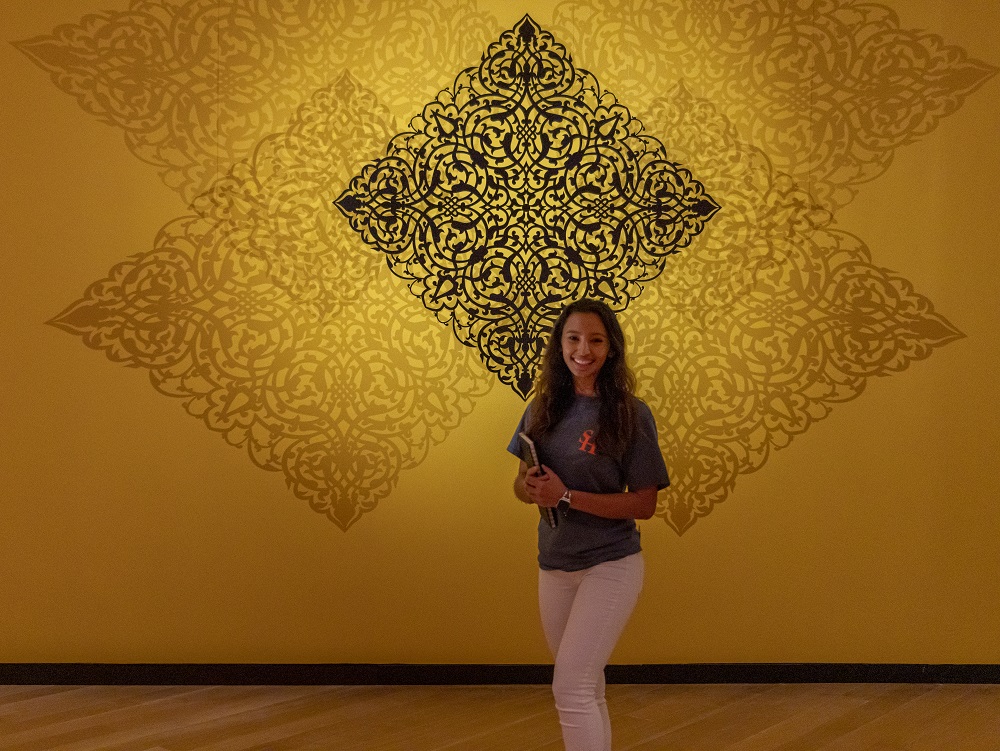
My other favorite exhibit in the museum was the Anila Quayyum Agha: A Beautiful Despair.
This exhibit was made from a mix of media, light, and shadows. Also beautiful was Agha’s Liminal Space.
We also saw another successful and renowned female artist, Georgia O’Keeffe, and found her to be easily identifiable with her floral and abstract art.
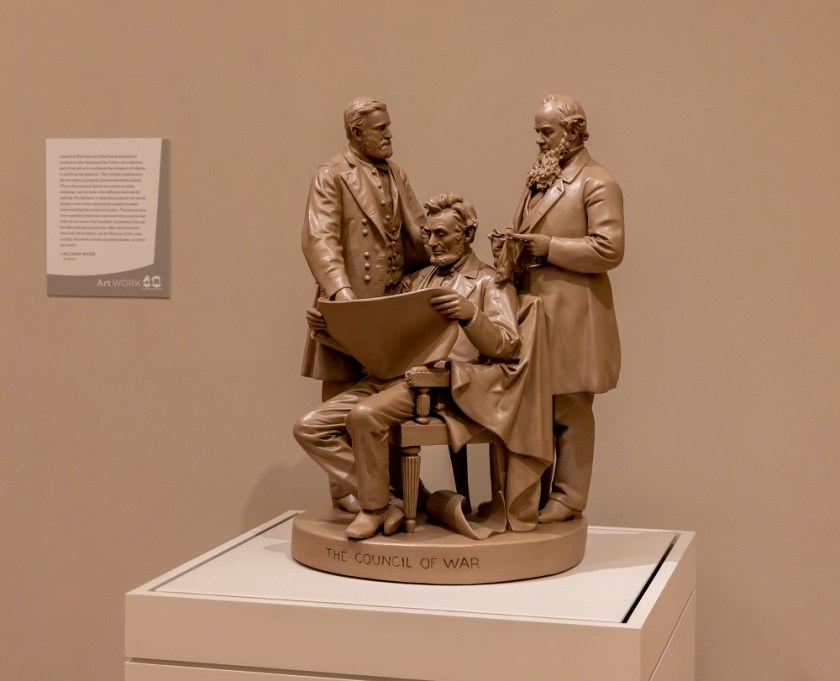
Interestingly, we saw a work by John Rogers, which is notable because one of our first events as LEAP Ambassadors was to see an exhibit on John Rogers at the Sam Houston Memorial Museum.
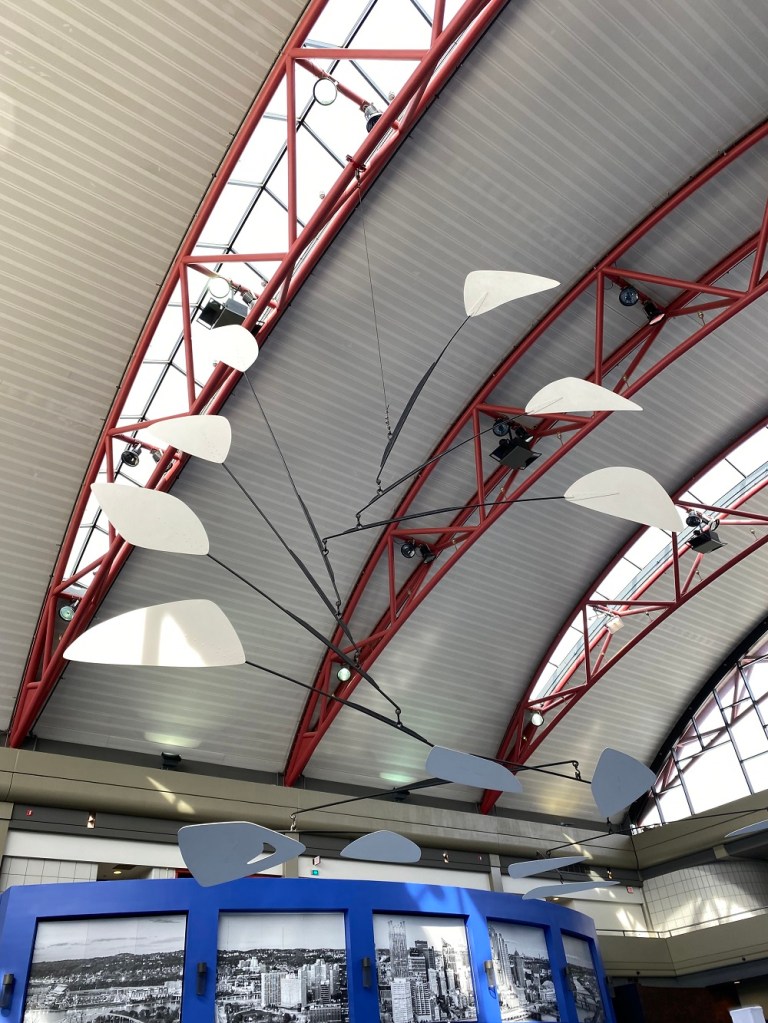
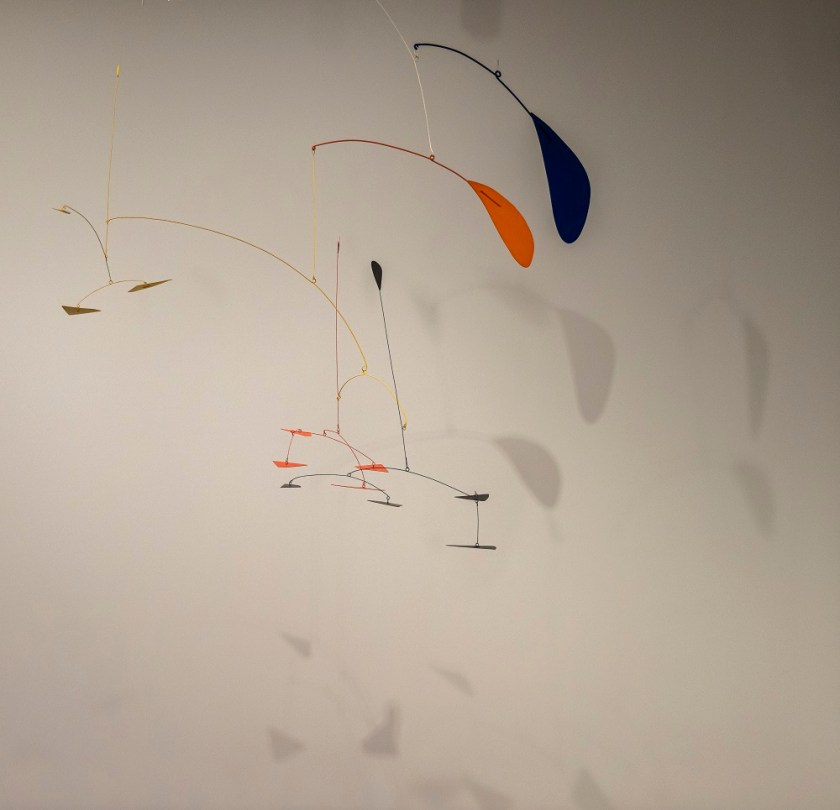
Another of our early events involved seeing a Picasso-Calder exhibit at the Museum of Fine Arts Houston, so it was particularly nice we got to see a Calder sculpture at Amon Carter.
And, rounding out our knowledge, we were able to see several paintings by Grant Wood and other Regionalist painters.
As the first stop on our trip, we found it to be intriguing as we all got to see new artists and expand our mental collection of art. We are ready to see what Oklahoma has waiting for us on this exciting trip!
Velvet Taco
November 11, 2021, Yvette Mendoza
As the LEAP Ambassadors finished viewing the beautiful artwork at the Amon Carter Museum, we were ready to eat! Before we left Fort Worth to continue our road trip to Oklahoma the only thing on our mind was tacos. Trying out Velvet Taco in downtown Fort Worth was the perfect spot!
The tacos were all unique in their own way, from an assortment of different meats and tortillas garnished with sauce, it made the perfect tacos. Our orders consisted of Chicken tacos that came in three different forms the buffalo chicken, rotisserie chicken, and even a chicken and waffle. We also had a taste of Tennessee with the Nashville hot tofu and the grilled salmon fish taco.
To top everything off, each taco had its own topping that truly complimented it. For our chicken tacos we had either house buffalo sauce, roasted corn pico, queso, napa slaw, or citrus lime crema.
We were left satisfied, and ready to head North to continue our trip!
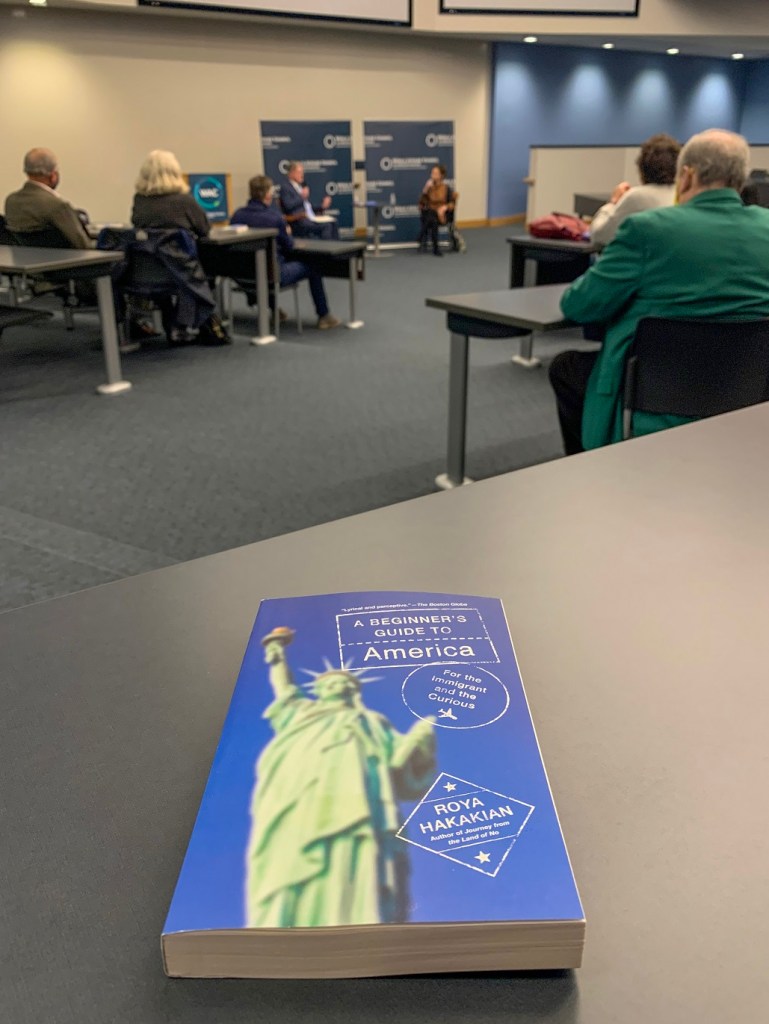
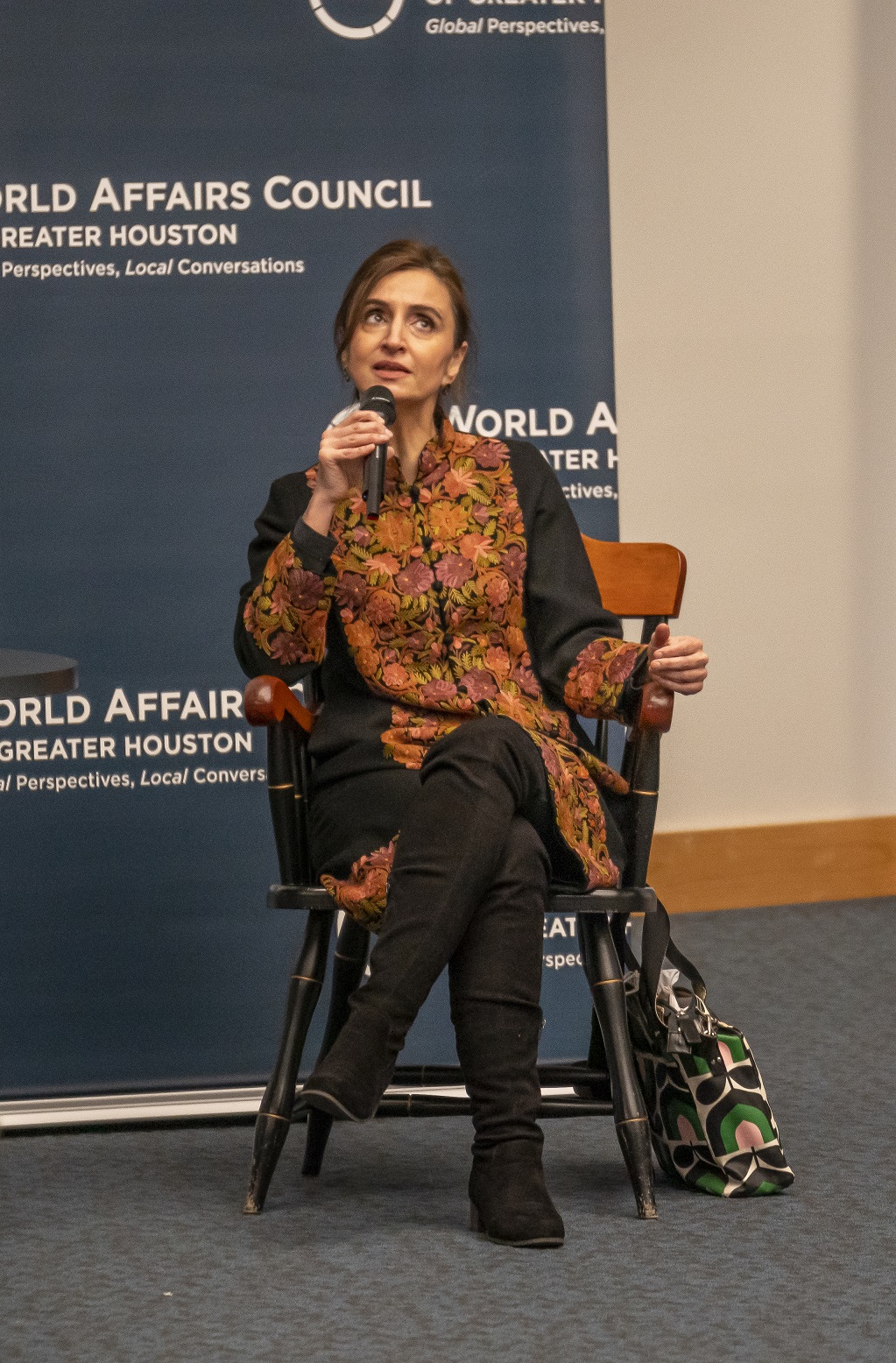
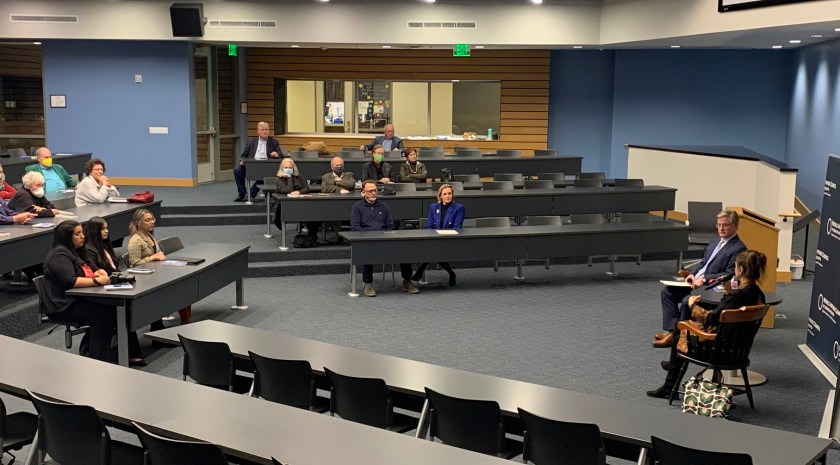
To kick off the new semester, Heather Barodi, Jocelyn Vazquez, and I traveled to The Woodlands representing LEAP and Sam Houston State University for the first event of the year hosted by the World Affairs Council (WAC). This event showcased the journey of an immigrant into America featuring Roya Hakakian, an Iranian immigrant and her experience into the “land of the free!”
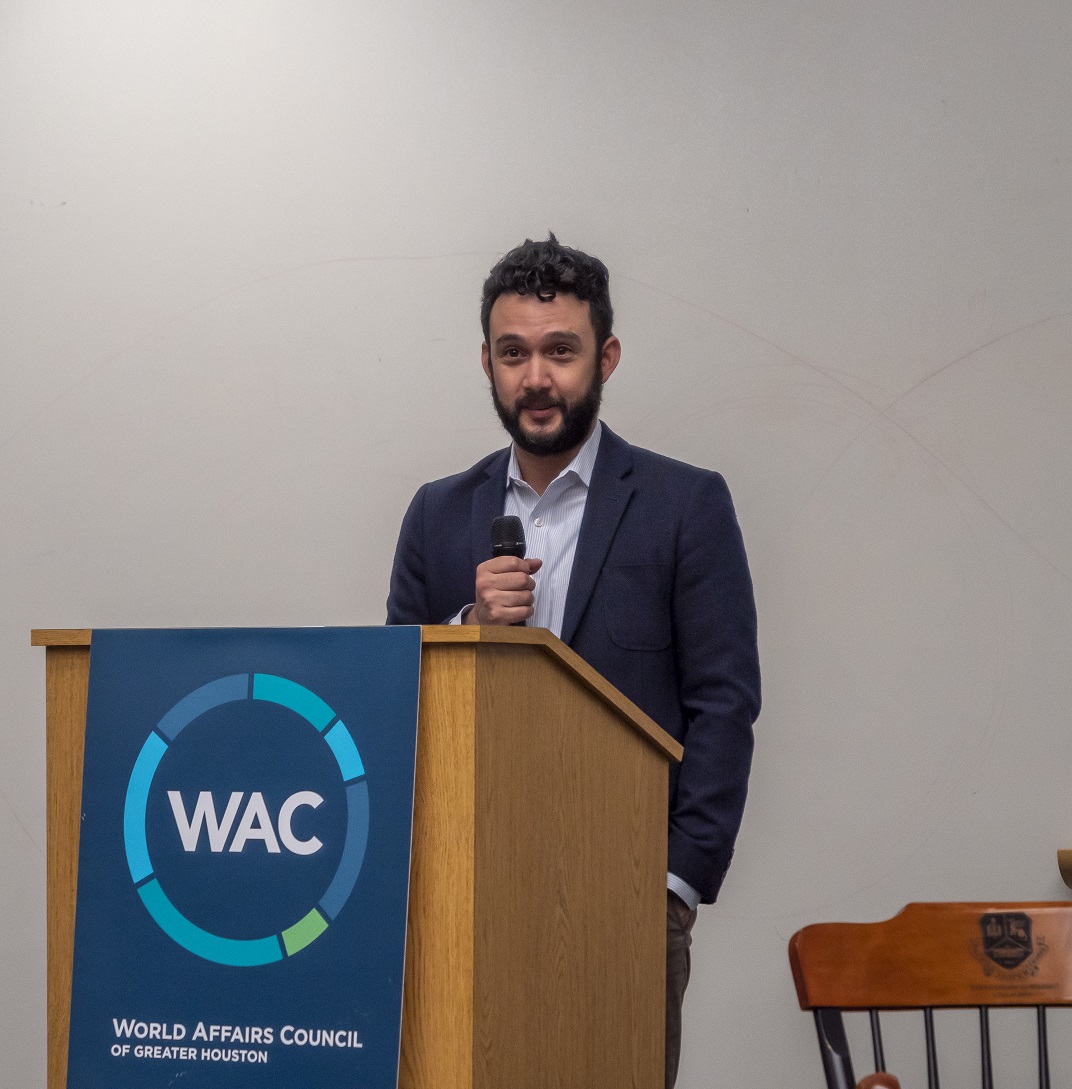
Upon our arrival to the venue, the LEAP students were greeted by the always-friendly, always-professional staff of the World Affairs Council! In fact, we were given a copy of Hakakian’s book, A Beginner’s Guide to America.
Considering that Ms. Hakakian a Guggenheim Fellow and Lesley Stahl referred to Hakakian as “the most eloquent interpreter of ‘the immigrant'” writing today, this was a real treat.
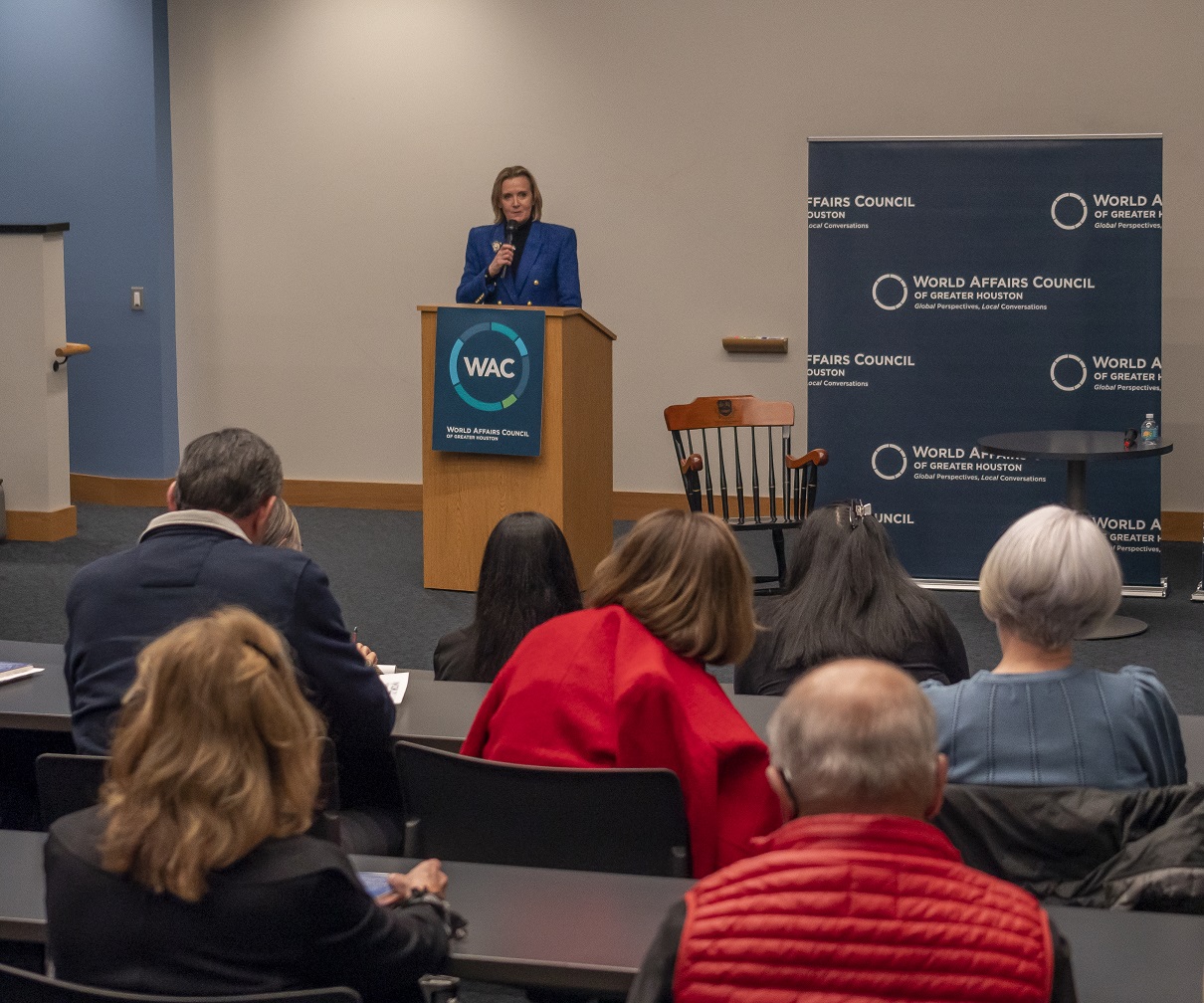
After introductions from the WAC staff…
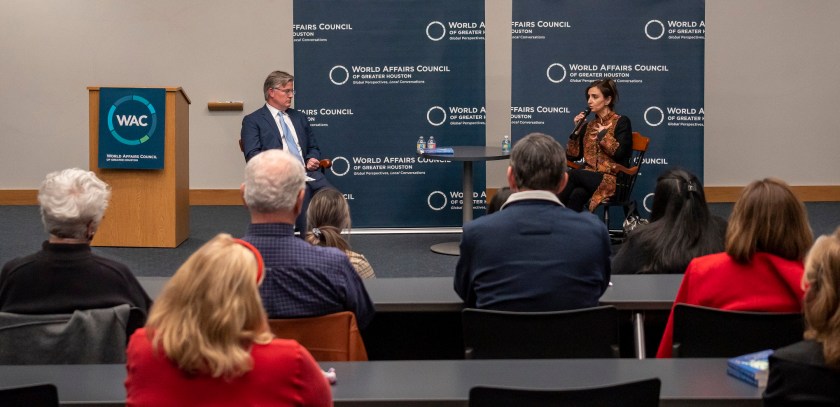
…Ronan O’Malley moderated the event, asking questions about Hakakian’s experiences on her journey to–and in–the United States.
At the age of 19, Roya came into the U.S. with the hope of becoming successful in this large and unknown land. Ms. Hakakian explained her perceptions of the differences between the US and Iran and why it was such a cultural adjustments.
These observations spoke to us, particularly since of the three of us, one is a first-generation immigrant, and two are second-generation immigrants. We could all identify with at least some of what she had to say.
Toward the end of the session, the Mr. O’Malley took questions from the audience, and Ms. Hakakian responded to two LEAP questions! The insight into immigration and its challenges opened up many doors to knowledge and allowed us to see this process in a new light!
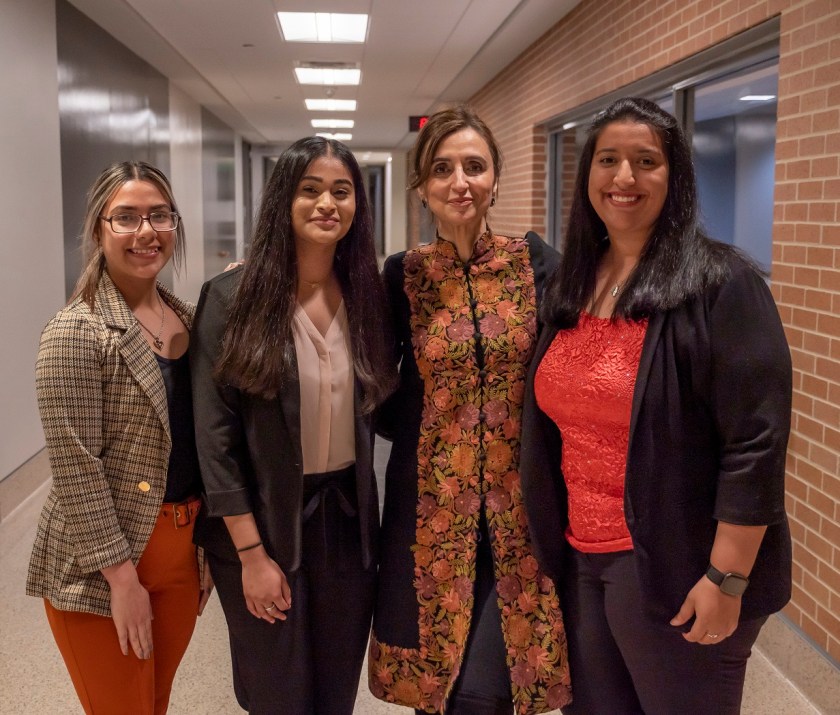
Roya Hakakian met with the LEAP students after the event and kindly signed our copies of her book A Beginner’s Guide to America. The LEAP students were thrilled to hear from her and learn from her experiences!
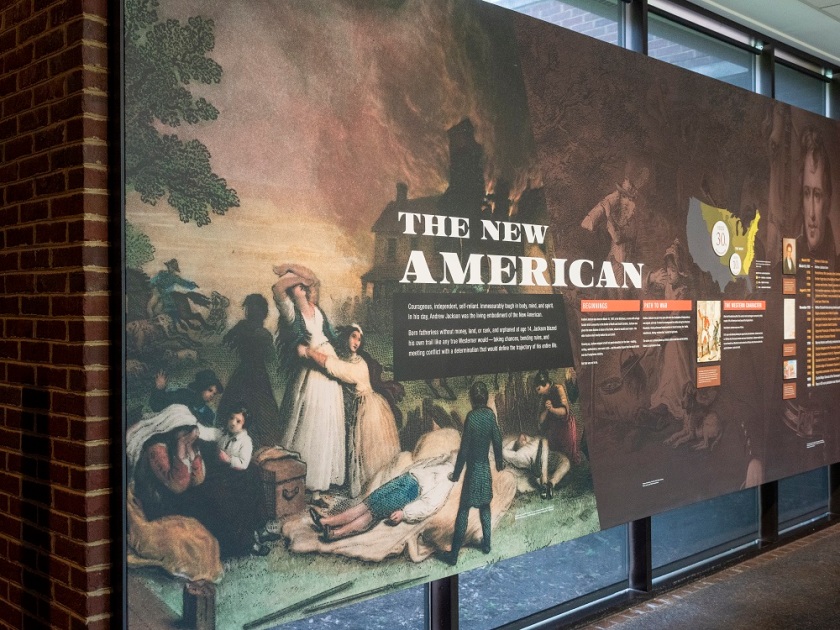
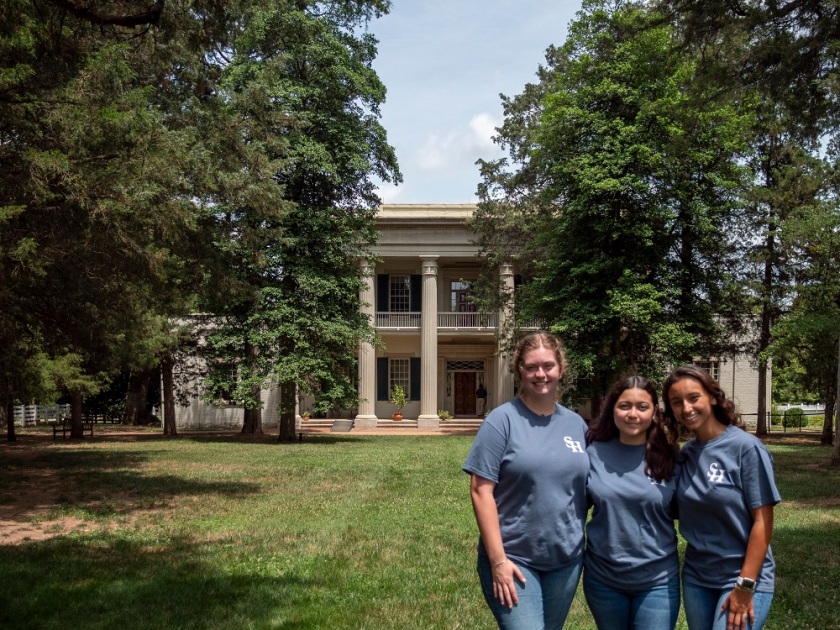
Seeking another historic home on day four, the LEAP Ambassadors ventured to Andrew Jackson’s Hermitage. This visit gave us a vivid perspective of the 1800’s lifestyle through his marvelous home and informative museum alongside it. In addition to having a tour of the Hermitage we walked through his personal idyllic garden and the cemetery where Andrew Jackson and his family currently rest.
Former president Andrew Jackson was known as “the People’s President,” because he was the first “frontier” President, and he broadened the voting process, resulting in many changes in society.
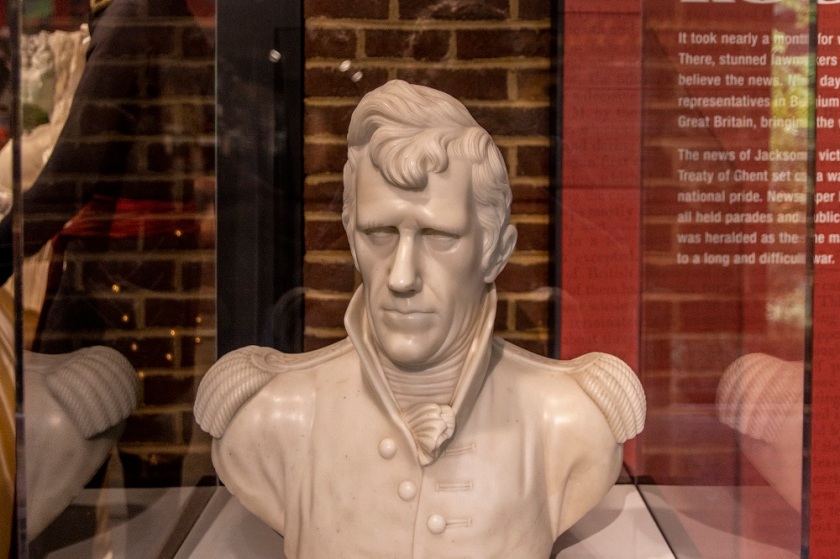
Walking through the Museum we saw his accomplishments as an attorney, soldier, and president of the United States. Viewing artifacts, Jackson effectively led the battle of the Creek War in 1801 as Colonel of Tennessee and the battle of New Orleans in 1812. After courageously serving in these wars fighting the British and the Indians, Jackson was elected president, and he is now known as the founder of the Democratic party.
As for Jackson’s day-to-day life he lived with his wife Rachel Jackson and adopted children in a Greek-styled home where he allowed any guest comfort in his home with food and a place to stay.
Jackson was known to receive many visitors, including Sam Houston and former presidents, at his 1,120 acres of land at the Hermitage. Having guests stay made it a hectic household from managing the farm, servants, and attending to important guests.
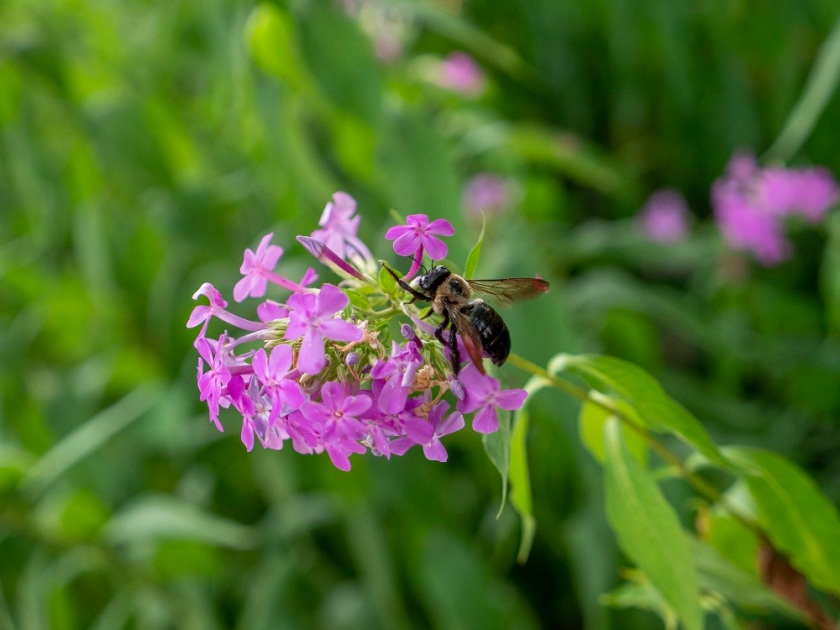
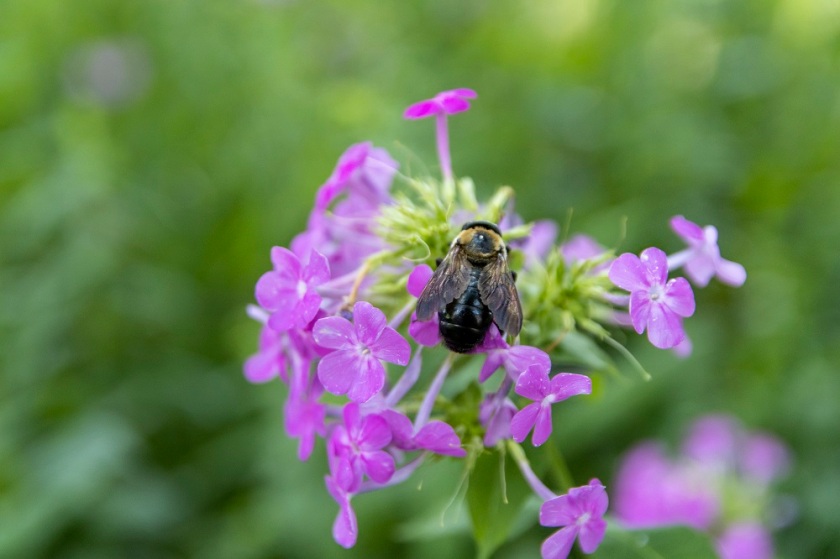
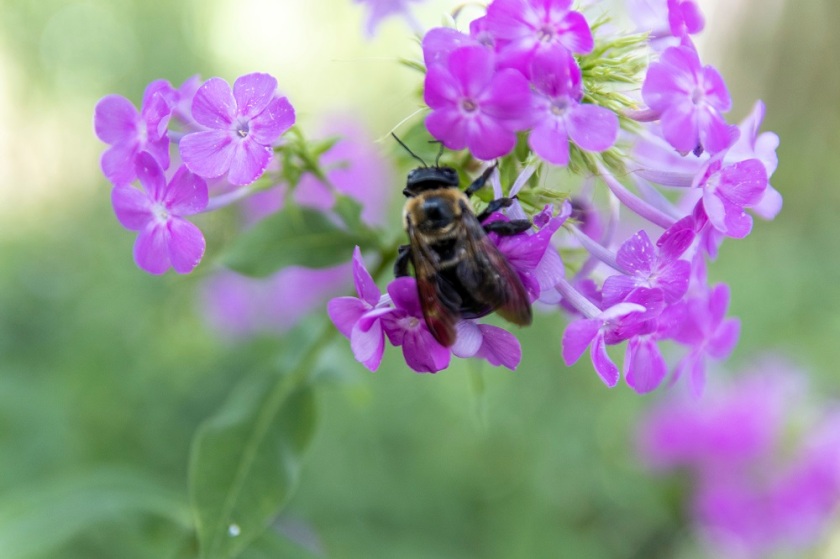
Each LEAP Ambassador had their own favorite part of the Hermitage Jessica being the massive newspapers in Jackson’s library. Morgan enjoyed the kitchen outside since it was like Sam Houston’s kitchen in Huntsville, Texas. Whereas mine was farther away from the home being the garden. As we all entered the garden I fell in love with the bumblebees flying around the brightly colored flowers that all led up to the tombstones.
The garden and grave site rounded off a nice sentimental testament to our 7th president.
Lunch
Yvette Mendoza
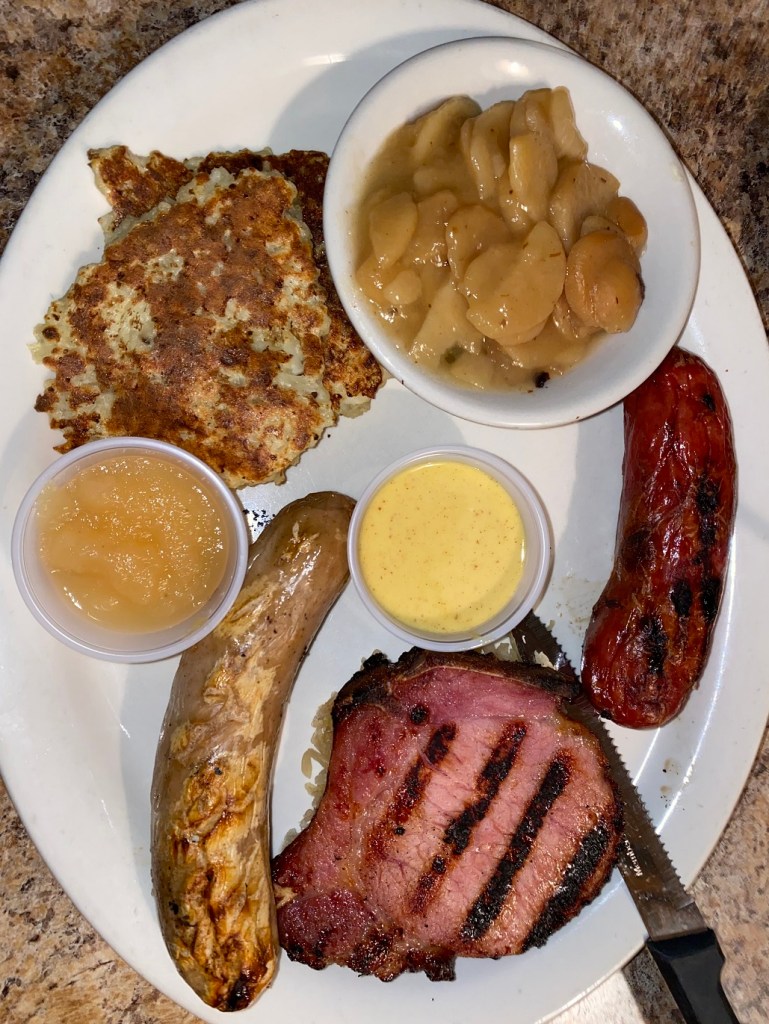
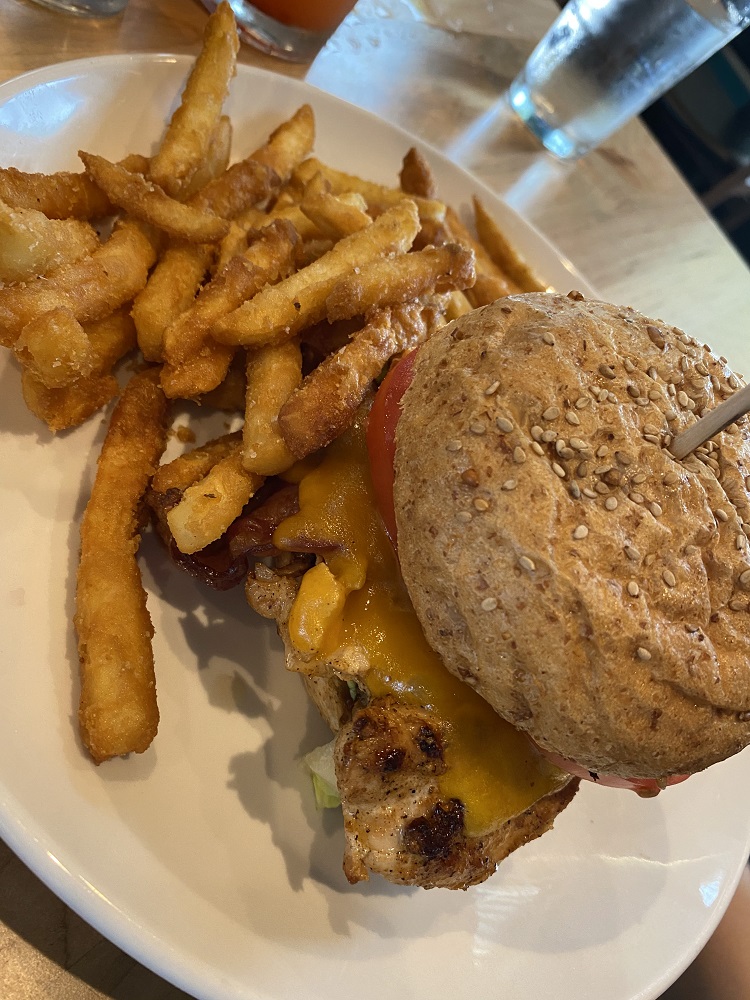
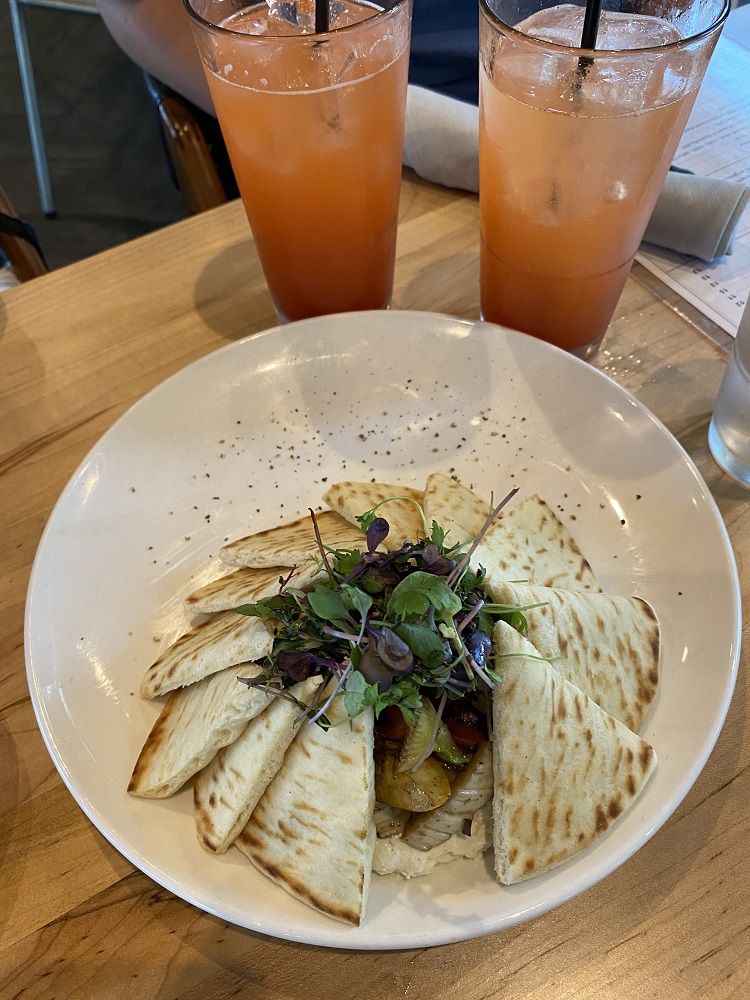
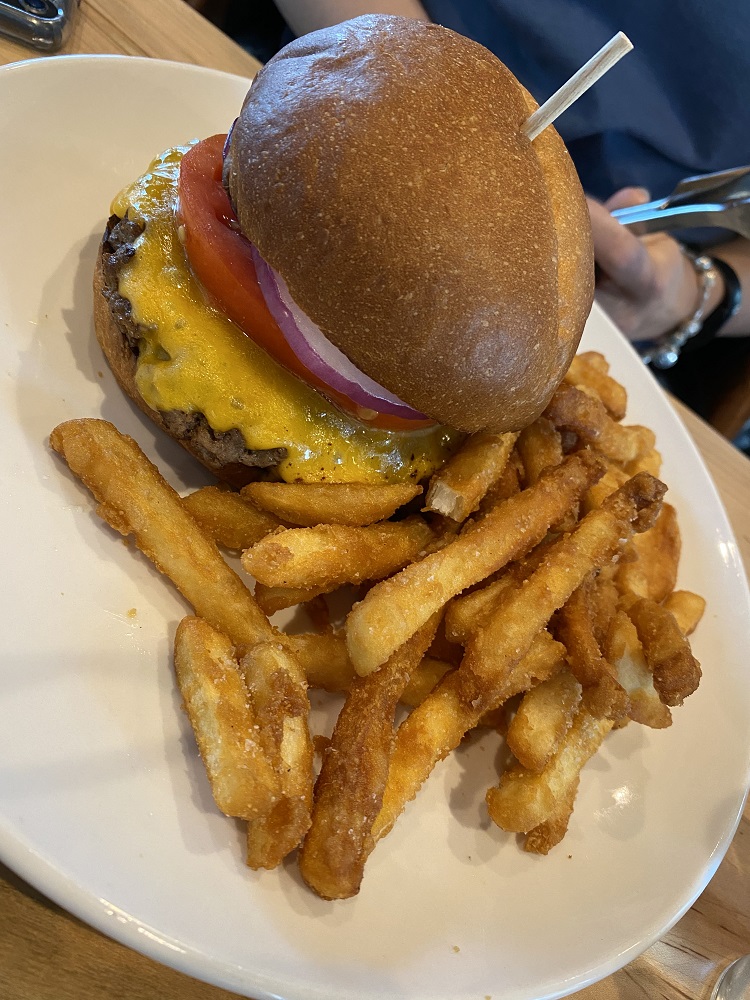
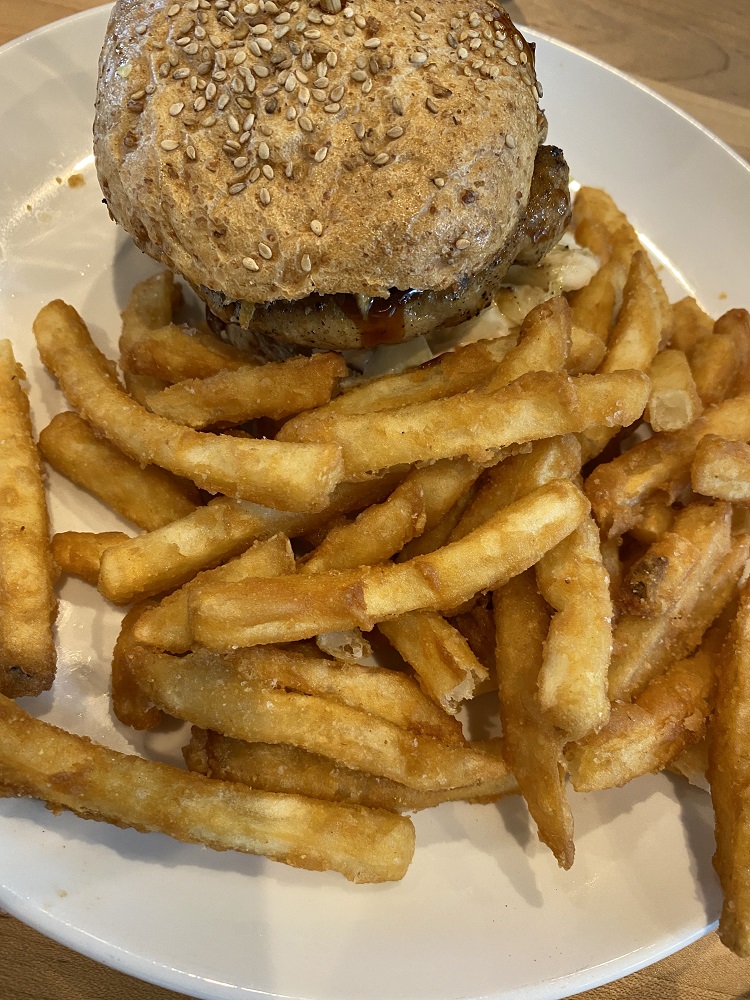
Diving into our first meal in Nashville at the Flat Iron southern fare restaurant ended up being a perfect choice. With the menu full of variety we started off with American classics by ordering whipped goat cheese filled with grilled cucumbers, onion, and tomatoes served with fresh warm pita. For our meals Morgan and Jessica got burgers, one being a tuna-patty burger and the other a grilled chicken burger. As for me, I got a waffle grilled cheese with a complimentary tomato bisque dipper. Each meal was delectable, and everyone had a delicious side of french fries. Our first taste of Nashville made us eager to try more.
Parthenon Tour
Morgan Robertson
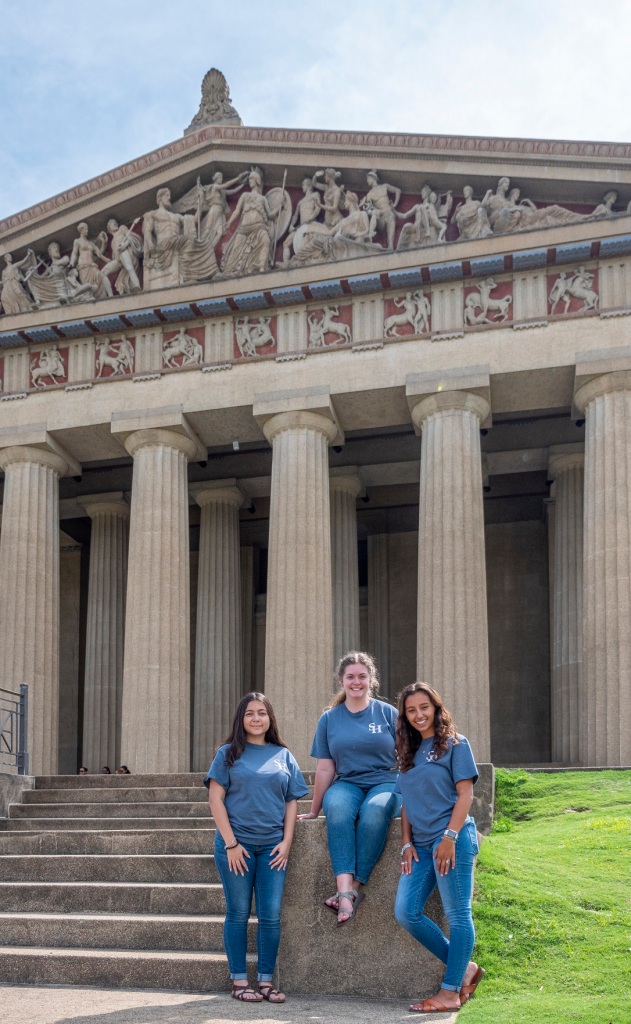
After seeing General Jackson’s home, we ventured into a City formerly known as “the Athens of the United States”–Nashville, where the great Parthenon in Athens, Greece is replicated. Initially, the project was supposed to be a temporary attraction like everything else commissioned for Tennessee’s 1897 Centennial Explosion. However, people were so impressed with its beauty and the cross-cultural connection, the Parthenon was preserved, becoming the focal point in what is now Centennial Park.
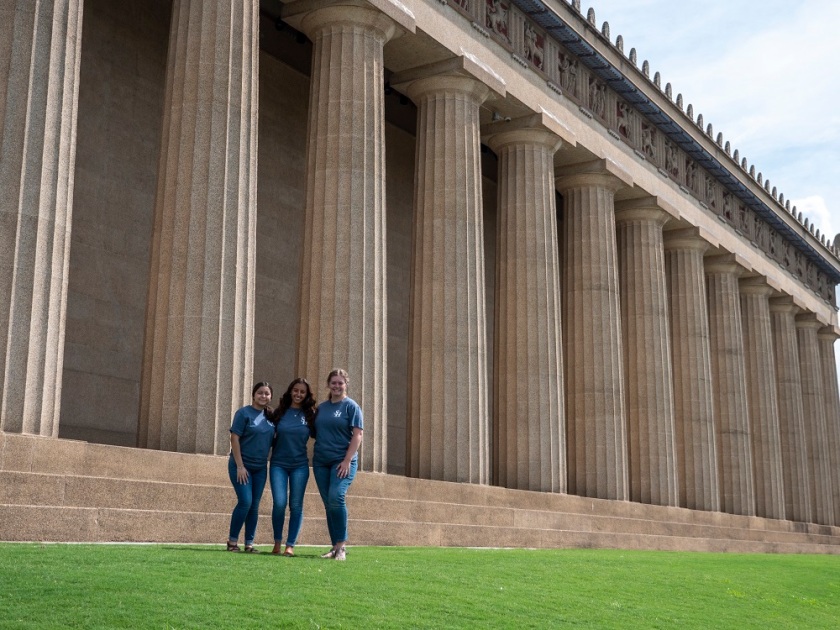
While the Nashville Parthenon is a well depicted replica of the authentic one in Athens, there are some major differences. The first difference being the materials in which the structure was constructed. The Parthenon in Greece is made of white marble, which would have been easily accessible at the time. However, in Nashville, Tennessee, there are no quarries of white marble. Using what was at hand, Architect William Crawford Smith designed the structure with wood, brick and stone, giving the Parthenon a yellowish-brown color.
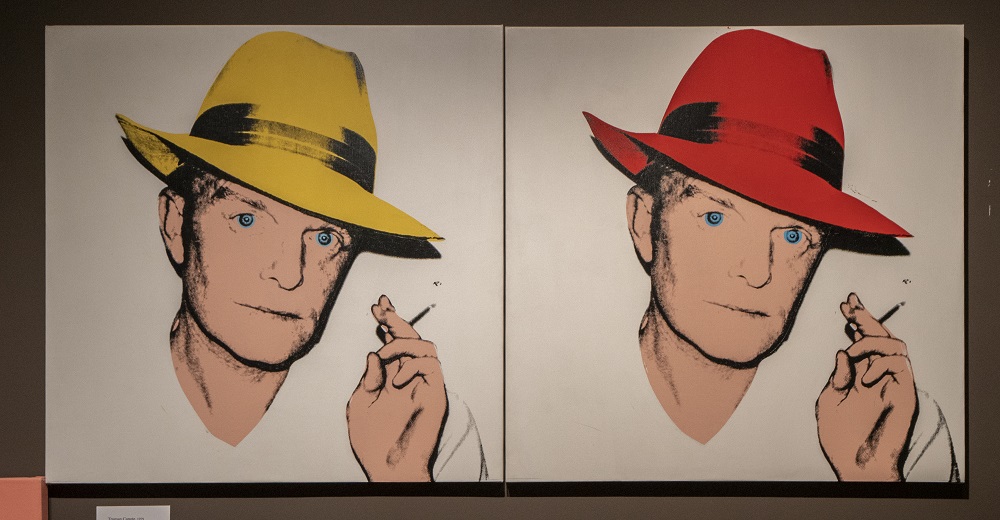
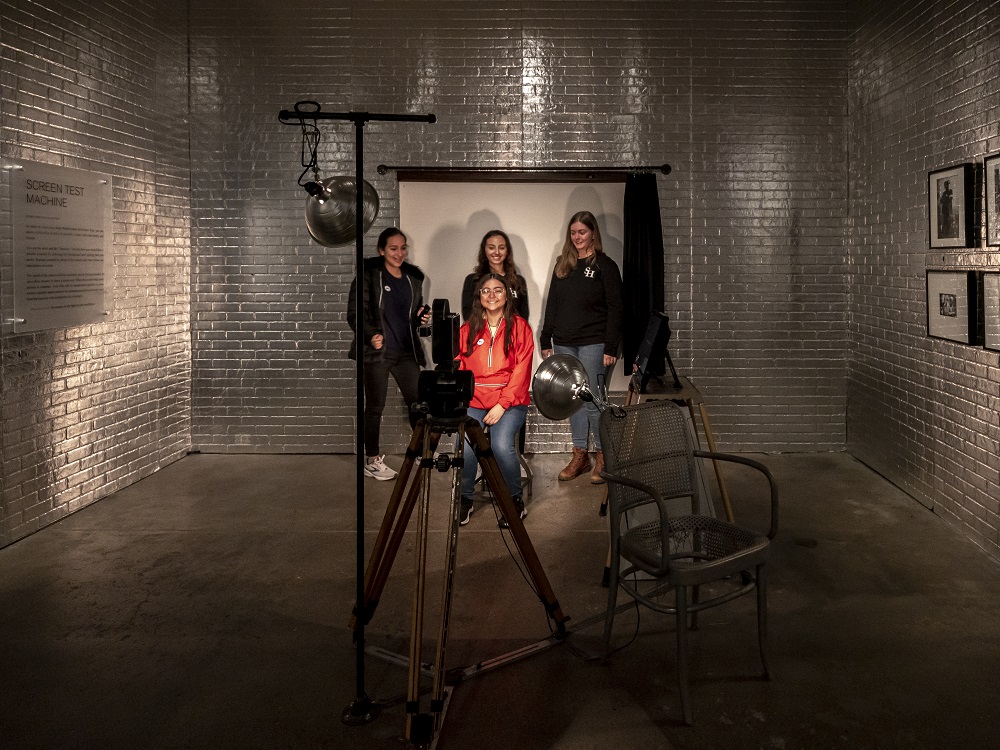
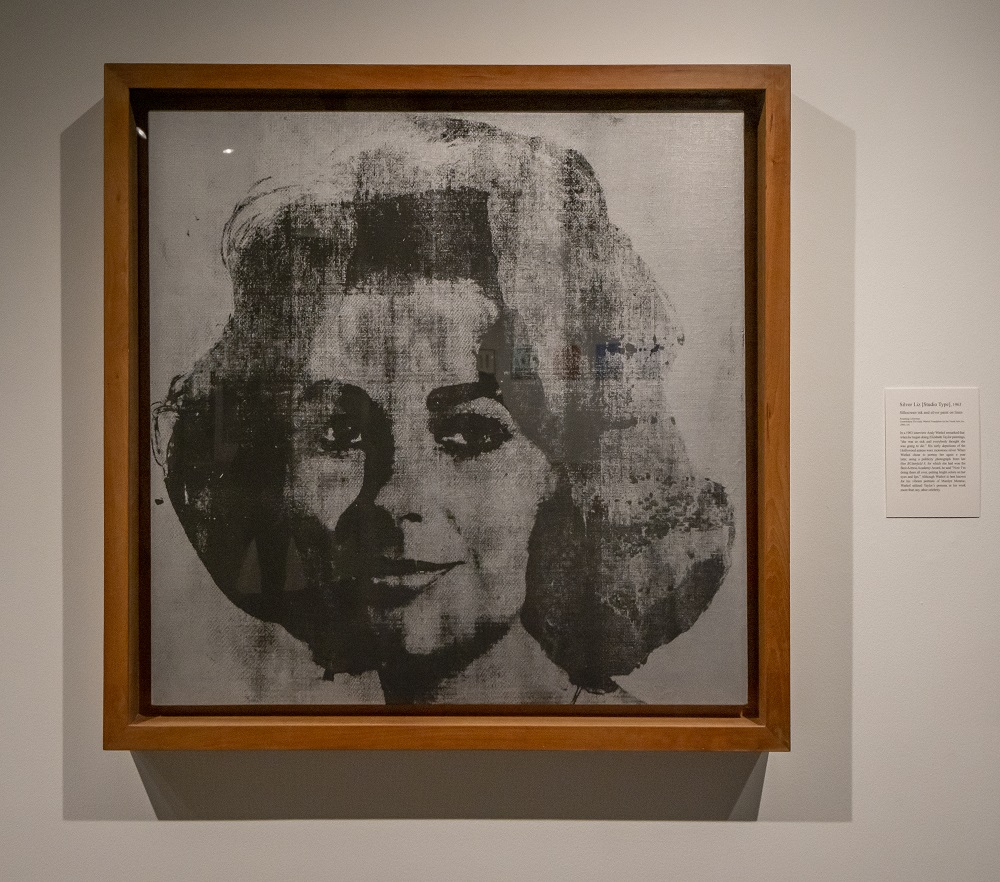
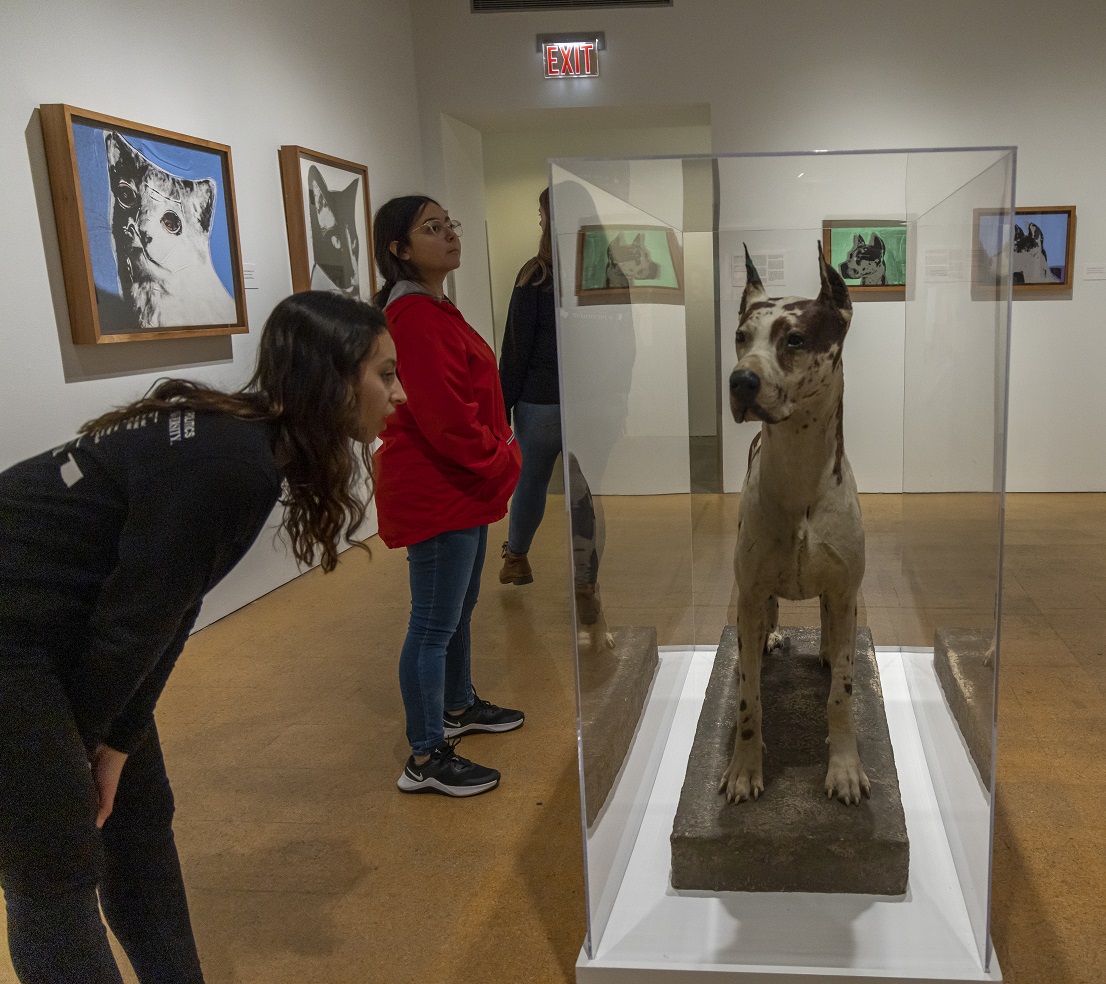
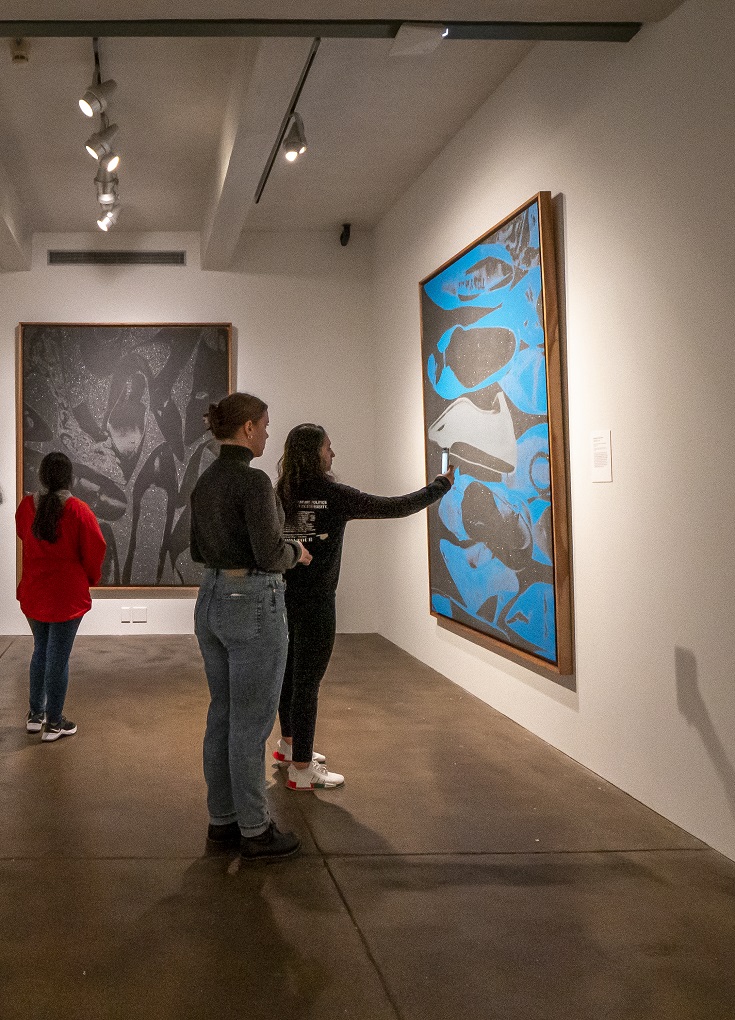
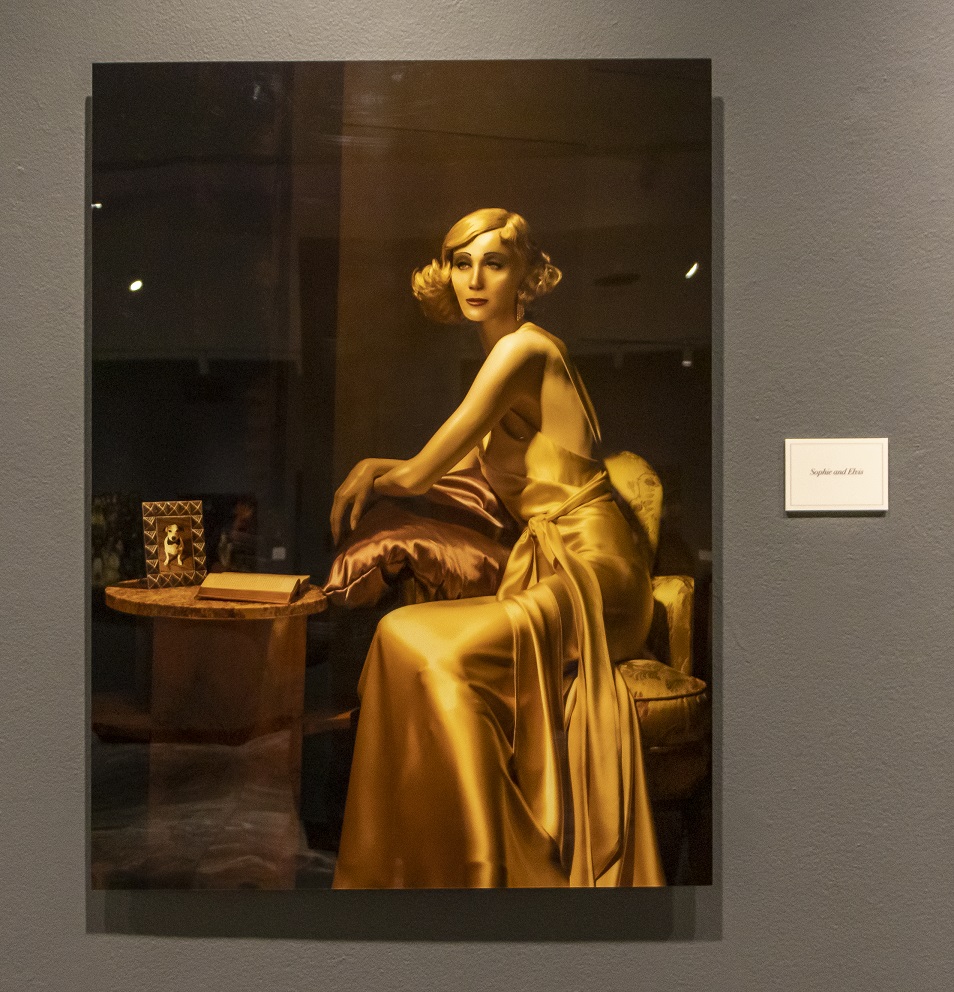
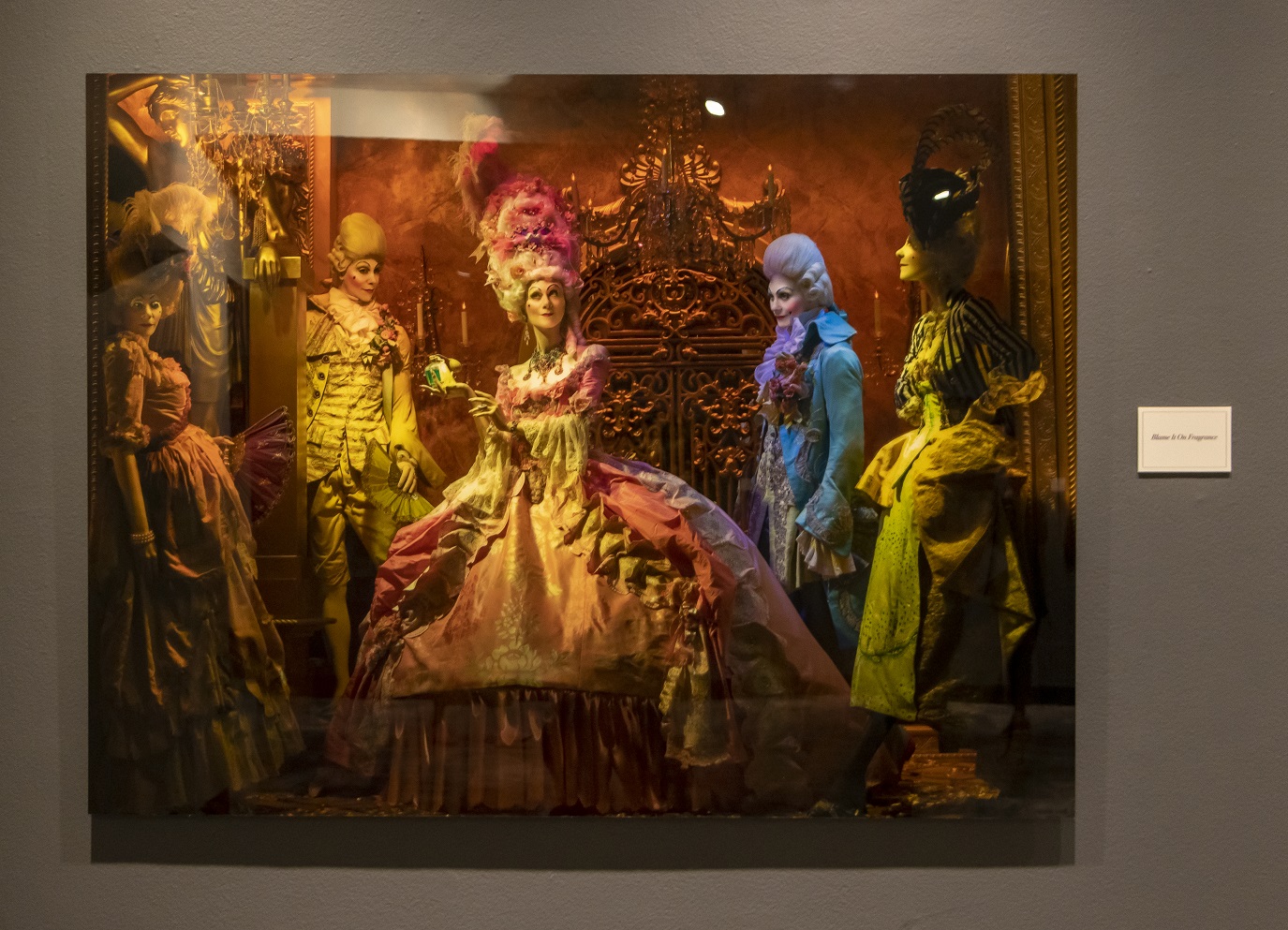
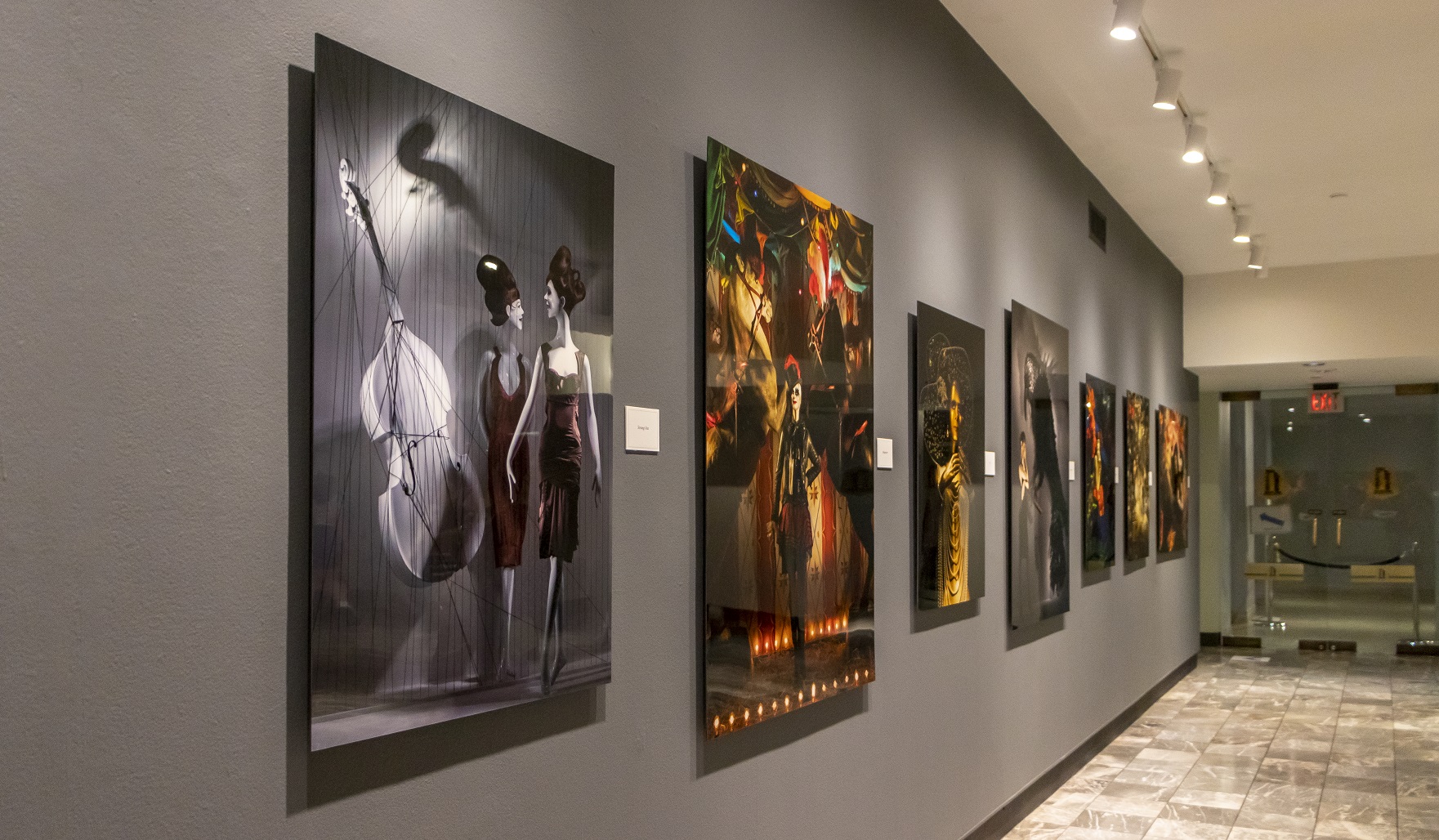
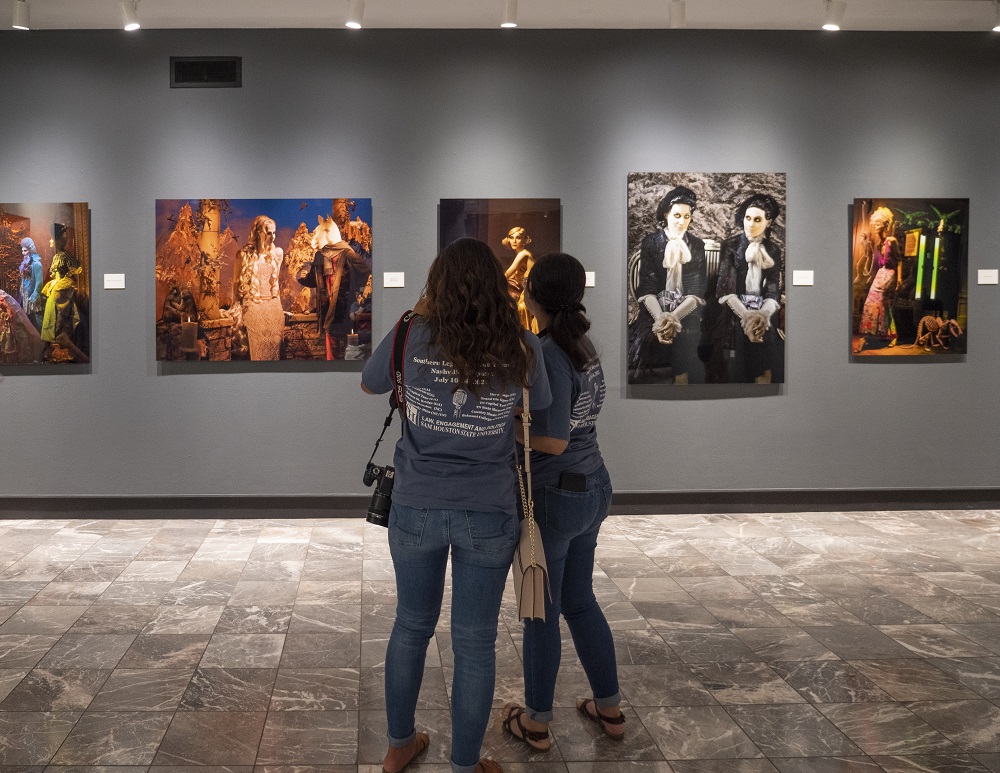
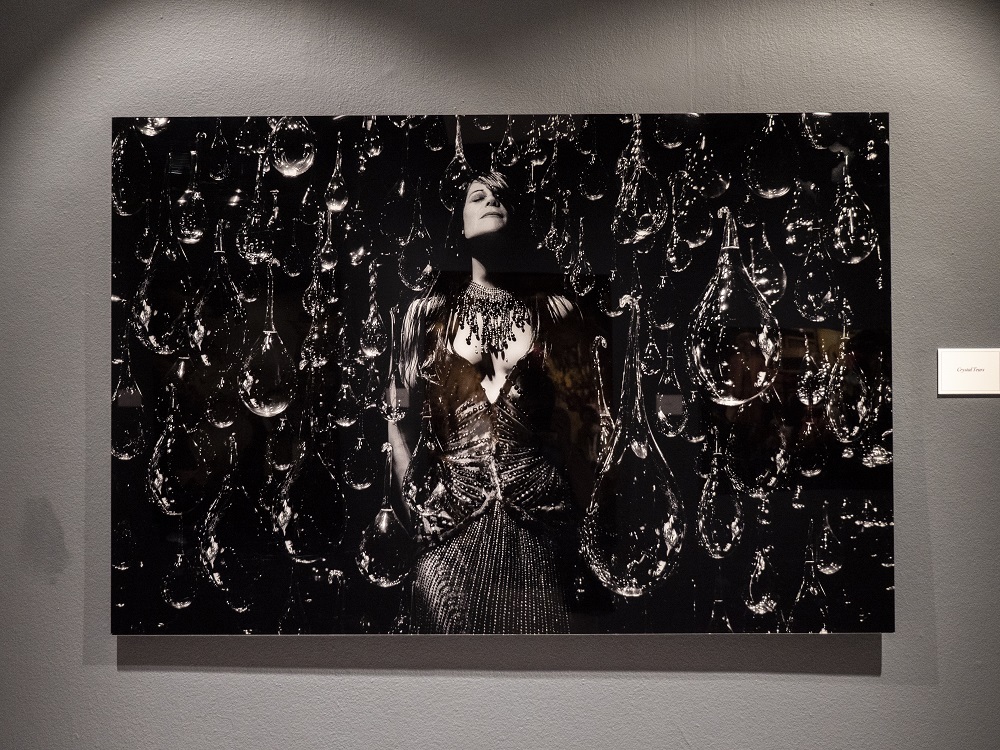
Another interesting feature that I was not expecting was the art museum on the lower floor of the Parthenon. In one of the rooms was an exhibit for artist Lynn Goldsmith whose interesting photography art is printed on metal, with each photo containing up to fifty exposures.
The second space was James M. Cowan’s personal collection of American art, including pieces from Durham, Moran, and Bierstadt, serving as a nice contrast to the first collection.
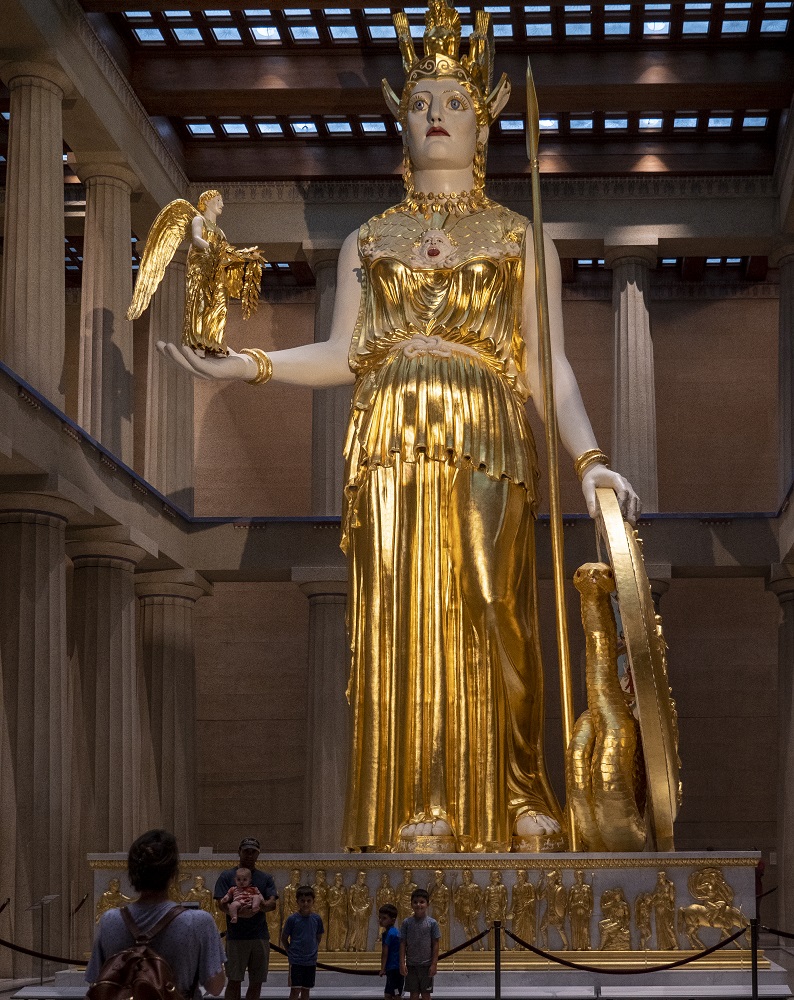
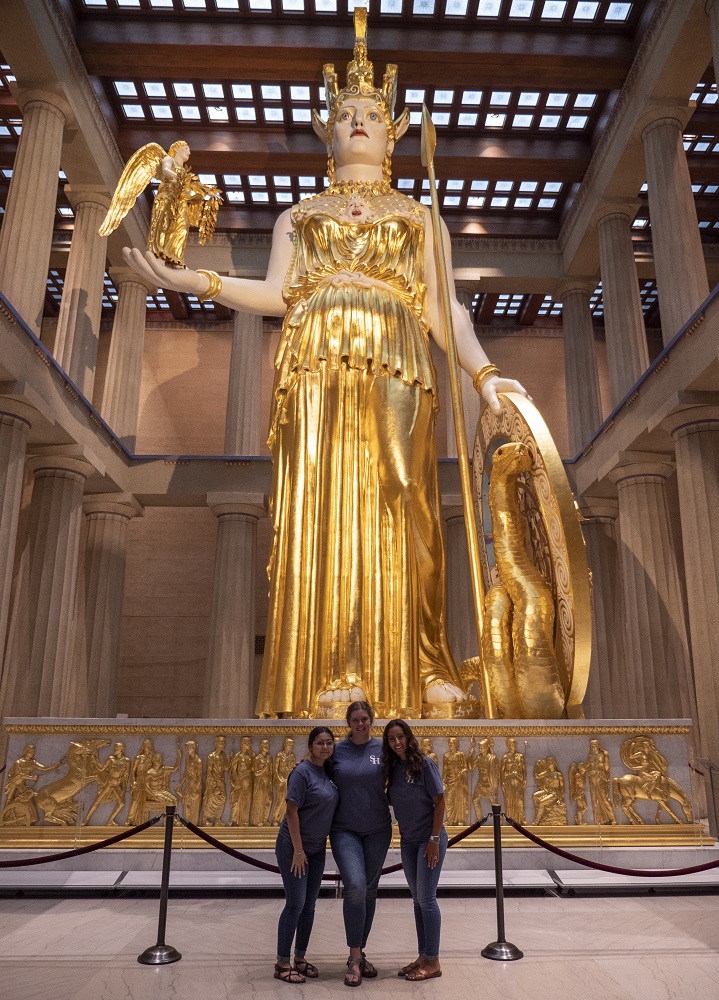
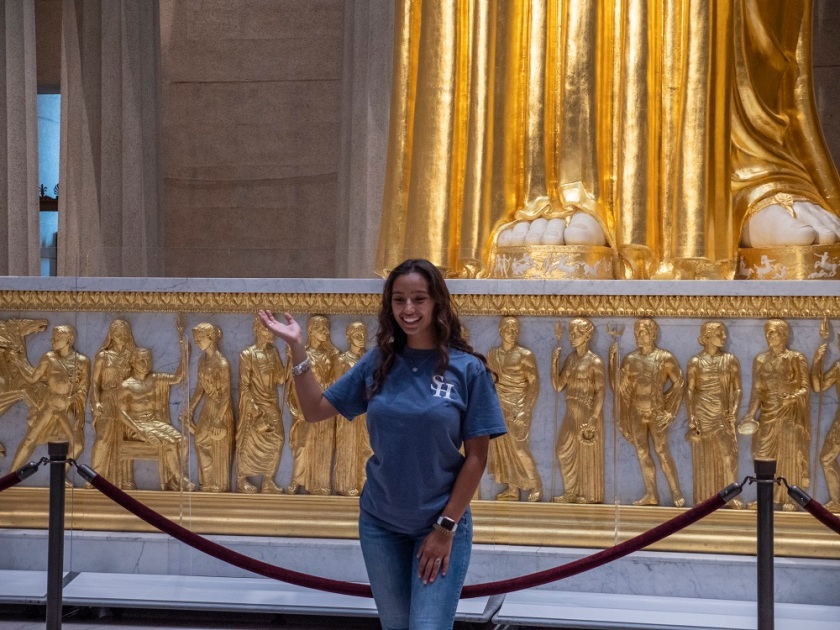
Keeping with the Greek style and culture, a 42-foot-tall statue of the Goddess Athena resides in the central room of the Parthenon. Standing tall as the Goddess of Wisdom, Athena holds the god Nike in her right hand with a shield and a snake to her left. When entering the central room of the Parthenon, the goddess is visible between the massive Doric columns, with her gold dress and accessories appearing as though they are glowing.
Surprisingly, we found the Parthenon to be a popular picture spot for tourists and natives. There were two Quinceañera parties, a baseball team, and even a wedding set up for pictures. We of course joined the trend and posed for several pictures inside and outside of the Parthenon before heading back to await for what would come next.
Opening Night at the Country Music Hall of Fame and Museum
Jessica Cuevas
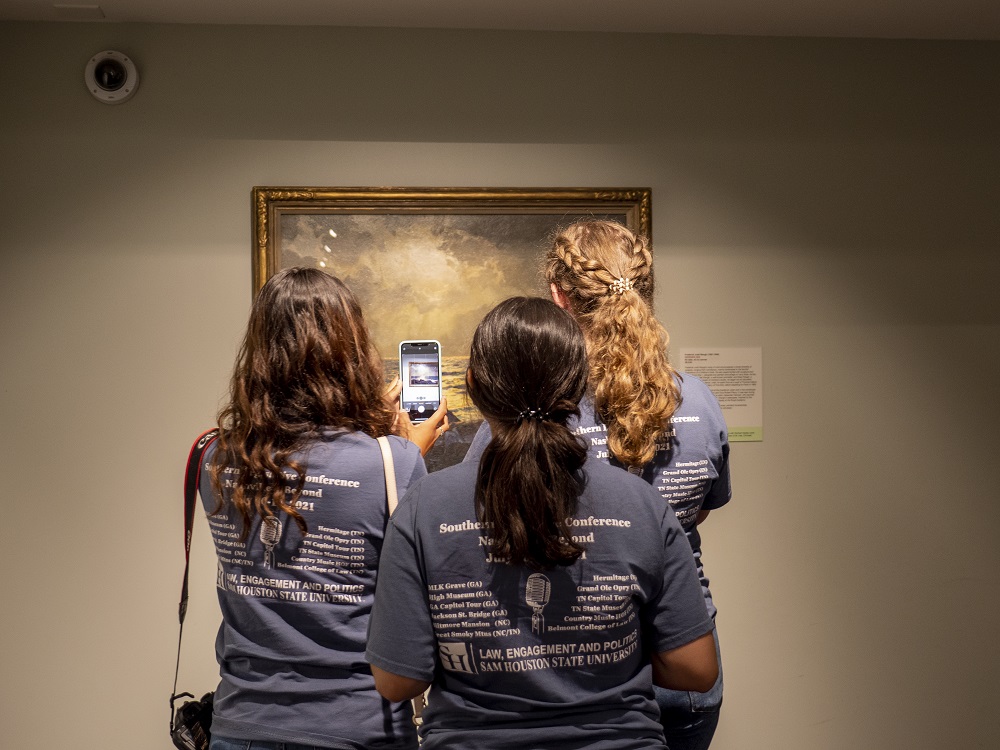
It is the opening night of the Southern Legislative Conference in Nashville, Tennessee. The LEAP Ambassadors were curious to know what to expect at the Country Music Hall of Fame and Museum as they walked to join the line for the trolley across the street. We congregated with the other attendees and waited for our turn to board the trolley. We met two friendly lobbyists from New York, Jonathan and Monisha, and a policy analyst from Ohio who each talked to us about what they do, how they got to their positions, and future advice for young professionals. Our conversations carried on into the short trolley ride on our way to the Country Music Hall of Fame and Museum. It was refreshing to meet people so passionate about their work, and who are living what we are actively learning.
Once we arrived we were given the option to go up to the sixth floor for food or start off at the museum on the third floor. We listened to our stomachs, which drove us to the sixth floor to be greeted by live music and lots of people.
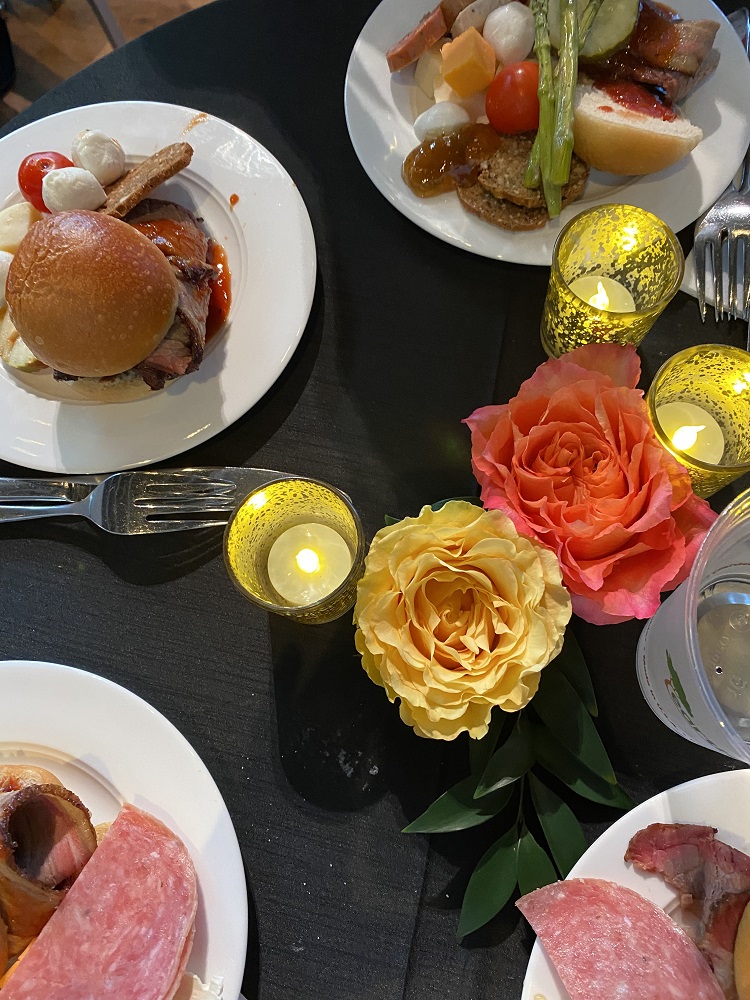
The LEAP Ambassadors were able to meet and converse with a Tennessee Senator before making our way to the colorful assortment of a Charcuterie board with different cheese, bread, cold meats, and vegetables.
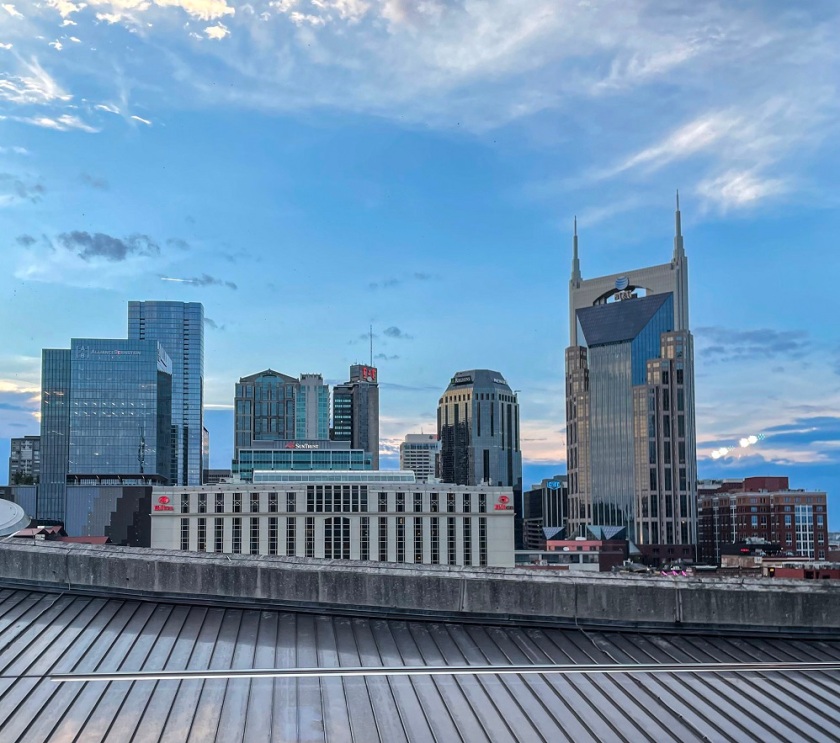
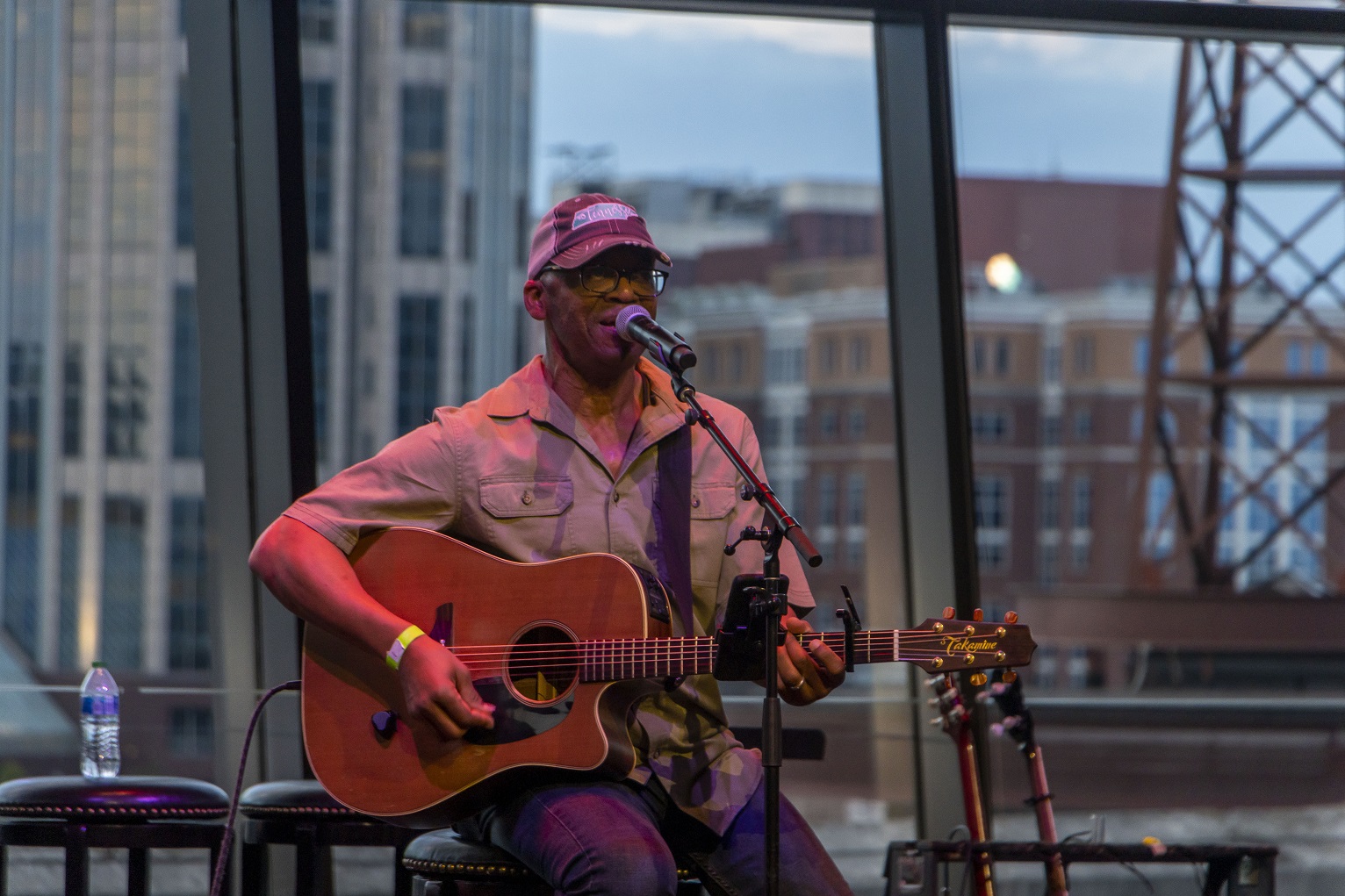
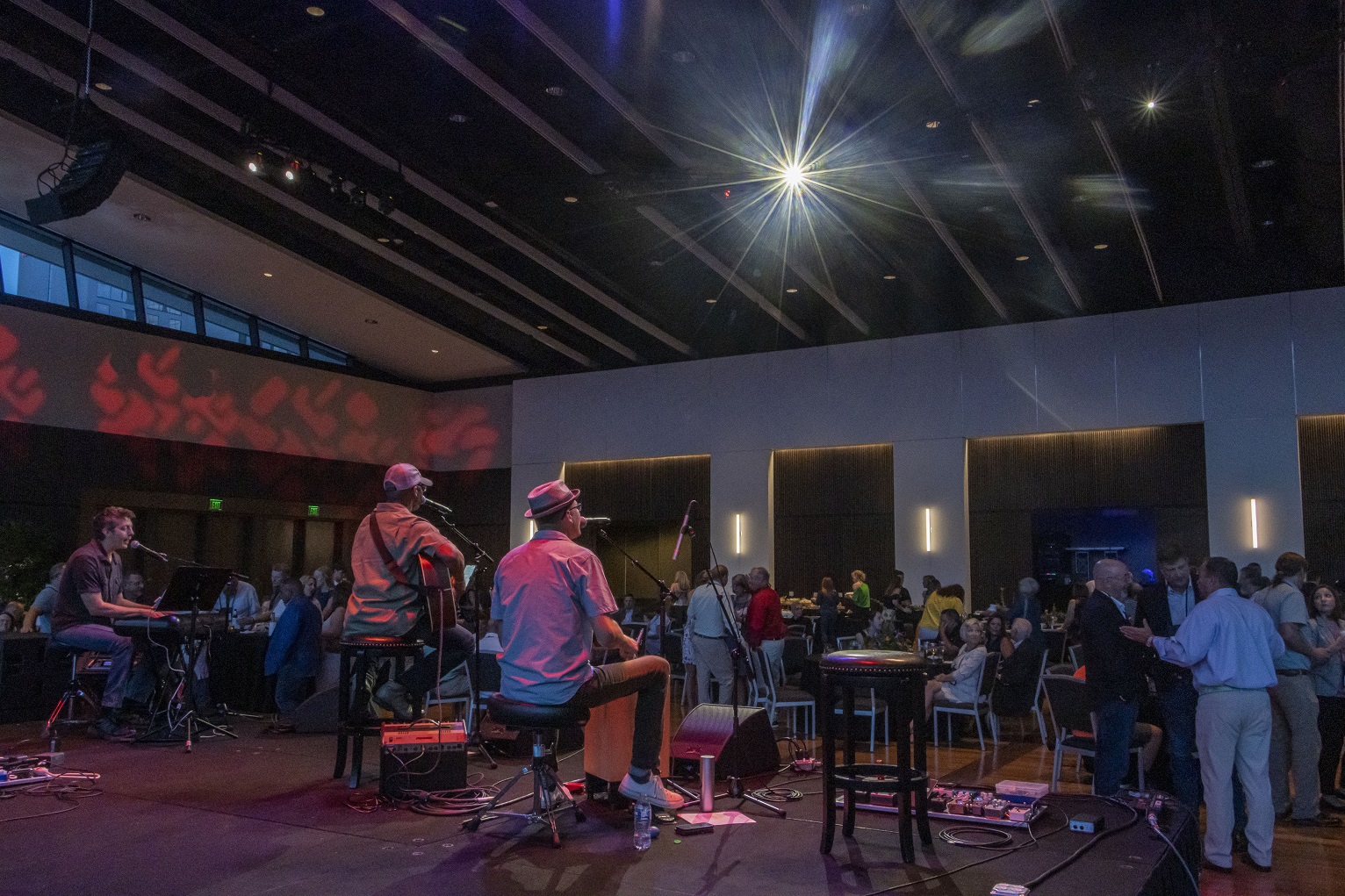
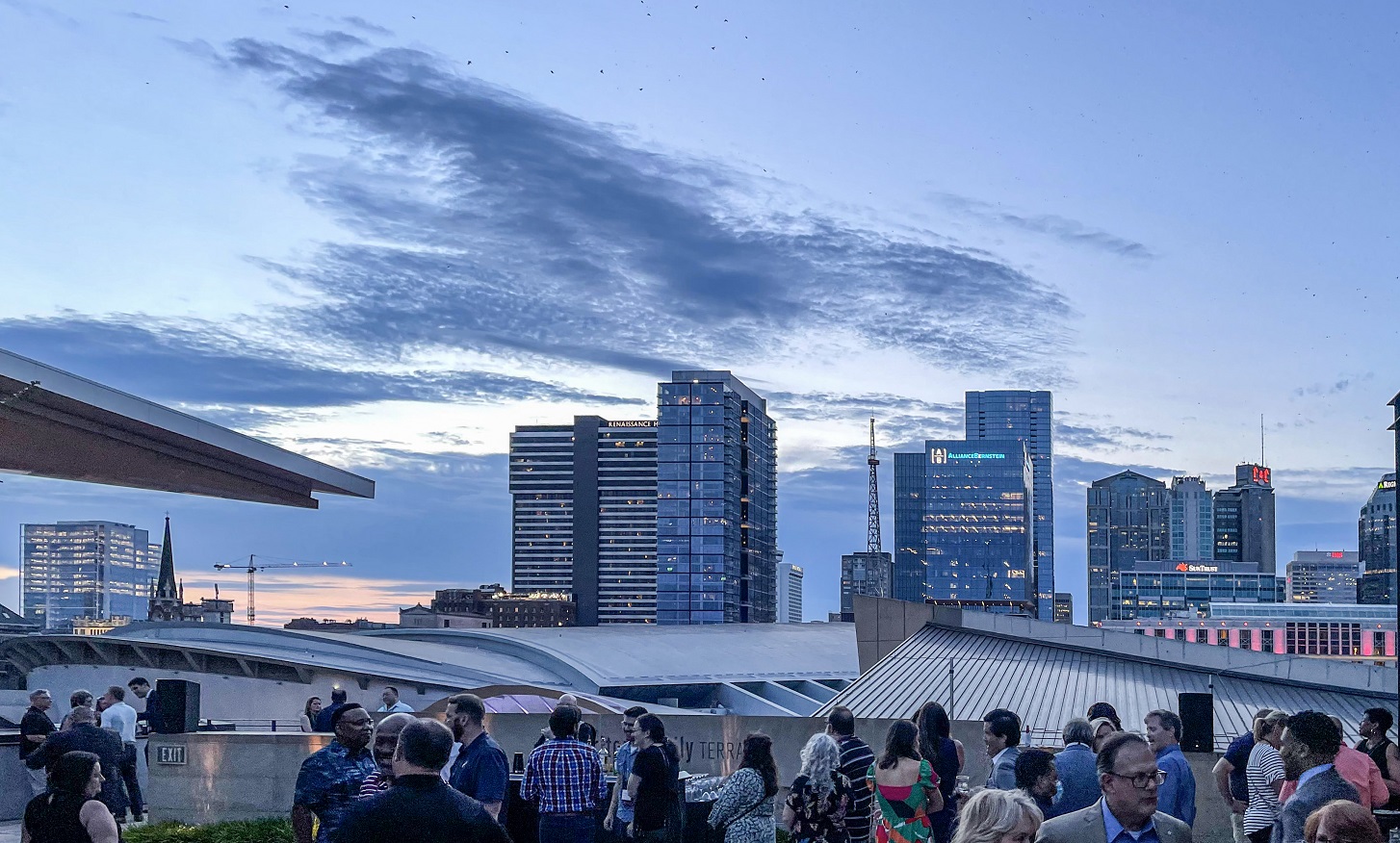
There was a beautiful view of downtown Nashville…
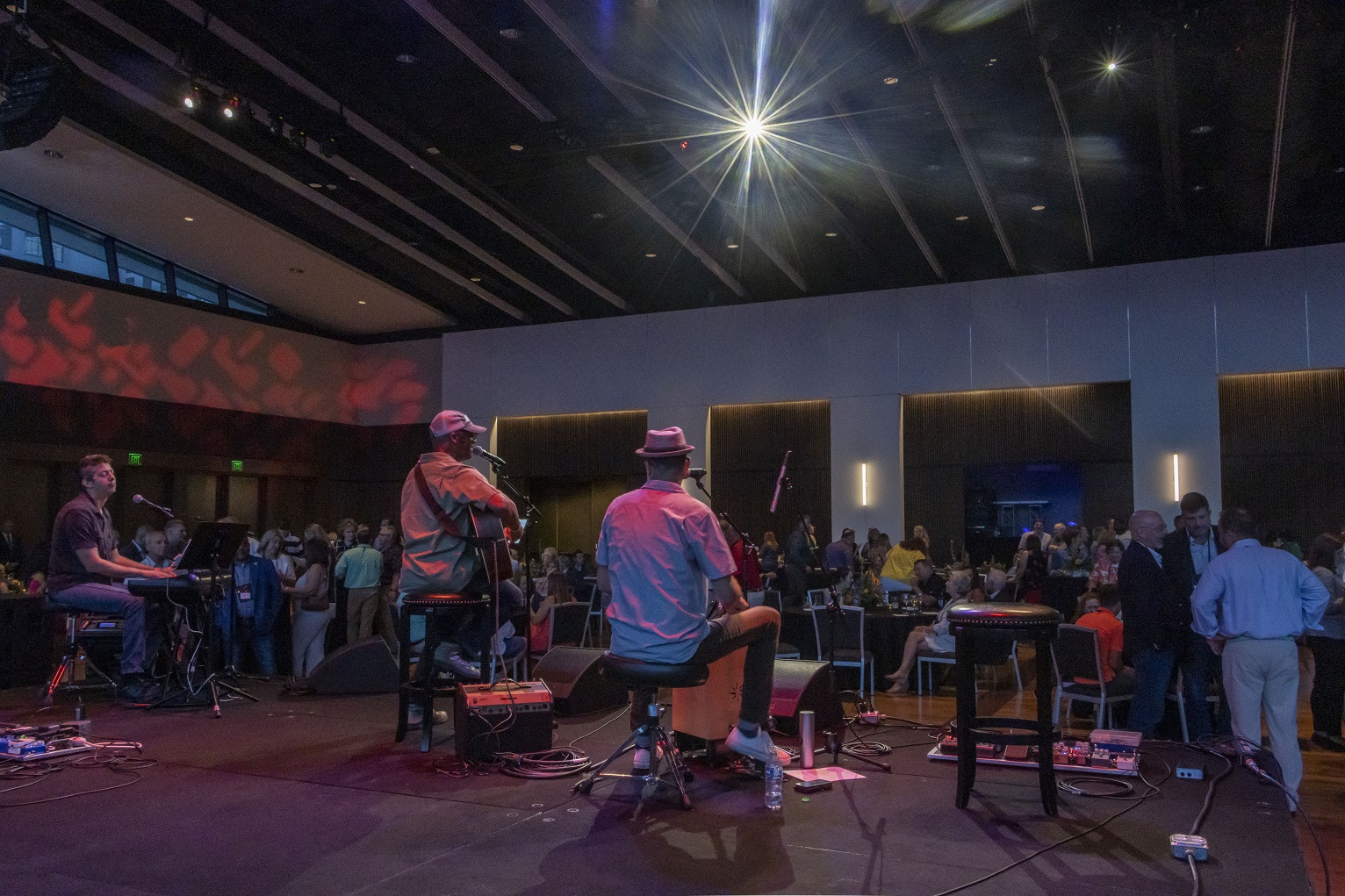
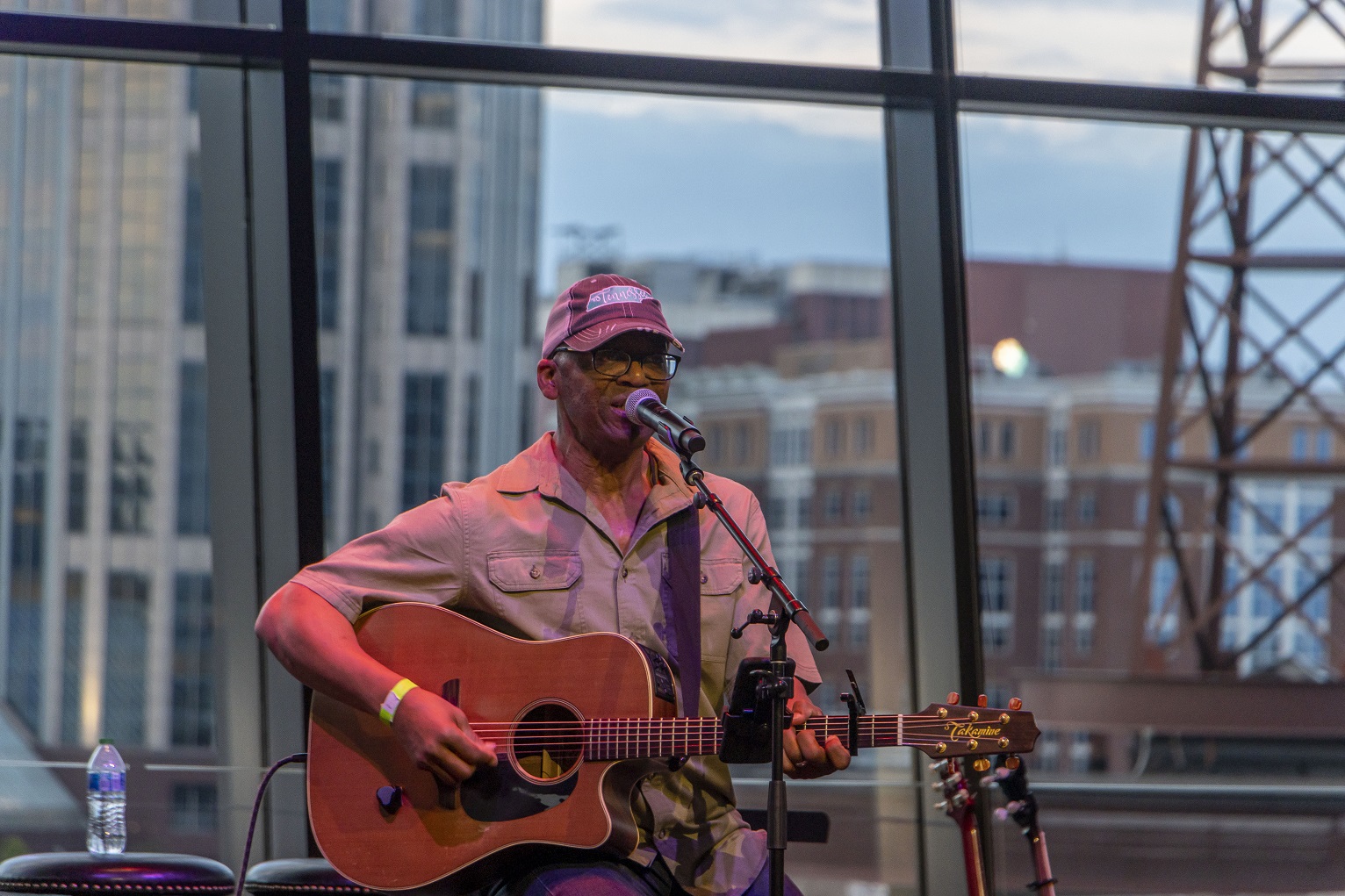
…and a live band playing covers of artists such as Willie Nelson, The Beatles, The Nitty Gritty Dirt Band.
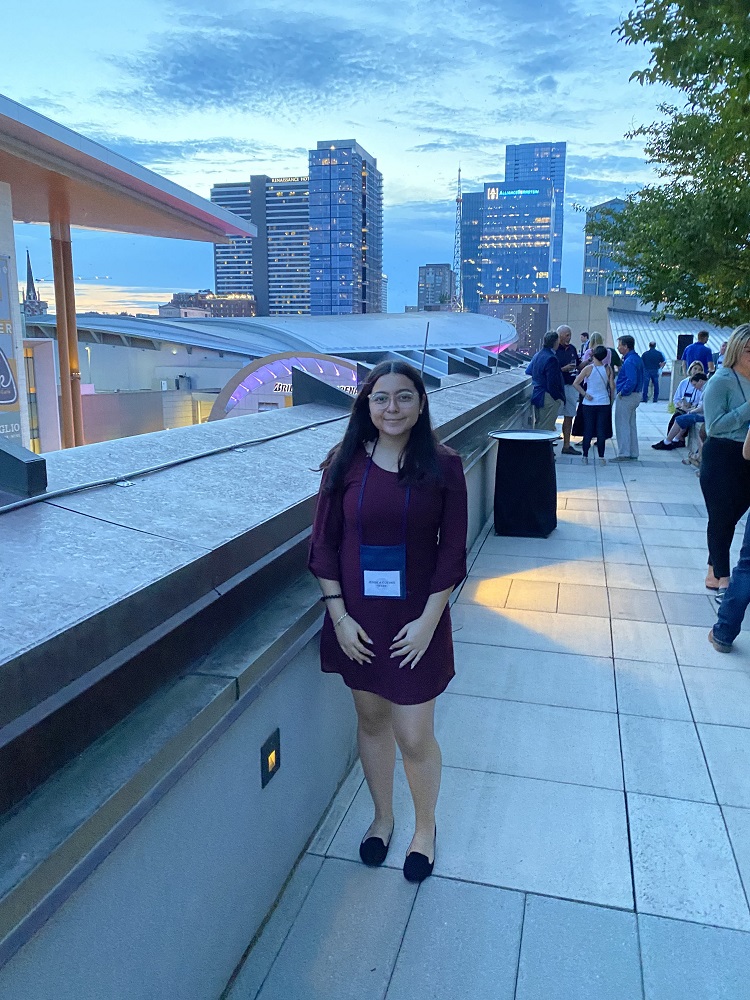
On the balcony, where families were playing Jenga, Corn Hole, and enjoying the nice weather, the view of the Nashville skyline was amazing.
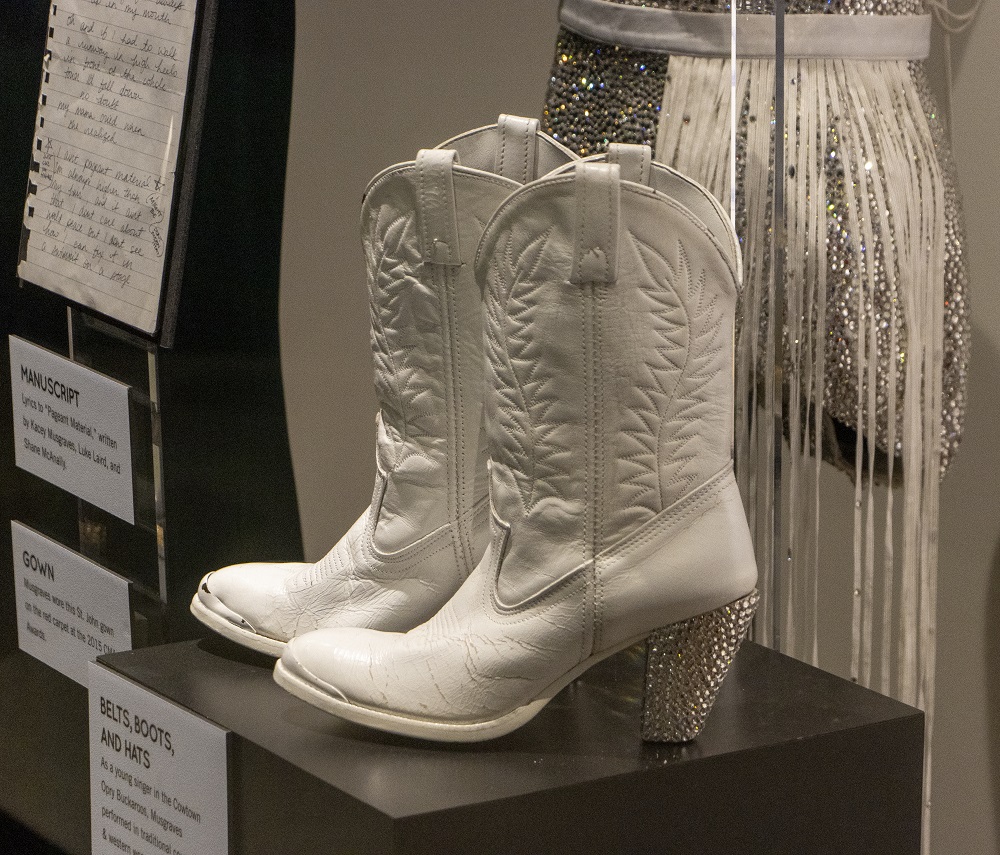
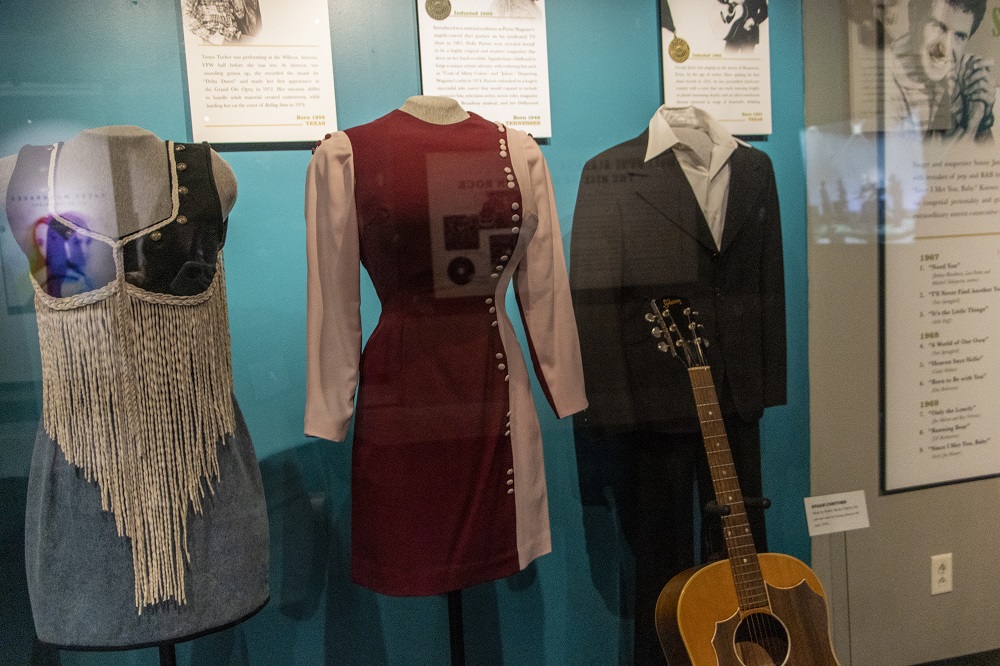
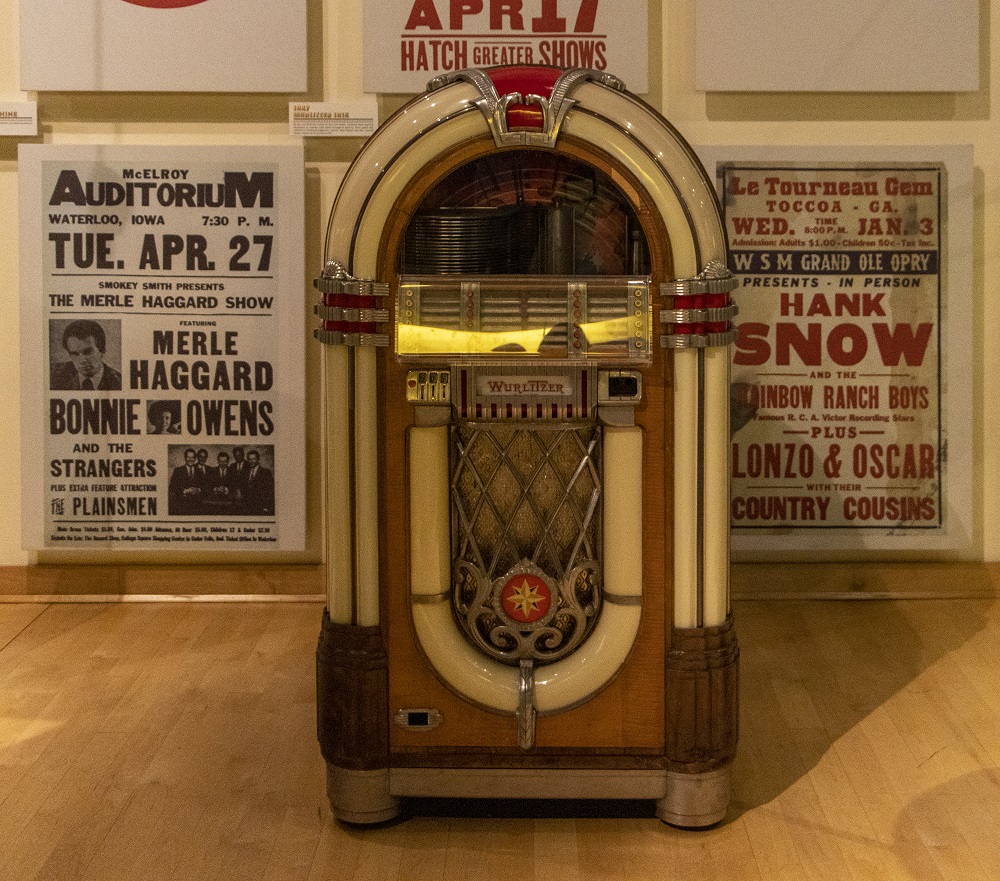
After dinner, we toured the museum, where there were artifacts such as their costumes and suits….
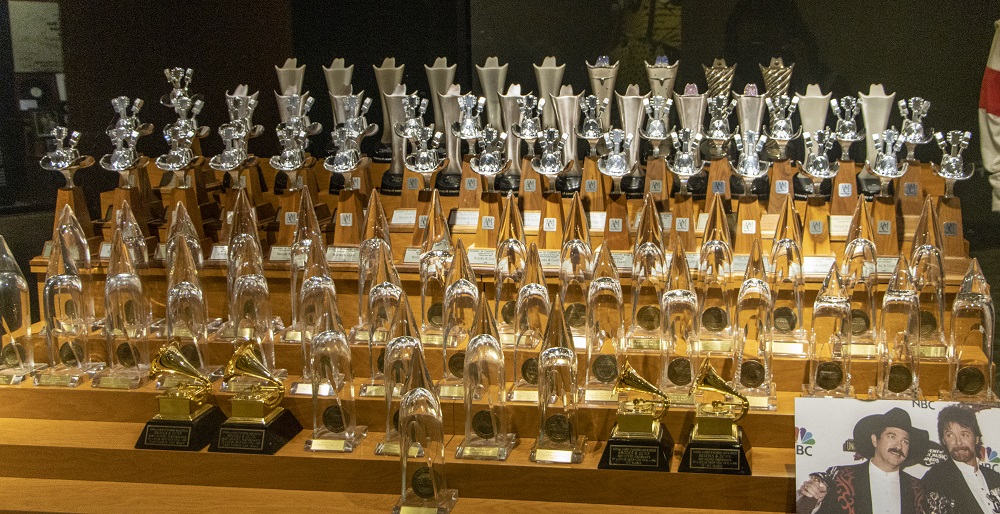
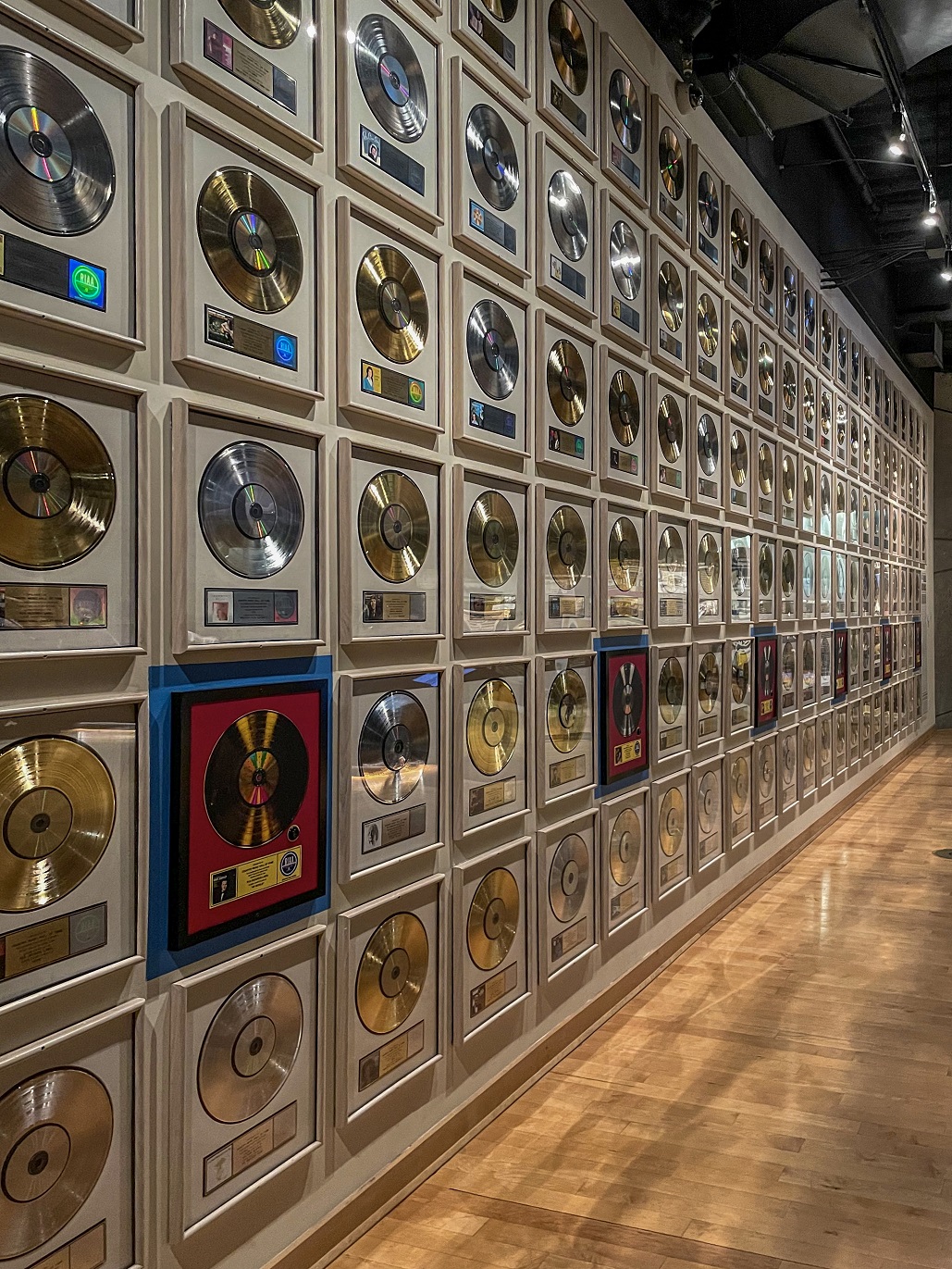
…cars, guitars, fiddles, drafts of written songs, even a whole wall dedicated to the golden records of many of the singers .
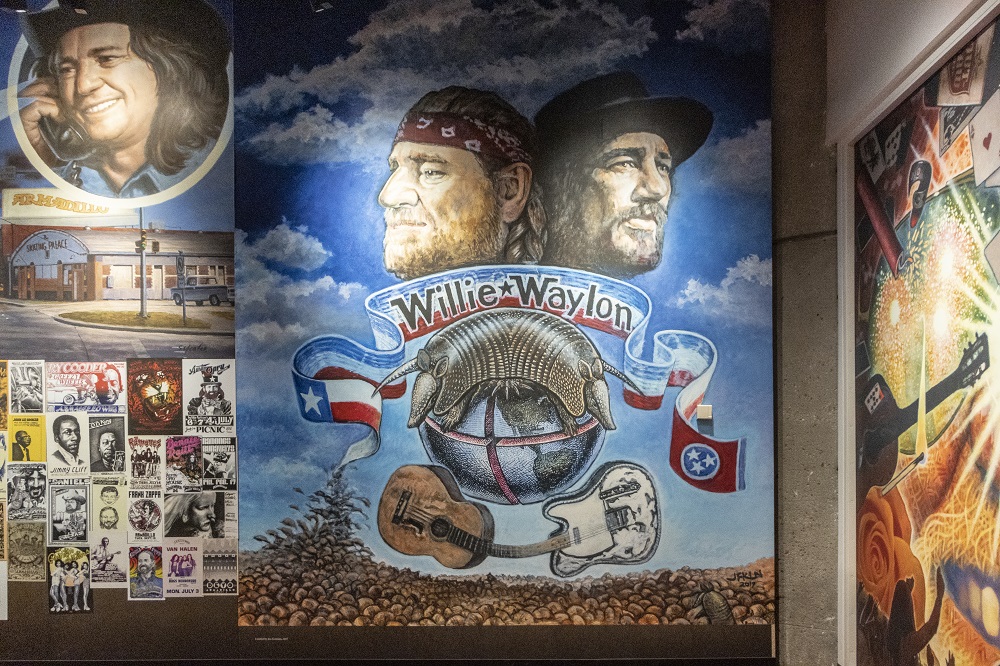
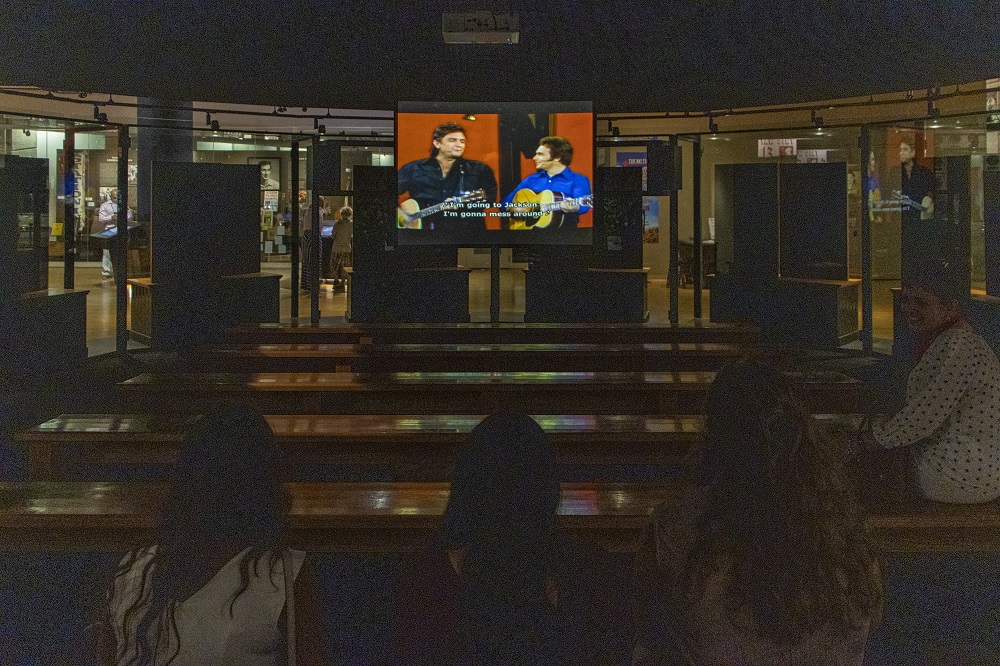
Many of these artifacts were associated with famous acts such as Johnny Cash, Elvis Presley, Dolly Parton (whose statue we saw the night before), and Willie Nelson.
Our night ended with a trolley ride back to the hotel taking in the view of the city after dark. The trolley ride should have been a 4-minute drive back to the hotel, the half mile drive seemed to take twice that time if not longer due to traffic and nightlife. The glowing city was buzzing and alive, as we were full and amazed by the opening night of the conference.
Inauguration Day: The Peaceful Transfer of Power (Kiara Williams)
This inauguration day involved a figurative transfer of power inasmuch as President Trump was not on hand to officially “hand over” the reigns of power. Nonetheless, Joe Biden assumed the Presidency at noon on January 20th, giving an inaugural speech calling on the nation to unify. Biden emphasized the difficulties in our history, particularly regarding equity, but equally emphasized the barriers that have been broken.
As he touched on these topics, President Biden also referred to Vice President, Kamala Harris, highlighting the advances made by women, and to Martin Luther King to highlight progress made in racial equality.
In doing so he indicated how things can change, how the nation has progressed, and how the Vice President of the United States- the first black, South Asian, and female VP in American history- is a living testament to that progression. This momentous event, regardless which side of the aisle one claims, is a statement to women and people of color everywhere that there is power in our voices and we are capable of exceeding our ancestors’ wildest dreams.
In the President’s speech he addresses the societal issues that recently arose: such as the pandemic and its effects on the American people as well…
…as the economy; the attack on the Capitol 14 days prior, and the racial tensions that have plagued this country from its inception. As he addressed these problems, he promised to work to resolve these concerns and advance the nation in his tenure. Biden’s speech continuously emphasized unity and progression of the nation, and with his Vice President, he intends to repair the country for all Americans.
Unfortunately, we weren’t able to be there in person, but we made the most of it by watching it in a collective group.
It just wasn’t quite the same as the last time we were there!
Melrose Plantation—Ilexus Williams
After nine days on the road, the LEAP students have come to our final destination: The Melrose Plantation. The Melrose Plantation is located in Natchitoches Parish in north central Louisiana, which is the largest parish in Louisiana. The Melrose Plantation history began in 1742 when Marie Thérèse Coincoin was born a slave into the plantation of Louis Juchereau De St. Denis, who is the founder of the city of Natchitoches. When Marie was approximately 26 years old, St. Denise leased Marie to a French merchant by the name of Claude Thomas Pierre Metoyer. Marie and Pierre Metoyer formed a relationship, which resulted in 10 children. Marie never returned to St. Denise. Instead, Pierre Metoyer purchased Marie and their children and granted them their freedom.
After gaining her freedom, Marie began harvesting tobacco, bear grease, and raising cattle. With the help of land grants and the purchasing of slaves, Marie and her sons became known as the most prominent free people of color plantation and slave owners. In 1796, Marie’s son, Louis Metoyer was granted 911 acres of land, with this Melrose Plantation was born.
However, the Metoyer family had financial debts that resulted in losing the prized Melrose Plantation in 1847.
The most notable time period of Melrose Plantation was under the ownership of John Hampton Henry and Cammie Garret Henry. More specifically, Cammie Garret Henry took the Melrose Plantation to new heights by making renovations to buildings on their property and allowing artist and writers to live on her property for free as long as they did their work.
The first structure that we visited on the plantation was the Yucca House, which is a large white home with teal-colored doors and walls made from bousillage, which is a mixture of mud, Spanish moss, and horsehair.
The Yucca House was used as residency for artists and writers while they worked on their books and paintings. The first most significant resident in the Yucca Home was Lyle Saxton, who wrote the book Children of Strangers, which is a novel centered on the lives of the Cain River People of color, Creoles. Additionally, Francis Mignon was a Frenchman, who is well known for his book Plantation Memo: Plantation Life in Louisiana. More importantly, he is the best friend of Clementine Hunter. Clementine Hunter was a self-taught folk artist, whose art depicted life on the plantation.
She created her first piece in 1939 on a lamp shade. Her long-time friend, Francis Mignon, encouraged her to continue painting, which she did until her death in 1988. Because of her persistence in her craft, Clementine Hunter became one of the most two-or-three noteworthy folk artists of the 20th century.
Clementine Hunter’s work is displayed in the most remarkable structure on the plantation, the African House.
This hut-like building is the only one of its kind in the United States. The building is made of African bricks and cypress beams, and its main use was to store tobacco and other lucrative crops. Now the building is home to beautiful murals by Clementine Hunter. The murals cover the walls of the African Houses second story. Although we were not permitted to take photos, we did find some online.
These murals show images of cotton picking, which was an activity that Hunter loved. Also, we recognized that religion was a consistent theme in Clementine Hunter’s work. Through her art, Hunter portrayed church revivals; with people catching the holy spirit, plantation baptisms, and funerals, which showed the importance of religion to the African American community.
Interestingly, Clementine Hunter’s art mostly used women as the subjects in her art because she was not very fond of men. Women were often depicted as hardworking in the field, while the men were depicted enjoying idle tasks such as fishing or drinking.
Next, we viewed the Big House where we saw the living quarters of Cammie Henry and her family. The building also included a library with writings from many of the authors who complete residencies at the Melrose Plantation. Also, the Big House dedicated a room to Clementine Hunter’s art and her Honorary PhD from Northwestern State University.
Lastly, to conclude our tour, we visited Clementine Hunter’s home, where she produced most of her work from 1954-1977. On the front porch, was a sign that read “50 Cents to Look,” which Hunter used to entice people to view and purchase her art.
Hunter never became wealthy from her work, and she never quiet understood the impact of her art. However, she is considered “the most celebrated of all Southern contemporary painters.”
Clementine Hunter’s continuous dedication to her craft is inspiring and is an attribute that LEAP students can use a model and inspiration in their future occupations.
Jessica Cuevas, Ilexus Williams, and Quinn Kobrin shared their reactions to being at the Lorraine Motel on MLK Day, 2021.
Jessica Cuevas
On Martin Luther King Jr. Day, we visited the grounds of the Lorraine Motel,
…now a National Civil Rights Museum, where MLK was assassinated.
For me, this was such a surreal experience because I never would have dreamed to be in Memphis, Tennessee, at the exact location where MLK was assassinated, especially on this day.
This is something that we simply learn about in our history classes, but we never stop to think that one day we will get the chance to see the motel and stand in such a historical spot, which is very much still standing after all these years.
I am very thankful for having been extended the opportunity to come on this trip and being able to experience and take in the historical significance of these sites. Being where I was today was a lot to take in; it was so very memorable and bittersweet, so much so that I am still wrapping my head around the fact that I was actually there. I, a girl who had never been outside of Texas before the 12th of January, had traveled through five states, tried new foods, and now, was standing in this place.
It pains me that despite our having come a long way since MLK’s famous “I Have A Dream” speech, some people to this day are still judged by their skin color instead of their character, as we have witnessed in recent times.
Martin Luther King, Jr. is truly a beacon for equality and an idol who has encouraged and motivated others such as Cesar Chavez to fight for fair and decent treatment, and to do so in a peaceful manner.
Ilexus Williams
In 1963, just 58 years ago, Dr. Martin Luther King gave his “I have a Dream” speech on the steps of the Lincoln Memorial. “We have come to this hallowed spot to remind America of the fierce urgency of Now!” This statement by Dr. King still rings true for our society today, especially in light of standing up against police brutality and racial inequality.
In this portion of the “I have a Dream” speech, Dr. King is strongly encouraging us not to become accustomed to taking idle or leisure plans of action to achieve social equality in our society. Instead, we must confront issues in our society with tact, focus, and vision. Dr. King set a prime example of the expectations of a servant leader.
King was purpose-driven, devoted to the growth of people, and focused on forming unity. The bar is set high, and I will strive to follow the path of perseverance and courage that Martin Luther King Jr. has paved for so many. It was an honor to give reverence to his life and fight for democracy on a day that is forever dedicated to MLK.
Prof. Yawn holds up a Laptop for Ilexus Williams, so she can meet by Zoom and share her experiences
Quinn Kobrin
Visiting the spot of MLK’s assassination on the day we celebrate his life was a powerful experience for us all. This is true, I would argue, due both to the awesome nature of King’s contribution to the fight for equality and due to the horrific reality of how he died.
As my peers and classmates have noted, there is a massive difference between reading about a historical figure in class and truly taking the time to understand who that leader was and what they stood for, which is precisely what this trip is all about.
I have not known what it is like to be judged for the color of my skin, to be ostracized simply for my appearance or heritage. For this reason, I have often felt as though I were a tourist in the fight for civil rights and social equality.
However, this trip, like Dr. King’s well-known speech, reminds me that the fight for equality is not solely the fight of the oppressors versus the oppressed. “We cannot walk alone,” said King. “And as we walk, we must make the pledge that we shall always march ahead. We cannot turn back.” It takes each and every member of society to stand up and unify against hatred and ignorance. It is not the fight of one people but of all people. For, as George Bernard Shaw once wrote, “The worst sin toward our fellow creatures is not to hate them, but to be indifferent to them: that’s the essence of inhumanity.”
Traveling to each of these historic sites in our tour of the south has taught me a great deal, but if nothing else, it has reminded me that standing for justice and equality is not just an option; it is a responsibility. And I know there is nothing more I can do than continue to learn, and battle hatred and ignorance with compassion and education. Equipped with these tools, and the fraternity of all who believe that all people are created equal, we will not turn back; we can only march ahead.