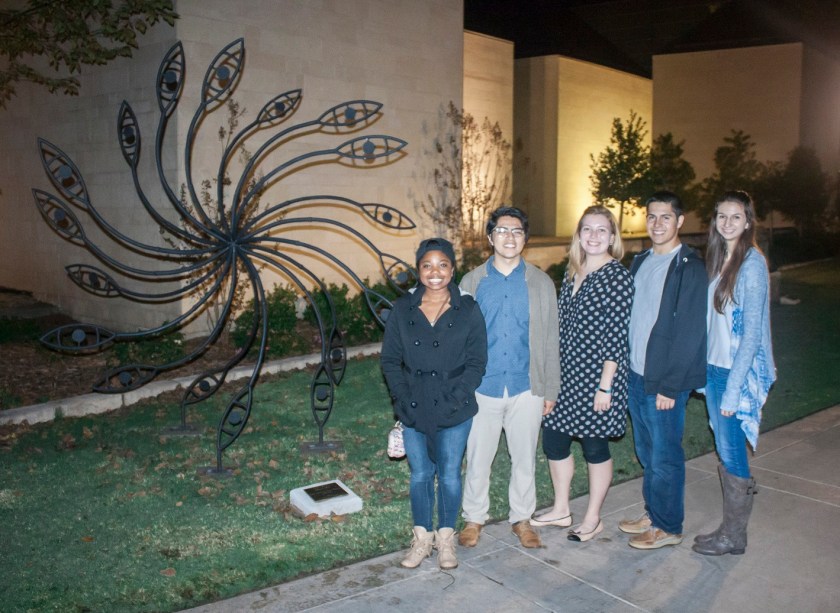
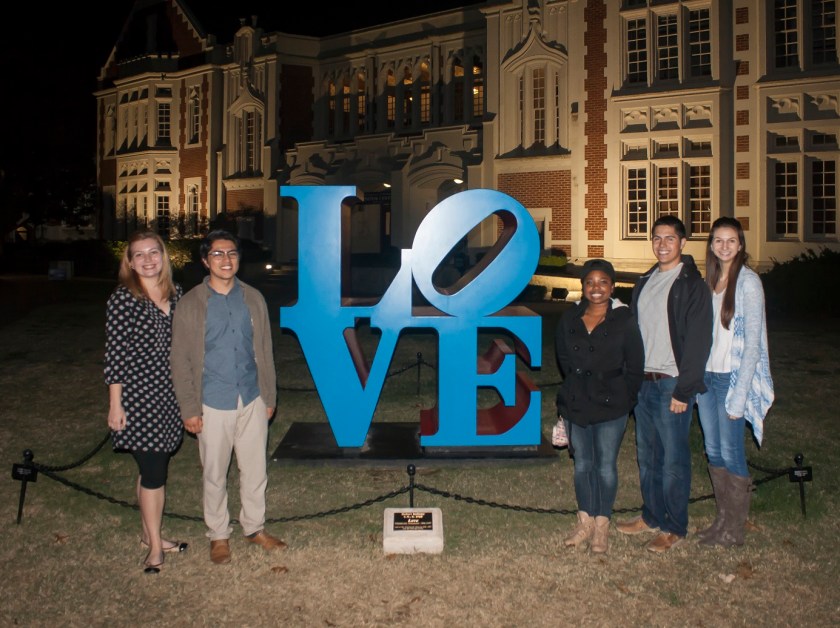
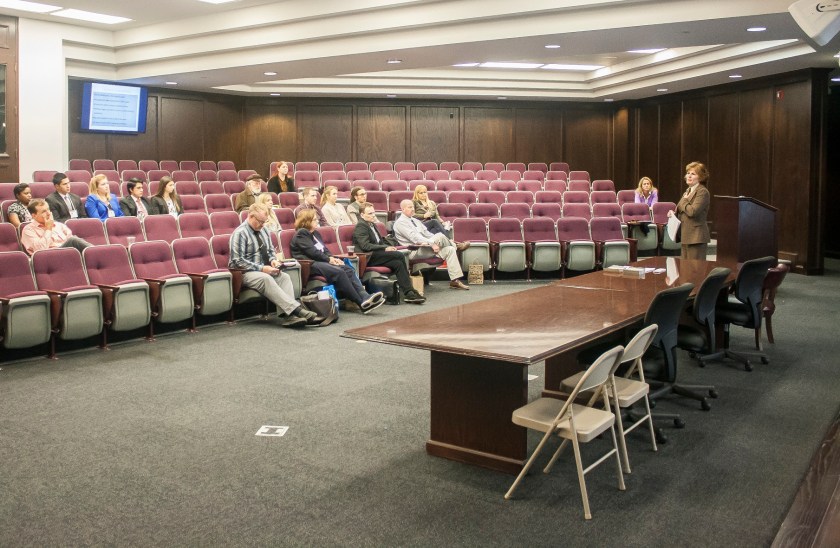
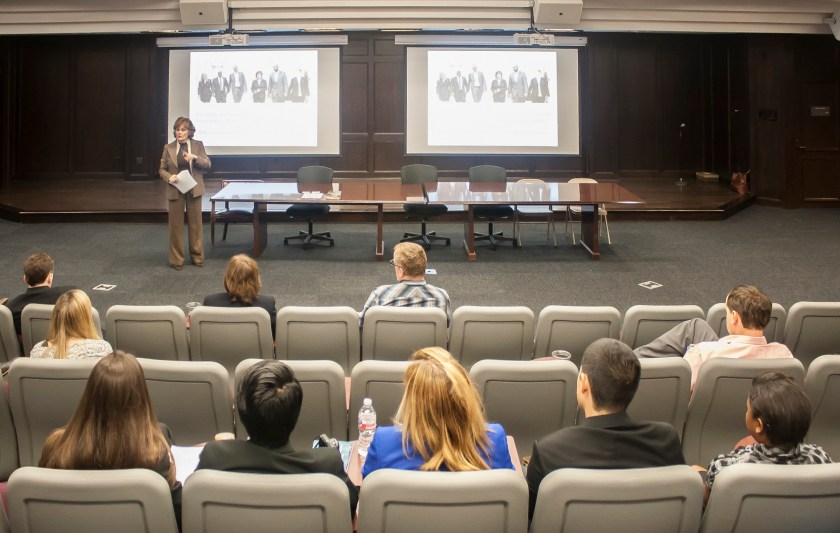
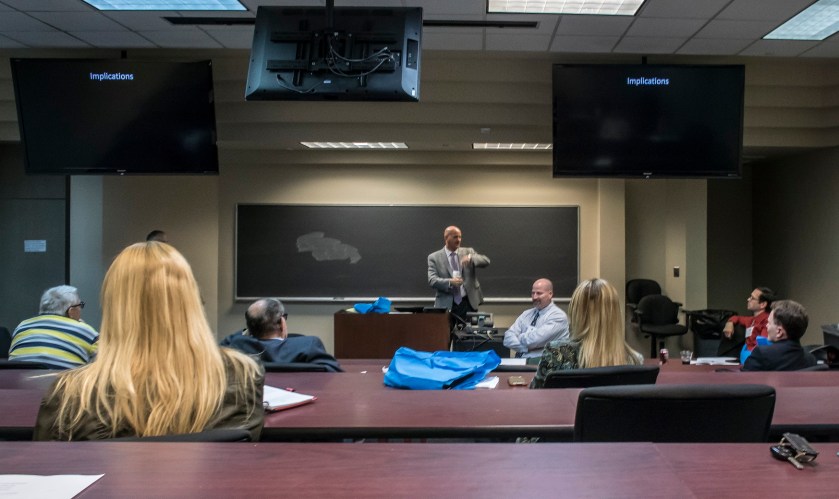
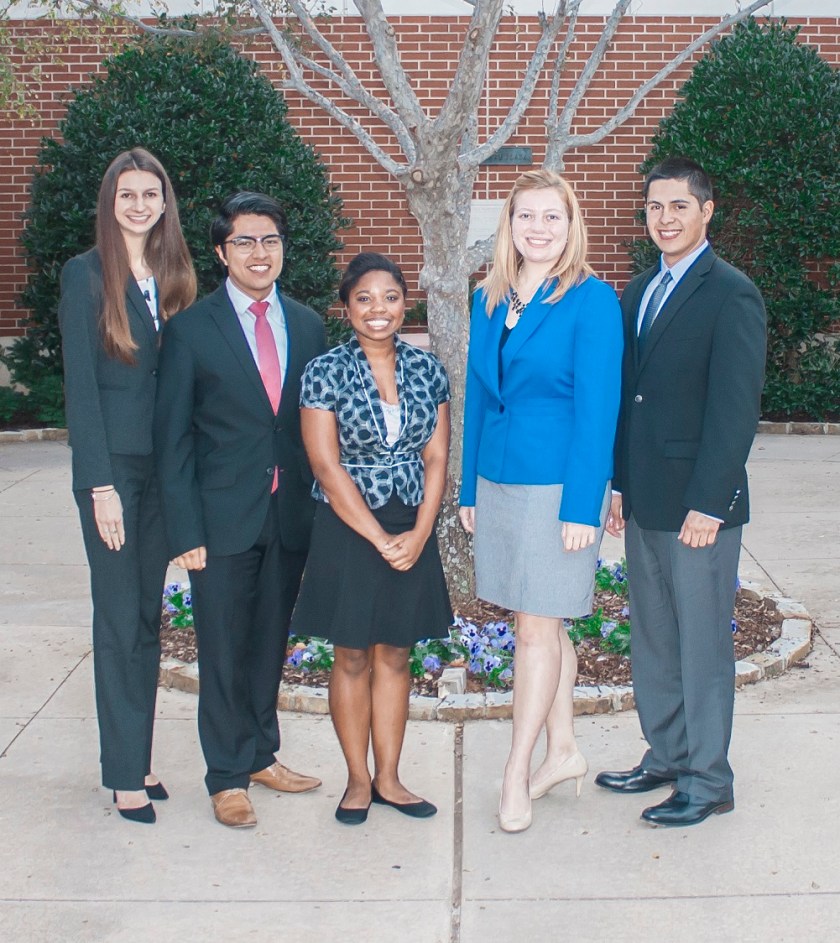
A group of a dozen SHSU interns spent the day in Austin in preparation for their internships. The students, 10 of whom will be stationed in Austin and two of whom will be in DC, posed for professional photos, explored international food, and enjoyed the rush of simulated skydiving.
Photography
The morning temperatures hovered in the mid-20s for much of the photo-shoot. Although this didn’t stop the photo-shoot, it did lead to much self-pity.
Nonetheless, much progress was made, with Paul Olle in charge of photographs (His photographs, which are much better than those here, will be posted later).
The students were in the pleasant situation of knowing their way around the capitol, and all areas were explored and photographed, from the Rotunda (above), to the outdoor rotunda…
…the statue of Sam Houston at the south entrance…
…to the Senate floor…
…to the capitol steps…
Food
For lunch, the students opted for Serbian fare offered at the wonderful Balkans Cafe and Grill. The staff at the restaurant are professional, and the food is great.
More important, lunch was a chance for former Austin interns to join the current Austin interns for lunch and networking. Of the eight SHSU students who interned at the Capittol building last session, five have been hired full-time for this session, and many of them joined this year’s group. It was also a great and rare opportunity for Professor Yawn to enjoy the company of multiple cohorts of students simultaneously.
iFLY
Of course, the most fun activity of the day was at iFLY, where students had the chance to “skydive” without any real chance of dying. Some took to it quicker than others (Spencer Copeland was an expert), but all did well.
Karla Rosales Enjoying iFLY
All of the students ended up signing on for the “High Fly,” which is when the instructor flies with the student flyer 20-30 feet into the tunnel. It is the most exciting part of the flight and also, interestingly, the easiest. The instructor does all the work!
Concluding Thoughts
Of course, the real exhilaration will be the students’ experiences in Austin and Washington, DC this semester. Full of long days, interesting sites, and, we hope, bright futures.
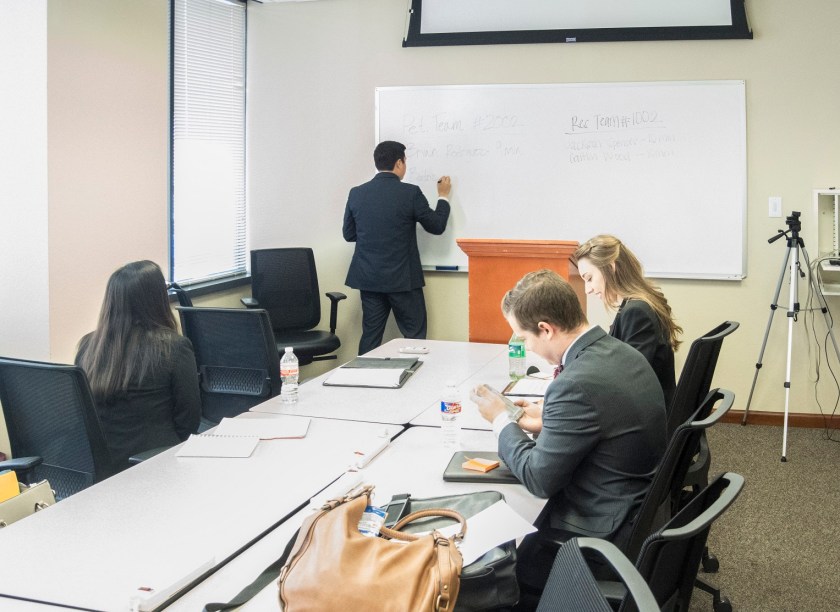
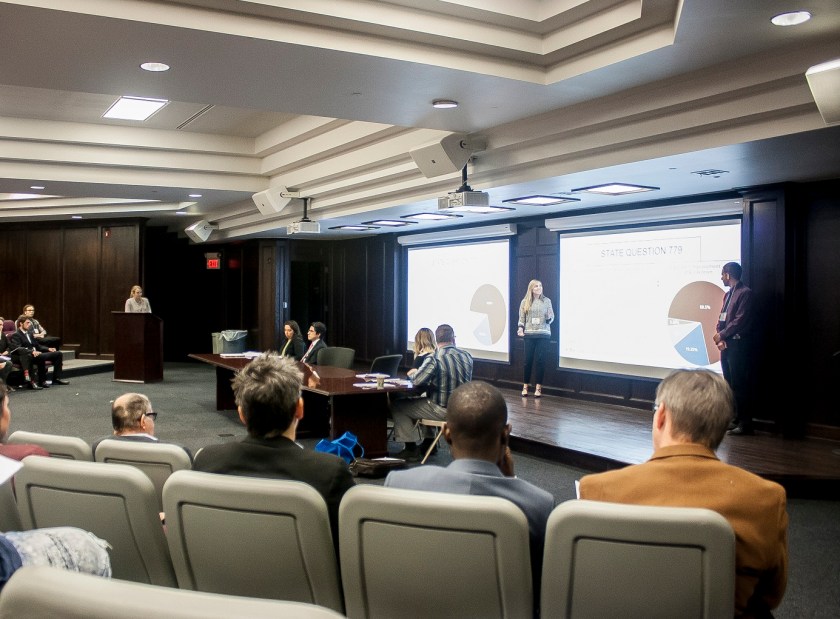
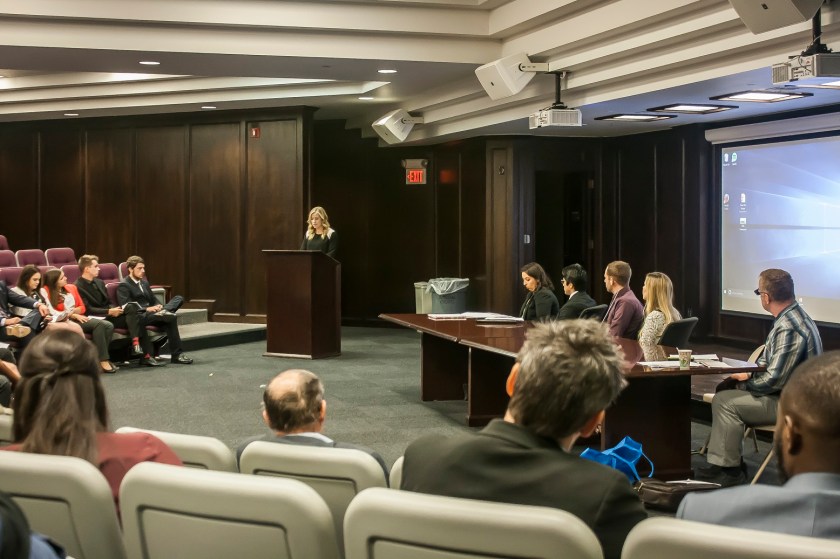
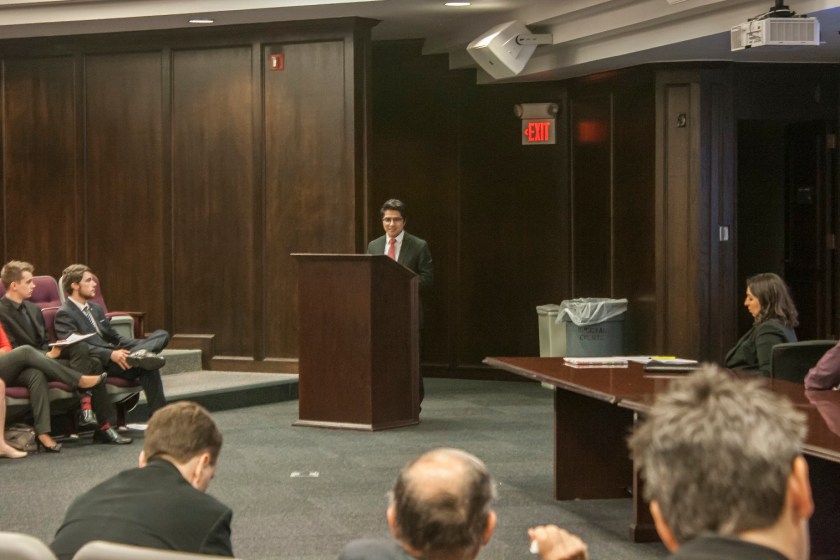
With nearly six months of preparation and almost as many months of anxiety, the SHSU Mooters were ready to compete in the final moot court competition of the season. Hosted at Texas A&M Law School in Fort Worth, 31 teams from across the state and the southern United States competed for spots at the National Competition.
After waking up, we faced a morning of studying and non-stop practicing in anticipation to our afternoon’s competition.
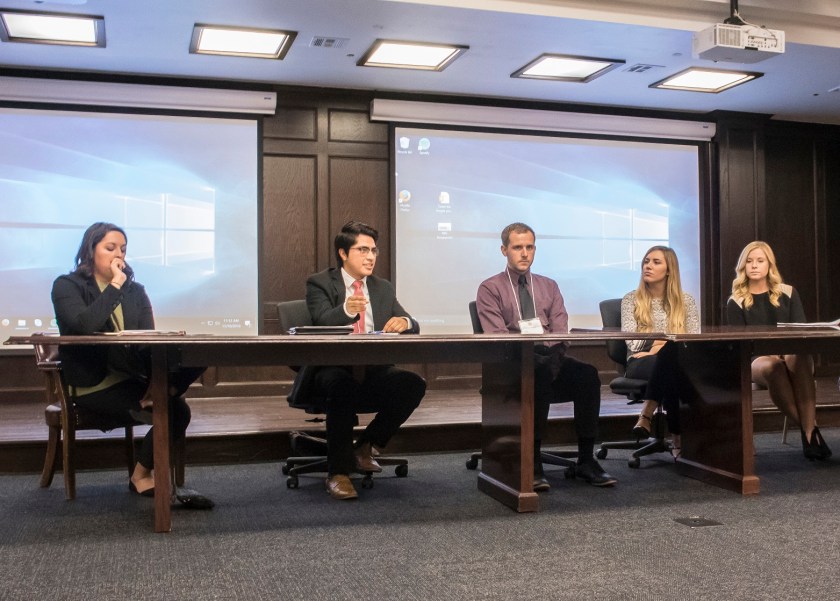
Once we were given our room assignments, pairings, and rules, each team departed for their first round. The competition consisted of three back-to-back rounds that would determine the day’s rankings according to mastery of material, presentation, response to questions, and courtroom demeanor. Throughout the day, it was slightly intimidating how we would be contending spots against students from such universities as University of North Texas, The Air Force Academy, Texas A&M, and Baylor.
As each round progressed, our nerves slowly diminished and we felt more confident that our studying was paying off. After the third round, we regrouped for a much needed dinner catered by Texas A&M Law School.
As we enjoyed our meal and waited for results, we conversed with a couple Texas A&M Law School students to know more about life in law school. We also shared opinions among ourselves regarding our the day’s competition. Reminiscing on the day’s toils, we reflected on what we could have done better and what we did well.
After what seemed like hours of waiting, the tournament director announced the advancements and speaker awards. Unfortunately, SHSU did not advance to the second day of competition. Regardless, we noticed how each SHSU team had improved from the scrimmage and earned higher scores, with four of the SHSU students finishing in the top half of orators.
The outcome reminded us that sometimes winning or losing is not what matters. What really matters is that we learn and whether we are more prepared for our future careers. For each member, we thought we achieved this goal throughout the season.
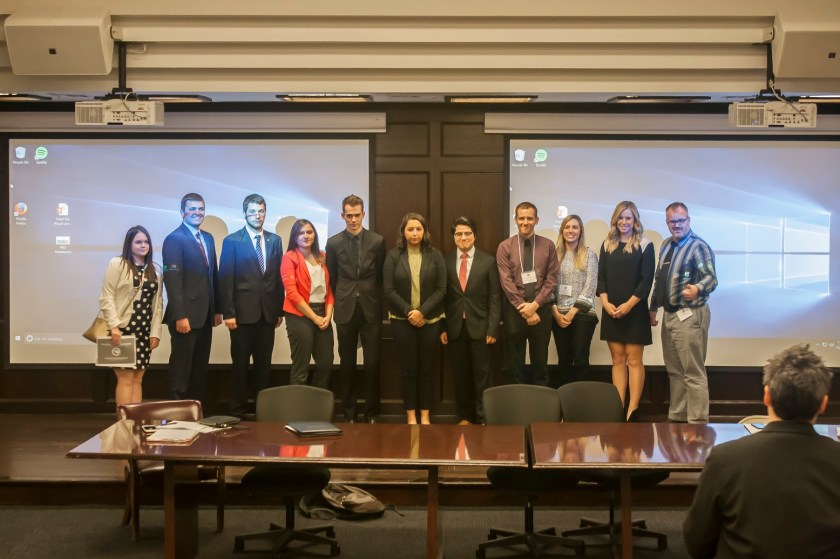
We ended the day on a positive note taking our group pictures in the courtroom!
After working hard and competing in the Moot Court Regional Tournament, on Saturday the team set out for sightseeing across Fort Worth. We visited the Amon G. Carter Art Museum, the Fort Worth Water Gardens, and the famous Sundance Square.
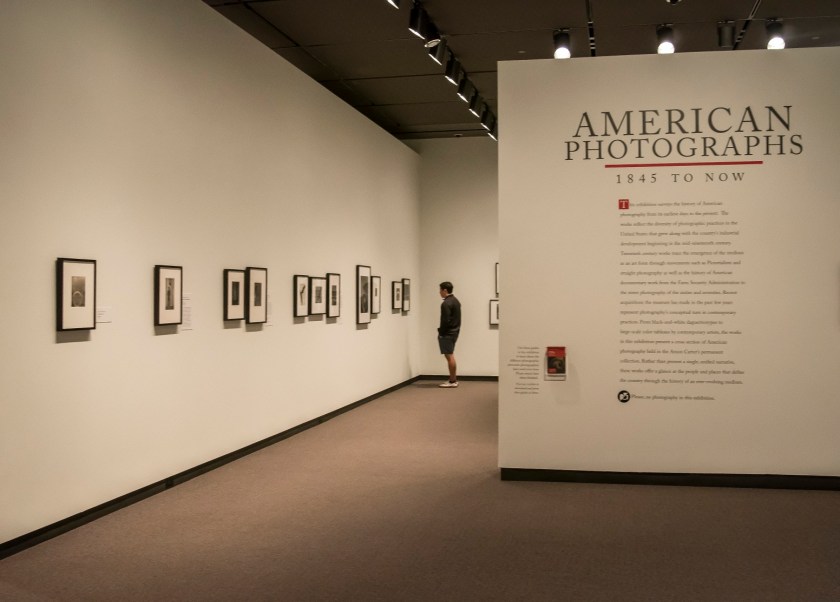
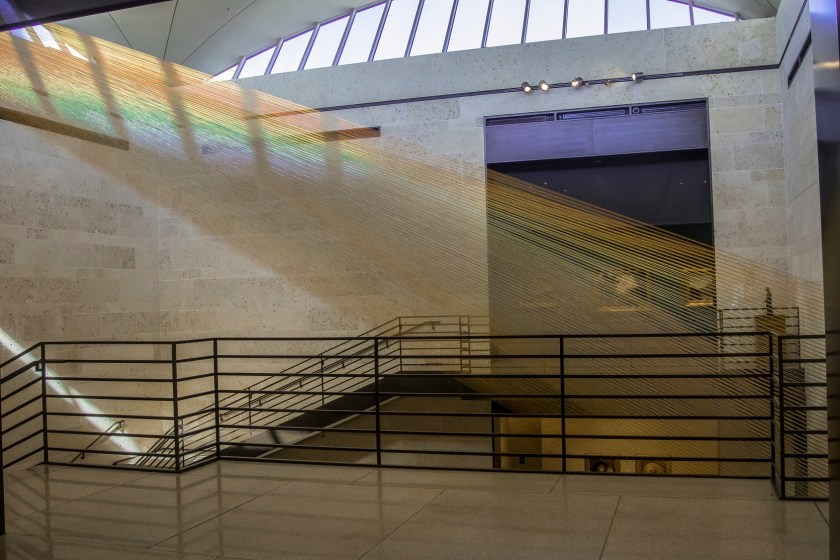
The Amon G. Carter Art Museum is a free art museum dedicated to 19th and 20th Century American Art.
Opening its doors in 1961, the businessman and philanthropist Amon Carter’s goal in erecting the museum was to educate Fort Worthians in American Art. With Carter’s personal collection comprising the early galleries of the museum, the establishment has now grown to include a diverse collection of art. From artists such as Fredric Remington to Georgia O’Keefe…
…the museum leads visitors through various decades in American art history. Among the halls was a more contemporary exhibition titled “Border Cantos.” In the exhibit, Photographer Richard Misrach and Composer Guillermo Galindo, depict the US/Mexican border through impactful photographs and music that reflect immigrant life along the borders.
As the photographs depict a solitary and barren border, visitors felt a deep emotional connection to the people affected everyday by the walls, fences, and wire the divide the American and Mexican territory. This exhibit proved to be the team’s favorite in the end.
After exploring the museum and learning about American Art, we were excited to move on to our next stop: the Fort Worth Water Gardens.
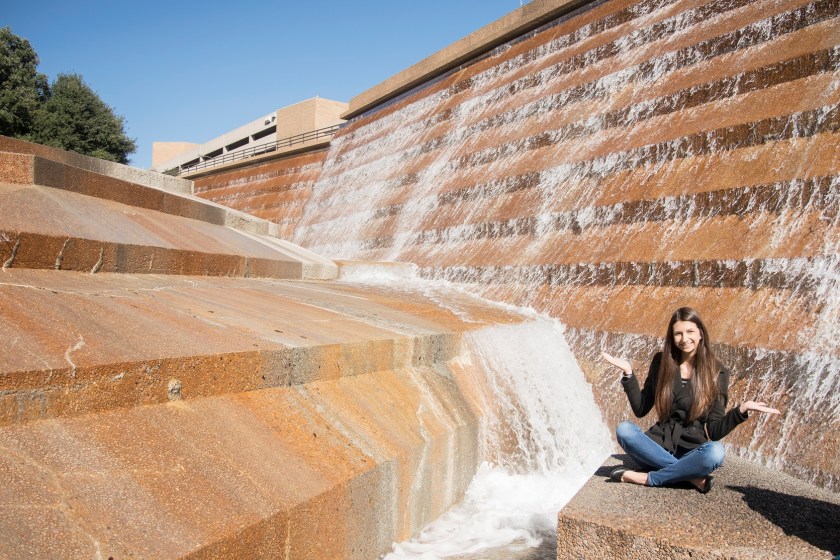
Designed by Philip Johnson, the urban park provides a soothing atmosphere to escape from the mundane city life (and moot court). The park is composed of adjoining water gardens which visitors can explore.
True to our millennial drives, we enjoyed taking selfies and pictures of the garden. The Water Garden was an unexpected treat that everyone enjoyed!
Our mini Fort Worth tour sadly ended with lunch at Bird Café in Sundance Square.
Revived with the help of Richard Haas’s Chisholm Trail mural, the Square is now the center of shopping and entertainment in downtown Fort Worth.
In the midst of the cultural hive, The Bird Cafe as a very popular brunch joint, offered many unique dishes. We each tried something different (for different was the only thing the Cafe offered) such as Carne Asada Waffles, an Avocado Omelet, and the Hickory Smoked Chuck Burger. After our delicious platters, we decided to finish our meals with a sweet closing. So being, we chose to visit a nearby chocolate factory!
The Chocolate Factory was a fun and tasty last stop on our trip. We immensely enjoyed sampling numerous sweet treats. With full stomachs and a nap waiting for us in our van seats, we departed Worth Wort to make our way back to Huntsville.
Many thanks to Texas A&M Law School for hosting the TUMCA Moot Court Competition and to Ms. Loveall for all her hard work and dedication to our teams success!
On Saturday, the LEAPsters had to finally bid farewell to the endless flat land and lustrous skies of Oklahoma City, but not before a few last adventures. Like the tumbleweed in a dust storm, we drifted through the city and down to Dallas, in search of great art, food, and little bit of history.
Oklahoma City National Memorial Museum (Ashley)
After driving through the city and getting a feel for what 1995 would have been like in that quiet city, we reached the Oklahoma City National Memorial Museum. Never had we visited an institution dedicated to a single tragedy, being able to capture and include poignant details of the Oklahoma City Bombing. The museum was structured in an interesting way. We started from the second floor and then worked our way down to the first. The facts were presented in chronological order, beginning with the events, down to the minutes, leading up to the bombing. It was this introduction that set the exposition of this heart-wrenching story.
It can be difficult to relate to an event (such as domestic terrorism) after being born years removed from it. But when you see how other people were impacted by it, the tragedy becomes more relatable. As we looked through the pre-bombing news articles and artifacts, we were amazed how Timothy McVeigh was actually interviewed by a journalist two years before, while professing anti-government propaganda related to the 1993 Branch Davidian Compound attack in Waco, Texas. Apparently these views were what compelled him to attack the Murrah Federal Building two years later. Perhaps the most gripping part of the museum was when we entered the model of the Oklahoma Water Resources Board room.
There we listened to a recording of the board’s minutes the day of the bombing. In the middle of the recording, the voices die, the recording crackles, and the explosion roars in the background. With the flickering of the lights, and the sounds of panicked screaming and confusion, some of us were close to tears.
We explored the rest of the museum, reading about the destruction…
…rescue, investigation, and miraculous rebuilding of the city.
After we witnessed the destruction of the bombing through the exhibits…
…we stepped outside onto the memorial and found the survivor tree. The area was really a place of brilliance as it was full of beauty and somberness.
There were large gates on each side of a pool with the time a minute before (9:01) and after the detonation (9:03) of the bomb.
Perhaps most gripping from the memorial was the 168 chairs engraved with names representing the people who died during the explosion, with 19 small chairs honoring the deceased children. The museum at first emits a certain mournfulness, but because of the survivor tree and the resilience it shine with its green, resurrected branches, we left with a sense of hope. This memorial deeply touched us, and was definitely one of our favorite places we visited on this trip. With this sense of vitality, we reached the end of the gate and made to get some lunch.
Iron Star Urban BBQ (Kaitlyn Tyra)
Before departing from Oklahoma City, we stopped to fill our growling stomachs at Iron Star Urban BBQ. LEAPster, Ashley Allen immediately described the restaurant as “hipster BBQ.” Rightfully so perhaps, as the atmosphere of the restaurant was very trendy. Regardless of it being hipster, it proved to have tasty food. To experience the restaurant as much as possible, we ordered bacon wrapped quail breast and jalapeño cornbread to sample. Both were surprisingly tasty! For our main entrees, we tried the pulled pork sandwich, the pimento cheese burger, and the smoked prime rib sandwich. Although the Oklahoma BBQ was different from our traditional Texas BBQ, we enjoyed trying Okie cousins’ delicious bbq!
Our dessert, like a sweet coup-de-grace, finished our meal consisting of a peach crisp, Drunken Turtle Cheesecake, and Double Chocolate Bread Pudding.
Everyone had their own favorites but we enjoyed sampling them all. Iron Star BBQ was a fantastic final meal for our time in Oklahoma City!
With that we piled back into the car and settled in for our drive to Dallas.
Nasher Sculpture Center (Mitchell Sanchez)
At the midpoint between Oklahoma City and Huntsville, we decided to take a breather near downtown Dallas. We took this opportunity to visit the Nasher Sculpture Center. Raymond and Pasty Nasher began the art collection dating back to the 50’s. Together this couple has built one of the finest collections of 20th century sculptures in the entire world. The students had the privilege and honor to walk among some truly amazing pieces, from the quirky Claes Oldenburg…
…to a couple of Pablo Picasso’s sculptures. One of them was inside one of the three galleries on the interior of the center, where other virtuosos of art were housed. While the second, much larger, Picasso was outside in the 1.4-acre sculpture garden.
The garden contains more than 90 trees, including oaks, elms and crepe myrtles. In the midst of this urban forest were pieces by Henry Moore…
…George Segal, and Barbara Hepworth, just to name a few. A particularly striking theme to the garden was how the nature and sharp cut stone and walk ways complemented each other in a way that demonstrated the ability of artists to enhance nature’s peace and beauty. The Nasher Sculpture Center gave us a wonderful vibe of elegance and peace. Peace much needed after a very momentous weekend.
With a last stroll through Klyde Warren Park, among a thong of lively children and mirthful adults, we boarded our van and made the last stretch to Huntsville. With the moon behind the clouds, and an air of tranquility, we ended our trip with a restful chat of all the wonderful adventures we had during the trip. From tripping through the ice, to trying out buffalo burgers, we reminisced on the happy memories of our Texoma LEAP Trip.
Our second day in OKC was a busy one, but that didn’t prevent us from enjoying some food and fun in this Southern/Midwestern city. In fact, we had a chance to explore Bricktown, Guatemalan food, and even ice skate!
Café Kacao (Ashley Allen)
For lunch we decided to try out some authentic Guatemalan food at Café Kacao. Before being seated, however, we waited outside the restaurant chatting, a result of the eatery’s popularity. This wait, a bit lengthy, was worth it. The music was upbeat and the interior was very colorful.
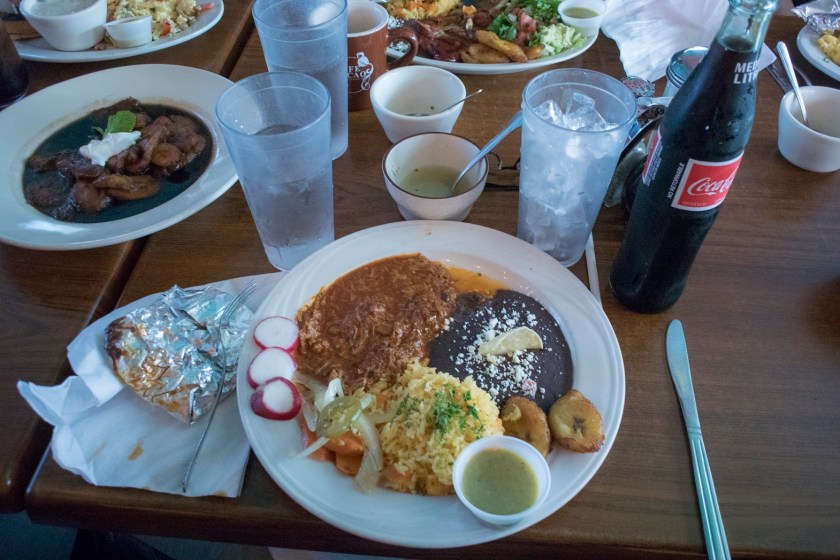
Looking at the menu, we were mystified by the many options we had before us. Drinks alone were provided by lot of different choices, from juices, to Mexican sodas, and specialty drinks like the Horchata latte ( a sweet mixture of rice milk, vanilla, cinnamon and coffee). In the end, we ordered Migallas, cochinito pibil, adobada, and even crab pupusas.
Ashely’s favorite dish, the Migallas, was a breakfast dish composed of scrambled eggs, various vegetables, Pico Del Gallo and crushed tortilla chips mixed together, accompanied by a small fruit cup and black beans. The plate was so delicious that she practically wiped it clean, a feat that has eluded many of us during this feast-filled-trip.
Bricktown Brewery (Ashley)
For dinner, we ventured into the city’s river walk. Following the foot steps of the Sooners, or at least the direction of Paul Moor’s sculptures, we began our trek to the Land Run Monument. With friendly chatter and a shining skyline, we followed the soft, rippling river, and before we knew it, we had reached the city’s Bricktown District.
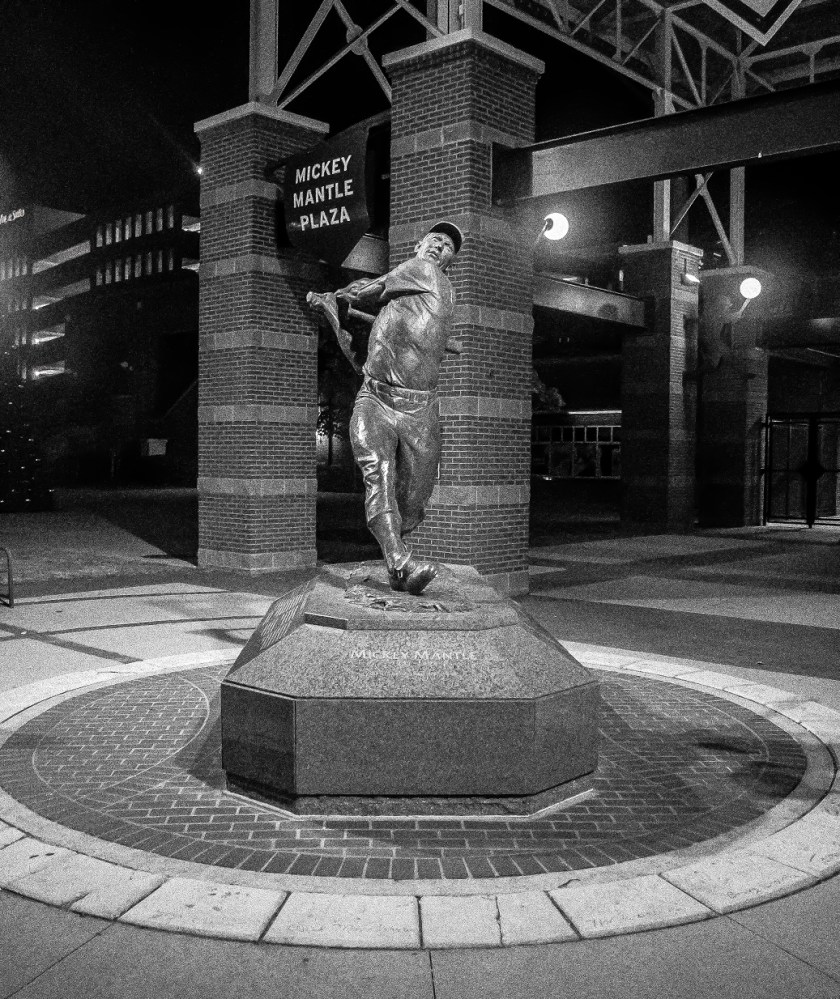
The historically industrial district turned social district, with it’s bright lights, quirky sights, and lively music, was eye candy so as to make us hungry. After walking a lap around the square, where we saw a Mickey Mantle statue…
…and even a statue of Sisyphus…
…we stopped by a restaurant called the Bricktown Brewery. It was different from the other places that we had eaten during the trip, strictly because it wasn’t an authentic, ethnic-based restaurant. The majority of the group ordered different pizza pies to share amongst ourselves. Ryan’s favorite was the combination pizza which had morning sausage, pepperoni, and ham, topped with additional mushrooms, onions, and bell peppers. The experience here was excellent and if ever in Bricktown again we would definitely go straight to this great establishment. As Ashley commented “every place we’ve eaten in Oklahoma has been such a great experience, and I really appreciate the exposure to the different cultures and the food that goes with them!”
Slipping Through the Ice Rink (Ryan)
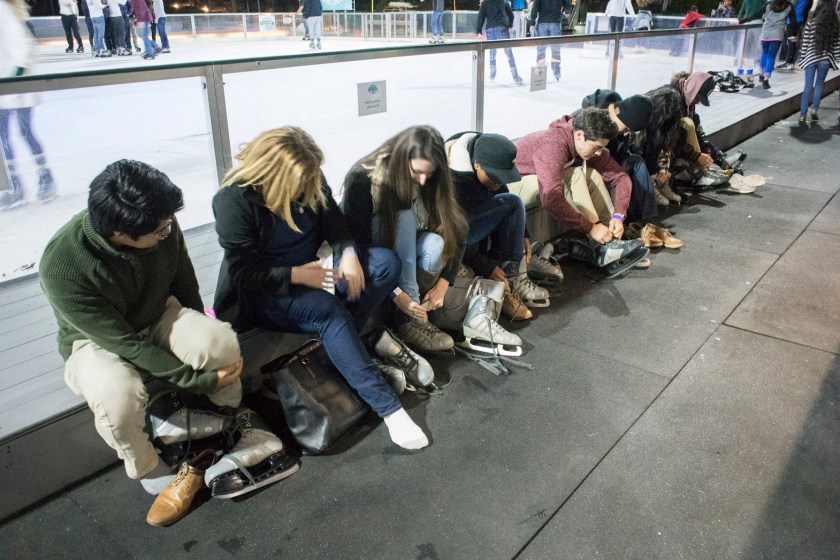
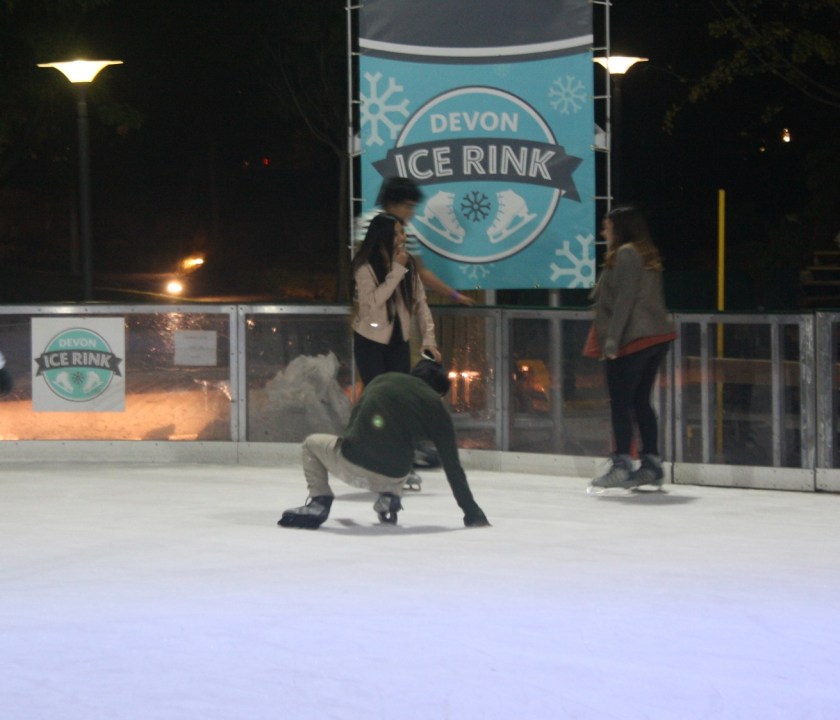
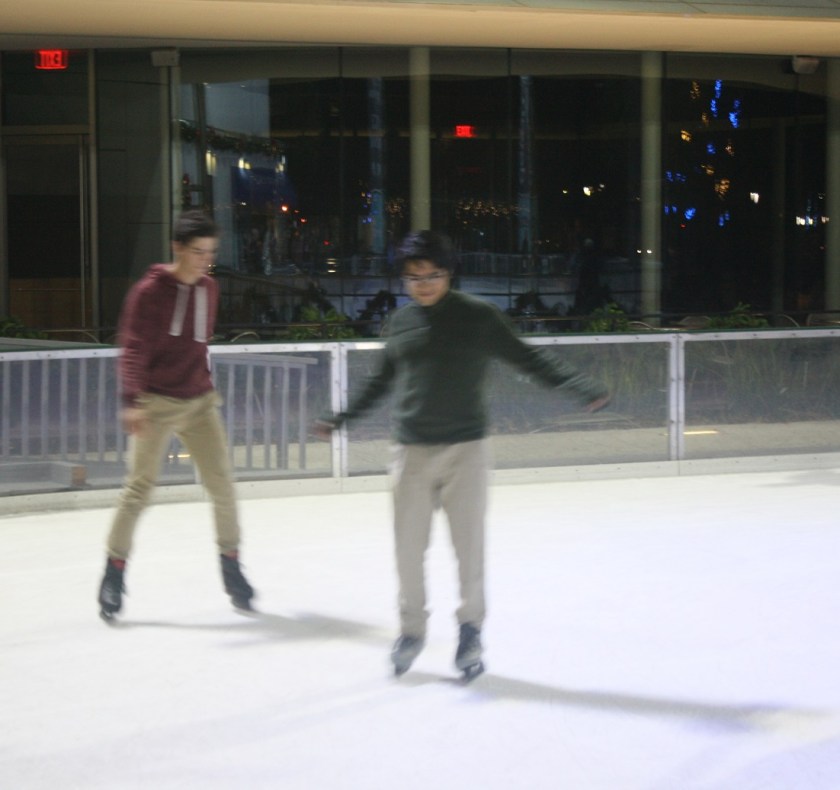
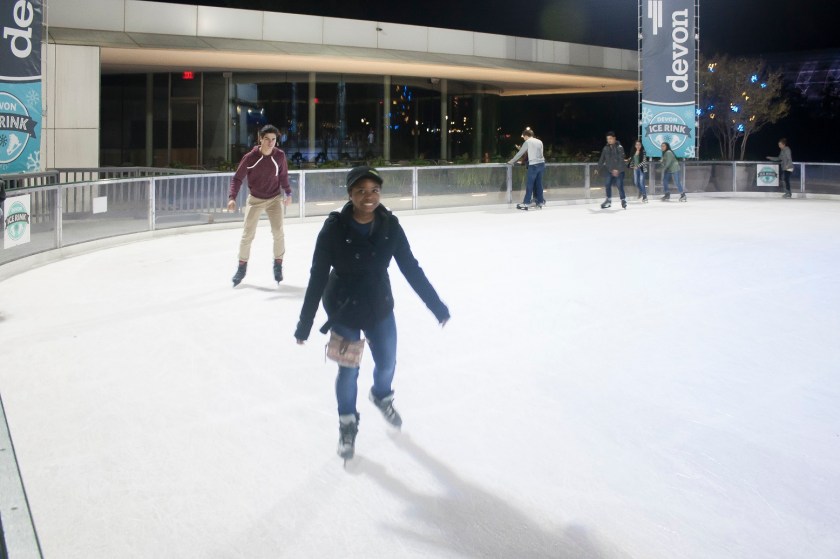
After our meal, we walked the few blocks to the Myriad Botanical Gardens, where we took advantage of their skating rink. With Professor Yawn’s instructions all of the LEAPsters and Ryan laced up and took to the ice.
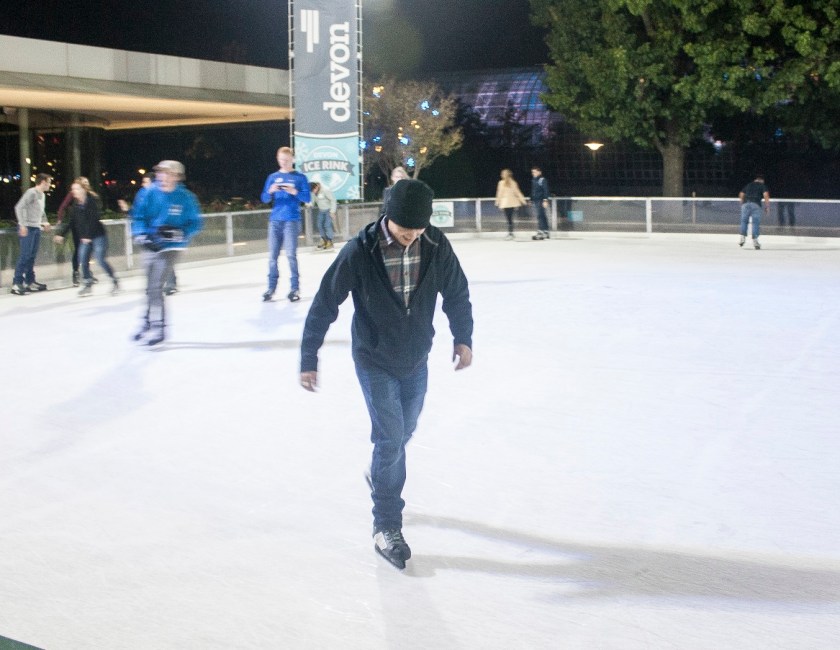
Although it was a small rink, it seemed to take some of us forever to make a full lap, whether it be because we were holding onto the rails or we couldn’t seem to get any momentum.
Some us, however, performed our very best skating abilities. For example, Brian accidentally did his best impression of Charlie Chaplin while sliding and slipping through the ice.
He would seem to fall for about ten seconds and then catch himself on the railing in a cool and relaxed position as if nothing had happened. We only stayed for a little while, as the air grew colder and our feet began to ache. It was unclear as to the professor’s motivation to bring us to the rink, whether it was to expose us to a sport we seldom have a chance to practice or for his own amusement to look at us fall and tumble.
Perhaps his absence at the rink was indication to the latter hypothesis.
Ashley, Ryan, and Kaitlyn proved the best skaters…
…and Ashley and Ryan even raced, with Ryan’s longer legs providing the edge.
No matter the falls on the ice, we all had ice-loads of fun. With iced backs (from those that had fallen on the ring), we walked back to the car and headed back to the hotel. As a day well spent in learning, exploration, and vigorous sport, we welcomed our bed with a tired, melancholy sigh, for tomorrow would be our last day of our Texoma Adventure.
With the conference part of the trip over, we embraced the more relaxed portion of the trip by learning of Oklahoma, strolling through luscious gardens, and venturing into the icy realms of ice skating. First however, we drove a few miles off of downtown looking for the capitol building.
Oklahoma State Capitol (Kaitlyn)
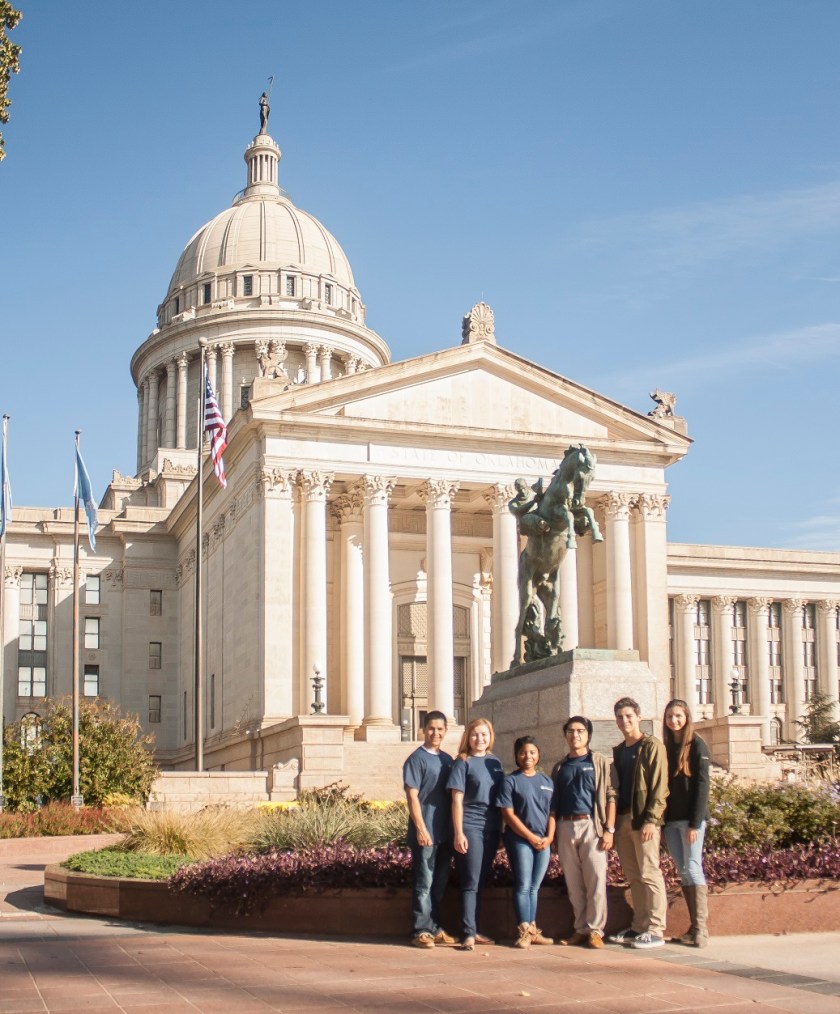
As we reached the domed structure, we admired the artwork surrounding the capitol building…
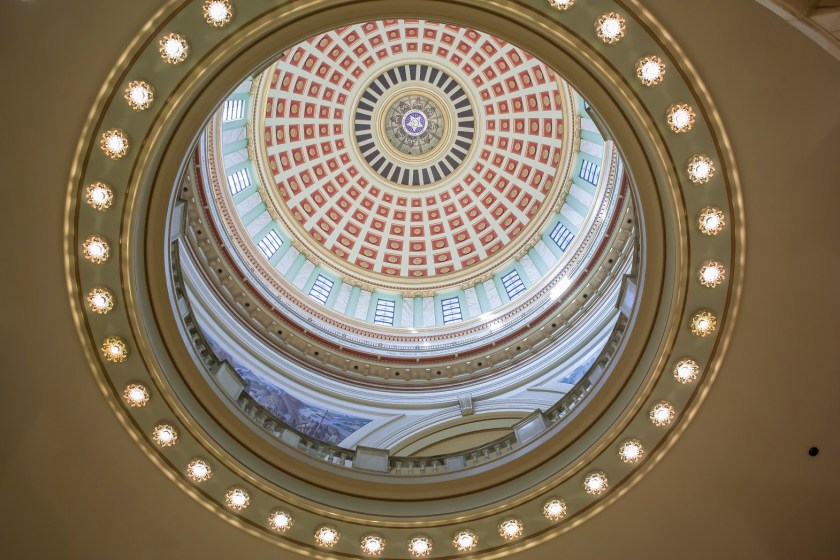
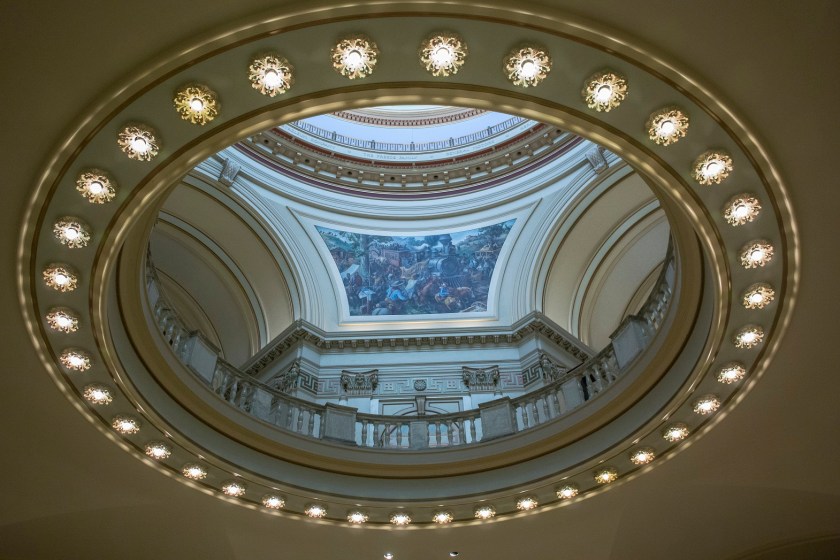
…and then wandered inside the massive structure to find a large construction zone. Unfortunately, the visitor’s center was closed because it was Veteran’s Day, so we proceeded through the capitol exploring on our own. We started on the first floor admiring the rotunda and the State Seal of Oklahoma. The state motto of Oklahoma: “Labor Omnia Vincit” (Labor Conquers All Things) was beautifully showcased within the seal and the dome was impressive as well.
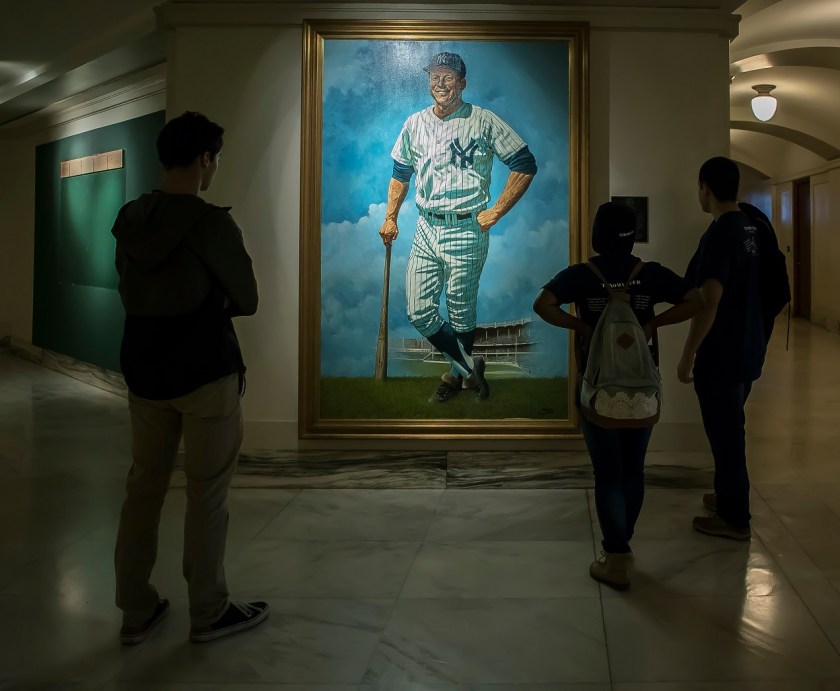
Although we did not think the Oklahoma State Capitol was as grand as Texas’s State Capitol, we did consider it more artistic than ours. Notably, we saw many paintings of Wilson Hurley, a native Oklahoman, depicting the different landscapes of the state. We learned about native Oklahomans such as, Will Rogers, Jim Thorpe, and Sequoyah, whose portraits hung on an upper level of the State Capitol, and even Mickey Mantle, whose portrait was on the ground floor.
A short distance away, we visited the Senate Chamber. The House of Representatives was closed today, but we still learned about the organization of the legislature. We made the best without a tour guide and enjoyed our morning of exploration!
National Cowboy & Western Heritage Museum (Brian Aldaco)
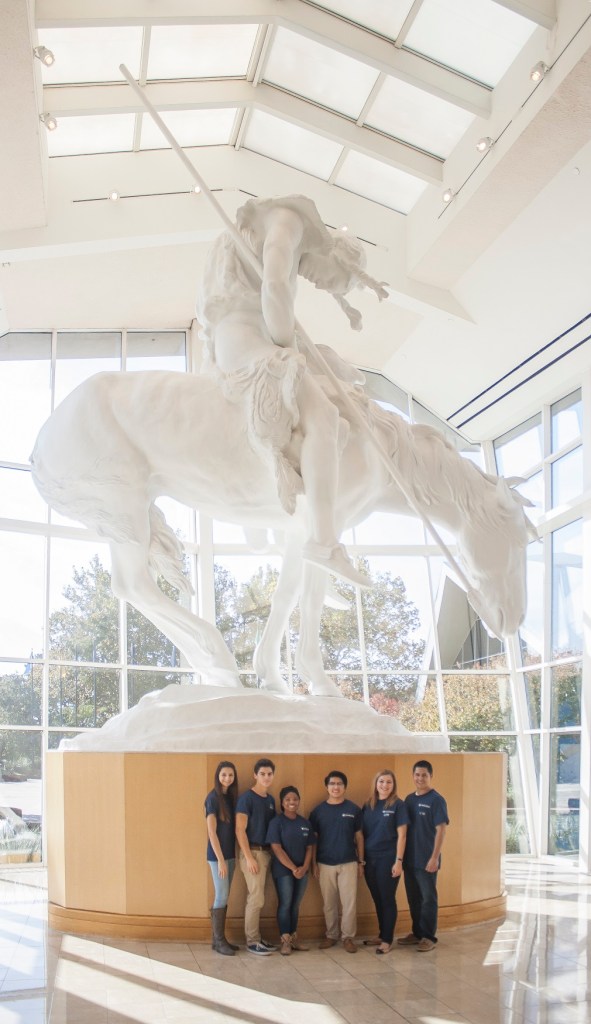
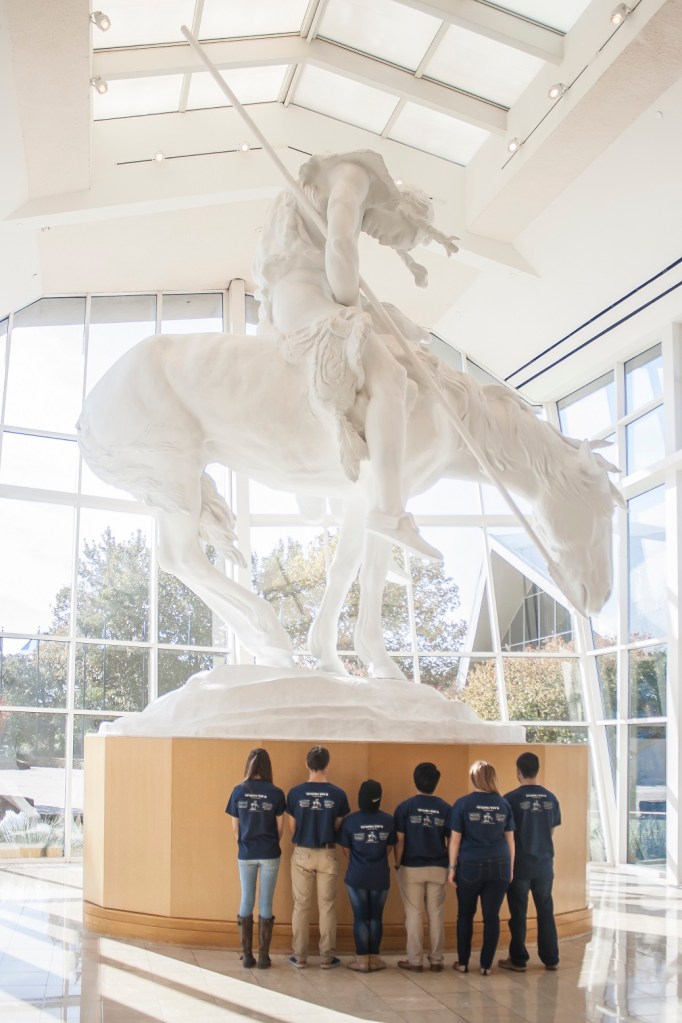
Embracing the Okie spirit, we continued our Oklahoma City tour by visiting the National Cowboy & Western Heritage Museum. As we crossed the front entrance, our sight was instantly drawn to the end of the hall. Against a magnificent window wall, filtering a warm sunny glow, stood a colossal Indian mounted on a horse both carved from white stone which embraced the outside light. With a look of defeat and a horse at mid-stop, James Earl Fraser was able to sculpt his subject’s vanquished spirit in “The End of the Trail.”
We posed for a photo with Fraser’s work…
We actually got a second photo with the sculpture as well. Our trip-themed t-shirts feature the Fraser piece, so we have our backs to the camera to make that connection….
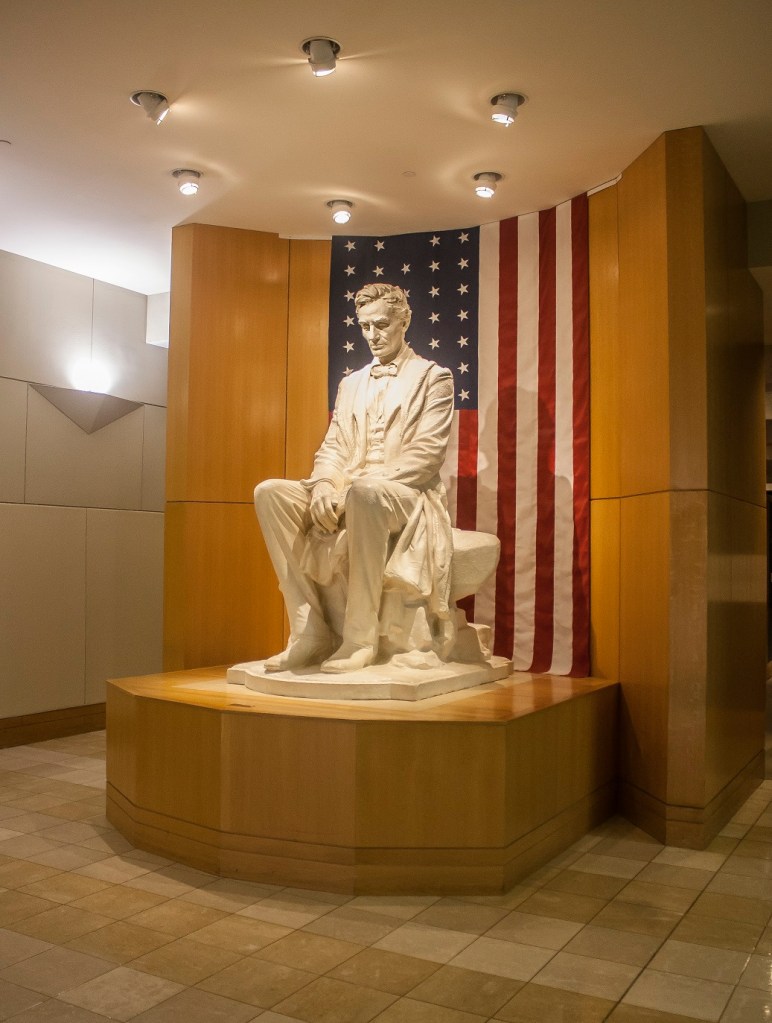
Fraser’s talent was also evident in his Lincoln sculpture which stands overlooking the main hall from his east wing repose.
Following the scope of his solemn gaze pointing westward, we trailed down the west wing of the museum as searchers of the Western Performers Gallery.
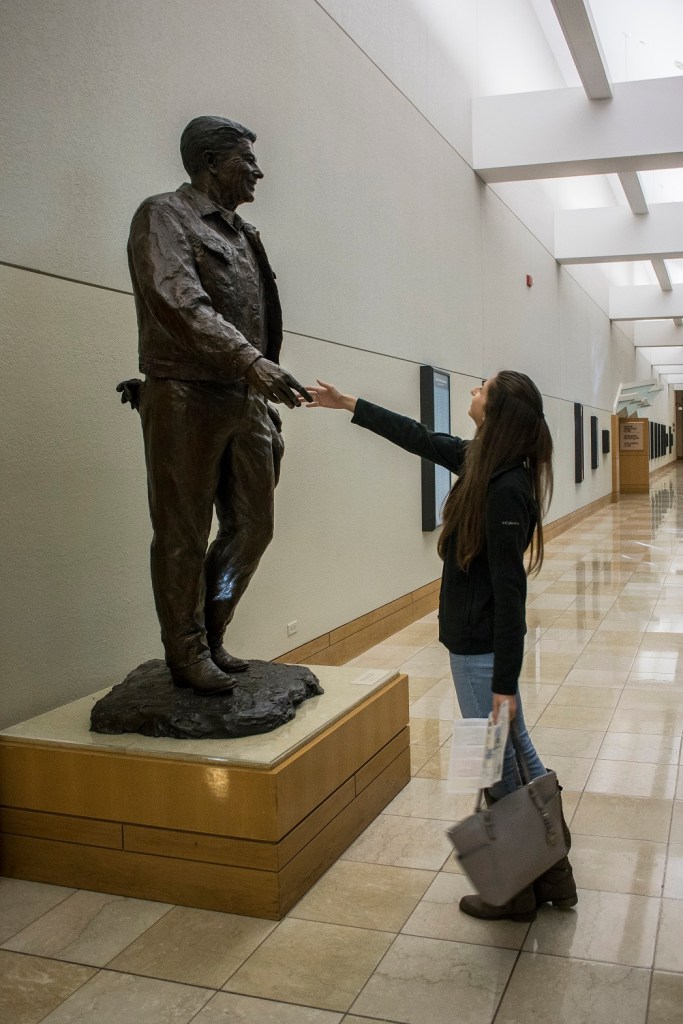
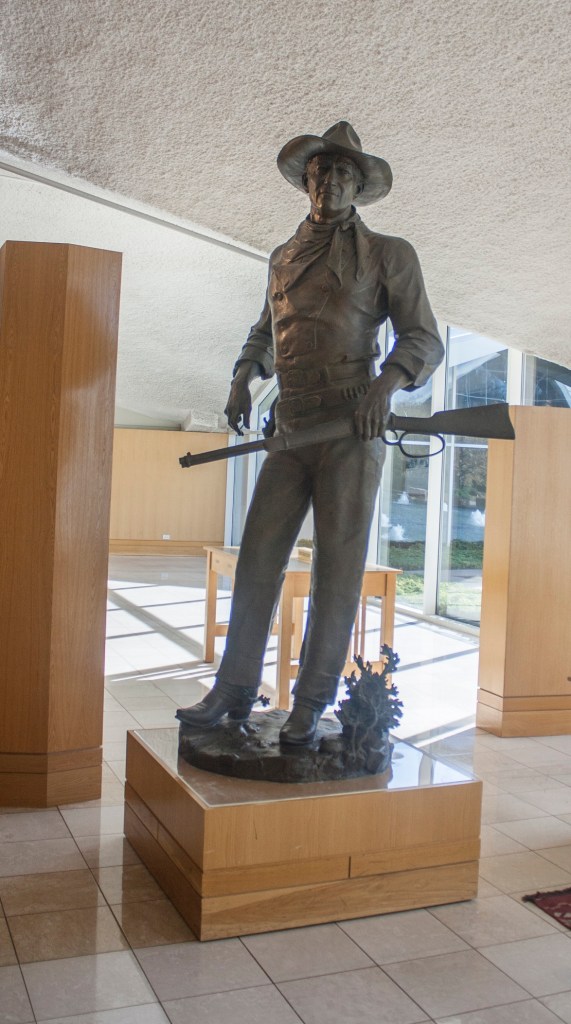
Upon entrance to the gallery, we were greeted by the awe-striking statue of none other than President Ronald Reagan (a former western movie actor).
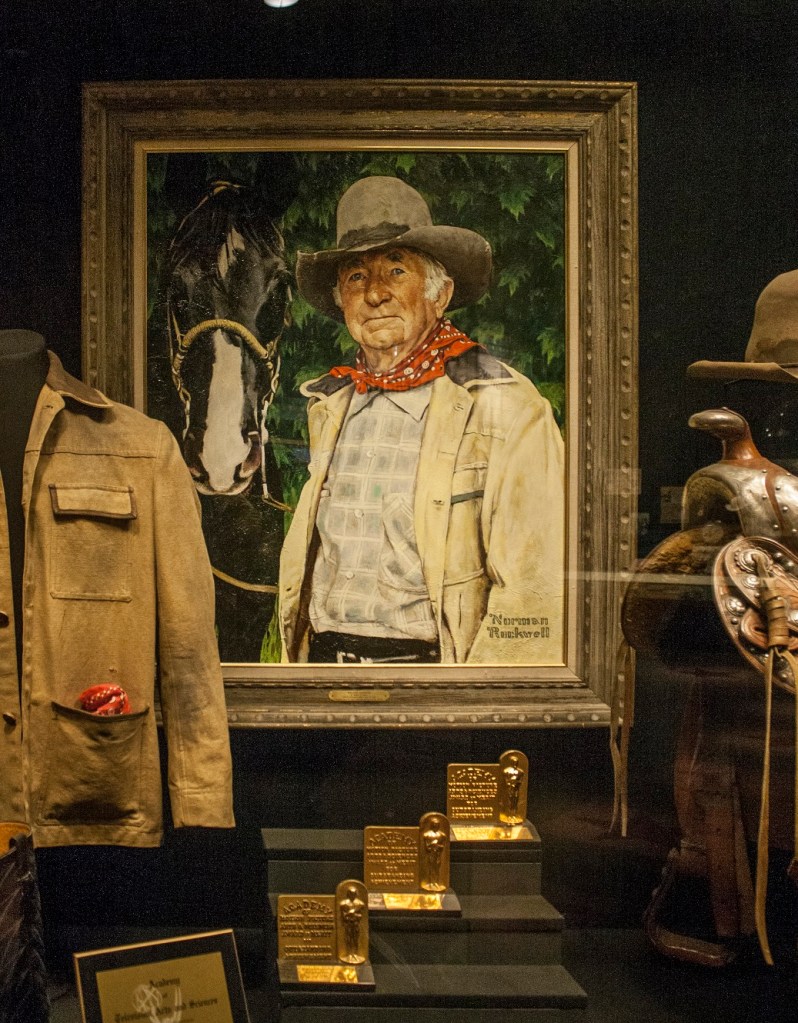
As we ventured into the exhibit, a distinct jolly smile caught our attention. Nearing this Norman Rockwell portrait, we rejoiced as we had found the gallery portion dedicated to the acclaimed Walter Brennan.
Along with him, other great western actors were commemorated such as Gary Cooper, Barbara Stanwyck, Harry Carey Jr, and of course, the immortal, John Wayne.
But from western inspired performers to true performers of western legend, demonstrated by exhibits on taming conquering of the west, Native Americans, and even a small scale Old Western town (akin to a film set), the museum was filled with inspiring artifacts of the west. Our only regret was that we had not much time to look through the entire museum, but our expedition had to move on as the Myriad Botanical Gardens awaited us…
Myriad Gardens (Sadie)
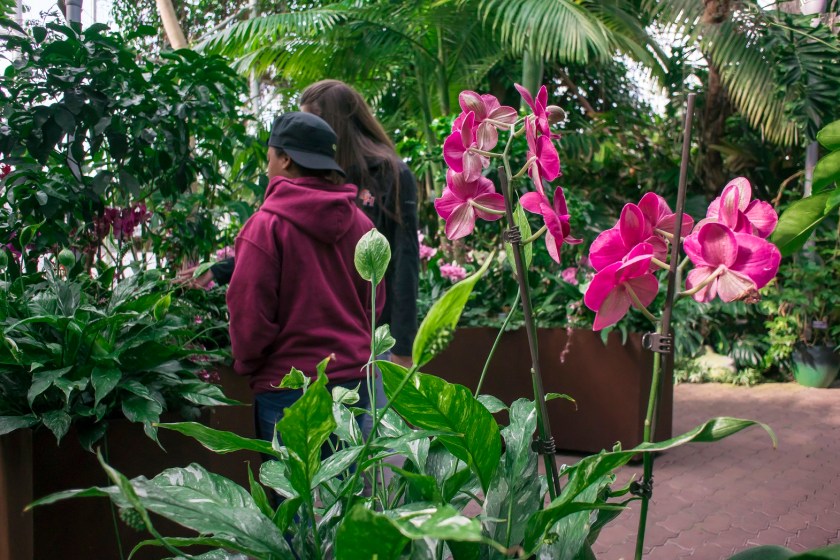
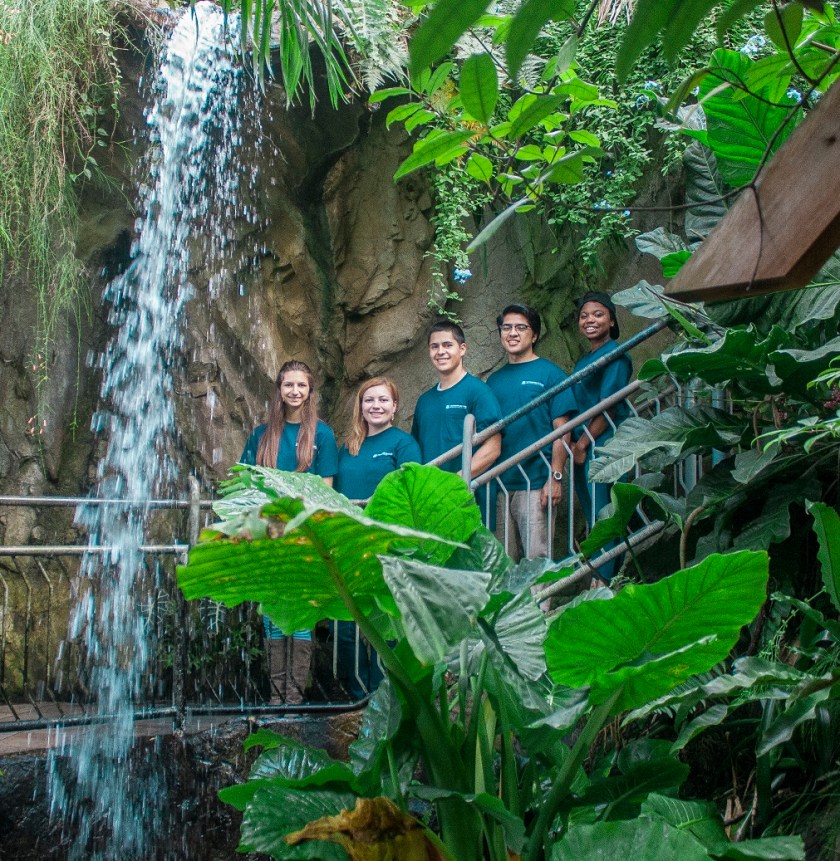
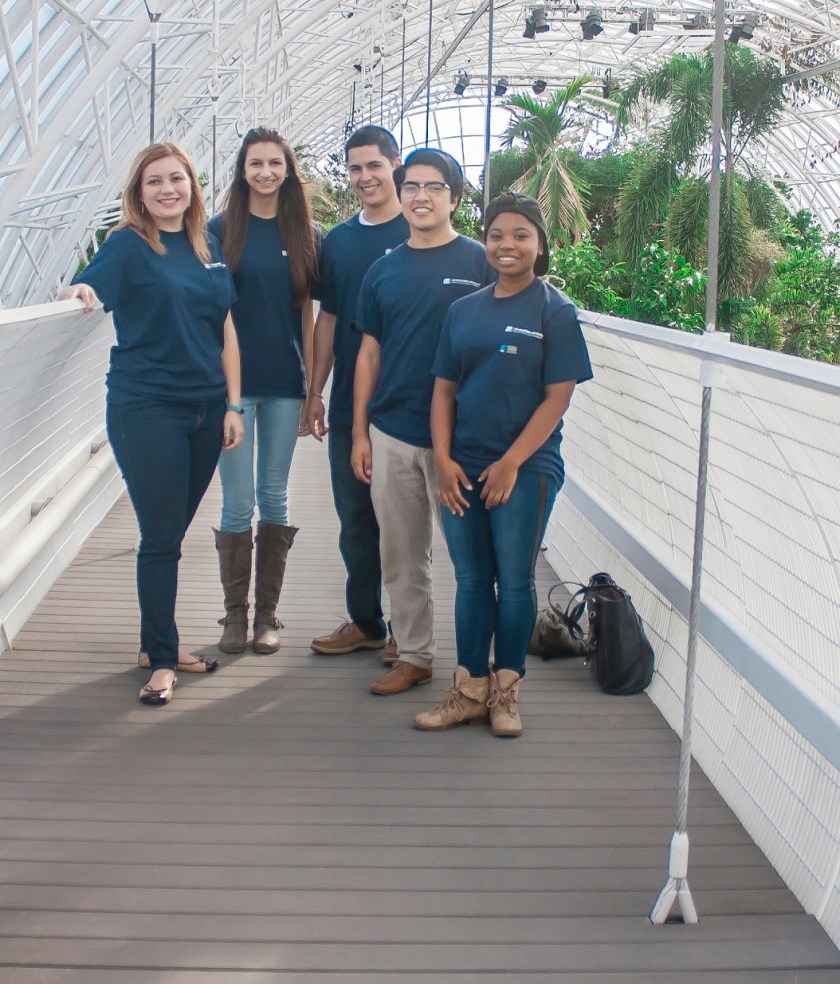
It’s not every day that we get to experience a mini-tropical paradise in the middle of Downtown Oklahoma City, but the Myriad Botanical Gardens gave us just that opportunity. Entering the greenhouse, we were greeted with a large variety of foliage…
…and the sound of a rushing waterfall, much like an oasis in the middle of the city.
Like explores trailing through the jungle, we discovered many new plants and even encountered plants that smelled like goods such as root beer and cinnamon!
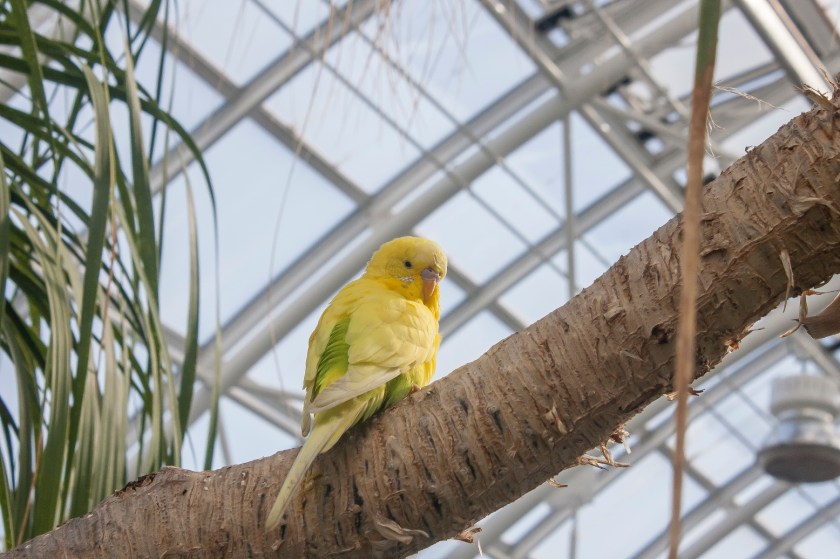
For some, true delight came in discovering the wildlife inside the greenhouse and around the Garden property. Inside we discovered butterflies, finches, a parakeet, and even a very friendly, talkative parrot.
One of the More Approachable Birds in the Myriad Botanical Gardens
After going through the inside garden and walking across an interior bridge…
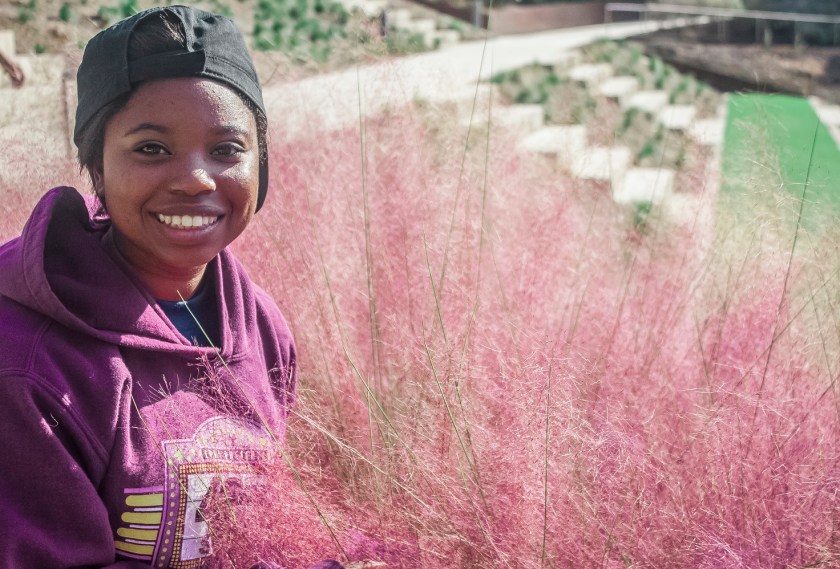
…we stepped outside onto the grounds where we had the opportunity to watch swimming koi and a variety of waterfowl, including some of our neighbors (Canadian geese), as well as pose near the foliage.
We were so grateful to take a few moments to enjoy the beauty and peace of nature in the midst of our busy day.
But after the botanical stroll, we synchronized our watches and bid Mitchel, Sadie, and Ashley goodbye, as they would go their own way and tour the Oklahoma City University School of Law.
Oklahoma City University School of Law (Mitchell)
Before we began our tour, we first had to be dropped off on the Oklahoma City University campus. On our way into Sarkey Building, we discovered that our tour would be held in another part of town where the law school was located. Fortunately we ran into Dr. Farmer, the chair of the Oklahoma Political Science Association conference, who was generous enough to drive us downtown to the School.
Upon the completion of our short trip we were greeted by Lisa Lee, Administrative Assistant for Admissions, as she took us to the admissions center where the tour began. Billy Thomas and Zac Morgan, L3’s (3rd year law students), led the LEAP group (composed of Ashley, Sadie and Mitchell) on the informative tour across campus.
Along with Dr. Farmer, other professors that had attended the conference also joined our tour group. As we learned, the building was built in 1910 and was one of the first high schools in the state of Oklahoma. Walking through the grand rooms and halls was a treat, especially when every step was filled with the state of Oklahoma’s rich history.
The historic importance of the building was put into perspective when Mr. Thomas informed us of the building’s role after the Oklahoma bombings. The FBI used the building to head all rescue operations for the disaster. It is impressive to note that the building was undamaged after the bombing but for a few windows that were shattered. Mr. Morgan and Mr. Thomas then took us by the headquarter for the Innocence project. It was a pleasure to actually see the inter-mechanisms of the project, observing the busy law students studying papers and files. We toured the library along with an overview of the research tools available for students.
We also had the privilege to visit the J. William Conger Courtroom.
To finally wrap up the tour we viewed a couple of class rooms which were from 25 seat to about 70 seats. The classroom size was very similar to the rooms at Sam. We made our way back to the admissions center where we had final discussions with Lisa, Billy and Zac about the school and Oklahoma City itself. The tour gave us great insight to the law school, university, students and Oklahoma City.
Oklahoma History Center (Kaitlyn)
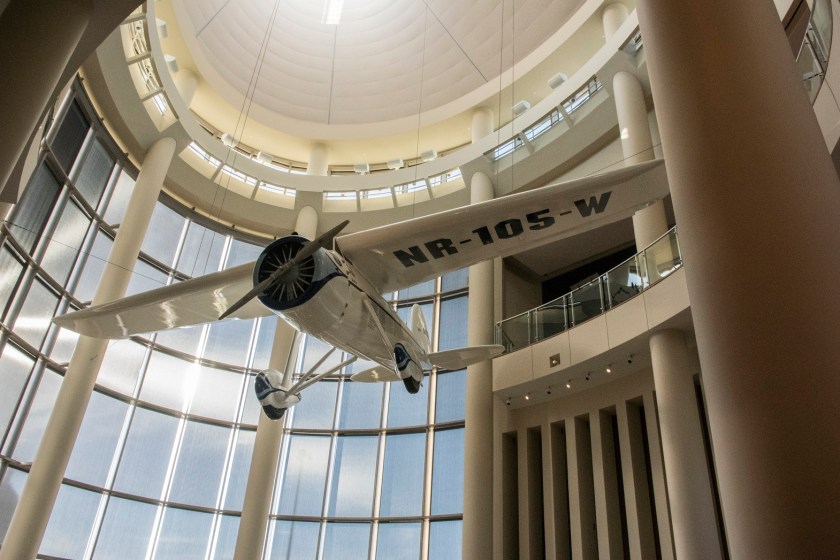
With some ambassadors touring the Law School, others headed over to the Oklahoma History Center to learn about the diverse subject matter relating to the state of Oklahoma. Upon entering, the gleam of Wiley Post’s airplane (which hung from the ceiling) greeted us better than any friendly smile.
Wiley Post, an Oklahoman, was one of the first pilots to experiment with flight, but ultimately crashed near Alaska where him and acclaimed Will Rogers died. Due to Post’s contributions to space travel, developing a pressurized suit that would serve as the prototype for those worn by astronauts, part of the first floor was dedicated to Oklahoma’s connection to the Space Program. After glancing at the interstellar artifacts, the LEAP Ambassadors transitioned to the first exhibit covering the different Native American Tribes. The exhibit taught us of their culture, homes, careers, languages, and traditional clothing. We were thankful that the museum provided a unique way for us to learn about Native American culture.
Upstairs, we were greeted with a beautiful Allan Houser sculpture of an Indian woman. Earlier this morning, we saw his work outside the Oklahoma State Capitol. His works are prominent across the state for their beautiful depiction of Native Americans. It was neat to see his artwork in two places within the same day!
The next exhibit walked visitors through the history of Oklahoma starting with the era of the Sooners and ending with a then and now comparison of various qualities of everyday life such as life expectancy, income, and population.
The exhibit was comprehensive because it covered the political and cultural history of Oklahoma. Observing the various artifacts of the state’s history, we found ourselves running out of time as we were in need of picking up our fellow LEAP comrades. After a short trip to the bookstore, we traveled back to regroup with our fellow LEAPsters and continue on with our afternoon. Although our tour was short, we enjoyed learning more about the history of Oklahoma!
While our primary purpose in traveling to OK was to attend the OPSA, our goal is to explore fully the places we visit. With this in mind, we set out to sample some of OKC’s art and culinary offerings.
Following our fun and informational day at the Oklahoma Political Science Association’s Annual Conference, we looked forward to a sugary snack. As soon as we walked into Pinkitzel, we knew we had come to the perfect place of much welcome relaxation. The bold, eclectic sweets shop was fully decked out with giant cupcake décor, a hot pink horse, and suits of (pink) armor, along with other various and unique decorations. Most importantly, there was a large display of all kinds of gourmet cupcakes and other sweets.
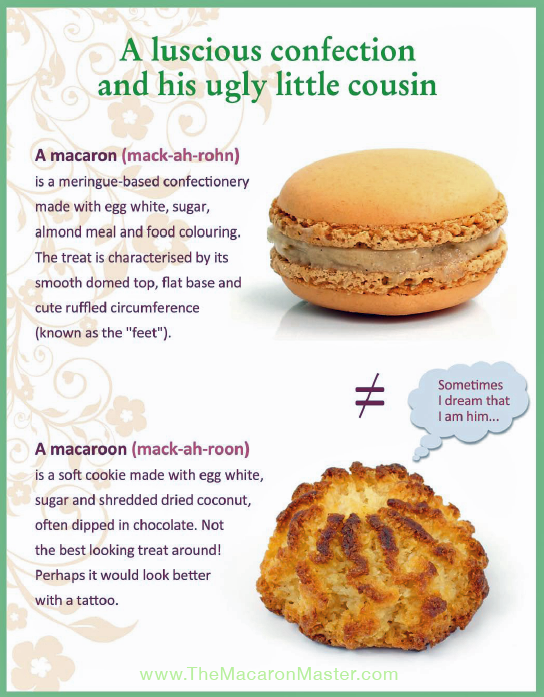
We enjoyed unique cupcake flavors such as pink lemonade, cookies and cream, and double chocolate truffle, complemented with coffee and even specialty hot chocolate! Additionally, we also had the opportunity to try macarons. Not only did some of us get to try this delicious snack for the first time, but we also learned the difference between a macaron and a macaroon. A macaron is in essence a French meringue cookie, while a macaroon is a Southern sweet made of shredded coconut and condensed milk.
While some of us are still debating the macaroon v. macaron enigma, it was a thoroughly enjoyable experience and the perfect fuel to hold us through our pre-dinner adventure at the Oklahoma Museum of Art.
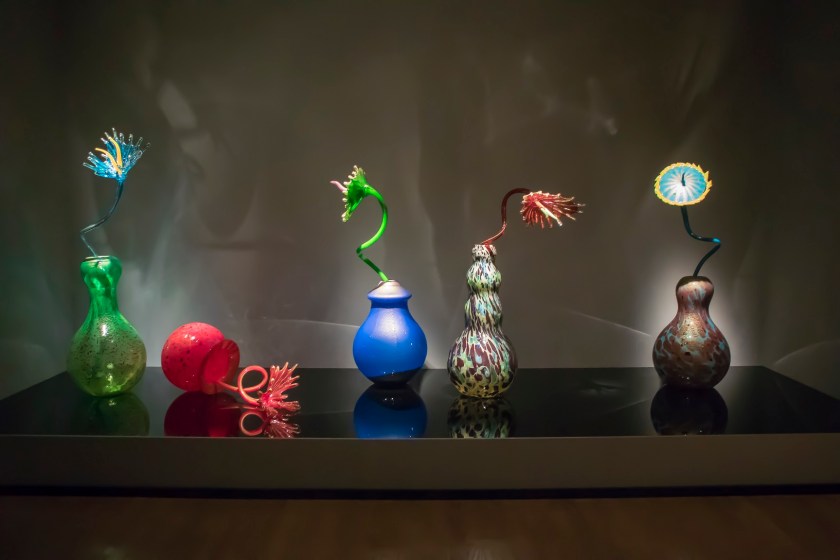
By the time we had finished our delicious desserts, we found the sun setting atmosphere bearing on us as became more lighthearted and relaxed. To me, visiting the museum was the perfect way to spend the evening after hearing speeches and presentations from the panels. Furthermore, I was extremely excited to finally visit the largest and most revered exhibit at the museum, the Dale Chihuly exhibit.
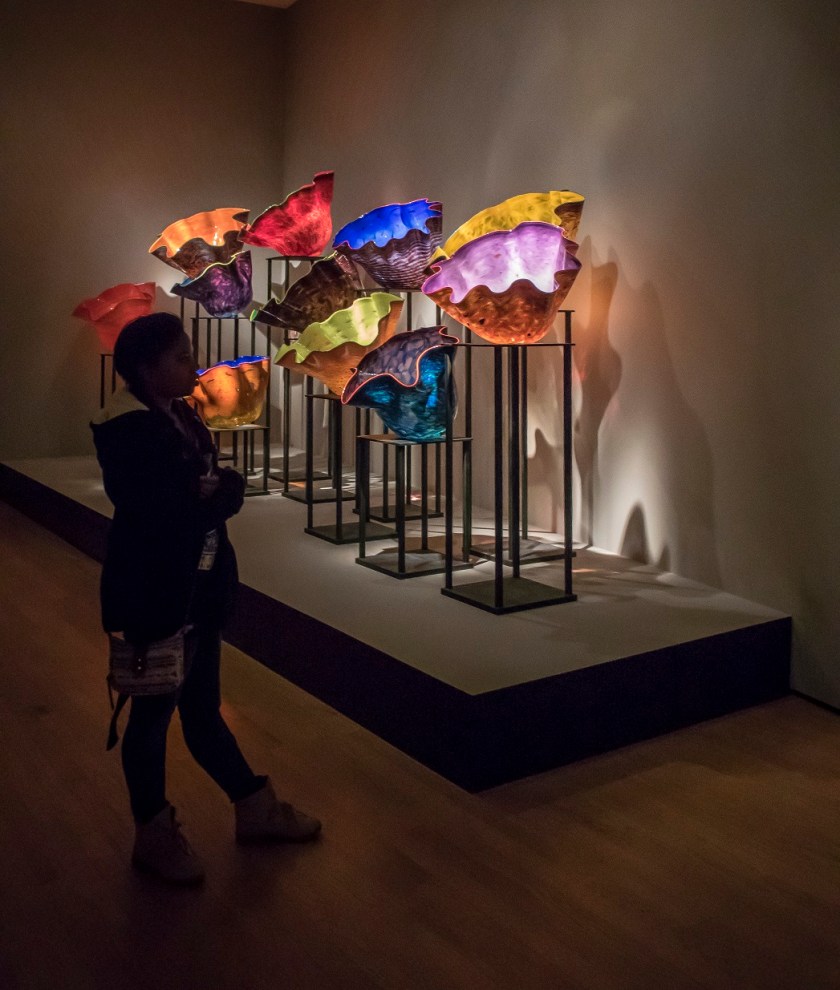
Chihuly’s specialty is glass blowing—an art from that I was familiar with before the trip, but never thought that it was possible to create such a variety of sculptures.
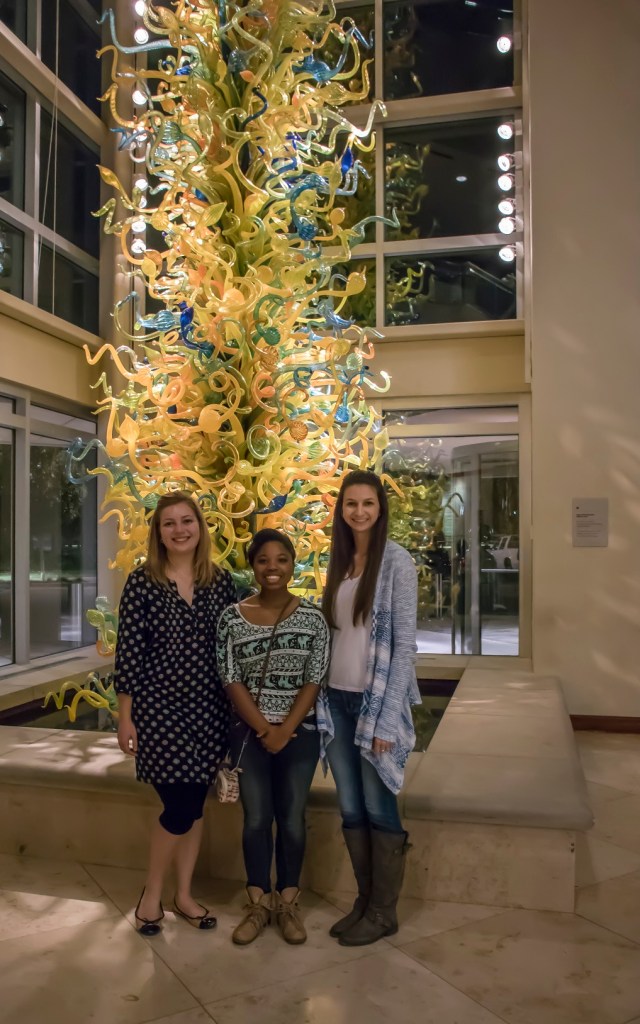
No two pieces were identical, not even when Chihuly was following the classic style of his Persian sculptures. On this note, one display that really caught my attention was the “Oklahoma Persian Ceiling.” It is almost impossible to describe due to the fact that I have never seen anything like it! We walked along a white corridor and above our heads were many different glass pieces fitted together in disarray, different shapes, loud colors, and intricate designs. A lot of his pieces seemed other worldly, belonging in a place of dreams and imagination. Chihuly’s style is so enchanting that the fifty-five feet tall “Eleanor Blake Kirkpatrick Tower” at the entrence created a general feel for his talented and daring glassmanship.
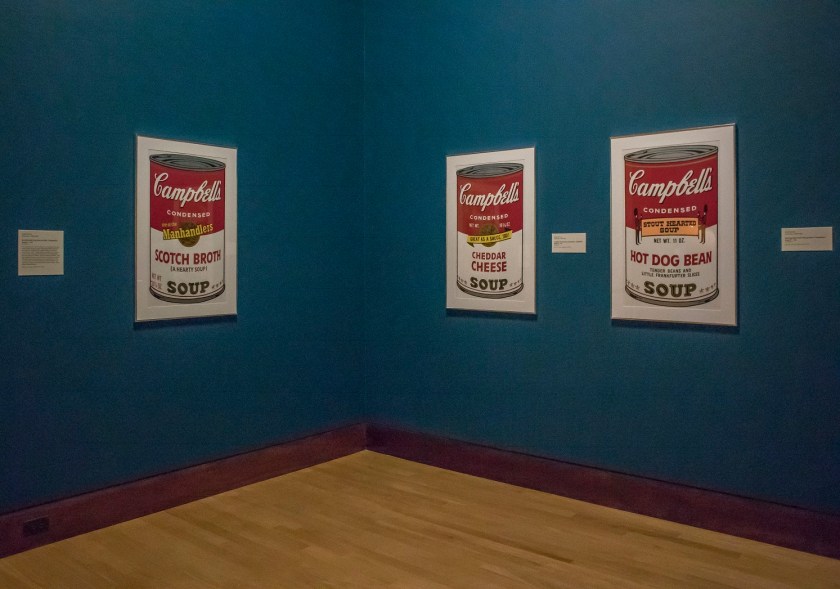
There were other paintings and sculptures we browsed through. As we toured the rest of the museum, we saw works by well-known artists like Georgia O’Keeffe, John James Audubon, Andy Warhol…
…and many more. We learned a lot of history behind different displays and their significance.
One story I found interesting was about the painting “The Laughing Indian” by Fritz Scholder. Scholder fought against the stereotypical Americanized version of Indians, who were stoic and romanticized, and placed them in a light of humanized nature. He did this by exaggerating certain characteristics forcing his subjects to look more awkward and out of place, which subliminally correlates to Native Americans’ history in America.
Overall the Oklahoma City Museum of Art taught us many things and exposed me to a lot of different styles of art. My only regret is that we didn’t have more time to examine each display to compare and contrast them. It was a wonderful opportunity to attend such a beautifully diverse accumulation of paintings and sculptures.
Evening Fun, by Sadie McLaughlin
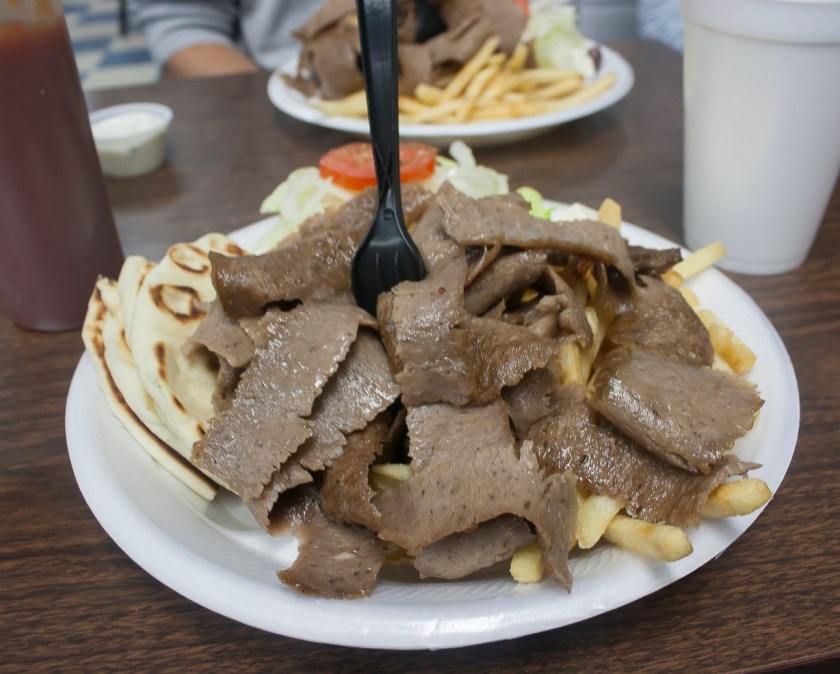
As we finished up our tour of glass heaven, we decided that it was time for dinner. Our final culinary adventure for the day took us to Norman, Oklahoma. Here we arrived at the Greek House where we were treated with abundant plates of delicious Greek food across the street from the University of Oklahoma. We all greatly enjoyed generous servings of gyro meat, pita bread, and tzatziki.
Just when we thought we could not possibly eat more, we managed to fit in a few bites of baklava, a rich layered pastry filled with honey and nuts. With happy hearts and full stomachs, we attempted to walk off our calories with an expedition through OU campus.
As we neared campus, the dramatic architecture of OU campus instantly grasped our interest. The majestic gargoyles embedded at the buildings’ facade, lighting that accentuated the lines and curves of this historic buildings, and sculptures scattered around the campus took hold of us and enticed us to immerse ourselves deeper into the campus.
Speaking of immersing ourselves, we tried our hand at telephone stuffing, a 1950s fad that we wanted to revive…
OU has six telephone booths, brought in as an homage to the booths across London when OU’s President, David Boren, spent time at Oxford as a Rhodes Scholar. They provide a bit of nostalgia, class–and fun–to the OU campus.
Eventually we found ourselves inside the library, a dichotomous building indeed, as part of the facility was modernized (with imacs, cutting edge study rooms, cutting edge vending machines, etc.), while the other part was the historic library. This latter part of the building was what interested us the most, as the massive scholarly study rooms, bountiful amount of antique books, and luxurious design was unlike anything we had ever seen.
After going through the fields of OU, finding sculptures by James Surls…
…Jesus Moroles, and Robert Indiana…
…along the way, the clock tower struck its 10 pm chimes. With this solemn ring filling the campus, its echo had a near melancholy tone as if it were sad to see us go.
But by that time we were more than ready to hit the hay after a near overstimulating day of political science panels, amazing food and art, and our improvised expedition of the beautiful OU campus. Now it was time to go to sleep and get ready for tomorrow’s adventure in the Capital of Oklahoma City.
With eager spirits, the LEAP Center took to the road to visit Oklahoma City. With the end of the semester ever so close, travels involving art, history, and food was a lift to the spirit. Our first objective, however, was to attend the Oklahoma Political Science Association Conference, where Brian and Professor Yawn were presenting separate papers.
Following a stop at Cuppie and Joe’s for some morning coffee, we headed to the conference for the morning session, in which Brian was scheduled to present his paper on economic development in Mexico.
Morning Session, by Brian Aldaco
United as a team of proud Bearkats, we walked into the Starkey Building on Oklahoma City University’s campus. With a stomach full of nerves and delicious Chi-Latte, I looked for room 100. My panel was composed of students from East Central University, University of Central Oklahoma, and University of Science and Arts of Oklahoma, and we were all eager to begin.
As the first research projects were presented, focusing on the use of social media by Oklahoma legislators (Lauren Stafford and others)…
Kaitlyn Finley and Co-Authors Present on Educational Funding in OK
…the morality of athletic programs in universities (Allyson Wilcox)…
Allyson Wilcox Discusses Ethics and Athletics at the University Level
…gender as defined by the supreme court, and public opinion concerning the raise in teacher’s wages, I revised by notes in last-minute preparation of my presentaiton. With twelve minutes allocated to each presentation (some composed of groups), my turn soon came to step up to the podium and present the research I had conducted on economic policy throughout Mexico’s history.
Brian Aldaco Presents at OPSA
With a palpitating heart, I began, occasionally stumbling, but nonetheless detailing the various economic periods of Mexico and how industries are currently affected by globalism.
After a short Q&A session from the audience…
we retired to the audience seats where my encouraging LEAPsters congratulated me on a well delivered presentation, and I breathed a sigh of relief.
Innocence Project, by Kaitlyn Tyra
After the interesting and informative student panel, the conference recessed briefly to gather lunch and reconvene in the conference room for keynote speaker Vicki Behenna. Executive Director of the Oklahoma Innocence Project at the Oklahoma City University School of Law, Ms. Behenna discussed the project’s objectives, the factors contributing to wrongful convictions, the opportunities provided for law students in connection with the project, and Oklahoma’s latest exoneration. The Oklahoma Innocence Project aims to help exonerate wrongly convicted individuals and to provide a unique educational experience for law students.
Vicki Behenna Discusses the Innocence Project
During her discussion, we learned that there are many reasons citizens can be convicted for crimes they did not commit such as inaccurate eyewitness testimony, procedural errors, evidence misinterpretation, and false confessions. We were surprised to learn that it takes 6 to 10 years for an inmate to be exonerated from the time the Innocence Project receives the case. Although this time period seems lengthy, the Innocence Project stays busy with more than 100 cases on their current case load.
Proudly, Ms. Behenna described Oklahoma’s most recent exoneration of Malcolm Scott and De’Marchoe Carpenter in July 2016. The crime involved a drive-by shooting which killed one women at a party in 1994, where the young men were convicted of the murder at age 18. The then young boys would serve 22 years in prison for a crime they had not committed before the innocence project was able to successfully exonerate them. Ms. Behenna discussed the specific case and the continuous amount of work they have to do on current cases. For LEAP Ambassadors, after meeting Michael Morton last year (who was wrongfully convicted in Texas), the keynote address carried extra meaning and an emotional connection with us.
American Topics Panel, by Mitchell Sanchez
After Ms. Behenna’s eye-opening presentation, we decided to split up to have a chance to listen from various discussion panels. With our plan set in motion, Brian Aldaco, Sadie McLaughlin, and I decided to attend an American Topics Panel in which SHSU’s very own Mike Yawn would present his paper. This panel, led by Dr. Bob Darcy, covered many different aspects of political science making it a thought-provoking session. It kicked off with Oklahoma City University professor Dr. Darcy and Dr. Mark Payton’s, “A Fresh Look at Fair Apportionment”, which dove into how the number of representatives for each state is actually decided.
Dr. Brett Sharp from University of Central Oklahoma then discussed his research on political history through editorial cartoons and how they paint a colorful picture of many key political times throughout the US and world history. The third presentation was given by Dr. Aaron Mason, professor from Northwestern Oklahoma State University and covered constitutional theory of American Indian Tribes. Native American Tribes were a particularly interesting aspect to Oklahoma political scene, which Dr. Mason so wonderfully presented to us Texans. Thomas Taylor from Redlands Community College looked at the decline and possible demise of Democrats in Oklahoma, a very timely piece with the recent election results.
Transitioning from topic to topic finally led us to our very own Professor Yawn. Professor Yawn presented his research on, “City and County Use of Social Media” where he discussed how advancements in technology and growth in social media could prove very beneficial for county use.
Criminal Justice Discussion Panel, by Kaitlyn Tyra
After the rest left to the neighboring conference room, Ashely Allen and I stayed in room 100 to listen to the very interesting conversation about recent reform in Oklahoma’s Criminal Justice System. The panel discussant was Former State Speaker of the House, Kris Steele, along with a team of specialized individuals who headed the campaign on the state propositions. Each provided their insight and background making the panel lively and personal. The speakers were passionate, citing a number of statistics showing the issue of the Oklahoma Criminal Justice System. The panel discussed solutions and how to improve the system. It was an engaging way to learn about one of Oklahoma’s major issues!
Views on Class and Support for Right Wing Policies Panel, by Mitchell Sanchez
Deciding that it was better to divide and conquer the conference’s discussion panels, we again split up where Sadie, Ashely, and I went into the Views on Class and Support for Right Wing Policies Panel. With recent election results, this panel was particularly interesting. Dr. Woo Jin Kang from the Kyung Pook National University presented his research on, “Income and voting Behavior in Korean Politics: Why Do the Poor Support Conservative Political Parties?” Looking into the politics of another country helped give some perspective to the occurrences of our own country. Following Dr. Kang, Dr. Bob Darcy delivered a passionate presentation and discussion of support for Donald Trump. This relevant topic was intensely, and at times contentiously, discussed.
Pubic Administration Panel, by Brian Aldaco
While Mitch and his group analyzed the elections more in depth, Kaitlyn and I learned of public administration policies dear to Oklahomans. With discussion on the diversification of revenue sources for the state budget, the preferred paradigms of public officials, and policy regarding gambling revenue from Indian Territory, we were exposed to the differences of public policy needs as compared to those of Texas.
Concluding Thoughts
The day brought forth an exchange of many interesting ideas. For most of us, this was our first conference, and our major takeaways were as follows:
Presenting papers is difficult, with much research going into a topic. But the result is an exchange of ideas that can be beneficial to the presenter and his/her audience;
The election of Donald Trump is likely to remain controversial;
The presence of Indian tribes in Oklahoma poses interesting challenges and opportunities that are not really on the public agenda in Texas.
For us, the conference presented many opportunities to learn and to embark on professional growth, and together we look forward to learning more about Oklahoma City.
As has been SHSU’s tradition, every legislative session the LEAP Center finds exemplary students to intern at the capitol with the state legislators. From a week of mid-terms to a weekend of new legislative terms, the LEAP students traveled to Austin to tour the capital, interview in legislative offices, and explore the rest of the city.
Interviews, by Vincent Melore
It was six o’clock in the morning when we LEAPed out of bed, awaiting the opportunity of a life time. Donning our newly pressed suits, we eagerly anticipated the ride to the capitol, where we would interview with three staff members representing various legislative candidates. When we arrived at the front gates of the capitol we were struck with awe. Magnificent coal black gates surrounded a structure like no other in the state of Texas. The capitol, dressed with genuine Texas red granite and topped with the gorgeous guardian of liberty, was truly a testament to all the opportunities that Texas provides.
LEAP Center Students Sit in on Appropriations Committee
Soon after the group arrived at the capitol, we interviewed staffers from numerous offices including: Benjamin Williams, Director of Administration for Representative Jim Murphy; Eiman Siddiqui, future chief of staff for Representative-elect Tom Oliverson; and Nick Raymond, future chief of staff for Representative-elect Ernest Bailes. The interviews were indeed a learning experience as potential Austin interns Vincent Melore, Christina Perez, and Isabela Gonzalez were interviewed simultaneously for their first interview of the morning. During the interview, the group was asked typical interview questions, hypothetical interview questions, and some questions that seemed unusual but were used to get an understanding of our unique personalities and whether or not they would fit well in their offices.
As we continued interviewing throughout the day, we also toured through a few of the offices to gain a feel for the environment and expectations of each office (just in case we get placed). We soon understood how important it would be to maintain a professional and positive attitude. As the frontline of the representative’s office we would be responsible for ensuring the integrity and security of that office. Although we all knew we would be in for the workload of a lifetime, this in no way stifled our determination and drive to serve the legislature.
Site-Seeing, by Victoria McClendon-Leggett
Meanwhile, with a muggy and dull sky, LEAP students without impending interviews began their day differently. As we poured out of the van, we filed through the gates and paused as we took a moment to gaze up at the Texas State Capitol. “I’m going to go park. Will you see about getting a tour?” Professor Yawn said to Beatriz. She turned on her heels and began to lead the group towards the edifice that towered in front of them. The façade looked almost pink in contrast to the grey sky. The building was a beautiful example of the renaissance revival style. The walls were smooth, polished red marble. Columns surrounded the rotunda that rose high above the rest of the building, and all around it the pediments of each individual wing came to form four separate peaks.
Some of the students had been here before, but we were all just as mesmerized by the ornate capitol details surrounding us. While waiting for the next tour to start we had time to admire the general splendor. The floor was terrazzo marble that somehow managed to gleam in what little light from outside had found its way in through the 900+ windows that functionally adorn the Capitol building. Professor Yawn eventually joined us and we followed the tour guide as he ushered us up wrought iron staircases, down hallways with more than twenty identical doorways, and past portraits of former Texas governors.
The tour itself lasted only about forty minutes, and then afterwards the group had to go their separate ways. Some had interviews for prospective internships, some had already landed their internships and simply wanted to visit different offices…
LEAP Center Students in Senator Schwertner’s Office, with Staff Member Deandra Porter
and some were left to amuse themselves for the day. Eventually, we all made our way through the winding halls and tunnels of the capitol and regrouped at the Reference Library before going to lunch.
LEAP Center Students, Ever-Studious, in the Capitol Reference Library
Food, by Christina Perez
After an adventurous morning at the capitol, we headed to Frank and Angie’s Pizzeria. The options for pizza pies seemed endless. The first suggestion was pepperoni, but we all decided that we should explore different options. After a vote across the table, we decided to order the “Chairman of the Board” which was Frank Sinatra’s nickname after he founded Reprise Records in 1960. We also decided to try “white pizza.” This take on pizza strays away from the path of familiarity for some of us as the tomato sauce is replaced with alfredo. In true Austin spirit, we embraced the change and decided to go for the strange. While enjoying the delicious pizza pies, with expressive eyes we discussed how we could see of the town. Eventually we figured out the best routes through the city that would take us through housing options for the spring.
More Food, Brian Aldaco
Tired of looking through countless apartment complexes, a bit weary from the costly Austin living, we found it apt to unwind with a visit to the ever favorite Clay Pit. From the Guadalupe St rumbling echoes of traffic, we crossed into the cozy, calm Indian cuisine restaurant. As we were seated, the spicy aromas which filled the air prompted us to get ready for this trip down savory lane. As their eyes met the different menu items, students who had never been to an Indian restaurant looked perplexed, perhaps even frightened. Items such as Goat Curry, Lamb Roganjosh, Boti Kabab, (whose pronunciation was just as ambiguous as its ingredients) were met with curiosity but ordered nonetheless.
For dessert, we agreed on the savory treat of creme-brulee, Gulab Jamun, and the Hot and Cold Love (a unique combination of vanilla ice-cream and specially prepared carrot puree). After hearty conversation, good food, and a couple of table mishaps here and there…
Sadie McLaughlin, Following a Water-Drinking Mishap
…we managed to get off our seats and take a night walk through UT Campus and the Capitol.
We strolled through the city until we reached the UT Campus. As we neared the glowing UT Tower, we surveyed the South lookout from our viewpoint.
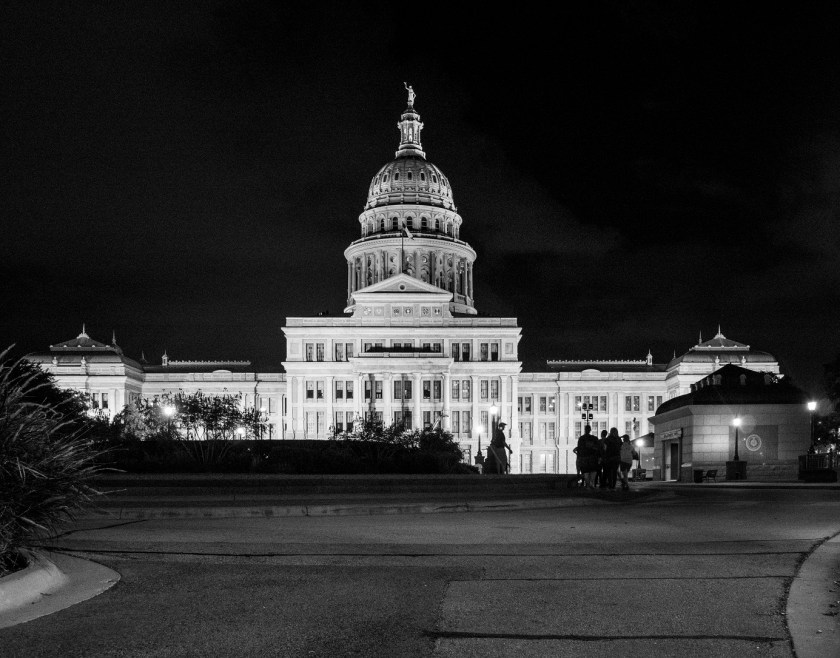
Standing on that pebbled ground we stayed contemplating at the bright vista of a very beautiful Texas Capitol dome. Night crawling through more of Austin we re-visited the State Capitol and pensively strolled down the perimeter of the legislative building.
With a day full of weary and a tomorrow full of mystery, it was nice to walk worry free, soaking in the pleasant moon glow and shine from our Texas seal. Our little weekend adventure had come to its end.
With a drive back to Huntsville in the morning, we took our last glances of the capitol, gave our last sighs, and agreed on how pleasant the day as a whole had been. Even though nerves ran high, and results are yet to be seen, at least we got to spend an adventurous day at Austin with great friends.