The Bizarre Tale of Treaty Oak’s Poisoning in Austin

Makenna McDaniel

They say “Keep Austin Weird” but nothing is more bizarre than the story of Treaty Oak. Back in the 1980s, there was an attempted murder that took place. Of a person? Even worse, it is the perfect specimen ever to exist. Treaty Oak. 

Treaty Oak, an over 500-year-old tree, is a historic site in Austin, Texas. In 1927, the American Forestry Association named Treaty Oak the most perfect specimen in North America. A tree so perfect that people from around the United States have to visit it whenever they come to Austin.\

Pictured: Treaty Oak, 1941. (Courtesy of the Austin Public Library)

In 1989, a ghastly sight was seen: dead grass surrounding Austin’s beloved tree. John Giedraitis, Austin’s first city forester, was hosting several state foresters from across the United States when he came upon this frightening sight. While leading a tour of the multiple parks in Austin, Giedraitis proudly took them to Treaty Oak. Upon first glance, the foresters noticed that something alarming was at the roots of Treaty Oak, dead grass. Indicating a problem, after months of further tree deterioration, Giedraitis decided to open a full investigation to save the tree. Giedraitis took samples and sent them to the lab for a test. The results were quick but did not contain happy news… Treaty Oak was being poisoned!

Pictured: ‘Murder Mystery Grips City: Just Who Would Kill a Tree?’ on the front page of The New York Times, 1989.

The poisoning seemed to him as intentional, but who could do such a thing? That is a question that Giedraitis would not rest until he got to the bottom of. Austinites were not the only ones invested in this criminal case but the world. Magazines and news stations started to cover the story. One day, after hearing about the tragedy, H. Ross Perot, a billionaire based in Texas, reached out and offered to pay for the expenses of the investigation. Giedraitis and his foresters began to call every scientist they knew; the local police department took up the case; it was a city-wide effort. In the meantime, several treatments were given to Treaty Oak to save its life.

John Jones, a new detective in the Austin City Police Department, thought this case was a joke but soon found out it was anything but. The Austin Forestry Service offered a $11,000 reward to anyone who knew the culprit.

The news spread so fast that people from all over the world started to call, claiming to know something. No one had any helpful information about the case until Cindy Blanco came forward. Blanco would often ride to a local methadone clinic with a man named Paul Stedman Cullen. Blanco recalled an odd conversation with Cullen, who admitted his love for his counselor, but the love was unrequited. Cullen performed rituals and believed that killing the largest thing would also kill his passion for his counselor. Jones got a search warrant after an incriminating audio recording. Cullen’s home was soon investigated, and a trial began. He was ultimately found guilty and sentenced to 9 years for criminal mischief. Treaty Oak was safe at last!

Immigrant Stories: Success in Citizenship Preparation

Mike Yawn

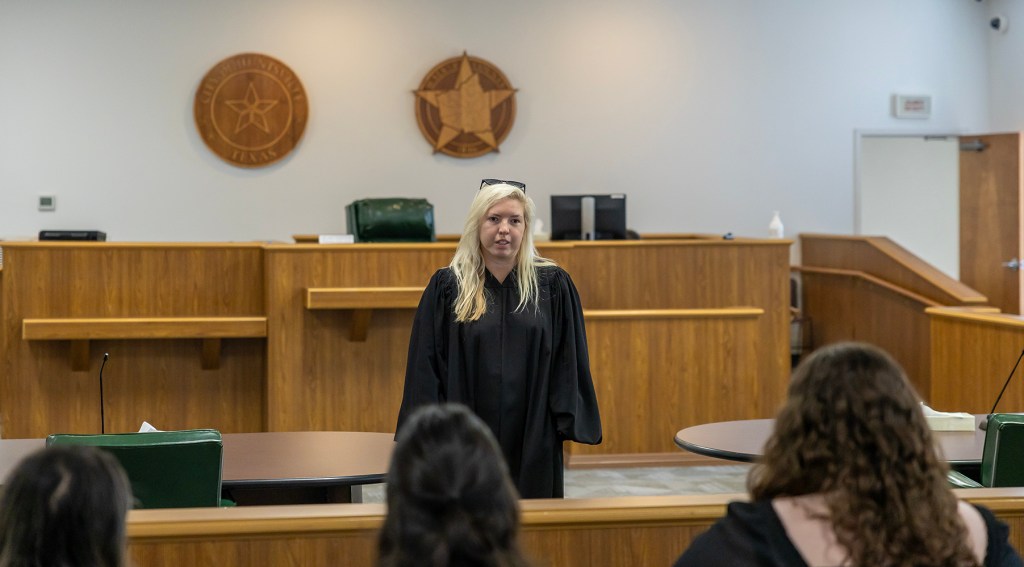
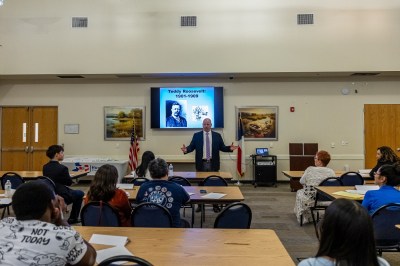
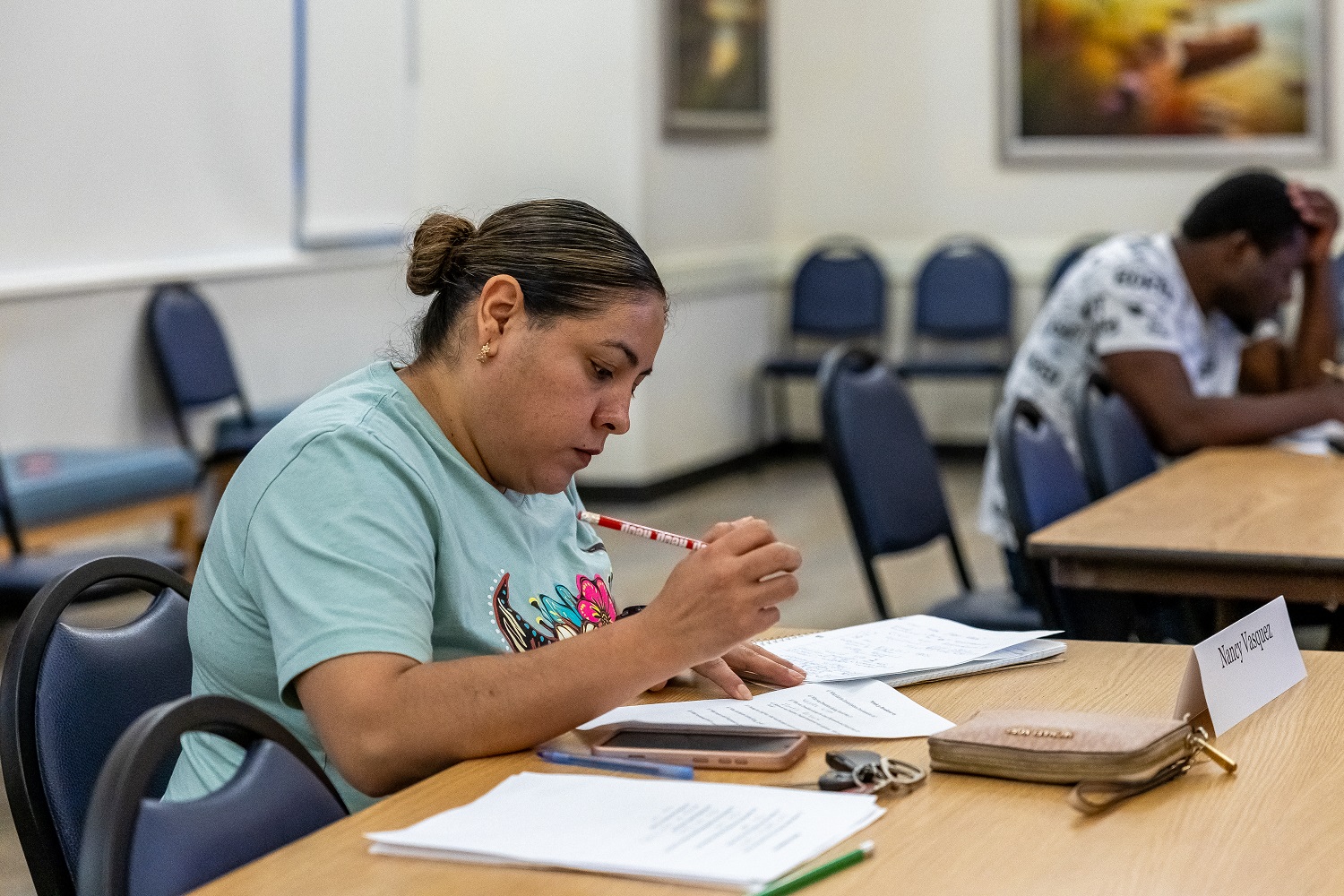
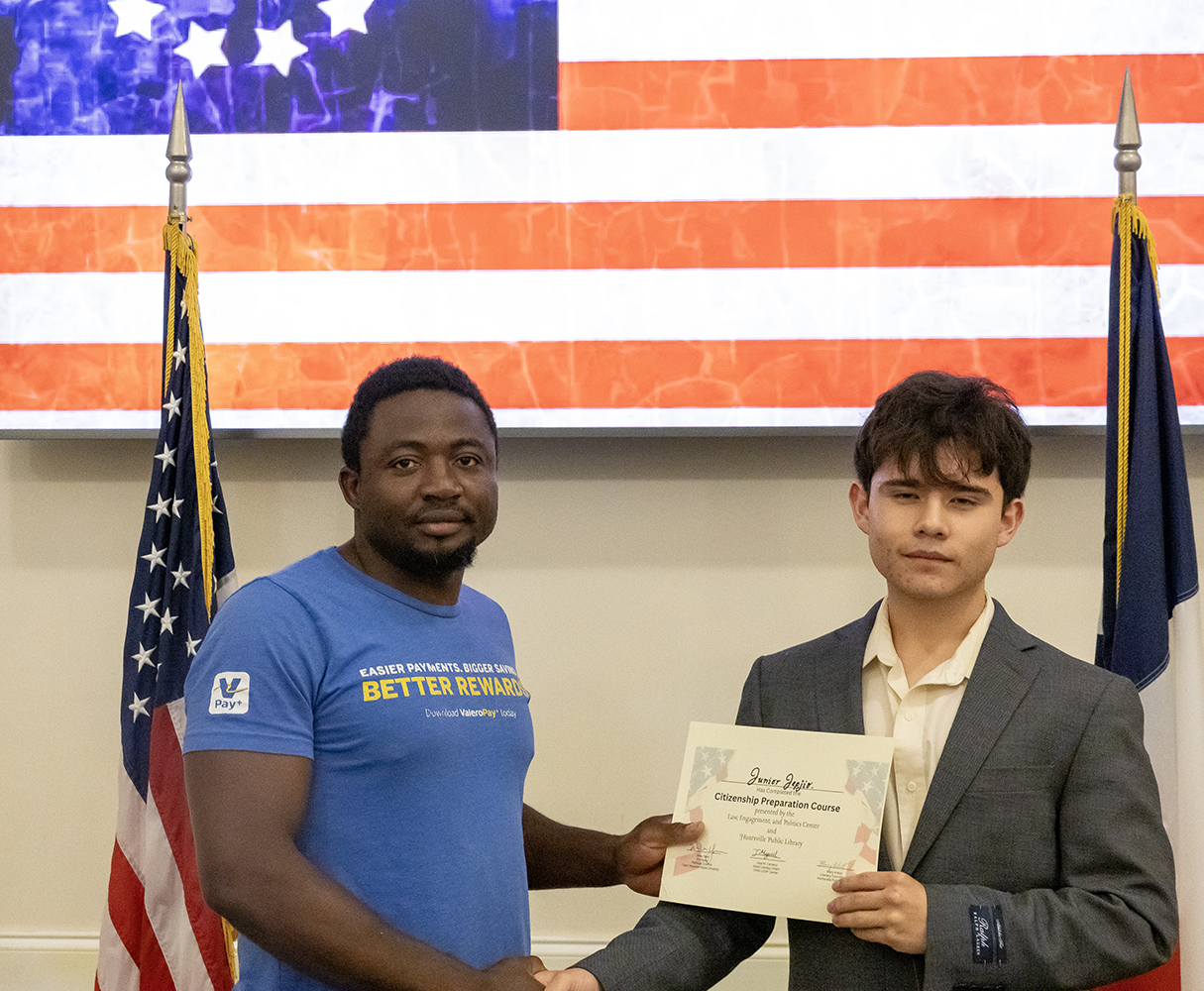
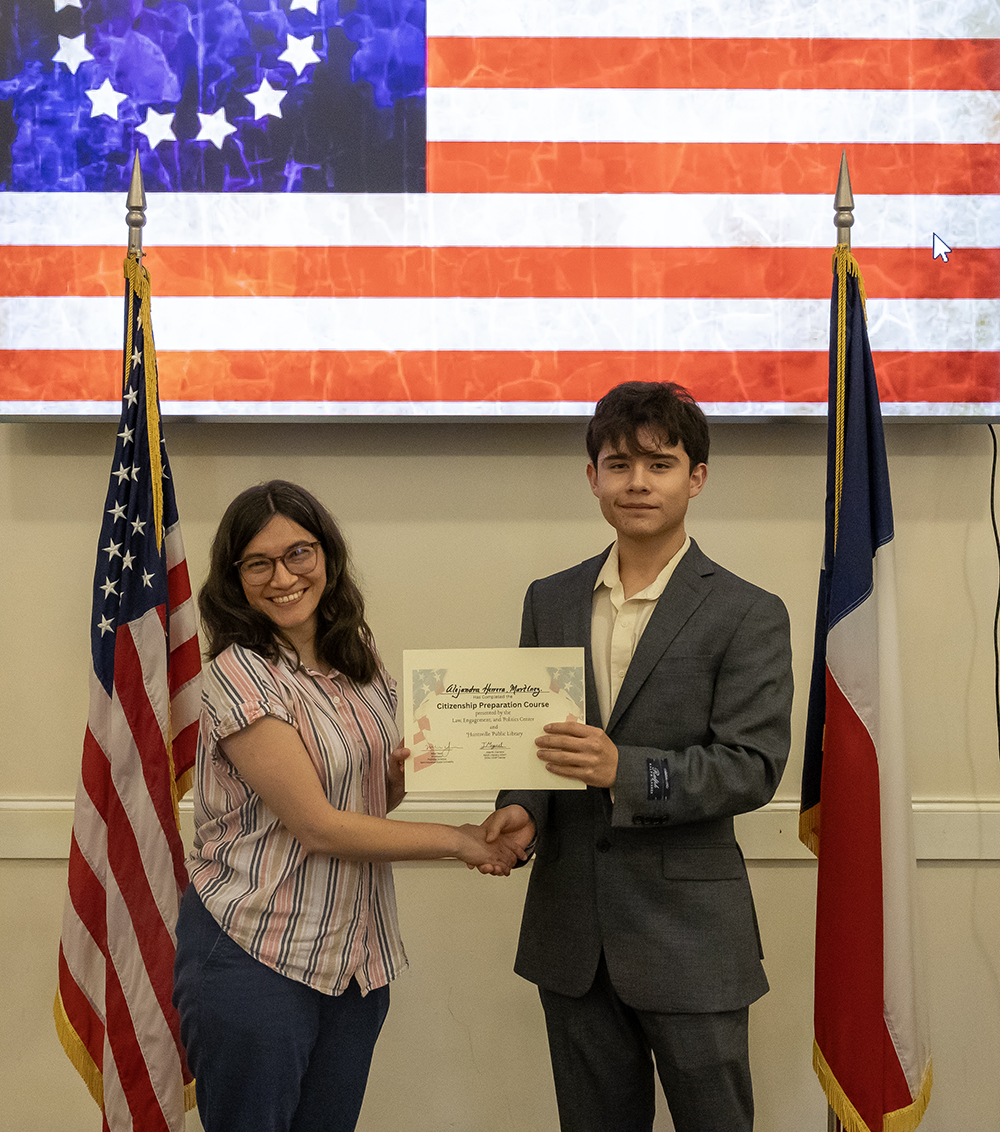
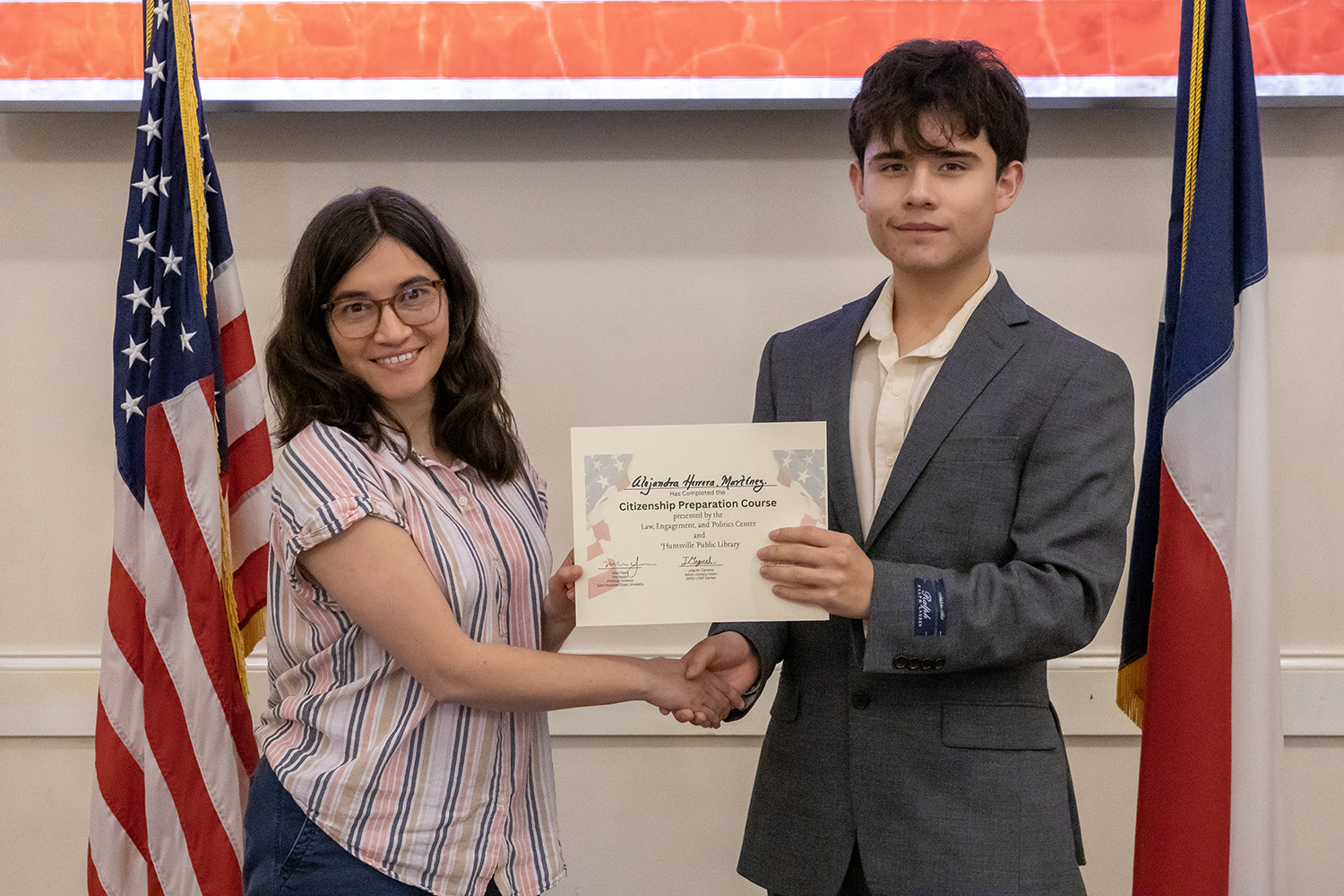
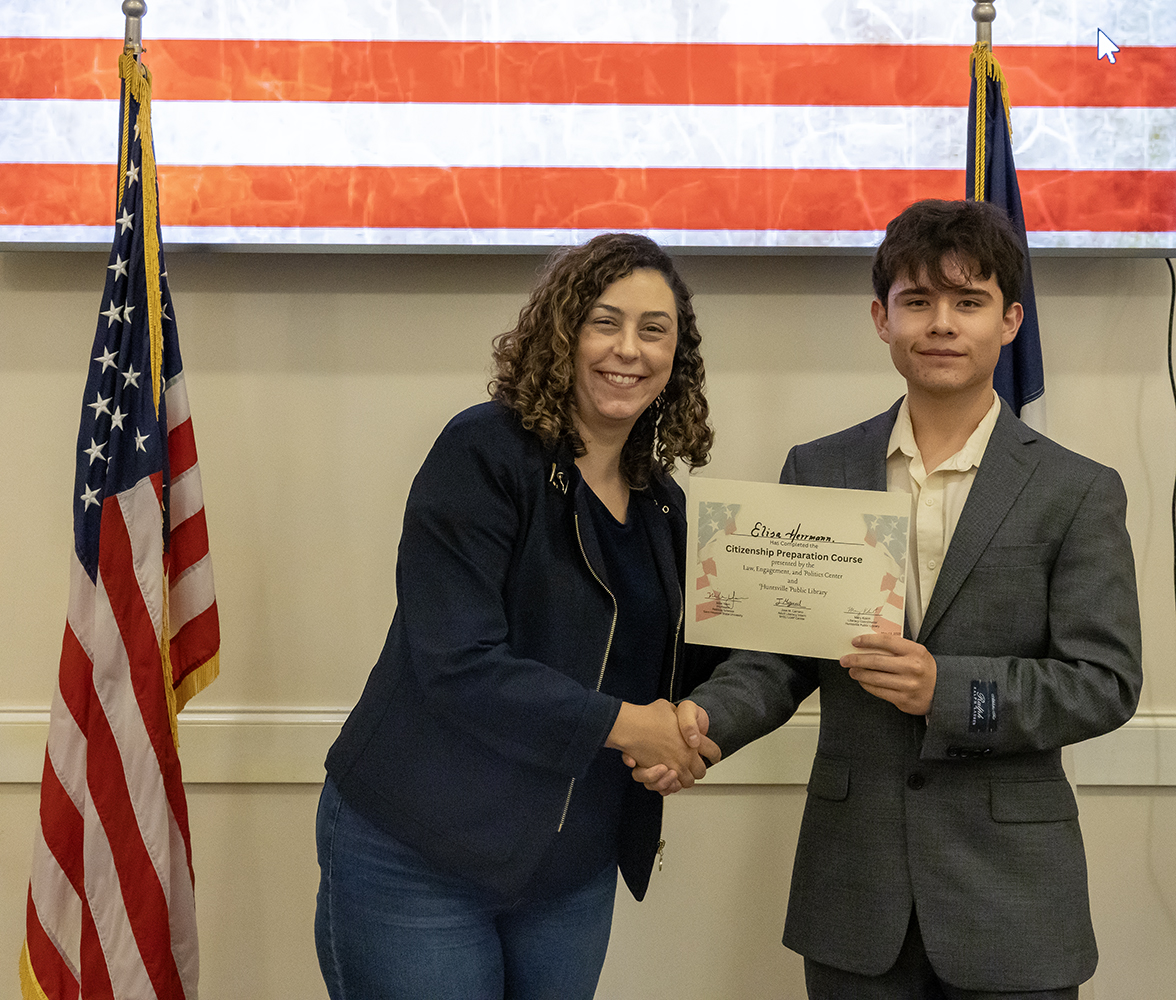
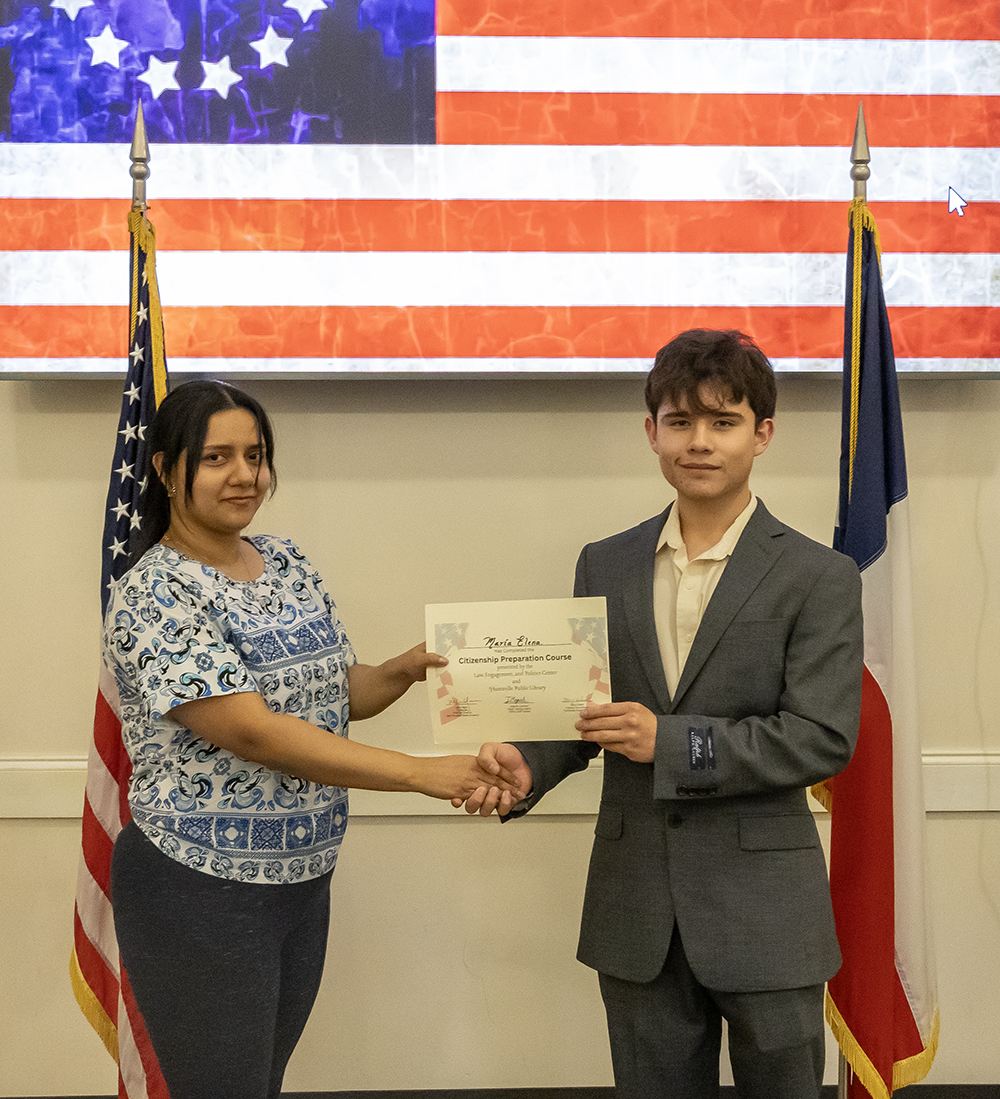
Each year, the Center for Law, Engagement, And Politics partners with the Huntsville Public Library, hosting a five-week “Citizenship Preparatory Course” for local documented immigrants. This year, with the help of intern Jose Carreno, Library Literacy Coordinator Mary Kokot, and three unpaid student volunteers, we were able to assist 13 local immigrants on their journey to citizenship.

Many people–even citizens–don’t know what it takes to naturalize, which is one reason Richard Lane and I established this program in 2008. For most immigrants, they have to pay approximately $1,000 for the paperwork, submit extensive records–including travel records for many years–demonstrate that they can read English, demonstrate they can speak and understand English, and also pass a Civics Quiz.

What are some of the questions on the quiz?

  • Name one of the authors of the Federalist Papers.
  • There are fifteen cabinet departments. Name two of them.
  • What is one power of the federal government?
  • What is one right reserved only for citizens?
  • There are four amendments to the US Constitution that involve voting. Describe one of them.
  • Who was President during World War I?

If the immigrants can show they know this information, while also demonstrating a clean criminal record and good moral character (not, for example, an excessive drinker or a former prostitute), then they earn their citizenship.

Over the five weeks of the course, we cover these materials, alternating between boring lectures (led by me) and more hands-on help and translation by the volunteers, which this year, included Nataly Elizondo, Michelle Moya, and Yajaira Gutierrez–with a photography assist by Olivia Discon.

While the volunteers’ bilingual skills are helpful, almost all of the immigrants are required to take the test in English (there is an exception for those who are 55 years old and who have been in the country for 20 years), so we try to avoid extensive communication in Spanish.

This year’s immigrant roster was impressive, with two professors, professional staff from the College of Osteopathic Medicine, two janitorial staff, and eight other local residents. This list included: Dr. Elisa Herrmann, Jose Arroyo, Maria Elena, Junior Jepjio, Alexandra Herrera, Nancy Vasquez, Iris Santos, Veronica Garcia, Dr. Juan Diego Daza, Nancy Martinez, Marisa Pimental, Carmen Cedeno, and Gregoria McGuire. McGuire passed her citizenship test during the course, and she continued to attend the course to work on her writing and learn more about US history and government.

One of the most appealing aspects of the course is the friendships that develop over the five weeks, despite broad differences in background, occupations, and cultures. Among our 13 classmates, for example, eight different countries were represented–including Cameroon, a first for us in the 16th year of leading the course!
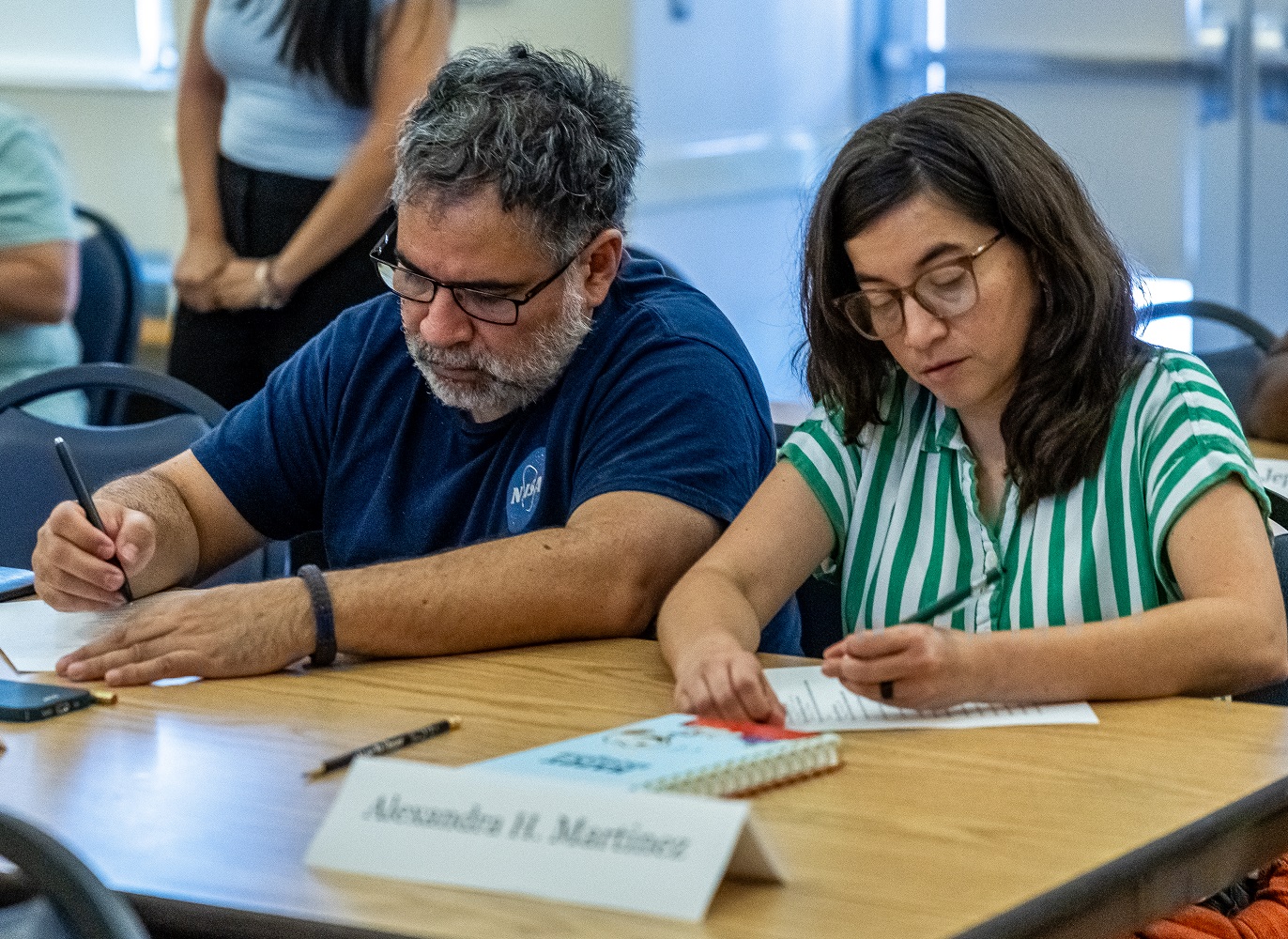
Our final class is a “Thanksgiving,” with immigrants and volunteers bringing dishes from their native countries. With a healthy helping of bar-b-que and desserts and drinks from Mexico, Germany, El Salvador, and Brazil.

This Thanksgiving is not just part of what is taught in the class and on the citizenship test, it also reflects the friendships that have formed.

Thus the smiles you see in our photos are genuine. Indeed, even as the class was over, groups lingered, continuing to talk, exchange phone numbers and the like.

And thus it was with much inner warmth that I exited the building for our final class. This warmth was enhanced when Gregoria walked out with me, noting, “You are a good person, and I am grateful to know you.”

This struck me as very generous, and also coincidental, inasmuch as this is how I think of her. And as we parted for our cars, she added, “I think you must have a Mexican heart.”

Heard of G.O.A.T.s

by Olivia Discon

As a LEAP Ambassador, you’re not expected to be an art expert—or even an enthusiast. But after visiting dozens of museums through the program, it’s only natural that some of us become fans… or critics. I’ve now been to 75 museums with LEAP. Before joining, I’d only ever visited one. Among all those experiences, one name has stood out again and again: James Surls. Of those many wonderful educational experiences, James Surls is a name I had come to frequent more than most. 

Surls is something of a household name in LEAP. As a distinguished alum of Sam Houston State University and a prominent figure in Huntsville, his work has served as many students’ first introduction to art—including mine.

So when we heard about the opening reception for the Surls + Locke Museum and the Heard of G.O.A.T.S. exhibit, we knew it was something we couldn’t pass up!

After being shuttled to the 40-acre property, we went to Surls’ studio, which had been transformed into an event hall for the afternoon. Inside, towering sculptures filled the space, and even the live musicians were performing among the artworks on stage.

We spent a long time taking in the ambiance, discussing which pieces were our favorite. Moya and McCaughan were especially drawn to the work of Charmaine Locke, Surls’ wife and an artist in her own right.

Inspired by the natural world, Surls uses both medium and or composition to emulate life. This presents itself in various ways, but he’s most known for his sculptures that resemble flowers or plants, his eye motif, and sometimes, a combination of the two!

His work stands out not just visually, but intellectually.

While I didn’t initially grasp the depth of his pieces, I’ve come to appreciate their layered meanings over time.

As one article (written by my professor) quotes Surls:

“Right then and there, I drank from the well of true belief in something far greater than myself. I got the calling for my life, and I answered the call with a resounding ‘Yes, I will do it.’”

That sense of purpose resonates with me—and with LEAP as a whole. It reminds me of why we serve and why we learn.

We later walked through the Gift from the Bower exhibit, which featured a series of outdoor installations on its final day.

We spent a lot of time here, discussing meaning, appreciating how the pieces interacted with the environment, and—for Chrissy—getting eaten alive by bugs.

I personally enjoyed Sonic Overlook by Patrick Renner…

and Chrissy liked Learning to Fly by Sherry Owens and Art Shirer.

We had the opportunity to meet Surls himself and have him sign photos we took of his work at the Gaertner Performing Arts Center. It was an honor to meet the artist behind the incredible work that so many LEAP students have enjoyed over the years, and it’s an experience I will cherish for a long time. 

Victoria McClendon-Leggett, former LEAP President, also had the opportunity to meet Surls.

As for the Heard of G.O.A.T.S. exhibit itself, the gallery was filled with other famous names. John Alexander…

Lynn Randolph…

and Bill Haveron…

Michelle took a liking to a piece called His and Hers Red Nest by James Drake. She found that the nests looked like angel wings and fittingly posed for a photo upon discovery.

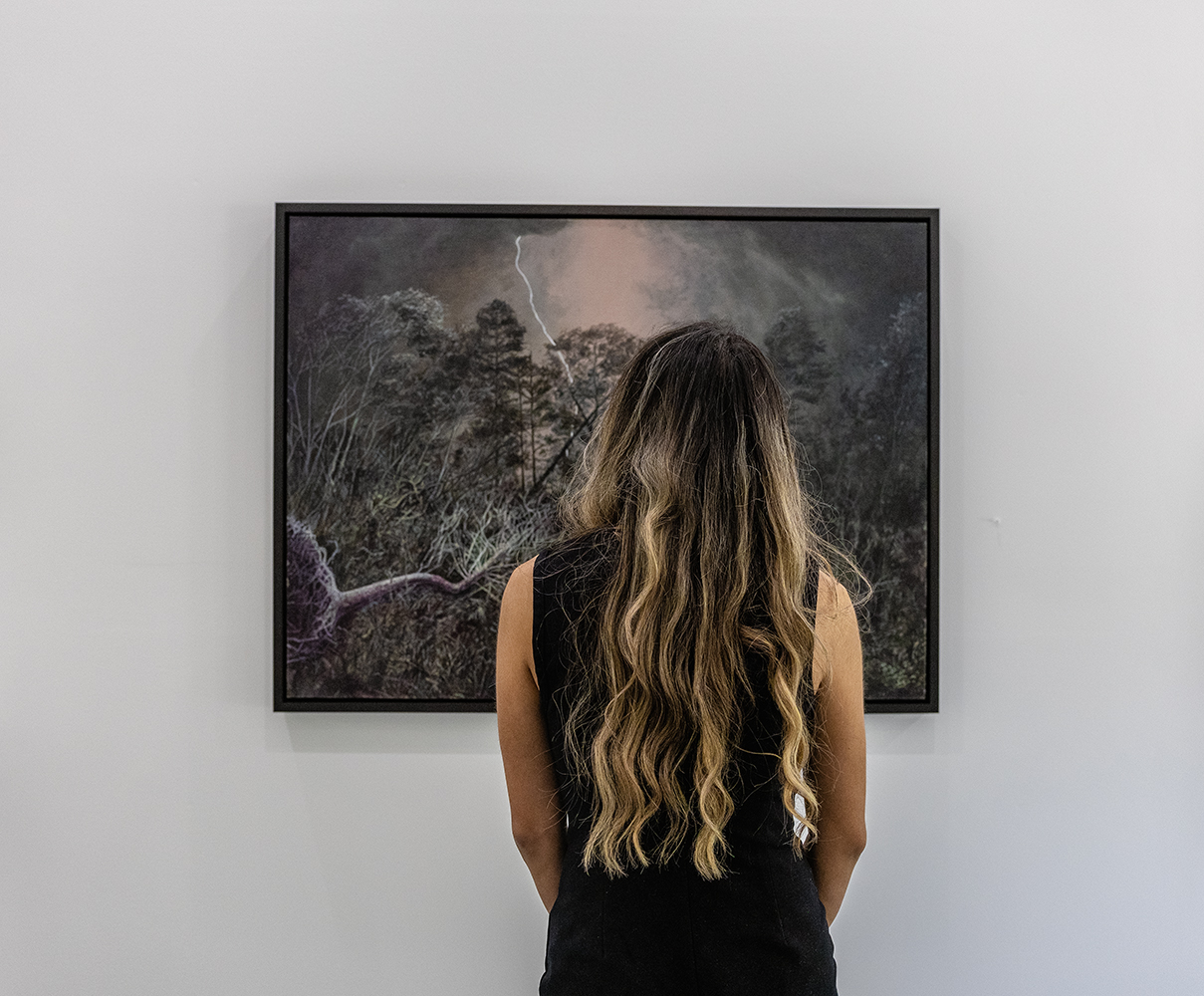
Chrissy, on the other hand, enjoyed a much moodier scene, Siddhartha by Carlos Canul. 

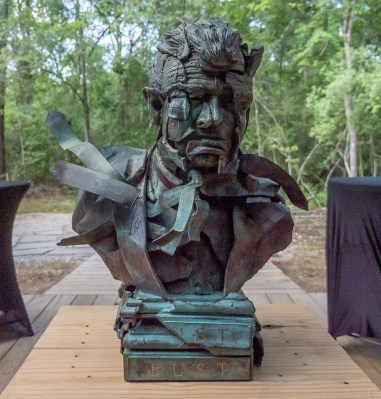
Interestingly enough, the Terry Allen sculpture was on display on the outdoor patio. Titled Bust, the piece depicts a man in a suit that is blowing against an imaginary force of wind. Like all of his pieces, this was thought provoking and visually interesting. It’s no surprise that this bust is courtesy of the Surls + Locke Museum’s collection!

In all, this was an experience that reminds you why LEAP exists—to open minds, spark curiosity, and connect students to opportunities and perspectives they might not have encountered otherwise. It was an incredibly memorable experience, and one I will always be grateful for.

Holmes and Hounds in Houston

by Olivia Discon

A mysterious death. A howling hound. A suspiciously Texan heir. What do all these things have in common? Chaos, comedy, and the incredible Todd Waite in his final bow as Sherlock Holmes at the Alley Theatre.

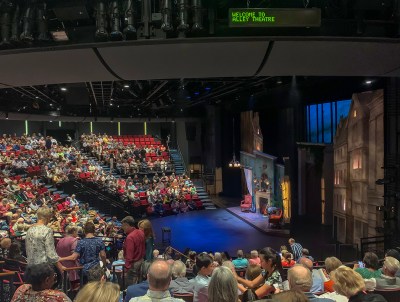
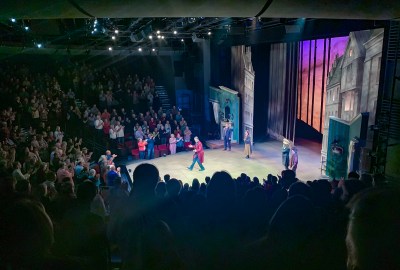
With only five actors and 36 characters flying in and out of scenes, The Hound of the Baskervilles was a theatrical juggling act, with a few wig, costume, and accent changes. Which is to say: it was impressive, ridiculous, and a lot of fun.

Before diving into the fun, we primed ourselves with a little chaos of our own: lunch at Post Market. In the spirit of the show’s variety, we went for food from all corners: noodles, rice, sushi, and African inspired power bowls— none of which appeared to be from the same restaurant. 

Our group included LEAP friends Bill and Carol Hyman and Wayne and Andrea Scott, along with students Macey Schank, Jacob Wessels, Chrissy Biello, Michelle Moya, Mikaela Baires, and Austin intern Cinthia Villarreal. We showed up full and ready for whatever the Alley threw at us.

The Hound of the Baskervilles follows Sherlock Holmes and Dr. Watson as they investigate the mysterious death of Sir Charles Baskerville and the legend of a supernatural hound that haunts his family’s estate. In this version, five actors take on dozens of characters, adding a fast-paced, comedic twist to the story.

When we saw Todd Waite last month at Murder by the Book, he mentioned how Sherlock Holmes is, frankly, a smart aleck, but one you can’t really get mad at, because he’s always right on the nose. Having heard him talk about the role made seeing him perform it even better. His timing, his wordplay, and even his smallest asides all landed with precision. He clearly knows Sherlock inside and out.

Dylan Godwin was another fan favorite in this show among our group. As the Texan heir to the Baskerville estate (among a dozen other characters), he was constantly shifting personalities and finding ways to distinguish the hilarious traits for both a grumpy street cop and a simple minded Texan—even when they are both in the same scene! 

In all, this was a great experience for the LEAP Center to share with some amazing community friends. 

Exploring the Great Outdoors and ‘The Singing Sands of Alamosa’

by Chrissy Biello

Located in the Sangre de Cristo Mountains, the Zapata Falls is a scenic waterfall that many can see by completing a short hike. The trail, frequented by countless year-round, offers not only a glimpse of the Great Sand Dunes National Park, but also allows you to see the surrounding mountain landscape as you make your way to the enclosed cave.  

During the winter, when the trail becomes icier, it becomes evident that one would need crampons for the rest of the way. Unless, however, they wanted to trust their personal balance to not slip down while others stood camera ready nearby.

As you reach the cave, you can hear the stream flowing beneath your feet, moving from within the frozen waterfall. Where sunlight reaches inside, a large section of ice has melted, revealing frigid water. This is an inviting yet risky opportunity for anyone willing to test their tolerance for the cold.

Eager to explore further, I started climbing the icy edge to reach a higher vantage point, hoping to get a closer look at the formations. However, as I began, Professor Yawn cautioned me that if I slipped, I would likely take a plunge into the creek. What was once a cascading waterfall had become what appeared to be an icy waterslide.

Keeping that warning in mind, I proceeded with extra caution and, thankfully, made it to the top safely.

Strangely enough, it did not feel cold up there, though that might have been due to the nerves that had initially distracted me from noticing the temperature. After carefully making my way down with Olivia’s help, we set off toward the Great Sand Dunes National Park….

Given the title of a national park in 2004, the Great Sand Dunes National Park and Preserve is an experience that will leave you both satisfied and extremely tired. With their striking optical illusion, sand dunes have inspired countless art pieces over the years. Seeing them in person, it is easy to understand why. While they showcase fascinating geological formations, they also flow together naturally, creating a stunning yet diverse landscape with plenty to take in.

As your feet sink deeper into the sand and your breathing grows heavier, the sounds of others enjoying the park begin to surround you. Families sled down the dunes, while others sit quietly, taking in the view of the mountains. Seeing it all firsthand, it is clear that national parks serve as a sanctuary for many.

And when having the chance to catch our breath, Olivia was able to try a few tricks on the sand….

While she was incredibly graceful, I am sure many still felt a tad uneasy. Walking across the dunes is challenging enough, but performing gymnastics there demands a level of confidence that can apparently outshine the fear of tumbling down.

When you finally decide you have had enough, you will soon realize you are not in the clear yet as you now have to make your way down. This, however, was less daunting because you could almost glide down each sand dune.

In all, the Great Sand Dunes National Park is an eventful opportunity to test your leg strength and connect with not only nature but those around you. It is a unique environment that will leave you with great memories and maybe a little too much sand in your shoes.

A Stroll Through Fort Worth

Kimbell Art Museum

by Chrissy Biello

Designed by Louis I. Kahn and opened in 1972, the Kimbell Art Museum in Fort Worth, Texas, impresses visitors with its art, architecture, and surrounding landscape. The Piano Pavilion, designed by Renzo Piano, brings the outdoors in, with large windows framing the elm and oak trees that surround it, allowing visitors to experience nature as an extension of the architectural space.

Walking through the gallery, many pieces stand out, but one in particular is the Virgin and Child (The Borromeo Madonna), which is attributed to Donatello! This sculpture was especially surprising to find, as one would not expect to casually come across a sculpture that is suspected to be from Donatello himself.

Not far from the Donatello sculpture, another famous Italian Renaissance artist is represented…

While Michelangelo is often remembered as a sculptor, his first known painting, The Torment of Saint Anthony, was on display. The piece shows Saint Anthony being attacked by demons, and it is believed Michelangelo was only twelve or thirteen when he painted it.

One that is particularly interesting for those interested in Greek and Roman mythology is the Judgment of Paris by Lucas Cranach the Elder. To summarize, it is said the Goddess of Discord tossed an apple to Paris, forcing him to choose among three nearly identical goddesses offering different bribes, a decision that ultimately triggered the Trojan War. Interestingly, a similar moment of unexpected judgment occurred in 1976, when a blind wine tasting saw French judges unknowingly favor Californian wines over their own, an event later dubbed the Judgment of Paris.

The museum had several incredibly famous artists in its galleries. Matisse, Picasso, Gaugin, El Greco, Edward Munch, and many more! Each turn lead to another pleasant surprise, all encompassed in a beautiful structure which remains a piece in and of itself!

The Kimbell Art Museum is the perfect place for anyone who enjoys architecture, art, landscapes, and more. Whether you prefer one aspect over the others, it is hard not to appreciate the thought and care put into the entire museum. Overall, the Kimbell Art Museum is a true treasure in the Fort Worth community, both architecturally and artistically significant.

Exploring Downtown Fort Worth

by Olivia Discon

Beyond the Kimbell Art Museum, Sundance Square offers another side of Fort Worth’s artistic and architectural landscape. The area, once quieter in past decades, has become a lively center for shopping, dining, and events. Designed as a pedestrian-friendly space, it encourages people to gather.

Of course, in the heart of the plaza lies the Richard Haas mural, a large-scale trompe-l’œil piece that plays with perception, giving the illusion of depth and architectural detail on a flat surface. This piece, among many others of Haas’, has revitalized what was once a plain, visually unappealing building, into a cultural hub. If you know LEAP, you know this was a “must-do” selfie stop!

On our walk, we had the chance to see a sculpture by Jesus Morales…

…Alex Katz…

… and though it was through a window, we saw a James Surls!

I am always intrigued by the philosophy of gathering spaces and downtowns such as these, and we took the time to engage with the space as it was intended: exploring and engaging.