The TX Legislature meets every other year for 140 days, packing two years of law-making into a bit more than four months. This is a predicament that calls for help, and offices are quick to reach out to SHSU for possible help.
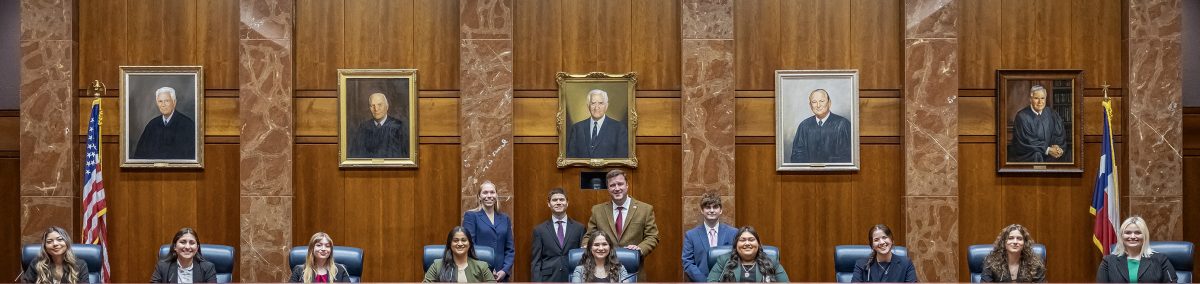
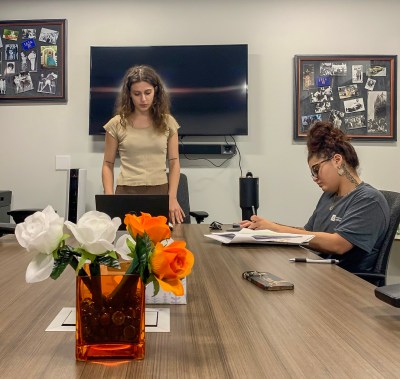
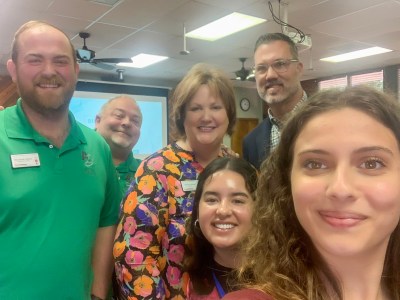
To that end, eight students set out on a Thursday for Austin, TX, to interview in both Democrat and Republican offices. To mark this moment, the students met under Bruce Munro’s “Confluence,” an art piece that highlights the complementary nature of the Humanities and Social Sciences, a fitting metaphor for a team of Bearkats ready to help each other in their next adventure.
The Sam Houston Austin Internship Program (SHAIP) is the vehicle for this adventure. SHAIP was initiated in 2012 by President Dana Hoyt, who wanted students to have great experiences while also increasing SHSU’s presence in Austin.
And for the past 12 years, SHSU has sent students to Austin, where they have worked in diverse offices, expanded their skill set, and broadened their professional network.
The SHAIP program offers students scholarships to defray living costs; assists with the interview and placement process; and offers trainings and workshops throughout the internship. The goal, as President Hoyt envisioned and President White has extended, is to provide once-in-a-lifetime opportunities to a great group of students, while enabling them to serve the State of Texas.
October 21, 2024, marked the 188th anniversary of Sam Houston’s inauguration as the first elected president of the Republic of Texas. It’s somewhat of a tradition for LEAP Ambassadors to volunteer, but this year’s event had a special twist, with a new Sam Houston Memorial Museum exhibit featuring Houston’s Executive “Mansion.”
As volunteers, we assisted in greeting guests throughout the museum. Michelle and Chrissy were tasked with driving attendees in golf carts from the parking lot to the museum. While their driving may have inspired a newfound appreciation for walking among some, the passengers arrived in good spirits.
The celebration was well-attended, with approximately 100 guests, including local figures such as Mac and Leanne Woodward, Michelle and Winston Spencer, Mary Laura Gibbs, Glynda Turner, former Mayor Jane Monday,Vice-President Matt Bethea, Dr. McCartney Johnson, Tabitha Shanley, Interim City Manager Sam Maisel…
…and Assistant Director of the Academic Success Center Heather Caudle.
And yes, Derrick Birdsall was there too.
One of the most exciting moments was meeting the renowned sculptor David Adickes, the man behind “A Tribute to Courage,” also known as “Big Sam.”
It’s safe to say we were star struck in more ways than one.
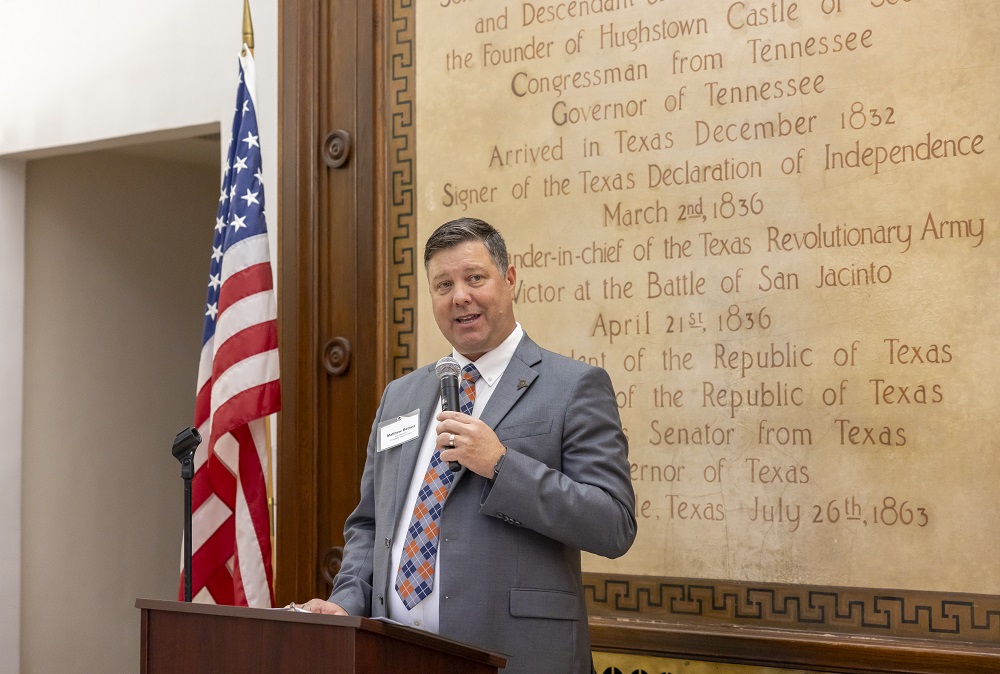
Once everyone had settled in, Matt Bethea, SHSU’s Director of University Advancement, gave opening remarks, discussing how the investment in university advancement strengthens SHSU’s position and puts it on a stronger playing field. His remarks highlighted the broader significance of projects like this exhibit for the university’s future.
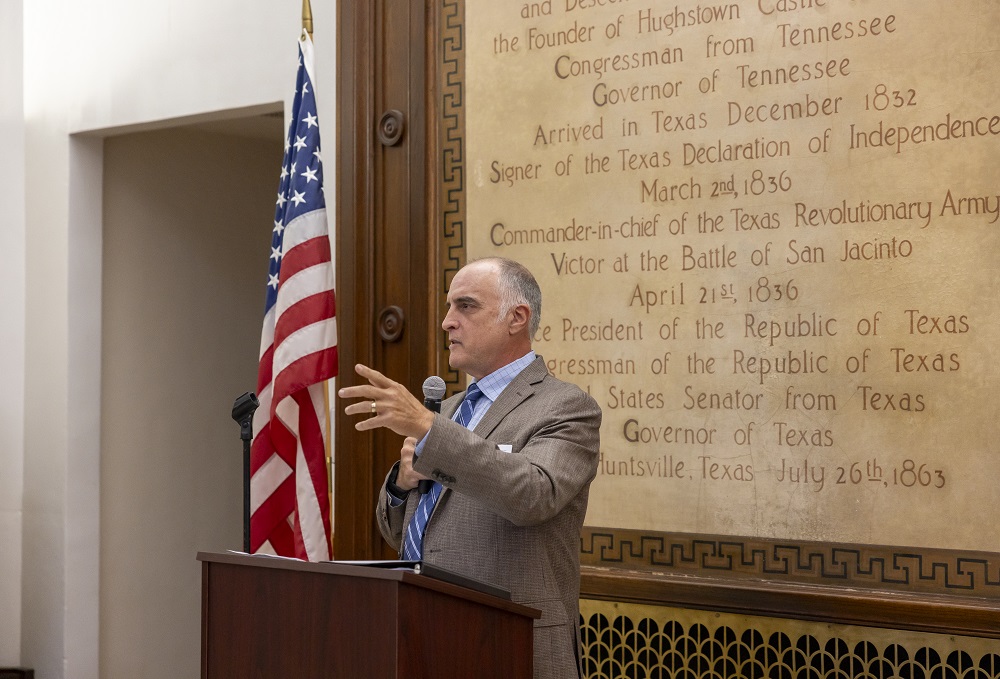
Derrick then took the stage for the ribbon-cutting ceremony, offering a brief explanation of how the executive mansion exhibit came to life.
He shared the backstory of incorporating the mansion into the existing galleries, with help from local company Steely Lumber, which provided key materials for the project.
The exhibit itself is a interactive and fun representation of Houston’s life, styled after “an college student’s dorm room on a Monday night.”
It highlighted Houston’s well-known gambling habits and showcased his love for books, offering a balanced portrayal of both his vices and intellectual interests.
Another renowned artist, Lee Jamison, took the time to speak with us as well. His work can be found all over the state, and many of the LEAP Ambassadors—past and present—are huge fans of his distinctive style. A favorite of many is his painting of Old Main from his Huntsville at Night series. It was fun to hear him recount the many efforts that went into crafting the piece, including the detailed research into the stained glass windows. While I couldn’t help but feel a bit sad knowing I’ll never get to see the building in person, his painting offers the next best thing.
The Sam Houston Memorial Museum always puts on fantastic events, and for many of the students, it was their first time visiting the museum. It was truly an evening to remember!
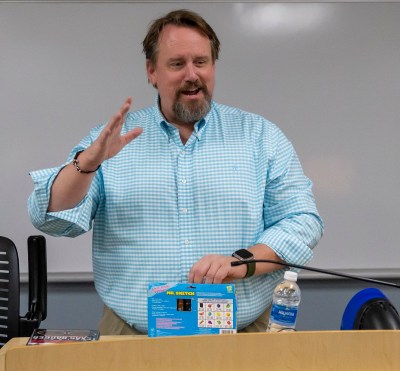
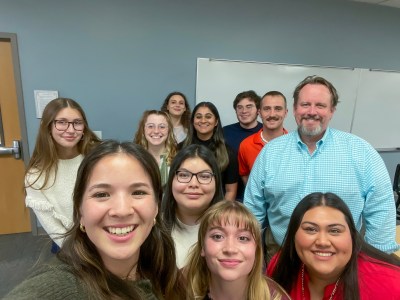
This Wednesday, Sam Houston hosted its football game against Western Kentucky; everyone was there… except for the dedicated Pre-Law Society members who attended this week’s meeting. The guest speaker was the incredible Dean Gene Roberts. Dean Roberts is not only an Associate Dean but also the Director of Student Legal & Mediation Services.
After a bit of business…
President Olivia Discon introduced Dean Roberts, and he graciously gifted the pre-law members with lots of goodies such as: padfolios, pens, and pencils to take notes, and pamphlets about mediation services.
Using a unique approach to speaking that he learned from Steven J. Gould, Dean Roberts started by letting the students ask questions. He discussed topics including the importance of meditation for solving disputes against two parties, confidentiality between mediator and clients, and neutrality of the mediator.
Dean Roberts also touched on terms such as intellectual curiosity (wanting to ask questions), B.I.F.F. (which is used for high conflict personalities meaning brief, informative, friendly, and firm, which he made a point to mention is attributed to Bill Eddy), and Collaborative Law.
The lecture was excellent and very insightful into the world of meditation and helped paint a clearer picture on the topic. A big thank you to Dean Roberts for taking the time to come speak with us!
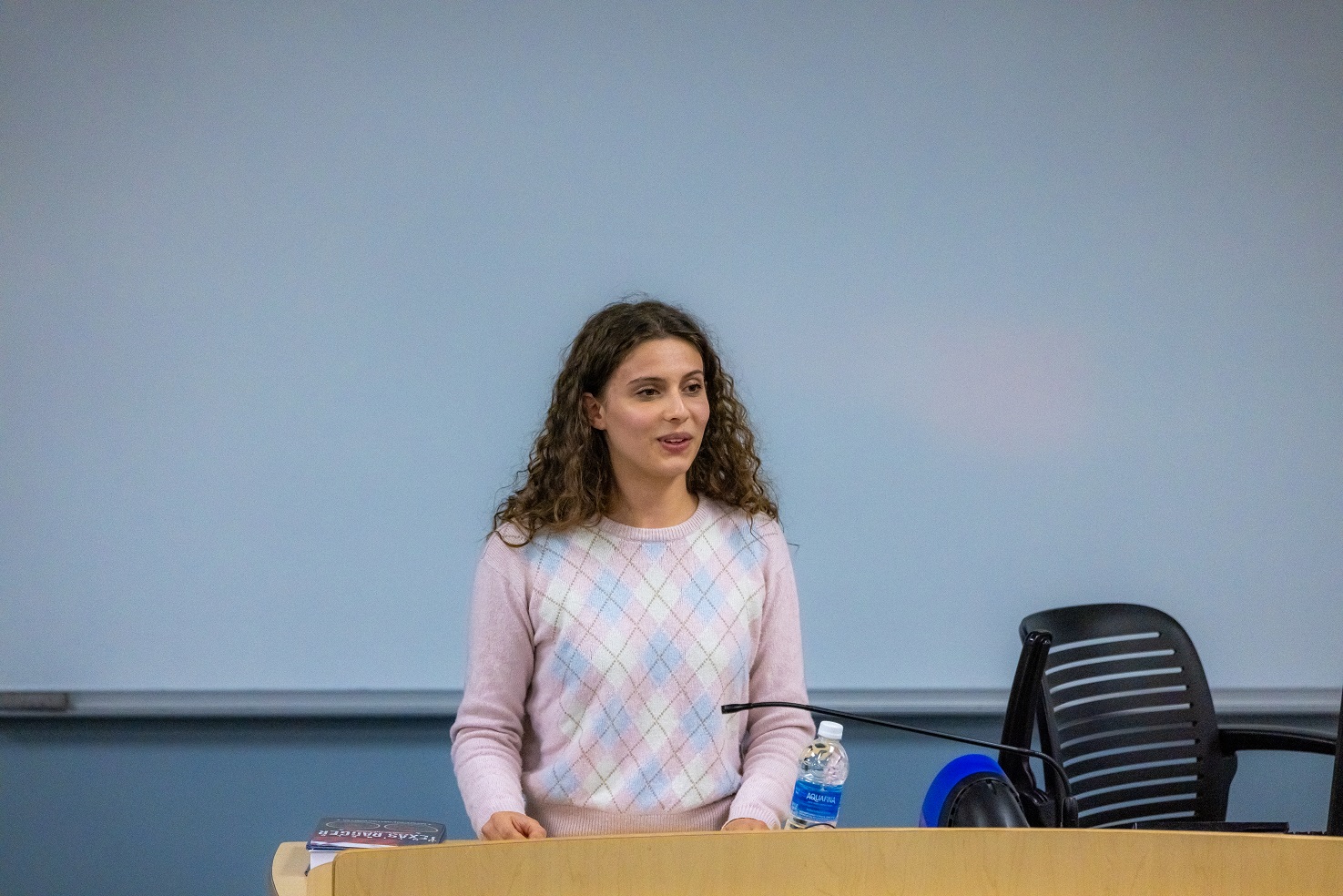
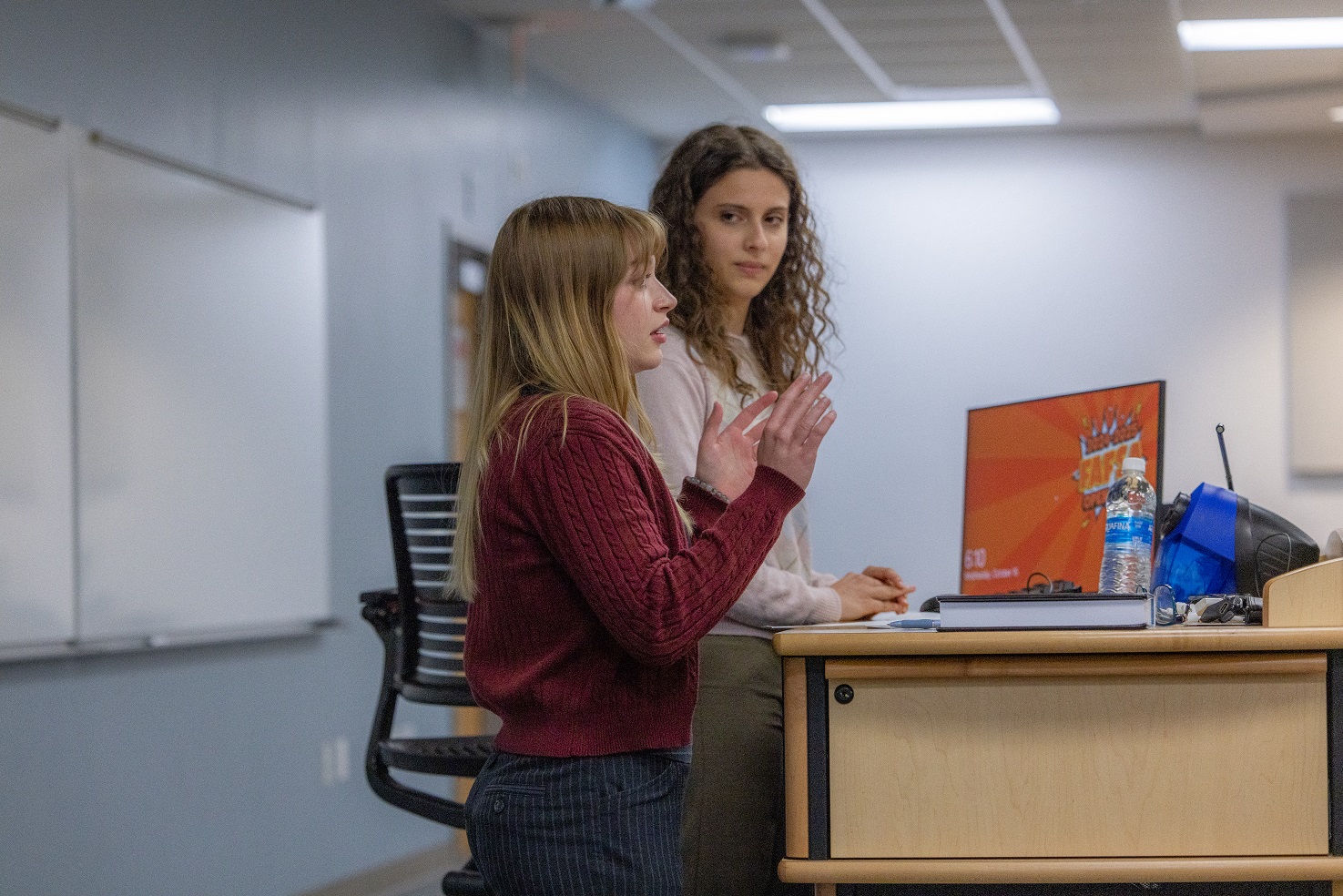
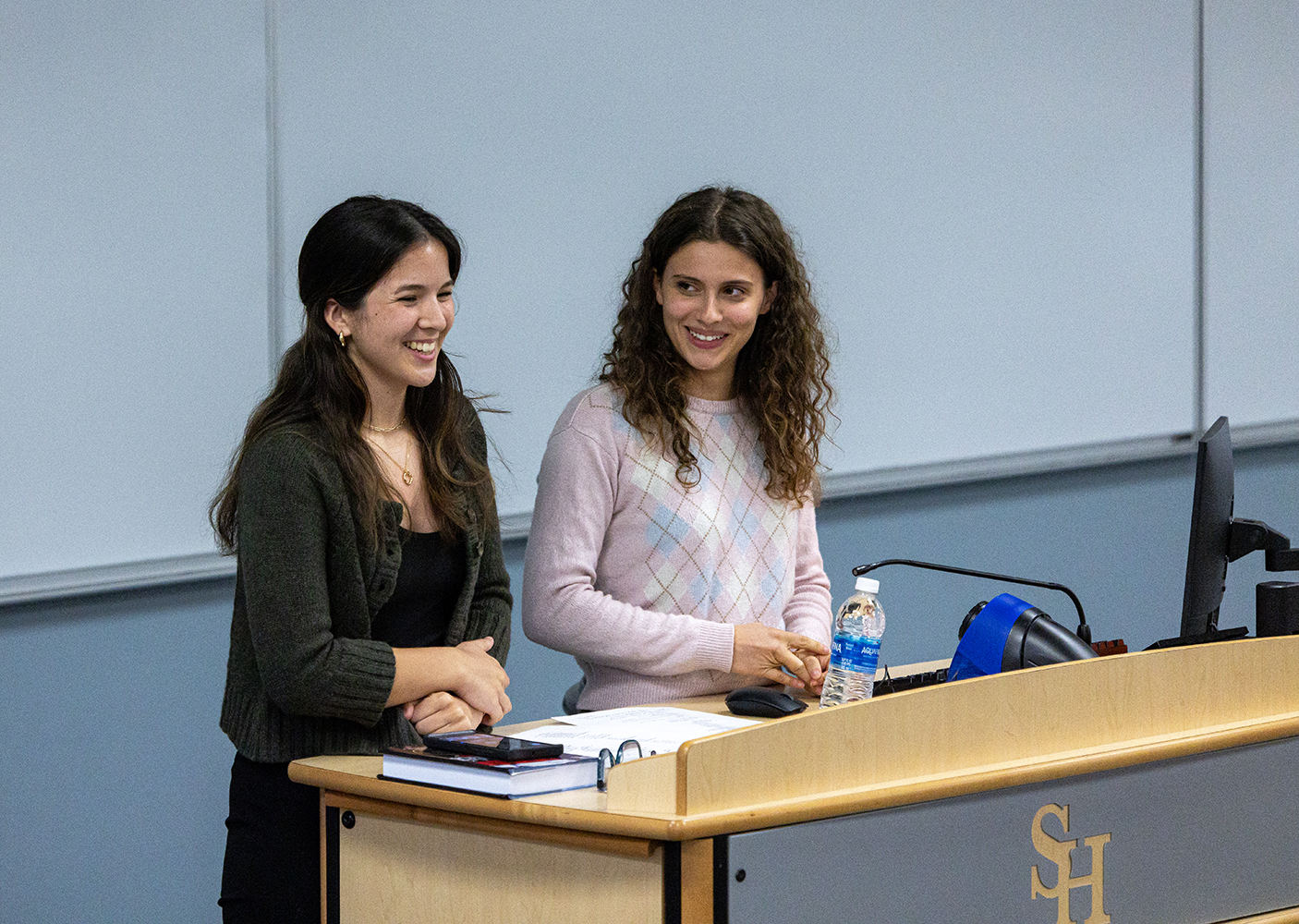
After a multi-year hiatus, the LEAP Center has revived its Moot Court Team, and SHSU Students Olivia Discon (Team Captain) and Maggie Betancourt will be competing at the Texas A&M Law School Regional Tournament on November 16-17.
What is Moot Court, Anyway?
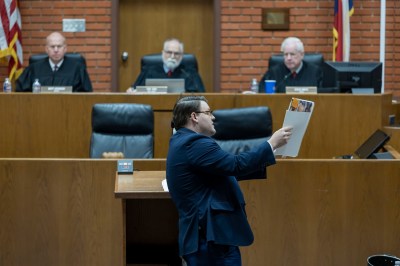
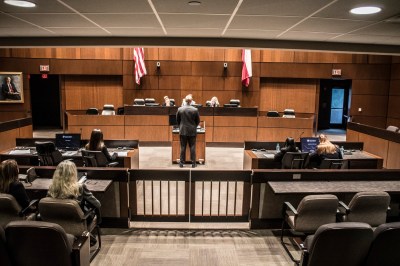
Moot Court replicates the appellate process. Most people are familiar with the trial courts, where (typically) a jury judges the guilt of a defendant; witnesses are called to testify, are involved in direct and cross examination; and a single judge presides over the proceedings. But in an Appellate Court, attorneys compile documents, provide a written brief, and offer oral arguments, making the case that the lower court erred (petitioner) or didn’t (respondent) in the proceedings.
This fits right in with the LEAP Center’s activities, which already many law-school related activities, including inviting the 10th Court of Appeals to campus once a year to hear cases.
Without knowing it, then, the LEAP Ambassadors have had a mini-preparation for the Moot Court experience.
Moot Court Preparation
Although we may change formats in future years, the Moot Court experience works like this:
May 1: AMCA Releases Case;
August: Students read case and take “Foundations Quiz” to participate;
September: Weekly practices begin;
October: Practices continue and students may scrimmage other teams;
November: Regional Tournament
January: National Tournament
For the students, this means reading the cases (there are 21 cases in all) thoroughly, and developing arguments, modified over weekly practices, that can be used for their “courtroom” appearance.
Moot Court Benefits
In following this regimen, students gain many benefits. They…
Learn how to read and understand court opinions;
Learn how to write appellate briefs;
Sharpen their critical thinking, writing, and communications;
Gain substantive knowledge in the field of law;
Gain exposure to law schools to which they may be applying.
Rules of Moot Court
After familiarizing themselves with the main case and associated cases, the competitors decide which of two issues they will be arguing before the court. This year’s case, which is based on the Michelle Carter encouraging suicide through text-messaging case, involves both the 5th Amendment (self-incrimination, tackled by Maggie) and 1st Amendment (free speech, addressed by Olivia).
The students also (more or less) split the 20-minute time limit, with each student making their case before the judges for about ten minutes.
SHSU Competing in 2016 Moot Court Competition
This can be tricky, because judges can interrupt as often as they want, and the time spent being interrupted counts against the time allotted. (See full rules below).
Although teams may compete in scrimmages that are self-arranged, their first (and probably only) appearance is at one of 15-16 regional tournaments across the United States, which host, collectively, approximately 120 Universities, many of which field multiple teams. The top 25-percent of these teams then compete in nationals in January.
SHSU Moving Forward
With help from Dean Gene Roberts, Stephanie Fors, and Victoria McClendon-Leggett, the students have gone through increasingly rigorous practices…
…culminating with a scrimmage on October 19, 2024.
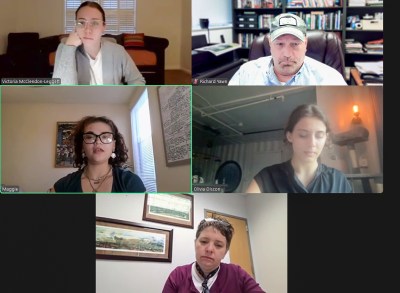
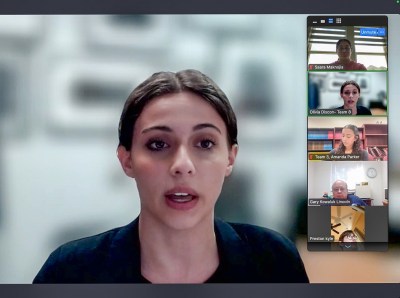
This scrimmage, which took place on Zoom in three different states, involved 12 teams. Organized by Blacin Godfrey from the University of Louisiana at Lafayette, the students competed in three rounds, twice representing the petitioner and once representing the respondent.
Although the results have not yet been delivered to the teams, the SHSU team was able to enhance its practice in more realistic conditions, hear perspectives from more people, and commiserate with other moot court participants across the country.
Importantly, the scrimmage identified weaknesses in the team’s arguments; highlighted applications of other cases that should be considered for incorporation; and spotlighted weaknesses in delivery and presentation.
The team will continue its practice through November 16-7, when they will be one of 24 teams competing at TAMU Law School.
Getting Involved
For students who would like to be considered for SHSU’s Moot Court team next year, please contact Olivia Discon at oliviadiscon@shsu.edu or Professor Mike Yawn at mike.yawn@shsu.edu.
Wes and Karen Altom didn’t set out to start a family business, but it worked out that way.
Wes, a long-time police officer, had exposure to marketing and communications in his report-writing and also in emergency management, when crisp and quick communications were necessary.
Karen graduated with a Radio, Television, and Film degree, so marketing was always part of her career objectives.
And Marshall Altom graduated most recently with a degree in Business Administration.
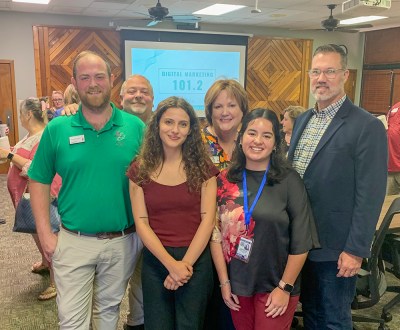
Together, they make up a marketing hat-trick in East and Southeast Texas that does much good for the communities in the region.
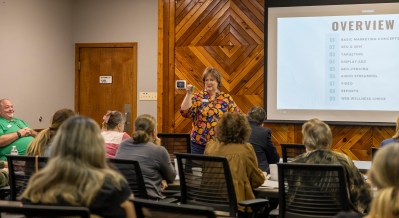
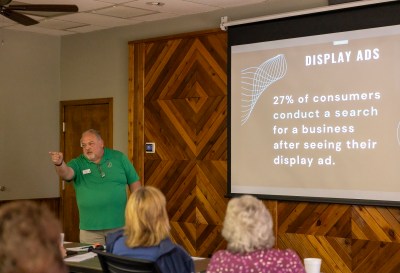
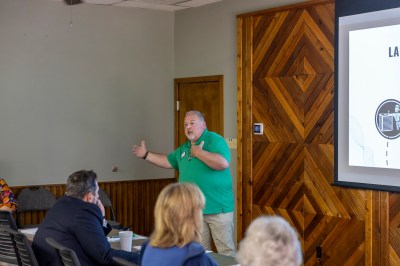
In that spirit, the Altoms reassembled their team to present to anyone from the community who is interested in learning more about marketing. This was a sequel of sorts to a similar event they did for the Small Business Development Center, and this time, with full control over the event, they offered it for free and even provided the lunch!
The Altoms went beyond normal marketing discussions to discuss ways businesses, governments, or non-profits should cater to their objectives, their target audiences, and their budget. This was helpful for us at the LEAP Center, because we learned ways we can spread our reach for free, even if we weren’t ready to get into targeted ad buys or geofencing or other in-depth marketing.
And we weren’t the only government or non-profit entities there; we saw Stacy Loll from The Senior Center; Shannon Hollis from HISD; and Kim Weiser and Laura Green from CASA of Walker County. In short marketing isn’t only for the business community–although we did sit next to our friend, Ken Holland!
The program was compelling. We learned the difference between branding and targeted marketing; the difference between Search Engine Messaging and Search Engine Optimization; and how a company can assess which efforts have paid off and which were misfires.
We also learned a lot about how Google produces results. Your search engine results are based on two broad factors: you as the searcher; and the actions of the places for which you are searching. Internally, Google will consider your location, your prior searches, where you visit, how you rate similar items, and a whole host of items related to you and your behavior and preferences. But the search engine results will also depend on the behavior of the companies for which you search? How are they evaluated by others? Are they active on their website and in social media? Do they respond to their evaluations?
We don’t know exactly how all this may impact LEAP, but we are pretty confident that the community services and responsiveness provided by the Altom family will earn them some high evaluations–all well deserved!
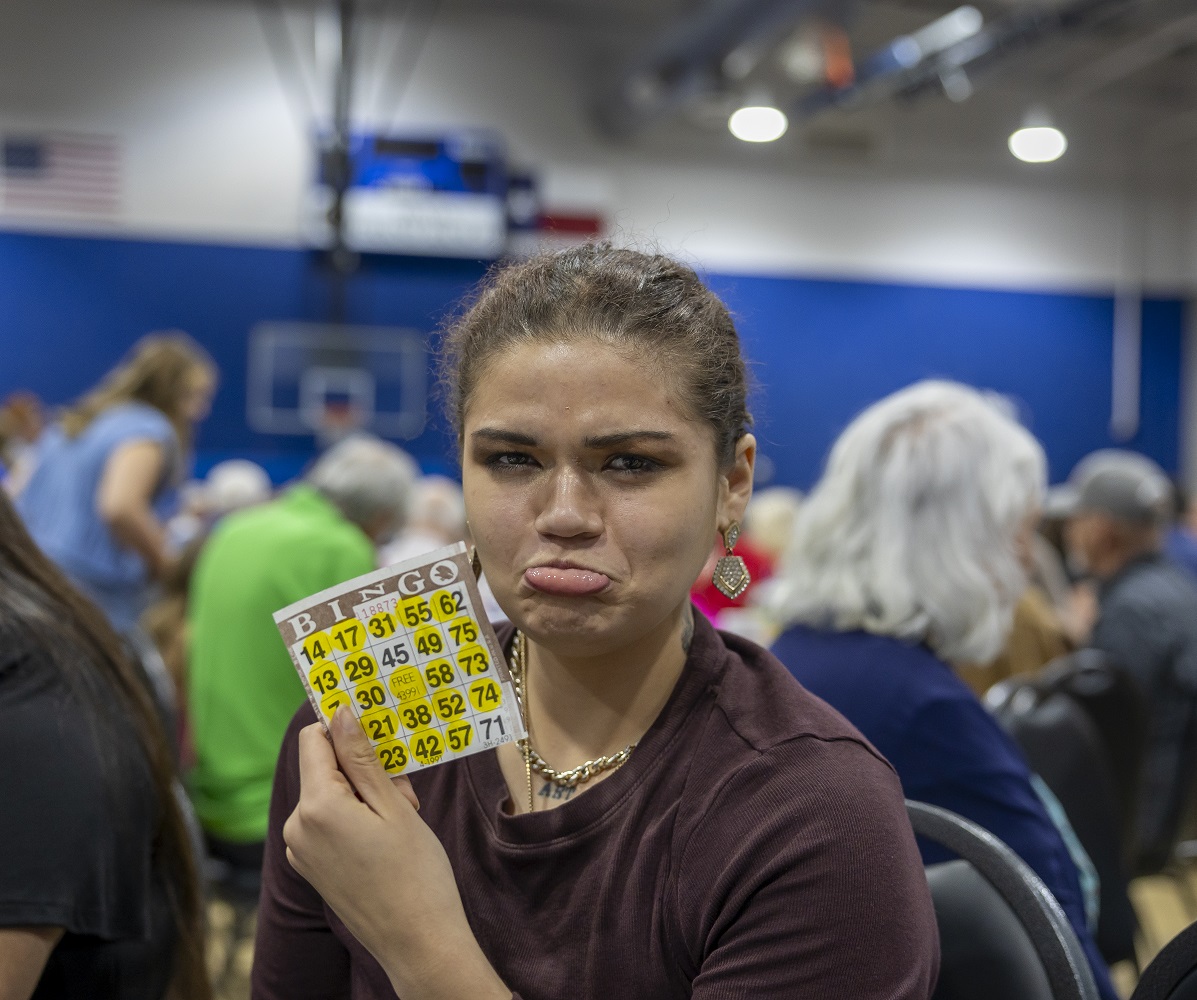
This past weekend, the Boys and Girls Club of Walker County hosted their second Oktoberfest Bingo and we, of course, could not miss such an exciting opportunity to let out our competitive spirits and to help sponsor such a good cause.
Proceeds–which totaled approximately $113,000–were raised to support the operations of the Boys and Girls Club, which promotes the intellectual, emotional, and physical growth of young people in our community.
For us, this was not only a great opportunity to support the community in a small way, but also to see our friend and Boys and Girls Club CEO, Michelle Spencer.
With this in mind, we sponsored our own table and invited our friends Jacob Wessels, Caitlin Nortonen, and Maggie Betancourt along.
We couldn’t afford a sponsorship as generous as The Cafe Texan, Bill and Diane Green, First National Bank, Community Service Credit Union, North Houston Cancer Clinics, North Lakes Pain Consultants, The Huntsville Item, Wiesner Huntsville, or Wischnewsky Dodge (see the full list of generous sponsors here), but our sponsorship came with raffle tickets, and we put our tickets in pots of most interest to us, including: $25 gift card to Barnes and Nobles (where Olivia dropped all her tickets), a $20 gift card to Louise and Oletta’s (one of our favorite local restaurants), Double Dave’s gift card, and a scavenger hunt.
As the crowd settled, and the emcee, Brad Sherman, expertly guided us along, we took our seats for the highlight of the night: bingo! With a card in one hand and a marker in the other, we were ready to test our luck.
Sadly after a few of the rounds, we realized how much luck we lacked. Hope was decreasing rapidly at our table when Chrissy jumped up and yelled “Bingo!” She won a party package to Tom Foolery’s for axe throwing and a buffet!
At first, the emcee thought there was a mistake on the card. Not knowing Chrissy, he couldn’t have known that you don’t argue with her over details, and in the end, her bingo card was validated.
What we know is that Chrissy is an axe-throwing veteran.
In her generous way, she invited the table to an evening of axe-throwing at Tom Foolery’s, and shortly thereafter, in an amazing coincidence, Trey Wharton stopped by to offer everyone health and life insurance…
In between the bingo rounds, the raffle winners were announced. We all got our tickets out and held them as if they held the fortune to all our hardships. Luck seemed at our table’s vicinity as Saara’s ticket won a car detailing…
…and Caitlin won a Let’s Roam scavenger hunt date night.
The live auction also took place in between the games. Having never seen an auction before, I found it quite impressive to see how fast the auctioneer spoke.
Further, a silent auction was taking place.
A few of the prizes included a Sam Houston swag basket, a Michael Kors purse, a yoga set bundle, and a jewelry set that Professor Yawn and Stephanie ended up winning!
As the rounds progressed, so did our pile of losing cards which truly terminated any hope we had left–but not our fun!
With the night coming to an end, Michelle Spencer and the Boys and Girls Club Board of Directors appreciated everyone’s attendance to the event by acknowledging that more than $100,000 had been raised!
We might not have won the prizes we wanted, nonetheless, we left the venue with huge smiles on our faces knowing that we helped raise money for a significant organization in our community.
The LEAP Ambassadors kicked off the Conflict Resolution Month with an exciting virtual session hosted by Student Legal and Mediation Services- and what other way to enjoy an exciting session than with pizza?! The event was led by none other than Dr. Gene Roberts, Associate Dean and Director of Student Legal Mediation Services…
Dean Roberts set the stage with a warm welcome to all attendees, introducing Kiser and giving a shoutout to the Pre-Law Society students in attendance. Kiser wasted no time diving into the core of his expertise, offering valuable advice to pre-law students who are eager to begin their legal journeys.
Kiser’s discussion centered on his book Professional Judgment for Lawyers, in which Dean Roberts jokingly remarked could easily be titled Professional Judgment for Everyone… perhaps a title Kiser will use for the second addition of his book! The book offers insights into how our personal judgment shapes not only the legal field by society as a whole. Kiser walked us through the essential elements of decision-making in law, critiqued past and current law school structures, and shed light on how lawyers can use their experiences in the legal field to better serve their clients.
When asked what inspired his transition from being a partner at a big law firm to becoming a researcher and author, Kiser cited the influence of modern management theories from Peter Drucker and Mihaly Csikszentmihalyi’s flow theory. These concepts motivated his passion for exploring how lawyers and successful law firms make decisions.
One of the most interesting parts of Kiser’s discussion was his research on decision-making within the legal field. He emphasized the importance of professional judgment and highlighted how mediation training can significantly boost the success of a lawyer. According to Kiser, mediation fosters higher social awareness and sharper decision-making skills- both of which are qualities that make a strong attorney.
As the session wrapped up, the LEAP Ambassadors had a chance to ask Kiser a few final questions, and we all left with a deeper understanding of the critical role judgment plays within the legal field. A huge thank you to Gene Roberts for making this inspiring session possible and accessible to the pre-law students and to Randall Kiser for sharing his wisdom and advice with us!
For the final stop of our Arkansas trip, we headed north to Hot Springs! We took in the stunning views from the Hot Springs Mountain Tower, enjoyed a quick tour, and refreshed our knowledge of the city’s rich history.
One of the city’s most notable landmarks is the Arlington Hotel, which has burned down twice and hosted historical figures like Babe Ruth, Al Capone, and President Ronald Reagan. The city is also home to historic bathhouses, as well as a variety of restaurants and shops.
I was especially intrigued by the artifacts on display at the Mountain Tower, particularly an old Arlington Hotel menu from the early 1900s, where a sirloin steak cost an eye-popping five dollars! But the views of the town and the Ozarks that were most inspiring.
Though we reached the top of the tower in under a minute via elevator, Professor Yawn challenged us to put our “hiking” skills to the test by walking down the 216-foot tower. To my surprise, I was the first to make it down the long flight of stairs—a satisfying redemption after my setback at Pinnacle Mountain!
FordyceBathhouse
by Olivia Discon
After we conquered the Hot Springs Mountain Tower, Saara and I headed to the Fordyce Bathhouse Visitor Center and Museum, a time capsule to an age when people believed these hot springs could cure just about anything.
Built in 1915, the Fordyce Bathhouse was once the go-to spot for people looking to treat illnesses like arthritis, skin conditions, and as you could imagine, chronic stress. We talked about how long some of these people would stay—weeks, sometimes even months—soaking in the mineral waters, hoping for a miracle cure.
The Fordyce is part of Bathhouse Row–several historic bathhouses that line Hot Springs’ main street–but it was the first to close. Just two decades after the development of penicillin, bath houses were seen as obsolete, and in 1962, the Fordyce closed. Since that time, the National Park Service has taken great steps in renovating the houses and re-opening them to the public as museums.
As we walked through the museum, we got a sense of just how elevated of an experience this must have been. With stained glass ceilings and marble accents throughout, it was clear that the treatment prescribed grandeur and luxury.
After our tour, Saara and I explored some of the rooms, and we found the gym to be the most interesting.
It was filled with old equipment and gymnastic apparatus, There was no shortage of details in what a long term stay would require.
While these baths might not have been miracle cures, they certainly forced relaxation and offered an escape from everyday life!
What I found especially interesting was that the entire area, including Bathhouse Row, is now maintained by the National Park Service and, indeed, much of the downtown area falls into the Park System. Indeed, some of our most memorable scenes were in the downtown area.
We only had a day in Hot Springs and we didn’t actually soak in any springs, but we greatly enjoyed our time, and left with a sense of rejuvenation.



















 Center for Law, Engagement, and Politics