Celebrating Citizenship!

By Michelle Moya

Shortly after Election Day 2025—and just in time for the season of gratitude—the LEAP Center invites you to join us in celebrating what it means to be a citizen. The event will feature finger foods, Lotería with a civic twist, a guest speaker, and special recognition of newly naturalized citizens. Guests will also have access to information and resources for those interested in beginning their own journey toward U.S. citizenship.

The event is made possible through a grant from the National Partnership for New Americans and continues the LEAP Center’s long-standing commitment to civic education and community engagement.

A Tradition of Civic Learning

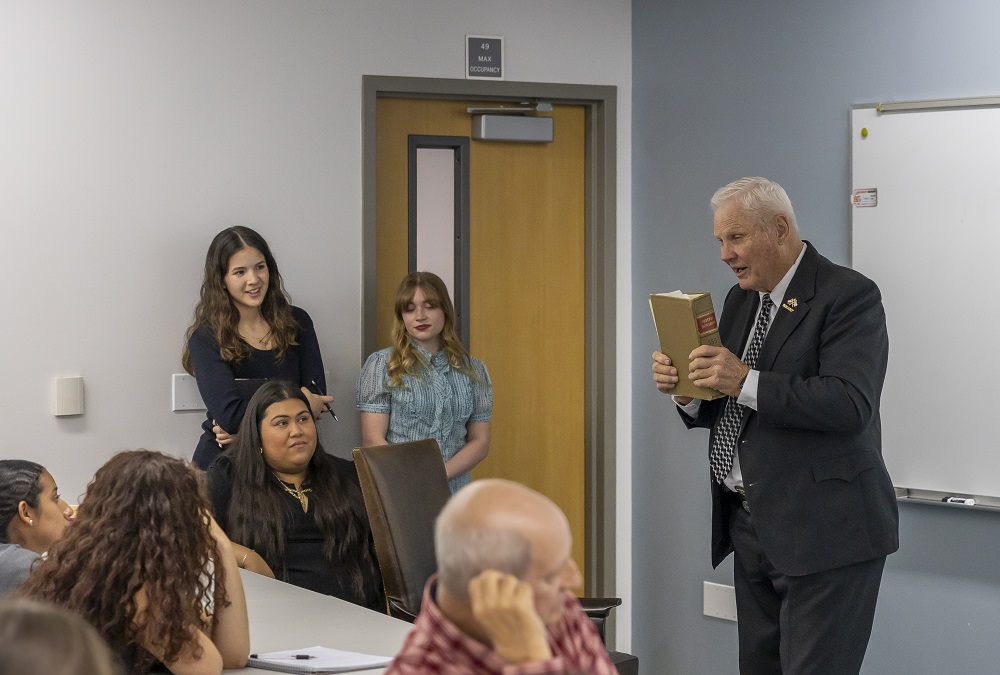
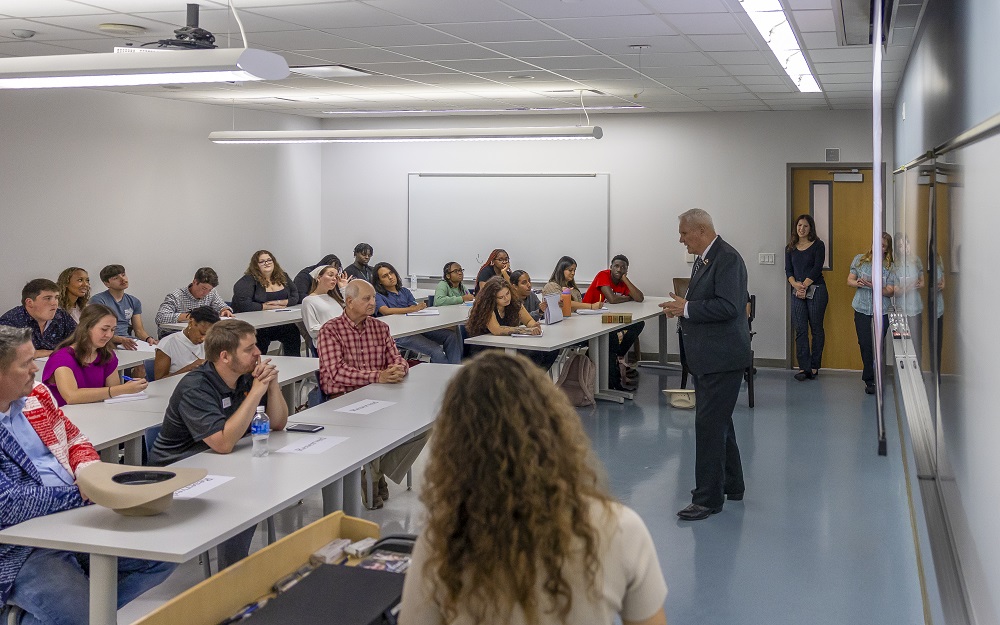
Since 2008, the Huntsville Public Library and the LEAP Center have partnered to offer a free citizenship preparatory course designed to help local immigrants prepare for the naturalization process. Over the past seventeen years, the program has served nearly 300 immigrants from 23 countries.

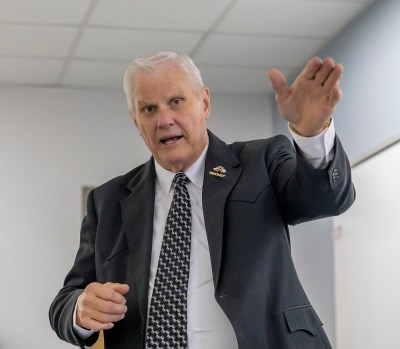
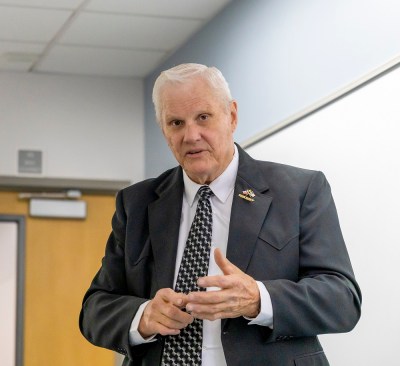
Led by Professor Mike Yawn with support from LEAP student volunteers, the course provides an overview of the naturalization process, from paperwork to oral interviews to English tests, and the civics portion consisting of 100 questions that immigrants must know. Immigrants enrolled in the course receive guidance on the 100-question civics test, as well as encouragement and practical support throughout the process.

The grant from the National Partnership for New Americans allows LEAP to extend this work to Montgomery County, beginning with the November celebration and continuing with a preparatory course in spring 2026.

A Community Celebration

On Saturday, November 8, 2025, from 4:00 to 5:30 p.m., the celebration will take place at the SHSU Woodlands Center. The event serves a dual purpose: honoring individuals who have recently achieved U.S. citizenship and welcoming those interested in learning about the naturalization process.

The program will feature a guest speaker who will share a few words on the importance of civic engagement and community participation. Afterward, guests are invited to enjoy conversation, fellowship, and rounds of Lotería—reimagined with a civic theme to honor the spirit of citizenship.

By bringing together naturalized citizens, aspiring citizens, and students, the celebration underscores the power of connection and culture. Citizenship — often taken for granted–embodies both rights and responsibilities; it provides a sense of confidence, freedom, and unity that strengthens our communities and our democracy.

In conjunction with this event, the LEAP Center will also announce the launch of its Spring 2026 Citizenship Preparatory Course, which will be offered in Montgomery County for the first time.

If you would like to attend the celebration, please scan the QR code below to register or contact Professor Mike Yawn at mike.yawn@shsu.edu.

Inside The Many Faces of Sam Houston Exhibit

by Michelle Moya

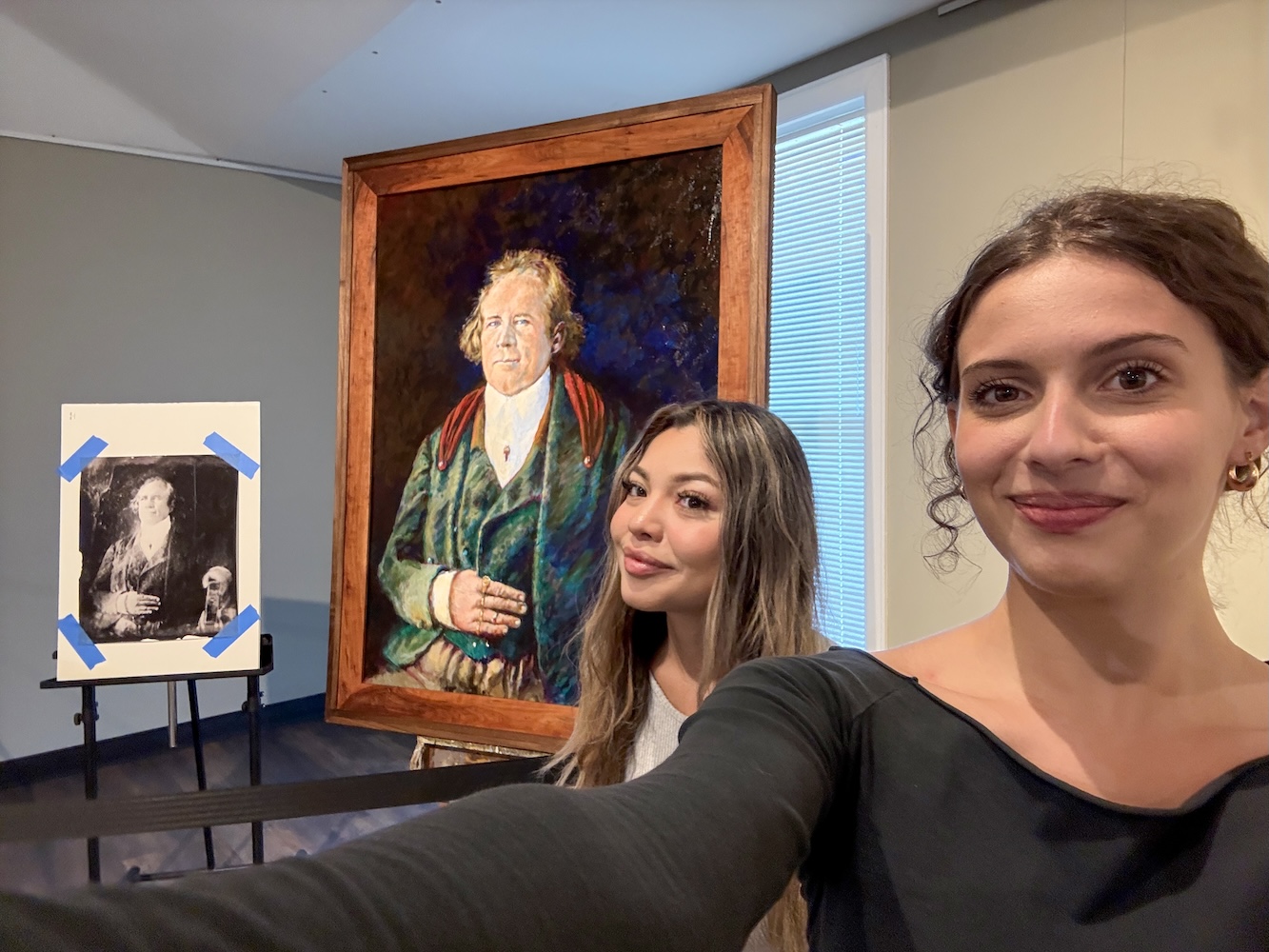
The Sam Houston Memorial Museum and Presidential Library (SHMM) offers visitors a chance to learn about one of Texas’ most influential figures but its newest exhibition, The Many Faces of Sam Houston, goes a step further. This week, the LEAP Ambassadors visited the museum’s latest display, which explores how Houston’s image has been crafted, challenged, and reimagined over the past 200 years.
The exhibit, which opened July 3, explores how Houston’s public image has evolved over the past two centuries. Featuring portraits, daguerreotypes, sculptures, and illustrations, the collection shows Houston not just as a political leader, but as someone who understood the significance of image. That theatrical quality becomes immediately clear as visitors move through the gallery, seeing how Houston deliberately transformed his appearance throughout his life.

One of the featured pieces is a recently commissioned portrait by Huntsville-based artist Lee Jamison. Inspired by an early daguerreotype, Jamison portrays Houston’s larger-than-life persona in a vivid, contemporary style. Jamison’s work is familiar to many in the community; his mural located at the corner of 12th Street and Sam Houston Avenue in Downtown Huntsville has become a local landmark and tribute to Texas history.

The exhibition also includes a marble bust of Houston by sculptor Elisabet Ney, part of the museum’s permanent collection. Ney, a German-born artist celebrated for her contributions to Texas art and history, presents a thoughtful and dignified version of Houston.

She is also known for her monumental statue of Houston that stands in the Texas State Capitol, further solidifying her role in shaping the state’s visual history.

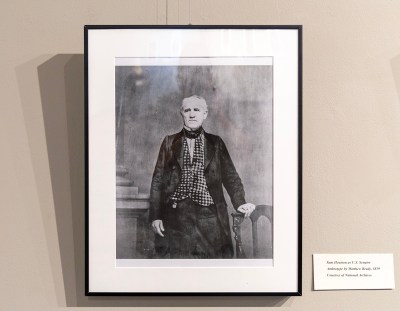
The photographer Matthew Brady was also famous for documenting history. Indeed, in addition to his famous Civil War photographs, Brady captured 18 of 19 presidents during the mid-to-late 19th century. His photograph Sam Houston, from 1850, is on display.

Another highlight is Texas artist Tom Lea’s design for the five-cent Sam Houston commemorative stamp. Though small in size, the stamp represents a different kind of legacy–one meant for daily use and mass circulation. Lea chose to depict Houston as he appeared during his presidency of the Republic of Texas, offering Americans a consistent and iconic image of their Texas hero with every letter they sent.

The exhibition also includes 19th-century book illustrations and ephemera that reveal how Houston was presented to various audiences throughout his life and long after. Each artistic decision–from clothing to posture to facial expression–reflects how artists and publishers aimed to emphasize particular traits, whether strength, wisdom, or statesmanship.

Taken as a whole, “The Many Faces of Sam Houston” illustrates how carefully Houston curated his own public image and how generations of artists have continued to reimagine him. From Brady’s realistic portrait to Jamison’s modern interpretation, each piece tells us something not only about Houston, but about the era and perspective in which it was created.

The exhibition will remain on view through August 31, 2025, in the Katy & E. Don Walker, Sr. Education Center’s exhibit gallery. It is free and open to the public, offering a rare opportunity to explore the intersection of art, history, and memory through the life and legacy of Sam Houston.

Unfolding Law Enforcement Corruption and Cover-Ups

By Mayra Sofia Soto

Today we joined an exciting virtual session hosted by the Houston Area ACFE Chapter of the Association of Certified Fraud Examiners and the world’s largest anti-fraud organization and premier provider of anti-fraud training and education.

The event was led by Lawrence P. Smith, President and Founder of the STIRM Group Inc, which conducts complex investigations for law enforcement, legal entities, and private clients.

Smith, who also hosts the podcast Bribes, Lies & Alibis, is releasing a new book this fall– Six Degrees of Corruption: The Fleecing of a City– detailing corruption at the heart of institutions designed to protect the public.

The case began when a police chief approached Smith in late 2021 to investigate a forged training record tied to a former Methuen Police Department officer. What seemed at first like a simple case of document fraud unraveled into something much larger: a pattern of systemic corruption involving fraudulent certifications, fake officers, conspiracy, and significant Brady v. Maryland implication. Smith’s background in document fraud, including years with Homeland Security, allowed him to immediately spot the forgery. But the deeper he dug, the more the issue grew– from one fake cop to institutional complicity at the highest levels.

Central to the scandal was the Massachusetts Municipal Police Training Committee (MPTC), the body responsible for overseeing municipal police training statewide. Smith initially gavethem a professional courtesy call, as is customary in law enforcement when an officer is under investigation. Instead of honesty, he encountered what he believed was direct involvement andcriminal negligence by the executive director. Despite presenting overwhelming evidence such as forged academy records, evidence tampering, and false arrests. The case was rejected 11 times by the Attorney General’s Office, the District Attorney, and even the Department of Justice.

The report was not only turned down, it was impounded. Officials cited “not enough evidence” and tried to use prosecutorial discretion to avoid action. Smith detailed how elected officials and politically connected figures shielded the MPTC leadership from accountability. The MPTC agency stripped metadata from requested records, withheld documents from investigators and the media, lied to investigators and tampered with evidence. Those responsible, including Robert Ferullo, the MPTC’s executive director, faced no charges even as evidence of their active involvement increased.

These failures rippled outward. Every officer trained by the MPTC, every conviction they played a role in, now comes under question. The legal, financial, and reputational damage is profound. The scale of corruption and political protection in the state as Smith noted “is mind-numbing.”

When an accreditation body is compromised, the entire justice system is at risk ranging from civil rights violations to erosion of public trust. The fallout includes not just criminal liability, but also obstruction of justice, conspiracy and accreditation loss.

Smith emphasized that this case isn’t about money or value but it’s about protecting human rights. At the end of the day, the greatest badge of honor is honesty.

Where Texas Rests: A Visit to the Texas State Cemetery

by Sarah-Hope Parohl

I visited the Texas State Cemetery in early February for the first time since I was in fourth grade. Growing up in Austin, I visited almost every historical site in town, but before I could absorb and make connections between the material I was learning at the site and the material I learned in classes.

Upon arriving at the Cemetery, I walked through the Visitor’s Center, reading about the lives of some of the folks buried there and seeing memorabilia to highlight them. There is also a short video in the Visitors Center that goes into detail about the history of the Cemetery, the recent restoration projects, and the geography of the grounds. The grounds, divided into sections, are so named to highlight the individual’s achievements. For example, Confederate Field is home to the headstones of Texas Confederate soldiers; Republic Hill is the resting place of Texas Revolutionaries, Justices, Legislators, Governors, and old Texas Legends; while Monument Hill is home to astronauts, District Judges, and Texas State Cemetery Committee members, to name a few.

The most fascinating aspect was, of course, the stories of individuals that the kind lady at the Visitor’s Center (who happened to be from Calgary, Canada!) shared with me. She informed me that the oldest individual buried in the Cemetery is not a Texan but a French explorer estimated to have died in the late 1600s in a shipwreck in the Gulf of Mexico. A delegation from Texas even reached out to French preservationists to see if they would like the remains back in his home country, but they let him rest in Texas. On the highest point of the Cemetery lay an astronaut, Eugene Cernan, the second American to walk in space.

The Texas State Cemetery is not just a collection of headstones; it’s a place of diverse and deeply meaningful memorials. These memorials pay tribute to those who can never return to Texas. There is a monument recognizing those who lost their lives in the 9/11 terrorist attacks in New York and those who traveled to help New York rebuild. The monument contains two steel columns from Ground Zero, serving as a solemn reminder of the tragedy. There is a monument for Texans who have received the Medal of Honor, those who fought in the War of 1812, received a Purple Heart, fought in World War II, or Vietnam. Each of these monuments is a testament to the courage and sacrifice of these individuals. There is a monument that honors the African American legislators who served during the Reconstruction Era, a tribute to their contribution to Texas history.

While learning about others’ history, I was able to take a trip down memory lane. The only time I remember being at the Texas State Cemetery was for a guided tour that my Girl Scout Troop took in 2012. I do not remember much from that trip, but I have always remembered the story of Josiah Wilbarger.

Wilbarger is one of the few to survive scalping after Native Americans ambushed him and some others. His friends, thinking he was dead, rode away, and the only reason Wilbarger survived with an untreated open wound was because blowflies laid eggs in his wound, and once the maggots hatched, they ate away the infection. While he survived, he never truly recovered from his wound, so his wife made him a raccoon skin hat to protect his skull and brain. Wilbarger died over a decade after his scalping when he hit his head on his workbench without wearing the hat his wife made him. I do not remember much from my fourth-grade trip, but I remember the tour guide saying, “This is why wives are always right” after finishing the tale of Josiah Wilbarger. 

Exploring the Foundations of Democracy: Lessons from Benjamin Franklin

by Olivia Discon

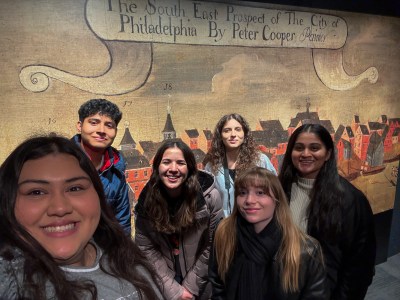
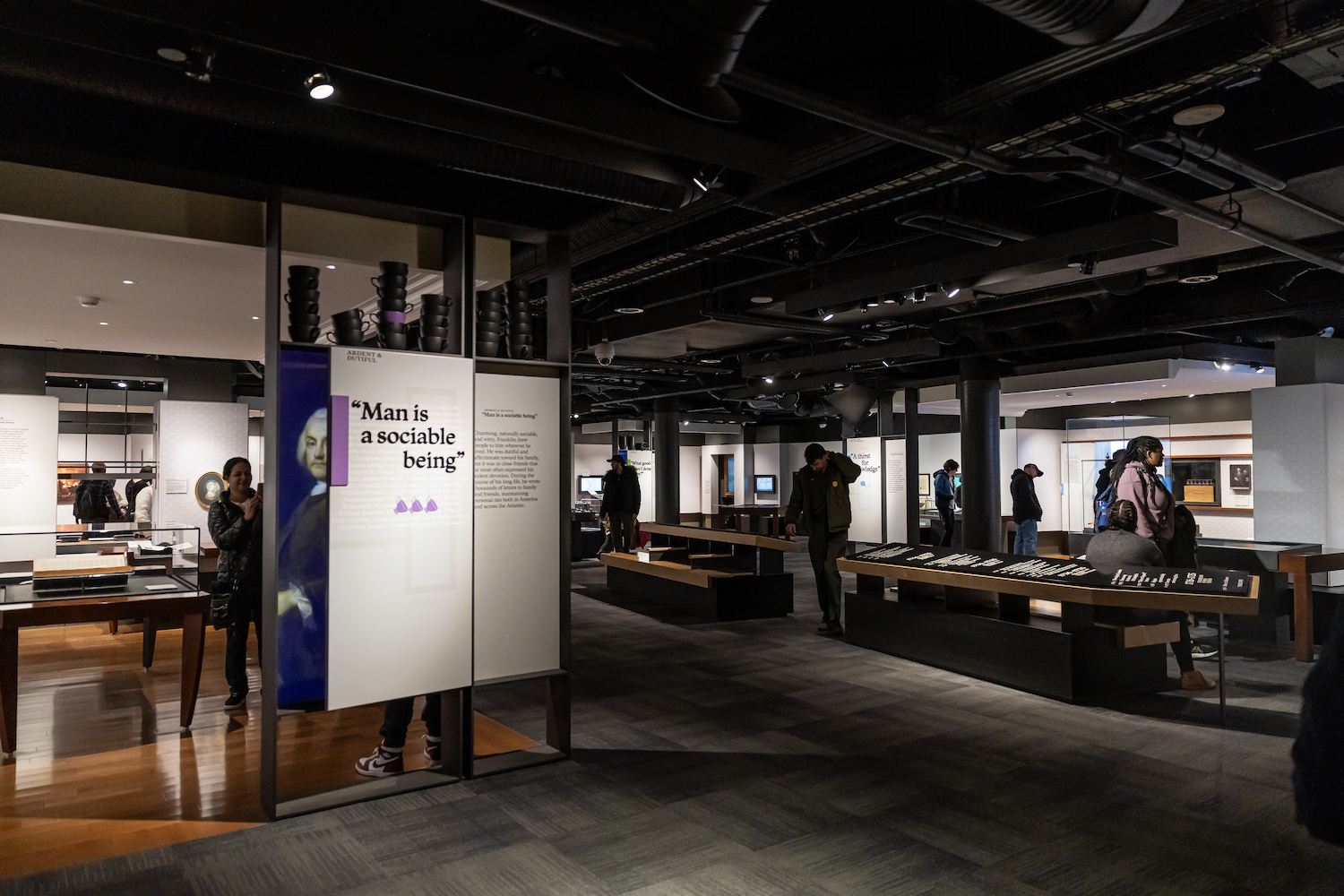
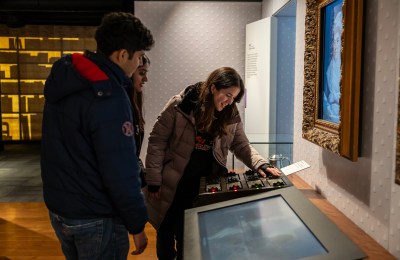
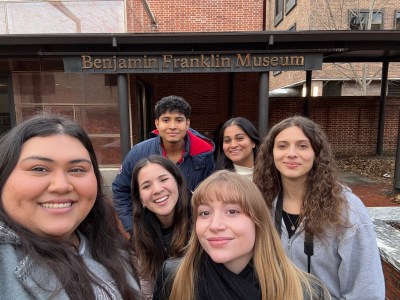
As the United States Presidential Inauguration approaches, one is reminded of the principles that we were founded upon. Virtue can be identified in many of our founding fathers, but one that infamously possesses 13 of them was an excellent choice to start the Philadelphia leg of our democracy tour. In addition, the Benjamin Franklin Museum was a fun experience to share alongside the SHAIP interns, who are getting their first crack at what it means to impact others through policy and the democratic process.

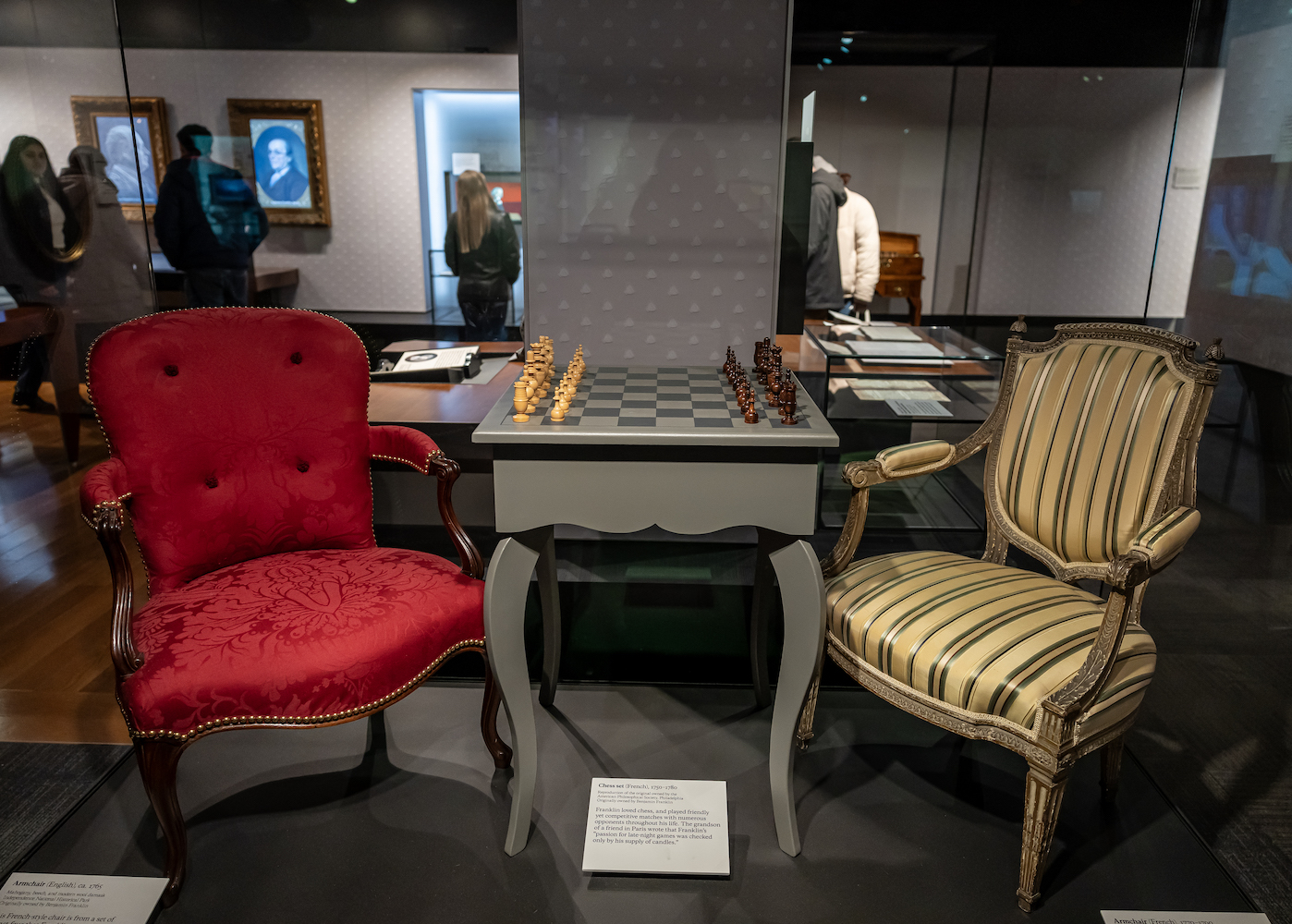
Beyond that, Benjamin Franklin is simply a fascinating individual. An inventor, postmaster, writer, scientist, diplomat, and a ladies man, his life was filled with innovation and service. The museum gave us a closer look at his achievements and his role in shaping early America.

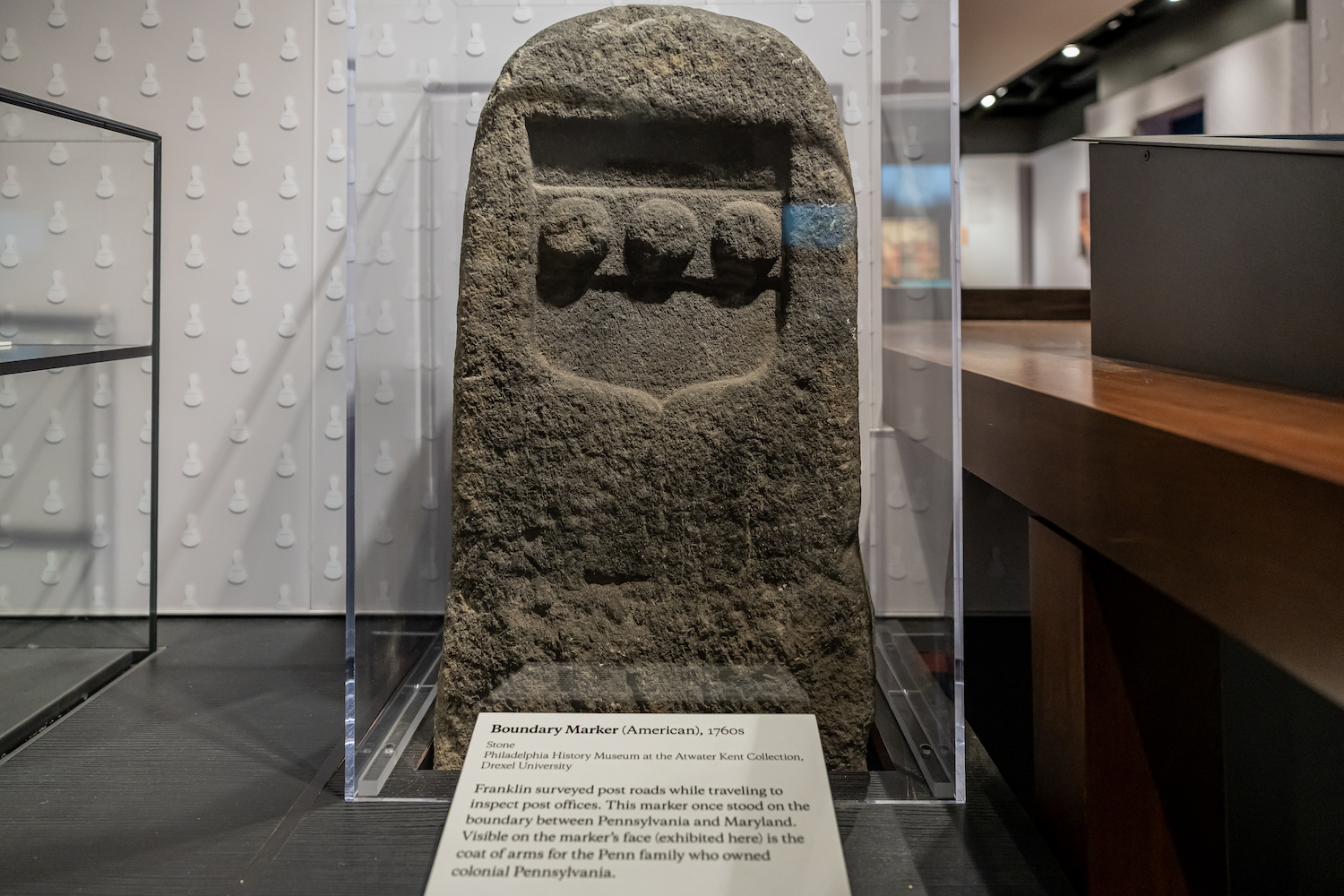
One of my favorite artifacts was a mile marker Franklin introduced as postmaster to help standardize postal routes. Made of concrete, it would be difficult to (for me, at least) read compared to today’s clearly printed green signs, but it felt meaningful to see how he worked to modernize communication systems. We also saw ink balls from his printing press, along with other instruments used at the time.

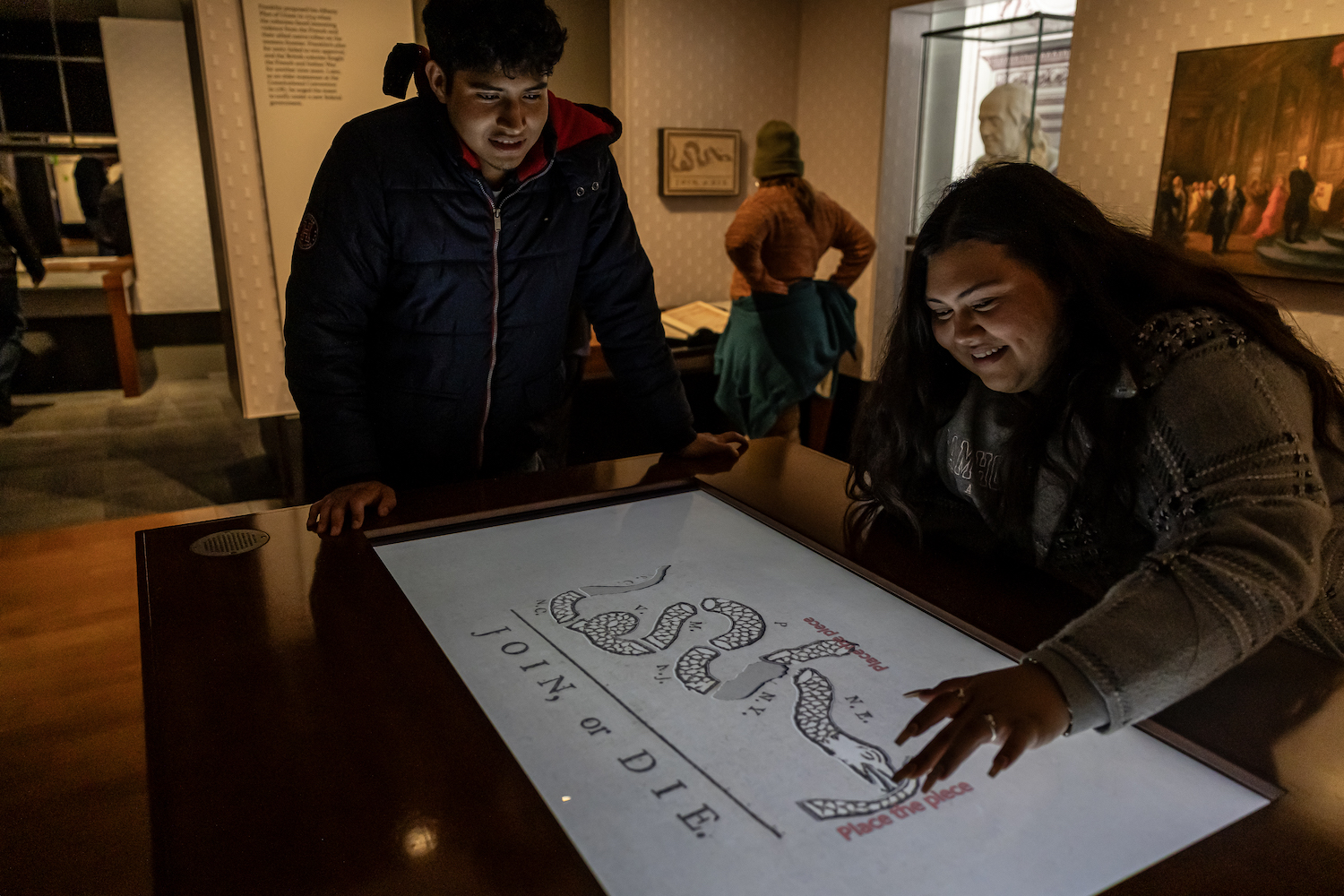
Israel and Michelle especially appreciated the “Join, or Die” mementos, inspired by Franklin’s iconic segmented snake cartoon. The message of fragmentation is relevant now more than ever! 

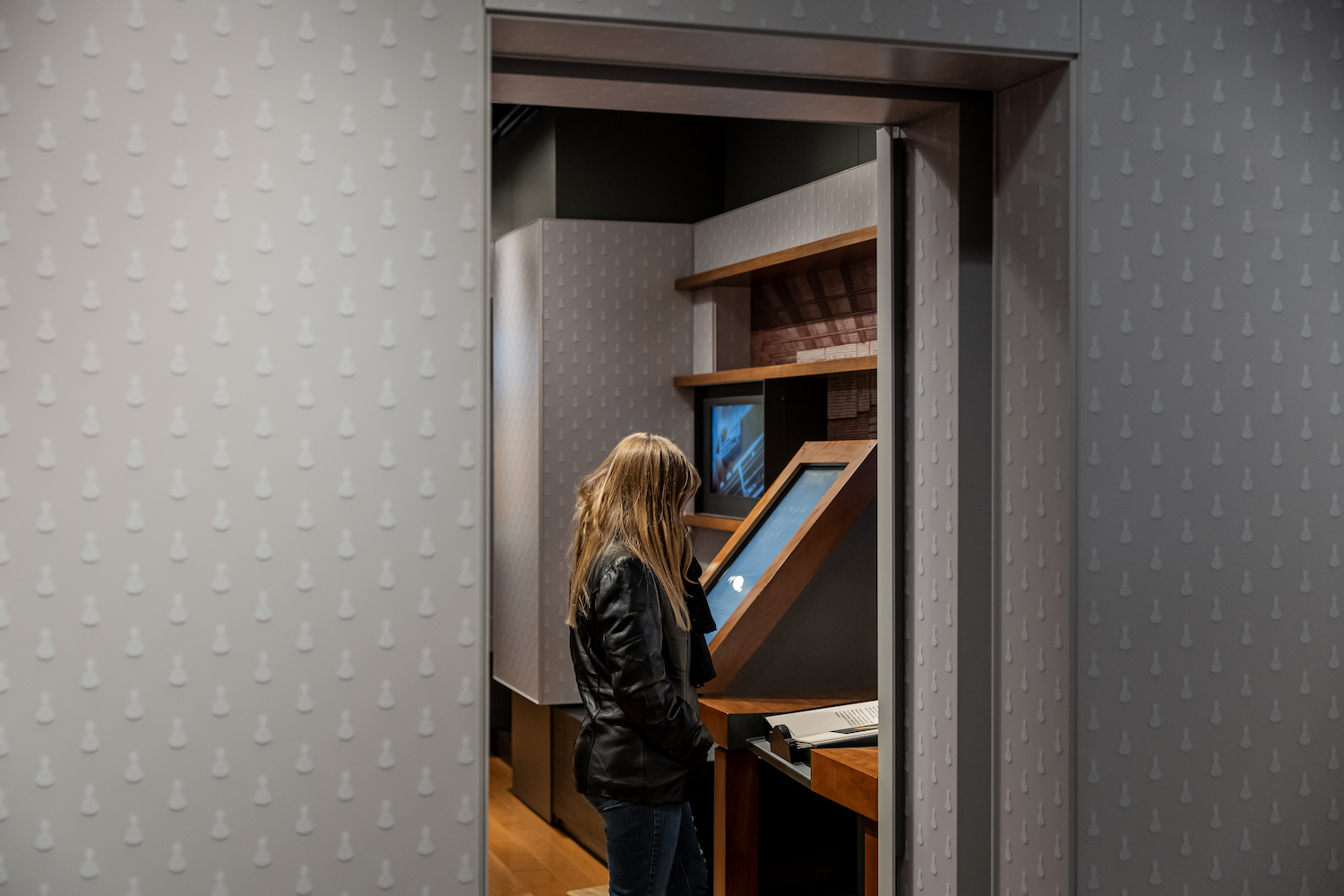
Another awesome feature was the Lion’s Mouth—a slot where citizens could anonymously submit letters, including grievances or suggestions for improvement. It served as an early mechanism for public participation, and I appreciated the practical approach to governance, as well as his recognition of the importance of engaging with the broader community.

In many ways, LEAP and SHAIP strive to embody the spirit of civic engagement and the principles Benjamin Franklin instilled in our nation. As he once said, ‘Nothing so likely to make a man’s fortune as virtue.’ Through experiences like these, we continue to cultivate our understanding of the world to then contribute meaningfully to our communities.