Exploring The Shining: A Kubrickian Journey

As part of the LEAP Center’s ongoing work to expose students to the broader culture, a group of alumni and current students gathered in Houston to see Stanley Kubrick’s “The Shining.” Originally released in 1980, the film is being re-released on IMAX theatres across the country as part of its 45th anniversary.
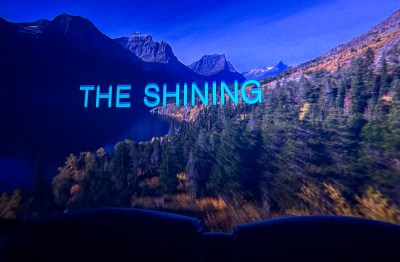
For about half those attending, it was a first exposure to a Stanley Kubrick film. Accordingly, we began with a brief background of Kubrick and his films. Of all the great directors, Kubrick produced the fewest films (13 over a 45-year career), a fact that has not deterred scholars from giving as much thought and ink to Kubrick’s work as that of Hitchcock, Welles, Spielberg, or Martin Scorsese.

Of Kubrick’s films, “The Shining” has received perhaps the most attention. The film is based on Stephen King’s novel of the same title, and it was met with a mixed critical reception on its release, although its stature has grown, and it is now considered a horror classic.
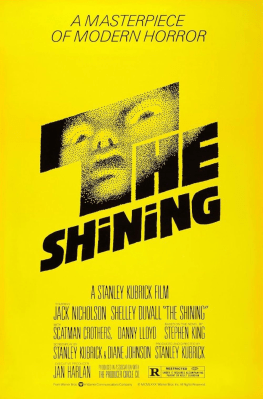
It embodies several cinematic traits of the Kubrick oeuvre: a longish running time, attention-grabbing visuals, riffs on various literary themes, and an enigmatic approach to storytelling that occasionally leaves viewers unsure what they just watched. All of these were on display in “The Shining.”

In this viewing, the visuals were most prominent, perhaps because we were watching this on an IMAX screen. The opening scenes, shot from a helicopter, including a scene where we (perceiving things through the camera) seem to pass the Torrance family on the “sidewinder” road…
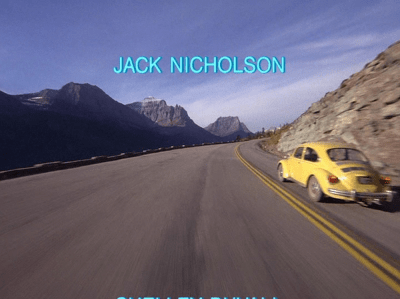
…on the way to the Overlook Hotel.

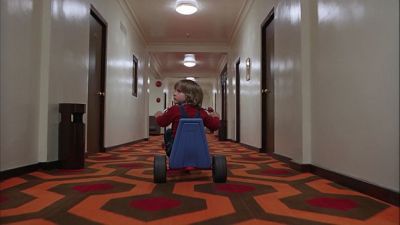
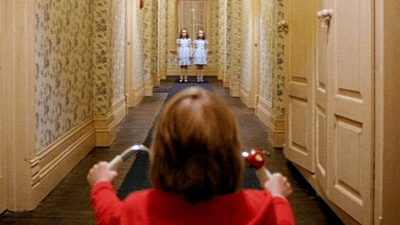
Kubrick also made full use of the Steadi-Cam, which had been introduced on film in 1976. Kubrick used it throughout “The Shining,” and he innovated with it, devising an apparatus that could shoot from about 18 inches above the ground–most notably used in the film to follow Danny on his tricycle, as he traversed the maze-like corridors of The Overlook.
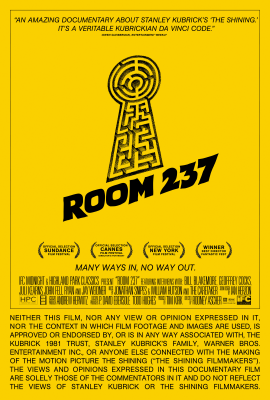
Kubrick’s films are often sprawling affairs and they are deeply studied by scholars and enthusiasts, so it’s no surprise that all manner of symbols and themes have been “discovered” in the director’s body of work. This is probably most true in “The Shining,” as reflected in the interesting and bizarre theories expressed in the documentary Room 237.
Professor Robert Kolker, an author of several Kubrick books and an expert on cinema, suggests that the film can be seen through an Oedipal lens (spoiler alert). Danny’s “shining” is a type of oracular vision not unlike that of the prophecies offered at Delphi, including the one offered to Oedipus. And while Danny wasn’t as close to his mother as was Oedipus, she serves as his caretaker and protector; in the end, she carries him to safety, saving his life.
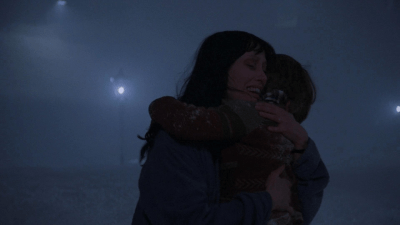
Danny doesn’t proactively kill his father at a crossroads as does Oedipus, he does leave his lame father to die of exposure in a labyrinth. Of note: Jack Torrance suffers from a foot/ankle injury following a fall down stairs; he literally embodies the term “Oedipus,” which means “swollen foot.”

Whether such messages were intentional or not (it’s worth noting that Kubrick mentioned he read a lot of Freud prior to filming “The Shining”), the film is replete with sufficient ambiguities to provide fodder for the active imagination.
There are some imponderables in the film; it does, after all, involve the supernatural. But even in the logic of the supernatural, what is the purpose of the bathroom scene…
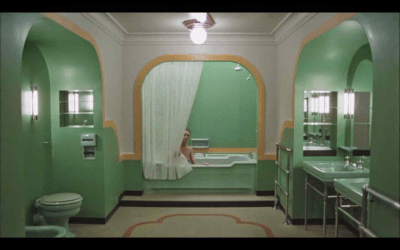
…in which Nicholson embraces a young, naked and beautiful woman, only to find her decay into a rotting but living corpse? Why is there a parlor full of fully-dressed corpses in the hotel? And what about the scene involving a man in a bare-backed bear costume and a man in a tuxedo?
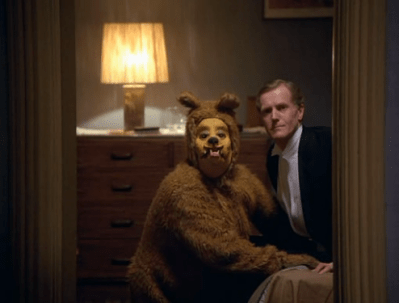
This latter question was posed by many in our group (answered by none), and such questions may reflect Kubrick’s very approach to filmmaking: “if you can get people to the point where they have to think a moment what it is you’re getting at, and then discover it, the thrill of discovery goes right through the heart.”
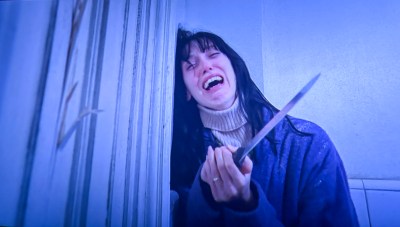
While we probably didn’t reach “discovery” on many of the scenes, we did “think a moment” or more on the film and its many scenes. The experience offered an accessible and exciting introduction to Stanley Kubrick and his work, gave us all an excuse to get together during the holiday break, and provided us endless material for reflection (and, for some of us, concern…)!
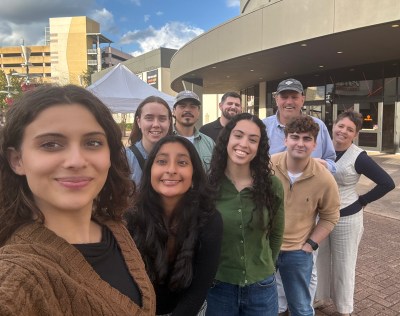
Au Revoir Austin

Although our official work week was over, it didn’t mean our education was complete.  Accordingly, we planned out a day that involved virtual exploration, actual exploration, and some adventurous food choices!


Bob Bullock Museum and National Parks

We began our morning with virtual exploration of the National Park system at the Bob Bullock Museum.  The Museum was presenting America Wild: National Parks Adventure.  It was narrated by Robert Redford, whom we had just seen in Butch Cassidy and the Sundance Kid on Thursday, and it reinforced some of what we had learned when we brought Mark Burns to campus in March to exhibit his photos of the 59 national parks he had visited and photographed in Black and White.

The Documentary was created to commemorate the one hundredth anniversary of the National Park Service.  Although Abraham Lincoln, Teddy Roosevelt and others had taken steps to preserve America’s most treasured lands, it was Woodrow Wilson who signed the legislation enabling the National Park System for generations of Americans to enjoy.

The documentary was in 3-D, so we put on our glasses, sat back, and enjoyed the show…

Bullock_Museum_3D_IMAX_Web

…while reinforcing our appreciation of the National Parks in the United States.

The Bullock Museum also has a limited exhibit of photographs from the National Park System, and we were followed up the documentary with a viewing of the photographs.

Bullock_Museum_National_Park_Gallery_Web


From Virtual Exploration to Actual Exploration

After seeing a high-adventure documentary, we chose to experience some of that adventure ourselves.  That evening, we headed off to the Rowing Dock to get in some kayaking.

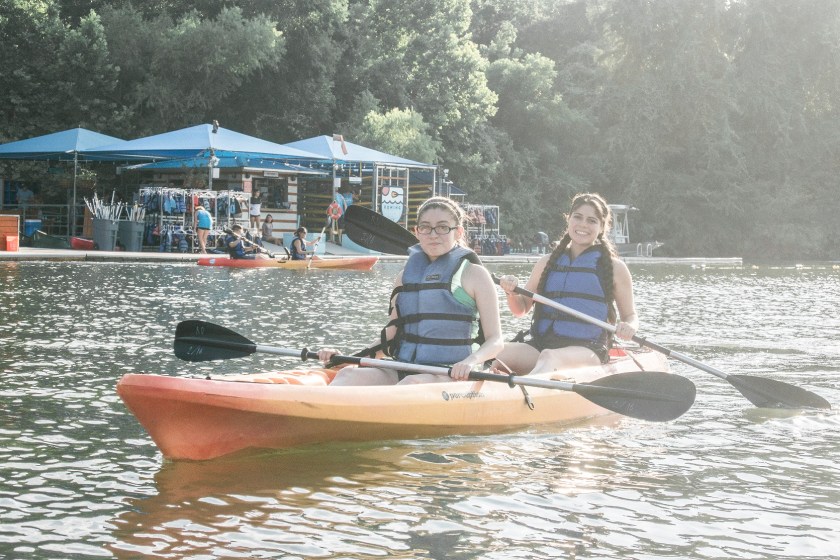
It took Karla and me (Alex) a while to find our rowing rhythm, but once we did, we sped up to catch up with the others.

Kayaking_Alex_Karla_2_Web
Karla and Alex Begin Their Kayaking Adventure!

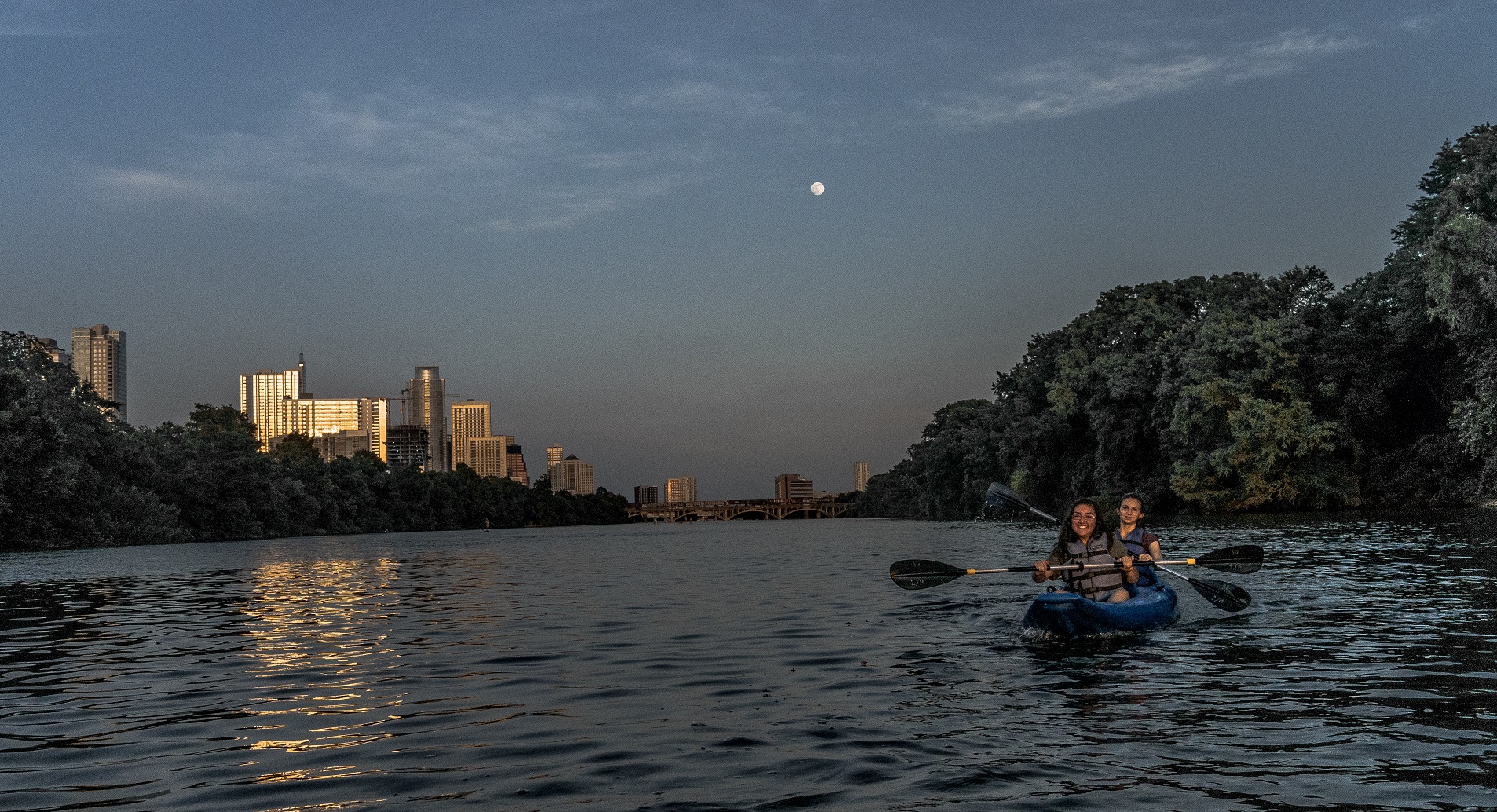
The river was full of kayakers, canoers, and paddle boarders rowing up and down the river and under the busy bridges. I admired the mix of city and nature as we paddled up the river.

Kayaking_Alex_Karla_5_Web
The Austin Skyline from a Kayak

It was a combination that I am not accustomed to seeing. After a while of paddling, we all gathered under a bridge that seemed to be making a strange sound. We stayed there for a while as Professor Yawn explained to us that the noise was being produced by bats! Apparently “South Congress” is known for its bat population that flies out at sunset every day.  We paddled along and saw a few more interesting water mechanisms; a swan boat, a Cambridge Racer…

Kayking_Sunset_Web

….and paddle boards with bicycles as the motor. But mostly we all just enjoyed the exercise…

Kayaking_Kaitlyn_Beatriz_3_Web
Beatriz and Kaitlyn Taking Off from the Rowing Dock

…the skyline…

Kayaking_Stephanie_Megan_1_Cropped_Web
Stephanie and Megan Enjoy the River

…each other’s company…

Kayaking_Kaitlyn_Beatriz_6_Web

…the sunset…

Kayaking_Alex_Karla_6_Web
Alex and Karla Sail Into the Sunset

…actually, we enjoyed the sunset a lot…

Kayaking_Kaitlyn_Beatriz_9_Web
Kaitlyn and Beatriz Sail Into the Sunset

…and even the moonrise.

Kayaking_Austin_Bridge_Web

In fact, we were so taken with the moon that we were a little late getting our kayaks back.

Kayaking_Kaitlyn_Beatriz_8_Cropped_Web
Kaitlyn and Beatriz Pull in at Moonrise

It was a satisfying adventure all around.

Kayaking_After_Girls_Moon_Web

After learning about the bats under the bridge, we decided to get a look for ourselves.  Accordingly, we scurried off to the Congress Avenue Bridge, where hundreds of people gathered to watch for the 750,000 or so bats that begin coming out around sunset.


Austin_Moon_Web

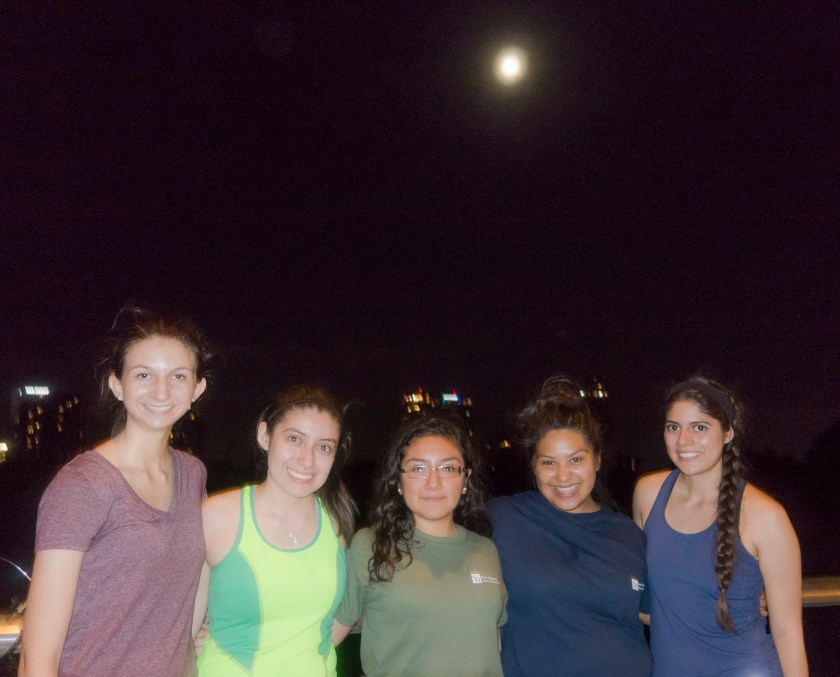
We didn’t see 750,000 bats, but we saw a lot of them!  They are difficult to photograph, however, and we didn’t get any usable photographs, at least not of bats.  We did get a decent group shot, though:

Austin_Moon_Girls_Web


A Food Adventure

With more time than typical, we could explore our food tastes.  And explore we did!

For lunch we enjoyed Indian cuisine at Clay Pit, a place known not only for its food, but also for being housed in the Bertram historical building.  The Clay Pit offers a lunch buffet, giving us the chance to sample varieties of food.  Starting with crunchy fried veggies to the scrumptious Chicken Tikka Masala we stuffed ourselves with food in a classy environment filled with Indian music. Accompanied with these dishes were naan: some filled with melted cheese and jalapenos, while others had sweet cherries, nuts, and raisins. After our meal, we decided to get dessert which consisted of Chai Spice Creme Brulee and strangest of all,or at least not commonly heard of, Gajjhar Halwa. This is a dessert described as a “hot and cold love”.

Dessert_Chapa_Alex_Web

Interestingly, it consisted of cold vanilla ice cream and warm carrots, a dish recommended to us by SHAIP (Sam Houston Austin Internship Program) alumnus Shelby O’Brien. Everyone enjoyed this shockingly delicious dessert!

Despite the large lunch, our evening kayaking adventure whetted our appetite for a large dinner, which consisted of Ethiopian food.

Our appetizers were Sambusas, which are pastries filled with onion, green pepper, and beef accompanied by a spicy sauce.

While we waited for our food, we talked about our favorite experiences during our week in Austin. We all had different favorites, but we all agreed that we definitely learned a lot this past week. It was filled with fun and adventure, but also a lot of work and learning time; the best combination!

That learning and fun continued with the arrival of our entrees, presented in a large Ethiopian basket!

Our entrees consisted of the Habesha special meat combo that included Doro Wot, Siga Wot, Kitfo, Yebeg Tibs, Alicha Fitfit, Bozena Shiro, Gomen Besega, Habesha special tibs, and Ayib; thankfully we had a great waiter that could explain each one of these to us! We also ordered from the Poultry menu, the Doro Tibs, chicken breast cubes sautéed with slices of onions, herbs, and sauce. For the least adventurous, we ordered spaghetti with meat sauce. The food really seemed to be authentic Ethiopian food which was a great way to introduce this type of food to us first-timers.

Even as first-timers, we did our best to eat in the Ethiopian tradition, using the injera bread as utensils.  It was great food and a great way to wrap up our adventurous week in Austin.

We headed back to the hotel to pack up and get ready to hit the road the next morning. We were all thankful for the opportunity to intern at the Texas Capitol for the week. We were also thankful to meet extremely helpful people and eat really good food. Until next time, Austin!