
On the third day of our New Orleans trip, we had an exciting itinerary lined up to continue our learning! After grabbing some coffee to start the day, we set off on a 20-minute walk to St. Louis Cemetery.
St. Louis Cemetery Tour
by Chrissy Biello
Traveling through New Orleans, one might notice the cemeteries and how distinct they are from other cities. With approximately forty-two historic burial grounds, our curiosity led us to explore the oldest existing cemetery in the city, St. Louis Cemetery. Thankfully, we had a knowledgeable and humorous tour guide named Denise who could explain things along the way.


Denise discussed the origin of St. Louis Cemetery, which emerged from a pressing need for space. On August 14, 1789, the cemetery opened because the neighboring St. Peter Street Cemetery had become severely overcrowded. During this time, Spanish colonists persuaded the residents of New Orleans to adopt an innovative solution: above-ground tombs that would maximize limited burial space.


Interestingly, there are strict protocols for burial. A new interment cannot occur until two years have passed since the previous burial, allowing for proper decomposition. When a new burial takes place, the remains of previous occupants are carefully collected, placed in a bag, and pushed to the back of the tomb using a long pole; a practice that reportedly inspired the popular phrase, “I would not touch them with a ten-foot pole.”


Turning around, we examined the oven tombs. Denise illustrated that they have this name because they have a wide opening, continuing to say that “they resemble a baker’s oven; can’t you imagine a pizza sliding in there?!”

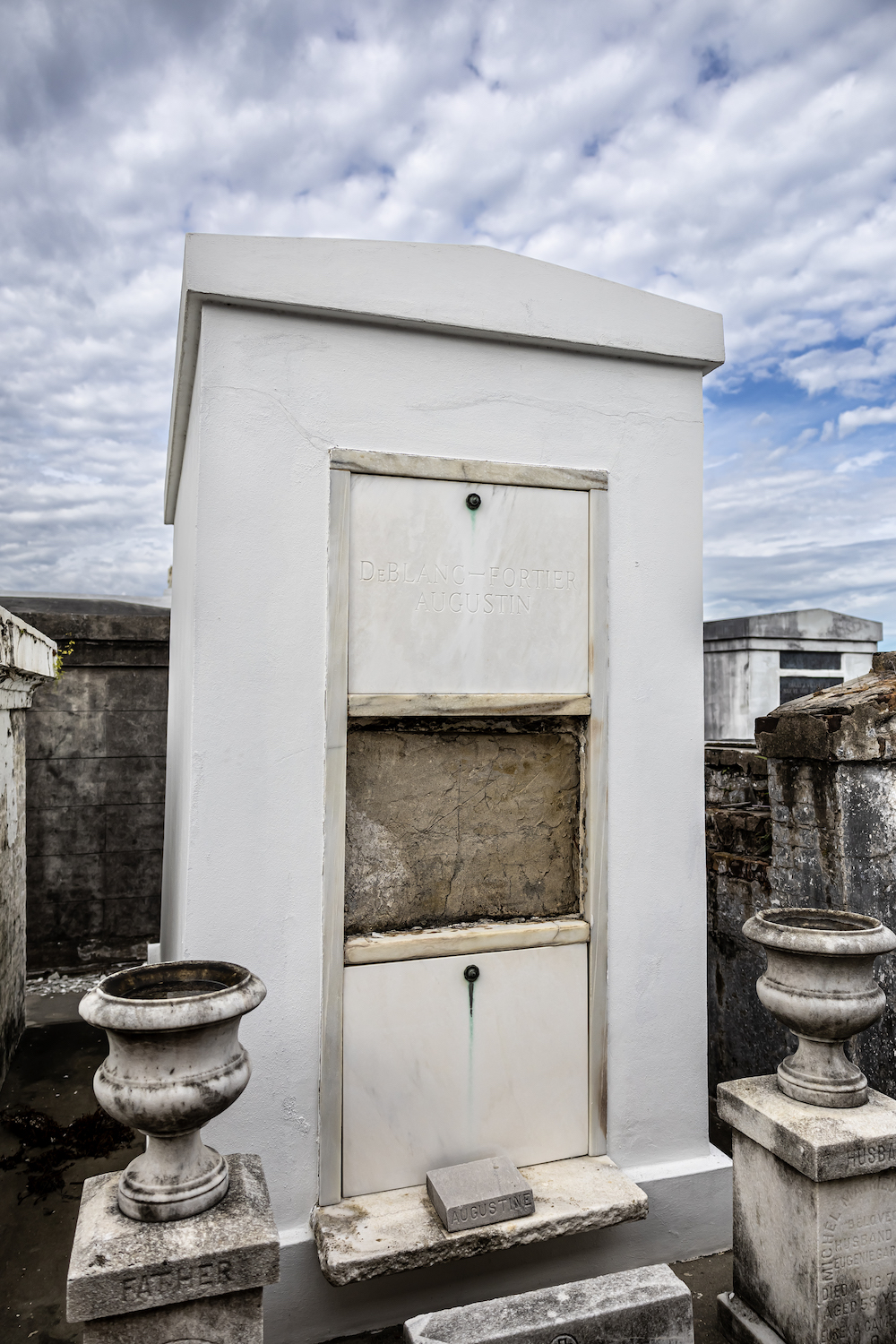
Moreover, one could not help but notice the striking nine-foot-tall pyramid tomb for Nicolas Cage when he passes away. Notably, it is inscribed with the Latin phrase “Omnia Ab Uno” meaning “Everything From One.”

Continuing on the tour, Denise took us to the Orleans Battalion of Artillery tomb, which holds those that fought, but did not die, in the Battle of New Orleans in 1815.


Further, the New Orleans Italian Mutual Benevolent Society’s marble tomb. Denise explained that many Italian immigrants, facing financial difficulties, could not afford individual burial plots. To address this, they pooled their resources to collectively purchase and share a communal burial site.


Another well-known individual buried in the cemetery is Homer Plessy, known for Plessy v. Ferguson. Denise shared how this civil rights pioneer, central to the Plessy v. Ferguson case, was finally pardoned by the Louisiana Governor in 2022; a moment of long-overdue justice.


Additionally, the “the Faux Laveau” grave, often mistaken for the famous Voodoo Queen, Marie Laveau, was adorned with symbolic crosses. In sets of three, they represent the Holy Trinity positioned sideways to signify the completion of crucifixion and resurrection.

Nonetheless, we ended the tour at the authentic Marie Laveau’s grave. Here, Denise explained that while Marie practiced Voodoo, she was a devout Catholic that would attend Mass daily. In her whimsical voice, Denise noted that the over emphasis of the voodoo aspect of Marie Laveau is “all a part of the loooreeee!”


As we exited the cemetery, we felt we had gained a deeper understanding of New Orleans’ unique culture. We would like to thank Denise for a great tour; her captivating storytelling and deep knowledge of the cemetery’s history made the experience both educational and memorable!
3rd Annual Children’s Hospital New Orleans Holiday Parade
by Chrissy Biello
Following the cemetery tour, we began the walk to return to our hotel before heading out to get lunch. To our surprise, a holiday parade was taking place! We learned that this parade is organized by the New Orleans Children’s Hospital and began in 2022.


Starting at the French Market, the parade winds through Downtown. As we watched the floats go by, we saw the Grinch dressed as Santa Claus and the Children’s Hospital float featuring their very own Mrs. Claus.


The best part of the parade was the cheerleaders and dancers. Their performances were fun and festive, bringing energy and excitement to the crowd. They also threw beads to the audience, which many were trying to catch!


St. James Cheese Company – Lunch
by Chrissy Biello
While walking the streets of New Orleans, we came across the St. James Cheese Company. Having passed this establishment before, we had assumed that they only sold cheese. To our surprise and delight, they offer a wide selection of sandwiches, bagels, fondue, and festive drinks.
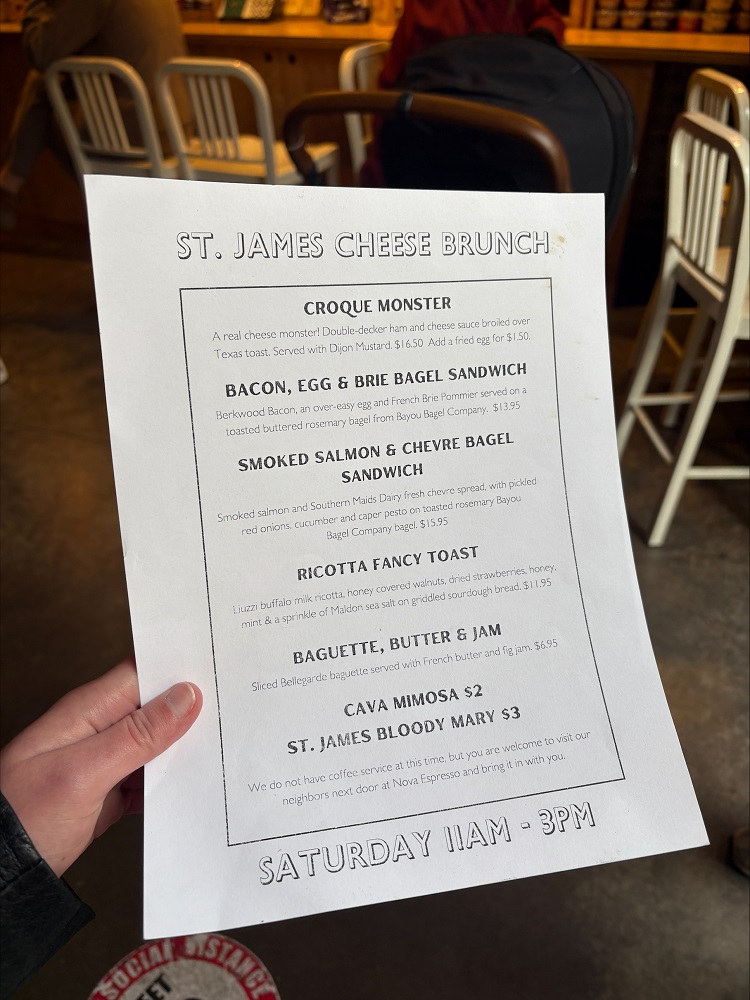

Since we all greatly enjoy cheese, we decided to order the sharable fondue. Although I may appear quite serious in this photo, I assure you that my expression does not reflect how I truly felt at the time.

The sandwiches also looked especially appealing. Olivia chose the Gruyere Sandwich, while I opted for the Hot Mozzarella Sandwich. Michelle, who tends to make healthier choices, ordered the Soup of the Day, which turned out to be Creamy Garlic and Mushroom Soup!


After finishing our meal, we continued on to our next destination, the National World War II Museum.
National World War II Museum
by Michelle Moya
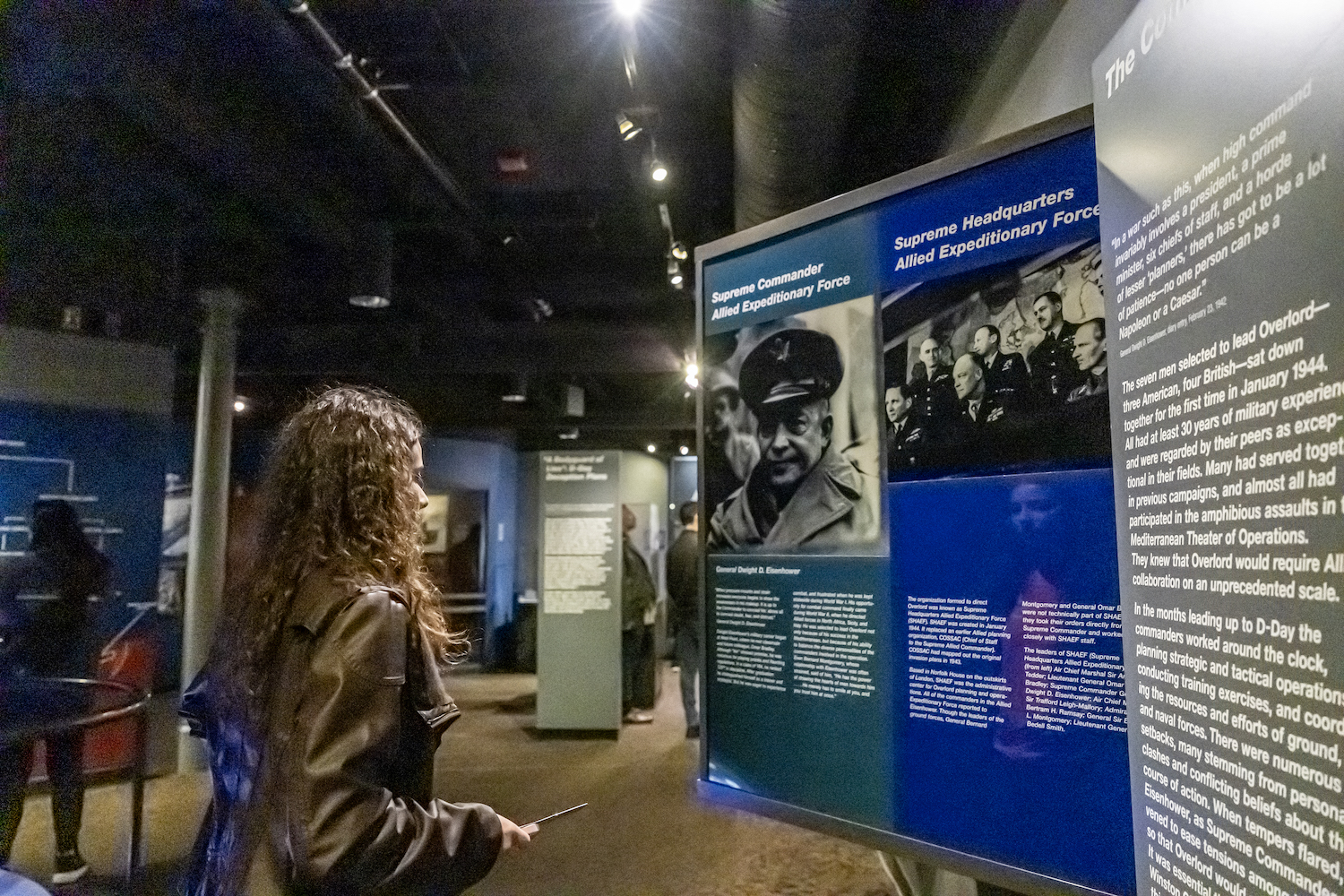
Following the parade and our meal at the St. James Cheese Company, we headed to the National World War II Museum. As it was National Pearl Harbor Remembrance Day, we felt very reflective and thankful for the soldiers that fought for us. Nevertheless, as a self-proclaimed American History hater, I went to the museum with not much knowledge. However, this tour definitely changed that!


One fascinating feature of this museum was the “dog tag experience.” We grabbed our “dog tags,” each of which was linked to a real soldier’s experience and role in the conflict that you had to find throughout the museum. I got Mike Colalillo!


To begin our walk-through, we started at “the Arsenal of Democracy” on the second level. The museum was a labyrinth of fascinating displays. This section demonstrated all of the great inventions that helped America win the war. Essentially, the “Arsenal of Democracy” was made possible by these tools!


Then, we dove into the heart of the Normandy invasion. My favorite there was the mass of hanging planes, a reminder of the airborne operations that preceded the beach landings that depict the Normandy morning crash.


Noteworthy, the “Personal Accounts” booths that have two-minute oral history programs with soldiers. Olivia walked into the “Night Drop into Normandy” booth and ended up hearing a horrible story about a soldier that got shot in his jaw but proceeded to fight. This goes to show the atrocities that these troops had to endure during this battle.


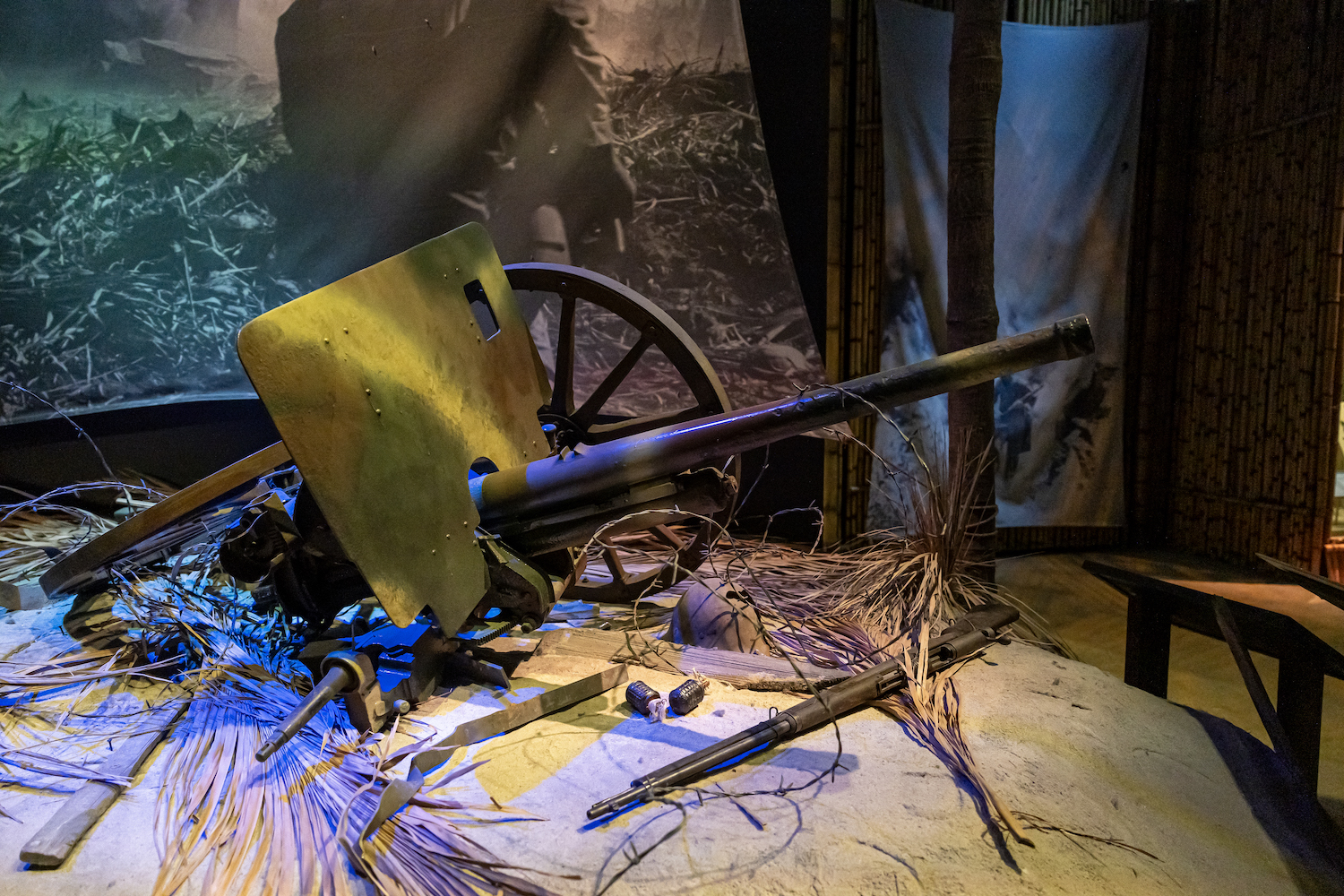
We then made our way to my personal favorite exhibition, the “Road to Tokyo” exhibit. The museum’s immersive displays, including a recreated jungle environment, provided a glimpse into the challenges faced by American soldiers fighting in the Pacific. The setting was super captivating, and the stories of the soldiers fighting in the Pacific were both inspiring and heartbreaking to hear.



To finish off our tour, we went to the museum store to look at the goodies they had. Olivia ended up purchasing a chocolate bar and Stephen E. Ambrose’s book Eisenhower: Soldier and President. Ultimately, the National WWII Museum not only taught me about a pivotal era in history, but it also inspired me to implement more history knowledge into my life.


I left the exhibition with a deeper appreciation for those who fought for our freedom, which was the overall goal!





























 Center for Law, Engagement, and Politics