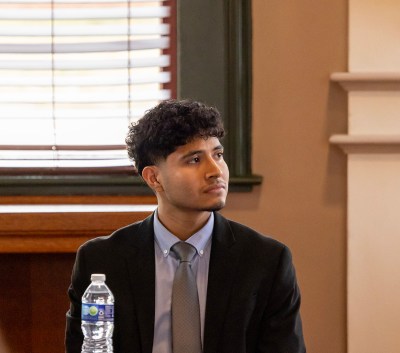
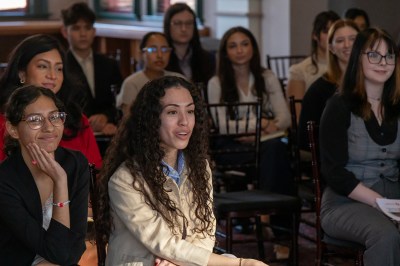
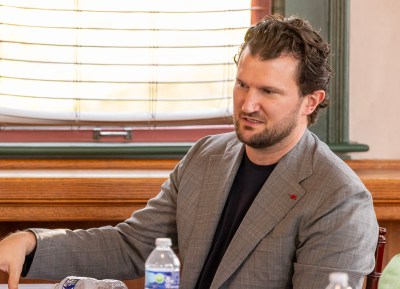
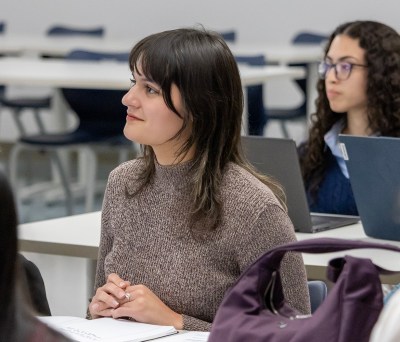
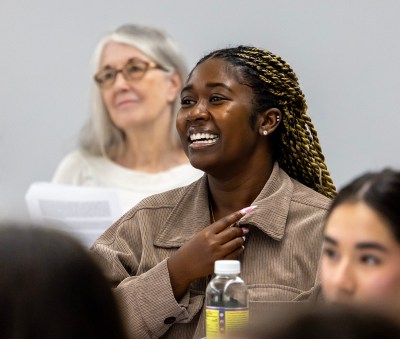
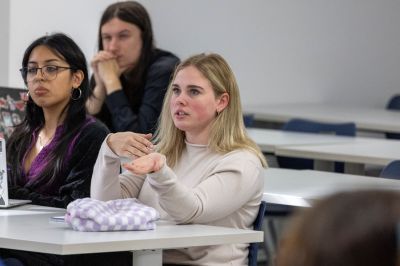
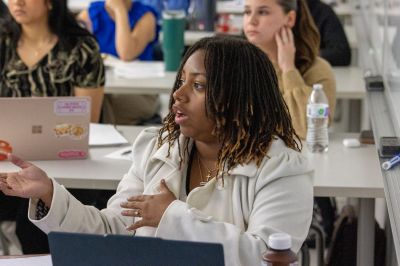
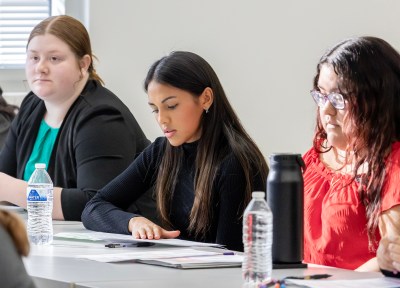
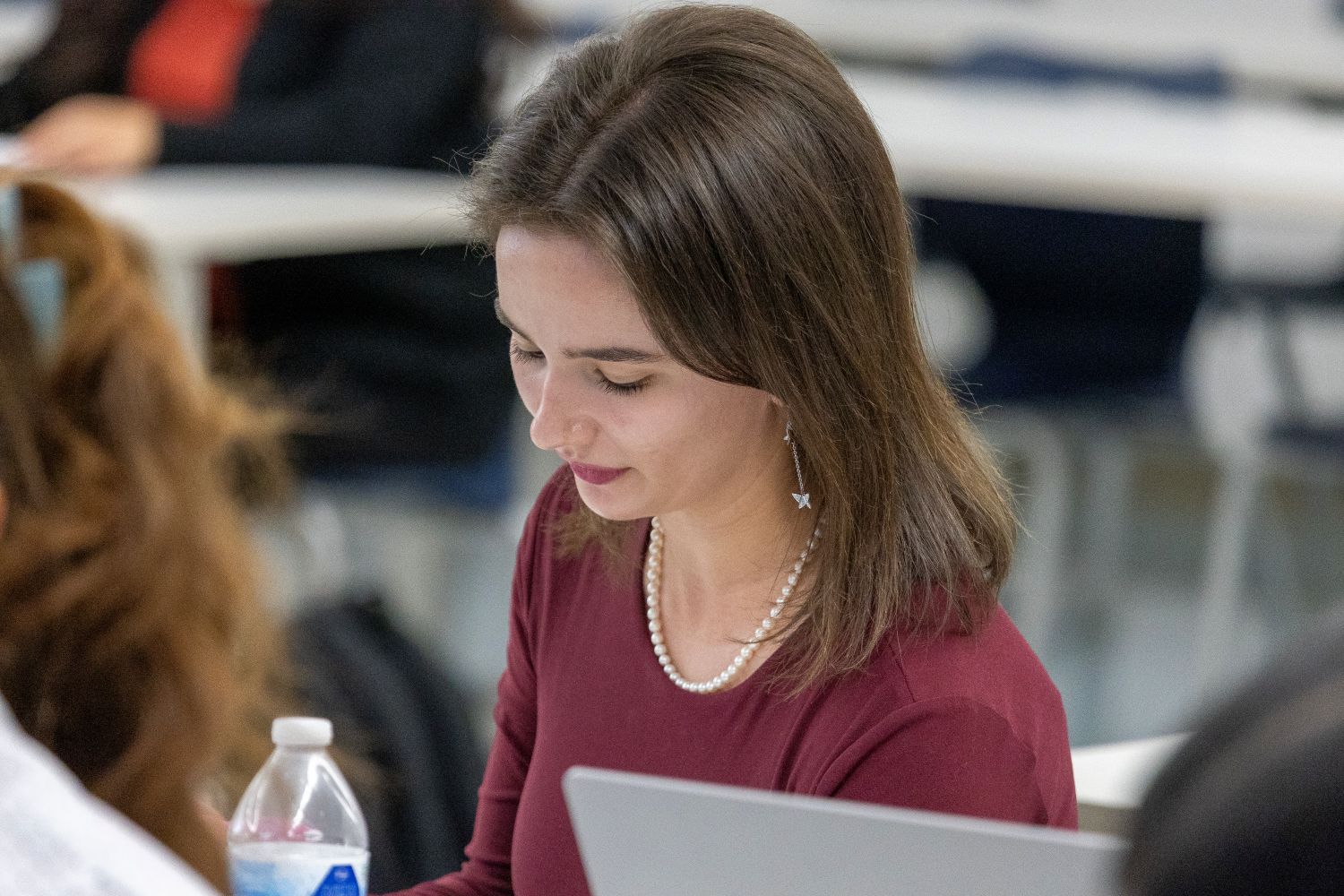
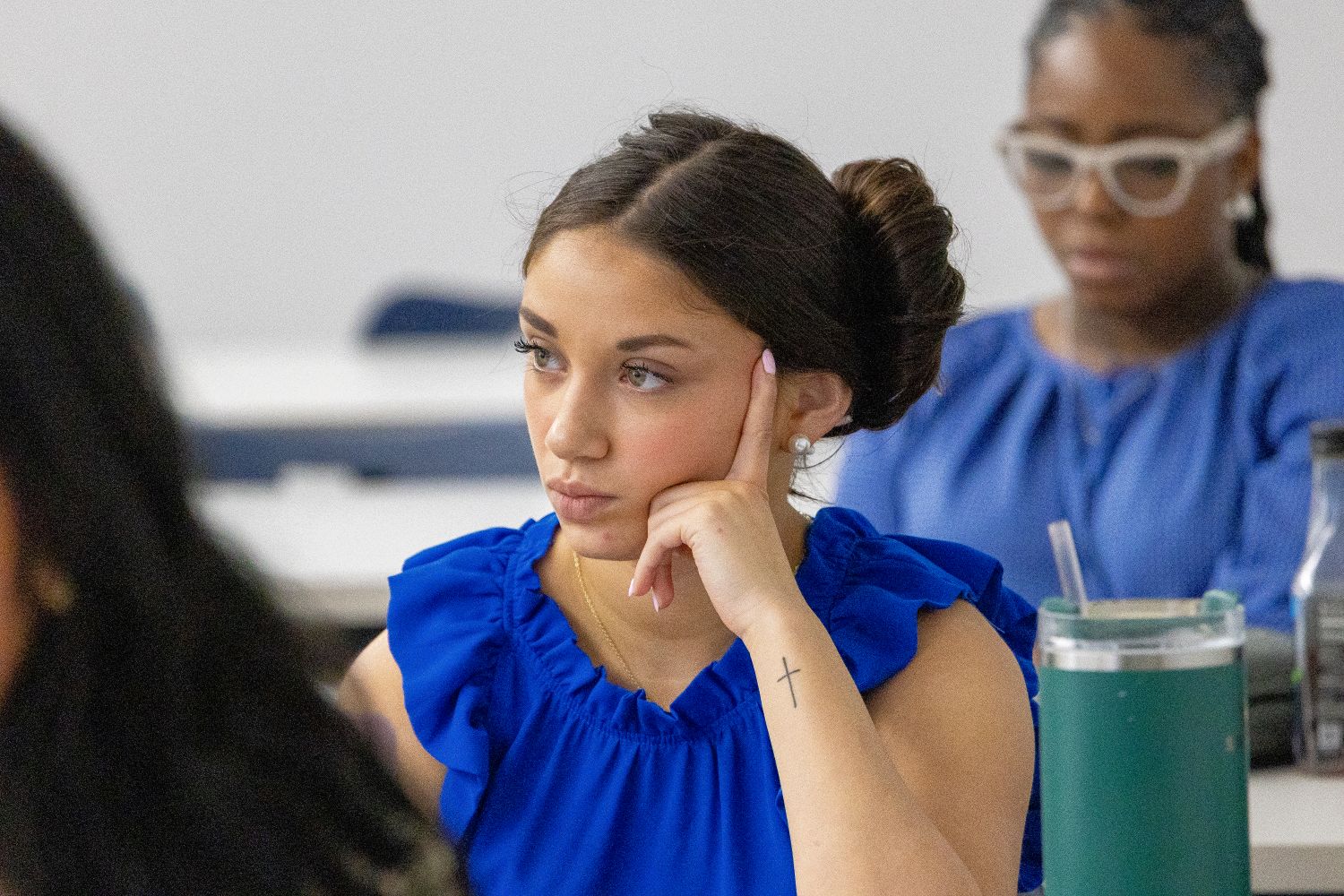
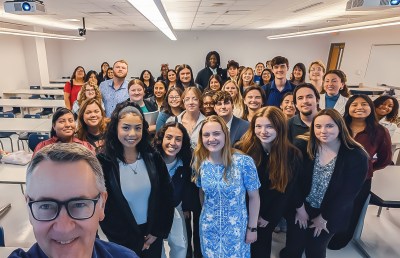
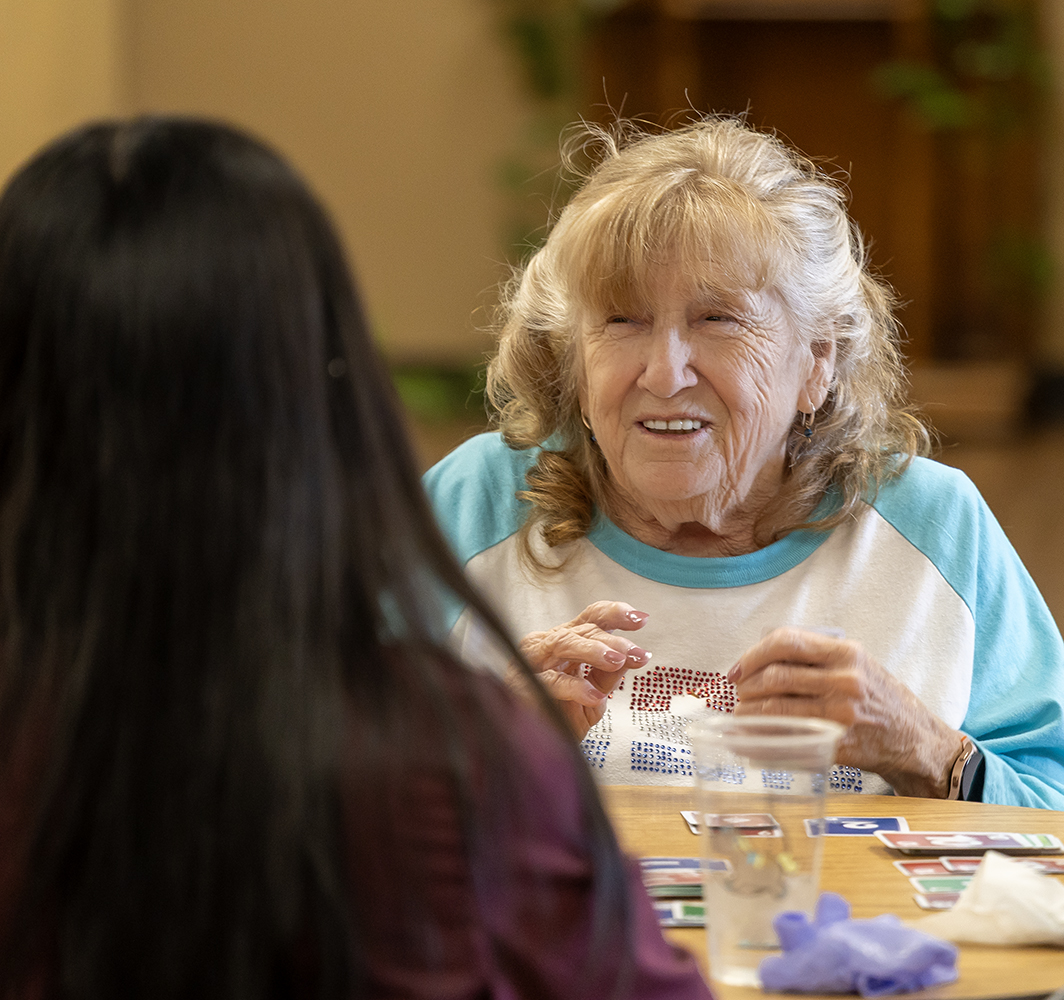
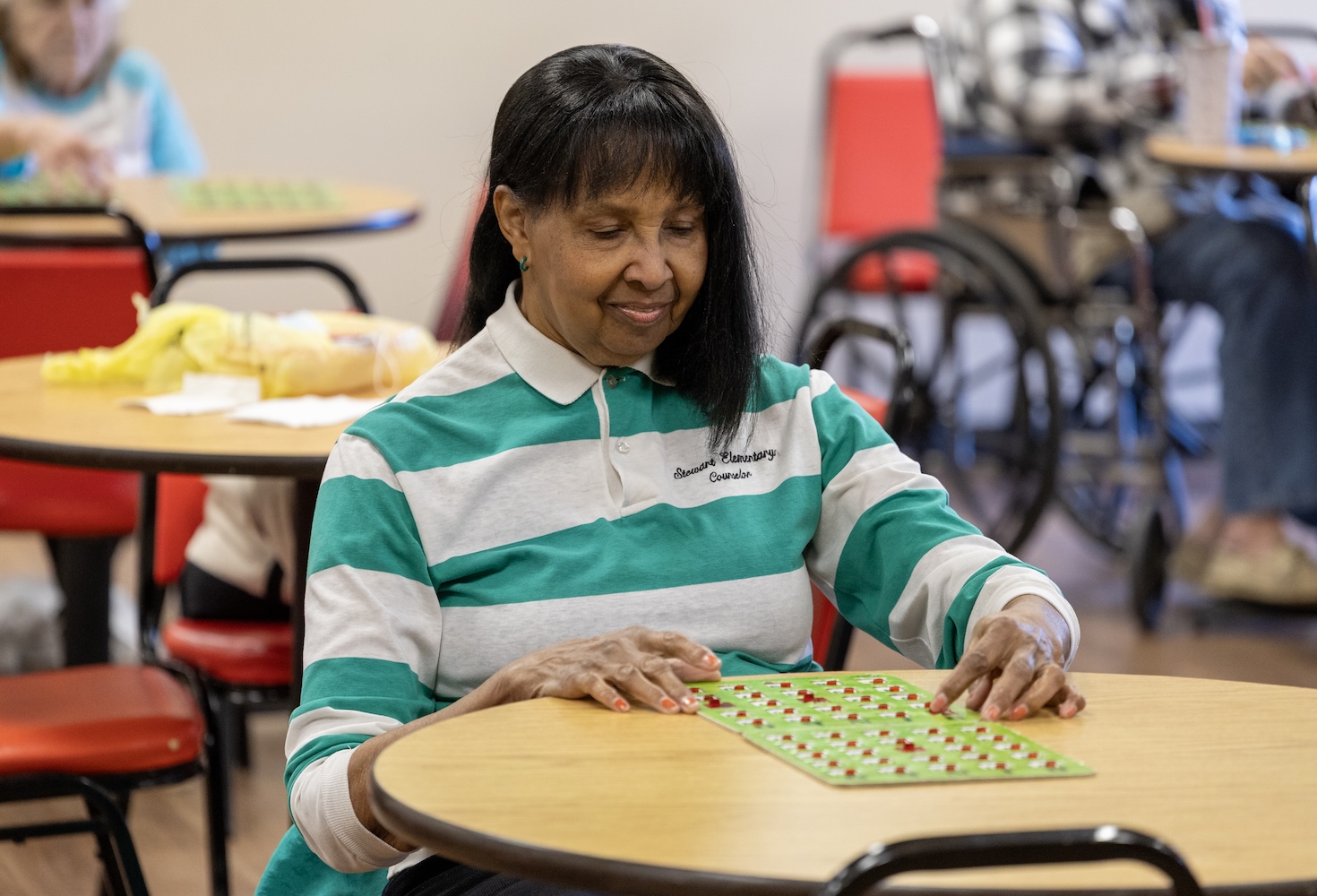
The spring session hasn’t yet begun, but LEAP students are learning–thanks to the dedication of Professor Lauren Clay.
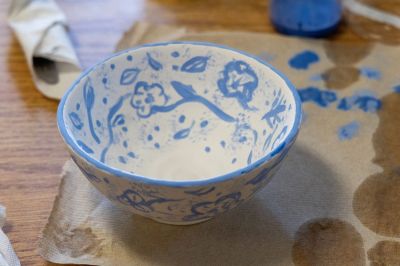
Following a December session of bowl-making–all in preparation of Empty Bowls–LEAP students gathered again to “Glaze a Bowl.”
Under the tutelage of Professor Clay, our advanced students did excellent work and our slow students (Yawn) made acceptable work.
Over the course of a couple of hours, we learned how to anticipate the “look” of a color on a ceramic bowl, the number of layers to add, and where to paint and where not to paint.
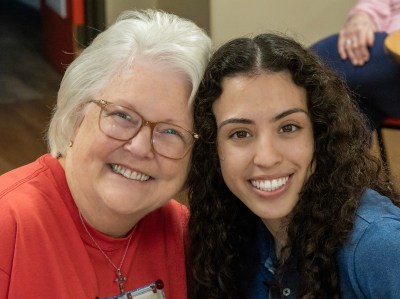
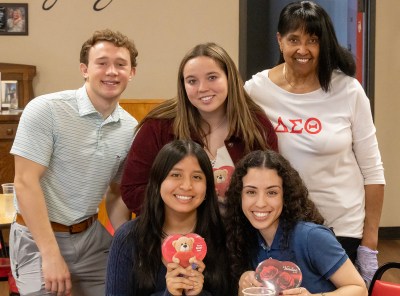
In addition to learning how art works, we also enjoyed the benefits of building social capital. While many of us are SHSU students, we also had professor, and we also had friends–Roxana Alvarado Martinez and her daughter, Gabriella, we met during our citizenship preparatory course, and we have stayed in touch! It is bridging social capital at its best.
Following the glazing, the bowls will go into a kiln (again) and they will be available to their creators on March 4, when the “Empty Bowls Fundraiser” takes place at the Wynne Home Arts and Visitors Center. Between 11am-2pm, the Wynne Home will be offering lunch and a hand-made bowl, available to all comers for a suggested $15.00 donation. Additional bows of the highest quality (not Yawn’s) will be available through silent auction. And what’s best, all of the funds will go to the Senior Center’s “Meals on Wheels.”
We hope everyone will join us in the fun and promote a good cause this March 4!
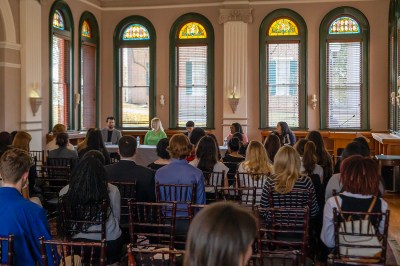
As part of its annual “Chilly at the Lodge” event, the Josey Scout Lodge Board of Directors hosted a “Chili Master Class,” featuring cooking lessons from Don and Karen Cullum.
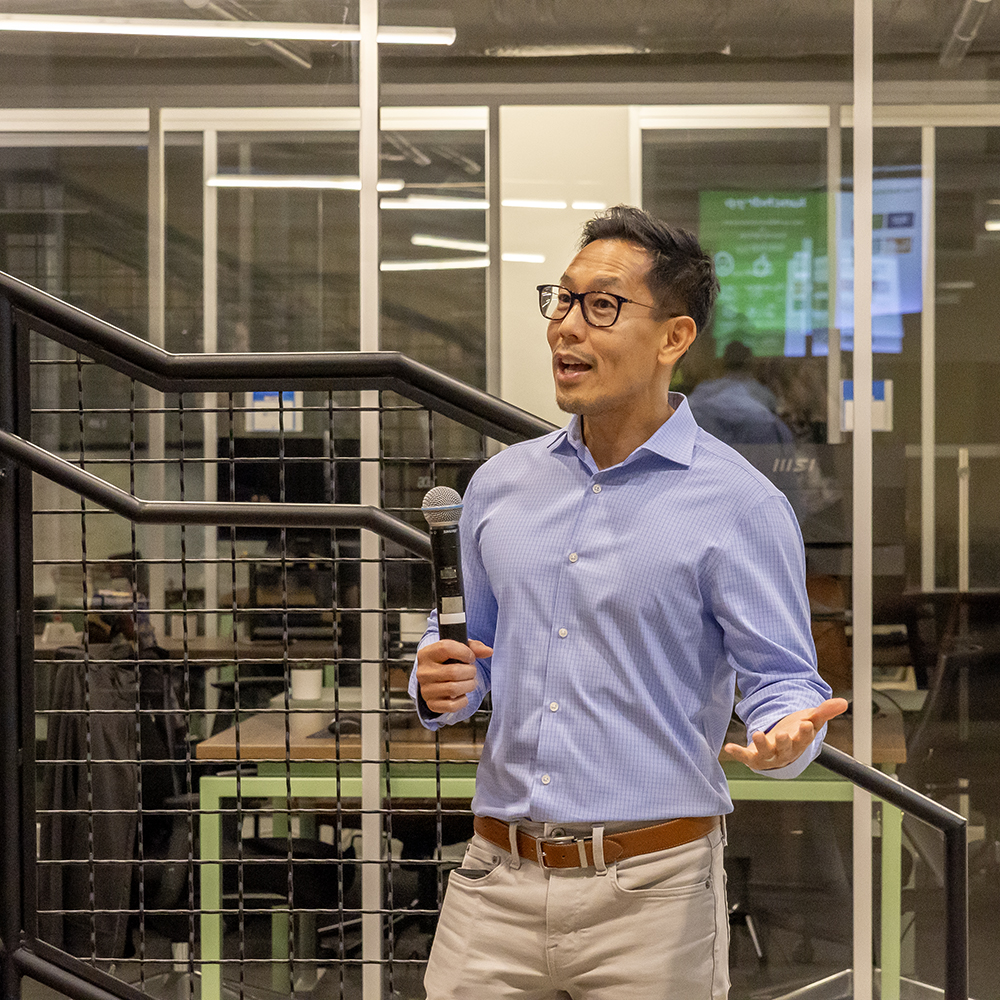
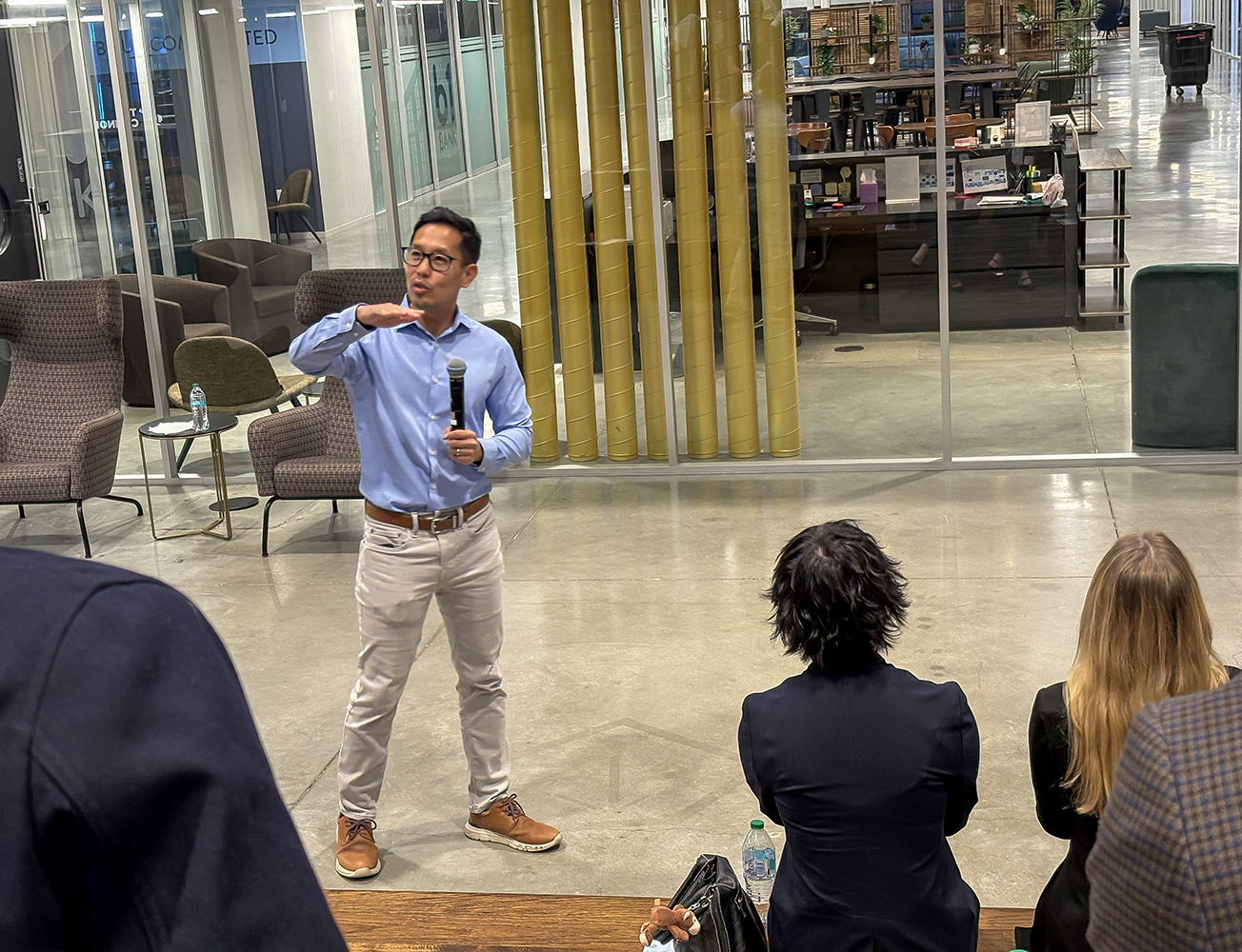
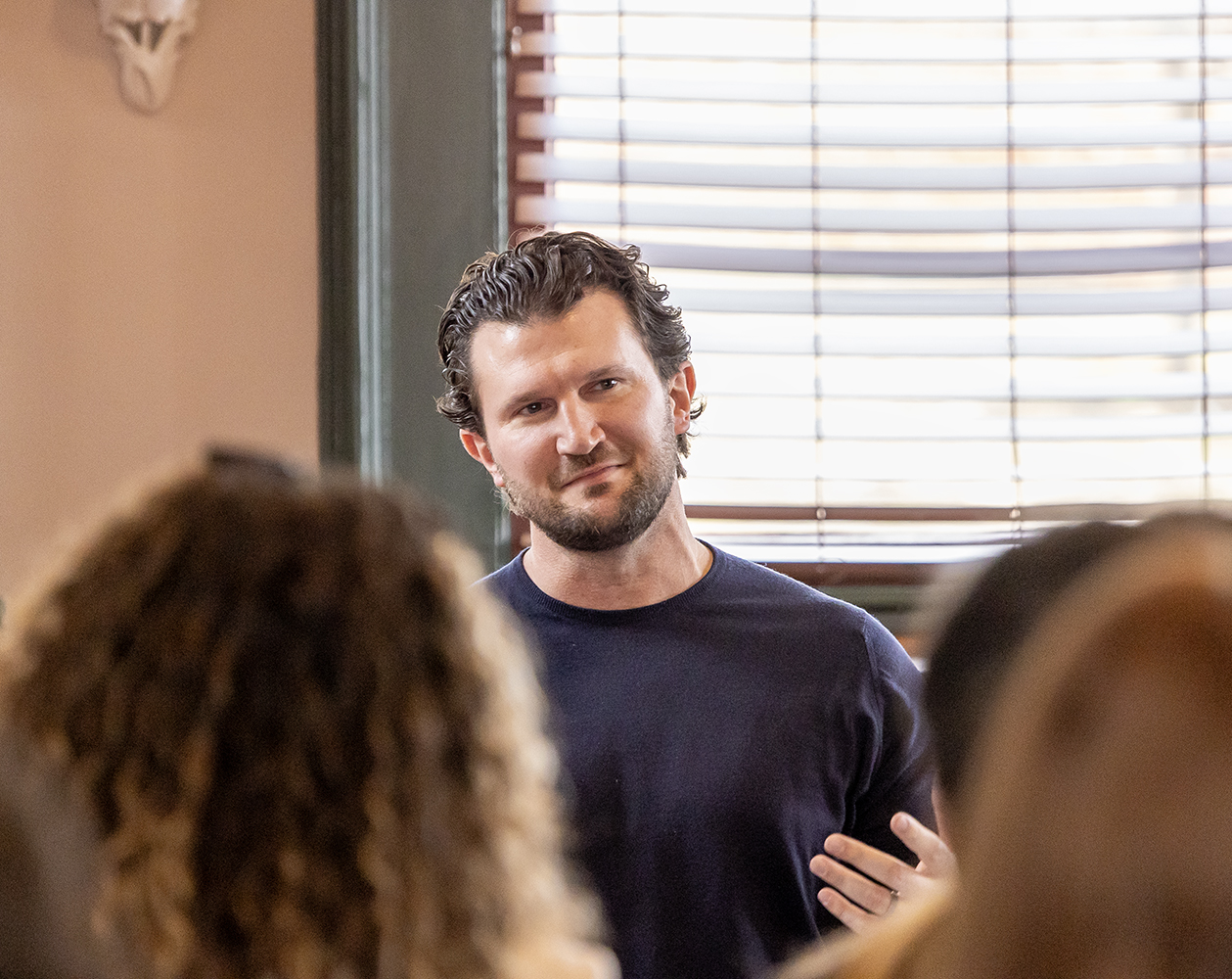
The class, attended by five LEAP-affiliated individuals including our newest LEAP Ambassador (Jacob Wessels) and a total of about 45 local residents, was a deep dive into red chili style chili making.
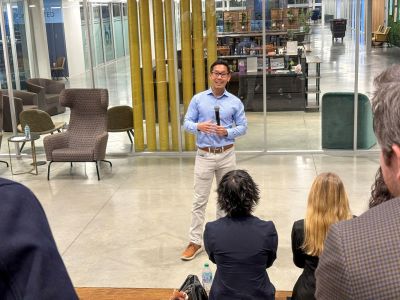
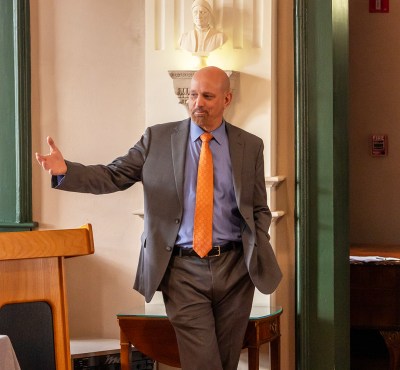
… introduced Don and Karen Cullum–both champions on the chili circuit–and the instructors for today’s crash lesson.
While even amateur cooks might be able to manage a solid pot of chili, championship-level preparation requires attention to nuances.
Have you considered that the wind may affect the heat of your flame and, accordingly, considered buying a wind guard? At your last cookout, did you think of the humidity level when considering how much water to add?
These are some of the nuances described by Don Cullum as he went through the chili-making process.
We also learned, of course, of ingredients, the preparation, and he even offered the recipe he used (or a close approximation to it) when winning the ICS National Championship.
Upon completing the class, we all had a chance to sample Don’s small-batch chili.
And, pleasingly, while he was preparing his small-batch chili (which is what is used to compete because the cook has much more control over the variables), his wife, Karen, was preparing a large batch–large enough for the audience!
Thus, we ended our Saturday morning with a lunch-time meal of chili, courtesy of the Chilly at the Lodge event. You can join the fun on Saturday, January 31 from 11am-3pm, when chili-cooks, vendors, and musicians will come out for a day of food, wares, and entertainment. Visitors can tour the Josey Scout Lodge, stop by booths for all sorts of goods, and with the purchase of a $5 sampler kit, get six spoons to try different versions of Texas-made chili!
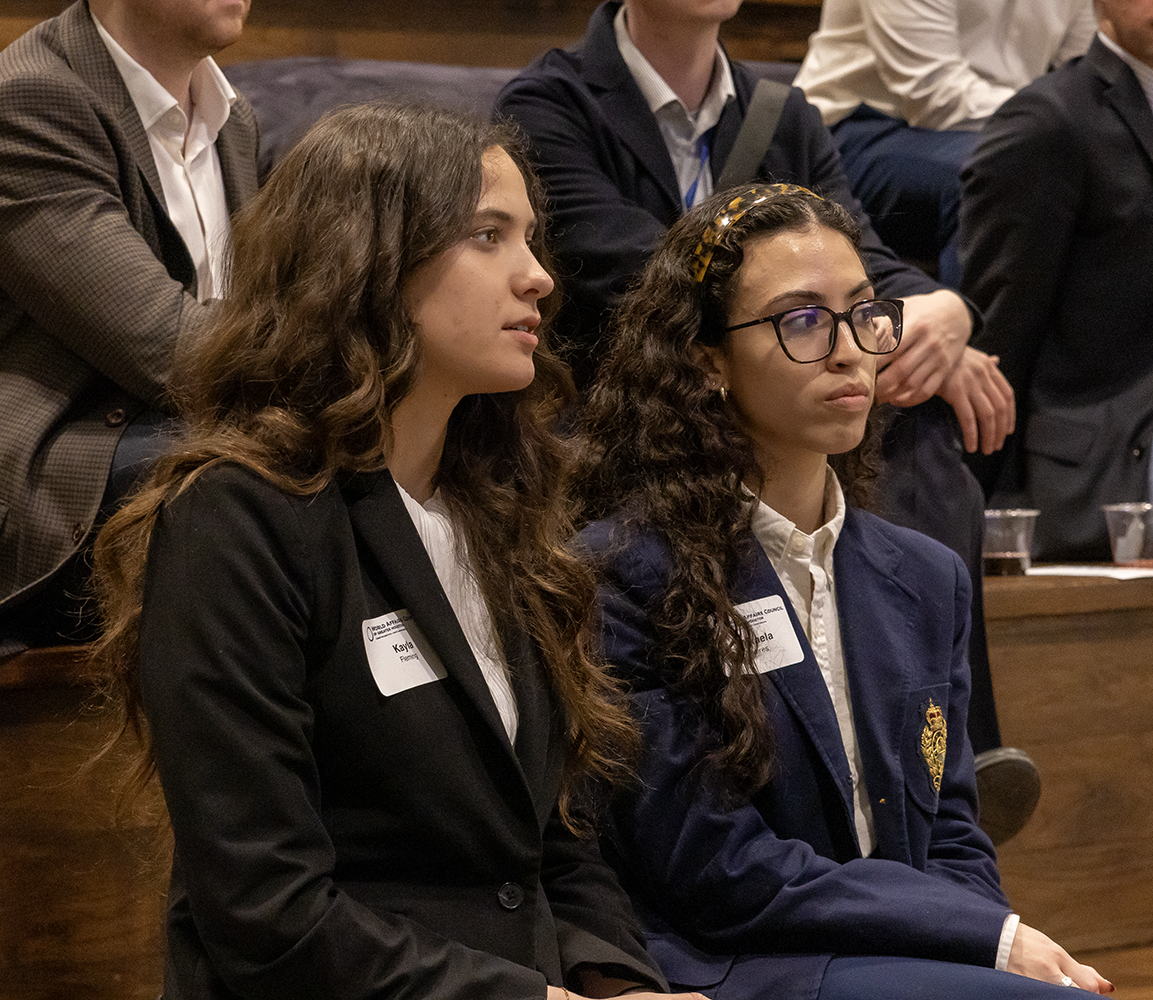
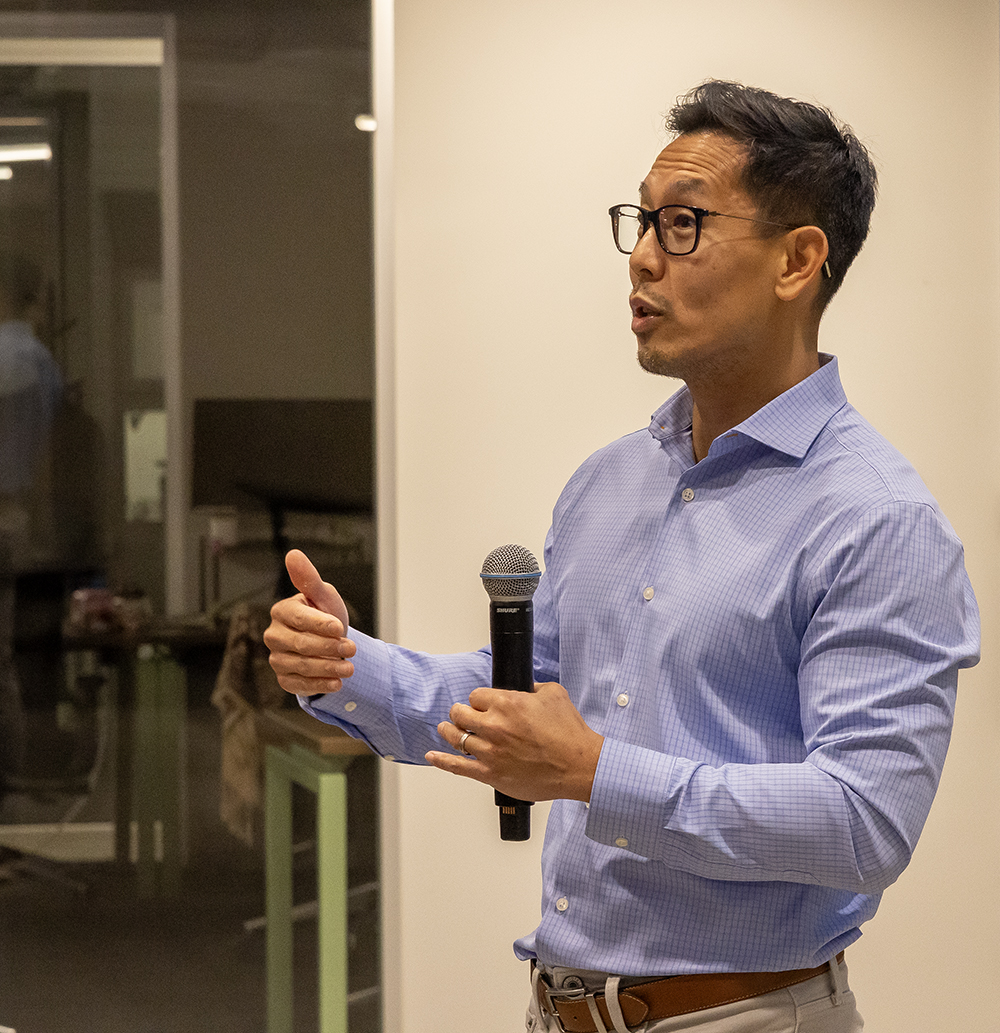
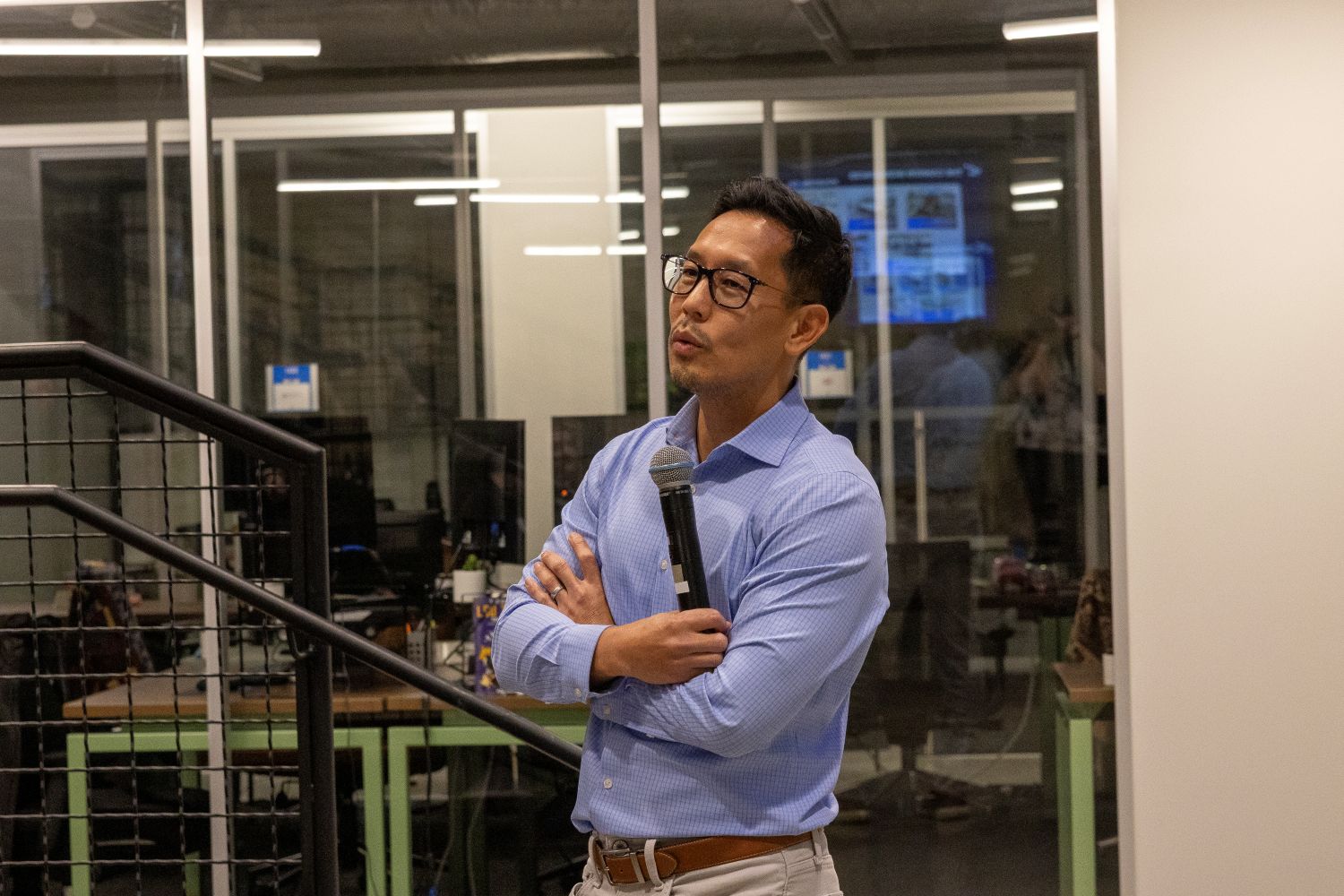
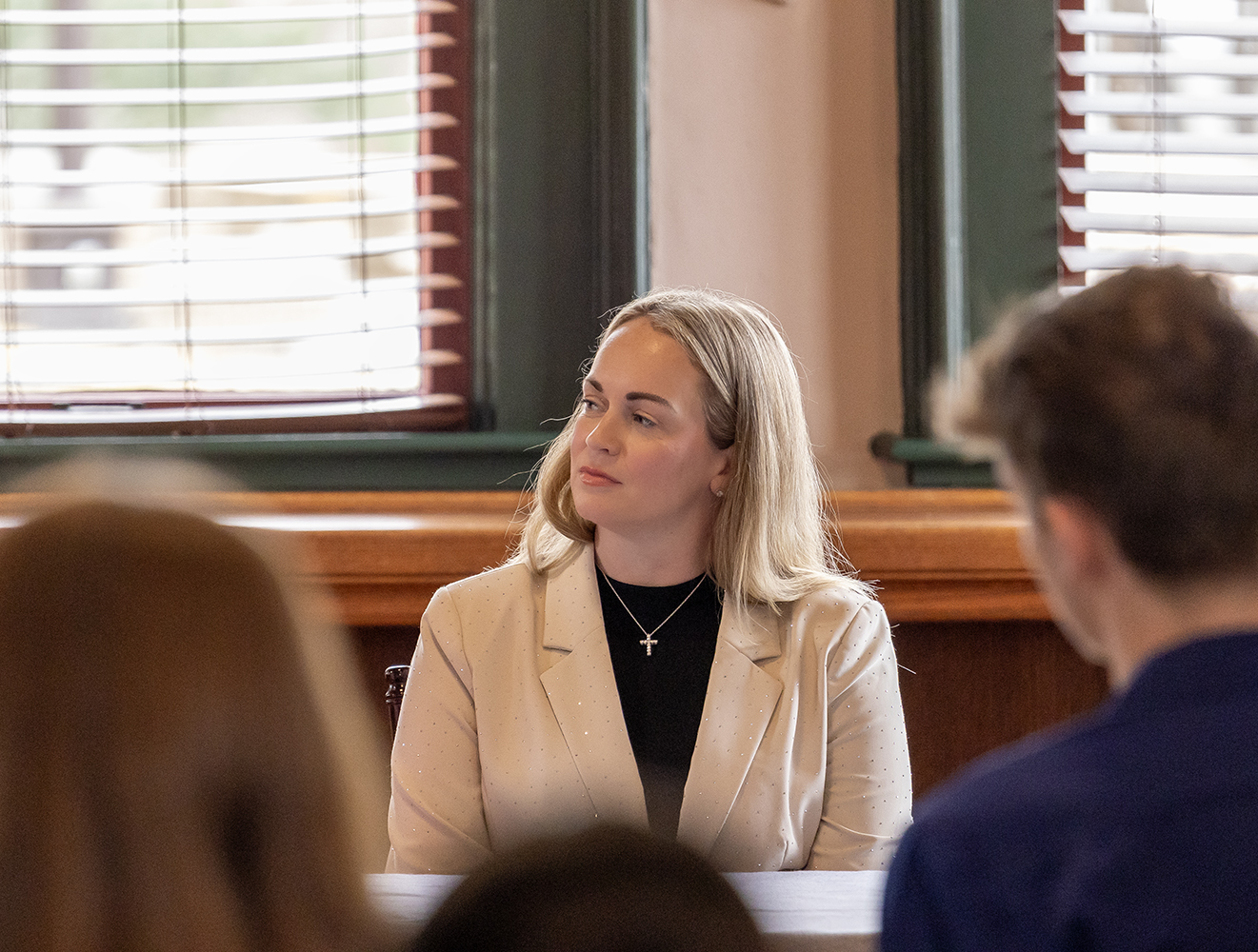
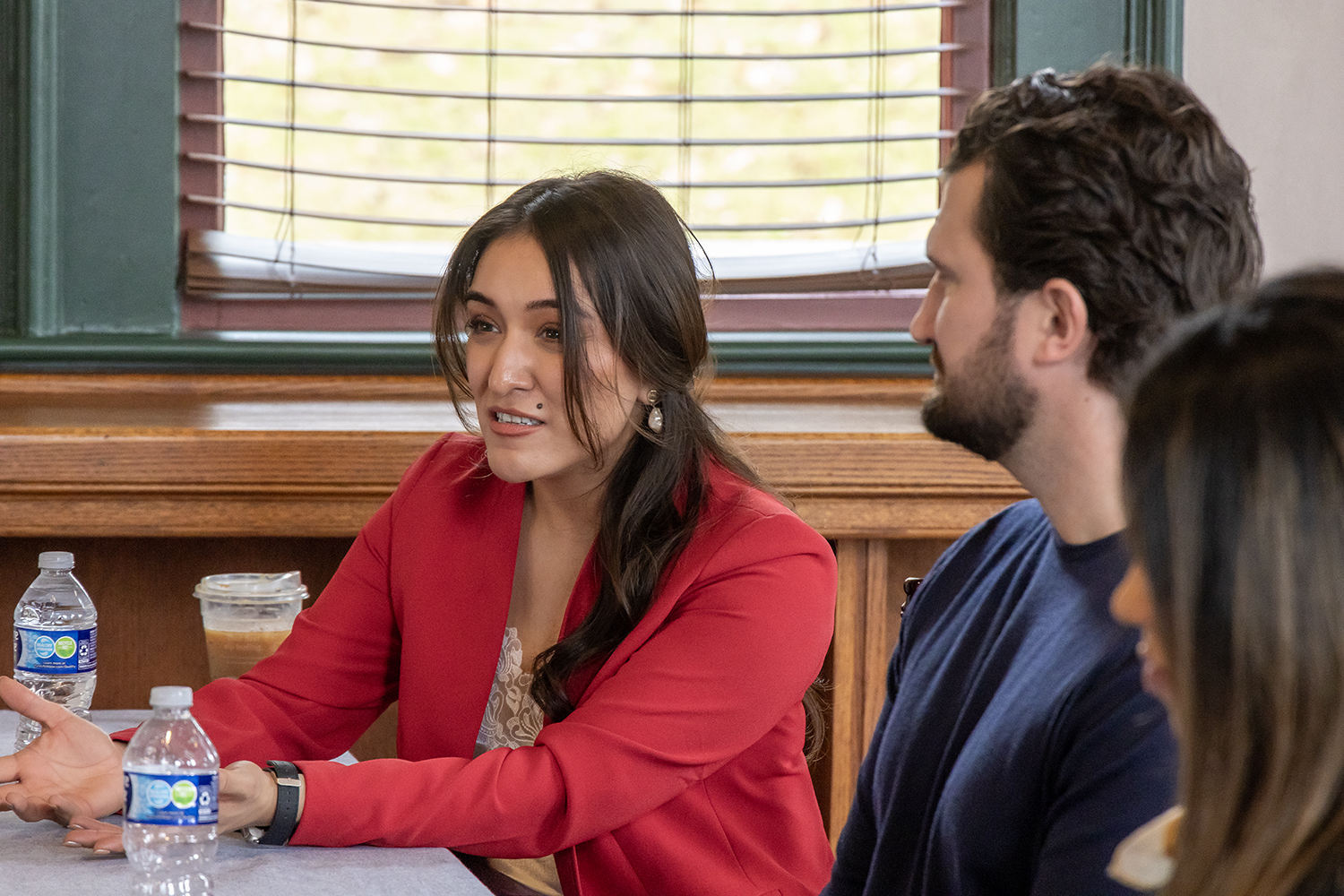
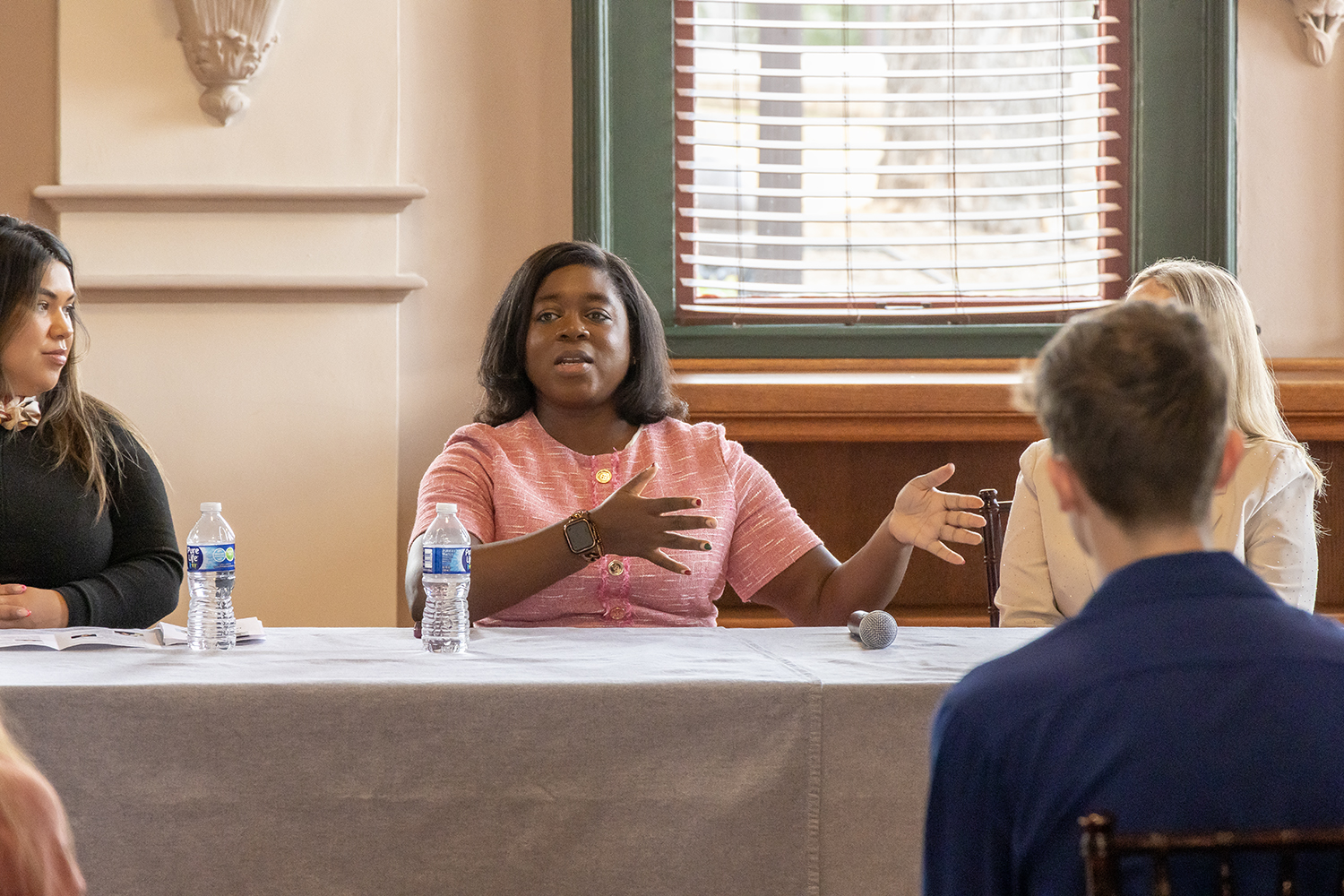
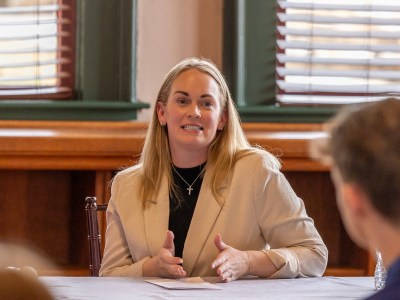
With the semester over, LEAP students had the opportunity to continue their learning with the World Affairs Council in a program featuring The Washington Post reporter David Lynch. Hosted at the Junior League of Houston, the event featured moderation by Ronan O’Malley and covered a wide range of aspects of ‘The World’s Worst Bet”–that is, globalization.
Lynch defined globalization as referring “to the easy movement across countries and continents of money, technology, and phenomena.” This is somewhat different than free trade, although, he noted, the two concepts are often used interchangeably.

In the 1990s, according to Lynch, many politicians suggested that free trade would help shape globalization, which was already occurring. By shaping how globalization unfolded through free trade, leaders believed, they could encourage countries to become more democratic and more capitalist, resulting in more world-wide freedoms.
In the 1990s, it seemed like these promises would come to fruition, as Lynch said that it looked like “the U.S. had cracked the code” at the time, something he believed to be true. He and others, however, failed to see that increasingly open borders would contribute to income inequality and growing nativistic tendencies; that democratic processes would not necessarily follow from increased trade; or that the more extensive supply chains could be exploited or disrupted by rising autocratic powers.
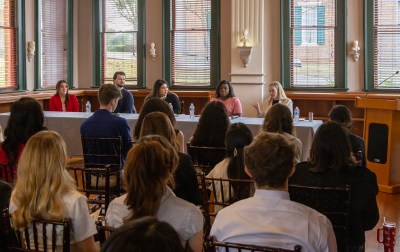
He did note that globalization would have occurred with or without free trade, and it will continue to do so. But the United States–and many other countries–have not created a process to ensure that globalization-induced wealth benefits everyone. Ominously, the rise of automation and artificial intelligence could exacerbate these trends to few life opportunities for those with limited skill sets (or the opportunities to expand their skill sets), and leaders will have to address these mutually reinforcing trends in tandem.
These concepts–and their consequences–were a lot to process in the first week of the winter break. But the weight of this process was counteracted by the engaging and educational manner in which O’Malley and Lynch presented the material, giving our leaders–and us–much to think about as we move into the future.
The SHSU academic fall semester may be complete, but LEAP students are continuing to learn, in and out of classrooms. Accordingly, a group of LEAP students participated in a ceramics class this Monday, March 15, led by Professor Lauren Clay at the Dana G. Hoyt Fine Arts Building as an early participation in the Empty Bowls Fundraiser, which will occur March 4, 2026.
Our participation is the first phase of a three-phase fundraiser. As described by Professor Clay, our purpose Monday was to (1) shape our bowl, learning how to mold wet clay, explore the many options for designs and ornamentation, and to prepare for the kiln.
We will return in January to (2) glaze the bowl, and in March, some of us (3) will volunteer for the Empty Bowls fundraiser at the Wynne Home Arts and Visitor Center–a project we have assisted with since the program’s inception in 2008.
For our initial session, Professor Clay…
…demonstrated “underglaze transferring,” which involves creating a design on one medium and transferring it to the ceramic before shaping and kilning.
Thus, we created our design and waited for the design to dry…
…smoothed our clay, completed the transfer, and then put the clay over a mold to complete the bowl.
Not all of us did the transfer process; Professor Yawn, for example, had much trouble with his transfer, and proceeded without ornamentation.
Others, however, engaged fully in their creativity, exploring floral designs, innovative clay designs, or using laces or others props.
With the right imagination and dexterity, the possibilities are endless, and some of us were thrilled with our designs. I, on the other hand, didn’t feel like I quite got the hang of it, but was nonetheless satisfied with it as a first effort.
This participation also gave me the chance to see the beautiful Hoyt Fine Arts Building, making me wish I had explored this building earlier in my college career. And while the building was a little on the cool side, the experience itself left a warm feeling in all of us, a fitting outcome for participation in a worthy cause.
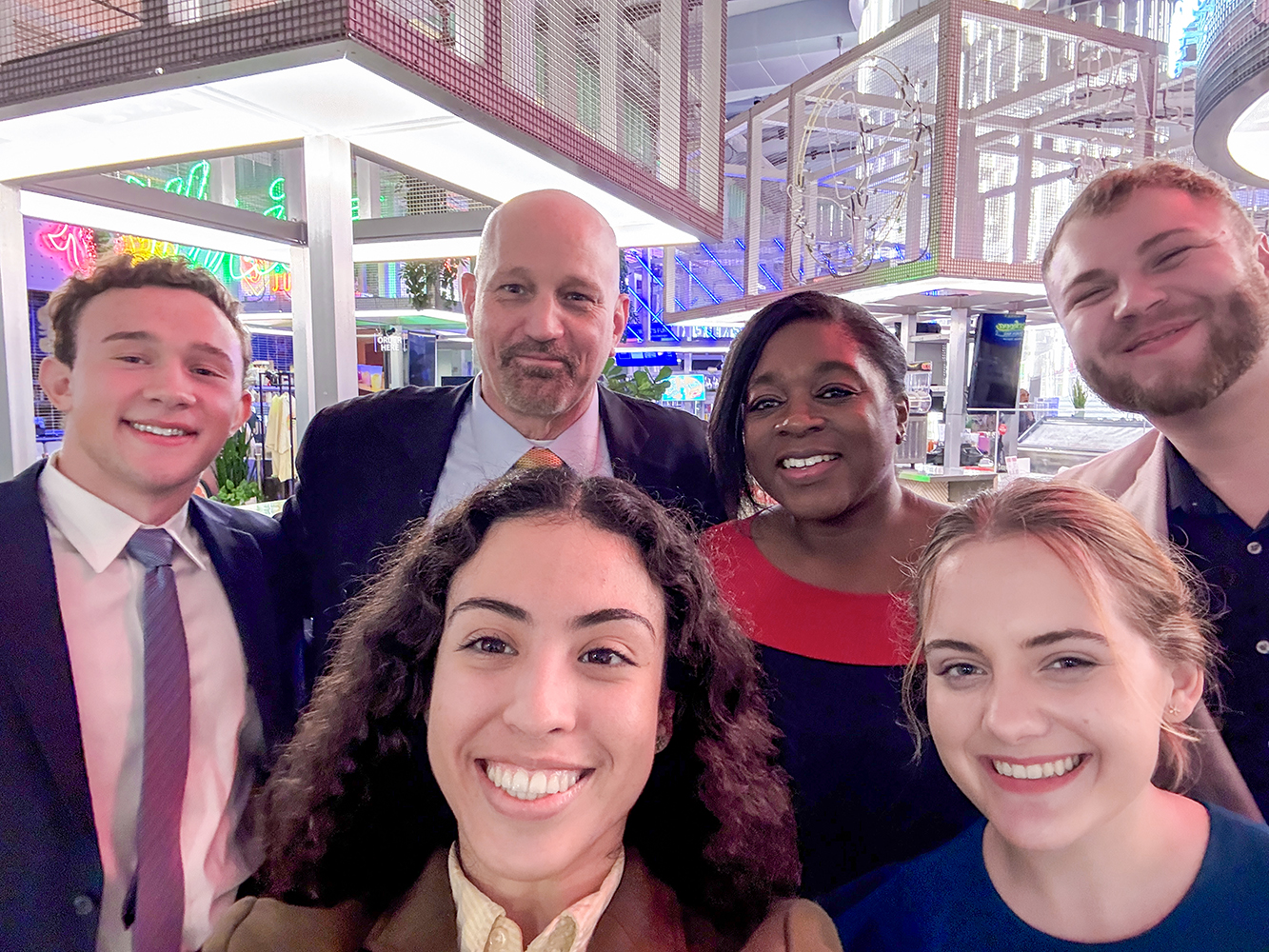
As part of the LEAP Center’s ongoing work to expose students to the broader culture, a group of alumni and current students gathered in Houston to see Stanley Kubrick’s “The Shining.” Originally released in 1980, the film is being re-released on IMAX theatres across the country as part of its 45th anniversary.
For about half those attending, it was a first exposure to a Stanley Kubrick film. Accordingly, we began with a brief background of Kubrick and his films. Of all the great directors, Kubrick produced the fewest films (13 over a 45-year career), a fact that has not deterred scholars from giving as much thought and ink to Kubrick’s work as that of Hitchcock, Welles, Spielberg, or Martin Scorsese.
Of Kubrick’s films, “The Shining” has received perhaps the most attention. The film is based on Stephen King’s novel of the same title, and it was met with a mixed critical reception on its release, although its stature has grown, and it is now considered a horror classic.
It embodies several cinematic traits of the Kubrick oeuvre: a longish running time, attention-grabbing visuals, riffs on various literary themes, and an enigmatic approach to storytelling that occasionally leaves viewers unsure what they just watched. All of these were on display in “The Shining.”
In this viewing, the visuals were most prominent, perhaps because we were watching this on an IMAX screen. The opening scenes, shot from a helicopter, including a scene where we (perceiving things through the camera) seem to pass the Torrance family on the “sidewinder” road…
…on the way to the Overlook Hotel.
Kubrick also made full use of the Steadi-Cam, which had been introduced on film in 1976. Kubrick used it throughout “The Shining,” and he innovated with it, devising an apparatus that could shoot from about 18 inches above the ground–most notably used in the film to follow Danny on his tricycle, as he traversed the maze-like corridors of The Overlook.
Kubrick’s films are often sprawling affairs and they are deeply studied by scholars and enthusiasts, so it’s no surprise that all manner of symbols and themes have been “discovered” in the director’s body of work. This is probably most true in “The Shining,” as reflected in the interesting and bizarre theories expressed in the documentary Room 237.
Professor Robert Kolker, an author of several Kubrick books and an expert on cinema, suggests that the film can be seen through an Oedipal lens (spoiler alert). Danny’s “shining” is a type of oracular vision not unlike that of the prophecies offered at Delphi, including the one offered to Oedipus. And while Danny wasn’t as close to his mother as was Oedipus, she serves as his caretaker and protector; in the end, she carries him to safety, saving his life.
Danny doesn’t proactively kill his father at a crossroads as does Oedipus, he does leave his lame father to die of exposure in a labyrinth. Of note: Jack Torrance suffers from a foot/ankle injury following a fall down stairs; he literally embodies the term “Oedipus,” which means “swollen foot.”
Whether such messages were intentional or not (it’s worth noting that Kubrick mentioned he read a lot of Freud prior to filming “The Shining”), the film is replete with sufficient ambiguities to provide fodder for the active imagination.
There are some imponderables in the film; it does, after all, involve the supernatural. But even in the logic of the supernatural, what is the purpose of the bathroom scene…
…in which Nicholson embraces a young, naked and beautiful woman, only to find her decay into a rotting but living corpse? Why is there a parlor full of fully-dressed corpses in the hotel? And what about the scene involving a man in a bare-backed bear costume and a man in a tuxedo?
This latter question was posed by many in our group (answered by none), and such questions may reflect Kubrick’s very approach to filmmaking: “if you can get people to the point where they have to think a moment what it is you’re getting at, and then discover it, the thrill of discovery goes right through the heart.”
While we probably didn’t reach “discovery” on many of the scenes, we did “think a moment” or more on the film and its many scenes. The experience offered an accessible and exciting introduction to Stanley Kubrick and his work, gave us all an excuse to get together during the holiday break, and provided us endless material for reflection (and, for some of us, concern…)!
LEAP has taken us to several museums this year—the Museum of Fine Arts, Harvard Art Museum, and many others scattered throughout the semester. Each visit has offered something different, but our last museum trip of the semester to the Asia Society Texas felt like the perfect way to close out what’s been a great streak of cultural experiences!
Asia Society Texas Center is located in Houston’s Museum District. Designed by Yoshio Taniguchi, the building is modern, clean, and flooded with natural light; it manages to feel both contemporary and welcoming.
We started our tour at the Brown Foundation Performing Arts Theatre. The theater itself seats 273 in steel-gray chairs made by the same manufacturer as Ferrari, and the stage is beautiful Appalachian white oak.
Next came one of the coolest parts: the “LEO Bullet Train,” an immersive digital journey through Asia.
The rectangular room has screens shaped like train windows, and as the “ride” progresses, videos of different Asian countries scroll past bustling cityscapes, serene landscapes, cultural landmarks, daily life. It’s a clever way to experience Asia’s vast diversity without leaving Houston.
After the train ride, we explored the Pokémon exhibition. At first glance, it might seem unexpected for a cultural center, but the exhibit makes a compelling case for Pokémon as a significant example of Japanese cultural influence worldwide.
For many of us who grew up with Pokémon, seeing it in this academic context was both amusing and fascinating – a reminder that cultural exchange happens in many forms, and something that shaped our childhood also introduced us to Japanese design, language, and values.
We then played with an interactive screen where you could share your favorite part of the museum…
…and we all had fun with that.
Next was a series of interactive displays highlighting the different Asian countries…
To cap it all off, we explored the interactive food screens, a playful way to learn about Asian cuisine.
This visit was a fitting end to our museum series this semester- combining accessibility, engaging exhibits, hands-on experiences, and cultural depth.
With finals and papers (mostly) complete, LEAP students signed up for an adventure, an exploration of Houston. This exploration involved one of the City’s parks, a culinary adventure, and a foray into the world of architecture, all in the spirit of fun, education, and engagement.
While Houston’s larger parks receive a lot of attention, Smither Park is a gem. Designed by former SHSU professor Dan Phillips, Smither Park reflects the designer’s beliefs in organic processes. “Through the use of color and composition,” Phillips once told a LEAP group on a tour, “you employ repetition to create a pattern, and soon you’ve created art.”
The art was on display throughout the Park, and the students enjoyed the process of finding art in each station, pathway, and niche.
Each student had their own favorite, but simply seeing the creativity of the designs (did you know a spatula could be a dragonfly wing?) was part of the wonder of the experience.
Indeed, it was the majority of the student’s favorite event of the day.
Houston is gaining a reputation for its food scene, and one of the places receiving more than its share of notices is Cochinita & Co., whose chef, Victoria Elizondo, has twice been named a James Beard semi-finalist. The attentive staff–we were recognized upon entering (“Is this SHSU’s group of Pre-Law students?”)–helped us with menu selections. Mikaela went with vegan tacos; Professor Yawn went with the Cochinita Pibil tacos; Moya went with chicken tacos; Sofia went with the excellent Posole; and Katie, needing a pick-me-up, had a Latte with her lunch. We all tried the elote and guacamole, and Mikaela got some pastries to go (allegedly to “share” with her family).
Fortified by food, we ventured into the world of architecture, stopping by The University of St. Thomas, where we visited Philip Johnson’s Academic Mall and Chapel of St. Basil. Johnson’s most notable Houston works are the ones that dot the skyline, but few are as beautiful or as textured as his Chapel. Composed of a Cube, several planes, and a sphere and adorned with rectangles, a triangle, and crosses, the structure is a visual and spiritual delight.
While we each explored the various aspects of the space, we tried to capture some of its magic through photography. Our efforts, however, didn’t quite capture the essence of the structure in the same way we did on our 2024 visit.
Part of the spirit of LEAP is to mix in new explorations while revisiting the seemingly familiar, only to find that return visits allow us to see with new eyes, a reflection of continued growth, an ongoing sense of wonder, and the promise of new possibilities.
The holiday season is a time for generosity, community spirit, and simple acts of kindness—and few events capture that spirit as fully as KSAM Radio 101.7’s annual M*A*S*H* (Make A Smile Happen) Christmas Gift Drive. As Huntsville residents prepare for the festive season, KSAM is once again inviting–and LEAP is also assisting–the community effort to make the holidays brighter for local families, children, and even four-legged friends.
Located in the HEB Parking lot, M*A*S*H* tents will be open for 21 hours on Wednesday and Thursday (10am-6pm, 6am-4pm, respectively), providing a convenient drop-off spot for donors. Community members are encouraged to bring non-perishable food, new toys, and pet supplies, with LEAP volunteers on hand to help unload, sort, and inventory.
When deciding how to allocate their time, the LEAP Ambassadors ask several questions, including:
Does this fit our mission?
Is this a meaningful contribution to the community?
Do we have the resources to do this well?
Can another group do it better?
With M*A*S*H*, this is an easy call, and it is the fifth year the Ambassadors have assisted with the program–long-term relationships being another hallmark of LEAP operations.
For KSAM Radio, the MASH Gift Drive is more than an annual event—it is a reflection of their longstanding involvement in the community–in fact, they just celebrated their 86th anniversary of being on-air in Huntsville!
For LEAP Ambassadors, it’s a way to contribute to their community while learning more about it. And for community members, it’s an opportunity to give back in a meaningful, tangible way–and to Make a-A Smile Happen!
M*A*S*H* will be in operation again today from 6am-4pm in the HEB parking lot. Stop by and say “hi”!