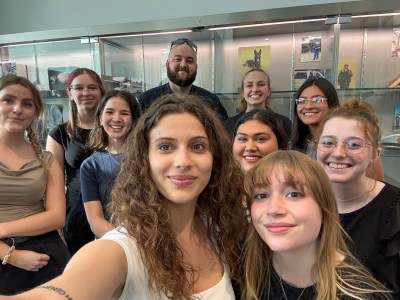
In the fall, summer, and spring, the LEAP Center opens up internship opportunities to all SHSU students. These internships are paid, come with a modest scholarship, and provide unique professional development opportunities.
The program is called “City Fellows,” because students are placed primarily–but not exclusively–with the City of Huntsville. The students may work for Huntsville Main Street, the Wynne Home Arts and Visitors Center, Economic Development, Public Works, Parks & Recreation, Development Services, the Huntsville Public Library, or in the non-profit sector, with organizations such as the Boys & Girls Club, CASA of Walker County, the Old Town Theatre, or the like.
Students can earn anywhere from 3-6 hours of academic credit in these positions, while also working on a project-based job. Examples may include helping to plan Scare on the Square, assist with a hiring fair, developing a marketing plan for an office, or putting together a fundraising plan.
Moreover, students have the opportunity for extensive learning. Not only do students learn on the job, but a couple of times a month, they engage in professional development activities. Over the course of the semester, these include (1) leading a tour of their work environments and discussing their class project…
(2) going on a tour of Eastham-Thomason Park to learn about the environment and tax base;…
(3) touring the Huntsville Police Department…
(4) learning Parliamentary Procedures…(5) volunteering in the community…and
(6) presenting to community officials about their work.
The program is designed to meet real needs in the community, while also allowing students to develop needed skills for their own careers and the workforce more generally.
The program begins accepting applications on April 1 for the summer; August 1 for the fall; and November 1 for the spring. Students can learn more here. Government offices, non-profits, or law firms can contact Professor Mike Yawn at mike.yawn@shsu.edu.
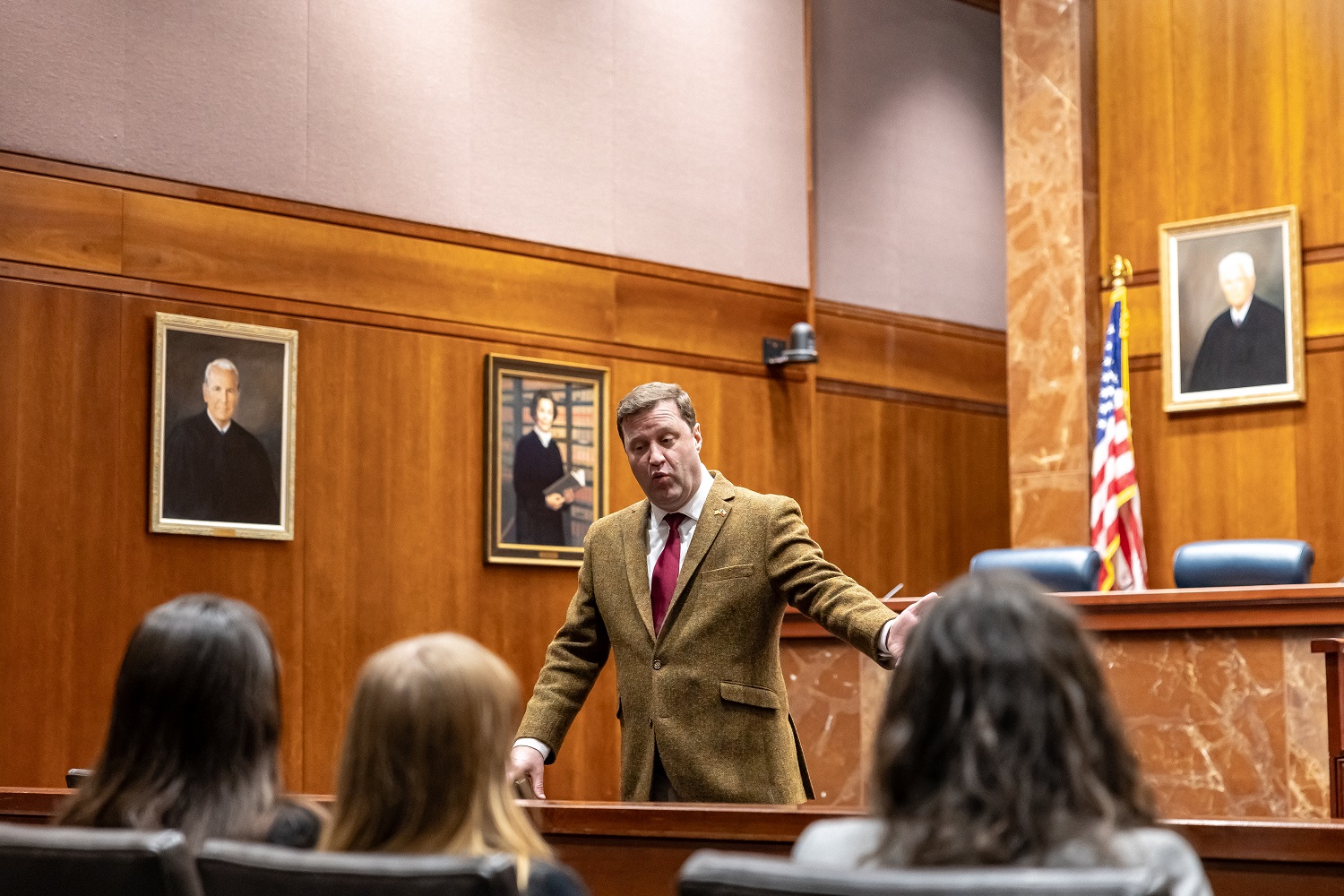
We had a full day ahead of us, with a stop for a hearty brunch, a visit to the Harry Ransom Center, and a tour of the Texas Supreme Court, led by Justice Evan Young. With that in mind, we loaded up in the car, ready to tackle the day.
Joe’s Bakery
by Chrissy Biello
Experiencing LEAP means discovering amazing places worth remembering, and many even start making a checklist. A must-have on that list is James Beard Award winners and nominees. Joe’s Bakery, which won the James Beard America’s Classic Restaurant Award in 2022, was packed when we tried to step inside, suggesting we had picked the perfect lunch spot.
The restaurant has a rich history dating back to 1935, when it was established as La Oriental Grocery & Bakery by the current owner’s mother and stepfather. Their introduction of traditional pan mexicano to the community made it a gathering space that many would come together to. Although the original bakery closed in 1957 after 22 years of operation, Joe later reopened the establishment with his brother in law in 1962, expanding it into both a bakery and restaurant.
The sense of community was immediately apparent as we waited. Customers greeted each other warmly, which is unusual in a city as large as Austin; however, Joe’s has clearly maintained a loyal customer base that treats the establishment as a second home. While waiting, our group discussed our typical food preferences. Michelle, having grown up eating seafood, generally gravitates toward healthier options. Jacob, though not having tried much Tex-Mex food, expressed enthusiasm about trying something different.
When our turn came to order, Michelle and Jacob both selected the Caldo, a beef and vegetable soup…
Jacob was surprised when his meal arrived, indicating he didn’t know it was a soup–despite “soup” being clearly stated in the menu description. I opted for the beef tacos. Both Michelle and Jacob thoroughly enjoyed their selections, and my tacos were excellent.
In all, Joe’s Bakery proved to be a top choice for experiencing some of what Austin culture has to offer. From the strong sense of community to the classic appeal of the entire restaurant, it was a great spot to cross off of our LEAP checklist!
Harry Ransom Center
by Jacob Wessels
After having brunch at Joe’s Bakery, we headed over to the Ransom Center on the University of Texas at Austin campus. As we walked inside, we were immersed in a world of history, art, and innovation, surrounded by incredible artifacts that showcased human creativity and achievement.
We started our tour by looking at a Frida Kahlo self-portrait, a piece that showed her unique style and deep emotions. Unfortunately, we couldn’t take any pictures.
Next, we explored one of the most significant artifacts in the history of photography—the Niepce Heliograph. Created by Joseph Nicéphore Niépce in the 1820s, this is widely considered the world’s first surviving photograph. At first, we had a hard time seeing the picture until we were told that the best way to view it was from the middle of the doorway.
One of the most impressive things at the museum was the Gutenberg Bible, one of only 49 copies left in the world. Printed in the 1400s by Johannes Gutenberg, this book changed how people shared information and led to the start of mass printing. The pages had beautiful writing and detailed designs, showing why this book is still considered so important today.
Next, we admired the stunning landscapes captured by Ansel Adams.
One that Professor Yawn, Chrissy, and Michelle became particularly intrigued in was Moonrise, Hernandez, New Mexico. Scanning a barcode to learn more about the photograph, Chrissy read the description out loud.
In 1941, Adams was driving in New Mexico when he quickly jumped out of his vehicle after noticing something that caught his eye: snow-covered mountains, a church, and the moon rising over a graveyard. It was a beautiful photograph to observe, one that showed Adams truly had a “photographer’s eye.”
Moving through the exhibit, we came across a stereoscope—the first 3D viewing device. Looking through the device through the glass enclosure, we could see the image inside in 3D. While we did this, a lady walking by informed us she had one of her very own, passed down from her grandmother!
Besides these highlights, the Harry Ransom Center has a huge collection of old books, important documents, and historical items. This was largely centered around PEN America, an organization that was founded in 1922 to promote the freedom of speech and human rights through literature in America.
The Harry Ransom Center is a great place for anyone who loves art, history, or literature. After gaining new insights—whether about ourselves, our personal interests, or a piece of history—we made our way to the Texas Supreme Court for a discussion with Justice Evan A. Young…
Tour of the Texas Supreme Court by Justice Young
by Michelle Moya
Throughout the years, LEAP has had several traditions of engaging in judicial court experiences. To carry on with this tradition, we, alongside SHIAP interns, went on a tour visit to the Texas Supreme Court, guided by Justice Evan A. Young himself!
Interestingly enough, few people realize that Texas has one of the nation’s most unique judicial systems. Along with Oklahoma, it’s one of just two states with a bicameral supreme court—one for criminal cases and the Texas Supreme Court for civil and juvenile matters.
To start off, Amy Starnes, the Court’s Director of Public Affairs, warmly welcomed us to begin our tour. Our first stop was the courtroom where justices hear oral arguments and deliver their rulings.
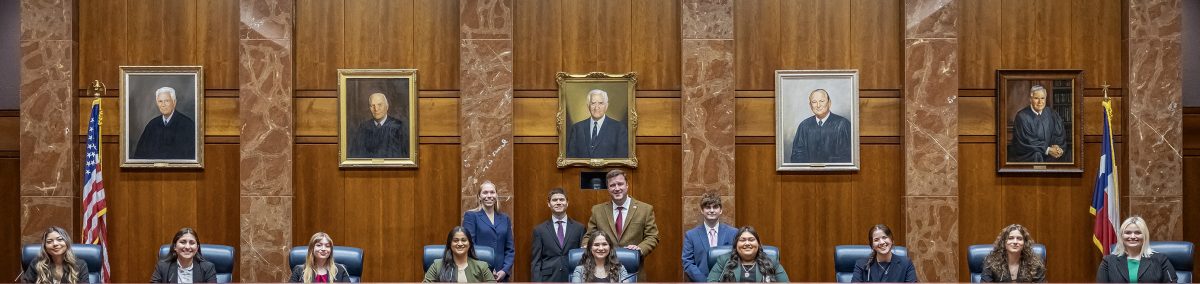
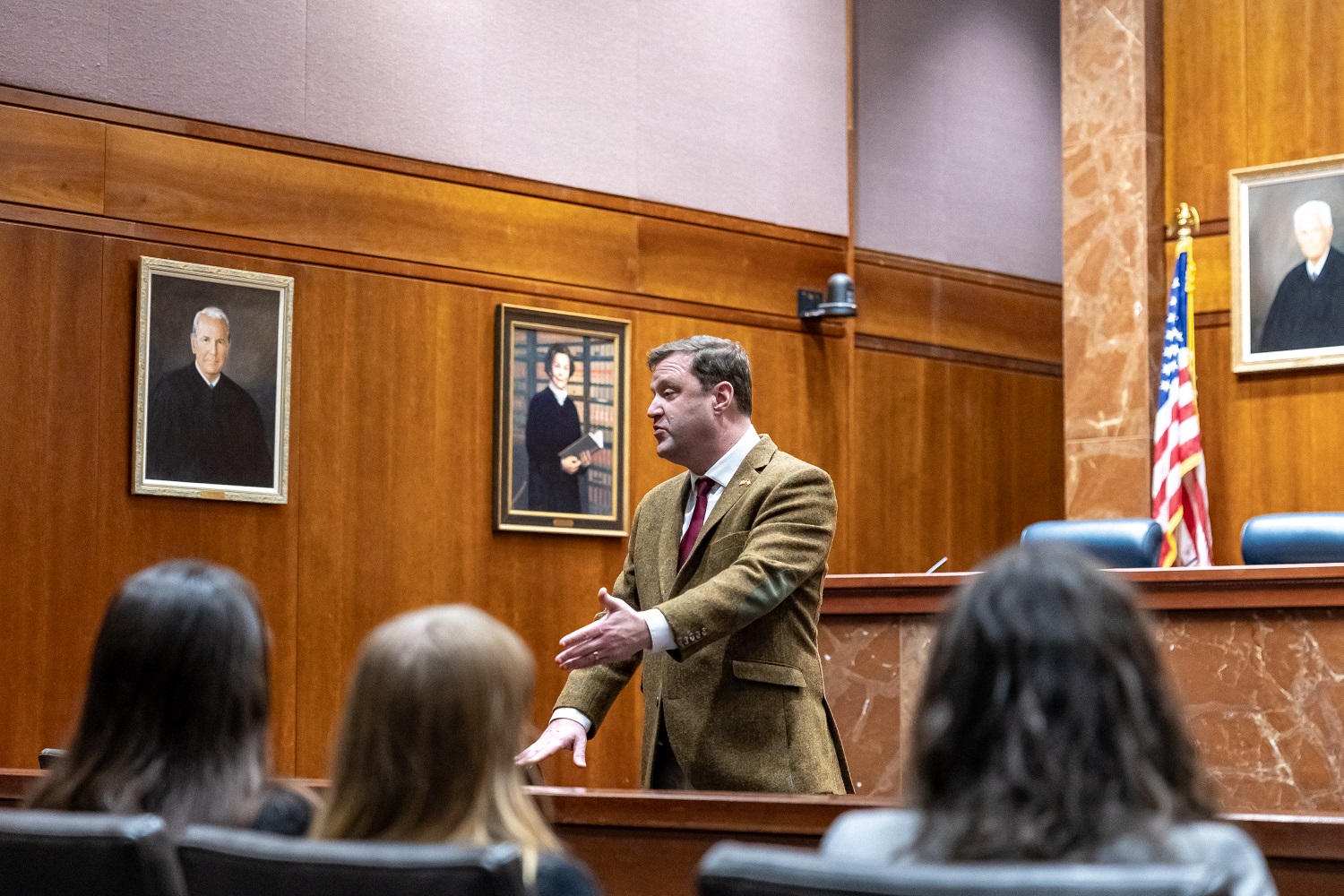
The room’s walls display portraits of former Justices, Justice Young touching on the idea that these Justices past decisions will forever be remembered, even if the justices deciding upon them might not be. Notably, one of the displayed Justices being Robert Gammage, a Sam Houston alum!
Justice Young offered particularly compelling insights into our judicial system and informed voting. He emphasized Texas’s distinctive history of putting judicial selection in citizens’ hands while stressing the importance of researching candidates before casting our ballots. This helps us preserve the quality of our state, and these nominees are just a reflection of the citizens that vote them in.
He then shared candid reflections about the challenges judges face, especially the crucial task of interpreting law without letting emotions guide decisions—a valuable lesson for our group of, hopefully, legal professionals.
The tour continued to the judges’ robing room, which is a private space where justices can retreat for breaks, discussions, and moments of respite. (A fun detail: there’s a TV showing the courtroom, hence the need to whisper!)
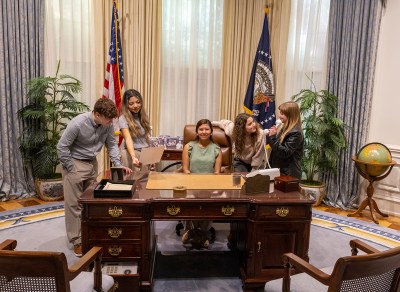
One highlight was returning to the courtroom for a photo opportunity at the justice’s bench—a moment none of us will soon forget. Although I have attended many Austin trips, this will surely be in the books for my favorite!
Justice Young concluded by showing us the conference room where Justices deliberate cases, emphasizing its confidential nature. As we departed, Mrs. Starnes pointed out a fascinating historical artifact: a portrait commemorating three women judges from 1925, highlighting the advocacy for women’s rights in Texas and empowering women in the legal profession!
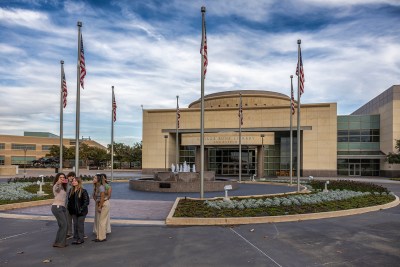
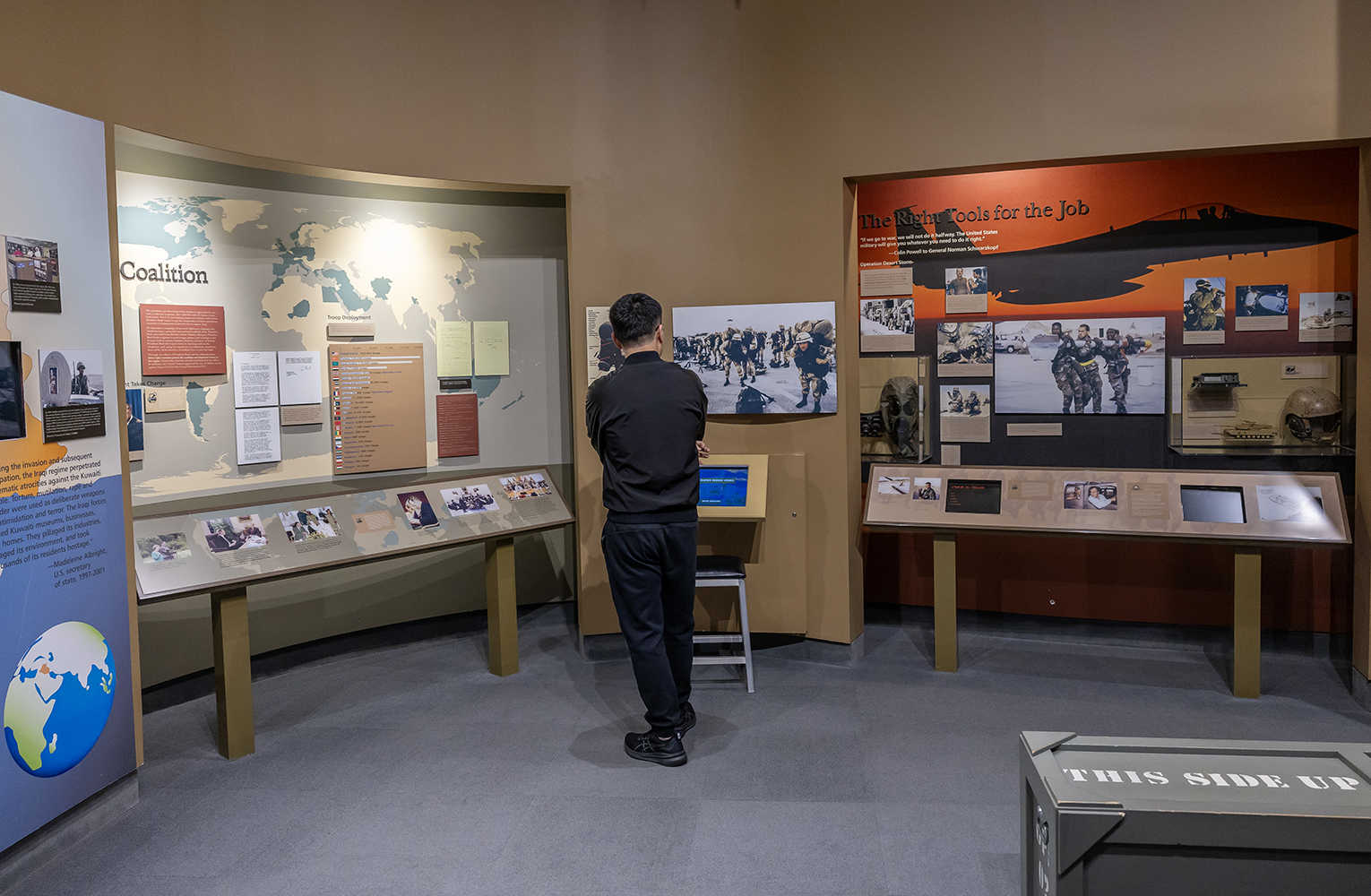
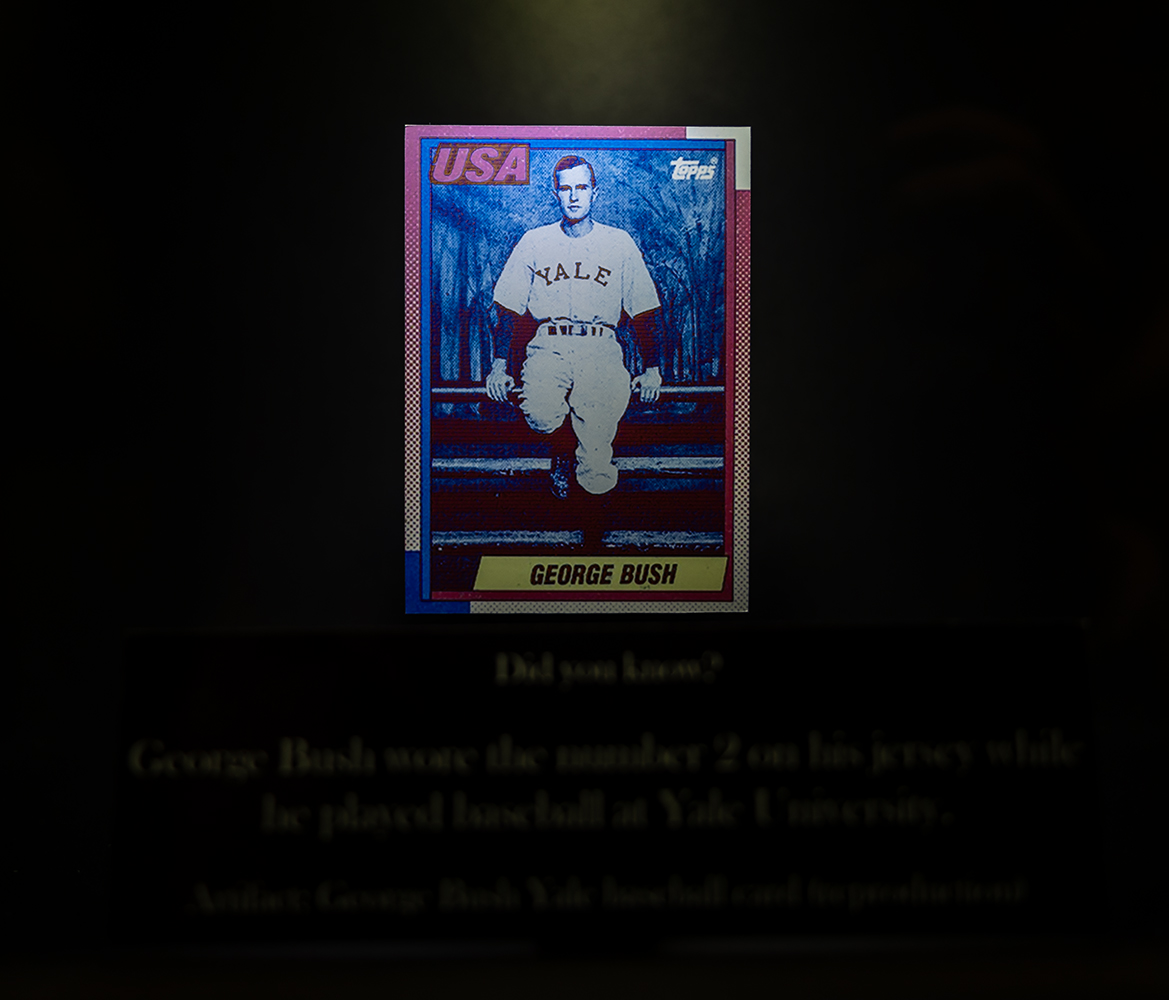
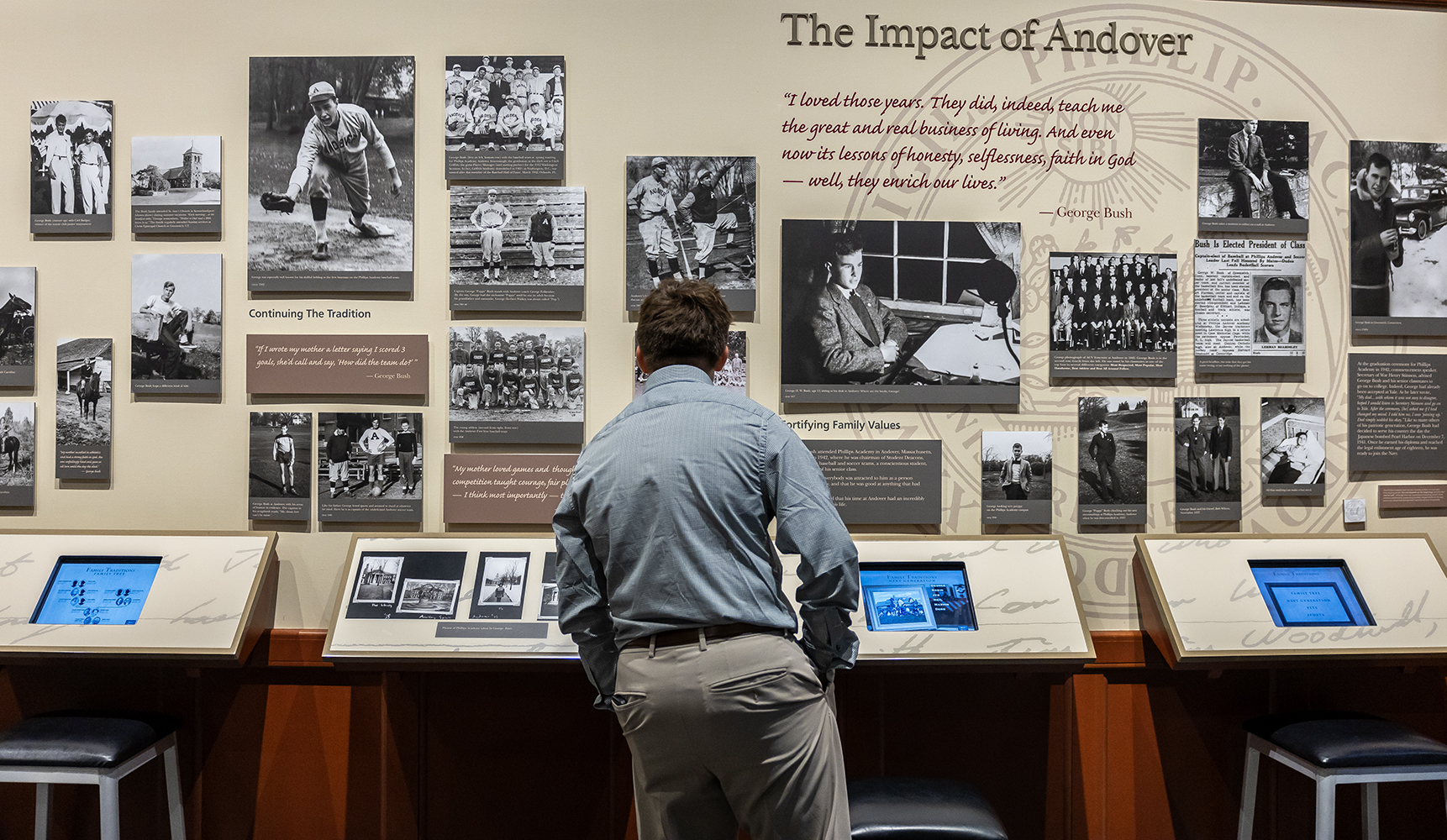
Experiences have a peculiar way of deepening our appreciation for history. As part of my experiences with LEAP, I’ve developed a growing fascination with presidents—particularly through one of my personal favorite trips—presidential museums! With this, we felt it a necessity to visit one of Houston’s notable presidents, the George H.W. Bush Library and Museum.
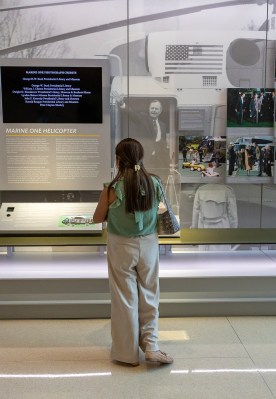
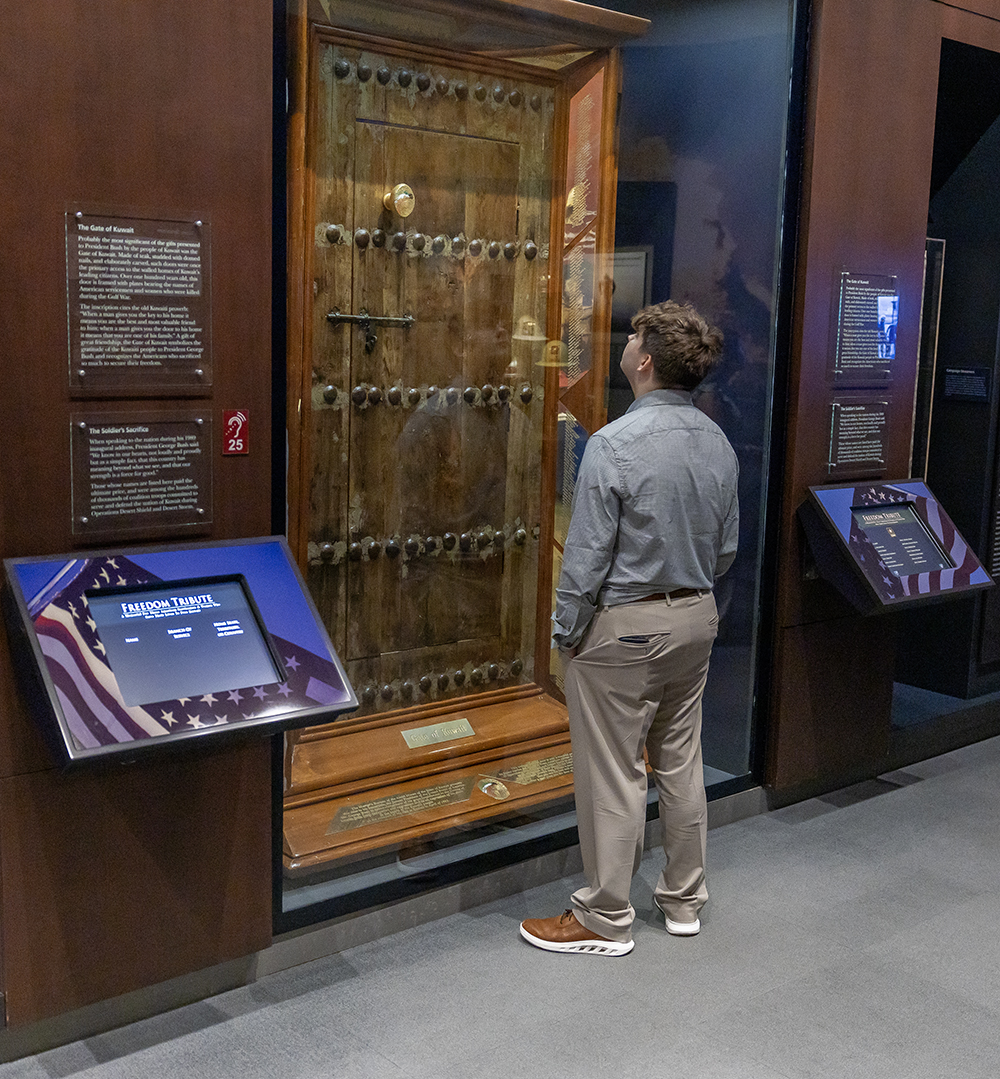
As we made our way to the museum, one point was clearly evident through the artifacts. George H.W. Bush’s impact extends beyond his political successes and presidential initiatives. He heavily believed in a lifetime that public service is a noble calling and that leadership is putting the country ahead of oneself.
I found the museum to reveal layers of his character: the Points of Light which showed his belief in the power of volunteer service, the World War II veteran who understood sacrifice, and the father who raised a family while serving his country. From his early days as a young Navy pilot to his post-presidency humanitarian work, every chapter of Bush’s life testified to his unwavering commitment to service.
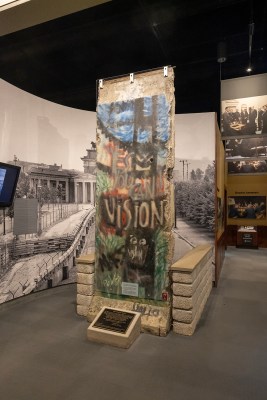
One thing that caught our eye was the large piece of the Berlin Wall displayed in the museum. Its extreme height was a stark reminder of the division it once represented. It made the historical significance of its fall during Bush’s presidency.
As we neared the end of our tour, I finally discovered what I’d been eagerly anticipating—President H.W. Bush’s beloved boat “Fidelity.” Perhaps most touching was the tribute to Sully, his faithful service dog who stayed by his side in his final years.
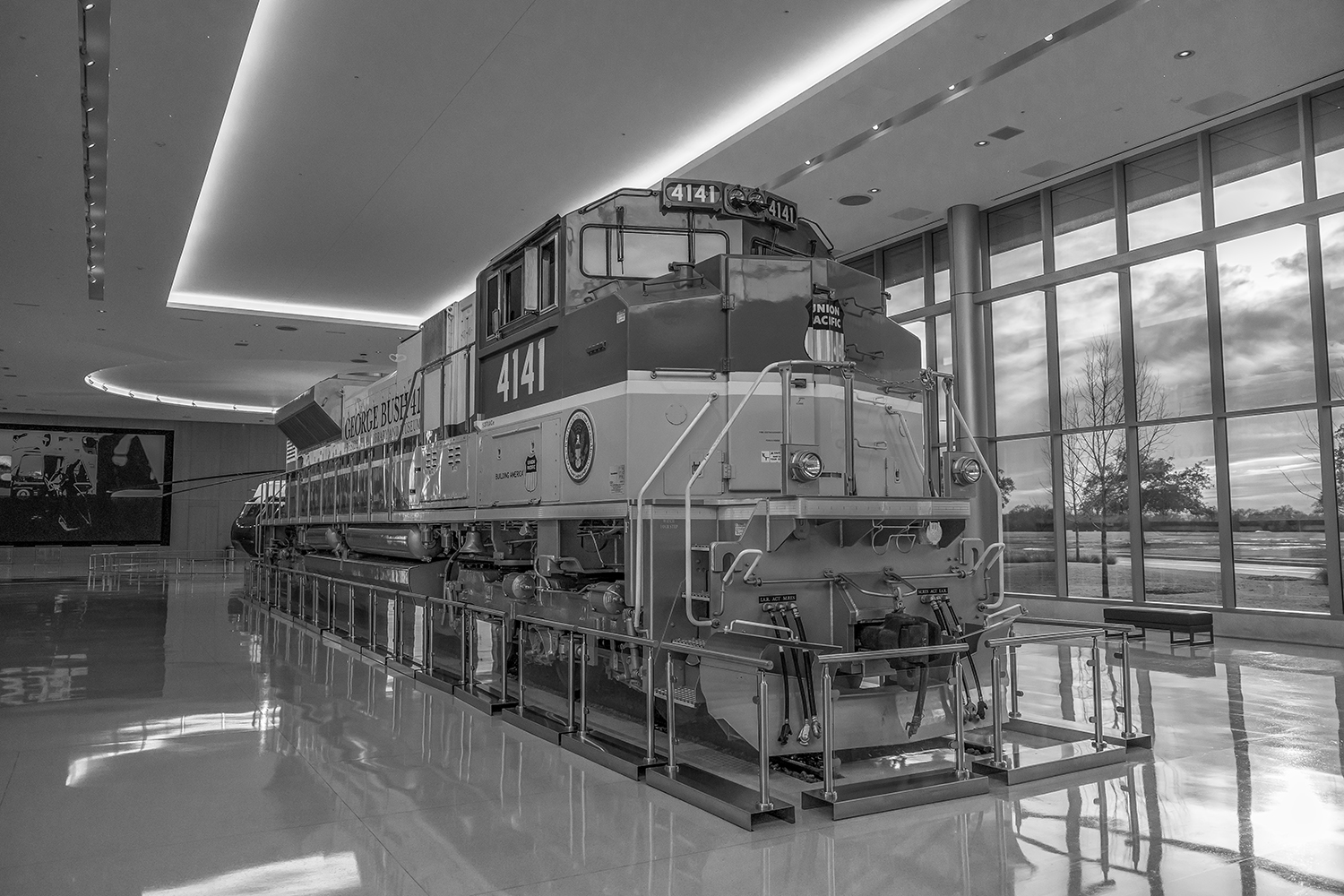
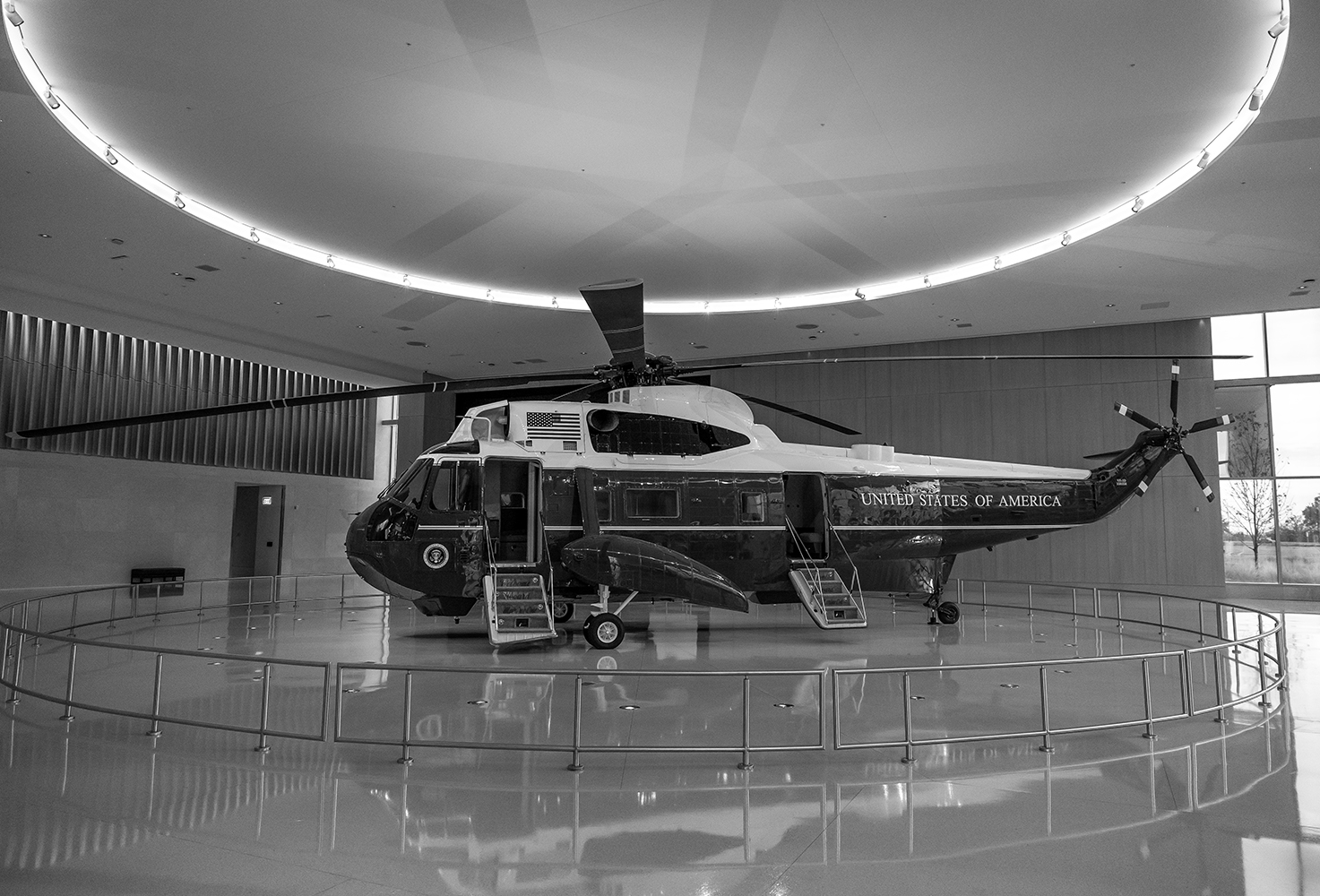
We finished off by seeing the Union Pacific locomotive 4141, painted in the colors of Air Force One, which carried President Bush on his final journey. Notably, something Professor Yawn was able to see driving by in Magnolia, TX!
This presidential museum was my favorite one this far. President Bush’s approach to governance—marked by dignity, compromise, and an unwavering focus on the greater good—serves as a guiding light for my own path.
In a time of increasing political division, his legacy reminds us that public service is about more than partisan victories; it’s about serving the people with integrity and compassion. The essence of President H.W. Bush’s legacy lives on not just in his time as president but in the hearts of those he continues to inspire.
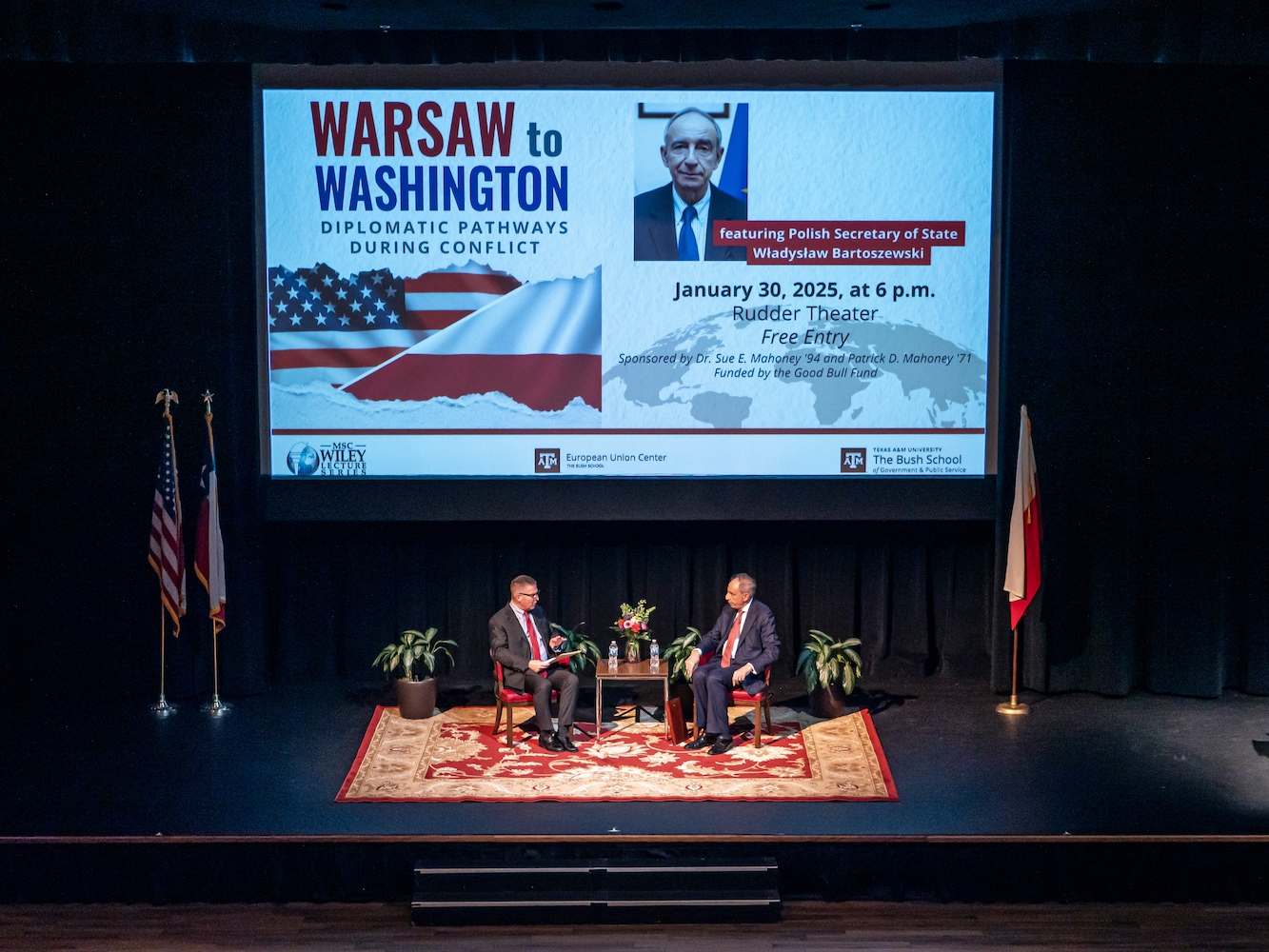
Warsaw to Washington: Diplomatic Pathways During Conflict
by Chrissy Biello
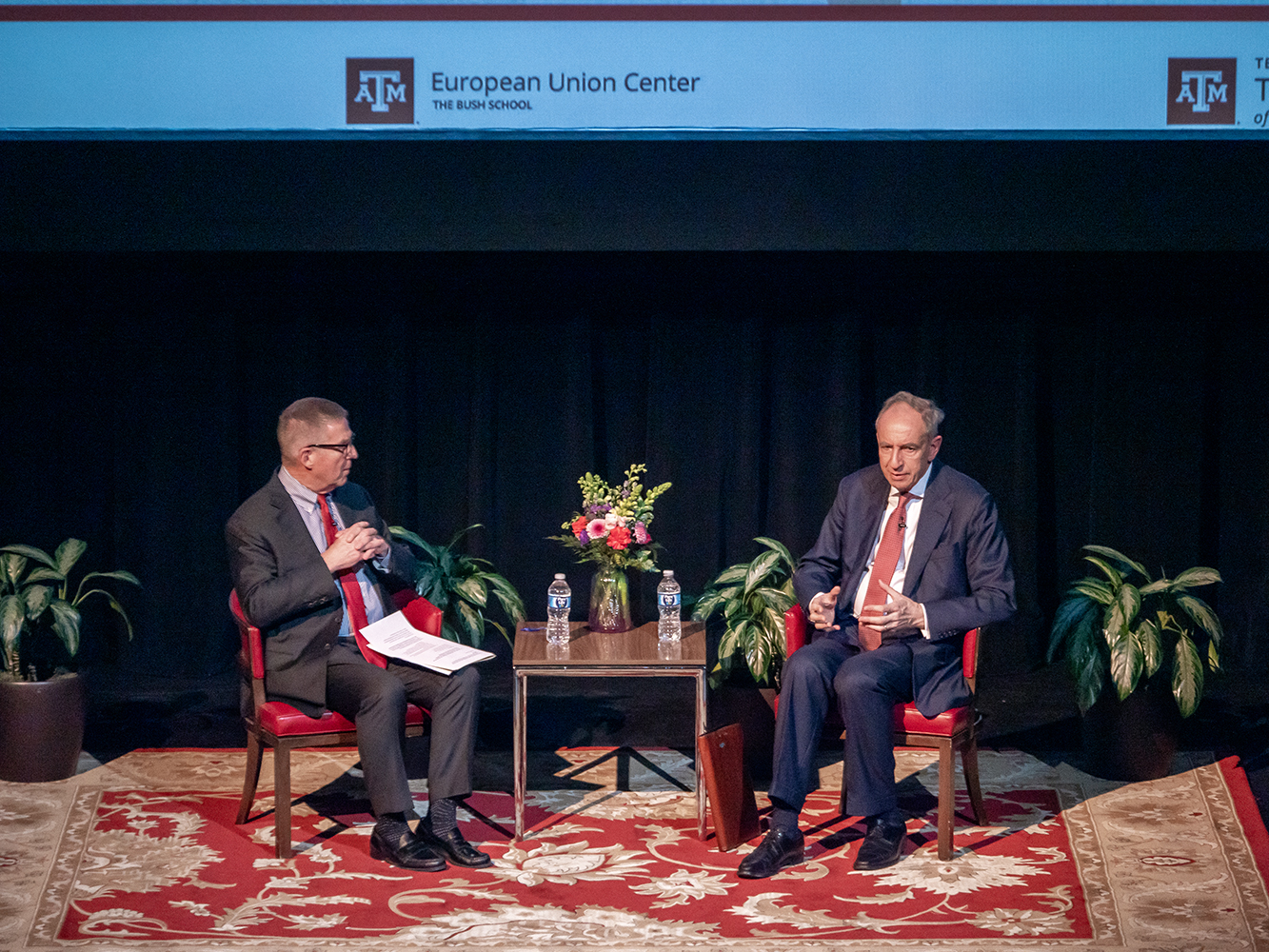
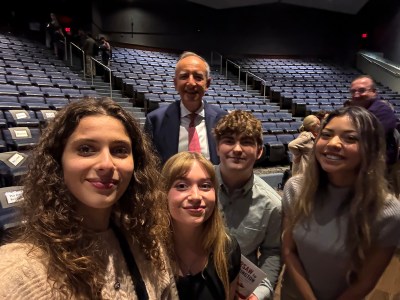
With global conflicts on the rise, understanding the state of world affairs has become increasingly vital. The Bush School of Government and Public Service recently provided us with a valuable opportunity to learn from the Polish Secretary of State, Władysław Bartoszewski, offering firsthand insights into European perspectives on current worldwide challenges.
Secretary Bartoszewski opened his discussion by reflecting on Poland’s journey through history, starting with the 1919 Treaty of Versailles; this agreement restored Polish independence after 150 years. He traced Poland’s path through the decades, highlighting another significant milestone: the country’s entry into the European Union in 2004. He noted how this development opened new opportunities for Polish citizens, particularly in terms of labor mobility across EU member states.
He then spoke extensively about the Russian-Ukrainian conflict, emphasizing Russia’s multifaceted threat to global security. He explained that Russian aggression extends beyond traditional military invasion; it manifests through sophisticated cyber warfare capabilities that can cripple critical infrastructure, disrupt financial systems, and compromise national security operations. His message was clear and sobering: Russia poses a threat to all nations, not just its immediate neighbors.
Poland’s commitment to supporting Ukraine emerged as a central theme. Secretary Bartoszewski noted that Poland ranks as the third-largest donor to Ukraine, contributing 4.7% of its GDP; only the United States and Germany provide more assistance. He observed that while the United States often enters global conflicts later than other nations, its eventual support consistently proves decisive and substantial.
Addressing concerns about war expenditure, the Secretary provided historical context. He reminded the audience that during World War II, the United States dedicated over 40% of its GDP to the war effort. His response to critics who prioritize social welfare spending was particularly poignant: there can be no social welfare system in a conquered nation.
During the question-and-answer session moderated by Dr. Todd Kent, Director of Undergraduate Programs at the Bush School, Secretary Bartoszewski emphasized practical solutions. He identified modernized infrastructure and transportation systems as crucial to supporting Ukraine’s defense efforts. The Rzeszów-Jasionka airport, he explained, serves as a vital hub for delivering military aid to Ukraine. His candid assessment of military operations brought unexpected humor to the serious discussion; he summarized effective military strategy as “Arrive, Kill, Then Leave.”
Secretary Bartoszewski’s expertise and candid discussion style provided a rare insight into complex global dynamics from a European leader’s perspective. As my first experience at the Bush School of Government, this presentation was both engaging and thought-provoking, leaving me with plenty to reflect on.
Each semester, the LEAP Ambassadors join one of their friends at KSAM, News Director Larry Crippen, for an “Around Town,” where they have a chance to fill in the public on upcoming activities with which they are involved. So Olivia Discon, Chrissy Biello, and newly minted LEAP Ambassador Michelle Moya arrived at KSAM at 8:30am last week to go on air!
Each of the students had a chance to discuss recent and upcoming events, with a heavy emphasis on their recent travels on the east coast for the presidential inauguration.
In approximately eight minutes, they were able to fit in quite a bit of information, which you can listen to here.
This is, of course, part of LEAP’s efforts to not only help the community, but also to enhance the skills of the students who are helping the community. An event such as the taping of “Around Town” not only increases awareness of events, but also sharpens the Ambassadors’ media skills.
Of course, if you don’t want to listen to the entire broadcast, you can also review our upcoming events, below. We hope you can make some of them!
The LEAP Ambassadors enjoyed a six-day tour of the East Coast as part of their “Democracy Tour.” During this tour, the students had a chance to visit more than half a dozen art museums, James Beard award winning restaurants, and many historic sites. What follows is their favorites from their experiences.
Favorite Restaurants:
Lehja’s in Richmond received the most votes, with all of the food receiving high marks from the diners. The James Beard nominations appear justified!
Casa Mexico in Philadelphia was a hit among the students, with the barbacoa being particularly popular. This was an altogether pleasant dining experience in an interesting and busy neighborhood in Philadelphia. Chef Christina Martinez was named “Best Chef” in the mid-Atlantic region in 2022 by the James Beard Foundation.
Metzger’s Bar and Butchery was perhaps the most interesting and innovative of the restaurants we visited. While the pork schnitzel was the favorite entree, the “squash sundae,” was the favorite dessert and the biggest surprise.
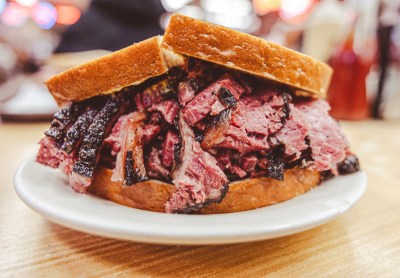
Ambassadors also found favorites in Katz’s Deli in New York, a restaurant world-famous for its pastrami.
And, of course, we also enjoyed Jim’s South St., which specializes in Philly Cheesesteaks.
FavoriteArt Museum: Olivia and Chrissy visited four art museums in New York, and they split on their favorite, with Chrissy favoring The Whitney…
…while Olivia resisted picking a favorite and, instead, picked a top two: The Met and MOMA. She did, however, have a favorite: The Lovers.
Although smaller and less heralded than its New York and Philadelphia counterparts, the Virginia Museum of Fine Arts was one of the clear favorites among the group.
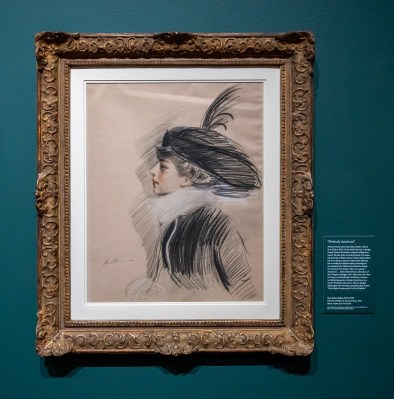
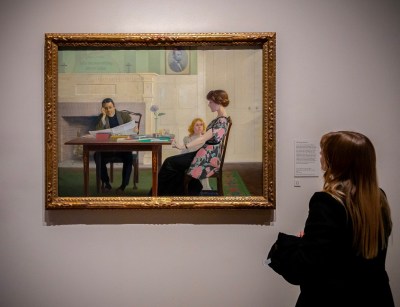
The favorites of the group reflected the diversity of the art in the Museum’s collection.
Of course, the most famous paintings among the NY, Philadelphia, and VA museums were also popular among the Ambassadors.
Finally, the group also greatly enjoyed seeing Philadelphia City Hall, the Liberty Bell, Independence Hall, and the Virginia Capitol Building. For Cinthia, Olivia, and Michelle, it marked the third–the complete collection–of extant Jefferson designs in the world.
While the Ambassadors are always happy to get back to Huntsville and SHSU (or, this semester, Austin and SHSU), they left the east coast with a lot of memories, new-found knowledge, and much nostalgia.
With a full day in Philadelphia ahead of us, LEAP students ventured into town this morning to explore the beautiful public art around the city. Our first stop, of course, had to begin with Philadelphia City Hall, the largest in the nation! Afterall, this eye-catching building is grounded in one of the most historical states. The building itself is noticeable from many miles away, with a statue of William Penn, founder of Pennsylvania. The statue, sculpted by Alexander Milne Calder (Not to be confused with contemporary abstract artist Alexander “Sandy” Calder), brings not only the state’s historical aspect to the City Hall, but also connects other notable pieces of artwork to the artist.
Ambassadors in front of City Hall (and Oldenburg Sculpture)
Just a short stroll down Logan Square, we encountered Three Discs, One Lacking by Sandy Calder, grandson of Milne. Further down the Benjamin Franklin Parkway, the Calder legacy continues with the Swann Memorial Fountain, which was created by Alexander Stirling Calder, the father of Sandy Calder. These pieces not only highlight the artistic legacy of the Calder family but also illustrate how thoughtful city planning can weave art into the very fabric of a community. The alignment of these sculptures offered us a unique opportunity to reflect on how art connects generations and transforms public spaces.
As we continued exploring Logan Square, a lovely red caught the eye of many. Surely enough, we were met with yet another LOVE sculpture by Robert Indiana!
“LOVE,” by Robert Indiana
By the end of the day, we’d spotted three of Indiana’s works, including the AMOR sculpture, which added a multilingual flair to the city’s celebration of brotherly love.
“Amor,” by Robert Indiana
One artist that I was unfamiliar of during this tour was Zenos Frudakis. His sculpture Freedom, however, quickly became my favorite. The theatrical movement of the statues and the intricate details within each sculpture made every piece a part of a larger narrative, expressing an individual’s desire to abandon a life of comfort in pursuit of freedom.
“Freedom,” by Zenos Frudakis
We also encountered a mural by Richard Haas, another artist familiar to LEAP students. Keeping his famous trompe l’oeil style, the piece depicted Benjamin Franklin and William Penn and spans an entire wall to capture the essence of Philadelphia’s historical and cultural heritage.
Richard Haas Mural, 2300 Chestnut
Haas even drew inspiration from the Benjamin Franklin Statue by John Boyle, located on the University of Pennsylvania campus.
Philadelphia’s public art left us with a deeper appreciation for the city’s vibrant cultural identity. From the Calder family’s generational influence to the iconic works by Indiana, Frudakis, and Haas, each piece added a layer of history, creativity, and connection to our journey. By the end of the day, we realized that the city itself is a canvas, where every corner invites reflection and inspiration.
Lunch at Casa Mexicoand South Philly Barbacoa
by Israel Gallegos
For our much-needed lunch break, we went to Casa Mexico and South Philly Barbacoa, a joint restaurant heading towards the southern part of Philadelphia. The restaurant’s head chef, Cristina Martinez, is a James Beard Award recipient for Best Chef in the Mid-Atlantic region in 2022. So, we took this as a great sign to cross this off our trip list!
We ordered an array of dishes to get the full Mexican experience with a twist of Philadelphian culture. Accompanying our dishes, the group ordered horchata and jamaica, which passed Cinthia’s freshness test, and the guacamole, which was excellent.
The course started with half a kilo of barbacoa for the group, followed by chiles rellenos, a staple Mexican dish. The group also enjoyed enchiladas verdes. Personally, having tried enchiladas verdes many times, I can attest to the quality of the enchiladas at Casa Mexico.
To top off the main course, we had mole, which was my personal favorite as it tasted like home.
To end the meal, we of course had to indulge in our sweet craving and try both the tres leches cake and flan!
Somehow, we still found a bit of space in our stomachs, so we walked down the street in the freezing temperatures to get warm cups of coffee. The establishment, Rim Café, an Italian American café, was decorated as if they were collectors of timepieces depicting the true Italian American culture. Our Italian in the group, Olivia, was the judge, and she said the place reminded her of her uncle’s garage. I take that as the place doing a good job embodying a part of the culture.
Sticking to the classics, we ordered the original and chocolate cannoli (both of which were devoured in seconds).
Nevertheless, my favorite sight at Rim Café was an affogato that Saara got, it consisted of tiramisu gelato on the outside and hot espresso in the middle of it, providing a perfect mixture of hot and cold. Although I got the after-lunch dip, we kept moving to our next stop, the Barnes Foundation.
Experiencing the Philadelphia Barnes Collection
by Cinthia Villarreal
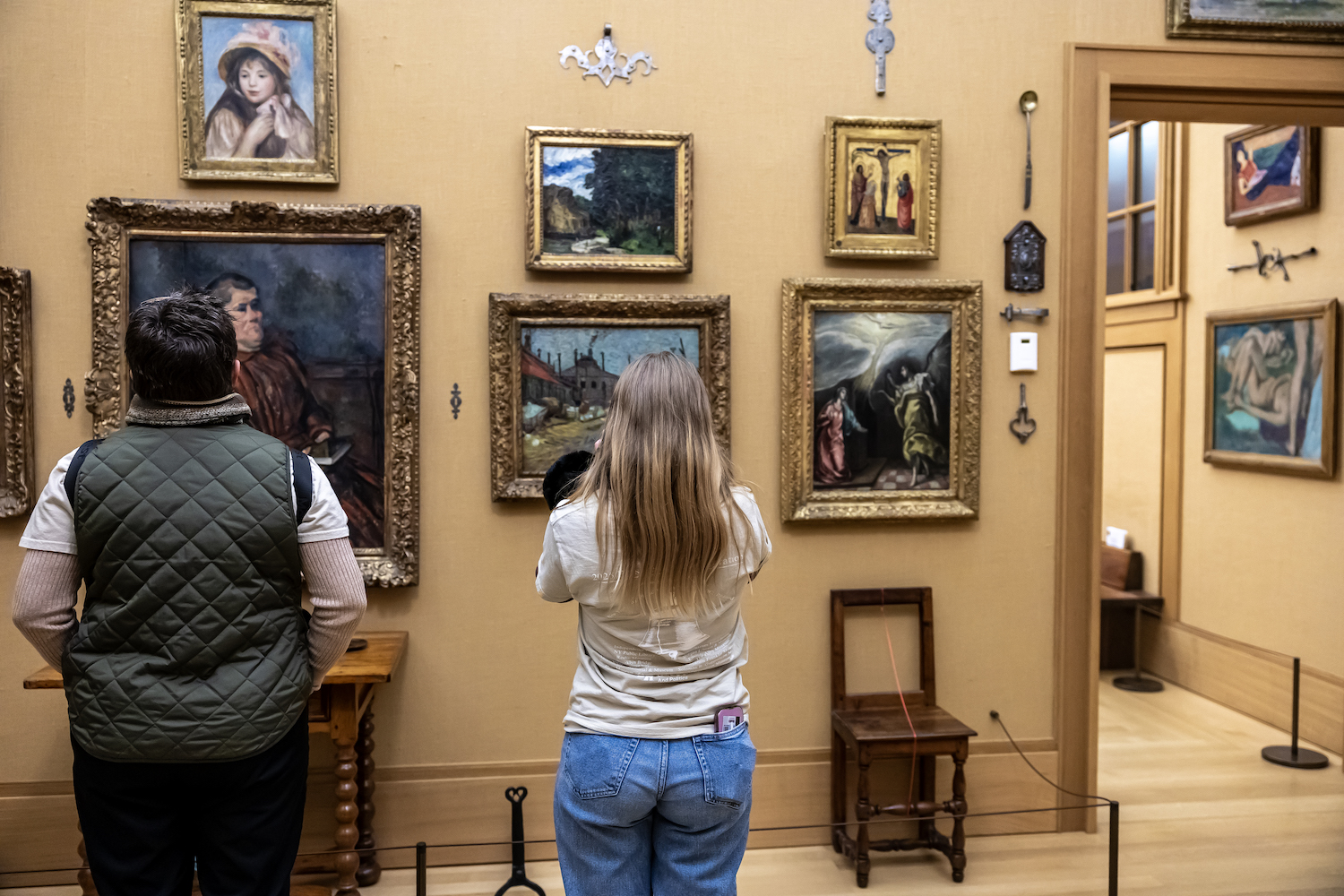
Dr. Barnes started his ambitious collection of art in 1912 and during four decades went on to collect what is now known as a highly regarded assemblage of art. With over 170 paintings of Renoir, and multiple works of Picasso, Van Gogh, Degas, Modigliani, and Seurat, we were all looking forward to visiting the Barnes Foundation in Philadelphia.
After a brief delay caused by an over-zealous security guard (take your jackets off!”). we entered the main room, and we could see the beautiful pieces decorating the four walls. Impressionism, characterized by short, broken brushstrokes and unmixed colors, is one of my favorite styles of art, so I was absolutely delighted as I saw Renoir’s name repeat itself throughout the walls.
As we moved through the exhibit, we started recognizing names from past museum visits, including Olivia’s favorite piece from Goya.
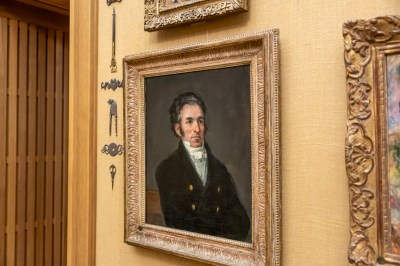
A unique feature of Barnes Foundation is that they do not use the common labels with the title and artist next to each of the pieces. Instead, they have brass plaques fixated with the artist’s name on each of the ornate frames.
To assist those who would like to understand a piece further, the Foundation allows one to scan the paintings with a phone to learn more about the composition and history of the piece.
Isreal, who’s less exposed to the art scene, found a particular liking for the European art, as well as Michelle, who’s favorite was El Greco’s.
In all, we greatly appreciate expanding our understanding of the humanities, especially when it highlights the contrast between where we started and how much we’ve grown. The Barnes Foundation in Philadelphia was a great end to our day, filled with experiencing the city and all that it has to offer!
Among our many stops in New York, our visit to the Morgan Library was a highlight, far exceeding my expectations. I knew it would be beautiful, but the experience left me in awe.
We began with an exhibit on Belle da Costa Greene, the library’s first director, whose story was as inspiring as the treasures she curated. Born in 1879, Greene was an African American woman who passed as white to navigate the racial barriers of her time.
Despite these challenges, she rose to prominence as a librarian and curator, eventually studying at Pratt Institute, where she trained for her remarkable career. Her contributions shaped the Morgan Library into what it is today, and the exhibit offered a glimpse into her extraordinary life and work.
The structure itself was stunning. In one room, for example, the ceiling crafted by Samuel Yellin, featuring 648 intricately detailed birds—each unique, down to the shape of their beaks.
Among the exhibit’s standout items were pieces from Belle Greene’s personal collection, including Albrecht Dürer’s Melencolia I…
…a masterpiece I’d studied in class, as well as a William Blake drawing and a signed poem by John Keats.
I was especially captivated by her desk and personal collection, which continued to show her exceptional taste!
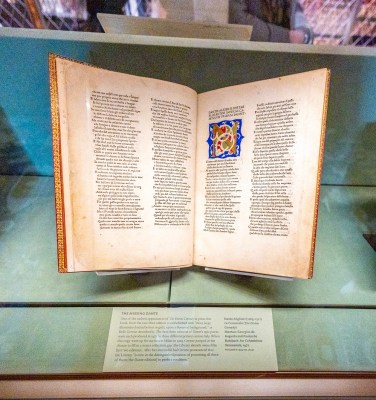
From there, we moved into the library’s main attraction—the breathtaking library room itself. Shelves were lined with treasures, including titles such as Dante’s Inferno…
…Rousseau’s The Social Contract, and works by Voltaire.
We even saw ancient artifacts from Mesopotamia and a Gutenberg Bible!
I felt like a kid in a candy store!
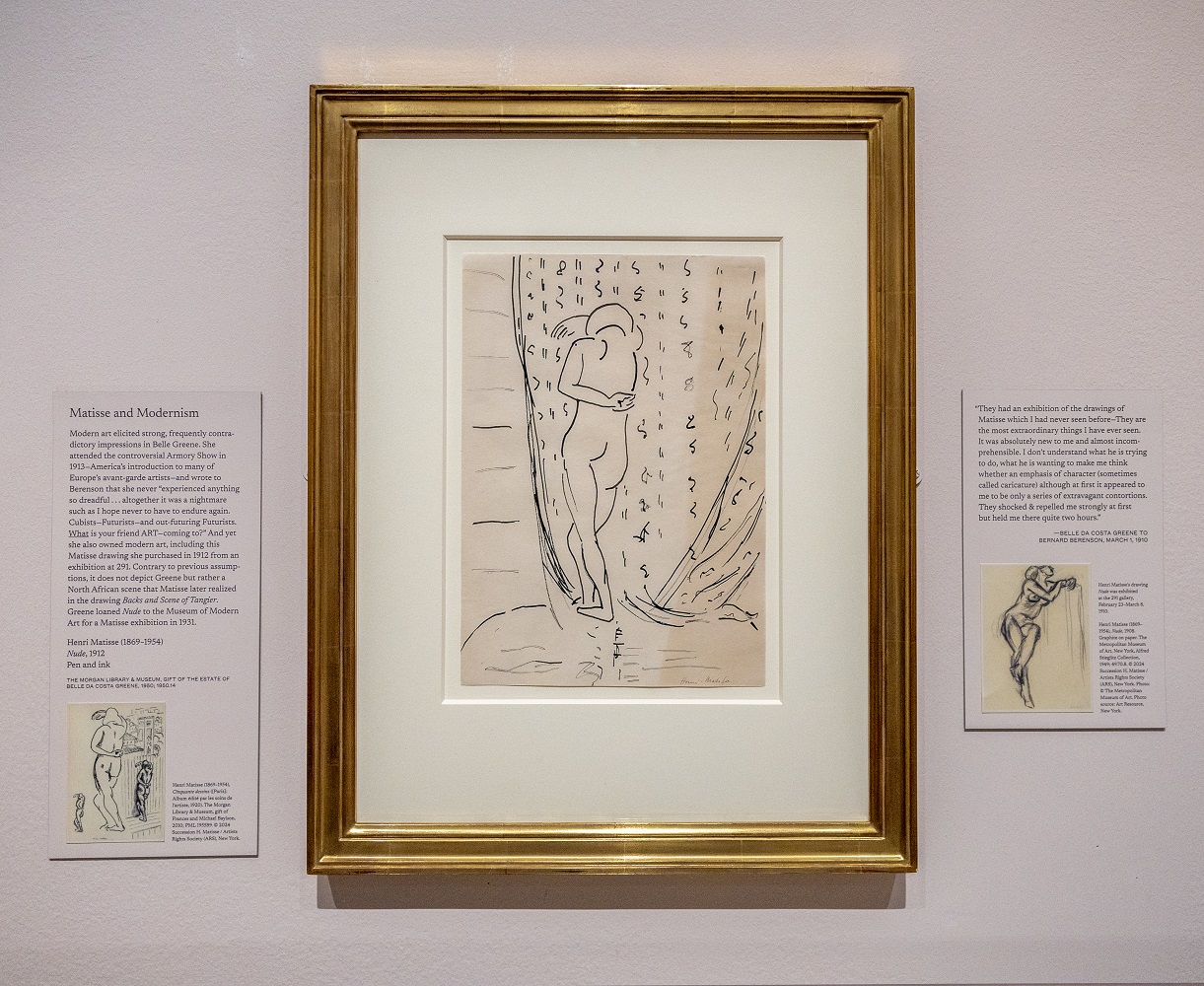
As befits a wealthy collector, Morgan also owned a healthy collection of art, some of which was also on display. Thus, we were able to not only glimpse into the lives of the very wealthy, we were also able to expand our knowledge of art, by seeing works from Henri Matisse, John Singer Sargent, and William Wetmore Story, among others.
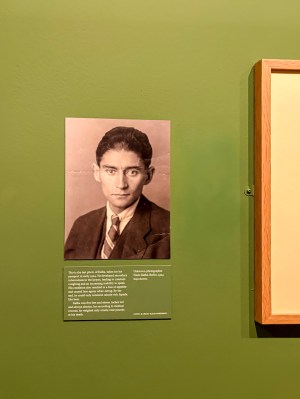
Before leaving, we quickly explored aFranz Kafka exhibit. Though our time there was brief, it was fascinating to see pieces that shed light on his complex and often enigmatic life.
As someone who has read some of his work, I wished we’d had more time to immerse ourselves in his story, especially after seeing an Andy Warhol portrait of him.
In the words of Kafka himself, “It is irresponsible to travel, even to live, without taking notes.” It was a privilege to add this visit to our travels—and to write about it!
On our first day in New York City, we decided it would be a good idea to explore the area and familiarize ourselves with the surroundings, including the subway system. It turned out to be a great decision, as we encountered many fascinating and exciting sights along the way!
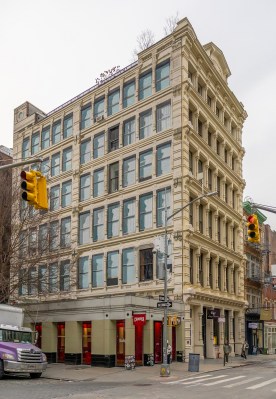
As we began walking through the city, Professor Yawn noticed our proximity to the historic Prince Street. Along this notable street stands the first Richard Haas mural, which Olivia enthusiastically recognized and pointed out as we approached.
Richard Haas’s First Mural, 1974
The mural, gracing 112 Prince Street since 1974, features intricate details that have been thoughtfully added over the years. But even as an early work, it reflects Haas’s artistic and architectural sensibilities, as well as his ability to transform a space through art.
Haas, who lives in New York, once spent a summer working for Frank Lloyd Wright, before embarking on a successful career as what the New York Times referred to as an “urbanologist.”
Thanks to the work of Linda Pease, Haas brought his Urbanology to Huntsville, TX, where he has completed 15 exterior murals–the most of any city. Thus, despite being strangers in the strange land of New York City, we felt oddly at home.
Continuing our walk, Chinatown emerged as a fascinating destination; its narrow streets offered an authentic glimpse into this vibrant New York neighborhood.
To our delight, we found the New York City Hall, a magnificent French Renaissance Revival structure still bearing the inscription “New Amsterdam;” a beautiful reminder of the city’s Dutch origins.
Next on our route was Federal Hall, which was erected in the 19th century as a Customs House. Prior the construction of the present building, however, the site hosted many milestones in the formulation of the United States government. The US Congress, such as it was, met here in the 1780s, when the (semi) United States of America was governed under the Articles of Confederation, and even as the US Constitution was written to supersede the Articles, the First Congress met on this site–and the Bill of Rights was first proposed here. More relevant to our current trip, George Washington was inaugurated on the balcony of the old Federal Building–the first-ever US Presidential inauguration! Standing on this site, therefore felt particularly resonant, considering we will be witnessing the 47th presidential inauguration in DC on Monday!
Approaching the Brooklyn Bridge, we began to make the long way up; winds from the surrounding waters grew increasingly cold.
This suspension bridge, one of the oldest in the United States, goes over the East River and connects Manhattan and Brooklyn.
When we reached the top, the spectacular view, however, made the chilly walk (the wind chill was in the teens) entirely worthwhile!
A shift in the atmosphere became apparent when we visited the 9/11 Memorial. The names etched in bronze, the twin waterfall pools, and the One World Trade Center made us all feel reflective. Saturday, we will get the chance to visit the museum, something we are greatly looking forward to as it will allow us to educate ourselves more on that disastrous day.
Before heading back to prepare for our evening of theater (Hadestown and Sunset Boulevard), we stopped at Zuccotti Park to observe Mark di Suvero’s “Joie de Vivre.” The 70-foot red steel sculpture definitely stands out against the Financial District backdrop, with its modern design creating an interesting contrast with the surrounding area.
Finally, we returned to the subway, hoping our earlier experiences had made us experts. Despite our optimism, we still struggled to navigate the system (particularly myself), but successfully made our way back to the hotel to prepare for an evening of theater.
Katz’s Deli
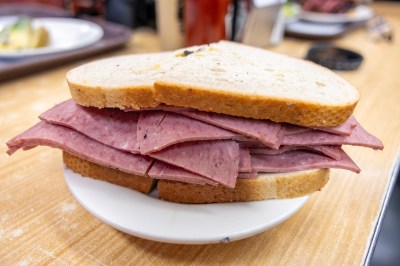
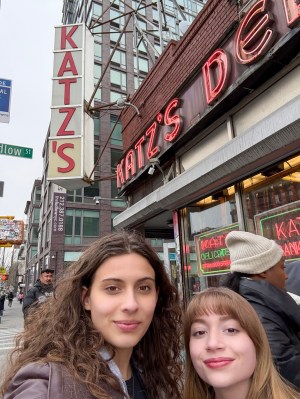
Although our time in NYC is short, we hope to squeeze in as many quality (and affordable) restaurants (and coffee shops) as possible. Thus, amidst our rambles on New York’s sidewalks, we espied Katz’s Deli, which was rated as the “Best Deli” in the Big Apple by Zagat, while also regularly appearing in the New York Times’ various “best of” lists. It is also notable for the many films that have set scenes in the Deli, including Donnie Brasco, We Own the Night, The Sidewalks of New York, and most famously, When Harry Met Sally.
Being new to the place, we weren’t familiar with the unique ordering system of Katz’s. When you enter, you are handed a ticket, which you then take to a counter where one of approximately 15 “cutters” are stationed. The cutters, so named because they cut the meat in front of you, offer suggestions and samples, and so it was that Professor Yawn ordered Pastrami…
…and Olivia ordered a Reuben.
Chrissy, for her part, took a different approach, veering from the “I’ll have what she’s having” custom at Katz’s. To hear Chrissy tell of her upbringing–an upbringing that changes upon retelling, depending on her energy level and degree of coherence–she was fed baloney, almost exclusively, for the first six or seven years of her life.
If we followed this narrative correctly, this prompted her to order “soft salami.” Despite gentle nudges from the cutter to consider the pastrami, Ms. Biello remained obdurate, insisting on the salami. The cutter, clearly disappointed, complied, although his look of disappointment was palpable.
Just because we ordered separate foods, however, doesn’t mean we actually ate separately. Chrissy shared in both the pastrami and the Reuben, while all of us sampled all the food at our table.
While we can’t compare Katz’s to other NY Delis, we were in general agreement that we don’t get Pastrami or Corned Beef as good in Texas…and we have a full appreciation for why the New York Times called this institution–in business since 1888–the “king of New York delis.”
Hadestown on Broadway
by Olivia Discon
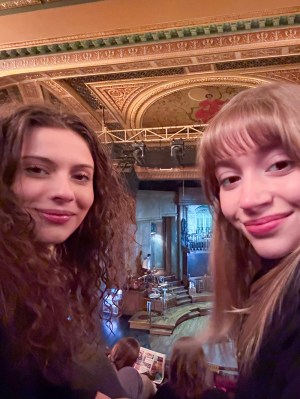
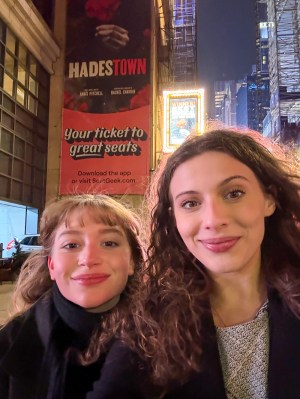
After spending the day exploring New York, Chrissy and I ended the night with a Broadway show—Hadestownat the Walter Kerr Theatre. Watching a production in this historic venue was an incredible experience, and Hadestown lived up to its reputation as one of Broadway’s best.
Written by Anaïs Mitchell, Hadestown is a retelling of the ancient Greek myth of Orpheus and Eurydice. The story follows Orpheus, a musician, and his journey to the Underworld to rescue his love, Eurydice, from Hades. The story covers some heavy hitting subjects while successfully executing a modern day retelling of the tragedy.
Chrissy and I both thoroughly enjoyed the set design.
The stage featured three spinning circles that worked like a treadmill, adding fluidity to the choreography and creating a sense of constant motion. This small but awesome detail elevated the performance and made every scene feel dynamic and alive.
The live jazz band, positioned on stage, was another highlight. Their presence both in song and in sound effects elevated the entire experience. It sort of reminded me of the live band that played at the first play I saw with LEAP, Chicago!
For Chrissy, Hermes (played by Malcolm Armwood) was the standout character, while I loved Persephone (played by Allison Russell). Both actors were incredibly talented and brought vastly different elements to the production. This cast can sing!
Seeing Hadestown has been a dream of mine for years, and getting to experience it with LEAP made it even more special. It’s a night I’ll cherish for a long time.




























 Center for Law, Engagement, and Politics