After an afternoon filled with costumes and candy at Huntsville Main Street’s Scare on the Square…
…we decided to take our Halloween festivities to the next level by heading to the Haunted Trails at Kate Barr Ross Park. Put on by the Huntsville Parks and Leisure Department, Haunted Trails is like a haunted house…just with way more trees, a few extra screams, and no escape until you reach the end.
Our very own President of the LEAP Ambassadors, Cinthia Villareal, who’s also an intern with the Parks Department, helped organize this outdoor fright fest, so of course, we had to show up and support her creative take on community engagement (read: gleeful terror).
As a group of brave individuals (and maybe a few reluctant ones), we wandered through eerie scenes, from a haunted psych ward to a creepy scarecrows, with each turn holding horrors in and of themselves.
The group was doing fairly well throughout. Well, that was until the clowns.
Michelle, who had been playing it cool all night, took one look at the clowns and immediately shrieked. To my recollection, she went as far as to say “Anything but clowns!”
Naturally, this drew them right to her, making her and Saara the undisputed scream queens of the evening. It’s safe to say Michelle didn’t enjoy the clown house much.
Chrissy, however, in her classic stoic style, strolled through the whole thing dressed as Dorothy from The Wizard of Oz, barely batting an eye at the frights around her.
Of course, with Chrissy, you can never quite tell what’s happening in her head!
Haunted Trails was a hilariously spooky way to cap off our Halloween celebrations, and we were all proud to support Cinthia in her haunting (and slightly twisted) community efforts. The event was a fun reminder of how Huntsville, with the help of local SHSU volunteers as actors, brings out the Halloween spirit in ways that are frightfully good for everyone involved.
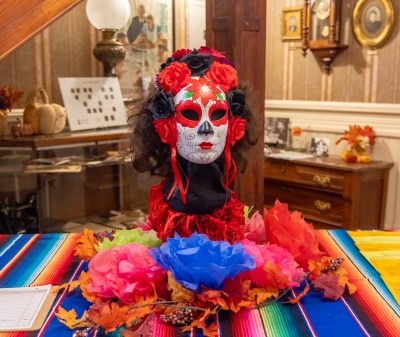
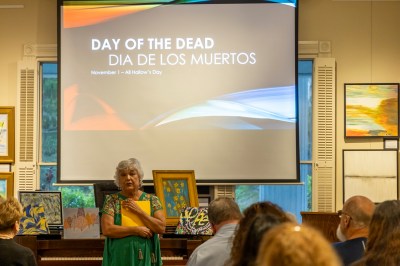
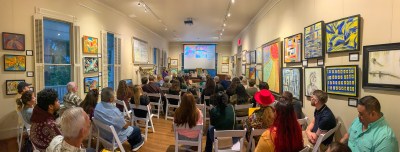
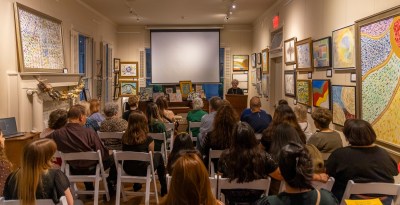
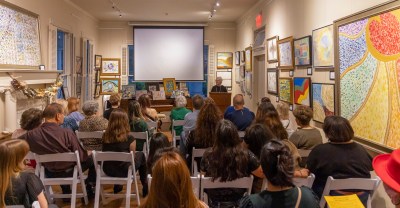
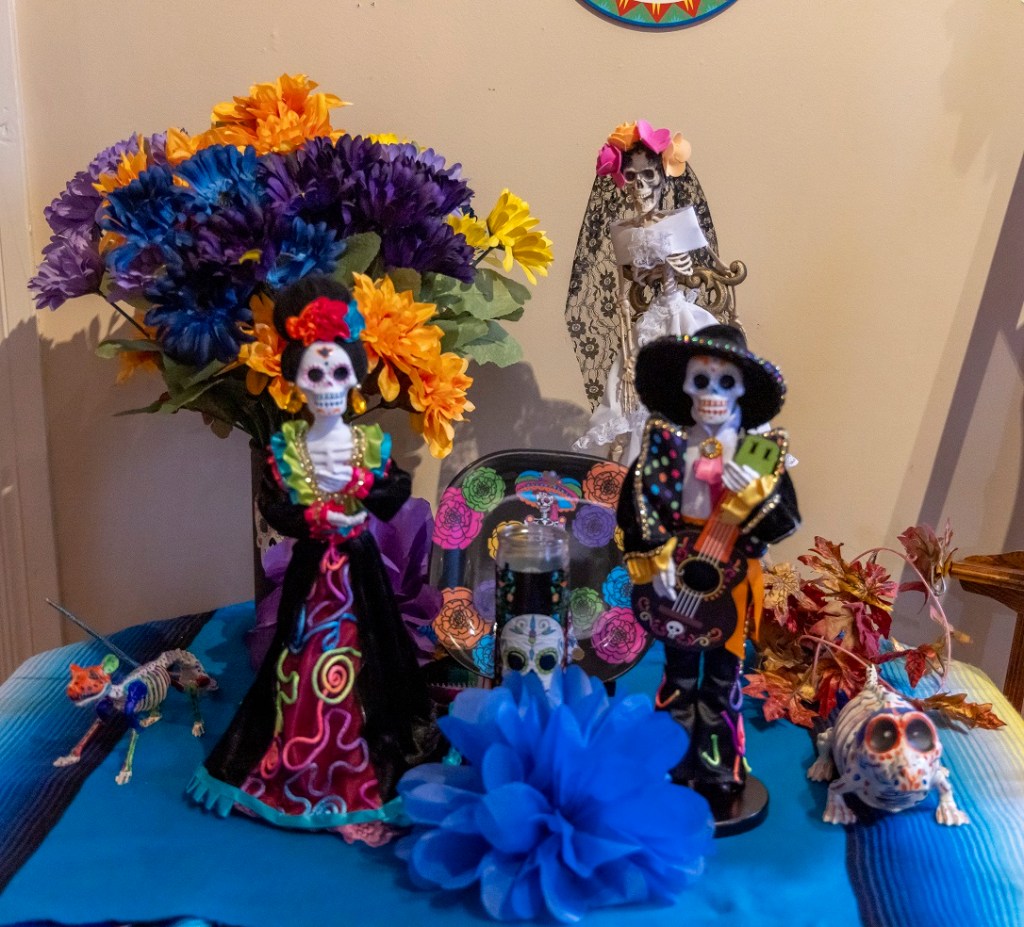
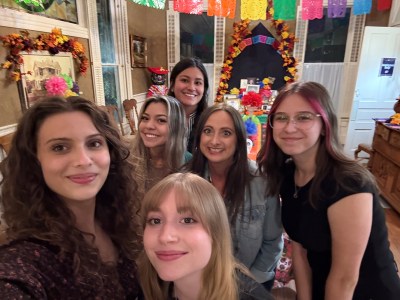
This year, the LEAP Ambassadors had the opportunity to celebrate Día de los Muertos at the Wynne Home Arts Center in Huntsville.
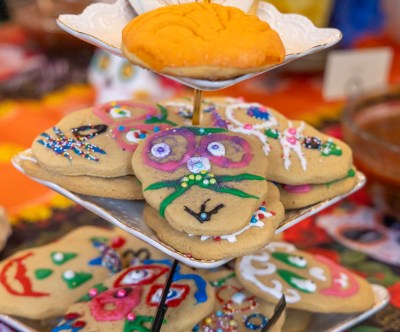
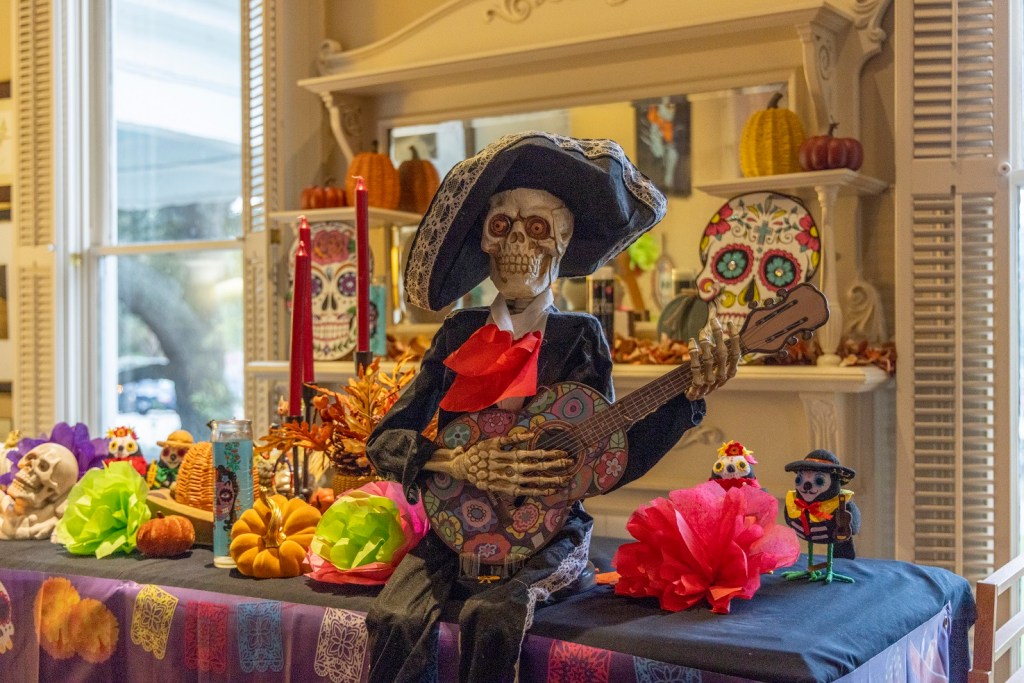
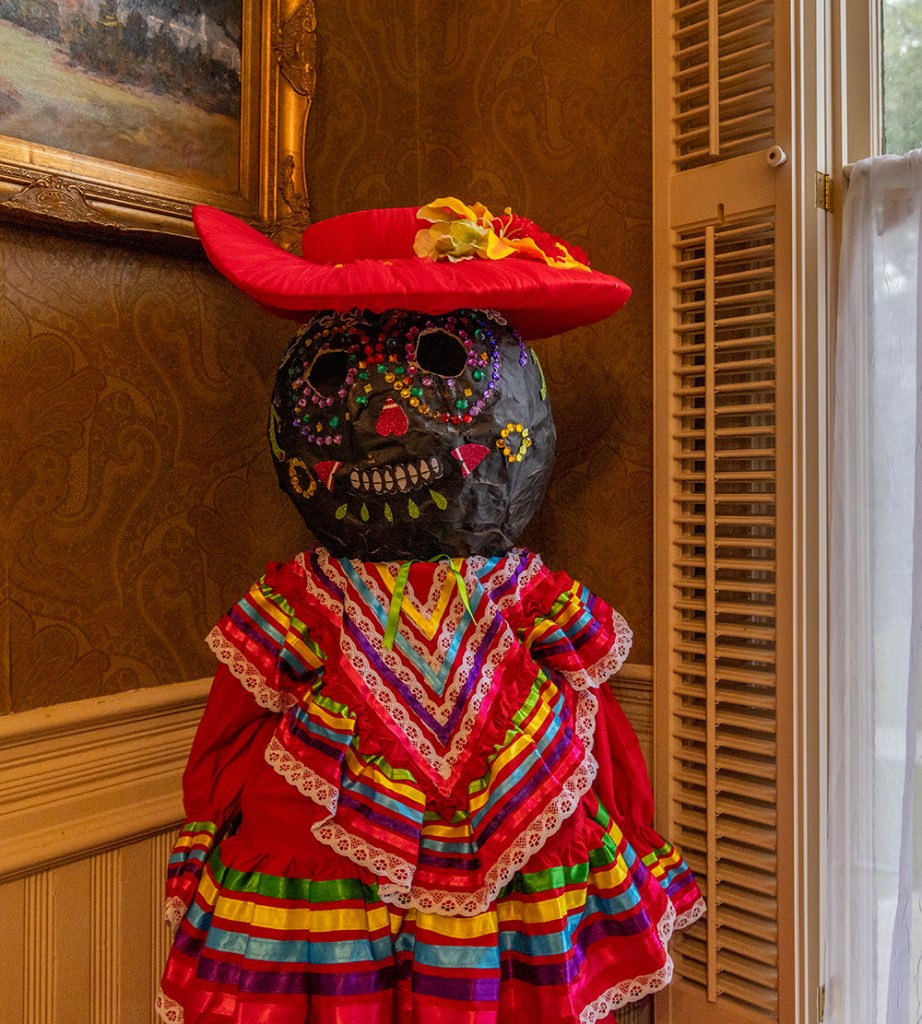
The historic home was adorned with decorations, and tables were filled with traditional treats like sugar skull cookies, pan de muerto, and refreshments.
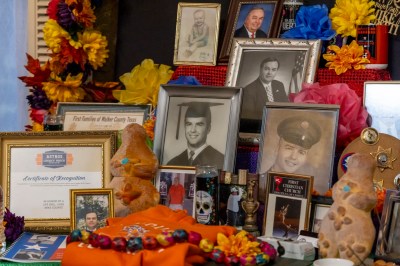
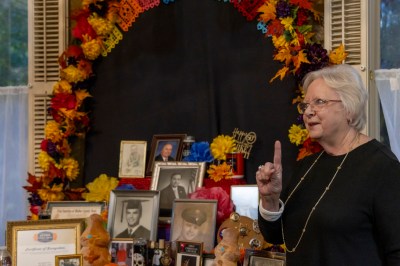
At the heart of the celebration was an ofrenda honoring Mike Countz, a beloved community leader and Justice of the Peace, whose memory was warmly celebrated.
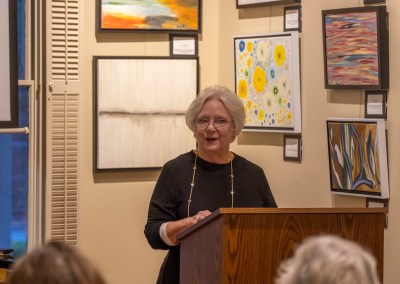
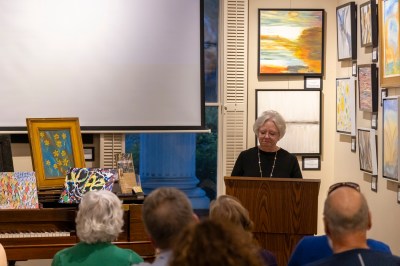
Dahlia Harrelson opened the event…
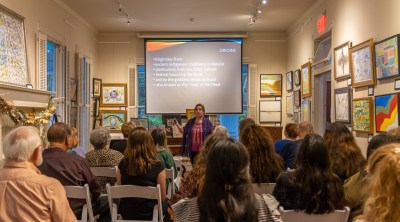
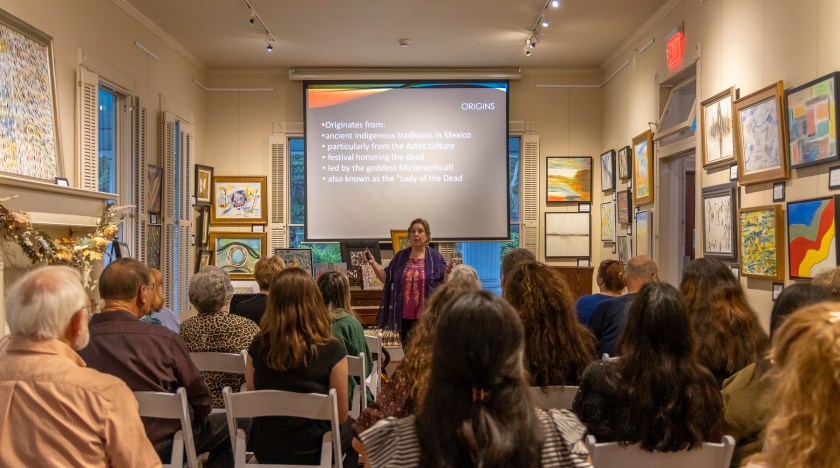
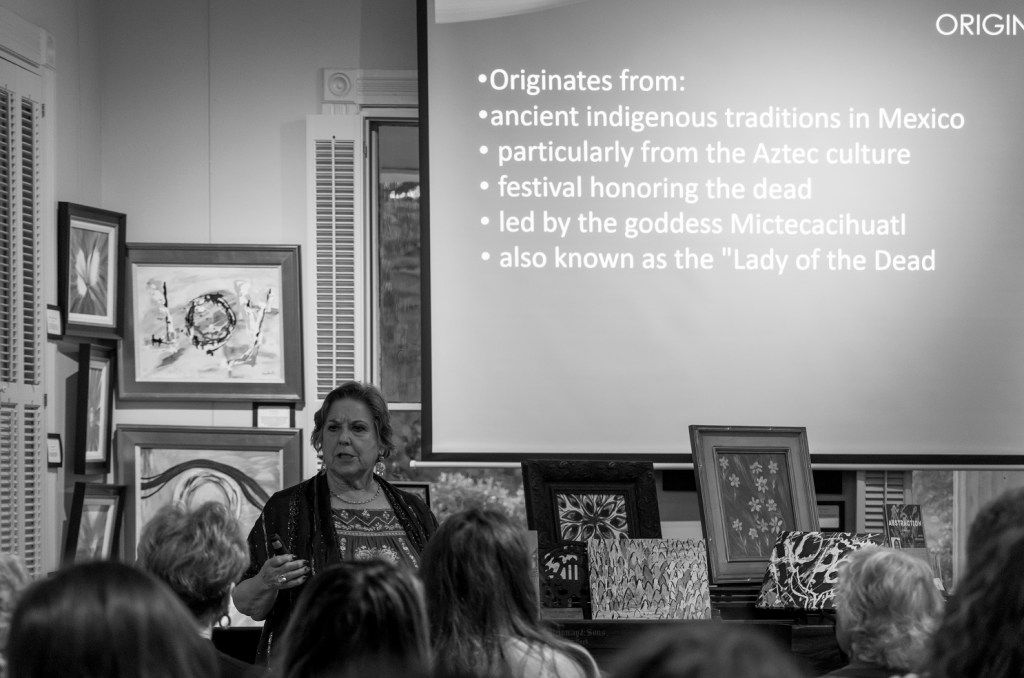
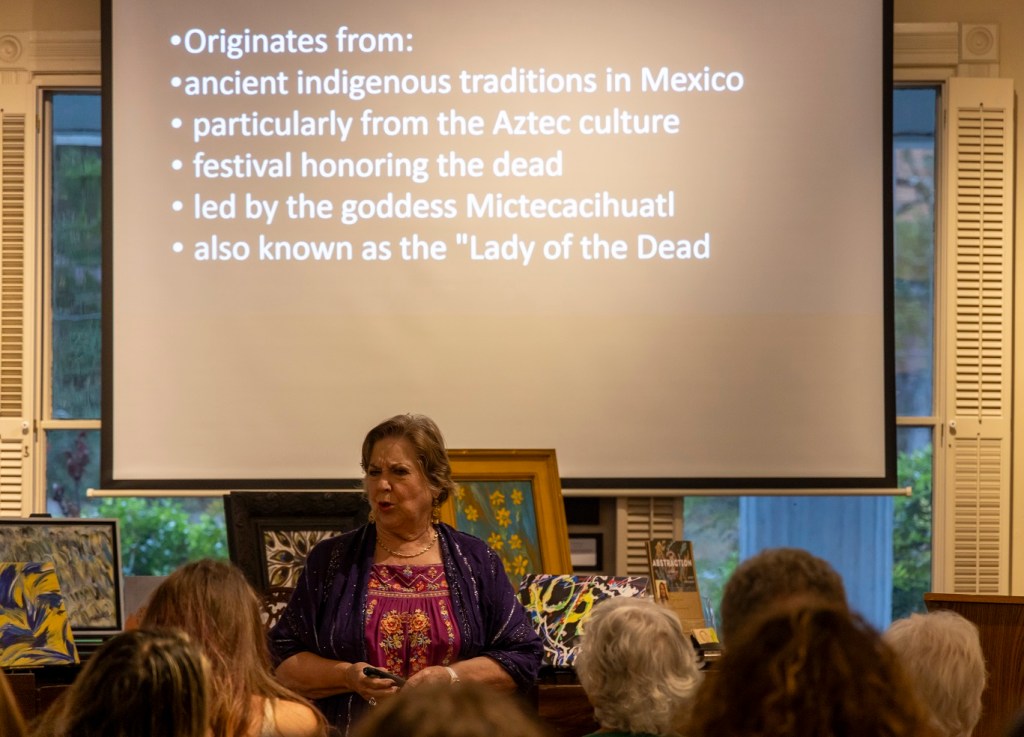
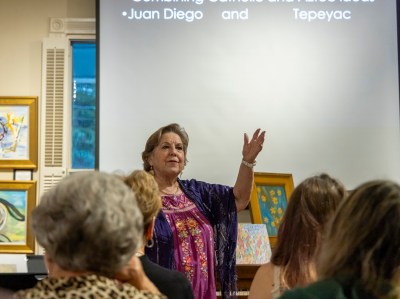
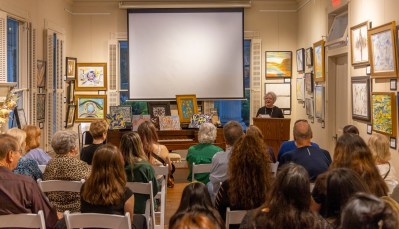
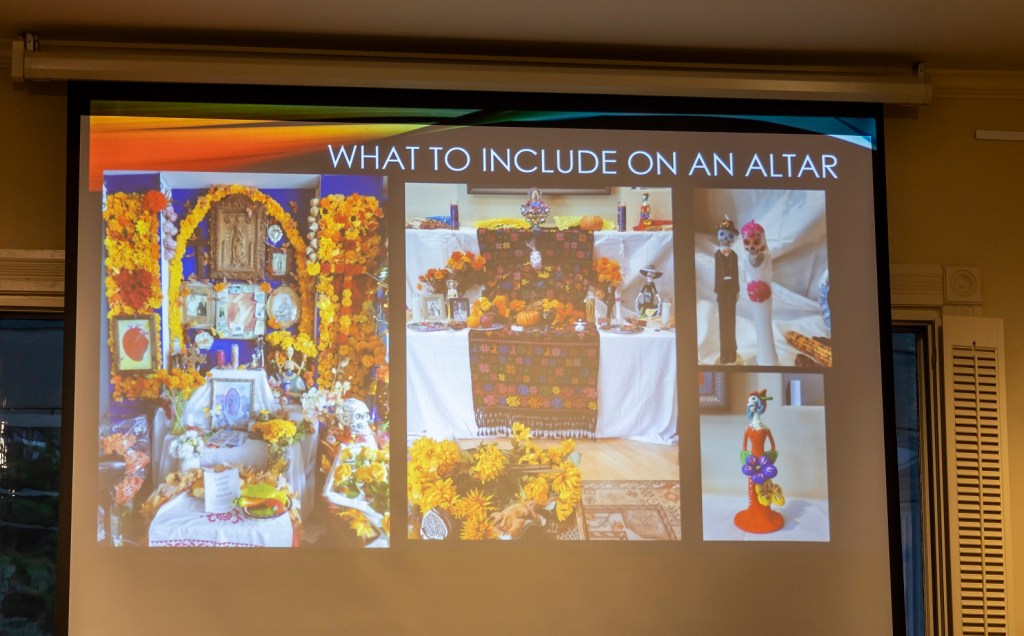
…and she soon turned it to Dr. Crimm, a respected historian and community figure, who offered an in-depth look at the origins and meaning of Día de los Muertos.
She explained how the holiday blends pre-Columbian and Catholic traditions, centering on the idea that death is not an end but a connection to our ancestors.
Through ofrendas and symbolic decorations, families invite the spirits of their loved ones back, honoring their lives with personal items, favorite foods, and marigold flowers.
Dr. Crimm’s insights gave us a thoughtful look into the holiday, emphasizing that Día de los Muertos is about celebrating life and keeping memories alive.
Following Dr. Crimm’s presentation, we heard from Patti Countz, widow of Justice Mike Countz, whose ofrenda was displayed prominently.
She shared stories about her husband, painting a picture of his life and the impact he made on the community. Mike Countz was born in Orange, Texas, in 1951, and he moved to Walker County, where he became a star athlete and graduated from Huntsville High School in 1969.
After earning his BBA from Sam Houston State University, he built a distinguished career in criminal justice, starting with the Texas Department of Corrections and eventually becoming the Justice of the Peace for Walker County’s Precinct 2.
Known for his humor, his love for golf and poker, and his unwavering devotion to his family, Mike Countz was the ultimate “girl dad,” who proudly attended every recital, game, and family event.
His legacy extended beyond his public service; he was a beloved member of his church and community, a dedicated Elvis fan, and a friend to many.
His wife’s stories brought the ofrenda to life, filling the room with both laughter and fond memories of a man who gave so much to his family and community.
This event highlighted the Wynne Home’s role as a vital space for cultural education in Huntsville…
…giving students a hands-on connection to a meaningful tradition and an appreciation for the ways we honor those who came before us.
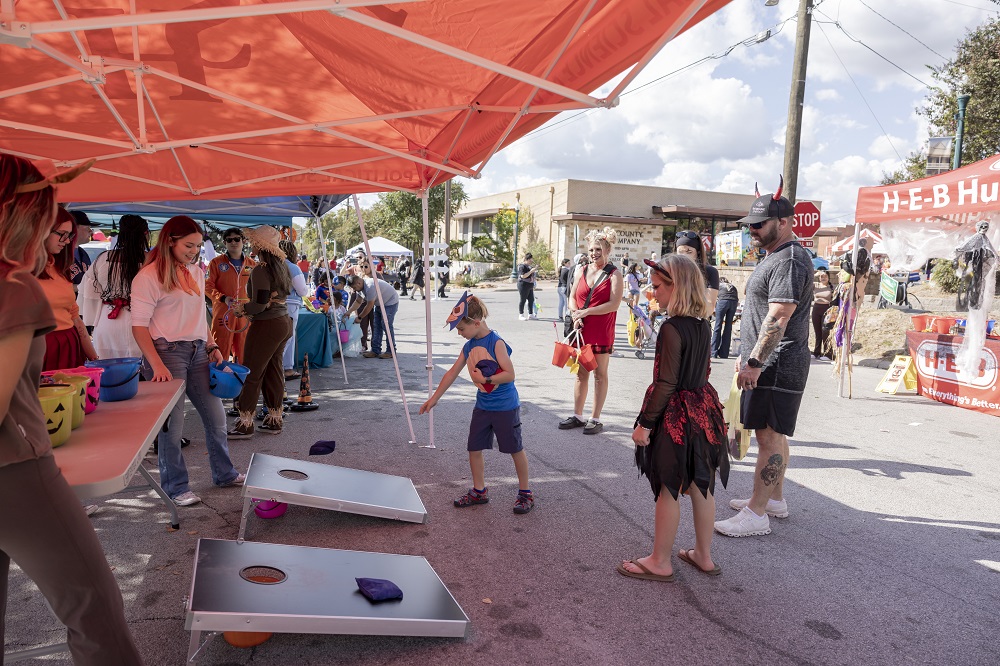
Every year, the LEAP Ambassadors come together to participate in and volunteer at the annual Scare on the Square, hosted by the Huntsville Main Street Program. This year was no different!
In keeping with our tradition of selecting a new theme each year, we decided to dress as the cast of The Wizard of Oz!
While we didn’t officially set the level of creativity for our costumes, some of us went all out, while others kept it simple but stayed true to the “heart” of the theme—except for our very own Tin Man, who cleverly carried hers in her shiny silver purse!
Before the event started, we were visited by McKenna Nonnenmann, the Main Street Intern for the fall semester.
She shared her experience of assisting in organizing this year’s Scare on the Square, something she enjoyed planning from start to finish. Angela Robinson, the Event Coordinator for the Wynne Home Arts and Visitors Center, and Amanda Schillaci, the Main Street Program Manager and the organizer of the event, also stopped by to greet the group and see the setup.
As always, students from Professor Yawn’s classes participated in the event, bringing even more fun to the festivities.
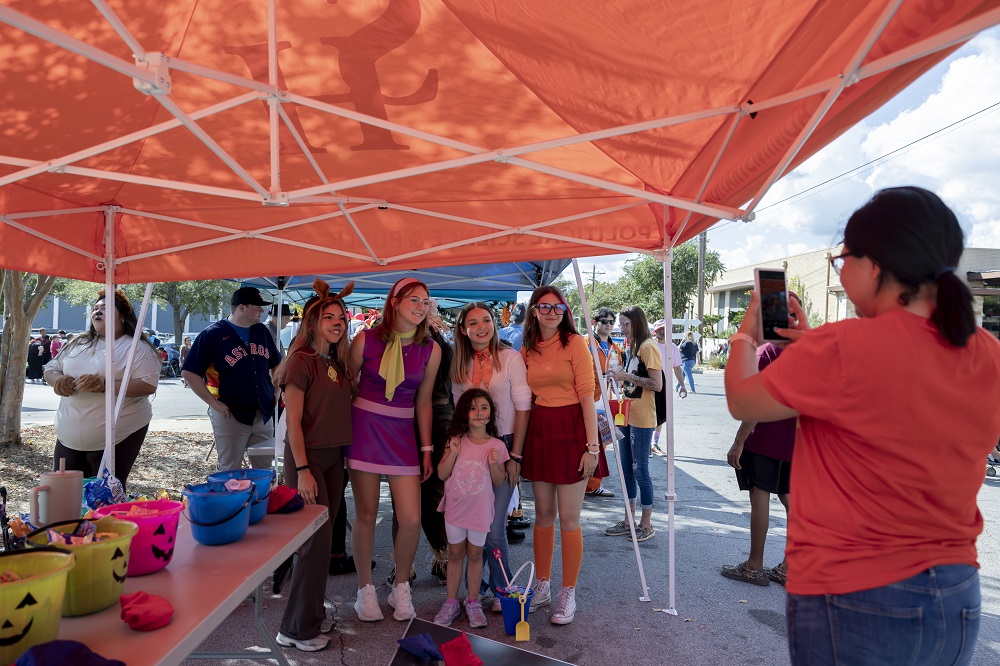
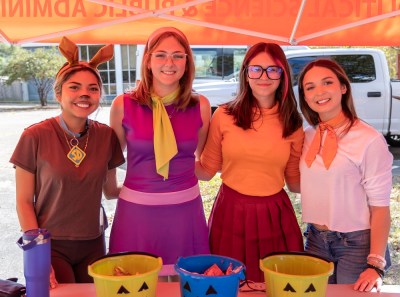
The University 1101 team showed their Halloween spirit by dressing up as the characters from Scooby-Doo. They set up a game of “Spin for Cornhole,” which proved to be a popular attraction.
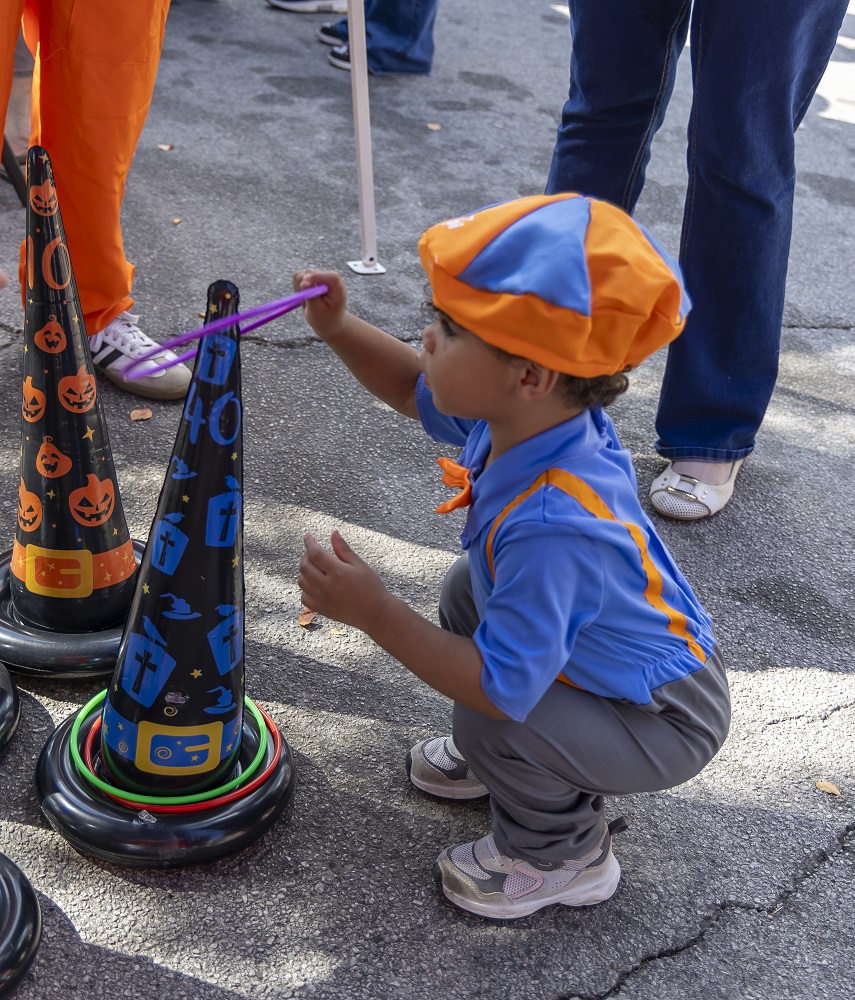
Simultaneously, the team from the Local Government class, which consisted of Roberto Cardenas, Kayona Denver, Logan Skelton, and myself, was also tuned into the action. For those looking for a bit more difficulty, we hosted a ring-toss game which attracted kids and even parents. Some even participated multiple times in hopes of winning extra Halloween treats!
Scare on the Square is a wonderful opportunity for local businesses, organizations, and the community to come together, enjoy each other’s company, and play fun games.
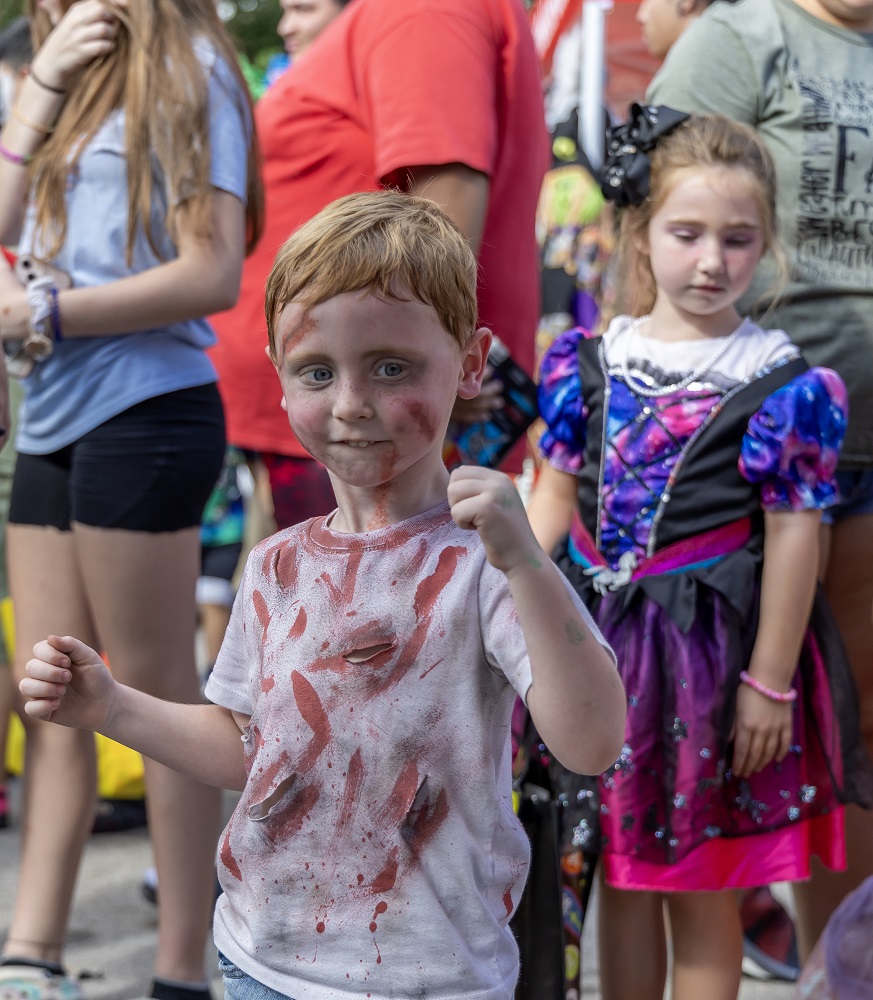
This year, the event exceeded expectations, providing a safe and enjoyable space for children to celebrate Halloween and make lasting memories.
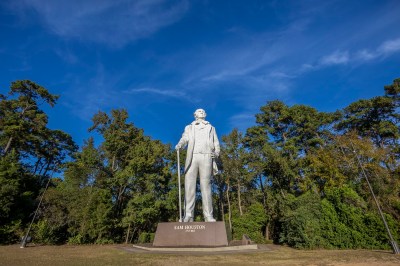
Thirty years ago, David Adickes unveiled “A Tribute to Courage” – an iconic 67-foot statue of Sam Houston that has become a landmark in Huntsville. As a pivotal historical figure, Sam Houston left a legacy of resilience and integrity that has left a great impact on Huntsville. The installation of this statue has significantly boosted Huntsville’s tourism, contributing $8.5 million in local and state revenue this year alone.
Following our recent attendance at the Sam Houston Memorial Museum celebration, the LEAP students were honored to support another special Huntsville event: the 30th anniversary of Adickes’ towering Sam Houston statue, hosted by the Sam Houston Statue and Visitors Center.
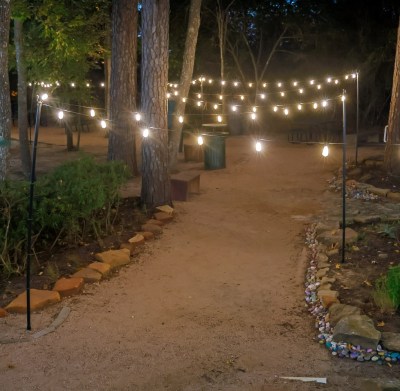
Upon arrival, I immediately noticed the beautiful fairy lights that lined the path to the statue. While exploring the illuminated trail would come later, we first needed to attend to our duties. We had the privilege of welcoming many distinguished guests, including Mary Laura Gibbs, Mayor Russell and Tish Humphrey, and the celebrated artist himself, David Adickes, alongside his guest Linda.
Also, it was particularly special to see the two descendants of Sam Houston again, Lindsey Hughes and her mother, Penny.
The reception room, beautifully transformed by Tracy Chappell and her visitor center staff, provided an elegant backdrop for the evening.
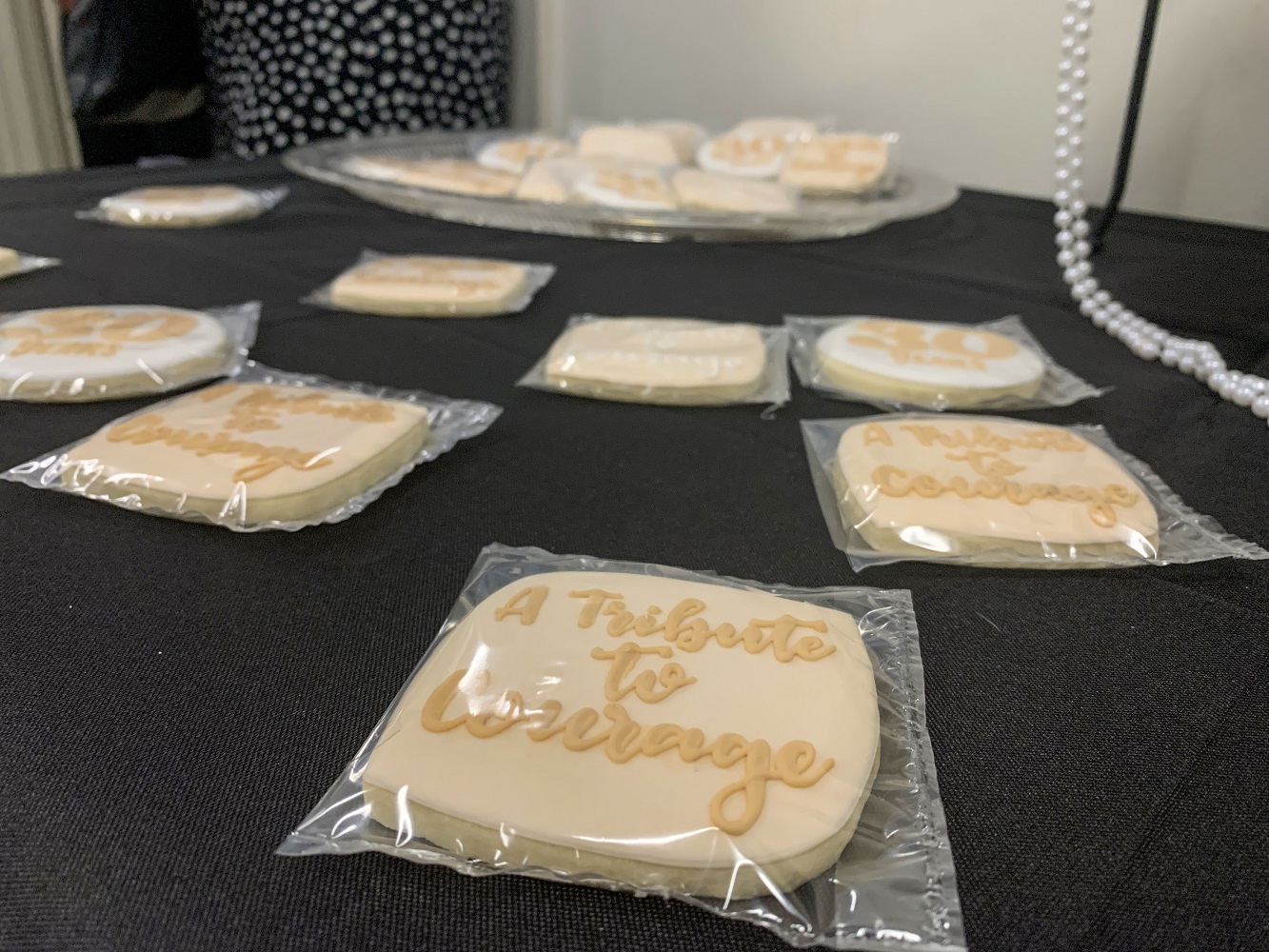
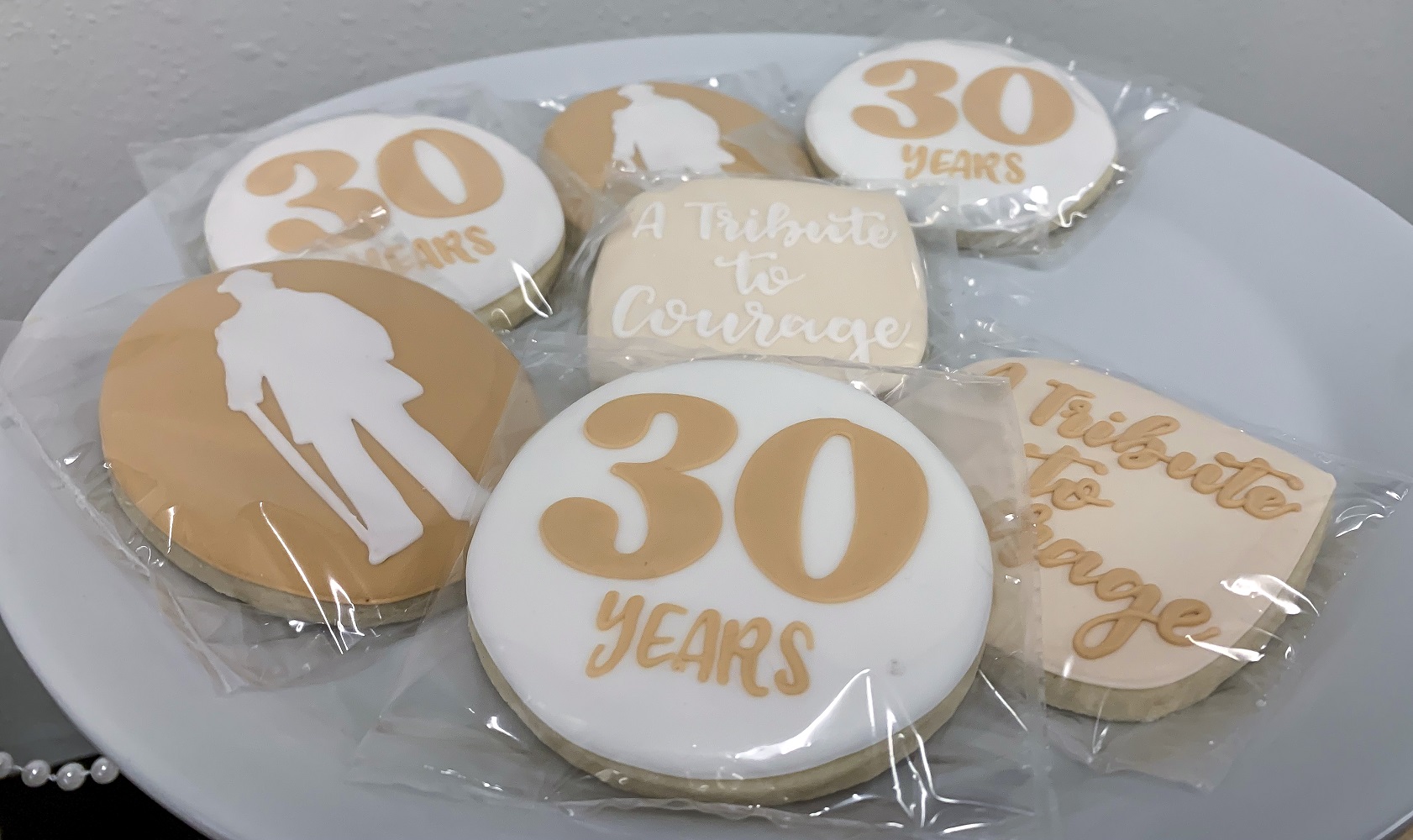
They created a perfect atmosphere with carefully curated historical artifacts, mementos, and photographs from the statue’s inception, and an impressive charcuterie spread. A personal favorite of our group had to be the “Big Sam” cookies– they were almost too beautiful to eat!
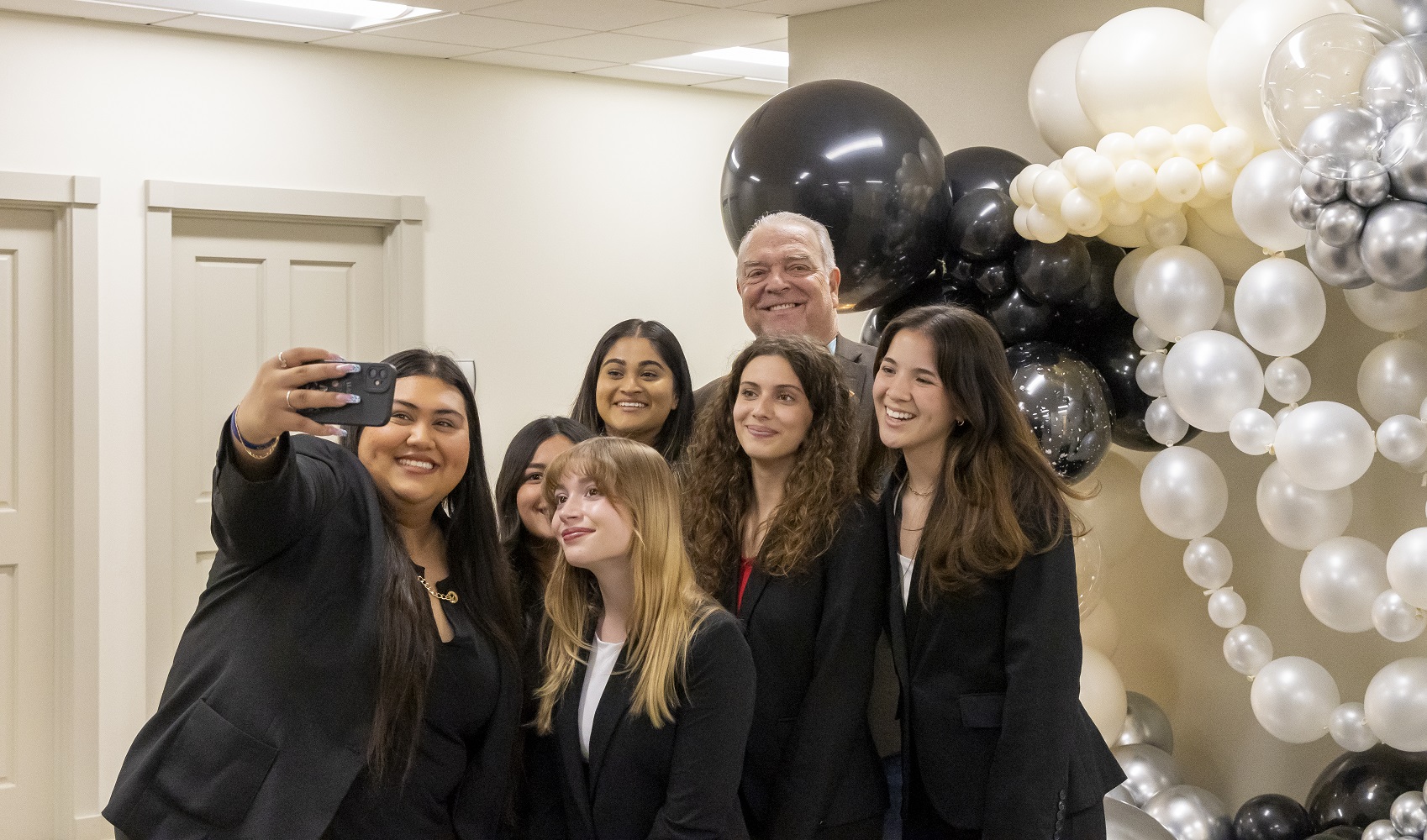
Just as we had done the previous evening, we seized the opportunity to capture a photo with Mr. Adickes. He warmly agreed to join us in front of the designated “selfie area.”
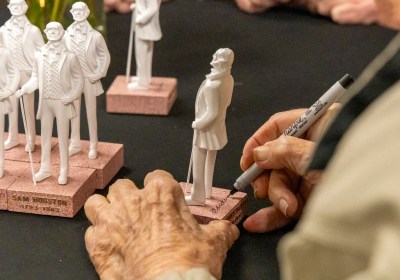
To our great surprise, Mr. Adickes graciously signed miniature Sam Houston statues for each of us. We were absolutely thrilled by this personal touch, and it truly made the evening even more special.
The evening became even more memorable when Cinthia, Olivia, and I had the chance to take a photo with Miranda Estrada, the Economic Development Specialist for the City of Huntsville. As a former LEAP Ambassador herself and a former intern in the Economic Development Department while at SHSU, Miranda went on to become our supervisor during our own internships in that department. Having all of us together made for a heartwarming reunion and a reminder of how impactful the LEAP experience is.
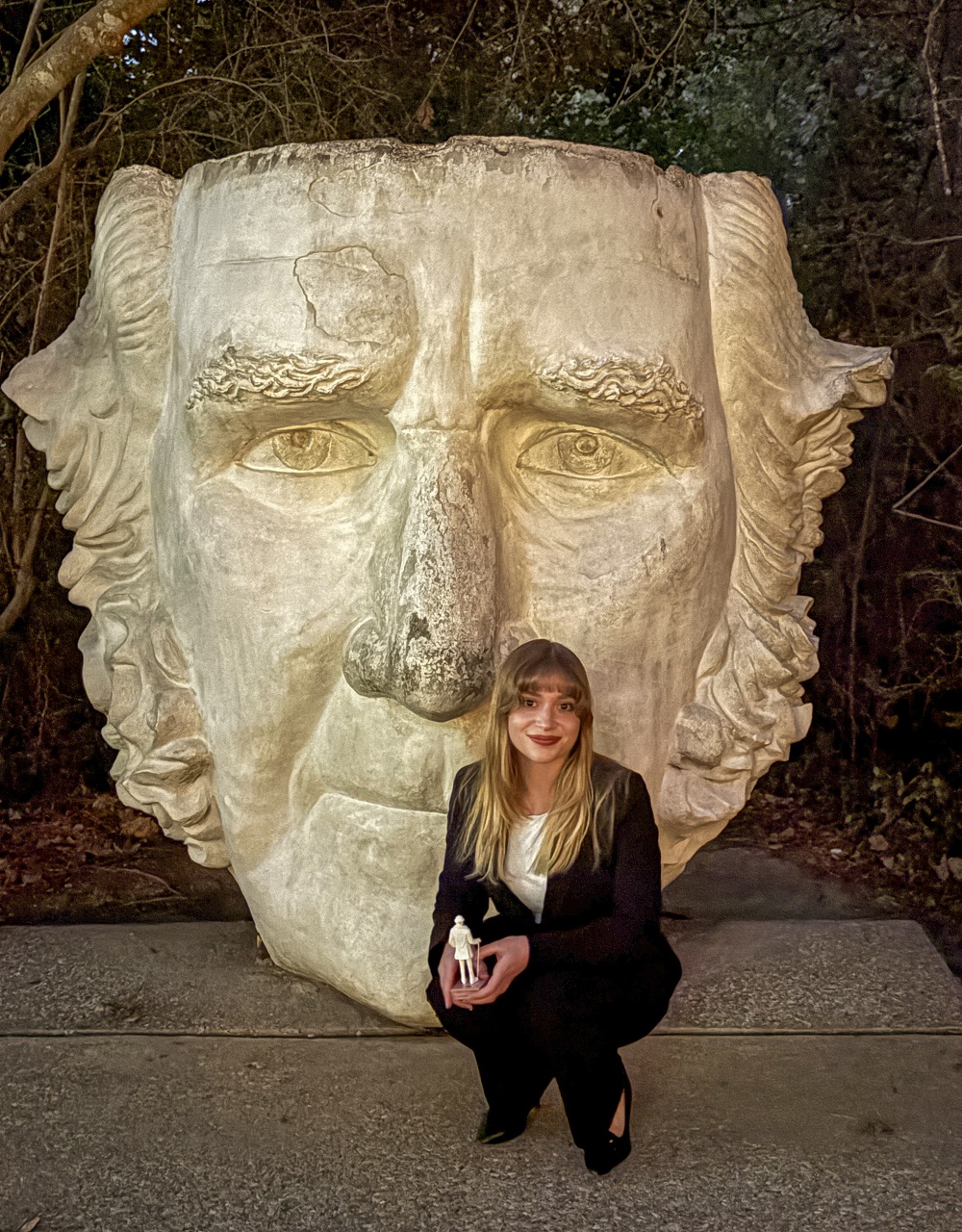
As the celebration wound down, we finally ventured down the beautifully lit path to view the statue. We stopped for photos at the giant Sam Houston head statue along the way before reaching the main monument. This was only my second time seeing it up close – the first being when I was around one year old, a moment I recently discovered in my older sister’s scrapbook!
The girls could not resist photographing their newly signed miniature statues in front of the large statue (Olivia was especially eager to take photos of them taking photos!).
The night ended with us taking a group selfie with the impressive statue. Overall, the opportunity to meet Sam Houston’s descendants and to speak to David Adickes twice in one week made for two perfect nights in Huntsville!
The TX Legislature meets every other year for 140 days, packing two years of law-making into a bit more than four months. This is a predicament that calls for help, and offices are quick to reach out to SHSU for possible help.
To that end, eight students set out on a Thursday for Austin, TX, to interview in both Democrat and Republican offices. To mark this moment, the students met under Bruce Munro’s “Confluence,” an art piece that highlights the complementary nature of the Humanities and Social Sciences, a fitting metaphor for a team of Bearkats ready to help each other in their next adventure.
The Sam Houston Austin Internship Program (SHAIP) is the vehicle for this adventure. SHAIP was initiated in 2012 by President Dana Hoyt, who wanted students to have great experiences while also increasing SHSU’s presence in Austin.
And for the past 12 years, SHSU has sent students to Austin, where they have worked in diverse offices, expanded their skill set, and broadened their professional network.
The SHAIP program offers students scholarships to defray living costs; assists with the interview and placement process; and offers trainings and workshops throughout the internship. The goal, as President Hoyt envisioned and President White has extended, is to provide once-in-a-lifetime opportunities to a great group of students, while enabling them to serve the State of Texas.
October 21, 2024, marked the 188th anniversary of Sam Houston’s inauguration as the first elected president of the Republic of Texas. It’s somewhat of a tradition for LEAP Ambassadors to volunteer, but this year’s event had a special twist, with a new Sam Houston Memorial Museum exhibit featuring Houston’s Executive “Mansion.”
As volunteers, we assisted in greeting guests throughout the museum. Michelle and Chrissy were tasked with driving attendees in golf carts from the parking lot to the museum. While their driving may have inspired a newfound appreciation for walking among some, the passengers arrived in good spirits.
The celebration was well-attended, with approximately 100 guests, including local figures such as Mac and Leanne Woodward, Michelle and Winston Spencer, Mary Laura Gibbs, Glynda Turner, former Mayor Jane Monday,Vice-President Matt Bethea, Dr. McCartney Johnson, Tabitha Shanley, Interim City Manager Sam Maisel…
…and Assistant Director of the Academic Success Center Heather Caudle.
And yes, Derrick Birdsall was there too.
One of the most exciting moments was meeting the renowned sculptor David Adickes, the man behind “A Tribute to Courage,” also known as “Big Sam.”
It’s safe to say we were star struck in more ways than one.
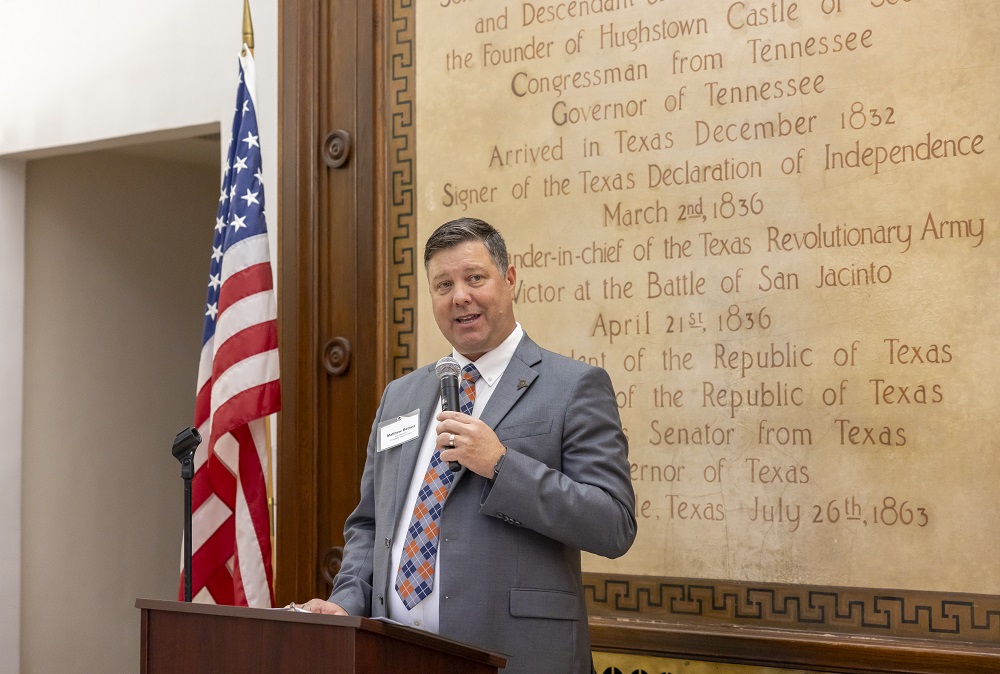
Once everyone had settled in, Matt Bethea, SHSU’s Director of University Advancement, gave opening remarks, discussing how the investment in university advancement strengthens SHSU’s position and puts it on a stronger playing field. His remarks highlighted the broader significance of projects like this exhibit for the university’s future.
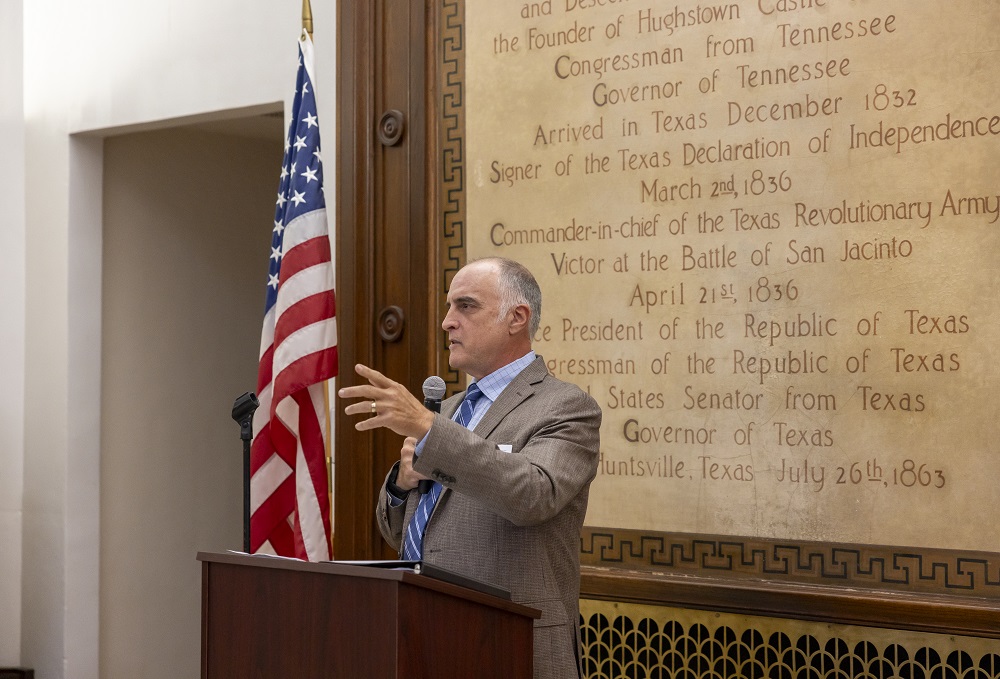
Derrick then took the stage for the ribbon-cutting ceremony, offering a brief explanation of how the executive mansion exhibit came to life.
He shared the backstory of incorporating the mansion into the existing galleries, with help from local company Steely Lumber, which provided key materials for the project.
The exhibit itself is a interactive and fun representation of Houston’s life, styled after “an college student’s dorm room on a Monday night.”
It highlighted Houston’s well-known gambling habits and showcased his love for books, offering a balanced portrayal of both his vices and intellectual interests.
Another renowned artist, Lee Jamison, took the time to speak with us as well. His work can be found all over the state, and many of the LEAP Ambassadors—past and present—are huge fans of his distinctive style. A favorite of many is his painting of Old Main from his Huntsville at Night series. It was fun to hear him recount the many efforts that went into crafting the piece, including the detailed research into the stained glass windows. While I couldn’t help but feel a bit sad knowing I’ll never get to see the building in person, his painting offers the next best thing.
The Sam Houston Memorial Museum always puts on fantastic events, and for many of the students, it was their first time visiting the museum. It was truly an evening to remember!
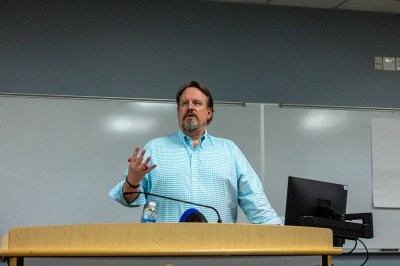
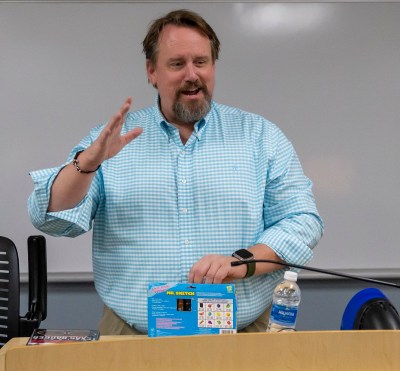
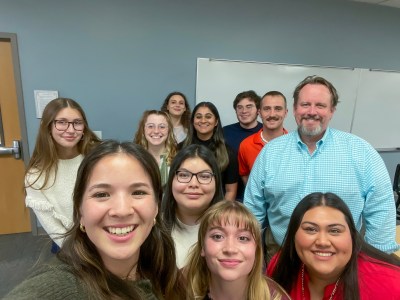
This Wednesday, Sam Houston hosted its football game against Western Kentucky; everyone was there… except for the dedicated Pre-Law Society members who attended this week’s meeting. The guest speaker was the incredible Dean Gene Roberts. Dean Roberts is not only an Associate Dean but also the Director of Student Legal & Mediation Services.
After a bit of business…
President Olivia Discon introduced Dean Roberts, and he graciously gifted the pre-law members with lots of goodies such as: padfolios, pens, and pencils to take notes, and pamphlets about mediation services.
Using a unique approach to speaking that he learned from Steven J. Gould, Dean Roberts started by letting the students ask questions. He discussed topics including the importance of meditation for solving disputes against two parties, confidentiality between mediator and clients, and neutrality of the mediator.
Dean Roberts also touched on terms such as intellectual curiosity (wanting to ask questions), B.I.F.F. (which is used for high conflict personalities meaning brief, informative, friendly, and firm, which he made a point to mention is attributed to Bill Eddy), and Collaborative Law.
The lecture was excellent and very insightful into the world of meditation and helped paint a clearer picture on the topic. A big thank you to Dean Roberts for taking the time to come speak with us!
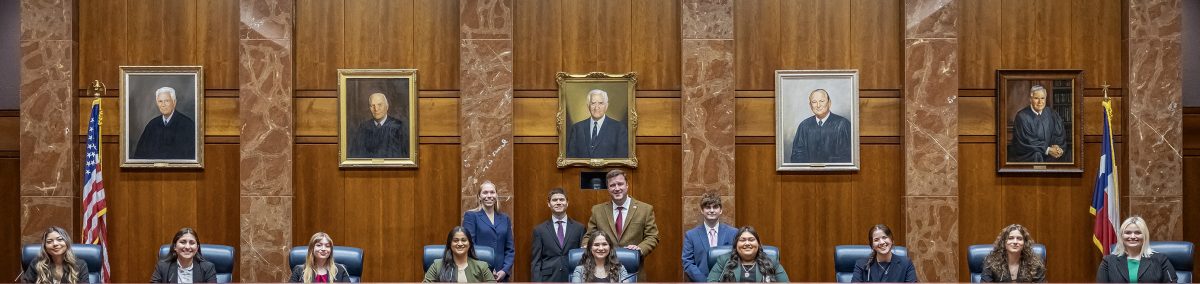
After a multi-year hiatus, the LEAP Center has revived its Moot Court Team, and SHSU Students Olivia Discon (Team Captain) and Maggie Betancourt will be competing at the Texas A&M Law School Regional Tournament on November 16-17.
What is Moot Court, Anyway?
Moot Court replicates the appellate process. Most people are familiar with the trial courts, where (typically) a jury judges the guilt of a defendant; witnesses are called to testify, are involved in direct and cross examination; and a single judge presides over the proceedings. But in an Appellate Court, attorneys compile documents, provide a written brief, and offer oral arguments, making the case that the lower court erred (petitioner) or didn’t (respondent) in the proceedings.
This fits right in with the LEAP Center’s activities, which already many law-school related activities, including inviting the 10th Court of Appeals to campus once a year to hear cases.
Without knowing it, then, the LEAP Ambassadors have had a mini-preparation for the Moot Court experience.
Moot Court Preparation
Although we may change formats in future years, the Moot Court experience works like this:
May 1: AMCA Releases Case;
August: Students read case and take “Foundations Quiz” to participate;
September: Weekly practices begin;
October: Practices continue and students may scrimmage other teams;
November: Regional Tournament
January: National Tournament
For the students, this means reading the cases (there are 21 cases in all) thoroughly, and developing arguments, modified over weekly practices, that can be used for their “courtroom” appearance.
Moot Court Benefits
In following this regimen, students gain many benefits. They…
Learn how to read and understand court opinions;
Learn how to write appellate briefs;
Sharpen their critical thinking, writing, and communications;
Gain substantive knowledge in the field of law;
Gain exposure to law schools to which they may be applying.
Rules of Moot Court
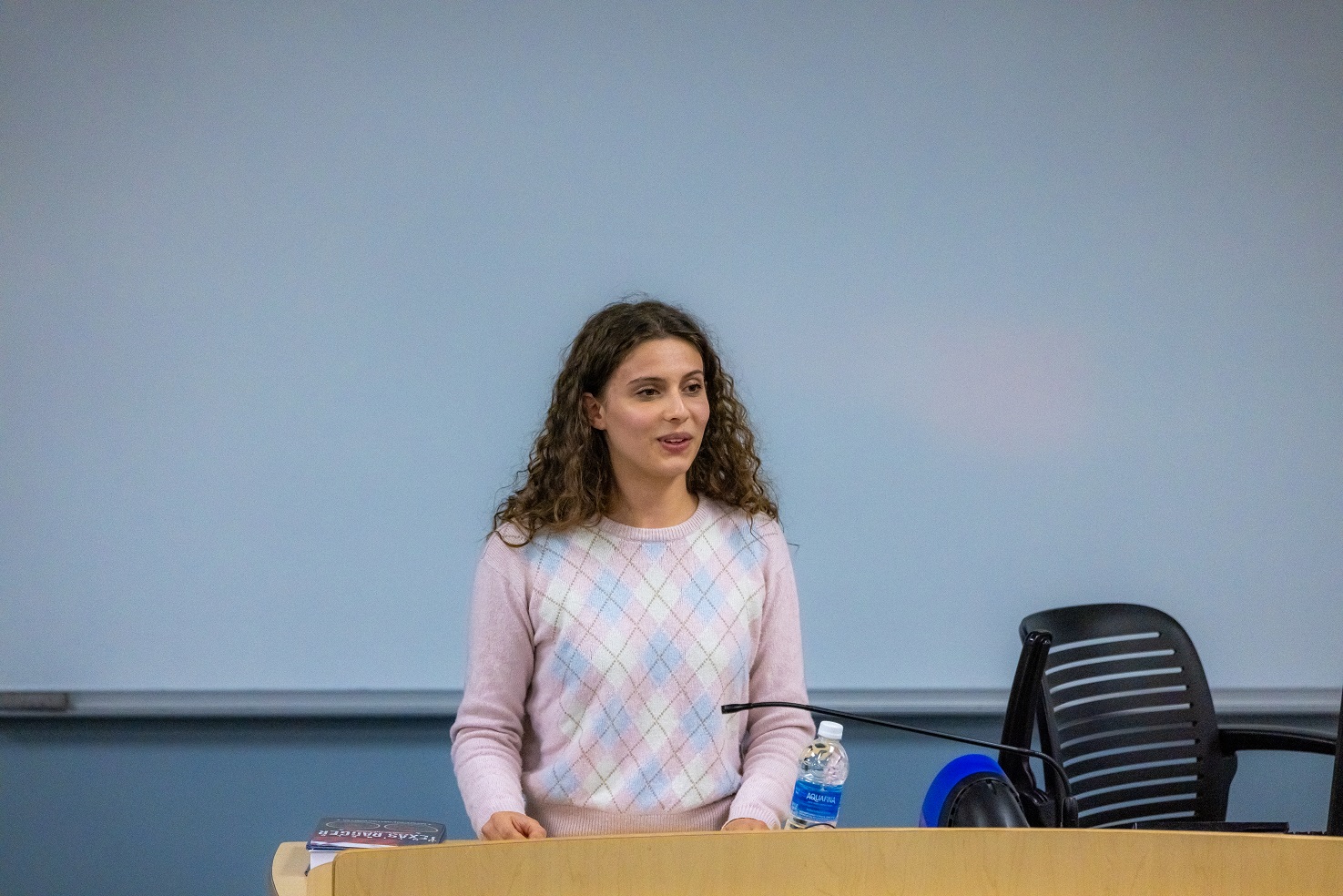
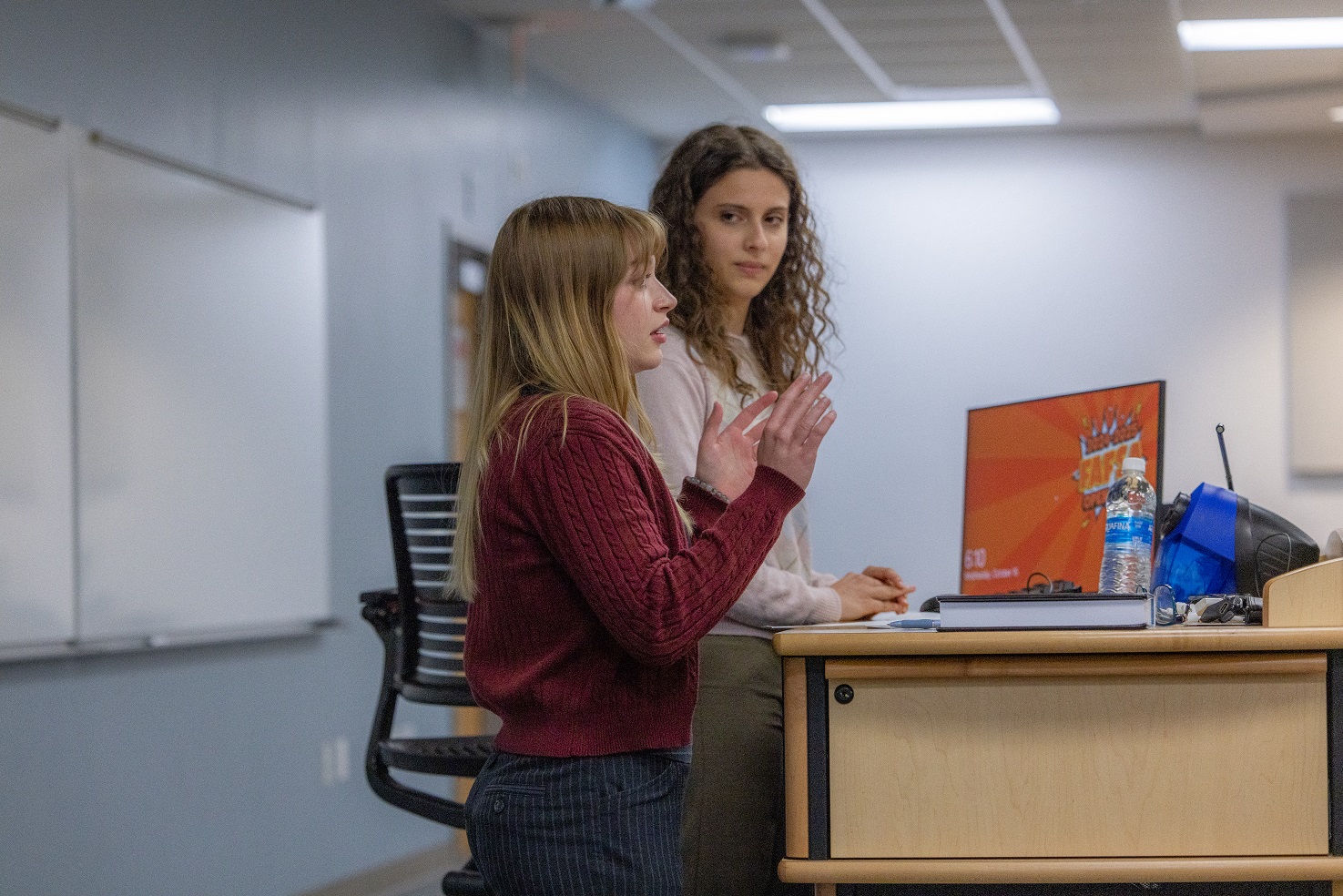
After familiarizing themselves with the main case and associated cases, the competitors decide which of two issues they will be arguing before the court. This year’s case, which is based on the Michelle Carter encouraging suicide through text-messaging case, involves both the 5th Amendment (self-incrimination, tackled by Maggie) and 1st Amendment (free speech, addressed by Olivia).
The students also (more or less) split the 20-minute time limit, with each student making their case before the judges for about ten minutes.
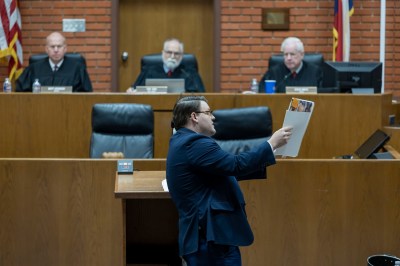
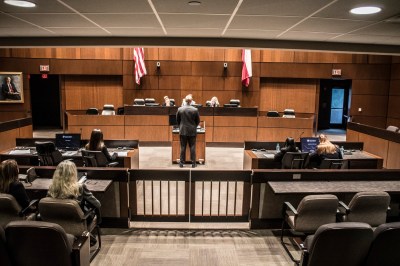
SHSU Competing in 2016 Moot Court Competition
This can be tricky, because judges can interrupt as often as they want, and the time spent being interrupted counts against the time allotted. (See full rules below).
Although teams may compete in scrimmages that are self-arranged, their first (and probably only) appearance is at one of 15-16 regional tournaments across the United States, which host, collectively, approximately 120 Universities, many of which field multiple teams. The top 25-percent of these teams then compete in nationals in January.
SHSU Moving Forward
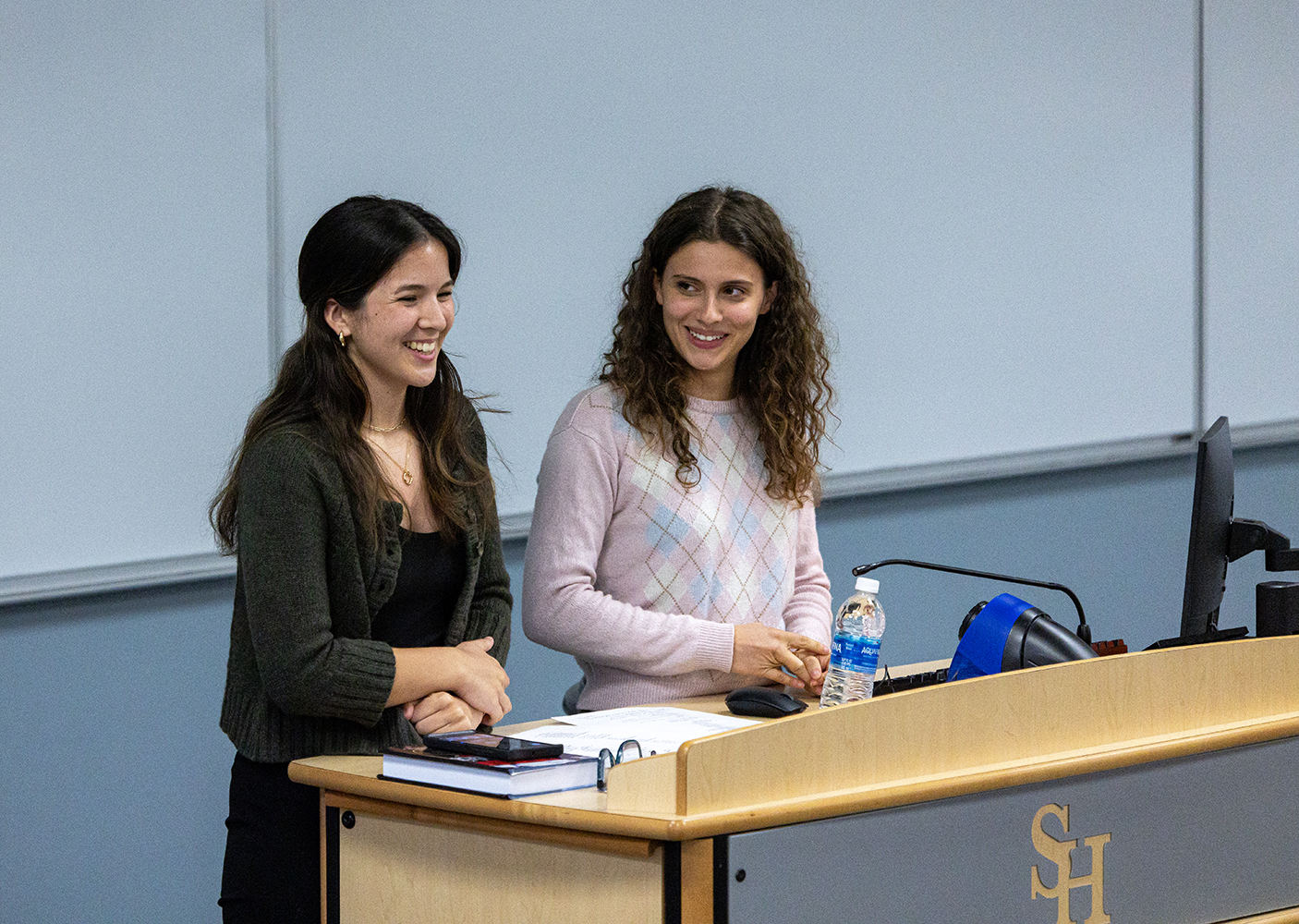
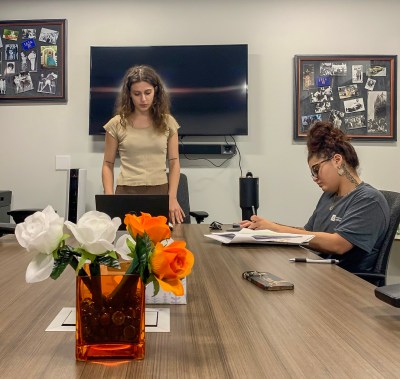
With help from Dean Gene Roberts, Stephanie Fors, and Victoria McClendon-Leggett, the students have gone through increasingly rigorous practices…
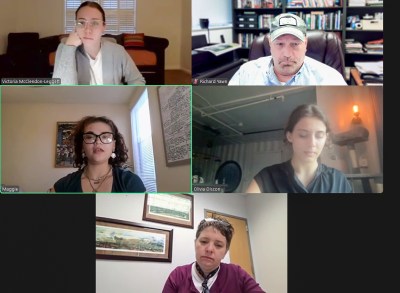
…culminating with a scrimmage on October 19, 2024.
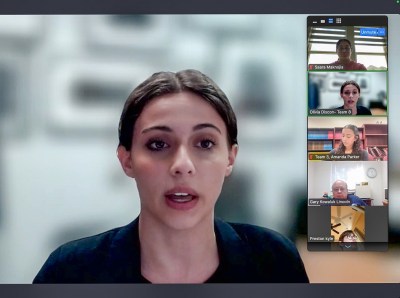
This scrimmage, which took place on Zoom in three different states, involved 12 teams. Organized by Blacin Godfrey from the University of Louisiana at Lafayette, the students competed in three rounds, twice representing the petitioner and once representing the respondent.
Although the results have not yet been delivered to the teams, the SHSU team was able to enhance its practice in more realistic conditions, hear perspectives from more people, and commiserate with other moot court participants across the country.
Importantly, the scrimmage identified weaknesses in the team’s arguments; highlighted applications of other cases that should be considered for incorporation; and spotlighted weaknesses in delivery and presentation.
The team will continue its practice through November 16-7, when they will be one of 24 teams competing at TAMU Law School.
Getting Involved
For students who would like to be considered for SHSU’s Moot Court team next year, please contact Olivia Discon at oliviadiscon@shsu.edu or Professor Mike Yawn at mike.yawn@shsu.edu.


























 Center for Law, Engagement, and Politics