Fresh off volunteering at the Wynne Home Arts and Visitor Center, we also wanted to help out in the downtown area. So, with rivet-gun in hand, we headed to the Old Town Theatre to do some light cleaning and affix numerals to the Theatre’s chairs.
The theatre is the only vintage venue in Huntsville, and it is the community’s finest example of Art Deco architecture–while also featuring the art work of world-renowned muralist Richard Haas.
And while it may be an local architectural treasure and a work of art in itself, it also had a disordered numbering system on the seats, which makes ushering pretty difficult.
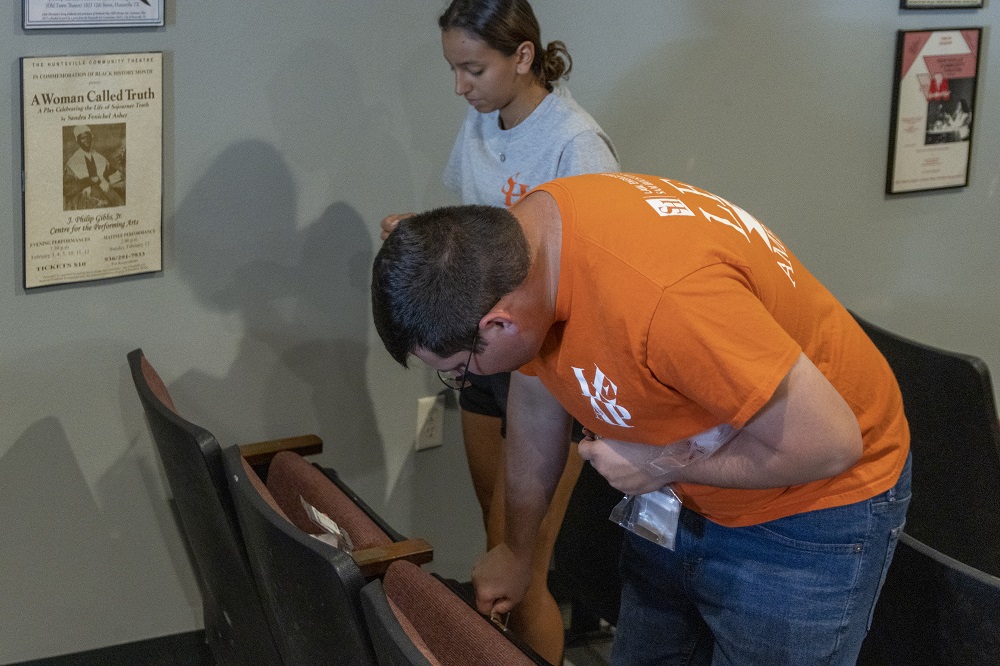
So, we set about correcting that. With only one rivet gun, we set up a system of three people helping: one advance man putting in the number plates and rivets, one riveter, and one person taking left-over parts….
While three were riveting, others were cleaning, and we took turns doing all the tasks, so that we’d all be cross-trained. Stephanie did her best Carol Burnett impression….
…Quinn tried to get a break from Yvette and Morgan, and Morgan even tried her hand at vacuum repair.
About three hours later, we had a mostly-clean theatre, seats with a correct numbering system, and more skilled volunteer force….
…and some ideas for some fall activities–all of this in time for our sold-out Gene Watson show!
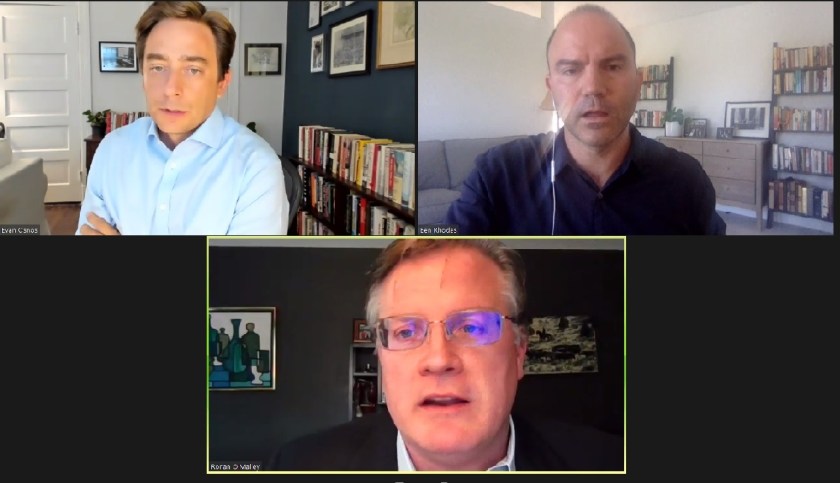
LEAP is always eager to hear from World Affairs Council speakers, and that is especially true when Ben Rhodes presents to the Council. Rhodes, a former speechwriter and advisor to President Obama, discussed his latest book, After the Fall: Being American in the World We’ve Made, with the New Yorker’s Evan Osnos as the moderator.
Following eight years of working long hours for the Obama administration, Rhodes found himself with a lot of time on his hands, a need for decompression, and wrestling with the Presidency of Donald Trump. So, he decided to write a book and, as he says, announce himself as a writer to the world.
What struck Rhodes, as he reflected and traveled and reflected some more, is how parts of the world were “turning to nationalism and authoritarianism,” particularly Hungary, Russia, China, and the United States. Key to this period, according to Rhodes, was the great recession of 2008, which is “when the narrative of liberalism and democracy collapsed.” With this narrative, Osnos readily and frequently agreed.
Rhodes is, at times, a bit morose, identifying this period as “the fall” to which the title alludes. This fall emboldened China and Russia, freeing them to mock capitalism and democracy, and emboldening nationalistic elements in Europe (particularly Hungary). He characterizes presidents from GHW Bush to Obama as “collectively wrong” and “hubristic,” while also criticizing the NBA, the media, and “the entire mass entertainment industry.” (see here for other views he’s expressed about the media).
Rhodes responded best during the Q&A period, during which Ronan O’Malley stepped in.
Rhodes argues that the China-Russia relationship is “shallow,” united by their “interest in the discrediting of democracy.”
When asked about the “personalization” of politics and regimes, Rhodes suggests that the rise of social media contributes to this movement, while also noting that the election of Biden was a countermovement to this trend.
Rhodes struggled to find silver linings. “There is one megatrend in the world,” he lamented, “and it’s not good.” But he argues, not entirely convincingly, that the “mass mobilization” in the world is happening and good; that people “are much more aware” (polls indicate otherwise); and there are civil rights in certain world regions than there were 30 years ago. It’s not a lot to hang on to, but it’s what we can look to, he says, “after the fall.”
On Saturday, June 27, the LEAP Ambassadors drove in from most parts of Texas to help out our adopted community of Huntsville. One of us drove from San Antonio, one drove from Tyler, one drove from Houston. Our destination was the Wynne Home, for an afternoon of painting and cleaning.
To build some energy, we stopped by the friendly and local confines of Mr. Hamburger, where some of had our first taste of this local favorite. We enjoyed the burgers and shakes!
Apart from exploring local culinary options, our mission today was to help out at the Wynne Home. The Wynne Home has a staff of 2.5 employees, and is, therefore, heavily reliant on volunteers. And in this regard, the Wynne Home is a hub of sorts in the community. The Texas Thyme Unit of the Herb Society of America assists the Wynne Home with its Ella Ruth Herb and Children’s Sensory gardens, the Friends of the Wynne support the arts at the Wynne Home (and in the community), and numerous citizens volunteer their time to serve on the Wynne Homes committees. So, it was an honor to help out by doing some touch-up painting in the children’s garden and some basic cleaning.
The Children’s Sensory Garden has a number of plants, and students are invited to touch, smell, taste, and even hear the plants and each of those sensory sections.
Among those plants are stones for hopscotch, and these were a little worse for the wear.
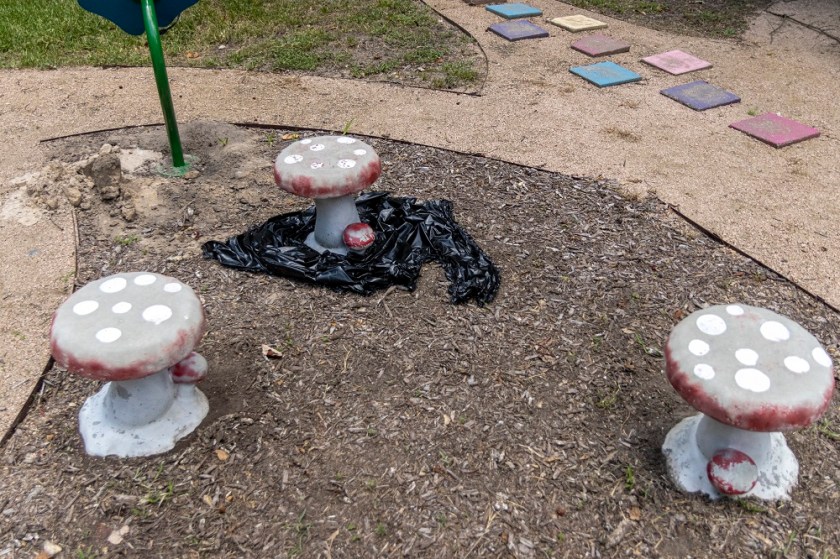
Concrete mushrooms also grow throughout the garden, and these, too, had seen better days.
With improvement in mind, we tackled the easy ones first: the stones.
The colors chosen by the Wynne Home staff were vivid, and even with just the first coat of paint, the colors were popping.
Although the temperature was only 93, it seemed much warmer. We estimated the humidity to be approximately 4,000,000, and so an unexpected challenge was having our sweat drip into the paint and dilute the colors. Fortunately, the Ms. Sarah Faulkner kept us hydrated, and we continued to plug away.
We quickly learned who was in the best shape, and to protect reputations, we will not discuss this matter further. Although we would note that we had to help Professor Yawn up the Wynne Home stairs after about an hour…
One of the nice things about painting is that it provide some immediate gratification, as you see the designs take shape and the colors become more vivid.
Following the painting, we turned our attention to the Wynne Home sign up front, which had weathered snow, ice, heat, humidity, and high winds, just in the last six months!
After much scrubbing, we were happy with the new-ish look, and we at times felt we were in the clouds!
It was a wonderful day. The Wynne Home was beautiful prior to the touchups, and we felt we had a little role in beautifying it further!
In a continuation of the LEAP Center’s Facebook one-on-one series, Professor Yawn interviewed Professor Jim Olson about his life during and after his career as a CIA case officer. This having been my first time hearing Mr. Olson speak, I was astounded at how little I knew about the world of counterintelligence.
Olson began the conversation with a definition of counterintelligence. He explained that its purpose is to protect the United States from other nations who may try to steal our secrets and technology. Much to my surprise, he told us that there are approximately 80 countries spying on us right now.
The conversation then turned to Olson’s 31-year career in the Clandestine Service. He was asked about his cover identity, which he could not share in great detail, but he explained that when he was in another nation, he would often have a cover as a U.S. diplomat, so he would have diplomatic immunity if he got into trouble. Sometimes, however, he was in other countries without working as a diplomat, and therefore would be subject to that country’s justice system if he were caught.
He shared that he and his wife – also a case officer within the CIA – never anticipated to come out from their cover identities, because doing so posed a threat to themselves and to their family. However, he was approached by President George H.W. Bush and George Tenet (former Director Central Intelligence) to work at the Bush School of Public Service. Olson was excited for the opportunity, but there is a CIA policy that does not allow officers to go onto college campuses covertly (which was news to me). So, he was forced to give up his cover.
In a similar vein, he was asked about how he and his wife broke the news to their children that they were officers in the CIA, and how they took it. Apparently, when he was stationed in Vienna, terrorists managed to get ahold of his address and sent him a death threat. They decided to tell their oldest son, who was sixteen at the time, and asked him to look after his siblings. As each of their children learned, he said, they took the information in with a sense of pride. He told us that each of his children has now gone on to pursue a career in the service of others.
Next he discussed CIA recruitment methods. We learned that the CIA seeks out a variety of candidates who may be cut out for a career as a case officer. Mainly, they are looking for character; they want recruits who are reliable and trustworthy.
To prepare for a career in the Clandestine Service (one of the most commonly asked questions of the event) Olson said that a bachelor’s degree usually would not be enough, and that students should aim to get a graduate degree of some kind. He suggested learning new languages, taking on roles of leadership, and working in positions that might allow you to travel abroad.
Aldrich Ames
On the subject of character, he spoke briefly about some former CIA officers who betrayed the United States. He spoke vehemently about his former colleague Aldrich “Rick” Ames, who he considers the worst traitor to the country for turning over to the KGB. He explained that Ames had identified Russians who were working for the CIA to the KGB, which led to their imprisonment or execution.
To wrap up the session, we asked Olson what he wanted people to know about the CIA. He explained that CIA case officers are public servants. They do not do what they do for money, power, prestige, or status. They do what they do with honorable intentions.
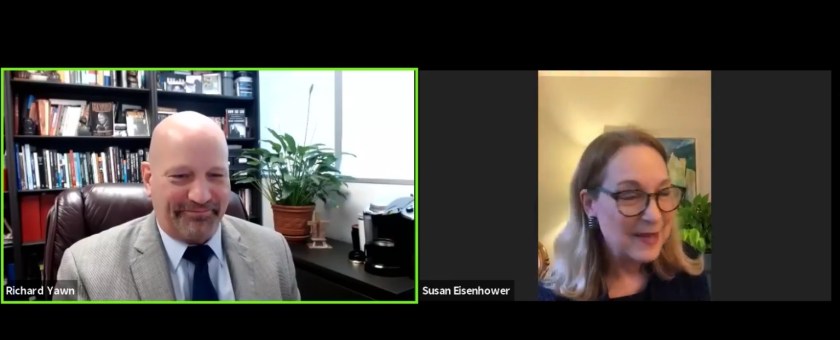
Despite all of the challenges of COVID-19, the Center for Law, Engagement, and Politics continues to provide engaging and interesting learning opportunities for students. Most recently, students were able to watch a Facebook live interview with President Dwight D. Eisenhower’s granddaughter, Susan Eisenhower, where she discussed her grandfather’s leadership in World War II and as president. Author of the biography How Ike Led, she had much to share about his life and overall legacy.
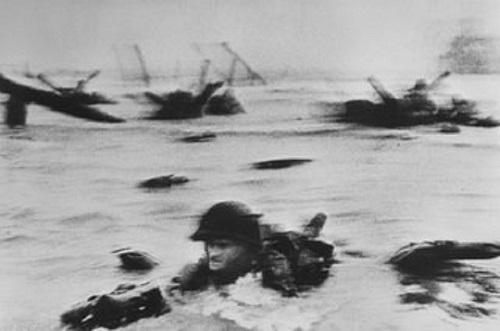
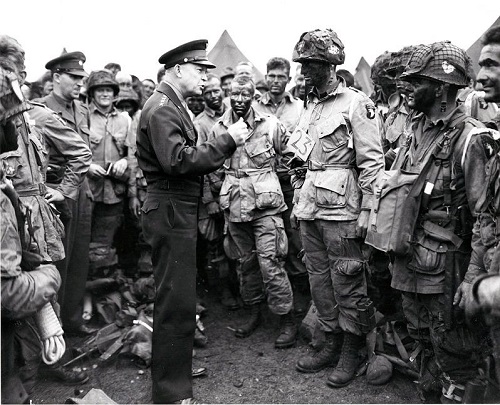
The interview began with a look at President Eisenhower’s role in D-Day,
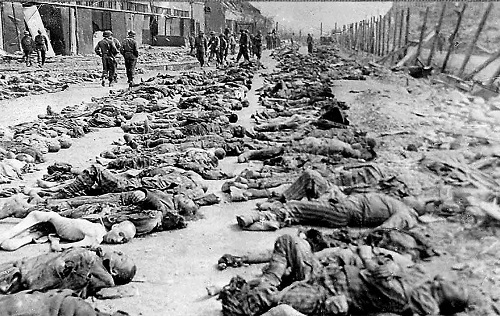
liberating Europe from Nazi rule, and his handling of the discovery of concentration camps. It was explained that Eisenhower opted for a broad, slow advance to defeat the Nazi empire, rather than a fast and hasty one. He wanted to bring an end to the regime, and prevent it from rising to power again, and for his approach he was criticized by some who wanted a quicker–but riskier–approach.
In spite of his critics, this slow advance would be an important factor that led to the discovery of concentration camps. When he learned of the atrocities, he took it upon himself to examine every corner of the camps to understand what had happened and how it had come to pass.
She told us that he then issued orders for as many people as possible to document and bear witness to the camps. He brought in journalists, elected officials, and everyone fighting on the front lines.
He then had townspeople from surrounding areas marched through to see what their denial and willful ignorance had led to, and many were made to give burials to the deceased.
As she discussed the importance of Eisenhower’s foresight, and how he was able to anticipate that many people would not believe what had happened in the camps, Susan Eisenhower reminded us that Germany is one of the few countries in the world with zero tolerance of Holocaust denial. LEAP ambassadors learned about Germany’s efforts to reverse the wrongs of the Holocaust and its lingering effects earlier this year.
As the discussion transitioned to Eisenhower’s post-war service, I learned several interesting facts about his commitment to service and duty…
Apparently, on more than one occasion, President Truman offered not to run for reelection after his term, and instead let Eisenhower run for the Democratic nomination. Eisenhower refused each time because he was not in search of power. His granddaughter reminded us that he had wielded more power than most other leaders during World War II, and did not want run for president except when he felt it was his absolutely duty to do so.
A few other aspects of his commitment to duty were his refusal to wear a helmet because they should only be worn by those serving in combat, and his refusal to accept the Congressional Medal of Honor for the same reason – it was meant for those who had shown valor in combat.
The conversation then pivoted to Eisenhower’s leadership style as president of the United States. It was made clear that he did not engage in personal attacks; he was strategic and methodical in his political approach. When dealing with Senator McCarthy and his infamous hearings, Eisenhower did not call him out directly. Instead, he gave speeches about what American democracy should look like, insisted on televising the outrageous investigations, and let the Senate come to censure McCarthy on their own.
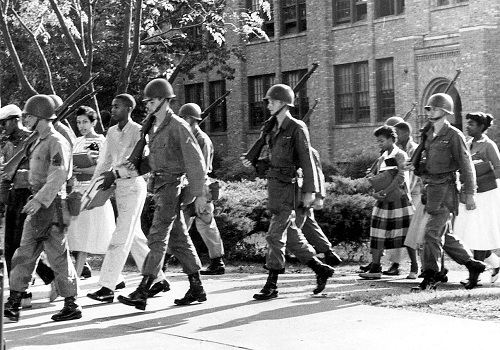
President Eisenhower also suffered no nonsense when it came to dealing with issues of race. As LEAP ambassadors learned in January of this year, the governor of Arkansas – Orval Faubus – dragged his feet in complying with the decision of Brown v. Board of Education, and made every effort to not desegregate schools. In response to this, Eisenhower mobilized the Arkansas National Guard and deployed 101st Airborne (paratroopers he had commanded on D-Day) to protect a group of African American students, immortalized in history as the “Little Rock Nine,” as they desegregated Little Rock Central High.
Susan Eisenhower then spoke about how her grandfather was a leader through study and discipline, and was naturally empathetic. He knew what people needed to hear, and tried to be relatable and genuine whenever he could. We saw a picture of him speaking with members of the 101st Airborne Division prior to D-Day and were told that he was discussing fly-fishing techniques with Lt. Wallace Strobel, rather than giving a pep talk about their mission. He wanted to remind them of their humanity.
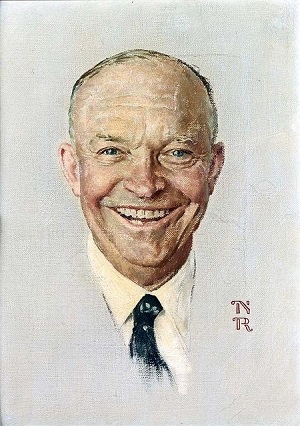
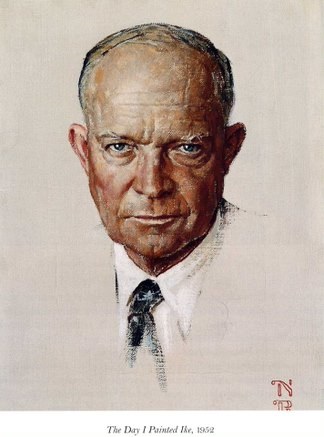
Finally, President Eisenhower’s legacy of leadership and empathy are embodied eternally in Norman Rockwell’s portraits of him, which at various times depict him both serious and smiling. As his granddaughter explained, the big, toothy grin we saw was his trademark smile, as he was generally in good spirits around his family.
As the meeting came to a close, Susan Eisenhower reminded us that we will “be better as people if we can understand the views of those who come from…different backgrounds,” encouraging us to be ‘like Ike’ when it came to how we view and deal with those who are different than us.
This interview was so interesting and informative, and we were incredibly lucky to hear from Susan Eisenhower. We are grateful for her time and insight, and look forward to the possibility of meeting her in person someday soon.
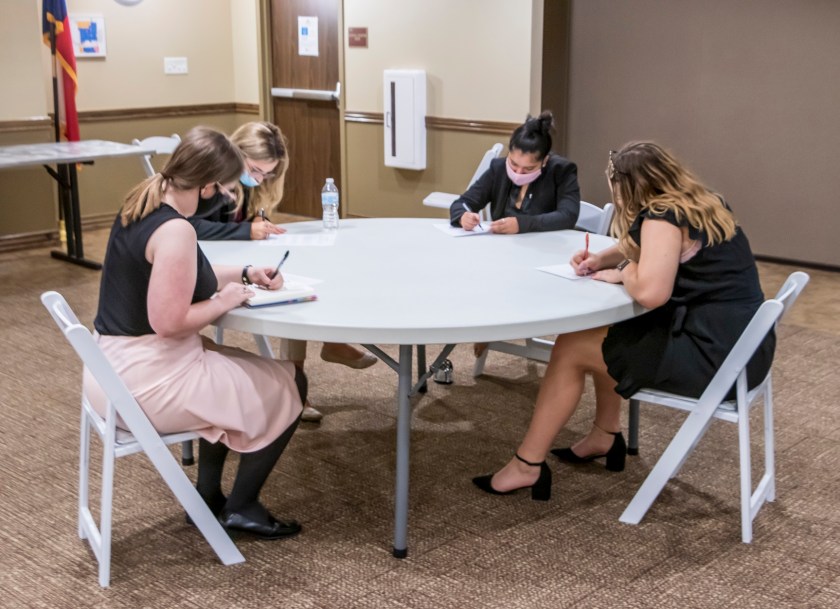
Our fourth LEAP LEADs meeting was, again, full of educational opportunities. As soon as everyone settled in, we jumped right in by discussing our potential future careers and practiced interviewing used the STAR (Situation, Task, Action, Result) method.
We separated into two groups: the interviewers and the interviewees. I love speaking, so I decided that I wanted to be an interviewer, and when the scenario began, I asked Jayelynn and Juan questions regarding the position of being a Victim’s Advocate.
As we wrapped up the interview process, we learned that the STAR method is a tried and true way to make a strong impression in an interview. By sharing an example and relating it to the interview question, you can support your answers with evidence. The best part about this exercise is that we experienced how it feels to interview and be interviewed by our peers.
This slideshow requires JavaScript.
While eating fantastic food from Mama Juanita’s, we tune into the Texas Tribune Festival. The discussion this tonight is about how COVID-19 affects higher education, with a panel featuring Chancellor Renu Khator from the University of Houston System, Chancellor J.B. Milliken from the University of Texas System, and John Sharp from the Texas A&M University System.
These systems are three of the most prominent university systems in Texas, so the respective chancellors wanted to address students’ and parents’ concerns about the next step for higher education. Each chancellor expressed their concerns regarding student and faculty health, and all of them explained that their schools have structured protocol if a faculty or student gets in contact with COVID-19.
The chancellors all confirmed that they were restricting their in-person classes to, at least in one case, to as low as 5% of their total classes. They also stressed the need to be flexible and make necessary changes. It was interesting to find out that, while some Universities cancelled their football games (SHSU included) these three Universities did not. Chancellor J.B. Milliken explained, “…we will have social distancing guidelines for our stadium, and we will require fans to wear masks.”
Lastly, we tuned into our final Texas Tribune discussion, which addressed Public Health and the 87th Legislature in Texas.
The discussion featured Representative Senfronia Thompson (D) from Houston, Texas, and Representative James Frank (R) from Wichita Falls, Texas. Representative Thompson has the honor of being the longest-serving African American woman for the Houston area since 1972.
Representative Frank is a successful businessman in his fourth term in the Texas House of Representatives. The discussion centered around nursing homes, how they have been directly hit by COVID-19, and how the elderly are being negatively affected by the various policies and protocols in place to deal with the pandemic. Representative Thompson shared how her sister had an immediate effect on being housed at a nursing home during COVID-19, and unfortunately, she passed away due to her health conditions. While public health is currently vital in Texas, the 87th legislative session will occur on January 12, 2021.This meeting has been my favorite because I got to learn how chancellors run their university systems while learning about public health.
It is often easy to get caught up in school and extracurricular activities, and I find myself getting lost. Over the past few weeks, Leap LEADs has been influencing me to keep my eye on the prize. Adjusting to school this semester has been a struggle, but tonight’s meeting, and the exercises we did….
….made me think about why I came to college and what I want to leave with.
The night began with us talking about our day-to-day schedule and time management. Specifically, we got estimates of how much time we spent in a week attending class, studying, working out, eating, self-care, sleeping, leisure time, etc. Iriyana added up the total hours spent in the week and we pondered about what we did with the rest of our time.
Personally, this led me to evaluate how I am using my time and opened my eyes to my free time I am not using wisely. We also spent some times discussing short-term, medium-term, and long-term goals, and how those should fit together.
Professor Yawn emphasized the importance of making sure our short term goals match up with our goals in the future. This is very important to me because if I do not begin to prepare now and take baby steps toward who I want to be in the long run, then I am wasting my time. We discussed the areas we lack professionally, which leads to the importance of self-awareness. Self-awareness is substantial because before you can elevate you have to be alert to the baggage holding you back.
I feel one of the motives of Leap Leads is to make us aware. Whether it be aware of our opportunities, potential, knowledge, future, etc. Tonight I was driven to be knowledgeable of the levels of court. Particularly, we discussed Texas’s five-tiered court system. The lowest levels being the Justice of Peace and Municipal Court . Both courts deal with misdemeanors, with a focus on traffic stops and misdemeanors punishable by fine only. The County Court at law deals with cases more severe than minor offenses. For example, Class A and B misdemeanors or DWI cases (where no one was hurt).
The higher levels of court are the District Courts, Appeals Court and then the highest level: the Supreme Court and Court of Criminal Appeals. Texas is a bit different because they have the Supreme court and the Texas Court of Criminal Appeals. The Supreme Court deals with civil cases and the Texas Court of Criminal Appeals deals with criminal cases, for example, murders and the death penalty. Something I learned that stuck out to me about the county government is that a county judge is not a traditional judge. County judges are able to marry people and declare a person insane, but unless they preside over one of the smaller counties, they have little to do with the traditional concept of a judge.
Speaking of County Judges, tonight we were enlightened by the appearances of Lina Hidalgo and Clay Jenkins at the Texas Tribune Festival while enjoying dinner from City Hall Cafe.
Lina Hidalgo is the Harris County judge and Clay Jenkins is the Dallas County judge.
Lina Hidalgo began her term as the County of Harris County in 2018. This was significant because she was the first woman to be elected county judge in Harris county.
Clay Jenkins has been a county judge in Dallas since 2011.
Both judges expressed difficulties they have had dealing with the outbreak of the CoronaVirus. Specifically, with the legislation put in place by Governor Abbott restricting their power to enforce masks due to Covid-19. I agreed with Hidalgo’s statements that the enforcement of masks should not be political and rather just what is best for communities. Both County Judges discussed having concerns with the outbreak before anything was done and were not in favor of opening up before the curve had flattened. Ultimately, I took away that County Judges normally have a lot more power when a state of emergency is declared.
I spent some time interacting with Juan during our workshop, which was on property tax. We learned how to calculate property taxes, learning the role of the Appraisal District, the Commissioners Court, and the taxpayer in the process.
This evening was informative and I believe Leap Leads is keeping me on track with my goals in the future. We ended with Professor Yawn challenging us to do something different this week.
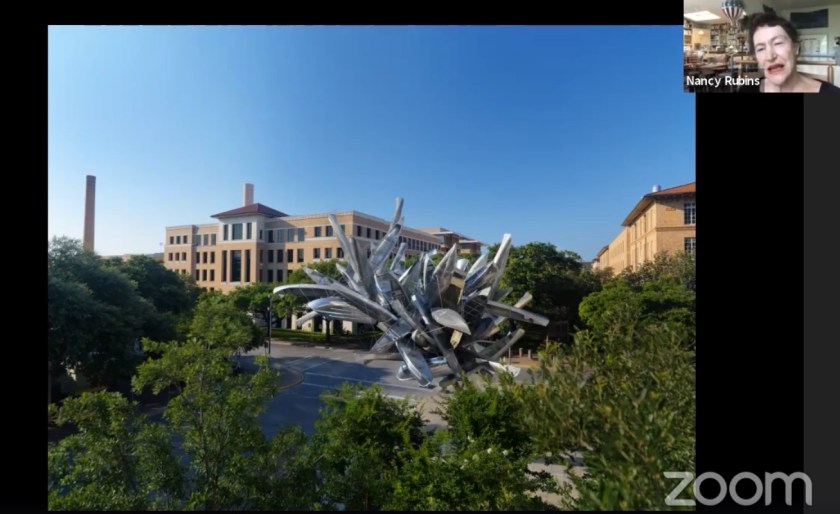
Whenever the LEAP Center heads to Austin, which is often, we do our best to visit the wonderful “Landmarks” art installations on UT’s campus. Among the most astounding pieces of art is Nancy Rubins’ “Monochrome.” Whenever students see it for the first time, they step away from it–not only to get a better look, but also for fear that it might fall on them.
But between the creative vision Nancy Rubins and engineer Jaime Garza, this sculpture is not going to fall.
The story behind the art and the engineering was presented by Landmarks yesterday, and it involved quite a panel: Andree Bober (Director of Landmarks), Professor Tricia Clayton (Cockrell School of Engineering), and Jaime Garza (the project Engineer), and Dean Sharon Wood (Cockrell School of Engineering.
Rubins began by describing how she modeled the art work…
…beginning with the structure and moving into a full-blown study…
..to what it is today, “at the crossroads of the University’s science and humanities” parts of the campus.
Rubins began incorporating boats into her work in 2006, after seeing her husband work on her canoe. She was drawn to the canoes’ surface, as well as its combination of figurative and abstract elements. This attraction was deepened by the different look that the canoes manifest in the rain, in the light, and other changing atmospheric conditions.
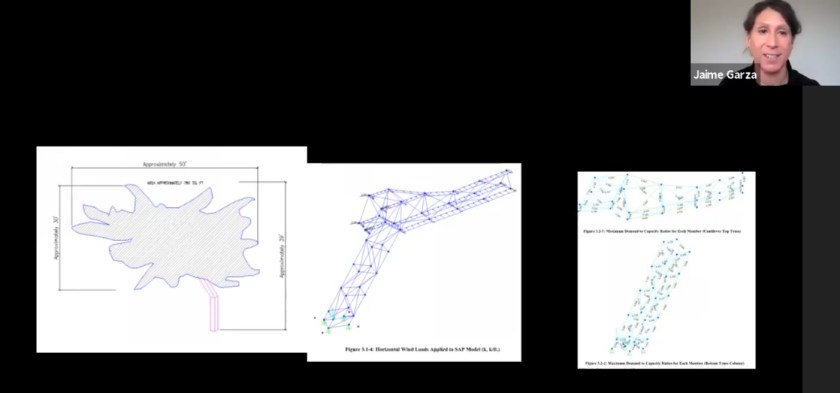
After Rubins’ discussed her artistic vision, Professor Clayton prompted Garza to describe the technical challenges associated with such a sculpture. These challenges did, indeed, become rather technical…
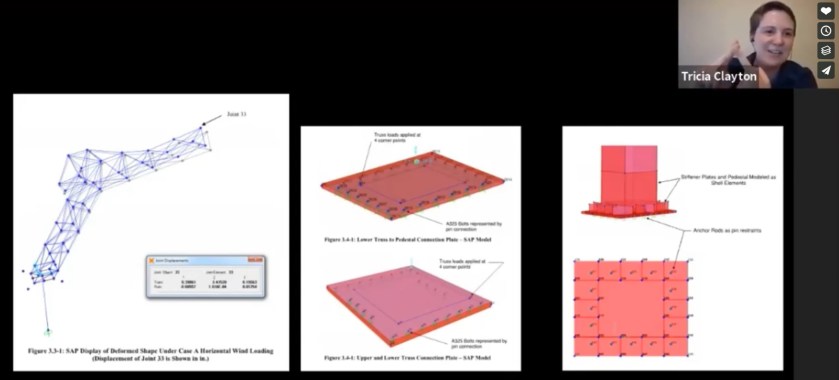
In this case, Nancy came up with the original model, which Garza then analyzed, making suggestions as to what would work best from an engineering perspective. The diagram on the right indicates the stress points of the sculpture, with the blue and green colors representing “low stress.”
Rubins wanted the sculpture to be applicable to “anywhere in the world.” What that means in practical terms is that it needs to hold up under any conditions: snow, rain, earthquakes, heat, and hurricanes. So Garza imagined “worst-case scenarios” for different parts of the world, ensured that the sculpture could survive those (with a lightning rod installed, also), and then also ensured that the sculpture could also meet the building codes of Austin.
Interestingly, the sculpture goes more than 30 feet into the ground, which, obviously, helps stabilize the sprawling sculpture.
In this particular sculpture, Garza needed to demonstrate that the sculpture was sound, so rather than doing load testing (which would have taken too long), they did “finite element models” to demonstrate the structural integrity.
In the end, the structure is sound, as this photo (my favorite!), attests…
…and these young folks seem to have confidence in it.
In closing, Rubins noted that her “team is super proud of the quality and safety of the work.” And after five years, there “have not been any issues” (although she knocked on wood as she said that…), and she predicted that it would last at least 40 years. We hope so.






















 Center for Law, Engagement, and Politics