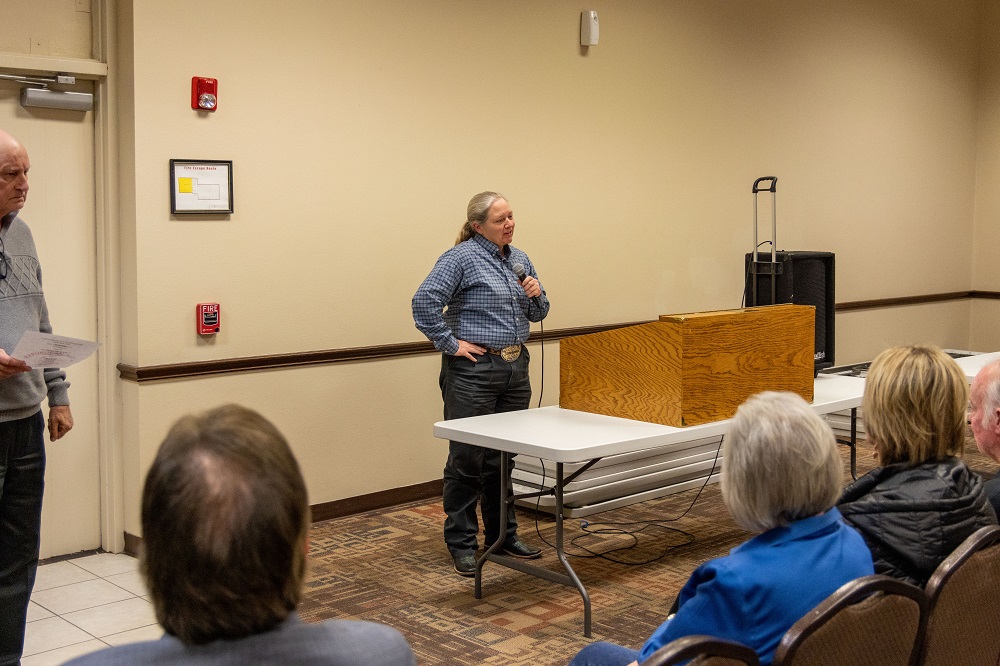
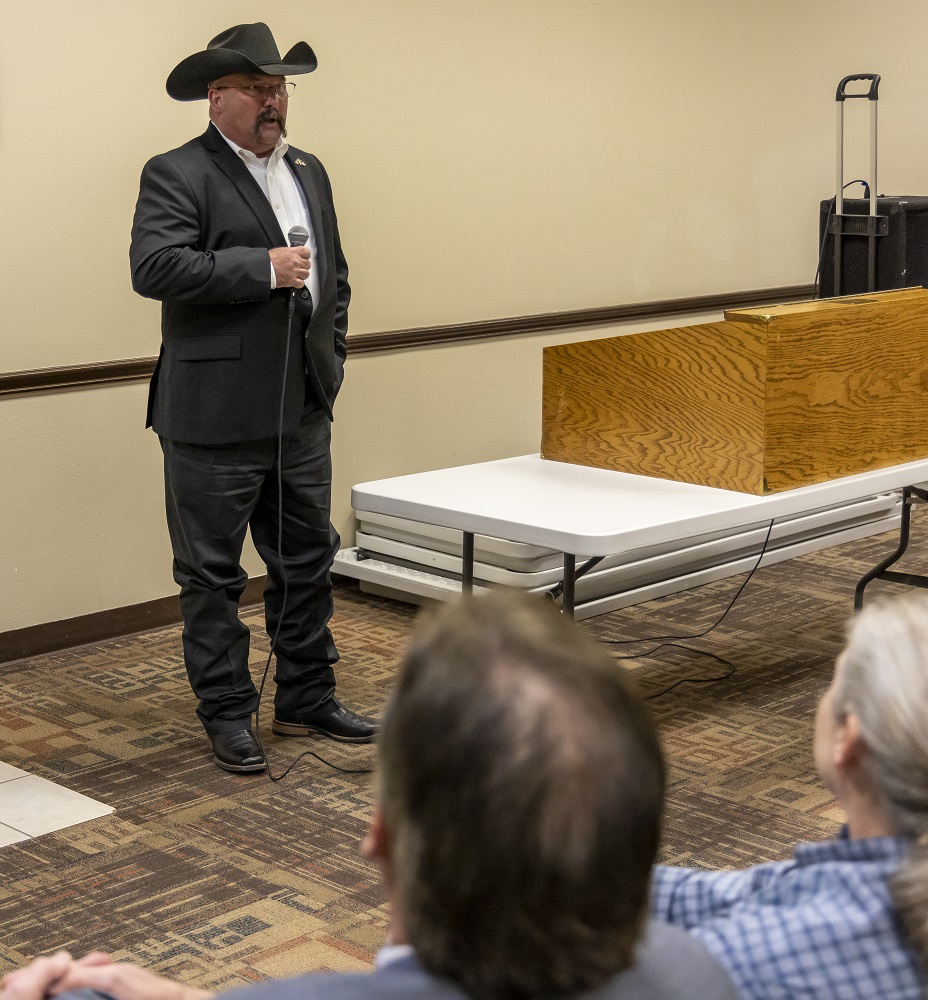
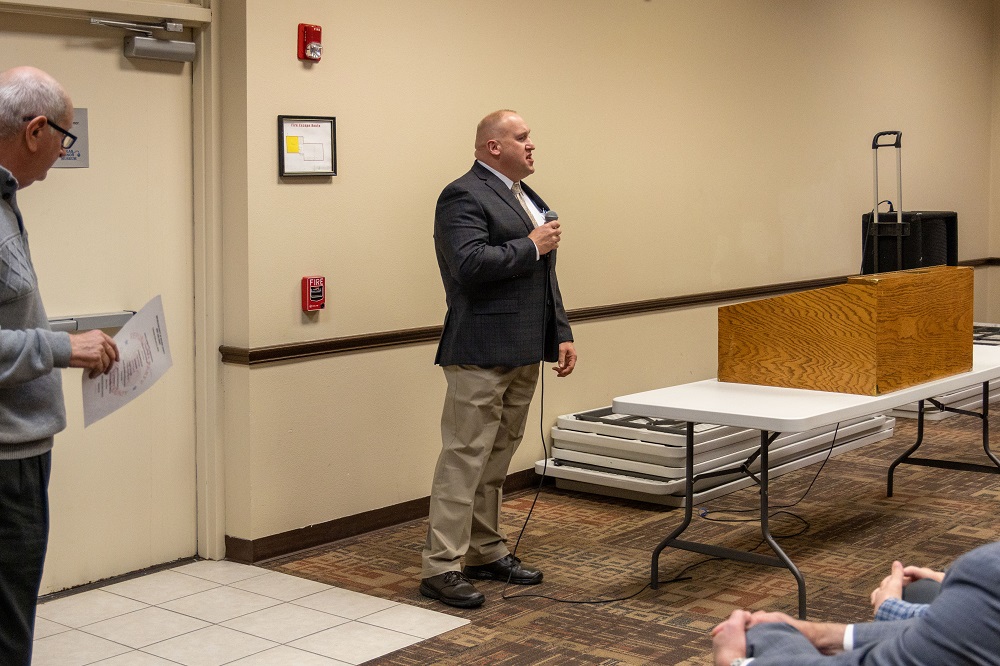
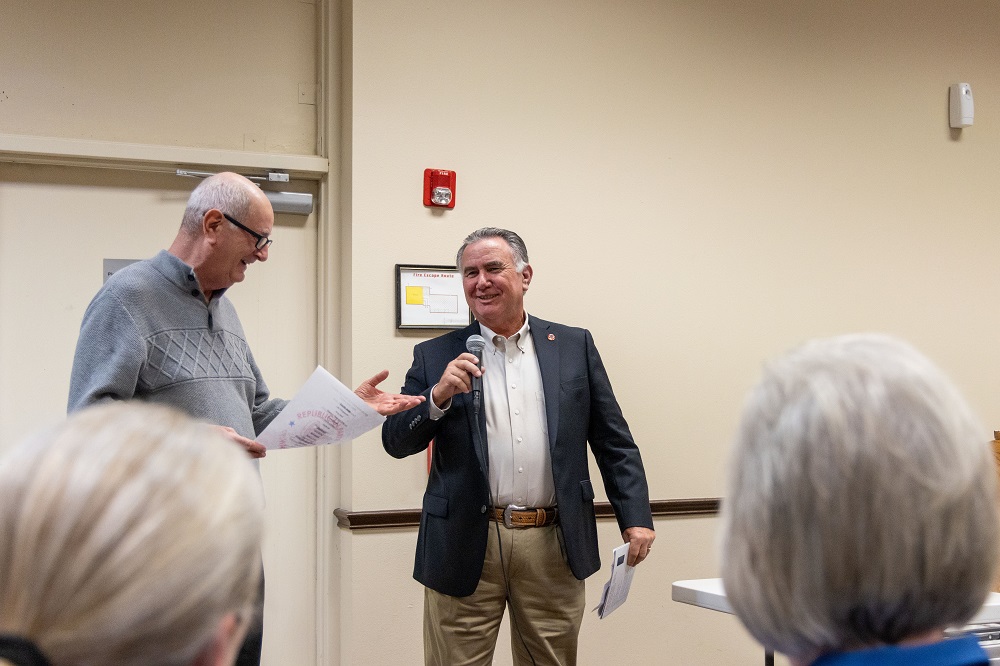
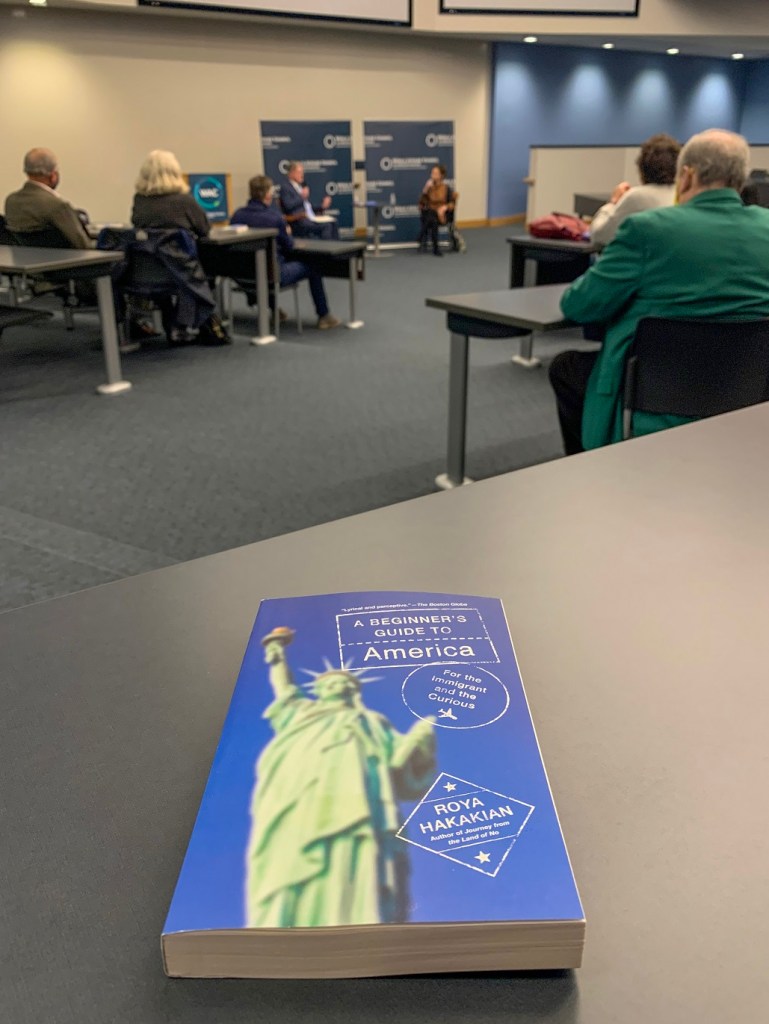
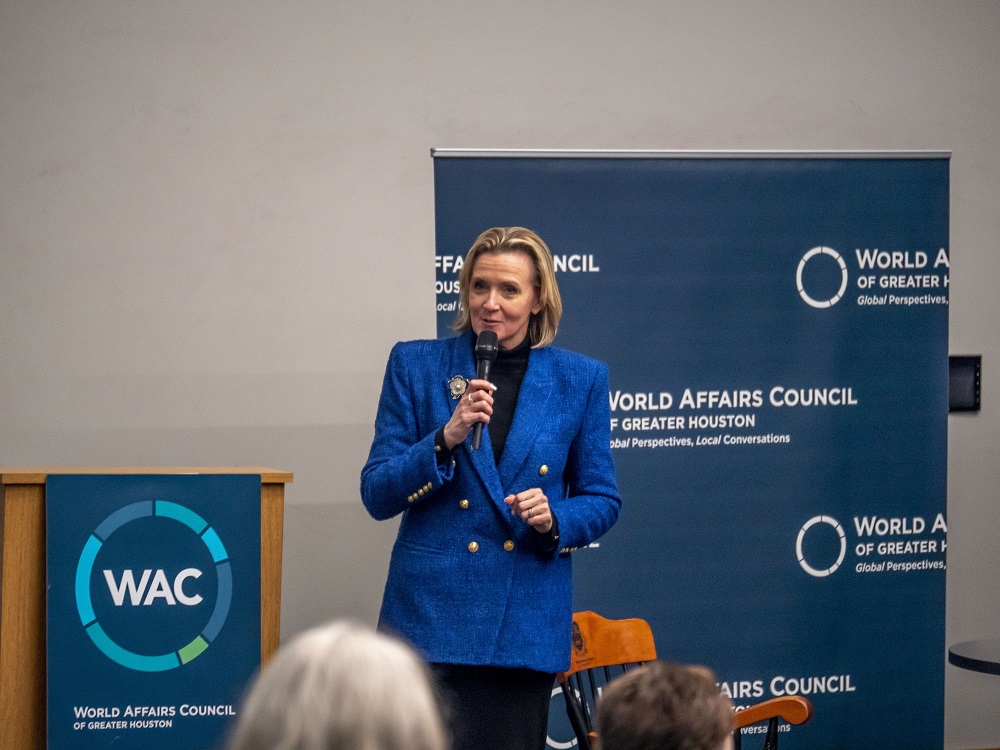
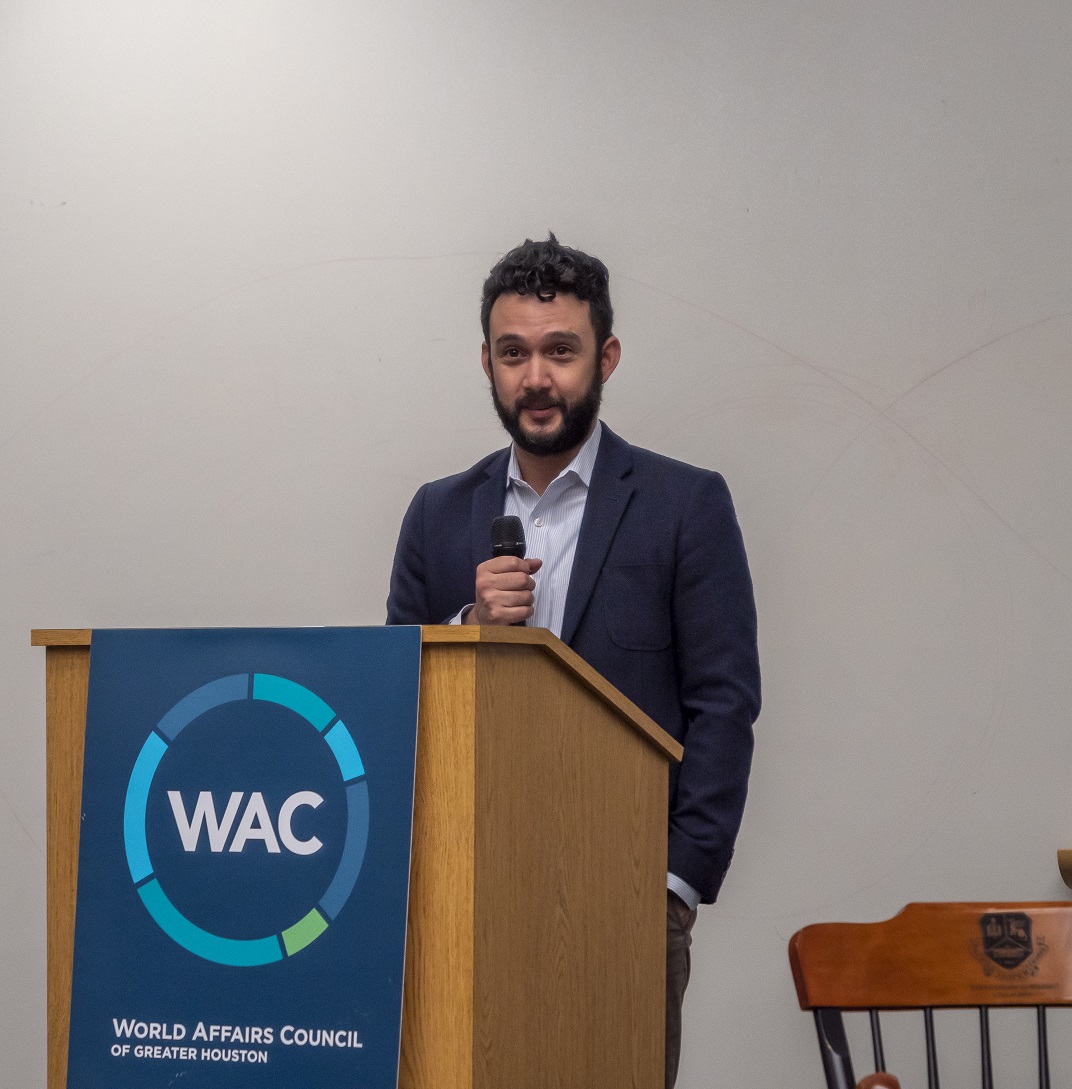
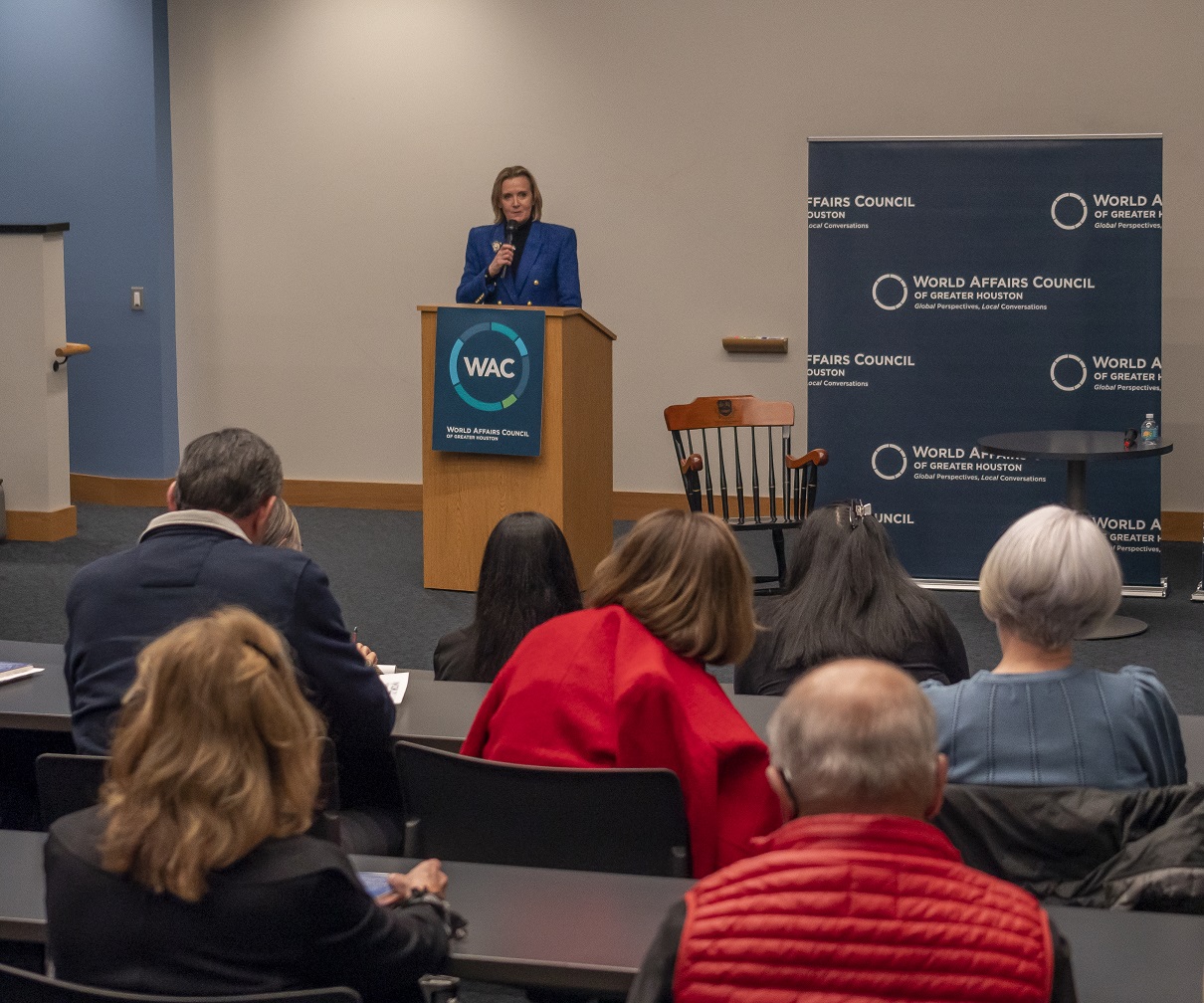
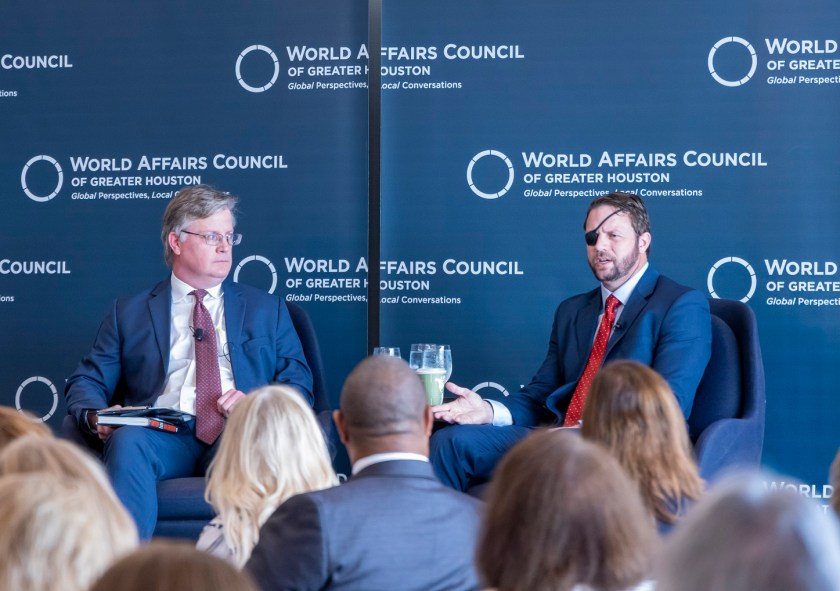
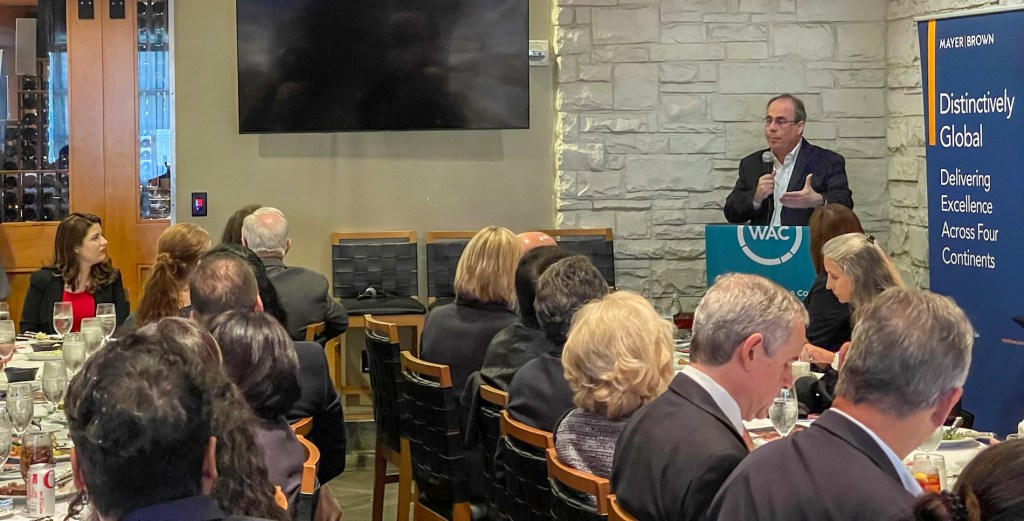
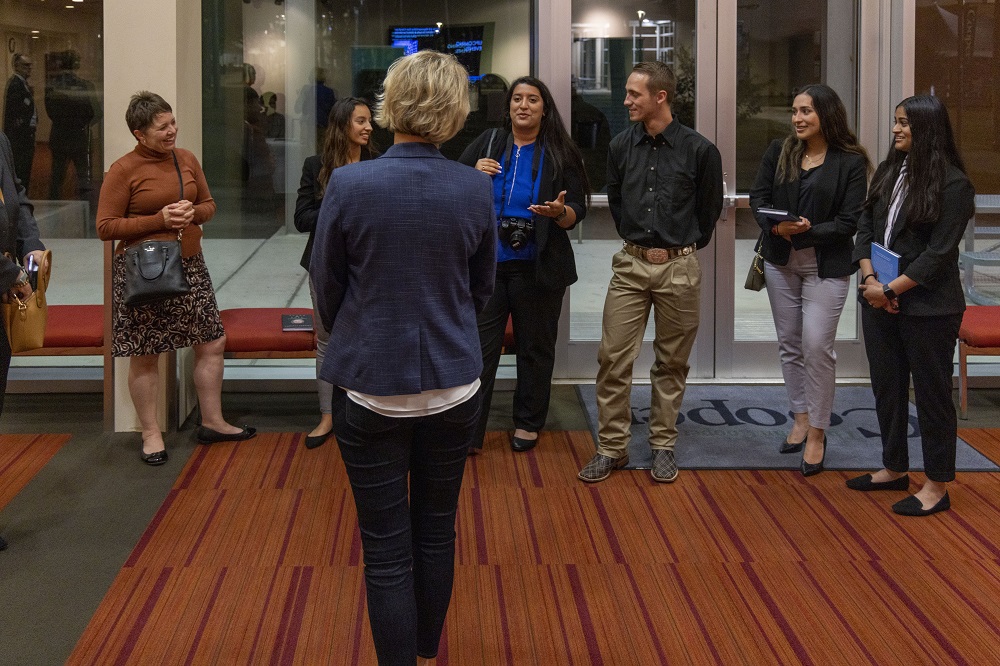
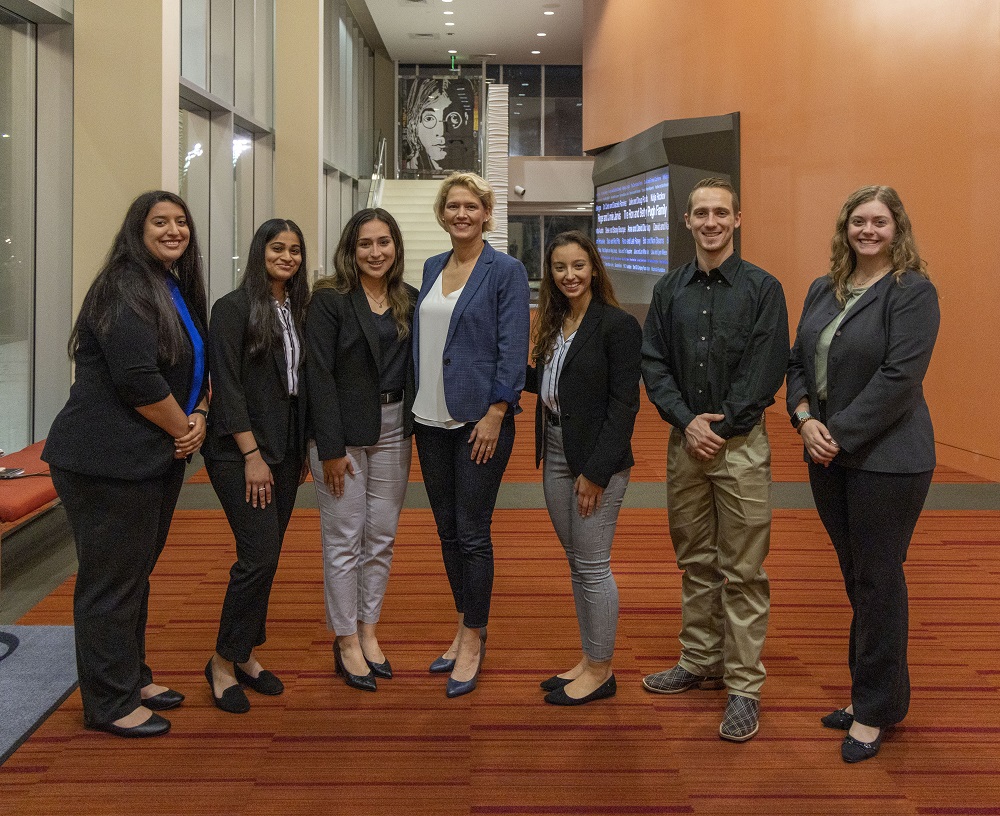
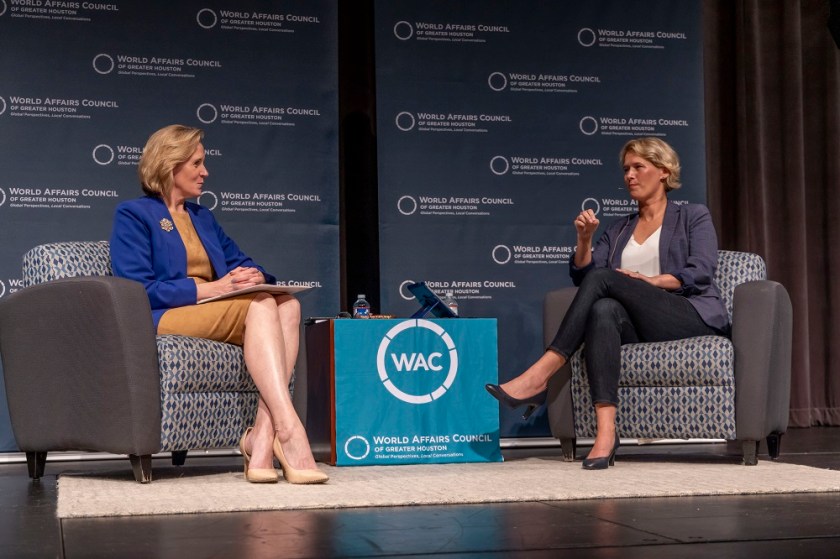
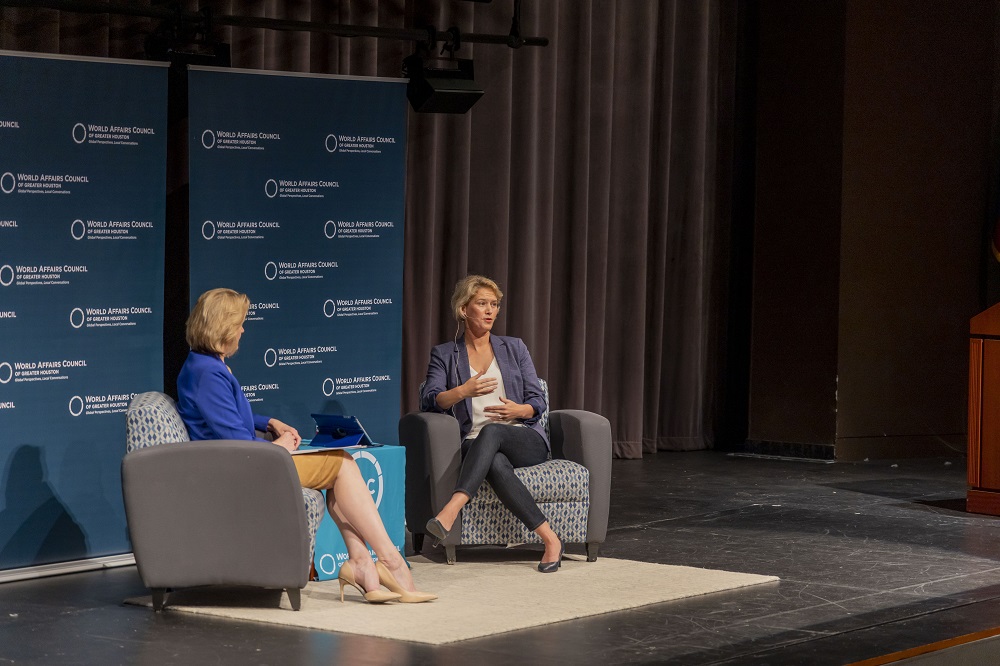
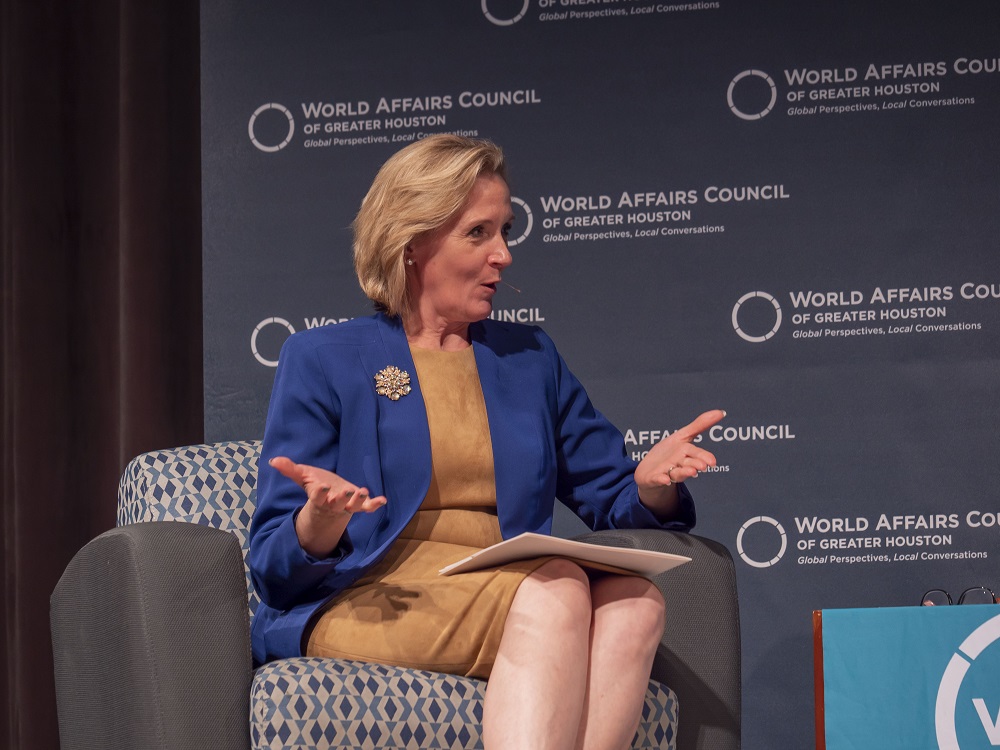
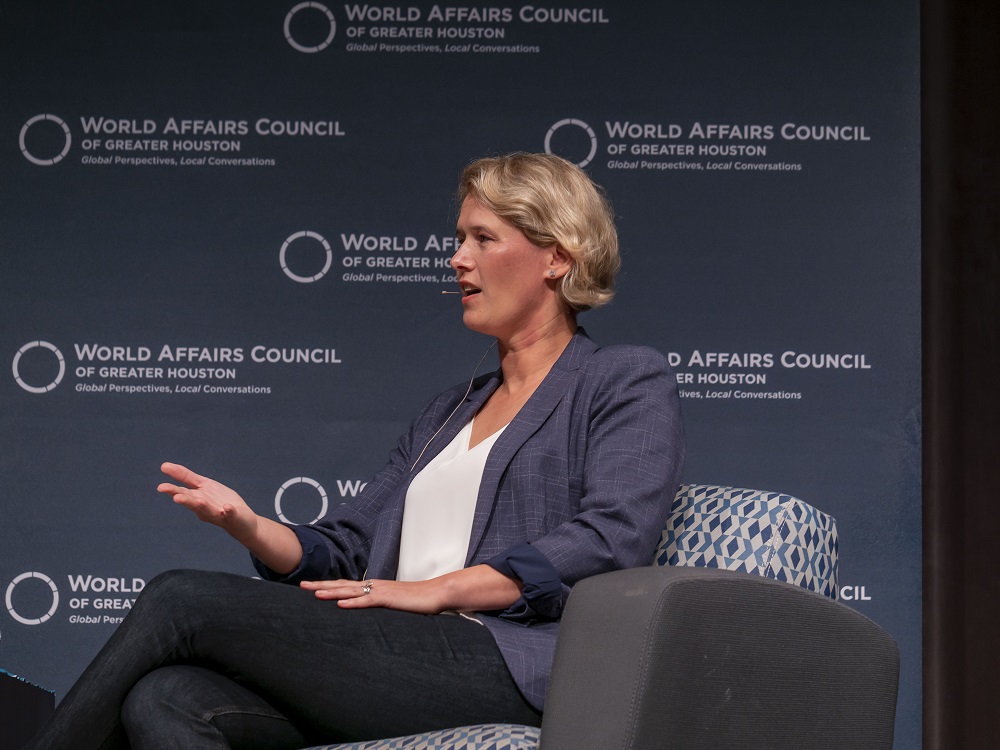
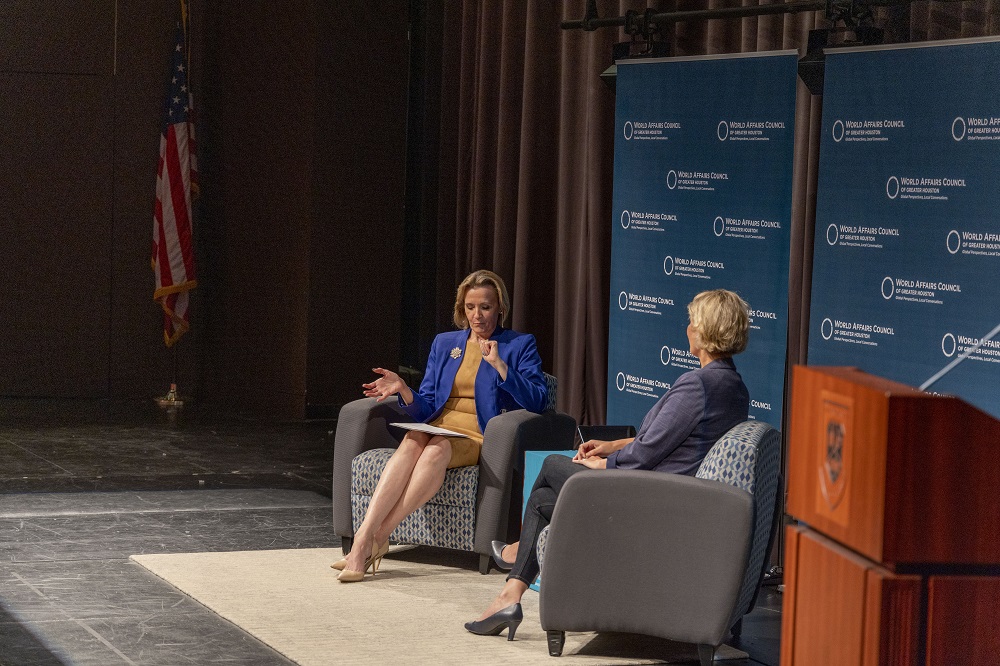
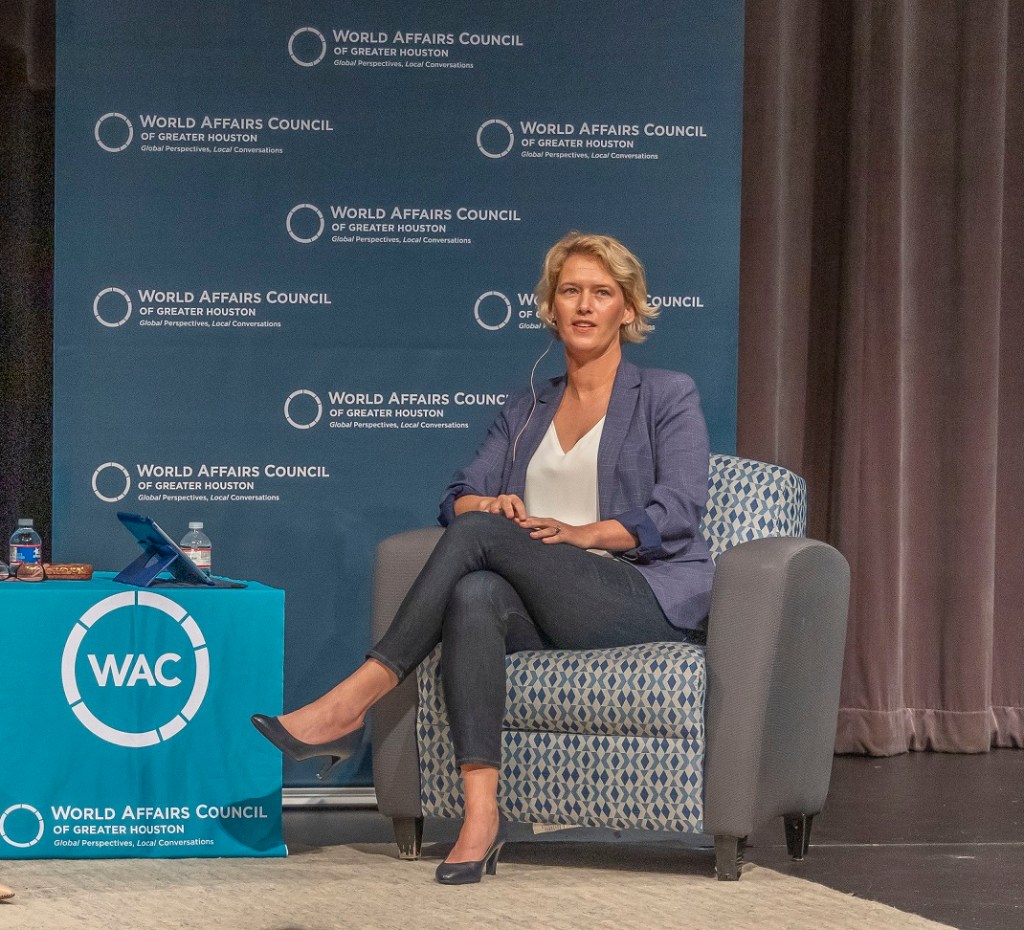
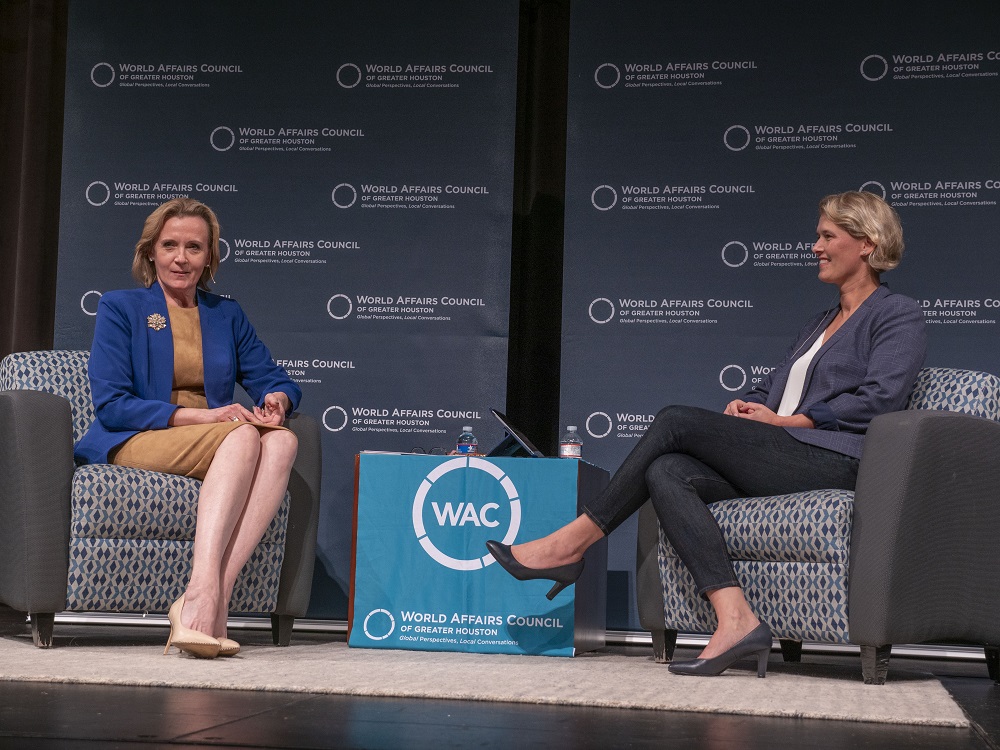
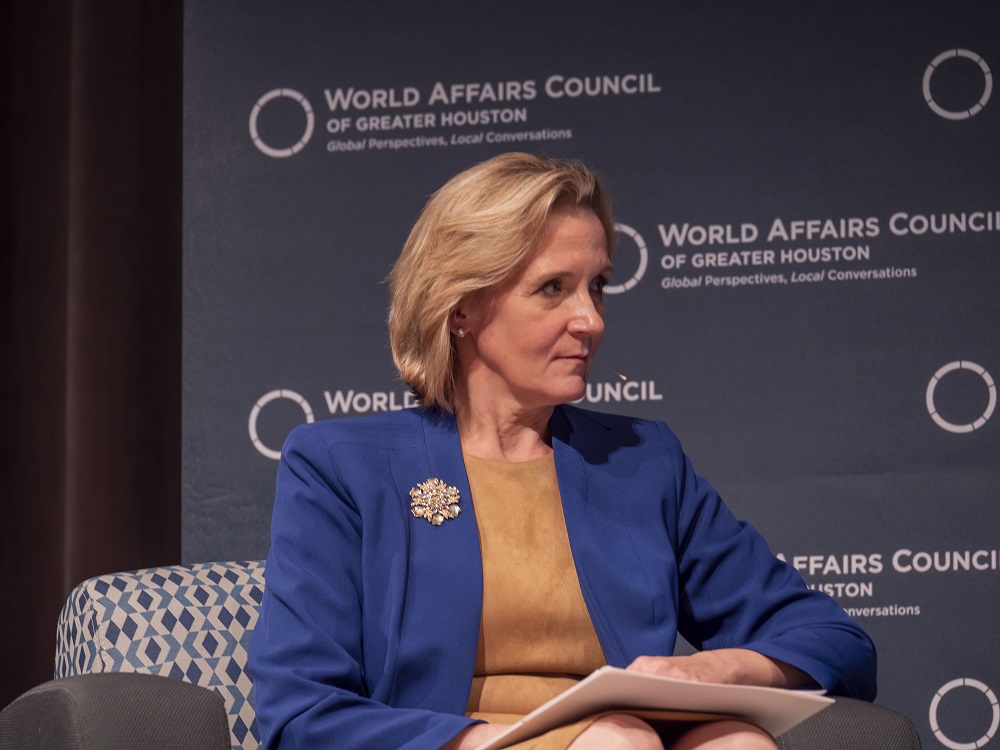
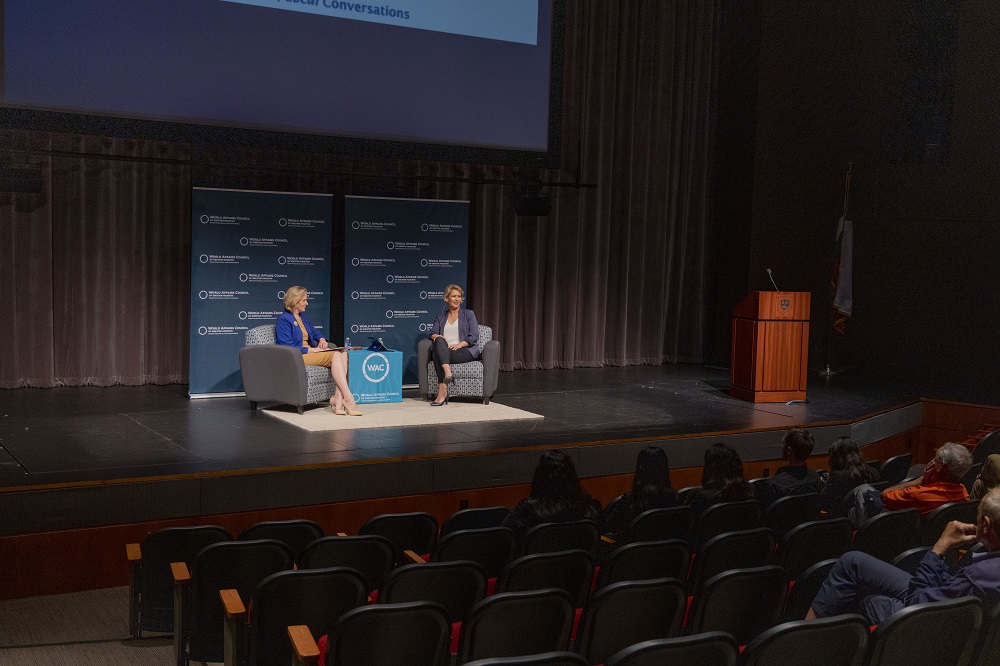
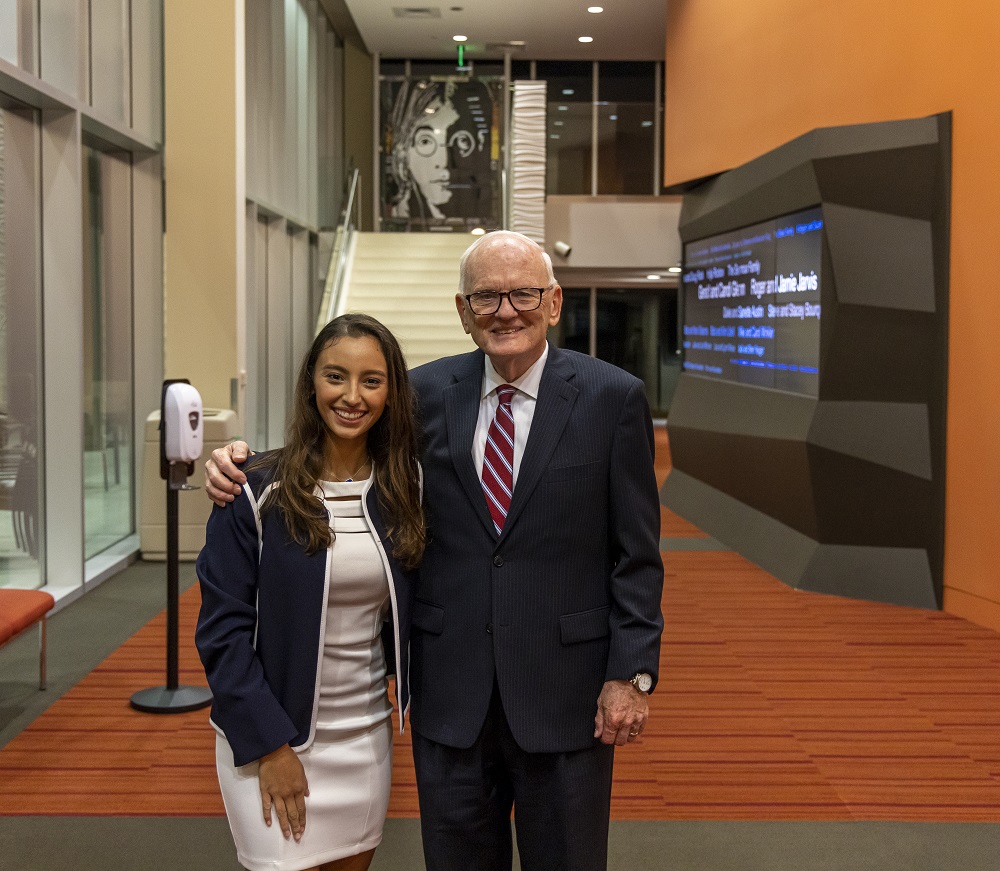
If it’s another week at the LEAP Center, we are probably headed to another fantastic World Affairs Council meeting, and this time Brazil was on the menu. Today’s luncheon included a mouth-watering meal that brought many wonderful and exciting individuals together. The event included the conversation on transitional projects needed to ensure Brazil a profitable yet environmentally-friendly energy future. The keynote speaker and panelists engaged the attendees with a market-based discussion of the energy transition, including hydrogen as the leading alternative to fossil fuels.
Today’s luncheon was located at the well-known Brazilian Steakhouse, Fogo de Chao. As the smells of various meats filled the room, many in attendance quickly engaged in enthusiastic conversations. Erin Juarez, Saara Maknojia, and I did not shy away from trying as much food as possible.
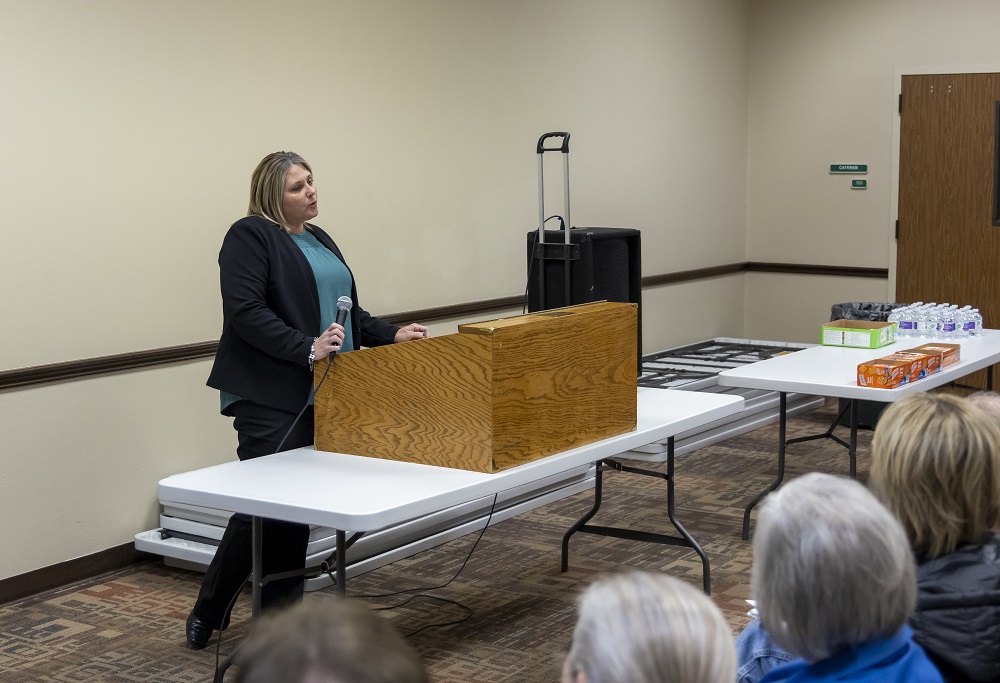
The moderator, Norman Nadorff, Counsel of Mayer Brown LLP, opened the floor and explained Brazil’s energy transition framework and economic incentives and the role that oil and other energy companies are expected to play along the way.
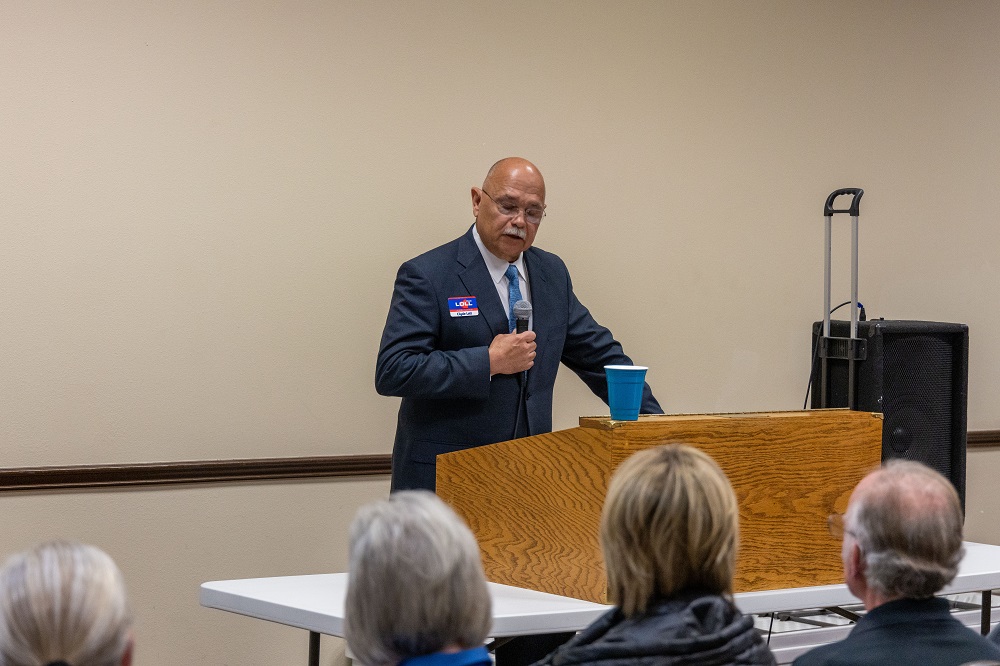
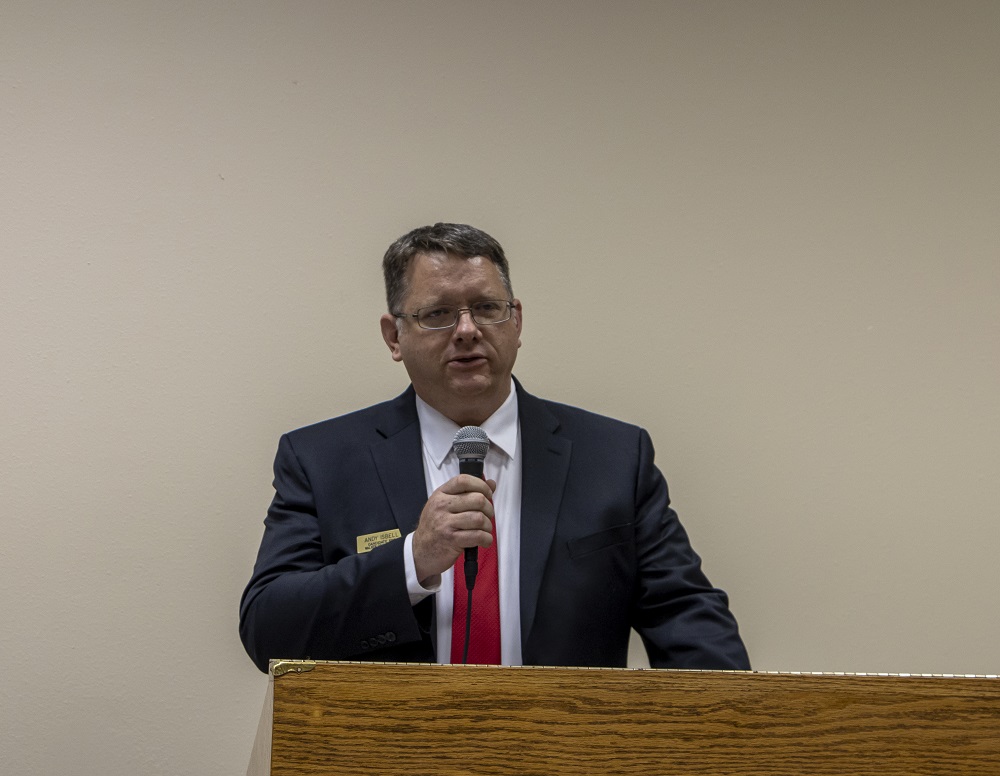
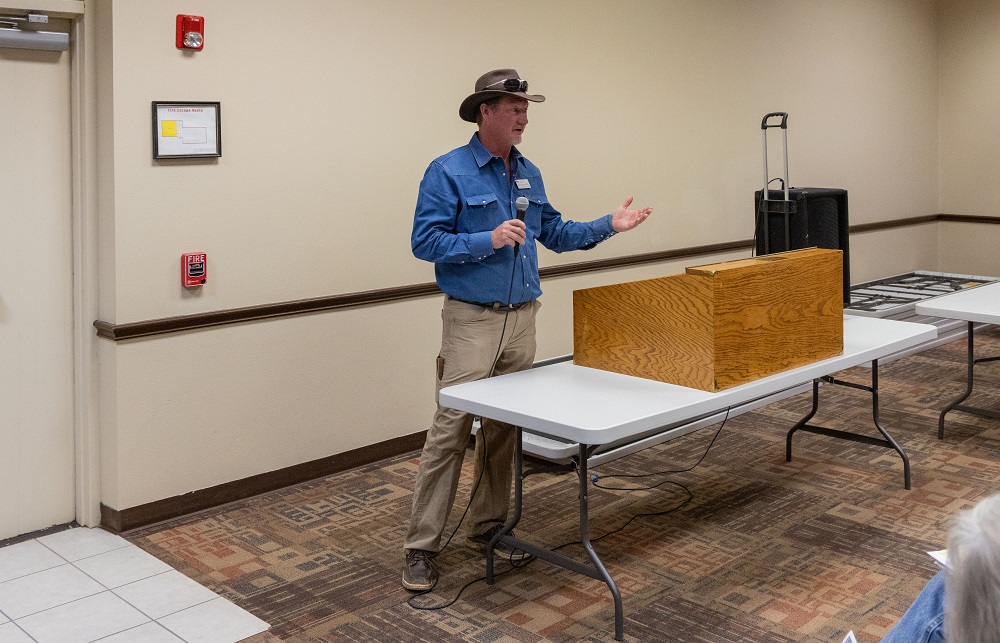
Benigna educated us on the active roles supporting companies like Siemens are conducting to expedite the transition to Hydrogen energy. The Co-Lead of Energy Transition, Greg Matlock, Partner at Mayer Brown LLP, elaborated on the importance of government incentives and how it promotes the growth of greener energy source alternatives.
Mr. Matlock explained that governments must create tax incentives to incentivize more funding towards greener energy sources like Hydrogen. The proper capital appropriation is vital to keep us on track to achieve the zero-carbon emissions goal.
To the World Affairs Council staff in attendance, Mayer Brown LLP, and all the event speakers, thank you for making this event extremely engaging and insightful.
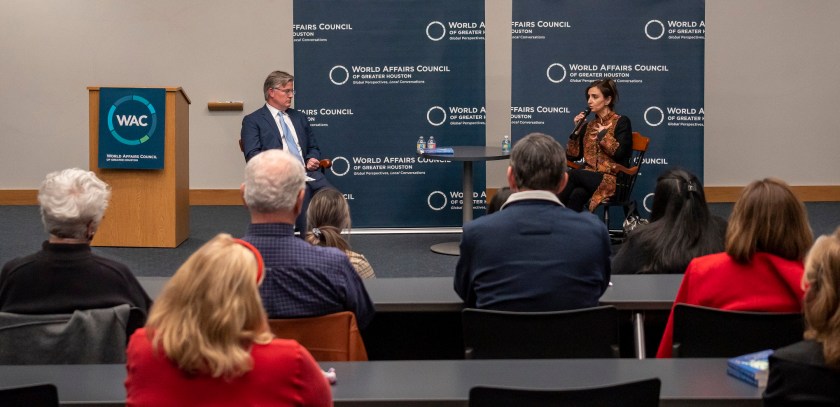
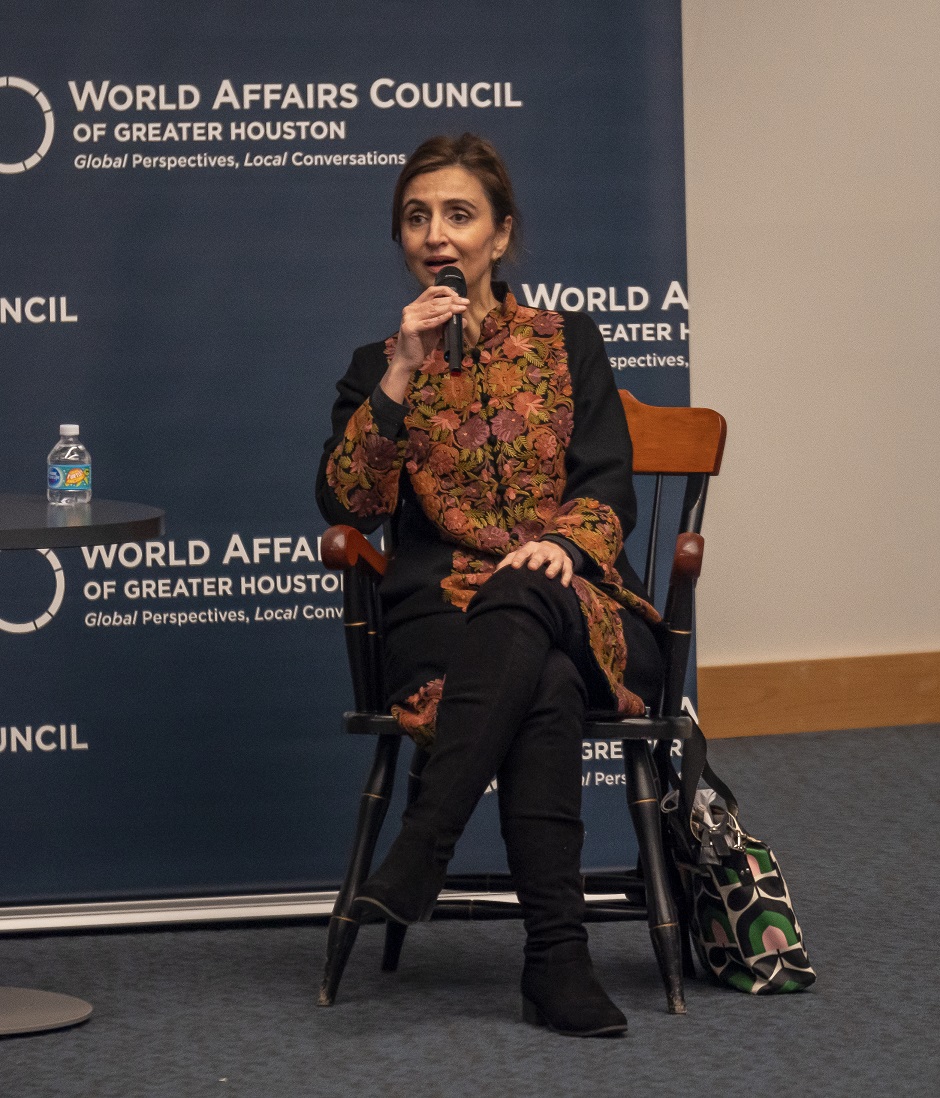
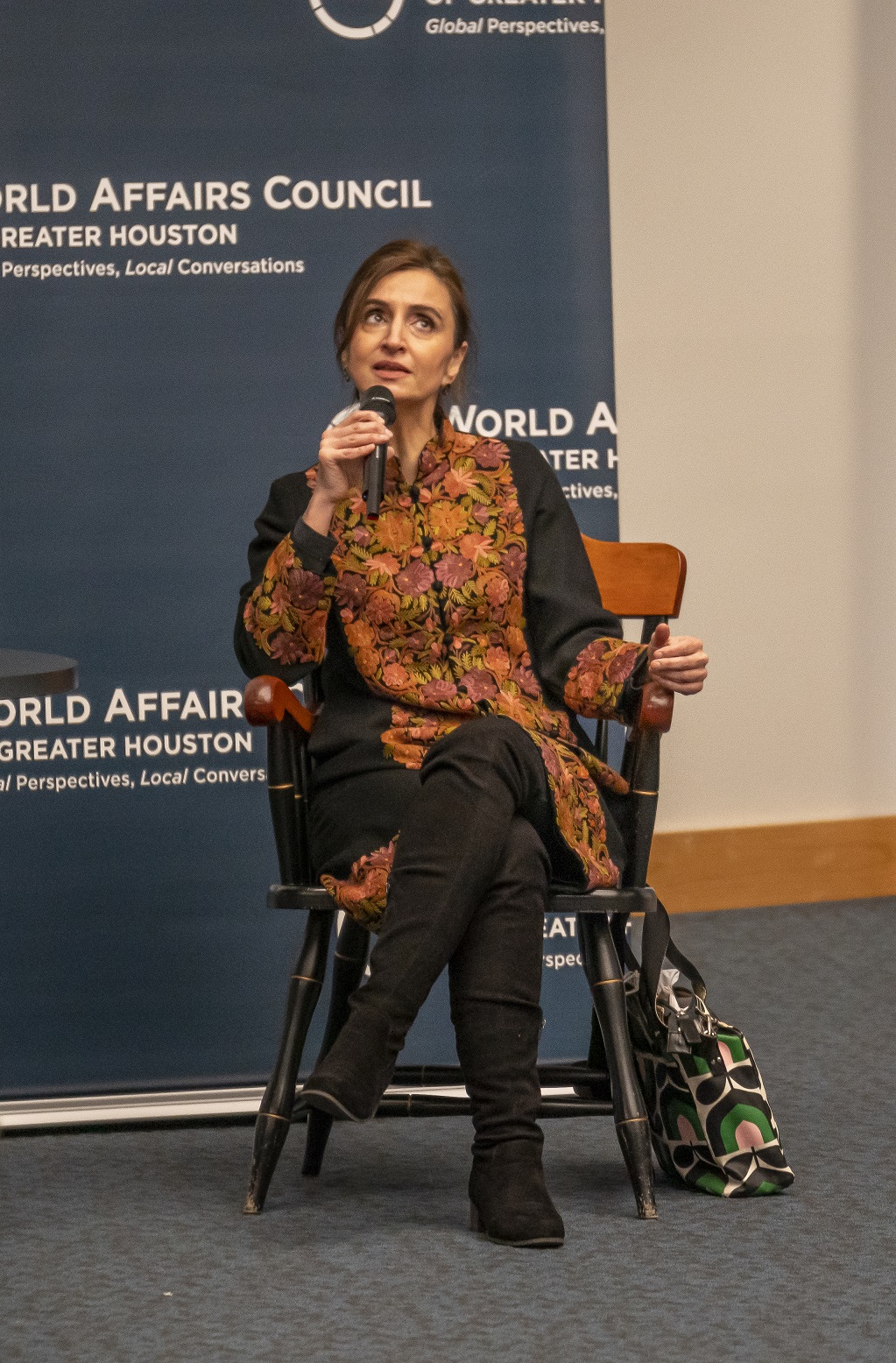
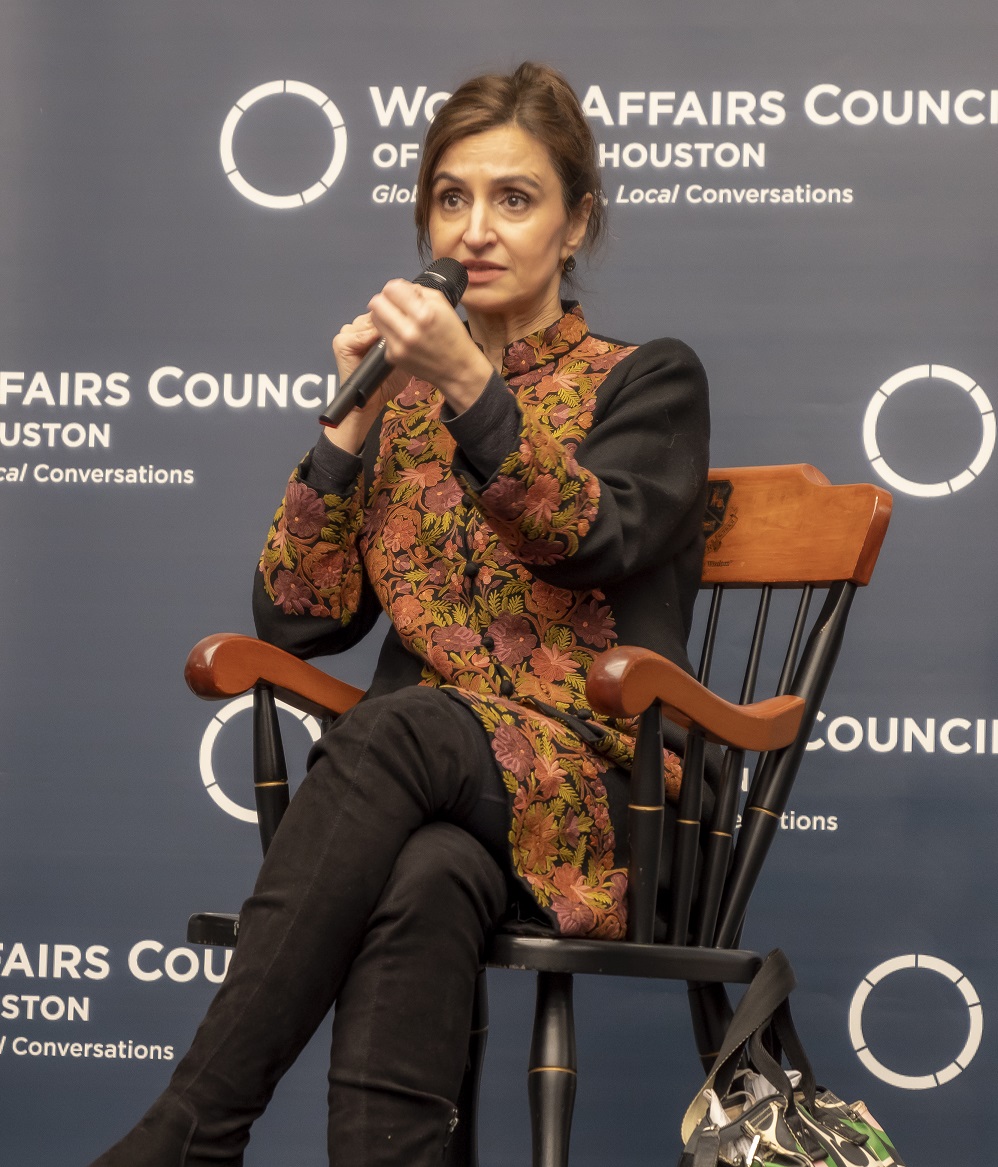
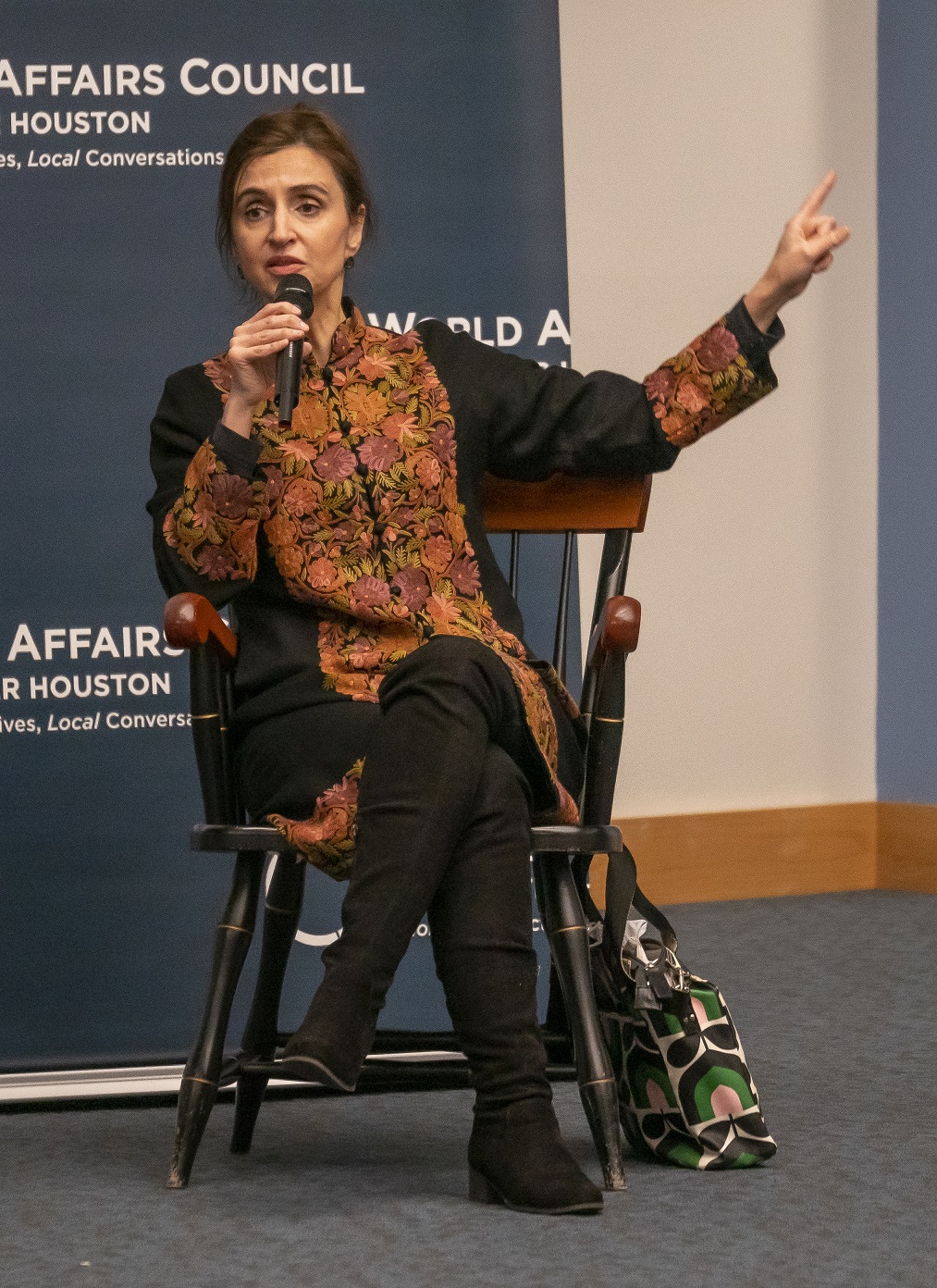
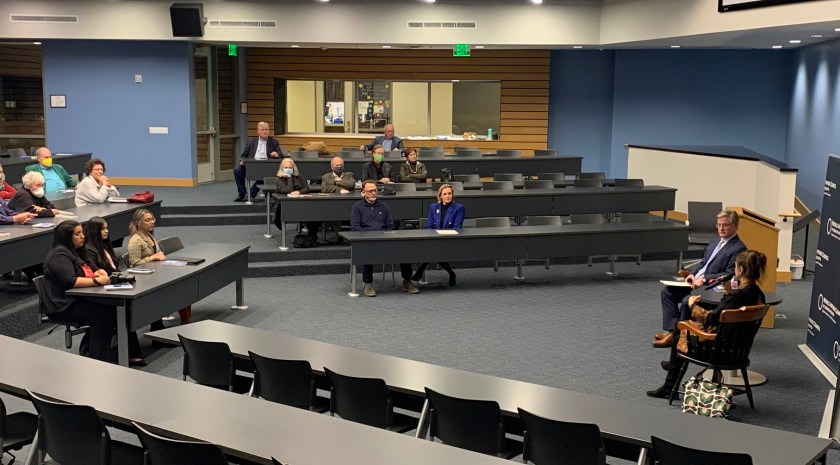
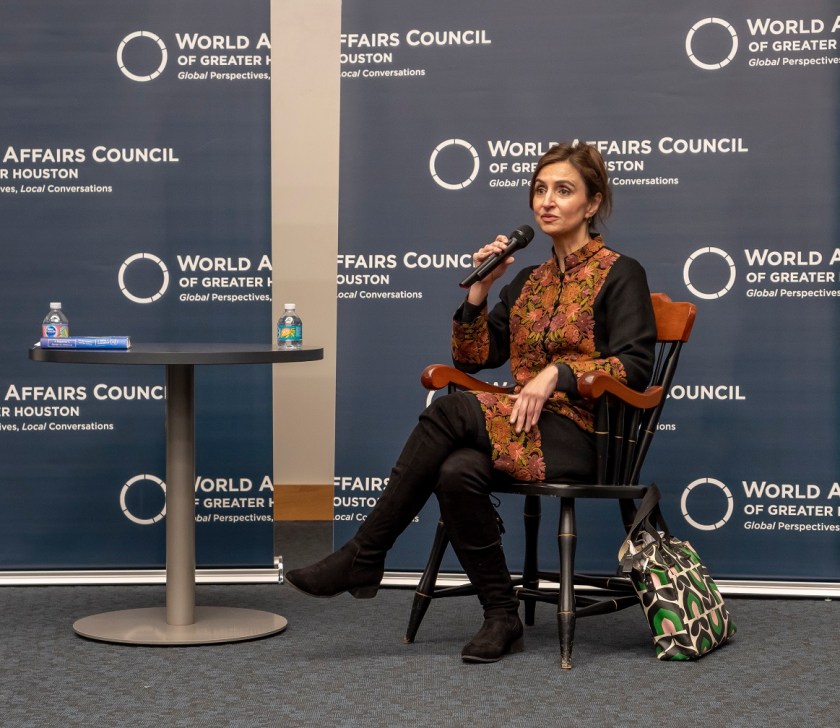
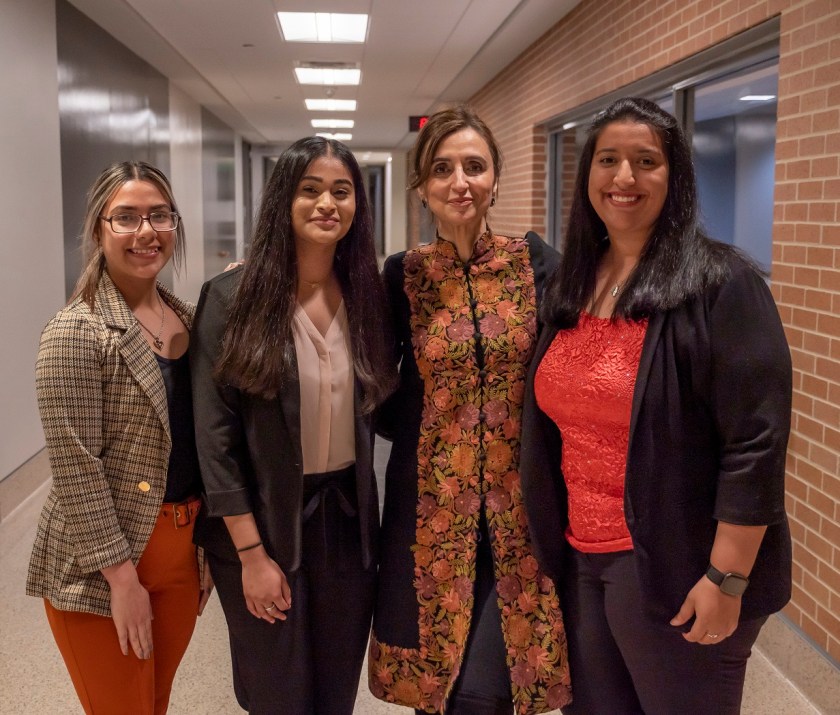
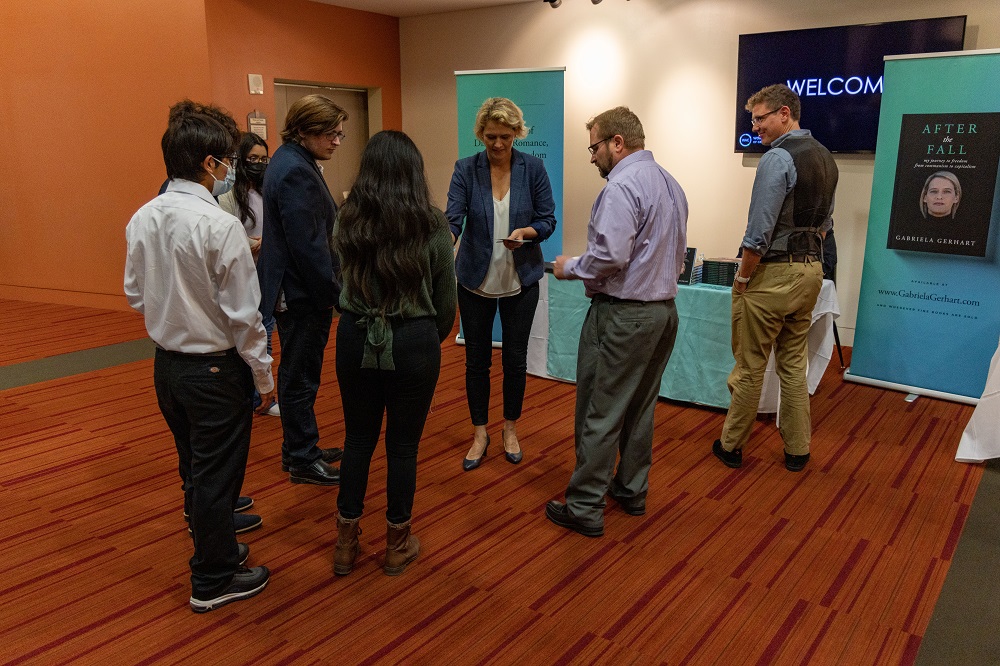
The World Affairs Council hosted yet another amazing event, this one featuring Gabriela Gerhart on her journey from communism to capitalism. After experiencing many ups and downs, she has become an entrepreneur and created a pregnancy and motherhood wellness resource, called the Motherhood Center. The LEAP Members were not only able to meet Gabriela, but also received a copy of her book, After the Fall.
Through a moderated Q&A session with Sandija Bayot, we learned a lot more about the author and entrepreneur, Gabriela Gerhart. Gabriela spoke of her seemingly normal childhood in Czechoslovakia, but it did not remain normal for long. One day in 1989, her 8th grade history teacher informed the class that they would have to relearn their history, as everything previous had been a lie. As a little girl, Gabriela experienced the truth of communism without even realizing it.
During the communist control everything was restricted, even radios! Gabriela mentioned a time when her grandfather was listening to an illegal radio station; the next day they received a knock on their door and were reprimanded. It was as if everyone was constantly walking on eggshells. There were the longest of lines just for her family to get oranges, butter, and clothes. Gabriela’s mother would even trade tangerines with a neighbor for clothing.
During her teenage years, Gabriela ventured and explored. When she landed in America on a short-term basis, she was blown away by all the differences, especially the grocery stores! She mentioned other differences: from the side of the road drivers drive on, to having mayo on the shelf and not on the fridge, and even how many people support the American flag out of their own free will. While starting her new life in America and trying to learn English from watching the American TV show Friends, Gabriela began to establish her own roots.
Gabriela fell back to her love of nursing and infants, and set about building her new business around that. She recognized that there was a lack of pregnancy and motherhood support and knew there was work to be done. Gabriela became a budding entrepreneur in the business of helping mothers and their babies through a program called, The Motherhood Center located in Central Houston. They offer pregnancy and parenting classes, massage spa services, and even yoga and fitness!
Gabriela has struggled and thrived in many ways from living in a communist country, a place where you can’t truly amount to anything unless you are in the hierarchy of communism in Czechoslovakia. She has learned an entirely different language, become an author, and is now a CEO of a company that is thriving in Houston, while helping numerous families with children.
She left us with the question, what are you grateful for? Gabriela emphasized that you should always say what you are grateful for, because your situation has the possibility to be much worse. Hearing her journey to freedom has been an inspiration to all of us and a true eye-opener to the effects that communism has on many people.
From Communism to Capitalism
Erin Juarez
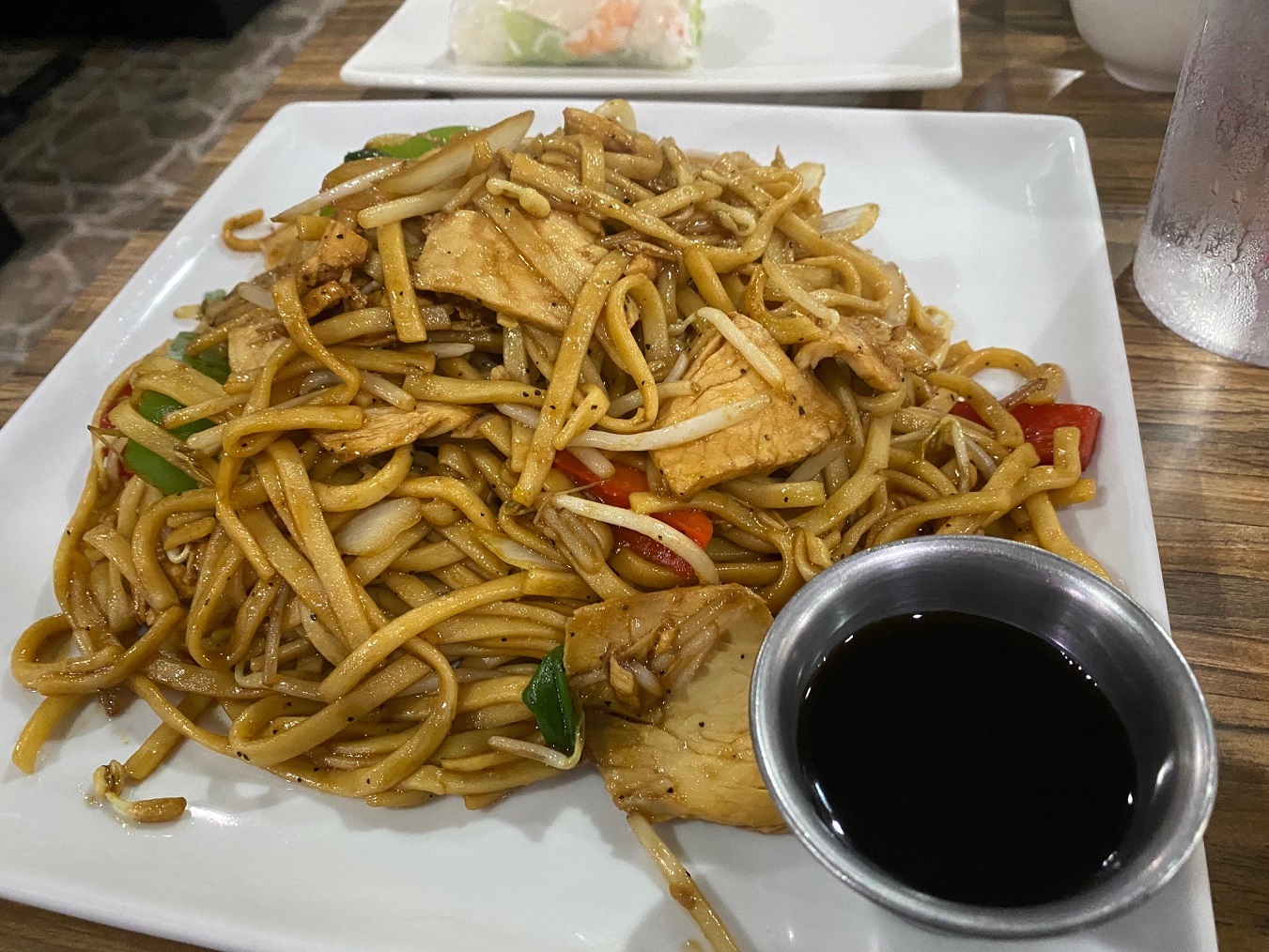
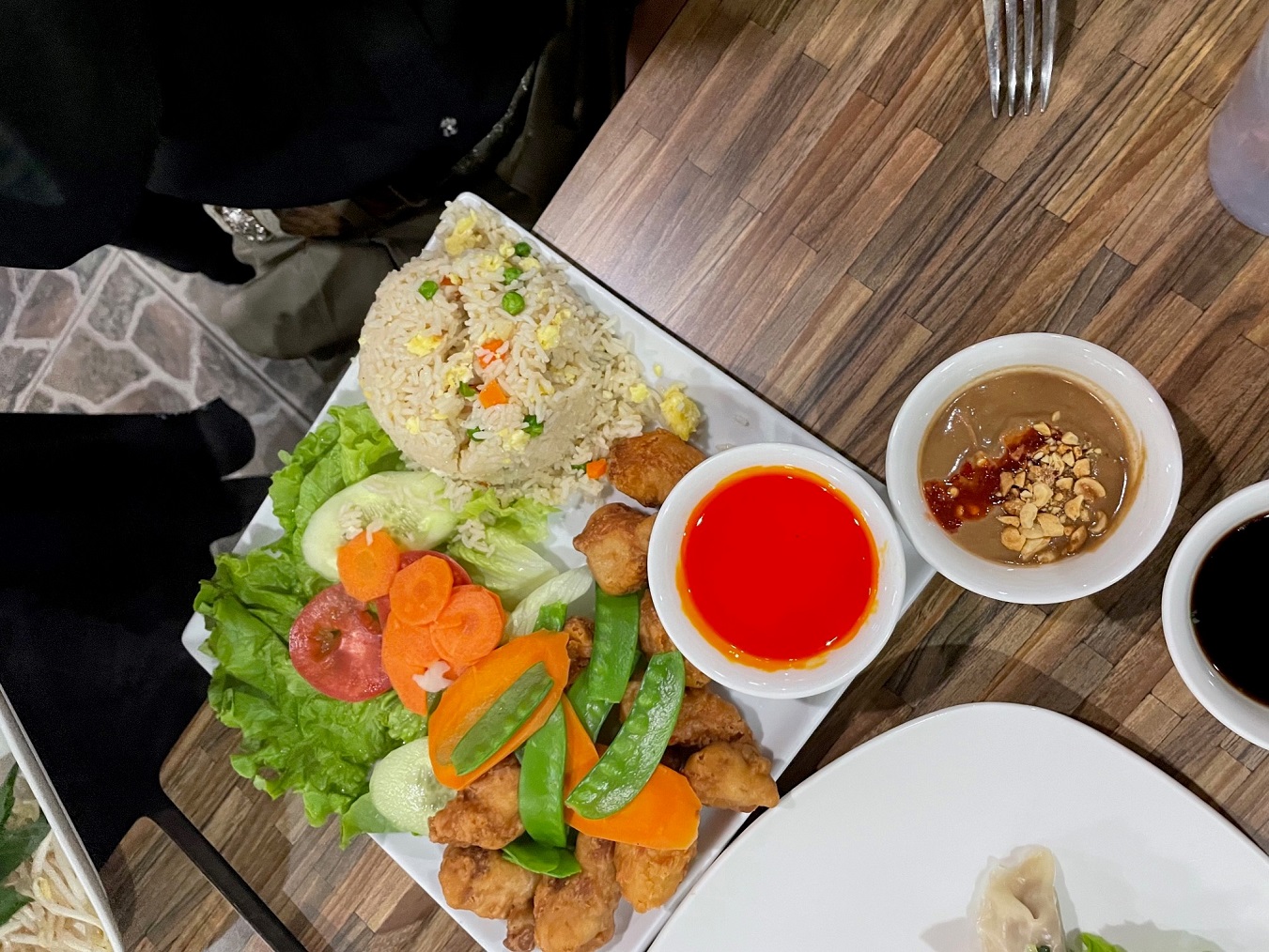
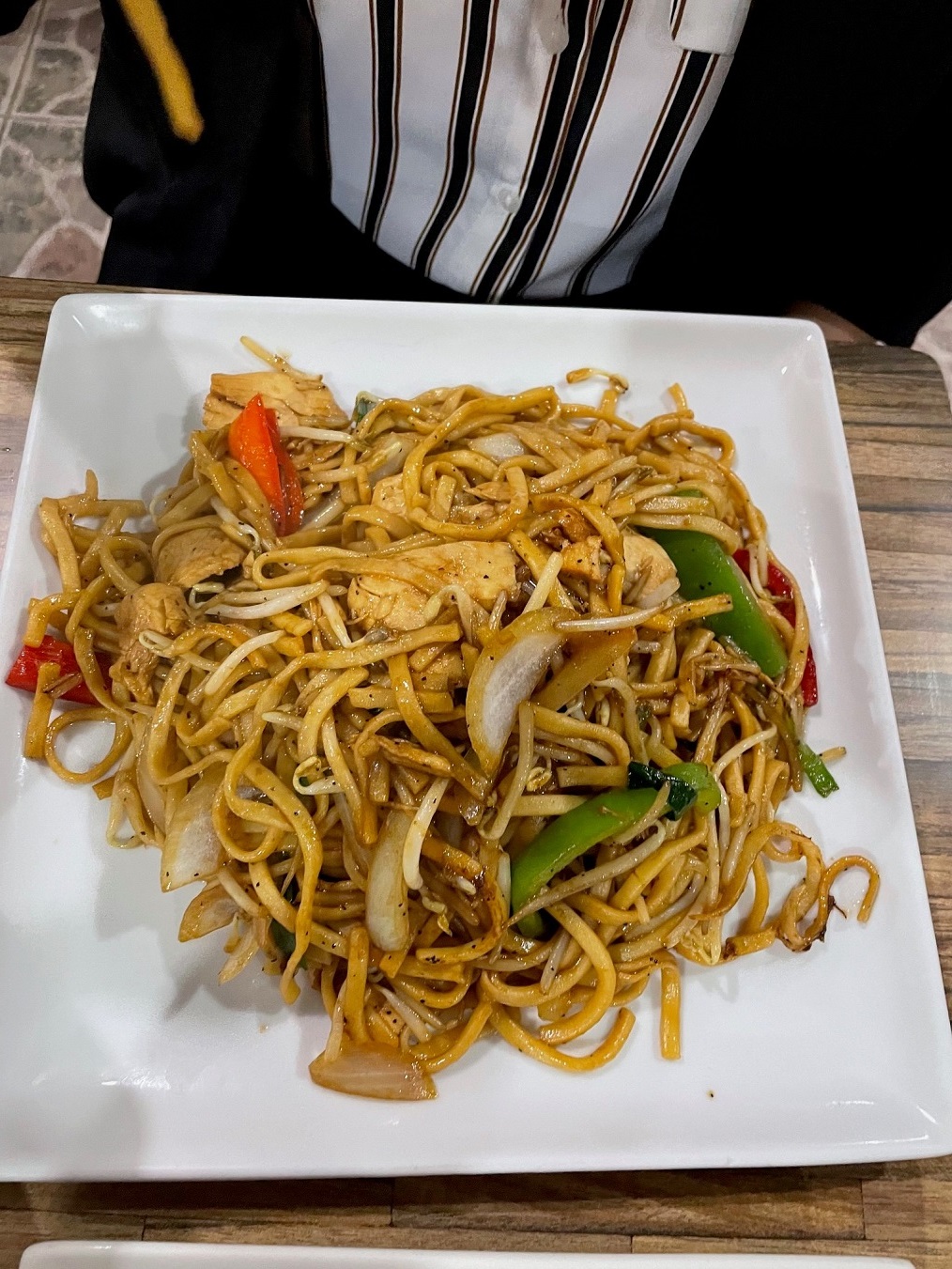
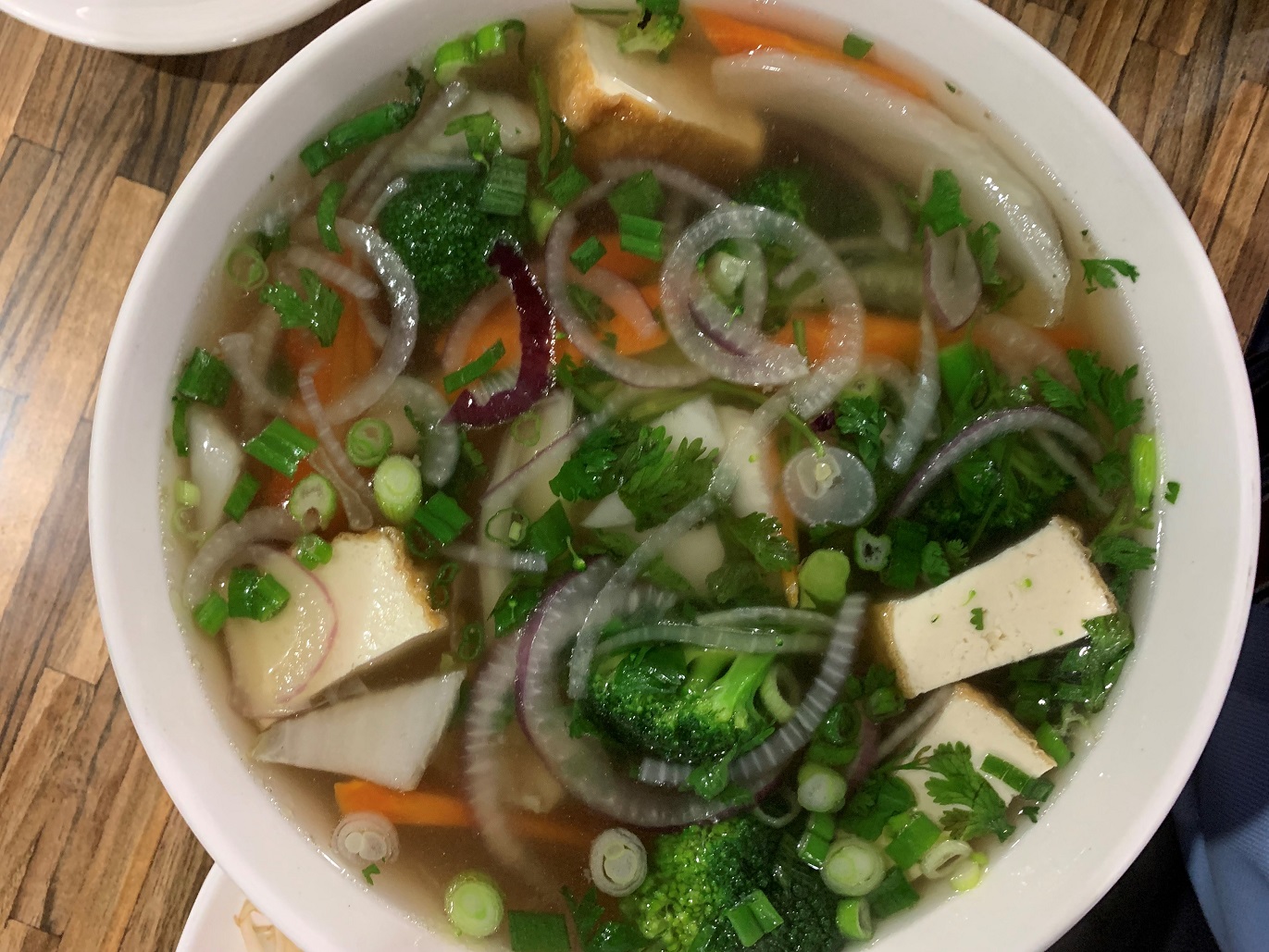
After our event, the students went to a local Vietnamese restaurant called Lucky Café. We would have preferred to eat food from the Czech Republic, but there are no such restaurants in The Woodlands, so we ate at a Vietnamese restaurant, Lucky Cafe, to maintain the Communist theme.
When we arrived, we were seated by Lucky Café’s great staff and received our menus. The food ranged from Pho, to sweet and sour chicken, to several other combination plates. We began to browse the menu, to see what seemed most appealing to us.
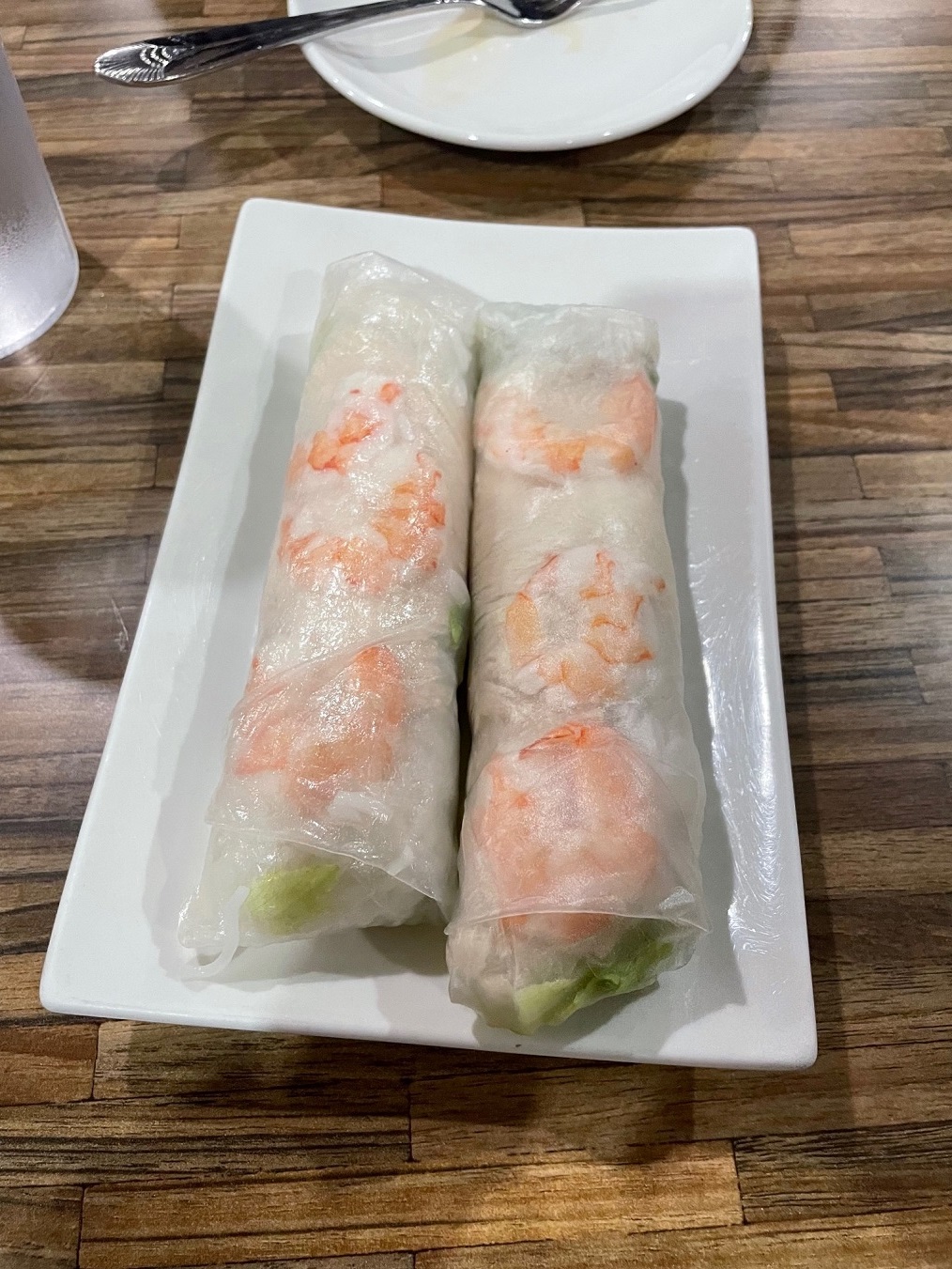
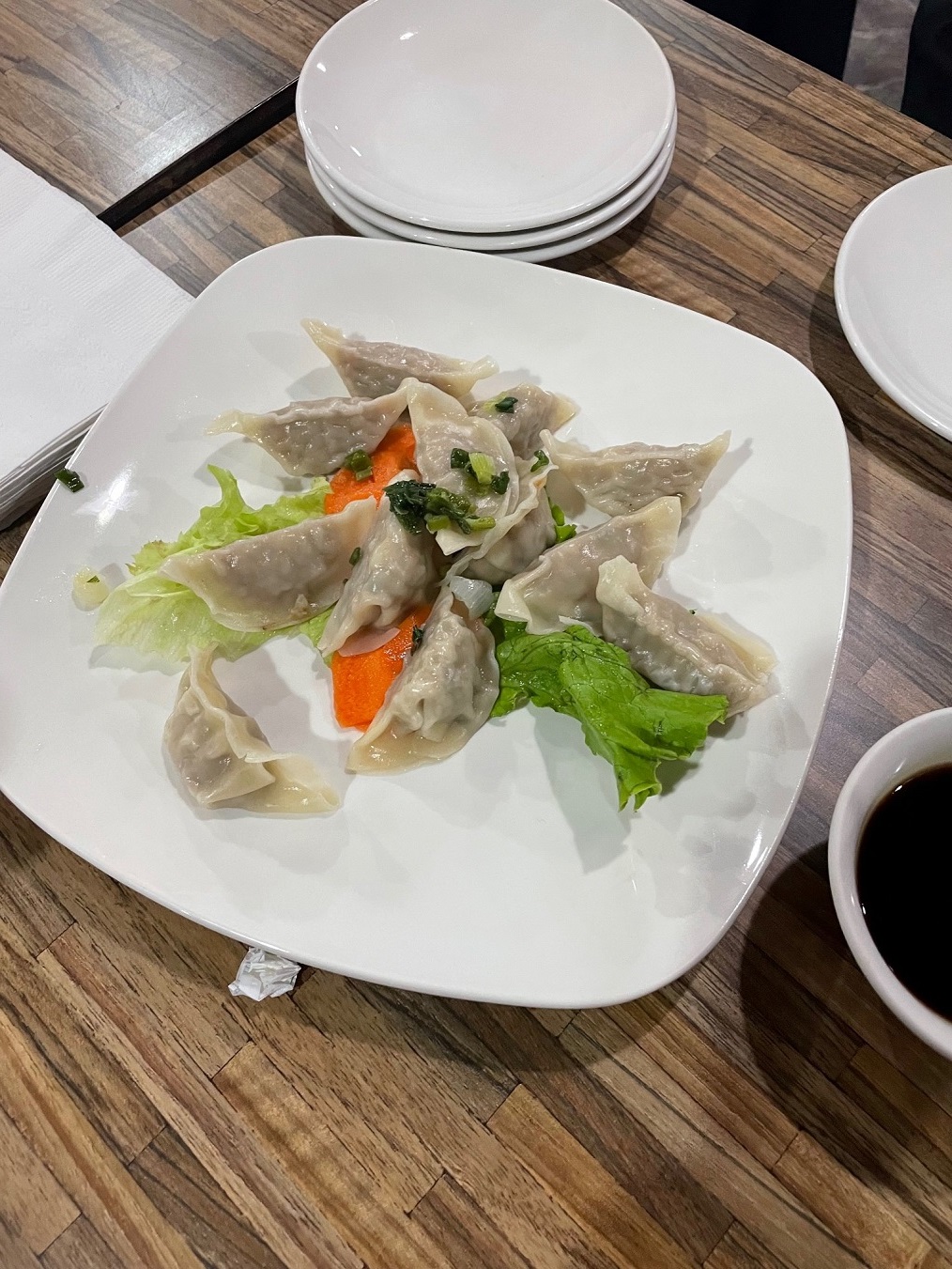
For starters, we ordered Spring Rolls and Dumplings. I was excited to try Spring Rolls for the first time, and they were delicious!
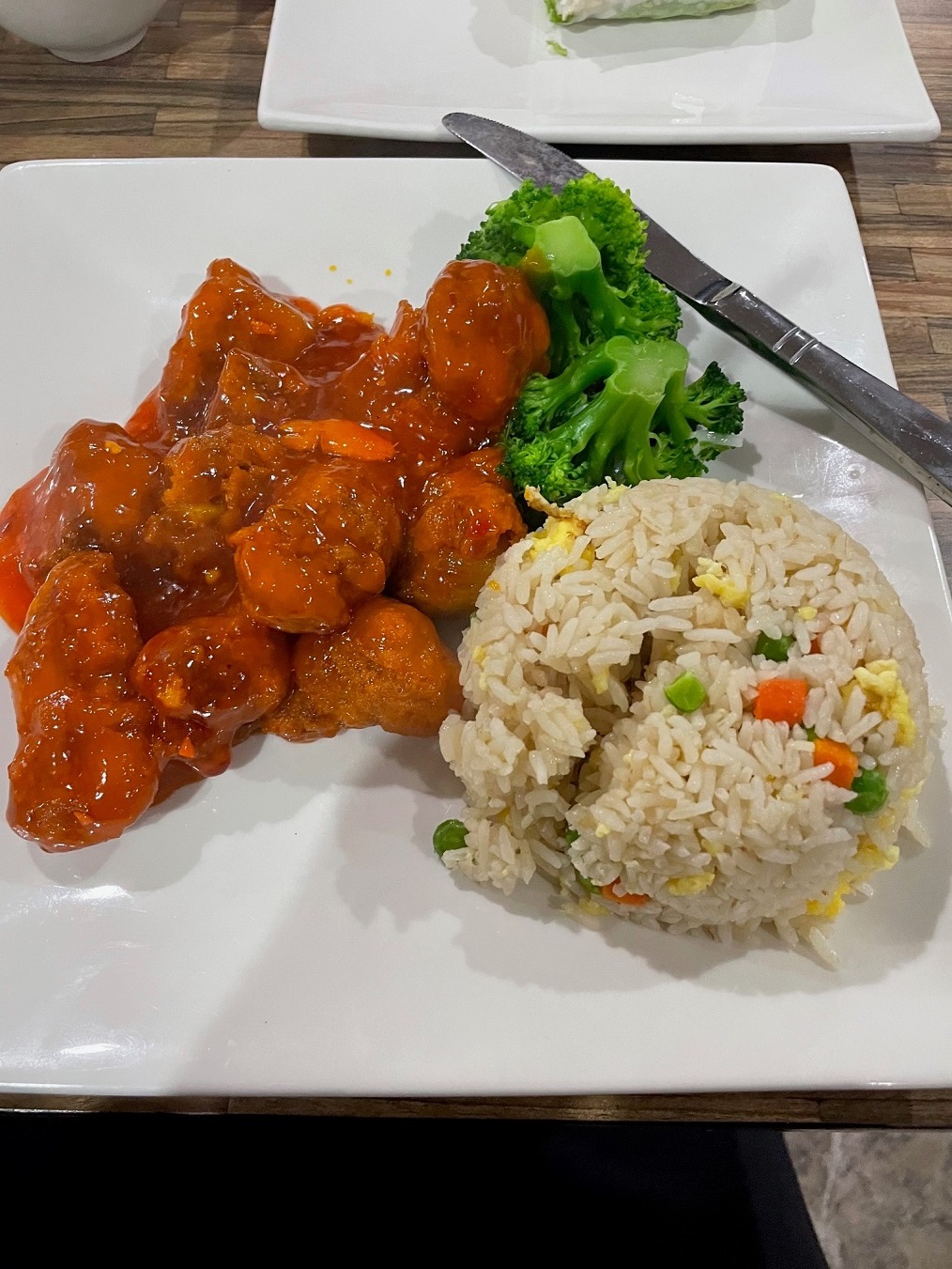
The orders for our entrees, varied from General Tso’s Chicken, Pho, to Orange Chicken.
Over dinner, we had informational conversations regarding communist countries and how grateful we are to be living in the United States. Some of what Ms. Gerhart conveyed to us about living under an authoritarian government was alarming, and we are grateful for the opportunities we have at SHSU, the freedom of expression, and the freedom to learn about other cultures and, of course, for the great Vietnamese food.
The LEAP Students traveled to Houston for another wonderful World Affairs Council event, this time to hear Dr. Joel Dimsdale speak on the subject of brainwashing. When we arrived the staff greeted us with smiles and gave us the book, Dark Persuasion, written by Dr. Dimsdale, after which Samaria Herbert introduced the speaker.
Dr. Dimsdale began the conversation by talking about the evolution of brainwashing, from its beginning in the field of psychology to the current social media era. He explained how brainwashing began even before the Cold War, but pointed out that the Korean War really drew attention the concept.
Dr. Dimsdale also spoke on what research scientists have done on brainwashing, and they simply haven’t been able to reliably control subjects’ minds. Initial experiments, such as Pavlov’s experiments with dogs, may have been promising, but they haven’t been replicated on any large scale with actual humans.
After Dr. Dimsdale spoke about experiments that have been done on brainwashing, he dove further into the Stockholm Syndrome and how this sense of dependency has been used by cult leaders to build, incrementally, a following. After making followers dependent on them for basic resources, the followers become psychologically dependent as well.
Lastly, we focused on the brainwashing effect of social media in our modern society, which is, of course, its own fascinating phenomenon–and something everyone in the room had opinions on!
Following the event, we had a chance to speak more in-depth with Dr. Dimsdale, and we appreciated the time he spent with us.
As we have come to expect, it was another wonderful event at the World Affairs Council!
Grandma’s Noodles
November 9, 2021, Saara Maknojia
To connect our conversation with Dr. Dimsdale on the effects of brainwashing–which became most publicized in North Korea, we thought it would be appropriate to eat at a local Korean restaurant called Grandma Noodle.
Upon arrival, we were met by a lady who sat us in our designated area and gave us a moment to order from a variety of authentic Korean recipes.
For many of us, it was our first time to eat Korean, and it wasn’t easy to figure out what was what from the menu–or, considering the language barrier, with the restaurant staff.
We loved the quantity of the appetizers and entrees; they each had a delicious, distinct taste. The varieties allowed me to understand that the bases of most Korean food are commonly fermented chili paste or many steamed vegetables.
The flavors of the appetizers appealed greatly to the LEAP members, but we had to make room for the main entrees.
The favorite dishes of the LEAP members, were the Bibimbob which contained rice with a wide variety of vegetables and a sunny-side-up egg…
the spicy rice cake with cheese (tteokbokki),
the fish cakes, the buckwheat noodles with veggies and spicy chili paste, and the Korean sausage.
And, of course, the largest of the meals, tackled by Yvette Mendoza.
Overall, Grandma Noodle gave us a better insight into Korean food culture. We were even taught how to eat the food in a natural Korean manner by the lady who hosted us at our table!
The small local restaurant opened our minds to the differences of cultures as well as our taste buds!
This past week, LEAP Ambassadors, Pre-Law Cohort members and LEAP LEADs members ventured to the Woodlands for a World Affairs Council event featuring Jim Olson, former Central Intelligence Agency operative. Attendees included Yvette Mendoza, Jessica Cuevas, Lucy Mccool, Emma Anderson, Erin Juarez, Mario Ocampo, Saara Maknojia, and me.
Upon arriving at the John Cooper School we were shocked by the beauty of the school and admired their layout. Fortunately, we arrived early enough to meet the Program director and many other staff members.
Also, we were able so grateful we had the chance to meet and visit with Mr. James Olson before his presentation, he inquired about our plans after undergrad, and we told him that most of us are planning on applying to law school. Mr. Olson shared with us a little about his time at Iowa University of Law and the difficulties of law school.
After the brief conversation, we found our way to our seats and anxiously waited to hear a few of Mr. Olson’s stories. He was introduced by staff from the John Cooper School and the WAC….
…and we enjoyed our second row seats.
With much of my knowledge about the CIA and other government organizations being from media and tv shows, I was happy to learn from a first-hand source about what it was truly like.
Mr. Olson spoke on many topics ranging from meeting his wife Mrs. Meredith Olson at “work,” to his favorite operations, and officially retiring to accept his current job as a professor at the Bush school.
With every new topic he spoke on, I found myself with even more questions than before.
Toward the end, he took questions from the audience, and two of our questions were selected!
Afterwards, Mr. Olson graciously posed for pictures with SHSU students as well as signed copies of his books with personalized messages.
It is clear Mr. Olson has a passion for meeting and working with students, which in turn, inspires further generations and maybe even operatives.
My favorite aspect of the night was Mr. Olson’s display of pride in his work and in our country. Hearing him speak is enough to leave a listener looking for a signup sheet for the CIA (though that is not the only way to be spotted…).
Genghis Grill
October 5, 2021
Saara Maknojia
As we headed out from the World Affairs Council event with Jim Olson, the LEAP members went to a restaurant specialized in Mongolian cuisine, called Genghis Grill. We were kindly seated by the working staff at the beautifully decorated restaurant. The vivid red and black interior was eye-catching like no other, giving it a very realistic feel of East Asia. The cultural food presented to us was well garnished and customized to each of our likings.
Together as a group, we ordered the Mongolian Dragon Balls which were covered in a delicious chili garlic sauce, as well as the pork and chicken potstickers.
The LEAP members had entrees that all consisted of flavourful bowls of their choice of a base, protein, and amount of eggs. The variety of bases were an assortment of rice and noodles. Students went up to the assembly line where they picked and chose what toppings and meats they would like. The members favorite meats were chicken and steak garnished with the savory teriyaki sauce or the spicy sweet and sour sauce. Genghis Grill allowed us to grasp a better understanding of the cultural foods that are presented from the regions of Mongolia in China.
After more than one year of COVID lockdown, the World Affairs Council of Greater Houston returned with an in-person event, one featuring former Secretary of Defense, former Deputy National Security Advisor, and former CIA Director (not to mention President of Boy Scouts and President of TAMU). Approximately 100 people attended this event, with many more tuning in live.
The Executive Director of WAC, Maryanne Maldonado, welcomed guests; she was followed by Board Chair Mark Anderson…
… who introduced Robert Gates, a potentially lengthy process, given Gates’ extensive experience. Indeed, Gates’ almost unparalleled resume in foreign affairs was on full display during the hour-long session. Expertly hosted by WAC’s Ronan O’Malley…
…the discussion highlighted concerns over Iran’s quest for nuclear power while focusing on the activities of Russia and China.
Gates was convinced that, whatever one thinks of the original Obama-era deal with Iran over nuclear weapons, that deal is now obsolete. He encouraged the resumption of talks, but made it clear that events had surpassed what was agreed in to 2015, and a new approach will be called for.
Gates clearly has little regard for Vlad Putin, regarding him as a nationalistic holdover from USSR days. But he is more concerned about China, which he believes has surpassed Russia in both economic and intelligence capacities. Fortunately, China and Russia’s alliance is mostly superficial, primarily based on a desire to the US perform poorly.
Previously, Gates has expressed much warmth toward Joe Biden, albeit balanced by little confidence in the President’s decision-making capacities. He noted that he stood by those judgments, reminding people that Biden was “wrong on nearly every major foreign policy and national security issue over the last four decades.” Biden, Gates noted, thought the fall of the Shah in the late 1970s would lead to improved civil rights records in Iran; he opposed aid to South Vietnam near the end of the Vietnam War; he opposed to most of the weapon systems that brought the US to military dominance; and perhaps most tellingly, he opposed the Persian Gulf War in 1991 and supported Operation Iraqi Freedom in 2003.
Having said that, though, Gates has also indicated that the President is “impossible not to like,” is a man of great integrity, and is reliable. Moreover, he expressed optimism about many of Biden’s early moves and decisions, and he was impressed with Biden’s team of advisors.
Gates was, as usual, sharp and incisivie, but the real treat was getting back to an in-person WAC event. We had a chance to see old friends such as Ronan O’Malley, Jahan Jafarpour, Viridiana Otamendi, Sandija Bayot, and Maryanne Maldonado. In addition, we ran into another old friend: Ambassador Chase Untermeyer. Ambassador Untermeyer previous served as Ambassador to Qater, Texas Legislator, Assistant Secretary of the Navy, and Director of White House Personnel.
Feeling a bit more knowledgeable and worldly following the World Affairs Council event, we ended the evening with Ethiopian Food in a nearby restaurant by the name of Blue Nile. At Blue Nile they had a vast variety of dishes ranging from vegetarian, lamb, beef, and poultry, with the option of making each of them spicier with Ethiopian spices.
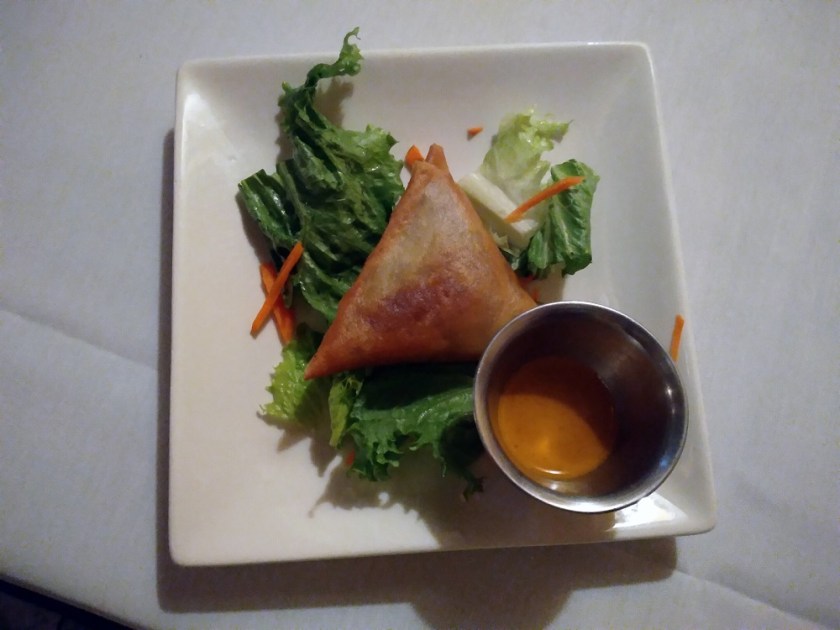
As an appetizer we had a beef and a vegetarian Sambus, it is like an empanada, and to my surprise the vegetarian was my favorite despite never having tried lentils, with which the Sambusas are stuffed.
For dinner Quinn ordered the Yessiga Wot, a beef dish cooked in their Berebere sauce, I had the beef tibs, beef cubes cooked with vegetables and spices, Ms. Stephanie had the chicken tibs, and Professor Yawn had the Spicy Doro Wot, a popular traditional chicken dish.
All the dishes were served with Injera, a spongy bread the size of a flour burrito tortilla that is used as a tortilla to eat the food.
It is a tradition for LEAP students to try new cuisines that are themed related to the prior event and, as expected, it was my first time eating Ethiopian Food (Quinn’s too). It is always nice to end our day trying something new.
Recently, Quinn and I had the opportunity to go on a private tour of the Houston Holocaust Museum, courtesy of the World Affairs Council. Although the tour was on Juneteenth, we thought a post date of July 4th would be appropriate, as a reminder of the sacrifice and responsibility that comes with being free and aspiring to be a better people and nation–the legacy of both Juneteenth and July 4th.
To begin the event, Quinn (who is half Jewish) and I went to a Jewish Deli, Kenny & Ziggy’s. We stayed pretty basic (I always stay basic in terms of food…), but we enjoyed the restaurant, trying something new, and staying with the theme of the day’s education.
Following our themed lunch, we arrived at the Holocaust Museum, met our fellow young professionals (including old friend Rebeca Becker), the always-friendly World Affairs Council staff, and were greeted by our knowledgeable docent, Rhonda Goldberg. She noted that this Museum opened in 1996, and it is the nation’s fourth largest Holocaust Museum.
The tour was a little less than two hours and it started promptly at 2:00 PM, with the Memorial Room exhibit. Within this small room there was a whole wall, created by artist Patricia Moss-Vreeland, dedicated to hand-painted and light-reflective tiles featuring tears to represent the 6 million Jews lost because of the Holocaust.
The day of our tour was sunny, and there was much light coming through, but Mrs. Goldberg pointed out that the mood of the art piece changes with the weather. On a dark or rainy day, for example, the public’s perception of the “tears” would be different.
Even more somber was a short, half-moon pedestal that contained six small square sections holding a sample of the soil from the six extermination camps, Auschwitz-Birkenau, Belzec, Chelmno, Majdanek, Sobibor, and Treblinka. This room is for survivors or for those who lost someone dear to them, providing a place for meditation and to remember those who died.
The Morgan Family Welcome Center offers a Welcome Center Video, which provides information on the lives of Jews before World War I and the anti-Semitism they experienced. It was difficult to learn of the hardships they faced, and I actually began to experience a heaviness in my chest–a sense that increased when we moved to the “Bearing Witness Exhibit.”
What followed was a valuable lesson in history, as we learned more of the Jews losing civil rights, having to register with the State as Jews in Germany, and, eventually, being shipped to the camps.
Perhaps the most surreal aspect of the tour was walking into a train car like the ones used in 1942 Germany, and standing there, imagining how hundreds of Jews were packed into such a car, to be shipped to forced labor and, ultimately, death.
The next closest thing to this was a replica of the Danish Rescue Boat, K123, where Jews had been transported out of Denmark to a safe place in Sweden. Although we were not able to board it, the place where the fisherman would hide the Jews was visible and it is just hard to imagine that this happened in such a small space.
Learning of the Germans’ plans for the “final solution” was sobering and depressing, but there were moments of redemptions, too. We learned of children who escaped (two of whom ended up being active members of the Museum), Jews’ lives after the War, and the Nuremberg Trials. As aspiring lawyers, this last aspect added a layer of interest.
The tour ended on a note appropriate for today: the Human Rights Gallery reminds us of our rights, highlights the accomplishments of Civil Rights leaders, and inspires us to stand up for ourselves and others.
Before leaving we had the opportunity to converse with Mrs. Goldberg, and we asked about the beautiful butterfly display that hangs from the ceiling, down all three of the museum’s floors.
There were 1,500 butterflies, representing the 1.5 million children who died during the Holocaust, approximately 25 percent of the total lives lost.
This was a very somber learning experience of the events that happened before, leading up to, and after the Holocaust that provided me with a different insight to this tragedy. It was my first time being to the Holocaust Museum and despite Quinn having had visited it before, he had a different take since there had been changes to the exhibits.
Because the Museum was closed the day we visited, and because we were visiting with a small group, the experience was perhaps more somber and intimate than normal. We also benefited from Ms. Goldberg’s insights and knowledge, including her closeness to many Holocaust survivors, and this added to the poignancy of the experience.
On behalf of Sam Houston State University and the LEAP Center, we thanked the World Affairs Council staff, Ms. Goldberg, and we said goodbye to our new friends.
LEAP is always eager to hear from World Affairs Council speakers, and that is especially true when Ben Rhodes presents to the Council. Rhodes, a former speechwriter and advisor to President Obama, discussed his latest book, After the Fall: Being American in the World We’ve Made, with the New Yorker’s Evan Osnos as the moderator.
Following eight years of working long hours for the Obama administration, Rhodes found himself with a lot of time on his hands, a need for decompression, and wrestling with the Presidency of Donald Trump. So, he decided to write a book and, as he says, announce himself as a writer to the world.
What struck Rhodes, as he reflected and traveled and reflected some more, is how parts of the world were “turning to nationalism and authoritarianism,” particularly Hungary, Russia, China, and the United States. Key to this period, according to Rhodes, was the great recession of 2008, which is “when the narrative of liberalism and democracy collapsed.” With this narrative, Osnos readily and frequently agreed.
Rhodes is, at times, a bit morose, identifying this period as “the fall” to which the title alludes. This fall emboldened China and Russia, freeing them to mock capitalism and democracy, and emboldening nationalistic elements in Europe (particularly Hungary). He characterizes presidents from GHW Bush to Obama as “collectively wrong” and “hubristic,” while also criticizing the NBA, the media, and “the entire mass entertainment industry.” (see here for other views he’s expressed about the media).
Rhodes responded best during the Q&A period, during which Ronan O’Malley stepped in.
Rhodes argues that the China-Russia relationship is “shallow,” united by their “interest in the discrediting of democracy.”
When asked about the “personalization” of politics and regimes, Rhodes suggests that the rise of social media contributes to this movement, while also noting that the election of Biden was a countermovement to this trend.
Rhodes struggled to find silver linings. “There is one megatrend in the world,” he lamented, “and it’s not good.” But he argues, not entirely convincingly, that the “mass mobilization” in the world is happening and good; that people “are much more aware” (polls indicate otherwise); and there are civil rights in certain world regions than there were 30 years ago. It’s not a lot to hang on to, but it’s what we can look to, he says, “after the fall.”
One of our favorite activities is to be part of a World Affairs Council event, and thanks to the magic of Zoom, we can continue our participation in the age of COVID.
This program was particularly special, as it featured Richard Haass, whose unparalleled career has included stints at the Department of Defense, Department of State, National Security Council, Council of Foreign Relations, Harvard’s Kennedy School of Government, Brookings Institute, and is a recipient of the Presidents Citizens Medal. He is widely regarded as one of the most knowledgeable public figures on foreign policy.
Accordingly, Haass set out to write an accessible book about international affairs and foreign policy. Ronan O’Malley, Program Director at WAC, moderated the discussion with Haass and focused on the ideas in The World: A Brief Introduction.
The book begins with the year 1648 and the Peace of Westphalia, which established the idea that countries are sovereign and control affairs within their borders. This, Haass believes, helps us understand the modern nation state, while also being aware of how some things have changed. In an era of globalization, what happens within a country’s borders can have global consequences–whether it be the destruction of Brazil’s rainforests, the rise of militant and terrorist organizations such as the Taliban, or the spread of a virus. While they may begin within a country’s sovereign borders, they are likely to have world-wise ramifications.
Haass sets out to establish a framework in which we can maintain the positive aspects of sovereignty, without allowing a country’s sovereign actions to encroach negatively on another country’s sovereignty.
The author was motivated, in part, by a world he saw becoming increasingly in disarray, largely a result of the United States’ lack of engagement with the world, a phenomenon he refers to as “American Abdication.” Noting that President Obama began “pulling back” in mid 2010s, President Trump has taken disengagement even further.
Haass argues what might seem obvious: (1) the World matters, and (2) Isolation is not a workable response.
While engagement is appropriate, Haass also notes that the solution is not an over reliance on presidential personality. Haass noted that “there’s a long history” of presidential hubris, from FDR believing he understood Stalin and his goals, President George W. Bush saying he looked “into Putin’s soul,” and Trump taking things into a whole new level with his association with autocrats. The key, he argues, is to have workable coalitions and structural frameworks that allow for long-term solutions and equilibria.
O’Malley also conveyed a series of questions from the audience:
What to do about NATO? Keep it, strengthen it, but don’t enlarge it;
Nuclear proliferation? We have a new arms race with the Russians, we have lost hope of containing North Korea’s nuclear development, but we may still be able to work with Iran on limiting what they have done;
Globalization and Trade: He’s for fair trade, which in his eyes, means being less concerned with trade imbalance and more about not manipulating currencies, removing tariffs. Further, he argues that job losses are not from trade agreements, but from increases in productivity in the US, mostly having to do with robotics, computers, and artificial intelligence. Haass believes that these trends will accelerate with COVID-19, and argues that the US needs to begin an aggressive retraining program.
Chinese and Russian Disinformation Campaigns: Haass argues that China’s disinformation isn’t that effective, but that Russia’s program is more developed and has had a greater impact, arguing that Russia is seeking to “change the context in which the UY
O’Malley ended with a political question, asking Haass if he had thoughts about Biden’s Vice-Presidential selection. Haass noted that Biden had already committed to picking a woman, and that there are “many qualified women to choose from.” He argued that Biden will likely use three criteria: (1) Who would make a good president? (2) Who can he partner with to run the government? (3) And who will help him get elected? Haass also noted the importance of the pick–although he did not broach Biden’s age–by noting that the Vice-Presidency has grown in importance since the 1990s.
It was another great program by the World Affairs Council, and, indeed, a great introduction to “The World.”