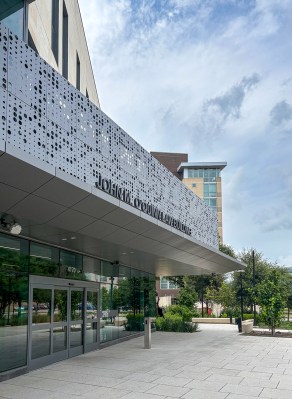
The John M. O’Quinn Law Building–the home of UH Law School–offers a grand yet inviting welcome to the study of law.
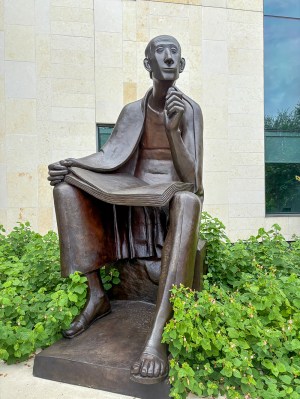
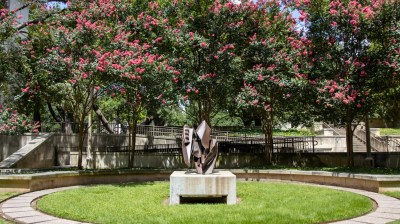
The modernist structure, designed by Shepley Bulfinch, greets visitors with a touch of the classical: Gerhard Marcks’ sculpture “Albertus Magnus,” who was the teacher of St. Thomas Aquinas, one of the greatest thinkers of history.
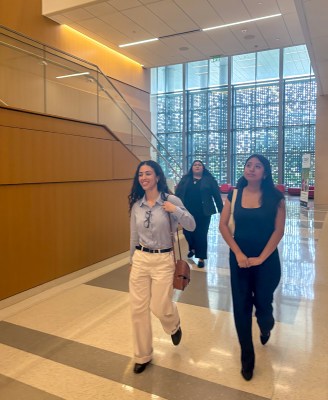
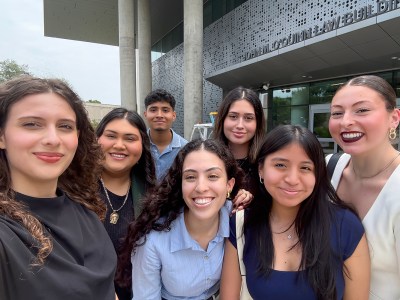
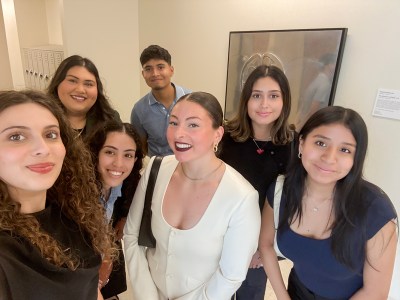
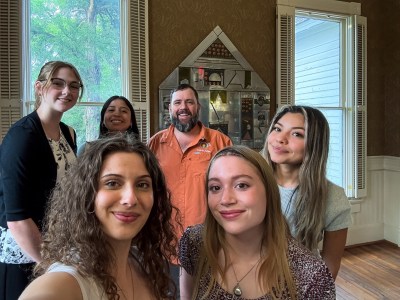
If that’s not enough to inspire the aspiring law student, then UH’s law program will probably do the trick, with specialties that pre-law students dream of pursuing. We, a mix of LEAP Ambassadors, Pre-Law Society members, and students in Professor Yawn’s “How to Win in the Courtroom” class, had the pleasure of witnessing, exploring, and envisioning our future during an amazing tour of the UH Law School.
Guided by a friendly and knowledgeable UH Ambassador, Justin Cheap, we experienced the school with a sense of comfort and relatability in a place that can initially seem so far beyond what we imagined.
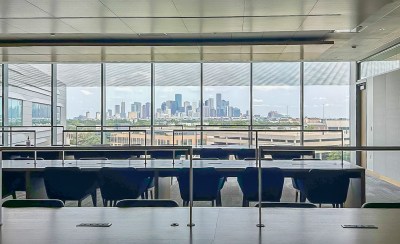
The Law Center spans five floors, each designed with purpose and opportunity in mind. The fifth floor offers a quiet library space where students can focus, recharge, and enjoy breathtaking views of the Houston skyline. It serves as a reminder that achievement is within reach.
The fourth floor brings more energy, fostering collaboration through group study areas, access to professors, advanced coursework, bar exam preparation rooms, and even spaces to relax, nap, or grab a bite.
The third floor brought us into what a law school lecture room looks like. This floor has most of the upper level law student classrooms, and had an outdoor sitting area, perfect for fall weather fresh air. Interestingly, this floor also features an art piece by Charles Pebworth, an SHSU art professor who has many pieces at SHSU and the Wynne Home Arts Center.
The second floor houses most of the 1L and some 2L classrooms, along with a beautiful glass-ceiling section that proudly displays awards and accolades from the school’s long history since its founding in 1927. The first floor features the largest lecture hall in the Law Center, which can also be transformed into a fully functional courtroom. Remarkably, the Supreme Court has held sessions here, giving students a rare chance to witness the legal system at its highest level without ever leaving campus.
Of course, we learned more than just about the space; we also learned about the caliber of the school. UH is a top-65 program in the nation, ranking in the top 10 in Health Care law. It has more than a dozen programs and offers several joint degree options (including degrees in medicine and history!). With a tuition of about $37,000 a year, the school attracts an exclusive pool of law students: their entering class has a median GPA of 3.75 and a median LSAT of 161. With this talent, it’s no surprise that the first-time bar-passage rate is 86 percent.
From its modern architecture to its unparalleled opportunities for networking, education, and growth, the University of Houston Law Center proves that it is more than just a school, it is a launchpad for future leaders in the legal field.
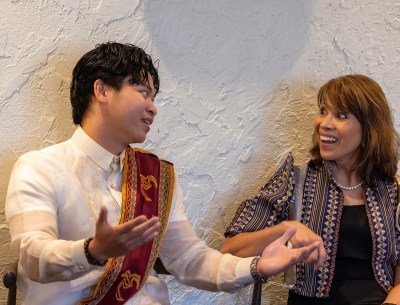
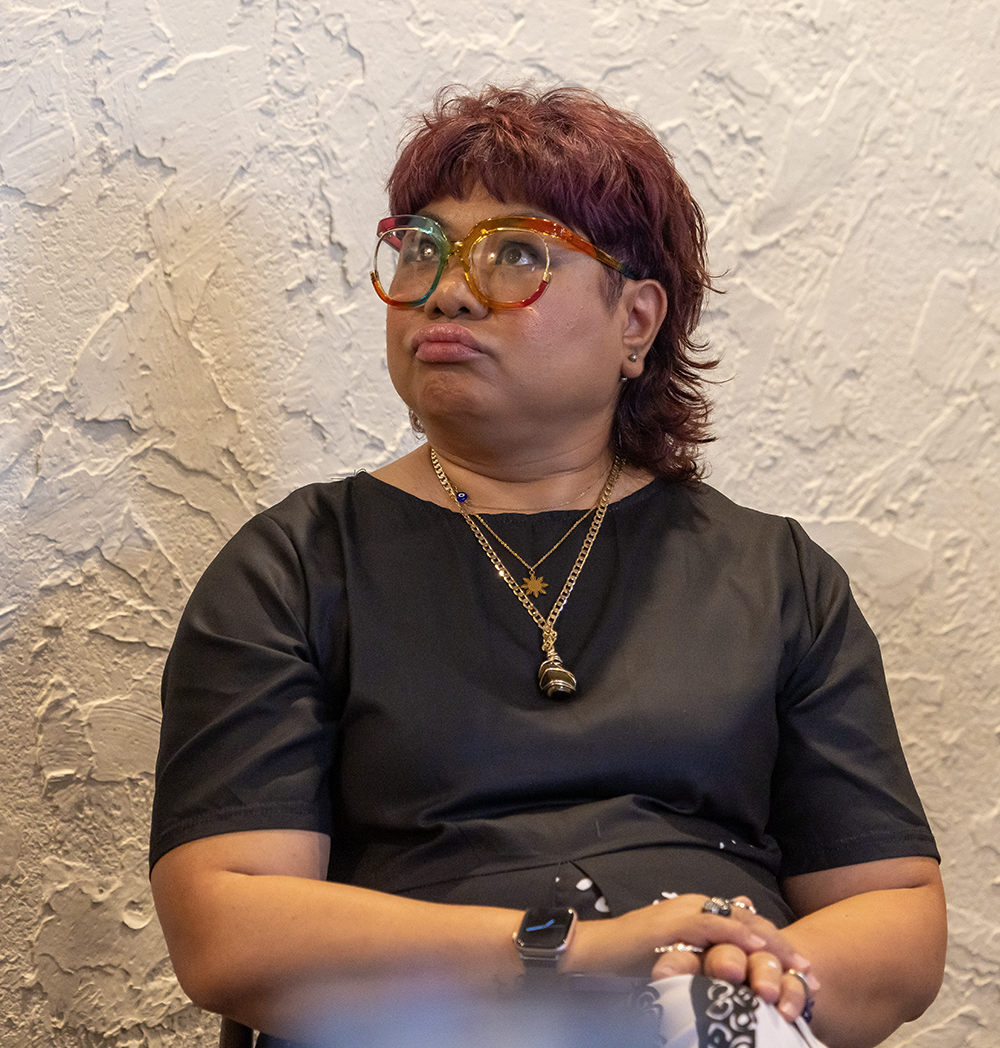
Over the years, the World Affairs Council (WAC) has exposed LEAP students (and many other students) to new cultures, concepts, and speakers, greatly enriching our education. Last week, WAC did it again, offering an intriguing look at the culture of the Philippines in another of their “Culinary Passport” series featuring moderator Saege Anzueto; Dr. Riza Mauricio, a Professor at UTHealth Houston; Cybil Pallugna-Saenz, President of the Filipino American National Historical Society; Nathaniel Uy, President of the Filipino Graduate Student Association at Rice University; and artist Nixxio Castrillo.
The event was held at Houston’s Gerry’s Grill, a restaurant that originated in the Philippines, then migrated to California, before reaching its apex in Houston. With approximately 40 guests for this event alone, the restaurant provided a wonderful menu that included Lumpiang Shanghai (Filipino eggrolls), Chicken Skewers, (probably) Bistek Pinoy, Pancit Bami, and Chop Suey. The food was wonderful; the restaurant did a great job curating the food choices. Although everyone expressed satisfaction with all the meals, there was probably a consensus that the Bistek Pinoy was especially good, both tender and flavorful.
The speakers offered perspectives that were as diverse as the food. Professor Mauricio, not surprisingly, stressed the importance of Filipinos in health care, noting the large numbers and impressive contributions that Filipinos have made in nursing, particularly at the Texas Medical Center.
She noted with pride that May 13 of this year was named “Filipino Nurses Day,” while also noting with some regret that it took so long for these contributions to be recognized.
Pallugna-Saenz discussed the contributions the Filipino American National Historical Society has made in archiving Filipino contributions, while also expressing a desire to grow the organization.
Nixxio Castrillo made note of his approach to art, highlighting some of the materials he uses (copper, brass, stainless steel) which require a detailed, nuanced approach–much like that of fine jewelry–to achieve the desired effect.
And Nathaniel Uy spoke specifically to the young professionals in the audience, encouraging them to build a foundation for their future careers, take risks, and to treat the world “as [their] oyster. He knows of which he speaks.
When he left the Philippines to attend Rice, he scheduled a visit with the Filipino consulate. He wanted help adapting to a new country, but he also, as he put it, “just wanted the Consul to know who I was.”
As we have come to expect at WAC events, the evening was informative, interesting, and not least, tasty. We enjoyed meeting the distinguished speakers, other guests, and, of course, seeing our friends at the World Affairs Council.
It’s always fun at a World Affairs Council event, especially when food is involved, and tonight was no different.
Now, with my professional excursions at the Capitol finally coming to a close, I tried to make the most of my time in the state’s capital. It wouldn’t be a good LEAP experience if I hadn’t tried to make the most of my time.
With it being Juneteenth, it only made sense to begin with the state capitol’s Texas African American History Memorial by Ed Dwight. It is not only a beautiful statue, but a thought provoking one.
A Tour of University of Texas Campus
There’s no denying that UT’s campus is beautiful. But I don’t think I fully appreciated just how stunning it is until this visit. I knew they had a strong art presence, but I didn’t realize just how much until I found out there are five different suggested paths for an art walk. The variety alone is sort of insane.
I cherry-picked some of the pieces that I wanted to ensure I saw before I left, being that I couldn’t decide on a path.
Indeed, the theme for this part of the day was indecision.
I started at the Littlefield Fountain, which I learned will be part of a larger beautification effort to emulate the National Mall in D.C. One detail I especially loved: the statue of Athena was commissioned by a former UT Regent and sculpted by Pompeo Coppini—the same artist who designed Sam Houston’s grave in Huntsville. And no, I’m still not done talking about Huntsville.
What I liked most about this was that closer to the Main Building Tower, there is a statue of George Washington staring directly across to the Texas Capitol. Talk about a well-intentioned plan!
As I kept walking, I saw pieces by Mark di Suvero, Charles Umlauf (more on him later), and Willard Boepple, all of which added to the sense that this campus is part gallery, part institution.
I made my way over to the UT Law School. While I couldn’t go inside, I stumbled upon something unexpected: a statue of the school’s longest-serving dean—sculpted by none other than David Adickes! It was a comforting, serendipitous moment.
The law school path is no joke, and with so much uncertainty, taking the LSAT can feel like this unsurmountable force that tests your capabilities as an intellectual. I am trying to let that feeling pass, and focus on what matters, which is my commitment to serving and learning in everything I do. It might be a grueling path, but I imagine it’s a meaningful one. And while the statue couldn’t talk, I took it as a gentle nudge to keep pushing forward.
Taquero Mucho Austin
I do have a weird affinity for the color pink—but even I wasn’t prepared for Taquero Mucho. This place is very pink. It came highly recommended by a former LEAP ambassador, and after seeing it in Texas Highways, I had to give it a try.
I started with a flight of salsas (all good), paired with a slightly-magenta Jamaica, and went with a taco wrapped in a pink tortilla and a side of elote.
I thought it was pretty good, and definitely really pink.
Umlauf Sculpture Garden
This was, without question, one of the highlights of the trip. I hadn’t really heard of Charles Umlauf before spotting one of his pieces near UT Law, but after that, I was curious. The garden itself is tucked away in a quiet, green pocket of the city, and it just works so well with his style—there’s something peaceful about seeing his sculptures in a setting that doesn’t compete for your attention.
What I noticed almost immediately was how many of his figures seem to be looking upward—heads tilted, eyes cast toward the sky.
I’d seen that same pose earlier in The Family near the Business School and The Torch Bearers on campus (which also had smaller versions here in the garden). I couldn’t tell exactly what it meant, but there was clearly some intention behind it. It felt reflective, maybe even spiritual, though it wasn’t heavy-handed.
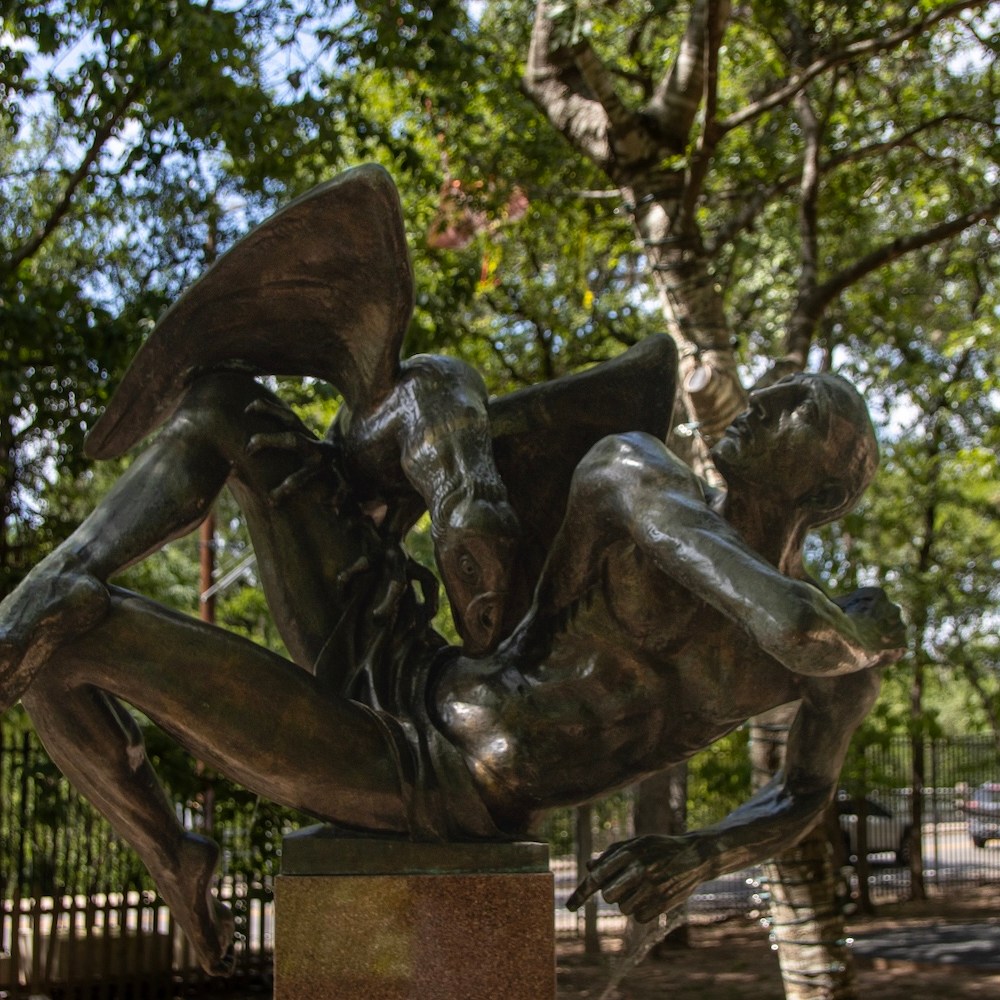
Some of my favorites were The Kiss, Prometheus, and The Poetess—each had its own tone, but they all fit into the broader theme of searching or reaching toward something. I found out later that Umlauf taught at UT for decades and leaned into themes like faith, human connection, and morality, so maybe that upward gaze wasn’t accidental after all.
Toward the end of my visit, I saw one statue that broke the pattern. Instead of looking up, this figure was looking down—almost like she was weighed down by something. She wasn’t in the center of the garden but off to the side near the parking lot, which made the whole thing feel even more intentional. It stood out, so I checked the placard—and of course, it was Eve with Apple.
I couldn’t help but feel giddy about that.. I’m not claiming to have “decoded” anything profound, but it was one of those moments that made the visit so pleasant to me.
There’s something satisfying about taking things in slowly and letting your mind wander a bit. I didn’t expect to enjoy the Umlauf Garden as much as I did, but it turned out to be exactly the kind of quiet, thoughtful stop I didn’t know I needed.
This past month, I toured the O’Henry Home. Upon entering, I was greeted by Spike Gillespie, a kind and knowledgeable staff member from the City of Austin’s Museums and Cultural Programs. She shared key details about William Sydney Porter’s life, explaining that he lived in this house from 1884 to 1894 before fleeing to Honduras due to corruption allegations at his workplace, the First National Bank of Austin. A few years later, he returned to the U.S. under an alias—O’Henry—the pen name that would bring him literary fame.
The small home consists of three main rooms: the living room…
…the bedroom…
…and O. Henry’s office.
As I walked through, I enjoyed learning fascinating tidbits about his life and work. His experience drafting maps at the General Land Office in Austin resonated with me, as I’ve encountered the GLO while assisting the Land and Resource Committee in my office.
Although modern technology has replaced hand-drawn maps, I appreciated the small connection I felt while standing in O’Henry’s office.
As I continued walking through the home, I found myself amused with framed sketches located right outside O’Henry’s office. Later, Spike informed me that during his lifetime, O’Henry became a self-taught artist, focusing largely on political cartoons, which were featured in The Rolling Stone magazine. Most of his artwork throughout the home feature a mixture of political cartoons and the life of American settlers.
Spike also shared insights into how his time in Austin shaped his storytelling. Many of his short stories reflect themes of redemption, irony, and human nature, qualities that may have been influenced by his own struggles. His most famous work, “The Gift of the Magi,” showcases his signature twist endings, a style that would make him one of the most celebrated short story writers in American literature.
Beyond his literary contributions, O’Henry’s influence on Austin is still evident. His home, now preserved as a museum, serves as a reminder of the city’s rich cultural history.
Creative writing workshops hosted by individuals like Spike encourage Austinites to expand their writing skills and explore writing techniques utilized by famous writers such as O’Henry.
Visiting the O’ Henry Home provided me with insight that was much greater than a historical tour, it was a glimpse into the life of a man who turned adversities into art, which brought people together. His legacy lives on not only in his stories but also in the continued appreciation of his wit and literary style.
As a LEAP Ambassador, you’re not expected to be an art expert—or even an enthusiast. But after visiting dozens of museums through the program, it’s only natural that some of us become fans… or critics. I’ve now been to 75 museums with LEAP. Before joining, I’d only ever visited one. Among all those experiences, one name has stood out again and again: James Surls. Of those many wonderful educational experiences, James Surls is a name I had come to frequent more than most.
Surls is something of a household name in LEAP. As a distinguished alum of Sam Houston State University and a prominent figure in Huntsville, his work has served as many students’ first introduction to art—including mine.
So when we heard about the opening reception for the Surls + Locke Museum and the Heard of G.O.A.T.S. exhibit, we knew it was something we couldn’t pass up!
After being shuttled to the 40-acre property, we went to Surls’ studio, which had been transformed into an event hall for the afternoon. Inside, towering sculptures filled the space, and even the live musicians were performing among the artworks on stage.
We spent a long time taking in the ambiance, discussing which pieces were our favorite. Moya and McCaughan were especially drawn to the work of Charmaine Locke, Surls’ wife and an artist in her own right.
Inspired by the natural world, Surls uses both medium and or composition to emulate life. This presents itself in various ways, but he’s most known for his sculptures that resemble flowers or plants, his eye motif, and sometimes, a combination of the two!
His work stands out not just visually, but intellectually.
While I didn’t initially grasp the depth of his pieces, I’ve come to appreciate their layered meanings over time.
As one article (written by my professor) quotes Surls:
“Right then and there, I drank from the well of true belief in something far greater than myself. I got the calling for my life, and I answered the call with a resounding ‘Yes, I will do it.’”
That sense of purpose resonates with me—and with LEAP as a whole. It reminds me of why we serve and why we learn.
We later walked through the Gift from the Bower exhibit, which featured a series of outdoor installations on its final day.
We spent a lot of time here, discussing meaning, appreciating how the pieces interacted with the environment, and—for Chrissy—getting eaten alive by bugs.
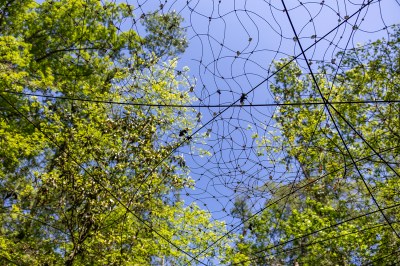
I personally enjoyed Sonic Overlook by Patrick Renner…
and Chrissy liked Learning to Fly by Sherry Owens and Art Shirer.
We had the opportunity to meet Surls himself and have him sign photos we took of his work at the Gaertner Performing Arts Center. It was an honor to meet the artist behind the incredible work that so many LEAP students have enjoyed over the years, and it’s an experience I will cherish for a long time.
Victoria McClendon-Leggett, former LEAP President, also had the opportunity to meet Surls.
As for the Heard of G.O.A.T.S. exhibit itself, the gallery was filled with other famous names. John Alexander…
Lynn Randolph…
and Bill Haveron…
Michelle took a liking to a piece called His and Hers Red Nest by James Drake. She found that the nests looked like angel wings and fittingly posed for a photo upon discovery.
Chrissy, on the other hand, enjoyed a much moodier scene, Siddhartha by Carlos Canul.
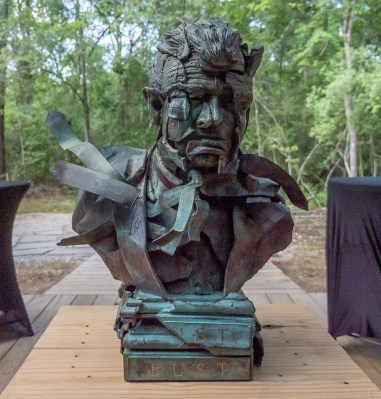
Interestingly enough, the Terry Allen sculpture was on display on the outdoor patio. Titled Bust, the piece depicts a man in a suit that is blowing against an imaginary force of wind. Like all of his pieces, this was thought provoking and visually interesting. It’s no surprise that this bust is courtesy of the Surls + Locke Museum’s collection!
In all, this was an experience that reminds you why LEAP exists—to open minds, spark curiosity, and connect students to opportunities and perspectives they might not have encountered otherwise. It was an incredibly memorable experience, and one I will always be grateful for.
Tucked away in Houston’s vibrant Museum District, the Asia Society Texas Center is a cultural gem that embodies the rich diversity of Asia through architecture, exhibits, and innovative and cultural experiences. Designed by renowned Japanese architect Yoshio Taniguchi, the building is LEED certified, making it a visual delight and a wonder to experience.
As you enter the museum, the North Gallery provides a welcoming space with five touch screens arranged in a circle around a central pillar; each screen contains a globe with the Asian countries shaded in different colors.
Once a country is touched, the person “travels” to the country through a screen that shows the nation’s capital as well as the local time and how many miles it is from Houston.
Similarly, the most Instagram-worthy spot in the entire center is a wall covered with Asian culture-inspired neon signs. Ranging from a glowing lucky cat sign, a bowl of pho, and even one displaying Bellaire Boulevard. Each experience implements an interactive way to learn about Asia’s culture.
The “Gathering Table” interactive section highlights different foods of Asia and, most importantly, where you can find that food in Houston.
This area also offers a scent station that adds a sensory dimension to the experience.
The central section of the Asia Society is the two-story Grand Hall, lined with Jura limestone and wall paneling with American cherry wood. Each of these elements is used throughout the interiors for warmth and connection to the local landscape.
Also in the building is the Brown Foundation Performing Arts Theatre, featuring perfect acoustics, created through carefully designed architectural elements. The stage is an Appalachian white oak, with the maximum capacity at 273 steel-gray seats and acoustic cherry wood wall panels that ultimately create a sumptuous atmosphere.
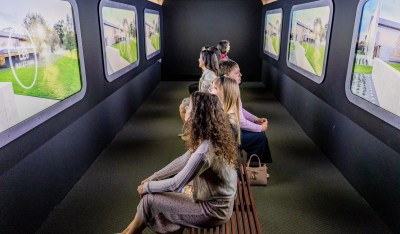
We also explored the “LEO Bullet Train,” which is a digital bullet train ride through Asia.
This rectangular room is filled with screens shaped to look like windows on a bullet train.
As the ride takes place, videos of all the countries scroll past on the screens, displaying a little touch of different cultures.
On the second floor, the mood shifts to serenity with the Water Garden Terrace. The display is filled with 12,000 gallons of constantly recirculating water. Large glass windows also connect the space to its natural surroundings while designed to withstand 110 mph winds, meeting Houston’s stringent glass structural codes.
Situated next to the water garden is the Louisa Stude Sarofim Gallery, which is composed of the minimalist installation by artist Lee Ufan, named Relatum. It consists of a raw stone and steel plate, arranged in a way that emphasizes spatial relationships and the quiet tension between man-made and natural forms (we assume). Relatum doesn’t demand attention; rather, it provokes the viewer to think, so the perception is up to the viewer.
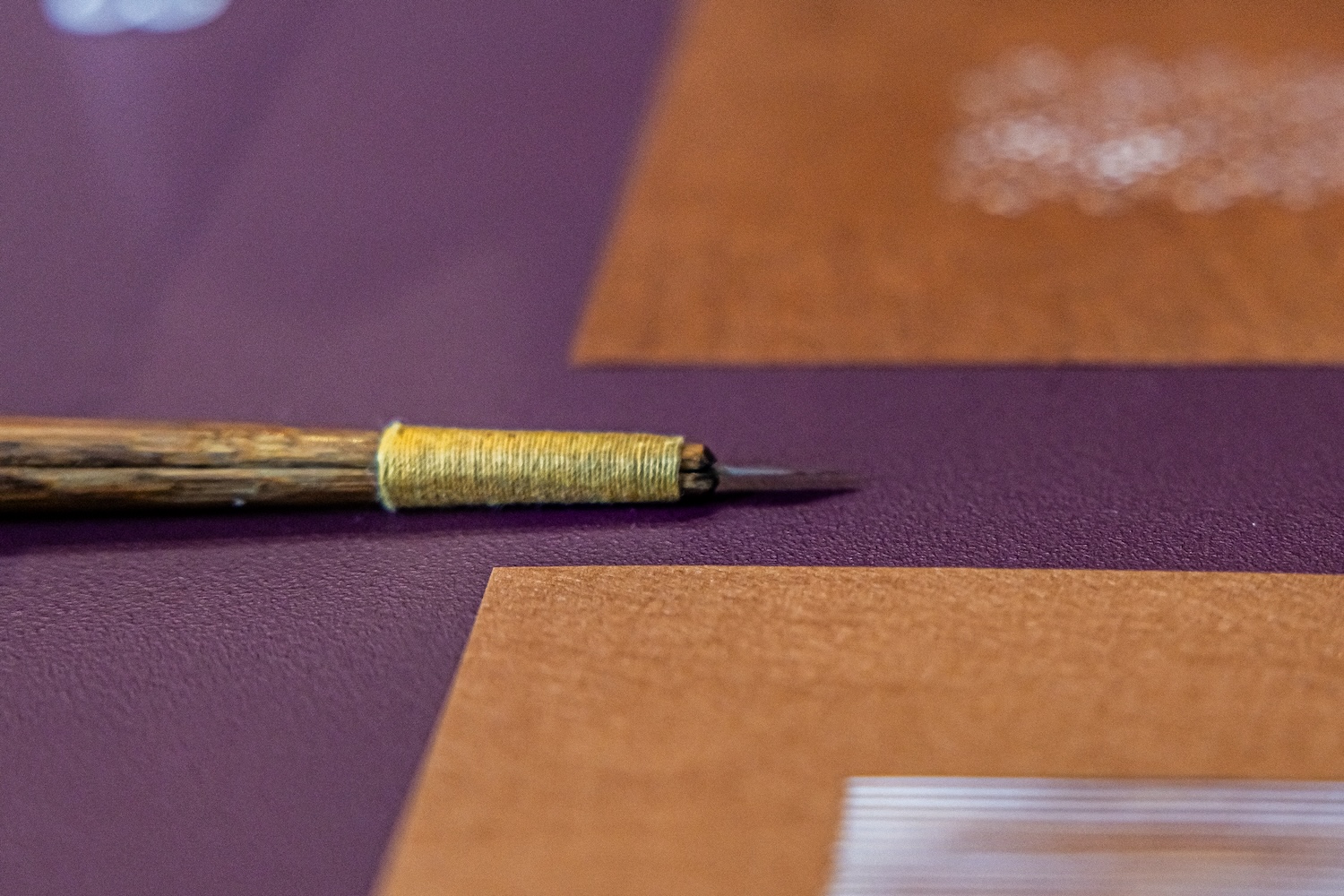
The gallery also displayed intricate Japanese art pieces of cutting and using paper stencils to dye textiles. The art combines contemporary international design with an understated elegance that reflects Asian aesthetic principles.
My personal favorite of all Museum pieces was a miniature version of the building.
The exhibition space features rotating shows of traditional and contemporary Asian art, from holograms and push-button lessons on how to say words like “Houston” and “Texas” in Japanese and many other languages.
The Asia Society Texas Center blends both modern design with traditional Asian style. From the exhibitions to the building itself, it combines contemporary international design with modest beauty and calm one may associate with Asia. It’s a special place in Houston where people can learn about and connect with Asian cultures in a meaningful way!
Despite a packed day in Huntsville—with Junk-a-Palooza and the Pineapple Run taking place simultaneously, and Rotary’s “Wine Fest” and a Sip N’ Shop event scheduled for later—the Wynne Home remained a go-to destination for local families eager to celebrate the season, drawing more than 200 people in attendance.
This year’s event was led by Wynne Home and Economic Development Events Coordinator Angela Robinson, along with Wynne Home Director Andrea Howard, and Administrative Assistant Lauren Payne. They were supported by an enthusiastic team of volunteers, including LEAP Ambassadors (some of whom drove in from Austin where they work as SHAIP interns in the Texas Legislature)…
…City Fellows Interns, Pre-Law Society members, and longtime community contributors Lois Stehlik, Nancy Ormsby, Janette Roesler, Stephanie Fors (our in-house chef!), and City Fellows intern Liv Hernandez.
To prepare for the festivities, volunteers arrived early to hide eggs—some tucked away in much trickier spots than others.
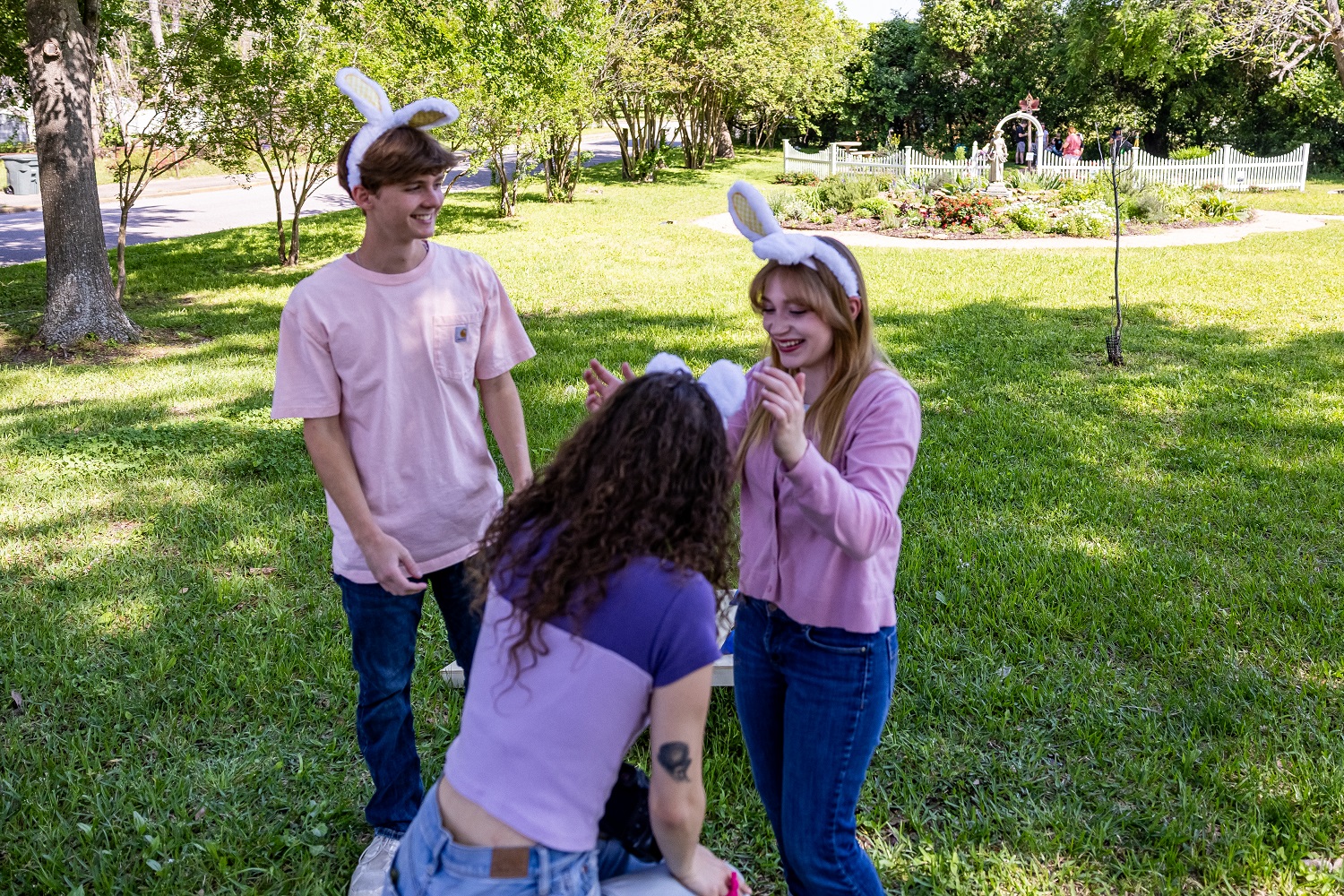
To make sure the games ran smoothly, a few volunteers even did a “test run” of the activities beforehand.
By 11:00 am, families began to arrive, and the children wasted no time jumping into the fun.
There was something for everyone: chalk, bubbles, hula hoops, jump ropes,
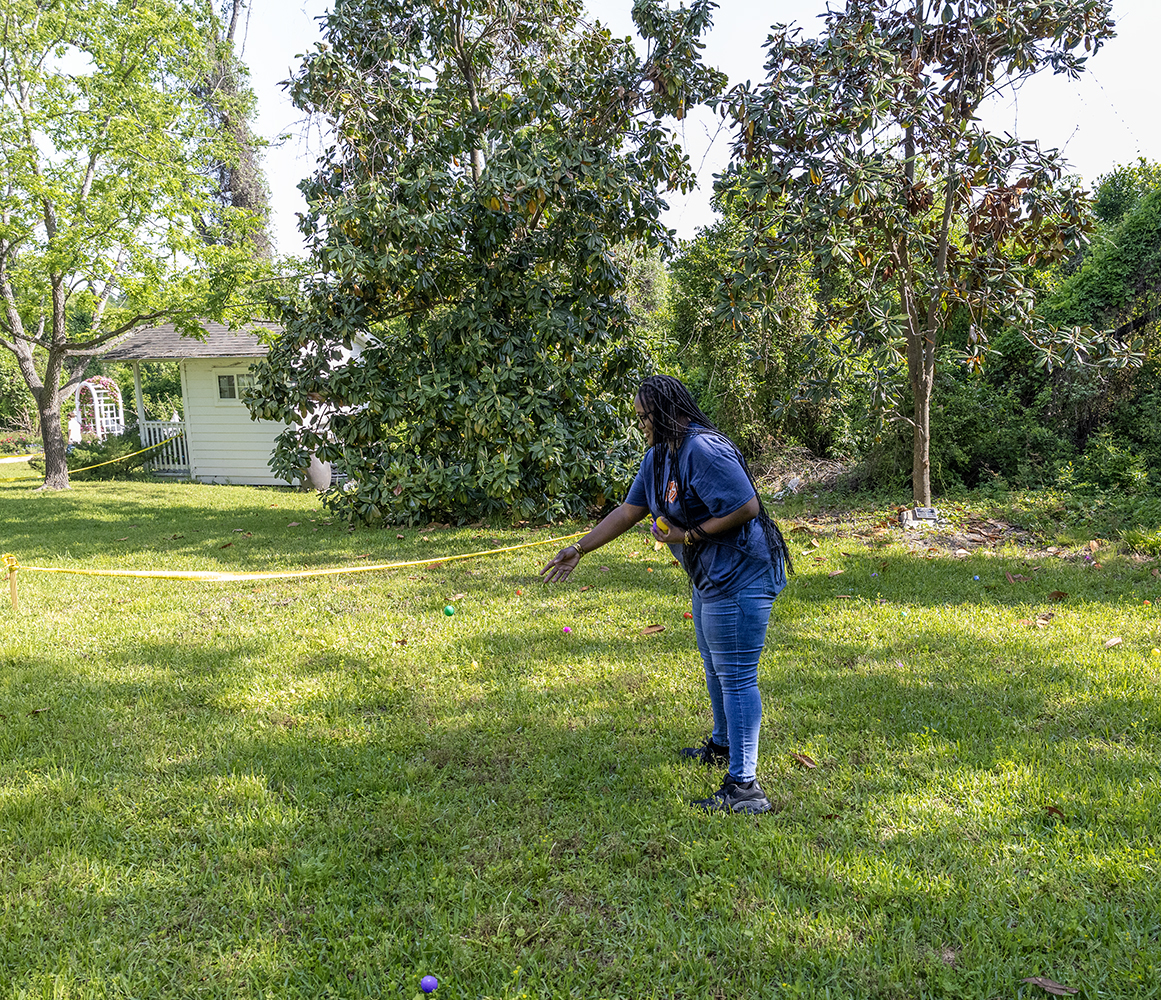
From cornhole…
Ring toss…
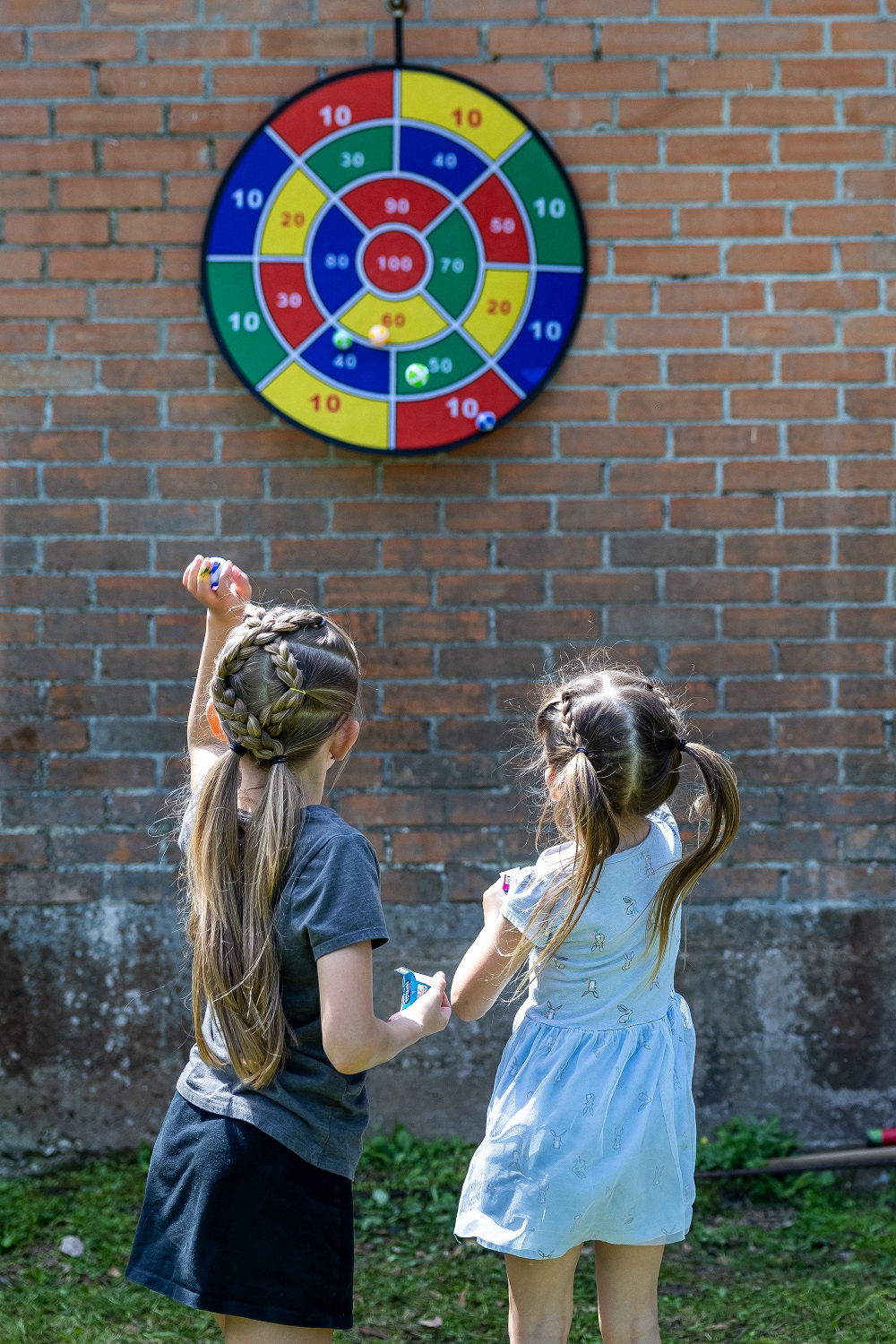
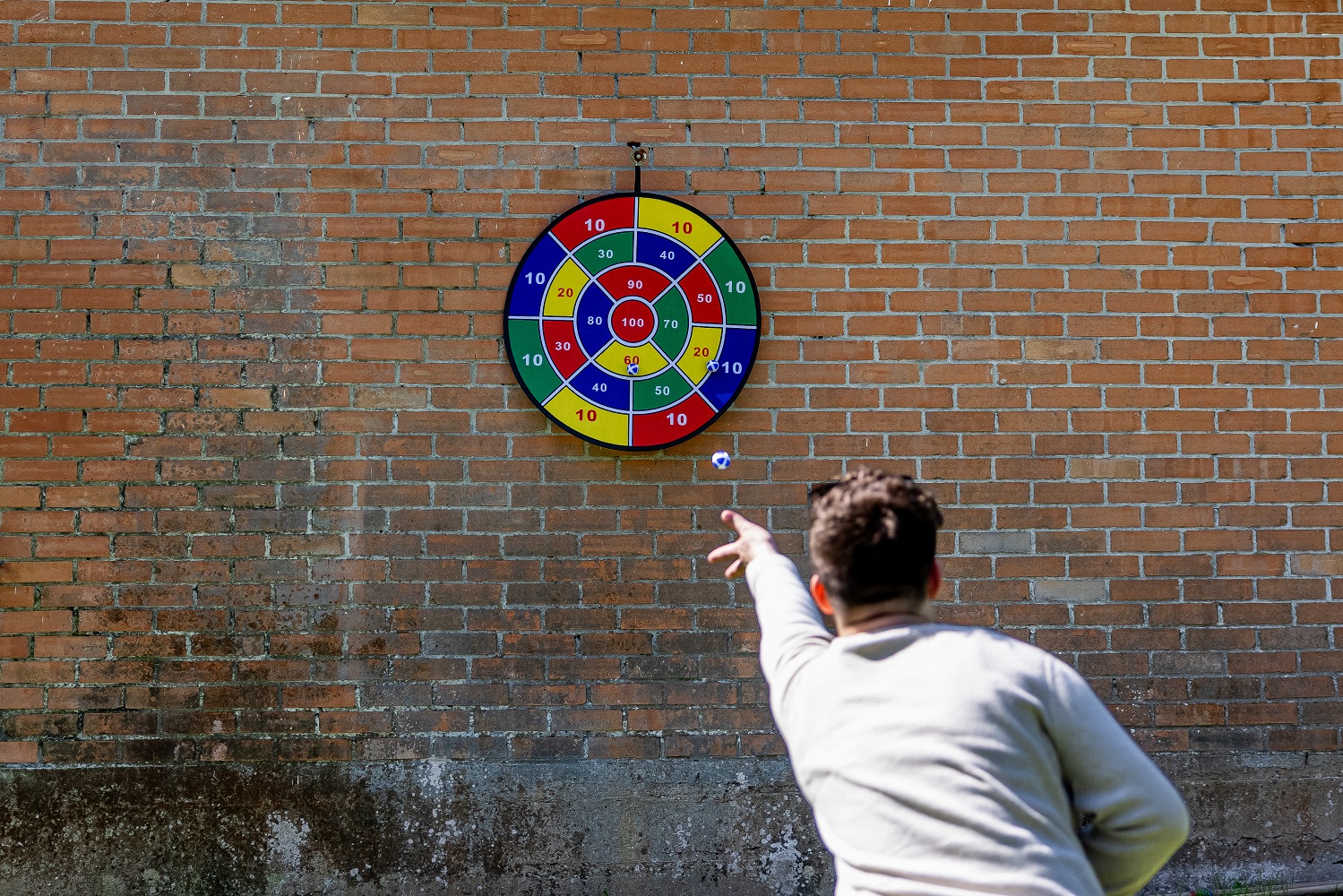
Velcro darts…
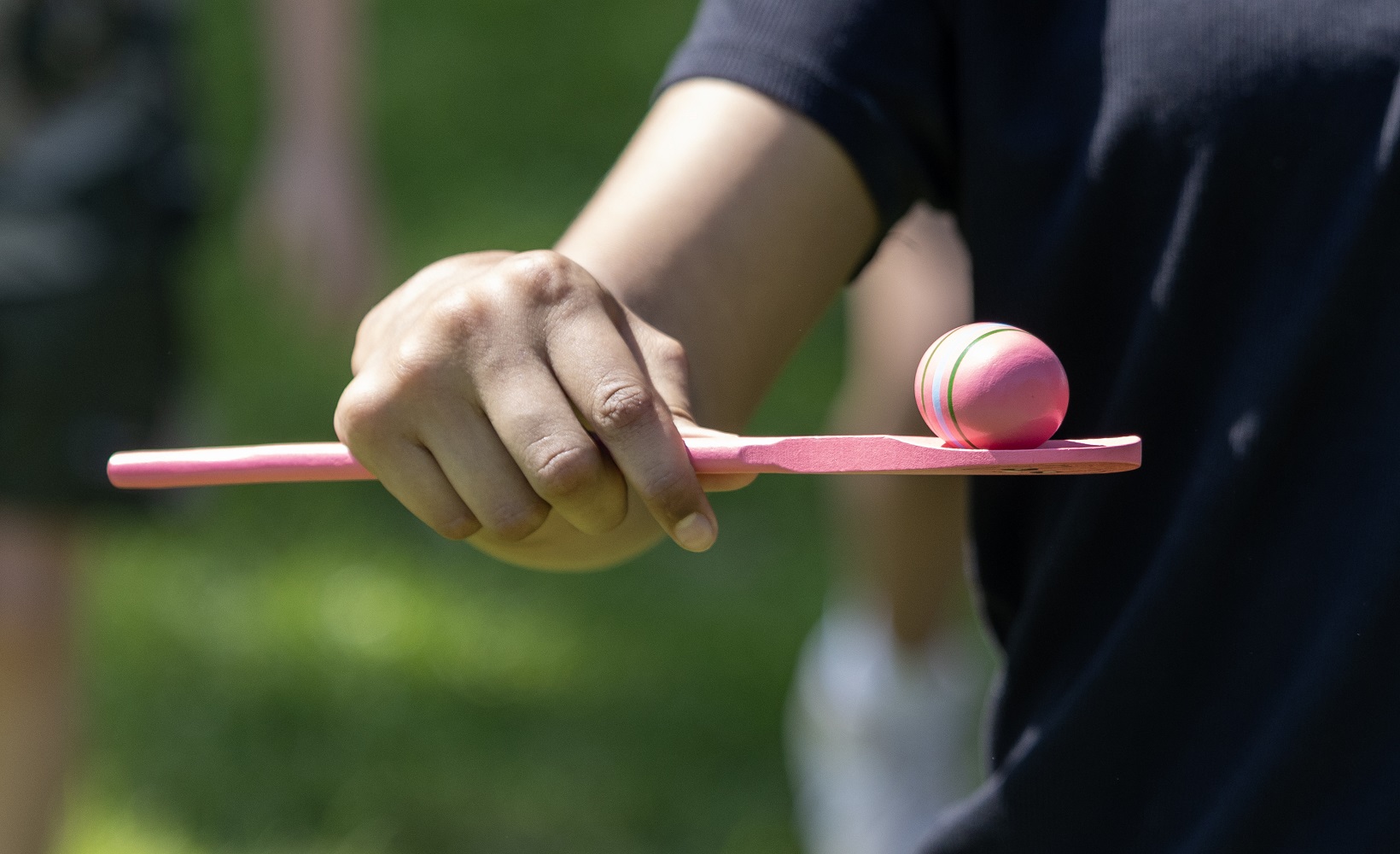
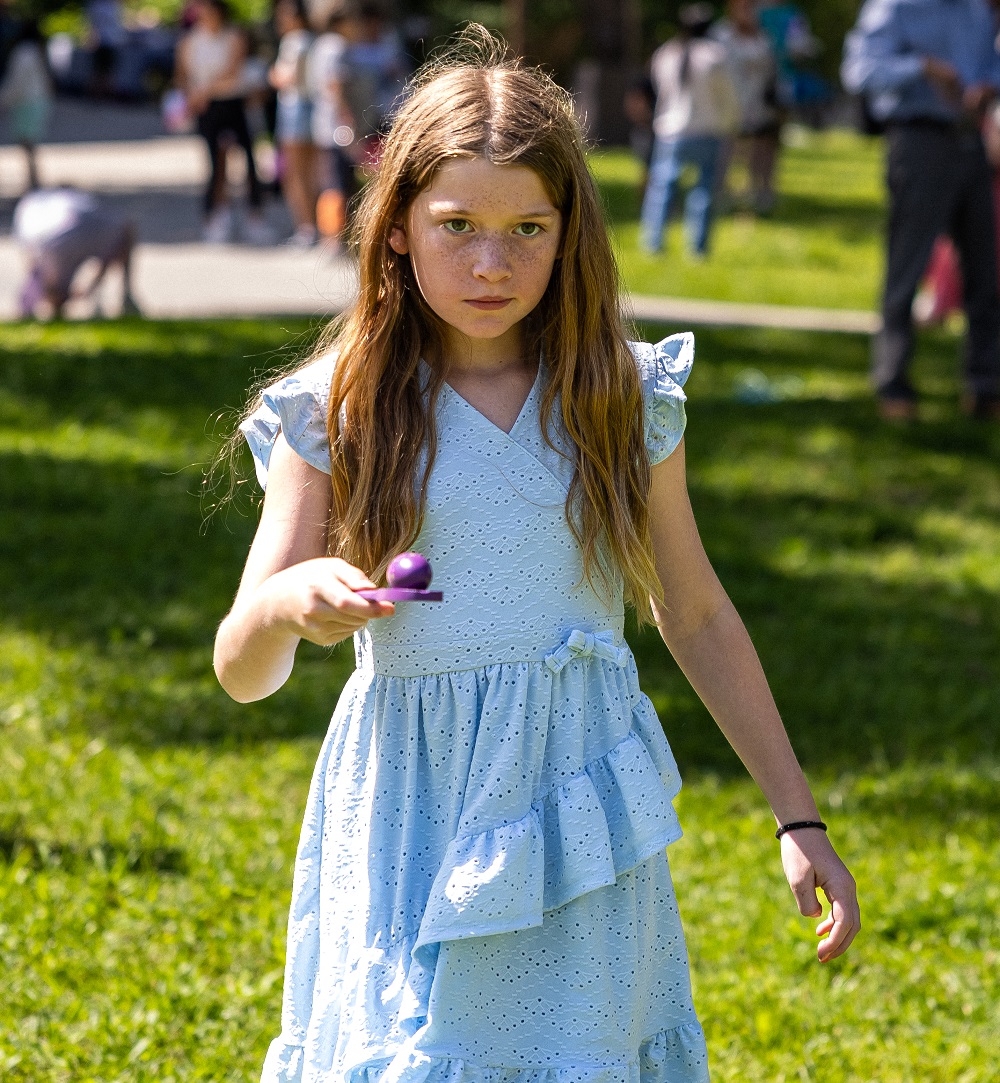
And the ever-tricky egg-and-spoon race.
This game is no easy feat, but that did not stop kids from giving it their all—even if it meant using a few creative tricks to stay balanced and win.
For those who preferred a quieter activity, the crafts table with Lois Stehlik and Nancy Ormsby offered a space to sit down and create something festive.
Not to mention, visitors could bring home their very own balloon art. Some opted for swords, while others wished for animals or flowers!
Then came one of the most anticipated moments of the day—the arrival of the Easter Bunny! Most children welcomed the Bunny with big smiles, hugs, and high-fives. A few were a bit unsure, but the Easter Bunny remained cheerful and kind throughout.
To fuel up before the big egg hunt, Stephanie generously prepared lunch for everyone—grilling around 200 hot dogs, served alongside chips and (hopefully not too messy) mustard and ketchup.
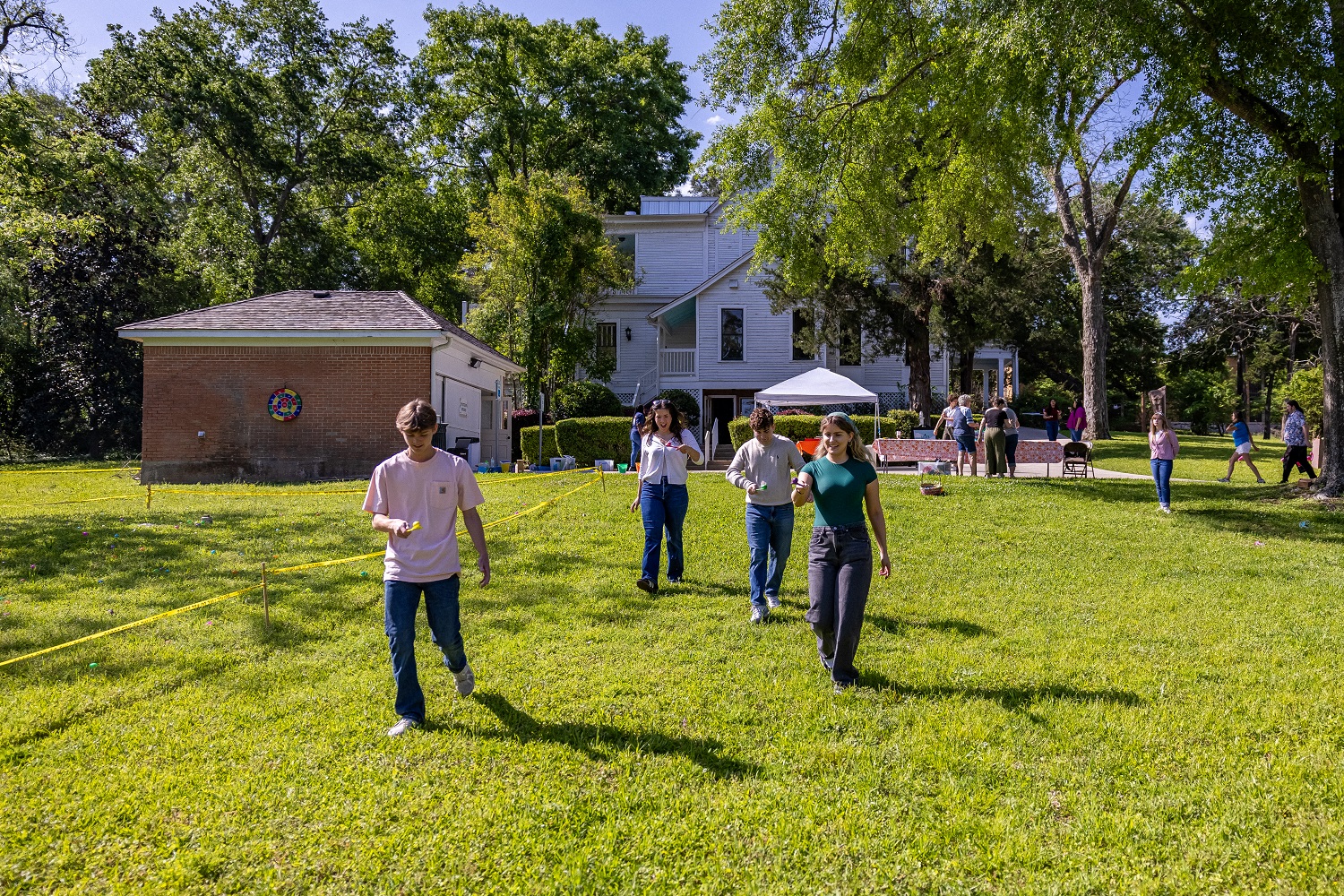
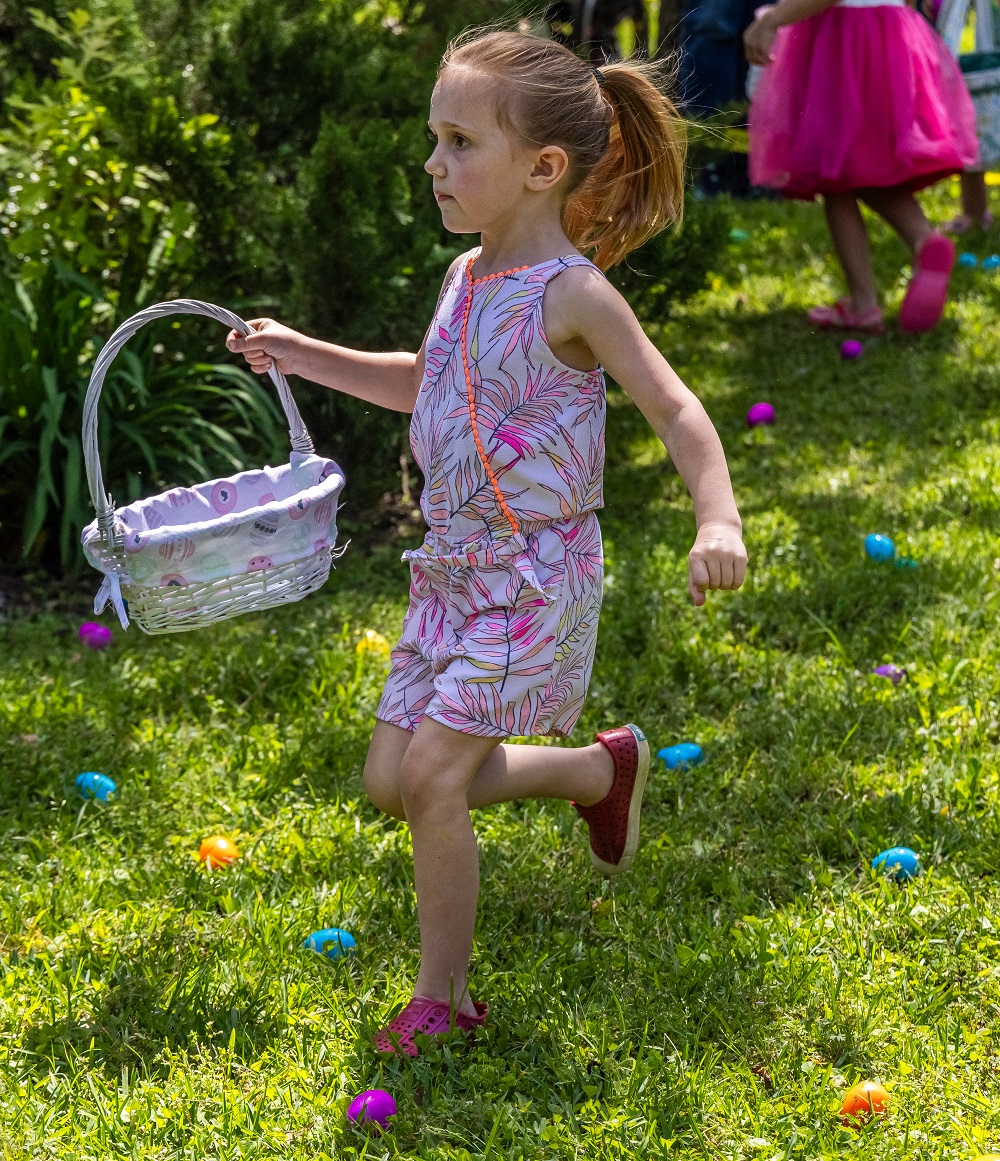
At 12:45 pm, it was finally time for the main event: the Easter Egg Hunt! Children were divided into two age groups—5 and under, and 6 and up. When the signal was given, kids took off running, eagerly scooping up eggs in every direction.
With 800 eggs hidden for the older group and 700 for the younger group, there were around 1,500 eggs in total—more than enough for every child to fill their basket.
Although the event officially ended at 1:00 pm, many families stayed afterward to play a few more games or proudly show volunteers the eggs they had collected.
The Easter Egg Hunt at the Wynne Home Arts & Visitor Center continues to be a heartwarming tradition that brings the community together for a joyful Saturday morning.
Michele Miller has spent over five decades documenting the world through her lens. Since beginning her photography career in the 1970s, she has captured scenes from across the globe, producing images that reflect both her technical skill and her keen eye for everyday beauty.
Her most recent exhibit, Canvasing the World, opened at the Wynne Home Arts and Visitor Center with more than 50 guests in attendance. The event, coordinated by Wynne Home staff members Angela Robinson, Andrea Howard, and Lauren Payne, welcomed community members for an evening of art and conversation.
A highlight of the exhibit was a display of Postcards Magazine issues, a local family-owned publication founded in 2009 by Karen and Wes Altom. Their son, Marshall Altom, has since joined the business, and the publication continues to be a staple in the Huntsville community. Miller has made a lasting contribution to the magazine, with 12 of her photographs featured on its covers.
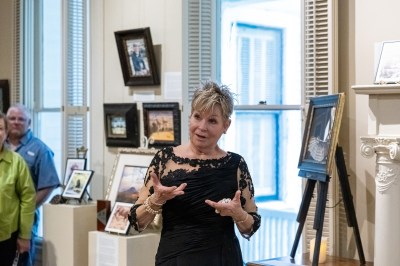
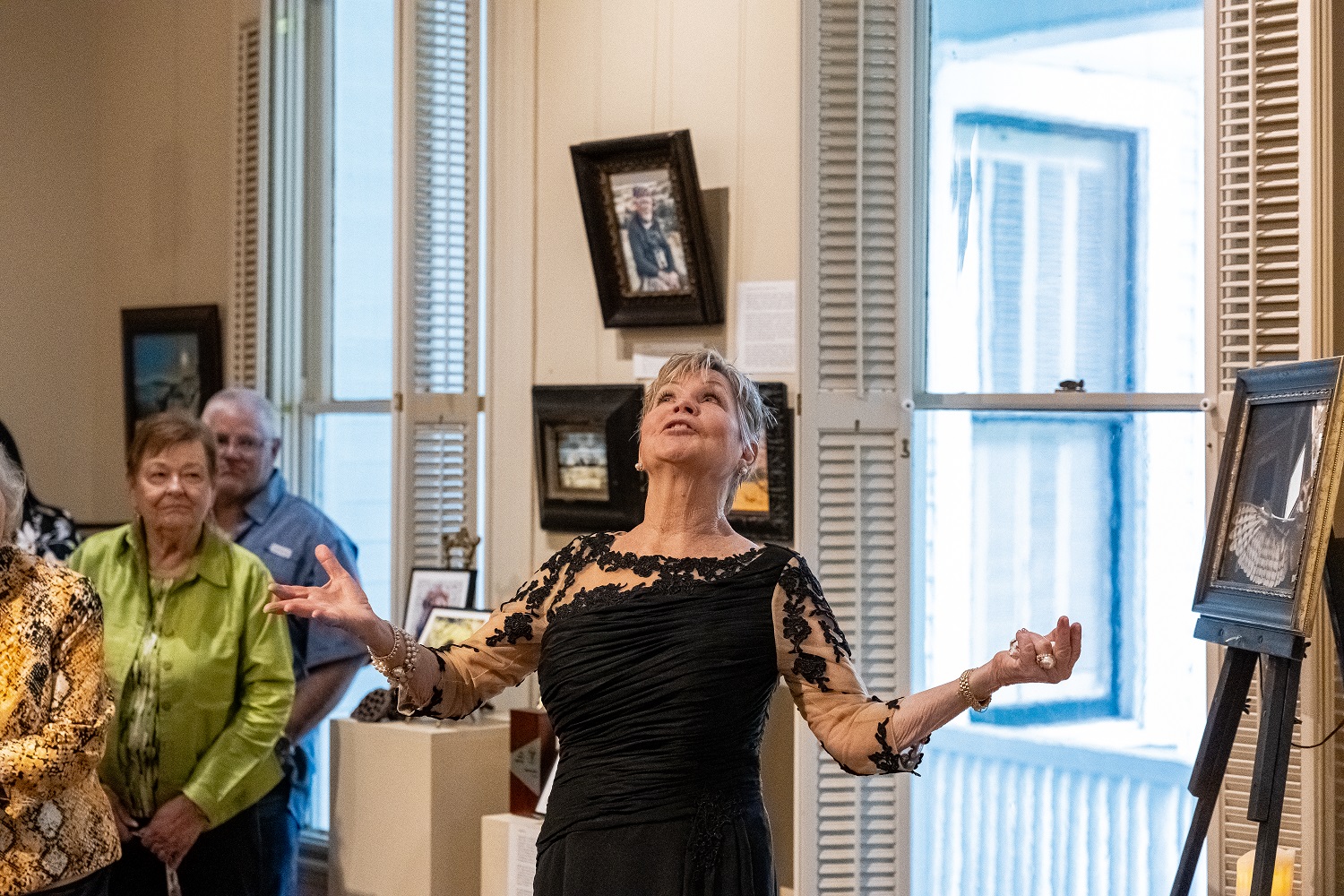
During her speech, Miller reflected on her time as a photographer, explaining how her photos often resemble paintings due to being printed on canvases. Though she once aspired to be a painter, she felt she could achieve the same artistic affect through other means, so she turned to photography as a way to express that vision.
She then shared some of the stories behind her most memorable works.
One such piece is her photograph of Kylemore Castle, located in the Connemara region of County Galway, Ireland. Originally built as an estate, the castle has served as a home for an order of nuns for the past 100 years.
Miller also recounted capturing an image of a rare lotus flower from West Lake in Hangzhou, China, noting how difficult it is to find such a bloom and explaining the specific conditions required for lotus flowers to thrive. To further immerse the audience in her experience, she even brought lotus seeds to show the attendees.
Olivia McCaughan, with Her Favorite Photo from the Exhibit
Another captivating story came from her Canadian polar bear photographs. Miller described a rare opportunity to step out of a vehicle and photograph the bears. While others in her group carried large firearms for protection, she remained focused on capturing the polar bears as they played with one another in the snow.
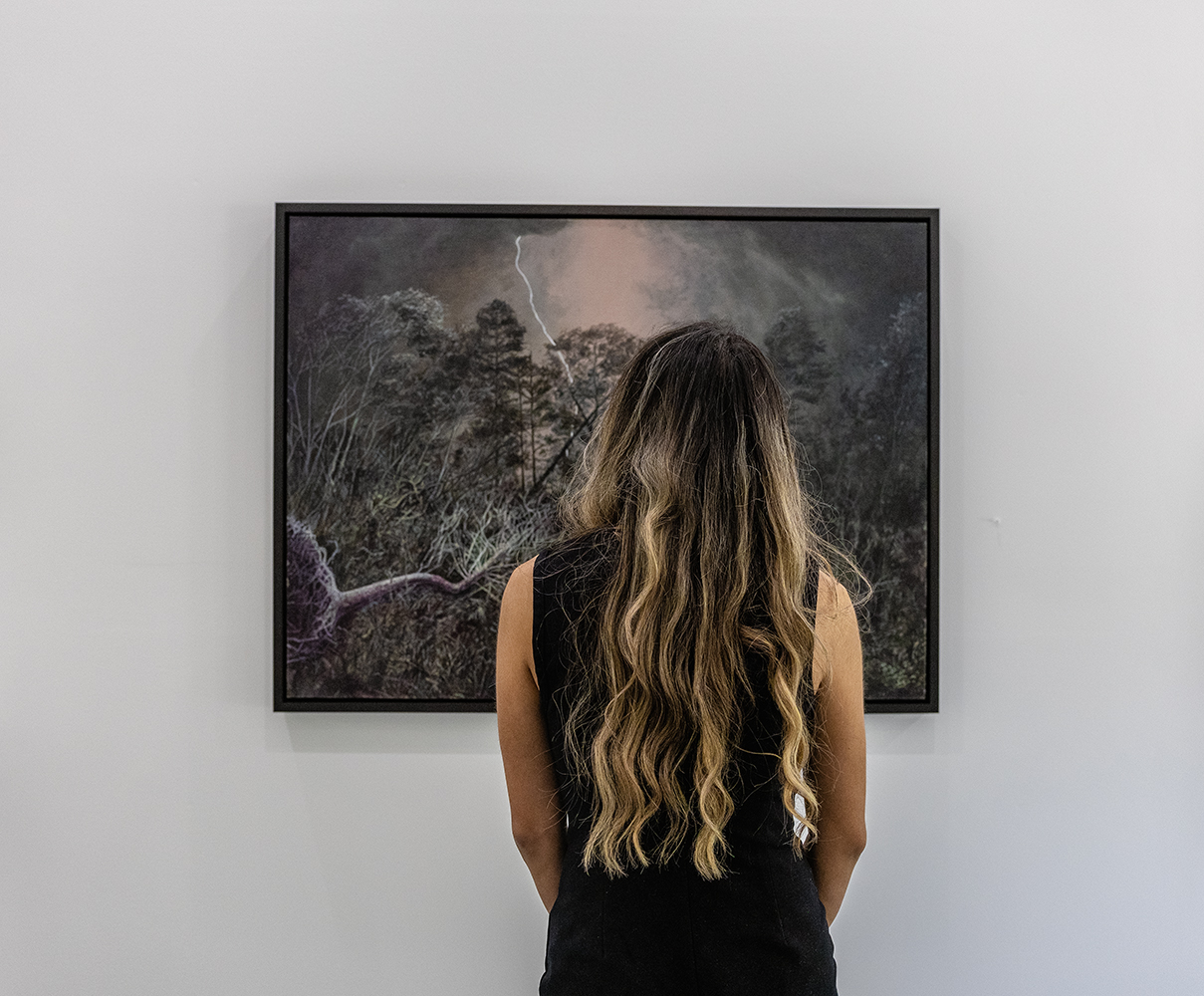
Other notable images in the exhibit included the northern lights over Ireland, a hawk from the Galápagos Islands, the Oldest Wrought Iron Bridge in Birr Castle, Ireland, and a close-up of the Texas State Capitol Dome.
LEAP Ambassador Michelle Moya with Her Favorite Photo from the Exhibit
Miller’s photography encourages viewers to pause and observe the world with intention. Her images, taken from years of travel and observation, reveal the quiet beauty found in distant landscapes and everyday scenes.
Nataly Elizondo with Her Favorite Photo from the Exhibit
Canvasing the World will remain on display at the Wynne Home Arts and Visitor Center through June, giving the community the opportunity to visit the exhibit if one did not have a chance to attend the opening.
LEAP Students with Photographer Michele Miller
Carbonero Rotisserie
Since 2009, Carbonero Rotisserie has introduced Huntsville diners to the tastes of Salvadoran and Latin American cooking. Situated on 11th Street, the restaurant draws not only local residents but also travelers passing through, offering a flavorful experience that highlights authentic dishes from across Latin America.
The menu at Carbonero’s is extensive, offering a variety of dishes that showcase the richness of Latin cuisine. Among the most popular items are pupusas, ropa vieja, and crema de camarón. With so many options available, it may be difficult to choose, but diners are unlikely to leave disappointed.
One standout option is Combo Plate #4, which includes one quarter of rotisserie chicken, a pupusa, and sweet plantains. A variety of pupusa fillings is available, allowing diners to choose what best suits their taste. Options include pork (traditional), chicken, shrimp, and vegetarian selections such as jalapeños, mushrooms, loroco, cheese, and beans.
Another noteworthy offering is the chaufa rice. This dish features a fusion of flavors with scrambled eggs, cilantro, green onions, and soy sauce. Guests can choose between chicken, vegetarian, or a combination of chicken, beef, and shrimp. The dish is served with a house salad, making it a well-balanced meal.
For seafood lovers, the Mariscada is a highlight. This rich seafood stew includes shrimp, mussels, clams, crab, and tilapia in a creamy broth infused with fresh herbs and spices. Its bold and satisfying flavors make it a favorite among returning customers.
Those seeking something familiar yet flavorful may gravitate toward the tacos al carbon. Offered with chicken, pork, beef, or shrimp, the tacos are served on corn tortillas and topped with sautéed onions, fresh avocado slices, and pico de gallo. Beans and rice accompany the dish, rounding out a satisfying and hearty meal.
Carbonero Rotisserie stands out in Huntsville for its commitment to authentic Salvadoran and Latin American cuisine. With a menu full of rich, flavorful dishes and a welcoming setting, it offers a memorable dining experience that keeps people coming back. Whether you are exploring Latin cuisine for the first time or looking for a familiar favorite, Carbonero’s is worth a visit.
3 Spoons Yogurt
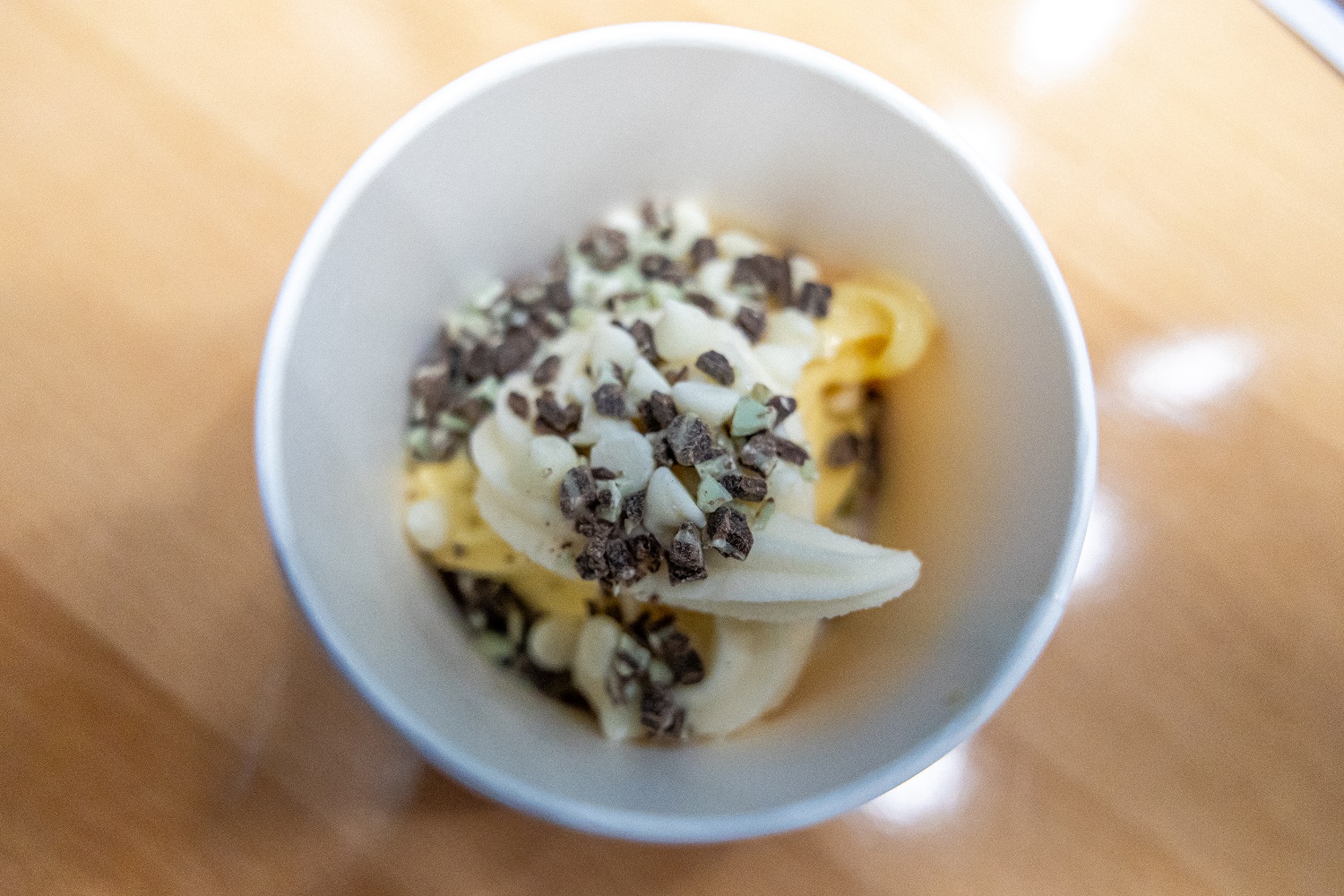
Next door to Carbonero Rotisserie is 3 Spoons Yogurt, a frozen yogurt shop known for satisfying the sweet cravings of Huntsville residents. It is a popular stop for a dessert or snack, whether after dinner, lunch, or in the middle of the day.
With a wide variety of frozen yogurt flavors and toppings, there is something for everyone to enjoy.
Among the customer favorites are cake batter; cake batter mixed with New York cheesecake; and strawberry and banana…
Whether you are finishing a meal at Carbonero Rotisserie or simply looking for a refreshing treat, 3 Spoons Yogurt offers a satisfying way to enjoy what Huntsville has to offer. With its multitude of flavors and casual (colorful) setting, it is a sweet stop worth making in Huntsville.

















































 Center for Law, Engagement, and Politics