Leaving Little Rock

Following a whirlwind tour of Little Rock and central Arkansas, it was departure day.  But before we left, we had a couple of sites left to see.

First, we did a quick photo op of the Capitol building…


Capitol_Ambassadors_2_Web

…where the LEAP Ambassadors visited (by unofficial count) their 18th state capitol building.  Bill Clinton’s office was here in the late 70s, most of the 1980s, and the very early 1990s.  They also have an interesting set of statues paying tribute to the Little Rock Nine and, in apparent contradiction, a monument to the confederate soldiers as well.

We chose to focus on the Little Rock Nine, so shortly after visiting the capitol we made our way to Little Rock Central High.  LRCH is the original school that the Little Rock Nine first attempted to integrate in 1957, and it is very large.

LRCH_Ambassadors_Web

It’s a humbling experience to stand where the Little Rock Nine stood.  They faced taunts, hatred, and ignorance and, in the process, made major progress for the country.

On the front of the school are four pillars, each representing a quality crucial to success…

LRCH_Ambassadors_2_Web

…ambition, personality, opportunity, and preparation.  Interestingly, these four qualities are also stressed by the LEAP Center, and that added an extra dimension of interest.

Spurred on by this interest, we went to the LRCH Musuem, located across the street.  This is a small museum, but it has an intimacy with its subject matter that makes for a compelling experience.

LRCH_Brian_Kaitlyn_Web

The Museum begins with an overview of the Civil Rights experience, which is described along the left wall.  Toward the rear of the Museum are videos with headsets telling the stories of each of the Little Rock Nine.

LRCH_Museum_3_BW_Web

Intriguingly, the video screens are facing Little Rock Central High, which brings the experience home with greater impact.  Even sixty years later, it’s difficult to listen to the turmoil that these heroes went through…

LRCH_Museum_Kaitlyn_Karla_Phones_Sad_Cropped_Web

The right side of the Museum is dedicated to other civil rights struggles…

…..LRCH_Museum_Alex_Web

…and the center of the Museum is a fairly in-depth story of the integration of Little Rock Central High.

LRCH_Museum_9_ BW_Web

They give an overview of the events, with video of Eisenhower discussing the importance of the rule of law, as well as journalists and the original Little Rock Nine looking at these events retrospectively.

LRCH_Museum_8_BW_Web

It captivated our group.

We ended the tour with a film from 1964, which was shown to foreign audiences and detailed the experiences of the Little Rock Nine six-seven years after the integration.

LRCH_Film_3_Web

It was interesting to learn more about the integration process, and also interesting to see how these events were presented in the mid-1960s.

The LRCH is a can’t-miss site in Little Rock, in a City that is full of fun and interesting attractions.  It was a sobering but fitting way to end our trip, and our departure was made more acceptable knowing we’d be making a return visit in July.

Ambassadors_Little_Rock_1_Web

Arkansas PSA: Little Rock and Monticello

The first two days of exploring Little Rock were filled with adventure and knowledge. However, our adventures were not yet complete. Even after a fully loaded two days in the state, we continued on to the Arkansas Political Science Association Conference in Monticello, setting out at about 6am to make the 1.5 hour trip.

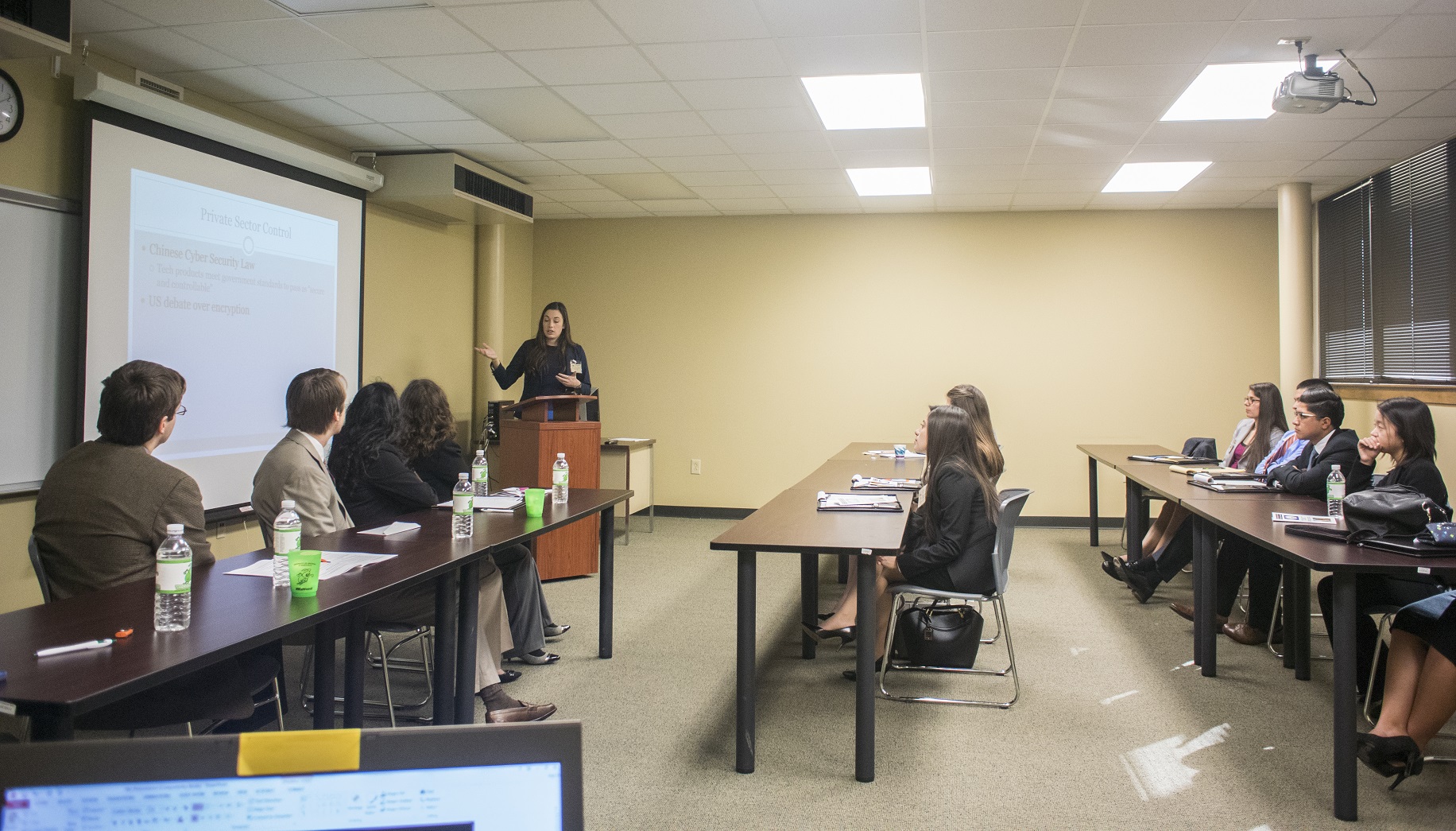
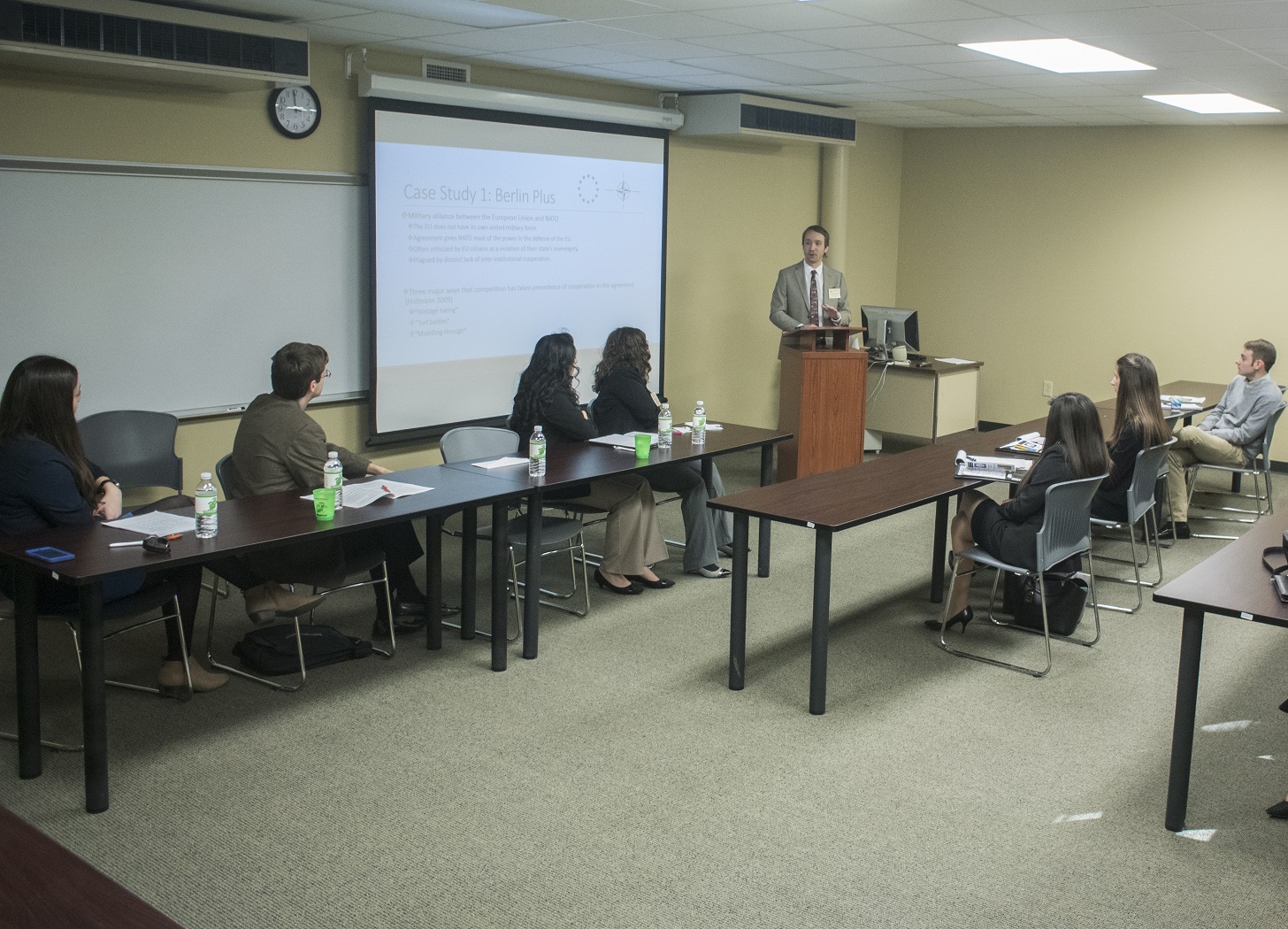
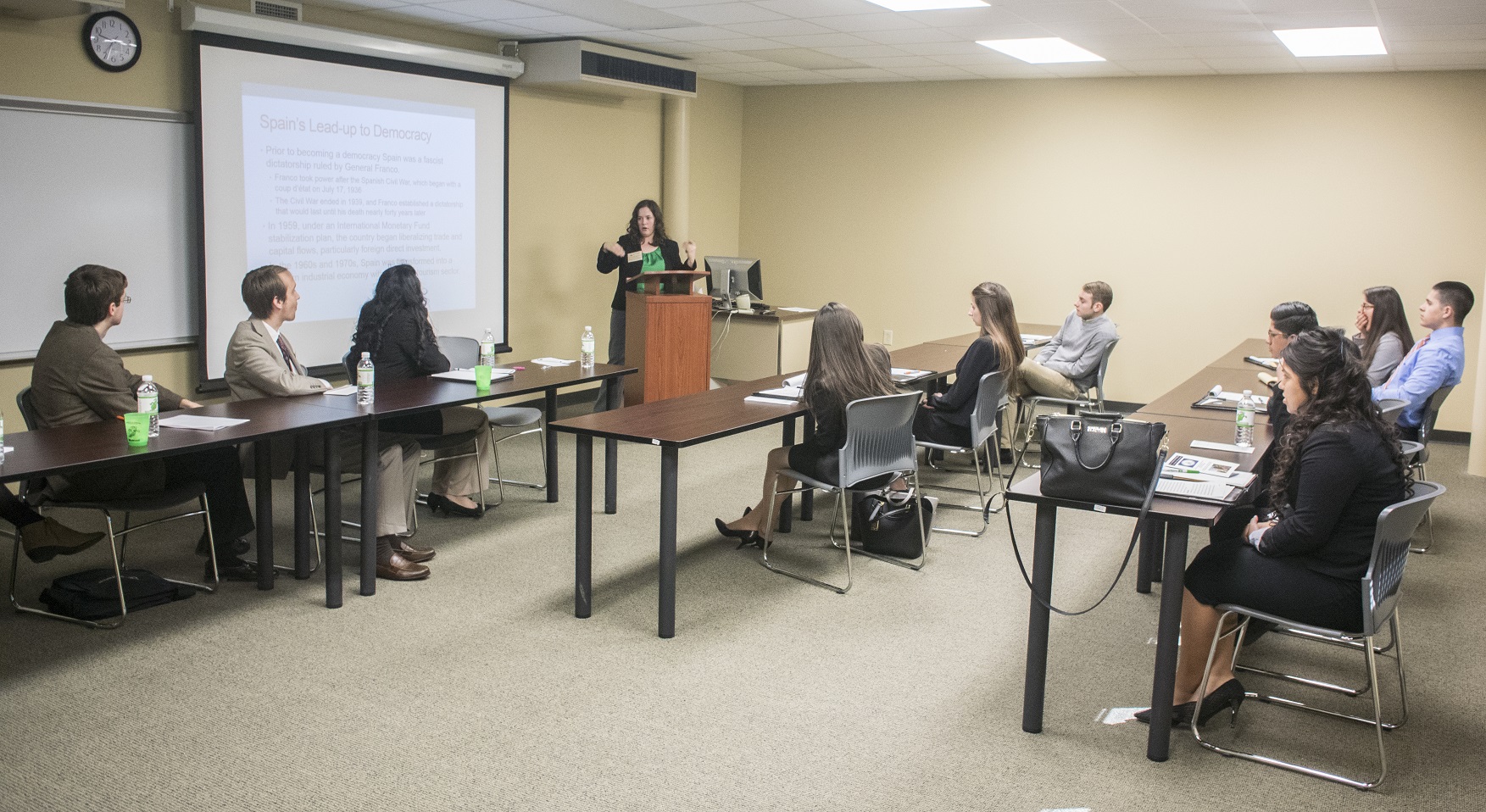
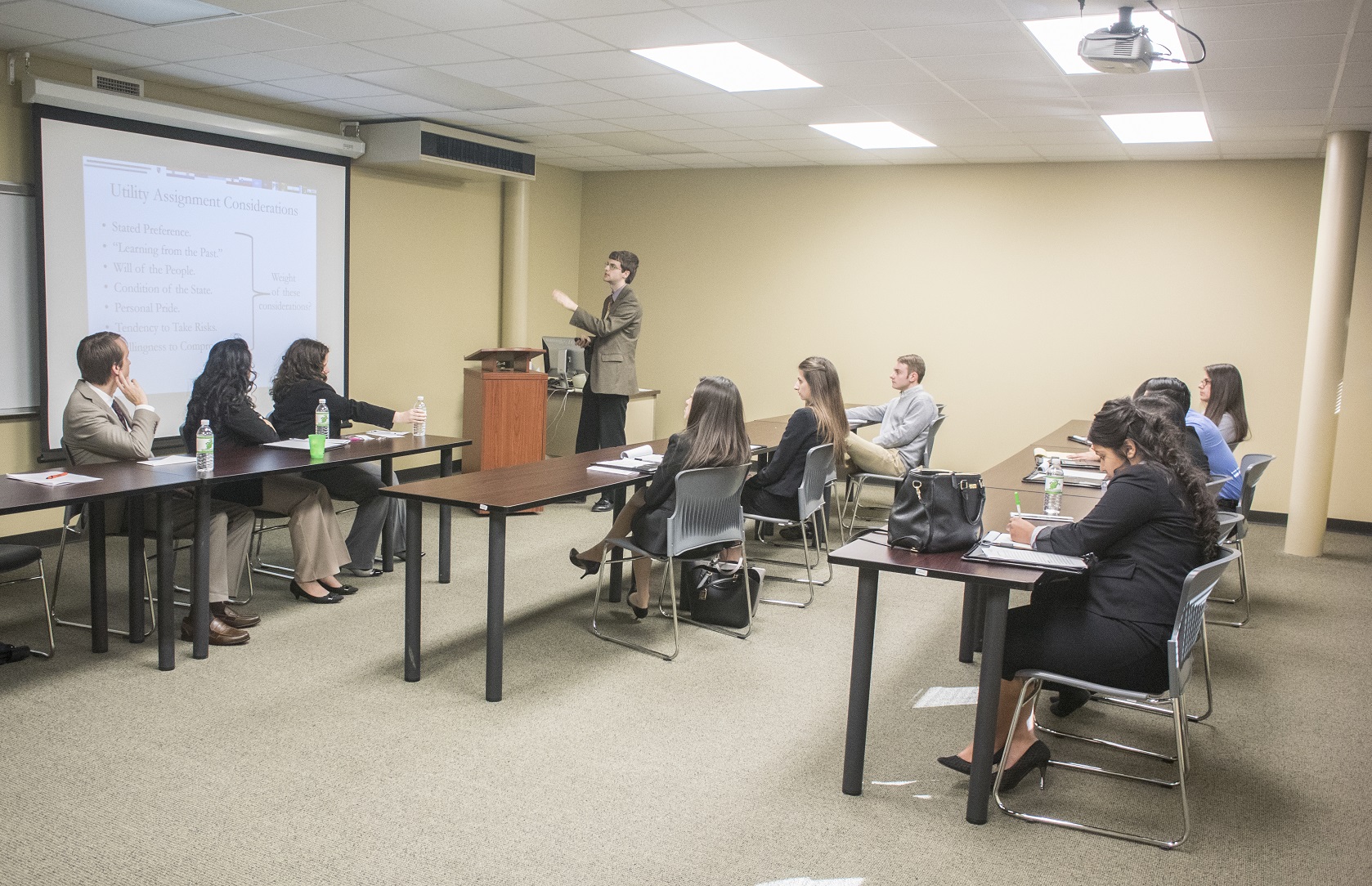
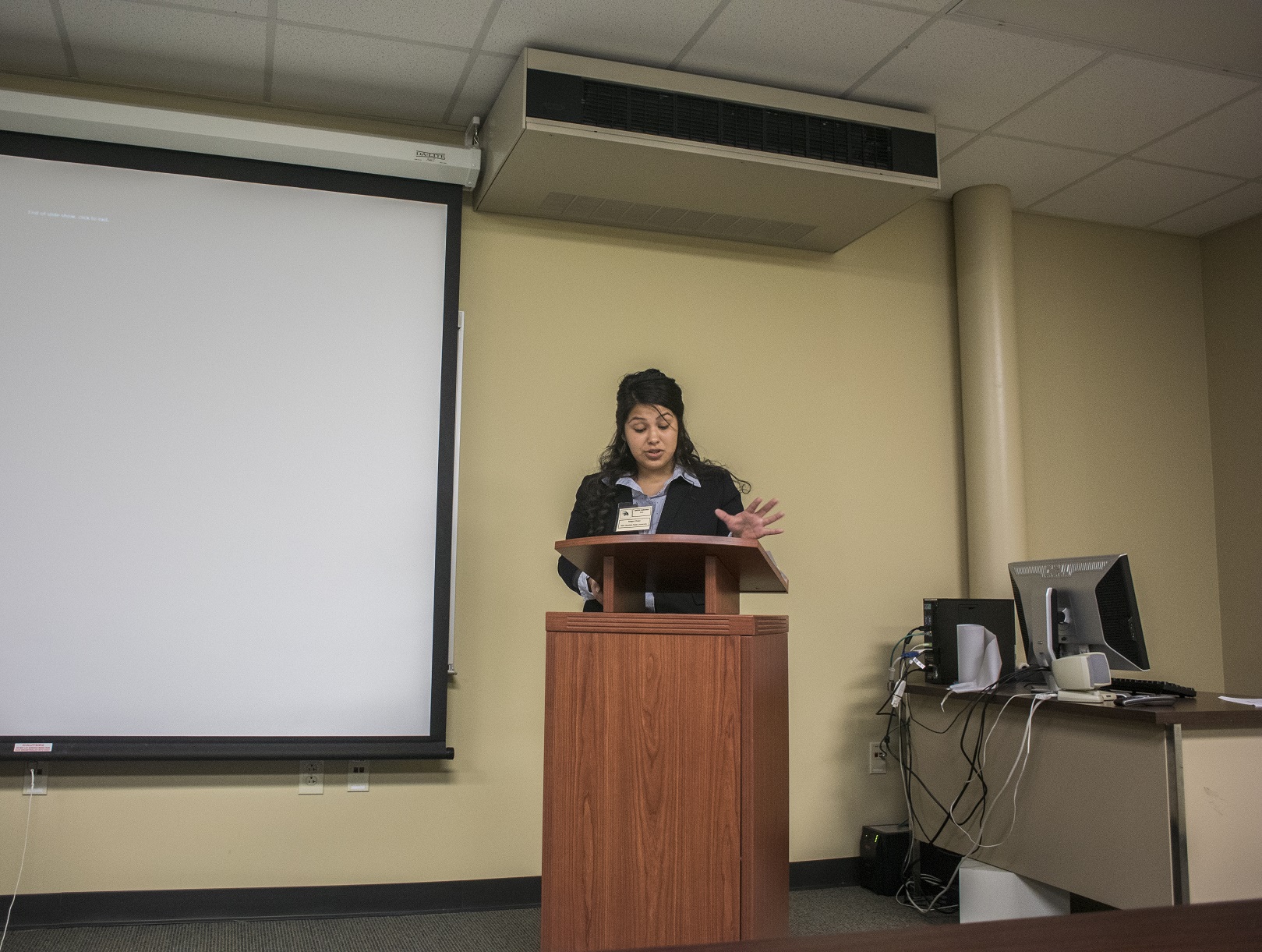
At the conference our very own Professor Yawn served as a discussant for the Undergraduate Research on Public Policy panel and later presented his own research. We were also excited to be there to support our fellow LEAP Ambassador Megan Chapa, who would later present her research paper on “Maquiladoras, NAFTA and their Consequences.” Upon our arrival we were graciously welcomed by Dr. Strong and the staff of the University of Arkansas at Monticello, then made our way quickly to the room where Professor Yawn’s panel discussion would be. The panel room was a cozy fit, much like any classroom you would find on campus at Sam Houston.  This made the presentations of the research  engaging and a personal. Subjects of the research ranged from the cyber security in the United States by Shannon Abbott…

Presenting_Shannon_Abbott_Web

…to the study of multi-lateral agreements by Nicolaas Harrington…

Presenting_Harrington_Web

…to the development of Spanish democracy by Sarah Phillips…

Presenting_Sarah_Phillips_Web

to the study of game theory by William O’Brachta…

Presenting_Obrachta_Web

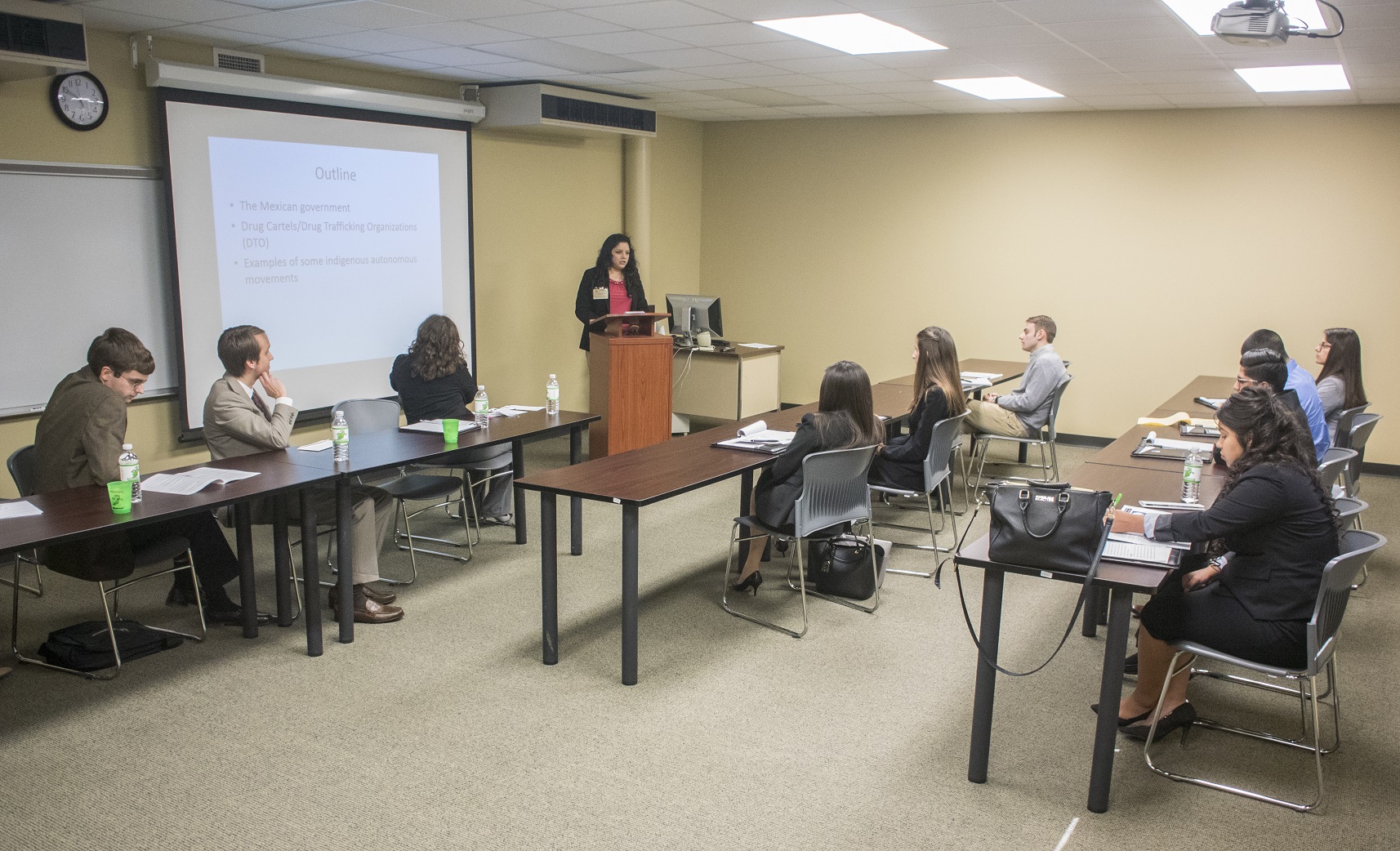
…to an examination of indigenous autonomy by Emily Mendiola…

Presenting_Emily_Mendiola_Web

Watching other students in the political science field present research encouraged and energized the students of LEAP to one-day present research at future conferences nationwide.

After sitting in on an undergraduate discussion panel on public policy, chaired by Professor Yawn, we waited for Megan to present her research on the impact of NAFTA on the social and economic status of Mexican “maquiladora” laborers. As part of an American Politics panel, Megan presented research alongside four other passionate undergraduate students.

The panel was chaired by Karen Sebold, a professor of public policy at the University of Arkansas at Fayetteville, whose responsibility during the session was to direct the presentation of everyone’s research papers and lead the discussion in regards to the papers after the presentation of every student.

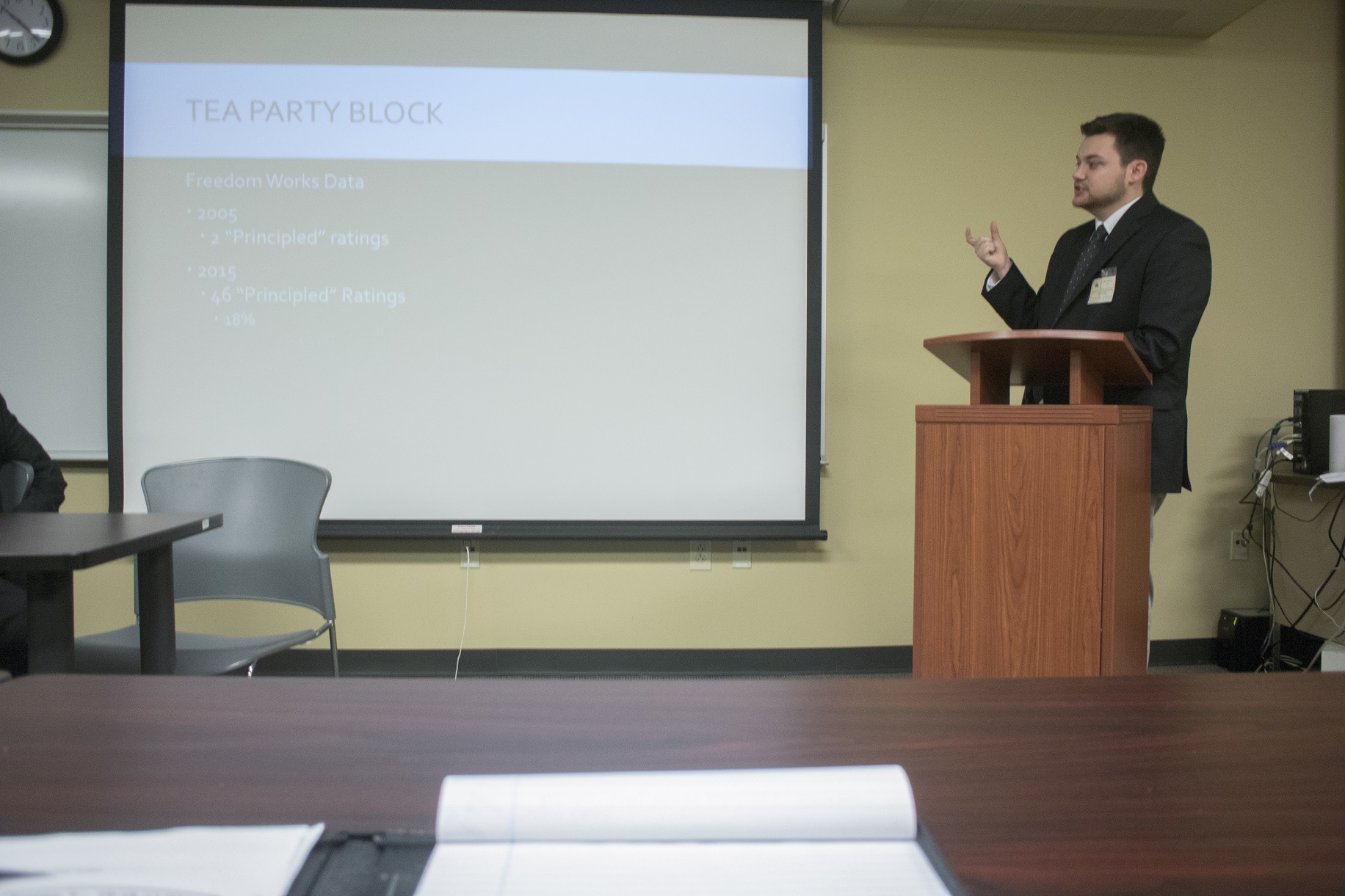
The session began with a presentation on the Tea Party’s influence on the current Republican Party. With a most timely topic in regards to our political atmosphere, Tyler Harrison of the University of Arkansas at Monticello offered an in depth analysis of the Tea Party’s freedomworks rating system.

Presenting_Tyler_Harrison_Web

Followed thereafter Robert Fletcher, also a University of Arkansas at Monticello undergraduate student, presented his paper on the benefits of promoting bicycle friendly road policy that could stimulate the economic and social prosperity of a small community’s transportation system.

Presenting_Robert_Fletcher_Web

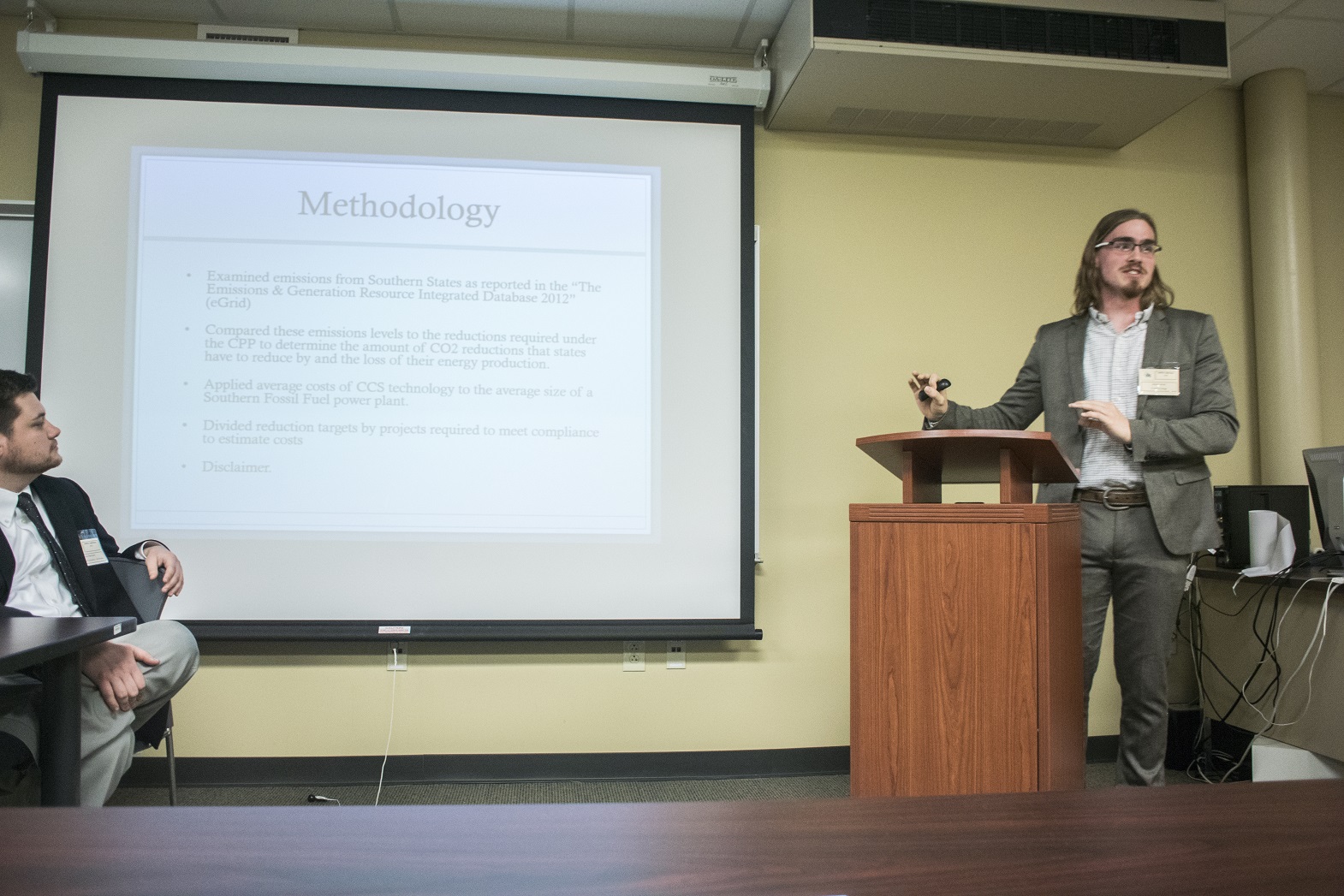
As the third student to present, Jolyon Larson of Hendrix University provided his thesis on the best way for waste plants to cut down on harmful emissions.

Presenting_Joylon_Larson_Web

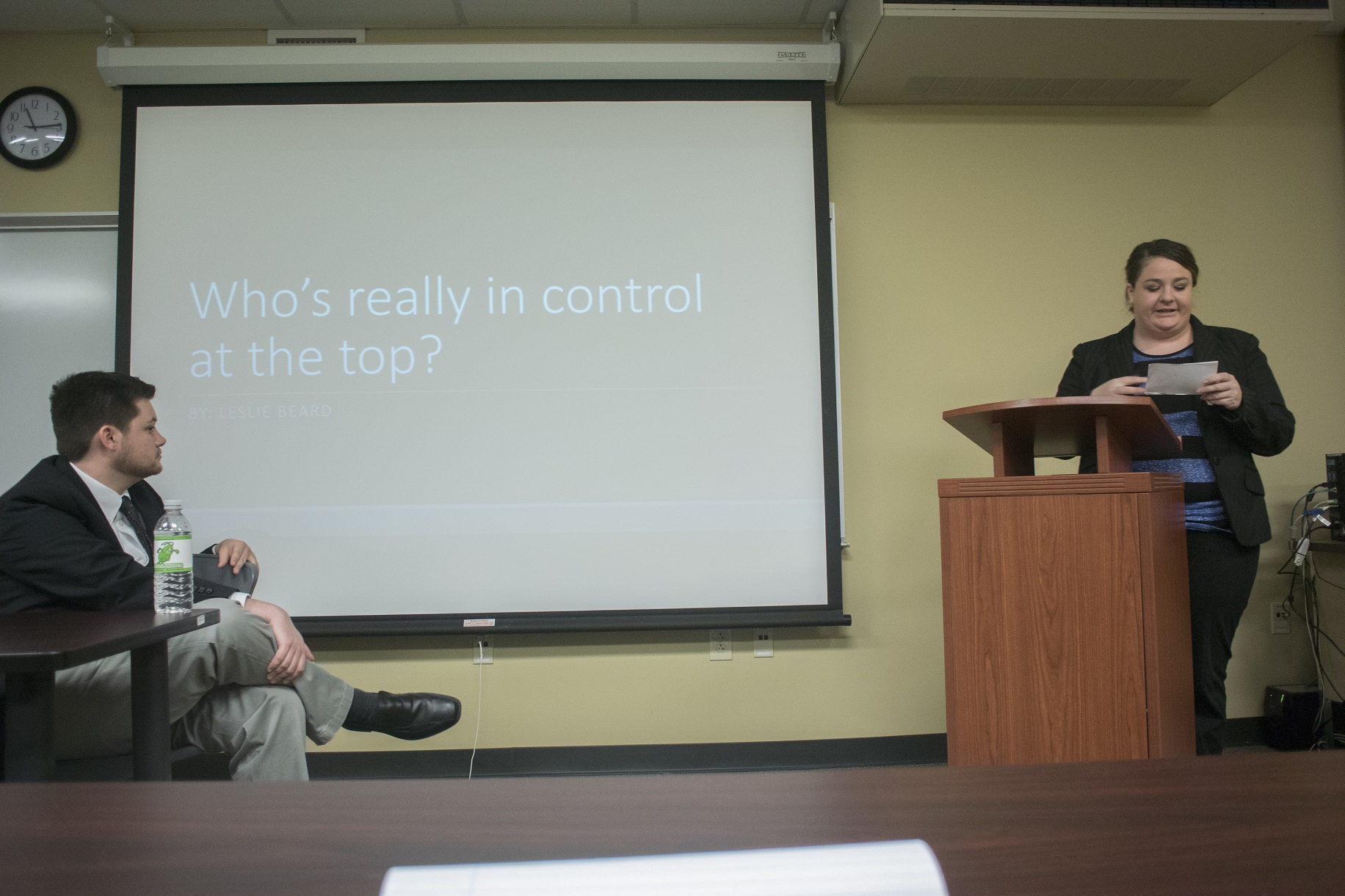
Lastly, Leslie Beard of the University of Arkansas at Monticello expressed her fears regarding our nation’s political structure in her paper “Who’s really in control at the top.”

Presenting_Leslie_Beard_Web

With Megan as the fourth presenter in the panel, we attentively clung to every word of her research on Mexican social issues presented by NAFTA. She focused on the exploitation and harassment of women maquiladora workers, the environmental violations of these industries, and the widespread human trafficking encouraged by these multinational agreements.

Presenting_Chapa_1_Web

It was clear that her, and all the other panelists, were passionate about public policy and a more successful government structure. The conducted research in each presentation was further example of what passion for a noble cause can yield.

We also got feedback from Megan, who presented at her first conference:

I was nervous, but nonetheless confident and excited to represent SHSU and the LEAP Center at the conference. Before our panel began, our discussant informed us that another student had joined our Undergraduate Research Panel and that our presentation time would be cut short by about 5 minutes. I was more nervous about going over my allotted time because I had prepared my presentation to be 15 minutes. I was scurrying through my paper trying to take out 5 minutes of information that wouldn’t take too much away from my research. What I enjoyed most was the constructive criticism I received from my discussant, Dr. Sebold of University of Arkansas-Fayetteville. She was helpful in providing suggestions that will improve the research I am working on. I am thankful for the opportunity to expand my horizons outside of home (Texas) and meet students who are striving to make a difference in the political arena.” -Megan Chapa

We all agreed that this chance to support our fellow LEAP ambassador’s passionate delivery was worth the limited sleep.

The ArkPSA topped off the conference with a lunch and presentation by John Kyle Day, who presented his work on Civil Rights in Arkansas, particularizing on the Southern Manifesto.

Presenting_John_Day_Civil_Rights_Web

It was interesting research and, although we didn’t know it at the time, we would hear echoes of his research the next day, when we visited the Little Rock Central High Museum (see tomorrow’s blog!).

Following the conference in Monticello, we drove back to Little Rock to do some shopping before our adventurous Segway tour. We took the opportunity to explore some of the quaint shops near the River Market and downtown area.

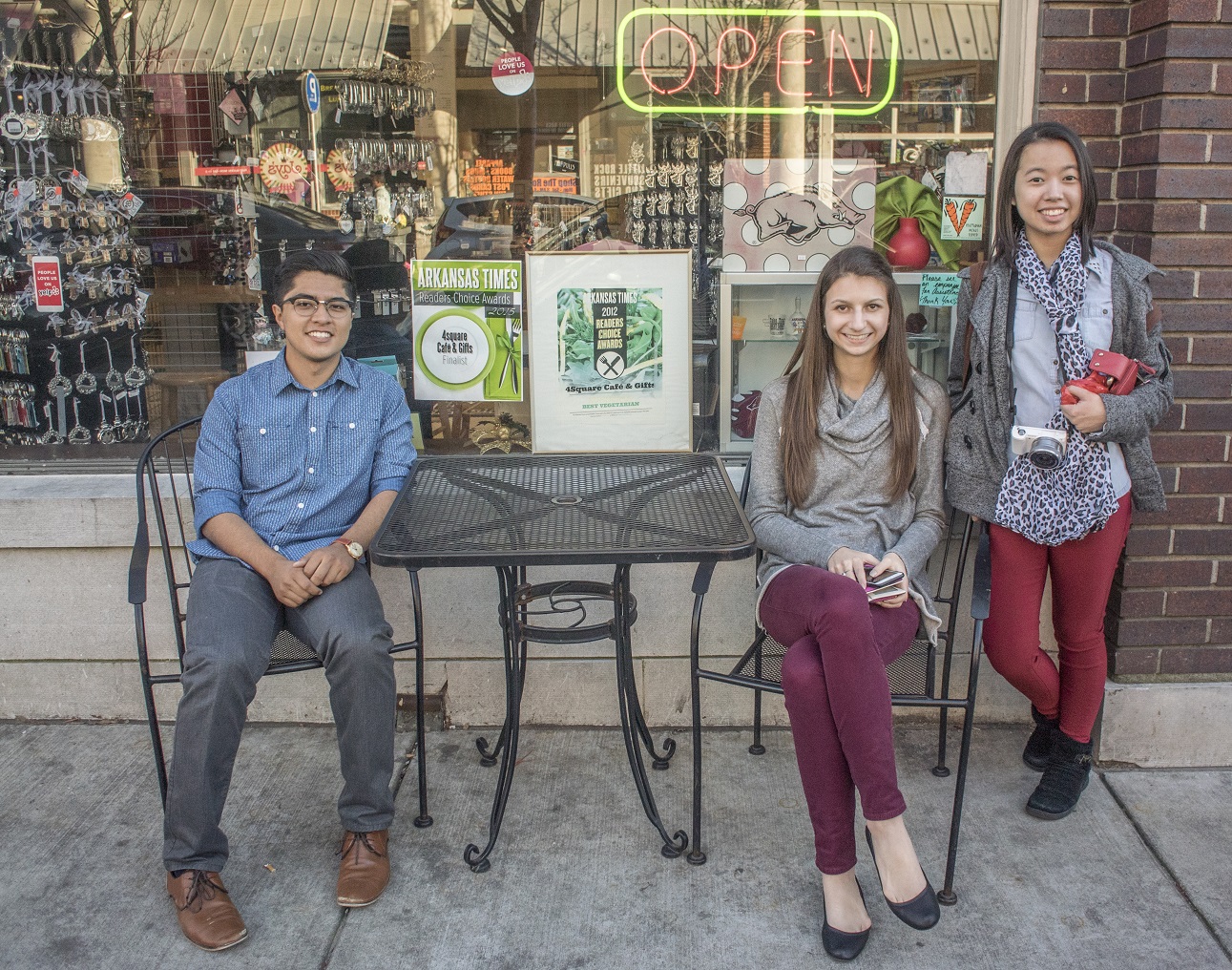
Aldaco_Tyra_Abril_Web

Visiting the local shops, we wandered through shops such as The Freckled Frog, Discovery Museum Gift Shop, and 4Square Café and Gifts. We enjoyed browsing through the shops, but eventually ended up at one of our favorite places, the River Market!

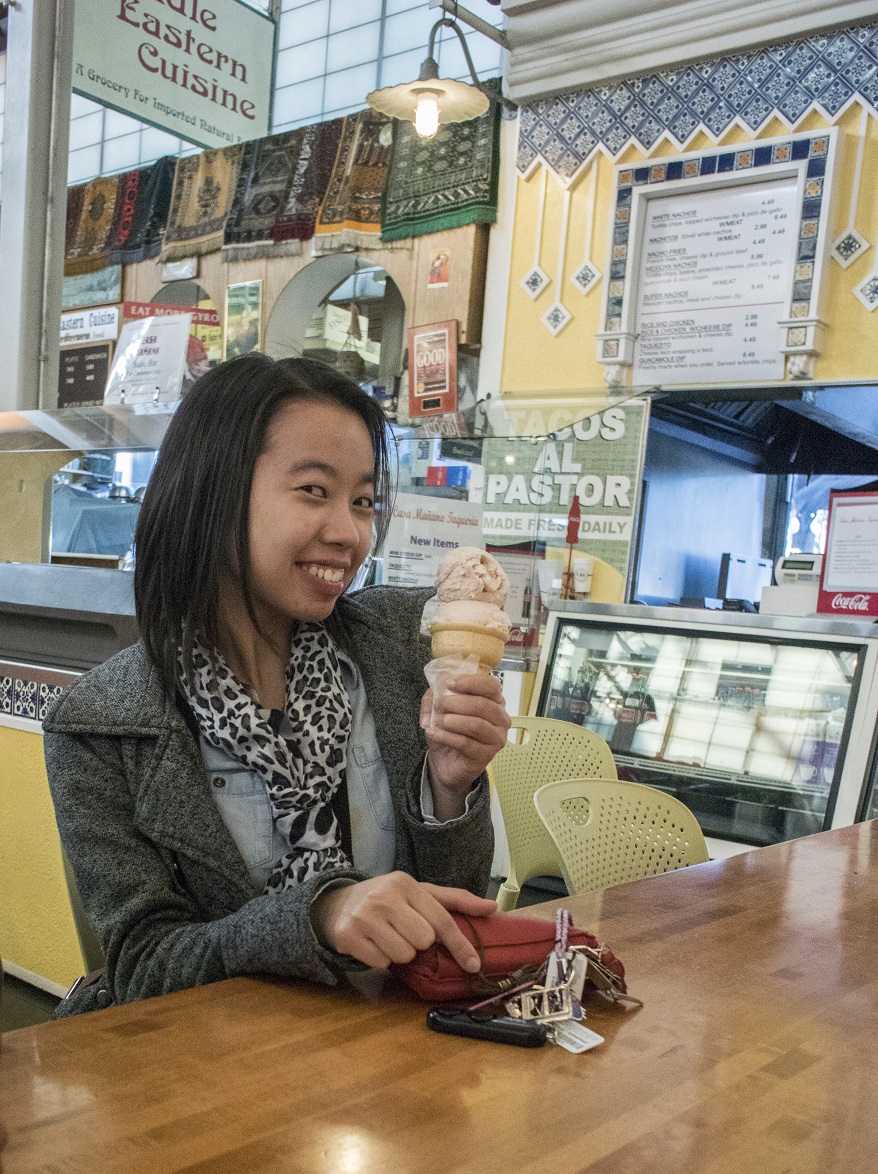
Abril_Ice_Cream_Web

The group refueled with a small snack before heading off to our Segway tour of Little Rock!

We were excited to continue touring more of downtown Little Rock, but this time we were on a Segway! Most of the group have had some experience with riding segways – actually, all except me (Bella Abril), and the others were quick to get with the program…

Karla_Alex_Teamwork_Web

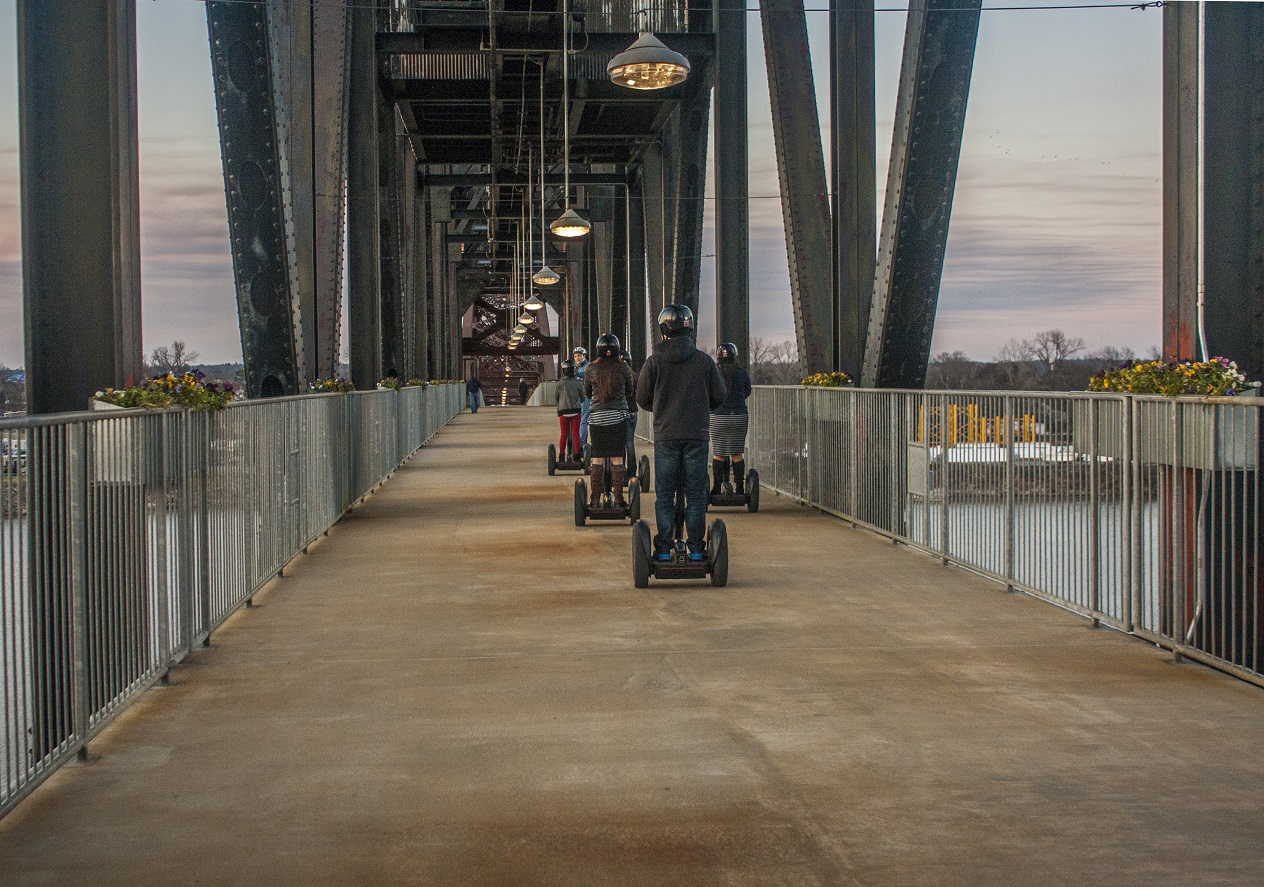
As clumsy as I am even with just walking, however, I was a bit hesitant on trying it out at first. I was scared I would embarrass myself by falling on my face. However, our Turkish tour guide, Nez Erkman, trained us in such a detailed manner with much emphasis on safety that I found myself easing up. Plus, seeing everybody ride it so calmly gave me confidence that maybe I could do the same. Thankfully, I did! The first step was the scariest part, but the rest was exhilarating. Throughout the tour, we were able to segway through The Clinton Bridge…

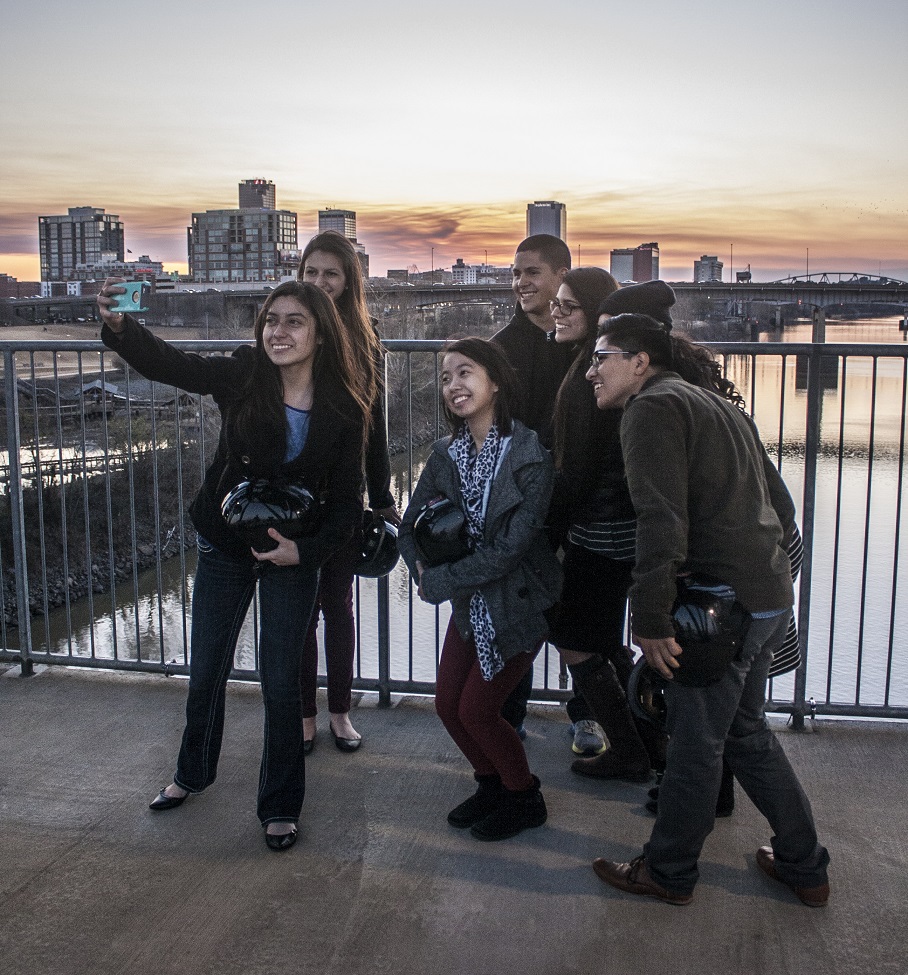
Segway_Bridge_Web

…which held a nice view of the sunset…

Segway_Bridge_Sunset_2_Web

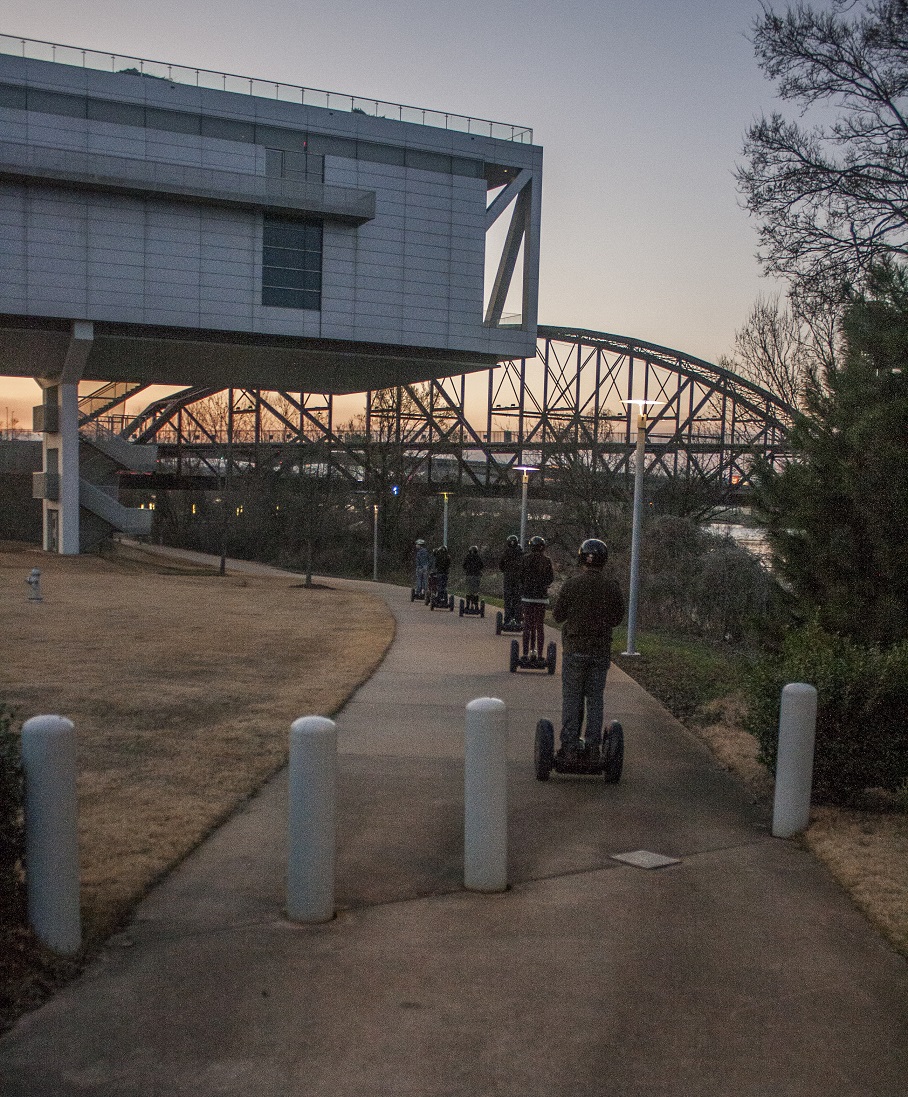
The Clinton Presidential Library…

Segway_Clinton_Library_River_1_Web

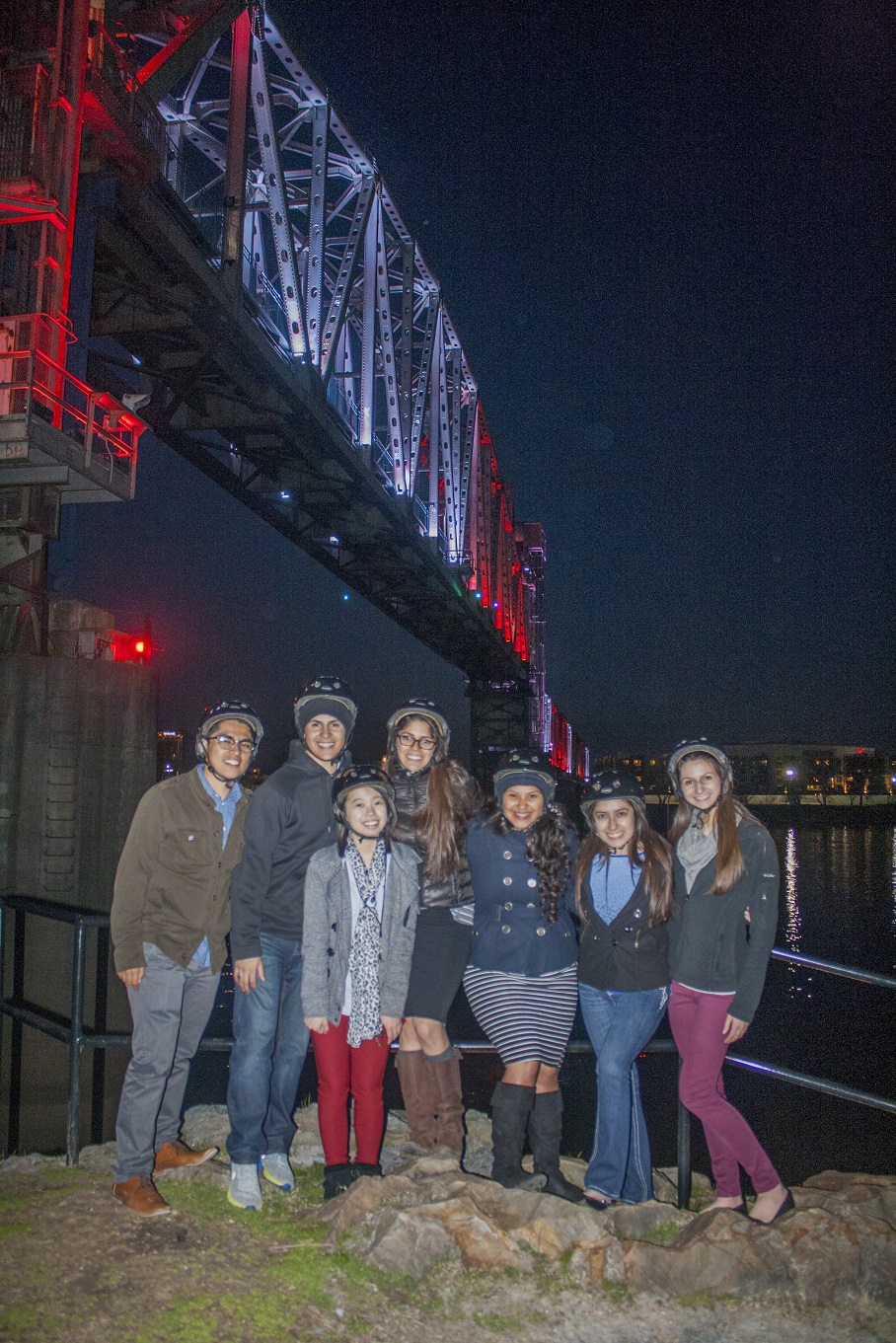
and Heifer International. Also, we passed through the Riverfront Park, where we were able to take pictures on the rock that Little Rock derives its name from…

Segway_Bridge_Little_Rock_Web

as well as observe interesting historic markers and creative sculptures. From a total newbie segwayer to part of the veteran segwayers of LEAP, the tour definitely deepened both my interest in Arkansan culture and the graceful art of segwaying.

The segway tour not only fueled our desire to learn about Little rock, but also fueled our appetites!  We walked a couple of blocks to get to the well-known Sonny Williams’ Steak Room. We started with a turtle soup and a wild game sausage and cheese plate as appetizers. The wild game sausage and cheese plate consisted of rabbit, elk, and boar sausage. Some of us were particularly hesitant to try the turtle soup and rabbit sausage because it was something completely new for most of us, but we chose to go with our adventurous side and taste each appetizer. For our entrees we all chose a type of steak. We ordered a 12 oz. Filet to a Bone-in Cowboy Ribeye and a New York Strip. As soon as we each took the first bite of our steaks, we all agreed that these were the best steaks we have ever tried. It was clear to us why Sonny Williams is so well known for its steaks. After being extremely satisfied with both the appetizers and the entrees, we tried a couple of deserts. The Bread Pudding with Whiskey Sauce and the Chocolate Orange Cake were rich enough, but also light enough to kept our satisfaction rating high.

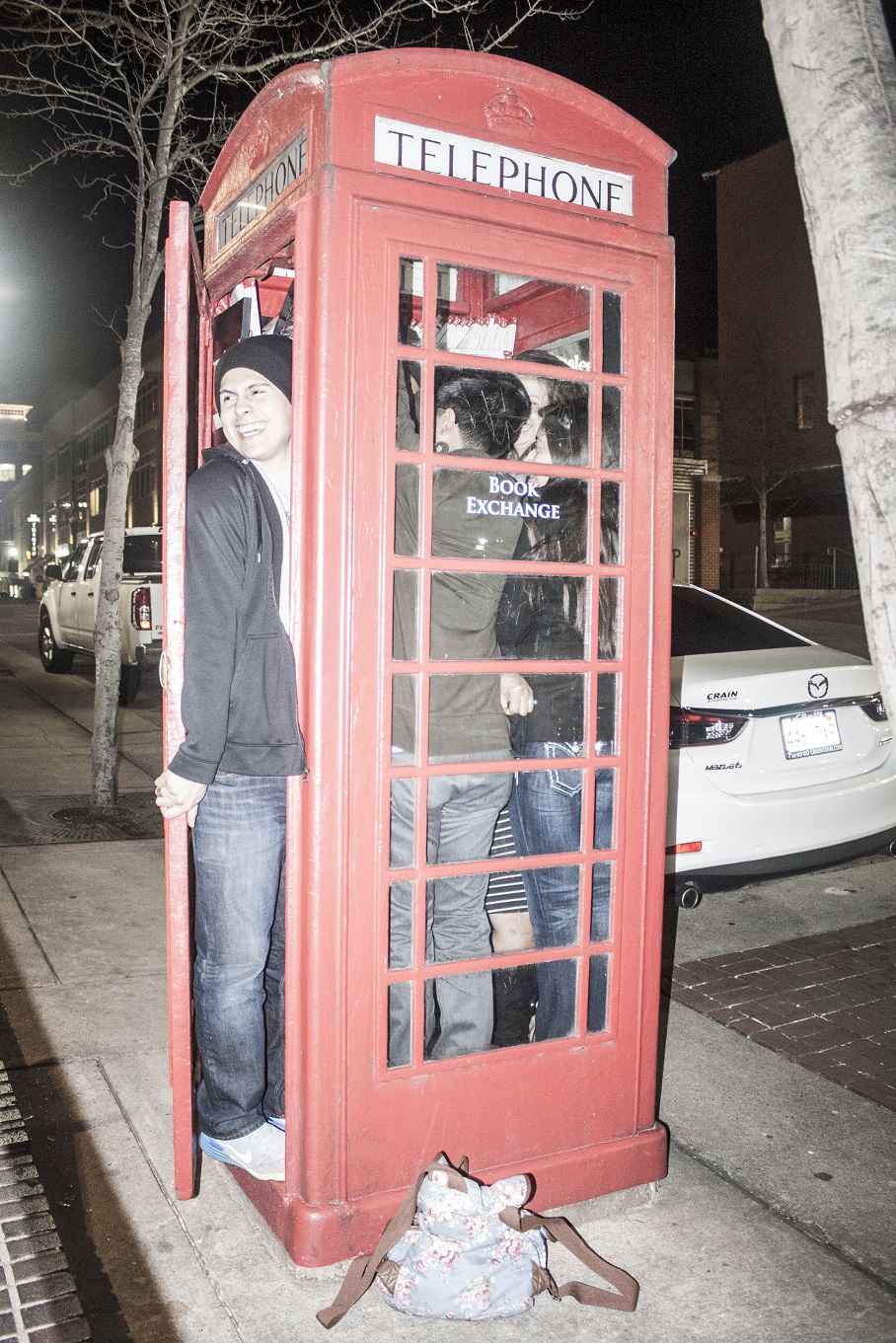
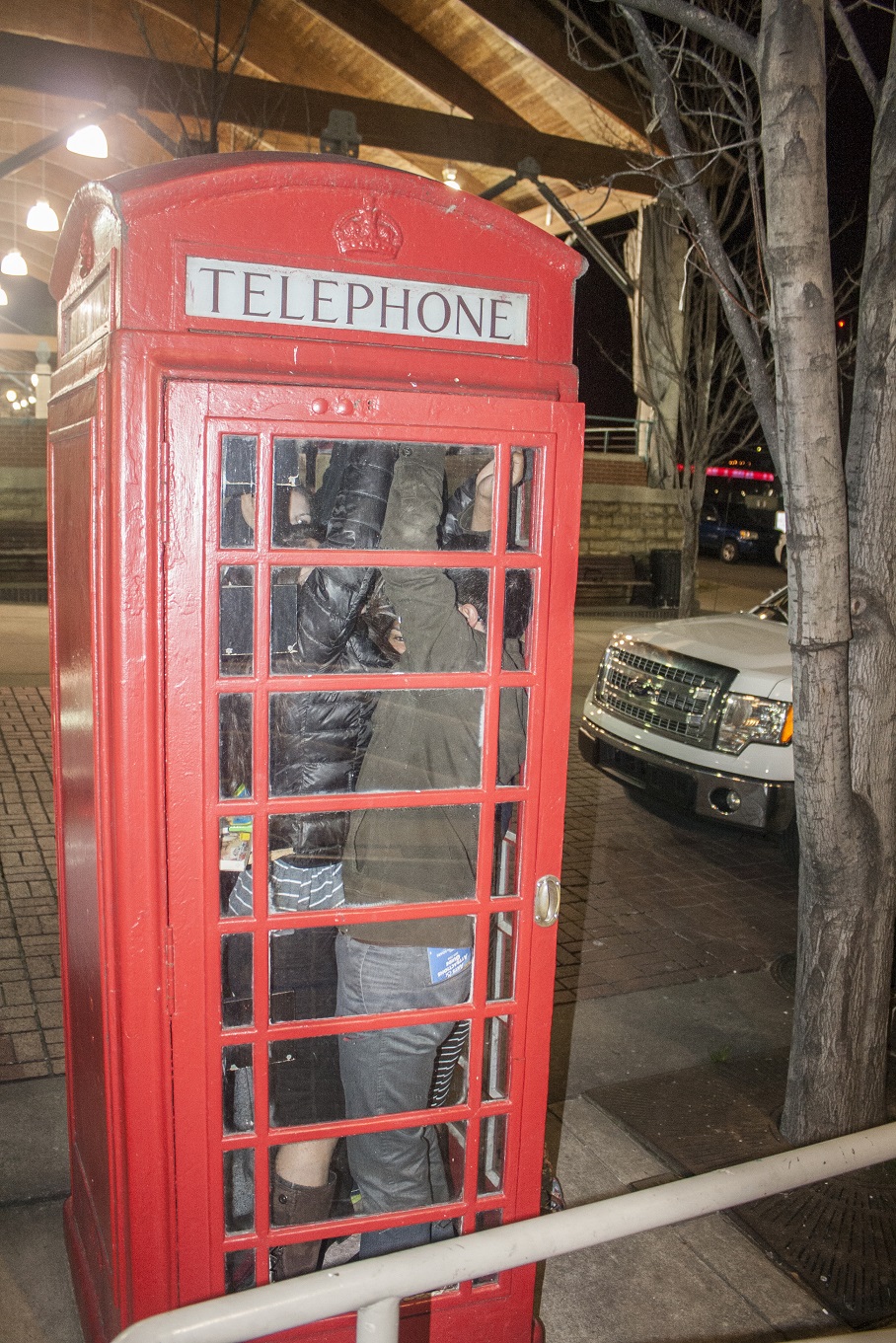
On our way back to the car, we squeezed in a bit more adventure by taking a short detour to an old telephone booth that is now used as a community book exchange. Professor Yawn challenged us to see if we could all fit in the telephone booth, and of course we accepted his challenge.

Telephone_Booth_Stuffing_Web

It was a tight squeeze, especially right after our filling dinner, but we all fit (more or less)!

Telephone_Booth_Stuffing_2_Web

And, after a bit of a detour to walk off some of dinner…

Little_Rock_Downtown_Street_Web

…called it a night and made our way back to the hotel for a much-needed night of rest.


Law, Art, and Pork: The Heart of Little Rock (Day 2, Morning Edition)

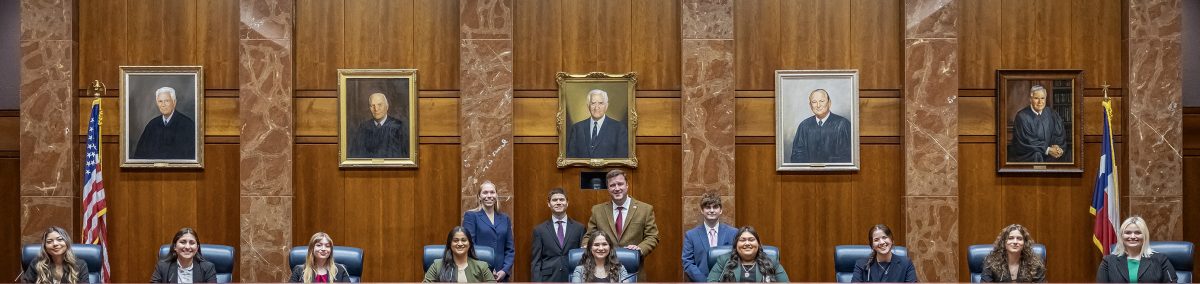
After a quick coffee stop to help wake us, we were fortunate enough to visit the Supreme Court of Arkansas.

We met with the public education coordinator, Cara Fitzgerald, who earned her law degree from Southern Illinois University and who passed the bar in at least three states!

AR_SC_3_web

She started the tour by teaching us more about the history of the building. Like the Old State House, the Supreme Court building has undergone changes throughout the years. The first building to house the Supreme Court was actually The Old State House, the second is at the location it is now and then it was remodeled a third time, which is the current building that houses both the Supreme Court and the Appeals Court.

We continued the tour of the west wing, where they display the portraits of the previous justices who have served on the Supreme Court…

AR_SC_1_web

…and as we moved along we were shown the portraits of all seven presiding justices.  The first thing that stood out to some of us was that the majority of the Justices currently on the Supreme Court of Arkansas are women.

After learning more about the current Justices and the recent death of their Chief Justice, Ms. Fitzgerald introduced us to Associate Justice Robin F. Wynne who joined in on the tour! Once in the courtroom, we introduced ourselves to Justice Wynne and he then introduced himself and told us about his journey to becoming a Supreme Court Justice.

AR_SC_Wynne_2_web

He then asked us the simple most important question that he asks all of his students, “Why do you want to be an attorney?” Many of us had not been asked this question before, which led us to really reflect on why we wanted to go down that career path. Our answers to the question ranged from helping people and having a say in our society to solving puzzles and upholding the law.

AR_SC_Wynne_1_web

After Justice Wynne was able to get to know us more based on our answers, he and his law clerk, John Webster gave us great advice on how to get the best out of law school.

AR_SC_Wynne_5_web

John Webster explained to us exactly what a law clerk does and why, if we get the chance, it is an opportunity to take advantage of in law school. They also explained to us what they look for in applicants for their office, and one of the most important things was a “hook”. Justice Wynne explained that he not only looks at grades, but also the substance of the applicants’ character. After the very informational discussion with Justice Wynne and Mr. Webster, they took us on a very personal tour of his office where he explained what his typical week at the office consists of. Oral arguments are on Thursday; opinions are on Wednesday; and Monday and Tuesday are much-needed reading days. Each justice is assigned five cases a week and one of those is considered a primary case in which they take a leadership role. After discussing this process, he showed us the conference chamber where the seven justices meet after oral arguments to talk about the reasons they dissent or support each others’ opinions.

AR_SC_Wynne_Conference_Room_BW_web

Justice Wynne even let us take a picture in the conference chamber with him!

AR_SC_Wynne_Conference_Room_2_web

After the private tour, we asked Ms. Fitzgerald how often tour groups get to go up to see the Justices offices and the conference room, to which she replied that she couldn’t recall it ever happening before! We were all extremely grateful for the hospitality that Justice Wynne showed us while teaching us an immense amount about the ins and outs of the Supreme Court of Arkansas.

During the last portion of the tour we dressed in black robes and acted as Justices of the Arkansas Supreme Court. The tour of the Supreme Court of Arkansas was an amazing way to learn more about the court system, and left us all in awe of how great of a time we had while we were visiting. Once everyone had their turn banging the gavel, it was time to go onto our next adventure.

This slideshow requires JavaScript.

Our next adventure was the Arkansas Arts Center.  Although  not as large as the major Art Museums, they have a nice permanent collection, much of which was donated by the Rockefellers (Winston Rockefeller was Governor of AR in the 1960s).  The collection contains works by Miro, Picasso, and Monet…

AAC_Monet_1_web

…among many others.

This time, however, the real treat were the special exhibits.  One featured the photography of Dortothea Lange, the photographer who captured the Great Depression and the plight of the migrant workers so perfectly.

AAC_Lange_Photo_1_web

Another exhibit featured the work of Charles Burchfield, who focused on the mixed blessings of urbanization.

AAC_Burchfield_Bella_BW_web

Both art collections were created near the same time period, but they were very different in medium and subject matter. Charles Burchfield’s art depicted “Industrial Beauty” using watercolor paints. Black Iron, the exhibit centerpiece, was inspired by the port of Buffalo on Lake Erie.

AAC_Burchfield_Ambassadors_1_web

According to the exhibit, Burchfield saw the bridges as part of an industrial complex spewing poisonous chemicals into the river; yet he found the massive structures irresistibly beautiful.” The paintings and drawings used darker colors to convey emotion.

Dorothea Lange is known for her black and white photography during the Great Depression Era. Each photograph captured emotion that strikes viewers immediately. Her works had great impact on legislation during the time period and even in the way films depicted people of the Great Depression Era. One of her most famous photographs, Migrant Mothers, was showcased along with a variety of other photos that were new to many of us.

AAC_Lange_Brian_web

Each person left with a favorite photo from her collection.

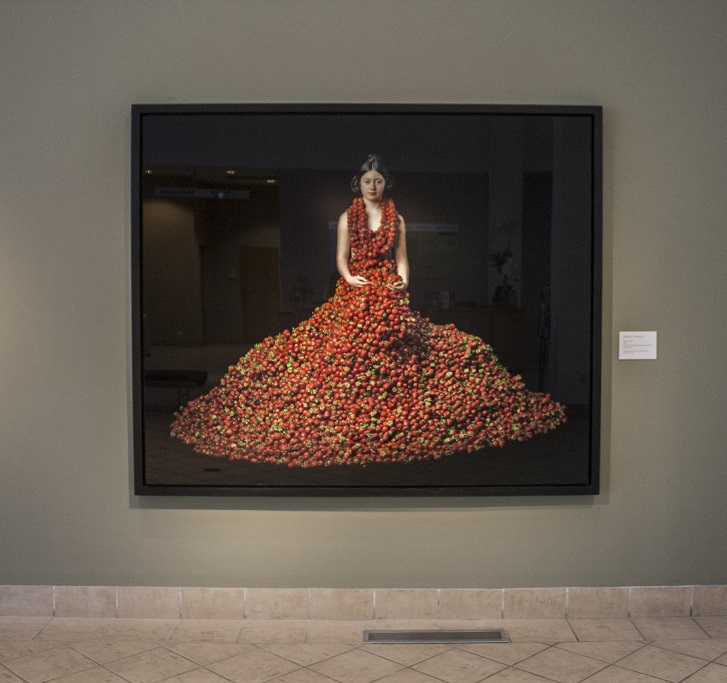
A third,  smaller special exhibit featured the work of Nathalia Edenmont, who makes dresses from flowers and other produce.

AAC_Edenmont_Tomatoes_web

This theme tied into a discussion Megan and I have had in our art class, which revolved around the question of whether the Ag Department’s “Floral Design” class should be considered an art class.

The Arkansas Arts Center was the perfect place to learn about a large variety of art because it explained the distinguishing characteristics of each genre. The art ranged from small, detailed, and complex paintings to intricate, colorful, and sometimes puzzling statues.

AAC_Wizard_Bella_web

Overall, the LEAP Ambassadors enjoyed gaining new knowledge of art in Arkansas.

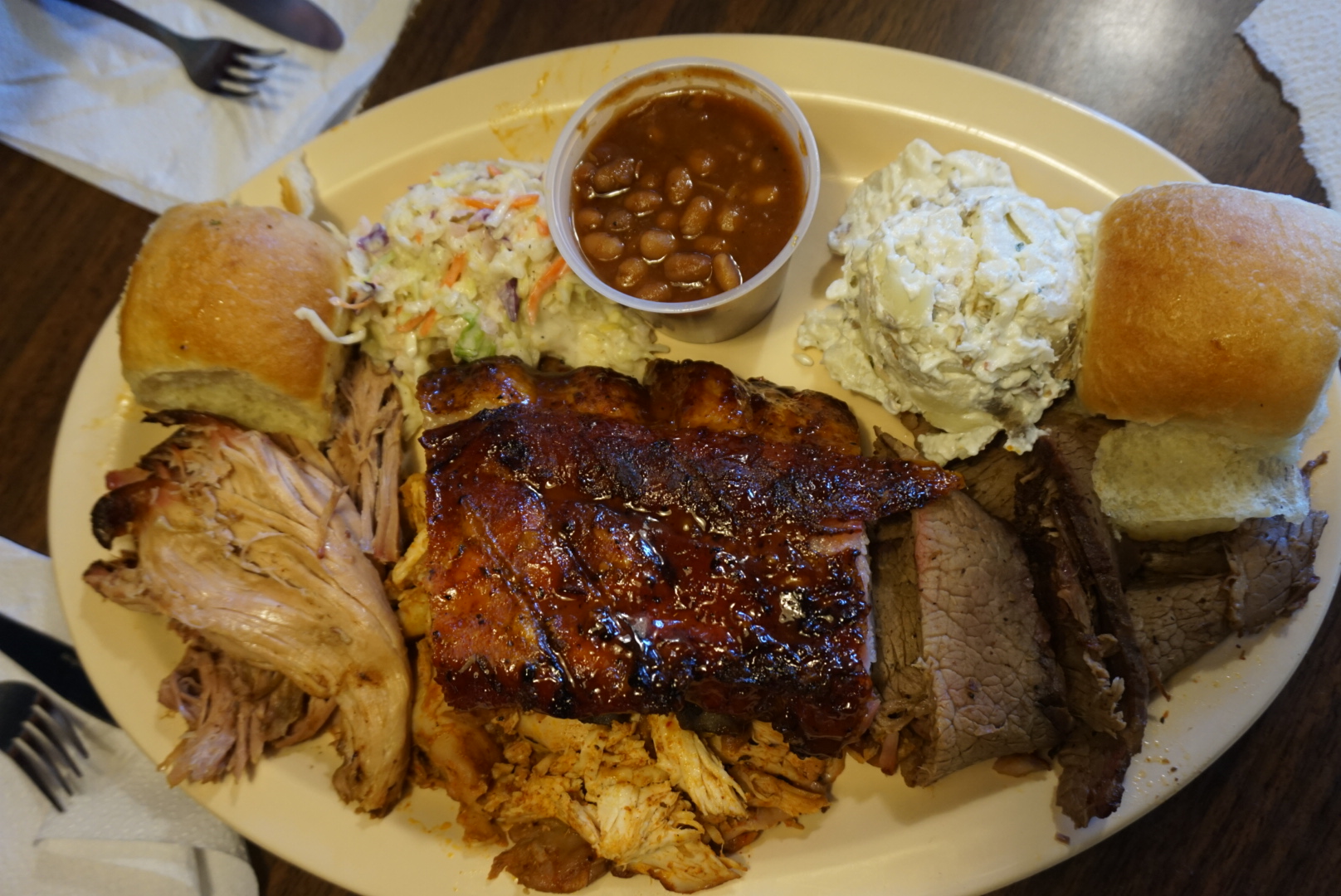
Lunch was a treat for us avid meat-lovers as we decided to fill our stomachs at The Whole Hog Cafe, a LEAP Center tradition. Catering a country style atmosphere while offering a variety of award-winning meat (as indicated by the line of trophies displayed near the entrance of the cafe), we knew we were going to be satisfied! To get the most out of our experience, we ordered three plates of The Ultimate Platter, which consisted of pulled pork, beef, chicken, ribs as the main course, and coleslaw, beans, potato salad, and rolls as sides.

Food_Whole_Hog_Platter

Enhancing the overload of finely cooked meat were the six diverse choices of barbecue sauces, ranging from sweet to spicy to slightly tangy.

Food_Whole_Hog_BBQ_Sauce

Each sauce was unique and each person had a chance to pick a favorite. The top three according to our collective preferences were Sauce No. 1 (sweet, mild, molasses flavor), Sauce No. 3 (spicy, traditional tomato, vinegar flavor) and Sauce No. 5 (sweet, heavy, molasses flavor) tied for 2nd place, while for third was Sauce No. 2 (a less spicy version of Sauce No. 3). We also indulged in the best (according to Alex) chocolate brownies for dessert. The service, the platter, the BBQ sauces and the fun conversations that filled our table made for a great experience at Whole Hog Café.

Food_While_Hog_Group


Midwest Tour, Day 8: Kansas City, Home of the MLB Champs!

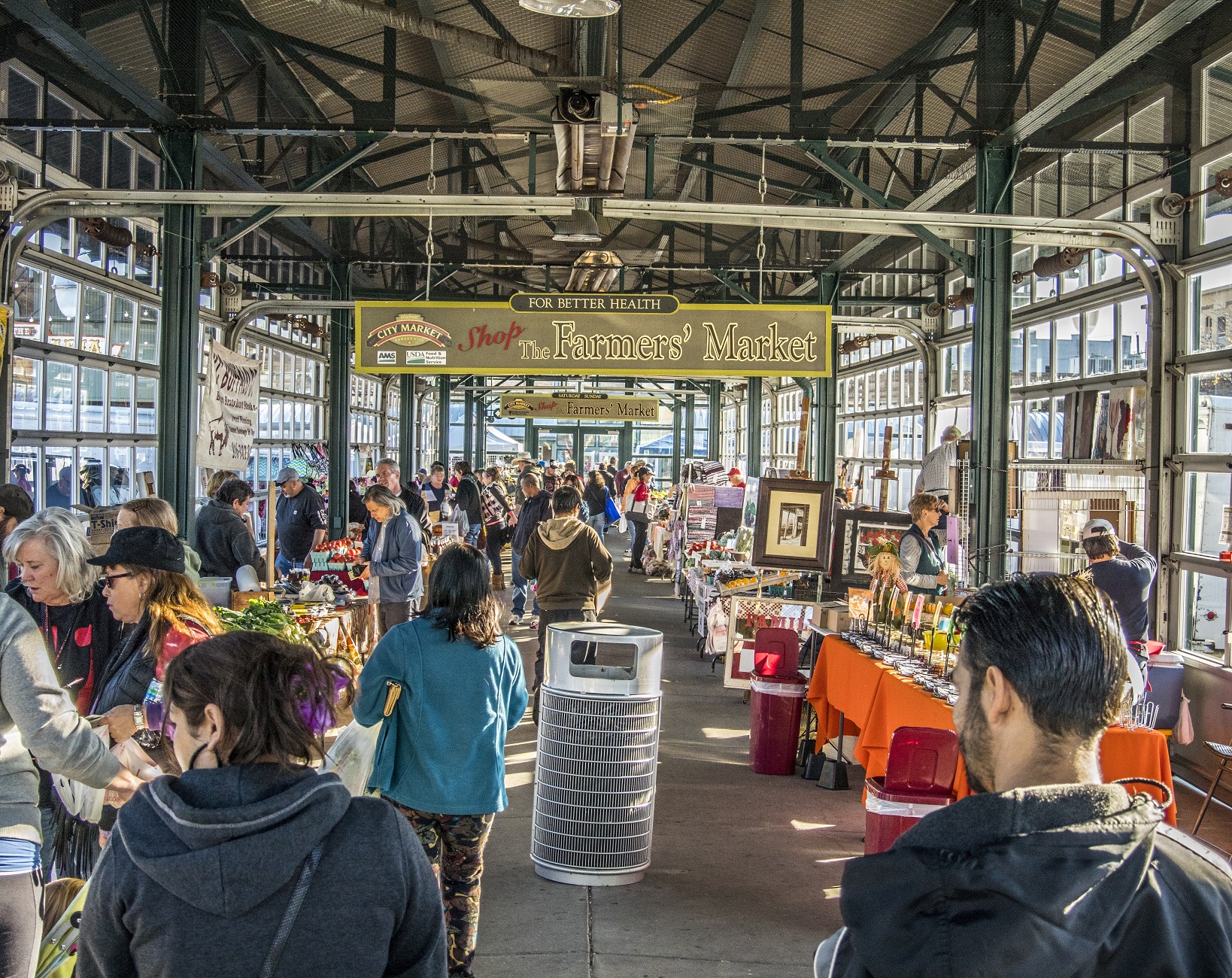
We began our Saturday morning exploring Kansas City’s own River Market. Although we arrived a bit early, we got a head start on all of the produce, cheeses, spices, and home goods that the farmers market had to offer. The brisk morning air refreshed us after a short night of sleep and we enjoyed strolling through the different vendors, smelling the fresh flowers, appreciating the colorful produce, and tasting different foods foreign to Texas.

City_Market_KC_2_Web

With just a little over an hour to explore, we tried coffee at Quay Coffee and wandered through the shops open at the early hour. With our noses exhausted from the various smells permeating the market, we left to make it to our Segway tour reservation on time.

Led by Kelly, we hopped on the available segways like pros and began the tour of downtown Kansas City.

Segway_Line_Web

We started in an area called Westport, home to bars, shops, and many a hipster. The area prides itself on preserving its history, which we observed in the established community and some of the buildings being the oldest sanding in Kansas City. Founded in 1831 by Isaac McCoy, Westport originally sat three miles south of what is today downtown Kansas City. His son, John Calvin McCoy, is credited as the “Father of Kansas City” and we observed a statue of him during the first part of our tour. We left the area of Westport to continue our tour, segwaying past pedestrians and through a few linear parks. Kansas City, known as the least dense and city with the most green space in America, is home to many beautiful parks. We had the chance to enjoy these areas, albeit, on segway. We followed Kelly along a couple creeks, walking trails, and even spotted public work out equipment along the way. We ambled upon Kauffman Memorial Garden after visiting Westport, a clear juxtaposition to the hip, bar district we had just explored.

Kaufman_Memorial_Garden_Web

The garden, quiet and serene, serves as gravesite to Ewing and Muriel Kauffman, philanthropists to the city in the mid 1960s. We left the garden to continue on our tour, only after appreciating the giant chrysanthemums in the greenhouse.

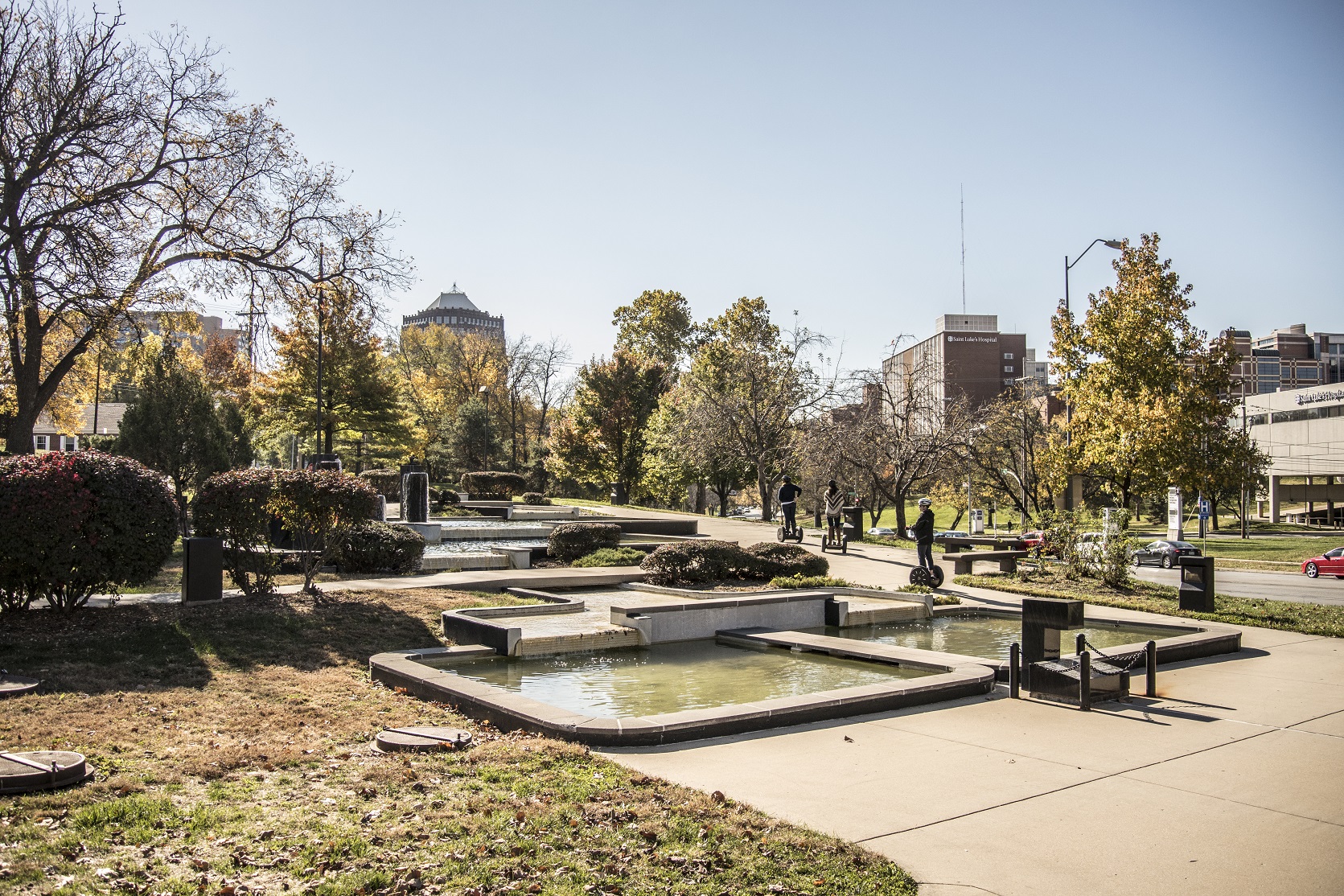
Kansas City is known as the “City of Fountains,” and one of the more interesting fountains we encountered was a memorial to the Vietnam War.  It was laid out in a series of cascading waterfalls, a reference to the U.S’s cascading involvement in the war.  It culminates in two pools of water at the end, a symbol for the split in public opinion over the war.

Segway_Vietnam_Memorial_Web

We spent the most time on our tour on the grounds of the Nelson-Atkins museum, avoiding photographers and muses as best we could. We even had the chance to explore grounds unfamiliar to Professor Yawn, home to sculptures by Ursula von Rydingsvard (Three Bowls), Henry Moore, and Roxy Paine (Ferment).

Segway_Sculpture_Garden_Constance_Alex_Moore_Paine_Web

We also had the chance to get off our segways and try out Robert Morris’ Glass Labyrinth, which we luckily made it out of without running into any of the glass walls.

Segway_Sculpture_Garden_Labyrinth_2_Web

We left the grounds, after quite a few photo opportunities, including the chance to see a Claes Oldenburg sculpture (a shuttlecock!)….

Segway_Sculpture_Garden_Constance_Alex_Shuttlecock_Web…and an unsettling sculpture titled “Standing Figures,” which is actually a sculpture of 30 headless men standing in rows.

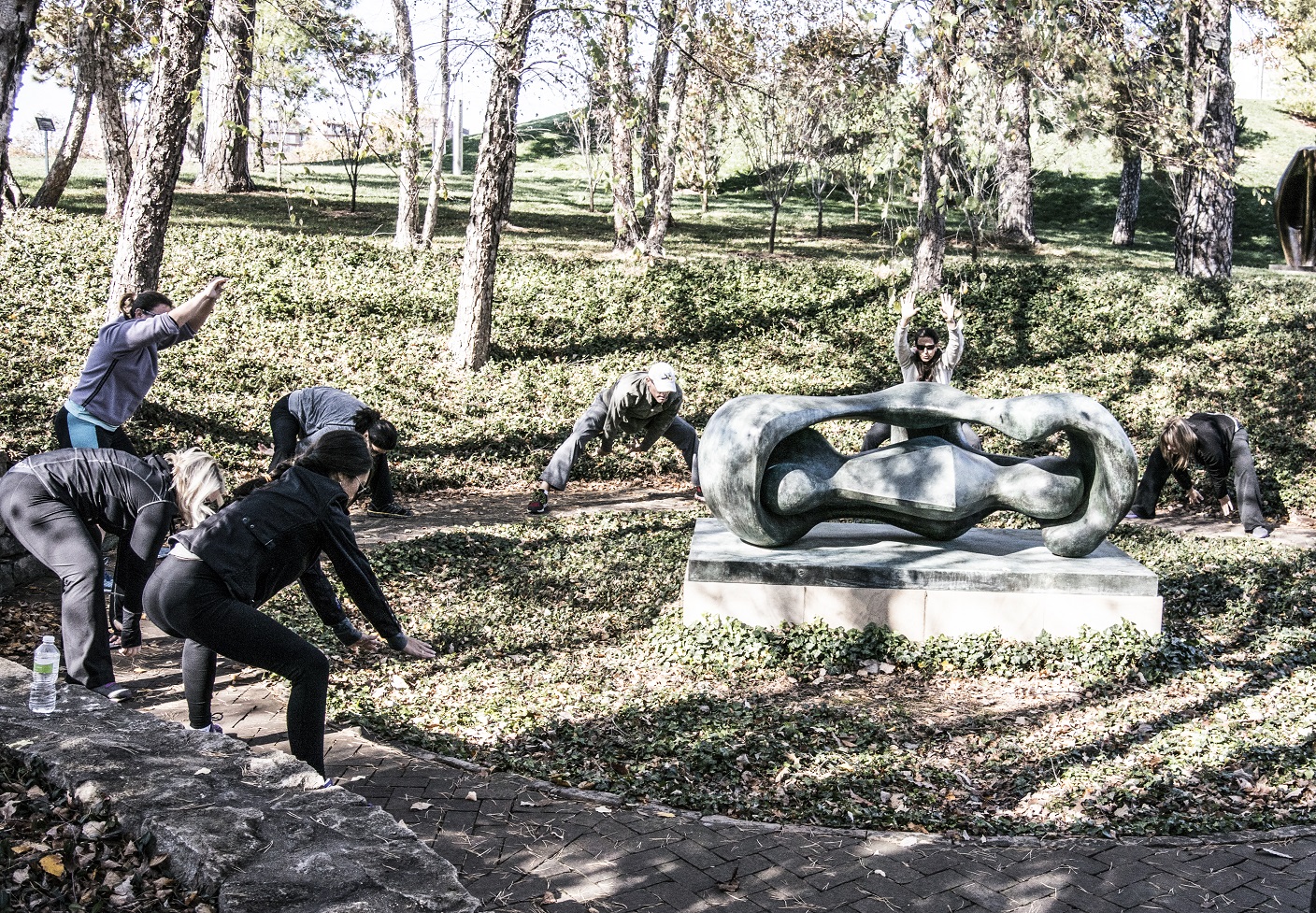
Segway_Sculpture_Garden_30_Men_Standing_WebMeandering through the parks, we also encountered some yoga practitioners, taking advantage of the peacefulness of the park (other than the speeding Segways, of course)…

Segway_Nelson_Atkins_Sculpture_Yoga_Group_Web

From there, we made it back to the Kemper Museum of Modern Art, which we had visited the evening before but had yet to observe in daylight.  We were re-acquainted with Louise Bourgeois’s “Spider”…

Segway_Kemper_Burgeoise_2_Web


…as well as Tom Otterness’s “Crying Giant.”

Segway_Kemper_Crying_Giant_WebWe had previously seen Bourgeois’s work in Iowa and in New Orleans, and we had only recently seen Otterness’s work (City Garden, in St. Louis).

That being our last stop…

…we bid adieu to Kelly and her insightful information and headed to scrounge up some lunch.

Much to the recommendation of our tour guide, we decided to eat lunch at Q39, a local Kansas City barbeque joint. We found the restaurant to be very popular and were confronted with an hour wait. With that information, Professor Yawn and Stephanie decided to let us wait and enjoy lunch while they left to grab our bags at the hotel in preparation for our departure this evening. We finally got a table, which was worth every second of the wait, once we received our appetizer of fried onion strings and meals consisting of ribs, sausage, pulled pork, and even better Kansas City barbeque sauce.

Q_39_BBQ_Web

Slightly tangy and very sweet, we enjoyed the barbeque that is so different than what we can enjoy in Texas. We left the restaurant full and ready to take on the rest of our afternoon.

We spent the first part of the rest of our afternoon exploring and learning at The National WWI Museum and Memorial. We arrived just in time to sit and watch the introductory video that left us wanting to learn more, so we ventured into the museum. We began with the WWI timeline that started with the assassination of Archduke Franz Ferdinand and led to Austria declaring war on Serbia.

WWI_Cannon_Wall_Web

This led to an entanglement of treaties and soon after, the five Great Powers were at war.

WWI_Global_War_Alex_Web

The museums timeline was easy to read and separated every year. The year of 1915 showed how the momentum of the war shifted to the east and highlighted the sinking of Lusitania by a German submarine. The year of 1916 on the timeline highlighted the Battle of Verdun and the Battle of the Somme. The timeline then moved on to the year of 1917, which is when Germany began to renew their unrestricted submarine warfare. One U-boat had cost American lives, which led to America severing its diplomatic relations with Germany and having to decide upon entering the war. The first American troops landed in France on June 25, 1917 and the spirits of France were renewed. The museum also features sections on Air warfare and others. As we walked through the museum we were able to watch another more interactive video about the war which then escorted us to the back portion of the museum that highlighted the America’s role in the War. The museum was very detailed and included many aspects of the war such as every branch of the military, a woman’s position in the war, civilian’s positions in the war, and an exhibit on war propaganda.

WWI_Propoganda_Alex_WebWe entered a reflections box where we were able to listen to voices from the War. We then took an elevator up to the Memorial where the tower commemorating the fallen soldiers stands. After enjoying the view, we walked back over the glass bridge hanging over the poppies that represent the fallen soldiers of the War.

We left the National World War I Museum to stroll down the hill in front of it, capturing the beautiful fall afternoon with a few photographs.

WWI_Constance-Tree_Closeup_Web

We loved feeling the breeze and seeing the burgundy leaves fly through the air off the trees preparing for the first winter frost.

WWI_Museum_Constance_Tree_2_Web

We walked across the street, following the museum, to enter Union Station in search of the temporary Da Vinci exhibit that the train station holds.  We found the exhibit on the bottom floor of the station and proceeded to get in line, thrilled with the anticipation of learning about one of history’s most prominent inventors and scholars. We entered the exhibit and watched an introductory video about the Renaissance man. Following, we left the compression of the video space and were awed by the expansion of the rest of the exhibit, full of Da Vinci’s inventions.

Da_Vinci_Exhibit_Wings_Web

We had the chance to read about his work in military science, flying machines, scientific diagrams about the human body, civil engineering, and inventions that would make everyday work easier and more efficient. We always knew about the inventor’s paintings, “Mona Lisa”…

Da_Vinci_Exhibit_Mona_Lisa_Alex_Web

…and “The Last Supper,”

Da_Vinci_Exhibit_Last_Supper_Alex_Web…but it was even more compelling to learn about all the musings that were found in his journals ranging from thoughts about poetry to the making of the ideal city. We even had the chance to touch multiple replicas of his inventions, like a pulley and a lock system.

Da_Vinci_Exhibit_Pulleys_Web

Following the section about his inventions, we had the opportunity to read about his artwork, which about fifteen have survived to this day due to the precariousness of Da Vinci’s experiments with new techniques. It was interesting to read about his work with the golden ration, which can be seen in his paintings and in his drawing of the Vitruvian Man. We left the exhibit awed by a man that we knew very little about before and inspired to expand our horizons just as he did during his lifetime.

We also had a chance to return to the Nelson-Atkins and see the special Thomas Hart Benton exhibit.  The theme was Thomas Hart Benton and the Hollywood epic, highlighting styles that tied in with epic films, as well as the time that Benton spent working in Hollywood.

Nelson_Atkins_Benton_Exhibit_WebWhile in the Museum, we took an opportunity to see some of the pieces we had missed the day before, such as the beautiful gardens…

Segway_Sculpture_Garden_Thinker_Web…Rodin’s “Thinker” up close…

Nelson_Atkins_Thinker_Web…and the strange, intriguing folk art of Philip Haas…

Nelson_Atkins_Phillip_Haas_Summer_Web

Before leaving KC, we returned to Union Station to grab a few souvenirs before beginning the drive out of town.

After a while on the road we stopped at Pie Five Pizza Co., in Topeka, KS, for a quick dinner. Constance and I shared the biggest Greek salad that I had ever seen and a pesto chicken Alfredo pizza that was delicious. We left the restaurant, and took advantage of our stop in Topeka to see the state’s capitol and other sites.

Kansas_Capitol_Constance_Alex_Web

We stopped at the capitol building, standing majestically in the middle of town. We weren’t able to go into the Capitol because it was late, but we did capture a few photos. Before getting back on the road we had to make one more stop. We stopped at the Brown V. Board of Education National Historic Site. Sadly it was closed by the time we arrived, but we were able to have a glimpse inside provided by the glass doors.

Brown_V_Board_Constance_Alex_2_Web

In the building we saw the labels “White” and “Color” that segregated the school. Even though we were not able to go inside, it was still a very sobering experience.

We hopped back in the van, en route to our last stop for the night, Wichita, to sleep before getting back on the road in the morning for the long trek back to Huntsville.

Midwest, Day 2: Show Us St. Louis, MO!

Not much happens in Little Rock, Arkansas at 5:00 am, LEAP students were thrilled to find out, as we left the City of Bridges early enough to spend the day in St. Louis, Missouri. After passing the six-hour drive sleeping the scenery away, we made it to the “Gateway to the West” around lunchtime, grabbed a quick bite to eat, and headed straight to the landmark for which the city is best known

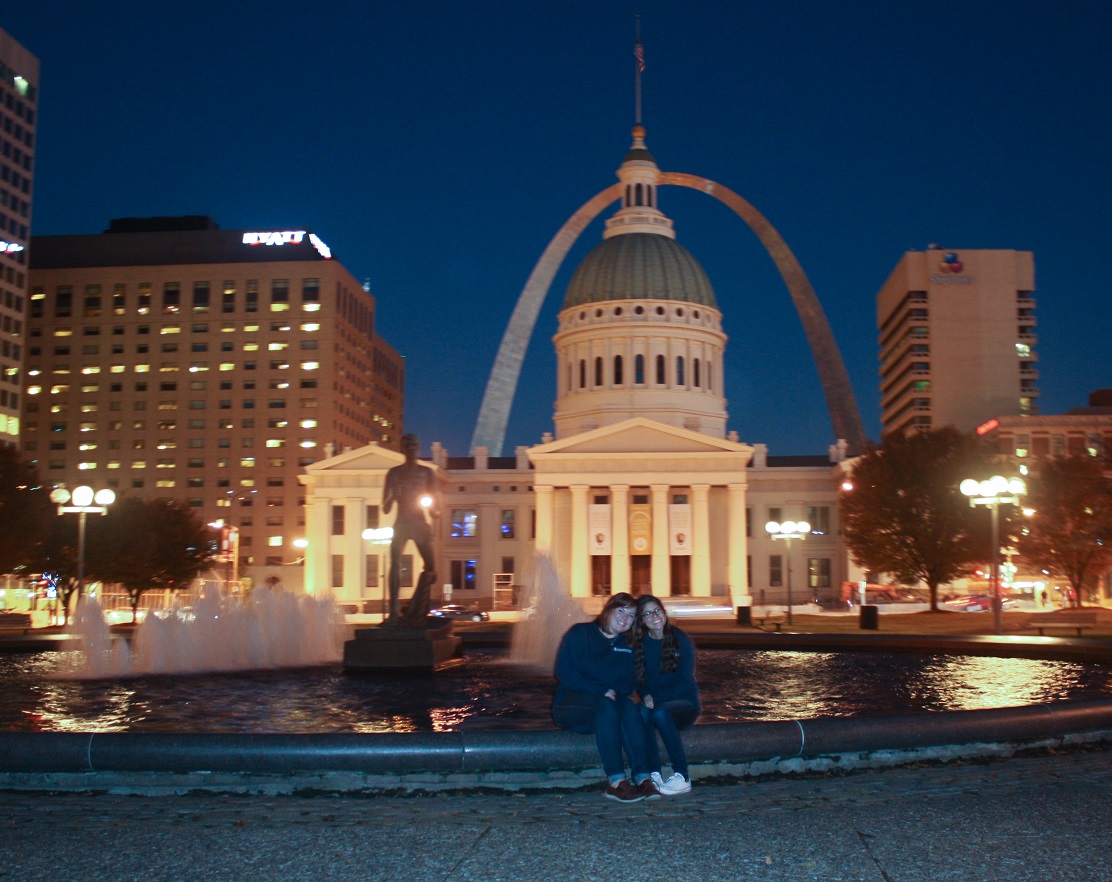
Signifying expansion into unknown territory, the Gateway Arch stands 630 feet tall in the St. Louis skyline, beckoning travelers to explore what the city has to offer. Designed by Eero Saarinen, completed in 1965, and designated as a historic site in 1987, the Gateway Arch is visited by thousands annually from all over the world. Located between the Mississippi River and the Old Courthouse, the Gateway Arch stands 630 feet high–tall, indeed, especially for two people who do not like heights.

Undaunted, we embraced the moment, commemorating with a photograph.

Arch

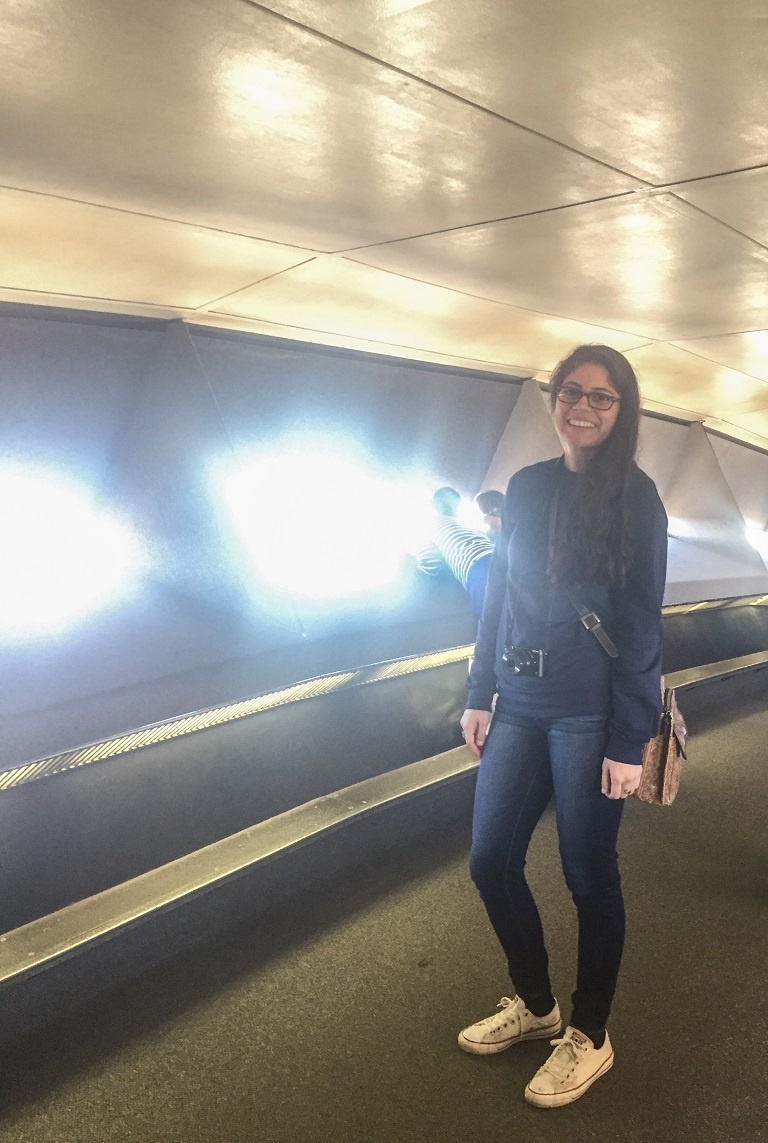
We then proceeded to hop into a pod that transferred us from underground into the skies of the city.  I (Constance) don’t care for the pod much.

Pod_Constance_Web

After a five-minute ride, we disembarked, climbed a few stairs, and were confronted with windows to the east overlooking the Mississippi and beyond.

Illinois_From_Arch_Web

On the opposite side, we enjoyed a bird’s eye view of the Old Courthouse, Budweiser Park, the Wainwright Building, and the Edward Jones Dome, home to the St. Louis Rams.

St_Louis_From_Arch_WebThese views come courtesy of small windows in the middle of the arch.

Alex_Arch_Inside_Web

Taking in our fill of the city, we snapped a couple selfies and got back in line to descend to the bottom once again.

We left the Gateway Arch to return to the Old Courthouse, where the Dred Scott trials occurred in 1847 and 1850. Construction began in 1816 but was not completed until 1828 by the firm of Lavielle and Morton. Since the first completion, Henry Singleton added an addition of three wings and a center cupola dome in 1839, which lasted until 1851, when the east wing was replaced.

Known for not only the Dred Scott case, the Old Courthouse was also home to slave auctions until 1861. While inside, we explored the different wings of the courthouse, admired the beautiful staircases…

Alex_Courthouse_Stairs_2_Web

and different structural intricacies, and posed for quite a few pictures as well.

Dred_Scott_Courtroom_Alex_Web

The courthouse differs today from the 1839 version because William Rumbold replaced the cupola with a dome in 1861, modeled after St. Peter’s Basilica in Vatican City.Standing in the center of the main hall looking up, we had the chance to view the dome from the inside-purples, blues, pinks, and greens all around.

Court_Room_Dome_WebAfter spending as much time as we could inside, we headed out to venture back to the car and drove outside of the city to the most anticipated tour of the day, a Frank Lloyd Wright home.


Frank Lloyd Wright Home at Ebsworth Park

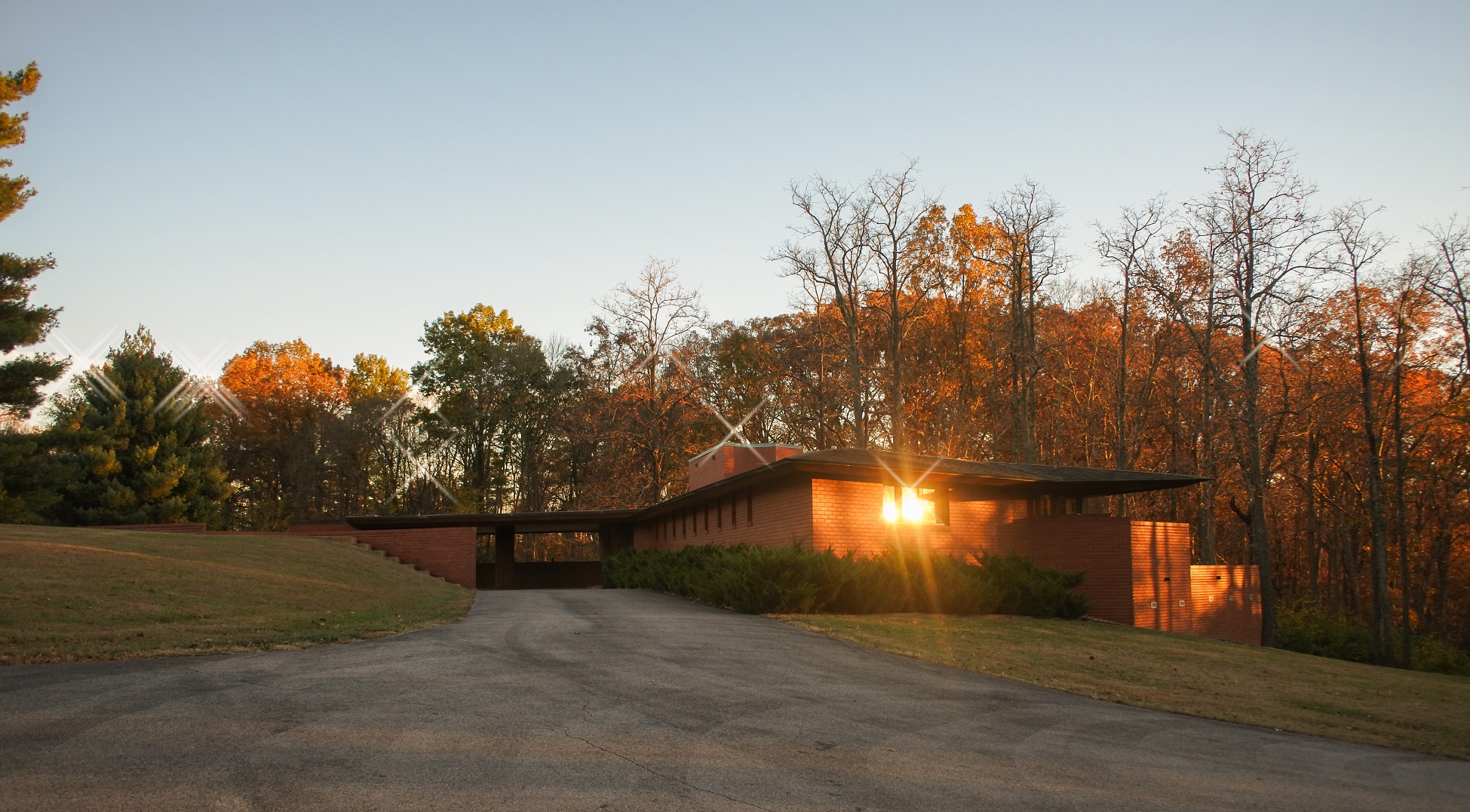
We arrived at Ebsworth Park and drove through a winding driveway to arrive at our destination and learn more about Frank Lloyd Wright. Born in 1867, Frank Lloyd Wright was an internationally known architect in the early to mid 1900s. He built homes and buildings after learning from and working for Louis Sullivan, who is known for his work with skyscrapers and who built the Wainwright Building in downtown St. Louis. Wright built the home in Ebsworth Park for Russell and Ruth Kraus, a modest couple who doubted they had the funds to afford a home from such a well-known figure in architecture. Instead, the architect surprised them with his acquiescence and proceeded to plan them a Usonian home. Known for its affordability and political implications, Wright’s Usonian theme, seen throughout the United States, encompasses smaller homes, with only one story, usually no basements, attics, or garages, and just enough space to be efficient.

The home is laid out in grids, with parallelograms serving as the major building motif.  Within the parallelograms, however, are embedded triangles and hexagons, and these three shapes make up the shapes in the home.  In fact, there is only one ninety-degree angle in the home (the bathroom); the rest of the home’s angles are either 60 degrees or 120 degrees.

FLW_Constance_Alex_WebWe learned of Wright’s use of compression and expansion as we walked through the tight entryway and entered the spacious main hall of the home. Docent Dave Baumgartner, a former architect in St. Louis, made the tour very enjoyable and provided much insight into the particulars of Frank Lloyd Wright’s architectural plans.

FLW_Tour_Guide_WebLow tables and chairs, great windows, and open space pulled our view towards the outside of the home and into the great forest beyond.

In addition to the beauty of the home…

FLW_5_Web…we learned various innovations produced by Frank Lloyd Wright (e.g., larger bathrooms), the creativity he used to fit his homes to his ideas (in this case, he created a parallelogram bed for the Krases), to the meticulousness with which he planned out every detail (the screws in the home lined up with the angles produced by the home’s grid).


Alex_Constance_Selfie_FLW

We were awed by his presence still pervading the space to this day and left with minds blown by the genius that was Frank Lloyd Wright.

FLW_House_4_Web


Richard Haas

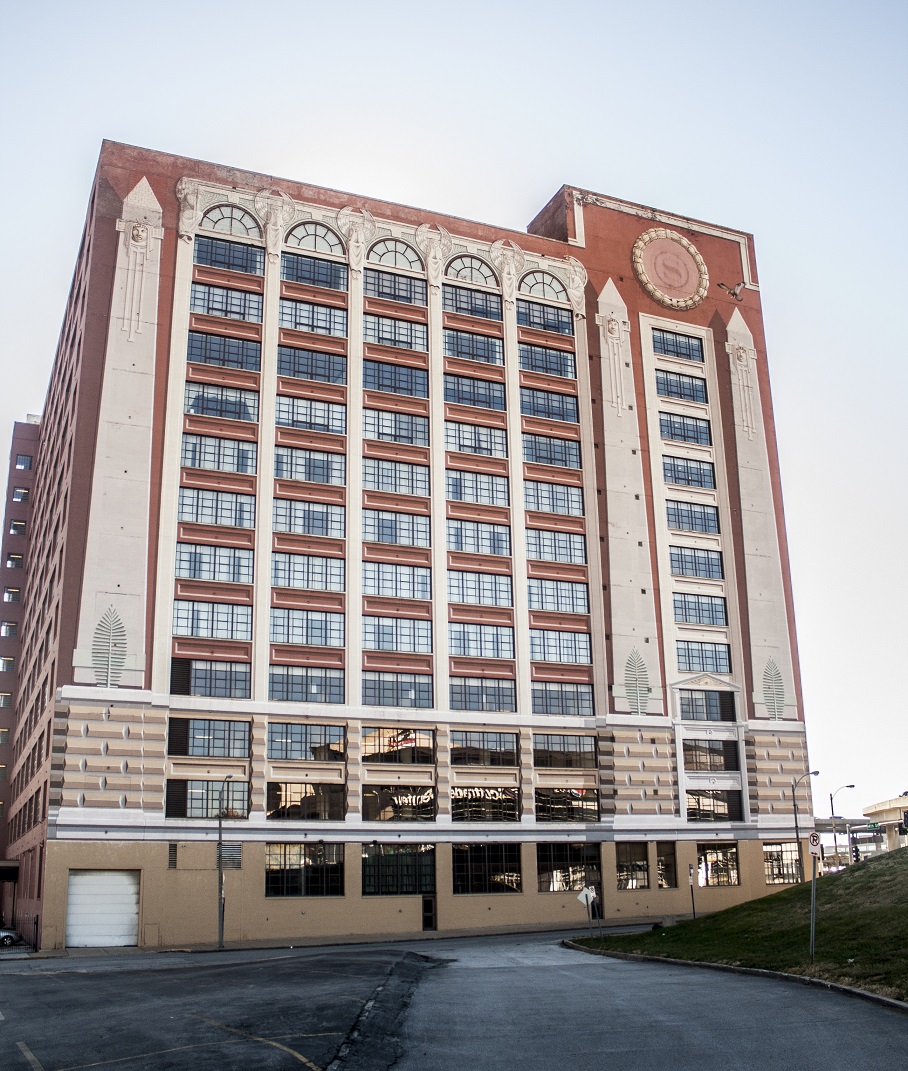
Intriguingly, St. Louis is also home to a building graced with a three-sided Richard Haas mural, fronted by a strange sculpture of a high-stepping jackrabbit (not done by Haas!).

Haas_STL_Jackrabbit_WebHaas’s mural, which depicts a woman as “Peace”…

Haas_Mural_STL_Web…has eight obelisks and  numerous other adornments.

Haas_Mural_STL_3_Web


Citygarden

We were also able to spend time in St. Louis’ beautiful downtown “urban park and sculpture garden,” Citygarden.  Incorporated into the “Gateway Mall” area, the park is bordered by Eighth, Tenth, Market, and Chestnut Streets – just a short walk from many locations within a downtown area that is actively trying to tie together green spaces and government structures, common spaces and the corporate sphere.

Part of our group was fortunate enough to spend some daylight time in the park, with the sun setting alight the fall colors in many of the park’s varieties of trees.  The procession of gingko biloba trees (also known commonly as maidenhair trees) positively glowed along the Market Street promenade, their yellow leaves glinting off the last of the sun’s rays.

City_Garden_Sidewalk_3_Web

The entire group paid a visit just as the sun set early on the first night of Daylight Savings Time for 2015, with the park’s lighting creating interesting shadows on several of the pieces, such as Fernand Leger’s Femmes Au Perrequet…

Leger_STL_web

Mark di Suvero’s Aesop’s Fables.

City_Garden_De_Suvero_2_Web

Constance impersonated (can you impersonate a fictional wooden figure?) Pinochio…

Constance_Pinochio_Web

And Professor Yawn was proud that his pupils, Alex and Constance, finally and truly lived up to their name, serving as pupils in Igor Mitoraj’s Eros Bendato.

Pupils_Constance_Alex_2_WebNot to mention the other fun sculptures…such as Bernar Venet’s “Three Rings”…

Constance_Alex_Citygarden_Web…Ju Ming’s “Tai-Chi Single Whip”…

Tai_Cho_Web…the intriguing Video Screen…

…and the reflecting pond with stepping stones…

City_Garden_Night_Constance_Alex_Web

We even saw a rabbit!

City_Garden_Rabbit_Web

The park is a must-see if in St. Louis.  Even a short stroll through the beautifully landscaped space evokes feelings of tranquility within.  Park maps that provide info on all the art pieces are available; or one can download the app, with even more information on the park’s amenities and scheduled events.

City_Garden_Constance_Alex_2_Web


Wrapping Up

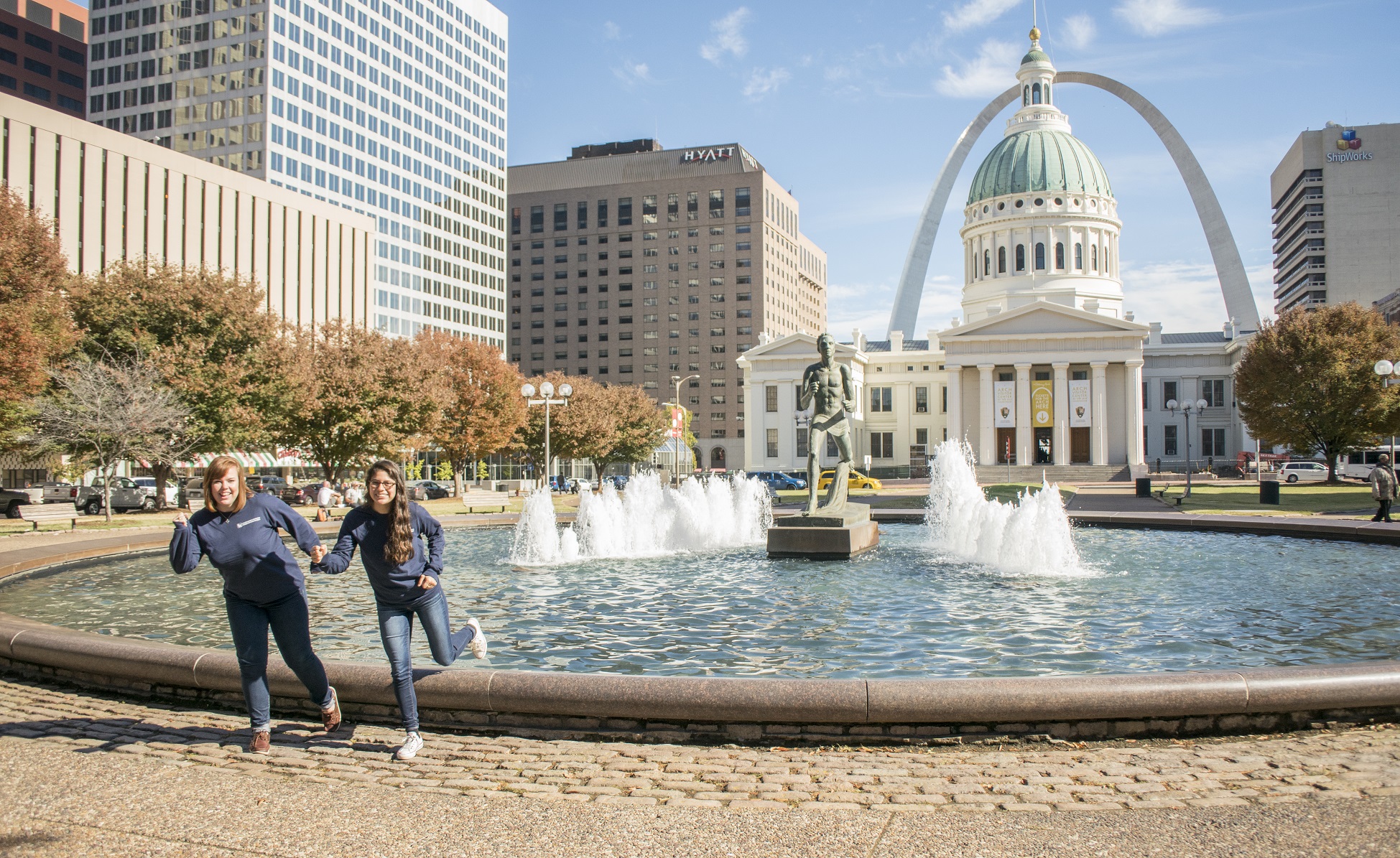
Before leaving, we took another brief stroll to “The Runner,” the statue celebrating the country’s westward expansion.  We had stopped there earlier in the day…

Arch_Alex_Constance_2_Web…and had some with photographs…

Arch_Constance_Alex_Running_Web

Well, we had some fun again, at the end of a long day, but in the midst of a fun trip.

Arch_Constance_Alex_Night_2_Web

Midwest, Day One: Big Time in Little Rock

Our Saturday morning began as a cold, rainy day, but we did not let that put a damper on our morning. We ventured into River Market for breakfast to kick start our day. I had the meaty melt omelet from Sweet Soul that quickly satisfied my hunger, Constance had the southwest omelet, and Professor Yawn had grits. Fueled by calories, we made our way to Little Rock Central High School and the nearby Little Rock Central High Museum, where we experienced history and learned more about the civil rights movement.

Little Rock Central High

Little Rock Central High School was once known as “America’s most beautiful high school” because of its blend of art deco and gothic revival architecture.

LRCH_Constance_Alex_WebWe were impressed with the message that the school sent to its students in the architecture itself.  In addition to the beauty of the structure, the front of the building is adorned with four relief statues, each corresponding to a different quality.  The qualities are: Ambition, Personality, Opportunity, and Preparation.

LRCH_Web

After admiring the architecture and taking additional photos of us on the steps tread by the Little Rock Nine…

LRCH_Constance_Alex_Closer_Web

…and making use of the beautiful colors around us…

Constance_Alex_Umbrella_Web

…we made our way to the visitors center where The Little Rock Central High School Museum is located. The museum highlights The Little Rock Nine, who were the nine African-American students chosen to be the first to integrate Little Rock Central High School. The museum had plenty of information on the crisis of 57’ that was shown in different ways.   As with most museums nowadays, it offers interactive experiences, with an entrance showing three screens, each with different information.

LRCH_Entrance_Screens_WebAmidst a discussion of the constitutional background of integration and the equal protection clause, we were reintroduced to the four qualities emphasized by Little Rock Central High: Ambition, Personality, Opportunity, Preparation.

LRCH_4_Web

My favorite section of the museum was a station with a telephone receiver and a small video screen that showed the events that happened during the desegregation of Little Rock Central High School, as told by the Little Rock Nine themselves.
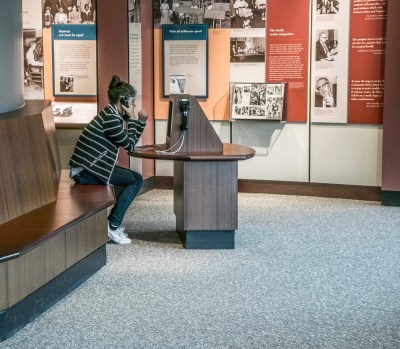
LRCH_Alex_Phone_Medium_Web

The videos went into detail of what the first day, September 4th was really like, and how they felt that day and every day after. The first person perspective from the museum gave plenty of insight as to how chaotic and difficult it was to desegregate the high school in 1957. The Little Rock Nine described everything they went through which included: having rocks thrown at them, begin beaten up, the verbal abuse, the threatening phone calls to their homes, and the white people who wanted to be their friends but were too scared.


The Old Mill

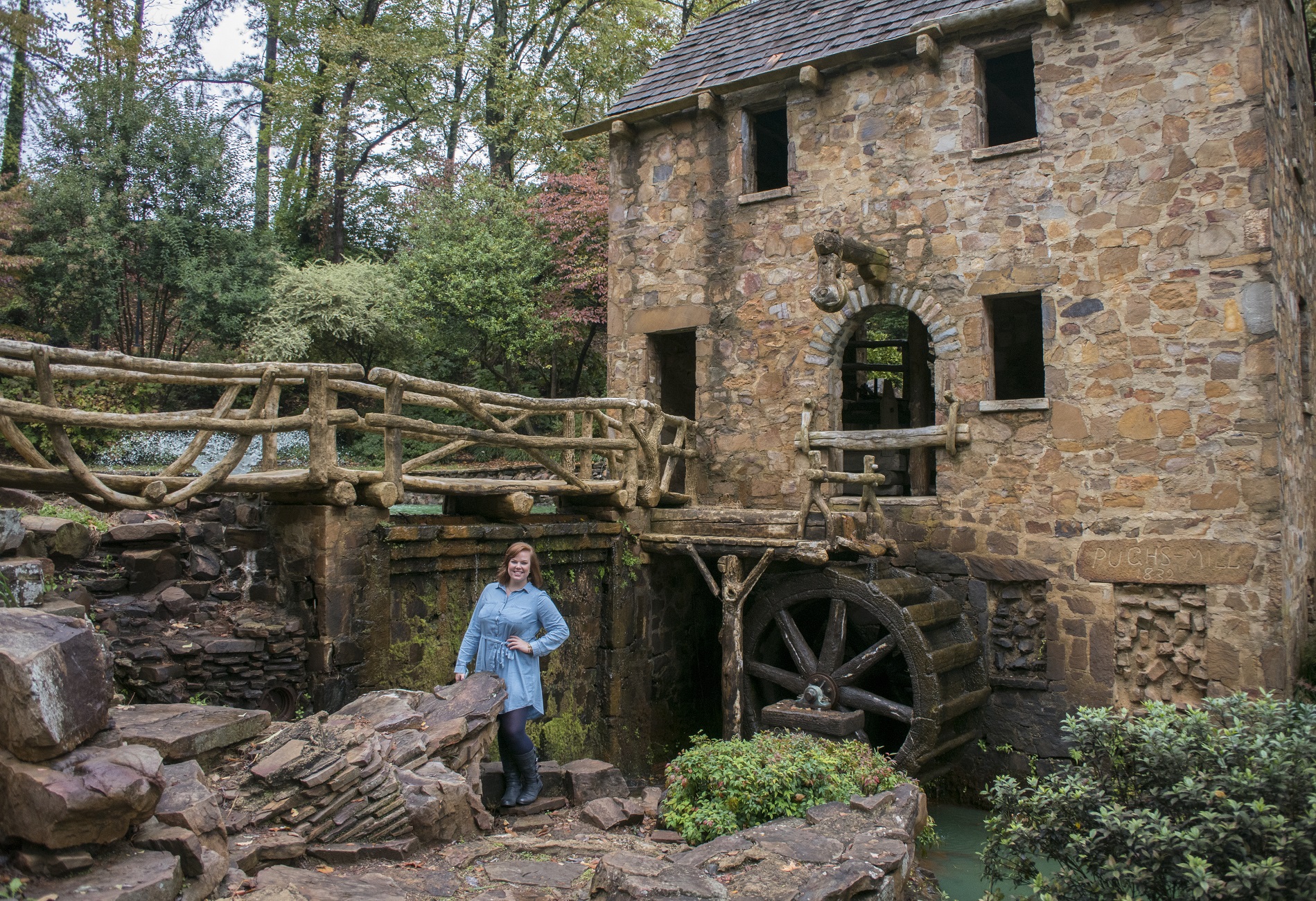
After leaving Little Rock Central High, we headed to “The Old Mill,” the last surviving set from Gone With the Wind.

Old_Mill_Bridge_View_Web

The Old Mill is known for being the last surviving piece of the 1939 film, Gone With the Wind. The Old Mill at T.R. Memorial Park was truly breathtaking, and definitely a site to see. We were welcomed by the trees that were changing colors due to the season, which made The Old Mill look even more picturesque than expected. The park is decorated with tree-entwined bridges that at first glance look like real trees, but were really constructed out of concrete by Senor Dionico Rodriguez. We were able to climb the tree-entwined bridge that crossed over the water and walk into The Old Mill.

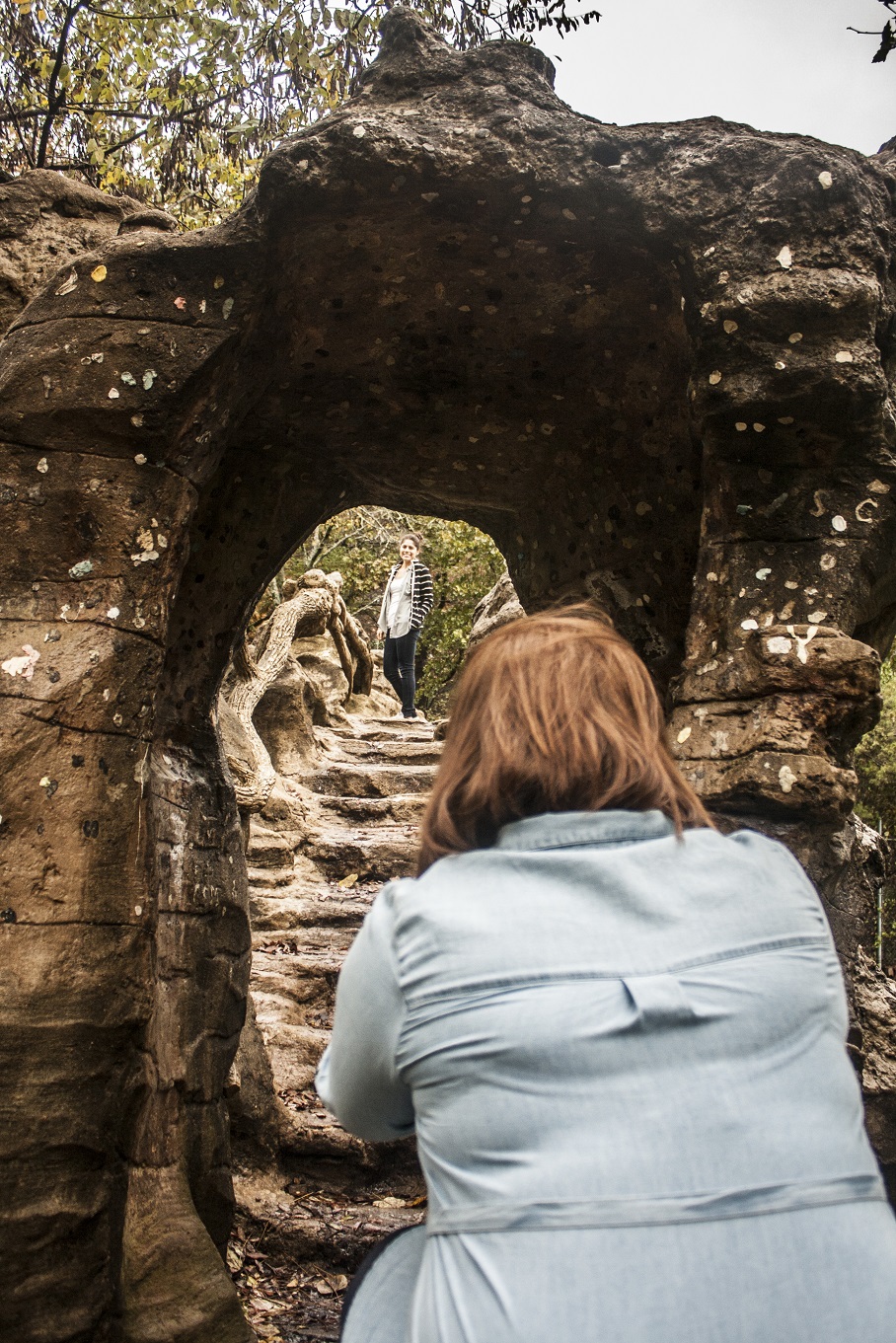
Rock_Alex_Constance_Web

It’s difficult to describe the beauty of the Old Mill.  In addition to the Mill itself…

Old_Mill_Constance_2_Web…there is the stone cabin with open windows, perfect for photographs…

Old_Mill_Constance_Alex_Web…and the concrete, faux wooden bridge was a perfect prop for photographs, such as this one…

Old_Mill_Constance_Alex_Bridge_Web…or this one…

Old_Mill_Alex_Constance_Bridge_Closer_Web… or this one…

Old_Mill_Alex_Constance_Bridge_2_Web

There are also some interesting some side areas in the park.  We were able, for example, to climb up…

Alex_Well_Web

and into a well.

Constance_Alex_Well_2_Web

Which, as our professor noted, is one of the reasons we sign waivers before going on trips.


Lunch

After taking advantage of the picturesque environment we made our way to Whole Hog Cafe for a delicious lunch.

IMG_0928One of the best things about Whole Hog Cafe is that they have six different types of BBQ sauce on the table.   This allows guests to sample the flavors and then go with their favorite choice.  For our table, # 5, “Sweet, Dark, And Bold Molasses Flavor,” was the favorite.


Arkansas Arts Center

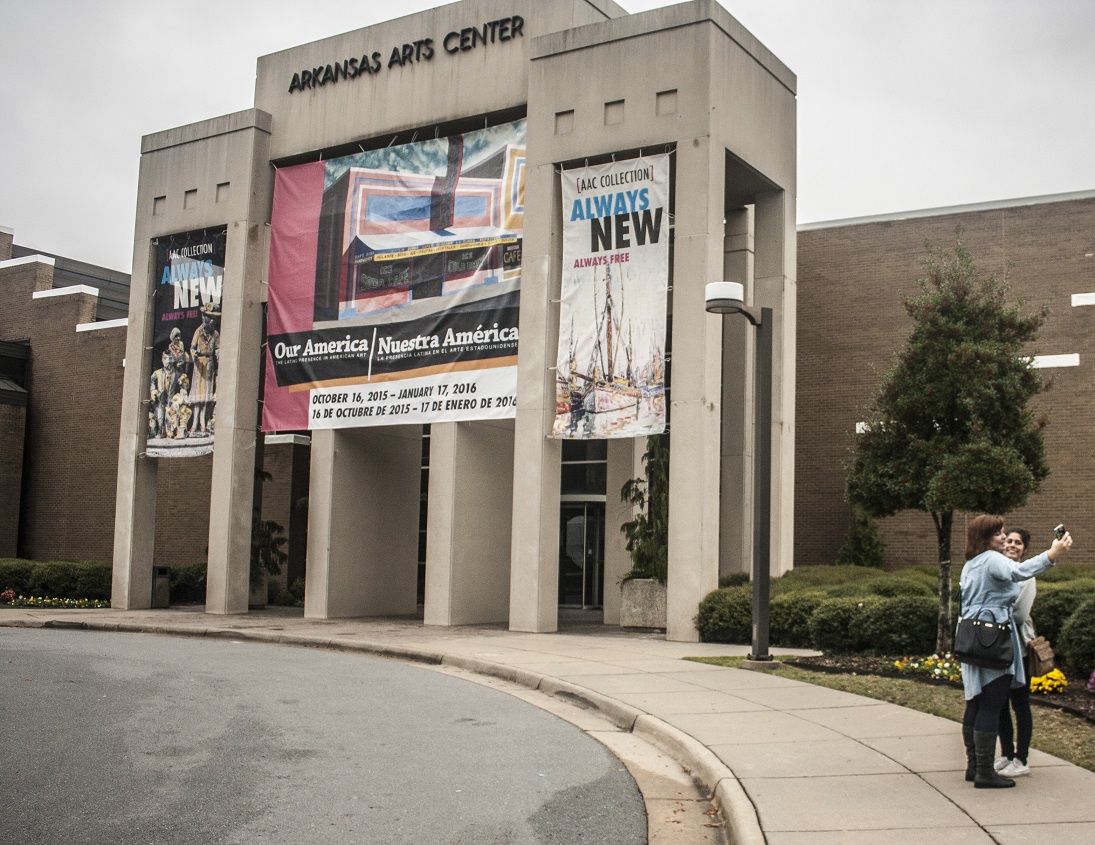
Following lunch, we made our way to a fine jewel in Arkansas culture, the Arkansas Arts Center.

Arkansas_Arts_Center_Constance_WebHome to more than 600 years of art, the Arkansas Arts Center proved compelling from Our America, the Latino exhibit on loan from the Smithsonian, to its permanent collection.

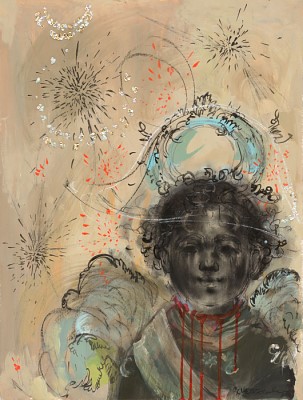
We had the pleasure of being escorted through the Latino exhibit by a museum docent who pointed out the intricacies in the portraits of the exhibit. Our tour began with a viewing of two side-by-side portraits by Scherezade Garcia, named The Dominican York, and Santo Trujillo is Dead.

Garcia_Art…which our tour guide believed were distinguished largely by tone…

Garcia_Art_2

Inspired by the struggle and aspirations of immigrants traveling to the states from their homelands, Garcia’s work mixed a compelling use of sequins, charcoal, ink, and acrylic to portray the hardships and opportunities immigrants encountered on their journeys. Next, we stopped at a painting by Juan Sanchez titled Para Don Pedro.
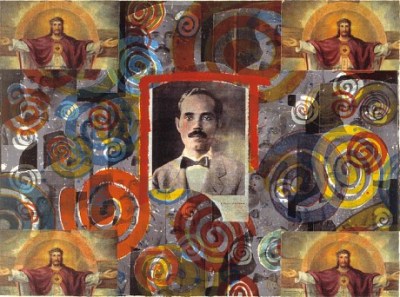
Sanchez_Art

The collage paid homage to Pedro Albizu Campos, a politician and leader in the Puerto Rican Independence Movement. Although beautiful in its own right, we found the work to be a bit too abstract and overwhelming to enjoy, comparatively, but were interested in the concepts.  Moving on, we viewed two pieces by New Yorker, Elia Alba called Larry Levan (snake) and Larry Levan (three is better than one).

Alba_Art

Alba_Art_2

Ms. Alba sought to display the incongruity between the third culture of immigrants and Hispanics in the United States with the American culture, seen in the awkward joining of faces to mismatched bodies. For the viewer, the works evoked discomfort due to lack of aesthetic beauty, much like the discomfort felt by those of different cultural backgrounds during the Civil Rights Movement. After viewing a few more works, notably a sculpture by Luis Jimenez,

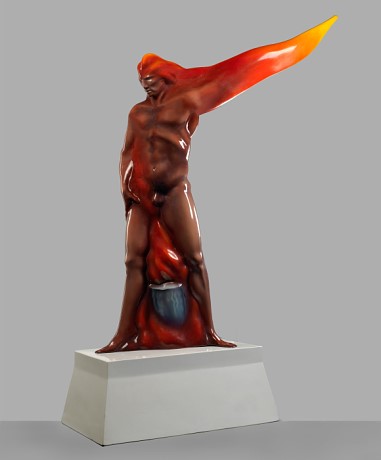
Jiminez_Art

Man on Fire, who taught notable Huntsville artist Jesus Moroles, and being surprised by a sculpture by Mr. Moroles himself, Georgia Stele

Moroles_Art
We bid adieu to our docent and set off to spend a few quick minutes exploring the permanent collection. Considering anything in Arkansas to be a “jewel” would be hard to those not knowing what the state has to offer. That said, the Arts Center happens to be home to many world-renowned artists, Monet, Renoir, Picasso, and Rembrandt to name a few. We particularly enjoyed Monet’s Effet de soleil couchant, Port-Villez (Effect of the Sun Setting, the Seine at Port-Villez)…

Monet_AR_Arts_Center_Web

….full of dark purples and greens to catch the eye, and Picasso’s Aureau ailé contemple par quatre enfants (Winged Bull Gazing on Four Children), depicting children being frightened by an almost dragon-like bull.
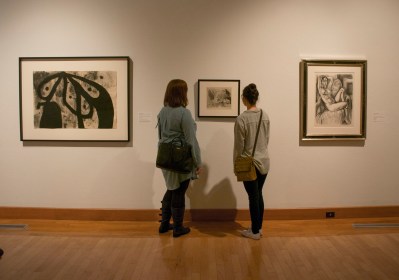
Constance_Picasso_Alex_Web

Needing to make it to our next destination on time, we hurried out of the Arkansas Art Center after only spending very little time in their exhibit halls. Impressed by the collection in a state that does not get much cultural street cred, we left intrigued and hopeful to discover more famous artists at our upcoming art destinations.


Bill Clinton Presidential Library and Museum

Full from our saucy lunch at Whole Hog Café, we drove back into Little Rock proper to explore, quickly I might add, the Bill Clinton Presidential Library and Museum. The 42nd President of the United States, and 42nd Governor of Arkansas, President Clinton was long-time resident of Little Rock, having grow up here and also served as Attorney General and Governor of the state.  As President, Clinton promised to be a “bridge into the 21st century, and the Clinton Museum reflects that metaphor, standing almost suspended over the ground and toward the Arkansas River.

Armed with a little less than an hour, Alex and I took off up the escalator to explore as much as possible in such a short time. Confronted with columns on each side of both floors and exhibits interspersed between, we learned that the museum was modeled to copy The Long Room at the Trinity College in Dublin, Ireland.

Clinton_Library_Long_Room

We were surprised to also find a Dale Chihuly piece, Crystal Tree of Light, inside. It was one of two that was made for the White House Millennium celebration held on New Years Eve in 1999. After being hung in the White House, one of the pieces was donated to the Clinton Presidential Foundation in 2004 and resides permanently in the library now.

With less time available, we read about Clinton’s accomplishments as president, his work in Foreign Service, including the many State dinners he held, and the First Lady’s work alongside her husband. Inspired by the power President Clinton held, even Alex was caught day dreaming about one day being a cabinet member to influence great change in our country.

Cabinet_Table

We ran out of time in the library to really grasp all that President Clinton’s time in office is known for but were impressed by the vast information made available by the museum and the organized nature of it all. Exhilarated by the change enacted between 1993 and 2001, we made our way back into the rainy weather to, hopefully, tour Little Rock by Segway.


Little Rock Segway Tour

We’ve segwayed quite a few cities: Dallas, Austin, Oklahoma City, New Orleans, and, now, Little Rock, AR.  It’s hard to pick a favorite from among these, but Little Rock ranks high on this list because it’s such a picturesque city.  The views were complemented by our knowledgeable and laid-back tour guide, Henry Barker.

Barker took us to the Clinton Presidential Library, along the Bill Clark wetlands preserve, to Heifer International and, even though we had seen many of these areas, he filled in details we didn’t know.  Heifer, for example, won a Platinum rating from LEED for using mostly recyclable materials and because the materials came from within 500 miles of Little Rock.

Segway_Heifer_WebAnd when segwaying along the Bill Clark wetlands area, we saw an egret.

Egret_Web

The most fun, however, came when we glided along the river market area.  We saw the many sculptures along the riverway…

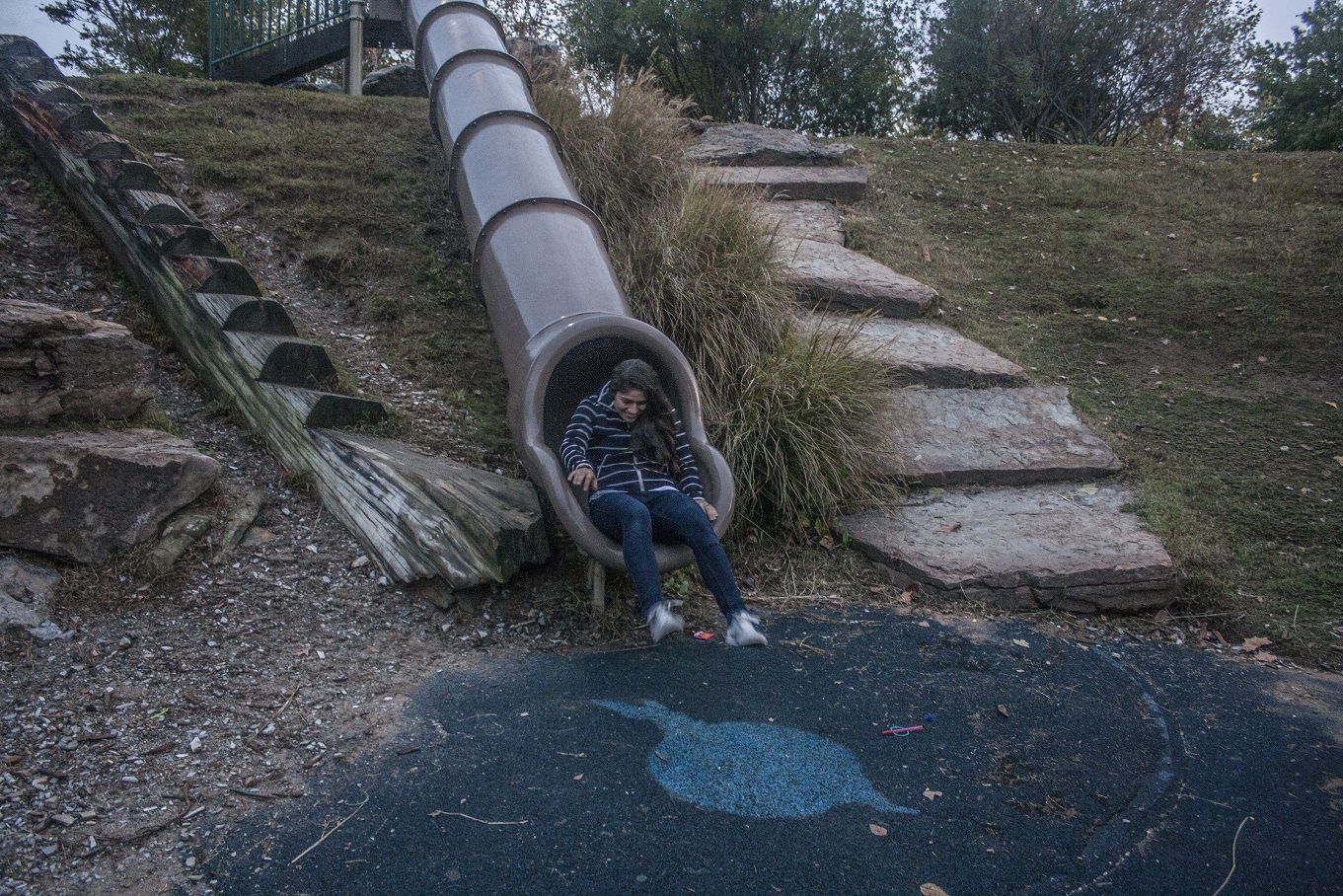
Segway_Alex_Constance_Stephanie_Web…stopped for a bit to play on Little Rock’s amazing playground, which has a high-speed slide…
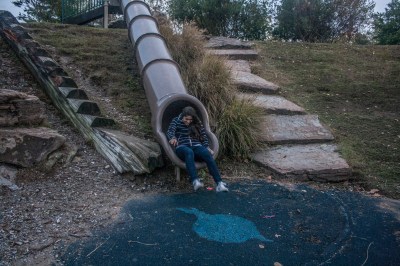
Slide_galvan_Webb…a tunnel system, which Alex took to like an enthusiastic groundhog, and a spider-web jungle gym…

Spider_Web_Constance_Alex_Web

Spider_Web_Alex_WebWe also spent some time at the H. U. Lee International Gate and Garden, which honors H. U. Lee, the founder of the American Taekwondo Association.  Strangely, Mr. Lee decided to settle in Little Rock because it reminded him of South Korea.

Lee_Pavillion_Web

We also stopped to let our friends and fellow members of LEAP that we wished they were here with us.  So, Austin, Karla, Kaitlyn, Jazmin, Beatriz, Caitlin, Bella, Brian, Jamaus, and Megan, we wish you were along with us!

Constance_Alex_Greetings_Web


Dinner and Moving On

After a day of touring the city, we had worked up a hunger, and there’s no better place to eat in the River Market area than Sonny Williams.  We began our meal with an appetizer of Elk and Alligator, and followed it with Lamb Chops and Creole Seafood.

And with all that food in us, we decided to take one last walk along the river market area.
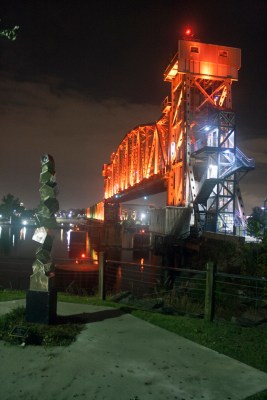
Junction_Bridge_Sculpture_Night_WebThe bridges were washed in orange colors, in honor of Halloween.

Junction_Bridge_Night_WebAnd the beautiful view of Little Rock from one of its seven bridges made for a memorable way to end a memorable day.

Little_Rock_Skyline_Web


DC, Dinosaurs, Diamonds: A Princess in the Capital

Once upon a time there was this young lady, a princess actually, she ventured through the streets of D.C. amazed by all the sites. This princess, Jazmin, lived with Ademide Adedokun, an insightful and generous young lady whom Jazmin became rather fond of. The Princess also interned for wonder woman…but really! Wonder woman did it all! This meant that Princess Jazmin had the opportunity to learn it all. How exciting! She was eager to learn! The first week of adventures flew by so quickly, but the story of the Princess in D.C. continues…

Jefferson_Statue

This weeks’ adventure begins at Thomas Jefferson’s Memorial which was breathtaking! The structure is massive and oversees the Tidal Basin.

Jefferson_Memorial
                      Jefferson Memorial

After gazing at the Jefferson Memorial, I continued along the Tidal Basin towards the Roosevelt Memorial. This is the most unusual of the memorials I have seen thus far. The Franklin Delano Roosevelt Memorial offers a historical pathway of FDR’s presidency, allowing us to seemingly walk through his presidency.

FDR_Jazmin

Then continued to the Martin Luther King Jr. Memorial, an impressive structure emerging from the mountains.

MLK_Monument

Afterwards I headed back towards the Lincoln Memorial, to see some of the memorials I had missed in my excitement, the first time around. Now, I saw the DC War Memorial, the Korean War Memorial, and ending with the 56 Signers of the Declaration of Independence Memorial.

Declaration_Signatories

Throughout the week, I had the pleasure of observing Nancy (Wonder Woman) speak to a group of accomplished Japanese women on the subject of Women in Politics. This group of women were eager to learn from her. They seemed truly grateful to be there and even sent us off with several Japanese tokens! Having the opportunity to meet with these women and see Nancy in action was a pleasure! A bonus was then taking a tour of beautiful churches.

During this week, I also had the opportunity to visit two of The Smithsonian Museums, American History and Natural History. The collections in both of these museums are astonishing.

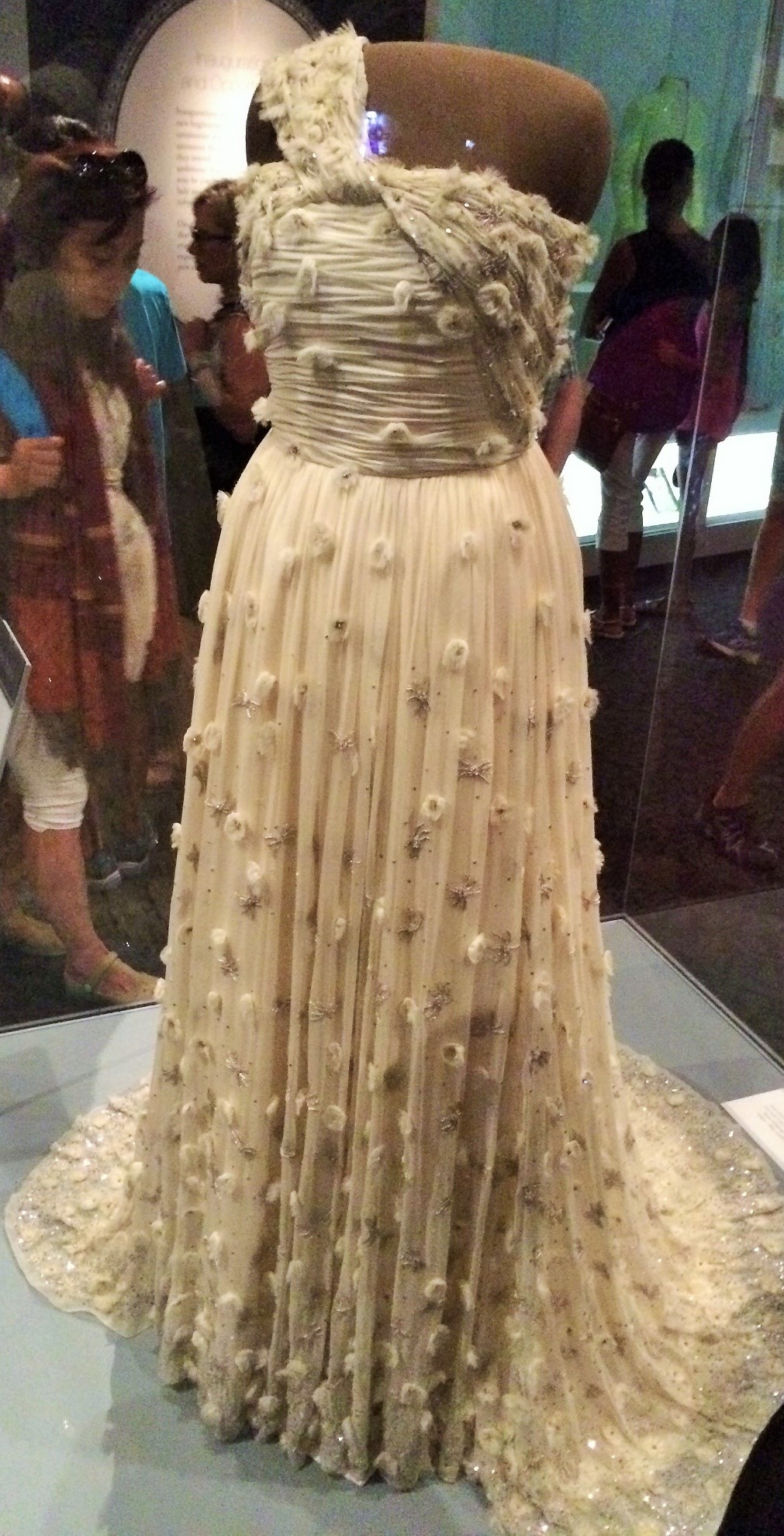
In the American History Museum, among my favorite collections is the 30×42 inch original Star-Spangled Banner, the American flag, from 1813 that inspired Francis Key to compose the Nation Anthem. Another of my favorites is The First Lady Collection, exhibiting beautiful gowns worn by the First Ladies.

First_Lady_Dress

The National Museum of Natural History also contained spectacular collections. Here, I was able to explore and venture into each of the numerous galleries. Some of my favorites were The Last American Dinosaur…

Dinasaur

the Mummies…

Mummy

and the Hope Diamond.

Hope_Diamond

To end this eventful and exciting second week of adventures, Ademide Adedokun along with a group of her friends and I enjoyed a beautiful Sunday at a winery in Clifton, Virginia. This was my first time in a winery! During our visit, we were able to engage in a wine tasting and learn about the various wines we were tasting. It was a great experience.

Perez_Adedokun_Friends_Winery

But, the story of the Princess in D.C. is to be continued…