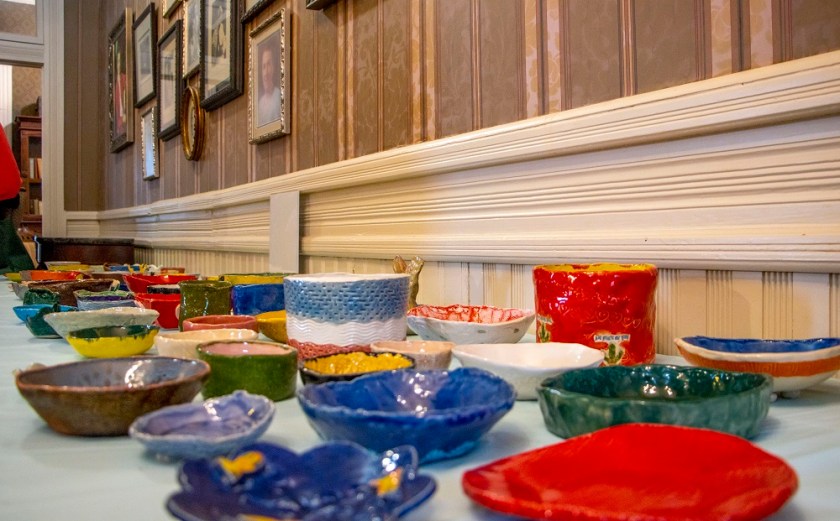
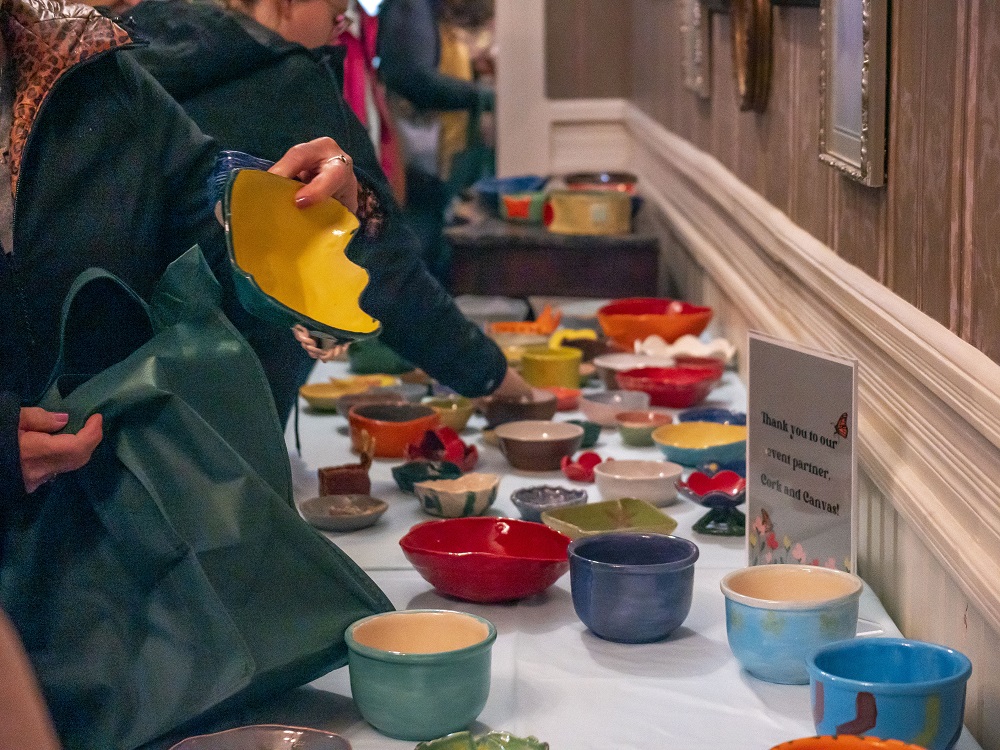
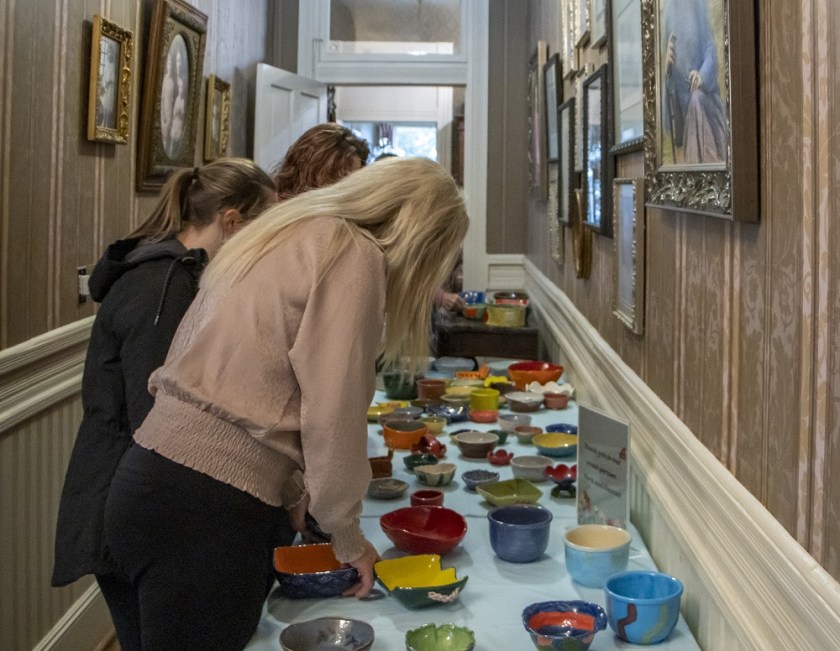
Every year since 2008, the Wynne Home Arts and Visitor Center has hosted “Empty Bowls,” a fundraiser that helps fight hunger in Walker and Madison Counties.
Supervised by Sarah Faulkner, the Cultural Services Manager for the City of Huntsville, the event promoted the arts, brought the community together, and raised more than $3,000 for Meals on Wheels.
And every year since 2008, the LEAP Ambassadors have volunteered for this event–indeed, it was a LEAP intern who was charged with creating the event!
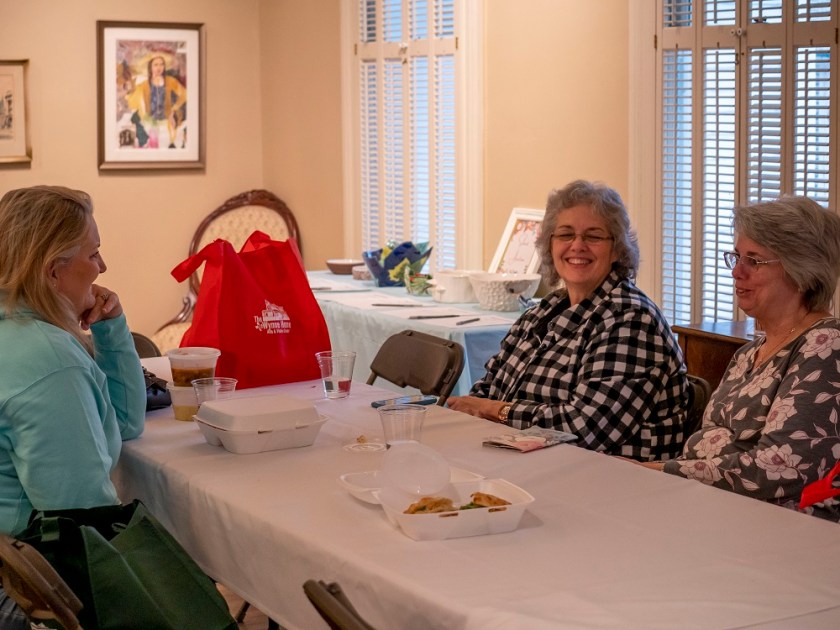
But LEAP Ambassadors were far from the only ones to help: approximately 250 people in the community participated–working as ceramic teachers, volunteering the day of the event, sponsoring the soup, or simply by showing up and purchasing a bowl of soup.
Compared to the ceramicists and soupmakers, our tasks were simple: greet people…
…serve soup…
…help clean, and take photos–all while enjoying the art, the Wynne Home, and the company of the fine people who attended.
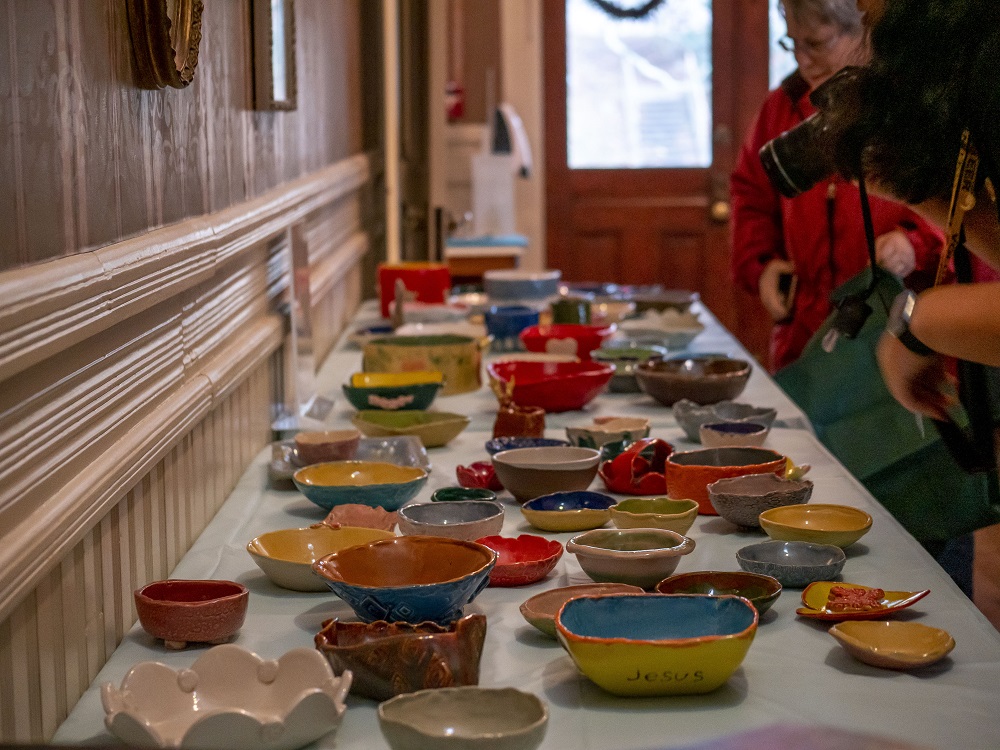
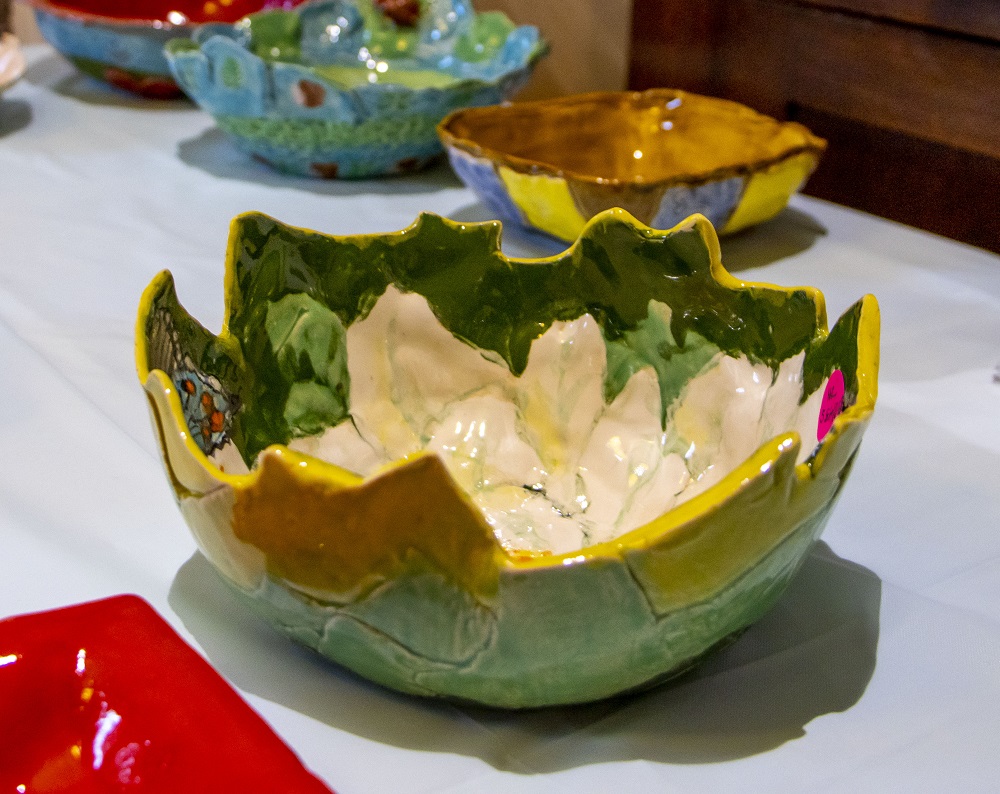
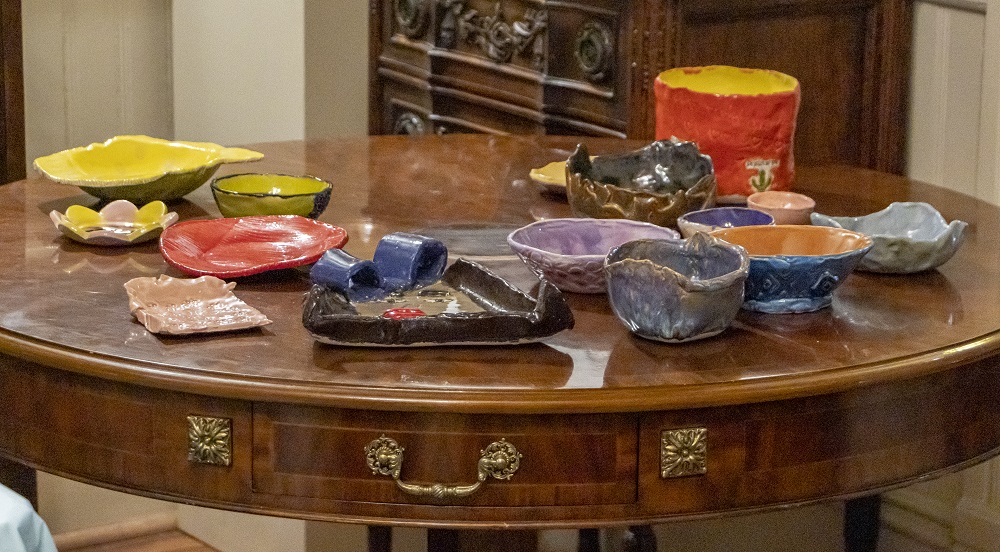
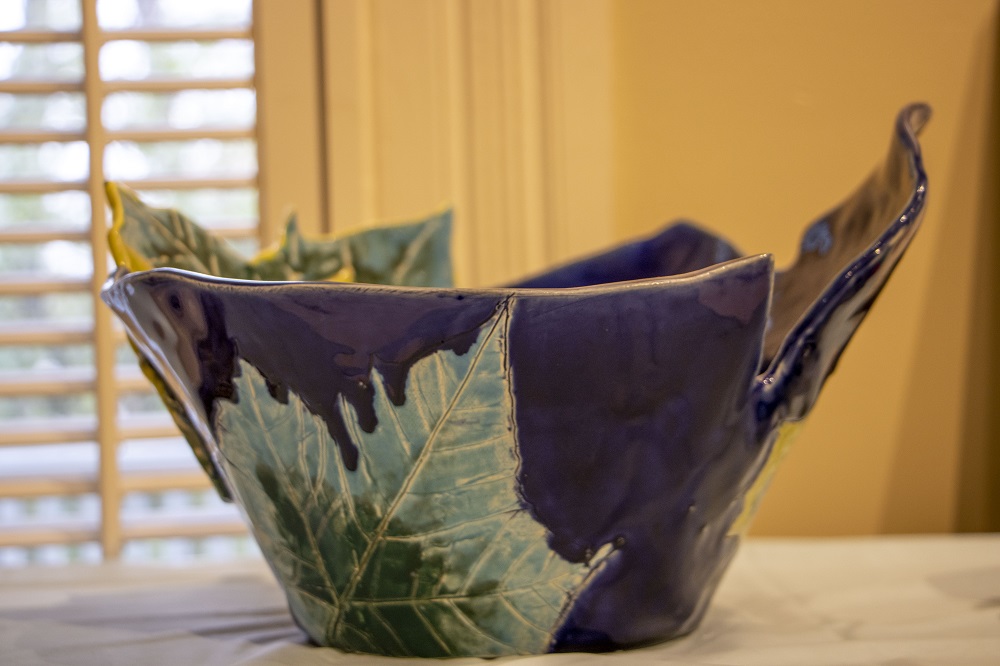
It was a great learning experience, and it was a bonus to see the beautiful bowls created by talented others…
including those created for silent auction (which our professor won!)…
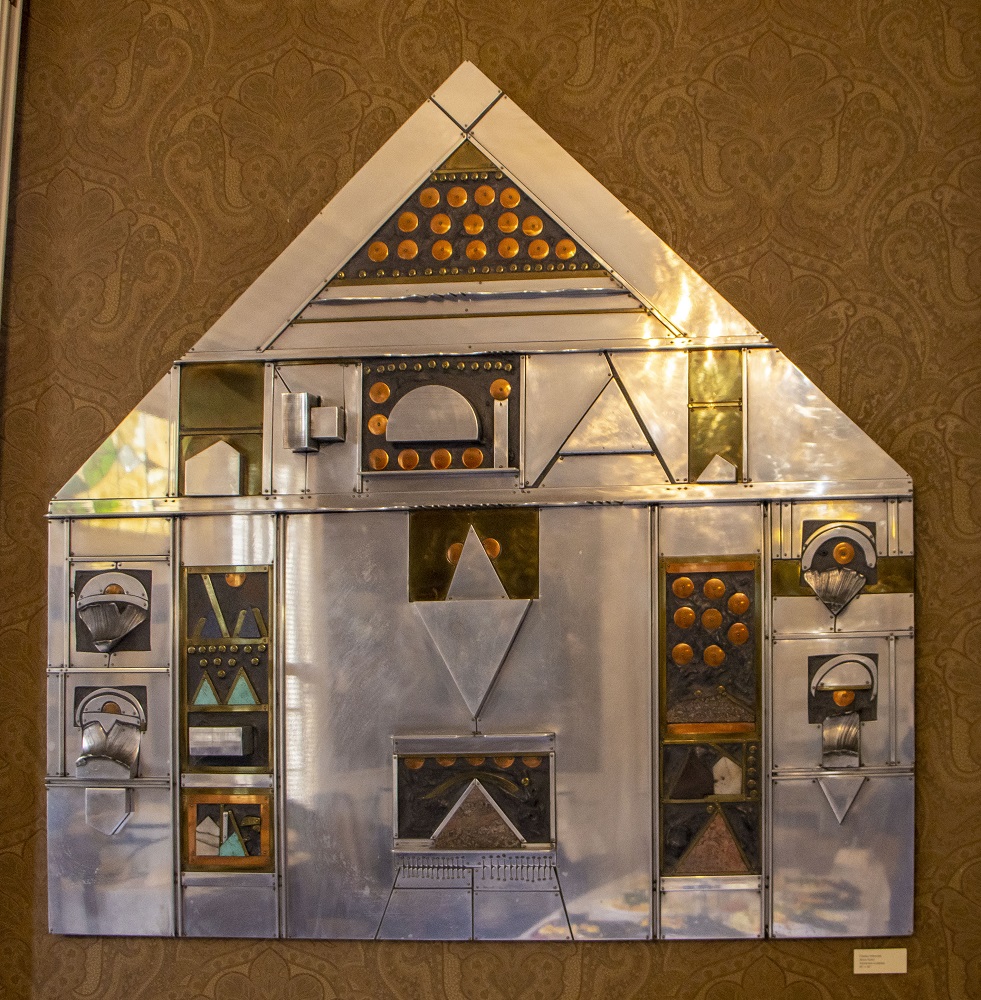
… as well as the current exhibit, which are all pieces from the Wynne Home’s archives–ranging from works by Samuella Wynne to Richard Haas. And, of course, whenever we are there, we take additional looks at the Wynne Home’s permanent collection, such as works by Pebworth and Surls.
Many thanks to the sponsors, the ceramics teachers, and the many people who came out and helped make the event a success.
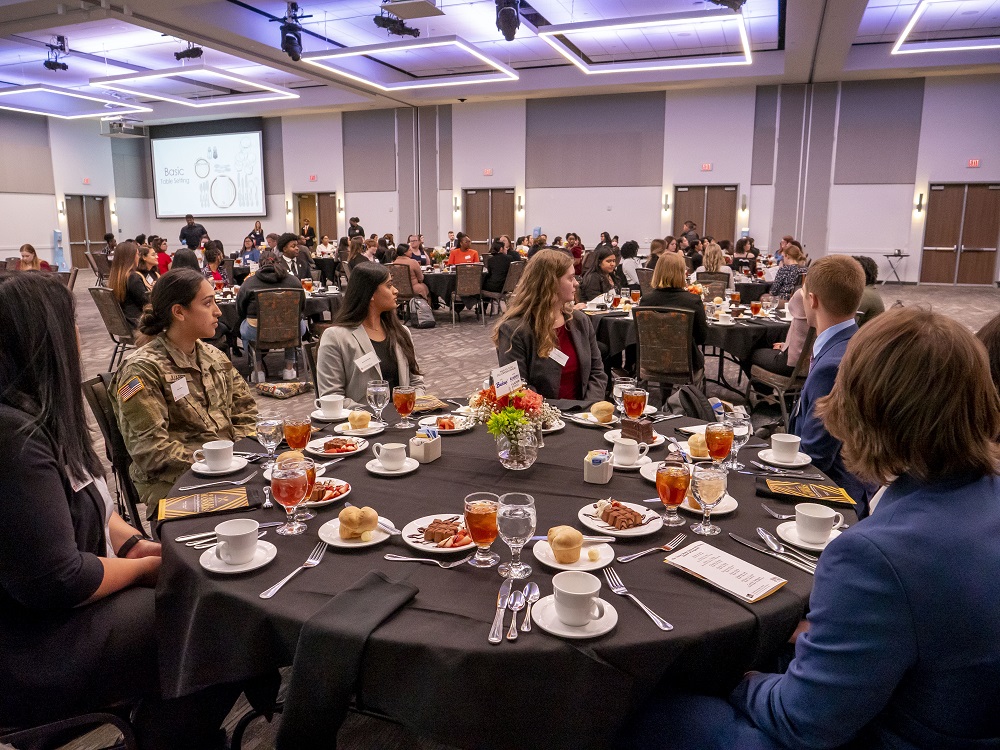
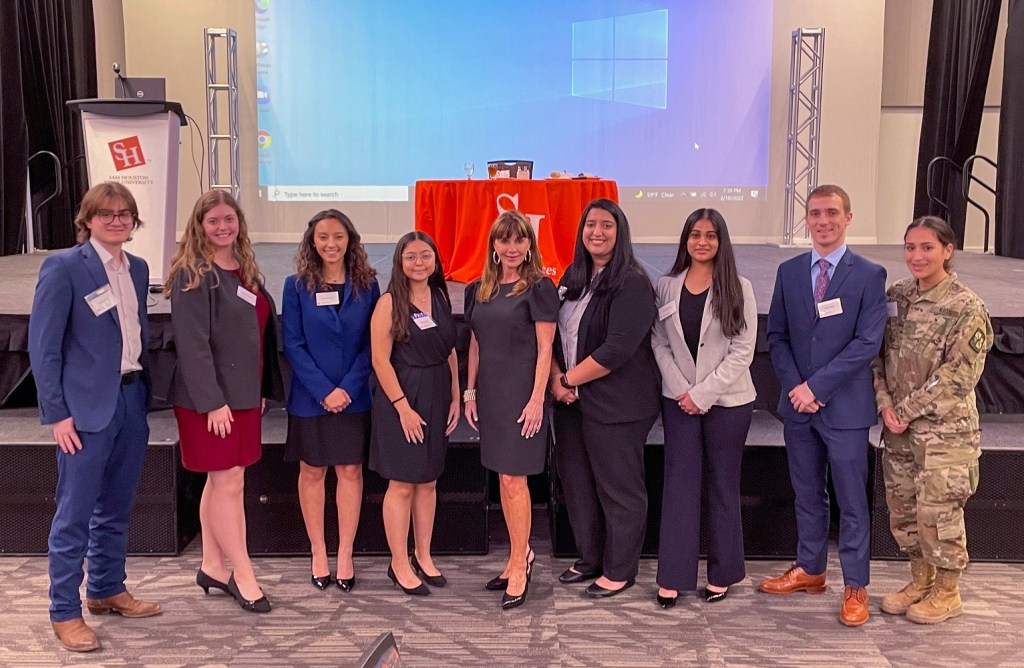
SHSU Career Services was able to bring etiquette expert Diane Gottsman to campus this past Thursday, and we were excited to join the process.
We were served a three-course meal while being taught corporate and social etiquette. As Ms. Gottsman stated, we have the opportunity to shape how we present ourselves.
Being confident, prepared, and knowledgeable is the key to success in etiquette, and with this in mind, we gathered together for a nice meal and a lot of learning.
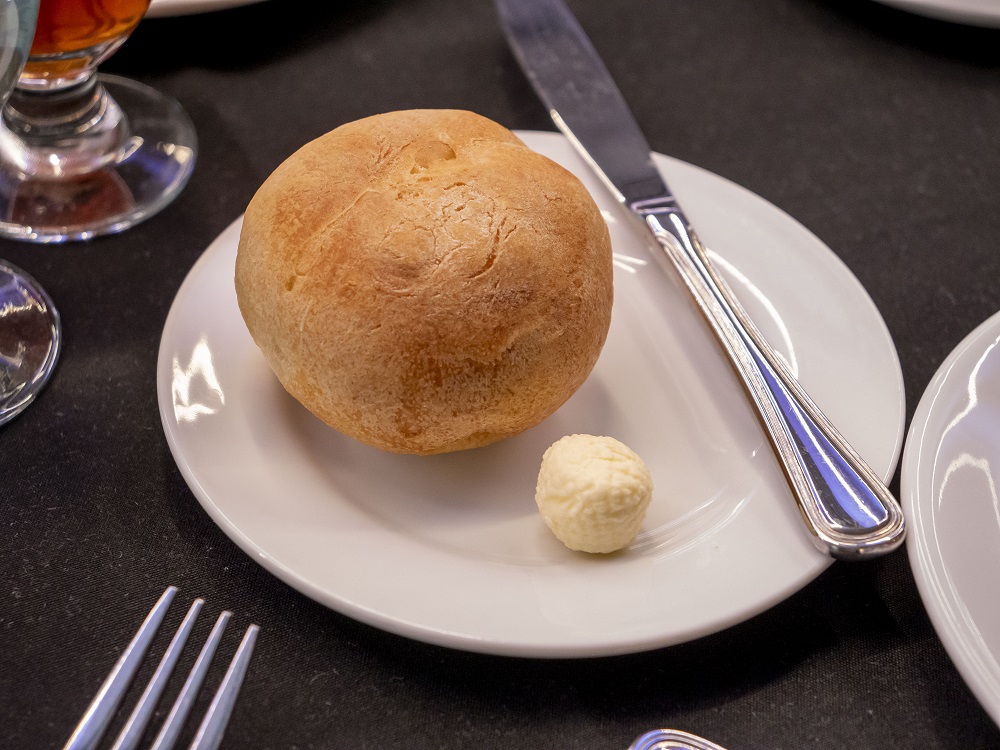
The LEAP Members were intrigued by all the rules that apply to something as normal as a nice meal. As we were first seated at a round dinner table, we were ready to learn why there were so many utensils and what they were used for. We began with the B and D rule where bread is placed on the left and drinks are placed on the right.
Then you are to use the utensils from the farthest one out and work your way inwards.
Once everyone knew the placement of the utensils, we were able to have more confidence by having proper posture and our hands above the table at all times. We were ready to place our napkins properly on our lap and take on our meal!
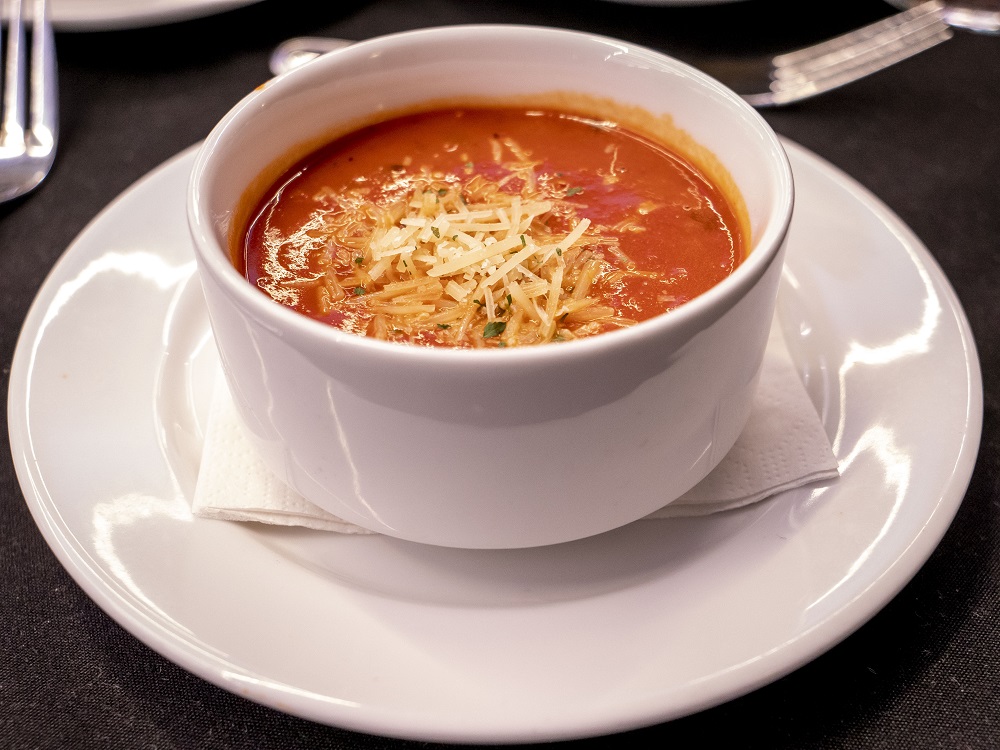
With three different eating styles of etiquette to choose from, European, American, and Barbarian, we learned the European style. It entails, for example, eating your soup with the motion of your spoon facing away from you. Once you have finished, you would put both the fork and knife parallel from one another at 10 and 2. We were able to practice this ourselves with our tomato bisque soup…
…and our main entrée, chicken, broccoli, and mash potatoes.
While overcoming the challenges that came with a new style of eating, it was safe to say each LEAP member enjoyed learning every bit of it!
Topping off our dinner with a chocolate cake dessert, we were able to practice additionally while Mrs. Gottsman watched and critiqued.
We greatly appreciated Mrs. Diane Gottsman and the SHSU Career Services for hosting an etiquette dinner to prepare us for any social or corporate event. For we learned a lot about having etiquette!
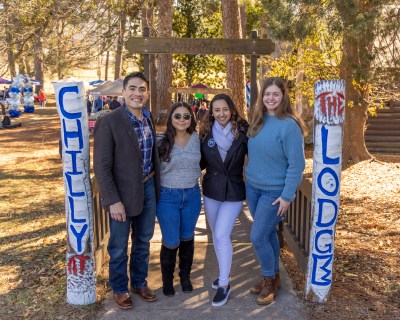
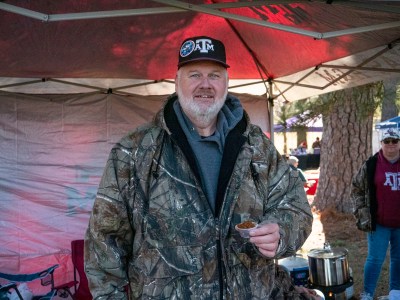
On a chilly Saturday afternoon, the LEAP Ambassadors went out to Josey Scout Lodge for a Chili Cook-Off. This was a bona fide International Chili Society competition with more than 2 dozen contestants grouped into two categories: professional and community. Many of these competitors drove in from out of state, some as far as Arizona and Nebraska, just to be in this competition! The winner of this chili cook-off is moving on to the national competition.
Before we leaped into sampling chili, we explored the Scout Lodge where we learned about former members and what boy and girl scouts do. As we wandered around the grounds of the lodge, we saw community leaders such as former Mayor Mac Woodward, Economic Development Coordinator Tammy Gann, City Manager Aron Kulhavy, as well as Mrs. Leanne Woodward and Mr. Gene Roberts, both of whom serve on the board at the Josey Scout Lodge.
Tammy Gann & Aron Kulhavy
The Josey Lodge wasn’t only filled with “celebrity chili judges,” but it was also provisioned with games set up by the scouts, along with items for sale, such as embroidered coin bags, hats, and ponchos.
The overall atmosphere was one of community involvement, with much to do for everyone. There was even live country music being played by Kate Watson and Drew Fish, along with our friends from KSAM doing live broadcasts in the middle of the Josey grounds.
Our director, Professor Yawn, was asked to be a judge and was able to test quite a variety of salsas and chili. He judged five separate contests, and participated alongside other judges such as SHSU President Dr. Alisa White, Mac Woodward, Will Durham (DA), Judge David Moorman, Mayor Andy Brauninger, HISD Superintendent Scott Sheppard, HISD Principal Paul Trevino, SHSU Associate VP Kristy Vienne, HISD School Board Trustee Trey Wharton, Josey Scout Lodge Board Member Gene Roberts, and many others.
Mayor Andy Brauninger
As customers (six tickets for $5), we were able to sample up to six different types of chili, most of which tasted better than any chili we ever had before. The savory flavors and consistency varied: from spicy to sweet, to green salsa, white chili, and even chili with crawfish!. Every single one that we sampled had us in astonishment and it was hard to choose the best one. It was a close call between many but ultimately Morgan and Mario really enjoyed a crawfish white chili, while Yvette and I preferred a mild homestyle chili.
Before we headed back home, we each acted as “judges” by filling out the slip we were given upon entry and voted for our favorite chili.
The community voted, too, and the “People’s Choice Chili” was won by Scott Williams and his team: Come bust a Bowl! And as the winner of the Community Choice award, he was invited to compete against the “professionals” the next day, and he placed! Congratulations to Scott and to all the contestants and winners, the latter of which you can find here.
Despite the cold weather, it was nice to see how community members came out to support each other at the wonderful Josey Lodge “Chilly” Cook-Off.
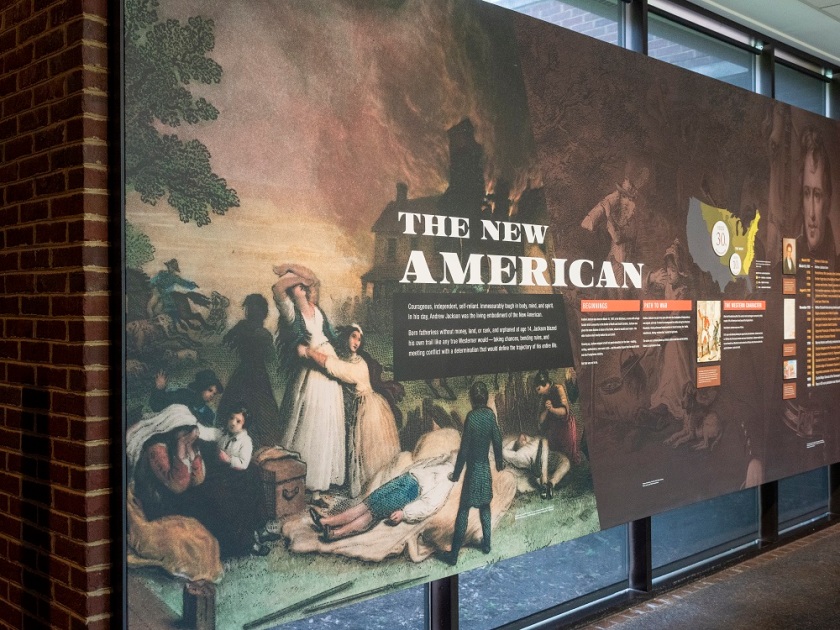
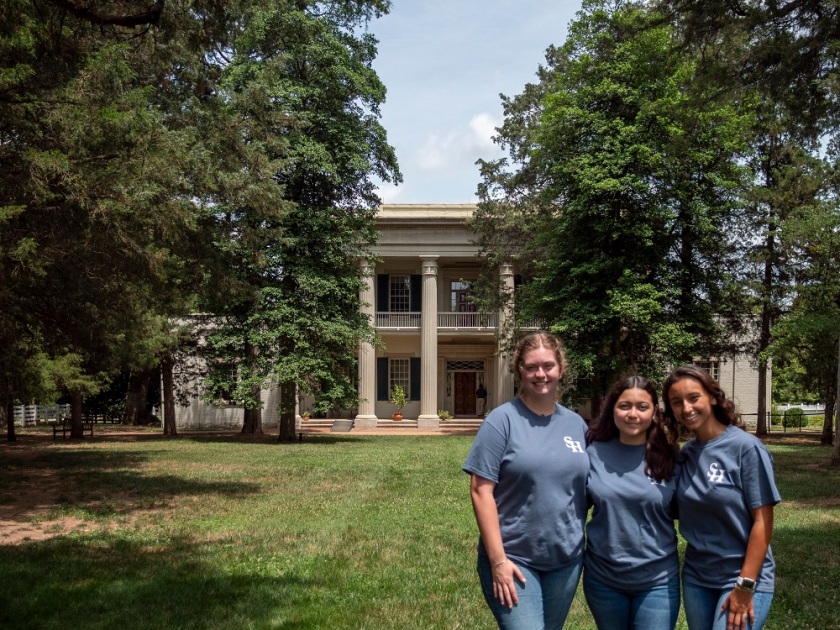
Seeking another historic home on day four, the LEAP Ambassadors ventured to Andrew Jackson’s Hermitage. This visit gave us a vivid perspective of the 1800’s lifestyle through his marvelous home and informative museum alongside it. In addition to having a tour of the Hermitage we walked through his personal idyllic garden and the cemetery where Andrew Jackson and his family currently rest.
Former president Andrew Jackson was known as “the People’s President,” because he was the first “frontier” President, and he broadened the voting process, resulting in many changes in society.
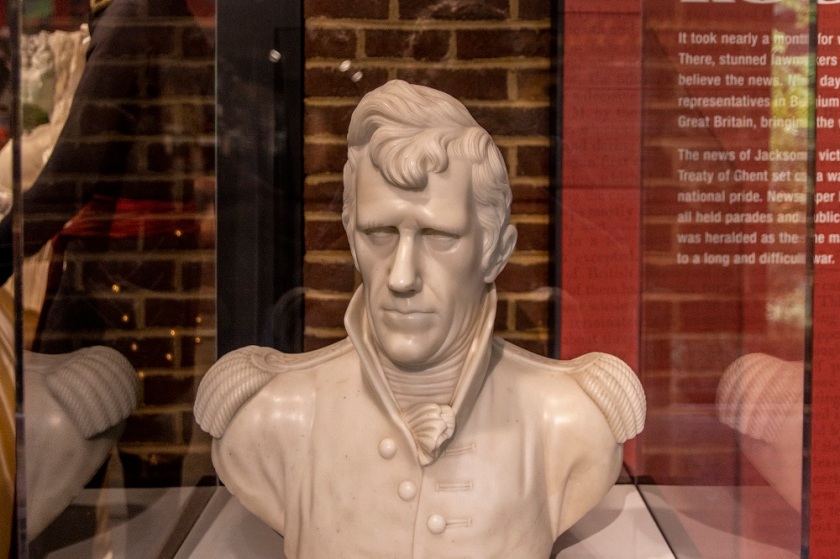
Walking through the Museum we saw his accomplishments as an attorney, soldier, and president of the United States. Viewing artifacts, Jackson effectively led the battle of the Creek War in 1801 as Colonel of Tennessee and the battle of New Orleans in 1812. After courageously serving in these wars fighting the British and the Indians, Jackson was elected president, and he is now known as the founder of the Democratic party.
As for Jackson’s day-to-day life he lived with his wife Rachel Jackson and adopted children in a Greek-styled home where he allowed any guest comfort in his home with food and a place to stay.
Jackson was known to receive many visitors, including Sam Houston and former presidents, at his 1,120 acres of land at the Hermitage. Having guests stay made it a hectic household from managing the farm, servants, and attending to important guests.
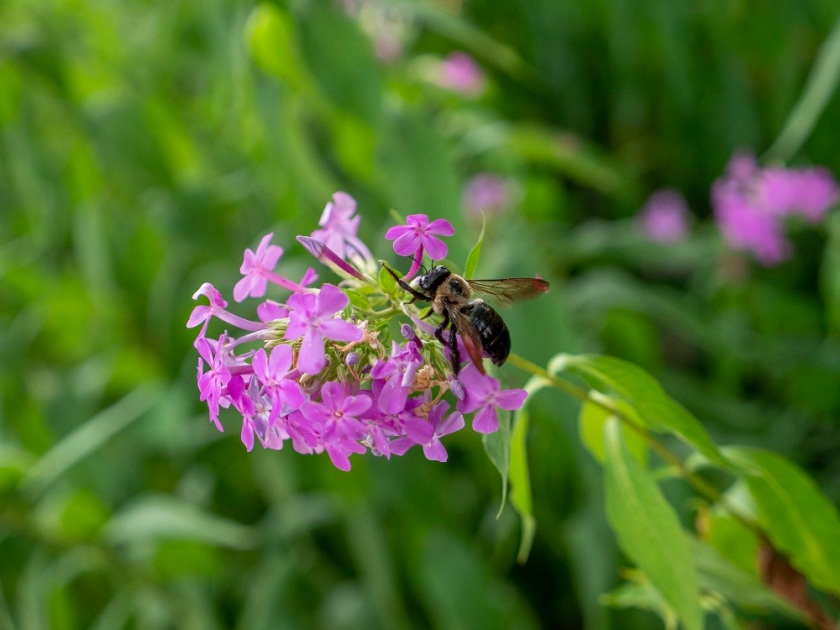
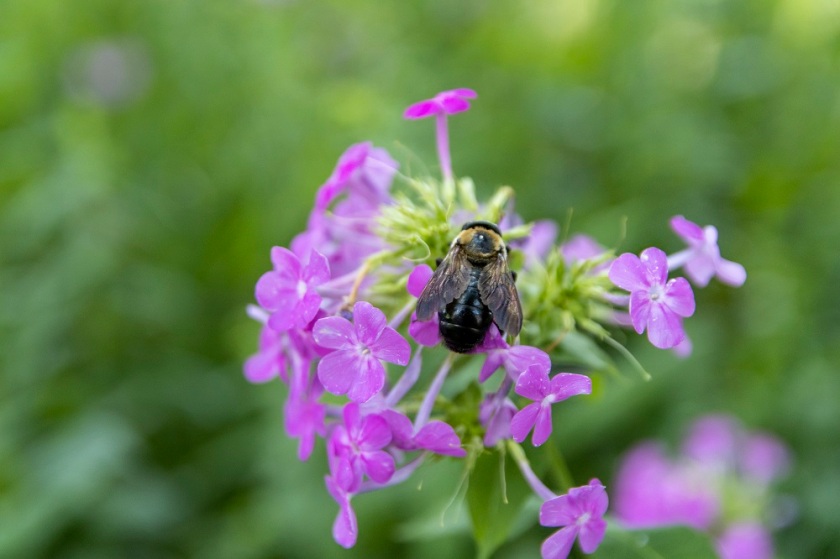
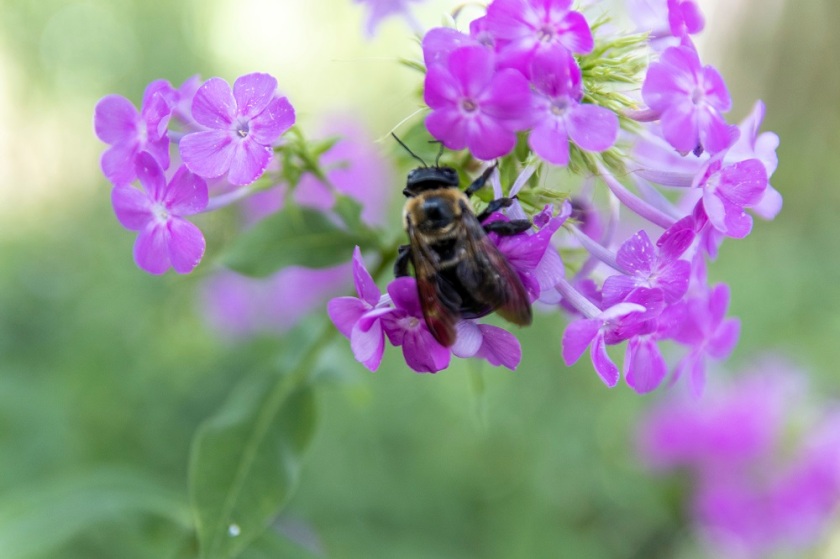
Each LEAP Ambassador had their own favorite part of the Hermitage Jessica being the massive newspapers in Jackson’s library. Morgan enjoyed the kitchen outside since it was like Sam Houston’s kitchen in Huntsville, Texas. Whereas mine was farther away from the home being the garden. As we all entered the garden I fell in love with the bumblebees flying around the brightly colored flowers that all led up to the tombstones.
The garden and grave site rounded off a nice sentimental testament to our 7th president.
Lunch
Yvette Mendoza
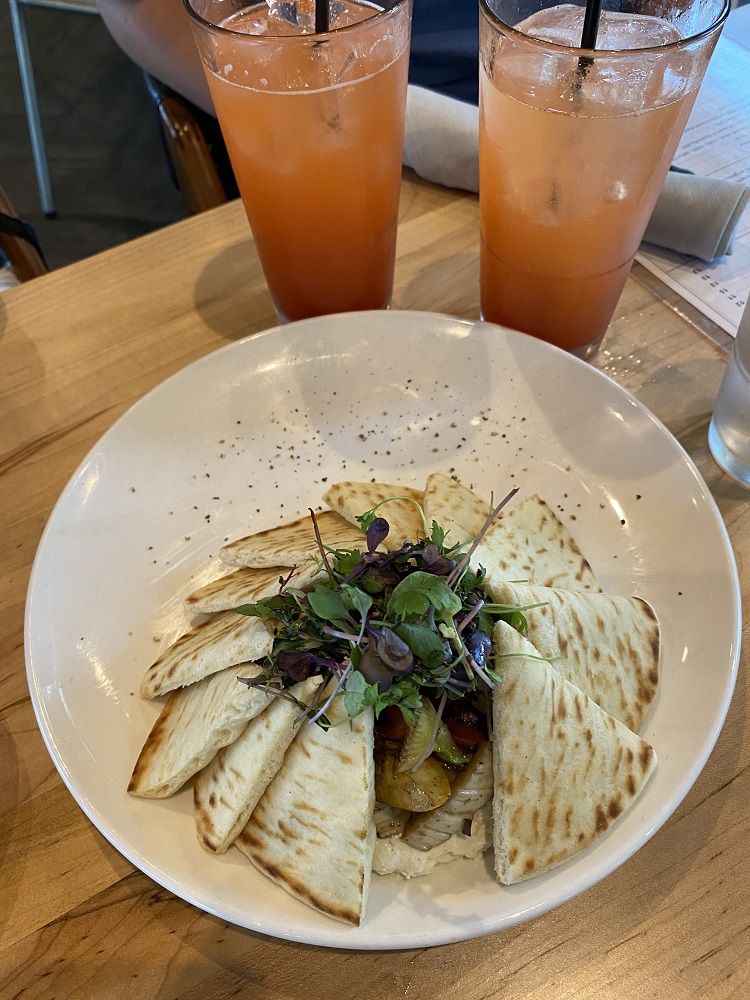
Diving into our first meal in Nashville at the Flat Iron southern fare restaurant ended up being a perfect choice. With the menu full of variety we started off with American classics by ordering whipped goat cheese filled with grilled cucumbers, onion, and tomatoes served with fresh warm pita. For our meals Morgan and Jessica got burgers, one being a tuna-patty burger and the other a grilled chicken burger. As for me, I got a waffle grilled cheese with a complimentary tomato bisque dipper. Each meal was delectable, and everyone had a delicious side of french fries. Our first taste of Nashville made us eager to try more.
Parthenon Tour
Morgan Robertson
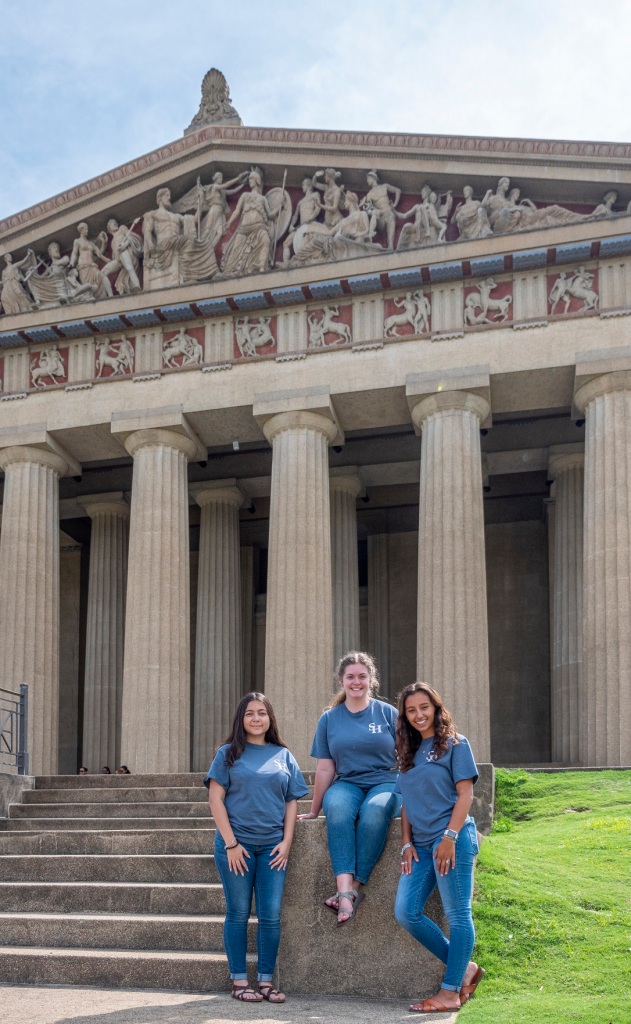
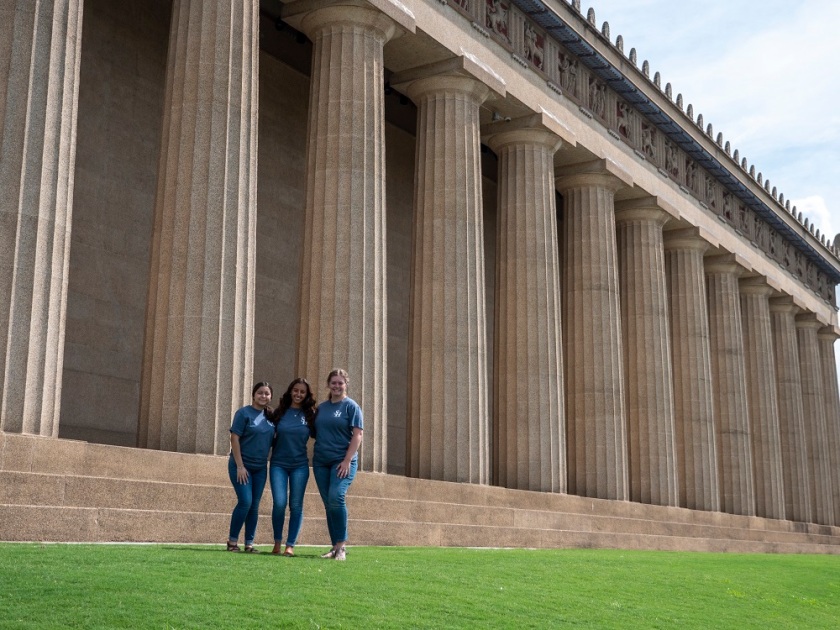
After seeing General Jackson’s home, we ventured into a City formerly known as “the Athens of the United States”–Nashville, where the great Parthenon in Athens, Greece is replicated. Initially, the project was supposed to be a temporary attraction like everything else commissioned for Tennessee’s 1897 Centennial Explosion. However, people were so impressed with its beauty and the cross-cultural connection, the Parthenon was preserved, becoming the focal point in what is now Centennial Park.
While the Nashville Parthenon is a well depicted replica of the authentic one in Athens, there are some major differences. The first difference being the materials in which the structure was constructed. The Parthenon in Greece is made of white marble, which would have been easily accessible at the time. However, in Nashville, Tennessee, there are no quarries of white marble. Using what was at hand, Architect William Crawford Smith designed the structure with wood, brick and stone, giving the Parthenon a yellowish-brown color.
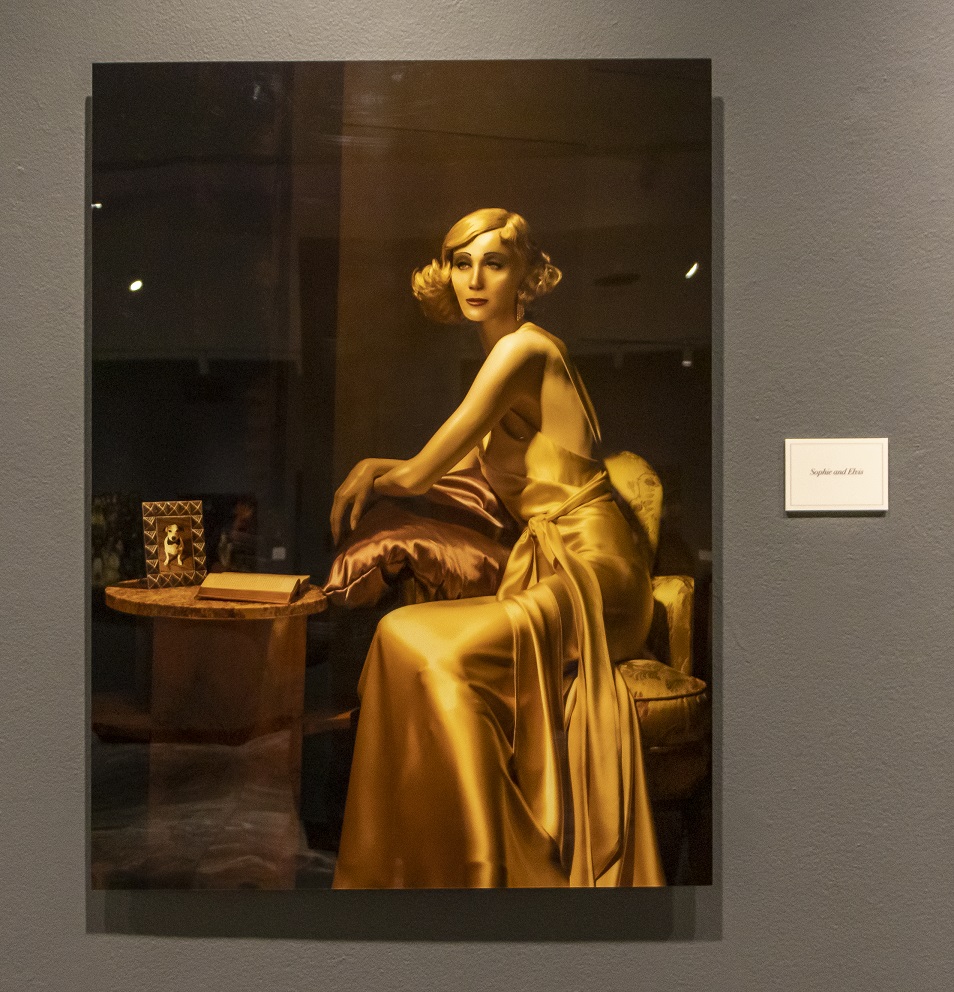
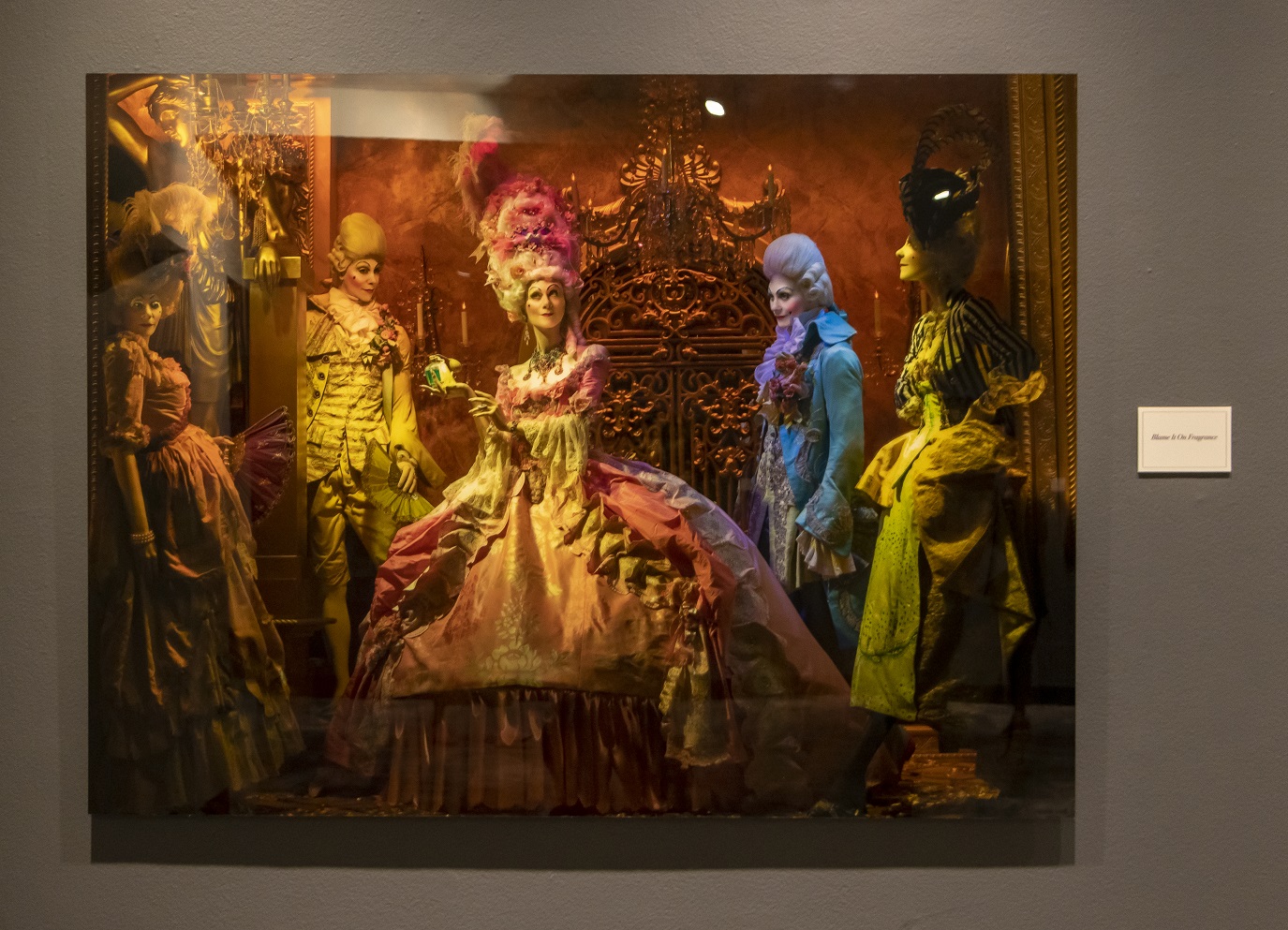
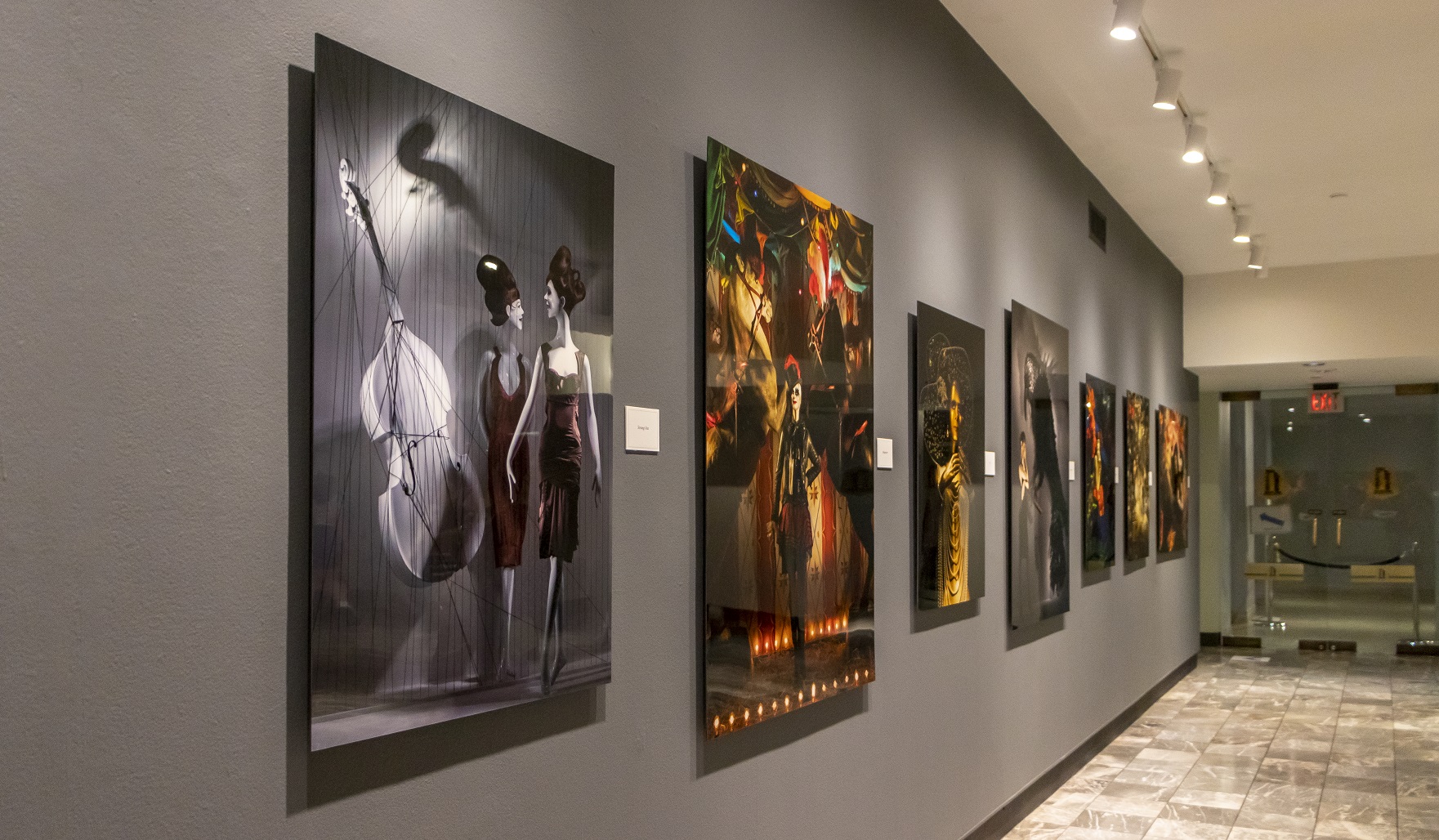
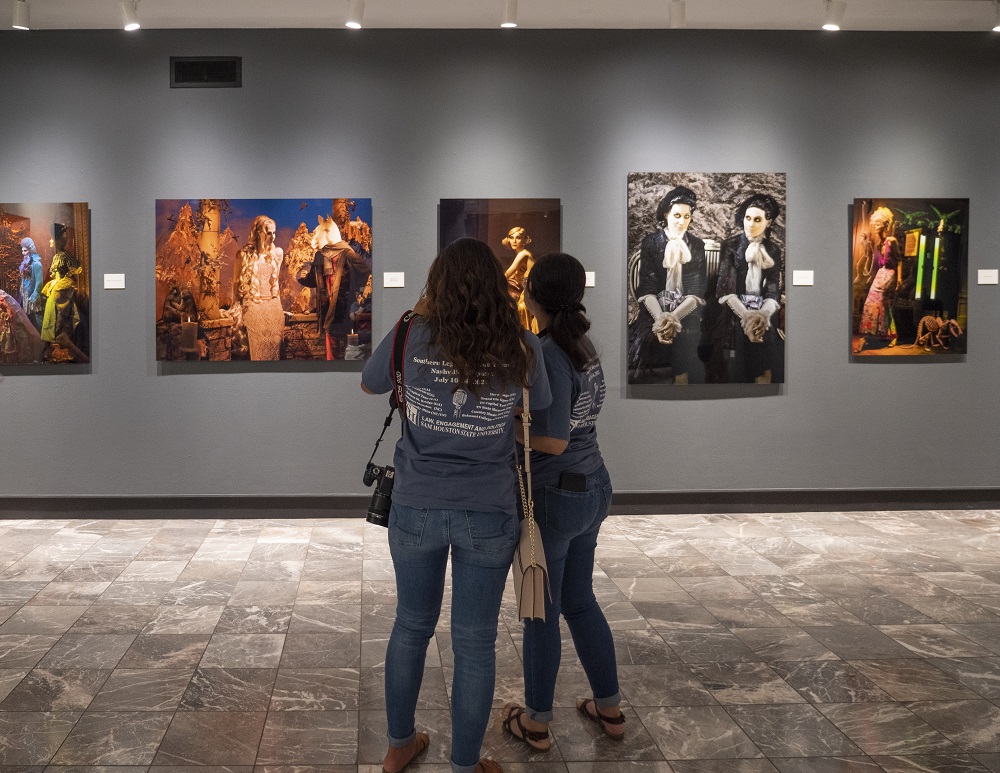
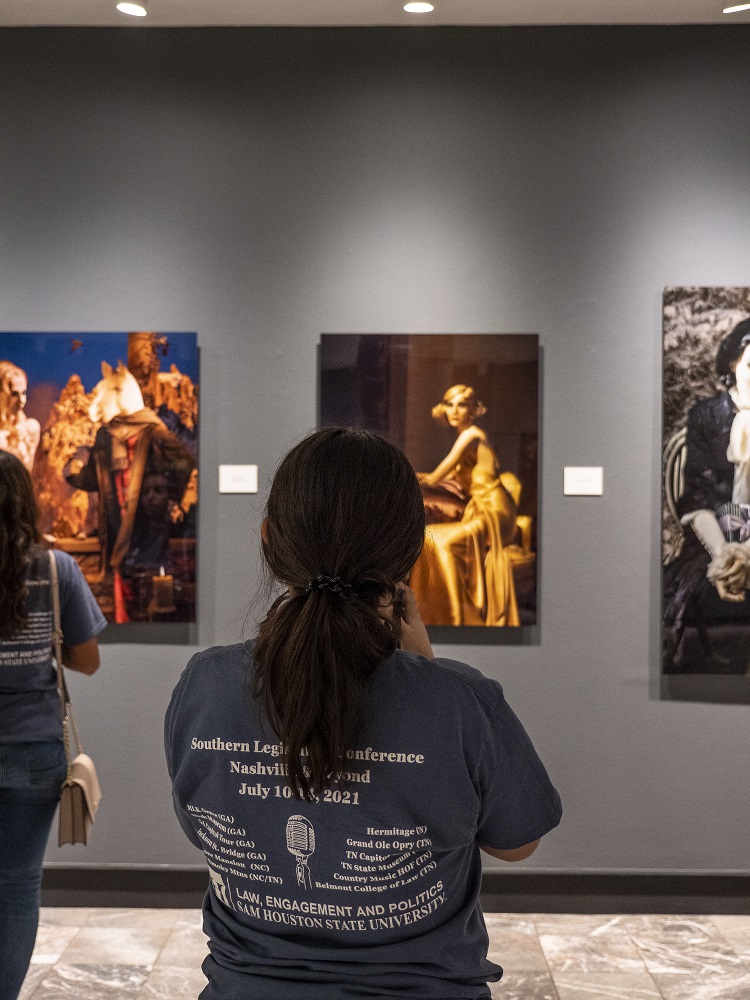
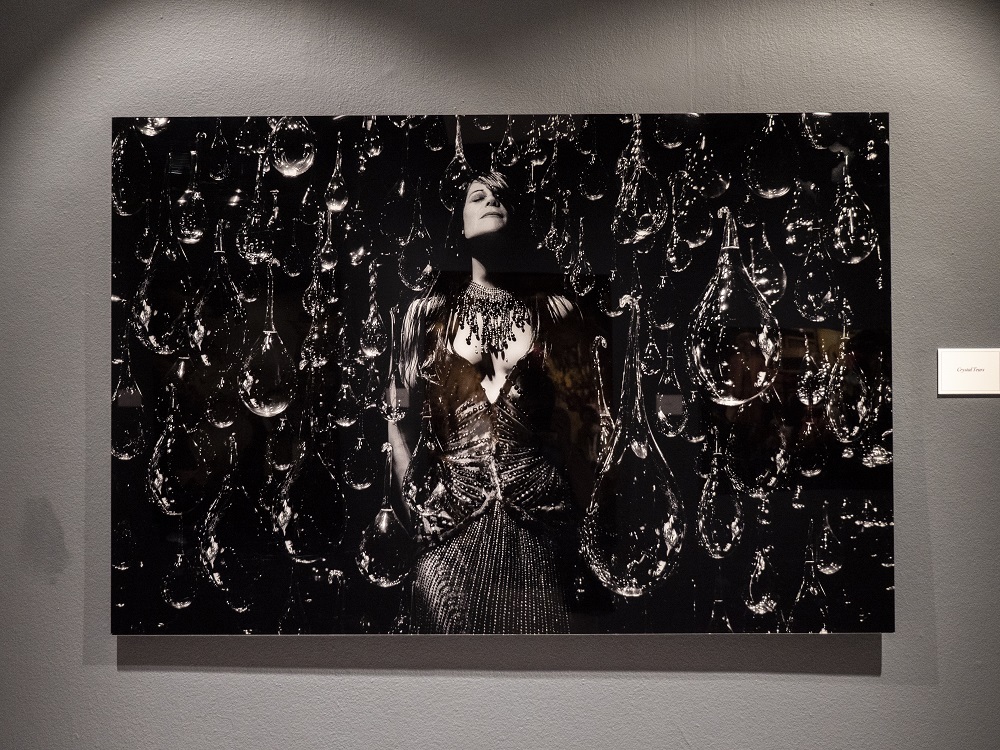
Another interesting feature that I was not expecting was the art museum on the lower floor of the Parthenon. In one of the rooms was an exhibit for artist Lynn Goldsmith whose interesting photography art is printed on metal, with each photo containing up to fifty exposures.
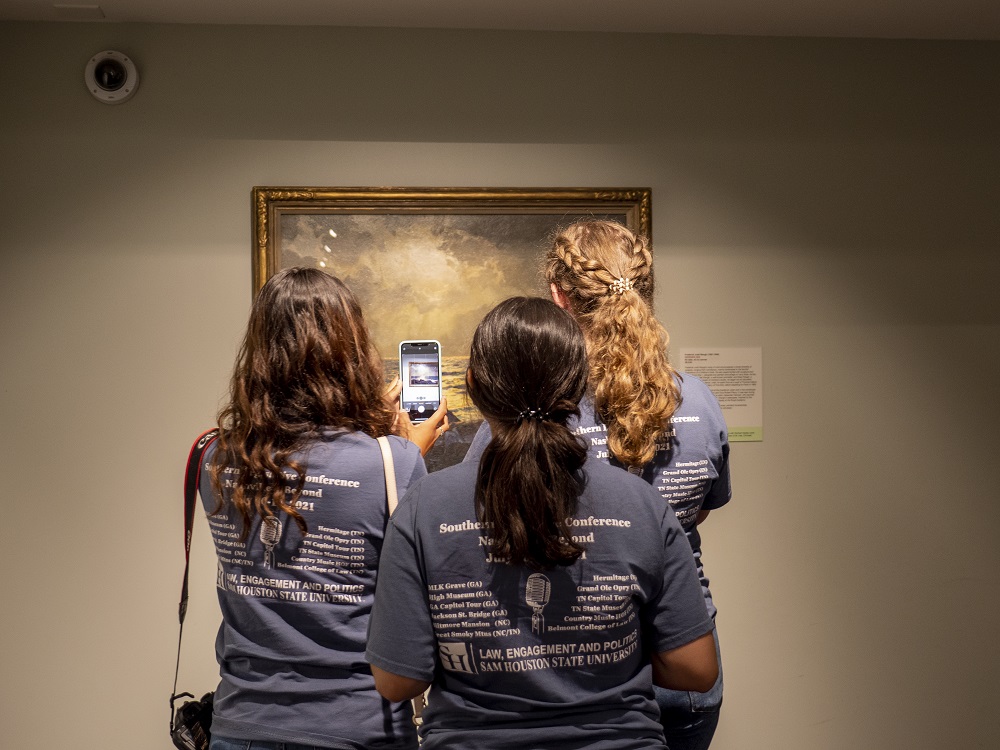
The second space was James M. Cowan’s personal collection of American art, including pieces from Durham, Moran, and Bierstadt, serving as a nice contrast to the first collection.
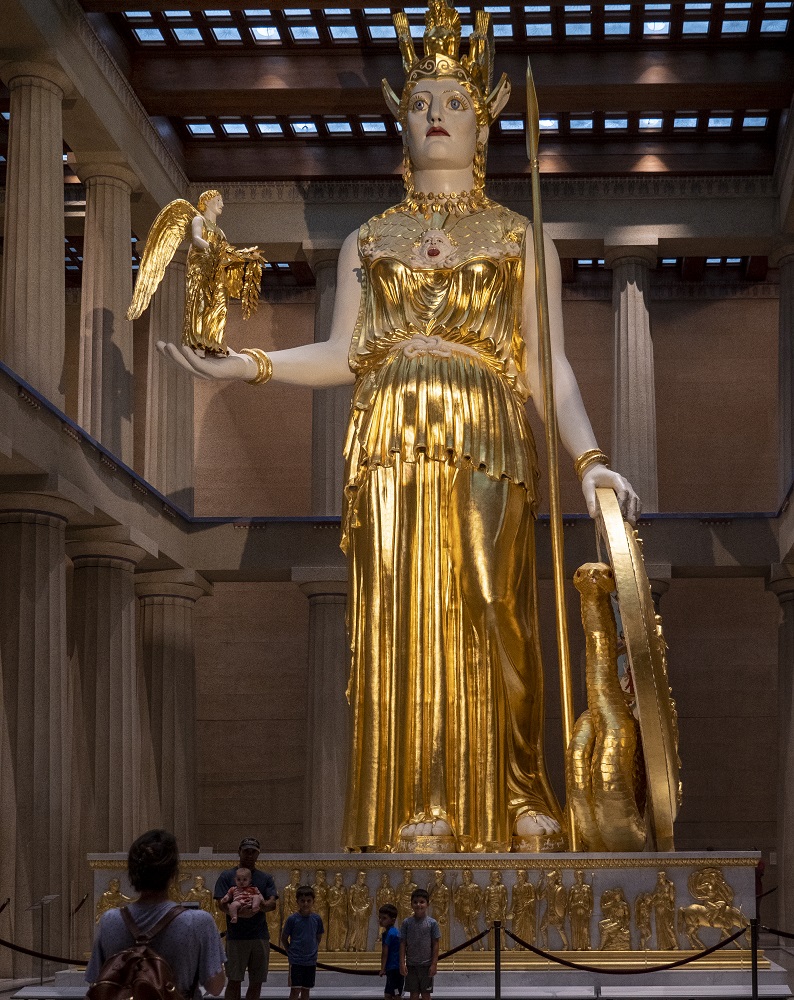
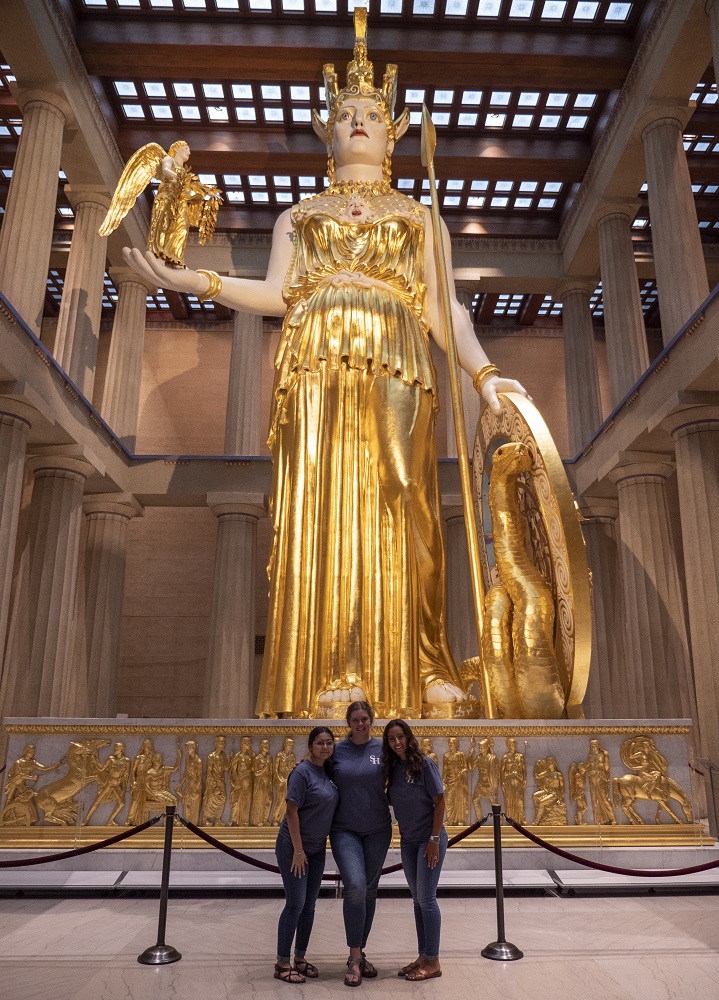
Keeping with the Greek style and culture, a 42-foot-tall statue of the Goddess Athena resides in the central room of the Parthenon. Standing tall as the Goddess of Wisdom, Athena holds the god Nike in her right hand with a shield and a snake to her left. When entering the central room of the Parthenon, the goddess is visible between the massive Doric columns, with her gold dress and accessories appearing as though they are glowing.
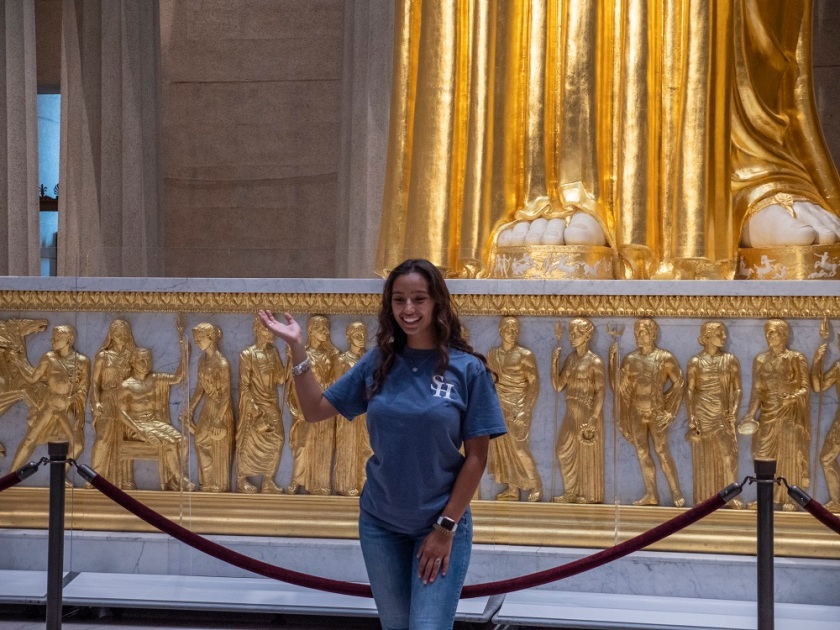
Surprisingly, we found the Parthenon to be a popular picture spot for tourists and natives. There were two Quinceañera parties, a baseball team, and even a wedding set up for pictures. We of course joined the trend and posed for several pictures inside and outside of the Parthenon before heading back to await for what would come next.
Opening Night at the Country Music Hall of Fame and Museum
Jessica Cuevas
It is the opening night of the Southern Legislative Conference in Nashville, Tennessee. The LEAP Ambassadors were curious to know what to expect at the Country Music Hall of Fame and Museum as they walked to join the line for the trolley across the street. We congregated with the other attendees and waited for our turn to board the trolley. We met two friendly lobbyists from New York, Jonathan and Monisha, and a policy analyst from Ohio who each talked to us about what they do, how they got to their positions, and future advice for young professionals. Our conversations carried on into the short trolley ride on our way to the Country Music Hall of Fame and Museum. It was refreshing to meet people so passionate about their work, and who are living what we are actively learning.
Once we arrived we were given the option to go up to the sixth floor for food or start off at the museum on the third floor. We listened to our stomachs, which drove us to the sixth floor to be greeted by live music and lots of people.
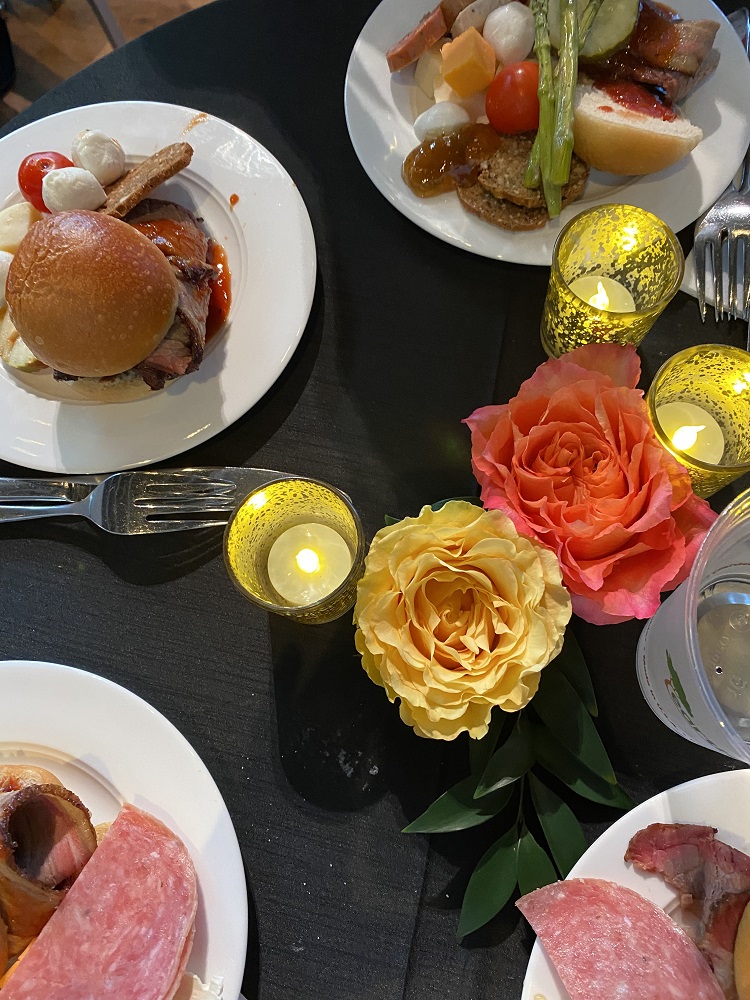
The LEAP Ambassadors were able to meet and converse with a Tennessee Senator before making our way to the colorful assortment of a Charcuterie board with different cheese, bread, cold meats, and vegetables.
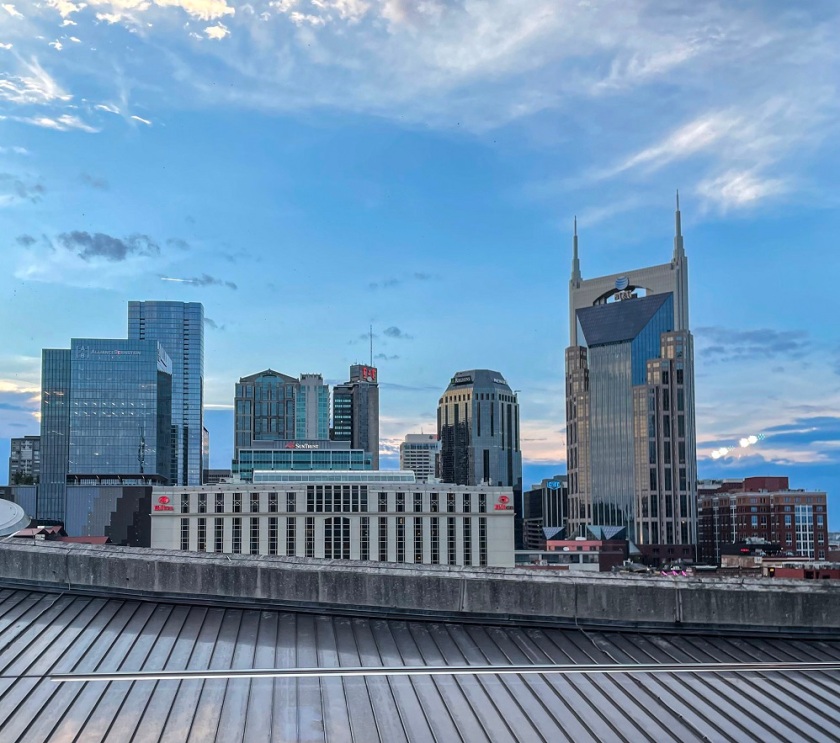
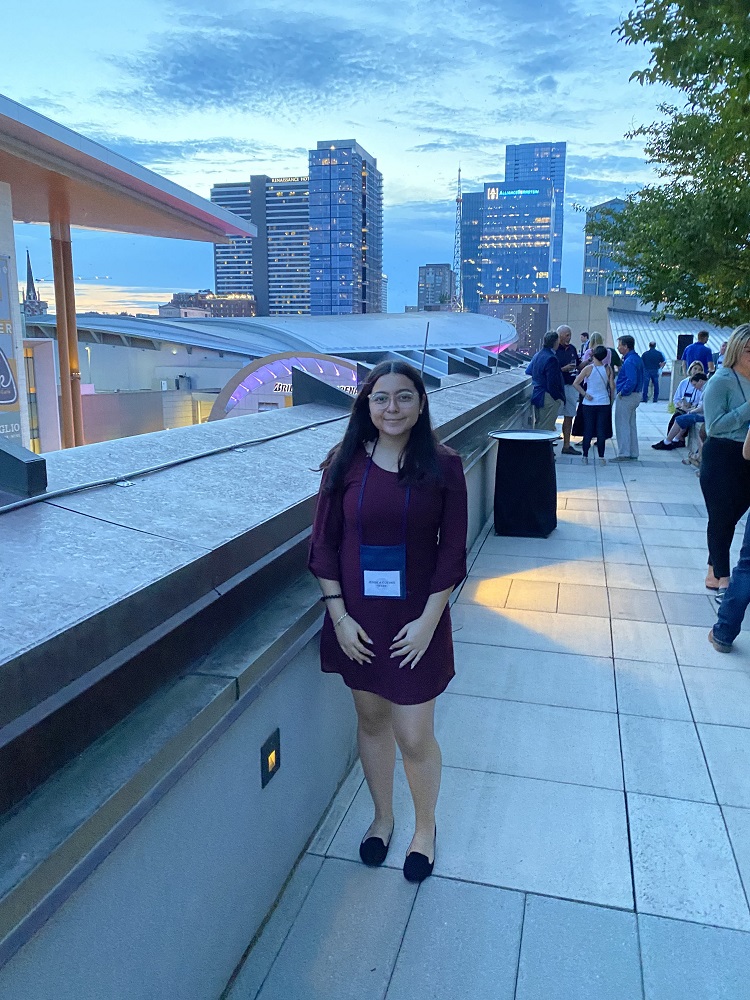
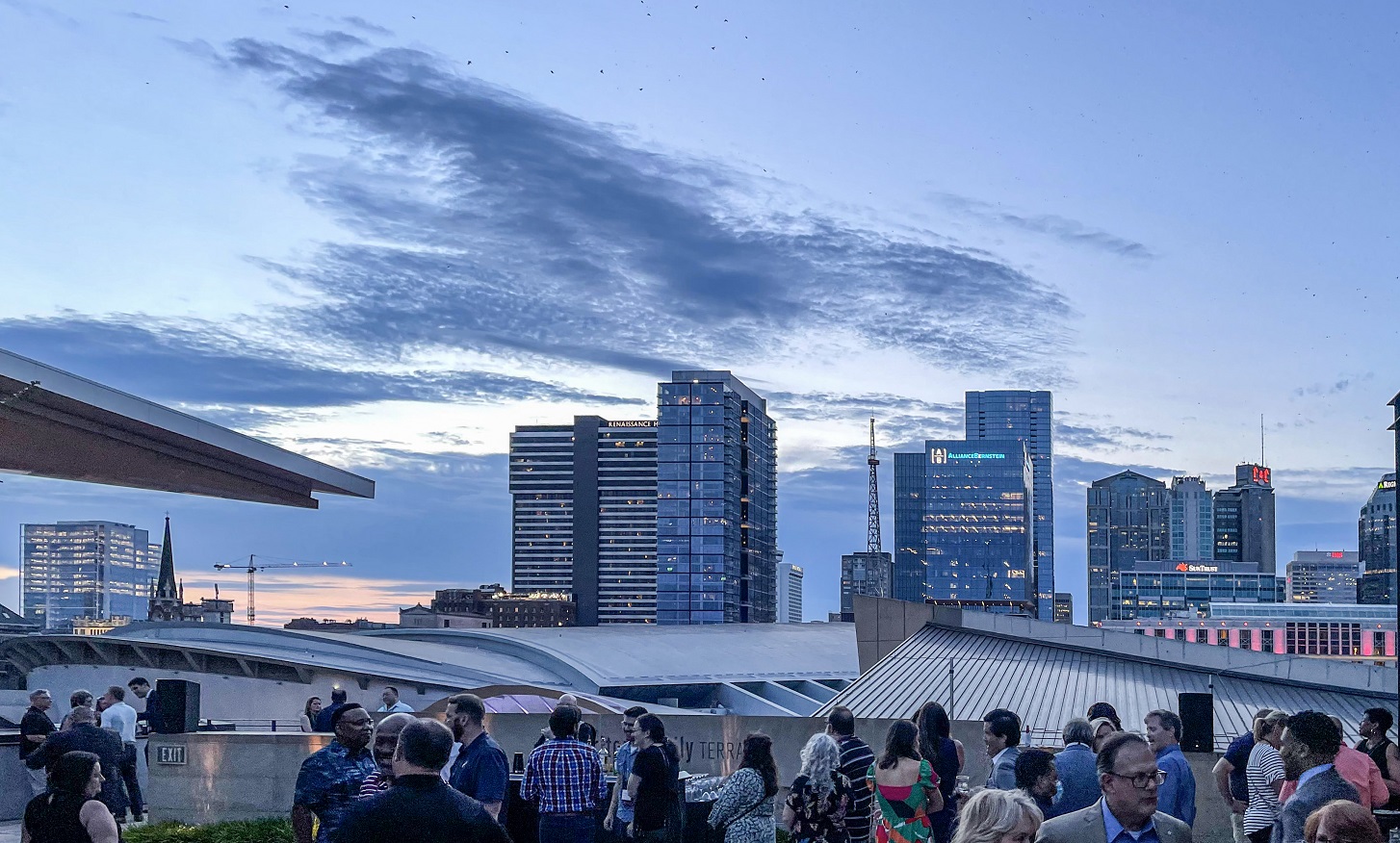
There was a beautiful view of downtown Nashville…
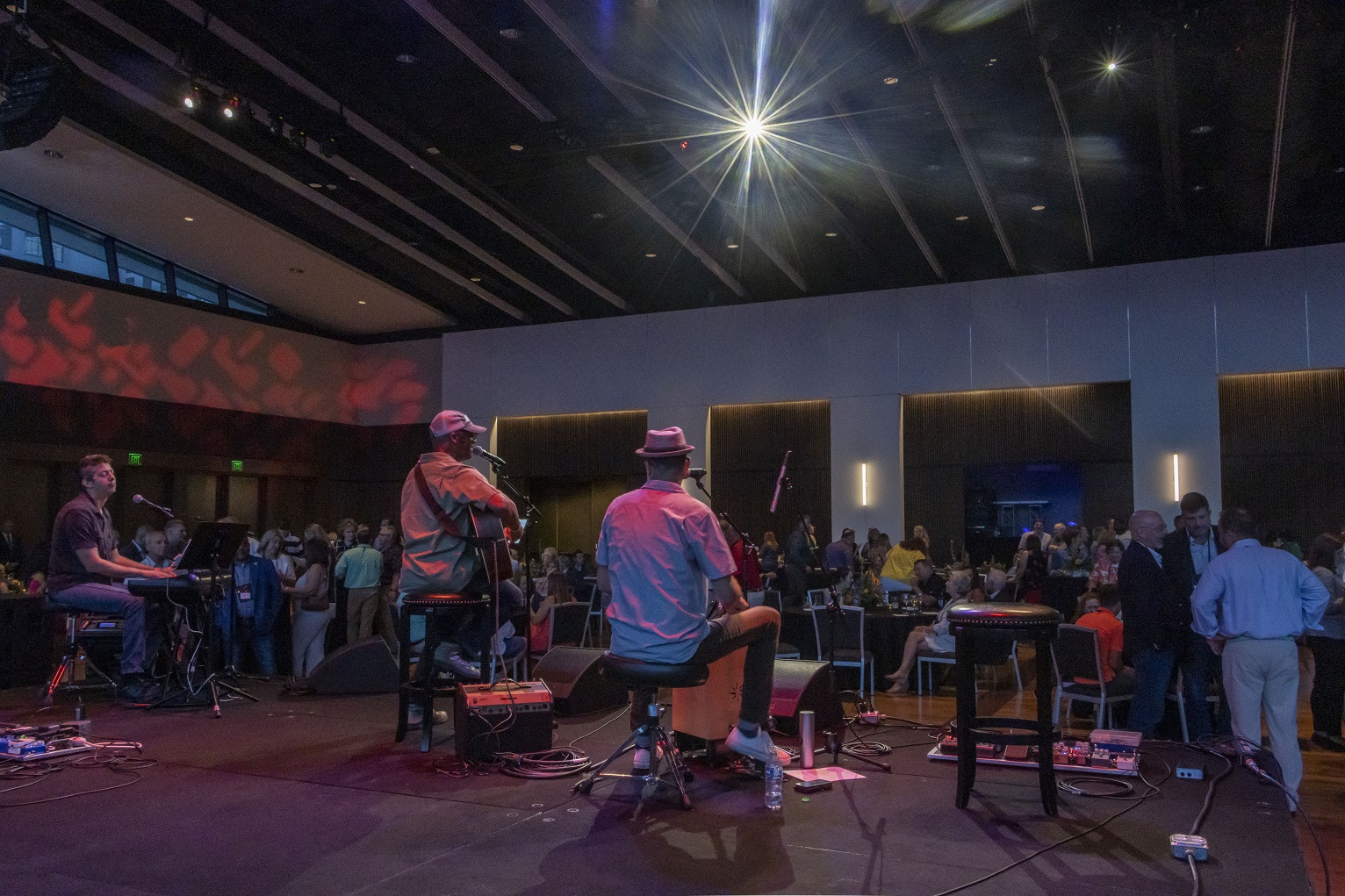
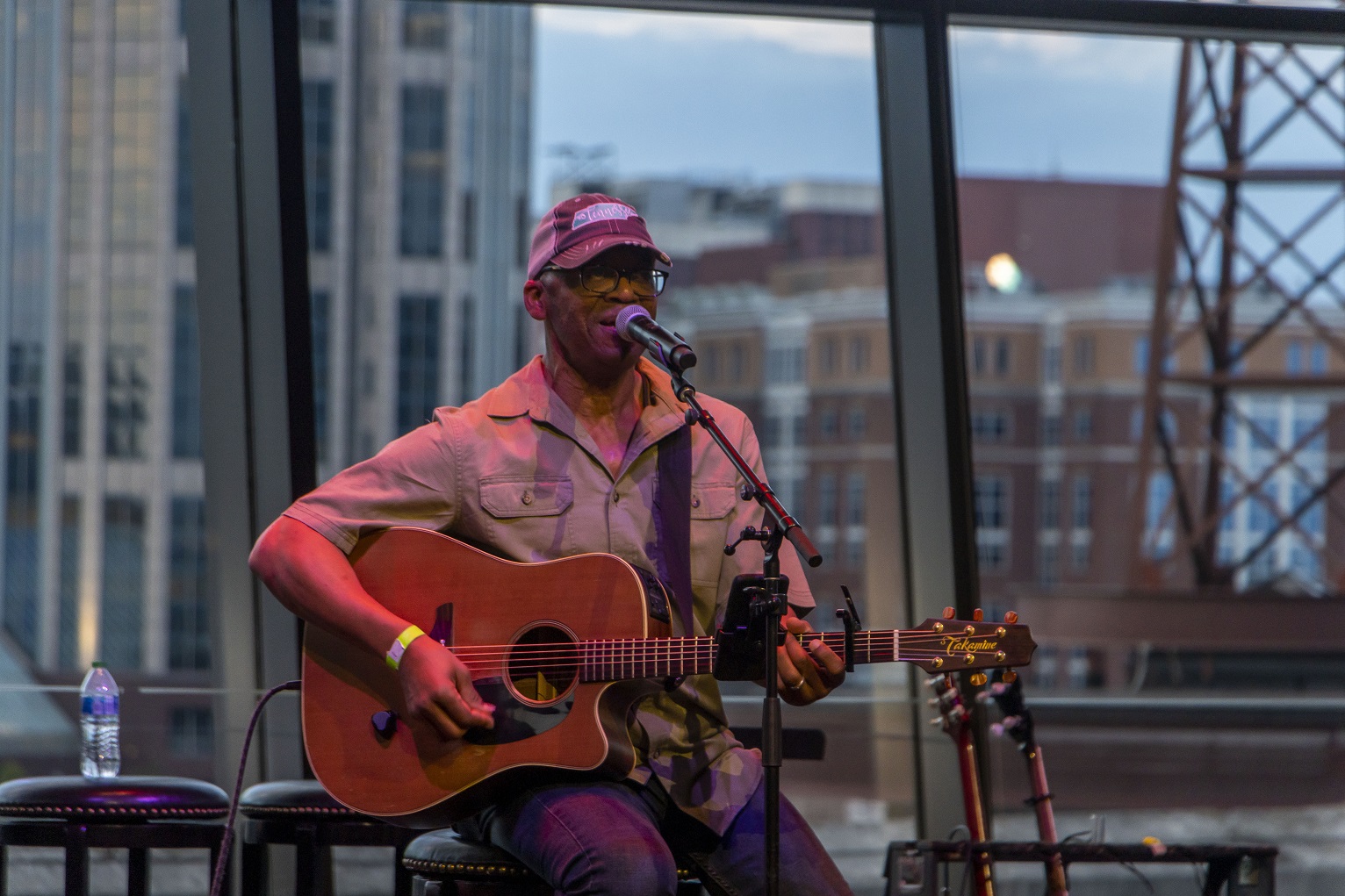
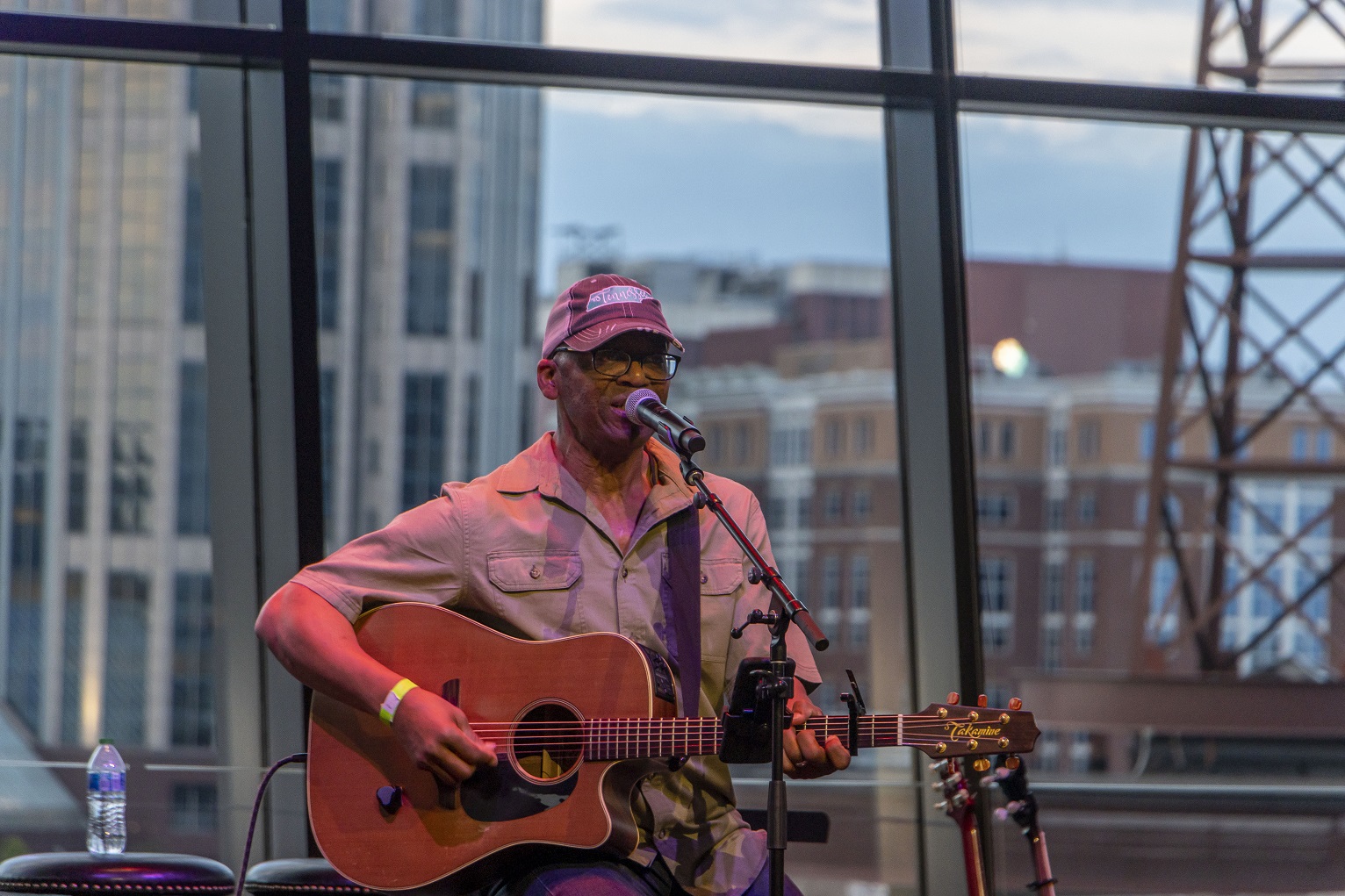
…and a live band playing covers of artists such as Willie Nelson, The Beatles, The Nitty Gritty Dirt Band.
On the balcony, where families were playing Jenga, Corn Hole, and enjoying the nice weather, the view of the Nashville skyline was amazing.
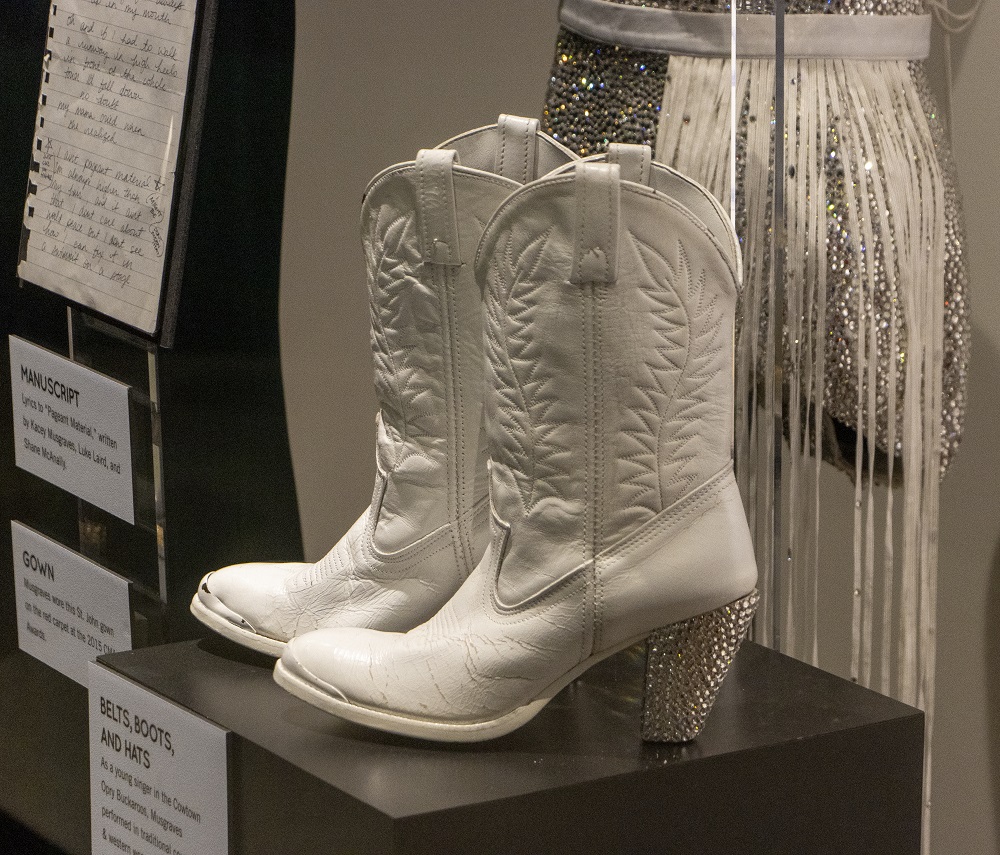
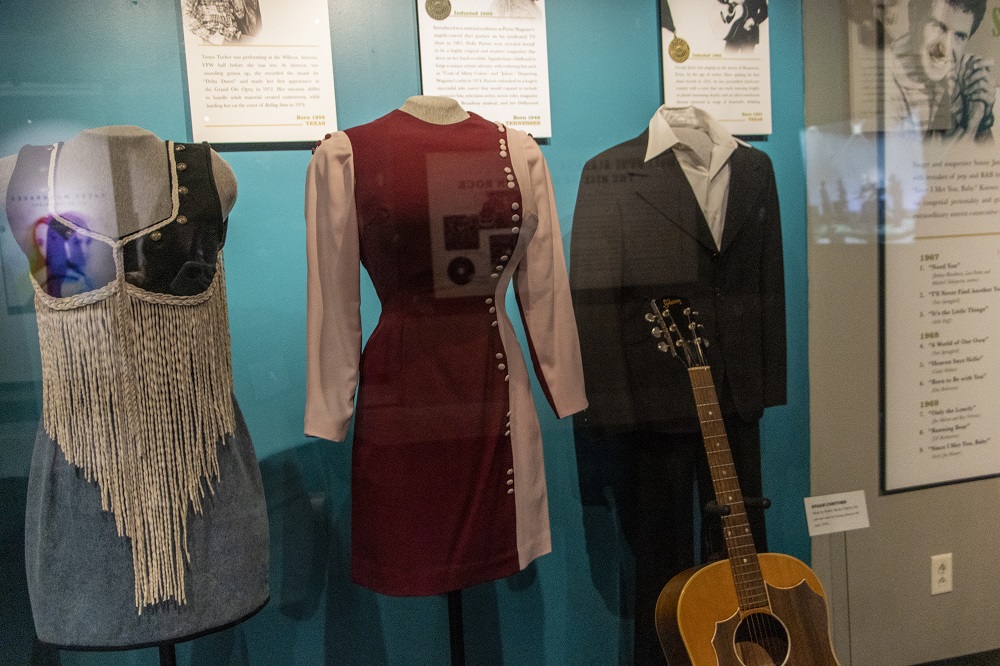
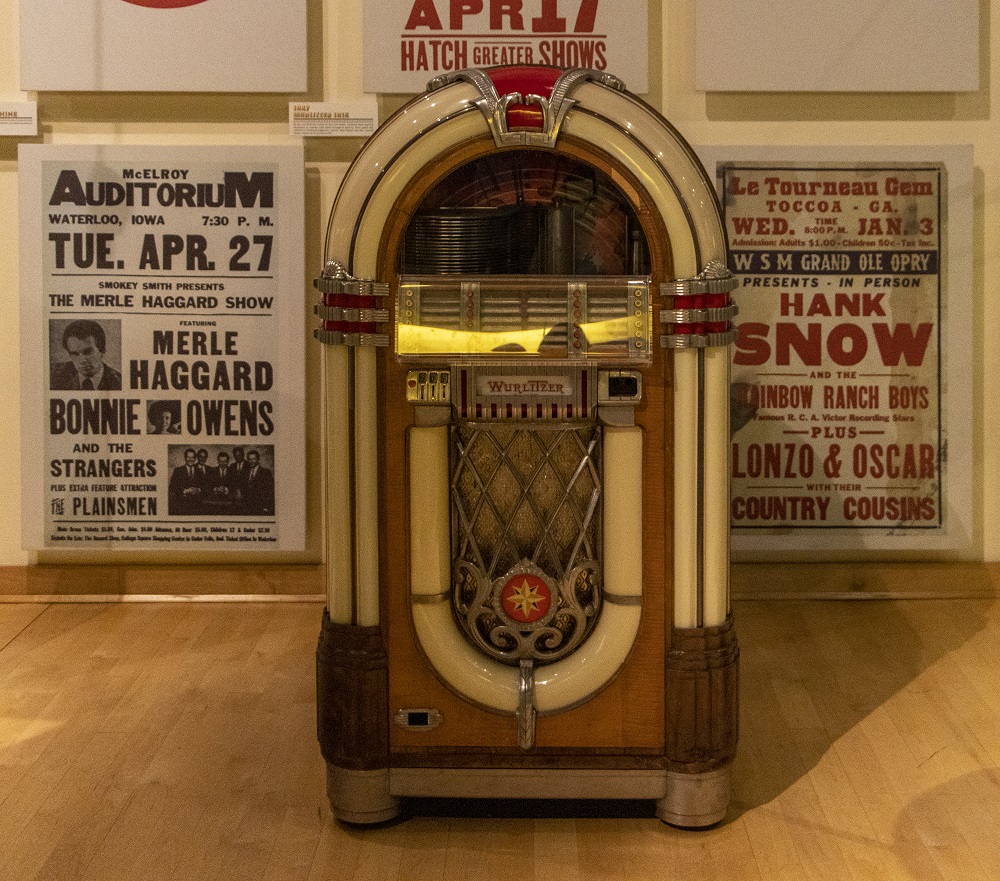
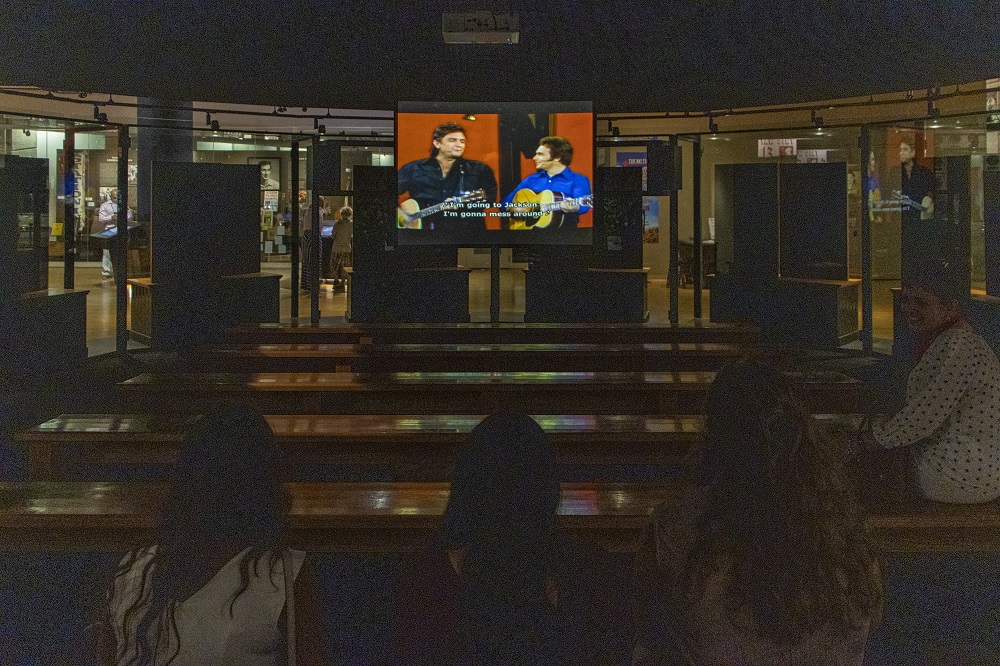
After dinner, we toured the museum, where there were artifacts such as their costumes and suits….
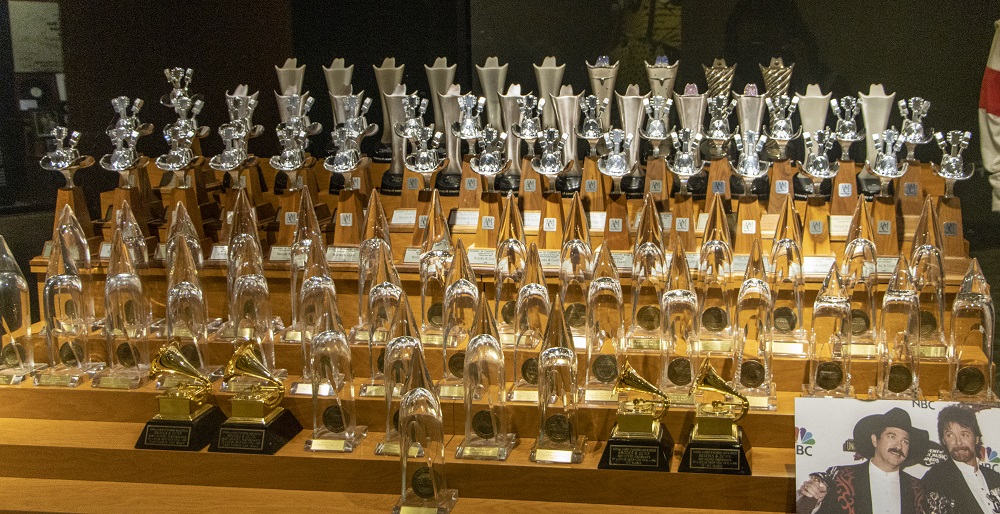
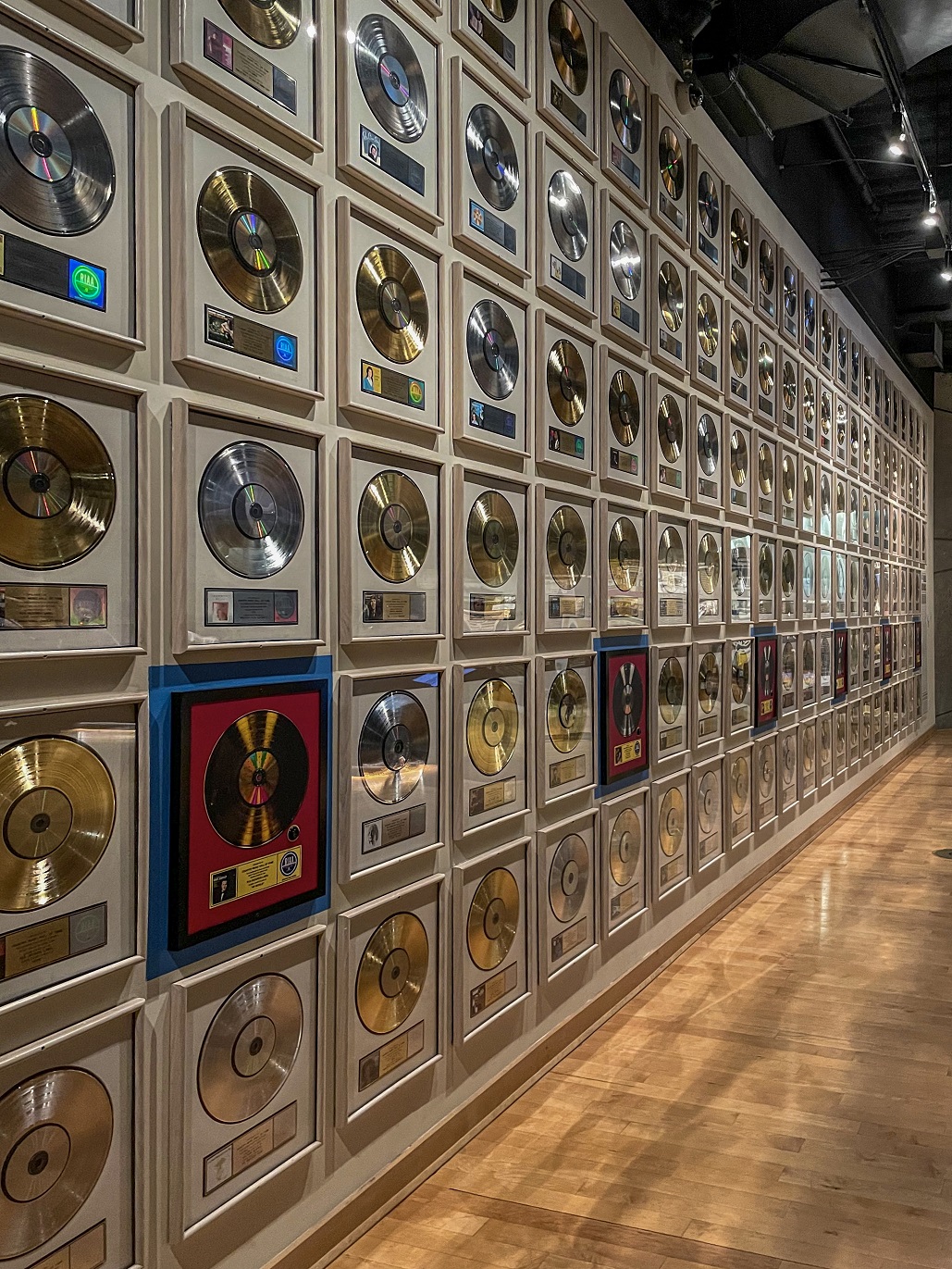
…cars, guitars, fiddles, drafts of written songs, even a whole wall dedicated to the golden records of many of the singers .
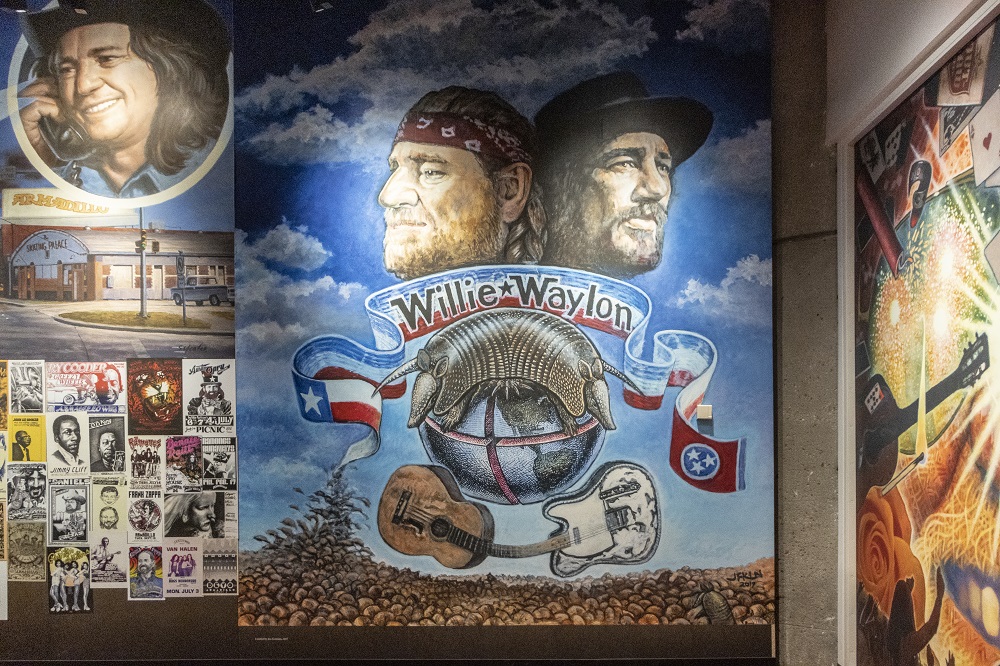
Many of these artifacts were associated with famous acts such as Johnny Cash, Elvis Presley, Dolly Parton (whose statue we saw the night before), and Willie Nelson.
Our night ended with a trolley ride back to the hotel taking in the view of the city after dark. The trolley ride should have been a 4-minute drive back to the hotel, the half mile drive seemed to take twice that time if not longer due to traffic and nightlife. The glowing city was buzzing and alive, as we were full and amazed by the opening night of the conference.
It may be summer, but that doesn’t mean we aren’t learning, and for the next two weeks, we plan to learn a lot, while also having some fun. This opportunity comes from the LEAP Center and the Southern Legislative Conference, with the latter hosting their annual conference in July in Nashville, TN. We are expanding that a bit by also visiting Asheville, North Carolina and, Atlanta, GA.
First Flight, Jessica Cuevas
It was early in the morning and the sun had not risen yet, but the LEAP students were all on their way to their closest airport, each departing from their hometown, (Houston, San Antonio, and Dallas) to catch their early flight and embark on their new journey that would begin in Atlanta, Georgia.
Having never stepped foot into an airport or airplane, I was feeling a bit nervous and overwhelmed. Thankfully, there were signs all over the airport directing me, and I also had my Morgan (flying out of DFW) and Yvette (flying out of San Antonio) as resources, and, of course, I could ask airport staff.
I made it through the luggage check, then to security, all the while experiencing a bit of anxiety and feeling a little overwhelmed. Fortunately, I was not selected for additional screening by TSA, and I made my way for some coffee. After purchasing a tall drink at the price of a grande (airports mark up prices, I learned), I settled in to wait on my flight.
As I went through the process of boarding the plane, bit became surreal, and I thought, “I really am doing this all on my own and for the first time.” I listened more intently to the safety protocols and paid attention to the plane (a Boeing B737-900), and sat in wonder during takeoff, the flight, and the landing.
It would be two hours before I stepped foot on the ground
Georgia’s State Capitol, Yvette Mendoza
Although it wasn’t my first time in Atlanta, it was my first time to really put my feet on the ground and explore, and the first place in this exploration was Atlanta’s Capitol grounds.
Part of our education as LEAP Ambassadors includes the basics of architecture, and the Capitol building was a great school room in that sense. The capitol dome is covered in 24K gold leaf, symbolizing the fact that Georgia was the site of the country’s first gold rush–in 1828 in Dahlonega. Apart from this piece of “bling,” the capitol was nicely configured in traditional Greek and Roman architectural features–pediments above entrances, grand columns (corinthian, mostly), and arched windows.
Continuing our walk into the capitol we first caught our eye on the circular, golden plate Great Seal of Georgia that displays three pillars stating their motto “Wisdom, Justice, and Moderation” and the year of the Declaration of Independence, 1776. Then, walking up the staircase we finally entered one of the grand wings of the capitol.
Seeing the overly-sized painted portraits of former Governors dating back to the 1800s was astonishing. Not only did we admire the portraits, but we took a closer look at the numerous chandelier dispersed throughout the interior, which, built in the 1890s, were designed to be used by gas or electric methods.
As is true in most capitols, the rotunda was both literally and figuratively the center of the building. This rotunda was a bit more subdued, but nice nonetheless.
In addition, we were able to stand on the glass flooring, which allows light to spread to multiple floors.
Surrounding us in the rotunda are the portraits of the founding fathers that were placed there because Georgia was a part of the 13 colonies. Walking around seeing more portraits we learned that Jimmy Carter was not only a president but a former Governor of Georgia. Alongside the portraits are offices for the Governor, secretary of state, House of Representatives, and many more.
We enjoyed the large spaces in the capitol, as well as the details amidst the largeness. The doors, for example, have the state seal intricately carved into the knob, and the seats in the House and the Senate include original desks provided to the members.
On the top floor, the Capitol have displays capturing the history of Georgia, as well as facts about the state.
Everyone knows, for example, that the official state fruit is the peach, but did you know its official bird is the brown thrasher?
Wrapping up our tour, we came across a photo opportunity: a podium with the state seal.
For a moment, we had a chance to be Governor and host our own press conferences. It was a fitting end to a fun and educational tour.
High Museum of Art, Yvette Mendoza
As we transitioned from politics and architecture to art, a heavy rainfall began, but it was unable to wash away the LEAP Ambassadors’ excitement to the works on display at the High Museum of Art. At the entrance, we were hit by an optical illusion created by Roy Lichtenstein, called House III. Painted in primary colors and in a triangular shape, the perspective changes as you move alongside it, from convex to concave and back again. This was a great introduction to the fun and engaging art in the building–and the building, by the way, was its own piece of art, designed by Richard Meier.
As a further introduction to the High, we were greeted by a lady wearing a dress clearly inspired by Piet Mondrian, with its grid and primary-color design. All of this, intriguingly, was before we got inside!
Inside, we saw work by Ellsworth Kelly and other major artists, but we beelined it to the Picasso-Calder exhibit. While their art is not typically seen as similar, their grandsons created this exhibit, which emphasized similarities in the artists’ approaches, subjects, and output. The exhibit featured dozens of pieces, including pieces large and small by both artists.
We took turns posing in front of our favorites. Morgan’s, for example, was “The Acrobat,” by Picasso…
…mine was “La Grande Vitesse” by Calder…
…and Jessica’s was the simple “The Bull,” by Picasso.
We didn’t have time to explore all the floors, but we got our fill of Picasso and Calder!
And we did see their American collection, which included many of the “decorative arts,” including works by Frank Lloyd Wright, Charles and Ray Eames, and Isamu Noguchi.
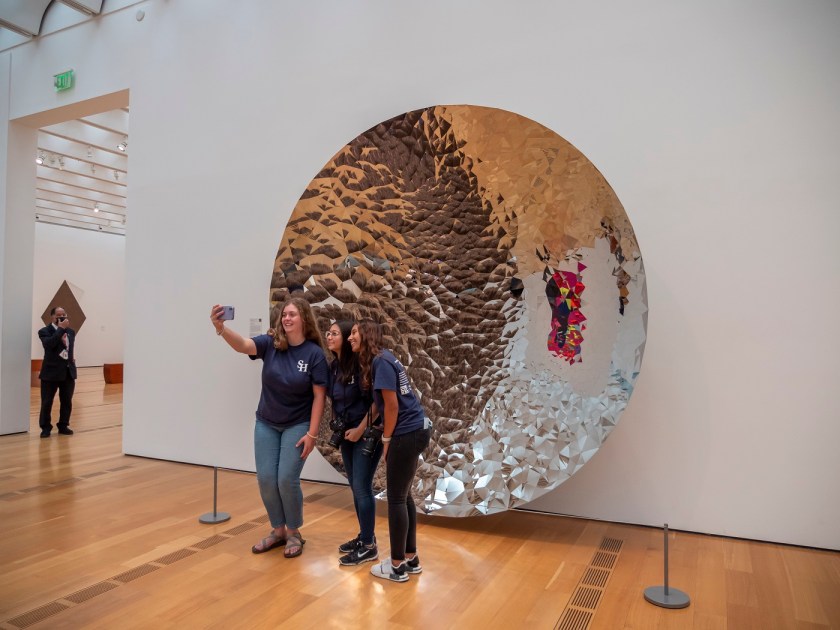
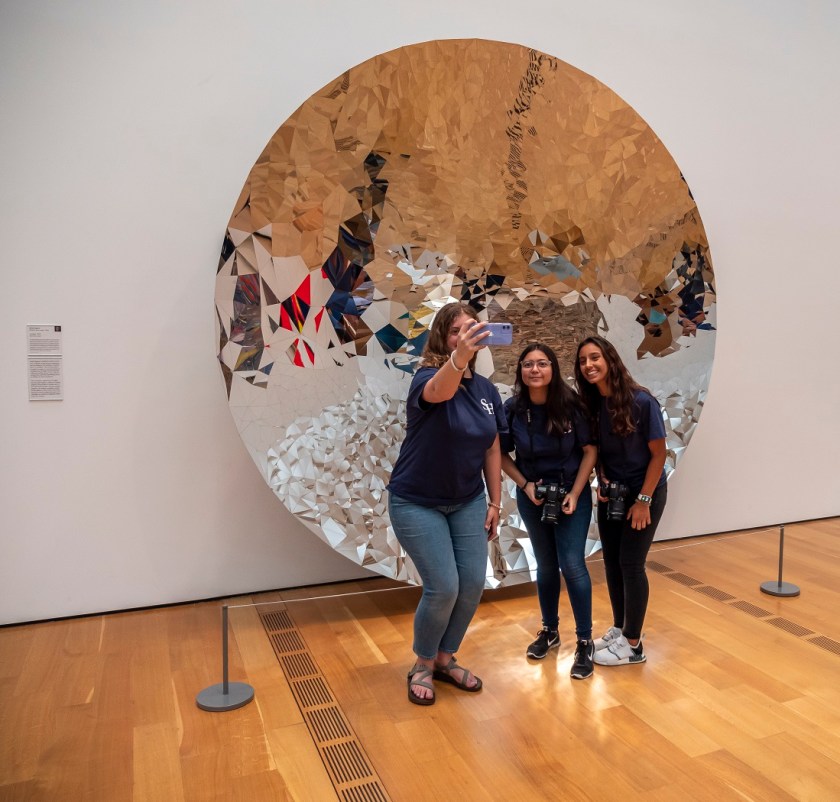
We also saw paintings by John Singer Sargent, Childe Hassam, and Georgia O’Keeffe. Among the modern artists, we were particularly struck by Anish Kapoor’s untitled piece, which had interesting aural and visual effects. This was the most popular piece in the museum.
Our last stop in the museum was the gift shop, where we continued to learn about great artists such as Frida Kahlo and Grant Wood. We bought magnets, flower vases, and postcards to help us remember the beautiful High Museum of Art!
Atlanta Botanical Garden, Morgan Robertson
The SHSU Leap Ambassadors started the afternoon off with a caffeine jumpstart from Caribou Coffee. The coffee house on Peachtree St. offered a wide variety of drinks including drip coffee, cold brew, mochas, lattes, teas, and for non caffeinated options, smoothies, shakes, and pastries. The coffee house served as a good break before heading to the Atlanta Botanical Garden.
The 30-acre garden strategically lays out pathways leading you past countless landscape features and works of art (this would be a good introduction to landscaping architecture, which will learn more about at the Biltmore Estate, landscaped by Frederick Law Olmsted). Upon entering the garden, the bright gradient canopy created by Shearn looks as though it is suspended by nothing as it guides your walk on the Kendeda Canopy walk.
The hand-tied streamer-like pieces (more than 79,000 of them) flow with the wind while simultaneously curving with the treeline and the path of the 40 foot tall walkway.
The art and architecture work together in order to create vivid movement through the garden.
One of the major and most memorable works of art employs the use of 18,000 different kinds of flowers to create the Earth Goddess.
Lounging with complete serenity, the Earth Goddess extends a hand pouring water into the pond.
Taking advantage of the scenery, LEAP Ambassadors posed for a picture, some poses emulating the Goddess herself.
The garden is also home to a large collection of Dale Chihuly glass and painted pieces in the botanical garden.
After learning and hearing about his works on past trips, this was our first time seeing a Chihuly in person and our expectations were exceeded. The glass blown into shapes of flowers and different spirals and sprigs creates a mass of individual pieces working together, which fit perfectly within the garden itself.
The botanical garden mission is “to develop and maintain plant collections for the purposes of display, education, conservation, research and enjoyment.” This mission statement is employed in every aspect of the garden, especially through the most obvious way: the plants. From edible gardens, to neon flowers, and trees that make you want to guess their age, the botanical garden is a place to get lost in wonderment and adoration of something that has been around since the beginning of time.
My personal favorite collection of flowers stems from the orchid conservation lab and greenhouse.
This fragile, common house flower dominates in the climate-controlled greenhouse (72 degrees during the day, 52 degrees at night). Orchids growing in every imaginable way from wall hangings, to in the ground the collection brings a new appreciation to the flower.
Keeping with the colorful flower trend, Yvette’s favorite plant was the hydrangeas.
Commenting on how the color did not even look real, Yvette was able to snap some pictures of the beautiful flowers.
The tropical greenhouse gave an impressive depiction of a rainforest complete with the sounds of frogs and birds. Jessica admired the edible garden in which visitors are able to smell herbs such as rosemary, mint, oregano, basil, and marigolds, but have to imagine what the sweet snap peas or the juicy tomatoes would taste like.
We also had an opportunity to see 16 separate installations by Jason Gamrath, a glassmaker from Seattle–he studied art at Dale Chihuly’s school.
His pieces were large, and they complemented both Shearn’s work and the garden itself.
Between Shearn, Gamrath, and Chihuly, we were in good company throughout our walk.
The floral and green experience creates a longing to step back into nature. And even for some LEAP Ambassadors a desire to develop a green thumb.
Jackson Street Bridge, Morgan Robertson
A little while after sunset, the LEAP Ambassadors walked across the Jackson St. bridge for a picturesque view. Most known for its appearance in the tv show The Walking Dead, The Jackson St. bridge plays a distinct role in the post-apocalyptic show. As a single sheriff trots, he passes by hundreds of abandoned cars toward downtown Atlanta on a horse. The shot is taken from Jackson St. Bridge.
The bridge allows for an excellent shot of the skyline of downtown Atlanta, and a nice teaching experience for photography. Experimenting with different shutter speeds, angles and other functions, we were able to capture several images of the skyline.
Other sightseers had the same ideas about the bridge as we did. Upon walking up to the bridge there were several groups snapping always on cameras, phones, and even drones.
Culinary Adventures, Jessica Cuevas
Although we rest our legs while taking a break for meals, we don’t stop exploring. Thus for lunch, we were treated to Mediterranean Food at a small local restaurant La Shish Kabab in Atlanta, Georgia. Having only eaten this cuisine twice previously (both times with LEAP), I tried the Chicken Shwarma, a simple chicken dish with rice served with pita.
Yvette got the Gyro meat platter, which had beef and lamb….
… and Morgan ordered the Beef Kafta.
Many of the flavors are not in our day-to-day diet, so it was an enjoyable experience comparing each other’s choices. It was a nice meal to tide us over for the next couple of hours.
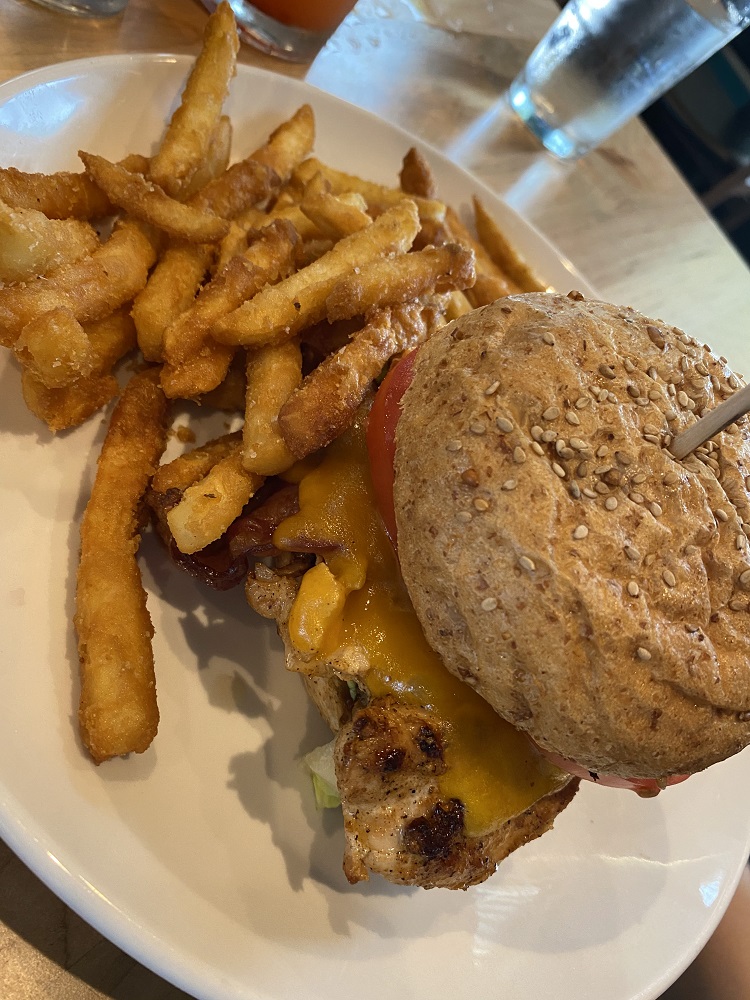
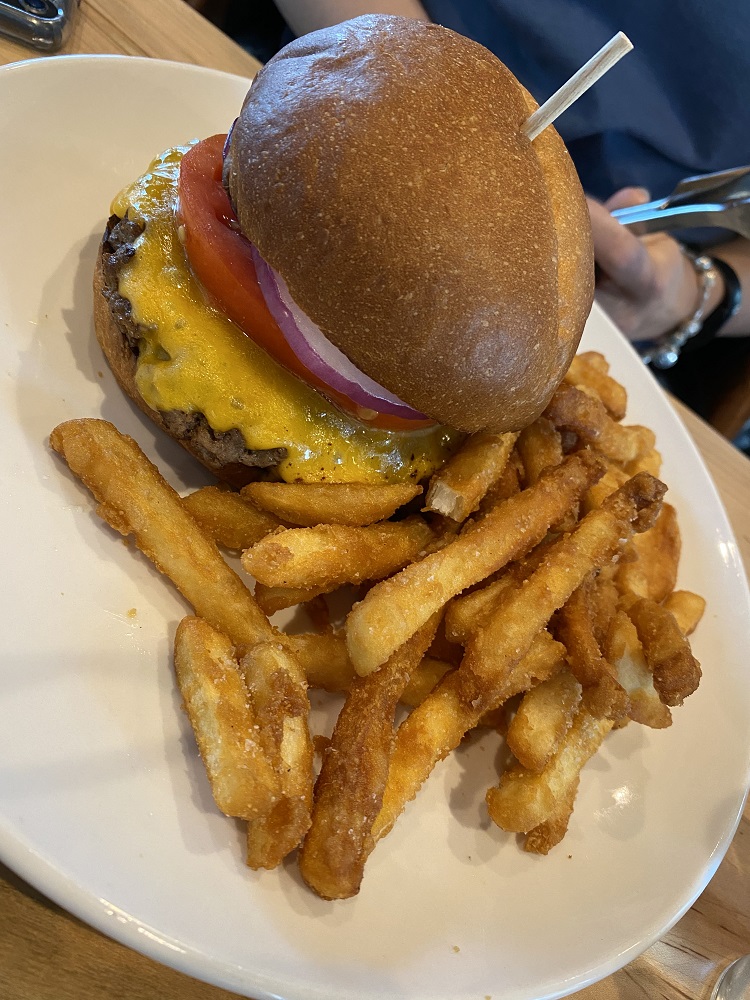
It was past 10:00 PM and we were arriving dangerously close to not finding any open restaurant that we could dine in, with most kitchens being closed for the night early. Thankfully, we eventually found The Corner Tavern. We made our way to the restaurant where we were greeted with rain (in the parking lot) and a friendly staff (in the restaurant). To start, we ordered chips, queso, garden salsa, and fried artichoke hearts. For our entrees, Yvette ordered a burger with French fries…
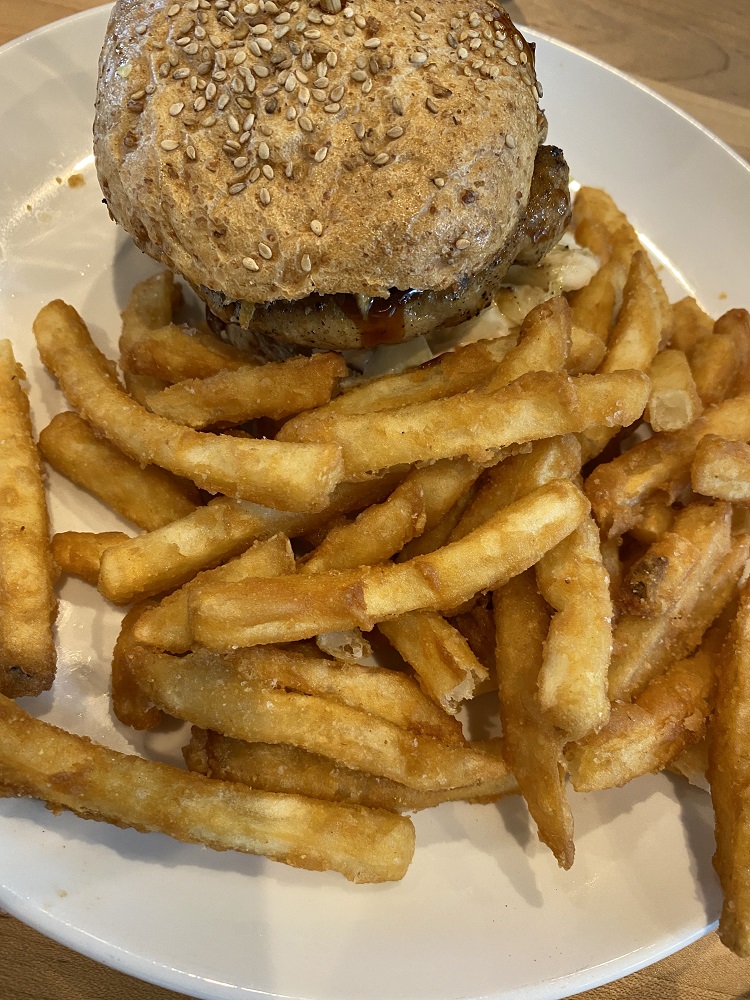
…Morgan had the tavern club sandwich with Pimento mac and cheese, and I had the buffalo chicken burger with tater tots. This last meal wasn’t particularly adventurous, but by the time we were able to find an open restaurant, we were pleased just to have food before bed.
And thus with full stomachs, following a full day, we began to burn the midnight oil blogging about our day of adventure…
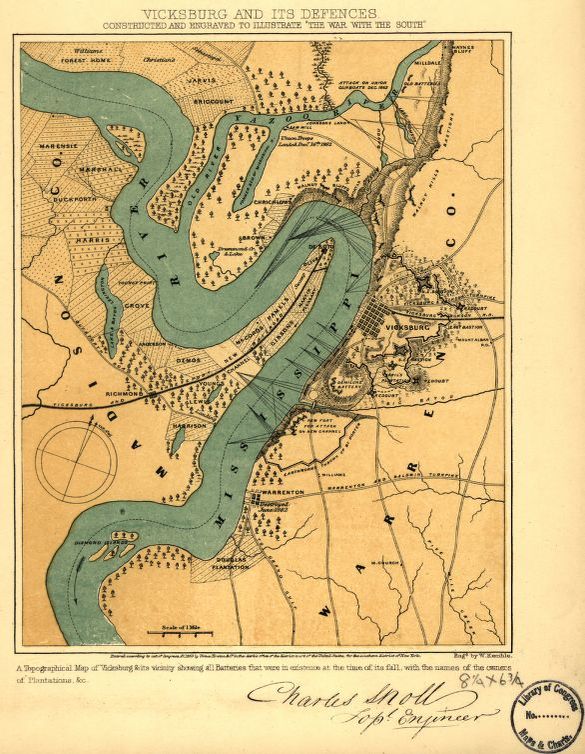
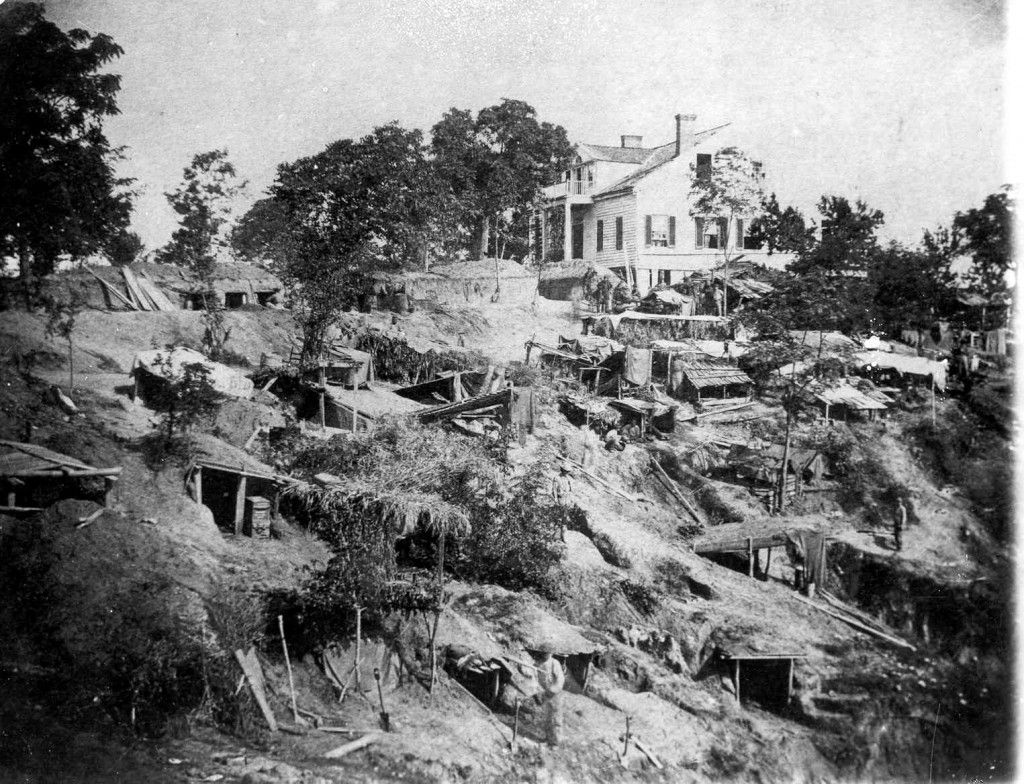
The second day of our LEAP adventures continued to focus on expanding our knowledge of civil rights, and today that began with us visiting the National Battlefield Site of Vicksburg in Mississippi. The siege of Vicksburg was a crucial strategic key point in the Civil War, a part of the Anaconda Plan, which spanned from May 18, 1863 to July 4, 1863. Vicksburg belonged to the Confederates initially, and it was crucial because it is located right next to the Mississippi River, which was very advantageous since it allowed for supplies, goods, and reinforcements to be easily transported. Another strategic advantage of the river is its course; it creates a C-like shape, where a piece of land is surrounded on three of its sides by the river like a peninsula, which allowed whoever had control over Vicksburg to place infantry along the banks and shoot the cannons at any ships or boats from the opposing side.
If the Union could take control of the Vicksburg area, they would have control and access to the river without having to worry about being attacked, and this is what happened. Conversely, for the Confederates, it meant that the Union cut off their supply chain, which left them with three options: fight to regain, retreat, or surrender. After 47 days, General Ulysses S. Grant’s move to strangle them from any resources led General John C. Pemberton to surrender.
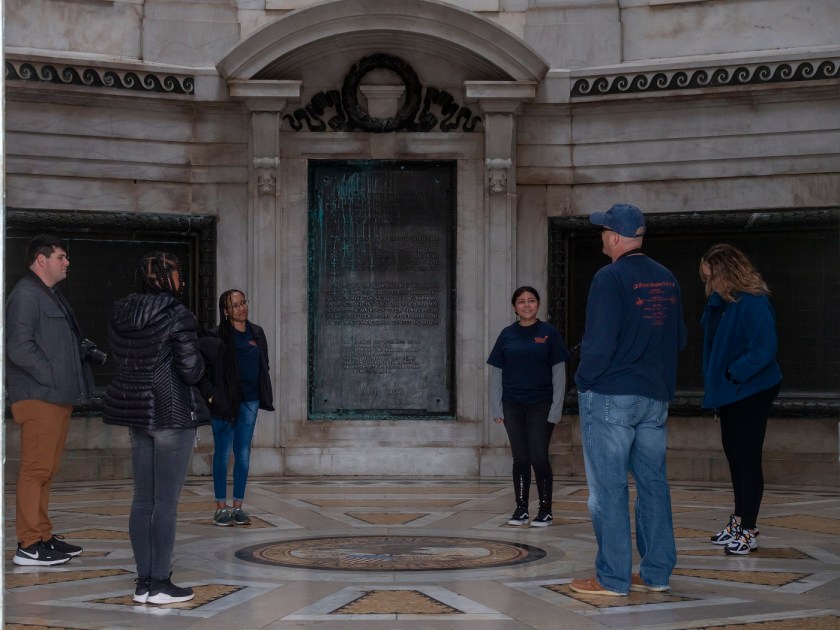
While at the battlefield site, we visited two monuments: the Illinois monument and the Texas monument.
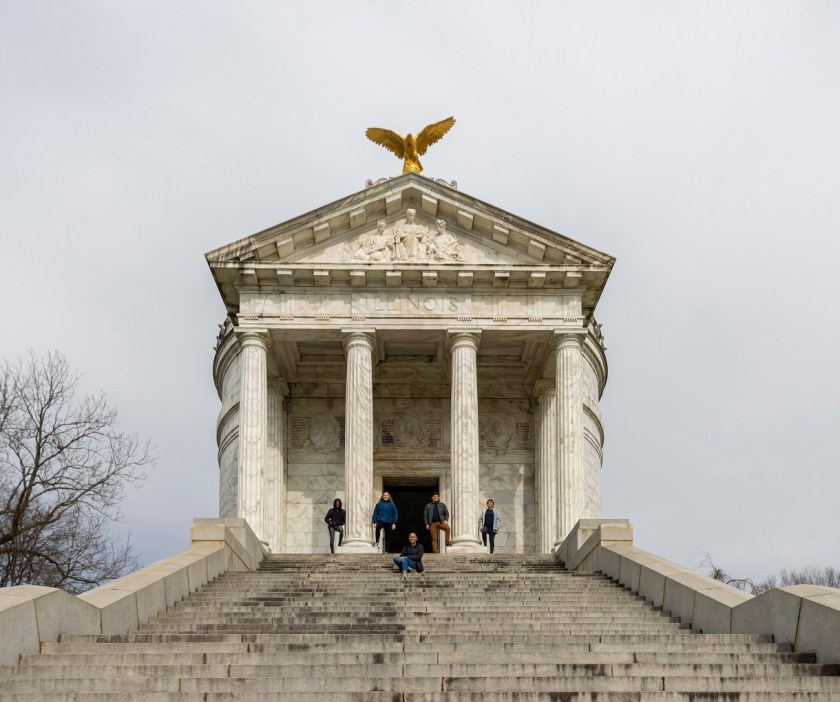
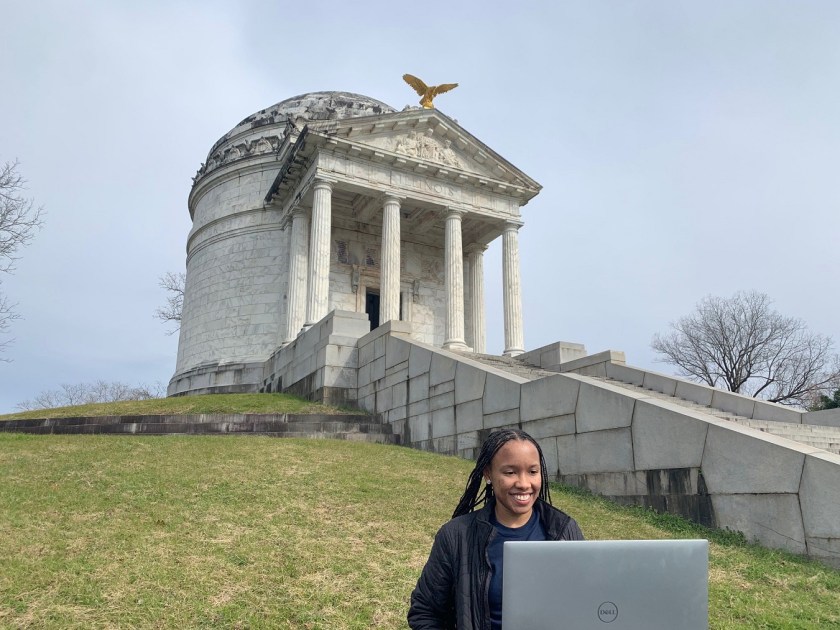
The first monument that we stopped to look at was the Illinois monument, which was dedicated in 1906.
It has an ornate Roman-style architecture and somewhat resembles the Roman Pantheon. This monument has 47 steps in its stairway – I counted them as I worked my way up – which symbolic of the 47 days of the battle.
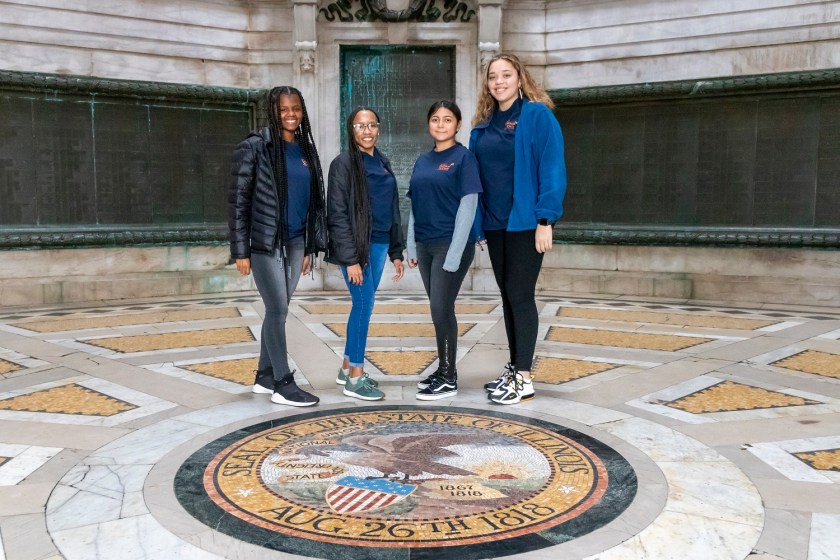
Inside of this building are bronze tablets with the names of 36,000+ Illinois soldiers who fought in this battle.
Another architectural note that I appreciated is the acoustics of the monument, a result of the domelike ceiling, which causes an echo of any noise within the structure.
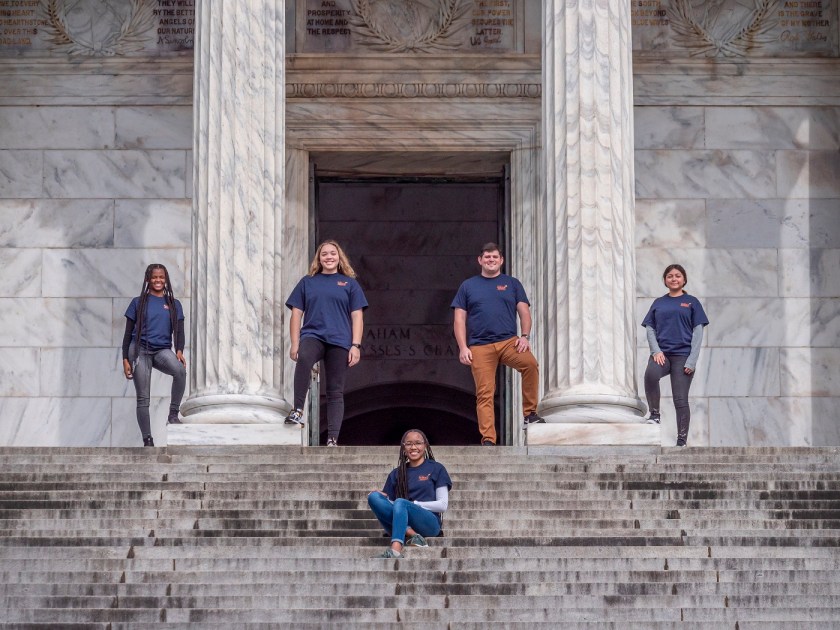
As a sidebar, it’s worth noting that Ilexus Williams was interviewed by KBTX here.
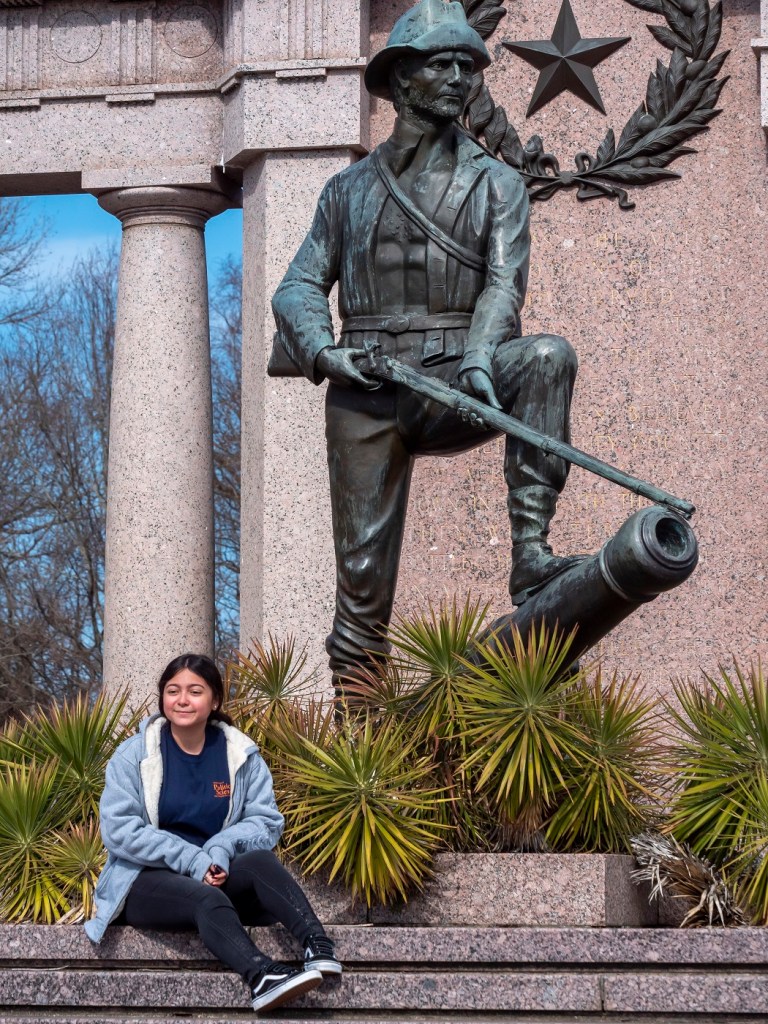
The second monument was the Texas monument, which was dedicated on November 4, 1961. This monument was in its own unique way very Texan since it was a completely different type of grand as compared to the previous one.
This monument has 11 steps which symbolize and honor the 11 states in the Confederacy. A bronze statue in the foreground displays a Texan soldier, and symbolizes the Texans who helped to seal the breach in the Vicksburg front line.
Both the architecture and the history of this national site have given us a profound new outlook about the impact the Civil War had on paving the way toward Civic/Social equality. Moreover, we discovered that the Texas Monument has an SHSU connection, in that the monument quotes John Thomason, for whom SHSU’s “Thomason Building” and “Thomason Room” in the library are named.
This was a great way to kick off the day, and ranks as one of our favorite parts of the trip thus far!
Sweetie Pies Frying Bird
Ilexus Williams
A day full of travel struck up growing appetites for the LEAP students. For lunch, we traveled to Sweetie Pies Flying Bird to satisfy our hunger with food that is nourishing to the soul: soul food.
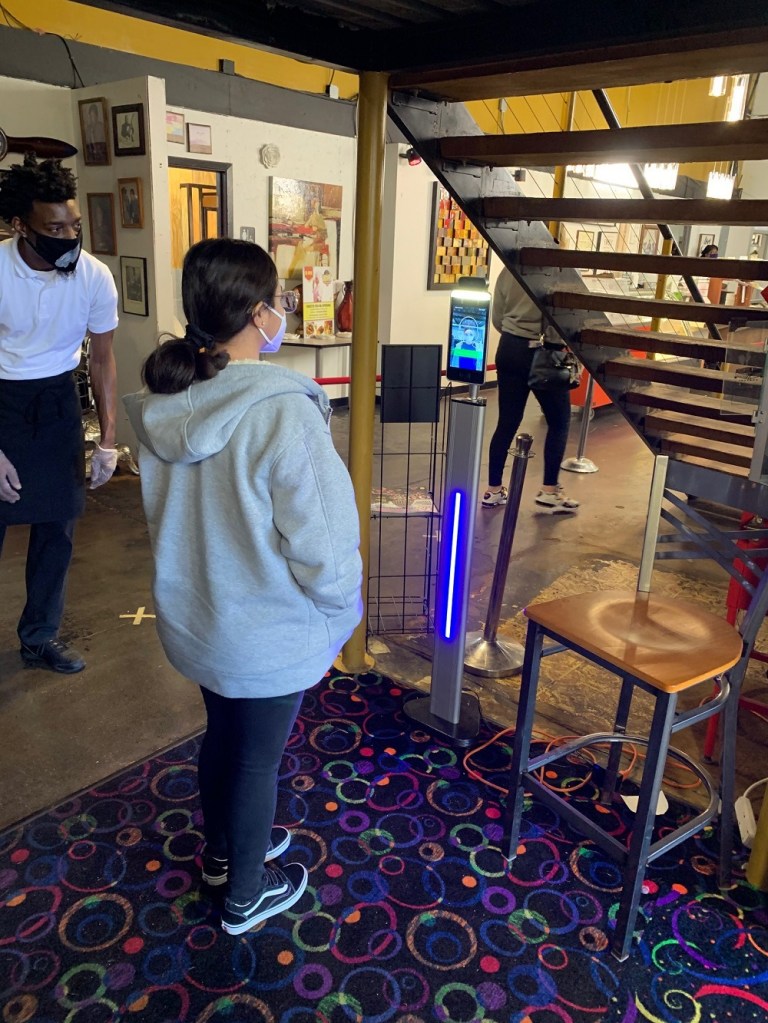
We were pleased to see that not only did the restaurant require masks, they also took customers’ temperature at the entry way.
We ordered an assortment of items including fried chicken, neck bone, fried fish, macaroni & cheese, green beans, candied yams, and black-eyed peas.
Favorites of the group were the macaroni & cheese and candied yams.
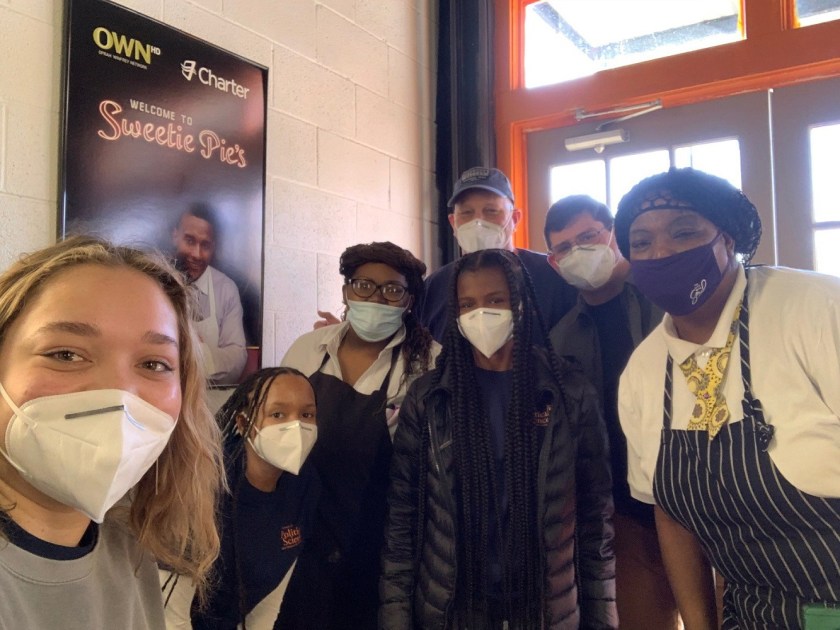
The staff at Sweetie Pie’s were nice enough to take a photo with us, which we did masked, but still managed to convey the sense of stomachs well satisfied.
And this gave us some needed energy to undertake our tour of the MS State Capitol building.
Capital Tour
Ava Garrett
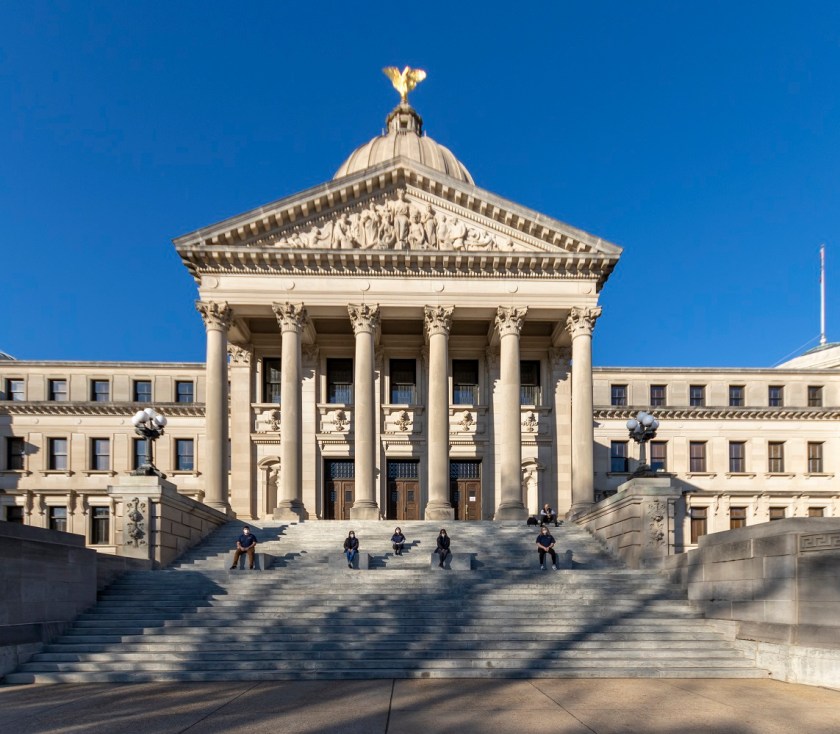
On yet another of our many stops on our inaugural trip, we visited the Mississippi state capitol which is located in Jackson. The capitol was built in just 28 months from 1901-1903, on the site of the old state penitentiary.
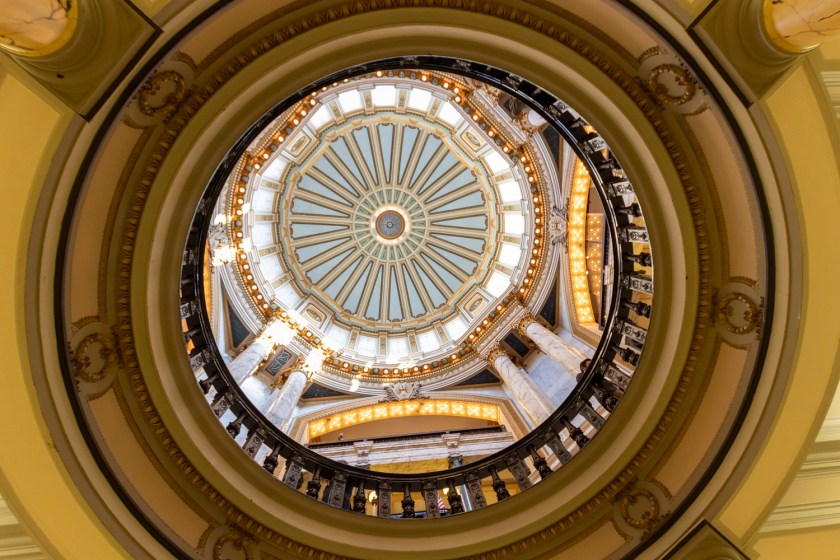
Just like many of the places we have visited on this trip, such as the Starr home and the Vicksburg National Battlefield, the capitol building’s architecture had a Roman and Greek influence, evident in the columns lining the entrance and the magnificent dome above it. The architect, Theodore Link, definitely worked to give the capitol a grand, elegant design appropriate for a state capitol building. Just before entering the building at the south entrance you can’t miss the beautifully crafted stained glass windows, which looked even more breathtaking from the inside when the sun shined through.
After stopping in the rotunda…
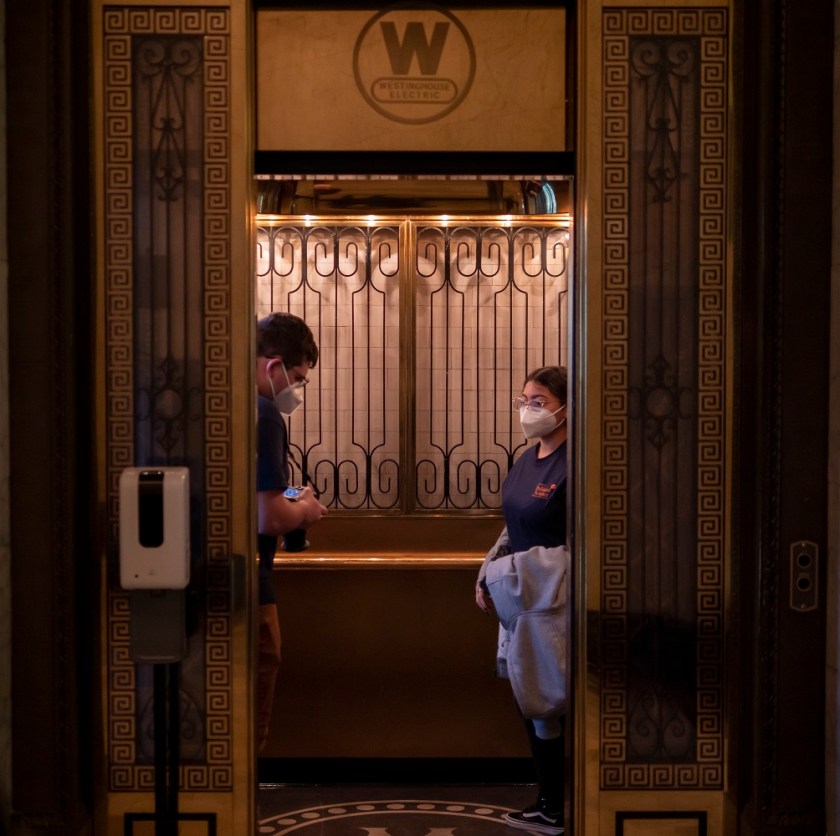
…and gazing up at the Italian white and black marble and taking in images of the blindfolded Lady Justice, we took the golden elevator…
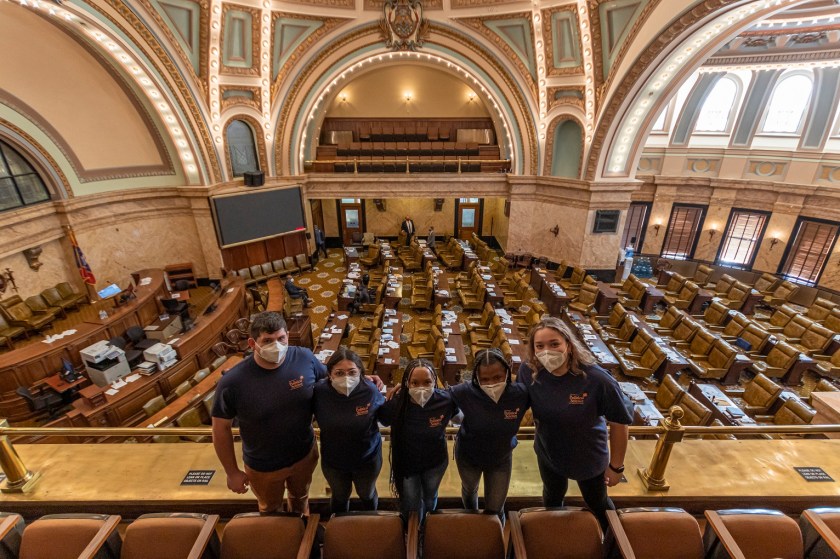
…upstairs and made our way to my favorite room in the capitol: The House of Representatives chamber, which was bustling as the legislative session was under way (the bustling activity was just underneath us, and not visible in this photo)…
Just being in that room made me really excited; it was cool to see the room being used and in action. The only other capital I have visited – the Texas capital – was much less active the last time I went.
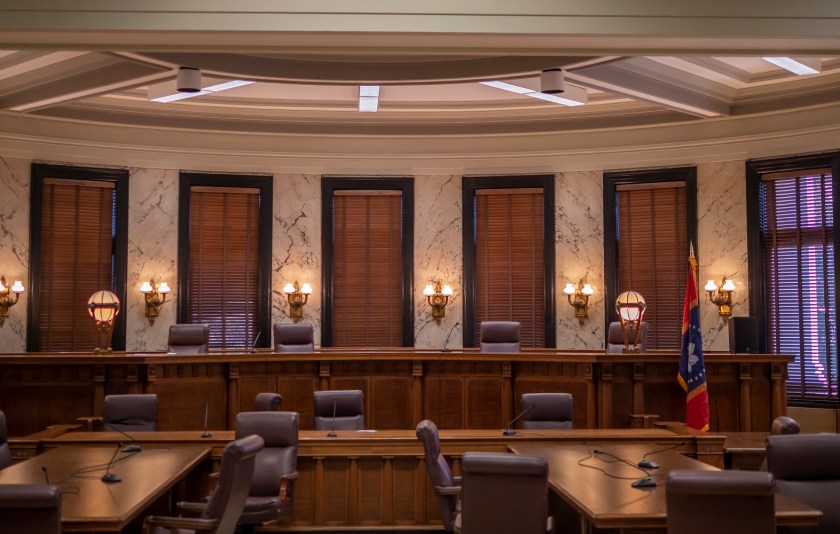
Sadly, we could not visit the Senate due to COVID-19 restrictions, but I’m sure it would have been just as interesting as the rest of the building, and we did get to see the former Supreme Court….
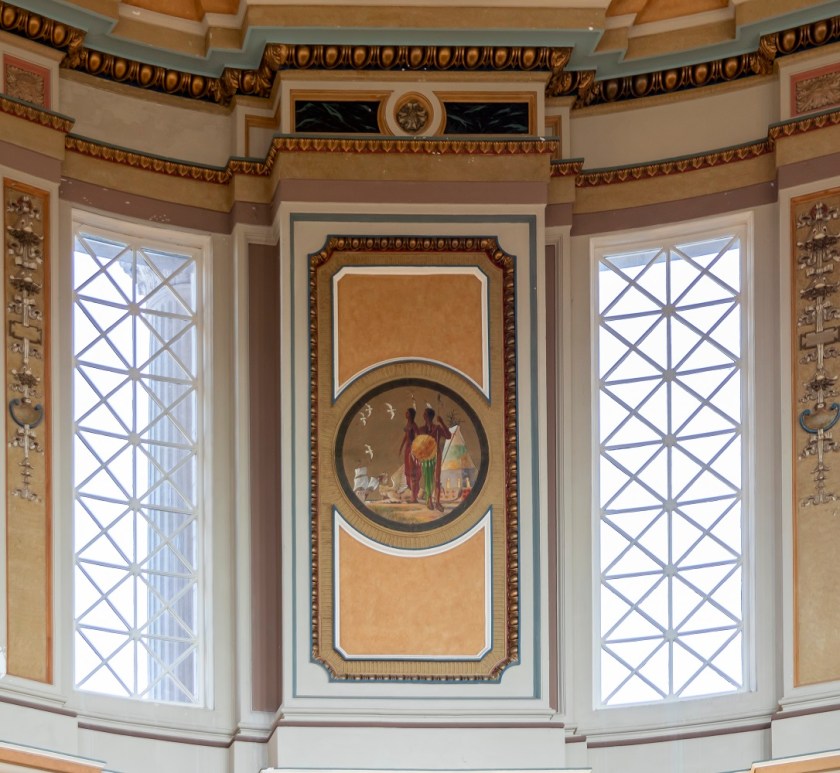
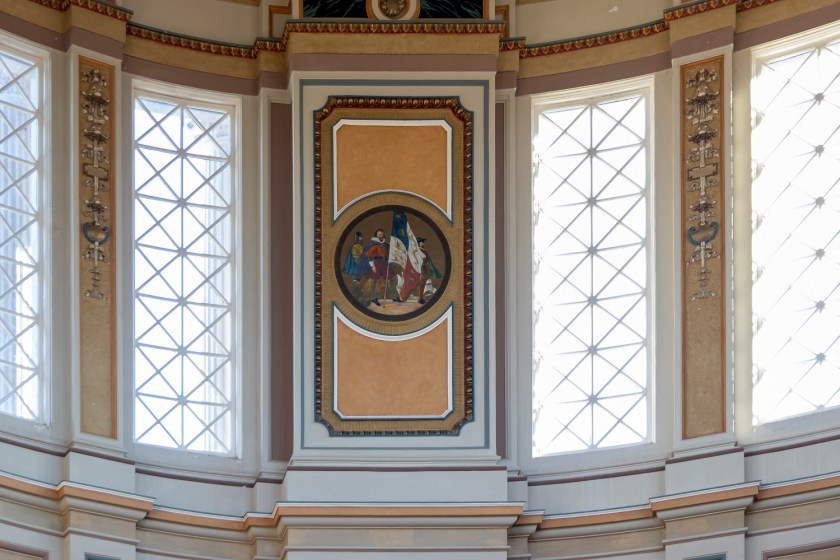
…and the art in the rotunda, painted as part of the WPA program, and designed to highlight MS history.
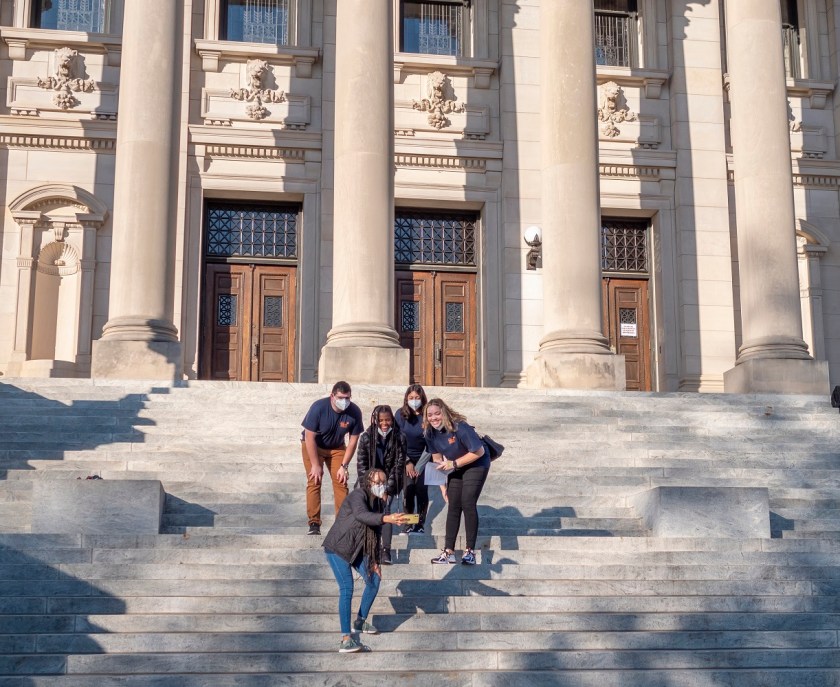
On our way out, we were able to pick up some fun souvenirs such as brochures, stickers, and even a pin with the capitol building on it. Finally, to wrap up our self-guided capitol tour we got to take some fun photos of us standing on the capitol steps.
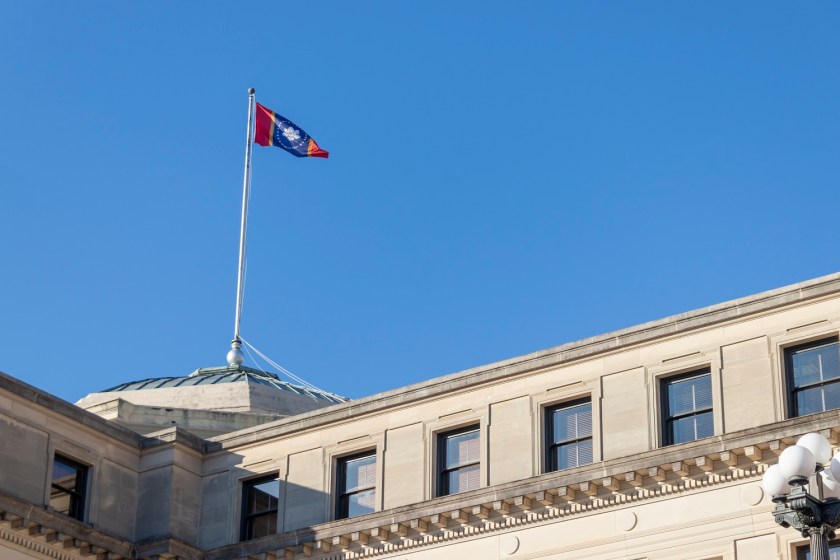
One other thing is worth noting: In November, MS voted to remove the confederate symbol from its state flag. They replaced it with a Magnolia Bloom, fitting for MS, which is the “Magnolia State.” We all agreed it was a much more inviting symbol for the state, and matched the residents’ friendly and charming natures.
Now I can officially say I have been to 2 out of 50 capitol buildings!
Medgar Evers Home
Ilexus Williams
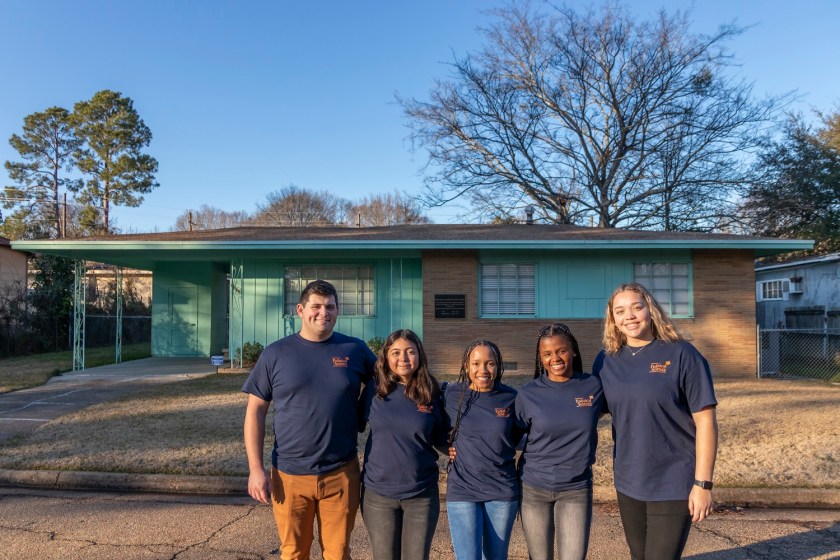
After immersing ourselves in the history of the Mississippi State Capitol, we visited the Medgar and Myrlie Evers Home National Monument, more commonly known as Medgar Evers Home. The home is located in the Elraine Subdivision, which was the first planned middle-class subdivision for African Americans in Mississippi following World War II. Medgar Evers and his wife purchased the home in 1953 and lived in the home until 1963.
Medgar Evers was an influential Civil Rights Activist in Mississippi. Before embarking on his commitment to fighting for civil rights, Medgar Evers served in the United States Army, during World War II from 1943 to 1945. Evers even took part in the D-Day invasion on the shore of Normandy on June 6, 1944 during his service.
Following his time in the military, Evers began his work in civil rights as the president of the Regional Council of Negro Leadership. In this organization, Evers worked to establish measures to impact civil rights. One of the measures taken included a boycott of all gas stations that denied African Americans access to the stations’ restrooms.
To challenge the U.S. Supreme Court’s decision on segregated public schools, Evers partnered with the NAACP and submitted a Law School application to the University of Mississippi as a test case. Evers was denied admission solely because of his race. Evers’ effort to desegregate public schools brought him praise from the NAACP, so in 1954, Evers became the first Mississippi state field secretary of the NAACP. As a state field secretary, Evers organized voter registration, demonstrations, boycotts of businesses that had discriminative policies, and investigated crimes against African Americans.
Due to his activism, Evers was the most prominent civil rights leader in Mississippi. Because of this, Evers and his family experienced countless threats. On June 12, 1963, Medgar Evers was assassinated in his driveway. Although his life was cut short, Medgar Evers’ contribution to the civil rights movement and the fight for equal treatment for all will never be forgotten.
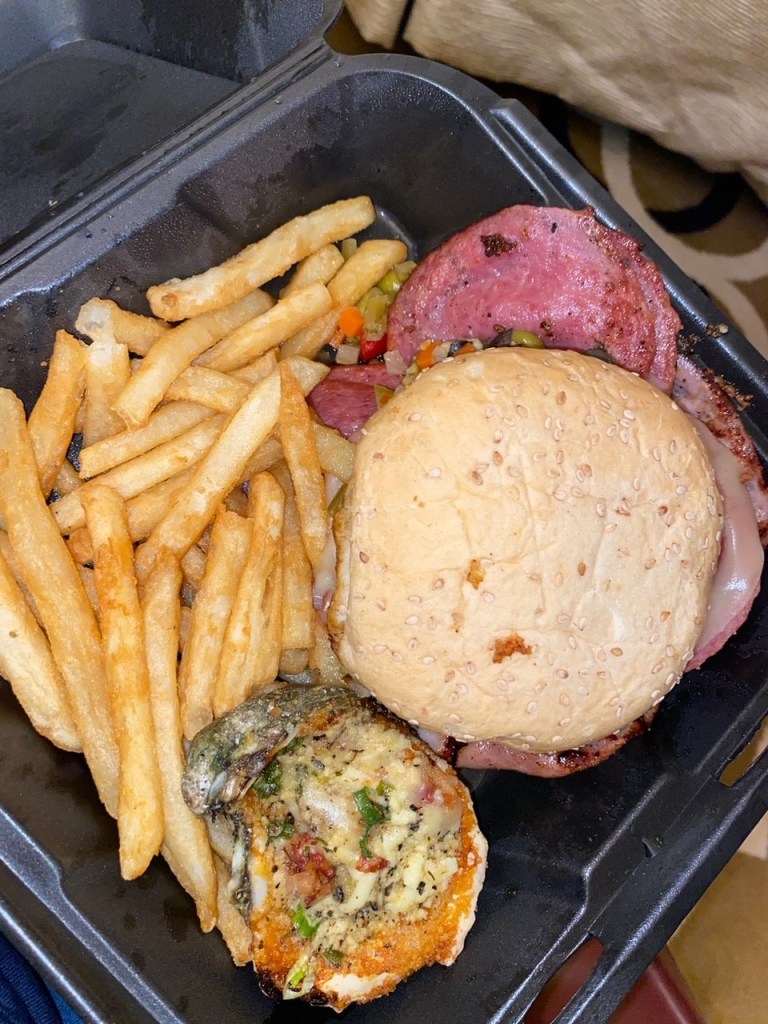
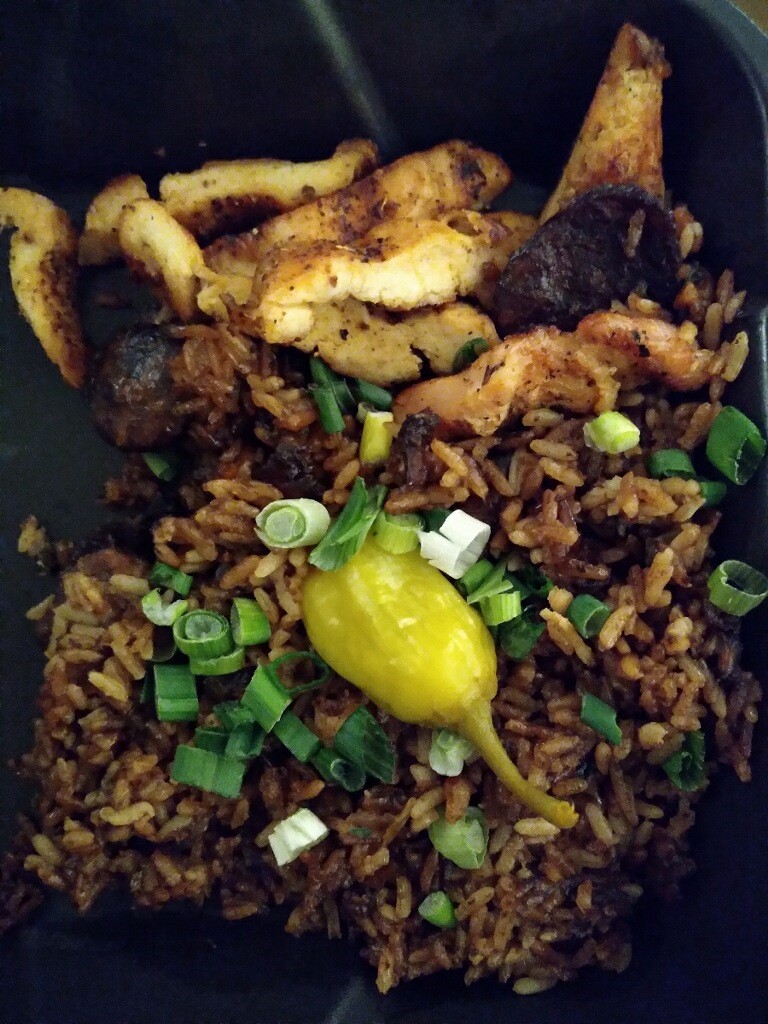
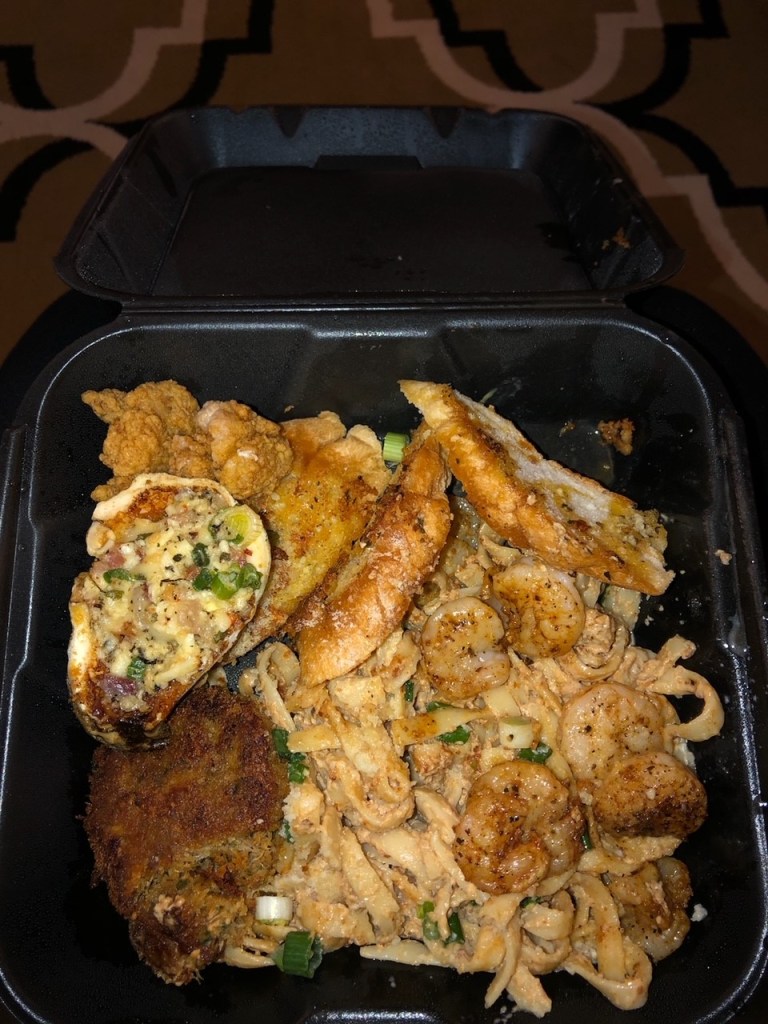
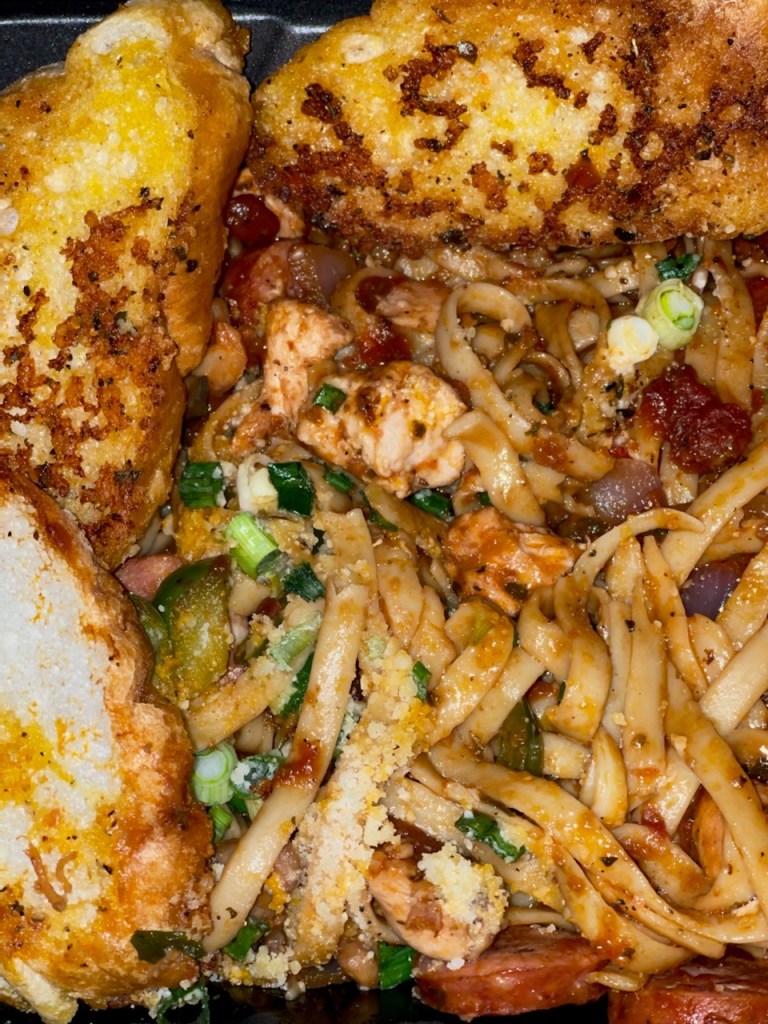
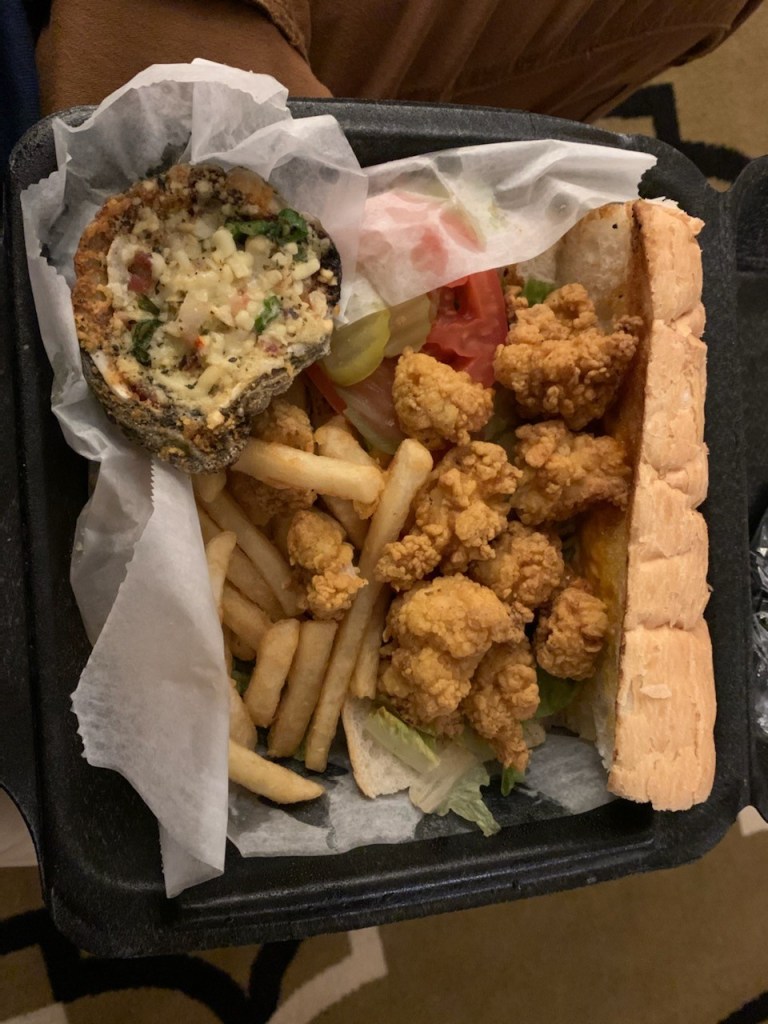
The evening came to a close as we arrived in New Orleans, Louisiana, where we settled in and sampled some creole cuisine from Creole House Restaurant & Oyster Bar, where we got to try alligator po-boys, muffaletta, blackened chicken jambalaya…
…and some delicious caramel bread pudding and pecan cobbler. We have a full day tomorrow, and we cannot wait to explore New Orleans over the next two days!
In our sixth and final meeting in September for LEAP LEADs, we had the privilege of learning from SHSU Vice-Provost Chris Maynard and legendary Washington Post reporter (and author) Bob Woodward. The night was as entertaining as it was educational.
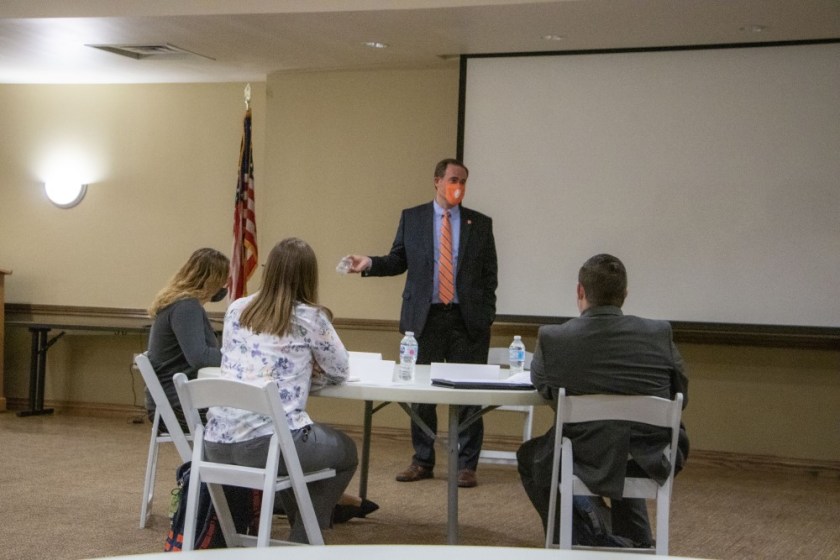
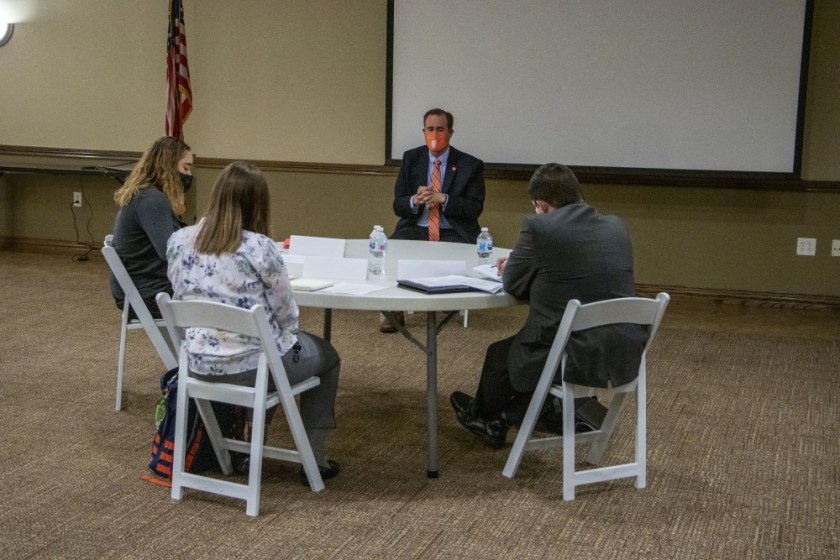
Dr. Chris Maynard serves as Vice Provost, a position that is a mystery to most students. He attended our LEAP LEADs meeting to help de-mystify that position and to provide larger lessons about the University structure.
Dr. Maynard drew on a wealth of experience: he has been a Dean, Chair, (University of North Alabama) and a Professor (University of North Alabama and Dakota State University). The conversation with Dr. Maynard was as broad as his education and experience.
He provided advice to students considering law or graduate school (“Have a game plan–make sure you pursuing goals and that those degrees fit in with those goals”) and on being successful in our chosen fields (“find successful people in our area, and learn as much as possible from them”–good advice for people doing just that in LEAP LEADs!).
He also discussed the disruption caused by COVID, from everything to changing the way we market and offer classes, to dealing with media concerns, to providing students the “University” experience. He was adamant that, despite the vexations caused by COVID, the University degree and experience is valuable and worthwhile–something with which we all agree.
We also had a chance to ask Dr. Maynard about his area of expertise: political history. And while he did discuss history (see below), he also discussed the future and the challenge we face in cybersecurity. During the Cold War, there were two super powers and their allies coalesced against each other, but there was a type of stability. Now, “a person with the right skill set and a laptop can hack into a government’s system and wreak havoc.”
Of course, we also asked many questions about the end of the Cold War and the careers of Ronald Reagan, George H. W. Bush, and James Baker. He described the different styles of Reagan and Bush, while also discussing the unique talents of James Baker, about whom we also had the pleasure of watching a Texas Tribune Festival presentation (featuring Mark Updegrove, Susan Glasser, and Peter Baker).
The discussion of these men and their accomplishments set the stage, bathed in high-contrast light, for our final event of the evening: hearing Bob Woodward discuss his new book, “Rage,” on the Trump Administration.
We enjoyed our dinner from Carbonero as we watched Woodward discuss the Trump Administration and the conclusions he drew from 17 separate interviews with President Trump–both before and after the COVID-19 outbreak.
Woodward’s report, which sometimes contained various expletives (all while quoting Trump administration officials), portrayed Trump as a contradictory figure. At times the President acknowledged the danger posed by COVID; other times, he seemed indifferent or dismissive of the threats it presented. And even as these important discussions were taking place, Trump, according to Woodward, would be fixated on things like photos he took with world leaders. It was an unsettling discussion, one made more unsettling by the news that broke shortly thereafter about the President contracting COVID.
We’ve learned quite a lot this fall, but one thing has been made most clear: all these discussions–whether on local government, University administration, national politics, or COVID–are all related.
Following several meetings with guest speakers such as Commissioner Bill Daugette and (virtual) Rep. Senfronia Thompson as part of our LEAP LEADs program, our educational odyssey continued with additional training and guest speakers.
Tonight, in our fifth meeting, we began with an introduction from Ms. Fors, who provided us with tips on email etiquette and how to create an email signature block. We were reminded to (1) keep emails short unless length is absolutely necessary, (2) to use a subject heading that is accurate and telling, (3) and to ensure that the email employs good grammar and correct spelling.
After Ms. Fors’ extremely instructive discussion, we moved on to watch the Texas Tribune Festival’s discussion with Peter Hotez, the dean at the National School of Tropical Medicine at Baylor College of Medicine and an expert in vaccine development.
As optimistic as we all were about the current COVID-19 situation, watching this talk with Hotez certainly put a damper on our hopes about the virus. Hotez shared that “vaccines may not be introduced until spring 2021” and that we are likely to have a third surge in COVID-19 cases–and that it could be even worse than before. Though this discussion wasn’t filled with the best of news, it most definitely provided us with new information to keep in mind as we continue to navigate through this new COVID lifestyle that we may begin to call “normal” pretty soon.
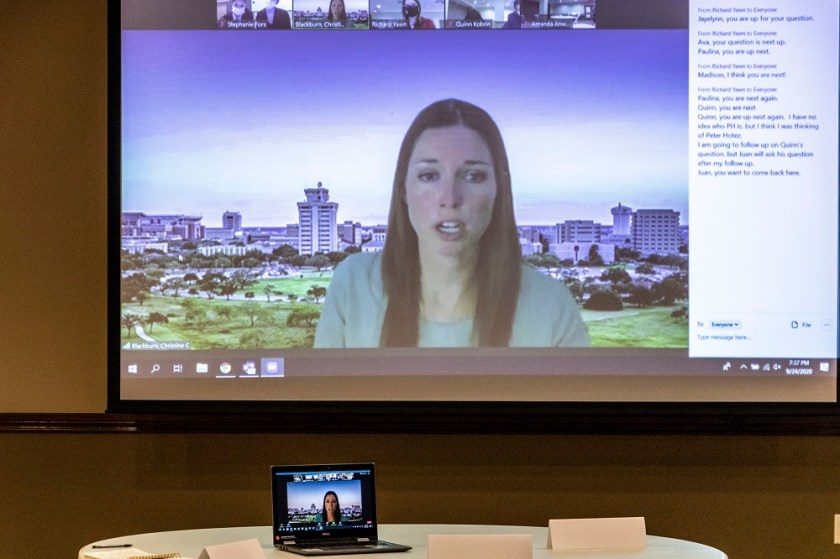
The highlight of our night was a Q&A with Dr. Christine Blackburn, the Assistant Research Scientist, lecturer, and Deputy Director of the Pandemic and Biosecurity and Policy Program at the Scowcroft Institute of International Affairs.
During this Q&A the eight LEAP LEADs’ students were able to engage in an interactive conversation with Dr. Blackburn on her career, her advice to young people and the substantive aspects of the Coronavirus–which was very educational.
We learned, for example, the 3-4 phases a vaccine must go through to become approved.
We, apparently, are nearing phase three trials, which means tightly controlled experiments on humans should begin.
One of the interesting things about Dr. Blackburn is her educational background. She has an “individual interdisciplinary Ph.D.” in “Political Science, Communications, and Veterinary Science.” The idea is that, as the world becomes more specialized and silo-like, people with interdisciplinary degrees can cut across multiple domains. She persisted in this degree despite others telling her, “No one is going to hire someone with that combination of degrees.” But, of course, the ability to cut across domains is exactly what is needed in a pandemic because it affects supply chains, economics, food and, of course, health–all the while being entangled with politics.
In conclusion, we asked Dr. Blackburn what her goals were and what she hopes to accomplish. She prefaced her response by saying it was a “cliche,” but that she went into her field just “hoping to make the world a better place.” And for a group of students who signed up for LEAP LEADs, in part, to make the world a better place, it was a validating answer.
Finally, our eventful night ended by us getting our dinner from Farmhouse Café and talking amongst ourselves about how interesting and inspiring our talk with Dr. Blackburn was. Though it was only our fifth meeting of the semester I am excited to continue to learn and grow along side other individuals who are eager to do the same.










































 Center for Law, Engagement, and Politics