For the LEAP Ambassadors, there is no better mid-week venture than to the Glades Art Foundation in the Woodlands for an always amazing World Affairs Council event. This time around, we were fortunate enough to be accompanied by two guests: Hongjin Jeon, (aka. Andrew) a student in Professor Yawn’s Texas Government class and Dr. Lei Duan, the professor for my Modern Asian History course.
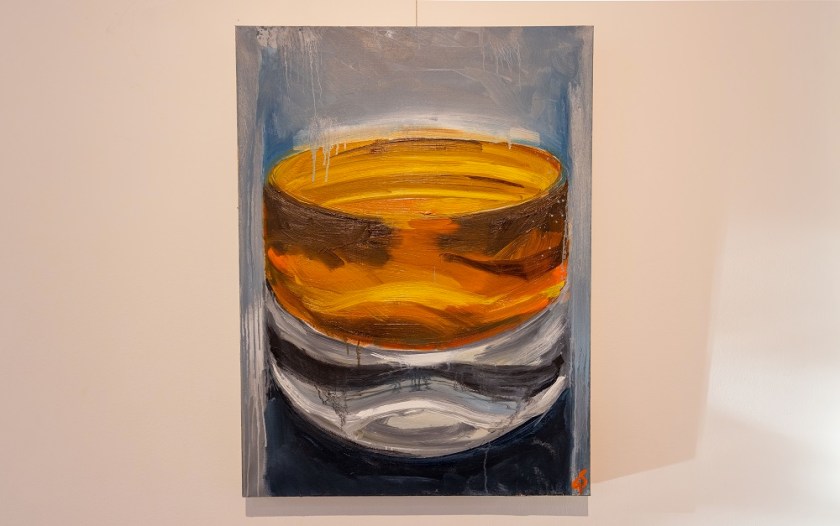
We enjoyed pursuing the current exhibits on display, one of which we have seen before: a collection of drinks!
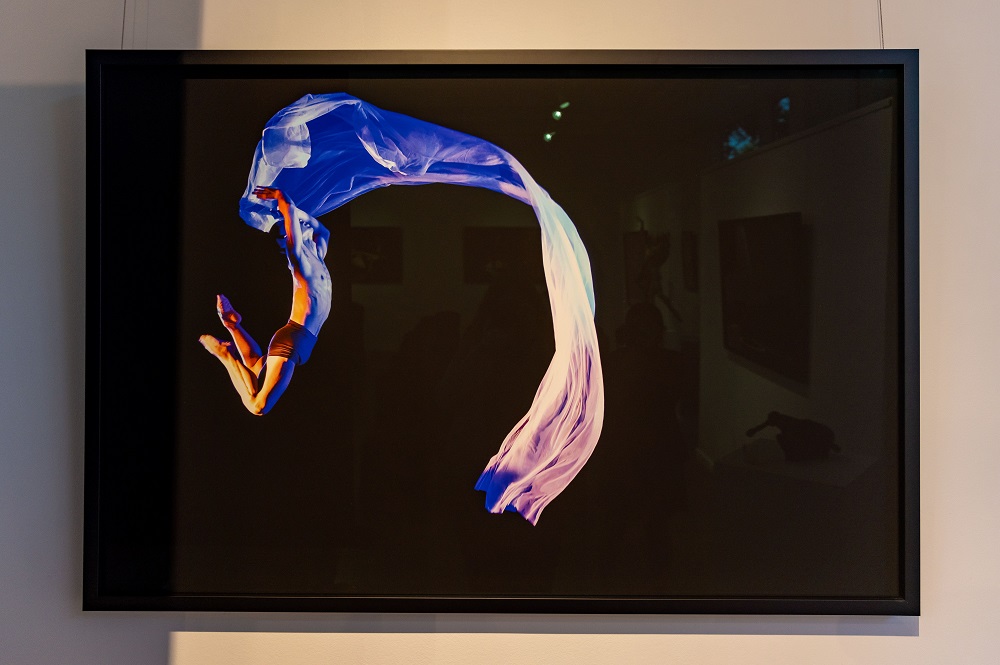
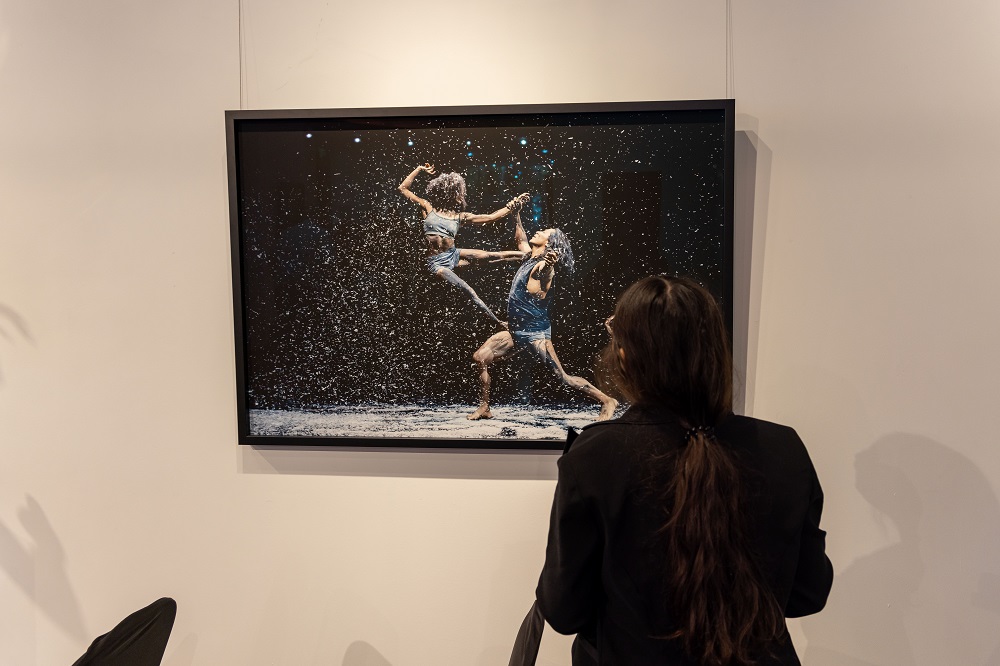
The Glade Gallery hosts an array of exhibits as well as acts as a meeting location for many local groups. The Woodlands Photography Club was also hosting a meeting and they were surrounded by many dynamic photographs.
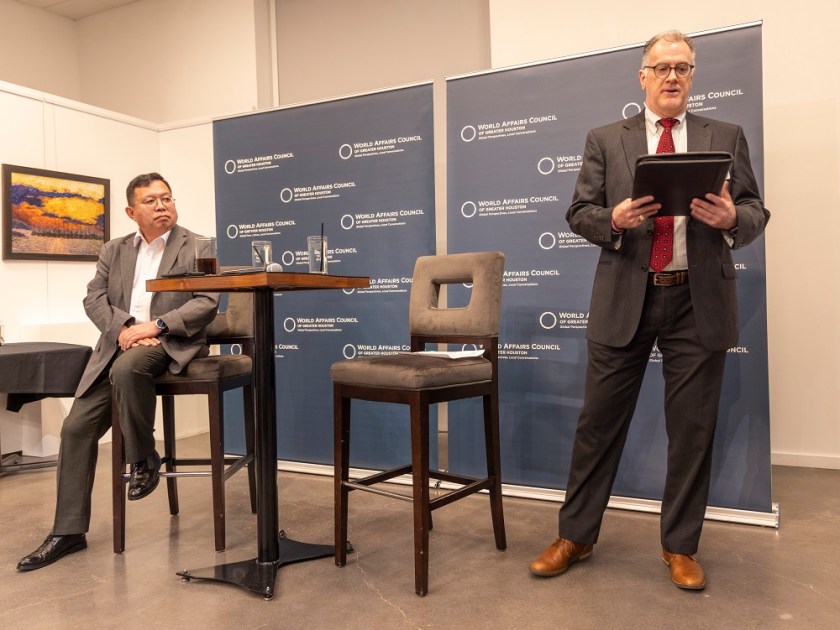
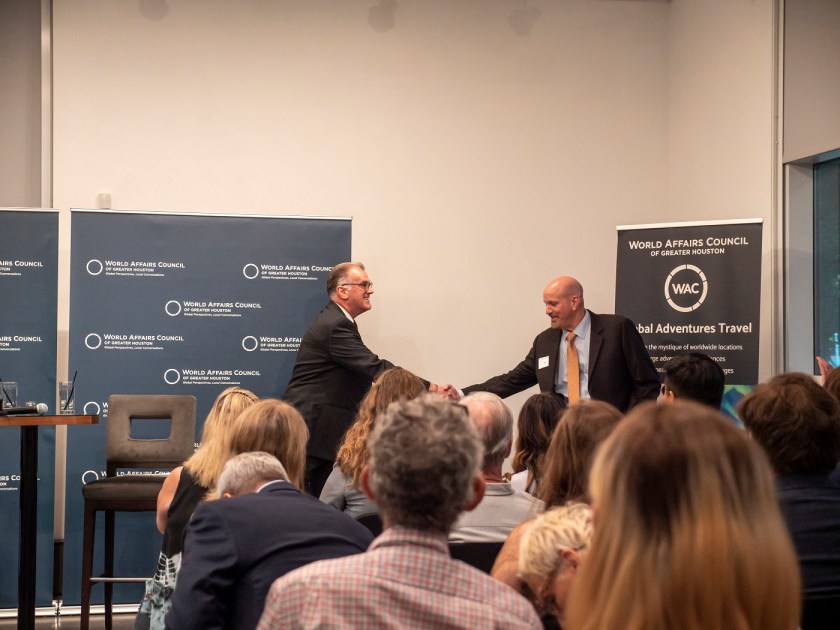
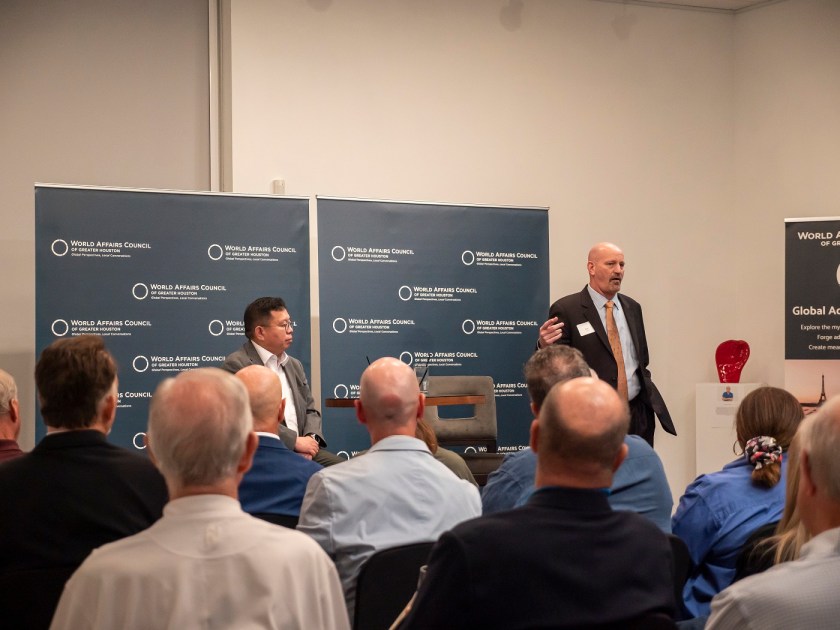
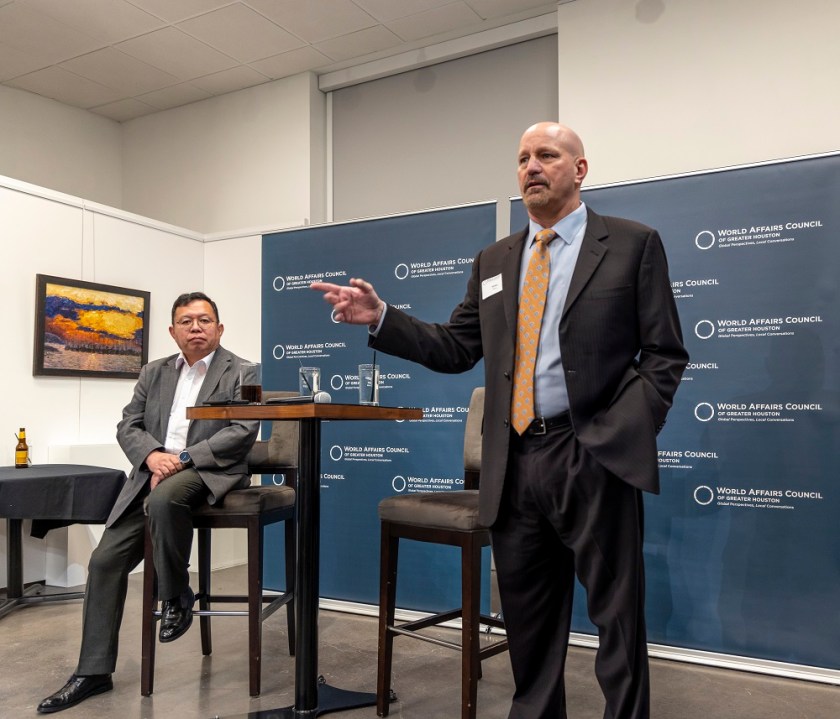
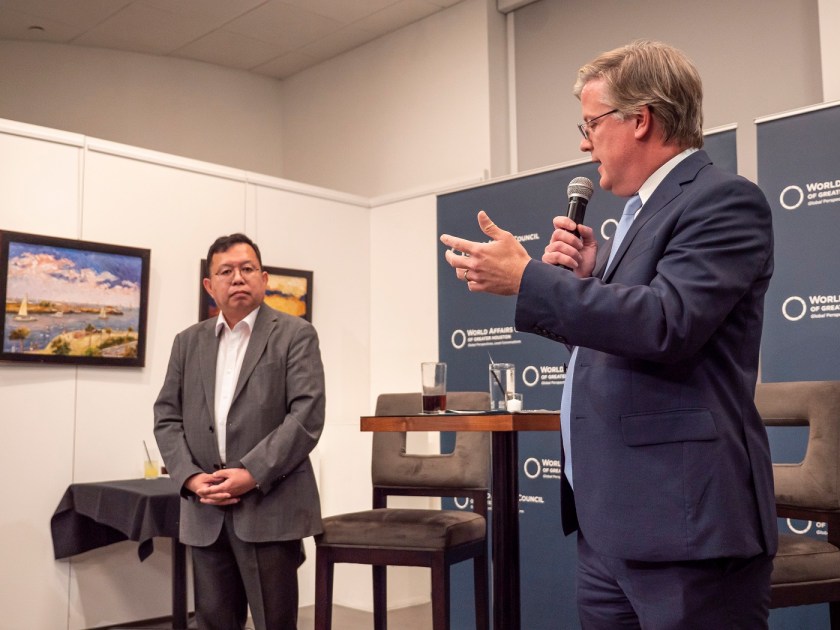
The event began with an introduction from Ray Cunningham, the North Houston Coordinator, who thanked the Glade Gallery, and the guests for their continued interest in the Council.
Mr. Cunningham then introduced Professor Yawn…
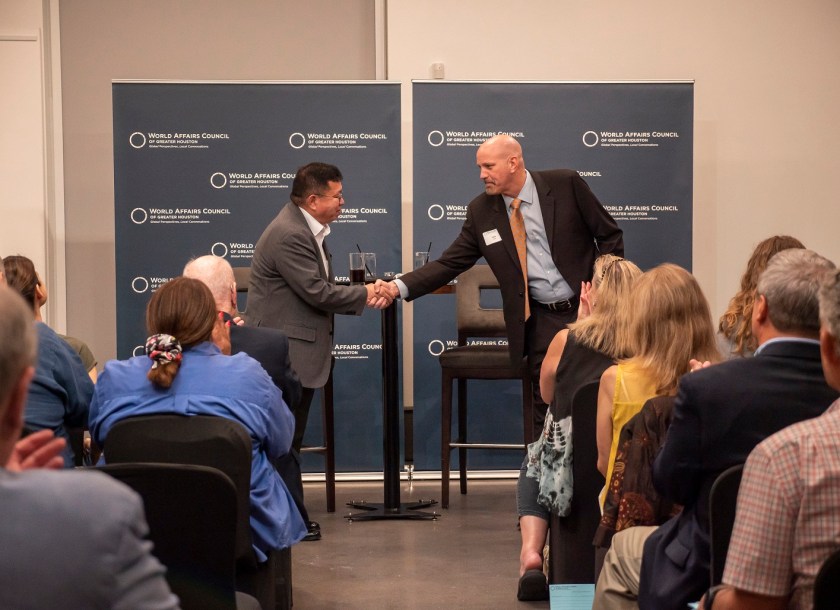
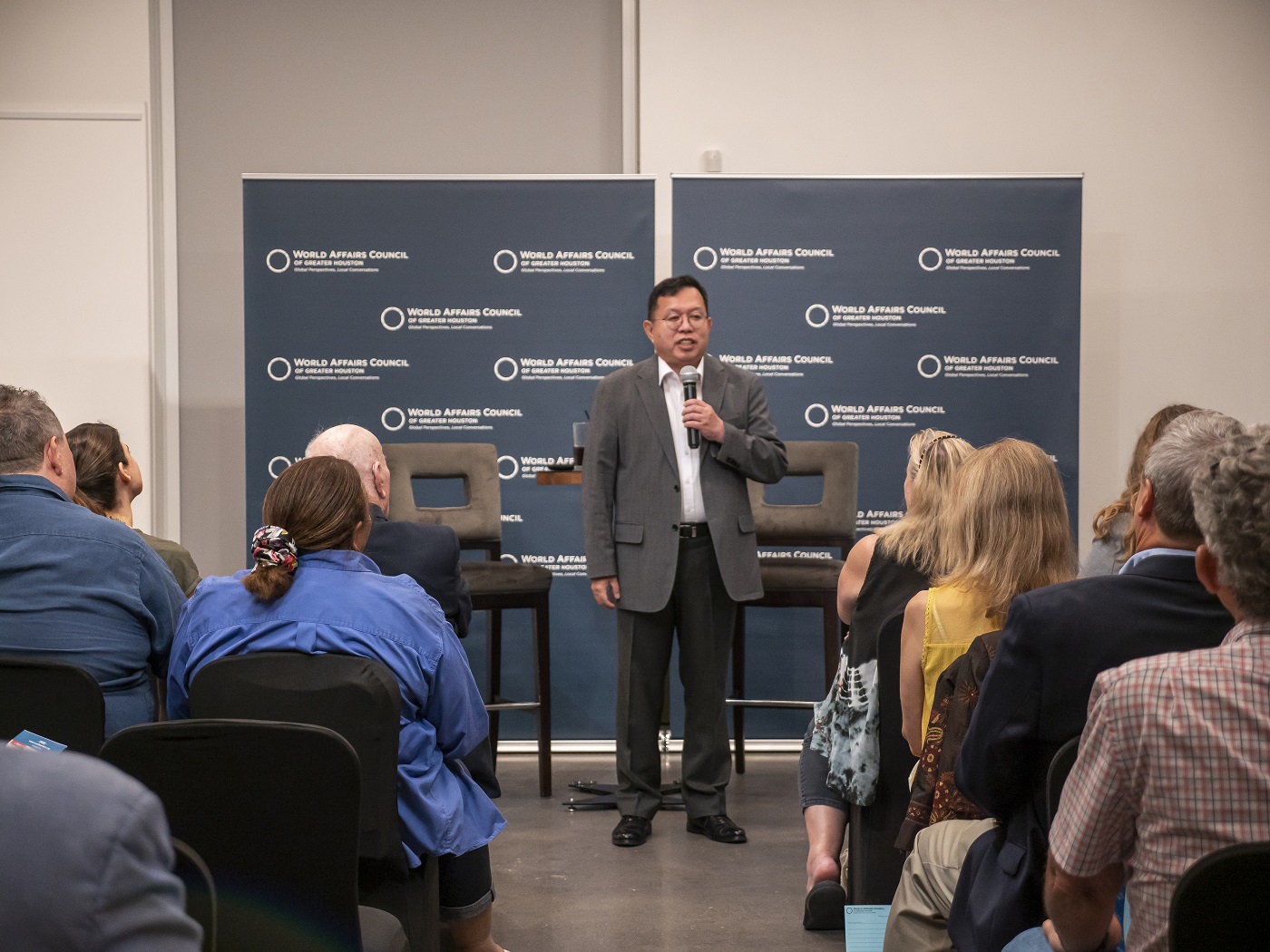
…who proceeded to introduce General In-Bum Chun.
Professor Yawn highlighted General Chun’s career in both the military and governmental sectors…
…and a few of his acts of service, which later General Chun elaborated on.
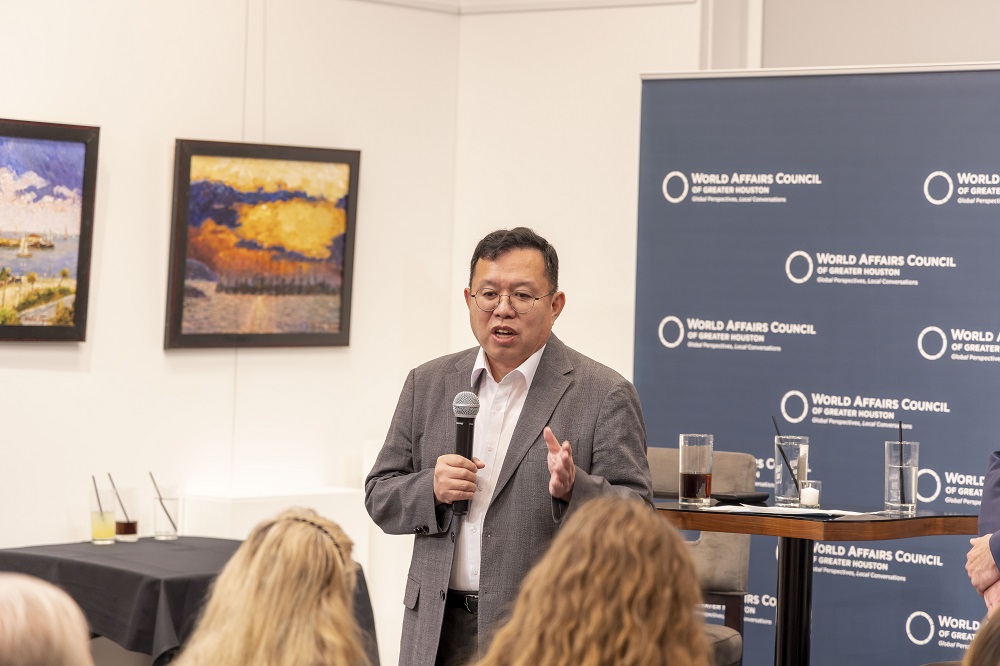
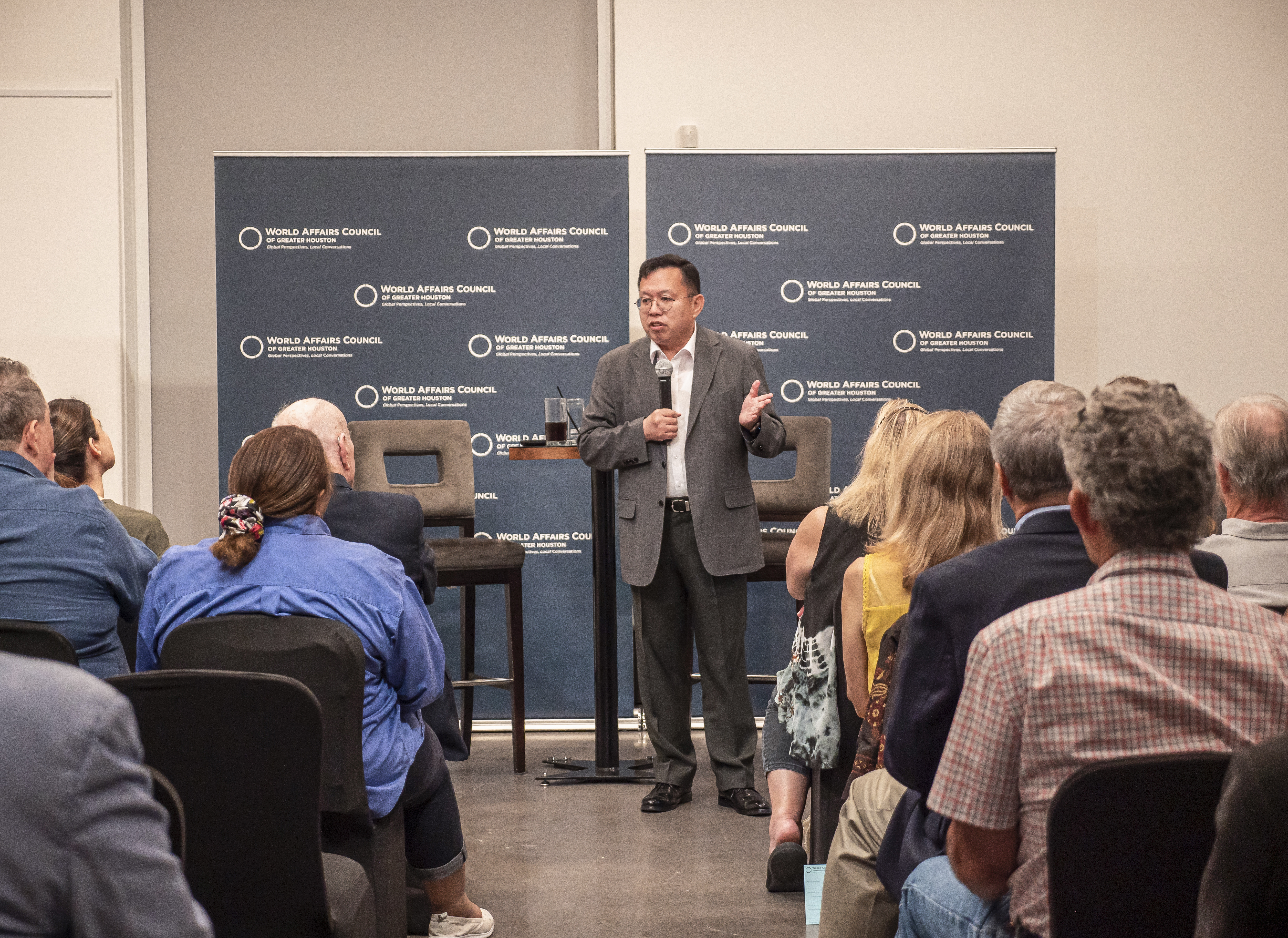
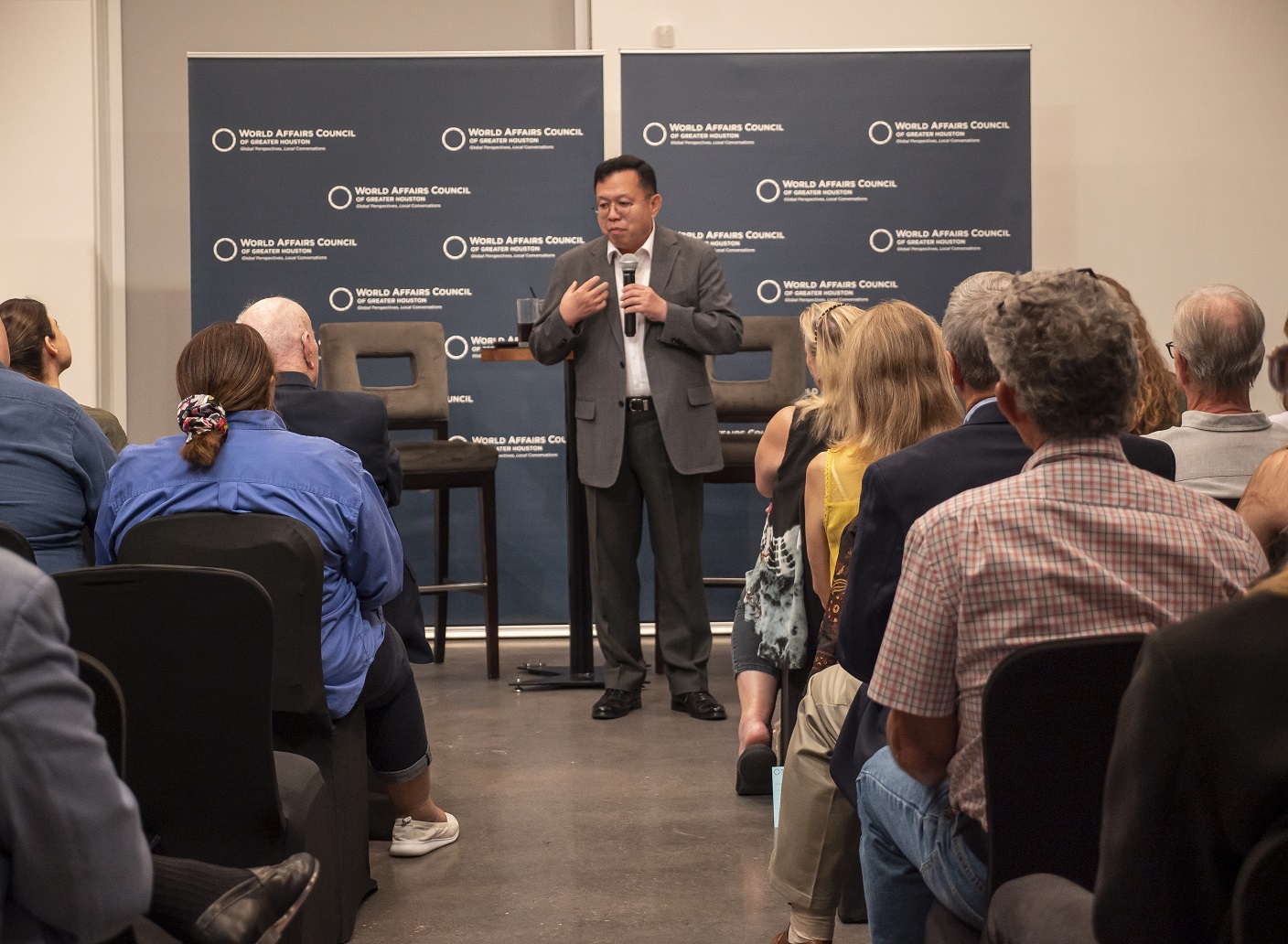
General Chun began by recognizing and expressing his gratitude for one of the audience members, Charles, A Korean War Veteran! It was wonderful to see this man, who must have been nearing 90, hear about an expert on Korea, seven decades after he fought for South Korea’s right to remain independent and free.
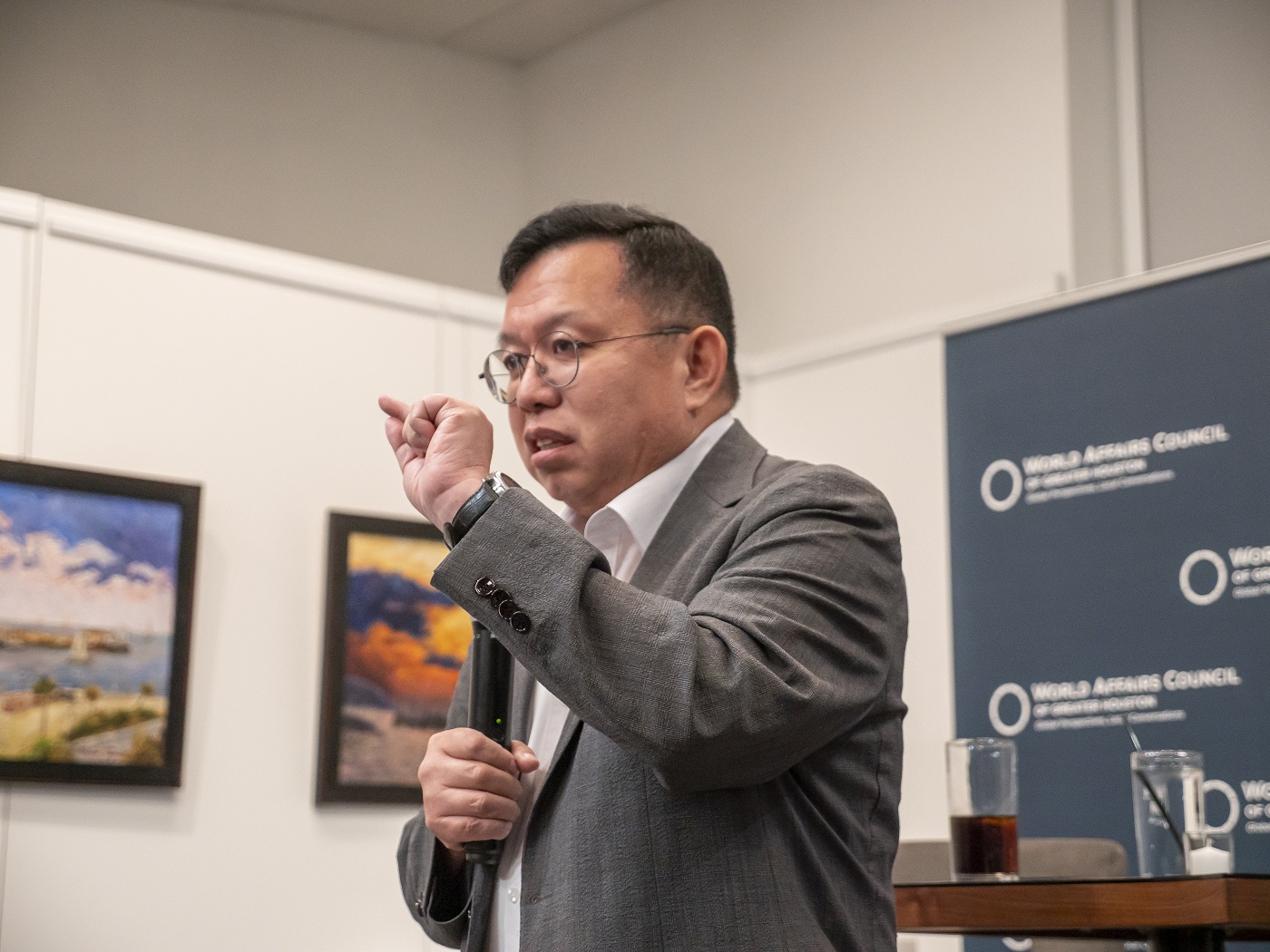
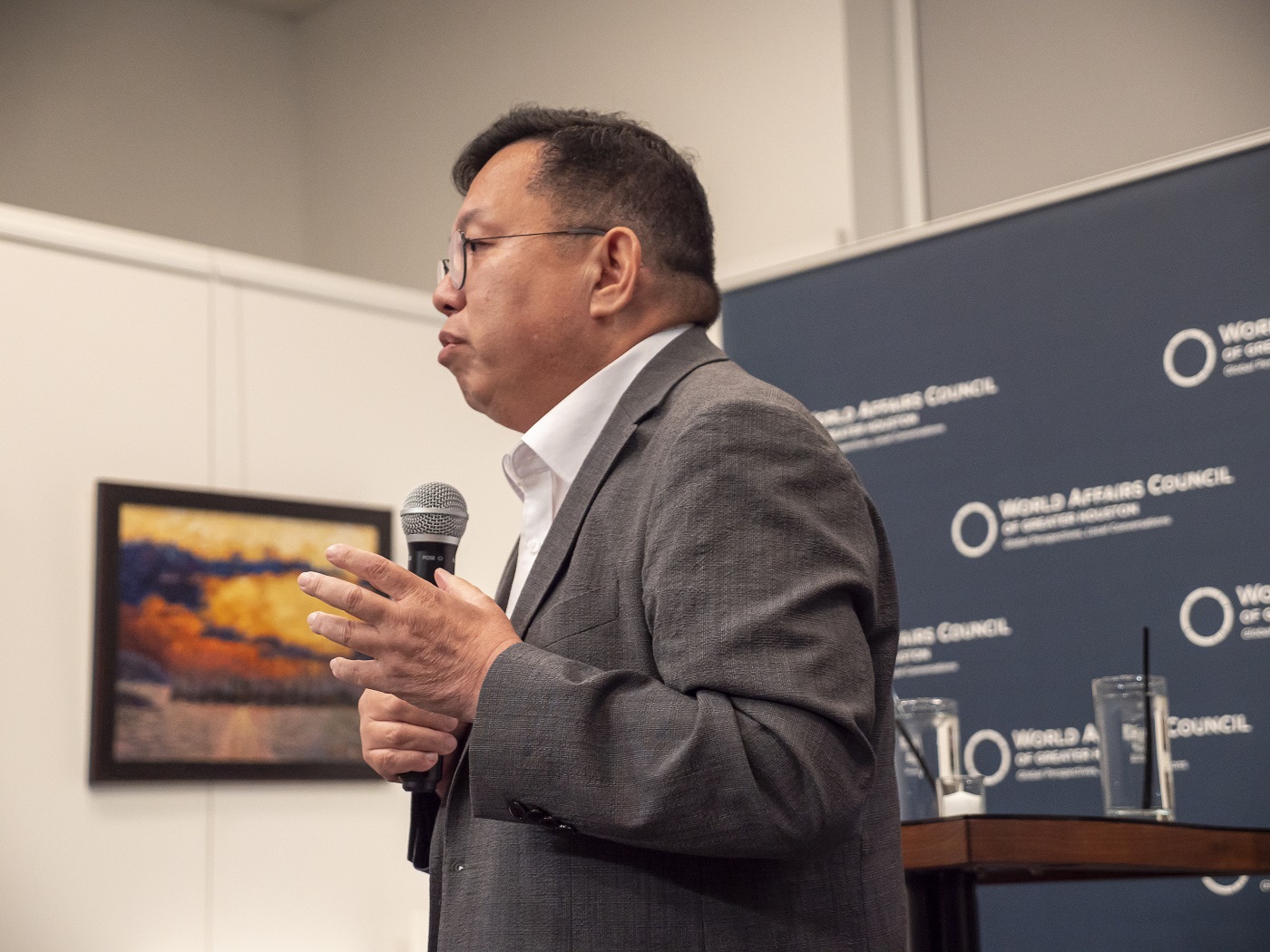
General Chun then spoke on the importance of the United States involvement in the Korean War, (1950-1953) more specifically, American troops on the ground in Korea. Chun stated, that without help from America Korea would not be where they are economically, politically, and socially today.
He then gave 5 key features about Korea that have been made possible by the U.S.
Reforestation: after the war, the whole peninsula was a barren war zone. Now, Korea has some of the lushest forests in the world.
International travel: Korea has one of the most accepted passports in the world.
Healthcare: General Chun highlighted the benefits of universal health care, including regular preventive health checks.
Public Transportation: The public transportation system is almost on par with the one in Japan.
Public Restrooms: General Chun noted, slightly jokingly, that when you must go, you don’t have to look far! Everywhere in Korea there are accessible, clean restrooms.
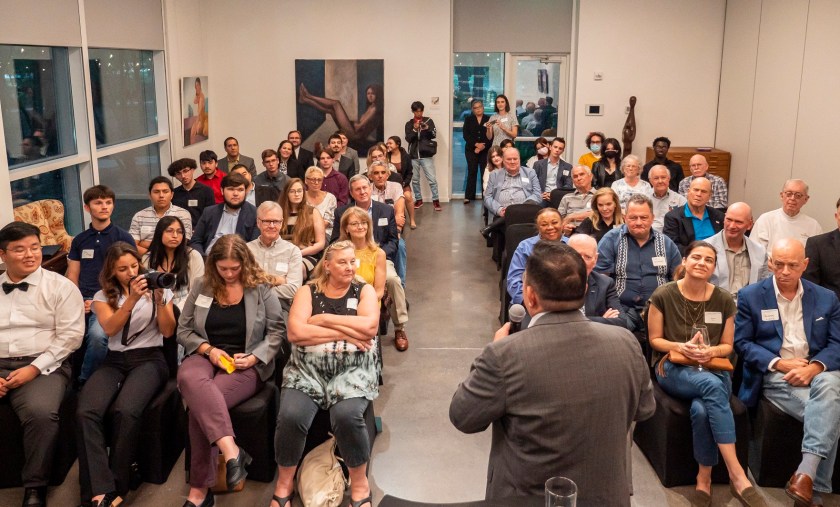
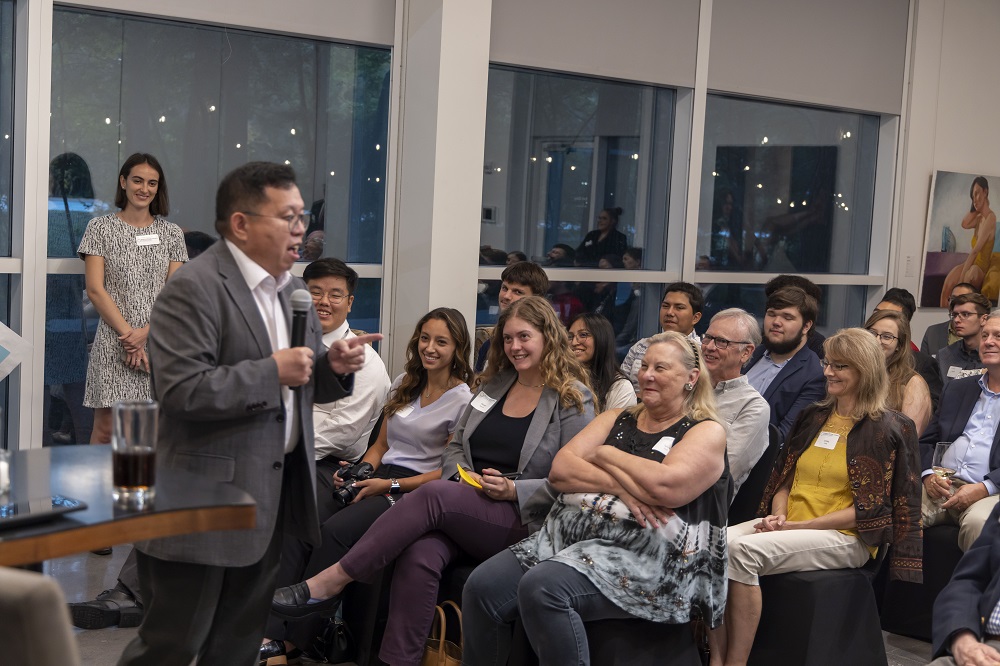
Ronan O’Malley then stepped as the world-class moderator that he is, and he asked a series of questions of his own and from the audience. In response, General Chun described Korea’s relationship with its surrounding neighbors.
Most of the country’s trade is done with China, although it is extremely difficult to navigate. With their neighbor to the east, there is deeply rooted emotional history. Japan and Korea have made great strides to reconcile, but politicians from both countries capitalize on the bad blood for political gain.
For the other country that shares the peninsula, General Chun Described North Korea as “a perfect dictatorship based on a cult.” The whole country is run by one family and, socially, still operates based on a hierarchal system.
Often tying historical aspects of the country to modern topics, General Chun concluded the night with one piece of advice: communication. General Chun pointed out that historically there is a lack of communication coming from America. Often we do what is in our interests, without asking the opinions of our allies. General Chun’s advice to keep communication in mind applies to much more than international relations and is sound advice for everyone.
I strongly admire the way General Chun was able to identify an area that has potential for growth in the U.S, but also express his gratitude for what is arguably one of the best alliances in history.
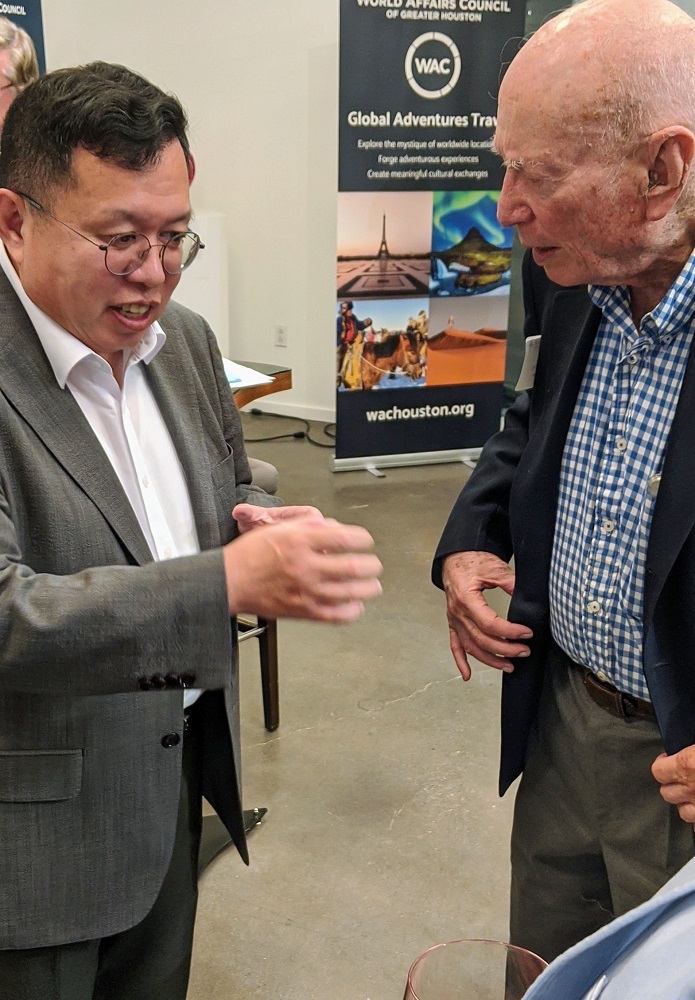
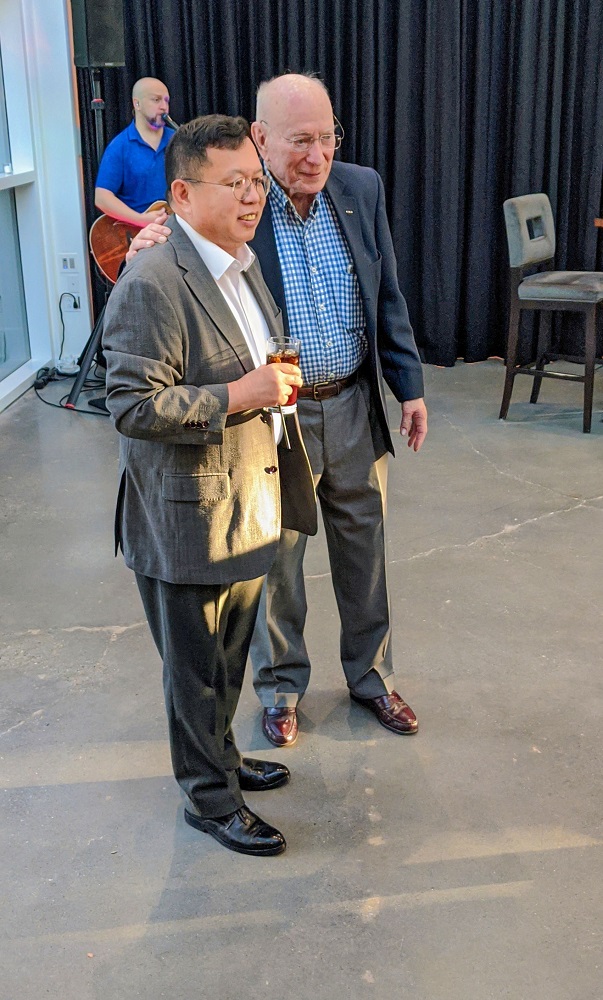
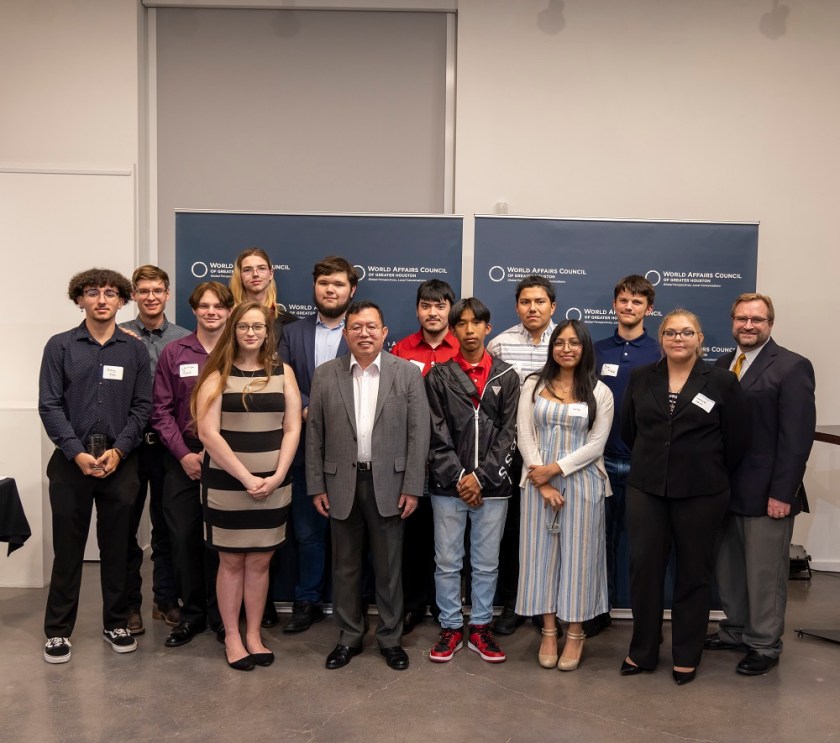
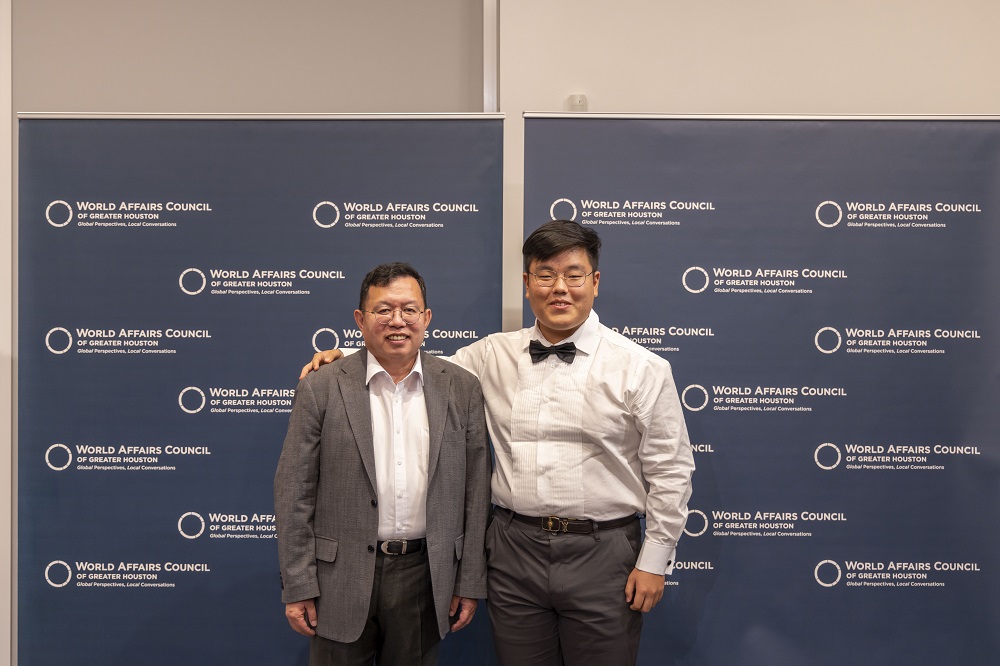
As the event drew to a close, we were able to meet with General Chun in groups. The Lonestar Honors Organization was on hand, and we had a chance to talk with them, and also photograph them with the General.
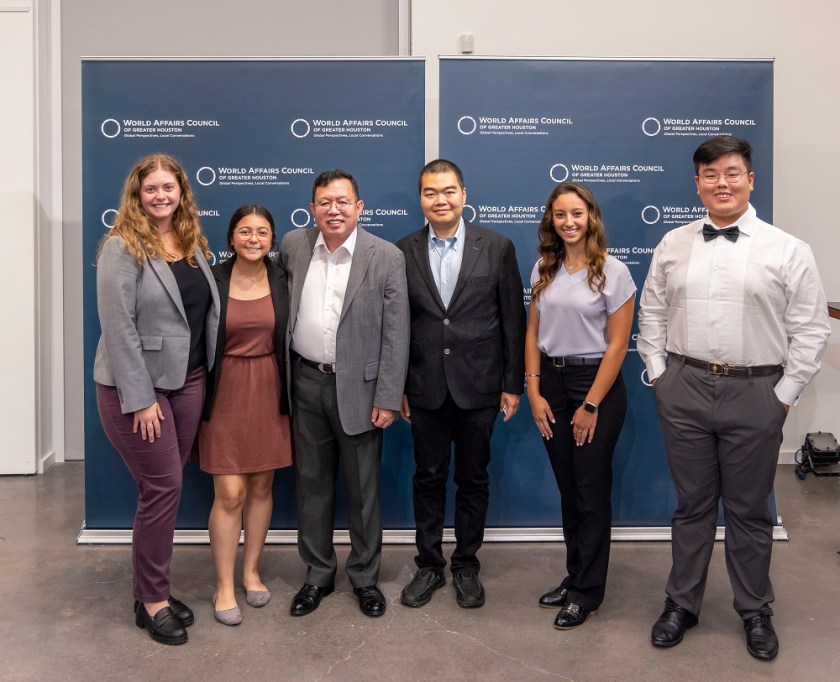
We also had a chance to meet high-school students from Caney Creek, with their advisor Eric Tanner, and they, of course, had a chance to meet with the General.
And, of course, we had a chance to meet with the General as well…
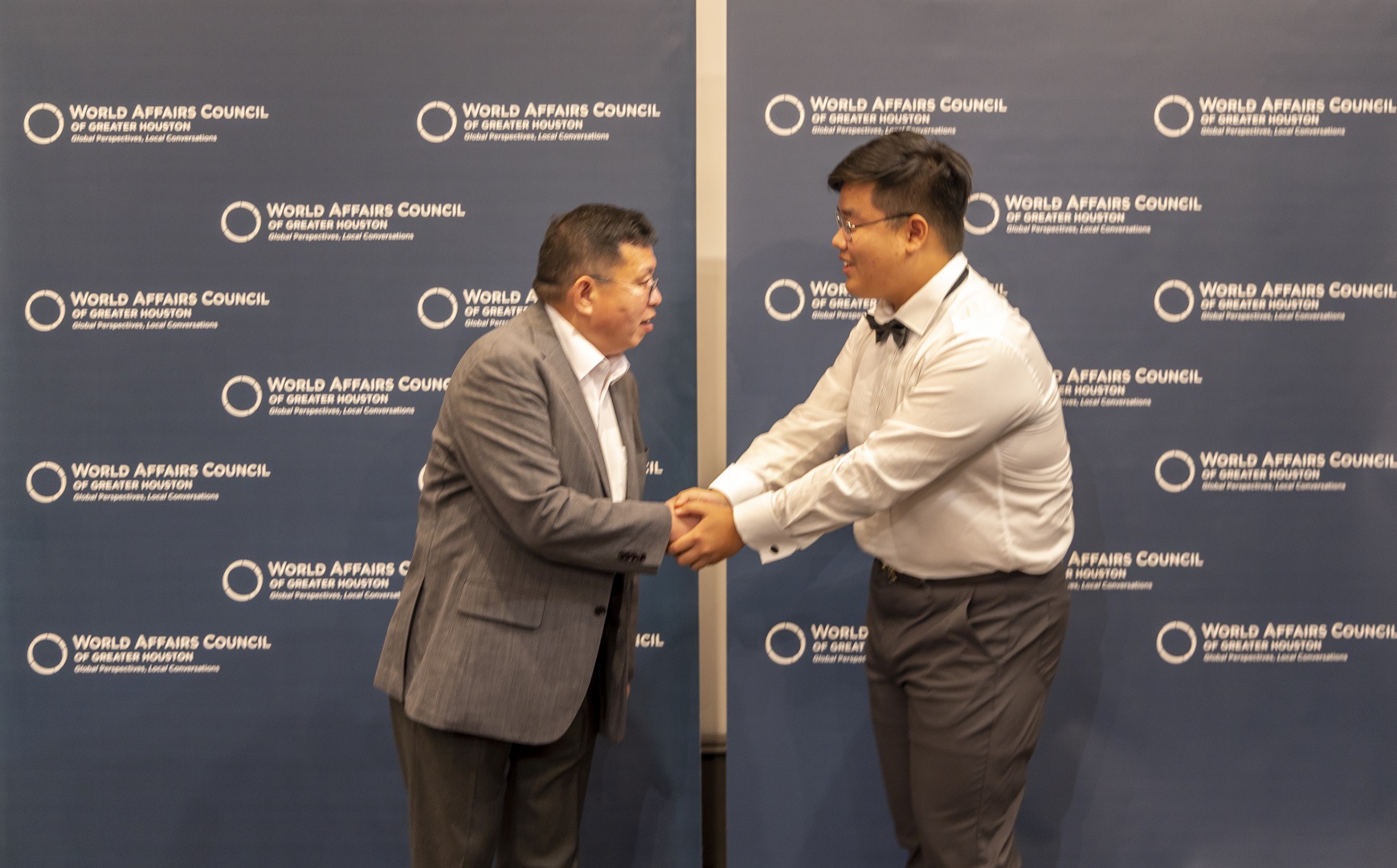
…and this was probably the biggest treat for Andrew.
On behalf of the LEAP center, thank you to the World Affairs Council for always hosting informative and enjoyable events, and to General Chun for taking the time to share your expertise about your country.
Dinner at Saigon USA Pho Grill
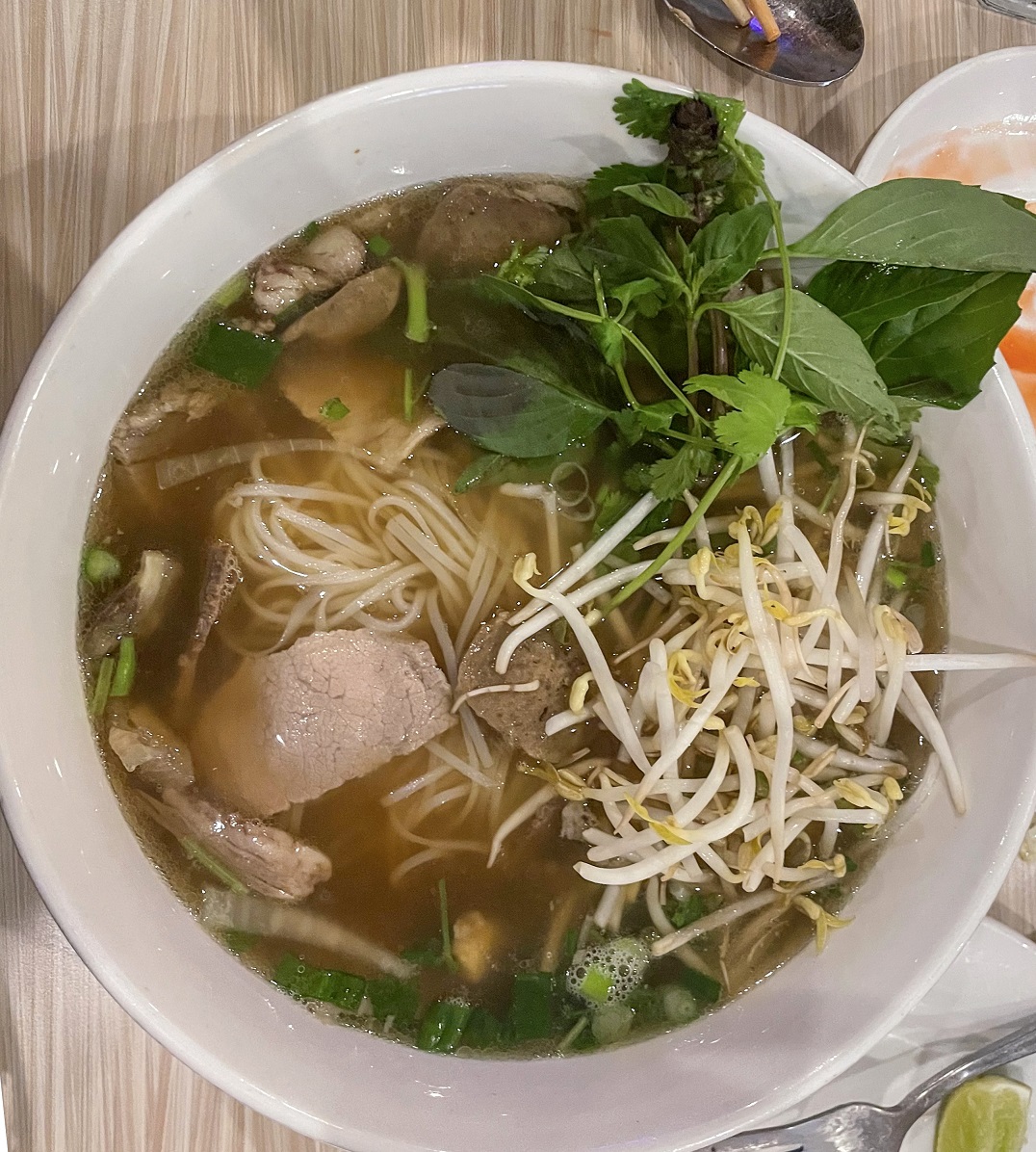
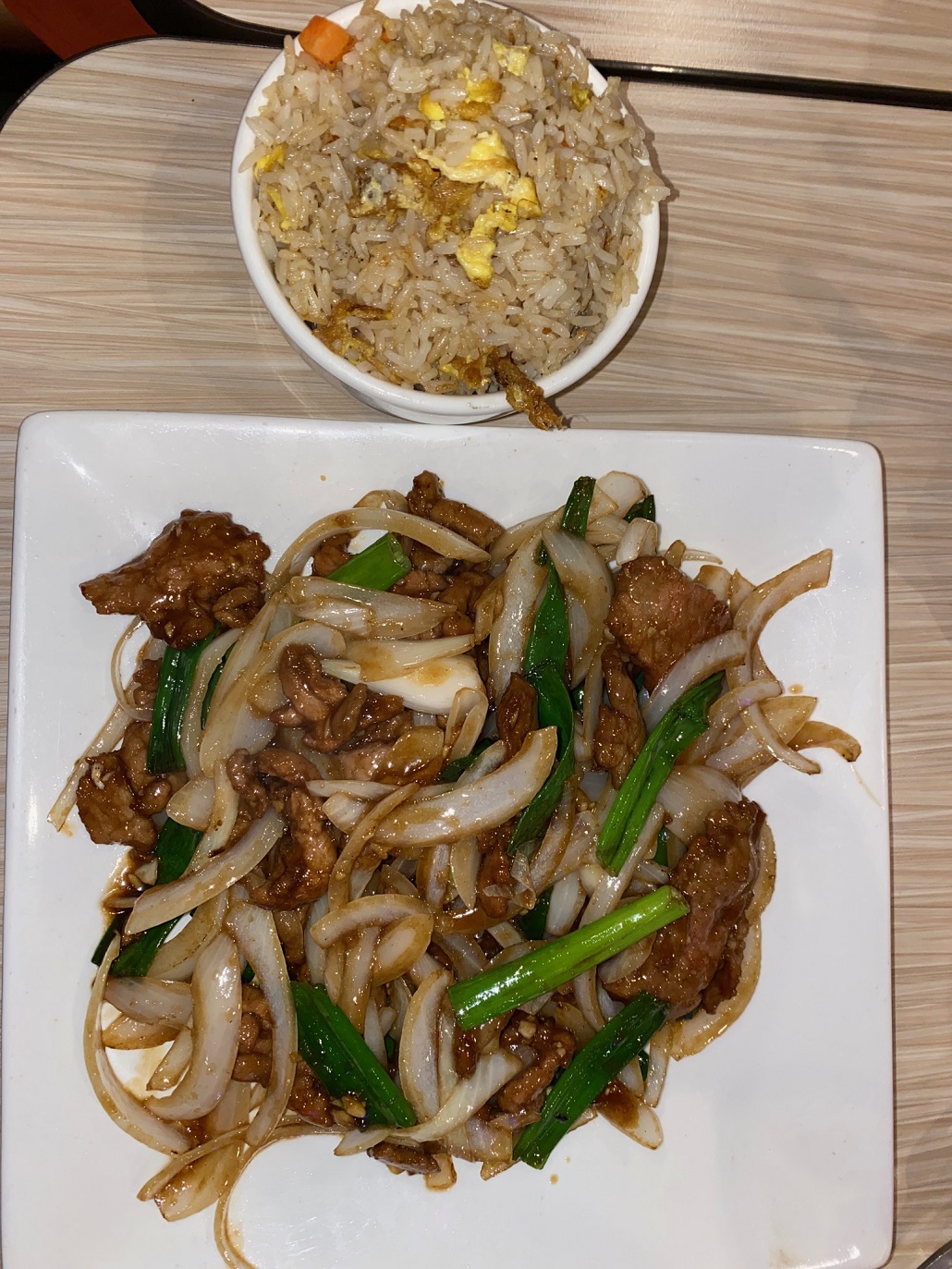
Our goal is always to reinforce the formal knowledge we receive from the presentation with some cultural learning in the form of food. While we couldn’t find Korean food in The Woodlands, we were able to stay close to Korea in a geographical sense, and we had an amazing dinner at Saigon USA pho & grill!
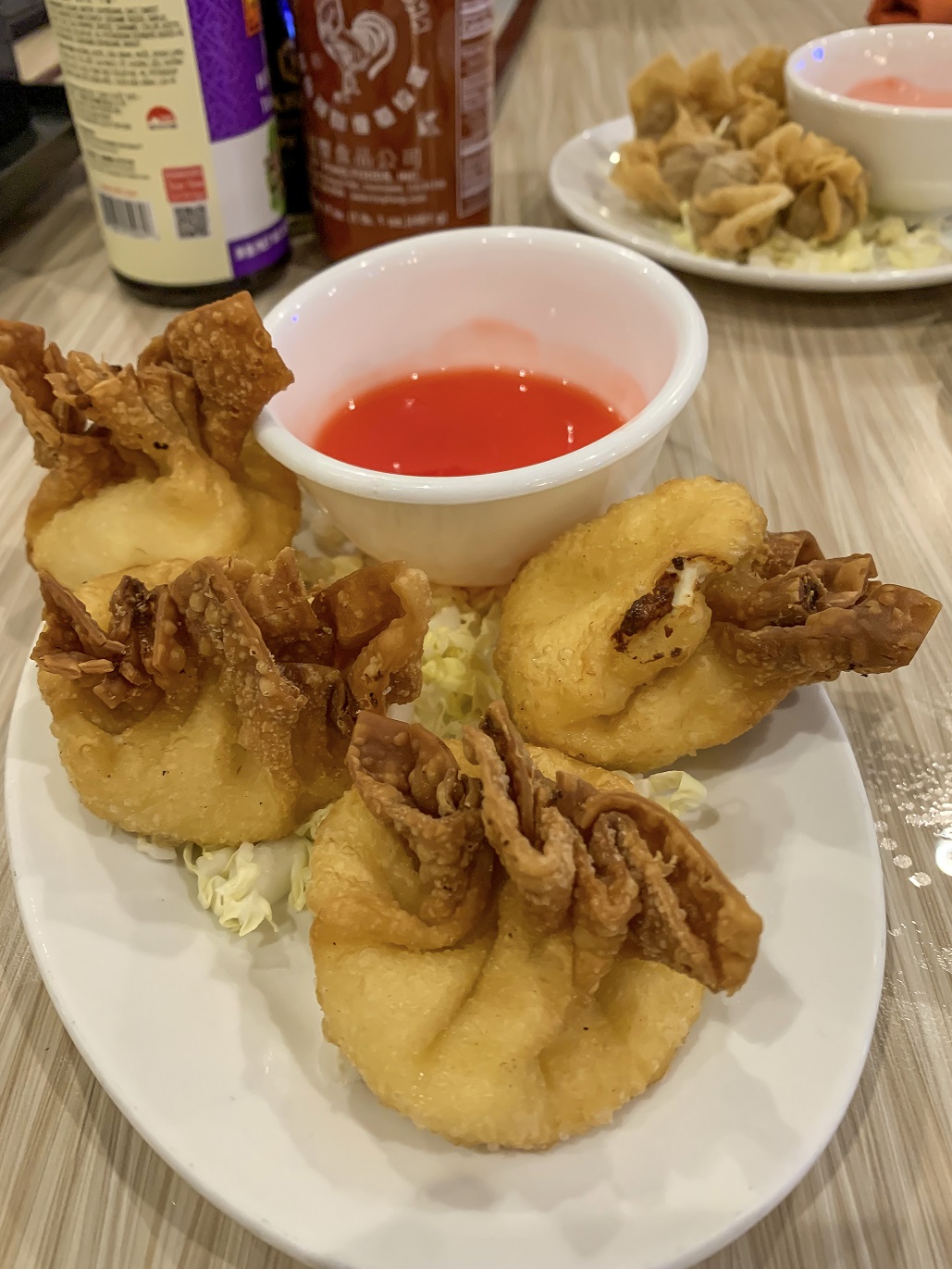
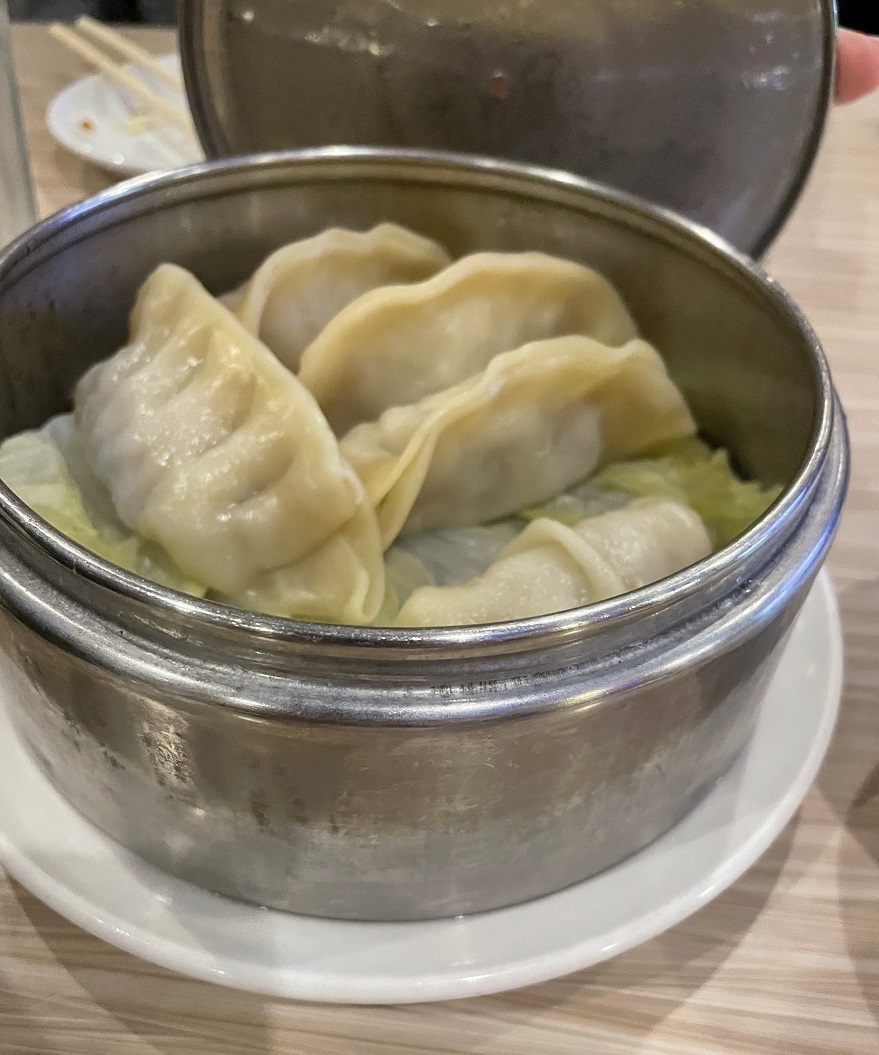
We started with an assortment of appetizers: Cheese puffs, steamed dumplings, and fried wontons. My favorite was the steamed dumplings, but all of the appetizers where amazing.
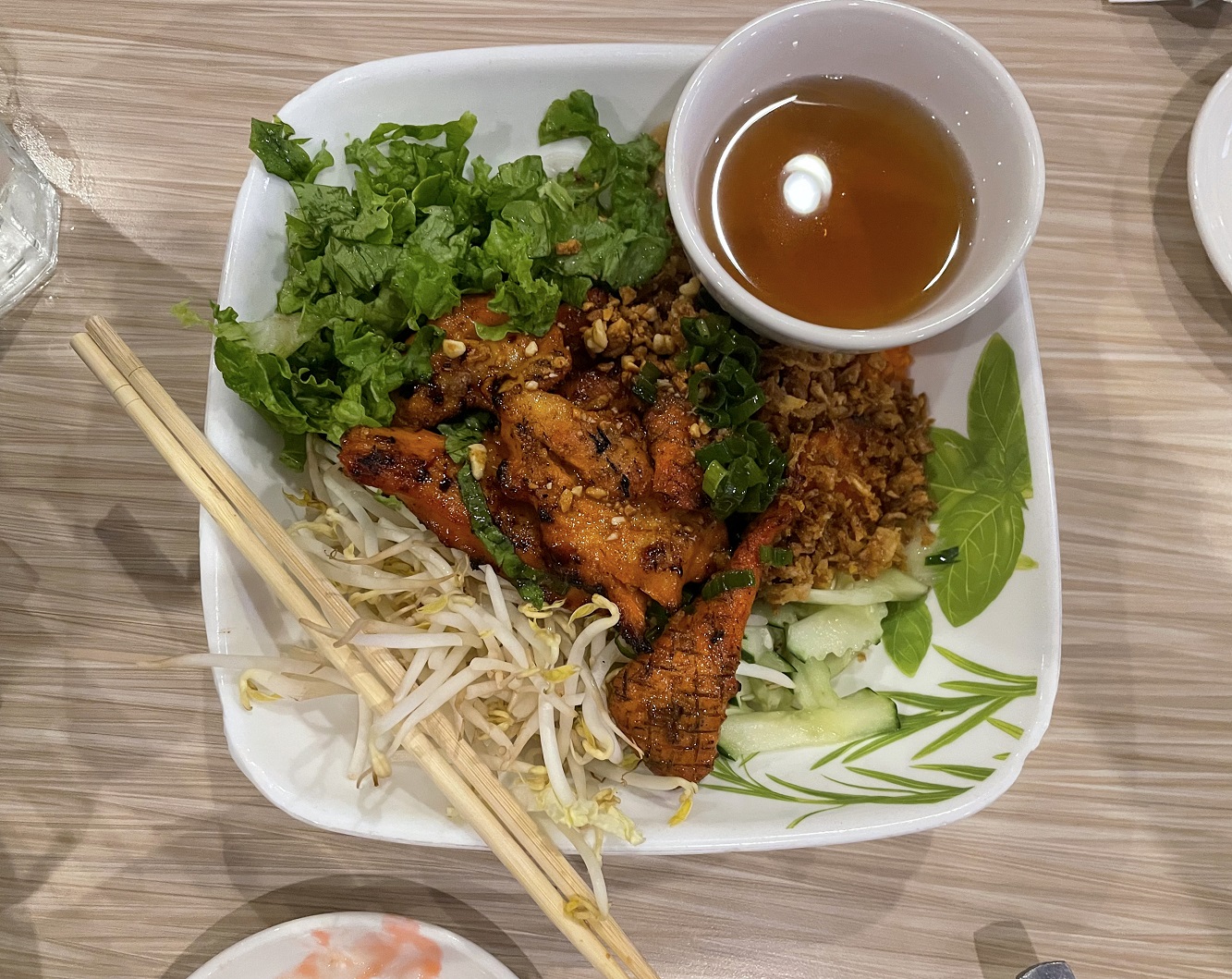
For entrées, some half of us chose Pho, and the other half chose meat and rice dishes.
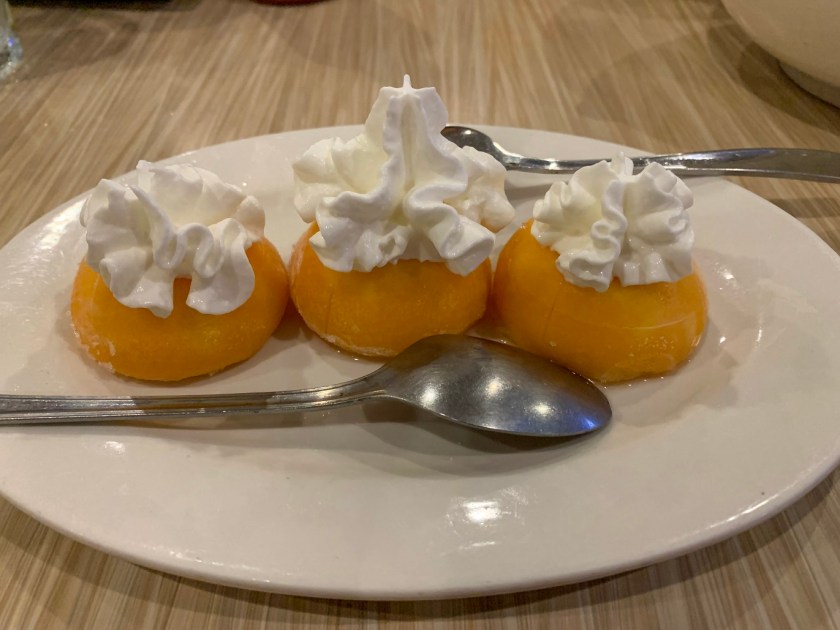
Everyone loved their meals, and we left almost no room for dessert! Because Tuesday was Yvette’s birthday, Professor Yawn, let Yvette pick the dessert, and she chose Strawberry and Mango mochi. The mochi was plated beautifully, and everyone enjoyed the sweet treat!
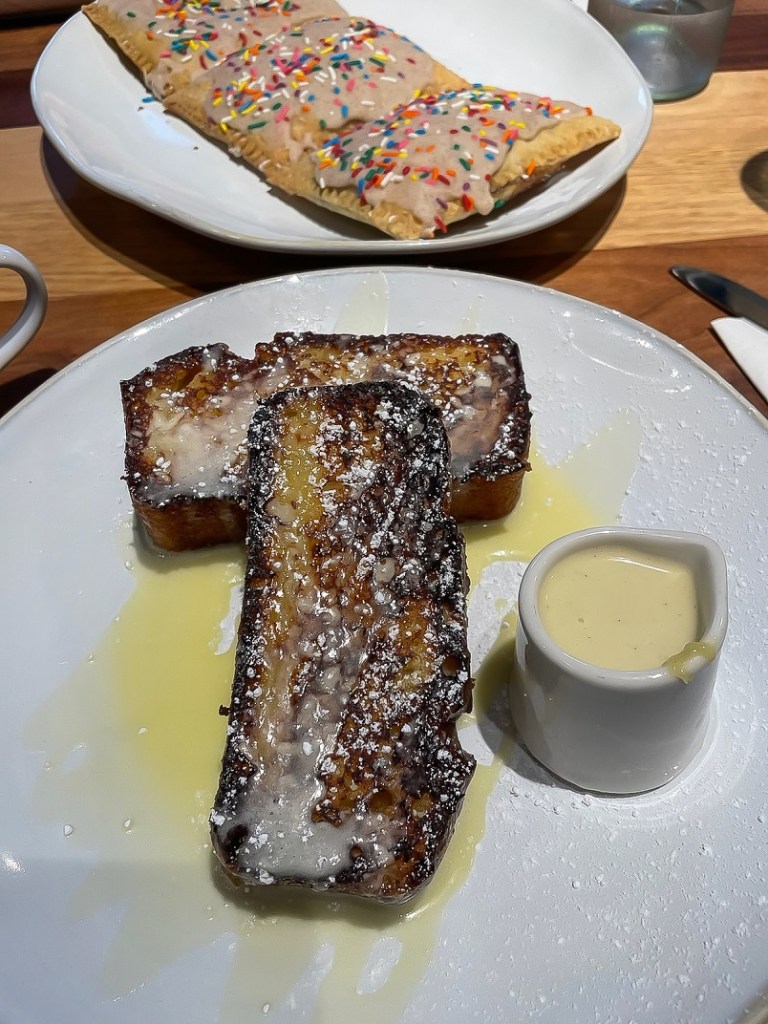
Our early rise in Wichita, KS was accompanied by a nice and cool breeze! This morning we had a hankering for a more local taste for breakfast, and we were excited to try the homemade pop tarts from the local restaurant, HomeGrown. Sure enough, upon arrival, we had three of their brown sugar pop tarts, which were very tasty!
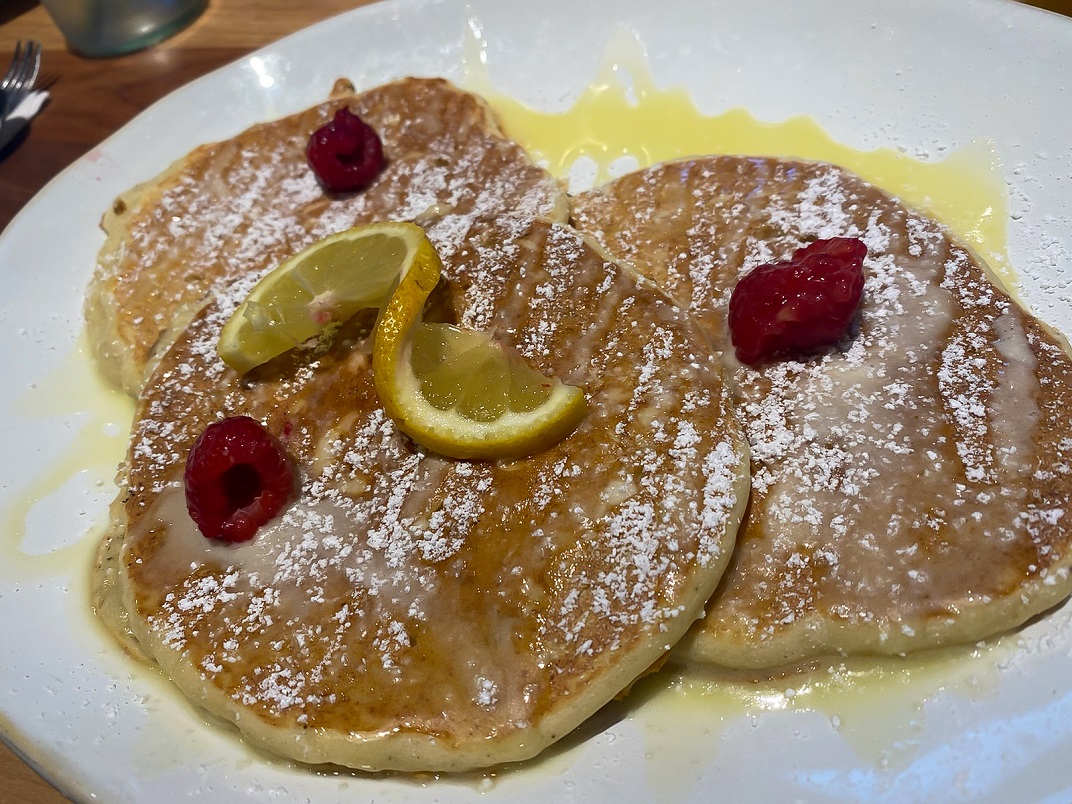
This time around, Morgan and Yvette ordered zesty yet sweet lemon dishes, Limoncello French Toast and Lemon Ricotta Pancakes.
Ashlyn ordered one of their specialties, the Croissant French Toast.
The seasonal flavors were a nice contrast to my savory Chilaquiles Verde Bowl, which was delicious. It was a great breakfast filled with an assortment of flavors!
If you are ever in Wichita, HomeGrown is a must-try especially if you want a taste of something local!
Frank Lloyd Wright’s: Allen House
Yvette Mendoza
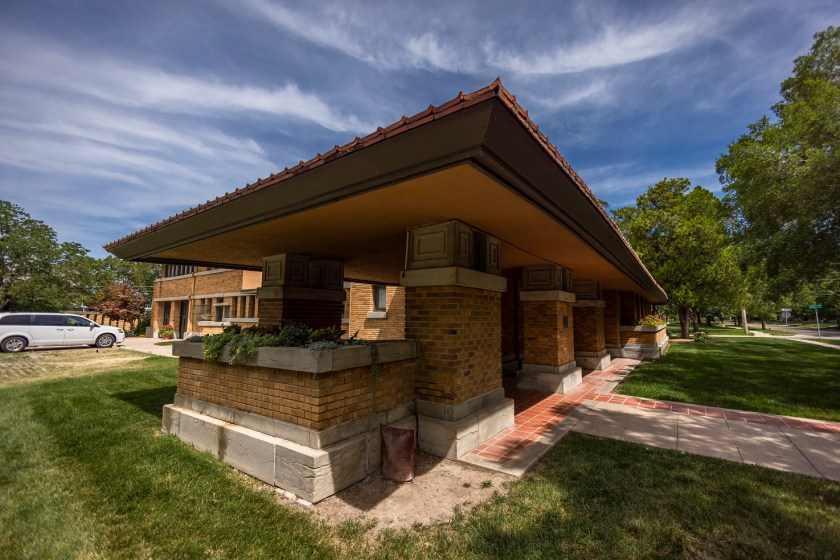
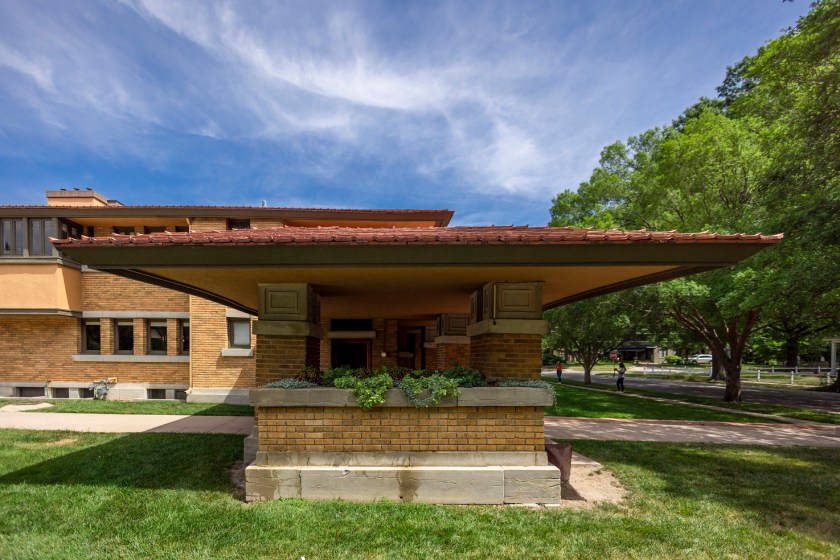
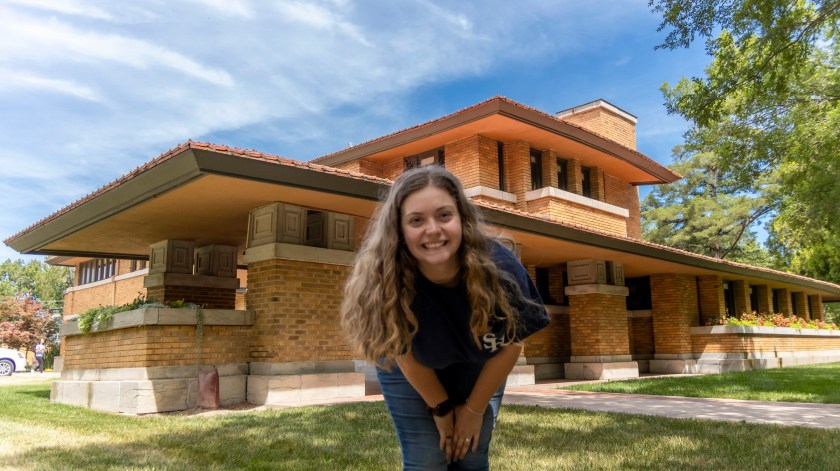
Our next stop was also a local gem, one specifically designed for the prairies of the interior plains of Kansas: the Allen House. Completed in 1918 by Frank Lloyd Wright, the home was stunning! Not only does the home provide a glance back to an earlier time, but the intricate detail and expert craftsmanship are excellent examples of Wright’s works.
While we could listen to facts and history about the house itself for hours on end, it is important to know about the family who commissioned it. Our tour guide, Mary, wove the history of the Allens with facts about the home during our tour. Henry J. Allen was a Wichita native, newspaper editor and publisher, U.S. Senator, and two-term governor of Kansas. When the Allens decided to build a new home, they remembered hearing about a certain architect with quite the reputation. By word of mouth, he and his wife Elise, knew that they must have a Wright home of their own in the city of Wichita!
Since Wright took on designing the Allen’s dream home soon after working on the Imperial Hotel in Tokyo, Japan, there is a beautiful incorporation of Japanese techniques within the home.
Wright is known for bringing the exterior and the interior together; the effect of the outside meeting the inside is truly captivating.
The Allen House employs the use of horizontal lines, examples of this can be found in the cantilevers, etched designs, light fixtures, and even the grout between the bricks!
Instead of aligning the bricks with the grout, Wright deeply ranked the grout in and created more horizontal lines in and out of the house. With each home we have seen, it is easy to fall in love with the personality Wright gives the home.
Wright loved to add a poetic nature to everyday items, and with crystalized frozen air (windows) lining the home, it truly does make the home a work of art.
The home is filled with Wrights’ iconic built-in bookshelves, five fireplaces, and a Japanese-style pond, making for quite the property. The living room and dining room are adorned with crystalized frozen air (windows) that contain colors found in nature. The lamps around the home show the Japanese influence and are crafted with mulberry paper to create a softer light (photos were not allowed inside).
Wright implements a technique called compression and release in the living room in which you transition through a small door and low ceiling to a grand living room.
Elise Allen was an art collector herself and had several pieces around the home. Some reflected religious motifs, while others were done in a Japanese fashion; but most interesting to us was the Birger Sandzén lithograph!
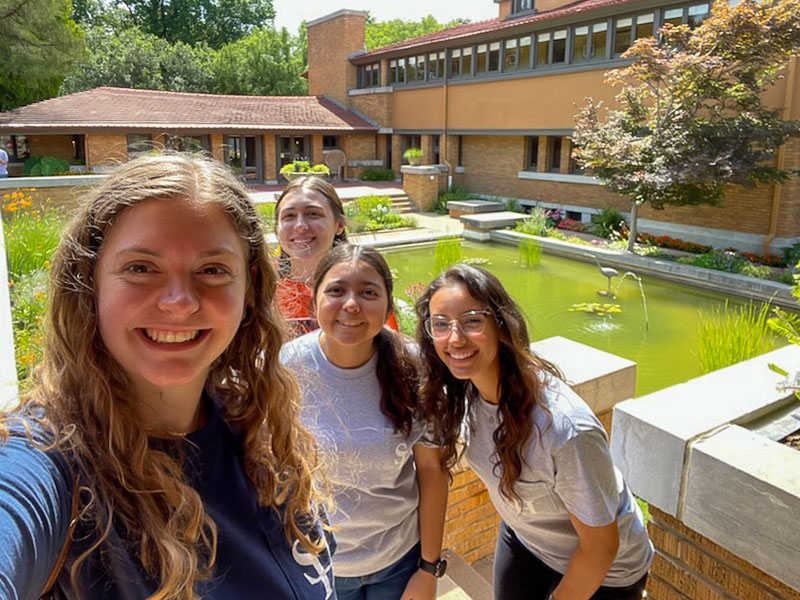
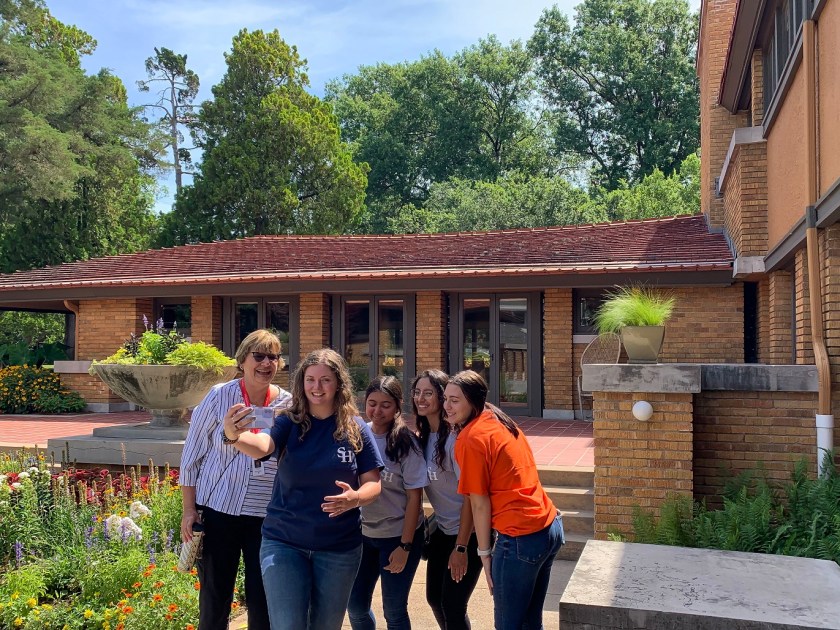
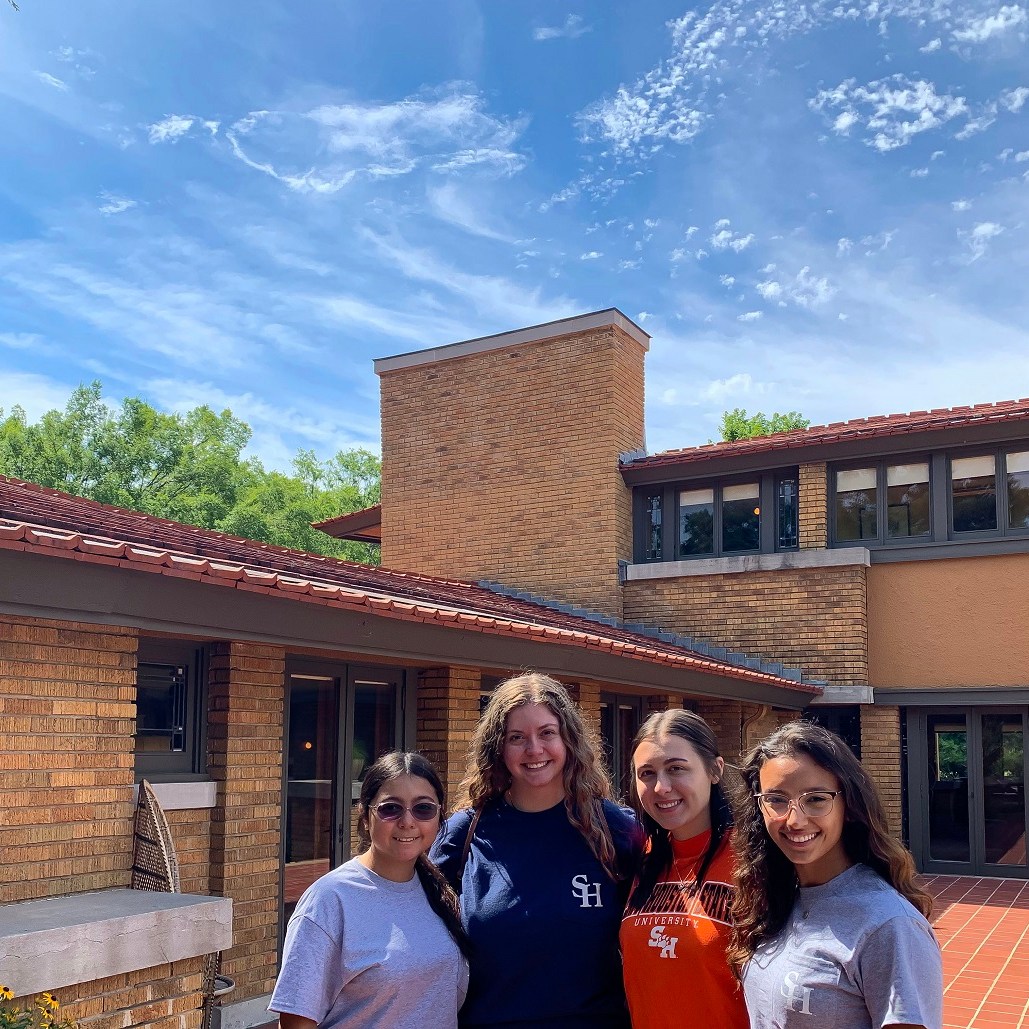
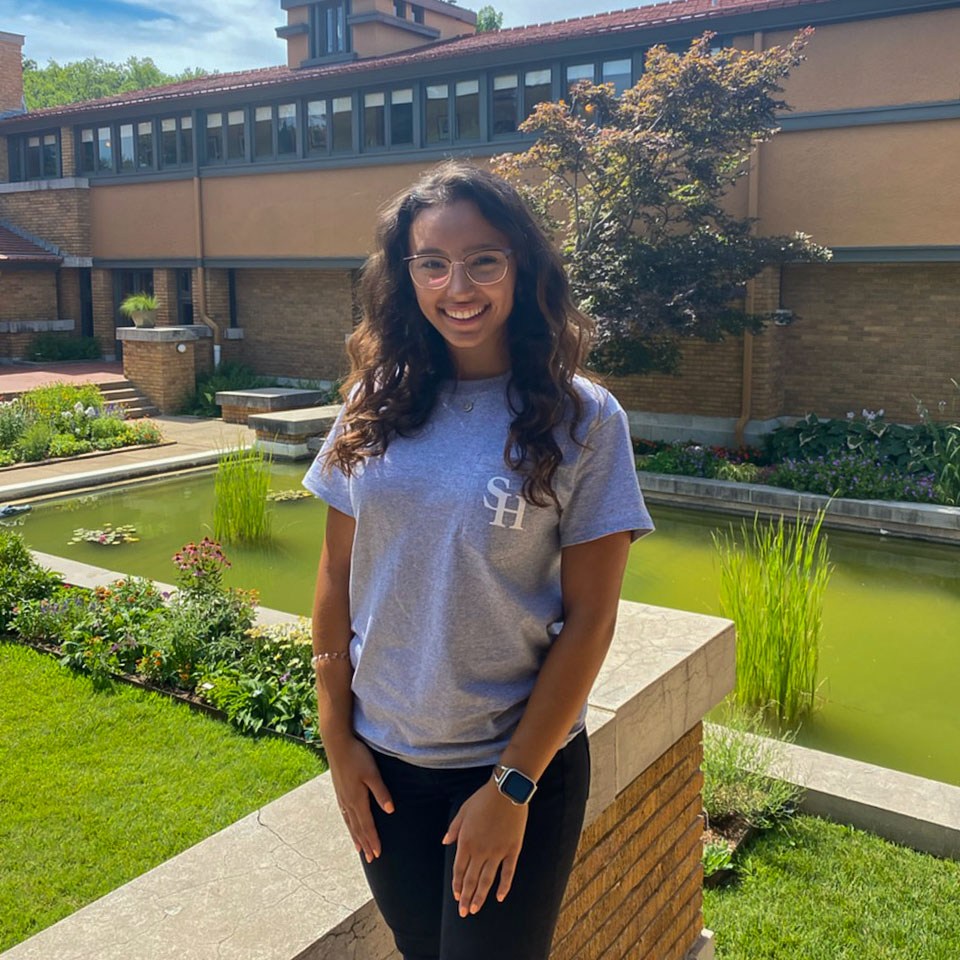
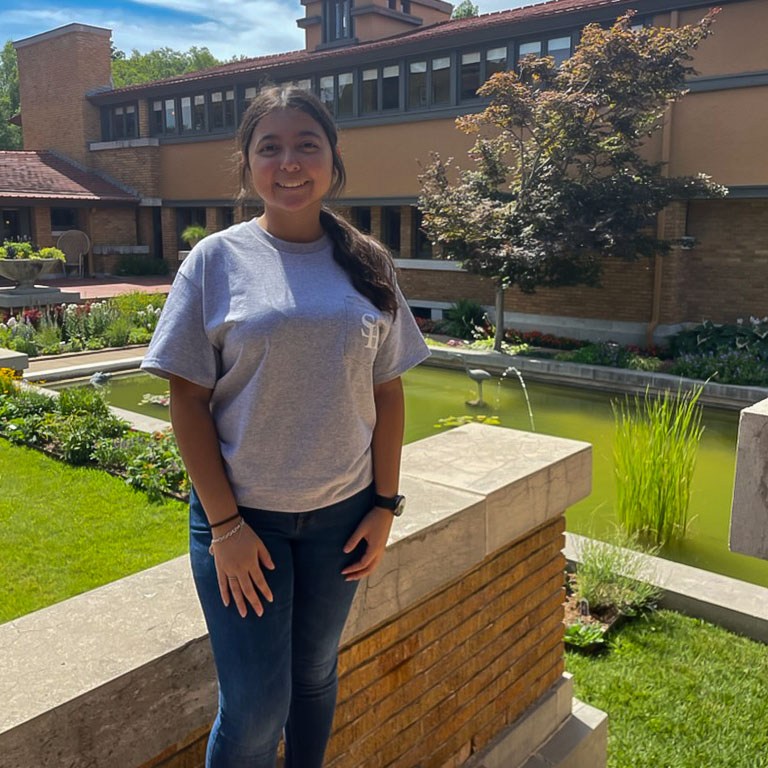
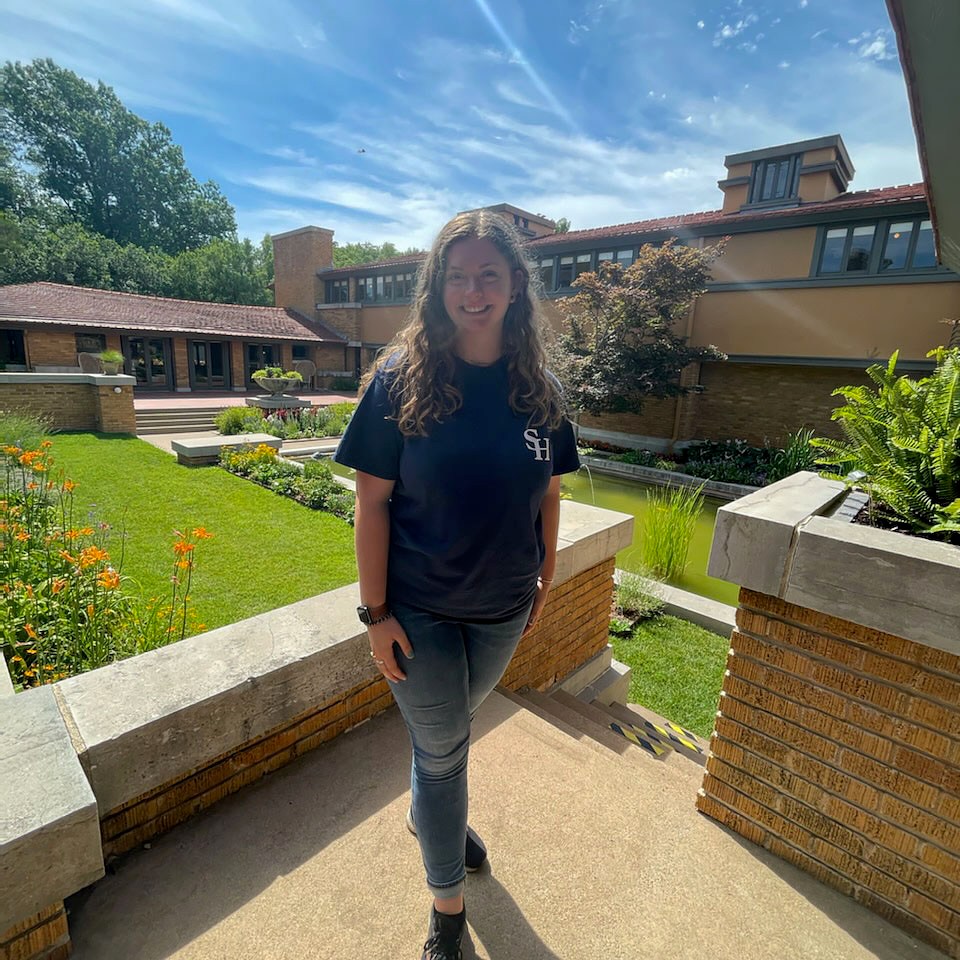
We were in awe of the beautiful home and were not ready to leave, but we didn’t leave without snapping a picture in the beautiful garden maintained by seven master gardeners who donate their time to maintain the home’s landscape.
This tour couldn’t have been possible without the excellent staff and our tour guide, Mary, at the Allen West Home.
As a result, we learned more about Frank Lloyd Wright and the Kansans who cared about educating others regarding the legend and art of Frank Lloyd Wright.
Larkspur Bistro & Bar
Jessica Cuevas
Not only was the Frank Lloyd Wright Allen Home an amazing tour but it also helped us pick our lunch destination! Before touring this beautiful home, we had two options in mind that we were struggling to choose between. However, after we saw a Larkspur flower in the garden, we took it as a sign to eat at the local Larkspur Bistro & Bar! How could we not?
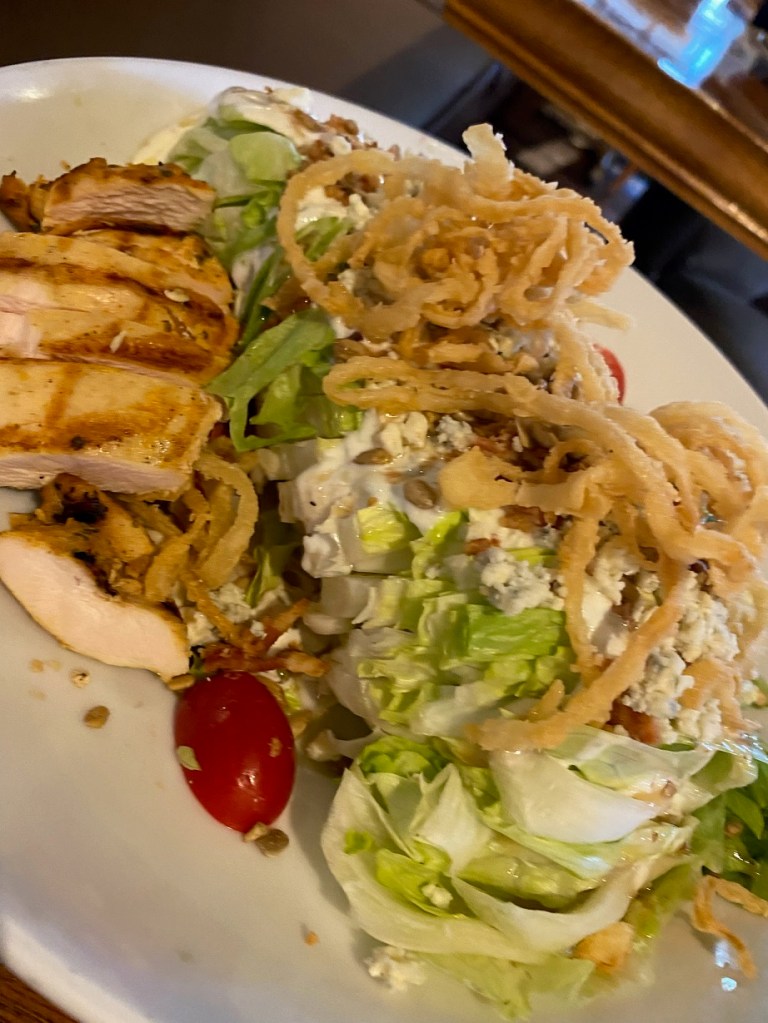
Mary, our guide for the Allen Home tour, recommended that we try their Kansas Wedge Salad and, sure enough, that is what Ashlyn and I ordered.
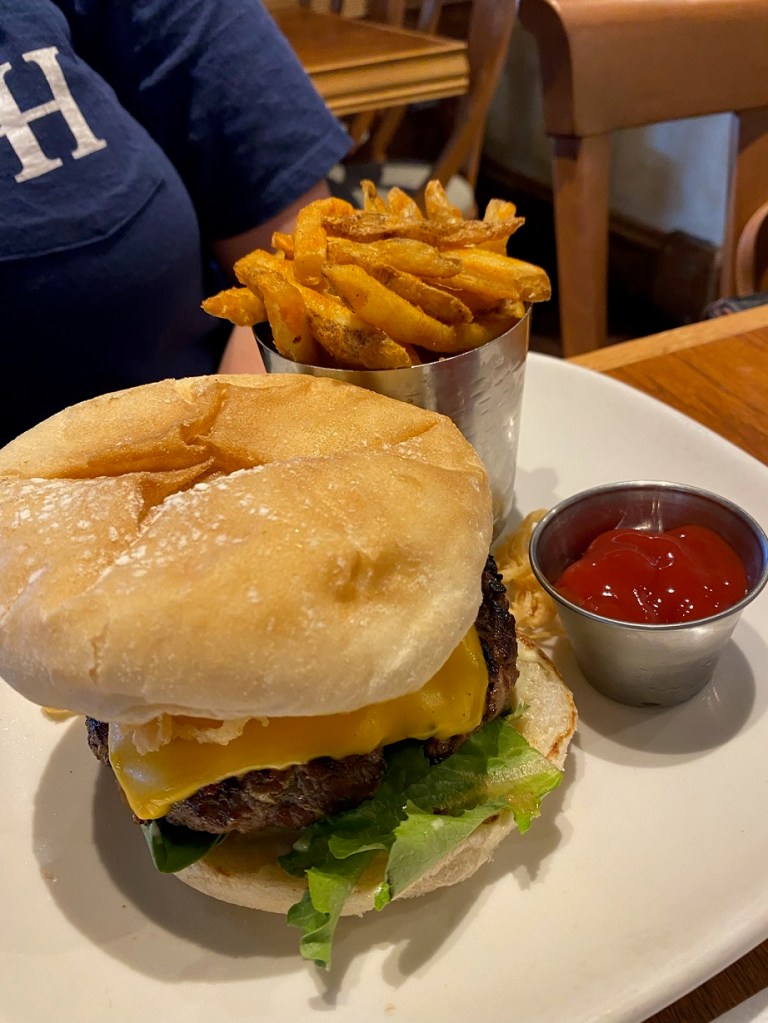
For our appetizers, we had delicious, crafted bread with oil, hummus, and crab cakes. Yvette ordered the Salmon Fettuccini and Morgan the Air Capitol Burger.
Larkspur Bistro & Bar was yet another great local stop on our trip and we love getting the recommendations from locals!
Wichita Art Museum Ashlyn Parker
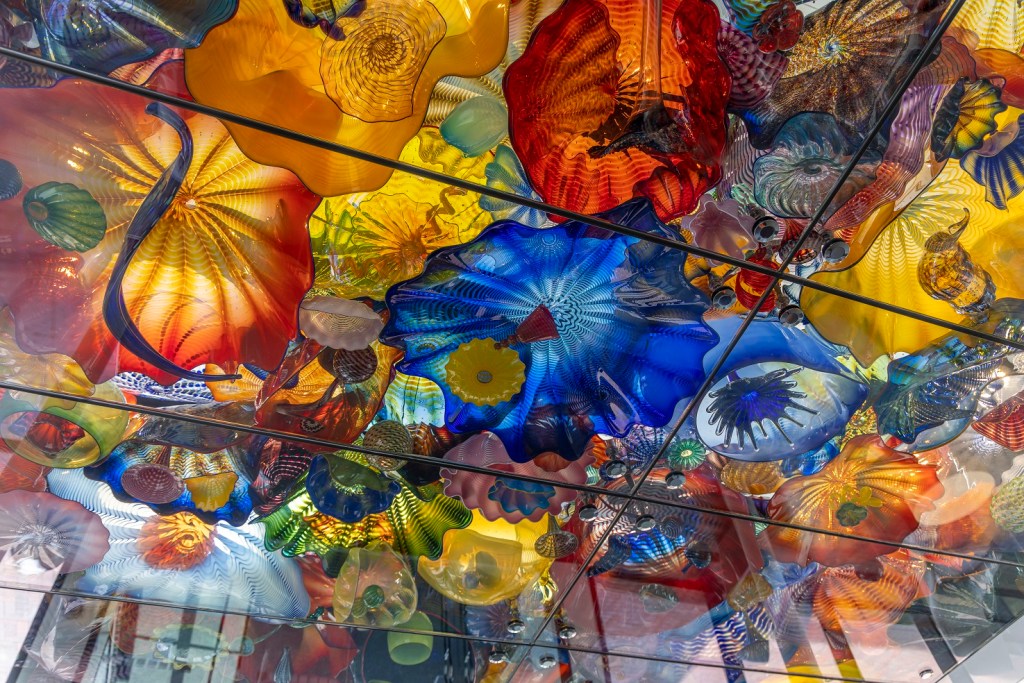
After lunch, we headed to the Wichita Art Museum. To our surprise, upon entering the museum, we were met by a Dale Chihuly Persian Ceiling!
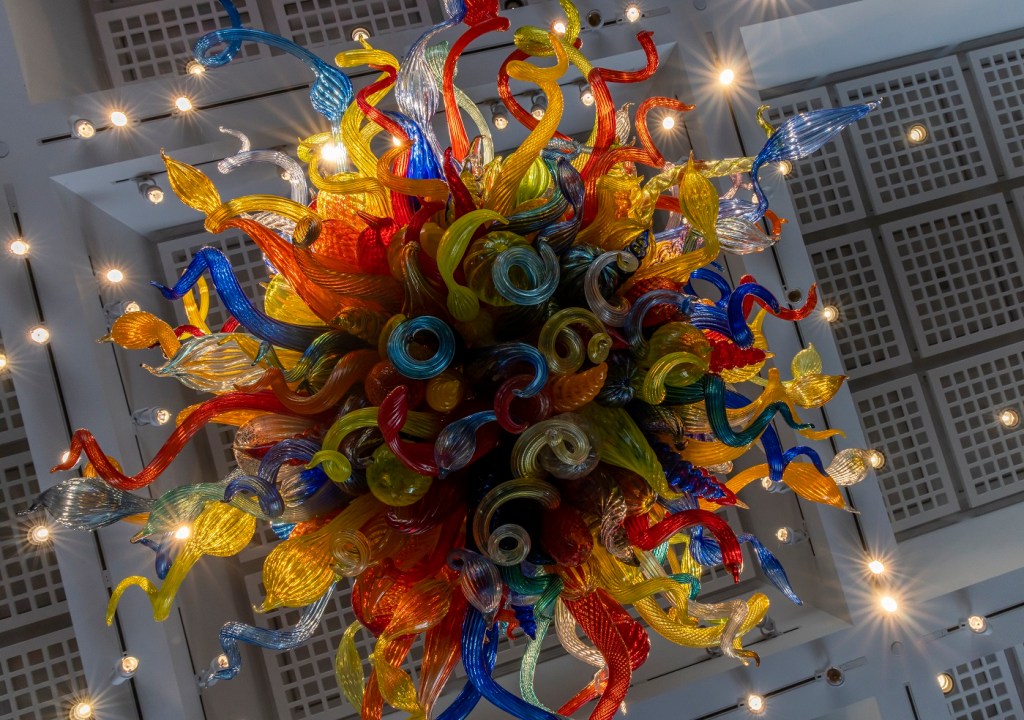
We thought that we would experience the Persian Ceiling, also known as the Chihuly Bridge, from one viewpoint, but the surprise continued as we made our way to the second floor and were able to walk across the glass work! In the atrium of the museum, another Chihuly piece, titled Confetti Chandelier, is featured with the typical swirls and orbs illuminating the space.
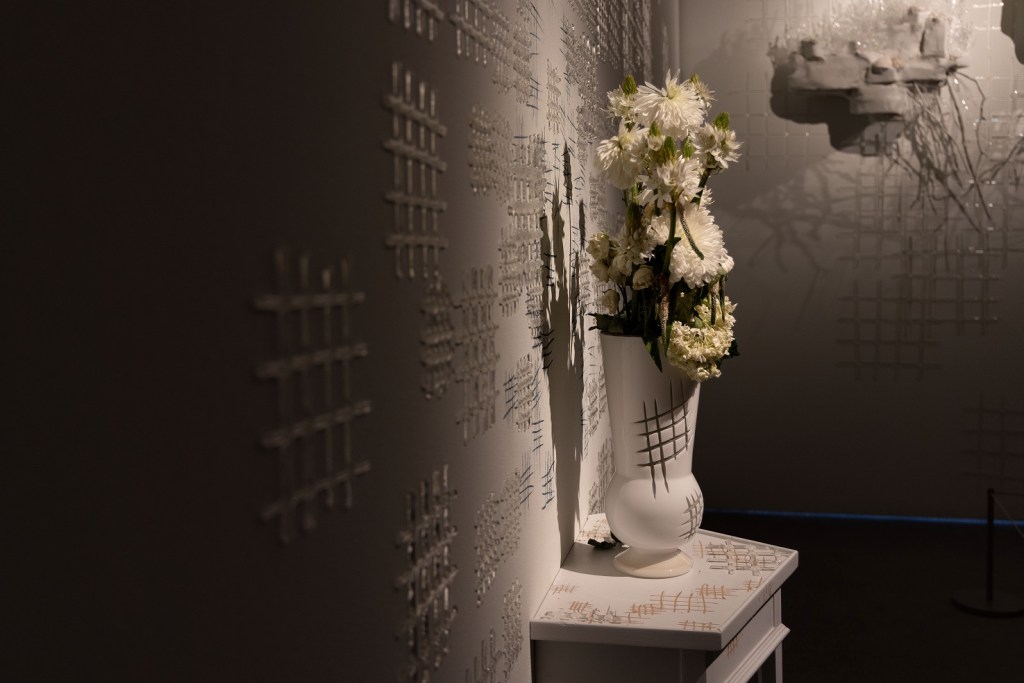
This museum offered many different styles of art including one exhibit that was strategically lit to display the pieces of contemporary artist, Beth Lipman. Her work is most famous for her use of glass still-life compositions. One piece, in particular the Laid Table, uses common pieces of glass such as a bowls, vases, or plates in a unique way beautifully placed around a tabletop. This piece used about 500 separate pieces of glass to create and lots of glue. The glass in her work represents the fragility of human lives and how delicate they really are.
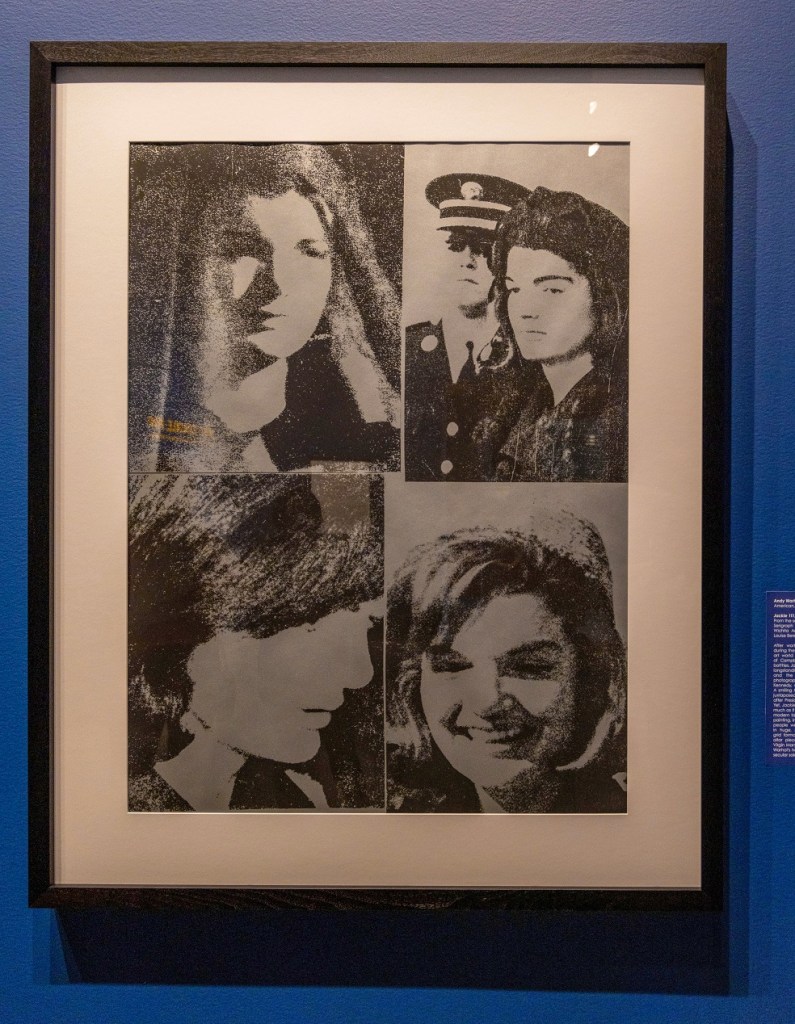
We came across works by artists we have seen in other museums on our trip. There was an Andy Warhol lithograph depicting scenes of Jackie Kennedy as a remembrance of her husband John F. Kennedy after he was shot. The painting is in typical Warhol fashion as it is divided into four squares, with the image in each square exemplifying a different emotion.
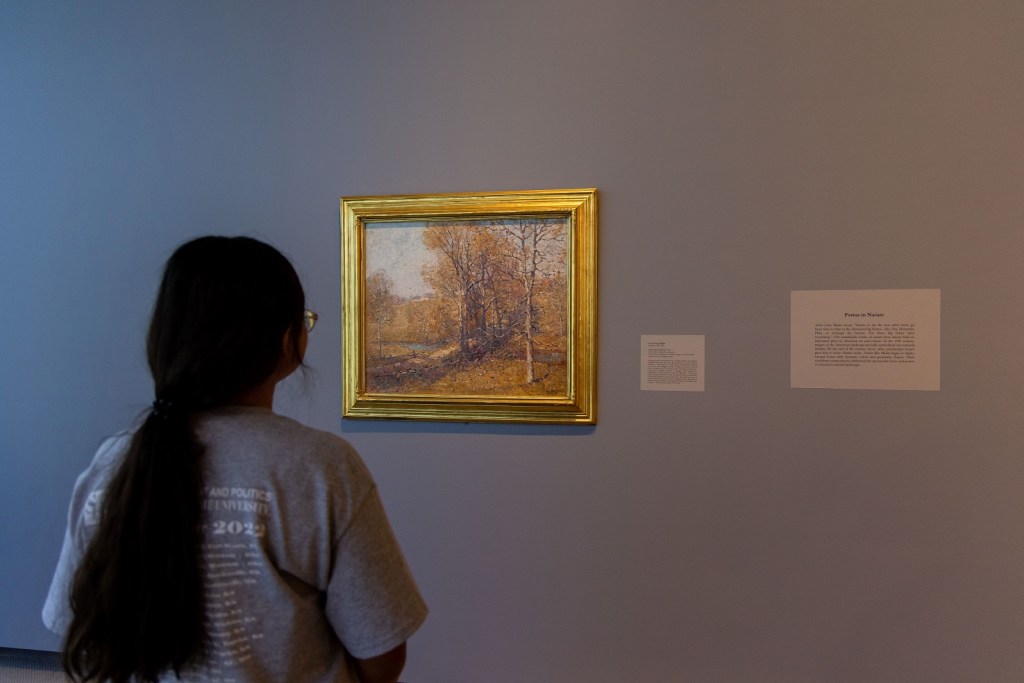
The Carlene and Lee Banks Rotunda Gallery contained 19th-century oil paintings, and everyone tried their hand at guessing the artists. Morgan probably did the best of all of us, an outcome that might have been helped by the fact that Thomas Moran was among the artists in the mix.
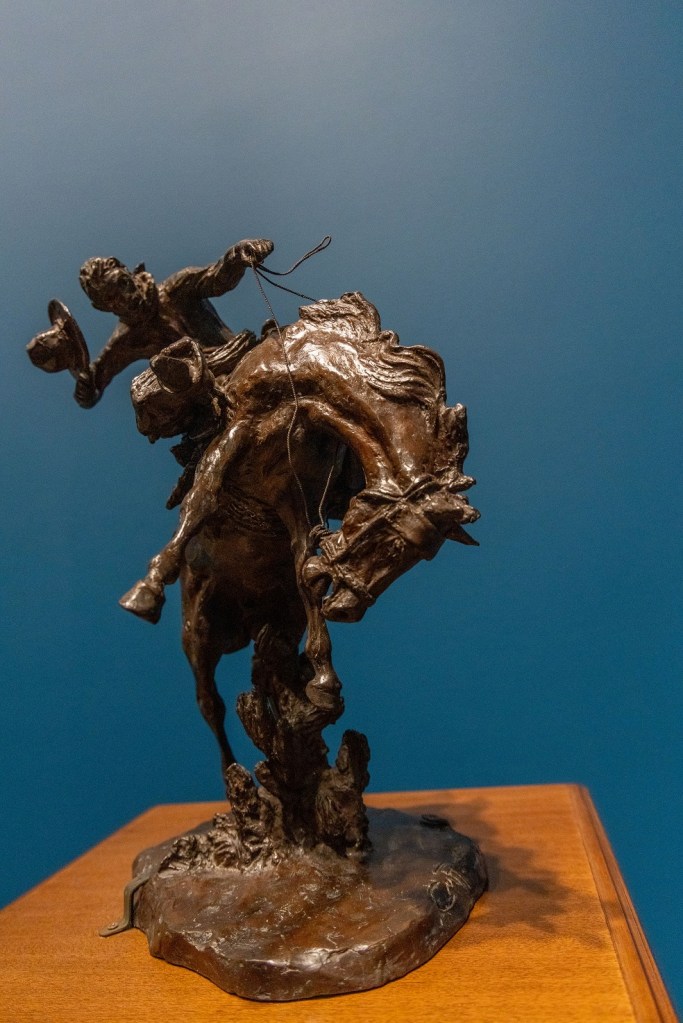
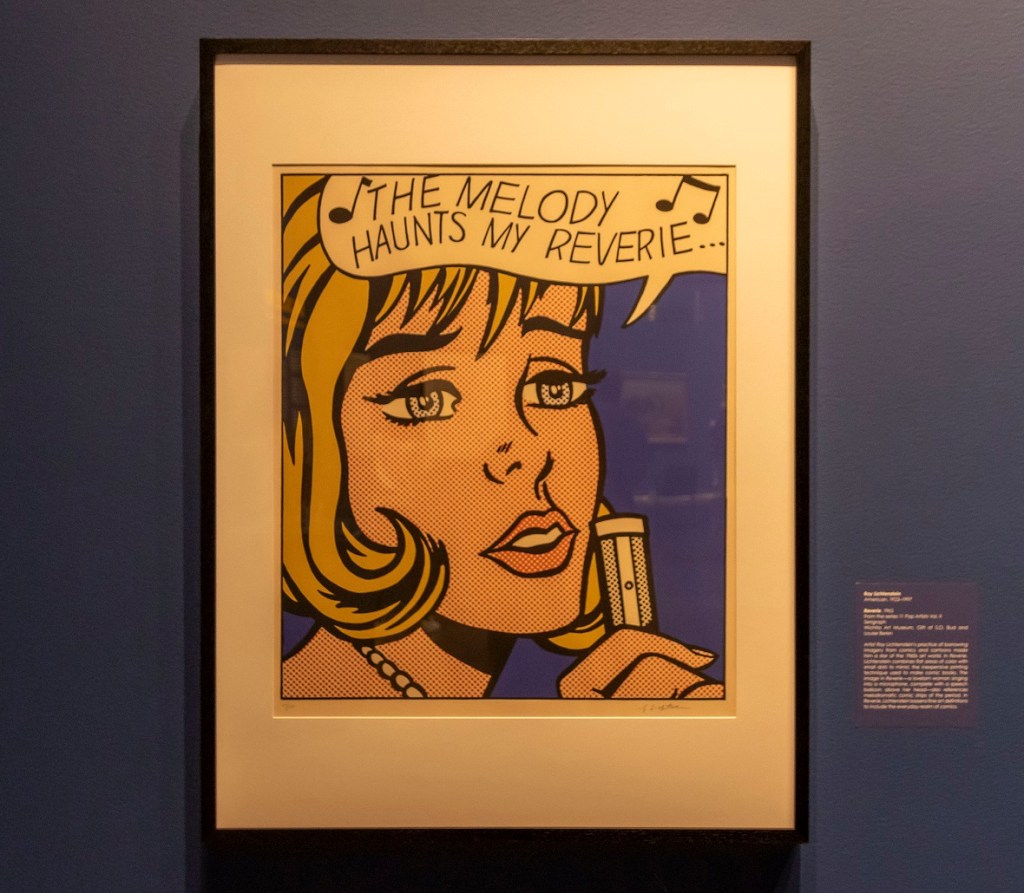
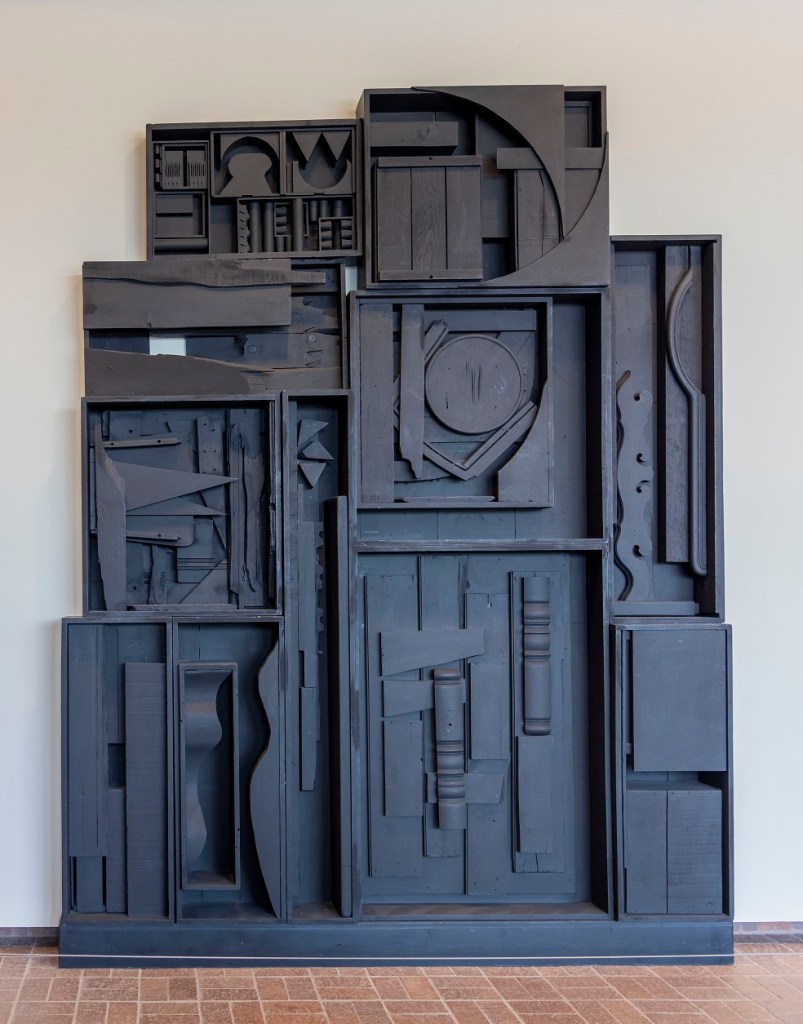
But we all saw works by familiar names: Frederic Remington, Roy Lichtenstein, and Louise Nevelson, for examples.
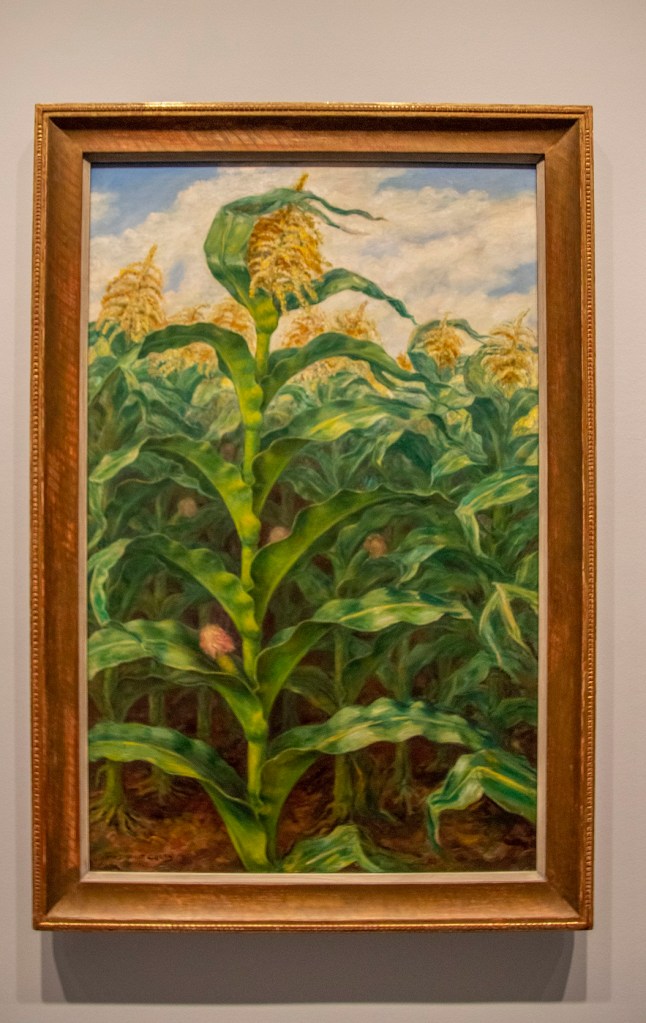
We also saw two artists we weren’t fully familiar with, but which we would become familiar with over the course of the trip: John Steuart Currey…
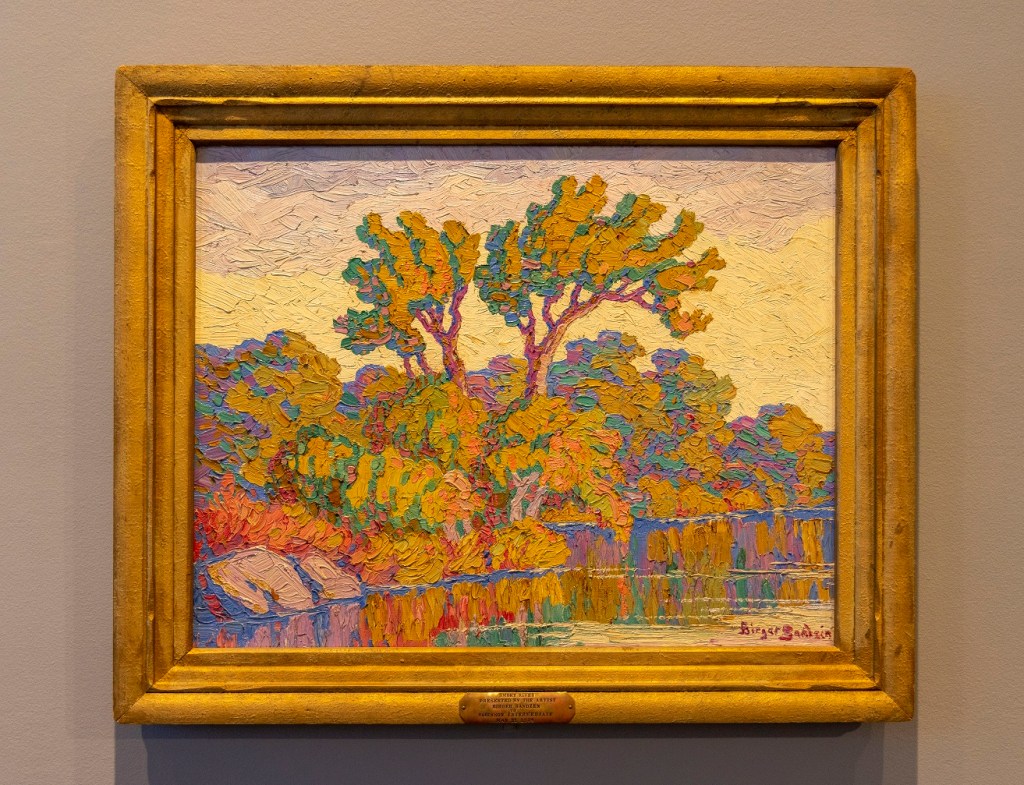
…and Birger Sandzen.
We enjoyed getting to see a variety of different themes, styles of paintings, and sculptures throughout this museum.
It never ceases to amaze me what these talented people can do with a paintbrush or glass.
Mental Health Courts
Morgan Robertson
Across the nation, new and more specialized methods of trying cases are arising. Today, there are 150 mental health courts in the United States that are completely independent of drug courts, municipal courts, and other courts to which nonviolent offenders with mental health illnesses are assigned.
Leading this cause in her home state of Ohio is former Ohio Supreme Court Justice Evelyn Stratton.
Sworn into the Ohio Supreme Court in 1996, Justice Stratton made great strides advocating for mental illness. Justice Stratton helped form the Supreme Court of Ohio Advisory Committee on Mental Illness and the Courts, and is a co-founder of the Judges’ Leadership Initiative.
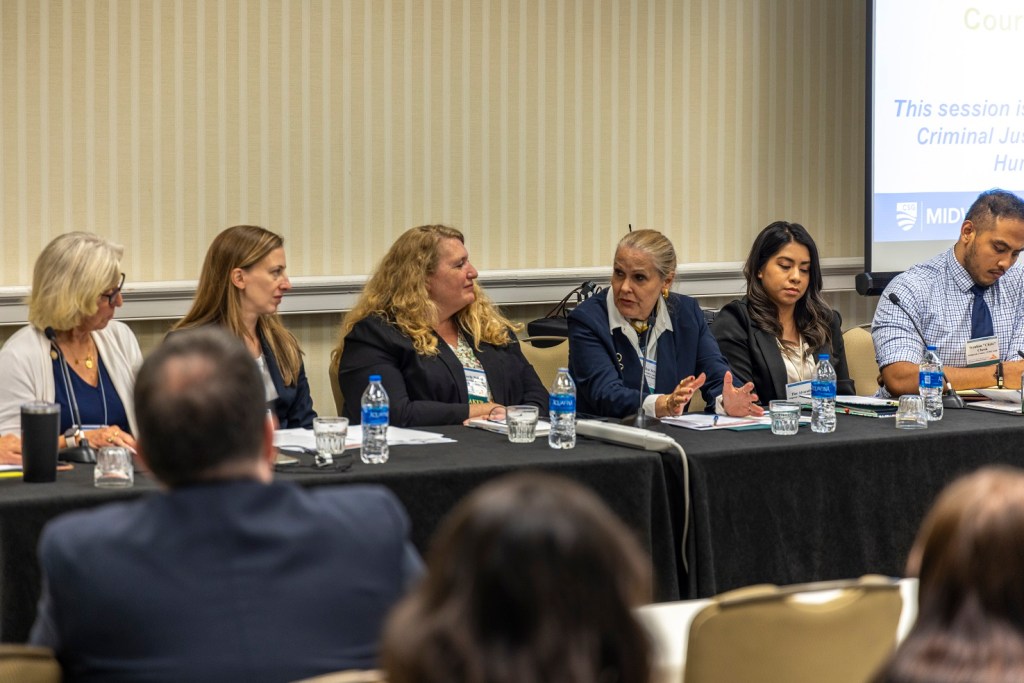
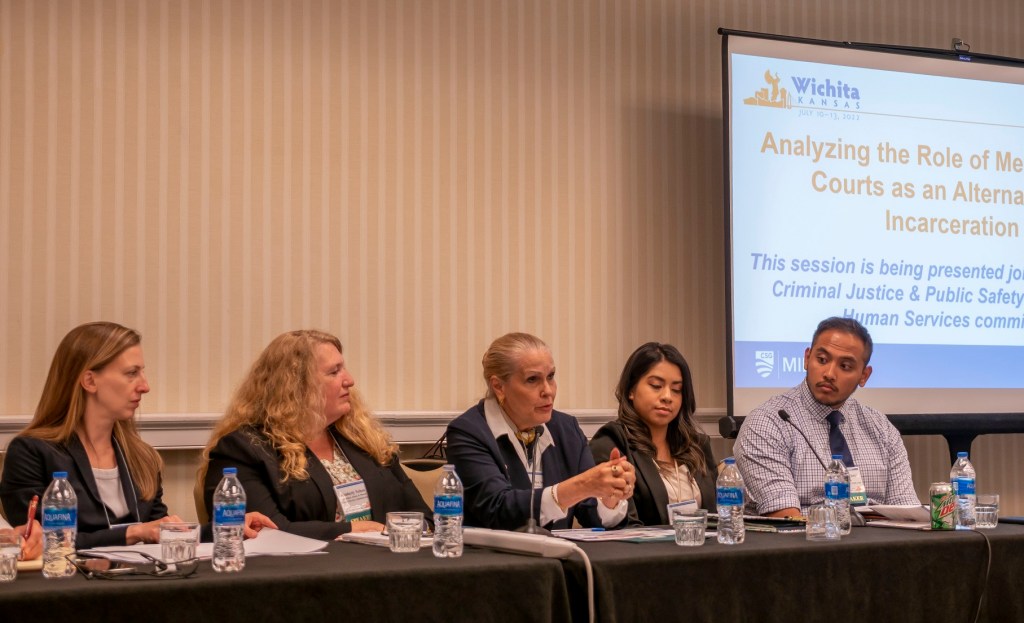
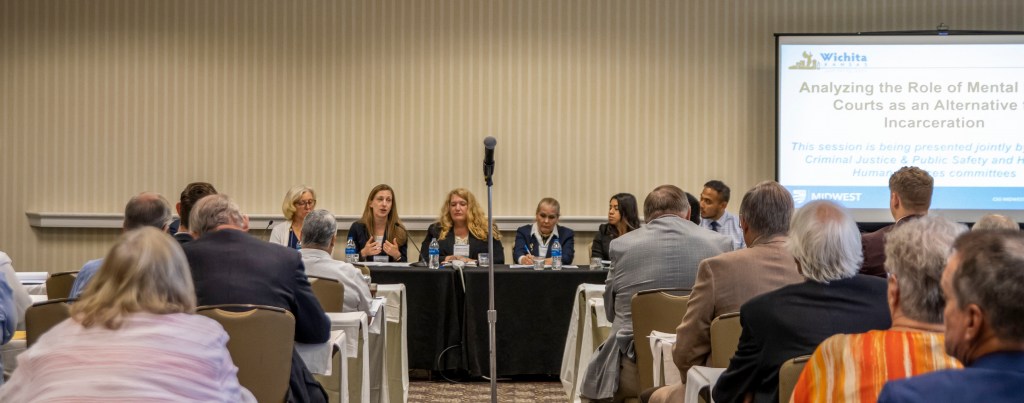
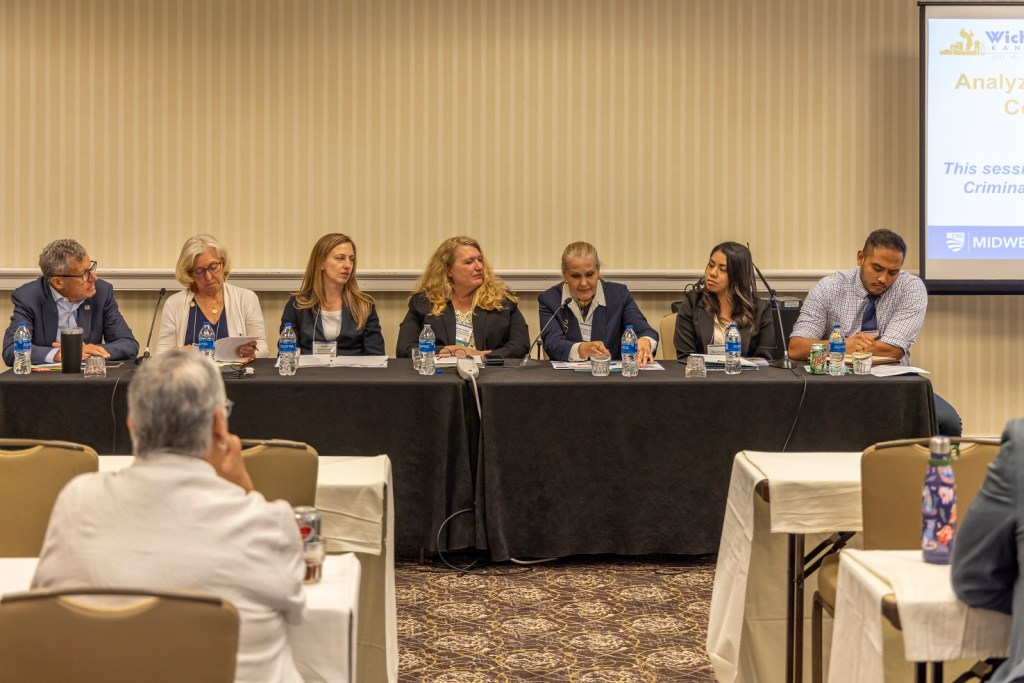
Joining Justice Stratton on the panel were mental health professionals: Kimberly Nelson, the Regional Administrator for Substance Abuse and Mental Health Service Administration serving Region 7, which includes Kansas, Megan Quattlebaum, Director for the CSG Justice Center, Wenhan “Chris” Cheok, the Mental Health Program Manager for Sedgwick County COMCARE, and Flor Alvarado, a Mental Health Court Clinician/ Sedgwick County Offender Assessment Program (SCOAP) & TT Team lead for Sedgwick County COMCARE. Kansan State Senator Pat Pettey led the discussion and prompted some interesting questions.
The Stepping Up Initiative, which we had previously heard about in an earlier sessions, is one of the leading efforts addressing the public health crisis in county jails across Ohio. “Stepping Up is a national effort to break the cycle of jail being the de facto mental health hospital,” are the words of the Ohioans who are working on the Ohio Project.
Ms. Quattlebaum explained how offenders with mental health illnesses are currently prosecuted and processed through the system. Offenders are either tried like any other case in the court that follows the offense, or they are placed in a hospital for forensic treatments. Conversely, mental health courts will use competency restoration for offenders who are not fit for court after three, six, or twelve months of restoration. Depending on the individual, they will either be released or processed through the system and tried at the Mental Health Court.
The need for mental health courts is more prevalent than ever. These courts with their justices and treatment facilities will further help everyone involved, providing the defendants/accused with the help and resources they require.
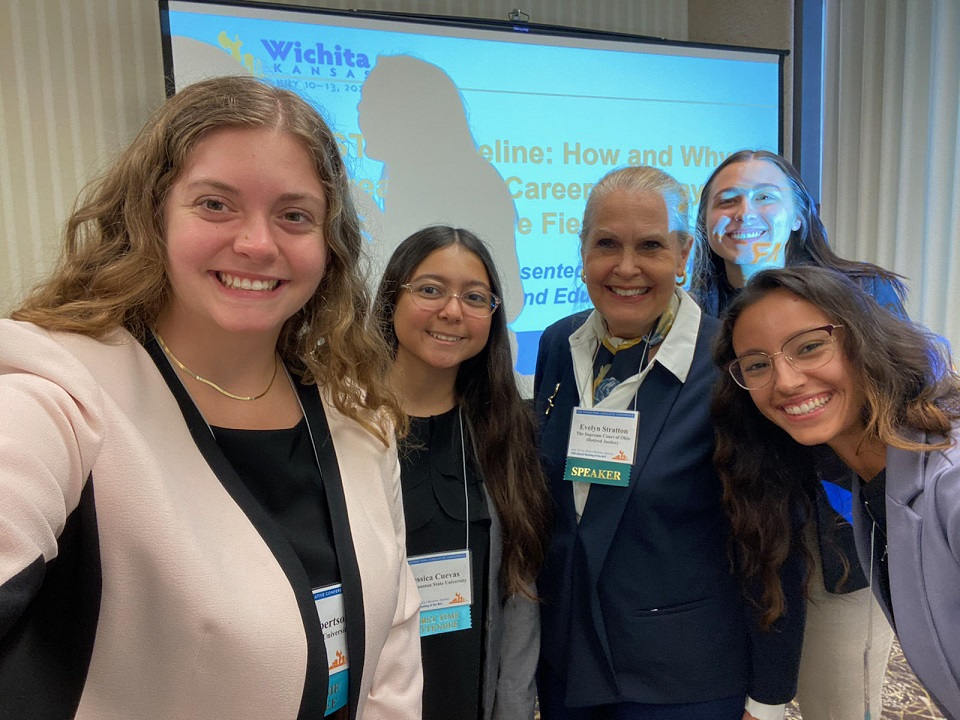
After the panel discussion was over, Jessica spoke with Justice Stratton about her work and her career, and we were all fortunate to snap a quick selfie with her!
State Dinner at the Midwest Council of State Governments Annual Conference
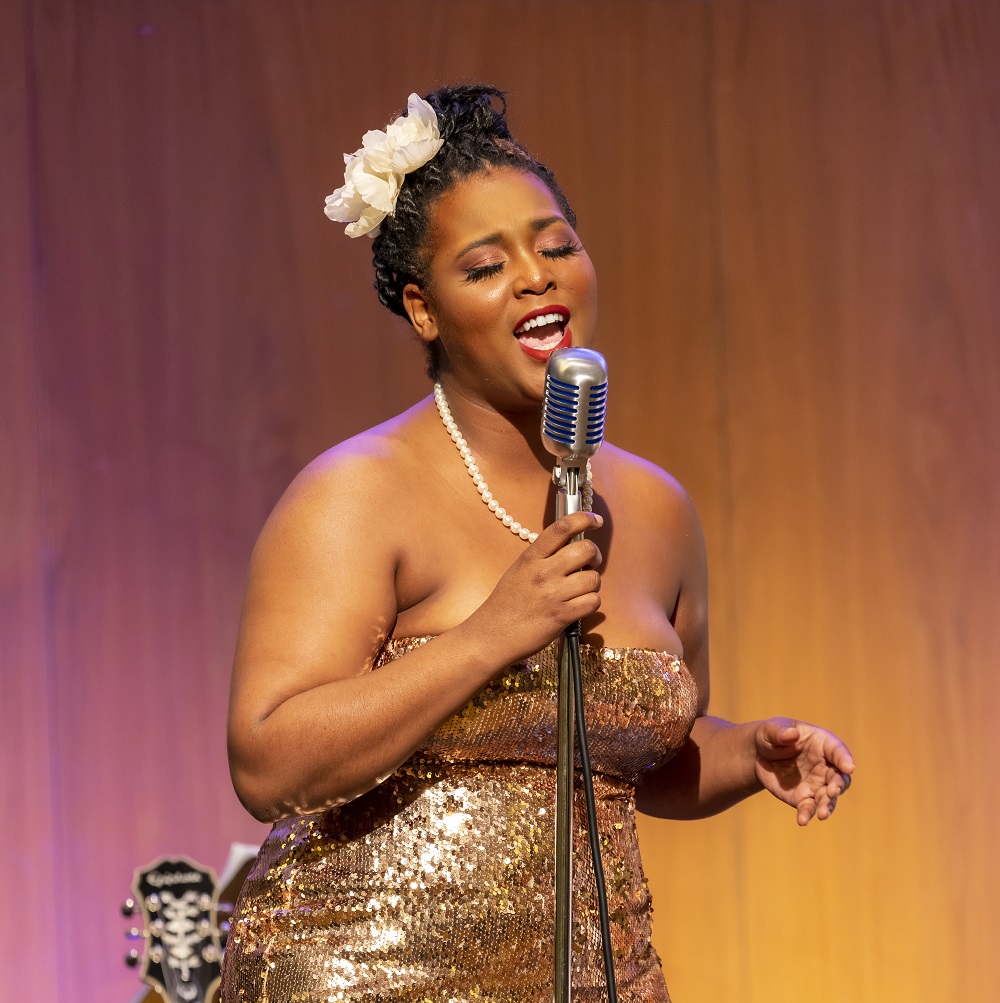
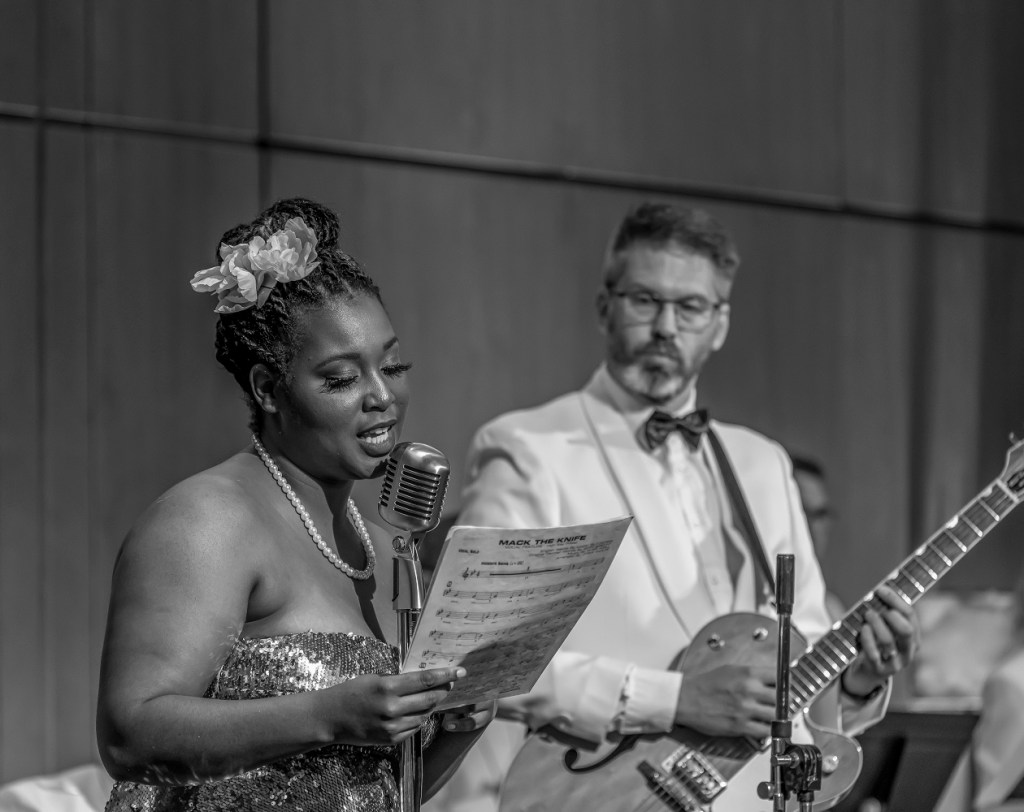
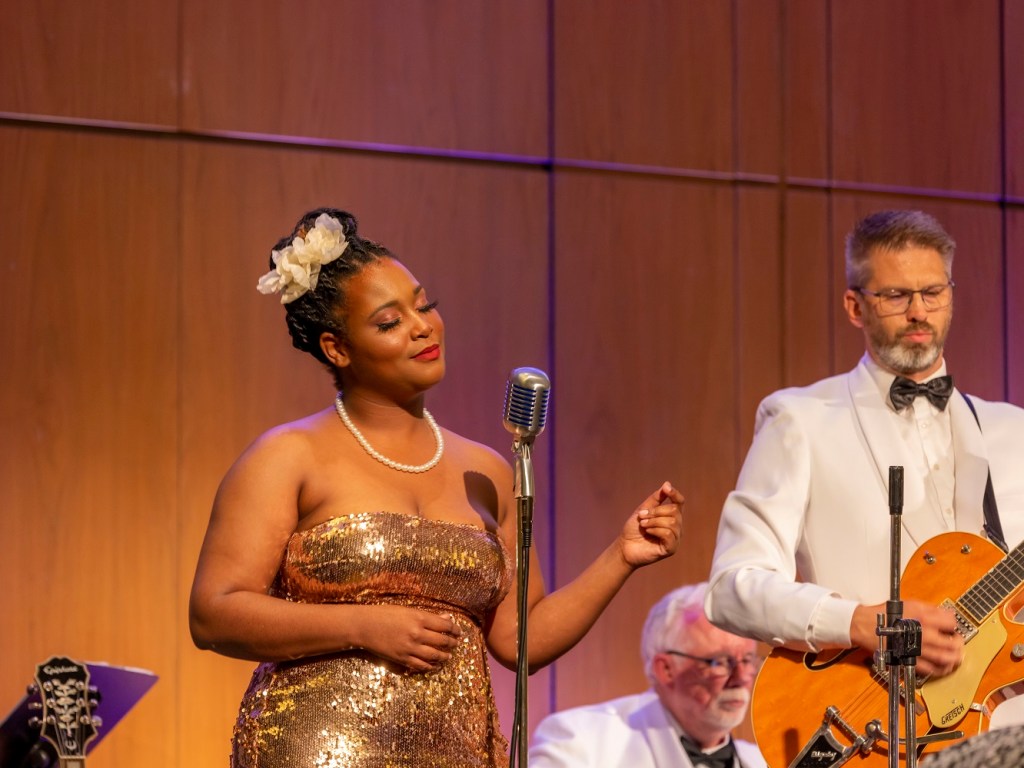
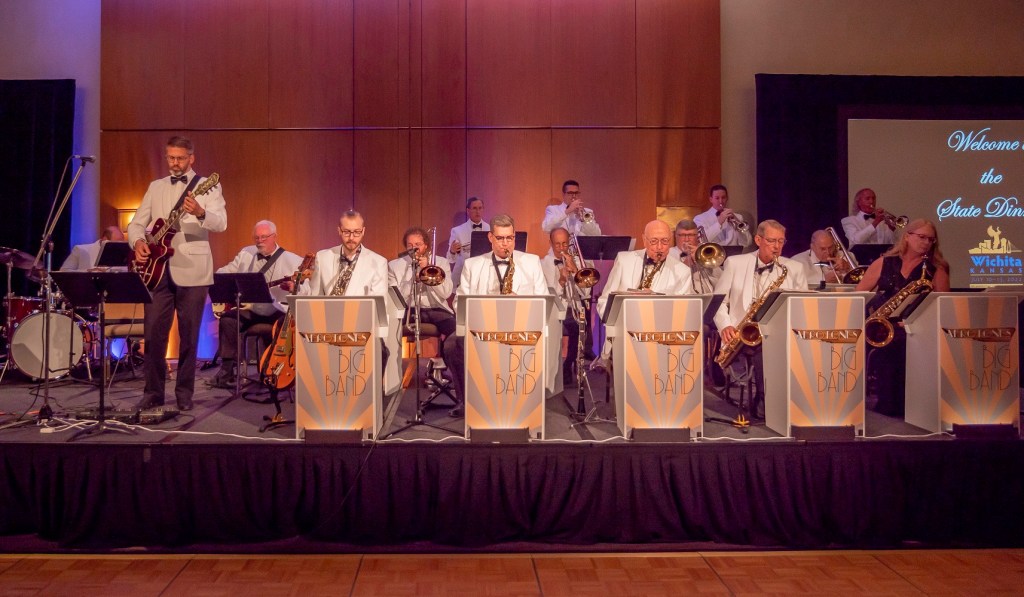
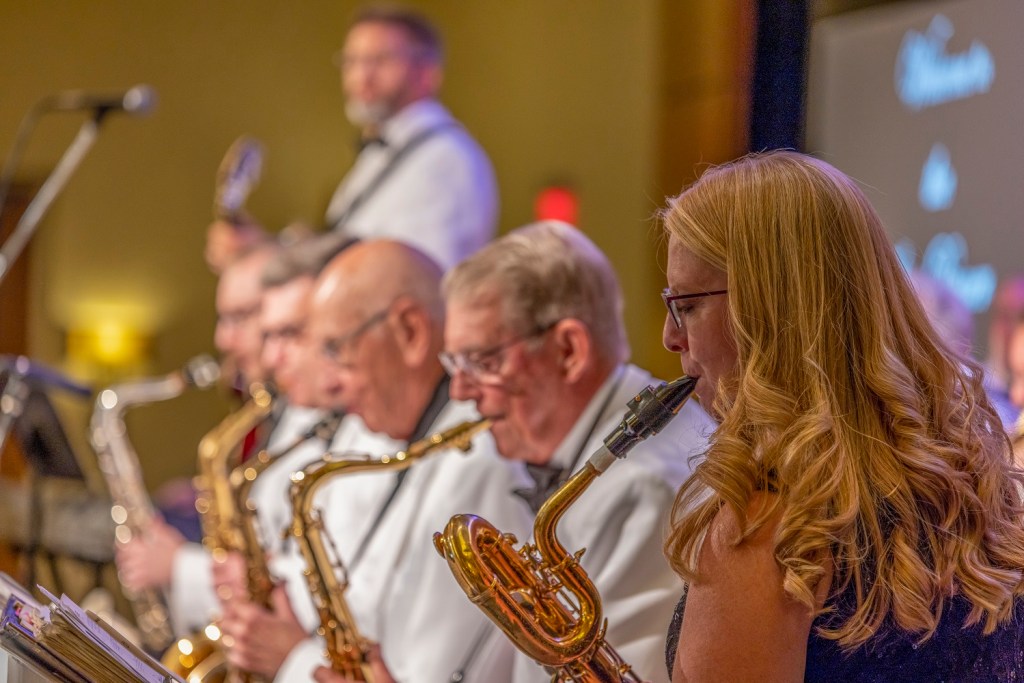
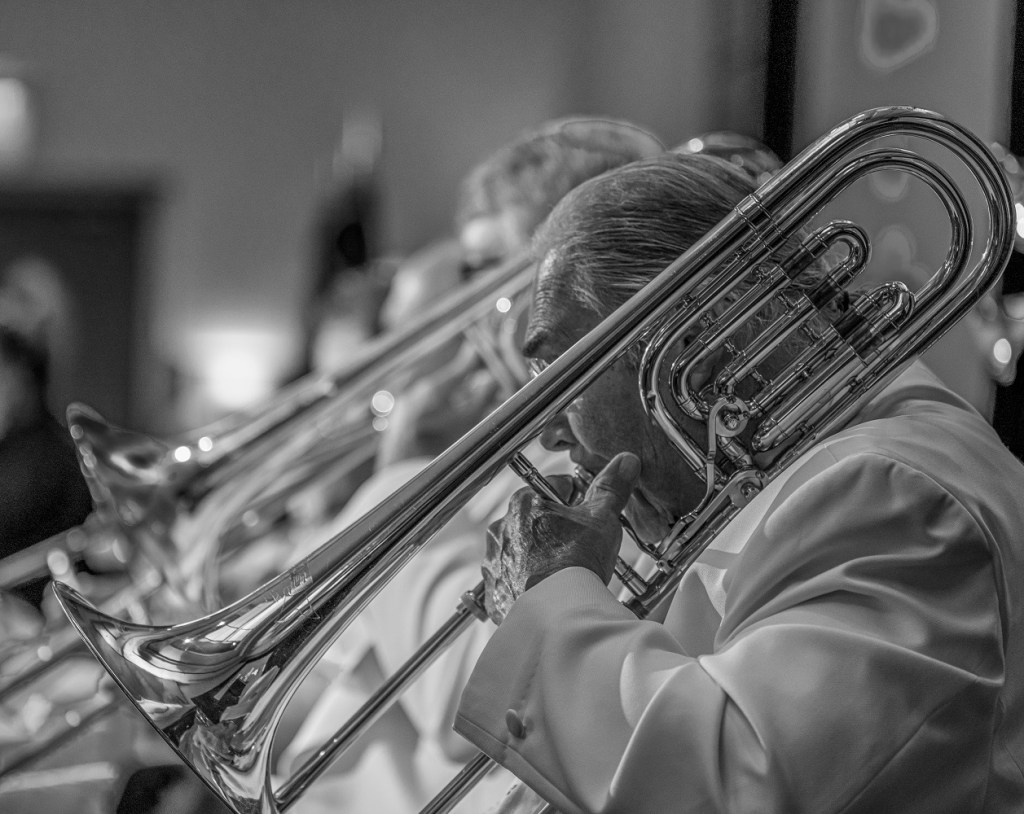
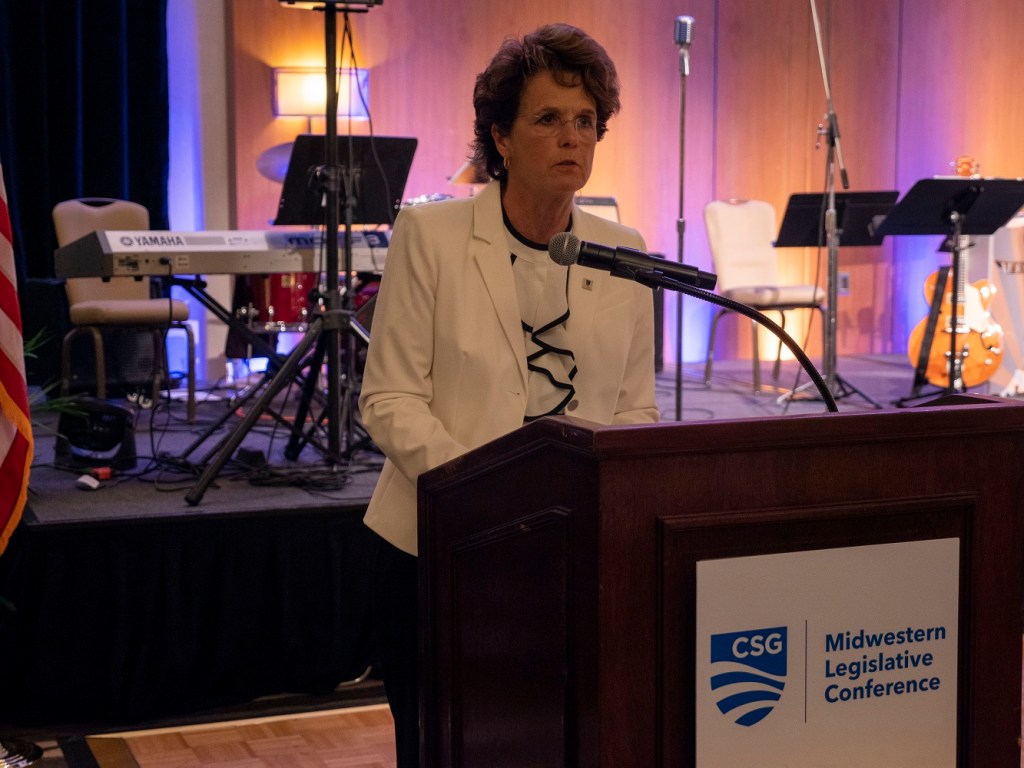
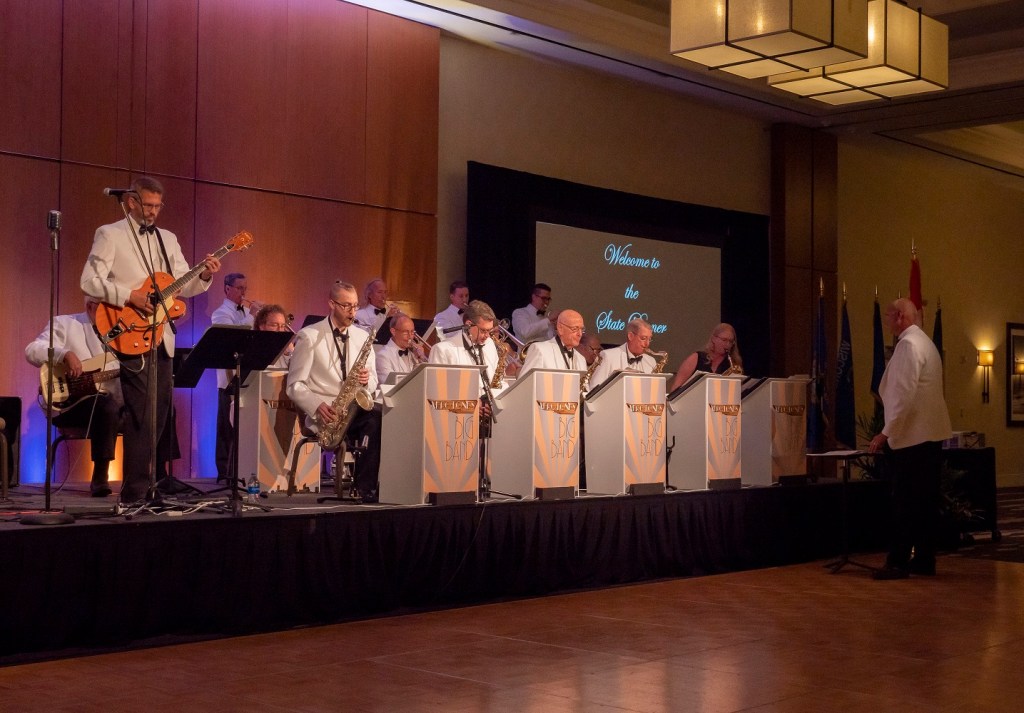
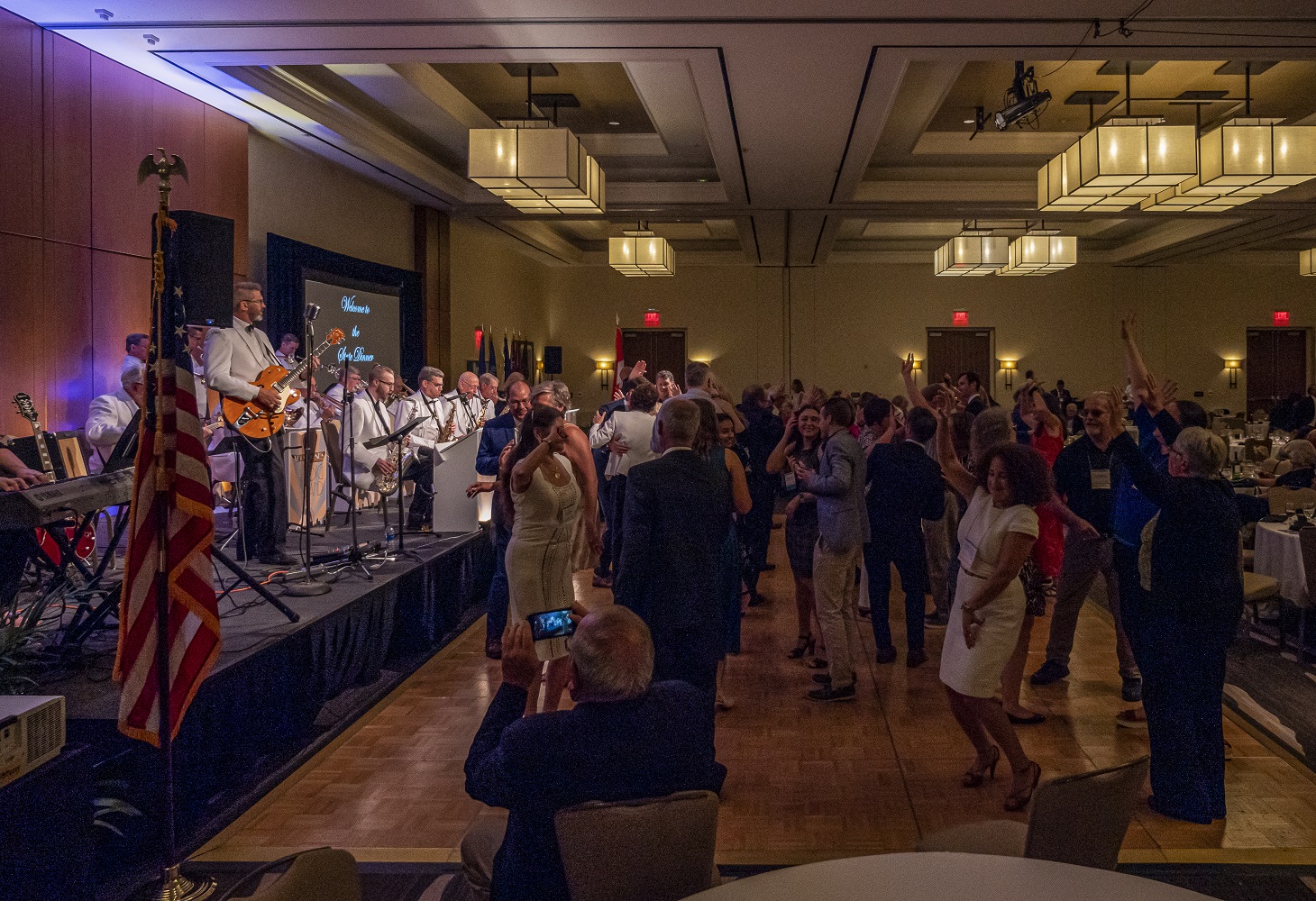
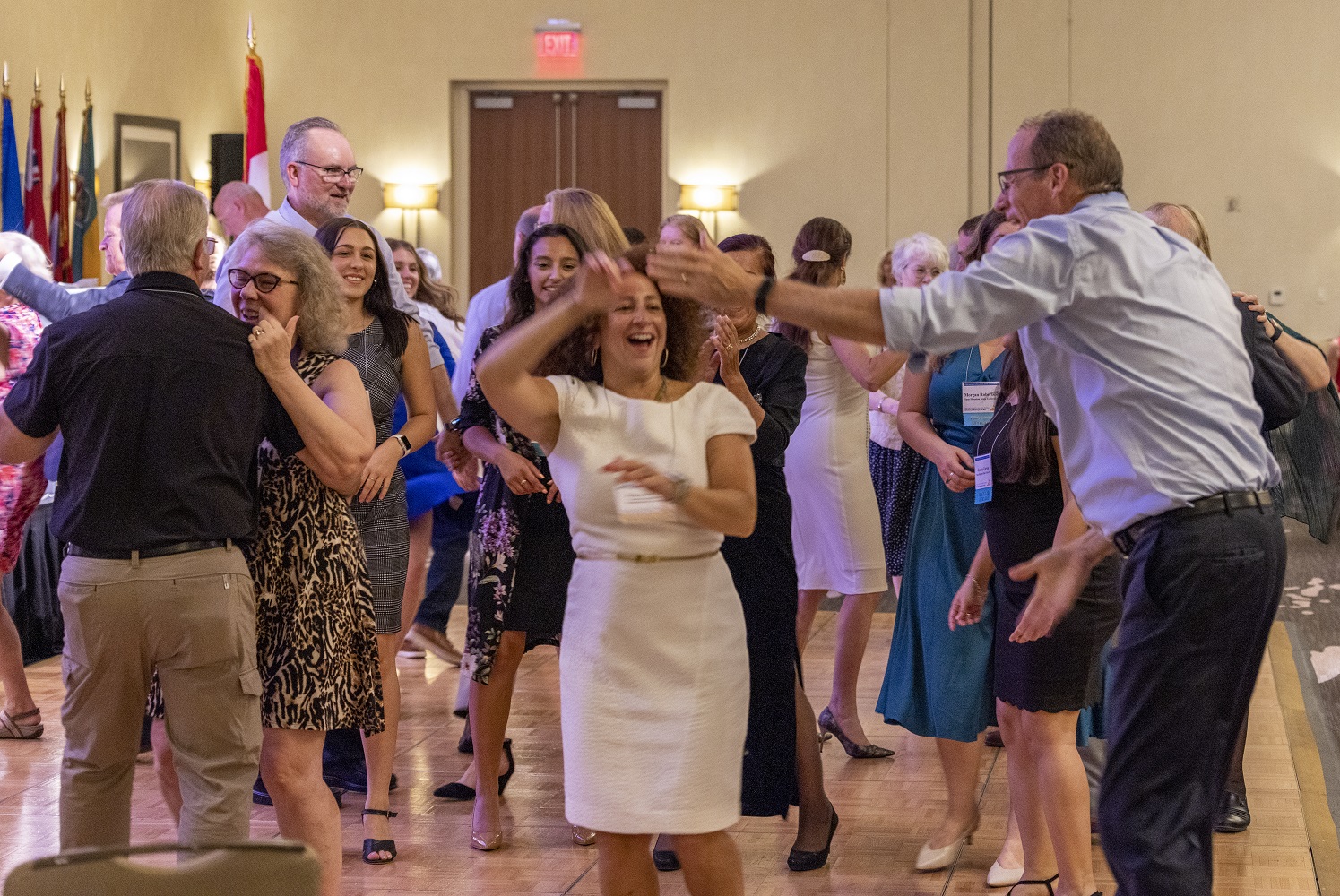
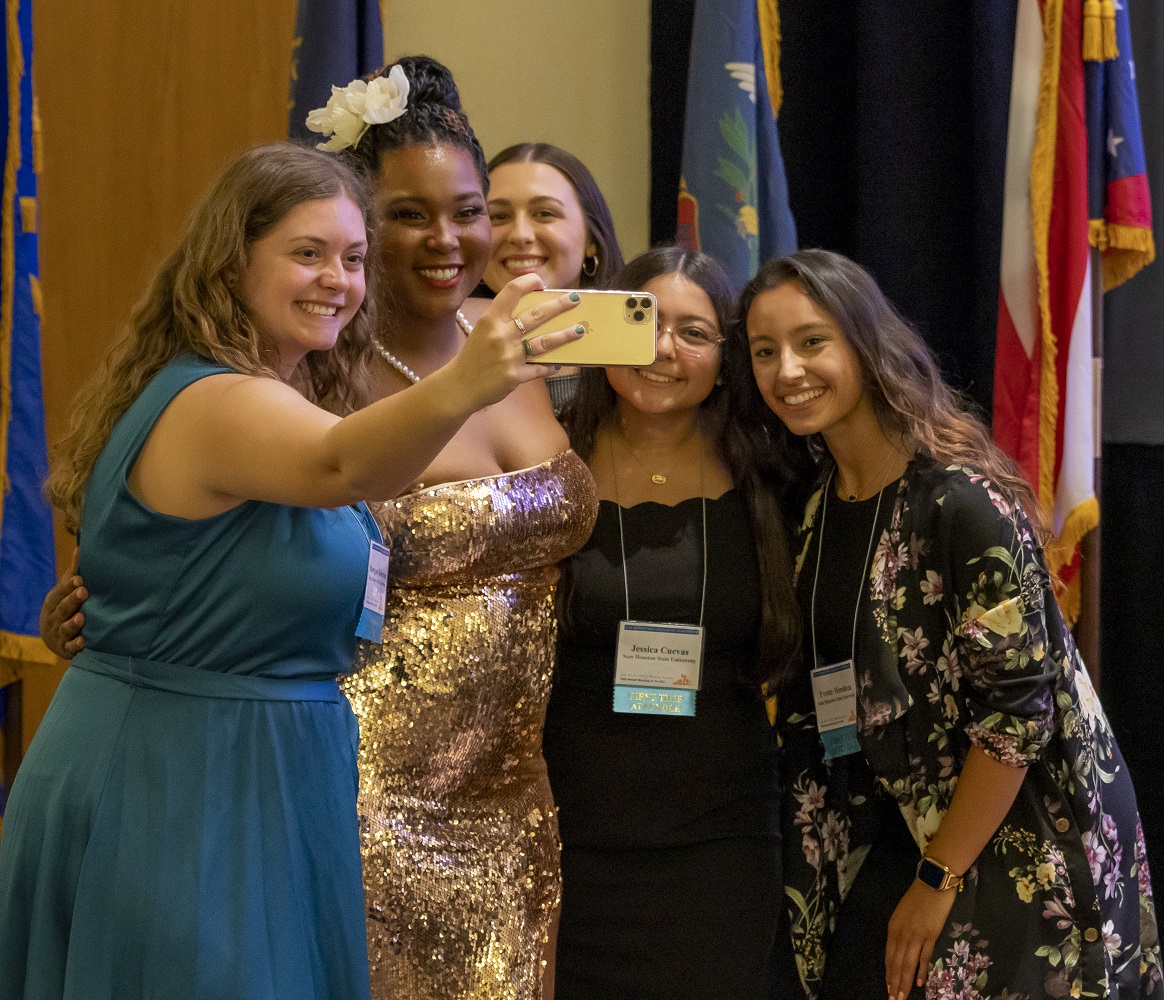
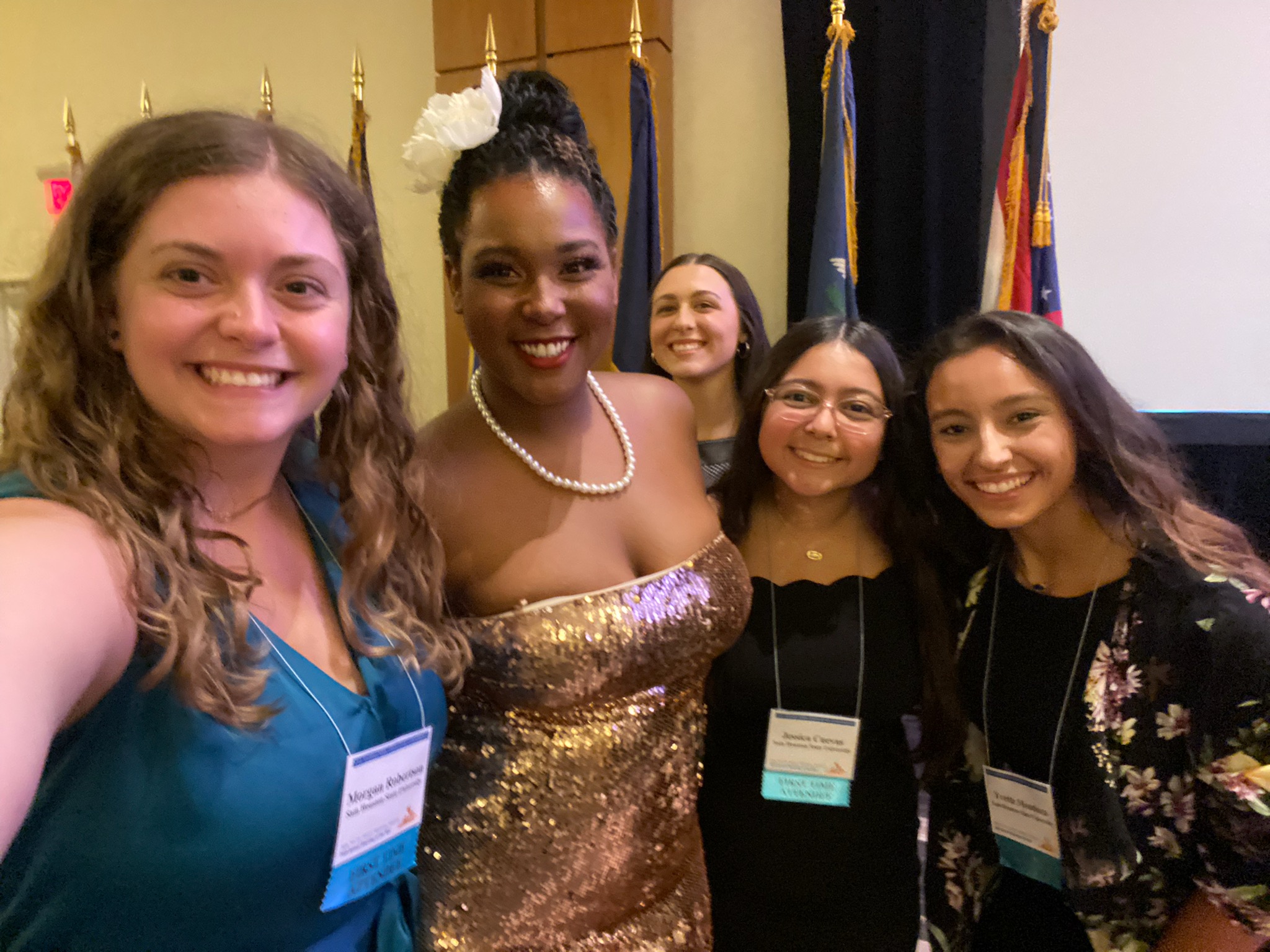
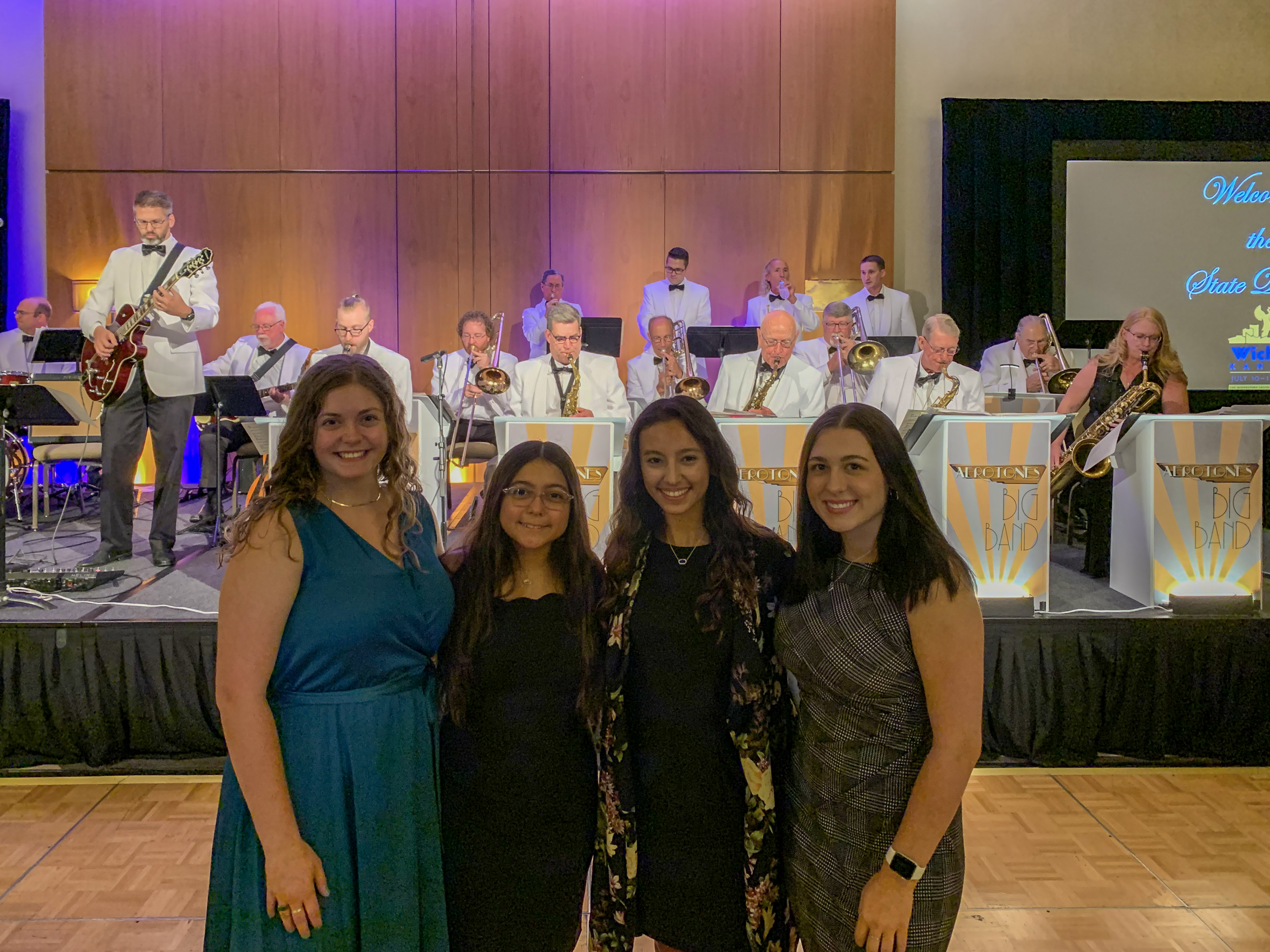
At many of the Council of State Government regional conferences, the organizations host a “State Dinner” on the final evening, and this was true for the Midwest. This is a big event for LEAP Ambassadors–often their first such experience–and it was made even more fortunate by the presence of two CSG staff members at our table and some entertaining musical performers with the Aerotones Big Band, featuring Jaslyn Alexander on lead vocals.
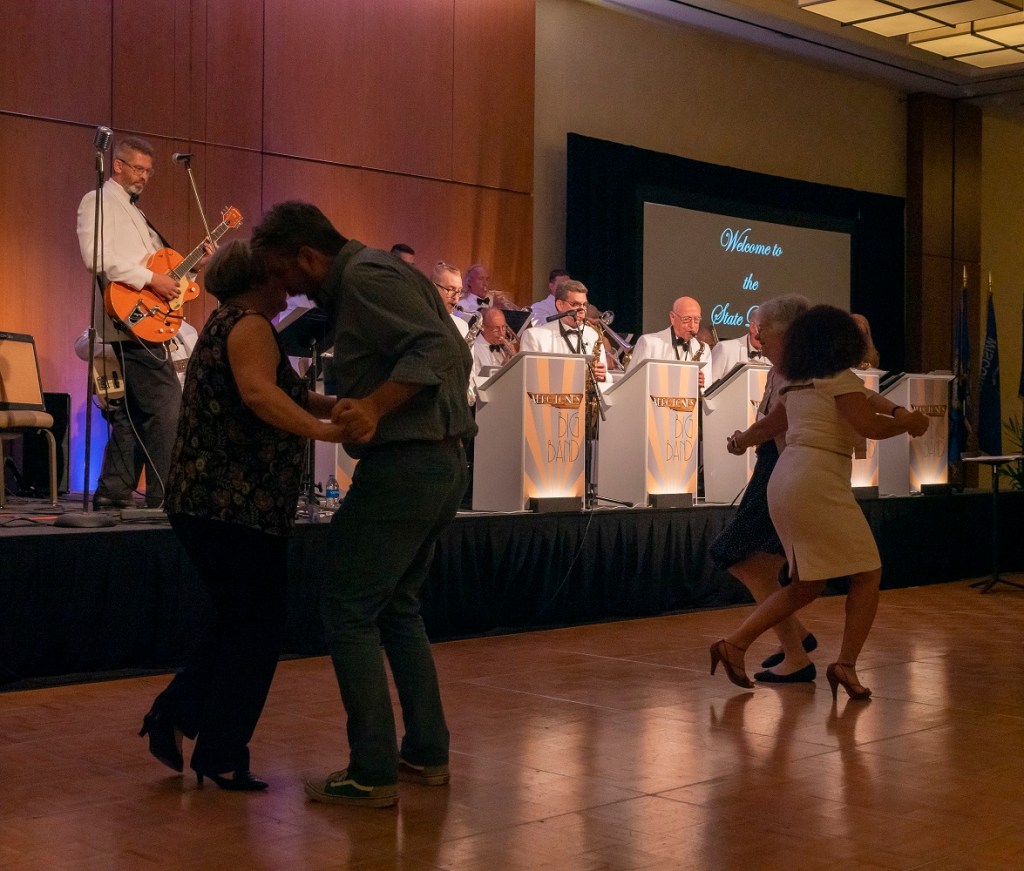
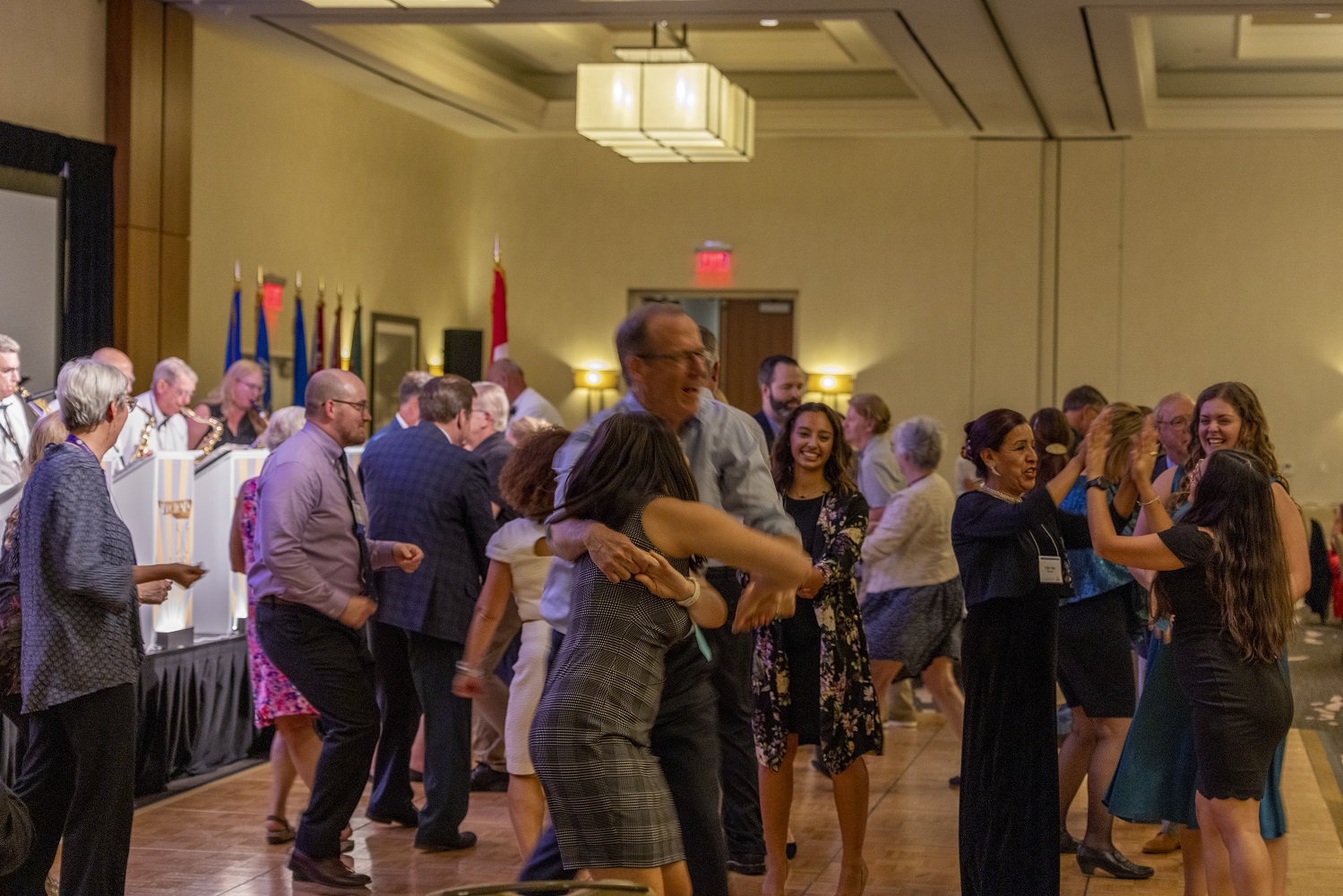
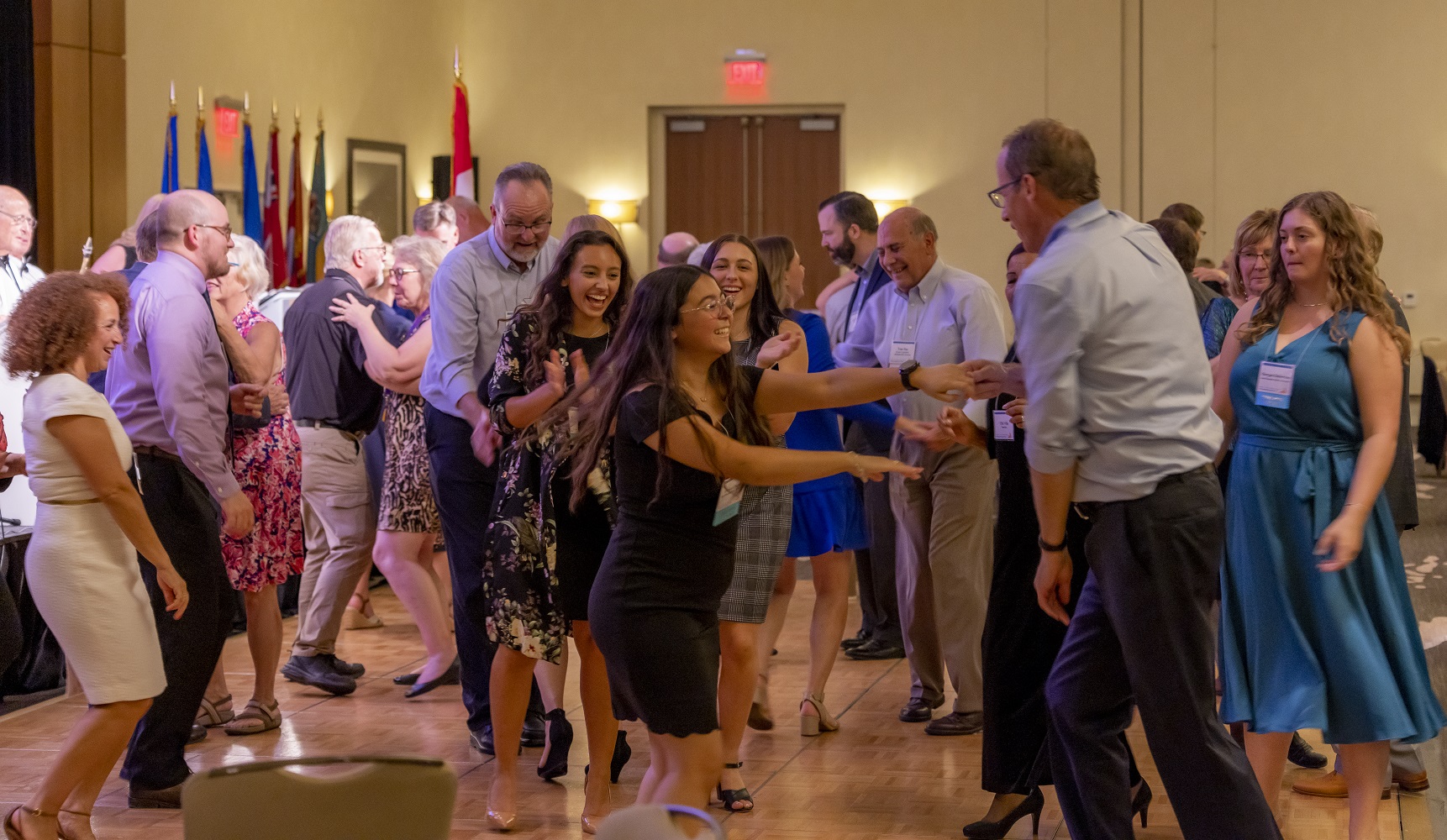
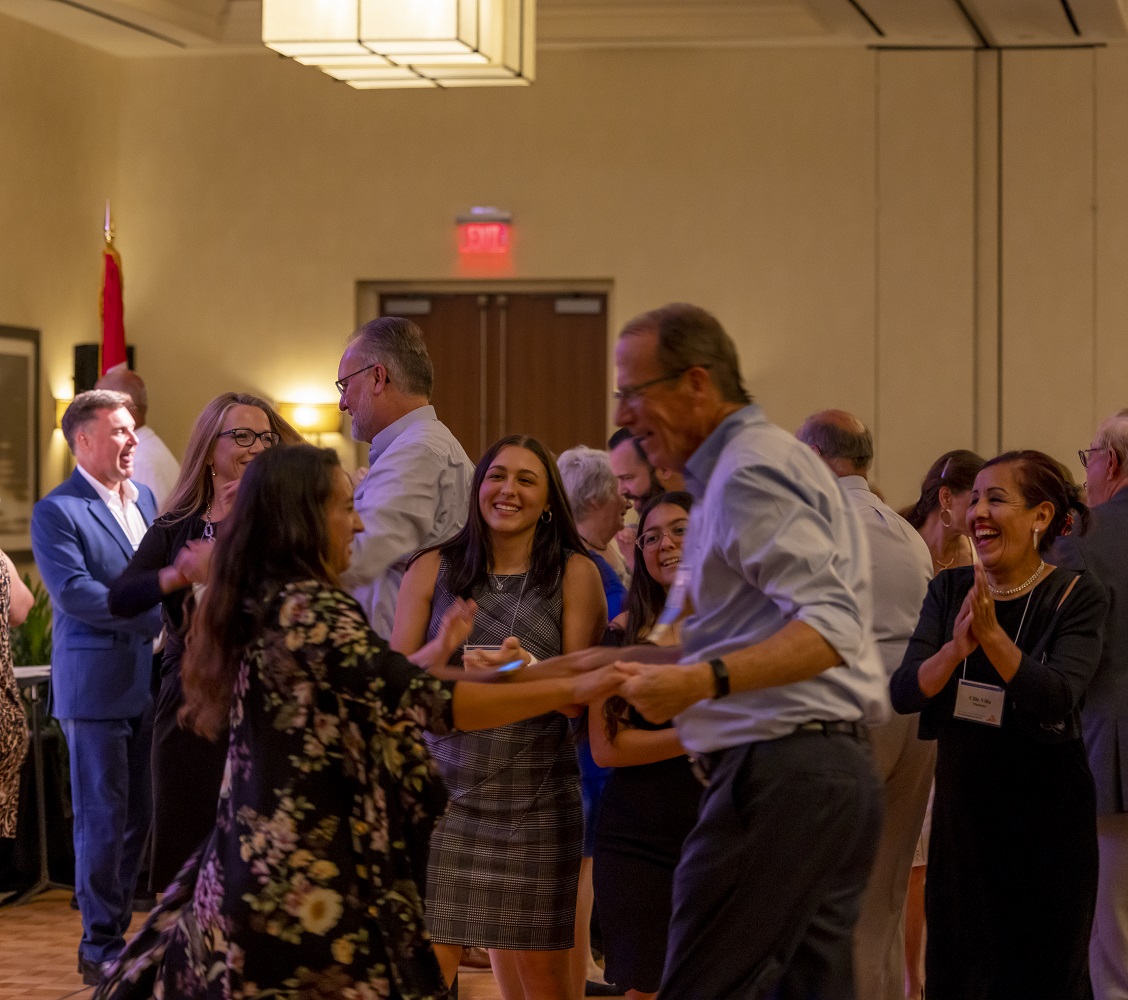
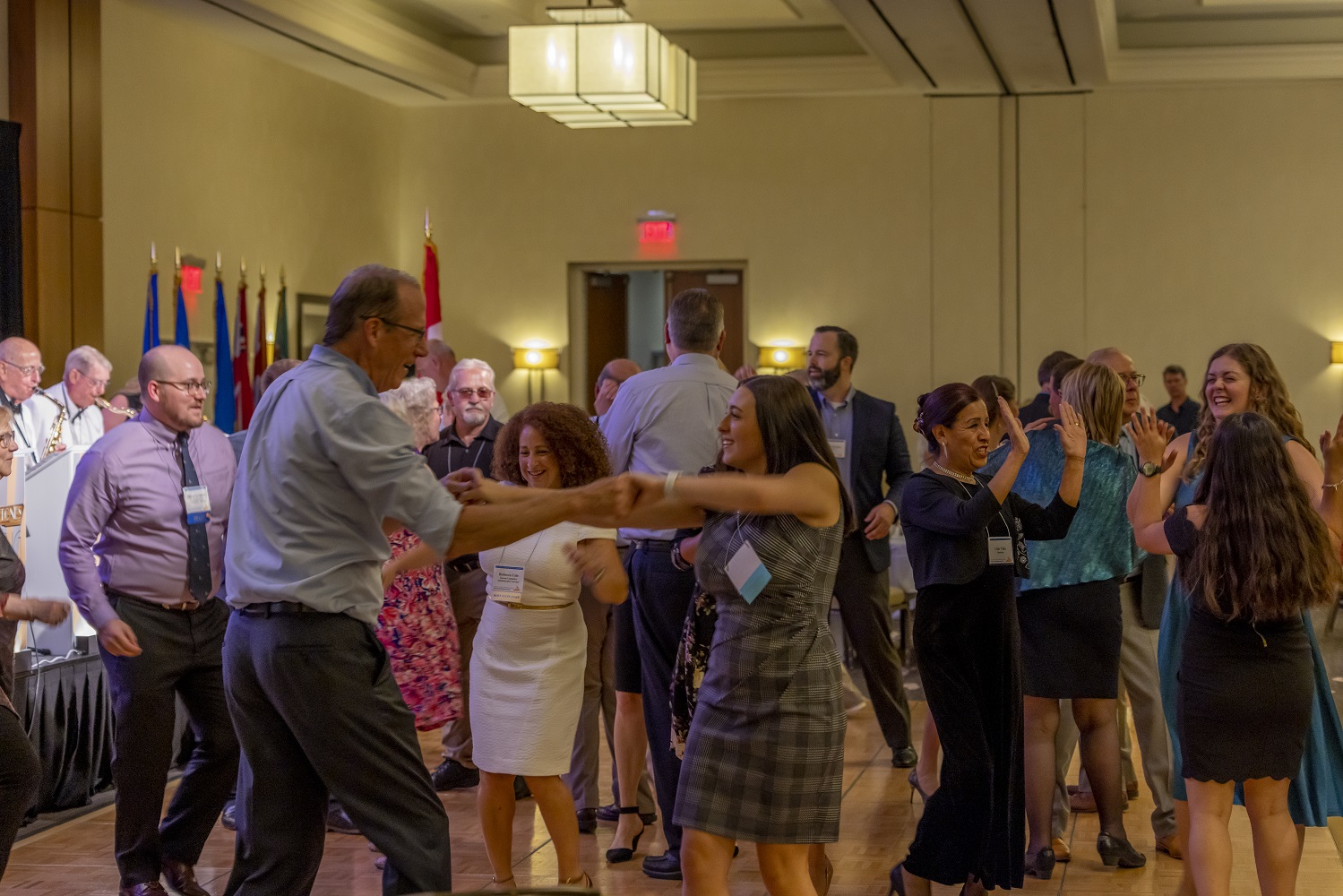
Throughout the evening, Aerotunes played songs through the decades, often jumping 50+ years in the process. We soon grew to love the range of the music styles and genres and despite the variety in sounds, dancers kept on dancing!
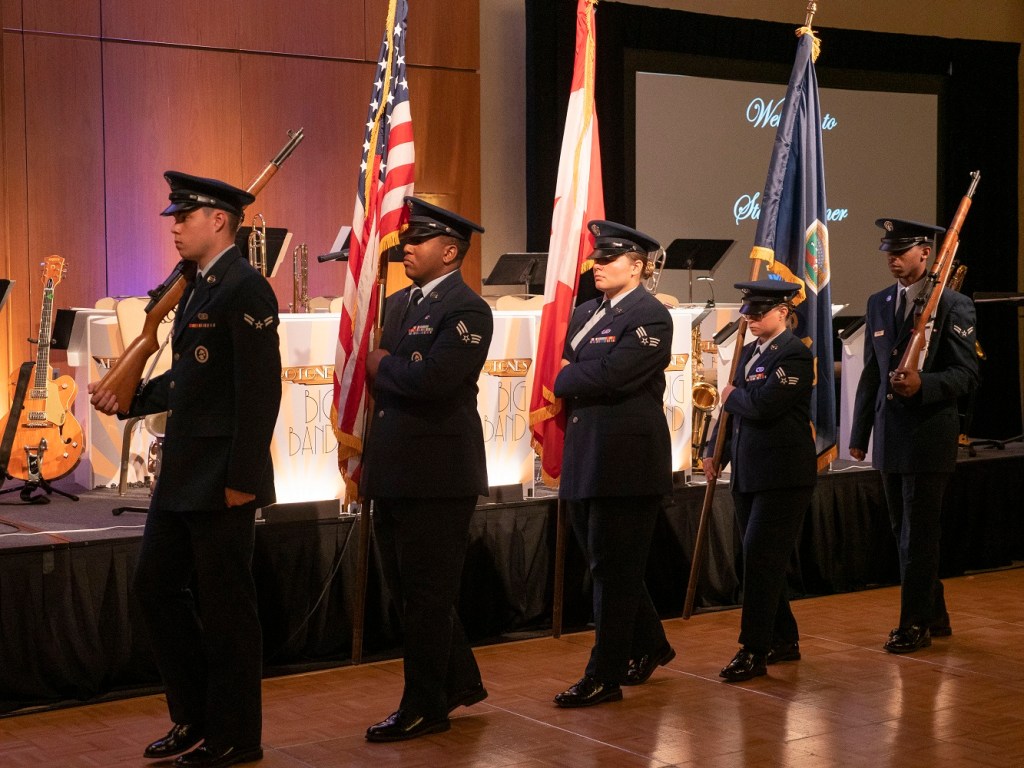
We were first greeted by Senator McGinn, who not only introduced the posting of the color guard…
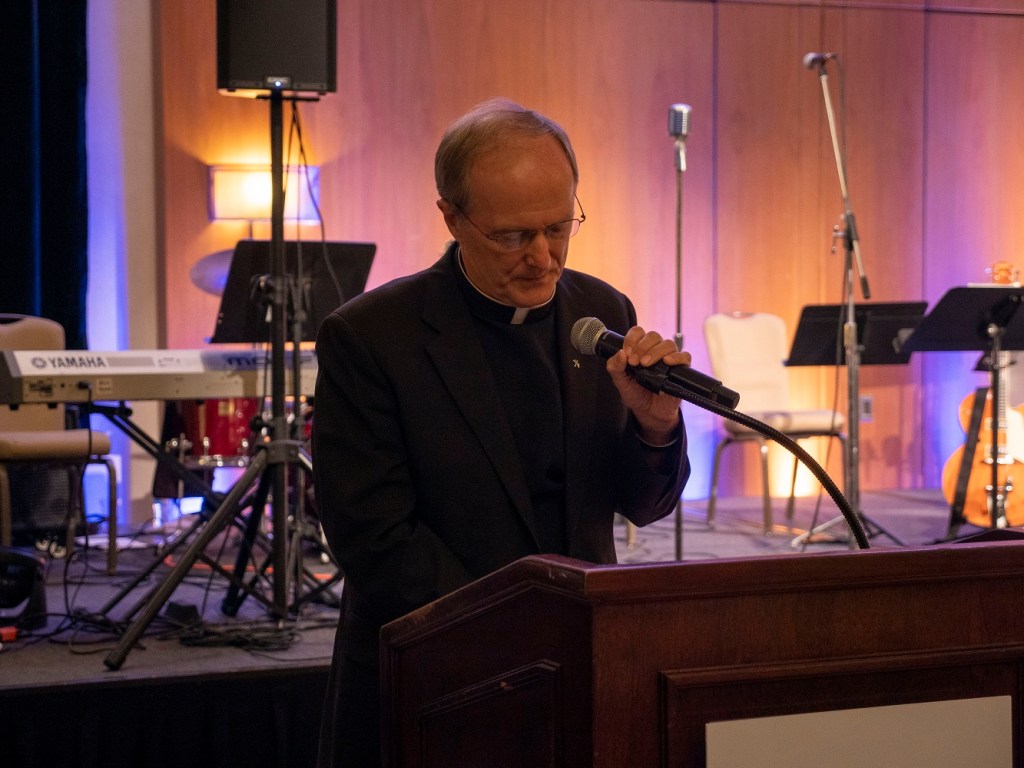
…and the invocation…
…but also introduced some humor into the proceedings, setting a light tone to a lively evening!
At first, there weren’t a lot of takers on the dance scene.
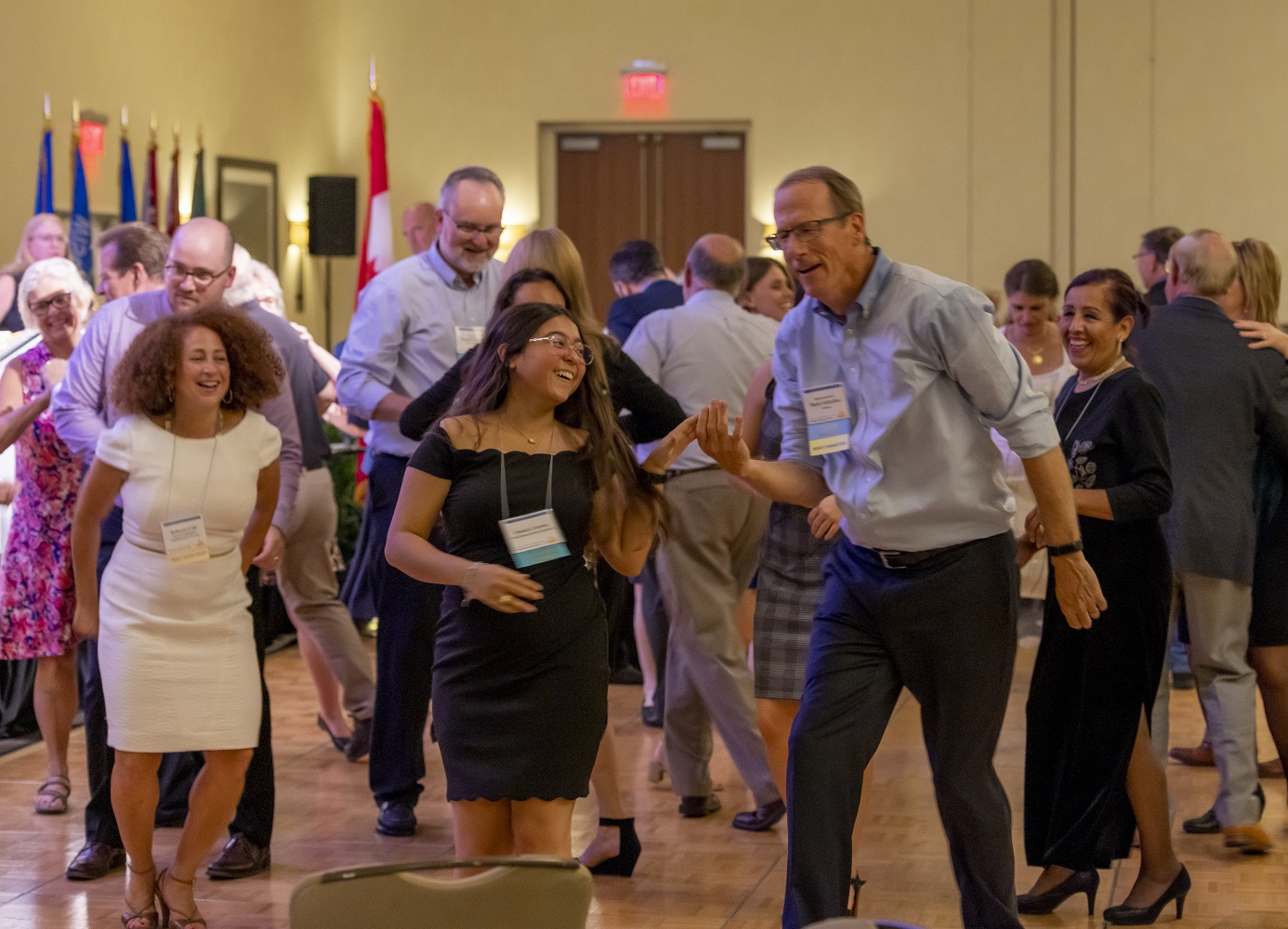
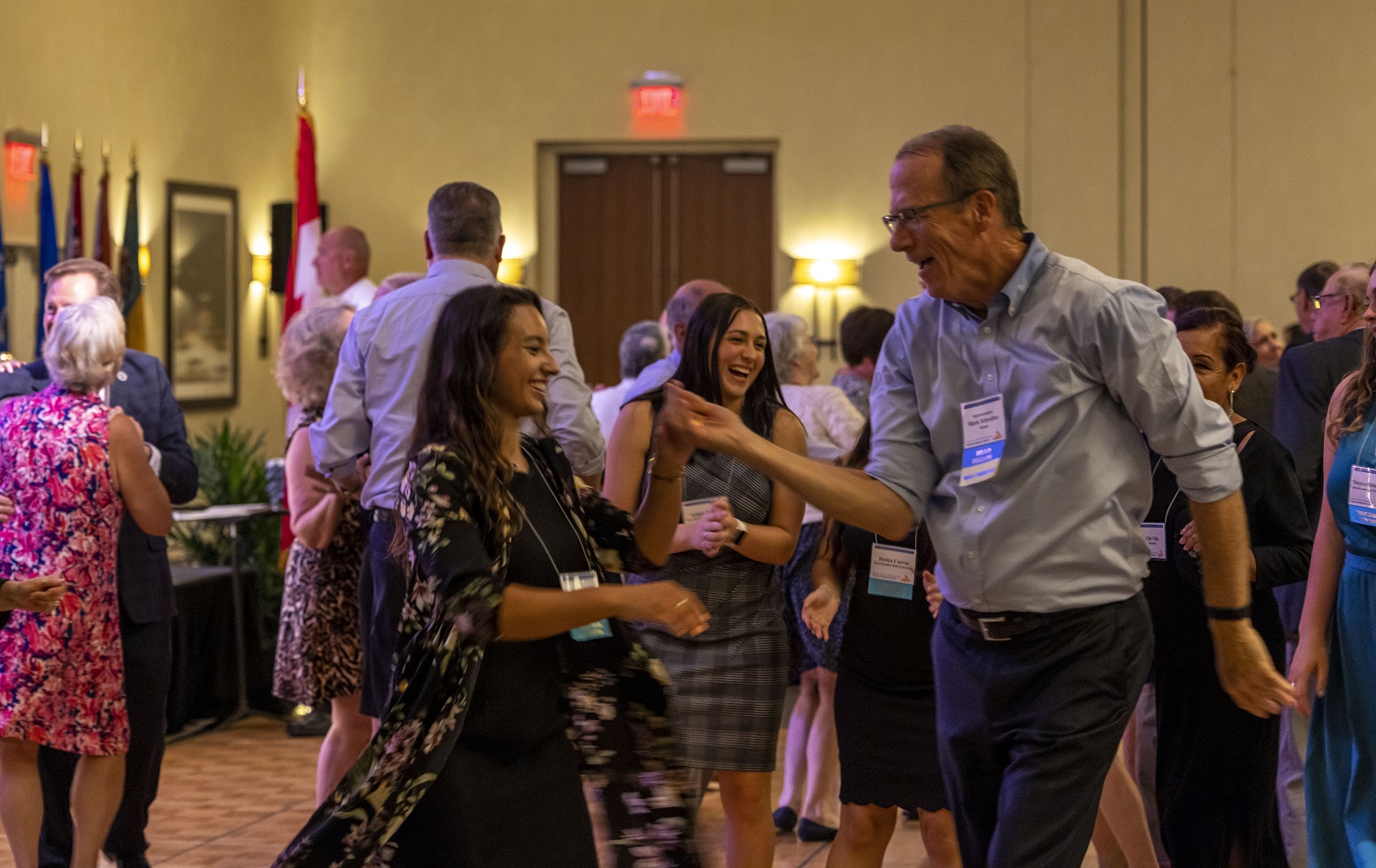
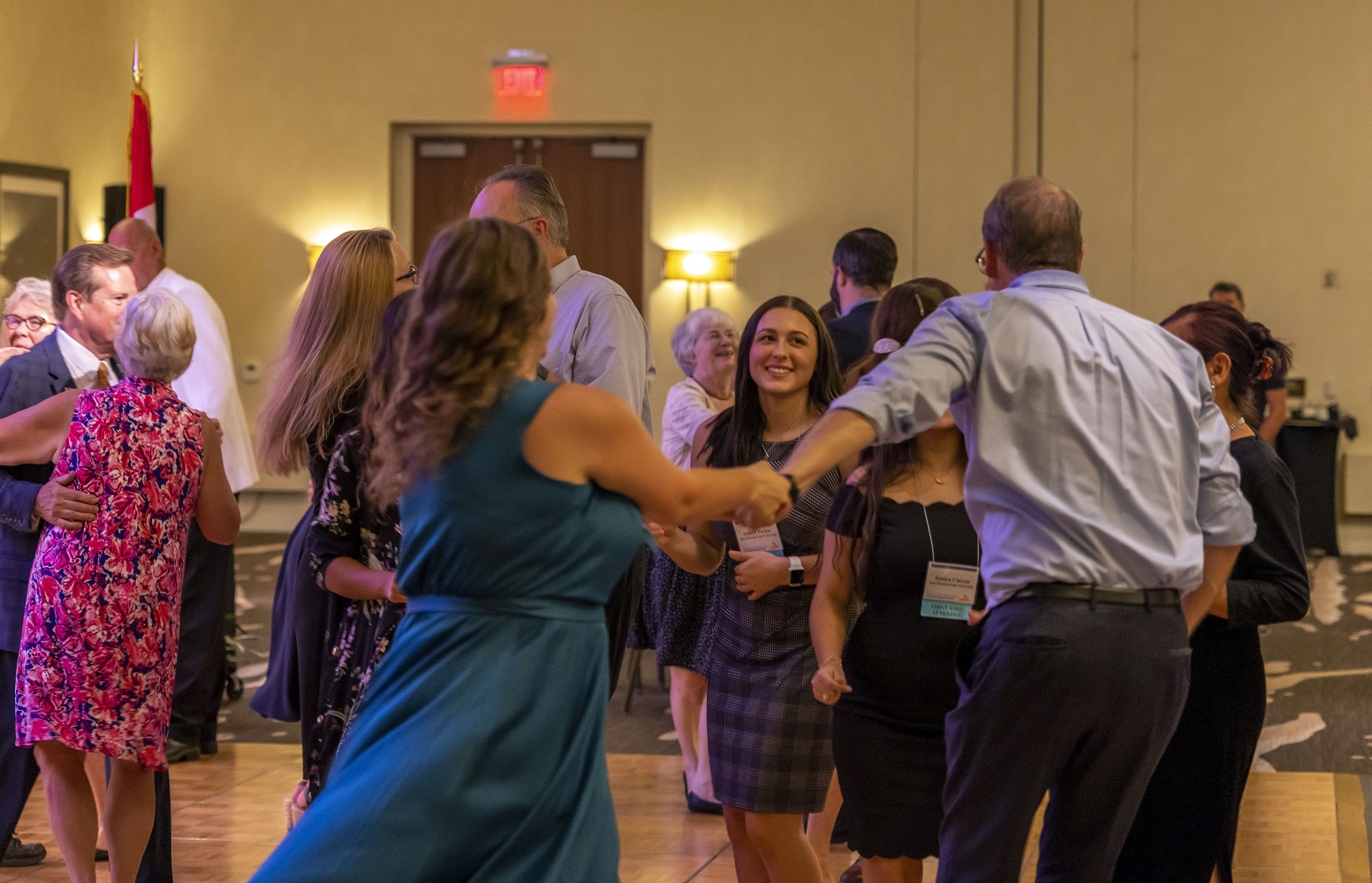
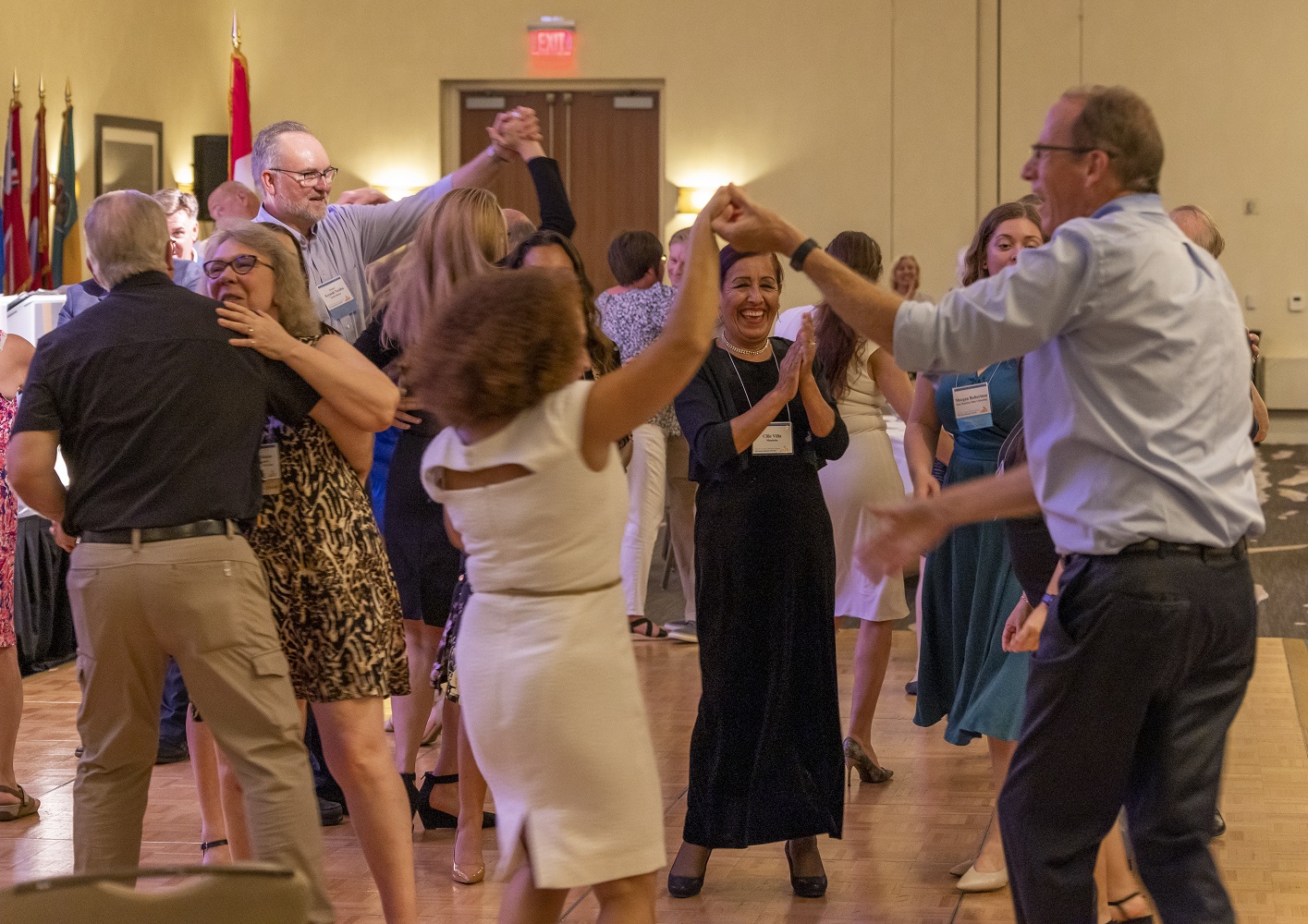
But when the Ambassadors got on the floor, they soon had the opportunity to learn new dances (or just be led through the dances in some cases). Kansas Representative Mark Schreiber was a particularly generous dance instructor…
…and with some real dancing going on, the dance floor soon came alive!
We hate to say who is the best dancer in the group, but we are really glad we brought Ashlyn.
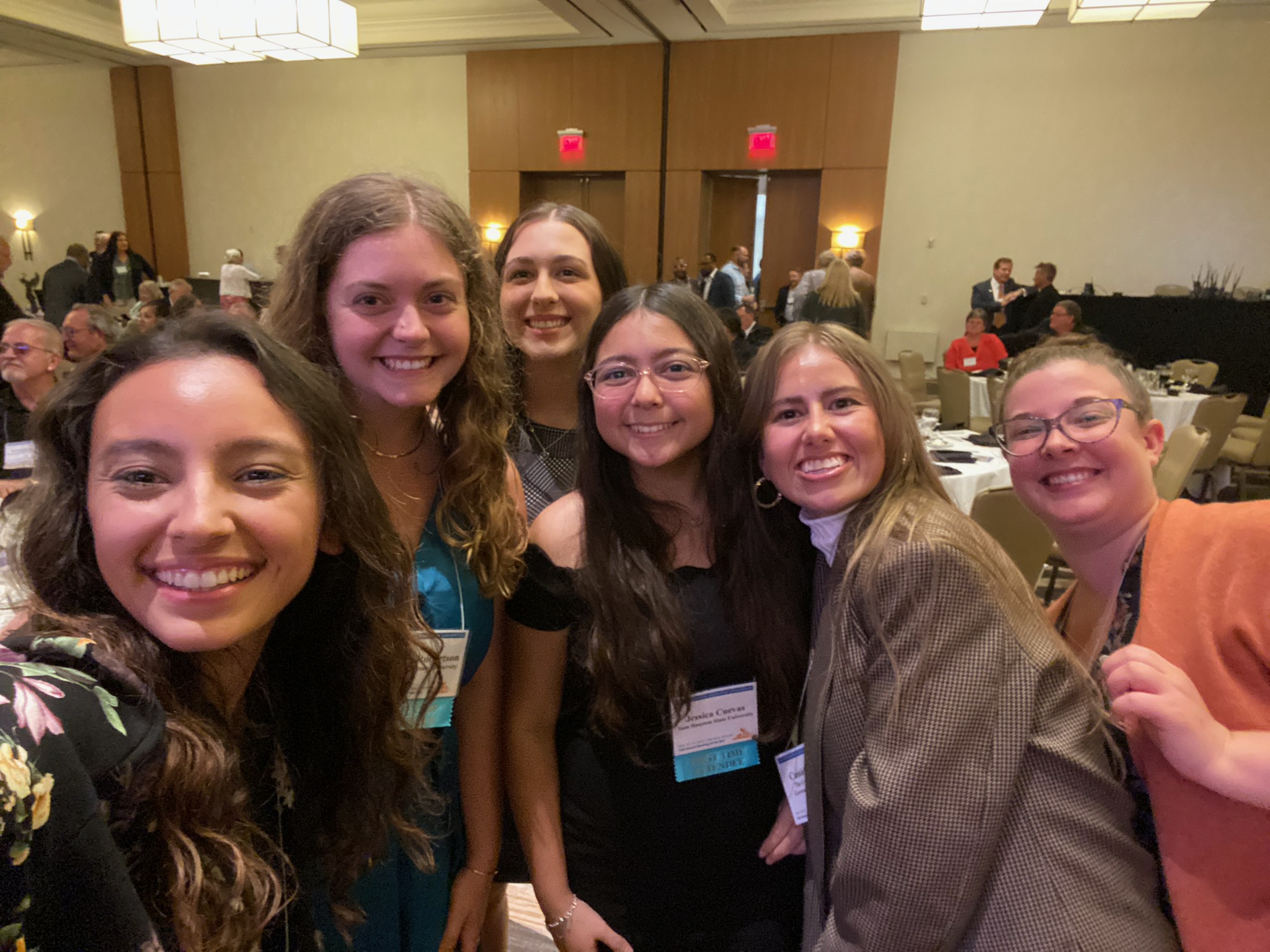
We were pleased with how nice everyone was, and we were grateful for the new friends we made.
Late afternoon on Friday, we loaded the car and embarked on our journey to the Midwest! Our destination for the first half of our week is Wichita, Kansas, for the 76th Annual Meeting of the Midwestern Legislative Conference. Leaving late afternoon, though, we only made a few hours on the road before our first stop.
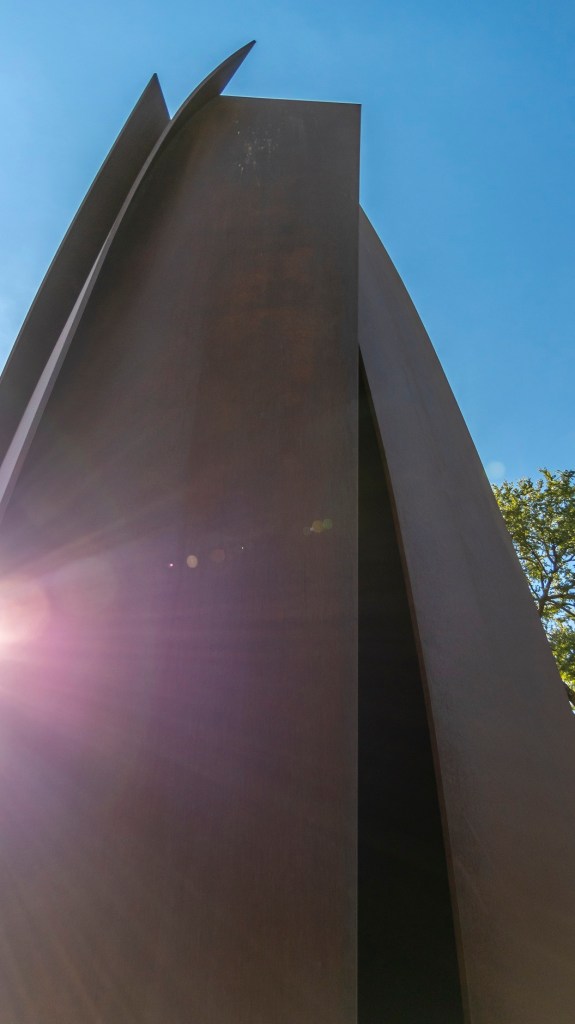
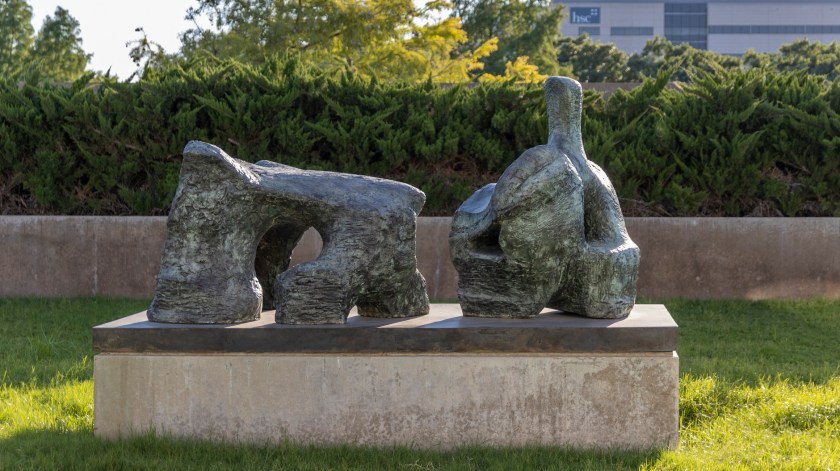
On the museum grounds, we were introduced to a new (to us) artist, Richard Serra, known for his massive bronze sculptures. His abstract works develop a “patina” over time, meaning that the metal changes color. Since its creation in 2002, we could clearly see how the coloring of Vortex has changed over time.
We snapped a few shots and made our way to another nearby outside piece, Hina, by another new (to most of us) artist, Deborah Butterfield. Butterfield also works in bronze, but her horses look like they’re made of wood!
Chatting about the different techniques, we made our way inside to meander through the modern pieces, on the lookout for more new and inspiring artists and works.
The minimal and modern building blended perfectly with the landscape and the works inside. The interior layout is designed to display prominent exhibits, with soaring ceilings and a lot of glass, and it is an appropriate motif for minimalist works such as those by Donald Judd.
The east and north sides overlook a reflecting pool, across which stands a gleaming Roxy Paine with interweaving branches entitled Conjoined.
Yvette quickly identified the distinct squares and colors of Josef Albers and Jessica spotted her favorite part of the museum, a collection of Andy Warhol flowers, and we were pleased to see that we would be rewarded with other Warhol works as well.
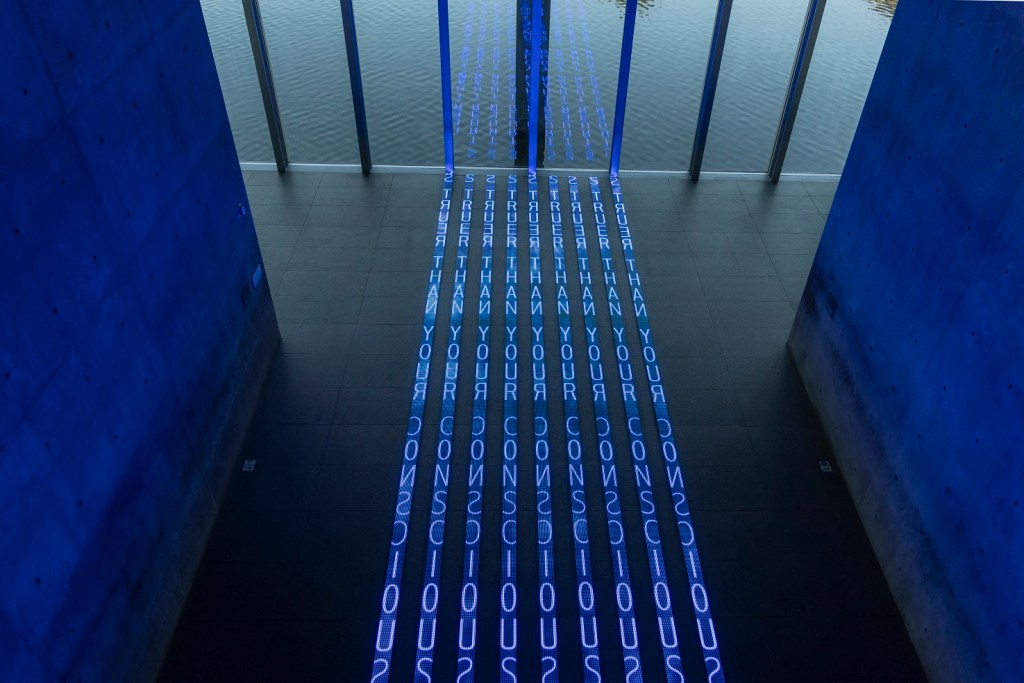
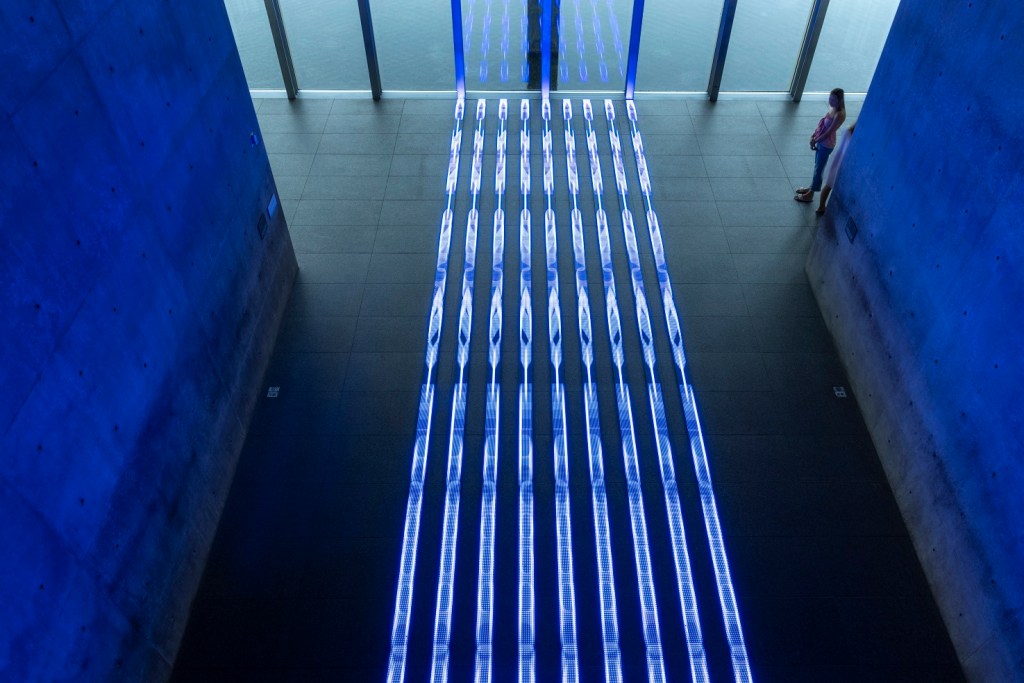
True to the nature of modern art, the pieces were not limited to paint and canvas. Steel and fiberglass adorned the center of one gallery, while interesting messages displayed on LED signs followed a vertical and uniform pattern in another. Of particular interest were Nancy Graves’ Inside-Outside and Jenny Holzer’s Kind of Blue, which we spent a lot of time on, pondering and (trying to) photograph.
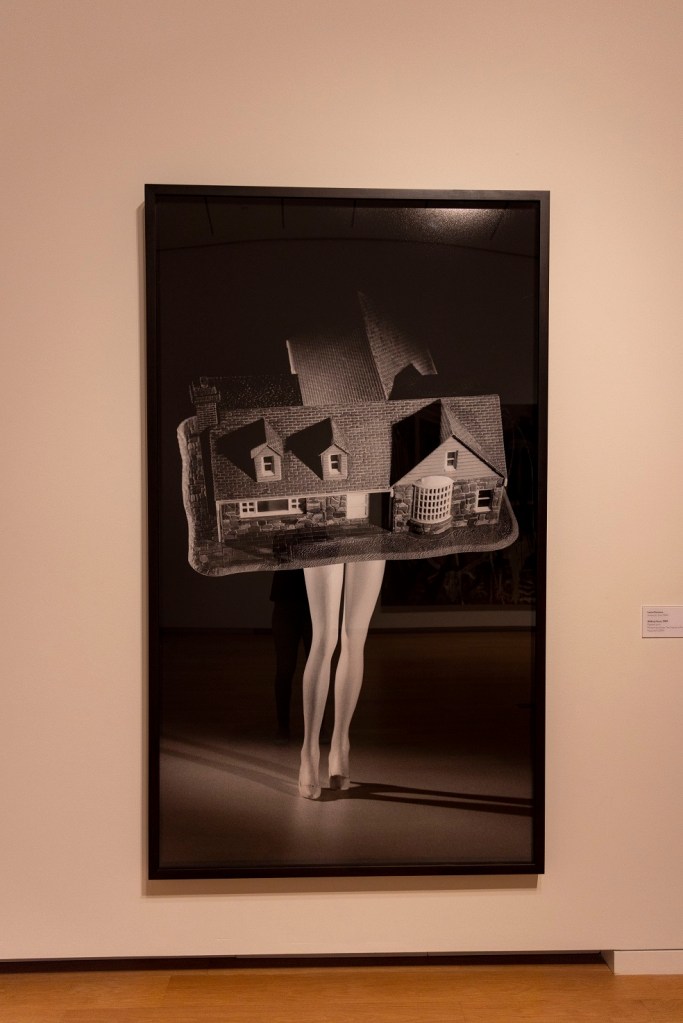
Ashlyn best liked a rather unique photograph that featured a simple middle-class home balanced upon a pair of legs, Laurie Simmons’ Walking House. She was drawn to the piece for how it “stood out” and could be interpreted on multiple levels.
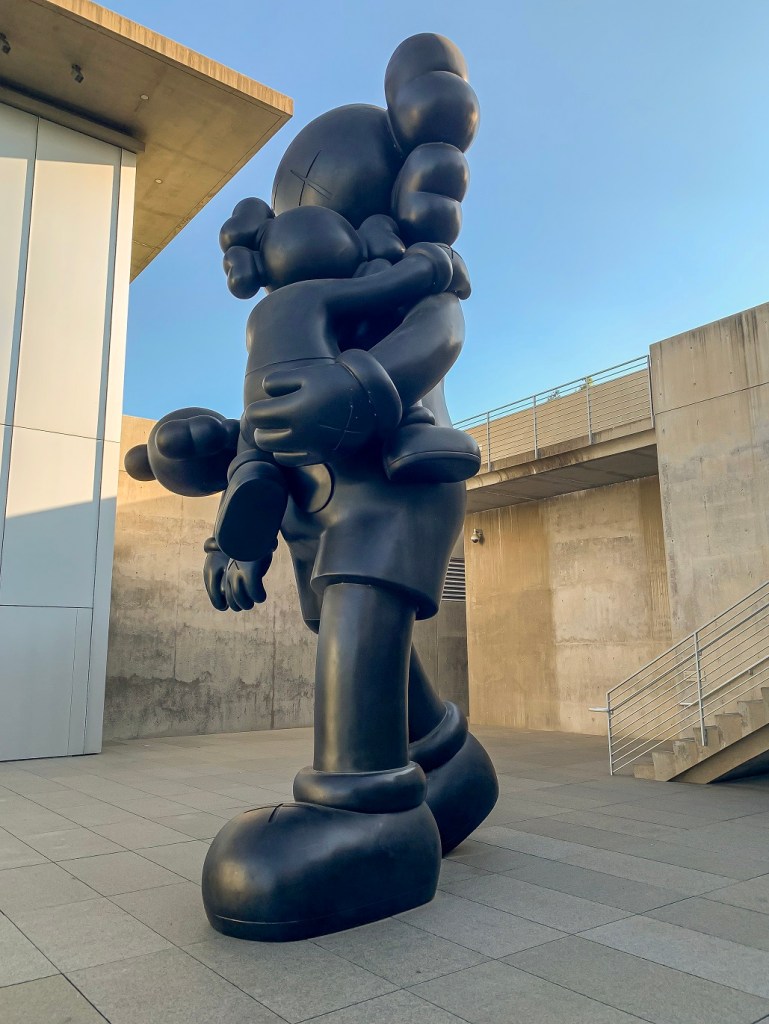
We made our way (rather quickly because of the temperature) through the sculpture garden which, in addition to the Paine, featured a KAWS…
Professor Yawn’s favorite piece was one by Martin Puryear, titled “Ladder for Booker Washington.” While we didn’t understand the reference, Yawn discussed it and offered several interpretations for this intriguing piece.
The more dynamic pieces allowed us to practice creating interesting and unusual photographic compositions and ultimately resulting in some nice shots.
The Modern Art Museum of Fort Worth was a good start to what soon will be a week worth of art, history and politics!
La Cena at Salsa Limón
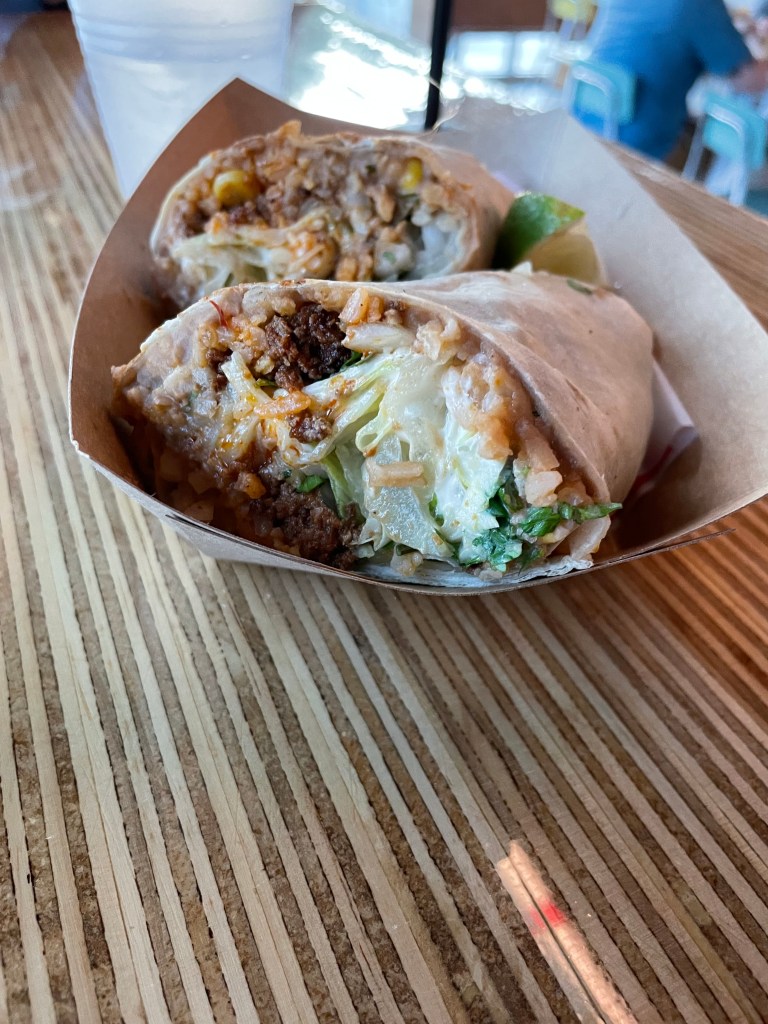
With Oklahoma City in our sights, we chose somewhere quick (that turned out to be just right!) for dinner—Salsa Limón. We made our selections, while attempting to create a variety of options (which in my opinion, is becoming increasingly more difficult since our tastes sometimes converge). Jessica and Morgan chose similarly (boring burritos!) with pastor and chorizo, respectively, Ashlyn had a chicken molco bowl (“Just what I was expecting!”), and Yvette, Professor Yawn and Stephanie had an assortment of tacos, from barbacoa, to mushroom & cheese, to pastor, to black bean & avocado.
It was a good and light meal, energizing us for the final leg of our day’s travels.
Our evening–and my first LEAP Center event–began with a trip to the Glade Gallery, which hosts not only beautiful art, but also many of the events held by the World Affairs Council.
At the Glade Gallery we viewed an array of paintings and sculptures. As we were roaming the gallery, we noticed some art pieces that also happened to be for sale- some were priced up to $31,000!
And we even saw a Marc Chagall!
Our main objective of the evening, however, was to hear from Julián Cárdenas, who was speaking on Venezuela’s political and energy situation–and how these are being affected by the Russian-Ukraine War.
Considering Mr. Cardenas served in the Venezuela State Department, is an energy expert, and a law professor at the University of Houston Law, he was a good person to hear from on this topic!
Mr. Cardenas and WAC’s able moderator Ronan O’Malley discussed the challenges faced by Venezuela since the Chavez and Maduro regimes, of which there many. With economic policies that aren’t working, the country facing sanctions imposed by other countries, and widespread corruption among government officials, Venezuela is also facing soaring inflation–in fact, inflation has climbed to thousands of percent, making the US’s inflation rate of 10 percent seem tame.
Cardenas discussed numerous topics we needed to learn about: realism v. idealism in foreign policy, the G-7, NAFTA, and programs such as “food for oil.” We also learned the term “brain drain,” of which Cardenas was a part–he left when conditions became intolerable there.
Following the main discussion, we were able to chat a bit with Mr. Cardenas, pose for a photo, thank the wonderful WAC staff, and head out for dinner.
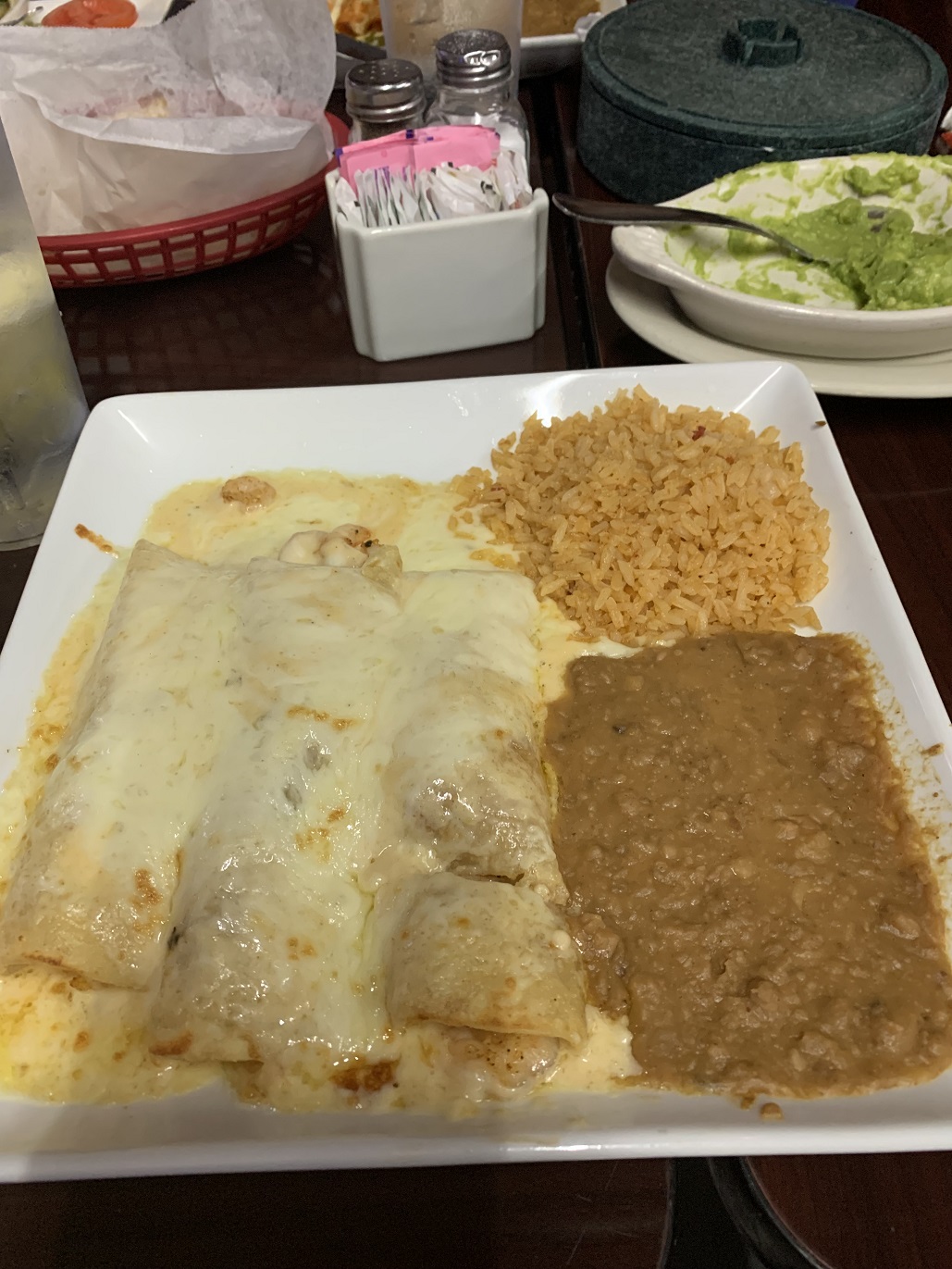
We drove down to Casa Medina just in time to grab a couple of seats before they closed the kitchen. The service was excellent, and the food was solid! I ordered the shrimp enchiladas, and I was pleasantly surprised with the amount of shrimp and cheese on top. I am a bit of a shrimp enchilada connoisseur, and this dish is a guaranteed 10/10 on the Ashlyn Parker scale!
…who introduced our keynote speaker for the general session, Nora McInerny, whose talk, “Terrible, Thanks for Asking” played on themes she discusses in her podcast and books.
She displayed her dry, witty sense of humor while also touching on loss, grief, change, and new beginnings. Most importantly, she addressed the ability to genuinely answer the question, “How are you?” I think we often answer with the word “fine,” which is okay, but sometimes, it’s okay not to be okay.
Following McInerny’s inspirational words, we had a chance to meet her and discuss her talk.
She was very generous.
Today was a unique day with their awards luncheon! Once the doors opened, we scurried off to get a table and save Huntsville’s City Manager, Aaron Kulhavy, a seat next to us. For most of the luncheon, we were conversing with Aaron to get to know him and learn more about city management.
Our entrée for lunch consisted of Ham with Barbeque sauce, and grits, accompanied by a variety of vegetables such as corn and some delicious carrots. Once we finished our main dish, we started on our dessert which was a delicious fruit tart with oranges and strawberries. Countless city officials were recognized for their outstanding work and accomplishments throughout the years. It was truly an amazing and rewarding experience.
Once the luncheon was over, Aaron Kulhavy took us around and introduced us to multiple people from the surrounding areas before we split off to the breakout sessions.
Isabel enjoyed the economic development conference presented by Imelda Speck, the Economic Developer in Irving, Texas, which is Isabel’s hometown! Speck along with the other panelists talked about the effects the Covid-19 pandemic had on their cities and small businesses. Isabel found it interesting to hear about the programs the City of Irving implemented to try and soften the blow. Jessica found this session particularly easy to understand and follow thanks to her Finance Internship with the City of Huntsville.
In ways, her internship with the Finance Department helped her understand things in different sessions such as previously mentioned and the strategic plans session. However, this can also be said of Morgan after interning with the City Secretary.
Morgan’s favorite conference, All Disasters are Local, Your Emergency Program Should Be, Too, by Nim Kidd. Kidd talked about three new technologies that they are putting in place to cover more bases regarding emergency management. It was also intriguing to know how they are also starting the first academy in the nation for emergency management and will be placing 100 new agents in 100 new counties.
Despite many good sessions today, my all-time favorite was the opening session with Nora Mclnerny.
Dinner in Downtown Bastrop
Isabel Behm
Once the conference wrapped up for the day, we were beyond excited to explore downtown Bastrop and eat at a local place. On our way to Piney Creek Chophouse, we took a moment to admire the various bookstores, coffee shops, and beautiful homes in their downtown. Piney Creek Chophouse is a nice neat little local restaurant that has a unique architectural design and interior that adds to the character of the place.
Often Professor Yawn forgets to feed us, but makes up for it when he treats us to a fancy steakhouse. Never failing to get us appetizers to hold us over until our entrees arrive, we ordered Crab Cakes, Crab-Stuffed Mushrooms, and Bruschetta.
We were also provided with a delicious, crafted artisan bread accompanied by butter. The crab cakes were bursting with flavor, and we even convinced Jessica, who isn’t a fan of crab or seafood, to try a bite! We couldn’t get her to try a mushroom, but maybe we’ll have some better luck next time.
As we waited for our main entrees, Professor Yawn gave us a quick crash course about dining etiquette. Soon enough, our main entrees were brought out to us, Morgan and Izabella shared a Filet Mignon served with Mashed Potatoes and Haricot Verts. Jessica and I both shared a New York Strip accompanied by Mashed Potatoes and Haricot Verts as well.
Professor Yawn enjoyed a Strawberry Salad and a side of fried Brussel Sprouts which we all absolutely loved.
Each dish had its own quality that made it special, and each dish was full of different flavors. We all had our own unique experiences. After our main dish, I was sure I was full and had no room for dessert…. I was wrong.
Dessert included an exquisite Bread Pudding, A Molten Lava Cake, and Banana Foster. I found the Banana Foster the most interesting since our waitress brought the dish out covered in flames which certainly made for a cool and unique presentation. The Banana Foster had a very strong cinnamon taste and a slight hint of coconut, it was one of the favorites and there was not a single piece left on the dish. The Bread Pudding had more of a sweet, rich taste and the Molten lava cake was very neatly presented, and the brownie was super rich and paired with the ice cream, it made for a wonderful combination.
We all had a great time at dinner, and it was the perfect way to end a long eventful day.
Prior to the kickoff of the TCMA Conference, we went to the Blanton Museum of Fine Arts, where we got to learn, look, observe, and interpret various kinds of art! For some of us, it was our very first art museum.
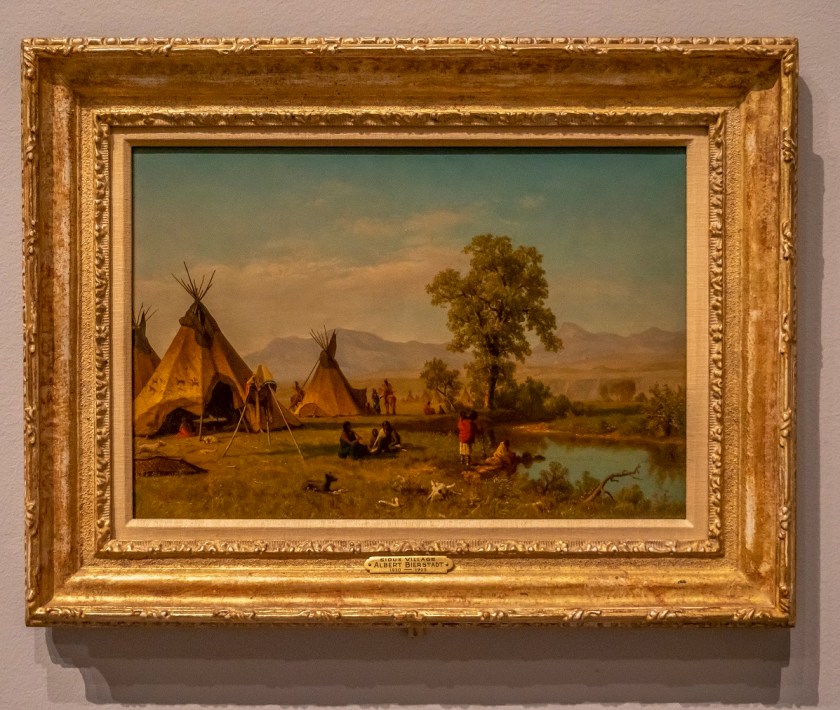
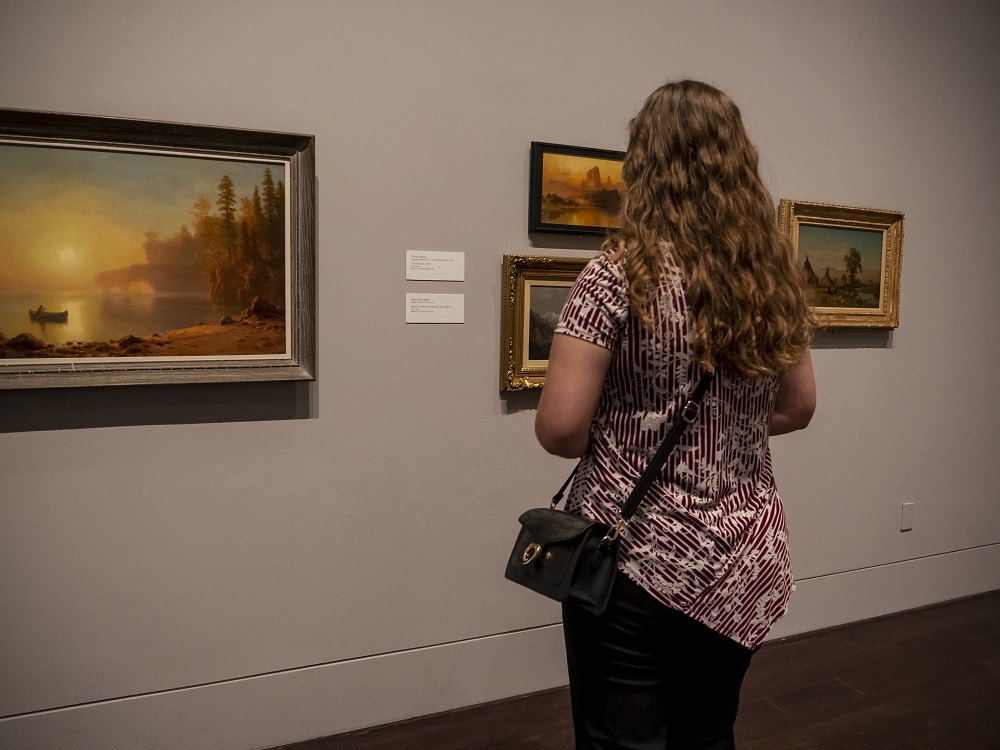
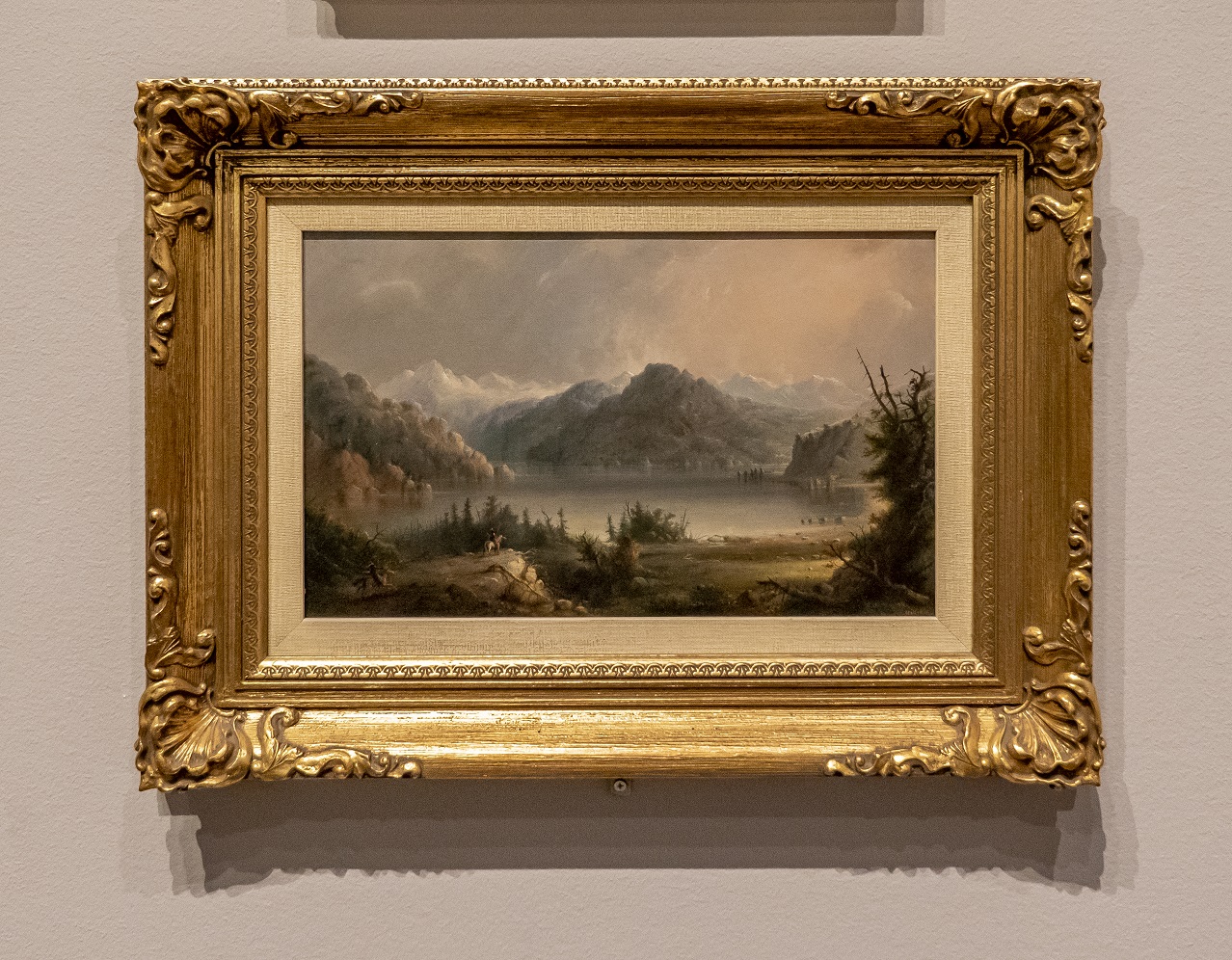
Morgan’s favorite exhibits were American art and Modern American art. Her favorite artist, Albert Bierstadt, had a painting that she liked called “Sioux Village near Fort Laramie.”
The painting featured a native encampment in 1859 that was centered around a sense of calmness and was overall, a beautiful, timeless piece. I can understand why Morgan liked the piece, as well as the artist!
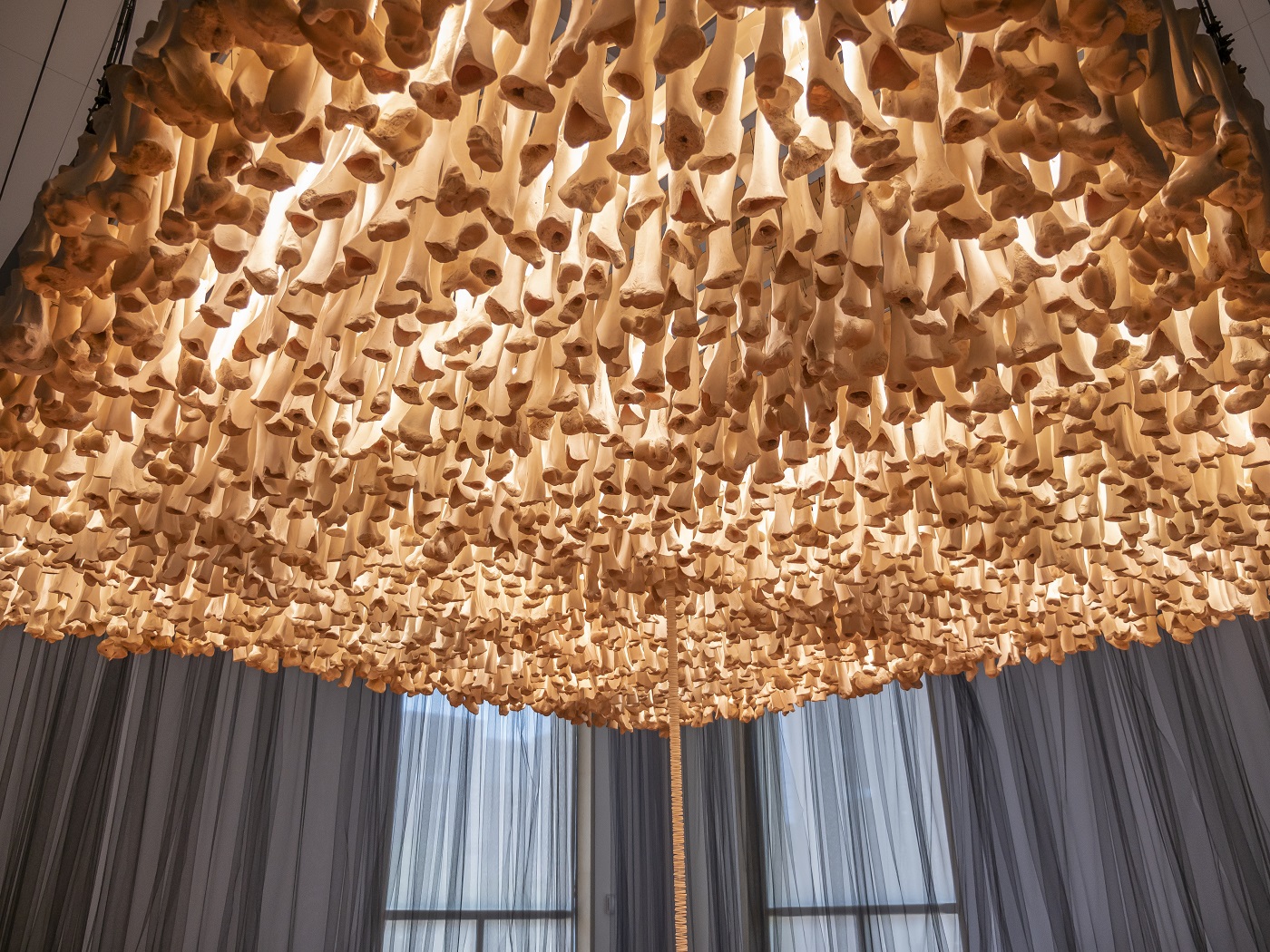
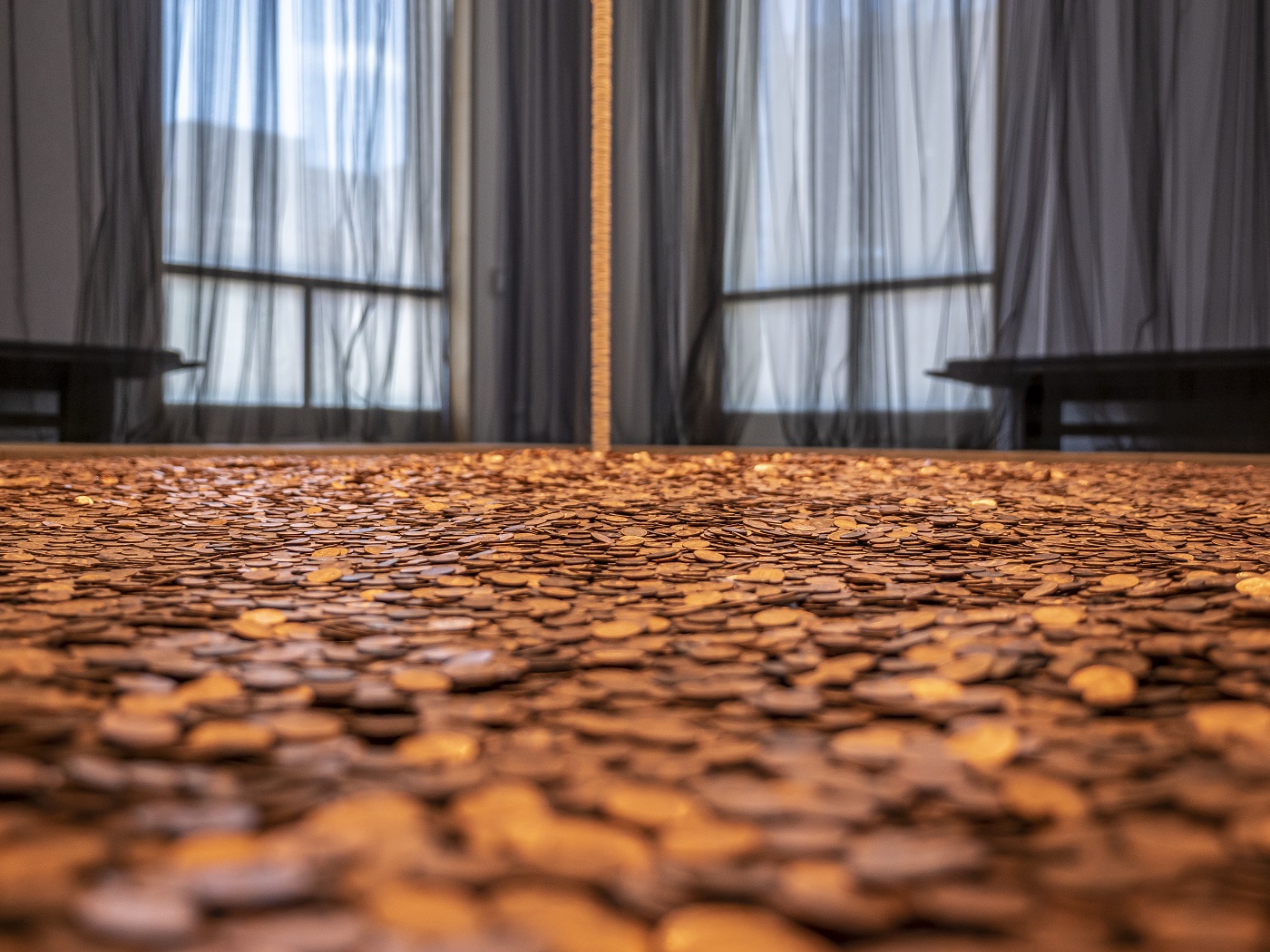
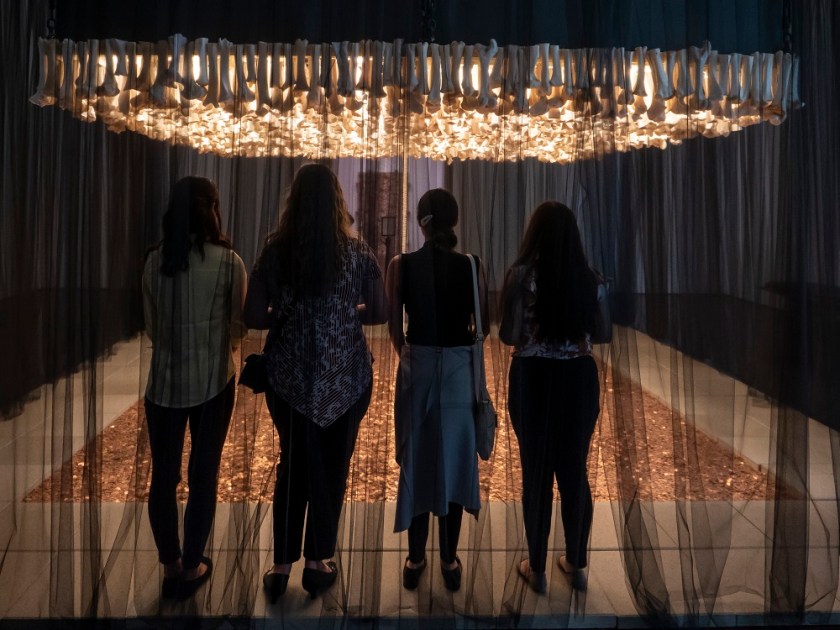
Isabel admired Cilado Meireles’ artwork called, “How to Build Cathedrals” which was created in 1987 and composed of 600,000 coins, 800 communion wafers, 2,000 cattle bones, 80 paving stones, and black cloth. This piece was probably the piece that everyone had different interpretations of, which again, is the beauty of art!
The cattle bones were hanging from the top, almost like a ceiling, while the coins were scattered around the bottom, and the wafers acted like a spine from pennies to the bones. It was overall a very dynamic and intriguing piece.
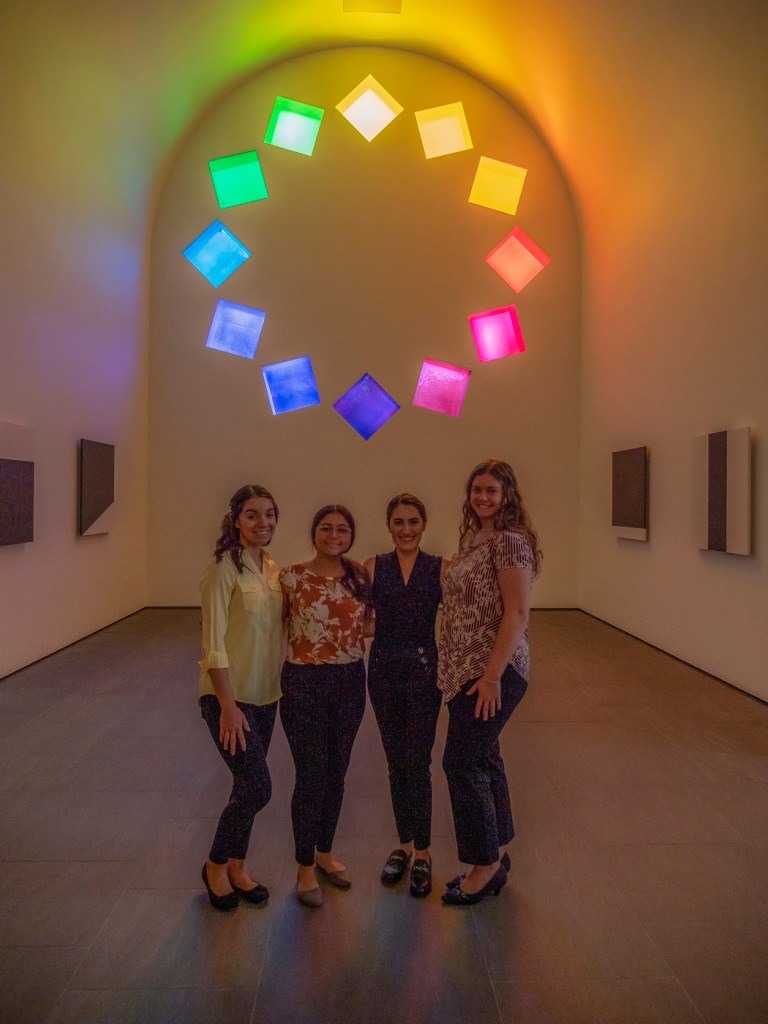
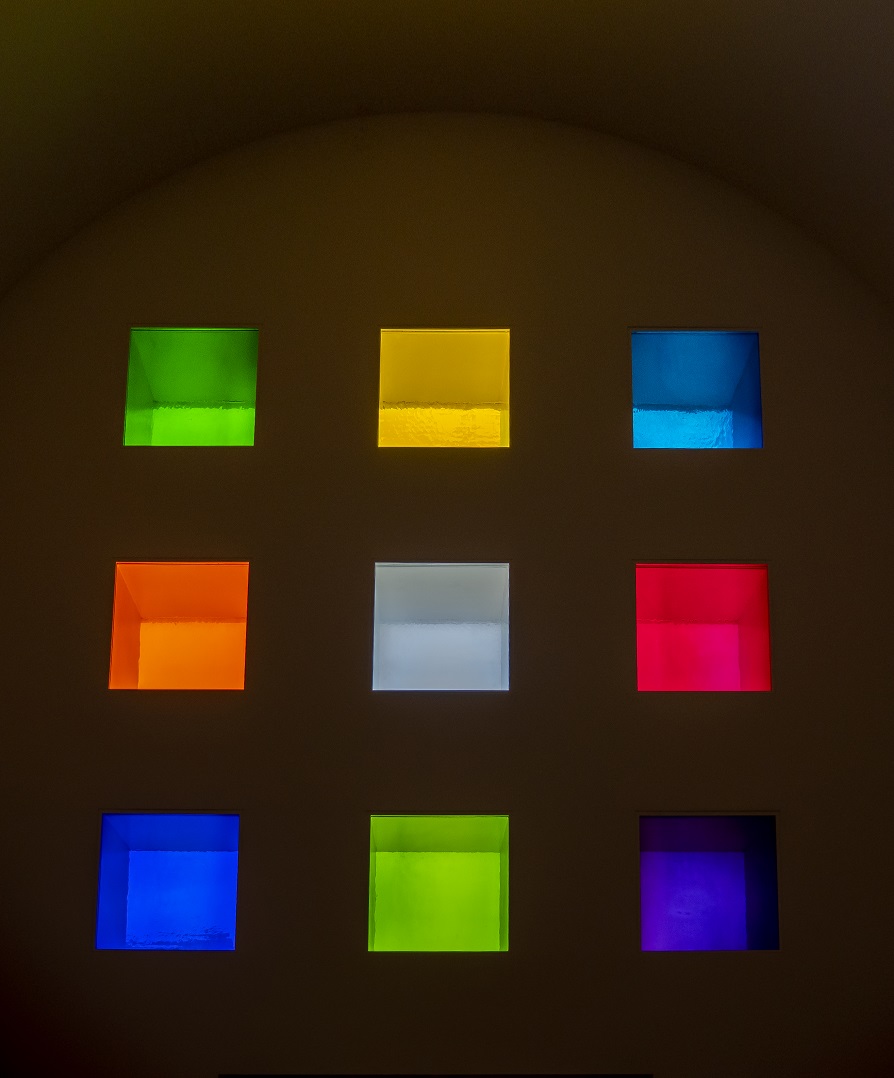
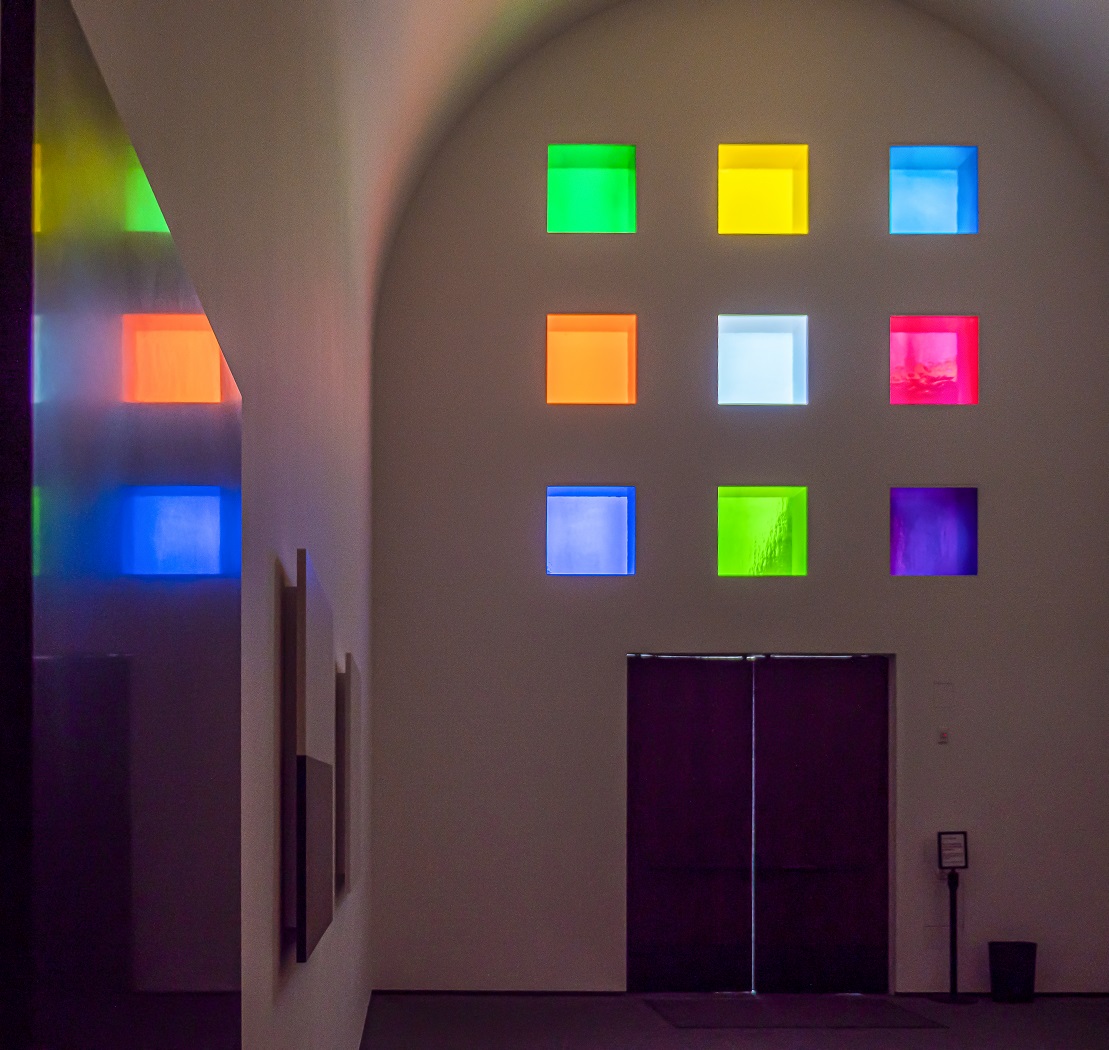
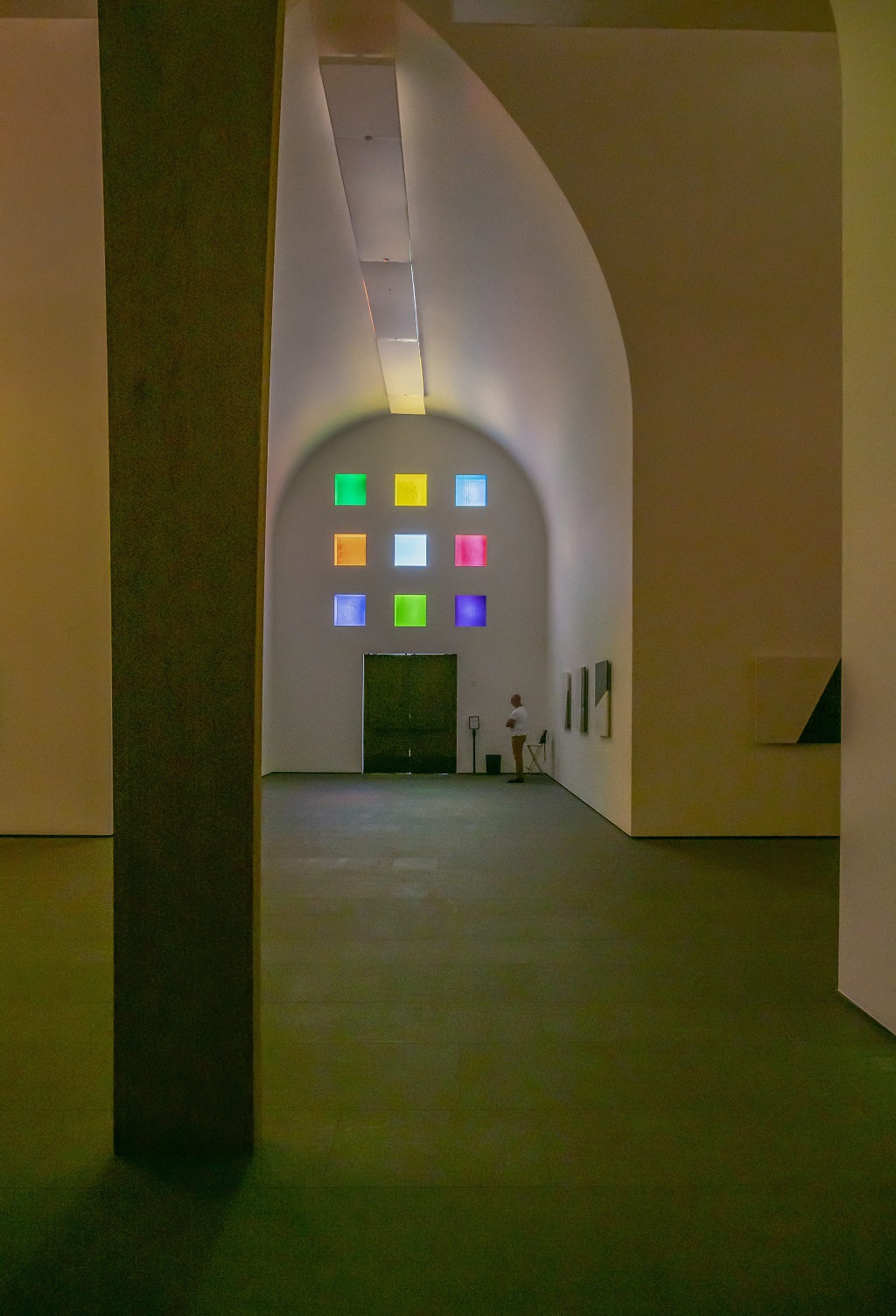
Jessica loved the beautiful Ellsworth Kelly Chapel, which I believe was another of the group’s favorites! It was comprised of a circle of squares and a sun-colored glass that had all the vibrant colors.
When the sun shined through, it was even more beautiful! Its walls were decorated with Ellingworth black and white paintings that brought out the colored glass.
Whether a piece is simplistic, challenging, controversial, disruptive, or detailed, we learned it’s ultimately up to the viewer on their take always of art.
Clay Pit, Jessica Cuevas
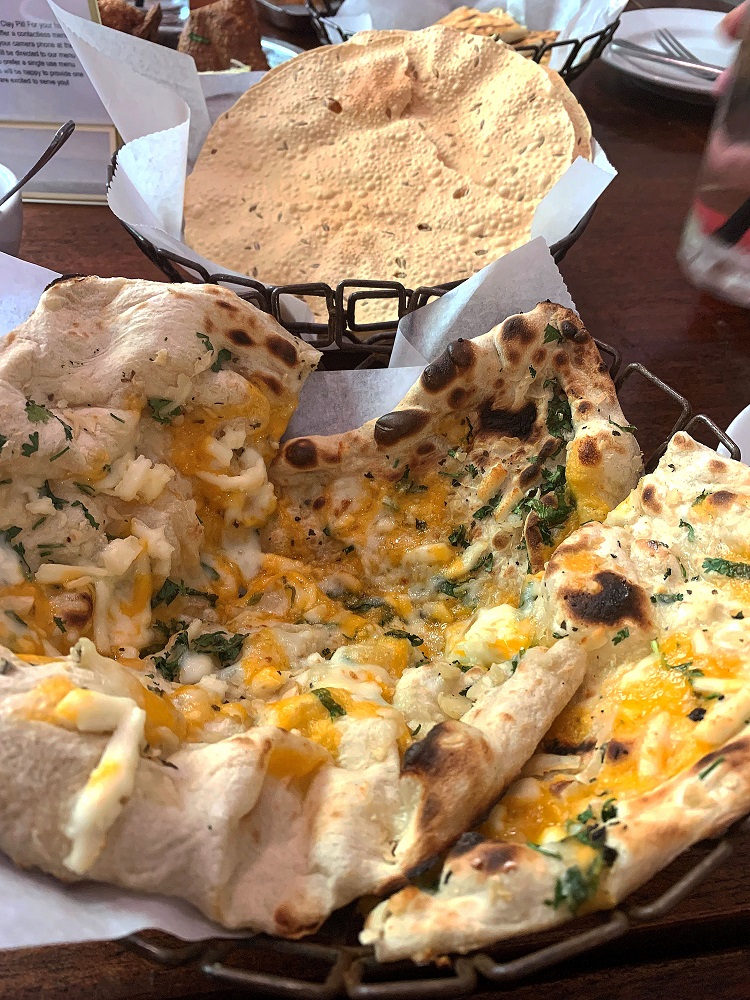
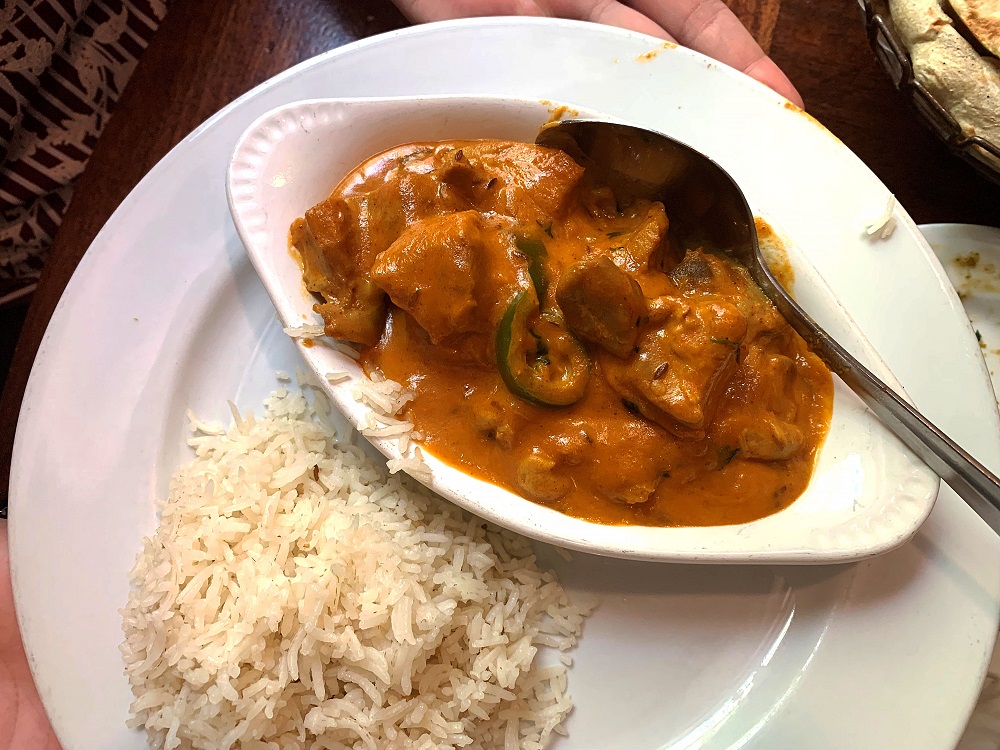
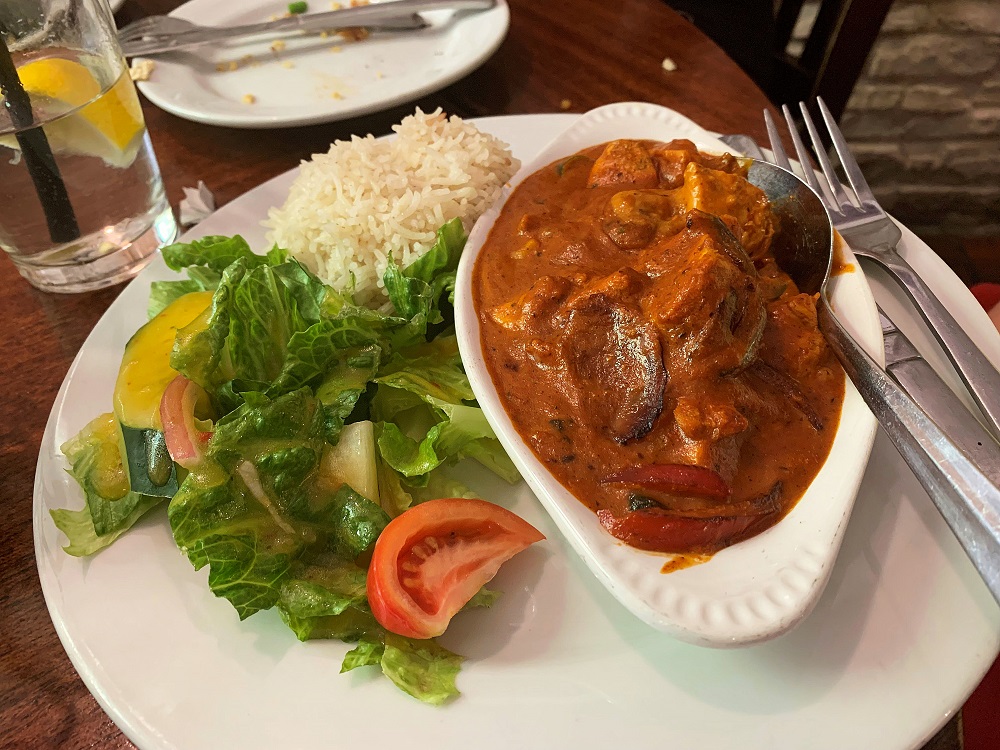
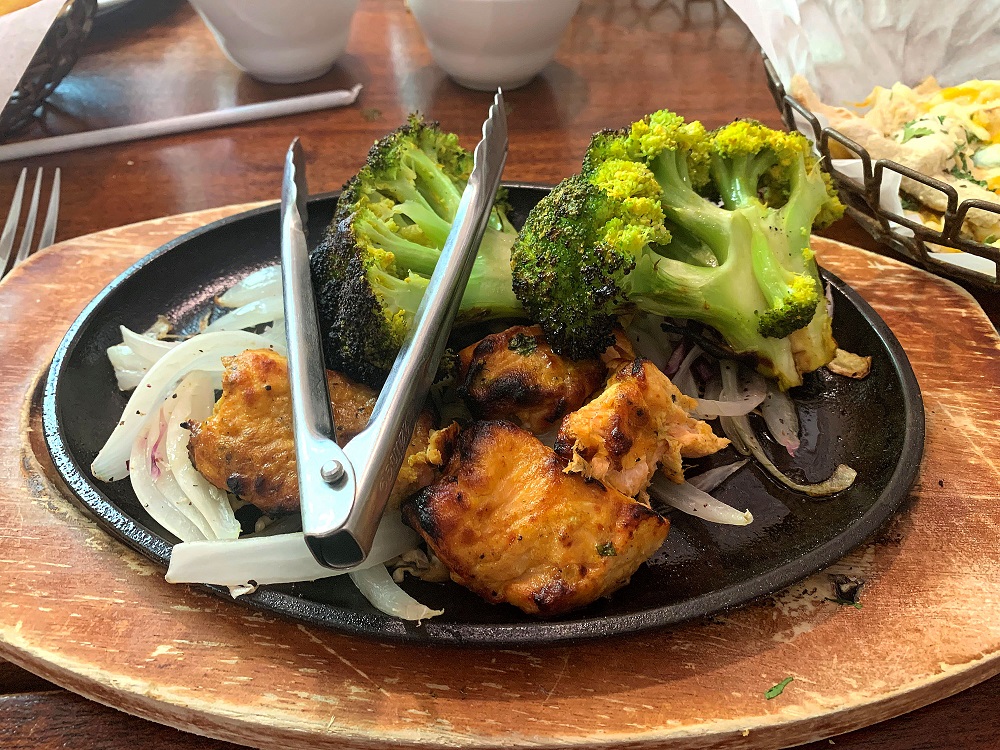
We then ventured to a neat Indian cuisine restaurant, Clay Pit, for lunch. For many of us, it was our first time having an Indian dish. Our appetizers consisted of Naan, Samosas, and Papadum which was like a flattened-out tortilla with lentils.
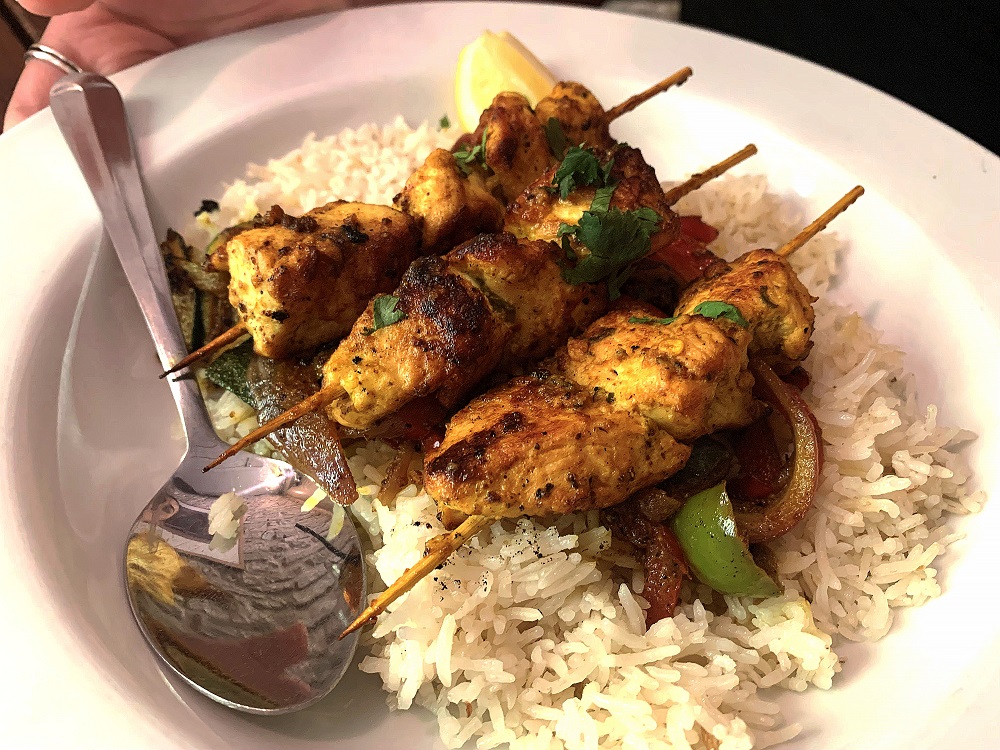
The appetizers were delicious, but we mostly enjoyed our flavorful and savory meals which ranged from medium spiced Butter Chicken to Chicken Kabobs and Coconut Curry Chicken. One of the great things about traveling with LEAP is that they encourage and provide us with opportunities to try new things.
Texas City Management Association, by Isabel Behm
Once we finished our delicious lunch in Austin, we began to make our way back to Bastrop to kick off the Texas City Managers Association Conference. On the drive into the resort where the conference was being held, we were met with a beautiful scenery surrounded by nature.
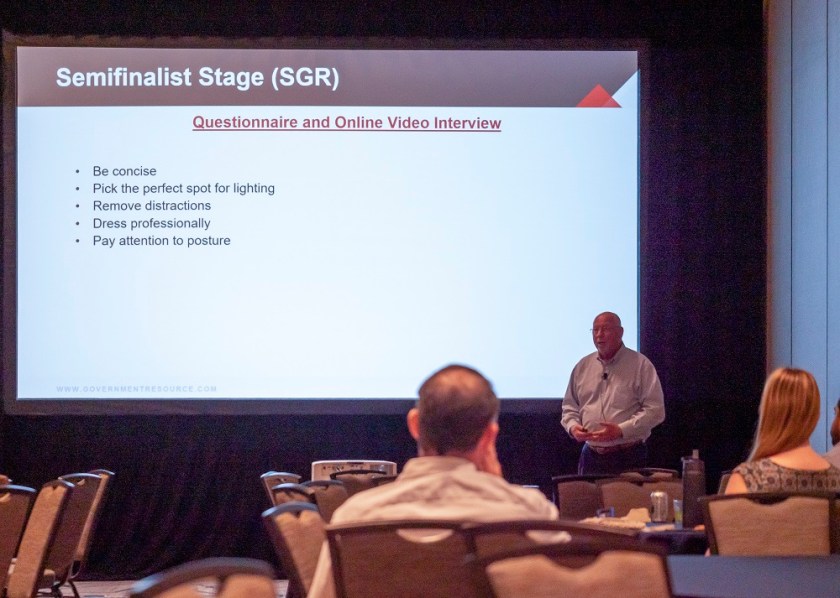
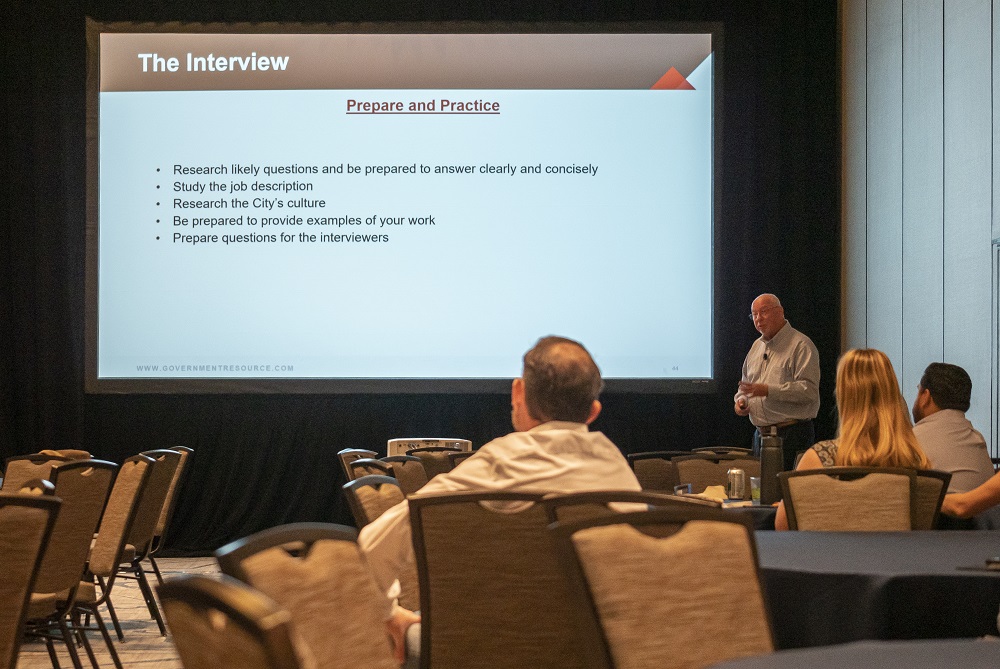
The first event we attended was Career Development. The presenter, Larry Gilley, is Vice President and Executive Recruit of Strategic Government Resources.
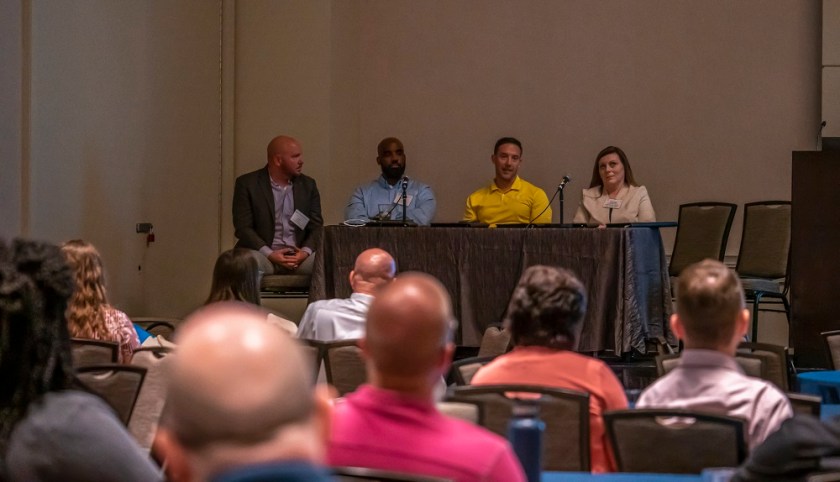
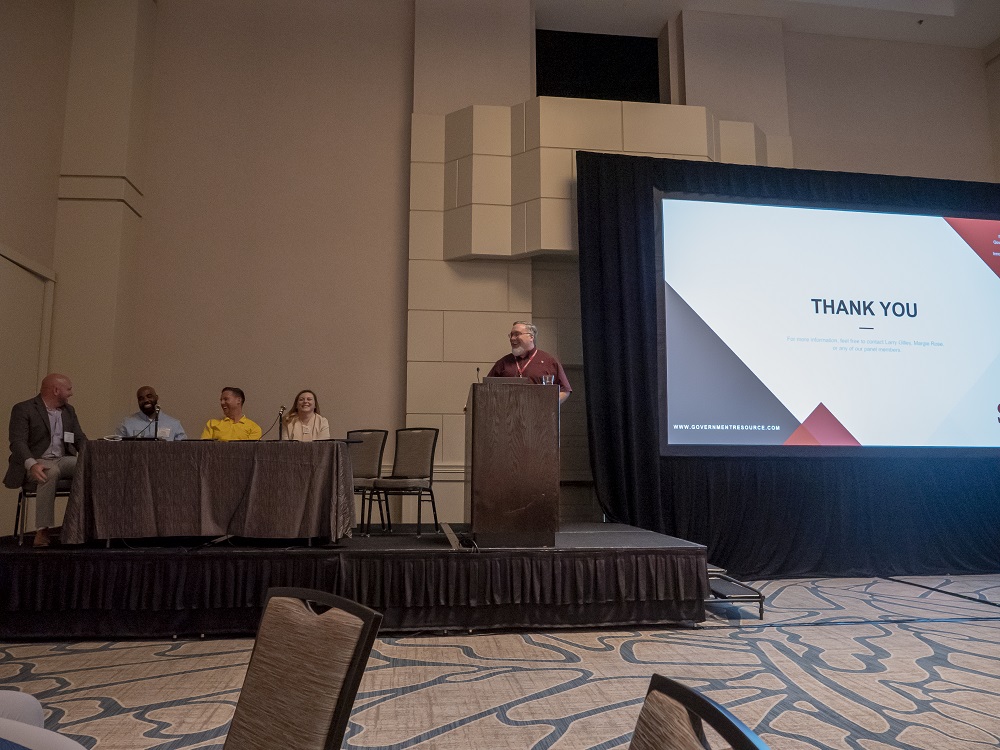
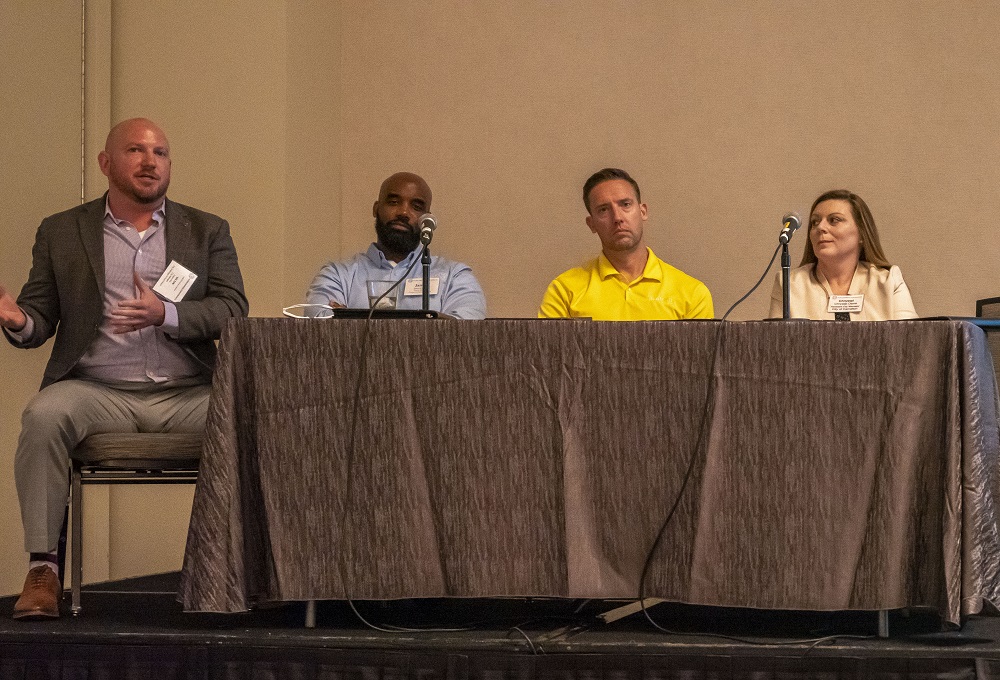
We also heard from four panelists, Matt Mueller (Town Manager of Little Elm), James Childress (Town manager of Flower Mound), Dalton Rice (City Manager of Morgan’s Point Resort), and Chrystal Davis (Assistant City Manager of Carrolton).
The recurring theme of this session was how to strengthen your resume, as well as your interviewing skills. We got to hear first-hand about what these specific city managers looked for and how exactly they dealt with balancing and managing their workload. Some of the main points of the presentation were to get to know the position you’re applying for prior to an interview by either reviewing the city’s website as well as their city council members and knowing why you are the right fit for the position itself.
When the panelists were given time to speak, they gave countless pieces of advice about how exactly to be successful in those positions. The biggest piece of advice that stood out to me was the advice given by Chrystal Davis. She stressed the importance of being able to take time to breathe and assess your priorities so that you can have a work-life balance and be able to manage your home life as well. Some other things mentioned were the importance of knowing your own personal strengths and weaknesses and being able to let your team succeed and learn from their mistakes. It was an amazing experience to be able to hear from these city officials firsthand and get an inside look at how exactly they managed their specific towns/cities.
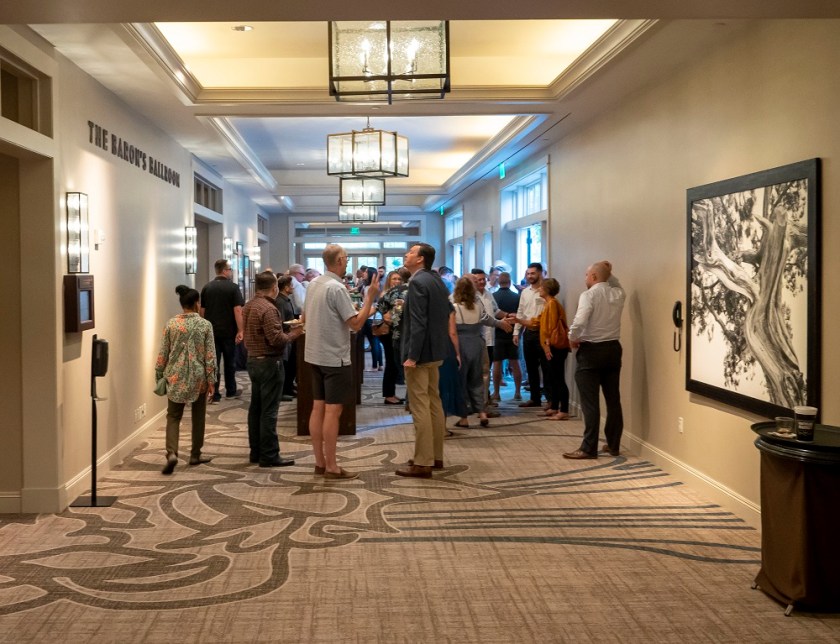
Interestingly, we finished the night at a reception, where we spent more than two hours…
…meeting with people, learning new things about city government, and networking in the hopes of landing a job when we graduate!
For our first full day in D.C., we made sure we bundled up before we braved the chilly weather. After a typical quick breakfast, we laid out a plan of action for the day and set off on foot. Our first location was within a reasonable walking distance inside the National Mall, and we could see our destination from a distance. As we neared, we could see the details of the Smithsonian National Museum of Natural History, which was adorned with Corinthian columns and several reliefs.
We were grateful that there was no great line to enter the museum but we were shocked at the number of people also exploring their way through history. A grand foyer and a posed elephant welcomed us as we entered the building. As a group, we gathered and quickly discussed the best use of our time and the order in which we should meander through the exhibits. We soon were enthralled by specimens, fossils, and skeletons that left no room for downtime. The exhibits were displayed by date, species type, and even dramatic scenes.
Yvette and I split off from the rest of the group and started our journey through time. We were also blown away at the sizes of some of the displays.
A few towered over us…
… while others were the size of a hummingbird’s femur. Yvette and I especially enjoyed the lab on the first floor of the museum which had cameras and screens set up to allow visitors to watch scientists work on the fossils. We were mesmerized by the work the scientists were conducting on the specimens.
Interestingly, we also saw a first edition of John James Audubon’s “Birds in America,” which was beautiful, and bigger than any book we’ve ever seen!
The crown jewel of the museum was, naturally, the Hope Diamond. It was mined in India in the 17th century and changed hands several times over the last few centuries. It was eventually purchased by famed jeweler Harry Winston who donated it in 1958. It is one of the most famous parts of the museum. It gets its blue hue from trace amounts of the element boron in the stone. We learned that a diamond’s size and clarity are good indicators of its worth. The Hope Diamond is a prime example of the size factor, weighing in at 45.52 carats and costing upwards of $350 million. We could have easily spent the entire day inside the Museum of Natural History alone, but we pulled ourselves away from the many fascinating and—in the case of the Hope Diamond, dazzling displays and headed toward the exit.
Smithsonian National Gallery of Art Sculpture Garden
Erin Juarez
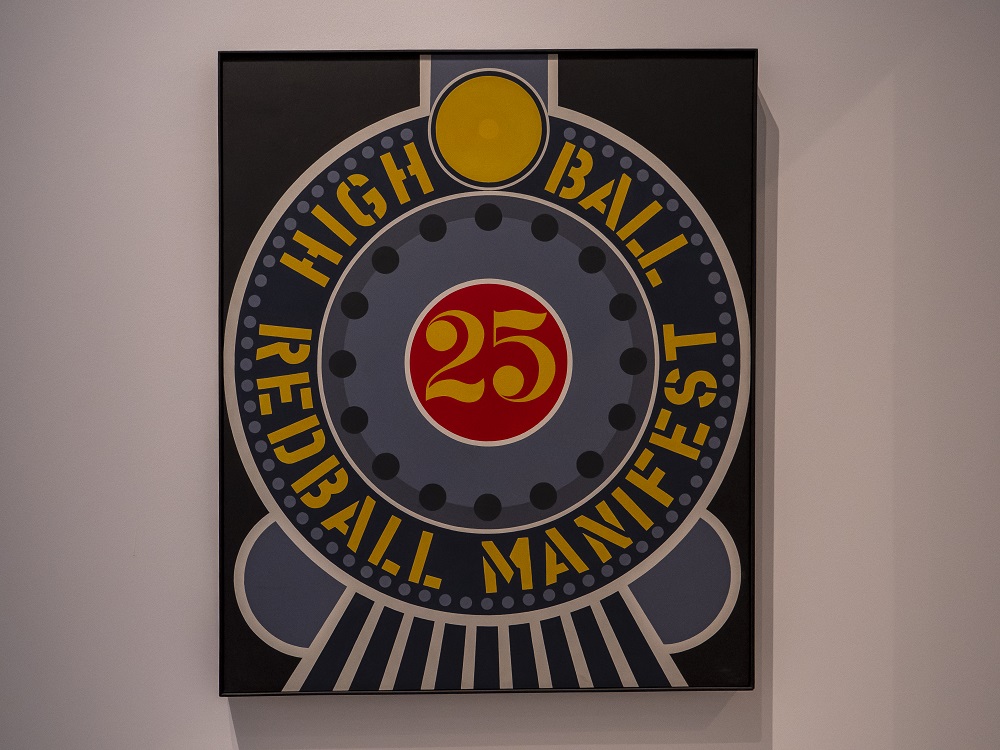
As we left the museum we spied portions of sculptures peeping over the tops of shrubbery across the street and decided to investigate further. Imagine our delight when we realized that they were works by artists we know and love! We had recently seen one of Robert Indiana’s “LOVE” while we were in Oklahoma, and this time we found ourselves looking at his sculpture, “AMOR.” A true pop artist, Indiana uses modern materials such as aluminum and bright, contrasting colors in his works.
As we roamed the rest of this sculpture garden, some among us were introduced to other pop artists like Claes Oldenburg and Roy Lichtenstein…
…for the first time. We paused briefly at a striking work by Roxy Paine, whom Professor Yawn acknowledged as being one of his favorite artists. Paine is recognized for his giant metallic tree installations that combine the natural world and man-made elements.
Personally, Joel Shapiro’s sculpture Untitled, 1989 was my favorite. Shapiro is well-known for his minimalist sculptures consisting of fixed rectangular elements that evoke a sense of movement.
And, of course, we also got to see a couple of Calders…
…with so much to see here, it’s no wonder that we fell in love with D.C. as we rambled across the city.
Smithsonian American Art Museum
Jessica Cuevas
After whetting our artistic appetites in the Sculpture Garden, we next visited The Smithsonian American Art Museum, walking across the mall to get there.
But it was the Smithsonian that we witnessed the largest collection of American Artists, some we had previously seen and others we had not. We were exposed to such varied styles of works from artists that we were familiar with, that we found ourselves eagerly moving from painting to painting in the hopes of seeing something new from artists that we had become used to.
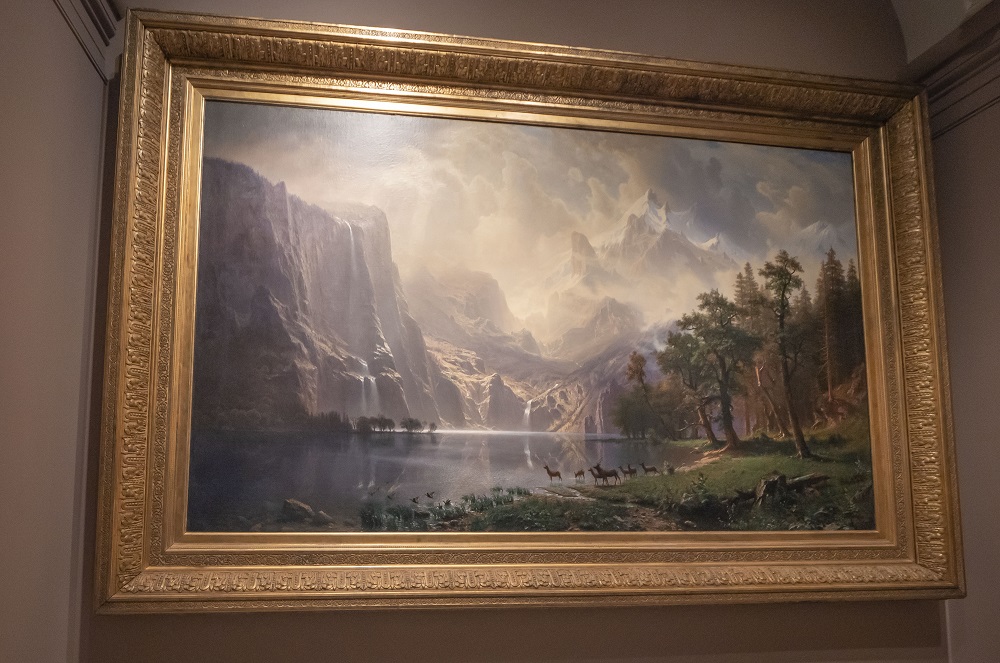
Unlike other museums we had previously been to, we were able to see more of Thomas Moran’s and Albert Bierstadt’s works. Their breathtaking landscapes scenes consist of the country’s natural beauty, with luminosity provided by the artists.
Morgan, who typically prefers a Moran or Bierstadt painting over other artworks, today favored a piece by Sargent; the “Corner of a Church on San Stae.” We all noted that this work was much different than anything we had seen by him up until this point. We had only seen his portraits!
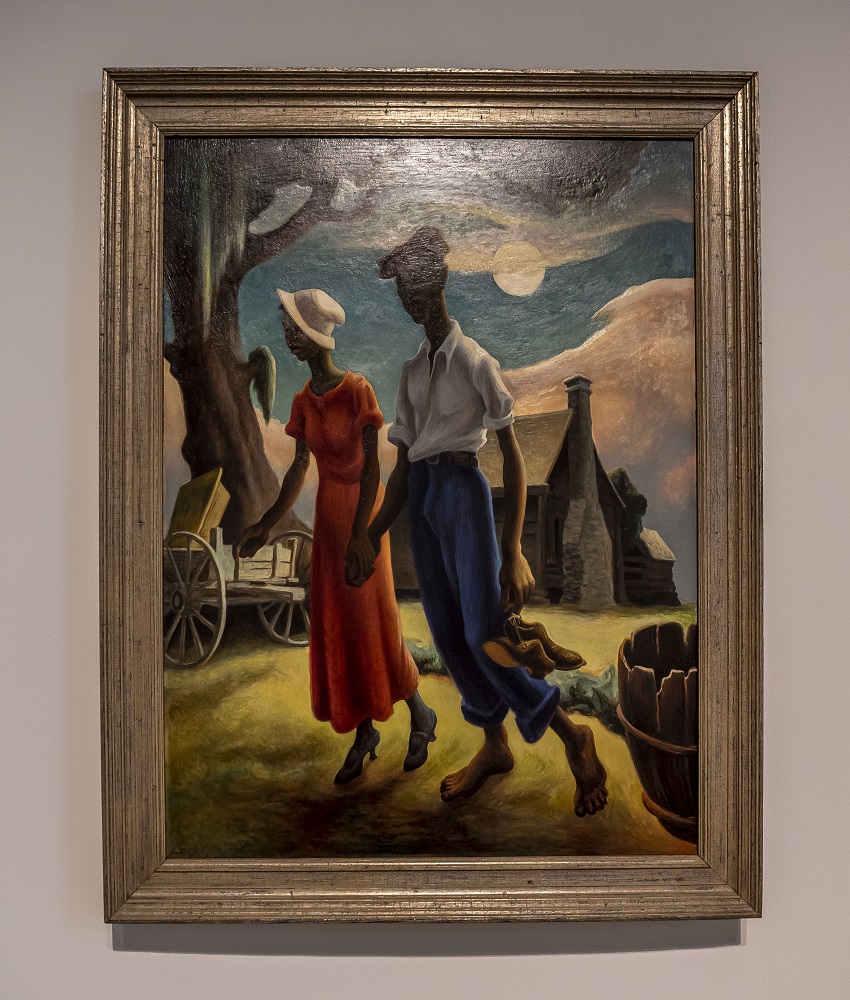
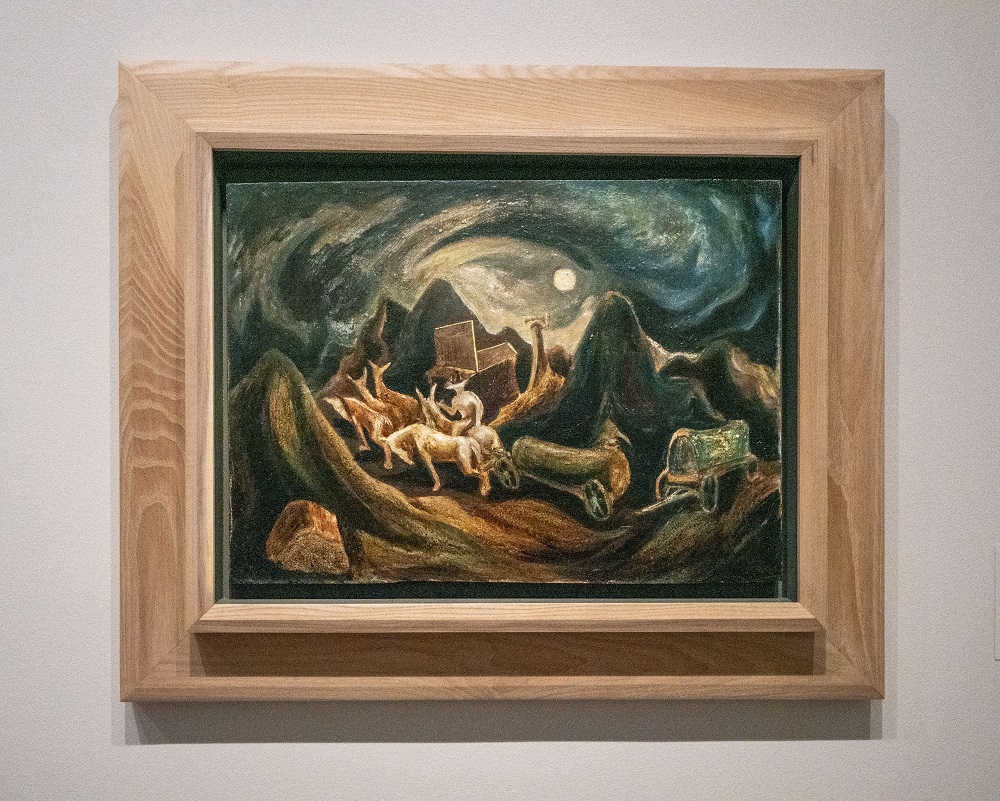
Interestingly, we saw an early Jackson Pollock, and the influence his mentor, Thomas Hart Benton, had on him was obvious.
And this became more clear when we saw an entire wall dedicated to Benton!
Up on the second floor, we were able to see the Presidential Portrait Gallery. In this wing was included at least one portrait of every U.S. president, starting with President Washington, proceeding all the way up to President Trump.
Upon entering we were immediately confronted with the famed George Washington Portrait done by Gilbert Stuart.
This portrait is deeply symbolic. It depicts our first president, but it also includes several other details regarding the birth of our nation. In the background of the painting through a window, there can be seen a rainbow emerging from dark storm clouds, suggesting that America was emerging bright and new from a dark and stormy era. Washington’s right arm gestures toward a quill pen and parchment on his desk while his left arm rests on the hilt of his sword, suggesting that our newly-formed democracy was ready to assume its governance role but that it would still defend itself if the need arose. The law and philosophy books under his desk portray Washington as an enlightened leader in addition to his being a man of action. This is the famous portrait that we see on our dollar bill.
Prior to this museum, we’d stopped briefly at Ford’s Theater, where President Lincoln was assassinated. Seeing his presidential portrait and then a face casting made before and after his death, resonated with us.
Although most presidential paintings were traditional and sort of regal, former President John F. Kennedy apparently asked Elaine de Kooning to do something unique when he commissioned his official portrait. The portrait is semi-abstract with hundreds of strokes of greens and blues coming together to show Kennedy sitting casually on the canvas looking back at the viewer.
As the sun began to set, we rushed in order to see as much of the museum as we could. While most of what we saw were paintings, we did encounter a few sculptures including a James Surls piece!
Such a rich art experience on our first full day in our nation’s capital gave us the opportunity to encounter new artists but also to deepen our knowledge of the artists that we were already familiar with.
In leaving the Museum, we realized we weren’t too far from the White House, which prompted us to make a detour before going to eat.
Dinner at Oyamel
To cap off a long and rewarding day on the National Mall, we stopped in at Oyamel, a wonderful Mexican restaurant not far from our hotel. All the food was good, but we especially like the appetizers, which ranged from Brussel sprouts…
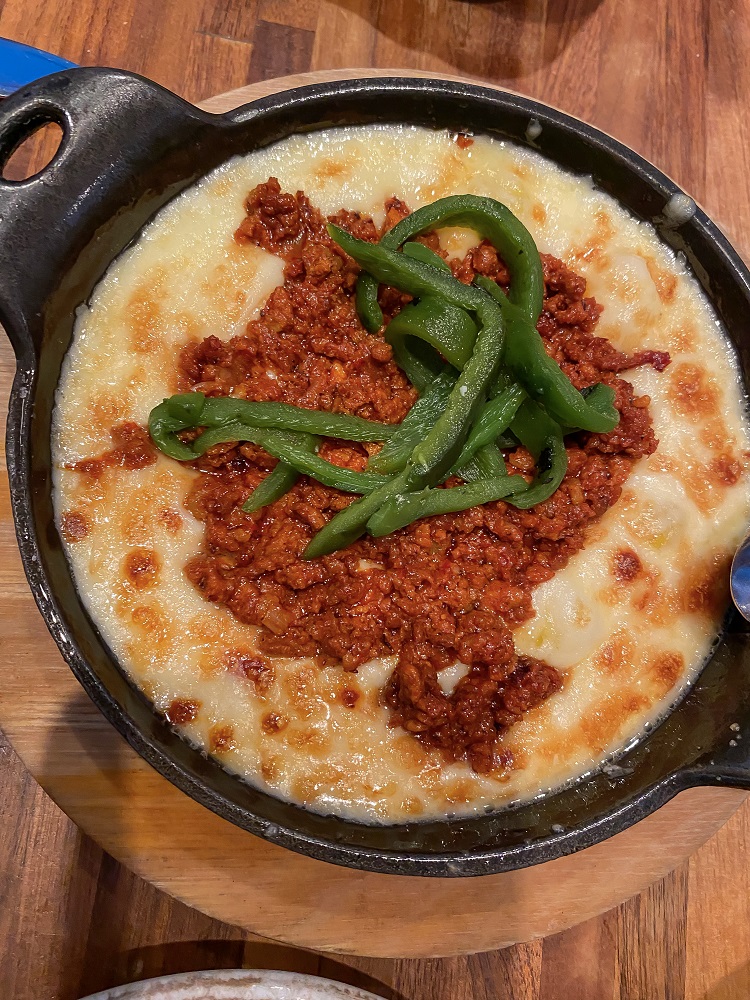
…to queso fundido…
…and more.
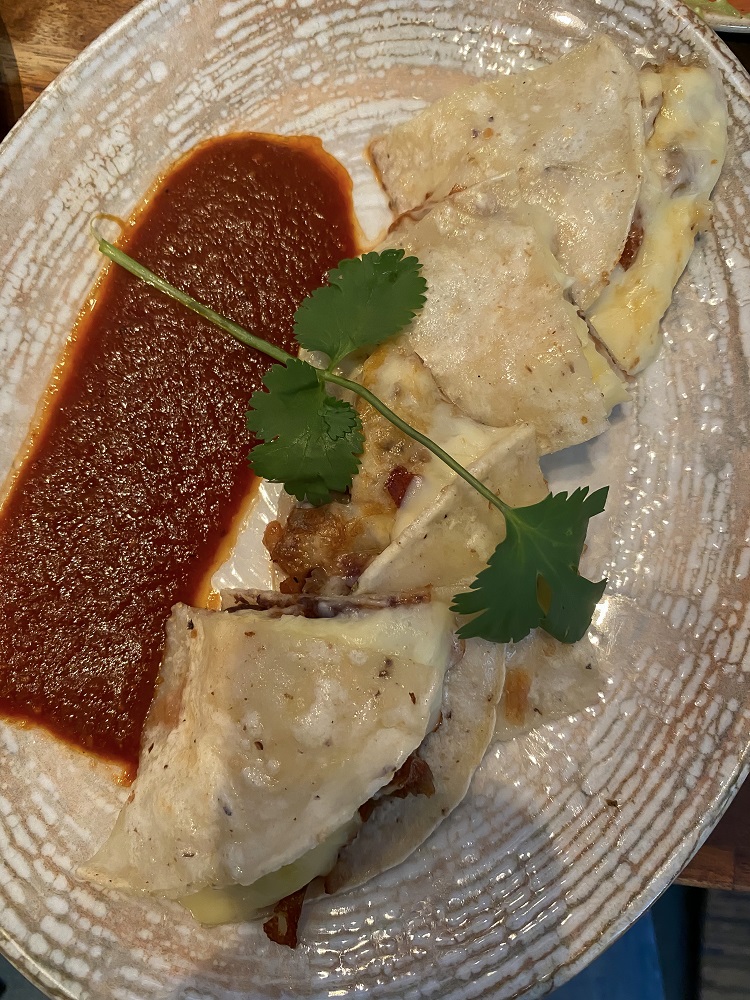
The entrees were equally as good. We had a mix of food, with the shrimp and the tacos being the best of what we tried.
We didn’t know it at the time, but this turned out to be the best food we would have on our trip.
We learned a useful lesson today: Man Plans, God laughs! Our original plan was to place our lunch order well ahead of time so that our advisor could meet us once we landed in Pittsburgh. In this manner, we could drive directly to Frank Lloyd Wright’s Kentuck Knob, so that we could get in before tours closed.
Our flight, however, was an hour late. So, we had to cancel Kentuck Knob, and go to our backup plan, which had, fortunately, been thought of in advance. The upshot was that we ate in the car. We ordered from the Mayfly Deli and wanted food that would travel well, so all the LEAP Ambassadors ordered chicken salad sandwiches, while our advisor had pepperoni and provolone, and Victoria had a prosciutto sandwich. The food was great! Even though we didn’t have a chance to eat for a couple of hours after, our choices from Mayfly held us over.
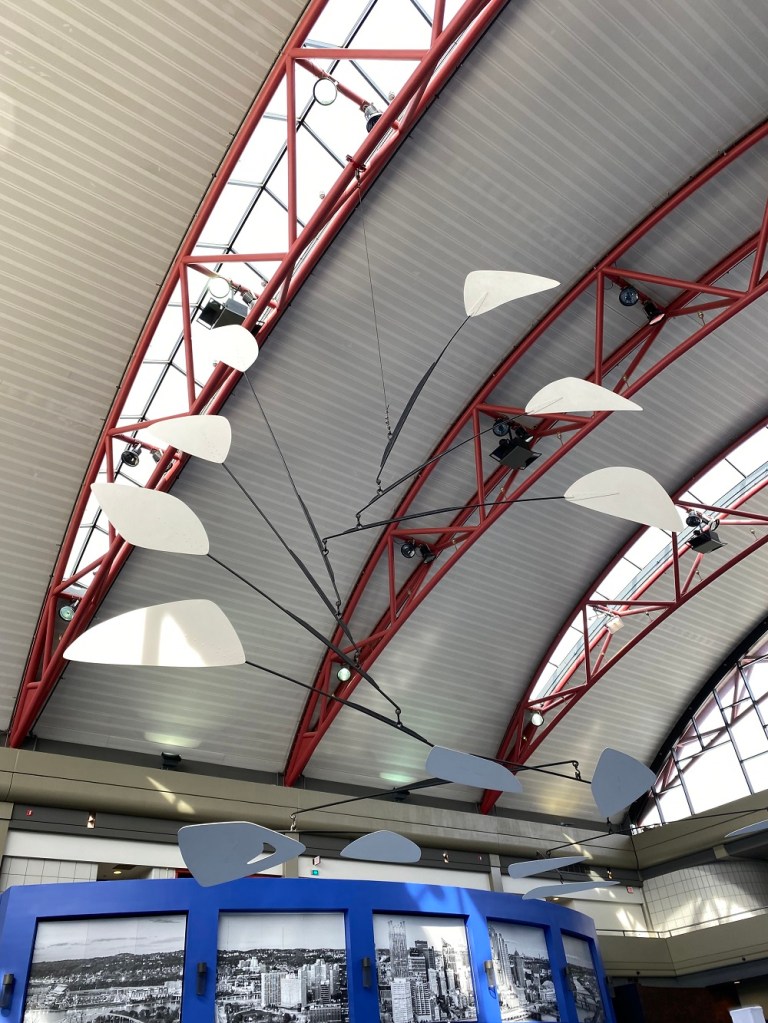
We even passed the first test of the trip: spotting the Giant Alexander Calder in the Pittsburgh Airport!
We were all surprised by the nice weather and did our best to savor the sunshine (as we soon learned it would not remain that way for long).
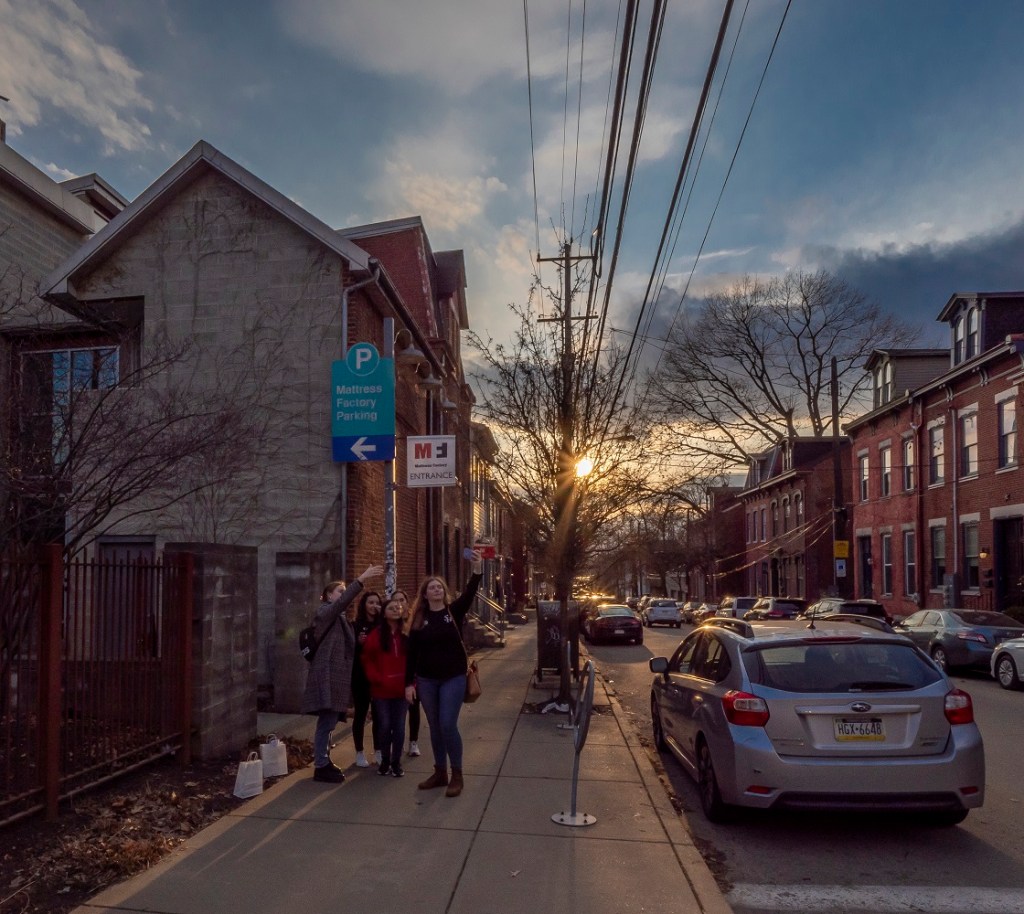
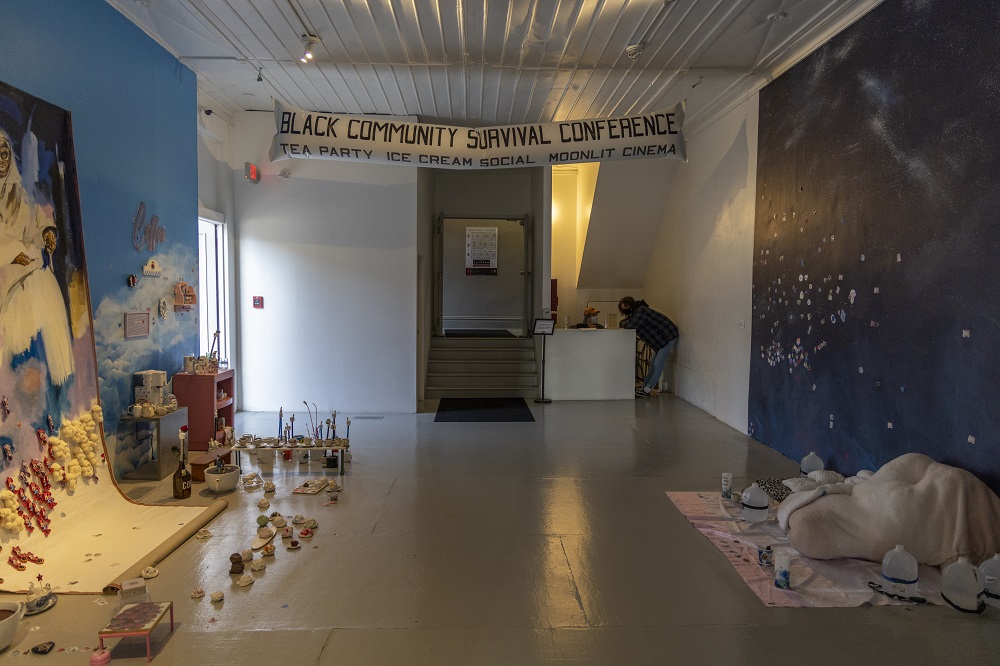
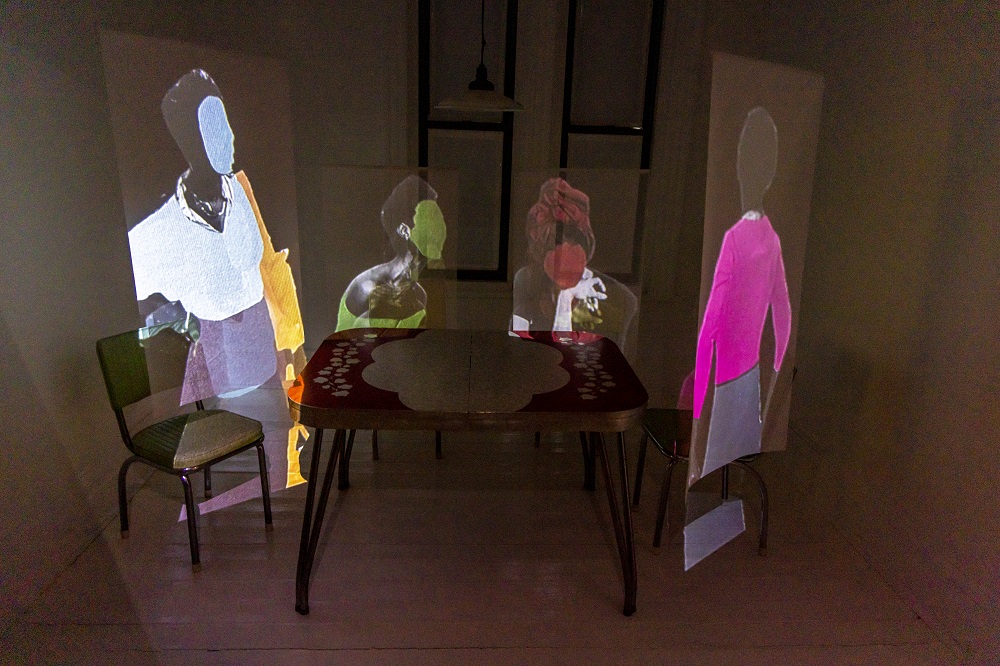
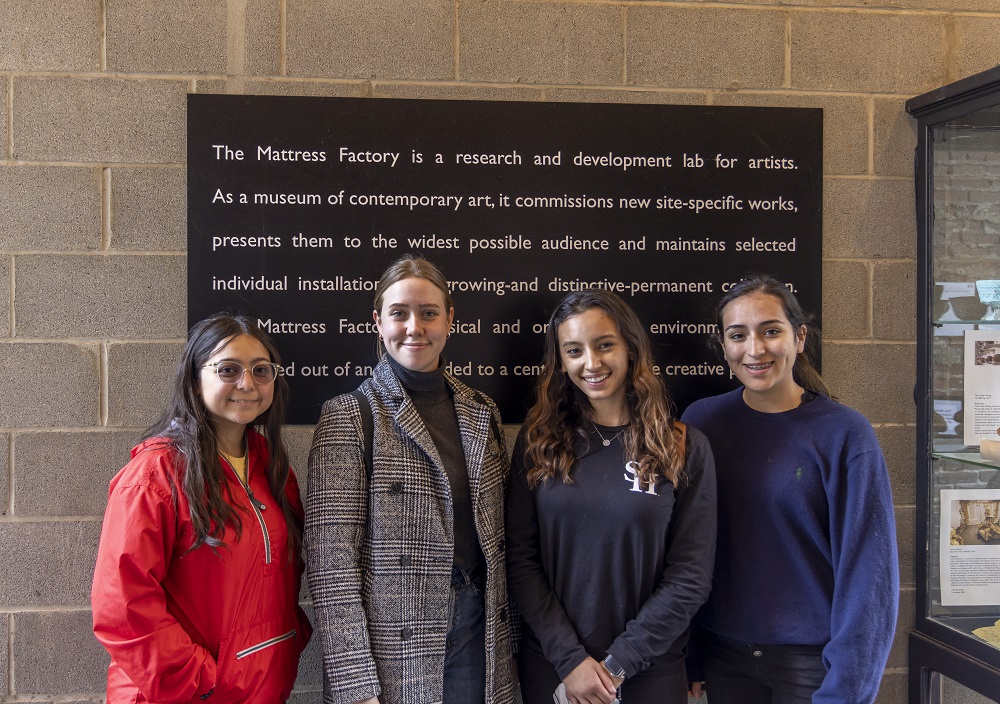
The Mattress Factory was located in a quaint, and seemingly vintage part of Pittsburgh, blended in nicely with the surrounding structures. However, the exterior of the contemporary art museum was where the similarities ended. The museum was divided into three different buildings, each one within walking distance of the next. While we traveled from building to building, the juxtaposition of the modest townhomes and brick roads, to eerie and dramatic pieces, became more pronounced.
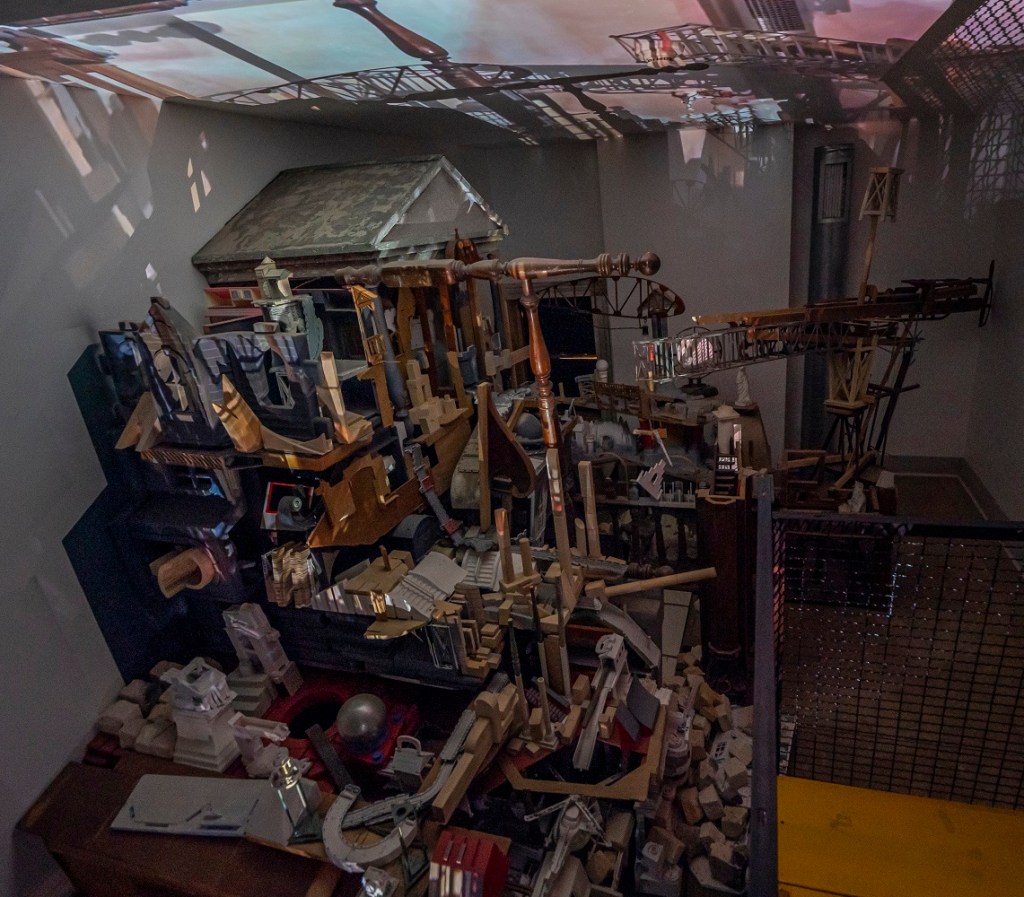
The first building was dedicated entirely and stretched over three floors for one piece entitled A Second Home by Dennis Maher. Made from salvaged architectural items and various trinkets of everyday life, Maher combined each piece in a way that created a dynamic flow of the room. Some aspects of the “Home” were intentionally lit well to showcase its intracity, while others were nearly pitch black and nearly impossible to make out distinctive shapes.
Other exhibits included several representative pieces that took the form of projected images on what appeared to be cheesecloth or 3-D figurines placed in detailed manners around a central focal point.
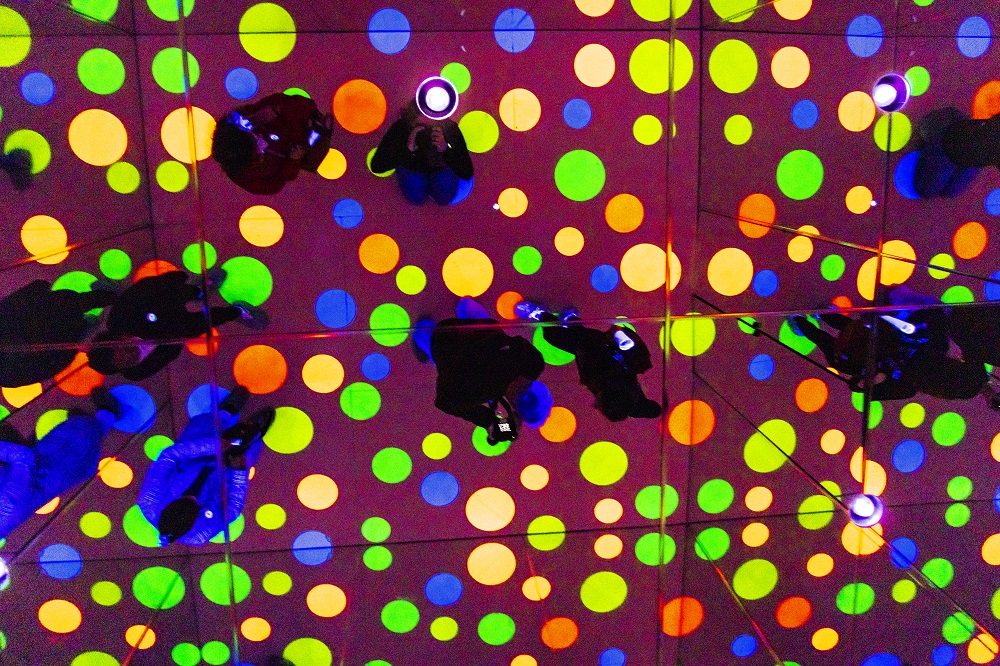
In the form of viewing rooms, Artist Yayoi Kusama placed a focus on lighting and the use of polka-dots! The first room we entered was entirely made of mirrors, and was dark, save for the reflecting dots that appeared to move around the room. The illusion created by the mirrors added space to the room and created a sense that the room was endless.
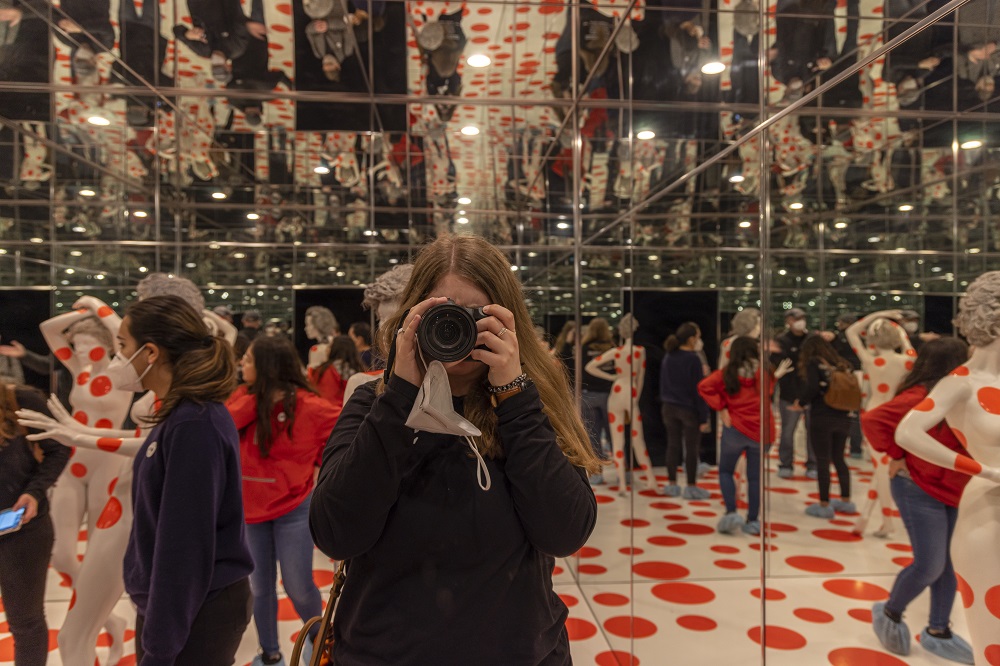
In complete contrast to the darkroom and multi-colored room, we then entered a white room with red polka-dots covering the surfaces. This room contained three posed mannequin-like figures, also decorated in a white and red fashion.
We continued our tour with more viewing rooms involving light, but this time by an artist we all recognized: James Turrell. The largest of the rooms we ventured into was lit by violet/purple lighting. The concaved wall appeared to narrow as it moved backward. The darkest, and probably the most enjoyable of the Turrell light experiences began with a narrow hallway leading to a small viewing room entitled Pleiades. Some of us were able to make out the shape of the light, whereas others were not. We later learned that to properly view the exhibit, the viewer must wait fifteen minutes in front of the piece.
The Mattress Factory offered several new perspectives on contemporary art, and while I might have an answer to every “why” question regarding artistic designs and choices, the style and movement itself became clearer after our visit.
Ambling through the Andy Warhol
Erin Juarez
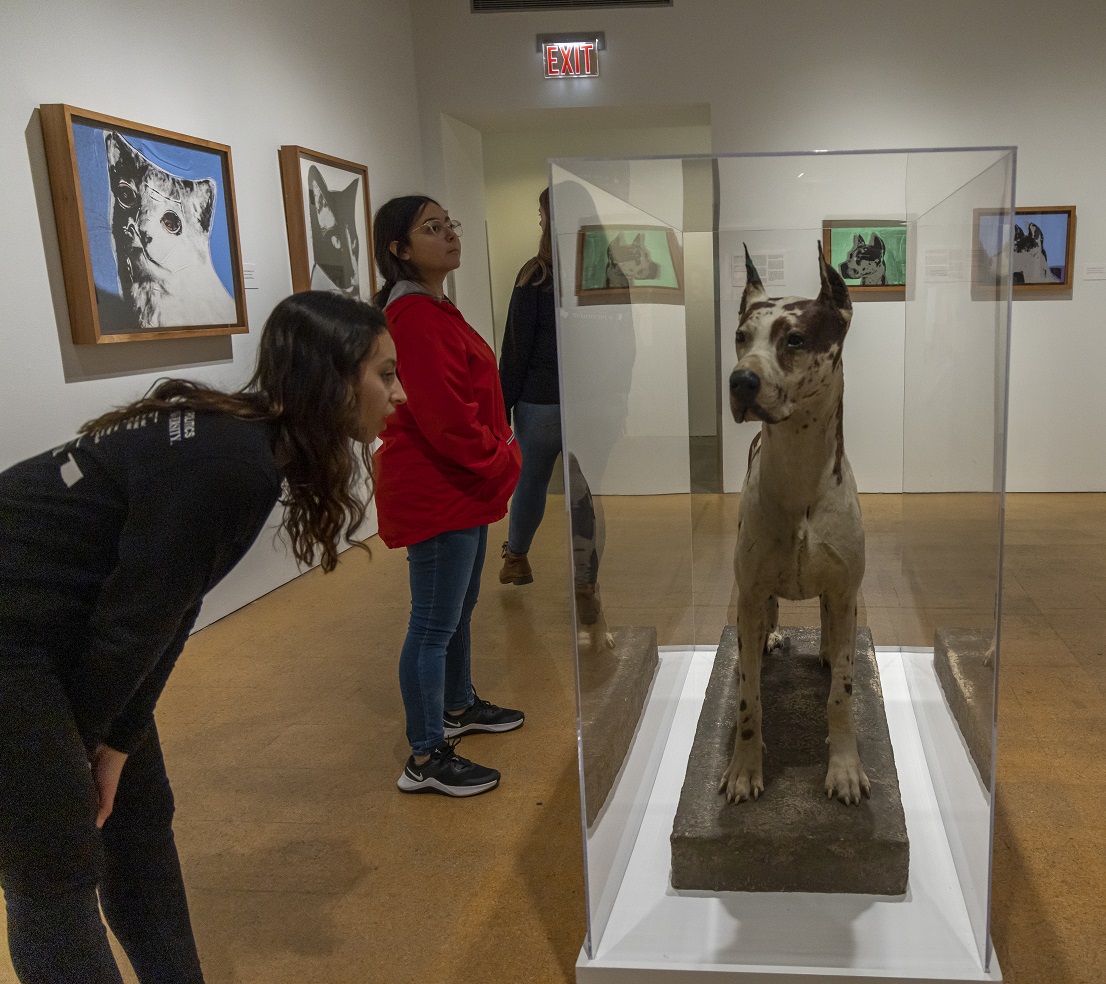
One of Pittsburgh’s famous sons is Andy Warhol. We had the opportunity to visit the Andy Warhol Museum in Pittsburgh, Pennsylvania. The museum holds the largest collection of his artwork and archival materials, ranging from drawings to sculptures and to taxidermized animals! It is also one of the largest museums dedicated to a single artist in North America, and it boasts an extensive permanent collection of art and personal archives from Andy Warhol.
The museum has seven floors. We followed the instructions from the young woman at front desk, took the elevator to the top floor, and began to work our way back down via the stairs. We were able to see Pittsburgh’s influence on the young artist, and how the city looked when Warhol was there. The seventh floor began with some Warhola family history (born Andy Warhola, he later changed his name to Andy Warhol).
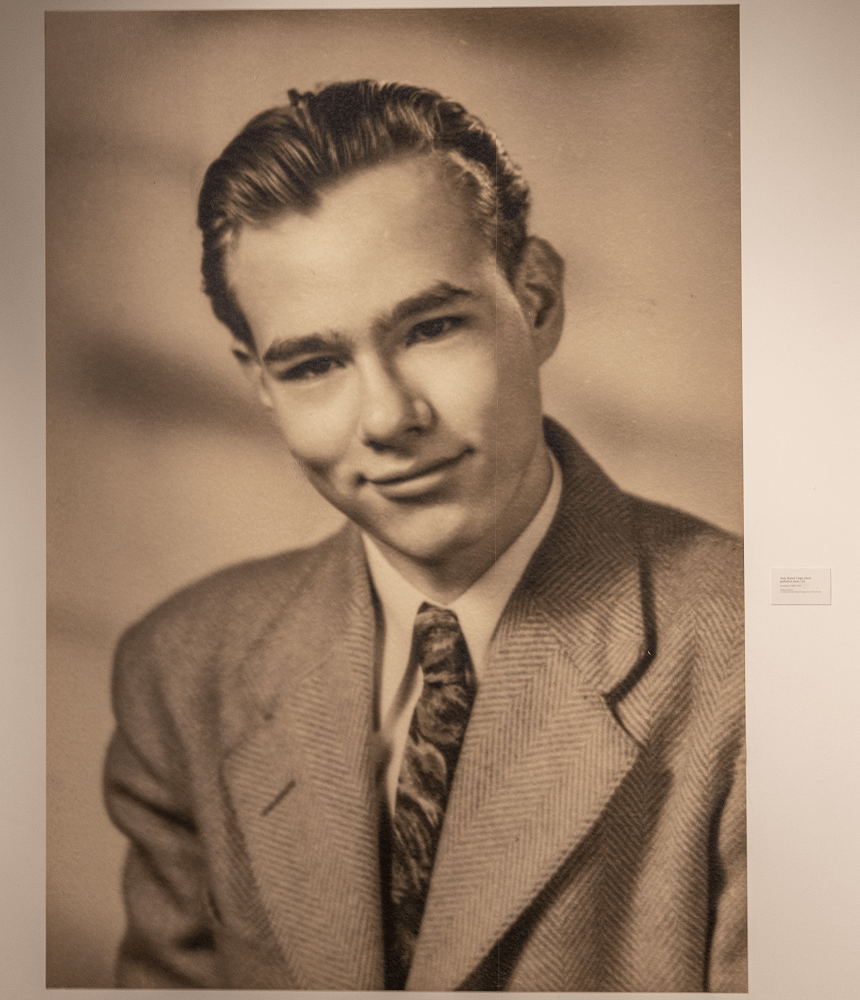
Andy Warhol’s High-School Yearbook Photo
Even at the age of fourteen, the artists distinct voice is visible.
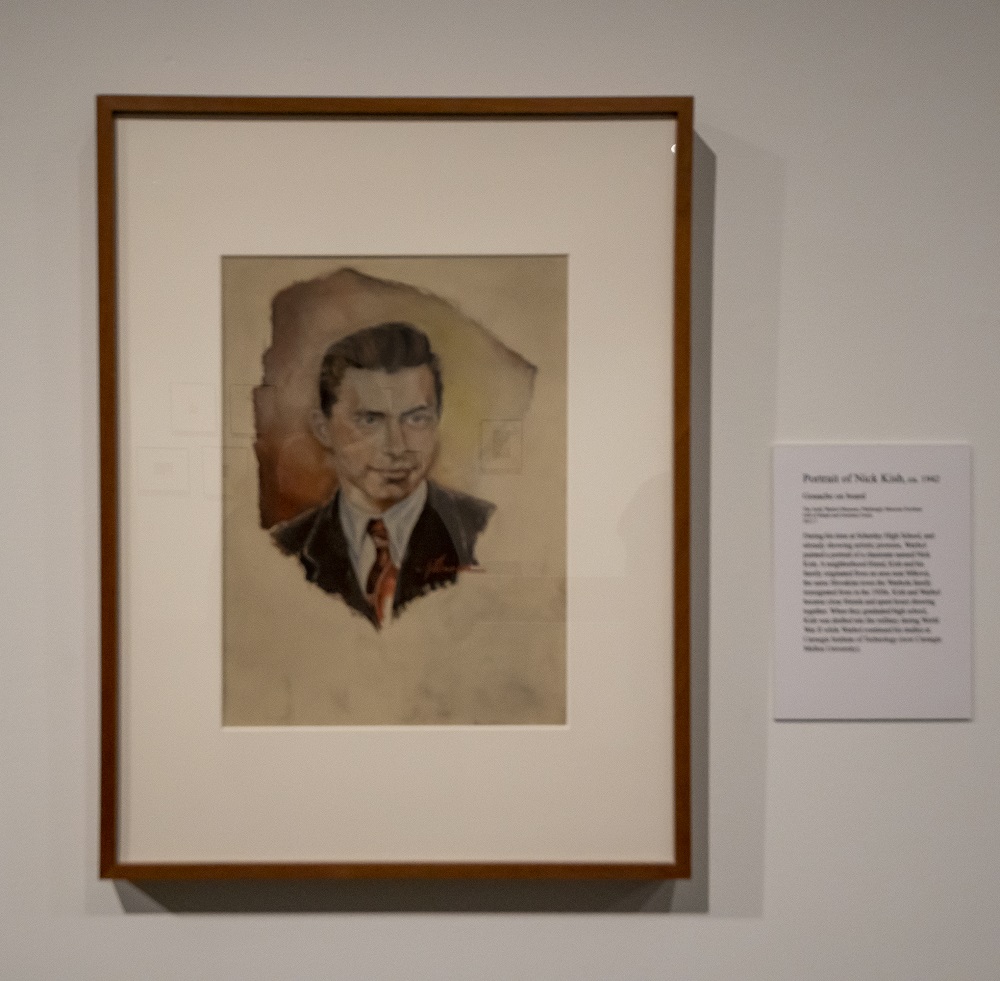
An Early Warhol Work, Completed at the Age of 14
The early art school sketches are shown on the seventh floor, not nearly as colorful as his more recognizable works.
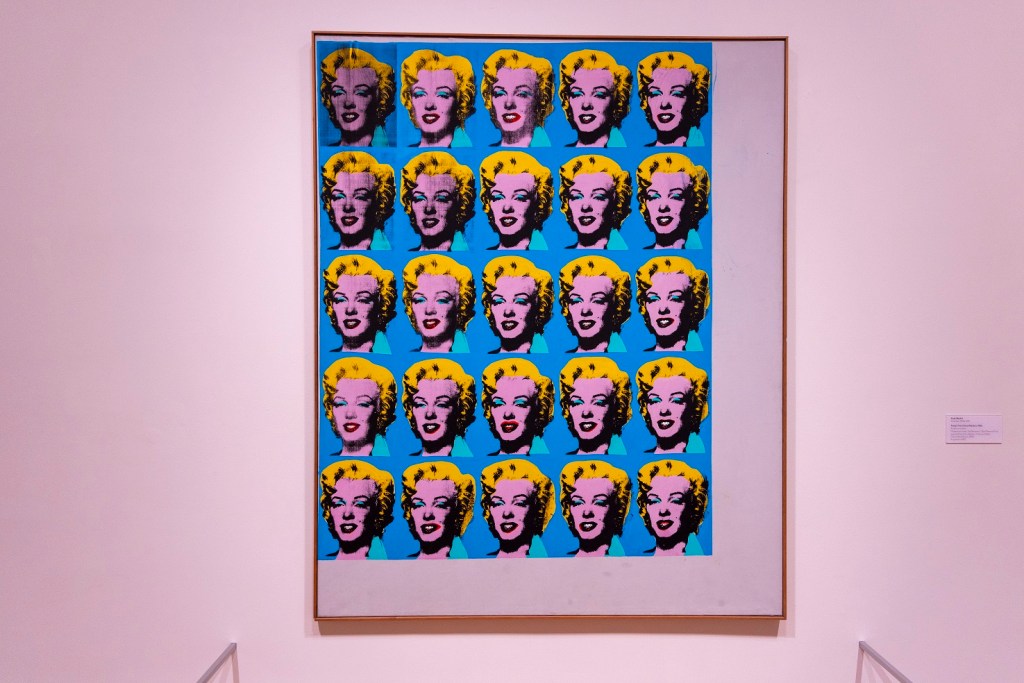
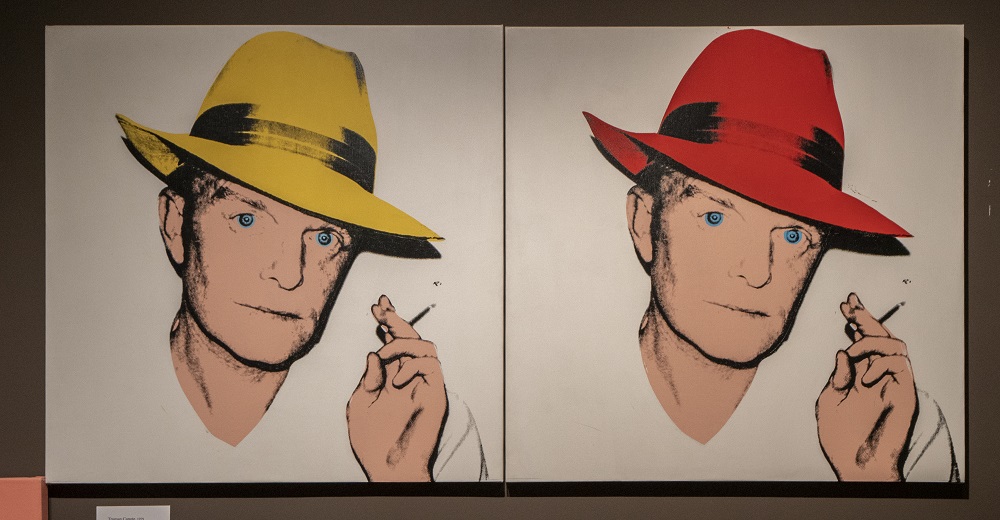
Later in his career, Warhol found his niche. He enjoyed making ordinary objects the focus of his art and making them “pop” with repetition, bright colors, large size, and striking contrasts.
He was also known for his short films which were similar in that they oftentimes portrayed his subjects doing ordinary things on camera repeating on a short loop.
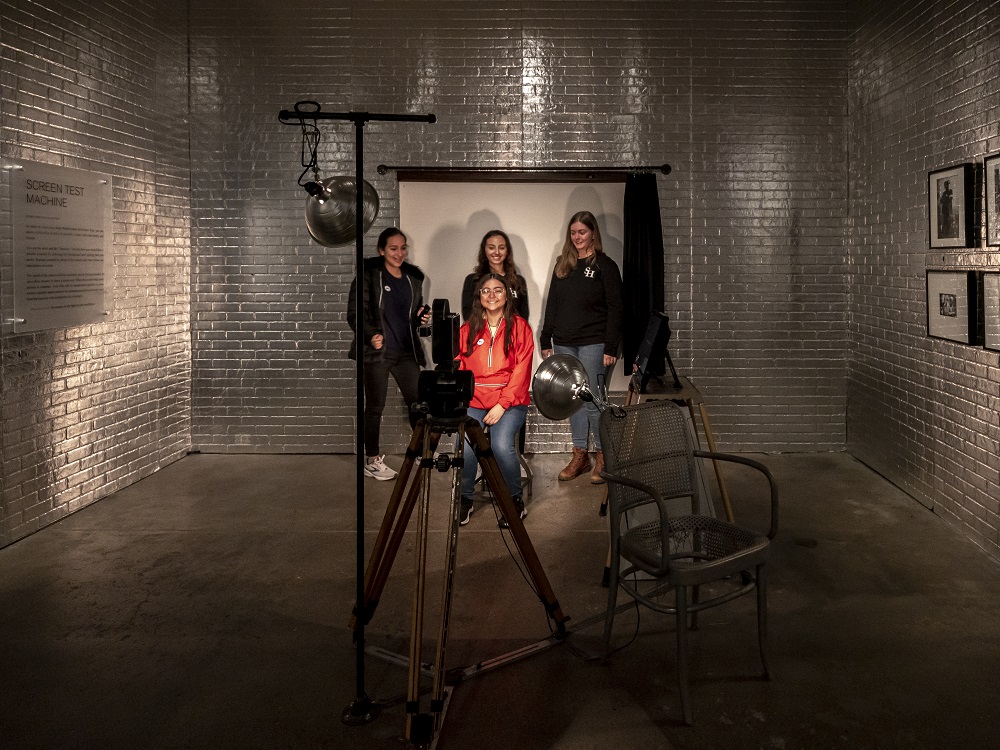
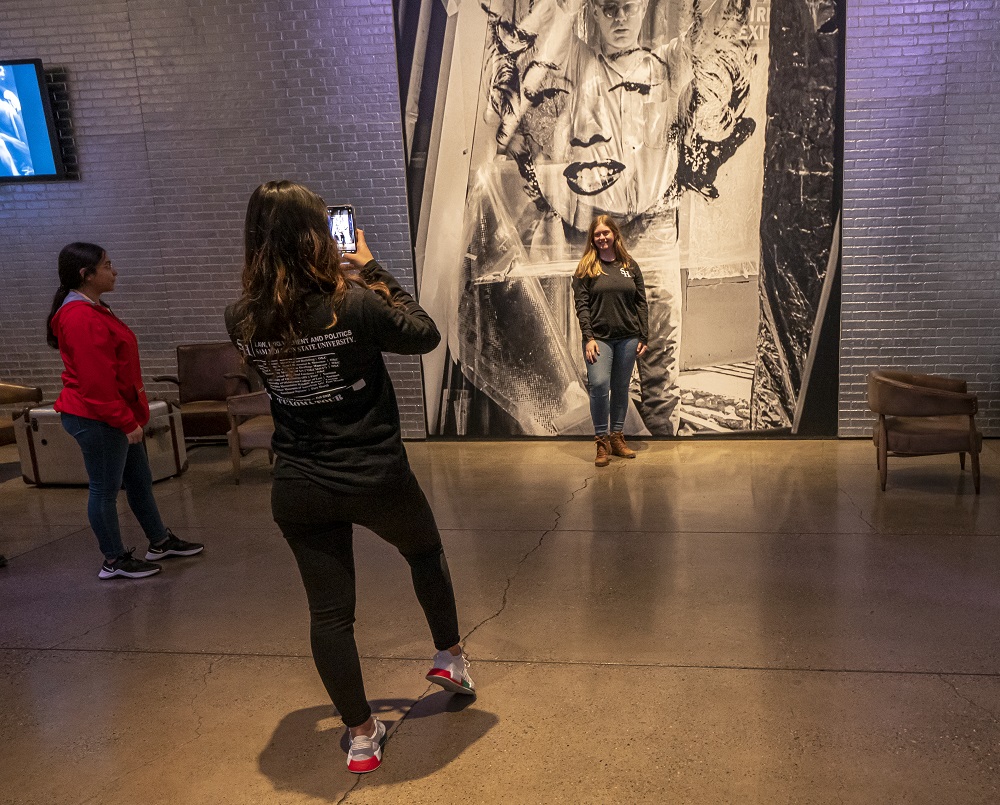
One small interactive part of the Warhol experience was a screen test area that is tucked into a corner of the museum and set up to look like Warhol’s silver film studio—so named because it looked as if the walls were lined entirely with aluminum foil. We hopped in front of the camera to try it out, but it quickly became clear that we lacked the on-screen presence of most of Mr. Warhol’s other subjects.
Another interactive experience that we enjoyed at the Warhol was the Silver Clouds. The piece consists of about a dozen pillow-shaped helium-filled metallic balloons hovering in a large, dark room. The balloons are filled with a proprietary mixture of air and pure helium which ensures that they will not all stick to the ceiling but will instead float around and hypnotize the viewer.
We were able to walk in and playfully bat at them as they floated around our heads. We were mesmerized.
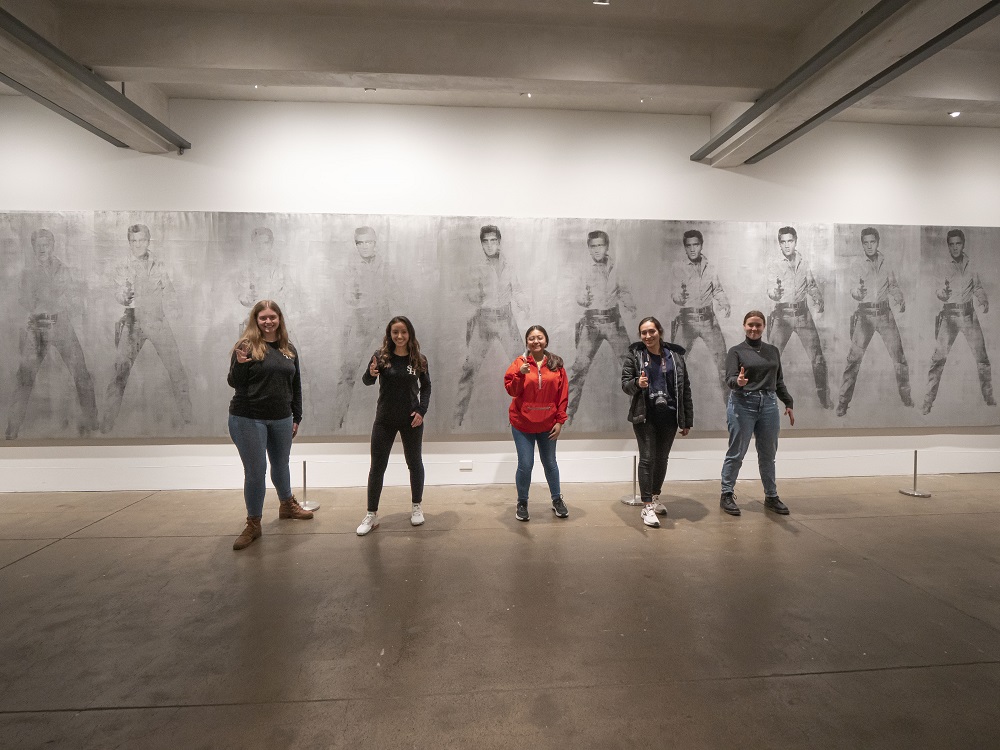
On one floor we came upon a huge painting of Elvis fully decked out in western wear and appearing to be just about to fire the pistol he aimed at the camera. This was Victoria’s favorite piece. She mentioned to us that she’d had a huge crush on Elvis when she was ten years old, and so we all lined up and took a photo imitating his pose.
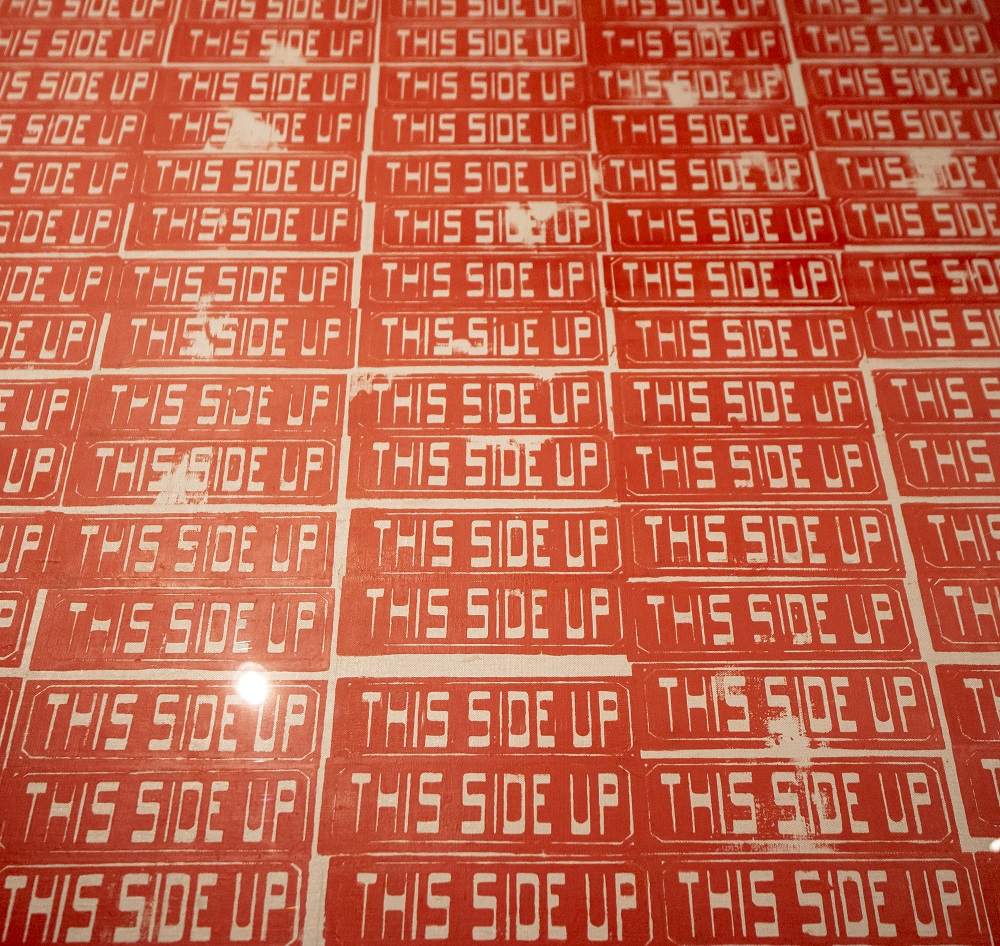
Morgan enjoyed a larger piece that included a composition of packing labels and was able to snap a nice photo of it!
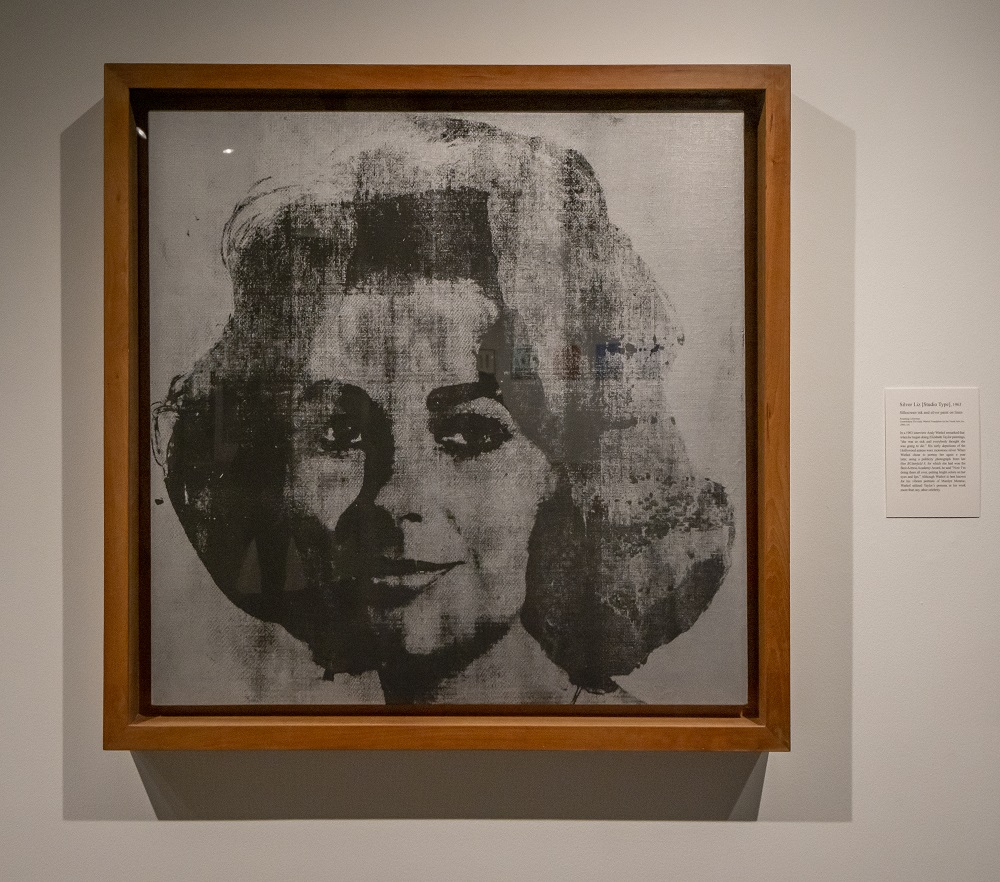
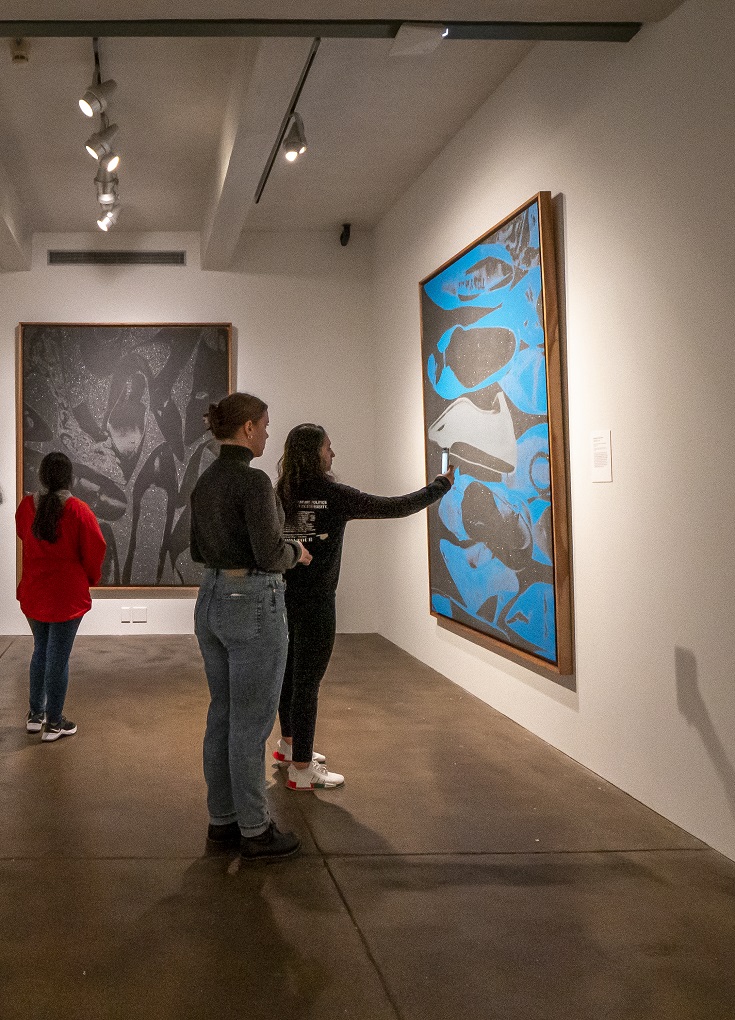
Others enjoyed Warhol’s many works depicting shoes, particularly those that employed “diamond dust” to create a sparkly visual effect.
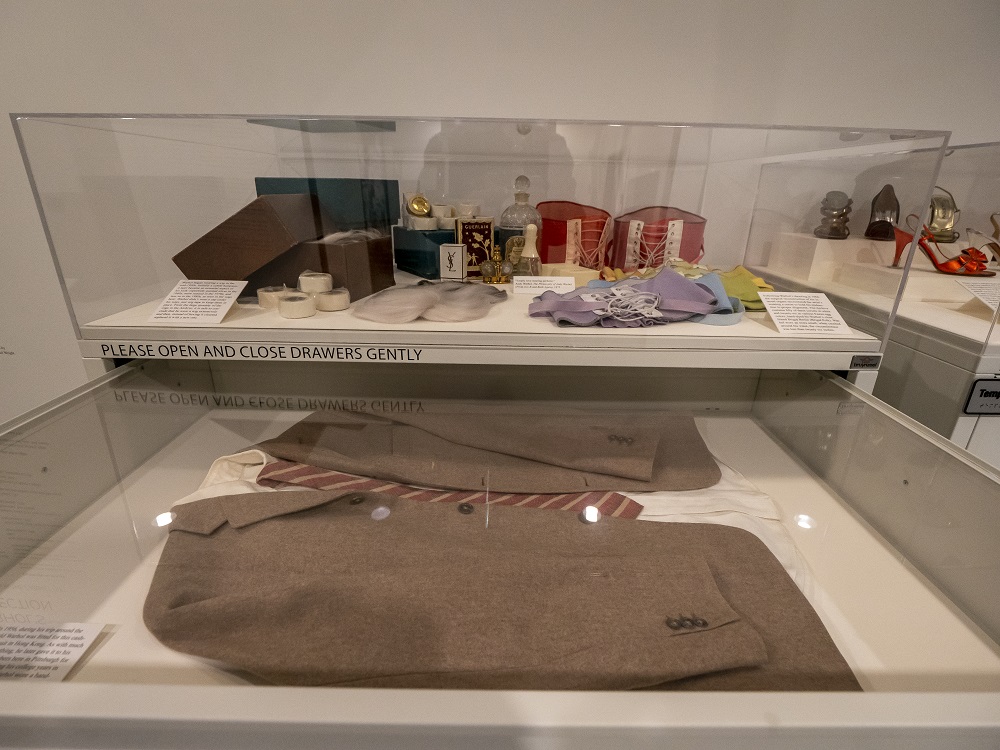
Yvette’s favorite area in the museum was the sixth floor which houses the museum’s archives. It was here that the more minute details of the artist’s life were spelled out to us. We were able to see some of his belongings such as his wigs, shoes, and his corsets.
The museum has several wigs worn by the artist, all in the same style and color. Mr. Warhol liked to wear one wig, and rather than have it cleaned he would simply replace it with another.
Warhol was shot during an attempted murder in 1968 by Valerie Solanas because she believed he was going to steal ideas from a manuscript she had sent him. After the attempt on his life, he had to wear corsets to help keep his internal organs in proper alignment, and these were also on display in the archives.
These accessories showed us some of the smaller, more intimate details of his life and we felt as if we might have known him personally after leaving the archive floor.
We loved The Andy Warhol Museum and enjoyed the vastly different compositions. The museum does a fantastic job showing the stages of his life and how he developed over time as both an artist and a person.
After ending up back on the first floor we spent about ten minutes meandering through the gift shop and then headed on foot to our next destination, dinner.
Dinner at Max’s Allegheny Tavern
Victoria suggested that we eat at an “old World” restaurant, Max’s Allegheny Tavern, and it was a good suggestion. We began with stuffed pretzels and pierogis, which were excellent.
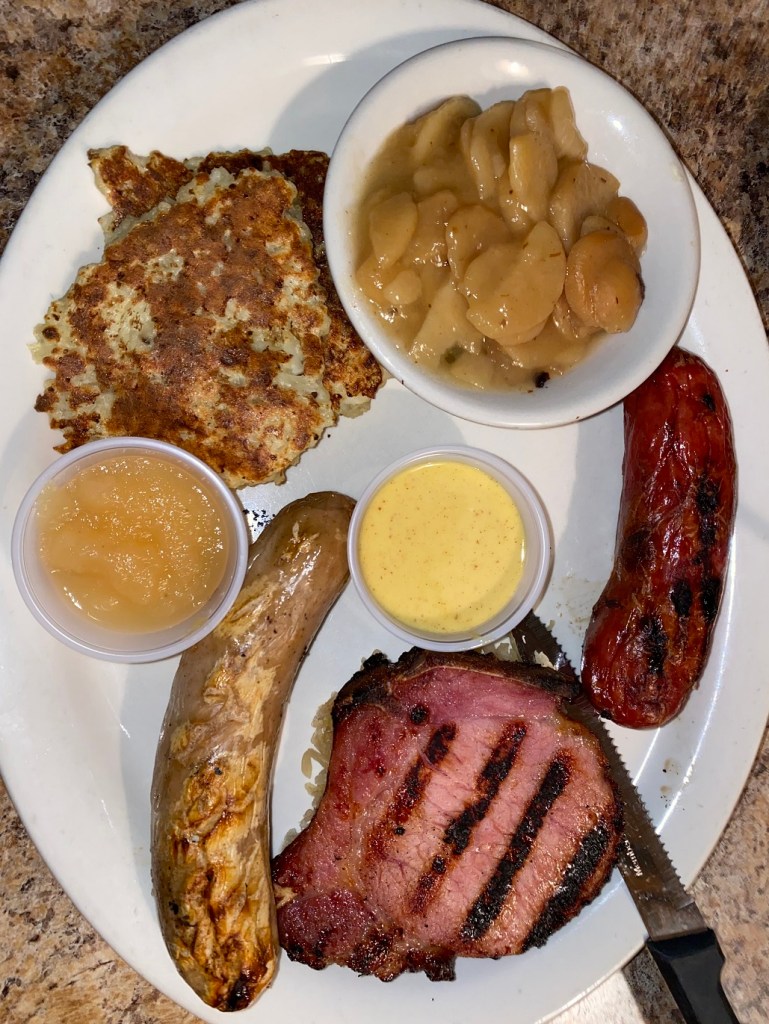
We also did a good job of trying different entrees. Some were heavy on meat and sausage…
…well, actually, most of the meals were heavy on meat and sausages!
…but, for the most part, the meats were different. No clear consensus was made on which of the sausages was best, but the group generally did not care for liverwurst. When all of these calories were followed by even more calories in the form of dessert, then we welcomed the long walk back to the car–even though it was beginning to snow!














































 Center for Law, Engagement, and Politics