SHSU Students LEAP into Law Class

On Wednesday, 31 fortunate SHSU students gathered in a classroom to experience a one-of-a-kind opportunity. The Law, Engagement, and Politics organization, otherwise known as LEAP, partnered with South Texas College of Law of Houston to bring a “Mock Law Class” to Sam Houston State University.

South Texas College of Law Professor Val Ricks and the STCL Assistant Dean of Admissions, Alicia Cramer, both arrived at SHSU on Wednesday, ready to make an impact on the pre-law students’ lives. The students who were fortunate enough to take part in the Mock Law Class were all prepared with days worth of reading and trying our best to comprehend the two assigned cases. When the day came, all of the scholars, dressed in business attire, were prepared and ready for class to start. Everyone, from freshmen to seniors, have begun to feel the pressure of law school, and yet we were all excited to get started with the Mock Law Class. I personally, was very nervous at the prospect of attending a Law Class, as I did not know what to expect. But was sure that whatever happened this would be one more new learning experience to get me closer to law school.

Ricks_Teaching_8_Web

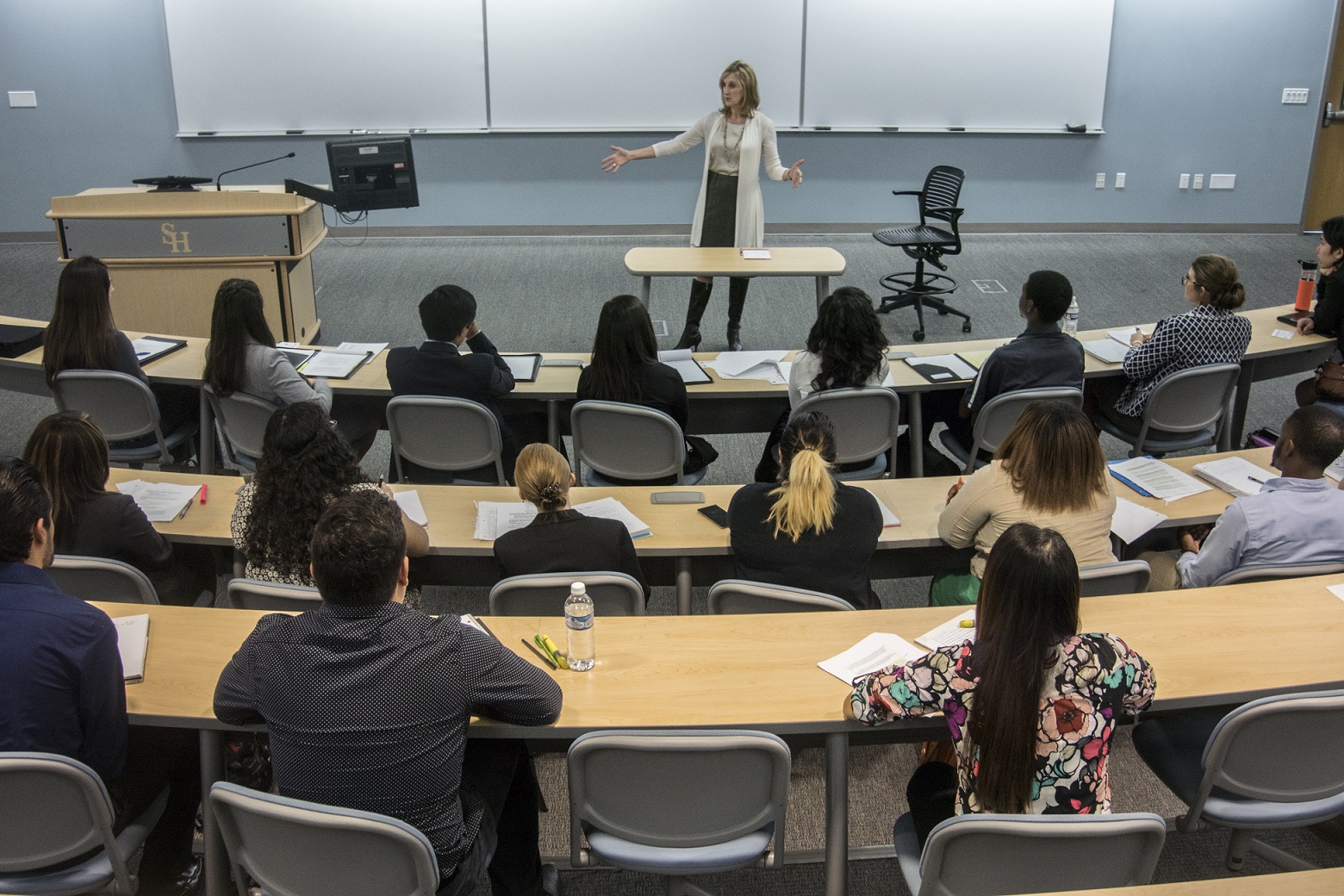
Everyone took a deep breath as Professor Ricks entered and began the class by introducing himself and telling us about his law experience. Then he began with the really fun part we had all been waiting for. First, we reviewed the cases and deciphered how each rule applied to them. And then, Professor Ricks started conducting the class in a very interesting manner. As we read over the cases, he would ask different individuals questions. Of course, not really having much experience, some of us came to the incorrect conclusions. But instead of correcting us in the regular fashion, Professor Ricks used the Socratic method so that the students could find their way to the correct answer (or, sometimes another incorrect answer) all on their own (or with the help of their peers). The class continued in this style that many students are intimidated by, but all of the students in the class seemed eager to be called upon.

Ricks_Teaching_3_Web

When one student would get stumped on a question, over half of the class had their hands raised, ready to assist. Most students thought that this type of method worked extremely well and allowed them to feel as if they were already in law school. “I thought it was extremely informative,” stated Brittany Lightfoot, “I liked how he treated us like actual law school students, and how when he asked us questions, he helped us get to the right answer instead of just asking and expecting us to know!” This classroom filled with likeminded people who were ready to learn and prepared made me even more excited for my future law school endeavors!

Ricks_Teaching_7_Web

Afterwards, Professor Ricks remained behind for a moment to answer any questions we had concerning any aspect of a law class setting, grades, or professors. Then he turned the attention over to Mrs. Alicia Cramer, the Assistant Dean of Admissions. She presented to us the various requirements needed to get into South Texas College of Law and even other law schools.

Cramer_Presenting_1_Web

It is true that the class was rigorous and a bit hard, but everyone was fully engaged in the class and welcomed the questions. It was a very enjoyable experience and thanks to Professor Rick’s guidance, we were all able to succeed and leave with an invigorated spirit. “Beforehand, I was nervous because I thought that it was going to be hard, and I didn’t feel as prepared as I was. Afterwards I found that I really enjoyed myself, because it taught me how to better prepare for issues that of the utmost importance, not just in law but in life itself,” said fellow classmate, Jamaus Williams.

Many thanks to Professor Ricks and Assistant Dean Alicia Cramer, for taking the time to come to SHSU and teaching us such valuable lessons and giving us a new sense of purpose and motivation. The Mock Law Class provided us with the opportunity to discover if this path was right for us and if it was, then be motivated even more to accomplish it.


Best-Selling Author Visits SHSU: Two days with Jeff Guinn

Best-selling author Jeff Guinn made his way to SHSU last week, spending time with local residents and many SHSU students.

Guinn has written 18 books, the best known of which are the NY Times bestsellers: “The Autobiography of Santa Claus,” “Go Down Together: The True Untold Story of Bonnie and Clyde,” “Manson: The Life and Times of Charles Manson,” and “The Last Gunfight: The Real Story of the Shootout at the OK Corral and How It Changed the American West.”

The lives and events in these books played a central in his discussions with Huntsville residents.  With Christmas around the corner, several asked about his work on Santa Claus, and Mr. Guinn provided some intriguing and entertaining responses.  Why does Santa Claus wear red and white trim, you may wonder?  Because the real St. Nicholas was a bishop, and red and white attire was customary for bishops.

Such conversations took began over dinner at the Homestead, with local residents and LEAP Ambassadors on hand.

Guinn_Group_Web


For Megan Chapa, of greater interest was Guinn’s work on Bonnie and Clyde, which she read (twice) in class.  Guinn supplemented some of the information in the book with background stories about Warren Beatty, Faye Dunaway, and Estelle Parsons, who starred in the 1968 classic film, Bonnie And Clyde.  Interestingly, the duo had been known as “Clyde and Bonnie” until that time; it was the film that cemented “Bonnie and Clyde” into the nation’s consciousness.

Guinn_Ambassadors_Web

Guinn also spoke to two of Professor Yawn’s classes.  One, an Introduction to Texas Government…

Guinn_Speaking_2306_2_Web

…heard much about Bonnie and Clyde, and the early days of law enforcement (and prison life) in Texas.  Interestingly, Clyde Barrow was imprisoned in both the Eastham Unit and the Walls Unit, giving him a direct connection to Huntsville.

In Yawn’s Politics and Media, the students heard more about the impact that Bonnie and Clyde, Charles Manson, and Jim Jones (his current book subject) had on the media.  Bonnie and Clyde, for example, were one of the first subjects to have photos of themselves wired across the nation.  In fact, without this technological development, they likely would have simply been locally known.  With the infamous photo of Bonnie Parker with cigar and gun…

…being wired across the US, however, the duo became nationally famous.  Similarly, Charles Manson and his high-profile attacks (of actress Sharon Tate) brought in Hollywood and seemed to typify the California lifestyle of the 1960s and 1970s.

Guinn_3364_Speaking_8_Web

Following classes, 25 students and faculty had a low-profile lunch with Mr. Guinn, who continued to discuss the impact of the subjects he has studied, much to the delight of those attending.

Guinn_Lunch_Speaking_3_Web

According to Bella Abril, who had also read “Go Down Together,” the meeting was “very interesting,” even if she finds hearing about Manson and Jim Jones a bit disturbing.

Interestingly, Guinn has a practice of including the names of people he meets into his novels (when not publishing books on biographical subjects, he publishes fiction such as Glorious and Buffalo Trail).  On this trip, LEAP Ambassador Austin Campbell was designated as a character in Guinn’s next novel.  This doesn’t mean, of course, that Austin will actually be in the novel, but his name will be given to a character, although (ominously) Guinn does not guarantee which character will get that name…

Also of interest is that Guinn offered several of the LEAP Ambassadors the opportunity to go with him to do research on his next book subject.  While the subject hasn’t been formally released, it will involved border towns in Texas, New Mexico, and Arizona.  The Ambassadors are packing for a future road trip!

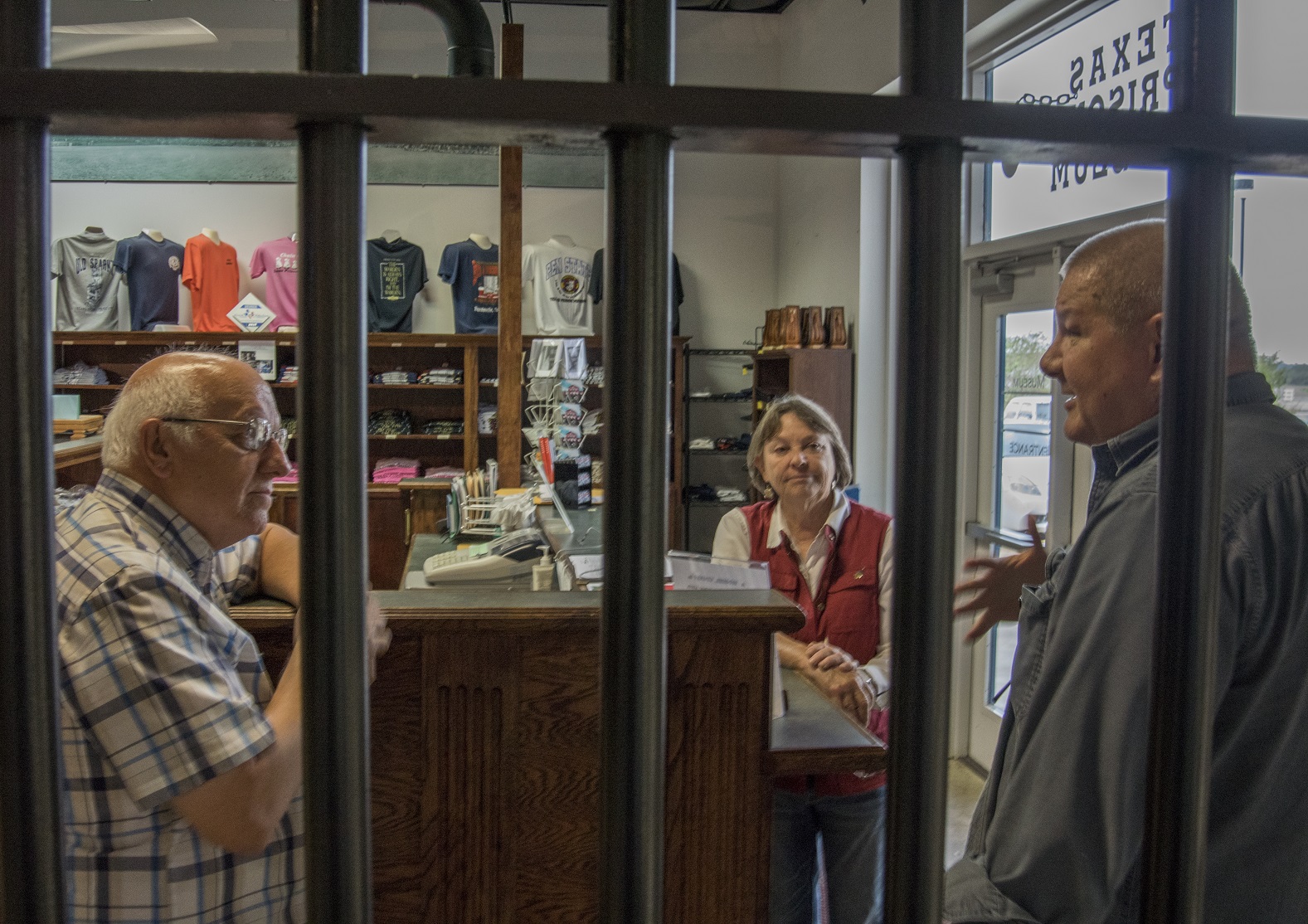
On his way out of Huntsville, Mr. Guinn stopped by the Texas Prison Museum to visit old friends Sandy Rogers and Jim Willett, who provided information and access to Guinn when he wrote about Bonnie and Clyde.

Guinn_Willett_Rogers_TPM_Web

He signed more than a dozen copies of his books for sale at the TPM, and headed out of town–eager, we hope, to return next year to Huntsville, Texas.

Midwest Tour, Day 8: Kansas City, Home of the MLB Champs!

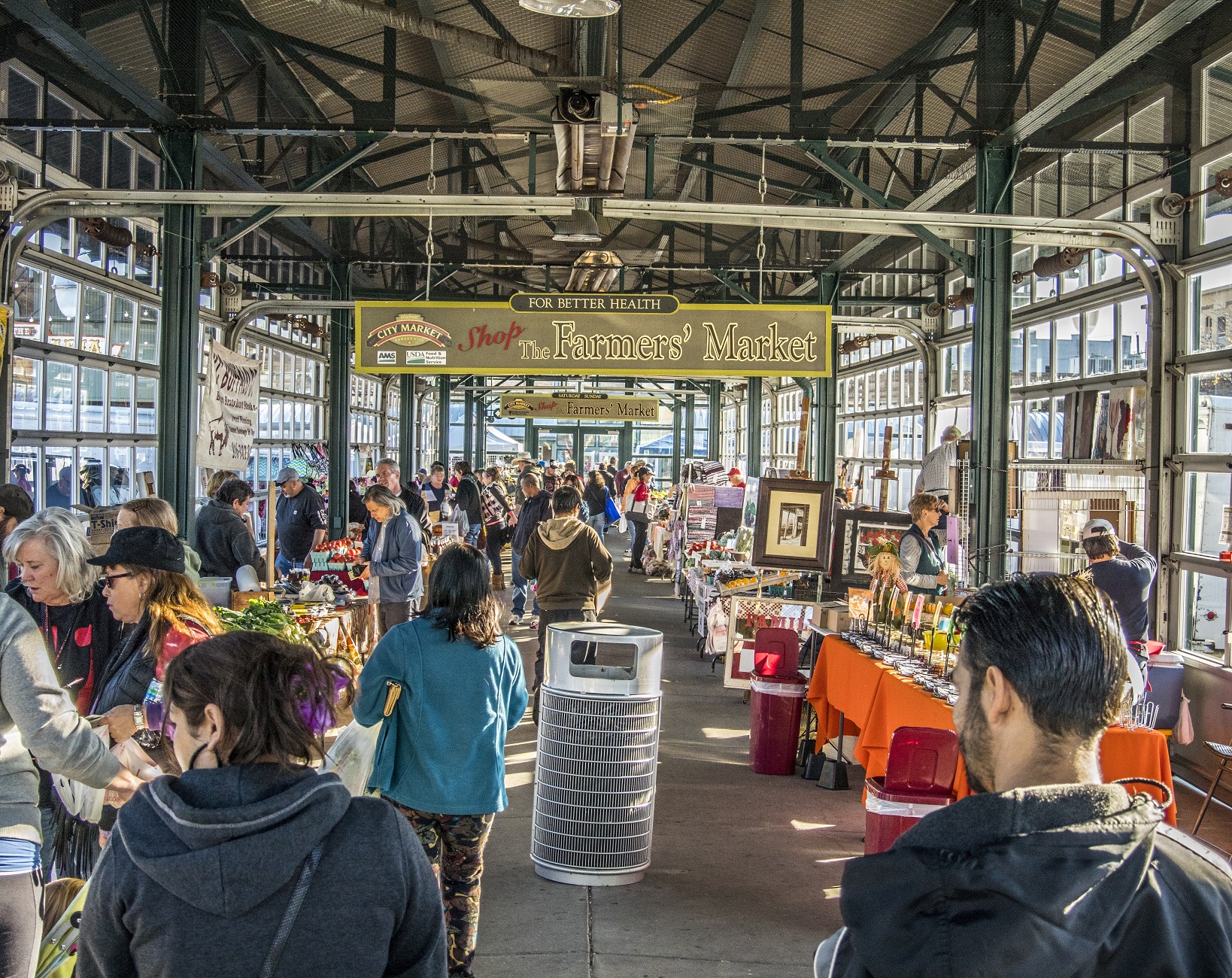
We began our Saturday morning exploring Kansas City’s own River Market. Although we arrived a bit early, we got a head start on all of the produce, cheeses, spices, and home goods that the farmers market had to offer. The brisk morning air refreshed us after a short night of sleep and we enjoyed strolling through the different vendors, smelling the fresh flowers, appreciating the colorful produce, and tasting different foods foreign to Texas.

City_Market_KC_2_Web

With just a little over an hour to explore, we tried coffee at Quay Coffee and wandered through the shops open at the early hour. With our noses exhausted from the various smells permeating the market, we left to make it to our Segway tour reservation on time.

Led by Kelly, we hopped on the available segways like pros and began the tour of downtown Kansas City.

Segway_Line_Web

We started in an area called Westport, home to bars, shops, and many a hipster. The area prides itself on preserving its history, which we observed in the established community and some of the buildings being the oldest sanding in Kansas City. Founded in 1831 by Isaac McCoy, Westport originally sat three miles south of what is today downtown Kansas City. His son, John Calvin McCoy, is credited as the “Father of Kansas City” and we observed a statue of him during the first part of our tour. We left the area of Westport to continue our tour, segwaying past pedestrians and through a few linear parks. Kansas City, known as the least dense and city with the most green space in America, is home to many beautiful parks. We had the chance to enjoy these areas, albeit, on segway. We followed Kelly along a couple creeks, walking trails, and even spotted public work out equipment along the way. We ambled upon Kauffman Memorial Garden after visiting Westport, a clear juxtaposition to the hip, bar district we had just explored.

Kaufman_Memorial_Garden_Web

The garden, quiet and serene, serves as gravesite to Ewing and Muriel Kauffman, philanthropists to the city in the mid 1960s. We left the garden to continue on our tour, only after appreciating the giant chrysanthemums in the greenhouse.

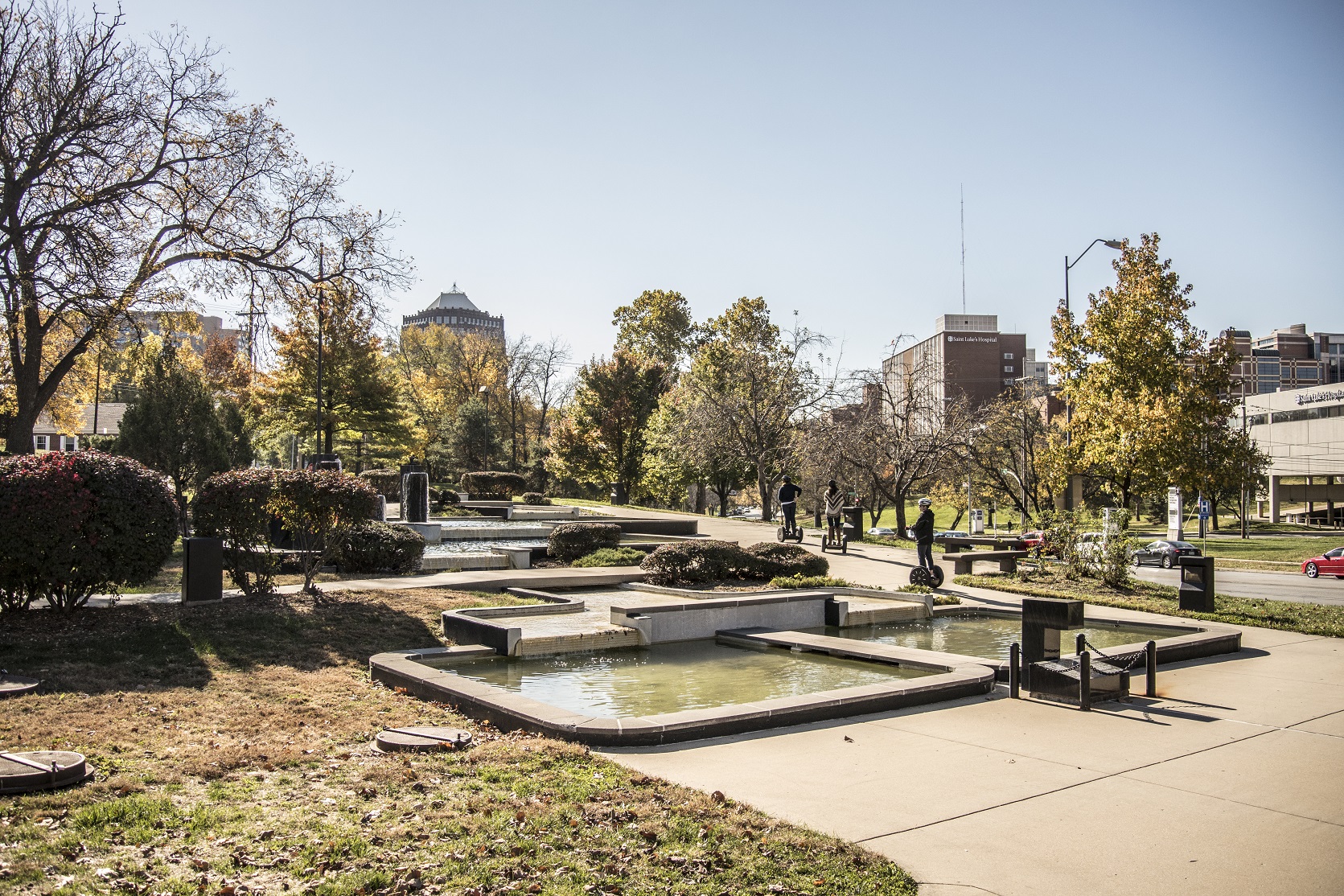
Kansas City is known as the “City of Fountains,” and one of the more interesting fountains we encountered was a memorial to the Vietnam War.  It was laid out in a series of cascading waterfalls, a reference to the U.S’s cascading involvement in the war.  It culminates in two pools of water at the end, a symbol for the split in public opinion over the war.

Segway_Vietnam_Memorial_Web

We spent the most time on our tour on the grounds of the Nelson-Atkins museum, avoiding photographers and muses as best we could. We even had the chance to explore grounds unfamiliar to Professor Yawn, home to sculptures by Ursula von Rydingsvard (Three Bowls), Henry Moore, and Roxy Paine (Ferment).

Segway_Sculpture_Garden_Constance_Alex_Moore_Paine_Web

We also had the chance to get off our segways and try out Robert Morris’ Glass Labyrinth, which we luckily made it out of without running into any of the glass walls.

Segway_Sculpture_Garden_Labyrinth_2_Web

We left the grounds, after quite a few photo opportunities, including the chance to see a Claes Oldenburg sculpture (a shuttlecock!)….

Segway_Sculpture_Garden_Constance_Alex_Shuttlecock_Web…and an unsettling sculpture titled “Standing Figures,” which is actually a sculpture of 30 headless men standing in rows.

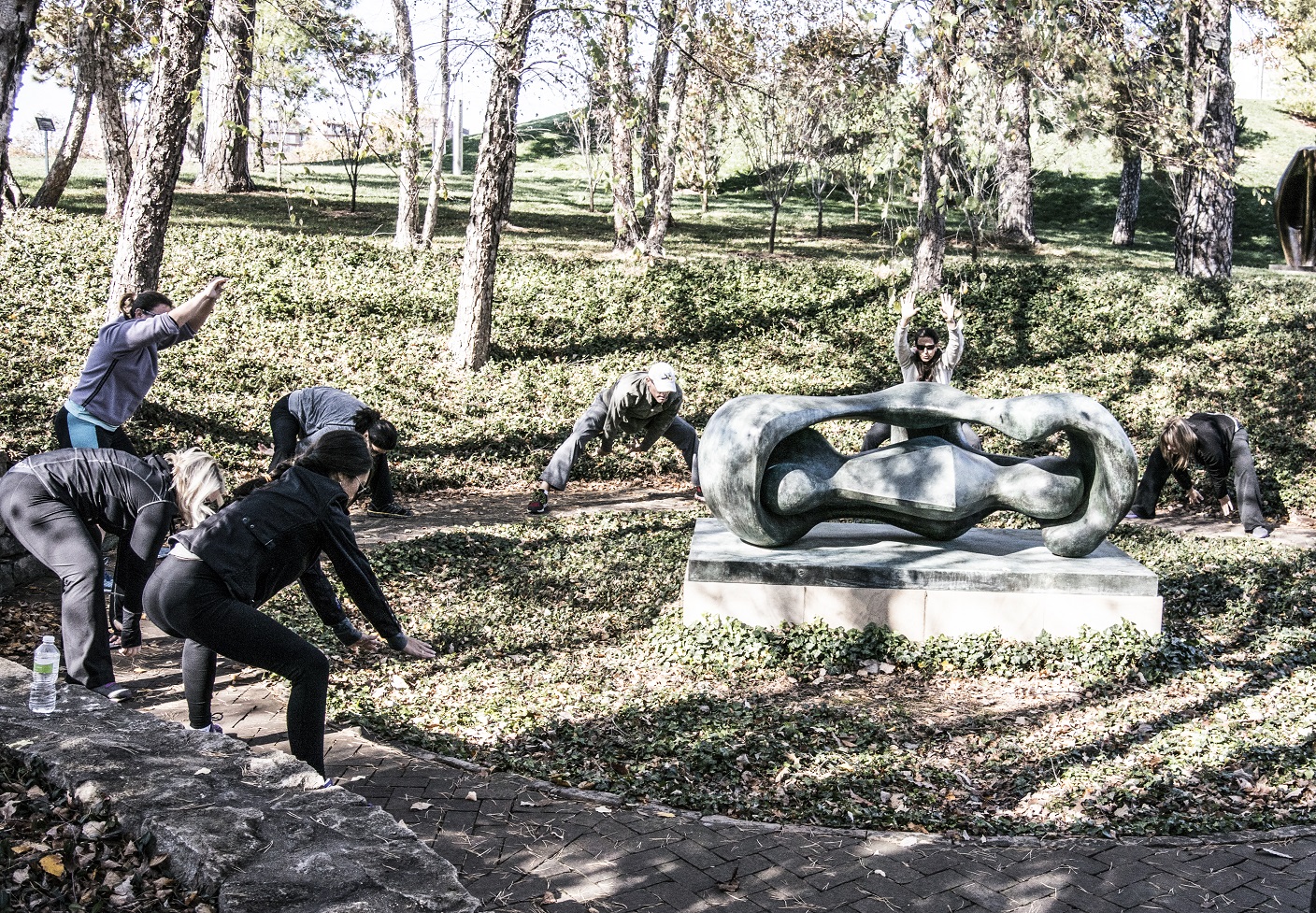
Segway_Sculpture_Garden_30_Men_Standing_WebMeandering through the parks, we also encountered some yoga practitioners, taking advantage of the peacefulness of the park (other than the speeding Segways, of course)…

Segway_Nelson_Atkins_Sculpture_Yoga_Group_Web

From there, we made it back to the Kemper Museum of Modern Art, which we had visited the evening before but had yet to observe in daylight.  We were re-acquainted with Louise Bourgeois’s “Spider”…

Segway_Kemper_Burgeoise_2_Web


…as well as Tom Otterness’s “Crying Giant.”

Segway_Kemper_Crying_Giant_WebWe had previously seen Bourgeois’s work in Iowa and in New Orleans, and we had only recently seen Otterness’s work (City Garden, in St. Louis).

That being our last stop…

…we bid adieu to Kelly and her insightful information and headed to scrounge up some lunch.

Much to the recommendation of our tour guide, we decided to eat lunch at Q39, a local Kansas City barbeque joint. We found the restaurant to be very popular and were confronted with an hour wait. With that information, Professor Yawn and Stephanie decided to let us wait and enjoy lunch while they left to grab our bags at the hotel in preparation for our departure this evening. We finally got a table, which was worth every second of the wait, once we received our appetizer of fried onion strings and meals consisting of ribs, sausage, pulled pork, and even better Kansas City barbeque sauce.

Q_39_BBQ_Web

Slightly tangy and very sweet, we enjoyed the barbeque that is so different than what we can enjoy in Texas. We left the restaurant full and ready to take on the rest of our afternoon.

We spent the first part of the rest of our afternoon exploring and learning at The National WWI Museum and Memorial. We arrived just in time to sit and watch the introductory video that left us wanting to learn more, so we ventured into the museum. We began with the WWI timeline that started with the assassination of Archduke Franz Ferdinand and led to Austria declaring war on Serbia.

WWI_Cannon_Wall_Web

This led to an entanglement of treaties and soon after, the five Great Powers were at war.

WWI_Global_War_Alex_Web

The museums timeline was easy to read and separated every year. The year of 1915 showed how the momentum of the war shifted to the east and highlighted the sinking of Lusitania by a German submarine. The year of 1916 on the timeline highlighted the Battle of Verdun and the Battle of the Somme. The timeline then moved on to the year of 1917, which is when Germany began to renew their unrestricted submarine warfare. One U-boat had cost American lives, which led to America severing its diplomatic relations with Germany and having to decide upon entering the war. The first American troops landed in France on June 25, 1917 and the spirits of France were renewed. The museum also features sections on Air warfare and others. As we walked through the museum we were able to watch another more interactive video about the war which then escorted us to the back portion of the museum that highlighted the America’s role in the War. The museum was very detailed and included many aspects of the war such as every branch of the military, a woman’s position in the war, civilian’s positions in the war, and an exhibit on war propaganda.

WWI_Propoganda_Alex_WebWe entered a reflections box where we were able to listen to voices from the War. We then took an elevator up to the Memorial where the tower commemorating the fallen soldiers stands. After enjoying the view, we walked back over the glass bridge hanging over the poppies that represent the fallen soldiers of the War.

We left the National World War I Museum to stroll down the hill in front of it, capturing the beautiful fall afternoon with a few photographs.

WWI_Constance-Tree_Closeup_Web

We loved feeling the breeze and seeing the burgundy leaves fly through the air off the trees preparing for the first winter frost.

WWI_Museum_Constance_Tree_2_Web

We walked across the street, following the museum, to enter Union Station in search of the temporary Da Vinci exhibit that the train station holds.  We found the exhibit on the bottom floor of the station and proceeded to get in line, thrilled with the anticipation of learning about one of history’s most prominent inventors and scholars. We entered the exhibit and watched an introductory video about the Renaissance man. Following, we left the compression of the video space and were awed by the expansion of the rest of the exhibit, full of Da Vinci’s inventions.

Da_Vinci_Exhibit_Wings_Web

We had the chance to read about his work in military science, flying machines, scientific diagrams about the human body, civil engineering, and inventions that would make everyday work easier and more efficient. We always knew about the inventor’s paintings, “Mona Lisa”…

Da_Vinci_Exhibit_Mona_Lisa_Alex_Web

…and “The Last Supper,”

Da_Vinci_Exhibit_Last_Supper_Alex_Web…but it was even more compelling to learn about all the musings that were found in his journals ranging from thoughts about poetry to the making of the ideal city. We even had the chance to touch multiple replicas of his inventions, like a pulley and a lock system.

Da_Vinci_Exhibit_Pulleys_Web

Following the section about his inventions, we had the opportunity to read about his artwork, which about fifteen have survived to this day due to the precariousness of Da Vinci’s experiments with new techniques. It was interesting to read about his work with the golden ration, which can be seen in his paintings and in his drawing of the Vitruvian Man. We left the exhibit awed by a man that we knew very little about before and inspired to expand our horizons just as he did during his lifetime.

We also had a chance to return to the Nelson-Atkins and see the special Thomas Hart Benton exhibit.  The theme was Thomas Hart Benton and the Hollywood epic, highlighting styles that tied in with epic films, as well as the time that Benton spent working in Hollywood.

Nelson_Atkins_Benton_Exhibit_WebWhile in the Museum, we took an opportunity to see some of the pieces we had missed the day before, such as the beautiful gardens…

Segway_Sculpture_Garden_Thinker_Web…Rodin’s “Thinker” up close…

Nelson_Atkins_Thinker_Web…and the strange, intriguing folk art of Philip Haas…

Nelson_Atkins_Phillip_Haas_Summer_Web

Before leaving KC, we returned to Union Station to grab a few souvenirs before beginning the drive out of town.

After a while on the road we stopped at Pie Five Pizza Co., in Topeka, KS, for a quick dinner. Constance and I shared the biggest Greek salad that I had ever seen and a pesto chicken Alfredo pizza that was delicious. We left the restaurant, and took advantage of our stop in Topeka to see the state’s capitol and other sites.

Kansas_Capitol_Constance_Alex_Web

We stopped at the capitol building, standing majestically in the middle of town. We weren’t able to go into the Capitol because it was late, but we did capture a few photos. Before getting back on the road we had to make one more stop. We stopped at the Brown V. Board of Education National Historic Site. Sadly it was closed by the time we arrived, but we were able to have a glimpse inside provided by the glass doors.

Brown_V_Board_Constance_Alex_2_Web

In the building we saw the labels “White” and “Color” that segregated the school. Even though we were not able to go inside, it was still a very sobering experience.

We hopped back in the van, en route to our last stop for the night, Wichita, to sleep before getting back on the road in the morning for the long trek back to Huntsville.

Midwest Tour, Day 5: Marvelous Madison!

We started our morning with a fun-filled trip to the admission-free Henry Vilas Zoo in Madison, Wisconsin. Because of its layout, when we first walked into the zoo, we thought that it was very small, but we soon learned that it was not. In fact, it kept expanding into a bigger area that we had anticipated. As we wandered the zoo, we were greeted by a furry-faced lion…

Zoo_Lion_Web…and some surprisingly active orangutans. Some of our favorite animals were the polar bears, otters, a white rhino…

the giraffes…

Zoo_Giraffe_Web

and polar bears.

Zoo_Polar_Bear_Web

The zoo even had a bird aviary where Alex was almost attacked by a parrot! (Okay, not exactly attacked…)

Zoo_Parrot_Web

The zoo also abutted a pretty City park, where they had green space and Lake Wingra…

…along with many geese!

Zoo_Geese_WebBefore heading back, we took some time to enjoy the beautiful foliage in the area…

After that exciting stop, we were ready for lunch–at DLUX. Alex ordered the Farmhouse burger, a beef patty with a fried green tomato, Monterey jack cheese and bacon.

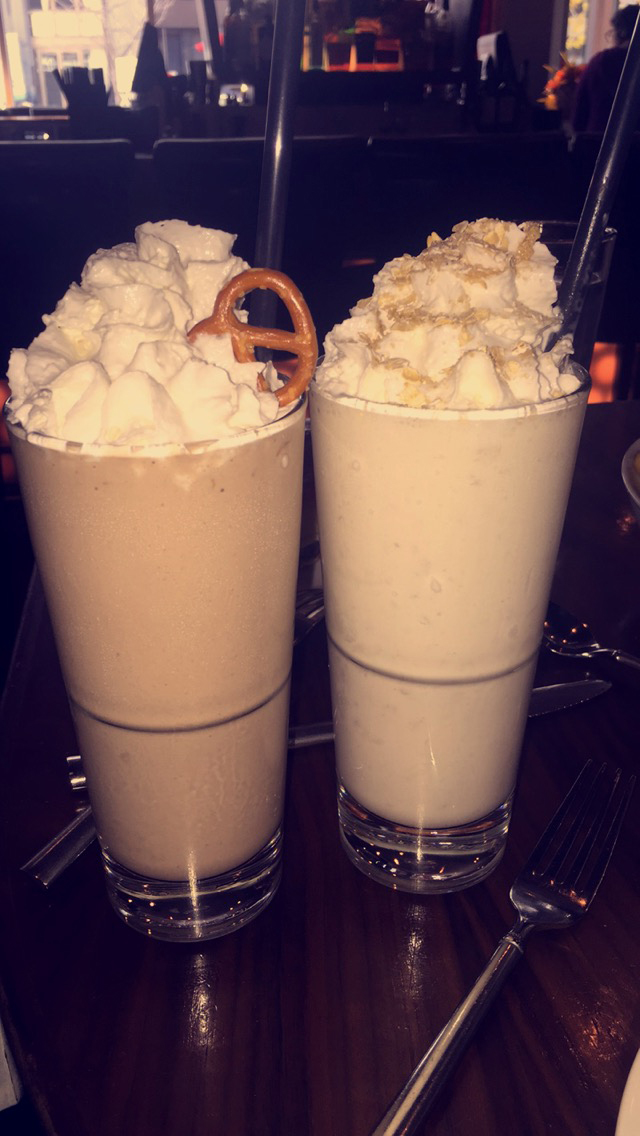
DLUX_Burger_WebThe burger was delicious, but what really gave it a different taste was the tomato jam that came on the side. Constance had the Sunrise burger which featured a fried egg and the tomato jam as well. Alongside the delectable burgers, we shared parmesan and truffle cream fries that were phenomenal. We then tried milkshakes—Salted Caramel, Apple Crisp, and Chocolate Peanut Butter Pretzel. All were awesome.

DLUX_Shakes_WebOur appetites satisfied, we made our way to Monona Terrace, via the farmers’ market, which was set up downtown. The market was stocked with locally grown vegetables, fruits, homemade sweets and breads, and of course, plenty of cheese. Some of us were able to sample the many cheeses in spite of our recent, filling lunch.

We ambled our way into Madison’s Monona Terrace, designed by Frank Lloyd Wright. Built posthumously in 1997, following Wright’s many unsuccessful attempts to get the design approved while he was alive.   Monona Terrace now serves as a convention center in downtown Madison, resting between the capitol and Lake Monona.

Monona_Terrace_Capitol_WebCapitol View from Monona Terrace

Wright designed the complete outside of the building, while Anthony Puttnam, an architect from Taliesin Associated Architects, designed some of the interior.

Viewed from the exterior, multiple curves are a defining element to Monona Terrace’s architecture, adding to an almost space-like futuristic feel. Inside, we passed photos of Wright’s work from all over the nation, while Professor Yawn shared his knowledge of the building. Wright’s theme of circles followed us inside as we observed in the use of lighting, signs, and even a round staircase corridor. The floor, covered in bright burgundy carpet in a leaf pattern, struck us right as we walked in.

Although very different from other works we have seen by Wright, Monona Terrace stands out in its majestic beauty and functionality for the city, two areas Wright strived to make exemplary.

Monona_Terrace_Girls_2_Web

Undeterred by the professionals attending a conference, we wandered the halls and even made it outside to the lake-edge to take pictures and enjoy the brisk breeze off the water.

Lake_Monona_Constance_Alex_WebWe also made our way to the terrace…

Monona_Terrace_Trees_Web…where we enjoyed the lake view.

Lake_Monona_Constance_Alex_Selfie_3_Web…and capitol view.

Mr. Wright would have been proud to see his work come to life, as the convention center served functionally a purpose as well as kept with his original design plans.

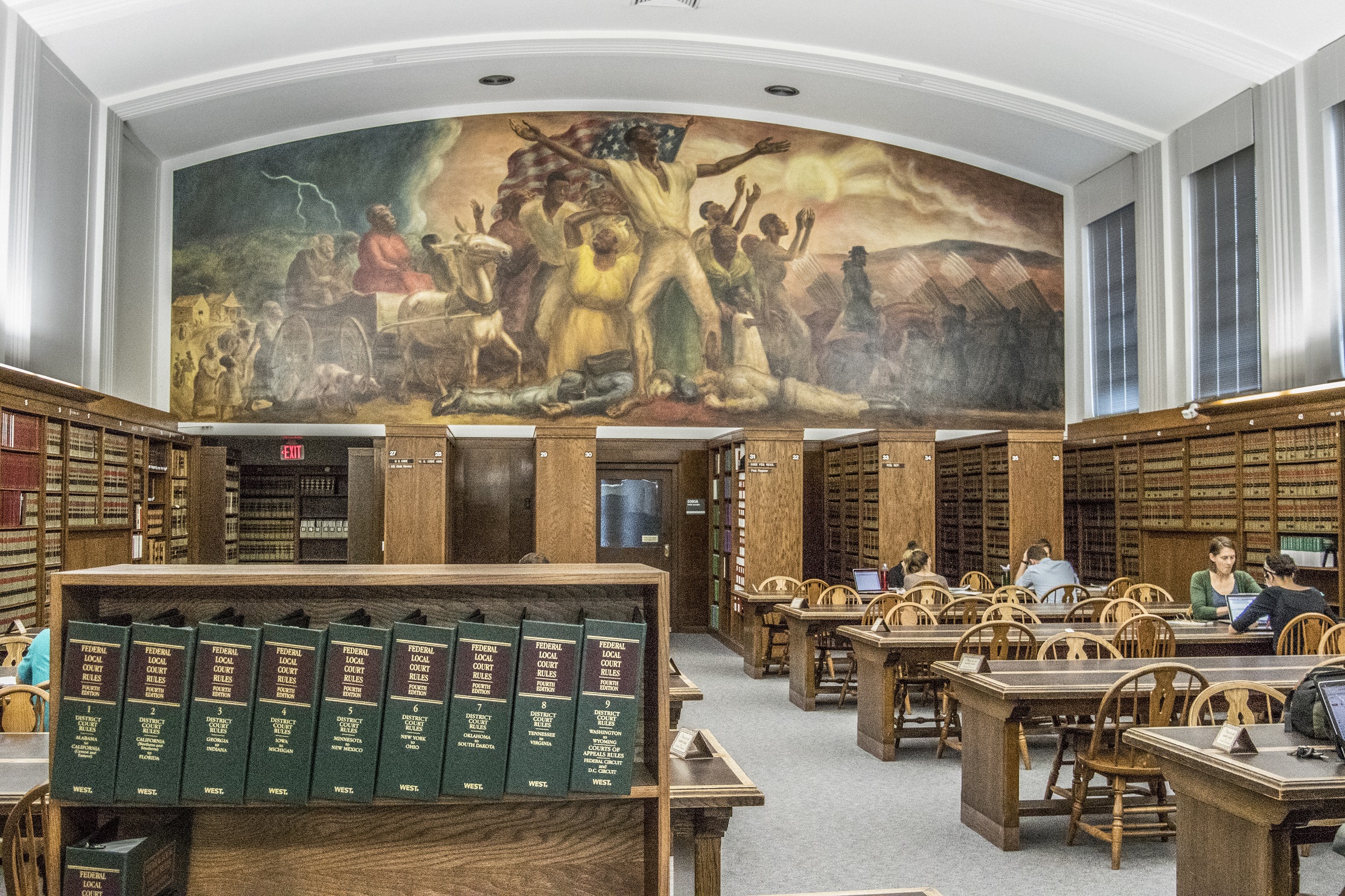
After finding our way through the streets crowded with thousands of students walking, biking, and running, we found the University of Wisconsin Law School, ready for our tour. We were guided by a law student who informed us of the strong alum community that the law school has, and described the general day of a typical law student at UW. Our tour guide showed us some class rooms, one of which was the constitutional law class room, and one in which the moot court team holds their practices. We also stopped by the much-occupied library and saw John Steuart Curry’s “The Freeing of the Slaves” mural.

Law_School_Mural_Web

Once our tour guide wrapped up his part, we explored the campus for a while before leaving.

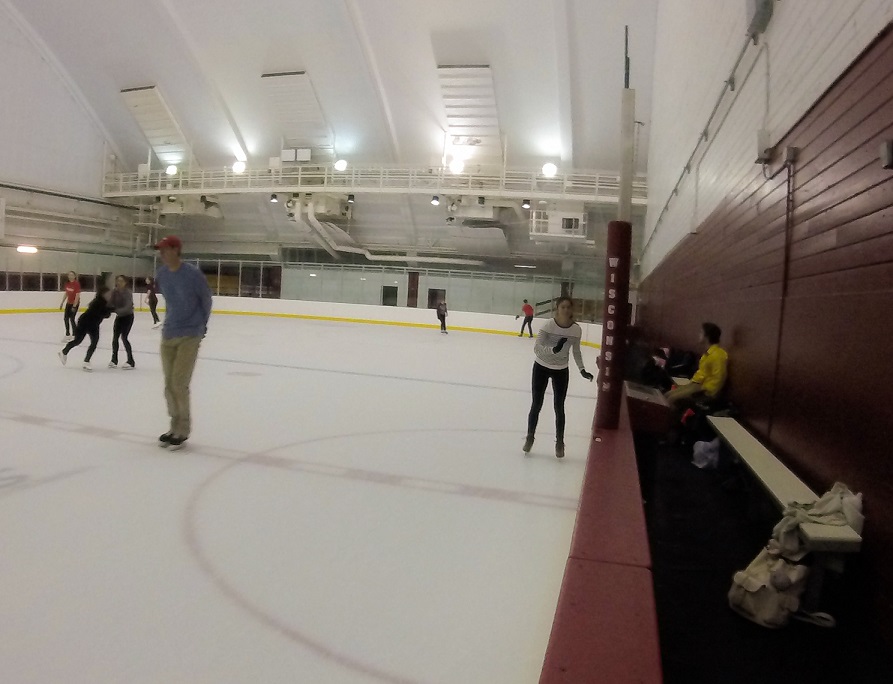
After our enlightening tour at the UW School of Law, we regrouped and returned to another part of the UWM campus for some rec time. We evaded much traffic and many pedestrians en route to The Shell, where students at UWM have the opportunity to ice skate, among other activities, as part of their recreational fees.

Excited to do something not generally available in Texas, we grabbed skates and entered the small arena. What we did not expect was the experience of those who would be skating around us. Natural-born Texans, we both have ice-skated only a few times in our lives, combined, with those living in the North likely to learn to skate shortly after walking, as the tale would be told.

We sucked in our pride, put on our skates, and stepped out onto the slick ice. Close to the stress we encountered at the Willis Tower Sky Deck in Chicago, both of us clung to the sidewalls with death grips to avoid falling at all costs.

After a few times around the rink on the wall, Constance got a bit of a hand at it and slowly sped up and away from the safety net.

Alex, meanwhile, stayed closer to the wall, but made a few friends along the way – even one possible future hockey star, if he is to be believed…. We had less than an hour in the rink but had an absolute ball; and Alex insists she must come back in order to truly master the art of ice skating. (Or maybe to check up on that hockey star…)

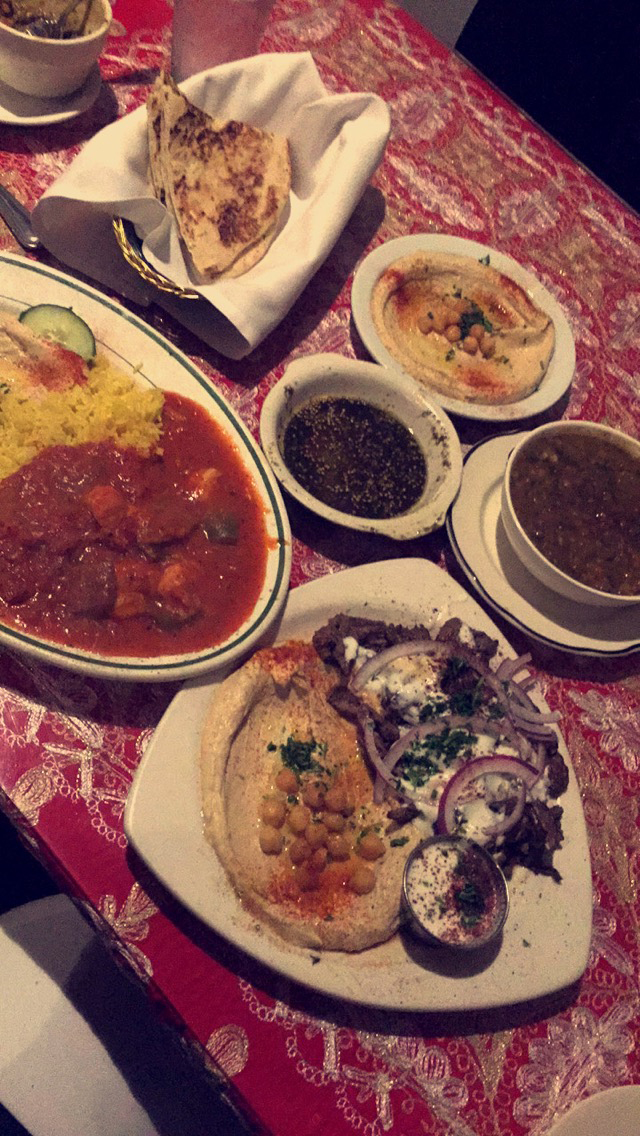
Finally, after working up an appetite on the ice, we roved through traffic across Madison once more to find dinner. A cute restaurant tucked in a strip mall, Nile offered Mediterranean food that was very different from what we had tried previously. We began the meal with salad, soup, and an appetizer of Kibbee Balls, a fried meat and bulgur mix that had a great smoky flavor. Alex tried the Mediterranean Shrimp, served in a red sauce with a side of rice, while Constance enjoyed the beef kebab and hummus that was truly, otherworldly good. Overall, the meal satisfied our craving for Mediterranean and impressed us at the same time. It was a great day in Wisconsin; one that made us very happy that our paths had crossed with LEAP and Wisconsin!

RR_Tracks_Alex_Constance_Web


Midwest Tour, Day 4: Our Kind of Town, Chicago

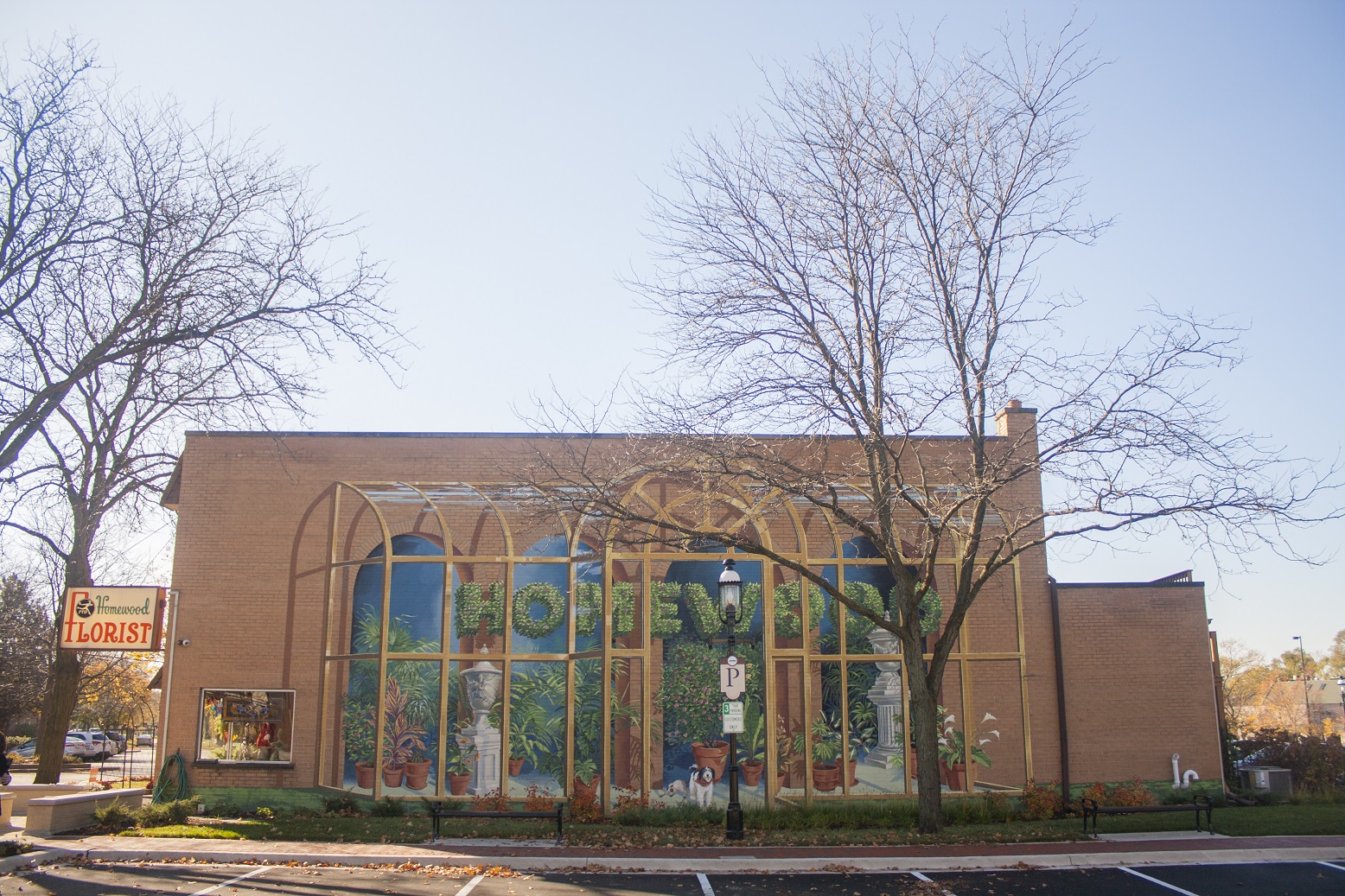
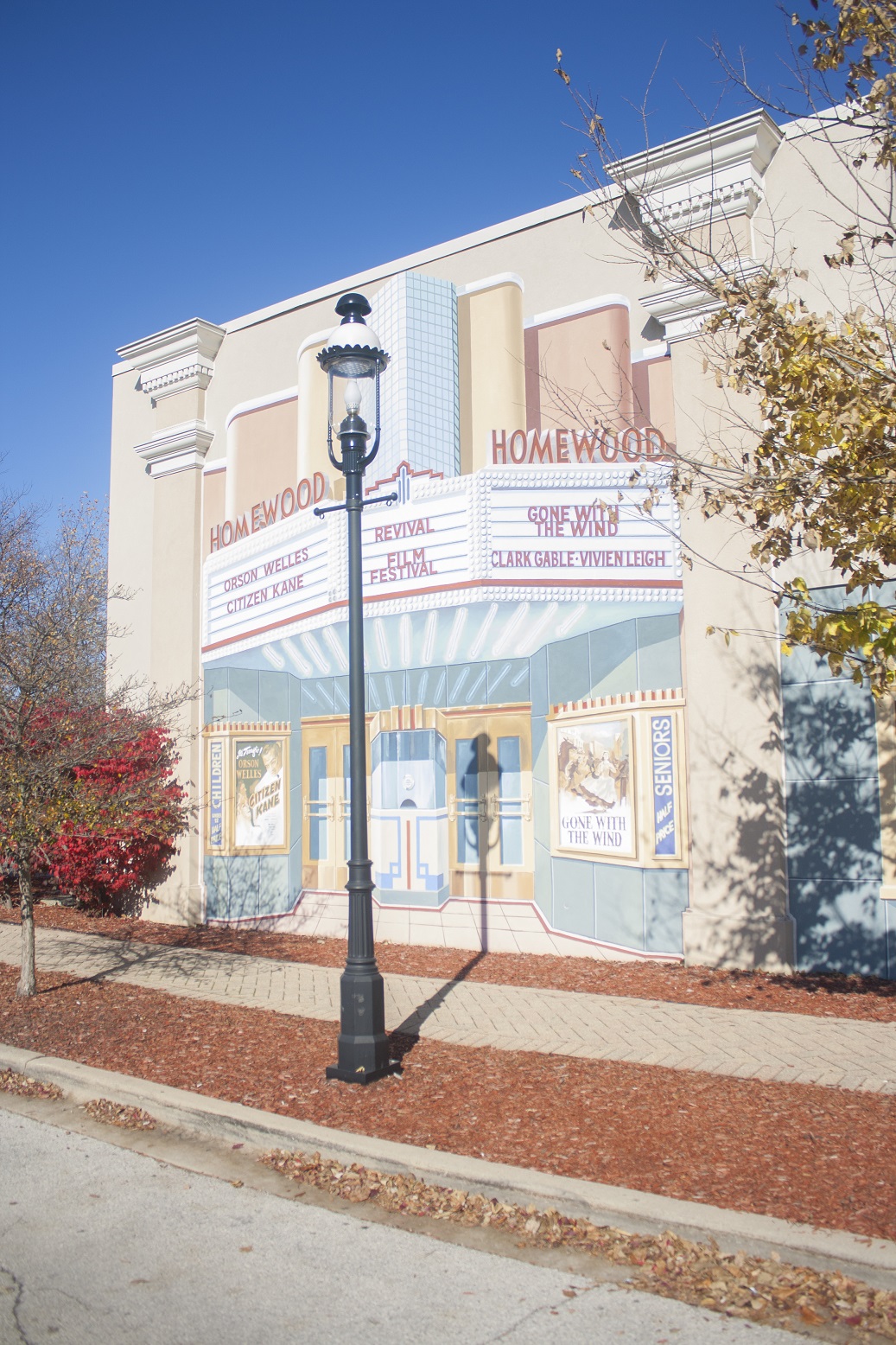
We began our morning with a trip to the village of Homewood, Illinois to check out their Richard Haas murals.  Although Huntsville boasts the largest collection of his murals (14), we were excited to find 13 murals that call Homewood home. Arriving in the quaint village, we parked and excitedly began our scavenger hunt for the elusive, illusive murals.

The first we found clung to the wall of a florist’s shop, a greenhouse to accompany the business’ theme.
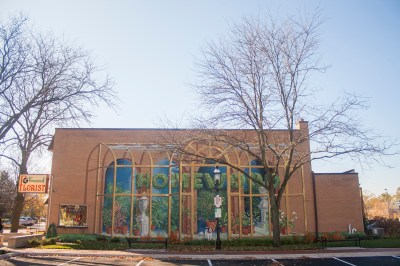
Haas_Mural_Homeewood_2_Web

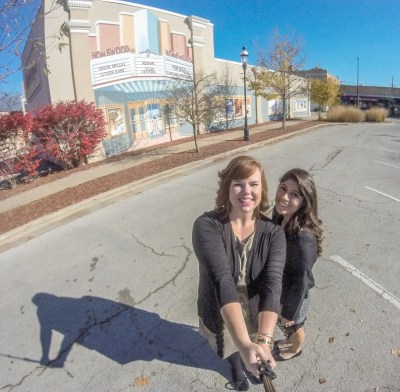
Moving on, we came across a theater, paying homage to the original theater and marquee formerly found in Homewood.
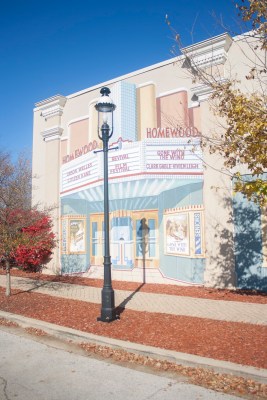
Haas_Mural_Cinema_Web

Interestingly, the theater’s “Coming Attractions” involve at least one film involving Chicago, “Some Like it Hot,” which the LEAP Center used as its centerpiece for our Marilyn Monroe Film Festival.
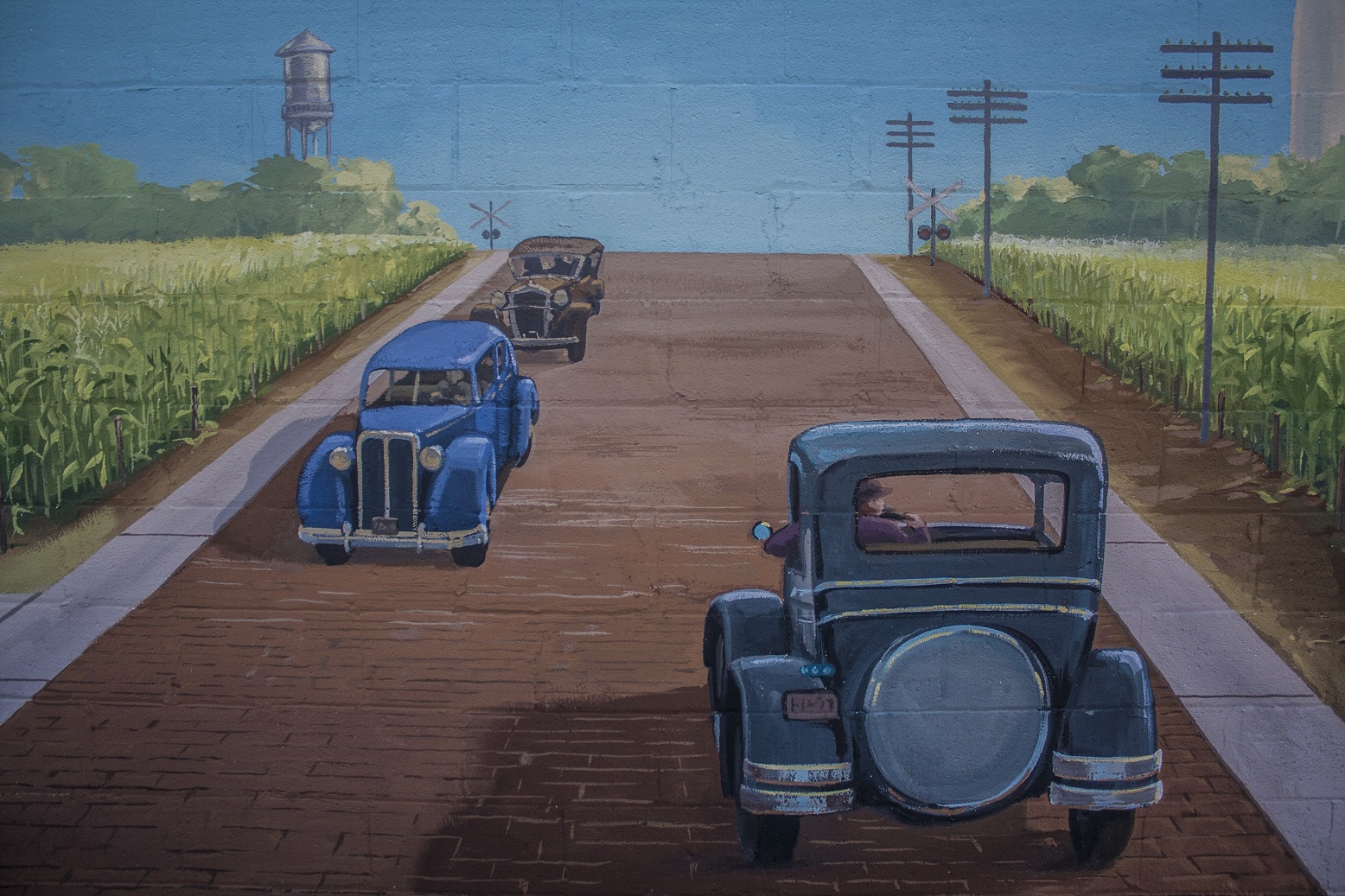
Walking down the historic Dixie Highway, which connected the US Midwest with the South, we came across even more murals–one in recognition of the ever-present Midwestern prairie alongside the Dixie Highway…
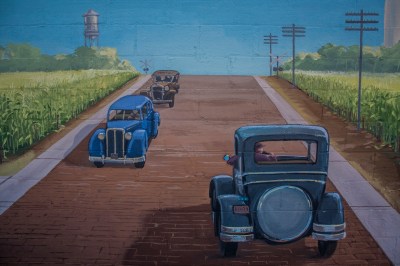
Haas_Mural_Dixie_HWY_Detail_Web

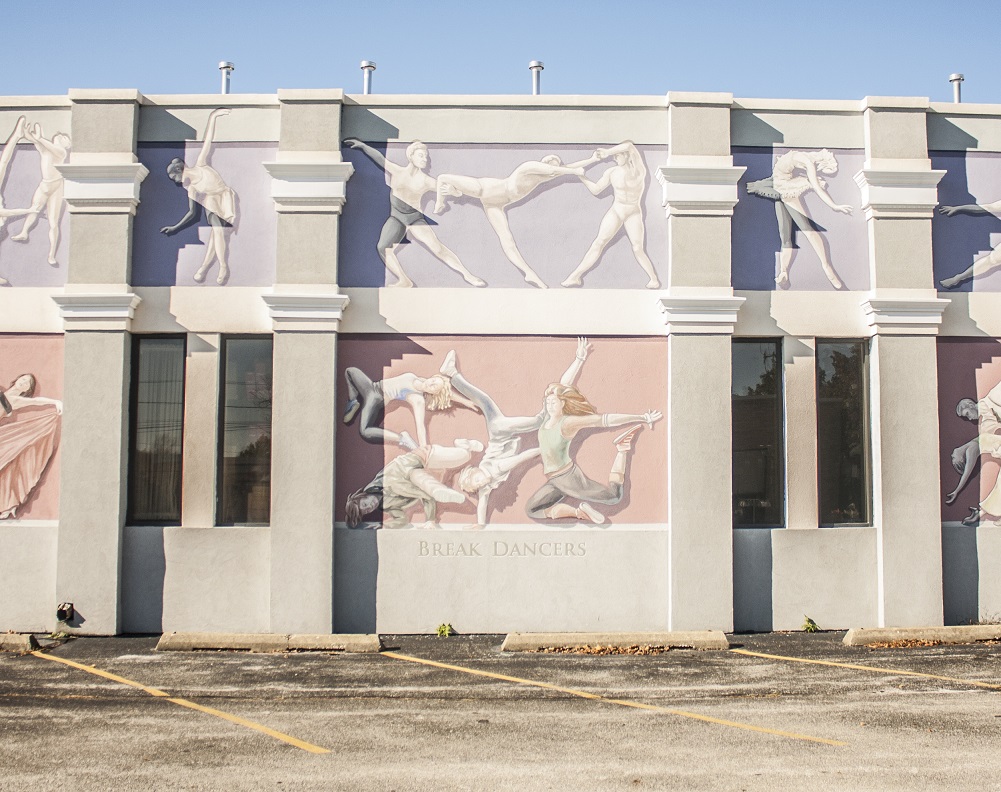
…one depicting dancers (on the side of a dance studio, no less),
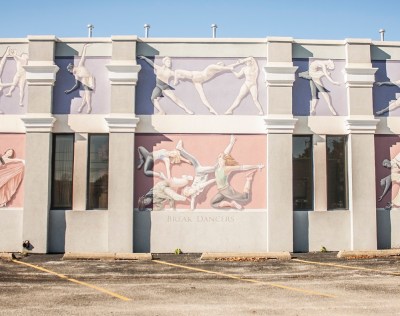
Haas_Mural_Break_Dancers_Web

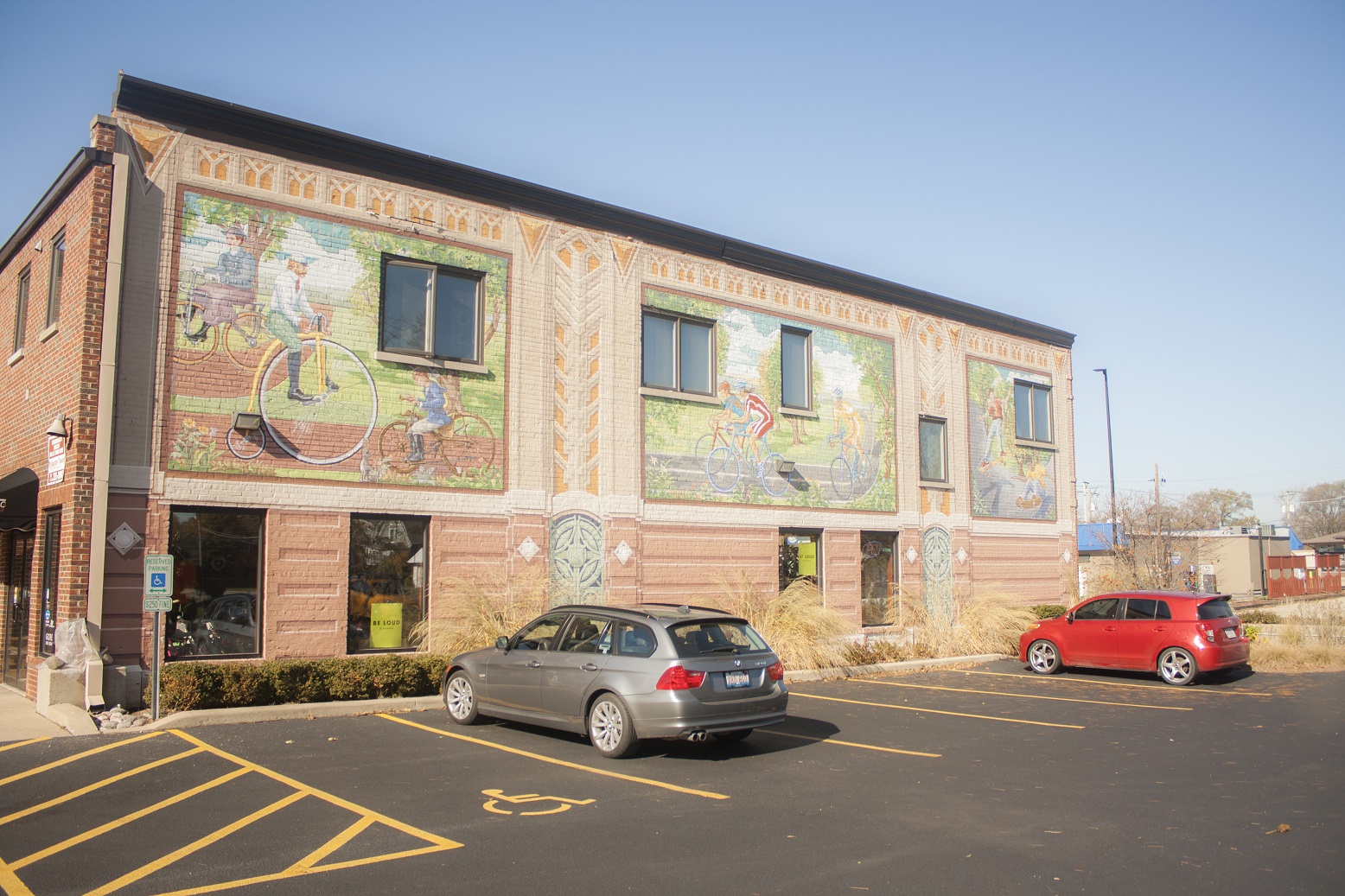
and finally, an extensive mural on the history of the bicycle.
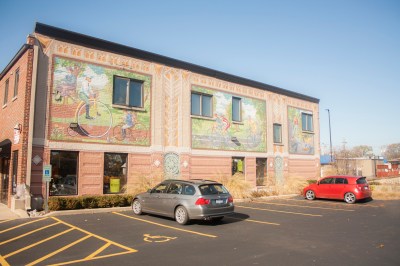
Haas_Mural_Bicycle_Shop_Web

With the hunt for his thirteen murals complete, we hopped in the car to commute to downtown Chicago.

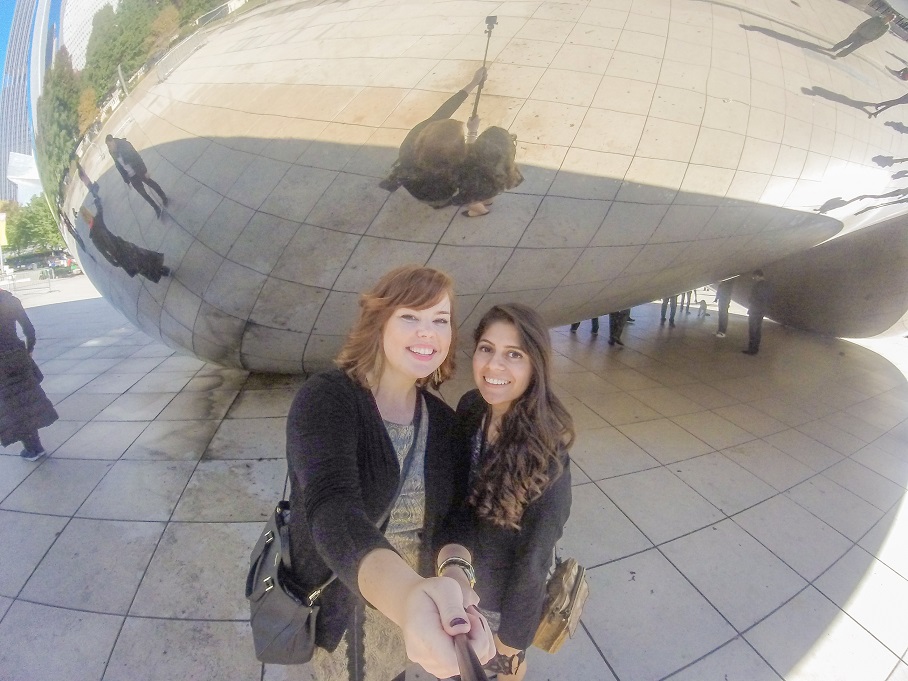
Parking was a challenge, but we found a central location. We ventured into the very busy Chicago streets and made our way to Millennium Park, where the very famous public sculpture “Cloud Gate” (a.k.a., “The Bean”) is located.
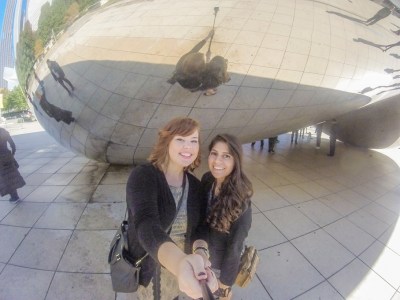
Constance had visited Chicago and “The Bean” last year, and she guided us through the crowded crosswalks that astounded Alex, thankful to not be wandering aimlessly alone. The crowd of Chicago pedestrians thinned out around Millennium Park, and we were met by a new crowd of tourists at “Cloud Gate” (Anish Jay Kapoor), where we actually fit right in. We explored the sculpture, and snapped a number of pictures before Professor Yawn and Stephanie met us there. Alex even had the chance to participate in a picture series photographer Susan May Moody is working on titled, “Jumping at The Bean.”

She wasn’t the only one in the series.  Others also jumped for joy.

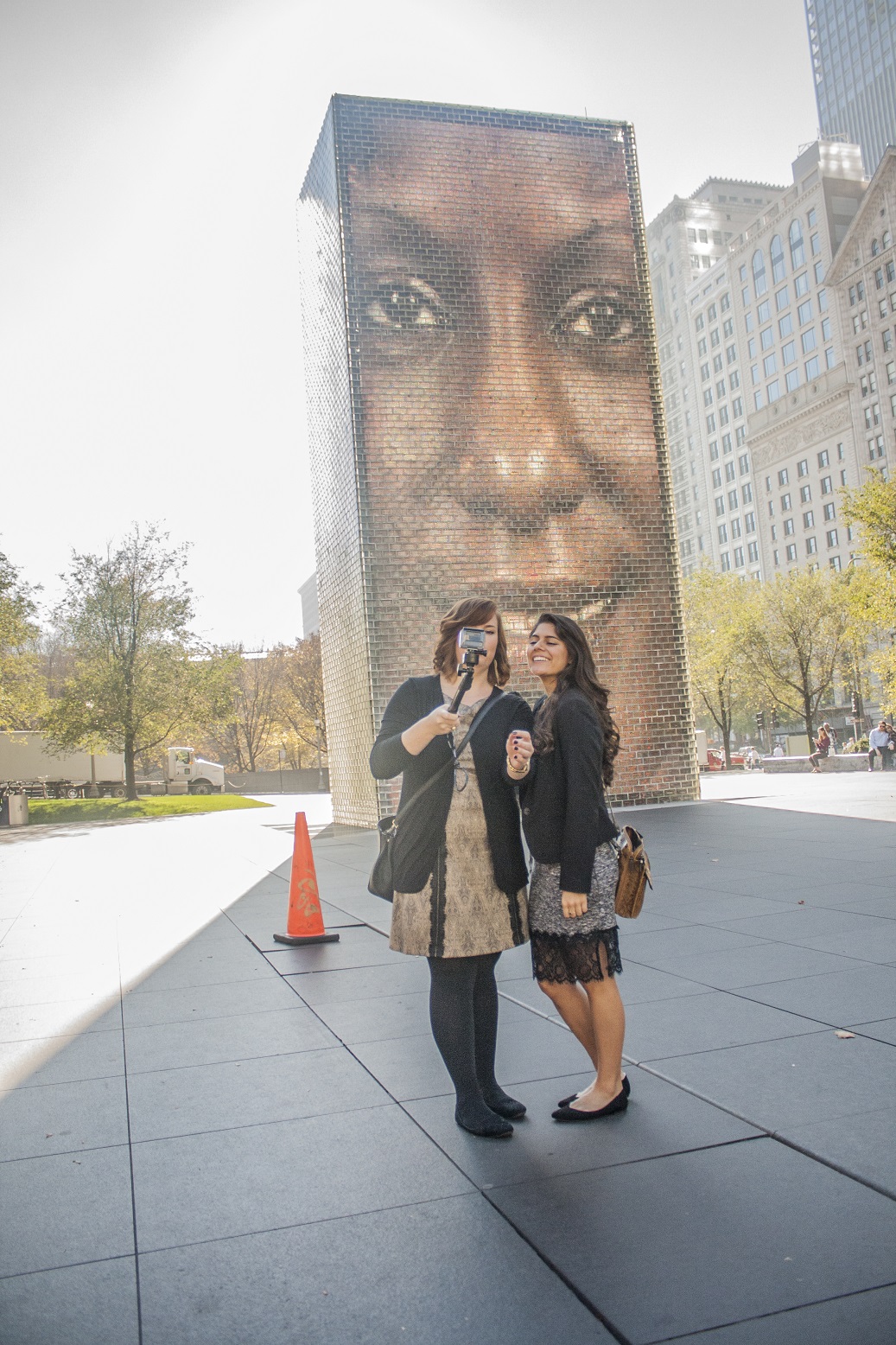
After taking more pictures than we’ll ever use, including one with sculptures by Jaume Plensa

Video_People_Constance_Alex_Selfie_Web

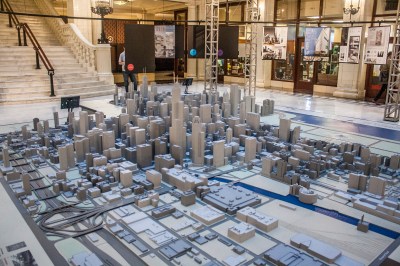
…we made our way down to the Chicago Architecture Foundation shop. We were welcomed by souvenirs of an architect with whom we are all familiar, Frank Lloyd Wright–as well as an intriguing model of Chicago.
Chicago_Model_Web

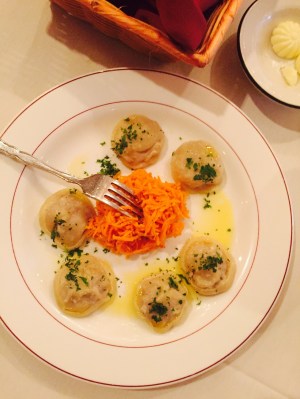
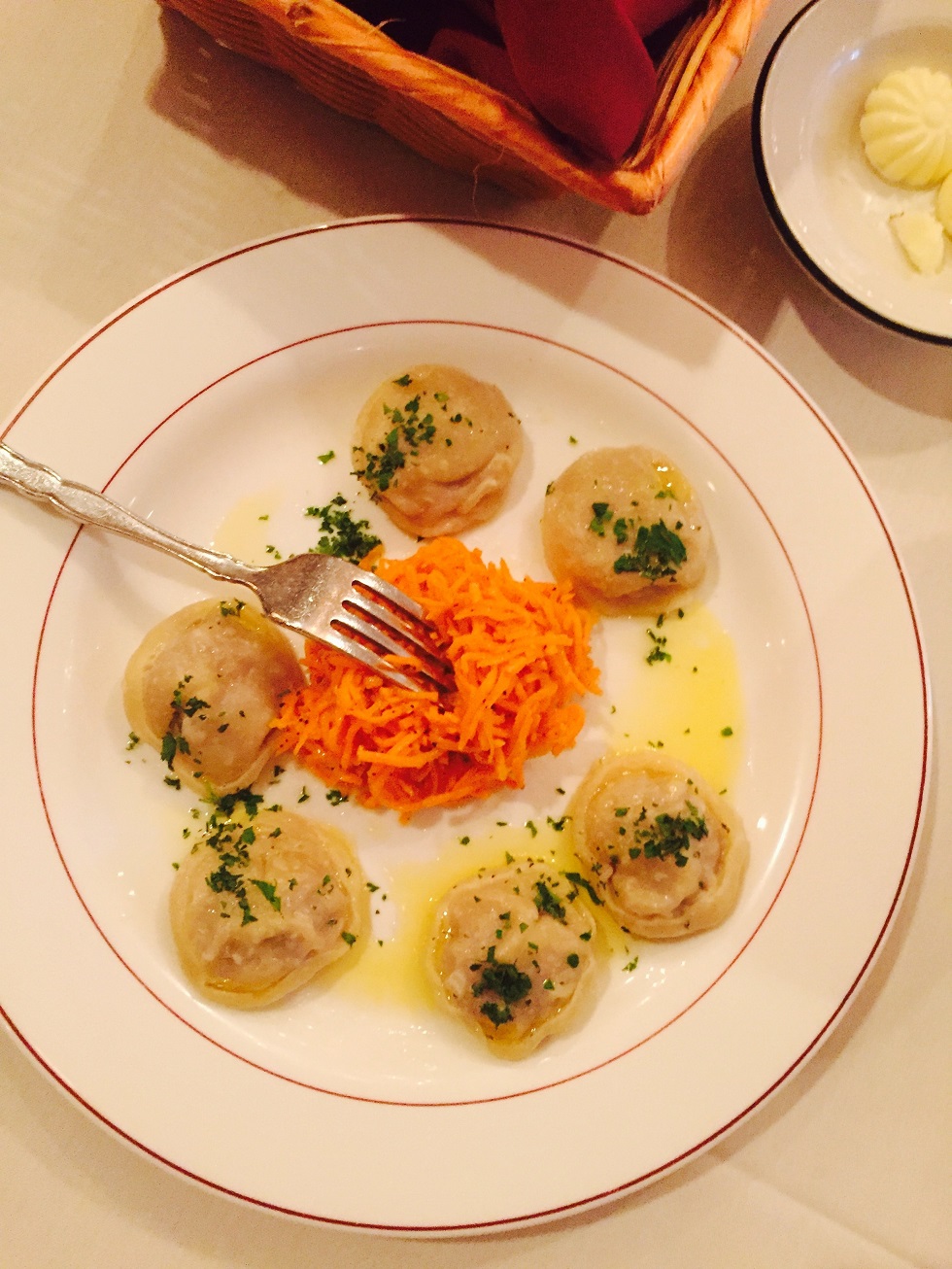
Circumventing busy professionals and tourists alike, we lunched at Russian Tea Time. Our first time trying Russian fare proved to be a bit overwhelming initially, by all the menu items offered, but we were excited to dig in to our appetizers, stuffed mushroom…
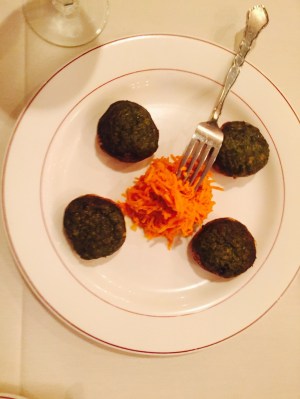
Russian_Stuffed_Mushrooms_Web…and Russian Dumplings…

Russian_Dumplings_Web

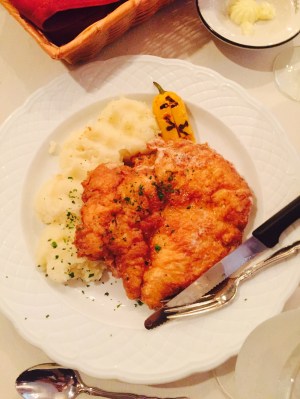
…and our shared Chicken Duran Schnitzel entrée.
Russian_Schnitzel_Web

The food was wonderful. We look forward to the opportunity of comparing the Russian schnitzel with the Austrian variety we will try at Grunauer’s in Kansas City in a few days.

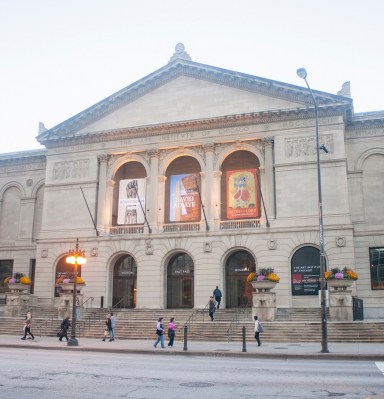
Stuffed, we walked off a bit of our lunch en route to the Chicago Institute of Art.
CAI_Exterior_2_Web

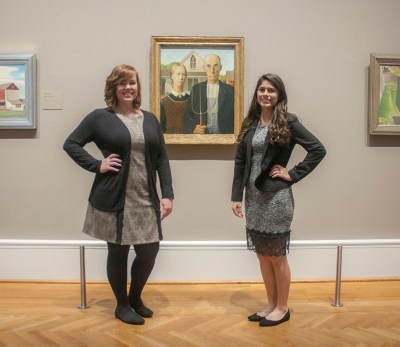
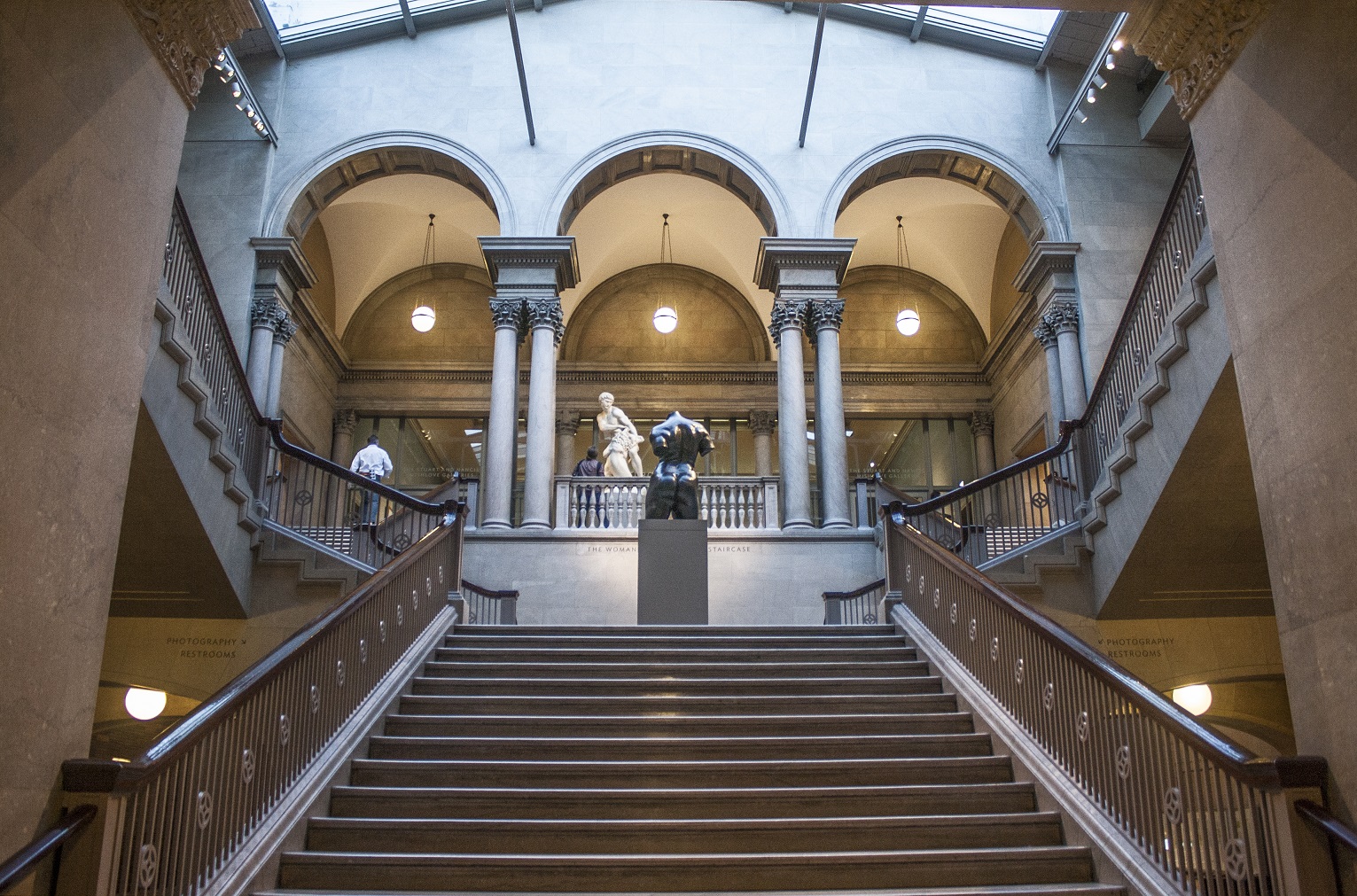
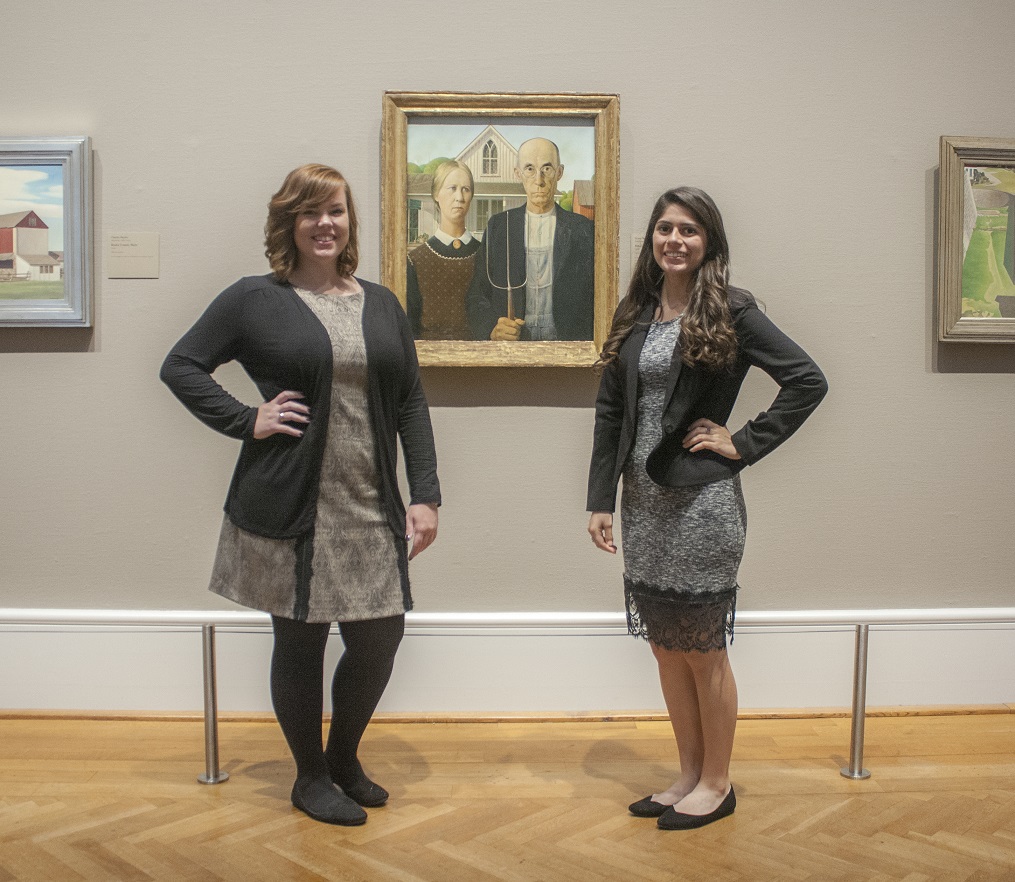
Constance was excited about her return trip through the extensive exhibits, she was most excited to view Grant Wood’s “American Gothic,” which was on loan during the LEAP Center trip to the Film and History Conference last year. Alex, on the other hand, reported being overwhelmed upon entering the vast lobby of the 122-year-old building originally built to house the 1893 World’s Columbian Exposition.

CAI_Staircase_Web

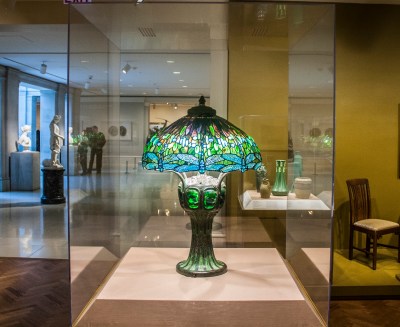
With no time to see all the works, and with exhibits separated by style, we began in pre-1900 American art, perusing Tiffany lamps…
CAI_Tiffany_Web

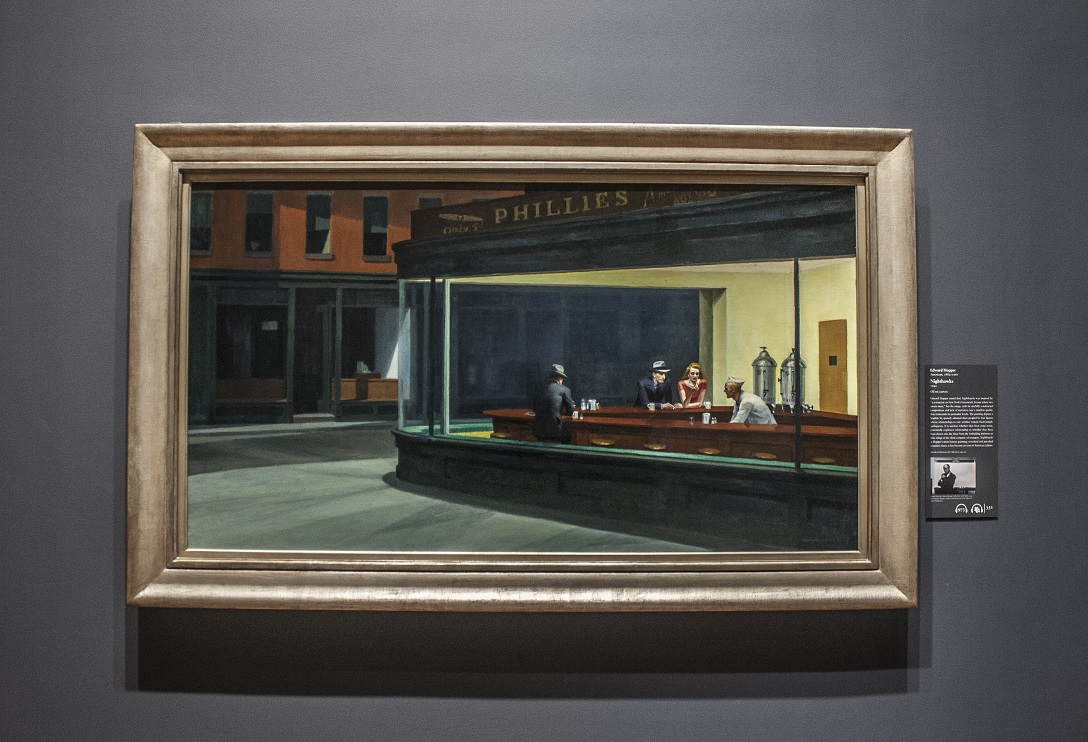
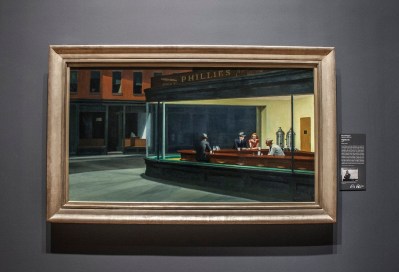
sculptures and paintings alike by Frederick Remington, and quite a few works by John Singer Sargent. We focused next on American art post-1900, where we encountered several works by Georgia O’Keeffe, Edward Hopper’s “Nighthawks,”
CAI_Hopper_Nighthawks_2_Web

Wood’s “American Gothic,”

CAI_American_Gothic_Constance_Alex_Web

and a new favorite artist, James McNeill Whistler, famous for many works, especially “Nocturne: Blue and Gold-Southampton Water,” a beautiful piece in subdued colors and plentiful shadows highlighting a moonlit night. Alex’s favorite was Monet’s “Stacks of Wheat.”

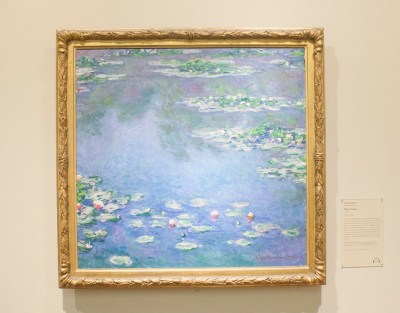
Next, we headed to the much-anticipated Impressionist exhibit to find Renoir, Degas, and Monet.
CAI_Monet_Water_Lilly_Web

We were awed, overwhelmed by the immensity of the exhibit along with the magnificence of its various artists. Just being in the same room as so many notable artist’s works was like a dream. To commemorate we took a few photos with one of the most famous works, Georges Seurat’s “A Sunday Afternoon on the Island of La Grande Jatte.”

CAI_Seurat_Sunday_Constance_Alex_Web

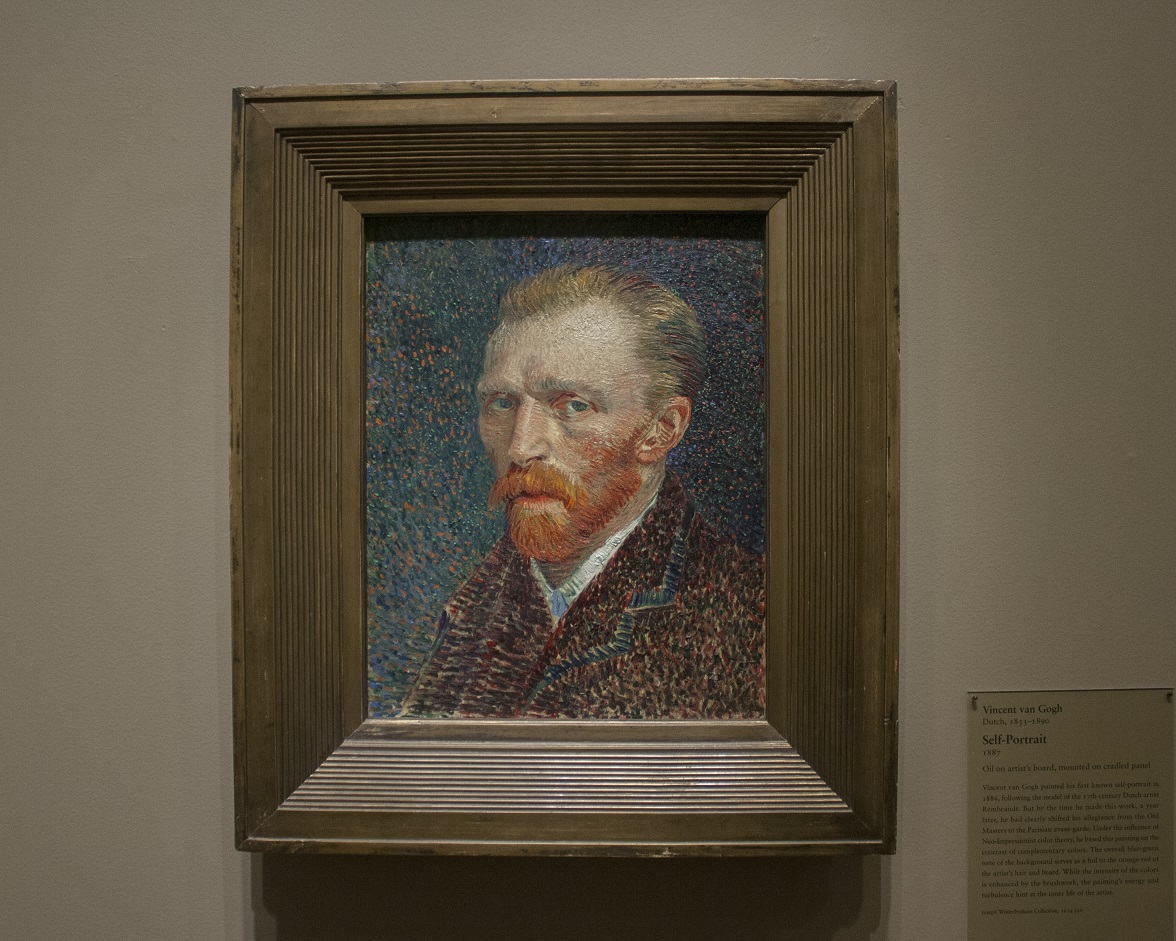
We also saw Vincent Van Gogh’s famous self portrait.

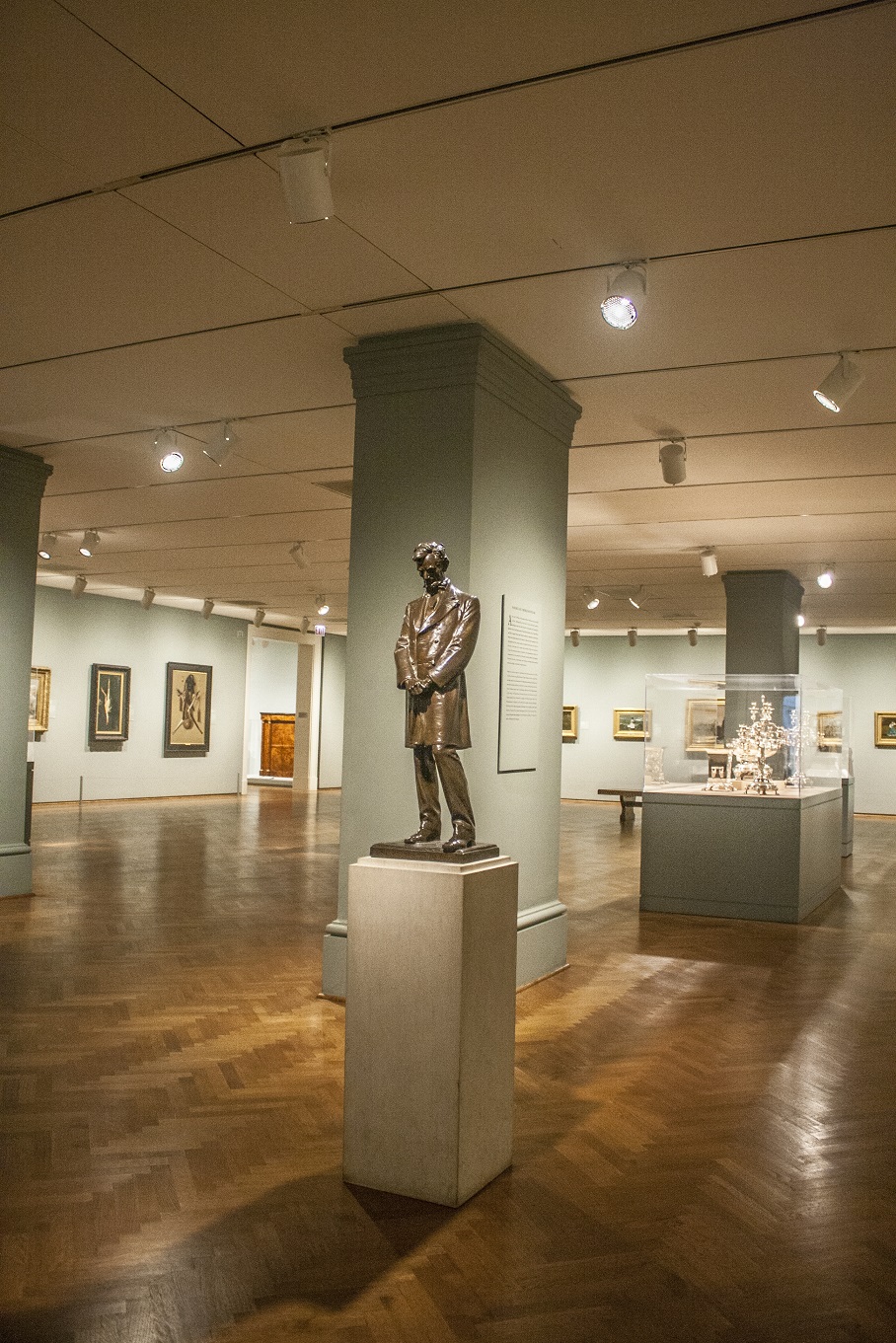
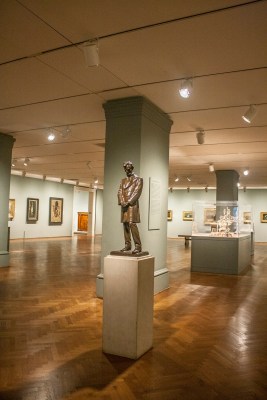
CAI_Van_Gogh_Self_Portrait_WebIt was also a chance to make connections to other things we’ve seen and done.  The Museum, for example, had a statue of Abraham Lincoln by David French, whose also did the statue for the Lincoln Monument, a replica of which also graces Lincoln’s Tomb.
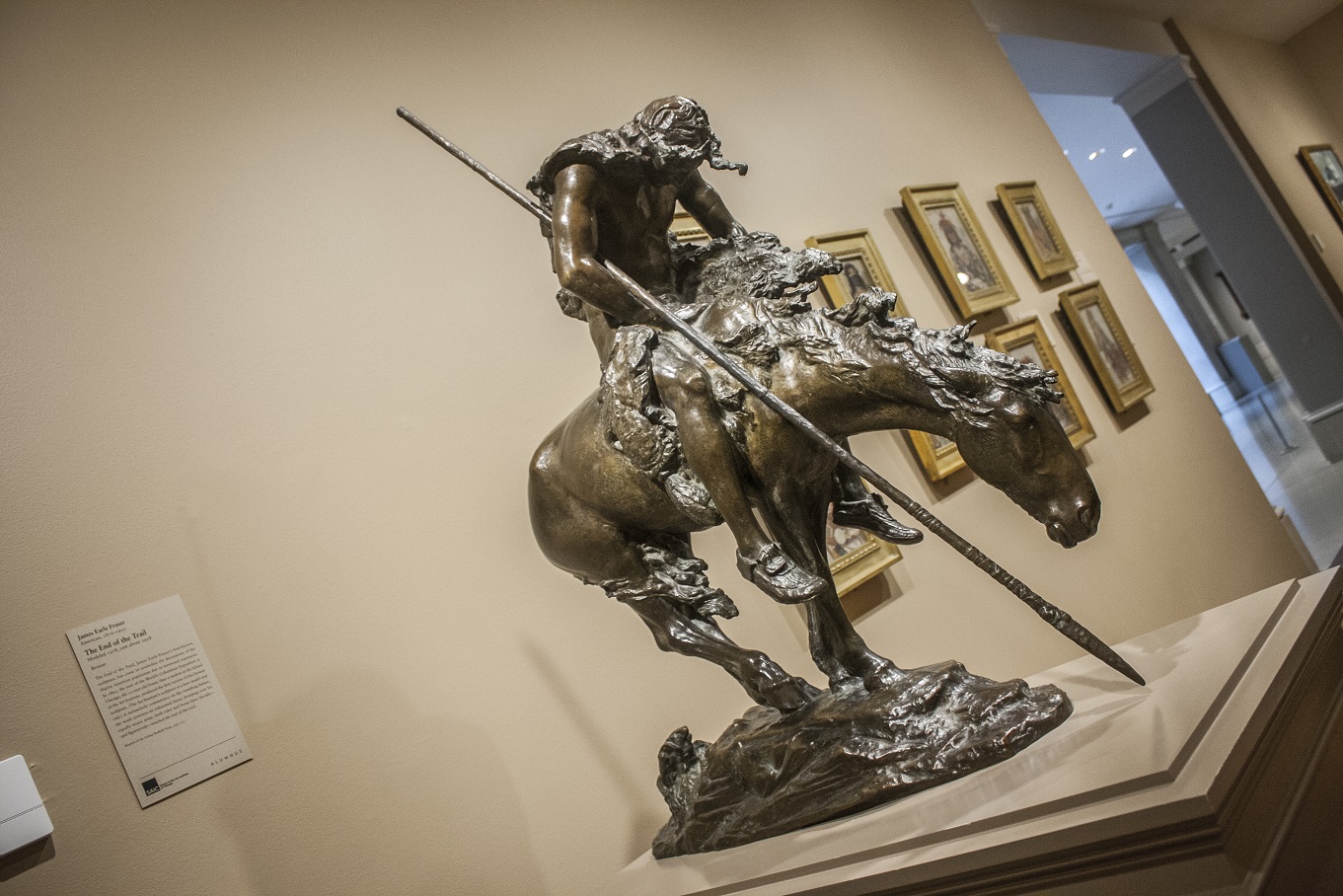
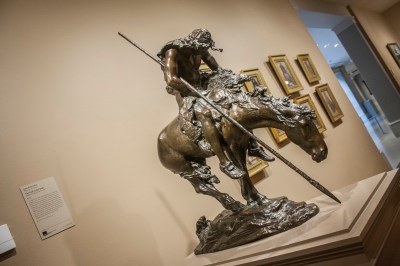
CAI_French_Lincoln_WebThere was also a sculpture of James Fraser’s “End of the Trail,” the larger version of which Constance had seen on her first LEAP Center trip to Oklahoma City.
CAI_End_Of_Trail_Fraser_WebFinally, we also had the chance to view an expansive exhibit of sketches, paintings, and even sculpture by Edgar Degas, famous for his dancers.  Both of us have seen his house in New Orleans, on separate LEAP Trips.

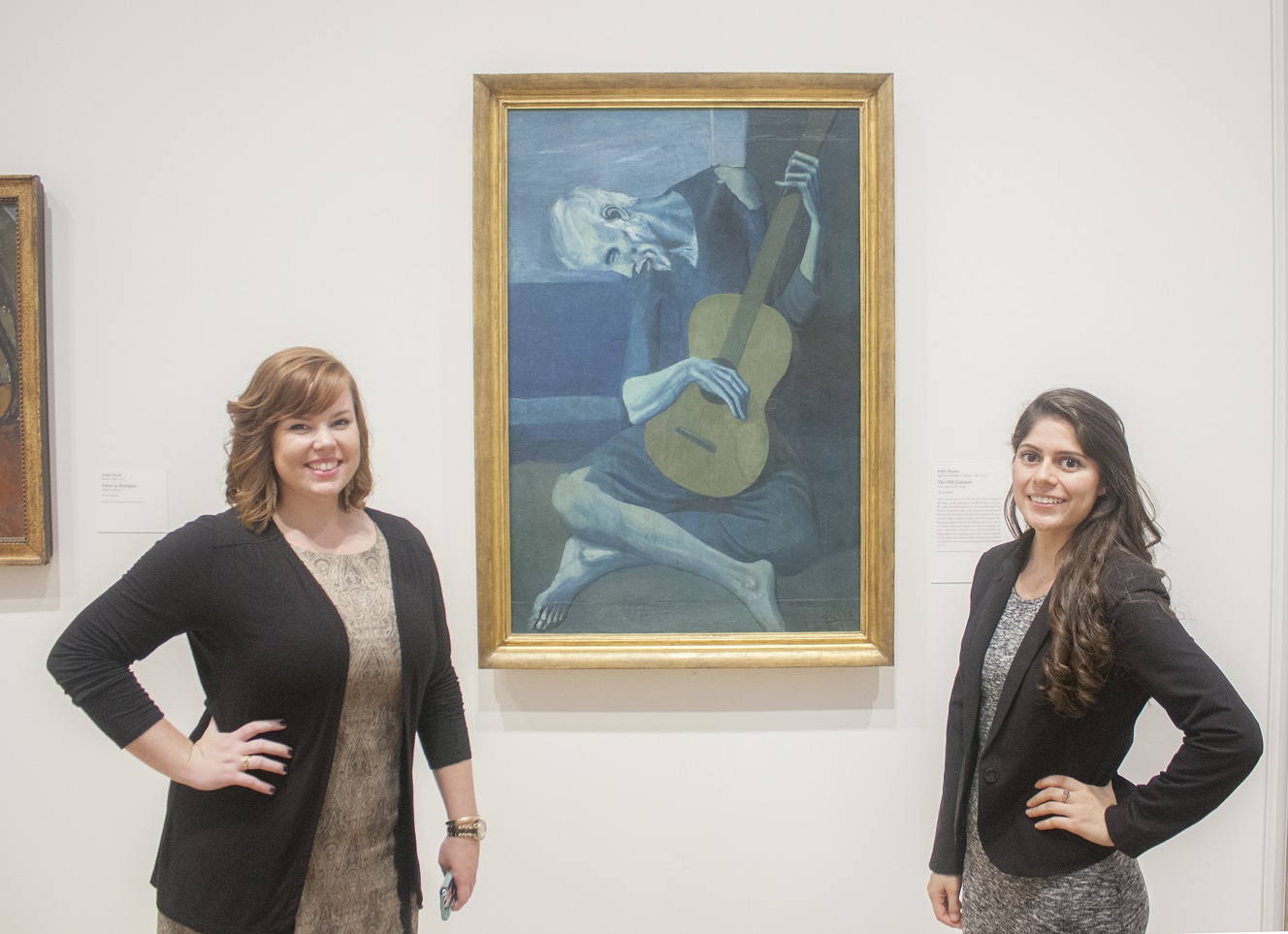
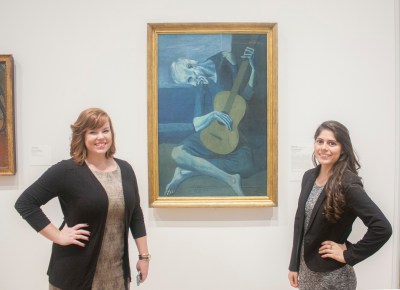
To finish our musings, we scouted the Modern art section, part of which, much to our dismay, was closed for construction. Deterred not, we explored the farthest exhibit from the entrance in search of pieces by Salvador Dali, Henri Matisse, and Pablo Picasso. With little time left for wandering, we took photos with a few renowned art pieces, such as Picasso’s “The Old Guitarist.”
CAI_Picasso_Man_With_Guitar_Blue_Constance_Alex_Web

Alex, new to Dali and Matisse, commented on the distinction their art holds in the easily recognizable themes in their pieces.

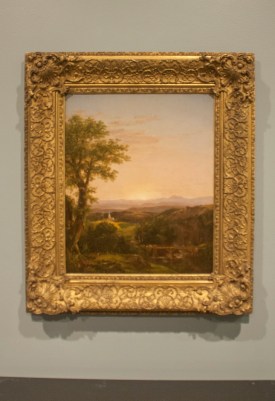
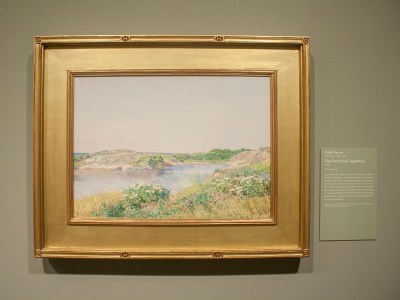
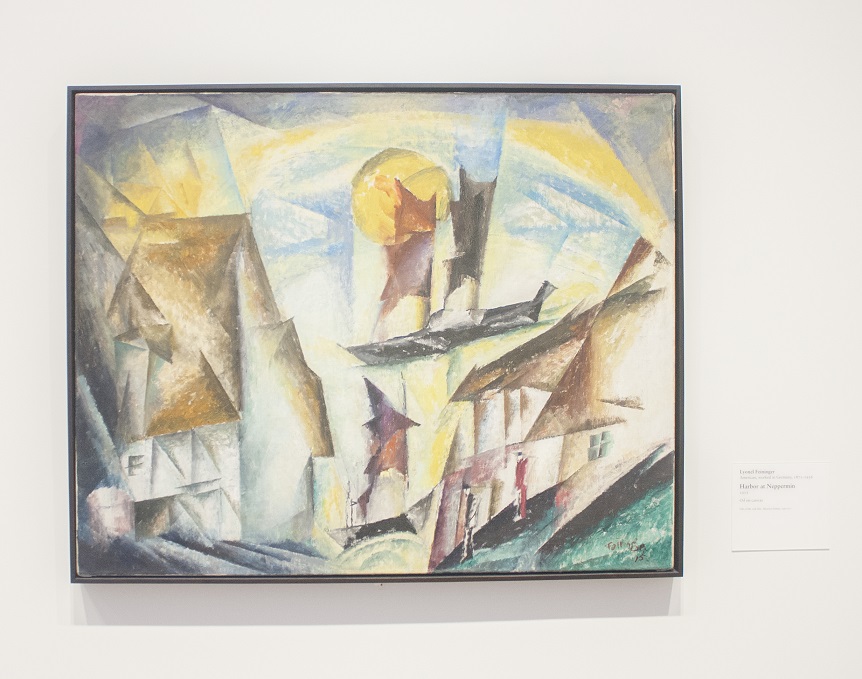
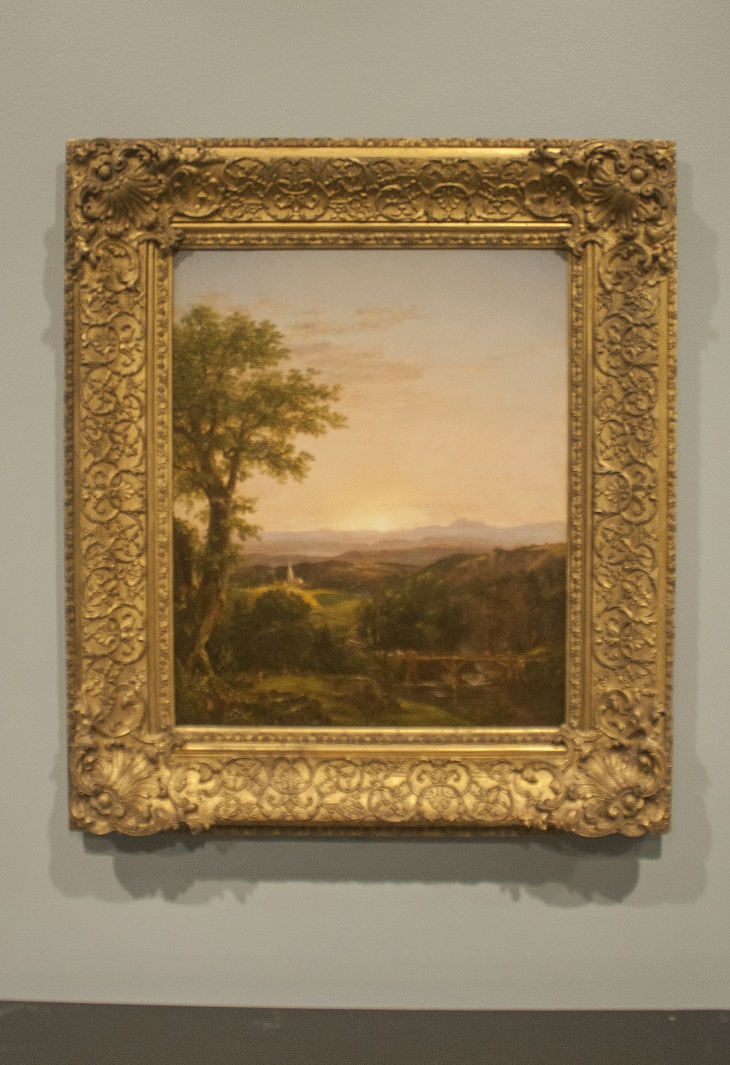
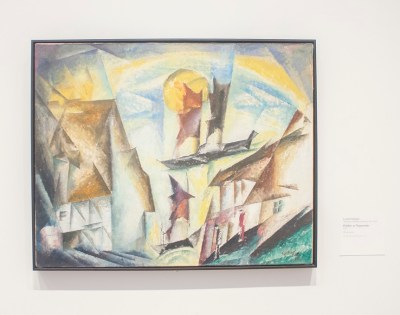
But we also discovered other artists with whom we weren’t familiar (but  researched and found to be quite famous!), such as Lyonel Feininger…
CAI_Fenninger_Harbor_Web…Thomas Cole…

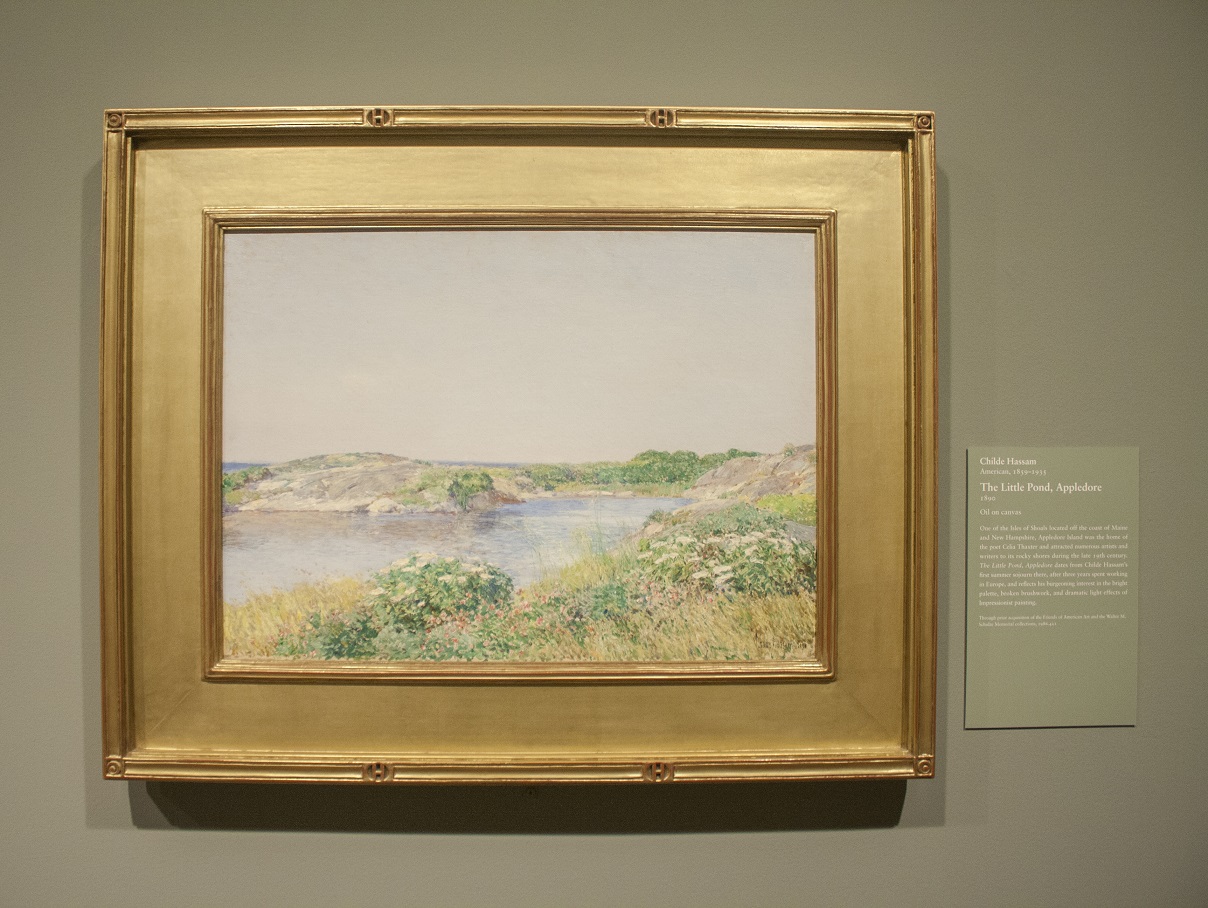
CAI_Thomas_Cole_Web…and Childe Hassam…

CAI_Hassam_The_Little_Pond_Web

We left the museum, awed by the history we had encountered and encouraged by the inferences we can begin to make as our repertoire of art knowledge grows.

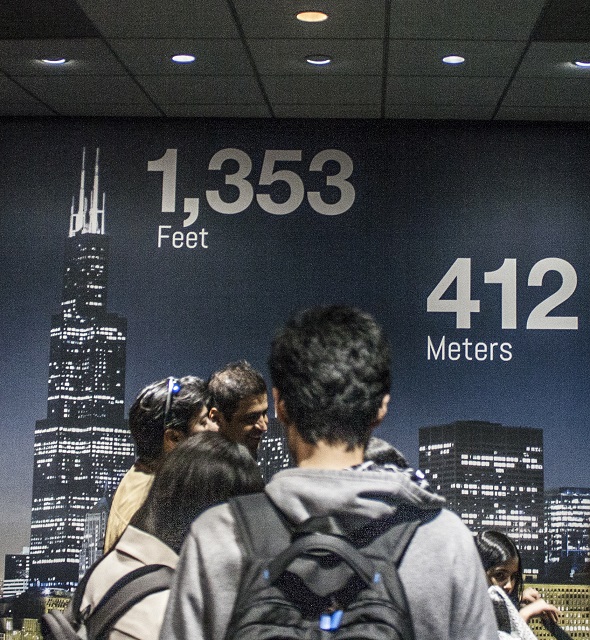
With the sun setting, we began a brisk walk towards our anticipated yet unnerving next destination, Willis Tower. Built in 1973, the 108-story building rose above us, almost as if to gloat in its terrifying height. We bought our tickets, entered the elevator, and began ascending to the Skydeck at a whopping 17 miles per hour (or 24 feet per second), finally reaching the top, 1,353 feet high.

Chicago_Skyline_Graphic_Web

At the top, we encountered 360-degree views of the Chicago skyline at sunset.

Chicago_Skyline_6_Web

It was completely worth the frightening elevator ride. Mustering much more courage, we even had the chance to stand on a clear floor 1300 feet up in the sky, which was beyond our comfort zone.  With that behind us, we had an impulse to leave, but we stayed, continuing to document Chicago’s descent into night.

This slideshow requires JavaScript.

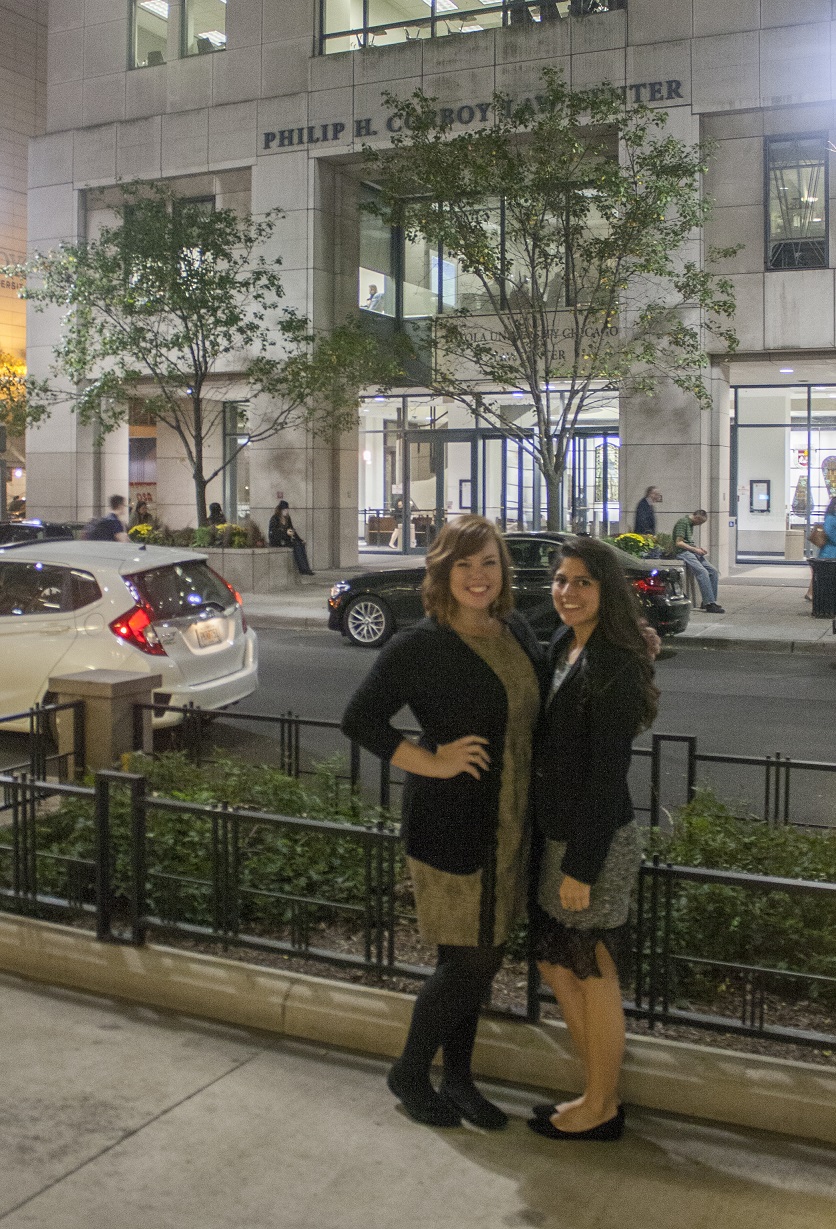
After the adventurous and phobia-induced experience at the Willis Tower, we taxied to Loyola University Chicago School of Law

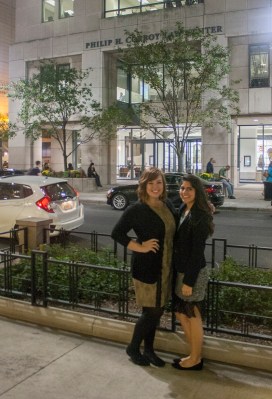
Constance_Alex_Loyola_Law_School_Webto meet with former Junior Fellows President, Daniel North – a reunion of sorts for Professor Yawn and Stephanie, and an introduction for us. Daniel showed us the equivalent to the LSC Ballroom at SHSU, where we sat while Daniel described his life at law school along with his plans after graduation, answering our questions about law school, and reminiscing about his time at SHSU and as a member of the Junior Fellows.
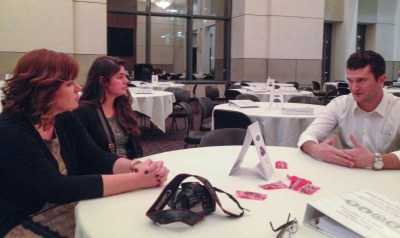
Daniel_Constance_Alex

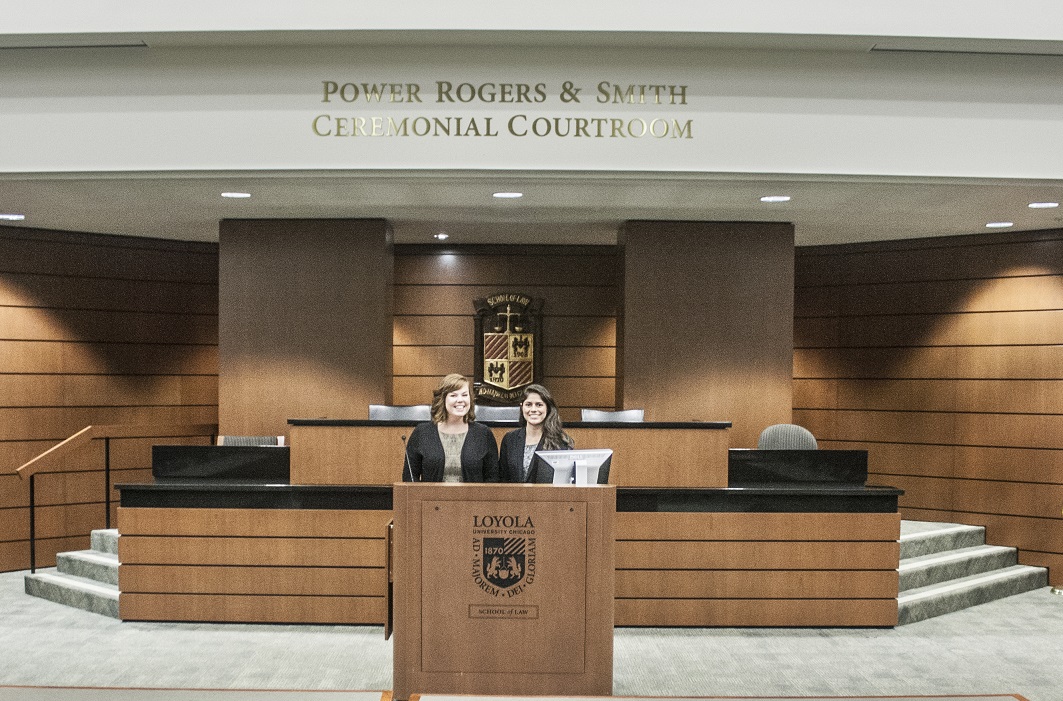
Daniel also showed us the courtroom where the Loyola Moot Court teams argue, and the Loyola law library, where we can expect to spend numerous hours in study. It was another connection for Alex, who recently spent time at UNT and TTU Law School Courtrooms as part of her Moot Court Experience.
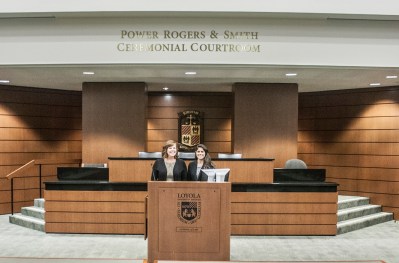
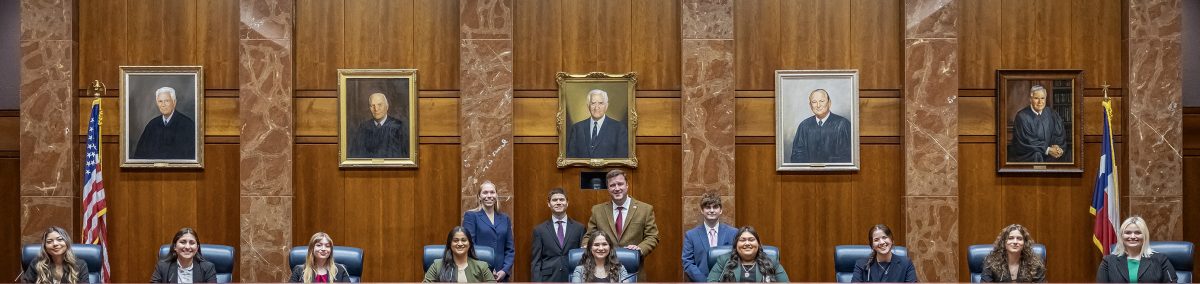
Loyola_Courtroom_Constance_Alex_Web

We also attended a Professional Responsibility class session with Daniel and his classmates. We sat in the back row of the class where we could see all the students prepared for class with their laptops, water bottles and books. Professor Grogan was passionate about what he was teaching and incorporated many previous cases which he has encountered (or taken an active role in) to help students understand the material.

Professor Grogan made the class exciting and kept his students engaged by incorporating humor. The main topics of discussion during the class were contingency, ethics, fraud, and a brief note on veterans, which quickly captured Constance’s attention. The hour and forty-five minute class flew by because of the interesting material and discussion.

It was an amazing experience for us, and we were very grateful to Daniel and Loyola Law for giving us this opportunity.

Daniel continued discussing his law school experience while we walked to Lou Malnati’s Pizzeria for dinner. After splitting a couple of small appetizers…
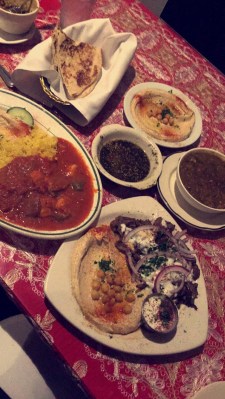
Chicago_Pizzera_Dips

we shared a “classic” Chicago-style deep-dish pizza, filled with cheese and topped with a layer of sausage. Daniel suggested that one slice would be enough, and one slice was definitely enough for most of us!
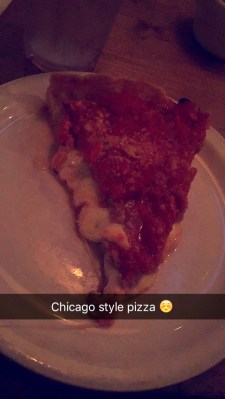
Chicago_Pizzeria_Slice

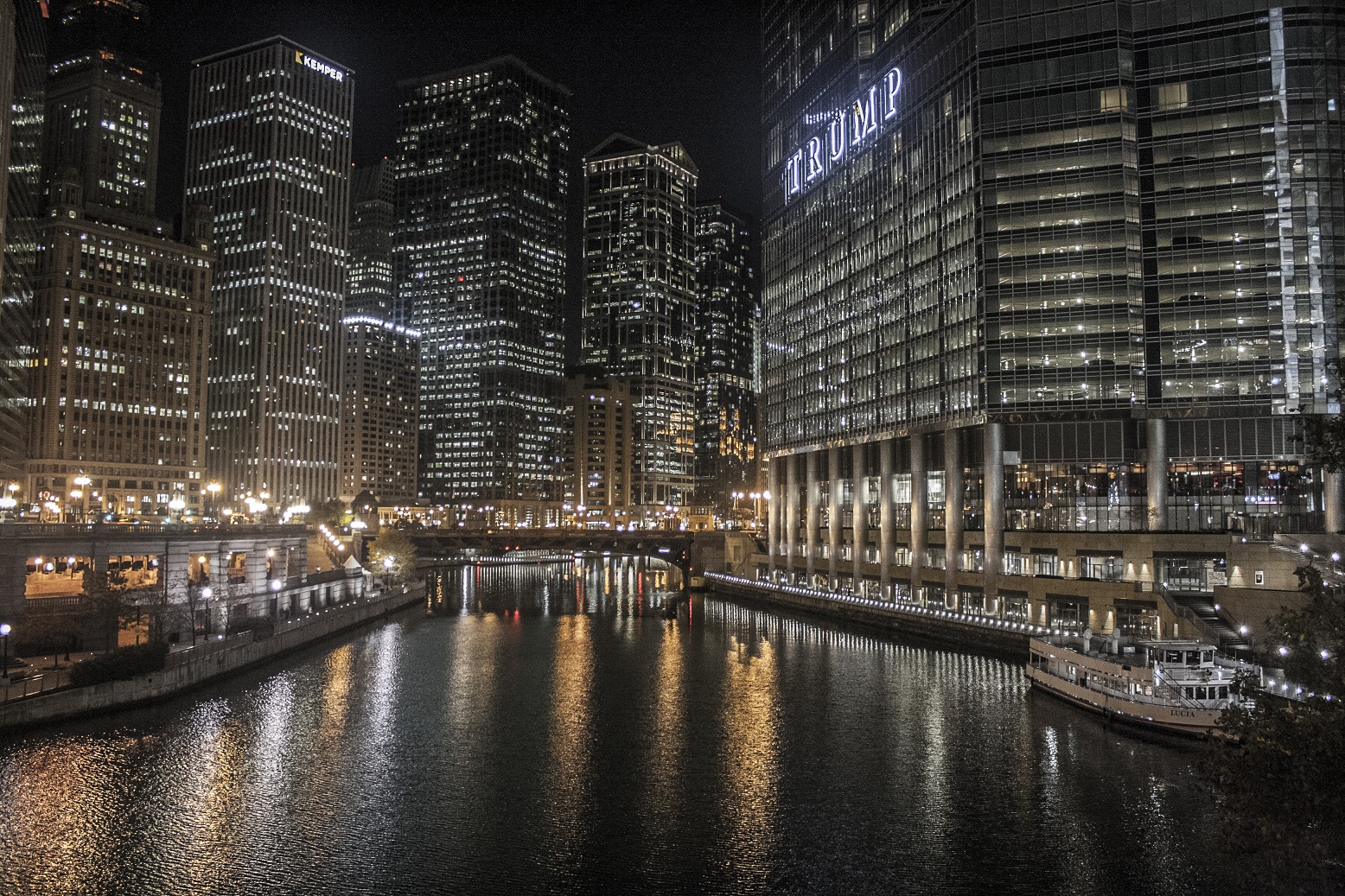
After such a filling dinner, we hoofed it for about a mile and a half across Chicago, checking out the beautiful architecture and river scenes.
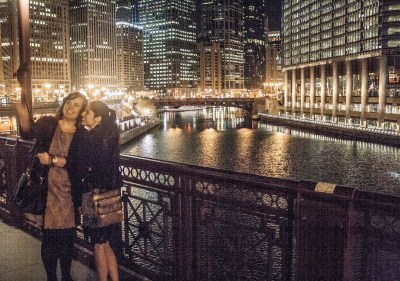
Constance_Alex_Chicago_River_Selfie_WebOne such photograph we specifically took for Austin Campbell…
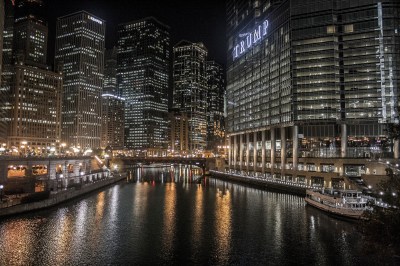
Chicago_River_Trump_Tower_Web…who, for reasons unknown, is obsessed with Donald Trump.

Getting in past midnight, and leaving Chicago at 6am, we returned to our hotel, with a busy and bustling day to reflect on as we descended into sleep.