After four educationally filled days in New Orleans, it is time to reflect on our favorites adventures in New Orleans.
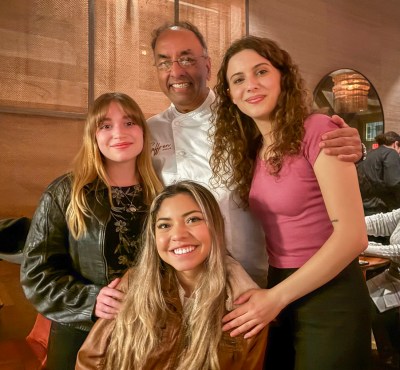
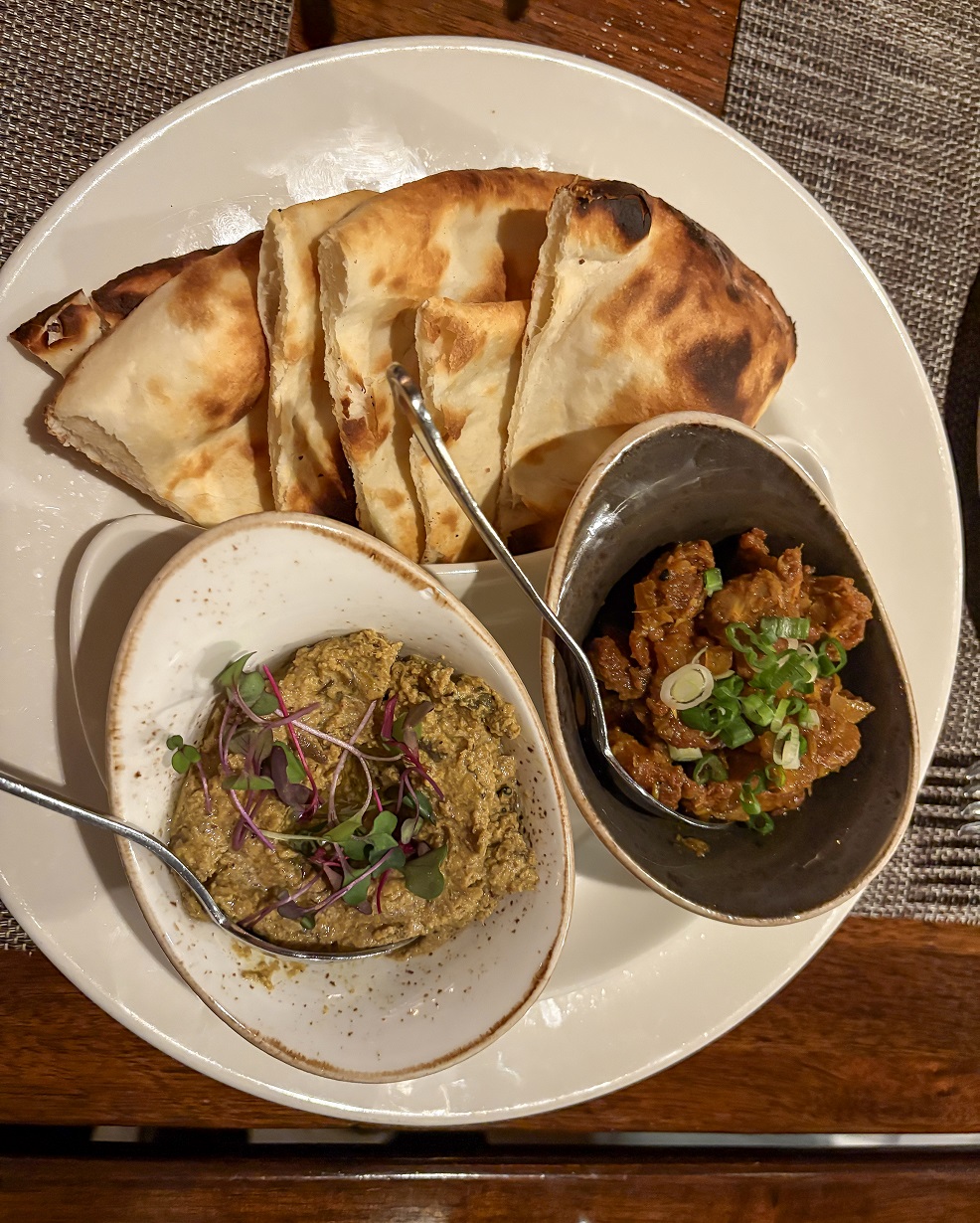
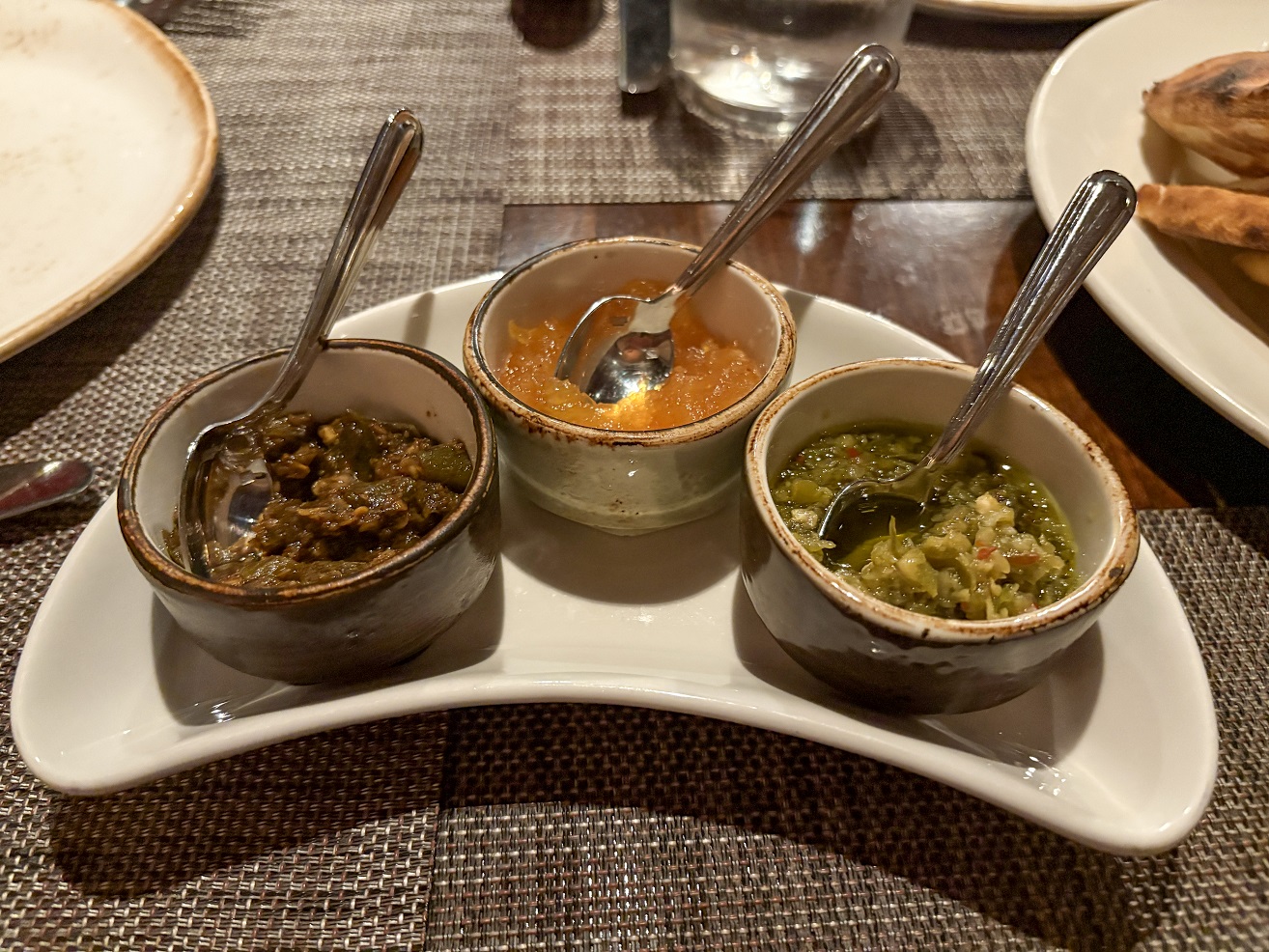
Saffron was a hit amongst the group, being their highest ranked restaurant!
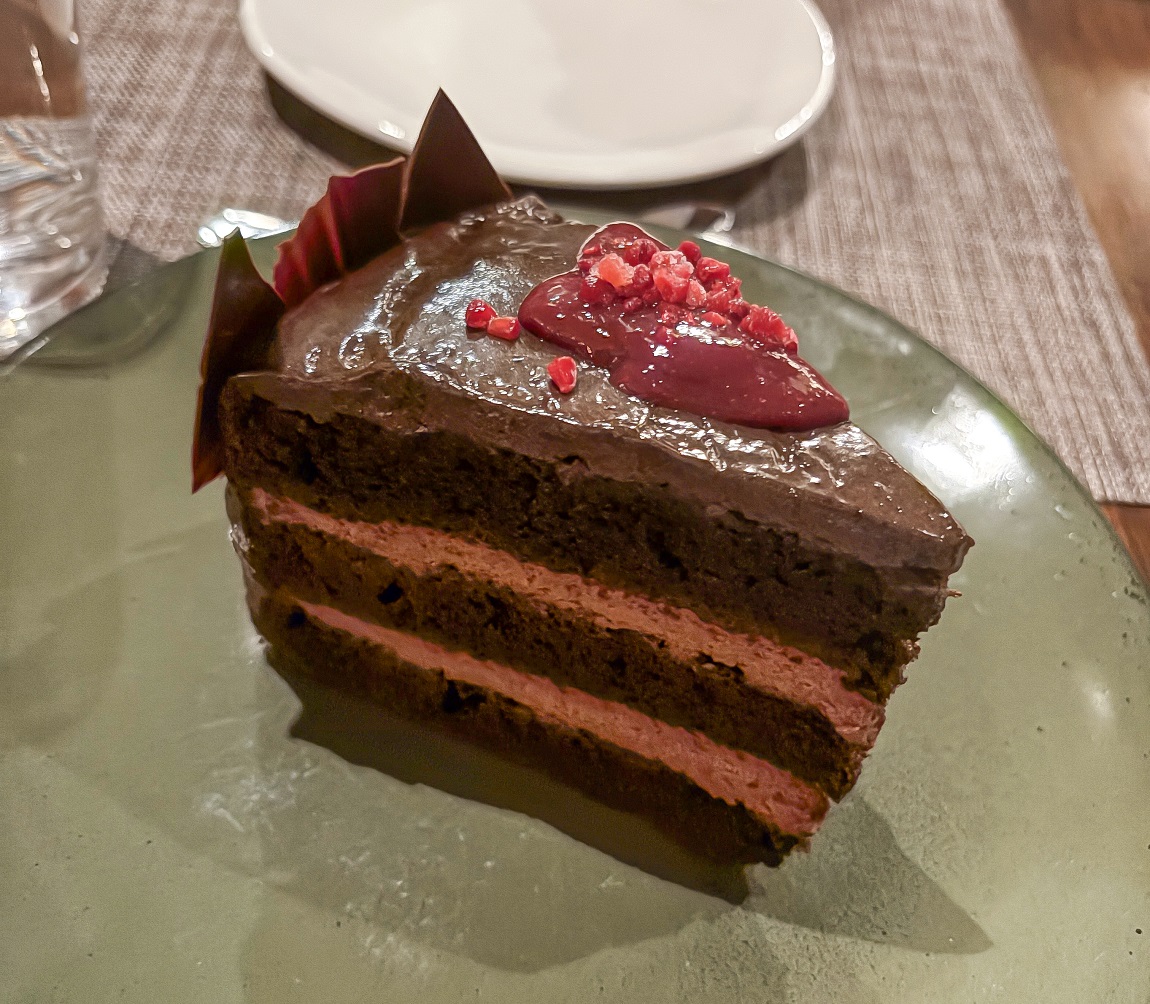
There was so much food variety that is no clear favorite, but the Chicken Lasooni and the Ginger Creme Brulee from Saffron would be the closest to it.
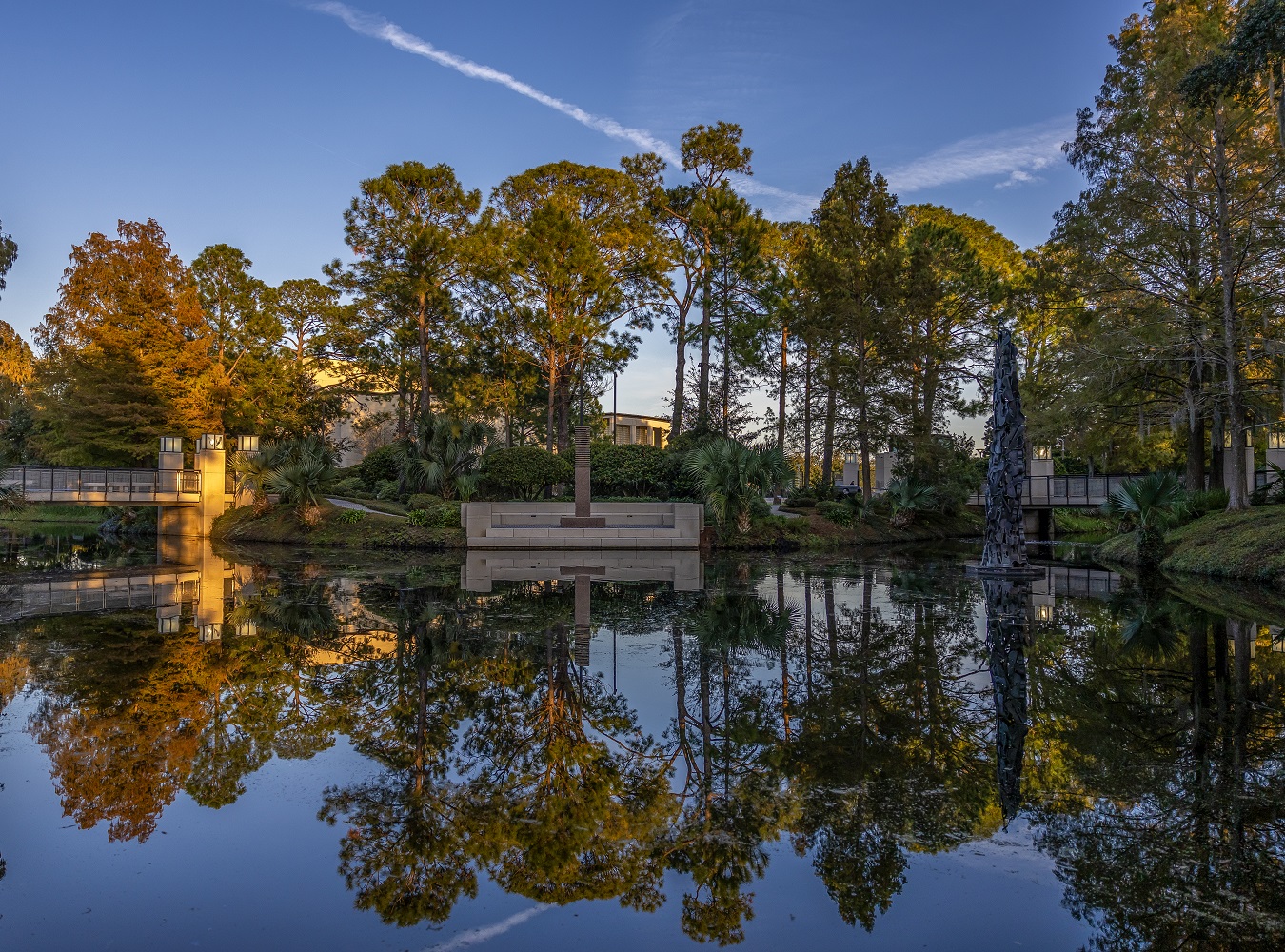
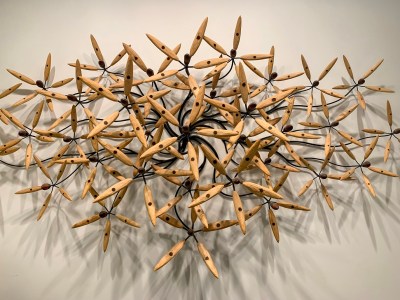
The Besthoff Sculpture Garden was the most talked about attraction in NOLA!
But Chrissy thoroughly enjoyed the World War II Museum, making it her favorite.
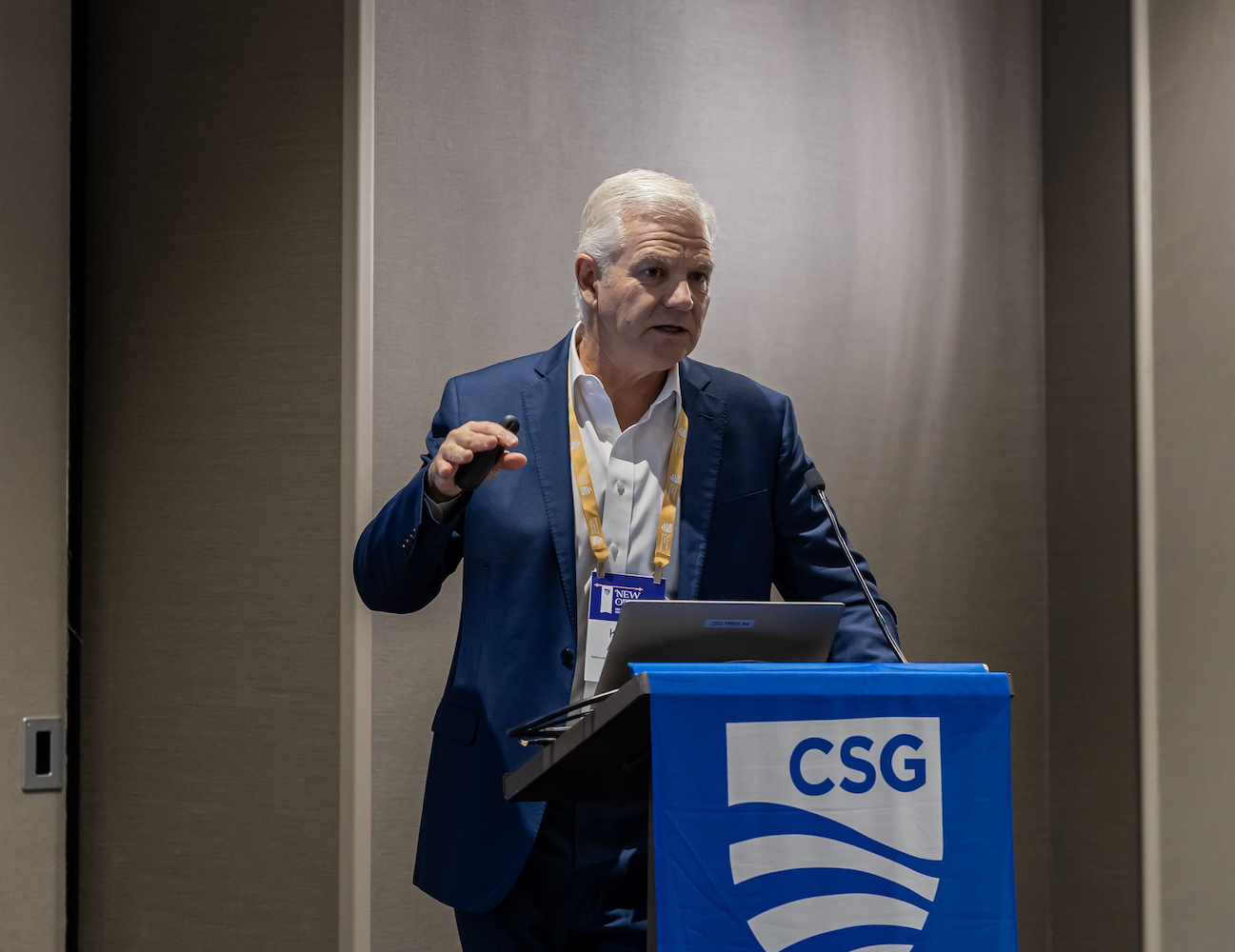
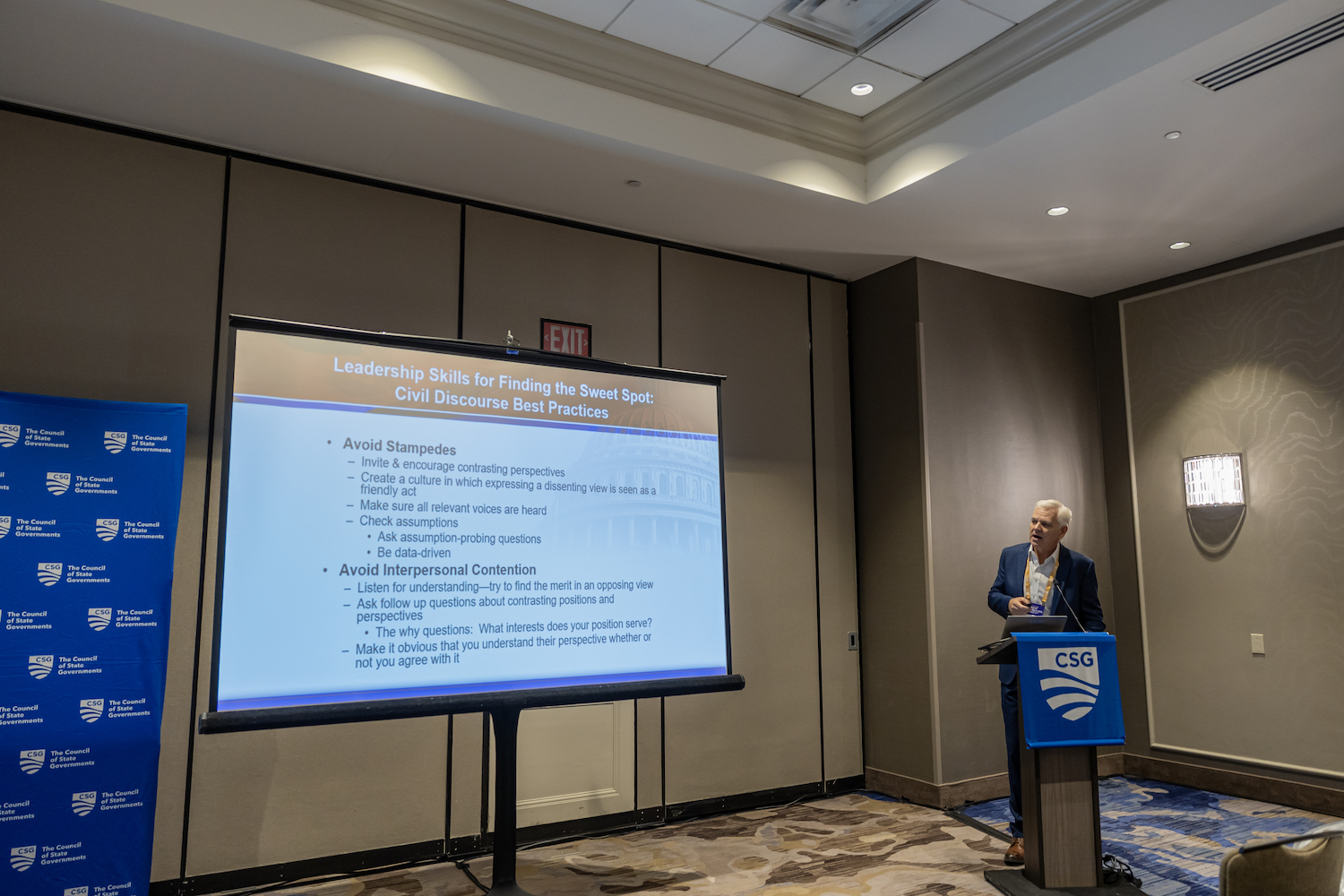
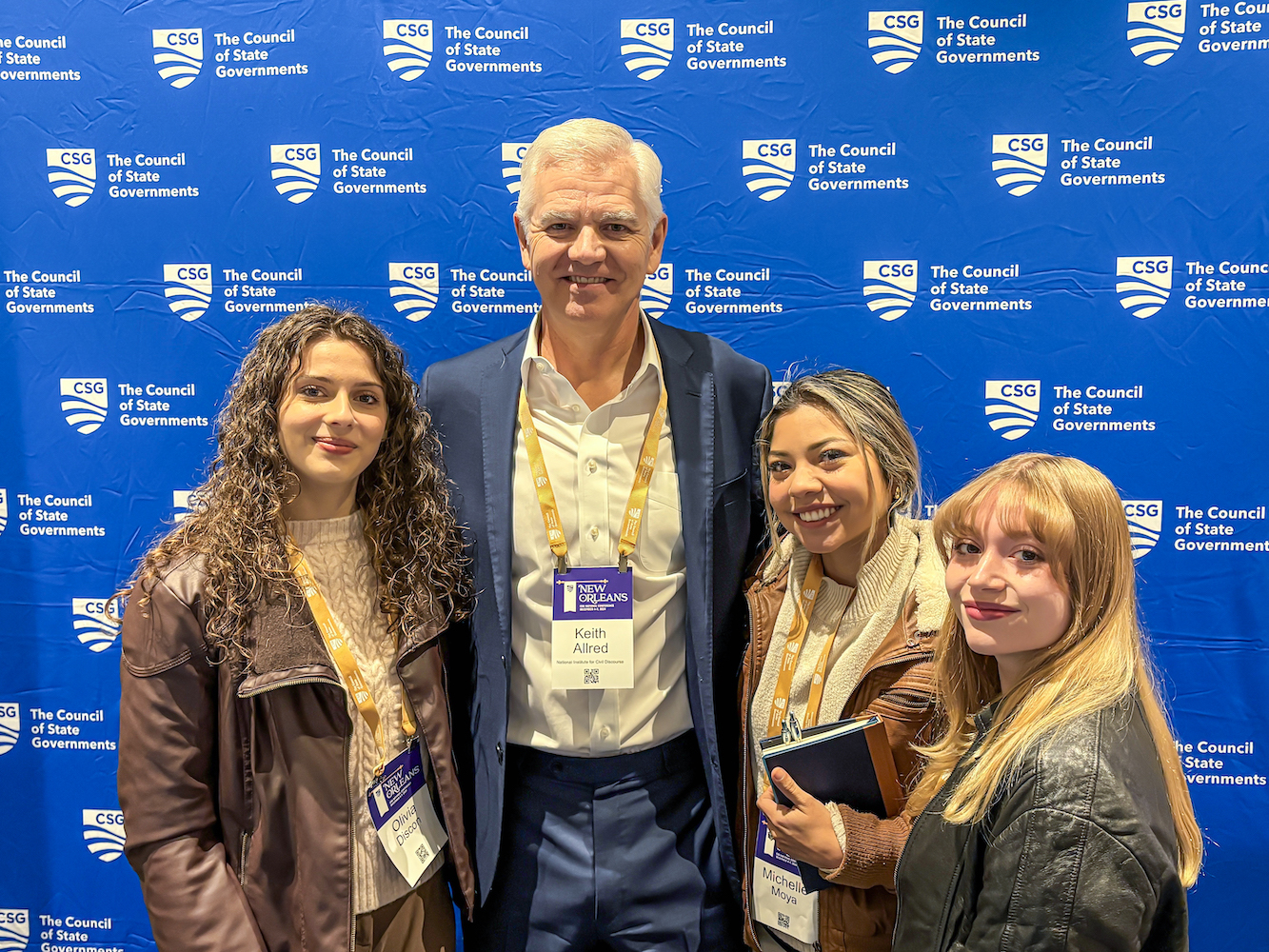
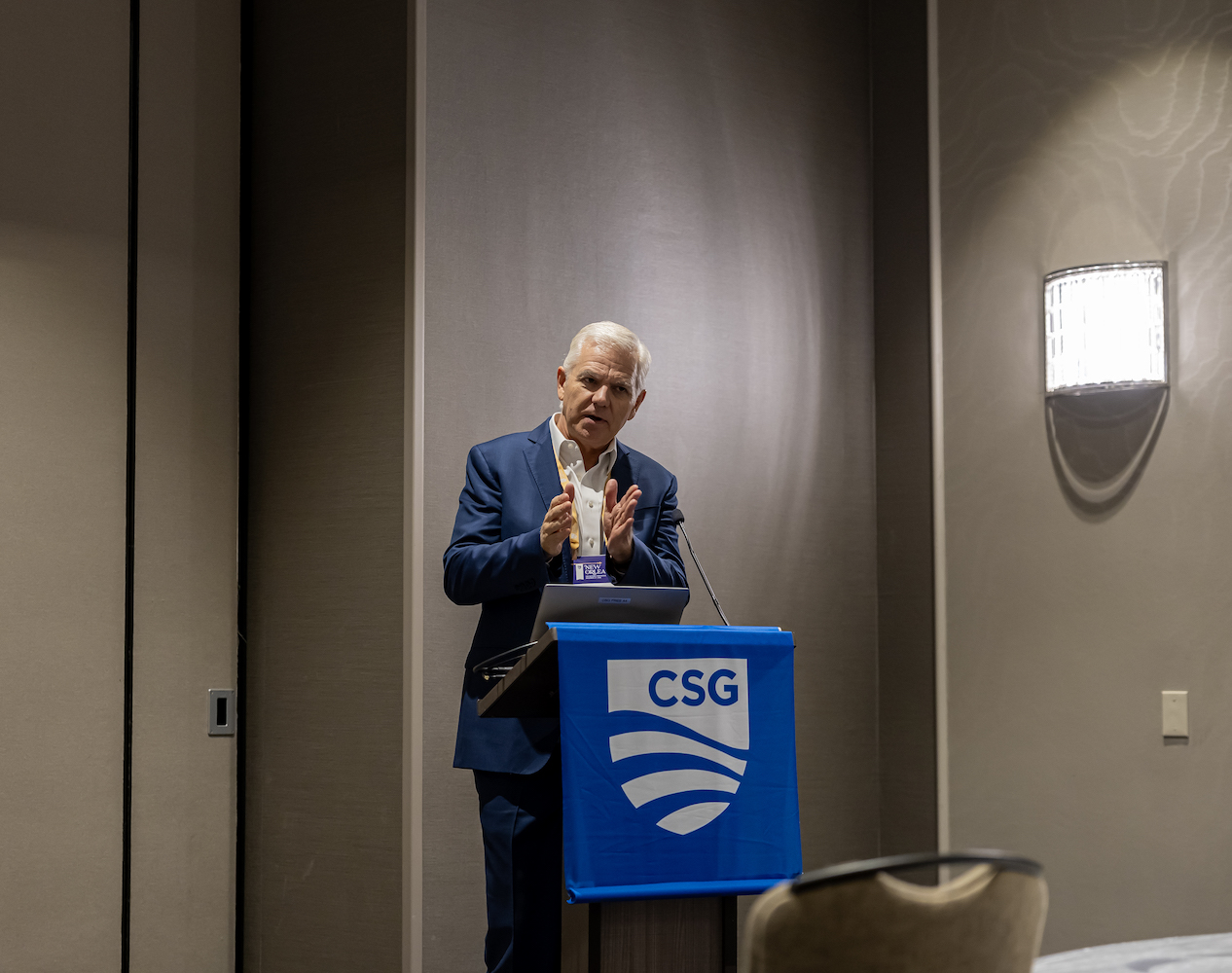
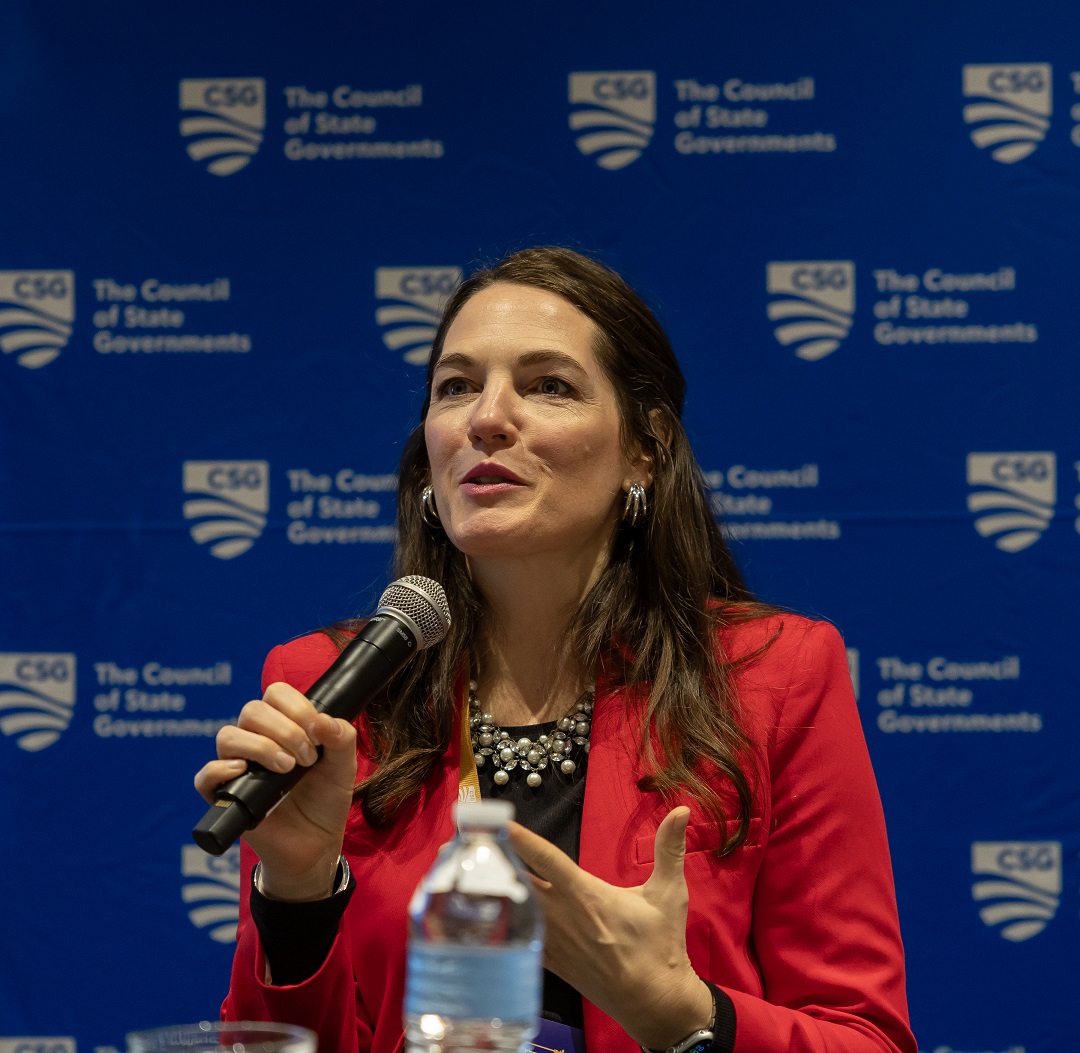
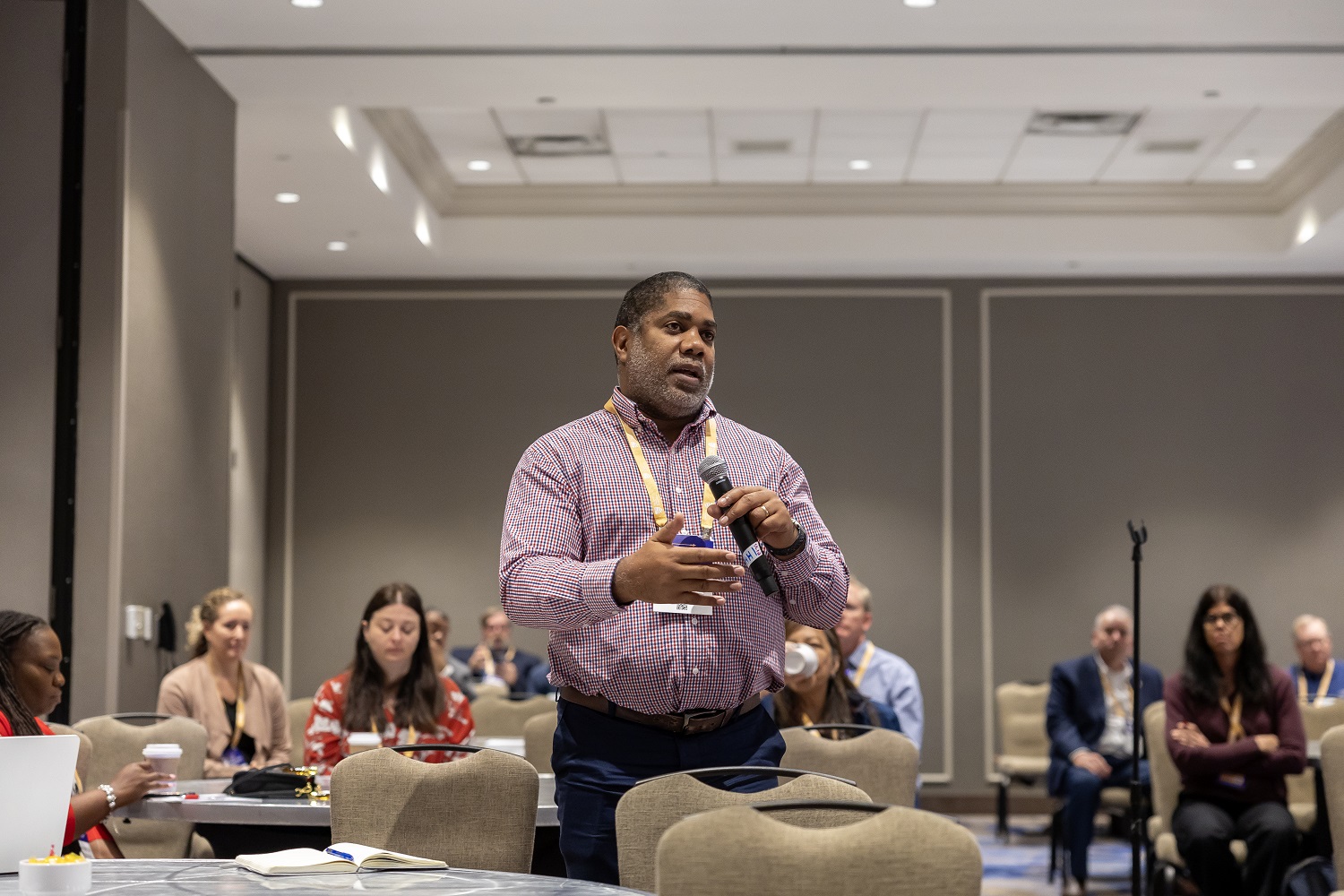
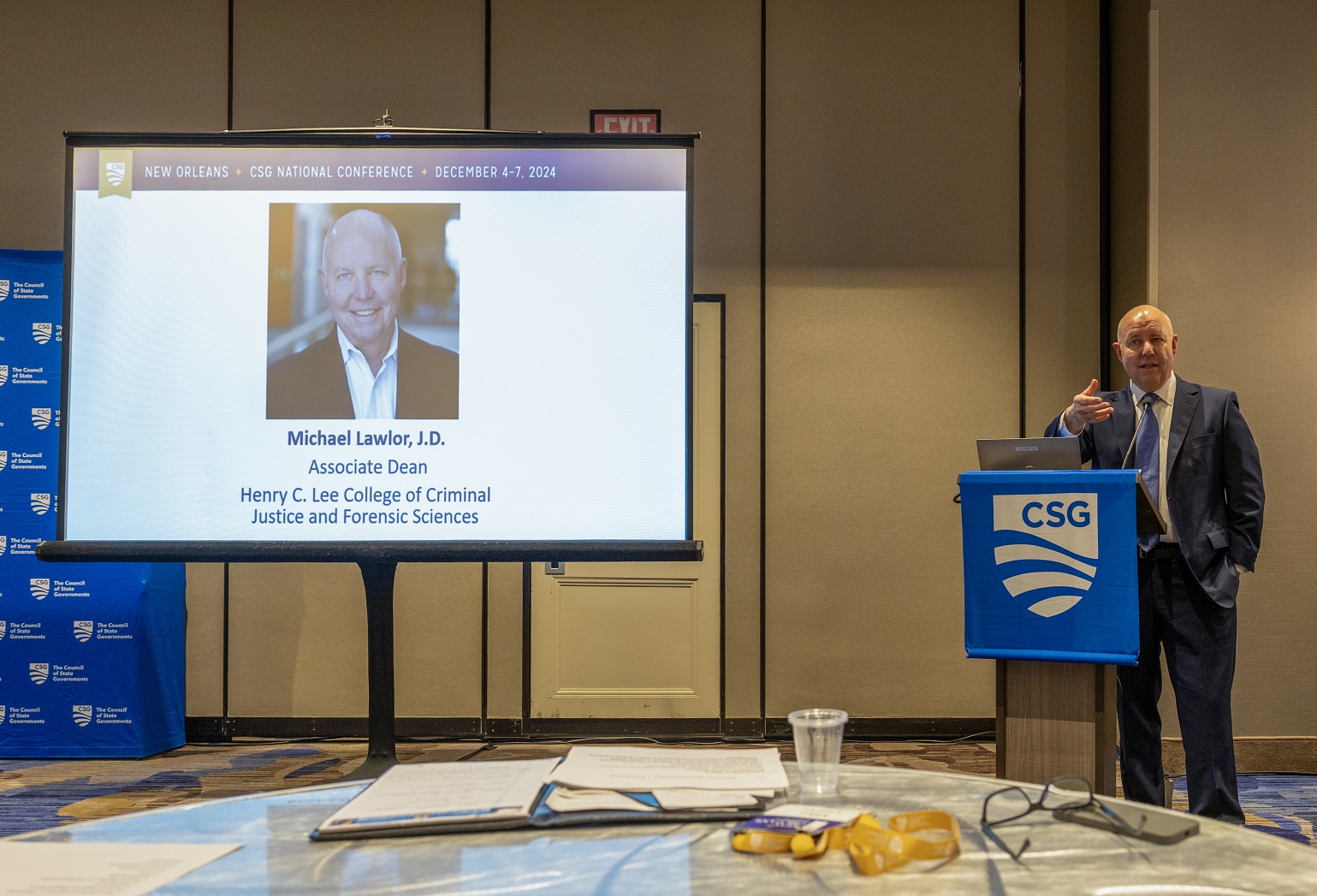
Now when it came to the educational sessions held by the Council of State Government Conference everyone was impressed by the Civil Discourse Strategies session.
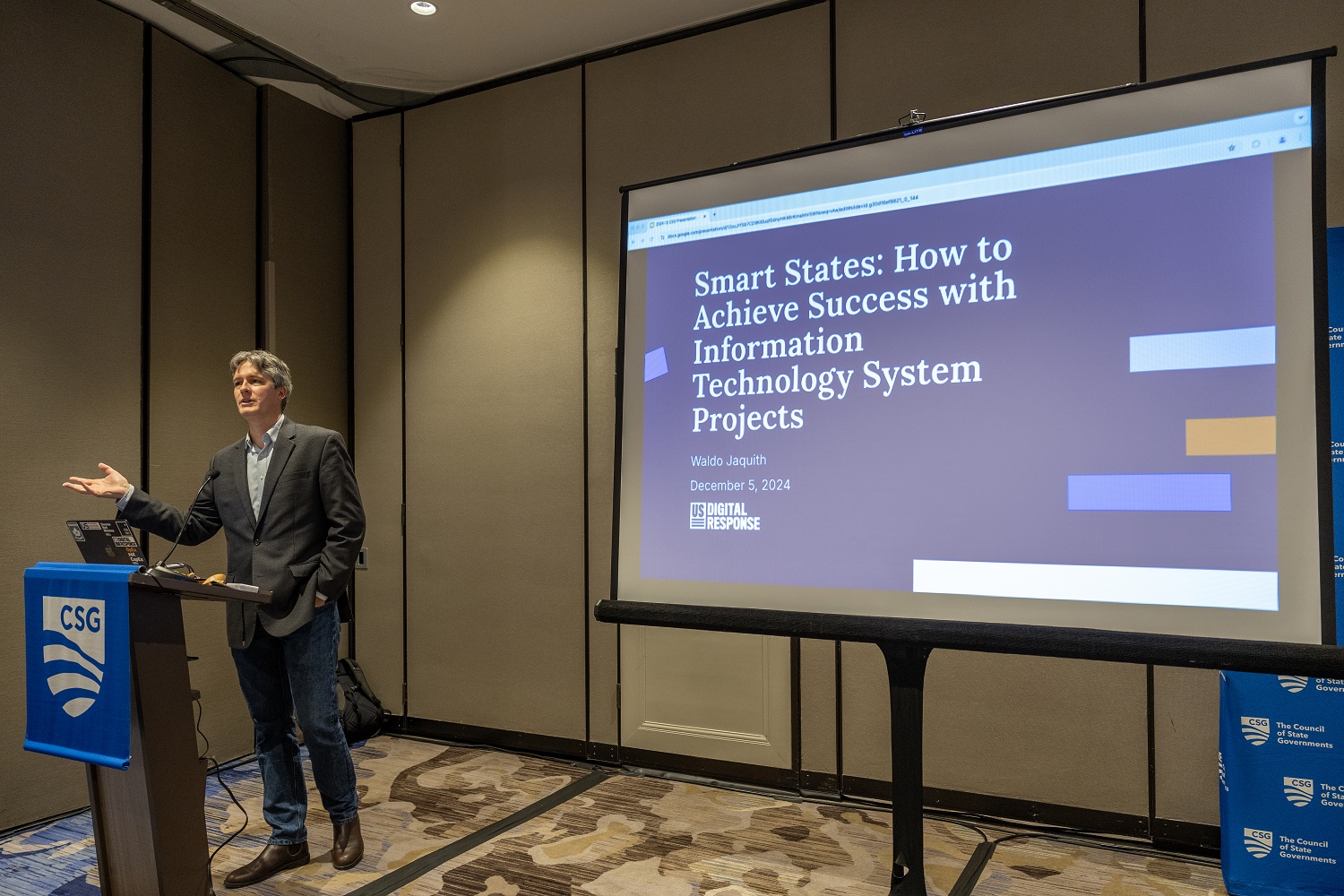
Michelle also learned a whole lot from the session detailing U.S. Supreme Court Updates, while Chrissy and Olivia got lost in the future with the Smart States session.
But we learned from all our adventures, packing in as much as possible in a four-day trip–the LEAP way.
…we were determined to make it worthwhile, so we hit a couple of must-dos on our way back to Texas, finals, and preparation for next semester.
Café du Monde
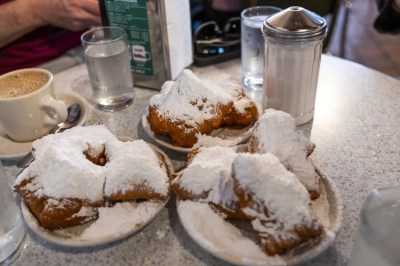
While we had done a good job of sampling New Orlean’s food scene, we had yet to visit the legendary Cafe Du Monde and sample their legendary beignets.
We learned they were messy before we learned they were good, but their quality was, in fact, soon confirmed, bringing smiles to our faces!
Louisiana State Capitol Building
by Chrissy Biello
On our way back home to Huntsville, we had the opportunity to stop in Baton Rouge to see the Louisiana State Capitol. As we approached the building, Professor Yawn sparked our curiosity by challenging us to guess its architectural style. I initially thought it looked modern, while Olivia suggested post-modern. Up close, we discovered the building was a stunning example of Art Deco architecture!
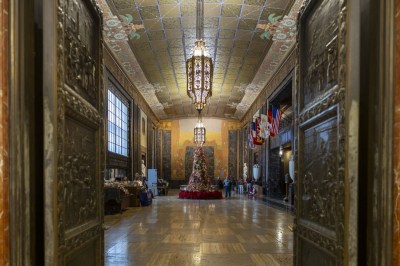
The interior immediately welcomed us with a decorated Christmas tree that transformed the governmental space into something unexpectedly warm.
Professor Yawn first took us to the area where Huey Long, the 40th Governor of Louisiana from 1928 to 1932, was assassinated inside the Capitol. The assassin, Dr. Carl Weiss, killed Governor Long after he was trying to get a redistricting bill passed. However, after the bill was passed, Long entered the hallway and was shot by Dr. Weiss. Professor Yawn then pointed out the preserved bullet hole in the wall!
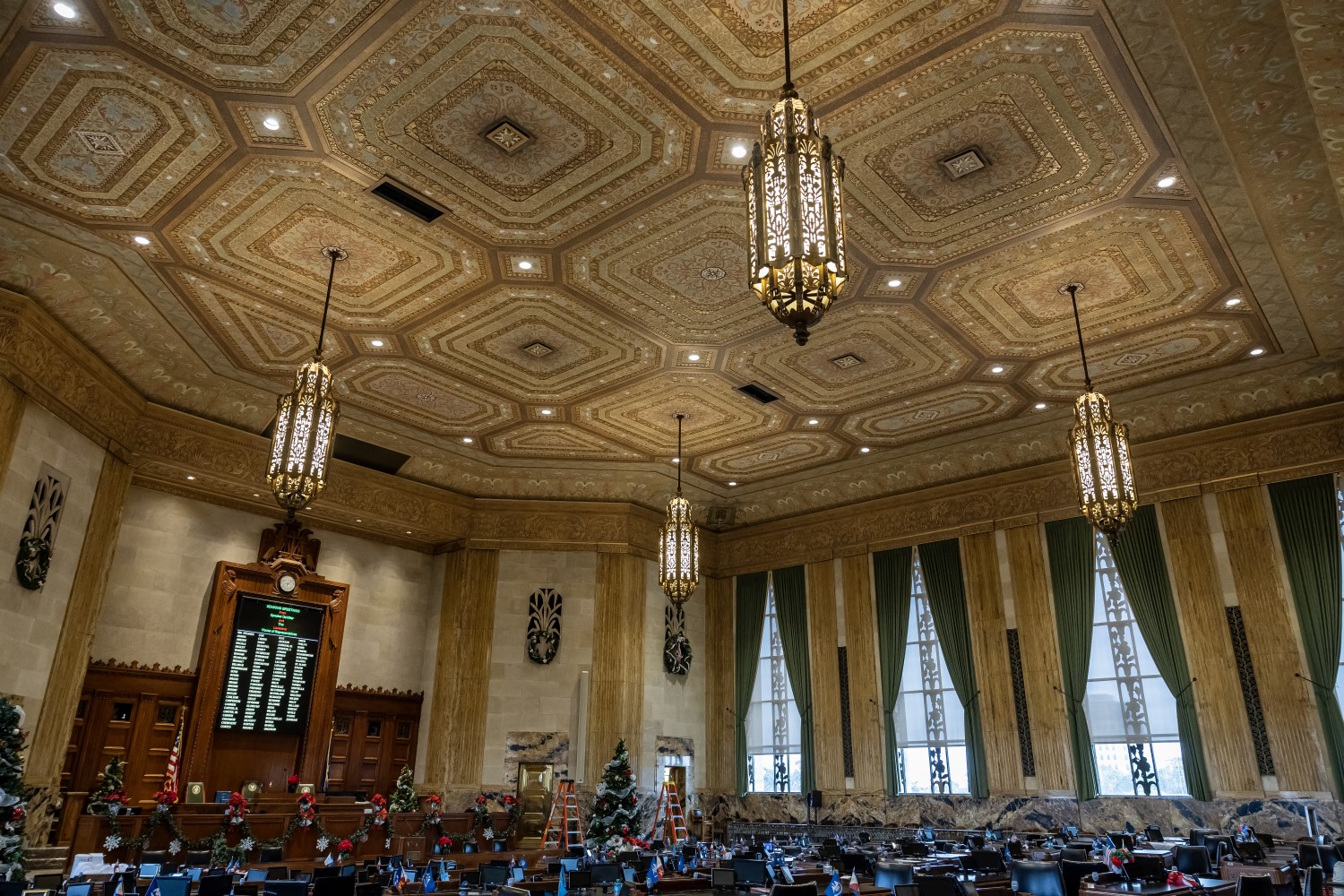
Nevertheless, the House Chambers offered a striking contrast to the earlier sad story. Holiday decorations filled the room, with vibrant poinsettias creating a festive atmosphere.
Yet, the ceiling was what really caught our attention; its intricate design and beautiful gold color added something special to the space.
We moved on to the Senate chambers, getting a view we thought might be similar to where press members usually sit during sessions.
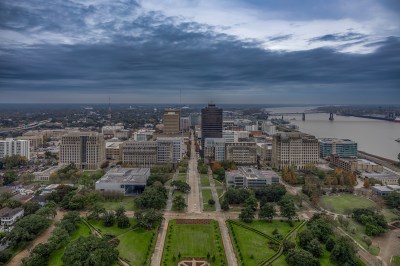
Next, we made our way to the elevators so we could reach the tower. From the tower, we could see the entire landscape in front of the building. I recognized the design as a radial layout.
Moreover, there were interesting Art Deco themes that could be seen from above, such as the geometrically shaped parking lot!
Before leaving, we walked down to the grounds and noticed something quite funny; the Huey Long statue was holding Mardi Gras beads!
After noticing this humorous detail, we ensured to get a group photo in front of the Capitol building, making us look incredibly small in comparison.
In all, visiting the Louisiana State Capitol was a great way to conclude our Council of State Governments National Conference trip. Michelle, Olivia, and I left with new experiences, whether educational, cultural or simply memorable moments to look back on!
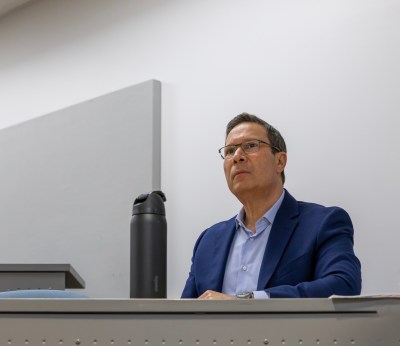
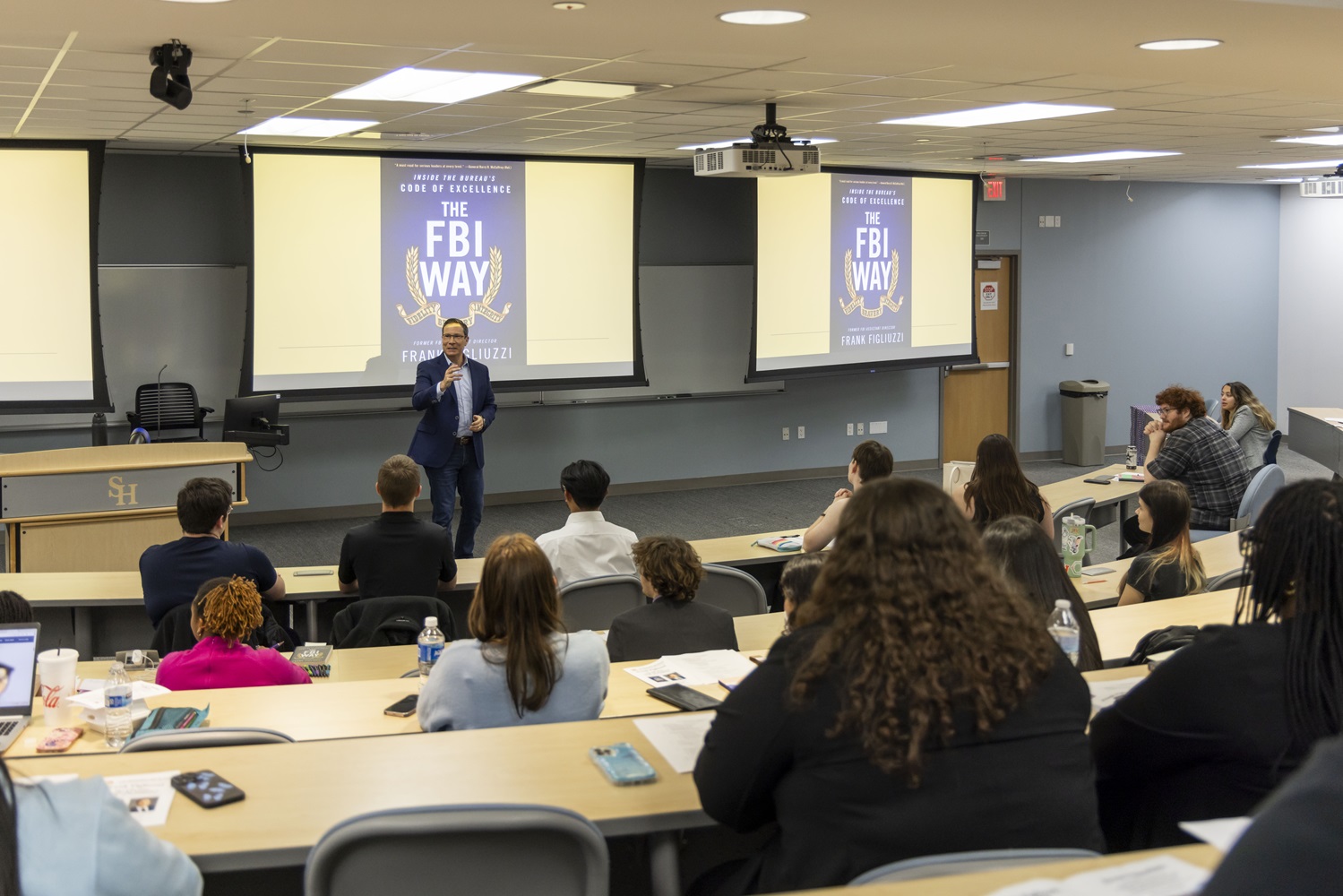
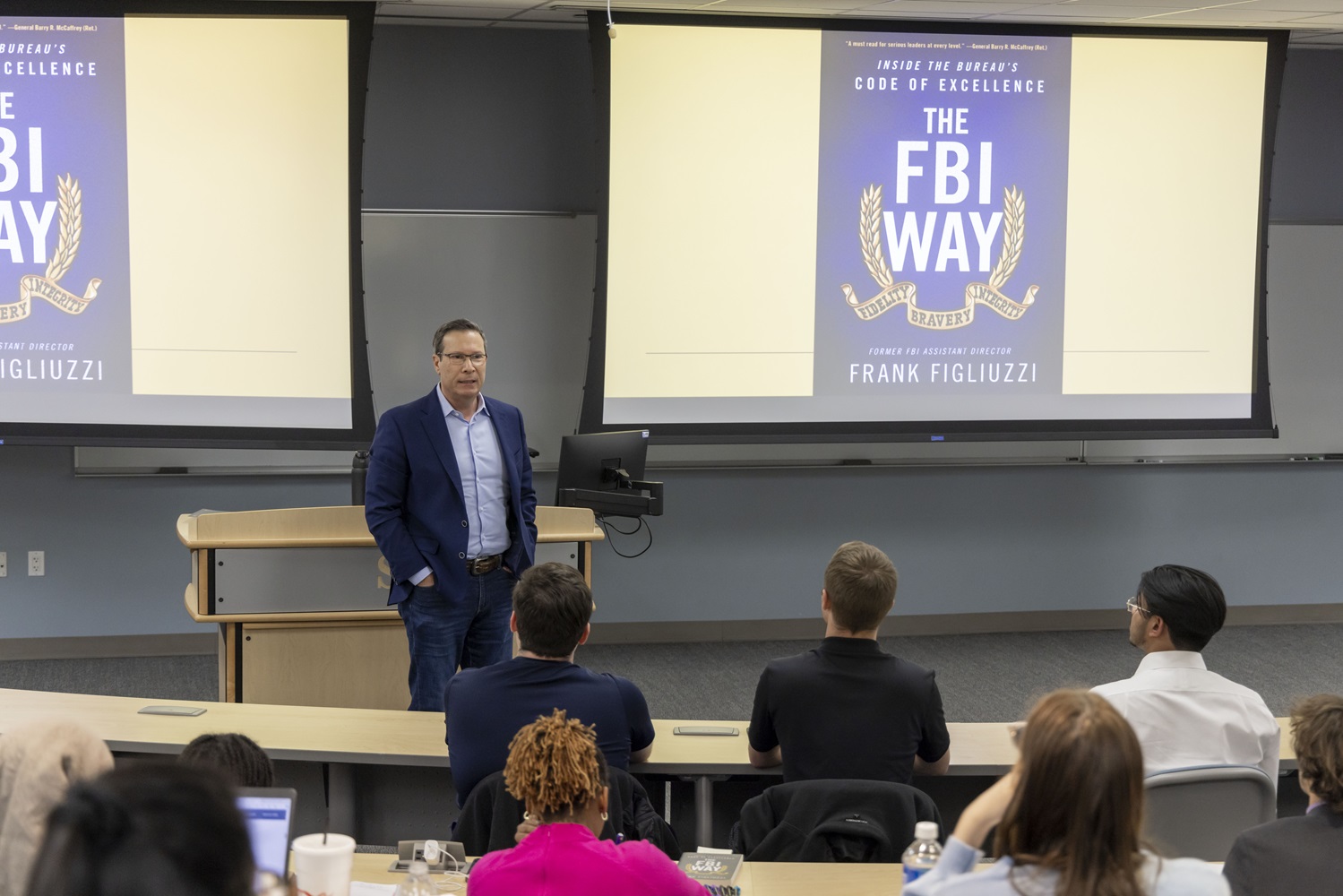
This week’s meeting was a unique one for the Pre-Law Society; the meeting was not only open to current members but also to everyone on campus! There was a reason for this unique approach–we had a unique speaker, Frank Figliuzzi, who is not only an attorney, but also an author and the former Assistant Director of the FBI.
After President Discon went through business updates for the Pre-Law Society members…
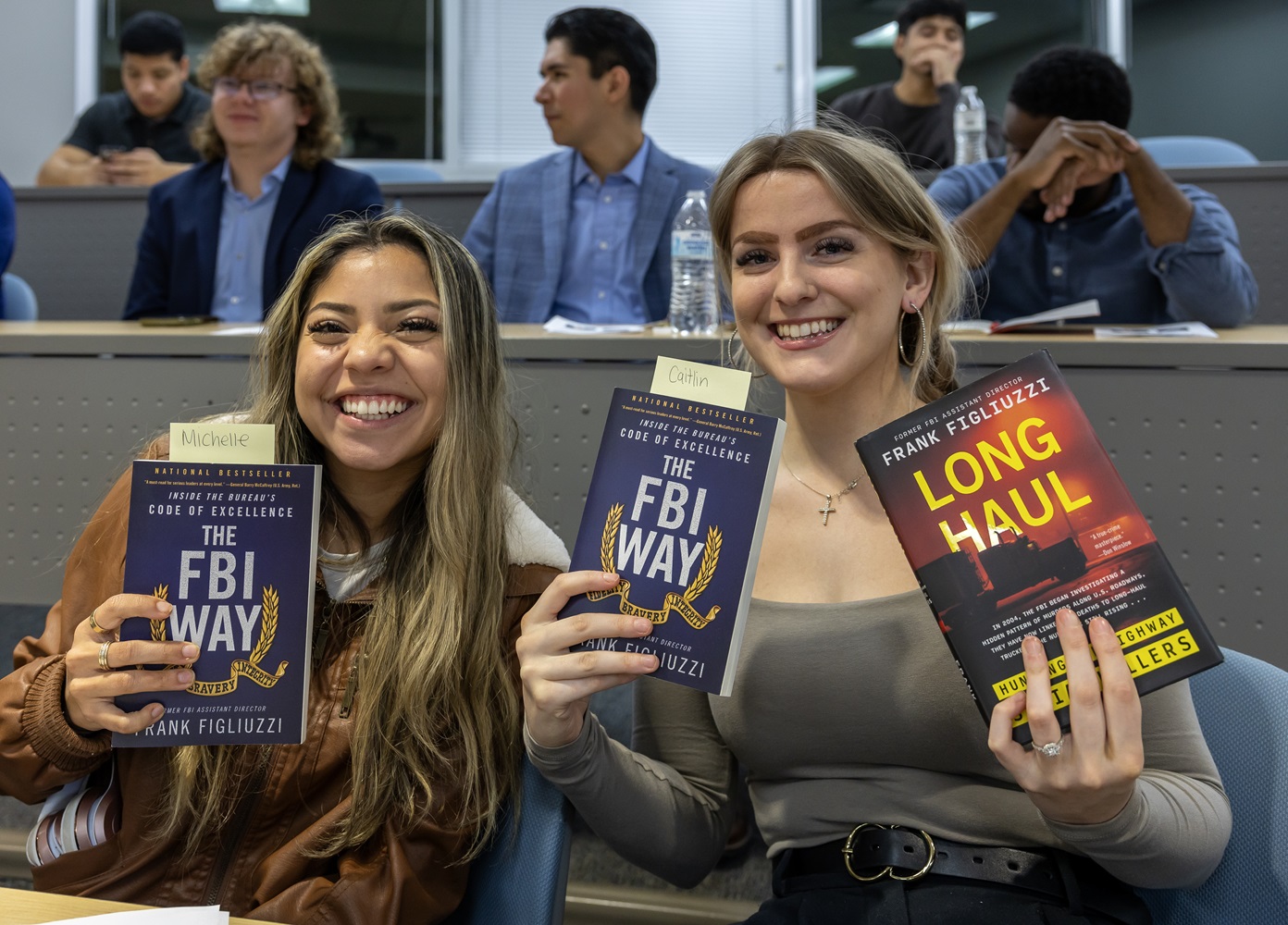
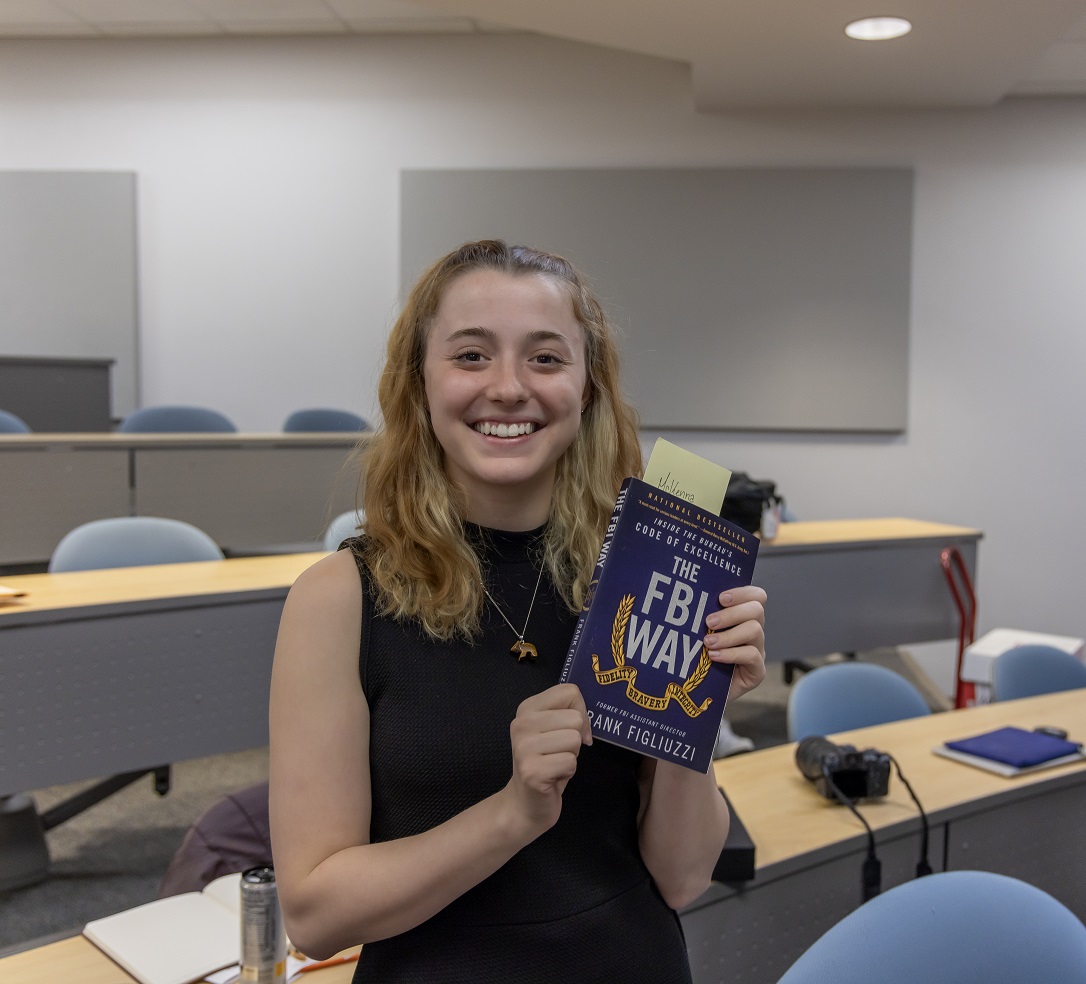
…it was time for Figliuzzi to speak. Mr. Figliuzzi wrote the national bestseller, The FBI Way: Inside the Bureau’s Code of Excellence, which he would be discussing with us!
Mr. Figliuzzi started his presentation with a quote by J. Edgar Hoover, “The most effective weapon against crime is cooperation… The efforts of all law enforcement agencies with the support and understanding of the American people.”
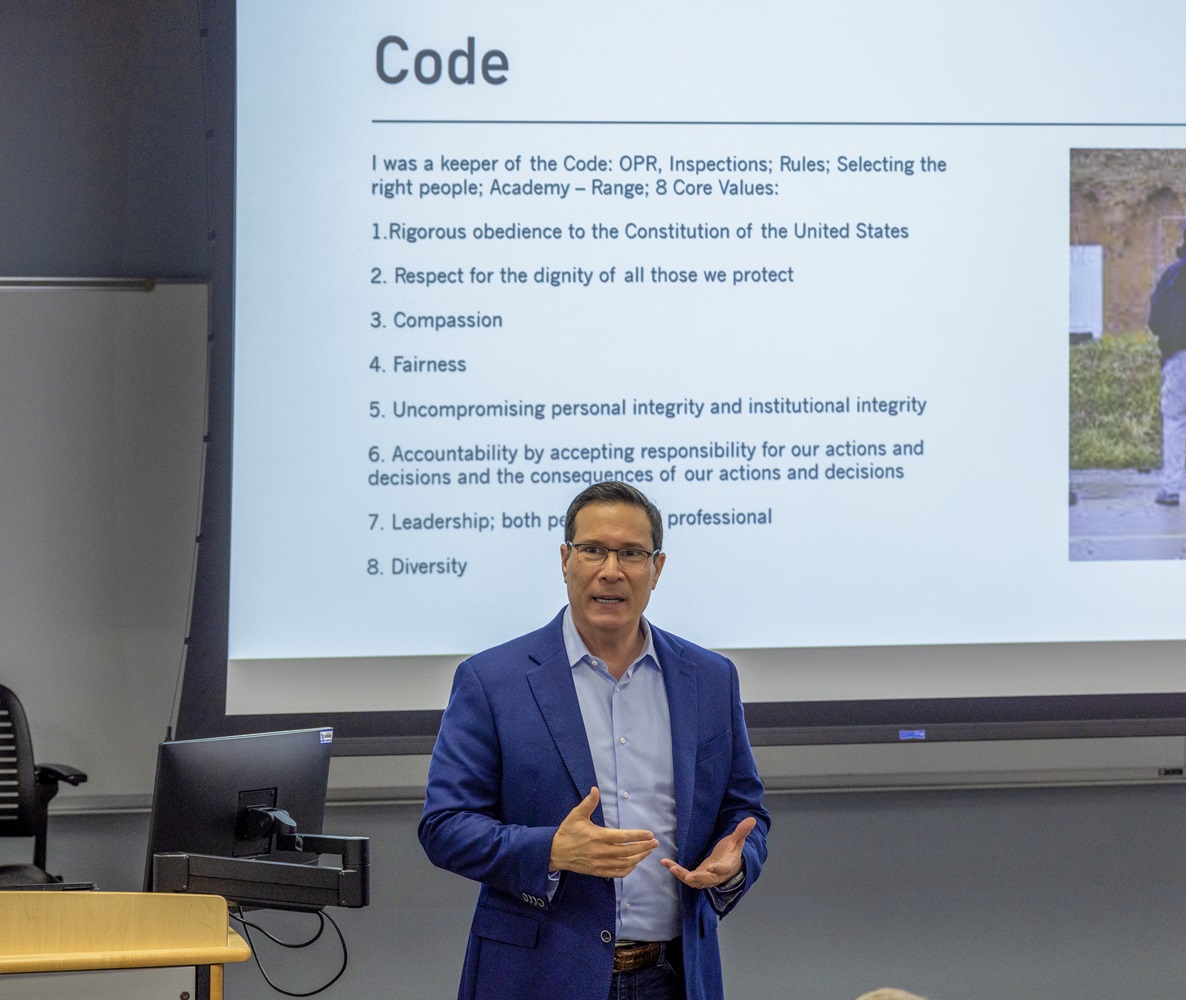
Next, he gave insight on his book’s origin, saying that the FBI was under attack, which made him angry and led him to write the book as a way to counter the incorrect assumptions being made. He then went in depth about what he says are the preserving values of the “FBI way,” otherwise called the “7 Cs.”
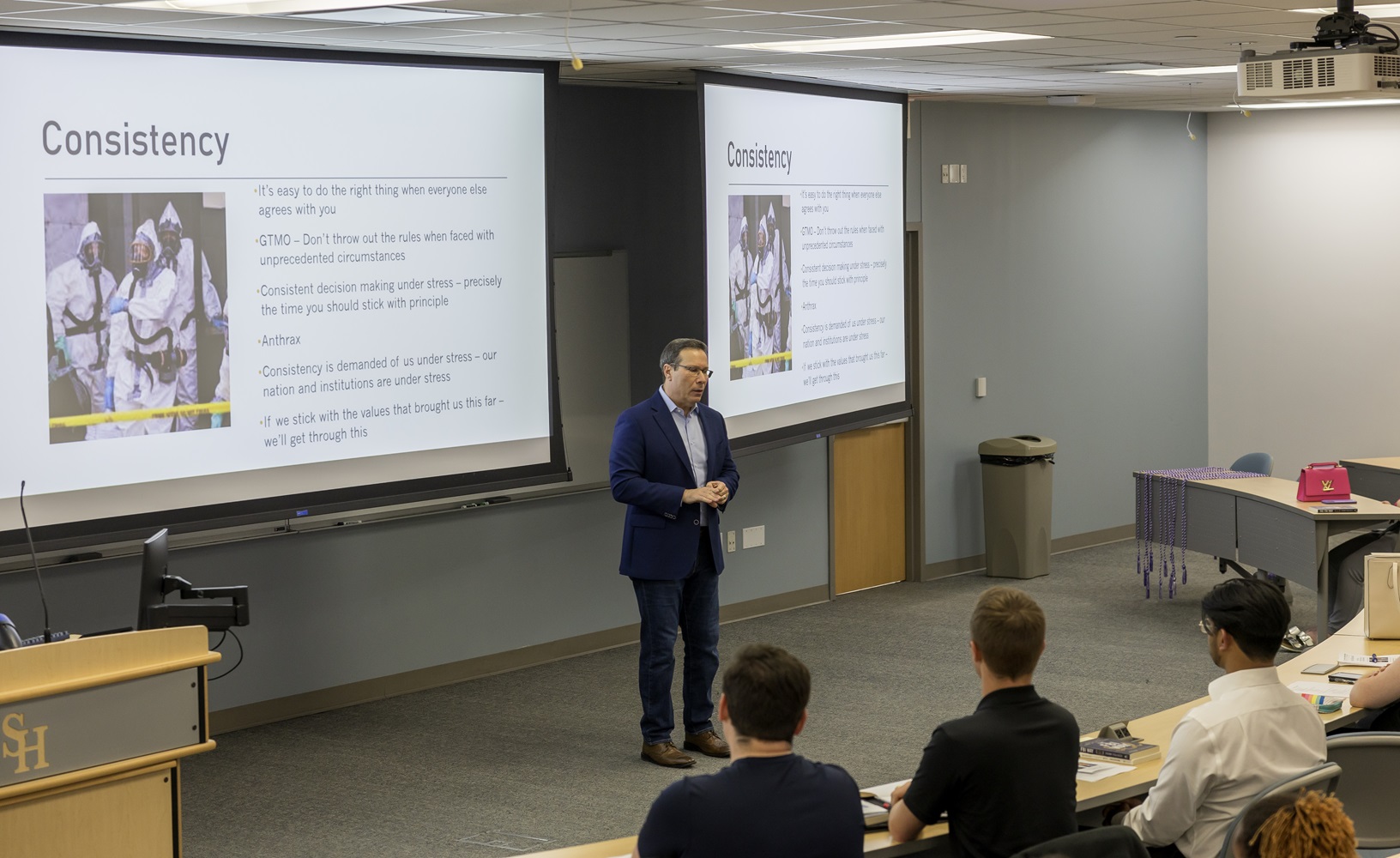
The first “C” is Code, which refers to the values and principles you stand by. The second is Conservancy, emphasizing the importance of being part of something larger than yourself. The third is Clarity, which involves clearly and honestly expressing your values.
The fourth is Consequences, meaning doing the right thing, even when it is difficult. The fifth is Compassion, which is about striving to understand others’ perspectives. The sixth is Credibility, with the reminder that “people won’t believe in your team if they don’t believe in you.” Lastly, the seventh is Consistency, which involves sticking to your code, no matter what.
He also introduced the term “undercover syndrome,” describing how officers who spend too much time undercover may begin to commit petty thefts and other crimes sloppily, with the subconscious desire to get caught by police. This act of self-sabotage is typically due to the complete subversion of morals and identity that comes along with undercover work. The FBI tries to anticipate this through providing mental health support to its agents and their families.
He finished his lecture with a word of advice to prospective law students: “start viewing yourself as a leader now.” As I looked around the room, I was sure that this advice was impactful to all.
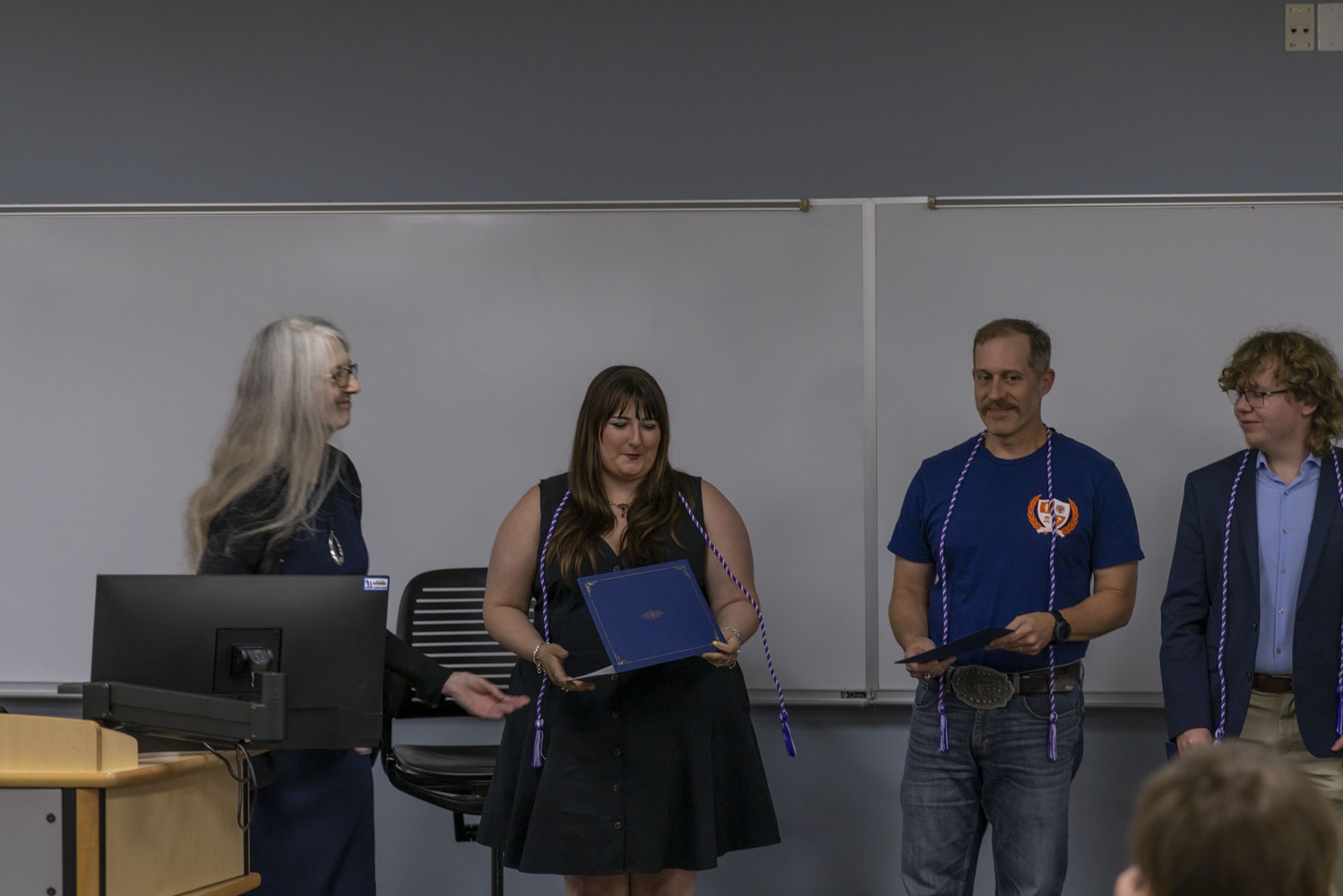
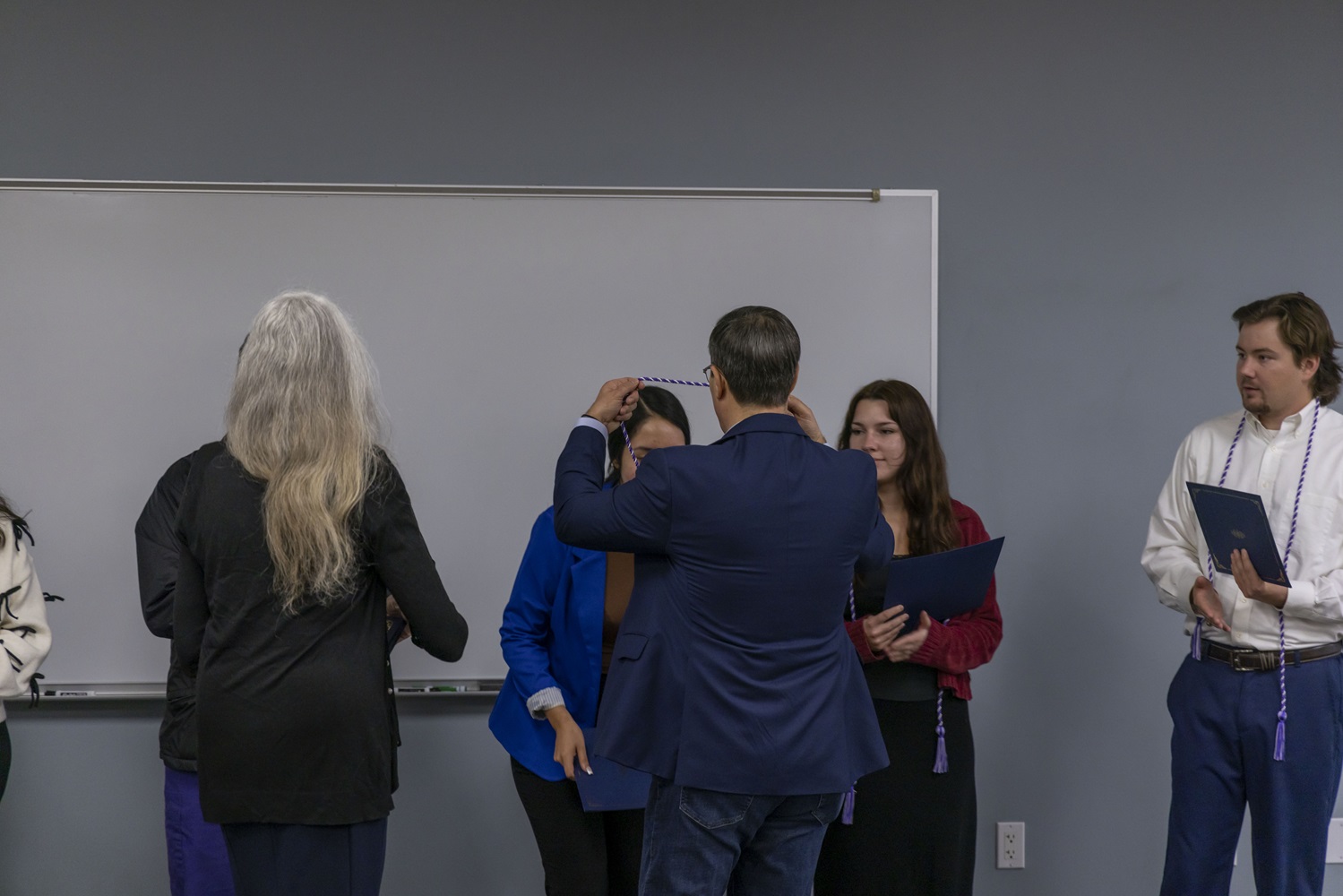
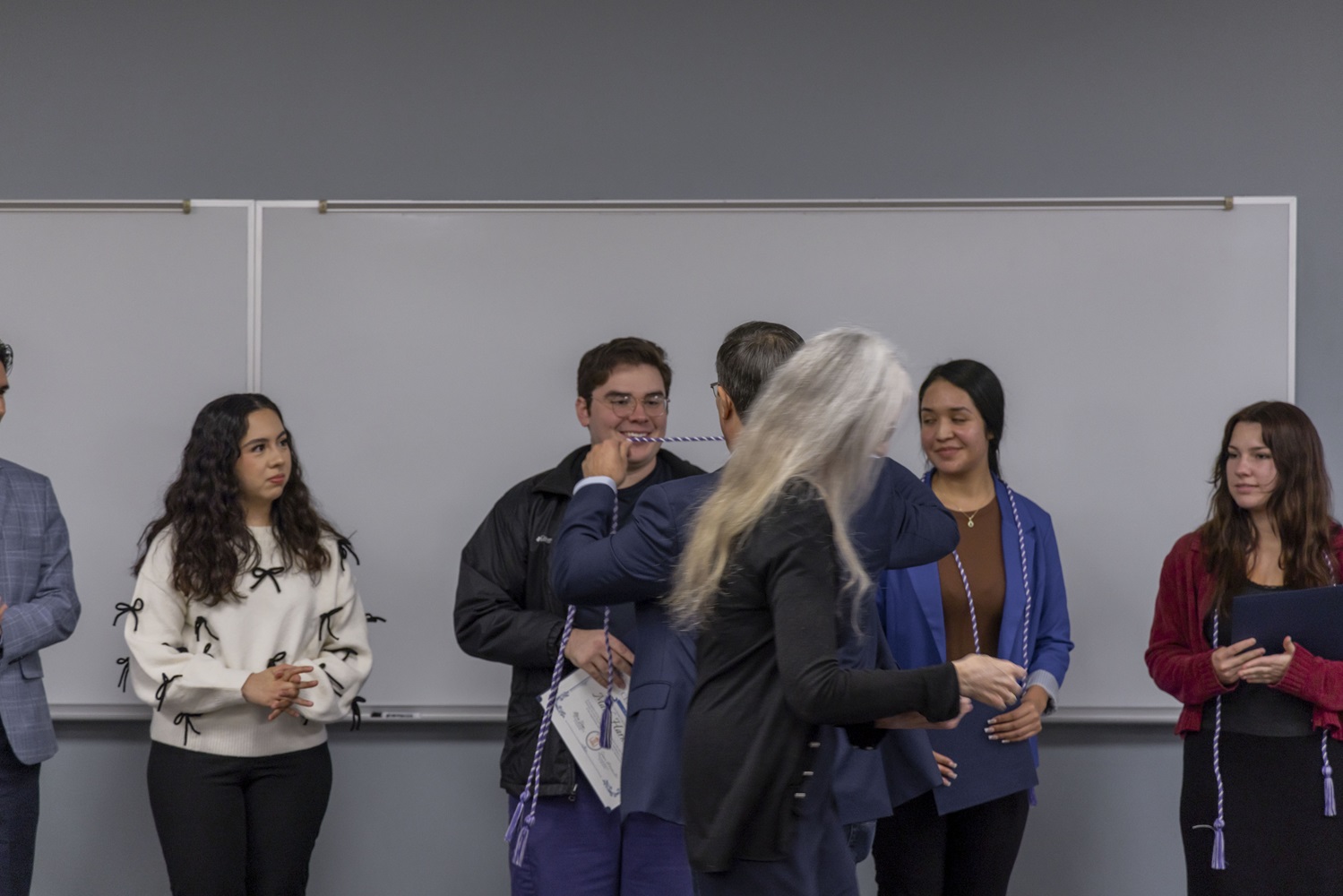
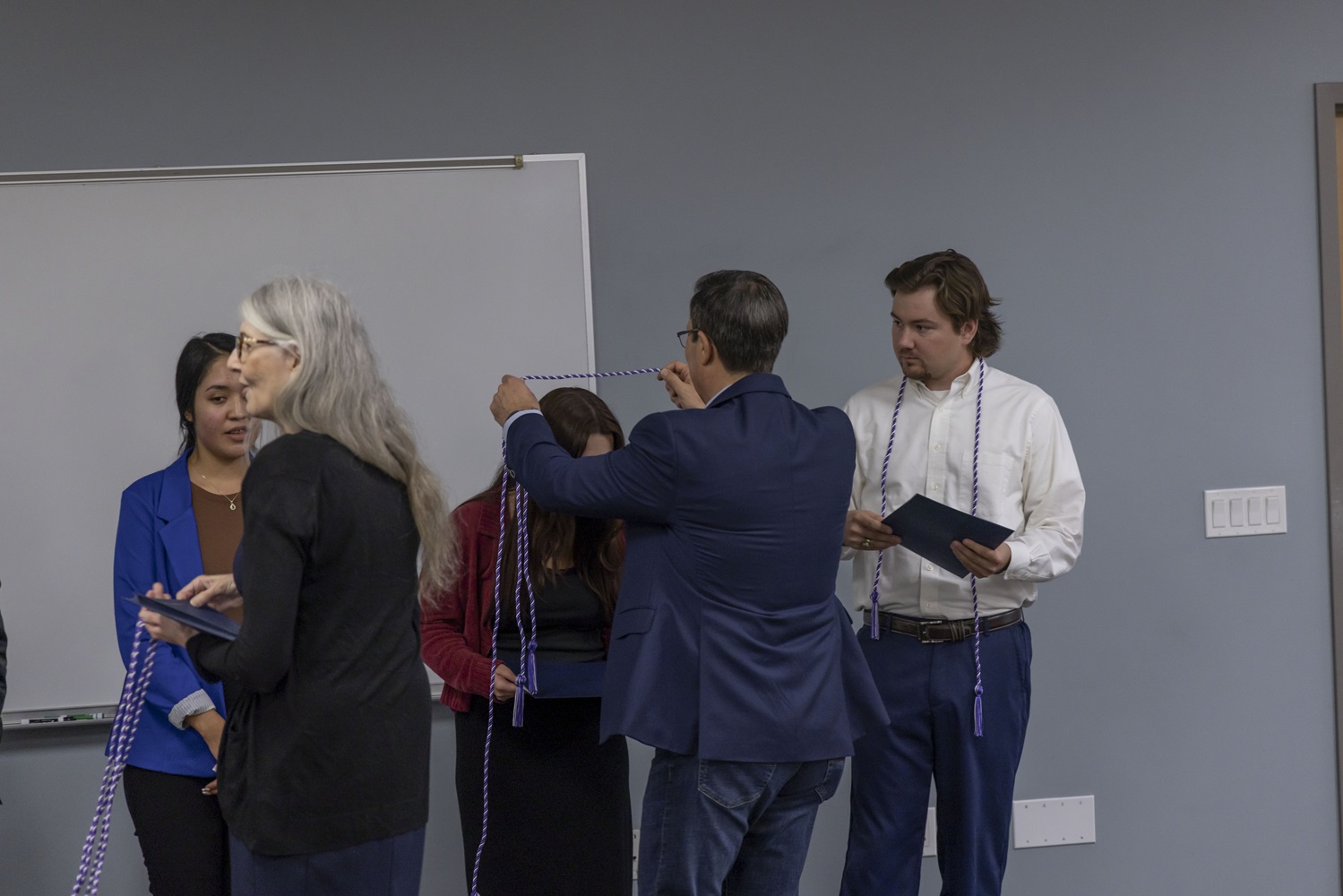
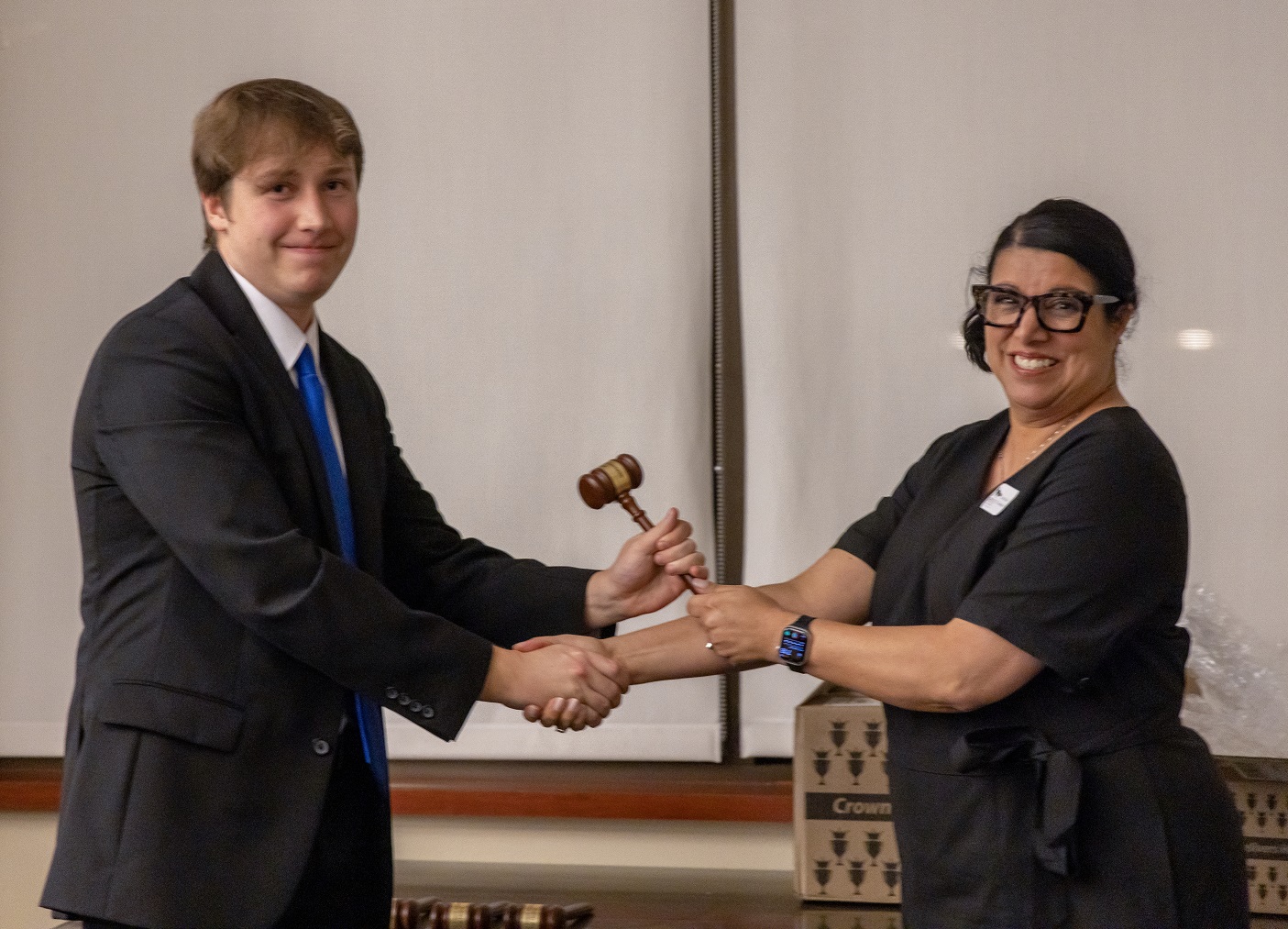
After Mr. Figliuzzi’s presentation, the meeting continued with the cord ceremony for this semester’s graduating seniors. Making it more special, Mr. Figliuzzi corded the seniors while Ms. Loveall gave them their certificates.
These seniors included: Clay Barton, Natalie Bradford, Yajaira Gutierrez Marin, Mark Harkrider, Daniel Pierce, Emily Segovia, Mason Solomon, Grant Threatt, and Alexandra Von Heuvel. While we are sad to see the seniors graduate, we are excited to see all that they will accomplish in the future.
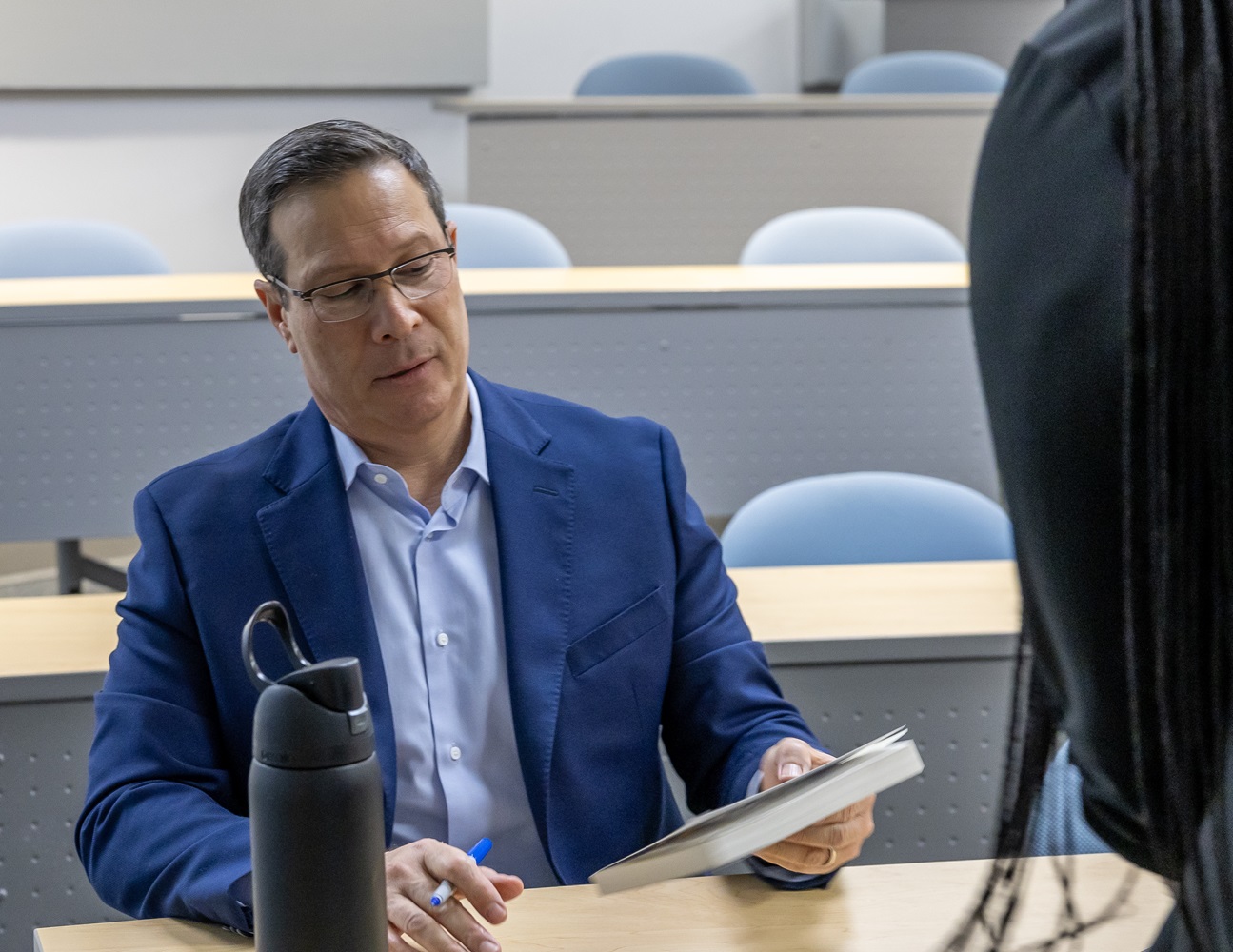
Following the event, Mr. Figliuzzi spent additional time signing books for the students, capping off one of our best-ever meetings with a wonderful personal touch.
The Pre-Law Society would like to give a big thank you to Mr. Frank Figliuzzi for taking the time to speak with Sam Houston students. His presentation was incredibly captivating, informative, and humorous!
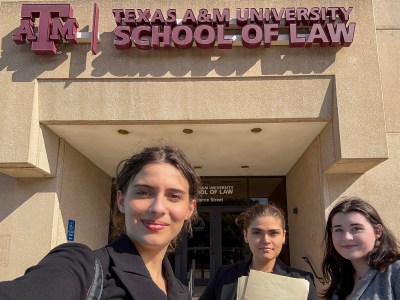
The moot court competition in Fort Worth was a great experience that challenged our critical thinking skills (or the extent of them, anyways) and gave us a chance to grow as advocates. Fort Worth was the perfect host city, combining a world-class law school with a great cultural scene and history.
For the competition, we stayed at the Hilton in downtown Fort Worth, where President John F. Kennedy spent his final night—which was definitely not a good omen for our performance. The competition itself was held at Texas A&M’s School of Law, which happens to neighbor the Philip Johnson-designed Water Gardens.
As one of LEAP’s favorite architects, Johnson’s work always stands out, and the Water Gardens is an immersive way to experience architecture and ease both law students and moot court competitors’ nerves.
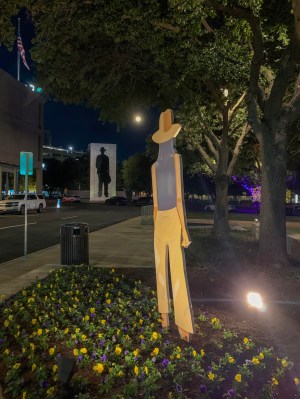
When we had time to explore, we made the most of it. We ensured to make a stop at the Richard Haas mural downtown in Sundance Square.
In the same area, we were lucky enough to stumble across works by James Surls…
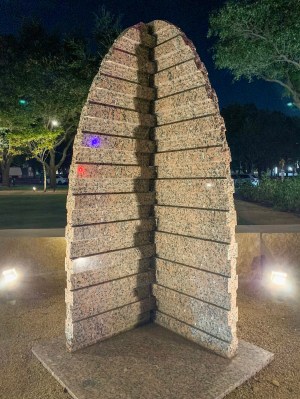
…Lichtenstein, and Noguchi—all in one building! Just around the corner, we also found an Alex Katz…
…and Jesus Moroles sculpture.
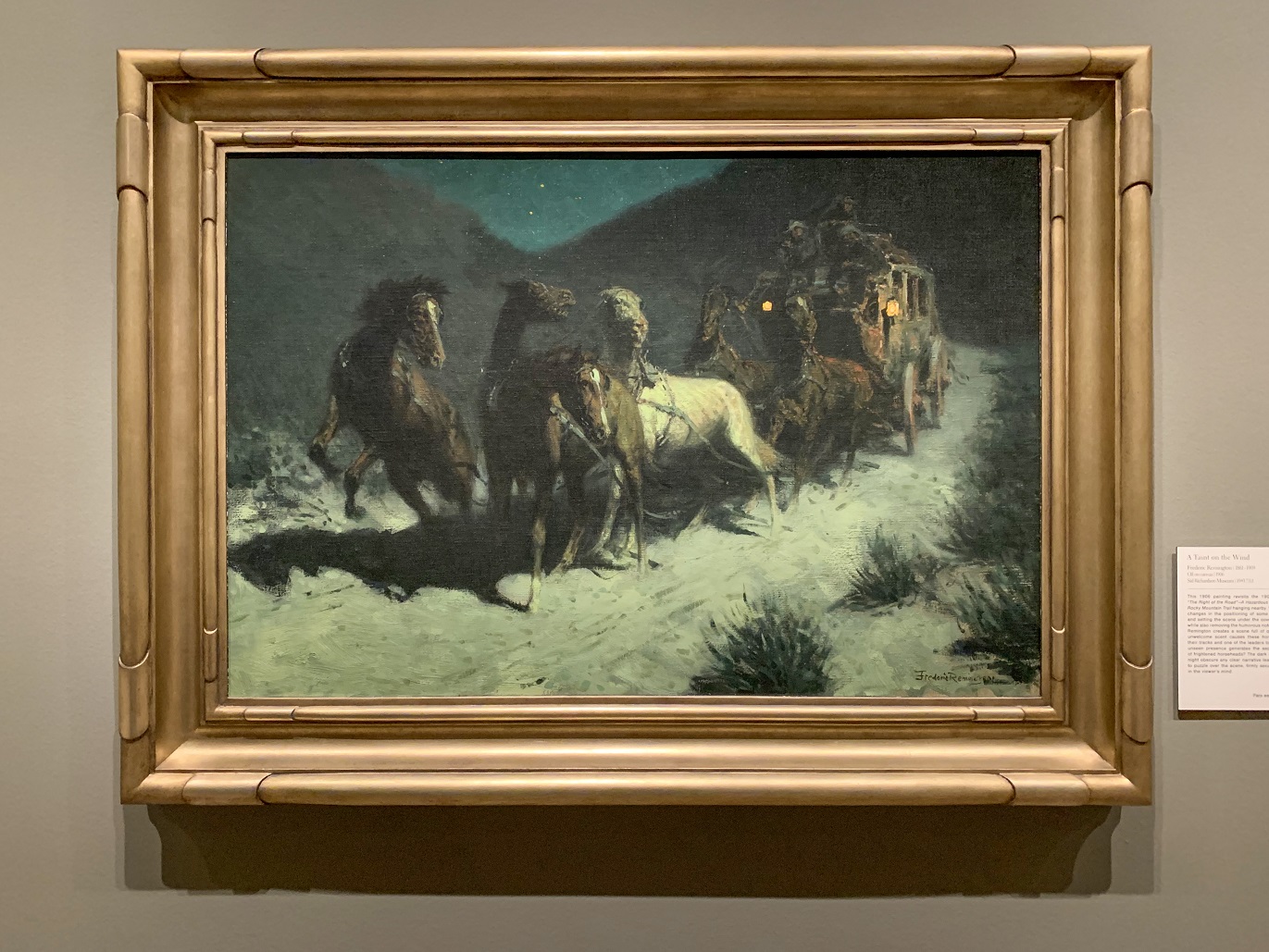
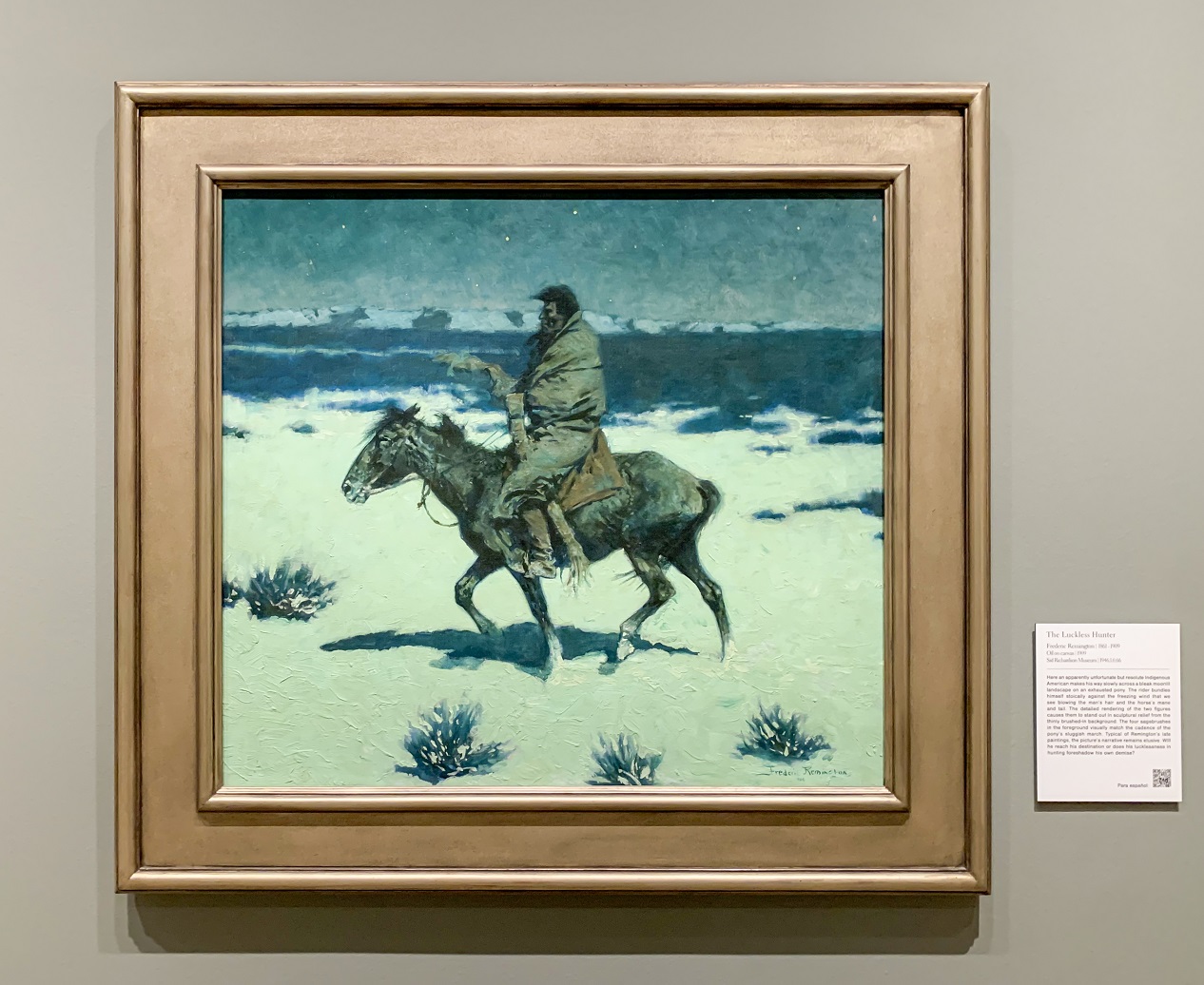
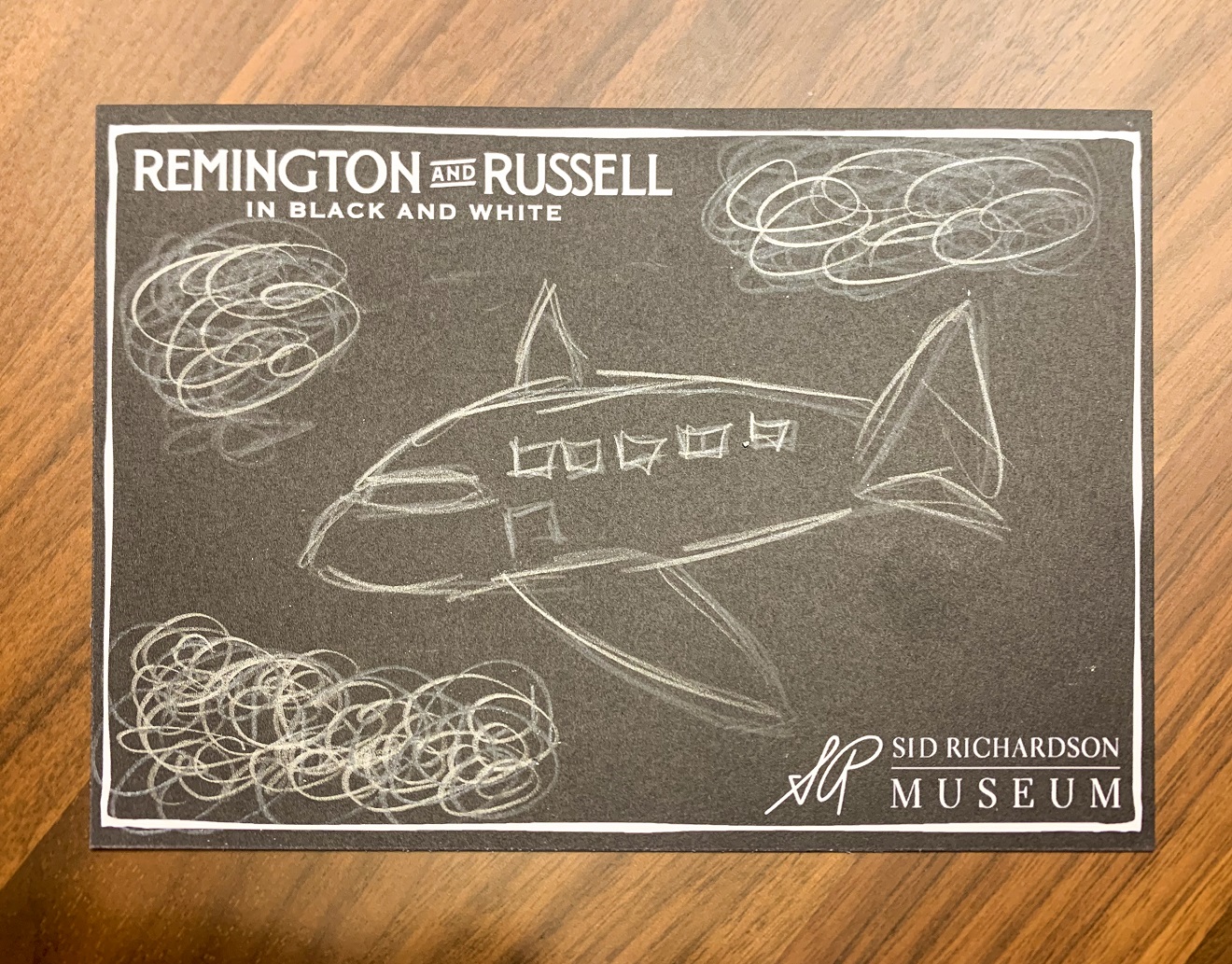
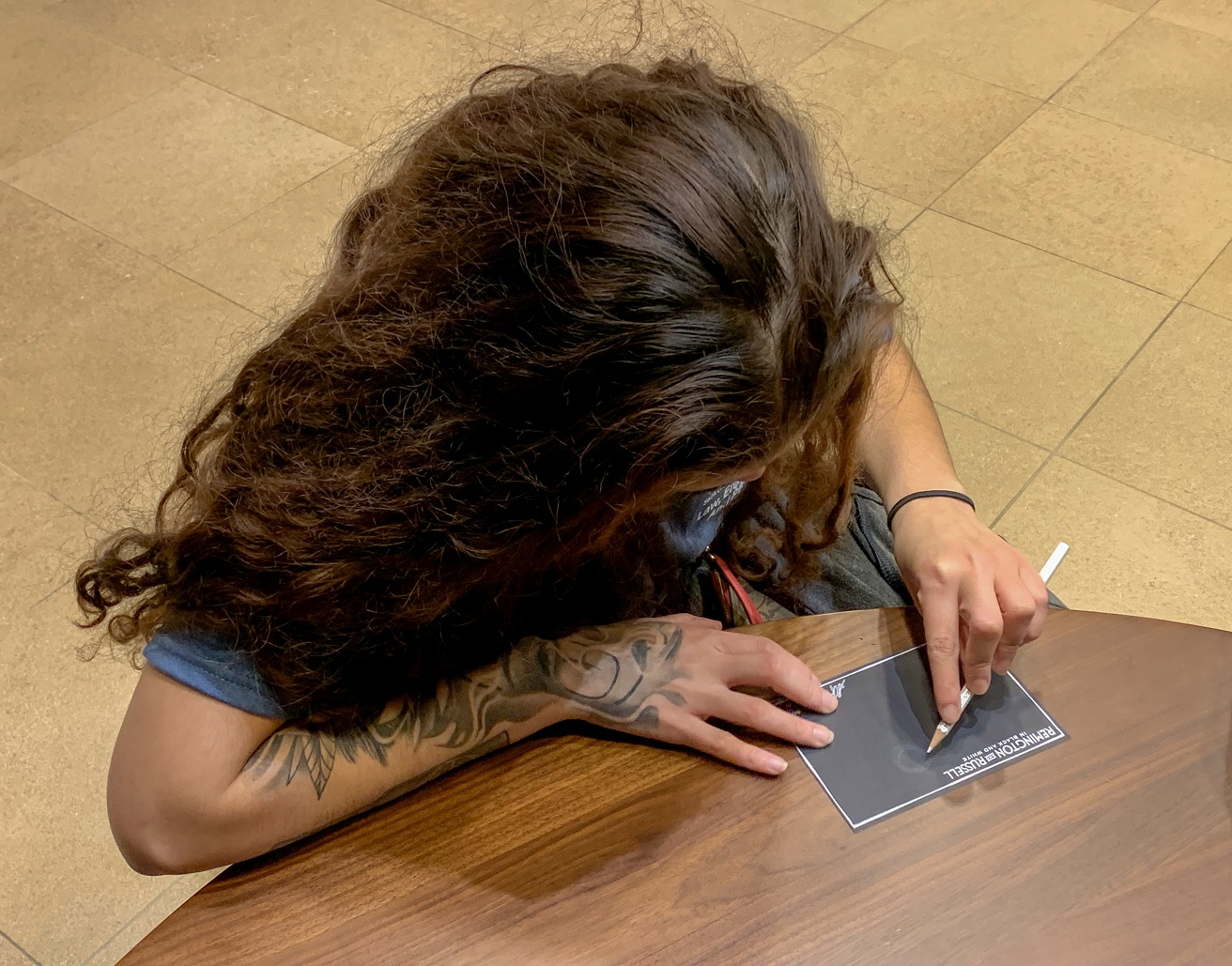
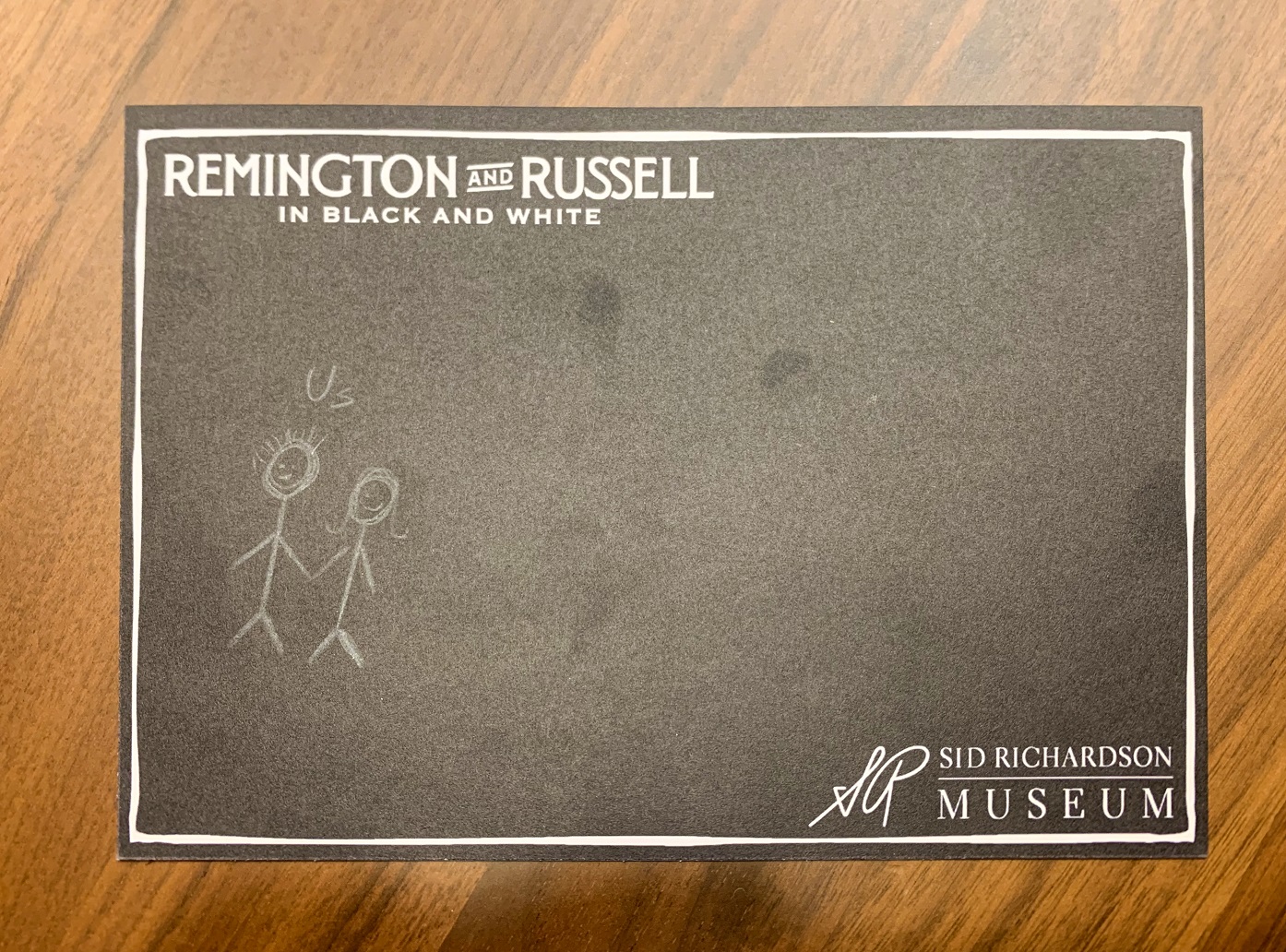
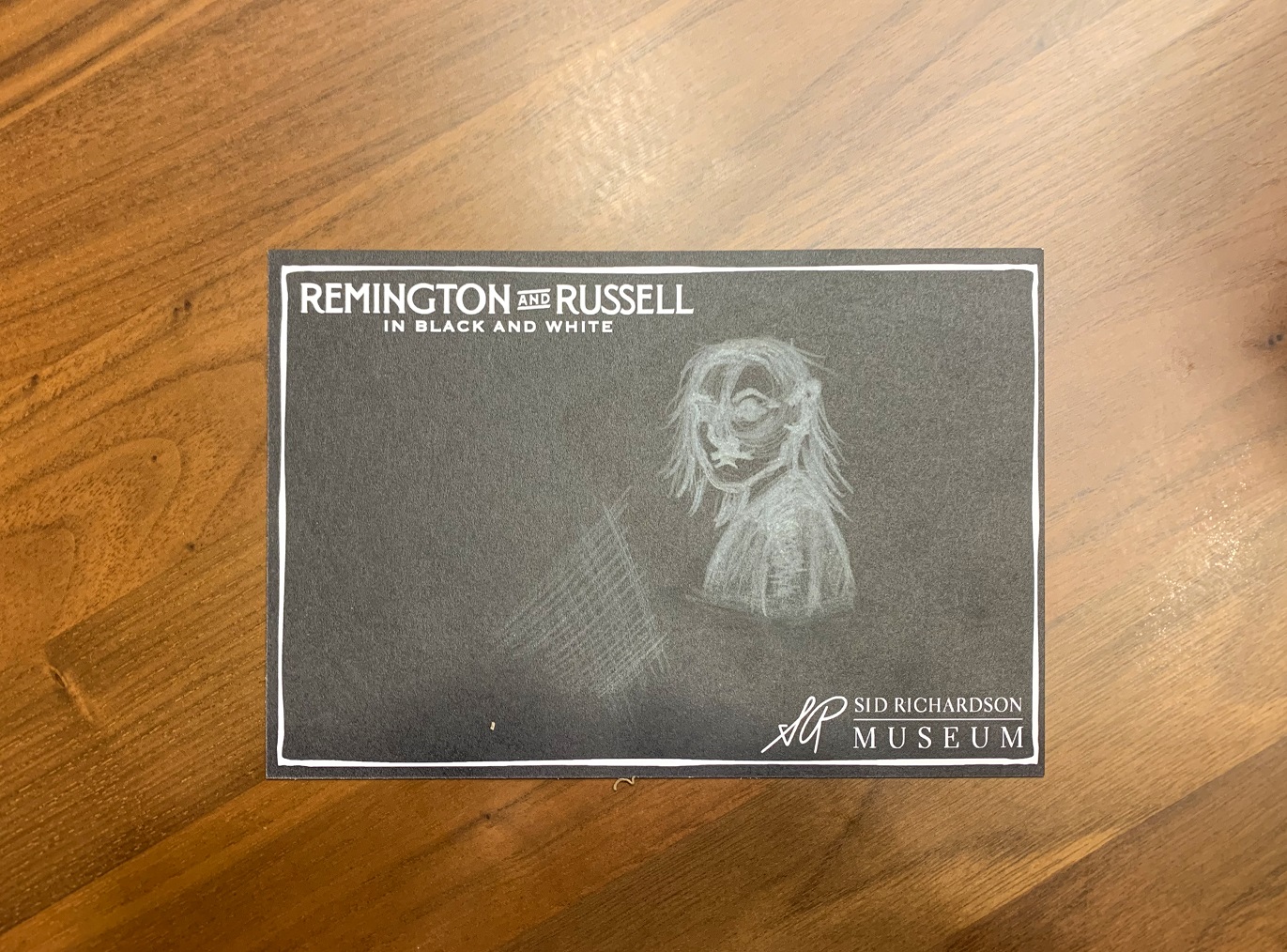
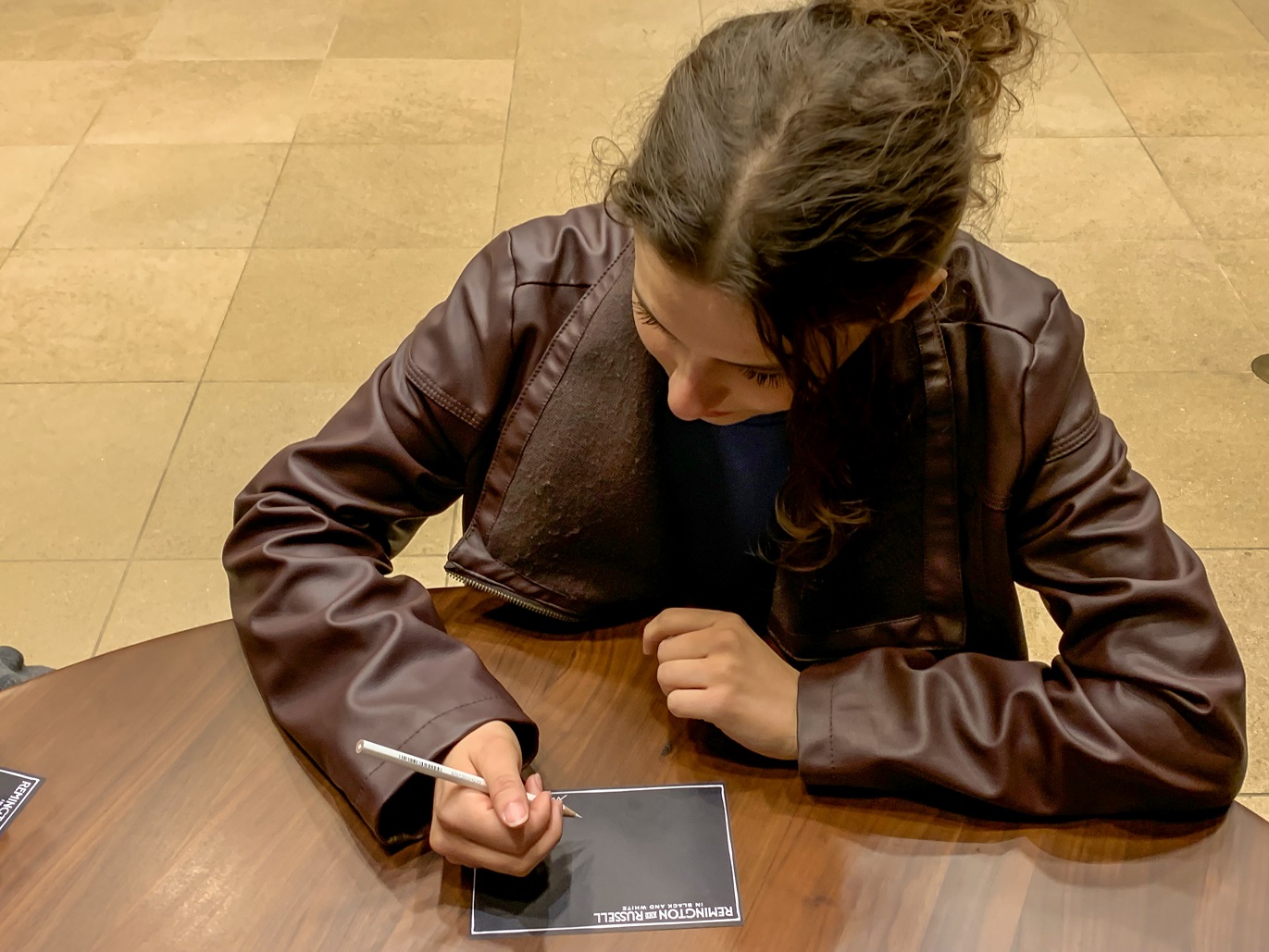
One of my favorite stops was the Sid Richardson Museum, where we got an extensive look at the works of Frederic Remington and Charles Russell. Both are staples of Western art, but the range of their work was impressive. The museum also gave us a chance to try our hand at some art of our own, offering postcards for visitors to draw and send.
This ties to Remington, who was not well-versed in writing, and would use illustrations to communicate when words fell short. While some of us had more success than others (we’ll leave the details out), it was a fun and creative way to engage with the experience we shared at the museum.
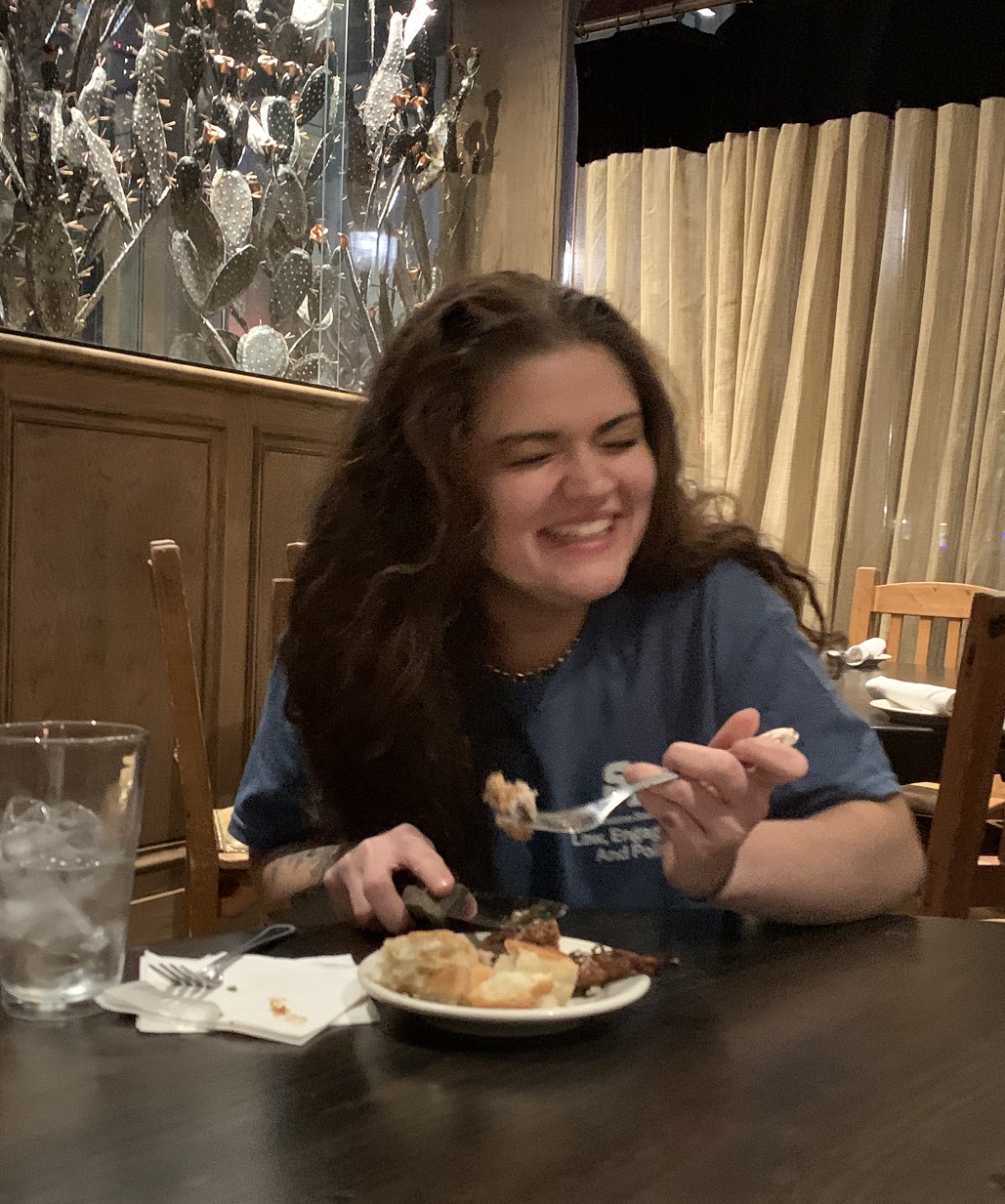
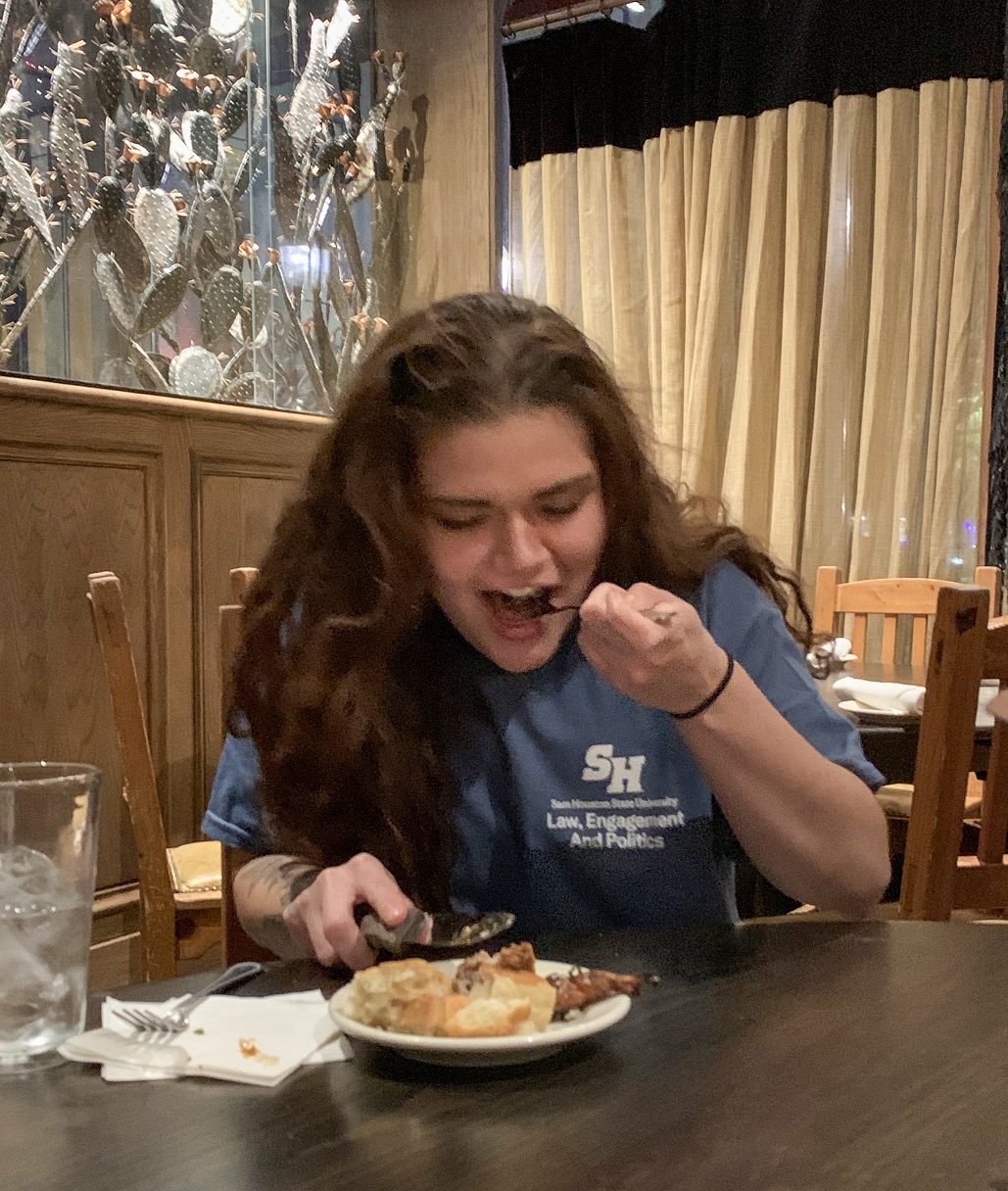
The trip wasn’t just about law and art—we also enjoyed a range of food experiences. While I stayed on the safe side with a soufflé (my first, and it was great!), Maggie stepped up as the group’s culinary adventurer, trying calf fries, escargot, and quail all for the first time. One of the best parts of LEAP trips is the chance to try new things, and this trip was no exception.
After the competition ended, we headed to Dallas. We made a quick stop to see a giant eyeball sculpture…
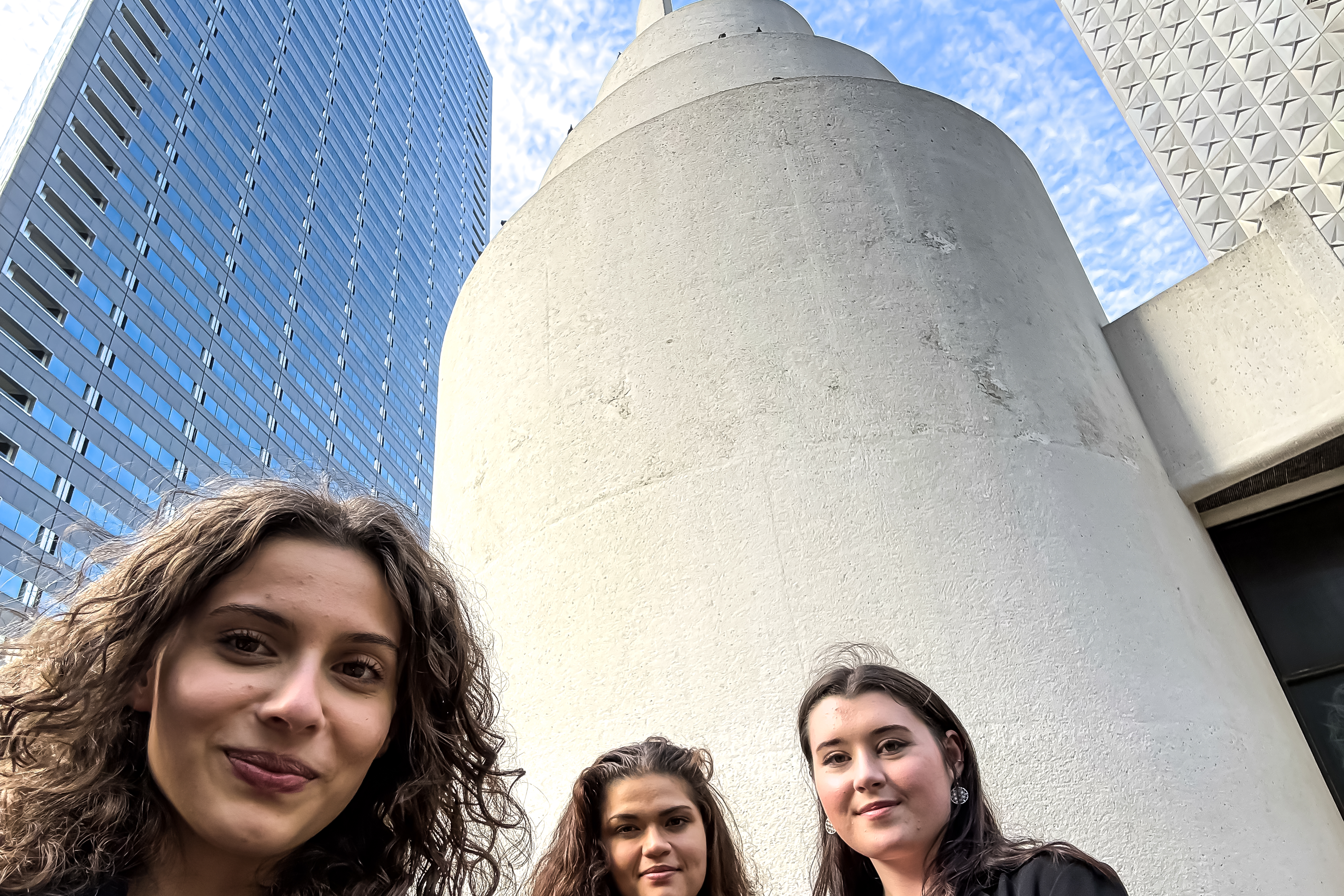
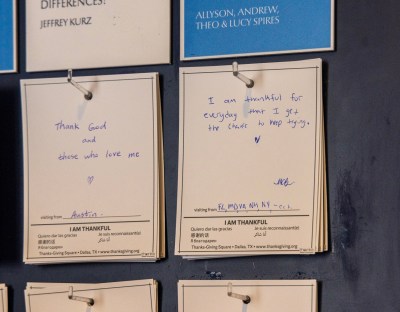
…which was interesting to say the least, before heading to Thanksgiving Square, another Philip Johnson design.
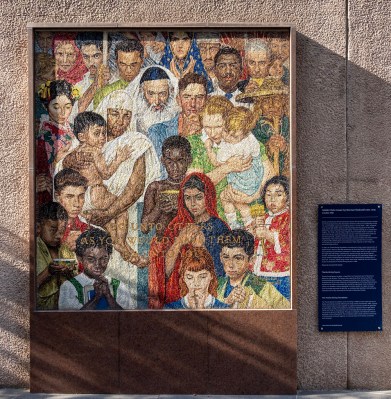
The Square offers myriad interesting features, including a Norman Rockwell mosaic…
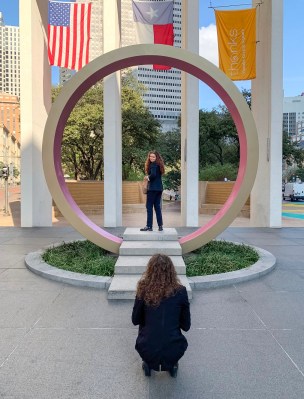
…a “ring of thanks,” which has an echo feature…
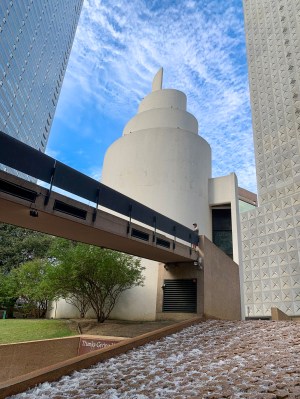
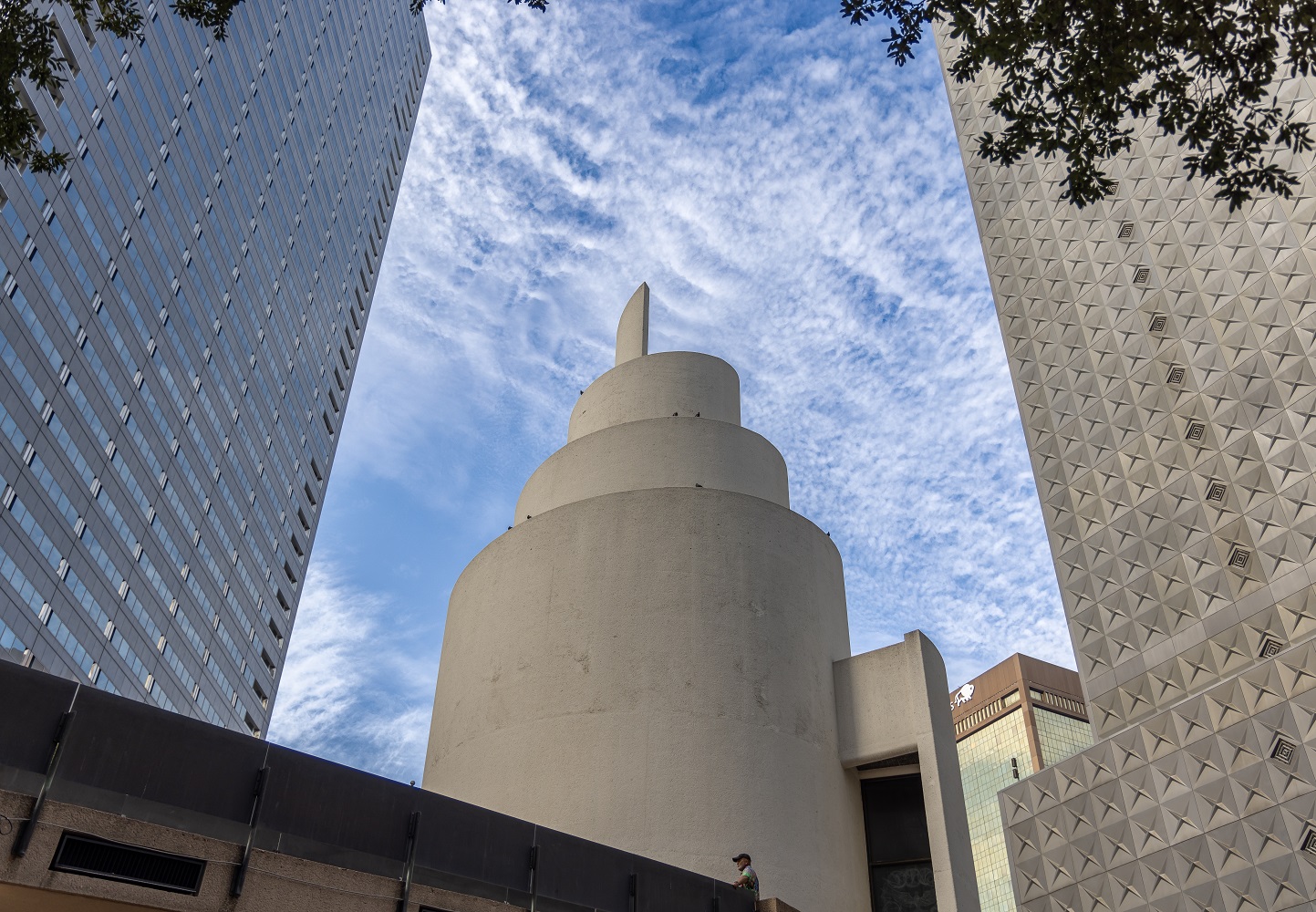
…and, of course, Johnson’s beautiful Chapel.
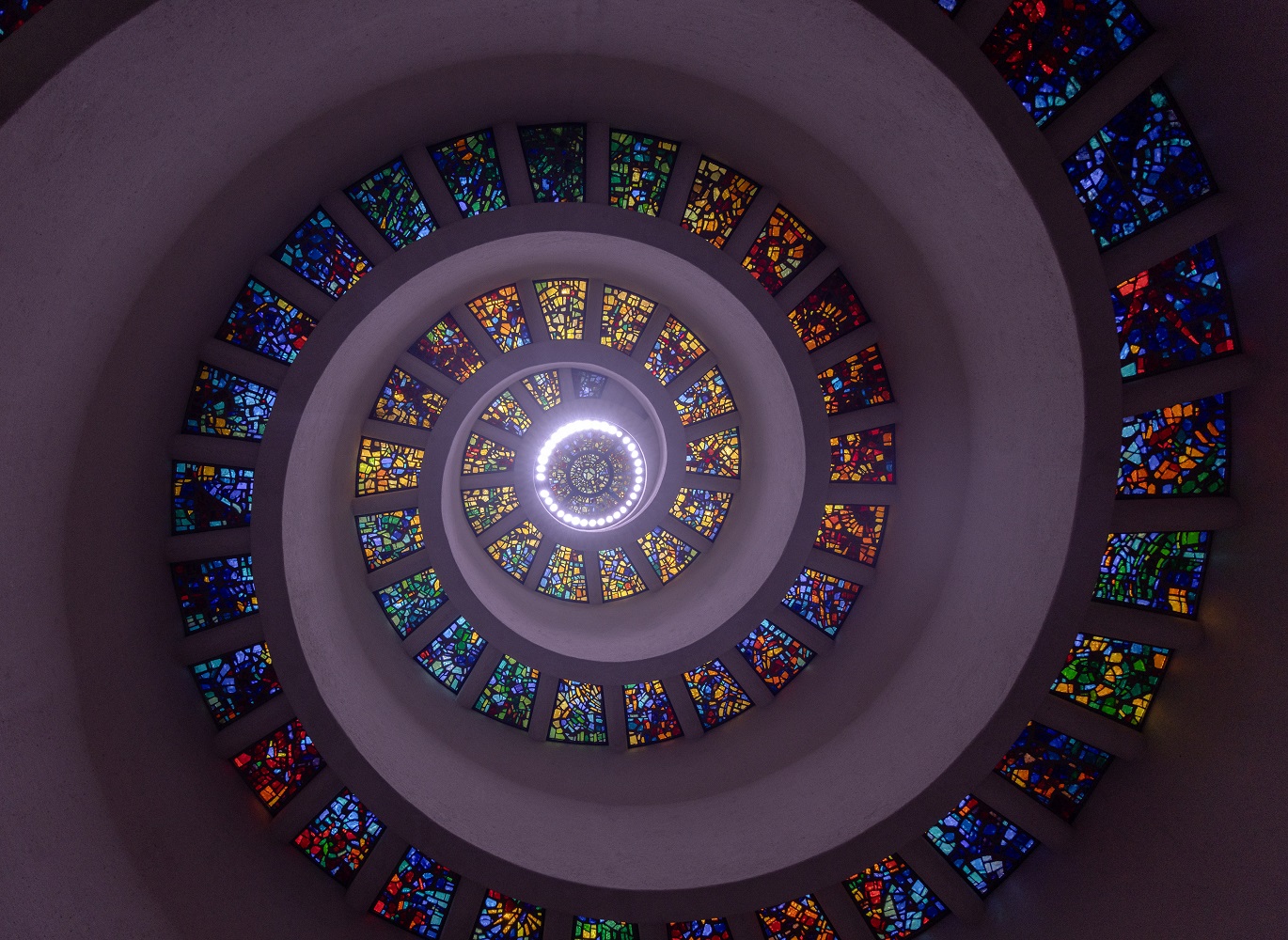
The spiral design, and the beautiful stained glass capture the “infinite upward reach of the human spirit”.
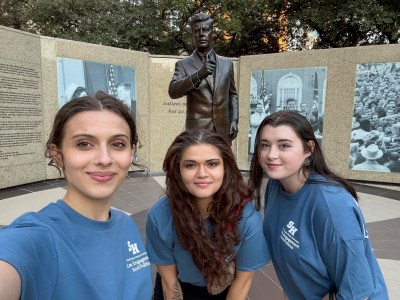
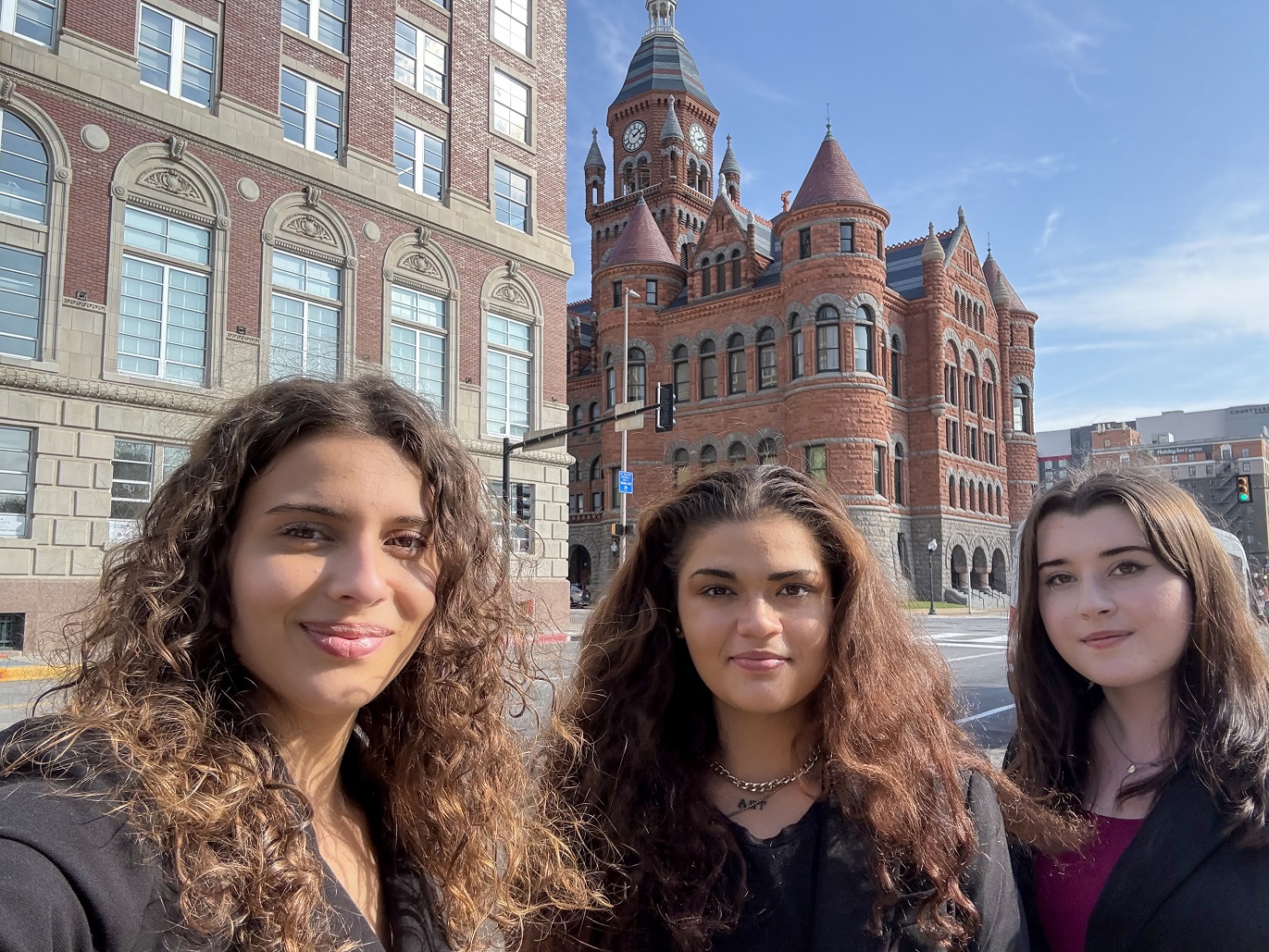
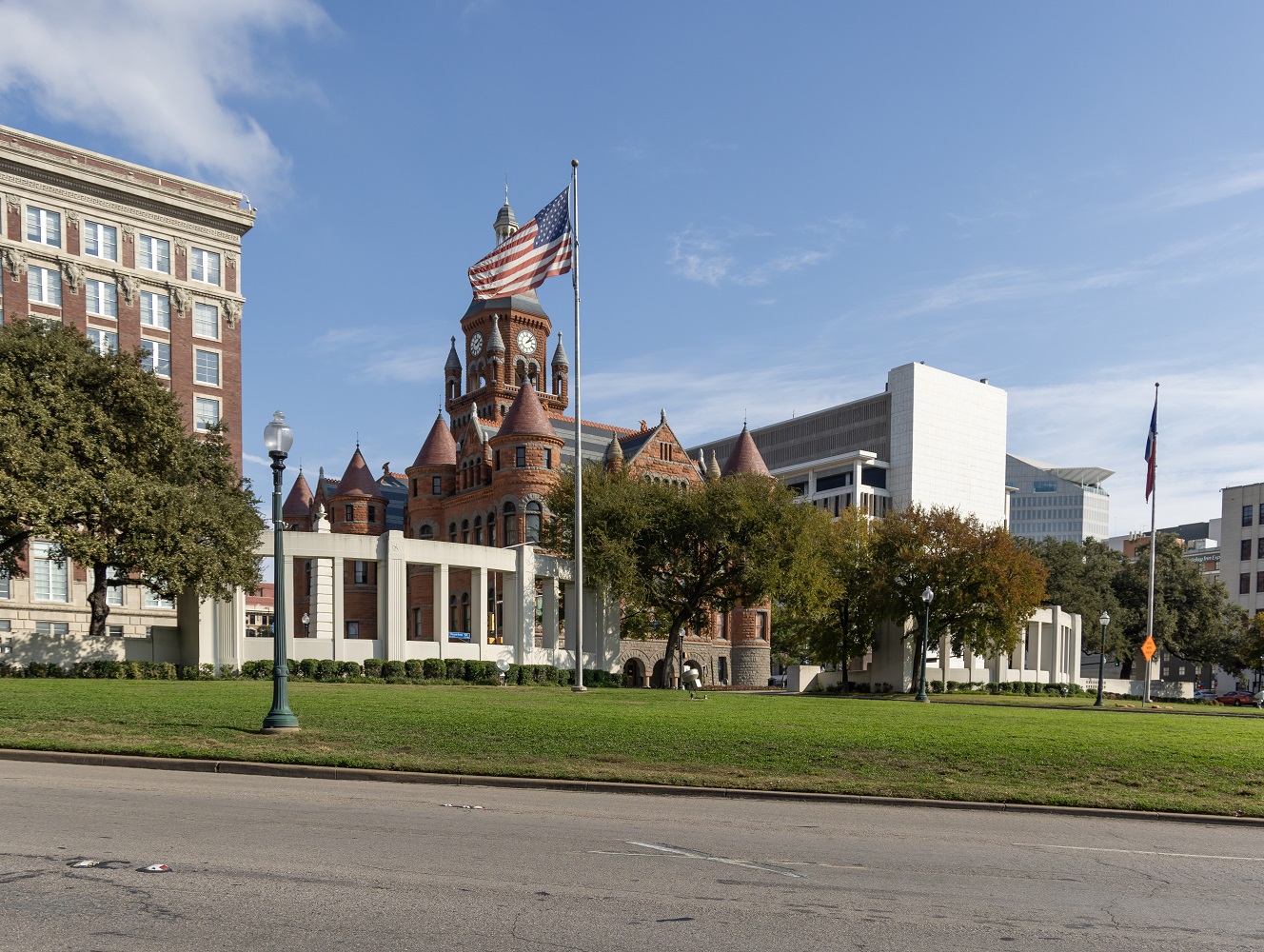
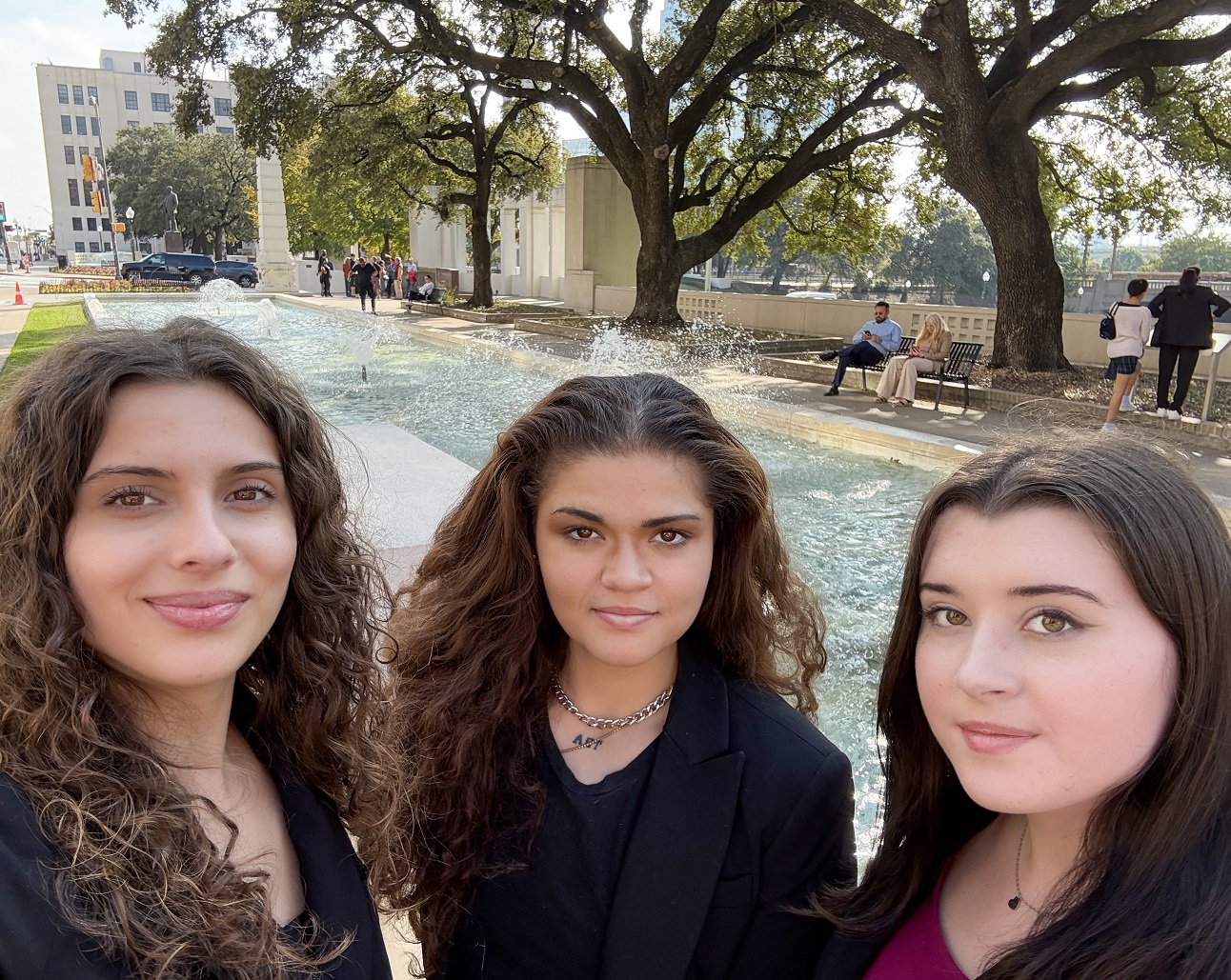
We ended the trip with a visit to Dealey Plaza, the site of JFK’s assassination. Seeing the Grassy Knoll and the surrounding area was a very fitting end to our adventures in DFW.
Overall, this trip showcased what LEAP is all about: taking multidisciplinary experiences—law, art, history, and food—and tying them together in a way that broadens our understanding and appreciation of the world. Fort Worth and Dallas proved to be the perfect destinations for this, with plenty of firsts, surprises, and connections along the way.
Sometimes unusual things happen, and one of those happened last night, when we found out that we had made it to the “Sweet Sixteen.” This is our first time at Moot Court, and we were expecting to observe–not participate in–day 2 of Moot Court.
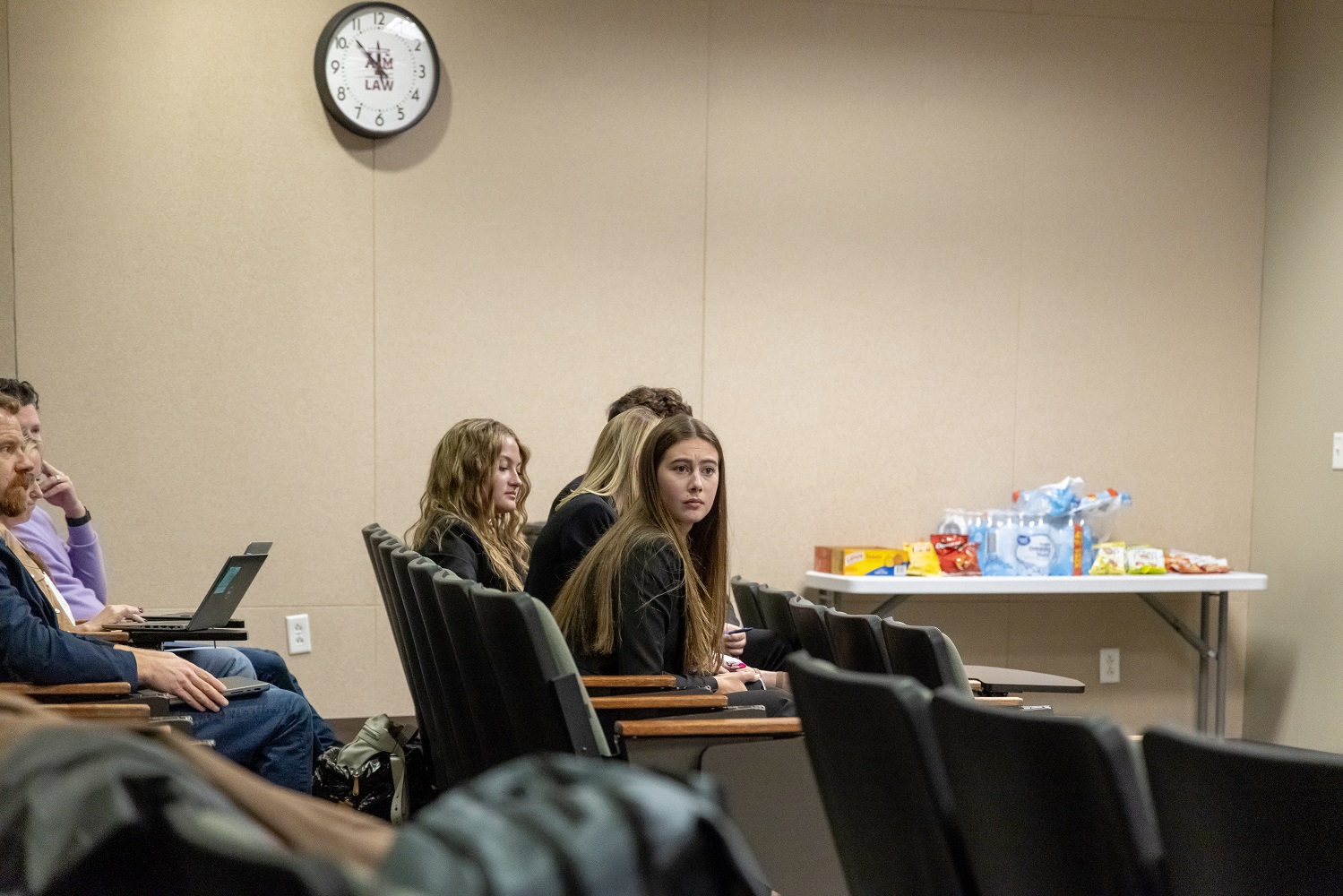
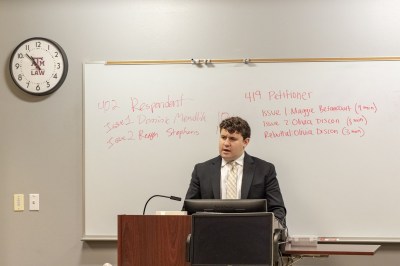
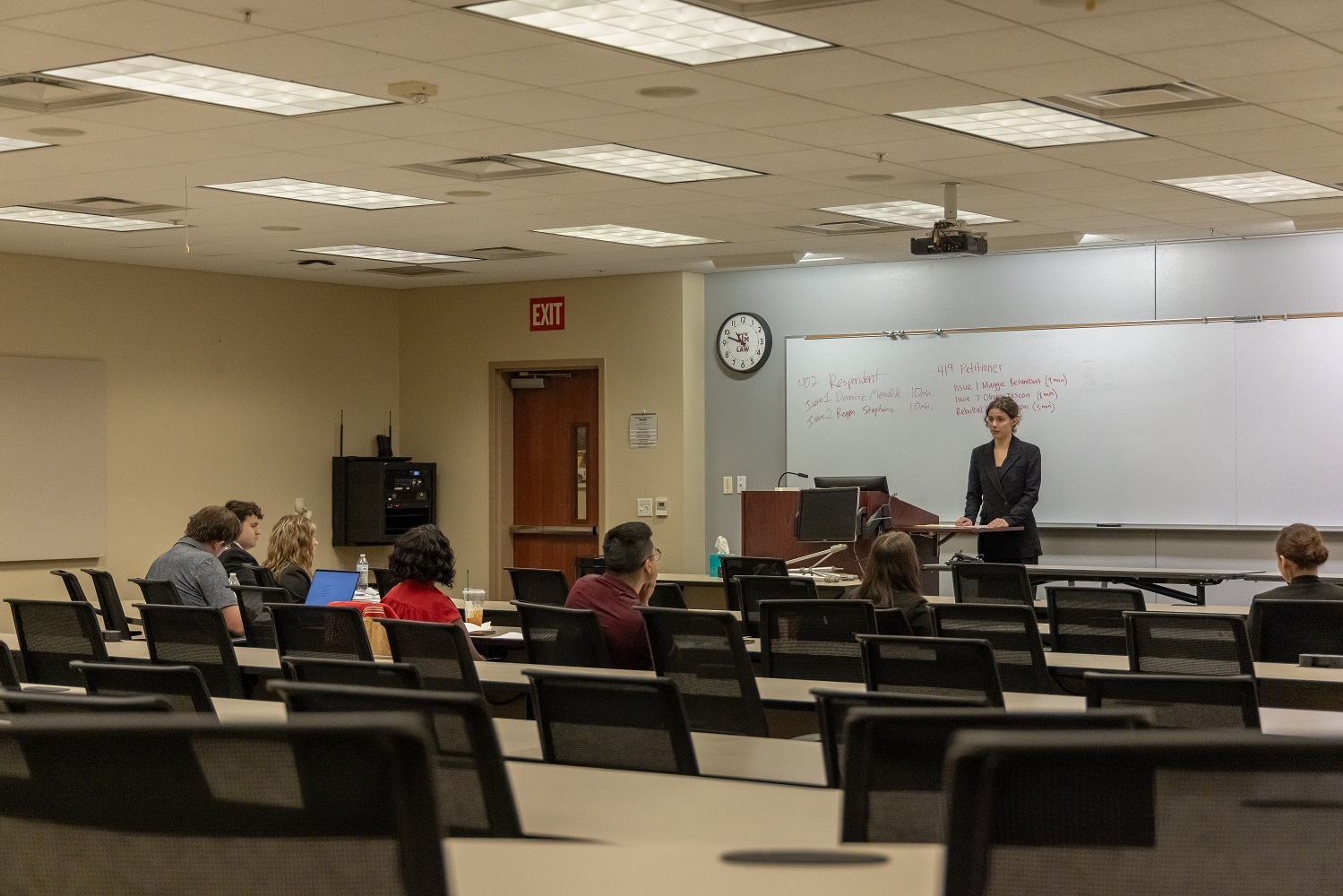
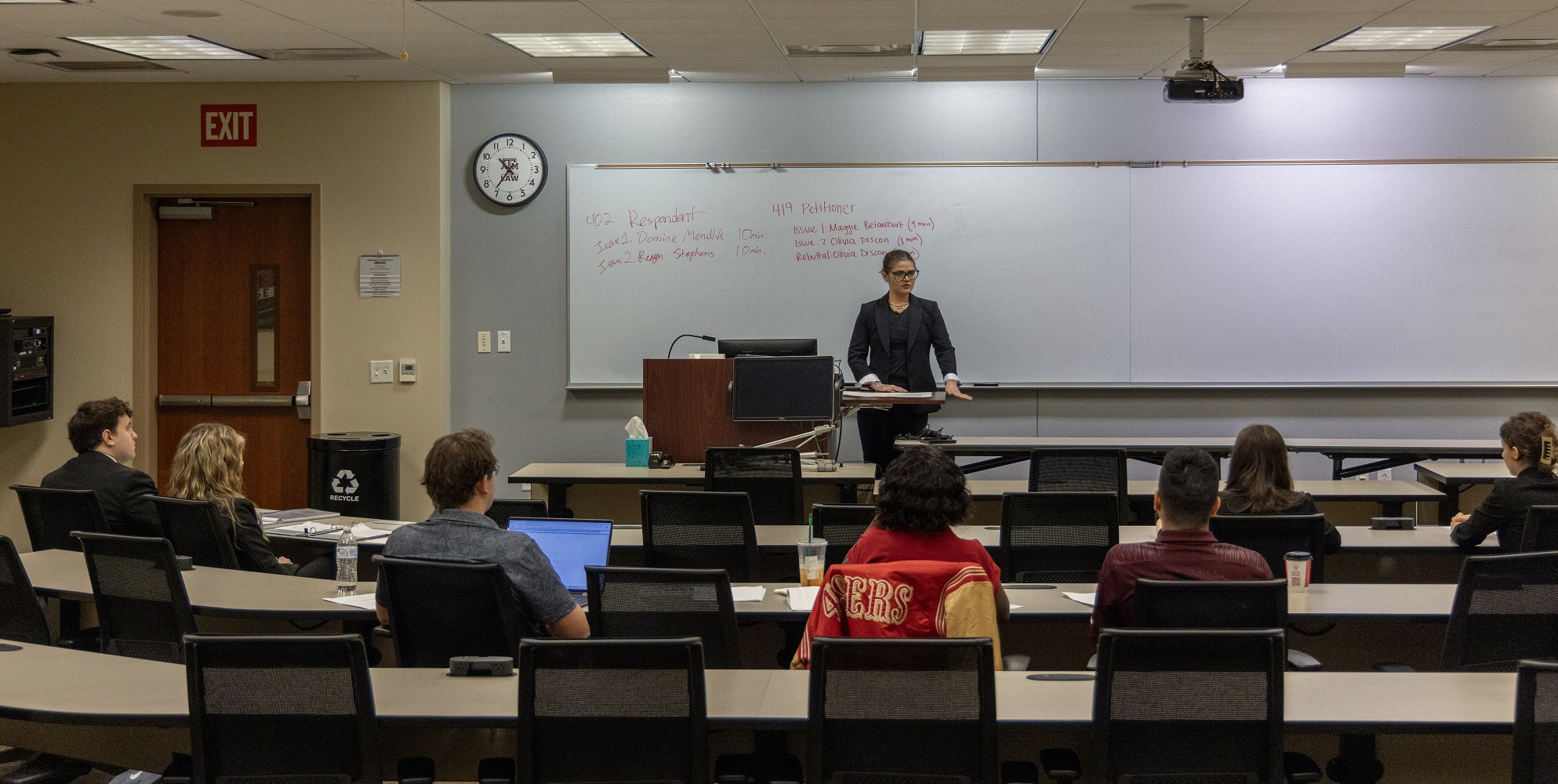
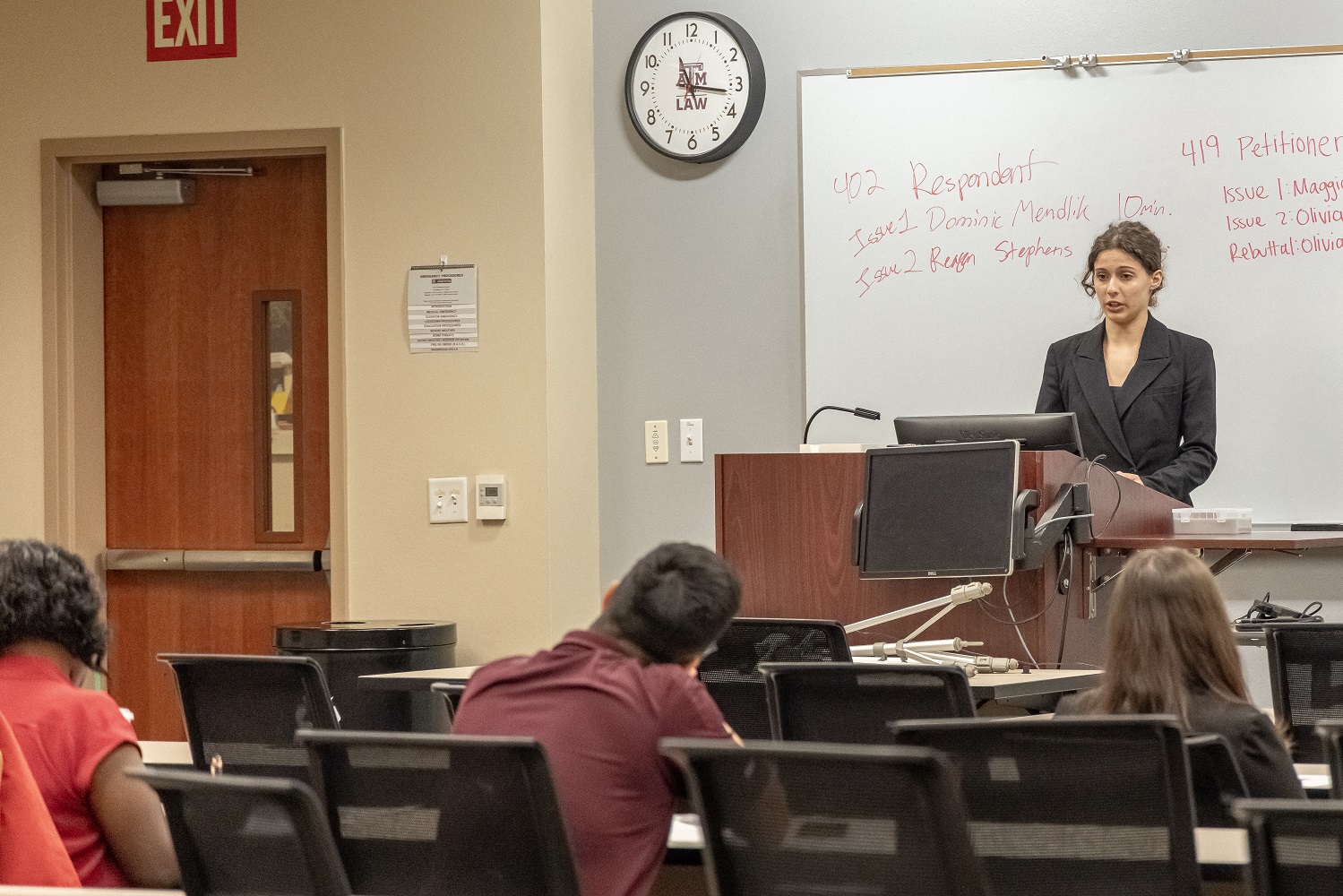
Thus, it was early this morning that we arose and prepared–as much as one can prepare at the last minute–for another round of Moot Court. Our opponents were from TCU, Reagan Stephens and Dominic Mendlik, and they were highly ranked.
We soon saw why. Mr. Mendlik…
…and Ms. Stephens…
…were very polished, articulate, and they knew the facts of the case.
For our part, we did the best we could, and we probably performed better during this round than we had all tournament. Maggie was more fluent in her delivery…
…and Olivia did well responding to and, at times, deflecting questions.
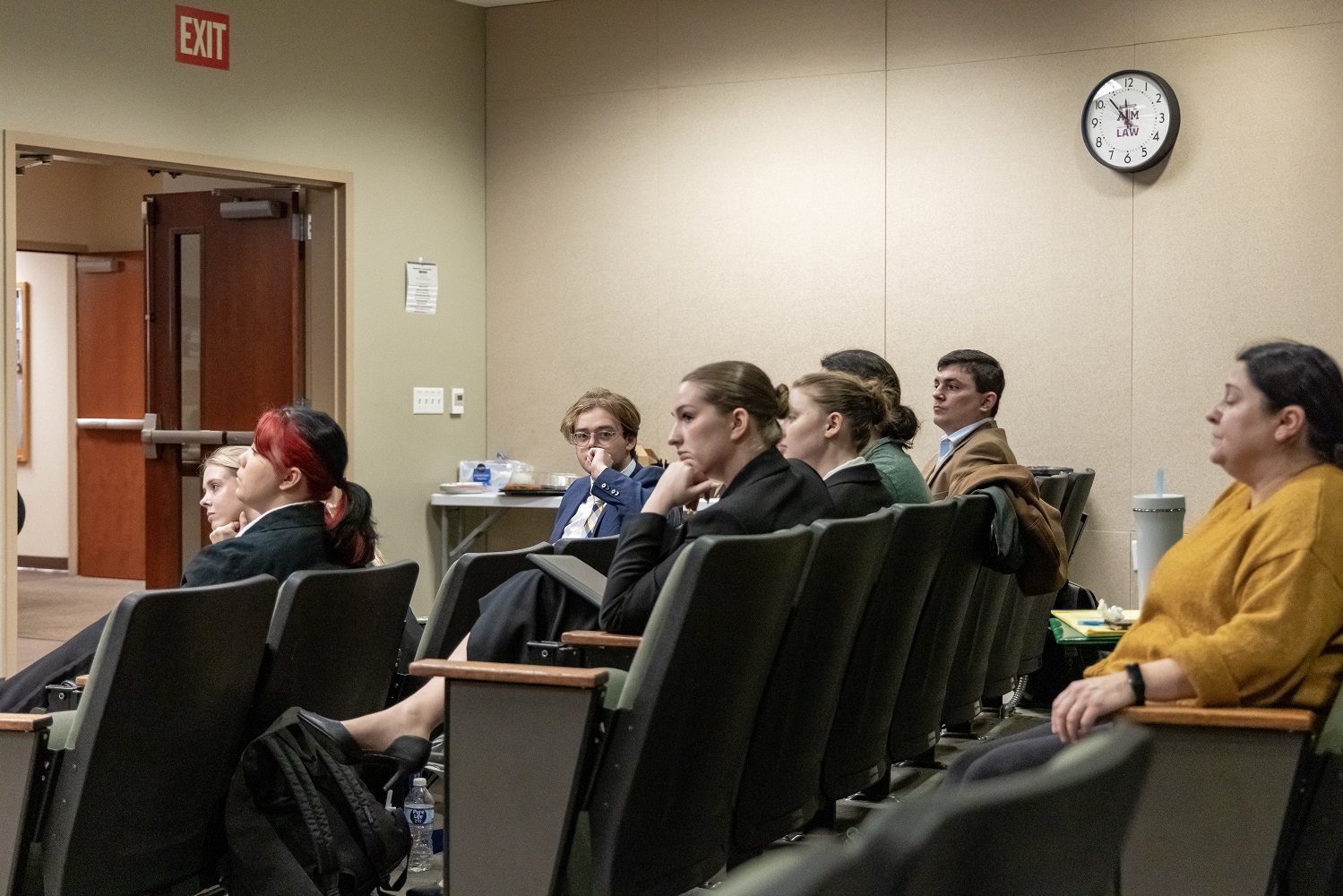
The judges, too, were excellent. We had three judges, and they all knew the case, brought different perspectives to the case, and they provided good feedback. Their questions were very good, designed to see whether we knew our facts and could think on the spot.
But, with this level of competition, we saw the writing on the wall…
…but, even as we obtained our results, losing in a split decision (2 ballots to 1), we very much believed we ended on a high note.
With another hour or so before we needed to leave, we watched the next round of coin flips…
…and then we split up and volunteered to be bailiffs, providing us with another perspective on the tournament and allowing us to learn from those with more experience, skill, or both.
It was enlightening–and it was also somewhat gratifying to see that Mr. Mendlik and Ms. Stephens won their next round (the Elite Eight), and the next round (the Semi-Finals), and lost in a split decision in the finals. They will be going to the Preliminary Nationals, and that is a well-deserved berth.
Our experience in Moot Court was overwhelmingly positive. Although we and our coach were beginners, we learned a lot, and it’s almost certain to benefit us as undergraduate students, preparing for law school, in law school, and in the “real world.”
We received much help along the way. Godfrey Blacin spent a lot of time organizing a scrimmage, and this was very helpful to us. Tournament Officials and other coaches also went out of their way to welcome, especially Kinzie Craig Hall, Jennifer Ellis, Kimi King, and Anne Dutia. On campus, Dr. Gene Roberts and Dr. Diana Brown proved very helpful on approaching justices and working on our logic; Stephanie Fors provided logistical support and overall advice; Victoria McClendon-Leggett was generous with her time and support; and students such as Saara Maknojia, Michelle Moya, Emely Garcia, and Jacob Wessels showed support along the way. And many thanks to Madison Cawthon for serving as bailiff!
While most students are pleading for extra credit at the end of the semester, LEAP students were pleading their cases, literally, in moot court. Facing off against teams that came from eleven different universities across four states to compete in the South / Texas Regional American Moot Court Association tournament held in Fort Worth, with its rich history and home of Texas A&M University’s Law School. This tournament is one of sixteen regionals across the United States that will help select the top U.S. moot court team.
LEAPsters depart SHSU for their first moot court tournament
This was the first time in seven years that SHSU fielded a team. Olivia Discon and Maggie Betancourt stepped up this fall to engage in weekly meetings, much “homework,” and a lot of learning to serve as Bearkat mooters. They also received help from Dr. Diana Brown (COBA, SHSU), Dr. Gene Roberts (SLMS, SHSU), Victoria McClendon-Leggett, Stephanie Fors, and Maddie Cawthon–the latter serving as bailiff, and a potential mooter in future years.
Day one of the contest was an all-day affair, a Saturday of three rounds. For Olivia and Maggie–team 419–this involved facing off, first, against Kathryn Dearing and Julia Daniel from the University of North Texas, one of the most active universities in the moot court universe over the past two decades, largely a result of the efforts of Dr. Kimi King. This year, King was on hand, along with Dr. Adam Whitten, both of whom served as coaches for their two UNT teams.
The SHSU team was designated as representing the petitioner, in this case a “William DeNolf,” who may, or may not, be responsible for recklessly goading a Ms. Bronner into suicide.
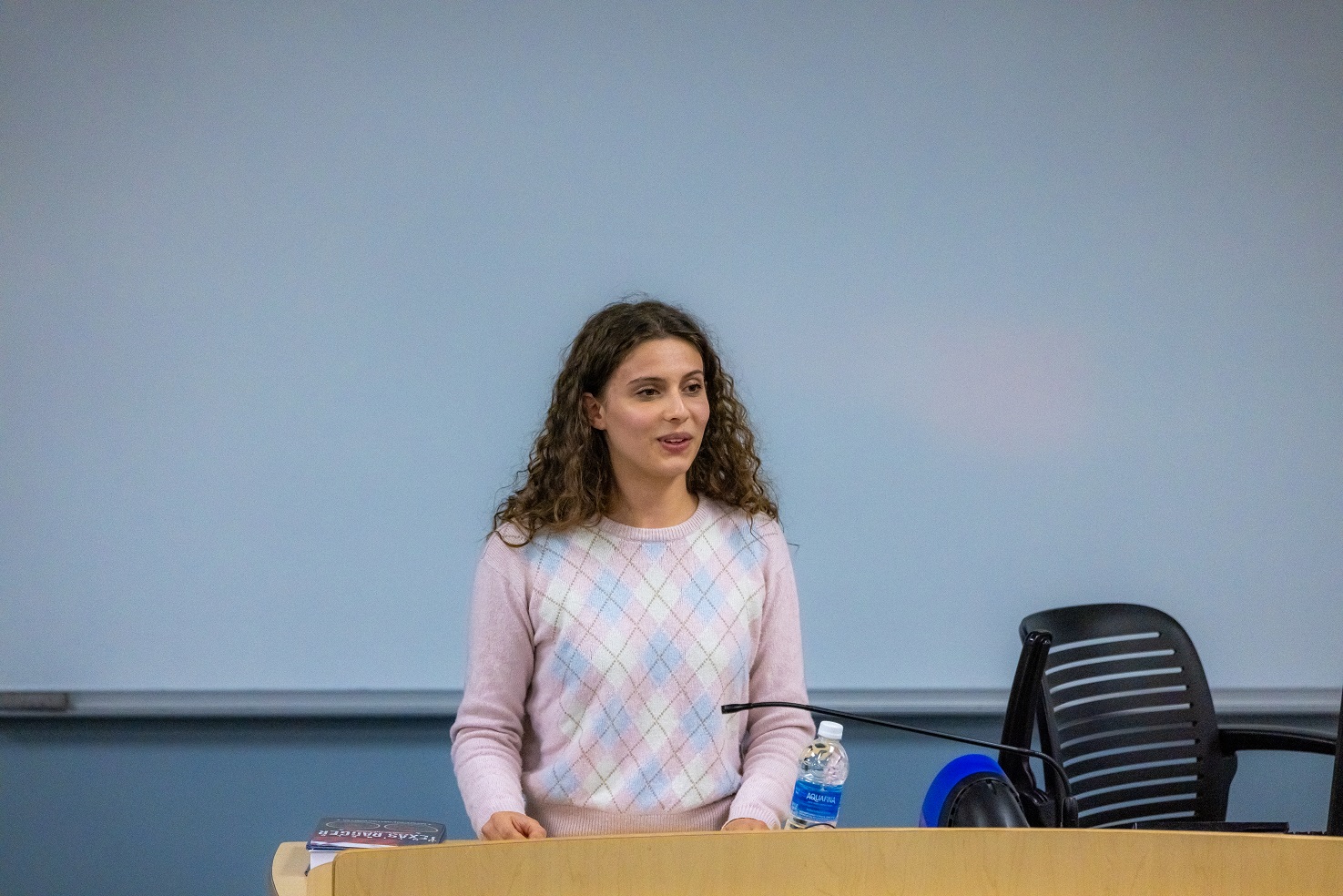
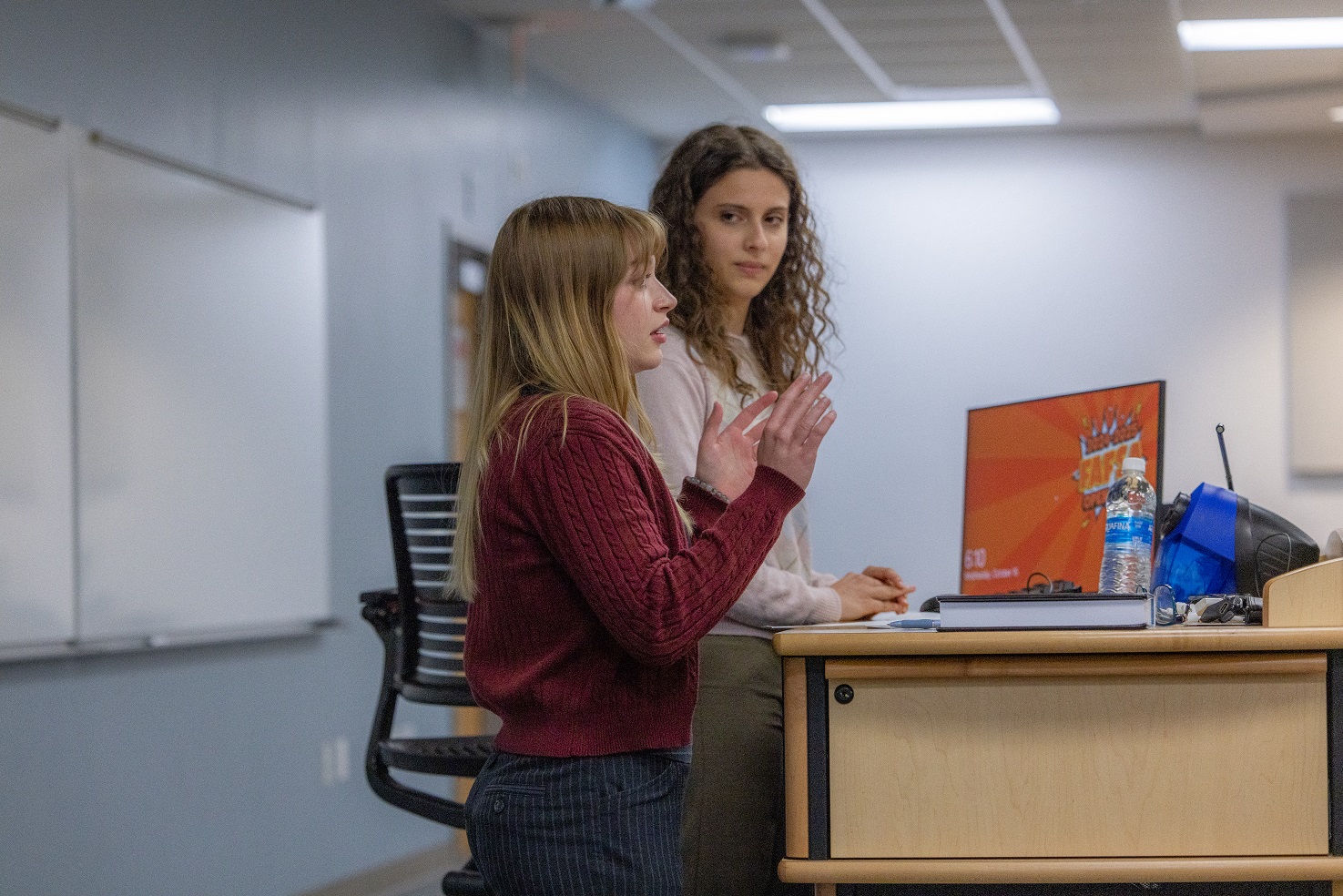
With the fate of DeNolf in their hands, Betancourt and Discon took turns arguing his case to two “Supreme Court Justices” (actually, law-school professors).
Tackling issue one (the 5th Amendment), Betancourt began, using her nine minutes to argue that the State violated DeNolf’s protection against self-incrimination when using biometric access to the contents of his phone.
Olivia Discon, meanwhile, argued the second issue (1st Amendment), making the case that the State violated DeNolf’s freedom of speech by criminalizing the case for suicide.
They were countered by Daniel and Dearing, who ably argued that the State was justified in their steps to access and regulate DeNolf’s speech.
Delving deep into the cases and the record, Daniel and Dearing demonstrated a strong grasp of the material, and they edged out the SHSU team, winning both ballots.
For their second round, the SHSU students faced Ethan Ellis and Amanda Parker-Chavez of Lamar University. With their first round jitters somewhat abated, the LEAP students performed better this time, winning both ballots.
The third round, then, would likely determine whether the LEAP/SHSU team would make it the “Sweet Sixteen,” a prospect that, no doubt, brought back some of those early jitters.
In this round, which featured the most aggressive of the judges and a “hot panel,” Discon and Betancourt split the ballots, finishing 3-3.
The outcome of this contest was, however, withheld until the Day-One reception and awards, hosted by TAMU Law. Following a discussion of the law-school’s many merits…
…the crowd eagerly awaited news on the leading orators and the teams moving on to day two of the competition.
The top orators were chosen first:
Ashlyn Dodson (UNT)
Quinn Kelly (UNT)
Jordan Peterson (Berea College)
Kylie Kinsella (TCU)
Dominic Mendlik (TCU)
Kaitlyn Allen (TCU)
Landon Reffitt (Benedictine)
Jeffrey Schremmer (Benedictine)
Collin England (Benedictine)
Jacob Hahn (Benedictine)
Following these congratulations, Ann Dutia read off the list of teams competing in the “playoffs,” the “Sweet Sixteen.” Reading in “no particular order,” Dutia listed team numbers…443…437…402…and, finally, after seven teams were announced, we heard “419.” The SHSU students made it to the second day of competition.
Maddie, who served as bailiff for the rounds, look bemused…
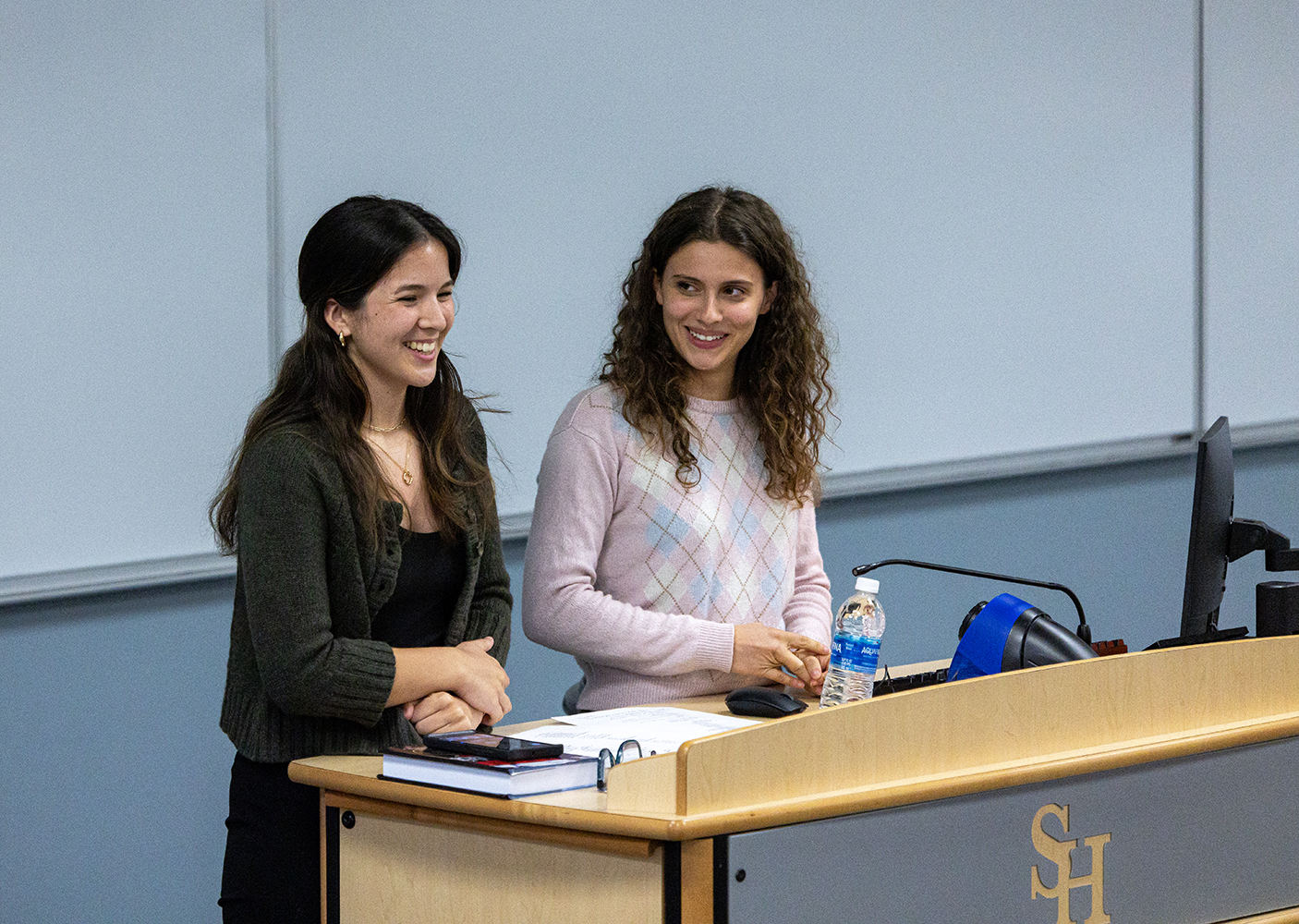
…Maggie beamed; and Olivia, in her way, looked equal parts ill and gratified.
With the results in hand and an unexpected day of competition ahead of us, we walked back to the hotel. Along the way, we ran into a reminder of Fort Worth’s rich history, statues of Butch Cassidy, the Sundance Kid, and the “Hole in the Wall” gang, a scene that prompted a selfie.
It also prompted a little gratitude. While we were anxious about the showdown looming the next day, at least we wouldn’t face the fate of Butch and Sundance–who were shot to death in Bolivia. It’s a small thing, we know, but it reminded us that Moot Court is a cause Worth taking, on a trip Worth making!
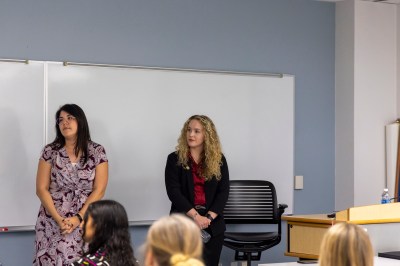
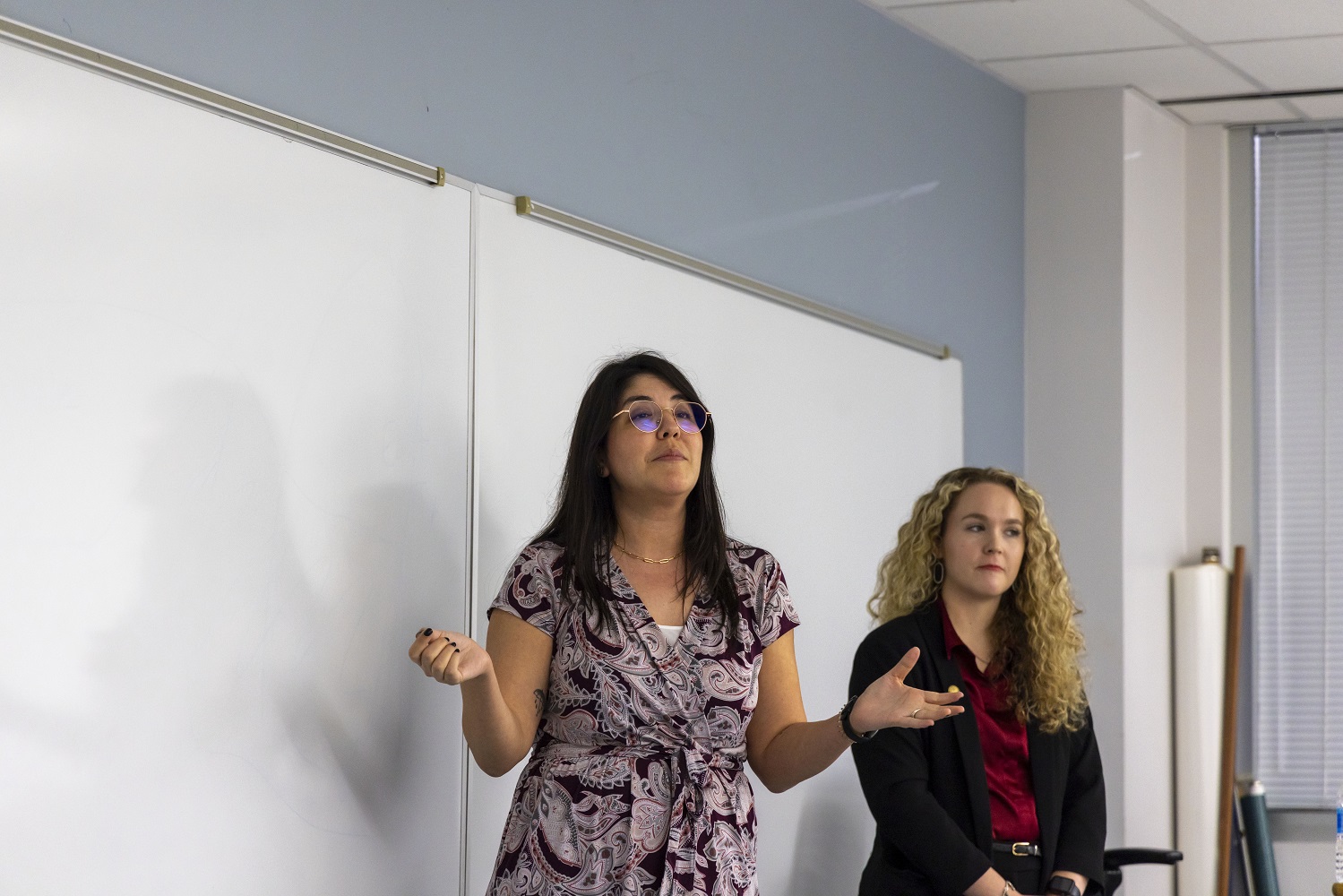
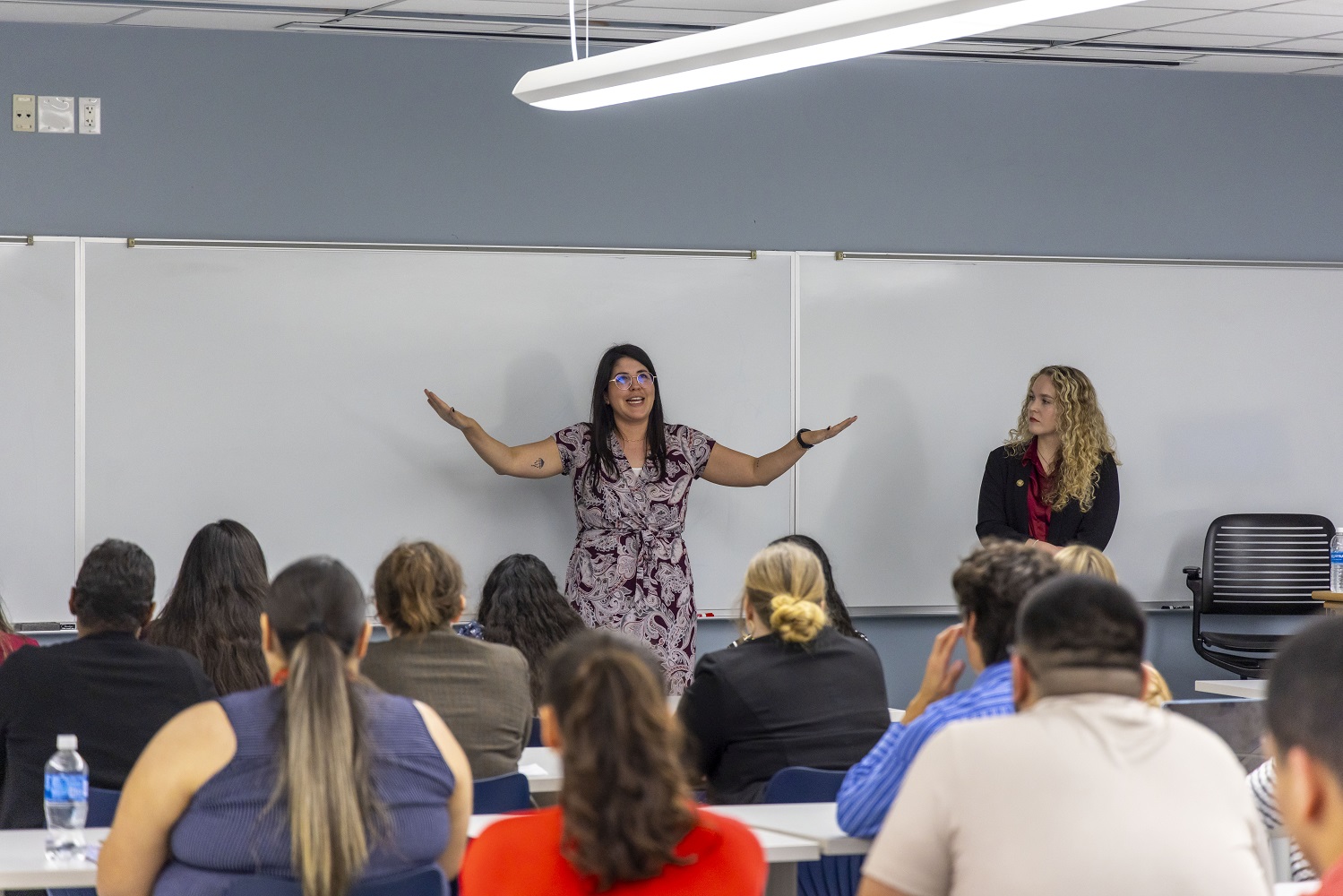
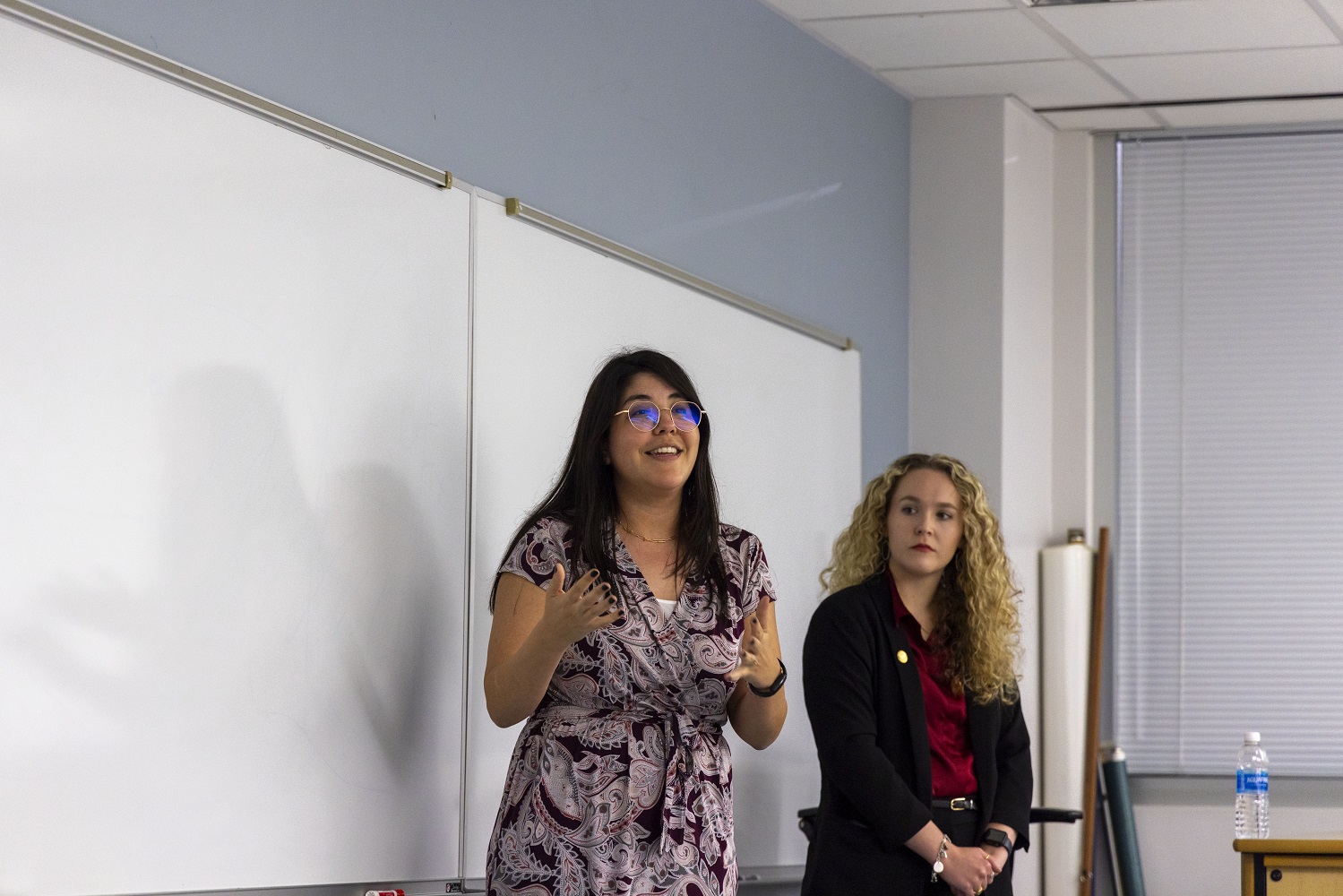
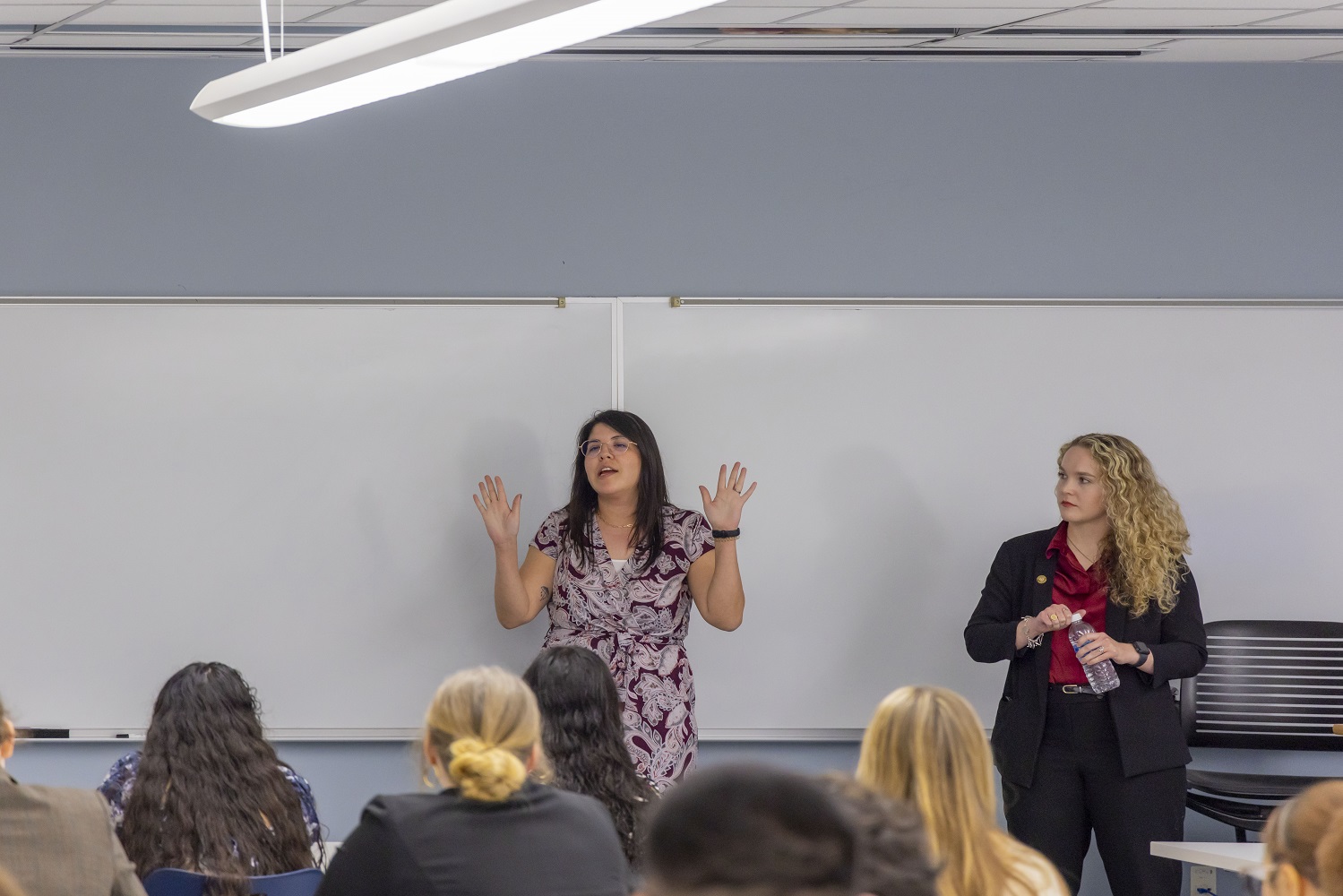
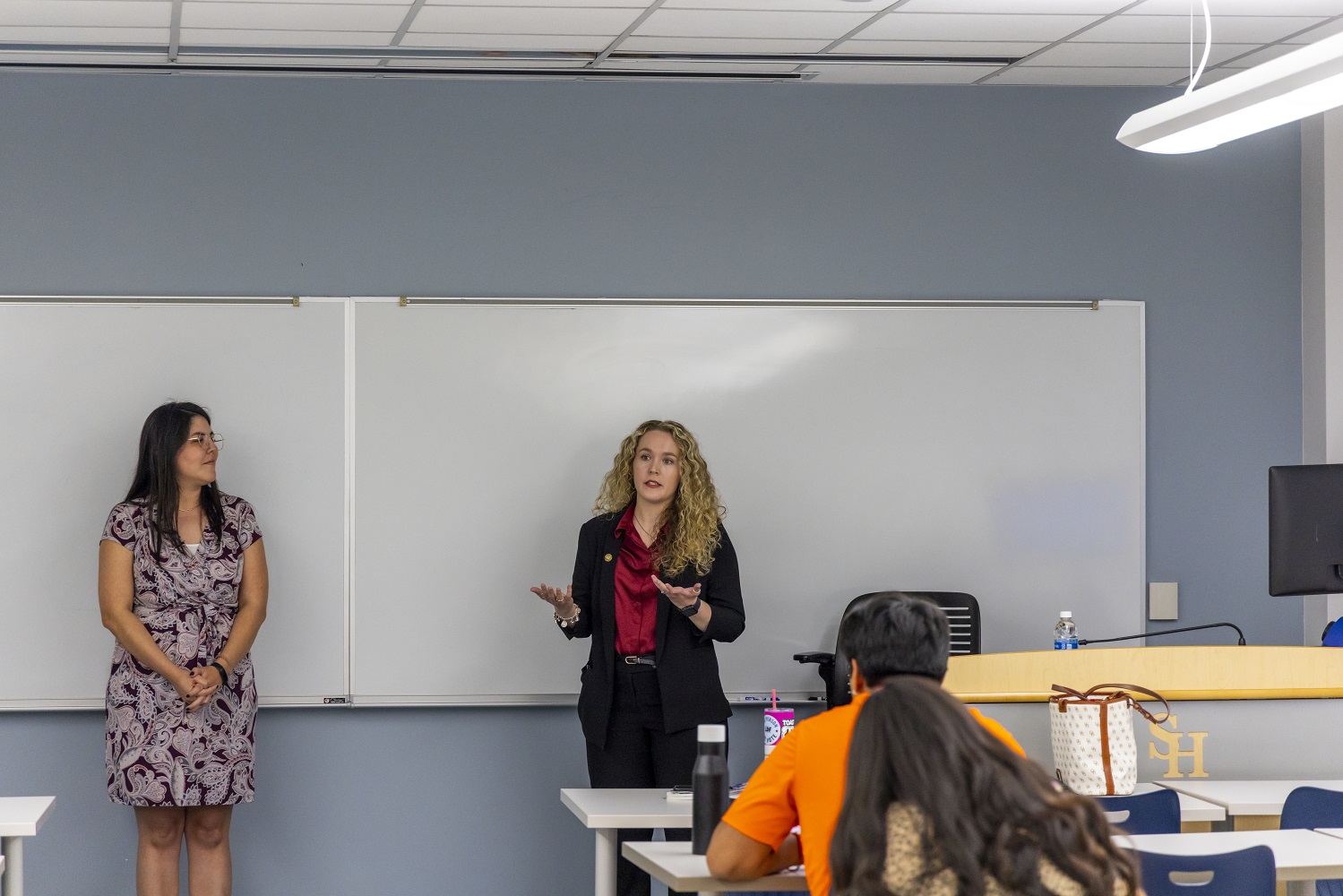
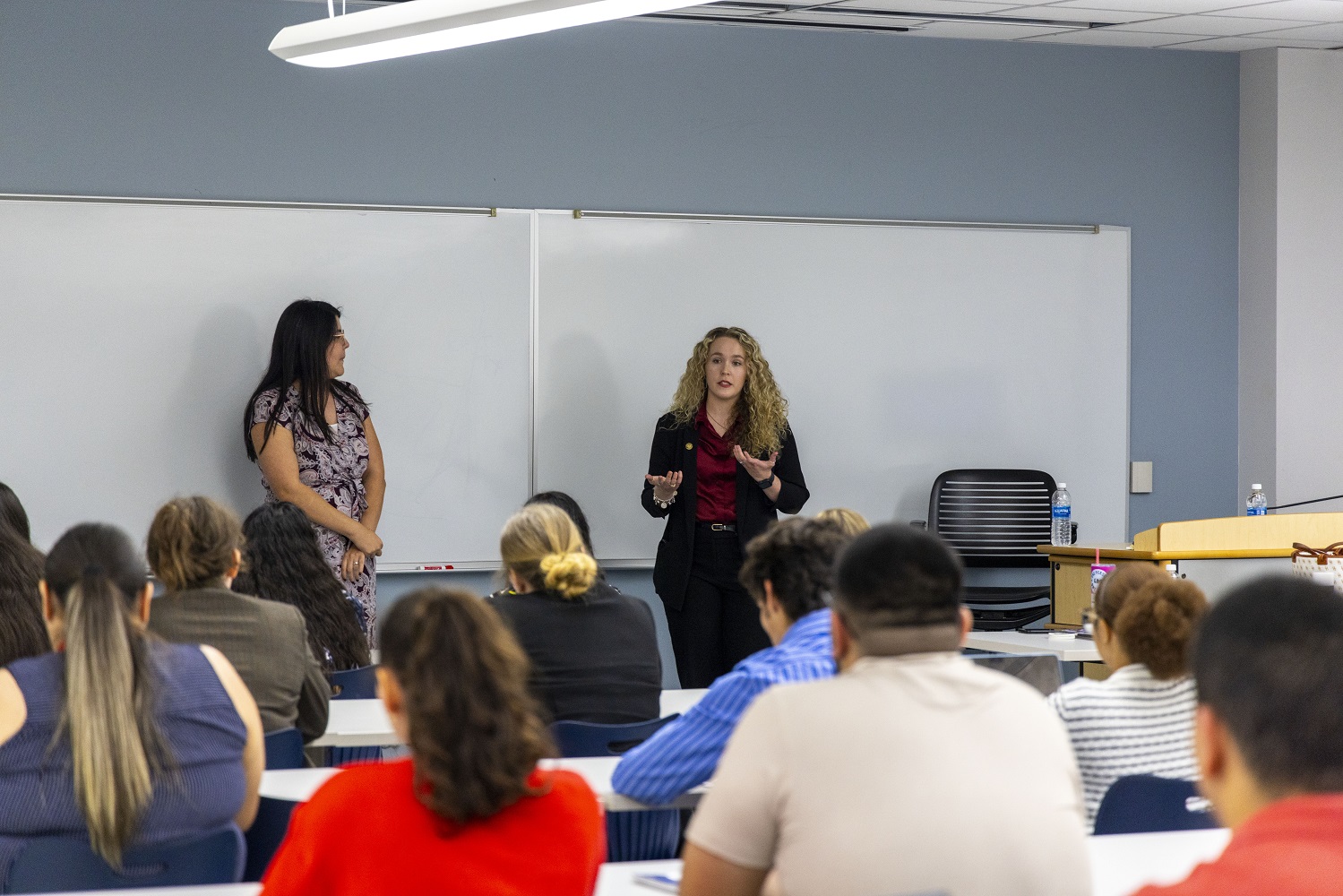
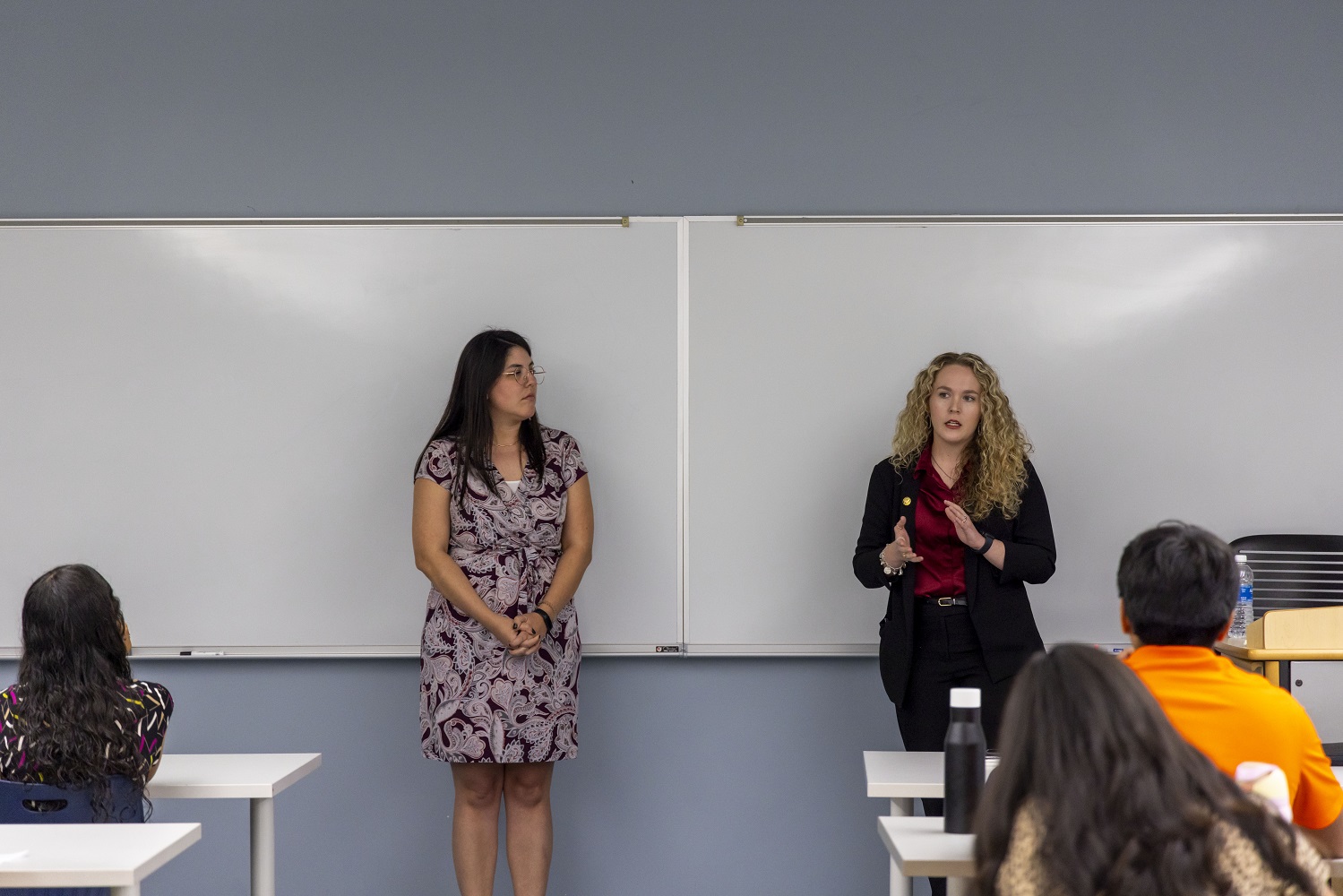
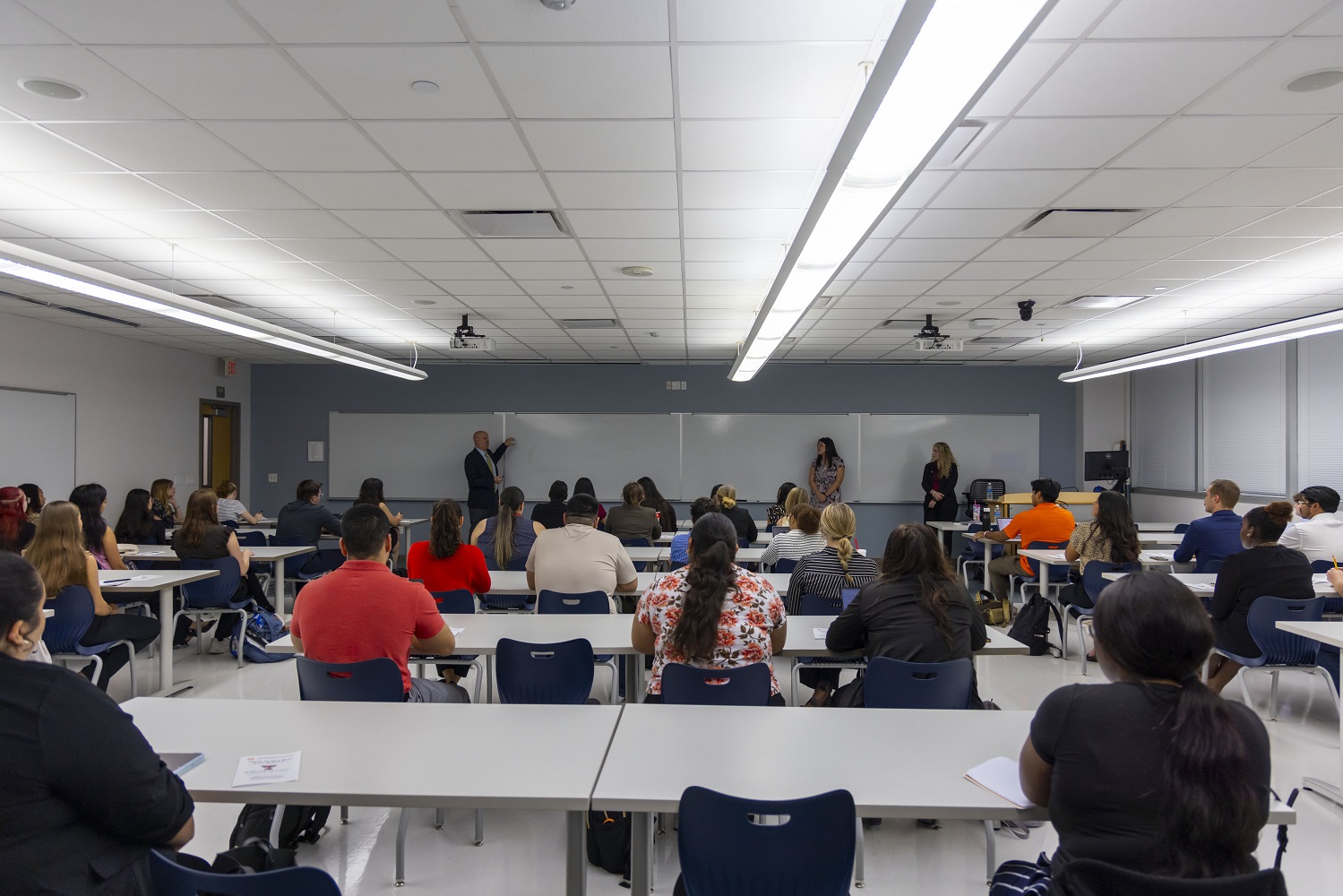
On November 7th, Assistant Dean of Admissions at Texas Tech Law School, Danielle Saavedra…
…and Prosecutor for Orange County District Attorney’s Office and Texas Tech Law School Alum Katey McCall…
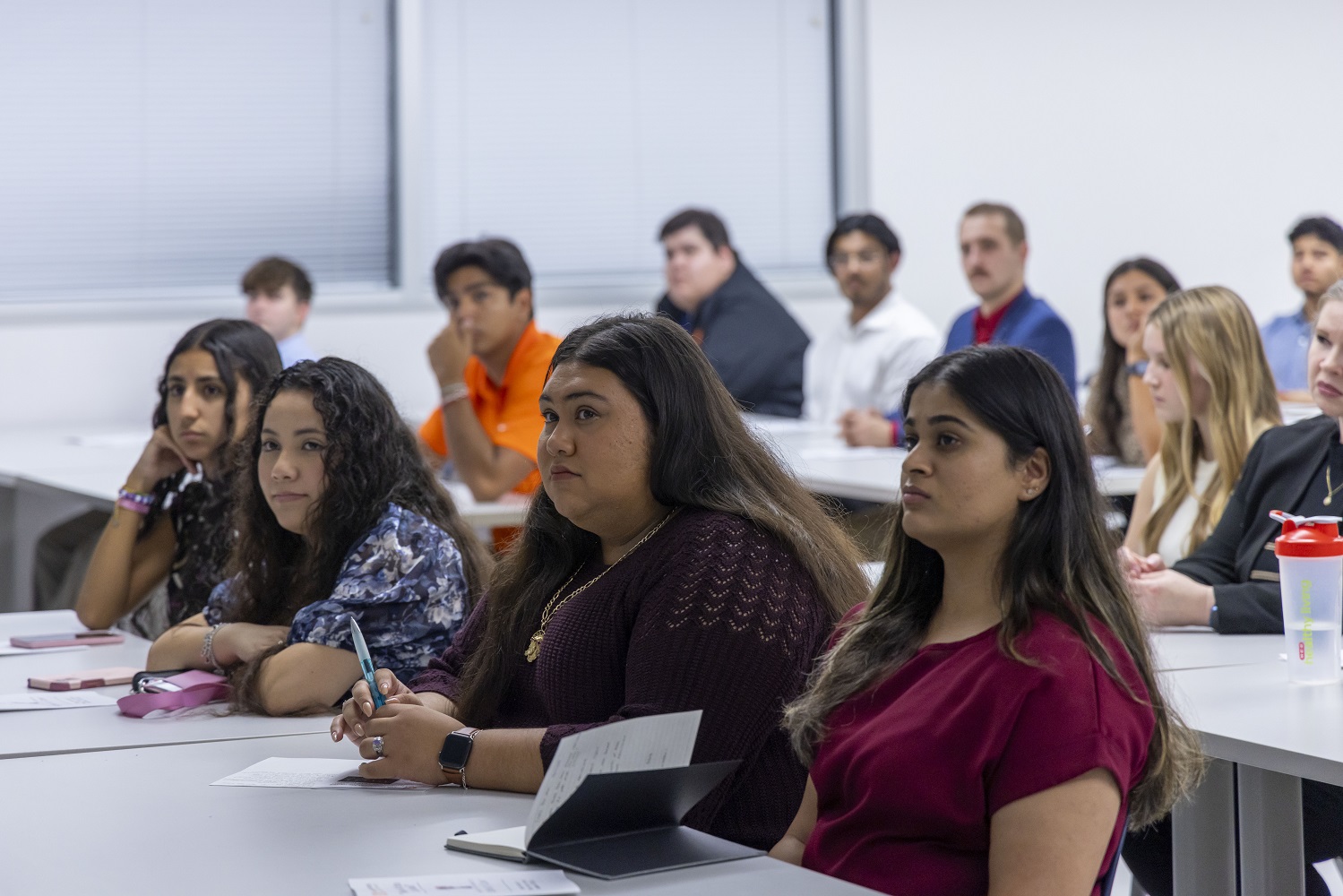
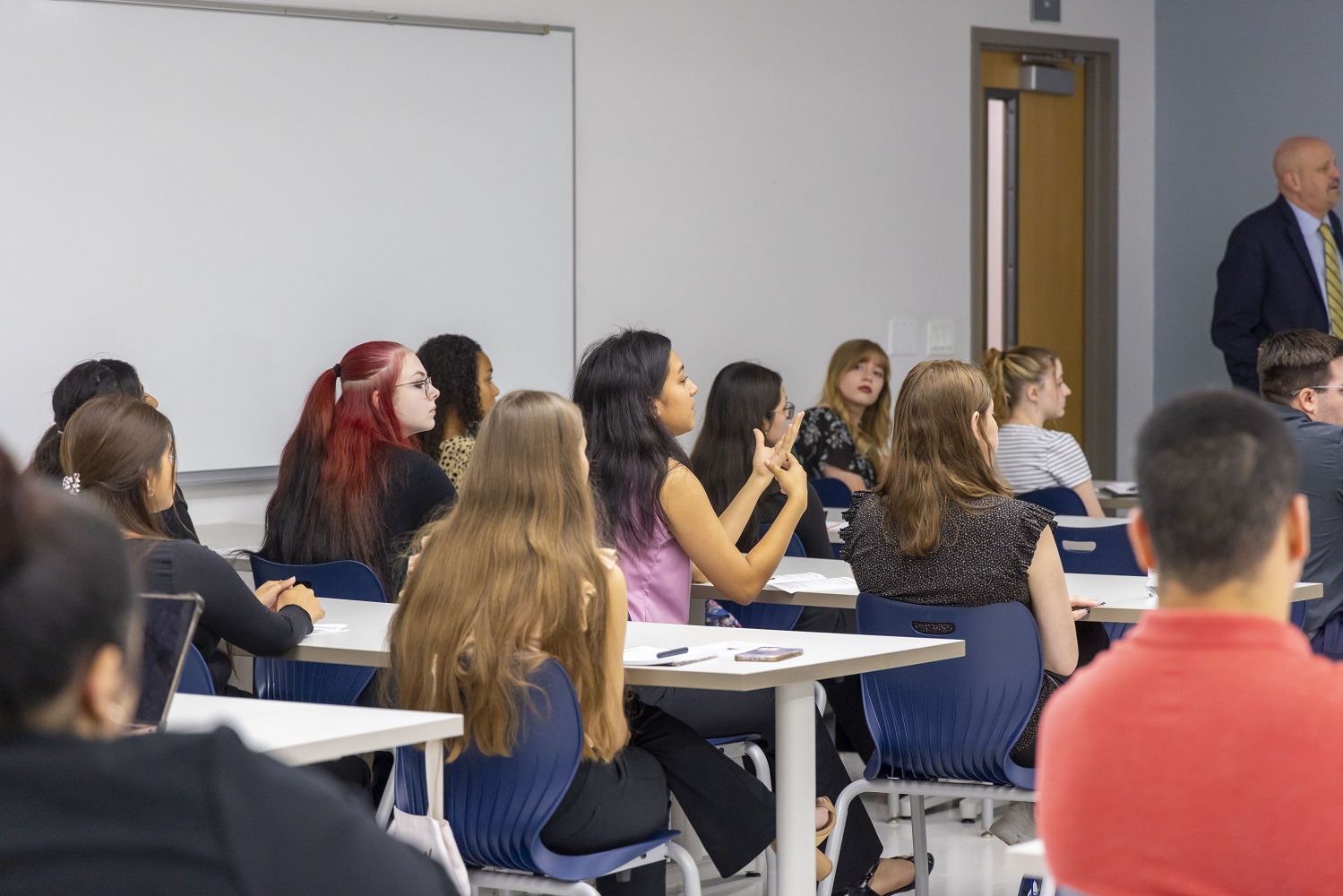
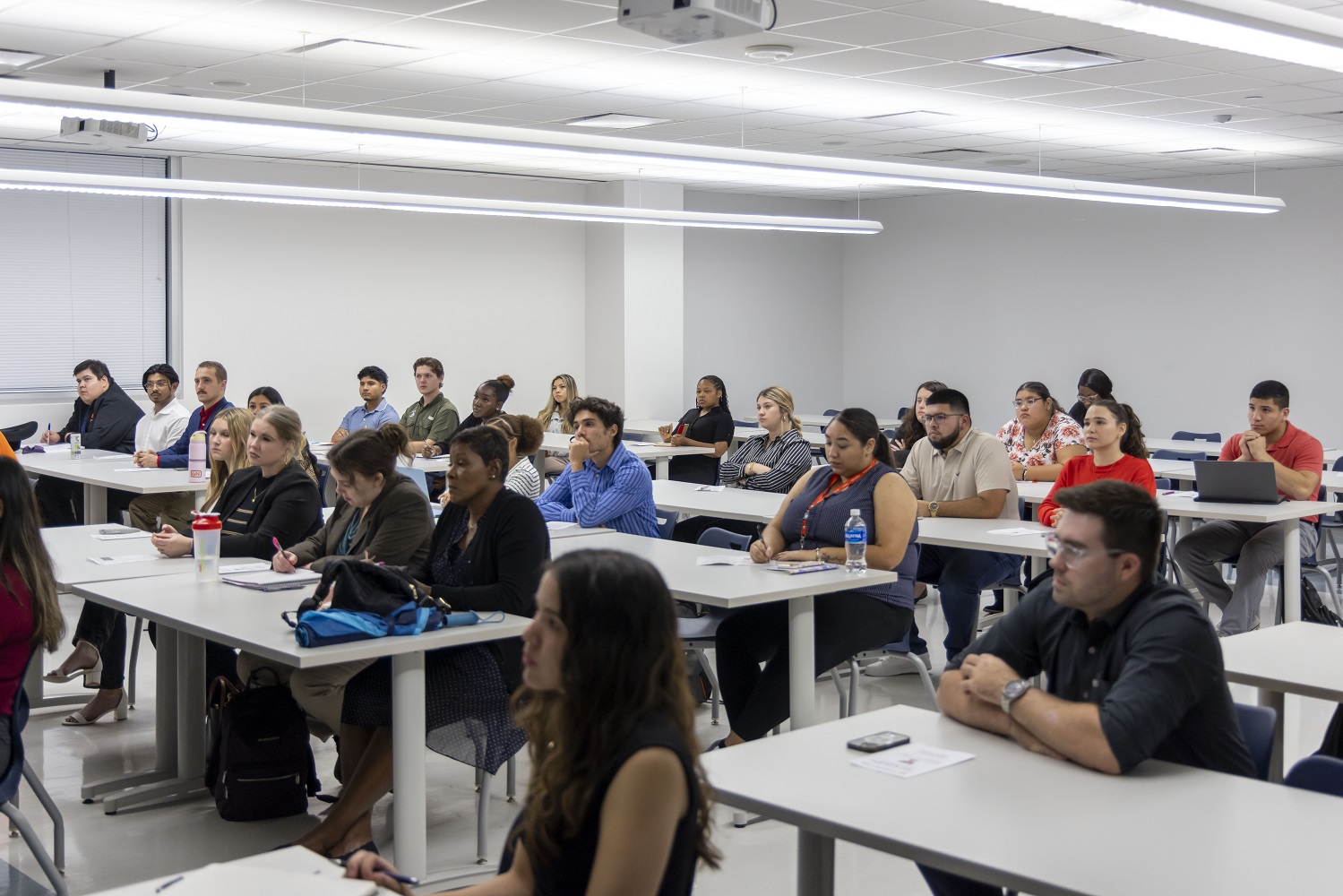
…visited students at Sam Houston State University to discuss Texas Tech Law School and how students can prepare to apply to law school.
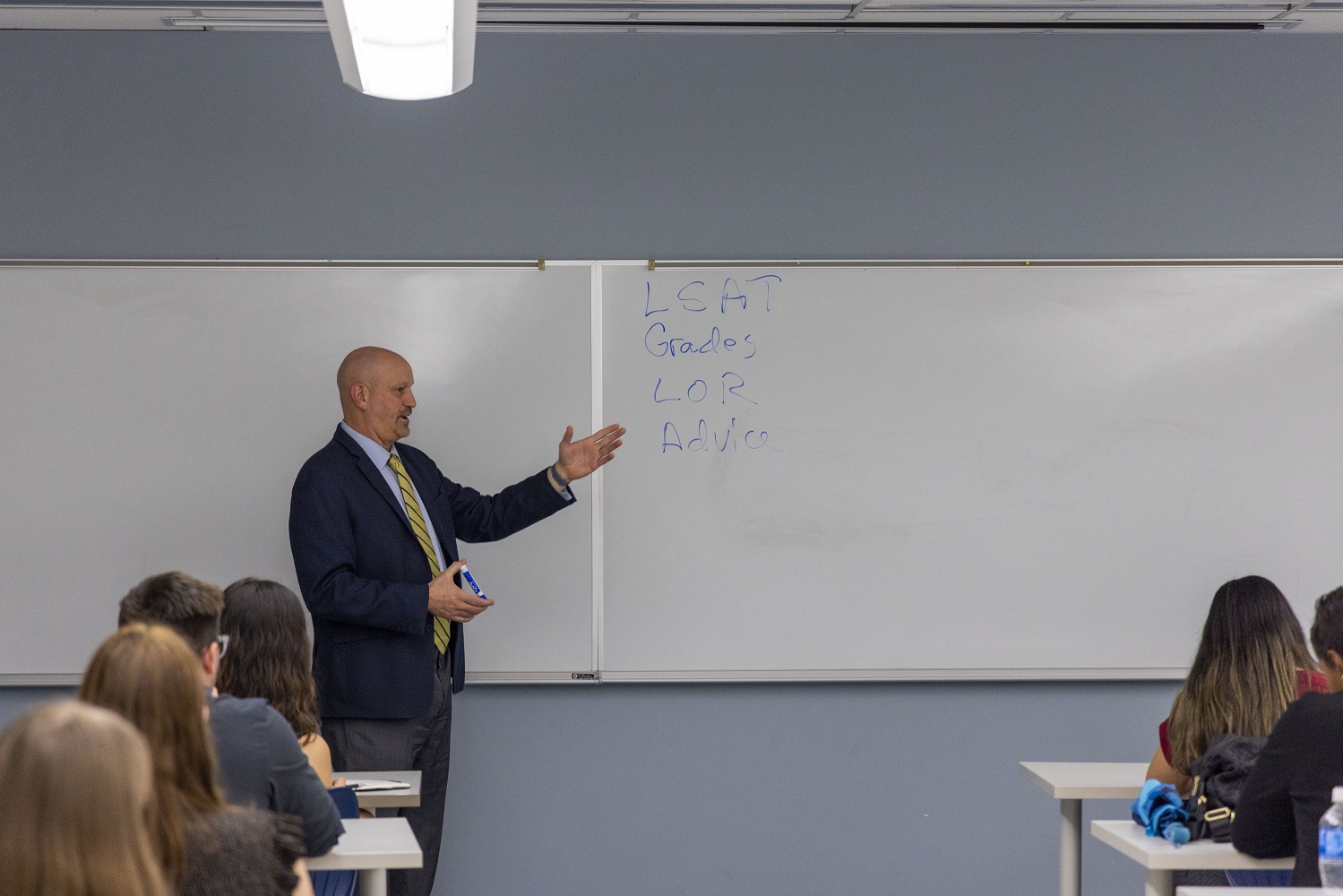
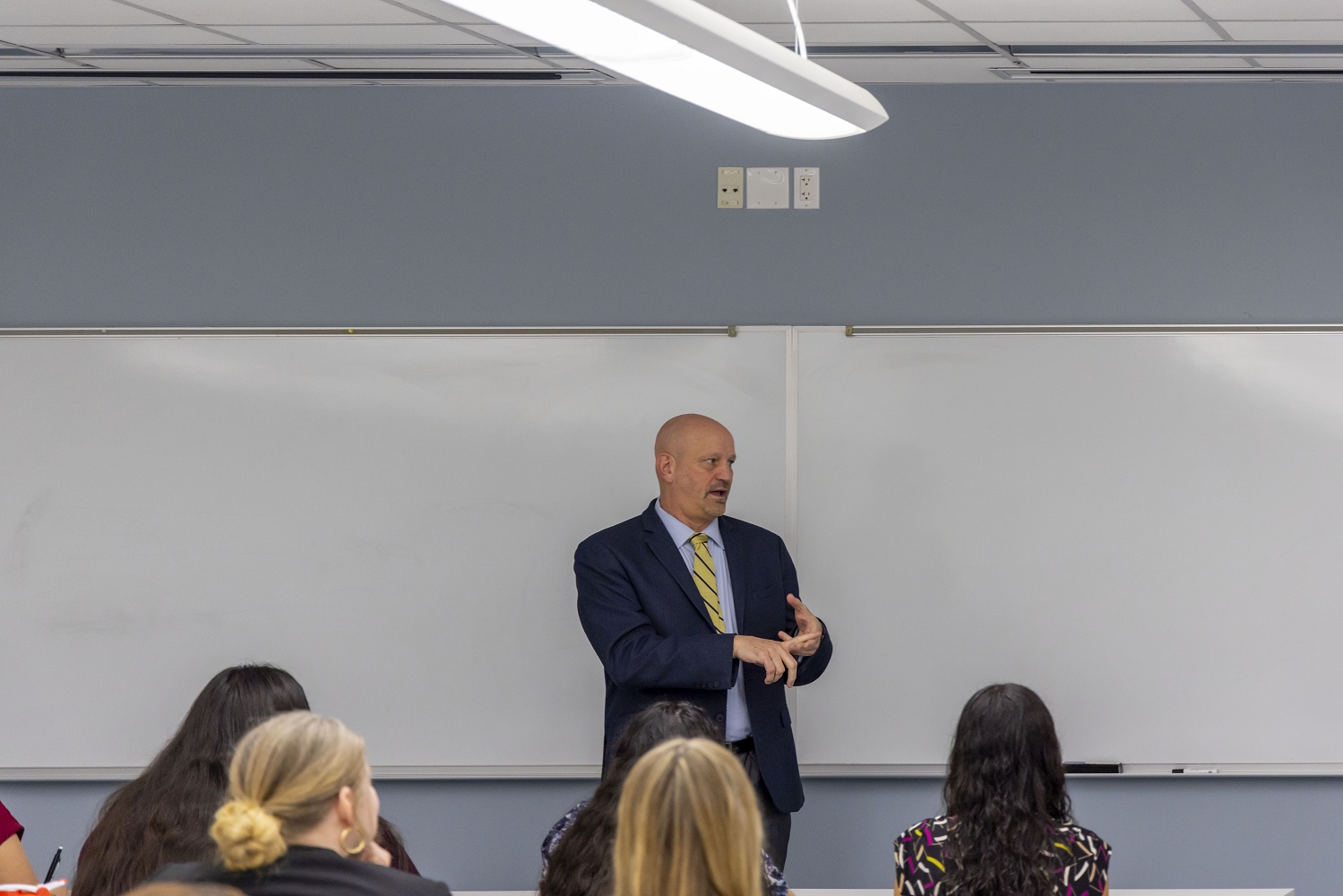
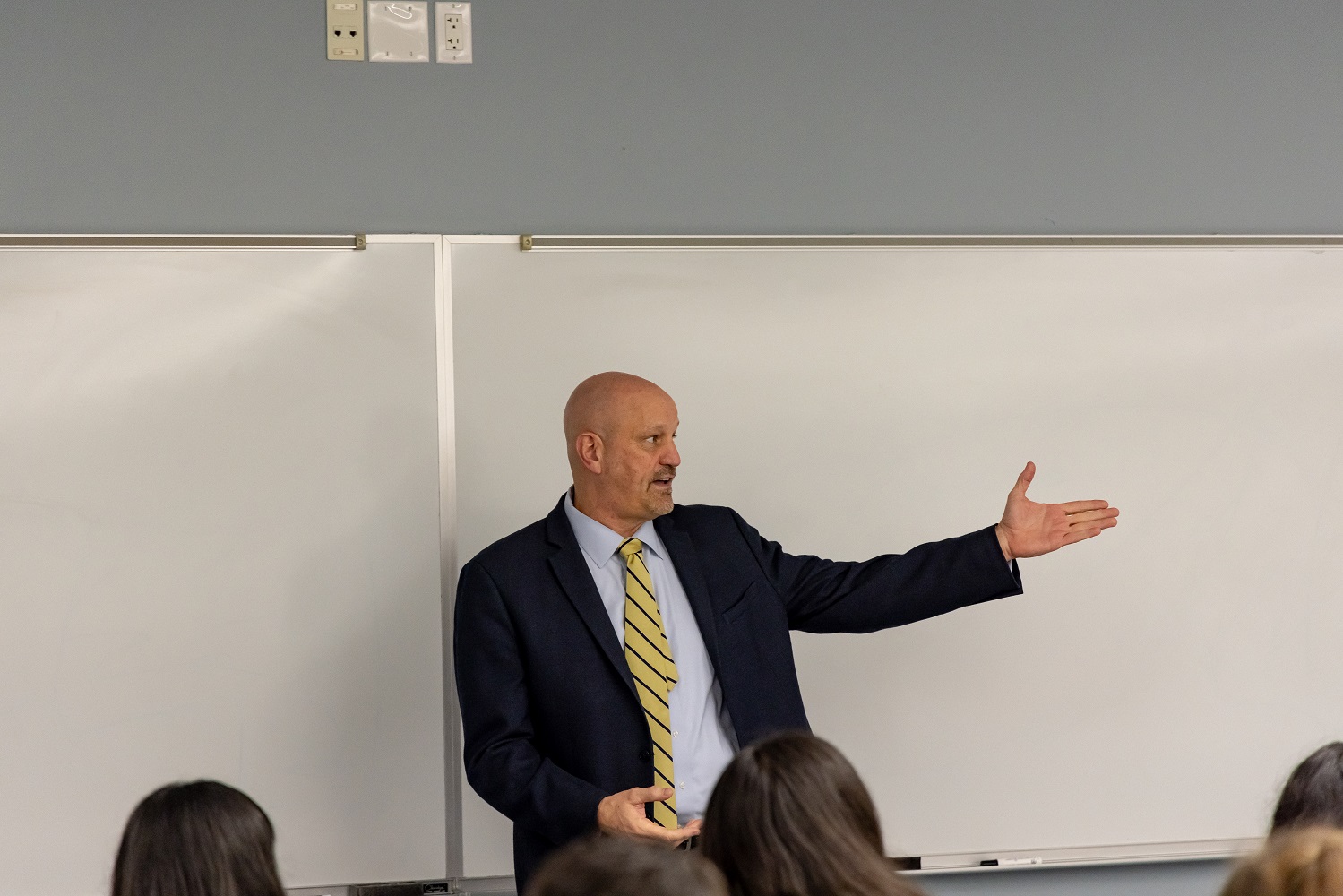
As the meeting began, Professor Yawn asked what the admissions board looks at when evaluating a students application.
Dean Saavedra stated that they look at a students Cumulative GPA, LSAT score, letters of recommendation, personal statement, and various other factors. She continued by giving advice on recommendation letters, telling us to ensure to ask a trusted professor. Further, that personal statements are very important and to keep them as detailed as possible. All of these elements will set one student a part from another.
Dean Saavedra and Ms. McCall then mentioned how essential it is to get applications submitted as early as possible to have the best chance at getting accepted. This is because, as time passes, schools will start tightening their standards; they want to ensure their ranking will remain high so they are less likely to take a chance on a student below the medians.
Dean Saavedra then transitioned to discussing Texas Tech Law School, noting how it is affordable and there are many unique opportunities to find what you love. This includes clinics, externships, and a mock trial program! Ms. McCall was involved in many, so she was able to give some personal insight.
Ms. McCall said that outside of these programs, there are many student organizations that students at TTU Law can join to connect with classmates. Moreover, that they allow one to grow in both knowledge and skills!
We would like to give a very special thank you to Dean Saavedra and Ms. McCall for sharing valuable information about TTU Law and the process of applying to law school. All who attended are extremely grateful and excited to apply to Texas Tech Law School!
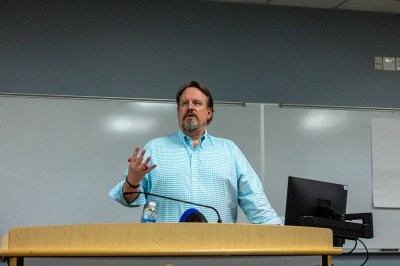
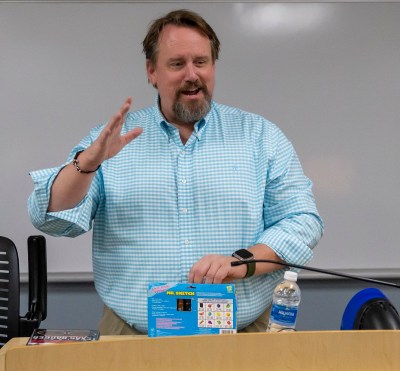
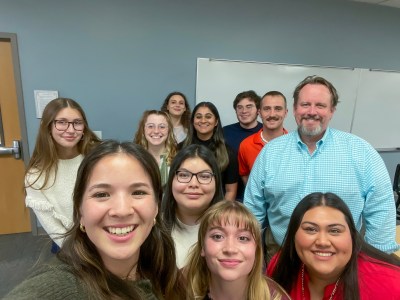
This Wednesday, Sam Houston hosted its football game against Western Kentucky; everyone was there… except for the dedicated Pre-Law Society members who attended this week’s meeting. The guest speaker was the incredible Dean Gene Roberts. Dean Roberts is not only an Associate Dean but also the Director of Student Legal & Mediation Services.
After a bit of business…
President Olivia Discon introduced Dean Roberts, and he graciously gifted the pre-law members with lots of goodies such as: padfolios, pens, and pencils to take notes, and pamphlets about mediation services.
Using a unique approach to speaking that he learned from Steven J. Gould, Dean Roberts started by letting the students ask questions. He discussed topics including the importance of meditation for solving disputes against two parties, confidentiality between mediator and clients, and neutrality of the mediator.
Dean Roberts also touched on terms such as intellectual curiosity (wanting to ask questions), B.I.F.F. (which is used for high conflict personalities meaning brief, informative, friendly, and firm, which he made a point to mention is attributed to Bill Eddy), and Collaborative Law.
The lecture was excellent and very insightful into the world of meditation and helped paint a clearer picture on the topic. A big thank you to Dean Roberts for taking the time to come speak with us!






















































 Center for Law, Engagement, and Politics