
Introduction
Our trip through New England and New York was as much a journey through art and history as it was through towns and landscapes. We ended the day in the capitol (Albany) of one of the largest states in the Union, but we began it in the Rockwellian cottage of Stockbridge, MA–the home town of Norman Rockwell.

Norman Rockwell Museum
By Michelle Moya
For our first stop in Stockbridge, we visited the Norman Rockwell Museum. Before the trip, I had watched a documentary on Rockwell’s life and career, which gave me a deeper appreciation for what we were about to see. It traced his progression from lighthearted Saturday Evening Post covers to later works that confronted civil rights and human rights, and it gave me a better foundation for understanding the galleries.
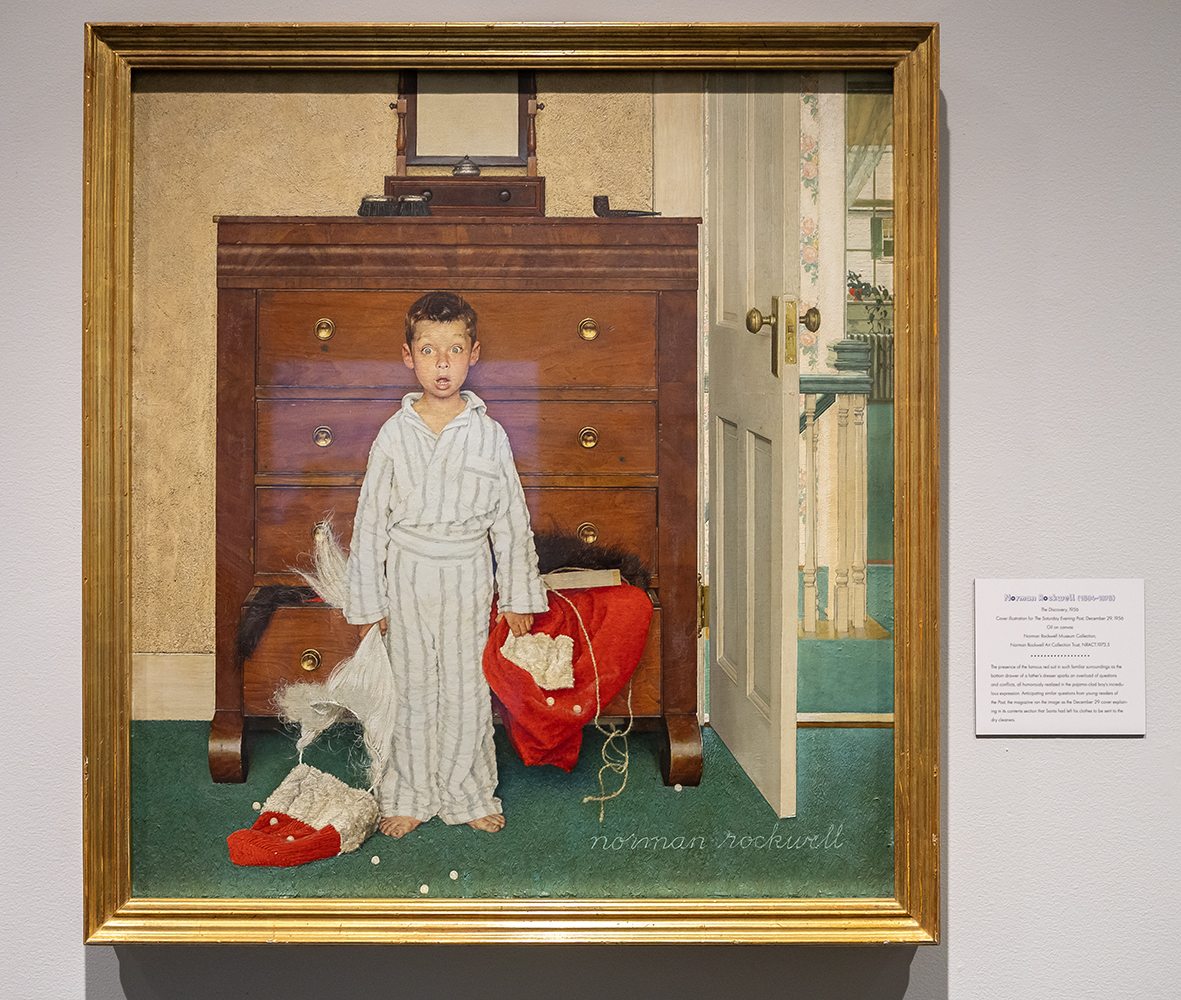


The museum’s collection highlights Rockwell’s most iconic pieces, including the Four Freedoms series. Inspired by Franklin D. Roosevelt’s 1941 speech, these four paintings—Freedom of Speech, Freedom from Want, Freedom to Worship, and Freedom from Fear—remain some of his most recognizable works. Each takes a sweeping political idea and places it in the context of everyday life.

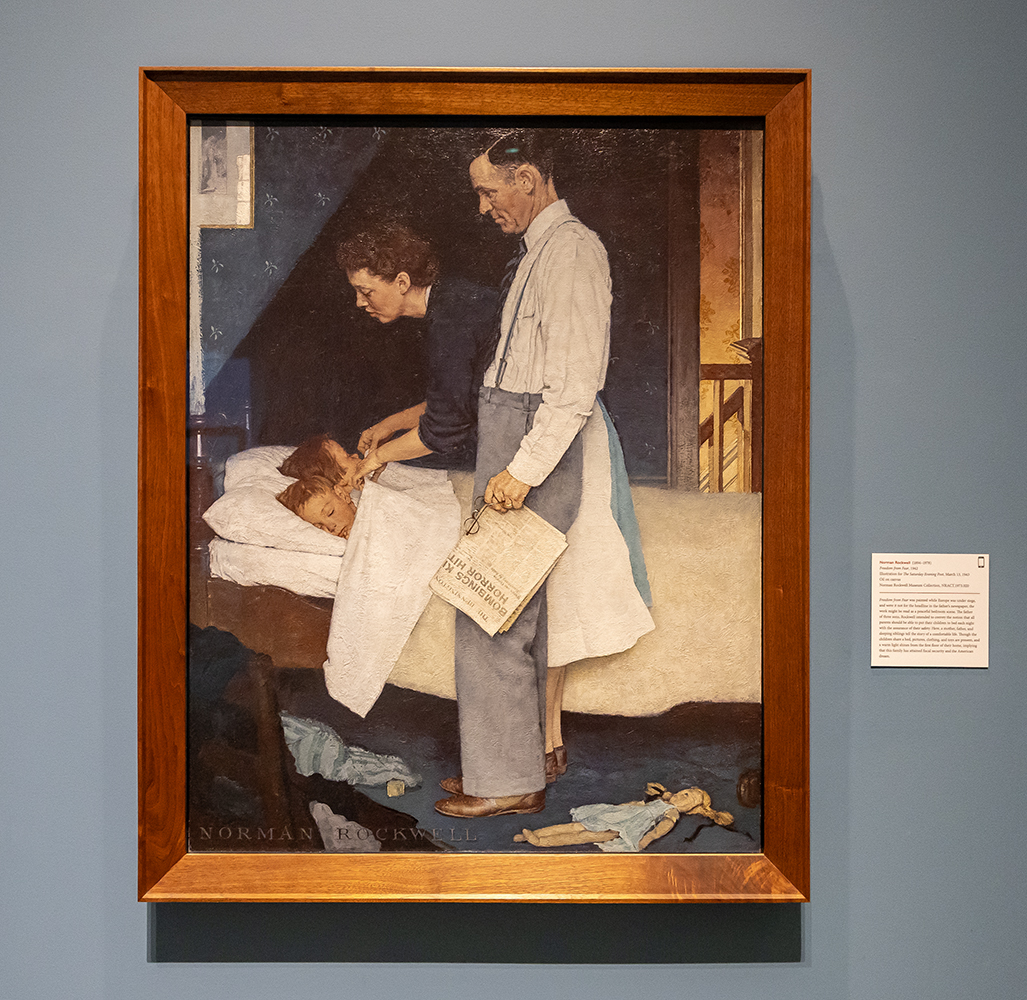


Freedom of Speech shows an ordinary man rising to speak at a town meeting, who appears to have a modest jacket and steady expression. Freedom from Want was Olivia’s favorite: the Thanksgiving turkey at the center of the table, family gathered in warmth and abundance. Freedom to Worship and Freedom from Fear are quieter but equally moving, offering a reminder of how Rockwell could find dignity in ordinary moments.
My own favorite was Main Street, Stockbridge at Christmas, Rockwell’s portrait of his hometown blanketed in snow and glowing with holiday lights. It is a beautiful painting, and as someone who loves Christmas, I couldn’t help but imagine what it would be like to actually visit Stockbridge during the season. It captures Rockwell at his most nostalgic, and it made me want to see the town in person during my favorite holiday.
Some of Rockwell’s later and more serious work also stood out. The Problem We All Live With, sometimes called his “Board of Education” painting, shows six-year-old Ruby Bridges walking to school, escorted by U.S. Marshals. The white wall behind her, scrawled with a racial slur and marked by a thrown tomato, makes the scene even more striking.

There were lighter touches as well. The museum includes some of Rockwell’s early commercial work, such as advertisements for Edison Mazda Lamps published in The Saturday Evening Post. These remind visitors that Rockwell was as much an illustrator as a painter, and that his storytelling instincts carried across everything he created.
A special highlight was the I Spy exhibition by Walter Wick, whose intricate dioramas and search-and-find photographs were a fun, interactive touch for children and adults. The exhibit encouraged visitors to slow down and look closely, much like Rockwell’s paintings.

It was interesting to see how the Norman Rockwell Museum fully captures the range of his career. In one place, you can see the playful, the iconic, and the deeply serious. Between Olivia’s favorite “Freedom from Want” and my own liking to “Main Street, Stockbridge at Christmas,” it was clear how Rockwell continues to connect with people in different ways.
Mass MoCA
by Olivia Discon
Our final (pure) art stop of the trip was Mass MoCA (Massachusetts Museum of Contemporary Art), a museum housed in a former industrial complex that has been repurposed into one of the largest centers for contemporary art in the country.


The building itself is a bit of a maze (ed. note: she got lost), but that only added to the fun of exploring it.

We started with James Turrell’s Roden Crater-inspired exhibit, which featured several surreal experiences centered on light and perception. One room, completely blacked out, challenged visitors to sit in total darkness for 15 minutes. While Professor Yawn and Stephanie lasted the full time, Moya and I called it quits after approximately eight minutes. In the silence, I started to see faint colors—likely just the brain reacting like when you rub your eyes too hard—but still interesting.
Other Turrell works played with color and depth perception.

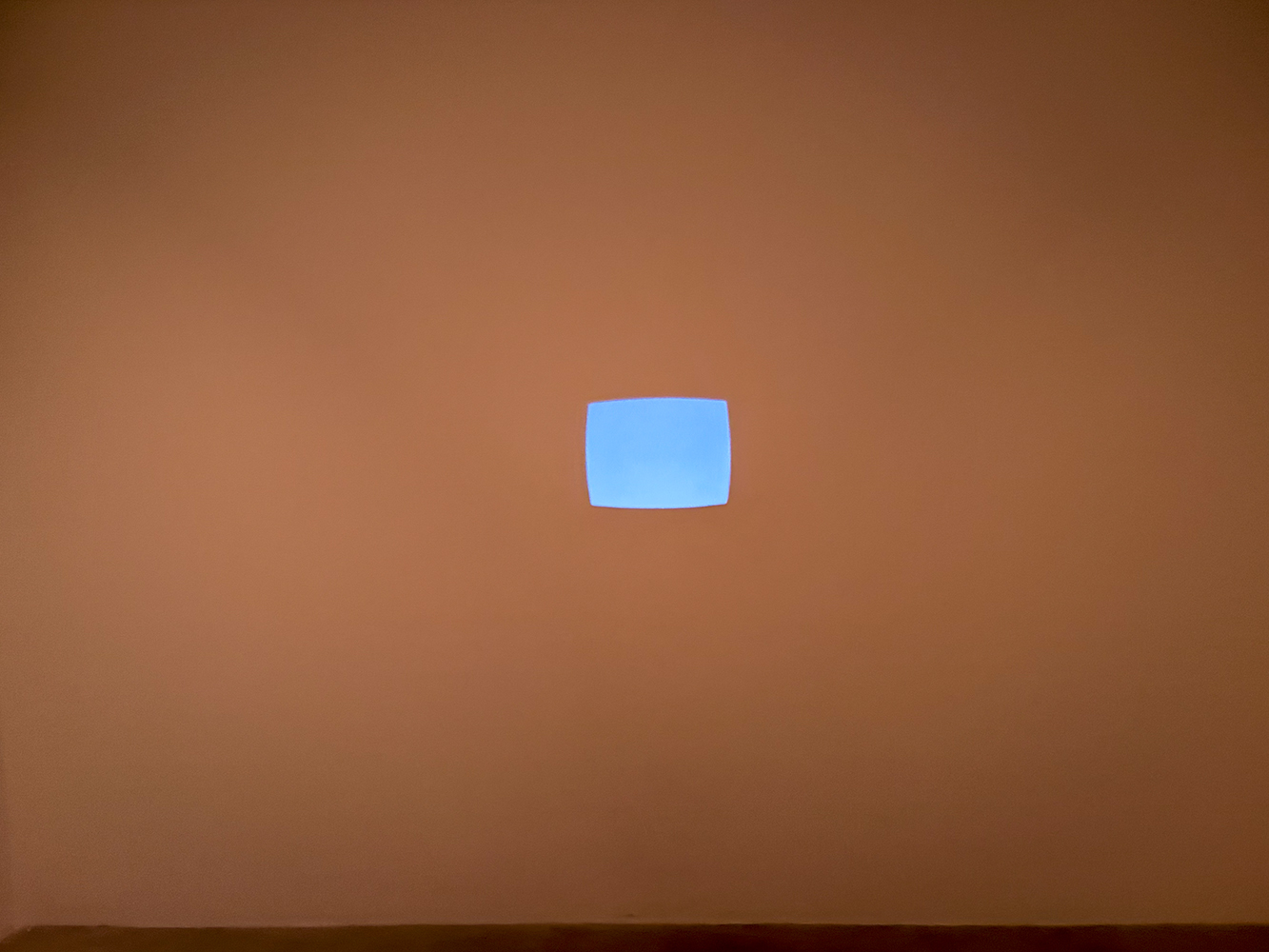

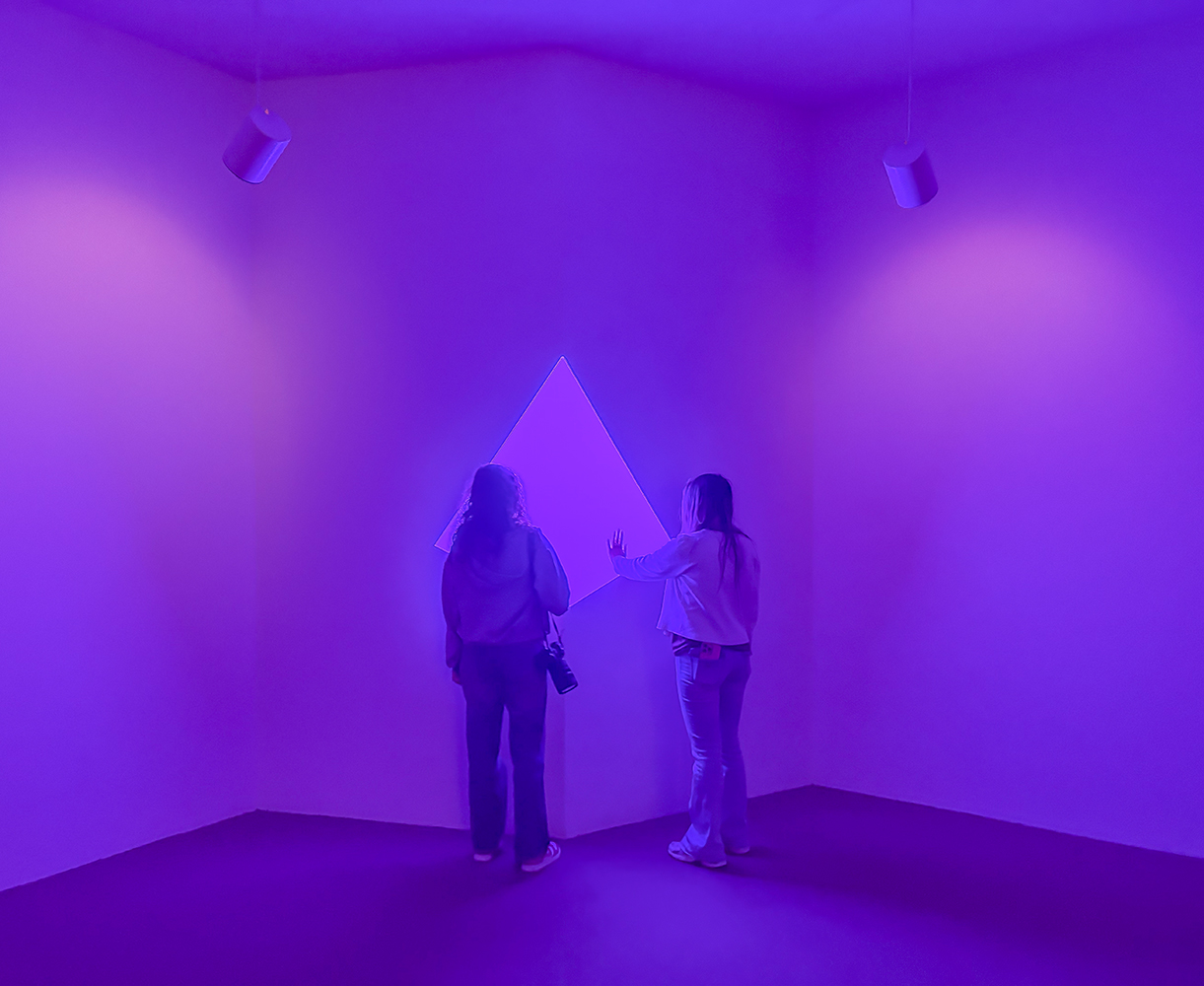
One installation allowed us to walk into what looked like a glowing square of color—an endless void of pinks, greens, and yellows.

We also stepped into one of his classic Skyspaces, where the ceiling frames the sky in a way that turns shifting clouds and colors into living art.

Beyond Turrell, the museum offered much more. Louise Bourgeois’s exhibit was a highlight for me, especially her piece Entangled, which captured so much emotion through abstract form.

Sol LeWitt’s sprawling wall drawings filled a labyrinthine gallery with bold patterns in both black-and-white and vibrant colors.


We even wandered into a “music room” filled with instruments past their prime—though that didn’t stop us from making enough noise to temporarily damage our own hearing.

Mass MoCA was a perfect way to end the art portion of our trip: immersive, challenging, and just plain fun.

New York State Capitol
by Olivia Discon
For our final state of the trip, we made our way up to New York. Driving past the Hudson River on the way into Albany felt especially fitting, since the river inspired the Hudson River School painters and many transcendentalist writers, both of which we’ve touched on during this trip.
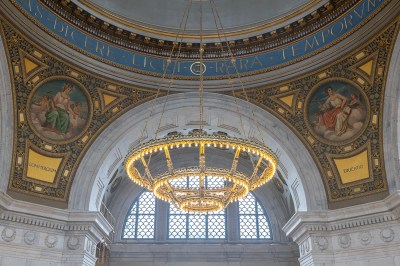
Our last stop was the New York State Capitol, one of only nine state capitols without a dome. Built over more than three decades and designed by multiple architects, the building makes up for its lack of dome with incredible stonework and elaborate detail. The grand staircase was particularly striking, lit by lamps with exposed bulbs, a symbol of modernity in its time.

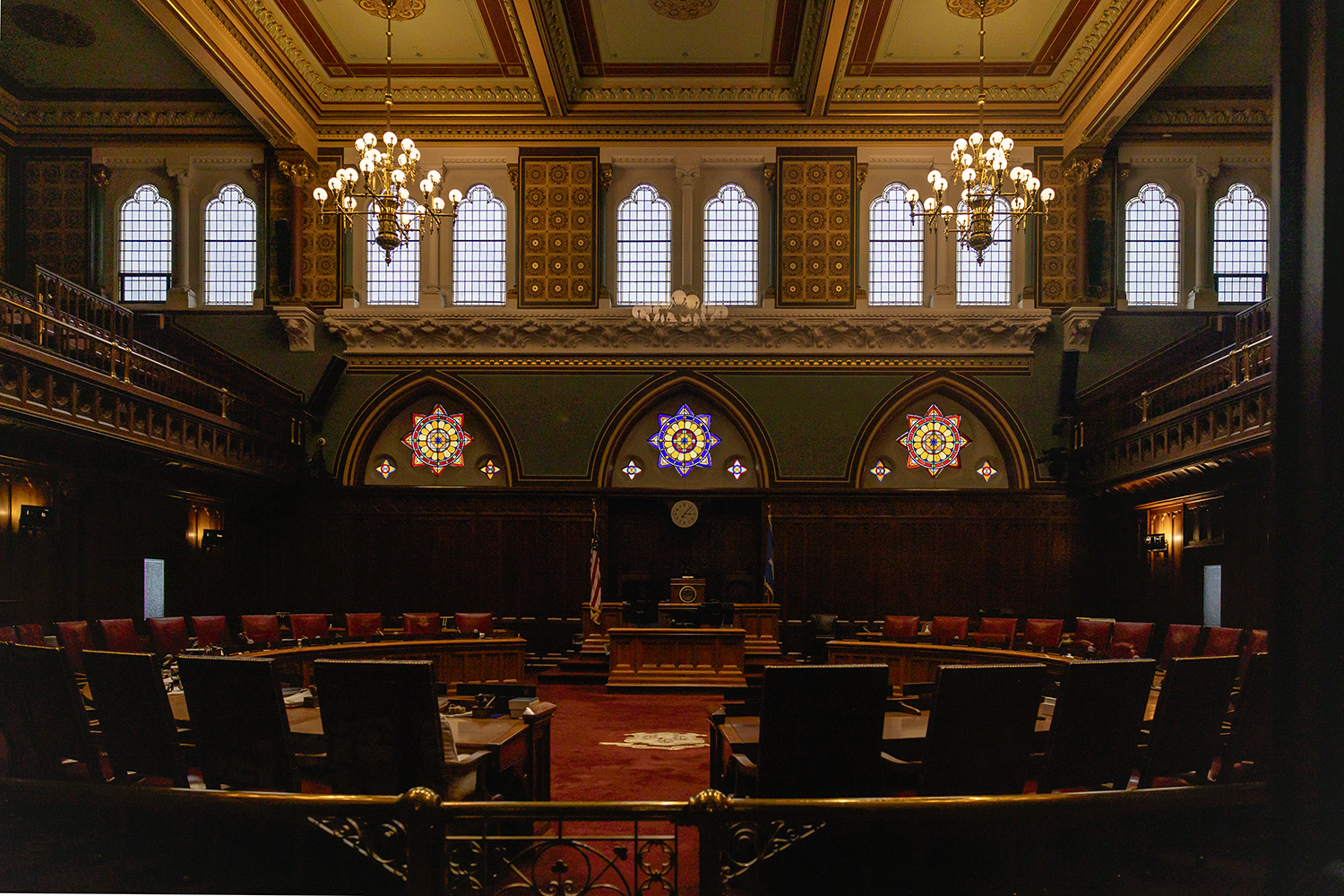
Although the House and Senate chambers were closed, we managed to peek through the glass doors. The stained glass in the Assembly chamber stood out as especially beautiful, making it one of my favorite legislative chambers we’ve seen so far. The Capitol also houses the Hall of Governors, a portrait gallery of past governors—including four who went on to serve as U.S. presidents.
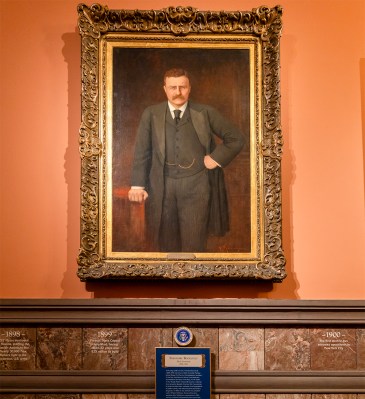
Art is woven throughout the building as well. We saw numerous New York landscapes and scenes…

…along with modern sculptures outside in the Empire State Plaza. Among the recognizable artists were George Rickey, Alexander Calder…

Claes Oldenburg….

…and Ellsworth Kelly.

The New York State Capitol was a wonderful conclusion to our trip. Between the history, the architecture, and the art, it was a reminder of how much one place can tell us about both state and national identity.

Concluding Thoughts
Taken together, the Norman Rockwell Museum, Mass MoCA, and the New York State Capitol highlighted the remarkable range of American creativity and civic expression.

Rockwell’s art reminded us of the power of storytelling in everyday life, while Mass MoCA challenged us to step outside the familiar and embrace new ways of seeing.

The New York State Capitol, with its blend of politics, history, and art, grounded the trip in the institutions that shape public life.

Each stop added its own layer to our journey, leaving us with a deeper appreciation for how art and architecture reflect the spirit of their time—and continue to inspire today.


















































 Center for Law, Engagement, and Politics
,_Pittsfield,_Massachusetts.JPG)