Mooting in Miami

After a summer of study and two additional months of practice, LEAP’s Moot Court team made their way to Fort Lauderdale (which, in fairness to the title, is near Miami) for the Sunshine State Regional Moot Court Tournament–part of the American Moot Court Association’s annual national competition.
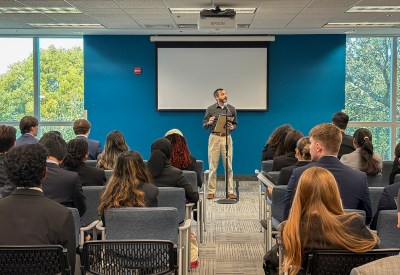
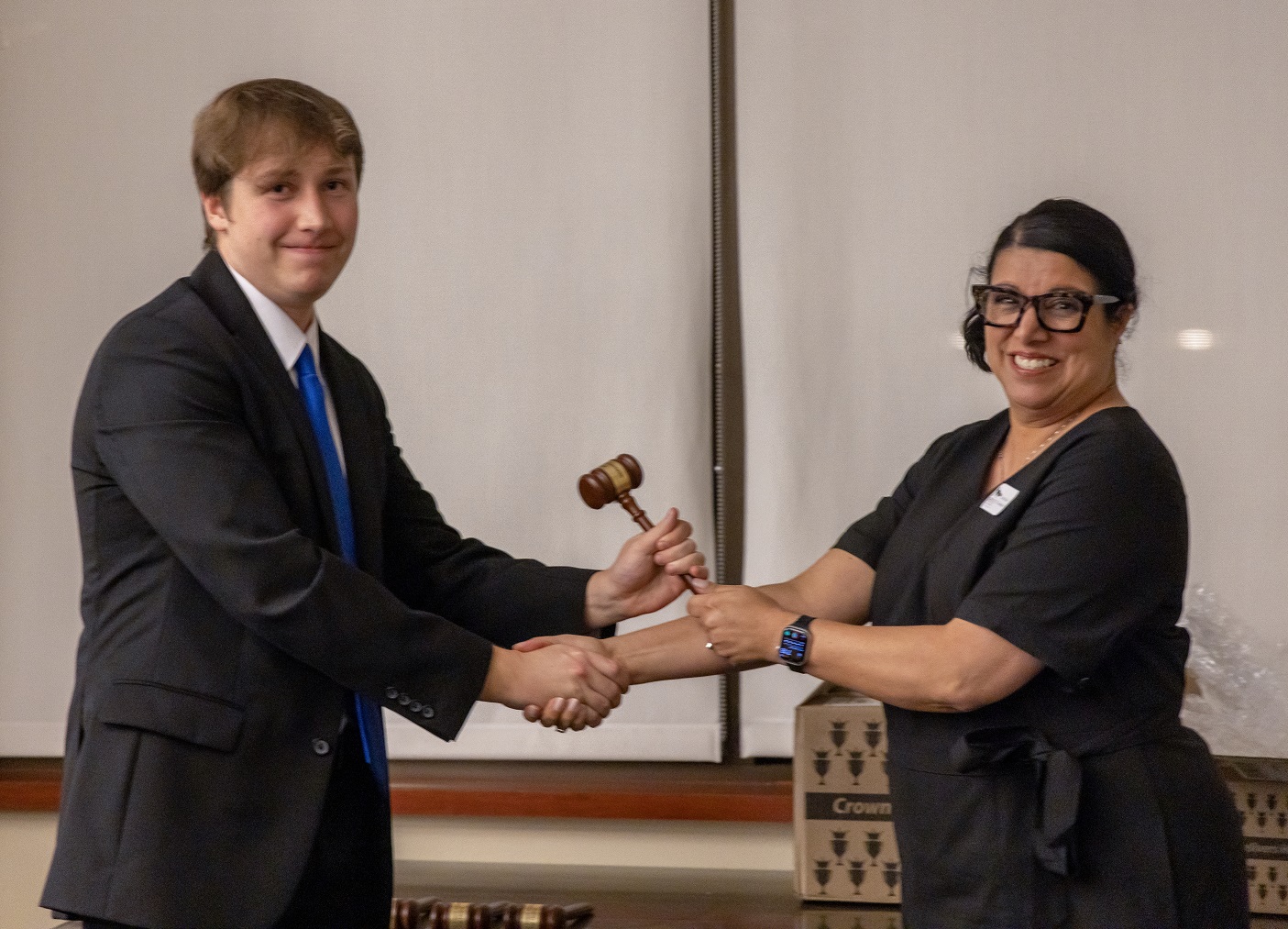
AMCA Board Member Ben Rathsam Kicking Things Off

The Moot Court Process

The Moot Court process has many moving parts, but the steps are straightforward:

  • Each team has two members, with one tackling the 14th amendment (equal protection) and one tackling the 1st amendment (speech);
  • Teams then register for one of 18 regional tournaments across the US;
  • Teams then compete in the tournament for which they registered, and if they qualify, they move on to a “Preliminary National Tournament” and, if they qualify again, the National Tournament.

Teams are evaluated on four broad categories: Knowledge, Courtroom Demeanor, Response to Questions, and the Clarity and Logic of the Argument.

Michael Dass from NSU

Moot Court at Sam Houston State University (SHSU)

SHSU begins its Moot Court involvement shortly after AMCA releases the Case Problem (May 1). Over the summer, Professor Mike Yawn teaches “How to Win in the Courtroom,” using the Case Problem (and the ancillary 20 other cases) as the curriculum, and culminating with live “hearings.”

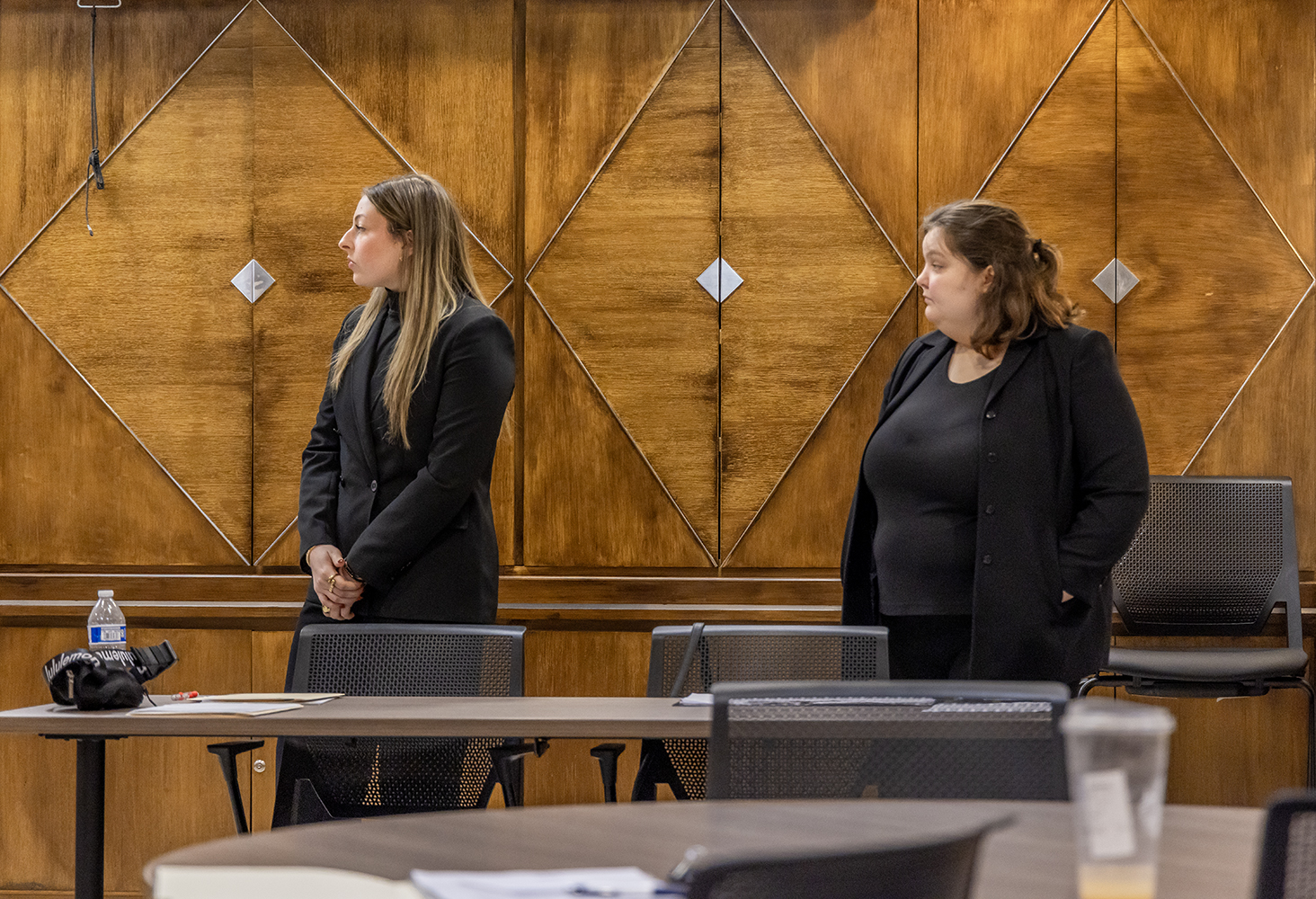
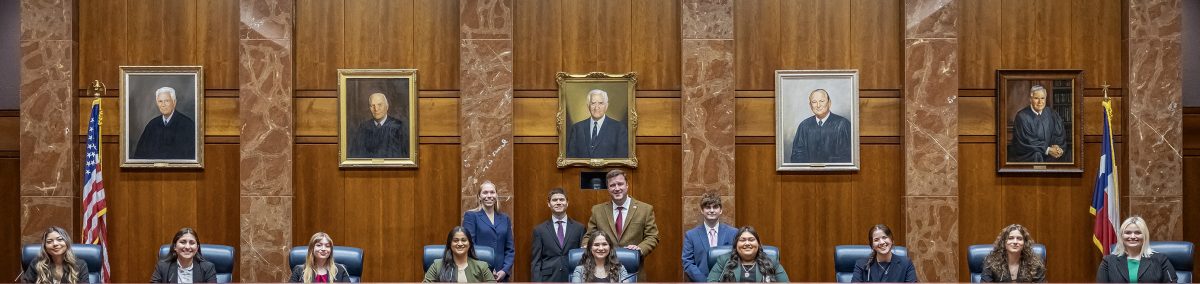
In late August or early September, official tryouts are held, and students compete for team spots. The LEAP Center selected five participants this year, making up two teams and a “spare:” Team One is Madison Thurkettle and Allison Lindle; Team Two is Ashton Droll and Maddie Cawthon. A fifth student, Katie Wilson, made the team, but lacked a teammate.

All of these students committed to weekly practices during September and October, with the goal of being prepared for today’s tournament.

The Sunshine Tournament

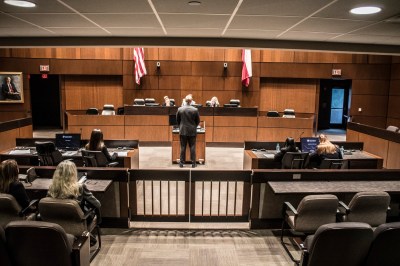
The Shepard Broad College of Law at Nova Southeastern University hosted the Sunshine Tournament, giving 64 students the opportunity to travel; visit a law school; perform in front of judges, bailiffs, and tournament organizers; and meet other pre-law students from across the country. AMCA Representative Ben Rathsam introduced the event, and Shepard Broad Law Professor Marc Consalo provided additional guidance, helping orient the students, and focusing their minds.

Day One, to use a sport analogy, is the “regular season,” and it consists of three rounds for each team. The first round began at 2:00pm, with Thurkettle and Lindle representing the petitioner and competing at a team from Central Florida; Droll and Cawthon also represented the petitioner, and they competed against a team from Nova Southeastern University. In subsequent rounds, SHSU teams faced competitors from Stetson University, Benedictine College, Liberty University, and the University of Tampa.
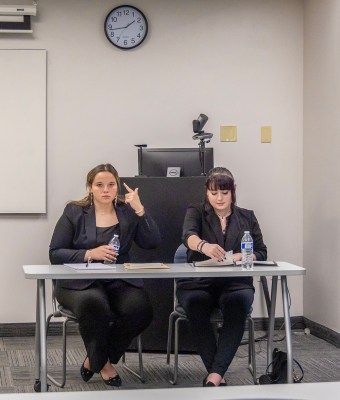
Moot Court Self Care

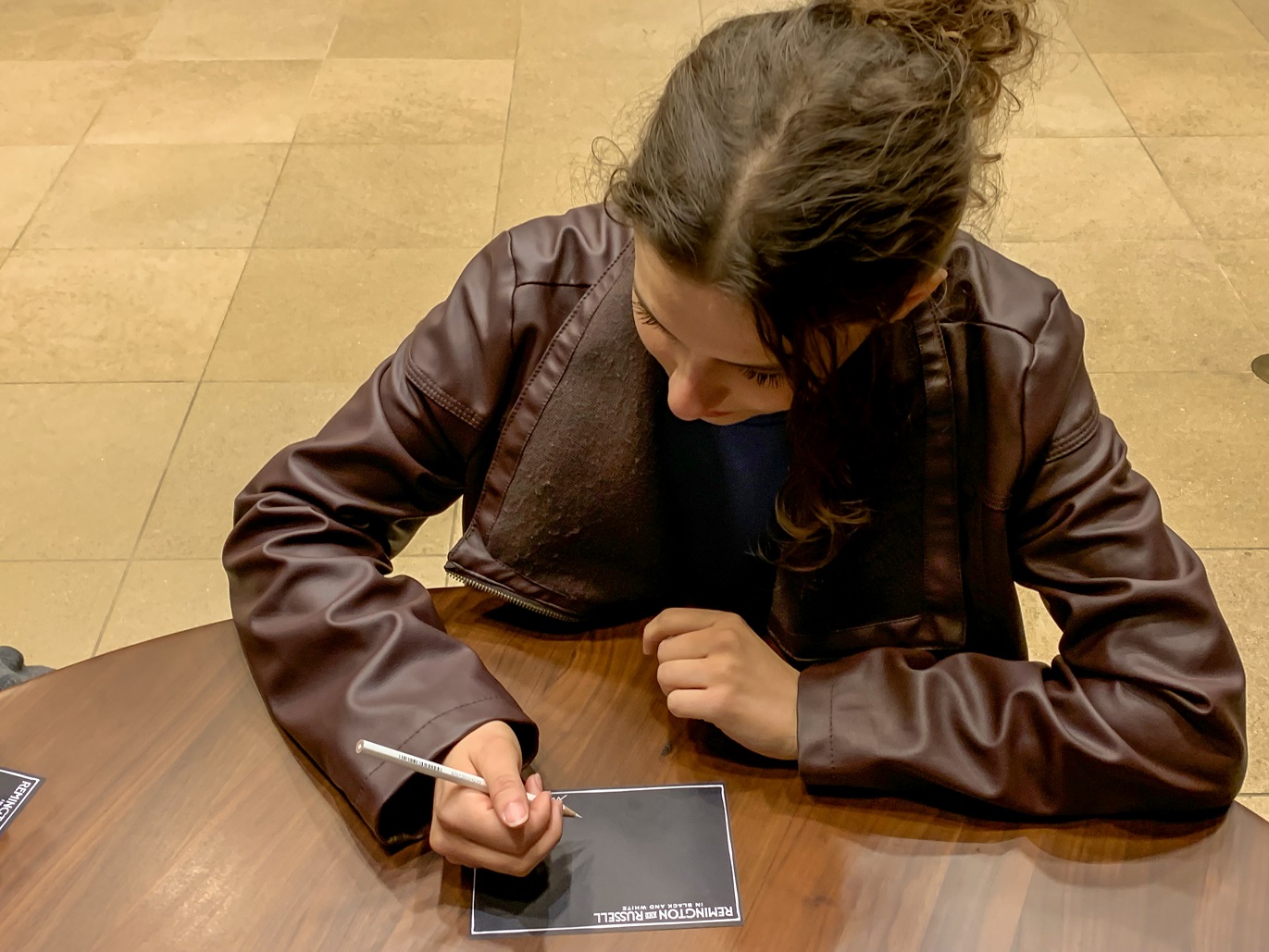
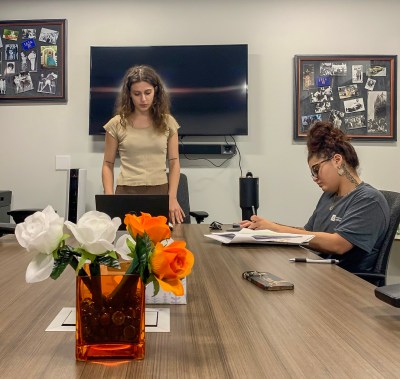
Katie Wilson, although not competing this year, travelled with the team, proving herself an expert navigator, and a quick-learning photographer.

Competing

Although the students have been involved in more than a dozen formal practices and numerous individual practices, the real thing brings a fresh sense of nerves.

“For me, the first round was the worst,” noted Madison Thurkettle, a Junior at SHSU, and a first-time competitor in Moot Court, “and I was able to loosen up in the subsequent rounds.”

Allison Lindle, Thurkettle’s teammate, agreed: “The first round was nerves; the second round, we were able to see some success; and by the third round, we were hitting our stride.”

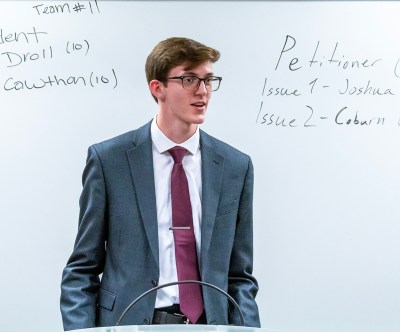
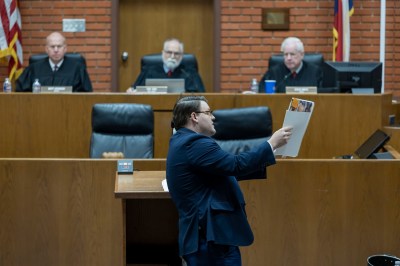
Only Known Photo of Thurkettle Smiling While at a Podium

For Ashton Droll, who did debate in high school, nerves weren’t a huge issue. But there was still the adapting to representing different parties in different rounds and learning the idiosyncrasies of the different judges. In Round One, for example, one judge gave Droll an average score of 87.5; another gave her an average score of 99.25.
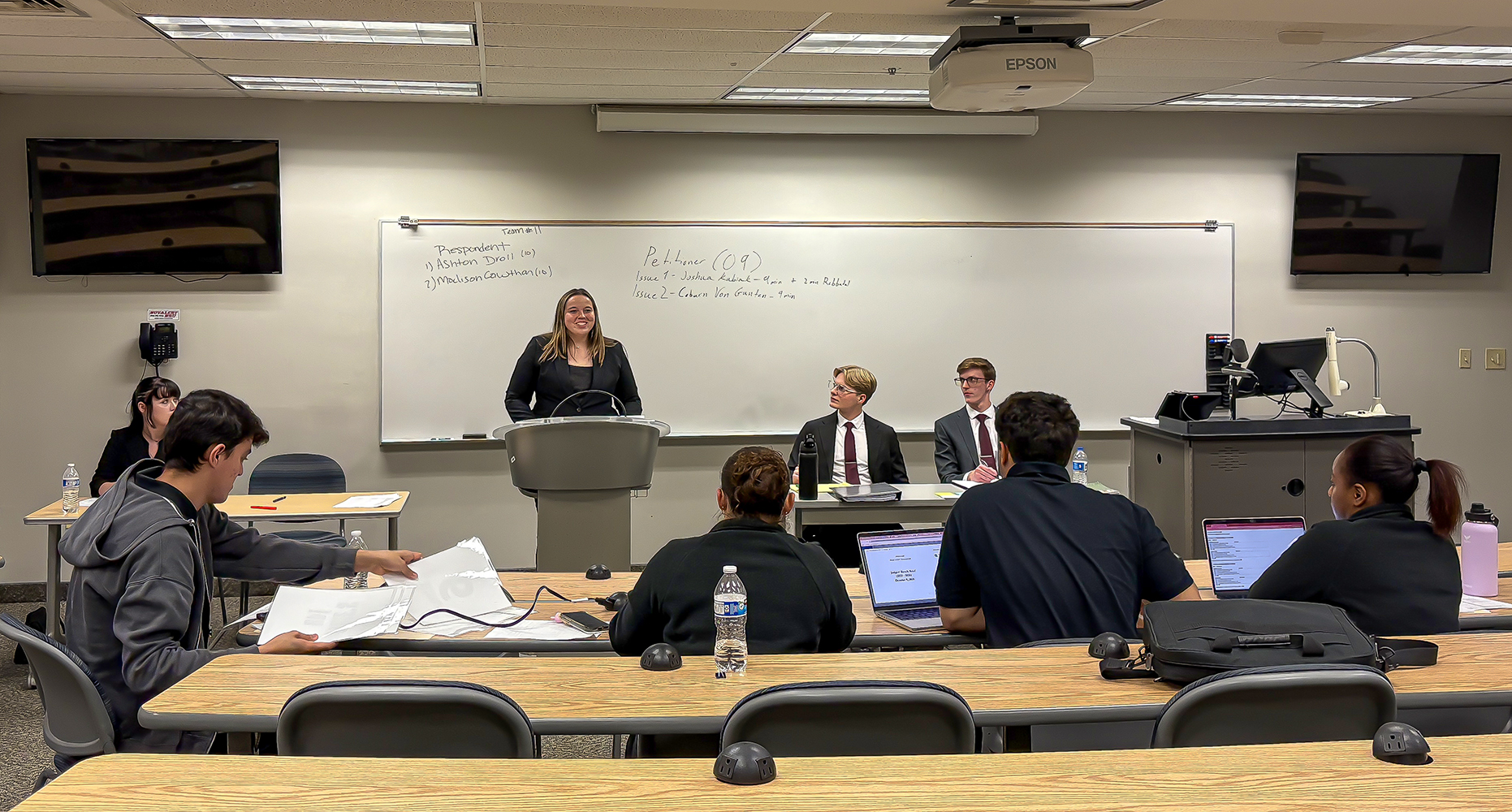
At times, the judges’ feedback can be contradictory. One judge told Maddie Cawthon that she “sometimes got lost while answering questions.” The same round, a different judge told her: “Great responses to questions.” A frustrated Cawthon lamented: “they can’t both be correct.”

Outcomes

One of the outcomes of tournaments such as this is seeing the competition from other schools. Getting students out of the classroom and seeing high-achieving students from other schools is a key part of moot court, and in this setting, there were many strong students representing top universities across the nation.
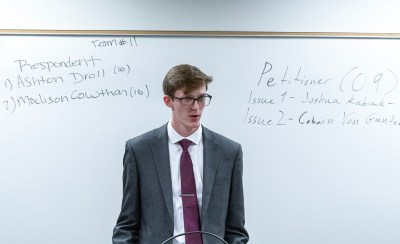
For Lindle and Thurkettle, it was a steep learning curve, one punctuated by some near misses. On the final round, for example, they lost two ballots by one point each ballot. It was a tough round. Nonetheless, they both had strong showings. On one ballot, Thurkettle averaged a 98; on the same ballot, Lindle averaged a 97.5.
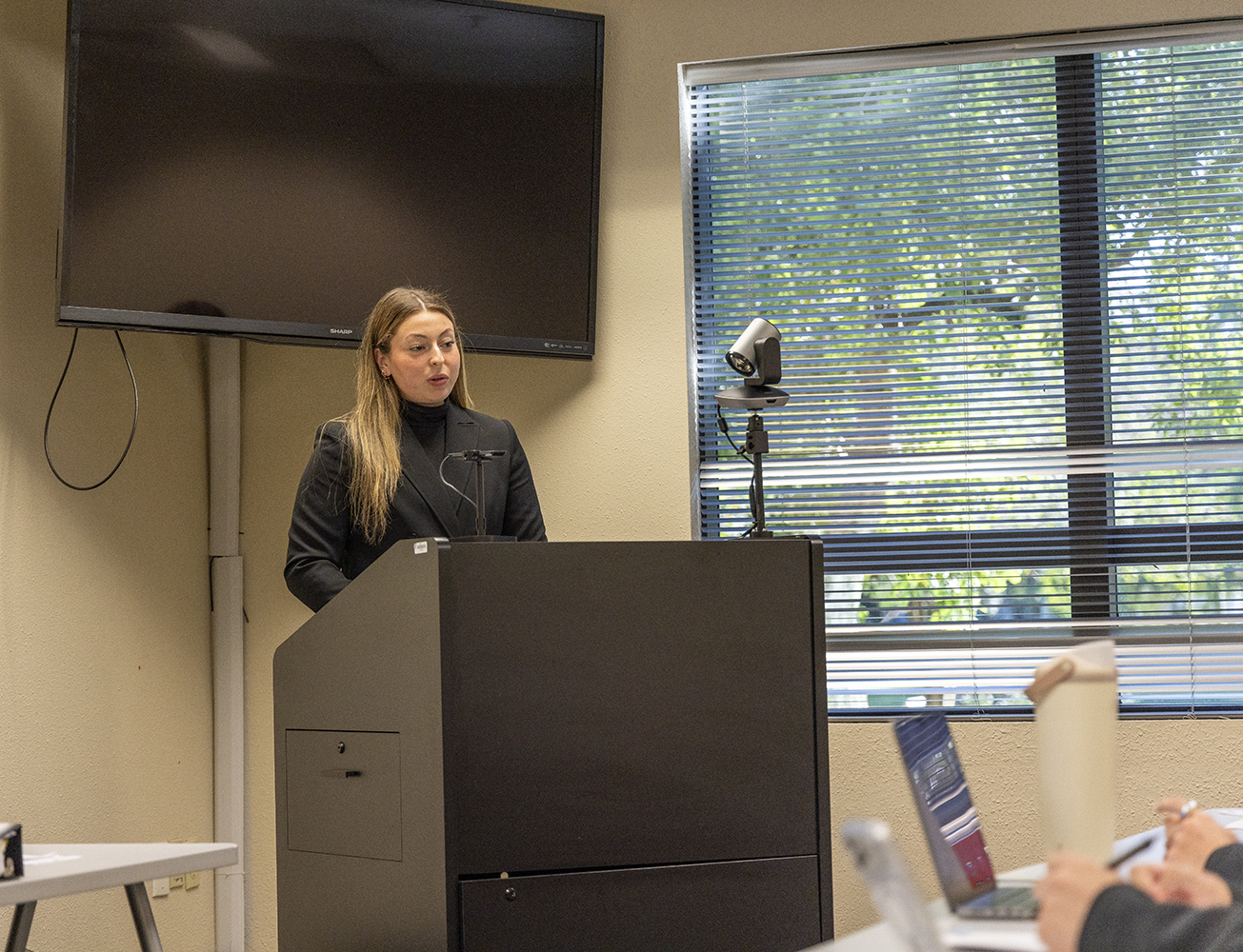
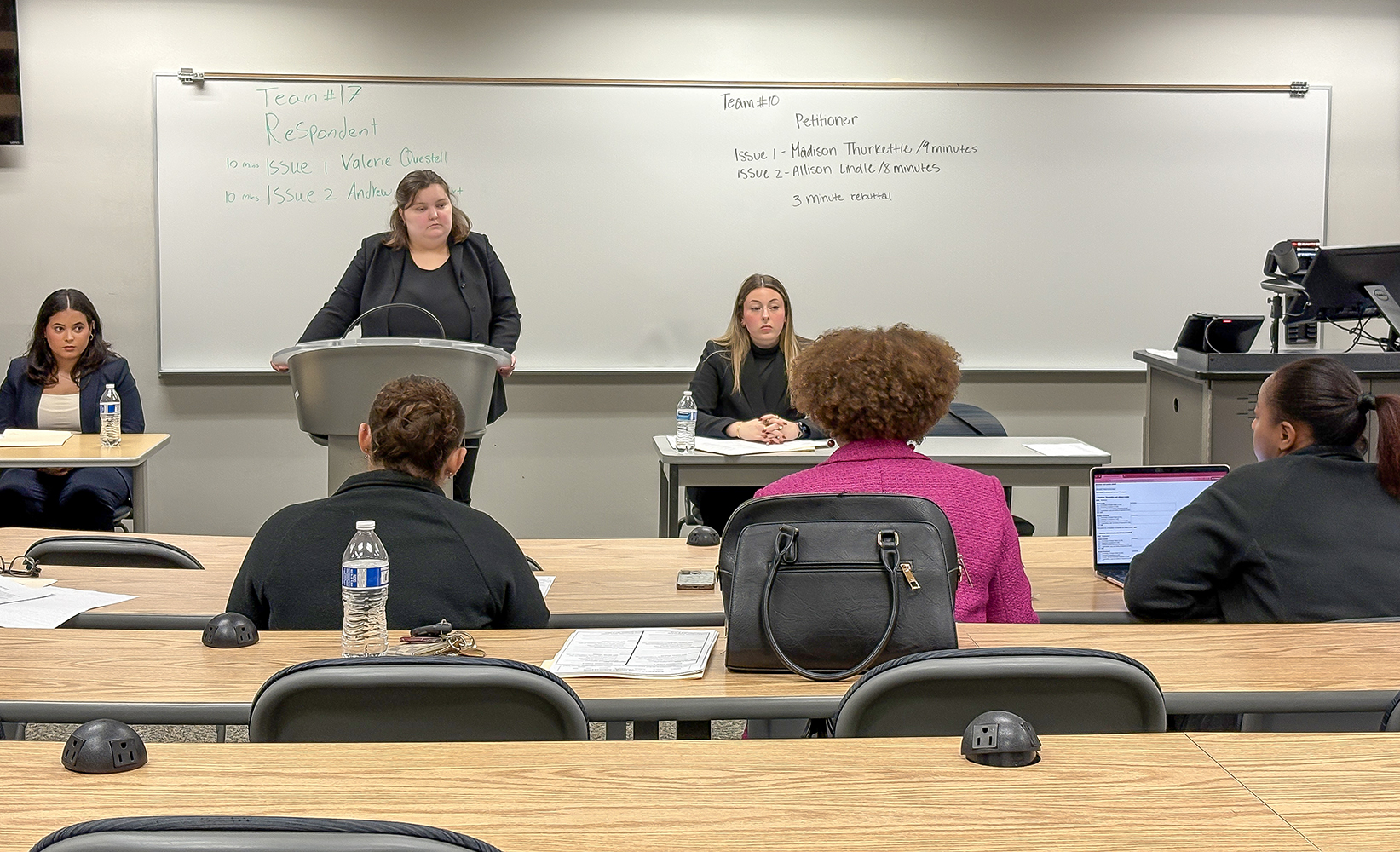
Droll and Cawthon similarly saw some close calls. Two of their ballot losses came from margins of 10 points or less (out of 1600), but they were in the running on every ballot–and this consistency helped them break into the Sweet 16. Indeed, they were seeded 11th out of 32 teams!

This was a victory not only for Droll and Cawthon, but for the entire SHSU delegation. As Katie Wilson noted, “I’ve spent the last couple of months with these girls, and it was rewarding to see them grow and have the opportunity to compete in front of real judges. I am already getting excited for next year’s case!”

Wrapping Up

But, of course, there is at least one more round in this year’s tournament for Droll and Cawthon, a prospect making for a long night (thankfully, Daylight Savings Time will add an hour…). But whatever that outcome, the tournament–and the organizers, judges, and volunteers–has provided the thrill and stress of competition, exposure to new places and people, and the opportunity for growth.

LEAPing into Moot Court

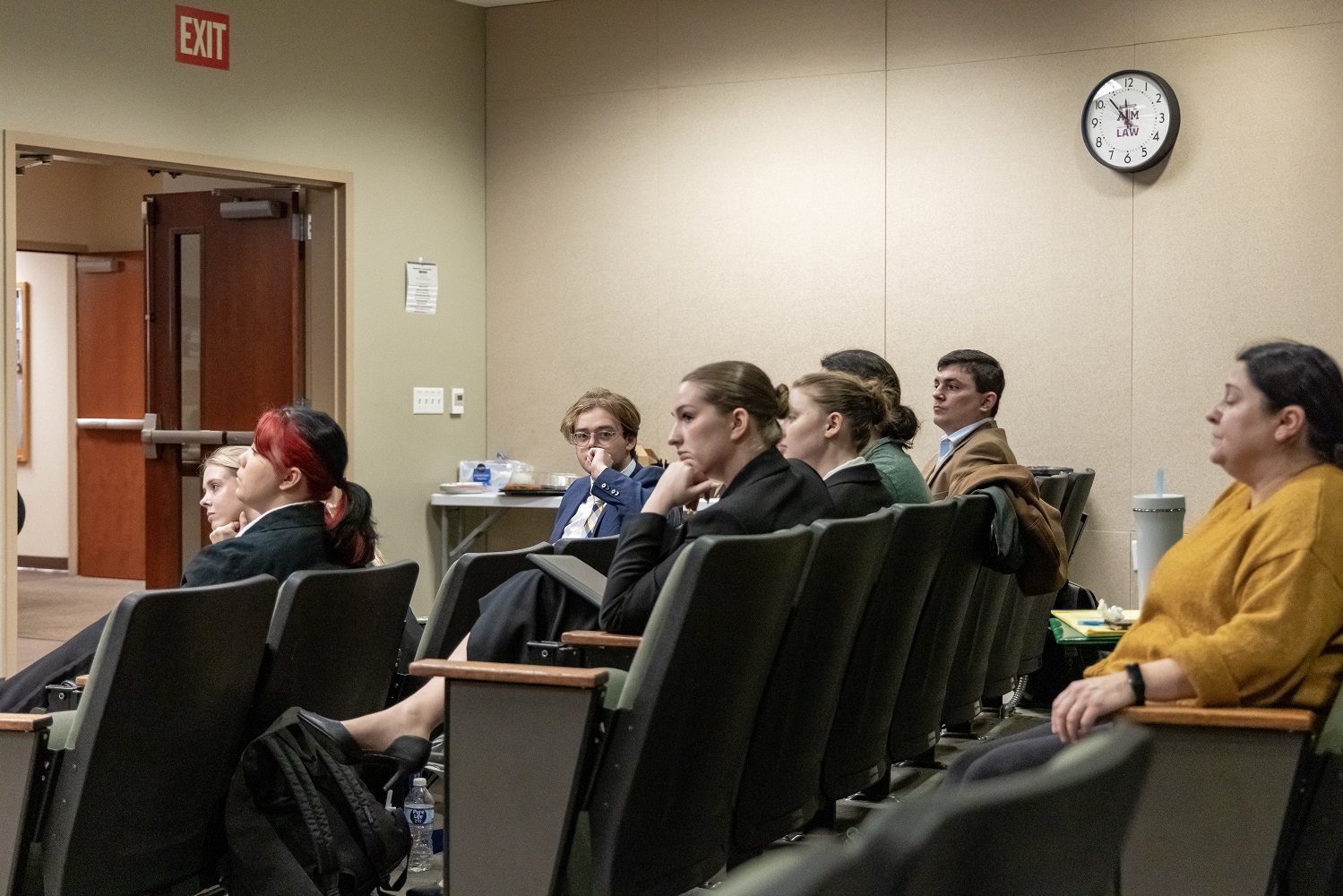
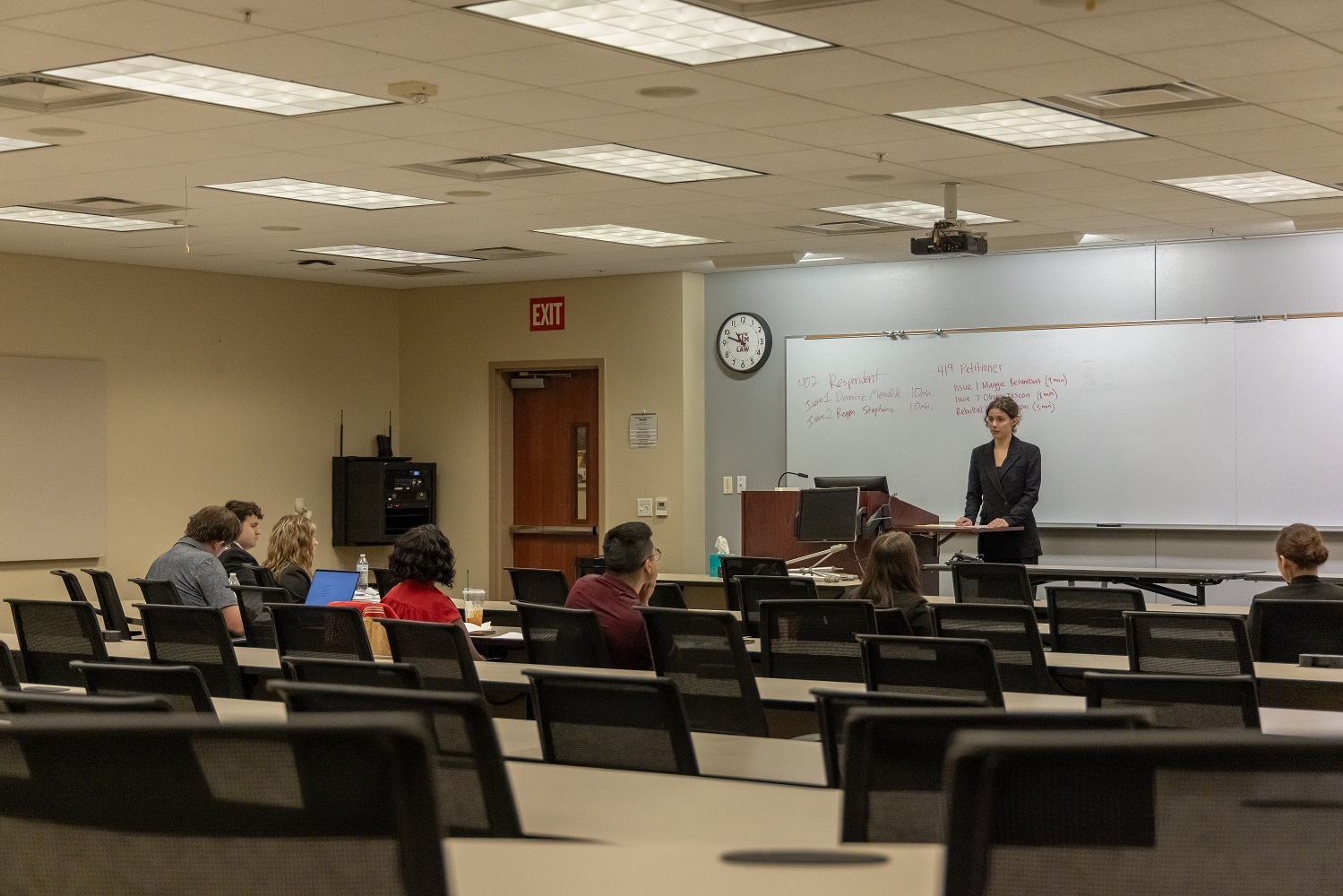
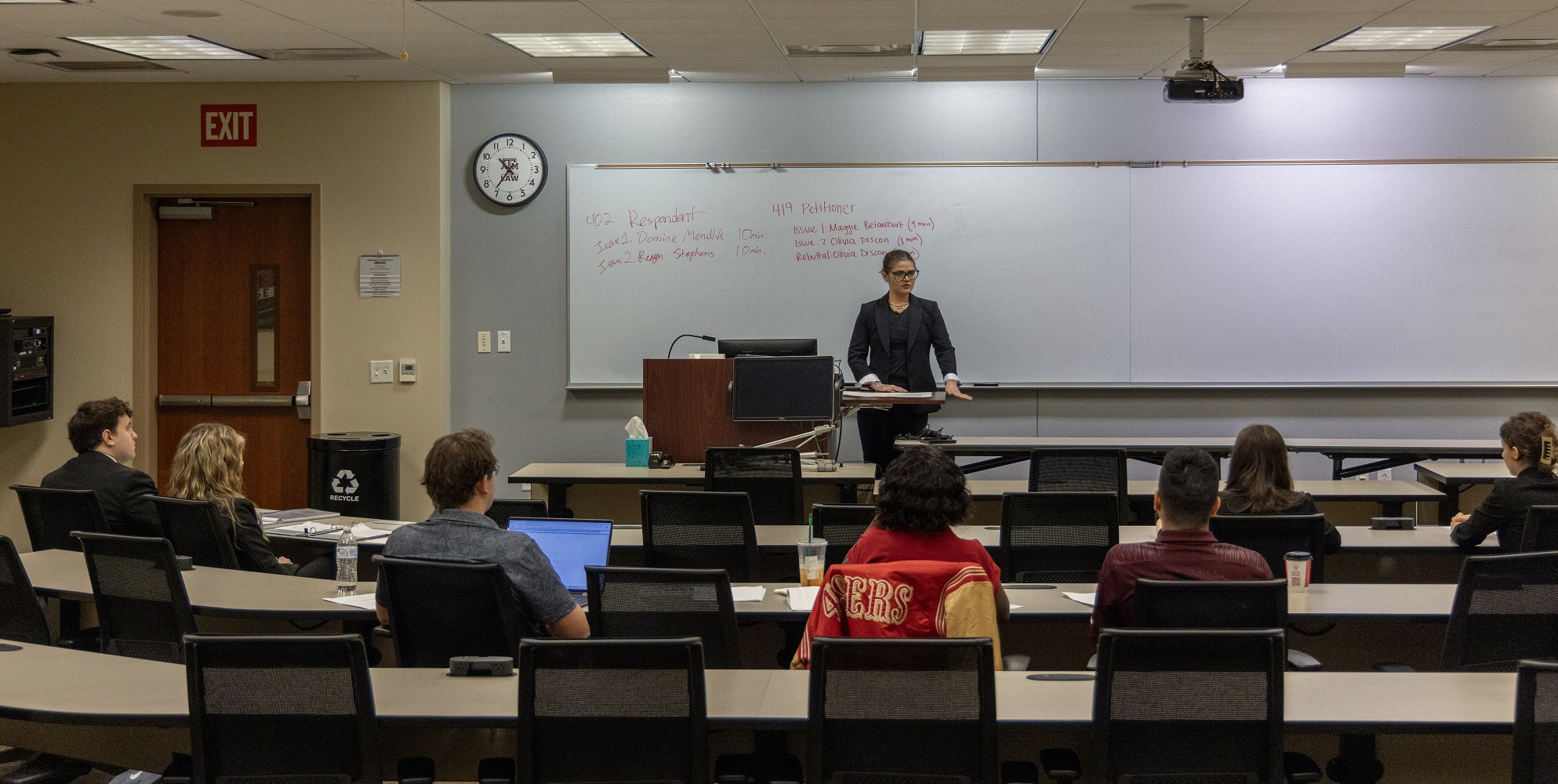
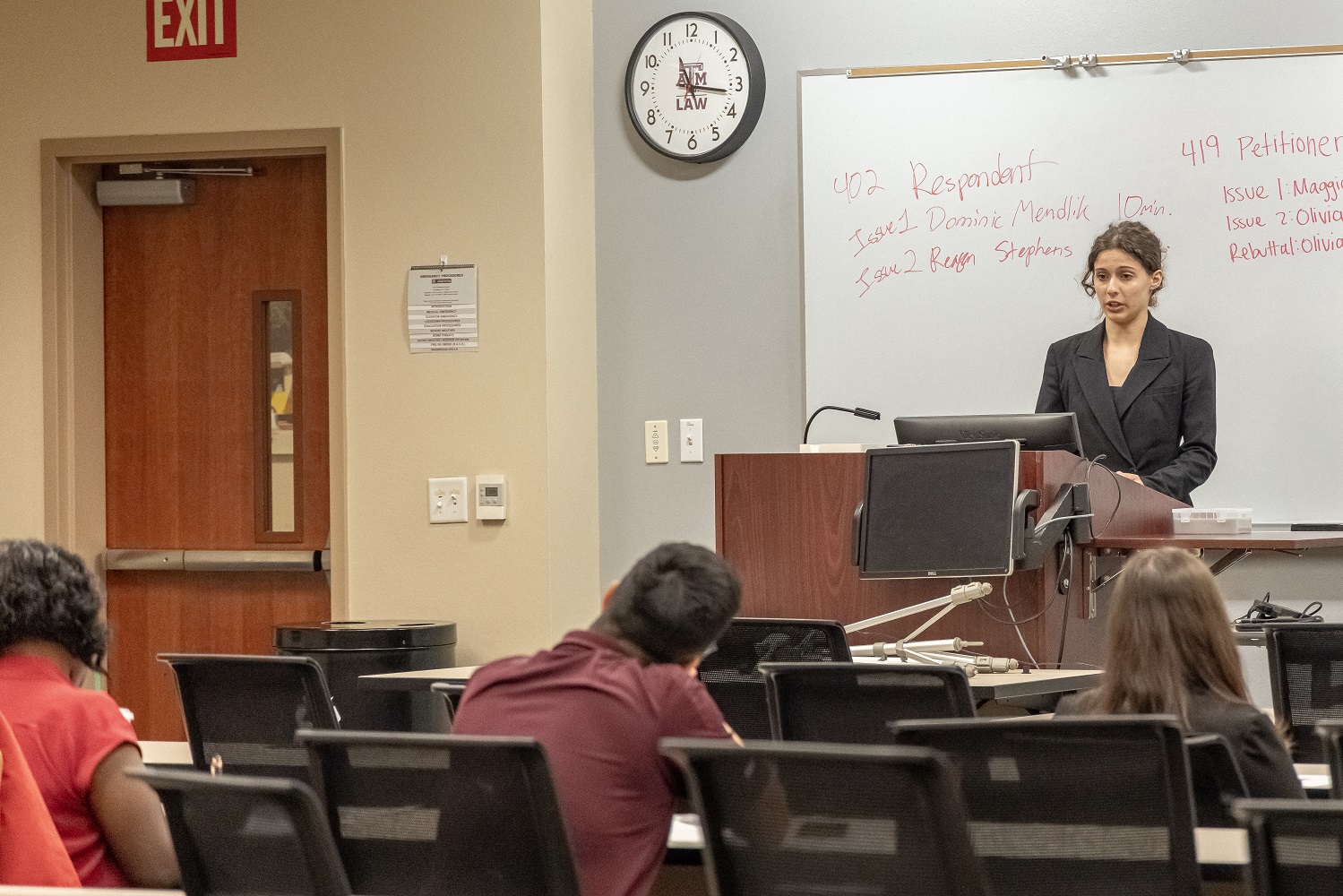
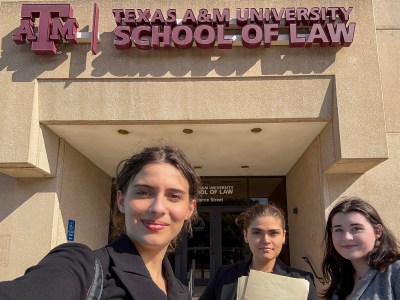
After a multi-year hiatus, the LEAP Center has revived its Moot Court Team, and SHSU Students Olivia Discon (Team Captain) and Maggie Betancourt will be competing at the Texas A&M Law School Regional Tournament on November 16-17.

What is Moot Court, Anyway?

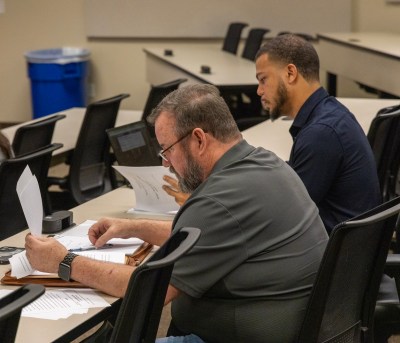
Moot Court replicates the appellate process. Most people are familiar with the trial courts, where (typically) a jury judges the guilt of a defendant; witnesses are called to testify, are involved in direct and cross examination; and a single judge presides over the proceedings. But in an Appellate Court, attorneys compile documents, provide a written brief, and offer oral arguments, making the case that the lower court erred (petitioner) or didn’t (respondent) in the proceedings.

This fits right in with the LEAP Center’s activities, which already many law-school related activities, including inviting the 10th Court of Appeals to campus once a year to hear cases.

Without knowing it, then, the LEAP Ambassadors have had a mini-preparation for the Moot Court experience.

Moot Court Preparation

Although we may change formats in future years, the Moot Court experience works like this:

  • May 1: AMCA Releases Case;
  • August: Students read case and take “Foundations Quiz” to participate;
  • September: Weekly practices begin;
  • October: Practices continue and students may scrimmage other teams;
  • November: Regional Tournament
  • January: National Tournament

For the students, this means reading the cases (there are 21 cases in all) thoroughly, and developing arguments, modified over weekly practices, that can be used for their “courtroom” appearance.

Moot Court Benefits

In following this regimen, students gain many benefits. They…

  • Learn how to read and understand court opinions;
  • Learn how to write appellate briefs;
  • Sharpen their critical thinking, writing, and communications;
  • Gain substantive knowledge in the field of law;
  • Gain exposure to law schools to which they may be applying.

Rules of Moot Court

After familiarizing themselves with the main case and associated cases, the competitors decide which of two issues they will be arguing before the court. This year’s case, which is based on the Michelle Carter encouraging suicide through text-messaging case, involves both the 5th Amendment (self-incrimination, tackled by Maggie) and 1st Amendment (free speech, addressed by Olivia).

The students also (more or less) split the 20-minute time limit, with each student making their case before the judges for about ten minutes.

SHSU Competing in 2016 Moot Court Competition

This can be tricky, because judges can interrupt as often as they want, and the time spent being interrupted counts against the time allotted. (See full rules below).

Although teams may compete in scrimmages that are self-arranged, their first (and probably only) appearance is at one of 15-16 regional tournaments across the United States, which host, collectively, approximately 120 Universities, many of which field multiple teams. The top 25-percent of these teams then compete in nationals in January.

SHSU Moving Forward

With help from Dean Gene Roberts, Stephanie Fors, and Victoria McClendon-Leggett, the students have gone through increasingly rigorous practices…

…culminating with a scrimmage on October 19, 2024.

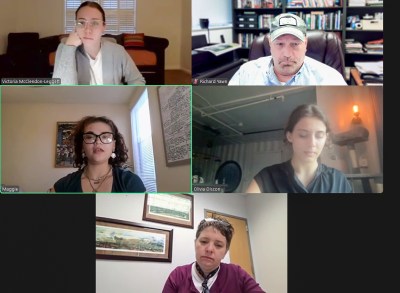
This scrimmage, which took place on Zoom in three different states, involved 12 teams. Organized by Blacin Godfrey from the University of Louisiana at Lafayette, the students competed in three rounds, twice representing the petitioner and once representing the respondent.

Although the results have not yet been delivered to the teams, the SHSU team was able to enhance its practice in more realistic conditions, hear perspectives from more people, and commiserate with other moot court participants across the country.

Importantly, the scrimmage identified weaknesses in the team’s arguments; highlighted applications of other cases that should be considered for incorporation; and spotlighted weaknesses in delivery and presentation.

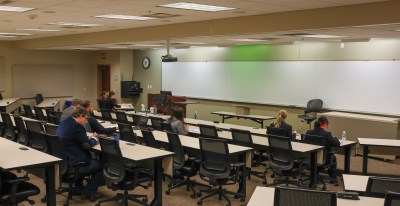
The team will continue its practice through November 16-7, when they will be one of 24 teams competing at TAMU Law School.

Getting Involved

For students who would like to be considered for SHSU’s Moot Court team next year, please contact Olivia Discon at oliviadiscon@shsu.edu or Professor Mike Yawn at mike.yawn@shsu.edu.

Moot Court Scrimmage, 2017

By Beatriz Martinez

After months of preparation, the SHSU Moot Court team had their first competition at The University of Texas Arlington. The scrimmage had everyone very excited, as everyone was ready to give it their best. We have 3 teams composed of three veterans and three new members. It was the moment of truth where we would see how far our hard work and dedication would take us.

May it Please the Court, We represent SHSU- Moot Court Day 1
By Beatriz Martinez

As hopeful lawyers in training, the 6 of us headed to the University of Texas Arlington for our first Moot Court Competition of the year. Various universities gather together after around six months of preparation. One “problem case” has been given to them, arguing two different legal issues. In this case, the issues we are addressing are the Fifth and Eight Amendments. The Moot Court competitors take the time to study these cases as well as 8-10 supporting actual cases that they use in order to create their arguments. Later, they go to a school, often times a law school, to present their case to a panel of judges made up of law students, law professors, lawyers, and even an occasional judge. Competitors are scored depending on their presentation skills, their quick thinking, knowledge of the case at bar, supporting cases, and of course their arguments!

SHSU Moot Court, LEAP Center, UTA, TUMCA

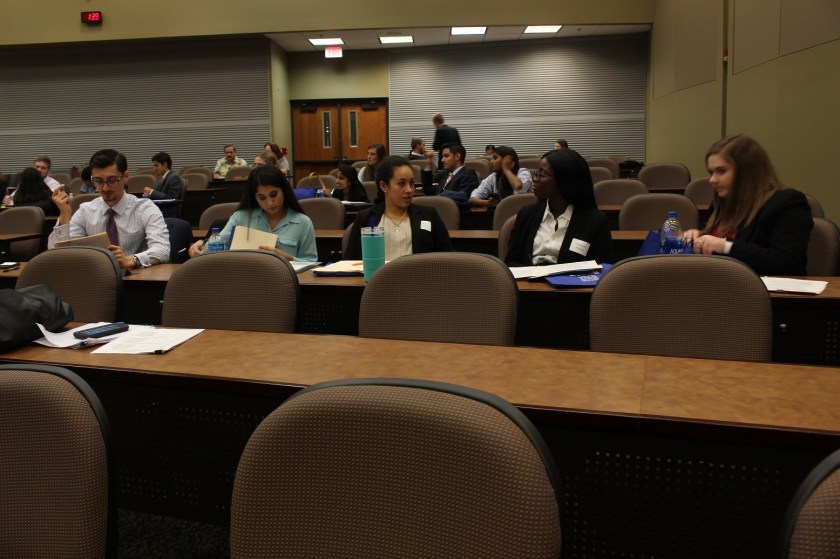
Everyone was nervous, but we played it off with our cool, professional lawyer-like demeanor. We had all prepared to the best of our abilities and were ready to give it our best. After signing in, we scouted the school to find where our “courtrooms” were. During Moot Court competitions, the competitors do not know which side they will be representing, whether it be for the petitioner (the person appealing the lower court’s decision) or the respondent (the other side, of course!). There are three rounds from which the top 16 teams are chosen. These top teams would then advance to the second day of the competition.

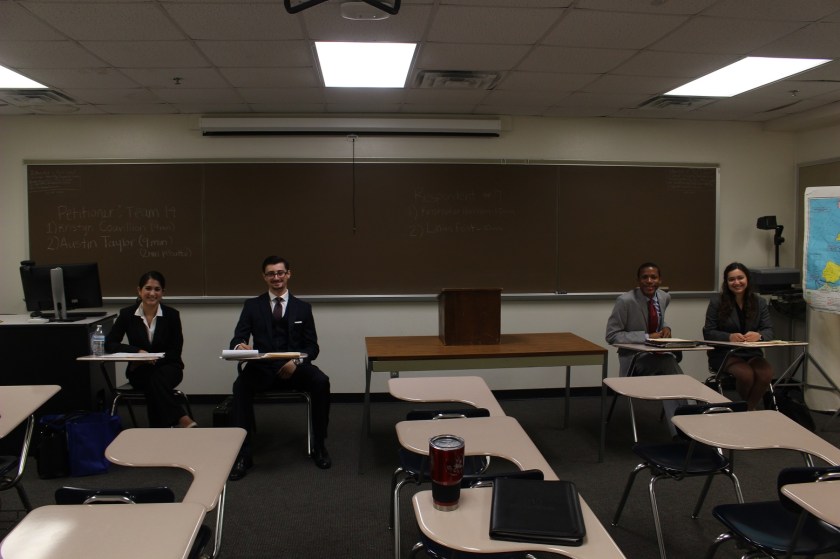
As soon as everyone got their opponents, the competition began. It was a tumultuous time for all. After the last round ended, everyone gathered together in the common area for the final results of which of the 25 teams would be able to advance to the second day of competition as part of the Top 16 teams. We were excited to find out that Austin Taylor (a second-year competitor) and Kristyn Couvillion (a third-year competitor) had made it to the second day!

Moot Court Day 2
By Beatriz Martinez

After a long night of prepping, Kristyn and Austin headed back for the second round of competitions. We all got settled in for the coordinator to let us know who their competitors would be and which side they would have to argue. Of course, Kristyn and Austin used that extra time to get focused and continue their preparation in order to succeed in this next round.

SHSU Moot Court, LEAP Center, UTA, TUMCA

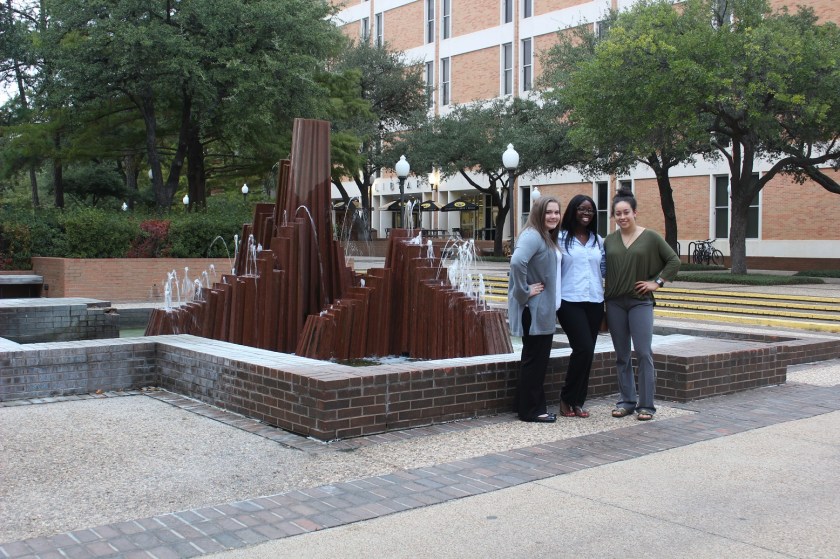
Meanwhile, the rest of us tried our best to help them as much as possible by going on a quick Starbucks run and took the opportunity to explore the University of Arlington as well. UTA just so happened to have similar spirit colors as ours with theirs being blue, orange, and white. They also had various interesting art pieces such as their spirit horses which they have scattered across campus and serve as a way to engage the students in art. There is one in particular that we liked the best (for obvious reasons) named “Dynamic” which we definitely were feeling at the moment. We also took a moment to take a picture with one of the many interesting fountains housed at UTA.

SHSU Moot Court, LEAP Center, UTA, TUMCA

Finally, we headed back to continue to cheer on our team. The results were in and the competitors were ready to accept the challenge ahead. Before the competition started, we took a picture of solidarity between the two teams.

It was a very close round with only a difference of 20 points. Sadly, our team did not advance more than that. As a consolation, we headed on to a Mediterranean Grill called Andalous, which had a variety of plates from different regions. The food was delicious and we greatly enjoyed not only the food but also the multitude of learning experiences we had gotten from the last two days. The SHSU team was more determined than ever to improve and do a lot better in our next competition at Texas A&M Law School on November 4th. For now, everyone was headed back to Huntsville to prepare, except for me since I had a flight to catch to meet the other LEAP Ambassadors in Washington D.C.


Moot Court Competition–2016

By: Kaitlyn Tyra

With nearly six months of preparation and almost as many months of anxiety, the SHSU Mooters were ready to compete in the final moot court competition of the season. Hosted at Texas A&M Law School in Fort Worth, 31 teams from across the state and the southern United States competed for spots at the National Competition.

Moot Court, TUMCA, TAMU Law Moot Court Regional, LEAP Center, SHSU

After waking up, we faced a morning of studying and non-stop practicing in anticipation to our afternoon’s competition.

Moot Court, SHSU, LEAP Center, TAMU Moot Court Regional

Once we were given our room assignments, pairings, and rules, each team departed for their first round. The competition consisted of three back-to-back rounds that would determine the day’s rankings according to mastery of material, presentation, response to questions, and courtroom demeanor. Throughout the day, it was slightly intimidating how we would be contending spots against students from such universities as University of North Texas, The Air Force Academy, Texas A&M, and Baylor.

Moot Court, TUMCA, TAMU Law Moot Court Regional, LEAP Center, SHSU

As each round progressed, our nerves slowly diminished and we felt more confident that our studying was paying off. After the third round, we regrouped for a much needed dinner catered by Texas A&M Law School.

Moot Court, TUMCA, TAMU Law Moot Court Regional, LEAP Center, SHSU

As we enjoyed our meal and waited for results, we conversed with a couple Texas A&M Law School students to know more about life in law school. We also shared opinions among ourselves regarding our the day’s competition. Reminiscing on the day’s toils, we reflected on what we could have done better and what we did well.

After what seemed like hours of waiting, the tournament director announced the advancements and speaker awards. Unfortunately, SHSU did not advance to the second day of competition. Regardless, we noticed how each SHSU team had improved from the scrimmage and earned higher scores, with four of the SHSU students finishing in the top half of orators.

The outcome reminded us that sometimes winning or losing is not what matters. What really matters is that we learn and whether we are more prepared for our future careers. For each member, we thought we achieved this goal throughout the season.

Moot Court, TUMCA, TAMU Law Moot Court Regional, LEAP Center, SHSU

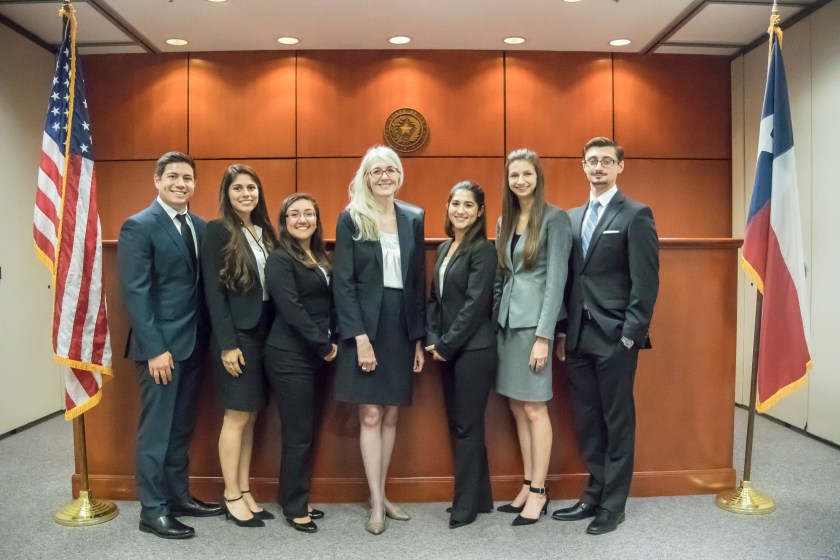
We ended the day on a positive note taking our group pictures in the courtroom!


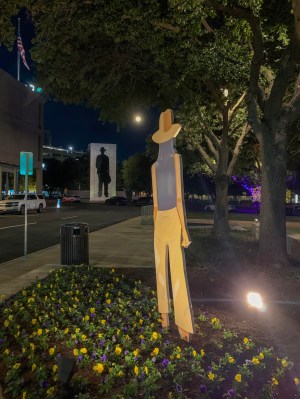
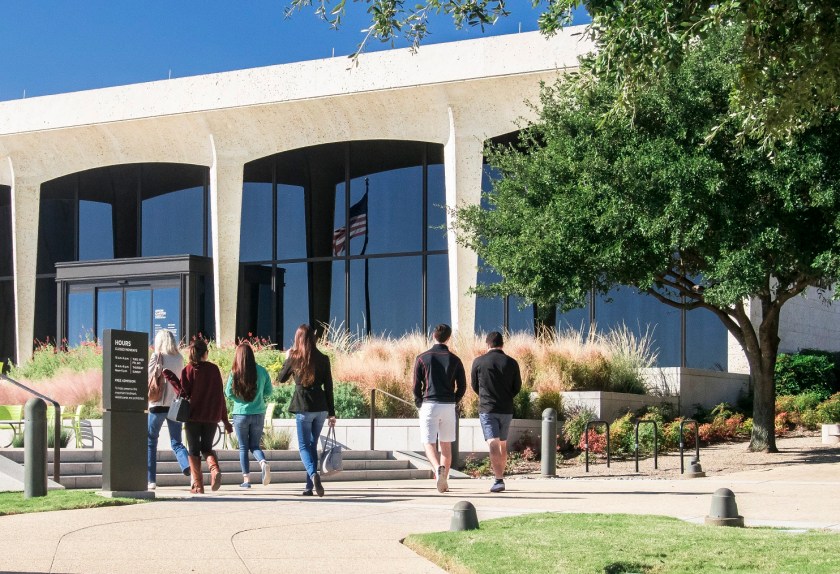
After working hard and competing in the Moot Court Regional Tournament, on Saturday the team set out for sightseeing across Fort Worth. We visited the Amon G. Carter Art Museum, the Fort Worth Water Gardens, and the famous Sundance Square.

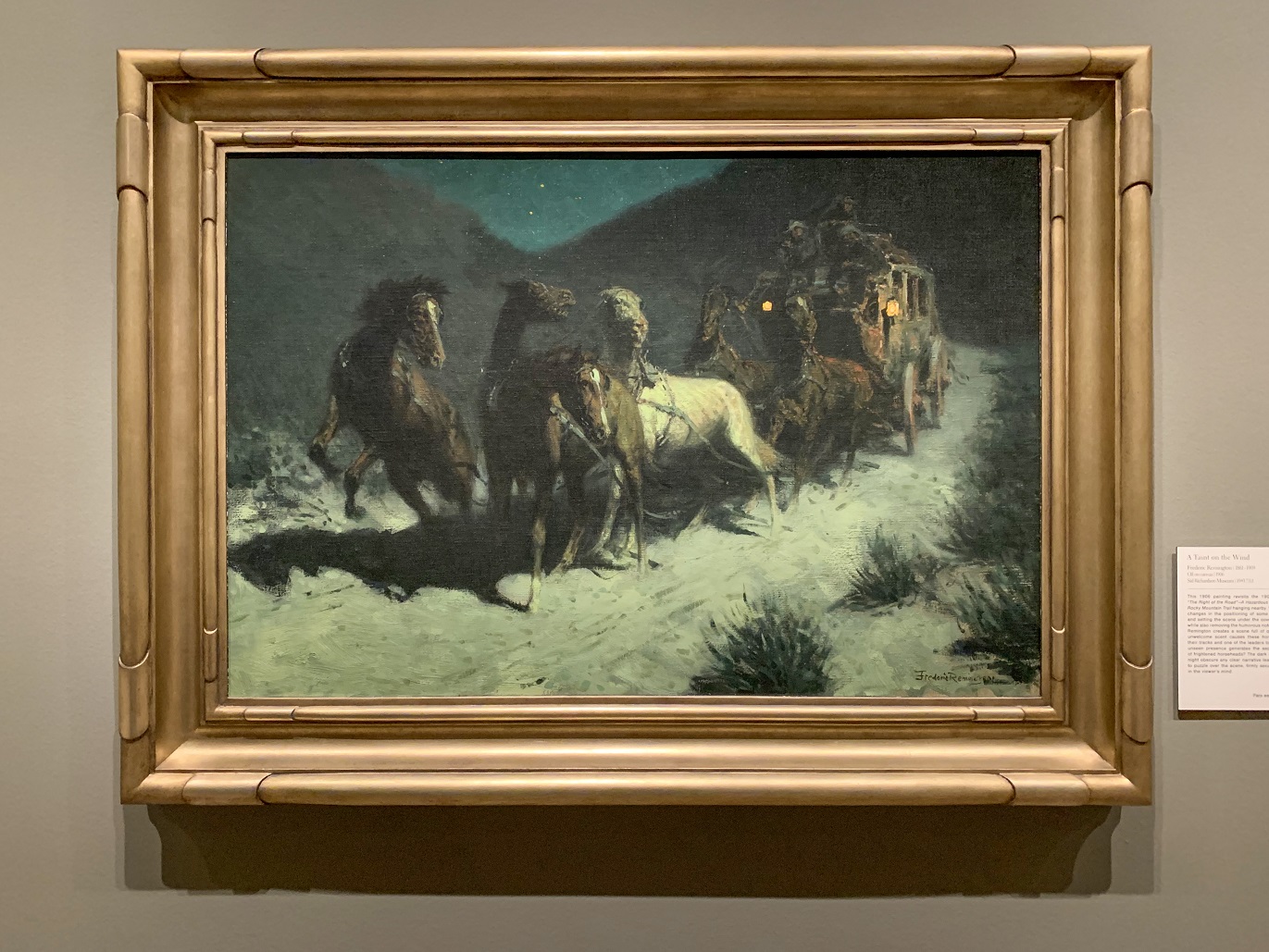
The Amon G. Carter Art Museum is a free art museum dedicated to 19th and 20th Century American Art.

SHSU, LEAP Center, Moot Court, Amon Carter Art Museum

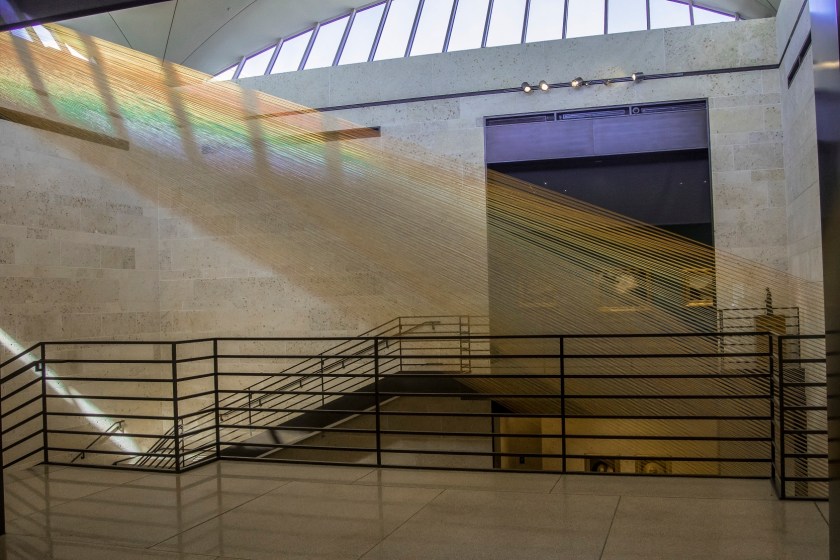
Opening its doors in 1961, the businessman and philanthropist Amon Carter’s goal in erecting the museum was to educate Fort Worthians in American Art. With Carter’s personal collection comprising the early galleries of the museum, the establishment has now grown to include a diverse collection of art. From artists such as Fredric Remington to Georgia O’Keefe…

SHSU, LEAP Center, Moot Court, Amon Carter, Georgia O'Keefe

…the museum leads visitors through various decades in American art history. Among the halls was a more contemporary exhibition titled “Border Cantos.” In the exhibit, Photographer Richard Misrach and Composer Guillermo Galindo, depict the US/Mexican border through impactful photographs and music that reflect immigrant life along the borders.

SHSU, LEAP Center, Moot Court, Amon Carter Museum of Art

As the photographs depict a solitary and barren border, visitors felt a deep emotional connection to the people affected everyday by the walls, fences, and wire the divide the American and Mexican territory. This exhibit proved to be the team’s favorite in the end.

SHSU, LEAP Center, Moot Court, Amon Carter Museum of Art

After exploring the museum and learning about American Art, we were excited to move on to our next stop: the Fort Worth Water Gardens.

SHSU, LEAP Center, Moot Court, Fort Worth Water Park

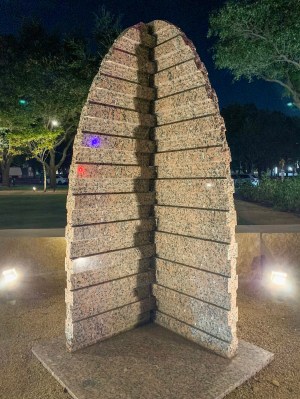
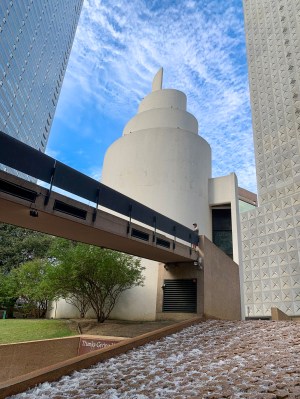
Designed by Philip Johnson, the urban park provides a soothing atmosphere to escape from the mundane city life (and moot court). The park is composed of adjoining water gardens which visitors can explore.

SHSU, LEAP Center, Moot Court, Fort Worth Water Park

True to our millennial drives, we enjoyed taking selfies and pictures of the garden. The Water Garden was an unexpected treat that everyone enjoyed!

Our mini Fort Worth tour sadly ended with lunch at Bird Café in Sundance Square.

SHSU, LEAP Center, Moot Court, Bird Cafe

Revived with the help of Richard Haas’s Chisholm Trail mural, the Square is now the center of shopping and entertainment in downtown Fort Worth.

SHSU, LEAP Center, Moot Court, Sundance Square

In the midst of the cultural hive, The Bird Cafe as a very popular brunch joint, offered many unique dishes. We each tried something different (for different was the only thing the Cafe offered) such as Carne Asada Waffles, an Avocado Omelet, and the Hickory Smoked Chuck Burger. After our delicious platters, we decided to finish our meals with a sweet closing. So being, we chose to visit a nearby chocolate factory!

SHSU, Moot Court, LEAP Center, The Chocalate Factory

The Chocolate Factory was a fun and tasty last stop on our trip. We immensely enjoyed sampling numerous sweet treats. With full stomachs and a nap waiting for us in our van seats, we departed Worth Wort to make our way back to Huntsville.

Many thanks to Texas A&M Law School for hosting the TUMCA Moot Court Competition and to Ms. Loveall for all her hard work and dedication to our teams success!