An Architectural Tour in Southwestern Pennsylvania

Working on little sleep, and following an eighteen-hour first day, LEAP Ambassadors arose at 6am to explore architecture in and around Pittsburgh, with a stop at PPG Place, a mural by Richard Haas, and two major works by Frank Lloyd Wright.

PPG Place

Our first stop was PPG place, a six-building, “glass gothic” design by Philip Johnson.

As part of our LEAP travels, we had seen Johnson buildings in Houston, and we had watched a documentary on him in preparation for this trip, but PPG place was a place like no other.

Completed in 1984, its towering glass spires and sleek facades embody Johnson’s signature postmodern style, blending classical elements with contemporary materials. Its gothic detailing pay homage to Pittsburgh’s industrial heritage, its all-glass encasing embraces the future with innovative design, and its central plaza allows for a nice place to gather, which we did!

Richard Haas Mural
As a teenager, Haas spent a summer apprenticing for Frank Lloyd Wright, so it is no surprise that his murals take on an architectural quality. Indeed, Haas’s website describes him as an “architectural muralist,” an apt sobriquet.

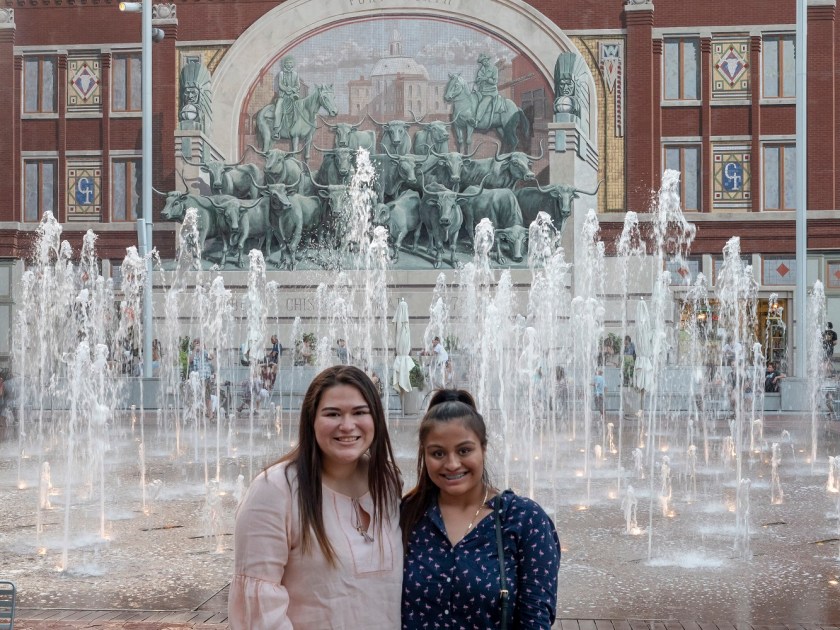
We know Haas primarily through his 15 works in Huntsville, but we’ve also seen his work in Fort Worth, which is a masterpiece. So it was with excitement that we tracked down his Pittsburgh mural, which is near the corner of Sixth and Fort Duquesne Boulevard.

As you might expect, it features an industrial scene, an homage to Pittsburgh steel-making history, with nods to its central location at the juncture of multiple rivers.
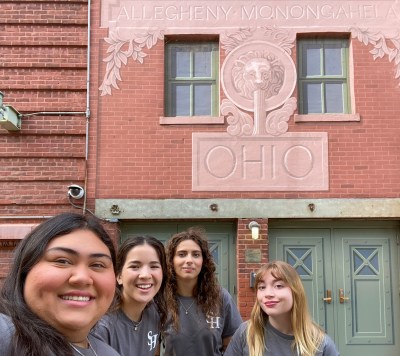
It’s always a pleasure to see Haas’s work, but this was especially true today, when we would also have a chance to see the work of his former boss, Frank Lloyd Wright.


Kentuck Knob

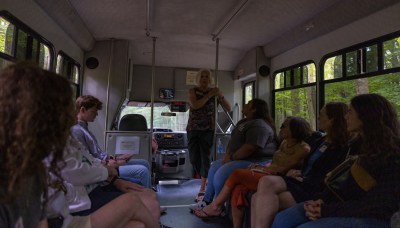
The first of our Frank Lloyd Wright site visits was to Kentuck Knob, which is nestled in the mountains of southwestern Pennsylvania. Designed in 1953, Kentuck Knob embodies Wright’s principles of organic architecture, seamlessly blending with its natural surroundings–and, in this case, adorned with a healthy helping of artwork, by artists such as Anthony Caro, Scott Burton, and George Rickey. We learned much of this thanks to our wonderful tour guide, Jan.
Among Wright aficionados, Kentuck Knob is known as a “Grand USoNian.” Wright’s USoNian homes were designed for middle-class residents. They were, relatively speaking, affordable, while still serving as an interesting, sculptural domicile.

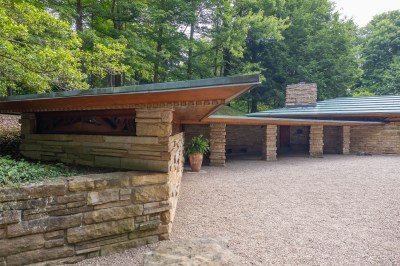
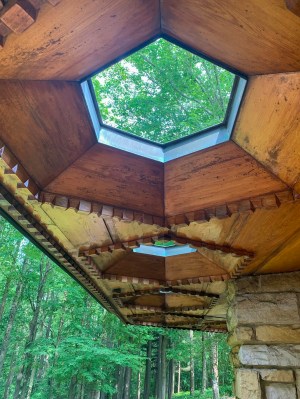
Kentuck Knob had Wright’s characteristic overhanging eaves…

…adorned with clerestory windows;

…a double carport (he hated garages, which he regarded as receptacles for junk); and a “compression and release” entrance to the house.

The home follows is structured as a series of parallelograms, giving the home an interesting look and an aesthetic cohesiveness.
We were particularly struck by the beautiful living room with floor-to-ceiling windows (which could also serve as doors to the patio), beautiful Wright-designed furniture, and the unique touches for which Wright was famous.
But it was the way the home interacted with the environment that we most enjoyed. The home is about five miles from Fallingwater, and the owners wanted their own “water element,” so they added a small rockfall and pool on the patio. The home is also perched on the brow of the hill, not atop the hill. Wright did this to ensure that the home merged with the environment (rather than overtaking the environment), and with a short walk along the property, we were able to see the beautiful art-adorned grounds and a view that even real-estate agents could not exaggerate.

Fallingwater

After visiting Kentuck Knob, another of Frank Lloyd Wright’s masterpieces, we headed to Fallingwater. Seeing Kentuck Knob had piqued my interest, and I was even more excited to explore another of Wright’s creations.

Frank Lloyd Wright was a fascinating and complex architect, known for his innovative USoNian homes—affordable, stylish, and functional houses for middle-class Americans. He also pioneered organic architecture, harmonizing structures with their natural surroundings, which Fallingwater epitomizes. Designed in 1935 and built directly over a waterfall in 1938 for the Edgar J. Kaufmann family, this house, which blends stone, concrete, steel, glass, and wood, celebrates what Wright termed “organic architecture.”
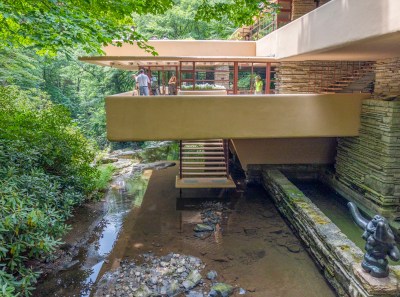
With the help of our tour guide, Millie from West Virginia, we approached the house. At first sight, Fallingwater was magnificent. Wright’s design philosophy was evident in the “hidden” doorway, a narrow entrance that transitioned into open spaces meant to connect inhabitants with nature. The structure is supported by concrete beams that project out over the waterfall, creating an impression of weightlessness.
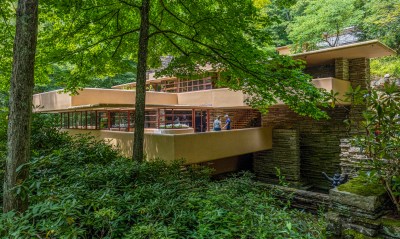
The entrance repeated Wright’s “compression and release” philosophy, and he continued the cantilever motif, making much of the furniture and design elements an echo of the home’s overall design. The living room’s open design encouraged social interaction while the more intimate upstairs rooms offered privacy. The master bedroom, with its large balcony over the waterfall, provided a serene and breathtaking view.

We noticed Wright’s attention to detail, such as the seamless glass-to-glass windows, which eliminated barriers between the indoors and the natural world, as well as the art work in the home–much of which also repeated the cantilever design.

Indeed, art was a theme throughout the house, with a Picasso, several Audubon works, and a Diego Rivera (Frida Kahlo was a guest at the house!).
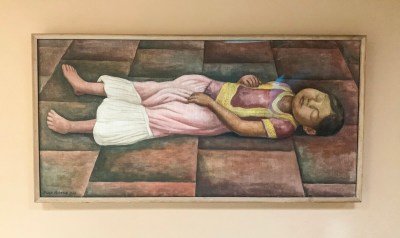
Our tour concluded with a view of the waterfall from across the home, capturing the full splendor of Wright’s integration of architecture and nature.

We all sat momentarily, taking in the beauty and snapping photos, cherishing the experience.

Corpus Christi in Six Hours

It’s not easy to prioritize your time in a City when you have just five hours to spend, but we did a pretty good job of it.

Our morning began by visiting The Texas State Aquarium. As a fish enthusiast, Megan was especially looking forward to this underwater adventure. We began with a shark exhibit…

Aquarium_Girls_Shark_Jaws_2_Web

…before moving on to the Lion Fish and Electric Eels.  One of the highlights was seeing the Aquarium staff in full scuba gear feeding these fish.

Aquarium_Girls_Feeding_Web

The Museum’s exhibits are well configured, giving you the opportunity to see them up close.  The jellyfish exhibit, for example, is in low light, highlighting the animals translucent tissue.

Aquarium_Jellyfish_Web

The sea otters, crocodile, and bald eagle were outside, and they were in separate exhibits, again configured in such a way as to maximize human interaction with the animals.  In the case of the sharks and stingrays, we could even put our arms in the water and “lightly touch the animals with two fingers.”

Aquarium_Girls_Sharks_Web

The true highlight of the aquarium are the dolphins.  The trainers brought out four dolphins, two of which were especially good at tricks.  Through mimicry, these dolphins learn to clap, jump out of the water, do flips, swim on their back, and even splash the audience!  Our favorite was a three-spin flip.

Aquarium_Dolphin_Jumping_3_Web

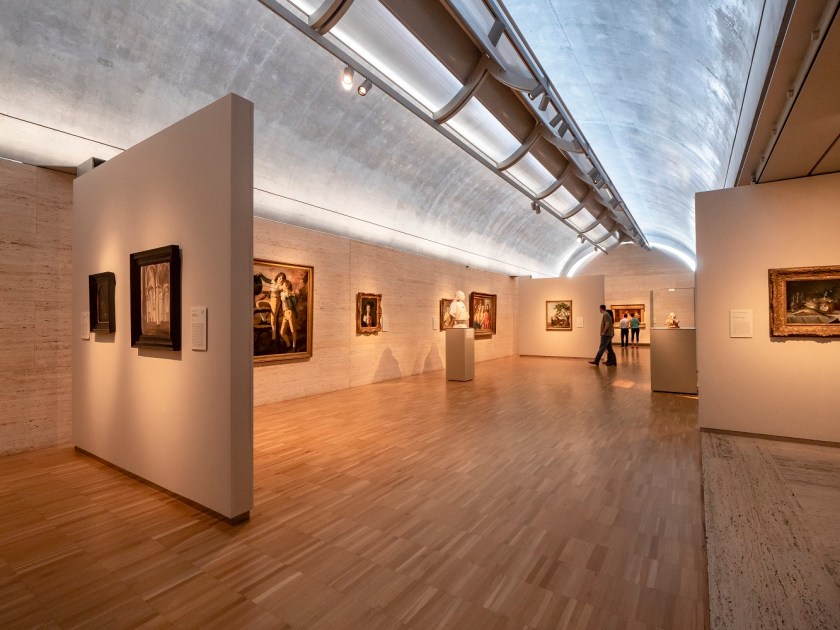
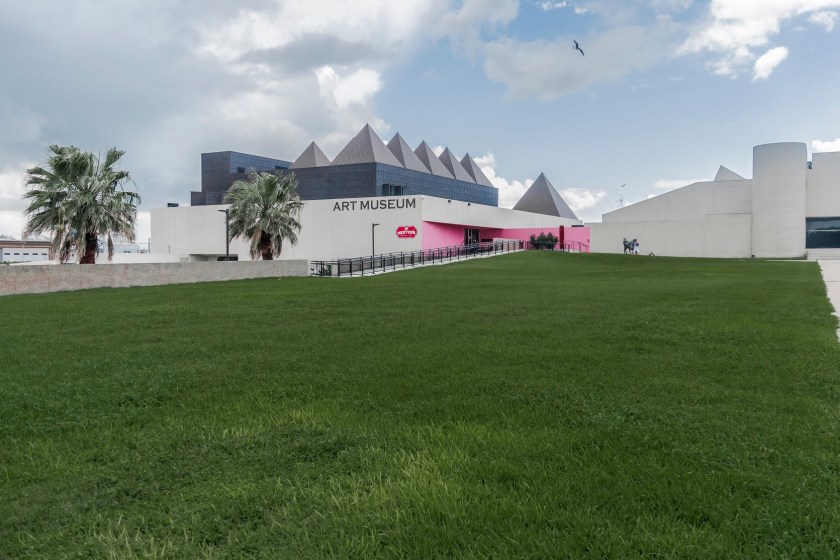
Next door to the Aquarium is the city’s Art Museum of South Texas.  The museum is housed in a structure designed by Philip Johnson and made from shellcrete.

Art_Museum_Exterior_Web

The current exhibit in the Museum was of Texas Mixed Media, and my favorite artist represented was Mary McCleary, who is actually a Professor of Art at Stephen F. Austin University.  In her artist statement, she indicates she takes found objects and layers them onto paper in a way that “conveys an intensity which the viewer finds compelling.”  That was the case for me (Alex), and I’d like to see more of her work.

We also had a chance to see another Dale Chihuly, and I learned about the “Art Guys,” who have a work composed of clear glass tubes horizontally placed on the wall and filled with broken glass.

Megan, too, found a new artist she liked: Bill Meek.  A glass artist from Houston, his piece “Catharsis” is in a sun room overlooking a piece by Jesus Moroles outside the building.

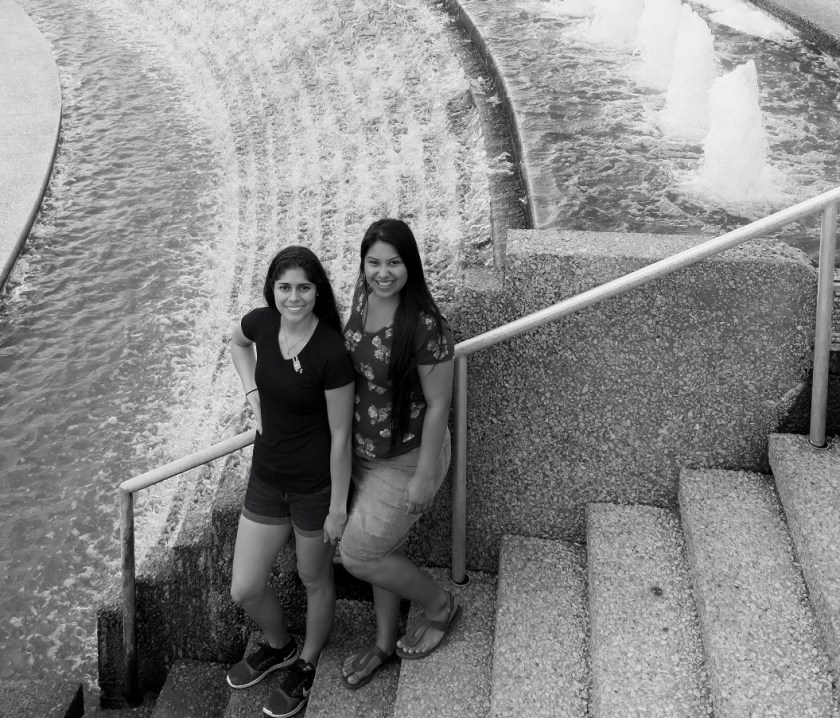
Speaking of which, the exterior of the Museum is as intriguing as the interior.  The walkway to the building includes a large, ringed fountain.

Art_Museum_Girls_3_Web


Art_Museum_Girls_6_Cropped_BW_Web

Off to the side is a large piece by James Surls, who graduated from Sam Houston State University.

Art_Museum_Surls_Girls_Web

With all the art hitting close to home, we decided to stray outside the box for lunch.  Thus we went to a Vietnamese Restaurant (literally called “Vietnam Restaurant”) in Corpus Christi.  This seemed like an unlikely pairing, but the food was truly good.  I (Megan) ordered the Vietnam Fried Rice, which was delicious; Alex had the Vermicelli Noodles with grilled chicken; and Professor Yawn had the restaurant’s signature “Hot Pot” which, after being slow cooked for 25 minutes was, indeed, hot!  And very good.  It was our favorite restaurant thus far in the trip.

Before leaving Corpus, however, we felt somewhat compelled to visit “Mirador de la Flor,” which is a memorial to Selena, the Tejano singer.  Selena was shot at the age of 23 but she sold more than a million albums in her short career and paved the way for other Hispanic singers.

Selena_Megan_2_Web

And with that visit, we closed down our time in Corpus Christi.  Although “hooked” by the beaches, baseball, sea-life, and art, we had business in the Rio Grande Valley, so southward we roamed.

But not before getting drinks at Coffee Wave.  We cannot recommend this enough!  The coffee was good; the Mexican Hot Chocolate was excellent, even on a summer day; and the Chai Tea Latte was amazing!  And with that, we waved goodbye to Corpus Christi!

Moot Court Scrimmage: Aftermath

After an intense 24 hour period competing and observing Moot Court proceedings, the LEAP Ambassadors, Moot Court participants, and members of the pre-law cohort decided to relax a bit, explore the history of Dallas on a Segway, and fill their bellies.

The relaxation involved some downtime at the hotel, followed by an ice-cream treat.
Ice_Cream_Web

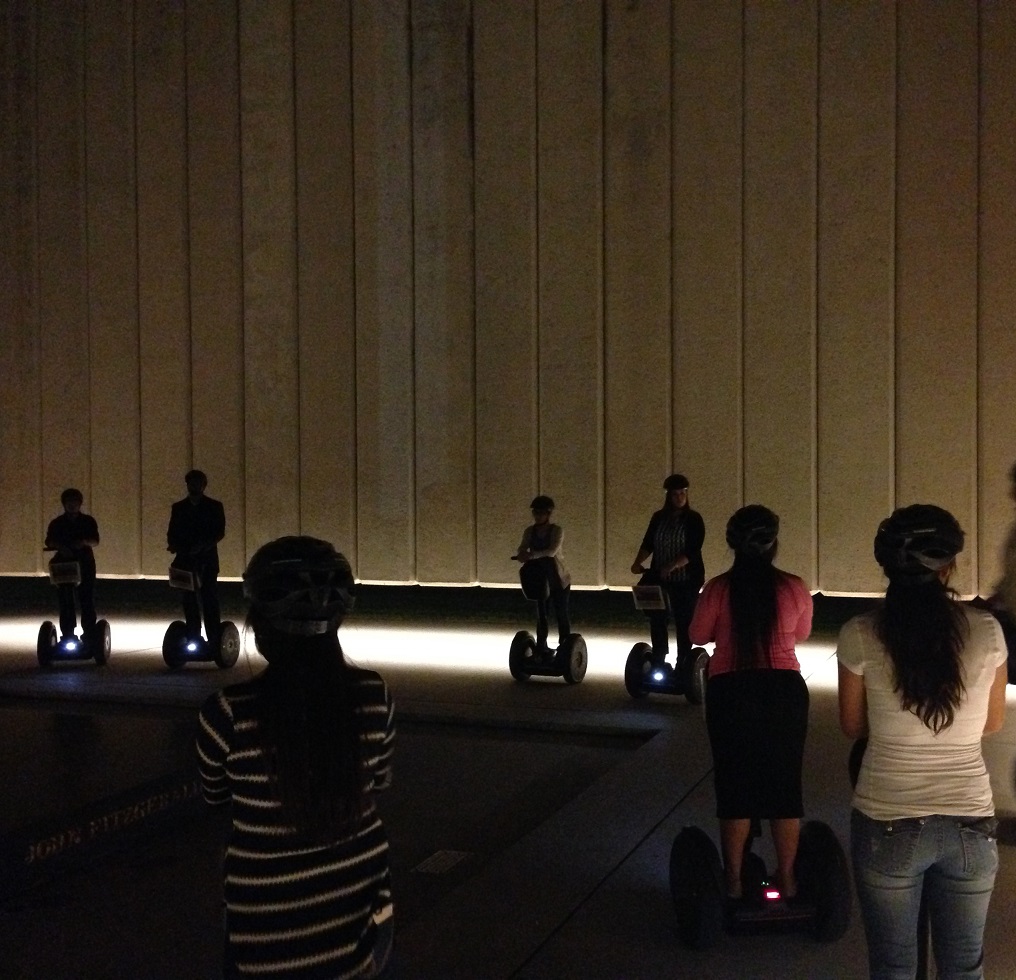
Shortly thereafter, another treat was in order.  We stopped by Segway Nation for a tour of Dallas on a segway.

Segway_All_Web

It was a beautiful time of day, what movie-makers call “magic hour,” and we made the most of it with pictures.

Groupie_Segway_Web

But, of course, with it turning a bit dark, Austin felt he need to serve as a protector of the group, and adopted a secret-service/tough guy look.

Groupie_Segway_2_Web

At first, not everyone felt totally relaxed…

Segway_Alex_Close_Up_Web…but eventually everyone got the hang of it, and we headed off to see Dallas.

The segway tour took us to Pioneer Plaza, a large outdoor sculpture that consists of 49 bronze steers and 3 riders created by sculptor Robert Sommers.  Note that it appears that Alex is saluting when, in fact, that it is a longhorn projecting in front of her face.
Segways_Cattle_Stampede_Web

The tour, led by excellent guides Doug and Jack, also took us by I. M. Pei’s Dallas City Hall, where we were able to turn and see the beautiful Dallas skyline which, according to our guides, is regularly listed as one of the five most beautiful in the US.

Segway_Dallas_Skyline_Web
The tour also took us by the Kennedy assassination site on Elm Street.  The students had a chance to get off the segways and walk to the “X” spots, which mark where the Oswald’s shots hit Kennedy.

JFK_Elm_Students_WebWe also entered the Kennedy Memorial, designed by Philip Johnson, one of the great architects of the 20th Century.

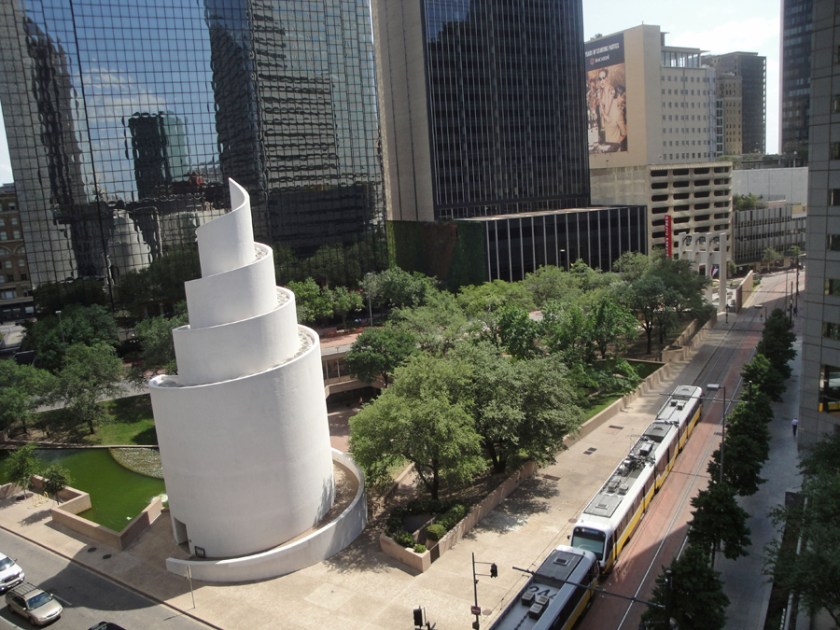
Kennedy_Memorial_Student_WebSpeaking of Johnson, we were also able to go to Thanksgiving Square, a public space he designed in the 1970s as a means of racial and cultural healing.  With a replication of Rockwell’s “Golden Rule” painting…

…and the “Ring of Thanks,” where visitors are encouraged to stand and offer thanks.  From the center of the ring, the sound reverberates, symbolically echoing the many things for which we are thankful.  In our group, thanks went to family, opportunities, school, and even the LEAP Center.

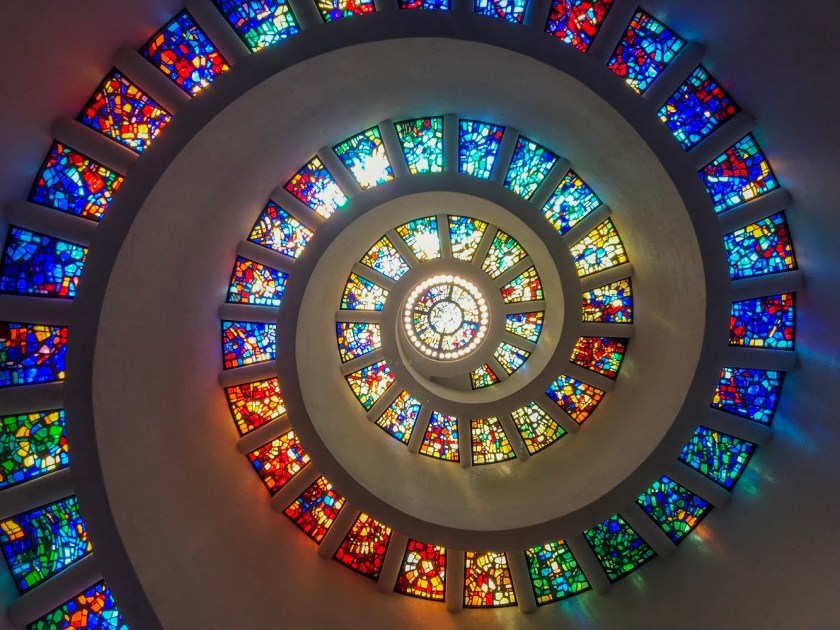
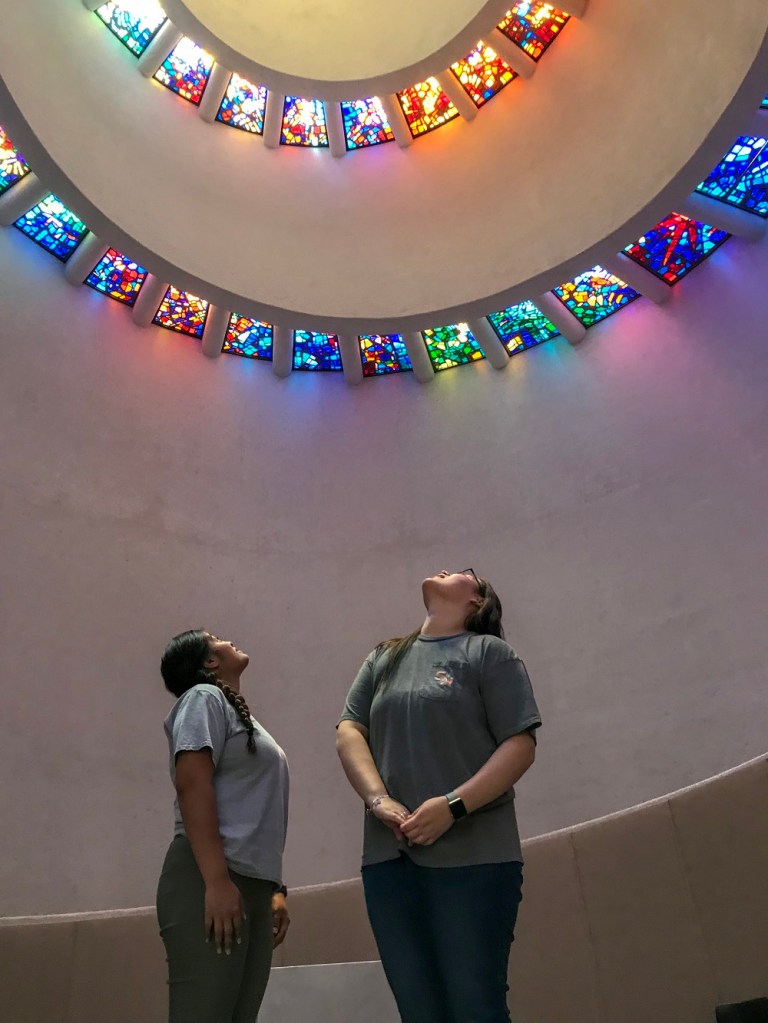
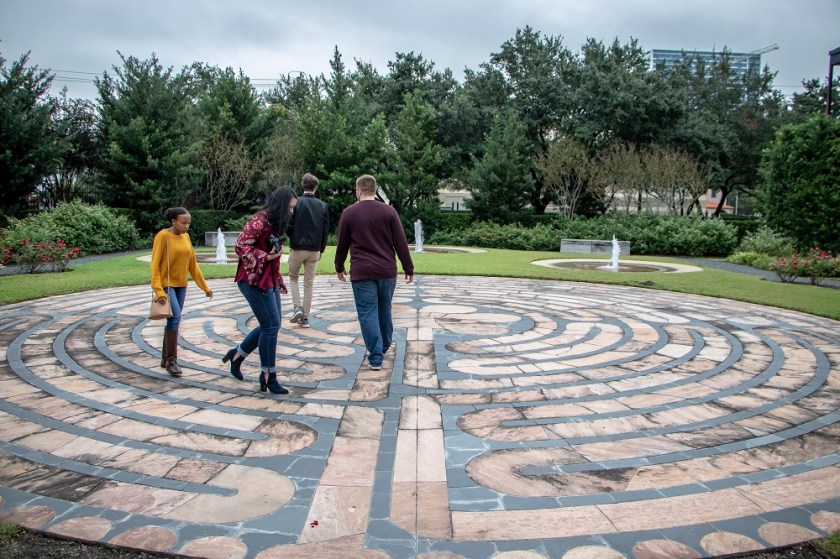
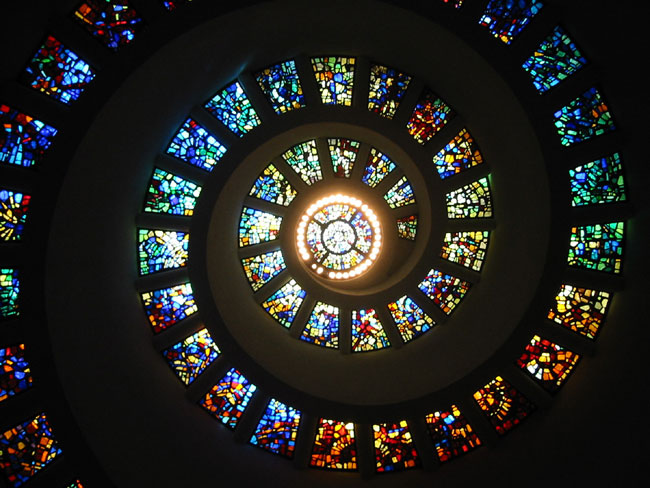
Thanksgiving Square also has a spiral chapel adorned with one of the largest stained glass assemblages in the world.  The glass, designed by Gabriel Loire of France, is designed to become brighter as it ascends and moves to the center.

In the midst of such beauty, it was easy to be thankful.

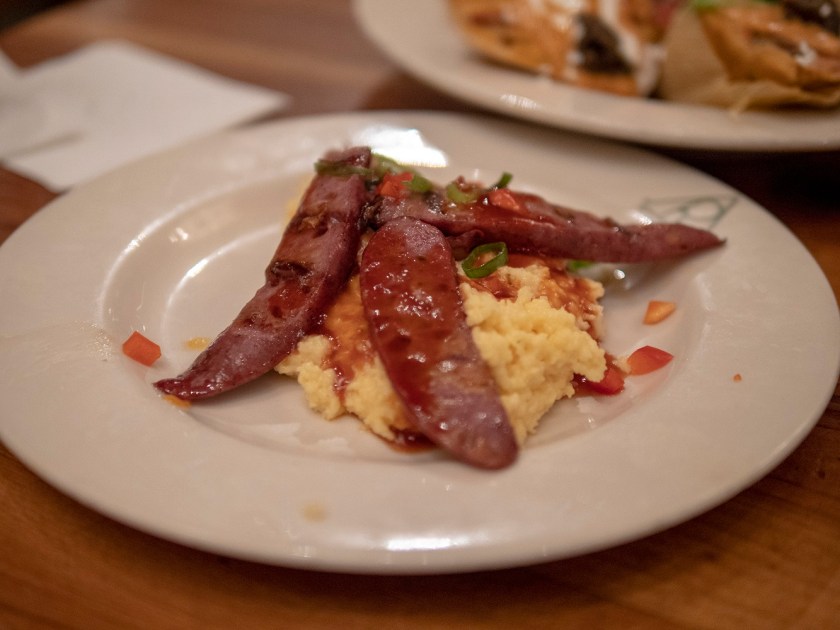
And with that, we returned to the segway base, where we shed our helmets and headed to Hoffbrau Steaks (thanks for the recommendation, Doug!) and enjoyed a robust end-of-the-day dinner.

Dinner_Hoffbrau_Web

But before heading out we gave a few more thanks: to our LEAP Ambassadors, who came to Dallas to cheer on their Moot Court friends; to the Pre-Law cohort, who came to check out the action and consider joining the team for next year; for Kristyn, who decided to stick with the “team” rather than go home; and to our coach, Jean Loveall, who spent a lot of time teaching us the finer points of law.