An Afternoon of Laughter with LEAP: “Noises Off” at the Alley Theatre

by Michelle Cardenas

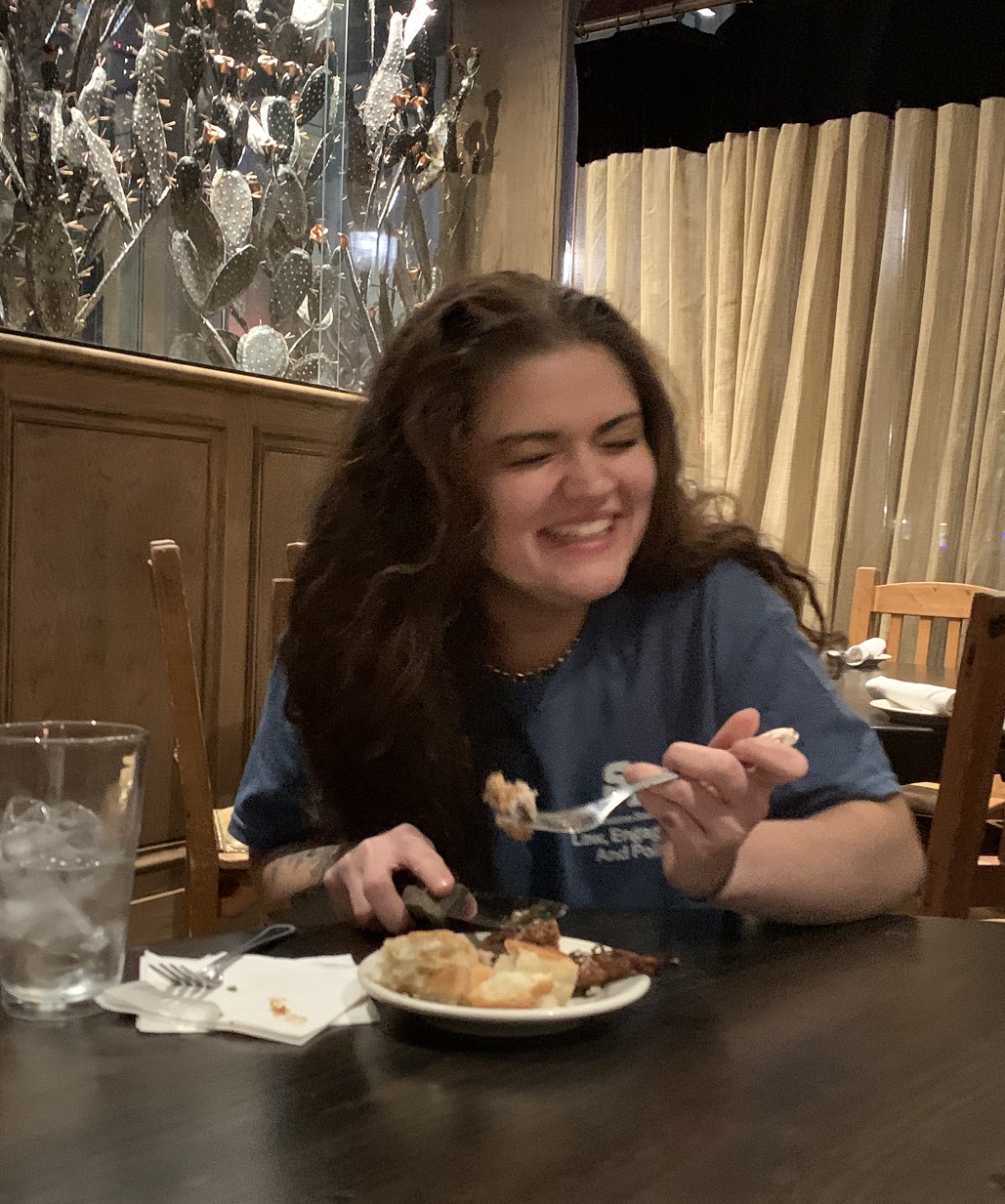
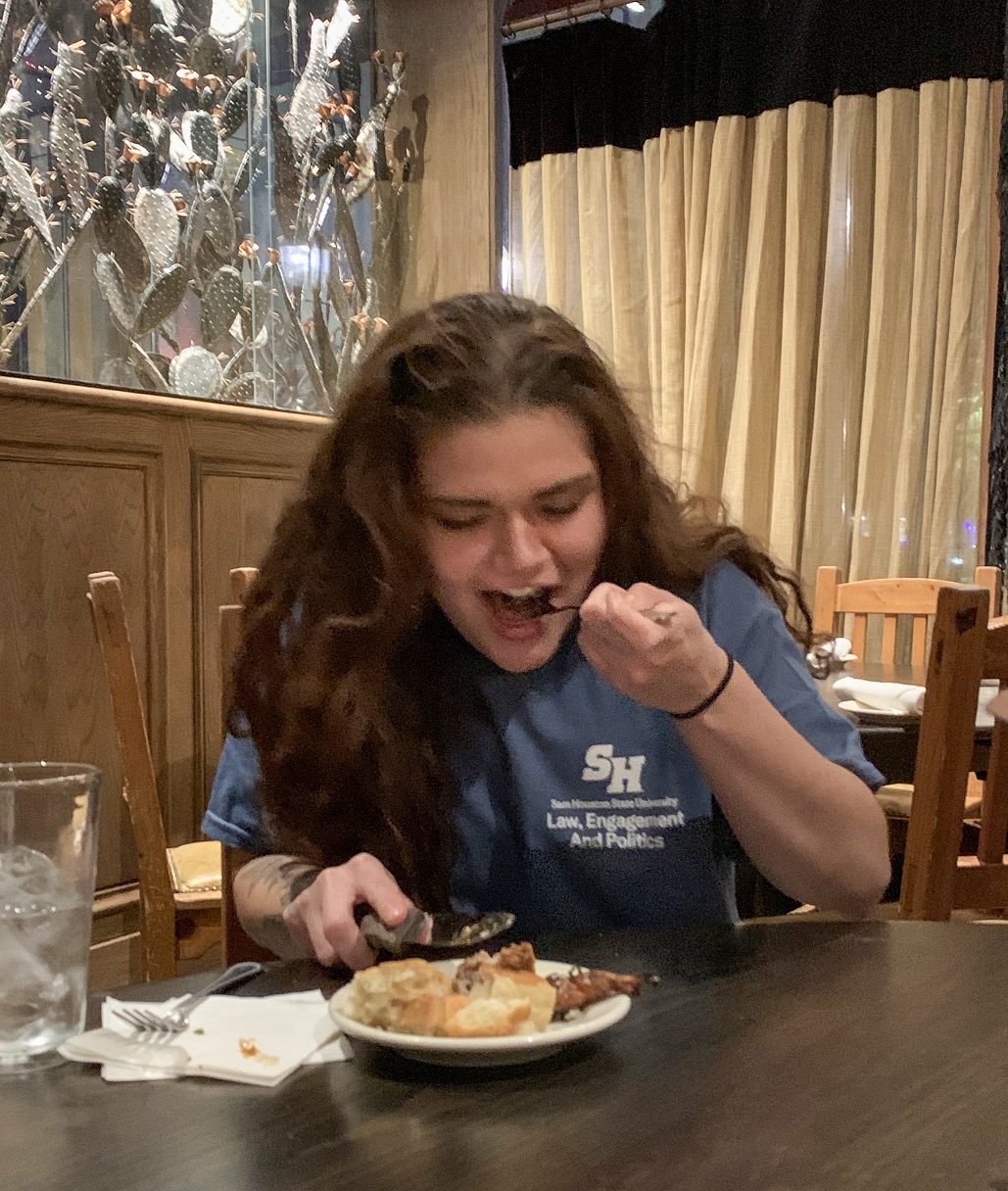
This past weekend, the LEAP Ambassadors, along with friends and alumni, took our regular trip to Houston for an afternoon filled with laughter, great food, and a little culture. Our destination: The Alley Theatre to see the farcical comedy Noises Off. These Houston outings have become something of a tradition for us—a chance to bond over good food and great theatre, and this time was no exception.

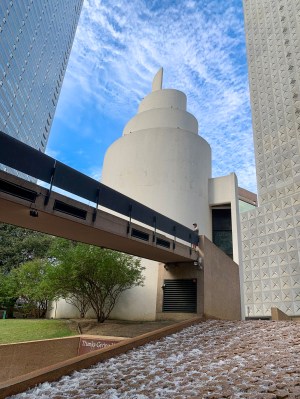
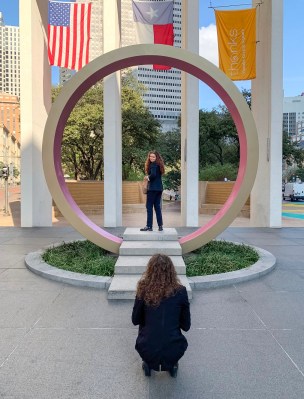
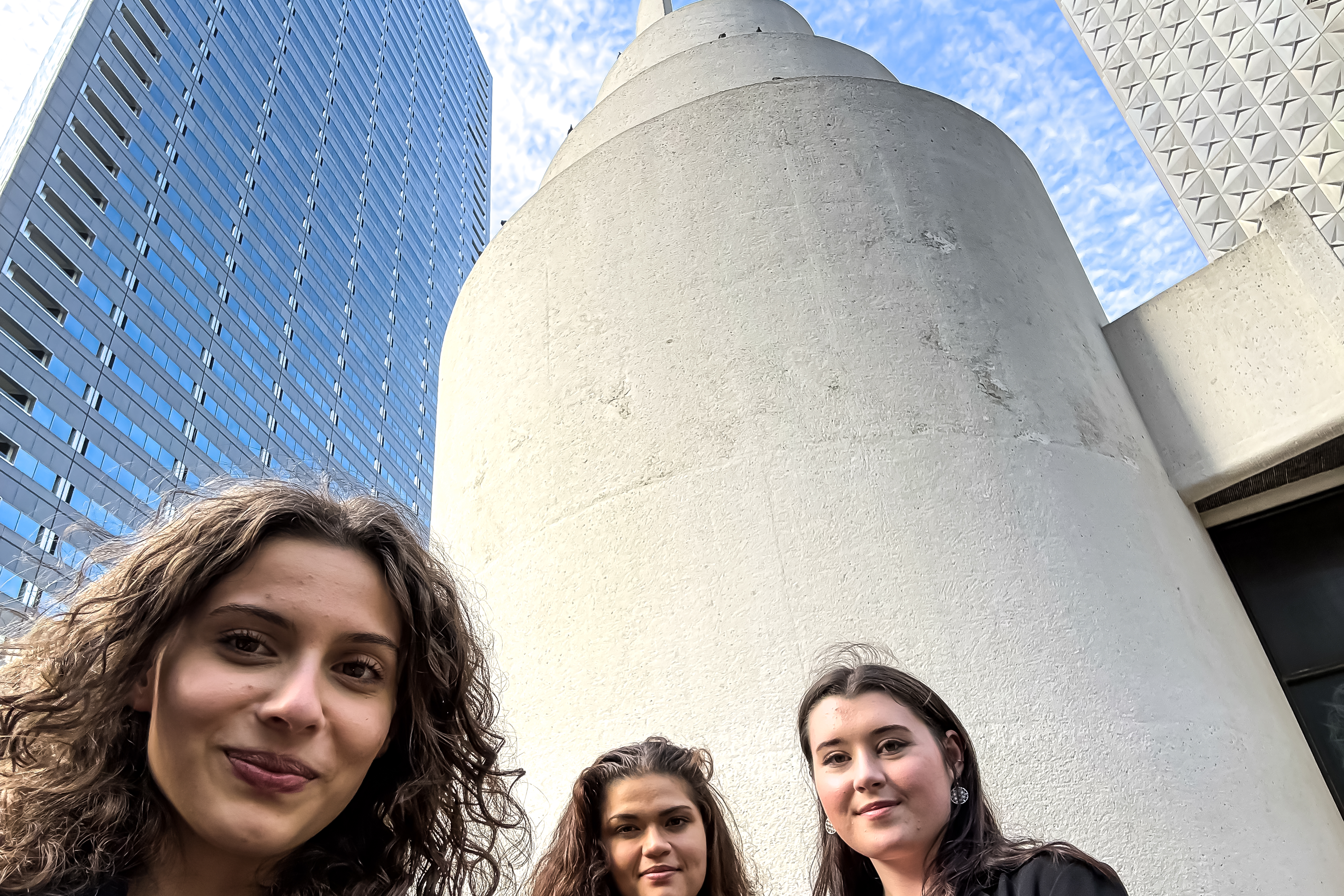
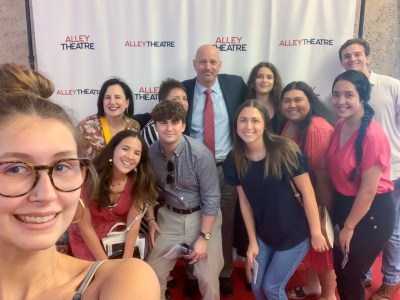
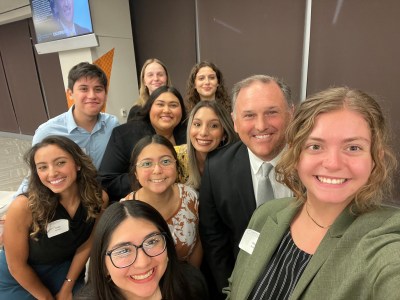
Before heading to the show, we made our first stop at POST Houston, a spot we frequent for its array of restaurants that cater to every craving. From sushi to burgers and international cuisine, POST has something for everyone. After fueling up, it was time for our traditional rooftop photo with the Houston skyline in the background—a moment we capture every time we’re in the area. The LEAP Ambassadors, a few friends, and alumni joined in for the photo op, including Michelle Lyons and her daughter Katherine Burnett, SHSU alum and former SHAIP intern Ashlyn Rodriguez with her husband, as well as Jacob Wessels and Yajaira Gutierrez. With full stomachs and a great group, we were ready for the play!

For those unfamiliar, Noises Off is a comedy about…well, comedy. It’s a play within a play, following a chaotic theatre troupe as they stumble (quite literally) through a performance. Having some theatre background myself, I was eager to see how close this farce would be to the real backstage antics I’ve experienced. Spoiler alert: it was spot on—and absolutely hilarious.

The play is structured in three acts, each highlighting a different stage of a theatre production.

The first act is the troupe’s final rehearsal before opening night, where the director desperately tries to smooth out the rough edges—particularly the constant confusion over a plate of sardines, which becomes a running joke. The second act gives us a behind-the-scenes look, with the audience seeing the backstage chaos unfold as the actors’ personal issues boil over. Doors are slamming, props are misplaced, and love triangles are revealed. And then, in the final act, we witness the disastrous final performance, where everything that could go wrong does. The actors are left to improvise their way through the script, which by now is nothing more than a series of disconnected lines and missed cues.

It was a joy to see our group laughing together, especially as some of us were familiar with the antics that come with putting on a play. Stephanie, in particular, has long been a fan of Noises Off, and by the end of the show, Yajaira had declared it her new favorite too. It’s no wonder—between the witty dialogue and physical comedy, the play is a masterclass in farce.

As we walked out of the theatre, we couldn’t help but keep laughing about the final performance scene—the sardines, the dropped lines, and the general mayhem. It was a perfect ending to a perfect afternoon. In fact, I think the sardines became their own character in the play! It was a delightful reminder that sometimes, when everything goes wrong, it makes for the best kind of theatre…and memories.

We can’t wait for our next Houston adventure!

ChatGPT: PACE gets the conversation going

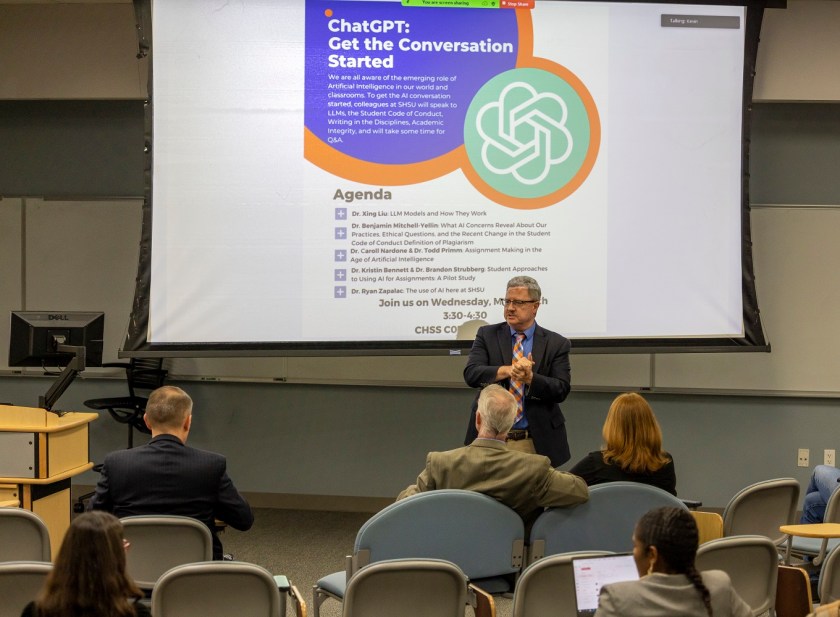
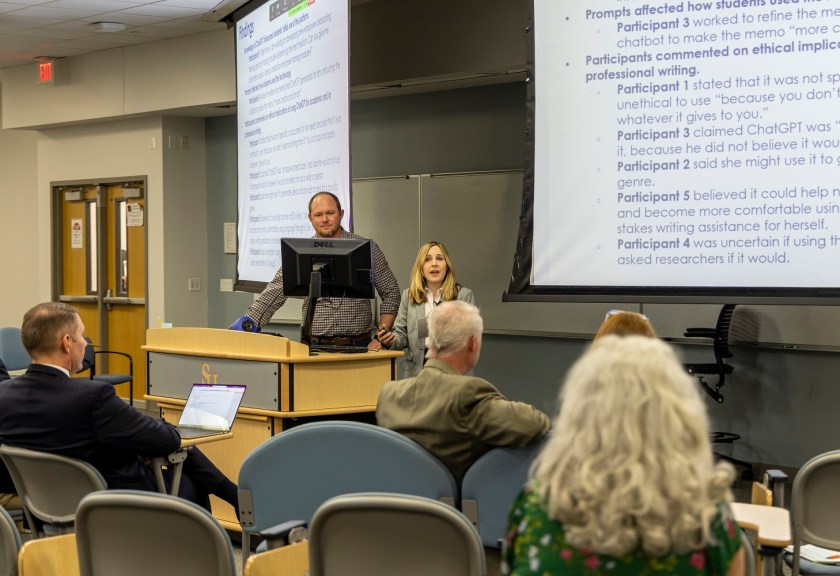
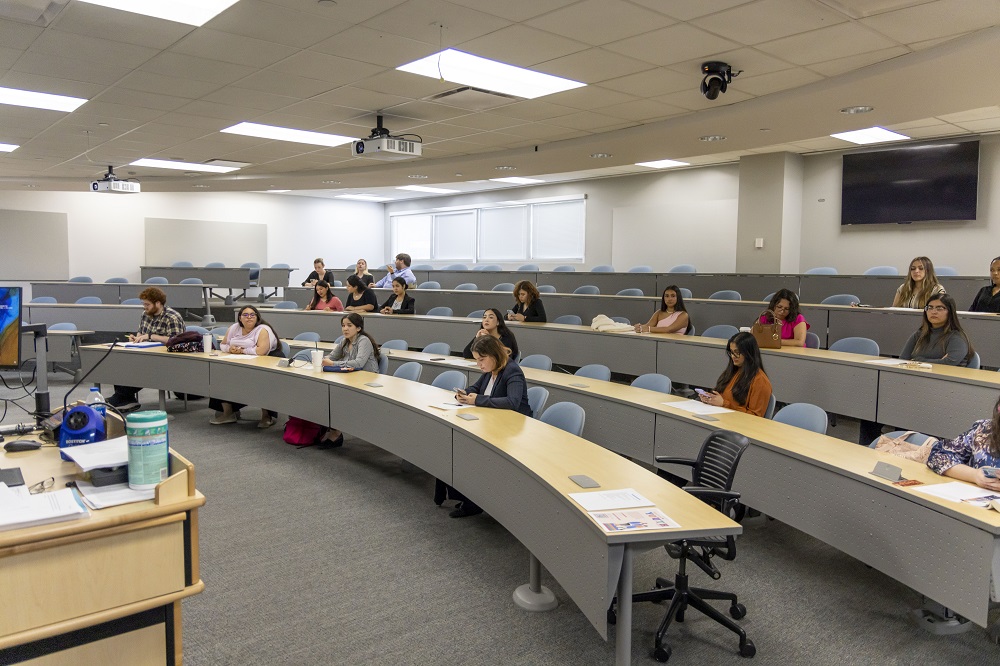
The higher-education community is reacting to ChatGPT with a mixture of consternation, trepidation, excitement, and a lot of anxiety. Inasmuch as it is the wave of the future, however, higher education needs to react, which is why the Professional and Academic Center for Excellence (PACE), led by the capable hands of Dr. Kevin Randall and Tiffany Terry, hosted a panel on the topic.

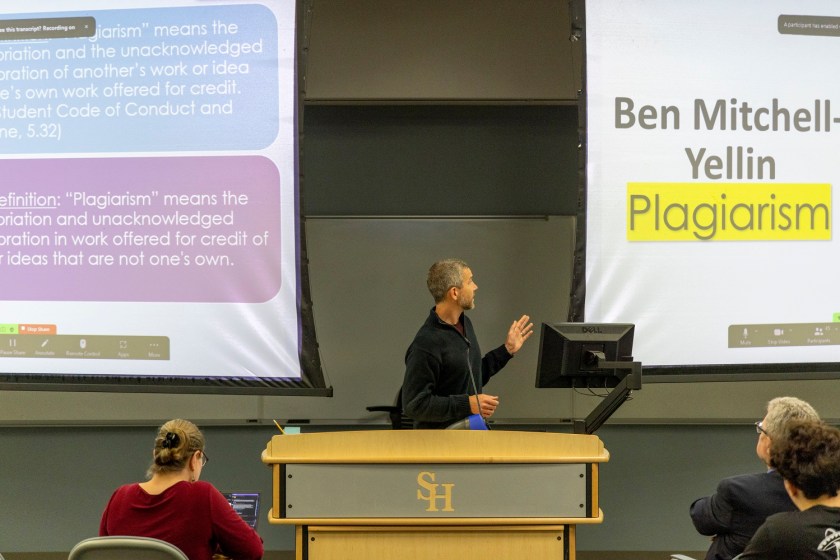
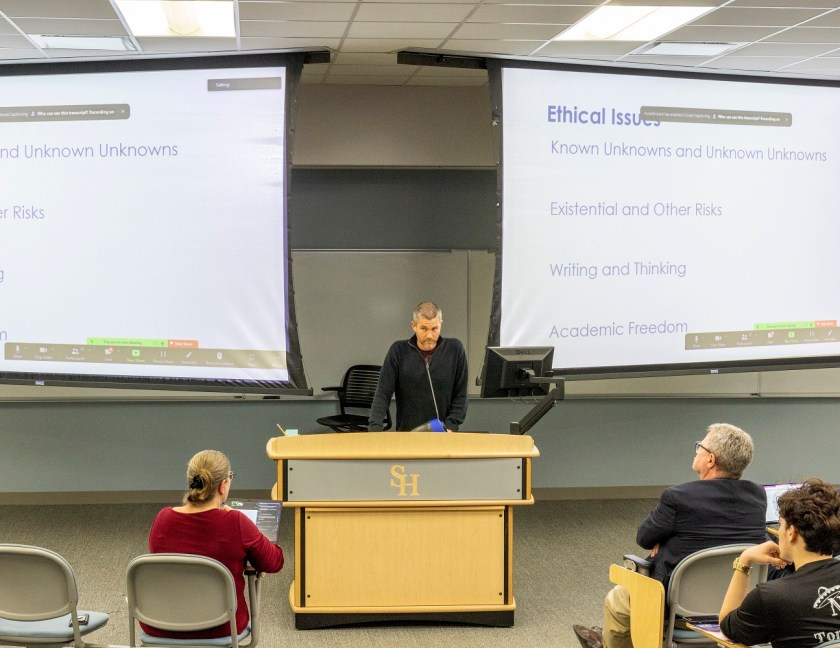
The panel kicked off (through Zoom) with a discussion by Dr. Xing Liu, who discussed the nuts and bolts of ChatGPT–focusing on how the software works. Dr. Mitchell-Yellin discussed the recent change in the University’s policy on plagiarism, highlighting the fact that while the policy used to prohibit using “another’s work;” it now prohibits using “work other than your own.”

(Ed. note: Mitchell-Yellin wasn’t sure if the policy change had officially occurred yet, but it is in process of occurring).

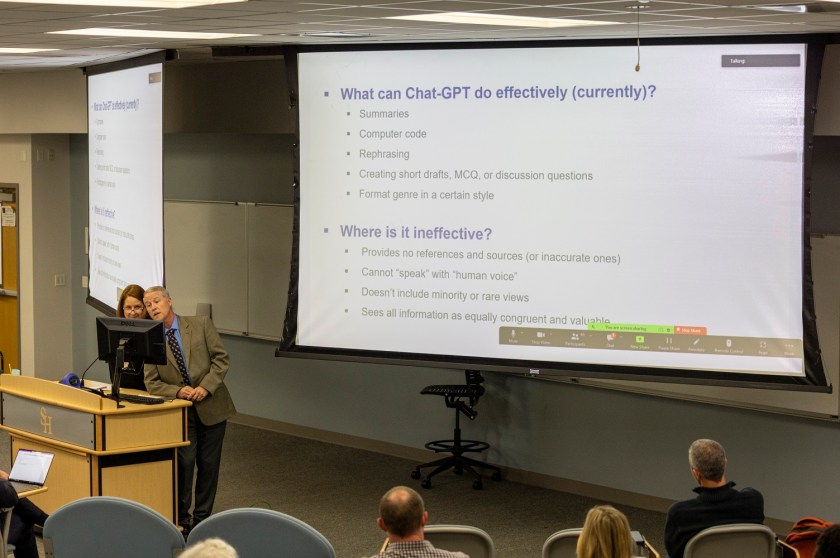
Dr. Nardone and Dr. Primm, from English and Biological Sciences, respectively, discussed the dos and don’ts of writing assignments “in the age of AI.” One factor the professors stressed is that ChatGPT has limitations, specifically: the inability to speak in a distinct “voice” and limited abilities to distinguish facts from anti-factual claims.

Apart from these limitations, of course, there is also the concern that students may become overly dependent on these technologies and become even weaker writers.

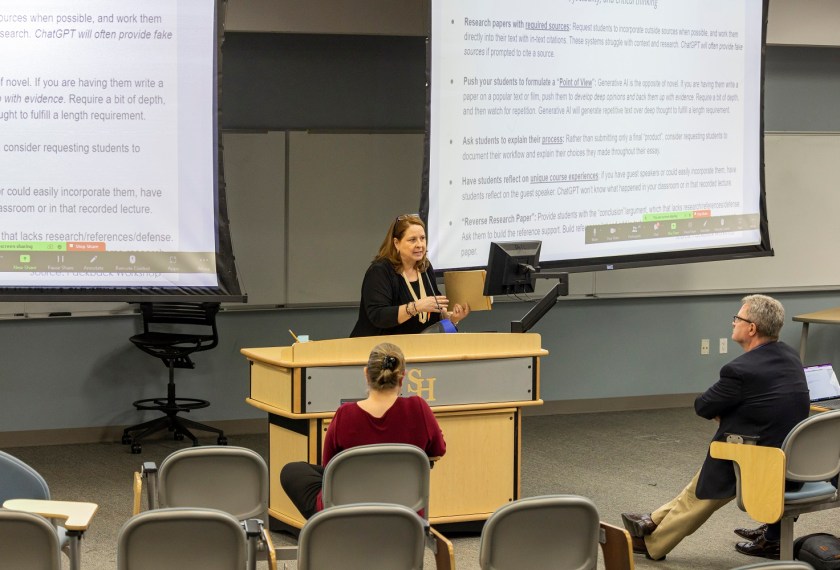
Accordingly, Nardone encouraged professors to consider: (1) using required sources; (2) pushing students to develop “point of view;” (3) asking students to explain other process; (4) having students reflect on their unique course experiences; and (5) developing a “reverse research process” approach, where students begin with a conclusion and have to reverse engineer the support and references for the conclusion.

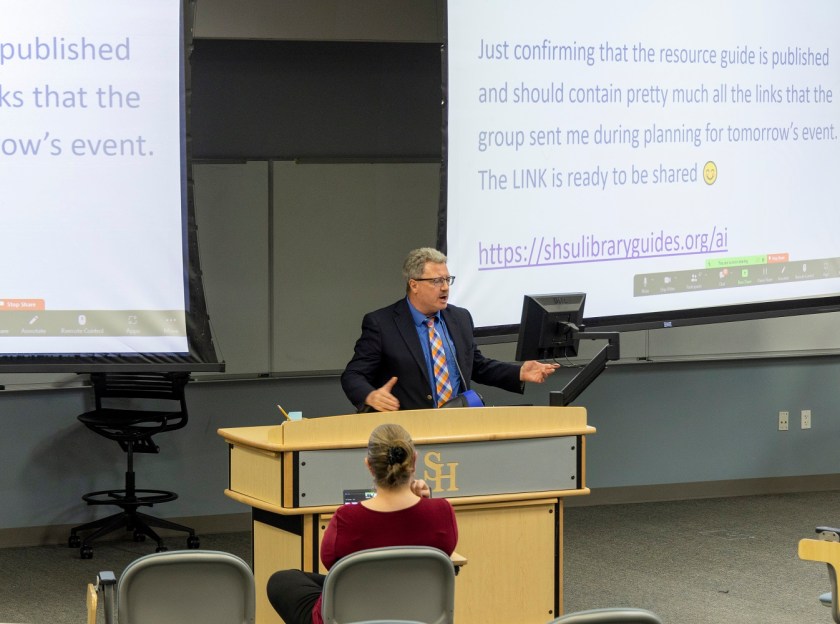
Dr. Randall then highlighted some services and support (courtesy of Erin Owens) offered by the Library…

…before turning it over to Dr. Strubberg and Dr. Bennett, who discussed preliminary research they have completed regarding student use of ChatGPT and their (the students’) views of the ethics of ChatGPT use.

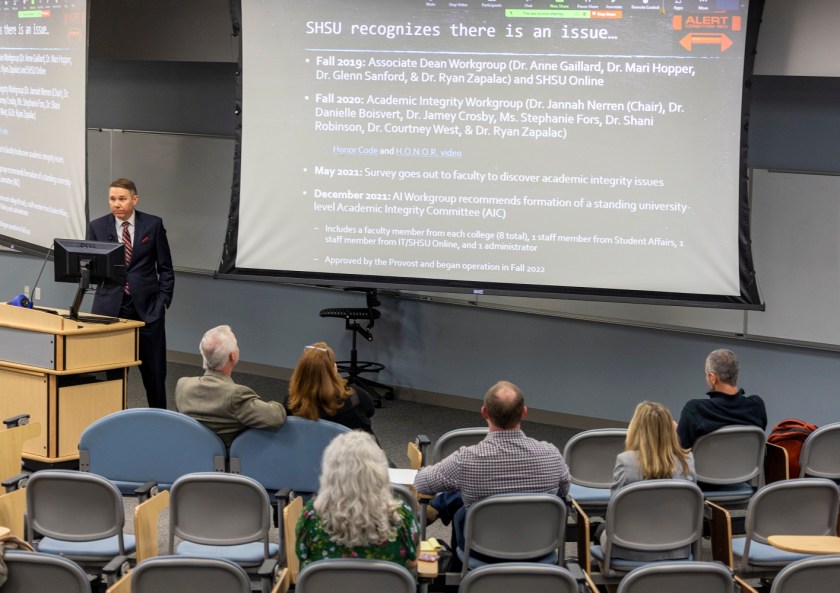
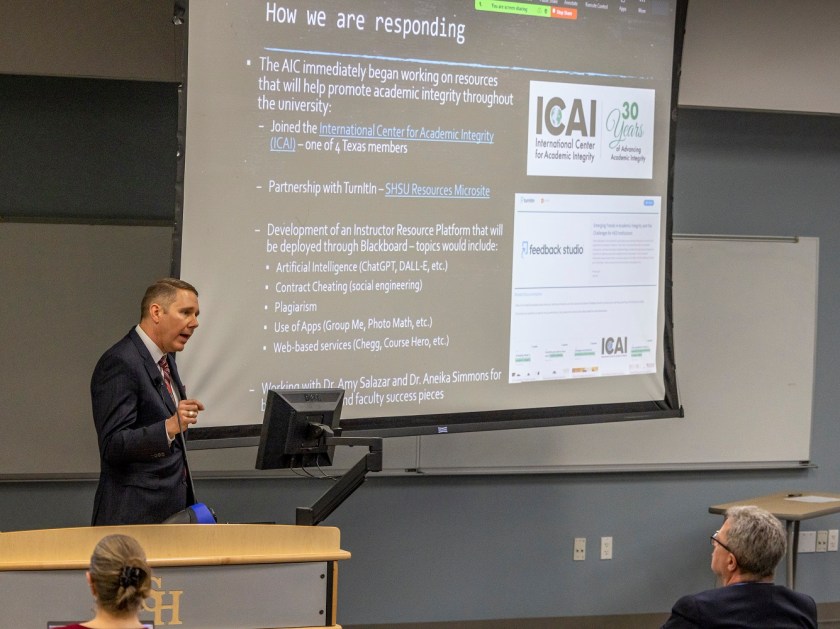
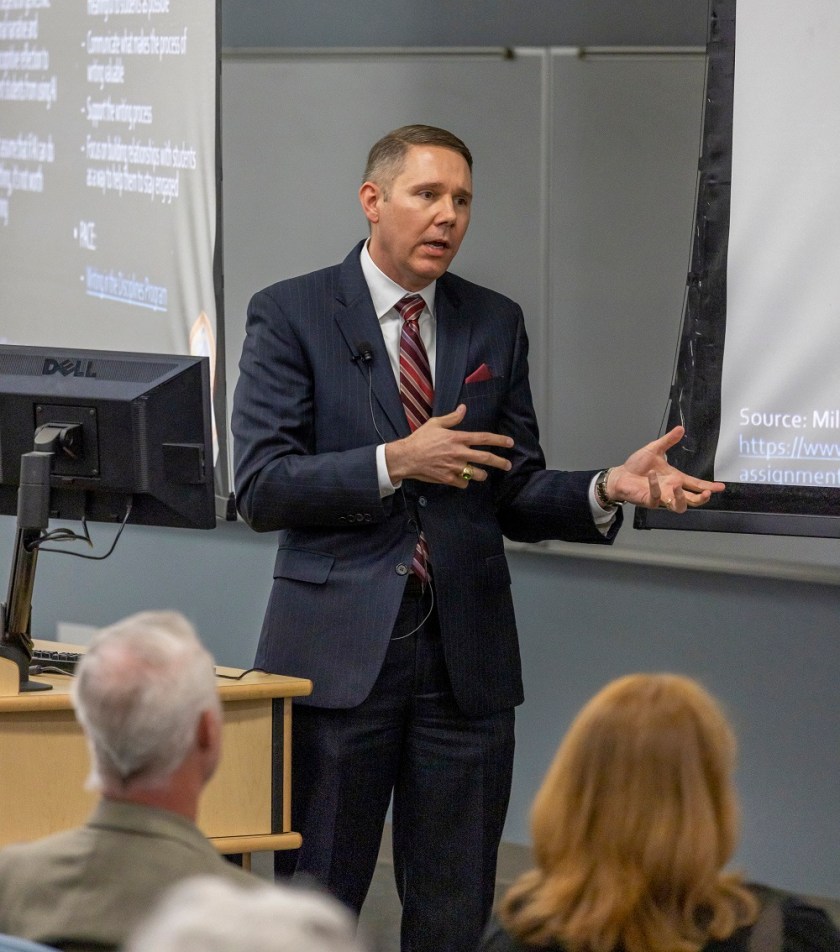
Dr. Ryan Zapalac anchored the panel, with a strong final presentation on the University structures and processes in place to consider the software and other matters of academic integrity.

The University, Zapalac noted, has recognized that academic integrity is an issue, and a committee has been in place since 2019 exploring these issues. Moreover, this committee is now a “standing committee,” and it is aware of ChatGPT and some of the challenges it will pose.

Because ChatGPT software is fluid and advancing rapidly, some proposed solutions to detecting or incorporating the software may be temporary. Accordingly, Zapalac encourages faculty to focus on the “motivation and writing process itself” and to refer to “Writing in the Disciplines.”

As noted by Zapalac, ChatGPT is less than a year old, and our speculations and current understandings may not hold up for long. Accordingly, Conversations with Administrators is currently planning a fall session that will continue this very conversation.

Many thanks to the PACE Center for bringing together talented people to start this conversation.

Pre-Law Society Meeting: Voir Dire

Last month’s Pre-Law Society meeting was a natural segue to the topic for this month’s Pre-Law Society meeting. Last month’s discussion featured three attorneys in a question-and-answer format focused on what to expect in law school and what life is like as an attorney.

This month’s meeting had multiple foci. First, the officers provided updates:

In the second part of the meeting, Jade Miller, Pre-Law Society President, Professor Mike Yawn, and Jean Loveall discussed a timeline to go to law school from freshman year to senior year of college.

Since Jade just completed her LSAT Prep, took the LSAT, and applied to her chosen law schools, she shared a wealth of information gleaned from her path to law school. With her personal story of LSAT Prep, Jade inspired the Pre-Law students with three strategies that worked for her: (1) take the Critical Thinking philosophy class (PHIL 2303); (2) budget your LSAT Prep time wisely; and (3) focus on developing and writing a strong argument when completing the Writing Sample part of the LSAT.

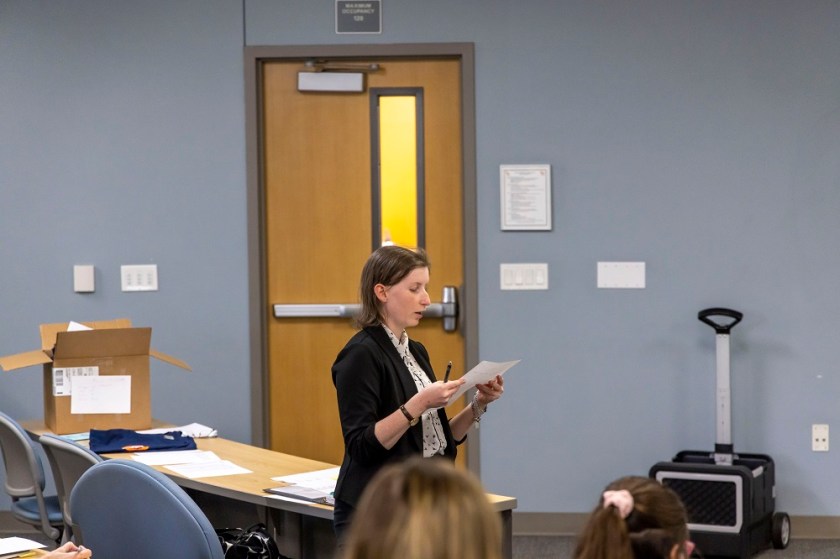
After hearing such encouraging words and valuable advice from the three presenters, the Pre-Law Society members were energized to engage in a voir dire activity. Voir dire is the process in which trial attorneys examine potential jurors before the jurors are selected to serve on the trial.

Amari Gallien presided over the voir dire as the Judge, Sephora Pham and Matthew May were the defense attorneys, and Professor Yawn was the prosecutor. As the potential jurors, each of the remaining Pre-Law Society members received a vignette of the character they would portray as a potential juror. These vignette characters ranged from a male country music singer/songwriter with a high school degree to a female accountant pregnant with her second child to a 72-year-old retired art history teacher. This activity introduced future attorneys to the nuanced questioning and strategies involved in selecting jurors for a criminal trial.

Thank you to all the Pre-Law Society members who participated in this interactive meeting. As president, Jade Miller has some exciting topics planned for next month’s meeting. One activity to look forward to is the cording of all Pre-Law Society members who are graduating in spring 2023. We hope to see all Pre-Law Society members on April 19th!