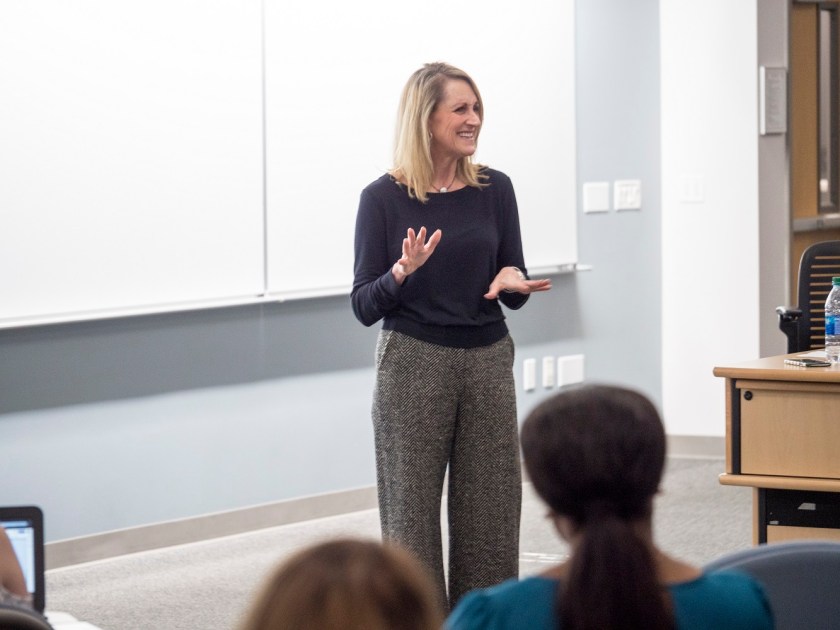
Contracts, Promissory Estoppel, & Chess: Simulated Law Class with Professor Val Ricks

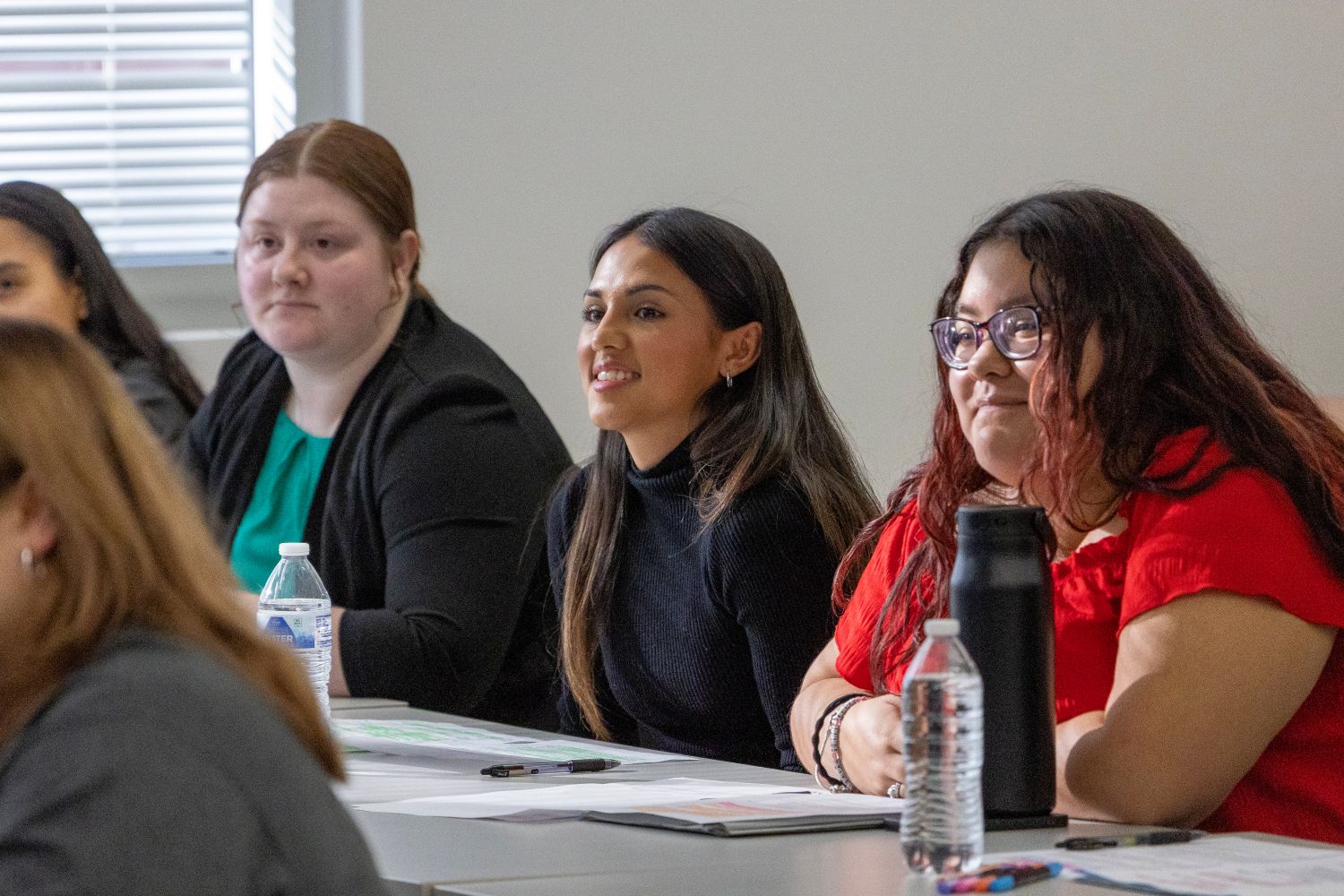
Last week, LEAP students had the opportunity to experience what it’s like to be in a law class led by Professor Val Ricks at South Texas College of Law Houston! From cold calls that made us lean in with anticipation…

…to deep dives into Promissory Estoppel, Professor Ricks left us all with new knowledge and a new way of viewing words.
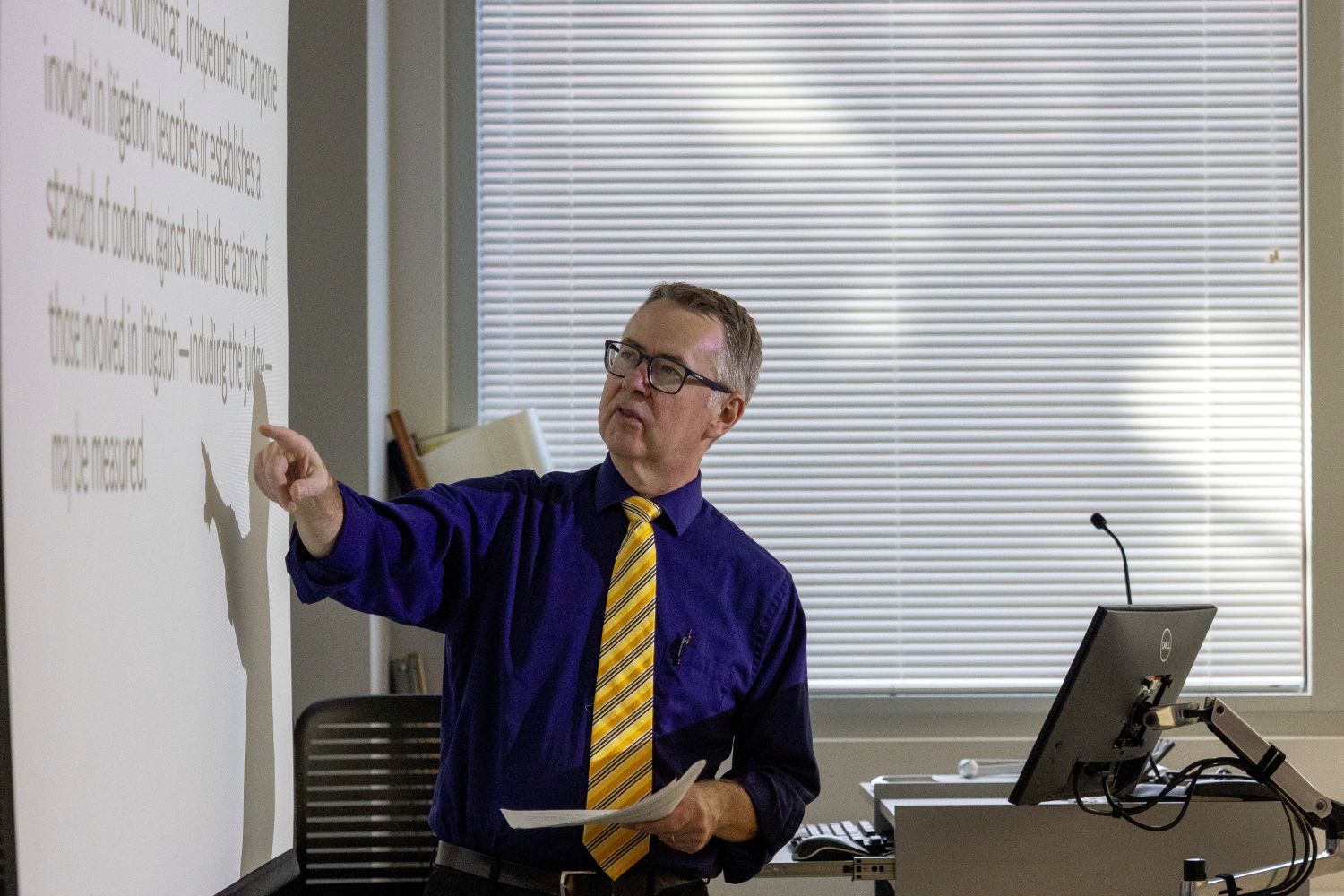
The mock class started with defining what law is, specifically:

Law: a set of words that, independent of anyone involved in litigation, describes or establishes a standard of conduct which against the actions of those involved in litigation — including the judge — may be measured. 
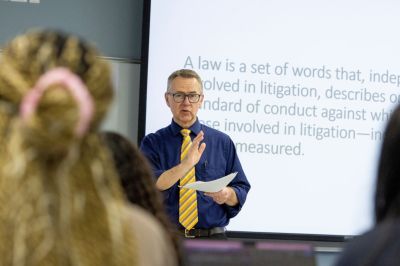
Why do humans form law? Would law exist if humans didn’t? The simple answer is: Law is just a standard of conduct humans use to govern themselves. Even though we write them down, without us here to interpret those words, they would have no value.

Professor Ricks related law to a game of Chess, each piece on the board is affected by a rule, that, in turn, influences the sequence of the game.

Then it was time for the case: G.D. Holdings, INC. v. H.D.H. Land & Timber, L.P., a civil case revolving the transaction of 300,000 dollars in exchange for nine acres of land IF the land were to be surveyed, cleared, and level. Professor Ricks provided us with the facts of the case and turned it over to us, cold calling on students…
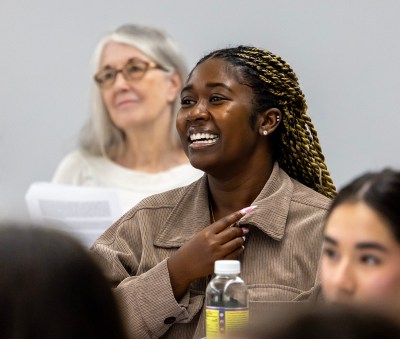
…to give the other aspects of their case briefs.
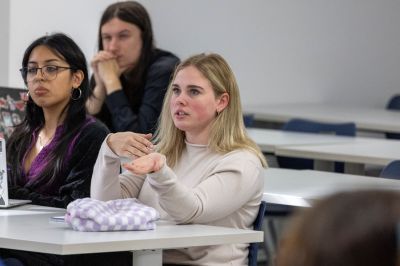
Learning from each other, we began to apply the rule of Promissory Estoppel, re-defining its three requisites.
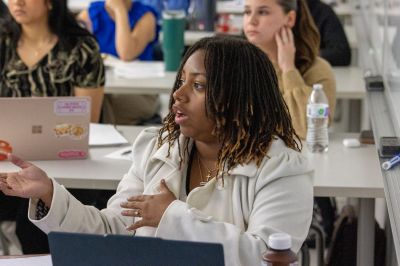
As a class we came to understand that Promissory Estoppel is when a promise is made and the person making the promise can reasonably predict that the person agreeing to the promise will rely on that promise in a detrimental way.
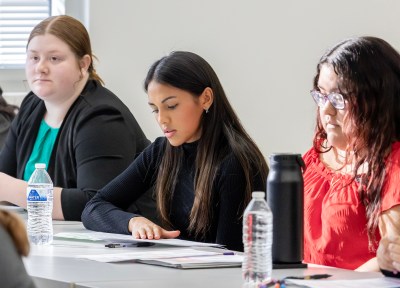
In the example case, the promise was the purchase of land by G.D. Holdings from H.D.H. once the land got cleared.
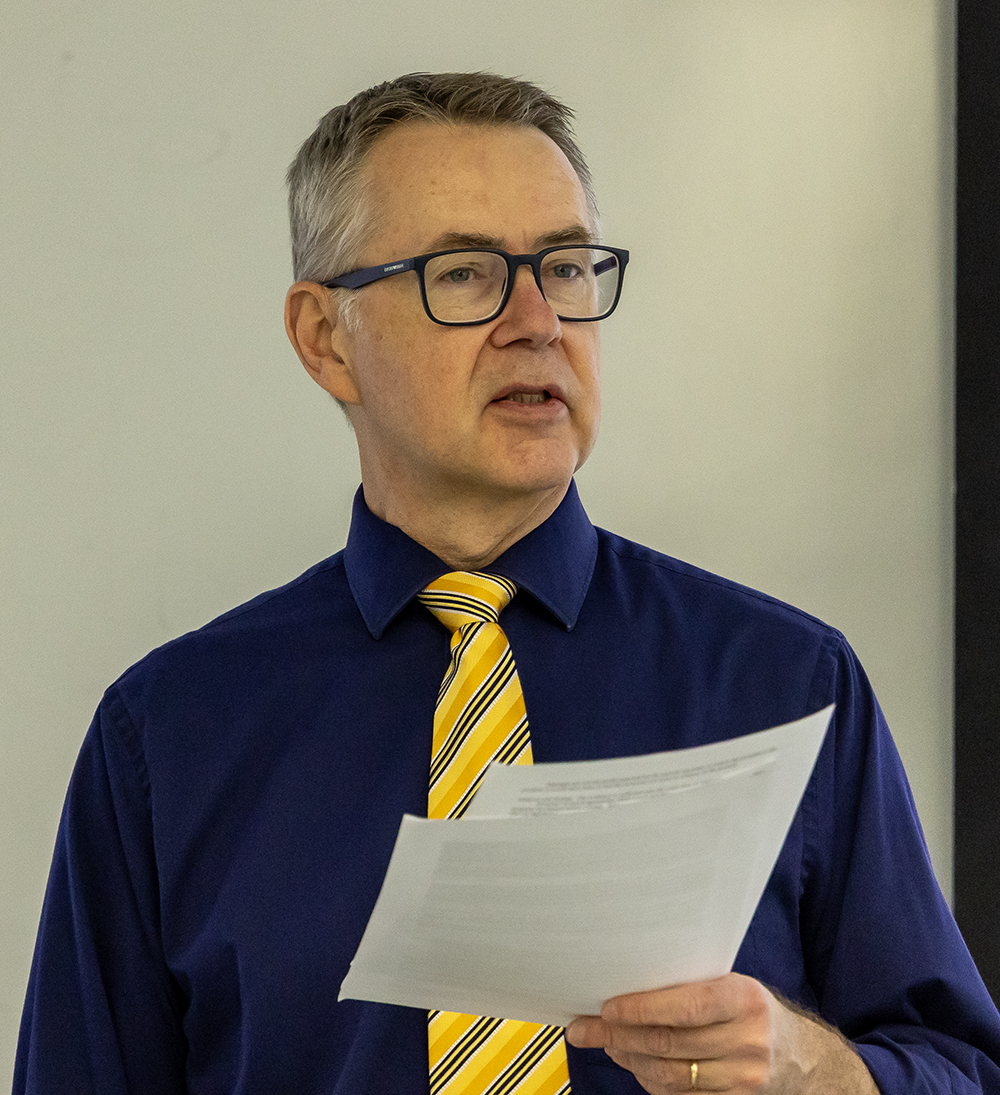
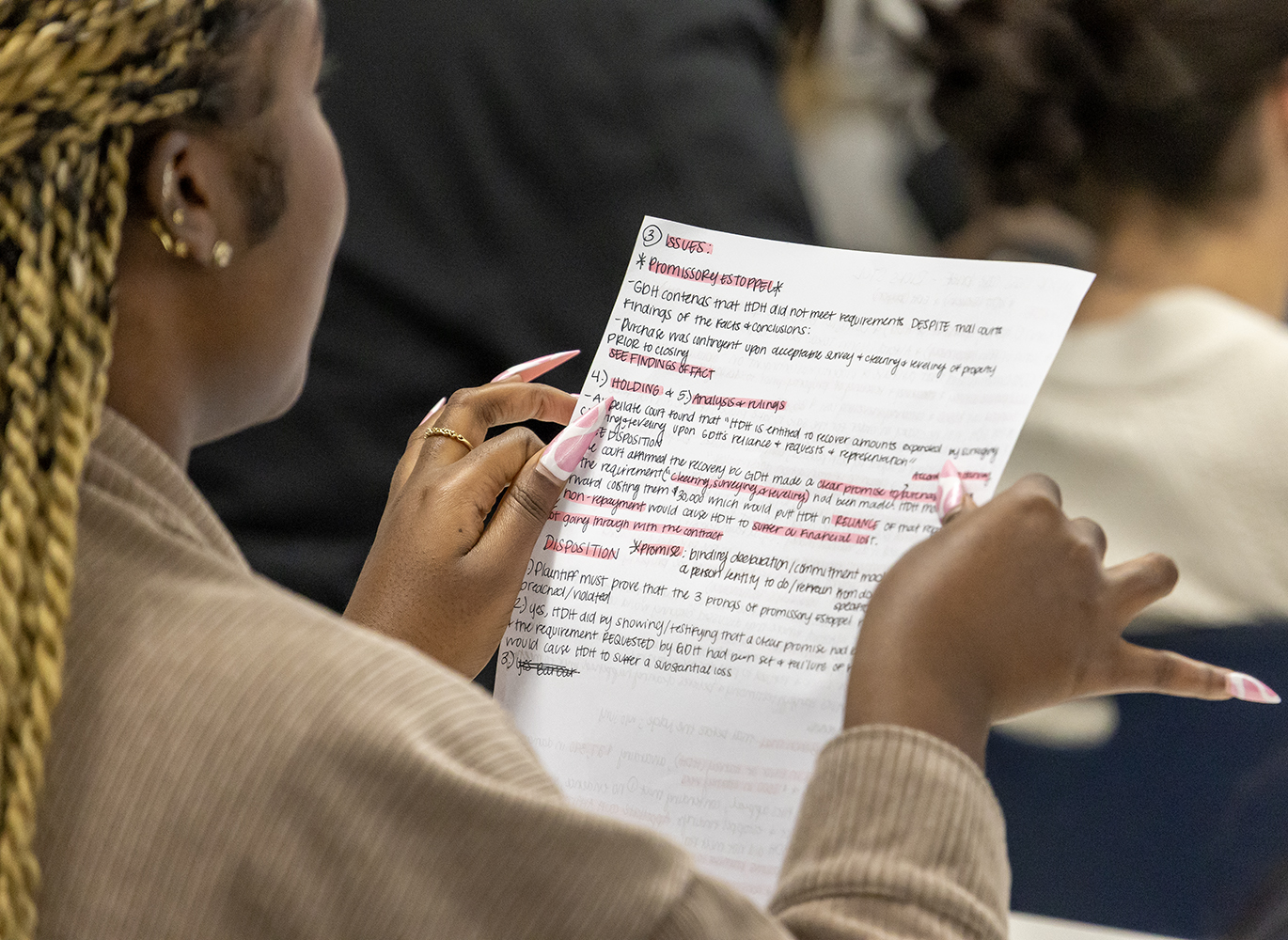
We also learned that even though both parties signed a contract, because one party crossed out a clause in the contract before signing, the law considers that to be two different contracts meaning there wasn’t ever a valid contract.

After we dissected the case and the language used in it, we got to practice our application with a few examples and found that Professor Ricks (to no one’s surprise) did an excellent job at teaching us the concepts so we all properly applied the learned rules to other cases.
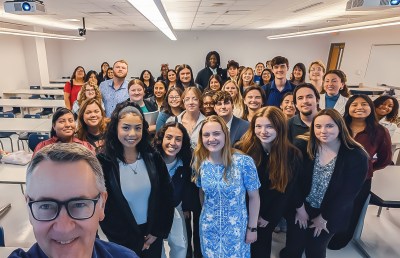
We also got the chance to ask Professor Ricks about law school admissions, grading, as well as what to expect in similar law school classes. Of course, we had to get our signature selfie to finish the class, but the learning didn’t stop there as even afterwards, all of us were beaming with a new passion for contract law and hopes for what future knowledge lies ahead.
Real Law in a Simulated Context

The LEAP Center typically invites Professor Val Ricks from the South Texas College of Law–Houston to campus in the spring, but we made it a fall event this year. And so it was that, last week, Professor Ricks spoke to 35 SHSU pre-law students who signed up for an educational event–without extra credit, a class assignment, or give-away prizes.

They came because they wanted to learn, and they were willing to do some dense reading beforehand. The reading involved a contract, and this was no accident. Professor Ricks is one of the leading experts in the country on contract law; in fact, some of our alumni who have gone on to law school have informed us that they were assigned his book in their classes!

Professor Ricks began the course by informing us of his goals for this and any class that he teaches: (1) Get the words of the law – law is words, (2) Set the words out in a workable way, (3) Practice applying them, and (4) Consider what is “right” – the law is a moral exercise.

He went about this through the Socratic method since everyone loves being called on and questioned until they cannot answer. At least, we will have to if we plan on practicing the law, especially, in the courtroom. Through his random number generator, he called on those people to answer his questions regarding the G.D. Holdings, INC v H.D.H. Land & Timber, L.P., 407 S.W.3d 856, 2013, after delivering the facts and procedures of this case.

Many of us believed we were prepared but we did not know what to expect, so were we really prepared for Professor Ricks to hit us with questions like, What is the legal issue being addressed? How did you draw this conclusion? What is the ruling of the Court? A few of us addressed this question with the trial court’s ruling which led Professor Ricks to ask us, Where did you read that? Why do you think that is the final ruling? In these instances he let us help each other out when the person he called on was stuck, which we later learned that in an actual law class he would have picked that individual’s brain until they provided the answer he was looking for.

We continued this process as we provided evidence that we thought best fit or would prove the three different clauses of Promissory Estoppel- the legal issue of the case – (a) a promise, (b)foreseeability of reliance by the promissor, and (c) substantial reliance by the promisee to his detriment. It was at this moment, that we felt the high pressure that lawyers feel in a courtroom the most. With us acting as lawyers and Professor Ricks as a judge, who questioned us to help fill in the gaps in the story and understand what we were thinking. This proved to be a lot harder than we thought since proving that a promise, the first part of Promissory Estoppel, had been made was difficult and some of us soon learned that in this context a promise was defined as a commitment.

Following the class, most of us were more certain than ever that we wanted to attend law school. This was a sentiment Professor Ricks encouraged, as we learned when he stayed after to encourage us, answer questions, and take photos.

Mock Law Class: Version 2021

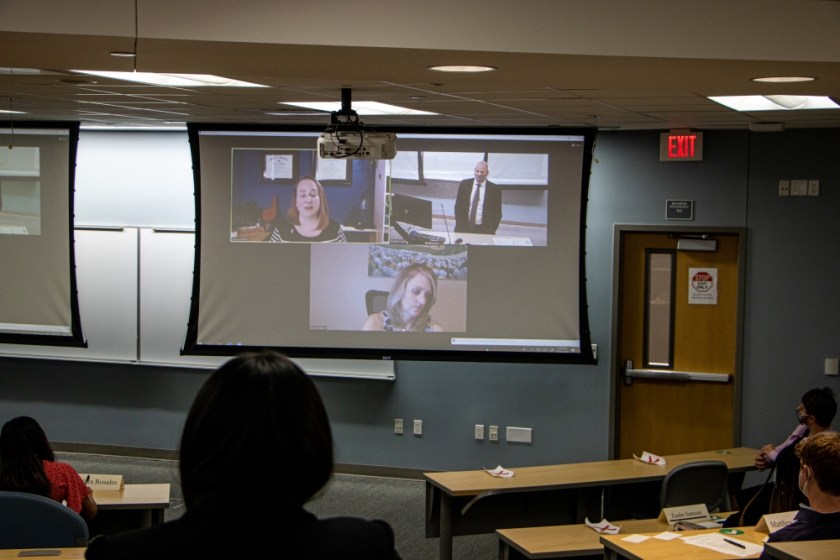
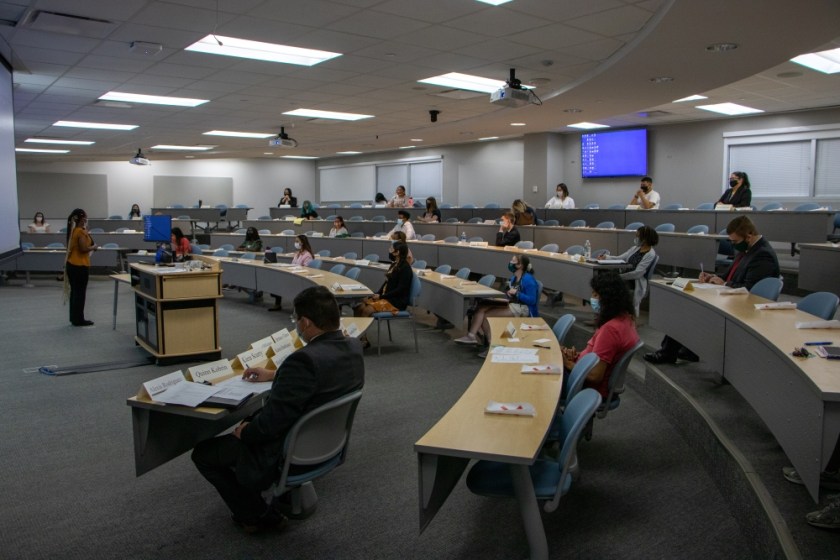
With a random number generator in hand, Val Ricks, Professor at South Texas College of Law, introduced himself to 16 pre-law students who registered to attend a virtual Mock Law School class on March 3, 2021. The class was taught by Professor Val Ricks, whose qualifications include a Juris Doctorate from Brigham Young University’s J. Reuben Clark Law School, legal work as an associate attorney with Kirton & McConkle, and almost 25 years teaching at South Texas College of Law. The Mock Law School class is a unique partnership between SHSU’s Center for Law, Engagement, And Politics and South Texas College of Law.

SHSU, LEAP Center, Center for Law Engagement And Politics, South Texas College of Law, Professor Val Ricks, Pre-Law

The students came to class prepared; they had already read and briefed the case which involved a contract dispute between the singer Mariah Carey and her stepfather. After Professor Ricks recited the facts of the case, he used the random number generator to select a student to discuss the legal issue of the case. Employing the Socratic Method of questioning, Professor Ricks skillfully led the pre-law students through the analysis of the legal issues in the case, the rule of law, and how the court applied the rule of law.

SHSU, LEAP Center, Center for Law Engagement And Politics, South Texas College of Law, Professor Val Ricks, Pre-Law

In evaluating the Class, several students commented that the Mock Law School Class gave them an opportunity to experience the real feel of law school while still being an undergraduate. Jessica Cuevas was grateful for the “amazing opportunity for a glance into the future of how my law school experience may be like regarding study habits and classroom settings. Attending the Mock Law Class solidified my decision to attend law school.”

In working through the logic of the Mariah Carey case, Professor Ricks homed in on some specific word choices in the opinion and mentioned synonyms for the legal terms. In this way, Ricks alluded to how language and law are closely linked.

SHSU, LEAP Center, Center for Law Engagement And Politics, South Texas College of Law, Professor Val Ricks, Pre-Law

After discussing the case, Professor Ricks asked some thought-provoking questions regarding the policies underlying the rule of law in the case and whether the court reached the correct result. In addition, like a question on a final law school exam, Ricks presented a hypothetical set of facts and asked the class to analyze the issue of the hypothetical based on the facts. Then, using the Mariah Carey case as precedent, he asked how a court would rule on the issue in the hypothetical case and what reasoning the court would use.

SHSU, LEAP Center, Center for Law Engagement And Politics, South Texas College of Law, Professor Val Ricks, Pre-Law

Professor Ricks followed up with some valuable advice for the pre-law students. He explained that law school is about studying old settled law so that as a practicing attorney, you have confidence in applying the law correctly to new fact patterns presented by clients. He suggested that students in law school take the Socratic questioning by law professors in class as a challenge and an opportunity to have a conversation with the professor. Ricks emphasized that the process of learning the law and applying it is more important than the specific legal cases. Yvette Mendoza commented, “ I loved this last part of the class because I was able to ask the law professor questions about law school.”

Professor Ricks advised the students of the importance of clearing everything off their calendar and devoting time to law school, especially in the first year of law school. Ruona Odharo asked a question about paying for law school. Ricks pointed out that South Texas College of Law strives to keep tuition as low as possible.

In response to Yvette Mendoza’s question on whether a student needs to go to a prestigious law school to get a good legal job, Ricks said that every law school teaches the same material using the Socratic Method, and that “excellence depends on you.” A great lawyer can come from any law school.

SHSU, LEAP Center, Center for Law Engagement And Politics, South Texas College of Law, Professor Val Ricks, Pre-Law

Pre-Law Society: Getting into Law School

By Heather Barodi

Our second meeting of the semester was another success. With a total of 70 members (a spring record), the organization continues to grow and meet the needs of one of the University’s most diverse organizations.

The meeting began with us updating our finances, approving minutes, and discussing upcoming opportunities, including: Mock LSAT, Mock Law class, the 10th Court of Appeals, and many others.

SHSU, LEAP Center, Center for Law Engagement And Politics, Pre-Law Society, PLS, Legal Kats, Kattorneys, South Texas College of Law, Dean Alicia Cramer

With this preliminary work out of the way, we introduced our guest speaker, Dean Alicia Cramer, who oversees admissions for South Texas College of Law (STCL).

SHSU, LEAP Center, Center for Law Engagement And Politics, Pre-Law Society, PLS, Legal Kats, Kattorneys, South Texas College of Law, Dean Alicia Cramer

Dean Cramer wasted no time with tips to get into, not just STCL, but also other law schools in which students might be interested.

Her first point that she stressed was that doing well in our undergrad years matters a lot.  Your grades, LSAT, major, grade trends, organizational leadership, and experience can all influence whether you are accepted to law school.

SHSU, LEAP Center, Center for Law Engagement And Politics, Pre-Law Society, PLS, Legal Kats, Kattorneys, South Texas College of Law, Dean Alicia Cramer

Dean Cramer stressed that being prepared for your LSAT and taking it once was a key strategy: poor scores, even if they are replaced by higher scores, stay on your record.  She did recommend prep courses, highlighting the free Khan Academy, which she has seen benefit many students.

SHSU, LEAP Center, Center for Law Engagement And Politics, Pre-Law Society, PLS, Legal Kats, Kattorneys, South Texas College of Law, Dean Alicia Cramer

Dean Cramer also told us that the personal statements should stay to a 2 ½ page maximum, unless otherwise stated. She said think about it like an interview on paper, so say what is important, but do not repeat your resumes, since the schools will have it. Be concise with your statement and do not lose sight of what your topic is.

SHSU, LEAP Center, Center for Law Engagement And Politics, Pre-Law Society, PLS, Legal Kats, Kattorneys, South Texas College of Law, Dean Alicia Cramer

With all the new found knowledge and tips we obtained from Dean Cramer, we ended with a Q&A session just in case students had some questions on topics we had missed.  More than most sessions, the students engaged and asked good questions, a sign, perhaps, of our students becoming closer and more engaged.,

Our next meeting will be March 18.  We will meet in CHSS 252, where we will follow-up Dean Cramer’s presentation with a workshop on law-sch0ol selections–with us serving as the selection committees and reviewing actual resumes and letters of recommendations.

The Dos and Don’ts of Your Law School Application: PLS in October

Photos and text by Heather Barodi

Our second meeting of the semester went on without skipping a beat. There were very few minor things to take care of before we got right down to business with our guest panel, which included three law school deans or recruiters.

We started our meeting with some housekeeping, which included an acknowledgement and congratulations for our most members (yet) and ended with a discussion on our upcoming volunteer event, Scare on the Square.

Afterwards, we were introduced to our admissions panel. We had Megan Henson (Associate Director of Admissions at University of Tulsa), Shawn Adams (Assistant Director for Recruitment at Texas Tech Law), and Jens Sandberg (Admissions Recruiter at South Texas College of Law).

SHSU, Pre-Law Society, LEAP Center, Center for Law, Engagement And Politics, Texas Tech Law, University of Tulsa Law, South Texas College of Law, Pre-Law

Our president, Sawyer Massie, started our Q&A with a few basic questions, but our members quickly jumped in and had some interesting questions of their own.

SHSU, Pre-Law Society, LEAP Center, Center for Law, Engagement And Politics, Texas Tech Law, University of Tulsa Law, South Texas College of Law, Pre-Law

Our panelist informed on things to put on our applications, what not to put, how to write the “perfect” personal statements, retaking LSATs, and many other things.

SHSU, Pre-Law Society, LEAP Center, Center for Law, Engagement And Politics, Texas Tech Law, University of Tulsa Law, South Texas College of Law, Pre-Law

Each panelist offered their own unique advice fit for their school, as well as their own personal advice that they endeavored when they applied for law schools.  They were very informative, while also injecting some humor into the discussion.

SHSU, Pre-Law Society, LEAP Center, Center for Law, Engagement And Politics, Texas Tech Law, University of Tulsa Law, South Texas College of Law, Pre-Law

The common denominator for that all three came into agreement on one thing: be yourself. That is the one thing most applicants miss on because they focus on what they think the admissions office wants to hear rather than the truth.

SHSU, Pre-Law Society, LEAP Center, Center for Law, Engagement And Politics, Texas Tech Law, University of Tulsa Law, South Texas College of Law, Pre-Law

At the end of this meeting, we can all say we left with more than we expected know and feel a little less nervous for our applications. Our final meeting of the fall semester is November 20, and we expect to have another exciting and educational meeting!

SHSU, Pre-Law Society, LEAP Center, Center for Law, Engagement And Politics, Texas Tech Law, University of Tulsa Law, South Texas College of Law, Pre-Law

Learning the Law–Mock Law Class with Professor Val Ricks

Every Spring, the Center for Law, Engagement, and Politics invites Professor Val Ricks to teach a Mock Law class on the SHSU Campus. He teaches a class on contract law exactly as he teaches it down in his own classroom at South Texas College of Law in Houston. Students that sign up are emailed the cases about a week before the class and are expected to read and brief them by class time. Professor Ricks teaches the class using the Socratic method, a form of interlocutory discussion, which is commonly used in law schools to develop critical thinking in students.

SHSU, LEAP Center, LEAP Ambassadors, Pre-Law, South Texas College of Law, STCL, Professor Val Ricks, Center for Law Engagement And Politics

The lesson focused on the concept of consideration and how it is an essential element of every contract. We learned all about how both parties in an agreement must each offer something in exchange for the agreement to be considered valid.

SHSU, LEAP Center, LEAP Ambassadors, Pre-Law, South Texas College of Law, STCL, Professor Val Ricks, Center for Law Engagement And Politics

We answered questions about the facts of the case and discussed several different scenarios in which consideration from one of the parties in an agreement was lacking and how it affected the ruling in each case.

SHSU, LEAP Center, LEAP Ambassadors, Pre-Law, South Texas College of Law, STCL, Professor Val Ricks, Center for Law Engagement And Politics

It was a unique opportunity for many of the students who had never been exposed to law school to experience what it’s like inside a law classroom.

SHSU, LEAP Center, LEAP Ambassadors, Pre-Law, South Texas College of Law, STCL, Professor Val Ricks, Center for Law Engagement And Politics

Toward the end of class, Professor Ricks invited anyone who had questions to approach him and ask, to which many students did.

SHSU, LEAP Center, LEAP Ambassadors, Pre-Law, South Texas College of Law, STCL, Professor Val Ricks, Center for Law Engagement And Politics

Before bidding us goodbye, he shared that we performed about as well as his usual first-year students that he teaches down in Houston. As a group, we thanked him for making the drive up to Huntsville and expressed hope that he’d join us again next spring.