Written by: Isis Hollis
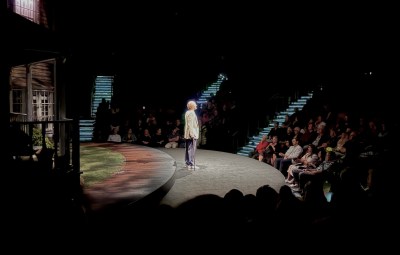
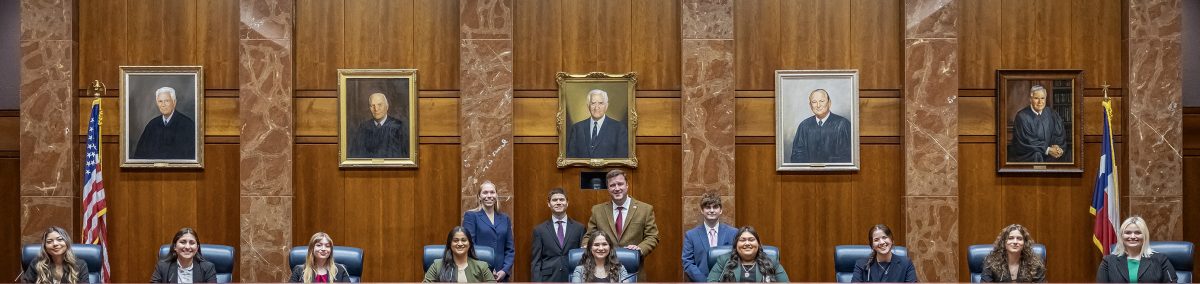
During our retreat in Houston, LEAP students and alums visited the Alley Theatre once again to watch a performance of The Girl on the Train! Based on the bestselling novel by Paula Hawkins and the Dreamworks film adaptation, the play proved to be another memorable addition to LEAP’s theatrical experiences.

The Girl on the Train follows Rachel Watson (Elizabeth Bunch), an alcoholic whose life has begun to unravel following her divorce. One morning, Rachel receives a visit from Detective Gaskill (David Rainey), who informs her that a woman named Megan Hipwell (Emily Neves) has gone missing. Rachel immediately becomes invested in finding her. Although she has never met Megan, Rachel used to see her and her husband from the train each morning and imagine that they lived a perfect, happy life. With Megan now missing, that illusion is shattered, and Rachel becomes determined to uncover what really happened. The list of suspects is long: from a therapist, Dr. Kamal Abdic (Christopher Salazar), to Rachel’s ex-husband Tom Watson (Chris Hutchison) and his new wife, Anna (Michelle Elaine), to Megan’s husband, Scott (Dylan Godwin–an SHSU Alum), to even Rachel herself.
The story takes us through an exciting series of twists and turns, leaving many of us surprised when the mystery finally came to a close. Kayla and Tania were particularly surprised by the ending, while others, like Britlynn, managed to figure out the twist early. Afterward, we had a great discussion about our reactions to the play, and many of us agreed that it had earned a place among our favorite Alley Theatre productions.


The British accents of the characters also caught some of us off guard, especially those who had previously watched Misery at the Alley. Elizabeth Bunch and Chris Hutchison, who played Annie Wilkes and Paul Sheldon in that production, returned as Rachel and Tom. Many of us find the husband-and-wife duo particularly fascinating to watch because they seem to have a knack for playing characters who either despise each other or are completely obsessed with one another—and sometimes both! Their dynamic creates an interesting on-stage chemistry that made their performances especially memorable.
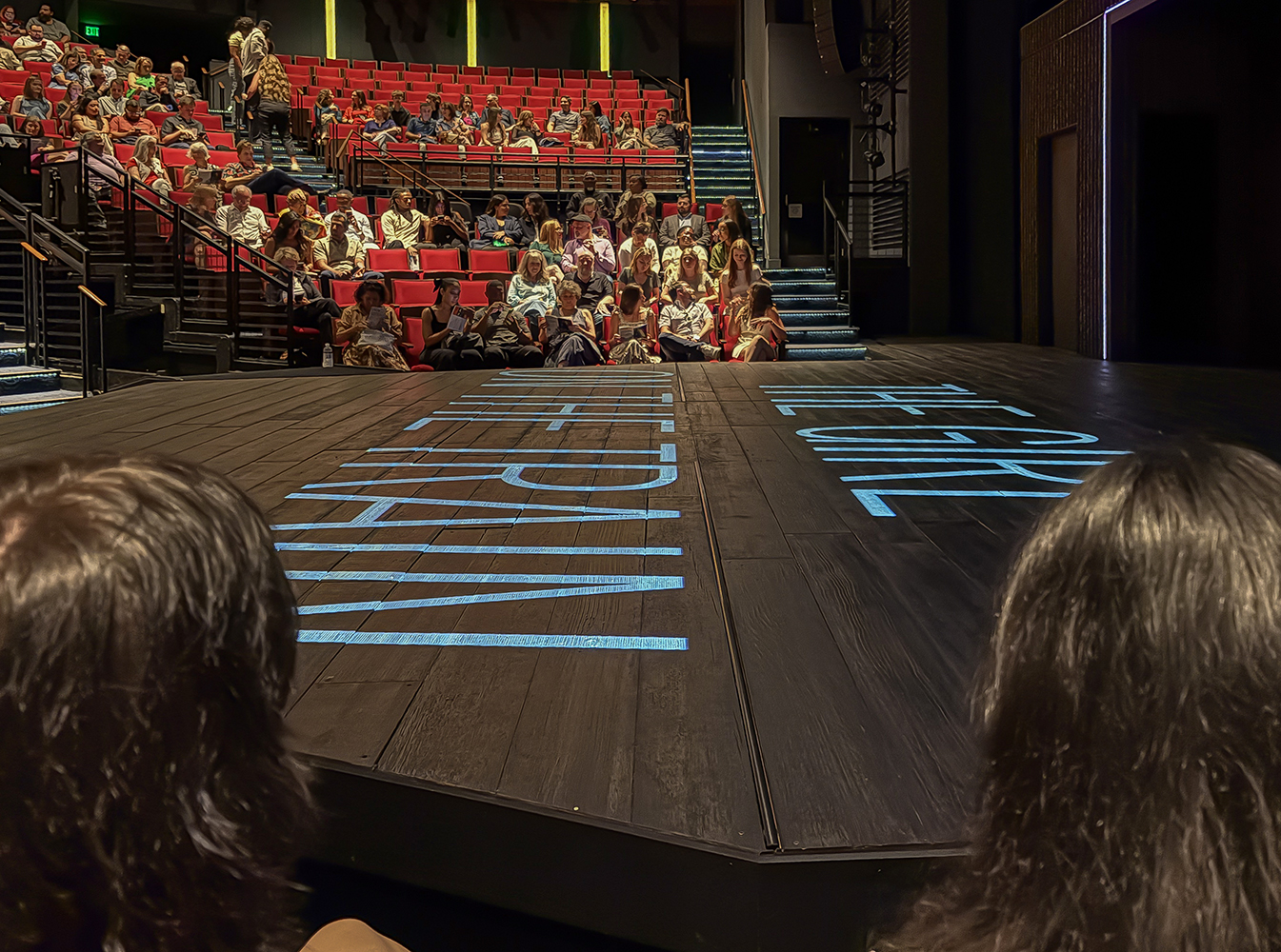
My favorite aspect of the play was the set. I really enjoyed the way that the stage had been designed to move; parts of the stage raising and lowering to reveal or conceal furniture that changed the scenery. They also utilized a catwalk-like structure above the stage to demonstrate the terrace of Megan’s home, which allowed Rachel’s memories to be displayed over the action of scene below. One of Olivia’s favorite parts was how they portrayed the moving train, through lights and set. Towards the end of the play, the technical team even utilized projection to create train tracks that ran across the stage.

Overall, the combination of story, acting, and creative set design made The Girl on the Train a great watch. We are all looking forward to our next opportunity to experience another Alley Theatre production together!
Many thanks to alums who joined us: Ademide Adedokun, Justin and Chelsea Beiser, and Quinn Kobrin–and to Ademide’s friend, Andrea Alexander.