Skip to content

Center for Law, Engagement, and Politics

Leap At SHSU!

  • About LEAP
  • LEAP Ambassadors
Center for Law, Engagement, and Politics

Category: Food

Our Kind of Town–Chicago

It is our last day, and we are determined to get the most out of it!

Art Institute of Chicago

Ilexus Williams

The LEAP Students headed to the Art Institute of Chicago, which was established in 1878.

SHSU, LEAP Center, LEAP Ambassadors, Art Institute of Chicago, Chicago IL

It is one of the oldest and largest art museums in the U.S, and it has a permanent collection of more than 300,000 pieces. This was by far the largest art museum the LEAP Students have visited. It would be nearly impossible to see all of the exhibits. However, we managed to get a sense of everything the museum had to offer.

First, we started with The Great Wave by Katsushika Hokusai.

SHSU, LEAP Center, LEAP Ambassadors, Art Institute of Chicago, Chicago IL

This piece is one of the most famous Japanese woodblock prints, and it is the most recognized. The print shows an enormous wave risking the safety of three boats. In the distance, at the base of the wave, is Mount Fuji.

Next, we viewed Marc Chagall’s America Windows, which shows a beautiful set of stained glass windows. Chagall’s stained windows were inspired by the United States adherence to cultural and religious freedom, and we saw a similar window at the United Nations earlier this year!

SHSU, LEAP Center, LEAP Ambassadors, Art Institute of Chicago, Chicago IL, Marc Chagall

We saw many pieces that exemplified impressionism, an art style that is a reaction to the creation of photography. Instead of taking days catching every detail in a painting, artists would paint based on how they felt in that moment and paint an “impression” of that scene. Painting incorporated emotion rather than emphasizing technical accuracy. One of our favorite pieces was Icebound by John Henry Twachtman.  Twatchman did not want to depict winter as a solitary and desolate scene because he found beauty and life in this season.SHSU, LEAP Ambassadors, LEAP Center, Art Institute of Chicago, Chicago IL, John Twachtman

The most notable impressionist artist is Claude Monet. Monet is a French artist, and he is credited as the founder of the impressionist technique. One of his most recognized piece is Sacks of Wheat. Claude Monet captured this image outside of his farmhouse. The wheat sacks are said to be a symbol of sustenance and survival.  He is also very known for his Bridge paintings, which we also enjoyed.

This slideshow requires JavaScript.

Another influential impressionist or post-impressionist artist is Georges Seurat, well known for pointillism. Pointillism is an art style created by making small clusters of colored dots to form an image. His most prominent work that displays this technique is A Sunday on La Grande Jatte.

SHSU, LEAP Center, LEAP Ambassadors, Art Institute of Chicago, George Seurat, Sunday La Grande Jatte

We also saw a self portrait of Vincent Van Gogh.

SHSU, LEAP Center, LEAP Ambassadors, Art Institute of Chicago, Van Gogh

Next, we moved to the modern American art exhibit. Here we saw remarkable pieces such as Edward Hopper’s Nighthawks.

SHSU, LEAP Center, LEAP Ambassadors, Art Institute of Chicago, Edward Hopper, Nighthawks

We also recognized an artist that the LEAP students are familiar with: Georgia O’Keeffe. She is acknowledged as the Mother of American Modernism. Her work often depicts magnified images of flowers…

SHSU, LEAP Center, LEAP Ambassadors, Art Institute of Chicago, Georgia Okeeffe

…and also often incorporates images of animal remnants.

SHSU, LEAP Center, LEAP Ambassadors, Art Institute of Chicago, Georgia Okeeffe

Another interesting piece was by Ivan Albright. All of his pieces, at least that we saw, were gory, morbid, and disturbing. For instance, his piece Picture of Dorian Gray was inspired by Oscar Wilde’s novel.  In this story the main character has a portrait of himself painted as a young man. Later in the novel, he trades his soul for everlasting youth. However, he continues to live an immoral lifestyle. As the story unfolds, his self portrait that once captured youth had turned disgusting, reflecting his sins and decadence.

SHSU, LEAP Center, LEAP Ambassadors, Art Institute of Chicago, Ivan Albright

The most recognized piece in the Modern exhibit is Grant Wood’s American Gothic. While visiting Iowa, Grant spotted a Carpenter Gothic style farmhouse and wanted to paint individuals that he believed would inhabit the home. Grant believed that his subjects needed elongated faces to match the house. As a result, Grant used his sister and his dentist to portray a farmer and his daughter. His subjects stood as a symbol of rural American survival.

SHSU, LEAP Center, LEAP Ambassadors, Art Institute of Chicago, Grant Wood, American Gothic

Before leaving the Modern American Art wing, we took a picture of a work by a LEAP favorite: Ellsworth Kelly.

SHSU, LEAP Center, LEAP Ambassadors, Art Institute of Chicago, Ellsworth Kelly

Before heading to the Contemporary portion of the museum, we stopped to view the ‘Sky above the Clouds IV’ by Georgia O’keeffe.

SHSU, LEAP Center, LEAP Ambassadors, Art Institute of Chicago, Georgia Okeeffe

In the Contemporary art exhibit we viewed many well known artists such as Andy Warhol…

SHSU, LEAP Center, LEAP Ambassadors, Art Institute of Chicago, Andy Warhol

….Jackson Pollock…

SHSU, LEAP Center, LEAP Ambassadors, Art Institute of Chicago, Jackson Pollock

….and Pablo Picasso.

SHSU, LEAP Center, LEAP Ambassadors, Art Institute of Chicago, Pablo Picasso

The LEAP students had a great time exploring the Art Institute of Chicago. It was incredible to see such a wide variety of art.

SHSU, LEAP Center, LEAP Ambassadors, Art Institute of Chicago
AIC_33_Window_Ilexus_Maggie_web
SHSU, LEAP Center, LEAP Ambassadors, Art Institute of Chicago

Chicago Style Pizza at Uno Pizzeria & Cloud Gate (aka, The Bean)

Maggie Denena

Our next stop after the art museum was to eat lunch at Pizzeria Uno, a deep dish pizza restaurant that was founded in 1943.

I had never had an original deep dish pizza before, and my expectations were high because we were in Chicago.

But first, we had to stop back by Cloud Gate to see the work in the daylight. There were tourists and families everywhere around Millennium Park; it was so crowded it was hard to get a good picture in front of the Bean. As beautiful as the sculpture is on a sunny day like Saturday, I am glad we were able to go the night before and appreciate the art without the crowds.

LEAP Center, LEAP Ambassadors, SHSU, Chicago IL, Millennium Park, Anish Kapoor, The Bean

We did our best to get a few good “LEAPing” pictures that we couldn’t get in the dark, and then continued on our way to lunch.

LEAP Center, LEAP Ambassadors, SHSU, Chicago IL, Millennium Park, Anish Kapoor, The Bean

We also detoured to see Frank Gehry’s Pavillion…

LEAP Center, LEAP Ambassadors, SHSU, Chicago IL, Millennium Park, Frank Gehry

…replete with his rolling titanium curves.

We took a taxi the rest of the way to Pizzeria Uno—my first time in a taxi as well. The taxi ride was an interesting experience. Even though it was about 2:30pm by the time we arrived at lunch, the restaurant was still packed! The hostess told us there would be about a 30 minute wait and took our pizza order at the front so that the pizza would be ready for us when we were finally seated, which I thought was quite efficient.

SHSU, LEAP Ambassadors, LEAP Center, Art Institute of Chicago, Chicago IL, Uno Pizzeria

Professor Yawn and I ordered a medium Numero Uno to share, a deep dish pizza topped with a bit of everything, including Uno’s signature chunky vine ripened tomato sauce.  Ilexus ordered a small Farmer’s Market, a vegetarian deep dish topped with onions, spinach, and sun dried tomatoes along with other pizza toppings.

LEAP Center, LEAP Ambassadors, SHSU, Chicago IL, Millennium Park, Uno Pizzeria, Chicago-Style Pizza

We were seated about 20 minutes after arriving and the inside of the restaurant was small and cramped but had a fun and original vibe to it. The booths and tables were close together, really emphasizing the authentic atmosphere of the location. Not long after we were seated our pizza was brought to our booth table. We definitely over ordered, not knowing how large the pizza’s would be. The deep dishes were fresh out of the oven and since we hadn’t eaten since breakfast, I was eager to dig in. Honestly, the Farmers Market was my favorite between the two because I felt that it was a bit different than any other pizza that I have had, not that the original Numero Uno let me down at all. The deep dish pizzas at Numero Uno really rounded out our Chicago experience, and I hope to be able to go back there again someday!

That afternoon, we headed towards the 360 Chicago Observation Deck at the John Hancock Center located in the Magnificent Mile district. The skyscraper is 100 stories tall, coming in at 1,128 feet high. When the building was topped off on May 6, 1968, it was the second tallest building in the world, second only to one in New York City. It is now the fourth tallest in Chicago and the ninth tallest in the world. Another neat fact is that it has the second highest resident population in the United States, behind Trump Tower in Chicago. Although it isn’t the tallest building in Chicago, it is home to the “TILT” thrill ride where an enclosed platform tilts you over the edge of the building, looking down toward a seemingly impending doom. The TILT is at a 30-degree angle from the building. Ilexus and I did the TILT first, and then Professor Yawn after us. I was less distraught and more disoriented after looking down over the city. The ride probably lasted less than a minute, but my upper body strength was slacking as I braced myself above the glass enclosure from 1,030 feet in the air.

SHSU, LEAP Center, LEAP Ambassadors, Chicago IL, John Hancock Observatory, TILT

The 360 observatory is located on the 95th floor and offers a view of up to four states, 80 miles in the distance.

SHSU, LEAP Center, LEAP Ambassadors, Chicago IL, John Hancock Observatory, TILT

The project was designed by Fazlur Rahman Khan with assistance from Structural Engineers, Skidmore, Owings and Merrill, and developed by John Hancock Insurance.

SHSU, LEAP Center, LEAP Ambassadors, Chicago IL, John Hancock Observatory, TILT

Navy Pier

After tilting off of the John Hancock Center while more than 1,000 feet in the air, the LEAP students decided to spend their final night in Chicago with their feet planted firmly on the ground at the Navy Pier.

SHSU, LEAP Center, LEAP Ambassadors, Chicago IIL, Navy Pier

The Navy pier is a 3,300 foot long pier off of Lake Michigan’s shore. While exploring the pier, we noticed that there were musical performances, so we followed the music and it led us to the Chi- Soul Fest. This festival was established as a way to celebrate Black Music Appreciation Month, which is during the month of June. We heard covers of famous artists such as Prince, Erykah Badu, India Arie, Kanye West, John Legend, Kool & The Gang, and Curtis Mayfield. The performances were truly captivating.

SHSU, LEAP Center, LEAP Ambassadors, Chicago IIL, Navy Pier

So much so that almost everyone listening could not sit still. You either wanted to get up and dance or just nod your head to the beat.This truly was a soulful experience.

Next, we walked the pier and enjoyed the beautiful view it gave of Lake Michigan and Chicago’s Skyline.

SHSU, LEAP Center, LEAP Ambassadors, Chicago IIL, Chicago Skyline

We had hopes of riding the ferris wheel, but the line was extremely long. However, we did manage to get great pictures.

SHSU, LEAP Center, LEAP Ambassadors, Chicago IL, Navy Pier

Our time was slowly winding down in the Windy city of Chicago, and it truly hurt that we had to part from this beautiful city. This trip has been nothing short of miraculous, and I am genuinely thankful to have the opportunity to explore so many parts of the world. See you later Chicago!

SHSU, LEAP Center, LEAP Ambassadors, Chicago IL, Navy Pier


Unknown's avatarAuthor mikeyawnPosted on July 9, 2019July 9, 2019Format AsideCategories Art, Civic Engagement, Food, TravelTags Art Institute of Chicago, Chicago IL, John Hancock Observatory, LEAP Ambassadors, LEAP Center, Millenium Park, Navy Pier, SHSU, Uno PizzeriaLeave a comment on Our Kind of Town–Chicago

Meandering Through Madison

Following yesterday’s travel day, we were ready for a full day in beautiful Madison, Wisconsin.  To that end, we began with brunch, followed by a full day of learning.  But this being Wisconsin, where protest is not only tolerated in the city, but actively encouraged, our first site was a number of “handmaids” descending on the capitol…

SHSU, LEAP Center, LEAP Ambassadors, Madison WI, Wisconsin Capitol, Handmaid's Tale, Margaret Atwood

DLux

For our first full day in Wisconsin, we started our day with brunch at Dlux, which is about half a block from the Wisconsin State Capitol. Being from the hot state of Texas, we jumped at the opportunity to enjoy our food outside without melting in the process.  Our food choices included more classic Wisconsin fare…

SHSU, LEAP Center, LEAP Ambassadors, Madison WI, DLUX, Ilexus Williams

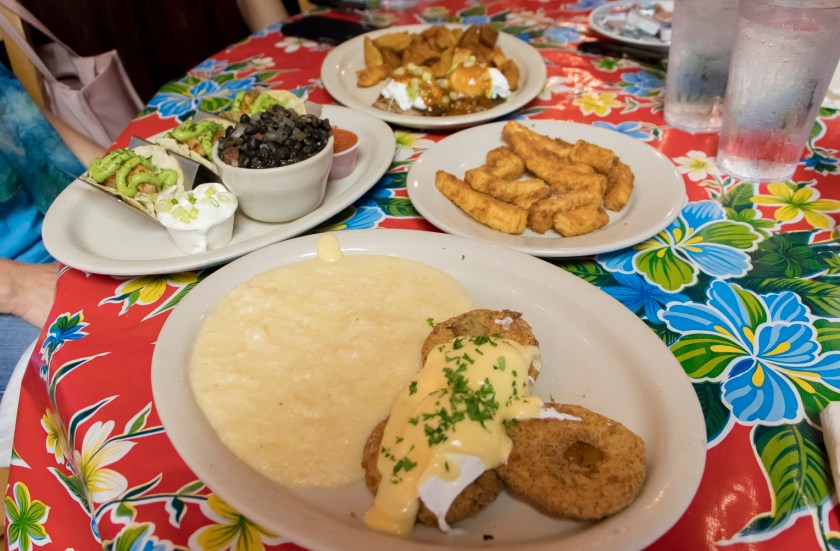
…such as Cheese Curds…

SHSU, LEAP Center, LEAP Ambassadors, Madison WI, DLUX

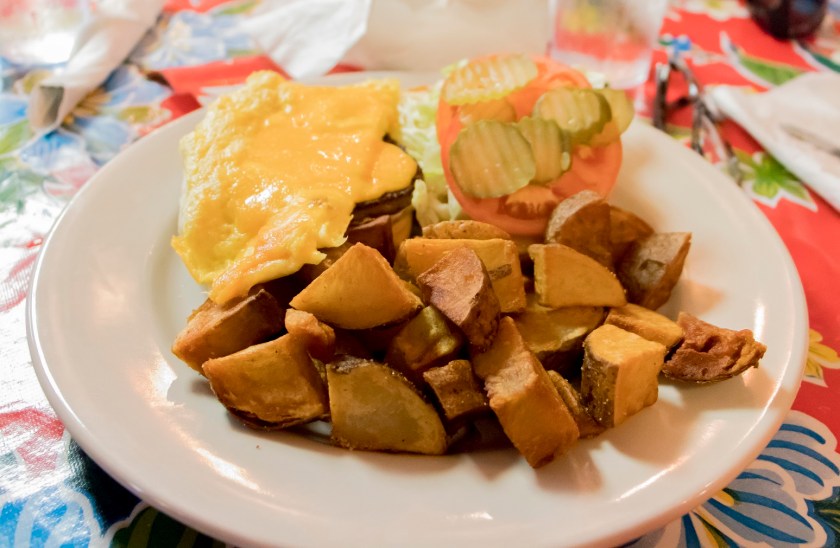
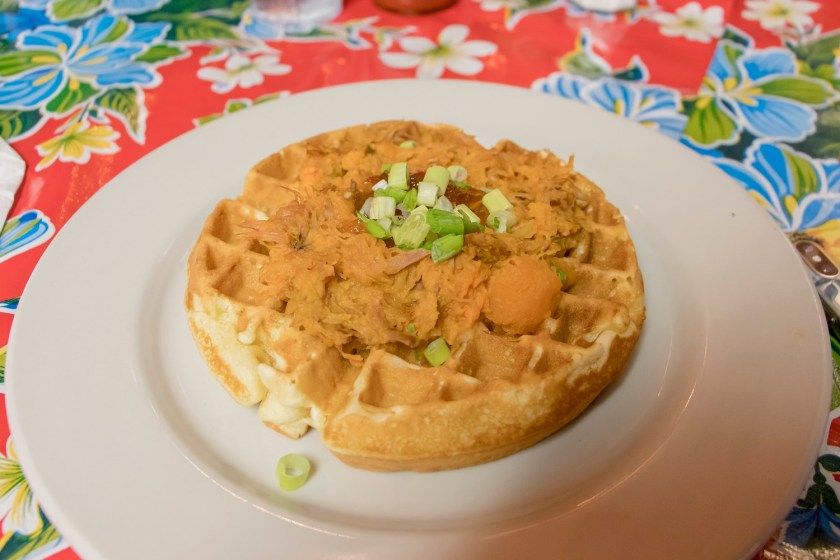
…the Salmon Burger, the White Bean Burger…

This slideshow requires JavaScript.

…and some truly wonderful shakes!
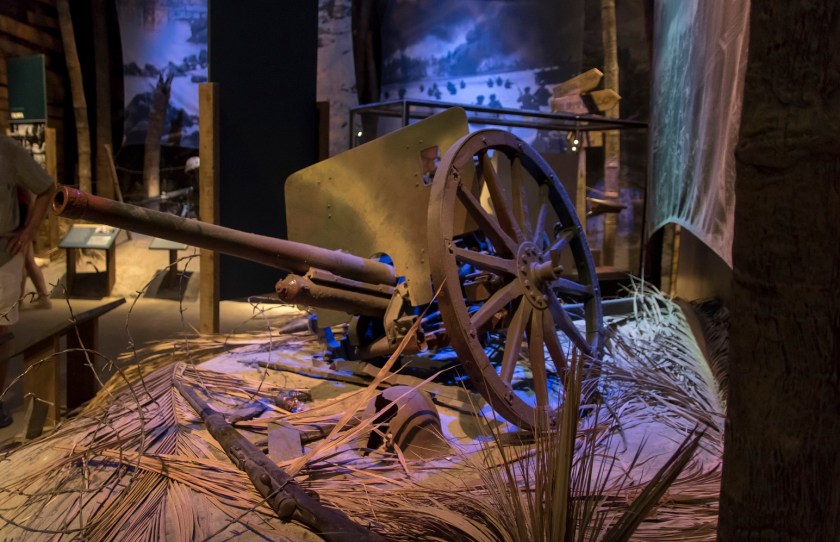
SHSU, LEAP Center, LEAP Ambassadors, Madison WI, DLUX

After brunch, the Leapsters headed to view their third Frank Lloyd Wright Structure!

Monona Terrace Tour

After having a quick brunch, the Leapsters toured the Monona Terrace Community and Convention Center. The Monona Terrace was designed by the architect we have studied throughout our entire trip: Frank Lloyd Wright. Frank Lloyd Wright has designed more than 1,000 structures. However, during his lifetime, he was only able to complete 523 structures. Out of Mr. Wright’s 1,000 designs, the Monona Terrace was one of the structures he was unable to see through to its completion, at least during his lifetime.

In 1938, Frank Lloyd Wright designed a building that would establish a clear relationship between the Wisconsin State Capitol and Lake Monona. Local newspaper articles called it the “dream Civic Center.” His original plan for the design included an auditorium, rail depot, marina, courthouse, and city hall. Mr. Wright proposed his plan to the County Board, but his plan failed to pass.

Mr. Wright went through many obstacles that prevented his plan from coming to fruition. In 1941, the citizens of Madison approved Mr. Wright’s plan for an auditorium. However, World War II halted his plan again. In 1955, after the conclusion of the war, Madison citizens approved a bond referendum that allocated 4 million to create a civic center. The location of the building was selected and Mr. Wright was approved as the architect. In 1957, the project was stalled by the passage of a bill that reduced the height of a building on Monona Lake to 20 feet. In 1959, the bill preventing this project was appealed. However, on April 9, 1959, Frank Lloyd Wright died at the age of 91 in Arizona. From 1966 to 1990, the city of Madison proposed many plans to complete Frank Lloyd Wright’s vision, but all failed. However, in 1992, the city turns Mr. Wright’s civic center idea into a convention center. This plan for the building was approved by voters and funding for the building was secured. Finally, in 1994, after almost 56 years, the construction for Monona Terrace began.

In 1997, 59 years after its initial proposal, Mr. Wright’s vision was realized.

SHSU, LEAP Center, LEAP Ambassadors, Madison WI,  Monona Terrace, Frank Lloyd Wright

The Monona Terrace currently serves as a gathering place for conventions, weddings, banquets, etc.

SHSU, LEAP Center, LEAP Ambassadors, Madison WI,  Monona Terrace, Frank Lloyd Wright

The Monona terrace is the third Frank Lloyd Wright structure that the LEAP Students have viewed. We will not call ourselves experts, but we have picked up on key features that make a Frank Lloyd Wright Structure a Frank Lloyd Wright Structure. The first and most evident is the use of a hue of red Mr. Wright calls Cherokee Red. This color can be found in many places throughout the building such as the walkway leading to the front entrance, the carpet, furniture, etc.

SHSU, LEAP Center, LEAP Ambassadors, Madison WI,  Monona Terrace, Frank Lloyd Wright

Also, Mr. Wright is well known for utilizing what he called organic architecture. He believed in creating structures that compliment its environment. He emphasized the relationship between architecture and nature. His use of organic architecture can be found specifically in his repeated use of halfmoon shapes. Halfmoon shapes were used to create door handles, light fixtures, and chandeliers. The most obvious use of this shape is in the windows, which give a great view of Lake Monona.

SHSU, LEAP Center, LEAP Ambassadors, Madison WI,  Monona Terrace, Frank Lloyd Wright

We also recognized Frank Lloyd Wright’s use of compress and release to help lead you through the building.  Frank Lloyd Wright also incorporated domes within the building to pay homage to the Wisconsin Capitol, a motif that is particularly evident in the Guggenheim-like stairwells…

SHSU, LEAP Center, LEAP Ambassadors, Madison WI,  Monona Terrace, Frank Lloyd Wright

Additionally, the LEAP students were excited to see that the Monona Terrace is a LEED certified building.

SHSU, LEAP Center, LEAP Ambassadors, Madison WI,  Monona Terrace, Frank Lloyd Wright

Another interesting fact, in the creation of the Monona Terrace. a Richard Haas mural was covered.The LEAP Students like to think of this as a collaboration between Frank Lloyd Wright and Richard Haas. We took some time to find the mural after our tour.

SHSU, LEAP Center, LEAP Ambassadors, Madison WI,  Richard Haas

Haas created this mural in the 1980s, but it was covered up a little more than a decade later, to make way for a design by Frank Lloyd Wright, leaving only some dimly-seen vestiges of Haas.

SHSU, LEAP Center, LEAP Ambassadors, Madison WI,  Richard Haas

First Unitarian Society of Madison

The First Unitarian Society of Madison was established in 1879, in Madison, Wisconsin.The Unitarian meeting house is a church that practices Unitarian Universalism. This religion places an emphasis on uniting people of different ethnicities, ages, political identities, gender, and spiritualities. The congregation of this church is very diverse and come from different walks of life. However, all Unitarians share 7 core principles that they value that bonds their congregation as one. Unitarians believe that every person has worth, and they accept individuals for who they are. Also, they believe in growing through a personal search for truth, working for justice, and they believe that everything is interconnected.

Speaking of things being connected, Frank Lloyd Wright had a direct relationship to The Unitarian Society of Madison when he was commissioned to build their new church. Frank Lloyd Wright was a member of the Unitarian Society of Madison and his parents were founding members. Because of his direct tie to the Unitarian Society his ideologies were strategically incorporated throughout the structure of the building.

We began our tour on the front side of the structure, which is referred to as the prow. This part of the building is described as if it is “reaching for the Heavens”. Some even believe that this is a symbol for praying hand. However, for Mr. Wright the soaring glass represents “aspiration.” The prow of the meeting house is also a symbol for unity. A traditional church has a steeple, sanctuary, and separate meeting rooms. However, the prow is designed to include the sanctuary, steeple, and other portions of a church under the same roof.

SHSU, LEAP Center, LEAP Ambassadors, Madison WI,  First Unitarian Society, Frank Lloyd Wright

Frank Lloyd Wright found meaning in geometric shapes. His use of triangles throughout this structure is a symbol of strength.

Next, we headed to the entrance of the building. We learned that during the construction of the meeting house the congregation took an active role in building the church. The walls of the church are made of dolomite found about 35 miles north of Madison. Members of the Unitarian Society of Madison traveled to this location and hauled the stones to the building site to reduce the cost of construction. These members are known as stone haulers and are well respected in the church.

The meeting house is privileged to have Frank Lloyd Wright’s Stamp of approval. Red ceramic blocks with Mr. Wright’s signature are placed on buildings he is most proud of. (Picture)

SHSU, LEAP Center, LEAP Ambassadors, Madison WI,  First Unitarian Society, Frank Lloyd Wright

Next we were led to the foyer, which had Mr. Wright’s signature Cherokee red floors along with double triangle pattern tiling. The foyer also has a low hanging ceiling, which is an example of compression.

SHSU, LEAP Center, LEAP Ambassadors, Madison WI,  First Unitarian Society, Frank Lloyd Wright

This architecture technique helped pushed us to the next room:The Hearth Room.

SHSU, LEAP Center, LEAP Ambassadors, Madison WI,  First Unitarian Society, Frank Lloyd Wright

The Hearth Room has a hexagonal dome that is inscribed with the names of Unitarian ministers and transcendentalists that Mr. Wright believed to be influential. The Hearth Room sits at the back of the sanctuary, and it has a compressing feeling due to its low ceiling. However, when you step into the sanctuary you get a feeling of release because of the soaring ceilings.

In the Sanctuary, the pews were constructed to form camaraderie among the members. Instead of all seats facing the altar, Mr. Wright made the pews on both the left and right side face the middle section of pews. The  meeting house also gave a beautiful view of the inside structure of the prow.The LEAP students were able to take a moment to experience the calming ambiance and sense of security the sanctuary gave.

Out of the Sanctuary, we were led to the loggia. This part of the structure mimics the triangular shape that is found through the building. The walls are lines with Japanese prints that were given to the church by Frank Lloyd Wright.

Overall, the Unitarian Society of Madison was a beautiful structure, and it is by far the best we have toured on our trip. Up next, the Leap students headed to tour their second state capitol!

SHSU, LEAP Center, LEAP Ambassadors, Madison WI,  First Unitarian Society, Frank Lloyd Wright

Wisconsin Capitol

Our final (official) stop of the day was the Wisconsin Capitol.  This building, completed in 1917 at a cost of more than seven million, is just under 300 feet tall.  While this is about 20 feet shorter than the Texas Capitol building–where we both worked this spring–it made up for its relative short stature with its beauty.

SHSU, LEAP Center, LEAP Ambassadors, Madison WI, Wisconsin Capitol

Of particular beauty, was the interior dome.

SHSU, LEAP Center, LEAP Ambassadors, Madison WI, Wisconsin Capitol

Unlike the Texas Capitol, the architect devoted as much time and energy on the interior as the exterior.  There were rooms with particular motifs, such as the “Gold Room.”

SHSU, LEAP Center, LEAP Ambassadors, Madison WI, Wisconsin Capitol

The Senate and the House of Representatives were both beautiful…

SHSU, LEAP Center, LEAP Ambassadors, Madison WI, Wisconsin Capitol

…with murals and other decorations that exemplified the state’s history.  The Governor’s reception room was also beautiful, with a particularly attractive ceiling….

SHSU, LEAP Center, LEAP Ambassadors, Madison WI, Wisconsin Capitol

Perhaps the highlight of the capitol tour, however, was the ability to go high into the capitol dome…

SHSU, LEAP Center, LEAP Ambassadors, Madison WI, Wisconsin Capitol

…and to the observation deck.

SHSU, LEAP Center, LEAP Ambassadors, Madison WI, Wisconsin Capitol

This was a world of fun, giving us the opportunity to take photos of the surroundings…

SHSU, LEAP Center, LEAP Ambassadors, Madison WI, Wisconsin Capitol

…the beautiful exterior detail…

SHSU, LEAP Center, LEAP Ambassadors, Madison WI, Wisconsin Capitol

…and, of course, ourselves.

SHSU, LEAP Center, LEAP Ambassadors, Madison WI, Wisconsin Capitol

It was a beautiful day in a beautiful city, and we enjoyed our time here.

SHSU, LEAP Center, LEAP Ambassadors, Madison WI, Wisconsin Capitol, Handmaid's Tale, Margaret Atwood


Unknown's avatarAuthor mikeyawnPosted on July 2, 2019Format AsideCategories Art, Civic Engagement, Food, Politics, TravelTags DLUX, First Unitarian Society, Frank Lloyd Wright, Handmaid's Tale, LEAP Ambassadors, LEAP Center, Madison WI, Margaret Atwood, Monona Terrace, Richard Haas, SHSU, Wisconsin CapitolLeave a comment on Meandering Through Madison

The Architecture of the Plains–but not plain architecture!

After a few interesting days at Indiana Dunes National Park, LEAP students set out for Chicago and Madison, with the hopes of making the most of a travel day.

Richard Haas (Homewood, IL)

Ilexus Williams

One of our first stops was in a suburb of Chicago: Homewood, IL.  This clean, pleasant little town is home to many of the murals of Richard Haas, well known for his trompe l’oeil style.  Trompe l’oeil is a French term that translates to “deceive the eye,” and this art style uses optical illusion to create realistic images. These murals often appear three-dimensional, as your eyes are tricked into falling for the illusion. We were fortunate enough to see five on our drive through town.

The first mural depicted the Homewood movie theater. Upcoming films included classics such Gone With the Wind and Citizen Kane, a film we had studied through our work in the LEAP Center.

SHSU, LEAP Center, LEAP Ambassadors, Homewood IL, Richard Haas

We saw Haas’s signage across numerous storefronts, real and faux, while also seeing the originators of these murals in the form of “movie credits.”

SHSU, LEAP Center, LEAP Ambassadors, Homewood IL, Richard Haas

Reviewing the work was fun, particularly since our adopted hometown of Huntsville, Texas, has the most external Haas murals of any city in the world.

SHSU, LEAP Center, LEAP Ambassadors, Homewood IL, Richard Haas

Richard Haas Murals (Chicago, IL)

Ilexus Williams

Once we made it to the Windy City, we realized that it should have been nicknamed the Foggy City instead. A dense layer of fog hung low in the sky, depressingly hiding most of the city’s varied architecture.

To tie our trip from Homewood to Chicago, one of our first stops was to discover another Richard Haas mural – on the side of the LaSalle Towers Apartments. This mural depicts realistic windows that scale the entire side of the building. The painting  was so good as to made it hard to recognize that the window was not a part of the building.

SHSU, LEAP Center, LEAP Ambassadors, Chicago IL, Richard Haas

Sadly, the murals were partially covered by surrounding buildings, which were constructed subsequent to the mural.  This is something we’ve seen before (in Boston), and it’s something we would also see in Wisconsin.

After viewing Richard Haas’s mural, LEAPsters went in search of Chicago-esque food.

The Wiener’s Circle (Chicago, IL)

Ilexus Williams

It would not—could not–be a “real” Chicago trip without trying a Chicago-style dog. The Wiener’s Circle is small restaurant in Chicago’s Lincoln Park neighborhood. Chicago dogs are drastically different from what we would consider a “normal” hot dog—those topped with mustard, ketchup, onions, relish, and maybe chili. However, “Chicago Dogs” are much more intricate, topped with yellow mustard, chopped onions, sweet relish, a pickle spear, tomato slices, pickled sport peppers, and sprinkled with celery salt.  (This is referred to as “dragged through the garden.”)

SHSU, LEAP Center, LEAP Ambassadors, Chicago, Chicago Dog

Your Chicago Dog can be prepared either steamed or cooked on a charcoal grill – these are known as “char-dogs.”  We all ordered the Polish Char Dog, which was loaded with caramelized onions, a pickle spear, and tomatoes. By “we,” I mean Professor Yawn, Stephanie, and me.  Maggie ordered a boring “plain dog,” which is basically spam on a bun.

Another interesting facet of the Wiener Circle is that they are not afraid of scaring off customers by posting political speech on their restaurant sign…

SHSU, LEAP Center, LEAP Ambassadors, Wiener Circle

 After devouring lunch, we were a bit early for our next stop, a tour of the Frank Lloyd Wright-designed Bach House.  We stopped to walk off some calories on the Lake Michigan shoreline, which was still so foggy you could barely see the water.

SHSU, LEAP Center, LEAP Ambassadors, Chicago, Lake Michigan

The effect was more than a little strange, especially given the birds flocking to the shore.

SHSU, LEAP Center, LEAP Ambassadors, Chicago, Lake Michigan

Frank Lloyd Wright Homes

Being in the midwest, we knew we were in Frank Lloyd Wright territory, and that prompted us to visit a couple of his better-known homes in the area.

Our first stop in Chicago was to the Frederick C. Robie house at 5757 S Woodlawn Ave, Chicago, IL 60637. This house was completed in 1910 and is the ultimate expression of Frank Lloyd Wright’s famous prairie style of architecture. The Robie house went through many hands before it was restored to Mr. Wrights original vision by the Frank Lloyd Wright Trust. Over the years since the house’s creation, Wright himself lobbied on behalf of the house when it was threatened to be demolished in 1941 and again in 1957. Despite the hundreds of structures Mr. Wright designed, the Robie house was recognized as one of the ten most significant structures of the twentieth century by the American Institute of Architects.

SHSU, LEAP Center, LEAP Ambassadors, Chicago, Frank Lloyd Wright, Robie House

The house features extensive horizontal lines and dramatization, even in the exterior brick masonry.

SHSU, LEAP Center, LEAP Ambassadors, Chicago, Frank Lloyd Wright, Robie House

Unfortunately, we were unable to tour the inside of the Robie house and get a feel for Mr. Wrights notable “compression and expansion” techniques.

SHSU, LEAP Center, LEAP Ambassadors, Chicago, Frank Lloyd Wright, Robie House

However, we were able to schedule a tour for the Emil Bach house designed by Frank Lloyd Wright, located at 7415 N Sheridan Rd, Chicago, Illinois, 60626. The Emil Bach house was built in 1915, after Wright returned from Europe. This house is a continuation of his prairie style home with the added element of Japanese influence that he later became popular for adding into his architecture.

SHSU, LEAP Center, LEAP Ambassadors, Chicago, Frank Lloyd Wright, Emil Bach House

The roofline and ceiling features were examples of that Japanese expression and he coupled that with a series of geometric cubes visible throughout the home.

SHSU, LEAP Center, LEAP Ambassadors, Chicago, Frank Lloyd Wright, Emil Bach House

The tour was enjoyable…

SHSU, LEAP Center, LEAP Ambassadors, Chicago, Frank Lloyd Wright, Emil Bach House

…and we were able to take photographs inside the home…

SHSU, LEAP Center, LEAP Ambassadors, Chicago, Frank Lloyd Wright, Emil Bach House

…which is rare in a FLW home.  The interior was filled with typical Wright touches, such as specially designed lamps, furniture, and many levels in the home, making it something of a labyrinthine tour.

SHSU, LEAP Center, LEAP Ambassadors, Chicago, Frank Lloyd Wright, Emil Bach House

With the closing of our tour…

SHSU, LEAP Center, LEAP Ambassadors, Chicago, Frank Lloyd Wright, Emil Bach House

…our next goal was to exit Chicago before the rush-hour traffic got underway.

Madison, WI

Ilexus Williams

After arriving in Madison, Wisconsin, the LEAP Students took a stroll around downtown while waiting for a table at “The Old Fashioned”. On our impromptu excursion of downtown, the LEAP students who just recently finished internships in Austin ran into something that is all too familiar: protestors.  The Wisconsin State Capitol is currently in session, so their capitol grounds is a prime location for citizens to advocate and rally for issues that they feel most passionate about.

SHSU, LEAP Center, LEAP Ambassadors, Madison WI, Capitol, Pride Month, Protestors

…in this case, the protesters were addressing “Pride Month,” expressing their views with signs, speeches, and rhyming chants (e.g., “We’re here, we’re queer / we’re fabulous, don’t mess with us”).

We also took a visit to the Monona Terrace, which is a Frank Lloyd Wright structure that we will tour later in our Wisconsin visit. The top of this structure had a beautiful view of the Wisconsin State Capitol.

This slideshow requires JavaScript.

Looking the other way, we also had a view of the beautiful lake.

SHSU, LEAP Center, LEAP Ambassadors, Madison WI, Monona Terrace, Lake Menona

Following views of our latest FLW stop, we continued our tour of downtown Madison, and we were surprised at how quickly we accumulated power, eventually becoming the “Monarch of Madison.”

SHSU, LEAP Center, LEAP Ambassadors, Madison WI, Monarch of Madison

Dinner

Finally, we had dinner at “The Old Fashioned”. This local restaurant strives to give its native Wisconsin customers a feeling of nostalgia by incorporating everything that makes Wisconsin…Wisconsin, at least as far as food is concerned. “The Old Fashioned” emphasize their meats, cheeses and produce, and local staples.

With Wisconsin being the Dairy state, we ordered the Wisconsin Beer-Battered Cheese Curds.

SHSU, LEAP Center, LEAP Ambassadors, Madison WI, Old Fashioned

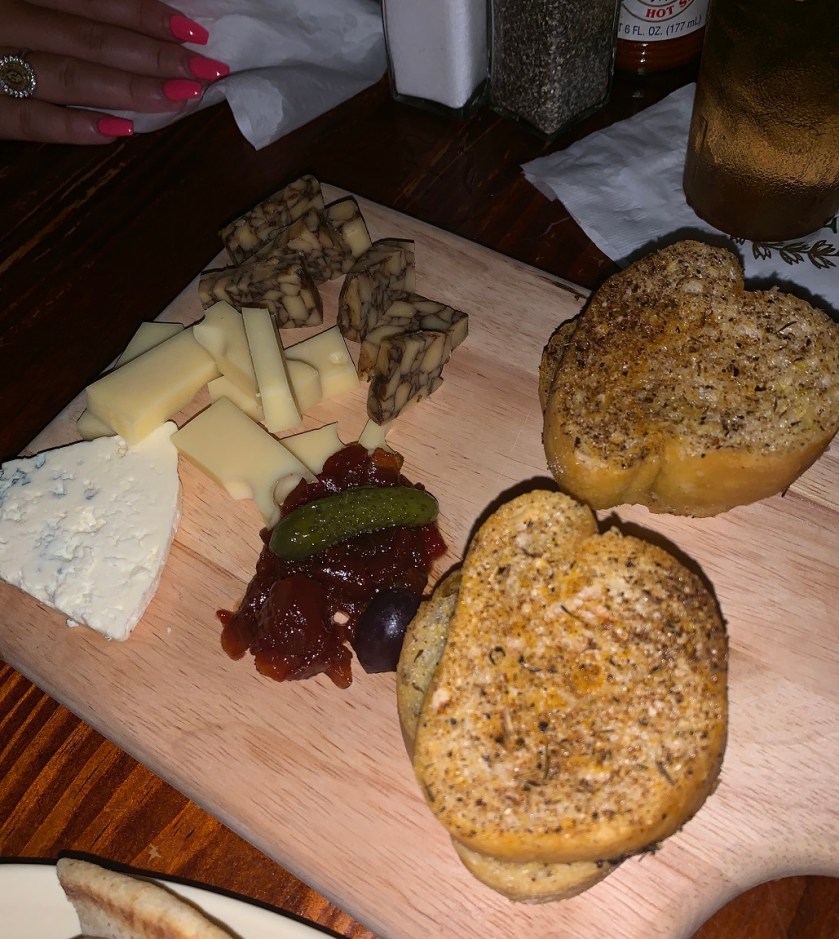
We also ordered the Lazy Susan Platter.This platter was filled with Miesfeld Market Holiday Garlic Salami, Bavaria’s Braunschweiger, smoked lake trout, creamed herring, Dusseldorf mustard, dill pickles, deviled eggs, Widmer’s Brick spread, Vern’s Sharp Cheddar spread with a side of crackers & rye bread.

SHSU, LEAP Center, LEAP Ambassadors, Madison WI, Old Fashioned

The Wurst Platter, which was filled with Bavaria Sausage, Nürnberger bratwurst, knackwurst and weisswurst with grilled bread, sauerkraut, local dilly beans and mustards.

SHSU, LEAP Center, LEAP Ambassadors, Madison WI, Old Fashioned

And Wisconsin Beer Cheese Soup garnished with popcorn.

SHSU, LEAP Center, LEAP Ambassadors, Madison WI, Old Fashioned

We learned that popcorn happens to be a staple in Wisconsin and is used in many of their dishes.  And, of yeah, Maggie also got a chicken sandwich.

SHSU, LEAP Center, LEAP Ambassadors, Madison WI, Old Fashioned

Overall the food was amazing. We ate way too much food, and we nearly needed someone to roll us back to our hotel. Without a doubt, it was a great day in the badger state!

SHSU, LEAP Center, LEAP Ambassadors, Madison WI, Monona Terrace, Lake Menona

Unknown's avatarAuthor mikeyawnPosted on July 1, 2019Format AsideCategories Art, Civic Engagement, Food, Fun, TravelTags Chicago, Chicago Dogs, Emil Bach House, Frank Lloyd Wright, Lake Menona, LEAP Ambassadors, LEAP Center, Madison WI, Monona Terrace, Old Fashioned Restaurant, Protesters, Richard Haas, Robie House, SHSU, Weiner CircleLeave a comment on The Architecture of the Plains–but not plain architecture!

American Architects: Thomas Jefferson & Frank Lloyd Wright

Supreme Court- Karla Rosales

As we arrived at the United States Supreme Court, we were all anxious to see and learn what we could about the judicial branch first-hand. The classical Corinthian-style architecture by Cass Gilbert was structured in such a way that would seamlessly blend in with its neighboring congressional buildings, without diminishing its impressive nature.

SHSU, LEAP Center, LEAP Ambassadors, Washington DC, United States Supreme Court, USSC

It certainly depicted the epitome of American and legal themes by displaying the famous phrase “Equal Justice Under Law”. Inside the “Temple of Justice”, we were greeted by a large statue of the fourth Chief Justice, John Marshall as we walked down the Great Hall. The statue was sculpted by William Wetmore Story in 1883 and was originally placed at the U.S. Capitol, before moving it to the Great Hall in the Supreme Court.

There were various exhibits showcasing the history of the Supreme Court building as well as the Justices that have served within it. One of my favorite exhibits was dedicated to Justice Sandra O’Connor.  She was appointed by President Reagan in 1981 becoming the first woman to be appointed in the U.S. Supreme Court. She was a fellow Texan.  After she retired, she was awarded the Presidential Medal of Freedom by former President Obama for her work. The exhibit displayed her original chair and a beautiful portrait of her.

SHSU, LEAP Center, LEAP Ambassadors, Washington DC, United States Supreme Court, USSC, Sandra Day OConnor

After a quick glance at the other exhibits, we ran upstairs to get a seat in the Courtroom to hear a lecture on the procedures, architecture, history, and art. Security is very tight within the Courtroom. Reporters and photographers go old-school with regular paper and pen. The audience will line up hours in advance to get to listen in on the hearings. Once inside, there are several options ranging from being able to listen to the entire thing to only staying 3-5 minutes at a time. However, I do not understand why anyone would want to stay for so little time after being surrounded by the expensive, yet beautiful Italian marble columns within the Courtroom. Or by being watched by all the important historical figures that advanced the evolution of law throughout time.

Pope-Leighey Home- Kaitlyn Tyra

Our next stop took us outside the city and into the country side! We rented an SUV and drove into Virginia to see Frank Lloyd Wright’s Pope-Leighey Home and Thomas Jefferson’s Monticello.

Our first venture to the Pope-Leighey Home was exciting! Frank Lloyd Wright, an architect known for his modern designs and cohesion with nature, designed and built more than 500 hundred homes throughout the United States. Each home was unique and distinctive from the rest.

SHSU, LEAP Center, LEAP Ambassadors, Washington DC, Frank Lloyd Wright, Pope-Leighey House

In 1939, Loren Pope commissioned Frank Lloyd Wright to design and build a home in the rolling hills of the Virginia/D.C. border. Wright built Usonian homes, which was his attempt to build affordable homes designed for modern families and built to be environmentally responsive. The result was a small, artful home perfect for the Popes…. until they had three small children in a 1,200-sq. foot home!

SHSU, LEAP Center, LEAP Ambassadors, Washington DC, Frank Lloyd Wright, Pope-Leighey House

After 5 years, the Pope family sold their home to the Leighey family. Upon Mr. Leighey’s death, Mrs. Leighey donated the home for tours and preservation to the National Trust for Historic Preservation which allows visitors like us to learn about Frank Lloyd Wright each year.

The home itself is designed to not distract from nature. Not very tall, the home creates horizontal lines on the outside with the arrangement of the wooden paneling and the brick alignment. It was interesting to learn about the natural elements of the home that really draw guests in from the outside.

We learned about Frank Lloyd Wright’s signature compression and expansion where he used small spaces, such as hallways to introduce visitors to a large, grand room. Although, the room wasn’t huge, the effect was the same because of the previous small space visitors just stepped out of. Additionally, the Pope-Leighey home showcased a lot of natural light. The windows and doors made the home flow right into nature.

SHSU, LEAP Center, LEAP Ambassadors, Washington DC, Frank Lloyd Wright, Pope-Leighey House

For a few of our group, it was their first time visiting a Frank Lloyd Wright home and made memorable for the rest of the group by the fun stories and beautiful architecture stood out as a favorite for Frank Lloyd Wright home’s we visited!

SHSU, LEAP Center, LEAP Ambassadors, Washington DC, Frank Lloyd Wright, Pope-Leighey House

The Wharf-  Christina Perez

Although the LEAP ambassadors were enthusiastic to add another state to their travel map, we were also excited in adding new restaurants to their list. For lunch we stopped in Alexandria, Virginia the downtown square to sample the cuisine at The Wharf. The Wharf is a nautically themed restaurant with a lot of character. The building was built in 1790 and had been known as The Miller Company which imported crockery, and china. It became The Wharf in 1997. Today, the restaurant still has original brick and even nails from the original building. The Ambassadors always like to try new foods so today Beatriz tried her first salmon sandwich and Mayor Woodward ordered a fried fish sandwich. It was lunch full of good food and great conversations.

SHSU, LEAP Center, LEAP Ambassadors, Washington DC, The Wharf

Monticello- Brian Aldaco

From one marvel of architecture we moved to another in Charlottesville, Virginia. Thomas Jefferson designed his treasured home of Monticello and began construction in 1769. 248 years later, the home still stands with the grandeur Jefferson set out to conceive.

SHSU, LEAP Center, LEAP Ambassadors, Charlottesville VA Thomas Jefferson, Monticello

Upon entering the grand home, we were welcomed by some of Jefferson’s most impressive artifacts and innovations. For example, above his door hung a clock that worked through a pulley system brought down by cannon balls. On one wall were his “gifts of friendship” (Native American artifacts that were given to Lewis and Clark during their expedition) and displayed on another wall were mastodon fossils that he once laid out inside the rooms of The President’s House.

Quickly on the tour, we learned that this Founding Father was not only the political genius that crafted the Declaration of Independence, but was one of the greatest minds of his time. While we explored his library, we were told by our tour guide of the intense assortment of literature (over 6,000 books) once owned by Jefferson. Even more impressive, was one Don Quixote book that stood by a Spanish grammar book on his shelf. These books were both owned by Mr. Jefferson and were his tool to learn Spanish, one of six other languages in which he was proficient.

Jefferson, of course, not only excelled in languages, but was also a prodigy in architecture. Among other things, Jefferson envisioned that every space in his home serve its maximum purpose.

SHSU, LEAP Center, LEAP Ambassadors, Charlottesville VA Thomas Jefferson, Monticello

Every room in Monticello was adorned and designed for an already conceived purpose. In his parlor room, for example, he hung portraits of American heroes (him included) to remind his guests of the nation’s history. As another example, the walls in his dining room were painted with some of the finest oil based yellow paints, to demonstrate the wealth that he possessed. For me, there was no need to go to such choice in colors to show off his wealth. The grandeur of his home, the artifacts inside it, and the stories held within were proof to this Renaissance man’s intellectual wealth.

Following the Monticello indoor tour (where photography was prohibited), we had a chance to roam the exterior, taking photos and seeing the grounds.  We noted that Monticello is featured on the back of the nickell…

SHSU, LEAP Center, LEAP Ambassadors, Charlottesville VA Thomas Jefferson, Monticello

…of course, we also took an obligatory LEAPing photo…

SHSU, LEAP Center, LEAP Ambassadors, Charlottesville VA Thomas Jefferson, Monticello

…and we also noted that you can see one of Jefferson’s other designs–the University of Virginia–from his home.

SHSU, LEAP Center, LEAP Ambassadors, Charlottesville VA Thomas Jefferson, Monticello, University of Virginia

University of Virginia- Brian Aldaco

A chief principle that Jefferson believed was necessary to preserve democracy was to educate the public. This principle was so dear to him that he set out to establish and design the University of Virginia. After we left Monticello, we dropped by the beautiful UVA campus to admire these Jeffersonian structures.

SHSU, LEAP Center, LEAP Ambassadors, Charlottesville VA Thomas Jefferson, University of Virginia

One of the grandest of Jeffersonian buildings on campus is the Rotunda. Located at The Lawn of the campus, this grand building sits on top of the hill with student dorms standing on the sides of the pathway that leads towards The Rotunda. On the way up the hill, we were so impressed by the dorms that we decided to peek inside.

SHSU, LEAP Center, LEAP Ambassadors, Charlottesville VA Thomas Jefferson, University of Virginia

Well, we gave ourselves a brief tour of the rooms, but the grandeur at the top of the hill kept calling us. When we got there, we found out that the doors were locked, however that didn’t stop us from giving a look inside through the windows and other cracks in the building.

SHSU, LEAP Center, LEAP Ambassadors, Charlottesville VA Thomas Jefferson, University of Virginia

Enjoying every minute of the campus, we quickly lost sense of time. Before we knew it, it was time to head for dinner.

Citizen Burger Bar- Christina

Before leaving the great state of Virginia we headed to a local burger bar called “Citizen Burger Bar.” The restaurant’s motto is “A delicious burger is your right. Perhaps even your responsibility.” Of course, we had to exercise our rights to a good burger, so we ordered some of the best things on the menu. We started our meal with onion rings, which just kept coming so we had plenty of them! Kaitlyn, our mushroom lover, ordered the Wild Mushroom and Swiss burger and Beatriz ordered a grilled cheese sandwich with slices of apples inside! During dinner, everyone shared their favorite events of the day.  Then, we headed back to DC to prepare for a White House Tour in the morning.

SHSU, LEAP Center, LEAP Ambassadors, Charlottesville VA Thomas Jefferson, University of Virginia

Unknown's avatarAuthor mikeyawnPosted on May 7, 2019Format AsideCategories Art, Civic Engagement, Food, Law, Politics, TravelTags Charlottesville VA Thomas Jefferson, Frank Lloyd Wright, John Marshall, LEAP Ambassadors, LEAP Center, Monticello, SHSU, United States Supreme Court, University of Virginia, USSC, Washington DCLeave a comment on American Architects: Thomas Jefferson & Frank Lloyd Wright

Celebrating Margaret Houston’s Life on her 200th Birthday

by Victoria McClendon-Leggett

The LEAP Ambassadors stopped by the Sam Houston Memorial Museum’s on Thursday, April 11 for a celebration of what would have been Margaret Lea Houston’s 200th birthday.  Primarily conceived and implemented by the College of Health Sciences, the Sam Houston Memorial Museum had many booths set up with activities to participate in, living history demonstrations scattered throughout the grounds , and even samples of different foods that would have been common during the 19th century–all of which added up to a lot of fun.

SHSU, LEAP Center, LEAP Ambassadors, Sam Houston Memorial Museum, College of Public Health, Margaret Lea Houston, Derek Birdsall, Sam Houston

First, we took a quiz over fashion throughout the different ages and learned that ancient Romans personalized their ensembles by using different pleating and draping techniques on their togas. Next, we strolled over to the kitchen in order to sample some fare that would have been customary for the time period and occasion.

SHSU, LEAP Center, LEAP Ambassadors, Sam Houston Memorial Museum, College of Public Health, Margaret Lea Houston

The women working in the kitchen had baked a dense and delicious white cake using cast iron pans over the hearth in the simple kitchen that sits alongside the Houston Home.

SHSU, LEAP Center, LEAP Ambassadors, Sam Houston Memorial Museum, College of Public Health, Margaret Lea Houston

Because of their propensity to burn down and the heat that was generated during the cooking process, kitchens during this time were often built as structures separate from the rest of the house, and that was true of Sam Houston’s home.

We sampled a variety of dried fruits, veggies, and beef, and were able to wash it all down with some lemonade. Makayla loved the cake so much that she picked up one of the recipe cards that they had available as we left.

After stopping in the kitchen, we strolled the grounds a bit more and took a peek at both of the homes that the Houston family lived in. The homes are closed but have glass windows on all of the entryways for visitors to peer inside and see some of the furniture and other objects that belonged to the first governor of Texas and his family. There are two homes on the museum’s grounds. One of them is The Woodland Home, a dogtrot-style house. This style of home was incredibly common in hot southern climates during the 19th and early 20th centuries. The breezeway that runs through the center of the home helps to offer reprieve from the stifling heat during the summer months. The Houston family lived in this home during Houston’s time serving as the very first senator of Texas for the United States.

The other home situated on the grounds of the Sam Houston Memorial Museum is the Steamboat House. This home was built in 1858 by a local doctor, Rufus Bailey, as a wedding gift for his son and his new bride. However, because of the unusual architecture the locals dubbed it “the Steamboat House,” and the couple refused to live in it. As it sat empty, the Houston family was easily able to rent the home from Bailey. This house was larger than their previous home, and this extra space was needed as the couple had a total of 8 children.

We also had a chance to visit with Leanne Woodward, one of the favorite people we’ve met in Huntsville.  She was with quilters, who were doing demonstrations on the porch of the Woodland Home.

SHSU, LEAP Center, LEAP Ambassadors, Sam Houston Memorial Museum, College of Public Health, Margaret Lea Houston, Leanne Woodward

After we had explored the homes and the grounds, we had the chance to play a few games that children during the mid-to-late 1800s would have played.

SHSU, LEAP Center, LEAP Ambassadors, Sam Houston Memorial Museum, College of Public Health, Margaret Lea Houston

We played “Graces,” a more graceful form of catch that young girls played. The objective of the game was to use two long wooden sticks to release a small wooden hoop and have your partner catch it with their sticks.

This slideshow requires JavaScript.

This was deemed appropriate for young ladies at the time, who weren’t supposed to run and jump around like the boys.

Before we left, we stopped and sat in a chair on the porch of the Woodland Home and had our silhouettes cut by a very talented artist, Shanlie Wolter!

SHSU, LEAP Center, LEAP Ambassadors, Sam Houston Memorial Museum, College of Public Health, Margaret Lea Houston, Shanlie Wolter

Having your silhouette cut was a very common thing to have done at parties and for special occasions before the rise in popularity of photography.

SHSU, LEAP Center, LEAP Ambassadors, Sam Houston Memorial Museum, College of Public Health, Margaret Lea Houston, Shanlie Wolter

We were both amazed at the fact that she was able to simply look at our profiles and use her scissors to create a true replica of them within minutes. We were very pleased with the  results and thanked her profusely and said our goodbyes and headed back to the car.

SHSU, LEAP Center, LEAP Ambassadors, Sam Houston Memorial Museum, College of Public Health, Margaret Lea Houston, Shanlie Wolter

Thank you to the SHSU College of Health Sciences and the Sam Houston Memorial Museum for a fantastic event that was the perfect blend of learning and fun!

The College of Health Sciences consists of the following departments, which all contributed students and expertise to this event: Family and Consumer Sciences, Population Health, Kinesiology, and Nursing.


Unknown's avatarAuthor mikeyawnPosted on April 29, 2019April 29, 2019Categories Art, Civic Engagement, Food, PoliticsTags College of Health Sciences, LEAP Ambassadors, LEAP Center, Margaret Lea Houston, Sam Houston, Sam Houston Memorial Museum, Shanlie Wolter, SHSULeave a comment on Celebrating Margaret Houston’s Life on her 200th Birthday

Easter Egg Hunt at the Wynne Home Arts Center: 2019

The Wynne Home Arts Center has hosted a community Easter Egg Hunt for at least seven years, but none as successful as the one offered this year.   The 2019 event attracted some 300 people over the course of the day, with children of all ages enjoying sack races, hula hoops, bubble-blowing, ring tosses, photos with the Easter Bunny, free hot dogs, and, of course, an Easter Egg Hunt.

SHSU, LEAP Center, LEAP Ambassadors, Wynne Home Arts Center, Easter Egg Hunt

The Wynne Home Arts Center is a wonderful 19th Century home that was donated to the City of Huntsville in the 1990s.  Since then, it’s been the community’s center for the arts, as well as many civic, cultural, and civic activities.  Managed by a staff of two (Linda Pease as the Cultural Services Coordinator; and Lauren Clay as the Program Coordinator) and an intern (Princess Hutson), the Wynne Home hosts or sponsors approximately 100 events per year.

To assist with this year’s event, the LEAP Ambassadors and members of the Pre-Law Society were on hand to lead the activities, cook the food (some of which was sponsored by the wonderful “Friends of the Wynne“), and otherwise ensure that things unfolded smoothly.  So, we arrived at 8am, and we got to work, hiding eggs, placing games, putting up decorations, and so on.

This slideshow requires JavaScript.

The itinerary for the day was as follows:

  • 10:30-11:05am: Sidewalk Chalk, Ring-Toss, Hula Hoops, Streamers, and Crafts
  • 11:05-11:35am: Sack Races
  • 11:35-Noon: Donut on a String
  • Noon: Easter Egg Hunt
  • 12:15: Picnic Lunch

Although the event didn’t officially begin until 11:00am, we just take it for granted that people will arrive early.  And that was certainly true this year.  By 10:50am, we had about 50 people on hand, with numerous activities available for entertainment.

SHSU, LEAP Center, LEAP Ambassadors, Wynne Home Arts Center, Easter Egg Hunt

At the stroke of eleven, the Easter Bunny made her debut, and she was a huge hit with the children, numerous mothers, and a few fathers.

SHSU, LEAP Center, LEAP Ambassadors, Wynne Home Arts Center, Easter Egg Hunt
Easter_50_Bunny_Linda_Web

Shortly thereafter, we kicked off our sack races, running approximately 10 heats of six children each, partitioned into ages (a) 0-4, (b) 5-8, and (c) 9 and up.

SHSU, LEAP Center, LEAP Ambassadors, Wynne Home Arts Center, Easter Egg Hunt

The winner of each hit won a ticket, which they could redeem at the prize table.  Popular prizes included fidget spinners among the youngsters, although older kids seemed attracted to the bubbles.

It was also nice to see the media on hand.  Josh Criswell from the Item, Wade Thibodeaux from Walker County Press, and Megan Montgomery from The Houstonian.

SHSU, LEAP Center, LEAP Ambassadors, Wynne Home Arts Center, Easter Egg Hunt

At 11:35am, we kicked off the donut-on-a-string event, which is more popular with the parents, perhaps, than the children.  The rules of this game are simple: eat the donut off the string, without using your hands or allowing the donut to fall to the ground.

SHSU, LEAP Center, LEAP Ambassadors, Wynne Home Arts Center, Easter Egg Hunt

At noon, we had the culminating event: the Easter Egg Hunt.  Although the Wynne Home is large, wooded, and adorned, it is a challenge to find places to hide 800 eggs, particularly when hiding from extraordinarily determined children (and a few parents).  As with the sack and donut contests, the hunt is divided into three age groups.  In each of these sections, we hid “golden eggs,” which were redeemable for a large chocolate Easter Bunny.  Because the kids are so determined, the hunt is a short one.

SHSU, LEAP Center, LEAP Ambassadors, Wynne Home Arts Center, Easter Egg Hunt

By 12:02, about 90 percent of the eggs had been found, some by very determined parents.

The quick hunt allowed the families approximately an hour to eat the free hot dogs provided by the Wynne Home (with drinks, cookies, and chips), take additional photos, and play more games.

SHSU, LEAP Center, LEAP Ambassadors, Wynne Home Arts Center, Easter Egg Hunt

At its peak attendance, we realized we had 265 people and only 100 hot dogs, so we called Dr. Ralph Pease, who made an emergency run to the grocery store.  With these heroics, we were able to provide food for everyone.

During this relative down time, the Easter Bunny had the opportunity to show off her hopping skills, engaging in a sack race with youngsters.

This slideshow requires JavaScript.

And she also showed off her hula hoop skills.

SHSU, LEAP Center, LEAP Ambassadors, Wynne Home Arts Center, Easter Egg Hunt

As the event began to wind down, the volunteers had the opportunity to engage in a little fun.  We had an all-volunteer sack race, won by Sawyer Massie (males) and Alina Ward (females).

SHSU, LEAP Center, LEAP Ambassadors, Wynne Home Arts Center, Easter Egg Hunt

And when 1:00pm hit and the event ended, we had the opportunity to eat lunch, finishing up the hot dogs purchased by Dr. Pease.

SHSU, LEAP Center, LEAP Ambassadors, Wynne Home Arts Center, Easter Egg Hunt

It was a relaxing end to an enjoyable day.  We had a chance to catch up with Lauren Clay, Linda and Ralph Pease, and reflect on another wonderful community event offered by the Wynne Home Arts Center.

SHSU, LEAP Center, LEAP Ambassadors, Wynne Home Arts Center, Easter Egg Hunt

The LEAP Ambassadors would like to thank the unpaid volunteers for the event, including: Sawyer Massie (LEAP Ambassador), Makayla Mason (LEAP Ambassador), Victoria McClendon-Leggett (LEAP Ambassasdor), Valerie Wilson (Pre-Law Society), Olivia Kelly (Pre-Law Society), Ethan Stephens (Pre-Law Society), Alina Ward, Megan Arnold, Susan Sanders (Texas Thyme Unit of the Herb Society of America), Haley, Kayla, and the Friends of the Wynne.

Unknown's avatarAuthor mikeyawnPosted on April 22, 2019Format AsideCategories Art, Civic Engagement, Food, Fun, VolunteerTags Easter Egg Hunt, LEAP Ambassadors, LEAP Center, SHSU, Wynne Home Arts CenterLeave a comment on Easter Egg Hunt at the Wynne Home Arts Center: 2019

TSUS Gala: SHAIP Interns, SHSU, and President George Bush

Ilexus Williams

By Ilexus Williams

 With a month of our internships under our belts, interns from the Sam Houston Austin Internship Program were more than happy to be  able to volunteer at the 4th biennial Texas State University System Foundation Gala. The Texas State University Foundation is a nonprofit organization that provides the Texas State University System and the member institutions with financial support.

SHSU, Sam Houston Austin Internship Program, SHAIP, TSUS Foundation, President George W. Bush

At the request of Mike Wintemute, the Director of the TSUS Foundation, the SHAIP interns happily assisted with the event by greeting guests and helping them check in at the entrance.  Among the guests were legislators, Regents, and faculty/administrators from TSUS’s seven institutions. We were glad to be able to meet the individuals who play such an impactful role in making sure that our Universities are operating efficiently and providing every student the opportunity to be successful.

Following the greeting period, we were invited into the ballroom, while we awaited the arrival of former President George W. Bush and mingled with the attendees.  The interns met the Chancellor of the Texas State University System, Dr. Brian McCall…

SHSU, Sam Houston Austin Internship Program, SHAIP, TSUS Foundation, President George W. BushSHSU, Sam Houston Austin Internship Program, SHAIP, TSUS Foundation, President George W. Bush, Dr. Brian McCall

…and other TSUS administrators…

SHSU, Sam Houston Austin Internship Program, SHAIP, TSUS Foundation, President George W. Bush, Sean Cunningham

…SHSU Administrators and faculty…

This slideshow requires JavaScript.

…and TSUS regents…

SHSU, Sam Houston Austin Internship Program, SHAIP, TSUS Foundation, President George W. Bush

… and Texas State Representative Ernest Bailes.

This slideshow requires JavaScript.

Moments before the event started, the interns were able to introduce themselves to the newest Speaker of the House, Dennis Bonnen.

SHSU, Sam Houston Austin Internship Program, SHAIP, TSUS Foundation, President George W. Bush, Speaker Dennis Bonnen

Then, after a full day of anticipation, we  began our “evening with former President George W. Bush.” As President Bush entered the stage, every person in the room stood on their feet and erupted in  applause for the former president. The discussion first began with President Bush giving his appreciation to a Texas leader that he holds in high esteem: General Sam Houston. As students at Sam Houston State University, it gives us great pride to know that the man we represent is honored by many, including a former President. The moderator of the conversation, Mark Updegrove, moved the topic to a more sensitive subject. With the recent passing of both his mother and father, President Bush was asked about his most memorable moments of his parents.

SHSU, Sam Houston Austin Internship Program, SHAIP, TSUS Foundation, President George W. Bush, Mark Updegrove

Bush recalled the final words his father said to him, which were “I love you.” President Bush said that his father’s words were very faint, but that he understood what his father was saying.   Bush replied, “I love you, too, Dad.” Bush recalled that his dad, “set an example, and he set priorities.”  The priorities included family, but it also included public service, and that set an example to his children, particularly for Jeb and George, both of whom went into politics.

Interestingly, his last conversation with his mother was also the one he described as most memorable.  And, according to him, his mother also said, “I love you,” but Bush playfully added that she described him as her “favorite child.”

Then, the conversation swerved sharply into politics. As a man who has once served as the President of the United States, he was asked to give his opinion on the current President, Donald Trump. President Bush deferred from giving his view on President Trump because he does not like to speak about the decisions a current president makes while they are in office. He knows what it is like to have everyone scrutinize every decision you make. However, President Bush did add wistfully  that the President’s speech and behavior “set the tone for the nation.”

SHSU, Sam Houston Austin Internship Program, SHAIP, TSUS Foundation, President George W. Bush

President Bush reminisced about his presidential term, recalling the horrific day of September 11, 2001.  The former President recalled receiving the news, and acknowledging that “things we can’t anticipate or control happen and how we react will matter for a long time to come.”  The SHAIP interns found this to be good advice, not only for our careers, but also for life, reminding us that how we react to adversity will similarly shape our lives.

After holding one of the most challenging positions in America, President Bush noted that he was still learning–and he mentioned that he was now attempting to refine his work as an artist. He indicated that he is currently “specializing in puppy portrait painting.”

President Bush

Following the discussion with President Bush, dinner was served.  Our Entrèe included Grilled Beef Tenderloin & Seared Redfish with pimiento Cheese-Potato Puree, Chive Bearnaise, and seasonal vegetables.  For dessert, we had a Flourless Chocolate Cake with Kahlua Ganache and Bailey’s Cream.

The Sam Houston Interns would like to thank Mike Wintemute for giving us the chance to attend the TSUS Foundation Gala. It was an honor to be able to represent Sam Houston State University.

SHSU, Sam Houston Austin Internship Program, SHAIP, TSUS Foundation, President George W. Bush
Austin, Texas February 6, 2019: Texas State University System (TSUS) Gala at the AT&T Center in Austin, featuring former President George W. Bush

We realize that not many people are afforded opportunities like this, and we will forever be grateful.

SHSU, Sam Houston Austin Internship Program, SHAIP, TSUS Foundation, President George W. Bush, Speaker Dennis Bonnen, Speaker Tom Craddick, Speaker Joe Straus, Speaker Pete Laney


Unknown's avatarAuthor mikeyawnPosted on April 9, 2019April 9, 2019Format AsideCategories Civic Engagement, Food, Politics, VolunteerTags President George W. Bush, Sam Houston Austin Internship Program, SHAIP, SHSU, TSUS FoundationLeave a comment on TSUS Gala: SHAIP Interns, SHSU, and President George Bush

Favorites from New York and New England

After every trip, LEAP Ambassadors independently arrive at their favorite stops along the way, and then compare notes.  This not only provides some reflection, but also gives others who might be traveling in this direction some tips for stops they might make in this area (New England).

Our first category is Art Museums.  The students visited seven art Museums: MOMA (NYC), Whitney (NYC), the Met (NYC), Mass MOCA (North Adams, MA), Norman Rockwell Museum (Stockbridge, MA), Wadsworth Museum (Hartford, CT), Rhode Island School of Design (Providence, RI), Boston Museum of Fine Arts, and the Isabella Stewart Gardner Museum (Boston, MA).

The favorites were….

3. Norman Rockwell (Stockbridge, MA):  This was a fun Museum, and it came at just the right time.  After five or six Museums focusing on Modern Art, the Rockwell Museum offered a traditional and nostalgic at American Art.  In addition to seeing his famous pieces that you expected to see, there are pieces that you forgot you knew, and pieces that were a bit unusual for him.  Our favorite was probably “The New Kids…”

SHSU, LEAP Center, LEAP Ambassadors, Stockbridge Massachusetts, Norman Rockwell Museum

One of the nice things about the Museum is the informative docents, who provided excellent commentary on the life of Rockwell and the story behind his paintings.  Also of interest is that many of Rockwell’s models stop by the Museum to discuss posing for his iconic artworks.

2. Mass MOCA (North Adams, MA): Undoubtedly, the reason this was a favorite was the nine James Turrell pieces at the Museum.  They were amazing.  We’ve been to Turrell’s Skyspaces, as well as some of his light-related art at the Museum of Fine Arts in Houston, but these were more interactive and diverse.  Unfortunately, photos were mostly prohibited, but all of his pieces were interesting, and “Perfectly Clear” was amazing and, not surprisingly, was the group’s consensus for favorite art piece.

SHSU, LEAP Ambassadors, LEAP Center, MASS MOCA, Museum of Contemporary Arts, North Adams, James Turrell

    1. Museum of Modern Art (NYC):  This Museum had the typical representation of art by major artists, including Pollock, Degas, Picasso, Van Gogh, Monet, and the like.  But what separated this for us was the major pieces that the Museum displays by these artists. A lot of us don’t know much about art, so when we see a piece we know, we get that it must be a really famous piece!

SHSU, LEAP Center, LEAP Ambassadors, New York City, Museum of Modern Art, Vincent Van Gogh

And no one can argue against “Starry Night” or “Persistence of Memory…”

SHSU, LEAP Center, LEAP Ambassadors, New York City, Museum of Modern Art, Dali, Persistence of Memory

__________________________________

Our second category is Historical Sites. We saw a lot of history:  The United Nations, Lizzie Borden’s Home, two Presidential Libraries (JFK and FDR), a Presidential home place (TR), the 9-11 Museum, Boston’s Freedom Walk, the Brooklyn Bridge, Mark Twain’s House, Walden Pond, the New York Public Library, and Plymouth Rock.  We didn’t have a lot of consensus on this, but by our voting rules, the top three were:

Honorable Mention: The Brooklyn Bridge.  This wasn’t explicitly voted in the top three, but we got together before the trip and watched a Ken Burns’ documentary on the Bridge, which was very interesting.

SHSU, LEAP Center, LEAP Ambassadors, New York City, Brooklyn, Brooklyn Bridge

3.  Freedom Walk in Boston: This took a while to get through (getting around Boston wasn’t that easy for us), but we enjoyed seeing the historical sites, such as Samuel Adams’ grave and Paul Revere’s House.  Afterward, we stopped at Cheers, which is near–but obviously not on–the Freedom Trail.

SHSU, LEAP Center, LEAP Ambassadors, Boston MA, Freedom Trail, Paul Revere House

2. The United Nations.  This was our first stop, and we got a good mix of Human Rights, politics, and even art.

SHSU, LEAP Center, LEAP Ambassadors, New York City, United Nations, Norman Rockwell

    1. Our favorite historical site was the 9-11 Museum.  While too young to remember 9-11, we certainly knew of it, but this Museum brings it to a very personal and emotional level.

SHSU, LEAP Center, LEAP Ambassadors, New York City, 9-11 Memorial, Spencer Finch

________________________________________

Our third category was state capitol buildings, of which we saw four: Albany, NY; Hartford, CT; Providence, RI; and Boston, MA.

Coming in at second was Providence, RI, largely because of our tour guide, Liam.  He is a History major at a nearby University, and he brought energy, enthusiasm, and knowledge to the tour.

SHSU, LEAP Center, LEAP Ambassadors, New England, Providence Rhode Island, Rhode Island Capitol Building

Throw in a beautiful building, and you’ve got a wonderful time.

Our top Capitol was the NY Capitol Building in Albany.  We also had a good tour guide here, and the building was super impressive.  And numerous of the governors had become president or a presidential candidate, which added to the historic ambiance.

This slideshow requires JavaScript.

___________________________________

Our next category was “favorite restaurant.” Our goal was mostly to eat in affordable places and to eat quickly, so that we could see more sites.  But we can recommend the following:

    • Eisenburg’s Deli: Old-school Jewish deli in New York City.
    • Providence Oyster Bar: Good seafood in Providence, Rhode Island.
    • Maurice’s Pearl Street Deli: Another strong deli, this time in Albany, NY.

__________________________________

Finally, we had two favorite miscellaneous activities. We enjoyed tubing near Concord, MA….

And, of course, we loved the musical “Chicago” on Broadway.

SHSU, LEAP Center, LEAP Ambassadors, New York City, Ambassador Theater, Broadway, Chicago

We definitely believe we got the most out of our trip, seeing thousands of pieces of art; architectural wonders; dozens of historical sites relating to politics, civil rights, and literature; as well as having the opportunity to meet interesting people and, we hope, represent SHSU well in the process.

Unknown's avatarAuthor mikeyawnPosted on April 8, 2019April 8, 2019Format AsideCategories Art, Civic Engagement, Food, Literature, Politics, TravelTags Connecticut, LEAP Ambassadors, LEAP Center, Massachusetts, New England Region, New York, Rhode Island, SHSULeave a comment on Favorites from New York and New England

Posts pagination

Previous page Page 1 … Page 15 Page 16 Page 17 … Page 29 Next page

LEAP Ambassadors Are Involved!

This slideshow requires JavaScript.

Follow Us On Facebook!

Follow Us On Facebook!

Catch Up With Us

  • Twenty-Four Hours With LEAP May 28, 2026
  • The PLS Winds Down & Ramps Up May 23, 2026
  • Managing Expert Testimony in the Courtroom May 22, 2026
  • There is never a dull moment at the Senior Center. May 21, 2026
  • Rethinking Iran with Seyed Mousavian May 20, 2026

Join The Conversation!

Linda McKenzie's avatarLinda McKenzie on There is never a dull moment a…
Multi-Platform Media… on Fun and Flavor: Chilly at the…
Highlights from the… on Glazing-A-Trail with Lauren…
The Civic Leadership… on Foundational Activities of the…
The Civic Leadership… on The Philosophical Foundations…

Find Previous Posts

We also have Twitter!

My Tweets

LEAPing Into LEARNing

This slideshow requires JavaScript.

  • About LEAP
  • LEAP Ambassadors
Center for Law, Engagement, and Politics Blog at WordPress.com.
  • Subscribe Subscribed
    • Center for Law, Engagement, and Politics
    • Join 467 other subscribers
    • Already have a WordPress.com account? Log in now.
    • Center for Law, Engagement, and Politics
    • Subscribe Subscribed
    • Sign up
    • Log in
    • Report this content
    • View site in Reader
    • Manage subscriptions
    • Collapse this bar

Loading Comments...