SHAIP Lunch & Learn: Insights at the Texas State University System Office
by Cinthia Villarreal
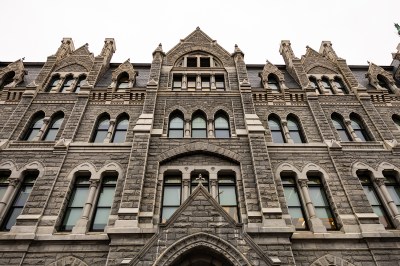
With a few days of Capitol work under our belts, the SHAIP interns attended our first lunch-and-learn at the Texas State University System (TSUS) administrative headquarters, O. Henry Hall. The building, formerly a Post Office, Federal Court House, and University of Texas System headquarters is a historical and educational marvel in and of itself, making for an excellent site to learn more about the capital of Texas.
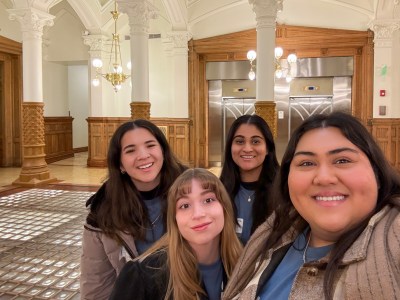
We had the privilege of sharing lunch with Chancellor Brian McCall, Vice Chancellor for Governmental Relations Sean Cunningham, Assistant Vice Chancellor for Governmental Relations Johanna Sheffield, Vice Chancellor for Academic & Health Affairs John Hayek, Director of External Relations Malú González, and Vice Chancellor for Marketing & Communications Mike Wintemute. Joining us were LEAP students Macey Schank, Michelle Moya, and TSUS Student Regent Olivia Discon.
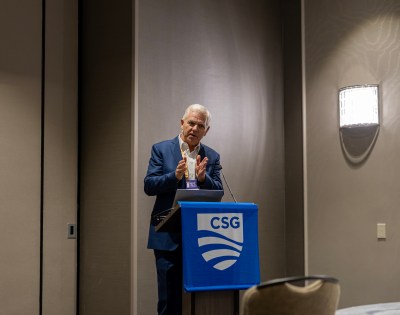
Chancellor McCall explained the role TSUS has throughout the legislative process, including the vitality of state funds the system receives. Vice Chancellor Hayek also shared a few fascinating facts, noting that TSUS, established in 1911, was the first higher education system in Texas. It now serves over 95,000 students across seven institutions, including Sam Houston State University.
A highlight of the lunch was hearing from Vice Chancellor Cunningham, who reflected on his own internship experience working for then-Representative McCall, giving us valuable perspective on how these opportunities can shape careers.
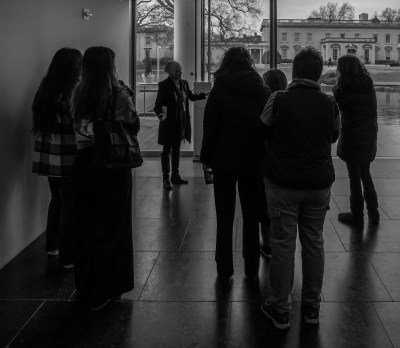
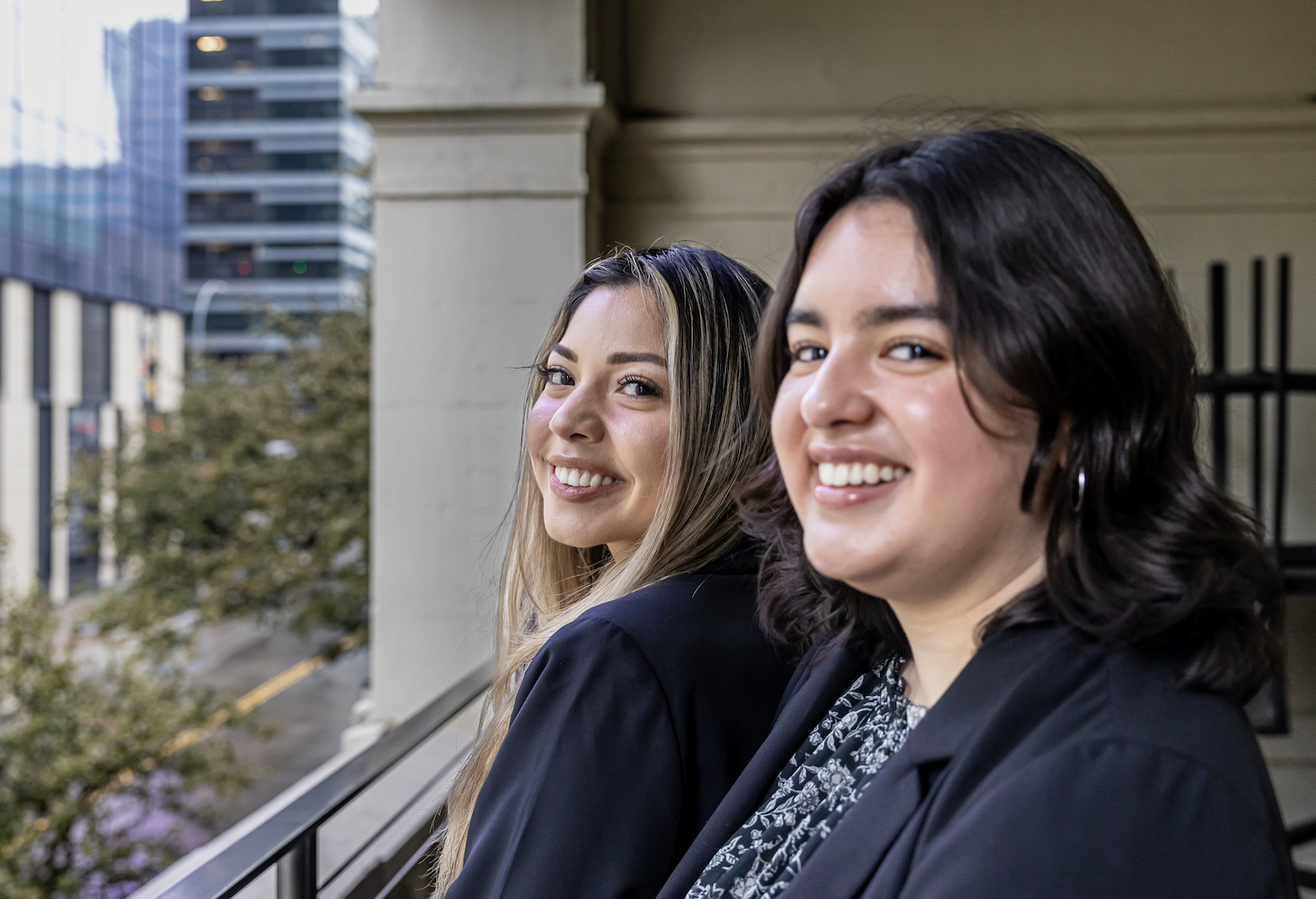
After lunch, Assistant Vice Chancellor Sheffield took us to the TSUS balcony, where we enjoyed a stunning view of Austin’s lively downtown.
We are sincerely grateful to the TSUS leadership for taking the time to meet with us, share their insights, and offer their support as we begin our journey.
Learning from Leaders: Melva Gomez and Steve Munisteri
by Olivia Discon
Following our visit to the Texas State University System (TSUS), the LEAP Ambassadors had the privilege of meeting with Melva Gomez, a former LEAP Ambassador who has risen to impressive heights in her career. Melva recently transitioned from her role as Chief of Staff for Representative Caroline Harris to serving as a Legislative Liaison in Governor Greg Abbott’s office.
Congratulations to Melva on this remarkable achievement! As current LEAP Ambassadors, we found it inspiring to see the impact of Sam Houston State University alumni in such important roles within the Capitol.
Pictured: Melva Gomez and Mac Woodward, 2012
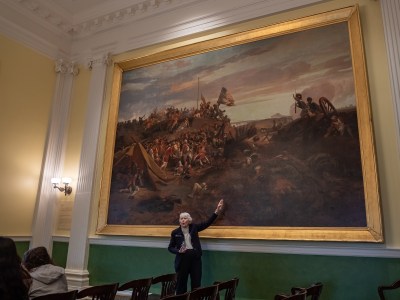
During our visit, we admired a Tom Lea painting in the Governor’s Office—a nod to Texas history—before heading to Steve Munisteri’s office.
Munisteri, who has an incredible career spanning politics, martial arts, and now serving as Senior Advisor to the Governor’s Office, shared fascinating stories and artifacts with us. He graciously showed us a bit around his office, which was lined with incredible artifacts spanning his career. We were amazed at the opportunity!
A Quick Tour of the Texas Capitol
by Macey Schank
Visiting the Capitol was the highlight of my trip, especially since it was my first time there. As soon as I stepped inside, I was struck by the building’s beauty and the meticulous attention to detail, right down to the custom door hinges. Every element of the design brings attention to the Capitol’s historic significance, making it a must-see for anyone visiting Austin.
During my tour, I had the opportunity to visit several important spaces, including the House of Representatives and the Senate chambers. It was so cool to stand in places where many important decisions have been, and continue to be, made.
Pictured: LEAP Students in the Texas House of Representatives
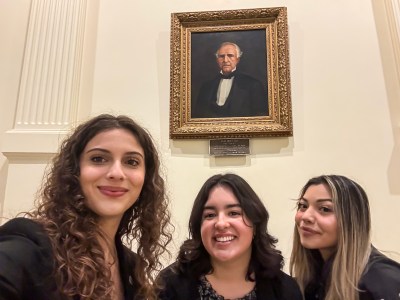
One neat part of the visit was discovering multiple iterations of Sam Houston, including a portrait of him hanging in the Capitol in recognition of his time as Governor of Texas. As a student at Sam Houston State University, it was especially meaningful to see these tributes to such an important figure in Texas history, which of course we had to take a selfie with!
It filled me with a sense of pride to be attending a school named after such a remarkable man.
Overall, my visit to the Capitol was an unforgettable experience. I had a great time exploring the building and learning about its history and the important work that takes place inside.
ASTI Trattoria
by Michelle Moya
To finish off our short but eventful Austin trip, we ended with a dinner at ASTI Trattoria to celebrate the SHAIP interns before their busy session ahead! The moment we stepped inside, the restaurant’s warmth and soft lighting truly cultivated the vibe of the restaurant perfectly. Notably, the kind of cozy that promises the Italian hospitality making you forget about the freezing Austin weather entirely!
We kicked off our feast with appetizers that set the tone for the night. We ordered the stuffed mushrooms and the polpetti. While mushrooms aren’t usually my thing, even I had to admire their presentation. Polpetti, being comprised of meatballs, came drenched in a rich red sauce that beautifully displayed a proper introduction to ASTI’s commitment to authentic Italian flavors!
When it came to main courses, our table truly showcased everyone’s love for pasta. Three of our group—Olivia, Cinthia, and Michelle—chose the Rigatoni Amatriciana, each plate crowned with a shower of freshly grated cheese.
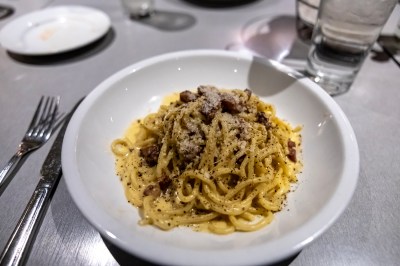
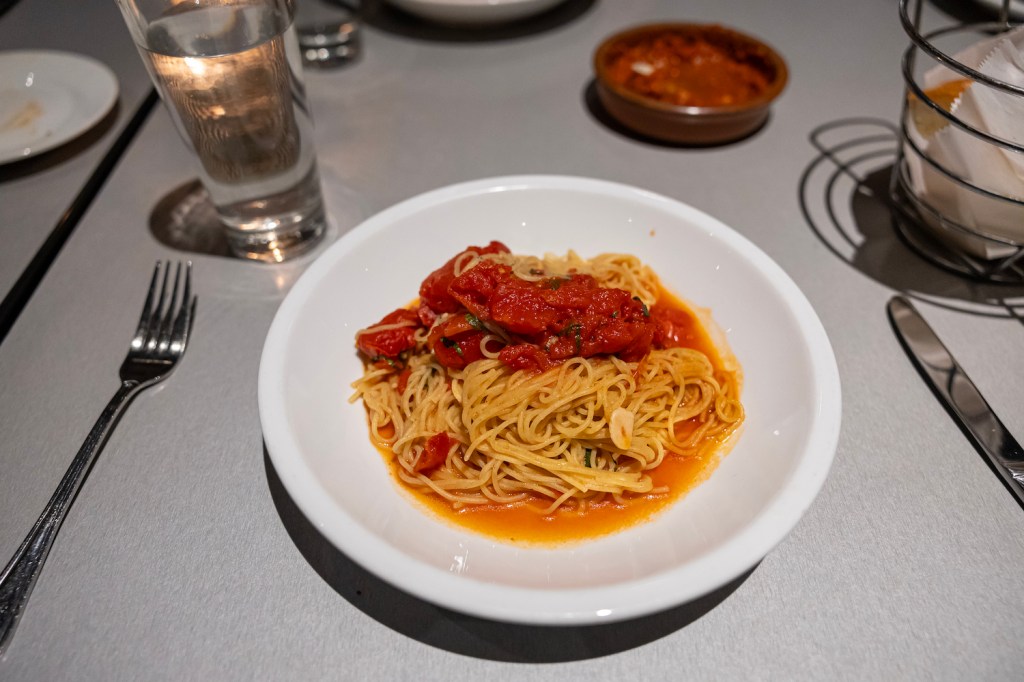
Saara decided to branch out and get the Capellini Neopolitano, and Macey and Sarah synchronized their orders with the spaghetti carbonara, while Professor Yawn went for the Lasagna Rotolo, which, at first glance, I mistook for soup. I veered off the pasta path and chose the grilled rainbow trout. It came perched atop sweet potato ricotta gnocchi—which truly was great! The lemon on the side really pulled it together.
Dessert was where things got interesting. This is where we decided to venture out and ordered a little bit of everything: a Ricotta Brulee that put an Italian spin on the French classic, an Affogato, which is coffee and ice cream mixed, a classic Tiramisu, and a homemade ice cream topped with chocolate syrup. Thanks to past LEAP events I’ve attended, I’ve developed quite the palate for crème brûlée variations, but that Tiramisu? I have to give it to the Tiramisu for the night.
We capped off the evening with a photo alongside Chef Bryan Beneke, the prime mover behind our feast. As far as farewell dinners go, ASTI Trattoria proved that nothing brings people together quite like good company and great food. The SHAIP interns might be heading into a busy session, but at least they’re going with full hearts and a happy stomach!
Creating Common Ground: Civil Discourse Strategies
by Michelle Moya
In the heart of New Orleans, we were looking forward to our second day of the CSG conference with enthusiasm and optimism. We woke ready for another day with an itinerary loaded with much exploration, walking, and cultivating visual art of the “city that never sleeps.” Fueled by coffee from Fourth Wall, we hurried off to our first session of the day!
Our second day at the CSG conference was a masterclass on civic debate and leadership. The session, “Creating Common Ground: Civil Discourse Strategies,” led by NICD Executive Director Keith Allred (who, unintentionally, made me wonder if he was related to Colin Allred), transformed what could have been a dry lecture into a riveting analysis of historical decision-making.
With his professor’s precision, he drew a sharp contrast between two watershed periods in Kennedy’s presidency: the Bay of Pigs disaster and the Cuban Missile Crisis to illustrate his points. These weren’t just history teachings; rather, they were contrasting examples of how government officials should approach their decision-making. While this may not sound so interesting on a Friday morning, that session was the greatest one!
Allred began by describing the split of effective conversation inside contemporary governments, which is mostly due to a significant unbalanced change in political parties. However, his nonpartisan approach is effective in all areas of government and in our daily lives. He briefly outlined the Bay of Pigs disaster, as well as the administrative initiatives and coordination they took to come to it. The result? A catastrophic failure that lasted mere days but left an indelible mark on American history. The culprit was not just poor planning—it was the silence of those who knew better but chose not to speak. While the majority opposed the plan, they failed to share honest views, which was taken as a “green light” for JFK to go with the plan. The lack of communication and interpersonal contentions resided in the decision-making process, which ended in disaster only 3 days after the plan went into effect.
Allred soon shifted his focus to how they should have handled the situation and why it ultimately became a disaster. He accomplished this using the Cuban Missile Crisis, where a different approach would save America from the brink of nuclear disaster. The “commonsense sweet spot,” as Allred refers to it, is built on three pillars: embracing contrasting perspectives, avoiding the stampede effect, and navigating interpersonal tensions.
Through compelling footage from “13 Days,” we witnessed the transformation from Day 1’s despair to Day 2’s advancement, led by Robert Kennedy’s courage to voice dissent. We were able to understand the audience’s viewpoints and the lessons learned from Allred’s participatory approach, which helped us make wise conclusions. My favorite portion was undoubtedly this, and it has even inspired me to put the film on my “watch next” list!
The session closed with a powerful message that resonates beyond government powers: “There is something immoral about abandoning your own judgment.” In an era of increasing polarization, these words carry special weight. People elect officials for their judgment, not their ability to follow the crowd. Like great coffee, great decisions are best made when they are bold, well thought out, and discussed with people who aren’t scared to voice their concerns.
Washington Watch: What States Can Expect from the Next Congress and Administration
by Chrissy Biello
With a new administration moving into the White House, many are predicting the future of the country. Because of this, the next session, “Washington Watch: What States Can Expect from the Next Congress and Administration,” posed a high amount of interest for us to gain insight from. The speaker, William Crozer, is the Co-Head of BGR’s Bipartisan State and Local Advocacy Practice. Moreover, from 2018-2021, Crozer served as the Special Assistant to the President and Deputy Director of the White House Office of Intergovernmental Affairs (IGA) in the Trump-Pence Administration, highlighting he has a wealth of experience to discuss the upcoming Congress and the new administration.
Crozer began by speaking on his past role in the White House Office of IGA, noting that during the pandemic, he “ran the local Covid calls from the White House,” making it likely that he spoke with individuals in the room. However, they are probably unaware of this since there was not much face-to-face contact. This being the case, he was coined the “emailer in chief,” sending various information to the state, local, and tribal officials.
Pivoting to the upcoming administration, Crozer spotlighted what he believes to be the “day one priorities” for President-elect Donald Trump. He maintained that it boils down to key issues: trade, taxes, the economy, and immigration. Further, that SNAP Pilot Programs will be a significant focus.
When the moderator asked about the executive orders Biden passed, Crozer stated that “everything will be on the chopping block; Biden repealed Trump’s executive orders.” He then hypothesized that the most likely roll backs will be those that are high spending, such as the CHIPS Act; thus, President Biden is dispersing as many awards as possible.
Speaking on partisanship, he stated that the “red states are getting redder, and the blue states are getting bluer,” remarking that some state governor’s will attempt to challenge Trump on executive orders. He gave the example of Gavin Newsom, the Governor of California, which many were not surprised to hear. Nonetheless, he emphasized that the legislatures in the room should engage with the Trump Administration, no matter what side of the party line they are on.
Transitioning to a humorous anecdote from his time in the White House, he described that when sending invitations to municipal mayors to travel to DC, many thought it was a “Russian Hoax.” The room filled with smirks and chuckles; however, Crozer quickly commented how this displays the lack of outreach to state and local officials. To end on a light note, he closed the conversation by asserting that if someone in the room receives something from the White House, it is likely not spam. But, he ensured to clarify that the White House will never ask for a person’s Social Security Number!
Lunch Break at Cafe Reconcile
by Michelle Moya
After two great sessions, we headed to try another great taste! In New Orleans’ Central City neighborhood, we were successfully able to go to Café Reconcile. As requested by Professor Yawn, we did some research into the café and its history. To our surprise, this place was not just serving up amazing food—it was serving up hope and opportunities for young adults in NOLA.
While the food was absolutely amazing, what actually distinguishes Café Reconcile is that it is a non-profit that uses its program to alter the lives of young people. Upon being seated, we saw that the restaurant featured various frames showcasing these students’ lives, including their personal aspirations and triumphs, which was quite encouraging. When you eat here, you’re supporting a program that helps young adults ages 16-24 kick-start their careers in various industries. We collectively agreed that we need something like this in Huntsville. Imagine having a restaurant that not only serves amazing food but also gives young people in our community real career opportunities and life skills. This little touch of history enhanced the overall experience and made it more delightful!
Now, moving on to the food, I kept with my borderline seafood fixation and ordered their catfish plate with veggies. To my surprise, the veggies stole the shine on my plate (never thought I’d say that). The catfish was great too! It came with an incredibly colorful side salad that popped with personality thanks to these vibrant radishes that made the whole plate “Instagram-worthy.”
LEAP Ambassadors Olivia and Chrissy shared this plate of jerk chicken that resembled a Thanksgiving turkey—or as Professor Yawn joked, perfect for “eating for two.” They ordered potato salad and the mac and cheese, which they mentioned, had them fighting over the last bites. Speaking of Professor Yawn, he went classic with red beans and rice, while Stephanie tackled a traditional New Orleans po’boy and this sweet potato crumb that she would not stop raving about and sharing—bless her.
For the grand dessert? A banana bread pudding that had everyone at the table seemed to enjoy (except me) team no bananas here.
Next time you’re in NOLA, skip the tourist traps and head to Café Reconcile. The food and service was amazing, the portions are generous, and best of all? Your money goes toward helping young people build better futures. This was a great experience and gave me a grasp of the great food New Orleans had to offer!
Cybersecurity in Focus: Assessing and Mitigating Risks of Cyberattacks Against State Governments and Critical Infrastructure
by Olivia Discon
Our last session for the day, and ultimately, for our time at the conference, was Cybersecurity in Focus: Assessing and Mitigating Risks of Cyberattacks Against State Governments and Critical Infrastructure.
We were fortunate to hear from three panelists; Brad Manuel, Jing de Jong-Chen, and Dr. Mike Garcia, each providing an individual presentation from their respective backgrounds on prioritizing cyber resiliency.
Brad Manuel, Region IV’s Cybersecurity State Coordinator for the Cybersecurity & Infrastructure Security Agency (CISA) took the podium first to discuss cyber infrastructure and “Best Practices”.
Having formerly worked as a Chief Information Officer for a state agency and contributed several statues to state legislatures on cybersecurity, he is a huge proponent of everyone in organizations holding stake in risk management and cyber hygiene practices.
Jing de Jong-Chen, current Senior Associate at CSIS and former executive at the External and Legal Affairs Division at Microsoft Co., focused on Supply Chain and Policy Alignment. She emphasized the importance of executive orders and strategic partnerships with federal agencies to enhance cybersecurity frameworks. Jing also highlighted the need for investment in IT modernization and fostering a resilient ecosystem through public-private partnerships. Her approach centered on integrating security into every layer of the supply chain, prioritizing cultural awareness, and creating holistic assessments to identify vulnerabilities. She also discussed the critical role of real-time monitoring and compliance attestations in maintaining system integrity.
Dr. Mike Garcia, Senior Elections and Security Person, Center for Internet Security, closed the panel with an in-depth look at the global impact of cybersecurity risks, focusing on international cooperation and domestic investment. He stressed the importance of adapting to rapidly evolving threats by fostering relationships in the field and engaging with vendors to align their goals with long-term resilience strategies. Dr. Garcia also addressed lessons learned from incidents like SolarWinds, emphasizing the value of competition and diversification in creating robust defense mechanisms.
As state governments increasingly rely on digital infrastructure, the discussions reinforced the urgent need to integrate proactive security measures to mitigate cyber security risks.
The Sydney and Walda Besthoff Sculpture Garden
by Olivia Discon
My favorite aspect of the LEAP experience is the opportunity to improve our cultural literacy. One way this is achieved is through reinforced exposure to key artists in various places across the country. New Orleans’ city-owned park was a perfect iteration of the LEAP experience, as it is home to the Besthoff Sculpture Garden.
There were some heavy hitters immediately upon entry. Roy Lichtenstein was featured at the front of the museum.
In addition to that we saw a Louise Bourgeois’ Spider…
…alongside works by, Robert Indiana, Jaume Plensa, and Claus Oldenburg.
As we continued exploring, we encountered works by Henry Moore and, to our delight, an Isamu Noguchi piece. The collection also included unexpected surprises such as Renoir and Rodin—names often associated with painting or smaller sculptures, but here showcased in a new context. Jesus Moroles, SHSU alumni and LEAP favorite artist, is also featured in this collection.
One artist I didn’t recognize but thoroughly enjoyed was Do-Ho Suh. His sculpture, a stack of figures resembling a spinal cord, was visually striking to me.
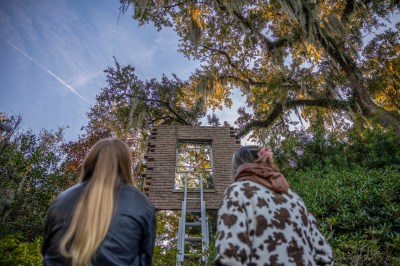
Michelle and Chrissy were drawn to two particular sculptures. One, Leandro Erlich’s Too Late for Help, featured an interesting hidden ladder to a gateway.
They were especially caught up in the physics of how such a sculpture could exist. The other, Rona Pondick’s Monkeys, had a strange, morphing form that they initially thought depicted humans or dogs—until Stephanie pointed out we were mistaken.
We also saw kinetic sculptures by George Rickey, whose moving parts added a dynamic element to the collection, and a work by Deborah Butterfield…
…and George Segal. Of course, no trip to New Orleans would be complete without encountering a Blue Dog piece by George Rodrigue.
On our way out, there was one final surprise—a sculpture by René Magritte (one of my favorite artists). Although the work differed from his typical surrealist paintings, it was an unexpected and satisfying way to end the visit.
The beautiful Spanish Moss was the excellent backdrop for these amazing works.
Oceana Grill
by Chrissy Biello
After exploring the French Quarter, we headed to Oceana Grill, a popular restaurant favored by both tourists and locals! Known for its contemporary Louisiana dishes, the restaurant offered a new set of choices to those of us that have not had much experience with New Orleans cuisine.
Alligator Bites was the relatively new item for the table, a food I had tried before and reassured Olivia tasted much like chicken. To her surprise, she did not hate it; however, I would definitely say she would not order it again if given the opportunity.
When it came time to order our main courses, Olivia shocked the table by ordering Cajun Jambalaya Pasta, which contains shrimp! For those that do not know Olivia, the pasta part is not unexpected, but the shrimp part is. She noted that the “dish was very flavorful, and it drowned out the shrimp.” Needless to say, she left the restaurant still not a fan of shrimp.
Michelle also dabbled in a little bit of experimentation. Her meal, the Blackened Chicken Platter, was served with Jambalaya, a dish she had never heard of. However, I ended up being the boring one of the group by ordering something I have had several times in the past, Crawfish Etouffee.
When making our choices for dessert, we were experiencing a shared sweet tooth and decided to order three! The desserts included La Boheme Crème Brûlée, New Orleans Bread Pudding, and the Chocolate Kahlua Mousse. After finishing off all of them, we had a slow but satisfied walk back to our hotel for the night.
Council of State Governments National Conference- Day One!
by Michelle Moya
After what felt like the longest drive on Wednesday night, we woke bright and early to start an insightful couple of days at the CSG National Conference in New Orleans, Louisiana. For Olivia and me, stepping into this culturally rich state for the first time promised fresh perspectives and a new experience!
Starting off day one, we began with an engaging session with Waldo Jaquith from U.S. Digital Response, addressing one of state governments’ most pressing challenges: successful software system implementation.
His presentation structure was particularly compelling, starting with a “what not to do” story from Rhode Island (spoiler alert: it didn’t go well), followed by data statistics, and then shifting focus to actionable strategies that government officials could implement in their own jurisdictions to avoid outcomes like these.
The real takeaway? When he broke down why we need to ditch the most used Waterfall method for the Agile software integration method. We were all struck by the wealth of knowledge shared, and it ended up being Chrissy and Olivia’s favorite session of the day!
After a debriefing discussion among us all, we hurried into our next session. Next up was the issue everyone is currently buzzing about—AI in government. We had a diverse panel with three totally different perspectives: a Professor Neil Kleiman (bringing academic wisdom)…
…Michael Mattmiller, an Microsoft US Government Affairs Industry Team Lead…
…and Amy Hille Glasscock, with the National Association of State Chief Information Officers!
This session was particularly different and interesting because they weren’t feeding us that “AI is taking over” narrative. Instead, it was all about how AI can make government officials better at what they do. Coming to the end of the session, one key takeaway was the emphasis on AI improving people’s efficiency rather than replacing them. Its effectiveness is based on how well its intelligence complements our own. After insightful perspectives from the speakers, we were even able to snag a picture afterwards!
A Quick Lunch Break at Elizabeth’s
by Chrissy Biello
Following the morning conference sessions, we headed to Elizabeth’s Restaurant, an authentic New Orleans eatery. Upon arriving, Olivia noticed that many colorful signs on the walls displayed the phrase, “Be Nice or Leave!,” a popular adage in New Orleans. Stephanie explained to the group that this saying was created and illustrated by the local artist, Dr. Bob. The vibrancy of the restaurant and the matching neighborhood allowed for us to get a glimpse of New Orleans outside of the French Quarter.
When it came time to order appetizers, we got a great balance of foods that highlighted the diversity of New Orleans flavors. The options included praline bacon, Korean brussel sprouts, and fried boudin balls.
Every one of them was great; however, we all have our favorites. I especially enjoyed the praline bacon…
…and Korean brussels sprouts, as did Olivia!
After filling up on appetizers, we went on to our main courses. Olivia and I shared the chicken and sausage gumbo (which was Olivia’s first).
As Elizabeth’s is famous for their breakfast food, Michelle got the veggie scramble…
…and Professor Yawn and Stephanie had “Crabby Eggs,” including crab cakes, poached eggs, and hollandaise sauce.
For their side, they had the grits, which sparked a conservation about the famous movie, My Cousin Vinny.
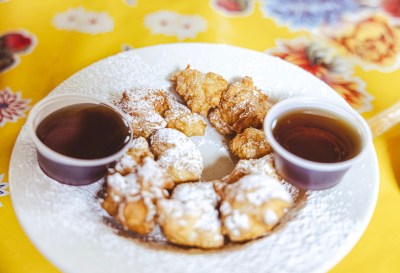
And, of course, we ensured to get an order of the beignet biscuits! Served with a side of maple syrup, this dessert was filled with much nostalgia as I had it years prior on a past trip to New Orleans. Leaving Elizabeth’s, we headed back to the conference for another session!
U.S. Supreme Court Update: Implications for State Policymakers
by Michelle Moya
As a finisher, and after a fulfilling meal at Elizabeth’s, we attended our last session. This one being one I was particularly excited for, rightfully so, as it proved to be my personal favorite. Thankfully, we got there early, which allowed us to engage in meaningful dialogue with the speaker, Michael Lawlor, about our personal ambitions and the LEAP program!
Highlighting the session, it spanned various contemporary issues, from gun rights to freedom of speech and social media regulations. He spoke on cases the Supreme Court is currently deciding on and ones from last term.
We were surprised to see that many of the cases going before the Supreme Court pertained to social media practices. This goes to show the impact modern technology has had everywhere, even on government decisions! We all showed major interest in two cases dominantly, Lindke v. Freed from the 2023 term and Smith and Wesson Brands v. Estados Unidos Mexicanos.
Ogden Museum of Art
by Olivia Discon
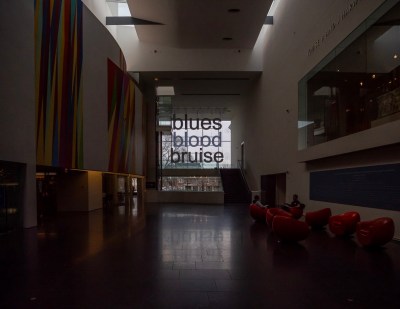
To continue our educational pursuits in New Orleans, we ventured on to Ogden Museum of Southern Art. The museum prides itself on providing a large, comprehensive collection of Southern art, which served as the perfect place for us to learn more about the city’s cultural offerings.
Before entering the museum, we were greeted with a massive James Surls sculpture! The cast bronze and stainless steel sculpture, known as Me, Knife, Diamond and Flower, was an incredible iteration of his distinguishable style.
LEAP Students with a James Surl’s art piece at the Ogden Museum of Southern Art
Having seen his work several times now, I am quite a fan! Surls continues to be a LEAP favorite, as a distinguished Sam Houston State University alumni and excellent Texas artist.
There was a wide variety of contemporary art exhibits. Admittedly, some of them perplexed me. The first gallery we entered featured a multimedia installation called stream or river, flight or pattern by Joan Jonas. With bird-like kites fixed to the ceiling, paintings, and a few films playing consecutively throughout the room, the group was determined to decipher its meaning.
After some perusing and ultimately admitting defeat, we read that the comprehensive work is meant to reflect our interactions with nature.
Naturally, we moved on to the next gallery.
A newfound artist we enjoyed was Benny Andrews, although the pieces we respectively enjoyed differed. Andrews had various styles and mediums in this gallery, which made for an interesting sample of his work. Chrissy liked a piece called Destiny, Destruction, and Despair…
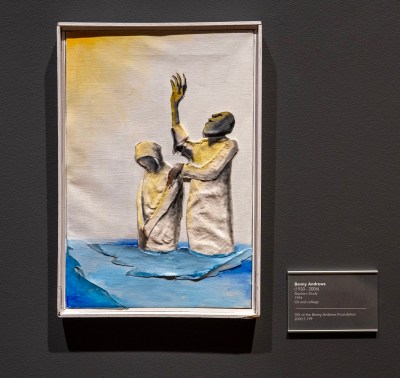
…Professor Yawn enjoyed a 1994 Baptism Study…
…and I personally liked Keep Your Eyes on the Acrobats.
In the meantime, Michelle had made some headway through the galleries, proceeding to find what would become her favorite piece in the museum: Uptown Street by Lulu King Saxon. Michelle, who is relatively new to the art scene, learned that she takes to nature scenes–and large scenes at that!
Chrissy, on the other hand, prefers Impressionist paintings. Her favorite appeared to be Joseph Meeker’s Bayou Plaquemines; a pink-casted sunset falling over a swampy landscape.
My personal favorite, oddly enough, was a George Rodrigue painting that was not a Blue Dog variant. Instead, it was a painting called The Aioli Dinner, known as his “Cajun masterpiece”.
We then went on to Baldwin Lee’s photography exhibit, which was especially enjoyable. Lee, in the 1980’s, set off on an artistic journey to retrace the photos taken by his mentor, Walker Evans, in the 1940’s American South. Placing a focus on Black Americans as his subject matter, the photos and their strategic composition invoke the viewer to contemplate themes of poverty and hardship. We were fascinated by his experience on this expedition and impressed with his results. Many of his subjects, such as Untitled, 1983-1989, were complete strangers he approached along his journey.
Some of our favorites were Mobile, Alabama…
…New Orleans, Louisiana…
…and Waterproof, LA.
“Looking is a two-way street. Not only is the photographer looking, but the potential subject is looking too. What the subject sees carries great weight. For some reason, people would see me positively. I am not sure if it was my race, gender, physicality, dress, demeanor, or anything else. If in a day I asked twenty people permission to make photographs, nineteen would say yes.”
In all, we saw and enjoyed several new artists on this endeavor. The visit to the museum was a pleasant way to indulge in Southern contemporary art…
…and to broaden our cultural literacy.
Saffron
by Chrissy Biello
In true LEAP fashion, we opted for a dinner that would allow us to gain new experiences. Saffron, an Indian restaurant and two-time nominee for the James Beard award, proved to give us that opportunity. The chef, Arvinder Vilkhu, and his wife, Pardeep Vilkhu, opened the restaurant with the purpose of combining their Indian heritage with the New Orleans culture. As we began to peruse the menu, that was extremely evident; options included, Curried Seafood Gumbo and oysters!
For appetizers, we ordered the pickle sampler…
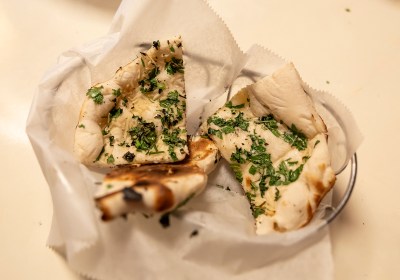
…Chicken Lasooni, and the garlic and chili-cheese naan.
Olivia favored the naan bread, while the Chicken Lasooni was Michelle’s main pick. As for myself, the pickler sample was my favorite; the dish included an eggplant spread, something I had never tasted before, but will confidently try again.
For our main course, Olivia and I shared the Chicken Biriyani. This dish was incredibly flavorful, containing saffron rice, crispy onions, a soft-boiled egg, and yogurt on the side!
Michelle savored the Curried Seafood Gumbo, and Professor Yawn and Stephanie relished the Oyster Bed Roast!
With already full stomachs, it was a surprise that we were tempted by the dessert. To our delight, Chef Vilkhu himself served our table! This included a cake called, “It’s Not Even Your Birthday,” surely named for the multiple layers of chocolate ganache and buttercream that would make anyone believe they were partaking in a treat for a special occasion.
Further, we had the Ginger Crème Brûlée, a definite favorite among the table.
As we had the opportunity to thank Chef Vilkhu for the amazing meal, we were very honored to take a photo with him!
In all, Saffron was a great way to end the first day of our New Orleans trip, allowing us to anticipate the next days of new experiences to come!
The moot court competition in Fort Worth was a great experience that challenged our critical thinking skills (or the extent of them, anyways) and gave us a chance to grow as advocates. Fort Worth was the perfect host city, combining a world-class law school with a great cultural scene and history.
For the competition, we stayed at the Hilton in downtown Fort Worth, where President John F. Kennedy spent his final night—which was definitely not a good omen for our performance. The competition itself was held at Texas A&M’s School of Law, which happens to neighbor the Philip Johnson-designed Water Gardens.
As one of LEAP’s favorite architects, Johnson’s work always stands out, and the Water Gardens is an immersive way to experience architecture and ease both law students and moot court competitors’ nerves.
When we had time to explore, we made the most of it. We ensured to make a stop at the Richard Haas mural downtown in Sundance Square.
In the same area, we were lucky enough to stumble across works by James Surls…
…Lichtenstein, and Noguchi—all in one building! Just around the corner, we also found an Alex Katz…
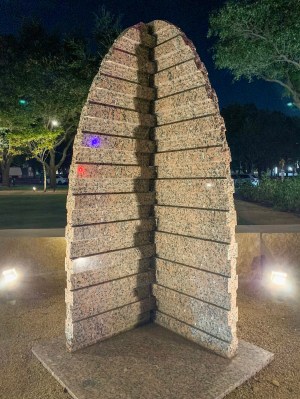
…and Jesus Moroles sculpture.
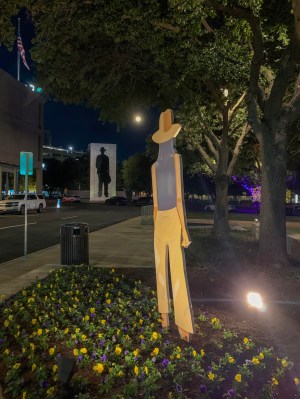
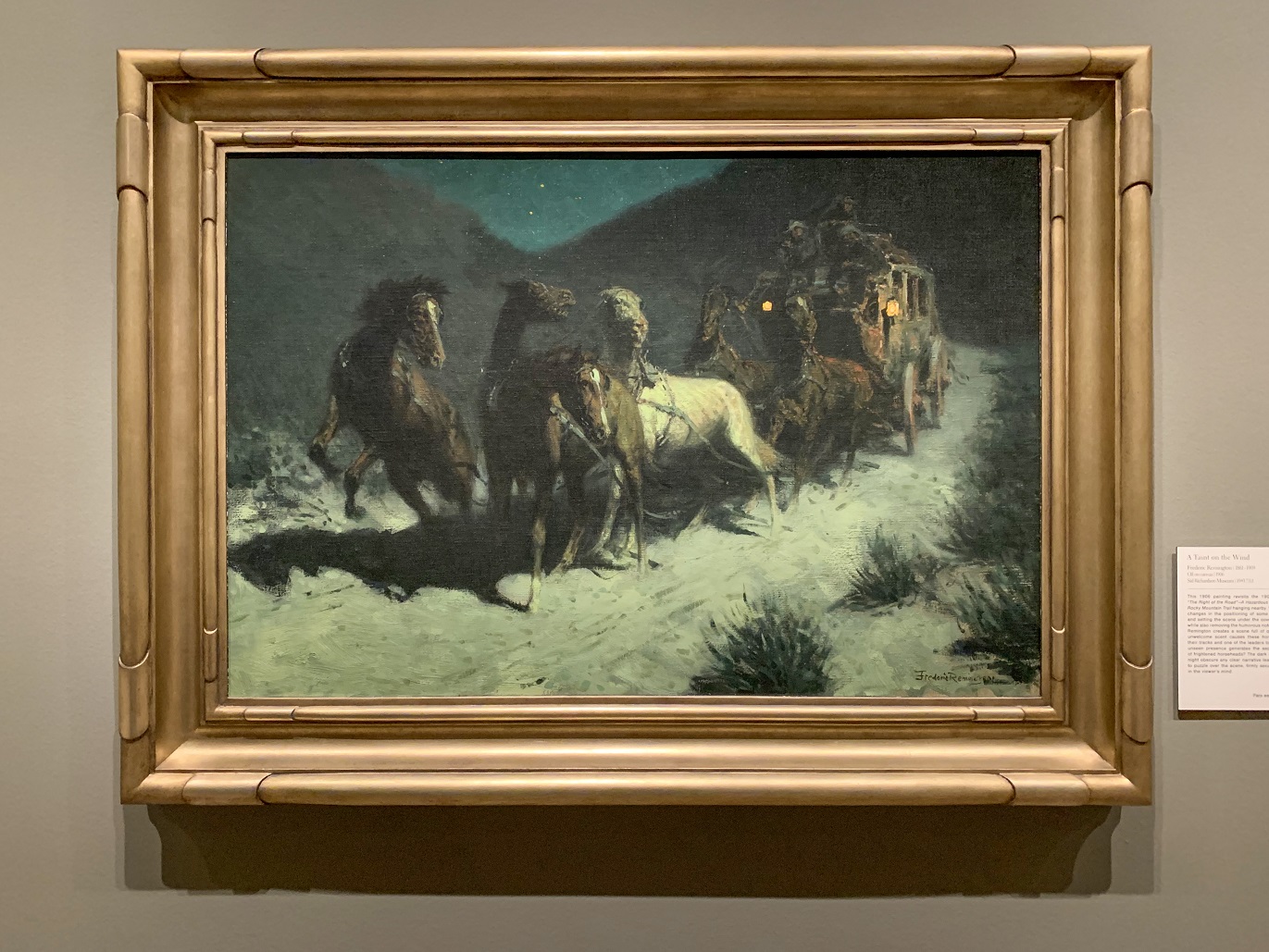
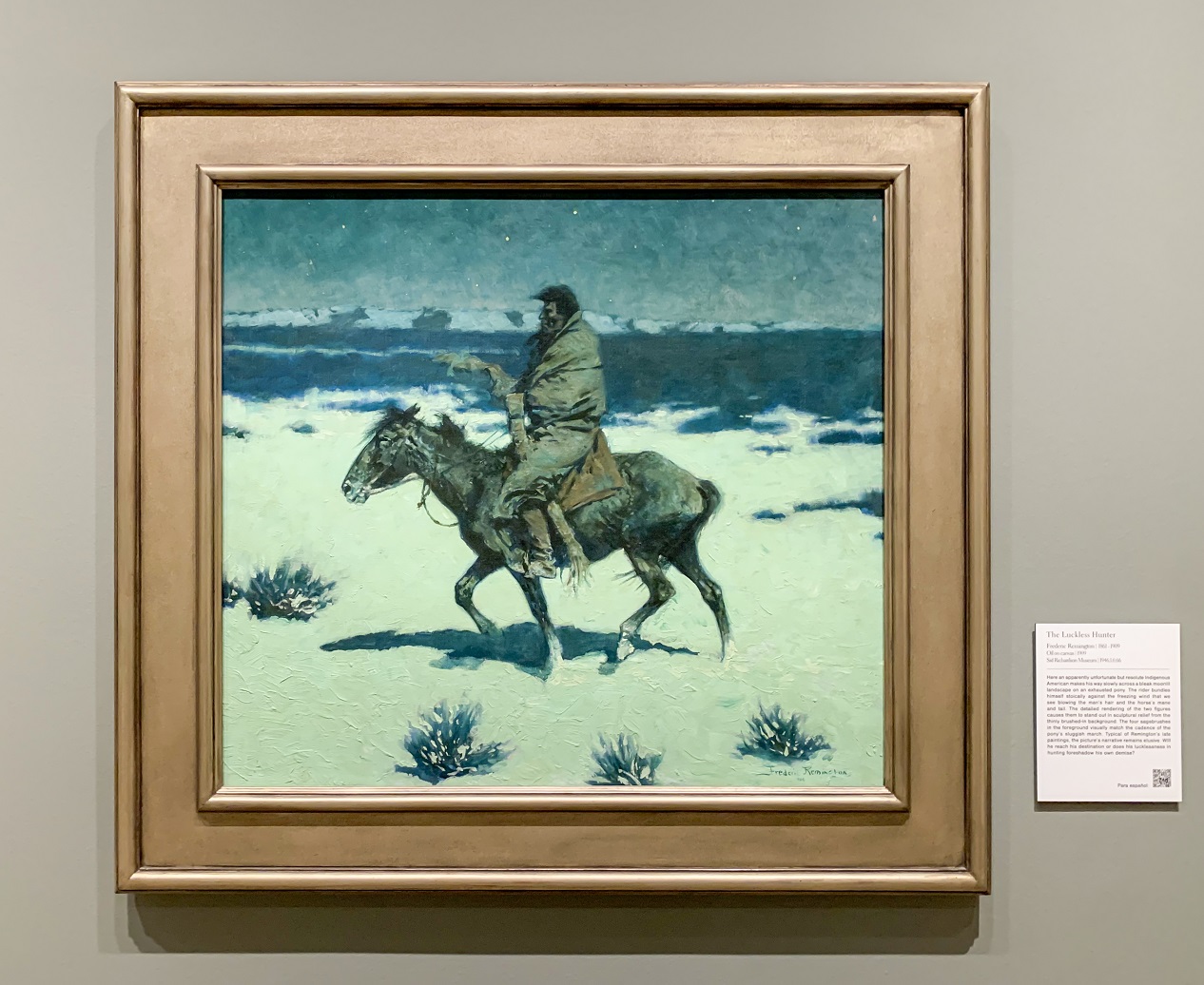
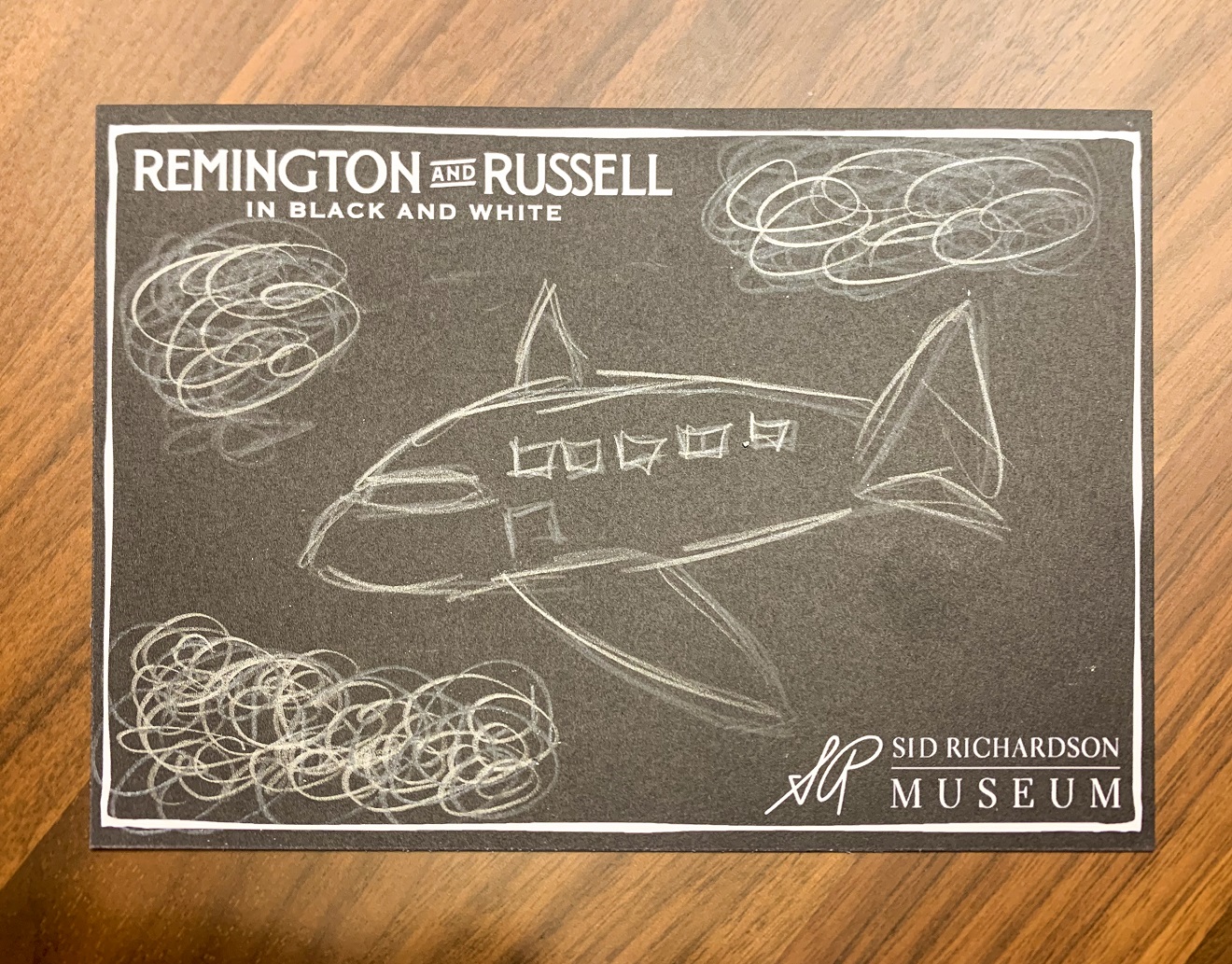
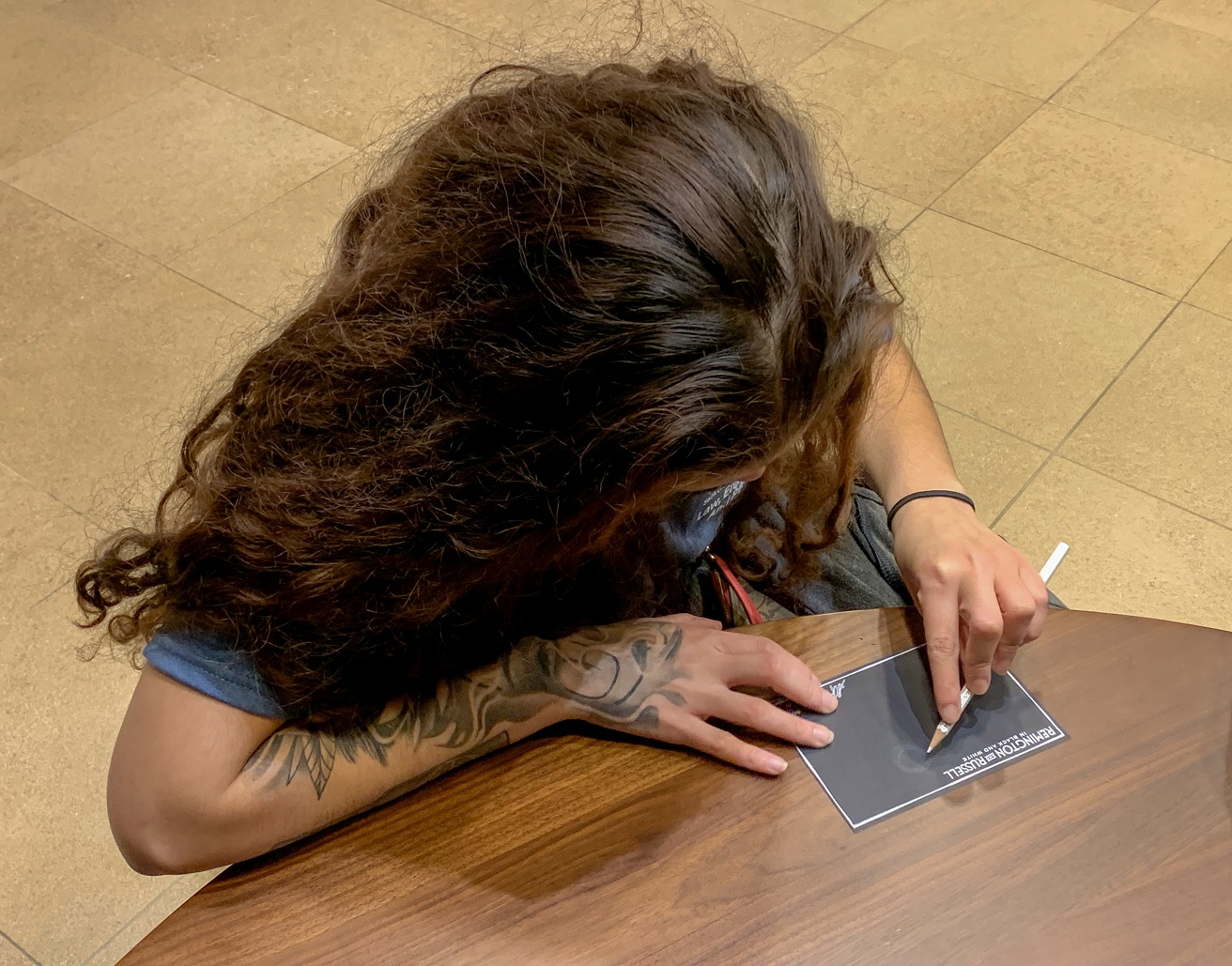
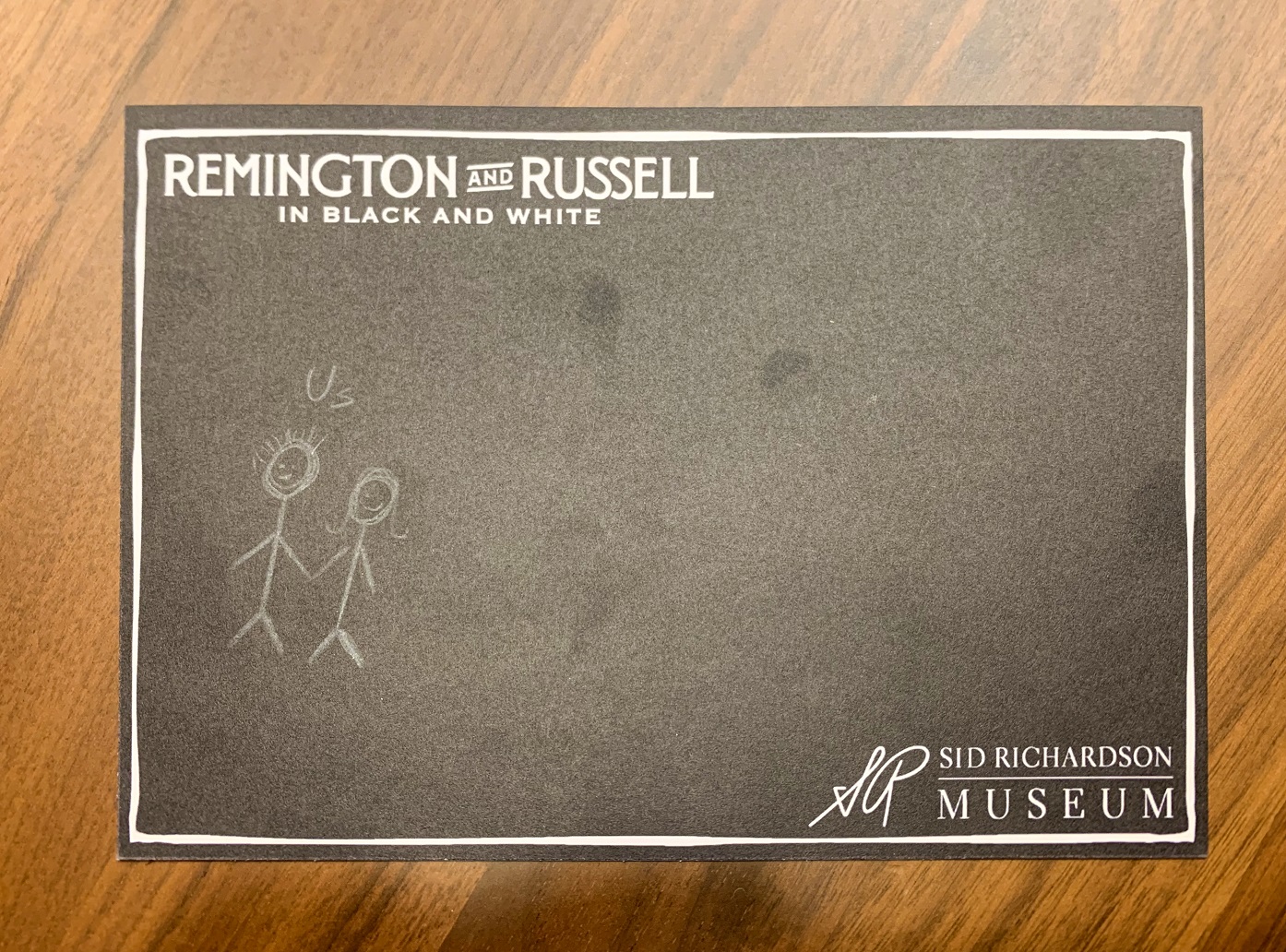
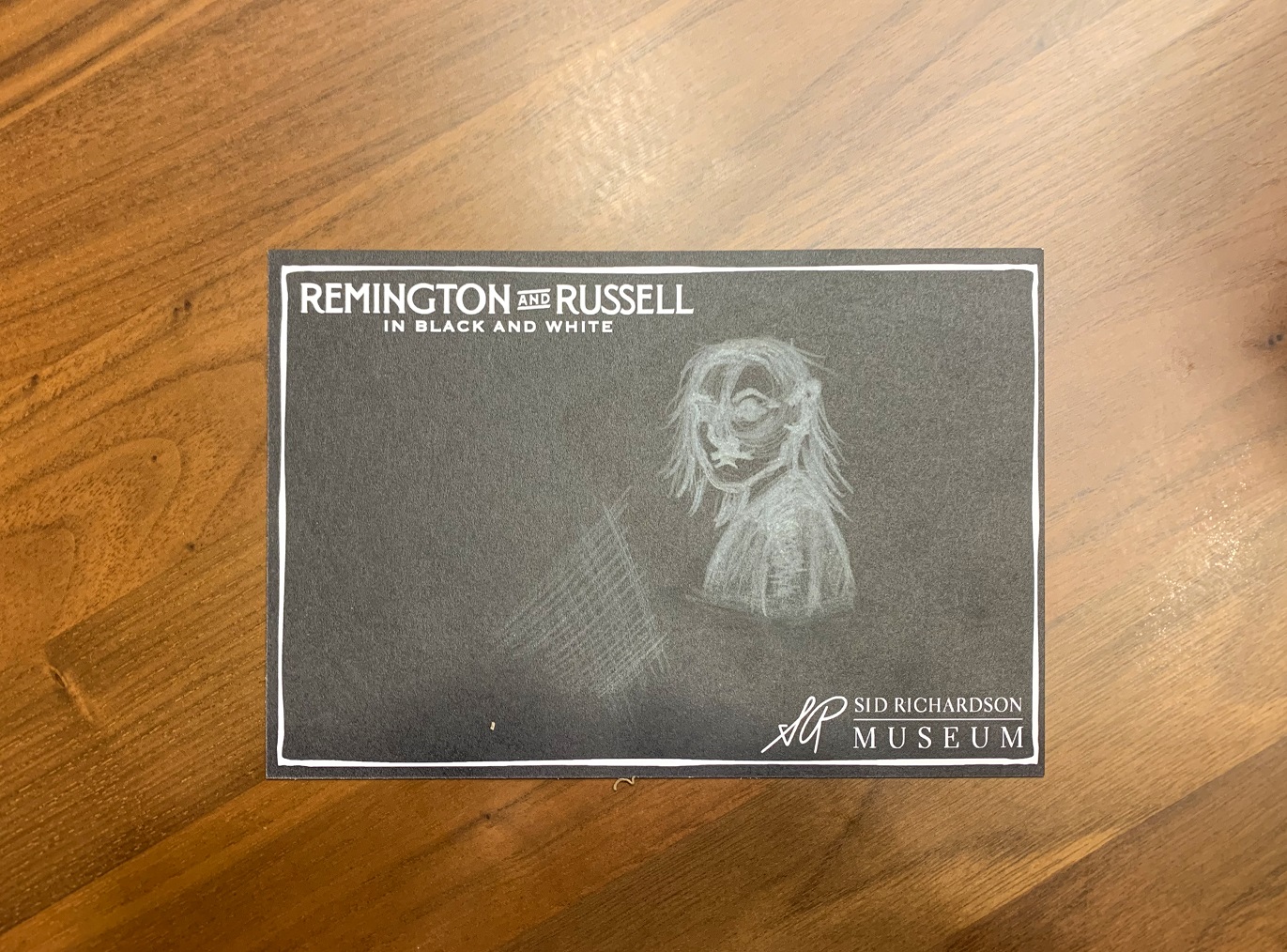
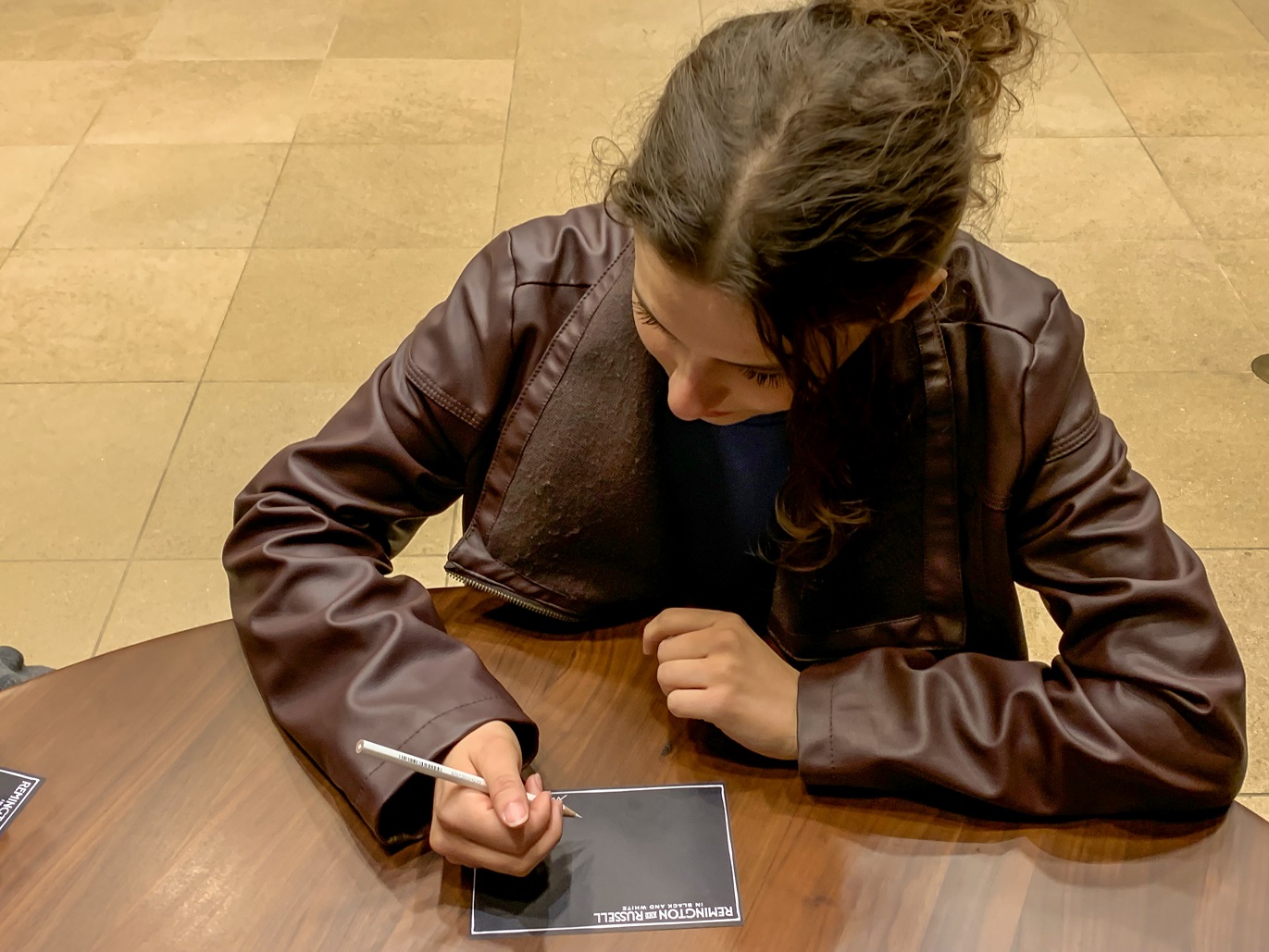
One of my favorite stops was the Sid Richardson Museum, where we got an extensive look at the works of Frederic Remington and Charles Russell. Both are staples of Western art, but the range of their work was impressive. The museum also gave us a chance to try our hand at some art of our own, offering postcards for visitors to draw and send.
This ties to Remington, who was not well-versed in writing, and would use illustrations to communicate when words fell short. While some of us had more success than others (we’ll leave the details out), it was a fun and creative way to engage with the experience we shared at the museum.
The trip wasn’t just about law and art—we also enjoyed a range of food experiences. While I stayed on the safe side with a soufflé (my first, and it was great!), Maggie stepped up as the group’s culinary adventurer, trying calf fries, escargot, and quail all for the first time. One of the best parts of LEAP trips is the chance to try new things, and this trip was no exception.
After the competition ended, we headed to Dallas. We made a quick stop to see a giant eyeball sculpture…
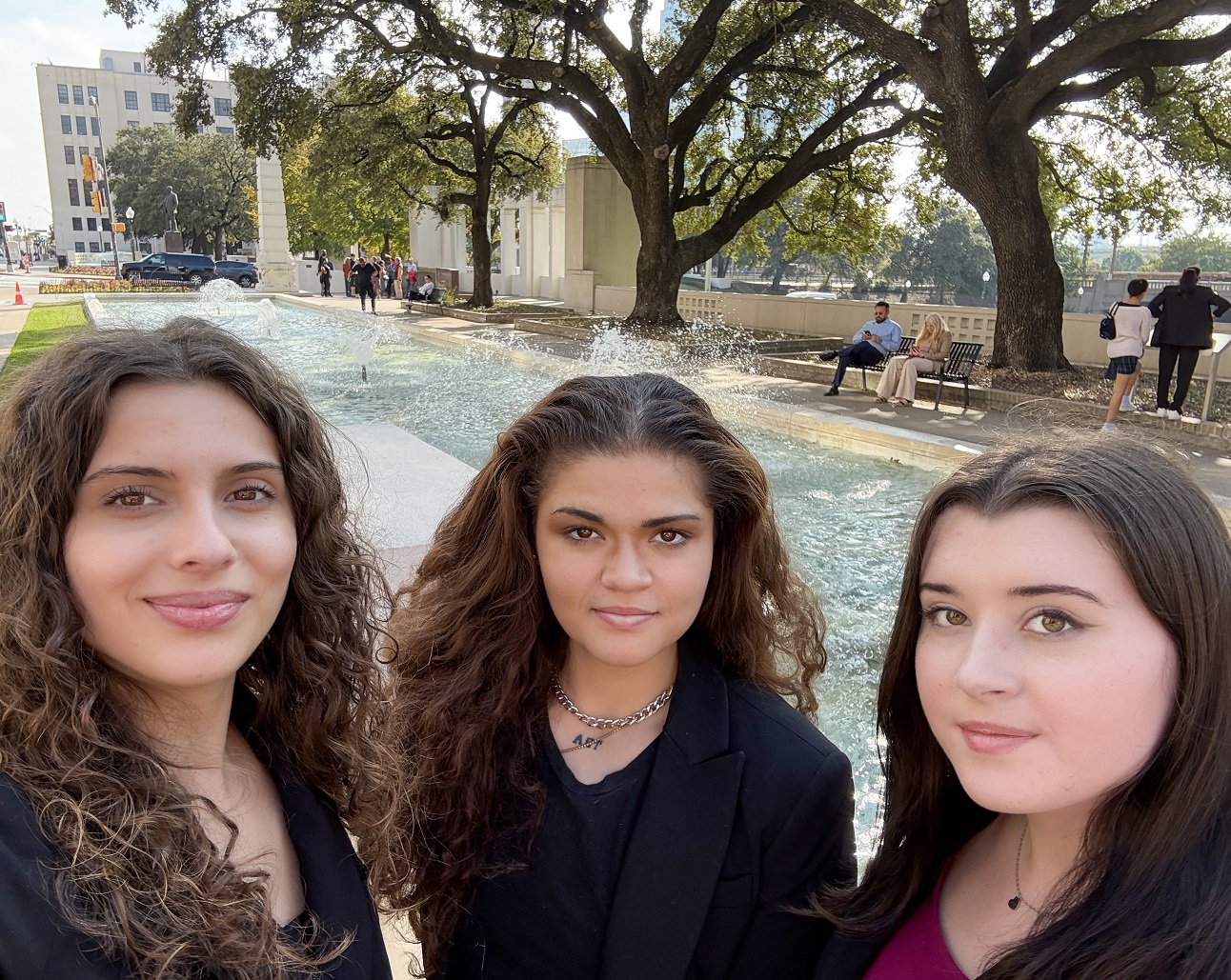
…which was interesting to say the least, before heading to Thanksgiving Square, another Philip Johnson design.
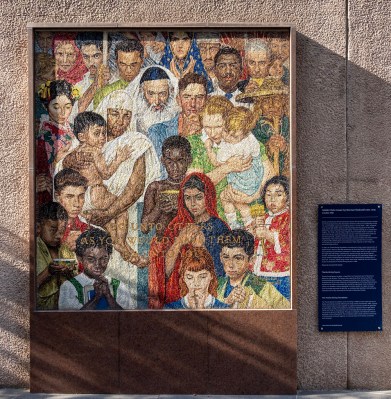
The Square offers myriad interesting features, including a Norman Rockwell mosaic…
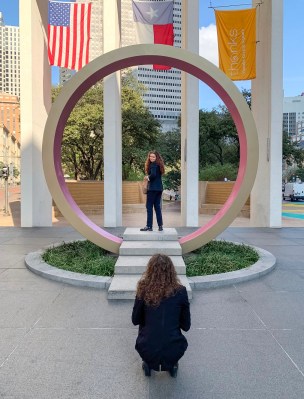
…a “ring of thanks,” which has an echo feature…
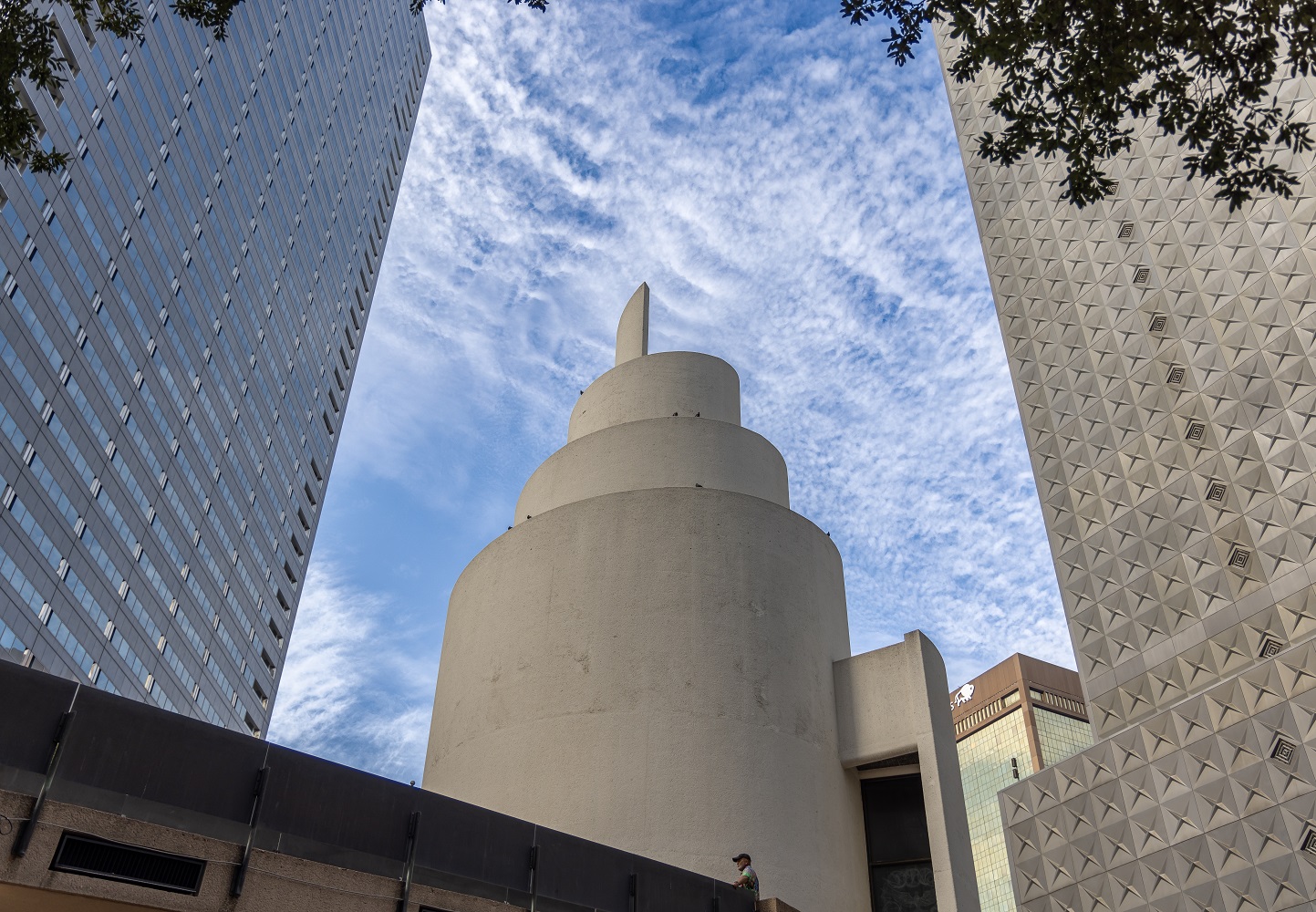
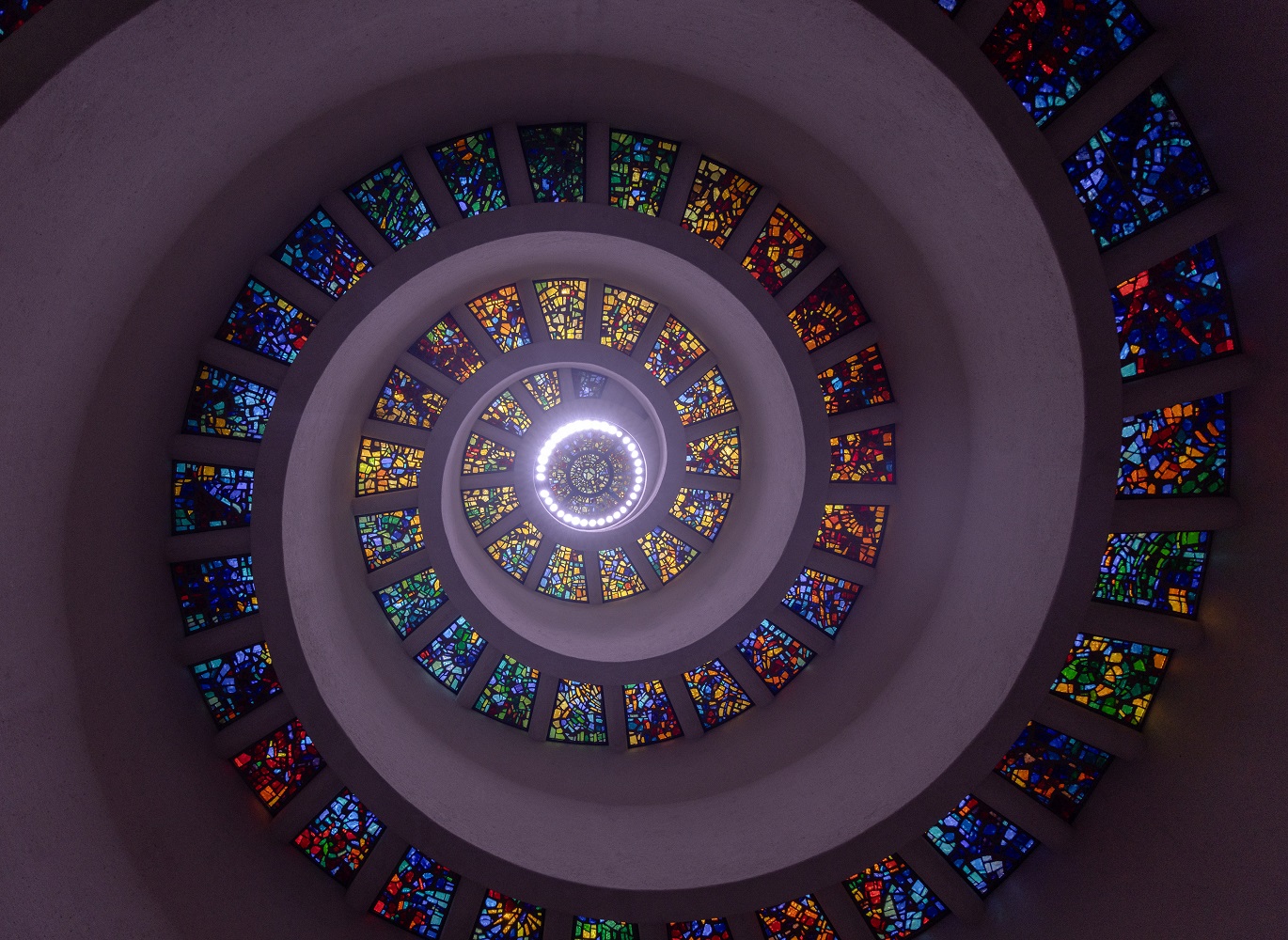
…and, of course, Johnson’s beautiful Chapel.
The spiral design, and the beautiful stained glass capture the “infinite upward reach of the human spirit”.
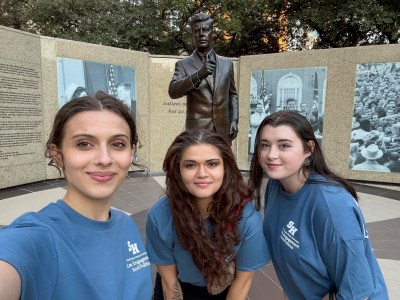
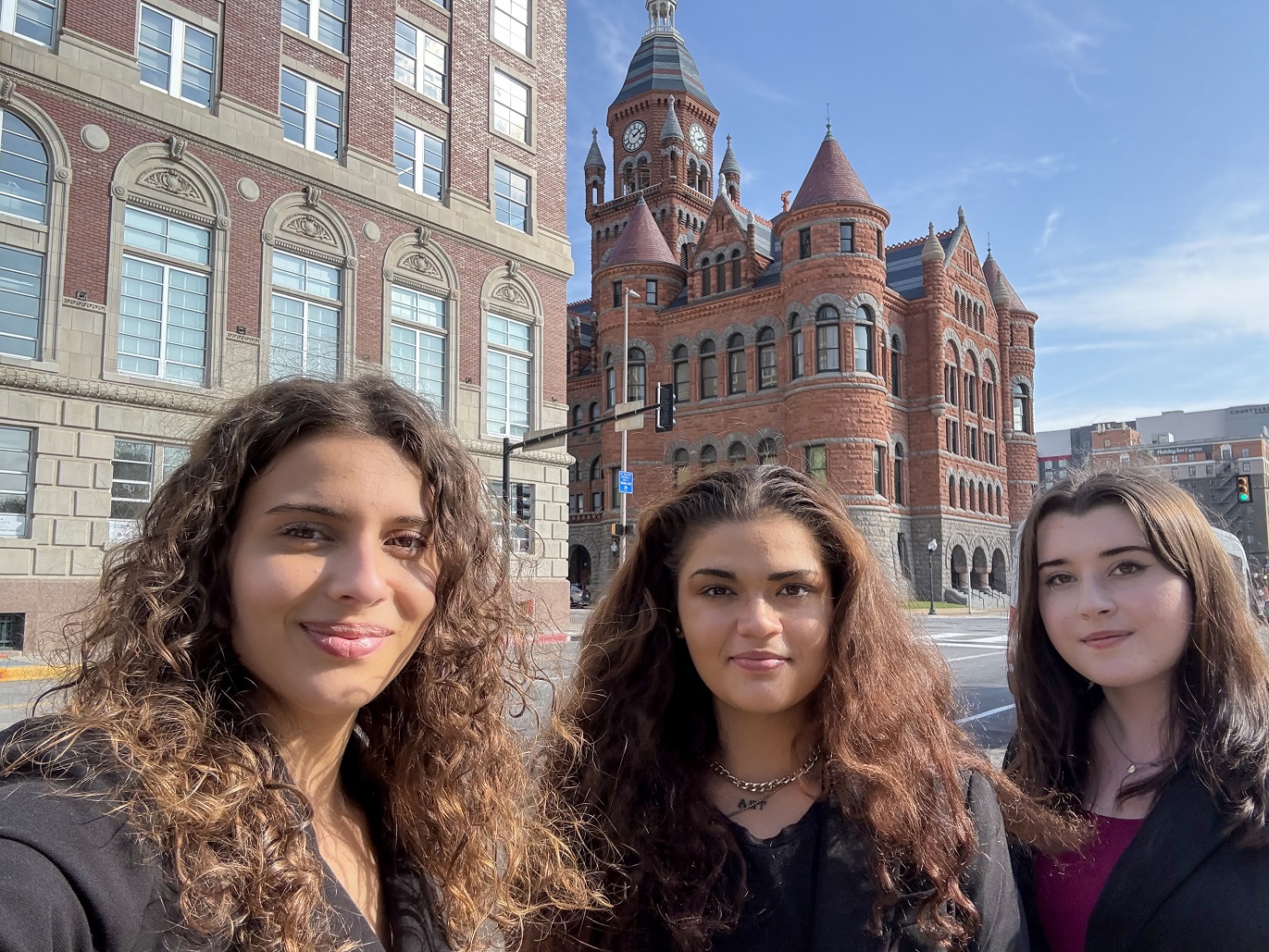
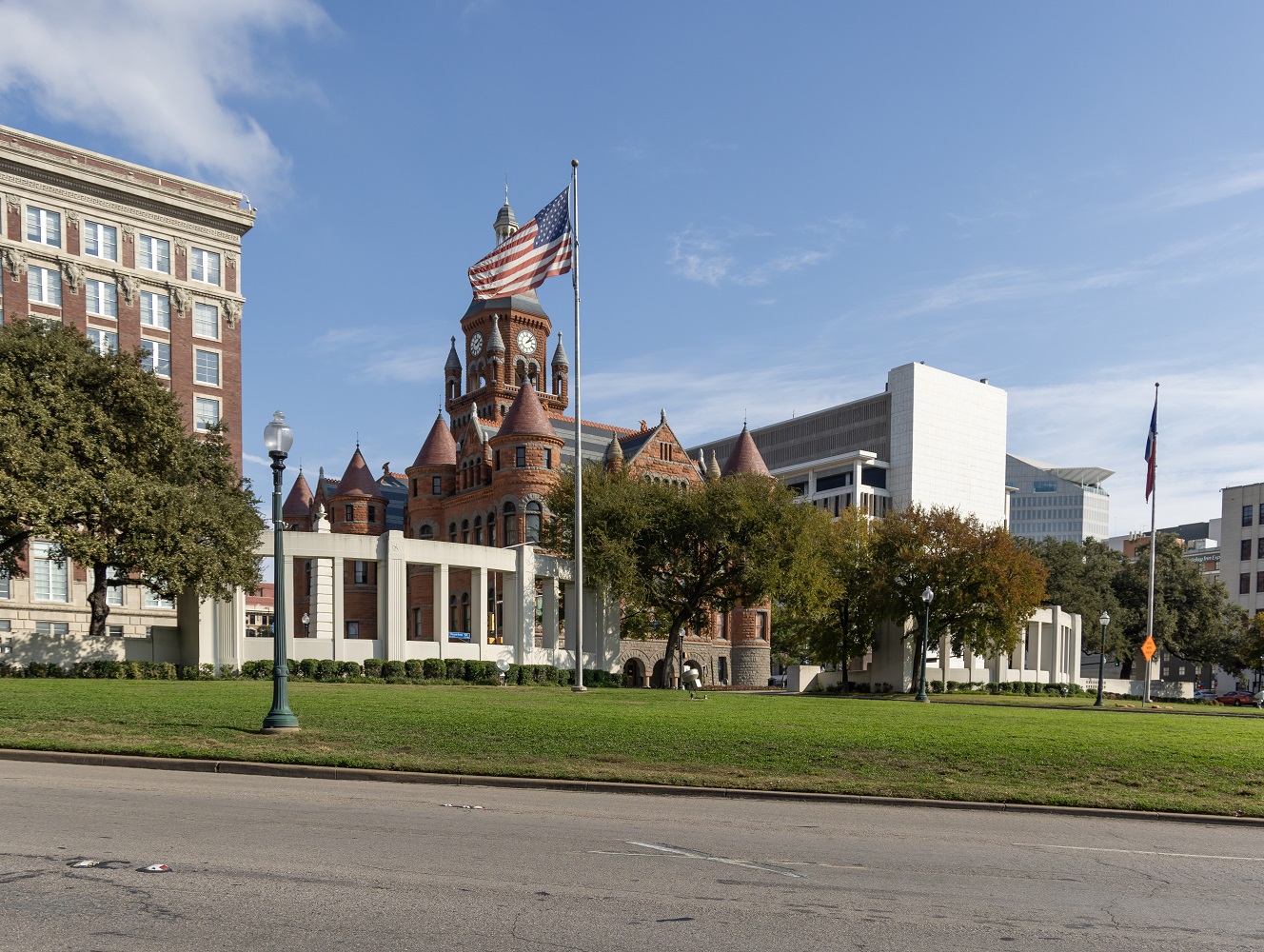
We ended the trip with a visit to Dealey Plaza, the site of JFK’s assassination. Seeing the Grassy Knoll and the surrounding area was a very fitting end to our adventures in DFW.
Overall, this trip showcased what LEAP is all about: taking multidisciplinary experiences—law, art, history, and food—and tying them together in a way that broadens our understanding and appreciation of the world. Fort Worth and Dallas proved to be the perfect destinations for this, with plenty of firsts, surprises, and connections along the way.
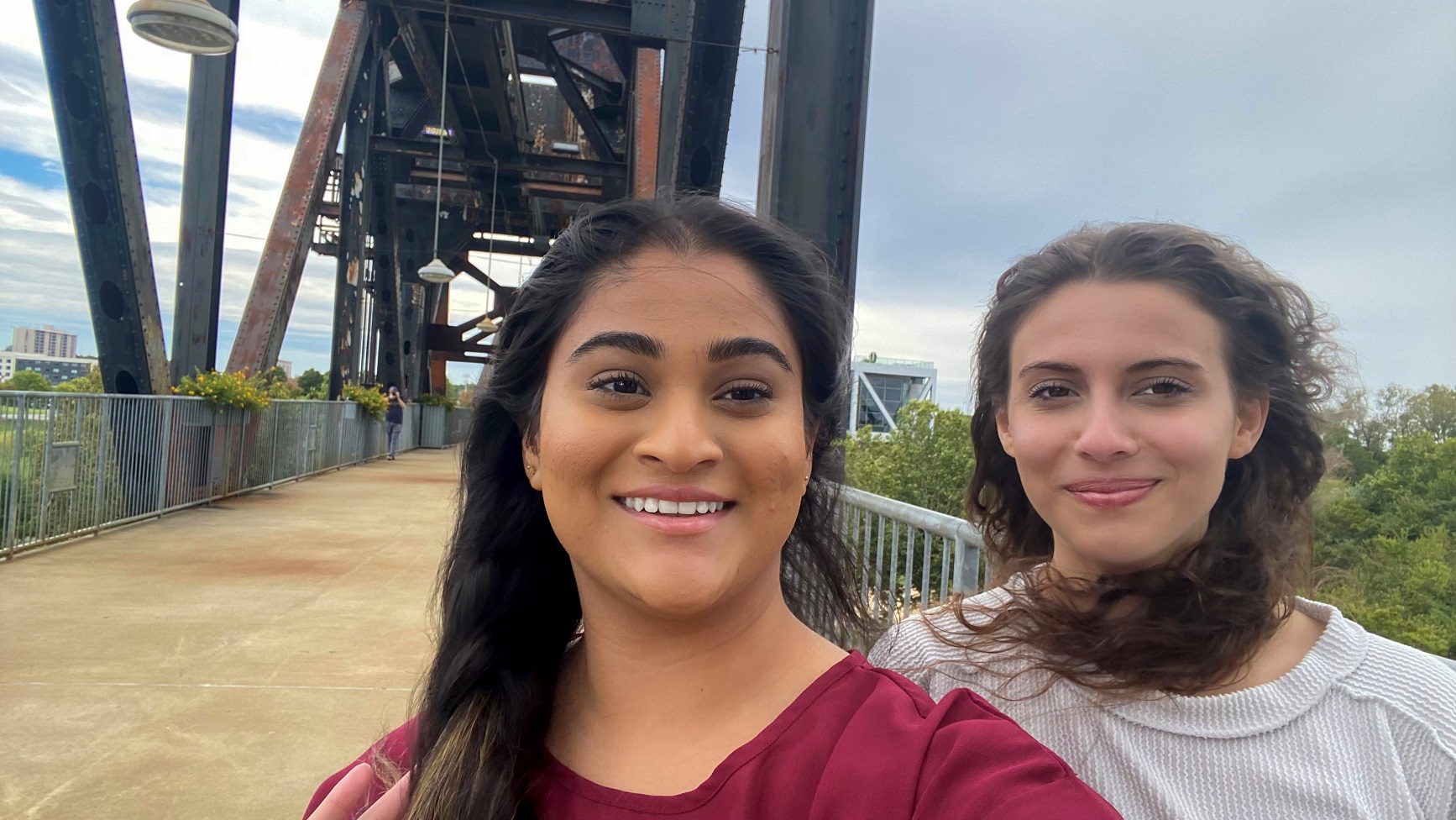
After two learning-laden days in Little Rock, we turned our attention primarily to the Book Festival and the authors on hand to present. One of the joys of Little Rock is that the downtown area is more akin to a small town than a larger, capital city, and we were able to walk to the book festival with no trouble–while still enjoying coffee stops, capitol views, and public art…
A Discussion on Authenticity and itsCostwith Garrard Conley
by Olivia Discon
While others in LEAP attended more learned sessions, I attended a book talk with Garrard Conley for my first session at the Six Bridges Book Festival, where he discussed his new book, All the World Aside. He described the novel as a character study set in 18th-century Puritan New England, covering modern conversations about love, faith, and identity within the strict religious society of the time.
Conley emphasized how the characters’ internal struggles resonate within the modern context, despite the historical backdrop.
During the session, Conley read a passage about the protagonist’s mother struggling with depression, and it was reminiscent of Flannery O’Connor’s The River. During the Q&A, I asked if O’Connor had been an influence in his work, and to my surprise, he lit up with excitement.
He made mention that he had taken classes covering her short stories in college and was greatly inspired by her ability to navigate the complexities of a changing society within the scope of region, time, and politics. I was glad I asked, and it was nice to see that he appreciated the connection.
To make this experience even more special, after the session, when I went to buy a copy of the book, a generous Arkansan offered to purchase it for me. It was an unexpected but incredibly kind gesture that tied into the theme of Arkansan Traveler with which we have become well acquainted.
A Deep Dive into Cultures, Immigrants, andNatives
by Saara Maknojia
The Covid-19 pandemic had a significant impact on the nation’s economy, leading to a decline in business profits. This period was particularly difficult for immigrants working in the meatpacking industry, who were exploited and forced to work under inhumane conditions. Executives from companies like Tyson told workers that if they didn’t continue supplying food, the entire nation would starve.
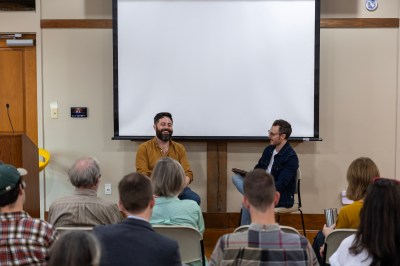
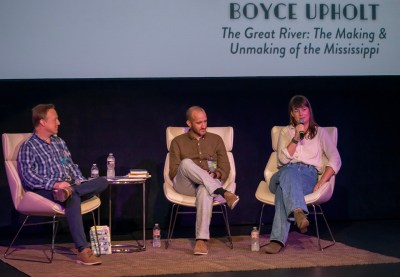
In my first session at the Six Bridges Book Festival, I learned from Alice Driver (and Boyce Upholt–see below), author of Life and Death of The American Worker: The Immigrants Taking on America’s Largest Meatpacking Company, who shared her investigative research into the experiences of immigrant workers at Tyson Foods. Her work sheds light on the exploitation that takes place within multi-billion-dollar companies.
According to Driver, undocumented immigrants were threatened by Tyson executives during the pandemic—told that if they didn’t comply with the company’s demands, they would be arrested and jailed. This exploitation of vulnerable individuals has been ongoing for years and continues to shape their experiences today.
At the end of the session, I asked Driver about the techniques she used to comfort the immigrants and help them share their stories. I also inquired about how these perspectives might affect the immigrant community facing similar challenges in other workplaces.
She explained that she needed to offer comfort because these workers were alone and misinformed. As for the broader impact, she noted that immigration is still seen as a turbulent issue in the U.S., even though the country depends heavily on immigrant labor. Sadly, these workers often don’t receive the credit they deserve.
This session deeply inspired me, as it demonstrated how one person can truly impact a community. Alice Driver played a crucial role in reassuring these immigrants of their rights and protecting them from the company’s threats.
As an immigrant myself, the stories of others are always something that I find myself relating to some extent. The courage shown by these workers, who risked their lives and faced potential legal battles to share their experiences, serves as a powerful reminder of the human cost behind corporate profit. Their bravery emphasizes the critical need to hold corporations accountable for prioritizing profit over people. It also reminds us of the strength and resilience of immigrant communities, who deserve recognition not only for their contributions to the economy but for their invaluable role in shaping the moral compass of our society.
Sharing the stage with Ms. Driver was Boyce Upholt, author of numerous books, including his latest, “The Great River: The Making and Unmaking of the Mississippi.” Upholt was the perfect author to share the stage with Driver, inasmuch as he is well-read and, although he is primarily a “nature” writer, this has obvious connections to food writing. In fact, he won the James Beard Foundation Award for his work on herbicides in, “A Killing Season.”
Upholt’s erudition also came to light when discussing Ms. Driver’s book: Upholt was able to quote passages from Upton Sinclair’s “The Jungle” as it pertained to Driver’s “The Life and Death of the American Worker.”
But his most interesting discussions came when discussing the “Great River,” the Mississippi, and the impact it has had on food, culture, racial conflict, and the environment. A central theme in Upholt’s book is the Western concept that man can, at least to an extent, control nature. This has, according to Upholt, worked to some degree: the Mississippi floods less often now, thanks to an extensive levee system devised in the last two centuries. But, when it does flood, it floods more catastrophically, killing hundreds and causing billions of dollars in damages.
According to Upholt, this should lead to a realization that man will not, in the long run, be able to control nature. Indeed, as the weather becomes more volatile in the coming years, our ability to influence the forces of nature may prove humbling, costly, and deadly.
Cultivating Our Knowledge: A Gardening Workshop with Lana Williams
by Olivia Discon
We couldn’t contain our excitement that the Six Bridges Book Festival had a gardening workshop! Having recently published her book, The Container Garden Recipe Book, Lana Williams gave us the lowdown on a new method of gardening. Using a diversified array of plants within a repurposed pot has become a minimalist, economical, and eye-catching fad that requires lots of forethought to execute.
As Lana went into depth on different tactics, she assembled two container gardens with beautiful foliage while answering questions throughout the presentation.
Saara, who takes pride in her personal garden was immediately inspired to take the lessons learned from the workshop back home, such as avoiding “root rot”, types of soil to utilize, and frequency of maintaining the plants depending on climate. This session ended with a particularly optimistic note, being that “there is no such thing as having a black thumb.” While some might describe my efforts to maintain plants as borderline herbicidal (editor: She’s a herbicidal maniac), it was quite interesting to experience a tutorial from a professional.
Eli Cranor and Gabino Iglesias
One of the highlights of the day was the join session of Eli Cranor and Gabino Iglesias, moderated by Jonathan Portis–Editor of Arkansas Gazette, author of “The Comeback Kid,” and brother of Charles Portis (author of True Grit).
Portis, although undoubtedly knowledgeable, fumbled a bit as moderator, tripping on his introduction, appearing to stammer a bit, and letting the conversation wander.
When left to their own devices, however, Cranor and Iglesias were excellent, offering humorous anecdotes, relating interesting stories, and providing real insight into their writing practices. Iglesias, for example, has to write his novels in between various other obligations, including a hefty travel schedule and writing articles for the New York Times.
Cranor, too, had to do much of his writing at 5:00am, before his daughter awoke and in his lunch period or free period while teaching high school.
This was less of a problem for Iglesias when he was eleven, and he wrote his first short story. He had time and imagination, and he wrote a story for class about a monster that lived in a basement of his hometown, and when the monster got too big for the basement, he went on a murderous rampage around town. Iglesias, ever a stickler for accuracy, used real names of the murder victims, which one imagines, he delighted in killing off. Understandably, this caught the attention of the teachers (it was not noted whether a teacher was among the victims), who called his parents. His father stood beside him, asking only one question: “Was it well written?”
Cranor also had the experience of writing about a small town in Arkansas, while living in a small town in Arkansas. Portis suggested that there might be some push-back from residents who didn’t care for how their town–or the townspeople–were portrayed. Cranor, however, indicated that he has not run into a lot of problems with that, although he did note that his column in the Arkansas Democrat-Gazette does, occasionally, rankle people, and he hears about it.
Iglesias also hears from critics, and when the author thinks the critics are unfair, he simply puts them in his next book–often as the villains. It’s unclear what the long-term effects of this strategy will be, but Iglesias seems to enjoy his ability to highlight the often unsolicited and often irrational responses to fiction and art from the public.
If nothing else, we are learning that irrespective of genre, fiction, or non-fiction, it’s maybe not a great idea to argue with people who buy ink by the barrel.
Wrapping Up
The real takeaway, however, is the importance of taking opportunities to learn. In our case, it paid off beautifully, with lessons on gardening, nature, pandemics, workers, crime fiction, journalism, the writing process, and more generally, the importance of travel, which as Mark Twain noted, “is fatal to prejudices.”
Have you ever noticed that little signature on the dollar bill? Well, the next time you do, you will see the signature of one of the most powerful women in the world: Secretary of Treasury, Janet Yellen. Known for being the first woman to be both U.S. Secretary of Treasury and Chair of the Federal Reserve Bank, Secretary Yellen, along with moderator Jake Gura, shared some of her insights with us in the first session of the day.
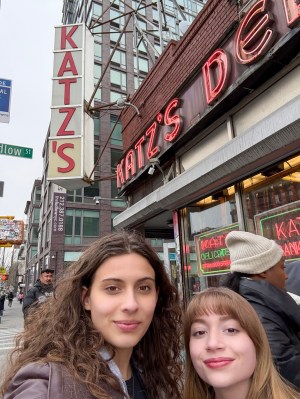
While hearing straight from the nation’s treasurer that our financial state is “stable and healthy,” the interviewer didn’t shy away from hard-hitting questions that many citizens are concerned about.
On the topic of the inflation crisis, Secretary Yellen highlighted some contributing factors, which, she said, are mostly due to changes in our society.
She spoke on COVID-19, explaining that because people were not spending money during lockdown, the government increased spending to stabilize the economy. This infusion of money into the economy, along with shortages in key areas (e.g., chips), led to inflation, but Secretary Yellen expressed her confidence that inflation rates will drop significantly as the economy continues to stabilize.
The conversation pivoted to Secretary Yellen’s role in foreign affairs, specifically the United States economic relations with China. With many Americans being weary of having relations with China, Secretary Yellen’s point of view on international affairs left the audience with a sense of optimism. She stressed that foreign alliances are critical so that a nation can make positive relationships with countries that will solve many worldwide issues.
The conversation ended after Secretary Yellen expressed her admiration for the United States Treasury Department’s workforce, and she acknowledged their dedication to the American people.
AI and All of Us
by Saara Maknojia
Is artificial intelligence a magical tool that answers all of our questions? Or is it a major threat to the human race? To learn more about this hot topic, Olivia and I attended the panel discussion at the Texas Tribune Festival. The panel, led by Sonal Shah, Texas Tribune CEO, also included: Chris Hyams, Indeed CEO; Armando Walle, Texas State Representative; and Dr. Alondra Nelson.
Dr. Alondra Nelson provided a short response when defining exactly what artificial intelligence is, “artificial intelligence is not magic; it is a machine-based system that uses data which makes inferences from which it generates outputs,” confirming that the revolutionized technological advancements are far from what most individuals consider humanlike. In fact, the panelists unanimously agreed artificial intelligence applications are flawed in many ways.
Job seekers frequently utilize websites such as Indeed; however, many unregulated websites of this kind often limit the users’ ability to find jobs. Chris Hyams addressed referred to this issue as “biases and barriers,” which creates limitations to individuals searching for new opportunities. Biases and barriers pertain, largely, to unregulated artificial intelligence applications that filter the names of job applicants to employers.
State and federal governments have been concerned with artificial intelligence and its impact on citizens safety and privacy. Currently, Colorado is the only state that has established laws relating to artificial intelligence. This may create problems, according to Representative Walle, who advocated for federal laws to regulate artificial intelligence in the United States, rather than state laws.
As young adults, we are very reliant on artificial intelligence but we don’t always understand the potential shortcomings and limitations of the technology. Reflecting on the discussions at the session, I have realized the impacts of artificial intelligence on society, whether it is for a private company or on policymaking decisions. Privacy, accurate information and a fallback system for artificial intelligence are factors to be considered for the future of AI.
The Corrections Crisis
by Katherine Burnett
With much anticipation, Caitlin, Chrissy, Cinthia, Maggie, Michelle, and I headed up to the 8th floor to learn about the corrections crisis with Jennifer Doleac, Executive Vice President of Criminal Justice at Arnold Ventures; Matthew Charles, Senior Policy Adviser at Families Against Mandatory Minimums; Andy Potter, Founder and Executive Director of One Voice United; and Eric Higgins, Sheriff of Pulaski County in Arkansas. The four discussed understaffing, overcrowding, and other issues in contemporary prisons.
As Matthew Charles put it, correctional officers are “overworked and undervalued,” creating dangerous and hostile work environments for correctional officers and inmates alike.
When asked about possible solutions to the issues at hand, Jennifer Doleac shared a new experiment she is conducting in counties across the U.S. involving Scandinavian rehabilitation practices. Eric Higgins supported Doleac’s plan, mentioning his recent Netflix Documentary where he allowed the prisoners within his facility to be completely unlocked from their cells without any supervision.
Higgins shared that today, the unit is still unlocked and successful. Also, that his facility has a 5% recidivism rate!
The speakers ended the session by assuring watchers that they, and many others, will continue to look for a solution that will guarantee the safety and health of not just workers, but detainees as well.
Recording of the “On With Kara Swisher” Podcast – Nancy Pelosi
by Caitlin Nortonen
This afternoon, Saara, Cinthia, Maggie, Katherine, and I had a once-in-a-lifetime opportunity to watch Kara Swisher’s podcast live as she interviewed the first woman House Speaker, Nancy Pelosi.
Speaker Pelosi was asked her thoughts on the upcoming presidential debate this Tuesday; she shared with us that she was hopeful, and that the American people deserve this debate.
When asked about any advice she may have for Vice President Kamala Harris, Speaker Pelosi stated that she should deliver a message that is bold, be herself, and show why the American people should vote for her. When asked the same question about former President Donald Trump, she questioned if he will even show up to the debate. When the crowd reacted, Speaker Pelosi stated, “I know cowardice when I see it.”
Speaker Pelosi shared her worries about what she believes will happen if former President Trump wins the election.
Further, she expressed her concern for Project 25, specifically mentioning that if it passes, overtime and the Department of Education will be abolished.
Hearing Speaker Pelosi speak about the upcoming election made me more interested in seeing the outcome. Having the opportunity to see Speaker Pelosi this afternoon was truly a great experience, considering I am originally from the county she once represented!
Arrested Developments
by Michelle Moya
After an indulgent meal, we headed to the Arrested Development panel at the Texas Tribune Festival. It focused on crime clearance rates and the challenges around them. It featured an impressive lineup of speakers: Jennifer Doleac, Executive Vice President of Criminal Justice; John Skaggs, a retired homicide detective; and Quintin Williams, who leads gun violence prevention and justice reform programs.
I was particularly looking forward to this panel because of Homicide Detective Skagg’s participation, whose insights were both eye-opening and encouraging as a student considering becoming a homicide detective herself.
The panel reinforced the importance of continuous learning and adaptation in law enforcement; they stated that crime-fighting techniques and tools must change to help with the current arrest rates. They discussed numerous challenges that contribute to this low rate, including funding, structural issues, and policy issues like guns. Further, they stressed that the dynamic nature of the investigative profession is both hard and exhilarating, with limitless prospects for advancement and meaningful change.
John Skaggs emphasized the emotional and physical challenges of being a detective, highlighting the significance of perseverance and dedication in the profession. My biggest lesson was that the detective’s work entails more than just obtaining evidence; it also includes piecing together the story behind the murder, caring for the victim families, and protecting witnesses.
When it came time for questions, Chrissy asked the panel about the growing use of ALPRs and if they have made an impact in making arrests. Jennifer Doleac first answered by stating that there has not been much research on the topic, making it hard to give a definitive answer.
Nevertheless, John Skaggs noted that in the cities he had traveled to with the presence of LPRs, the police department had a higher chance of making correct arrests.
Attending this session was a highlight of the festival for me. It confirmed my desire to work in criminal justice and provided vital insights that I will apply to my education and future job. As the last day of the festival, it captured the heart of our learning journey: blending academic ideas with real-world applications.
I left the panel with a renewed appreciation for those who work persistently to promote justice and safety in our communities. I was even able to chat with Detective Skaggs briefly and take a picture!
Texas Monthly Presents: A Taco Happy Hour
by Cinthia Villarreal
What other way to finish our day and educational adventure at the Texas Tribune Festival than to taco about food with James Beard Winners?
To do so, we had the honor to hear from Iliana De la Vega, chef and owner of El Naranjo, rated as one of the top restaurants in Austin; Ana Liz Pulido, whose taqueria we were exposed to a couple of months ago; Jose Ralat, food journalist for the Texas Monthly magazine; and Kimya Kavenhar, senior editor of Texas Monthly who served as moderator.
Prompted to talk about their approach to innovation and dedication, Ana Liz described her devotion to the flavor and presentation of her dishes by grilling the fajita outside of the restaurant to have a strong smoky flavor and the purchase of a Molino in which they make their own, fresh corn (white and blue) tortillas.
She expressed her gratitude for the changing minds who accept her distinct presentations and excitement for other restaurants who were following in her footsteps of having their own grinders and Molinos. Mrs. De La Vega described Nixtamalization’s tedious yet rewarding process, a traditional Mesoamerican process of cooking corn in an alkaline solution to make the corn kernels more nutritional and flavorful.
A major subject in the discussion was the difference between Mexican and Tex-Mex food, mentioning that the spices used and the region where it is cooked, have a huge influence on the dishes display. Mr. Ralat and Ms. Kavenhkar described their unanimous decision to ban “authentic” from their articles, describing how vague and misleading it can be, especially with Mexican dishes, which are specific to the culinary region. Throughout different questions, the chefs described their dedication to staying sincere with themselves, their creativity, and sometimes stubbornness.
Being of Mexican origin and having a very biased appreciation for Mexican food, I was thrilled to learn about the changing attitude toward Mexican cuisine.
The acceptance and respect for Mexican and Tex-Mex dishes have come a long way, and we can only thank the trailblazers who have brought awareness and innovation to their kitchens and articles to change multigenerational ideas.
The LEAP Ambassadors recently took part in a cultural and culinary journey to France at the World Affairs Council of Greater Houston’s latest Culinary Passport event. Held at Alliance Française de Houston, which has proudly served the region for more than 100 years, the event featured an array of French delicacies including ham and cheese croissants, charcuterie boards, crepes, and a delightful assortment of fruits and macarons.
The event kicked off with an introduction by Jahan Jafarpour, leading into the evening’s highlight: a conversation with Valérie Baraban, Consul General of France in Houston.
With a background in NATO and France’s counterterrorism task force, Baraban’s path to Texas was unexpected. After years of diplomatic work, she sought a new challenge and chose Texas, despite knowing little about the state. She admitted that the media had shaped her perception of Texas, but after taking a leap of faith, she discovered that Texas — and especially Houston — had won her over with its diversity, energy, and warmth.
Baraban emphasized the surprising depth of France’s connections to Texas. For instance, two French brothers founded Schlumberger, a major oil and gas company that operates in Houston and across the United States. This highlights the longstanding economic ties between the two regions. Additionally, she touched on France’s forward-thinking initiatives in space exploration and hinted at Houston’s potential role in helping France develop new ways to approach space research.
A fun historical tidbit Baraban shared was that France was the first country to recognize Texas as an independent nation. In fact, there’s a landmark in Paris that reads, “Here was the former embassy of the Republic of Texas,” a reminder of the deep diplomatic ties between the two (see also: French Legation).
The evening also touched on the Paris 2024 Olympic and Paralympic Games. Baraban spoke about how global events like the Olympics foster unity and how they align with the Culinary Passport series’ mission to bring people together through food and cultural exchange.
For the LEAP Ambassadors, the evening was a delightful blend of French flavors and fascinating insights into the ties between France and Texas, spanning from oil and space to shared history and diplomacy. We enjoyed interacting with new friends and engaging with the World Affairs Council staff, making for a fun and memorable night.
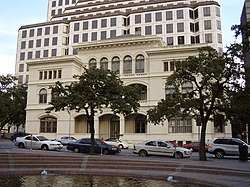
During our recent trip for the Southern Legislative Conference, the LEAP Ambassadors had the privilege of dining at 1010 Bridge, a Charleston gem that has recently captured national attention. Chef Paul Smith, the creative force behind this establishment, made history by winning the prestigious James Beard Award for Best Chef: Southeast.
Chef Paul Smith and Carrie Smith at James Beard Ceremonies (Taken from 1010 Bridge Website)
This recognition puts West Virginia on the map, showcasing Charleston’s growing reputation as a hub for culinary and economic innovation.
1010 Bridge Staff (Taken from 1010 Bridge Website)
Chef Smith’s achievement is not just a personal triumph but a testament to his dedication to elevating the local food community. As the Culinary Ambassador for Capitol Market, he partners with local farmers and producers, using quality, locally grown ingredients to build his menu.
His efforts extend beyond his own restaurants as he actively participates in community cooking classes and serves on various boards, enriching the Charleston community in numerous ways.
Thanks to some facilitation by West Virginia Senator Eric Nelson, we were fortunate to spend two enlightening hours with Chef Smith, where he shared his philosophy on what being a public servant means in the kitchen.
His approach is inspired by the belief that success is not about competition but collaboration, echoing JFK’s idea that “a rising tide lifts all boats.” Chef Smith sees his peers not as competitors but as partners in the mission to promote West Virginia’s culinary arts.
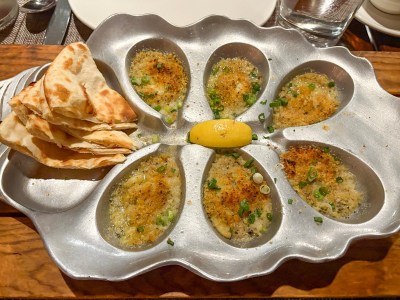
We started with an array of appetizers: White Cheddar Pimento Cheese, Bacon Wrapped Dates, House Cured Pork Belly, Fried ‘Nashville Hot’ Oysters, and Whipped Feta.
(Taken from 1010 Bridge Website)
Each dish showcased Chef Smith’s creativity and commitment to local flavors. He noted that he wants his dishes to be an elevated, but encouraging dining experience. By using ingredients and elements of well-known dishes, his menu can be an approachable experience to fine dining. Feeling particularly moved by Chef Smith’s words, I decided to try oysters for the first time! As someone who usually has an aversion to seafood, having the ability to enjoy a dish I would normally avoid was a pleasant surprise.
This surprise was also shared by Cinthia, who tried bacon-wrapped dates–and loved them! This was a surprise because (1) she doesn’t like dates, and (2) she doesn’t like bleu cheese, with which the dates were stuffed. She was very surprised to learn that ingredients she didn’t like resulted in a dish she did like.
Cinthia learning that a dish she loved contained Bleu Cheese
Our dining experience was unforgettable. Melissa, our server, was fantastic and clearly knowledgeable about the cooking process, local ingredients and restaurants, and the history of the restaurant, adding a further elevated aspect to our meal. Chrissy and I enjoyed a pasta Bolognese, Cinthia savored a risotto, and Michelle tried the salmon with pea and mint agnolotti. Everything was nothing short of exceptional!
Of course, we couldn’t leave without sampling some of the desserts on the menu. We tried the peach bread pudding, lemon gelato, and crème brûlée, each offering a delightful end to our meal.
Thank you very much, Chef Smith, for your time and perspective.
We congratulate you on the well-deserved award and look forward to the opportunity to return someday.