Following our spring break and trying to get back in the swing of things, our Pre-Law Society meeting allowed us the opportunity to hear from our peers. As part of the normal business, this meant our President, Heather Noman, having minutes approved and funds moved, but we quickly moved to the main topics.
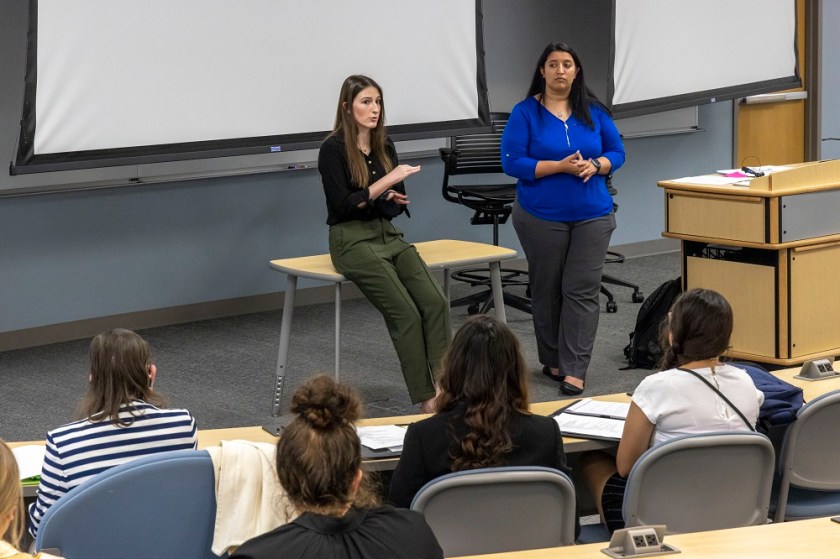
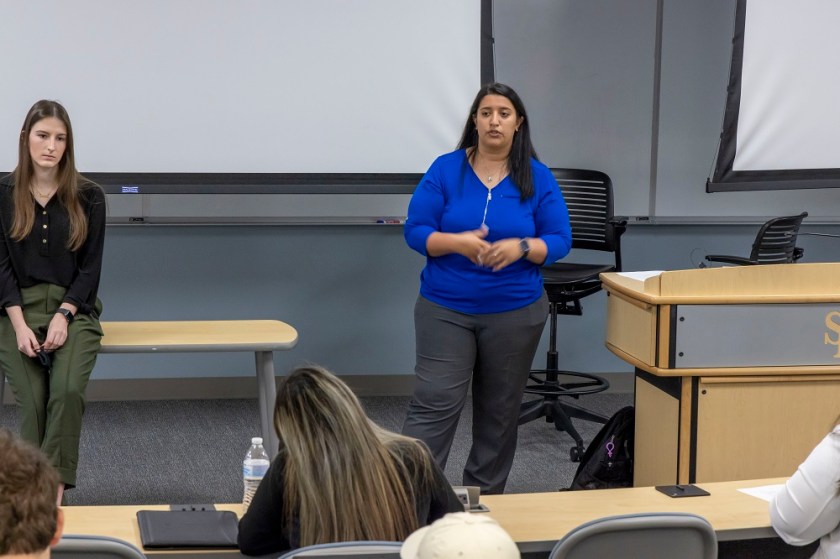
Heather & Kaylea King took the stage, and told us what they know, what they wish they knew, and other tidbits about applying to law school.
For Kaylea, the timeline was stressful for her. She was a junior when she realized she wanted to go into law. She took the Mock LSAT to get her bearings, and then was selected for the Pre-Law Society Prep Course. With some improvement under her belt, she took the LSAT in August of last year, and was able to get a good score. Armed with that score, she applied and was accepted to several schools.
For Heather, the worst part was the actual LSAT. After not being happy with her performance the first time, she took it again. She had technical difficulties, and that added to her stress, and she also regretted taking an LSAT Prep course during the semester. She recommended taking the prep course and doing the bulk of the studying over the summer and taking the LSAT in August.
Both encouraged students to sign up for an LSAT account as soon as possible, if they haven’t already.
Heather spread a broad net, applying to many schools as she awaits her score. Kaylea applied to nine, using the 3-3-3 strategy: apply to 3 reach schools, 3 schools at which you are competitive, and 3 safety schools. Ultimately, she chose the University of Washington Law School in Saint Louis, MO, which is ranked 16th in the country. Kaylea got a good feel from the school, they are ranked highly, and the people were nice.
For freshmen, Kaylea and Heather recommended not getting too intense in terms of studying. Crossword puzzles, sudoku, other logic-related games and, of course, reading can be helpful.
For juniors, the time is more urgent, and having a rigorous self-study plan or formal LSAT Prep course is essential.
In terms of personal statements, Kaylea suggested being honest and genuine, and letting the school get a sense of the real you. In terms of letters of recommendation, Heather suggested getting a professor, one you have a great relationship with. Taking courses in which the professor can evaluate you across numerous assignments and diverse types of assignments and getting to know the professor outside of class are key in getting a good letter.
After providing these excellent tips, Heather moved on to some upcoming events and our next meeting. With this hearty welcome back from Spring Break, we adjourned the meeting.
Capitalizing on the hard work of Professor Kurt Smith with the Political Science department, the LEAP Ambassadors and Jocelyn Vazquez recently enjoyed a short but informative lunch with Judge Jamie Rene Roman and Dr. Kurt Smith, learning about law, politics, and life.
Judge Roman served as a Judge in California after being appointed by Governor Arnold Schwarzenegger. He has also worked for the Texas Department of Criminal Justice (TDCJ). Although Judge Roman acquired his J.D. from the University of California, Hastings College of Law, he continued his education after law school at Boston University to obtain his L.L.M, allowing him to specialize in International Banking law!
Upon entering the room, Judge Roman began his greetings and empowered us with his experience as a young attorney working. As we talked about our career goals and what would be next after we graduated from SHSU, Judge Roman, Dr. Kurt Smith and the LEAP members began to unravel the packaged deli sandwiches catered by Aramark for our small group lunch.
Stressing the importance of education and a great work ethic in law school, Judge Roman advised us on what to look out for once we begin our careers and what to expect in law school.
His advice for not only law school, but the LSAT gaged us to have a deeper understanding of the importance of what steps are needed to go to the law schools that we want.
Judge Roman discussed the hardships that he faced in his career as he witnessed the dynamic yet bitter truth about family law and shared with us how busy every day would be with the incoming cases. He shared his insights regarding any questions we had, some of which related to the BAR exam for California and how it compared to the Texas Bar exam.
We also asked Judge Roman questions relating to the difference in court structures in California and in Texas. Judge Roman explained how he got a good grounding in the law by rotating, spending two years as a judge in one type of court, two years in another, and four years in another. This gave him the kind of all-around foundation that we one day hope to achieve.
On behalf of the LEAP Ambassadors , a big thank you to Judge Roman for taking the time to speak with us and and offer advice, and another thank you to Dr. Smith for setting up such a meeting. And Thank you for visiting SHSU!
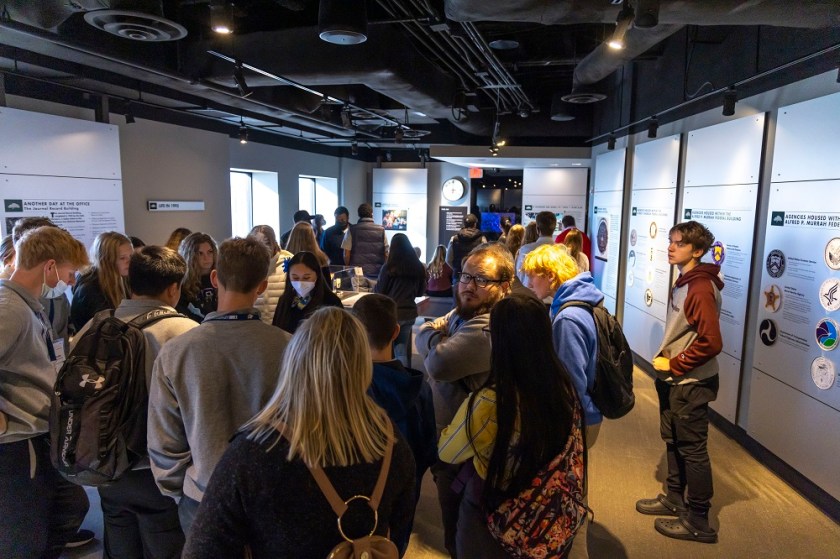
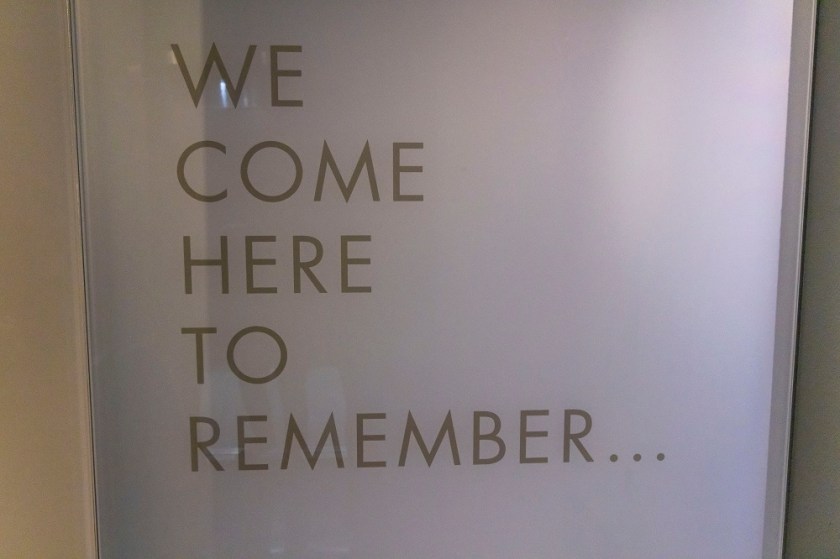
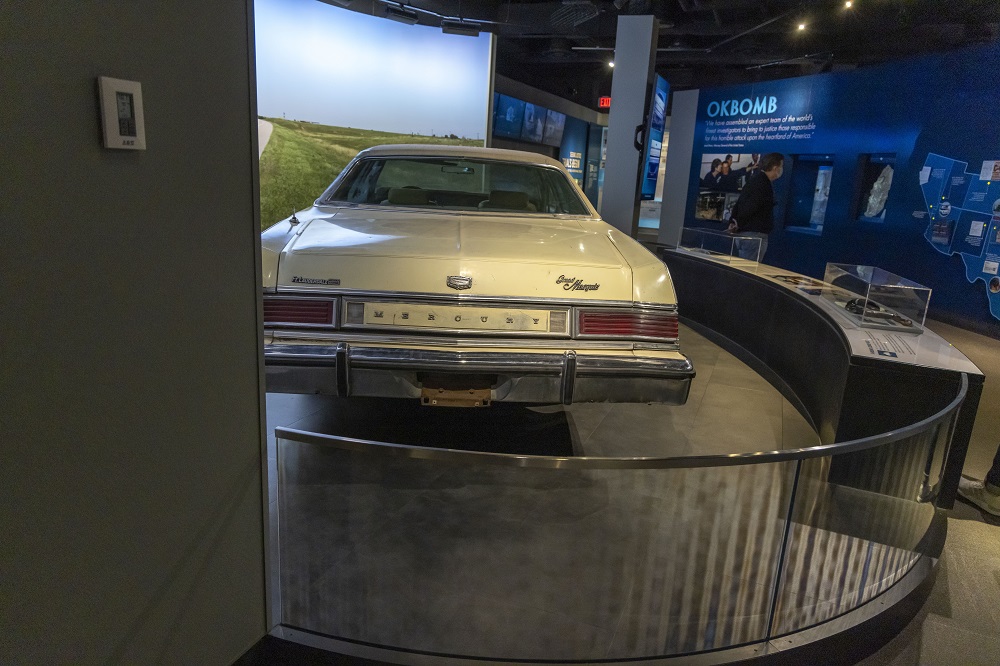
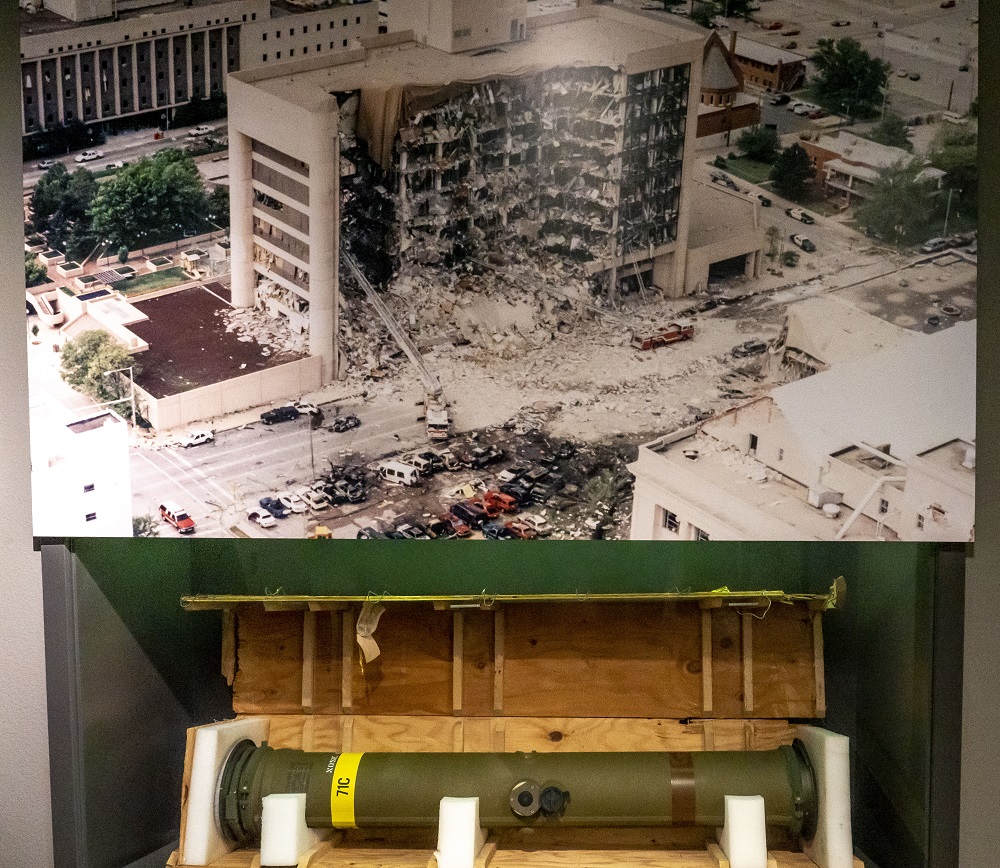
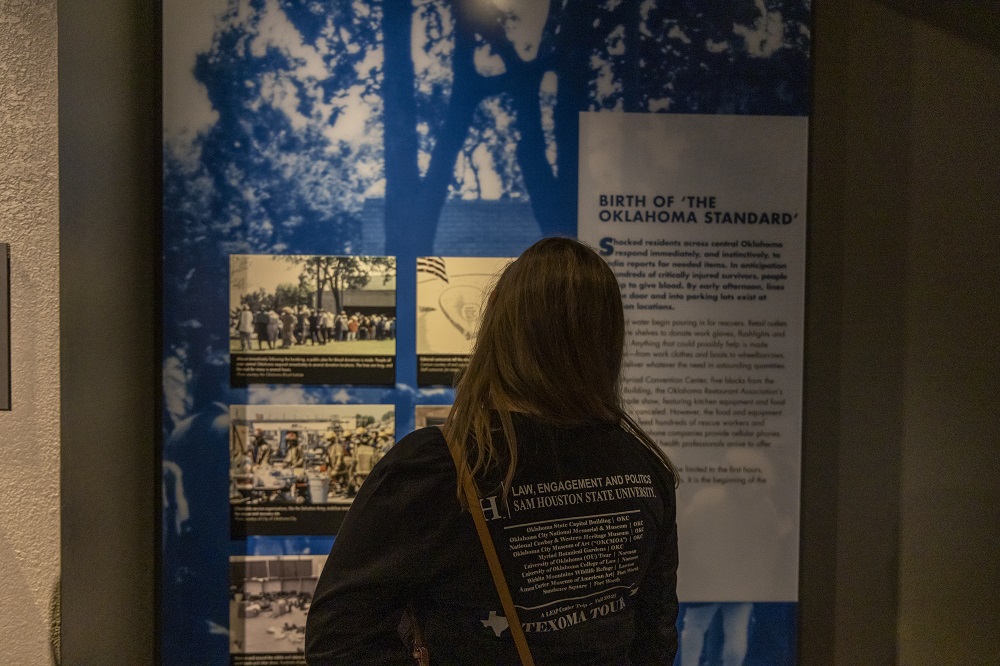
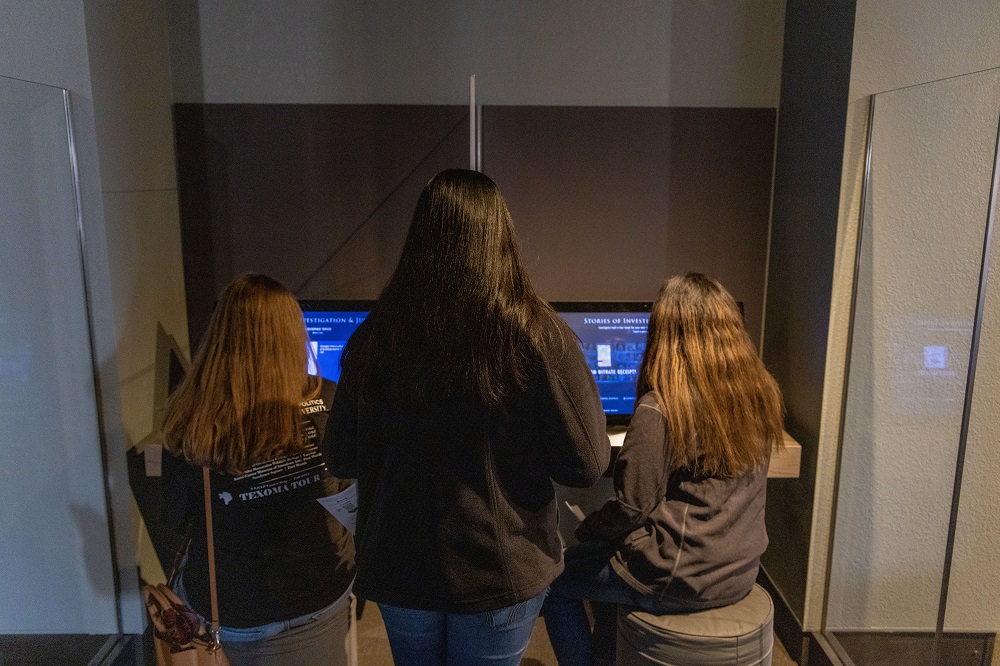
The OKC National Memorial Museum is laid out in such a fashion that reminds visitors of what happened on that day, April 19, 1995, but also stands as a tribute to both those who survived and that were lost.
The Museum unfolds in chronological fashion, beginning with the background of the tragedy, and going through almost minute-by-minute on the day of the bombing.
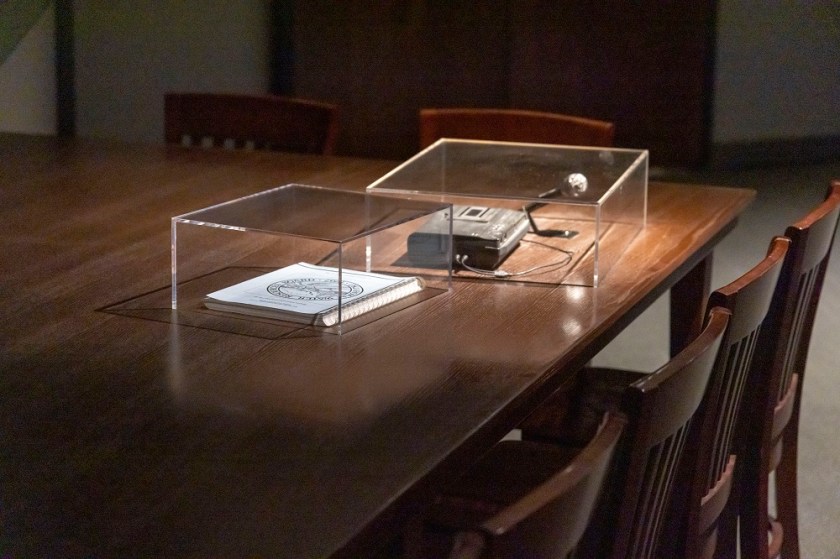
April 19, 1995 was just a nice spring day, a completely normal day in Oklahoma. One of the most difficult experiences on the tour was in the meeting room, where the Water Resource Management Committee began their meeting at 9:00am–a meeting which was recorded.
We listened to that recording, hearing the explosion, and also the screams, fear and confusion among those attending the meeting.
The lights dimmed as the explosions and screamed sounded, and then their was silence, leaving us to ponder the aftermath of that day.
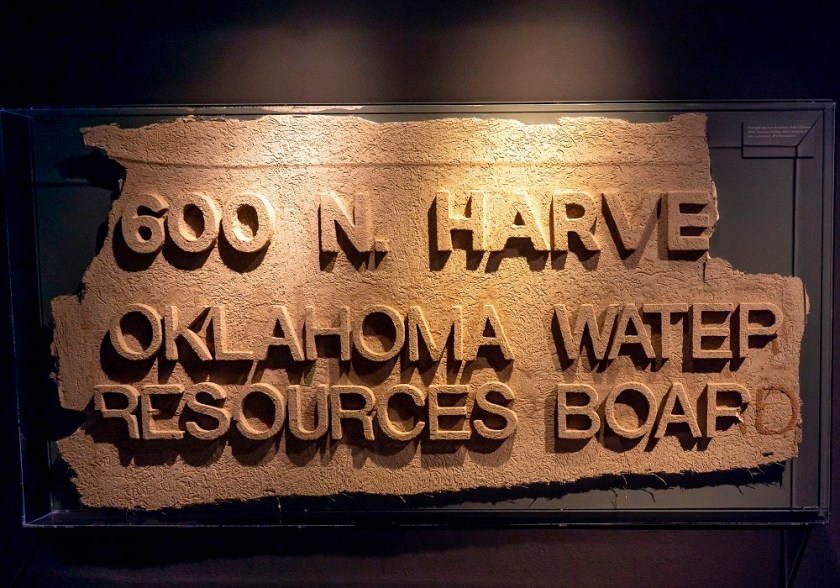
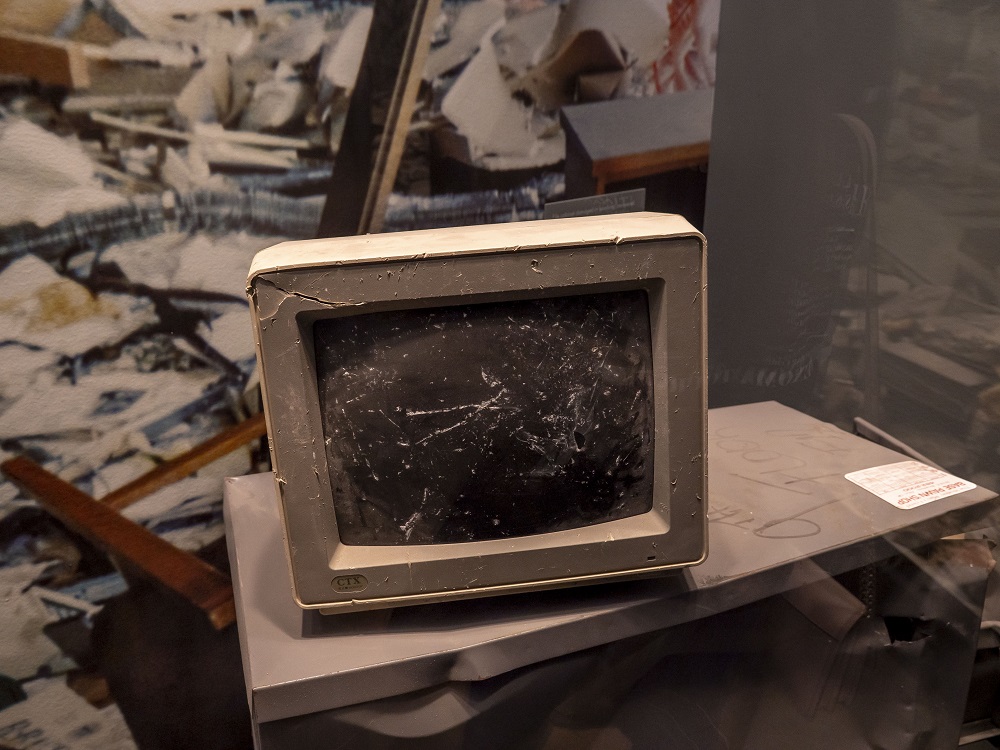
The aftermath was also vividly displayed at the Museum. Artifacts included a pile of keys, glasses, desk items, and shoes: the remains of a tragedy, forever encased in this Museum–preserved, much as people’s memories of the bombing will last forever.
The lives of the innocent are memorialized in so many ways throughout the museum, but the most impactful is the wall of pictures with personal belongings that they were able to identify as belonging to specific individuals.
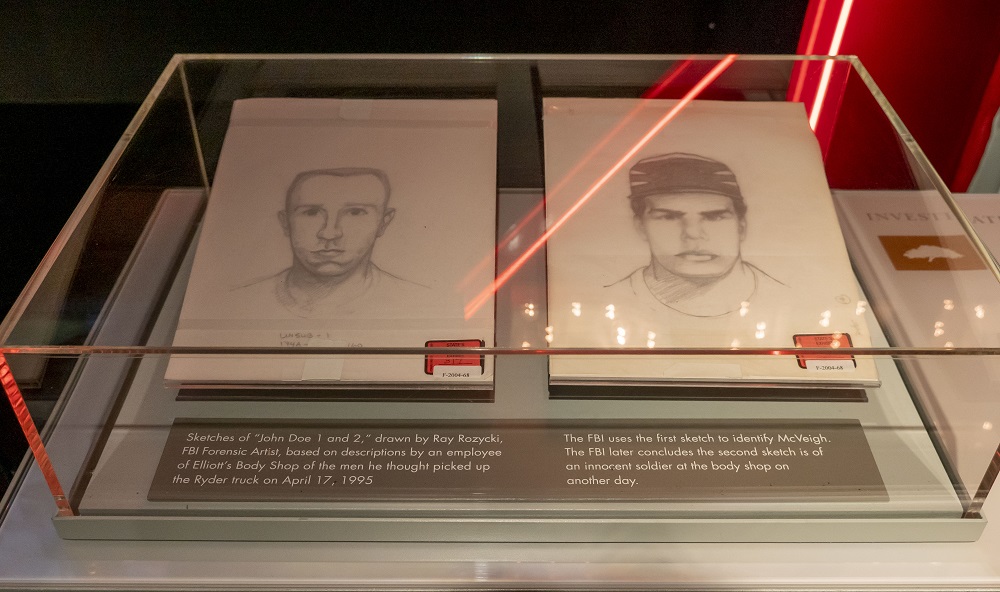
As we moved through the timeline, we were then shown the backstory of Timothy McVeigh and what he was doing leading up to the incident.
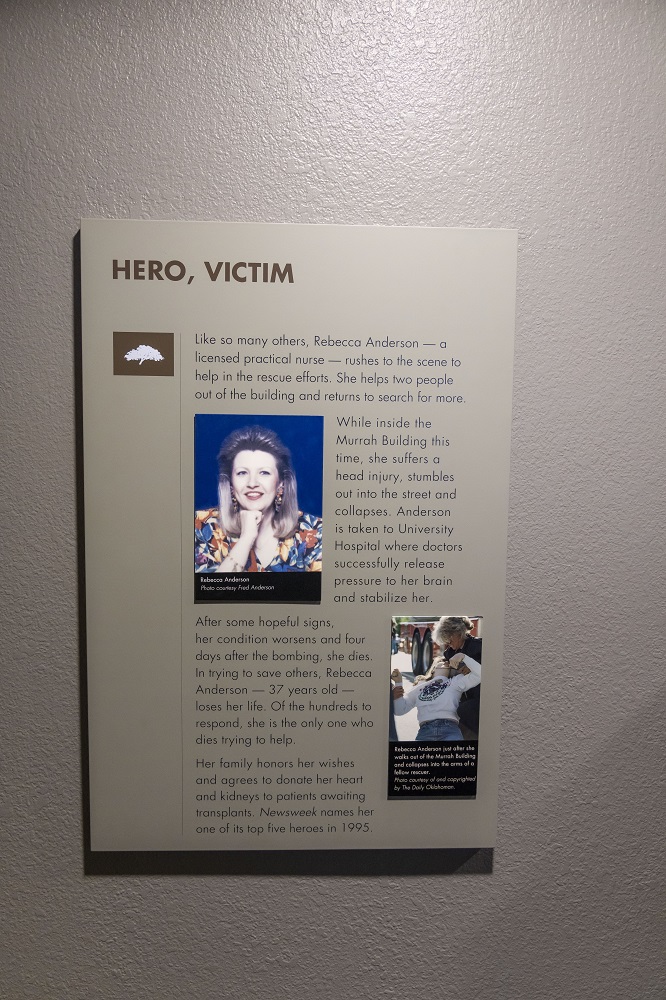
The stories of those who passed, those who died, and the heroism of the rescuers was emotional.
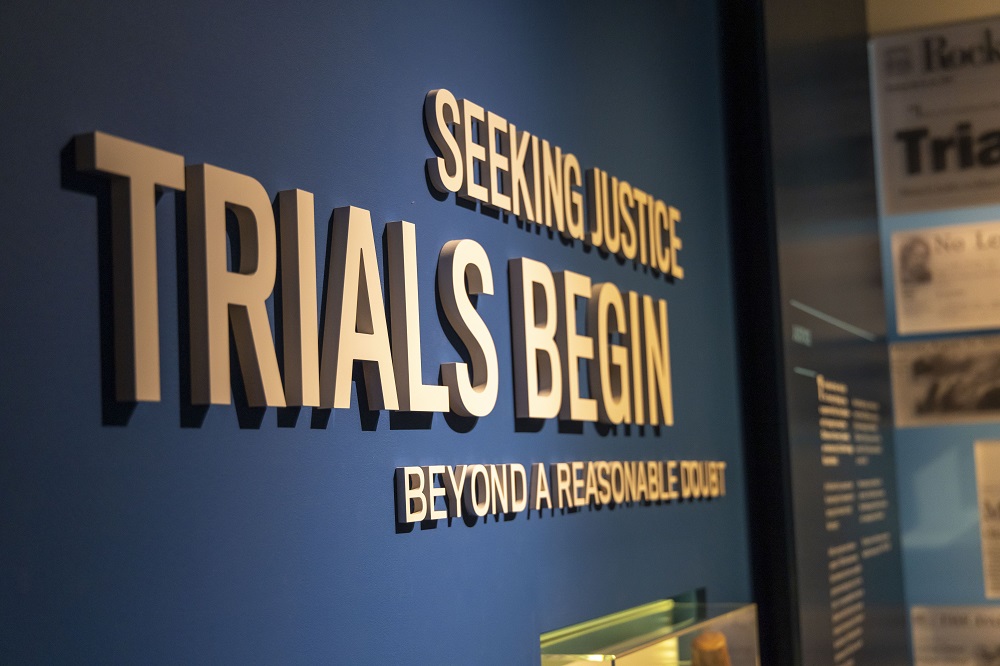
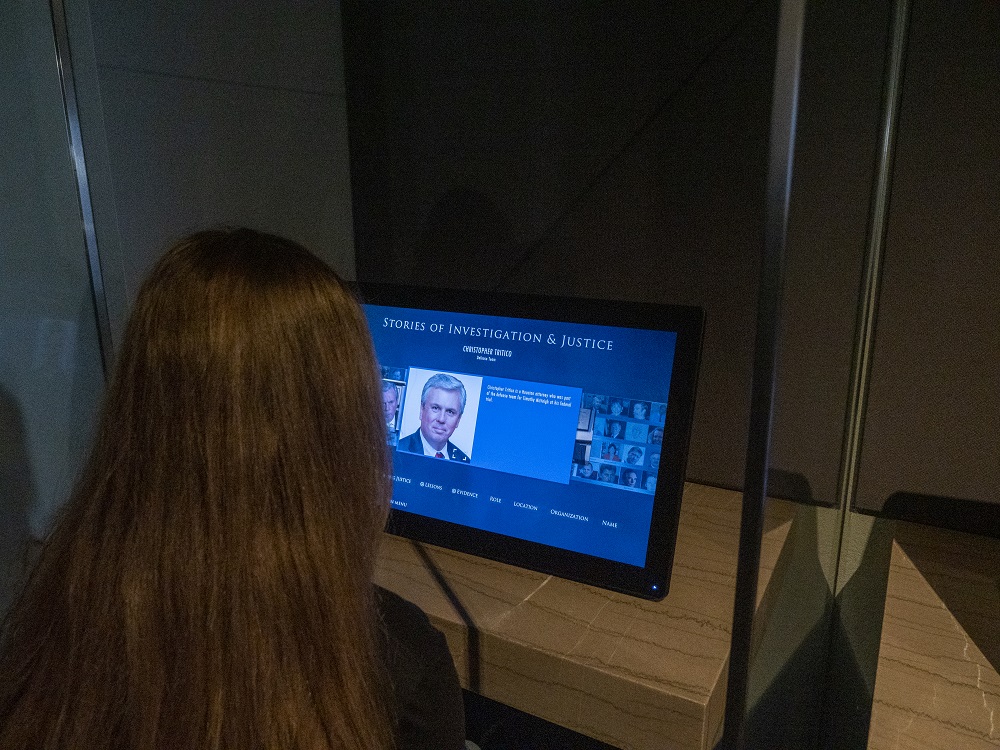
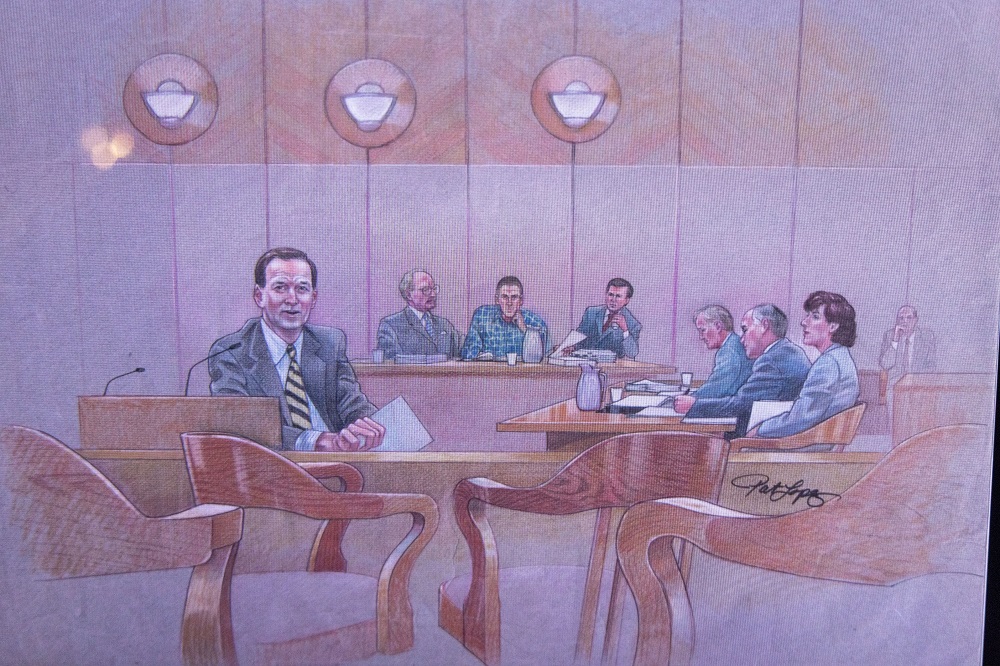
McVeigh was charged with 15 counts of murder, and he was represented by multiple attorneys, including with Chris Tritico, who is an SHSU Alumnus.
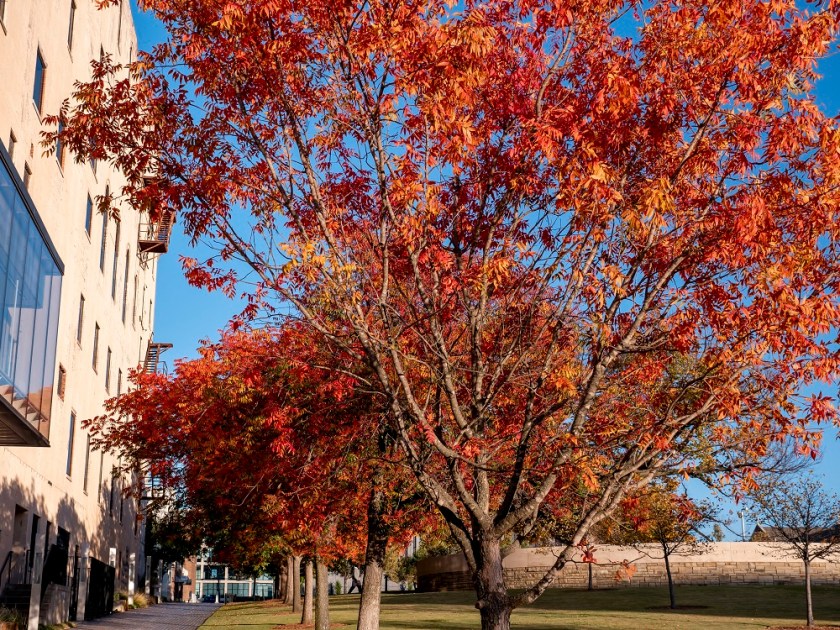
As we made our way to the outside part of the building, we experienced a great contrast to the tragedy we walked through. We breathed a sigh of relief at all the vivid fall colors of the trees and relished in the natural beauty that I believe we all needed.
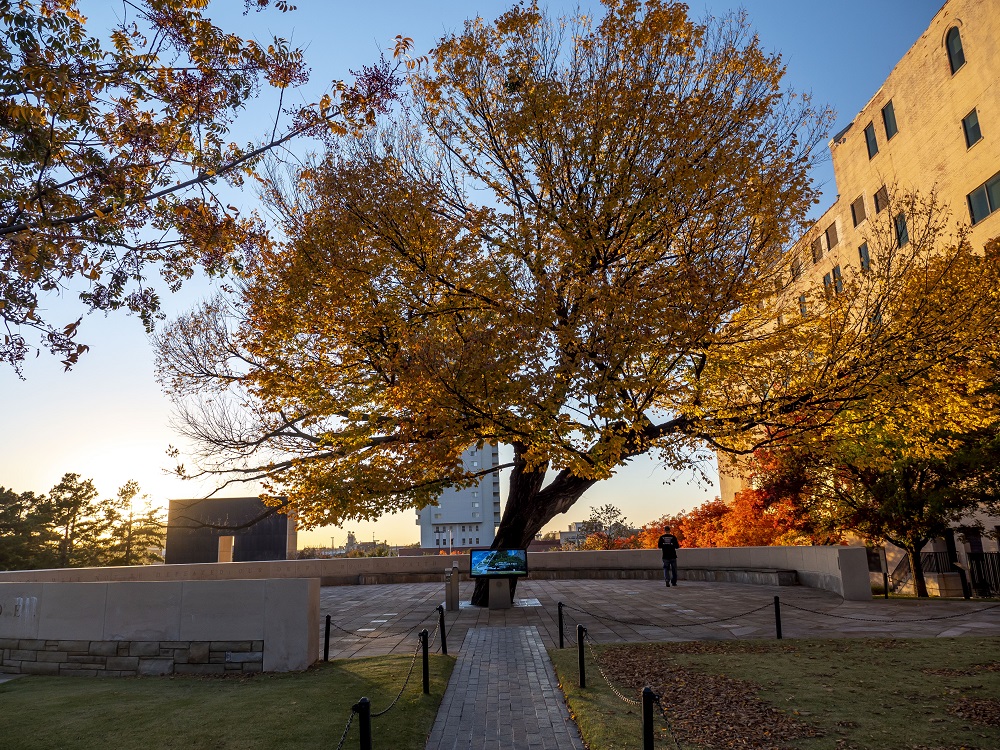
The path leads up to a single American Elm tree that is known as the Survivor’s Tree. This Elm stood through the bomb and remains strong to this day. Each year the seedlings are harvested from the tree and given in remembrance to the families impacted by this event.
An offspring of this tree was even planted at the White House.
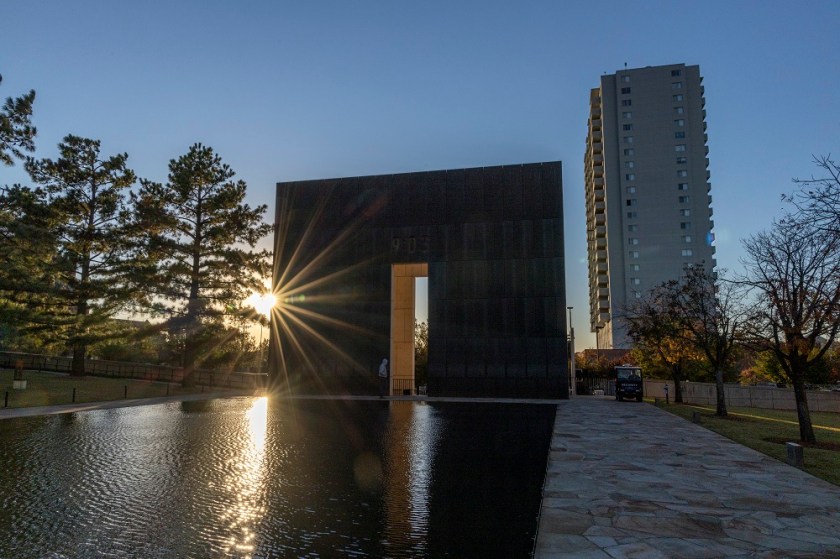
The grounds also are home to other memorial features. There is an East Gate displaying 9:01am, a reflecting pool, and a West Gate, displaying the time 9:03am.
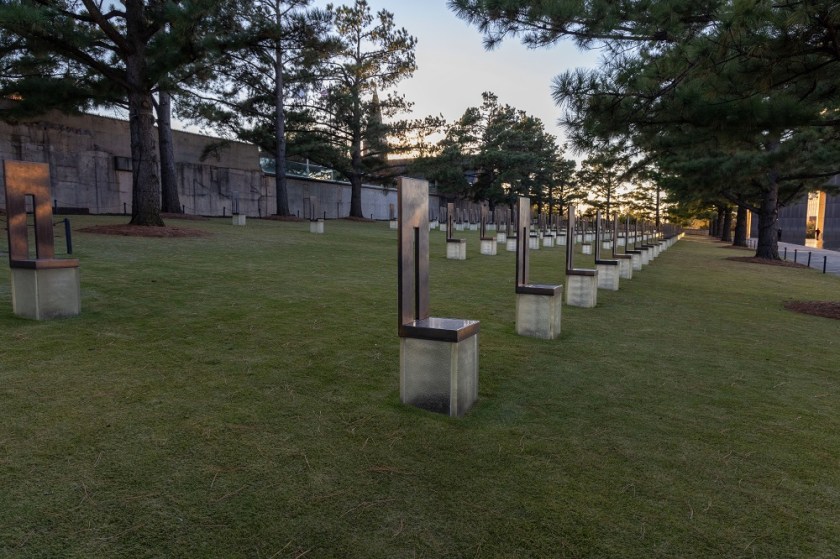
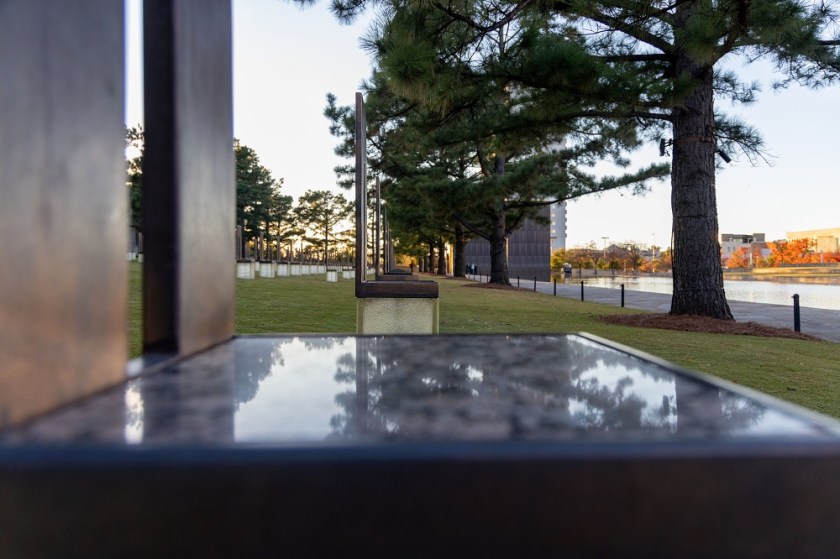
South of the walls, the lawn is lined with 9 rows of chairs representing the nine floors of the Murrah Building.
There are 168 empty chairs, representing the lives lost, including young children (which are represented by smaller chairs).
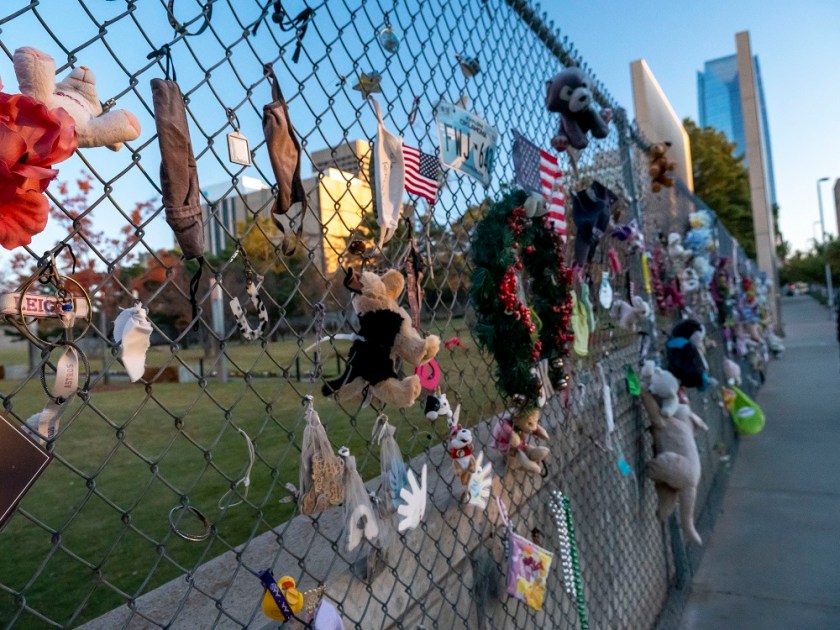
Surrounding the grounds, there was a fence with mementos that people have placed in memory of loved ones: teddy bears, bracelets, photos, and such.
We also went across the street, where a nearby church created a statue of Jesus, with an inscription of the shortest verse of the Bible: “And Jesus wept.”
This was a tour that almost brought me to tears at several places, and our hearts were heavy as we left.
Oklahoma Capitol
Saara Maknojia
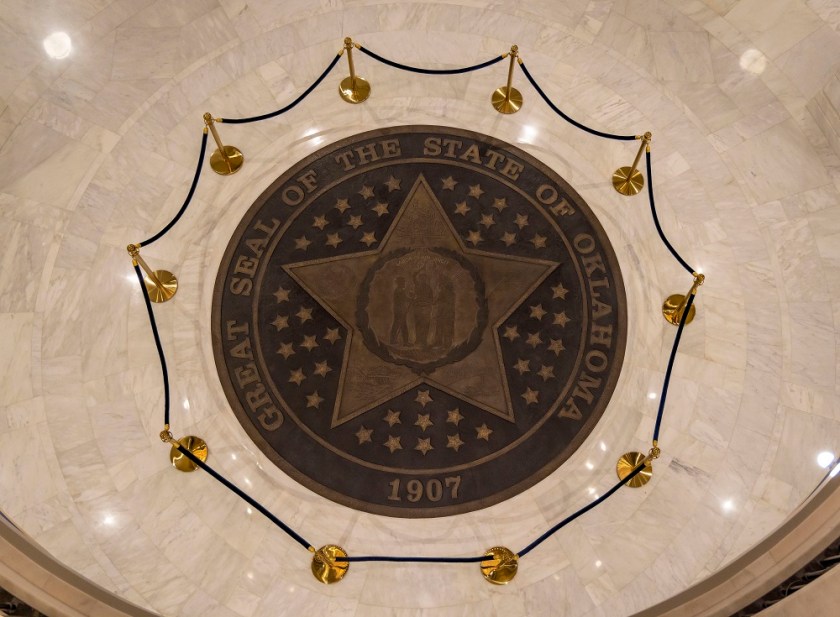
Shortly after our somber but educational tour at the Oklahoma City National Memorial Museum, the LEAP Members coasted off to the Oklahoma State Capitol. The chilly weather and beautiful sunset allowed us to better view the magnificent and historical site.
The intricate architecture of the landmark included Greek Corinthian columns, and Greek Meanders which symbolizes and means movement. The Greco-Roman structure of the state capitol was complemented with the displayed Tribal flags from Native American Peoples who have such a rich history in the 45th state.
The Oklahoma State Capitol is further enhanced with the sculpture of a Native American woman, designed by Allen Houser, which stands in front of the Capitol.
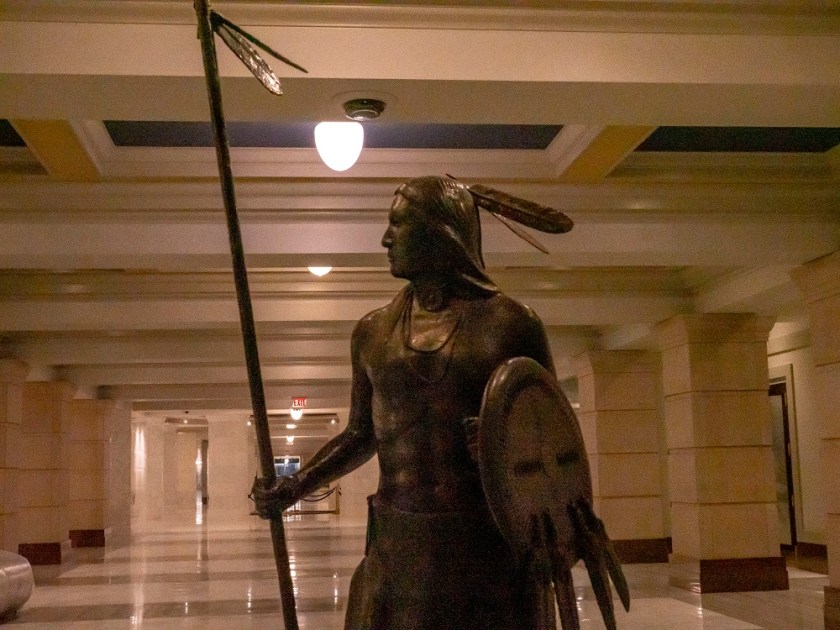
The peak of the capitol’s dome is adorned with a 17.5-foot sculpture of a Native American called “The Guardian,” by Enoch Kelly Haney, and a version of the statue is also located inside the building.
We learned the history behind some of the Oklahoma tribes as we observed the painted murals on the third floor of the capitol.
Oklahoma’s historic significance of the “Sooners” is also integrated into the state building through some of the murals. We all learned about how the name came to be and why it was such a vital point in OK history. Oklahoma State University later adapted “Sooners” as their team mascot to exemplify their patriotism towards the state.
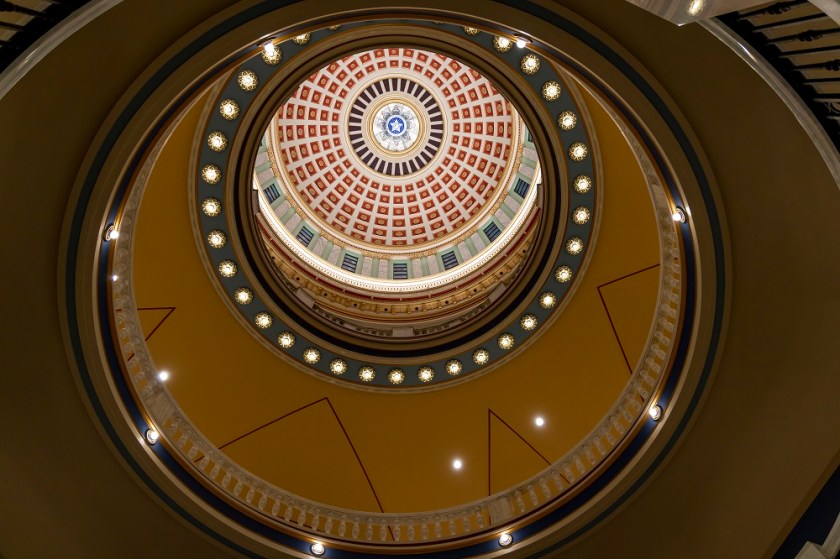
Probably the highlight of the Capitol Building is the interior dome, which is beautiful.
The LEAP Members grasped a better understanding of not only the political aspects of the Oklahoma State Capitol, but also the history and cultural diversity within the building itself and the state of Oklahoma throughout the tour!
Oklahoma City Museum of Art
Erin Juarez
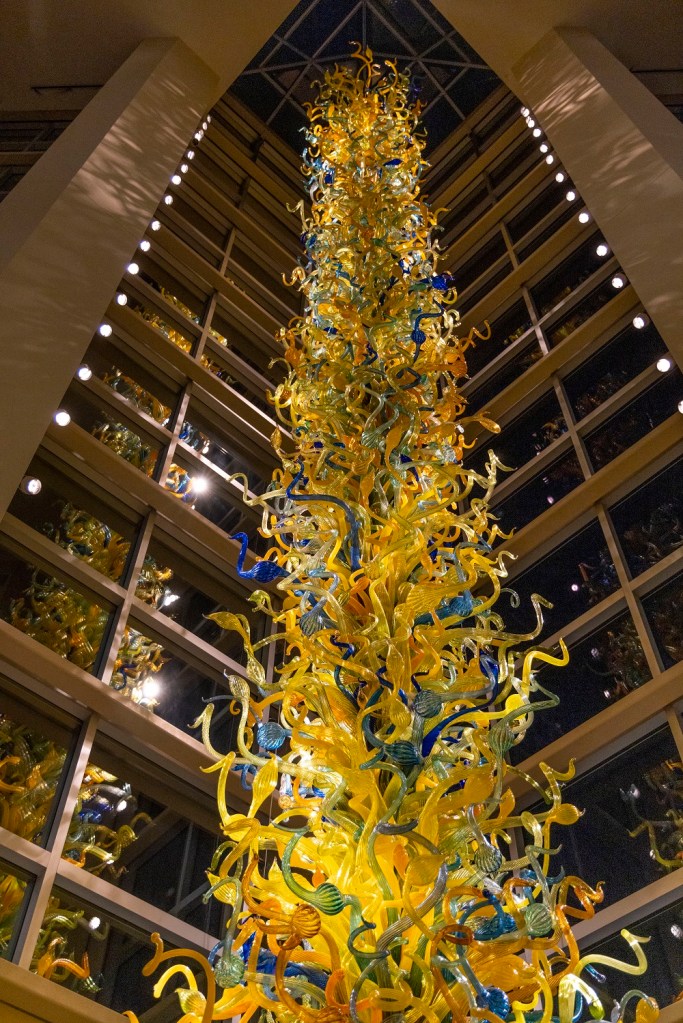
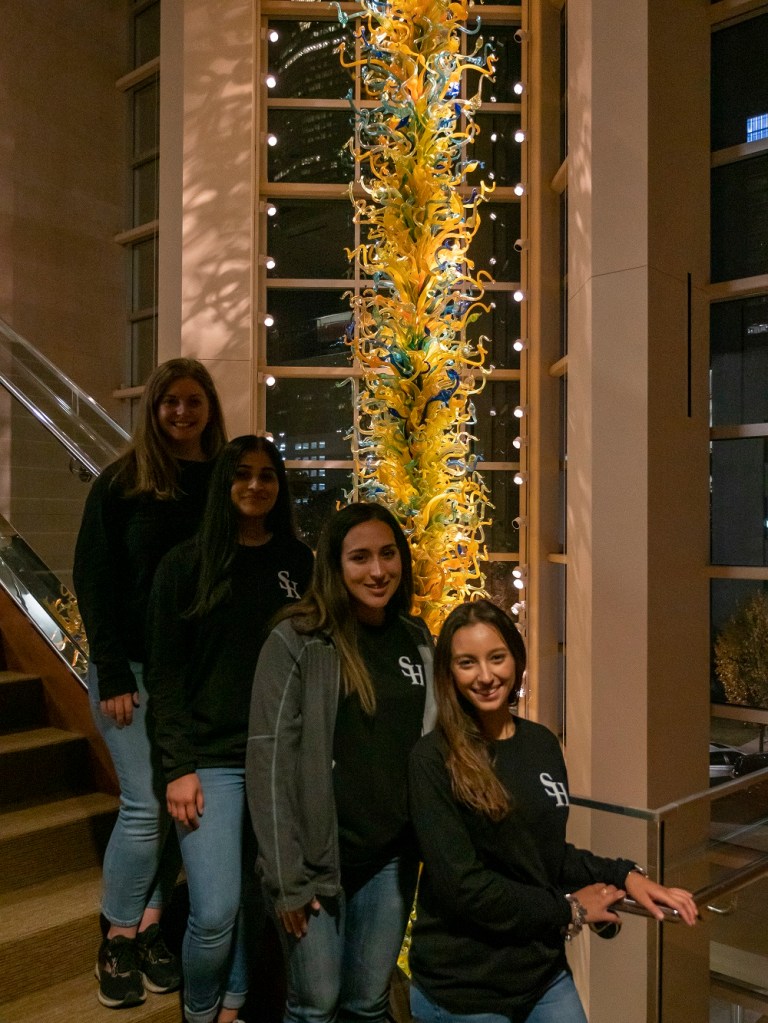
With the night still young-ish, we decided to go to the Oklahoma City Museum of Art. As we walked in, there was a fifty-five feet glass sculpture towering to the right of us, one created by renowned artist Dale Chihuly.
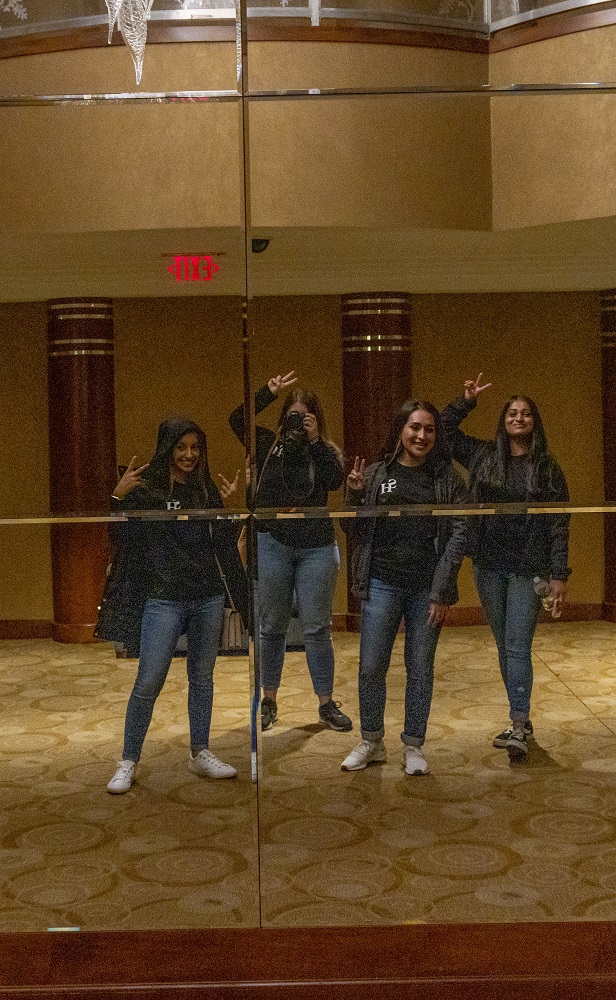
Yvette, a born trouble-maker, immediately got into trouble for standing on a wall so that she could better pose with the sculpture…
This Museum helped expose us to various types of art: impressionism, regionalism, modern, sculptures, and many other styles and artistic media. It helped me learn what type of art I most enjoy. In particular, I liked the sculptures, especially those of Chihuly. Saara also liked Chihuly, but was also drawn to the impressionists.
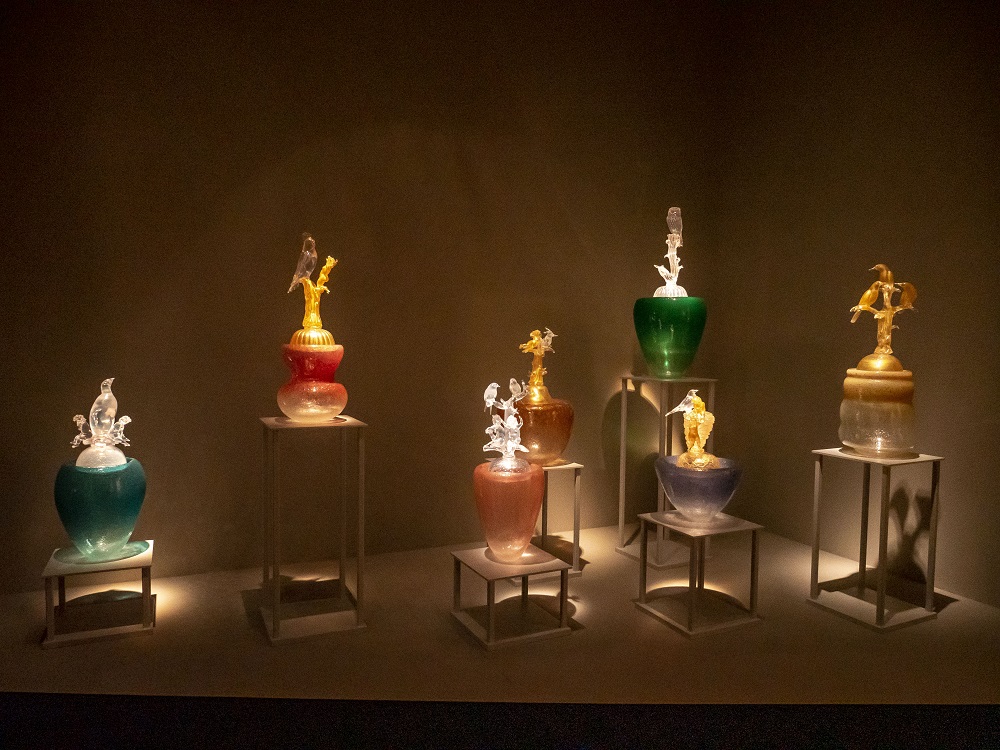
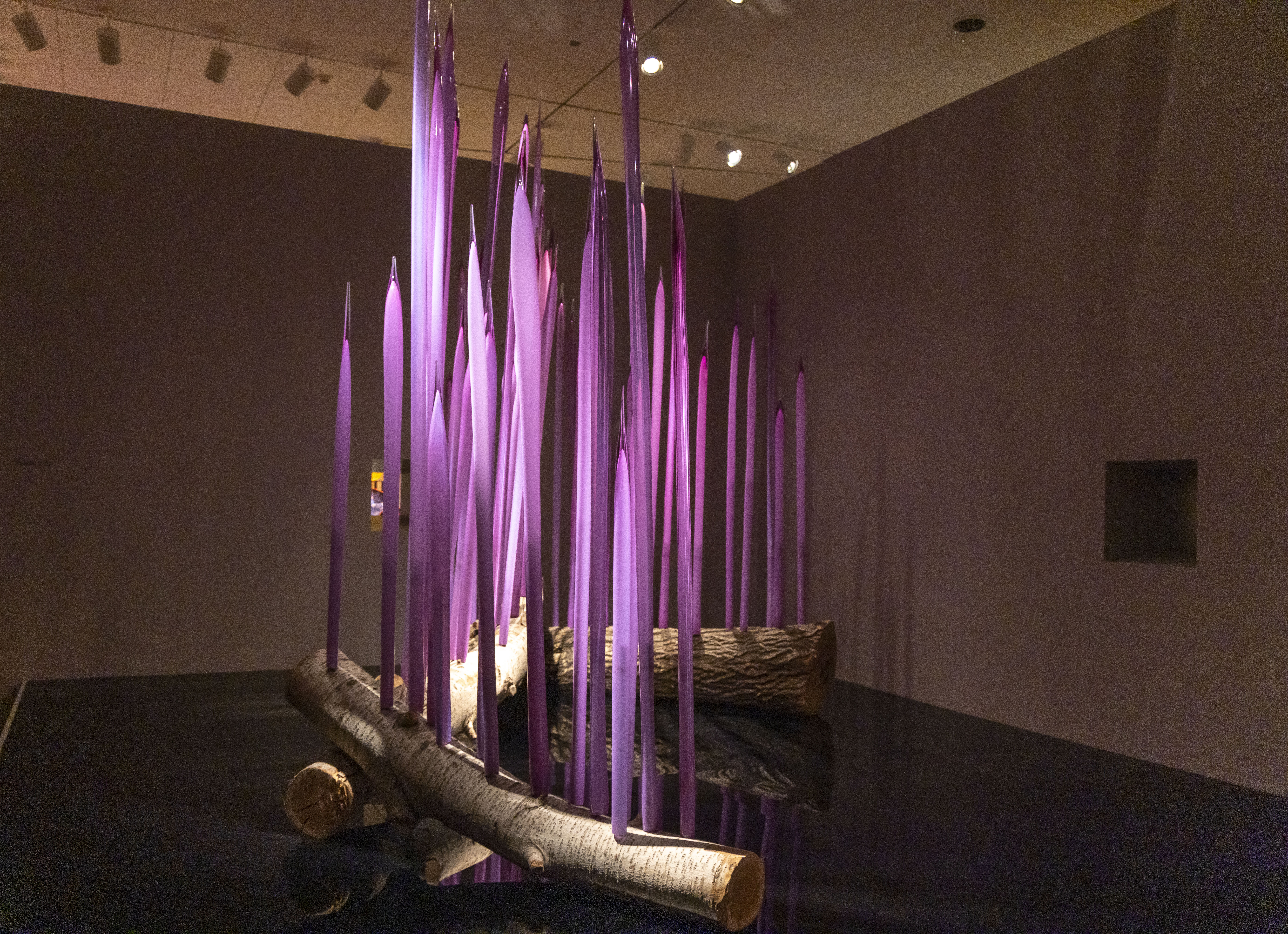
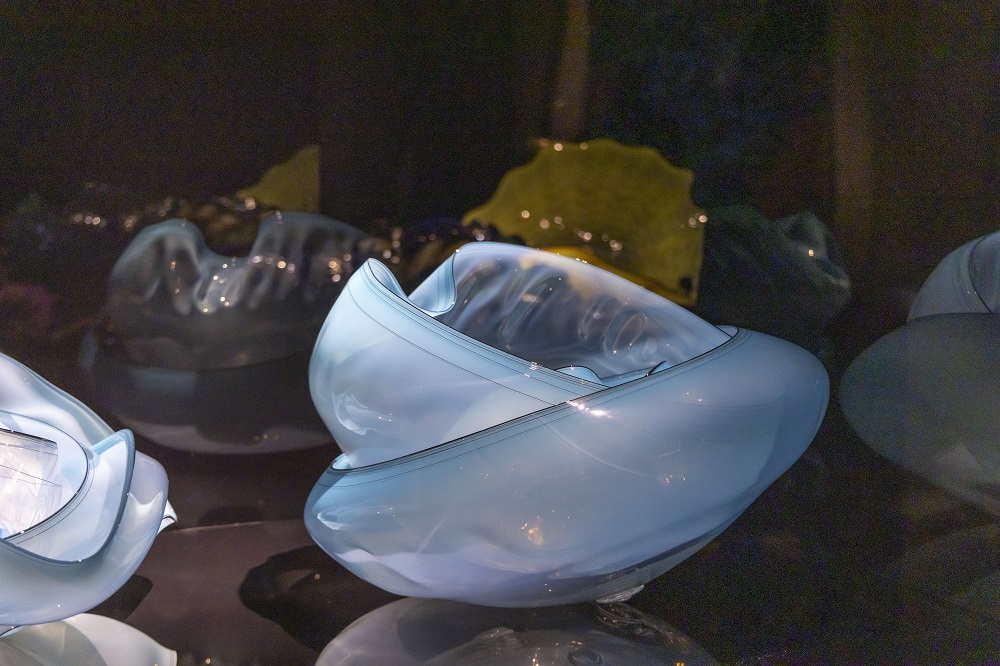
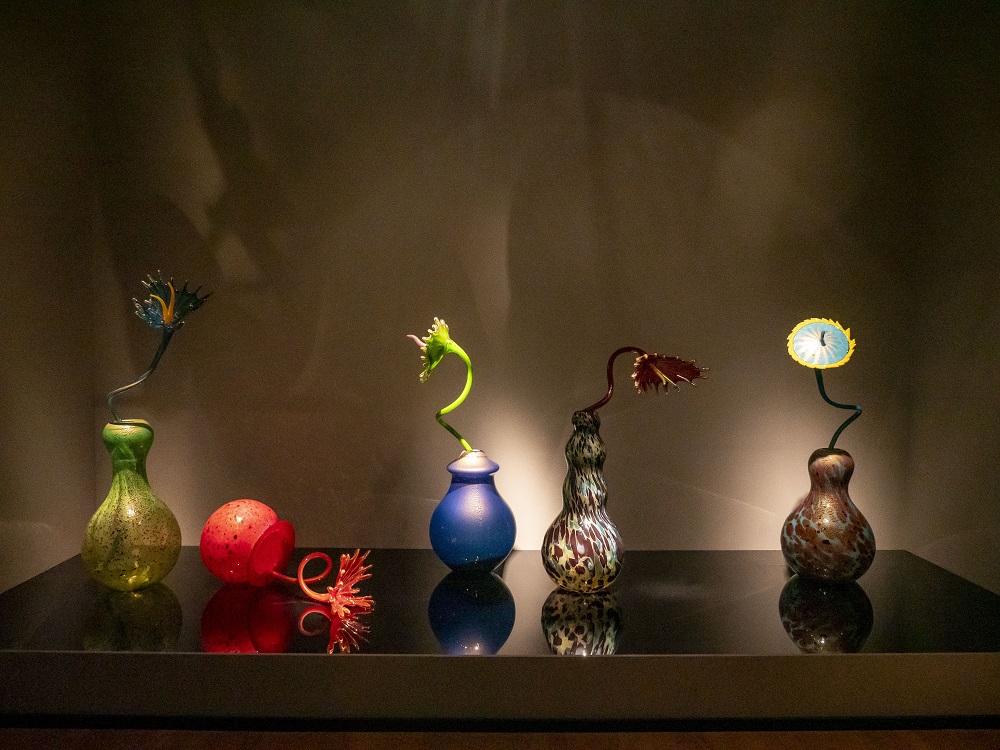
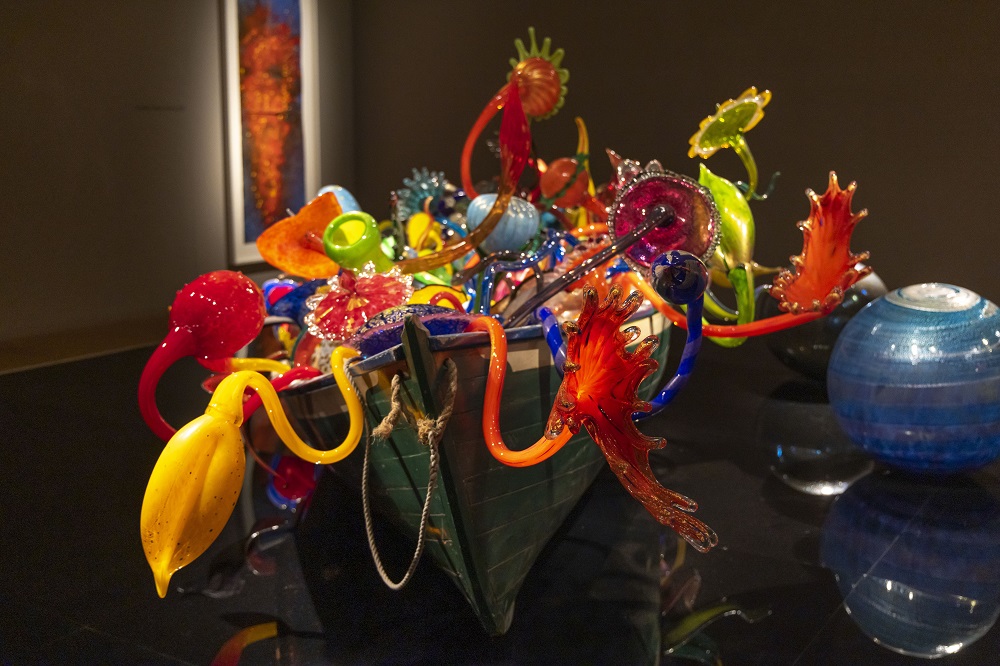
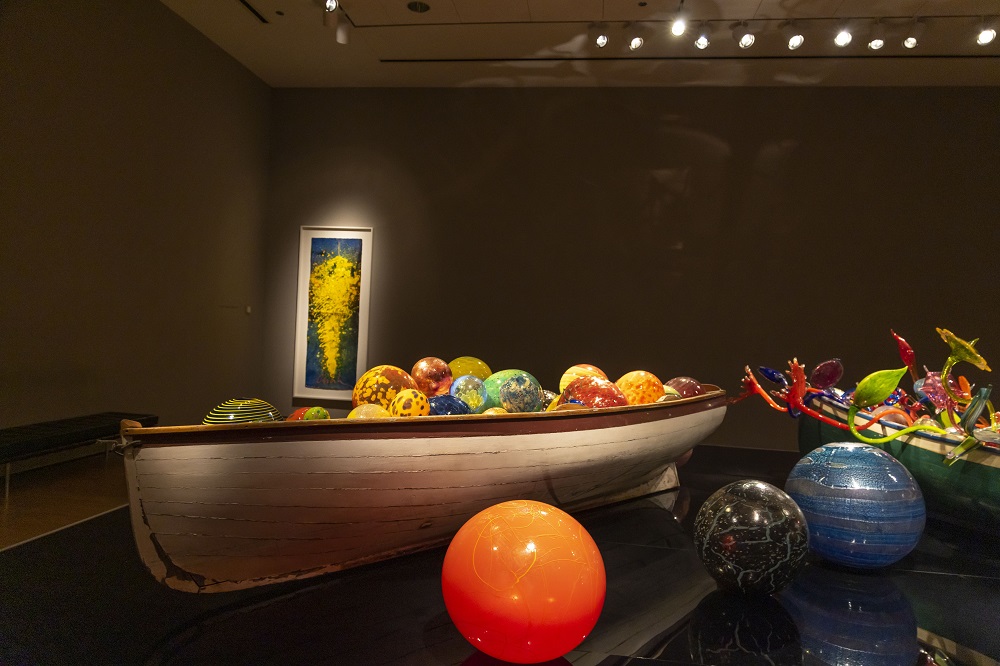
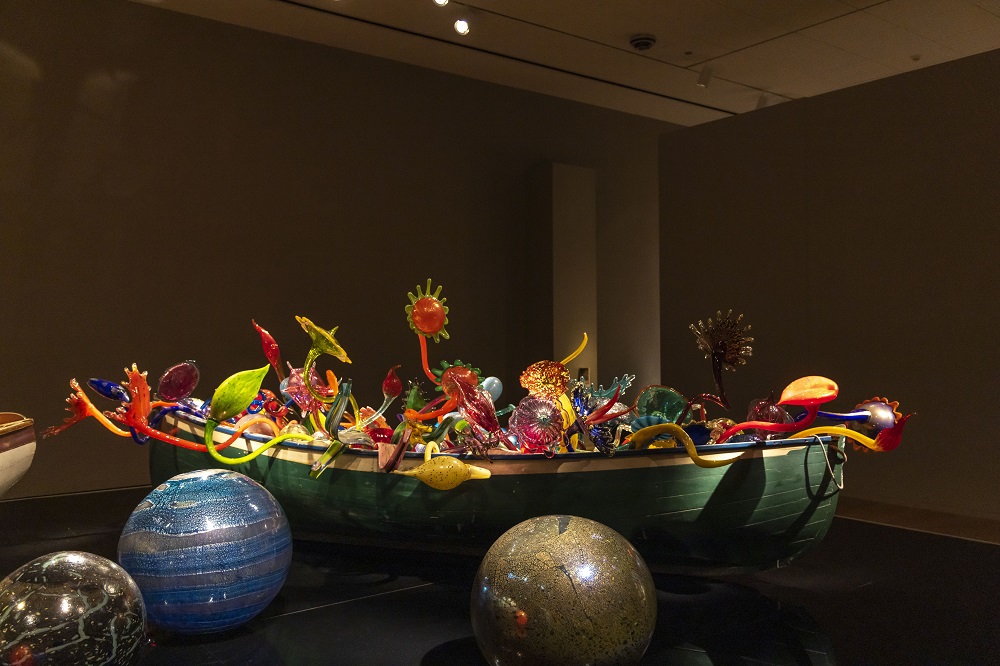
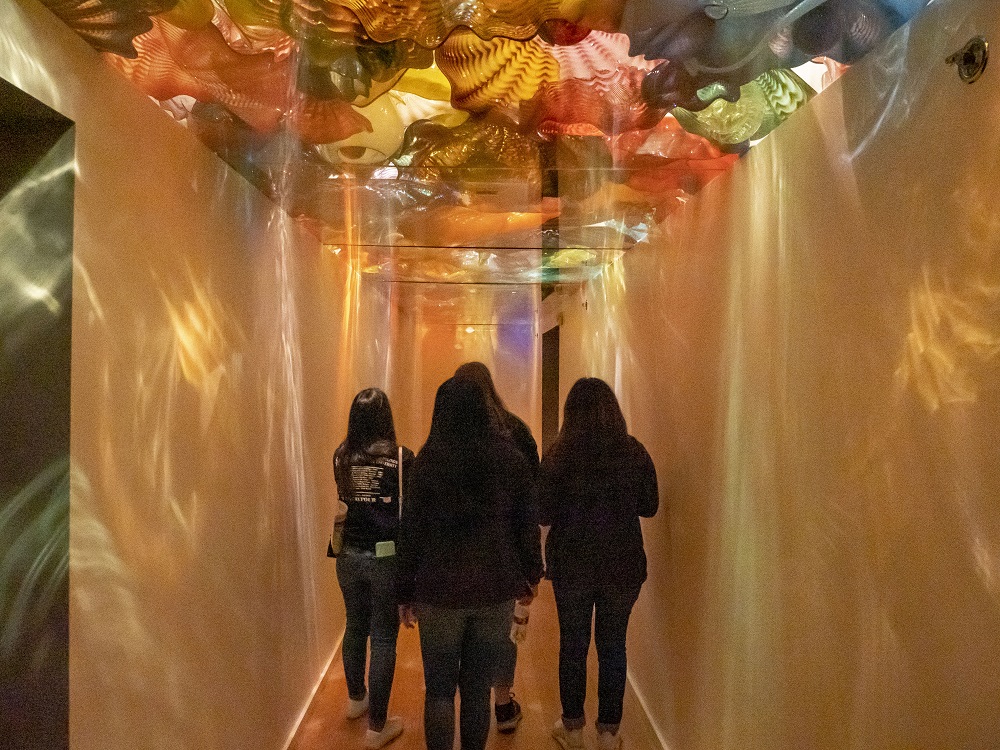
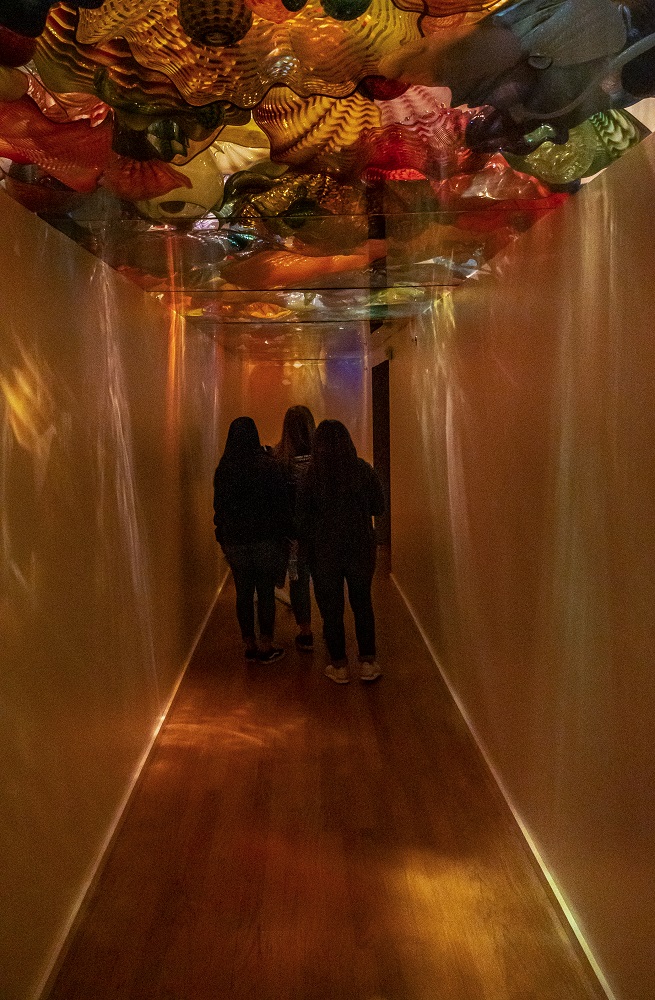
The museum is separated into four floors. On the fourth floor, our favorite artist, Dale Chihuly, work is featured in a way that flows cohesively leaving the viewer to almost forget they are in an art museum. The dark room, allowed for the lights that were strategically placed to catch the art at different angles to illuminate it differently.
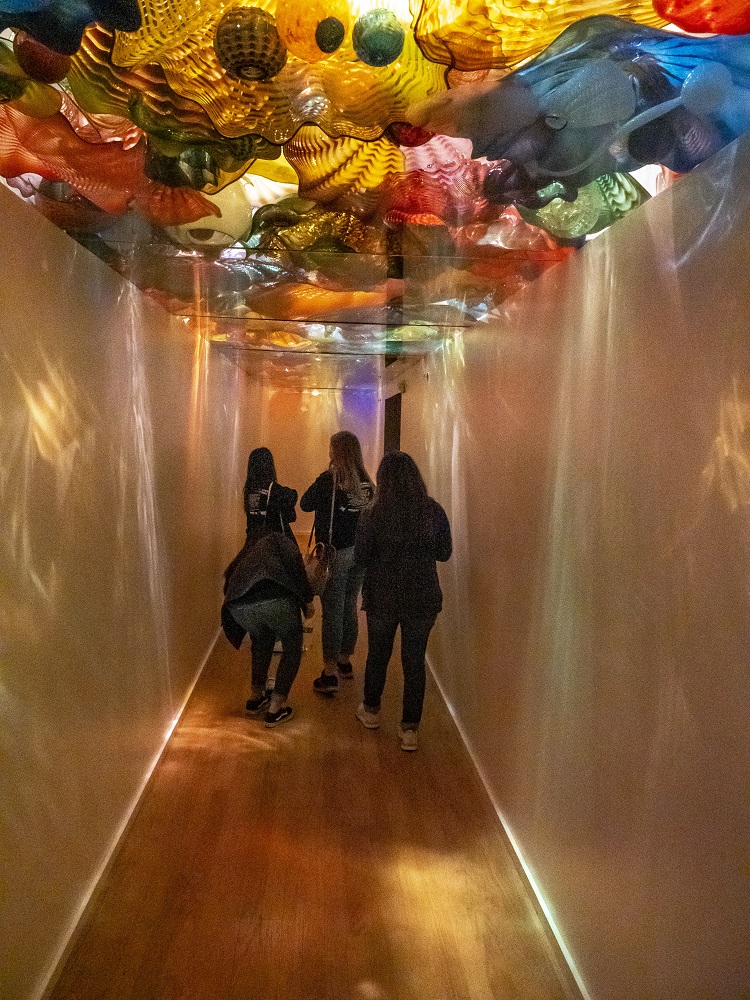
We found this exhibit to be exceptionally fun and dynamic to photograph. As a person new to cameras, it offered the opportunity to experiment with photography. The low light was a challenge, but the subjects were beautiful! We particularly enjoyed walking under Chihuly’s Persian Ceiling, which creates all sorts of interesting shadows and colors.
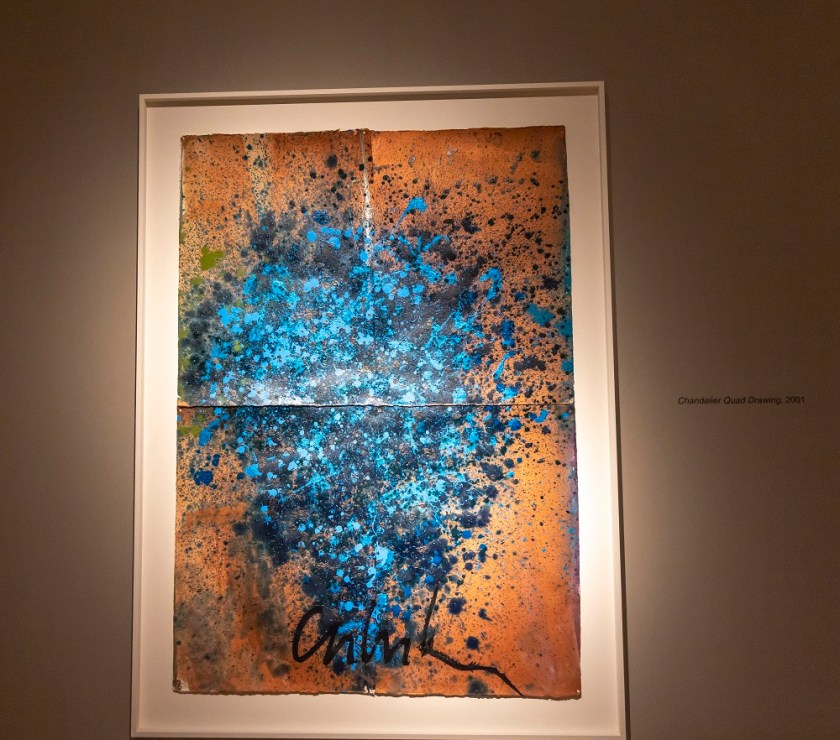
And we also had the opportunity to see some of Chihuly’s paintings–one of which, we learned, Stephanie actually owns!
Outside of the fourth floor, there’s a video of how Chihuly gets his glass done for his art. This was very interesting. We often found ourselves asking in amazement on how he accomplished such great works, so the video was insightful.
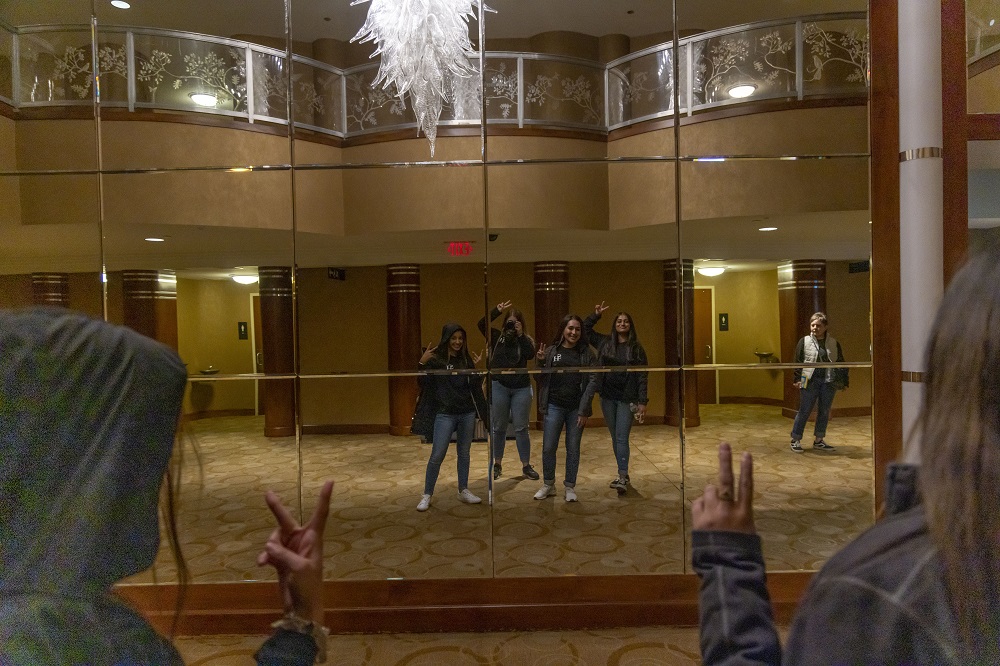
We even found another of his chandeliers in another part of the Museum, which was also beautiful.
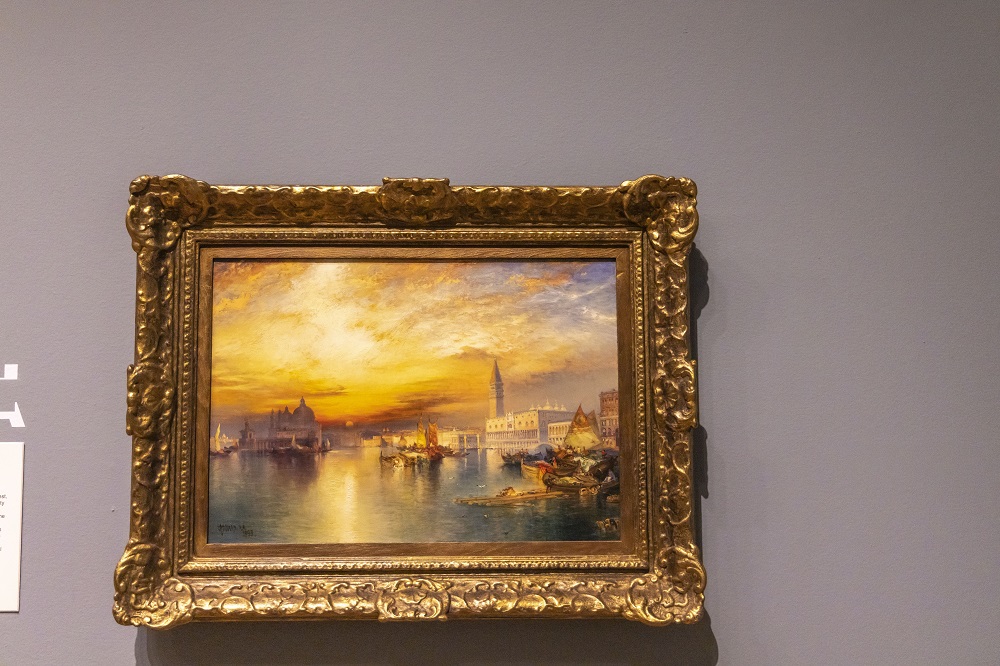
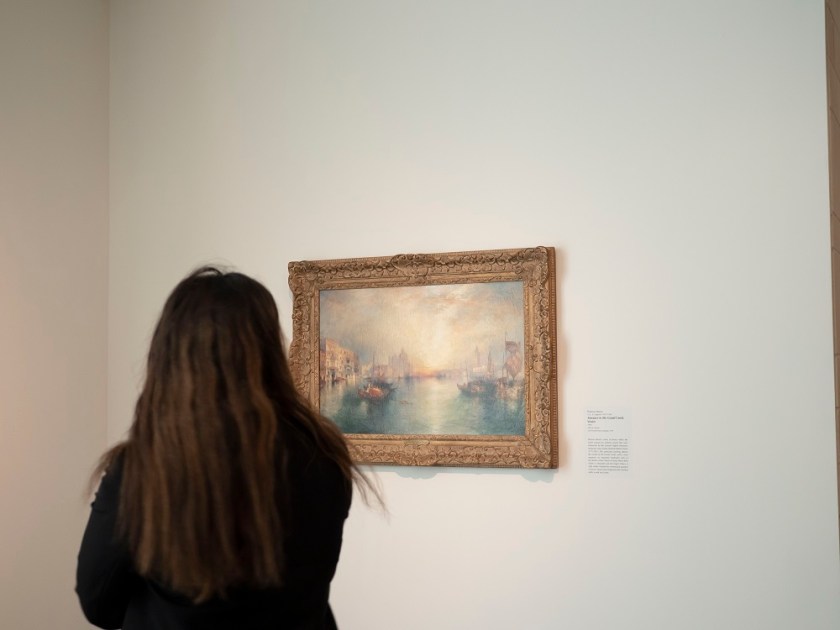
Of course, we didn’t just see Chihuly. For some of us, it was our first time to see a Thomas Moran painting…
…and Alex Katz…
…and although all of us had seen a Georgia Okeeffe…
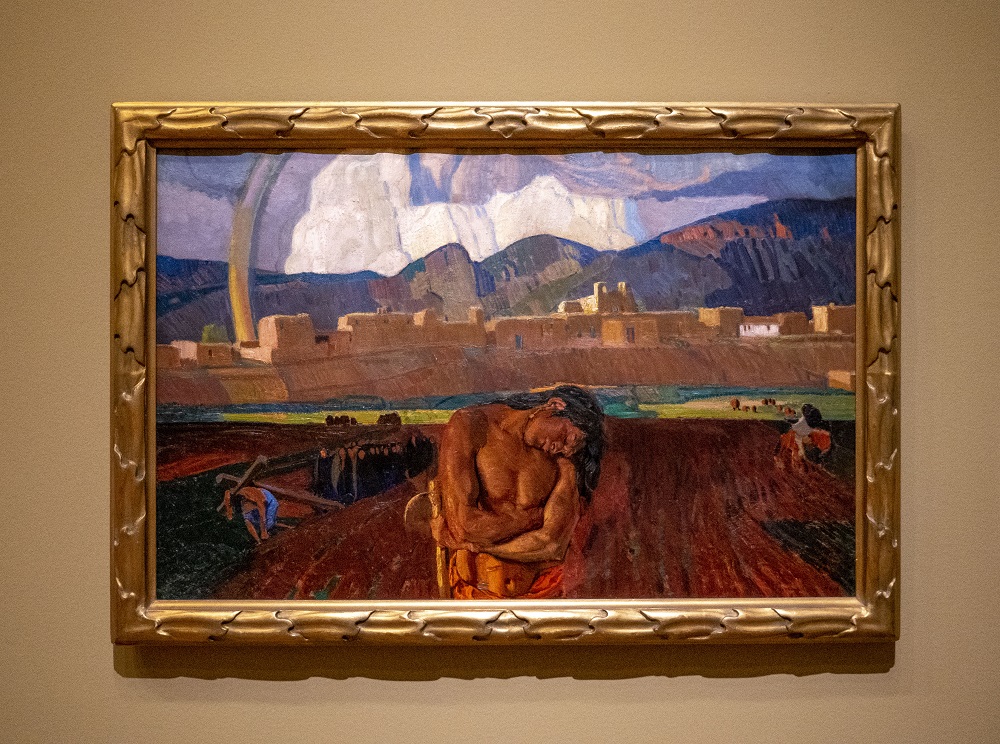
…it was our first time to see some other Southwestern artists, such as Ernest Blumenschein…
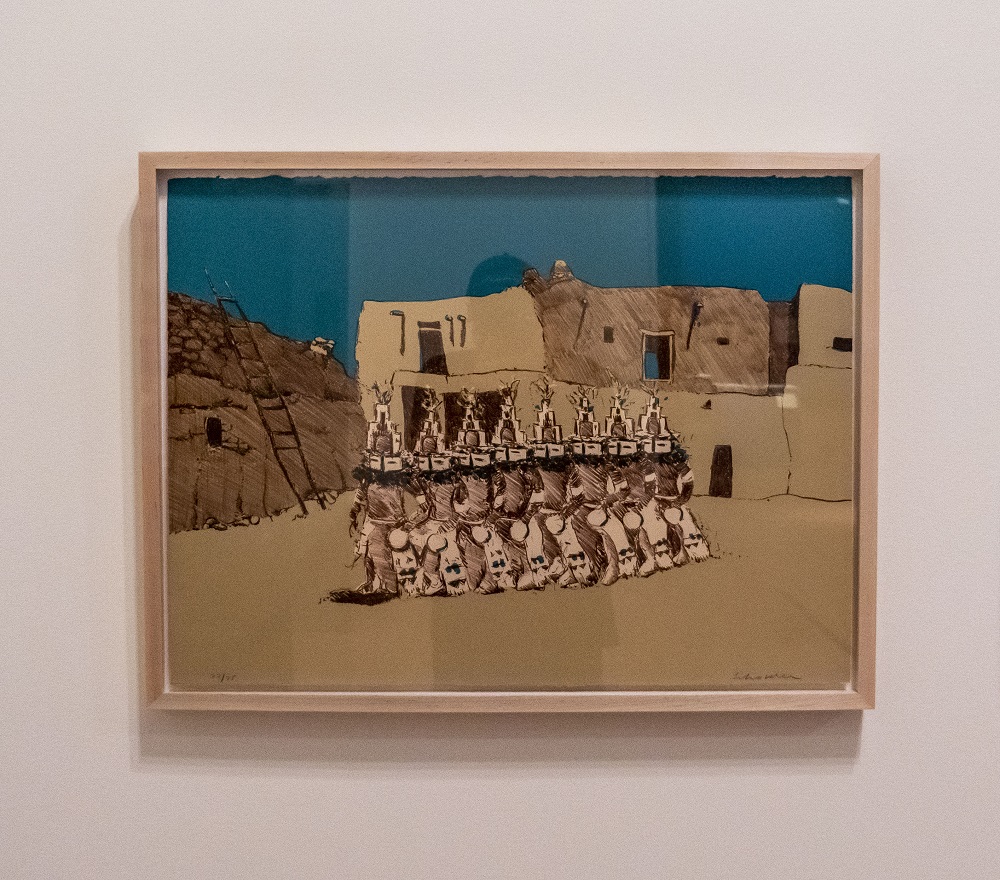
…and Fritz Scholder…
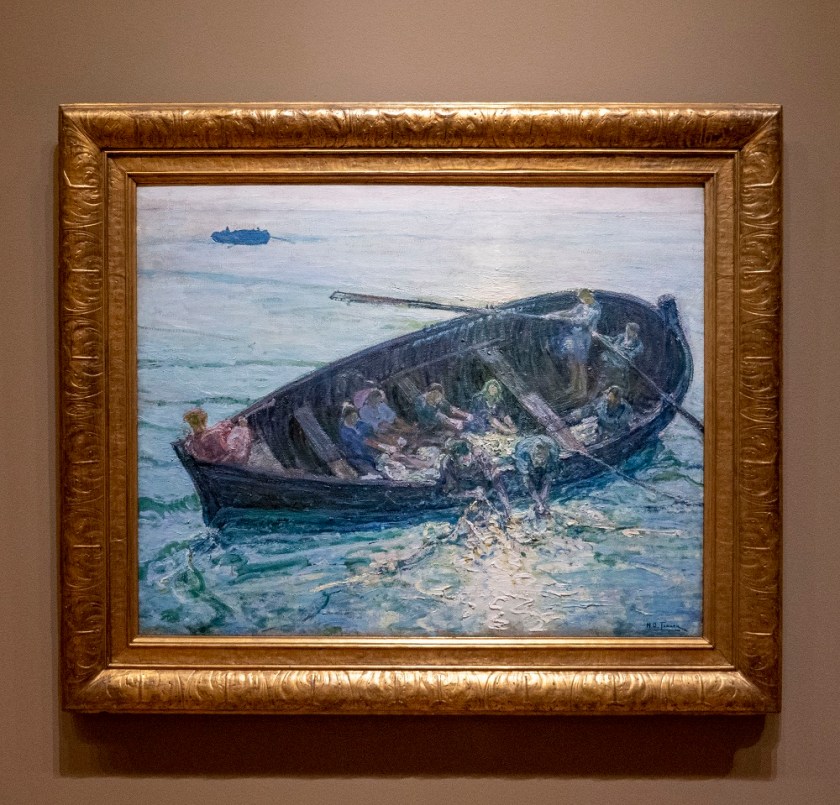
We also saw one of our favorites, which was a piece by the African-American artist Henry Osawa Tanner.
As we took one last gaze upwards at the towering Chihuly we left awed by the amazing art.
But, of course, our favorites were the various Chihuly pieces, including the largest of these, the 55-foot piece at the front of the building. This time, however, we took the photo according to the rules of the Museum, forcing Yvette to comply.
The Wedge Pizzeria
Morgan Robertson
To conclude our first eventful day, we opted for a quiet, carryout dinner. We selected The Wedge Pizzeria, which was Oklahoma City’s first artisanal brick oven pizza. Among the pizzas we selected were: The Perfect Margarita, Brisket, and we built our own Hawaiian Pizza. As we sampled each pizza, we all found we had different favorites, but we liked them all. Saara’s favorite was the brisket pizza; she described it as having the right amount of spice from the Jalapeños, and a great flavor from the brisket.
My favorite, and Erin’s favorite, was the Hawaiian Pizza. Although Hawaiian Pizza might be controversial among the general population, it has a place amongst this group of LEAP Members.
Overall, it was a great dinner and we enjoyed each other’s company as we ate.
Our first morning in Oklahoma began with an early start as we made our way toward Norman, Oklahoma. University of Oklahoma College of Law is located just a mile away from the main campus. As we got closer to the University it was clear what buildings were OU, as they were architecturally cohesive–and they were helpfully labeled.
As we walked toward the school of Law Building–admiring all the fall colors and weather–we were greeted by Dean Kathleen Guzman, and the Director of Technology of Innovation, Kevin Brice. After we introduced ourselves and explained that we are SHSU students touring for the first time, Dean Guzman introduced herself and explained that she walked the campus every Friday morning, talking to the students, asking how things were going, and seeing if there were any concerns. And we thought, what a nice place to be!
We then met one of our tour guides, Maddie Farris, the Associate Director of Admissions, who welcomed us and introduced us to Grayson, a 2L and mentor at the school. As we ventured further into the Law School we asked Grayson questions about her experiences at OU, which she happily answered!
The first room we saw was the library. We learned OU Law is the only law school that is an Apple distinguished Campus. The school’s emphasis on technology is apparent when you look around the computer lab, equipped with dual monitors, VR stimulators and other technological advances. Study rooms can be found almost at every turn in the school. Grayson showed us her favorite places to study and prepare for class as we made our way to the reading room.
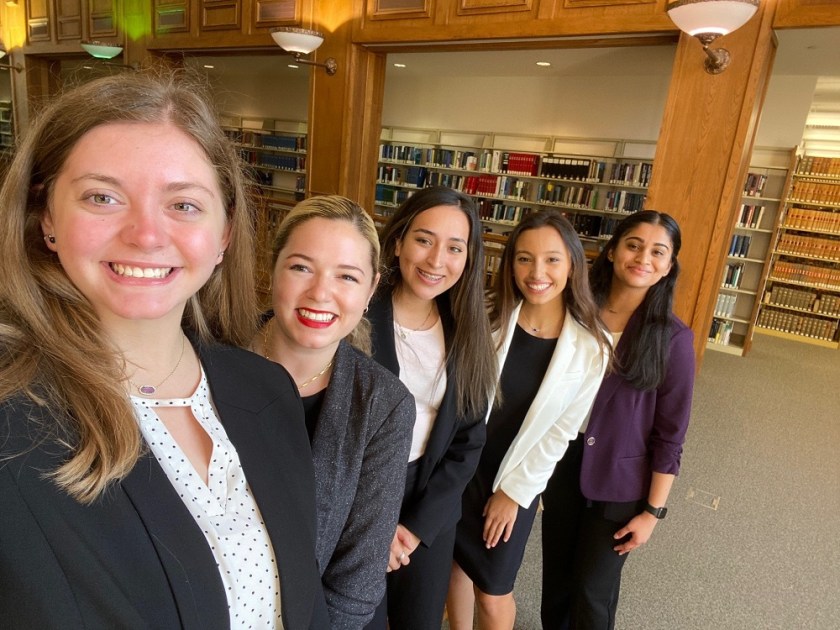
The reading room spanning the width of the building was lined with tables and was flooded with natural light from the massive windows on either side. This was my favorite room in the library, and we all found it to be a very photogenic spot.
As we wrapped up the tour, we thanked Maddie and Grayson for their help…
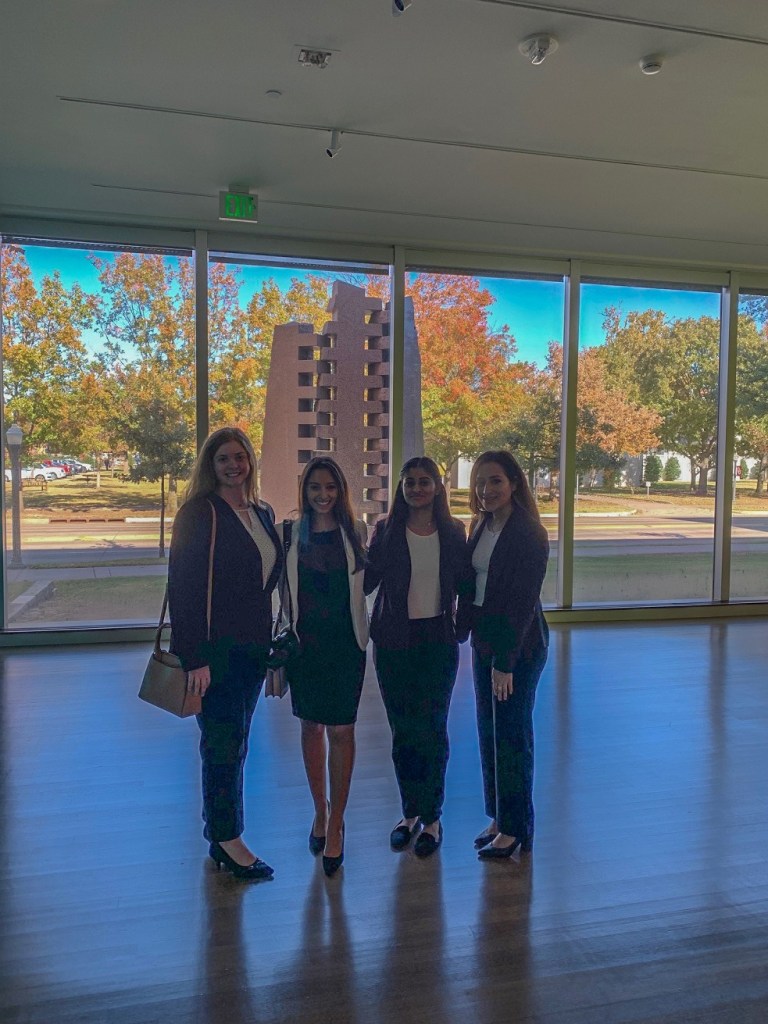
…and spent the rest of the time admiring OU’s beautiful campus, which included similarly beautiful buildings, rooms, and some fun and surprising art–including works by Allen Hauser, Jesus Moroles, and James Surls.
Fred Jones Jr. Museum of Art
Erin Juarez
Speaking of art, Fred Jones Jr. Museum of Art definitely caught our eyes. This museum contains art and artifacts from the sixteenth century to the present. The Fred Jones Museum also acts as a comparison to the museum we visited the night before and similarly contains art from all over the world.
As we were making our way to the museum, we began to spot pieces from our favorite artists: Jesus Moroles….
…and James Surls.
As graduates of SHSU and Texans, we were happy to see how well known these two are outside of Texas.
In the museum, we saw more work by James Surls, most impressive of which was the stand-alone flower shape that can be viewed from all angles.
We expanded our knowledge as learn more about different types of cultures and artists. For instance, Saara and I saw a Monet art piece for the very first time, and we began to recognize his style of impressionism.
I was able to recall who Georgia O’Keeffe was based on her style and motifs, and found that I prefer her work.
O’Keeffe began by painting her family, then expanded to flowers, landscapes, and bones. This is what makes her unique from other artists, her flowers are usually big with vivid colors, but her favorite theme is, interestingly enough, cow skulls.
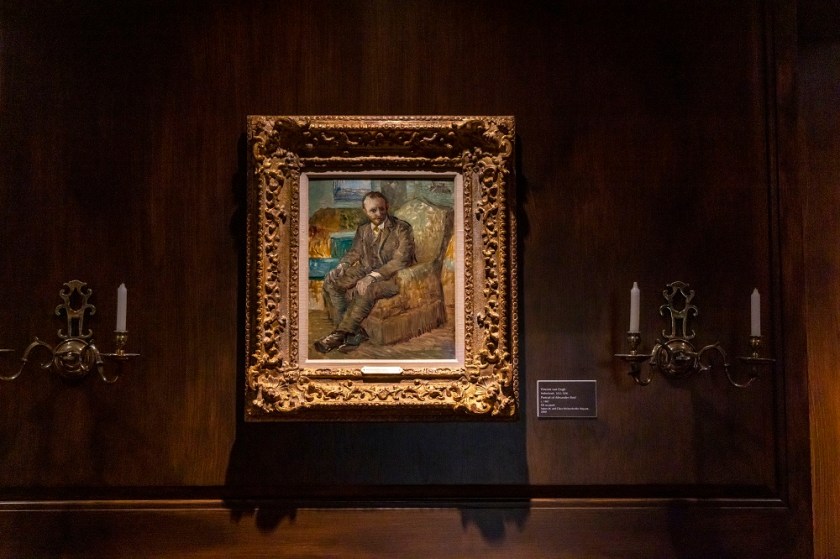
Saara’s favorite piece was the painting that hung in the model of the Jones’ house which was a Vincent Van Gogh work entitled Portrait of Alexander Reid.
We recognized it as a Van Gogh, based on his style, right away. We also learned more about the different types of impressionism and post-impressionism,. including pointillism.
Learning more about art found on Oklahoma University’s campus was a true insight to what the University holds as values.
Greek House
Yvette Mendoza
Driving through the great college town of Norman, Oklahoma we ate at what might, at first glance, be a dive Mediterranean restaurant: the Greek House. But behind the small storefront and limited menu were massive portions and a world of flavor! As you walk in, it is impossible to miss the four rotating skewers of gyro meat that we later learned is used in almost every meal.
The hummus and chip appetizer tasted organic and fresh. The contrast of the warm, fried pita bread’s crunchy texture to the cool and tart hummus dip, enticed us even further to try more food. Morgan even commented that this was her favorite hummus that she has had. Each bite was authentic and flavorful.
The main entrees were overflowing with gyro meat, and our appetite grew much more. Everyone except for myself ordered sandwiches packed with gyro meat, spices, tomatoes, onions, and tzatziki sauce. I, on the other hand, ordered the gyro plate, which consisted of the same ingredients as the sandwich but had a much larger portion. The gyro plate also came with French fries and a salad to complement the dish.
The table grew increasingly quieter as we began getting full of all the delicious food. The LEAP members absolutely loved it, and it served as vital fuel for our wonderful day of tours and museums ahead of us.
Welcome back to the Pre-Law Society, which has much going on. To kick off our second meeting we held elections for Secretary and the Vice President of Finance positions, and for the main event, we had Jack Choate, Executive Director of the Texas Special Prosecution Unit.
It was a busy night because we had two officer vacancies, and a third officer wasn’t available for his duties. So, we recruited help, and got the program underway.
Three people ran for the Secretary position: Emma Anderson…
…Saara Maknojia…
….and Richard Tran.
All did very well speaking, but when the vote was completed…
…Richard got the nod, winning without a runoff in a three-person race.
For the Vice President of Finance position there were two competitors: Emily Albright…
…and Erin Juarez.
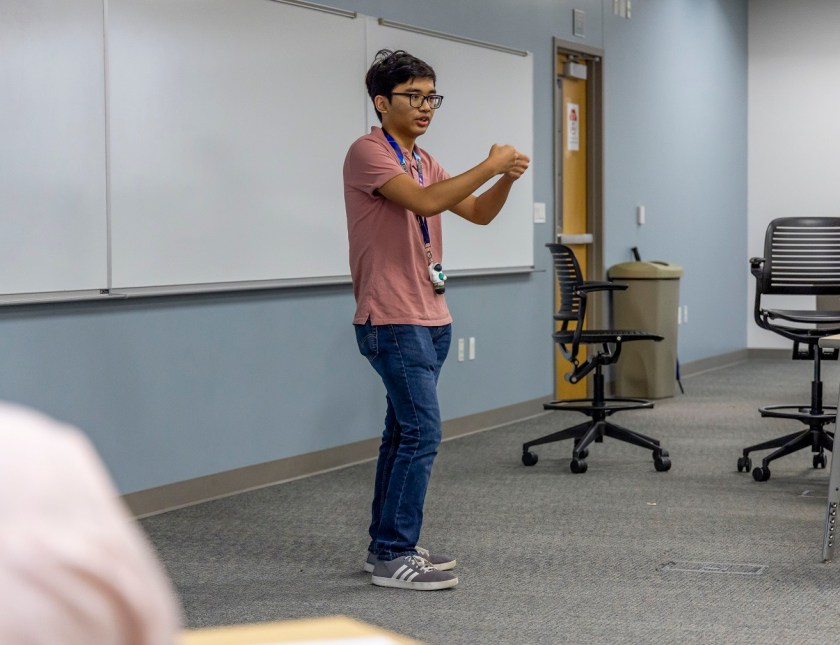
In a first for the Pre-Law Society, there was a tie! Since we have no precedent or rule for how to guide such a scenario, we had to decide on the spot. The class–and the candidates–opted for another set of speeches. First was Emily Albright…
…and then Erin Juarez.
From this, Emily–an Accounting major–emerged as the winner.
Many congratulations to both Emily and Richard, and many thanks to Emma, Erin, and Saara for putting their necks out their and being part of our organization.
In other business, we quickly took votes on minutes, bank account business, registering for Orglink, and a discussion of upcoming events. But the main attraction was our speaker, Jack Choate, Executive Director of the Special Prosecutions Unit.
Choate attended University of Texas for undergraduate and Texas Tech for law school. He went on to work as Assistant District Attorney here in Huntsville, was then hired by the TDCAA, which trains prosecutors, and now he works for the Texas Prosecution Unit. Amidst all this, he also served on the Huntsville City Council for three terms!
Even as a college student, Choate knew he wanted to be a lawyer, and he had experiences with Baker & Botts law firm, and as an intern in a DA’s office that reinforced that sense.
There are twenty attorneys at the special prosecutor’s office. Being responsible for prosecuting crimes on prison units–and for persistent sexual offenders following their release–Choate has seen much that is unpleasant, and he described some of those cases to us.
Because resources are scarce, the prosecutors must concentrate on the worst of the crimes and offenders, and this can be both emotionally and psychologically grueling. In fact, Choate mentioned that he worries about the mental health of his staff, but as a team, they try to focus on the good they are doing for victims and for the number of potential victims that they preemptively save.
Choate also discussed salaries for prosecutors, for those of us who want to pursue that career. For some counties, it can be as little as the low 40,000s, but for larger counties it might be close to $200,000 or so.
Richard Tran, our new Secretary, asked Choate how he maintains a positive, healthy outlook when he has experience so much negativity. Choate noted that he worries most about his staff, who see things from the front lines. One thing he does to provide a positive environment is to bring in a psychiatrist each year to train staff on coping techniques, work-life separation, and warning signs that the negativity is affecting you. But Choate also highlighted the fact that speaking for those without a voice is inherently rewarding, and that his job simply requires a pursuit of the truth, and this knowledge is liberating. It also leads him to hire based primarily on character, rather than those who went to Ivy League schools or the highest LSAT scores.
Jade Miller asked whether Choate believed he ever prosecuted an innocent person, to which he responded, “I certainly hope not!” Choate spoke about the problems of cognitive and implicit biases, how he undertakes training to reduce such a likelihood, and his adherence to the truth. This topic also prompted a discussion of the Michael Morton case, and the tragic case that led to Morton spending 25 years in prison, despite being innocent.
It was an interesting, educational, and even inspiring meeting…
…and all the more so because Choate stayed for another 45 minutes or so, answering questions and motivating students.
As the Lone Star State increases its share in the Electoral College to 40 votes, such gains also bring redistricting, with the government attempting to redraw districts so that they have equal populations. With new lines drawn, Walker County will be split into two districts: rt of Walker County will continue to be represented by the Texas’s 8th Congressional District (currently help by Congressman Kevin Brady) and the northern part will be represented by TX Congressional District 17 (Congressman Pete Sessions).
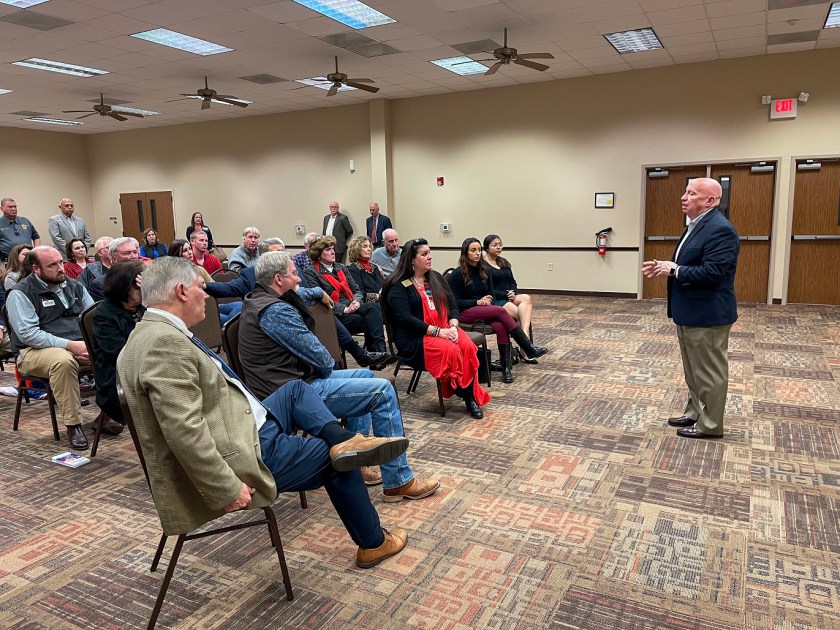
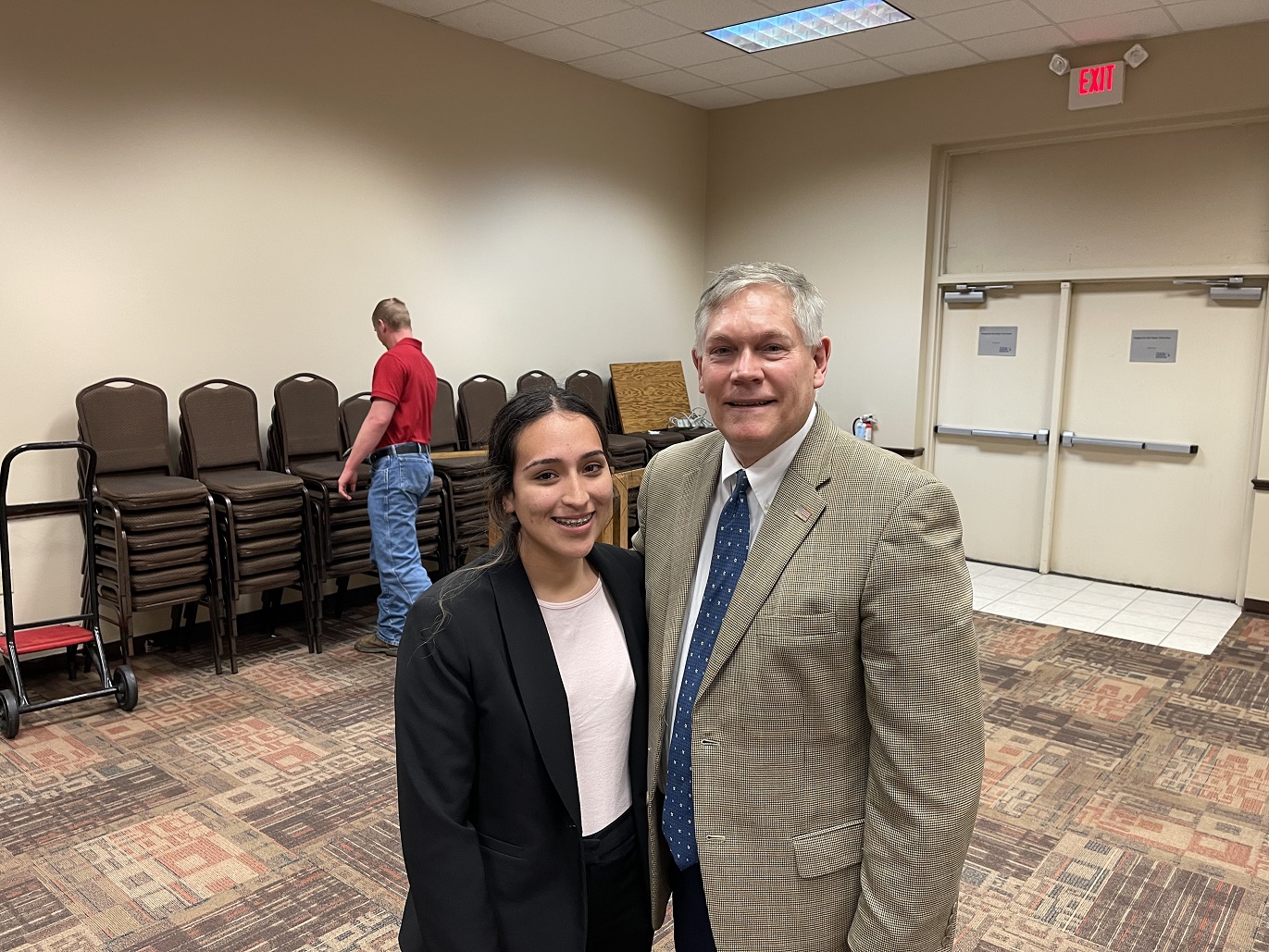
At the Texas Prison Museum, we had the opportunity to meet our current (Brady) and (likely) new (Sessions) Congressman! Some local and state candidates were also in attendance, and some even took the opportunity to ask Congressman Pete Sessions questions. The LEAP Ambassadors, almost front and center, listened attentively.
An audience member pressed Congressman Pete Sessions on his stance on a bill filed by Congressman Kevin Brady. The bill, also known as the “High-Speed Rail Land Acquisition Assurance Act,” was filed on January 10, 2022. This bill ensures that Texas Central’s high-speed rail and other high-speed rail projects cannot seize taxpayer land for projects that will never be started.
As filed, the High-Speed Rail Land Acquisition Assurance Act will require companies to acquire all the land needed to finish a high-speed rail project before construction can begin.
In his response, Congressman Pete Sessions reassured the citizens that he opposed private interest corporations using eminent domain to take someone’s private property. He plans to work diligently with Congressman Kevin Brady in protecting Texas citizens’ rights.
With the transition of redistricting and his retirement announcement, Congressman Kevin Brady reminded Walker County’s people of his commitment to finish the job until the very end. After serving for over two decades, Congressman Kevin Brady’s absence will be felt in Walker County. To offer just a small example, the LEAP Center has placed more than 20 interns in Congressman Brady’s office, and he has hired eight of them as staff.
With this history in mind, the LEAP Ambassadors are looking forward to similar opportunities in both CD 17 and 8.
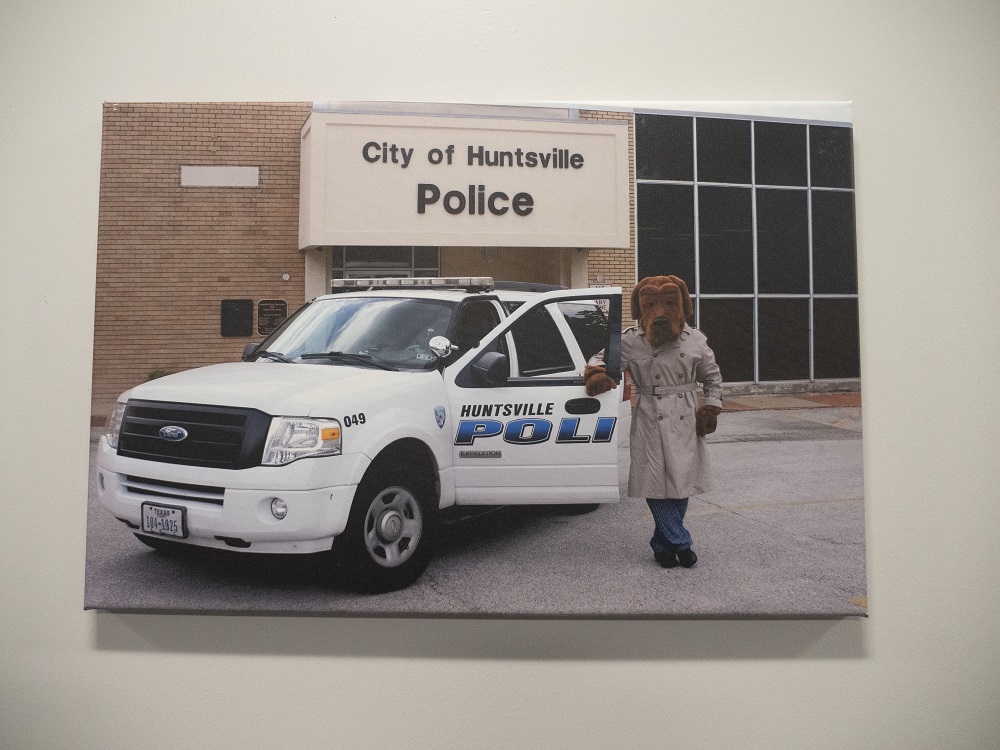
On Tuesday evening, the LEAP Center and City Fellows students were given a wonderful tour of the new Huntsville Police Department (HPD), on 2821 FM RD West, by Corporal David Warner.
The tour began as soon as we stepped foot through their double door security to get to the waiting area, where Corporal Warner discussed the history of the HPD, its previous chiefs, and the new things that were incorporated to the new building in comparison to the old building, which was once a bank!
In contrast to the old building, they now have a cool-off room, a gym…
training room…
showers, a garage, more security (bullet proof glass and reinforced walls), and overall, much, more space.
All of which allows them to perform their job duties more efficiently, such as conducting meetings, training, and more. In this “backstage” tour, we had the opportunity to see most of the rooms and offices: such as the interrogation room…
…supply room, and new additions such as a school resources officer office, evidence room…
…the chief’s office, narcotics office, and the detective offices. While in the supply room, we got to pass around the two kinds of vests that the officers use, the day-to-day basis one and the one they use before arriving at a “dangerous” crime scene.
The former of which was as light as a feather when compared to the latter of which weighed about ten pounds. Our tour then continued inside the patrol officers’ “office”, where we were able to see the TV that tracks where every officer is located- from the moment they report to an incident scene to the moment they leave the scene.
To put it in perspective, if a police officer was on duty at a high-school football game, we would be able to see the name of the officer, the location of the high-school, and the duration of time they have been there. It also shows how long it has been since any one of them has responded or reported to a scene.
Some of the more popular and favorite parts of the tour were the evidence, supply, and interrogation rooms. We were amazed by how the architect built and designed each factor and detail of the building to where no one can tamper with the evidence lockers or hear anything outside of an interrogation room. Another favorite aspect of the tour was Corporal Warner: he a great tour guide, very knowledgeable, and really illuminated the role and practices of the police.
On behalf of the LEAP Center and the City Fellows, we would like to thank Corporal Warner for taking the time to give us a tour of the new building….
…and even more thankful for everything that Corporal Warner and the rest of the officers do to keep us and the community safe.
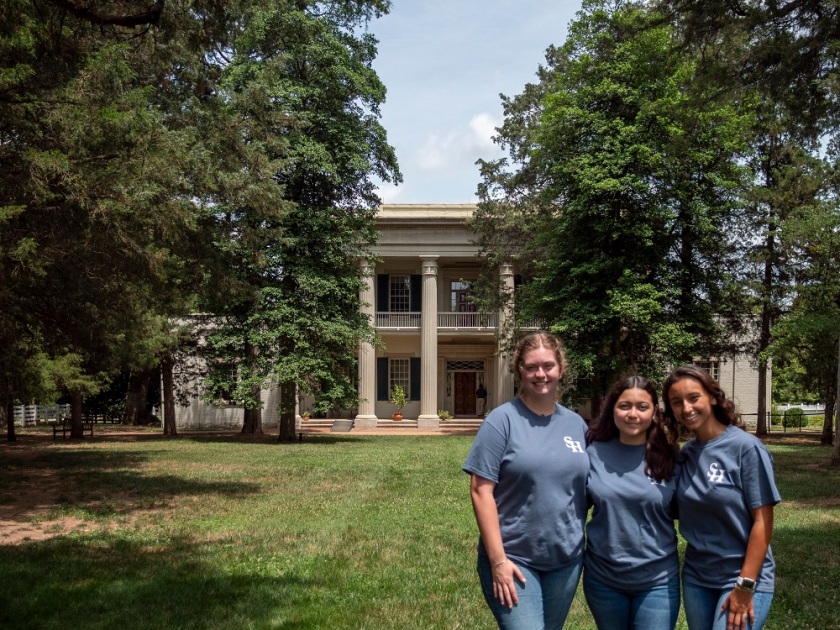
Seeking another historic home on day four, the LEAP Ambassadors ventured to Andrew Jackson’s Hermitage. This visit gave us a vivid perspective of the 1800’s lifestyle through his marvelous home and informative museum alongside it. In addition to having a tour of the Hermitage we walked through his personal idyllic garden and the cemetery where Andrew Jackson and his family currently rest.
Former president Andrew Jackson was known as “the People’s President,” because he was the first “frontier” President, and he broadened the voting process, resulting in many changes in society.
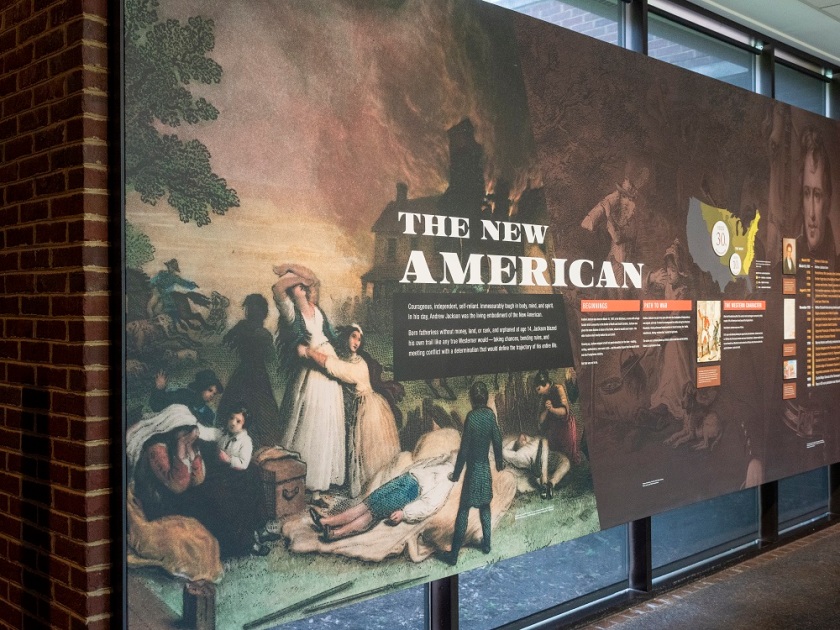
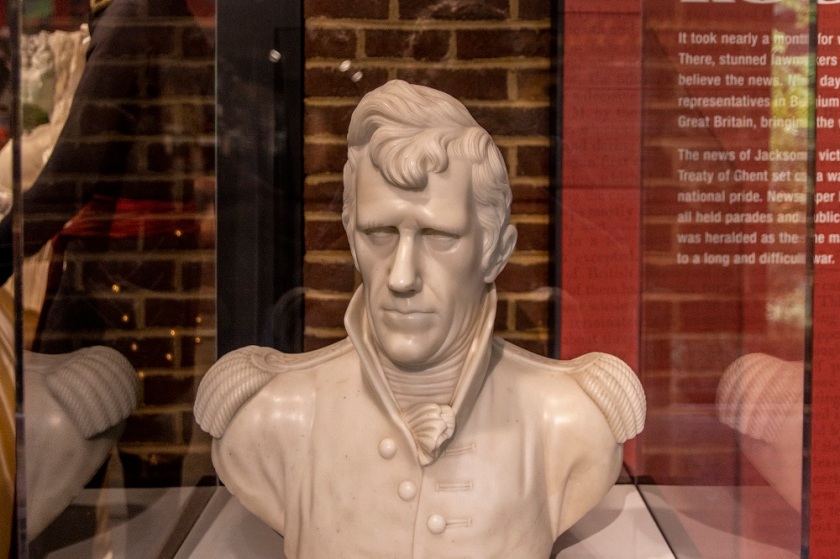
Walking through the Museum we saw his accomplishments as an attorney, soldier, and president of the United States. Viewing artifacts, Jackson effectively led the battle of the Creek War in 1801 as Colonel of Tennessee and the battle of New Orleans in 1812. After courageously serving in these wars fighting the British and the Indians, Jackson was elected president, and he is now known as the founder of the Democratic party.
As for Jackson’s day-to-day life he lived with his wife Rachel Jackson and adopted children in a Greek-styled home where he allowed any guest comfort in his home with food and a place to stay.
Jackson was known to receive many visitors, including Sam Houston and former presidents, at his 1,120 acres of land at the Hermitage. Having guests stay made it a hectic household from managing the farm, servants, and attending to important guests.
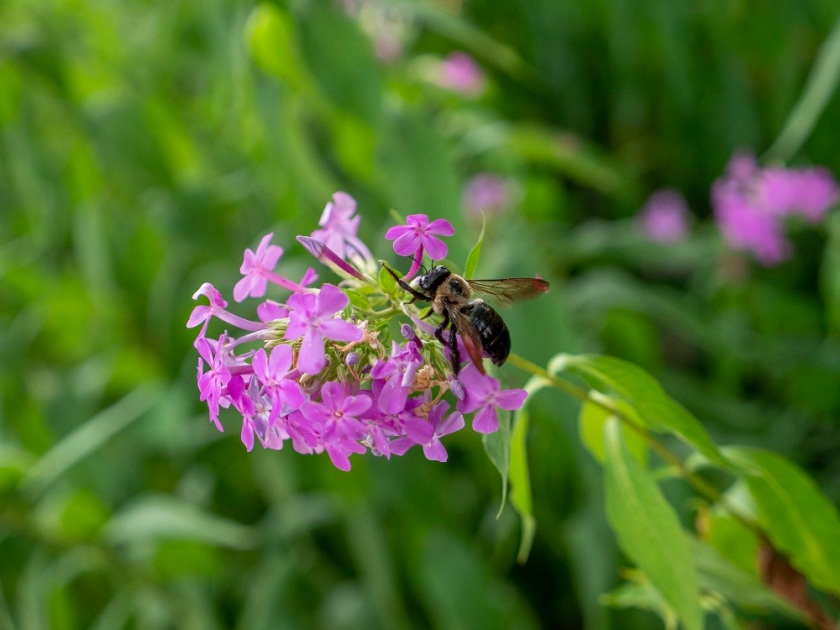
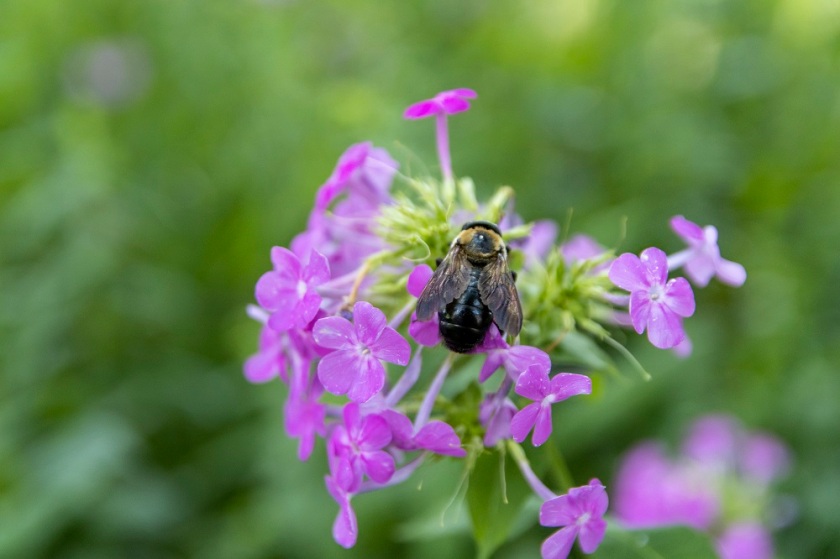
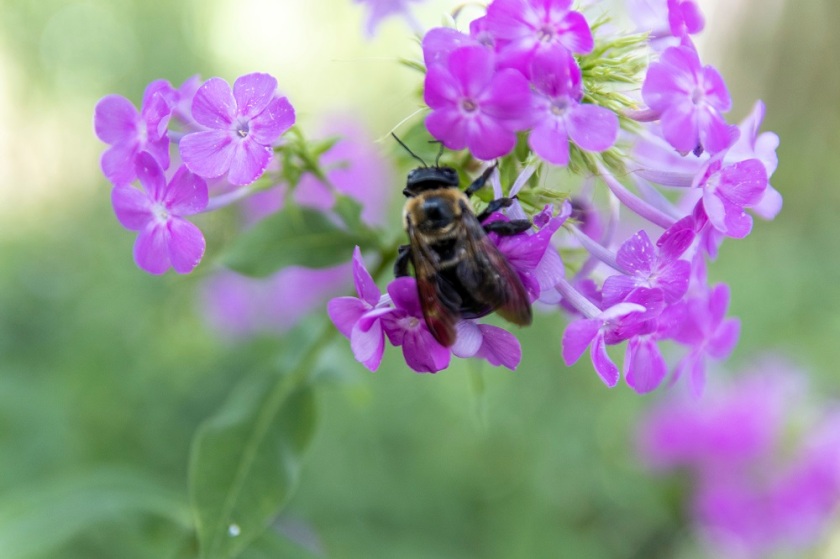
Each LEAP Ambassador had their own favorite part of the Hermitage Jessica being the massive newspapers in Jackson’s library. Morgan enjoyed the kitchen outside since it was like Sam Houston’s kitchen in Huntsville, Texas. Whereas mine was farther away from the home being the garden. As we all entered the garden I fell in love with the bumblebees flying around the brightly colored flowers that all led up to the tombstones.
The garden and grave site rounded off a nice sentimental testament to our 7th president.
Lunch
Yvette Mendoza
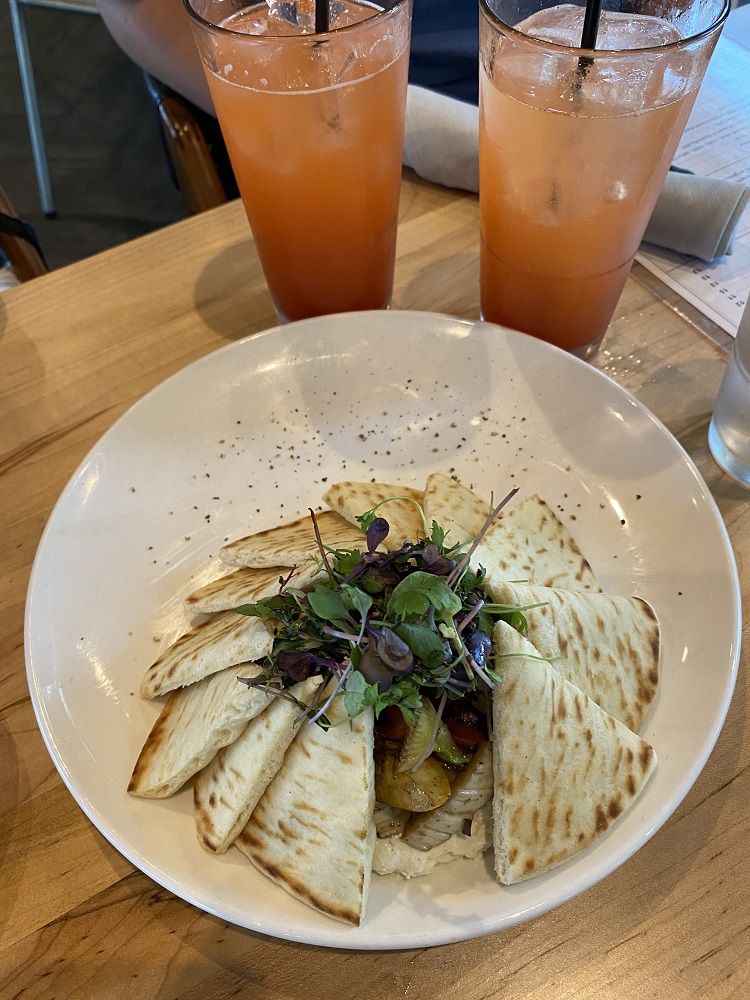
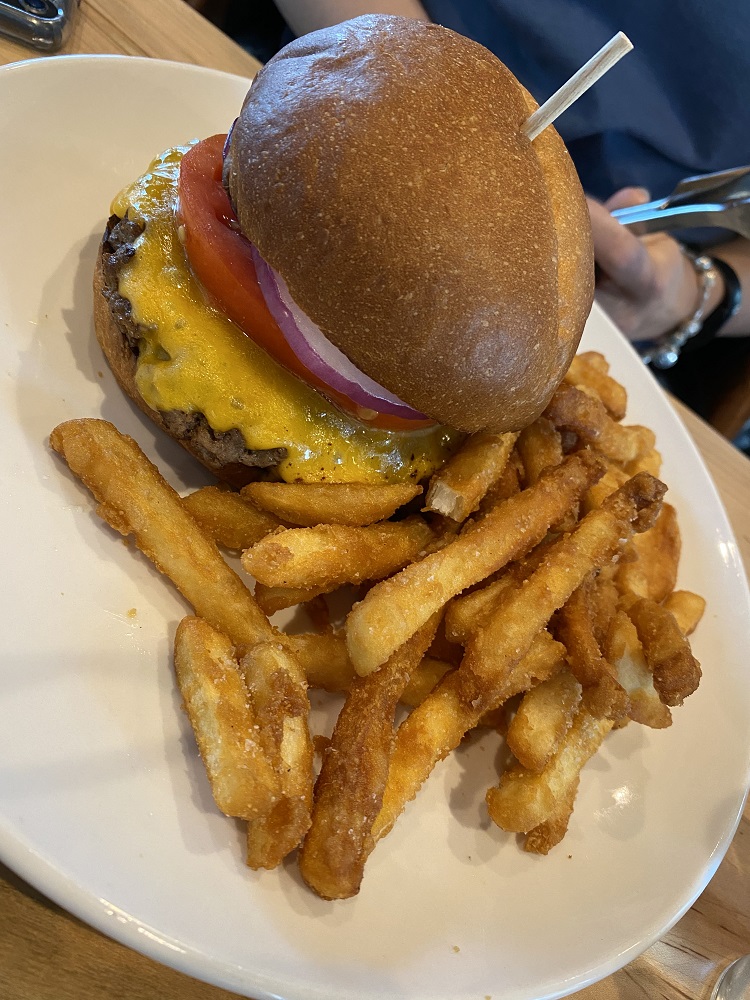
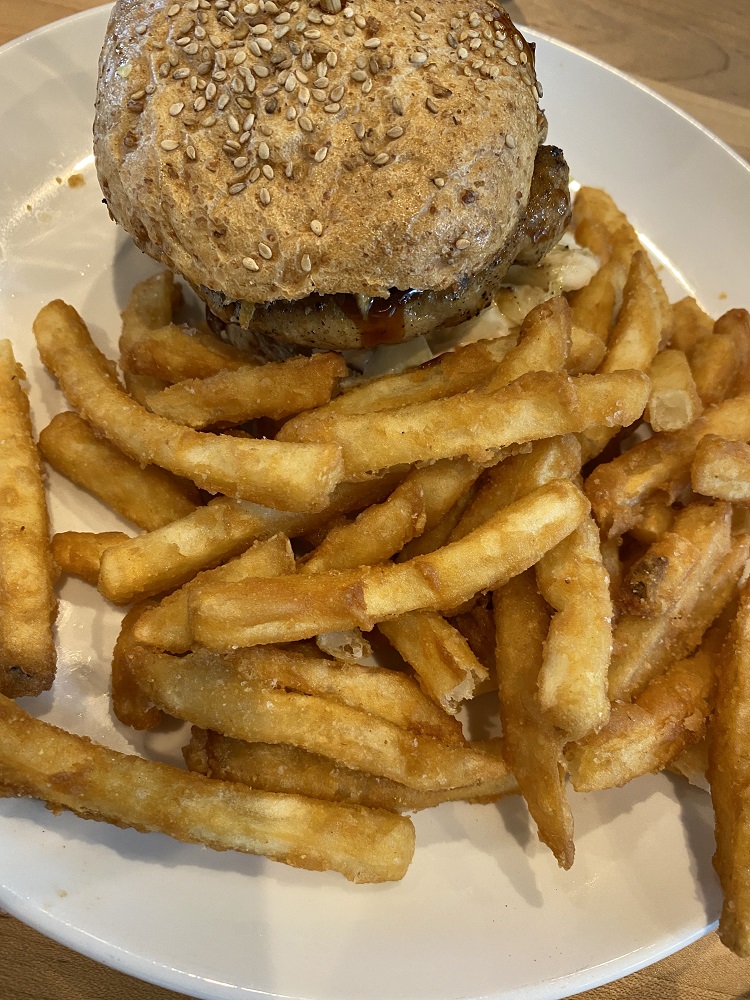
Diving into our first meal in Nashville at the Flat Iron southern fare restaurant ended up being a perfect choice. With the menu full of variety we started off with American classics by ordering whipped goat cheese filled with grilled cucumbers, onion, and tomatoes served with fresh warm pita. For our meals Morgan and Jessica got burgers, one being a tuna-patty burger and the other a grilled chicken burger. As for me, I got a waffle grilled cheese with a complimentary tomato bisque dipper. Each meal was delectable, and everyone had a delicious side of french fries. Our first taste of Nashville made us eager to try more.
Parthenon Tour
Morgan Robertson
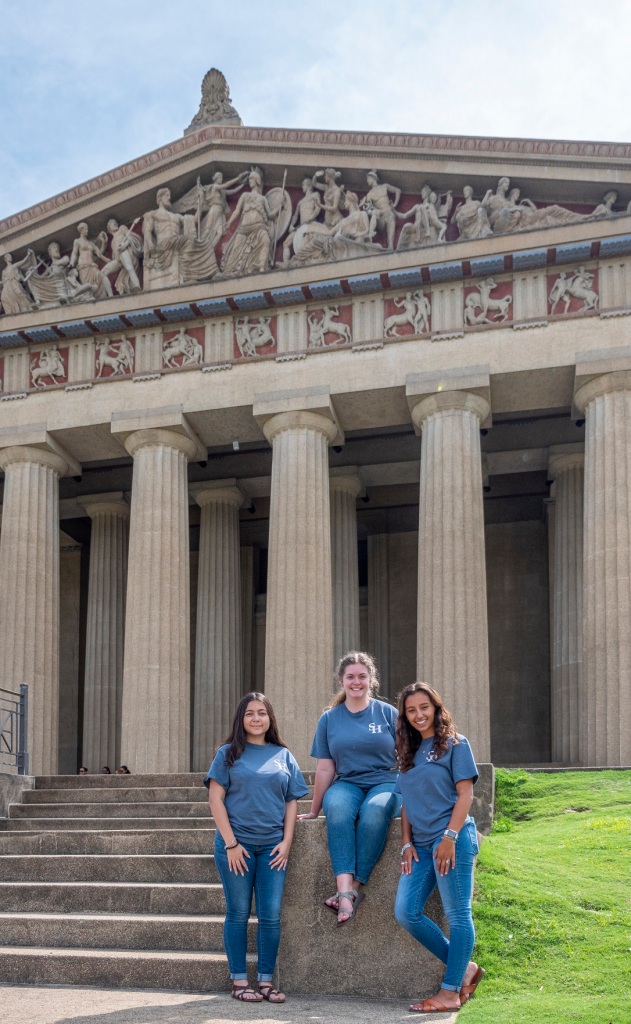
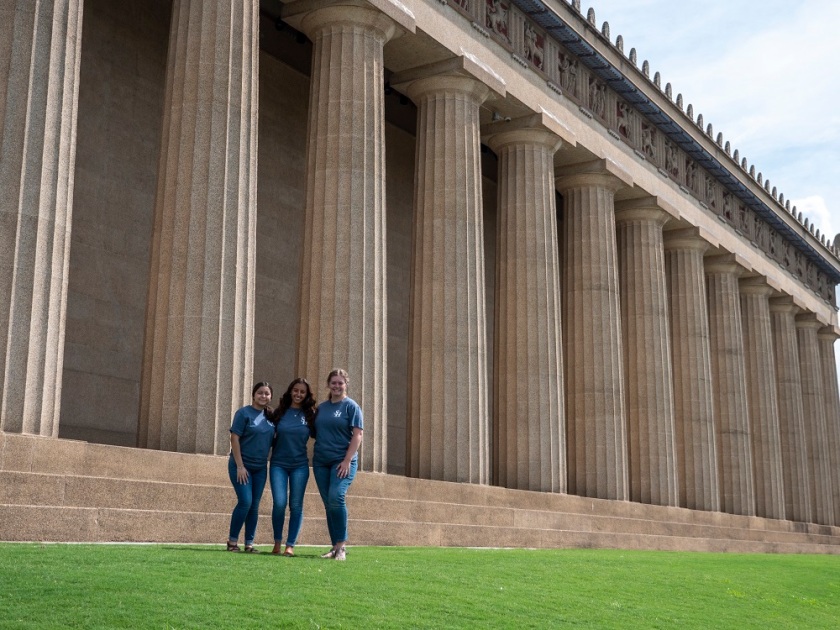
After seeing General Jackson’s home, we ventured into a City formerly known as “the Athens of the United States”–Nashville, where the great Parthenon in Athens, Greece is replicated. Initially, the project was supposed to be a temporary attraction like everything else commissioned for Tennessee’s 1897 Centennial Explosion. However, people were so impressed with its beauty and the cross-cultural connection, the Parthenon was preserved, becoming the focal point in what is now Centennial Park.
While the Nashville Parthenon is a well depicted replica of the authentic one in Athens, there are some major differences. The first difference being the materials in which the structure was constructed. The Parthenon in Greece is made of white marble, which would have been easily accessible at the time. However, in Nashville, Tennessee, there are no quarries of white marble. Using what was at hand, Architect William Crawford Smith designed the structure with wood, brick and stone, giving the Parthenon a yellowish-brown color.
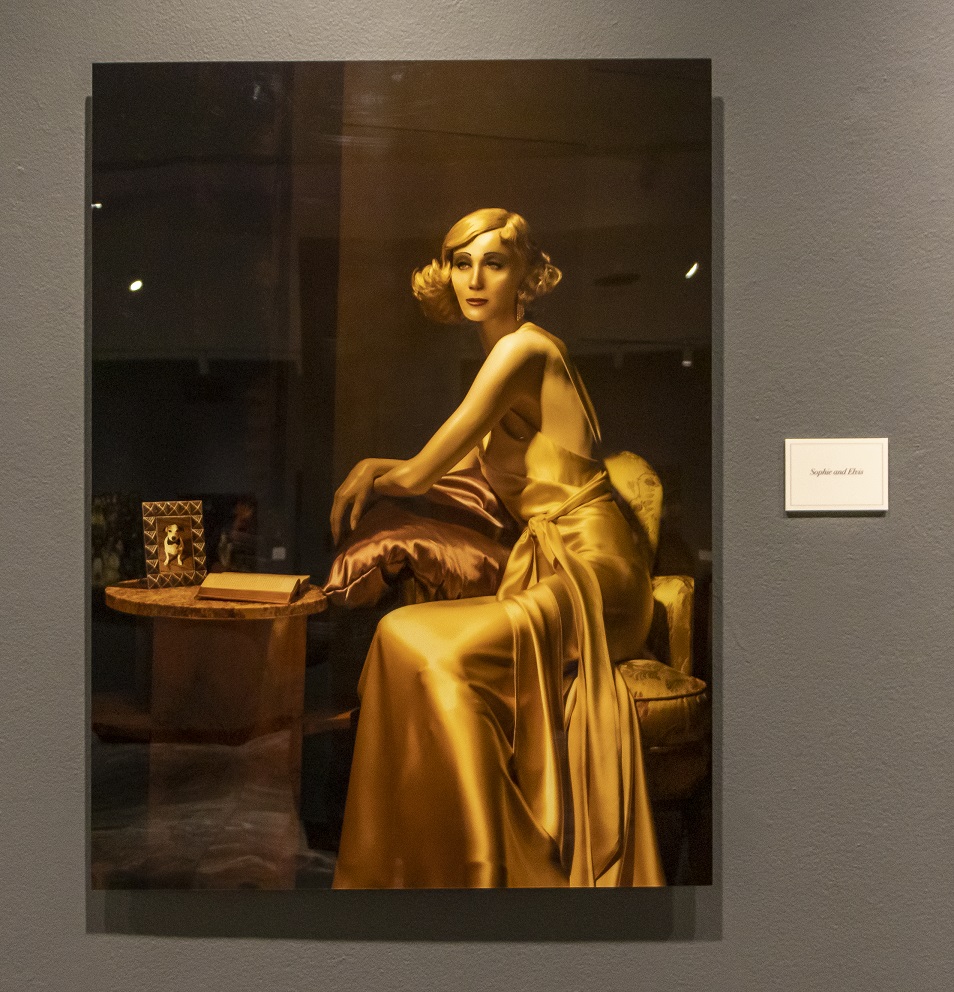
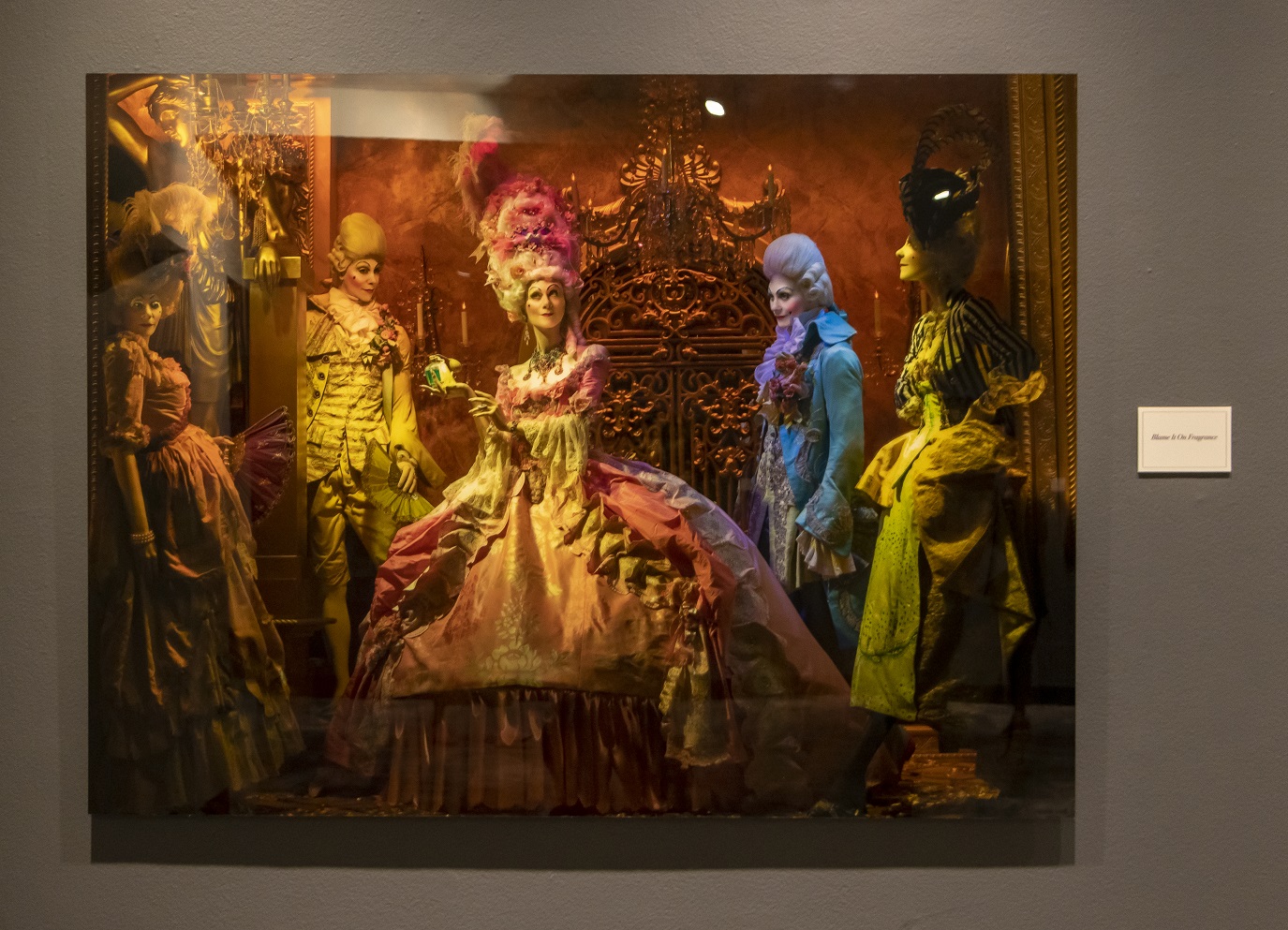
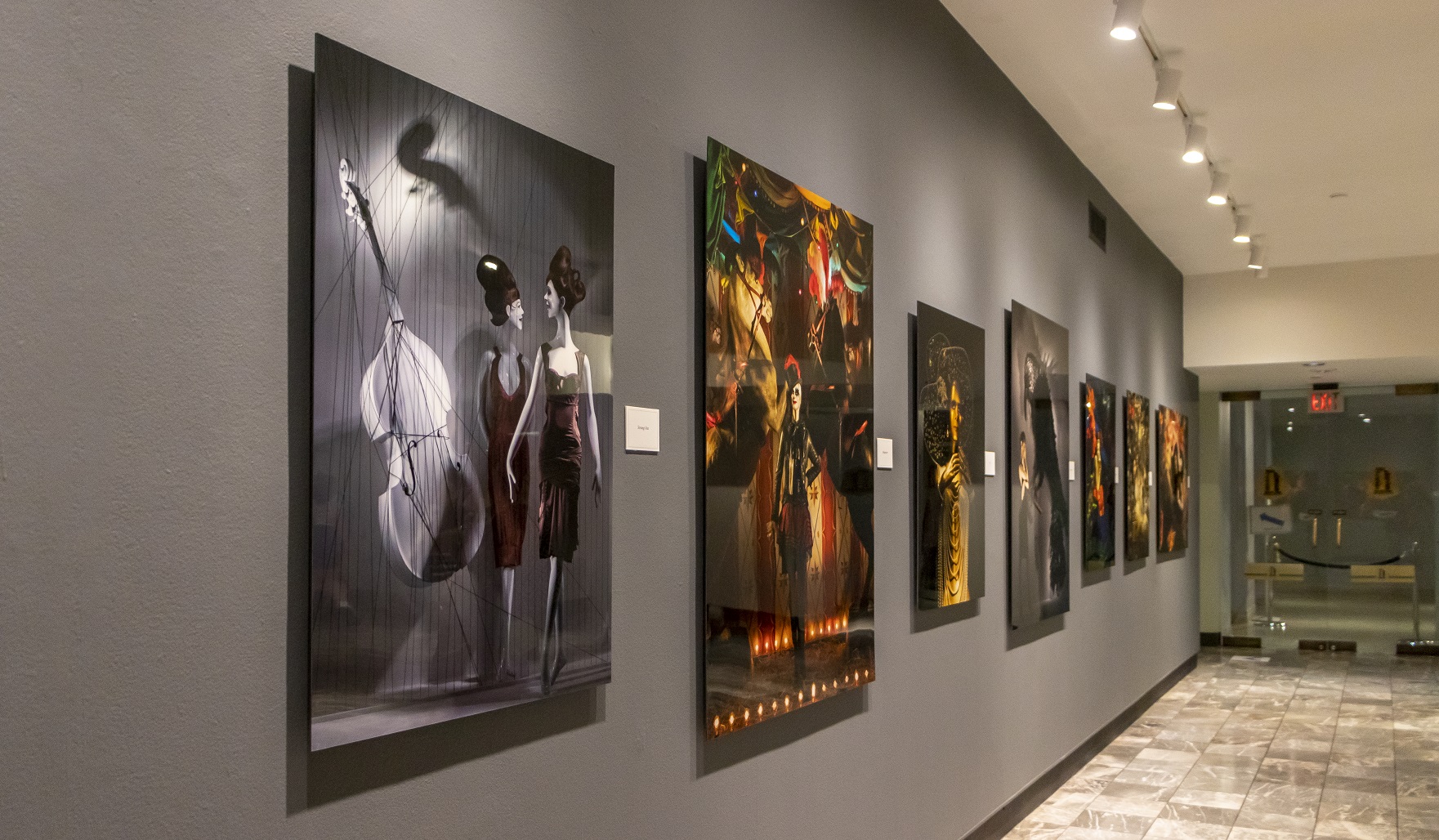
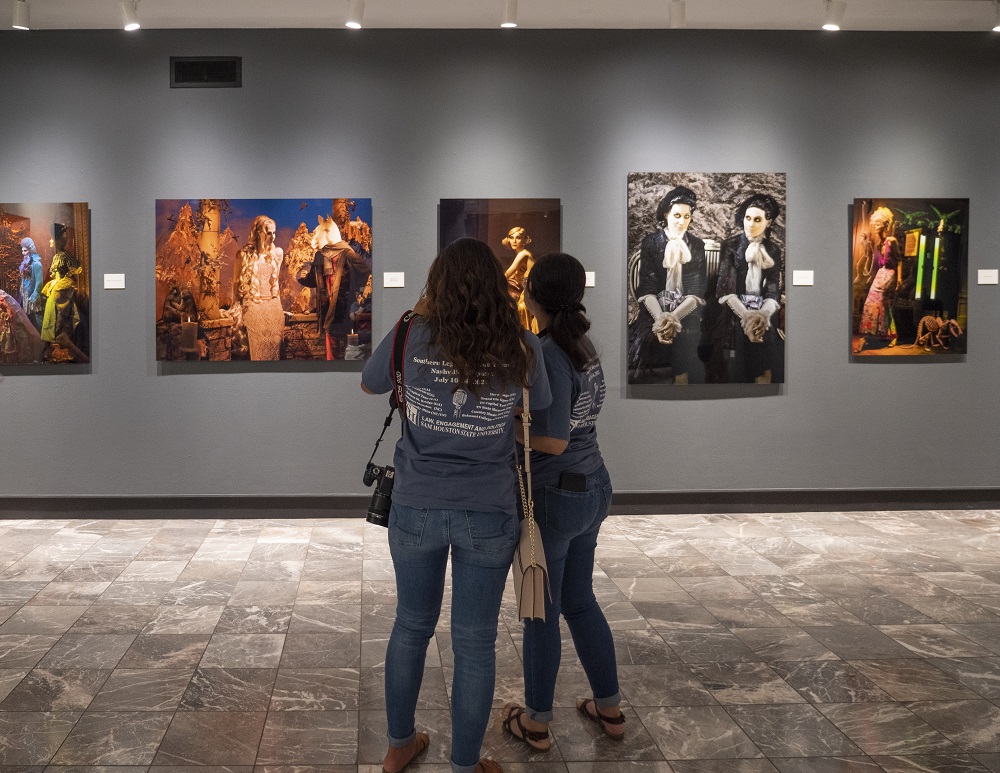
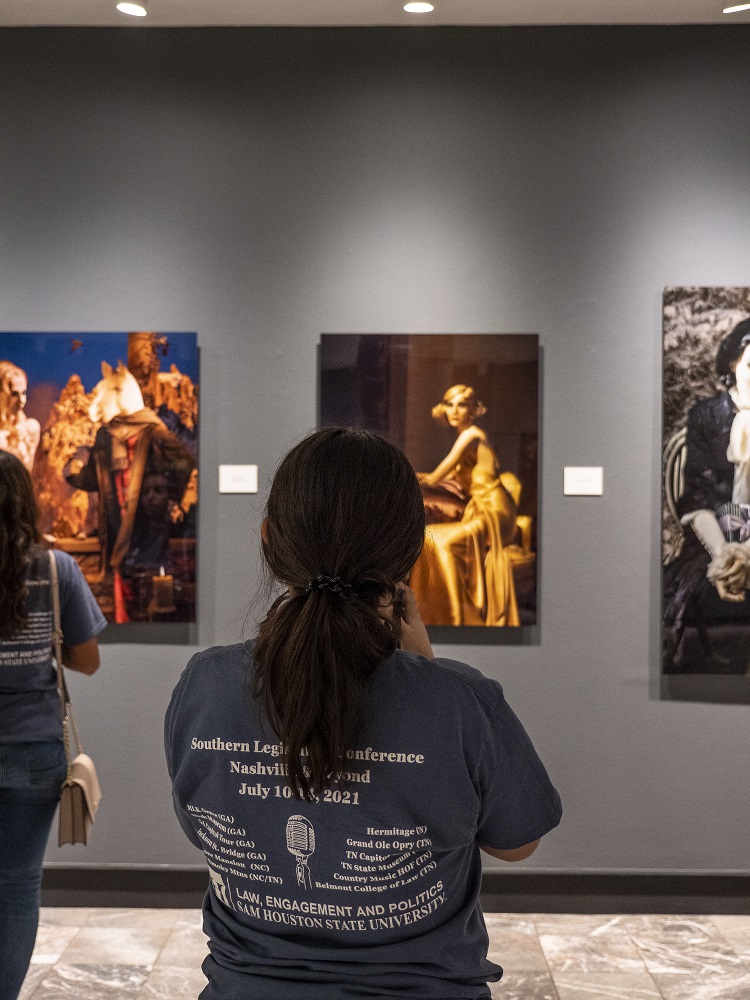
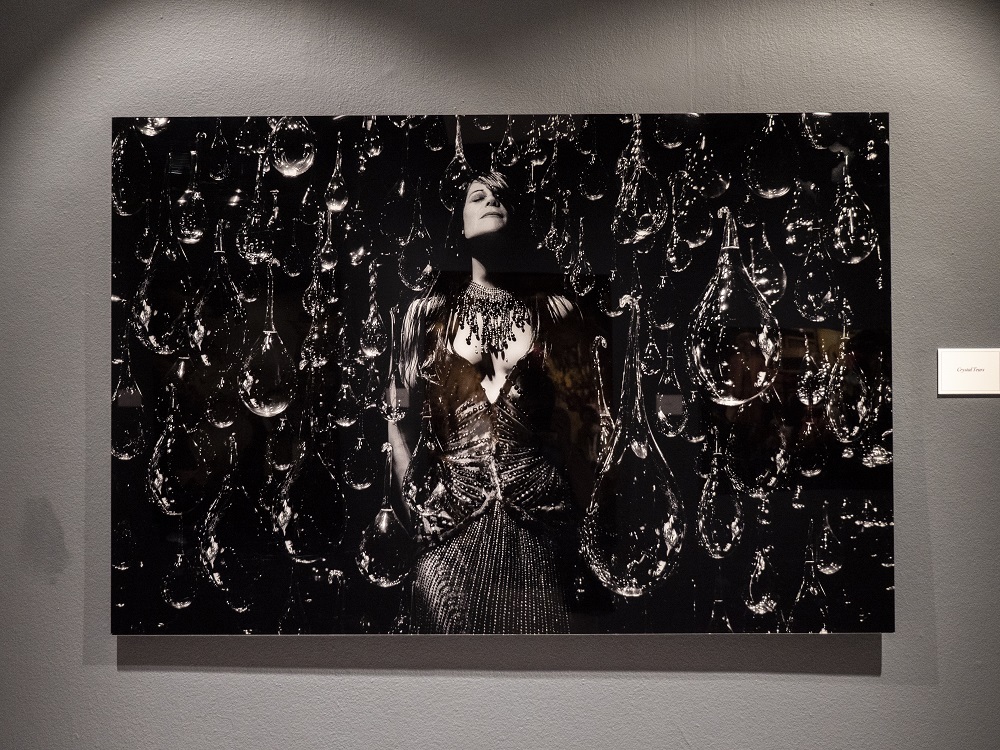
Another interesting feature that I was not expecting was the art museum on the lower floor of the Parthenon. In one of the rooms was an exhibit for artist Lynn Goldsmith whose interesting photography art is printed on metal, with each photo containing up to fifty exposures.
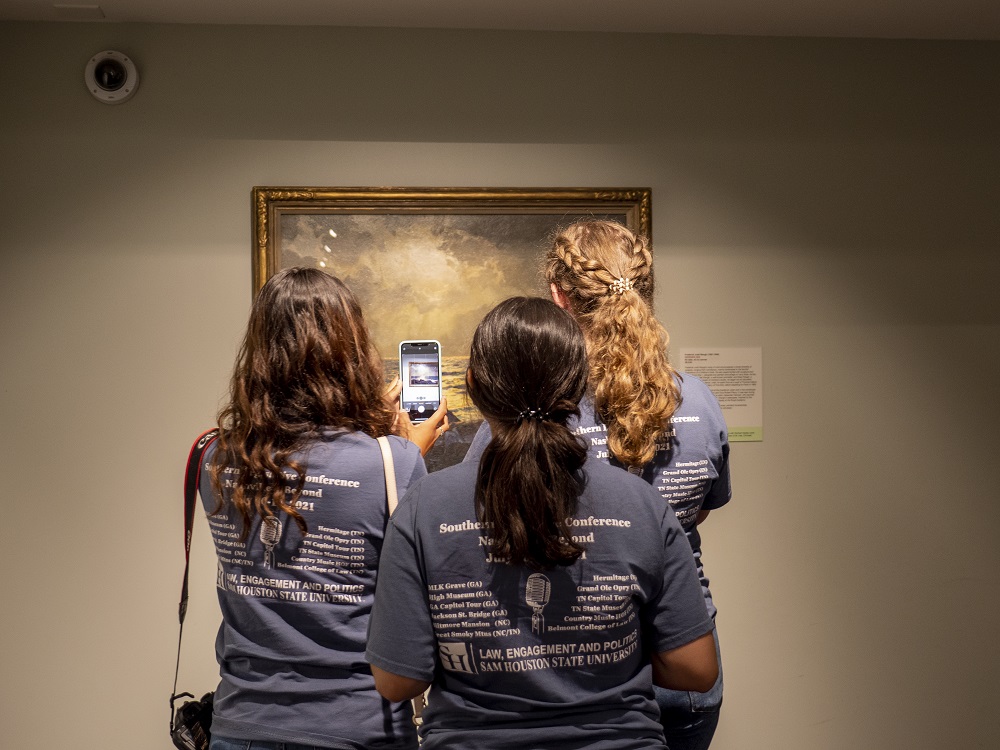
The second space was James M. Cowan’s personal collection of American art, including pieces from Durham, Moran, and Bierstadt, serving as a nice contrast to the first collection.
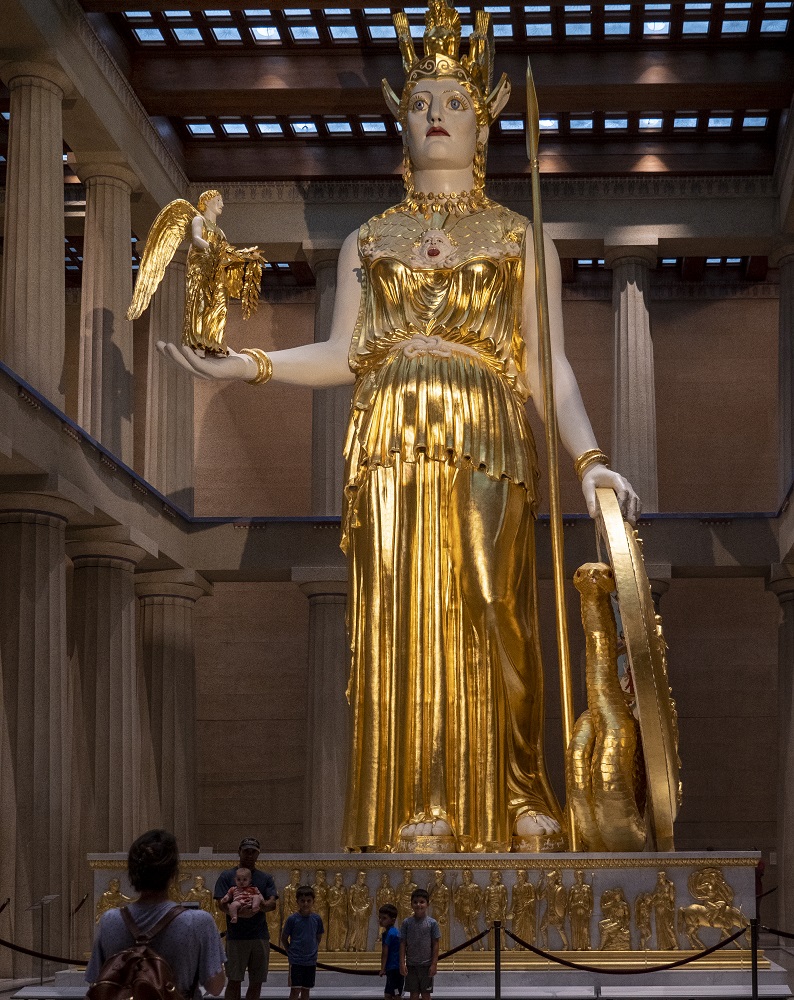
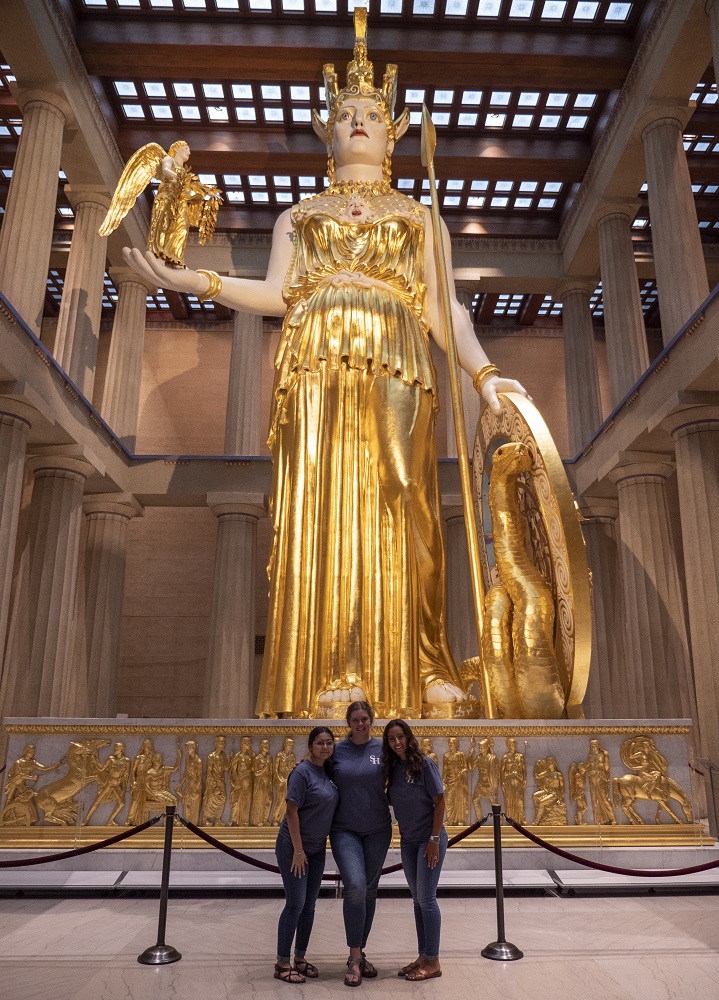
Keeping with the Greek style and culture, a 42-foot-tall statue of the Goddess Athena resides in the central room of the Parthenon. Standing tall as the Goddess of Wisdom, Athena holds the god Nike in her right hand with a shield and a snake to her left. When entering the central room of the Parthenon, the goddess is visible between the massive Doric columns, with her gold dress and accessories appearing as though they are glowing.
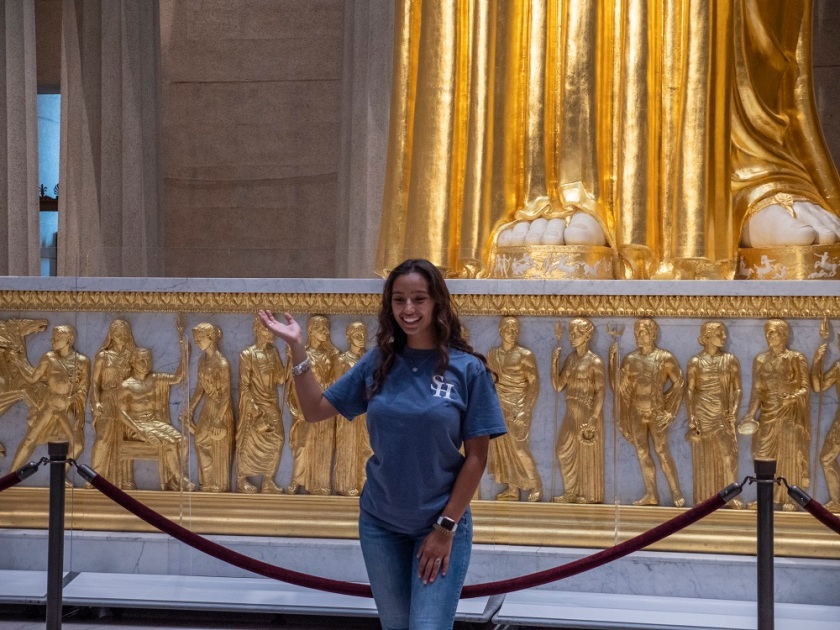
Surprisingly, we found the Parthenon to be a popular picture spot for tourists and natives. There were two Quinceañera parties, a baseball team, and even a wedding set up for pictures. We of course joined the trend and posed for several pictures inside and outside of the Parthenon before heading back to await for what would come next.
Opening Night at the Country Music Hall of Fame and Museum
Jessica Cuevas
It is the opening night of the Southern Legislative Conference in Nashville, Tennessee. The LEAP Ambassadors were curious to know what to expect at the Country Music Hall of Fame and Museum as they walked to join the line for the trolley across the street. We congregated with the other attendees and waited for our turn to board the trolley. We met two friendly lobbyists from New York, Jonathan and Monisha, and a policy analyst from Ohio who each talked to us about what they do, how they got to their positions, and future advice for young professionals. Our conversations carried on into the short trolley ride on our way to the Country Music Hall of Fame and Museum. It was refreshing to meet people so passionate about their work, and who are living what we are actively learning.
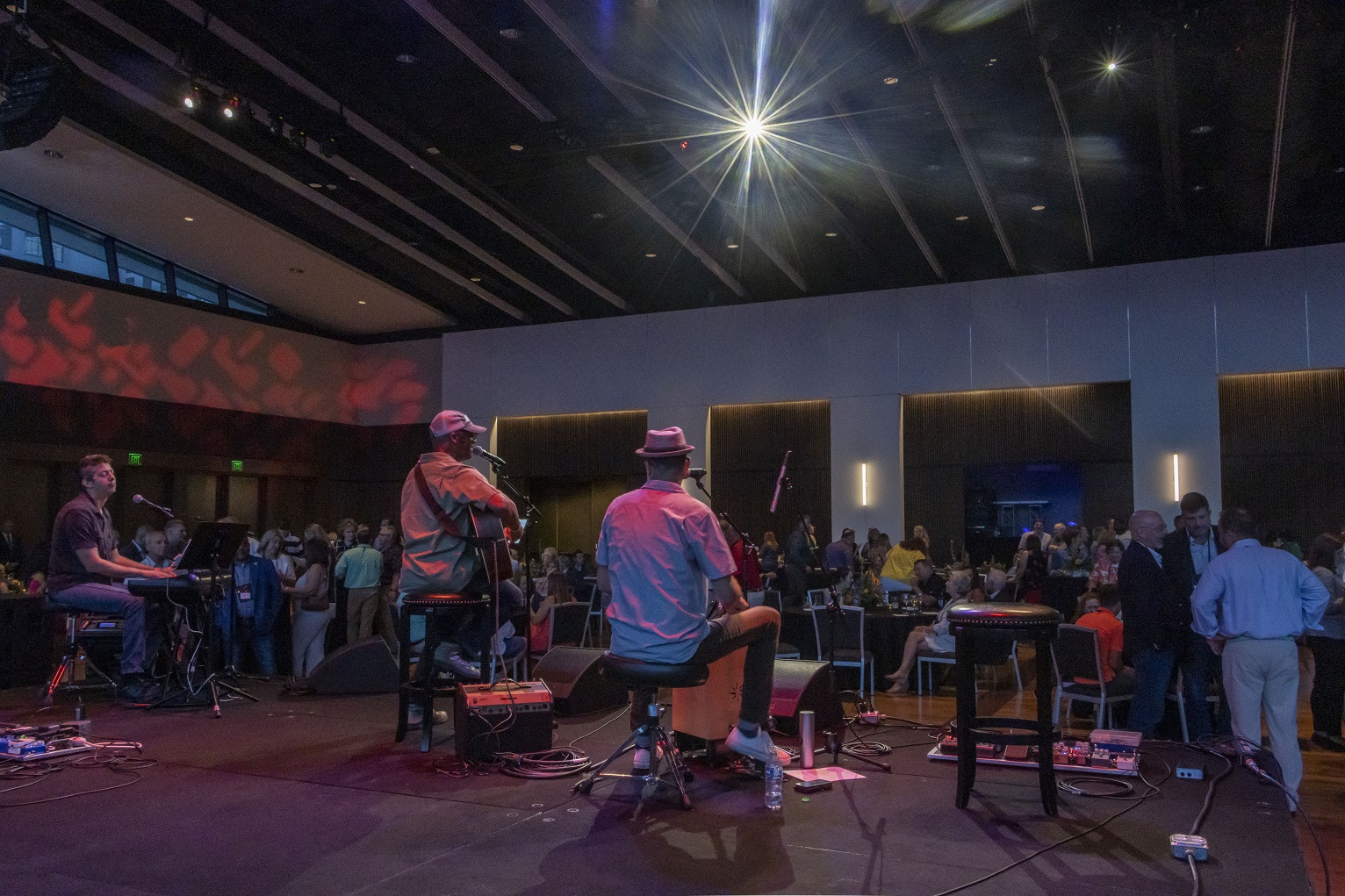
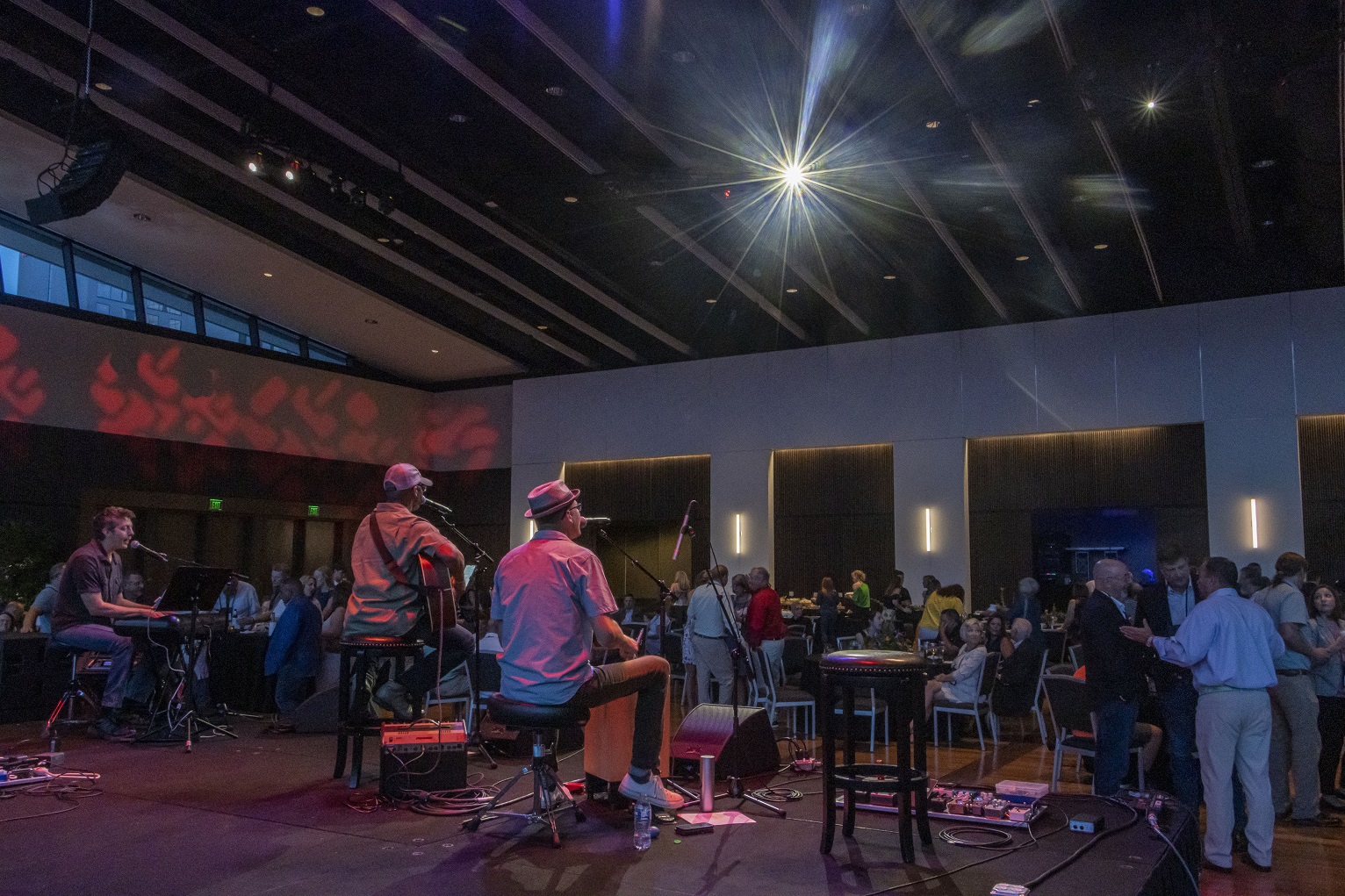
Once we arrived we were given the option to go up to the sixth floor for food or start off at the museum on the third floor. We listened to our stomachs, which drove us to the sixth floor to be greeted by live music and lots of people.
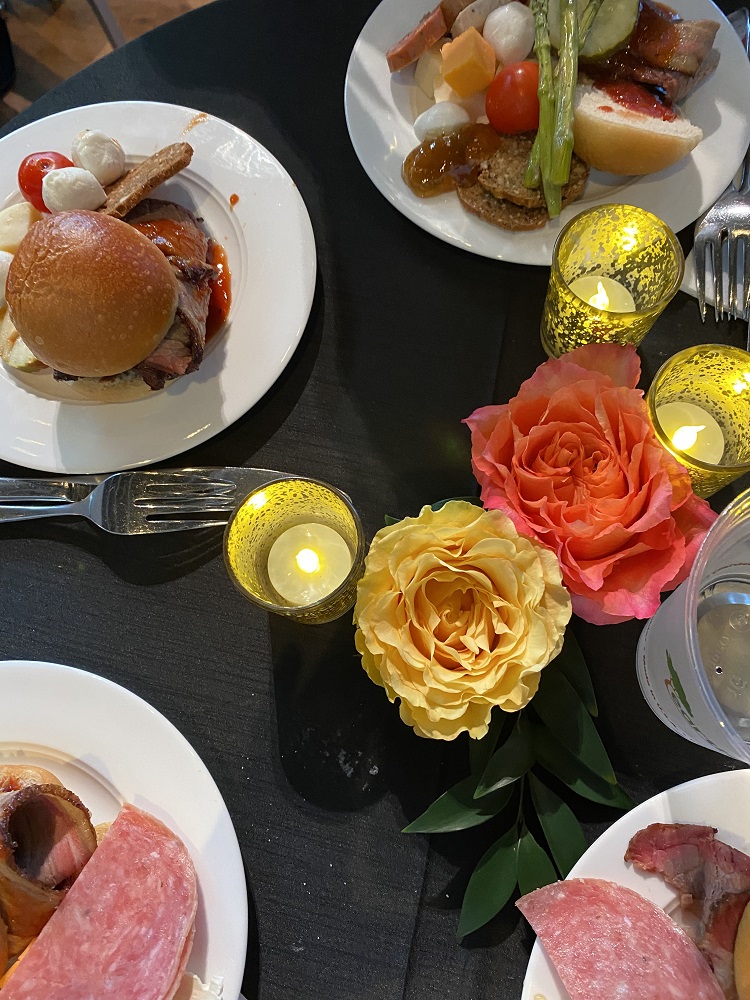
The LEAP Ambassadors were able to meet and converse with a Tennessee Senator before making our way to the colorful assortment of a Charcuterie board with different cheese, bread, cold meats, and vegetables.
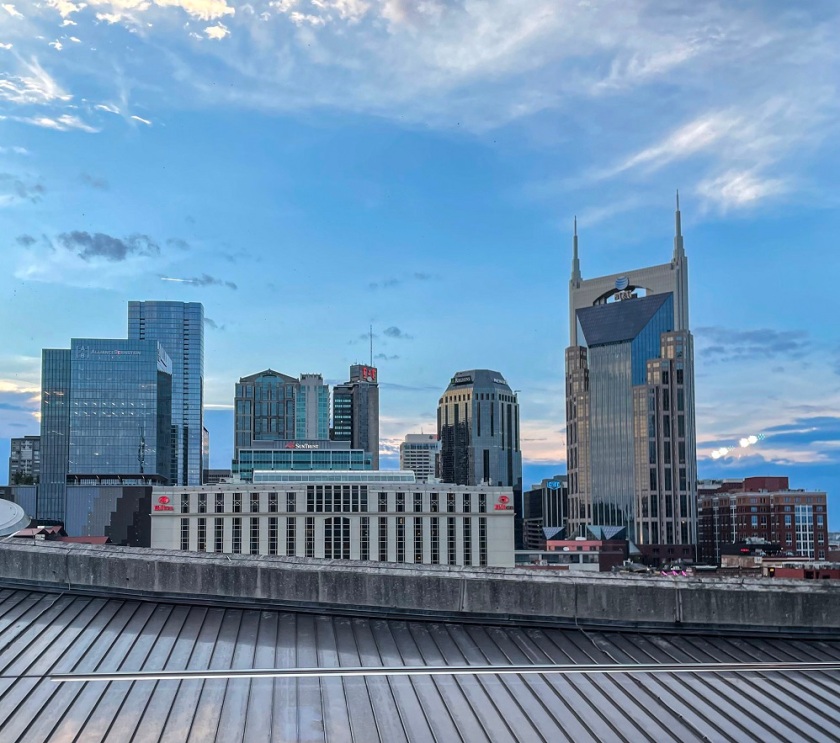
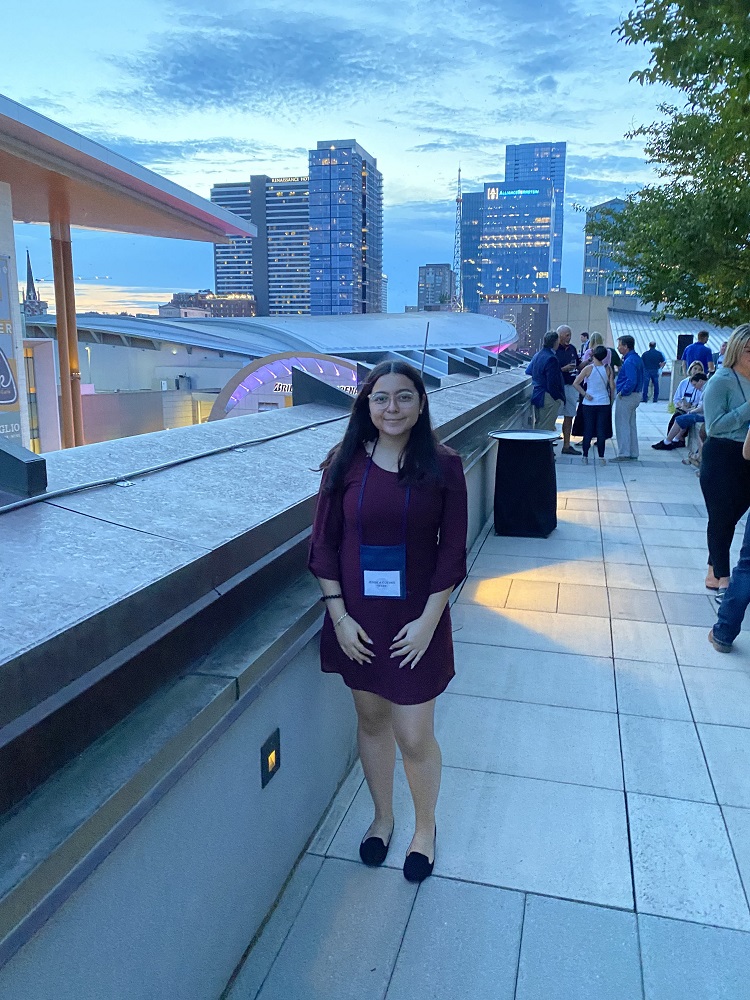
There was a beautiful view of downtown Nashville…
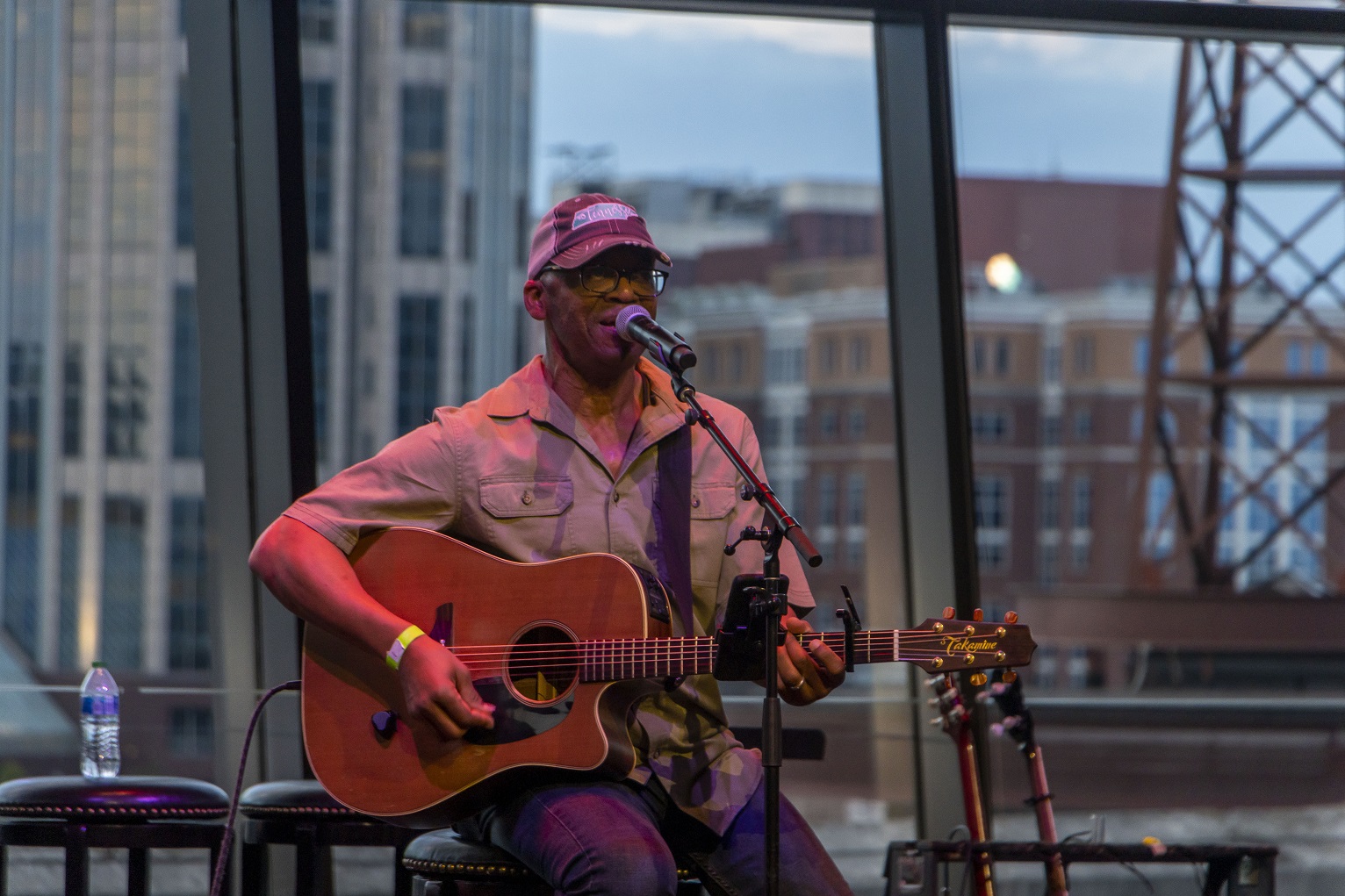
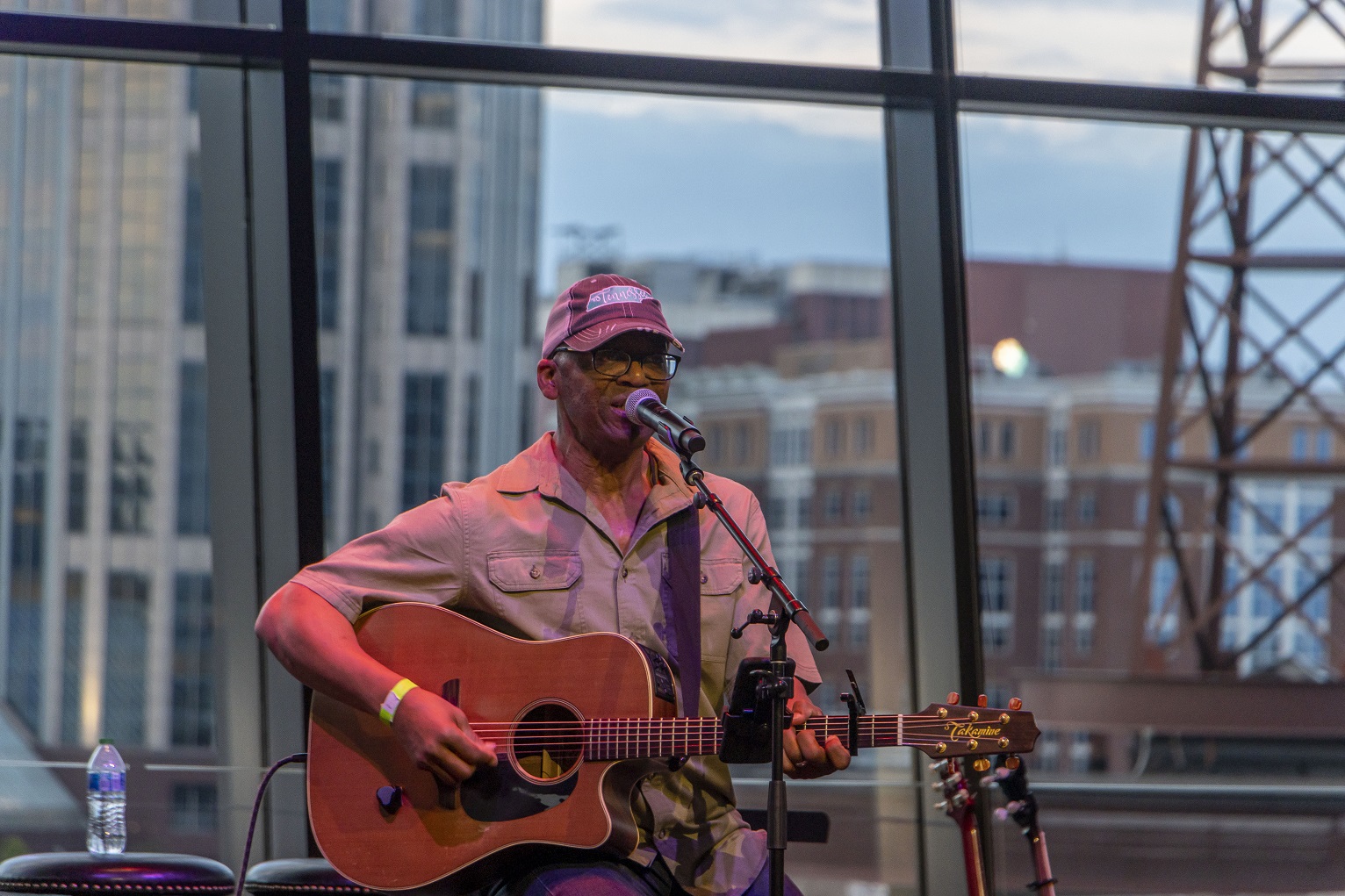
…and a live band playing covers of artists such as Willie Nelson, The Beatles, The Nitty Gritty Dirt Band.
On the balcony, where families were playing Jenga, Corn Hole, and enjoying the nice weather, the view of the Nashville skyline was amazing.
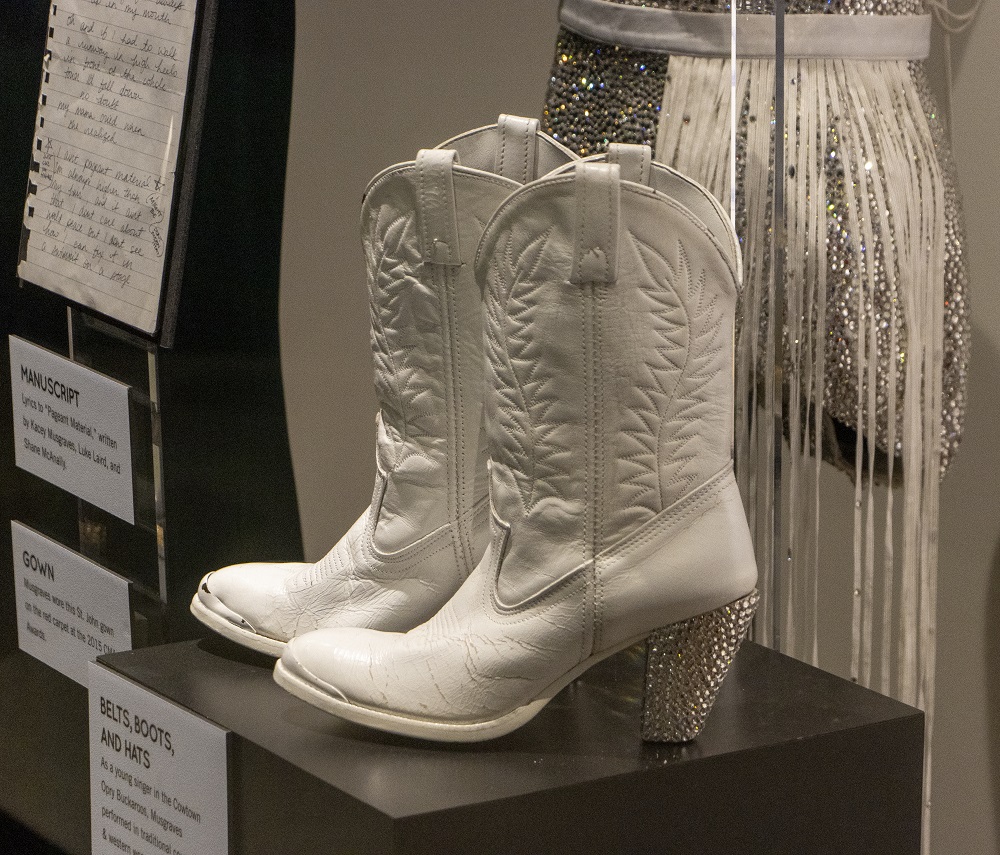
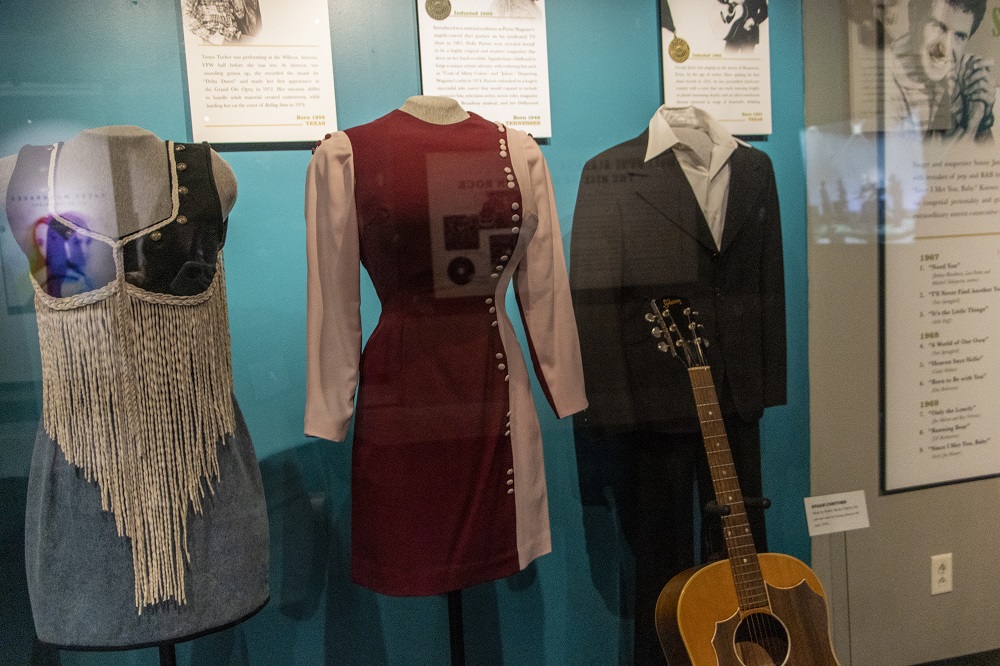
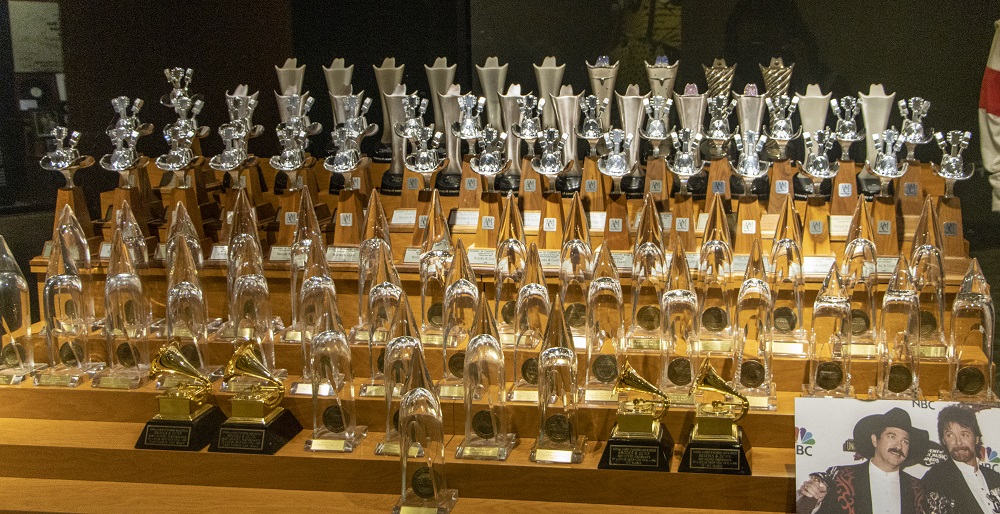
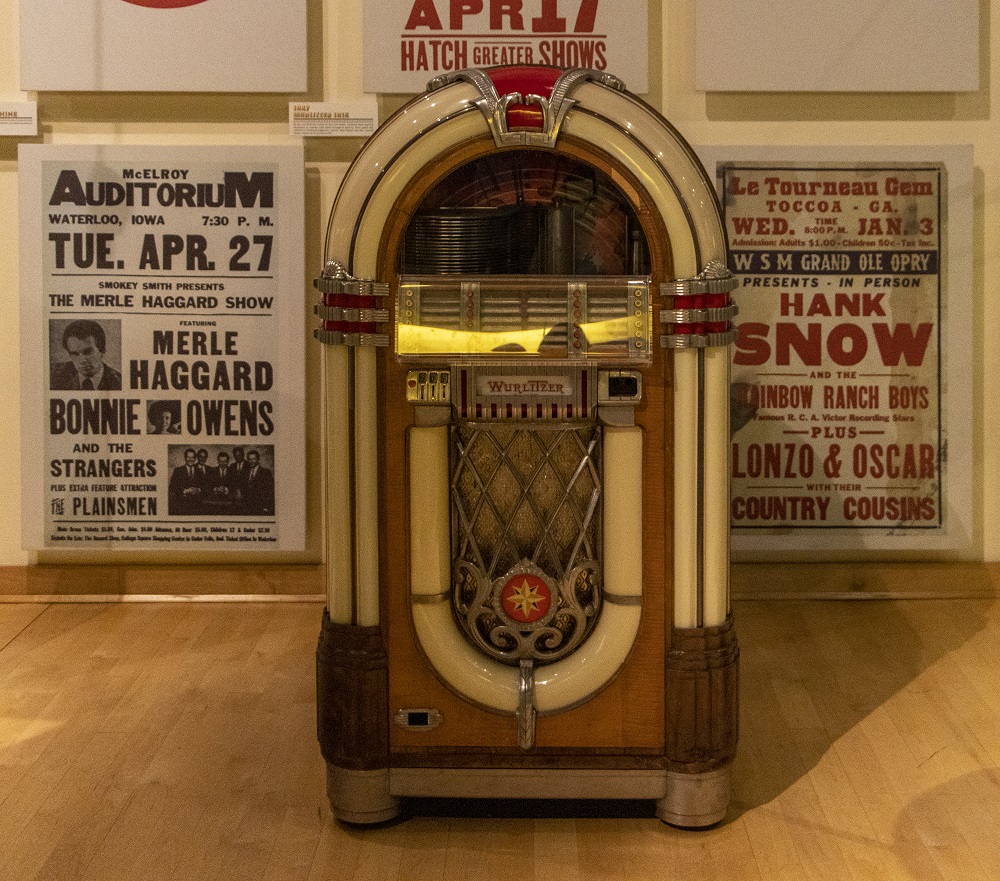
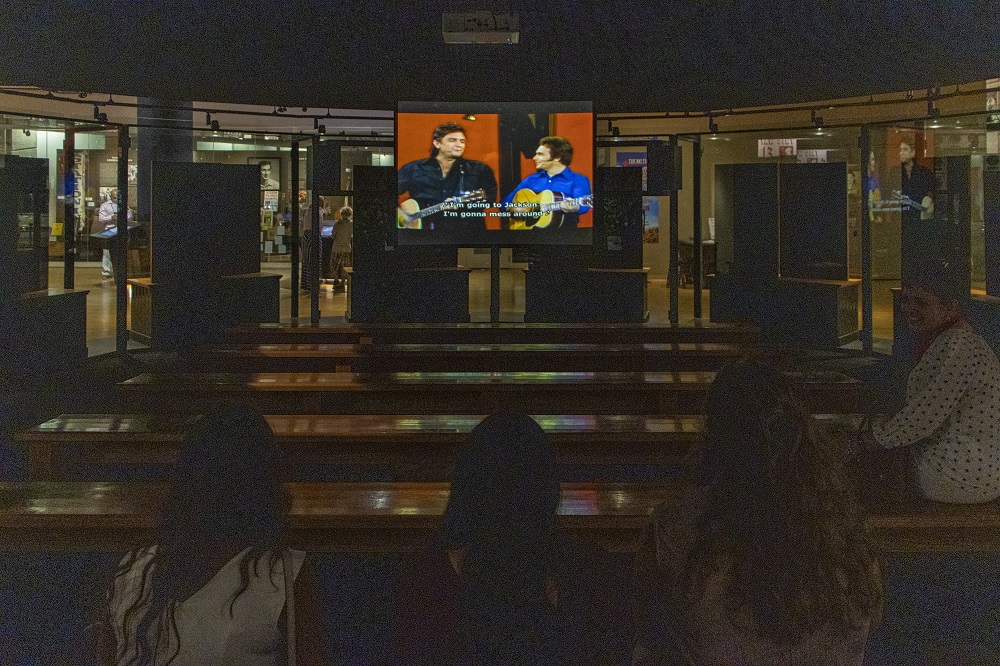
After dinner, we toured the museum, where there were artifacts such as their costumes and suits….
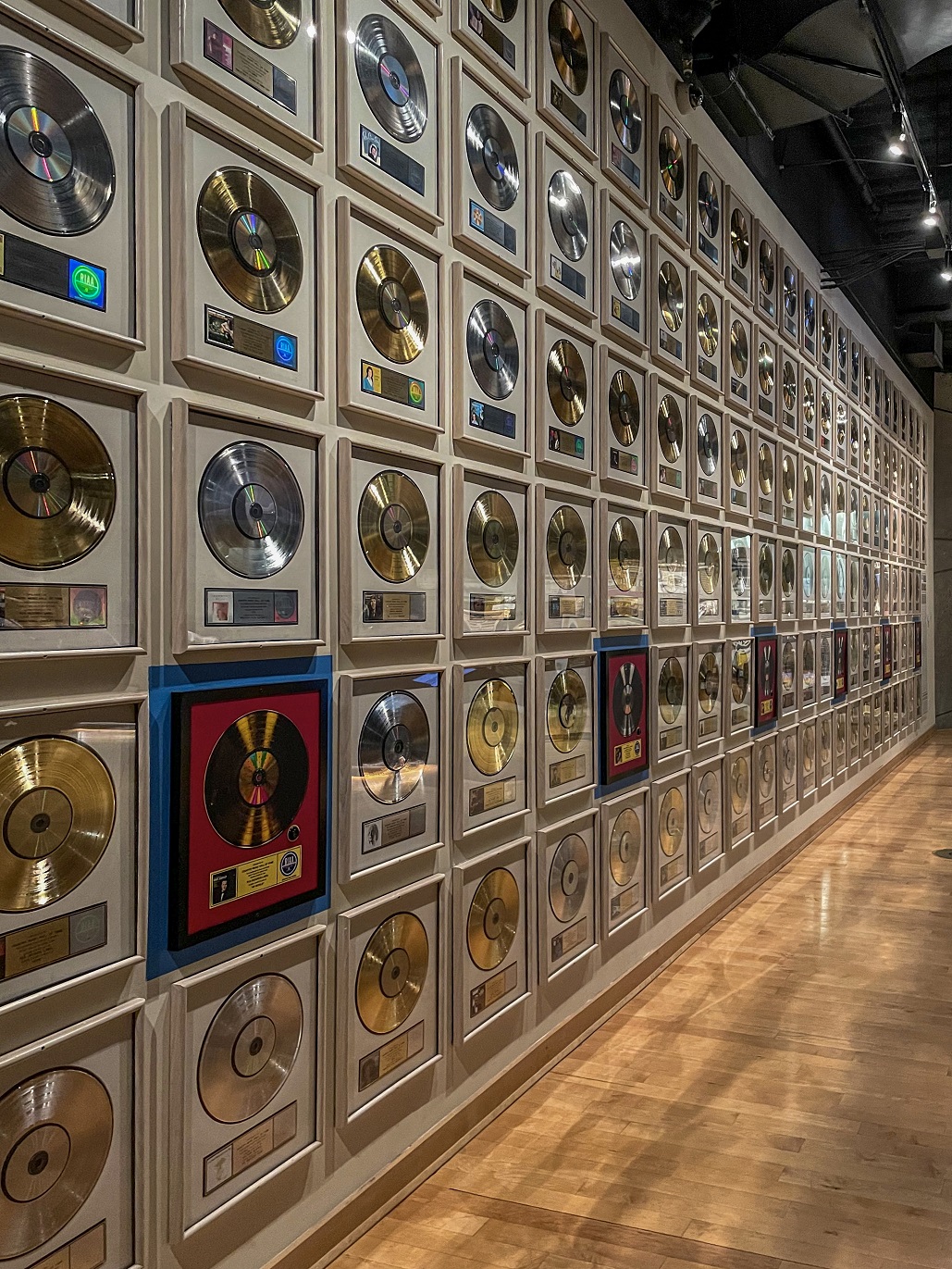
…cars, guitars, fiddles, drafts of written songs, even a whole wall dedicated to the golden records of many of the singers .
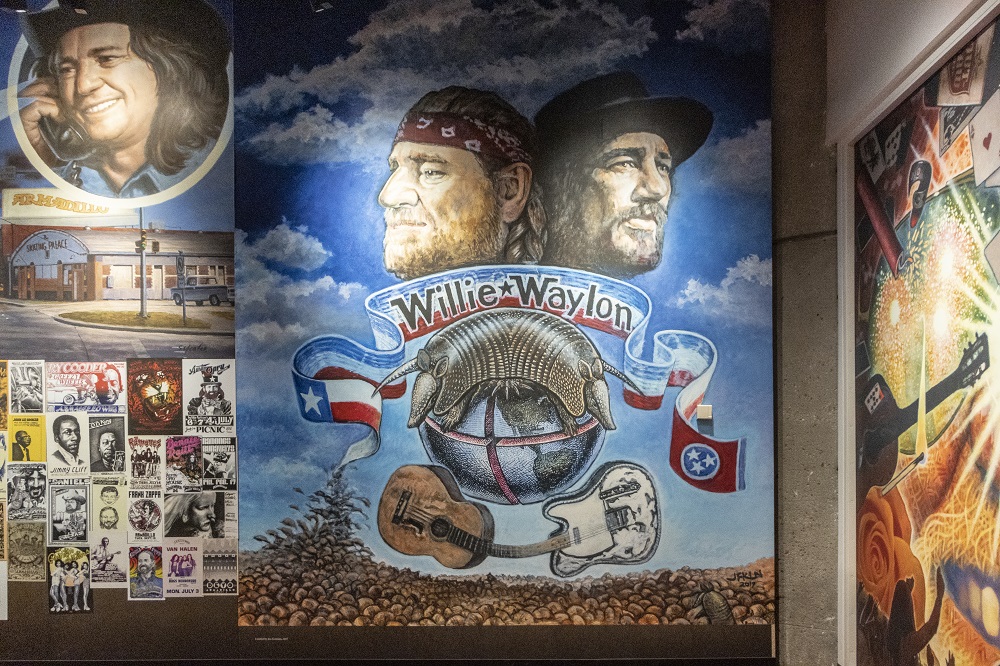
Many of these artifacts were associated with famous acts such as Johnny Cash, Elvis Presley, Dolly Parton (whose statue we saw the night before), and Willie Nelson.
Our night ended with a trolley ride back to the hotel taking in the view of the city after dark. The trolley ride should have been a 4-minute drive back to the hotel, the half mile drive seemed to take twice that time if not longer due to traffic and nightlife. The glowing city was buzzing and alive, as we were full and amazed by the opening night of the conference.




























































 Center for Law, Engagement, and Politics