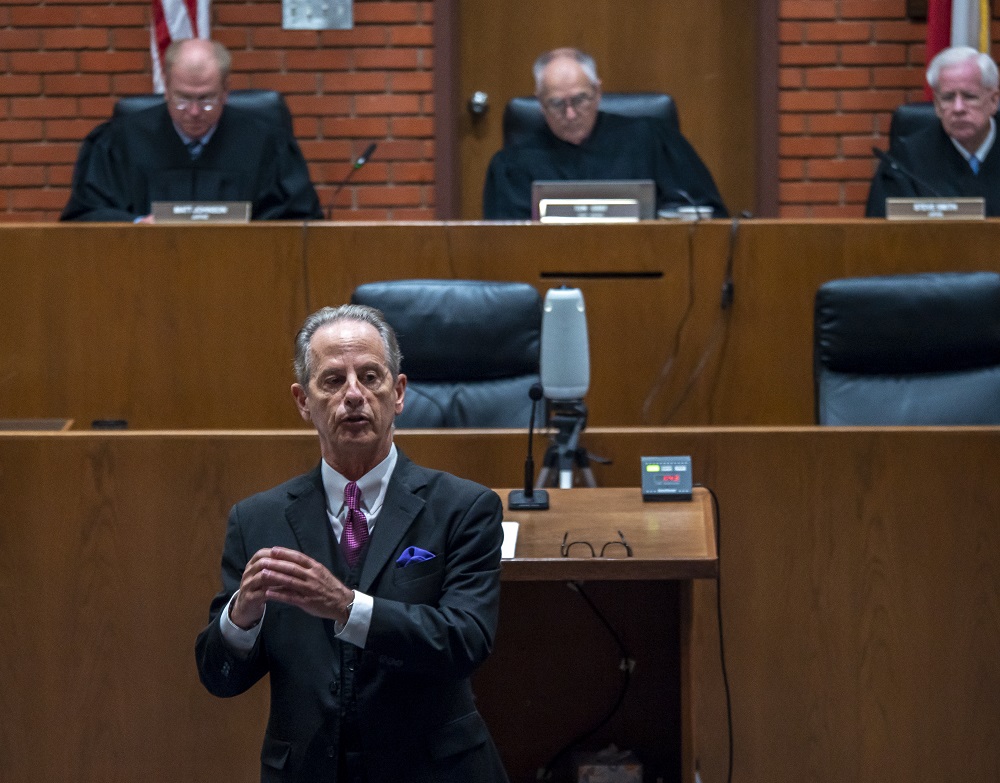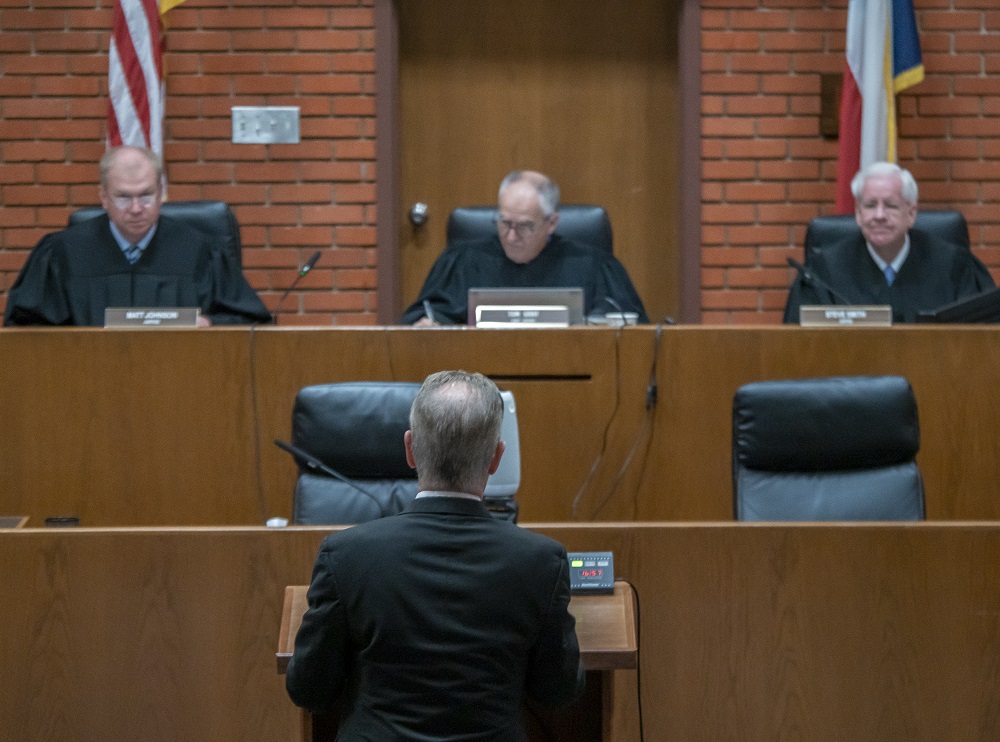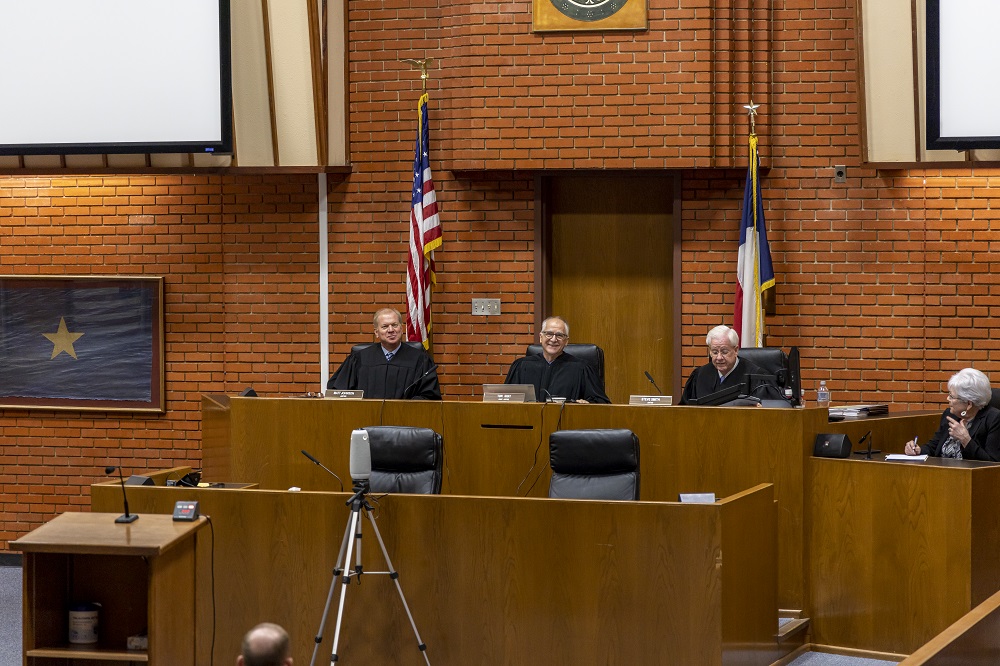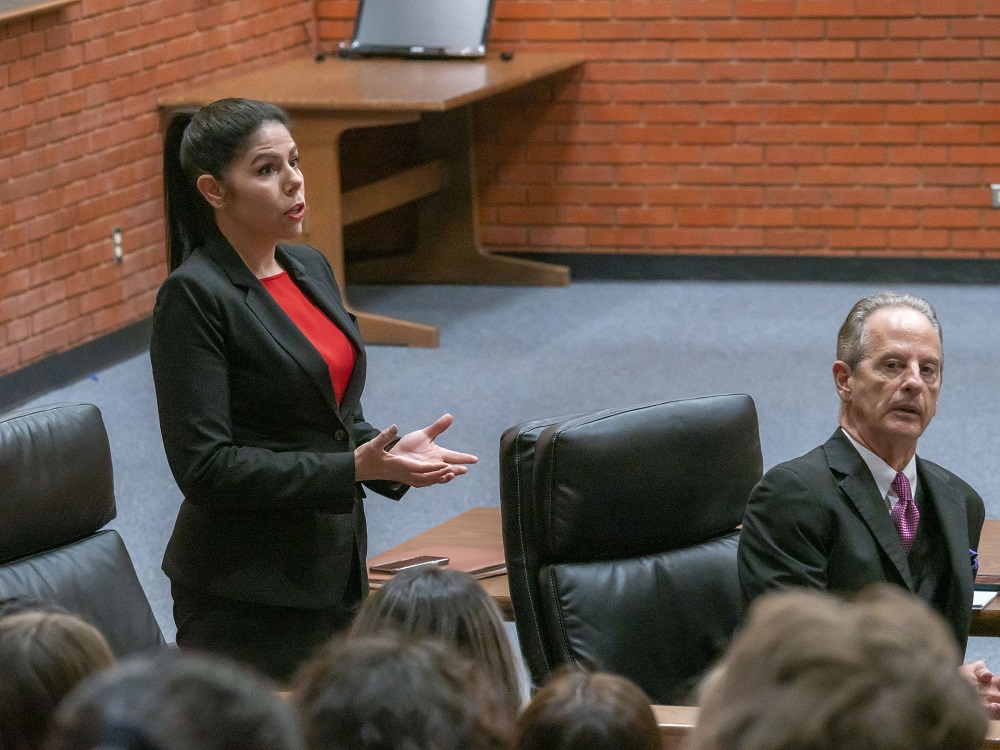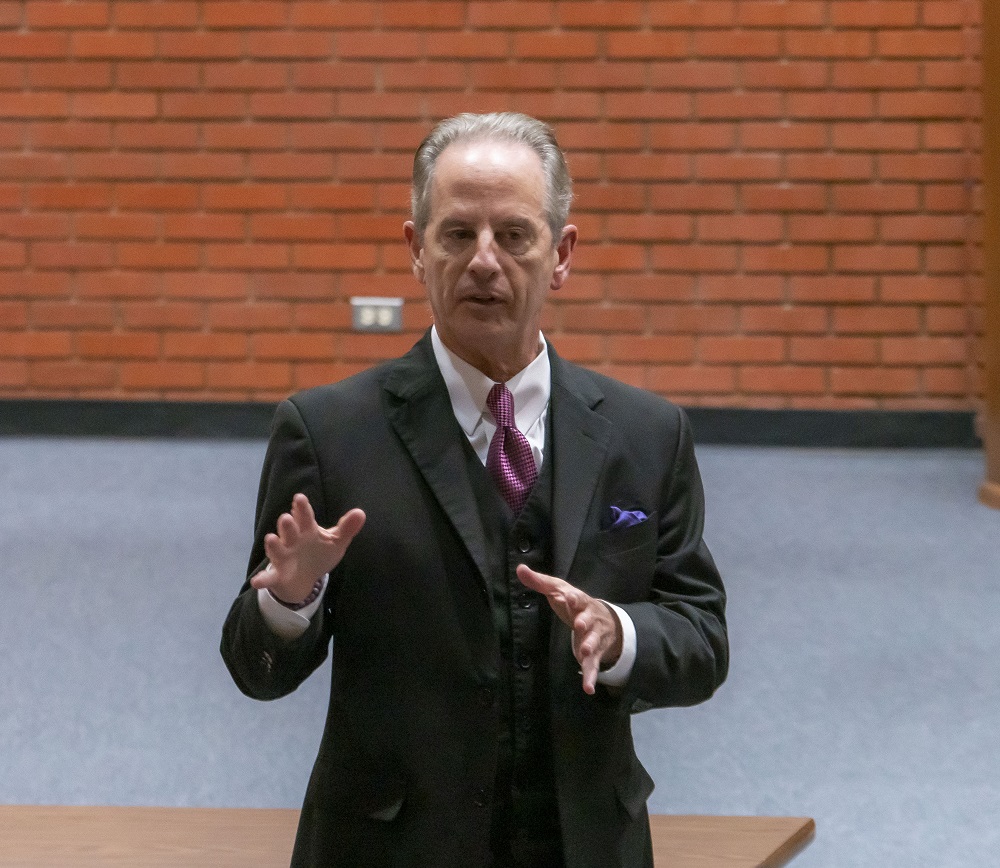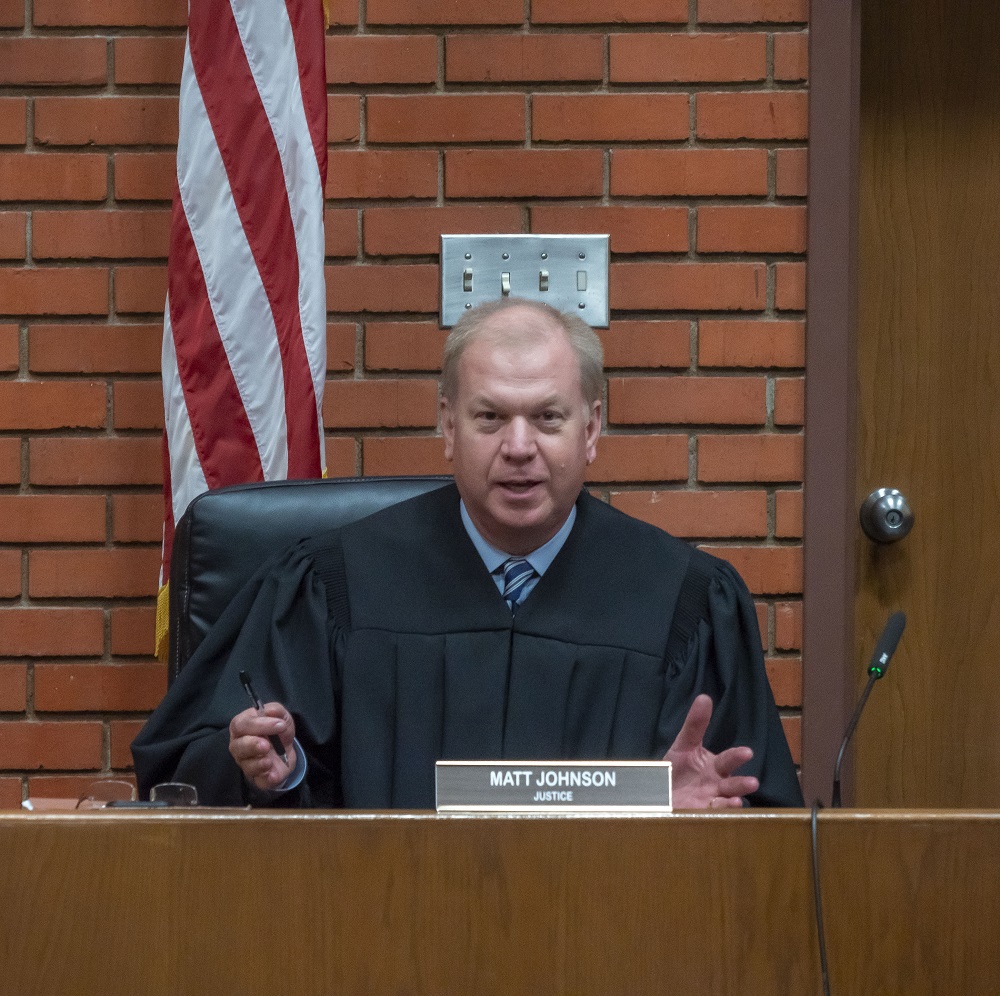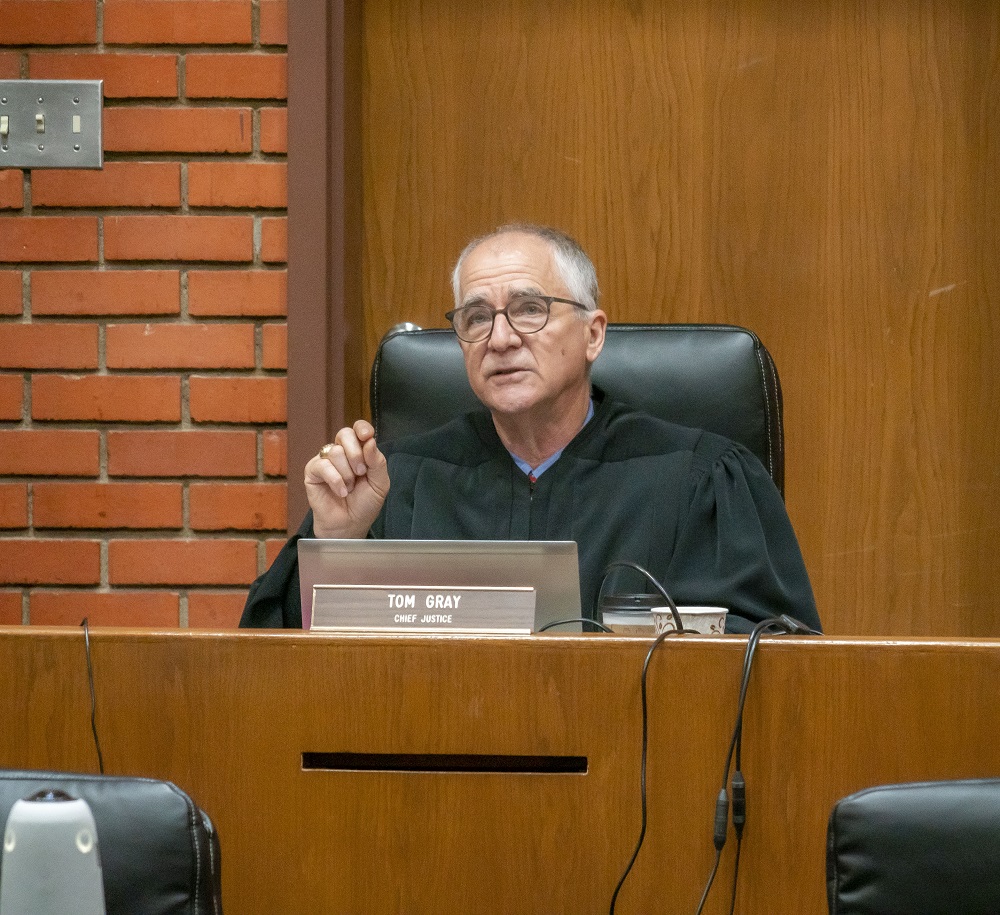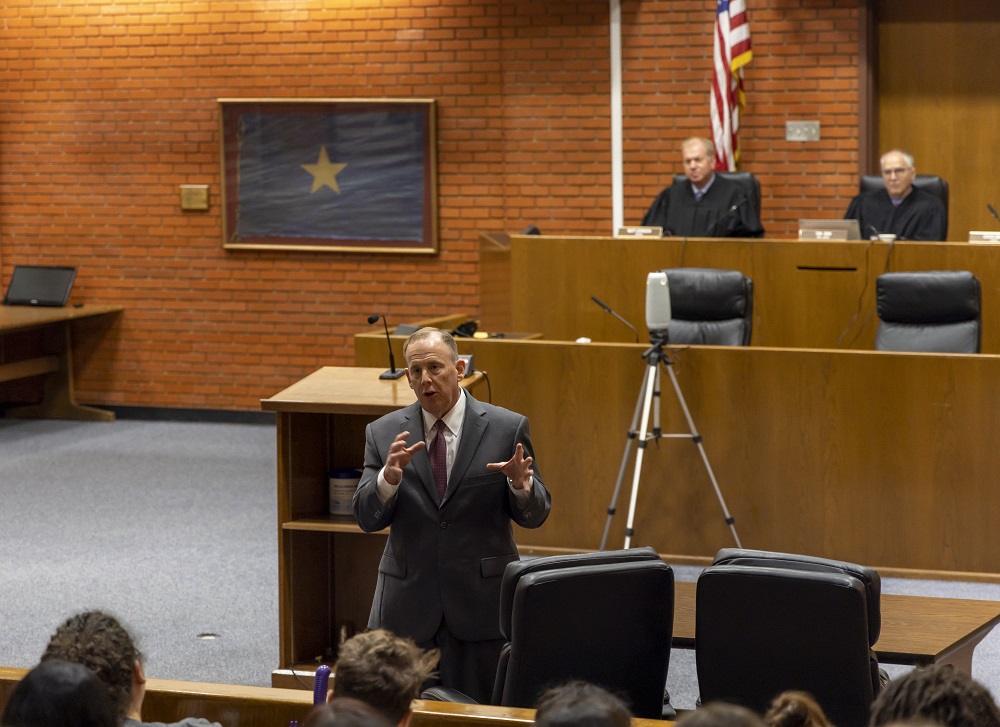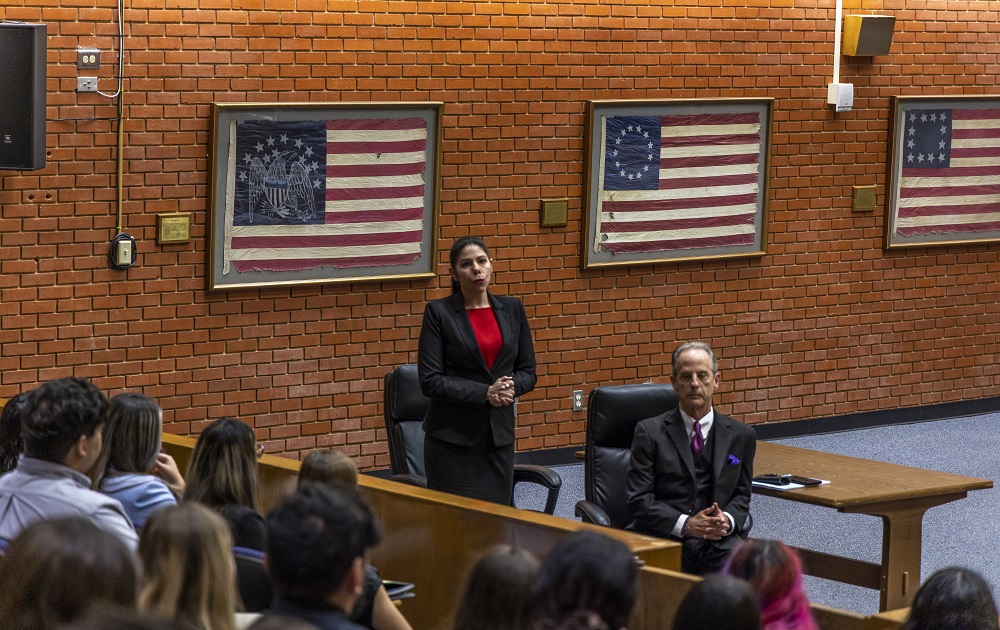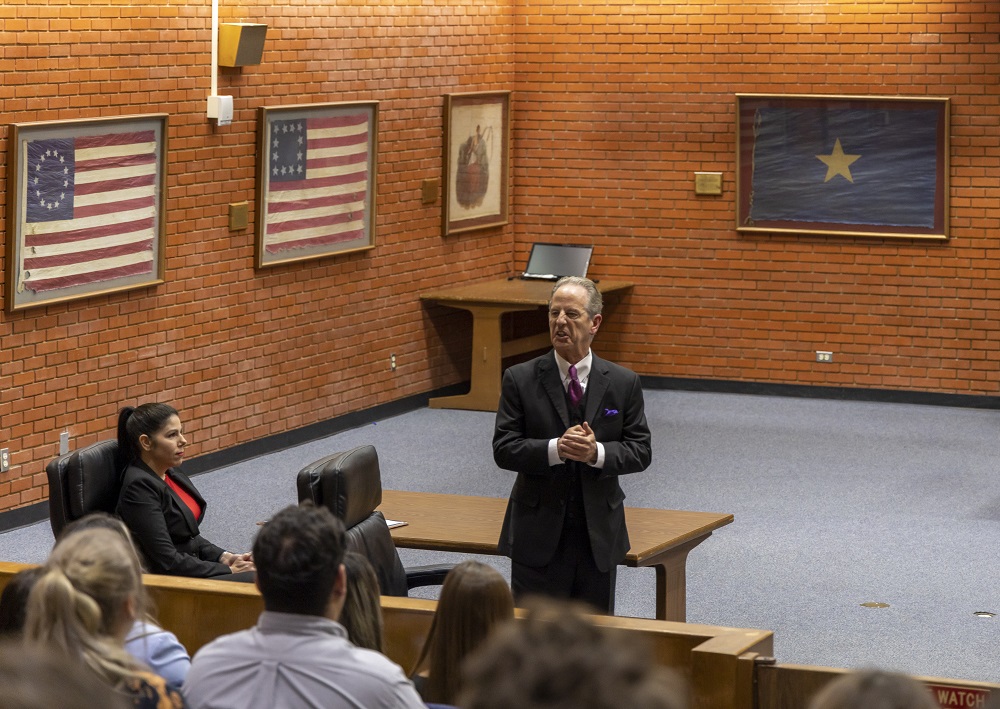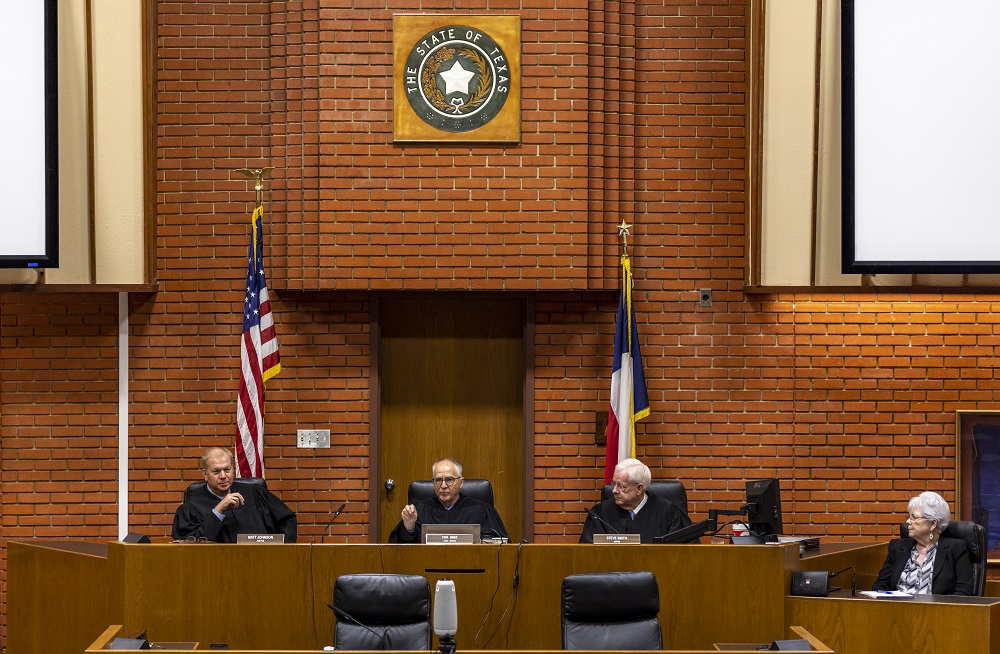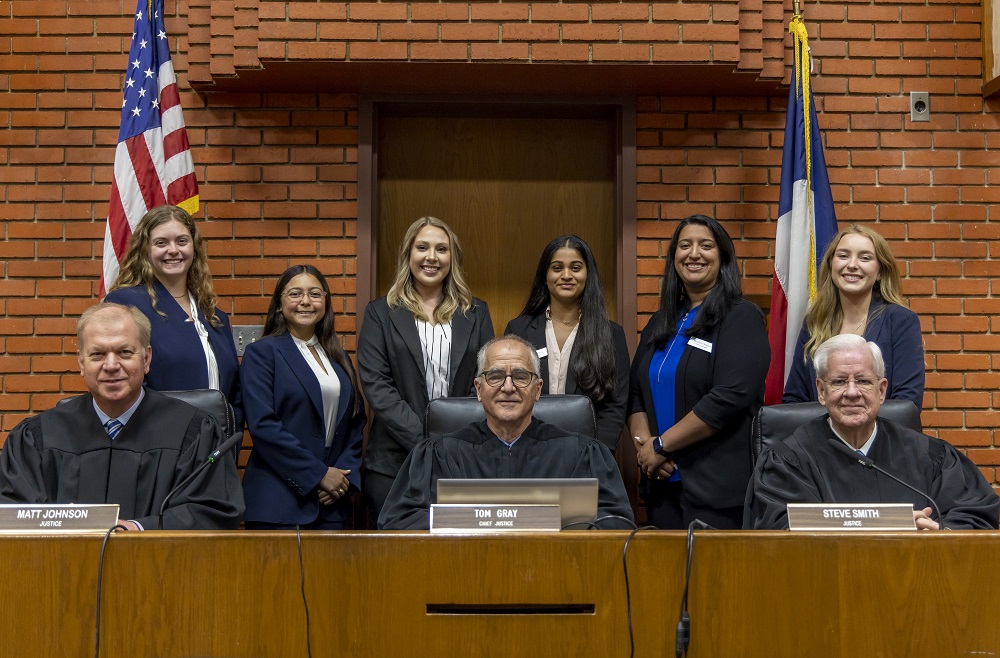
As the Lone Star State increases its share in the Electoral College to 40 votes, such gains also bring redistricting, with the government attempting to redraw districts so that they have equal populations. With new lines drawn, Walker County will be split into two districts: rt of Walker County will continue to be represented by the Texas’s 8th Congressional District (currently help by Congressman Kevin Brady) and the northern part will be represented by TX Congressional District 17 (Congressman Pete Sessions).
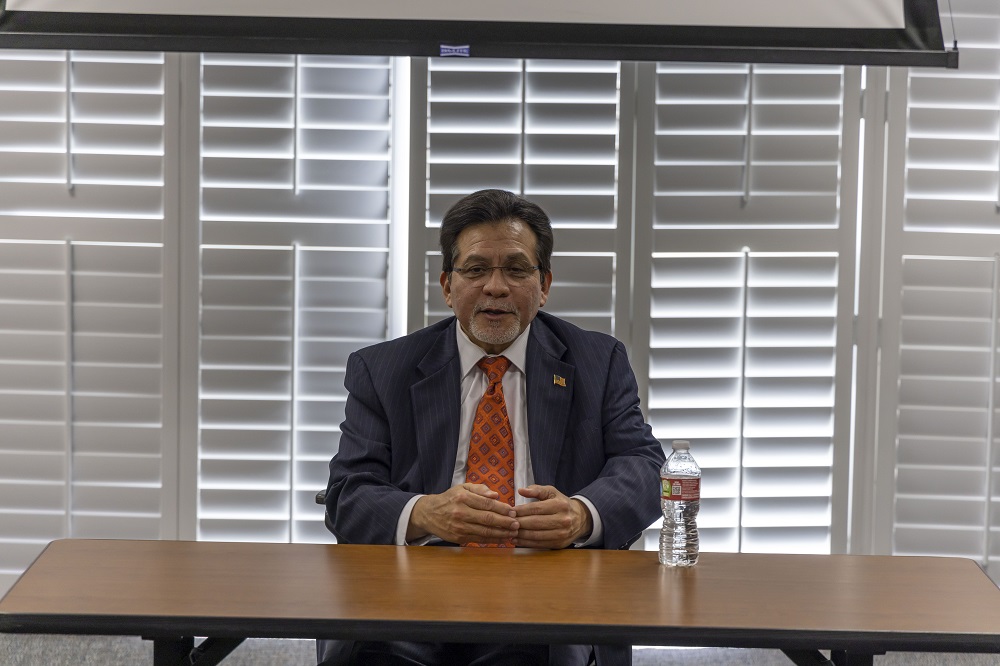
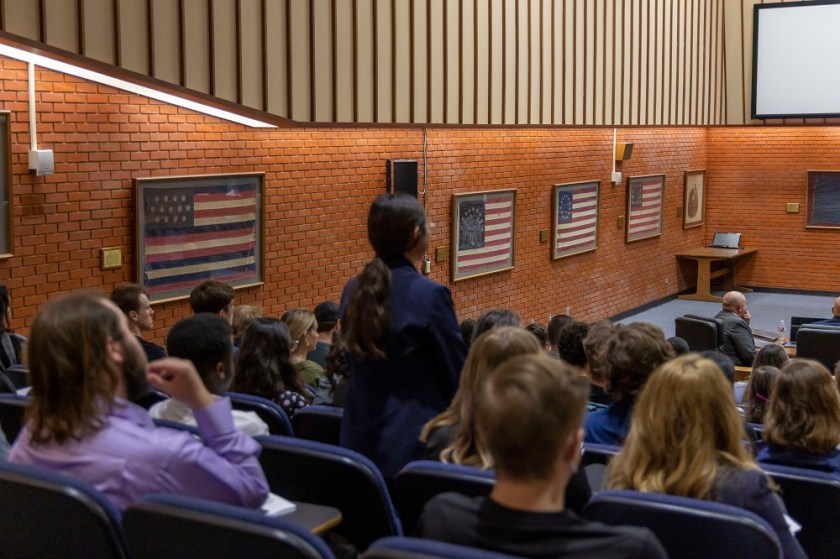
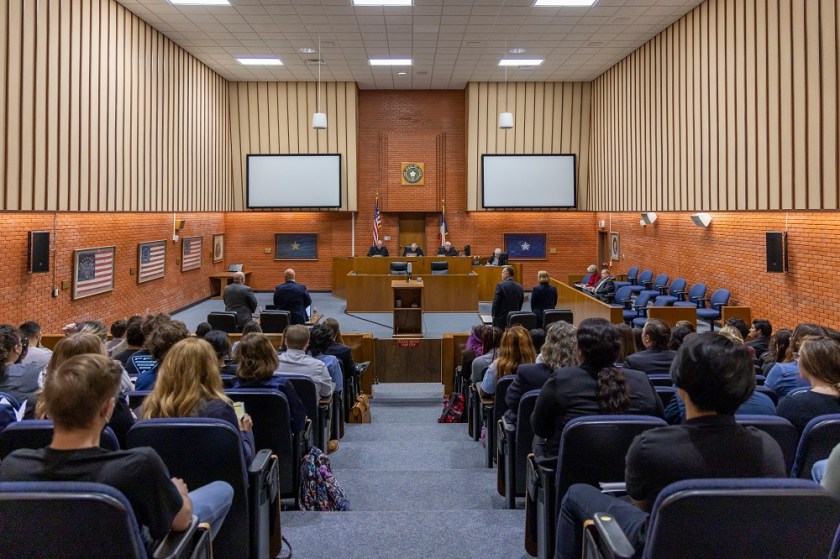
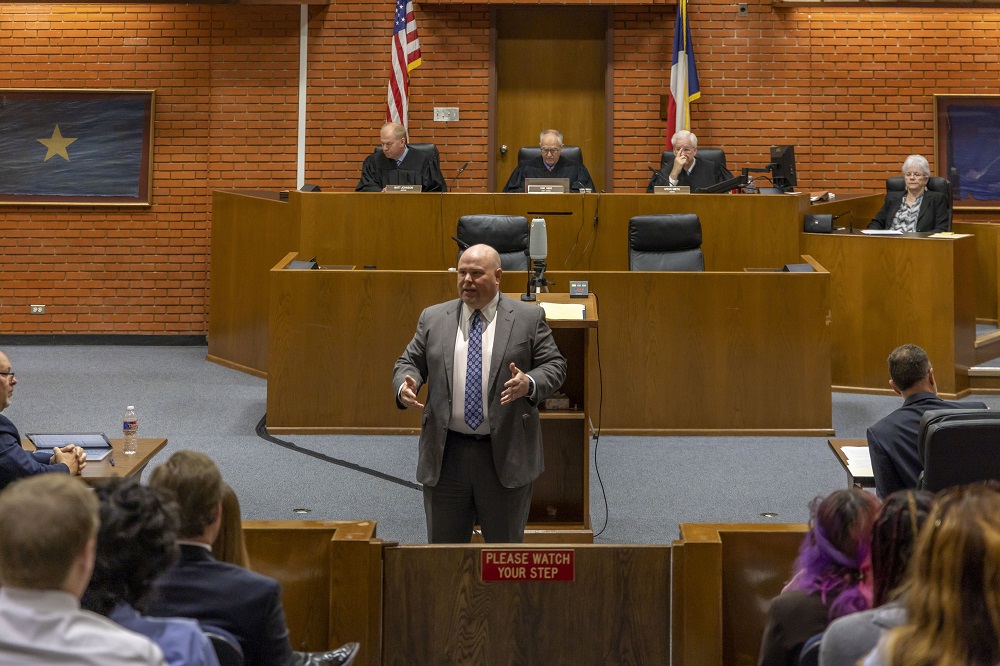
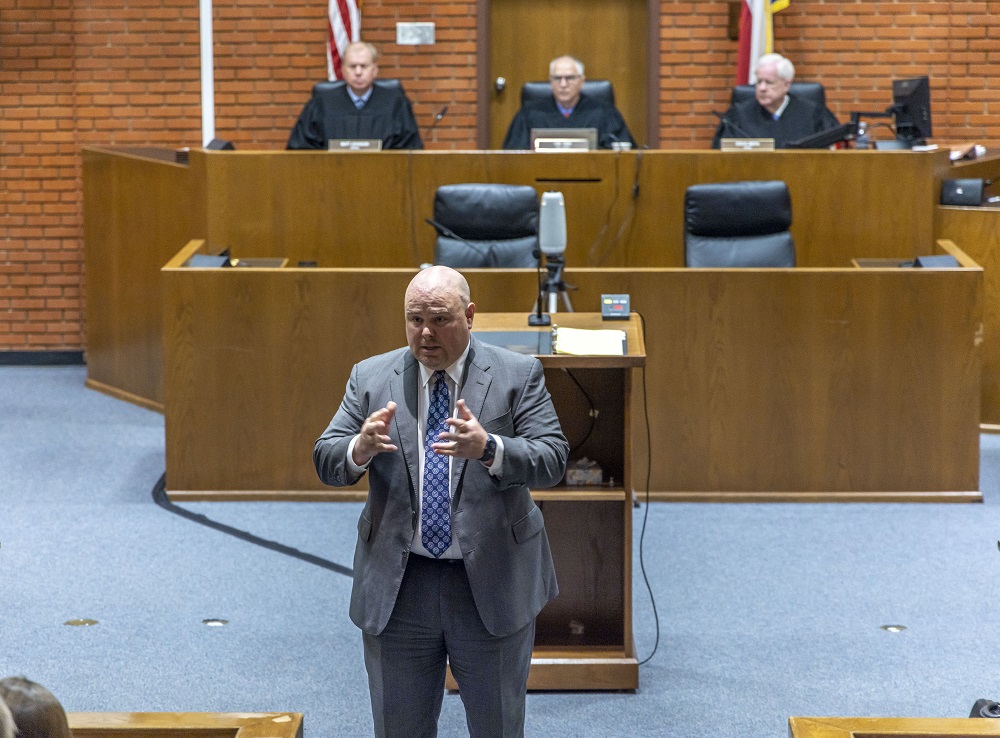
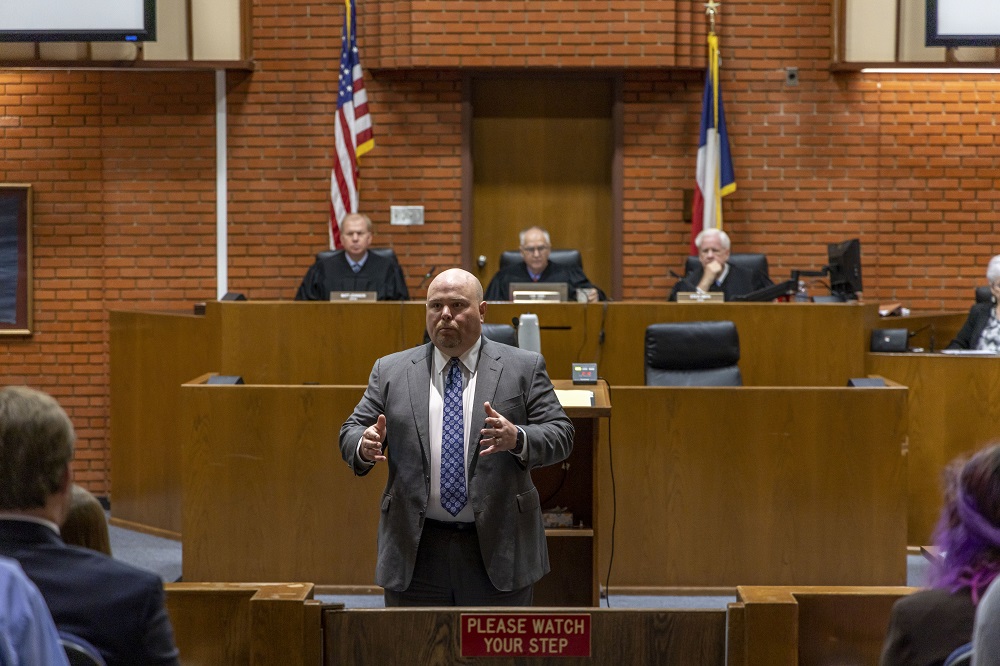
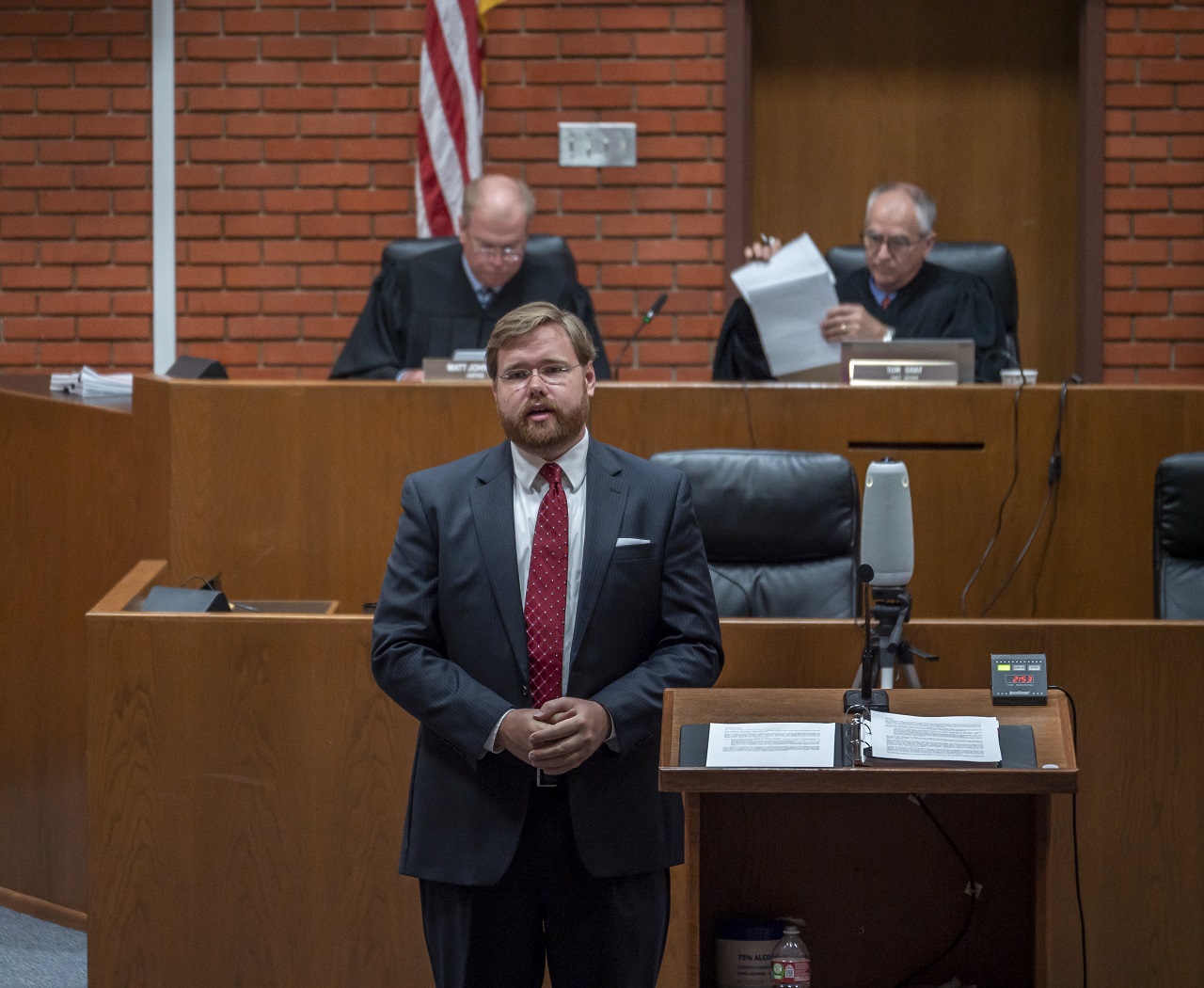
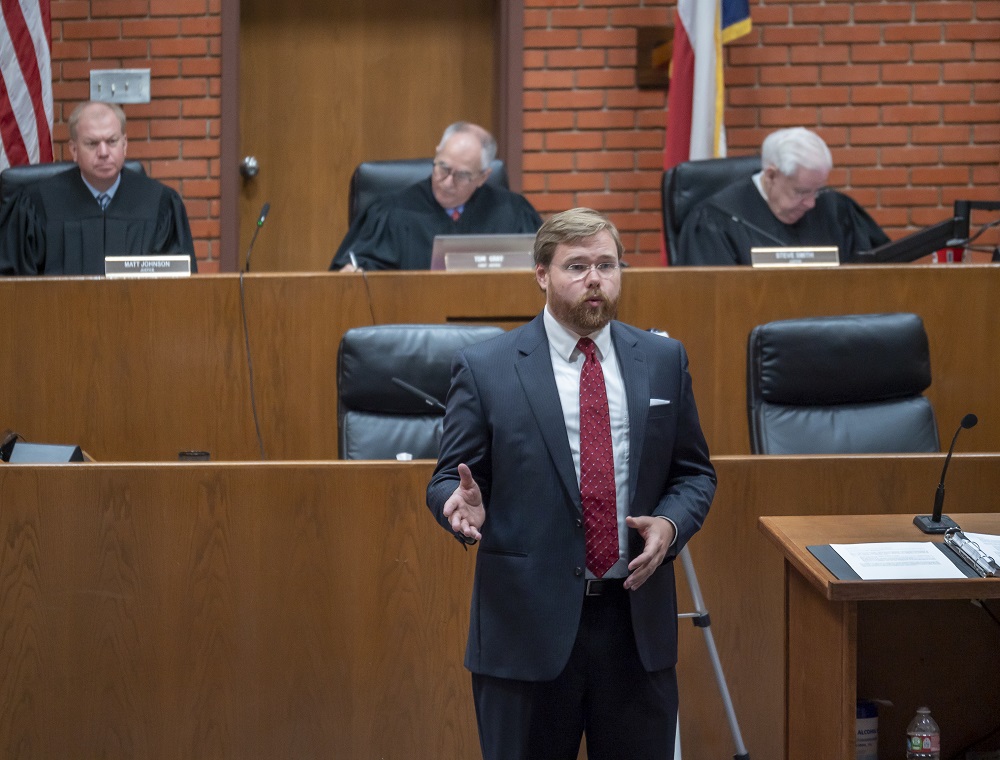
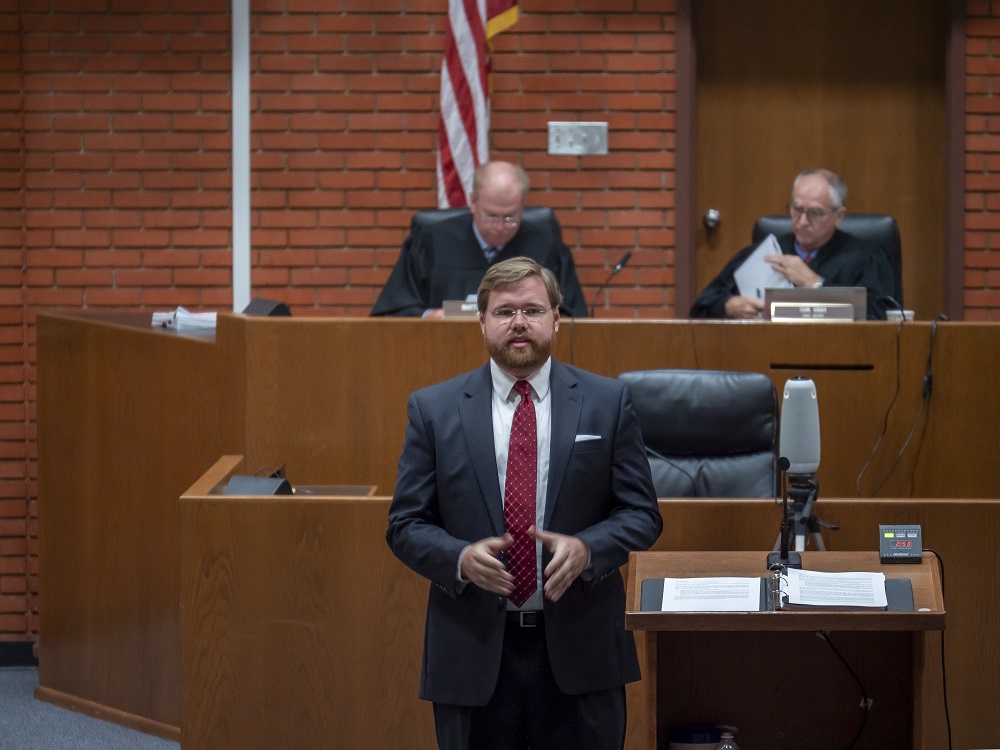
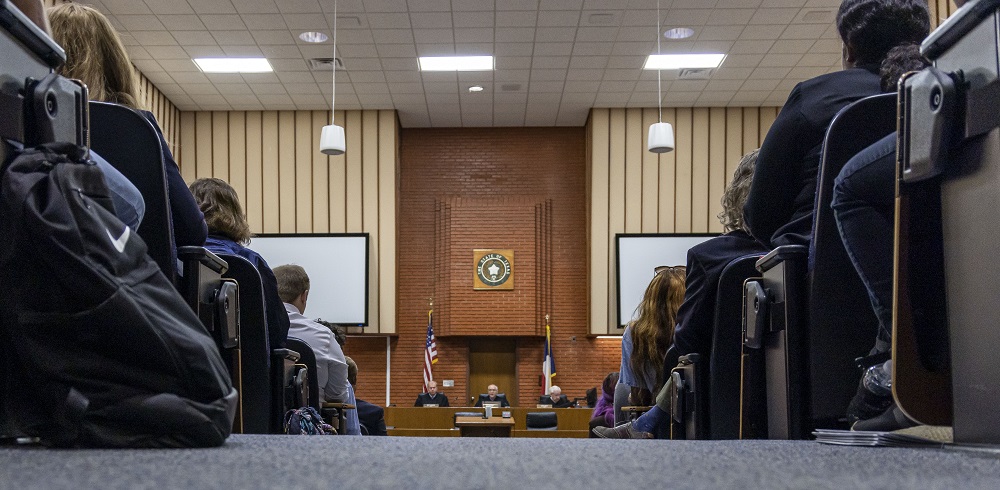
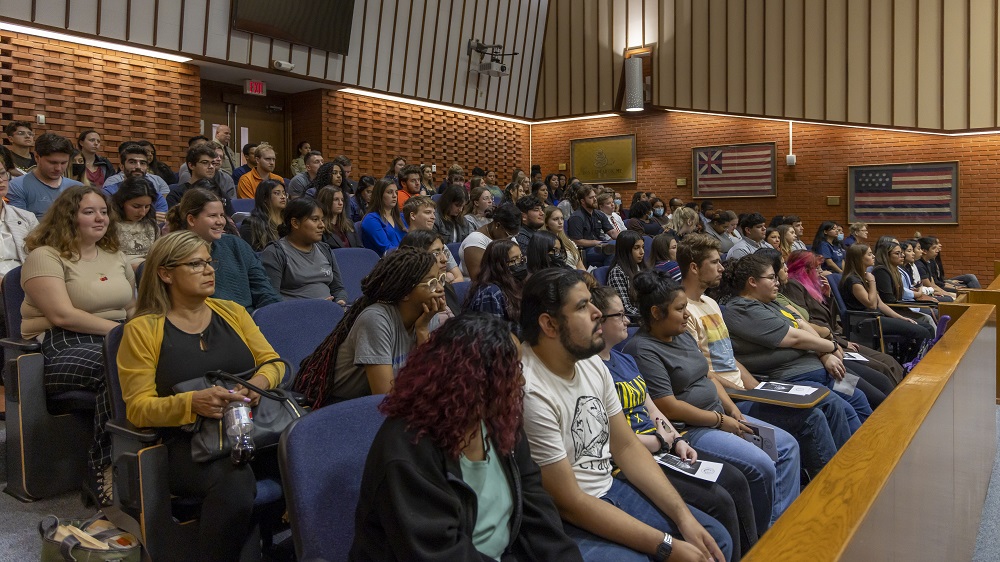
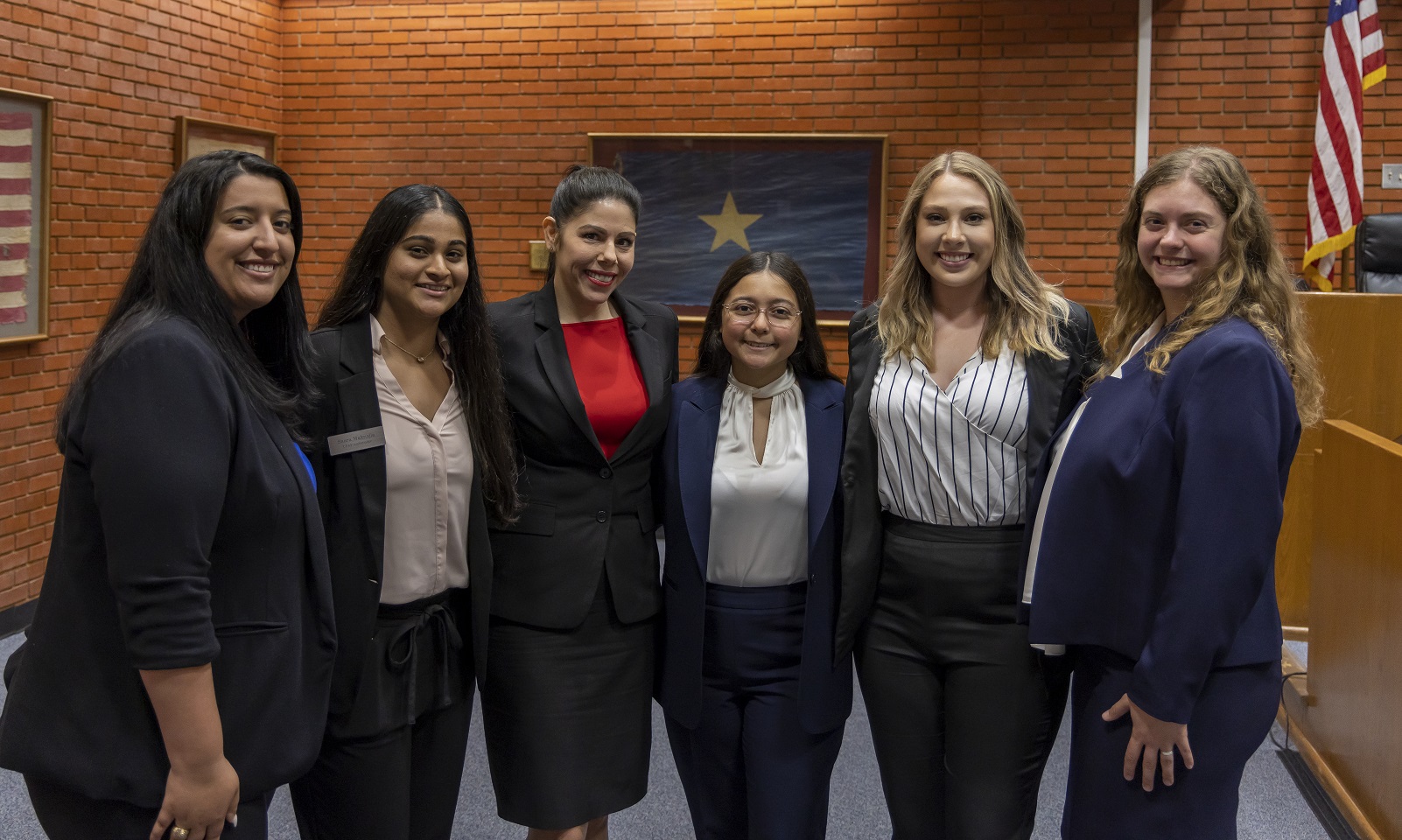
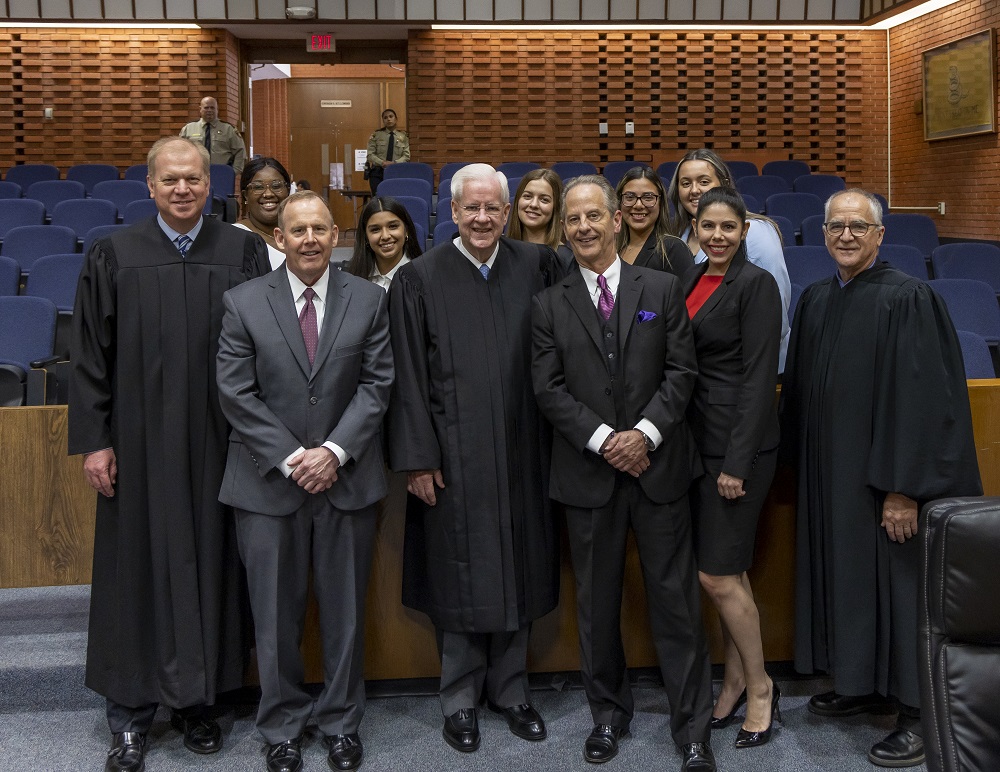
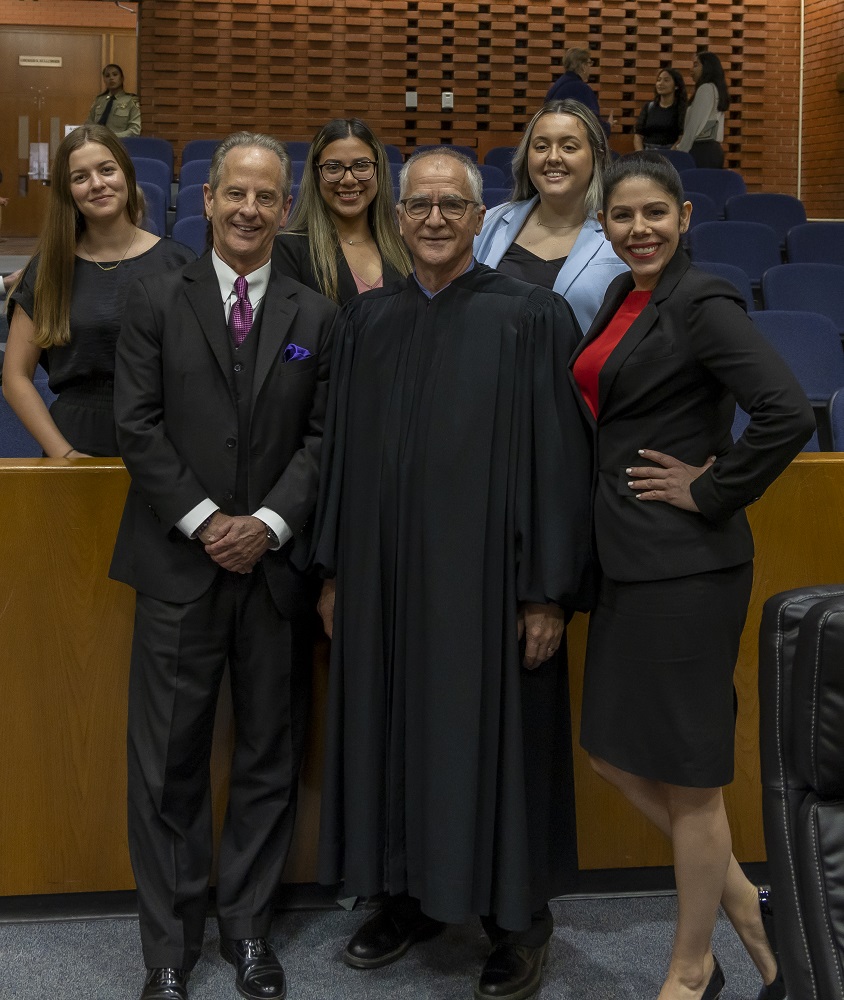
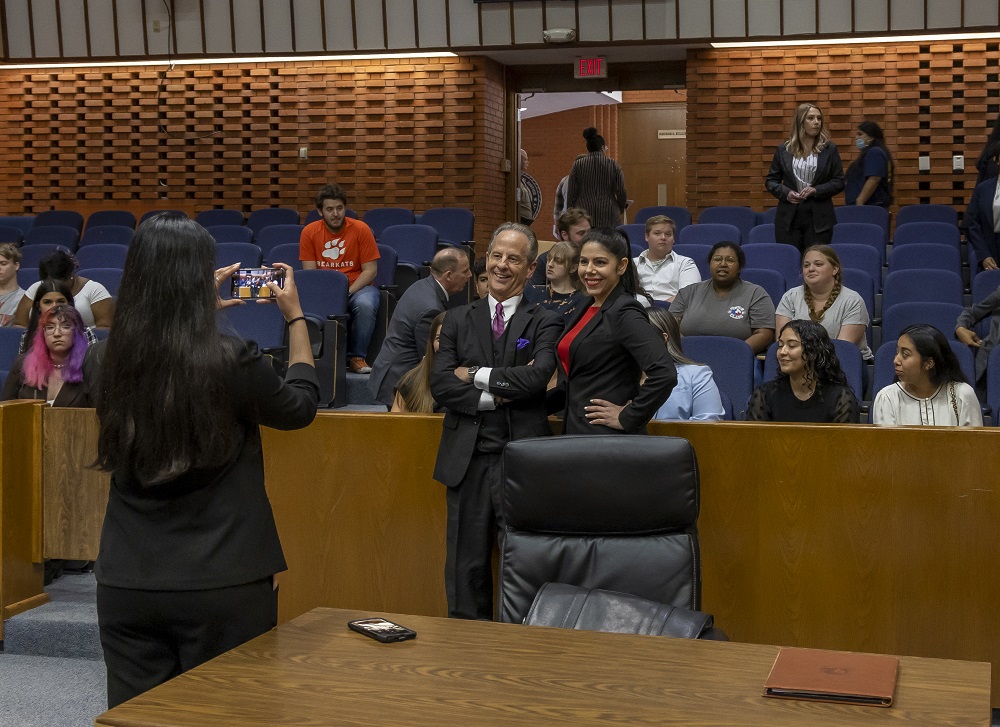
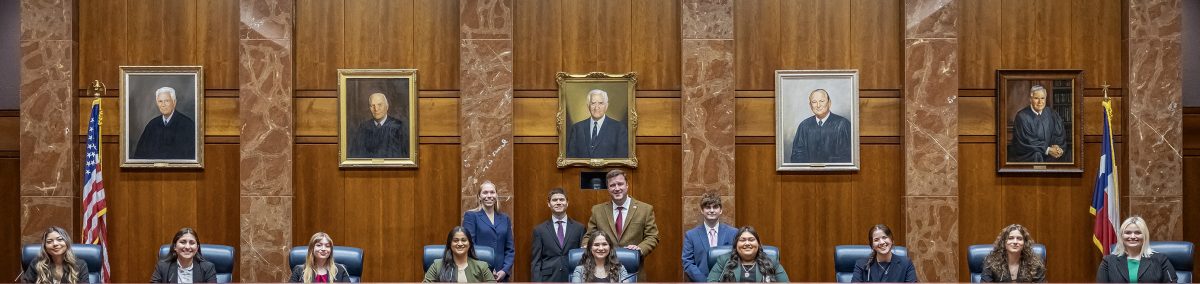
At the Texas Prison Museum, we had the opportunity to meet our current (Brady) and (likely) new (Sessions) Congressman! Some local and state candidates were also in attendance, and some even took the opportunity to ask Congressman Pete Sessions questions. The LEAP Ambassadors, almost front and center, listened attentively.
An audience member pressed Congressman Pete Sessions on his stance on a bill filed by Congressman Kevin Brady. The bill, also known as the “High-Speed Rail Land Acquisition Assurance Act,” was filed on January 10, 2022. This bill ensures that Texas Central’s high-speed rail and other high-speed rail projects cannot seize taxpayer land for projects that will never be started.
As filed, the High-Speed Rail Land Acquisition Assurance Act will require companies to acquire all the land needed to finish a high-speed rail project before construction can begin.
In his response, Congressman Pete Sessions reassured the citizens that he opposed private interest corporations using eminent domain to take someone’s private property. He plans to work diligently with Congressman Kevin Brady in protecting Texas citizens’ rights.
With the transition of redistricting and his retirement announcement, Congressman Kevin Brady reminded Walker County’s people of his commitment to finish the job until the very end. After serving for over two decades, Congressman Kevin Brady’s absence will be felt in Walker County. To offer just a small example, the LEAP Center has placed more than 20 interns in Congressman Brady’s office, and he has hired eight of them as staff.
With this history in mind, the LEAP Ambassadors are looking forward to similar opportunities in both CD 17 and 8.
On Tuesday evening, the LEAP Center and City Fellows students were given a wonderful tour of the new Huntsville Police Department (HPD), on 2821 FM RD West, by Corporal David Warner.
The tour began as soon as we stepped foot through their double door security to get to the waiting area, where Corporal Warner discussed the history of the HPD, its previous chiefs, and the new things that were incorporated to the new building in comparison to the old building, which was once a bank!
In contrast to the old building, they now have a cool-off room, a gym…
training room…
showers, a garage, more security (bullet proof glass and reinforced walls), and overall, much, more space.
All of which allows them to perform their job duties more efficiently, such as conducting meetings, training, and more. In this “backstage” tour, we had the opportunity to see most of the rooms and offices: such as the interrogation room…
…supply room, and new additions such as a school resources officer office, evidence room…
…the chief’s office, narcotics office, and the detective offices. While in the supply room, we got to pass around the two kinds of vests that the officers use, the day-to-day basis one and the one they use before arriving at a “dangerous” crime scene.
The former of which was as light as a feather when compared to the latter of which weighed about ten pounds. Our tour then continued inside the patrol officers’ “office”, where we were able to see the TV that tracks where every officer is located- from the moment they report to an incident scene to the moment they leave the scene.
To put it in perspective, if a police officer was on duty at a high-school football game, we would be able to see the name of the officer, the location of the high-school, and the duration of time they have been there. It also shows how long it has been since any one of them has responded or reported to a scene.
Some of the more popular and favorite parts of the tour were the evidence, supply, and interrogation rooms. We were amazed by how the architect built and designed each factor and detail of the building to where no one can tamper with the evidence lockers or hear anything outside of an interrogation room. Another favorite aspect of the tour was Corporal Warner: he a great tour guide, very knowledgeable, and really illuminated the role and practices of the police.
On behalf of the LEAP Center and the City Fellows, we would like to thank Corporal Warner for taking the time to give us a tour of the new building….
…and even more thankful for everything that Corporal Warner and the rest of the officers do to keep us and the community safe.
Seeking another historic home on day four, the LEAP Ambassadors ventured to Andrew Jackson’s Hermitage. This visit gave us a vivid perspective of the 1800’s lifestyle through his marvelous home and informative museum alongside it. In addition to having a tour of the Hermitage we walked through his personal idyllic garden and the cemetery where Andrew Jackson and his family currently rest.
Former president Andrew Jackson was known as “the People’s President,” because he was the first “frontier” President, and he broadened the voting process, resulting in many changes in society.
Walking through the Museum we saw his accomplishments as an attorney, soldier, and president of the United States. Viewing artifacts, Jackson effectively led the battle of the Creek War in 1801 as Colonel of Tennessee and the battle of New Orleans in 1812. After courageously serving in these wars fighting the British and the Indians, Jackson was elected president, and he is now known as the founder of the Democratic party.
As for Jackson’s day-to-day life he lived with his wife Rachel Jackson and adopted children in a Greek-styled home where he allowed any guest comfort in his home with food and a place to stay.
Jackson was known to receive many visitors, including Sam Houston and former presidents, at his 1,120 acres of land at the Hermitage. Having guests stay made it a hectic household from managing the farm, servants, and attending to important guests.
Each LEAP Ambassador had their own favorite part of the Hermitage Jessica being the massive newspapers in Jackson’s library. Morgan enjoyed the kitchen outside since it was like Sam Houston’s kitchen in Huntsville, Texas. Whereas mine was farther away from the home being the garden. As we all entered the garden I fell in love with the bumblebees flying around the brightly colored flowers that all led up to the tombstones.
The garden and grave site rounded off a nice sentimental testament to our 7th president.
Lunch
Yvette Mendoza
Diving into our first meal in Nashville at the Flat Iron southern fare restaurant ended up being a perfect choice. With the menu full of variety we started off with American classics by ordering whipped goat cheese filled with grilled cucumbers, onion, and tomatoes served with fresh warm pita. For our meals Morgan and Jessica got burgers, one being a tuna-patty burger and the other a grilled chicken burger. As for me, I got a waffle grilled cheese with a complimentary tomato bisque dipper. Each meal was delectable, and everyone had a delicious side of french fries. Our first taste of Nashville made us eager to try more.
Parthenon Tour
Morgan Robertson
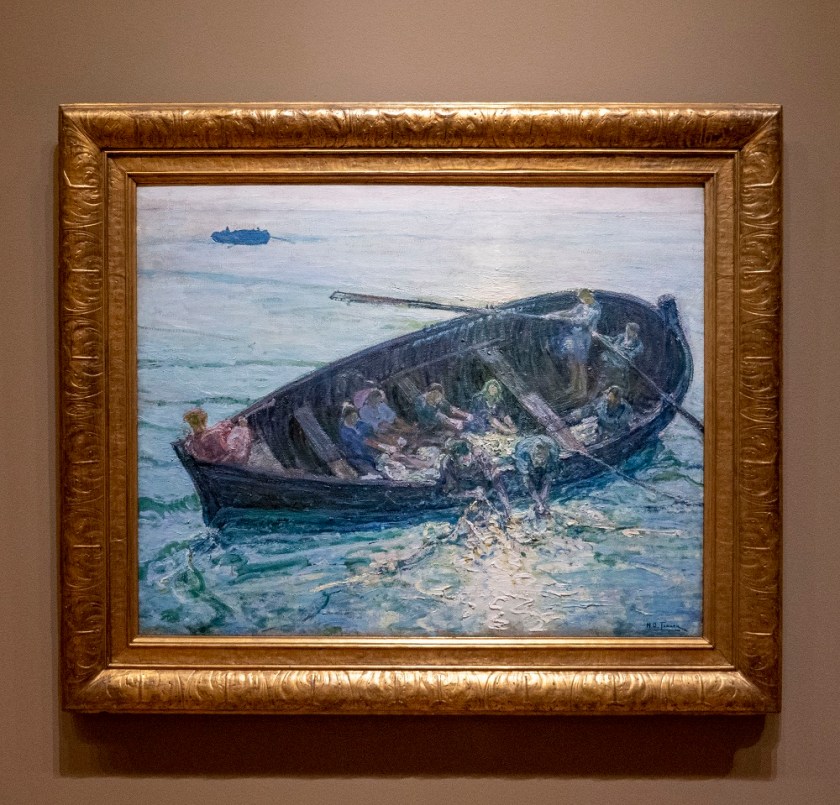
After seeing General Jackson’s home, we ventured into a City formerly known as “the Athens of the United States”–Nashville, where the great Parthenon in Athens, Greece is replicated. Initially, the project was supposed to be a temporary attraction like everything else commissioned for Tennessee’s 1897 Centennial Explosion. However, people were so impressed with its beauty and the cross-cultural connection, the Parthenon was preserved, becoming the focal point in what is now Centennial Park.
While the Nashville Parthenon is a well depicted replica of the authentic one in Athens, there are some major differences. The first difference being the materials in which the structure was constructed. The Parthenon in Greece is made of white marble, which would have been easily accessible at the time. However, in Nashville, Tennessee, there are no quarries of white marble. Using what was at hand, Architect William Crawford Smith designed the structure with wood, brick and stone, giving the Parthenon a yellowish-brown color.
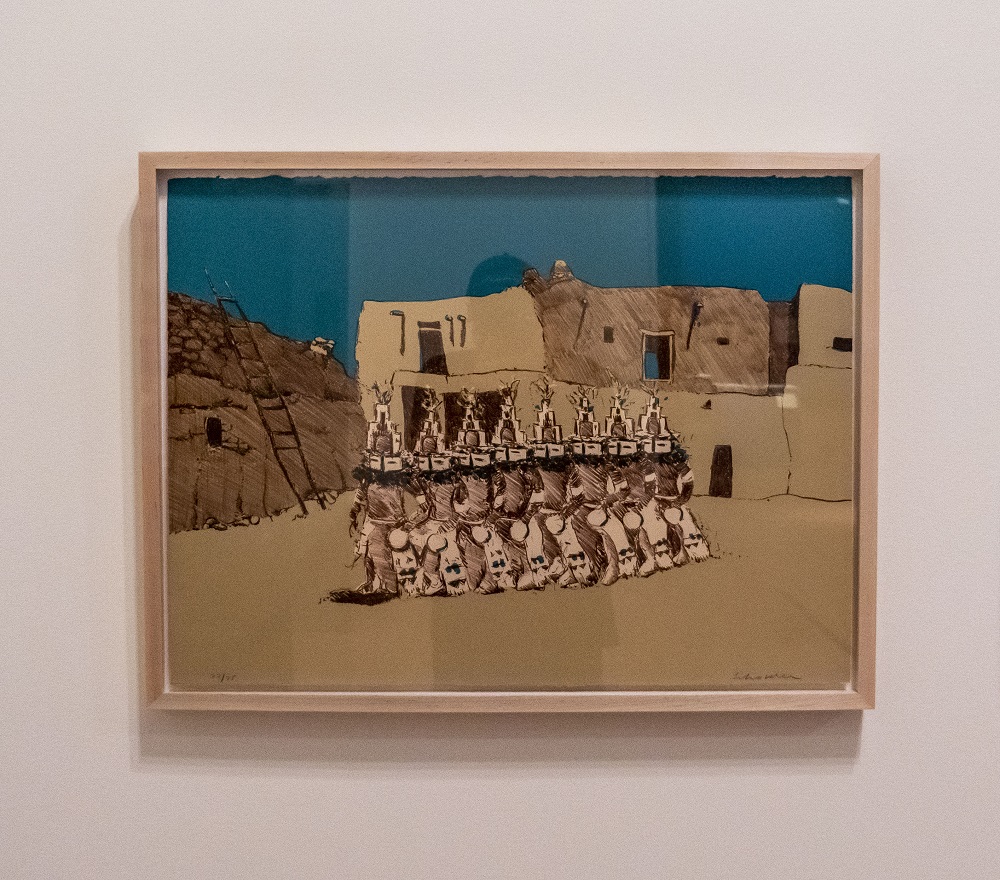
Another interesting feature that I was not expecting was the art museum on the lower floor of the Parthenon. In one of the rooms was an exhibit for artist Lynn Goldsmith whose interesting photography art is printed on metal, with each photo containing up to fifty exposures.
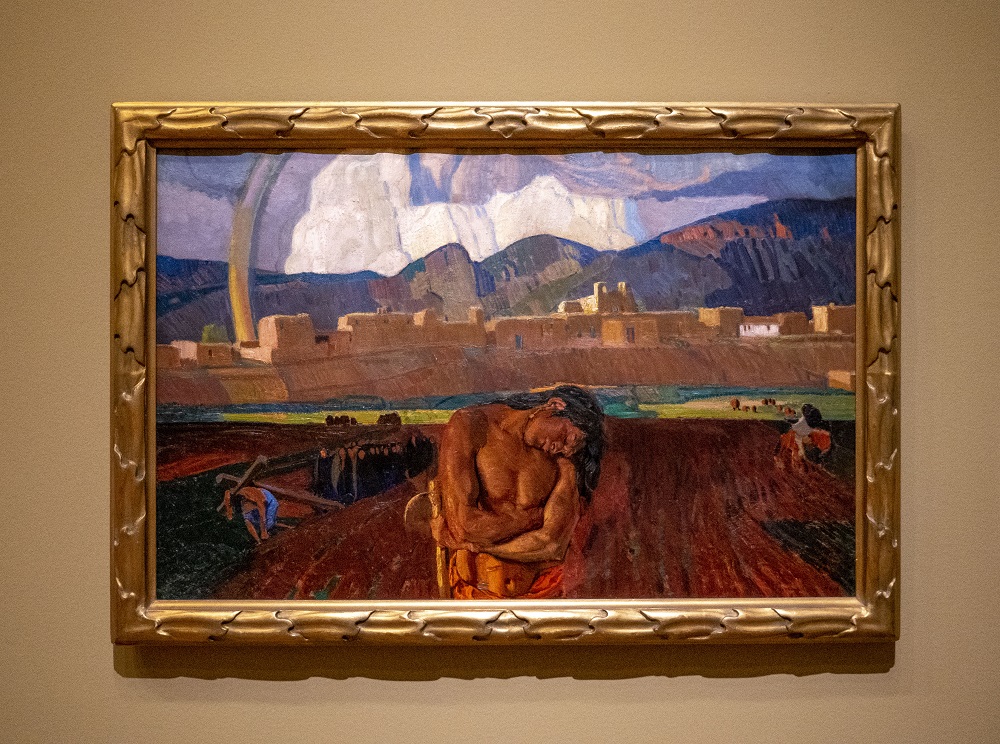
The second space was James M. Cowan’s personal collection of American art, including pieces from Durham, Moran, and Bierstadt, serving as a nice contrast to the first collection.
Keeping with the Greek style and culture, a 42-foot-tall statue of the Goddess Athena resides in the central room of the Parthenon. Standing tall as the Goddess of Wisdom, Athena holds the god Nike in her right hand with a shield and a snake to her left. When entering the central room of the Parthenon, the goddess is visible between the massive Doric columns, with her gold dress and accessories appearing as though they are glowing.
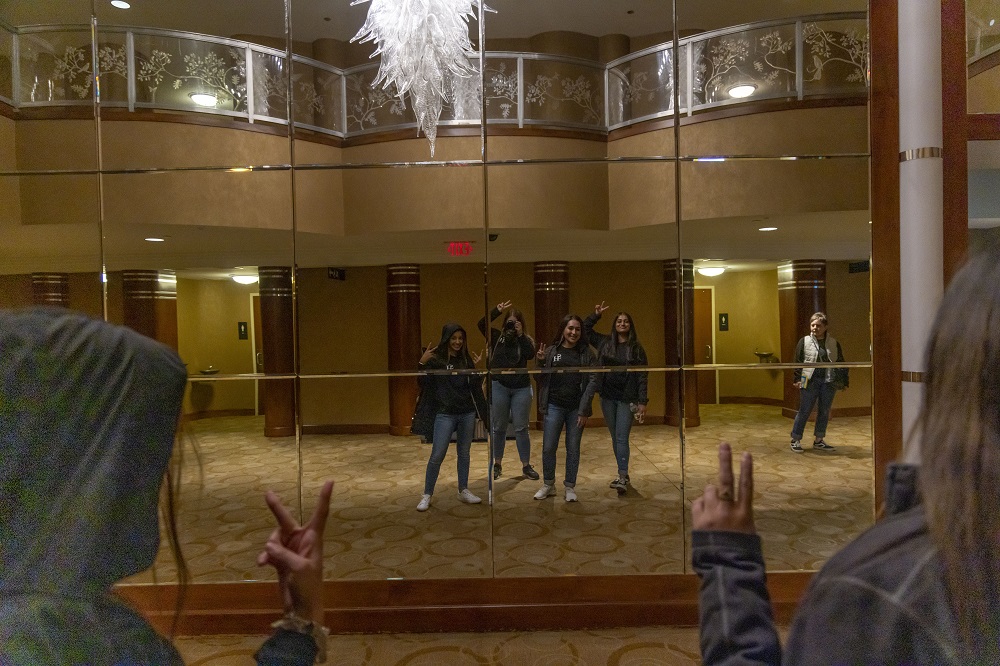
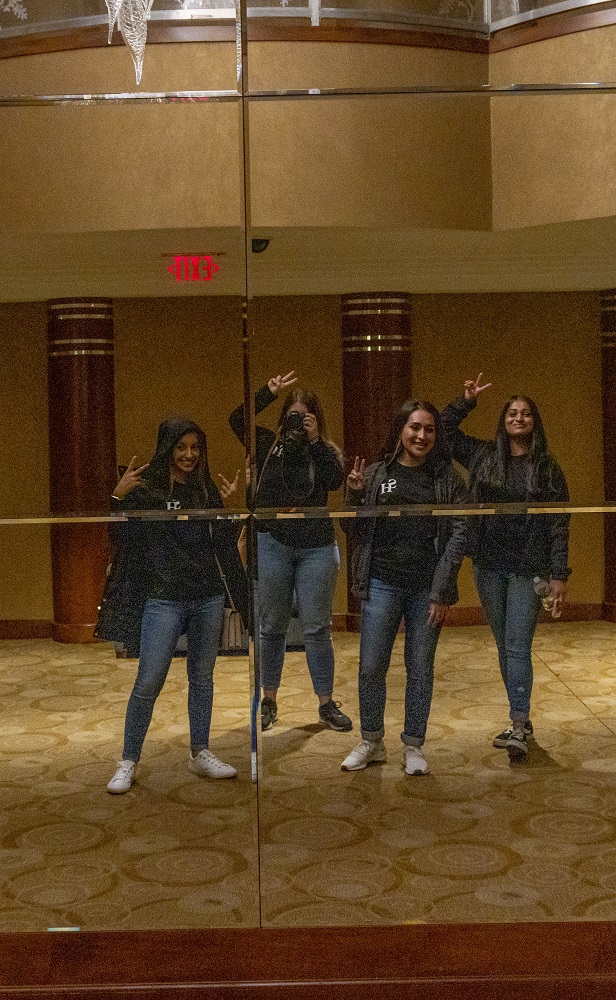
Surprisingly, we found the Parthenon to be a popular picture spot for tourists and natives. There were two Quinceañera parties, a baseball team, and even a wedding set up for pictures. We of course joined the trend and posed for several pictures inside and outside of the Parthenon before heading back to await for what would come next.
Opening Night at the Country Music Hall of Fame and Museum
Jessica Cuevas
It is the opening night of the Southern Legislative Conference in Nashville, Tennessee. The LEAP Ambassadors were curious to know what to expect at the Country Music Hall of Fame and Museum as they walked to join the line for the trolley across the street. We congregated with the other attendees and waited for our turn to board the trolley. We met two friendly lobbyists from New York, Jonathan and Monisha, and a policy analyst from Ohio who each talked to us about what they do, how they got to their positions, and future advice for young professionals. Our conversations carried on into the short trolley ride on our way to the Country Music Hall of Fame and Museum. It was refreshing to meet people so passionate about their work, and who are living what we are actively learning.
Once we arrived we were given the option to go up to the sixth floor for food or start off at the museum on the third floor. We listened to our stomachs, which drove us to the sixth floor to be greeted by live music and lots of people.
The LEAP Ambassadors were able to meet and converse with a Tennessee Senator before making our way to the colorful assortment of a Charcuterie board with different cheese, bread, cold meats, and vegetables.
There was a beautiful view of downtown Nashville…
…and a live band playing covers of artists such as Willie Nelson, The Beatles, The Nitty Gritty Dirt Band.
On the balcony, where families were playing Jenga, Corn Hole, and enjoying the nice weather, the view of the Nashville skyline was amazing.
After dinner, we toured the museum, where there were artifacts such as their costumes and suits….
…cars, guitars, fiddles, drafts of written songs, even a whole wall dedicated to the golden records of many of the singers .
Many of these artifacts were associated with famous acts such as Johnny Cash, Elvis Presley, Dolly Parton (whose statue we saw the night before), and Willie Nelson.
Our night ended with a trolley ride back to the hotel taking in the view of the city after dark. The trolley ride should have been a 4-minute drive back to the hotel, the half mile drive seemed to take twice that time if not longer due to traffic and nightlife. The glowing city was buzzing and alive, as we were full and amazed by the opening night of the conference.
This February, we had our first LEAP LIVE of the semester with Veronica Lockett, whose compelling story was an inspiration to all of us.
One of 13 children, Lockett spent most of her childhood in the foster care system, eventually went to prison, and has since graduated from college, earned an M.A. in Social Work, and recently graduated from law school and passed the bar exam.
Ms. Lockett’s mother suffered from mental health issues, having ended up in foster care and been the victim of a number of assaults while in the system, and found solace in drugs and abusive relationships, and therefore struggled to raise her children.
Lockett recalled for us a tense and scary moment from her childhood. She told us that she once watched her mother’s boyfriend at the time hold her mother in the air and threaten to throw her off of the balcony. She said that she and her siblings slept in the bathroom that night in fear of him.
After years of falling behind in school, living off of food stamps, and being hungry to the point of malnourishment, Lockett entered the foster care system at the age of 9, where she would live in a number of foster care families and group homes.
She explained that she learned about college from one foster care family, and decided she definitely wanted to go to college while with another family. When she started college, she found she struggled to find a place to live.
After transitioning through a number of poor living situations, she ended up in an abusive relationship. While dating this individual, Lockett picked up several charges, and was frequently in trouble with the law. She described an instance when the man held her down in the bathtub and told her he had a gun to her head. There was another time that he choked her until she was unconscious.
A few times, Lockett retaliated, cutting her abuser with a knife and burning him with an iron. Eventually, she had had enough. When she was tired of fighting, she ended up calling the police. Knowing she had a warrant out for her arrest for previous charges, she turned herself in to get away from him. Lockett wound up in prison for two years.
She then described her prison experience, which was tough for us to hear. We learned that the facility she was originally kept in was called the “dog pound,” which was where she was held until the prison assigned her to a specific unit. Once she was placed in a unit, she was placed on the “hoe squad,” where she and other inmates were required to do manual labor.
In spite of the challenges prison presented, including violence from guards and stints in solitary confinement, she was eventually able to get to know her mother, who was moved to her unit, and in the cell next to her.
Lockett told us that they finally reconnected, and she asked her mother all the questions she’d had over the years, about why her drugs and alcohol was more important than her children. Her mother explained that she was trying to cope with the pain of her mental health issues through drugs and alcohol.
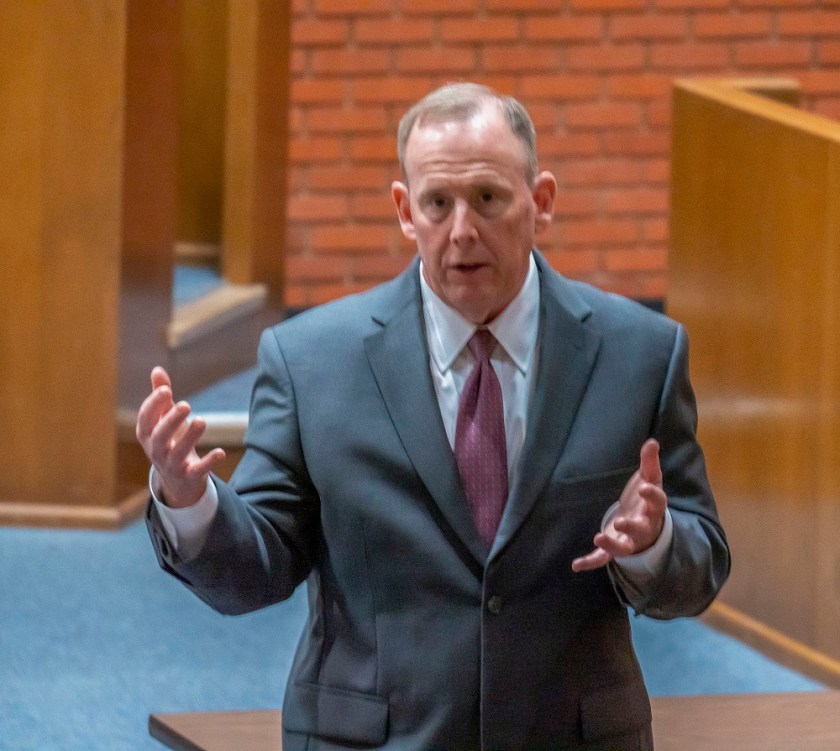
After she got out of prison, Lockett went on to finish college, earn her M.A., and would eventually apply to law school at University of North Texas, which was the only school in Texas that would admit her in spite of her criminal record.
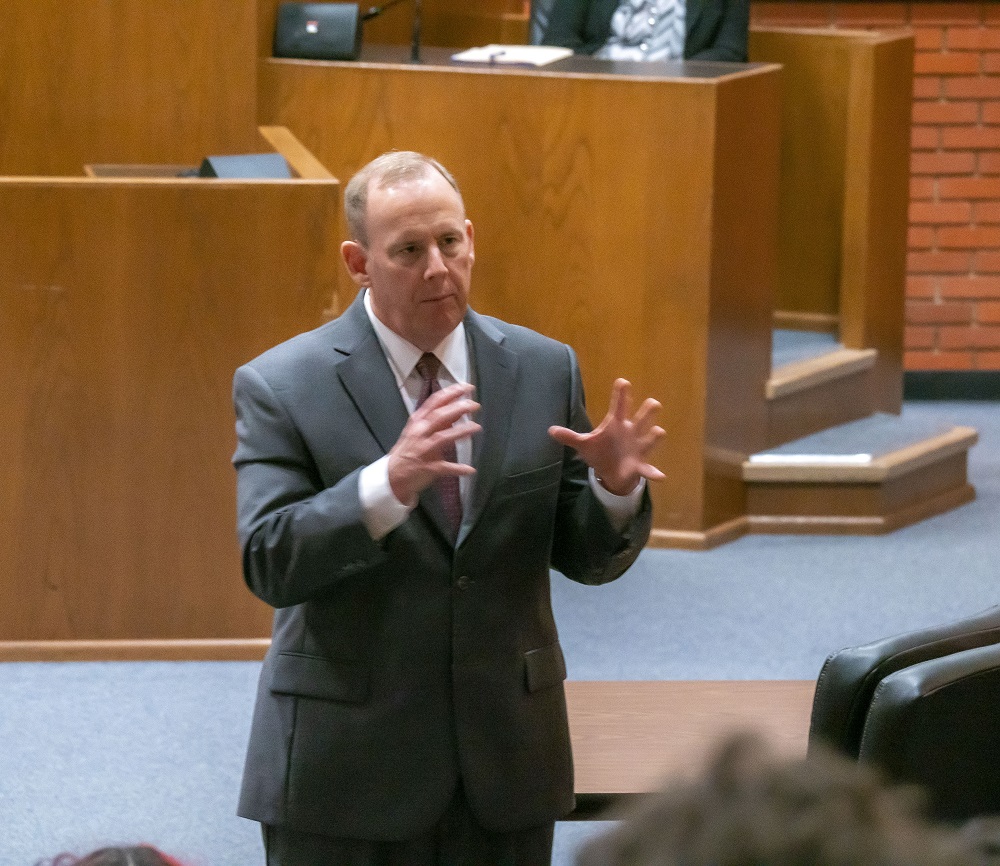
She then gave us some advice regarding law school, reminding us that it can definitely be a challenge, and we might not all get the best grades, but that does not mean we should give up. She told us to figure out a system of studying, get to know people who have similar priorities as us, and get as much experience as we can.
Lockett now works at Texas Appleseed, a nonprofit which strives to change unjust laws and policies that prevent Texans from realizing their full potential.
After the LEAP LIVE, a few of us were fortunate to have a one-on-one with Ms. Lockett, where she answered our more specific questions. We want to sincerely thank Ms. Lockett for sharing her time and honesty with us as we learned about her inspiring story of overcoming obstacles.
I think it best to close with a quote from Veronica Lockett which I found very moving:
“I think that the legal profession is all about helping people, it’s just how we choose to help people.
Our second meeting of the fall semester was a success. The meeting began with our president, Quinn Kobrin, introducing the new officers to the Pre-Law Society members.
After that, we briefly discussed law school preparation. Michael Freeman (senior), asked, “How long does it take for law schools to let you know their admissions decision?” Professor Yawn explained that it can take weeks, if not months, and it depends on factors such as your LSAT score and GPA, and how badly they would like you to come to their school. It was then suggested that members use all available resources to help prepare for the LSAT, especially asking members who have already taken their LSAT for help and advice.
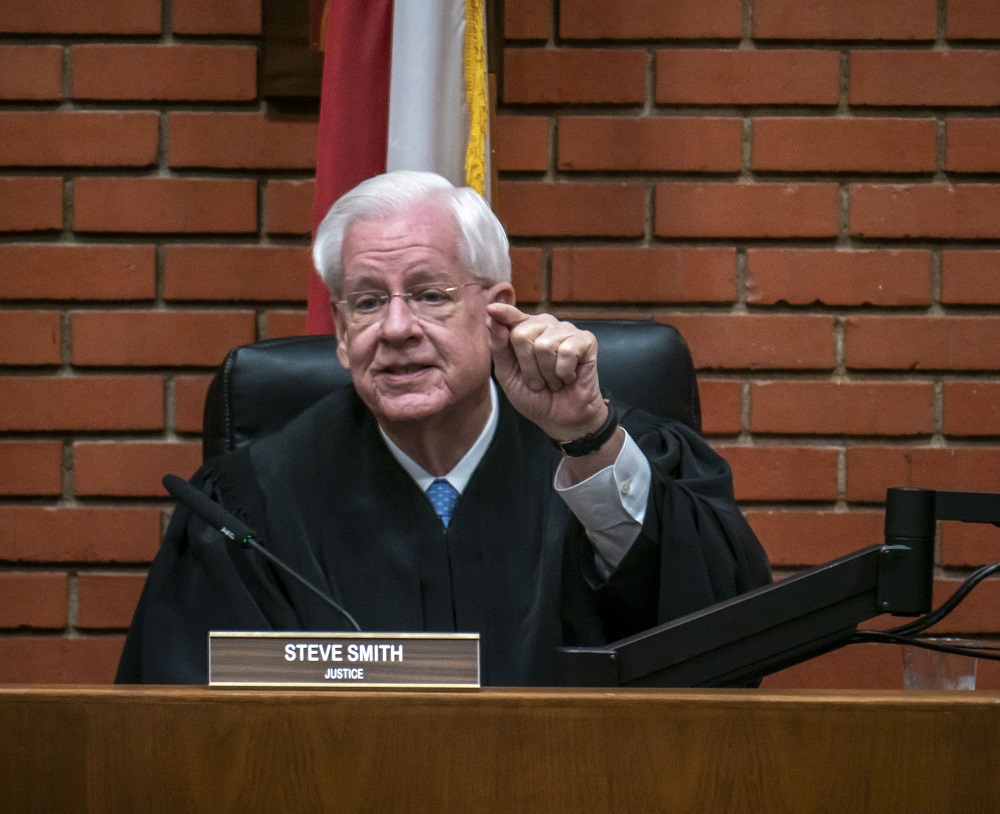
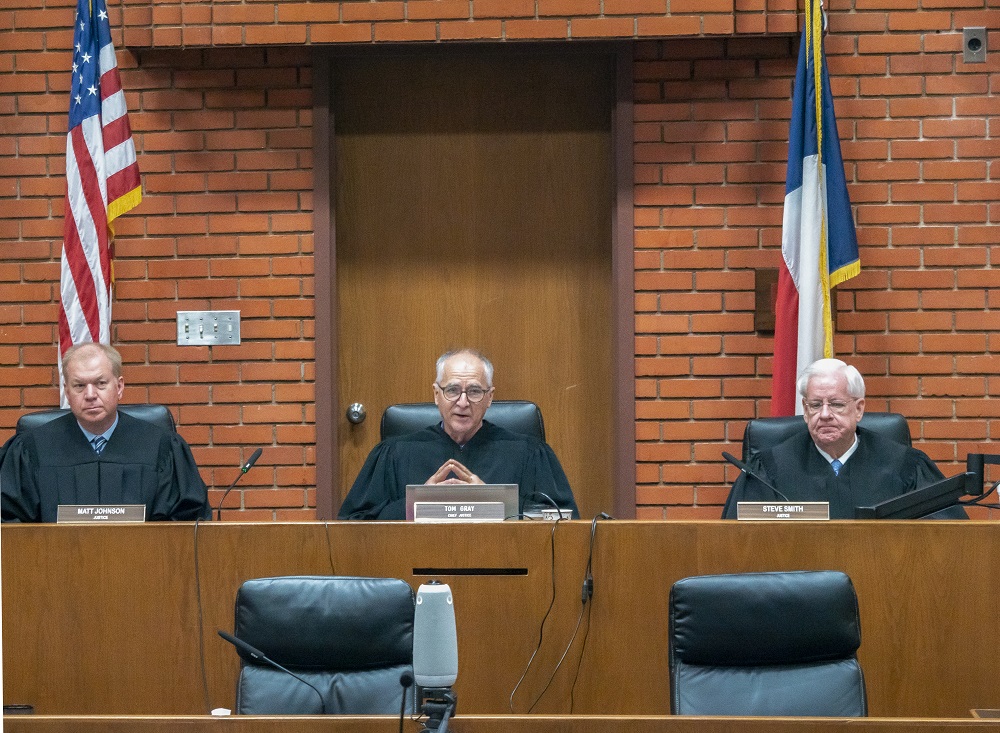
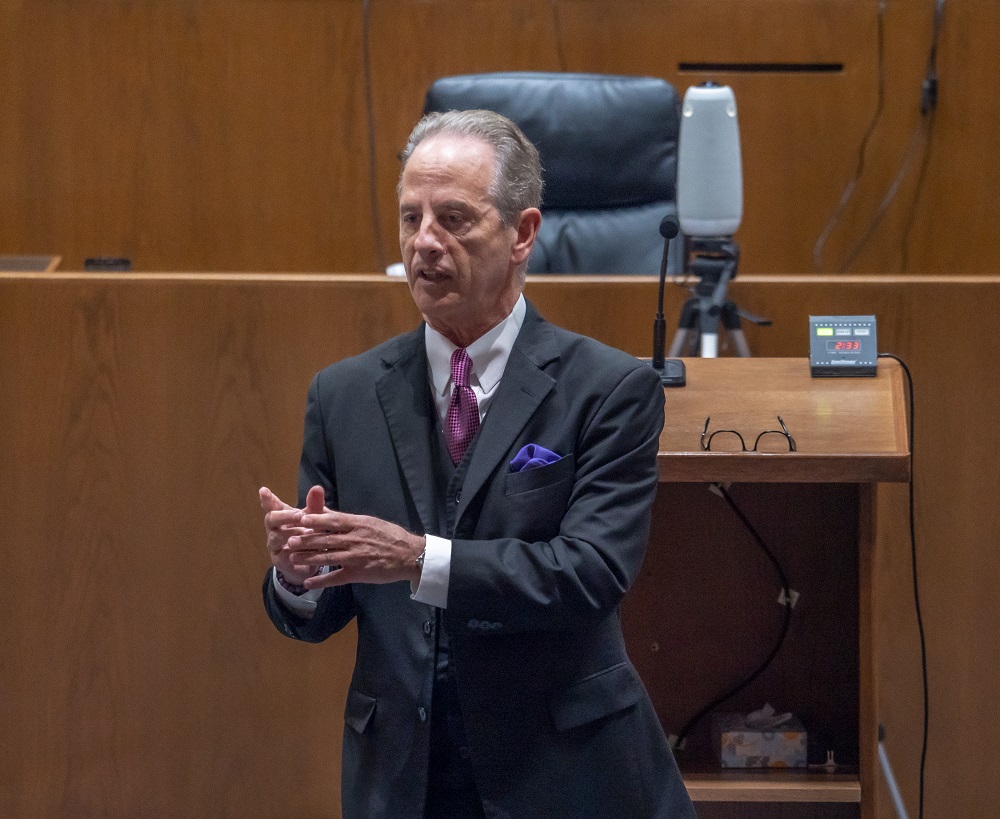
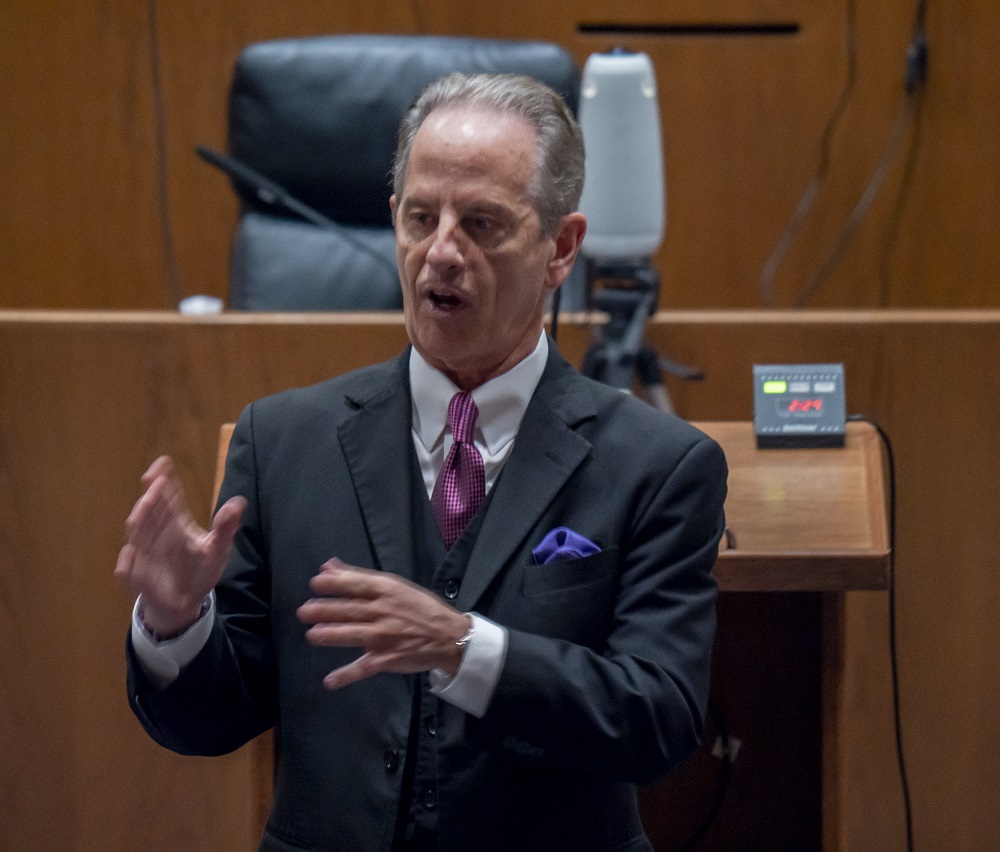
We were then showed a video of Texas’ 10th Court of Appeals on a Zoom call to learn how they discuss oral arguments during the pandemic, and see what challenges are presented by the virtual experience. It was apparent that both the attorneys and the judges were still adjusting to the format, as there were a few awkward moments where individuals dealt with connection or sound issues.
Our members were then in for an unexpected treat. We watched two short clips from the movies, Death Wish and Fargo. Death Wish showed a mugging that ended in three murders, and Fargo showed an aggravated burglary. While watching these videos, an actor walked in and took an envelope – which our members believed contained the organization’s cash on hand – from right under our president’s nose.
With these three crimes committed, witnesses were chosen from the group and taken to another room to write witness statements. We selected a number of attorneys to question the witnesses, including Michael Freeman, and Jase Brazzil (senior). One by one, witnesses were brought back into the room and an attorney was given their statement. It was then the attorney’s job to either get the witness to reaffirm their story or to catch inconsistencies to determine whether or not the witness was credible.
While doing this activity, despite the challenge of communication presented by wearing masks, we had a good laugh and discussion about what the suspects looked like and what really happened in the “crimes.” The exercise was a good reminder that not all witness accounts are reliable because we all perceive things differently.
This activity concluded the meeting, and we are looking forward to our final meeting of the fall semester, which will be on November 18th.
In a continuation of the LEAP Center’s Facebook one-on-one series, Professor Yawn interviewed Professor Jim Olson about his life during and after his career as a CIA case officer. This having been my first time hearing Mr. Olson speak, I was astounded at how little I knew about the world of counterintelligence.
Olson began the conversation with a definition of counterintelligence. He explained that its purpose is to protect the United States from other nations who may try to steal our secrets and technology. Much to my surprise, he told us that there are approximately 80 countries spying on us right now.
The conversation then turned to Olson’s 31-year career in the Clandestine Service. He was asked about his cover identity, which he could not share in great detail, but he explained that when he was in another nation, he would often have a cover as a U.S. diplomat, so he would have diplomatic immunity if he got into trouble. Sometimes, however, he was in other countries without working as a diplomat, and therefore would be subject to that country’s justice system if he were caught.
He shared that he and his wife – also a case officer within the CIA – never anticipated to come out from their cover identities, because doing so posed a threat to themselves and to their family. However, he was approached by President George H.W. Bush and George Tenet (former Director Central Intelligence) to work at the Bush School of Public Service. Olson was excited for the opportunity, but there is a CIA policy that does not allow officers to go onto college campuses covertly (which was news to me). So, he was forced to give up his cover.
In a similar vein, he was asked about how he and his wife broke the news to their children that they were officers in the CIA, and how they took it. Apparently, when he was stationed in Vienna, terrorists managed to get ahold of his address and sent him a death threat. They decided to tell their oldest son, who was sixteen at the time, and asked him to look after his siblings. As each of their children learned, he said, they took the information in with a sense of pride. He told us that each of his children has now gone on to pursue a career in the service of others.
Next he discussed CIA recruitment methods. We learned that the CIA seeks out a variety of candidates who may be cut out for a career as a case officer. Mainly, they are looking for character; they want recruits who are reliable and trustworthy.
To prepare for a career in the Clandestine Service (one of the most commonly asked questions of the event) Olson said that a bachelor’s degree usually would not be enough, and that students should aim to get a graduate degree of some kind. He suggested learning new languages, taking on roles of leadership, and working in positions that might allow you to travel abroad.
Aldrich Ames
On the subject of character, he spoke briefly about some former CIA officers who betrayed the United States. He spoke vehemently about his former colleague Aldrich “Rick” Ames, who he considers the worst traitor to the country for turning over to the KGB. He explained that Ames had identified Russians who were working for the CIA to the KGB, which led to their imprisonment or execution.
To wrap up the session, we asked Olson what he wanted people to know about the CIA. He explained that CIA case officers are public servants. They do not do what they do for money, power, prestige, or status. They do what they do with honorable intentions.
Despite all of the challenges of COVID-19, the Center for Law, Engagement, and Politics continues to provide engaging and interesting learning opportunities for students. Most recently, students were able to watch a Facebook live interview with President Dwight D. Eisenhower’s granddaughter, Susan Eisenhower, where she discussed her grandfather’s leadership in World War II and as president. Author of the biography How Ike Led, she had much to share about his life and overall legacy.
The interview began with a look at President Eisenhower’s role in D-Day,
liberating Europe from Nazi rule, and his handling of the discovery of concentration camps. It was explained that Eisenhower opted for a broad, slow advance to defeat the Nazi empire, rather than a fast and hasty one. He wanted to bring an end to the regime, and prevent it from rising to power again, and for his approach he was criticized by some who wanted a quicker–but riskier–approach.
In spite of his critics, this slow advance would be an important factor that led to the discovery of concentration camps. When he learned of the atrocities, he took it upon himself to examine every corner of the camps to understand what had happened and how it had come to pass.
She told us that he then issued orders for as many people as possible to document and bear witness to the camps. He brought in journalists, elected officials, and everyone fighting on the front lines.
He then had townspeople from surrounding areas marched through to see what their denial and willful ignorance had led to, and many were made to give burials to the deceased.
As she discussed the importance of Eisenhower’s foresight, and how he was able to anticipate that many people would not believe what had happened in the camps, Susan Eisenhower reminded us that Germany is one of the few countries in the world with zero tolerance of Holocaust denial. LEAP ambassadors learned about Germany’s efforts to reverse the wrongs of the Holocaust and its lingering effects earlier this year.
As the discussion transitioned to Eisenhower’s post-war service, I learned several interesting facts about his commitment to service and duty…
Apparently, on more than one occasion, President Truman offered not to run for reelection after his term, and instead let Eisenhower run for the Democratic nomination. Eisenhower refused each time because he was not in search of power. His granddaughter reminded us that he had wielded more power than most other leaders during World War II, and did not want run for president except when he felt it was his absolutely duty to do so.
A few other aspects of his commitment to duty were his refusal to wear a helmet because they should only be worn by those serving in combat, and his refusal to accept the Congressional Medal of Honor for the same reason – it was meant for those who had shown valor in combat.
The conversation then pivoted to Eisenhower’s leadership style as president of the United States. It was made clear that he did not engage in personal attacks; he was strategic and methodical in his political approach. When dealing with Senator McCarthy and his infamous hearings, Eisenhower did not call him out directly. Instead, he gave speeches about what American democracy should look like, insisted on televising the outrageous investigations, and let the Senate come to censure McCarthy on their own.
President Eisenhower also suffered no nonsense when it came to dealing with issues of race. As LEAP ambassadors learned in January of this year, the governor of Arkansas – Orval Faubus – dragged his feet in complying with the decision of Brown v. Board of Education, and made every effort to not desegregate schools. In response to this, Eisenhower mobilized the Arkansas National Guard and deployed 101st Airborne (paratroopers he had commanded on D-Day) to protect a group of African American students, immortalized in history as the “Little Rock Nine,” as they desegregated Little Rock Central High.
Susan Eisenhower then spoke about how her grandfather was a leader through study and discipline, and was naturally empathetic. He knew what people needed to hear, and tried to be relatable and genuine whenever he could. We saw a picture of him speaking with members of the 101st Airborne Division prior to D-Day and were told that he was discussing fly-fishing techniques with Lt. Wallace Strobel, rather than giving a pep talk about their mission. He wanted to remind them of their humanity.
Finally, President Eisenhower’s legacy of leadership and empathy are embodied eternally in Norman Rockwell’s portraits of him, which at various times depict him both serious and smiling. As his granddaughter explained, the big, toothy grin we saw was his trademark smile, as he was generally in good spirits around his family.
As the meeting came to a close, Susan Eisenhower reminded us that we will “be better as people if we can understand the views of those who come from…different backgrounds,” encouraging us to be ‘like Ike’ when it came to how we view and deal with those who are different than us.
This interview was so interesting and informative, and we were incredibly lucky to hear from Susan Eisenhower. We are grateful for her time and insight, and look forward to the possibility of meeting her in person someday soon.
Despite the pandemic, we were able to kick off our first Pre-Law Society meeting of the Fall 2020 semester. Our advisor, Mike Yawn introduced the PLS to all the new members and explained our agenda for the evening. For the first meeting, we had the great honor to have a Zoom meeting with two special women, Alicia Cramer and Shawn Adams, to discuss law school and answer any questions we may have in regard to admissions.
To begin, we first had Shawn Adams speak. She is not only an attorney, but she is also the Assistant Director for Recruitment at Texas Tech Law. She discussed how Texas Tech has a ‘dual degree program’ where a student can finish their first year of school, then start their Masters. They can complete law school in three years, receiving both Juris Doctor (JD) and an MBA. She also mentions how you can be a “student attorney” where you can work under a licensed attorney and have clients and go to court, which I felt like caught a lot of members’ attention!
Dean Alicia Cramer was next. Cramer is the Assistant Dean of Admissions and South Texas College of Law. To showcase the school, she mentioned how they were recently nationally ranked for their Moot Court and Mock Trial teams. As an assistant dean, she emphasized the importance of being involved in different programs and clinics the school offers. She also encouraged students to begin building relationships with people who may write letter of recommendations.
Following the presentations, the guest speakers took questions.
Two questions that stuck out to me were:
Q: Do I need to apply separately for scholarships, or will I receive automatic consideration through the admissions process?
A: You can do both. Depending on your situation, you can apply for financial aid, but also you can earn money depending on your GPA and LSAT scores, so study!
Q: I was another major for two years and it tanked my GPA. Even with the A’s and B’s I have been making in my Pre-Law major, my GPA hasn’t touched a 3.0 yet, does that ruin my chance to be accepted?
A: No, if your GPA isn’t the best and your LSAT scores are subpar, your personal statement will really dictate your acceptance or not. You want a great personal statement that not only describes you as a person but also explains why your grades were not the best. You need to stick out during the admissions process and show the board why you deserve to attend their law school.
After the Q&A portion of our meeting, we applauded and thanked them for their time and insight on the navigation of law admissions. To end our meeting was officer elections. The group had eight members running for positions of VP of Finances, VP of Membership, Secretary and Historian. With time running short, members’ speeches were short and to the point. For President, we have appointed Quinn Kobrin (senior), VP of Finances, Leslie Canchola-Rangel (junior);