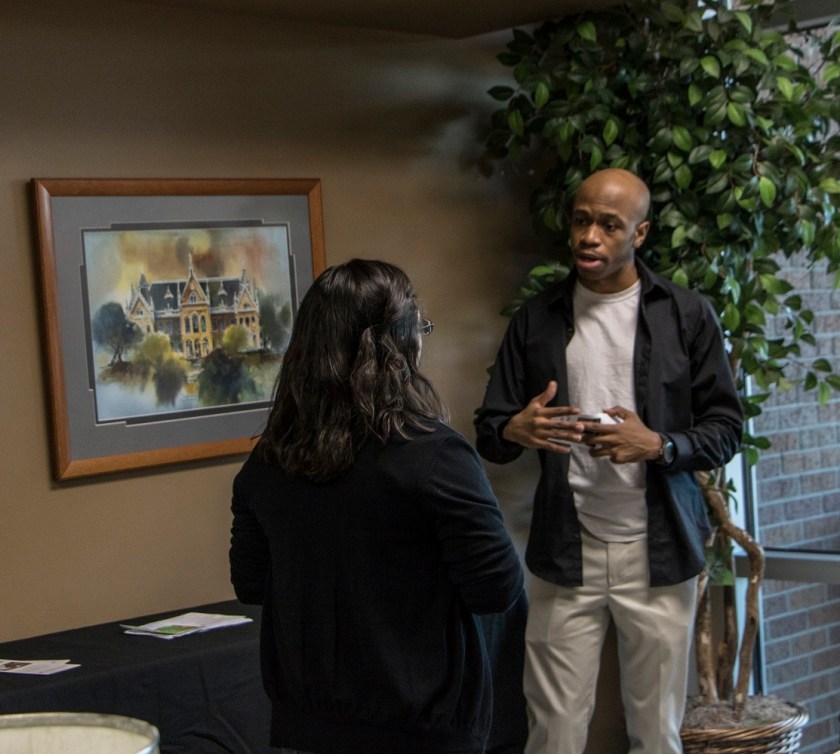
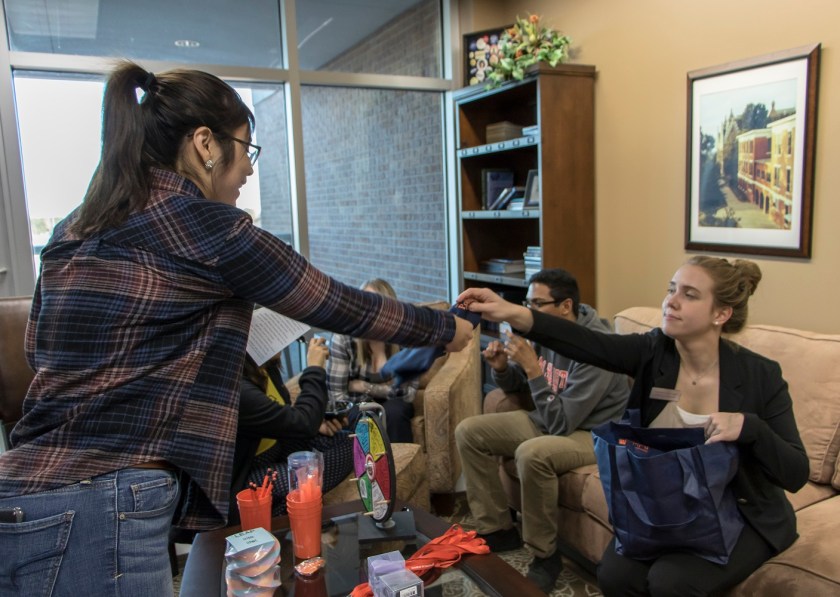
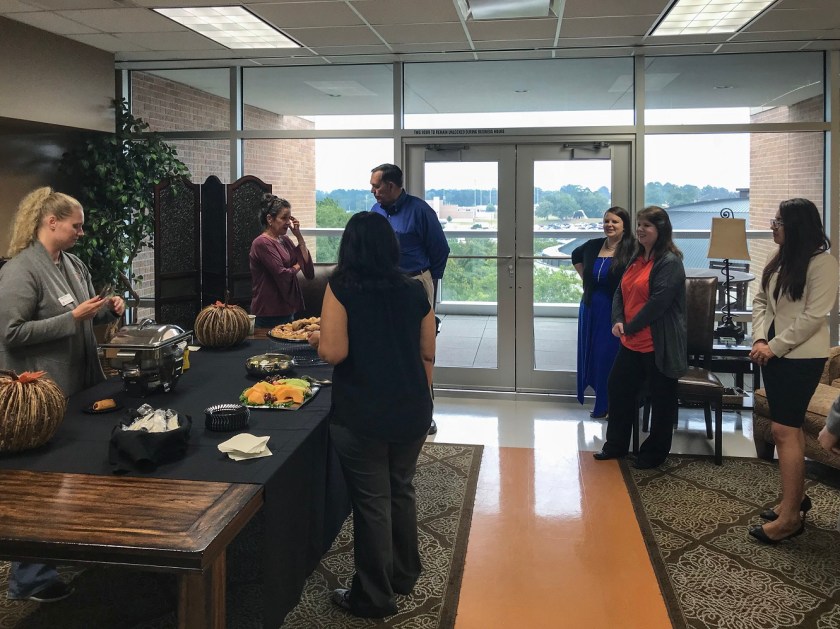
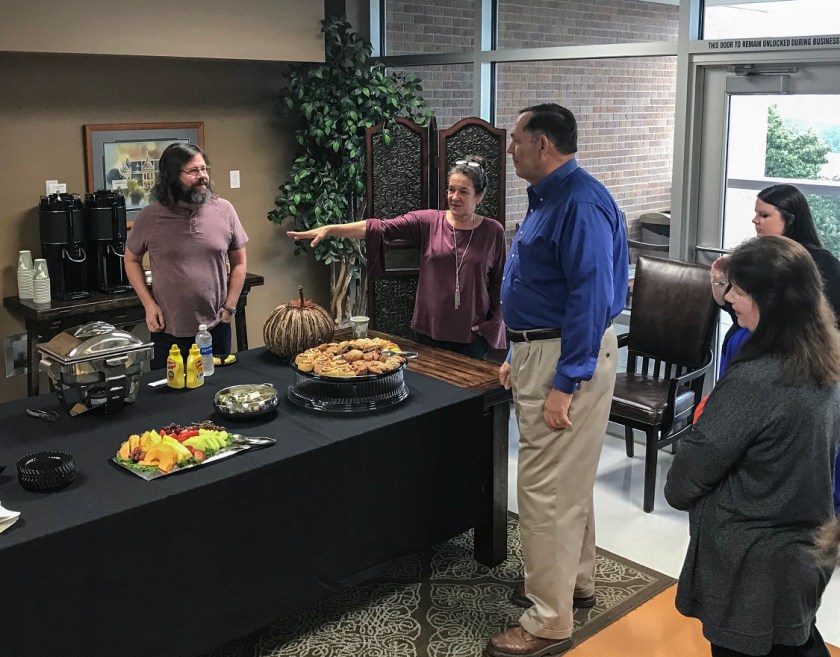
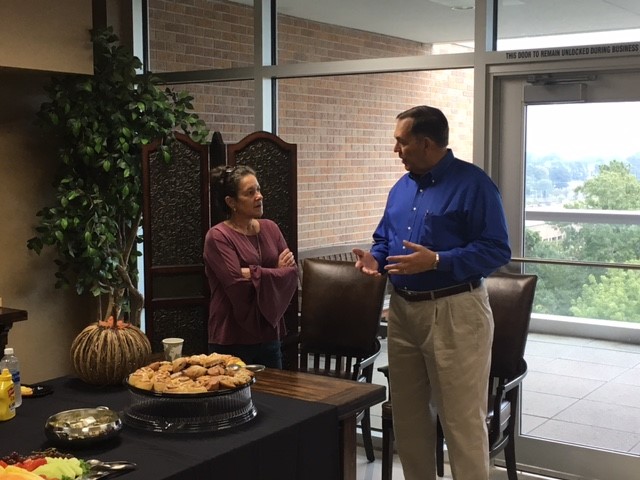
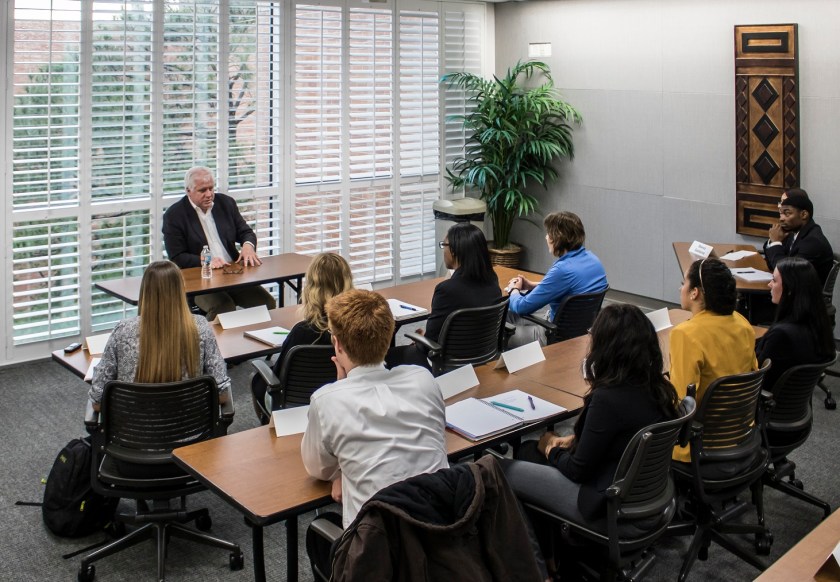
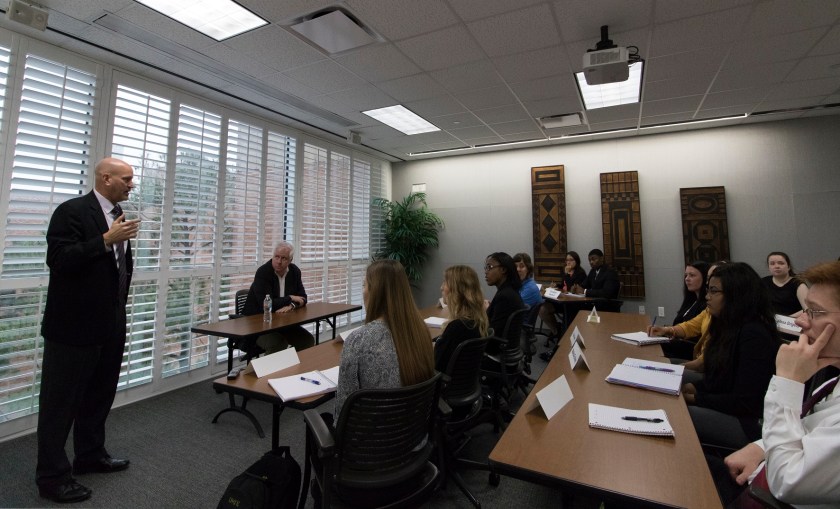
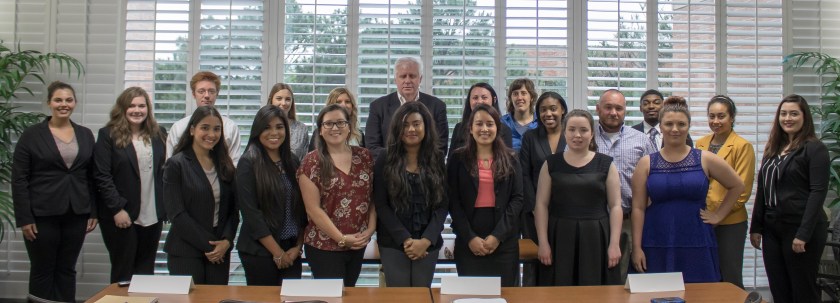
With the spring semester off to a great start and no snow-storms in sight, the LEAP Ambassadors, as well as the Pre-Law Society, teamed up to host an ice cream mixer open to all SHSU student and staff to inform them of upcoming events. Not only that, but it was also a great time to chat and catch up with everyone.
Students mingled with each other over some yummy ice cream. But the larger point of the mingling was to alert students to upcoming events. The LEAP Center, in addition to sponsoring the Moot Court team and the Pre-Law Society, participates in approximately 50 events a semester. Of these, they actually sponsor or arrange about 25, meaning that they provide numerous opportunities for students to learn outside of the classroom, network with people who can have an impact on their careers, and to have fun as well.
In the next month, for example, the LEAP Ambassadors are involved in:
A presentation by Chairman Christi Craddick (chair of the Texas Railroad Commission (January 30);
A coffee with Congressman Kevin Brady (February 19);
A presentation by “Democracy Coach” Nancy Bocskor (February 20);
A Mock Law class featuring Professor Val Ricks from South Texas College of Law–Houston (February 21);
A Mock LSAT (February 24)
We hope the students enjoyed their time at the Ice Cream Social as much as we enjoyed the time getting to meet them.
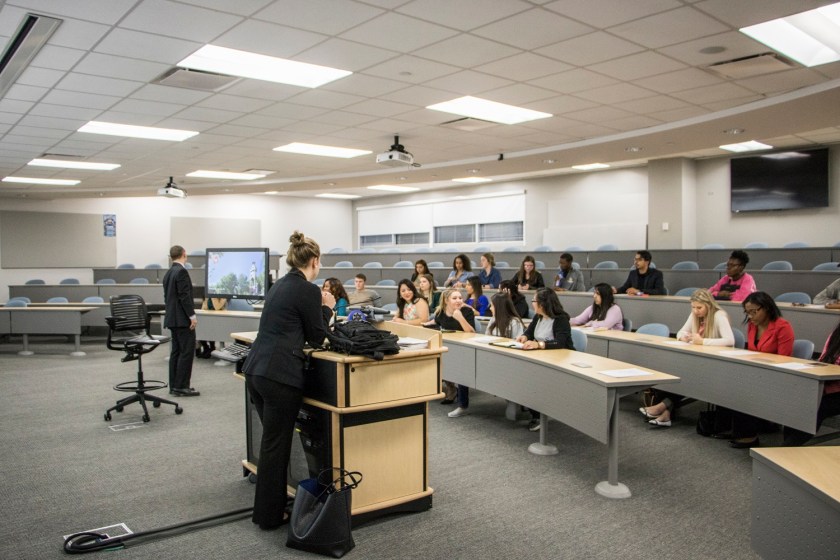
Soon afterwards, we headed downstairs for the first Pre-Law meeting of the year where students learned more about what it takes to become a lawyer and how the Pre-Law organization could help them get there.
We also went over upcoming events and met some new members!
Thanks to all the students who came by to say hi and we wish everyone a successful semester!
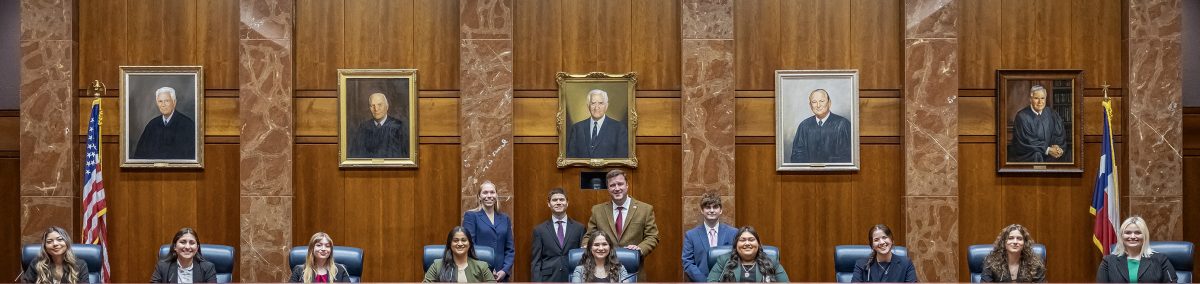
After months of preparation, the SHSU Moot Court team had their first competition at The University of Texas Arlington. The scrimmage had everyone very excited, as everyone was ready to give it their best. We have 3 teams composed of three veterans and three new members. It was the moment of truth where we would see how far our hard work and dedication would take us.
May it Please the Court, We represent SHSU- Moot Court Day 1
By Beatriz Martinez
As hopeful lawyers in training, the 6 of us headed to the University of Texas Arlington for our first Moot Court Competition of the year. Various universities gather together after around six months of preparation. One “problem case” has been given to them, arguing two different legal issues. In this case, the issues we are addressing are the Fifth and Eight Amendments. The Moot Court competitors take the time to study these cases as well as 8-10 supporting actual cases that they use in order to create their arguments. Later, they go to a school, often times a law school, to present their case to a panel of judges made up of law students, law professors, lawyers, and even an occasional judge. Competitors are scored depending on their presentation skills, their quick thinking, knowledge of the case at bar, supporting cases, and of course their arguments!
Everyone was nervous, but we played it off with our cool, professional lawyer-like demeanor. We had all prepared to the best of our abilities and were ready to give it our best. After signing in, we scouted the school to find where our “courtrooms” were. During Moot Court competitions, the competitors do not know which side they will be representing, whether it be for the petitioner (the person appealing the lower court’s decision) or the respondent (the other side, of course!). There are three rounds from which the top 16 teams are chosen. These top teams would then advance to the second day of the competition.
As soon as everyone got their opponents, the competition began. It was a tumultuous time for all. After the last round ended, everyone gathered together in the common area for the final results of which of the 25 teams would be able to advance to the second day of competition as part of the Top 16 teams. We were excited to find out that Austin Taylor (a second-year competitor) and Kristyn Couvillion (a third-year competitor) had made it to the second day!
Moot Court Day 2
By Beatriz Martinez
After a long night of prepping, Kristyn and Austin headed back for the second round of competitions. We all got settled in for the coordinator to let us know who their competitors would be and which side they would have to argue. Of course, Kristyn and Austin used that extra time to get focused and continue their preparation in order to succeed in this next round.
Meanwhile, the rest of us tried our best to help them as much as possible by going on a quick Starbucks run and took the opportunity to explore the University of Arlington as well. UTA just so happened to have similar spirit colors as ours with theirs being blue, orange, and white. They also had various interesting art pieces such as their spirit horses which they have scattered across campus and serve as a way to engage the students in art. There is one in particular that we liked the best (for obvious reasons) named “Dynamic” which we definitely were feeling at the moment. We also took a moment to take a picture with one of the many interesting fountains housed at UTA.
Finally, we headed back to continue to cheer on our team. The results were in and the competitors were ready to accept the challenge ahead. Before the competition started, we took a picture of solidarity between the two teams.
It was a very close round with only a difference of 20 points. Sadly, our team did not advance more than that. As a consolation, we headed on to a Mediterranean Grill called Andalous, which had a variety of plates from different regions. The food was delicious and we greatly enjoyed not only the food but also the multitude of learning experiences we had gotten from the last two days. The SHSU team was more determined than ever to improve and do a lot better in our next competition at Texas A&M Law School on November 4th. For now, everyone was headed back to Huntsville to prepare, except for me since I had a flight to catch to meet the other LEAP Ambassadors in Washington D.C.
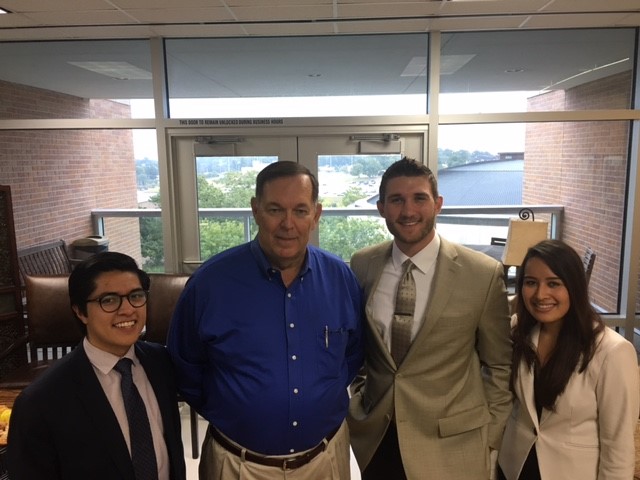
Sam Houston State Alumnus Judge Albert McCaig, visited the College of Humanities and Social Sciences for breakfast on Friday, October 20.
Judge McCaig was invited to the University to be presented with the Alumni Service Award during that evening’s Distinguished Alumni Gala. During the breakfast, he was joined by Dean of the College of Humanities and Social Sciences, Dr. Abbey Zink; Political Science Department Chair Dr. Tamara Waggener;
Associate Dean Dr. Glenn Sanford;
and others in the Holcombe Room.
Judge McCaig graduated from Sam Houston in 1972 and has been heavily involved with the University ever since. The LEAP Ambassadors were able to learn about the inner workings of the court system from a judge’s perspective, and also the mindset required to do the job efficiently. One thing of interest to us was his ROTC background. During his involvement in ROTC, he distinguished himself by becoming essential to the creation of the SHSU Military Science Alumni Club. We also thought it was impressive how his involvement with ROTC has persisted, as he has donated generously to provide scholarships for Military Science majors.
Conversing with Judge McCaig before the ceremony was a unique experience that broadened the understanding of the intricacies involved with law. The event was a successful precursor to his award ceremony, and we thank him for his generosity towards Sam Houston.
The LEAP Ambassadors would like to thank Deanna Briones, Dean Abbey Zink, Kristin Trojacek, and Dr. Tamara Waggener for allowing us to participate in this event.
When an author of James Reston’s magnitude comes to campus, we do our best to have things organized and ready, and today was no exception.
Lunch with Aramark, by Makayla Mason
The LEAP Ambassadors were able to begin our day having a special lunch with not only Mr. Reston, but also with SHSU Vice Provosts, Dr. Mary Robbins, Dr. Christopher Maynard, as well as Assistant Professor of Mass Communication, Dr. Grant Weidenfeld.
While the room filled with friendly conversation, the LEAP Ambassadors and our guests grabbed our sandwiches, chips, and cookies and sat down for a great conversation. The conversation was centered around Mr. Reston and his newest book, “A Rift in the Earth.” Our guests explained how Americans reacted to the Vietnam War and how the war split the nation politically, a split that persisted for many years after the war. Dr. Robbins, with much emotion in her eyes, recalled herself as a teenager watching the news and responding, at times with tears, over the body count announced every night.
It was an emotional and enlightening experience for us as Ambassadors, as our guests pointed out, that we have never experienced an event that split the nation in such controversy. Before leaving, Mr. Reston signed some books…
…we thanked our Vice Provosts and began preparing for our next event of the day.
“Firing Line” With James Reston, By Karla Rosales
After a great lunch in good company, we moved to the Mass Communications Studio for a television interview, one hosted by the MCOM Department, with Mel Strait leading the technical crew. As part of the audience 20 or so students participated in this television interview between Professor Yawn and James Reston.
Some of us arrived earlier to make sure everything was ready and to greet students as they walked into the studio. During this time, we had a chance to chat with the audience. It was interesting to hear different ideas from other students on their feelings towards the many topics that Mr. Reston would discuss. The students came prepared with a lot of research on Mr. Reston along with an ample set of interesting questions for him. After all, he is a very interesting person who has been involved in many different important events in history.
The interview began with Professor Yawn asking Mr. Reston about his research as David Frost’s assistant regarding Watergate and President Nixon. We also got to watch a small clip from the movie “Frost-Nixon” where Mr. Reston is played by Sam Rockwell.
We got to learn about how the movie and how it compared to the events in real life. According to Mr. Reston, they were pretty similar, including the part where he considered not shaking President Nixon’s hand!
He discussed his devotion to finding the truth behind the Watergate scandal and was determined to find the evidence they needed to force President Nixon to confess to his wrongdoings.
Professor Yawn also asked about his NPR documentary on Jim Jones and the tapes he acquired from Jonestown. Mr. Reston actually had to seek counseling after his research on the mass suicides in Guyana. He explained that such research was especially difficult for him as he thought about the young victims in Jonestown while also having children at home.
Finally, he discussed his book “A Rift in the Earth” where he wrote about the controversy concerning the Vietnam Veterans Memorial by Maya Lin. He also told us about some of his background research for the book.
This topic was especially interesting as we will be visiting the Vietnam Memorial on our trip to Washington, D.C. in only a couple of weeks! The interview came to an end with some very interesting questions from the students in the audience regarding all the different topics Mr. Reston had discussed.
After the interview, each student received a copy of “A Rift in the Earth” and had a chance to get it autographed by Mr. Reston!
This slideshow requires JavaScript.
Later in the day, Mr. Reston would join us again for heART of Huntsville, but with a little downtime, Mr. Reston decided to spend some time in the Texas Prison Museum.
Whether it’s looking through the Texas Prison Rodeo days, the art and crafts the inmates have done…
…or addressing the death penalty, the Texas Prison Museum has much to offer.
Reston shared accounts of his journalistic days covering the death penalty, while Christina took advantage of an open jail cell.
As the door closed on Mr. Reston’s visit, we had a chance to reflect on the wonderful opportunities we’ve had to learn new things, enrich our already rewarding education at SHSU, and make a new friend. We look forward to the next time Mr. Reston has a chance visit our town.
The first breeze of fall signaled the beginning of an awaited event by many pre-law students. 72 hopeful individuals voluntarily woke up early on a Saturday morning and made their way to campus to take the dreaded Mock LSAT.
Each semester, the LEAP Center hosts a Mock LSAT for students interested in applying to law school.
The LSAT, an acronym for Law School Admissions Test, is a challenging exam that tests students reading comprehension, logical thinking, and critical thinking skills. This semester, Princeton Review proctored the exam for the LEAP Center’s record breaking number of attendees. Our hope is to provide the means for students to get a realistic viewpoint on how they can expect to perform during the real LSAT and then plan accordingly.
Additionally, students learned about Princeton’s LSAT Prep Course and the services they offer to help prepare for the rigorous exam. Although taking a test on a breezy Saturday morning may not be the most fun, it proved to be helpful for many students! Many thanks to Ms. Michelle Bell, for being a wonderful proctor!
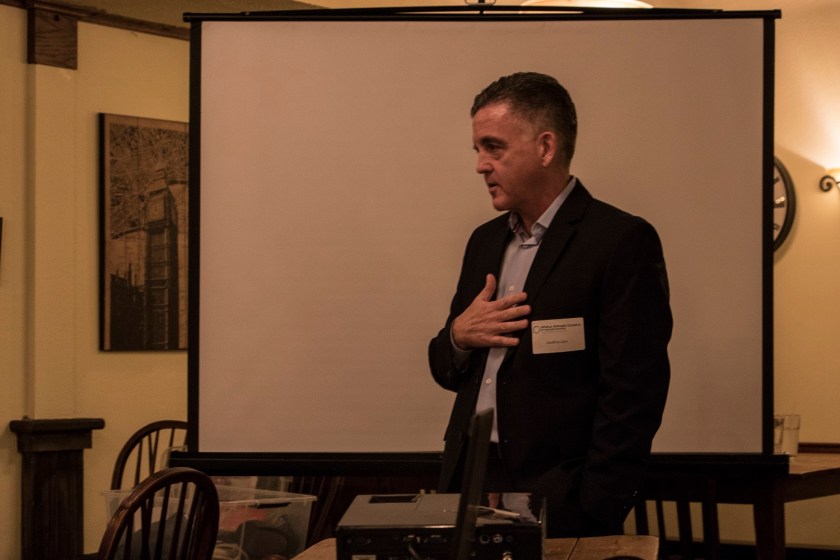
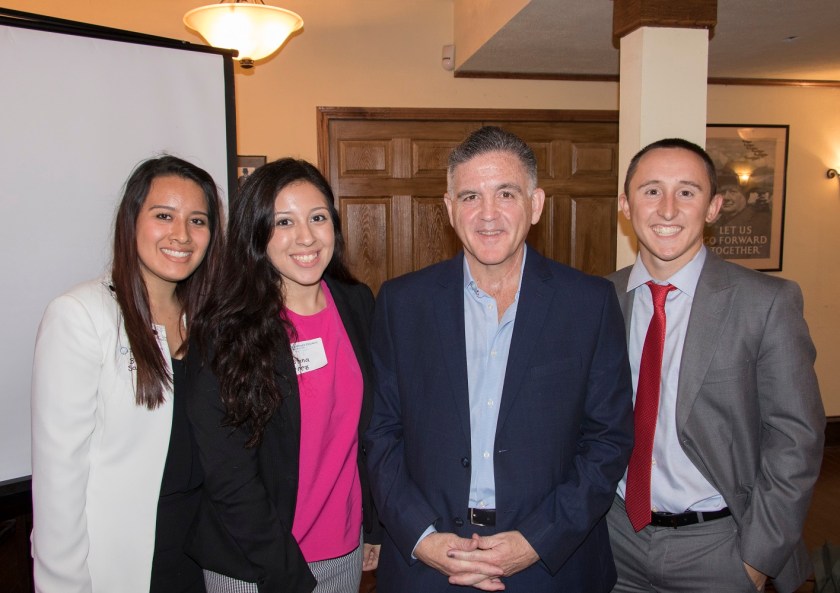
Arriving early at Houston’s The Black Labrador we found that the venue was still being prepared for the evening’s program. Fortunately, this gave us the opportunity to engage in a short-lived game of giant chess, which was available to guests in the restaurant’s courtyard. While awaiting for the night’s main attraction, we enjoyed the company of the other attending guests and snacked on the appetizers that were offered. But it wasn’t long after that the speaker of the evening was introduced.
Retired Lt. Colonel Geoffrey Corn, now a professor at South Texas College of Law, spoke at length about the law of war, the reality of combat, and the effects of combat on soldiers. He explained that for a decade the U.S. involvement in the Middle East has not been a war but an “armed conflict.” He further elaborated how the U.S. has not been fighting a foreign government or country, but rather an ideological group spread amongst an area undefined by borders.
Lt. Corn also pointed out how the U.S. soldiers fighting against this poorly defined group are not fighting the same fight as the enemy. In previous conflicts the enemy was clearly distinguishable from local civilians. This held true up until the Vietnam War, where the guerrilla tactics employed blurred the lines in the ever-present turmoil of a live battlefield. The fog of war was thickened by the fact that these combatants now acted differently than most armies in history. We learned how international laws have been set in place to try and bring civility to conflicts such as these, but the situation is still tricky for our men and women fighting over seas.
A comment Lt. Corn made near the end of his speech stuck out to me and forced me to think long and hard on the drive home. “How we choose to fight our enemies and how we treat our prisoners is a reflection of us and not of our enemies.”
It was an enlightening presentation, and we very much enjoyed the presentation and the chance to meet Lt. Col. Geoffrey Corn.
Our first day in Biloxi, Mississippi began in a typical LEAP fashion: getting to discover what the variety of local attractions the Magnolia State had to offer. Having gotten to Biloxi late last night, we were unable to even glimpse what this new state was all about, but today we took full advantage of what it had to offer.
Half Shell Oyster House, by Christina Perez
Our first stop was in a quaint, local restaurant called Half Shell Oyster House. Nestled in Mississippi’s downtown area, this refurbished bank turned restaurant, was a hidden pearl. Surprisingly enough, about half of the ambassadors had never tried oysters, so the main course of our cuisine consisted of just that, including both raw oysters and grilled oysters.
To make it even more of a MS treat, we had fried tomatoes and crab cakes, The first timers prepared their oysters, and together took their first bite. All were glad to try it, but some proved more adventurous than others.
Next, we decided to partner up and share a plate so that we could save some room for dessert. Beatriz and Christina ordered a Seafood Sampler which included oysters, crab cakes, shrimp, and two sides: Sweet Potato Crème Brulee and Fried Okra. I couldn’t wait to taste the scrumptious Sweet Potato Creme Brulee. Ryan and Makayla decided to also be adventurous by ordering a Big Easy Surf and Turf which included a 6 oz filet over a crab cake. Strong reviews were given on the variety of seafood plates and then it was time for dessert.
We all decided on the Cinnamon Roll Bread Pudding and the Bananas Foster Cheesecake. The Bread pudding was made with cinnamon rolls and topped with Homemade Spiced Rum Sauce. Professor Yawn, being the bread pudding connoisseur that he is, began to compare it to other bread puddings. It was delicious. So delicious in fact, that many of the Leapsters ended up burning their mouths due to their impatience for another bite. Everyone left happy and with full bellies towards the next adventure which would be a good compliment to the food.
Chandaleur Island Brewery, By Makayla Mason
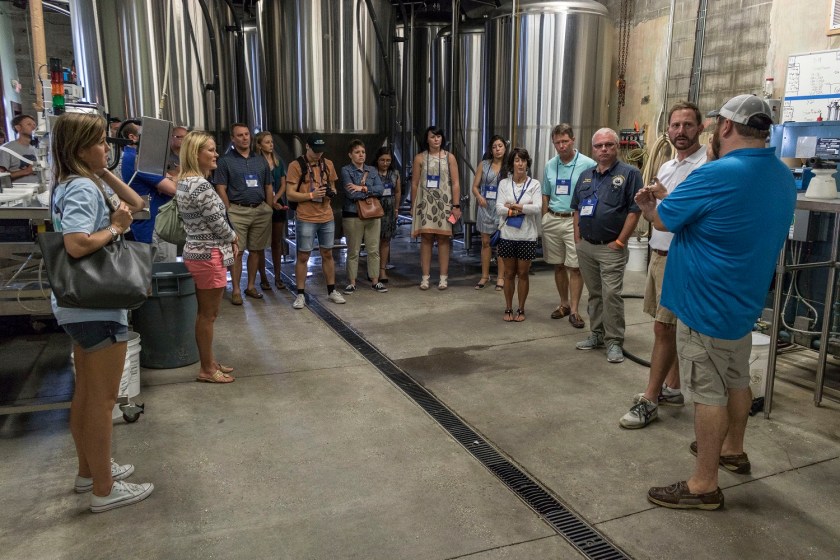
As part of the Southern Legislative’s Conference first event, we went to tour the Chandeleur Island Brewery. We were greeted at the entrance by some sweet artisan ice pops, handcrafted by Pop Brothers.
After a day in the hot sun, we thought the popsicles were heavenly! There were even some pleasant surprises such as an entire Oreo on the inside of the “Cookies and Cream” popsicle!
After enjoying our ice pops, Chris Vignes, the City of Gulfport’s Public Information Officer, gave us some of the brewery’s backstory, and he explained the City’s economic development philosophy and vision for the future.
Once behind the the bar, one of the owners supplemented the tour, and we learned about the interesting history behind the building, the background of the company, and process of composing the beer.
Instead it was meant to revive the interest in hand-crafted beer and be a place where families could relax. Bringing the community together was crucial to the existence of the Brewery. Their beer cans were designed by a local tattoo artist, which we all thought was an interesting fact! Over the years it has grown to be quite popular and in the 14 years of the Chandeleur Brewery bartender’s experience there has never been a fight.
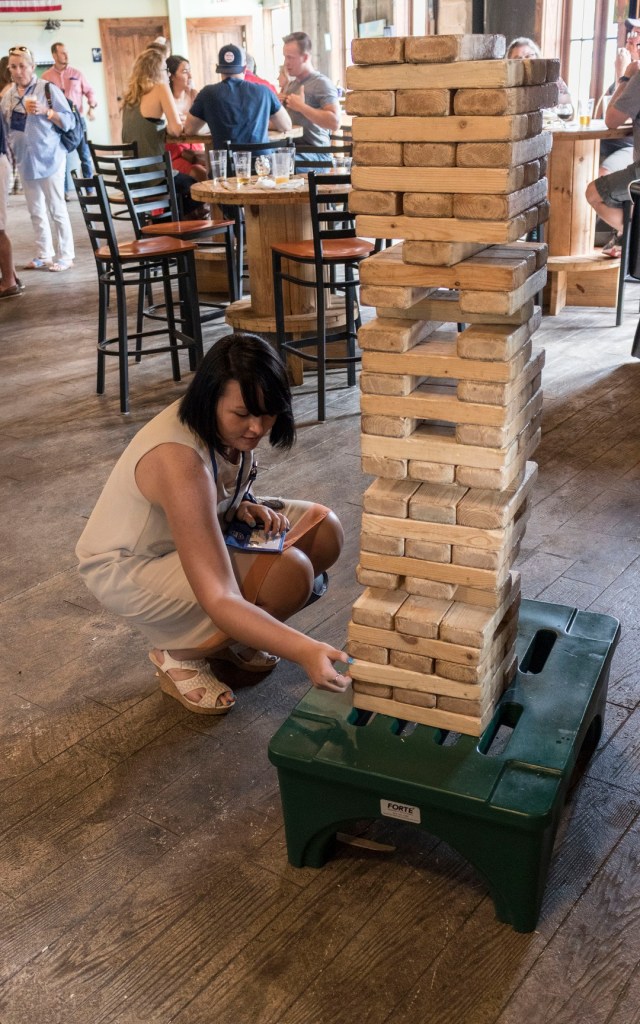
Wanting to partake in the famous reputation of this Brewery, we sampled some of their beers (by “we,” we mean those of age). Out of the 5 samples that we could try, the popular vote went to the sweeter blueberry-flavored beer. After that, we played a couple of games ranging from Jenga…
…and Bean Bag Toss, or “Corn Hole,” as Christina and Ryan call it.
As part of the advertising the many treasures hidden downtown, we learned about Fishbone Alley.
Just a block away from the Brewery, this alley had a charm all of its own.
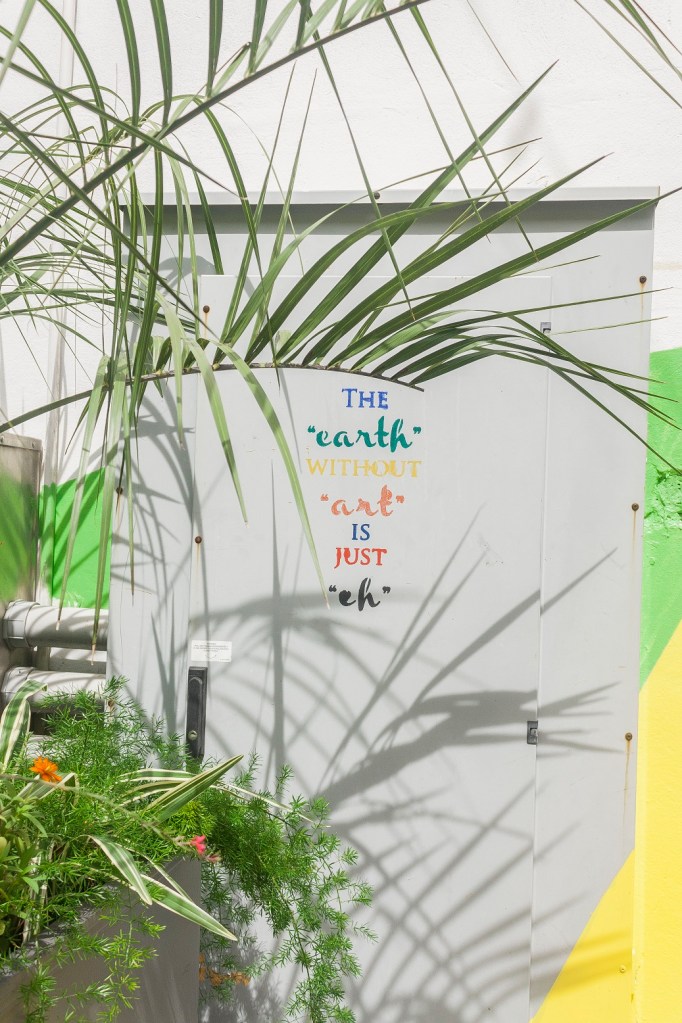
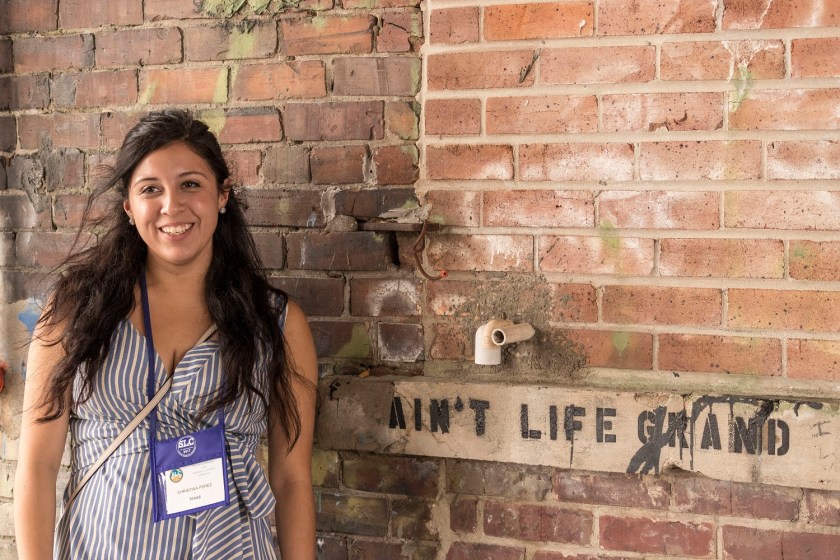
Once an plain-looking alley, it had gotten a touch up by many local artists from the area, decking it out in a variety pieces of art.
This also enhanced the community bonding that the Brewery was trying to promote.
This alley created a space where people from the community could get together for music, peace and quiet, expressing themselves through the medium of art, or some of the rather odd games the city sometimes hosted. The alley is a continuous project in which locals are excited to see grow.
Jet Ski Adventure, by Ryan Brim
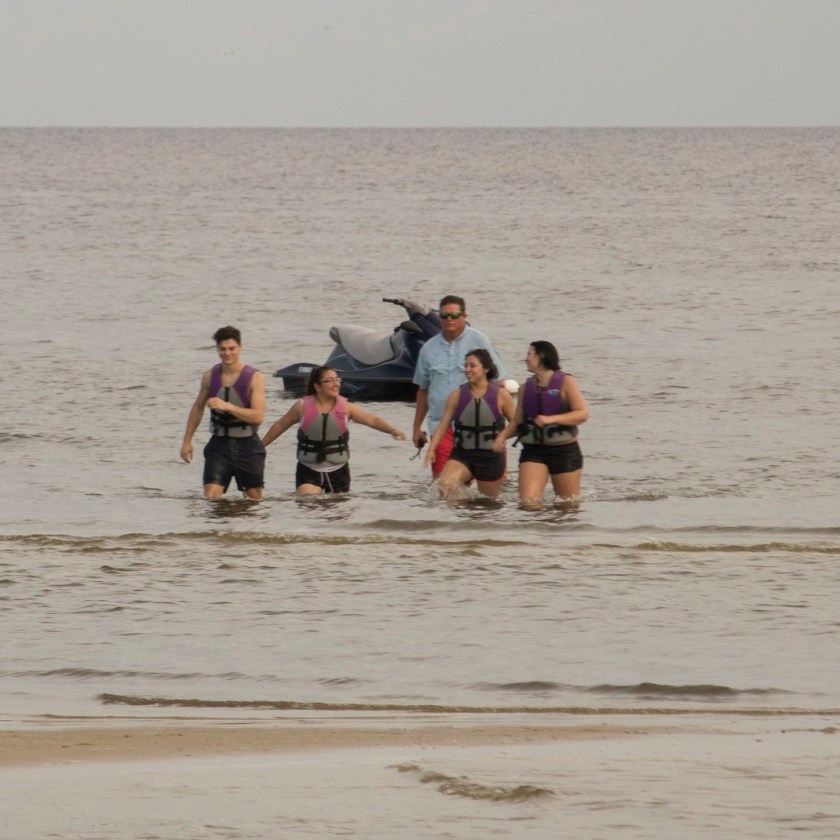
After getting back to Beau Rivage from the Chandeleur Island Brewery, we still had some time before attending the welcoming reception. Quickly, everyone decided to take the extra time to change at the hotel into some more beach-appropriate attire and drive the short distance to a jet ski rental stand right off the beach. None of us had ever ridden a jet ski before, and we were very excited for the opportunity.
First, we paired up, with Christina being Makayla and Ryan partnering with Beatriz. We donned our life vests and waited a few minutes for the jet skis to get set up. After a 2-minute training, we were off. Time seemed to rush past us as we zipped every which way, skimming along the waves.
Both teams switched drivers, taking turns and experimenting with the jet ski until they felt comfortable on maneuvering the machine around.
It was easy to get the hang of, and a whole lot of fun!
Finally, our time was up. Sadly, we trekked across the sand back to the shore…
…and even found a small crab which Beatriz had accidentally taken for a ride throughout the entire jet skiing experience. After a couple more pictures…
…it was soon time to head back to the hotel to prepare for the day’s next event.
Opening Reception at Jones Park, by Beatriz Martinez
Thirty minutes later, the LEAP Ambassadors were headed on their way to Jones Park where the Opening Reception for the Southern Legislative Conference of 2017 was being held. Music reached our ears as we walked across the “Front Yard of Mississippi”. We were greeted by a very Southern “Welcome Y’all” sign at the main entrance of the Barksdale Pavilion.
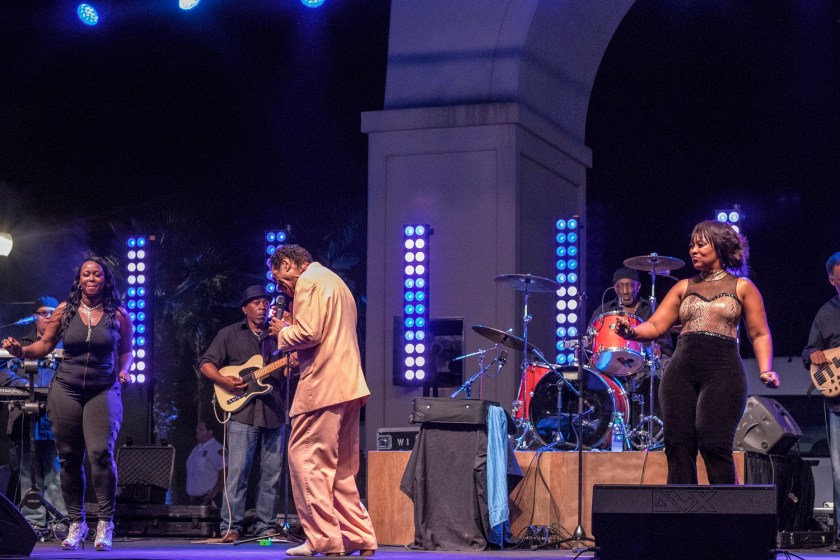
Of course, we could not help but take a picture with it. As famished as we were, we decided to explore the tantalizing food options available. With a very Southern theme mixed with some of the more coastal delicacies, we were served Bayou rice, a variety of local seafood (no oysters this time), and of course some good old-fashioned barbecue. In the meantime, we were enjoying the night music by Bobby Rush.
With over 17 blues awards in his lifetime, 364 records, and 66 years in the musical career, Bobby Rush was a sight to behold. At his early age of 84, he had the crowd grooving to his music pulling in people of all ages.
Not only did he present himself like the “King of the Chitlin’ Circuit” that he is…
…but also did other king impersonations such as the “King of Pop” (Michael Jackson)…
and the “King of Rock and Roll” (Elvis Presley).
To end the evening with a bang, we were dazzled by a firework display that lighted the dark, night sky.
After celebrating the beginning of the Southern Legislative Conference, the Leapsters headed home to rest for the upcoming days filled with adventure.
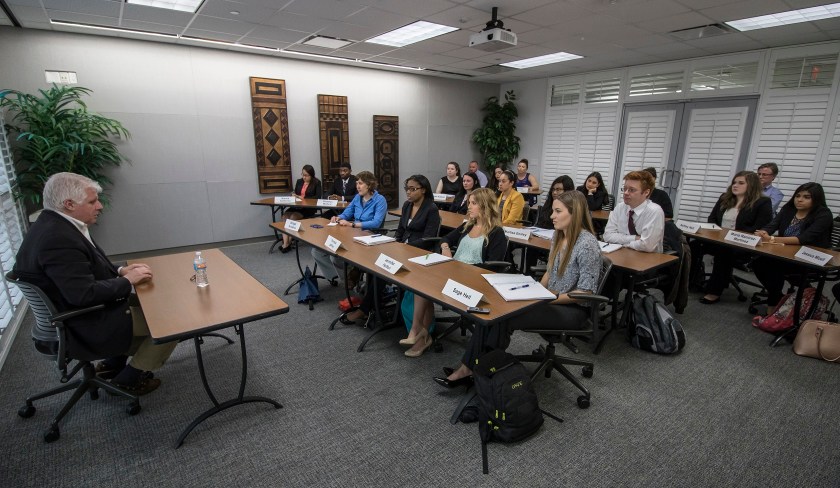
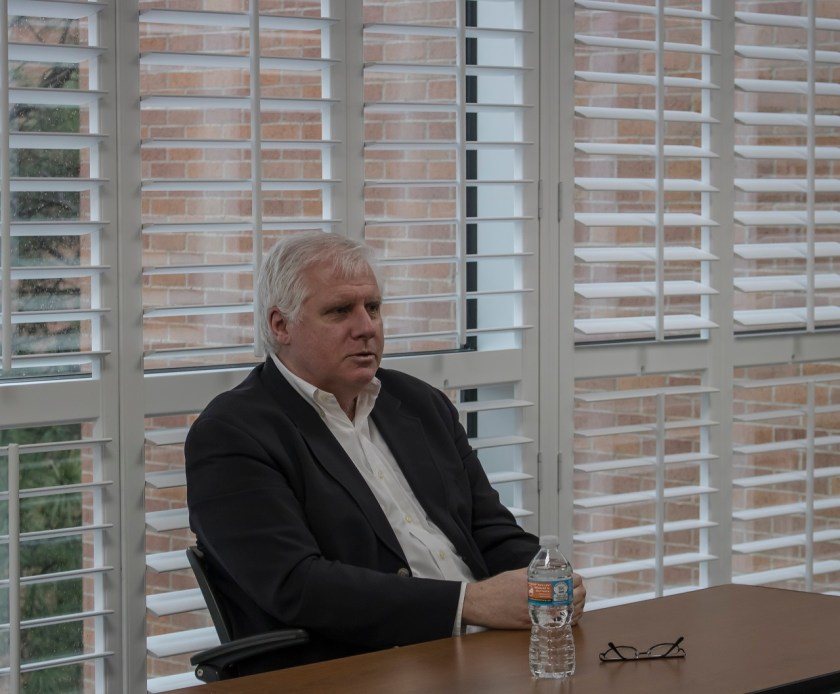
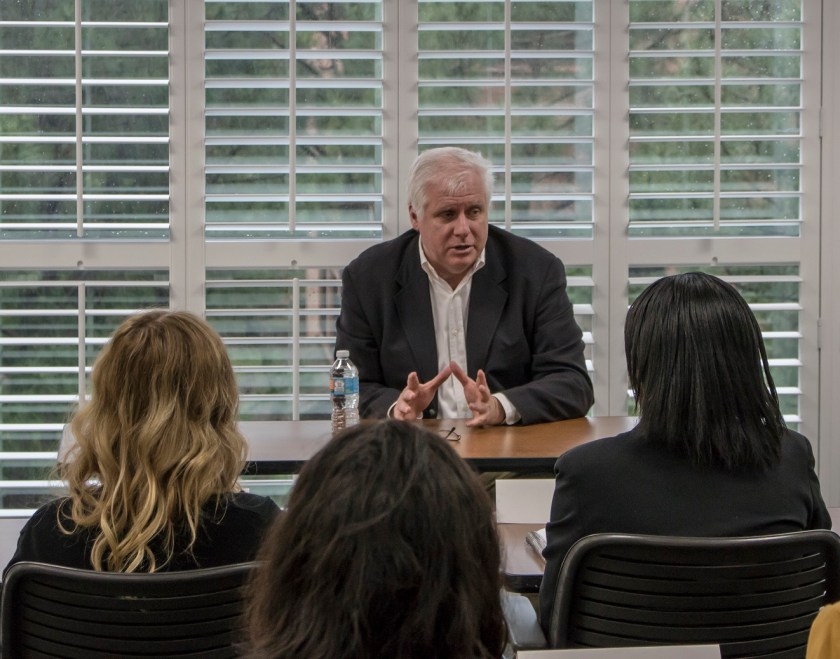
John Nixon spent 14 years as a CIA Analyst, specializing in the Middle East. When Saddam Hussein was captured in 2003, the US Government turned to him to lead the interrogation of the former Iraqi dictator. His book, “Debriefing the President: The Interrogation of Saddam Hussein,” details those interrogations and reveals the authors’ subsequent misgivings about the nature of intelligence, the war in Iraq, and the life of a CIA Analyst. Professor Mike Yawn and his students spoke with Nixon about his experiences.
Mike Yawn: How did you work your way to a career with the CIA?
John Nixon: If someone would have told me in the 1970s that I would be working for the CIA, I wouldn’t have believed them. I had long hair, and I was an avid Grateful Dead fan—with all the baggage that comes with that. But my parents encouraged me to get a good education, and I did, receiving a Bachelor’s Degree and two Masters Degrees. I applied for the CIA and after an incredibly invasive process, I got a job as an Analyst. When I was hired, my first boss asked me how I liked the application process, and I said, “I hated it.” He said, “Yeah, it’s our version of child abuse.”
Mike Yawn: What advice would you give to students who would like to work for an alphabet agency?
John Nixon: As I mentioned, the background check is extensive, but a single mistake won’t sink you. They look at the whole picture—your work, your integrity, and your professionalism. You want that overall picture to be strong to be noticed. But I would also suggest volunteering, even when the job doesn’t sound interesting. I did that, and my supervisors found I was willing to do things for the team. The more experiences you have, the better positioned you are to take opportunities that arise.
Mike Yawn: Didn’t volunteering lead, indirectly, to you being the lead interrogator of Hussein?
John Nixon: Yes. I began my CIA career focusing on Iraq, but I had transitioned to Iran. The Agency needed volunteers to go to Iraq after the war began. It wasn’t a place a lot of people wanted to be, so I filled in. That led directly to me interrogating Saddam Hussein, and it allowed me to write a book about my experiences.
Mike Yawn: What were some of the inside stories you learned specializing in Iraq and Hussein?
John Nixon: Well, he had this dysfunctional family. There were rifts, jealousies, and backstabbing. It was almost like a soap opera. Hussein’s oldest son, Uday, had been hurt badly in an assassination attempt—he was shot 14 times—and he wasn’t the same afterward. He was addicted to drugs, physically disabled, mentally impaired, and the father-son relationship became tense at times. Uday was obsessed with collecting cars, and he had a very impressive collection of rare vehicles in a showroom. Well, Saddam became angry with Uday one day, and he had his security detail torch the showroom, destroying all the cars. All we saw on the monitors, however, was the smoke and fire, and we thought there might be a coup. In fact, Saddam was just teaching his son a very expensive lesson.
Mike Yawn: When Hussein was captured, one of the first items of business was to ensure it was, in fact, Hussein. How did you do that?
John Nixon: Hussein had tribal markings on his wrist and arms, he had a scar on his leg from the bullet wound, and he had a droopy lip. I also had about 30 questions I planned to ask him that only he would know, but when I walked in I thought, “That’s Saddam,” and I didn’t need all 30 questions.
Makayla Baker: As a CIA Analyst, what were your personal feelings as you watched 9-11 unfold?
John Nixon: I was in the middle of writing a paper on the Iranian Judiciary for the Agency. But following 9-11, no one ever read my paper, because no one gave a damn about the Iranian Judiciary. The focus was on terrorism. When I saw what happened on 9-11, my first thought was Hussein and Iraq, but a colleague said, “No, it’s Bin Laden,” and it was. I lived near the Pentagon, and when I saw the clouds of smoke, the image was distressing and the smell was overwhelming. It was an awful day, but in fairness we haven’t had a day like that since then, and a lot of people thought we would.
Jessica Mizell: How often did you go to Iraq, and what was it like living there?
John Nixon: I went to Iraq eight or nine times. I stayed in the Green Zone, which was the most secure place, but which still faced mortar attacks. People were killed there.
Mike Yawn: Why was the intelligence on weapons of mass destruction so wrong?
John Nixon: Well, there was a pervasive belief that Hussein had WMD, and that belief was held internationally, not just by the CIA. I also believed it, and I supported the war, although I now believe it was a mistake. When President Bush came into power in 2001 with the idea that something would have to be done about Hussein, he and his administration were quick to believe the worst reports on him. We also didn’t have a presence in Iraq, so we couldn’t get accurate information. This created a perfect storm of intelligence failure.
Joshua Nolen: Why did you leave the CIA?
John Nixon: I got to the point where I had done what I wanted to do. Over the course of the Iraq War, I was called in frequently to do a Presidential Daily Briefing. For two years, I briefed President Bush every Monday morning. The Obama Administration, on the other hand, wasn’t as interested in Iraq. In the first two years of his administration, we briefed the President once. The CIA became something of a piñata under the Bush and Obama administrations, and some of the blame was well deserved. But the President is always going to need good intelligence and the CIA has the best intelligence there is to offer. I’m very critical of the agency in the book, but I still recognize that we can do things better than almost anyone, provided we have the right leadership and resources.
Danielle Lieberman: What do you think is the best way to gain analytical skills after college, before starting your profession?
John Nixon: First, you have to read. Think about what you read, and try to apply to the world. Then, write. I encourage blogging, where you can develop your writing style and your reasoning abilities. You’ll need all of those skills in a high-level career.