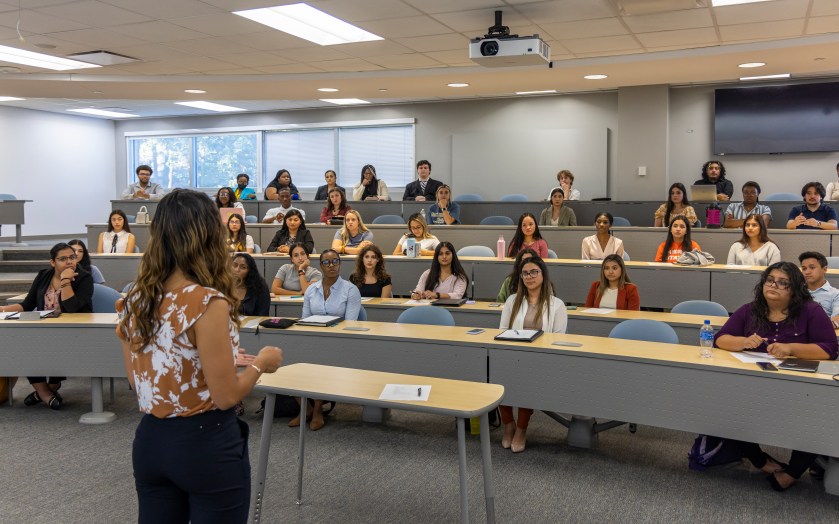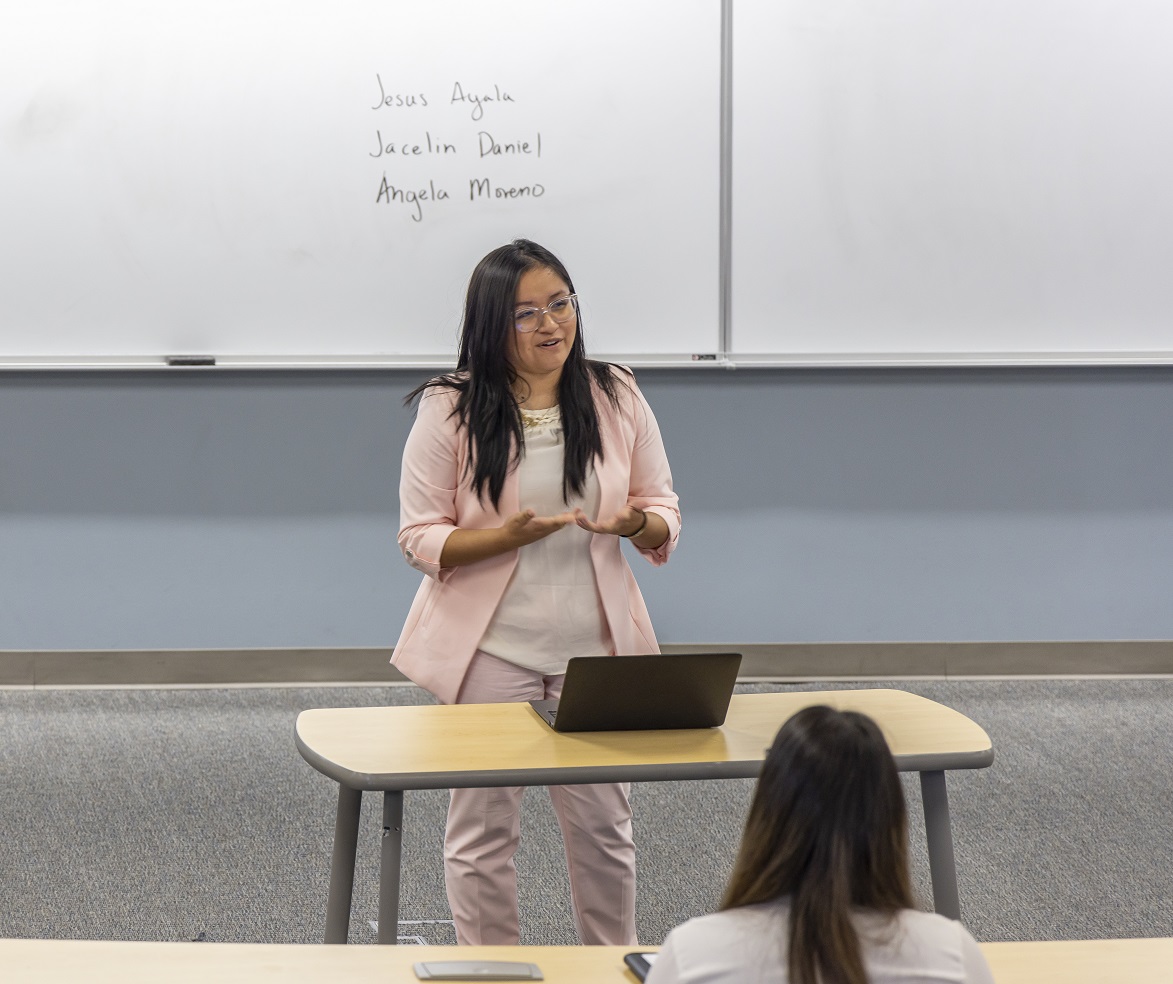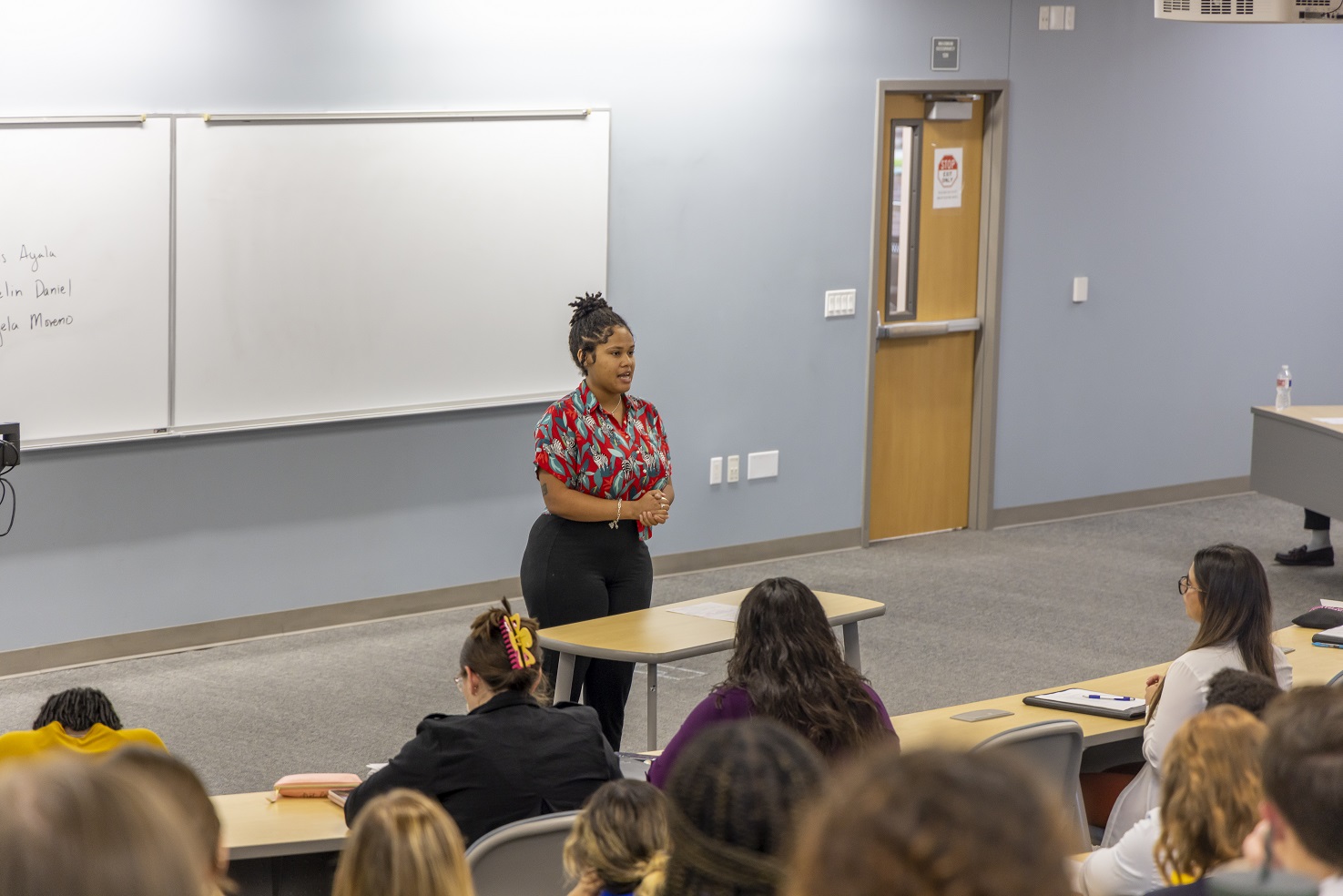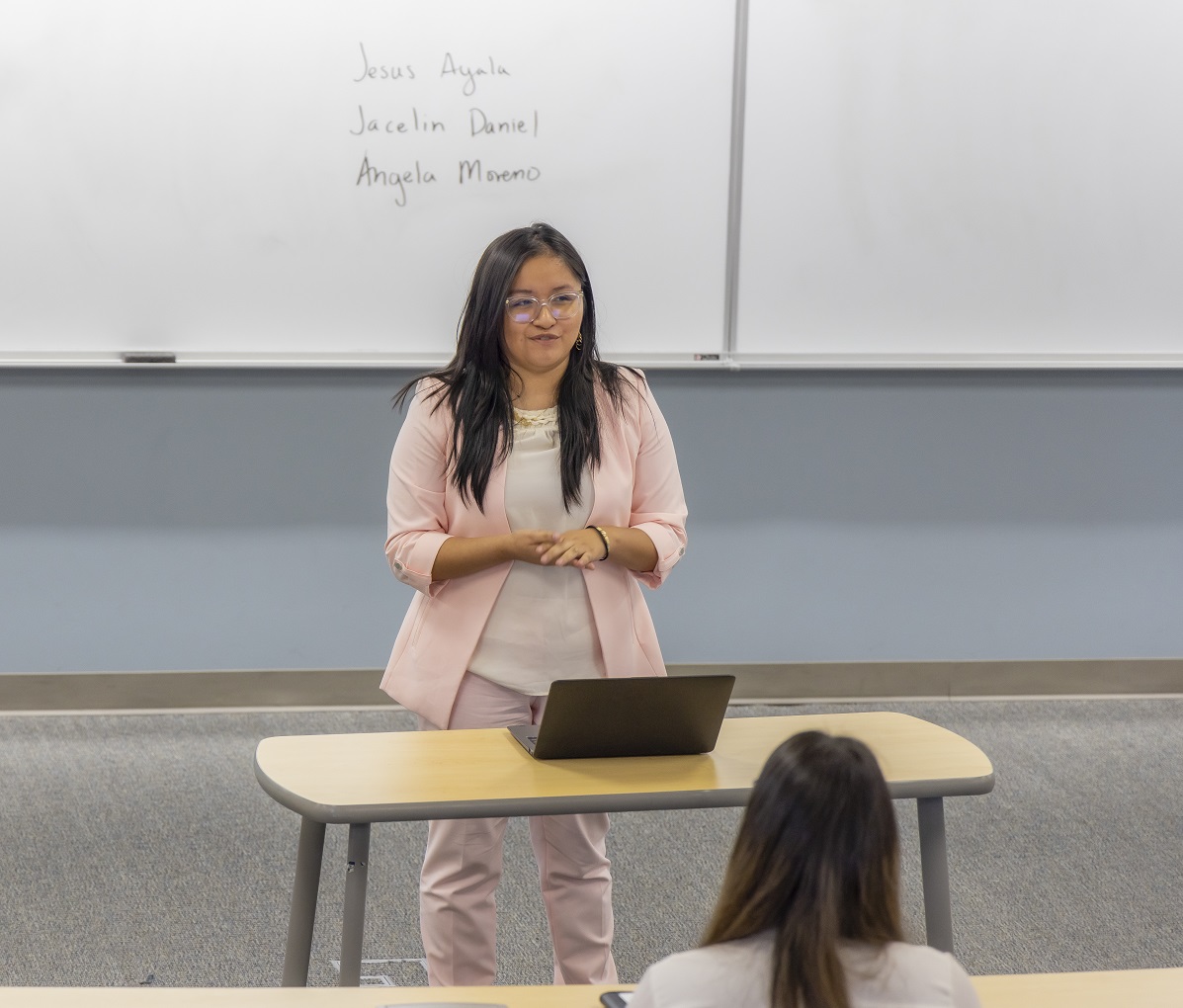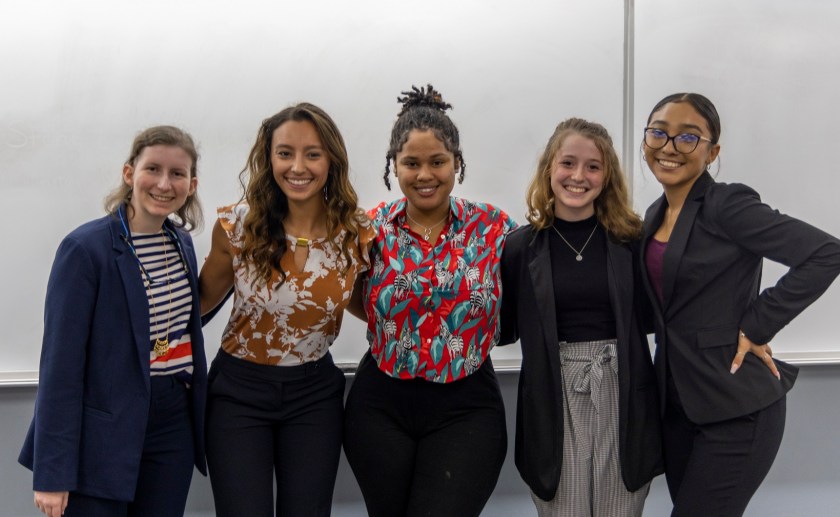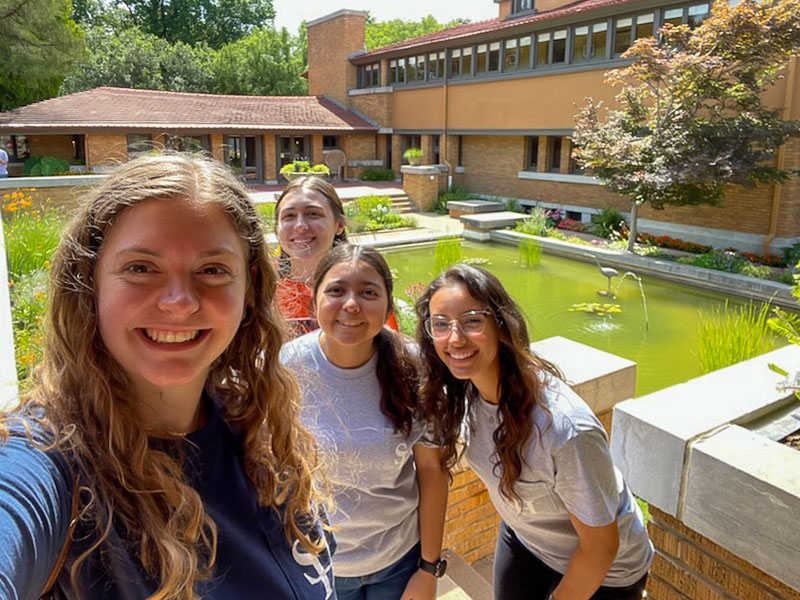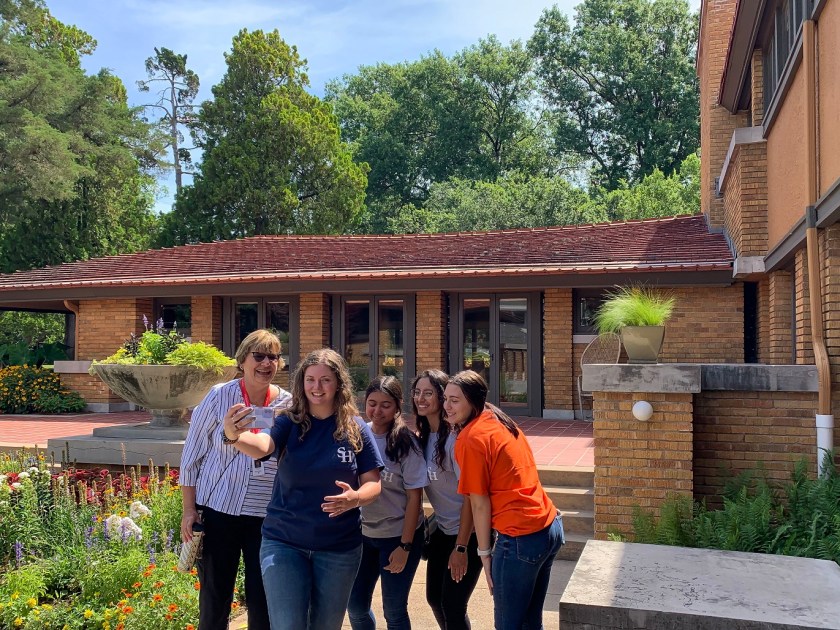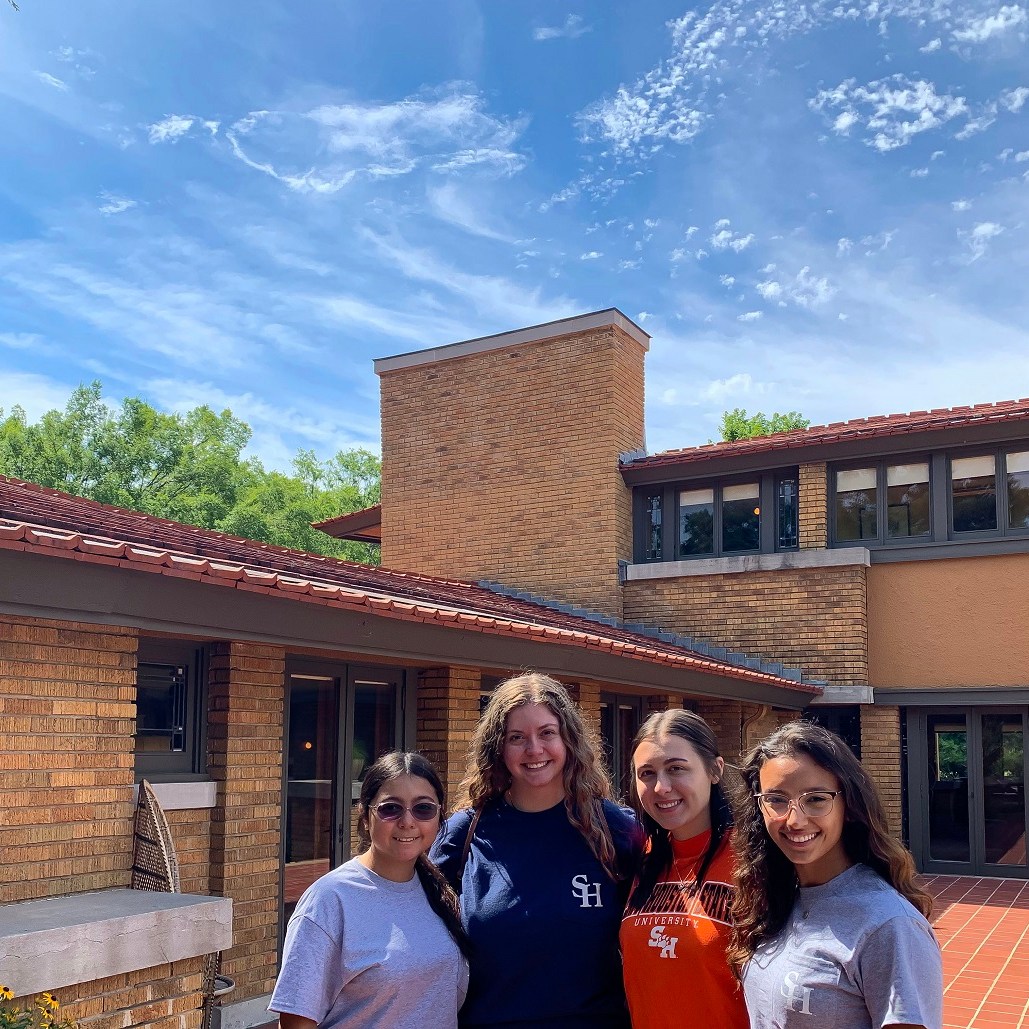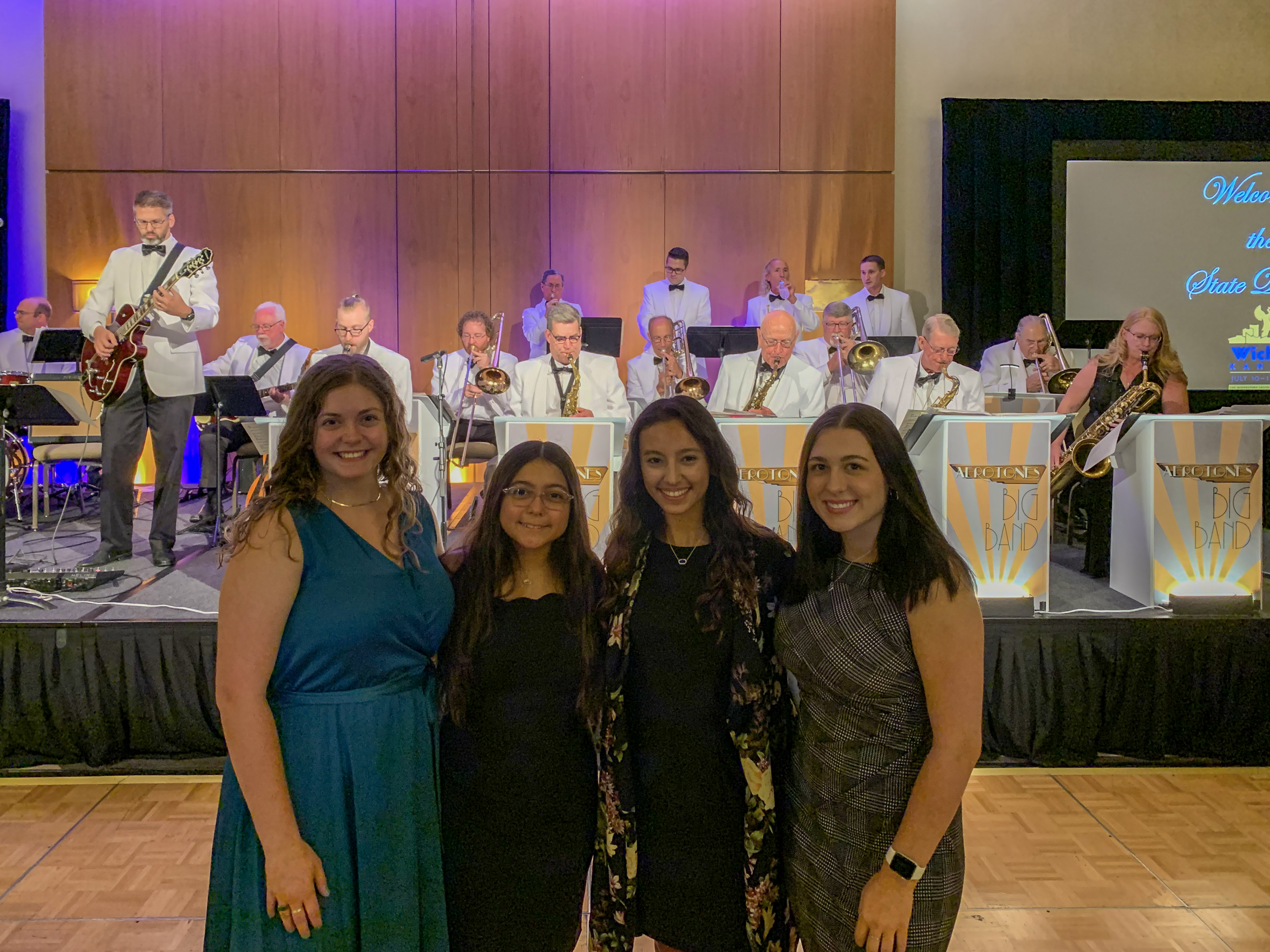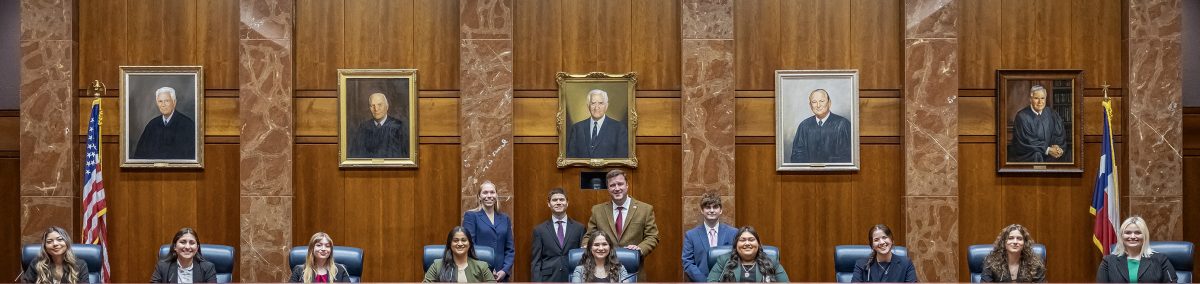
Although it is summer, and we are all working in various jobs, LEAP Ambassadors current and former carpooled to Madison County to witness, first-hand, an attempted murder trial in Madison County. This opportunity came at the invitation of Judge David Moorman, the presiding judge in the case.
As in almost all trials, the defendant was present in the court, along with the victim and her family. Our experience with the Courts has been restricted mostly to witnessing the 10th Court of Appeals, where attendance by defendants or victims is rare, so this was a new experience for us.
Judge Moorman began by reading all the charges–all ten counts–that the jury would have to determine whether the defendant (Alex Carter) was (1) not guilty, (2) guilty of a lesser charge, or (3) not guilty for each count. The key charge was aggravated assault with a deadly weapon, stemming from incidents allegedly occurring in early May 2021. In sum, the charges could result in imprisonment for more than 20 years.
Following the opening argument from the state, Frank Blazek, a well-known criminal defense lawyer (and former Walker County DA), opened the final arguments for the defense side by disputing the prosecution’s argument and presenting photo evidence to the jury, focusing on the technicalities of the events.
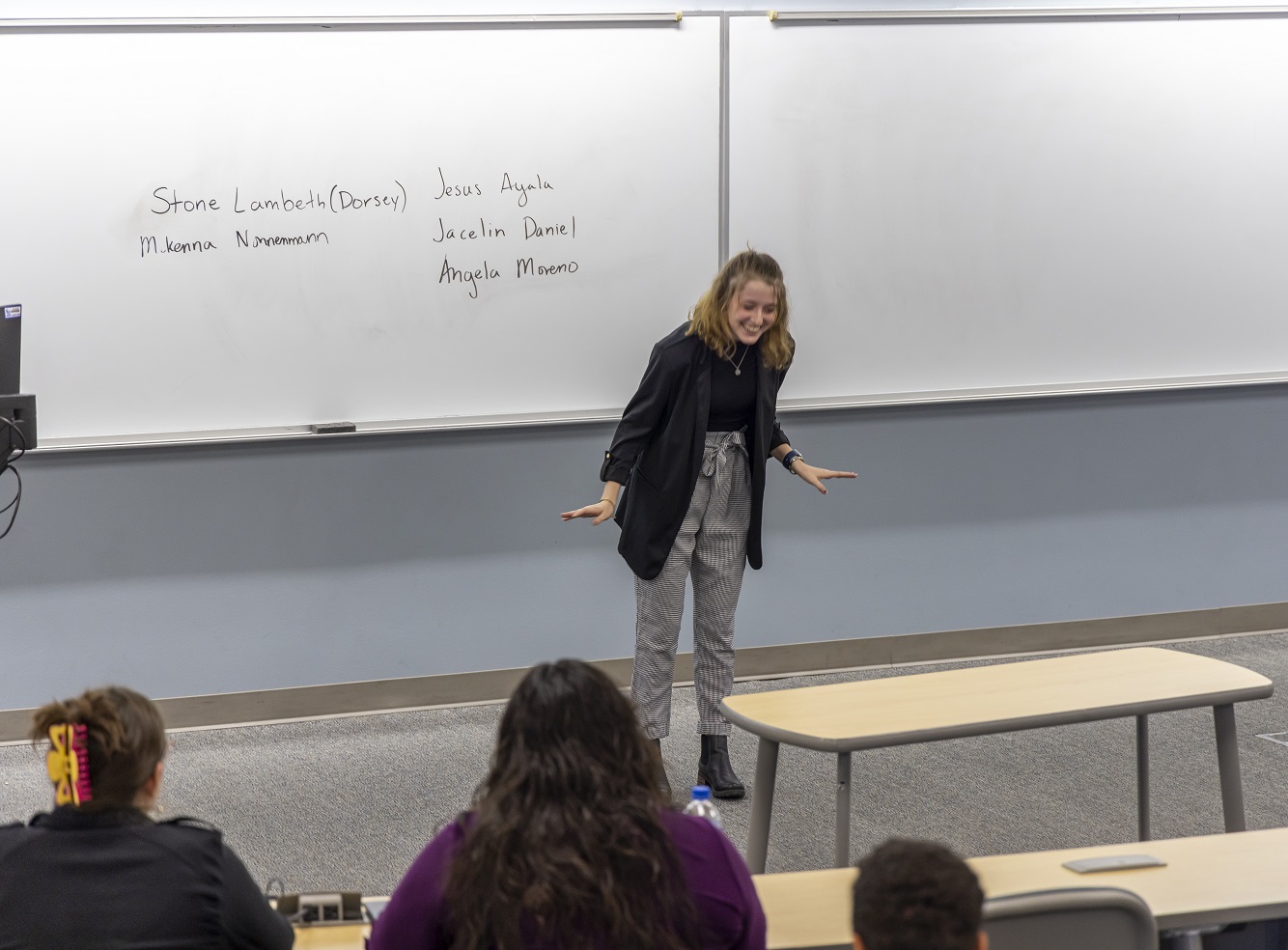
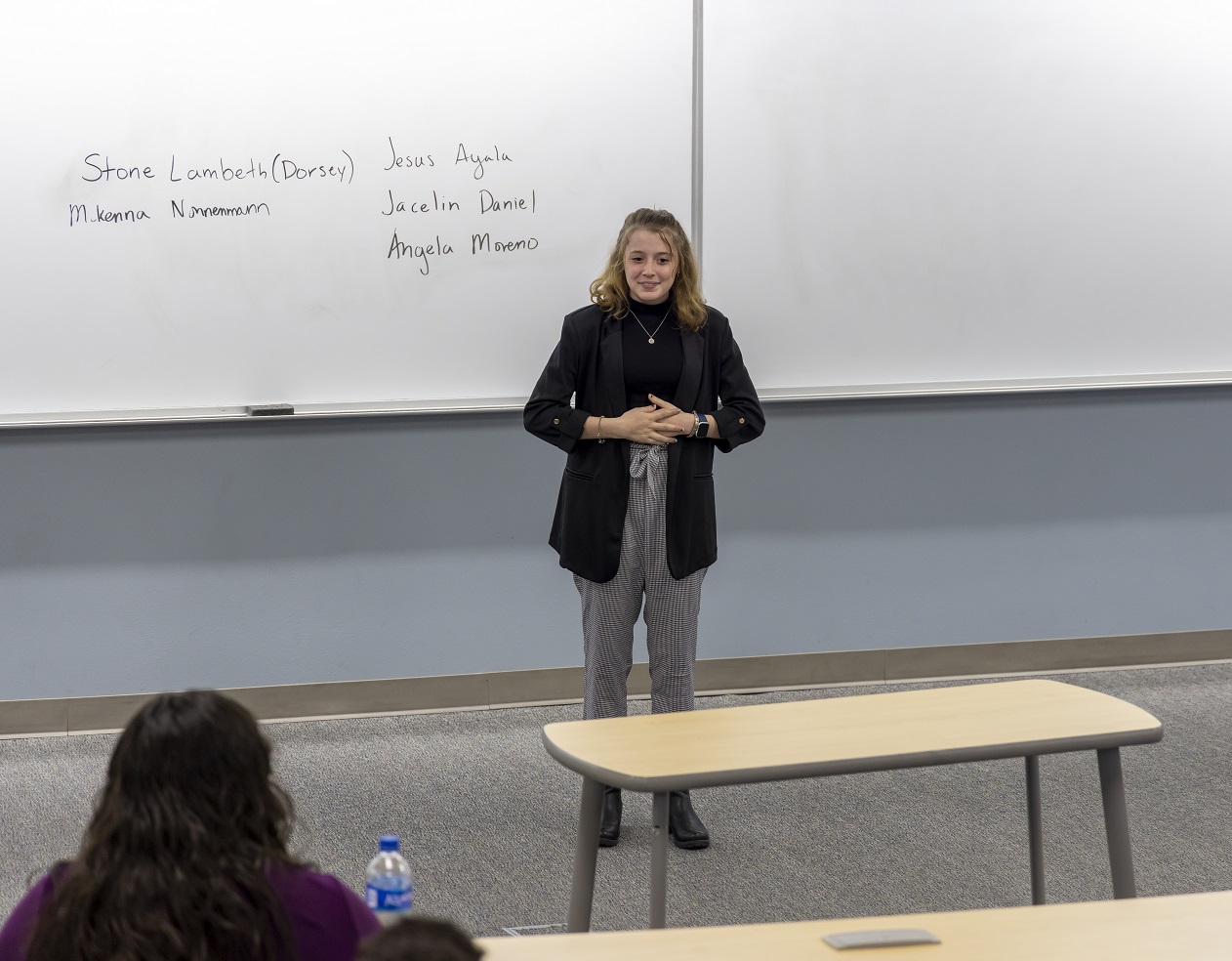
Robin Whitney, an ADA for Madison County, ended the final arguments for the trial. Her deliberation was very different from the rest, probably one of the best, with a compelling rebuttal speech and heartfelt performance. Robin’s main focus was to “redirect” the jury, encouraging them to focus on the most compelling evidence for the prosecution side. These tactics, of course, are staples of our adversarial court system.
After the jury broke for deliberation, we had the ability to speak to Judge Moorman and lawyers Whitney and Blazek. We even had the opportunity to see the photo exhibits as we waited for the jury to decide! All of these experiences help guide us in our path through pre-law, and we are immensely grateful for the attorneys’ willingness to spend time helping undergraduates.
Not knowing how much longer it would take after already being there for six hours, unfortunately, we said our goodbyes and began our trip back to Huntsville, pondering on what we thought the verdict would be–which, as of this writing, is still not decided!
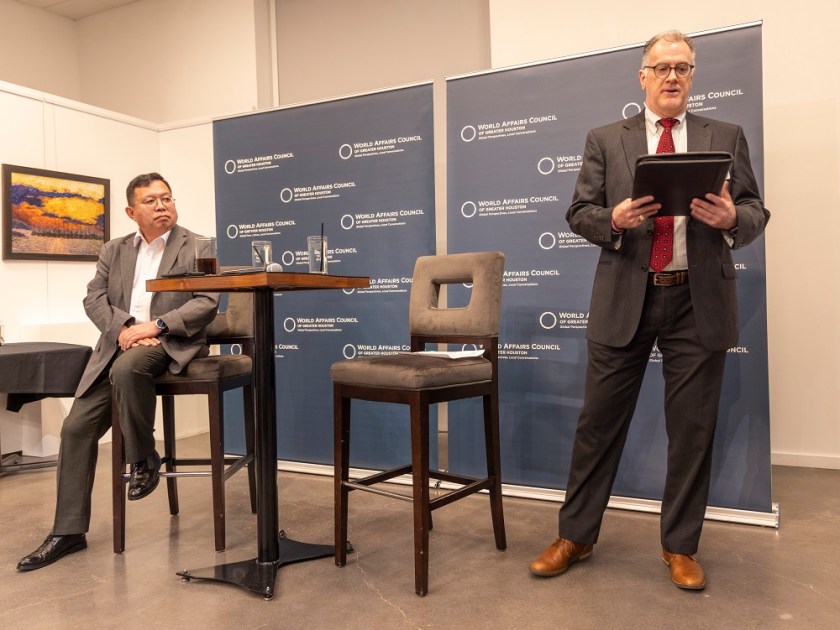
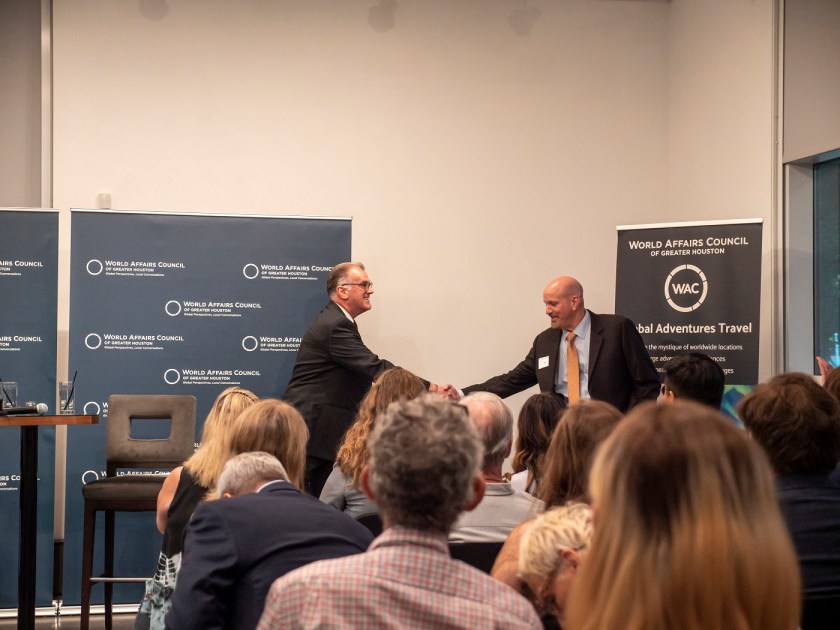
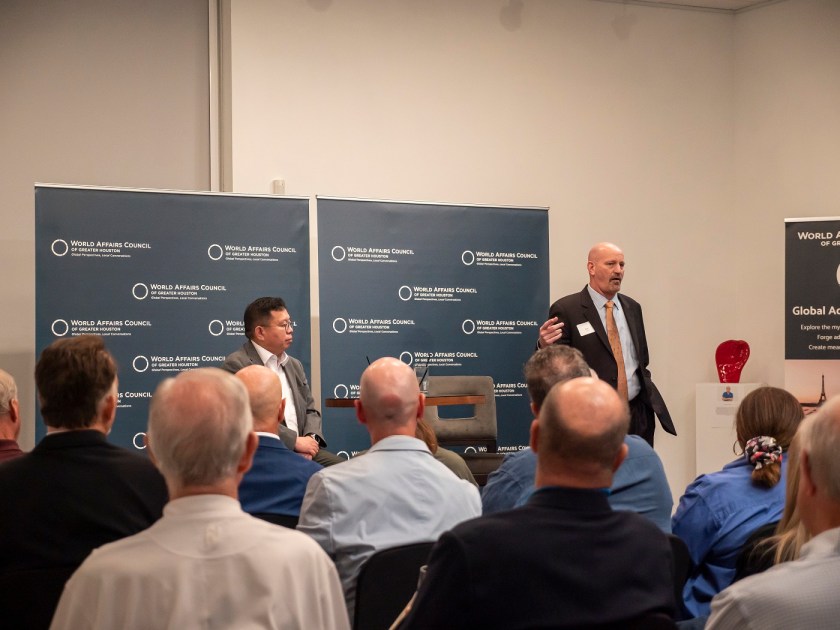
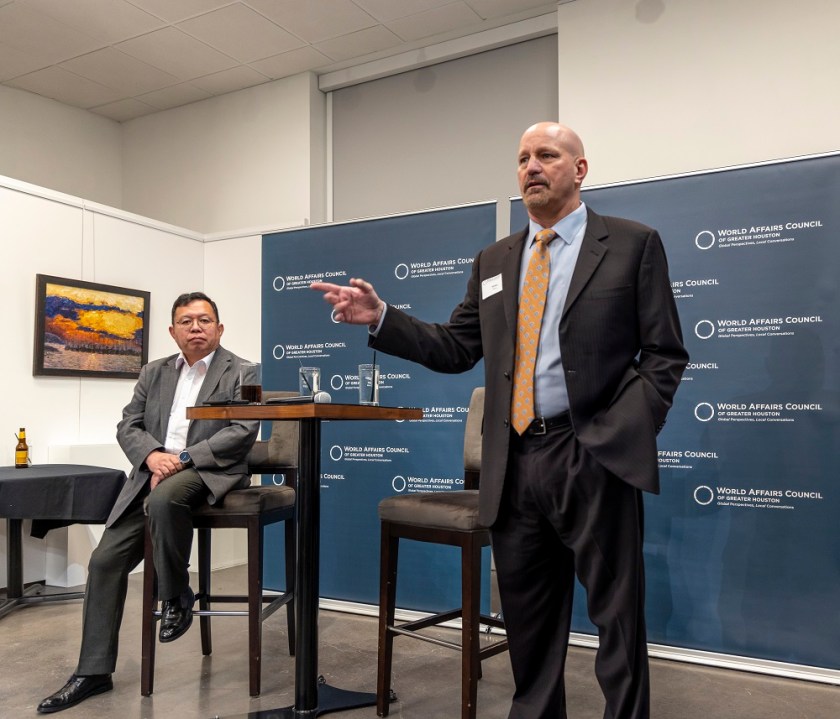
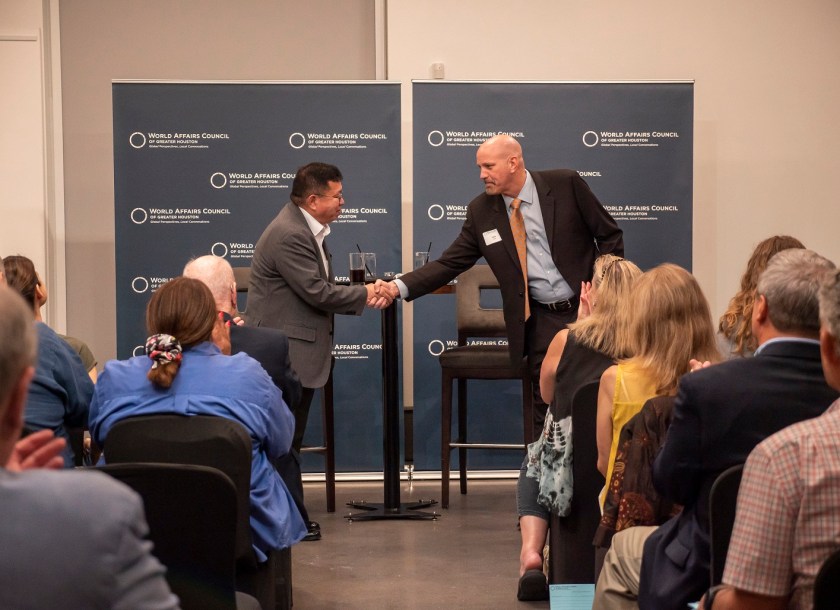
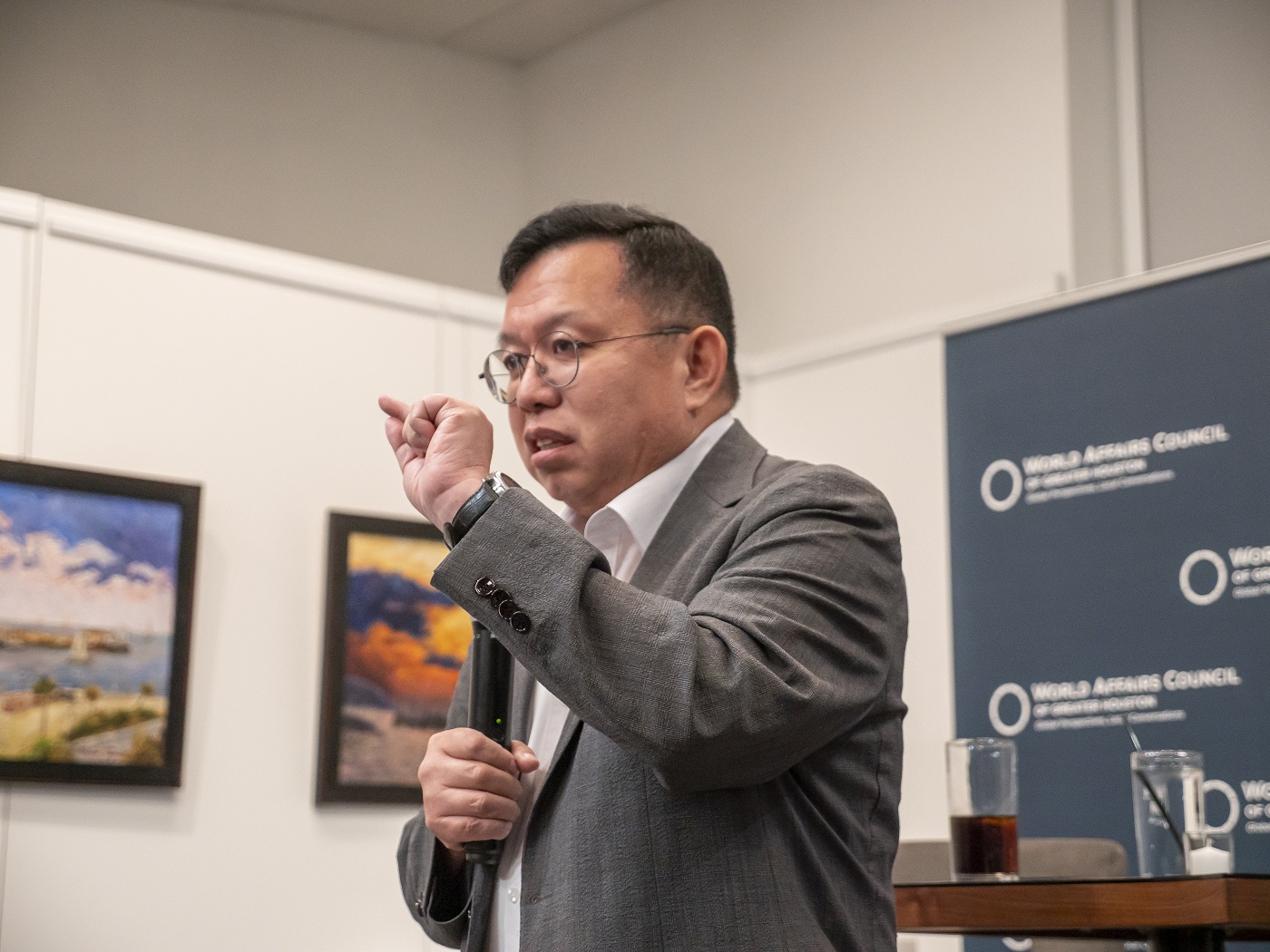
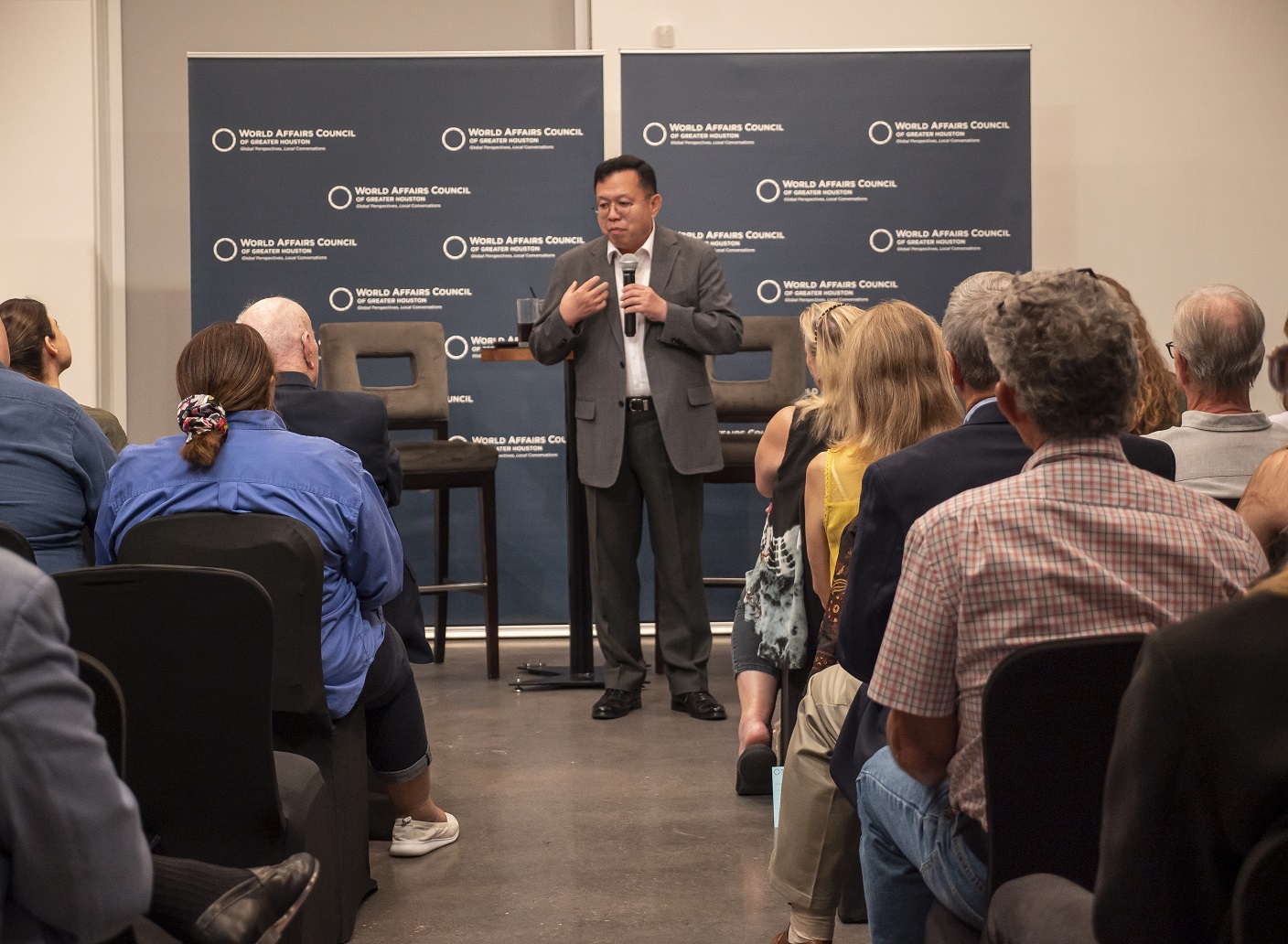
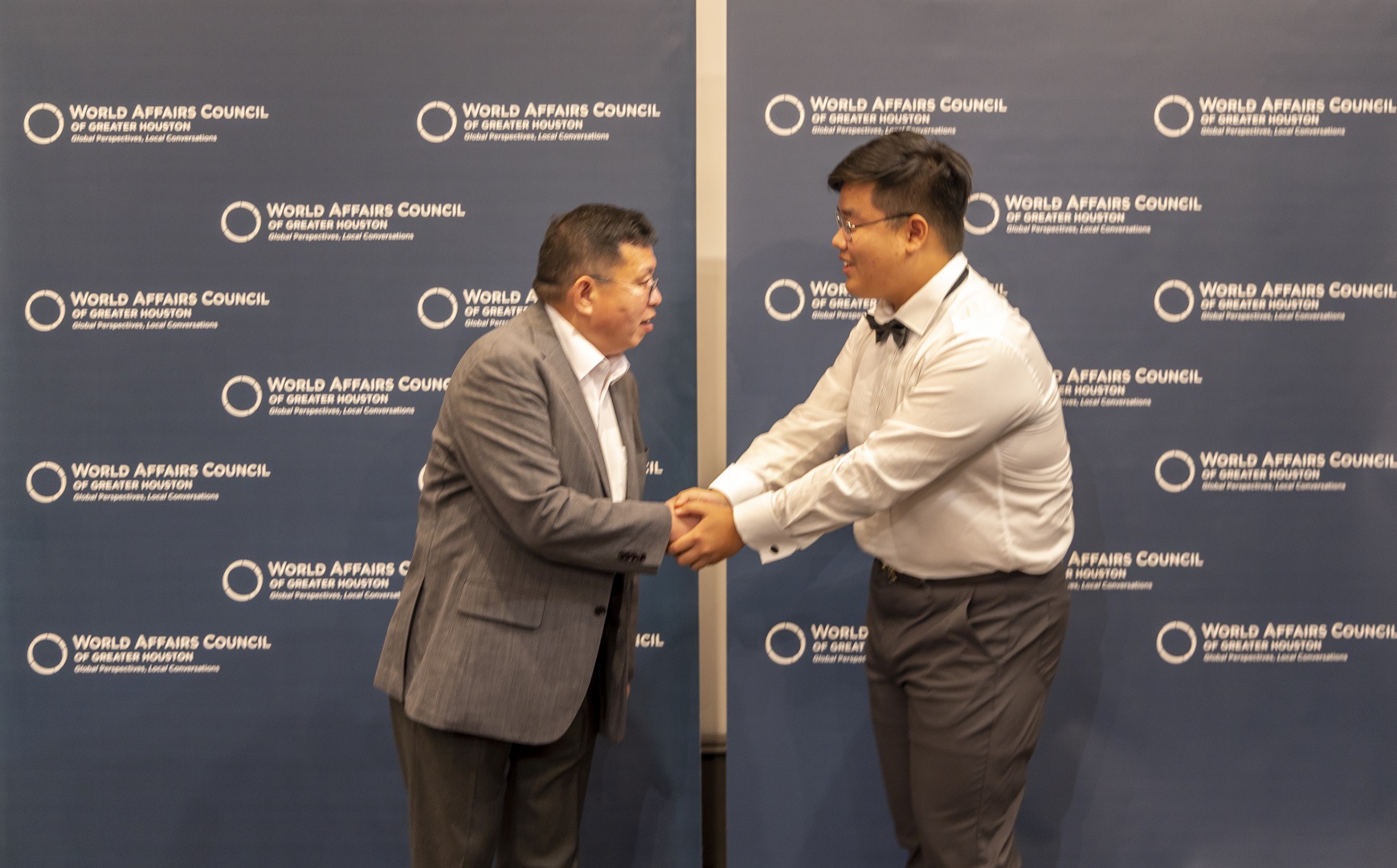
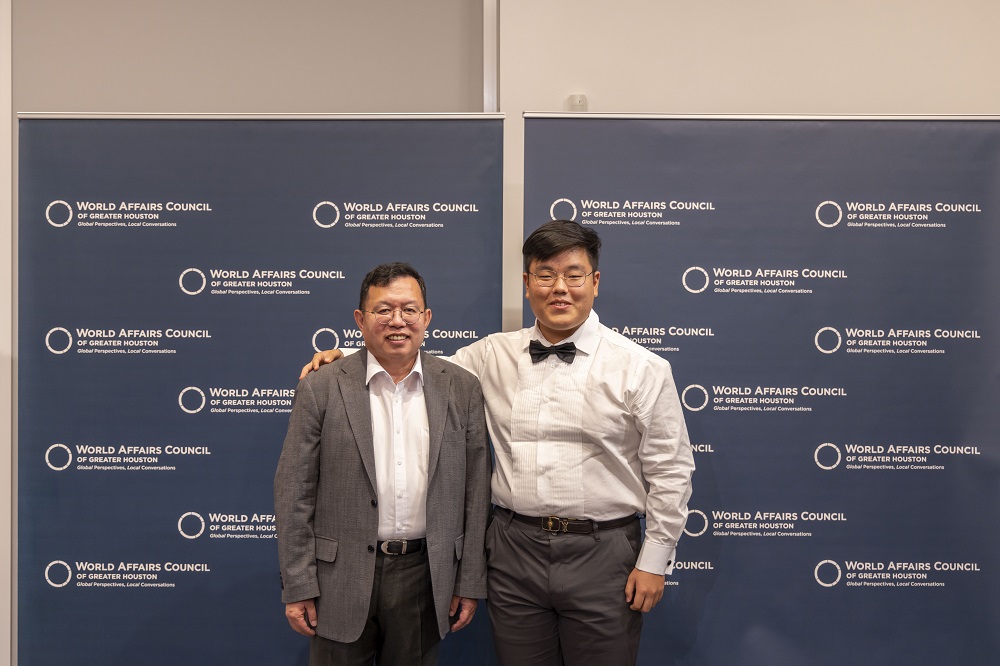
It’s not every day you get to hear from a Nobel Peace Prize nominee, but LEAP students had just that chance yesterday. Dr. Peter Hotez, Professor of Pediatrics and Founding Dean of the National School of Tropical Medicine at Baylor College of Medicine—and, most recently, developer of a vaccine against COVID—discussed the role of expertise and politics in addressing global pandemics in another interesting event hosted by the World Affairs Council.
Hotez has been in the trenches fighting the COVID-19 pandemic, while also conducting perhaps 1,000 television, radio, and podcast interviews since the spread of COVID. Remarkably, he’s also had time to work with his co-researcher, Dr. Maria Elena Bottazzi, Associate Dean of the National School of Tropical Medicine, in developing CORBEVEAX, a low-cost vaccine that protects against COVID. Notably, Hotez and Bottazzi did not patent the vaccine—foregoing millions in income to assure lower pricing for the medicine.
Hotez’s discussion was wide-ranging, but he stressed three major points: the origin of COVID, the politicization of medicine, and the future of pandemics.
Hotez believes it’s important to uncover the origins of COVID, but he finds conspiracy theories to be misguided. While it is possible, he notes, that COVID escaped from a lab in China, there’s no evidence for that theory, and pursuing it with much vigor is likely to distract researchers from the most likely answer, which is that COVID either developed from—or was spread through—a wet market in China.
What most clearly distresses Hotez, however, is the politicization of COVID…
…a thread skillfully navigated by the World Affairs Council moderator, Ronan O’Malley.
While prior to the COVID-19 pandemic, anti-vaxxers could be found on the left and right, more or less equally, the right-wing of the Republican Party seemed to embrace conspiracy theories not only about the origin of COVID, but also about almost any US government efforts to combat COVID.
Some believed that COVID itself was a hoax wrought by the US government, while others accepted the threat of COVID, but believed that any medicine promoted by the government was part of a deep state/big pharma conspiracy for profits, leading to the misguided use of Ivermectin and other nostrums. Hotez noted that such beliefs led to more than a quarter of a million deaths of people who could have been vaccinated, but weren’t.
Hotez called this movement an aggressive, anti-science faction, and he considers this dangerous, not only as it relates to COVID, but also how it relates to the next pandemic. “Nature”, Hotez noted, “is not coy.
It’s sending us a clear message.” That message, it seems, is humans need to get it together, which involves not only identifying the origins and spreads of viruses such as COVID-19, but also winning an informational war about science itself. Fighting pandemics is difficult, but it’s infinitely more difficult when a significant portion of the population refuses to adopt common-sense approaches to fighting the pandemic.
Following the event, Dr. Hotez briefly met with us, asked us about our majors (History, Biology, and Political Science), and he suggested that it was about time he get to Sam Houston State University to speak, a point on which all of us agreed.
Meru’s Grill
Following the event, with much on our mind, we went to Meru’s Grill nearby, and we discussed much of what we learned. None of us had been to Meru’s, but it was a great find: the staff were friendly and knowledgeable, the ambience was inviting, and the food was amazing. The appetizers, which included the “Avocado Bomb” and the “Smoked Salmon,” were refreshing and innovative.
The avocado bomb, for example, had raw Hawaiian Tuna, avocado (of course), a dressing, and possibly pineapple, a combination we weren’t expecting, but couldn’t get enough of. Our appetizers included two shrimp dishes, a Thai salad, and a burger, all of which were truly excellent in both taste and presentation.
Perhaps our favorite part of the meal, however, was the carrot cake dessert, recommended to us by our excellent server, and a truly delicious delicacy in the form of a square “slice” of cake, with icing unsurpassed in texture, flavor, and volume.
Meru’s Grill isn’t part of the medical field, but it definitely eased our worries and improved our spirits, topping off a wonderful night of education, good company, and great food.
Typically, you only think about the fire department when there’s an emergency. But on a calm day in Huntsville, Chief Greg Mathis took SHSU students from the LEAP Center on an informative tour of the Huntsville Fire Department.
We began our tour in the lobby of the fire station where they have a 1927 restored Huntsville fire truck on display. Chief Mathis gave us the history of the fire truck, as well as the history of some of the pictures and antique fire equipment they also had on display. Interestingly, he had a black-ball lottery device, which determined–way back in the day–whether an individual would be hired. The firemen all voted on the potential new hire, and if they voted yes, a white ball was put into the receptacle; a black ball was a no vote. A single no vote would prevent a hire–hence the term “black-balled.”
Our next stop on the tour was the Training Room. The room is designed to serve as a back-up emergency services center, if needed, and it is fully wired for electricity, backup power, wi-fi, and high-speed cable.
We also had a chance to see the residential area, and this is where many of our questions were asked. The department, including this room, is entirely ADA compliant, a television area that was very inviting, and an industrial kitchen with a hand-made dining table, where holiday dinners take place.
The area also has a dorm-like living arrangement for when the firemen need to sleep. There are bunk rooms with sliding barn doors and four closets in each room. While each fire fighter gets his/her own room for that shift, the room may be used the next night (and the next, and the next) by different firefighters, hence the need for separate closets for clothes and linens and such. It’s a great place to sleep, but even if it invites deep sleep, the firemen all awake when an alarm goes off, alerting the personnel to what might be called an emerging situation.
A typical shift is one-day on, three days off, although occasionally personnel have to work an extra 12-24 hours overtime.
While some of the dangers of being a firefighter are obvious, there are other, less obvious, threats, one of which is cancer. On the job, you get exposed to numerous cancerous chemicals, which makes firefighters roughly 15% more likely to die from cancer compared to the general population. Because of this, the fire station provides free routine cancer checks to their crew. In addition, numerous precautions are taken: the crew must leave their gear in the locker room (which is separated from the main quarters), take a shower, and generally keep contaminated items out of clean areas.
The firefighters also get access to a private gym in the fire station. This gym is supplied with equipment like a rowing machine, treadmill, and a Jacobs Ladder. A gym is provided in-house, and the crew are allowed one-hour a day “on the clock” (assuming other work in the station is not immediately needed). This helps the firefighters with both mental and physical health–the latter being particularly important for their job duties.
Of course, you can’t visit a fire station without seeing the big trucks!
We got to learn about how the firetrucks work and even got to press the siren button, although the siren doesn’t work when the truck isn’t on. Who knew?
We also got to see some of the heavy high-tech gadgets they have for opening, pushing open, or cutting pieces of metal that would otherwise remain stuck–the jaws of life.
We learned that some of us are probably capable of handling this equipment….
…and others probably aren’t….
This was one of our favorite parts of the tour, and we were grateful for our great tour guide.
We finished a fun photo in front of the firetruck with Chief Mathis, who was super generous with his time, knowledge, and our lack of knowledge on all things fireman!
As community members in Huntsville gathered at Kate Barr Ross Park to celebrate July Fourth, smiles glistened off children’s faces, and relaxation ran through the parents’ bodies, knowing their children would have a safe and fun July fourth. There was fun for the LEAP Ambassadors as well, but our primary job was to volunteer for the City’s annual Fourth of July festivities.
We were working under the supervision of our friend, Isabel Behm, who has a City internship, and who was, in turn, working under the supervision of Kristy Wheeler and Penny Joiner. And there was a lot of supervision to give–hundreds of people came out to join the fun–fun that included a selfie station, face-painting, a rock wall, a bouncy house, candle-making, food vendors, and a dunking booth.
In fact, we took advantage of some of the fun. Before we got sweaty–or, before we got too sweaty–we made use of the selfie station, taking photos with props…
….and without props.
Others also took advantage of this station throughout the day.
Another big crowd pleaser was the rock-climbing wall. Reaching the top was quite an accomplishment, providing a workout, a lot of fun, and the sense that you could touch the clouds!
If citizens wanted to take out some aggression, they could also try the dunking booth. Local celebrities such as Glenn Edwards (KSAM), Aron Kulhavy (City Manager), Greg Mathis (Fire Chief)…
…and Penny Joiner (Director of Parks and Recreation) sat in the water seat, and for a dollar, people could get three tosses of a softball for an attempted dunking. Few people besides Kristy Wheeler hit the target honestly…
…but a lot of people took the opportunity to run up and use their hands to dunk the celebrity.
It’s possible that we did that to Aron Kulhavy a couple of times….
Thankfully, however, Mr. Kulhavy does not hold grudges, and he even took a selfie with us afterward–photobombed by a police officer!
Perhaps the most rewarding aspect of the day was seeing the kids have fun at the event. Indeed, once they were cleared by us to go, they overflowed with excitement and headed straight to the fun activities. A fan favorite was the watermelon-eating contest…
…where one young person actually won twice!
Of course, the Ambassadors couldn’t sit out this event. Morgan and I were nervous and excited for this event, and it lived up to its billing. We dove into this event, doing our best to keep our hands behind our back, while not making too much of a mess. This was only partially successful.
Of course, it took me almost no time to recover from the loss and massive intake of watermelon; within seconds I was on my phone!
Although we lost the competition, we and the entire LEAP program got to see how different departments work together to build a better Huntsville community.
Of course, the watermelon contest wasn’t the only event. There was also face-painting by Lacy Wilkinson…
…leather-working…
…balloon animals…
…candle making.
Another fan favorite was the bouncy-houses, which the kids loved (it’s possible some of us slid down the slide…).
And what do you think could top that entire afternoon? Fireworks, of course! The City put on a great show for the 1,000+ people who came out, and it was quite a show, building up to a grande finale.
It was a day to remember for us: the smell of fresh burgers, the fun of rock-climbing, the joy springing from each family that entered the park, and the beautiful fireworks helped bring a community spirit that is a part of living here.
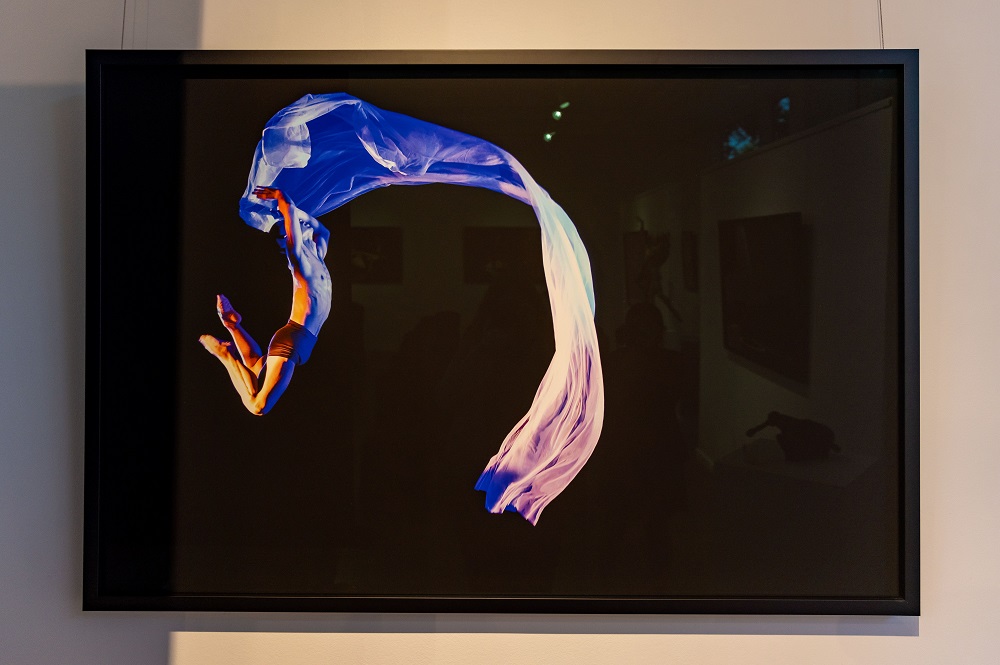
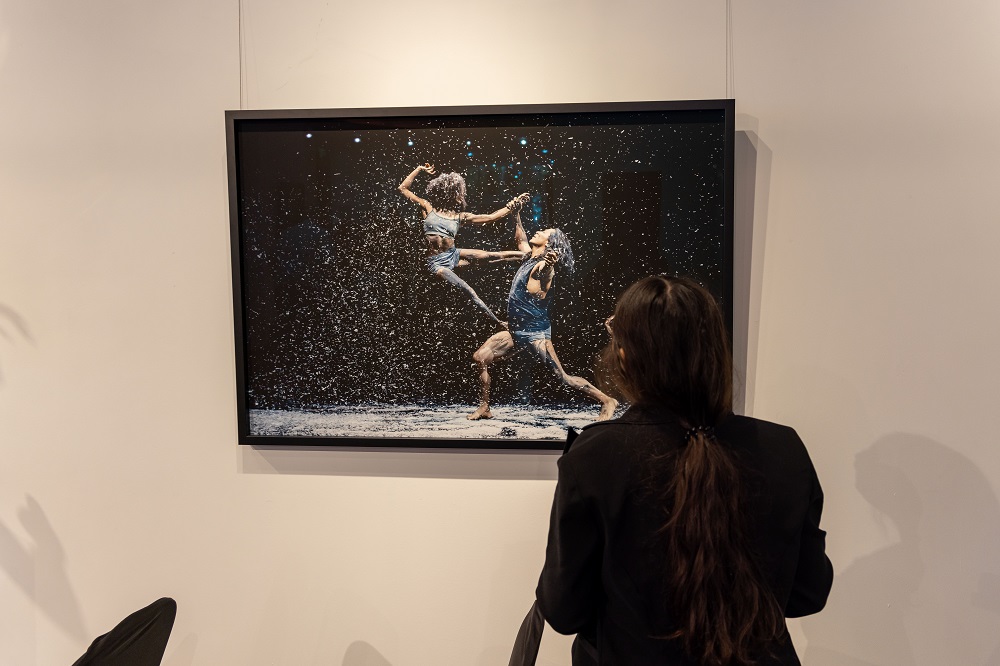
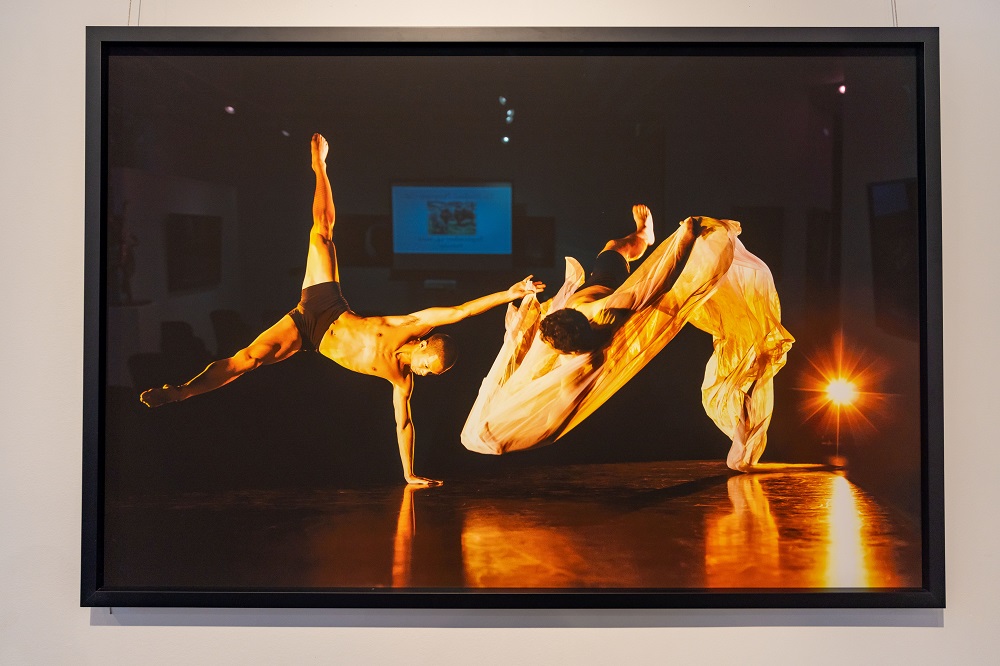
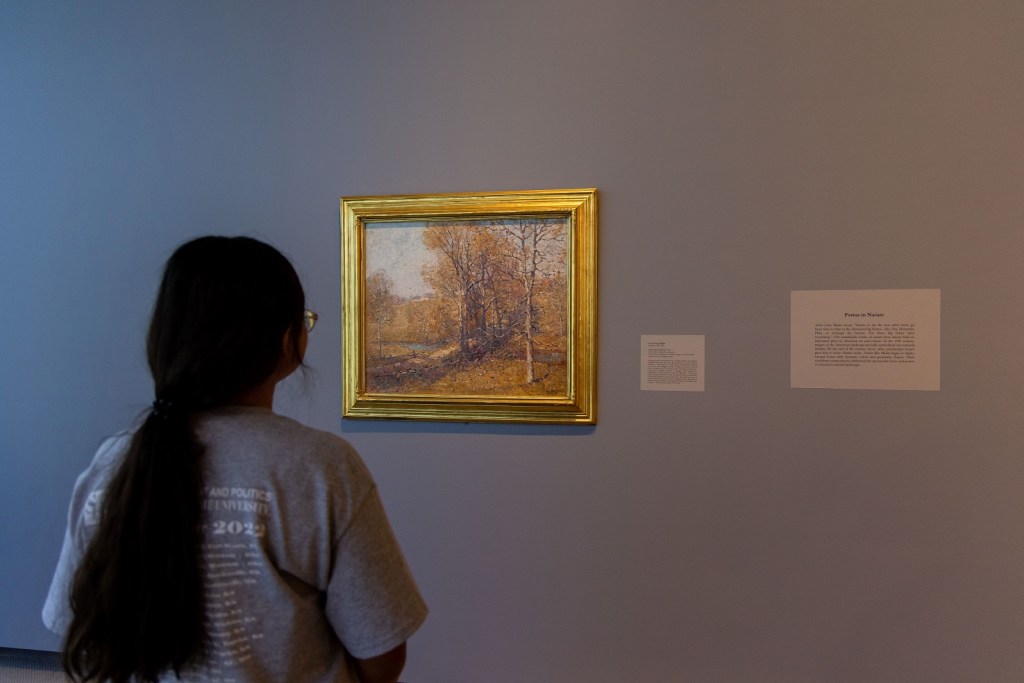
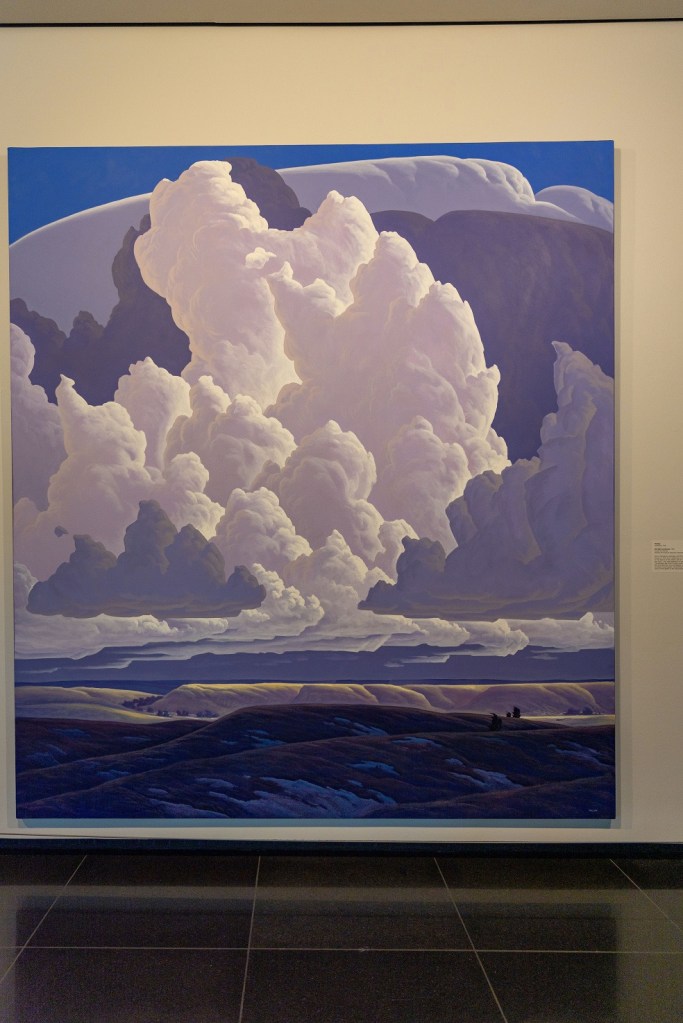
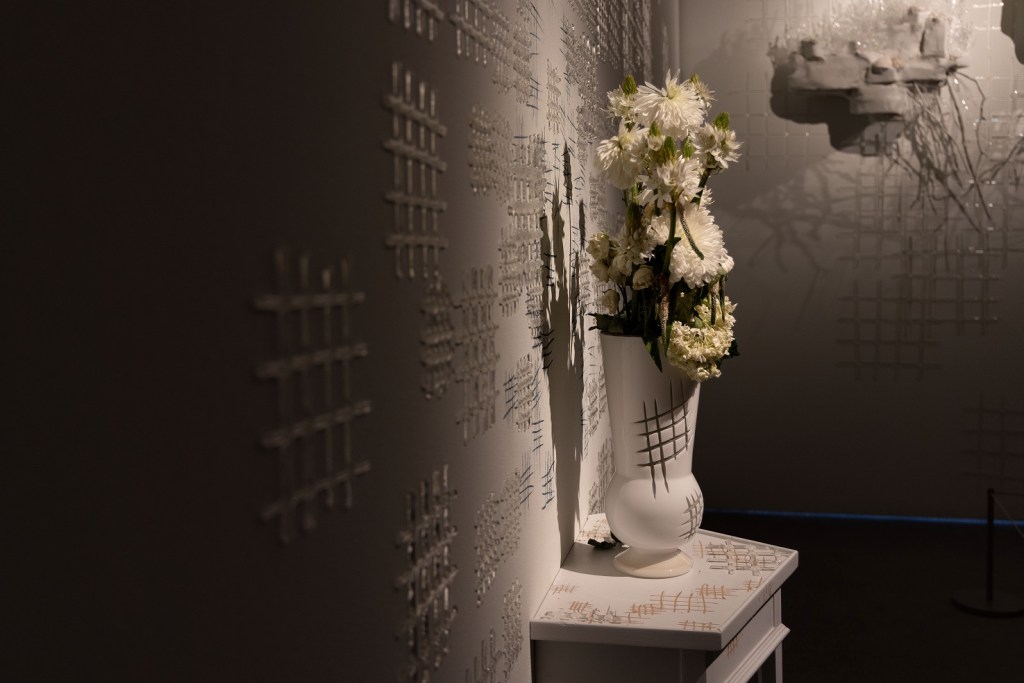
Our evening–and my first LEAP Center event–began with a trip to the Glade Gallery, which hosts not only beautiful art, but also many of the events held by the World Affairs Council.
At the Glade Gallery we viewed an array of paintings and sculptures. As we were roaming the gallery, we noticed some art pieces that also happened to be for sale- some were priced up to $31,000!
And we even saw a Marc Chagall!
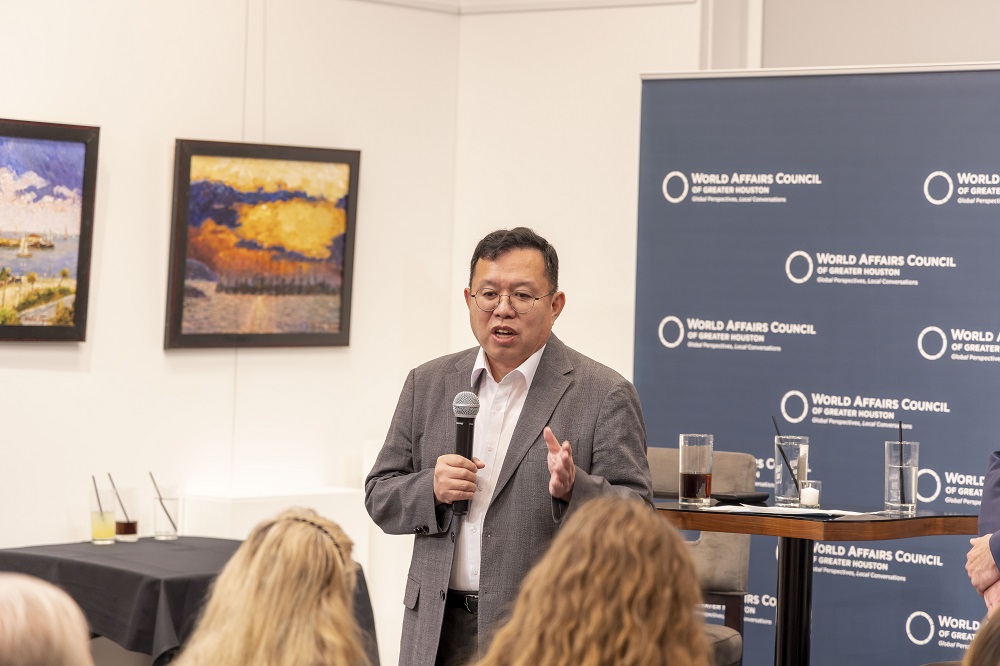
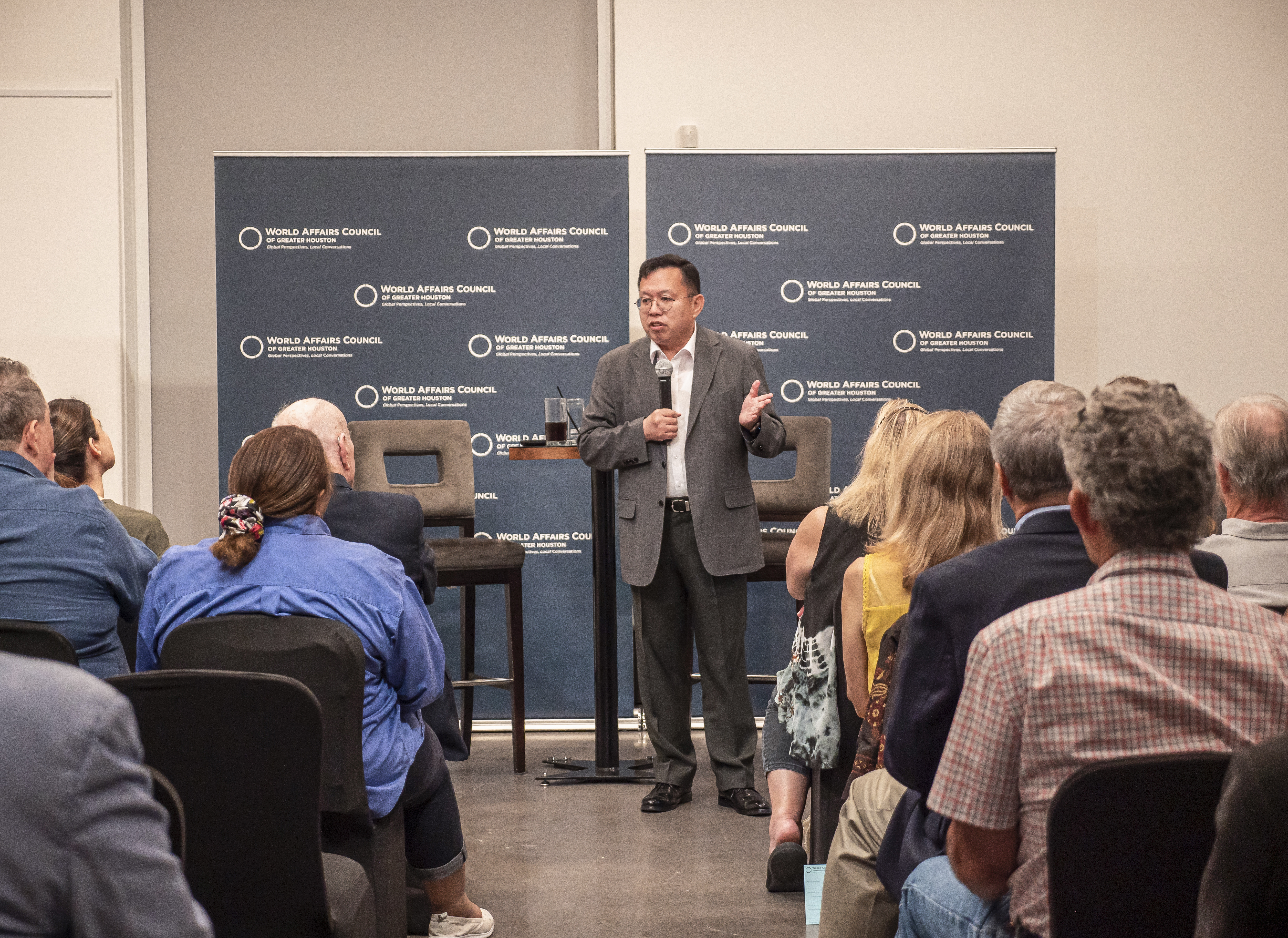
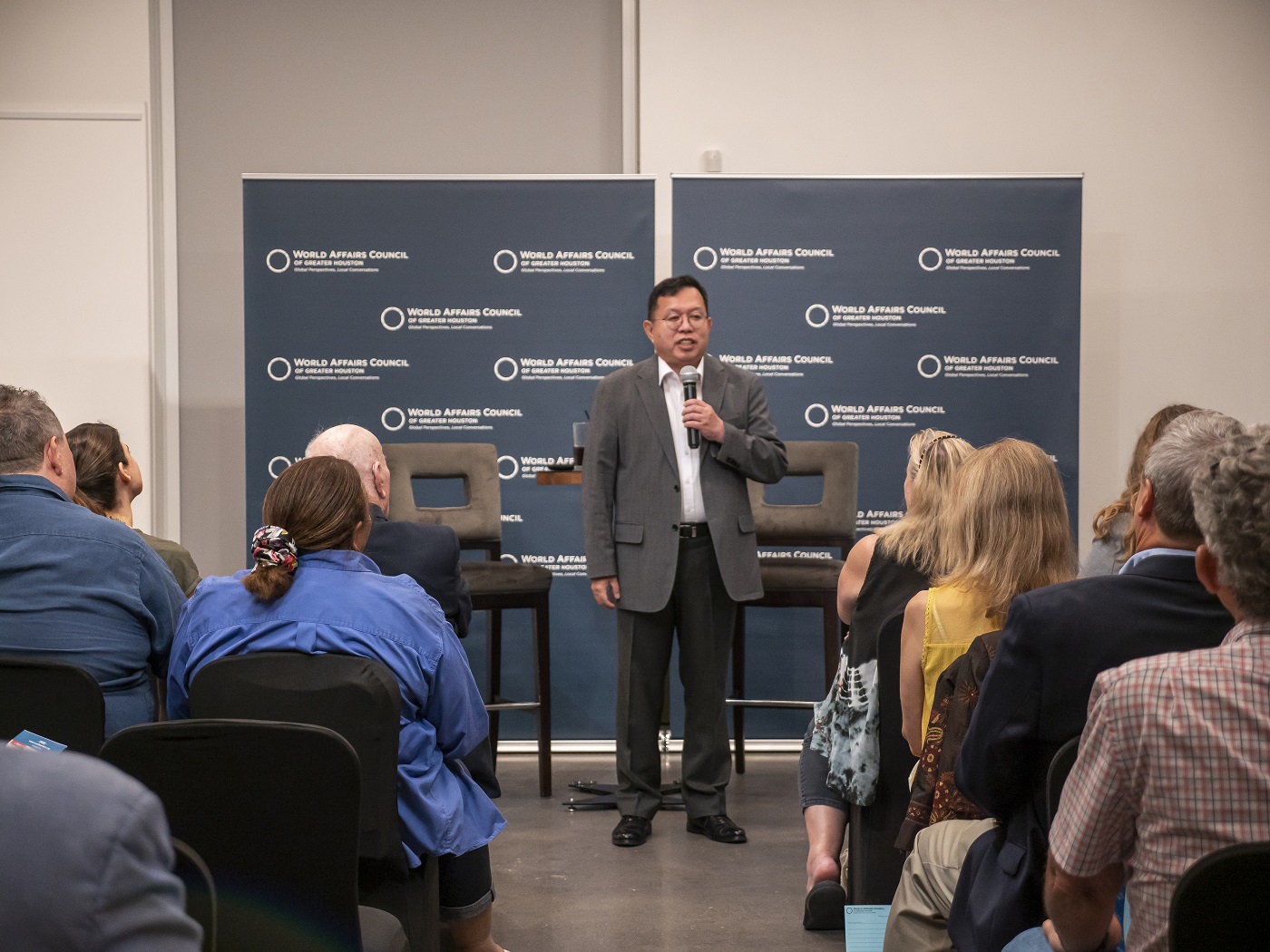
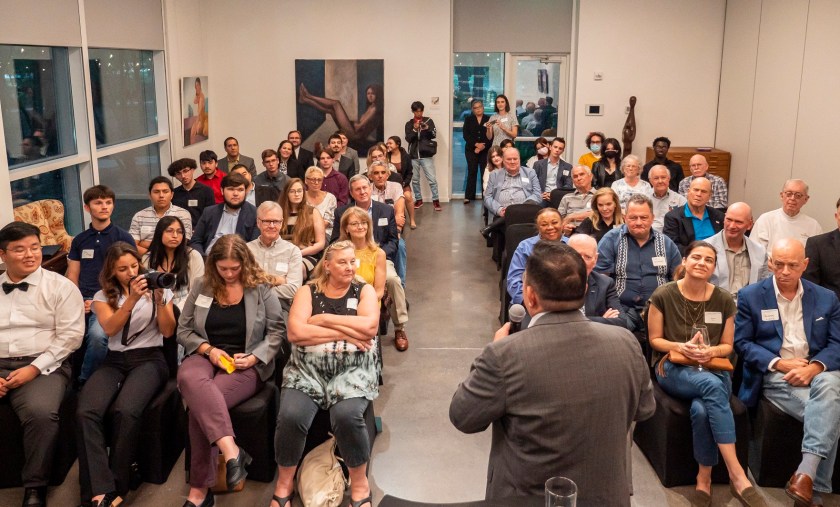
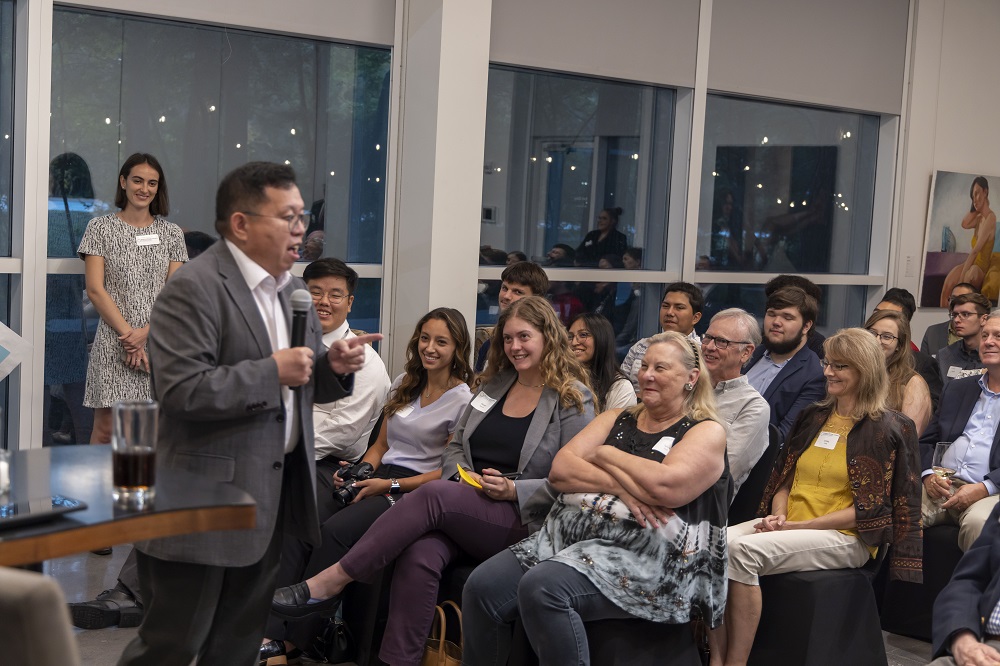
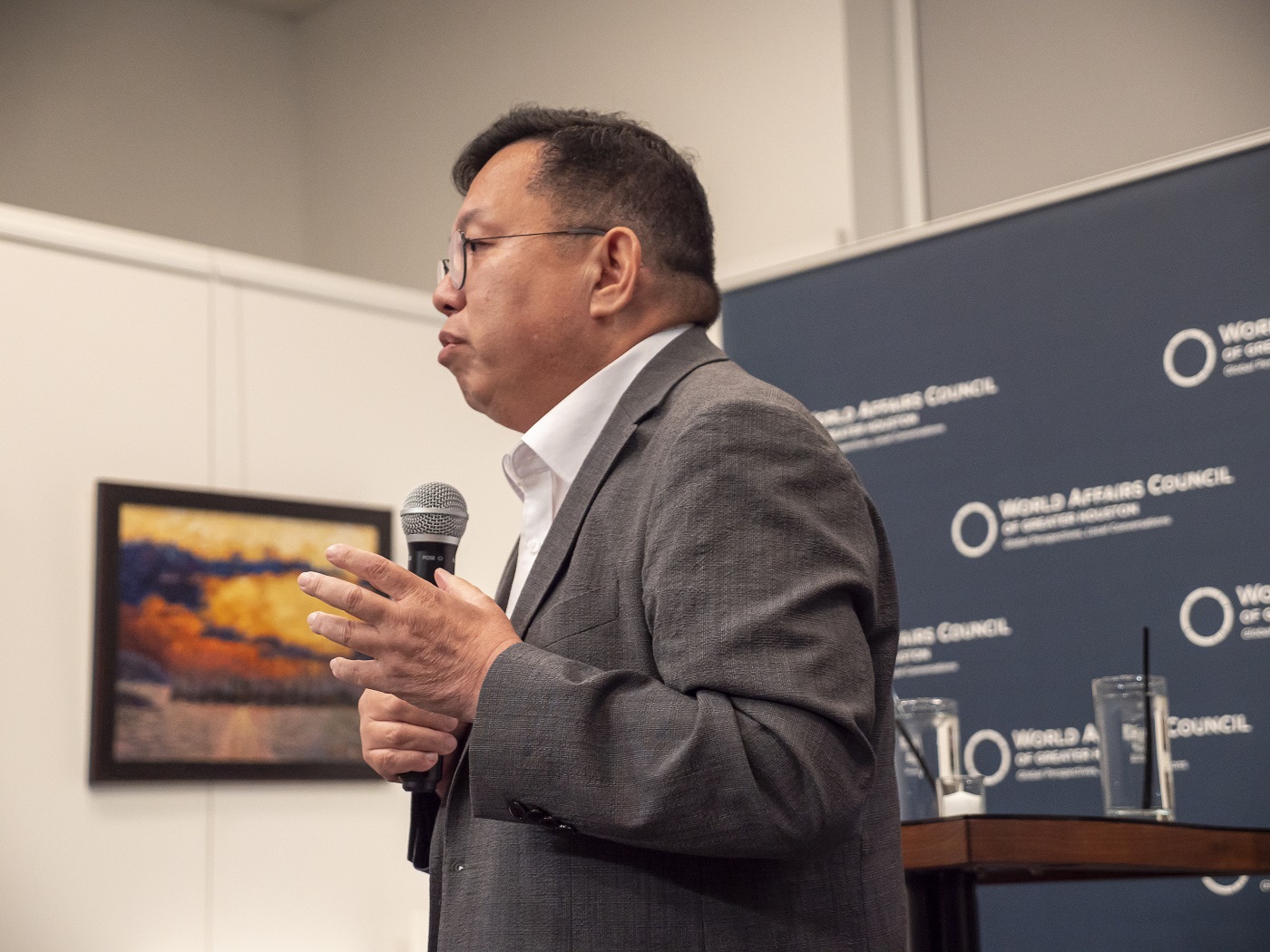
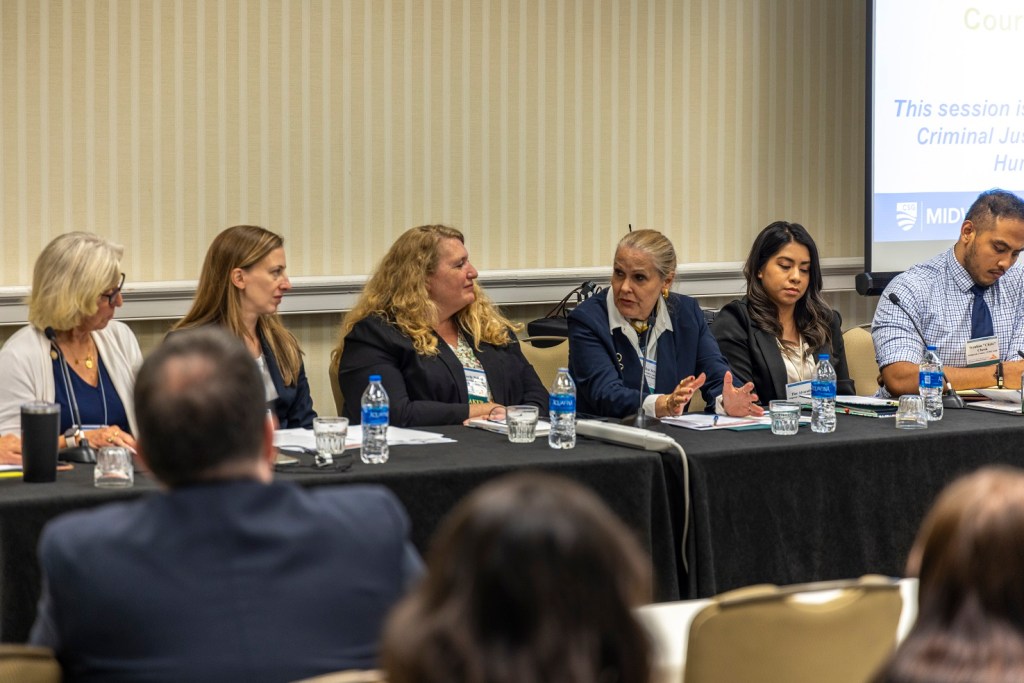
Our main objective of the evening, however, was to hear from Julián Cárdenas, who was speaking on Venezuela’s political and energy situation–and how these are being affected by the Russian-Ukraine War.
Considering Mr. Cardenas served in the Venezuela State Department, is an energy expert, and a law professor at the University of Houston Law, he was a good person to hear from on this topic!
Mr. Cardenas and WAC’s able moderator Ronan O’Malley discussed the challenges faced by Venezuela since the Chavez and Maduro regimes, of which there many. With economic policies that aren’t working, the country facing sanctions imposed by other countries, and widespread corruption among government officials, Venezuela is also facing soaring inflation–in fact, inflation has climbed to thousands of percent, making the US’s inflation rate of 10 percent seem tame.
Cardenas discussed numerous topics we needed to learn about: realism v. idealism in foreign policy, the G-7, NAFTA, and programs such as “food for oil.” We also learned the term “brain drain,” of which Cardenas was a part–he left when conditions became intolerable there.
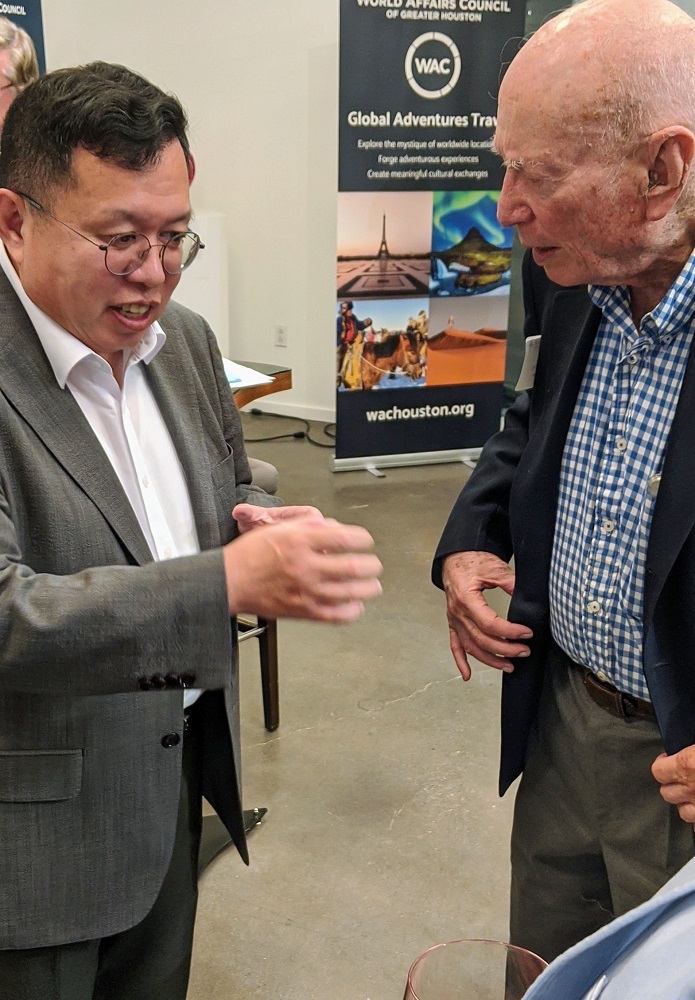
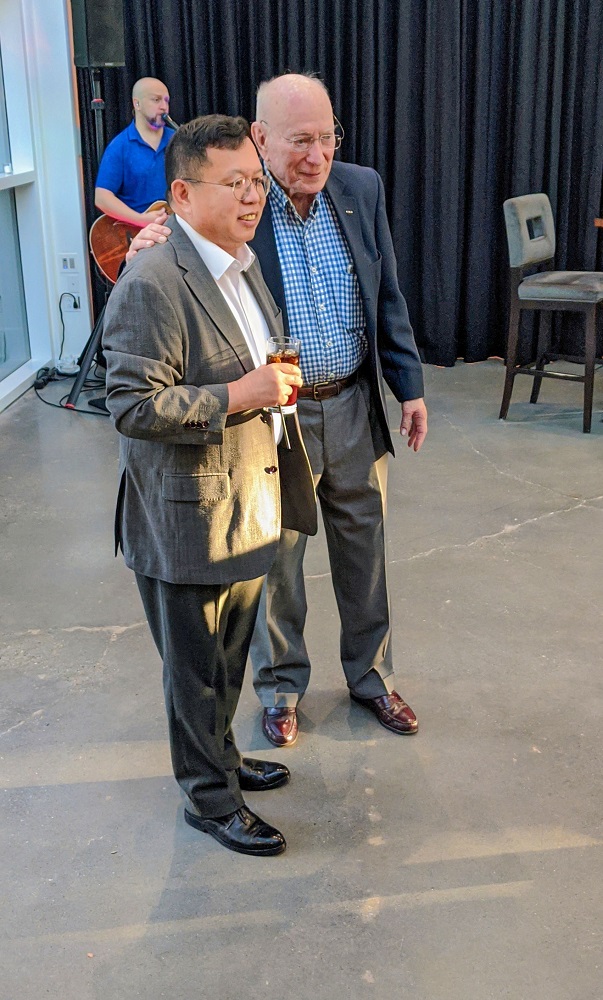
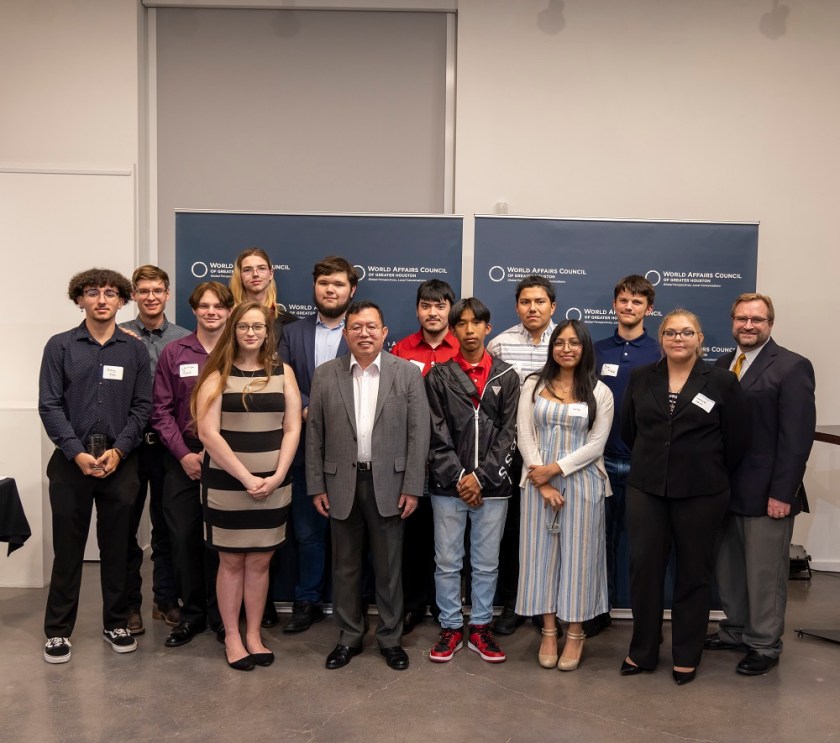
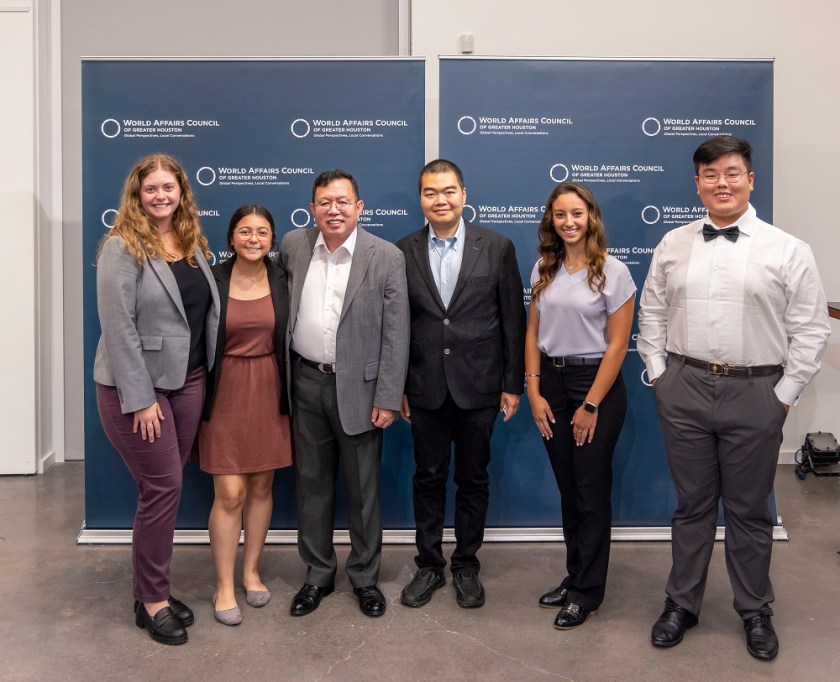
Following the main discussion, we were able to chat a bit with Mr. Cardenas, pose for a photo, thank the wonderful WAC staff, and head out for dinner.
We drove down to Casa Medina just in time to grab a couple of seats before they closed the kitchen. The service was excellent, and the food was solid! I ordered the shrimp enchiladas, and I was pleasantly surprised with the amount of shrimp and cheese on top. I am a bit of a shrimp enchilada connoisseur, and this dish is a guaranteed 10/10 on the Ashlyn Parker scale!
We’ve previously volunteered for the Senior Center, but only indirectly. For the past two years, we’ve assisted with “Empty Bowls,” hosted by the Wynne Home, and the proceeds from that fundraiser go to the Senior Center. But we’ve never helped directly with the good people there, and so helping the staff and board members thank the Center’s regular volunteers at their “Volunteer Appreciation Dinner” was a nice opportunity.
And while this may have been our first time to directly help the organization, the Senior Center has been helping others for the past 45 years! Help, indeed: in 2021, the organization provided more than 52,000 meals to those who are food insecure in Walker County!
Director Stacy Loll led the proceedings, we and the Junior Service League of Huntsville, and Board members Linda McKenzie, City Councilmember Jon Strong, Alice Ellisor, Robert Patteson, Ellen Willett, Karen Hewitt, Mary Douglas, Brad Davis, Bart Davis, Susan Retzlaff, Rosie Knight, and Dick Morton all assisted.
Their goal was to thank the many regular volunteers who assist the Senior Center, especially those that volunteer for the “Meals on Wheels” program.
For our part, we worked at greeting, drinks, and to a lesser extent, desserts. Our tasks were straightforward and pleasant; working with good people for a good cause is almost always pleasant!
Ms. Loll recognized various volunteers…
…and we also heard testimony to the hard work of JD Davis, who served as Board Chairman until his passing last year. His family was on hand, and the Board did a good job of honoring his service to the Senior Center, including providing a plaque to the family.
Linda McKenzie and Alice Ellisor also bought two tickets to the Isaacs, who are appearing at the Old Town Theatre. A lucky volunteer came away with a fun night of entertainment!
One unexpected delight was that we were also offered the opportunity to eat. Humphreys did a fine job with the catering, and the food, some gift bags…
…and the genuine appreciation of the Board, reflected the deep gratitude we all feel for the regular volunteers who help make the community a stronger–and better–place.
Judge Hatchett was very enthusiastic as she shared her stories and words of wisdom to inspire all the attendees. Unlike other speeches, Judge Hatchett meandered around the room and asked questions of attendees. She encouraged everyone to establish professional and private goals and to stick to them!
For us, the breakout session was an opportunity to learn from senior managers at the conference.
After the breakout session, she left us all pondering her powerful message: “on the other side of fear is your freedom!” Reminding us to not be afraid to act upon our dreams and do what we are meant to do.
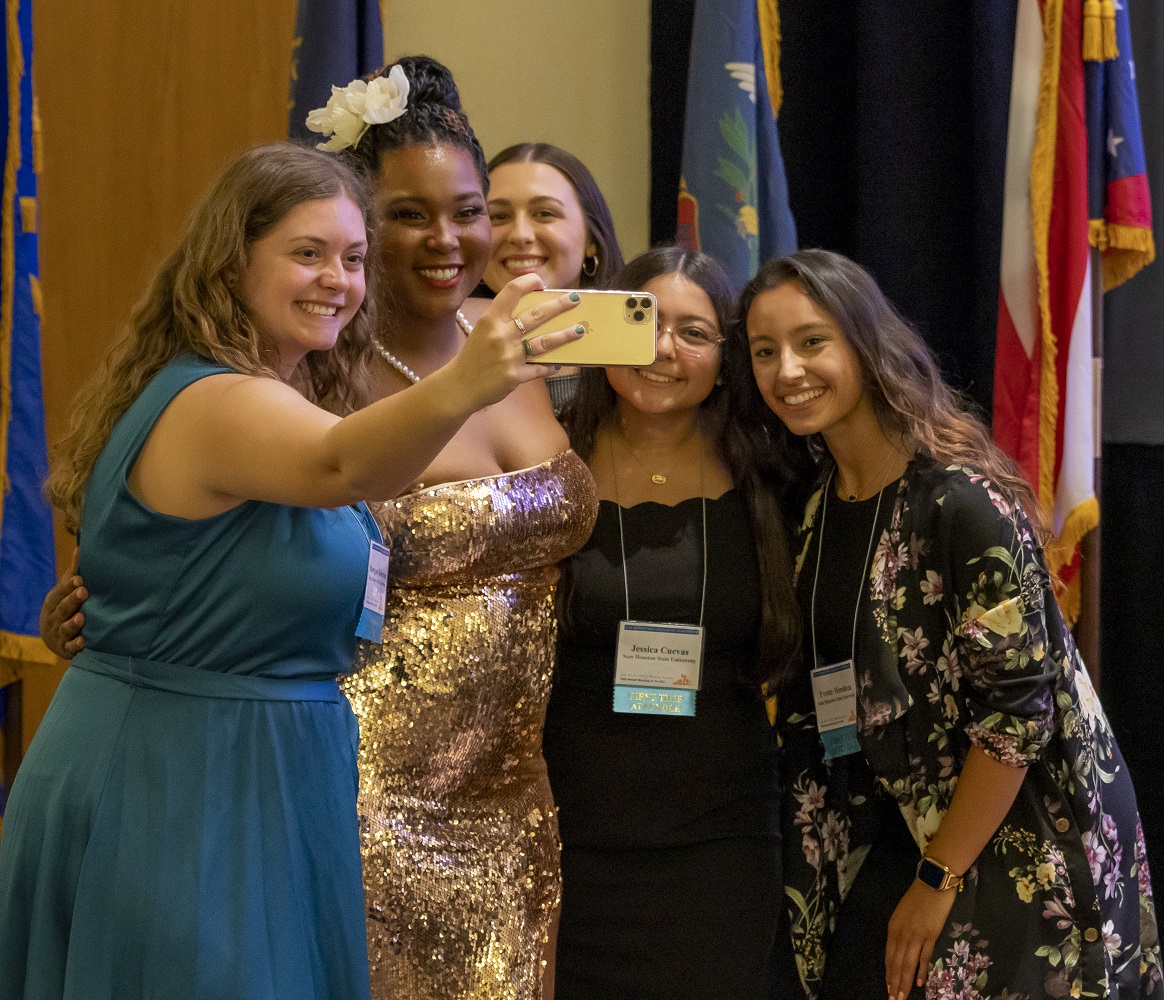
Receiving a standing ovation from the audience, Judge Hatchett walked off the stage to converse on a more personal level with a few of the attendees. It was then that we realized what a small world we live in when we “bumped” into Scott Wayman, who, as it turned out, is married to Diane Gottsman! For those wondering who Mrs. Gottsman is, she comes to Sam Houston State University (brought in by Career Success) every semester to teach us about etiquette, and we very much enjoy her annual visits, where we pose with her in annual selfie.
So, we did that with Mr. Wayman!
As we got ready to leave, we said our goodbyes to Ms. Breland, Mr. Wayman, Mr. Stokes, and Judge Hatchett.
We are looking forward to attending the 2023 TCMA Conference in Allen, Texas!
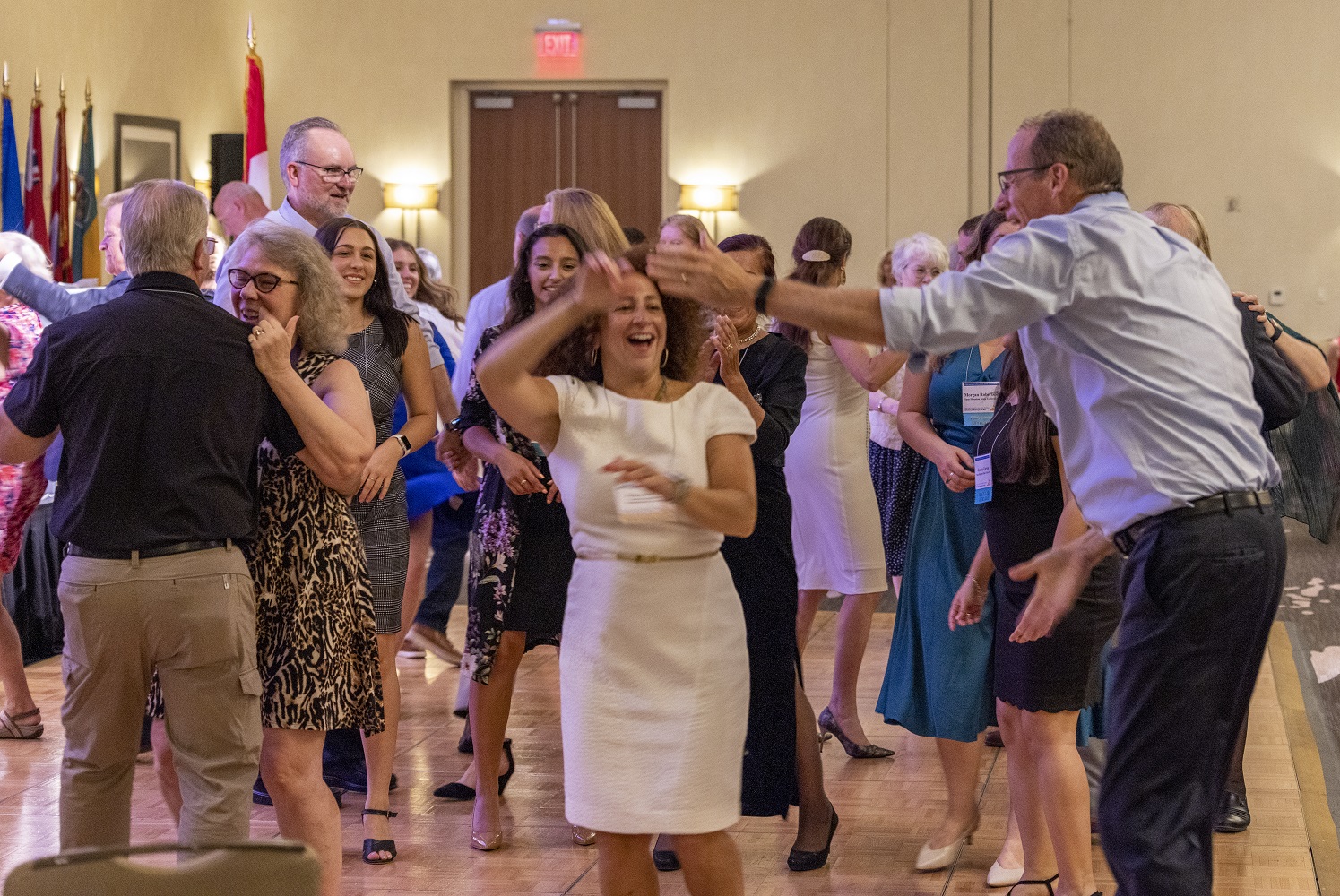
As we sprinted to the last day of our conference trip, we prepared for our busiest and most fulfilling day. We headed to the Lost Pines resort for a delightful breakfast and one of our last opportunities to network and learn from other city employees. Our conversations soon came to an end when the World-Renowned ER Physician and Iraq War Veteran, Dr. Sudip Bose took the stage.
Dr. Bose spoke on how to be the best leader, even when while under A LOT of pressure, which is something that various city managers have dealt with through COVID-19 and its effects. Utilizing his military background as an analogy to various situations, Dr. Bose was able to relate with the many city managers in attendance.
Dr. Bose reminded us that “challenges without support are discouraging,” stressed the importance of knowing when to let go of a situation and move on, and highlighted the importance of knowing when a window of opportunity is presenting itself.
Perhaps most important was his message emphasizing preparation, a lesson he learned in the military: “the more you sweat in peacetime, the less you will bleed in war.”
Dr. Bose’s closer was perfect lead-in to the different sessions that we would hear, involving: (1) cybersecurity and (2) how and why it is important to address mental health needs.
The cybersecurity session focused on the importance of addressing and having a multi-layered defense and an Incident Response Plan.
Ryan Burns with Texas Municipal League (TML), who is a former SHSU graduate, led this session addressing all the concerns of its attendees as well as covering what he thought was most important.
Without saying too much, Burns advised everyone on how “it takes everyone to combat a cybersecurity threat and each city must plan, prepare, and test their plans, revising as necessary.” As city managers and employees, they must be PERFECT all the time compared to a hacker who only needs to get it right once.
Morgan and Isabel reported that the session covering mental health was comforting to see so many cities focused on the mental health of their employees.
TCMA has partnered with Deer Oaks Employee Assistance Program to provide mental health support for its members. Rep. Kristina Herrera, explained the various services that will be available for TCMA members and their families and the importance of utilizing them. The concept, as with all proactive health efforts, is that providing mental health services is not only the right thing to do, but will ultimately lead to a happier, more productive work force.
The City of Austin awaited us, so we left the conference early after enjoying a quick lunch!
Daniel Arrendondo
Izabella Urbani
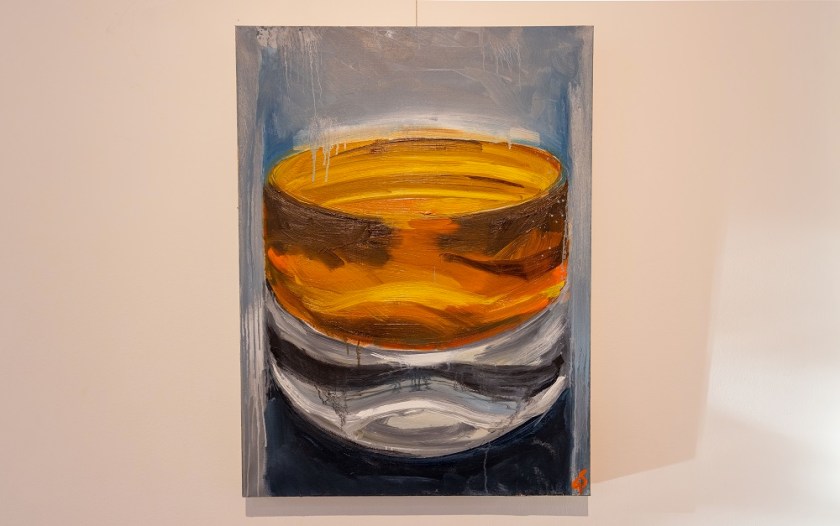
We had the pleasure of meeting (and, for some of us, re-meeting) a passionate artist, Daniel Arredondo, whose work entranced us for almost two hours. One of most prevalent themes in his work is “what lies beneath,” the idea that what is beneath the surface is often more important than what is on the surface.
It may be appropriate, then, that his work often depicts trees. But he also showed us his landscapes and, in a new twist for him, his recent, more abstract pieces.
Arredondo’s passion was apparent throughout our visit. We asked him how he knew when a painting was done, and he simply described it as a gut feeling.
Morgan seemed to gravitate toward the pieces that were more southwesterly in appearance, a bit reminiscent of Georgia O’Keeffe landscapes. Jessica was fond of his signature style paintings of “what lies below,” landscapes of trees and their roots growing underneath–so much so that she bought one of them!
We also got to see him in action! Arredondo demonstrated how he starts an abstract painting and described why he chooses the media that he does. He mentioned multiple times that he has never done a demonstration in front of others; it was such a treat! I loved how passionate Arredondo was, how detailed he was in his descriptions of his process, and the hospitality with which he welcomed us. Today was filled with so much laughter, great conversations, and fellowship. It was a great day to start the end of our trip!
At the end of our stay, Arredondo gifted us with pieces that will serve as reminders. Some of his earliest works adorned the front of the cigar boxes, and he was kind enough to let us choose ones that spoke to us.
Many, many thanks to Daniel Arredondo for showing us was art is from the other side of the canvas.
Capitol Tour
Morgan Robertson
We switched gears from the roaming hills of West Austin and headed for the heart of Austin, the Texas State Capitol.
We began our capitol tour much like we do others, by commenting on the interesting or unique architectural features and designs. Professor Yawn walked us around the groups and explained that the extensions to the structure were fundamental in accommodating our Texas-sized legislature and staff. While the extensions and supporting features are new, they did not distract from the aesthetic of the Capitol established in 1885.
The red limestone exterior of the Capitol seemed to glitter in the setting sunlight, and we made our way into the north entrance. Upon opening the front doors, we of course stopped to look at the 7-pound door hinges, detailed with the Texas Seal.
We posed with Elizabet Ney’s rendering of a young Sam Houston…
…and pondered on the surrender of Santa Anna.
But, of course, from the rotunda, the most interesting piece is the interior of the dome, which is beautiful.
And we also followed toured the floors viewing the different governors throughout history, settling on our favorite.
As we were leaving the sun was just setting under the tree line and we snapped our final photos.
Kayaking
Isabel Behm
After a lovely tour of the capital and a relaxing drive around Austin, we were ready to kayak and spend some time on the peaceful water of the Colorado River.
And while Jessica and Izabella accomplished a peaceful journey, that certainly was not the case for Morgan and me.
I knew it might be a bit rocky when Morgan began our ride by saying, “Isabel…I’ll do my best not to yell at you.” Part of our problem is that we thought I, sitting in front, should be steering, when, in fact, that was Morgan’s job. (Editor’s note: both parties lacked any semblance of navigational skills, exacerbated by the fact that Morgan is often flummoxed by even simple directions.)
Our meandering, inefficient paddling, however, did not prevent us from seeing a beaver casually swimming along the shoreline!
While we worked just to paddle forward, Jessica and Izabella enjoyed a leisurely tour along the river, using what Jessica referred to as the “slow-and-steady approach.” Although we aren’t ones to judge, it did appear that Bella was allowing Jessica to do much of the work….
Around 8:30 pm we began to paddle to the dock. The trip back was where Morgan and I experienced the most action. We attempted to convince Jessica and Bella to tow us into the dock, but they selfishly refused to play along. This left us to our own devices which, at one point, rendered us fighting limbs and the shoreline, running aground (and encountering a spider–eek!) as we ineffectually tried to return to the dock.
Despite these misadventures–or perhaps because of them–we very much enjoyed our time on the water, and it was a fitting and madcap ending to a wonderful day.