
by Olivia Discon
Now, with my professional excursions at the Capitol finally coming to a close, I tried to make the most of my time in the state’s capital. It wouldn’t be a good LEAP experience if I hadn’t tried to make the most of my time.
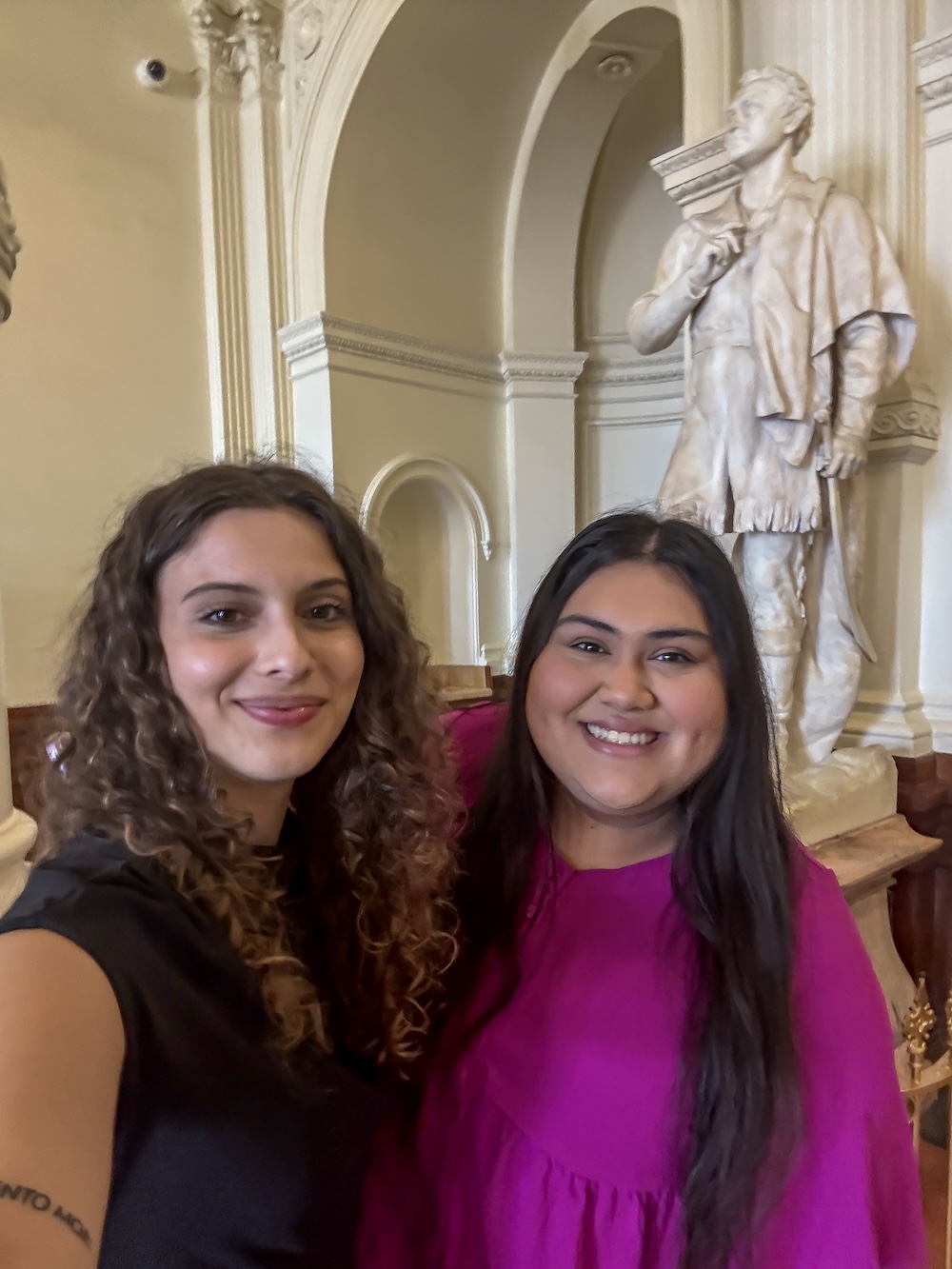
With it being Juneteenth, it only made sense to begin with the state capitol’s Texas African American History Memorial by Ed Dwight. It is not only a beautiful statue, but a thought provoking one.


A Tour of University of Texas Campus
There’s no denying that UT’s campus is beautiful. But I don’t think I fully appreciated just how stunning it is until this visit. I knew they had a strong art presence, but I didn’t realize just how much until I found out there are five different suggested paths for an art walk. The variety alone is sort of insane.


I cherry-picked some of the pieces that I wanted to ensure I saw before I left, being that I couldn’t decide on a path.


Indeed, the theme for this part of the day was indecision.
I started at the Littlefield Fountain, which I learned will be part of a larger beautification effort to emulate the National Mall in D.C. One detail I especially loved: the statue of Athena was commissioned by a former UT Regent and sculpted by Pompeo Coppini—the same artist who designed Sam Houston’s grave in Huntsville. And no, I’m still not done talking about Huntsville.

What I liked most about this was that closer to the Main Building Tower, there is a statue of George Washington staring directly across to the Texas Capitol. Talk about a well-intentioned plan!

As I kept walking, I saw pieces by Mark di Suvero, Charles Umlauf (more on him later), and Willard Boepple, all of which added to the sense that this campus is part gallery, part institution.
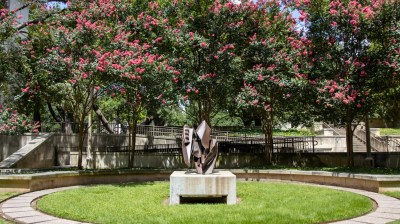


I made my way over to the UT Law School. While I couldn’t go inside, I stumbled upon something unexpected: a statue of the school’s longest-serving dean—sculpted by none other than David Adickes! It was a comforting, serendipitous moment.


The law school path is no joke, and with so much uncertainty, taking the LSAT can feel like this unsurmountable force that tests your capabilities as an intellectual. I am trying to let that feeling pass, and focus on what matters, which is my commitment to serving and learning in everything I do. It might be a grueling path, but I imagine it’s a meaningful one. And while the statue couldn’t talk, I took it as a gentle nudge to keep pushing forward.

Taquero Mucho Austin
I do have a weird affinity for the color pink—but even I wasn’t prepared for Taquero Mucho. This place is very pink. It came highly recommended by a former LEAP ambassador, and after seeing it in Texas Highways, I had to give it a try.

I started with a flight of salsas (all good), paired with a slightly-magenta Jamaica, and went with a taco wrapped in a pink tortilla and a side of elote.


I thought it was pretty good, and definitely really pink.
Umlauf Sculpture Garden
This was, without question, one of the highlights of the trip. I hadn’t really heard of Charles Umlauf before spotting one of his pieces near UT Law, but after that, I was curious. The garden itself is tucked away in a quiet, green pocket of the city, and it just works so well with his style—there’s something peaceful about seeing his sculptures in a setting that doesn’t compete for your attention.


What I noticed almost immediately was how many of his figures seem to be looking upward—heads tilted, eyes cast toward the sky.


I’d seen that same pose earlier in The Family near the Business School and The Torch Bearers on campus (which also had smaller versions here in the garden). I couldn’t tell exactly what it meant, but there was clearly some intention behind it. It felt reflective, maybe even spiritual, though it wasn’t heavy-handed.


Some of my favorites were The Kiss, Prometheus, and The Poetess—each had its own tone, but they all fit into the broader theme of searching or reaching toward something. I found out later that Umlauf taught at UT for decades and leaned into themes like faith, human connection, and morality, so maybe that upward gaze wasn’t accidental after all.

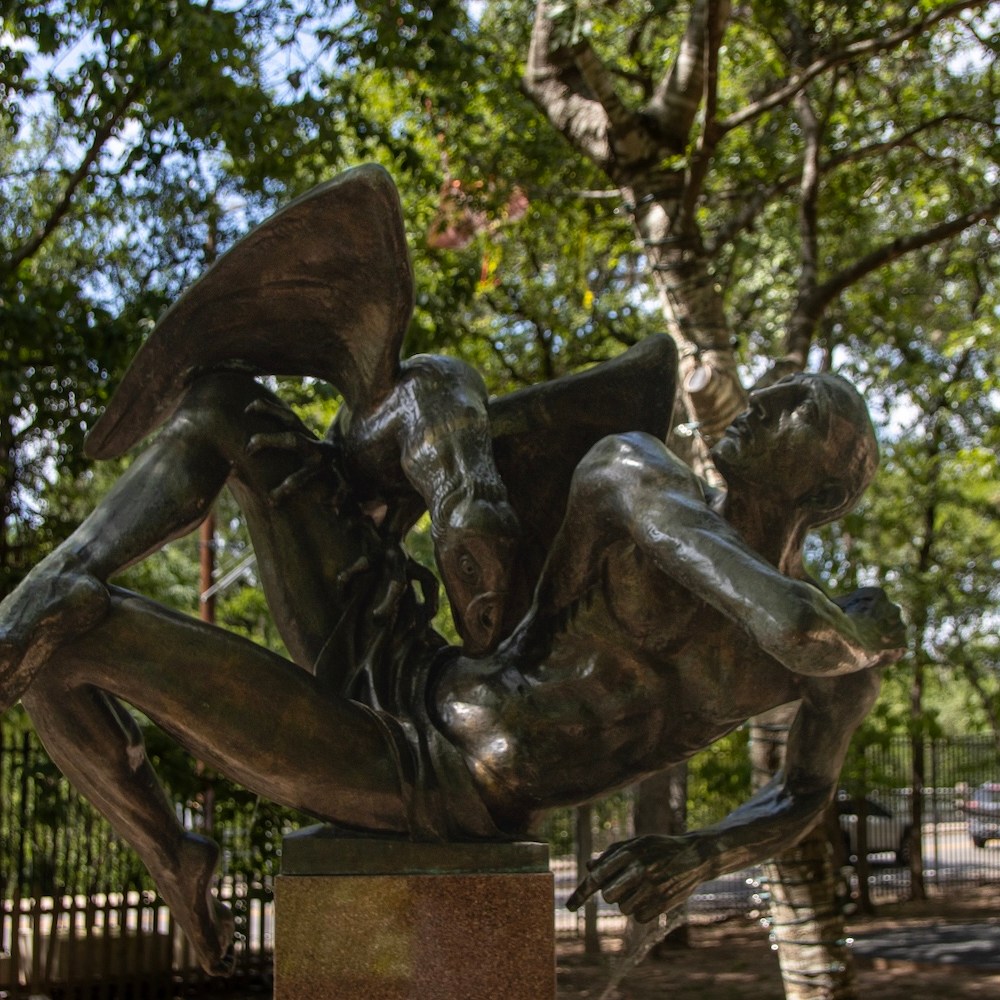

Toward the end of my visit, I saw one statue that broke the pattern. Instead of looking up, this figure was looking down—almost like she was weighed down by something. She wasn’t in the center of the garden but off to the side near the parking lot, which made the whole thing feel even more intentional. It stood out, so I checked the placard—and of course, it was Eve with Apple.

I couldn’t help but feel giddy about that.. I’m not claiming to have “decoded” anything profound, but it was one of those moments that made the visit so pleasant to me.


There’s something satisfying about taking things in slowly and letting your mind wander a bit. I didn’t expect to enjoy the Umlauf Garden as much as I did, but it turned out to be exactly the kind of quiet, thoughtful stop I didn’t know I needed.





























































 Center for Law, Engagement, and Politics