New York Stories

Art in the Heart of New York

by Chrissy Biello

On day two in New York, we woke full of hope and to clear blue skies…

…albeit with a pronounced chill in the air.

Despite the cold, we were ready to explore the city on foot–not, perhaps, expecting to get in more than 30,000 steps while visiting four museums and two libraries!

With a busy schedule for the day, we hoped to experience all that was possible, including the Whitney Museum of American Art, The Metropolitan Museum of Art (The Met), Solomon R. Guggenheim Museum, and the Museum of Modern Art (MoMA). 

Although these museums host art from myriad genres and movements, we focused on three primary areas: American, European, and Modern/Contemporary, finding that this was more than enough to keep us busy over a long day while also expanding our knowledge of the arts.

American

With us bringing different levels of knowledge about art to the trip, there was something for everyone to enjoy–and learn about–among the Museums’ many collections. Speaking for myself, I had many opportunities for learning, and my first such experience of the day involved coming across Early Sunday Morning, by Edward Hopper, at The Whitney.

The American collections had many great pieces, showcasing the depth and diversity of American art. Edward Hopper’s Early Sunday Morning (Whitney) drew me in…
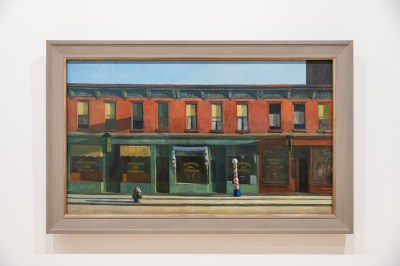
“Early Sunday Morning,” by Edward Hopper

…which was perhaps appropriate, inasmuch as Hopper was born near New York, and he died in Manhattan, not far from where we were seeing his work. This particular piece, I learned, reflected his most commonly emphasized colors (red, yellow, blue, green), as well as the sense of loneliness and isolation that so often characterizes his art.

The museums also showcased Thomas Hart Benton, one of Professor Yawn’s favorite artists. His piece The Lord is my Shepherd (Whitney), Cotton Pickers (The Met), and America Today (The Met), highlighted the regionalist style, while also showcasing Benton’s sense of artistic rhythm.

The representation of African American artists was particularly moving, including Jacob Lawrence’s emotionally charged War Series, which captured collective anxiety…

…and Horace Pippin’s compelling Cabin in the Cotton (Whitney).

We should also mention a work of art in its own (W)right: The Guggenheim Museum. Although all of us appreciate Frank Lloyd Wright’s work none of us had been inside one of the last major architectural works of Wright’s story career, In addition to scoping out the art around the walls and alcoves, we also spent much time simply looking at the interior from various angles and perspectives. Beyond the many genres of art we had a chance to experience, we added to this list American architecture.

European

The European collections presented numerous memorable works. One of the day’s highlights was getting a selfie with Vincent van Gogh’s Self Portrait with a Straw Hat (The Met) and seeing a study of Georges Seurat’s magnificent A Sunday on La Grande Jatte (The Met). Other notable works included John Singer Sargent’s Wyndham Sisters (The Met) and Renoir’s Woman with Parakeet (Guggenheim). 

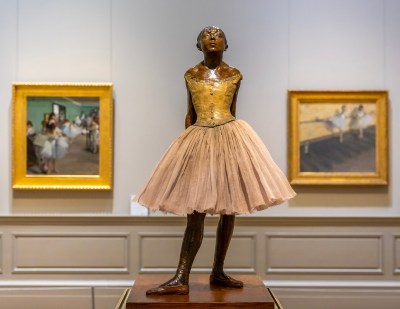
Moreover, I was particularly excited to see more pieces by Edgar Degas, especially after seeing a copy of his famous sculpture Little Dancer of Fourteen Years outside the Degas House in New Orleans. One that I was fond of is his Dancer Moving Forward (Guggenheim) sculpture. 
Modern

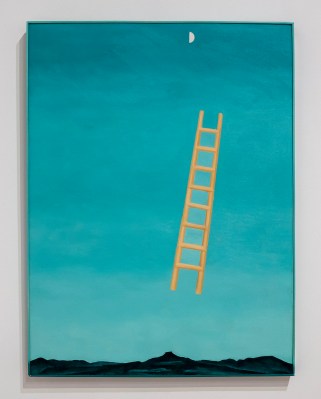
The modern collections sparked much reminiscence and contemplation. Georgia O’Keeffe’s Ladder to the Moon (Whitney) initially made our group think of Leandro Erlich’s Too Late for Help piece in the New Orleans Museum of Art Besthoff Sculpture Garden, and it was a different look than what we were used to seeing from Ms. O’Keeffe.
And, Keith Haring’s Untitled 1981 piece (Whitney) was enjoyed by everyone and left us thinking of his other known works. 

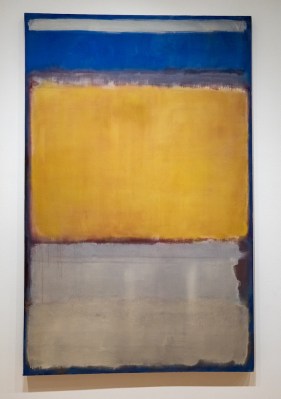
Further, we discovered interesting connections, like learning that Mark Rothko’s Number 10 (MoMA) was donated by Phillip Johnson, whose architectural work we had admired at University of Saint Thomas Cathedral in Houston, the PPG building in Pittsburgh, and the Water Gardens in Fort Worth!
Rene Magritte’s The Lovers (MoMA) particularly excited Olivia, while Salvador Dali’s The Persistence of Memory (MoMA) proved even more captivating in person than in reproductions. 

Jackson Pollock’s One: Number 31 (MoMA) captivated us with its scale and abstract expressionist techniques. And, seeing Vincent van Gogh’s Starry Night (MoMA) in person was a treat, a piece Olivia and I had long hoped to experience!

Seeing art from these diverse categories has helped structure my understanding. As I learn more about art, it becomes enjoyable to identify artists before reading the placards. I hope to develop this skill further, aspiring to reach the expertise level of Stephanie, Professor Yawn, and Olivia!

NY Stroll

Walking to four art museums allows for quite a lot of site-seeing, and we tried too make most of our journeys on foot. We began by hoping to photograph the Statue of Liberty, but we were foiled by New York’s never-ending construction. The Statue of Liberty was visible only by boat or through a window, and we only had time for the latter–definitely not the photo we hoped for.

As if to compensate, we had an unexpected photo opportunity, when we all witnessed what Olivia described as “the most New York thing I’ve ever seen”–a squirrel eating a bagel.

We also made our way past the “Charging Bull”, which judging by the sides of the crowds, was probably one of the most popular sites in NYC.
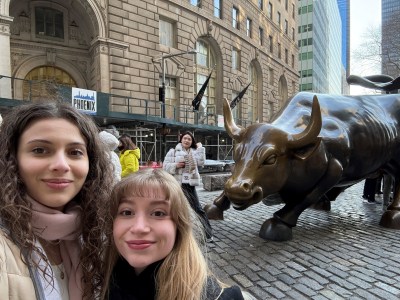
Nearby, we saw the statue of the defiant and vigilant girl, who keeps watch on the New York Stock Exchange.

Because this trip was designed for us to see the presidential inauguration, we also stopped by “Again”, the Federal Hall, to get another and better photo of the George Washington Statue. This significant site was witness to the first ever presidential inauguration and, later, to the writing of the Bill of Rights.

Probably the biggest treat for us was visiting the grand New York Public Library. We stopped for a selfie here, named after the two famous lions who stand guard to the front of the building.

One of these lions is named Patience; one is named Fortitude. No one, it seems, knows which is which, and because they are identical, we’re not sure it matters. Inside the NY Public Library, we visited the periodical reading room, which features 13 murals by Richard Haas. After some negotiation with the paid staff, we were allowed to take a few pictures. Haas, of course, has done 15 murals in our adopted hometown of Huntsville, Texas. Interestingly, New York has the most interior murals of Richard Haas, while Huntsville has the most exterior murals of his in any city in the world. Not to brag, or anything. (Thank you Linda Pease.)

Of course, we had to stop into the nearby Grand Central Station, which we found to be beautiful.

Chrissy also found the “whispering wall,” where a vocalization on one corner will transmit to the other corner, with those in between none the wiser.
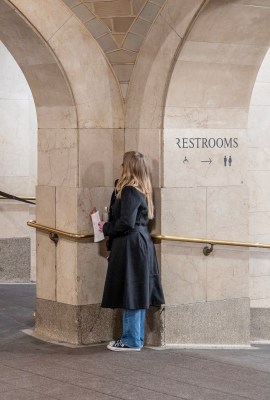
All of the above occurred fairly early in our 15 hour day. Our trip back to the hotel, however, was at the end of the day through Times Square, which Chrissy regarded as a special hell on Earth. Having walked more that 30,000 steps, Chrissy’s ankles were literally bleeding, and her misery quickly became ours.

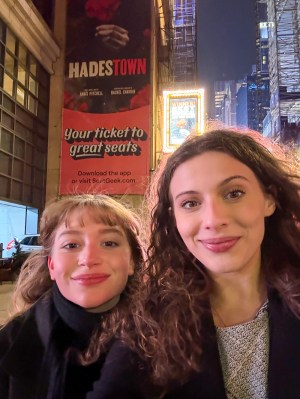
In fairness, Times Square is a bit much, even by American standards. After spending the day reviewing the classics of art, it was a bit jarring to be amidst the gawkers, wannabe influencers, and loiterers. This, combined with the loud sounds and bright, multicolored lights, provided more than enough stimulation for everyone.

Amidst this chaos, we found Hope, literally. In 2008, Robert Indian transformed his classic LOVE sculpture into a HOPE sculpture, reflecting one of President Obama’s campaign messages. As Robert Indiana fans, we paused for a selfie, and in our head tallied up how many said large scale sculptures we have seen. Chrissy, 2; Olivia 4. And on this optimistic note, we wrapped up day two of our five-day democracy tour.

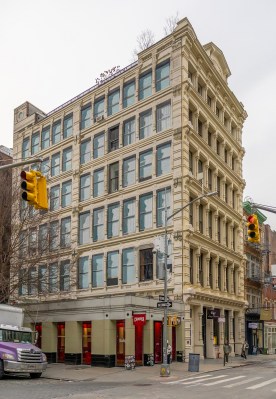
An Architectural Tour in Southwestern Pennsylvania

Working on little sleep, and following an eighteen-hour first day, LEAP Ambassadors arose at 6am to explore architecture in and around Pittsburgh, with a stop at PPG Place, a mural by Richard Haas, and two major works by Frank Lloyd Wright.

PPG Place

Our first stop was PPG place, a six-building, “glass gothic” design by Philip Johnson.

As part of our LEAP travels, we had seen Johnson buildings in Houston, and we had watched a documentary on him in preparation for this trip, but PPG place was a place like no other.

Completed in 1984, its towering glass spires and sleek facades embody Johnson’s signature postmodern style, blending classical elements with contemporary materials. Its gothic detailing pay homage to Pittsburgh’s industrial heritage, its all-glass encasing embraces the future with innovative design, and its central plaza allows for a nice place to gather, which we did!

Richard Haas Mural
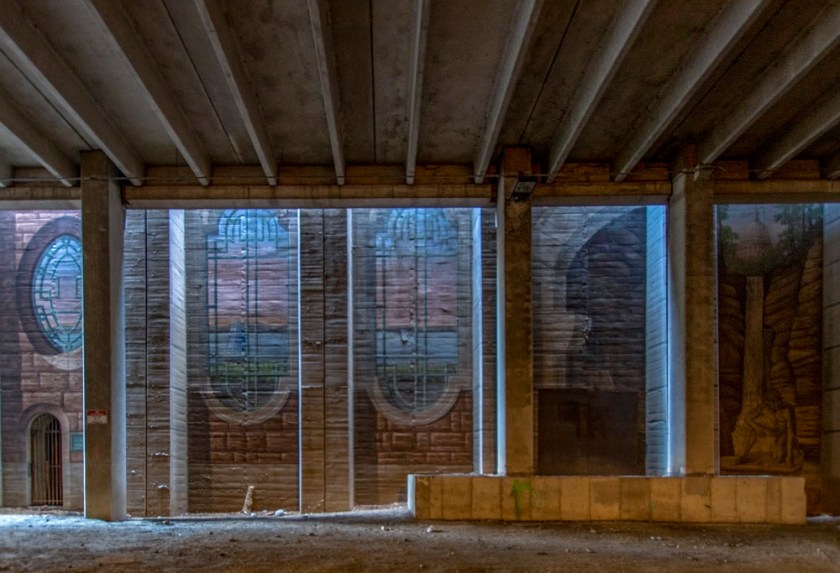
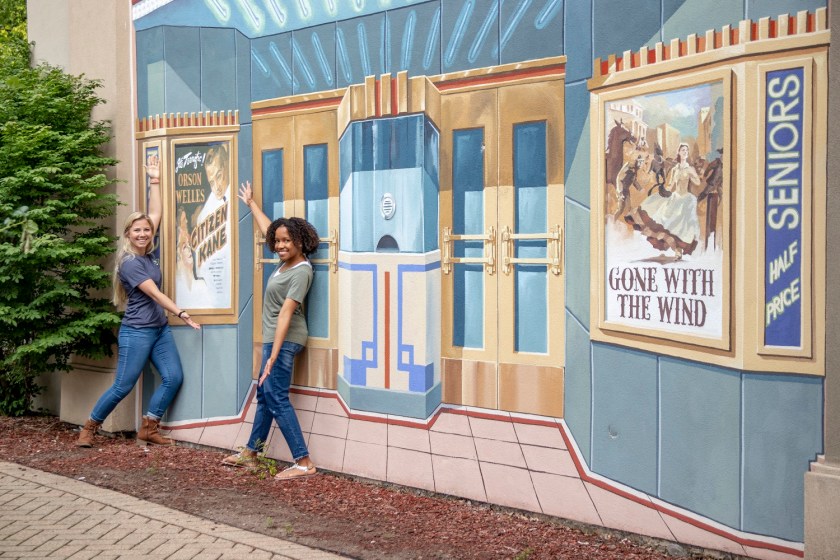
As a teenager, Haas spent a summer apprenticing for Frank Lloyd Wright, so it is no surprise that his murals take on an architectural quality. Indeed, Haas’s website describes him as an “architectural muralist,” an apt sobriquet.

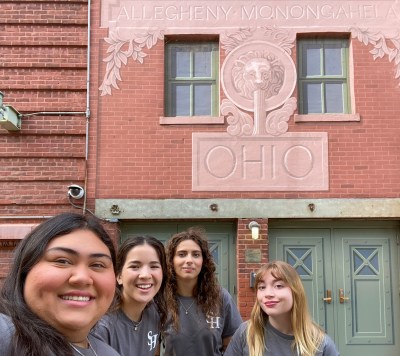
We know Haas primarily through his 15 works in Huntsville, but we’ve also seen his work in Fort Worth, which is a masterpiece. So it was with excitement that we tracked down his Pittsburgh mural, which is near the corner of Sixth and Fort Duquesne Boulevard.

As you might expect, it features an industrial scene, an homage to Pittsburgh steel-making history, with nods to its central location at the juncture of multiple rivers.

It’s always a pleasure to see Haas’s work, but this was especially true today, when we would also have a chance to see the work of his former boss, Frank Lloyd Wright.


Kentuck Knob

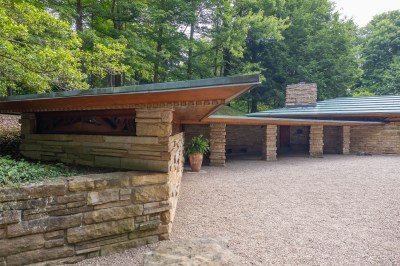
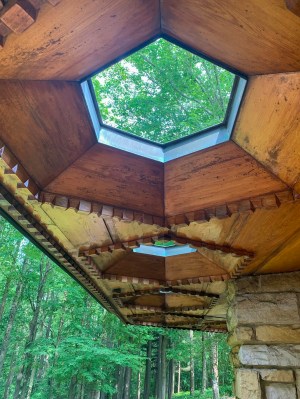
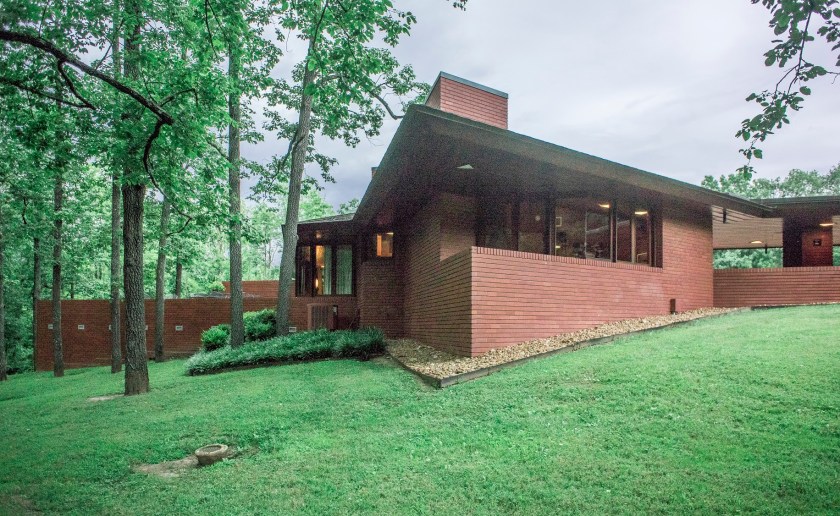
The first of our Frank Lloyd Wright site visits was to Kentuck Knob, which is nestled in the mountains of southwestern Pennsylvania. Designed in 1953, Kentuck Knob embodies Wright’s principles of organic architecture, seamlessly blending with its natural surroundings–and, in this case, adorned with a healthy helping of artwork, by artists such as Anthony Caro, Scott Burton, and George Rickey. We learned much of this thanks to our wonderful tour guide, Jan.

Among Wright aficionados, Kentuck Knob is known as a “Grand USoNian.” Wright’s USoNian homes were designed for middle-class residents. They were, relatively speaking, affordable, while still serving as an interesting, sculptural domicile.

Kentuck Knob had Wright’s characteristic overhanging eaves…

…adorned with clerestory windows;

…a double carport (he hated garages, which he regarded as receptacles for junk); and a “compression and release” entrance to the house.

The home follows is structured as a series of parallelograms, giving the home an interesting look and an aesthetic cohesiveness.

We were particularly struck by the beautiful living room with floor-to-ceiling windows (which could also serve as doors to the patio), beautiful Wright-designed furniture, and the unique touches for which Wright was famous.

But it was the way the home interacted with the environment that we most enjoyed. The home is about five miles from Fallingwater, and the owners wanted their own “water element,” so they added a small rockfall and pool on the patio. The home is also perched on the brow of the hill, not atop the hill. Wright did this to ensure that the home merged with the environment (rather than overtaking the environment), and with a short walk along the property, we were able to see the beautiful art-adorned grounds and a view that even real-estate agents could not exaggerate.

Fallingwater

After visiting Kentuck Knob, another of Frank Lloyd Wright’s masterpieces, we headed to Fallingwater. Seeing Kentuck Knob had piqued my interest, and I was even more excited to explore another of Wright’s creations.

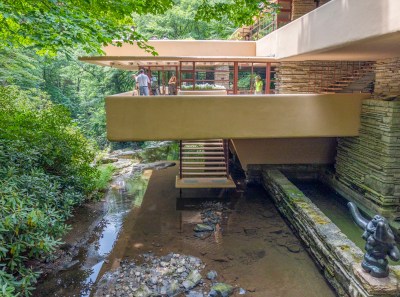
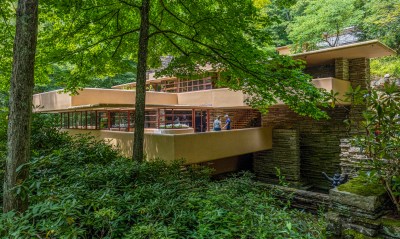
Frank Lloyd Wright was a fascinating and complex architect, known for his innovative USoNian homes—affordable, stylish, and functional houses for middle-class Americans. He also pioneered organic architecture, harmonizing structures with their natural surroundings, which Fallingwater epitomizes. Designed in 1935 and built directly over a waterfall in 1938 for the Edgar J. Kaufmann family, this house, which blends stone, concrete, steel, glass, and wood, celebrates what Wright termed “organic architecture.”

With the help of our tour guide, Millie from West Virginia, we approached the house. At first sight, Fallingwater was magnificent. Wright’s design philosophy was evident in the “hidden” doorway, a narrow entrance that transitioned into open spaces meant to connect inhabitants with nature. The structure is supported by concrete beams that project out over the waterfall, creating an impression of weightlessness.

The entrance repeated Wright’s “compression and release” philosophy, and he continued the cantilever motif, making much of the furniture and design elements an echo of the home’s overall design. The living room’s open design encouraged social interaction while the more intimate upstairs rooms offered privacy. The master bedroom, with its large balcony over the waterfall, provided a serene and breathtaking view.

We noticed Wright’s attention to detail, such as the seamless glass-to-glass windows, which eliminated barriers between the indoors and the natural world, as well as the art work in the home–much of which also repeated the cantilever design.

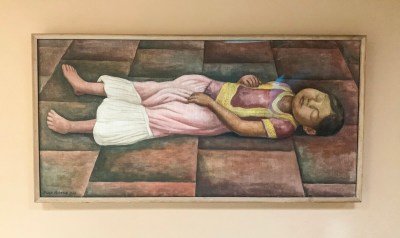
Indeed, art was a theme throughout the house, with a Picasso, several Audubon works, and a Diego Rivera (Frida Kahlo was a guest at the house!).

Our tour concluded with a view of the waterfall from across the home, capturing the full splendor of Wright’s integration of architecture and nature.

We all sat momentarily, taking in the beauty and snapping photos, cherishing the experience.

Moot Court Competition–2016

By: Kaitlyn Tyra

With nearly six months of preparation and almost as many months of anxiety, the SHSU Mooters were ready to compete in the final moot court competition of the season. Hosted at Texas A&M Law School in Fort Worth, 31 teams from across the state and the southern United States competed for spots at the National Competition.

Moot Court, TUMCA, TAMU Law Moot Court Regional, LEAP Center, SHSU

After waking up, we faced a morning of studying and non-stop practicing in anticipation to our afternoon’s competition.

Moot Court, SHSU, LEAP Center, TAMU Moot Court Regional

Once we were given our room assignments, pairings, and rules, each team departed for their first round. The competition consisted of three back-to-back rounds that would determine the day’s rankings according to mastery of material, presentation, response to questions, and courtroom demeanor. Throughout the day, it was slightly intimidating how we would be contending spots against students from such universities as University of North Texas, The Air Force Academy, Texas A&M, and Baylor.

Moot Court, TUMCA, TAMU Law Moot Court Regional, LEAP Center, SHSU

As each round progressed, our nerves slowly diminished and we felt more confident that our studying was paying off. After the third round, we regrouped for a much needed dinner catered by Texas A&M Law School.

Moot Court, TUMCA, TAMU Law Moot Court Regional, LEAP Center, SHSU

As we enjoyed our meal and waited for results, we conversed with a couple Texas A&M Law School students to know more about life in law school. We also shared opinions among ourselves regarding our the day’s competition. Reminiscing on the day’s toils, we reflected on what we could have done better and what we did well.

After what seemed like hours of waiting, the tournament director announced the advancements and speaker awards. Unfortunately, SHSU did not advance to the second day of competition. Regardless, we noticed how each SHSU team had improved from the scrimmage and earned higher scores, with four of the SHSU students finishing in the top half of orators.

The outcome reminded us that sometimes winning or losing is not what matters. What really matters is that we learn and whether we are more prepared for our future careers. For each member, we thought we achieved this goal throughout the season.

Moot Court, TUMCA, TAMU Law Moot Court Regional, LEAP Center, SHSU

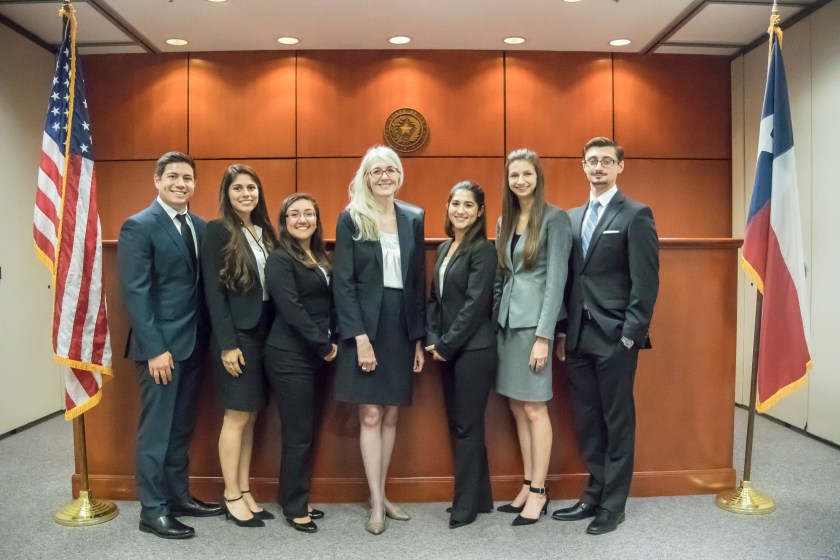
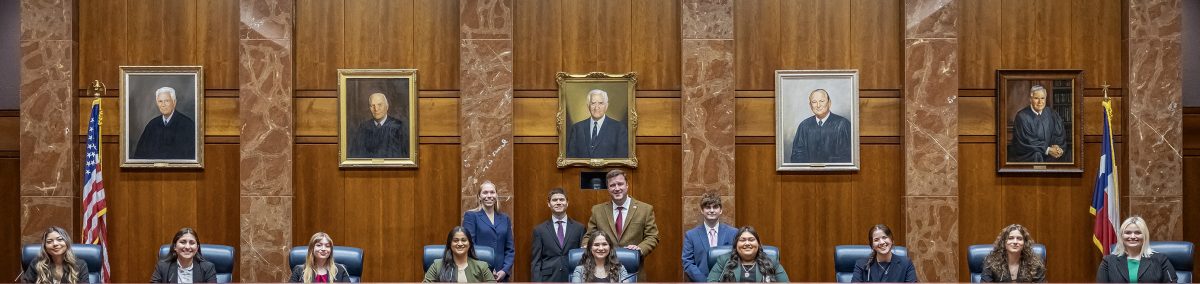
We ended the day on a positive note taking our group pictures in the courtroom!


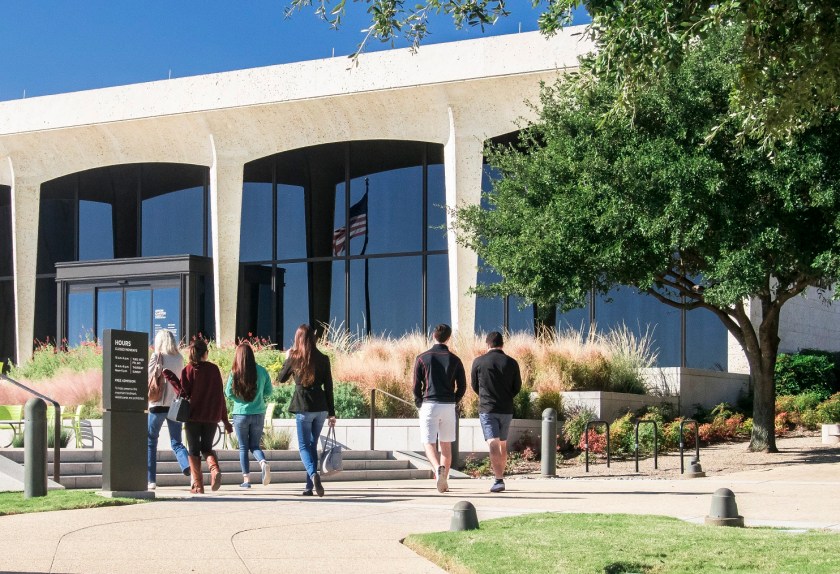
After working hard and competing in the Moot Court Regional Tournament, on Saturday the team set out for sightseeing across Fort Worth. We visited the Amon G. Carter Art Museum, the Fort Worth Water Gardens, and the famous Sundance Square.

The Amon G. Carter Art Museum is a free art museum dedicated to 19th and 20th Century American Art.

SHSU, LEAP Center, Moot Court, Amon Carter Art Museum

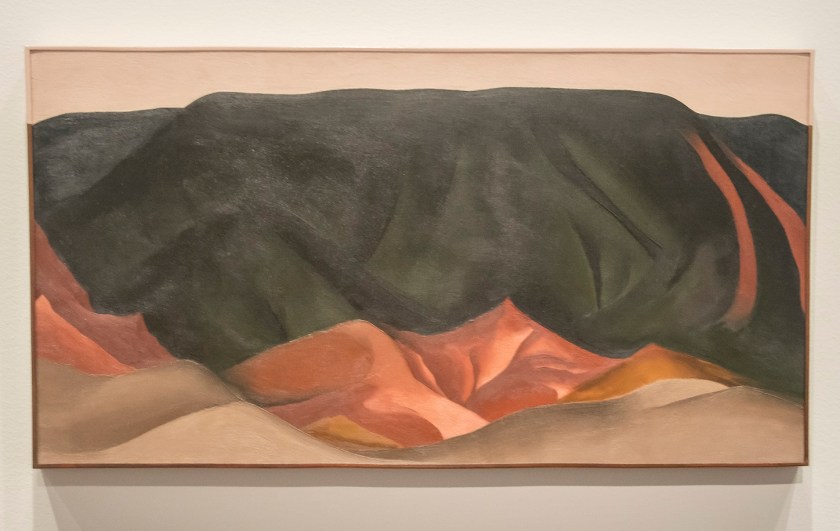
Opening its doors in 1961, the businessman and philanthropist Amon Carter’s goal in erecting the museum was to educate Fort Worthians in American Art. With Carter’s personal collection comprising the early galleries of the museum, the establishment has now grown to include a diverse collection of art. From artists such as Fredric Remington to Georgia O’Keefe…

SHSU, LEAP Center, Moot Court, Amon Carter, Georgia O'Keefe

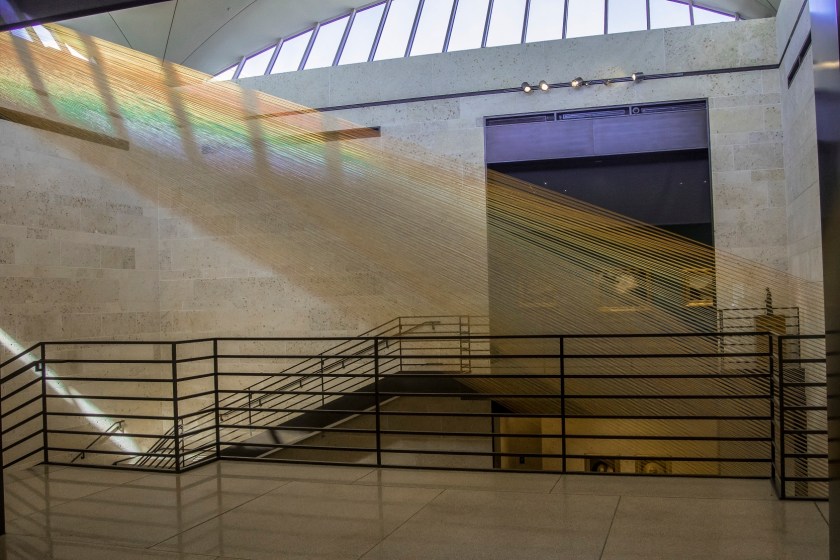
…the museum leads visitors through various decades in American art history. Among the halls was a more contemporary exhibition titled “Border Cantos.” In the exhibit, Photographer Richard Misrach and Composer Guillermo Galindo, depict the US/Mexican border through impactful photographs and music that reflect immigrant life along the borders.

SHSU, LEAP Center, Moot Court, Amon Carter Museum of Art

As the photographs depict a solitary and barren border, visitors felt a deep emotional connection to the people affected everyday by the walls, fences, and wire the divide the American and Mexican territory. This exhibit proved to be the team’s favorite in the end.

SHSU, LEAP Center, Moot Court, Amon Carter Museum of Art

After exploring the museum and learning about American Art, we were excited to move on to our next stop: the Fort Worth Water Gardens.

SHSU, LEAP Center, Moot Court, Fort Worth Water Park

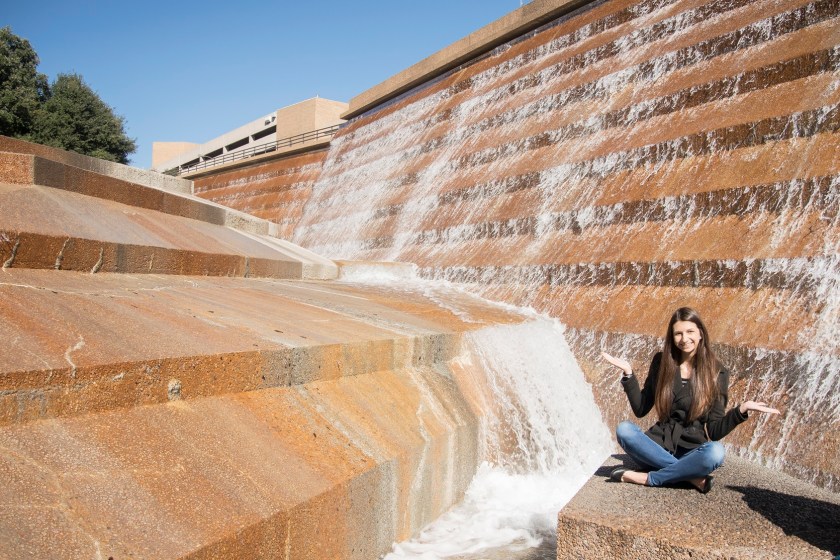
Designed by Philip Johnson, the urban park provides a soothing atmosphere to escape from the mundane city life (and moot court). The park is composed of adjoining water gardens which visitors can explore.

SHSU, LEAP Center, Moot Court, Fort Worth Water Park

True to our millennial drives, we enjoyed taking selfies and pictures of the garden. The Water Garden was an unexpected treat that everyone enjoyed!

Our mini Fort Worth tour sadly ended with lunch at Bird Café in Sundance Square.

SHSU, LEAP Center, Moot Court, Bird Cafe

Revived with the help of Richard Haas’s Chisholm Trail mural, the Square is now the center of shopping and entertainment in downtown Fort Worth.

SHSU, LEAP Center, Moot Court, Sundance Square

In the midst of the cultural hive, The Bird Cafe as a very popular brunch joint, offered many unique dishes. We each tried something different (for different was the only thing the Cafe offered) such as Carne Asada Waffles, an Avocado Omelet, and the Hickory Smoked Chuck Burger. After our delicious platters, we decided to finish our meals with a sweet closing. So being, we chose to visit a nearby chocolate factory!

SHSU, Moot Court, LEAP Center, The Chocalate Factory

The Chocolate Factory was a fun and tasty last stop on our trip. We immensely enjoyed sampling numerous sweet treats. With full stomachs and a nap waiting for us in our van seats, we departed Worth Wort to make our way back to Huntsville.

Many thanks to Texas A&M Law School for hosting the TUMCA Moot Court Competition and to Ms. Loveall for all her hard work and dedication to our teams success!


Gateway to (Mid)West: St. Louis

Wednesday, July 13, 2016

It seemed too soon to reminisce about the first half of our trip, which was filled with fun activities and meeting great people.  But, as we packed for our next destination early in the morning, contemplated the great people we had met and the fun of visiting Little Rock, Memphis, Nashville, Louisville, Lexington, and Frankfort.

Camp_Nelson_Ambassadors_Hess_Ludwick_Web
Ambassadors with Cameron Ludwick and Blair Hess, Authors of “My Old Kentucky Road Trip”

But with St. Louis on our destination list for today, we hastened to pack and headed out at 4am, a bit groggy, but excited for the Midwest section of the trip.


The Old Courthouse, St. Louis

Five hours later, we were able to make our first stop: the Old Courthouse.

Dred Scott Courthouse, Missouri, St. Louis
The Old Courthouse, Where the Dred Scott Case Originated, St. Louis, MO

We were out on the road again until we reached St. Louis, Missouri where our first stop was the Old Courthouse. This courthouse is especially important because this is where the famous Dred Scott case was brought to trial. Dred Scott and his wife, Harriet, were slaves that filed a suit for their freedom against Irene Emerson, their slave owner. They tried to take advantage of the Missouri law that would allow them to buy their freedom, and after many years of hardship the judges finally came to a conclusion. In 1857, it was decided that they were not to be considered citizens of Missouri; therefore they could not sue for their freedom. Having grown tired of the slave family, the Emerson family sold them to the Blow family where the Scotts were finally set free. Sadly, Dred Scott enjoyed his freedom only for a short while as he died a year later in 1858.

There is an exhibit in the Old Courthouse where the courtroom in which this trial was heard is displayed.  It was filled with chairs for the jury, two desks for the attorneys, a desk for a bailiff, and a clerk, a chair for witnesses, and a chair for the presiding judge. We even recreated the trial ourselves!

LEAP Ambassadors Re-Enact Dred Scott Case

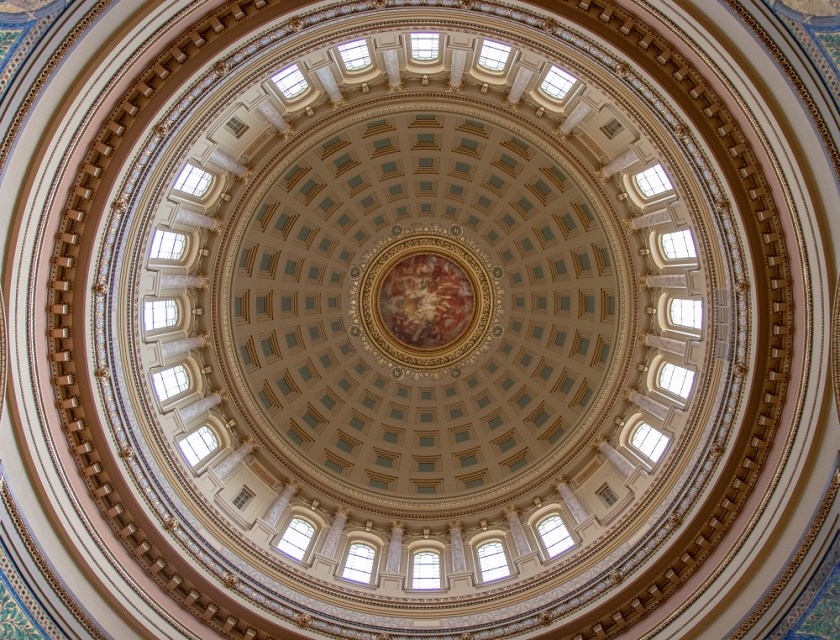
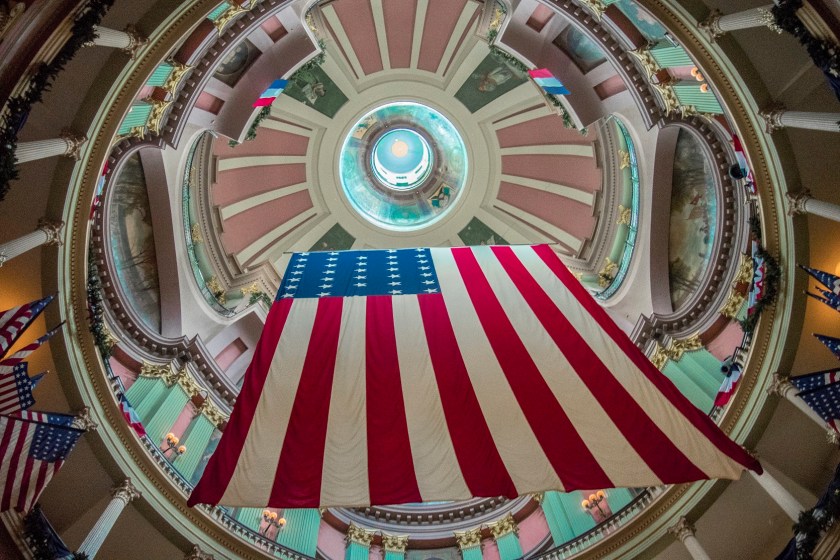
Apart from its historic value, the courthouse is a beautiful structure, with a beautiful dome designed by William Rumbold.

Old Courthouse, St. Louis, Dred Scott
Old Courthouse Dome, Designed by William Rumbold with Murals by Karl Wimar

As part of LEAP, we are always seeking ways to expand our knowledge. So it is only fitting that we visit the monumental symbol of the westward expansion as our next stop.


The Gateway Arch, St. Louis

Gateway Arch, St. Louis,
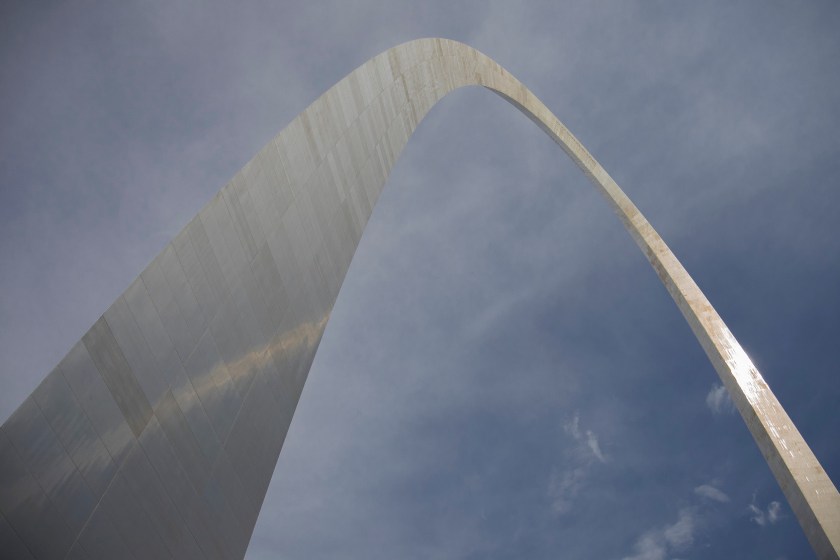
Gateway Arch, St. Louis, Designed by Eero Saarinen in 1947

The westward expansion, aided greatly by the Louisiana Purchase, doubled the size of the United States in 1803. In honor of America moving into a more prosperous and hopeful state, The Arch was built as the “gateway to the west.” The Arch proudly stands at an intimidating 630 feet making it the tallest man-made monument in the nation.

Arch_Web

The architect, Eero Saarinen, was an immigrant from Finland and was granted this opportunity after winning a contest by the Jefferson National Expansion Memorial in 1947. After studying architecture at Yale, he believed this was the opportunity to establish himself as an architect in America and it was. Although the design for this structure was completed in 1947, the real structure was not completed until 1965! We learned that this monument was brilliantly made with 142 stainless steel triangle sections that are each 12 feet in length held together by tension bars and truss. It took 13 years to raise the 13 million dollars needed to fund this project. In 1967, a trans system was built inside the north and south legs of the arch allowing 40 people at a time to view the impressive view. It was through these same legs that we rode through in our capsules.

Gateway Arch Elevator St. Louis
Gateway Arch “Elevator” or Travel Pod

It was tremendously fun to be able to enjoy the arch’s view…

Gateway Arch
Beatriz, Kaitlyn, and Karla at Top of Gateway Arch

…and see parts of St. Louis that we looked forward to exploring.

Gateway Arch, Dred Scott Courthouse, Wainright Building
St. Louis from the top of the Gateway Arch

Once back on the ground, we were also able to watch an informative documentary about the arch and its history.  Expansion in 1803 meant a hopeful future for some and that is our motivation as we expand our education in college and on our trips.

Originally, we had planned to visit the city garden that was near the courthouse. With its luscious greenery, sparkling fountains, and marvelous art we were all prepared to relax and enjoy the perfect view of the arch it would offer. Or so we imagined. Unfortunately, time didn’t permit a trip to that destination.


Photo Ops in St. Louis

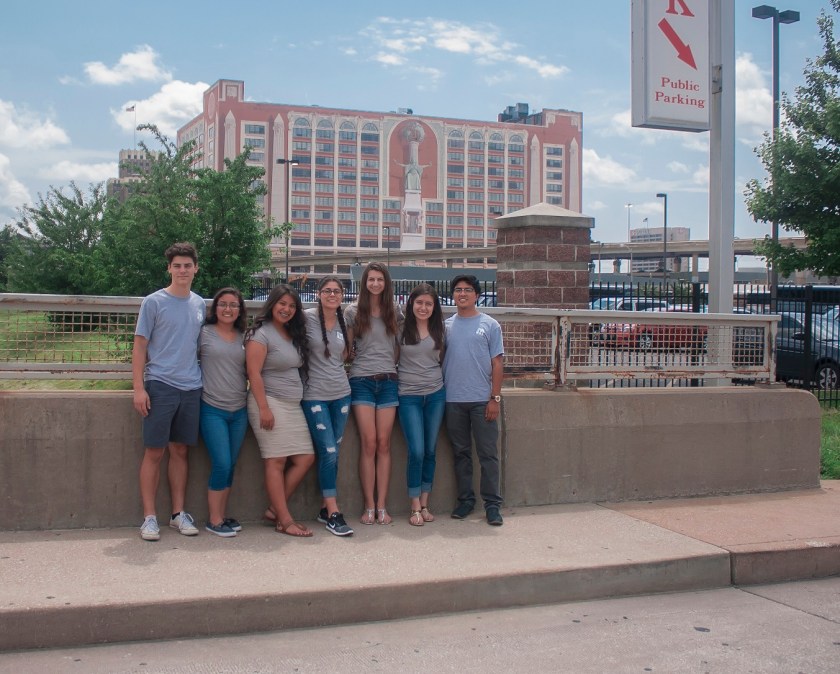
Remaining undaunted, we decided to go on a photo op adventure instead. Our first photo op stop was a Richard Haas mural.  With two of our students having been interns at the Wynne Home, his work has a special meaning to us, and fourteen of his works dot the downtown of Huntsville.

Richard Haas, St. Louis, LEAP Ambassadors
LEAP Ambassadors in front of Richard Haas Mural

None of the ones in Huntsville, however, cover the 110,000 square feet of the one adorning the Old Edison Stores Building in St. Louis.

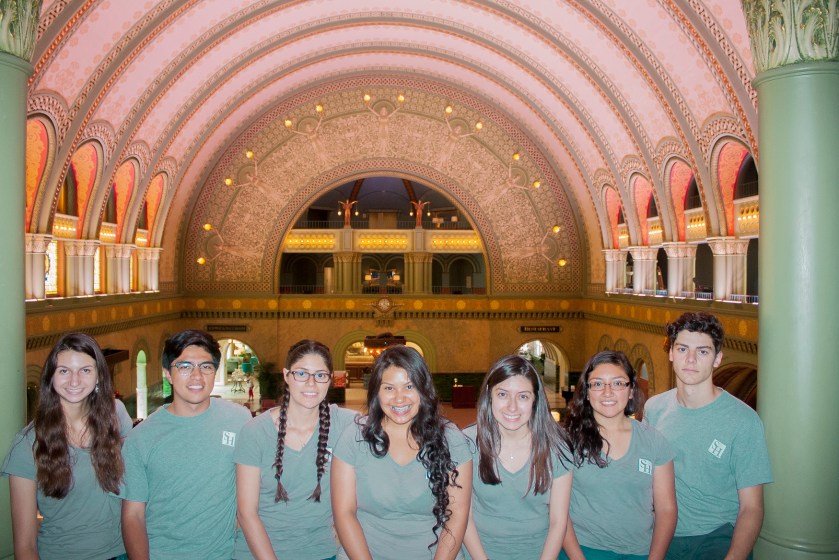
Next, we headed over to the St. Louis Union Station  Building, which is a beautiful structure, now a Doubletree by Hilton.  But its interiors were what we found most intriguing…

Union Station in St. Louis, Double Tree
Union Station in St. Louis, MO

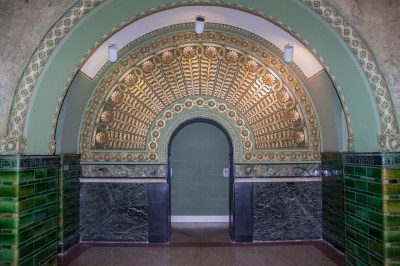
…even the entrance to the bathrooms were interesting!

Union_Station_4_Web

But the grand hall was the most beautiful part.

Doubletree, Union Station, Grand Hotel, St. Louis
Grand Hall at Union Station (Doubletree Hotel) in St. Louis, MO

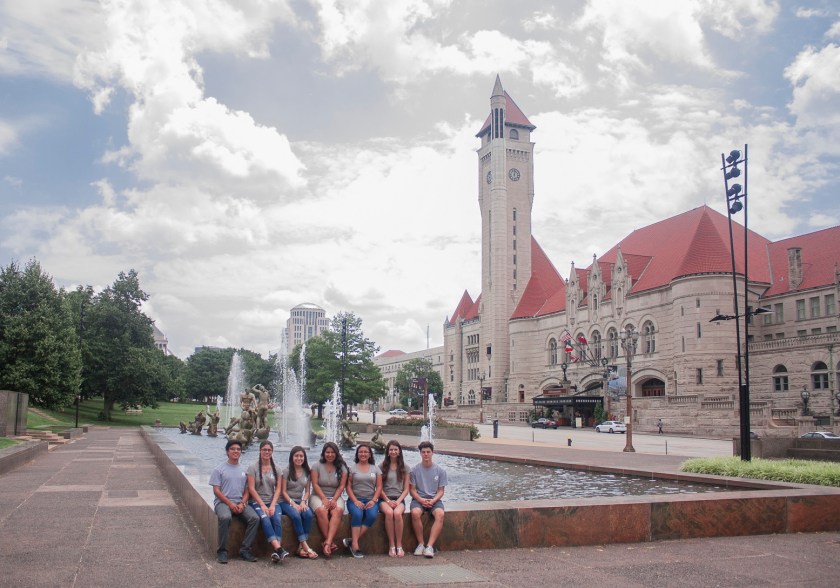
Across the street is the Milles Fountain, which is also impressive and offers a nice view of the exterior of the Union Station.

Milles Fountain at Aloe Plaza, Union State, St. Louis, MO
Milles Fountain at Aloe Plaza


Amighetti’s in The Hill, St. Louis

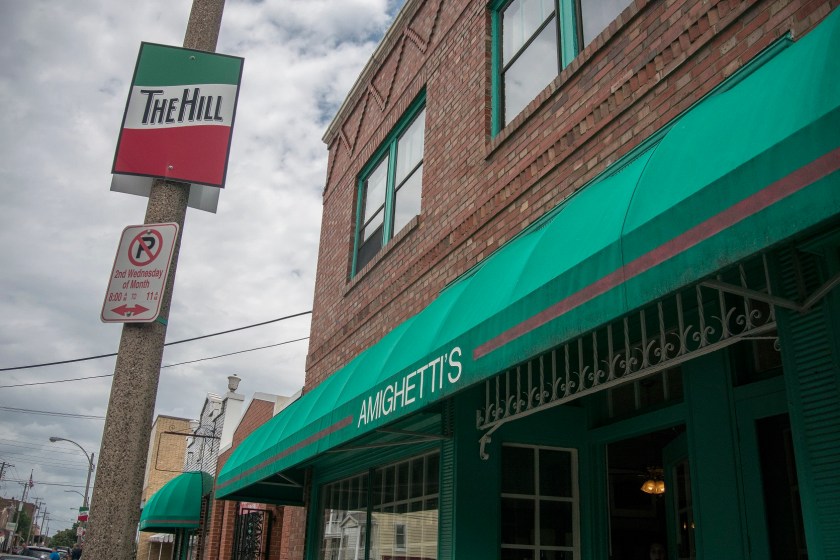
After a morning of westward exploration and photo ops in St. Louis, we took a quick stroll down The Hill to Amighetti’s.

Amighetti's, in The Hill Section of St. Louis, MO
Amighetti’s, in The Hill Section of St. Louis, MO

Located in what could be considered St. Louis’ Little Italy, the restaurant provided a prime venue for a satisfying lunch. Under what seemed an authentic tin-lined ceiling, we looked over the menu which included, but was not limited to, the Amighetti’s Special, a ravioli plate, and Little Bit of Italy sandwich.

Little Taste of Italy, Amighetti's, The Hill, St. Louis, MO
A Little Taste of Italy, at Amighetti’s in St. Louis, MO

As for the Amighetti’s Special, the sandwich accomplished its main goal; completely stuff its eater. Made up of ham, roast beef, and Genoa salami, blanketed with a rich layer of brick cheese on a 9 inch loaf of French style bread, it was a near challenge to take a bite. However, the extra effort to open one’s jaw was worth it, for every bite was an opportunity to taste the delicious sandwich. To improve on the experience, the menu presented St. Louis’ own Ritz root-beer. The effervescent, sweet, and smooth root-beer was an enjoyable company to Amighetti’s Special. To close off our lunch we also ordered a round of gelato. Within the group we were able to enjoy a cup of a sour, but satisfying lemon ice, cherry peach, strawberry, and vanilla, all of which we considered of excellent taste. As we stood up from our seat, with a content belly and a cooled off palate, we regained the energy needed to continue our St. Louis exploration at the Frank Lloyd Wright’s Kraus Home.

On previous adventures, Alex and Ryan had already encountered this one-of-a-kind home a numerous times. Therefore, Professor Yawn decided to give them the opportunity to explore new land by the name of the St. Louis Art Museum. After dropping them off we rerouted to the Kraus home.


Frank Lloyd Wright Home at Ebsworth Park

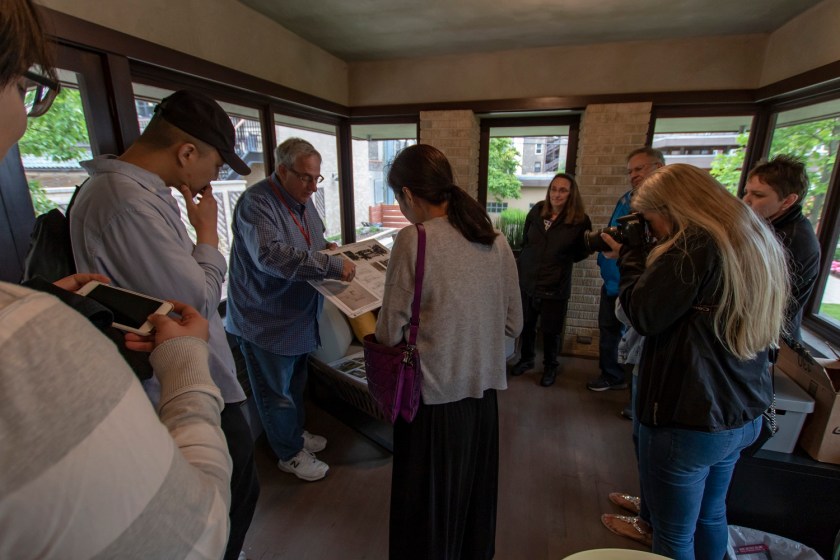
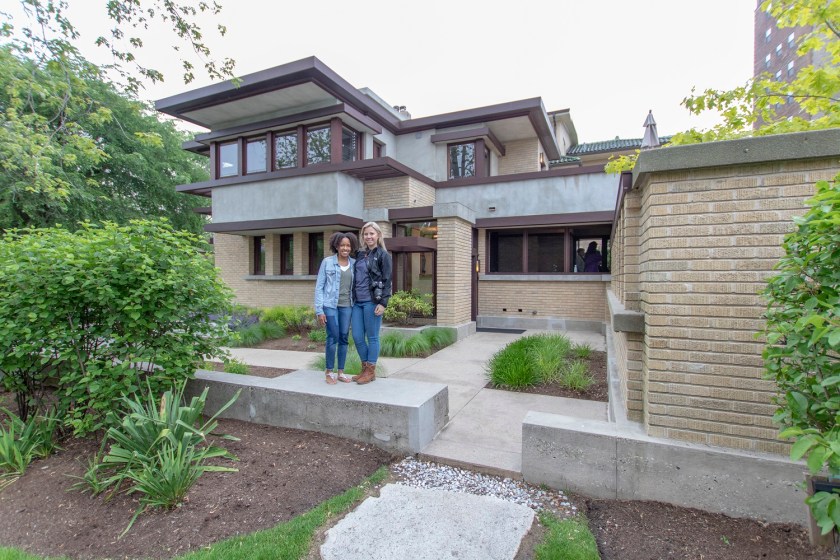
Hidden behind lush greenery, Frank Lloyd Wright’s Kraus Home is located in the upscale Kirkwood neighborhood of Saint Louis. Taking a short drive from the art museum, we arrived for a special tour. Normally, tours are not available on Wednesday afternoons, but the staff of the home were generous enough to arrange a tour for us today! Upon arrival, we immediately gaped in awe of the unique architecture and the natural beauty surrounding the home.

Kraus Homee, Frank Lloyd Wright, Ebsworth Park
Frank Lloyd Wright Home at Ebsworth Park

To begin our tour, we watched an introductory video about the Kraus home and its architect. Frank Lloyd Wright was born in 1867 and designed more than 500 structures throughout the United States. Represented in the Kraus home were parallelograms, hexagons, and horizontal lines, all of which accentuated the Usonian vision of Wright. The Kraus home sits on 10.5 acres of land now owned by Saint Louis County as part of its parks system.

In the mid 1940’s, Russell Kraus, a Frank Lloyd Wright enthusiast, wrote to Frank Lloyd Wright requesting him to design a small and less expensive home. Nearly ten years later in 1955, the home would finally reach completion. Mr. Kraus lived there until 2001, when a non-profit raised money to purchase the home and the land was deeded to Saint Louis County.

Throughout the tour, Professor Yawn was quick to point out the horizontal attributes of the home, noting even the grooves between the brick walls were designed to draw the eye horizontally instead of vertically. The Kraus home was designed as two hexagons partially overlapping one another.  The entire home is made up of these two hexagons or its subcomponents  (parallelograms and triangles).

Frank Lloyd Wright, Kraus Home, Ebsworth Park, St. Louis, Architecture

Even the bed, for example, is a parallelogram.

We were fascinated throughout the entire tour. In order to preserve the beauty of the home, we were not allowed to take any photographs inside the home. However, we finished our tour with a few photos on the balcony…

Kraus Home, Balcony, Frank Lloyd Wright, Ebsworth Park
Balcony of Kraus Home at Ebsworth Park, Designed by Frank Lloyd Wright

…and the exterior.

St_Louis_FLW_Exterior_Ambassadors_2_Web


St. Louis Art Museum

Meanwhile, in the St. Louis Art Museum, Ryan and Alex were being exposed to various forms of art.

SLAM, St. Louis Art Museum
St. Louis Art Museum

One of the major aspects Missouri has to offer is the free admission into museums (excluding special exhibits).  On the three levels of the museum, there were paintings, sculptures, and artifacts from as early as 500-600 BCE to as recent as present day and everything in between. There were pieces of art from all around the world including Asia, the Americas, Africa and Europe. Several famous artists’ works could be found at the museum including Monet…

St. Louis, SLAM, Art Museum, Water Lillies, Monet
Monet’s “Water Lilies” at the St. Louis Art Museum

…van Gogh, Picasso, Seurat…

George Seurat, Pointillism, SLAM, Outer Harbor
George Seurat’s “Outer Harbor” at the St. Louis Art Museum

…Degas, Rodin, Kandinsky, Warhol, Segal, O’Keeffe, and many more. Outside, there was a short path through a small sculpture garden, mostly made up of pieces from Henry Moore.

Henry Moore's "Two-Piece Reclining Figures" at St. Louis Art Museum
Henry Moore’s “Two-Piece Reclining Figures” at St. Louis Art Museum

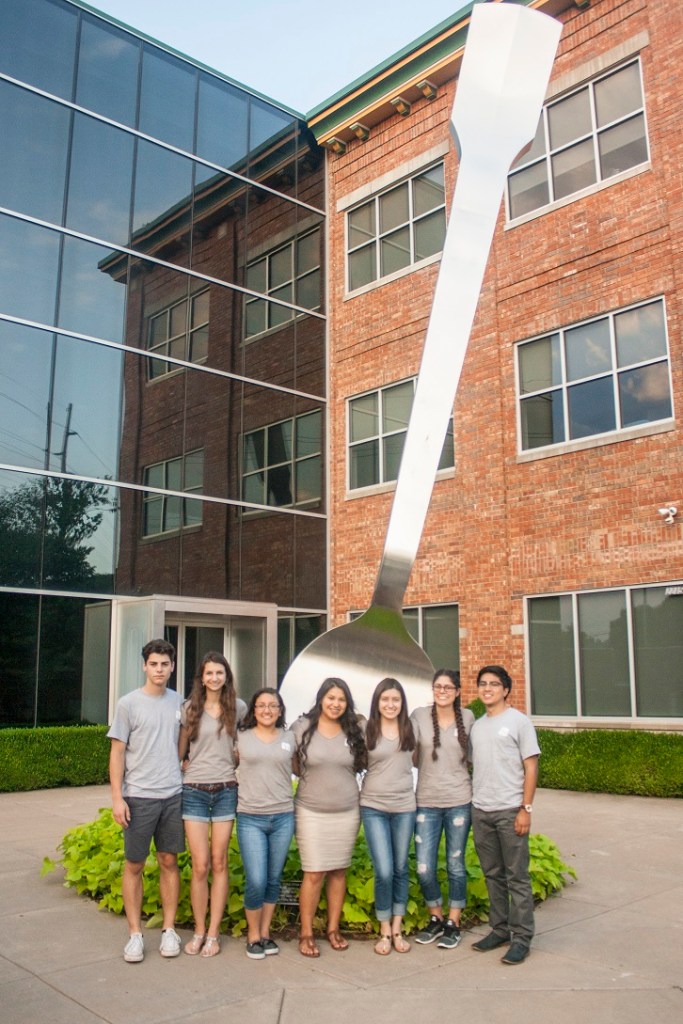
As we were leaving, a huge storm rolled in, cutting out our trip to a sculpture garden in the downtown area. So instead, we headed towards Bentonville, stopping for a photo-op at the world’s largest fork, and afterwards, stopping for dinner.
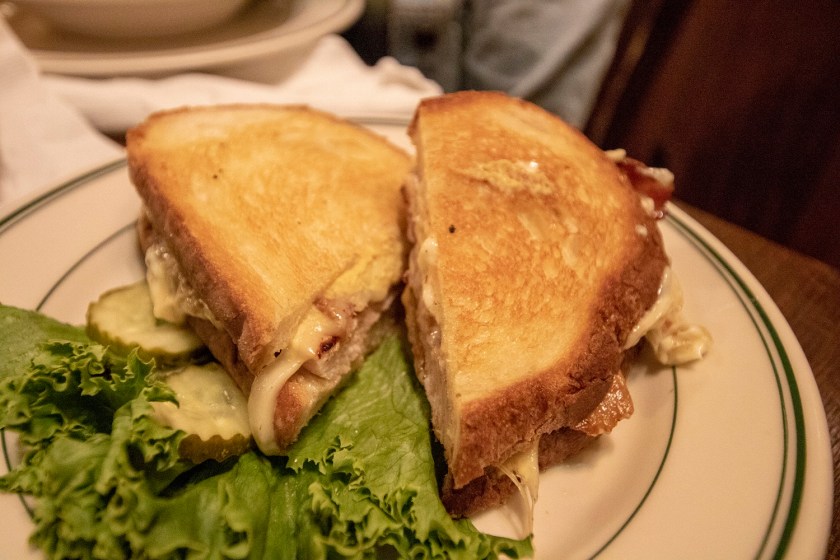

Dinner at Cafe Cusco, Springfield, MO

Being the home of the world’s largest fork…

World's Tallest Fork, Springfield, MO
World’s Tallest Fork, Springfield, MO

…Springfield appropriately offers numerous eateries from which to choose.
We choose Cafe Cusco, a Peruvian restaurant that has all the attributes of good Peruvian food, without the risk of Zika.

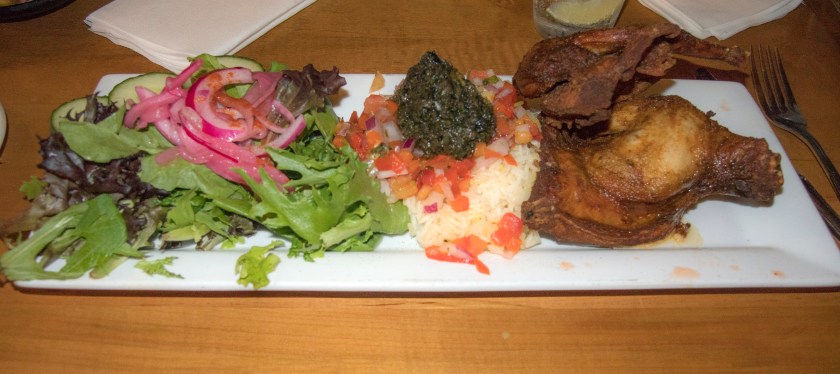
With the buildings soaking in the last rays of the day on Commercial St., we crossed the threshold into the Peruvian cuisine restaurant. As Peruvian folk music sounded its harmonious guitar in the background, we looked through the menu. With a variety of “platos” or dishes, from vegan salads to meaty steaks, the appetite of some of us were attracted to the fried rabbit, fajita saltada, BBQ pork panca, and lomo saltado. First, however, we began our taste of Peru with a seafood dip and fried avocado appetizer.

Seafood Dip, Fried Avocado, Cafe Cusco, Springfield, MO
Seafood Dip and Fried Avocado at Cafe Cusco

As the initial dishes were cleared, we readied ourselves for our main course. Soon the table was enveloped in the spicy aromas of the various dishes. As for the lomo saltado, a dish of steak cooked with bell pepper  and onions served with fries and rice, each scoop of the fork brought to one’s mouth the zesty spice of Peruvian flavor. Perhaps the best of the dishes, however, was the rabbit, which Ryan enjoyed immensely.

Rabbit Entree, Cafe Cusco, Springfield, MO
The Rabbit Dish at Cafe Cusco

In all, the restaurant was more than enough to make us go back to the corner block venue as we were forever in love with these flavorful dishes. For the meantime however, it was time get back to our traveling van for we still had half a state left to ride through.