Once a semester, KSAM’s Larry Crippen hosts the LEAP Center for a discussion that airs on “Around Town.” The program focuses on one person or organization, but since LEAP is an engagement organization, the program inevitably covers many aspects of the University and the community.
This semester, for example, we have worked with the Huntsville Police Department, the Walker County Courthouse, the Texas Department of Criminal Justice, the Boys and Girls Club, Main Street Huntsville, the World Affairs Council, the Freshman Leadership Program, Texas Tech University, the City of Huntsville and we’ve attended events hosted by Student Activities, the Alumni Association, the Sam Houston Memorial Museum, the Art Department, the Texas Tribune Festival, and the Popular Culture Association.
And so it was the LEAP Ambassadors, along with their advisor Mike Yawn, met with Crippen in the Holcombe Room for a short discussion of the fall semester and even looking ahead to the spring.
We were able to discuss our first-ever “Beyond Bars” program, our trip to Austin for the Texas Tribune Festival, our trip to New Orleans for a conference, and our normal volunteer work.
It was one of several collaborations with the media this year–undertaken by us and our advisor. And while we may never get accustomed to speaking into a microphone or camera, it was an enjoyable event, in part because we also work with KSAM every fall on their Make A Smile Happen gift drive.
Although the semester isn’t over–we have finals and papers!!!–it’s nice to look back on a semester where we able to accomplish quite a bit!
For the past 101 years, SHSU has presented an annual tree-lighting ceremony, and for the last 15 or so, the LEAP Ambassadors have been involved.
And for the last five or so, the Pre-Law Society has also been involved. And this year we had delegates from both organizations, including: Amari Gallien, Jacelin Daniel, Yajaira Gutierrez, Emeralda Espinal, and Michelle Cardenas.
It’s one event where many administrators, staff, faculty, students, and organizations come together for a celebration and appreciation. This year’s event was spearheaded by Evie Covarrubias, with help from the entire Student Activities Department.
Organizations sign in around 5pm, and the program officially kicks off at 6pm. And it literally “kicks off,” because following introductions by the SHSU Homecoming King and Queen–Braden Wright and Uri-El Jackson…
the Orange Pride dancers were one of the first acts in the program.
The SHSU Chorale also performed, with their outfits reflecting the unseasonably warm temperature of the evening.
The Student Activities staff did a great job of handing out candles and other illuminating devices, making for an immensely attractive lighting ceremony.
Following the hanging of ornaments–including both the LEAP Ambassadors and the Pre-Law Society–Provost Stephenson did a lively countdown for the tree of lights.
Owing to a brief technical malfunction, the University had the opportunity to experience the countdown excitement twice before seeing the lighting.
The wait was worth it! Following the lighting, the always-gracious Charlie Vienne spoke, announcing the Alumni Association’s awarding of numerous scholarships…
…alumnus David Smith, Director of Good Shepherd Mission, discussed partnerships between the University and community…
…and the crowd was again entertained additional by the Orange Pride dancers.
All of us–the LEAP Ambassadors–are now juniors, and we’ve had an opportunity to get involved with the University traditions. This is one of the best, and we look forward to the year ahead (after, of course, wrapping up finals), and participating in more of SHSU’s traditions, and maybe starting a few of our own!
After months of applying, interviewing, and apartment-hunting, the Austin Internship Program is getting real for nine SHSU students. These nine students, Jessica Cuevas, Morgan Robertson, Yvette Mendoza, Ingrid Cuero, Ashlyn Parker, Jayelynn Bordeaux, Morgan Dawson, Amor Sheffield, and Breanna Demyers, will be beginning their Austin internships one month from today.
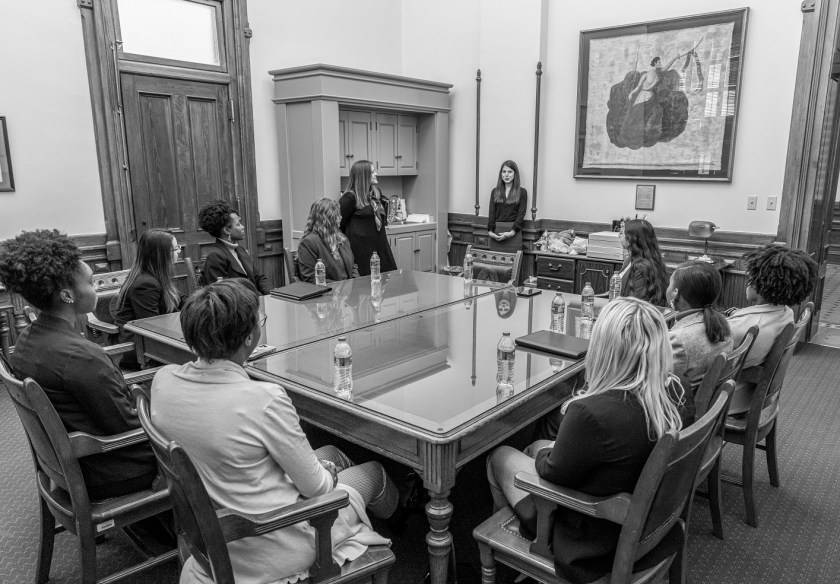
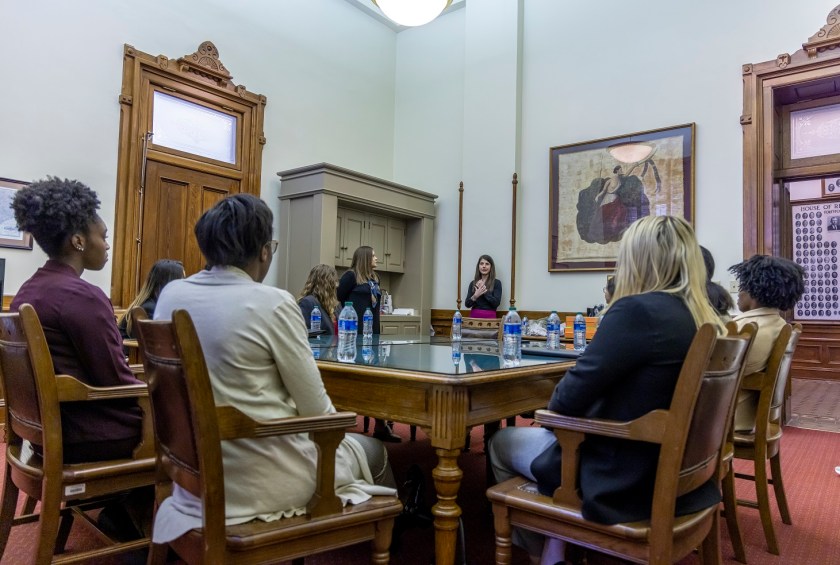
To prepare, they received an orientation from two top-notch employees of SHSU: Ms. Julie Schwab and Dean Shani Robinson. With moderation by Intern Director Mike Yawn, Robinson and Schwab discussed tips for navigating office politics, dressing for success, defusing conflict, and making a first impression.
In the latter case, Dean Robinson noted that people’s first impressions are often made in seven seconds, while also complimenting the students on their first impression–students stood up, walked forward, extended their hands, introduced themselves, and welcomed the presenters.
Ms. Schwab brought some swag, including padfolios to help the students on their road to professionalism and a Brene Brown book (“Imperfect”). Professor Yawn also provided students with business cards, a book (“How Important People Act,” by Ambassador Chase Untermeyer), and a business card holder.
With finals still before the students, the meeting was kept short, but the participants lingered as new advice was thought of and new questions were asked. Robinson and Schwab were generously supportive of the students, and despite the short length of the meeting, there was some bonding involved–leaving the students with some additional supporters and a larger professional network.
Although the semester-end draws near, several inquisitive and energetic students were up for a trip to the George Bush Presidential Library. The trip involved not only a tour through the Museum…
…but also a presentation by Jean Becker (President Bush’s Chief of Staff) and Warren Finch (the Library’s Director). What followed was an educational, informative, and entertaining trip through the past century for Cameron Gill, Ingrid Cuero, Olivia Discon, Kloe Osorio Ortiz, and Chris Fahey, led by Professor Mike Yawn and Stephanie Fors.
With a career as varied as George Bush’s, every student had something to enjoy. He had a large and successful family, including a father who was Senator…
A Bust of Prescott Bush
…a son who was President, and another son who was Governor.
Ingrid seemed to like this aspect of the Museum the most, paying extensive attention to the family portraits, letters, and descriptions.
For Chris, a veteran, Bush’s military service was a highlight. Bush signed up for the military at 18, becoming the youngest fighter pilot in the service. His plane, The Avenger, hangs from the ceiling of the Bush School, while below,
…the Museum has artfully arranged artifacts from his time in the military.
One of these artifacts is video footage taken after Bush was shot down over Chichi Jima, and it shows him being rescued at sea by the USS Finback.
Cameron Gill and Olivia Discon seemed to most enjoy the gifts given to President Bush from heads of state across the globe.
Kloe and the group–perhaps Ingrid most of all–enjoyed playing roles in the Oval Office, staging a scene that might been from a national crisis.
Moreover, all of the students seemed to enjoy the learning that takes place when you find out things you didn’t know: Bush played baseball in college; Bush was Director of the CIA; Bush served in Congress; and just visiting, for the first time, a Presidential Library and Museum.
No matter their preferences inside the Museum, all enjoyed the presentation by Warren Finch and Jean Becker, who, after introductions by Max Angerholzer…
…reflected on 25 years of the Bush Presidential Library.
With a personal interplay worthy of a road show, Finch and Becker told stories about opening the Library, special events at the Library, managing content of the Library, and, ultimately, Bush’s passing and his burial on the Library grounds.
Following the event, the students had a chance to get their books signed and to meet with Ms. Becker, who was gracious as always. Indeed, she promised a return trip to SHSU, a prospect that was especially pleasing to Professor Yawn.
With a full day behind them, the students had a busy semester to return to at SHSU. Their trip home reflected some of their plans for finishing out the semester, for Thanksgiving break, and also, perhaps, for future visits to Presidential Libraries.
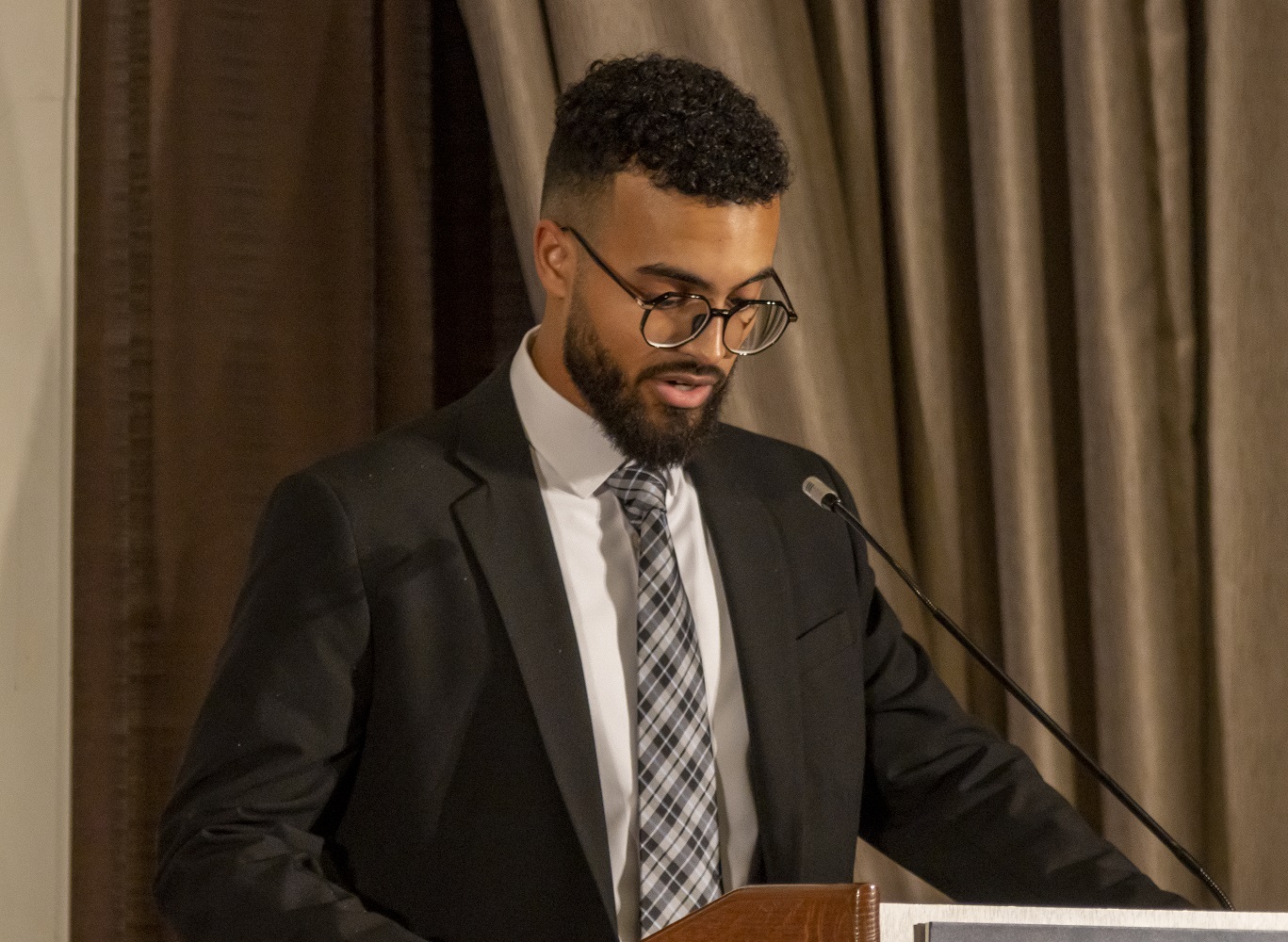
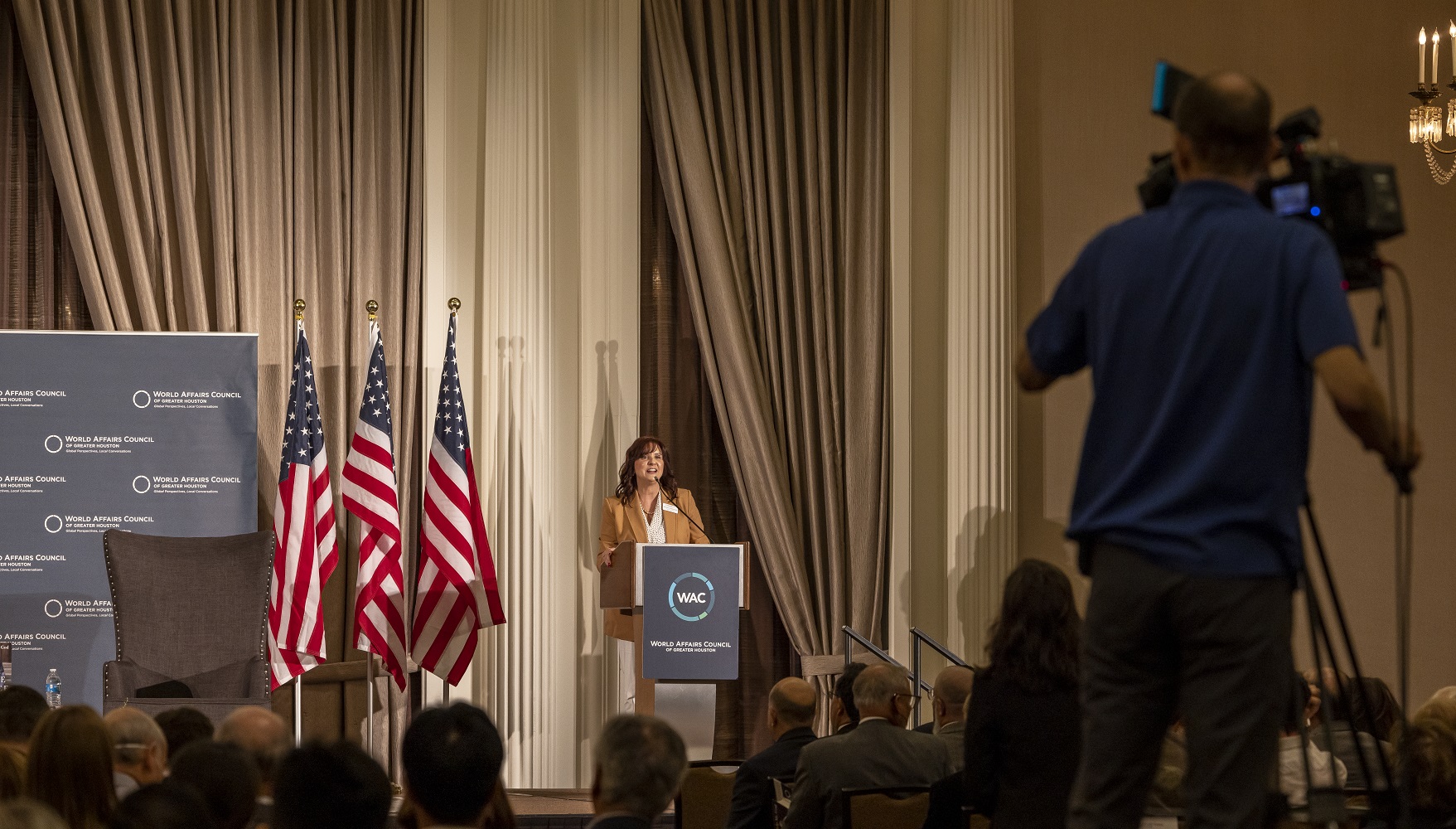
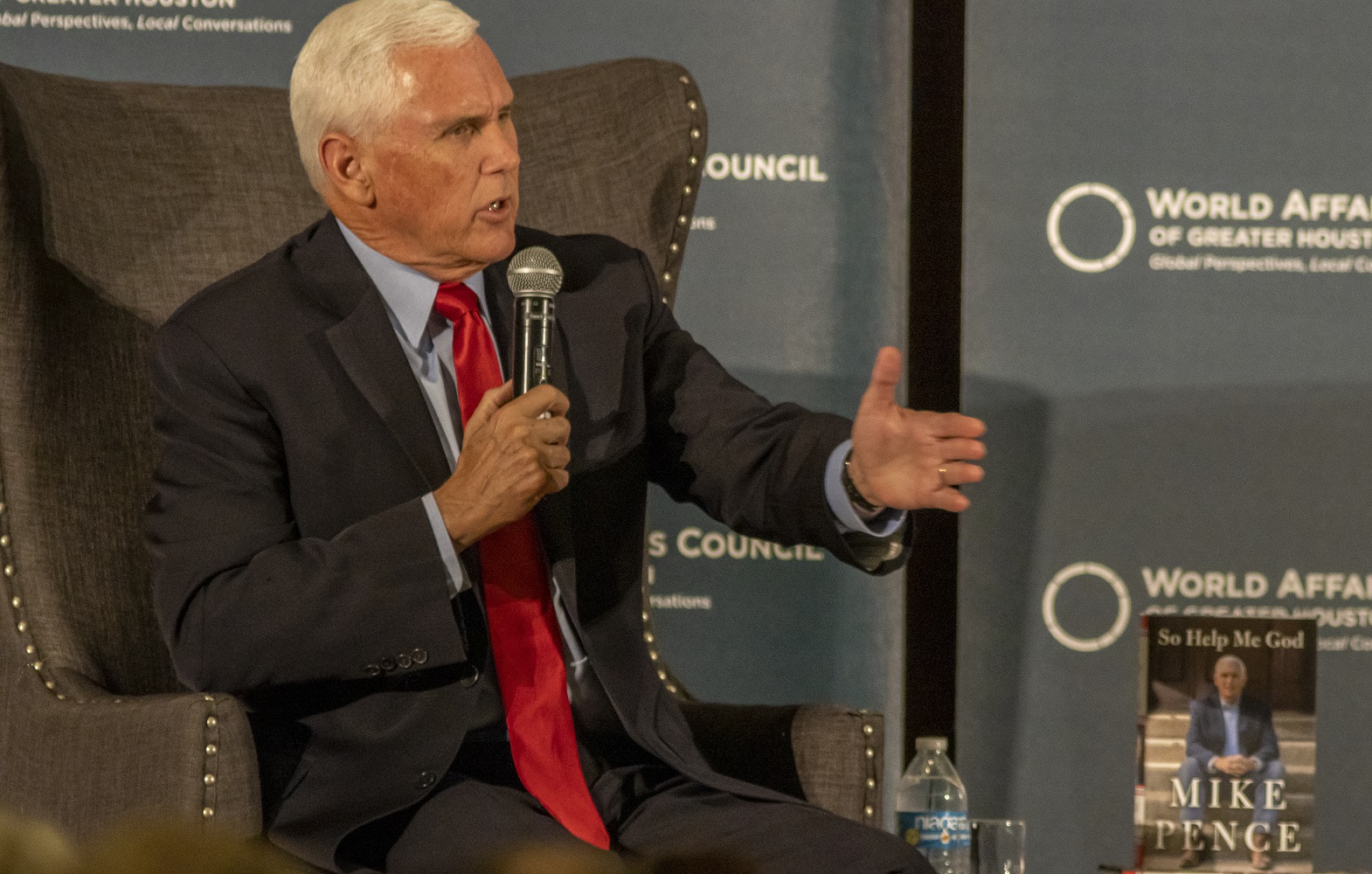
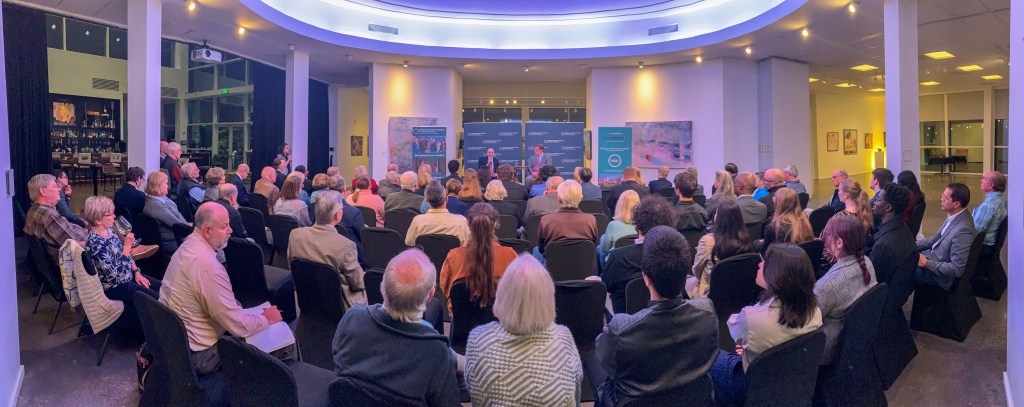
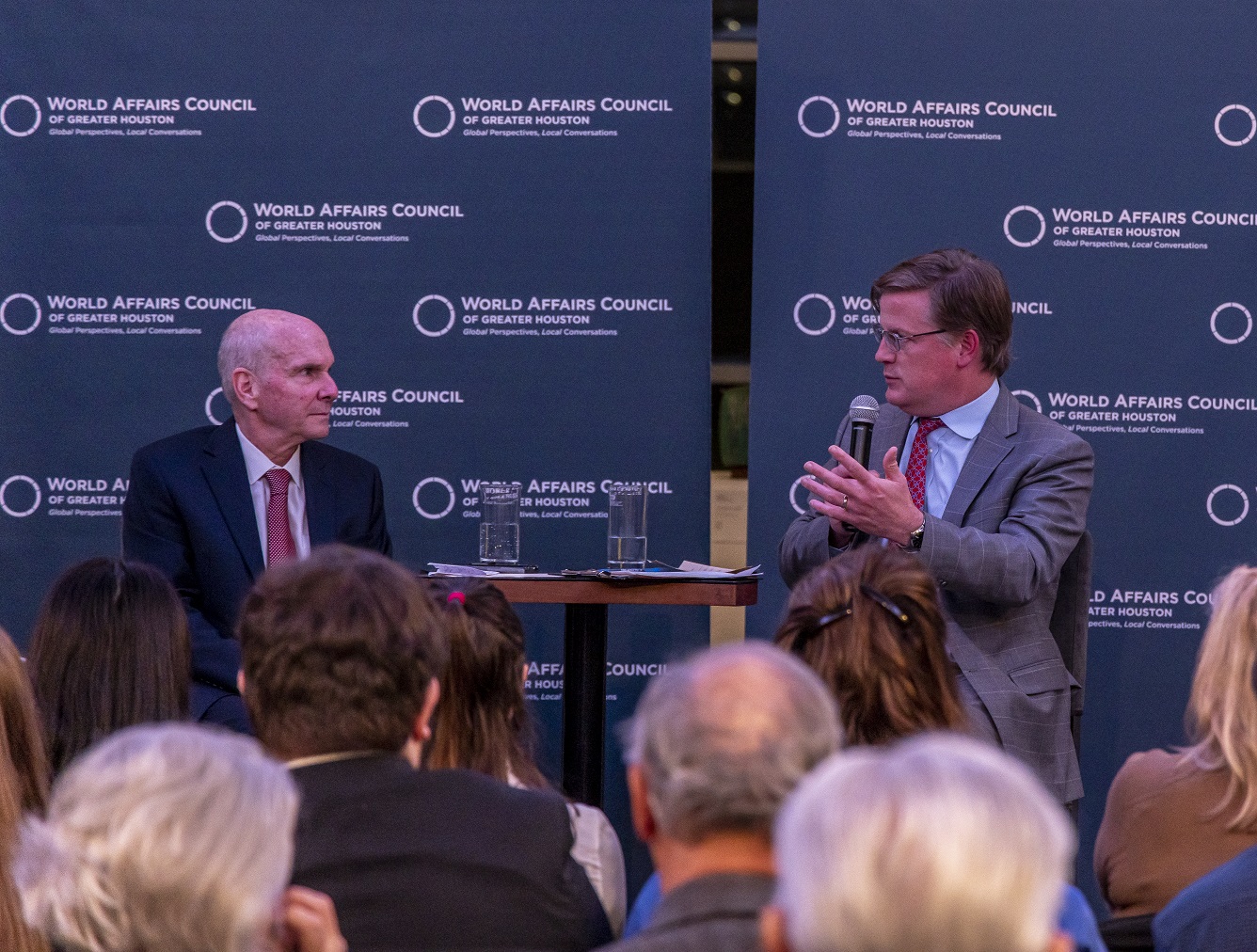
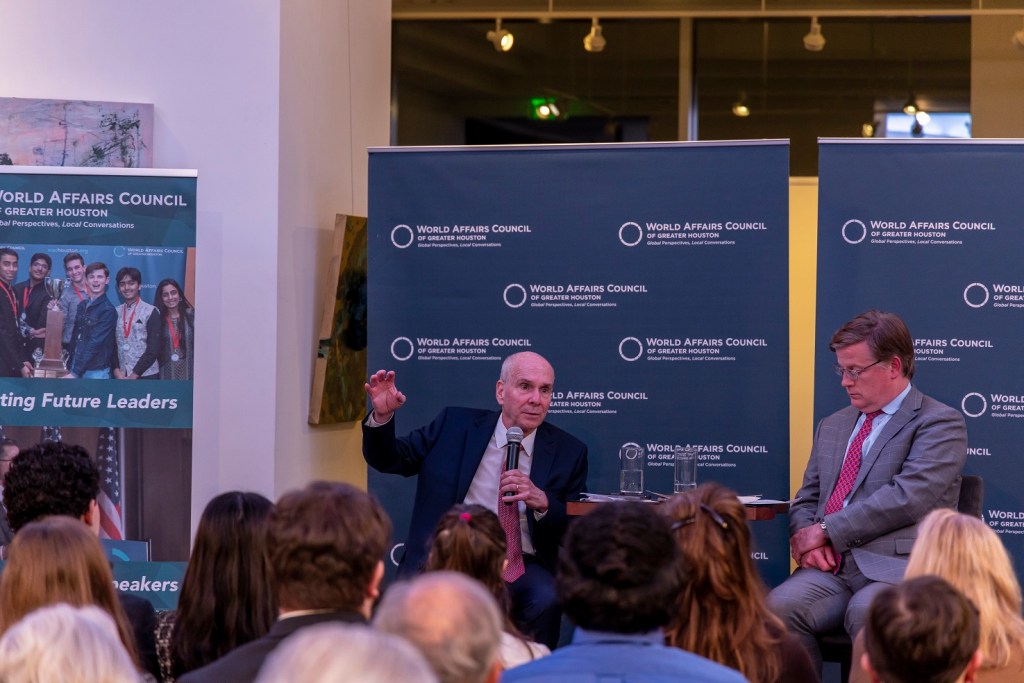
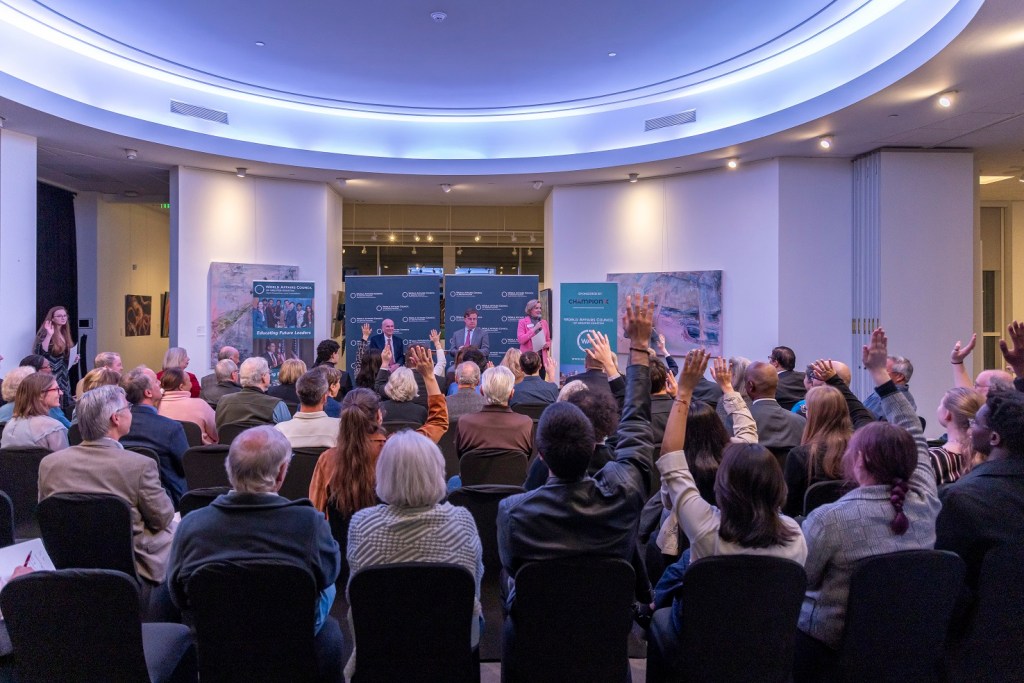
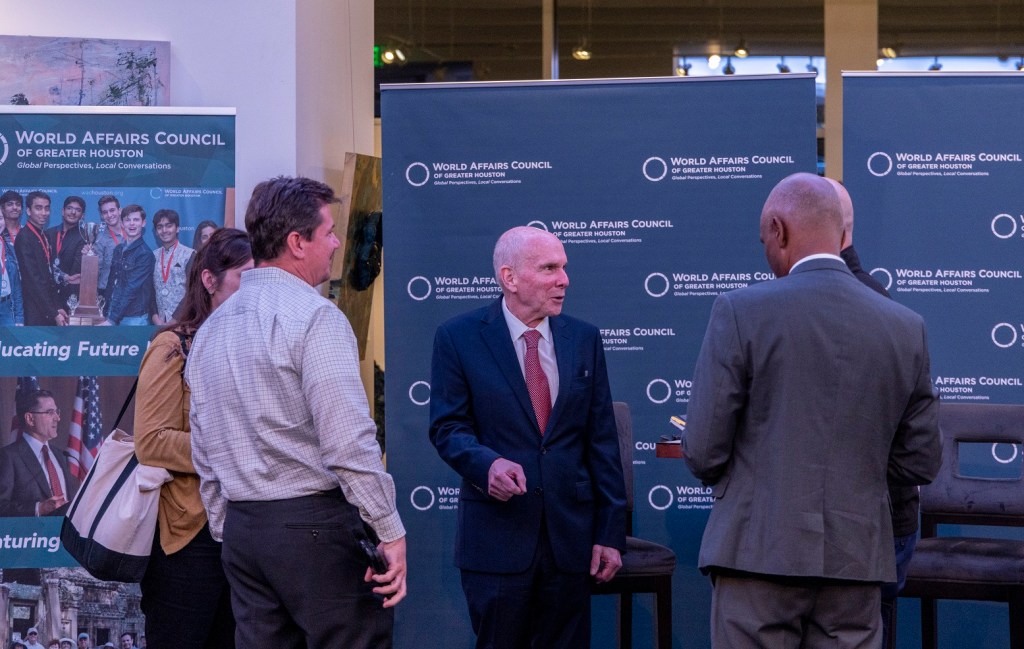
Approximately once a month, LEAP takes a group of students to Houston to attend a World Affairs Council event. For the month of November, this event happened to be a discussion about U.S. Intelligence and National Security with the Fifth Central Intelligence Agency (CIA) Director John Brennan, and Stephen B. Slick, the Director of the Intelligence Studies Project at UT Austin and former CIA Agent. Introducing them was Ambassador David Satterfield, making the group on hand about as knowledgeable on foreign policy as any three people could be.
This combination proved to be as interesting as it sounds, and made even a bit more interesting with the inclusion of several freshmen LEAP participants, including Adisen Massie, Michelle Cardenas, and Andrew Jeon!
Former CIA Director John Brennan with Andrew Jeon, Jessica Cuevas, Adisen Massie, and Michelle Cardenas
Many children grow up wanting to be a federal agent of some sort, and the CIA certainly has an allure. This was the case for former Director Brennan, who applied to the CIA, and when told he would be given an interview, immediately told all of his family about the exciting turn of events! Of course, you can’t be a clandestine agent if everyone knows you are interviewing for the CIA, so he had to turn around and tell everyone that the interview hadn’t worked out. As it turned out, however, the interview went well, and Brennan embarked on an illustrious career.
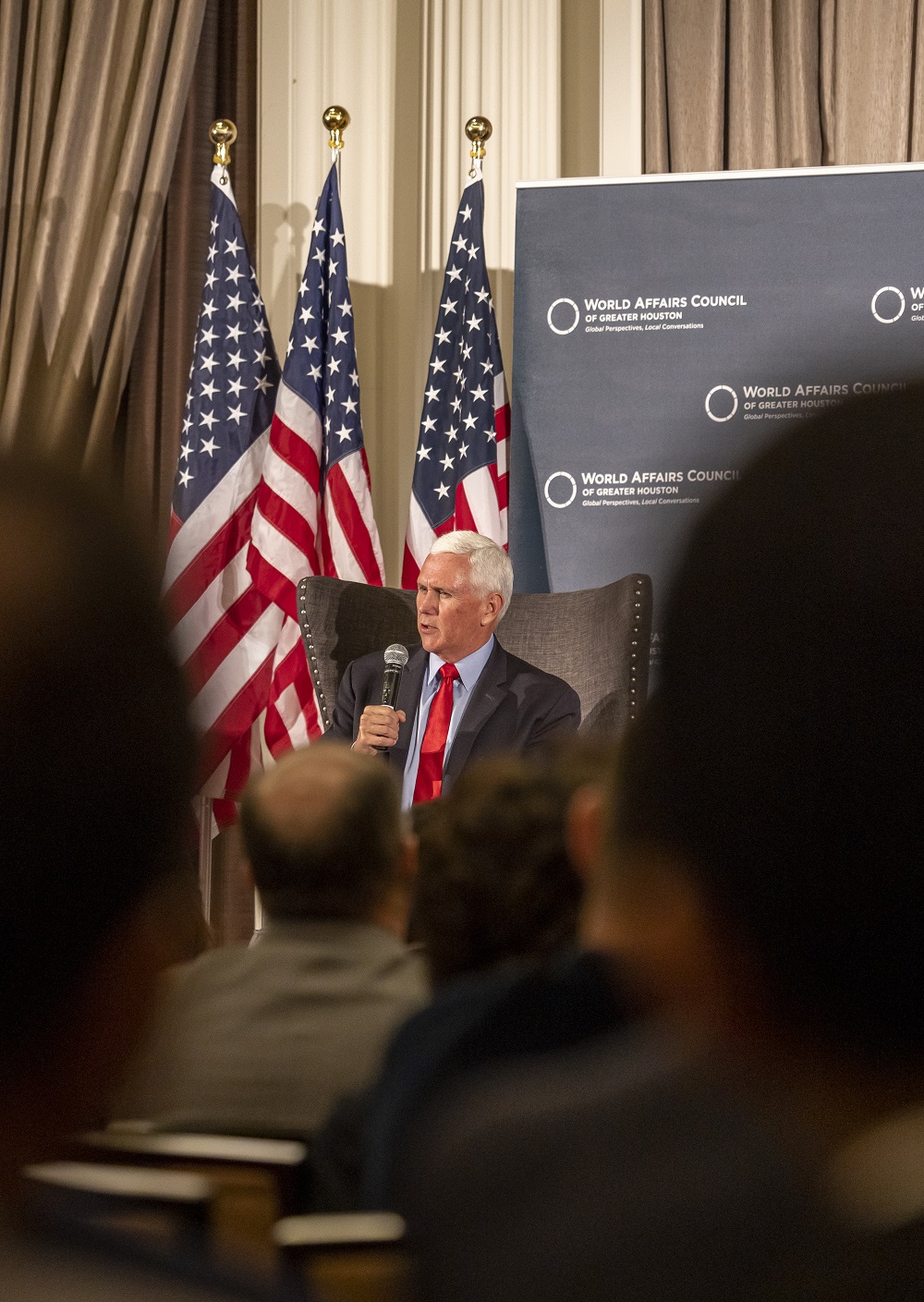
Serving from 1980-2005, Brennan specialized in Middle Eastern Affairs and counterterrorism and would eventually create a National Counterterrorism Center. Due to his specialization, he had the unique opportunity to serve as an intelligence briefer to Presidents Clinton and Bush (43).
While moderator Steven Slick advertised Brennan’s book, Undaunted: My Fight Against America’s Enemies, at Home and Abroad, he also noted that a title such as “Reform” would have been apt. Not only did Brennan reform the agency, but he helped establish our nation’s policy and response to terrorism, disasters, and cyberattacks.
Brennan was a fitting director for the agency, believing that they should primarily focus on intelligence and not lethal action. He also occasionally angered members of Congress, because he did not seek their recommendations for the types of reforms needed. If he had, he said, he would still be waiting on decisions and consensus.
At almost every opportunity, Brennan spoke of what he and other agents and government figures did as “public service.” And he encouraged the young people in the audience–mostly us–to see public service as valuable and obligatory.
As we’ve come to expect, it was another top-notch speaker and experience put on by the World Affairs Council. Many thanks for the wonderful service provided by WAC.
The second step in our journey through the incarceration process involves the prosecution and courts! We had an excellent opportunity to have a Walker County Courthouse tour, one led by County Court at Law Judge Tracy Sorensen. To discuss the prosecution side of things was Jennifer Jenkins, Senior Felony Prosecutor for the District Attorney’s Office. Every participant walked into the courthouse excited to hear the inner workings of a court from a judge’s and prosecutor’s perspectives.
Starting with the County Court at Law courtroom, Judge Sorensen explained her defense attorney days, as well as her two terms as Judge.
She oversees and handles cases involving juveniles, probates, child custody, and adult misdemeanors in the County Court at Law. Judge Sorensen has a trial jury of six total jurors in the issues that make it to trial.
We were even being taught scenarios about some instances that Judge Sorensen could hear and Prosecutor Jenkins might prosecute. For example, one of the students in Beyond Bars, Rachel Hill, was kind enough to let Professor Yawn use her as an example of a college student caught with less than a gram of marijuana.
Judge Sorensen and Jenkins mentioned they could probably reach a deal, one that might allow for a deferred adjudication, allowing Ms. Hill to keep this incident off her record. This made Ms. Hill very happy.
It was interesting to hear how the process works, while also getting advice from both Ms. Jenkins and Judge Sorenson.
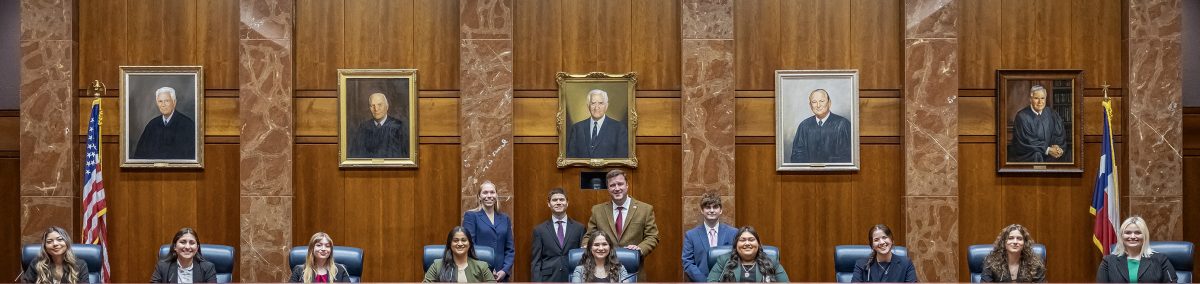
Making our way up to the other side of the courts is the District Court, where Judge Hal Ridley and Judge David Moorman preside when in Walker County. These courts are physically larger, with space for a larger audience and 12 jurors. Portraits of prior judges are hung in the room, along with a portrait of Sam Houston.
While in this room, we shared our experiences of being a juror.
One of our participants, Steve Covington, discussed the time when he was selected to be on a jury hearing a pornography charge. As a juror, he was “forced” to watch hours of pornography in the jury room (with a jury consisting mostly of older women) to determine whether the content was criminal.
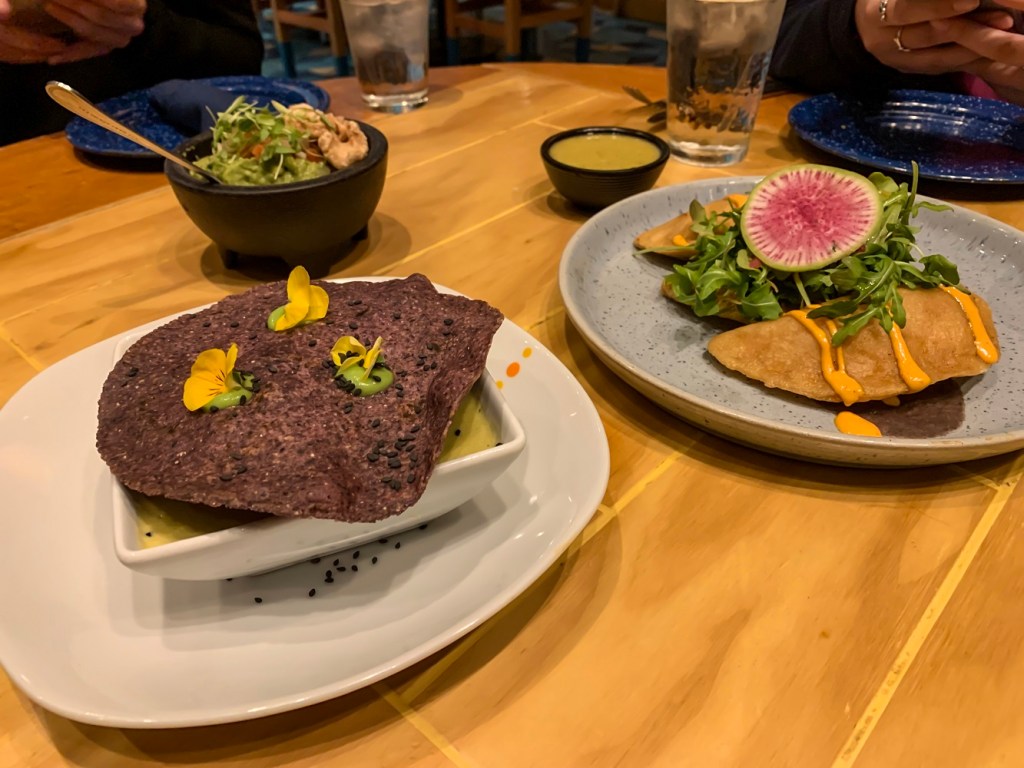
Ms. Jenkins and Judge Sorensen were kind enough to join us for dinner at Sam’s Table, where we all had a variety of Sam’s Table’s special menu items such as the Caprese Panini, Sams’s Secret Burger, and the Casado. Everyone enjoyed their meal while they had the opportunity to ask more questions about what it is to be a prosecutor and judge.
We took in new information from the tour and dinner; for that, we would like to thank Judge Sorensen and Ms. Jennifer Jenkins! It was fantastic getting to know more about the prosecutions and courts.
Continuing our journey of understanding the legal system, specifically the courts, the SHSU Pre-Law Society had the opportunity to hear from a former civil trial prosecutor, Mr. Chris Thompson! He received his law degree from St. Mary’s School of Law and has worked in the legal field in Walker County for 16 years. He is a practicing attorney who works on real estate issues, appeals, and personal injury. Mr. Thompson is also a professor at Sam Houston State University, where he teaches business law. With all the knowledge and background Mr. Thompson has, we were excited to hear his advice and tips on cross and direct-examination skills!
Direct and cross examinations are essential parts of our adversarial trial system, and Professor did a great job highlighting the two approaches.
Mr. Thompson provided various examples of actual trials, such as the recent case of Johnny Depp v. Amber Heard. He highlighted the practice, noting that when doing cross, you force the witness into providing short responses, answering the specific question. Heard, for example, often wanted to provide context or additional information, which the Depp team successfully curtailed. It’s not that Heard can’t provide that information, but it’s her attorney’s job to re-direct and get that information in, if it, in fact, helps Heard’s side.
The other example was from a famous movie that most say has the best cross-examination scene, “My Cousin Vinny.” Mr. Thompson emphasized that the film perfectly expressed the importance of looking at the small details of the big picture. Every detail is essential to a case. When making a case, we need to build up the suspense, just like in a thriller movie or the “ah ha” moment.
Finally, Mr. Thompson pointed out the complexities of examining a witness. For example, when asking questions, you must know when the right moment is to stop asking further questions. This is key to leaving the jury to sway more to your side. All of these tips gave us a better understanding of what cross-examination is and how it can better prepare us for our cross-examination exercise for our next pre-law society meeting.
We want to thank Mr. Chris Thompson for taking the time out of his evening to speak with us and share his journey to becoming a lawyer and tips for cross/direct examination. His advice will help us with future endeavors and cases we may have as attorneys ourselves. Also, we would like to thank the people who attended this past meeting. See you at our next meeting on November 16th!
There was no better way to kick off our newest LEAP Program, Beyond Bars, than with a back-stage tour of the Huntsville Police Department led by Corporal David Warner. Starting us off was Lieutenant Curt Landrum, who told us the stories behind the artifacts, photos, and mementos that can be found in the waiting area. These included photos of all the chiefs, equipment from back in the day, and the “honorary” shovel used for the groundbreaking.
We also learned more about the building itself, and the interesting features of the structure. These included but were not limited to bullet-resistant glass, interview rooms, a gym, a locker room and showers, and a relay room. All of these have proven to be helpful and beneficial for various reasons such as security, privacy, and in the case of an emergency or a court hearing for those that drive in for a shift accommodation.
We had the opportunity to see the officers’ offices, computer spaces, and interview rooms. In a bullpen area with lots of open space and computers, we met a rookie who was enjoying (or not) filling out paperwork.
The coolest thing in this room was the computer screen that informs everyone where each patrol officer is, whether they are on a call, and if so, how long they have been on the call and the nature of the call. Interestingly, one officer had been called to the State Park to address “six teenagers taunting an alligator,” a crime-in-progress that we did not expect to see.
Before eating dinner, we had the opportunity to see the evidence room, and a joke was made that I would likely fit in one of the evidence lockers because of my small stature, haha.
We also learned a bit of Huntsville trivia. Did you know that on April 15, 2021, one officer gave 99 citations in a single shift? It was the most tickets ever imposed in the City’s history, at least as far as known, and it was done by a motorcycle officer.
As the tour came to an end, we had the opportunity to dine in the Police Department’s lounge area with Corporal Warner, and little did we know of the activity that was awaiting us. On the menu, were delicious tacos al carbon: beef, chicken, pork, or shrimp, and or a choice of vegetarian, cheese, or pork pupusas from the local Salvadorian Restaurant, Carbonero’s.
Corporal Warner provided us with a demonstration of what is done during a sobriety test. In particular, he spun us around and then conducted a “nystagmus” test, which is one of the key indicators of sobriety or the lack thereof. Jazmin Palacios, a Ph.D. student at SHSU, was voluntold to participate, and she not only did this test, but also wore the “drunk goggles” provided while doing a field sobriety test.
Corporal Warner instructed her to take nine steps and walk in a straight line, with each step she took she had to keep her hands by her side and walk heel to toe while counting out loud. It was slightly amusing to watch, but it is less fun when you are the one doing the test! Morgan also got lucky and was asked to do a one-leg test, where she had to count to ten out loud while keeping her leg raised up about an inch from the floor. Somehow, she managed to successfully complete this task.
As the night came to an end, the officer who had been sent to the State Park returned, and inquiring minds wanted to know: what happened to the alligator-taunting teenagers? As it turned out, “there were no alligators, no teenagers, and no witnesses.” Some of us may have been disappointed in the way that turned out.
It was a fun and educational night, everyone had the opportunity to wear the goggles and experience what it is like to be on both sides of the law. Many thanks to Corporal Warner and to the entire police department for helping to keep our community safe.
The LEAP Center would like to thank the Annette Strauss Institute for Public Life and their “Texas Civic Ambassadors Program” for assisting with the costs of the program.