“Inaugural” Trip: Day 3, New Orleans

January 14, 2021

The Besthoff Sculpture Garden, The Best of Sculpture Gardens

Ava Garrett

To kick off day three of our trip, the LEAP students went to the Sydney and Walda Besthoff sculpture garden, where we picked the picked morning to stroll through and look at all of the captivating pieces of art.

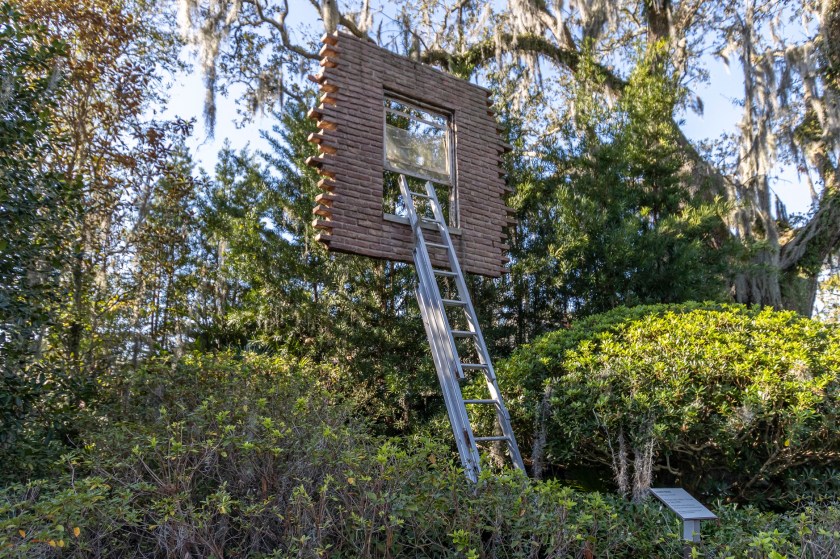
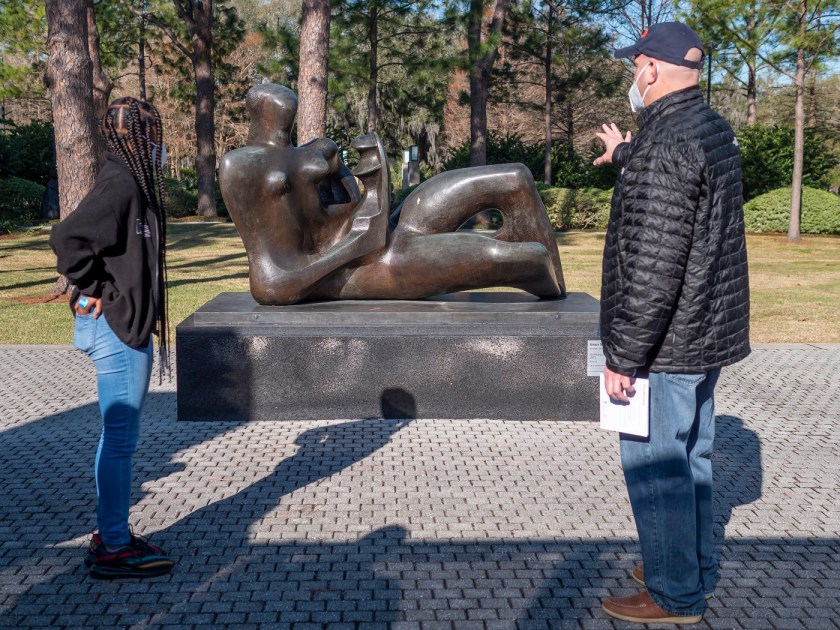
This garden sits on 11 acres of land and is filled with a variety of artwork, everything from abstract pieces to figurative ones and all from many different artists with varying artistic style. Just as you enter the garden you cannot miss Henry Moore’s reclining woman and child sculpture standing next to the tall gold sculpture of a woman with a crossbow and arrow.
SHSU, LEAP Center, Center for Law Engagement And Politics, New Orleans, NOLA, Besthoff Sculpture Garden

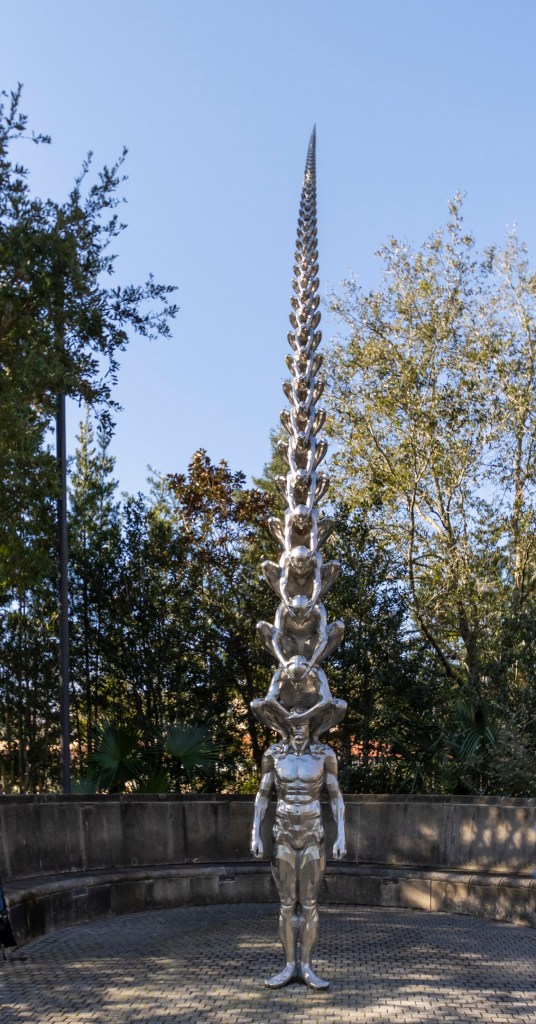
As we proceeded further along the path we crossed over the Morris G. and Paula L. Maher bridge, which led us to the fascinating escalating brushed stainless-steel sculpture of humans stacked on top of each other. This piece was called “Karma” by Do-Ho Suh, and we all had mixed feelings about this piece; some loved it, like Quinn, and others like me, found it a bit scary to look at.
SHSU, LEAP Center, Center for Law Engagement And Politics, New Orleans, NOLA, Besthoff Sculpture Garden

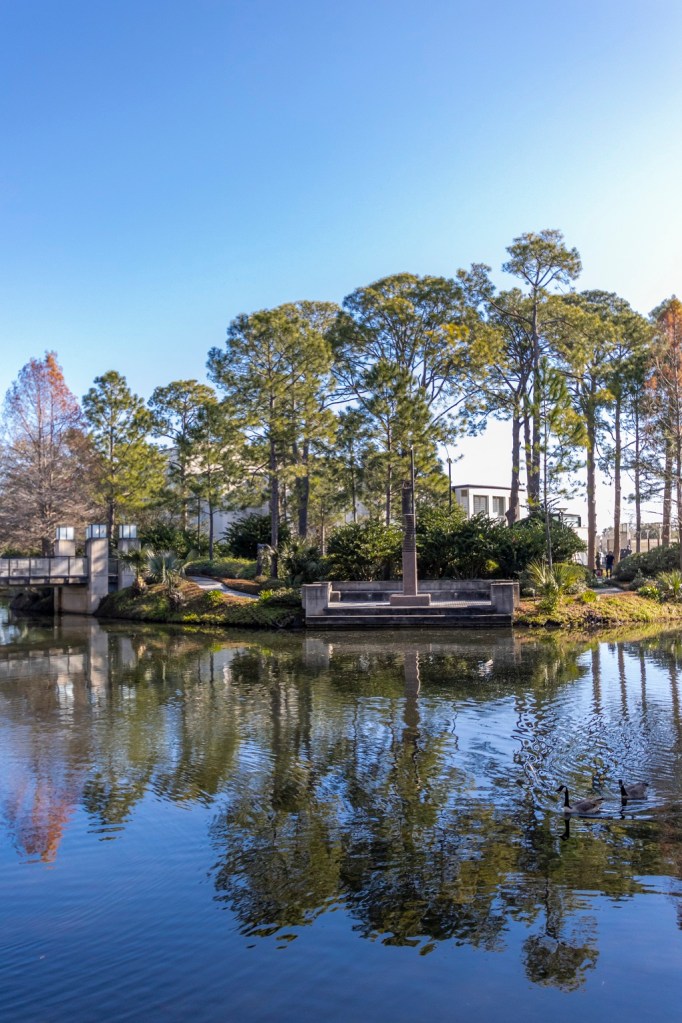
After a while, it was nice to be able to start recognizing and connecting specific artists to their artwork, now that we have started to become familiar with the artists’ styles. One of the artists featured here was Jesús Moroles, who also has pieces of his work on display at The Wynne Home and at Sam Houston State University back in Huntsville!
SHSU, LEAP Center, Center for Law Engagement And Politics, New Orleans, NOLA, Besthoff Sculpture Garden

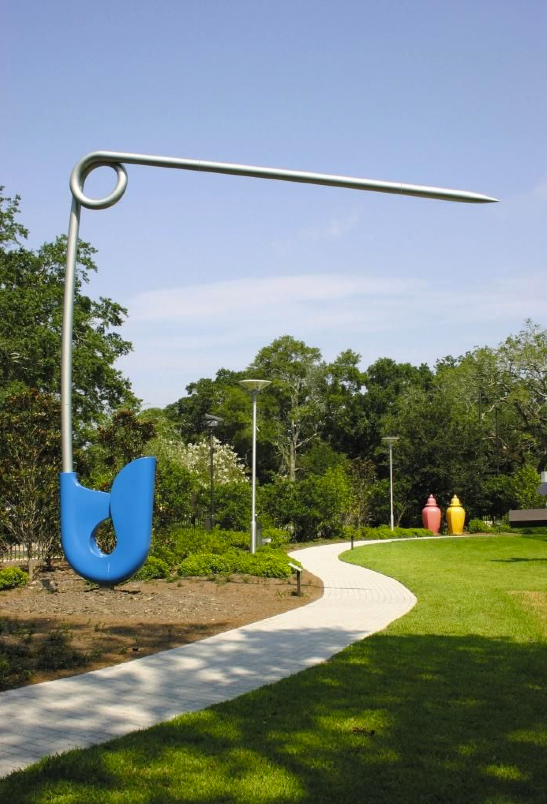
My favorite piece in the garden was the life-size blue safety pin created by Coosje van Bruggen and Claes Oldenburg.
Corridor Pin, Blue | New Orleans Museum of Art

This pin is known as the “Corridor Pin,” and it stands at a whopping 21 feet tall. Further into the garden we passed many other interesting sculptures such as an oversized spider and even a Greek sculpture called “Hercules Archer” by Antoine Bourdelle, which tied into our mini theme of recognizing Greek and Roman influences on architecture, art, culture, and government on this trip.

Even though we didn’t get a chance to see every single one of the sculptures in the garden, we still gained a lot of new information to reflect upon in the many other art museums that we are going to visit during this trip.
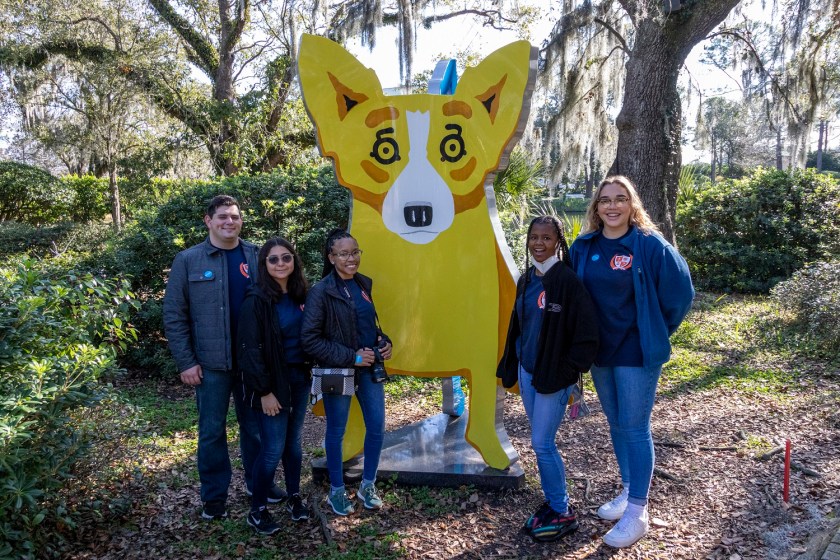
  • SHSU, LEAP Center, Center for Law Engagement And Politics, New Orleans, NOLA, Besthoff Sculpture Garden, George Rodrigue
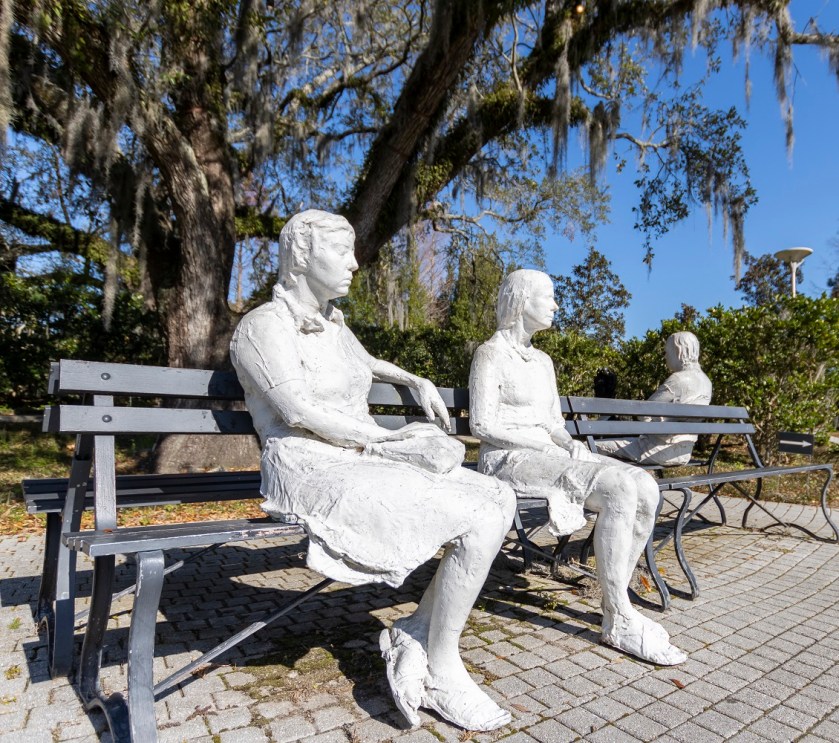
  • SHSU, LEAP Center, Center for Law Engagement And Politics, New Orleans, NOLA, Besthoff Sculpture Garden, George Segal
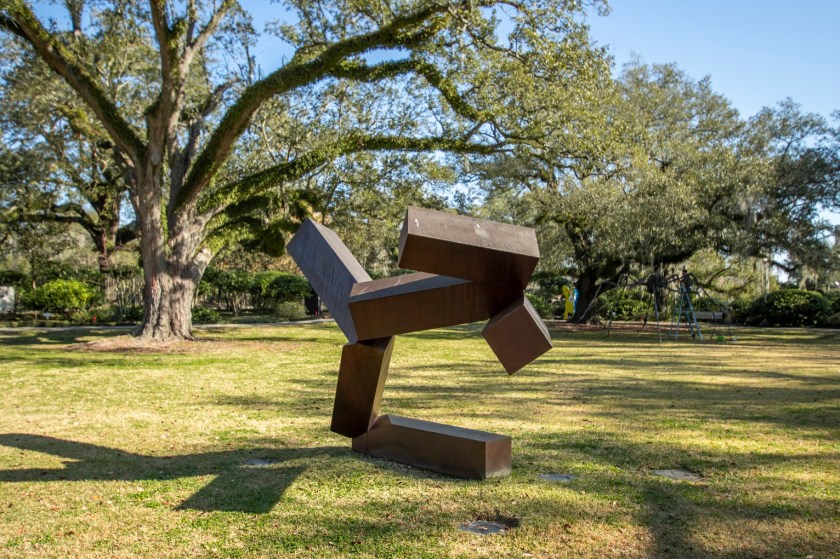
  • SHSU, LEAP Center, Center for Law Engagement And Politics, New Orleans, NOLA, Besthoff Sculpture Garden, Joel Shapiro
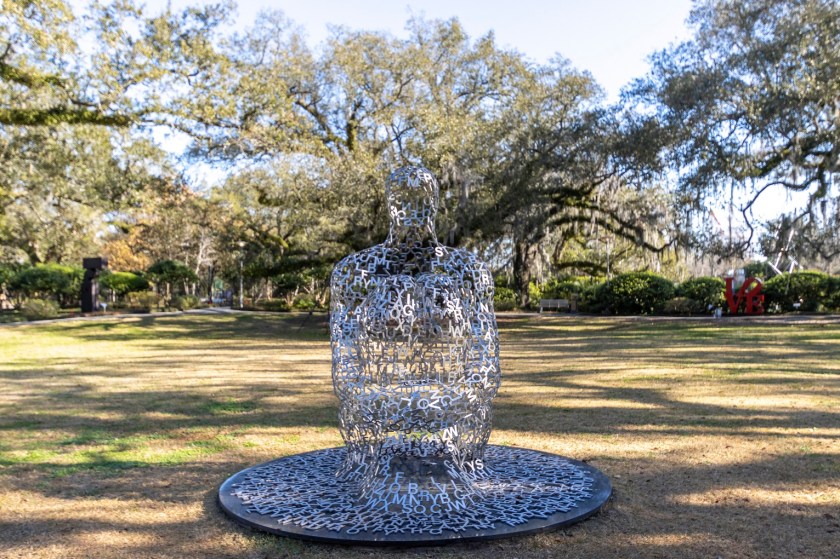
  • SHSU, LEAP Center, Center for Law Engagement And Politics, New Orleans, NOLA, Besthoff Sculpture Garden, Jaume Plensa
  • SHSU, LEAP Center, Center for Law Engagement And Politics, New Orleans, NOLA, Besthoff Sculpture Garden
  • SHSU, LEAP Center, Center for Law Engagement And Politics, New Orleans, NOLA, Besthoff Sculpture Garden

With that said, there are over 90 sculptures in the Sydney and Walda Besthoff, garden so there is bound to be a sculpture in there for everyone to like, and it’s definitely a place that I will come back to the next time I visit New Orleans!

Ogden Museum of Southern Art

Ilexus Williams

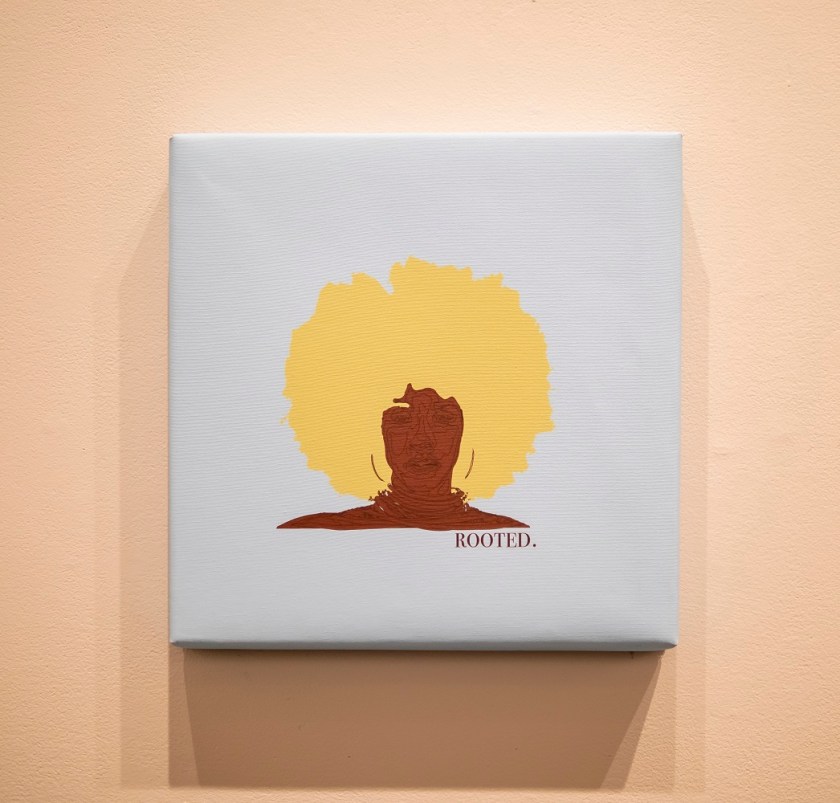
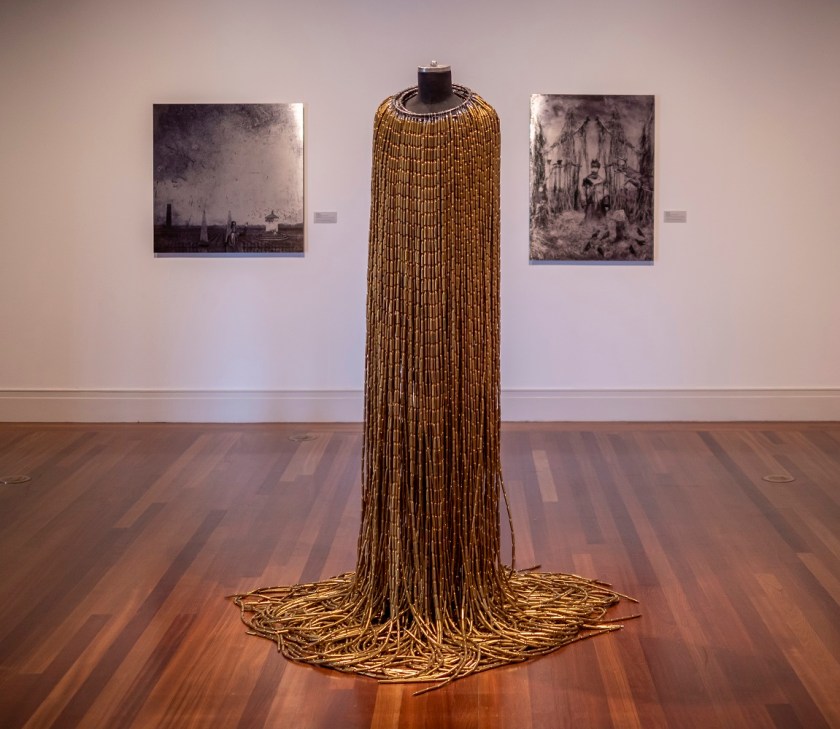
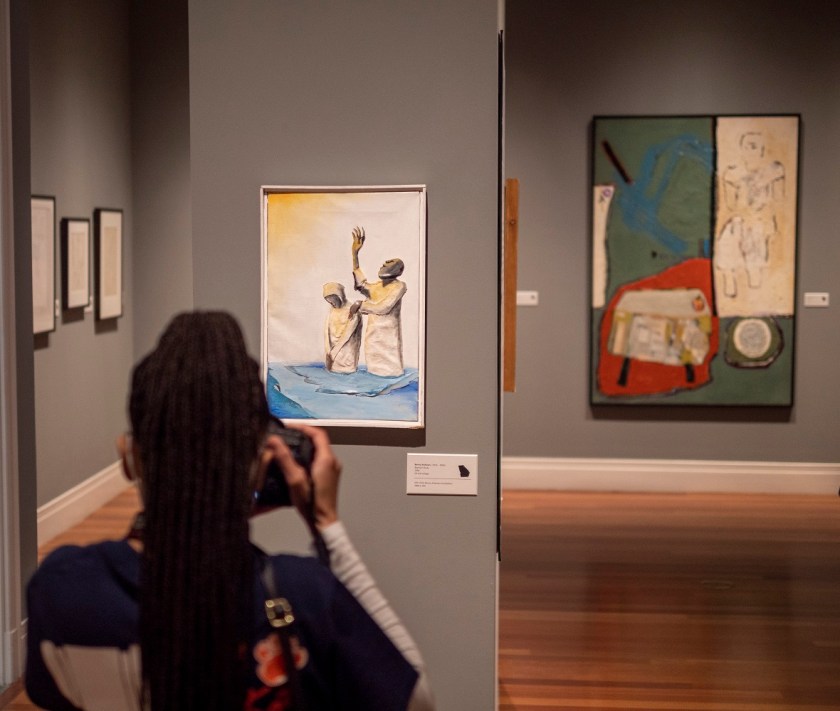
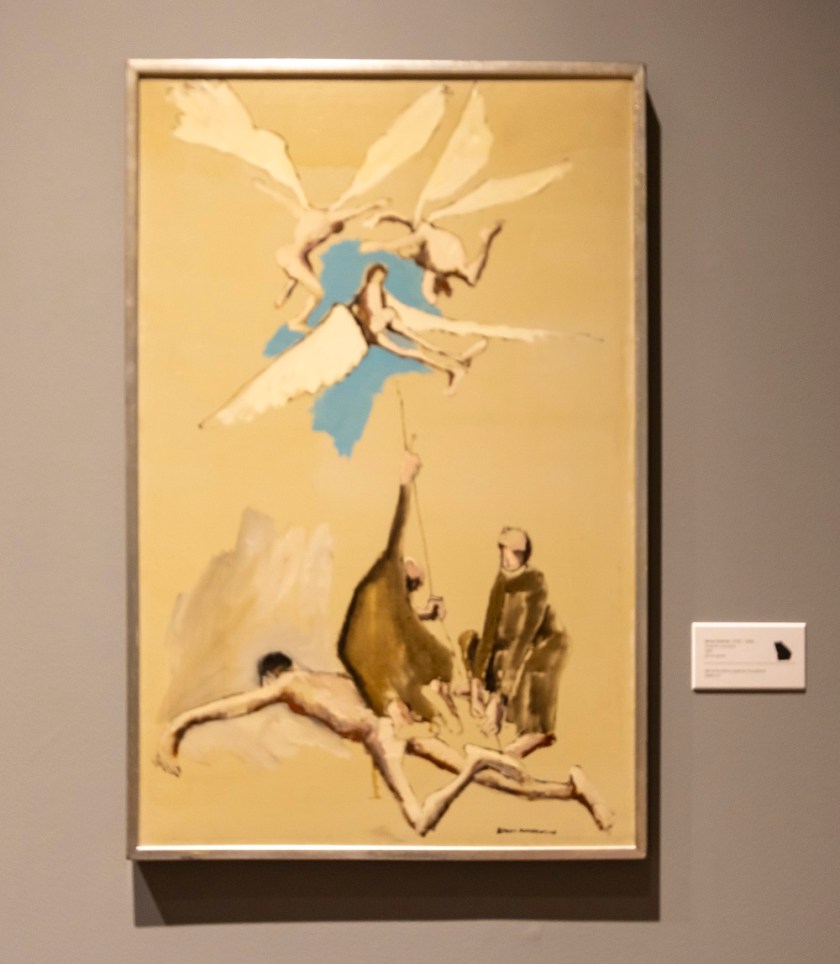
Art is a beautiful avenue for understanding other cultures, life experiences, and history. And, to that end, The Ogden Museum of Southern Art displays many artists that highlight African American life, history, and social justice issues, giving patrons insight into the creativity and culture of African-Americans in the south. (Not to mention many other cultures that are represented in the south and in this museum.)

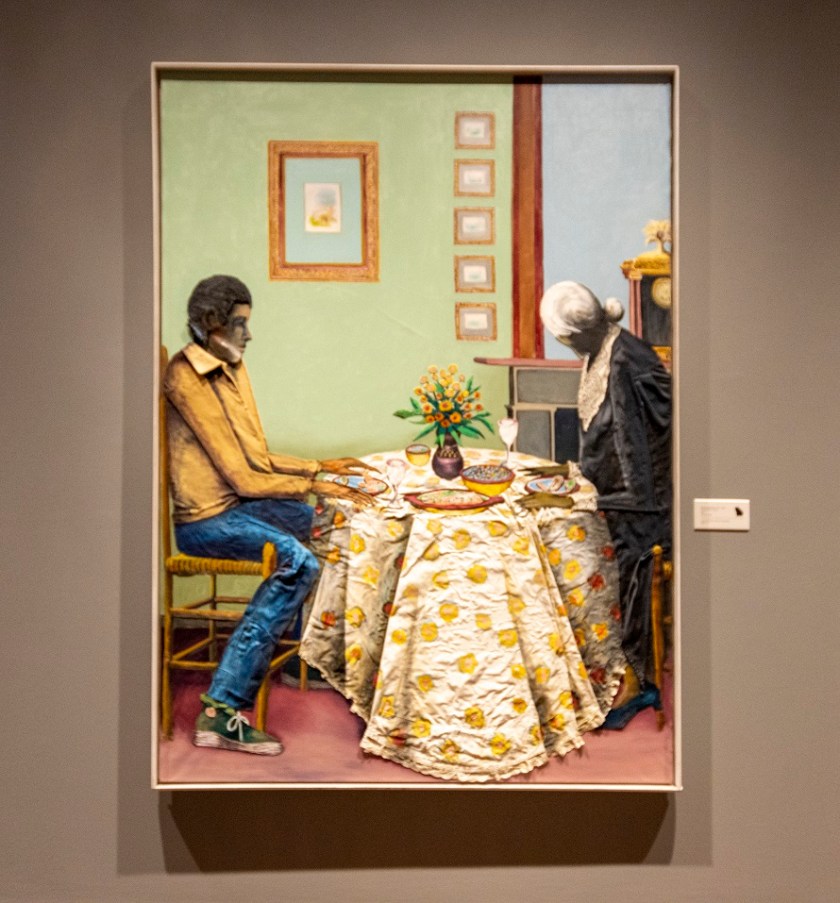
Benny Andrews is an American figurative painter with both African and European Ancestry. Not only is Benny Andrews a talented artist, but he is also a social justice advocate for African American artists. In 1969, Andrews helped to establish the Black Emergency Cultural Coalition, which is an organization that was created to advocate for greater representation of African American artists in New York. Additionally, as the director of visual arts for the National Endowment for the Arts, Andrews pushed for opportunities such as fellowships and grants to be awarded to promising African American artists who rarely received recognition for their work.

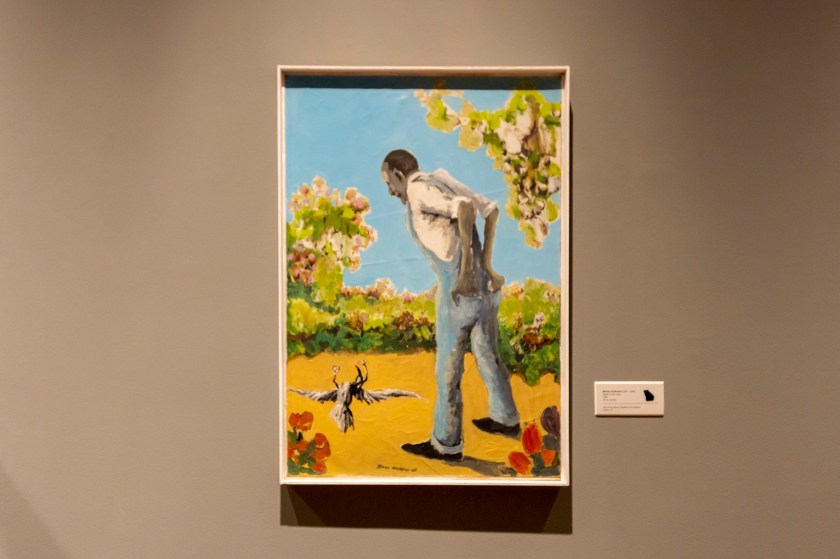
A perfect representation of civil rights is Benny Andrews’ piece entitled Death of the Crow. This piece depicts an African American man peering down in disbelief at a dead crow in the dirt. With Death of the Crow being created in 1965, the dead crow is symbolic of the end of Jim Crow Laws and the evolution of civil rights in the United States.
SHSU, LEAP Center, Center for Law Engagement And Politics, Ogden Museum of Southern Art, Benny Andrews

The viewer wonders: is the older man satisfied? Is he thinking of what might have been, if only this had occurred earlier? Perhaps the verdant garden setting promises a “new leaf,” a brighter beginning in the realm of race relations and equity. Or is he simply astonished?

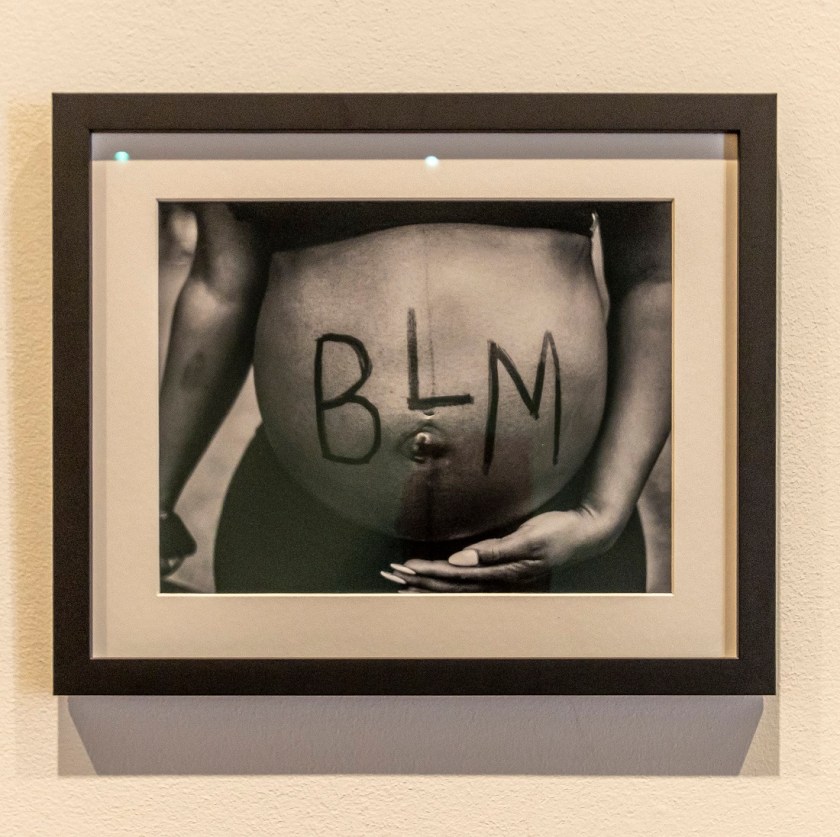
The next piece, Born Scared by Mike Hartnett, spoke to the growing concern for African American lives, police brutality, and racism in America. “Born Scared” shows a black and white image of a pregnant woman with the letters BLM written on her stomach.
SHSU, LEAP Center, Center for Law Engagement And Politics, Ogden Museum of Southern Art

This image illustrates the fear that black mothers have of bringing their children into a world full of racism and injustice. No matter how hard black mothers try to protect their children from the ills in the world, they know that it is impossible to protect them from everything.

Kara Crowley is an African American artist who uses her art to give reverence to black culture by highlighting social issues. Kara Crowley’s piece, Exertion, portrays a beautiful collage of hands in various hues of brown and tan joined together.
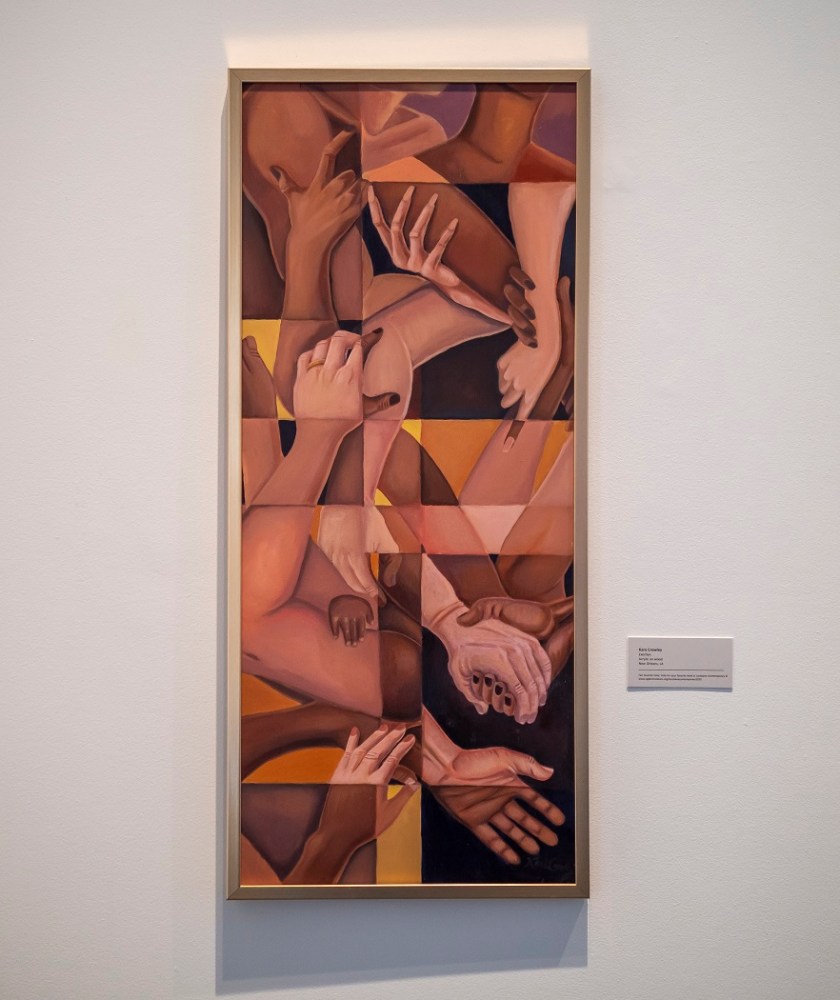
SHSU, LEAP Center, Center for Law Engagement And Politics, Ogden Museum of Southern Art, Kara Crowley

Exertion is the perfect representation of finding beauty in diversity and embracing our differences in skin tone. With colorism being a crippling issue in the black community, Kara Crowley piece effectively demolishes the notion that certain skin tones are better than others and emphasizes that beauty comes in all shades–while also emphasizing that integration is better than segregation.

These three artists gave unique perspectives of African American history, lived experiences, and culture., and this could have served as a complete visit. But there is much more to see at the Museum, from photographs from the civil rights era…
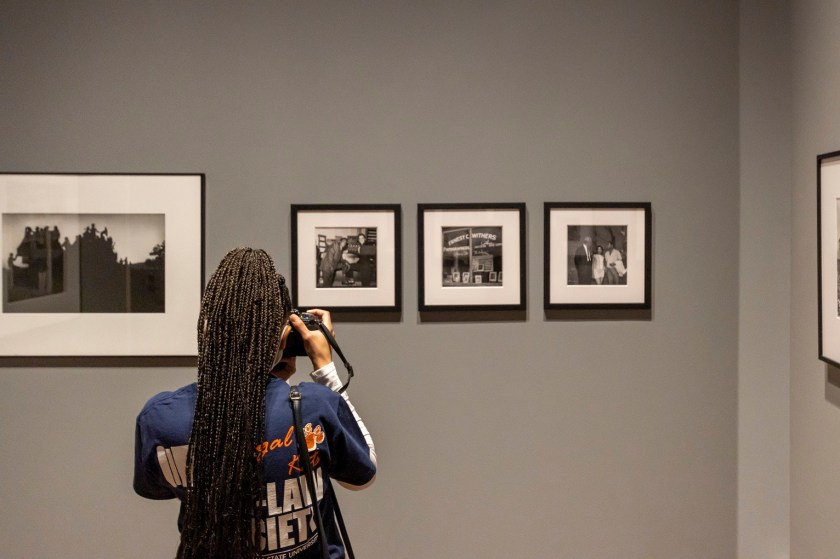
SHSU, LEAP Center, Center for Law Engagement And Politics, Ogden Museum of Southern Art

….including at least one photo of Martin Luther King…
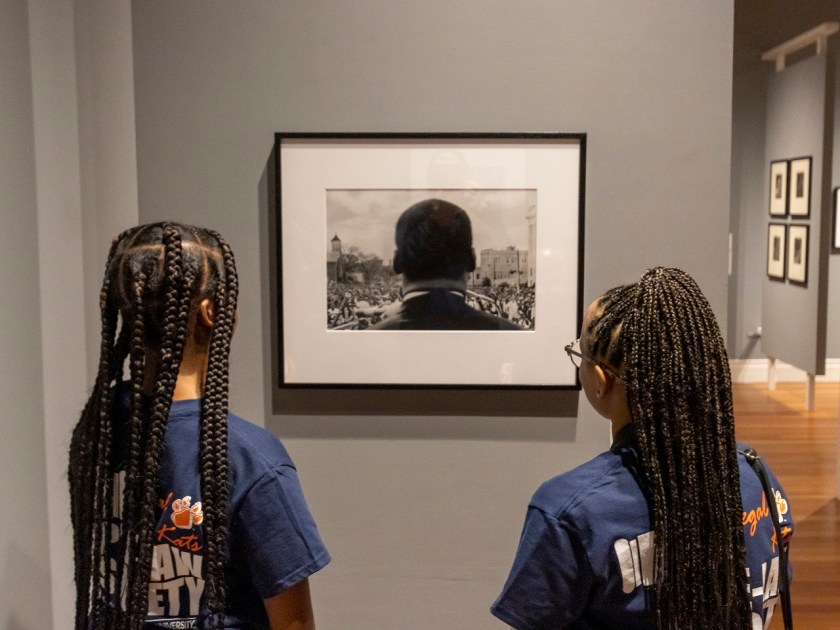
SHSU, LEAP Center, Center for Law Engagement And Politics, Ogden Museum of Southern Art, MLK

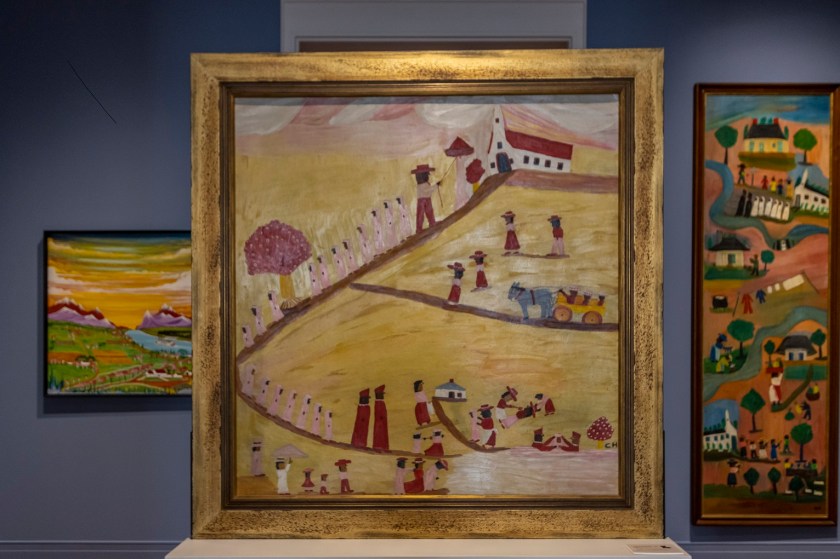
…the work of Clementine Hunter…

SHSU, LEAP Center, Center for Law Engagement And Politics, Ogden Museum of Art, Clementine Hunter

…and much more!

  • SHSU, LEAP Center, Center for Law Engagement And Politics, Ogden Museum of Southern Art
  • SHSU, LEAP Center, Center for Law Engagement And Politics, Ogden Museum of Southern Art
  • SHSU, LEAP Center, Center for Law Engagement And Politics, Ogden Museum of Southern Art
  • SHSU, LEAP Center, Center for Law Engagement And Politics, Ogden Museum of Southern Art
  • SHSU, LEAP Center, Center for Law Engagement And Politics, Ogden Museum of Southern Art
  • SHSU, LEAP Center, Center for Law Engagement And Politics, Ogden Museum of Southern Art
  • SHSU, LEAP Center, Center for Law Engagement And Politics, Ogden Museum of Southern Art

It is wonderful that the Ogden Museum of Southern Art captures the diverse group of lives, peoples, and cultures reflected in the South.
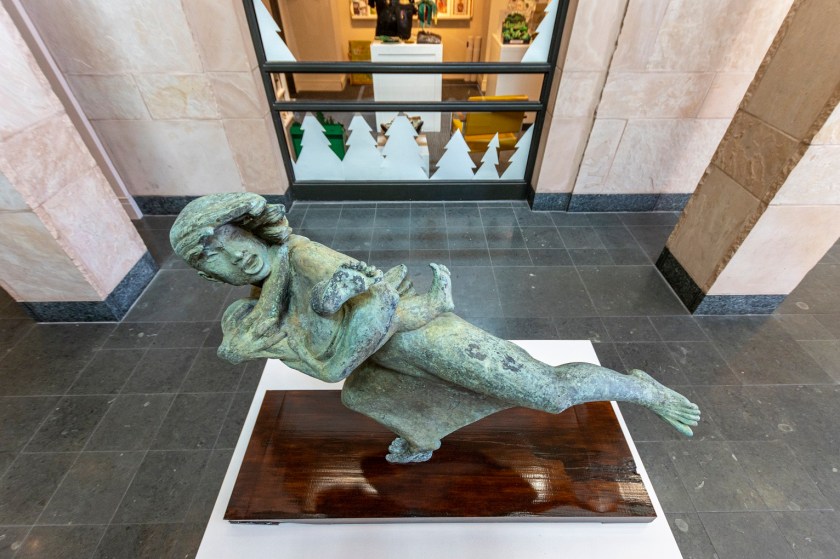
SHSU, LEAP Center, Center for Law Engagement And Politics, Ogden Museum of Southern Art

Lunch at the Auction Market

Jessica Cuevas

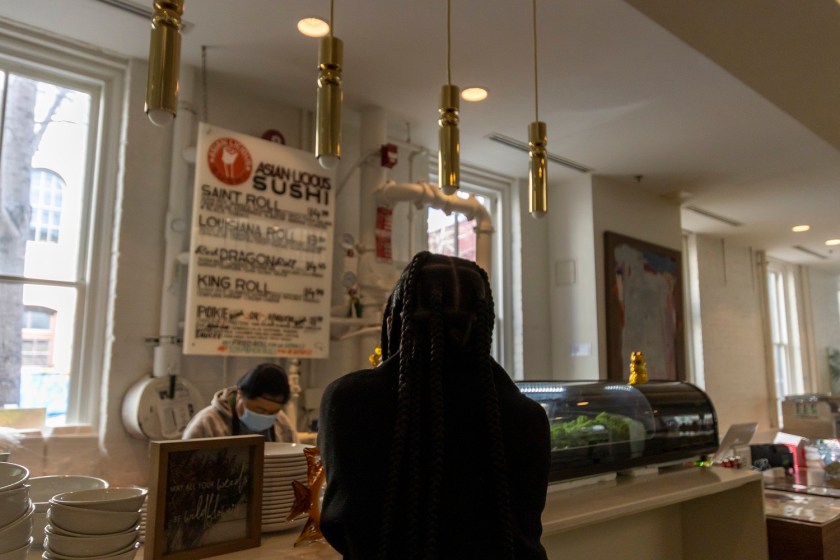
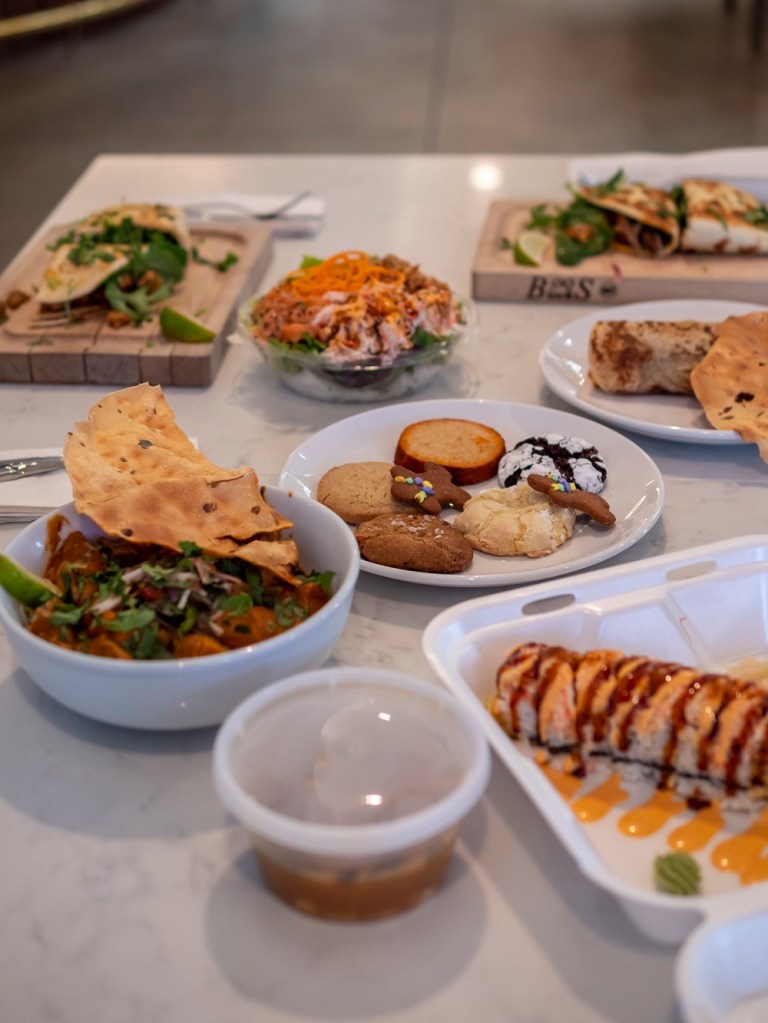
After exploring art at the beautiful Ogden Museum of Southern Art, the LEAP students headed to the Auction Market for lunch. Inside this market there were different cuisines available, including Indian food from Tava, where we ordered their Tikka Masala Chicken Panini and the Tikka Masala Chicken Rice Bowl, and an Asian cuisine from Asian Licious, where my peers ordered a Louisiana Spicy Roll and a Poke Bowl.
SHSU, LEAP Center, Center for Law Engagement And Politics, NOLA

When attending trips through the LEAP Center, students are encouraged to be adventurous in their food selections and to always be open in trying new things. This was my first time trying a dish of Indian cuisine, and the exposure to new and diverse foods is only a gateway to understanding new cultures, traditions, and perspectives, which is what trips like this one are all about.
SHSU, LEAP Center, Center for Law Engagement And Politics, NOLA

So Many Exhibits, So Little Time

Jayelynn Bordeaux

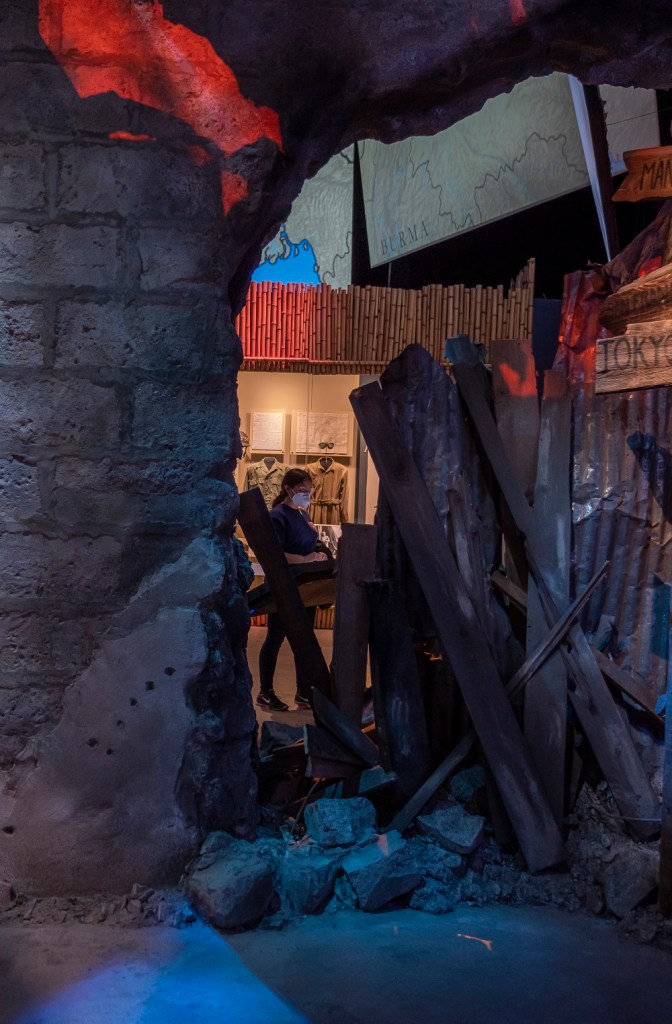
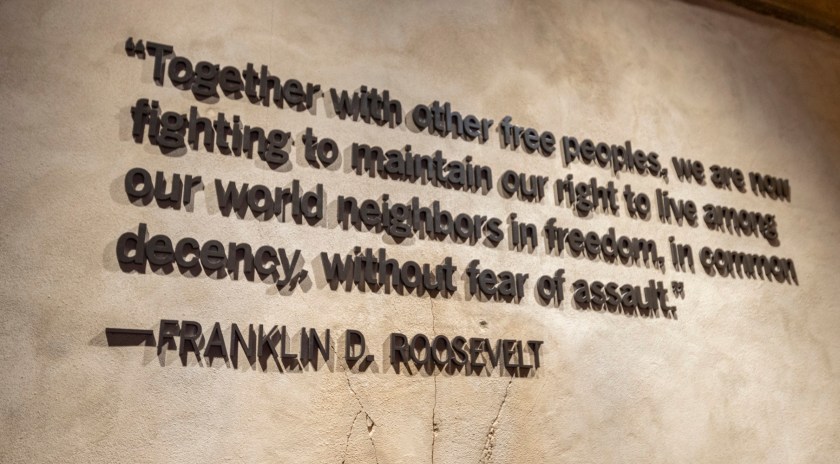
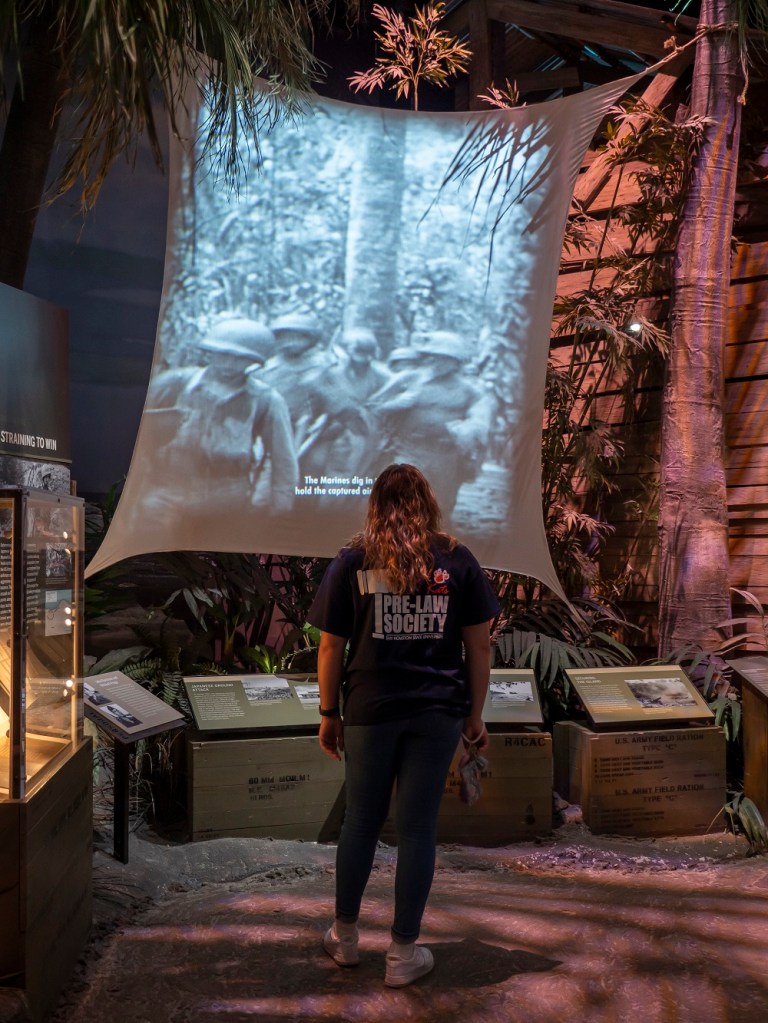
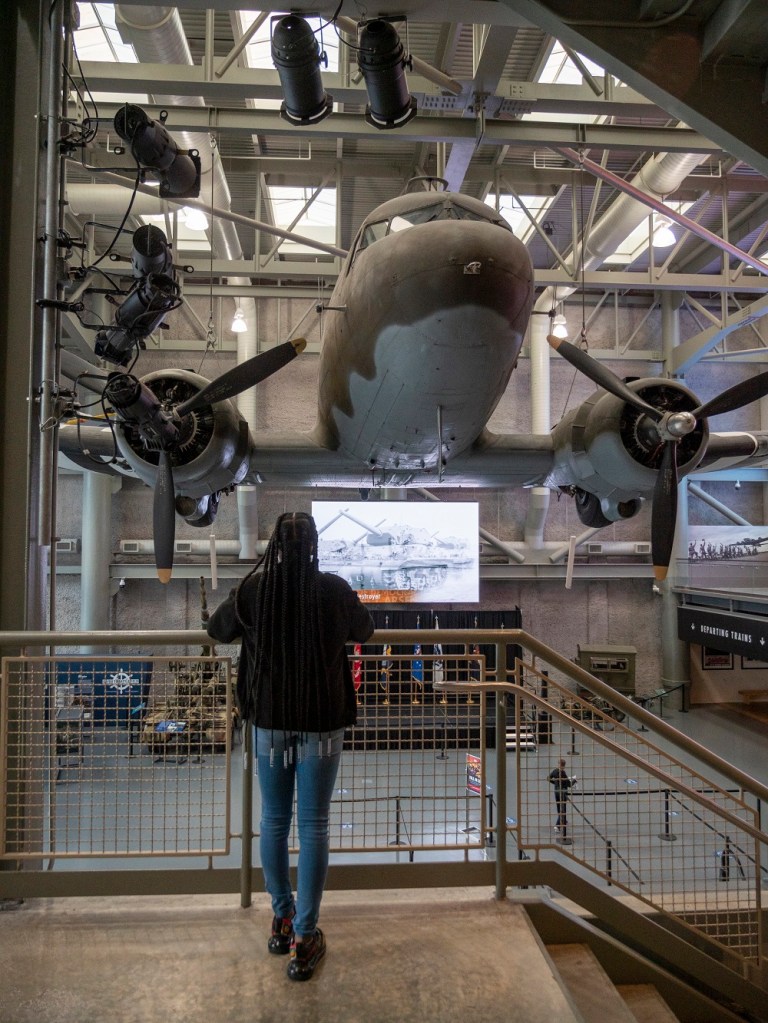
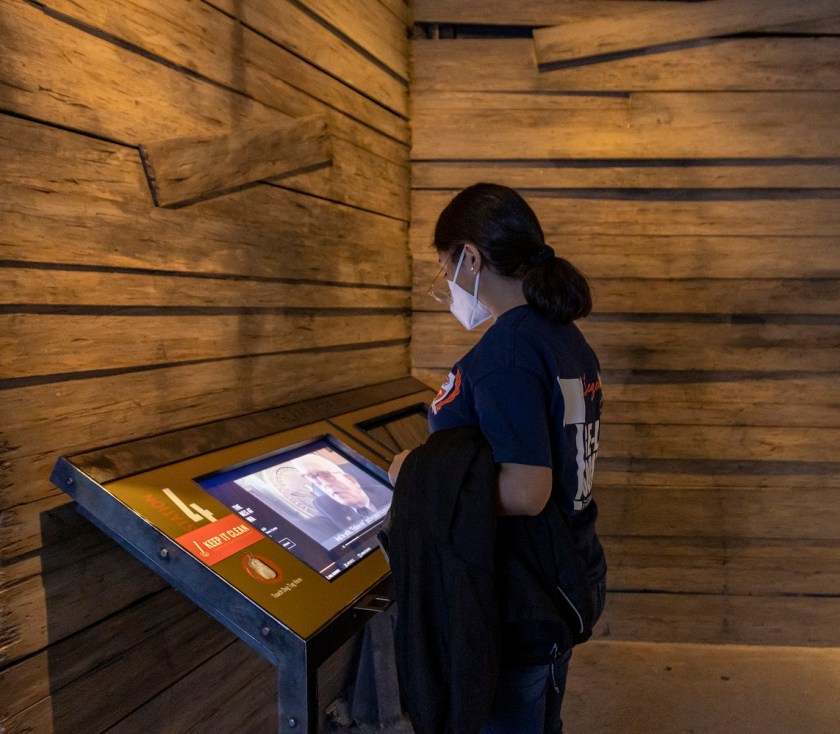
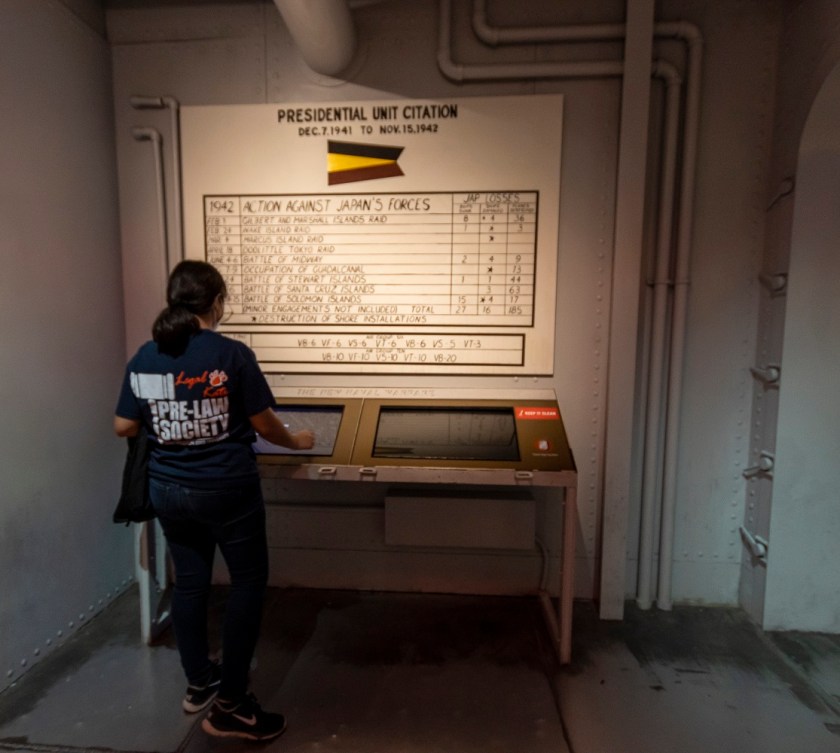
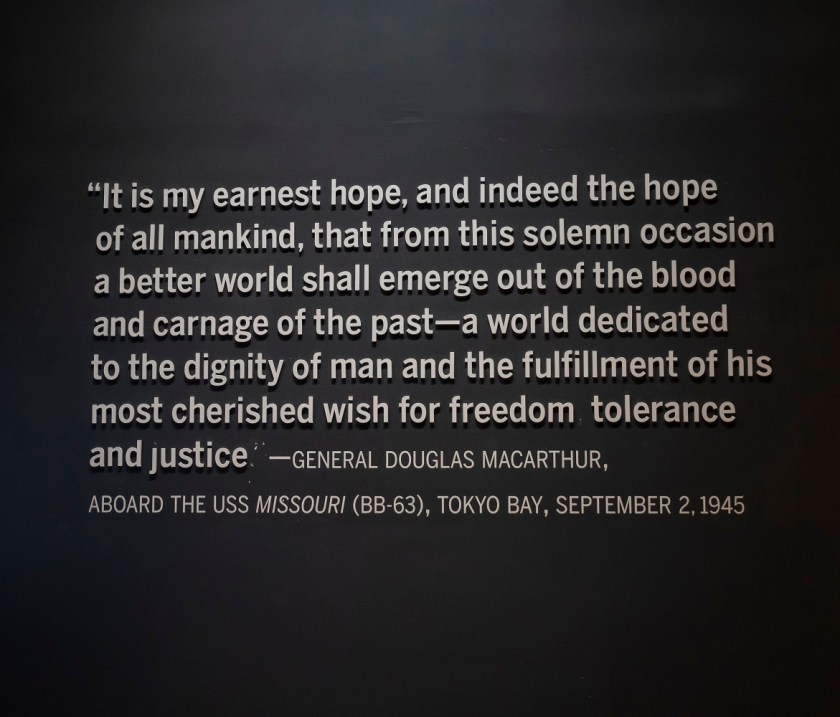
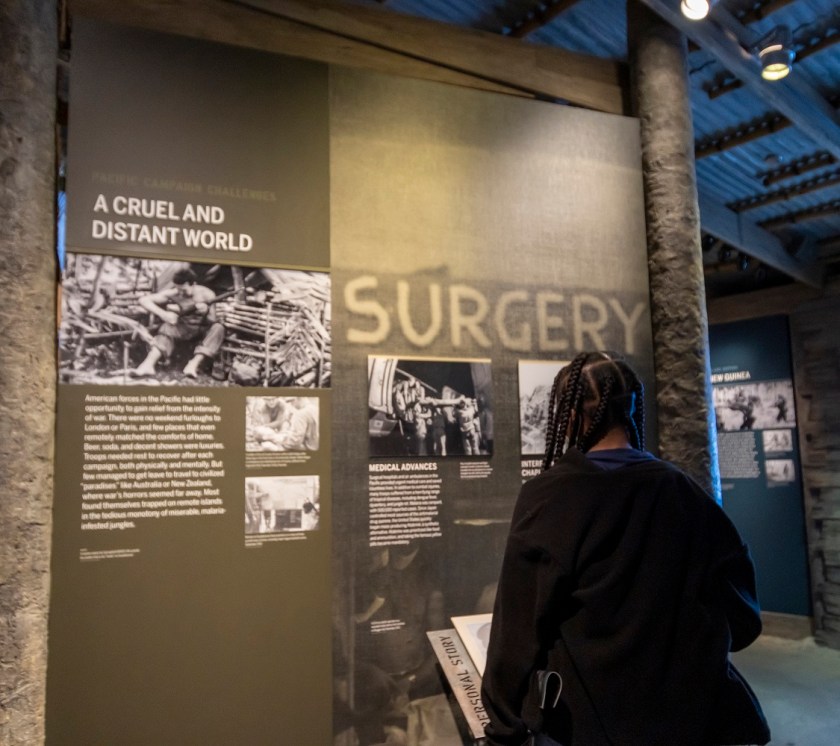
Next we visited the enormous World War II Museum in the heart of New Orleans. In my 19 years of life and several history courses, I did not realize how uneducated I was about World War II until I confused it with a different war entirely!

World War II began in 1939 and lasted until September of 1945. Germany, under the rule of Adolf Hitler, invaded Poland, prompting an international response that ultimately led to this worldwide conflagration.
  • SHSU, LEAP Center, Center for Law Engagement And Politics, NOLA, WWII Museum
  • SHSU, LEAP Center, Center for Law Engagement And Politics, NOLA, WWII Museum
  • SHSU, LEAP Center, Center for Law Engagement And Politics, NOLA, WWII Museum
  • SHSU, LEAP Center, Center for Law Engagement And Politics, NOLA, WWII Museum

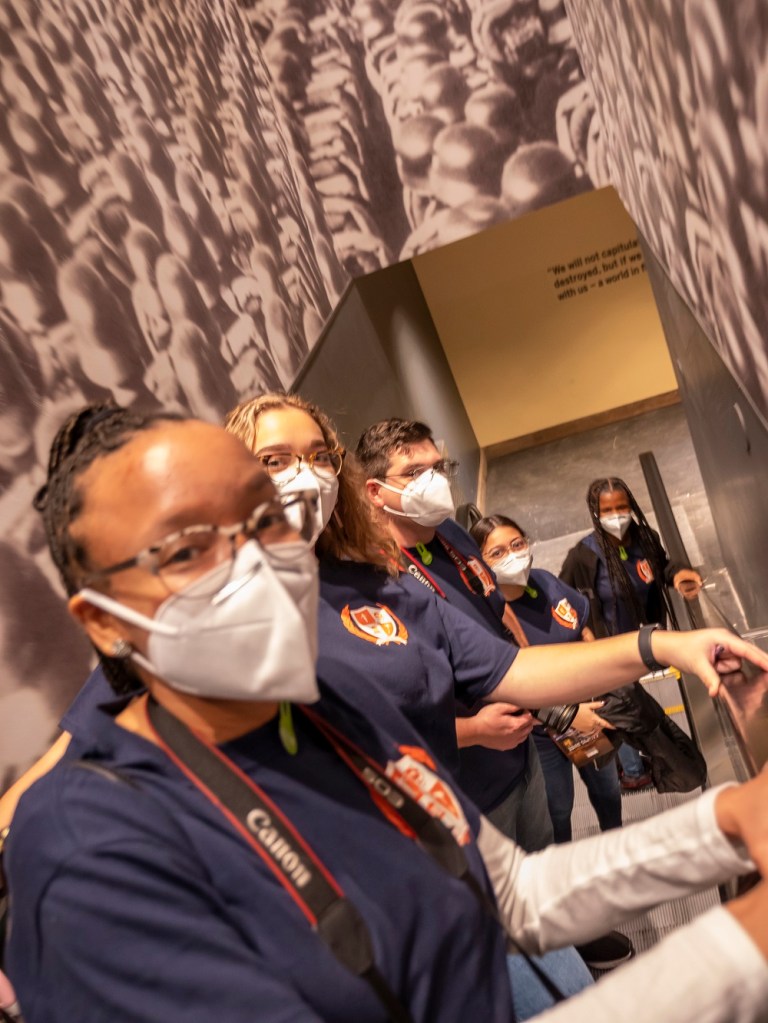
The Germans, under the Nazi regime, employed the Blitzkrieg strategy, which translates to “lightning war,” and was a tactic involving tanks and a massive use of air support. This often resulted in a quick victory for Germany; in 1940 Germany successfully overtook Denmark, Norway, Belgium, Netherlands, and France.

  • SHSU, LEAP Center, Center for Law Engagement And Politics, NOLA, WWII Museum
  • SHSU, LEAP Center, Center for Law Engagement And Politics, NOLA, WWII Museum
  • SHSU, LEAP Center, Center for Law Engagement And Politics, NOLA, WWII Museum
  • SHSU, LEAP Center, Center for Law Engagement And Politics, NOLA, WWII Museum
  • SHSU, LEAP Center, Center for Law Engagement And Politics, NOLA, WWII Museum
  • SHSU, LEAP Center, Center for Law Engagement And Politics, NOLA, WWII Museum
  • SHSU, LEAP Center, Center for Law Engagement And Politics, NOLA, WWII Museum

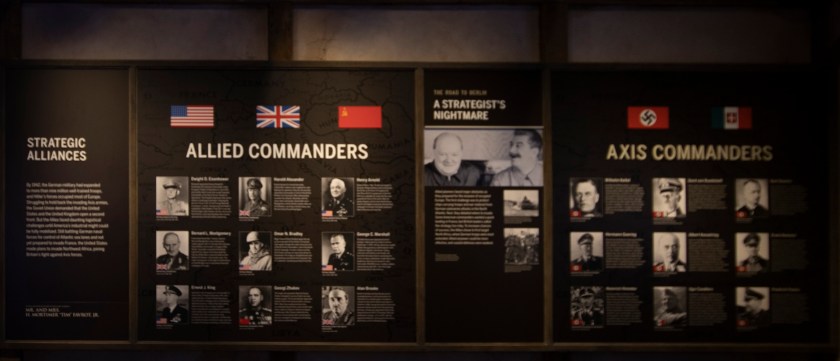
The two sides in the war were the Allies and Axis. The Allied powers consisted of the United States, France, Great Britain, and the Soviet Union. The Axis Powers included Germany, Japan, and Italy. Something that really caught my attention was the harsh practices used by Japan during the war. The Japanese would engage in banzai charges, killing as many as they could before they died. This was due to the Japanese commitment to honor, and their refusal to be taken prisoner.

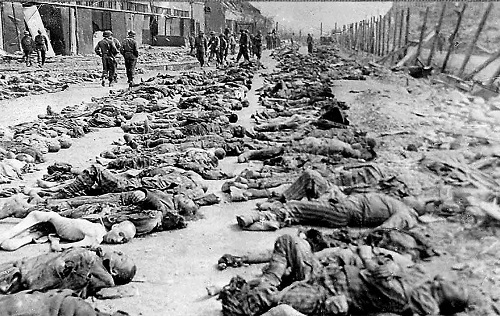
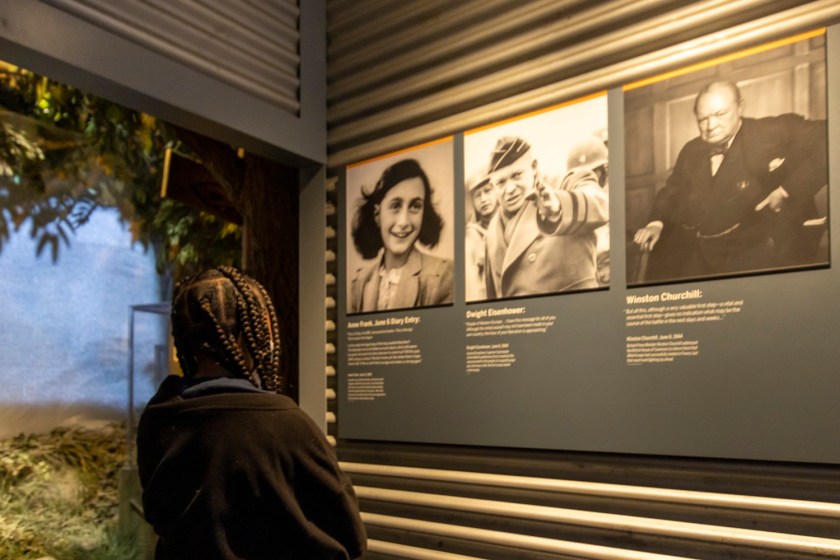
One of the most compelling stories in the Museum is that of Anne Frank, the young Jewish girl who hid in an attic throughout the majority of the war to avoid the atrocities of the Holocaust.

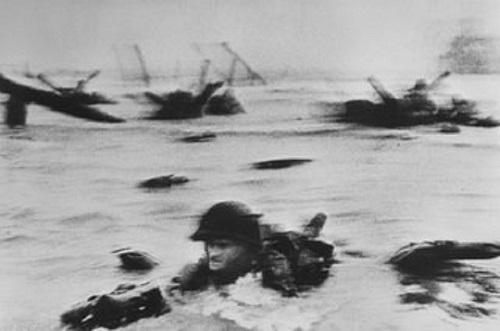
I actually had the chance to read her diary entry about D-Day. Her description of it is that of hope, and she wrote in her diary, “Today is the day…I have a feeling friends are approaching.”
SHSU, LEAP Center, Center for Law Engagement And Politics, NOLA, WWII Museum, Anne Frank

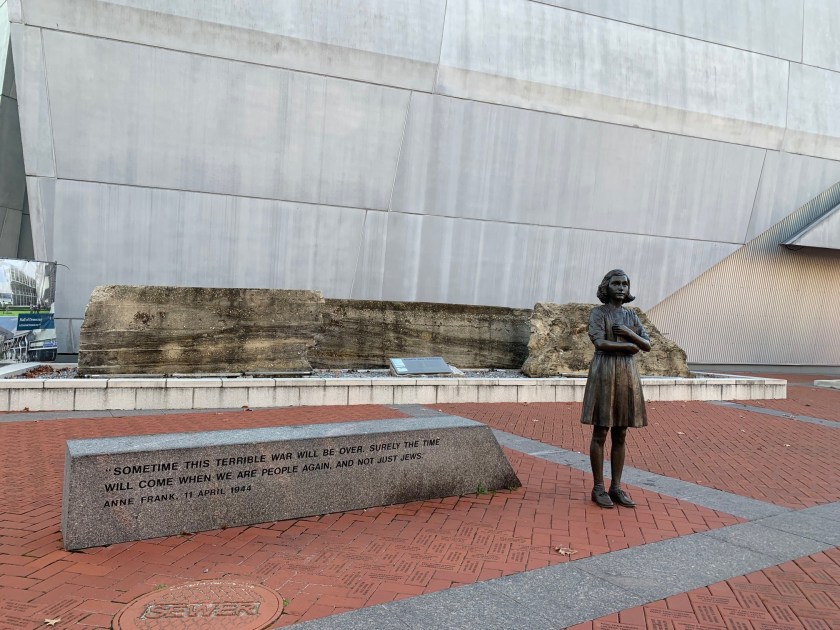
Of course, she would not live to see her freedom; her family was discovered and eventually taken to Auschwitz. Anne and her sister would die of typhus before the war’s end.
SHSU, LEAP Center, Center for Law Engagement And Politics, NOLA, WWII Museum, Anne Frank

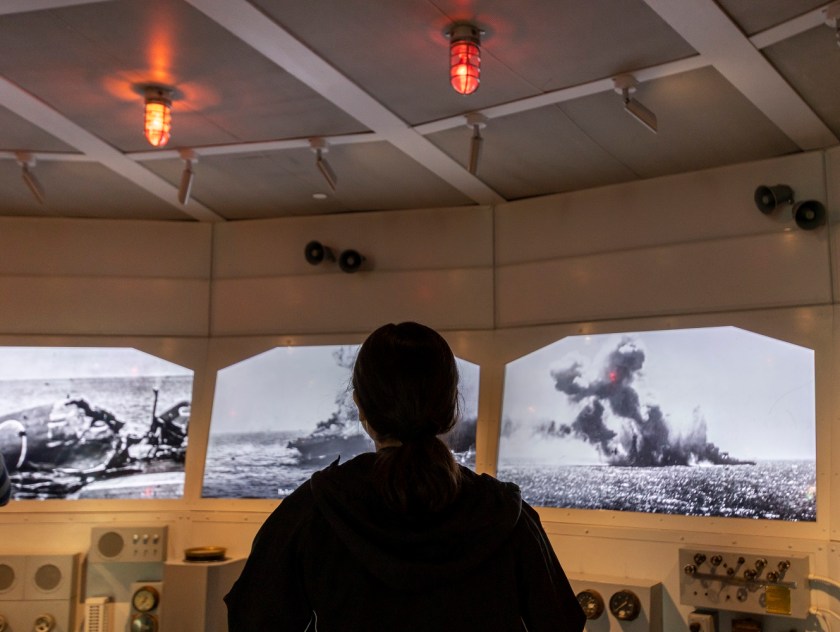
One of the most significant moments of the war in my opinion was the use of the atomic bomb on Hiroshima and Nagasaki. It is estimated that both the bombings approximately killed over 200,000 civilians. It is unimaginable to understand how difficult the decision to use such a lethal and unforgiving force must have been, and it forces one to consider the heavy burden felt by military commanders on all sides, but especially that of President Harry Truman, who made the decision to use the bomb.
SHSU, LEAP Center, Center for Law Engagement And Politics, NOLA, WWII Museum

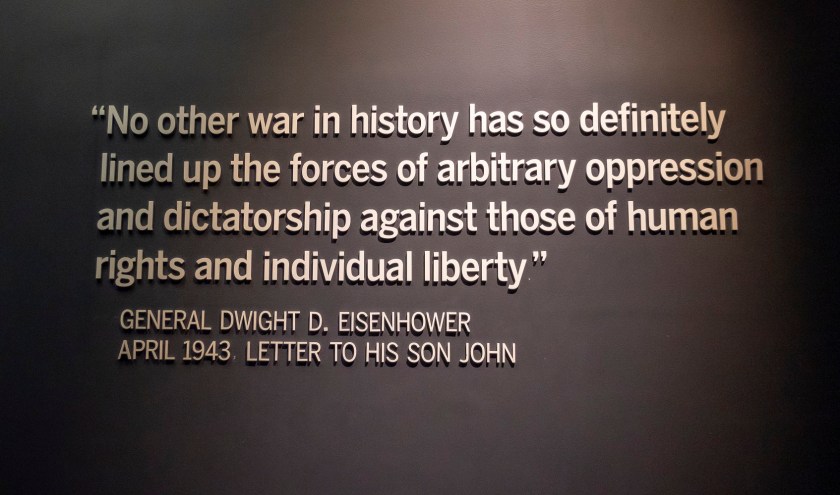
This was a great learning experience for me, giving me the chance to learn about the major countries involved, their military leaders…
SHSU, LEAP Center, Center for Law Engagement And Politics, NOLA, WWII Museum

…their political leaders…

SHSU, LEAP Center, Center for Law Engagement And Politics, NOLA, WWII Museum

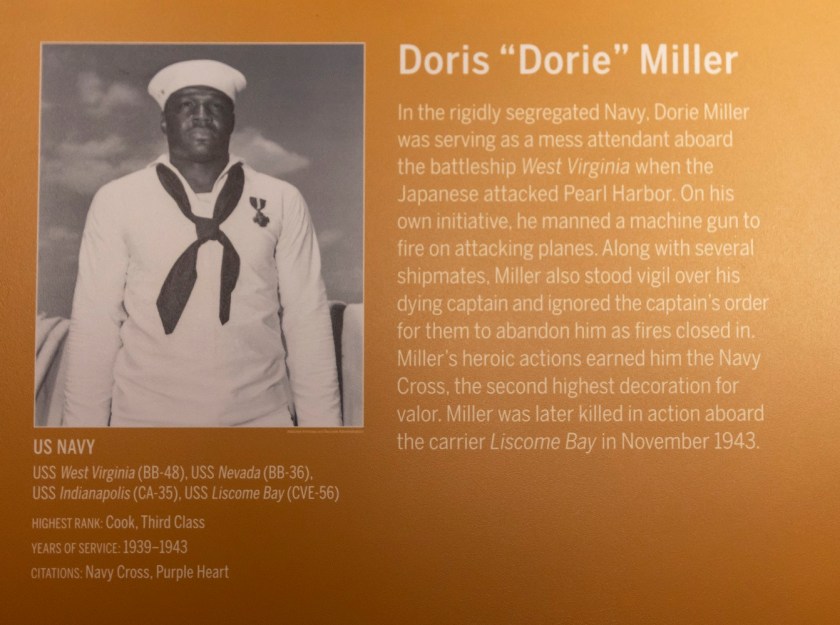
…not to mention a guy named Doris Miller…
SHSU, LEAP Center, Center for Law Engagement And Politics, NOLA, WWII Museum

…a hero at Pearl Harbor, who was the first African American to win the Navy Cross. Interestingly, he was from Waco, the same home-town as my co-traveler, Ilexus Williams.

Homer Plessy

Jessica Cuevas

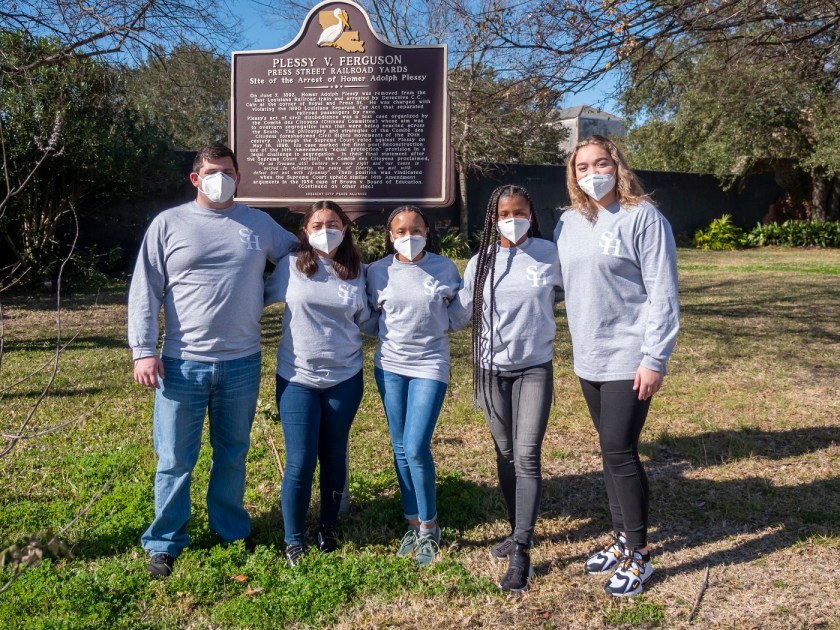
After our somber and overwhelming historical visit to the World War II Museum, we took a trip down to the corner of Royal and Press Street, which is the site where Homer Plessy, the civil rights activist most well-known for the Plessy vs Ferguson court case, was arrested for “violating” the 1890 Louisiana Separate Car Act, which separated passengers by race.

On June 07, 1892, Plessy went to the “whites only” section of the train, and when it was discovered that he was of African descent, he was taken out of the train he was aboard. This act of “civil disobedience” was intentional, as Plessy was asked to get himself arrested by a group called the Citizens’ Committee in 1892.
SHSU, LEAP Center, Center for Law Engagement And Politics, NOLA, Homer Plessy

During the trial, Plessy’s lawyer forcefully made the argument that removing him from the train violated his 13th and 14th amendment rights under the U.S. Constitution; however, as we may remember from previous history courses, Plessy lost the case, since Ferguson’s policy of Louisiana having the right to regulate their railroad trains was upheld by the U.S. Supreme Court. This landmark case marked the first “post ‘reconstruction’” legal challenge to the use of the 14th Amendment, and led to the unfortunate establishment of the “separate but equal” doctrine.

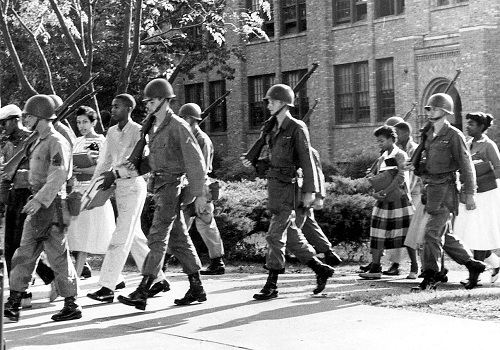
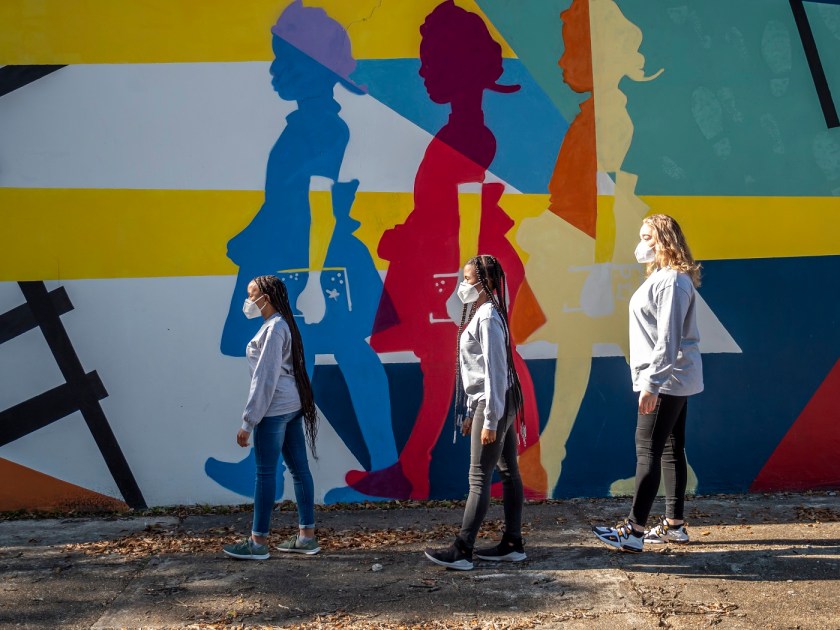
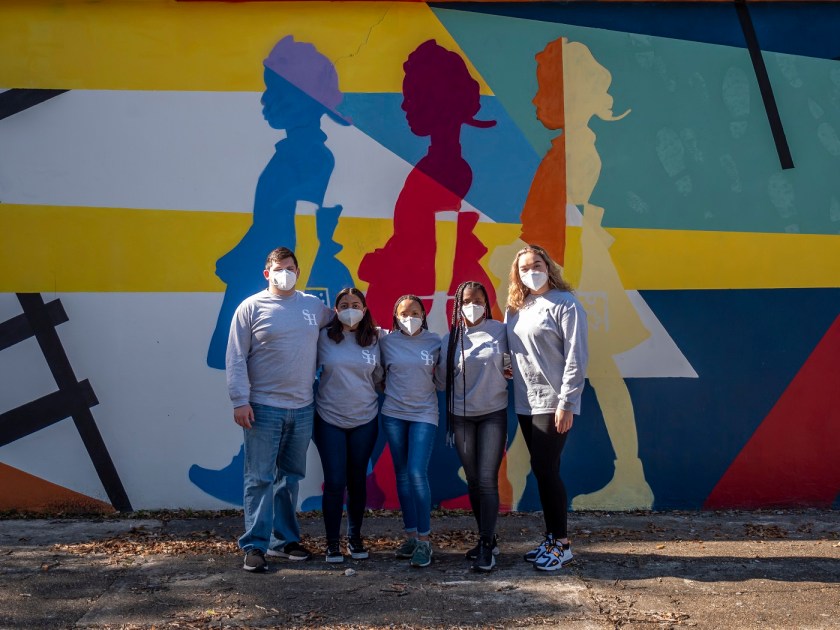
Near this location there is a mural with civil rights related artwork, and amongst them are two of Ruby Bridges, the first African American female to be integrated into a public school. One of these depicts her mother and her along with a newspaper telling her story and the other adapts the iconic image of her walking to school, a tryptic in three separate colors constituting a single mural.
SHSU, LEAP Center, Center for Law Engagement And Politics, NOLA, Ruby Bridges

Ruby attended the all-white William Frantz Elementary School at six years old and had to be accompanied by the U.S. Federal Marshalls because of all the threats and negativity she would receive. Interestingly enough, Ruby Brides is very much still alive at the age of 66.

This historical site and murals of crucial figures of the Civil Rights Movement was our last stop of the day, and we all appreciated its historical significance. We also caught a glimpse of a train that would have passed through the same railroad tracks where the train Homer Plessy was aboard would have been. This was a perfect way to end our day. As the sun set, we took in the immense power of the site juxtaposed by the memorialization of the beginning of “separate but equal” and the mural depicting the end of segregation in schools.
SHSU, LEAP Center, Center for Law Engagement And Politics, NOLA, Ruby Bridges

With another day completed, we look forward to what lies ahead on the both historical and ever-persisting journey to civil rights and equality.
SHSU, LEAP Center, Center for Law Engagement And Politics, NOLA, WWII Museum

“Inaugural” Trip 2021: Day 1

The Center for Law, Engagement, And Politics has taken students to the last five Presidential Inaugurations.  Given recent events in the capital and to travel safely within numerous COVID precautions, this year’s LEAP Center-led trip will focus instead on sites outside of Washington, DC that are politically, artistically, educationally, historically rewarding–especially with regard to civil rights.

Day One: January 12, 2021

Texas’s Downtown Treasures

Jayelynn Bordeaux

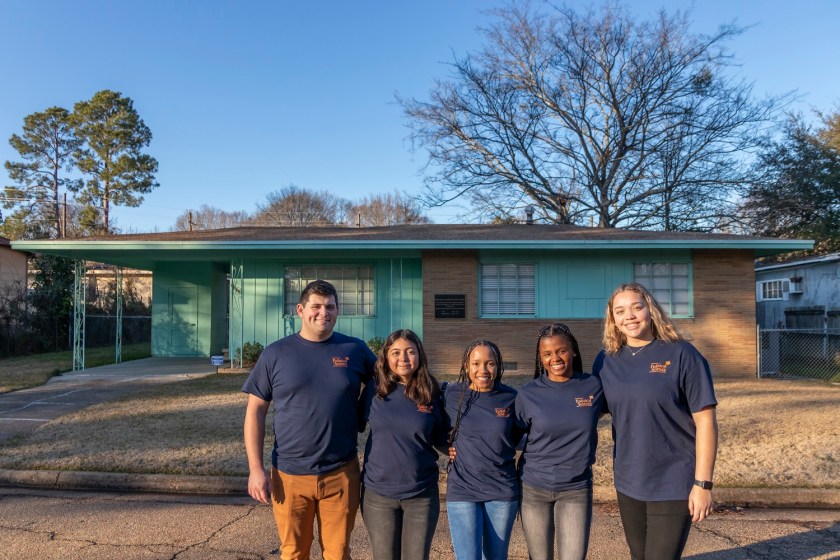
To start our Inaugural Trip, we visited three small towns on our way through Texas. We focused mainly on the historical and cultural contexts of the downtown areas of Nacogdoches, Marshall, and Jefferson.

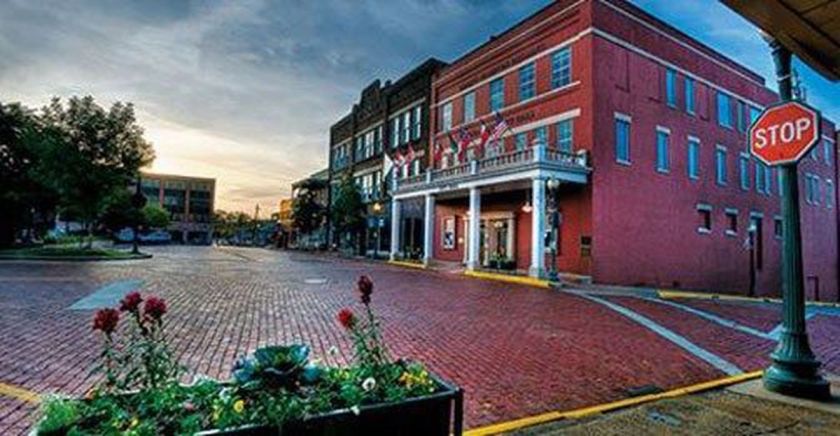
Nacogdoches is known as the oldest town in Texas and tourists are drawn to the town because of its unique history. One example we learned about was the story of the Marx Brothers, a comedy team from the early-20th century. Apparently, their comedy career began at the Old Opera House (now the Cole Art Center) in Nacogdoches, when a runaway mule upstaged them, causing the audience to leave mid-performance. When the audience returned, the Marx Brothers spent the remainder of the show insulting the crowd, which resulted in laughter. Thus, their trajectory toward stardom had begun.

The red brick roads in Nacogdoches beautify the city’s downtown area…

SHSU, LEAP Center, Center for Law Engagement And Politics, Nacogdoches TX
Photo from KTRE

…and were a regular sight in the other towns we visited today, including Marshall, Texas. Marshall has a historical legacy as well, being one of the key cites in intellectual property cases in the US. In fact, out of the 93 US Federal Judicial districts, it leads the country in such cases! For a group of five pre-law students, this kind of thing is interesting!

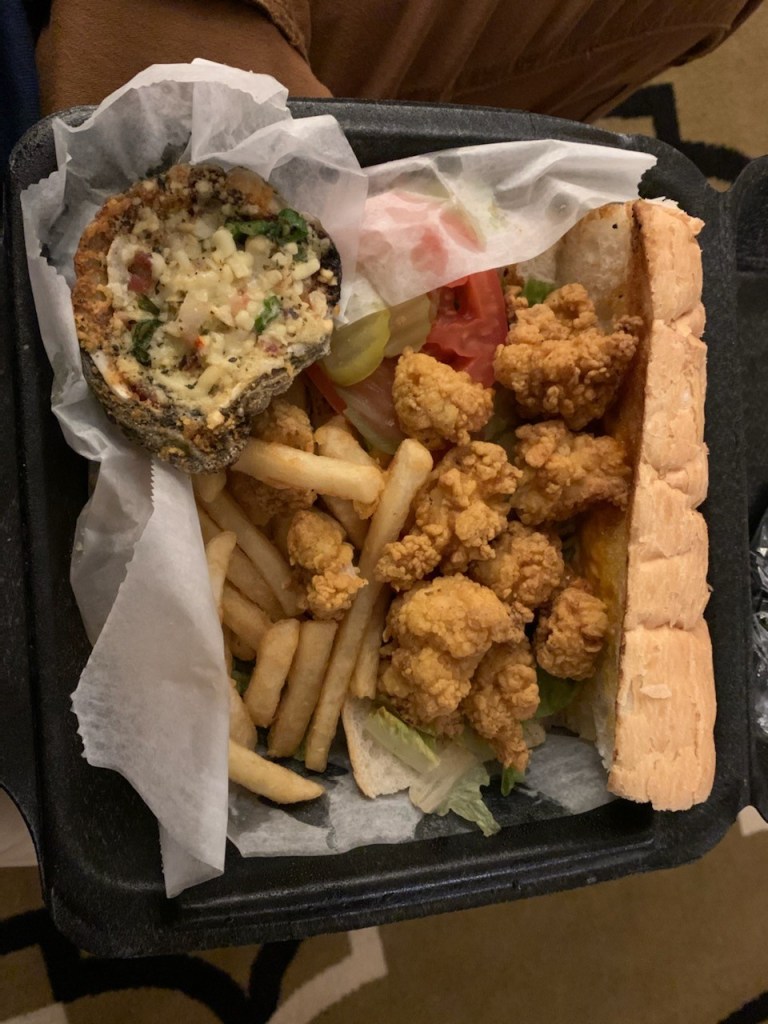
Lastly, we stopped for lunch in Jefferson, at Joseph’s Riverport Barbecue. After lunch, we explored downtown and a general store, which had all sorts of goods including a gift shop, a cafe, and an ice cream parlor. What stuck out to me was their huge variety of flavors of candy and soda fountain drinks.

After visiting all three downtown areas, we noticed how each downtown storefront had its own unique style, which makes that area of a city special and personal. Most towns, for example, have numerous strip malls that dot their interior, with chain stores offering the only shopping to the community. These towns, however, offered various shopping options–none of which were chains, at least in the downtown–and they also stamped the area with their own unique architectural and cultural styles.

The Starr Home

Ava Garrett

For one of our first historical stops, we visited the Starr Family Home State Historic Site, a state-owned and -operated historic site, where we received a great tour by Joe. The main structure of the site, Maplecroft, was home to Frank and Clara Starr, a wealthy couple living in Texas in the 19th century.
The house was built for the couple by Clara’s parents, and the inside décor – much of it consisting of the original furniture and art – is just as elegant as the architecture itself. This family home was built in the 1870s, and is filled with many portraits, tools, and household items that illuminate the life that once occupied the home.

My favorite part of the home was the east wing where Clara Starr’s mother moved into. In this part of the house, we gained a closer look into the lives of the Starr family and the lifestyle of the time period they lived in.

SHSU, LEAP Center, Center for Law Engagement and Politics, Starr Home, Clara Starr, Marshall TX

The European-styled hanging portraits on the walls told stories of the lives of the Starr family, and some, like the ones hanging in the east wing, shed light on the hardships that the family endured, such as losing a child.

The next room we ventured into (which I also greatly enjoyed) was the parlor, where any guests that came to visit would gather. The color scheme in the room consisted of yellows and golds, which seemed to mimic the cheerfulness that would likely take place in that room. I found it intriguing how unique each room was decorated and how they all were painted different colors depending on what was in style at that time.

Another one of the aspects that I found interesting about the Starr Home was that the home was divided, meaning that the workers/staff of the home were kept out of sight from the family and guests as much as possible, which was a common practice during this time. This meant that the staff’s rooms and corridors were separated and unseen in the back portion of the home. The staff even had a separate staircase to use that was less elegant and narrower than the main one.

In a strange way, each room in the Starr Home was calming and inviting, and it was nice to put ourselves into that time period and imagine what it would be like living there. Although this was only one of many exciting stops, I know this home is going to make my “Top 5” list. 

Caddo Lake Tour

Ilexus Williams

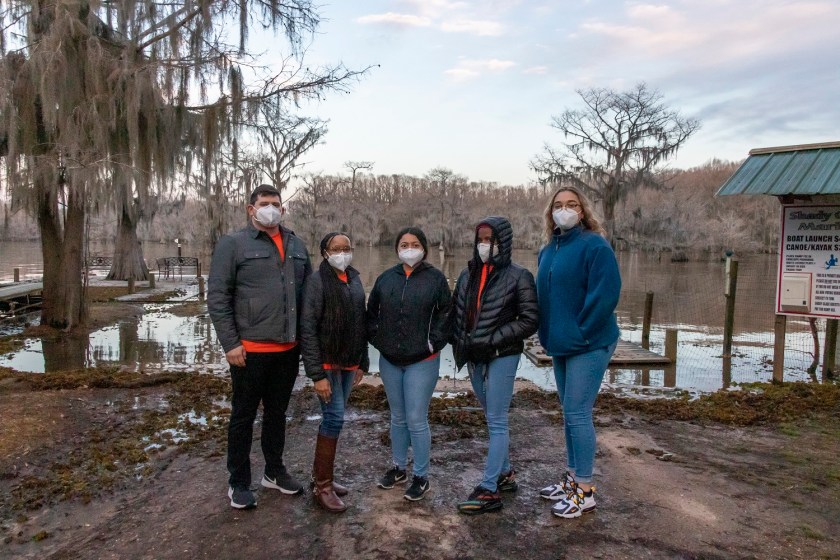
After leaving Jefferson, we made our way to Uncertain, to tour Caddo Lake., which is a lake and bayou located on the Texas-Louisiana border. The origin of the lake’s name is derived from the Native American Tribe, Caddo, the first inhabitants of the area. We had a great tour guide who was brimming with historical facts about the lake and area. (Many thanks for a great tour, Mr. McFarland!)

SHSU, LEAP Center, Center for Law Engagement and Politics, Caddo Lake

(Editor/Professor’s note: Prior to leaving for the trip, the students watched the documentary “Uncertain,” a fine film about the lake and some of its inhabitants. The locals are, at times, presented a bit unfairly, but the story is compelling and the film succeeds in prompting people to learn more about Caddo Lake. Educationally, such pre-trip activities prime the students to learn, a process reinforced by the direct experience, and further reinforced and crystallized upon reflection, as in this blog.)

Caddo Lake is credited with being the only naturally developed lake in Texas, formed as a result of the New Madrid Earthquakes from 1811-1812. Although Caddo Lake is a naturally made body of water, it has been altered to make the transportation of goods more efficient. For instance, Government Ditch was a canal that was created to ship cotton by steamboat from New Orleans, Louisiana to Jefferson, Texas.

SHSU, LEAP Center, Center for Law Engagement and Politics, Starr Home, Clara Starr, Marshall TX

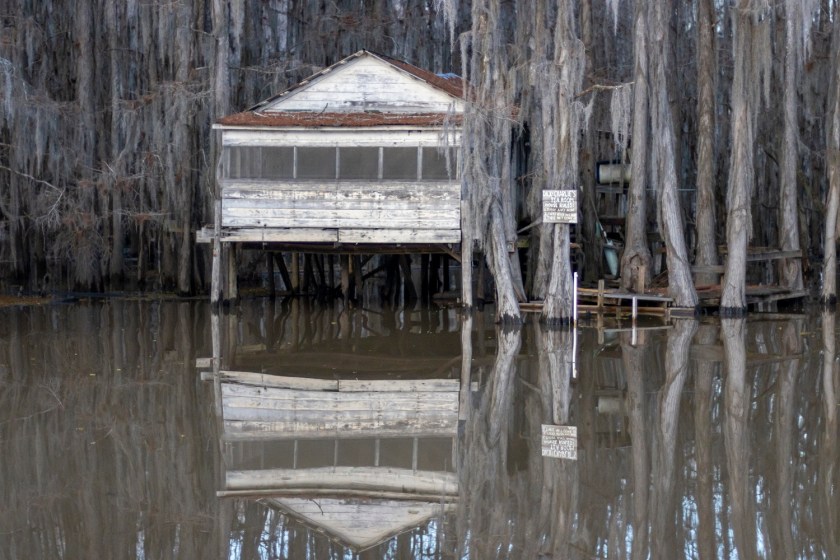
Caddo Lake is filled with interesting vegetation. The swamp-like water is home to Bald Cypresses, which are tall canopying trees with wide trunks and branches. 

SHSU, LEAP Center, Center for Law Engagement and Politics, Caddo Lake

And all are covered in Spanish moss. Their roots, called “knees,” are found extending like spears just above the swampy water to supply the trees with oxygen.

Salvinia is another variety of vegetation that is found at Caddo Lake; however, this plant should really be classified as a pest. Salvinia is an invasive species that doubles in size every seven days. If it is not properly controlled, Salvinia can overtake native vegetation.

Interestingly, Caddo Lake is a hot spot for filming movies, manyof which are horror films!

SHSU, LEAP Center, Center for Law Engagement and Politics, Caddo Lake, Dick and Charlie's Tea House

Some of the movies include The Long Hot Summer, The Legend of Boggy Creek, The Ghost of Cypress Pass and many more!

Not only does Caddo Lake offer amazing scenery, but it is also filled with beautiful wildlife that we were lucky to capture.

SHSU, LEAP Center, Center for Law Engagement and Politics, Caddo Lake

We may have traveled to Uncertain, Texas, but we are certain that this tour was breathtaking!

SHSU, LEAP Center, Center for Law Engagement and Politics, Caddo Lake

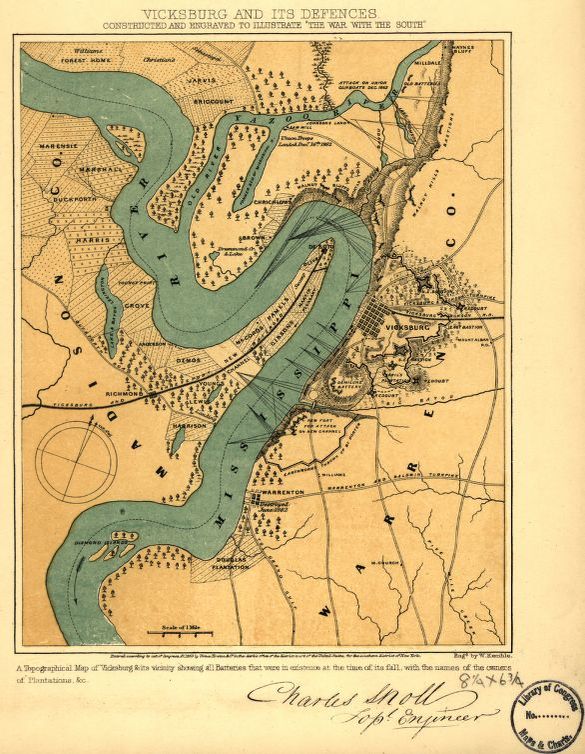
After traveling through Texas, Louisiana, and Mississippi just in day one – some of us visiting these states for the very first time – we are eager and excited to see what the rest of our journey has in store!

Postscript: The students also take any targets of opportunity they can. So, in passing by Gibsland, LA, we stopped to see what Google maps calls “the death site of Bonnie and Clyde.” (That’s actually what you type in to get directions). By this time in our travels, it was nighttime, but we did get to see the site and the two markers that commemorate the occasion.

SHSU, LEAP Center, Center for Law Engagement and Politics, Bonnie and Clyde
The stop was perhaps particularly meaningful for Ava Garrett and Ilexus Williams, both of whom had read Jeff Guinn’s marvelous “Go Down Together: The True, Untold Story of Bonnie and Clyde.”

Pre-Law Society: Wrapping up 2020

By: Kiarra Flores

Last Meeting

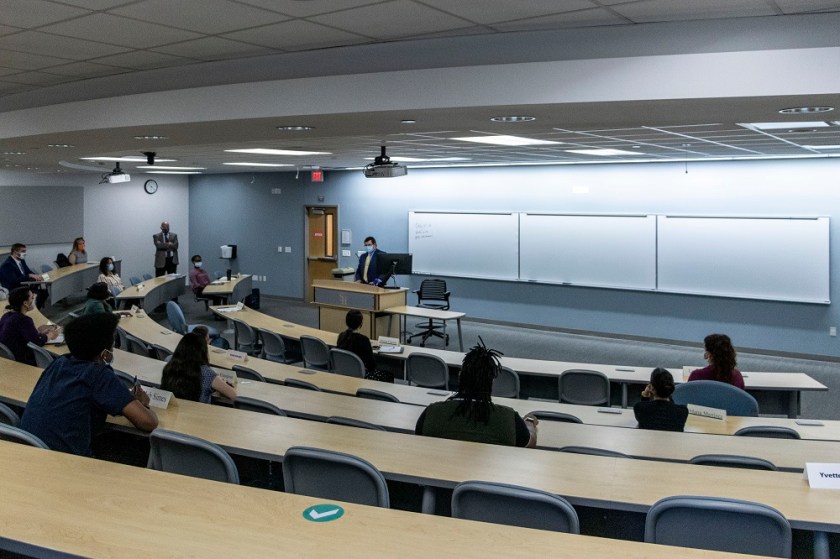
Just before Thanksgiving break, we held our last meeting of the Fall 2020 semester.  In spite of the challenges and unprecedented measures taken to respond to the COVID-19 pandemic, the Pre-Law Society was able to continue its program with safe and innovative activities to engage our members in the law school process.

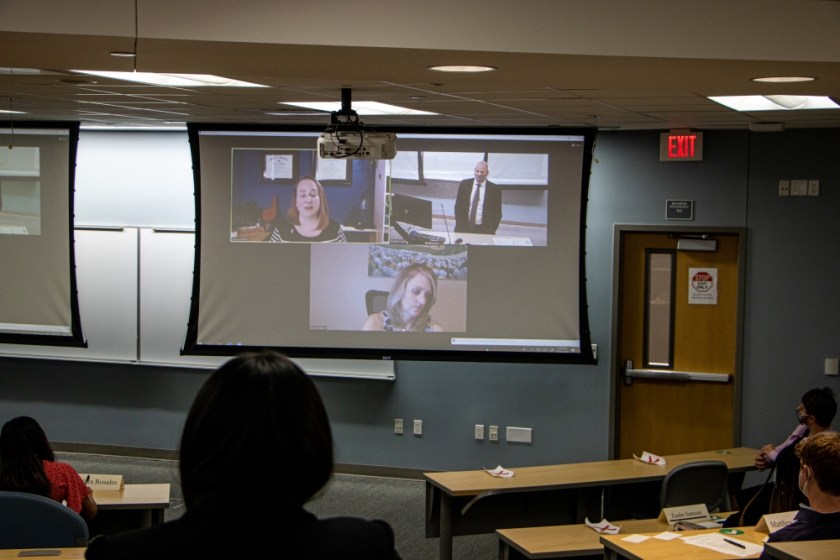
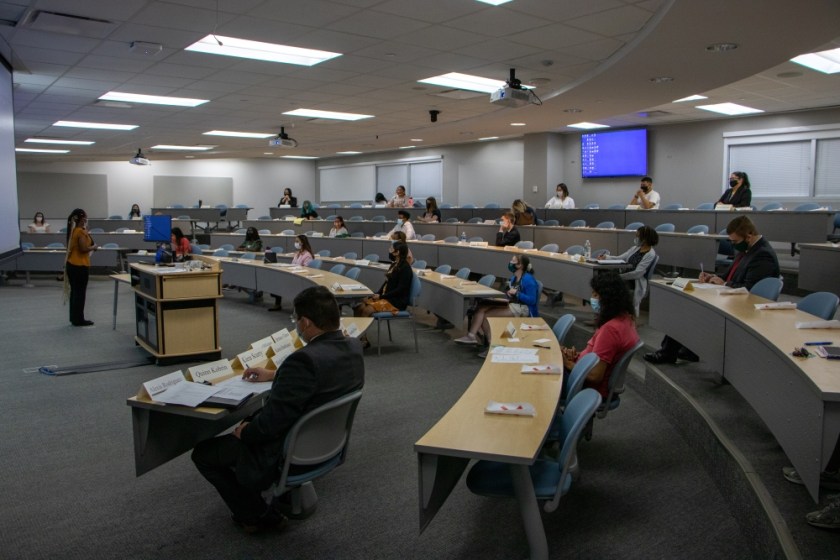
Following some announcements, the evening’s activity was explained. We were told we were going to simulate a law school admissions committee panel, which would give us an opportunity to see what it was like to be sitting on the other side of the table.

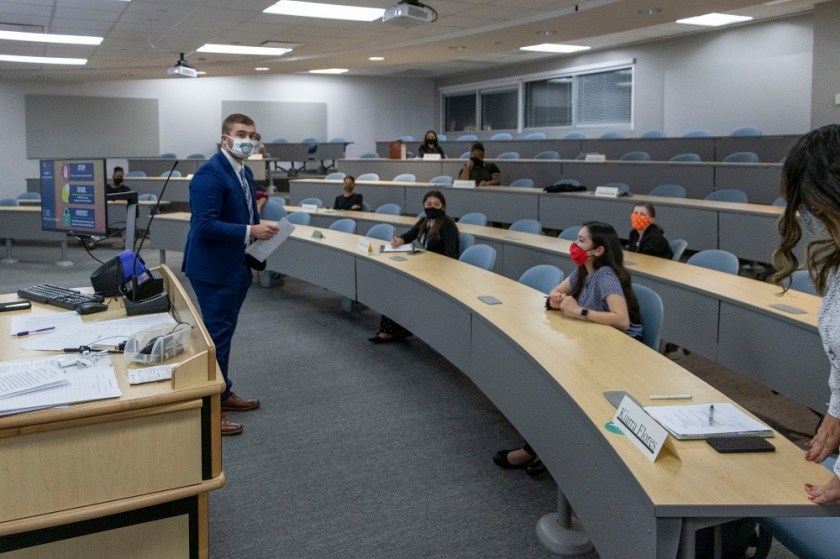
President Quinn Kobrin Tackles the Agenda

We formed small groups – socially distancing of course – and were given five mock students’ applications, which ranged from well-formatted and to many grammatical errors. Some were well-formatted, with strong letters of recommendation; others had spelling or grammatical answers, or did not have compelling personal statements. Once each group read the applications, they ranked them to decide who would be admitted into their law school and why.

All of the attending PLS students seemed to be very interested in this activity and each team had great discussions that both developed their understanding of the admissions process and enhanced their teamworking skills. The exercise led to an organization-wide conversation about what a strong application looks like, and we came to understand why admissions committees make the decisions they make.

Of our activities this year, this and the witness interrogation simulation were some of our most successful. As we continue to navigate the challenges of COVID-19, we hope to improve upon old activities and find new ones that will offer our members a fun and educational introduction to law school and the legal profession.  

To wrap up the final meeting of the semester, Professor Yawn announced the following four LEAP scholarship recipients: Jase Brazzil (senior), Kiera Scurry (senior), Jocelyn Aviles (junior) and Ben Breckinridge (junior).

This was a great way to end our Fall semester. Our next meeting is not yet announced but will be at the start of the Spring 2021 semester. We are very excited to see what the new year brings!