From the LEAP Lens: Photography Exhibit at the Walker Education Center

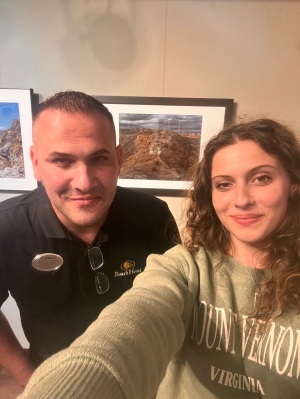
Last year, Derrick Birdsall, Director of the Sam Houston Memorial Museum and Republic of Texas Presidential Library, asked whether we would be interested in having an exhibit of our photographs. Of course we said, “Yes!” And with this agreement, we had the pleasure of working with Derrick, Jude Routh, Megan Buro, and the wonderful Museum staff on this exhibit.
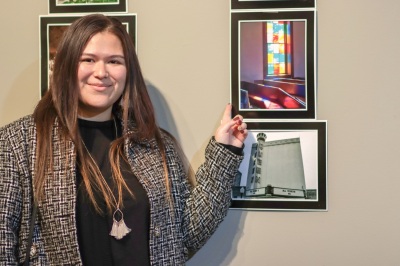
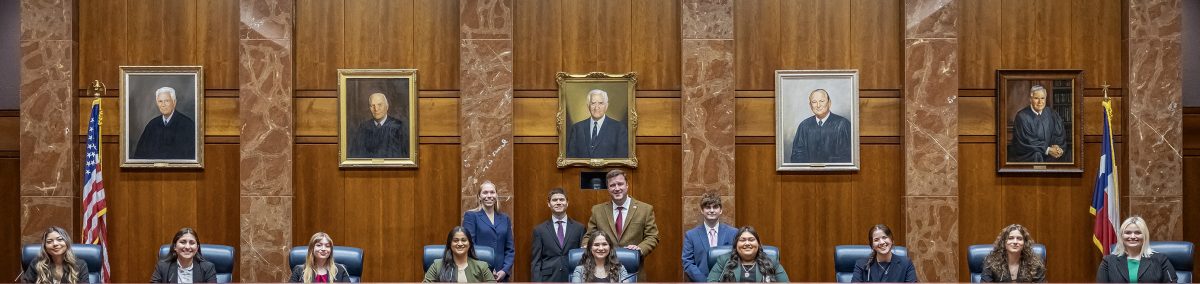
The exhibit showcases photos taken by either LEAP Ambassadors or their advisors, Mike Yawn and Stephanie Fors. The photos range from state parks, national parks, architecture, people, wildlife, and other scenes–all taken from a LEAP-related trip or adventure.
We were, of course, concerned that people might not attend. It’s not easy to explain what LEAP is, and we are not logically or conceptually associated with photography. LEAP, after all, stands for Law, Engagement, And Politics. So, what if people thought it was an exhibit about Law? Or Politics? Or what if no one wanted to see photographs by people who aren’t professional photographers?

All those were legitimate concerns, so we took extra care to send out invitations, and the Museum did a great job marketing the event (and hanging the show)!

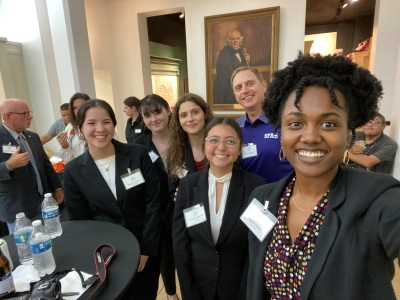
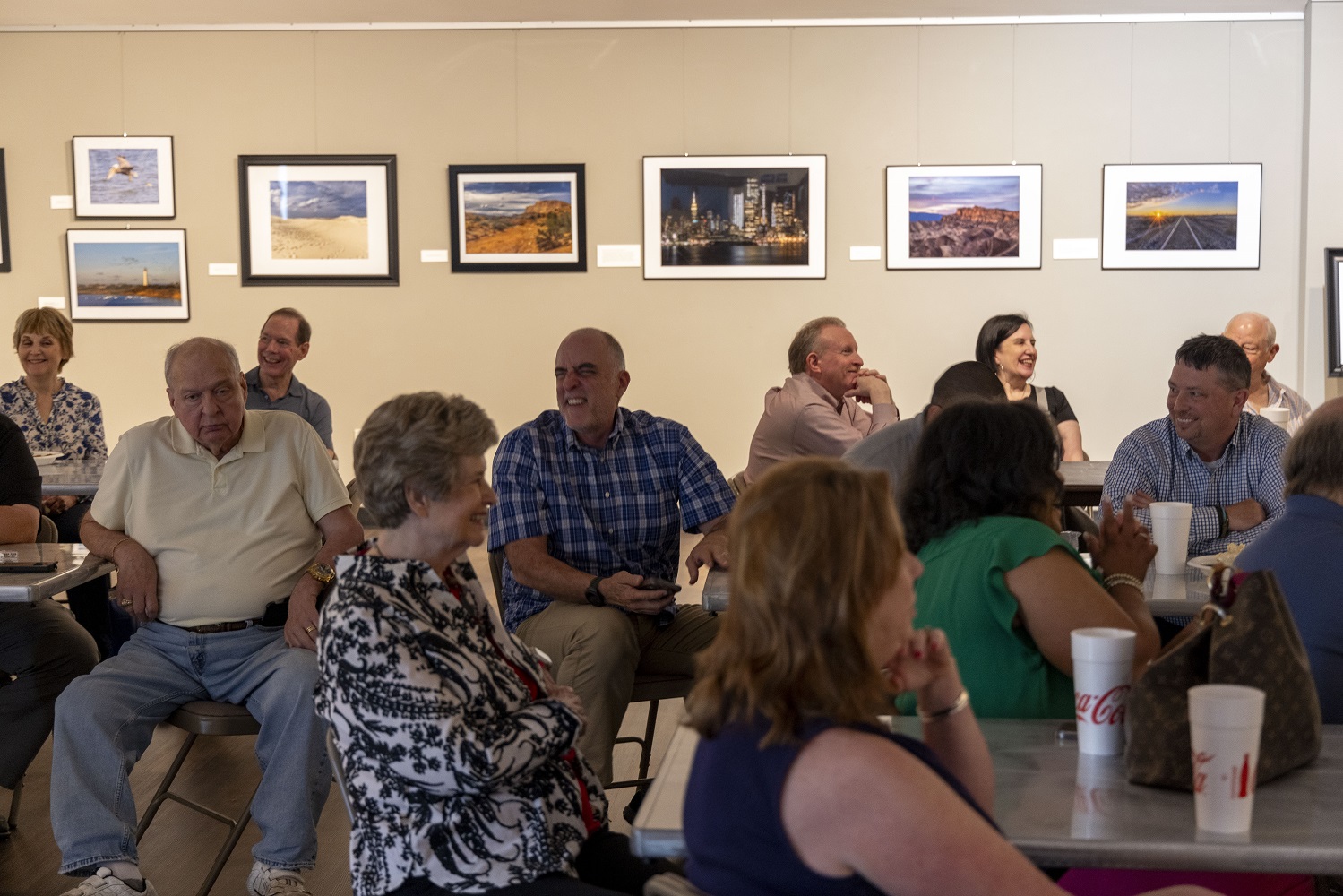
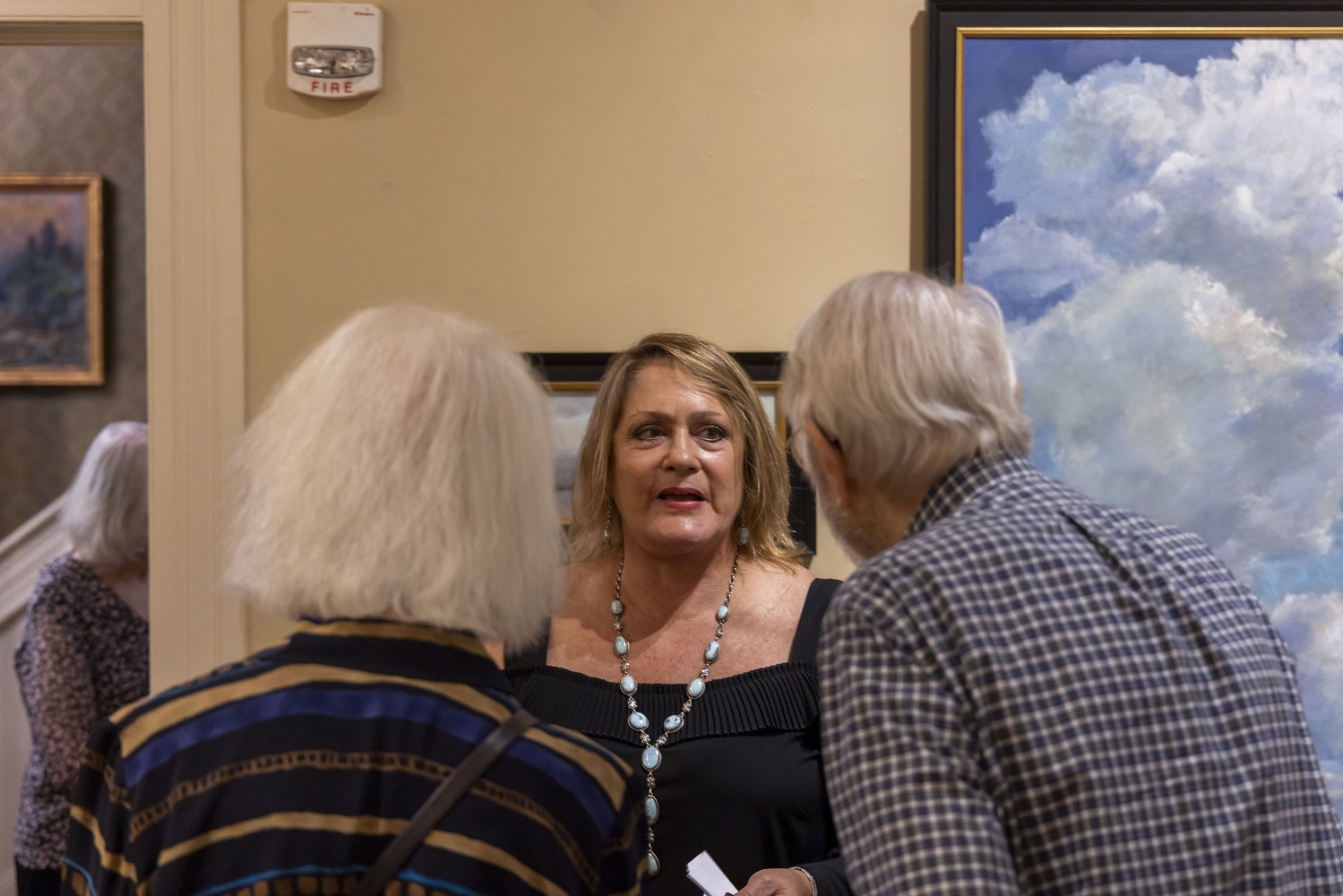
As it turned out, we had a great showing of town-and-gown participants. It was wonderful to see some of our LEAP alumni there…

We saw many old friends, such as Mac and Leanne Woodward, Dr. Ralph and Linda Pease, Gene Roberts, Vice-Provost Anne Gaillard, Linda McKenzie, Dr. Stacy Ulbig, Charlie Vienne, Karen Altom, Dr. Tamara Waggener, Thomas Leeper, Ken Holland, and President James and Nancy Gaertner!

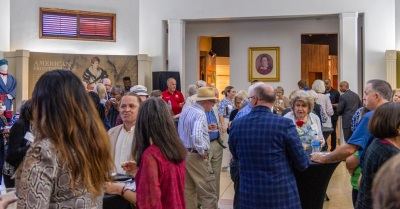
In all, more than 200 people showed up, which may be a record for an exhibit opening at the Walker Education Center. We were very pleased with the attendance, and even more grateful that we live in a community that supports students. We, personally, have had some amazing experiences and memories because of our adopted hometown.

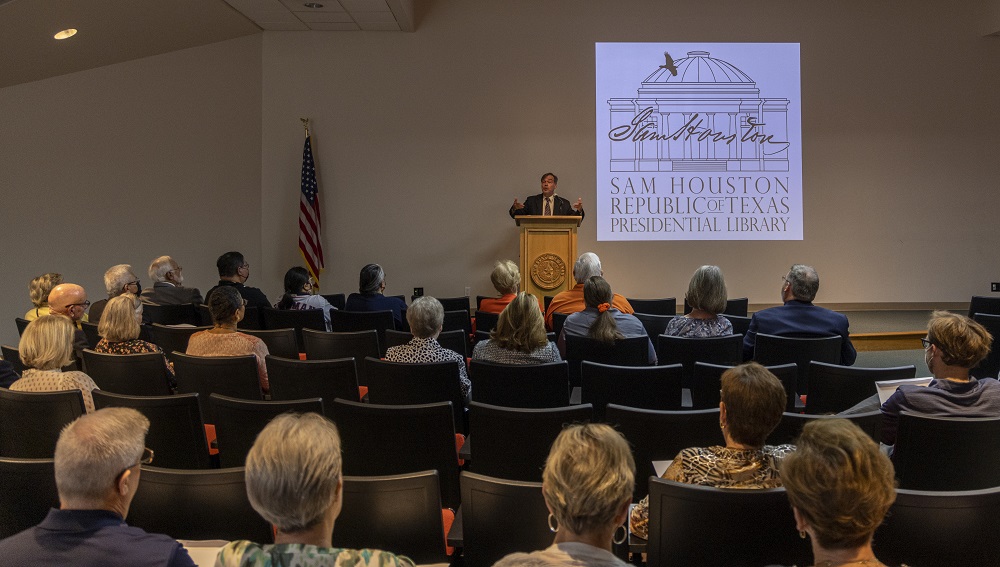
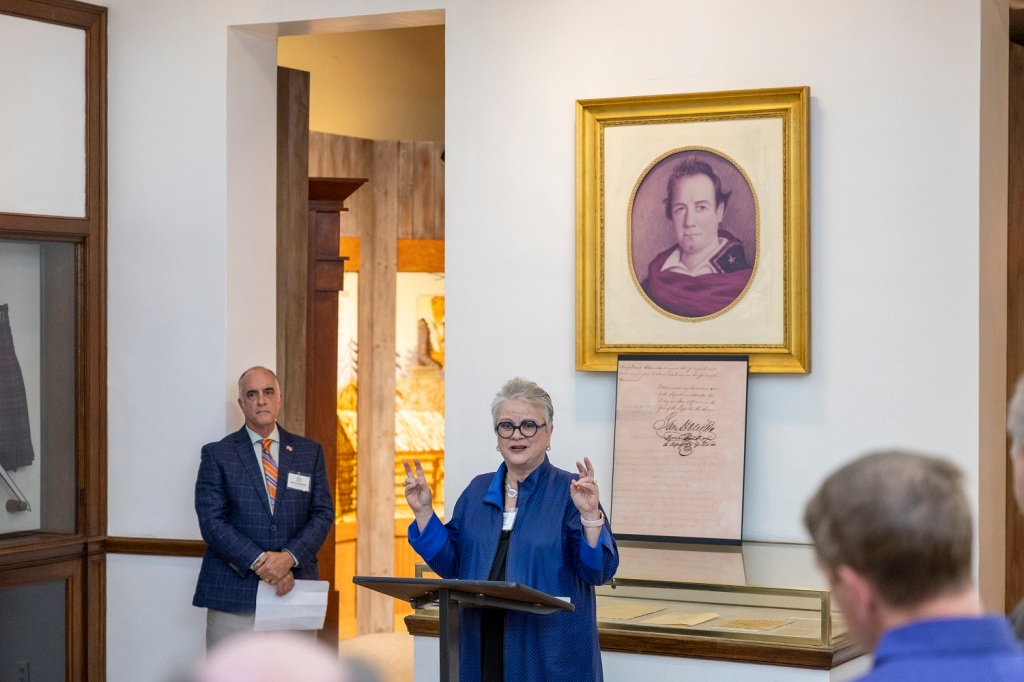
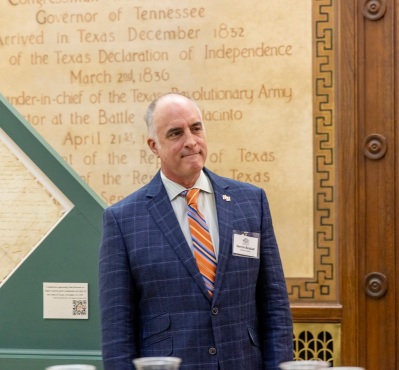
Derrick Birdsall did a nice job introducing us…

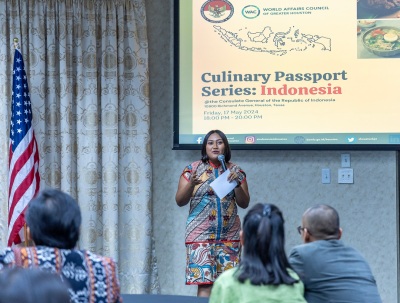
…Morgan Robertson then made a few comments and introduced the other Ambassadors…

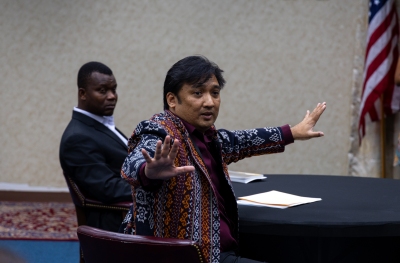
…and then Professor Yawn discussed the LEAP program, told some stories (and some stories behind the stories), and described the exhibit.

We were pleased with the showing from elected officials, such as Commissioner Bill Daugette, Tax-Assessor Collector Diana McRae, District Attorney Will Durham, Judge Tracy Sorenson, Councilmember Casey Cox, School Board Trustee Ken Holland, and Jeff Murski from Congressman Pete Sessions’ office was also on hand! We even had Councilmember Hinojosa and the City Manager from Madisonville, Fabrice Kabona, on hand. And, we were especially gratified to see so many City Staff, with whom we’ve had long partnerships in internships, programs, and other forms of community support.

Most of all, it was wonderful to see so many friends and also to see so many people having a good time.

Thanks to the Sam Houston Memorial Museum, the many people who attended, and the to the University at large.

If you missed it, the exhibit is open until May 12. The Walker Education Center is open from 9am-4pm Tuesday-Saturday. If you’d like to arrange a “group tour,” the LEAP Ambassadors are also happy to accommodate. Feel free to contact Professor Mike Yawn at mike.yawn@shsu.edu.

Art in the Nation’s Capital: The National Gallery of Art

With an open day in the Nation’s capital, we opted to tackle the National Gallery of Art (NGA), which was conceived in the 1930s and completed in 1941. The brainchild of Paul Mellon–who served as Secretary of the Treasury to four Presidents–the NGA has grown to be one of the largest in the world. Not counting the six-plus acre sculpture garden, the NGA has two discrete wings, with a total of more than a quarter million square feet of gallery space. Nonetheless, we saw it all, taking some six hours to do the entire tour, and coming to a better understanding of why the NGA is the most visited art museum in the United States.

Olivia Discon

There wasn’t a single gallery in the National Gallery that didn’t elicit an audible gasp of admiration within our group. The loudest of these gasps was emitted by myself when I saw Rodin’s “The Thinker”.

While this piece is famous, I have a particular affinity to Rodin’s work. To my pleasant surprise, there was a gallery entirely filled with his work!

I also had the chance to view some of my favorite artists from particular art movements. Among the Renaissance artists, I saw Albrecht Durer…

…Sir Anthony Van Dyck, and remarkably, Leonardo da Vinci, whose “Ginevra de Benci,” is his only work on display in the Americas!

We also saw Rembrandt’s famous self-portrait!

I saw some of Jean Honore Fragonard’s work in the Rococo style…

…and among the Surrealists, I saw works by Max Ernst, Rene Magritte…

… Francis Bacon, Yves Tanguy…and Salvador Dali. It may be only March, but it felt a lot like Christmas!

The NGA also had an entire gallery devoted exclusively to Mark Rothko, which I thoroughly enjoyed.

Rothko’s art, similar to many of his contemporary counterparts, are considered controversial in the art world. His simplistic style of colored canvases is not necessarily meant to capture an engaging moment, but instead serve as an engagement between the art and the viewer.

Interestingly, many of the paintings on display were never completed or shown during Rothko’s lifetime. This gave us the rare opportunity to see new Rothko’s work, while also exploring works in various stages of completion. We even saw the giant easel he used to do his art work!

While many may recognize this signature style, we also had the chance to view some of his earlier works, including some landscape and portraits.

Especially interesting was the inspiration for some of his earlier work, which was primarily drawn from famous Impressionist paintings.

While some of us may have enjoyed this exhibit more than others, I believe that everyone was able to take something away from the work that spanned the course of his life.

Michelle Cardenas

In preparation of this trip, I did a bit of “homework,” including watching the documentary, “Dorothea Lange: Grab a Hunk of Lightning.” I undertook this knowing we would be seeing a special exhibit exclusively devoted to her work. So, it was with much excitement that I explored the NGA’s special exhibit, “Dorothea Lange: Seeing People.”

Lange’s photography was technical proficient, but she also took photographs to make social statements. In fact, she used her technical skills to make people more aware of the economic, cultural, and social issues occurring across the United States and the world. The exhibit featured some of Lange’s most famous photographs, among them my personal favorite, “Migrant Mother.”

I saw many of the photographs I had learned about in the documentary, including “White Angel Bread Line,” “Ex-Slave with Long Memory,” and “Children of the Weill Public School.” We also saw a photograph she took in Bryan, TX, as well as some of her less famous works taken on her international travels in the 1950s and 1960s.

Of course, the Museum’s permanent collection was just as exciting for me. And while I am always interested in learning about a new artist, I remain drawn to the painters associated with the “Hudson River School,” such as Albert Bierstadt…

…Thomas Moran, and Thomas Cole.

So it was exciting to see many of their works on display, and I particularly enjoyed “Lake Lucerne” by Albert Bierstadt…

…and “Green River Cliffs, Wyoming” by Thomas Moran.

Cinthia Villarreal

Knowing I have had little exposure to art, I decided to do a bit of research prior to visiting Washington, DC. That research consisted of drilling down on the Impressionists such as Monet, Cezanne, Braille, Renoir, and Degas. I did this knowing that the NGA is famous for its Impressionist paintings in its permanent collection.

So it was with great interest that I approached these areas of the NGA, examining these artists’ works characterized by large brush strokes, often unmixed paint, and vivid colors. Among these, Monet is perhaps the purest example, and I was able to see “Japanese Footbridge,” one of the most famous of his paintings and one he returned to throughout his life.

We also got a large fill of Edgar Degas, and not only his paintings, but also his sculptures. Most famous among these is his “Little Dancer, Aged Fourteen,”

…which was featured prominently in the sculpture gallery, surrounded by other versions of the “Tiny Dancer.”

He used clay, metal, beeswax, and other materials to make his sculptures, and he often then added adornment in the form of silk ribbon or cotton fabric to add to the realism of the work.

Also in that gallery was “Veiled Bust,” one of the artworks we all liked. Interestingly, the Museum is not certain who did the piece, noting only that it was possibly based on a model by Giuseppe Croff. Whoever it was, it was a fascinating work, with the artist somehow making marble look delicate and gossamer.

Concluding Thoughts

The sheer number of artists we saw was staggering. We saw many of artists we already knew, such as Georgia O’Keeffee…

…Jackson Pollock…

…Seurat…

….Childe Hassam…

…Mary Cassatt…

…and some old favorites from a different perspective.

We also had a chance to see the largest Calder we’ve ever seen, as well are more Calder than we’ve ever seen.

But we also had a chance to see artists we weren’t familiar with, such as George Bellows…

…Saint-Gaudens…

…Leo Villareal…

…and Katarina Fritsch, famous for her giant blue chicken, which split the group into very different feelings…

The idea of a national gallery, which was initiated by Paul Mellon, was for a repository of the greatest art works ever created to be made accessible to the general public–and free of charge.

It would be, as President Roosevelt noted when he dedicated the building in 1941, “a living institution…[for] the use and enjoyment of the people of the United States.”

That was certainly true for us today. We had access to art we would never be able to see if it weren’t for Museums such as NGA, and it gave us the opportunity to learn more about history, art, and beauty in one place.