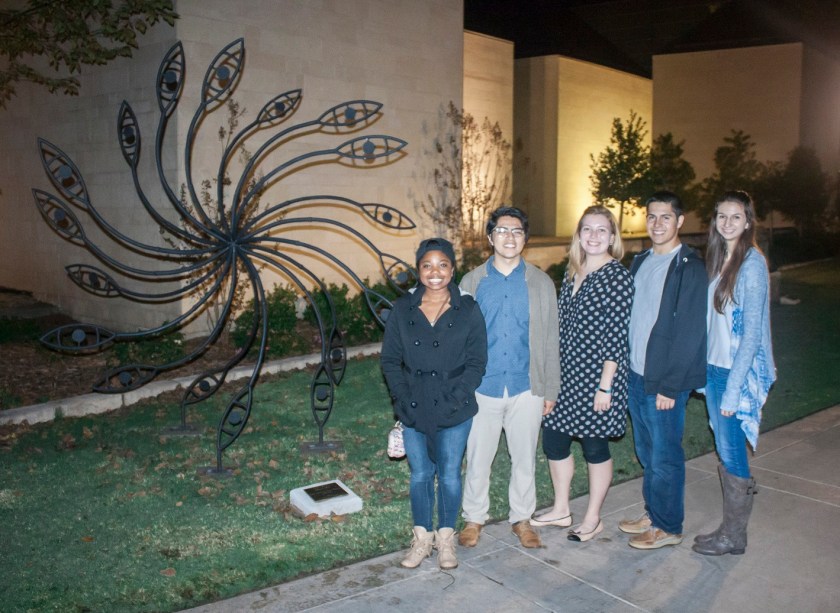
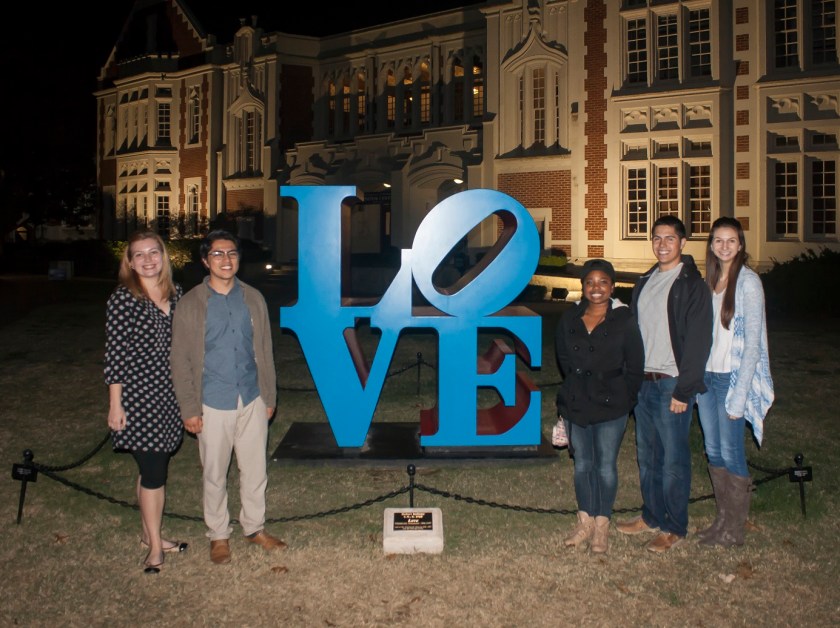
Gateway to (Mid)West: St. Louis

Wednesday, July 13, 2016

It seemed too soon to reminisce about the first half of our trip, which was filled with fun activities and meeting great people.  But, as we packed for our next destination early in the morning, contemplated the great people we had met and the fun of visiting Little Rock, Memphis, Nashville, Louisville, Lexington, and Frankfort.

Camp_Nelson_Ambassadors_Hess_Ludwick_Web
Ambassadors with Cameron Ludwick and Blair Hess, Authors of “My Old Kentucky Road Trip”

But with St. Louis on our destination list for today, we hastened to pack and headed out at 4am, a bit groggy, but excited for the Midwest section of the trip.


The Old Courthouse, St. Louis

Five hours later, we were able to make our first stop: the Old Courthouse.

Dred Scott Courthouse, Missouri, St. Louis
The Old Courthouse, Where the Dred Scott Case Originated, St. Louis, MO

We were out on the road again until we reached St. Louis, Missouri where our first stop was the Old Courthouse. This courthouse is especially important because this is where the famous Dred Scott case was brought to trial. Dred Scott and his wife, Harriet, were slaves that filed a suit for their freedom against Irene Emerson, their slave owner. They tried to take advantage of the Missouri law that would allow them to buy their freedom, and after many years of hardship the judges finally came to a conclusion. In 1857, it was decided that they were not to be considered citizens of Missouri; therefore they could not sue for their freedom. Having grown tired of the slave family, the Emerson family sold them to the Blow family where the Scotts were finally set free. Sadly, Dred Scott enjoyed his freedom only for a short while as he died a year later in 1858.

There is an exhibit in the Old Courthouse where the courtroom in which this trial was heard is displayed.  It was filled with chairs for the jury, two desks for the attorneys, a desk for a bailiff, and a clerk, a chair for witnesses, and a chair for the presiding judge. We even recreated the trial ourselves!

LEAP Ambassadors Re-Enact Dred Scott Case

Apart from its historic value, the courthouse is a beautiful structure, with a beautiful dome designed by William Rumbold.

Old Courthouse, St. Louis, Dred Scott
Old Courthouse Dome, Designed by William Rumbold with Murals by Karl Wimar

As part of LEAP, we are always seeking ways to expand our knowledge. So it is only fitting that we visit the monumental symbol of the westward expansion as our next stop.


The Gateway Arch, St. Louis

Gateway Arch, St. Louis,
Gateway Arch, St. Louis, Designed by Eero Saarinen in 1947

The westward expansion, aided greatly by the Louisiana Purchase, doubled the size of the United States in 1803. In honor of America moving into a more prosperous and hopeful state, The Arch was built as the “gateway to the west.” The Arch proudly stands at an intimidating 630 feet making it the tallest man-made monument in the nation.

Arch_Web

The architect, Eero Saarinen, was an immigrant from Finland and was granted this opportunity after winning a contest by the Jefferson National Expansion Memorial in 1947. After studying architecture at Yale, he believed this was the opportunity to establish himself as an architect in America and it was. Although the design for this structure was completed in 1947, the real structure was not completed until 1965! We learned that this monument was brilliantly made with 142 stainless steel triangle sections that are each 12 feet in length held together by tension bars and truss. It took 13 years to raise the 13 million dollars needed to fund this project. In 1967, a trans system was built inside the north and south legs of the arch allowing 40 people at a time to view the impressive view. It was through these same legs that we rode through in our capsules.

Gateway Arch Elevator St. Louis
Gateway Arch “Elevator” or Travel Pod

It was tremendously fun to be able to enjoy the arch’s view…

Gateway Arch
Beatriz, Kaitlyn, and Karla at Top of Gateway Arch

…and see parts of St. Louis that we looked forward to exploring.

Gateway Arch, Dred Scott Courthouse, Wainright Building
St. Louis from the top of the Gateway Arch

Once back on the ground, we were also able to watch an informative documentary about the arch and its history.  Expansion in 1803 meant a hopeful future for some and that is our motivation as we expand our education in college and on our trips.

Originally, we had planned to visit the city garden that was near the courthouse. With its luscious greenery, sparkling fountains, and marvelous art we were all prepared to relax and enjoy the perfect view of the arch it would offer. Or so we imagined. Unfortunately, time didn’t permit a trip to that destination.


Photo Ops in St. Louis

Remaining undaunted, we decided to go on a photo op adventure instead. Our first photo op stop was a Richard Haas mural.  With two of our students having been interns at the Wynne Home, his work has a special meaning to us, and fourteen of his works dot the downtown of Huntsville.

Richard Haas, St. Louis, LEAP Ambassadors
LEAP Ambassadors in front of Richard Haas Mural

None of the ones in Huntsville, however, cover the 110,000 square feet of the one adorning the Old Edison Stores Building in St. Louis.

Next, we headed over to the St. Louis Union Station  Building, which is a beautiful structure, now a Doubletree by Hilton.  But its interiors were what we found most intriguing…

Union Station in St. Louis, Double Tree
Union Station in St. Louis, MO

…even the entrance to the bathrooms were interesting!

Union_Station_4_Web

But the grand hall was the most beautiful part.

Doubletree, Union Station, Grand Hotel, St. Louis
Grand Hall at Union Station (Doubletree Hotel) in St. Louis, MO

Across the street is the Milles Fountain, which is also impressive and offers a nice view of the exterior of the Union Station.

Milles Fountain at Aloe Plaza, Union State, St. Louis, MO
Milles Fountain at Aloe Plaza

Amighetti’s in The Hill, St. Louis

After a morning of westward exploration and photo ops in St. Louis, we took a quick stroll down The Hill to Amighetti’s.

Amighetti's, in The Hill Section of St. Louis, MO
Amighetti’s, in The Hill Section of St. Louis, MO

Located in what could be considered St. Louis’ Little Italy, the restaurant provided a prime venue for a satisfying lunch. Under what seemed an authentic tin-lined ceiling, we looked over the menu which included, but was not limited to, the Amighetti’s Special, a ravioli plate, and Little Bit of Italy sandwich.

Little Taste of Italy, Amighetti's, The Hill, St. Louis, MO
A Little Taste of Italy, at Amighetti’s in St. Louis, MO

As for the Amighetti’s Special, the sandwich accomplished its main goal; completely stuff its eater. Made up of ham, roast beef, and Genoa salami, blanketed with a rich layer of brick cheese on a 9 inch loaf of French style bread, it was a near challenge to take a bite. However, the extra effort to open one’s jaw was worth it, for every bite was an opportunity to taste the delicious sandwich. To improve on the experience, the menu presented St. Louis’ own Ritz root-beer. The effervescent, sweet, and smooth root-beer was an enjoyable company to Amighetti’s Special. To close off our lunch we also ordered a round of gelato. Within the group we were able to enjoy a cup of a sour, but satisfying lemon ice, cherry peach, strawberry, and vanilla, all of which we considered of excellent taste. As we stood up from our seat, with a content belly and a cooled off palate, we regained the energy needed to continue our St. Louis exploration at the Frank Lloyd Wright’s Kraus Home.

On previous adventures, Alex and Ryan had already encountered this one-of-a-kind home a numerous times. Therefore, Professor Yawn decided to give them the opportunity to explore new land by the name of the St. Louis Art Museum. After dropping them off we rerouted to the Kraus home.


Frank Lloyd Wright Home at Ebsworth Park

Hidden behind lush greenery, Frank Lloyd Wright’s Kraus Home is located in the upscale Kirkwood neighborhood of Saint Louis. Taking a short drive from the art museum, we arrived for a special tour. Normally, tours are not available on Wednesday afternoons, but the staff of the home were generous enough to arrange a tour for us today! Upon arrival, we immediately gaped in awe of the unique architecture and the natural beauty surrounding the home.

Kraus Homee, Frank Lloyd Wright, Ebsworth Park
Frank Lloyd Wright Home at Ebsworth Park

To begin our tour, we watched an introductory video about the Kraus home and its architect. Frank Lloyd Wright was born in 1867 and designed more than 500 structures throughout the United States. Represented in the Kraus home were parallelograms, hexagons, and horizontal lines, all of which accentuated the Usonian vision of Wright. The Kraus home sits on 10.5 acres of land now owned by Saint Louis County as part of its parks system.

In the mid 1940’s, Russell Kraus, a Frank Lloyd Wright enthusiast, wrote to Frank Lloyd Wright requesting him to design a small and less expensive home. Nearly ten years later in 1955, the home would finally reach completion. Mr. Kraus lived there until 2001, when a non-profit raised money to purchase the home and the land was deeded to Saint Louis County.

Throughout the tour, Professor Yawn was quick to point out the horizontal attributes of the home, noting even the grooves between the brick walls were designed to draw the eye horizontally instead of vertically. The Kraus home was designed as two hexagons partially overlapping one another.  The entire home is made up of these two hexagons or its subcomponents  (parallelograms and triangles).

Frank Lloyd Wright, Kraus Home, Ebsworth Park, St. Louis, Architecture

Even the bed, for example, is a parallelogram.

We were fascinated throughout the entire tour. In order to preserve the beauty of the home, we were not allowed to take any photographs inside the home. However, we finished our tour with a few photos on the balcony…

Kraus Home, Balcony, Frank Lloyd Wright, Ebsworth Park
Balcony of Kraus Home at Ebsworth Park, Designed by Frank Lloyd Wright

…and the exterior.

St_Louis_FLW_Exterior_Ambassadors_2_Web


St. Louis Art Museum

Meanwhile, in the St. Louis Art Museum, Ryan and Alex were being exposed to various forms of art.

SLAM, St. Louis Art Museum
St. Louis Art Museum

One of the major aspects Missouri has to offer is the free admission into museums (excluding special exhibits).  On the three levels of the museum, there were paintings, sculptures, and artifacts from as early as 500-600 BCE to as recent as present day and everything in between. There were pieces of art from all around the world including Asia, the Americas, Africa and Europe. Several famous artists’ works could be found at the museum including Monet…

St. Louis, SLAM, Art Museum, Water Lillies, Monet
Monet’s “Water Lilies” at the St. Louis Art Museum

…van Gogh, Picasso, Seurat…

George Seurat, Pointillism, SLAM, Outer Harbor
George Seurat’s “Outer Harbor” at the St. Louis Art Museum

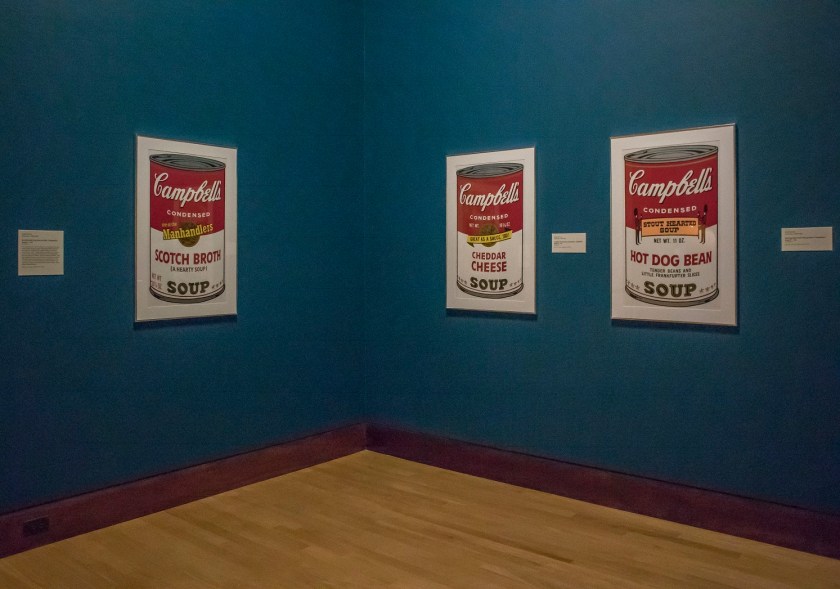
…Degas, Rodin, Kandinsky, Warhol, Segal, O’Keeffe, and many more. Outside, there was a short path through a small sculpture garden, mostly made up of pieces from Henry Moore.

Henry Moore's "Two-Piece Reclining Figures" at St. Louis Art Museum
Henry Moore’s “Two-Piece Reclining Figures” at St. Louis Art Museum

As we were leaving, a huge storm rolled in, cutting out our trip to a sculpture garden in the downtown area. So instead, we headed towards Bentonville, stopping for a photo-op at the world’s largest fork, and afterwards, stopping for dinner.


Dinner at Cafe Cusco, Springfield, MO

Being the home of the world’s largest fork…

World's Tallest Fork, Springfield, MO
World’s Tallest Fork, Springfield, MO

…Springfield appropriately offers numerous eateries from which to choose.

We choose Cafe Cusco, a Peruvian restaurant that has all the attributes of good Peruvian food, without the risk of Zika.

With the buildings soaking in the last rays of the day on Commercial St., we crossed the threshold into the Peruvian cuisine restaurant. As Peruvian folk music sounded its harmonious guitar in the background, we looked through the menu. With a variety of “platos” or dishes, from vegan salads to meaty steaks, the appetite of some of us were attracted to the fried rabbit, fajita saltada, BBQ pork panca, and lomo saltado. First, however, we began our taste of Peru with a seafood dip and fried avocado appetizer.

Seafood Dip, Fried Avocado, Cafe Cusco, Springfield, MO
Seafood Dip and Fried Avocado at Cafe Cusco

As the initial dishes were cleared, we readied ourselves for our main course. Soon the table was enveloped in the spicy aromas of the various dishes. As for the lomo saltado, a dish of steak cooked with bell pepper  and onions served with fries and rice, each scoop of the fork brought to one’s mouth the zesty spice of Peruvian flavor. Perhaps the best of the dishes, however, was the rabbit, which Ryan enjoyed immensely.

Rabbit Entree, Cafe Cusco, Springfield, MO
The Rabbit Dish at Cafe Cusco

In all, the restaurant was more than enough to make us go back to the corner block venue as we were forever in love with these flavorful dishes. For the meantime however, it was time get back to our traveling van for we still had half a state left to ride through.


Seeing Tennessee: One Day in the Volunteer State (Nashville Version)

Tennessee is known as the volunteer state, so named because of the disproportionate number of volunteers they have provided to the US Military in wartime.  While none of the LEAP Ambassadors have served during wartime, we do volunteer a lot, so we felt a distant kind of kinship.

The first stop planned for our third day of the Southern leg of our trip was The Hermitage, Andrew Jackson’s home.

Hermitage_Jackson_Web

Our tour began with museum exhibits describing the history of the seventh President of the United States in chronological displays. The exhibit began with the wars in which Andrew Jackson played important roles, the War of 1812 and the Battle of New Orleans in 1815.

Hermitage_Beatriz_Web

Original artifacts, such as swords used by the British and the Americans during these historical events, were also displayed in glass cases allowing each visitor to stop and admire the details of each. Larger artifacts, such as his carriage, were displayed on the floor of the exhibit space.

Hermitage_Carriage_Web

The exhibits were packed with history, but also well-organized, making it easy to follow and understand.

Hermitage_Brian_Web

We learned not only about Andrew Jackson’s life, but also much about his wife, Rachel.

Hermitage_Alex_1_Web

After the indoor museum exhibits, we moved on to a self-guided audio tour of the grounds that led us to Jackson’s mansion.

Hermitage_Ambassadors_Web

The guides on the tour discussed every room in the 8,000 sq. foot mansion. The parlor downstairs off the entryway was covered in elegant wallpaper that General Jackson ordered from France, along with many original artifacts. Although the mansion was beautiful, it does not have all the modern conveniences that homes today have, such as indoor plumbing! The second floor houses guest rooms and the grandchildren’s rooms. And as a special treat, the upstairs tour guide pointed out one of the guest rooms where Sam Houston slept during one of his visits to see General Jackson.
After the mansion tour, we meandered the garden, still guided by the audio tour. In the garden, elaborate for its time, we saw the tombs of the Jacksons, along with several family members.

Hermitage_Grave_3_Web

The garden was originally made for Rachel as a place for her to relax, a much-needed respite from the stress of her husband’s political career. Sadly, she passed away days after Andrew Jackson was elected President; and it is said that the political stress caused her death. After the tour of the museum exhibits, the mansion, the garden, and a quick photo-op on the $20 bill…

Hermitage_Beatriz_Bill_Web

…we had worked up an appetite, so we made our way to The Pharmacy for a quick fix.

We know what you’re thinking, but no, we didn’t go to the local drugstore for lunch! The Pharmacy is actually a burger parlor and beer garden, although we didn’t sample the latter. The restaurant has been named the “wurst burger joint” around because of the German influences in their food and beverages. The phosphate and crème sodas, Wurst, and beer make this Nashville spot distinct and popular. The restaurant was cozy with a large outside patio garden.  The patio was beautiful; however, we sat inside to cool off after a morning of sunshine at The Hermitage.

We ordered different varieties of burgers made from 100% Tennessee beef. Beatriz, ordered the Farm Burger, with bacon, egg, and ham and other fixings, while others tried the Biergarten Platter, which had a variety of wurst sausages and mustards. All the food and cream sodas were satisfying and we were more than ready for our next stop, The Parthenon.

Gryphons stared down at us serenely as we climbed up the steps of Nashville’s Parthenon. We entered through the west side, noticing that atop the majestically stoic Doric columns a scene was unfolding depicting Athena being crowned by Nike (the winged goddess of victory, not the shoe brand). Built in 1897, this replica Athena’s shrine was at one point meant to be temporary.  Due to Nashville’s love of the thought of having their own Parthenon (they were known as “the Athens of the South”) and since it had quickly grown in popularity, it stayed.

Parthenon_Group_Exterior_2_Web
LEAP Ambassadors at the Parthenon–Nashville, Tennessee

As we set foot into the structure of classical architectural style, not only did we travel across space towards Athens, Greece where the real Parthenon lay, but we also stepped into a place of art. Literally. The Parthenon is both a bona fide replica of the authentic Parthenon and a museum housing more than 60 pieces of art donated by Mr. James M. Cowan under a strange circumstance…he had donated the pieces of art with only one condition: that he remain anonymous as the donor until after his death.

We moved upstairs where we were able to see the goddess of wisdom herself. Made of a number of materials, including 3.6kg of gold leaf, she stands impressively tall with Nike in her right hand and her faithful shield in the other.

Parthenon_Group_2_Web

One of the many interesting things about Nashville’s Parthenon are the gargantuan bronze doors. Measuring up to 6.5 ft. in height and weighing about 7.5 tons, these doors are thought to be the largest set of bronze doors in the world. However, even the smallest of our group could easily move them.

After digesting much great Greek mythology, art, and architecture, we passed by a gryphon one last time…

Parthenon_Students_Athena_Web

…Beatriz giving it a fist bump of gratitude for its great work at guarding Athena.

Parthenon_Beatriz_Lion_Web

With that last goodbye, and a last glance at the great Athena, we left wiser on the subjects of art, architecture, Nashville history, and a bit of the goddess of wisdom herself.

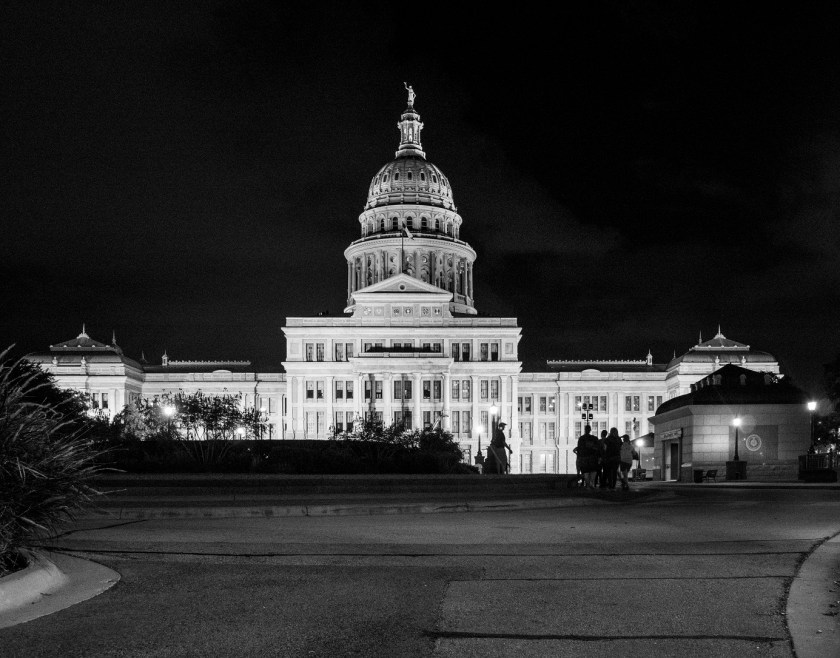
From there, we visited the Tennessee Capitol.

TN_Capitol_Exterior_Web

Like many other major building projects, construction of their capitol was behind on schedule and way over budget, taking fourteen years instead of three, and costing about three times as much as the initial budget.

The Tennessee Capitol is one of 13 state capitols which does not have a dome.  Instead, it was built in a Greek revival style. Not only is it different in architecture, but this capitol is the only one to be home to three deceased people, the first being the architect who designed it, William Strickland. Strickland is buried in the walls of the building, which he regarded as his greatest work. Along with Strickland, Samuel Morgan, the original building commissioner, is also buried on the site (actually, in the walls of the building).  And wrapping up the list are President James K. Polk, and Polk’s wife, Sarah, are bured on the grounds (but not in the walls).

TN_Capitol_Polk_Grave_Web

We learned much about Polk and the other two presidents from Tennessee (Andrew Jackson and Andrew Johnson). As we went along our tour, our guide (who was very knowledgeable and one of the best tour guides we’ve had!)…

TN_Capitol_Tour_Web

…pointed out a bearded Sam Houston, who was governor of both Tennessee and Texas.

TN_Capitol_Sam_Houston_Portrait_web

Although one LEAPster, who shall remain nameless (Megan), failed to recognize him, it was nice to see that General Houston was given credit for the work he’d done in Tennessee.

Tired of waiting for the entire capitol building to be built, the Supreme Court of Tennessee decided to move right in and start hearing cases. One judicial record, the tour guide explained, indicates the Court held a construction company in contempt of court for making too much noise while working on the building.

TN_Capitol_Tour_2_Web

Even so, the tour was great, filled with humor and interesting facts, such as the two occasions in which a president chose a vice-president with the last name Johnson, which didn’t work out so well for the presidents, who both ended up dying in office. Our cheerful tour guide made the tour one of the most interesting capitol tours we’ve been on.

This slideshow requires JavaScript.

To top it off, we even got to use the old-timey state seal press to emboss our programs.

TN_Capitol_Seal_Ryan_Web


So, as the day and the tour came to a close…

TN_Capitol_Ambassadors_Exterior_2_WEb

…we knew it was time to move on to our next destination, Louisville, Kentucky.

The LEAPsters are always up for adventure no matter how frightening it may appear.  One member of group stated that completing the fully-underground, aerial ropes challenge course at Louisville Mega Cavern truly embodied the LEAP spirit.

As we opened the front “door,” it was apparent that the cavern’s interior had been refurbished with artificial ceilings and walls in order to accommodate the recreational attractions inside. Louisville Mega Cavern houses a bike course, ropes course, “mega” zip line, and holds tours of the cavern’s mines.

Megacavern_Karla_Ryan_Web

This night we were set for the elevated, trapeze-style obstacles on the ropes course.

Megacavern_Karla_Standing_2_Web

Several of us are not fond of heights, and regardless of the multiple, secure straps attached to every elevated obstacle, fear of falling was still prominent.

Megacavern_Karla_Hugging_2_BW_Web

Our pseudo phobias did not deter us from trying as many hanging rope bridges within our time limit, though.  Bridges between the platforms varied in size, shape, difficulty and amount of balance required to traverse, from suspended, unbalanced planks to tension ropes to challenges that simply cannot be described without seeing them.

Megacavern_Beatriz_Walking_2_Web

For Alex, acrophobia kicked in while trying to balance over this system of suspended ropes and planks: At these moments my blood would rush in anticipation of hitting the ground, my palms would start to perspire inside my leather gloves making them almost slide off my hands, and my head would be showered in more sweat as I noticed how high off the ground my struggling body hovered. I would tightly clench the rope from which each overpass was suspended and inch my way through with each move coordinated to keep balance. No matter how much I wished to stay safely footed on the floor, I mustered all the courage my shaky spirit could supply.

Megacavern_Alex_Walking_2_Web

For the most part, though, we successfully walked, crawled, and hopped, and prayed over the obstacles without falling.

Megacavern_Ryan_Walking_Web

And all the LEAPsters made it to the grand finale:  the zip line.

Megacaverns_Beatriz_Zipline_Web

Some jumped off, some slid off, and at least one asked to be pushed off,  but we all made it off the platform at least once.  We wrapped up the late night and with blistering hands and muscles strained from the continuous stress of cheating an unwelcome dive to the hard ground, we climbed in our traveling van, ready to reach our hotel for some much-needed rest.

Megacavern_Group_Web


Au Revoir Austin

Although our official work week was over, it didn’t mean our education was complete.  Accordingly, we planned out a day that involved virtual exploration, actual exploration, and some adventurous food choices!


Bob Bullock Museum and National Parks

We began our morning with virtual exploration of the National Park system at the Bob Bullock Museum.  The Museum was presenting America Wild: National Parks Adventure.  It was narrated by Robert Redford, whom we had just seen in Butch Cassidy and the Sundance Kid on Thursday, and it reinforced some of what we had learned when we brought Mark Burns to campus in March to exhibit his photos of the 59 national parks he had visited and photographed in Black and White.

The Documentary was created to commemorate the one hundredth anniversary of the National Park Service.  Although Abraham Lincoln, Teddy Roosevelt and others had taken steps to preserve America’s most treasured lands, it was Woodrow Wilson who signed the legislation enabling the National Park System for generations of Americans to enjoy.

The documentary was in 3-D, so we put on our glasses, sat back, and enjoyed the show…

Bullock_Museum_3D_IMAX_Web

…while reinforcing our appreciation of the National Parks in the United States.

The Bullock Museum also has a limited exhibit of photographs from the National Park System, and we were followed up the documentary with a viewing of the photographs.

Bullock_Museum_National_Park_Gallery_Web


From Virtual Exploration to Actual Exploration

After seeing a high-adventure documentary, we chose to experience some of that adventure ourselves.  That evening, we headed off to the Rowing Dock to get in some kayaking.

It took Karla and me (Alex) a while to find our rowing rhythm, but once we did, we sped up to catch up with the others.

Kayaking_Alex_Karla_2_Web
Karla and Alex Begin Their Kayaking Adventure!

The river was full of kayakers, canoers, and paddle boarders rowing up and down the river and under the busy bridges. I admired the mix of city and nature as we paddled up the river.

Kayaking_Alex_Karla_5_Web
The Austin Skyline from a Kayak

It was a combination that I am not accustomed to seeing. After a while of paddling, we all gathered under a bridge that seemed to be making a strange sound. We stayed there for a while as Professor Yawn explained to us that the noise was being produced by bats! Apparently “South Congress” is known for its bat population that flies out at sunset every day.  We paddled along and saw a few more interesting water mechanisms; a swan boat, a Cambridge Racer…

Kayking_Sunset_Web

….and paddle boards with bicycles as the motor. But mostly we all just enjoyed the exercise…

Kayaking_Kaitlyn_Beatriz_3_Web
Beatriz and Kaitlyn Taking Off from the Rowing Dock

…the skyline…

Kayaking_Stephanie_Megan_1_Cropped_Web
Stephanie and Megan Enjoy the River

…each other’s company…

Kayaking_Kaitlyn_Beatriz_6_Web

…the sunset…

Kayaking_Alex_Karla_6_Web
Alex and Karla Sail Into the Sunset

…actually, we enjoyed the sunset a lot…

Kayaking_Kaitlyn_Beatriz_9_Web
Kaitlyn and Beatriz Sail Into the Sunset

…and even the moonrise.

Kayaking_Austin_Bridge_Web

In fact, we were so taken with the moon that we were a little late getting our kayaks back.

Kayaking_Kaitlyn_Beatriz_8_Cropped_Web
Kaitlyn and Beatriz Pull in at Moonrise

It was a satisfying adventure all around.

Kayaking_After_Girls_Moon_Web

After learning about the bats under the bridge, we decided to get a look for ourselves.  Accordingly, we scurried off to the Congress Avenue Bridge, where hundreds of people gathered to watch for the 750,000 or so bats that begin coming out around sunset.


Austin_Moon_Web

We didn’t see 750,000 bats, but we saw a lot of them!  They are difficult to photograph, however, and we didn’t get any usable photographs, at least not of bats.  We did get a decent group shot, though:

Austin_Moon_Girls_Web


A Food Adventure

With more time than typical, we could explore our food tastes.  And explore we did!

For lunch we enjoyed Indian cuisine at Clay Pit, a place known not only for its food, but also for being housed in the Bertram historical building.  The Clay Pit offers a lunch buffet, giving us the chance to sample varieties of food.  Starting with crunchy fried veggies to the scrumptious Chicken Tikka Masala we stuffed ourselves with food in a classy environment filled with Indian music. Accompanied with these dishes were naan: some filled with melted cheese and jalapenos, while others had sweet cherries, nuts, and raisins. After our meal, we decided to get dessert which consisted of Chai Spice Creme Brulee and strangest of all,or at least not commonly heard of, Gajjhar Halwa. This is a dessert described as a “hot and cold love”.

Dessert_Chapa_Alex_Web

Interestingly, it consisted of cold vanilla ice cream and warm carrots, a dish recommended to us by SHAIP (Sam Houston Austin Internship Program) alumnus Shelby O’Brien. Everyone enjoyed this shockingly delicious dessert!

Despite the large lunch, our evening kayaking adventure whetted our appetite for a large dinner, which consisted of Ethiopian food.

Our appetizers were Sambusas, which are pastries filled with onion, green pepper, and beef accompanied by a spicy sauce.

While we waited for our food, we talked about our favorite experiences during our week in Austin. We all had different favorites, but we all agreed that we definitely learned a lot this past week. It was filled with fun and adventure, but also a lot of work and learning time; the best combination!

That learning and fun continued with the arrival of our entrees, presented in a large Ethiopian basket!

Our entrees consisted of the Habesha special meat combo that included Doro Wot, Siga Wot, Kitfo, Yebeg Tibs, Alicha Fitfit, Bozena Shiro, Gomen Besega, Habesha special tibs, and Ayib; thankfully we had a great waiter that could explain each one of these to us! We also ordered from the Poultry menu, the Doro Tibs, chicken breast cubes sautéed with slices of onions, herbs, and sauce. For the least adventurous, we ordered spaghetti with meat sauce. The food really seemed to be authentic Ethiopian food which was a great way to introduce this type of food to us first-timers.

Even as first-timers, we did our best to eat in the Ethiopian tradition, using the injera bread as utensils.  It was great food and a great way to wrap up our adventurous week in Austin.

We headed back to the hotel to pack up and get ready to hit the road the next morning. We were all thankful for the opportunity to intern at the Texas Capitol for the week. We were also thankful to meet extremely helpful people and eat really good food. Until next time, Austin!

Corpus Christi in Six Hours

It’s not easy to prioritize your time in a City when you have just five hours to spend, but we did a pretty good job of it.

Our morning began by visiting The Texas State Aquarium. As a fish enthusiast, Megan was especially looking forward to this underwater adventure. We began with a shark exhibit…

Aquarium_Girls_Shark_Jaws_2_Web

…before moving on to the Lion Fish and Electric Eels.  One of the highlights was seeing the Aquarium staff in full scuba gear feeding these fish.

Aquarium_Girls_Feeding_Web

The Museum’s exhibits are well configured, giving you the opportunity to see them up close.  The jellyfish exhibit, for example, is in low light, highlighting the animals translucent tissue.

Aquarium_Jellyfish_Web

The sea otters, crocodile, and bald eagle were outside, and they were in separate exhibits, again configured in such a way as to maximize human interaction with the animals.  In the case of the sharks and stingrays, we could even put our arms in the water and “lightly touch the animals with two fingers.”

Aquarium_Girls_Sharks_Web

The true highlight of the aquarium are the dolphins.  The trainers brought out four dolphins, two of which were especially good at tricks.  Through mimicry, these dolphins learn to clap, jump out of the water, do flips, swim on their back, and even splash the audience!  Our favorite was a three-spin flip.

Aquarium_Dolphin_Jumping_3_Web

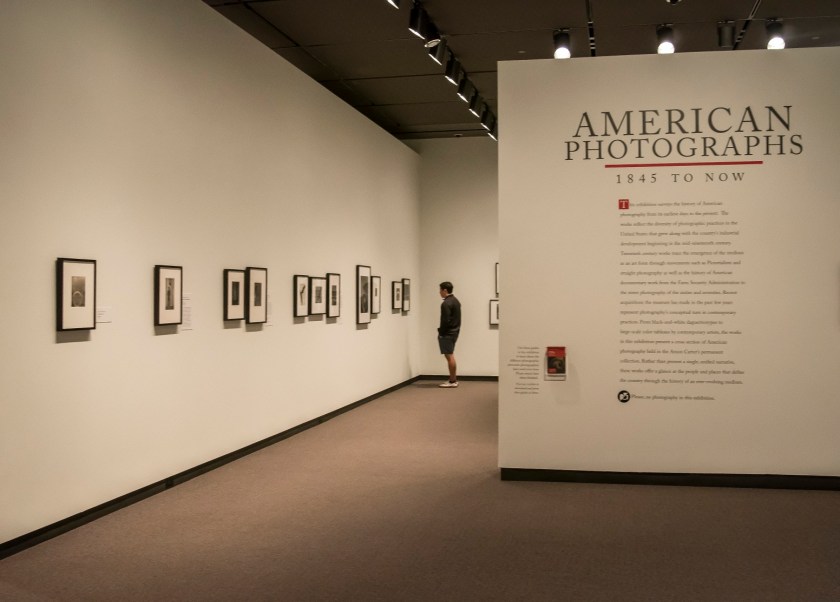
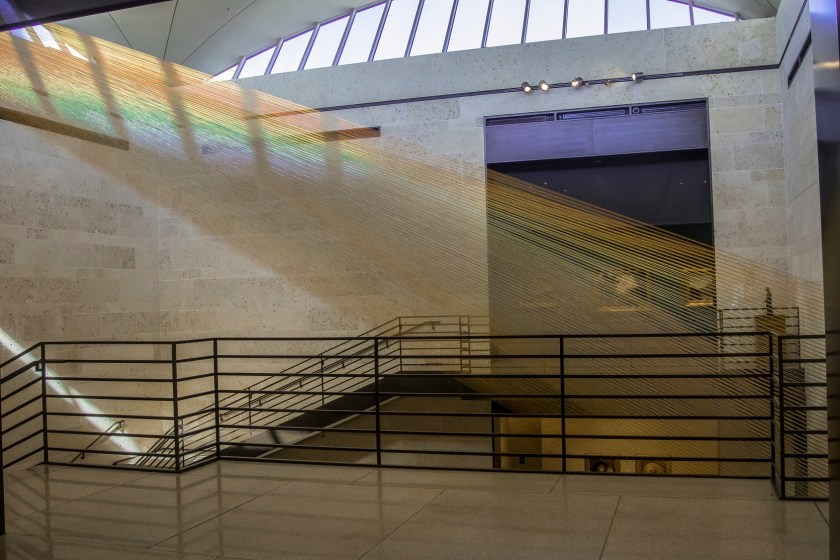
Next door to the Aquarium is the city’s Art Museum of South Texas.  The museum is housed in a structure designed by Philip Johnson and made from shellcrete.

Art_Museum_Exterior_Web

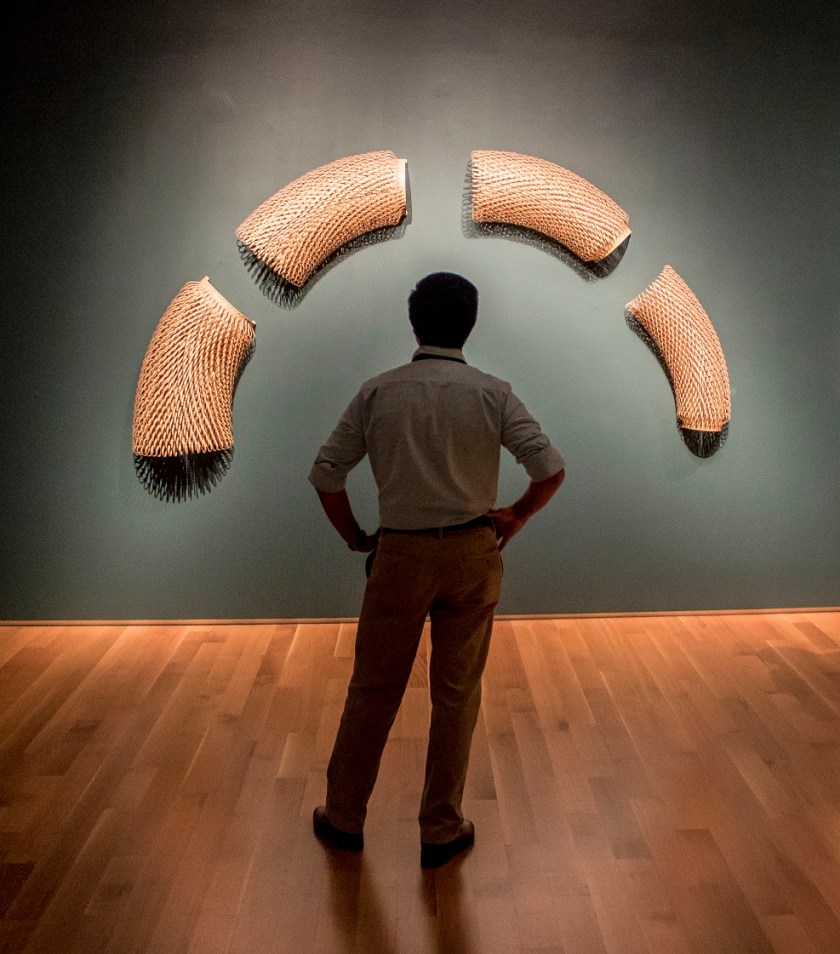
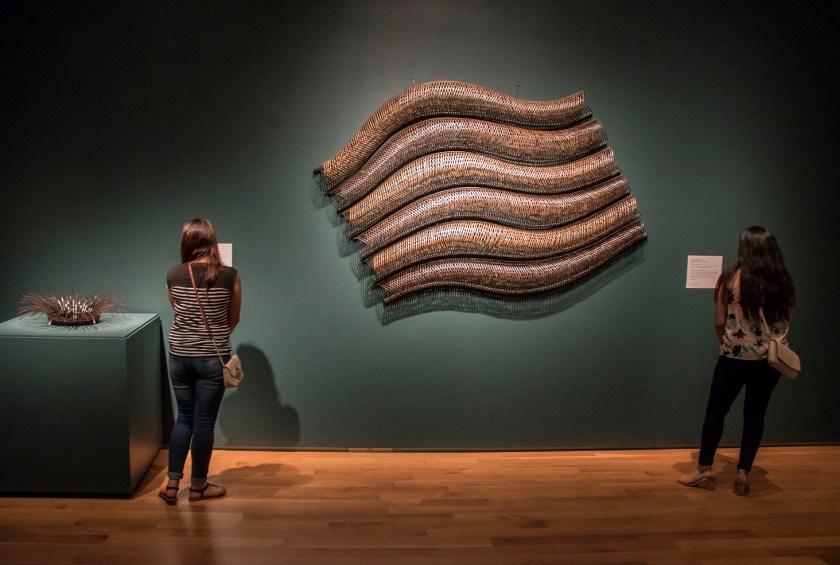
The current exhibit in the Museum was of Texas Mixed Media, and my favorite artist represented was Mary McCleary, who is actually a Professor of Art at Stephen F. Austin University.  In her artist statement, she indicates she takes found objects and layers them onto paper in a way that “conveys an intensity which the viewer finds compelling.”  That was the case for me (Alex), and I’d like to see more of her work.

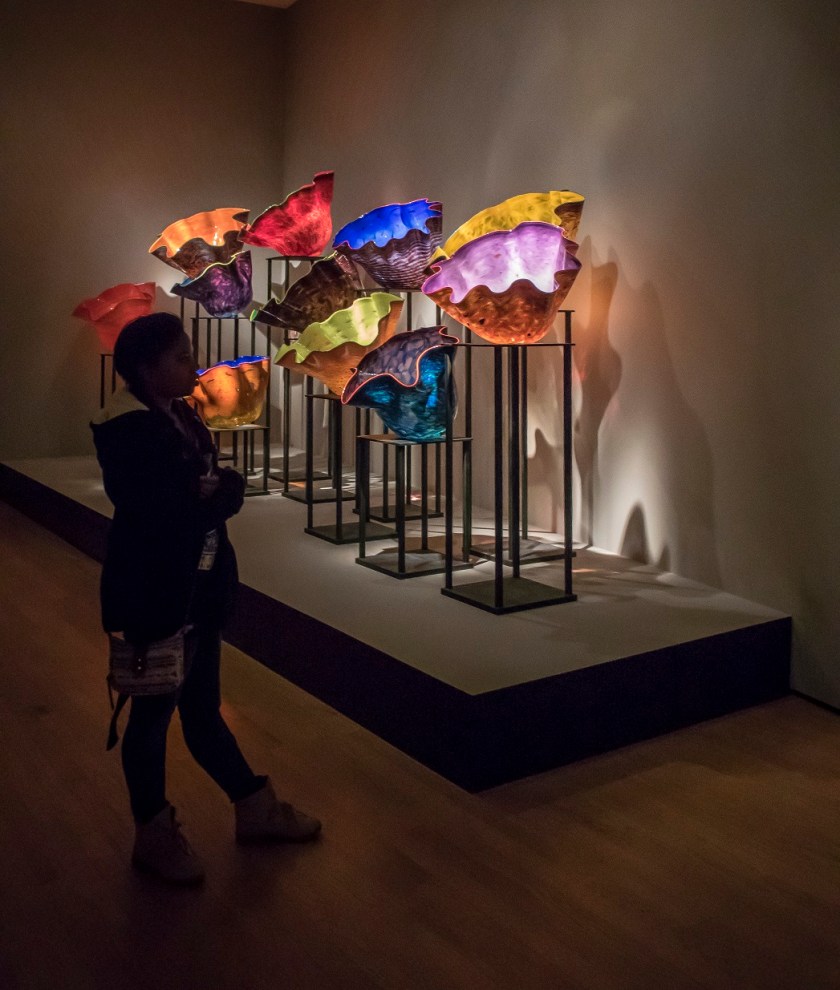
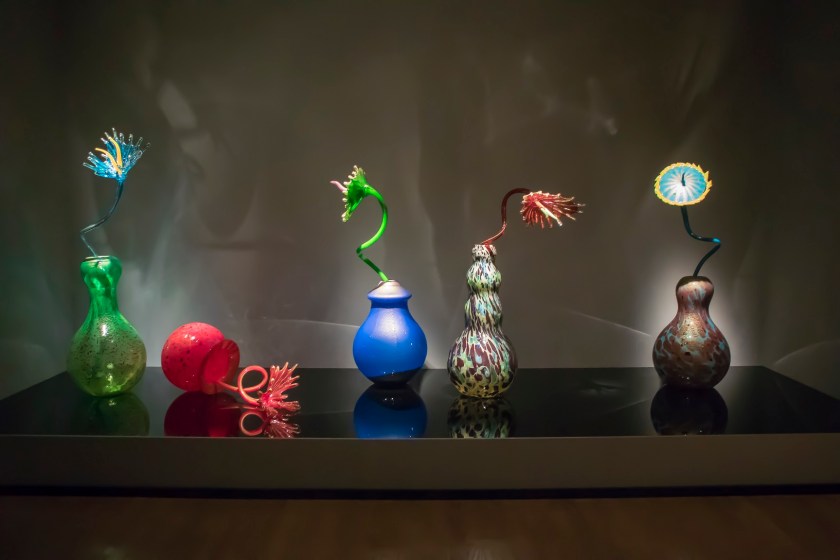
We also had a chance to see another Dale Chihuly, and I learned about the “Art Guys,” who have a work composed of clear glass tubes horizontally placed on the wall and filled with broken glass.

Megan, too, found a new artist she liked: Bill Meek.  A glass artist from Houston, his piece “Catharsis” is in a sun room overlooking a piece by Jesus Moroles outside the building.

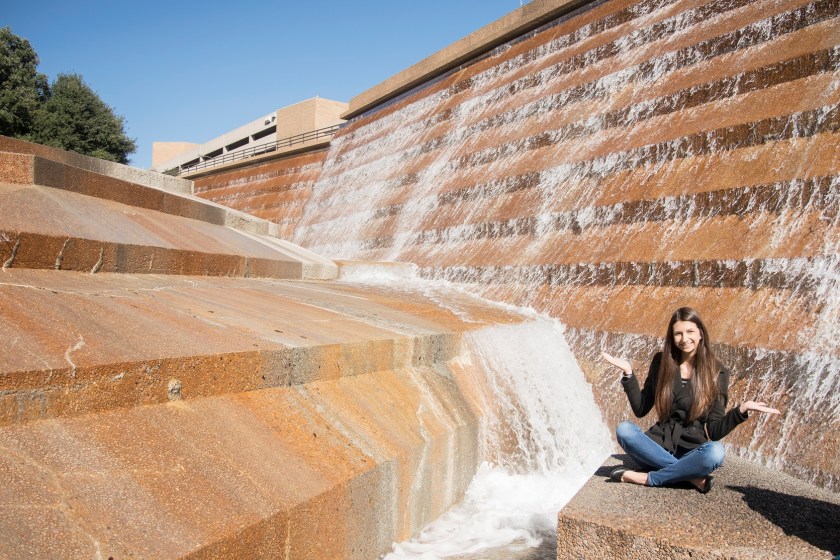
Speaking of which, the exterior of the Museum is as intriguing as the interior.  The walkway to the building includes a large, ringed fountain.

Art_Museum_Girls_3_Web


Art_Museum_Girls_6_Cropped_BW_Web

Off to the side is a large piece by James Surls, who graduated from Sam Houston State University.

Art_Museum_Surls_Girls_Web

With all the art hitting close to home, we decided to stray outside the box for lunch.  Thus we went to a Vietnamese Restaurant (literally called “Vietnam Restaurant”) in Corpus Christi.  This seemed like an unlikely pairing, but the food was truly good.  I (Megan) ordered the Vietnam Fried Rice, which was delicious; Alex had the Vermicelli Noodles with grilled chicken; and Professor Yawn had the restaurant’s signature “Hot Pot” which, after being slow cooked for 25 minutes was, indeed, hot!  And very good.  It was our favorite restaurant thus far in the trip.

Before leaving Corpus, however, we felt somewhat compelled to visit “Mirador de la Flor,” which is a memorial to Selena, the Tejano singer.  Selena was shot at the age of 23 but she sold more than a million albums in her short career and paved the way for other Hispanic singers.

Selena_Megan_2_Web

And with that visit, we closed down our time in Corpus Christi.  Although “hooked” by the beaches, baseball, sea-life, and art, we had business in the Rio Grande Valley, so southward we roamed.

But not before getting drinks at Coffee Wave.  We cannot recommend this enough!  The coffee was good; the Mexican Hot Chocolate was excellent, even on a summer day; and the Chai Tea Latte was amazing!  And with that, we waved goodbye to Corpus Christi!