In any given semester, LEAP Ambassadors do volunteer service, attend presentation by leading public figures, tour art museums, explore civil rights and history, and, when possible, attend performing arts events. This semester was no different and, in fact, the Ambassadors began the semester with Chicago and they ended it with a performance of Noises Off at the Owen Theatre in Conroe, TX.
This was a rare treat for us, in that none of us had ever been to the Owen Theatre before, although several of our party had seen Noises Off. Indeed, Victoria McClendon was attending tonight as an alum, but her very first LEAP event was a production of this play at SHSU in 2016!
This time, in addition to Victoria, we had Olivia Discon, Professor Yawn and Ms. Stephanie, and Dr. Hyman and Carol Hyman–the latter of whom generously treated us to dinner!
Noises Off is a full-on farce, a play within a play about putting on a play.
It is a crowd pleaser, but with all its moving parts, and it’s abrupt changes in persona from each character, and its frantic pace, it’s also a difficult play to put on, especially for a community theatre. But the Owen actors did a fine job, with Jillian Linton (as Brooke Ashton), Robert Faber (as Lloyd Dallas), Jeff Linton (as Sheldon Mowbray), and Allen Dorris (as Frederick Fellowes) standing out.
The first act of the play shows a rehearsal, one that is not going well, much to the chagrin of the director, “Lloyd Dallas.”
The second act depicts the opening, albeit from “behind the stage.” The real audience (us) is not seeing what the imaginary audience sees; rather, we are seeing the drama, spectacle, and chaos going on behind the scenes.
The third act, which is the most madcap, puts the real audience (us) in the perspective of the imaginary audience, allowing us to see how much of an impact the behind-the-scenes drama is having on stage.
Apparently, it’s not easy to put on a play in general, and especially when there are two separate love triangles (and maybe a love quadrangle) occurring, along with a cast that includes a drunk, a dimwit (or two), and a gossip. But those difficulties make for a fun time for the audience, and helped produce much laughter and enjoyment for the LEAP Ambassadors to cap off a long and rewarding semester.
When exploring the hidden gems of Austin, Texas, one may be led downtown to the home, which happens to double as a museum, of William Sydney Porter, otherwise known as O. Henry- a prominent author famously known for his short stories such as “The Gift of Magi.”
Mr. Porter’s home is a Queen Anne-style cottage built in the mid-1890s. Amazingly, much of the original furniture is still preserved there for the public to see! The house is covered in vintage wallpaper, giving each room a different feel than the next, contrasting with most modern homes today. Interestingly, when the home was donated to the city for historic preservation, it was moved from its original location in a middle-class neighborhood to its prime location today.
Although this was Mr. Porter’s home, it was not where he constructed his famous short stories. He did most of his writing in prison for a felony of embezzlement, which he committed while working at the First National Bank. During his three years in prison, Mr. Porter wrote around 380 short stories that were published after his release, which launched his writing career, established him as an author, and later led to him becoming the famous author we regard him as today. Due to negative connotations attached to convicted felons, Mr. Porter began using his pen name, O. Henry, to prevent people disregarding his work due to serving time in prison.
The story of Mr. Porter’s past and aspiring short story author was fascinating to learn about while visiting the museum! However, the museum touched not just on Mr. Porter’s most talked about life, such as his ascent as an author; it also touched on more intimate parts that the average fan might not know. For example, Mr. Porter had a passion for music. The museum had a handwritten sheet of music titled “Main Street,” with the original notes and lyrics that he wrote on display. During his time in Austin, one could find him writing sheet music for piano, acting in the Austin Musical Union, or playing in a string instrument band, the Hill City Quartette.
I always find a little memento of Sam Houston in every museum I visit. For instance, this museum’s connection to Sam Houston was an old desk that Mr. Porter used during his time in Austin. The desk belonged to his great uncle, Adolphus Sterne, who was good friends with Sam Houston. This is one reason Mr. Porter valued this desk so much was because of the rich history behind it.
During his life, Mr. Porter was a man of many trades as he was an aspiring writer to support his family. He worked as a pharmacist, a bookkeeper, and a drafter to make ends meet. When he worked at a local drugstore, he was found to be excellent at sketching his customers. This led him to work at the Texas General Land Office for about four years, where he was tasked with drawing maps of Texas counties. He started working at the First National Bank to provide more financial support for his family, which led to his embezzlement and, ultimately, to his arrest.
One inspirational thing you can take from the legacy of the life of Sydney Porter is that every event in his life led to the next, and in the end, that is what got him to where he needed to be successful. This helps give me some perspective that not every bump in the road must be bad; it can be all about what you make of it.
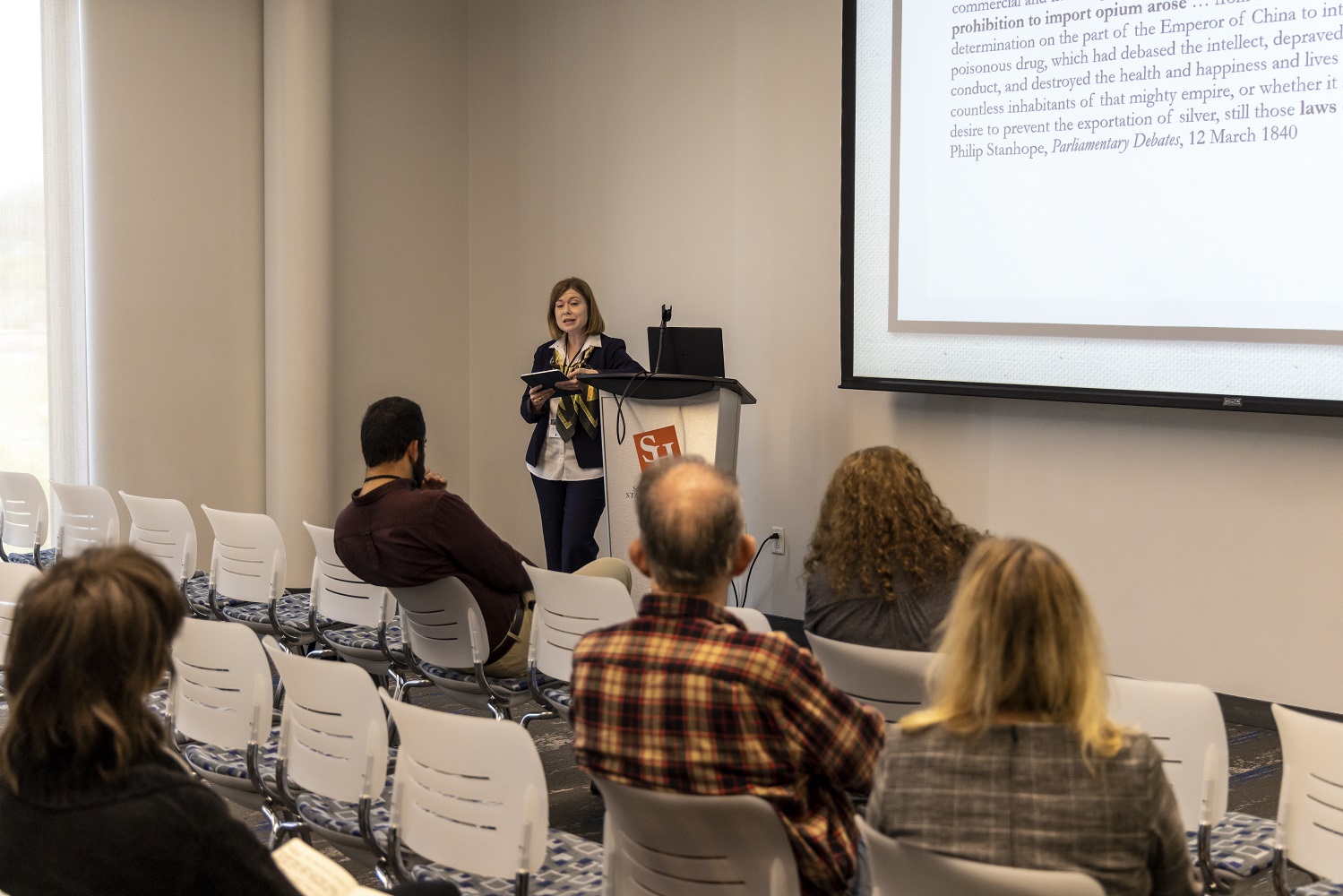
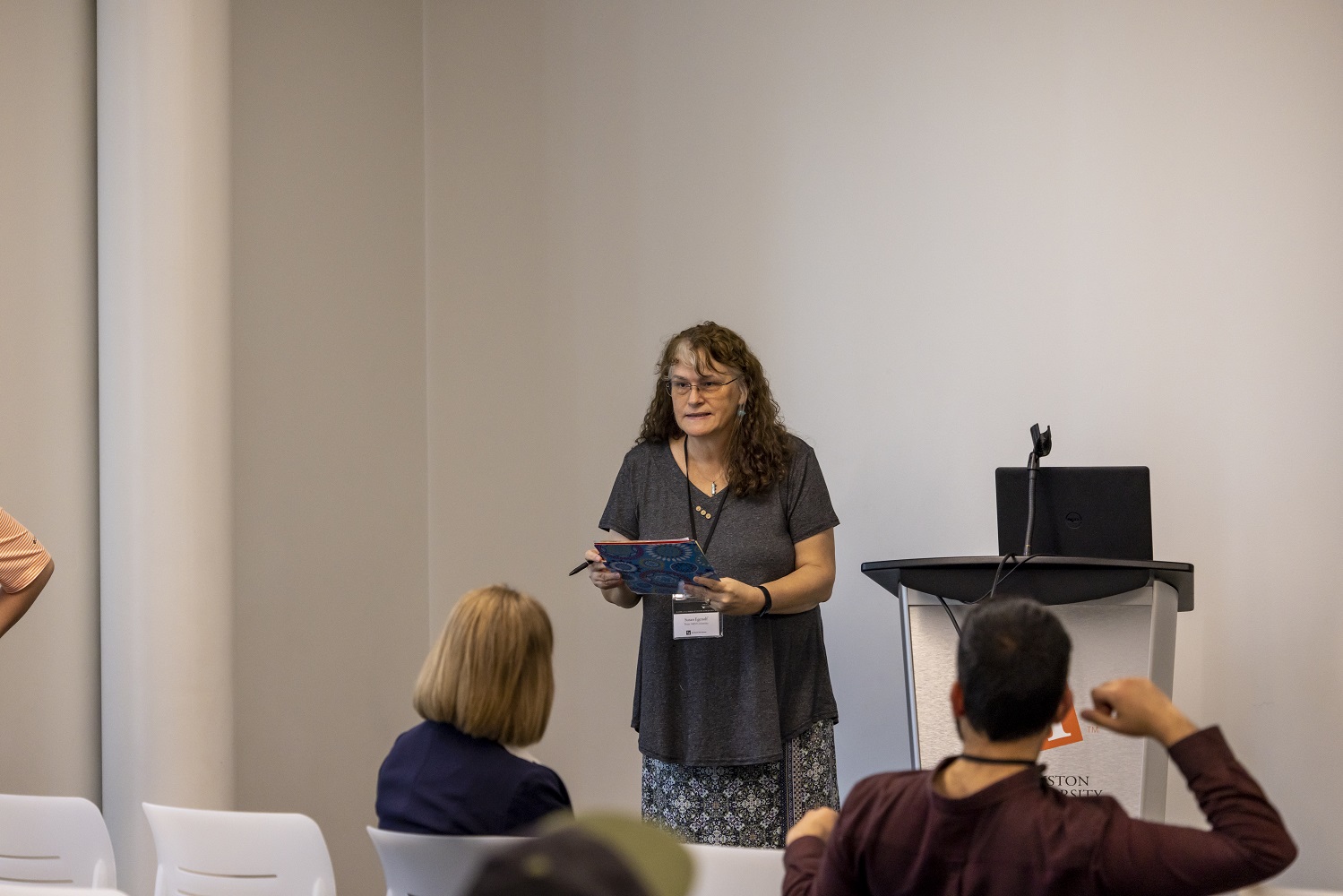
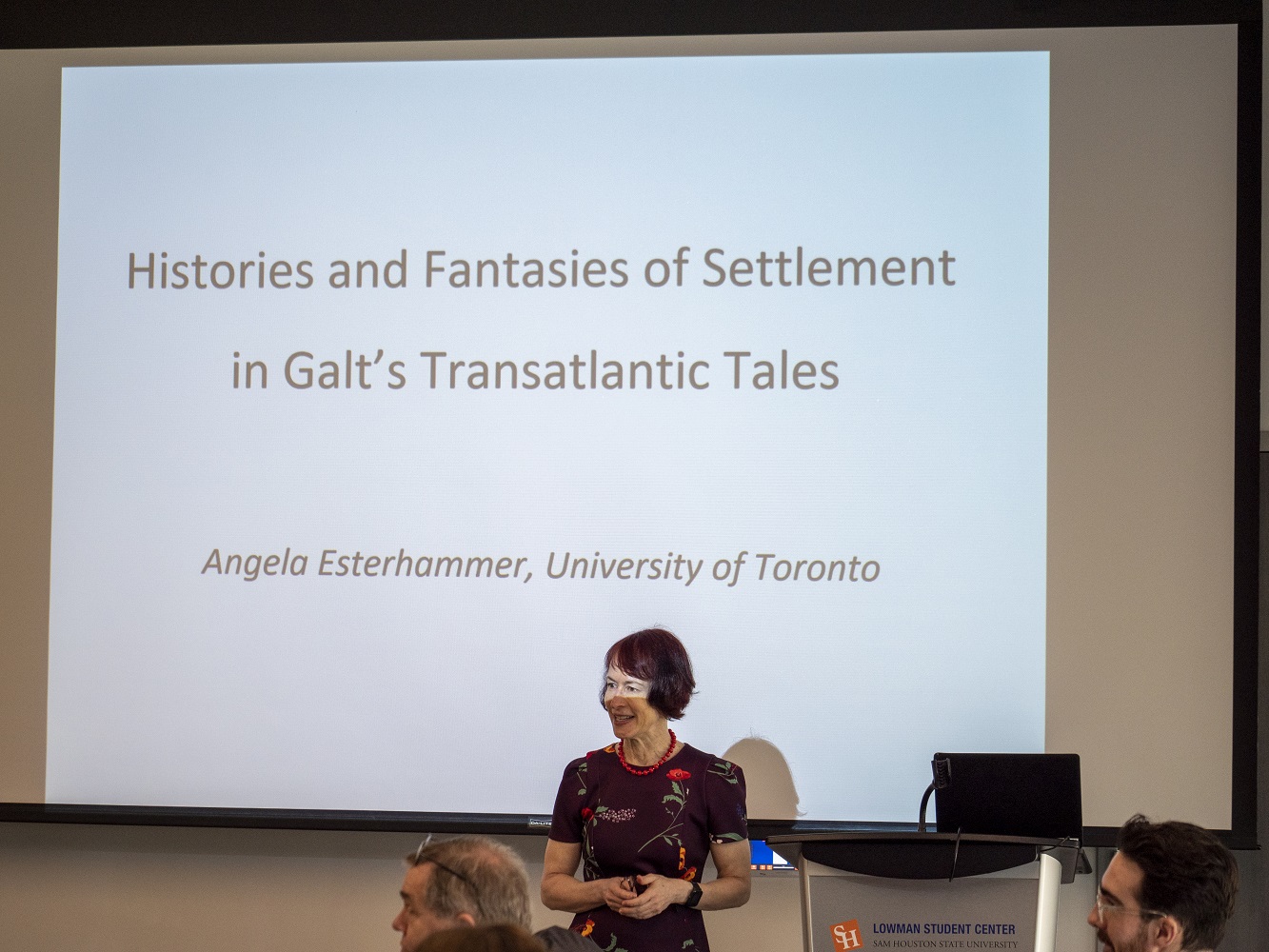
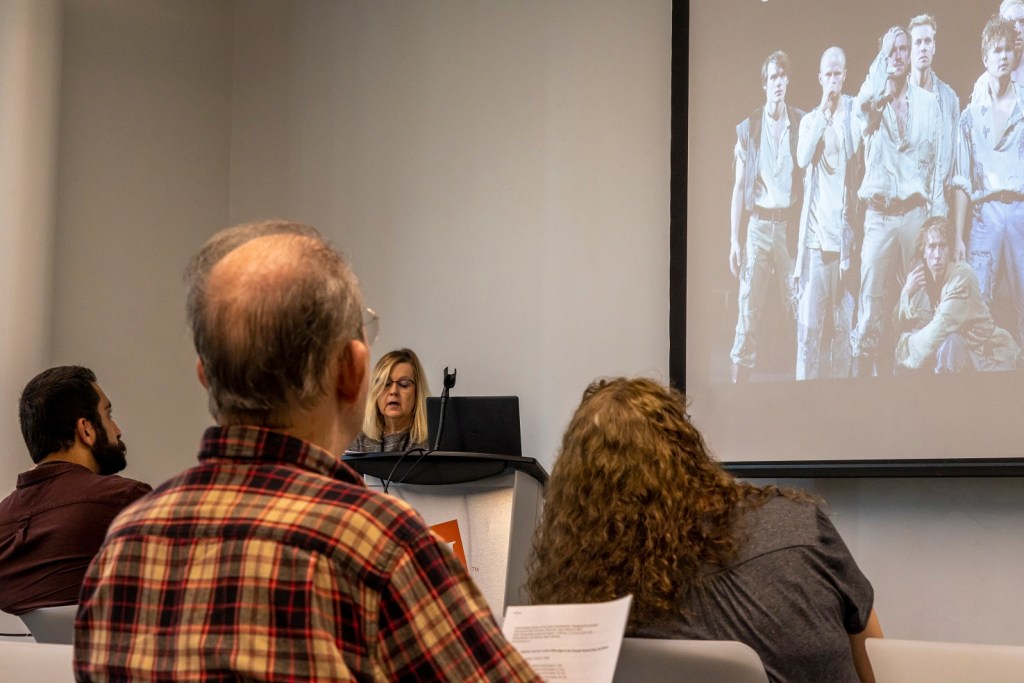
The LEAP Center is always on the hunt for quality events, and when we heard the North American Society for the Study of Romanticism was being hosted at SHSU–and that the lead organizer was Dr. Michael Demson–we knew we’d found one.
The Conference is taking place over three days, March 30-April 1, with dozens of panels, workshops, entertainment, tours, and other interesting and entertaining programs. LEAP assisted with one of these, a tour of the Huntsville Unit for a group of students, conference attendees, and SHSU staff. Mostly, though, we just enjoyed the conference, benefitting from the great work of Demson and an entire conference committee from individuals across campus and, in fact, from campuses across North America.
The meat of the conference was from the plenary speakers and the panels, both virtual and in-person, with approximately 200 people attending.
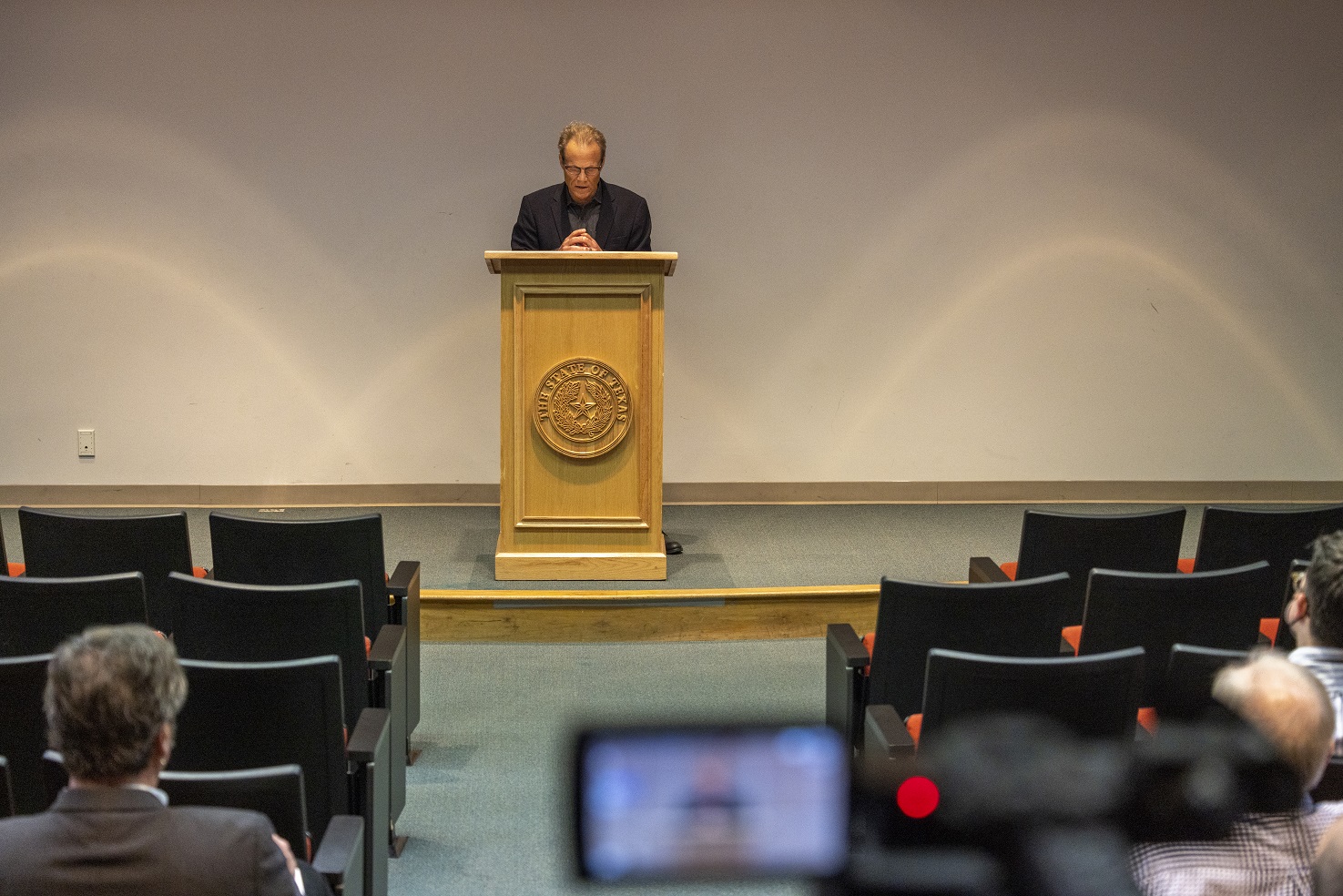
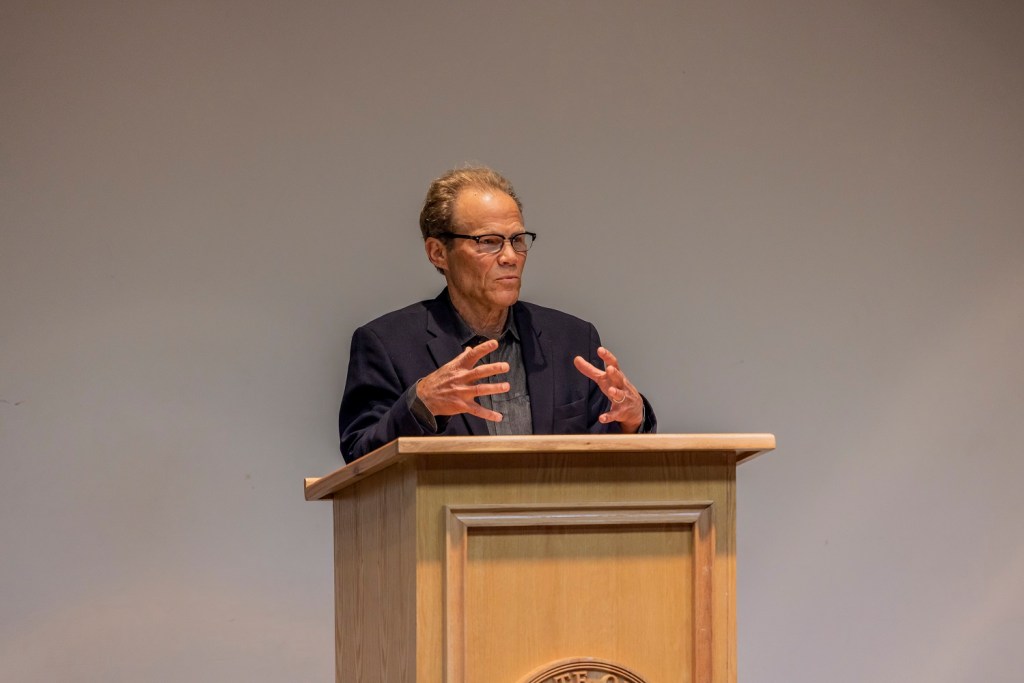
LEAP students attended a few of these, including the first-day plenary speaker, Professor Doran Larson, who, among his many titles, is the Director of the American Prison Writing Archive, and he was introduced ably by Professor Michael Demson.
Professor Larsen discussed the distinct themes in prison writing, noting how little they had changed over time, a reflection of the horrible state, as he sees it, of our prison system.
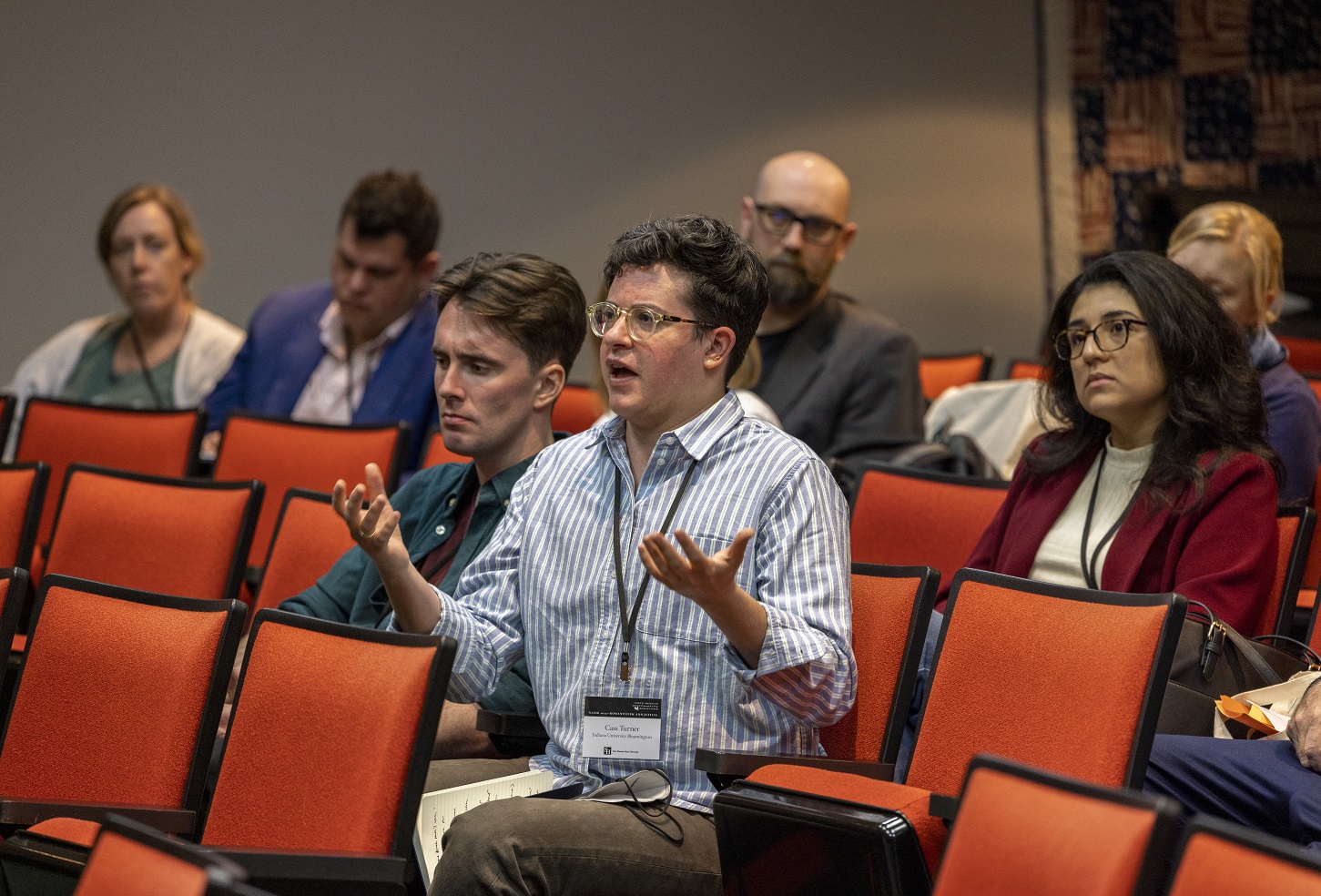
His presentation generated much interest and discussion.
The conference picked up the next day, with a full day of panels, which we were able to attend. We saw great panels featuring professors not only from the United States, but from around the world. All of the panels helped us learn about justice, literature, and many different cultures.
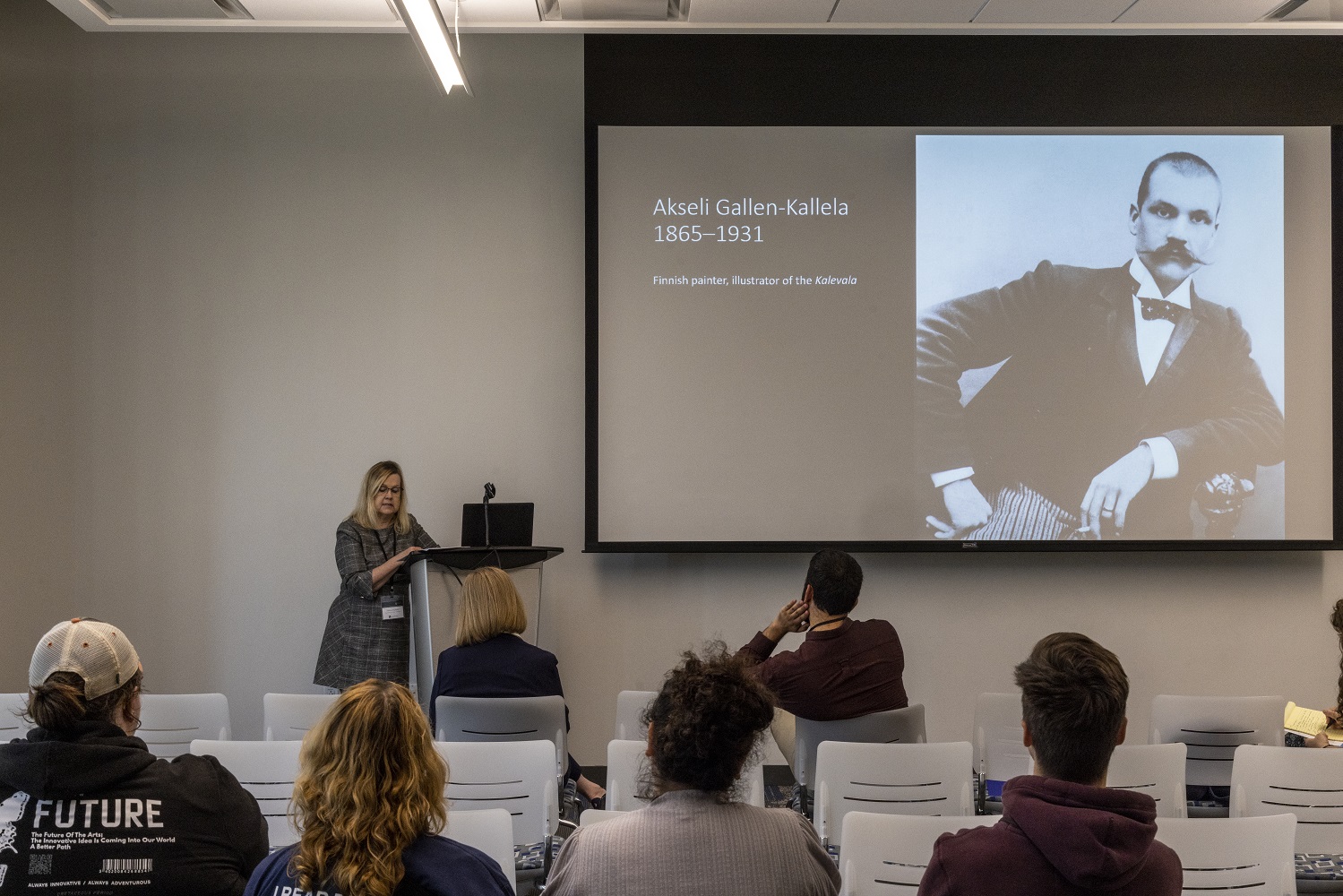
We even learned about Finnish literature from SHSU’s own Dr. Helen Halamari, with her husband Dr. Rob Adams in attendance.
This was our favorite panel. Interesting fact: not only is Dr. Halamari a TSUS Regents Professor, she also has a Ph.D., and four different Master’s Degrees.
Many kudos to Dr. Demson and the great staff (Deanna Briones, Sarie Fuller, Yahneed John, Brittany Johnson, Jerin Milan, and Rhonda Owens) who helped bring this conference to SHSU.
One of the nice things about universities is that they promote the exchange of ideas and learning, and that concept was on full display yesterday as Dr. Mitchel Roth discussed his new book on crime: “The Man With the Killer Smile.” Roth, a professor of Criminal Justice at SHSU, brings a learned approach to the true-crime genre, incorporating psycholo0gy, criminology, and history.
The result has won plaudits from the critics, including bestselling author Jeff Guinn, who described the work as “masterful storytelling.” Of note is that Roth is perhaps the first to combine two criminological concepts into one killer.
A serial murderer is someone who commits murder at two (or more) different times, with a cooling off period in between (some definitions require three acts of murder). While a mass murderer is someone who kills at least four people at one time. By these definitions, Hassell is a serial mass killer.
Hassell specialized in families: his own. And Roth describes him as a “husband, father, uncle, embezzler, serial mass murderer, philanderer, child moslester, convict, and military deserter.” He was as Roth continues, “many things to many people, most of them bad.” The book makes this much clear.
Roth’s presentation of his work was entertaining, showing an author with a somewhat dark sense of humor, a felicity with presentation, and a drive to research and write. Although he notes that as he’s “gotten older,” he “has trouble working on two or three books at once,” it’s clear he relishes the research, the interaction with those he comes across in his research, and the act of writing.
As a result and despite the dark subject matter, the presentation was an enjoyable way to spend an afternoon. Reflecting the university mission of promoting ideas and learning, Roth expertly shone a light on history, criminology, and psychology, all captured in “The Man with the Killer Smile.”
One of the best friends to the LEAP Center is best-selling author Jeff Guinn. A former investigative journalist with the Fort Worth Star Telegram, Guinn is also the author of 25 books, both fiction and non-fiction. In fact, he is one of only 40 or so authors who has had both types of works on the New York Times Bestseller list. His latest is Waco: David Koresh, the Branch Davidians, and a Legacy of Rage, and it is a fascinating read.
The work focuses on the events leading up to the ATF’s “raid” on the Branch Davidians in Waco, Texas in 1993, the extended “siege,” and the aftermath. The book explores the history of the Branch Davidian sect, touches on the institutional history of the ATF, and reflects in-depth on the failure that occurred. The failure was primarily one of preparation and communication, and the results were disastrous.
As a presenter, Guinn is a master, and we were fortunate to have some extra time to meet with him. Guinn met us for coffee a couple of hours prior to his BookPeople book discussion, and we were grateful for the chance to learn in a small-group setting.
Guinn is a wonderful storyteller, and we had two hours to discuss his work, his writing process, and the fascinating subjects he has chosen to write about.
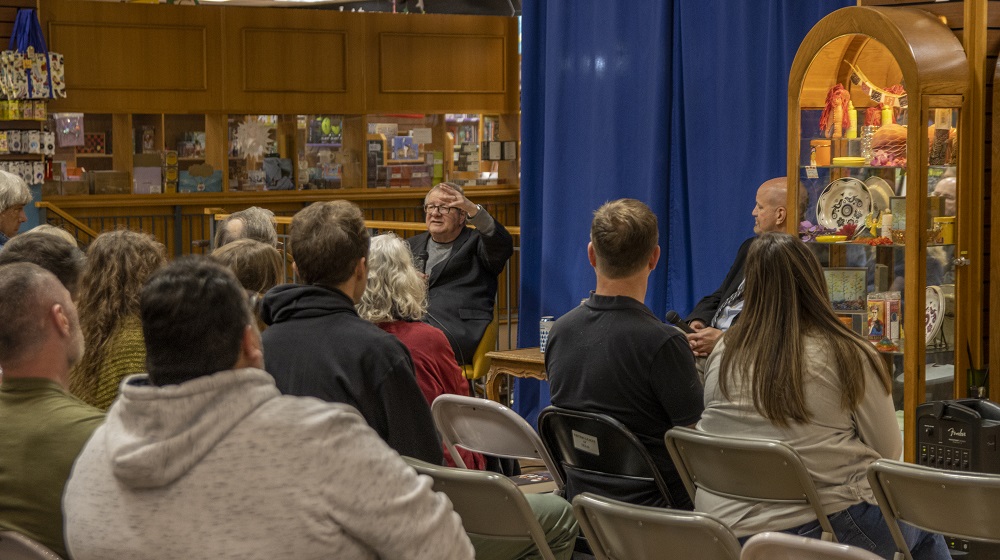
Guinn was equally captivating inside BookPeople. Speaking to a packed house and working with a moderator we knew well…
…Guinn answered a series of questions from Professor Mike Yawn…
…provided some asides…
…and took questions from the packed house.
He also did a show-and-tell of sorts, presenting a self-published book by Cyrus Teed in the early 20th Century.
This book formed the basis for much of Koresh’s philosophy. As Guinn puts it: the book changed history. (As a side note, Yvette Mendoza was put in charge of the book that changed history, and was described for the rest of the evening as the “book lady,” the only time her name and book have been in the same sentence.)
Guinn even passed the book around the packed house, allowing the audience to see the origin of Koresh’s philosophy.
Koresh’s philosophy was largely intact prior to his assumption of the Branch Davidian leadership, but through his charisma, he was able to attract more than 200 devoted followers in the Waco “compound.” Koresh taught that “Babylon” (the government) would prompt a conflict, which would result in a temporary defeat for the Davidians. Ultimately, however, the Davidians, led by Koresh, would prevail in an afterlife and achieve immortality.
The audience enjoyed the hour-plus with Guinn, just as we enjoyed our three-plus hours with Guinn.
The book line wrapped around the store, and we joined in, getting our books signed.
Although we were in Austin, Guinn made us feel at home–quite the feat, since Guinn is from Fort Worth! It ended with warmth, and a promise by Guinn to come to SHSU.
The LEAP Center is very proud of five of the Austin Interns for participating in this event after a long day of work (thank you Jessica, Yvette, Morgan, Ingrid, and Ashlyn) and also very proud of Olivia Discon, Michelle Cardenas, Rachel Hill, and Daniella Luna for driving in from Huntsville (and driving back) to pursue a unique educational opportunity.
It was a new experience in many ways: LEAP Ambassadors attended their first light opera, they met many LEAP Alumni, and they spent an evening enjoying good company. The occasion was the summer performance from The Gilbert & Society of Houston, and with all of their performances sold out, it was a minor miracle that we were able to purchase 23 tickets to the third showing of “HMS Pinafore.”
For those who haven’t seen a Gilbert and Sullivan operetta before, it’s worth a summer jaunt to the beautiful Hobby Center to see a performance. HMS Pinafore was written in 1878, but its satirical edge and comedy rang true 144 years later. The opera tells the story of three sets of star-crossed lovers, with each pair being thwarted in their loving ambitions by the British class system. This leads to much shiply shenanigans: an attempted suicide, mystic omens, an aborted midnight elopement, and a dungeon jailing–all chorused by a crew of “sisters, cousins, and aunts.”
We had different favorites, but there was a general consensus that the cast outdid themselves with “Never Mind the Whys and Wherefores,” in which the production deviated sharply from the libretto. The orchestra got involved in the hijinks, Admiral Joseph (played by Alistair Donkins) engaged in much madcap, and Josephine made the most of her many encores. Donkins, who for the past forty years has flown in from England to perform with the Houston Gilbert & Sullivan cast, is retiring. We wondered whether these scenes were written specifically as a scene-stealing sendoff to the most reliable of the performers.
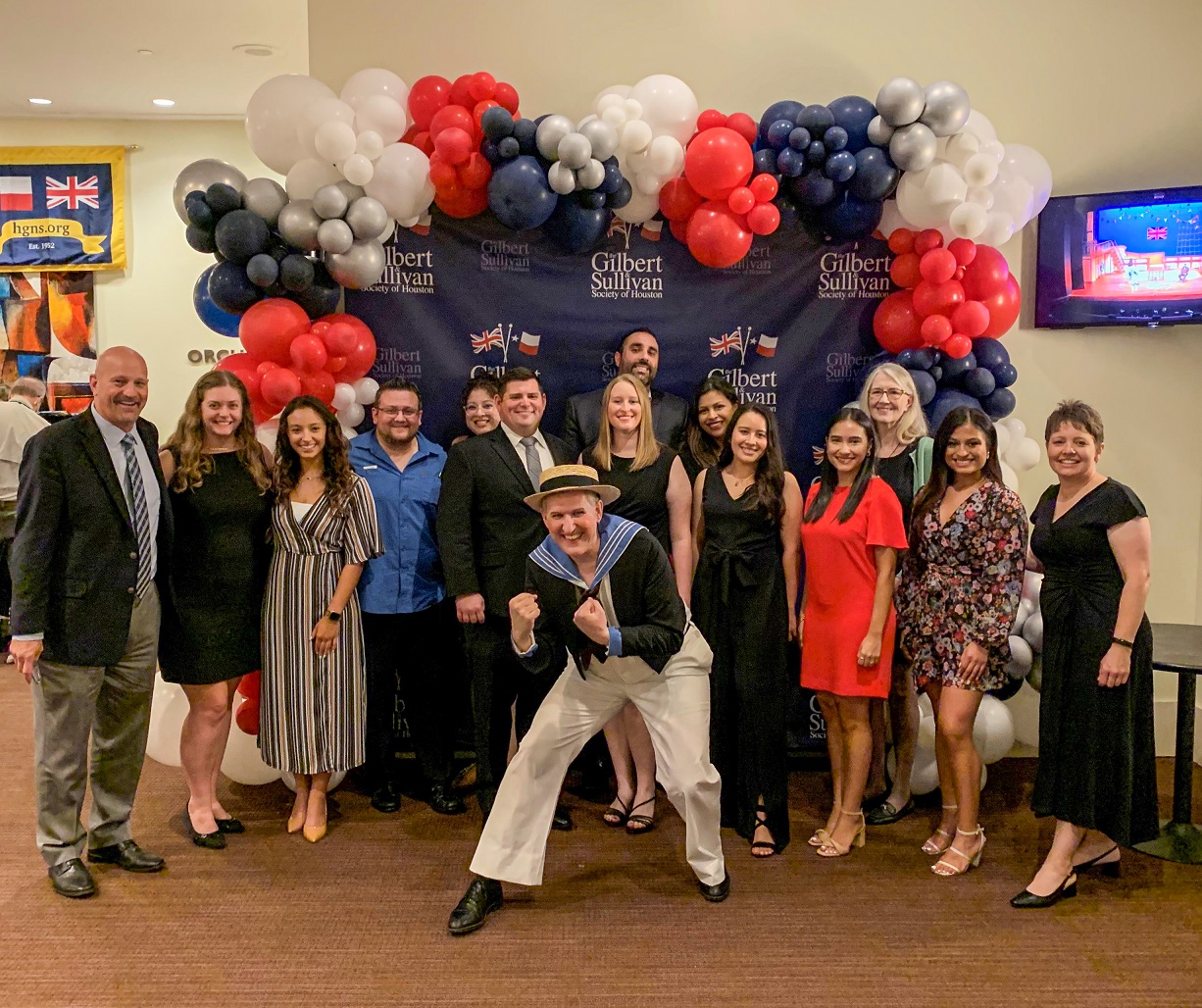
Neither of the Ambassadors had seen an opera, even a “light opera,” and several of the former Ambassadors had also never seen such a performance. Their novice status, however, didn’t prevent them from posing like pros after the production–and, in fact, one pro did pose with us!
The fists-up pose derives from the lyric to “A British Tar.” A “tar” is a nickname for a sailor, possibly as an abbreviation of tarpaulin, and the song–one of two patriotic tunes from HMS Pinafore–celebrates the stoutness of a British sailor:
A British tar is a soaring soul, As free as a mountain bird, His energetic fist should be ready to resist A dictatorial word.
His nose should pant, And his lip should curl, His cheeks should flame, And his brow should furl, His bosom should heave, And his heart should glow, And his fist be ever ready for a knock-down blow.
Other than the playful fists, the tone of the evening was one of amicability. Bryan Phillips, who was involved in LEAP from 2010-2012, was the most senior former student. Bianca Saldierna (2017-2018), Staci Antu (2017-18), Esme Mata (2019-20), Quinn Kobrin (2019-2021) joined the current LEAP Ambassadors, providing insight and catching everyone up on their impressive accomplishments post-graduation.
Dr. Bill Hyman and his wife, Carol, were there, too. Maggie Padilla and her husband, Roman (who somewhat resembled the Captain of Pinafore) attended. And Jean Loveall, Program Coordinator for LEAP, also joined us. Of course, Stephanie and our advisor, Professor Mike Yawn, were there. Yawn is an excellent advisor to the organization: “Bad language or abuses / He never, never uses.“
Well, hardly ever.
We had the chance to meet these wonderful folks over dinner at Black Walnut, where the casual atmosphere provided the perfect place to talk–as well as good food!
Professor’s/Editor’s Note: Many thanks to the former LEAP Ambassadors who attended. Their ongoing willingness to meet with current students and provide mentorship is a huge part of the LEAP program. Also, special thanks to Bill and Carol Hyman and Roman and Maggie Padilla whose presence made the evening even more enjoyable.
In a continuation of the LEAP Center’s Facebook one-on-one series, Professor Yawn interviewed Professor Jim Olson about his life during and after his career as a CIA case officer. This having been my first time hearing Mr. Olson speak, I was astounded at how little I knew about the world of counterintelligence.
Olson began the conversation with a definition of counterintelligence. He explained that its purpose is to protect the United States from other nations who may try to steal our secrets and technology. Much to my surprise, he told us that there are approximately 80 countries spying on us right now.
The conversation then turned to Olson’s 31-year career in the Clandestine Service. He was asked about his cover identity, which he could not share in great detail, but he explained that when he was in another nation, he would often have a cover as a U.S. diplomat, so he would have diplomatic immunity if he got into trouble. Sometimes, however, he was in other countries without working as a diplomat, and therefore would be subject to that country’s justice system if he were caught.
He shared that he and his wife – also a case officer within the CIA – never anticipated to come out from their cover identities, because doing so posed a threat to themselves and to their family. However, he was approached by President George H.W. Bush and George Tenet (former Director Central Intelligence) to work at the Bush School of Public Service. Olson was excited for the opportunity, but there is a CIA policy that does not allow officers to go onto college campuses covertly (which was news to me). So, he was forced to give up his cover.
In a similar vein, he was asked about how he and his wife broke the news to their children that they were officers in the CIA, and how they took it. Apparently, when he was stationed in Vienna, terrorists managed to get ahold of his address and sent him a death threat. They decided to tell their oldest son, who was sixteen at the time, and asked him to look after his siblings. As each of their children learned, he said, they took the information in with a sense of pride. He told us that each of his children has now gone on to pursue a career in the service of others.
Next he discussed CIA recruitment methods. We learned that the CIA seeks out a variety of candidates who may be cut out for a career as a case officer. Mainly, they are looking for character; they want recruits who are reliable and trustworthy.
To prepare for a career in the Clandestine Service (one of the most commonly asked questions of the event) Olson said that a bachelor’s degree usually would not be enough, and that students should aim to get a graduate degree of some kind. He suggested learning new languages, taking on roles of leadership, and working in positions that might allow you to travel abroad.
Aldrich Ames
On the subject of character, he spoke briefly about some former CIA officers who betrayed the United States. He spoke vehemently about his former colleague Aldrich “Rick” Ames, who he considers the worst traitor to the country for turning over to the KGB. He explained that Ames had identified Russians who were working for the CIA to the KGB, which led to their imprisonment or execution.
To wrap up the session, we asked Olson what he wanted people to know about the CIA. He explained that CIA case officers are public servants. They do not do what they do for money, power, prestige, or status. They do what they do with honorable intentions.
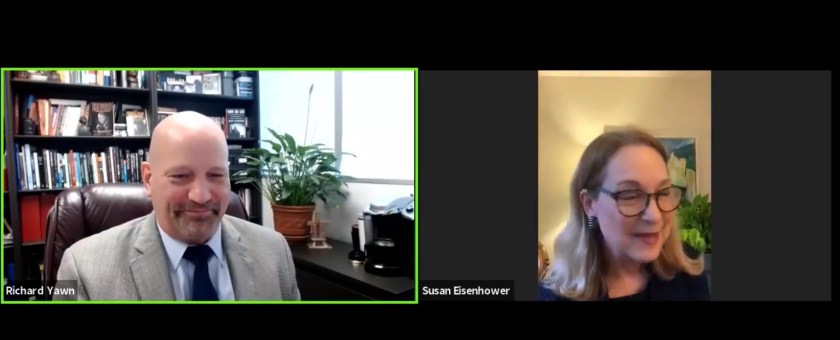
Despite all of the challenges of COVID-19, the Center for Law, Engagement, and Politics continues to provide engaging and interesting learning opportunities for students. Most recently, students were able to watch a Facebook live interview with President Dwight D. Eisenhower’s granddaughter, Susan Eisenhower, where she discussed her grandfather’s leadership in World War II and as president. Author of the biography How Ike Led, she had much to share about his life and overall legacy.
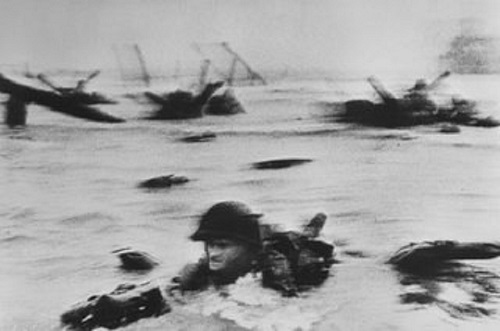
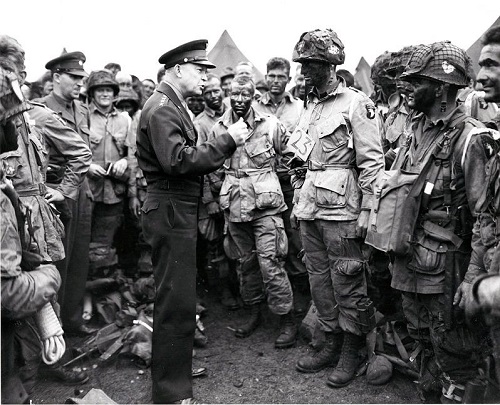
The interview began with a look at President Eisenhower’s role in D-Day,
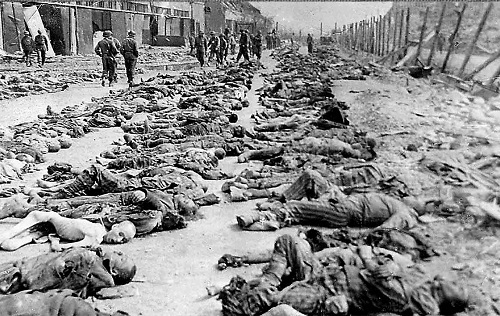
liberating Europe from Nazi rule, and his handling of the discovery of concentration camps. It was explained that Eisenhower opted for a broad, slow advance to defeat the Nazi empire, rather than a fast and hasty one. He wanted to bring an end to the regime, and prevent it from rising to power again, and for his approach he was criticized by some who wanted a quicker–but riskier–approach.
In spite of his critics, this slow advance would be an important factor that led to the discovery of concentration camps. When he learned of the atrocities, he took it upon himself to examine every corner of the camps to understand what had happened and how it had come to pass.
She told us that he then issued orders for as many people as possible to document and bear witness to the camps. He brought in journalists, elected officials, and everyone fighting on the front lines.
He then had townspeople from surrounding areas marched through to see what their denial and willful ignorance had led to, and many were made to give burials to the deceased.
As she discussed the importance of Eisenhower’s foresight, and how he was able to anticipate that many people would not believe what had happened in the camps, Susan Eisenhower reminded us that Germany is one of the few countries in the world with zero tolerance of Holocaust denial. LEAP ambassadors learned about Germany’s efforts to reverse the wrongs of the Holocaust and its lingering effects earlier this year.
As the discussion transitioned to Eisenhower’s post-war service, I learned several interesting facts about his commitment to service and duty…
Apparently, on more than one occasion, President Truman offered not to run for reelection after his term, and instead let Eisenhower run for the Democratic nomination. Eisenhower refused each time because he was not in search of power. His granddaughter reminded us that he had wielded more power than most other leaders during World War II, and did not want run for president except when he felt it was his absolutely duty to do so.
A few other aspects of his commitment to duty were his refusal to wear a helmet because they should only be worn by those serving in combat, and his refusal to accept the Congressional Medal of Honor for the same reason – it was meant for those who had shown valor in combat.
The conversation then pivoted to Eisenhower’s leadership style as president of the United States. It was made clear that he did not engage in personal attacks; he was strategic and methodical in his political approach. When dealing with Senator McCarthy and his infamous hearings, Eisenhower did not call him out directly. Instead, he gave speeches about what American democracy should look like, insisted on televising the outrageous investigations, and let the Senate come to censure McCarthy on their own.
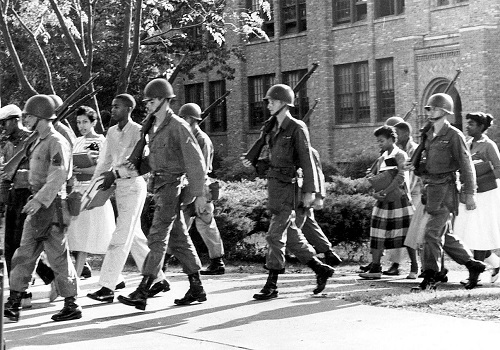
President Eisenhower also suffered no nonsense when it came to dealing with issues of race. As LEAP ambassadors learned in January of this year, the governor of Arkansas – Orval Faubus – dragged his feet in complying with the decision of Brown v. Board of Education, and made every effort to not desegregate schools. In response to this, Eisenhower mobilized the Arkansas National Guard and deployed 101st Airborne (paratroopers he had commanded on D-Day) to protect a group of African American students, immortalized in history as the “Little Rock Nine,” as they desegregated Little Rock Central High.
Susan Eisenhower then spoke about how her grandfather was a leader through study and discipline, and was naturally empathetic. He knew what people needed to hear, and tried to be relatable and genuine whenever he could. We saw a picture of him speaking with members of the 101st Airborne Division prior to D-Day and were told that he was discussing fly-fishing techniques with Lt. Wallace Strobel, rather than giving a pep talk about their mission. He wanted to remind them of their humanity.
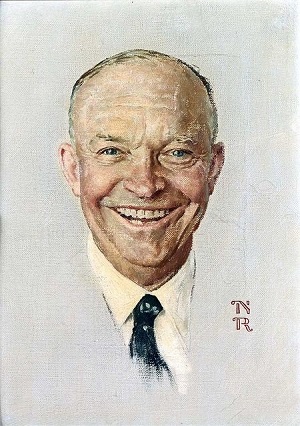
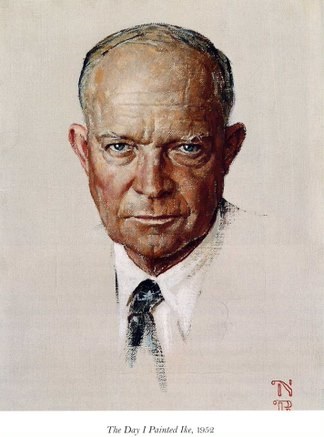
Finally, President Eisenhower’s legacy of leadership and empathy are embodied eternally in Norman Rockwell’s portraits of him, which at various times depict him both serious and smiling. As his granddaughter explained, the big, toothy grin we saw was his trademark smile, as he was generally in good spirits around his family.
As the meeting came to a close, Susan Eisenhower reminded us that we will “be better as people if we can understand the views of those who come from…different backgrounds,” encouraging us to be ‘like Ike’ when it came to how we view and deal with those who are different than us.
This interview was so interesting and informative, and we were incredibly lucky to hear from Susan Eisenhower. We are grateful for her time and insight, and look forward to the possibility of meeting her in person someday soon.