From College Station (2020s) to Chicago (1920s)

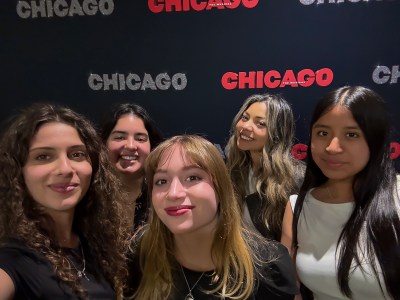
Music, murder, mayhem: what’s not to love? That’s pretty much how LEAP students felt about Bob Fosse’s “Chicago,” performed this week in College Station.

Performed at the Rudder Theater on Texas A&M University’s Campus, “Chicago” is in the midst of a seemingly endless national run. This tour included Taylor Lane (Velma Kelly), Ellie Roddy (Roxie Hart), Connor Sullivan (Billy Flynn), Andrew Metzger (Amos Hart), Illeana Kirven (as “Mama”), with Lane and Kirven as particular standouts (the latter is from Tyler, TX).

For those who haven’t seen it, the play is a satire on the strange world of celebrity in the United States, particularly the country’s tendency to elevate the most notorious of criminals. Written in the 1970s, the musical anticipates a world in which people such as O.J. Simpson, Kim Kardashian, Brittney Spears, and the “Hawk Tuah” girl are seen as influencers.

Such individuals not only escape the criminal justice system, but they also seem to win in the court of public opinion, maintaining a celebrity status.

In the musical, the story of Roxie Hart is told through songs. Hart, who is indicted for the murder of her lover, obtains a not guilty verdict through the “Razzle Dazzle” of her Johnny Cochran-like attorney, Billy Flynn. As salacious as Hart’s case is, however, she competes with the girls of the “Cell-Block Tango” among others for attention from the media and the public.

With a rewritten narrative of the murderous night (“We both reached for the gun“) and the manipulation of Roxie’s hapless husband, Amos (Mr. Cellophane), Roxie is acquitted.

But in a world where everyone receives 15 minutes of fame, Hart’s fame gives way to others, and she and Velma Kelly are relegated to Vaudeville, a kind of forerunner to TikTok.

For a group of aspiring lawyers in the 21st century, it was a worthy fable and a wonderful night of entertainment.

Indeed, different aspects of it appealed to each of us. For Chrissy, she enjoyed Bob Fosse’s choreography and the song “Nowadays.” Olivia enjoyed “Cell Block Tango” and, even more so, “We Both Reached for the Gun.” Michelle, on the other hand, favored “Me and My Baby” and the satire and irony that suffused the production–the very first play she has seen! For Mike and Stephanie, a “favorite” is less clear, but “All That Jazz” never gets old.

Nor does “Chicago: The Musical,” which is why it is the longest-running American musical in Broadway history. And the third time–but not the last–that LEAP Ambassadors have seen the production!
A Tour of Economic Systems

Jessica Cuevas

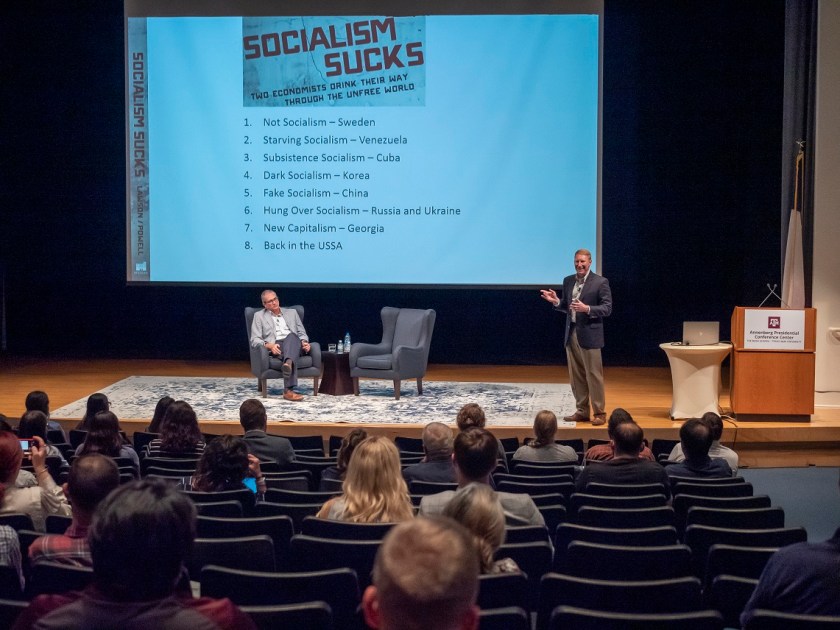
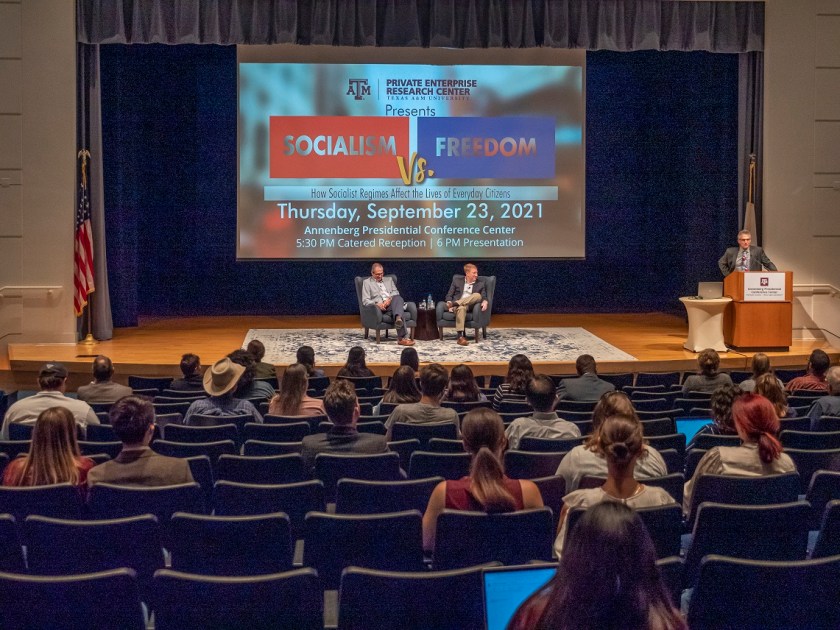
On the evening of September 23rd, the LEAP Center took four students to see the authors of Socialism Sucks: Two Economists Drink Their Way Through the Unfree World, Benjamin Powell and Robert Lawson, in College Station. This event, sponsored by the Texas A&M’s Private Enterprise Research Center, was held in the Annenberg Auditorium.

Powell and Lawson gave a presentation of the impact socialism has on our everyday lives. They started by defining socialism as a “collective ownership of means of production” and then proceeded to discuss why the countries they visited are or are not socialist.

To our amusement, their reoccurring theme was about the quality of beer or lack of beer in each of the countries. Sweden had good beer, Venezuela had run out of beer, Cuba had beer but only two types of which they did not like the flavor, Korean beer was toxic, Chinese beer was good, and Georgia (the country) has better wine.

The first of the countries was Sweden, which they deemed not socialist since they had private property and a free market.

Next up, was Venezuela which they titled as “starving socialism” ever since Hugo Chavez came into power. Where we also learned that all Venezuelans must travel to Columbia to purchase just about anything.  However, Venezuelans are not allowed to travel by car but must walk on foot across the border.

Cuba was deemed subsistence socialism since all state-owned buildings, such as hotels, stores, and restaurants (even the private ones) operated at the minimum and lacked options due to their limited chain of supply.

We even learned that their 1950s cars sell for 15K, which is absurd and unreal since those cars no longer exist in the United States. It is hard to imagine that an 80-year-old car could be worth much of anything if it isn’t an antique in prestige condition, but for Cubans, a car like that is their most valuable asset.

Korea was categorized as dark socialism, China as fake socialism-trying to be totalitarian while having economic freedom, Russia and Ukraine as hung-over socialism–by which they mean that private property was reestablished and operates without a central plan but still suffering the effects from socialism, and the former Soviet Republic of Georgia is capitalist.

Their presentation was followed up with a short Q&A session…

…and as they wrapped it up, we walked up to them and thanked them for this amusing but informational presentation. They were even kind enough to allow us to take a picture with them.

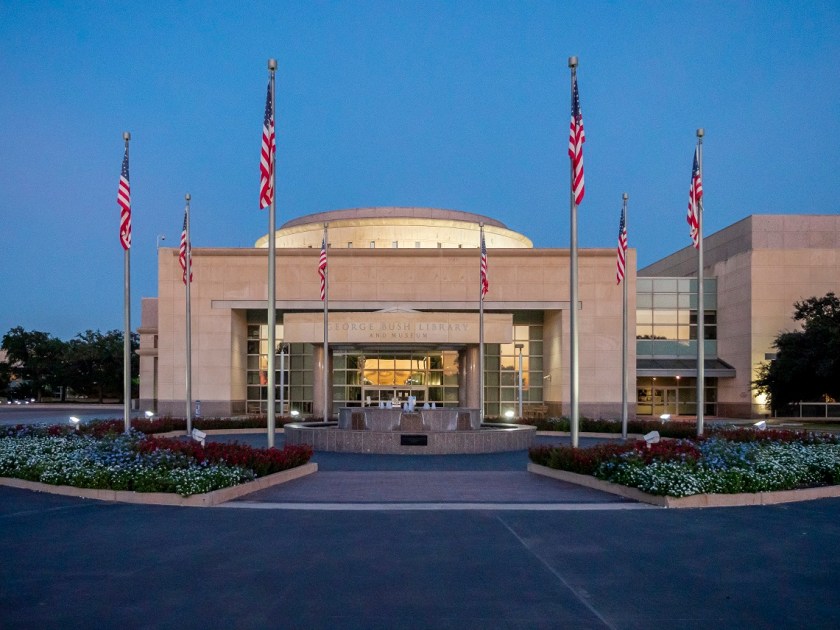
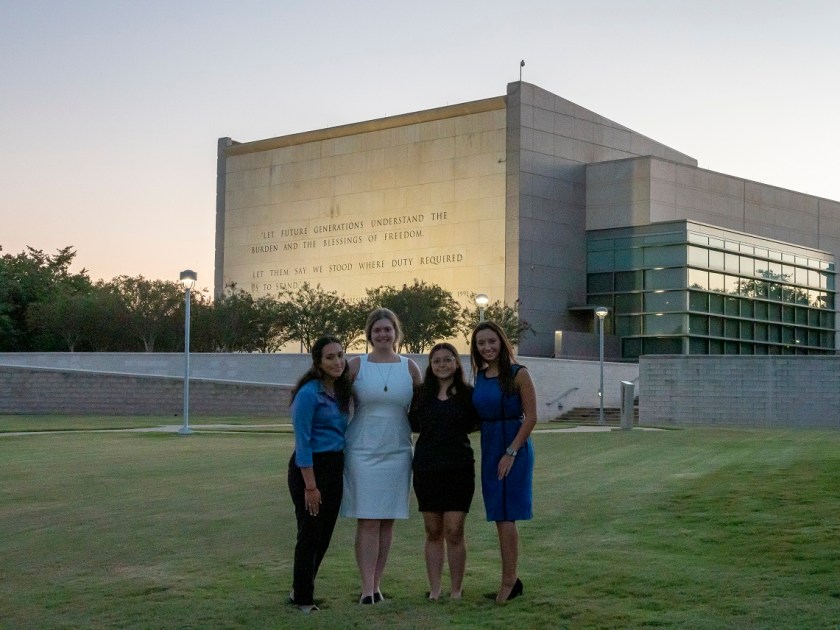
We then continued our night by strolling the beautiful grounds of the Bush Center where we saw President George H.W. Bush’s Presidential Library…

… a sculpture dedicated in his honor, the rose garden and presidential pond, the Bush Family’s Gravesite…

…and the inspirational quote on one of the exterior walls of the Presidential Library.

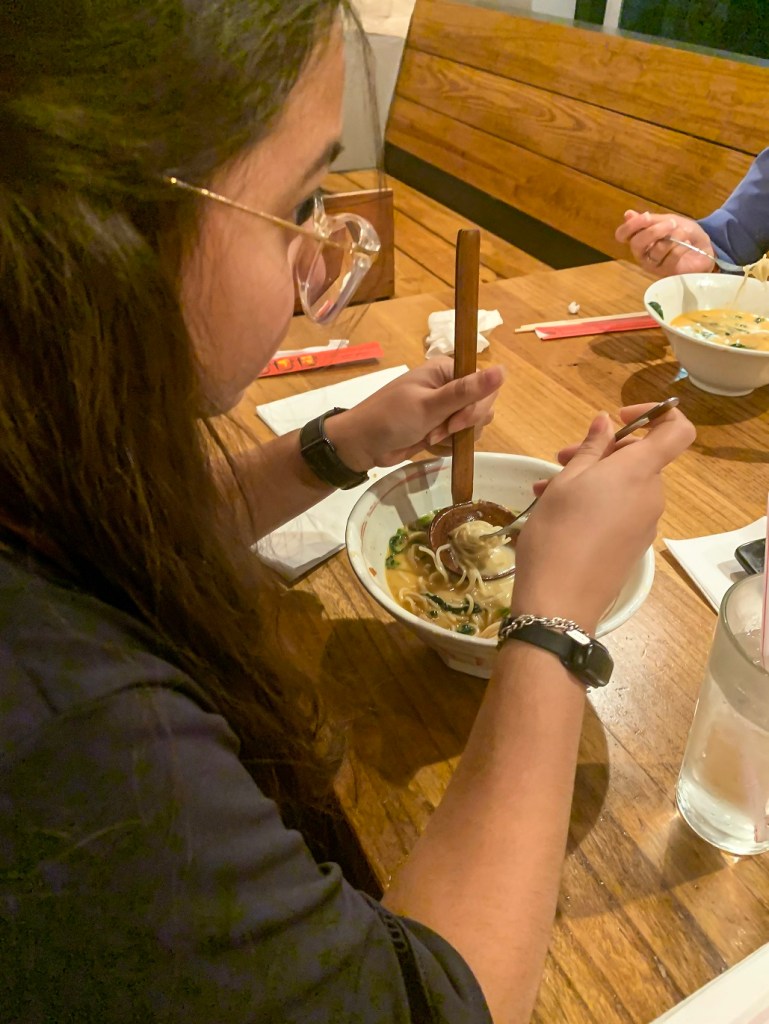
With the night still being young, we ventured on to a nearby local restaurant, Tanaka Ramen. Our dinner consisted of their chicken and beef bun…

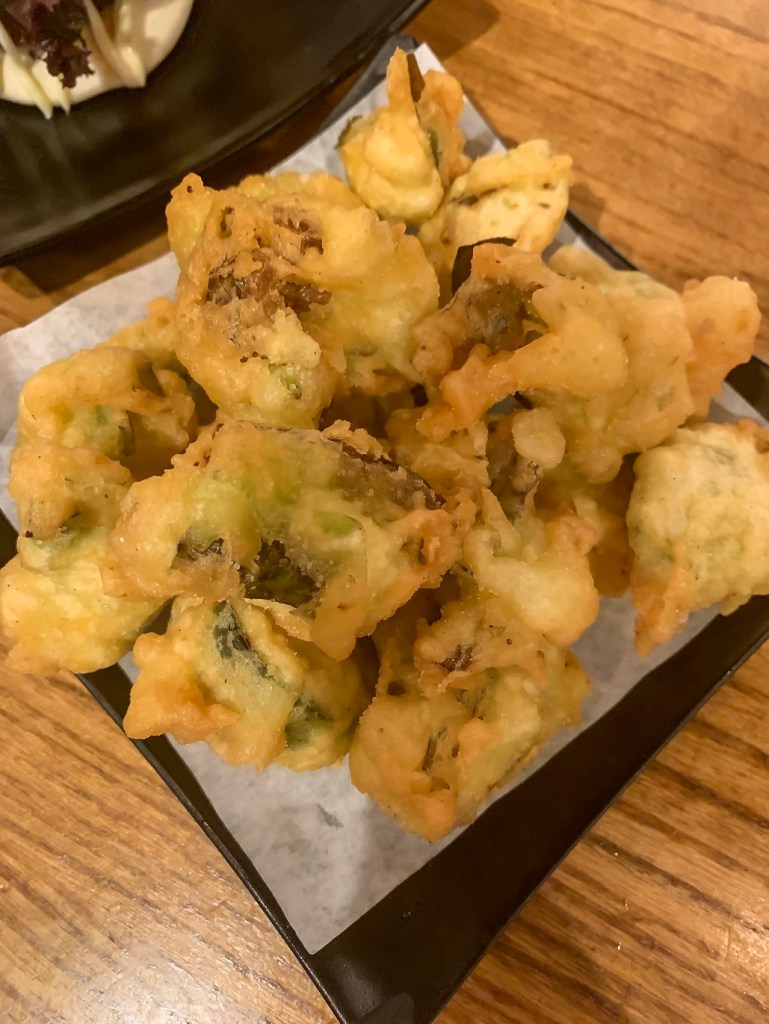
…Tempura Brussel Sprouts…

…potstickers…

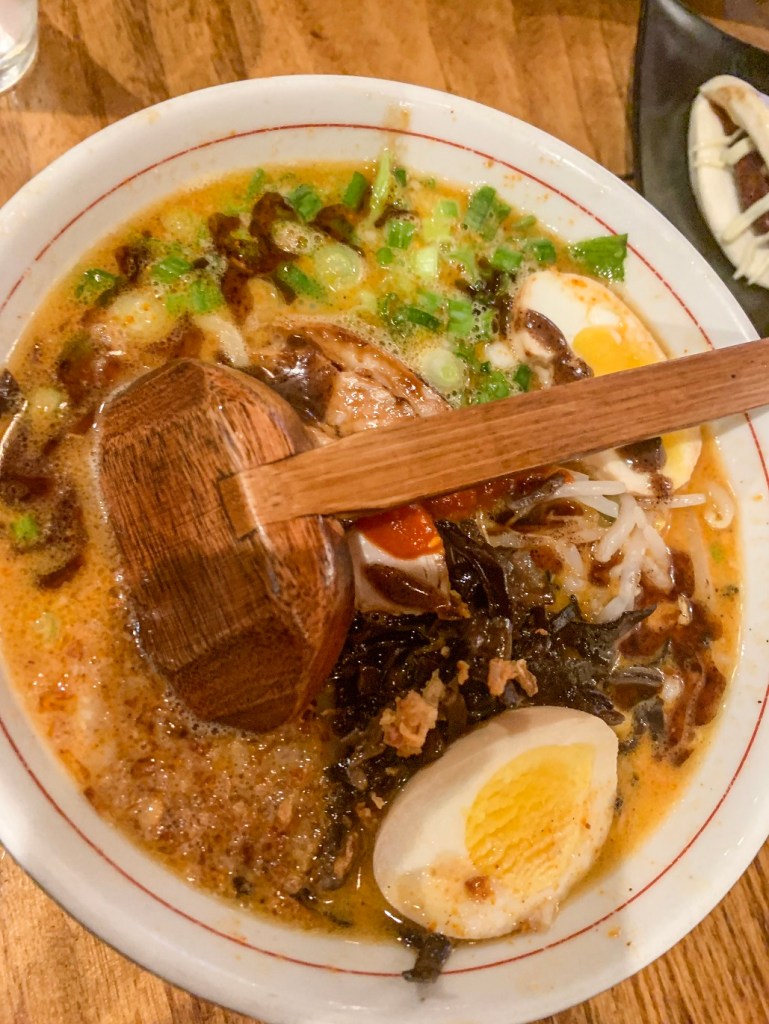
…Tanaka Chicken, Tanaka Classic, and the Tanaka Spicy Miso.

It blew the mind of at least one LEAP Ambassador…

While we all enjoyed our bowls of ramen, we could not leave without having some of their delicious mochi treats.

The most popular flavor was mango out of our other two options, chocolate, and red bean.

It was a great treat on a night that was also a treat, for reasons of fellowship, food, and education.

Talking Presidential Power with Robert Gates

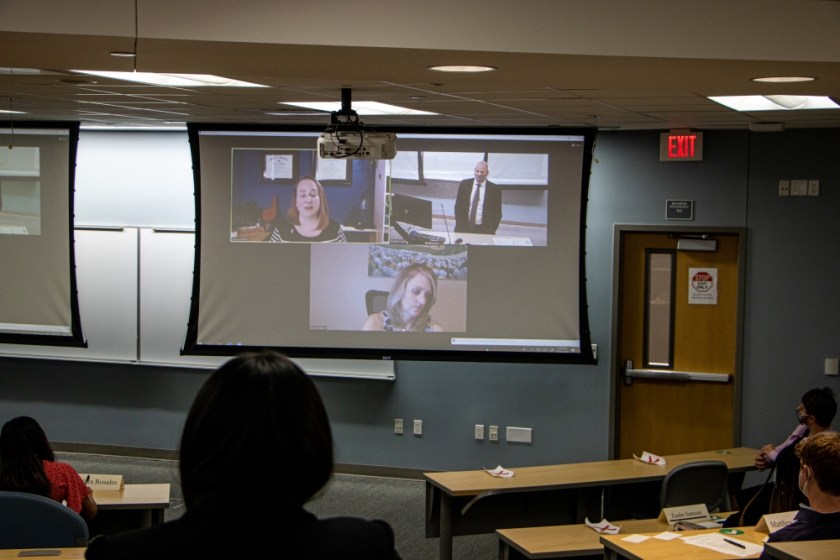
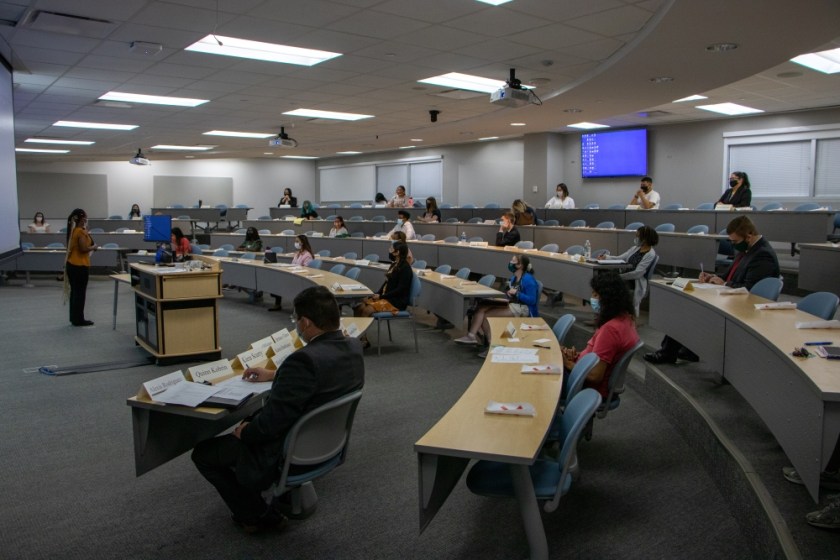
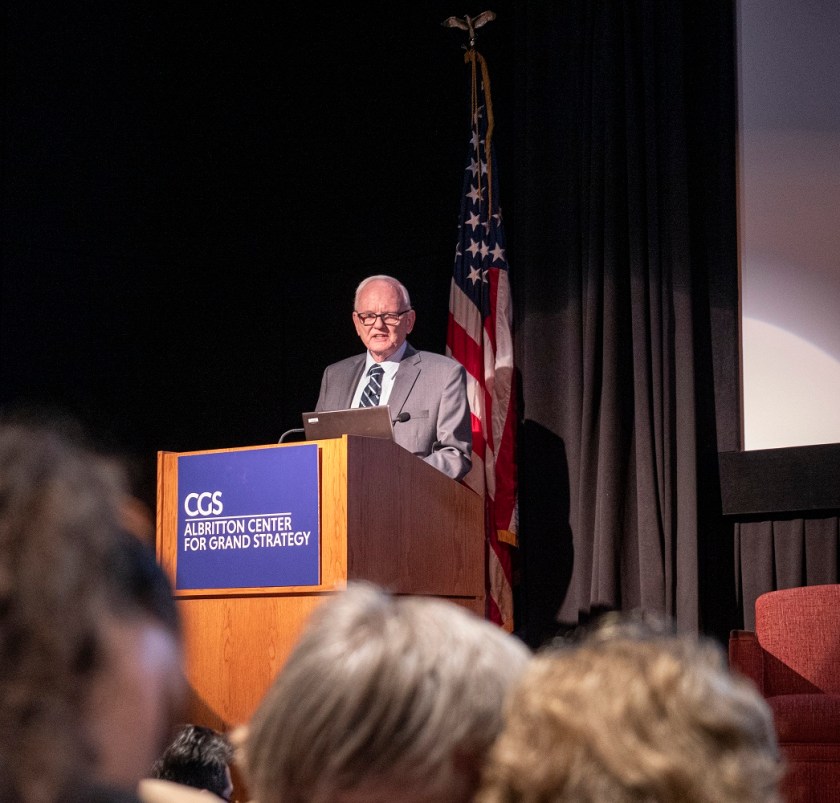
Former CIA Director got quite the introduction from Mark Welsh, Dean of the Bush School.

SHSU, LEAP Center, Center for Law Engagement And Politics, Bush School at TAMU, Dean Mark Welsh, Andy Card, Robert Gates, Exercise of Power


But given that Gates has served as CIA Director, Secretary of Defense, President of TAMU,Chancellor of the College of William & Mary, and President of the Boy Scouts, the introduction was well deserved.

Gates has written “Exercise of Power,” an analysis of presidential power since the Eisenhower Administration. Interestingly, Eisenhower, according to most scholars–and Gates–ranks near or at the top of Presidents for foreign policy and use of power. Gates contrasts this strongly with “where we are today.”

SHSU, LEAP Center, Center for Law Engagement And Politics, Bush School at TAMU, Dean Mark Welsh, Andy Card, Robert Gates, Exercise of Power


Gates argues that the many failures in US foreign policy over this periods stems from the “over-militarization of our foreign policy,” which he blames on the gutting of our intelligence agencies (during the Clinton Administration) following the Cold War. This left little in the way of intelligence and much in the way of weapons. “When the only tool you have is a hammer, everything looks like a nail.”

Interestingly, Gates spent much time discussing “cyber power,” because, as he notes, it can be used militarily, politically, and economically: “It can be used to dismantle infrastructure, to thwart or change the direction of weapons, it can be used to get into people’s political systems and affect elections.” This is something that has long interested the LEAP Center/Ambassadors, and today’s current leaders may not be fully up to date on this power. The last four nominees of the two major parties, for example, have been 69 years or older.

Gates also mentions the US’s power in Science & Technology, Economics, Development Assistance, Intelligence, Strategic Communication (he points out that China has surpassed us in this area), Religion, Ideology, and our Alliances–the latter of which he laments, as he watches our international strength wane).

When these “instruments of power” are working together, it becomes a “symphony of power,” which has been notably lacking “in the past thirty years.”

Following a discussion of Gates’ book, Dean Welsh welcomed Andy Card, who served as both Chief of Staff for President George W. Bush and Secretary of Transportation for President George H. W. Bush, the President of Franklin Pierce University, a House member in the Massachusetts State House –and is now the Interim CEO of the Bush Foundation.

SHSU, LEAP Center, Center for Law Engagement And Politics, Bush School at TAMU, Dean Mark Welsh, Andy Card, Robert Gates, Exercise of Power


With Card in the discussion, he and Gates shared stories of working for George H. W. Bush, whom Card referred to as the “greatest one-term President in US history.”

Gates highlighted the fact that Bush assembled a team from his foreign policy advisors–by team, he meant a group of individuals who knew each, could work together, and whose strengths and weaknesses complemented and overlapped each other. And both he and Card praised Brent Scowcroft, who served as National Security Advisor. The NSA is designed to be an “honest broker,” taking the other foreign policy actors, learning their views, and communicating them to the President so that the Chief Executive had all the information needed to act.

SHSU, LEAP Center, Center for Law Engagement And Politics, Bush School at TAMU, Dean Mark Welsh, Andy Card, Robert Gates, Exercise of Power


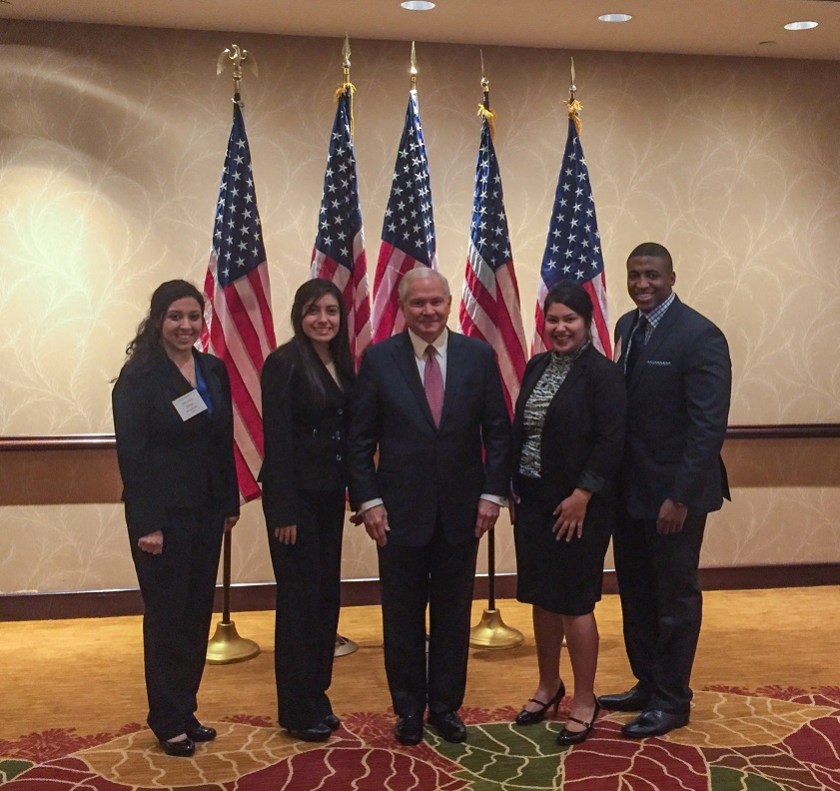
It’s always great to hear smart, mostly non-partisan discuss policy, but it was especially great to hear two people that the LEAP Ambassadors have had a chance to see or meet in person.

Thanks to the Bush School at TAMU for their consistently excellent programming. To see the whole program, click here.