Skip to content

Center for Law, Engagement, and Politics

Leap At SHSU!

  • About LEAP
  • LEAP Ambassadors
Center for Law, Engagement, and Politics

Category: Civic Engagement

LEAPing into College: A Freshman’s Take on the LEAP Program

By Allison Plunk

Being a part of the LEAP program isn’t just about preparing for a career in law –it’s about learning to see the world through a new lens. I came to understand this during a presentation in Professor Yawn’s UNIV 1101 Pre-Law class, where LEAP Ambassadors Olivia McCaughan and Michelle Moya outlined the program and highlighted the wide range of opportunities it offers.

Through LEAP, students gain access to experiences that prepare them for the future—ranging from civic engagement, like volunteering at the Main Street Program’s Scare on the Square (which I look forward to participating in this October), to hearing from special guest speakers, to interning in Washington, D.C., Austin, and local government. I was especially delighted to learn that LEAP is not limited to students pursuing law school, but is open to anyone interested in making a difference in their community through civic work. LEAP members don’t volunteer to meet a quota, but rather to get involved in ways that are meaningful, impactful, and connected to their communities.

My first-year experience has also been shaped by UNIV 1101, a pre-law course designed to introduce students to the field. Professor Yawn’s daily quizzes extend a vast array of subjects, from LSAT prep to Emotional Intelligence to LEAP Ambassadors Olivia Discon and Michelle Moya’s Parasailing trip. True to law school style, at the end of each short quiz, students are called on to announce their answers to the class! On a whole, Univ 1101 has proven to be a very detail-oriented class, reminding our group of prospective lawyers the importance of every detail, even those that seem menial.

This focus on preparation carried into another highlight of my week: attending my first Pre-Law Society meeting alongside several of my UNIV 1101 classmates. We learned about several prospective law schools, including the University of Houston Law Center, South Texas College of Law, and Texas Tech Law, directly from their admissions representatives. We even received Pre-Law Society t-shirts, signifying our official place in the program! I also had the chance to meet our organization’s leaders as they reviewed the agenda and introduced our guest speakers.

As Michelle Moya explained, the Pre-Law Society is just one branch of the broader LEAP program. I’m eager to explore each branch throughout my four years at Sam Houston, confident that every experience—whether in the classroom, the community, or beyond—will bring me closer to the leader and lawyer I aspire to be.

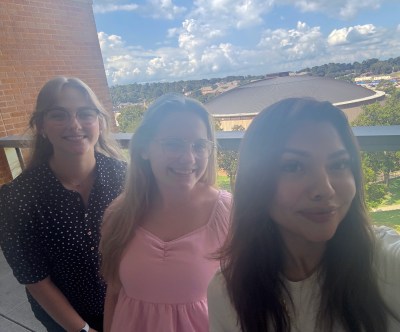
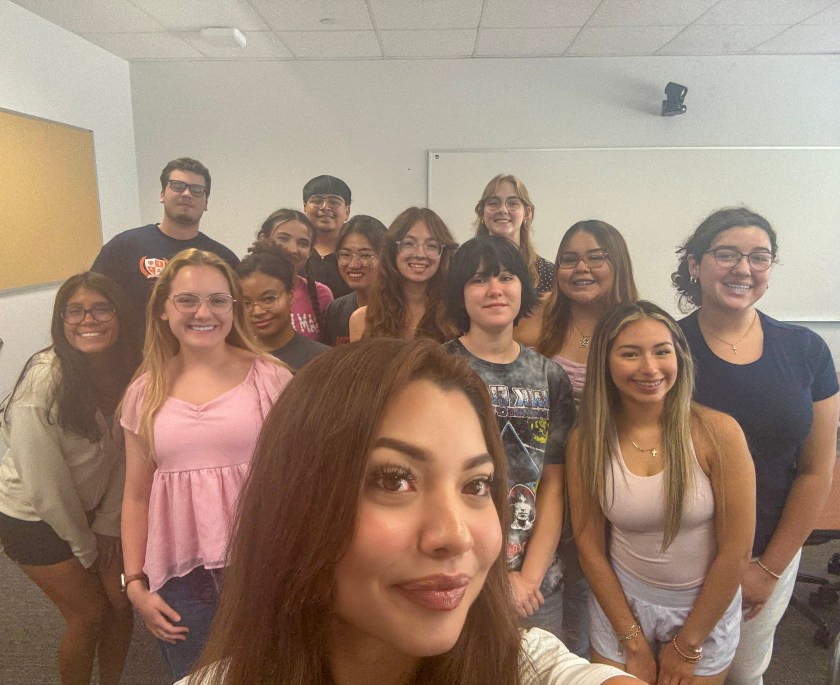
Olivia McCaughan, Allison Plunk, and Michelle Moya

Unknown's avatarAuthor mikeyawnPosted on September 25, 2025September 25, 2025Format AsideCategories Civic Engagement, Education, Law, UncategorizedTags Center for Law Engagement And Politics, dailyprompt, dailyprompt-2071, LEAP, LEAP Ambassadors, LEAP Center, Sam Houston State University, SHSULeave a comment on LEAPing into College: A Freshman’s Take on the LEAP Program

Outside the Classroom; Inside the CIA

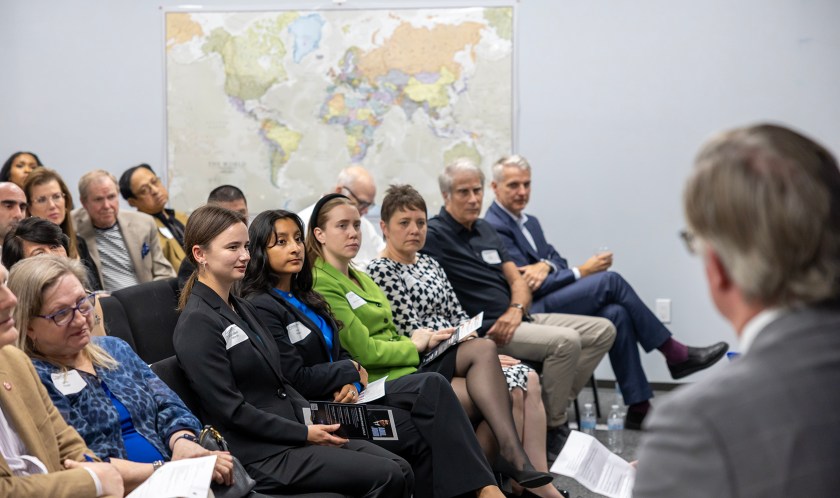
LEAP Ambassadors enjoy learning in the classroom, a fact made evident by a collective 3.81 GPA. But the special part of the program is the learning outside of the classroom, where we work to expand our professional networks, learn new information, and venture outside our comfort zones. Such outcomes were on full display at the World Affairs Council‘s “Inside the CIA” event featuring Michael Ard.

A former CIA Analyst now teaching international affairs at Johns Hopkins University, Ard took us on a far-ranging tour of the CIA and the world in a discussion facilitated by everyone’s favorite moderator, Ronan O’Malley.

The CIA oversees 11 centers and undertakes, according to Ard, four major activities:

  • Analysis
  • Collection
  • Covert Action
  • Counterintelligence

Obviously, these actions involve sensitive operations, and Ard noted that this can lead to conflict with the rest of the world, the Congress, and, most notably, the President. The President relies heavily on the CIA, and when operations do not go well, it can lead to negative consequences for the Chief Executive, which can, in turn, lead to strained relationships. Nixon, in particular, was distrustful, a fact punctuated by Ard, when he quoted Nixon: “What are those clowns in Langley doing? Reading the newspaper?”

But it wasn’t just Nixon: JFK felt burned after The Bay of Pigs disaster in Cuba; Congress was disillusioned during the Church Hearings in the 1970s, when many of the CIA’s activities came to light; and George W. Bush, according to Ard, was sorely disappointed in the CIA’s investigation into Weapons of Mass Destruction (WMD) in Iraq.

Speaking of which, during Q&A, the audience asked whether the Bush Administration put pressure on the CIA to find what it wanted to find: WMD. Ard said, “No.”

He encouraged the audience to read the Silberman-Robb report, noting that the biggest problem in Iraq was that Hussein wanted some countries (his regional enemies) to believe he had WMD, and he wanted us to believe he didn’t. This caused him to act with much furtiveness, which was then interpreted as guilty behavior. It wasn’t correct, he noted, but it was a reasonable conclusion.

Ard was also asked whether any movies get the CIA right. The former analyst noted he doesn’t watch a lot of movies, and he was generally dismissive (“they’re movies”), but he noted that “Argo” had the right feel, and “The Sum of All Fears” captured some of the banter among analysts.

Following the event, Dr. Ard put on his professorial hat, and spoke to us as students for a while.

Even as he noted the challenges associated with recent budget cuts, he was encouraging, prompting us to dream big, take opportunities, and to be assertive in putting our goals into action.

Unknown's avatarAuthor mikeyawnPosted on September 19, 2025September 19, 2025Format AsideCategories Civic Engagement, Criminal Justice, International Affairs, Law, Public AdministrationTags Center for Law Engagement And Politics, Central Intelligence Agency, CIA, LEAP Ambassadors, Michael Ard, Sam Houston State University, World Affairs Council HoustonLeave a comment on Outside the Classroom; Inside the CIA

Next Stop, Italy! World Affairs Council’s Culinary Passport Series

by Jacob Wessels

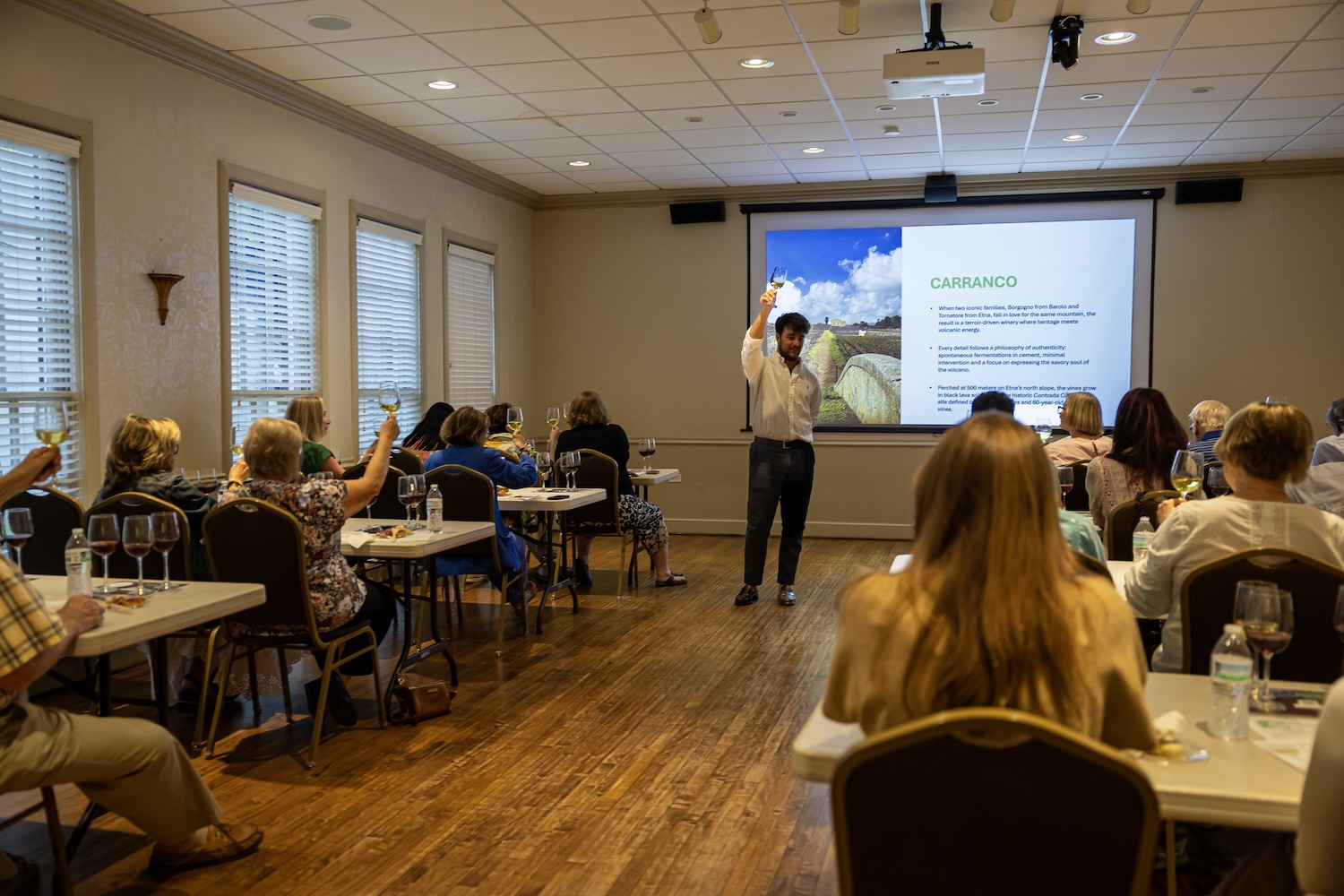
LEAP students added another country to its World Affairs Council culinary passport: Italy. While Italy is most known for pizzas, pastas and their ketchup-despising attitude, it is also known as the wine capital of the world. We learned more about wine and its profound impact on people’s lives.

In true European fashion, there was plenty of snacking to be had, rather than a full-course meal. A variety of cheeses and meats ensued, and we spent time conversing in the beautiful Italian Cultural and Community Center.

The speaker for the evening, Ferdinando Favara, has grown up appreciating this aspect of Italian culture his whole life. His family, who has longstanding roots in the wine industry, have a vineyard in Sicily–which we came to learn is on the up-and-up in terms of regional “quality”. Favara helped his grandmother in the wine fields starting at just 14 years old.

Ferdinando spoke about how wine helps to bring people together. His “philosophy”, so to speak, is that wine creates stories, keeps stories alive, and connects people in a vital way. While LEAP students didn’t personally indulge in any wine tasting, it was fun to partake in the storytelling and learn about the many intricacies that come with a high-quality experience. Much like the efforts of the LEAP Center!

He also talked about the deep history of wine which started 3,000 years ago in Sicily. Sicily, which is the largest island in the Mediterranean, uses a terrace-type farming technique. It uses this form of farming because it has the largest active volcano in Europe! Our discussion then traveled to Piemonte, once the land of the King of Italy. While on the verbal excursion, we learned the king entrusted his vineyard to one of his servants (who was rumored to be one of his lovers!), a legacy that lives on today. This region is home to one of the oldest vineyards in all of Italy.

LEAP students truly appreciated attending another World Affairs Council program which has helped broaden our understanding of the world around us. While we didn’t engage in the wine component of the evening, we definitely appreciated Italy’s culture, history and significance in the wine industry. 

Unknown's avatarAuthor mikeyawnPosted on September 12, 2025Format AsideCategories Civic Engagement, Food, TravelTags Center for Law Engagement And Politics, Ferdinando Favara, Italy, LEAP, LEAP Ambassadors, LEAP Center, Pre-Law Society, SHSU, World Affairs Council HoustonLeave a comment on Next Stop, Italy! World Affairs Council’s Culinary Passport Series

Community Celebration of Henderson Yoakum’s Legacy in Huntsville

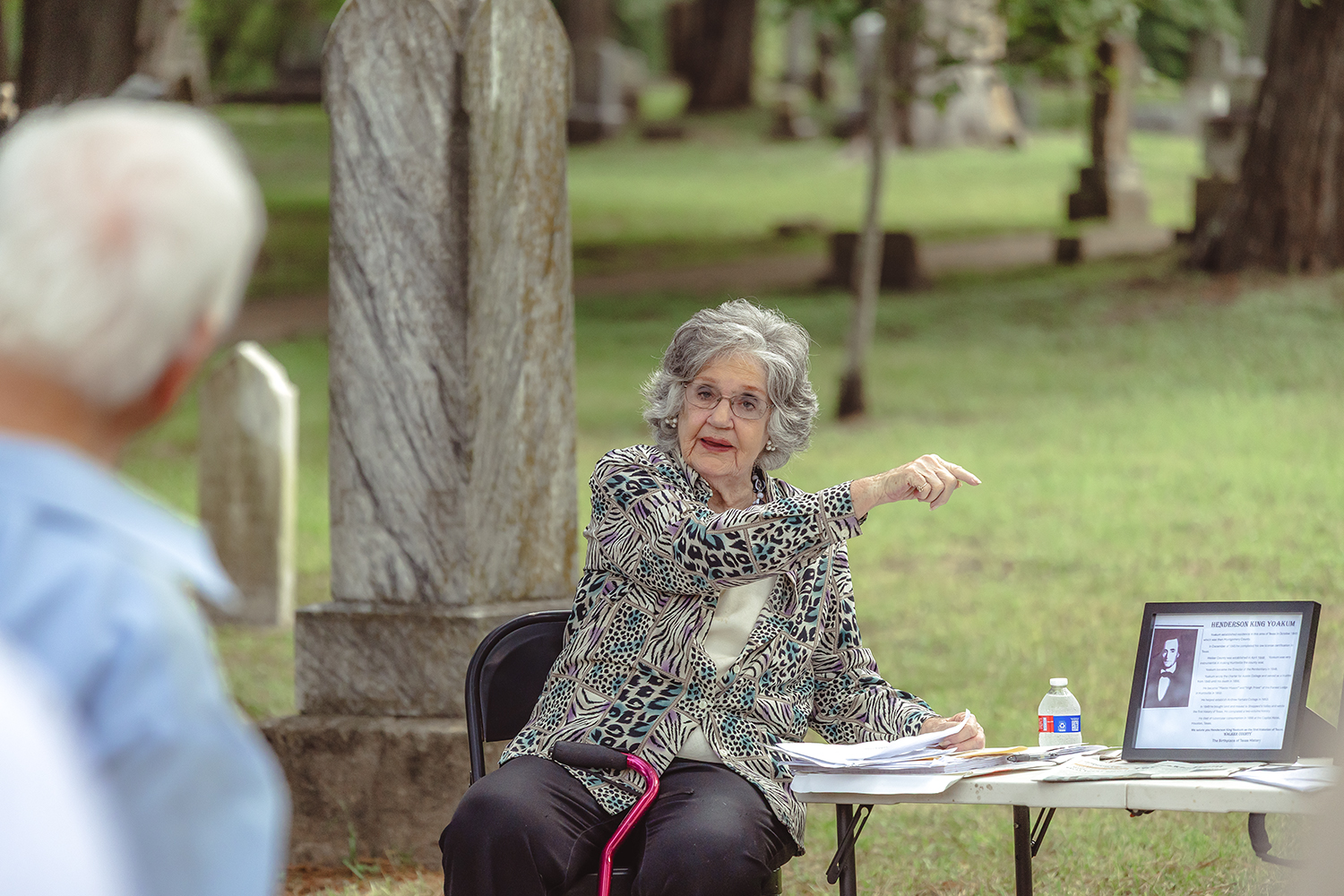
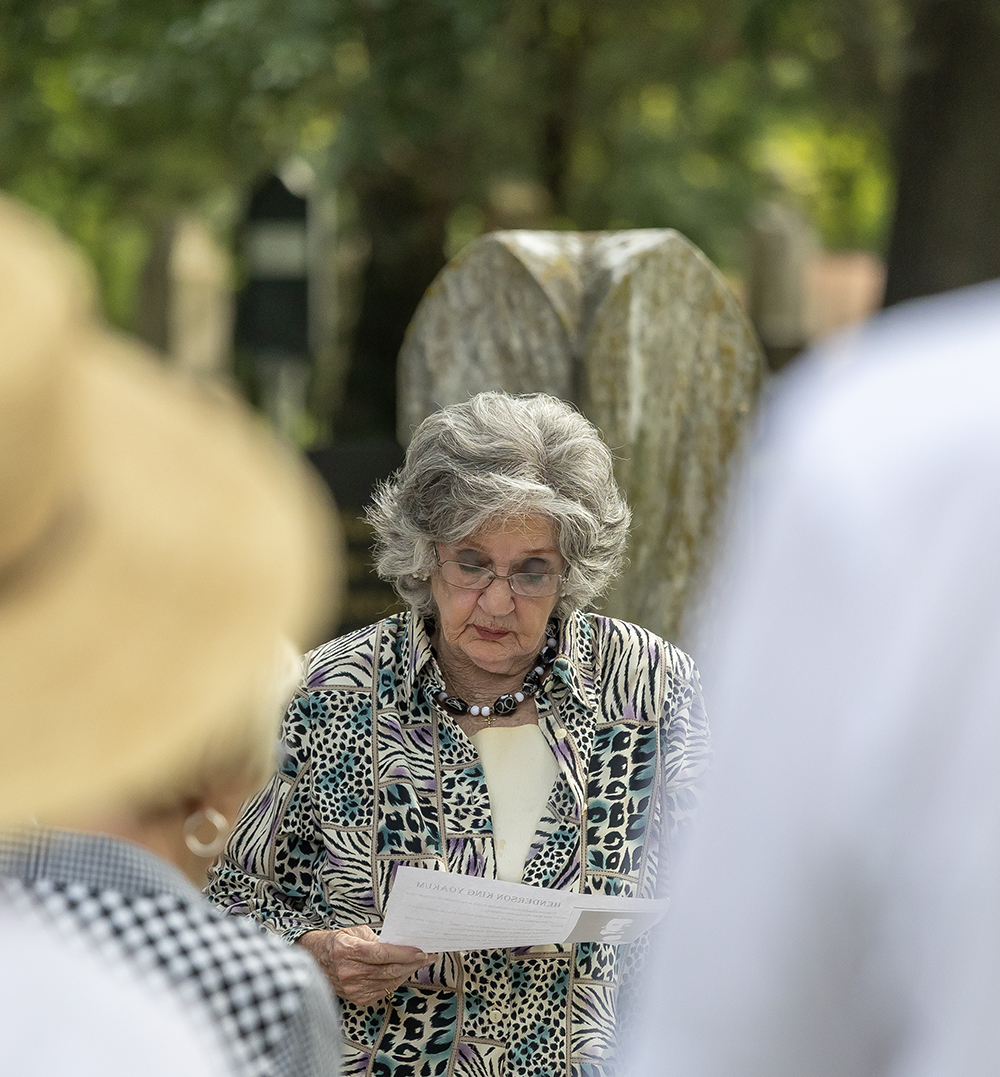
Community leaders help preserve history, and today, members of the Sons of the Republic of Texas, Henderson Yoakum Chapter, gathered at Oakwood Cemetery in Huntsville to honor the birthday and legacy of Henderson Yoakum. The ceremony featured remarks from Tom Rogers of the Walker County Historical Commission, Mac Woodward, a descendant of Yoakum, event organizer Donna Coffen, and historian Dr. Caroline Crimm in front of an audience of 30-40 community members, descendants, and others interested in Texas history.

Born in Tennessee in 1810, Henderson King Yoakum graduated from West Point in 1832 before pursuing law and politics in Murfreesboro, serving as mayor (1837) and in the Tennessee Senate (1839–45), where he advocated for Texas annexation. After relocating to Huntsville, Texas, in 1845, he established his legal career, helped make Huntsville the county seat, served as penitentiary director, and drafted Austin College’s charter, serving as its trustee (1849–56). In 1855, he authored a landmark two‑volume History of Texas covering its first settlement through annexation.

The ceremony went through these accomplishments and others, with Mac Woodward highlighting some of Yoakum’s descendants…

…Dr. Crimm providing a context for Yoakum’s accomplishments and today’s ceremony…

…and Tom Rogers and Donna Coffen illustrating the work done by the Walker County Historical Commission.

The event served as a needed reminder of Henderson Yoakum’s contributions to both local and state history, while also providing a community gathering for those who preserve Huntsville’s rich legacy.

Unknown's avatarAuthor mikeyawnPosted on September 6, 2025Format AsideCategories Civic Engagement, HistoryTags Center for Law Engagement And Politics, Henderson Yoakum, LEAP Ambassadors, Sam Houston State University, Sons of the Texas Republic, Walker County Historical CommissionLeave a comment on Community Celebration of Henderson Yoakum’s Legacy in Huntsville

Icons and Innovation: Exploring American Art and Architecture

Introduction
Our trip through New England and New York was as much a journey through art and history as it was through towns and landscapes. We ended the day in the capitol (Albany) of one of the largest states in the Union, but we began it in the Rockwellian cottage of Stockbridge, MA–the home town of Norman Rockwell.

LEAP Ambassadors at City Hall

Norman Rockwell Museum

By Michelle Moya

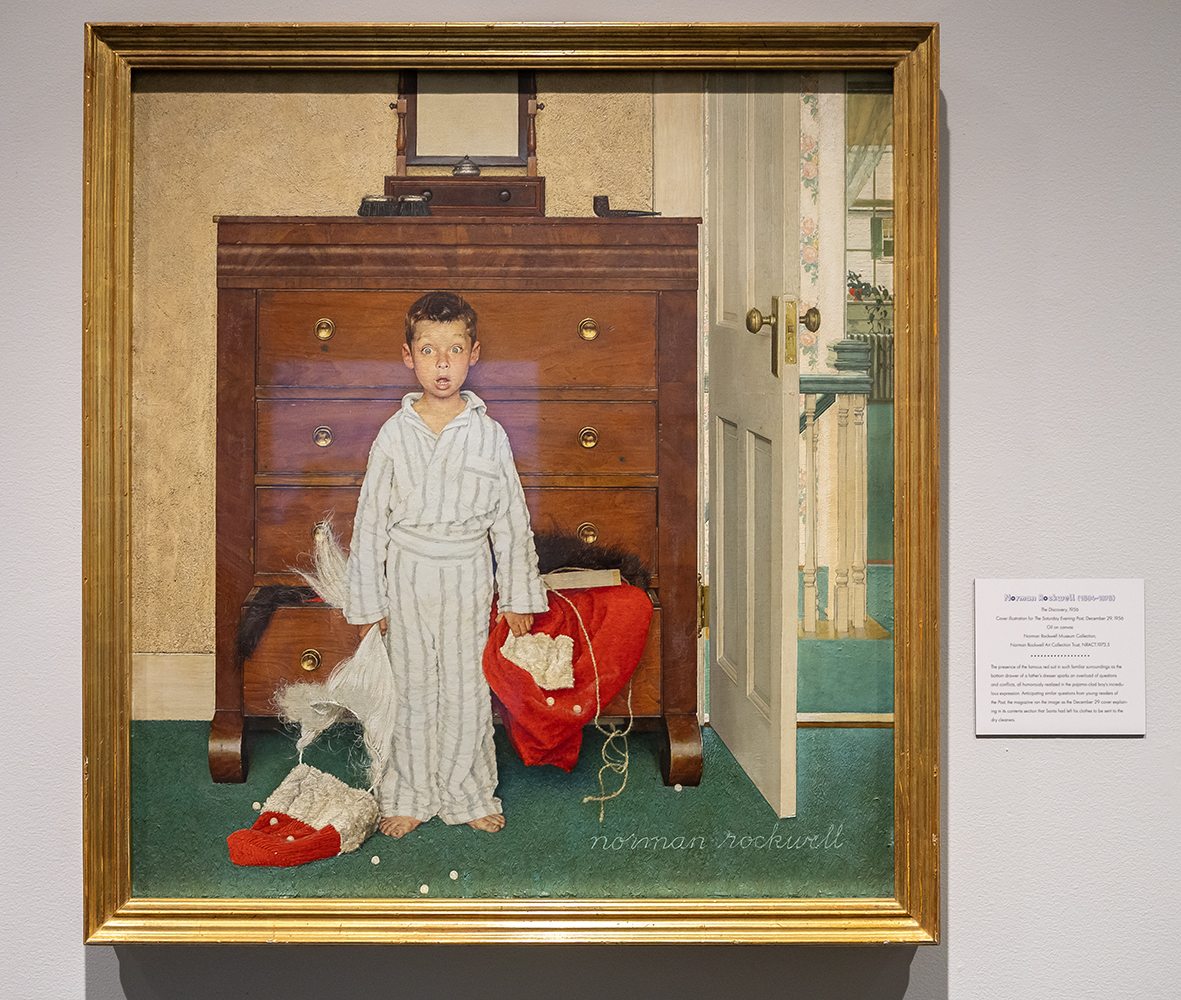
For our first stop in Stockbridge, we visited the Norman Rockwell Museum. Before the trip, I had watched a documentary on Rockwell’s life and career, which gave me a deeper appreciation for what we were about to see. It traced his progression from lighthearted Saturday Evening Post covers to later works that confronted civil rights and human rights, and it gave me a better foundation for understanding the galleries.

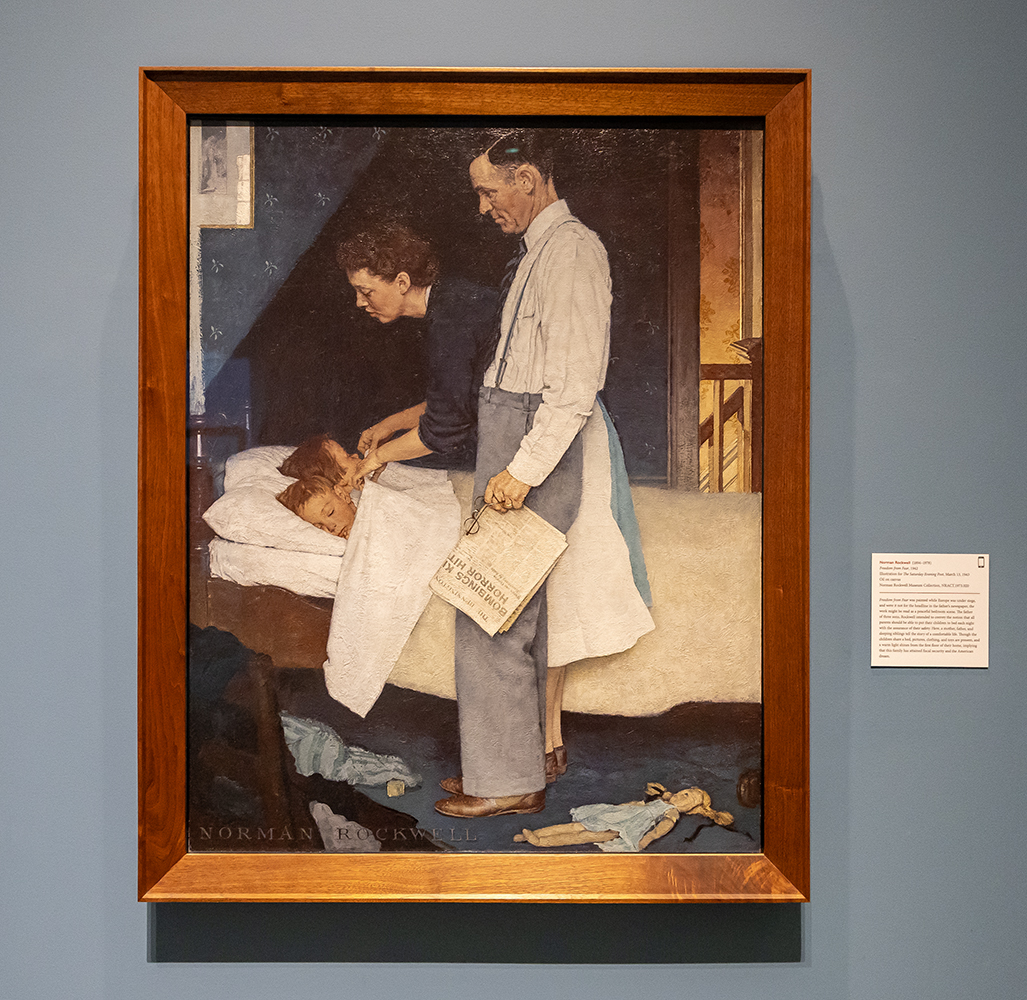
The museum’s collection highlights Rockwell’s most iconic pieces, including the Four Freedoms series. Inspired by Franklin D. Roosevelt’s 1941 speech, these four paintings—Freedom of Speech, Freedom from Want, Freedom to Worship, and Freedom from Fear—remain some of his most recognizable works. Each takes a sweeping political idea and places it in the context of everyday life.

Freedom of Speech shows an ordinary man rising to speak at a town meeting, who appears to have a modest jacket and steady expression. Freedom from Want was Olivia’s favorite: the Thanksgiving turkey at the center of the table, family gathered in warmth and abundance. Freedom to Worship and Freedom from Fear are quieter but equally moving, offering a reminder of how Rockwell could find dignity in ordinary moments.

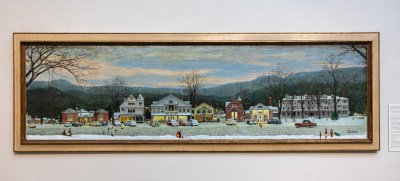
My own favorite was Main Street, Stockbridge at Christmas, Rockwell’s portrait of his hometown blanketed in snow and glowing with holiday lights. It is a beautiful painting, and as someone who loves Christmas, I couldn’t help but imagine what it would be like to actually visit Stockbridge during the season. It captures Rockwell at his most nostalgic, and it made me want to see the town in person during my favorite holiday.

Some of Rockwell’s later and more serious work also stood out. The Problem We All Live With, sometimes called his “Board of Education” painting, shows six-year-old Ruby Bridges walking to school, escorted by U.S. Marshals. The white wall behind her, scrawled with a racial slur and marked by a thrown tomato, makes the scene even more striking.

There were lighter touches as well. The museum includes some of Rockwell’s early commercial work, such as advertisements for Edison Mazda Lamps published in The Saturday Evening Post. These remind visitors that Rockwell was as much an illustrator as a painter, and that his storytelling instincts carried across everything he created.

A special highlight was the I Spy exhibition by Walter Wick, whose intricate dioramas and search-and-find photographs were a fun, interactive touch for children and adults. The exhibit encouraged visitors to slow down and look closely, much like Rockwell’s paintings.

It was interesting to see how the Norman Rockwell Museum fully captures the range of his career. In one place, you can see the playful, the iconic, and the deeply serious. Between Olivia’s favorite “Freedom from Want” and my own liking to “Main Street, Stockbridge at Christmas,” it was clear how Rockwell continues to connect with people in different ways.

Mass MoCA

by Olivia Discon

Our final (pure) art stop of the trip was Mass MoCA (Massachusetts Museum of Contemporary Art), a museum housed in a former industrial complex that has been repurposed into one of the largest centers for contemporary art in the country.

The building itself is a bit of a maze (ed. note: she got lost), but that only added to the fun of exploring it.

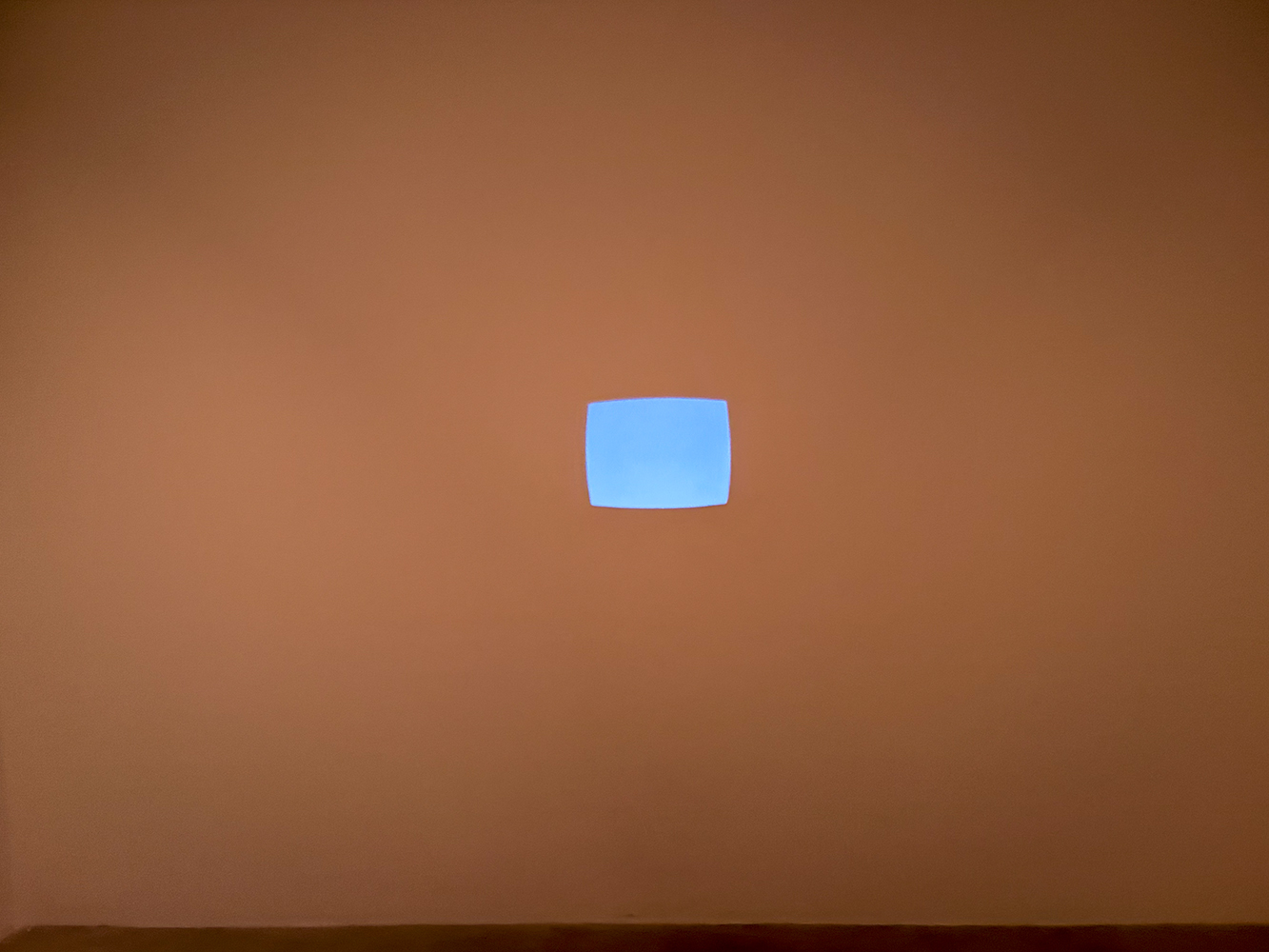
We started with James Turrell’s Roden Crater-inspired exhibit, which featured several surreal experiences centered on light and perception. One room, completely blacked out, challenged visitors to sit in total darkness for 15 minutes. While Professor Yawn and Stephanie lasted the full time, Moya and I called it quits after approximately eight minutes. In the silence, I started to see faint colors—likely just the brain reacting like when you rub your eyes too hard—but still interesting.

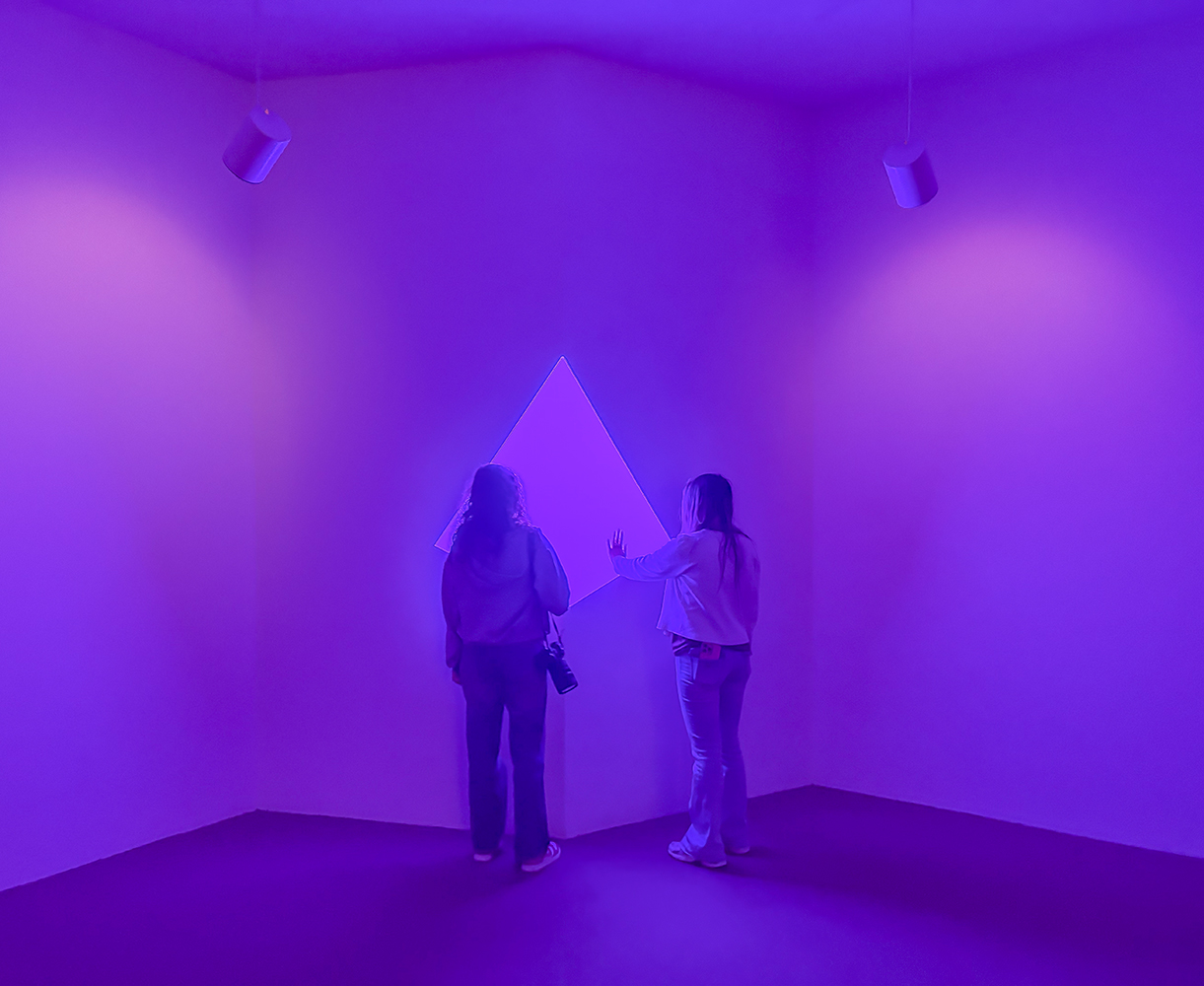
Other Turrell works played with color and depth perception.

One installation allowed us to walk into what looked like a glowing square of color—an endless void of pinks, greens, and yellows.

We also stepped into one of his classic Skyspaces, where the ceiling frames the sky in a way that turns shifting clouds and colors into living art.

Beyond Turrell, the museum offered much more. Louise Bourgeois’s exhibit was a highlight for me, especially her piece Entangled, which captured so much emotion through abstract form.

Sol LeWitt’s sprawling wall drawings filled a labyrinthine gallery with bold patterns in both black-and-white and vibrant colors.

We even wandered into a “music room” filled with instruments past their prime—though that didn’t stop us from making enough noise to temporarily damage our own hearing.

Mass MoCA was a perfect way to end the art portion of our trip: immersive, challenging, and just plain fun.

New York State Capitol

by Olivia Discon

For our final state of the trip, we made our way up to New York. Driving past the Hudson River on the way into Albany felt especially fitting, since the river inspired the Hudson River School painters and many transcendentalist writers, both of which we’ve touched on during this trip.

Our last stop was the New York State Capitol, one of only nine state capitols without a dome. Built over more than three decades and designed by multiple architects, the building makes up for its lack of dome with incredible stonework and elaborate detail. The grand staircase was particularly striking, lit by lamps with exposed bulbs, a symbol of modernity in its time.

Although the House and Senate chambers were closed, we managed to peek through the glass doors. The stained glass in the Assembly chamber stood out as especially beautiful, making it one of my favorite legislative chambers we’ve seen so far. The Capitol also houses the Hall of Governors, a portrait gallery of past governors—including four who went on to serve as U.S. presidents.

Art is woven throughout the building as well. We saw numerous New York landscapes and scenes…

…along with modern sculptures outside in the Empire State Plaza. Among the recognizable artists were George Rickey, Alexander Calder…

Claes Oldenburg…. 

…and Ellsworth Kelly.

The New York State Capitol was a wonderful conclusion to our trip. Between the history, the architecture, and the art, it was a reminder of how much one place can tell us about both state and national identity.

Concluding Thoughts

Taken together, the Norman Rockwell Museum, Mass MoCA, and the New York State Capitol highlighted the remarkable range of American creativity and civic expression.

Rockwell’s art reminded us of the power of storytelling in everyday life, while Mass MoCA challenged us to step outside the familiar and embrace new ways of seeing.

The New York State Capitol, with its blend of politics, history, and art, grounded the trip in the institutions that shape public life.

Each stop added its own layer to our journey, leaving us with a deeper appreciation for how art and architecture reflect the spirit of their time—and continue to inspire today.

Unknown's avatarAuthor mikeyawnPosted on September 2, 2025Format AsideCategories Architecture, Art, Civic Engagement, Civil Rights, Law, TravelTags Alexander Calder, Center for Law Engagement And Politics, James Turrell, LEAP Ambassadors, MASS MOCA, New York Capitol Plaza, New York State Capitol, Norman Rockwell Museum, Sam Houston State UniversityLeave a comment on Icons and Innovation: Exploring American Art and Architecture

Labor Day: A Banner Day for Workers

Every year on the first Monday in September, Americans celebrate Labor Day.  While some celebrate with a long weekend of end-of-summer festivities, the Holiday originated as a tribute to the social and economic achievements of our nation’s workers.

The Lions Club and the LEAP Ambassadors celebrate the day by planting flags–early in the morning–across the extended downtown in Huntsville, an activity undertaken on most major holidays.

11th Street, Looking East (6:20am)

For us, it is not only a community-building exercise, but also a way to remind people the meaning behind their day off work.

Michelle Moya Plants the Final Flag

Starting with municipal ordinances in the mid‑1880s and pioneering state laws—Oregon led the way in 1887, followed by states like Colorado, Massachusetts, New Jersey, and New York—more states followed suit. By 1894, 23 states had adopted the holiday—what political scientists call “policy diffusion”—and on June 28 of that year, Congress passed the law making the first Monday in September a national holiday.

Lion Liesa Hackett Distributes Flags to Runners

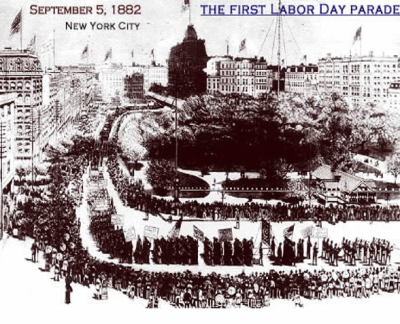
There’s a rivalry of sorts over who first proposed the idea—Peter J. McGuire (a noted labor leader) suggested a “general holiday for the laboring classes,” while others credit Matthew Maguire, secretary of a local union, with proposing the concept in the same year. Regardless, it was the Central Labor Union in New York City that organized the first Labor Day parade, held on September 5, 1882, setting the celebratory template of processions, picnics, and public speeches.

Over time, Labor Day has evolved into an annual celebration of American labor or, at least, a day free from labor.  For the Lions Club—and by extension, the LEAP Ambassadors—it’s also a way to build stronger communities and remind people the meaning behind the holiday.

Lions and LEAP Ambassadors/Students

The LEAP Center thanks the Lions Club for permitting them to assist with the Flag Project.

Unknown's avatarAuthor mikeyawnPosted on September 1, 2025September 1, 2025Format AsideCategories Civic Engagement, VolunteeringTags Center for Law Engagement And Politics, Labor Day, LEAP Ambassadors, Lions Club Flag Project, Sam Houston State UniversityLeave a comment on Labor Day: A Banner Day for Workers

Legislatures and Literary Lions: Hartford, CT

The LEAP Center is known for its interdisciplinary adventures, and today was no different, as we visited another state capitol, the estate of literary lion, and a Guatemalan restaurant–in Hartford, CT, no less!

Connecticut State House

Nestled in the 41-acre Bushnell Memorial Park in Hartford, the Connecticut State Capitol first welcomed the General Assembly in January 1879 after eight years of planning and construction. A commission formed in 1871 selected architect Richard M. Upjohn, whose father also worked on the Boston Commons, providing us with generational and geographical continuity, even as we visit different sites built in different locations.

James G. Batterson supervised construction, and he significantly altered Upjohn’s design. Using marble and granite from New England, he built a beautiful sculpture that prompted the New York Times to note, that in the sun, the building “sparkled like a fairy palace of frost work.”

It didn’t sparkle on the day we visited; it rained, which also discouraged us from getting a shot of the exterior, but the LEAP Ambassadors of 2018 took a photo on a similar trip.

The building features a gold-leaf dome, and the structure is sometimes referred to as “high Victorian” and sometimes as “Eastlake,” a confusion caused, in part, by the competing visions of the architect and construction supervisor.

Both the exterior and interior feature emblems of the state’s past. One of the more interesting of these is the Charter Oak. Connecticut had a royal charter that largely gave it control over its own governance, but this was threatened in the late 1600s, when King James II tried to revoke the Charter and exert more control. When the King’s men tried to take the Charter, the colonists–Captain Joseph Wadsworth, in particular–took the document and hid it in a white oak tree, which is, not surprisingly, the state tree.

That tree became known as the Charter Oak, and although a storm toppled the tree in 1856, the wood was used to create other items, some of which can be found in the capitol. Its image is also featured on the state’s quarter and on a stamp.

Of course, the Capitol also houses both legislative chambers—the State Senate Chamber and the Hall of the House of Representatives—as well as offices for the Governor, Lieutenant Governor, and Secretary of the State.

It also houses “The Genius of Connecticut,” a 17 foot, 10 inch statue created by Randolph Rogers. The winged figure holds immortalis in her right hand; a mountain laurel (the state flower) in her right; and her head is wreathed in leaves from the white oak.

Formerly, “The Genius of Connecticut” was perched atop the capitol, but she was removed following a hurricane. The statue was melted to make ammunition during World War II. Fortunately, however, the original plaster model was found, and in 2009, a replica of the original was returned to the capitol, albeit in the rotunda rather than in the cupola/dome.

Aurora’s Restaurant

Texans believe that eating Latino cuisine outside of a border state is questionable at best and potentially dangerous. But we are not faint of heart, and we know that immigrants who know food are not limited in where they settle, so we happily braved the rain to visit Aurora’s Restaurant, which serves Guatemalan food, in Hartford, Connecticut.

The staff were welcoming and courteous. They spoke Spanish when not speaking to us, adding to what would prove to be a rewarding an authentic culinary experience.

We sampled a variety of dishes, including the Burrito Bowl, Tortillas con Chorizo, an Aurora Bowl, and plantains–the latter drizzled with crema and topped with queso fresca. All of the dishes were excellent, but the plantains were among the best we had ever had.

We left with full stomachs, and also ever more aware that, to paraphrase Mark Twain, travel is fatal to preconceptions.

Mark Twain House

by Olivia Discon

Samuel Clemens—better known as Mark Twain—was one of America’s most influential authors and storytellers. His works such The Adventures of Huckleberry Finn and Life on the Mississippi are classics. But while his writing is widely known, fewer people know about the man himself, the life he led, or his stunning Victorian home in Hartford, Connecticut.

We weren’t allowed to take photos inside, but our tour guide, Josh, brought the house to life with vivid stories. The home has had many lives—at one point an apartment building, later a school, and even a library—before being restored as a museum. Over time, renovations stripped away original touches, including designs by Louis Comfort Tiffany (which, to my dismay, were once considered unfashionable). Thankfully, the museum has worked to restore the home as closely as possible to how it looked when the Clemens family lived there, guided in part by the memories of their daughter, Clara.

The library was the most charming room. Its mantelpiece, a hand-carved work from Ireland, is extravagant. Whimsical portraits—a cat, a rabbit, and a woman in blue affectionately named Eveline by the Clemens daughters–hung on the walls. Each night, Twain would spin bedtime stories using these characters. If he ever repeated a storyline, his daughters would call him out, forcing him to start fresh. According to Josh, Twain may have done this intentionally just to test whether they were paying attention. The library also included a small conservatory filled with greenery, along with a decorative frog—a playful nod to Twain’s famous short story, The Celebrated Jumping Frog of Calaveras County.

We also visited Twain’s office, which doubled as his billiard room. It was here that he wrote, smoked cigars, played pool, and paced while working through drafts. A shelf of cubbies held his unfinished manuscripts—something I secretly envied.

The house also carries the weight of the family’s tragedies. Their daughter Susy died of meningitis in the home at just 24 years old. And, owing to financial difficulties, the family eventually had to sell the home, much to Twain’s chagrin.

Even with its history of sorrow, Twain often described the Hartford house as the setting for some of the happiest years of his life. It was, he noted, “the loveliest home that ever was.” Walking through its cozy, richly detailed rooms, we found ourselves understanding that sentiment.

Photo Ops

Following our day in Hartford, we headed north, toward Stockbridge, MA, preparing ourselves for another full day tomorrow. But along the way, we stopped to see Herman Melville’s home, “Arrowhead”…

Herman Mellville’s “Arrowhead,” (Photo by Daderot)

…and “The Mount,” the home of Edith Wharton.

Edit Wharton’s “The Mount” (Photo by David Dashiell)

Concluding Thoughts

It’s difficult to organize disparate adventures into a memorable and cohesive learning experience. But through some preparation, a desire for new experiences, and an open mind, we managed to see quite a lot and assimilate almost as much. A beautiful state capitol designed by Richard M. Upjohn, a great Guatemalan restaurant in the heart of Hartford, and the “loveliest home that ever was” by the quintessential American author–all in the day of LEAP Ambassador.

Unknown's avatarAuthor mikeyawnPosted on August 31, 2025Format AsideCategories Architecture, Civic Engagement, Food, History, PoliticsTags Center for Law Engagement And Politics, Connecticut State Capitol, Hartford Connecticut, LEAP Ambassadors, Mark Twain, Mark Twain Home, Sam Houston State University, SHSULeave a comment on Legislatures and Literary Lions: Hartford, CT

Rhode Island’s Silver Lady, Independent Man, and Us

Rhode Island is the smallest state in the Union, but that hasn’t stopped us from having a big time. Whether learning about the health care system, apprenticeships, utility provision, or the criminal justice system, we’ve found the conference rewarding. Moreover, we’ve benefitted from some amazing networking opportunities and some off-site excursions–which included parasailing! But our last day of the official conference promised more learning and interest.

A Silver Lining to our Last Session

by Michelle Moya

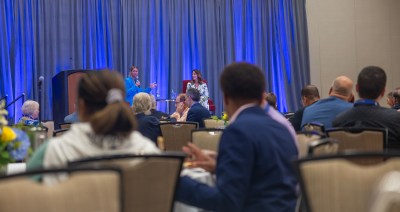
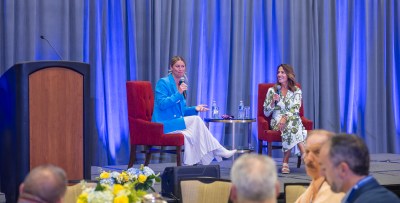
As our final day in Providence drew to a close, Olivia and I attended a farewell session that offered a refreshing departure from the usual conference format. Instead of policy panels and legislative discussions, we found ourselves in a fireside chat with three-time Olympian Elizabeth Beisel, hosted by Margie O’Brien, with breakfast served alongside inspiration.

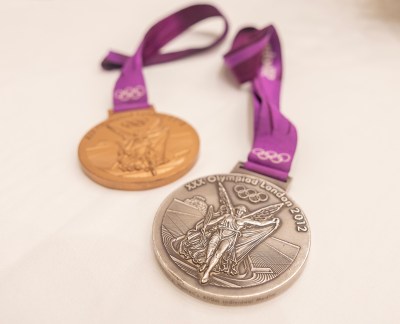
The session started off with something special: Beisel passed around her actual Olympic medals—silver from London 2012 and bronze from Beijing 2008—for everyone to see and hold. 

The weight of these medals surprised me, both literally and figuratively, but I snapped a photo holding both… 

Beisel’s story begins in Rhode Island, the “Ocean State.” At just 15, while still a high school sophomore, she made the U.S. Olympic team for Beijing 2008. What makes her journey particularly remarkable is her decision to stay and train in Rhode Island rather than relocating to traditional swimming powerhouses like Florida or California.

This choice to remain rooted in her home state would become a recurring theme throughout her career—the value of staying true to your origins and finding excellence in unexpected places.

Perhaps the most compelling aspect of our conversation centered around Beisel’s 2012 London Olympics silver medal, which she’s transformed from a simple athletic achievement into a life philosophy. Her book, titled “Silver Lining,” explores the emotions of accomplishing something extraordinary that still falls short of your ultimate dream.

After retiring at 24, Beisel embraced opportunities she’d spent years declining during her competitive career. This included an appearance on Survivor, where she lived outdoors for 30 days with no food, shelter, or supplies beyond basic tools and access to water. While the experience tested her in entirely new ways, it proved rewarding in an unexpected manner—she met her future husband on the show.

Her post-competition journey illustrates an important lesson about saying “yes” to new experiences and remaining open to life’s unexpected directions, themes that emerged repeatedly throughout our conference discussions about career transitions and public service.

The conversation took a more serious turn as Beisel shared her experience caring for her father during his battle with pancreatic cancer. The diagnostic process stretched nearly a year, and once treatment began, she found herself becoming his advocate within a complex healthcare system—a challenge that has also been a recurring theme of our conference sessions.

The most moving portion of our session focused on Beisel’s 10.5-mile swim from Block Island to mainland Rhode Island, which raised $700,000 for pancreatic cancer research. The swim was canceled three times due to weather conditions before she finally completed it in 5 hours and 18 minutes—tragically, after her father had already passed away.

During the swim, facing cold conditions in just a regular swimsuit (marathon swimming regulations prohibit wetsuits), she found herself struggling with the elements. “Dad, give me the sun,” she whispered to her late father. Within 30 seconds, the sun emerged and remained with her throughout the remainder of the swim.

She also discovered a painted rock at her favorite seawall spot that read “Never give up” right after the third cancellation, when she was considering abandoning the project—a sign she interpreted as encouragement from her father to attempt the swim one final time.

Now working in sports journalism, Beisel covers swimming for various media outlets while preparing for 2028 LA Olympics coverage. Her transition from athlete to journalist demonstrates another form of public service—using expertise and platform to educate and inform others.

As we prepared to leave Providence, Beisel’s message reminded us that excellence takes many forms, that setbacks often lead to unexpected opportunities, and that meaningful service can emerge from personal challenges. Her story provided a fitting conclusion to our conference experience—one that emphasized resilience, adaptability, and hard work. 

Rhode Island Capitol

by Michelle Moya

On our last morning in Providence, we knew there was only one fitting way to wrap up our time in the city: a visit to the Rhode Island State House. The structure combines both majesty and beauty.

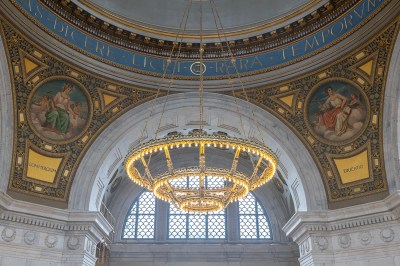
Our guide, Tony–who proved excellent–began in the rotunda beneath what he called the “inner dome”—the fourth-largest self-supporting marble dome in the world.

Unlike the U.S. Capitol’s iron framework, Rhode Island’s dome is pure Georgian Cherokee marble, standing under its own weight. 

As you look up, Tony explained that what seems like one mural is actually four vignettes depicting the state’s founding story: Roger Williams meeting with Narragansett chiefs Canonicus and Miantonom. Williams, a radical preacher who argued for separation of church and state—an unthinkable idea in 1635 Massachusetts—would go on to define Rhode Island’s independent spirit.

Banished from Massachusetts that same year, Williams trekked south, fell ill, and was nursed back to health by Massasoit before settling at a spring given by the Narragansetts. From there grew Providence. For a century, the “General Assembly” rotated between four towns, and for nearly 200 years the state juggled five separate capitols. 

Finally, in 1890, Rhode Island commissioned McKim, Mead & White—the nation’s leading architectural firm—to design a permanent home. Completed in 1904, it was one of the first capitols to integrate electricity, a fact architect Charles McKim made clear by leaving lightbulbs exposed throughout.

Encircling the dome is a phrase from Tacitus: “Happy are those times when you can think what you want and say what you think.” Four allegorical figures—Justice, Literature, Commerce, and Education—peer down from above, all allegedly modeled after the artist’s wife. 

Crowning the dome, 220 feet overhead, stands the Independent Man. During a recent cleaning the statue nearly toppled, prompting an emergency rescue and full regilding. While it was displayed inside for restoration, many visitors had the chance to take photos with him upon waiting for restoration!  

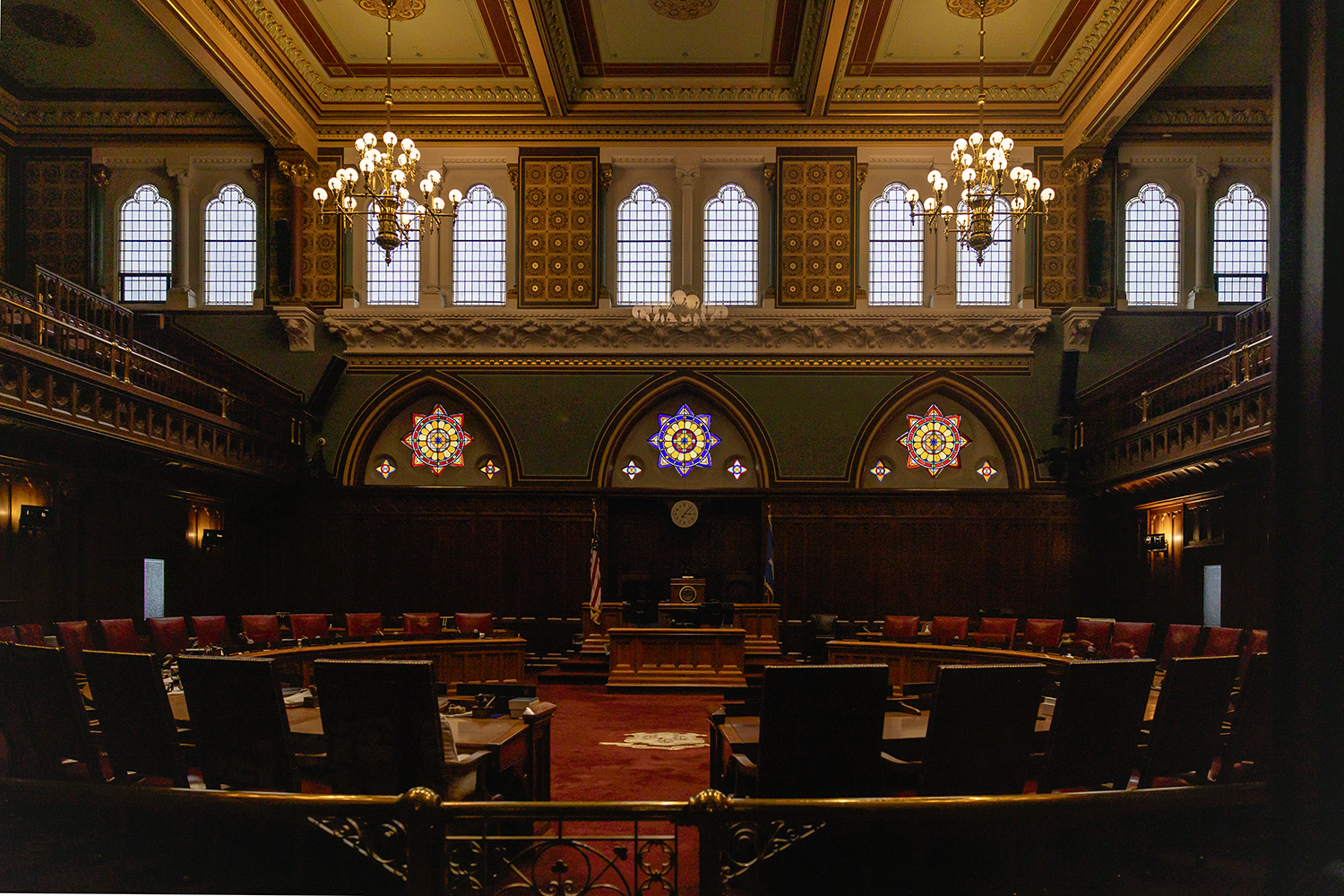
From there we moved into the House chamber, the building’s largest room. This nearly 50-foot cube houses 75 representatives serving the state’s one million residents. What impressed me most was its accessibility: when not in session, visitors may walk directly onto the chamber floor and speak with legislators, something we can definitely not expect in Texas! 

The Senate chamber, by contrast, felt more formal, framed by Carrara marble columns. Thirteen golden discs circle the room to represent the colonies, with Rhode Island proudly centered as the decisive 13th state to ratify the Constitution. Tony pointed out the chamber’s perfect symmetry, aligned along an axis from the Senate President’s chair through the House Speaker’s podium.

Our next stop was the State Library, with a working archive with 40,000 volumes and another 170,000 in storage. Mahogany walls surround iron staircases cleverly painted to resemble wood, and the ceiling itself mimics the look of book bindings. Renaissance printer logos decorate the cornice. In a bit of rivalry, McKim included Harvard’s insignia, despite Brown University being the nearest. Governor T.F. Green, a Brown alumnus, later had it replaced with William Caxton’s printer’s mark.

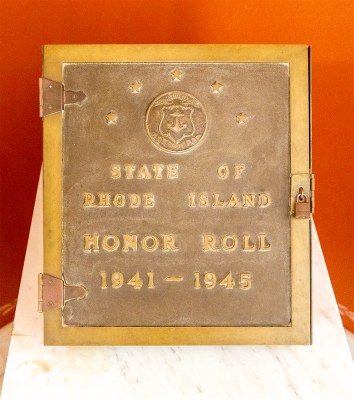
Nearby we also found the Book of Honor, listing 1,700 Rhode Islanders who died in World War II. Locked for preservation, it can be opened for families searching for loved ones’ names.

We finished off in the State Room which holds some of the building’s greatest treasures, including an original 1803 Gilbert Stuart portrait of George Washington as President, with a rainbow of hope in the background.

The room also honors Rhode Island heroes such as Oliver Hazard Perry, John Barry, and Nathanael Greene, the Quaker-turned-general who rose to become Washington’s second-in-command.

Our final stop was the museum, which preserves the state’s most important artifacts. At its center is the 1663 Royal Charter, written on animal hide and displayed in a quarter-million-dollar protective case. Granted by King Charles II, it offered Rhode Island unprecedented autonomy and religious freedom. The museum also displays the Portsmouth and Providence compacts of the 1630s, Native American land deeds signed with bow-and-arrow drawings, and even Roger Williams’ own compass and sundial.

With Rhode Island now marking my fifth capitol and Olivia’s thirteenth, this tour proved the perfect send-off to our time in Providence before hitting the road for our next state!

Concluding Thoughts

It was our last day in Rhode Island, a state we had come to admire for its beauty, history, and hospitality. Although a small state–King Ranch in Texas is larger–there was much for us to see, and we didn’t, of course, see all of it. So, it was with a tinge of sadness that we bought coffee at the charming “Rise ‘N Shine.”

Although we had to say goodbye to Rhode Island, we were heading to other green pastures, and that silver lining brought some smiles, as we thought of our impending travels to “The Constitution State,” Connecticut.

Unknown's avatarAuthor mikeyawnPosted on August 30, 2025August 30, 2025Format AsideCategories Architecture, Civic Engagement, History, Law, Politics, TravelTags Center for Law Engagement And Politics, Council of State Governments, Council of State Governments Conference East, Elizabeth Beisel, Rhode Island State House, Sam Houston State UniversityLeave a comment on Rhode Island’s Silver Lady, Independent Man, and Us

Posts pagination

Previous page Page 1 … Page 5 Page 6 Page 7 … Page 106 Next page

LEAP Ambassadors Are Involved!

This slideshow requires JavaScript.

Follow Us On Facebook!

Follow Us On Facebook!

Catch Up With Us

  • LEAP Alumni Panel: Life, Skills, and Careers February 19, 2026
  • Internship Informational: City Fellows, Sam Houston Austin Internship Program, and Washington, DC February 17, 2026
  • Contracts, Promissory Estoppel, & Chess: Simulated Law Class with Professor Val Ricks February 10, 2026
  • Fun, Games, and Education: Volunteering at the Senior Center February 9, 2026
  • Multi-Platform Media Exposure with LEAP February 8, 2026

Join The Conversation!

Multi-Platform Media… on Fun and Flavor: Chilly at the…
Highlights from the… on Glazing-A-Trail with Lauren…
The Civic Leadership… on Foundational Activities of the…
The Civic Leadership… on The Philosophical Foundations…
LEAPing Into Action… on The Philosophical Foundations…

Find Previous Posts

We also have Twitter!

My Tweets

LEAPing Into LEARNing

This slideshow requires JavaScript.

  • About LEAP
  • LEAP Ambassadors
Center for Law, Engagement, and Politics Blog at WordPress.com.
  • Subscribe Subscribed
    • Center for Law, Engagement, and Politics
    • Join 491 other subscribers
    • Already have a WordPress.com account? Log in now.
    • Center for Law, Engagement, and Politics
    • Subscribe Subscribed
    • Sign up
    • Log in
    • Report this content
    • View site in Reader
    • Manage subscriptions
    • Collapse this bar
 

Loading Comments...