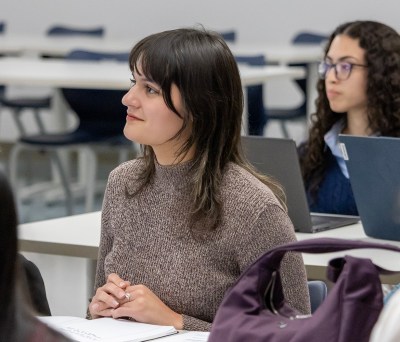
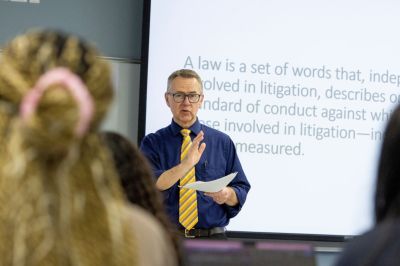
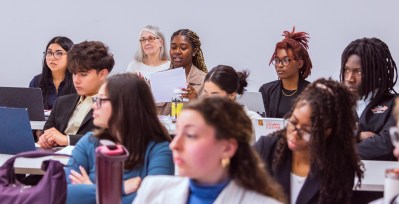
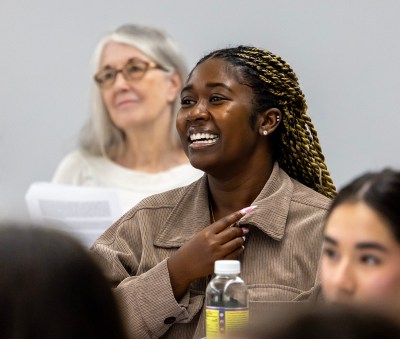
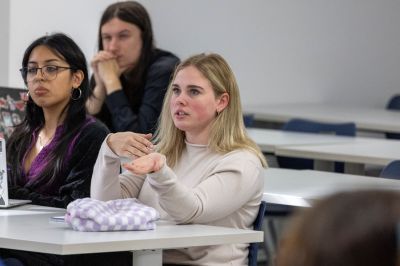
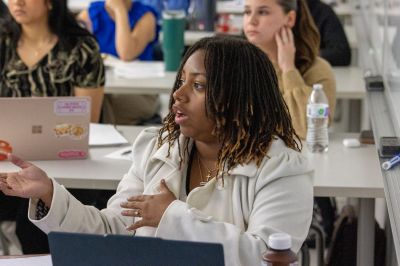
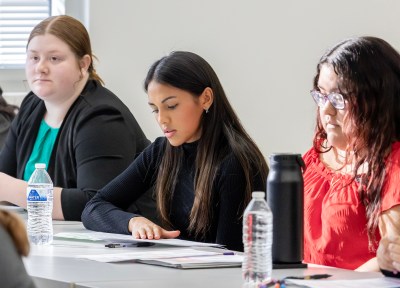
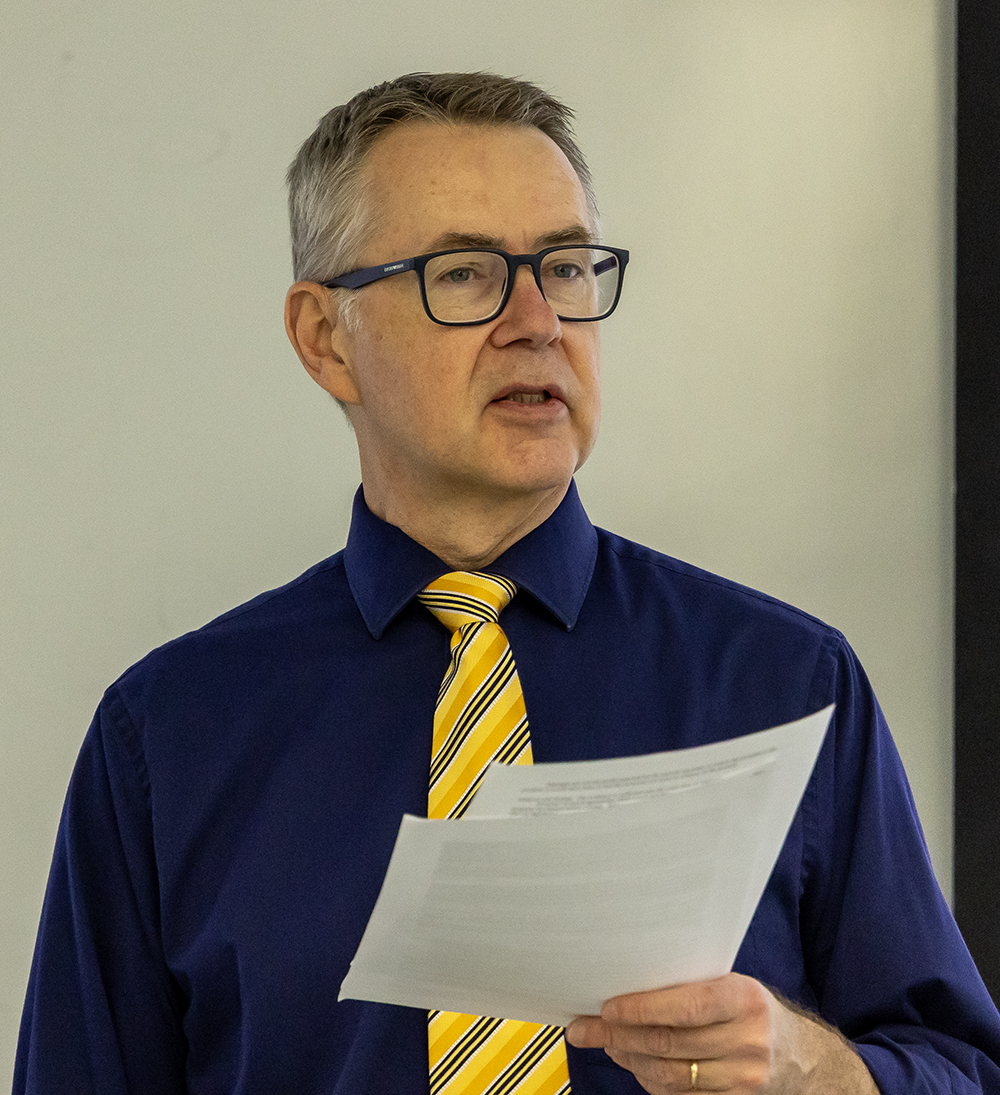
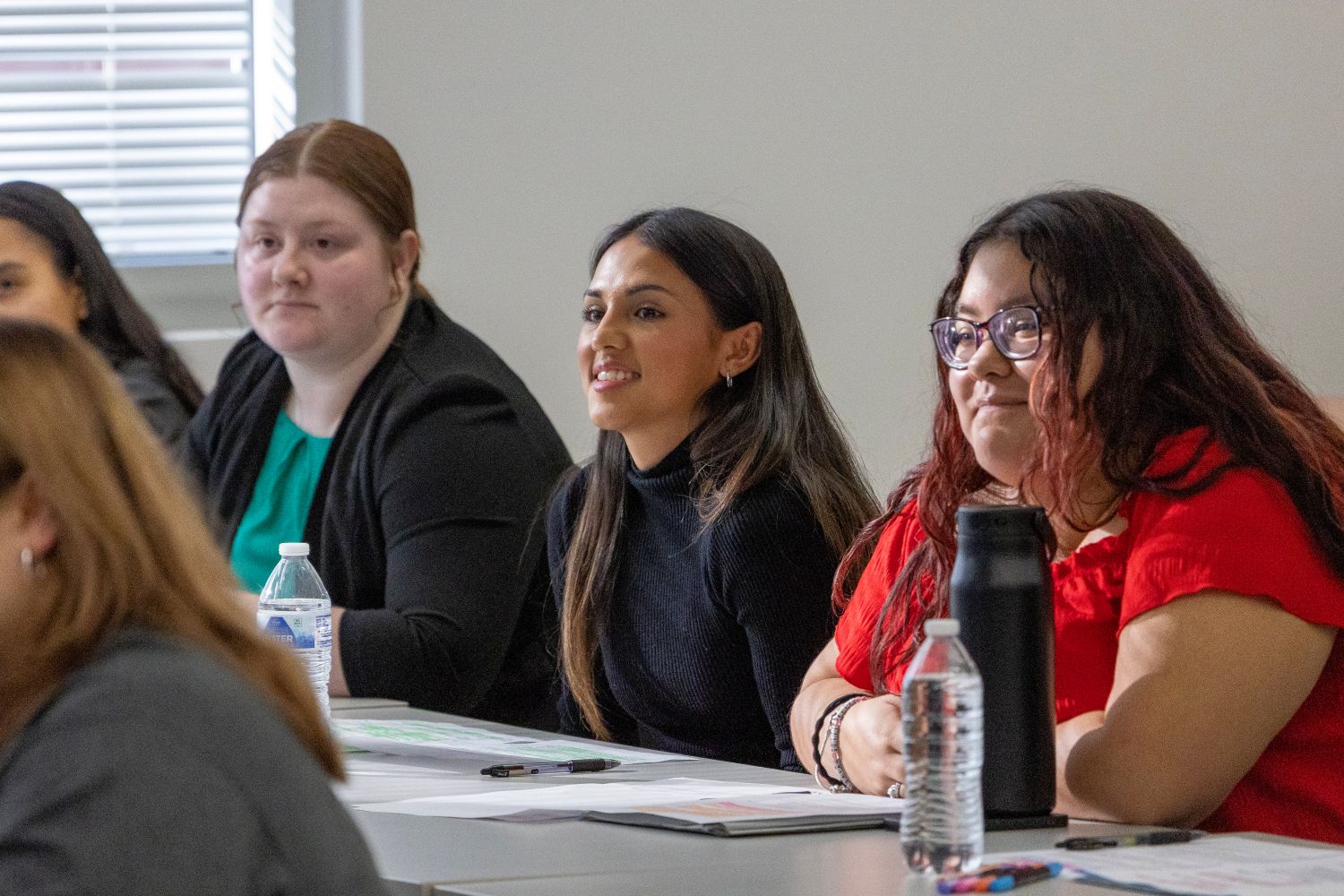
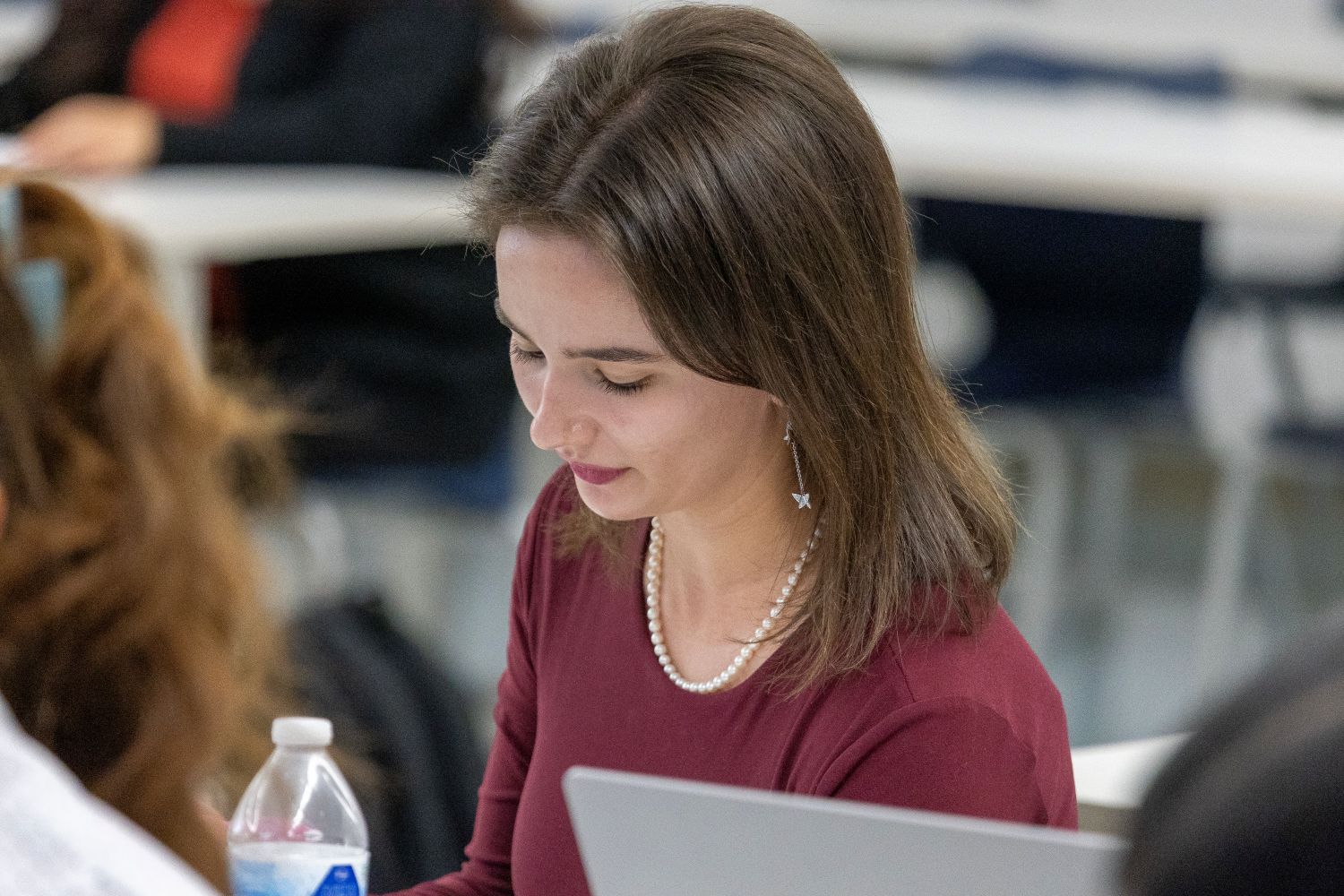
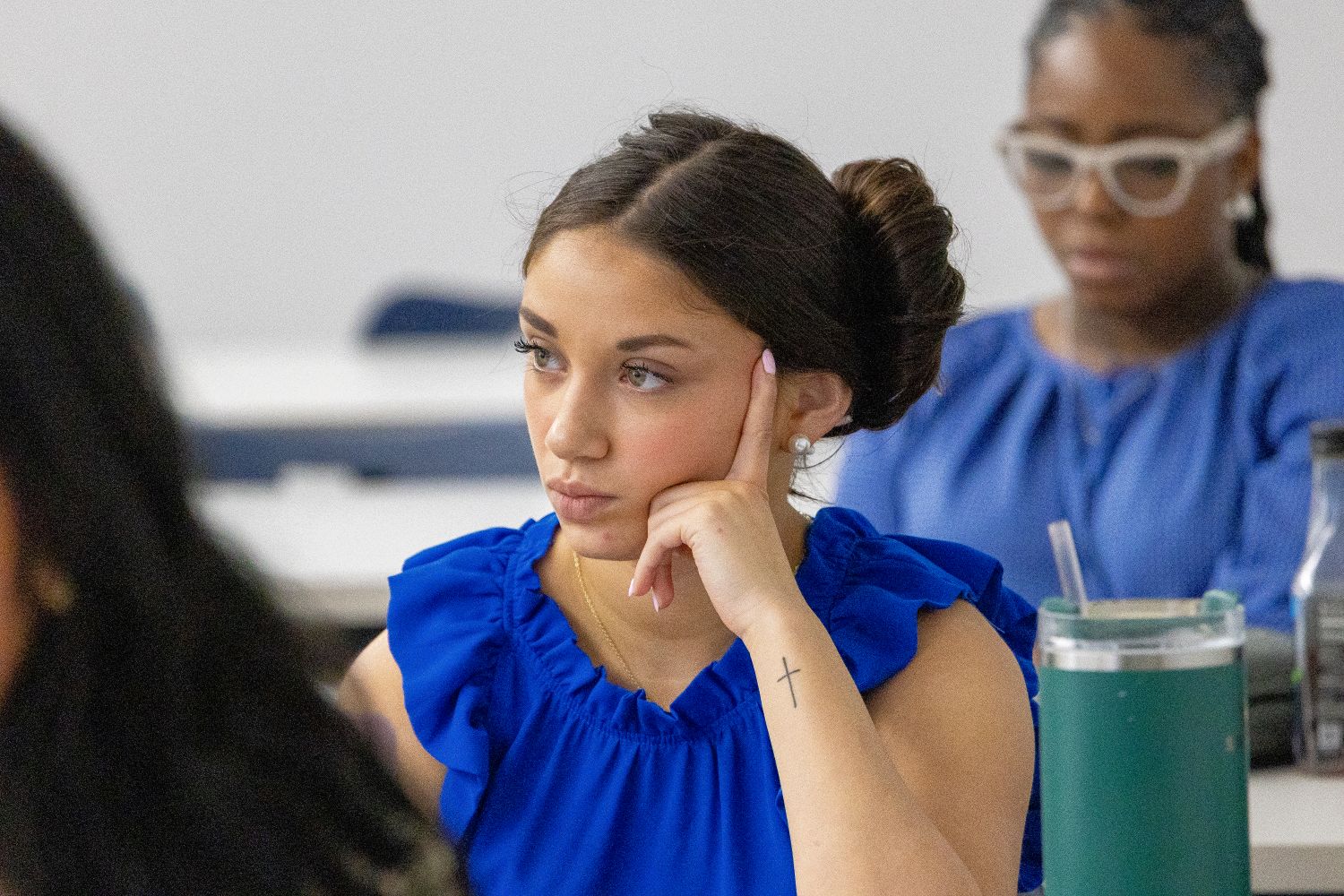
Last week, LEAP students had the opportunity to experience what it’s like to be in a law class led by Professor Val Ricks at South Texas College of Law Houston! From cold calls that made us lean in with anticipation…
…to deep dives into Promissory Estoppel, Professor Ricks left us all with new knowledge and a new way of viewing words.
The mock class started with defining what law is, specifically:
Law: a set of words that, independent of anyone involved in litigation, describes or establishes a standard of conduct which against the actions of those involved in litigation — including the judge — may be measured.
Why do humans form law? Would law exist if humans didn’t? The simple answer is: Law is just a standard of conduct humans use to govern themselves. Even though we write them down, without us here to interpret those words, they would have no value.
Professor Ricks related law to a game of Chess, each piece on the board is affected by a rule, that, in turn, influences the sequence of the game.
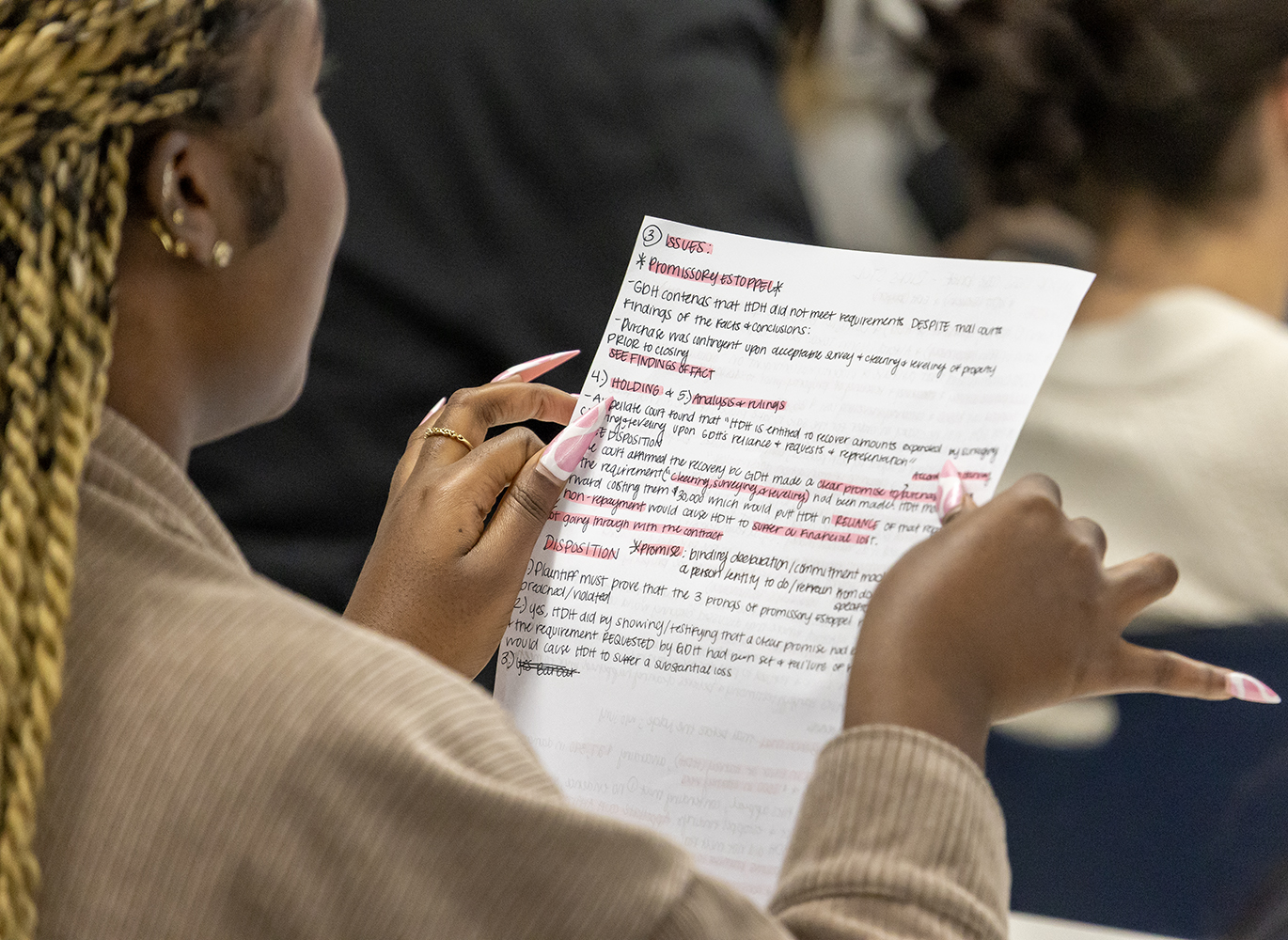
Then it was time for the case: G.D. Holdings, INC. v. H.D.H. Land & Timber, L.P., a civil case revolving the transaction of 300,000 dollars in exchange for nine acres of land IF the land were to be surveyed, cleared, and level. Professor Ricks provided us with the facts of the case and turned it over to us, cold calling on students…
…to give the other aspects of their case briefs.
Learning from each other, we began to apply the rule of Promissory Estoppel, re-defining its three requisites.
As a class we came to understand that Promissory Estoppel is when a promise is made and the person making the promise can reasonably predict that the person agreeing to the promise will rely on that promise in a detrimental way.
In the example case, the promise was the purchase of land by G.D. Holdings from H.D.H. once the land got cleared.
We also learned that even though both parties signed a contract, because one party crossed out a clause in the contract before signing, the law considers that to be two different contracts meaning there wasn’t ever a valid contract.
After we dissected the case and the language used in it, we got to practice our application with a few examples and found that Professor Ricks (to no one’s surprise) did an excellent job at teaching us the concepts so we all properly applied the learned rules to other cases.
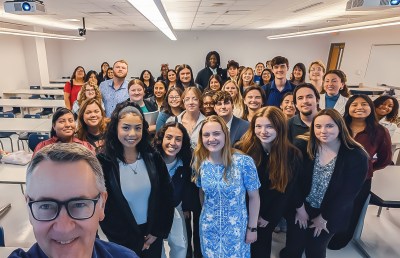
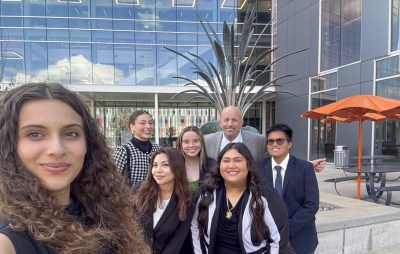
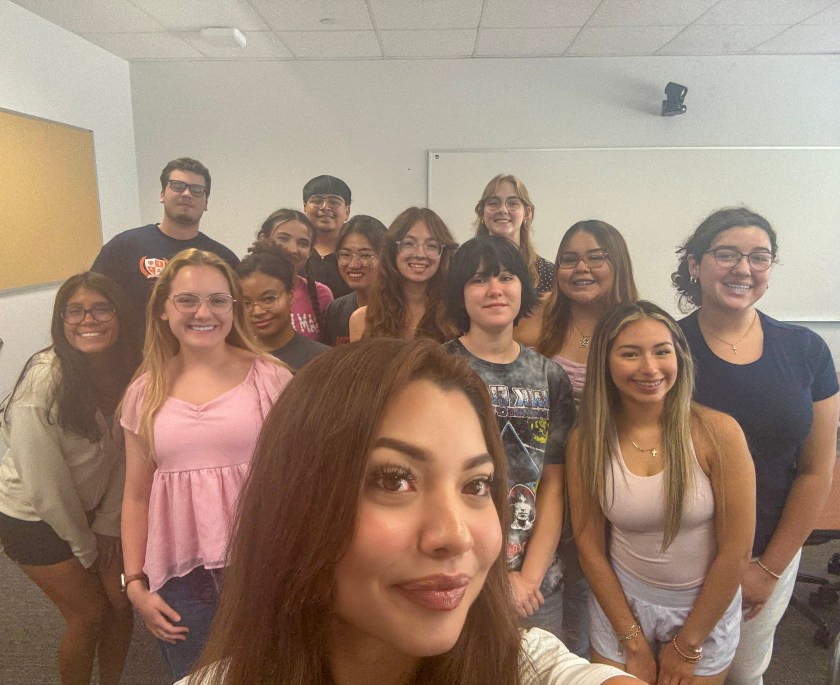
We also got the chance to ask Professor Ricks about law school admissions, grading, as well as what to expect in similar law school classes. Of course, we had to get our signature selfie to finish the class, but the learning didn’t stop there as even afterwards, all of us were beaming with a new passion for contract law and hopes for what future knowledge lies ahead.
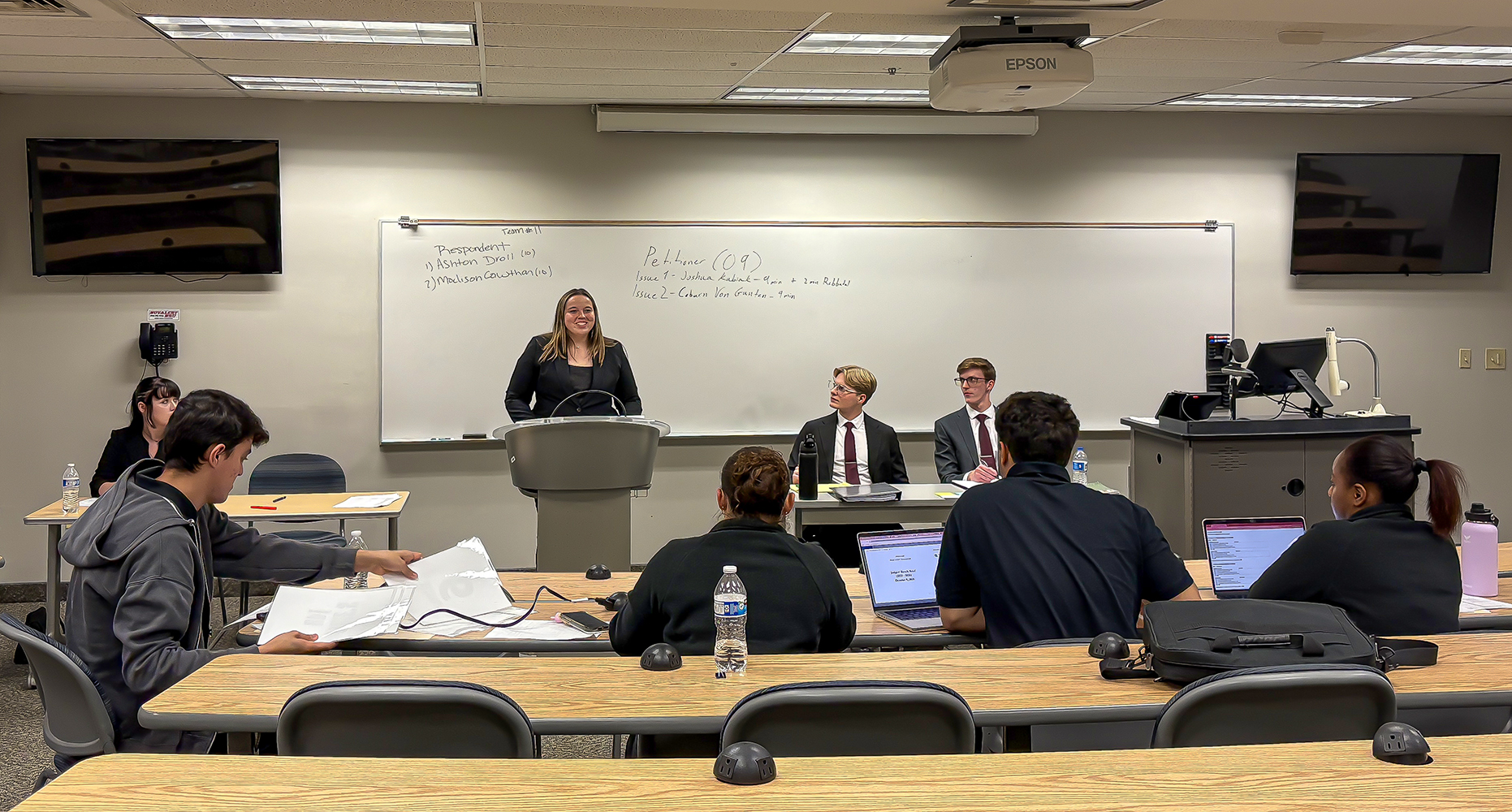
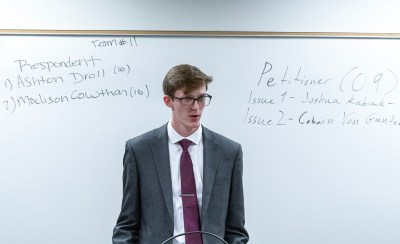
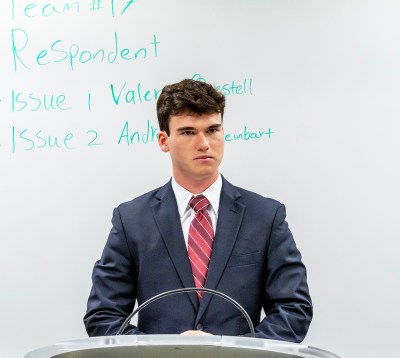
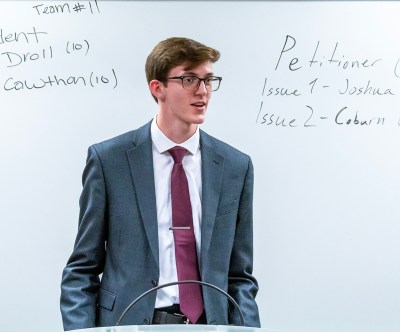
After a long day of Moot Court competition and work that persisted late into the night, our LEAP competitors enjoyed the mercy of an extra hour of sleep, courtesy of Daylight Savings Time. But the sun rises even after the longest nights, and we–Madison Thurkettle, Allison Lindle, Katie Wilson, and our Day Two competitors, Ashton Droll and Madison Cawthon–hastened to the Shepard Broad College of Law to extend our Moot Court season.
A Time to Keep…
With admonishments to arrive no later than 9:30am, we arrived early, in time to witness the coin toss that would decide whether we were representing the petitioner or respondent.
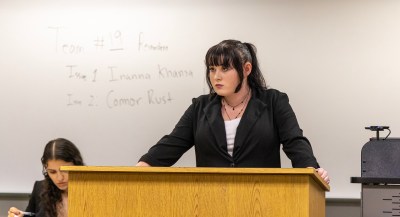
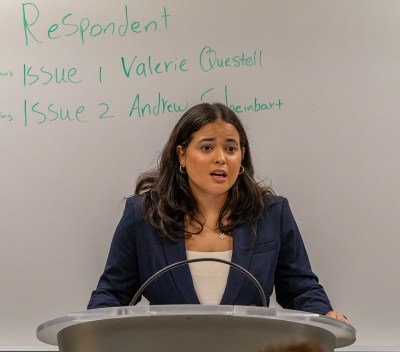
Our competition was Connor Rust and Inanna Khansa from the University of Chicago, and winning the coin toss, they chose to represent the respondent–which was fine with us.
A Time to Build Up…
A win in this round would place us at the Preliminary Nationals, scheduled for Virginia in January. For Maddie, who wasn’t expecting to get this far, much of the pressure had been shed from her shoulders. Ashton, on the other hand, animated by what many judges described as “a passion for moot court,” felt the pressure and the need to win. Both, however, experienced the ups and downs of preparing for competition.
Both sensed immediately the elevated level of competition. “We could cite the record and the cases,” observed Droll, “but Rust and Khansa took it a step further. They cited the record and then cited cases within the cases.”
A Time to Speak, a Time to Keep Silence…
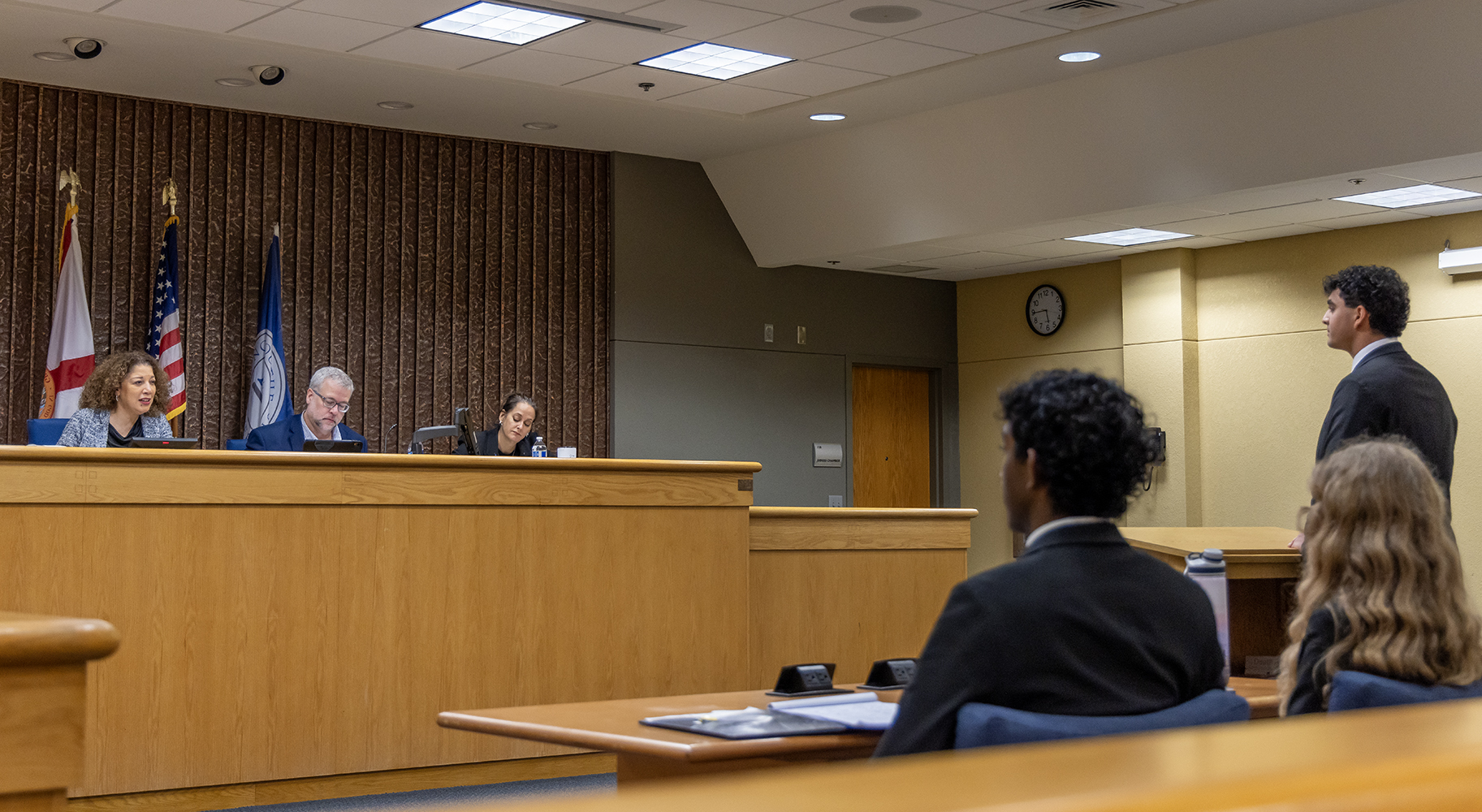
Nonetheless, Droll and Cawthon executed their best performances. Heeding the Biblical admonition that “a fool’s voice is known by a multitude of words,” they answered questions directly, demonstrating their knowledge of the cases and applying that knowledge judiciously and to the point. “They were,” noted Wilson, “more polished than they’ve been the entire Moot Court season.”
In the end, however, it wasn’t quite enough. Rust and Khansa edged out Droll and Cawthon on two ballots (one was decided by three points out of 1,600) and solidly on a third. Despite the loss, the team members’ outlook remained undimmed, happy with their portion, and equipped with a focus on a new season and a renewed sense of purpose.
Two Shall Withstand…
The finals pitted Anna Barker and Steven Abraham (University of Central Florida) and Christy Banker and Gaege Gobezie (Liberty University)–the latter of whom had taken the tournament’s first and second-place individual orator honors.
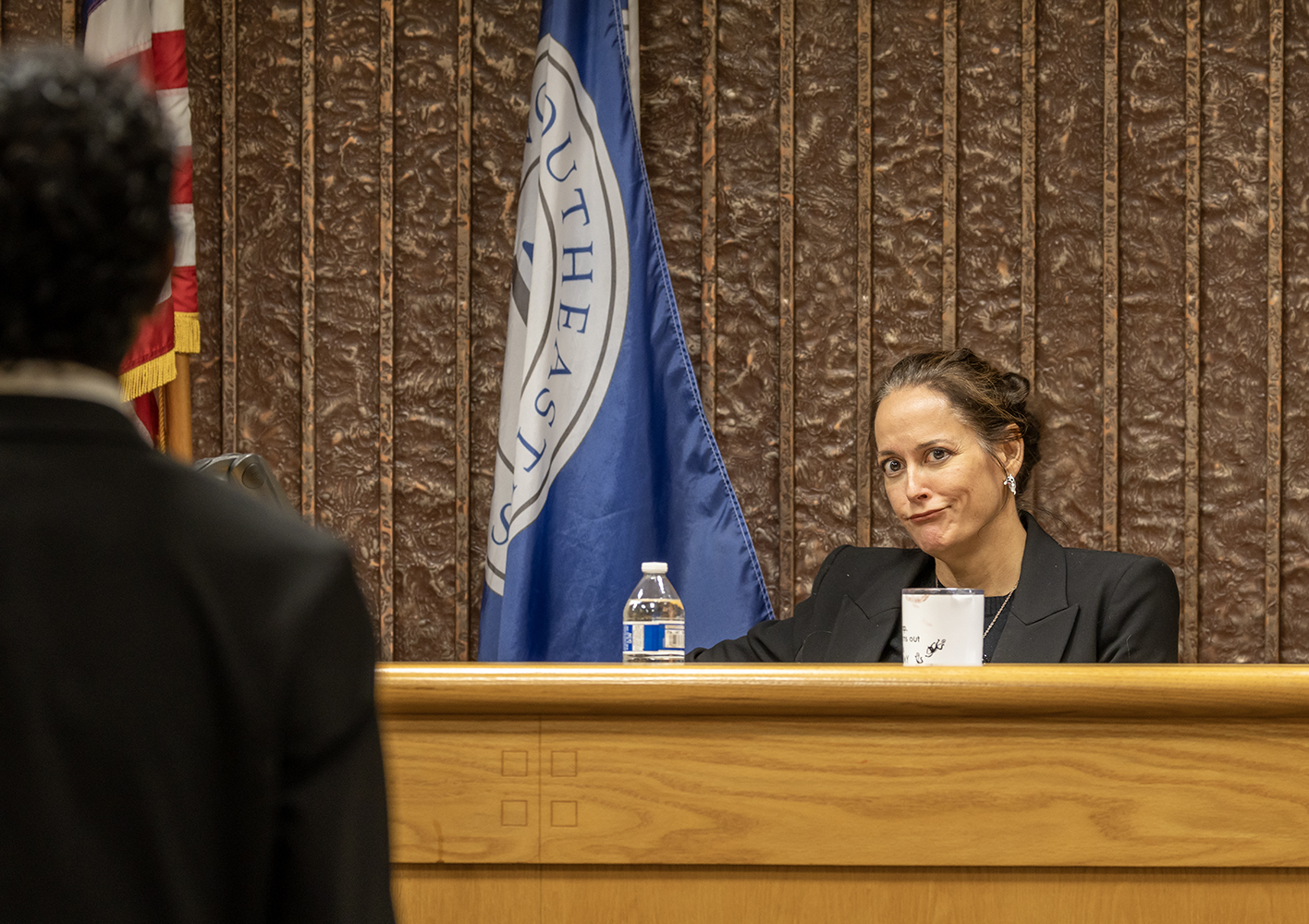
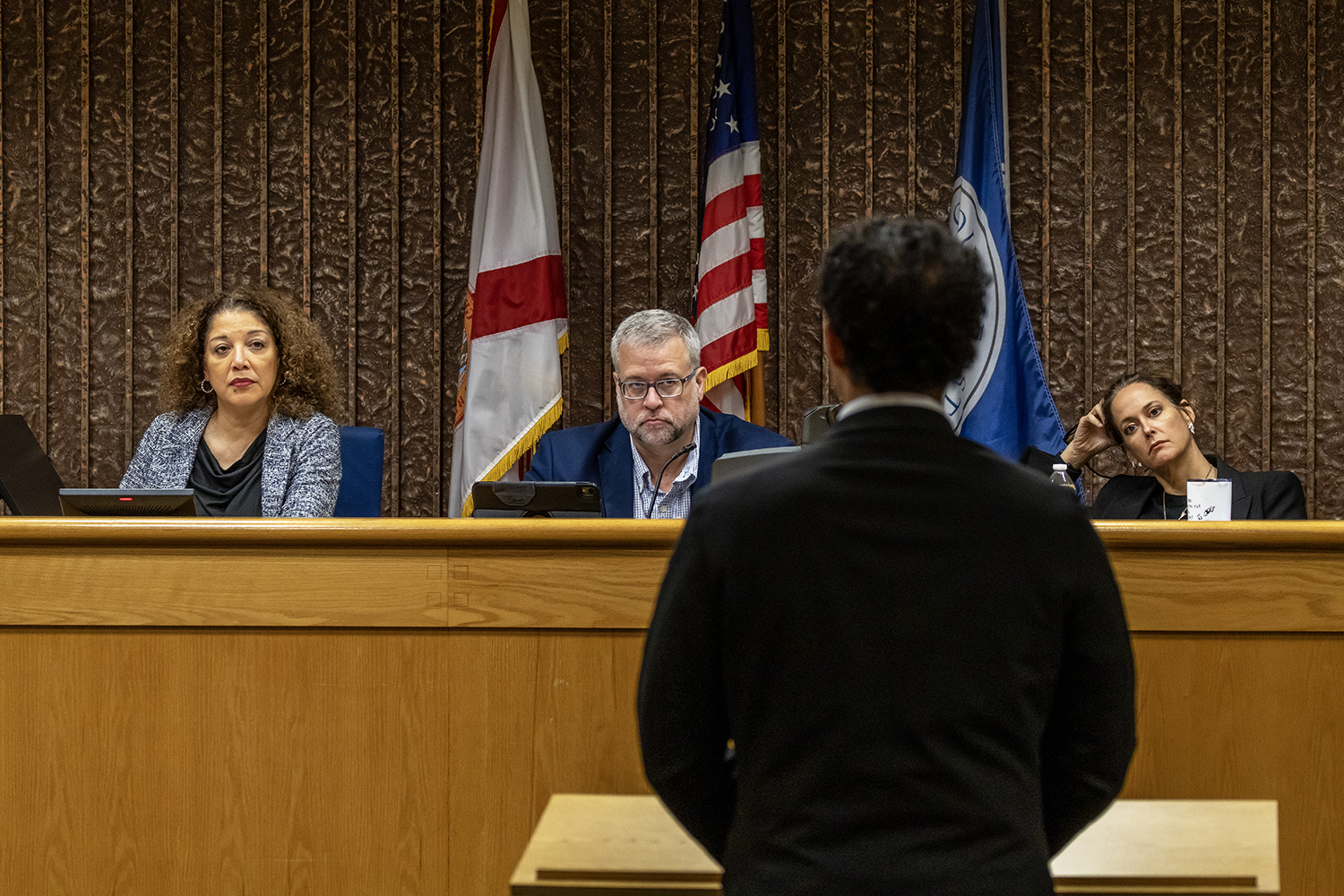
Facing a hot panel–which included the Dean of the Law School (Olympia Duhart), the Director of Advocacy Programs for the Shepard Broad College of Law (Joe Lester), and an animated Criminal Law Professor (Megan Chaney)–
…the four competitors showed impressive knowledge of the cases, verbal agility, and the enviable skill of anticipating the judges’ line of questioning and redirecting it. It was, LEAP students noted, a lesson to learn.
The contest was close, perhaps the closest of the tournament…
…with Anna Barker and Steve Abraham of the University of Central Florida edging Christy Banker and Gaege Gobezie of Liberty University. The match was decided by two points.
Every Man Should Eat and Drink…
With competitions behind us and much before us, we decided on a meal at Rocco’s Tacos, which was recommended by Orlando Magazine and Eater. The recommendation was well founded.
We began with guacamole (excellent), which had just the right mix of tomato, salt, and garlic; chips and a salsa sampler, with the salsa verde and the smoked salsa being the favorites; and sauteed shrimp, which were impressively tender and bursting with flavor. It was a good way to begin the meal.
Our entrees were equally impressive. Half of our group ordered salads, while Ashton sampled the cheese enchiladas (featuring creamy Chihuahuan cheese); Professor Yawn tried the veggie and pork tacos; and Cawthon explored the Chorizo tacos, featuring Cotija cheese.
The food was excellent and filling, and the time at the table offered a respite from a competition and an opportunity for reflection.
Patient in Spirit…
With the tournament receding into a remembrance of former things, we contemplated the transitional and cyclical nature of things.
Each of us has enjoyed a new experience on the trip, whether it be a new food experience, learning photography with a mirrorless camera, or simply our first travel without family in tow. For all of us, this was our first Moot Court competition.
And while it is natural to see a cohort go and a cohort come, four of our five competitors will still be at Sam Houston State University next year and–at least following the high of competition–are interested in participating again in Moot Court, renewing a cycle of education, experience, and exploration.
And with these reflections on the good of our labor, we returned to the hotel, where we looked forward to the sweet sleep of the hard working and to the start of a new day.
After a summer of study and two additional months of practice, LEAP’s Moot Court team made their way to Fort Lauderdale (which, in fairness to the title, is near Miami) for the Sunshine State Regional Moot Court Tournament–part of the American Moot Court Association’s annual national competition.
AMCA Board Member Ben Rathsam Kicking Things Off
The Moot Court Process
The Moot Court process has many moving parts, but the steps are straightforward:
Each team has two members, with one tackling the 14th amendment (equal protection) and one tackling the 1st amendment (speech);
Teams then register for one of 18 regional tournaments across the US;
Teams then compete in the tournament for which they registered, and if they qualify, they move on to a “Preliminary National Tournament” and, if they qualify again, the National Tournament.
Teams are evaluated on four broad categories: Knowledge, Courtroom Demeanor, Response to Questions, and the Clarity and Logic of the Argument.
Michael Dass from NSU
Moot Court at Sam Houston State University (SHSU)
SHSU begins its Moot Court involvement shortly after AMCA releases the Case Problem (May 1). Over the summer, Professor Mike Yawn teaches “How to Win in the Courtroom,” using the Case Problem (and the ancillary 20 other cases) as the curriculum, and culminating with live “hearings.”
In late August or early September, official tryouts are held, and students compete for team spots. The LEAP Center selected five participants this year, making up two teams and a “spare:” Team One is Madison Thurkettle and Allison Lindle; Team Two is Ashton Droll and Maddie Cawthon. A fifth student, Katie Wilson, made the team, but lacked a teammate.
All of these students committed to weekly practices during September and October, with the goal of being prepared for today’s tournament.
The Sunshine Tournament
The Shepard Broad College of Law at Nova Southeastern University hosted the Sunshine Tournament, giving 64 students the opportunity to travel; visit a law school; perform in front of judges, bailiffs, and tournament organizers; and meet other pre-law students from across the country. AMCA Representative Ben Rathsam introduced the event, and Shepard Broad Law Professor Marc Consalo provided additional guidance, helping orient the students, and focusing their minds.
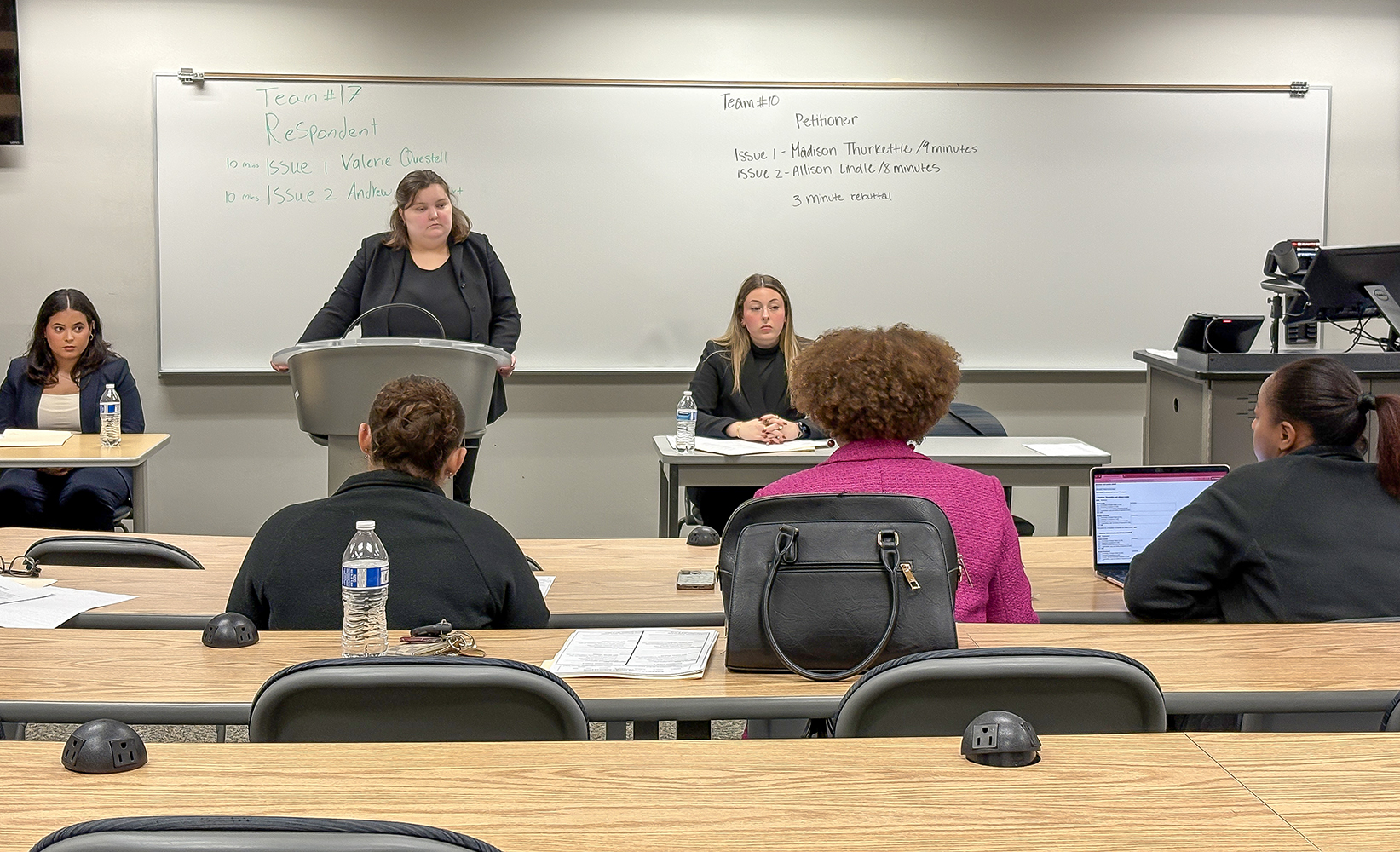
Day One, to use a sport analogy, is the “regular season,” and it consists of three rounds for each team. The first round began at 2:00pm, with Thurkettle and Lindle representing the petitioner and competing at a team from Central Florida; Droll and Cawthon also represented the petitioner, and they competed against a team from Nova Southeastern University. In subsequent rounds, SHSU teams faced competitors from Stetson University, Benedictine College, Liberty University, and the University of Tampa.
Moot Court Self Care
Katie Wilson, although not competing this year, travelled with the team, proving herself an expert navigator, and a quick-learning photographer.
Competing
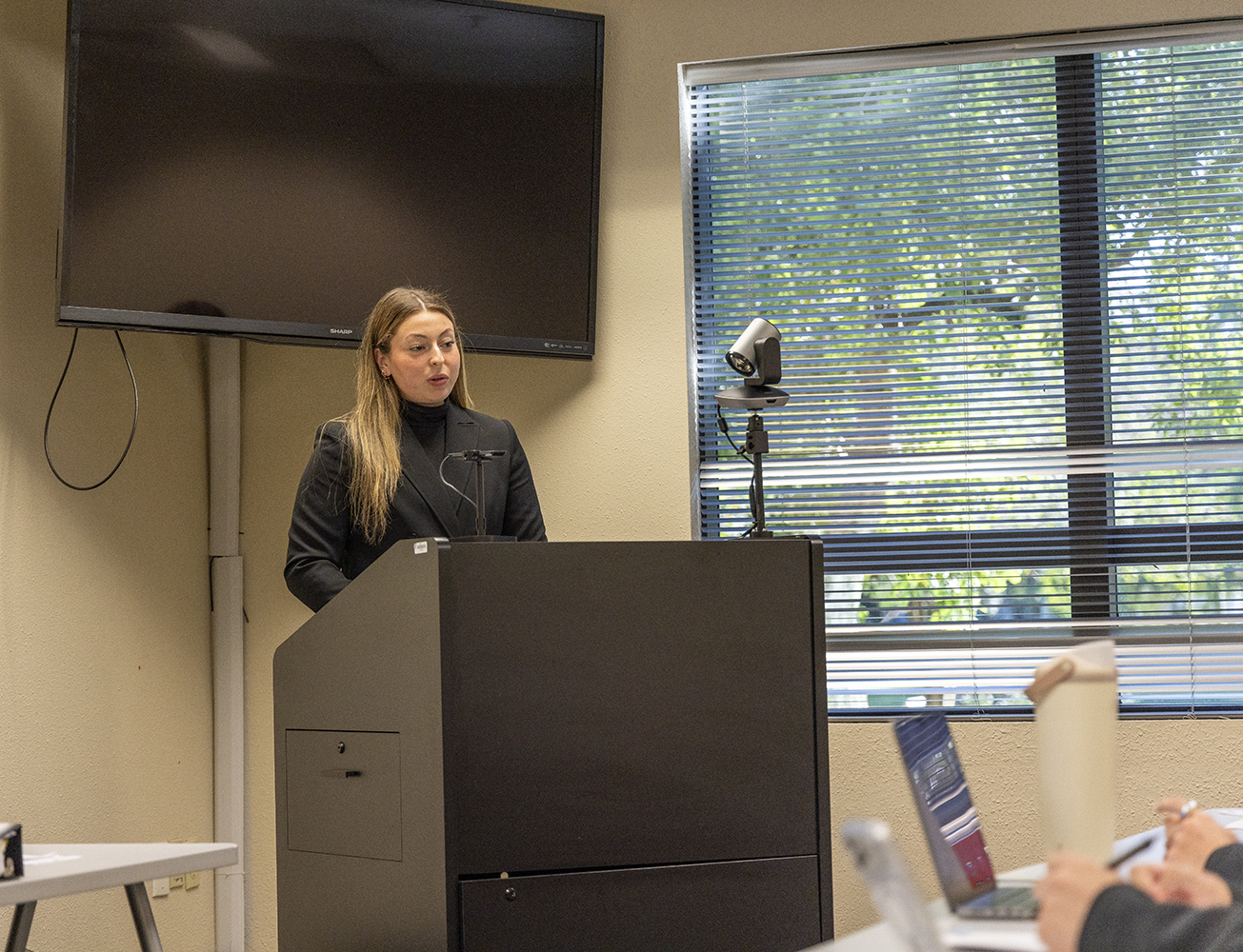
Although the students have been involved in more than a dozen formal practices and numerous individual practices, the real thing brings a fresh sense of nerves.
“For me, the first round was the worst,” noted Madison Thurkettle, a Junior at SHSU, and a first-time competitor in Moot Court, “and I was able to loosen up in the subsequent rounds.”
Allison Lindle, Thurkettle’s teammate, agreed: “The first round was nerves; the second round, we were able to see some success; and by the third round, we were hitting our stride.”
Only Known Photo of Thurkettle Smiling While at a Podium
For Ashton Droll, who did debate in high school, nerves weren’t a huge issue. But there was still the adapting to representing different parties in different rounds and learning the idiosyncrasies of the different judges. In Round One, for example, one judge gave Droll an average score of 87.5; another gave her an average score of 99.25.
At times, the judges’ feedback can be contradictory. One judge told Maddie Cawthon that she “sometimes got lost while answering questions.” The same round, a different judge told her: “Great responses to questions.” A frustrated Cawthon lamented: “they can’t both be correct.”
Outcomes
One of the outcomes of tournaments such as this is seeing the competition from other schools. Getting students out of the classroom and seeing high-achieving students from other schools is a key part of moot court, and in this setting, there were many strong students representing top universities across the nation.
For Lindle and Thurkettle, it was a steep learning curve, one punctuated by some near misses. On the final round, for example, they lost two ballots by one point each ballot. It was a tough round. Nonetheless, they both had strong showings. On one ballot, Thurkettle averaged a 98; on the same ballot, Lindle averaged a 97.5.
Droll and Cawthon similarly saw some close calls. Two of their ballot losses came from margins of 10 points or less (out of 1600), but they were in the running on every ballot–and this consistency helped them break into the Sweet 16. Indeed, they were seeded 11th out of 32 teams!
This was a victory not only for Droll and Cawthon, but for the entire SHSU delegation. As Katie Wilson noted, “I’ve spent the last couple of months with these girls, and it was rewarding to see them grow and have the opportunity to compete in front of real judges. I am already getting excited for next year’s case!”
Wrapping Up
But, of course, there is at least one more round in this year’s tournament for Droll and Cawthon, a prospect making for a long night (thankfully, Daylight Savings Time will add an hour…). But whatever that outcome, the tournament–and the organizers, judges, and volunteers–has provided the thrill and stress of competition, exposure to new places and people, and the opportunity for growth.
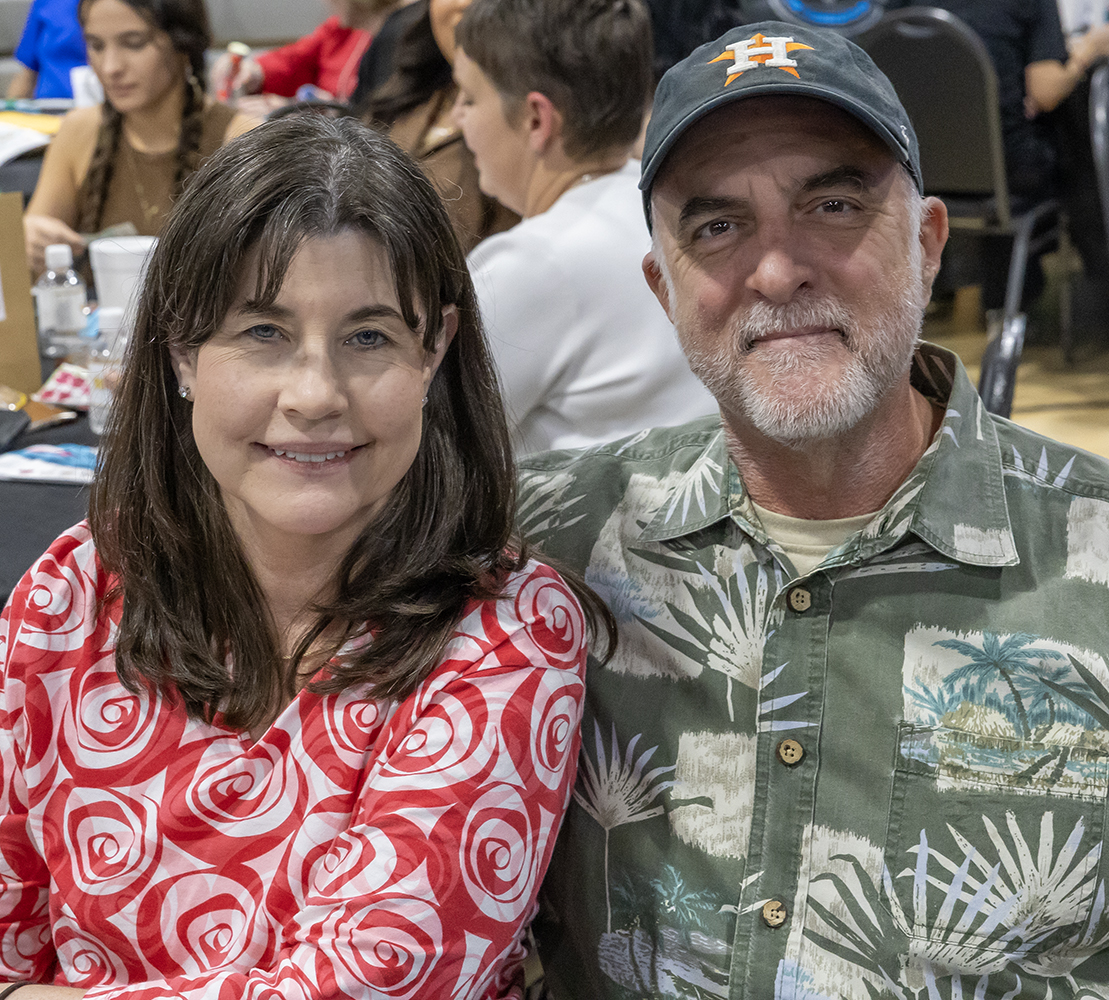
Community. Fundraising. Bingo Daubers. Over the weekend, the LEAP Center had the pleasure of sponsoring a table at the Boys and Girls Club Oktoberfest Bingo fundraiser–a fun-filled event that contributes to a great cause.
The Boys and Girls Club of Walker County is a nonprofit organization which aims to provide programming and activities for the youth in our community. They do a fantastic job of engaging children in disciplines such as the arts, lifeskills, education, leadership, and fitness. They have served a total of 7,198 youth in Walker County, and 91% of their students in the last year were promoted to the next grade level. The Boys and Girls Club, under the impressive leadership of Michelle Spencer, recognizes the importance of engagement when it comes to community-wide impact.
The fundraiser also serves as a learning experience for LEAP students. Having an understanding of how a nonprofit can rally its community together is more nuanced than games and door prizes.
Not only is it an opportunity for the Boys and Girls Club to raise funds for their important programming, it is also an opportunity for community members to engage with one another, learn more about the various entities and organizations that make up that community, and in turn, inherently strengthen relationships and build consensus among them.
Many of our core values are the same, and regardless of generation, political ideology, or background, events such as these prove that community rises above all of those things.
BJ McMichael emceed the event…
…Kevin McMillian served as auctioneer …
…and there were numerous friendly faces in the crowd–in fact, too many to name. A few to note were Judge Tracy Sorenson, Judge Colt Christian…
…and of course, Michelle Spencer, the Director of the Boys and Girls Club of Walker County!
At our table, we had the pleasure of joining with Roxana Alvarado Martinez–a former participant and current success story of the Citizenship Preparatory Course that LEAP facilitates each spring. She is a great friend of LEAP.
Ten rounds of bingo ensued.
While Roxana and I tried to curry favor with the fates by creating fortune tellers, we unfortunately did not have any winners at our table. However, Stephanie and Sofia came pretty close a few times!
Slowly but surely, we began to lose hope. However, Yajaira, a recent SHSU graduate and friend of LEAP, won a door prize!
In all, our table had a great time of conversation, anticipation, and for some more than others…
…using the bingo daubers to create what can only be described as an abstract work of art in between calls.
We enjoyed supporting a great cause for our community and building connections and relationships with some new, bright students–which can be considered a win in and of itself!
With limited resources, LEAP layers its activities, making the most of each opportunity. Accordingly, when a learning activity took students to Houston, LEAP students sought out new experiences.
On the way to Houston, we stopped at SHSU’s College of Osteopathic Medicine in Conroe, where we introduced some of our newer students to alum James Surls. Not in person–but through his art. His work, “Pitcher with Flowers,” was designed in 2014, and it was installed at the College of Osteopathic Medicine in early 2020.
The vase with flowers, according to Surls, represents giving “life to new growth,” and, accordingly, was “perfect for the site.” It was also, we thought, a perfect introduction of Surls’ work to students who might not have gone out of their way to explore art.
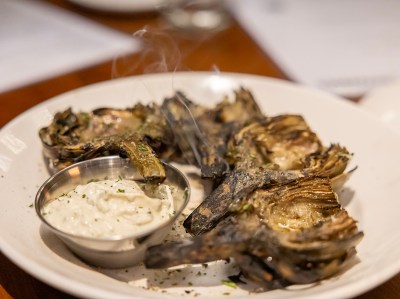
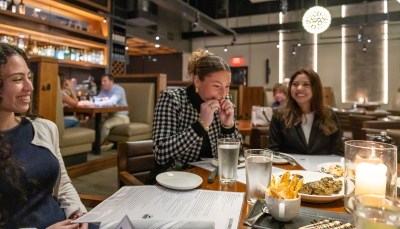
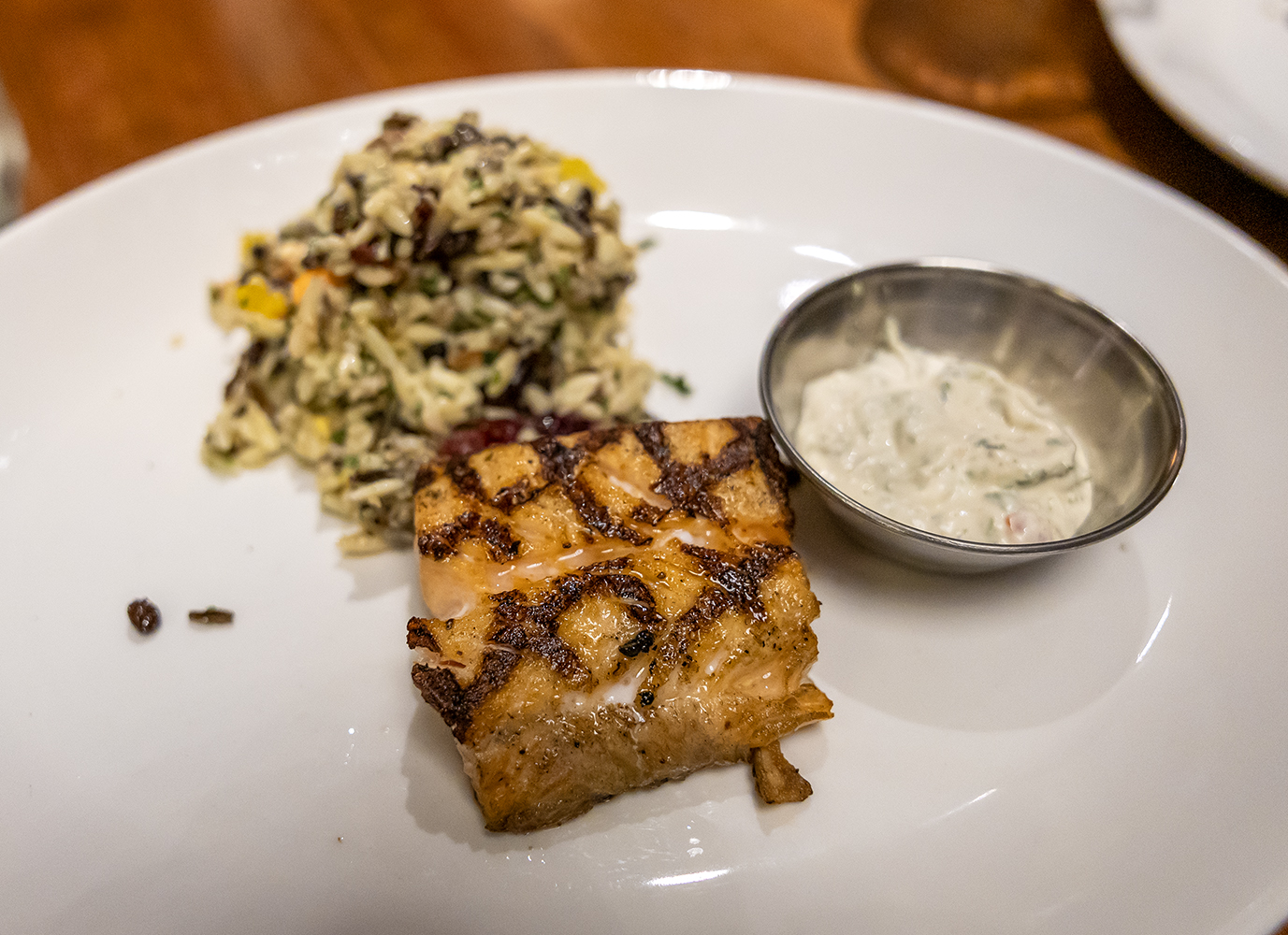
We took the same approach to food. We stopped at J.Alexander’s, which serves a wide and rich variety of food. We tried a lot of it! We began with smoked salmon, avocado bombs, and artichokes.
It was Ashton’s first time to try salmon, and for several of the students, it was the first time to try artichokes.
The entrees ranged from the basic (burgers and salad)…
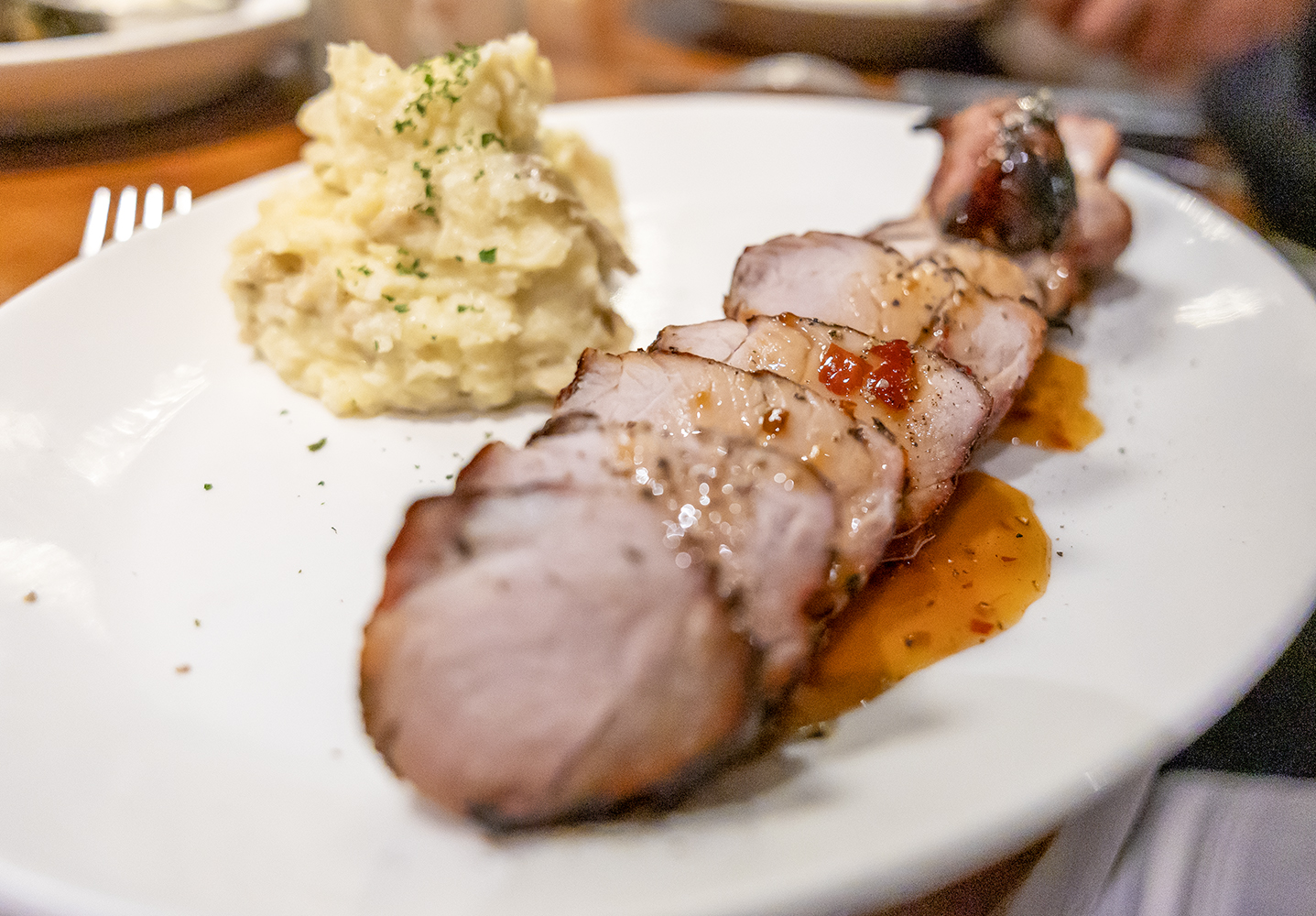
to the moderately interesting–salmon, crab cakes, and pork tenderloin.
In typical LEAP fashion, we sampled from each other’s plates, and this led to Ashton discovering a third dish she had never tried before: crab cakes. It was also her favorite!
Perhaps the favorite course was the dessert, which featured carrot cake (favorites of Michelle and Mike), chocolate cake (Ashton’s favorite), peanut butter pie, and Key Lime pie.
It was a wonderful outing, complemented by the opportunity to try new foods, discuss our experiences at Sam Houston State University, and get to know one another better.
The LEAP Center is always looking for new ways to offer opportunities for SHSU students, and this fall, the Center has partnered with the FBI to offer a “Collegiate Academy.” The program, which takes place on Wednesday, November 12, offers up to 50 students an exposure to the FBI, its operations, its investigations, and potential careers with the agency.
Hosted by the FBI’s Houston field office, the program will offer (1) an FBI career panel, (2) a deep dive into art-related crime, and (3) live demonstrations. This unique opportunity is designed to offer transparent views of the FBI’s work, encourage an understanding of its mission, and potentially recruit students for careers in the FBI. It is one of many FBI-focused programs offered by SHSU’s LEAP Center.
LEAP Students Meet With FBI Agent Christopher Combs
Students from all majors are eligible to apply, but it is a competitive process. Only students with a 3.0 GPA (cumulative and SHSU) will be considered, and the FBI only considers students who are legally in the United States. Both SHSU and the FBI are involved in the selection process, with an SHSU committee selecting on various criteria (GPA, involvement in LEAP programs, career goals, organizational activities), and the FBI running background checks on students for clearances. Students should submit a professional resume using the model offered by Career Success Center and LEAP (which can be found at the bottom of this page) and submitting it while filling out the application.
LEAP Students Hear From FBI Director Christopher Wray
Students who apply to the program should have a good faith belief that they can be free from class and work obligations on Wednesday, November 12. Professor Yawn will send a note requesting an excused absence on behalf of accepted students, but it is the Professor’s discretion to decide whether to accept such an absence and whether to allow makeup work.
Pre-Law Society Students Hear From Former FBI Asst Director Frank Figliuzzi
The LEAP Center will rent a bus and provide transportation, with a departure time between 7:00am-7:15am. The program lasts from 9am-Noon, followed by a lunch. Students will likely be back at SHSU’s campus by 4pm.
Students needing more information should contact Professor Mike Yawn. The deadline to apply is October 24, but earlier submissions will be given preference. To apply to the program, fill out the linked form.
Being a part of the LEAP program isn’t just about preparing for a career in law –it’s about learning to see the world through a new lens. I came to understand this during a presentation in Professor Yawn’s UNIV 1101 Pre-Law class, where LEAP Ambassadors Olivia McCaughan and Michelle Moya outlined the program and highlighted the wide range of opportunities it offers.
Through LEAP, students gain access to experiences that prepare them for the future—ranging from civic engagement, like volunteering at the Main Street Program’s Scare on the Square (which I look forward to participating in this October), to hearing from special guest speakers, to interning in Washington, D.C., Austin, and local government. I was especially delighted to learn that LEAP is not limited to students pursuing law school, but is open to anyone interested in making a difference in their community through civic work. LEAP members don’t volunteer to meet a quota, but rather to get involved in ways that are meaningful, impactful, and connected to their communities.
My first-year experience has also been shaped by UNIV 1101, a pre-law course designed to introduce students to the field. Professor Yawn’s daily quizzes extend a vast array of subjects, from LSAT prep to Emotional Intelligence to LEAP Ambassadors Olivia Discon and Michelle Moya’s Parasailing trip. True to law school style, at the end of each short quiz, students are called on to announce their answers to the class! On a whole, Univ 1101 has proven to be a very detail-oriented class, reminding our group of prospective lawyers the importance of every detail, even those that seem menial.
This focus on preparation carried into another highlight of my week: attending my first Pre-Law Society meeting alongside several of my UNIV 1101 classmates. We learned about several prospective law schools, including the University of Houston Law Center, South Texas College of Law, and Texas Tech Law, directly from their admissions representatives. We even received Pre-Law Society t-shirts, signifying our official place in the program! I also had the chance to meet our organization’s leaders as they reviewed the agenda and introduced our guest speakers.
As Michelle Moya explained, the Pre-Law Society is just one branch of the broader LEAP program. I’m eager to explore each branch throughout my four years at Sam Houston, confident that every experience—whether in the classroom, the community, or beyond—will bring me closer to the leader and lawyer I aspire to be.
Olivia McCaughan, Allison Plunk, and Michelle Moya
LEAP students added another country to its World Affairs Council culinary passport: Italy. While Italy is most known for pizzas, pastas and their ketchup-despising attitude, it is also known as the wine capital of the world. We learned more about wine and its profound impact on people’s lives.
In true European fashion, there was plenty of snacking to be had, rather than a full-course meal. A variety of cheeses and meats ensued, and we spent time conversing in the beautiful Italian Cultural and Community Center.
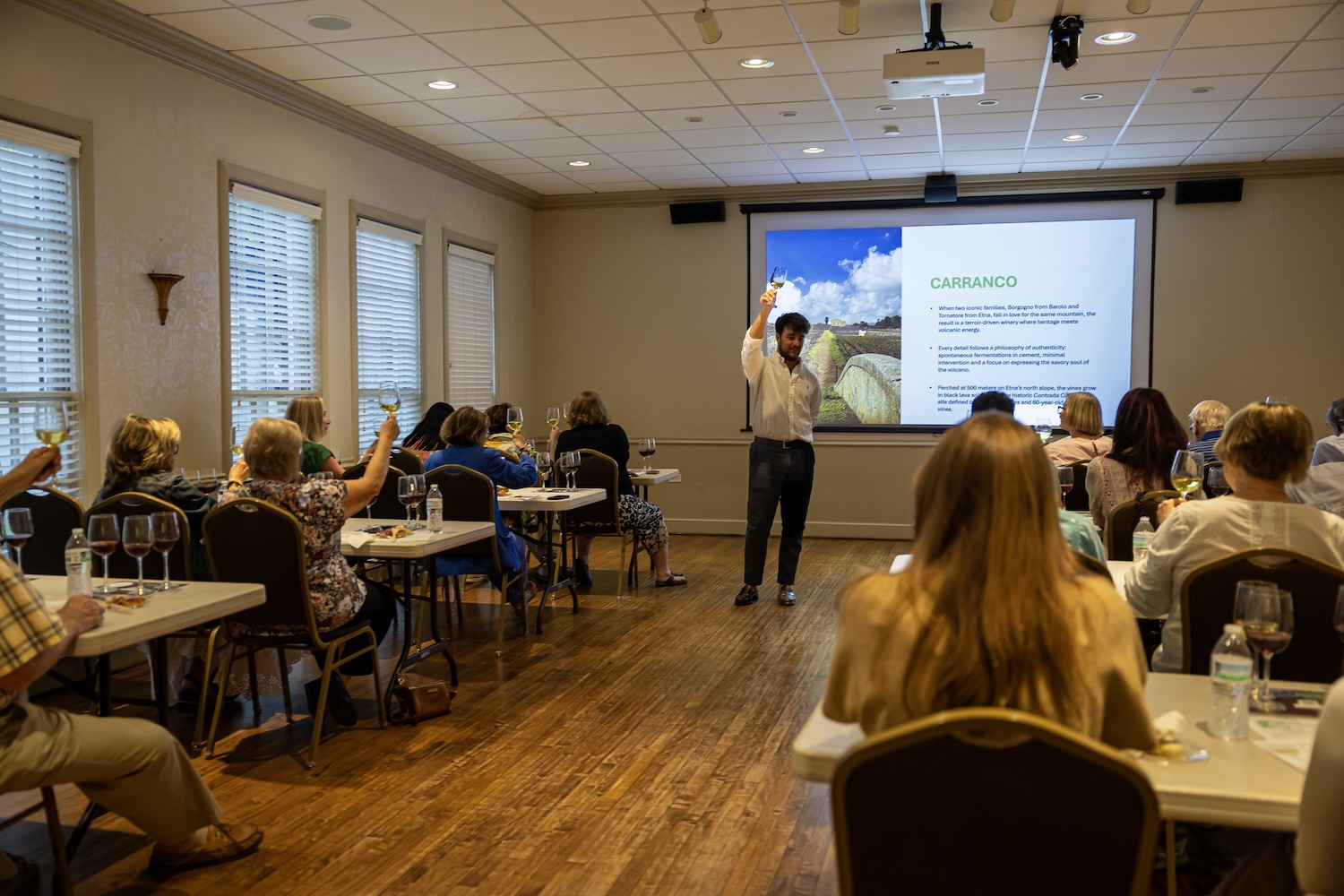
The speaker for the evening, Ferdinando Favara, has grown up appreciating this aspect of Italian culture his whole life. His family, who has longstanding roots in the wine industry, have a vineyard in Sicily–which we came to learn is on the up-and-up in terms of regional “quality”. Favara helped his grandmother in the wine fields starting at just 14 years old.
Ferdinando spoke about how wine helps to bring people together. His “philosophy”, so to speak, is that wine creates stories, keeps stories alive, and connects people in a vital way. While LEAP students didn’t personally indulge in any wine tasting, it was fun to partake in the storytelling and learn about the many intricacies that come with a high-quality experience. Much like the efforts of the LEAP Center!
He also talked about the deep history of wine which started 3,000 years ago in Sicily. Sicily, which is the largest island in the Mediterranean, uses a terrace-type farming technique. It uses this form of farming because it has the largest active volcano in Europe! Our discussion then traveled to Piemonte, once the land of the King of Italy. While on the verbal excursion, we learned the king entrusted his vineyard to one of his servants (who was rumored to be one of his lovers!), a legacy that lives on today. This region is home to one of the oldest vineyards in all of Italy.
LEAP students truly appreciated attending another World Affairs Council program which has helped broaden our understanding of the world around us. While we didn’t engage in the wine component of the evening, we definitely appreciated Italy’s culture, history and significance in the wine industry.




























































 Center for Law, Engagement, and Politics