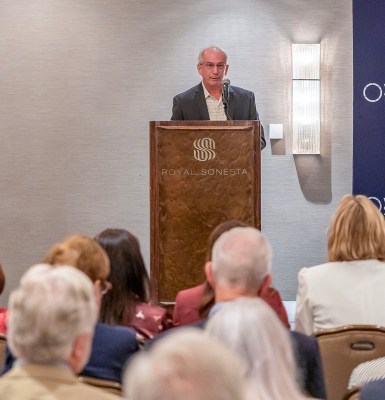
One of the most valuable aspects of the LEAP experience is the chance to learn from leaders who have dedicated their lives to public service. The World Affairs Council regularly provides such opportunities, and at the Royal Sonesta in Houston, we had the privilege of hearing from Admiral John Kirby.
Admiral Kirby began his career in the United States Navy as a Public Affairs Officer, which eventually led him to serve as Press Secretary for the Pentagon and later as Coordinator for Strategic Communications at the National Security Council. Having worked under both the Obama and Biden administrations, Admiral Kirby has long been at the center of national security, communications, and public affairs.
The evening’s conversation, emceed by Sandiya Bayot…
…and introduced by WAC Board Chair Ken Tubman (President of PPA Resources)…
…and moderated by our good friend Ronan O’Malley, touched on a wide range of issues: foreign affairs with superpower nations, military missions and operations, the role of the media, and the importance of sharing information responsibly.
One of Admiral Kirby’s first reflections was on the difficulty of his role: explaining tough decisions to the American people. He emphasized that while he could not alter the facts or decisions already made, his responsibility was to provide clarity about why those decisions were in the nation’s best interest and how different choices might have carried heavier consequences.
On military matters, Admiral Kirby spoke about the Russia-Ukraine conflict, Afghanistan, and broader concerns about military culture. Regarding Russia, he explained how U.S. intelligence delayed some of Vladimir Putin’s plans and stressed the importance of declassifying information when possible. By making certain intelligence public, the U.S. can share insights with allies and citizens without compromising sources.
Reflecting on Afghanistan, he noted how the Vietnam War left a strained relationship between the press and the military. Later, steps were taken to rebuild trust, such as embedding reporters with platoons during the Bush administration. This gave journalists firsthand experience and allowed them to write more accurate, informed accounts for the American people.
Even with these improvements, Admiral Kirby expressed concern that military service is increasingly becoming “a family business,” passed down through generations. While traditions of service are admirable, he worries this could widen the divide between those who serve and the broader public. For him, bridging that gap remains essential.
A recurring theme throughout the evening was the power of stories and information. Admiral Kirby explained that every story matters, and sharing them connects the military to the people it serves. Stories, he said, keep the world turning.
The conversation then turned toward media and technology. Admiral Kirby noted that while the rapid spread of information makes misinformation difficult to contain, it also provides powerful opportunities when used correctly. He drew comparisons across history: President Kennedy mastering live television, Roosevelt using photography, and Lincoln embracing the telegraph. For today’s leaders, the revolutionizing force is technology and social media, and Admiral Kirby stressed the importance of adapting to it.
One of his most powerful points was that, regardless of political party, Americans ultimately want “information, not confirmation.” Rational decision-making, he reminded us, depends on honest, clear information.
On a personal note, I had the chance to meet Admiral Kirby before the event. As we arranged for a group photo, he asked me about my studies and future goals. When I shared that I wanted to become an attorney and later involve myself in politics, he responded with a smile: “You’ve got it, go get ’em!”
That moment reflected what made the entire evening so meaningful. Admiral Kirby has a rare ability to connect with people, whether addressing an audience of hundreds or speaking one-on-one. His insights were powerful, but it was his ability to inspire and make each person feel included in the conversation that left a lasting impression.
This event will remain one of my favorites from the World Affairs Council.
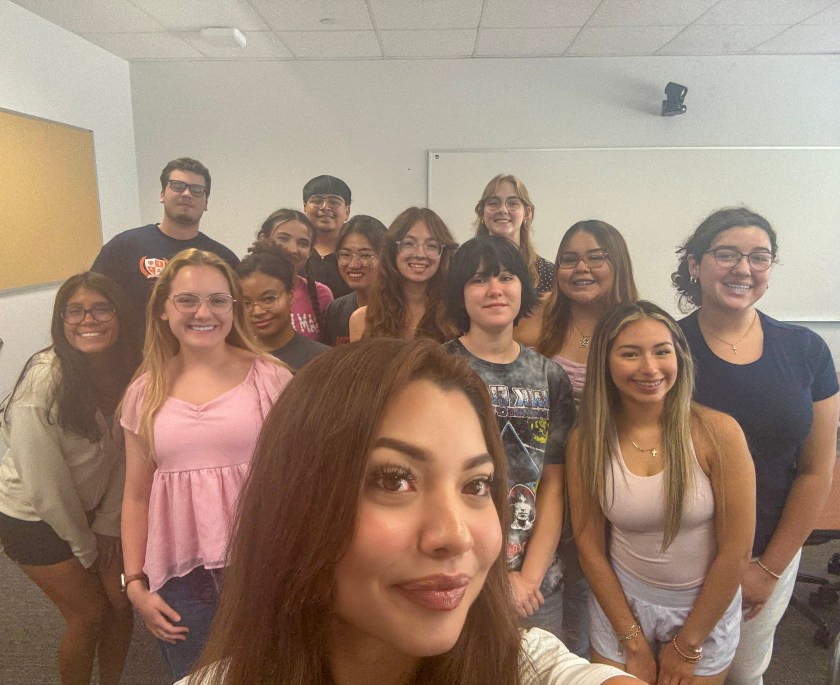
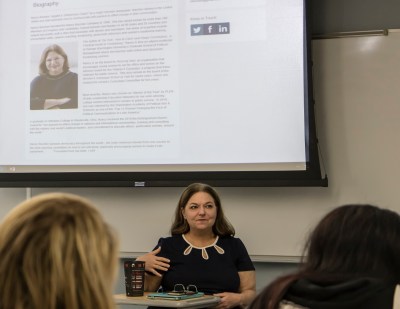
Being a part of the LEAP program isn’t just about preparing for a career in law –it’s about learning to see the world through a new lens. I came to understand this during a presentation in Professor Yawn’s UNIV 1101 Pre-Law class, where LEAP Ambassadors Olivia McCaughan and Michelle Moya outlined the program and highlighted the wide range of opportunities it offers.
Through LEAP, students gain access to experiences that prepare them for the future—ranging from civic engagement, like volunteering at the Main Street Program’s Scare on the Square (which I look forward to participating in this October), to hearing from special guest speakers, to interning in Washington, D.C., Austin, and local government. I was especially delighted to learn that LEAP is not limited to students pursuing law school, but is open to anyone interested in making a difference in their community through civic work. LEAP members don’t volunteer to meet a quota, but rather to get involved in ways that are meaningful, impactful, and connected to their communities.
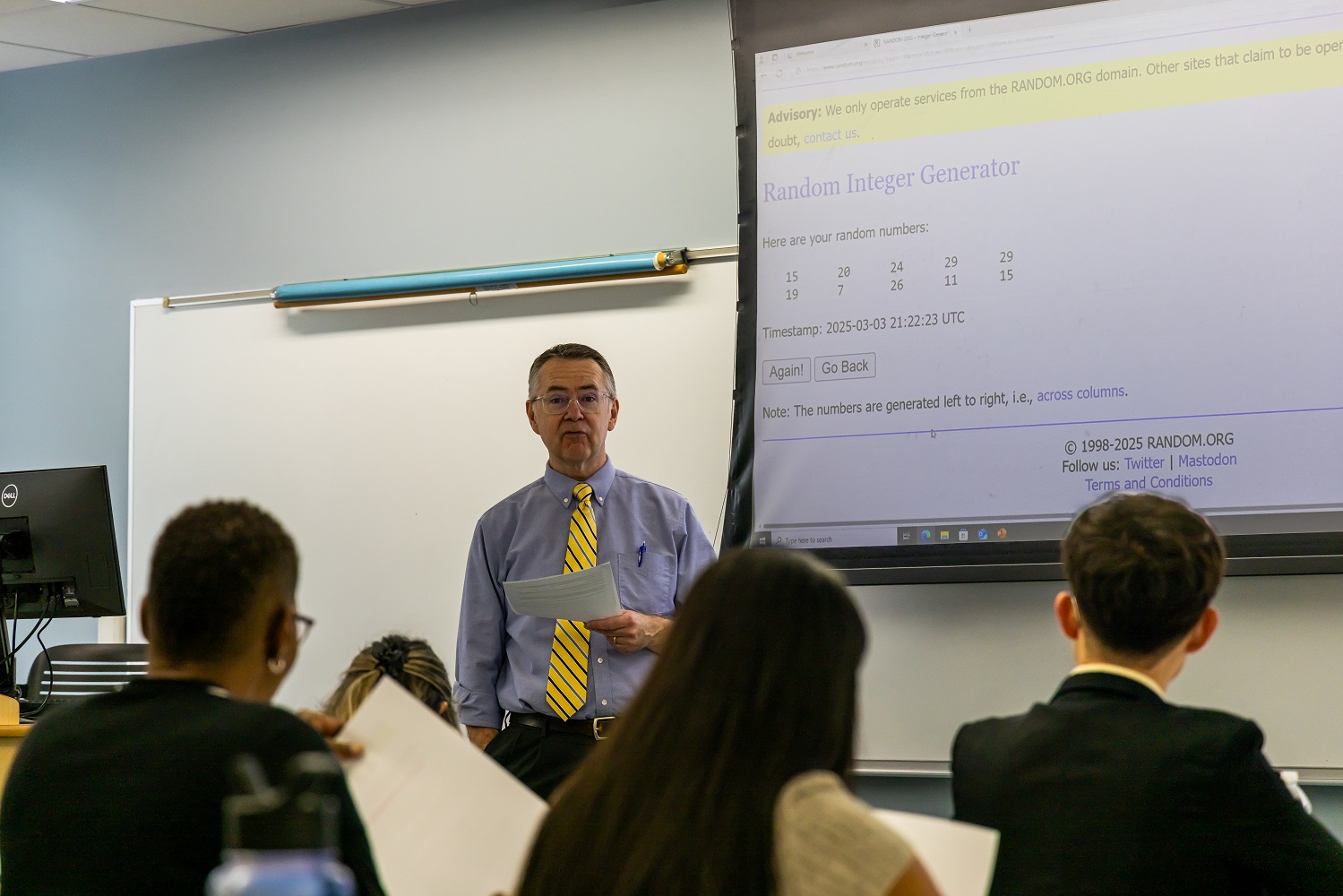
My first-year experience has also been shaped by UNIV 1101, a pre-law course designed to introduce students to the field. Professor Yawn’s daily quizzes extend a vast array of subjects, from LSAT prep to Emotional Intelligence to LEAP Ambassadors Olivia Discon and Michelle Moya’s Parasailing trip. True to law school style, at the end of each short quiz, students are called on to announce their answers to the class! On a whole, Univ 1101 has proven to be a very detail-oriented class, reminding our group of prospective lawyers the importance of every detail, even those that seem menial.
This focus on preparation carried into another highlight of my week: attending my first Pre-Law Society meeting alongside several of my UNIV 1101 classmates. We learned about several prospective law schools, including the University of Houston Law Center, South Texas College of Law, and Texas Tech Law, directly from their admissions representatives. We even received Pre-Law Society t-shirts, signifying our official place in the program! I also had the chance to meet our organization’s leaders as they reviewed the agenda and introduced our guest speakers.
As Michelle Moya explained, the Pre-Law Society is just one branch of the broader LEAP program. I’m eager to explore each branch throughout my four years at Sam Houston, confident that every experience—whether in the classroom, the community, or beyond—will bring me closer to the leader and lawyer I aspire to be.
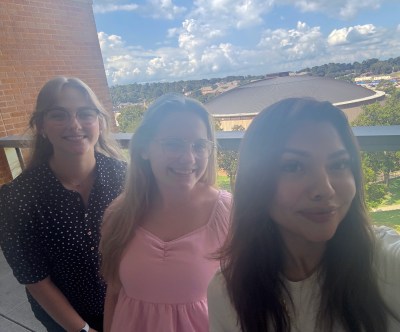
Olivia McCaughan, Allison Plunk, and Michelle Moya
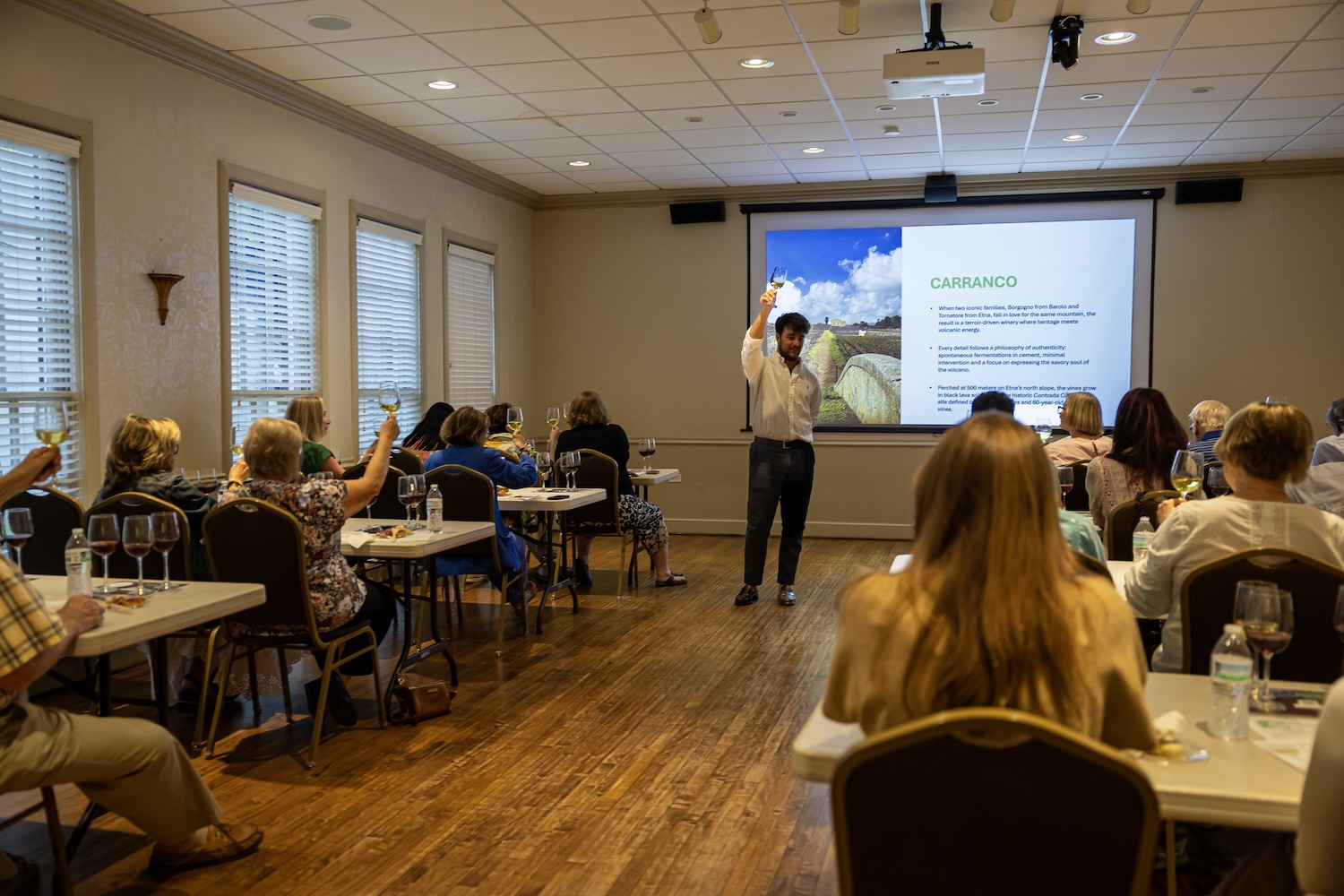
LEAP students added another country to its World Affairs Council culinary passport: Italy. While Italy is most known for pizzas, pastas and their ketchup-despising attitude, it is also known as the wine capital of the world. We learned more about wine and its profound impact on people’s lives.
In true European fashion, there was plenty of snacking to be had, rather than a full-course meal. A variety of cheeses and meats ensued, and we spent time conversing in the beautiful Italian Cultural and Community Center.
The speaker for the evening, Ferdinando Favara, has grown up appreciating this aspect of Italian culture his whole life. His family, who has longstanding roots in the wine industry, have a vineyard in Sicily–which we came to learn is on the up-and-up in terms of regional “quality”. Favara helped his grandmother in the wine fields starting at just 14 years old.
Ferdinando spoke about how wine helps to bring people together. His “philosophy”, so to speak, is that wine creates stories, keeps stories alive, and connects people in a vital way. While LEAP students didn’t personally indulge in any wine tasting, it was fun to partake in the storytelling and learn about the many intricacies that come with a high-quality experience. Much like the efforts of the LEAP Center!
He also talked about the deep history of wine which started 3,000 years ago in Sicily. Sicily, which is the largest island in the Mediterranean, uses a terrace-type farming technique. It uses this form of farming because it has the largest active volcano in Europe! Our discussion then traveled to Piemonte, once the land of the King of Italy. While on the verbal excursion, we learned the king entrusted his vineyard to one of his servants (who was rumored to be one of his lovers!), a legacy that lives on today. This region is home to one of the oldest vineyards in all of Italy.
LEAP students truly appreciated attending another World Affairs Council program which has helped broaden our understanding of the world around us. While we didn’t engage in the wine component of the evening, we definitely appreciated Italy’s culture, history and significance in the wine industry.
Having already learned a lot at the conference and on our own, we were ready for another day of educational excursions and events. Today’s itinerary included a plenary luncheon focused on challenges associated with the availability of primary care physicians, a site visit concerning education and workforce development, and a state dinner.
Primary Care Shortagesand Challenges
by Olivia Discon
Over a lunch of fish, rice, and broccoli—quite healthy (well, mostly), might I add!—we enjoyed some good company, a brief award ceremony, and a rich educational opportunity to learn about medical care in the 21st century.
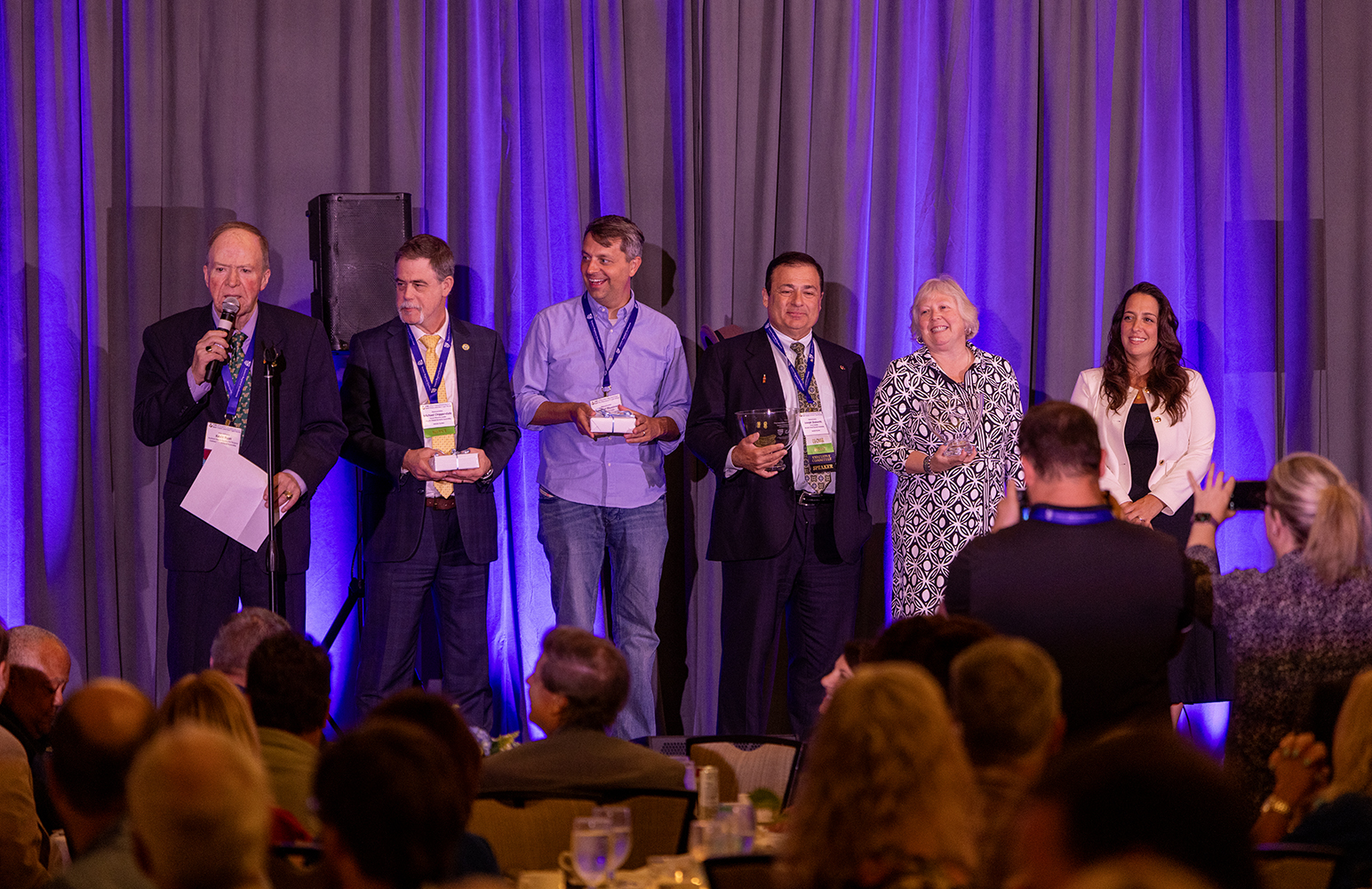
To begin, we were happy for Rep. Kevin Ryan of Montville, NJ, who received the W. Paul White State and Regional Leadership Award.
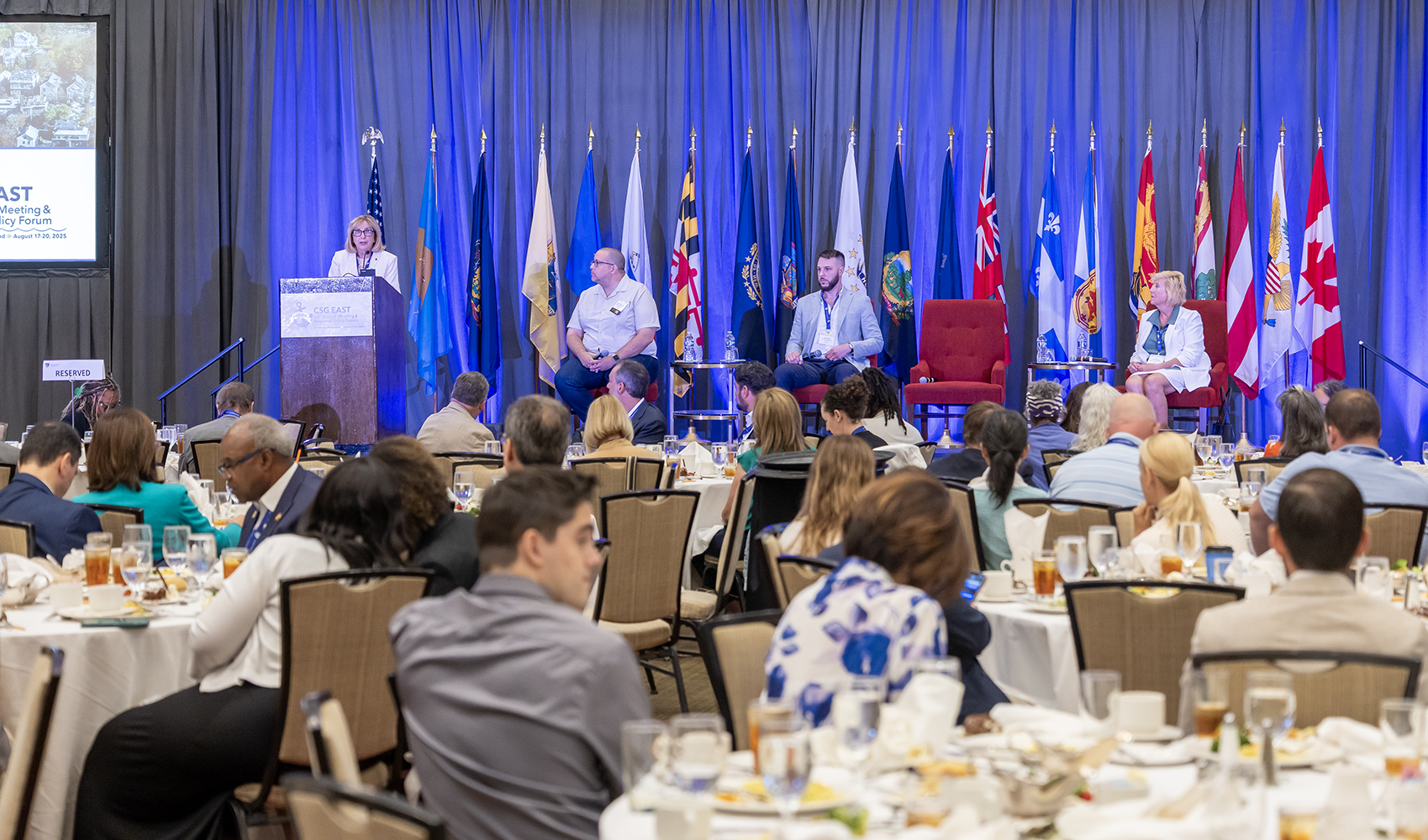
we enjoyed hearing from Senator Gustavo Rivera of New York, chair of the CSG East Health Policy Committee, who discussed the suboptimal supply of primary care physicians.
Just a generation ago, a primary care physician was a trusted source of care and advice. Today, however, many cities struggle with finding doctors who will accept sufficient numbers of insurance patients to make a real difference in their communities.
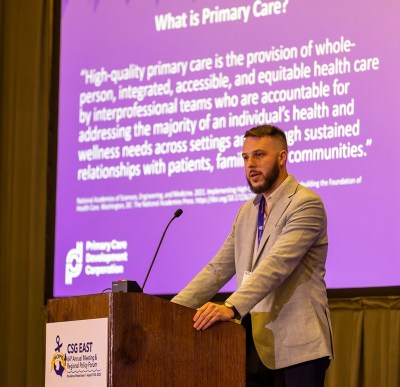
The keynote speaker, Joe Telano, senior policy manager at the Primary Care Development Corporation, laid out the problem.
The existence of quality primary care physicians in communities has been demonstrated to lengthen lives, but not enough communities have access to those physicians. In turn, this creates greater stress on specialized medicine, as patients are delayed in having serious issues diagnosed and referred. Moreover, the lack of primary care physicians adds to community health problems: increased likelihood of pandemics, more suffering from chronic diseases (e.g., diabetes), and even more gun violence.
Currently, only about 5-7 percent of health care expenditures go toward primary care, and a greater investment, according to Telano, is needed. Of course, this is only one part of a comprehensive plan. Other needed changes include: insurance regulations, grants for low-income communities, and a broader perspective of what constitutes “public health.”
Interestingly, part of this expanded view of public health could include education and workforce development…
Building Futures: Apprenticeship and Workforce Development
By Michelle Moya
One of the conference highlights was the site visit for our Education and Workforce Development session, which a tour of Building Futures, Rhode Island’s premier pre-apprenticeship program. Olivia and I were joined by a diverse group of senators and representatives from across the country for what would become one of my favorite sessions.
Our visit began in the hands-on training space, where we witnessed day two of a five-week intensive course. The tour was led by Andrew Cortez, president of Building Futures and a former apprentice himself, who shared insight into what the program is and what makes it effective.
Building Futures connects community residents to registered apprenticeship opportunities in the building trades. The program has a dual mission: preparing individuals for apprenticeships through training and readiness while also partnering with project owners to require apprentice participation in construction. This two-pronged approach ensures both workforce preparation and job placement.
Cortez emphasized that success in the trades depends on three essentials: showing up every day on time, working hard, and applying yourself to learn. Technical skills matter, but they rest on these fundamental values of reliability, perseverance, and a willingness to grow. As a student, I found this surprisingly inspiring. It reminded me that success in any field—whether in school or in a career—often comes down to those same habits. Technical skills can be taught, but without consistency and the right attitude, it’s hard to succeed anywhere.
From the active training floor, we transitioned to a classroom setting where our group of legislators and workforce development professionals gathered around tables for a deeper conversation about the program. A highlight of our roundtable was learning about recent legislation that allows apprenticeship pathways to count toward college credit in Rhode Island. Senator Hanna Gallo, who helped lead this effort, joined us for the discussion, along with Matt Weldon, Director of the Department of Labor and Training.
The program’s impact became tangible through the graduates who shared their stories with us. Vennicia Kingston, who transitioned from banking to carpentry, now owns Eagle Eye Construction Services and employs multiple Building Futures alumni—a great example of how networking creates a cycle of opportunity. Another graduate shared how, just months after incarceration, he not only completed his apprenticeship but also bought his first home and eventually built his own million-dollar construction company.
These transformations illustrate what Cortez stressed throughout our visit: the most valuable skills are consistency, work ethic, and a learning mindset. This philosophy mirrors the character development emphasized in LEAP, where academic and career success are built on the foundation of personal responsibility and values.
As we concluded our tour and roundtable discussion, one lesson stood out clearly: good students and successful professionals are people who show up, work hard, and embrace continuous learning. This blend of character and skill creates pathways to both personal transformation and economic opportunity—lessons we will carry forward as we pursue our future goals.
State Dinner
by Olivia Discon
The conference concluded with the State Dinner, the most formal event of the conference, where we dined with some of the event organizers, an event photographer, as well as some fellow southerners. Senator Walter Michel–whom we had lunch with–and his wife, Laura, joined us for a nice meal and delightful conversation.
We also had a chance to see the host committee, who spent years planning for this event, be recognized.
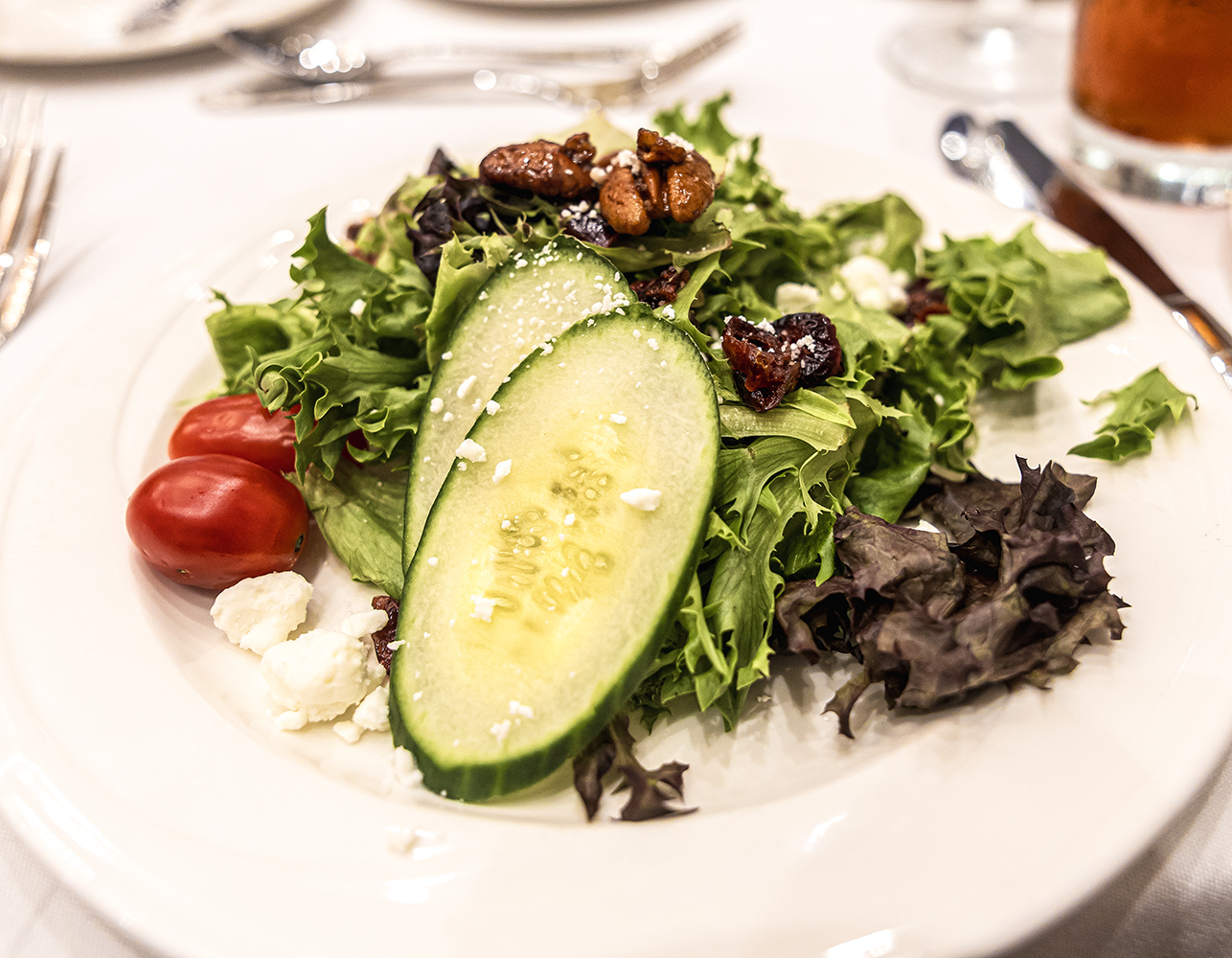
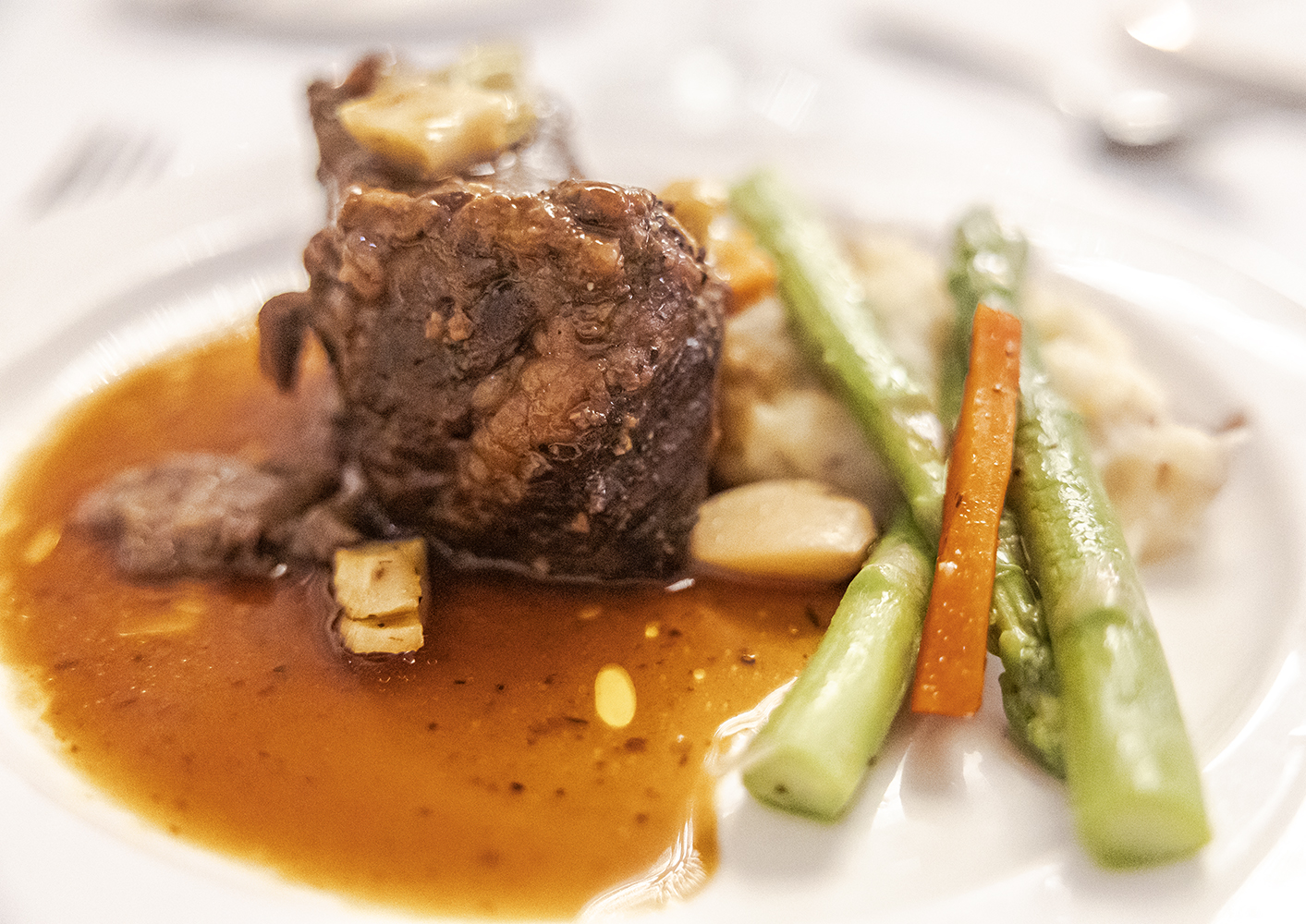
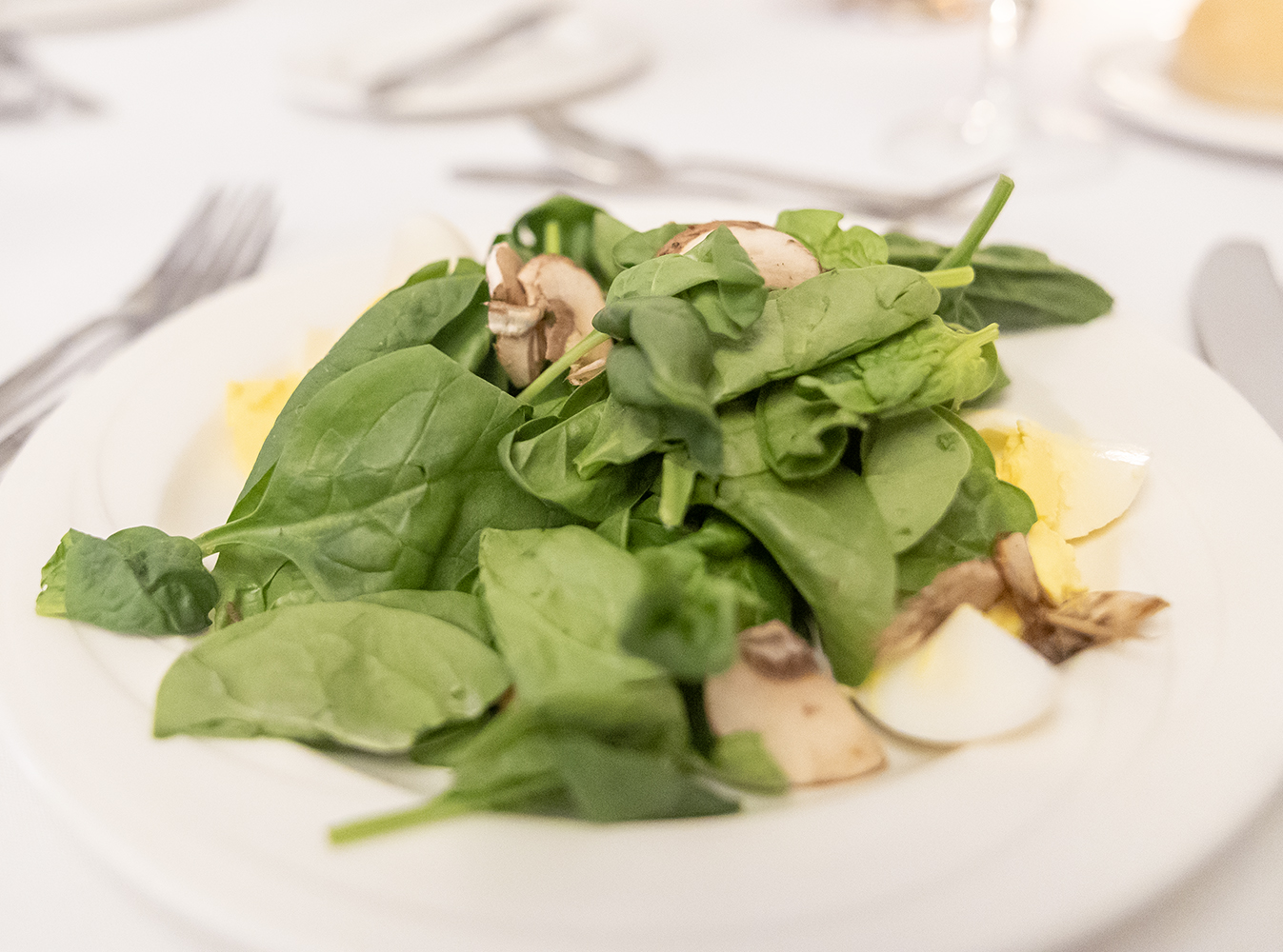
The main event, however, was the meal, which featured a three-course meal including a beef entrée, asparagus, and potatoes as its main course, along with a salad and a scrumptious dessert (Chocolate Mousse).
In the background wafted the swing beat of Sinatra tunes, performed by Michael Dutra: “Simply Sinatra.”
We shared stories about our visits to waterfalls in North Carolina, where one of the event organizers is from, to challenges faced by the Mississippi Legislature, to the decreasing importance of ISO in modern cameras. It was a wonderful way to cap our evening programs at the Council of State Governments–East.
After arriving in Boston early Friday morning, LEAP officially kicked off our visit to New England! We’re here for the Council of State Governments East conference, but like any LEAP trip, we make time to absorb the cultural and intellectual atmosphere of the region.
Massachusetts State House
by Olivia Discon
Even as we approached the building, we noticed the gold dome, and we used that as a guidepost for directions to the structure. The dome, as we would later learn, was originally covered with wood shingles, but as they deteriorated, the government opted for a sturdier material. They chose Paul Revere to plate the dome, but as it weathered and turned green, another element was sought. They settled on 23-karat gold, which is, of course, distinctly different. Interestingly, the original gilding cost $3,000 (in 1872); but they expect to cost approximately 3,000,000 dollars to refurbish it today.
We learned all this from Luke, our tour guide, who gave us a great overview of the building, which was designed by Charles Bullfinch, who also designed the Maine Statehouse, University Hall at Harvard, and the updating of the US Capitol.
A highlight was the beautiful rotunda, which featured stained-glass windows and murals depicting scenes from the founding of the country. The room was built with imported Italian stone and craftsmanship, reflecting the influence of Massachusetts’ large Italian immigrant population.
From there, we entered the Great Hall of Flags, which displays 351 flags, one from each municipality in Massachusetts. The design wasn’t just symbolic, though; the flags also help improve the room’s acoustics, making it suitable for ceremonies and events.
Having seen 12 state capitol buildings, I’ve learned that the legislative chambers are often the most interesting aspects of the statehouses. In Massachusetts, the House of Representatives has 160 members, each serving two-year terms. In and of itself, this is not unusual. What is unusual is this one features a fish: a cod. The cod is such a central symbol of Massachusetts’ maritime roots that the chamber refuses to conduct business without it, although that didn’t stop Harvard students from stealing it in 1933, stopping legislative business for three days, before it miraculously returned. The sculpture is today so valued, it is known as the “Sacred Cod.”
Across the building, the State Senate chamber is home to 40 senators, also elected for two-year terms and representing roughly 175,000 people each. Their chamber is arranged in a round-table style, designed to encourage equal discussion, which is of course different from the tiered seating most state legislatures use. Indeed, Massachusetts takes this to great lengths. To ensure full equality, they actually change the heights of each chair around the table in a manner designed to ensure that each member is of equal stature while literally and figuratively occupying a Senate seat.
And because the House wouldn’t share the Sacred Cod, the Senate decided they would have their own divine creature: the “Holy Mackerel.”
In all, this visit to the Old State House was a great way to kick off the trip. It was the perfect precursor to the rest of the day and almost certainly to our time in New England.
Freedom Trail
by Michelle Moya
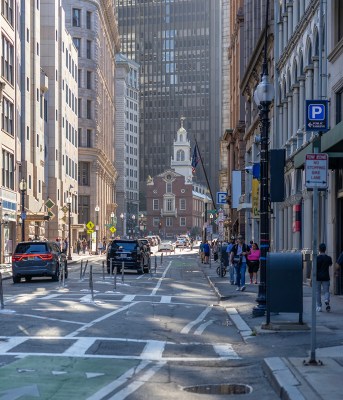
While the Massachusetts’ State House can serve as a standalone site, it is also part of Boston’s official Freedom Trail, a 2.5-mile path (fully paved with red bricks) that winds through downtown and connects 16 historically significant sites. The trail proved to be the perfect introduction to the city–part history lesson, part sightseeing tour–allowing us to stand where many of the pivotal moments in America’s fight for independence unfolded.
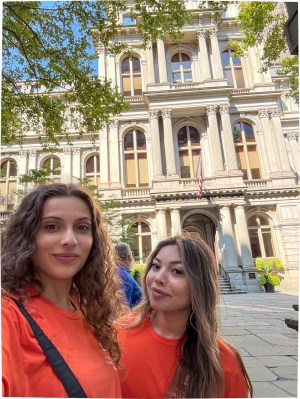
In most states, a capitol built in 1798 would be the old state house but not in Massachusetts. The Bay State’s “Old State House” was built in 1713 and is Boston’s oldest surviving public building. Its Georgian architecture stands in stark contrast to the towering skyscrapers surrounding it. For decades, it served as the seat of the Massachusetts General Court and a symbol of royal power in the colony. But it also became a birthplace of revolution: on July 18, 1776, the Declaration of Independence was read aloud from its balcony for the first time to the citizens of Boston, transforming this seat of British authority into a herald of American freedom.
Just steps away lies the Boston Massacre Site, marked today by a simple ring of cobblestones. Modest as the marker may be, this spot witnessed a tragedy that would galvanize the colonies. On March 5, 1770, angry Bostonians clashed with British troops stationed in the city. What began with snowballs, sticks, and insults escalated when confusion gave way to gunfire. Private Hugh Montgomery, knocked down by the crowd, fired his musket, and others followed suit. Amid escalating tension, five colonists were killed: Crispus Attucks, Samuel Gray, James Caldwell, Samuel Maverick, and Patrick Carr.
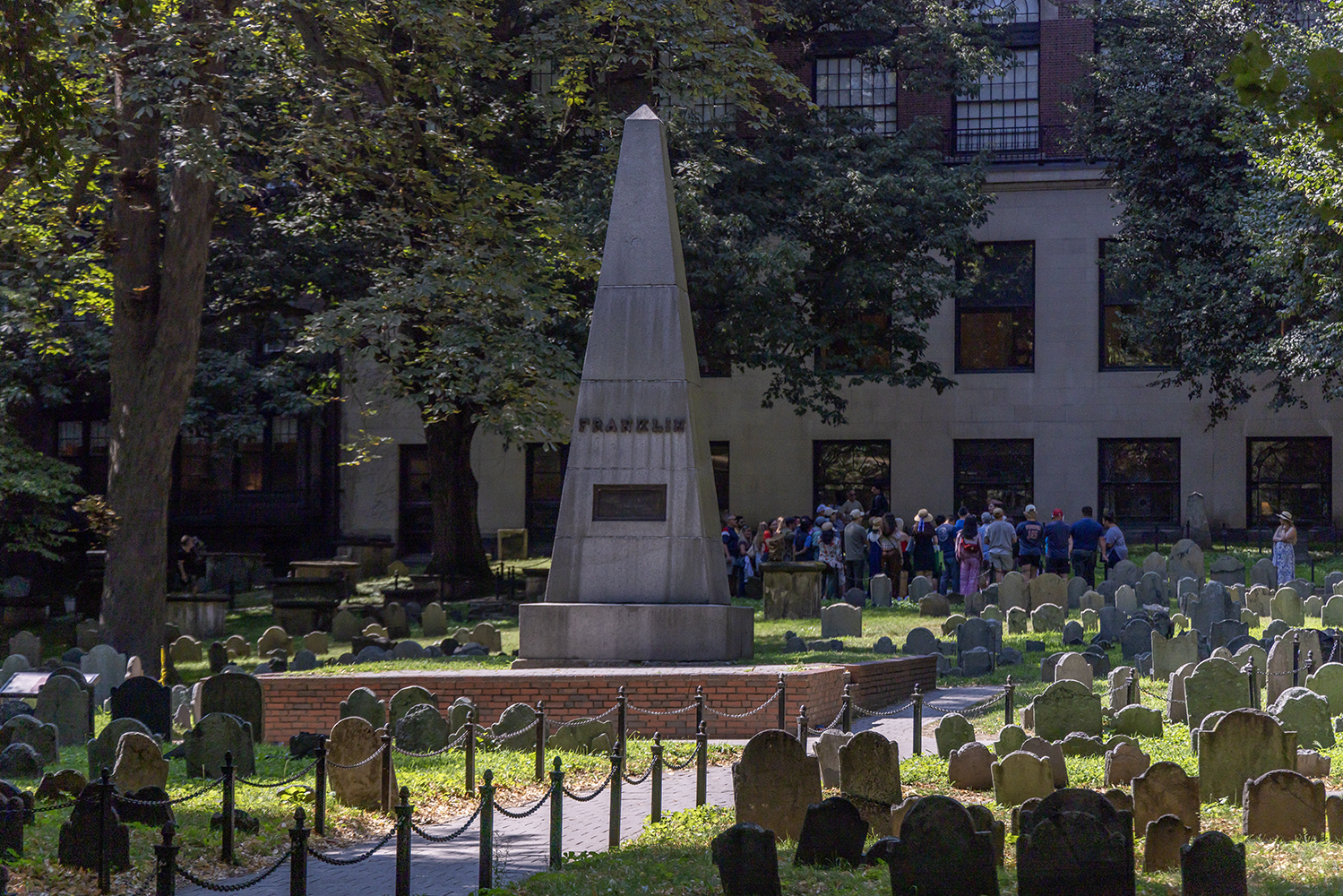
The consequences of that night are poignantly reflected at the Granary Burying Ground, established in 1660 and one of Boston’s three-oldest cemeteries.
Though only about 2,300 headstones remain visible, nearly 5,000 people are believed to be buried in this hallowed ground, including some of the Revolution’s most illustrious figures such as Paul Revere, Samuel Adams and John Hancock, and among these is one of the five victims of the Boston Massacre, Crispus Attucks. Of African and Native American descent, Attucks was a sailor and dockworker who stood at the front of the crowd that evening. His death marked not just the beginning of America’s struggle for independence but also highlighted the diverse coalition of people who would sacrifice for that cause.
A few blocks away, the trail leads us to the Paul Revere House, built around 1680 and now the oldest surviving home in downtown Boston. Modest in size and structure, the weathered wooden dwelling still fits in among the varied architectural buildings of modern-day Boston. Revere lived here from 1770 to 1800, balancing his work as a silversmith with his pivotal role in the Patriot cause, including his famous midnight ride that would become the stuff of legend.
The Freedom Trail offered a concise, firsthand look at Boston’s role in the nation’s founding. The trail provides both residents and visitors a clear window into the events and figures that shaped early America, making it a must-see for anyone looking to understand Boston’s historical significance and, for us, a great start to exploring a new city.
Lunch and Larks
Befitting our historic tour, we had lunch at the Union Oyster House, which opened in 1826, making it the United States’ oldest restaurant. The building in which it is housed dates back even further–at least 250 years, although no firm date has been established. In addition to some Boston staples (New England Clam Chowder, oysters, Boston Cream Pie)–which we enjoyed–the restaurant has also hosted many notable public figures. Daniel Webster was a regular customer as was John F. Kennedy. Indeed, Kennedy had the Oyster House’s Clam Chowder shipped in for his inauguration.
We also plotted out paths to some sites we wanted to see that didn’t fit a themed route. This included the remnants of a partially obscured Richard Haas mural at 31 Milk Street, which someone, inexplicably, decided should be covered up by a parking garage. For a city that cares about its history–or for any city–it was an unfortunate decision.
Also of interest to us was Ten Post Office Square, which was originally home to the Boston Latin School (1635), the oldest public school in the United States. Luminaries such as John Hancock, Samuel Adams, Cotton Mather, and Benjamin Franklin attended here. Franklin, however, dropped out, a fact which partially prompted city fathers to erect a statue of him on the site in 1865, the first such public statue in the city of Boston. The site was also been home to the Suffolk County Courthouse and, in 1865, the City built a new Town Hall on the site. It is the structure that occupies the location today, a building that provided office space for 38 separate mayors, including John Fitzgerald–the future President’s grandfather.
Boston Museum of Art
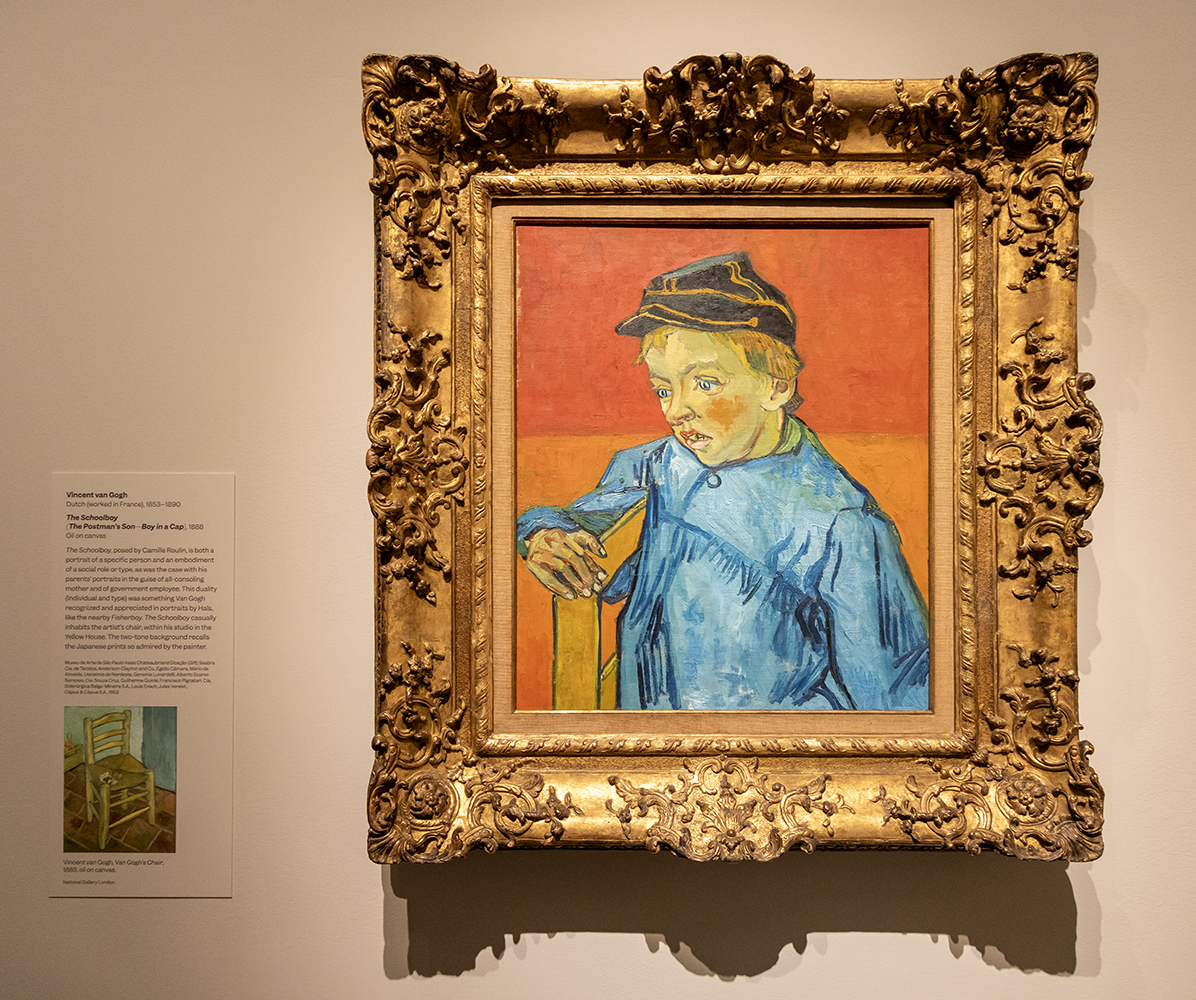
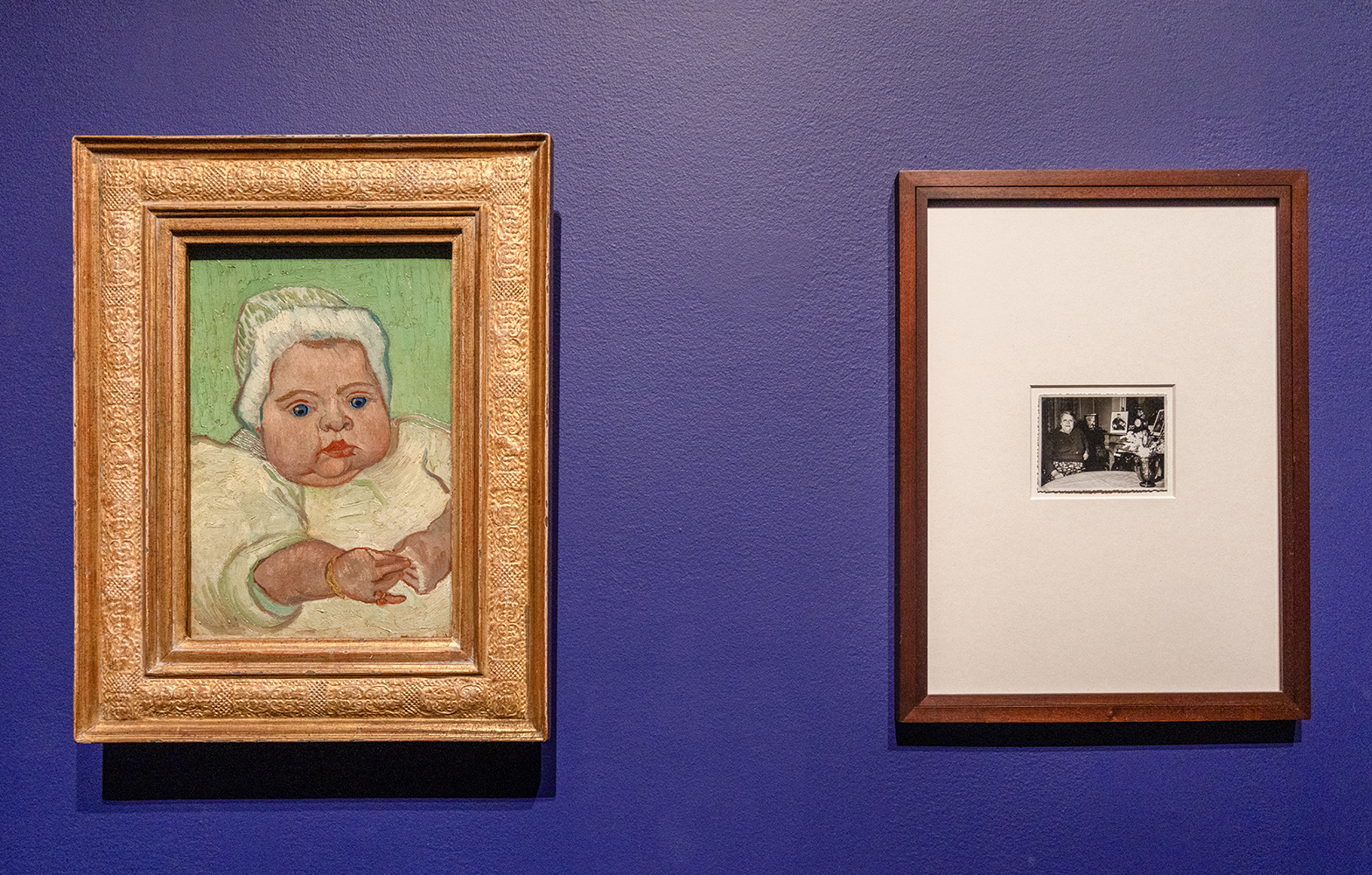
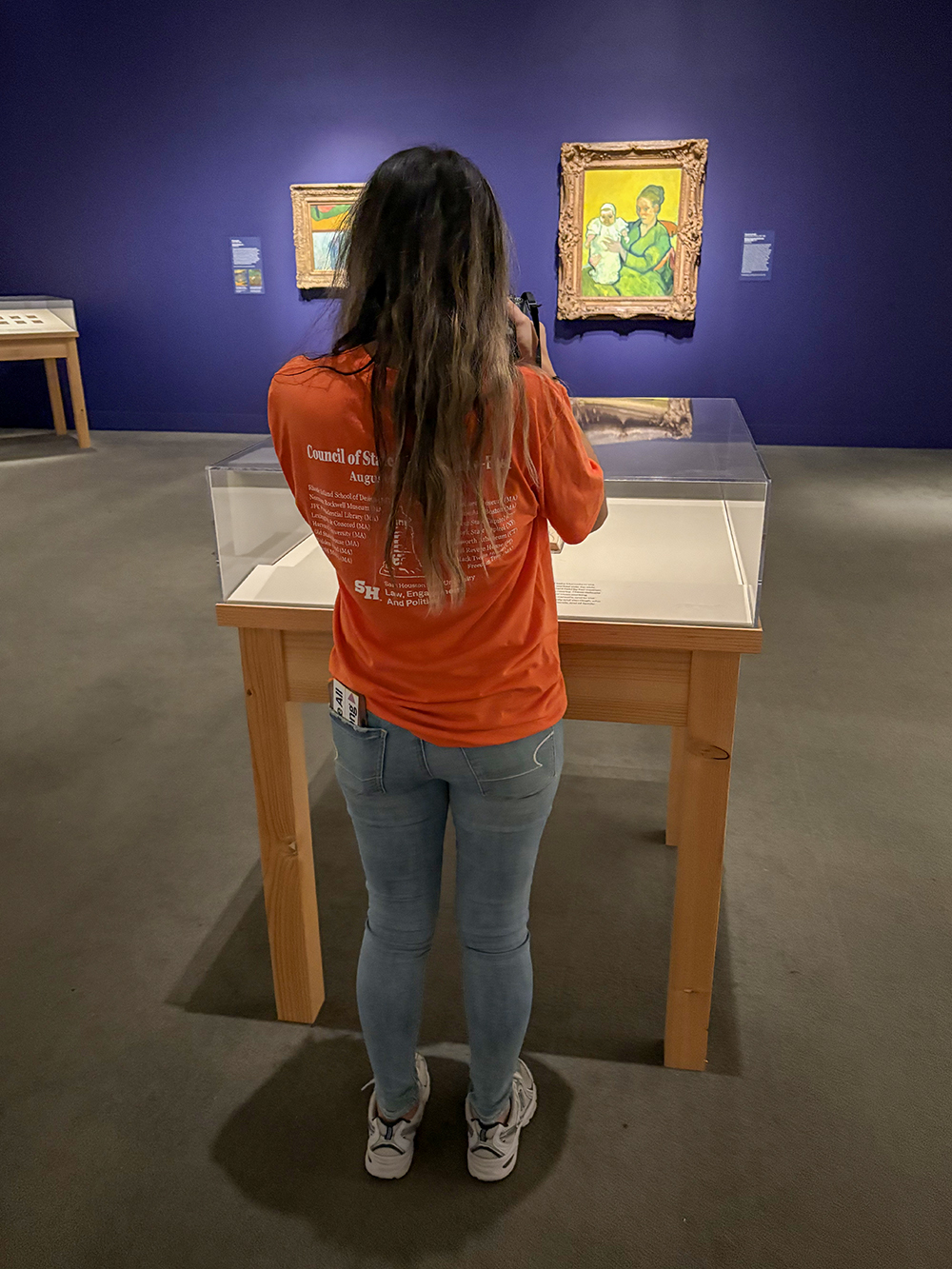
After a packed first day in Boston, we headed to the Museum of Fine Arts to see “Van Gogh: The Roulin Family Portraits”- the MFA’s first Van Gogh exhibition in 25 years. With 23 works on display, many borrowed from all over the country, this represents the largest collection of Van Gogh’s work currently showing in the United States.
The exhibition focuses on Van Gogh’s 26 portraits of the Roulin family-his neighbors in Arles, France. Fourteen of these paintings are displayed together here, something that rarely happens given how scattered they are across museums worldwide.
Joseph Roulin, a local postman, appears in several portraits wearing his postal uniform…
His wife Augustine dominates the “La Berceuse” series, where Van Gogh painted her as a maternal figure meant to comfort sailors and working people.
Their three children each get distinct personalities: Armand with his serious expression,
young Camille caught between childhood and adolescence,
and baby Marcelle with tender vulnerability.
The exhibition also includes other works from Van Gogh’s productive Arles period. The Bedroom immediately caught my attention, given its bold, simplified colors.
Alongside these, Van Gogh’s Self-Portrait from this period shows the artist at his most direct, painted just months after his breakdown in Arles…
The curators also included works by artists who influenced Van Gogh, including pieces by Rembrandt, creating a clear artistic lineage that shaped his approach to portraiture.
The exhibition ends with Van Gogh’s actual letters, written during his mental health struggles in Arles.
Continuing On!
By Olivia Discon
From there, we wandered through the rest of the museum, trying to take in as much as we could before the end of day one.
Michelle is still figuring out her taste in art, so this visit was a great chance to see a wide range of styles and time periods all in one place.
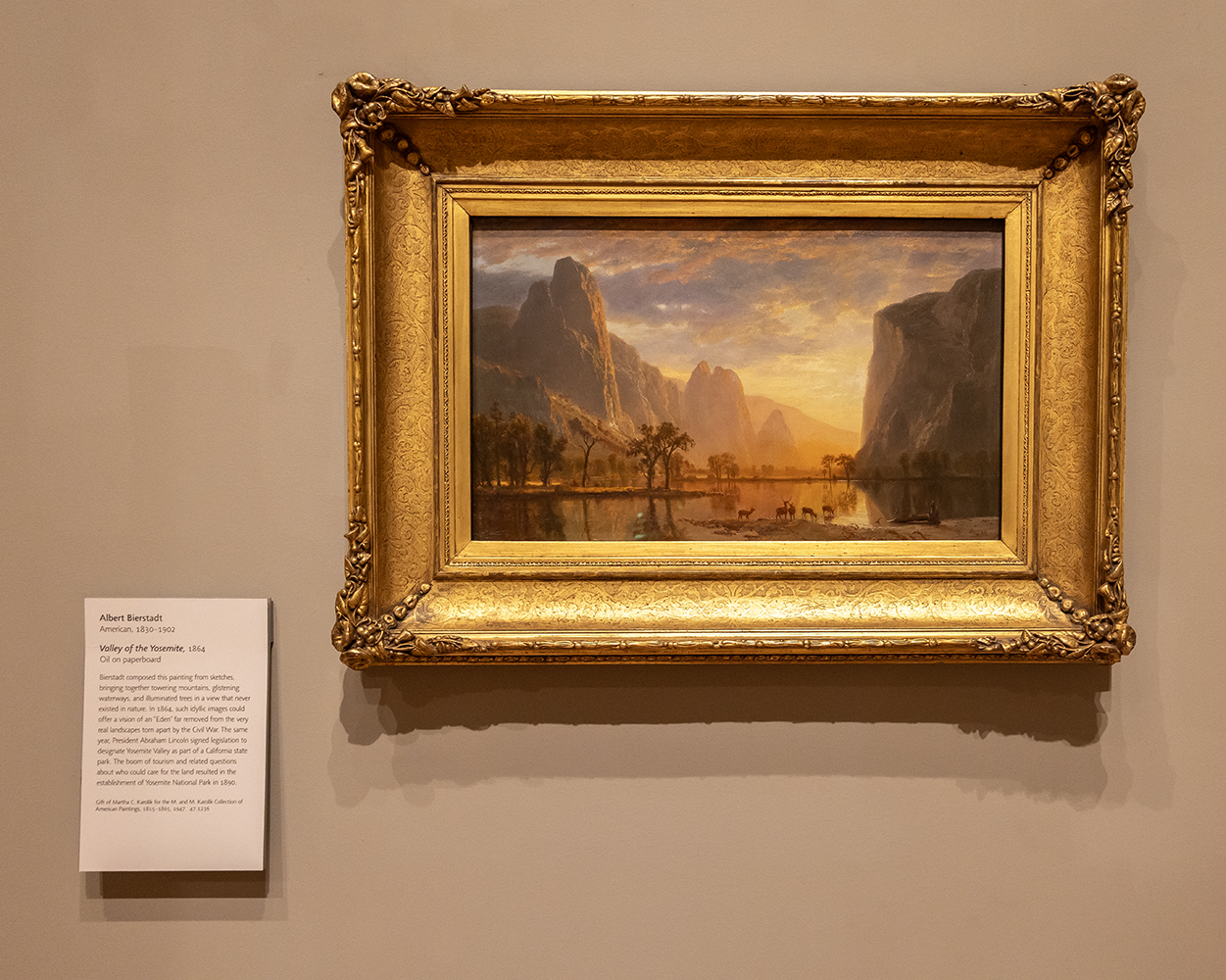
In the American Art collection, we started in a way that mirrored the country’s own development. Early American painters leaned heavily on European influences, but as we moved forward, you could see the work gradually step into a style of its own.
Moya has grown fond of the transcendentalist crowd—Heade, Thomas Cole, and Bierstadt especially.
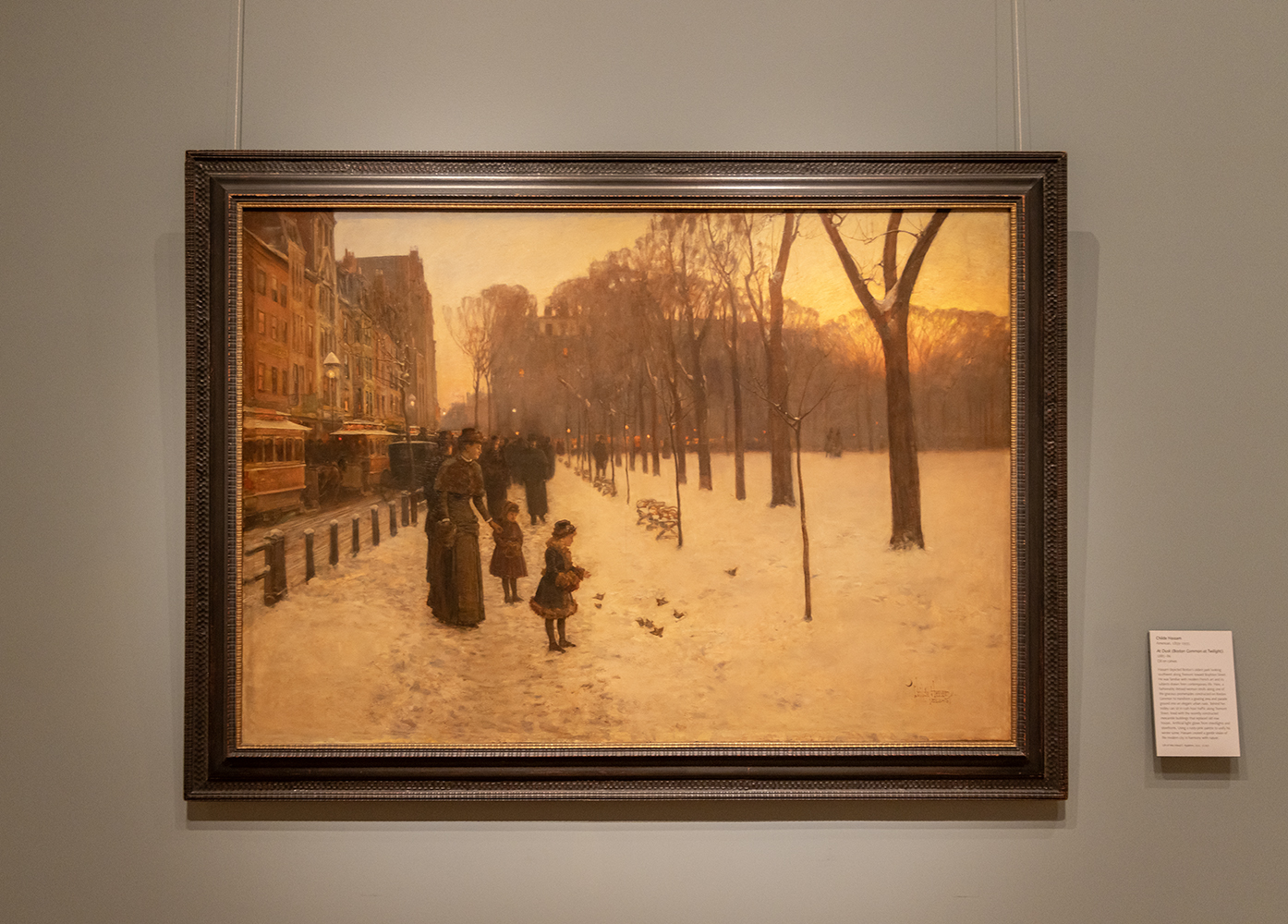
For me, highlights included John Singer Sargent, Childe Hassam, and Rodin.
We also stumbled on an Andy Warhol that needed a little context. After I explained the, let’s say, “golden phase” of his work, Michelle was no closer to being a Warhol fan.
There was also an impressive lineup of Monets, including one from his cathedral series. That 33-painting project captures the same cathedral at different times of day. This is pivotal to art history, and I was pleased to have seen one of them in person.
And then came Degas’ Little Dancer. One of the 28 bronze casts, it’s indeed an incredible piece. However, if you’d rather not become disillusioned with another art piece in this blog, you probably shouldn’t ask me the backstory on this one.
On our way out, we caught sight of some Alexander Calder pieces! The wooden sculpture was particularly striking to me, and an excellent find on our way out of the museum.
Concluding Thoughts
It was such a busy day, it was easy to forget that we woke up in Houston, Texas, and spent only a partial day in Boston, MA. Nonetheless, we managed to spend a full twelve hours seeing sites, exploring a part of the country that is new to us, and reflecting anew on our nation’s history and the meaning of freedom.
The LEAP Center offers a number of foundational activities that allow us to reach students, guide them in their educational and career goals, and facilitate their participation in additional activities. All of these activities reflect the philosophy and approach of the LEAP Center, as described in our “Philosophy of the LEAP Center” and “LEAPing into Action” blogs.
Teaching
LEAP Center faculty teach several classes, including:
Texas Government
Local Politics
Film & Law
Constitutional Law I
Constitutional Law II
How to Win in the Courtroom
Univ 1101 (Pre-Law Cohort)
“Democracy Coach” Nancy Bocskor Speaks in Professor Yawn’s Local Government Class
These classes require much reading, often using original texts, while also requiring writing and critical thinking. Community engagement is incorporated into the classes–but always on an optional basis.
In addition to satisfying academic degree requirements for Political Science and Legal Studies degrees, also provide avenues into many LEAP Center programs. The Local Politics and Texas Government classes, for example, help provide foundational information for the City Fellows program and the Sam Houston Austin Internship Program (SHAIP). The legal classes help guide students on their pre-law path, while also providing a portal to the Moot Court Team.
Advising
Supplementing these courses is a year-round advising schedule for students. While LEAP Center advisors specialize in pre-law, they also do academic advising in political science, criminal justice, and other law-related fields.
Student often ask, “What is the best major for law school?” There is no specific answer to this question, but in general, the best major will be one that requires writing, reading, and critical thinking. If most of your classes feature extensive “lecturing” off of, and “studying” from, PowerPoints, you probably aren’t getting the reading, critical thinking, and writing you need for law school. In general, social sciences such as economics, psychology, political science, philosophy, English, and history have provided solid foundations for law school.
During these advising sessions, advisors also address the unique timeline for pre-law students, which looks something like this:
Freshman Year
Establish major and minor, or at least explore minors;
Take Practice LSAT (offered by LEAP each semester);
Make Good Grades;
Join Pre-Law Society;
Sophomore Year:
Establish Minor;
Take Practice LSAT;
Attend Mock Law Class (offered by LEAP annually)
Consider Officer Position in PLS;
Consider Applying for Pipeline Programs;
Consider Which Professors You Will Request to Write Letters of Recommendation (LOR);
Create LSAC Account
Junior Year:
Take Practice LSAT;
Consider Applying to PLS’s LSAT Prep Course Scholarship, if LSAT Score is Competitive;
Begin More Aggressive Activity on LSAT Study Plan;
Consider LSAT Prep Course (summer of Junior/Senior Year)
Consider Moot Court Participation
Consider PLS Officer Position
August of Senior Year: Take LSAT
Fall of Senior Year: Apply to Law School
LEAP Students Touring UH Law
Programs& Speakers
The LEAP Center’s teaching and advising offerings are supplemented by the many on-campus programs offered by the LEAP Center, which include:
Graduate School Exploration;
Law-School Exploration;
Career Exploration;
Pre-Law Society;
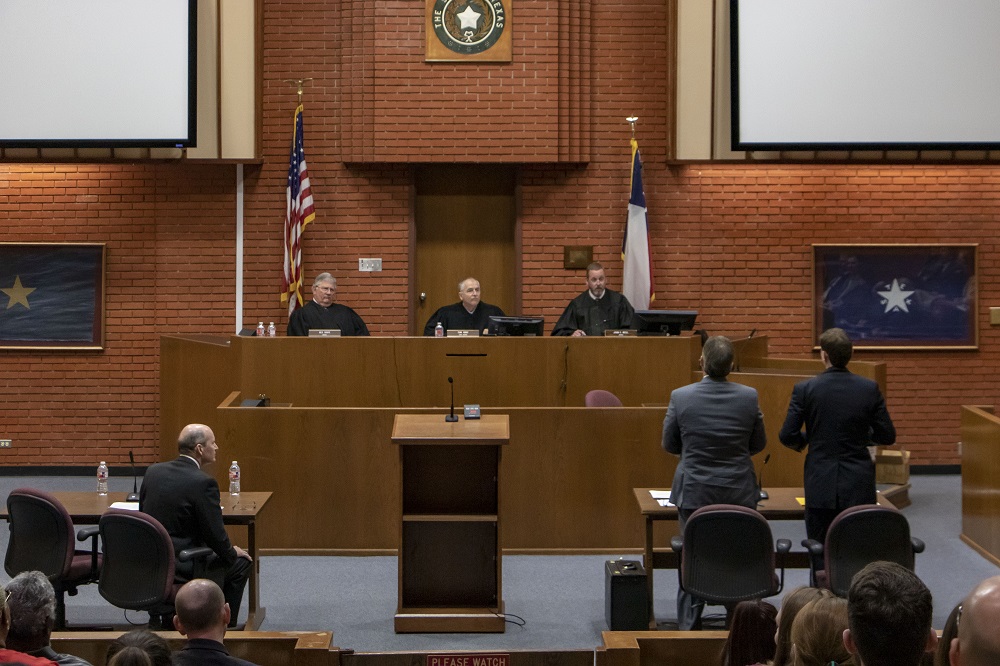
10th Court of Appeals, which hears three cases annually;
Simulated Law class, featuring STCL Professor Val Ricks;
Mock LSAT, offered each semester;
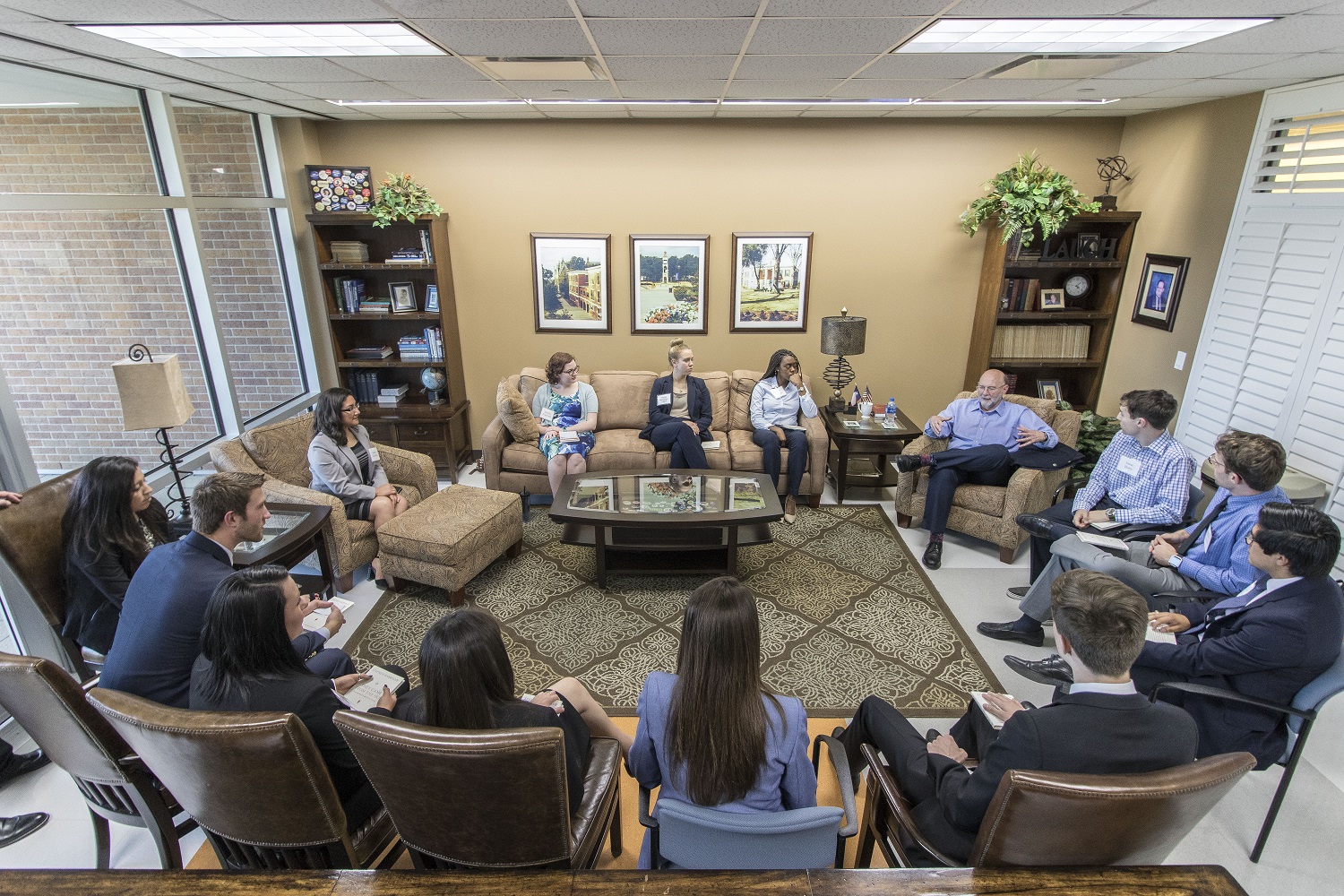
Speakers from Diverse Disciplines. Past speakers have included:
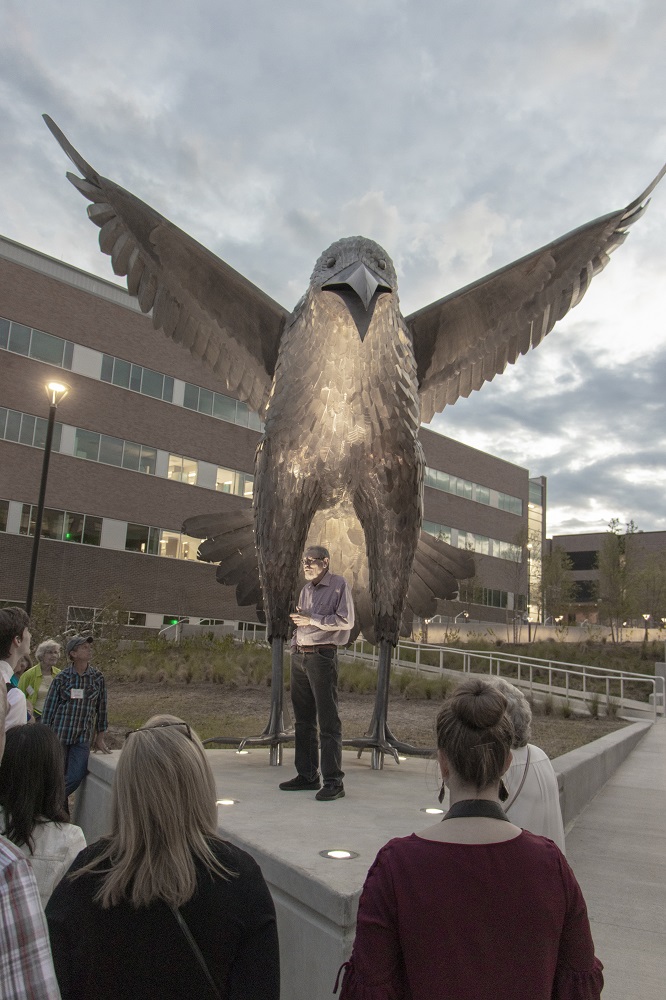
Artist Ed Wilson;
Artist David Adickes;
Artist Lee Jamison;
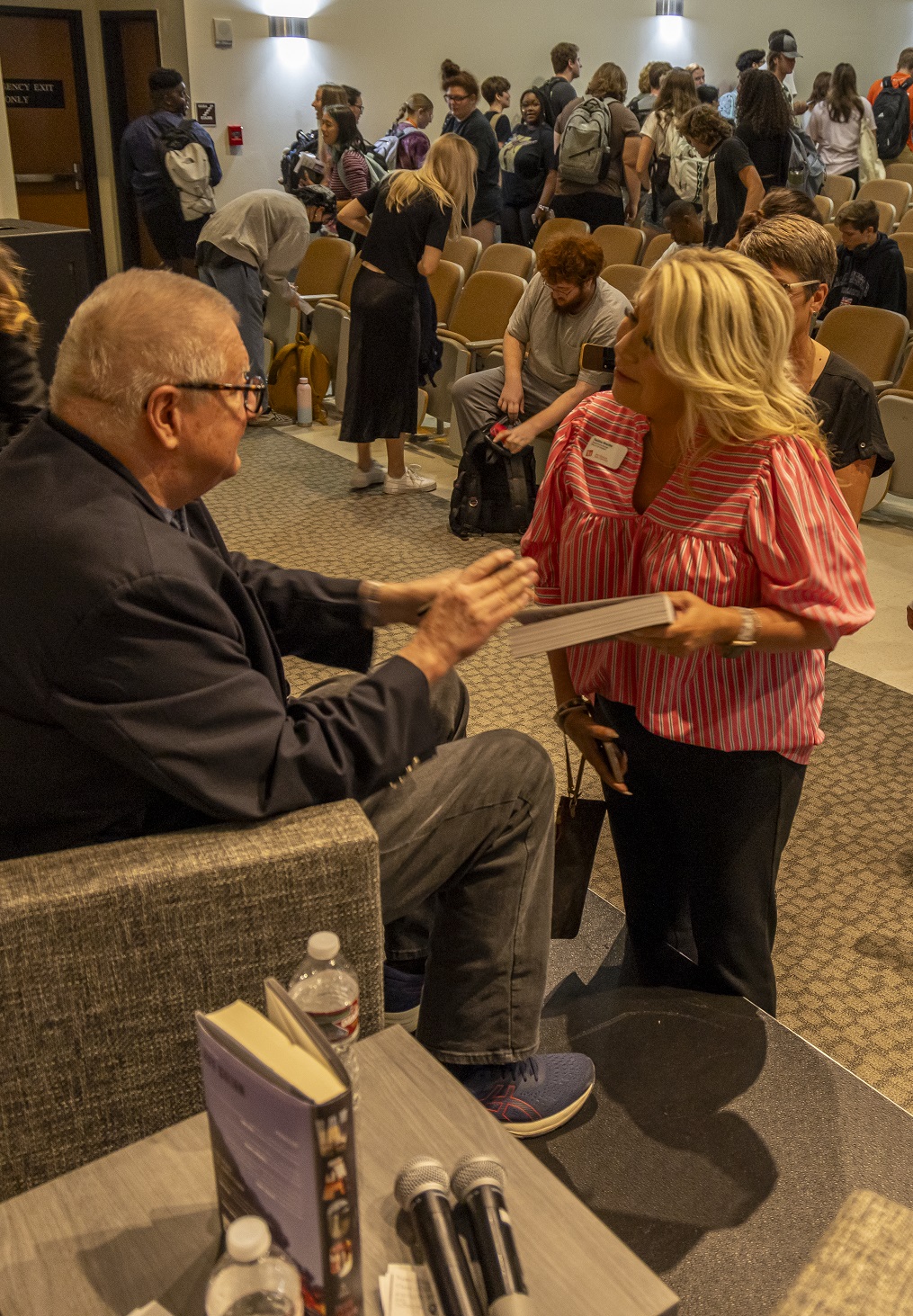
Author Jeff Guinn;
Author Stephen Harrigan;
Author Glenn Frankel;
Author James Reston;
Author Carl Rollyson;
Former State Department Official John Nixon;
Former CIA Official Jim Olson;
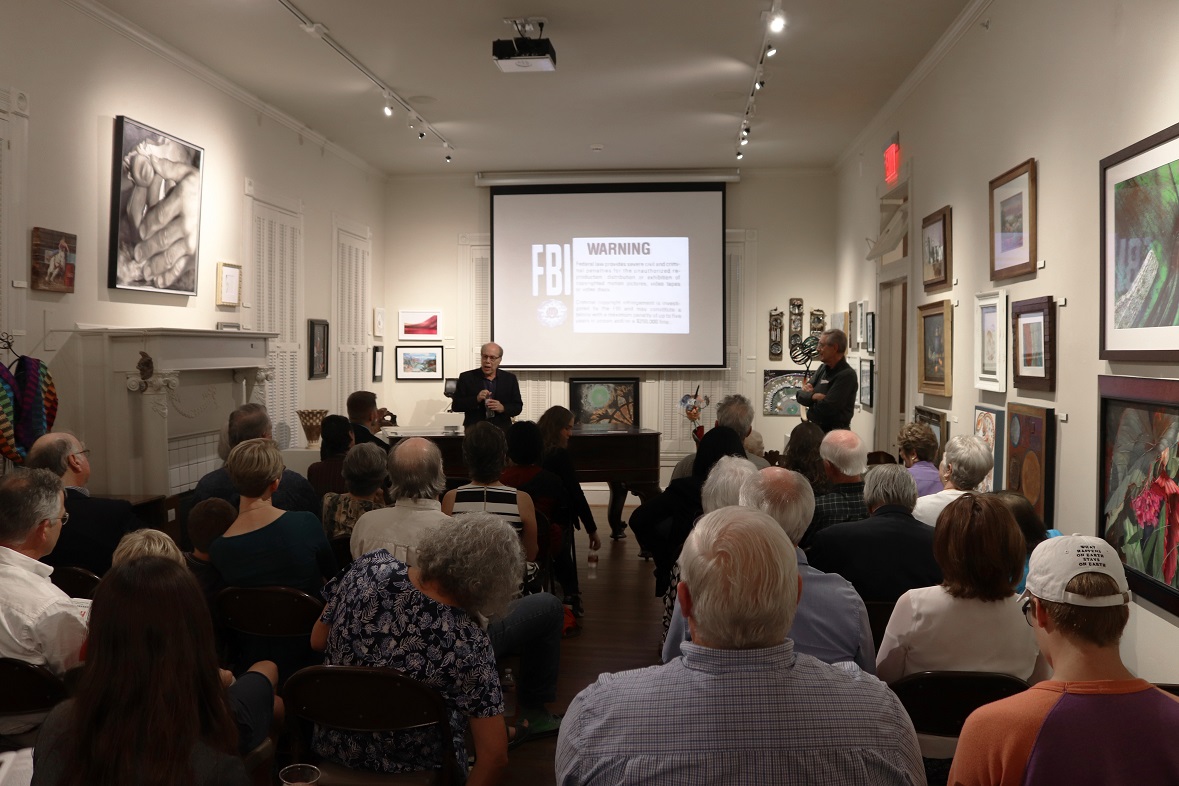
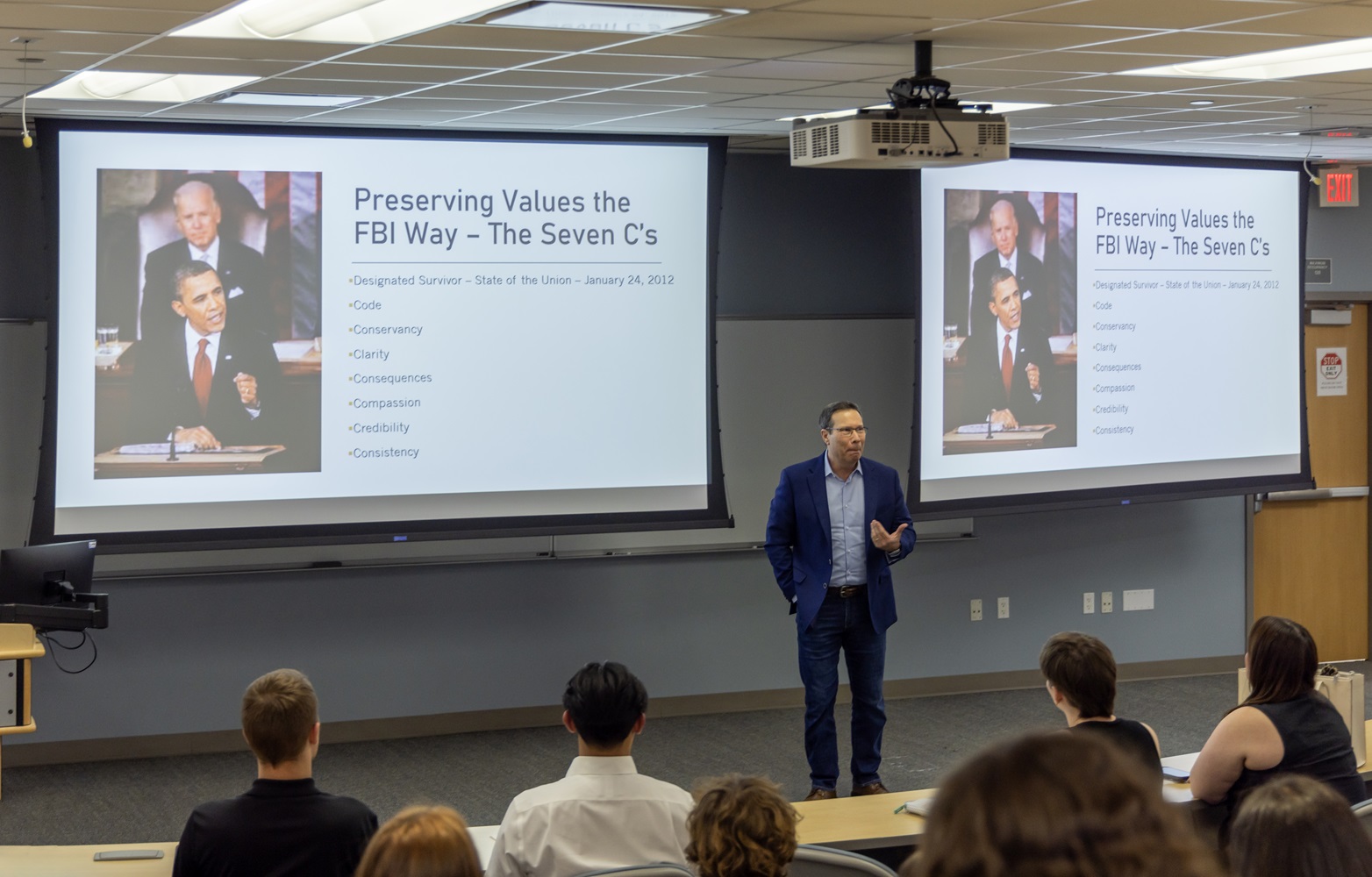
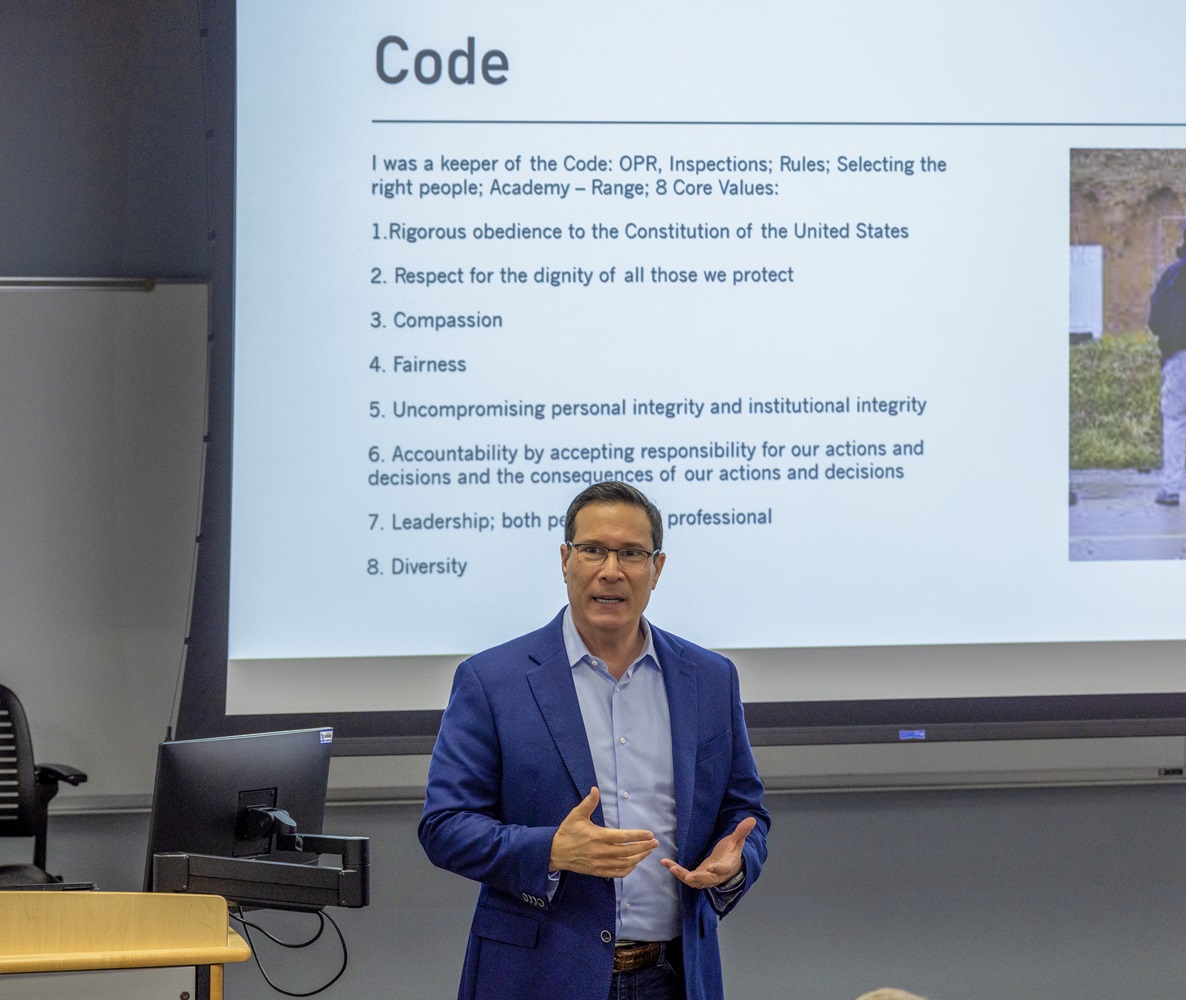
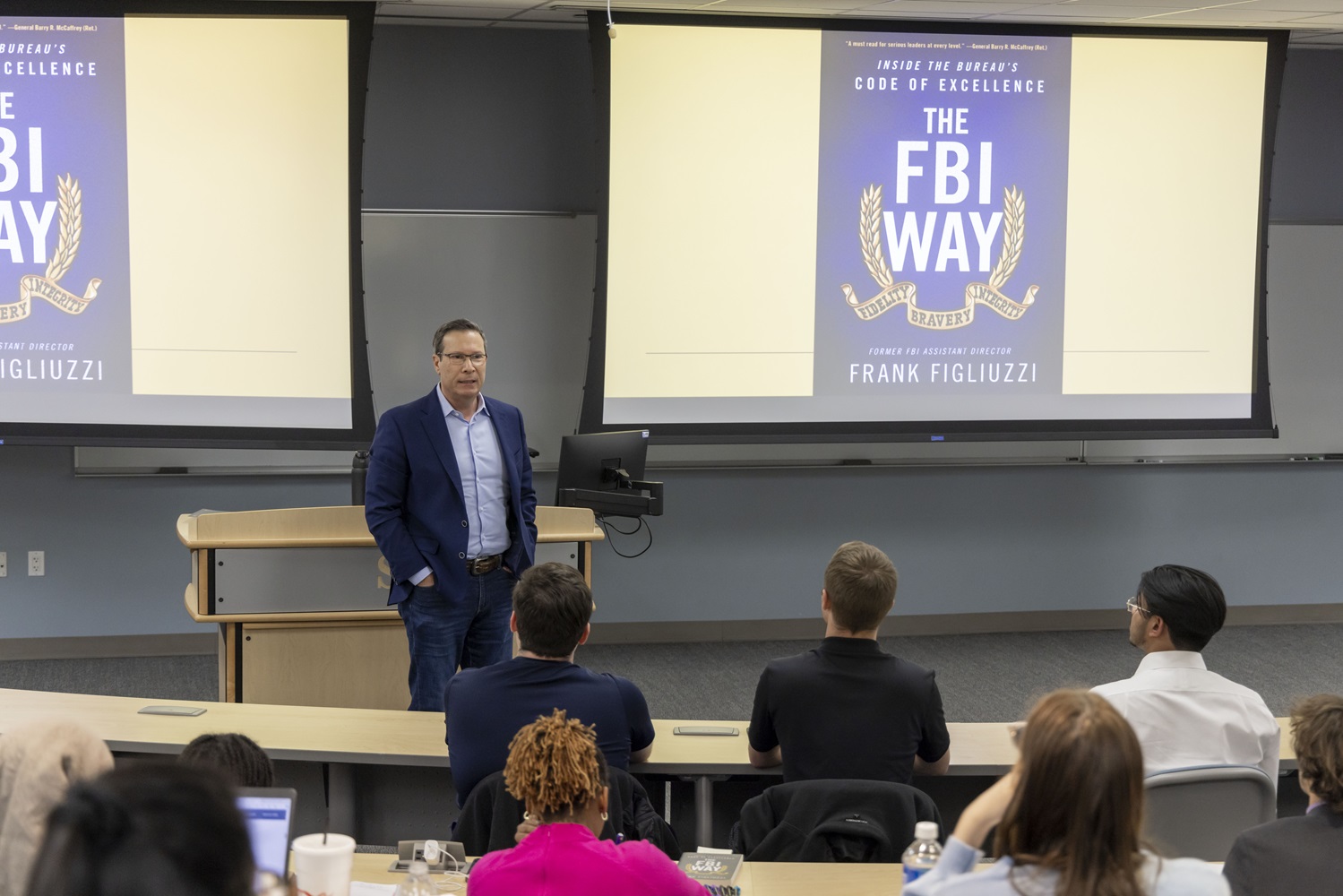
Former FBI Official Frank Figliuzzi;
Former Ambassador Chase Untermeyer;
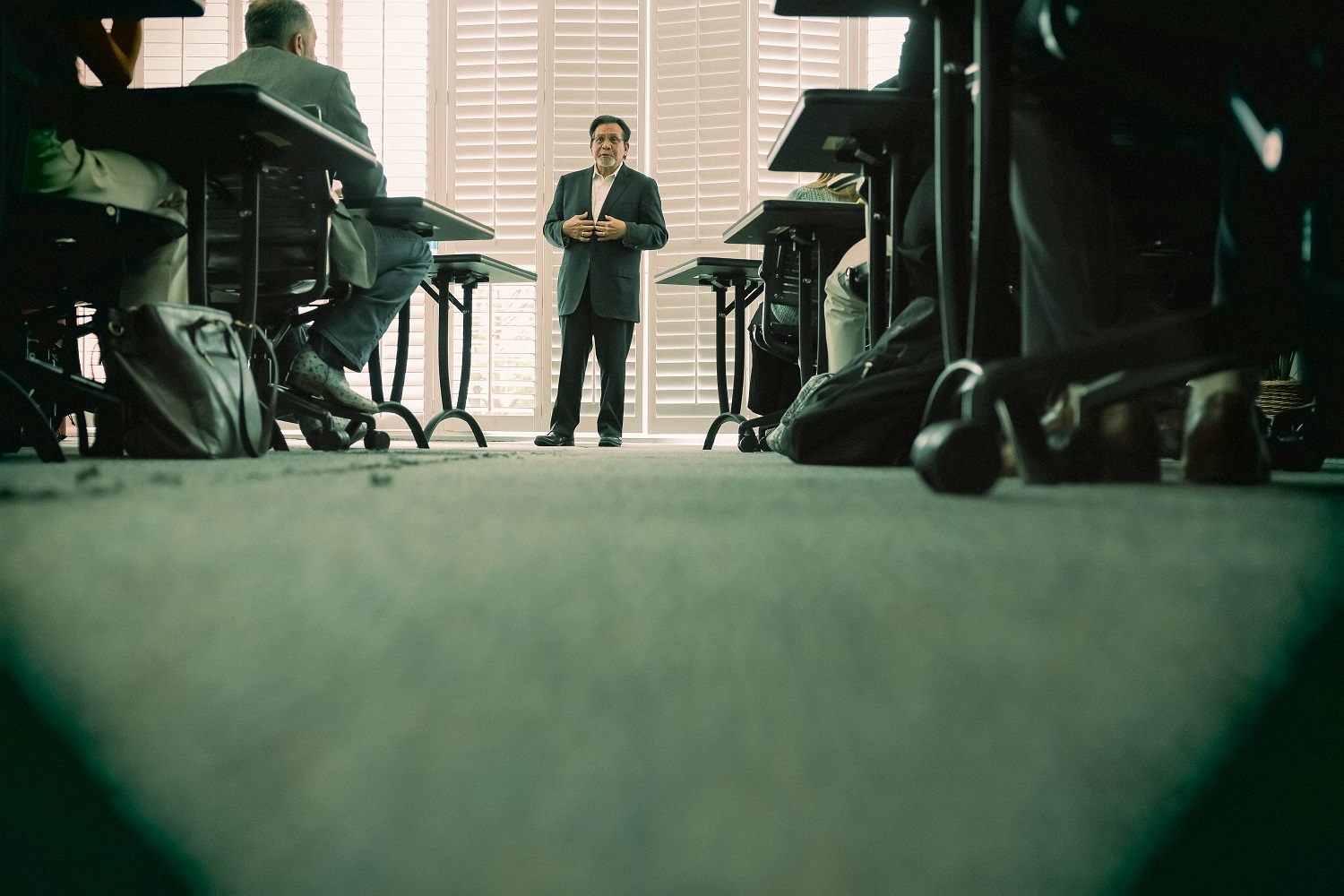
Former Attorney General Alberto Gonzales;
Former Presidential Chief of Staff Jean Becker.
By availing themselves of the classes, advising, and programs offered by the LEAP Center, students have the opportunity to explore numerous academic paths, career options, test their progress toward graduate or law school, and hear from some of the country’s leading public intellectuals.
For many, such opportunities are sufficient to satisfy their intellectual and vocational interests. Others, however, find that such endeavors whets their appetite for additional opportunities, and to these we turn in our next LEAP blog installment.
LEAP Ambassadors and SHSU Students with Ambassador Chase Untermeyer
During the summer months, LEAP students are a far-flung bunch, with students across the state of Texas–and beyond. But, when possible, we get together for education, conversation, and, of course, food!
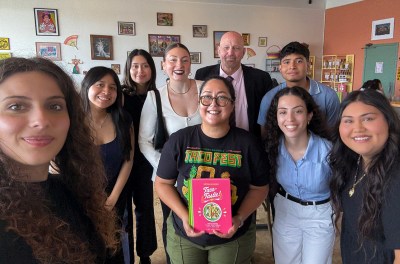
At the right restaurant, food can also be a learning opportunity, and that was certainly the case when we visited Cochinita & Co, led by Chef Victoria Elizondo. Indeed, we were fortunate to visit when Chef Elizondo was there, and she graciously spent a generous amount of time with us.
Chef Elizondo specializes in Mexican “comfort food,” but it’s a misleading appellation. The food is made with quality ingredients, technical skill, and a commitment to tradition, with more presentation than would be expected at a typical comfort food restaurant.
Perhaps that is why she has twice been nominated by the James Beard Foundation as the top Chef in Texas–a huge honor. It was, she told us, a surprise. Ten years ago, she was working as a pop-up chef, and then a food-truck chef. So, even when she had a storefront and had published her book, “Taco-Tastic”…
…she was not prepared for the texts coming in telling her she had been nominated. It wasn’t, she noted, on her radar.
The quality of her food, however, makes it clear why she was on the James Beard Foundation’s radar. Knowing her reputation and responding positively to the restaurant’s excellent service, we tried a broad variety of food. We began with the Guacamole and Chips (savory, with a little kick, and “addictive”)…
…and the Elote. The latter had less of the cream often used in restaurants, but it had more flavor, and it was a table favorite.
Among the eight of us, we had five different entrees: Shrimp Tacos (very good, a chef’s recommendation)…
…Black Bean Tamales (“the most tender masa I’ve had,” noted Mikaela)…
…Cochinita Pibil (Michelle and Mike’s vote for best entree on the table)…
…Chicken Adobo Bowl, the El Arcoiris bowl, and the Pineapple Shrimp Bowl.
For dessert, we had a cookie (large!) and Tres Leches, the latter being another immensely rewarding standout.
It was a pleasure to sample Chef Elizondo’s concoctions, which combined the traditional and the creative. It was an even greater pleasure to meet and speak with her, to hear about her story, and to see–and taste–the love and passion she puts into each dish.
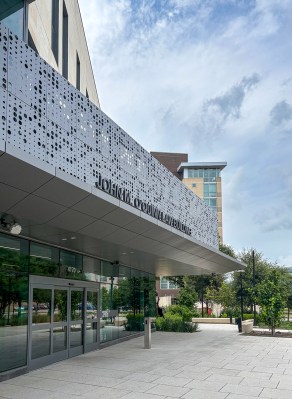
The John M. O’Quinn Law Building–the home of UH Law School–offers a grand yet inviting welcome to the study of law.
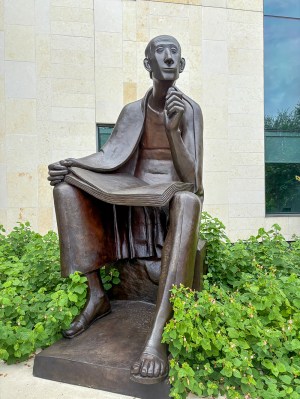
The modernist structure, designed by Shepley Bulfinch, greets visitors with a touch of the classical: Gerhard Marcks’ sculpture “Albertus Magnus,” who was the teacher of St. Thomas Aquinas, one of the greatest thinkers of history.
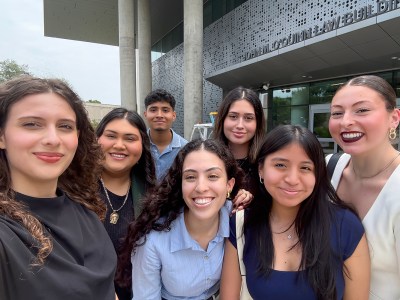
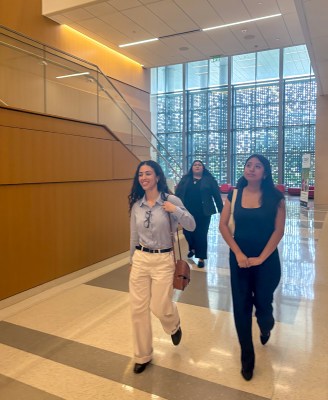
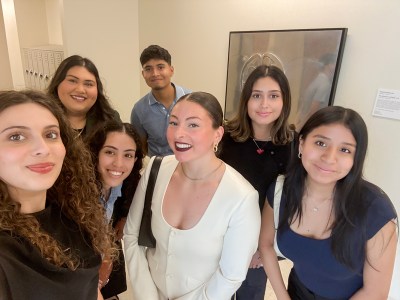
If that’s not enough to inspire the aspiring law student, then UH’s law program will probably do the trick, with specialties that pre-law students dream of pursuing. We, a mix of LEAP Ambassadors, Pre-Law Society members, and students in Professor Yawn’s “How to Win in the Courtroom” class, had the pleasure of witnessing, exploring, and envisioning our future during an amazing tour of the UH Law School.
Guided by a friendly and knowledgeable UH Ambassador, Justin Cheap, we experienced the school with a sense of comfort and relatability in a place that can initially seem so far beyond what we imagined.
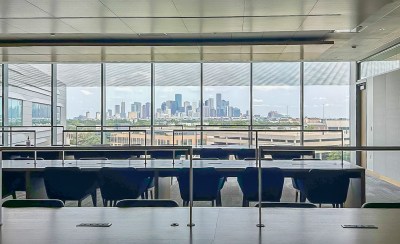
The Law Center spans five floors, each designed with purpose and opportunity in mind. The fifth floor offers a quiet library space where students can focus, recharge, and enjoy breathtaking views of the Houston skyline. It serves as a reminder that achievement is within reach.
The fourth floor brings more energy, fostering collaboration through group study areas, access to professors, advanced coursework, bar exam preparation rooms, and even spaces to relax, nap, or grab a bite.
The third floor brought us into what a law school lecture room looks like. This floor has most of the upper level law student classrooms, and had an outdoor sitting area, perfect for fall weather fresh air. Interestingly, this floor also features an art piece by Charles Pebworth, an SHSU art professor who has many pieces at SHSU and the Wynne Home Arts Center.
The second floor houses most of the 1L and some 2L classrooms, along with a beautiful glass-ceiling section that proudly displays awards and accolades from the school’s long history since its founding in 1927. The first floor features the largest lecture hall in the Law Center, which can also be transformed into a fully functional courtroom. Remarkably, the Supreme Court has held sessions here, giving students a rare chance to witness the legal system at its highest level without ever leaving campus.
Of course, we learned more than just about the space; we also learned about the caliber of the school. UH is a top-65 program in the nation, ranking in the top 10 in Health Care law. It has more than a dozen programs and offers several joint degree options (including degrees in medicine and history!). With a tuition of about $37,000 a year, the school attracts an exclusive pool of law students: their entering class has a median GPA of 3.75 and a median LSAT of 161. With this talent, it’s no surprise that the first-time bar-passage rate is 86 percent.
From its modern architecture to its unparalleled opportunities for networking, education, and growth, the University of Houston Law Center proves that it is more than just a school, it is a launchpad for future leaders in the legal field.

















































 Center for Law, Engagement, and Politics