Reflections from the Capitol: A Day of Service, History, and Perspective in Austin

by Olivia Discon

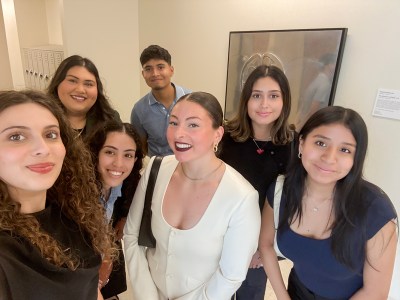
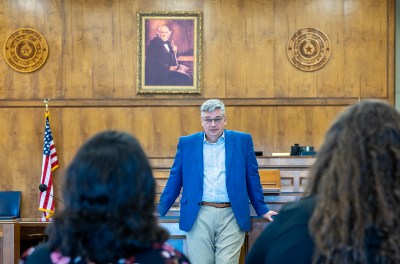
I recently had the opportunity to visit the Texas Capitol and share a few reflections from my term as student regent. I was invited by the Governor’s Appointments Office to speak to the newly appointed student regents, which was a real honor—and a full-circle moment I didn’t take lightly. I wanted to make the most of the opportunity and my time in Austin.

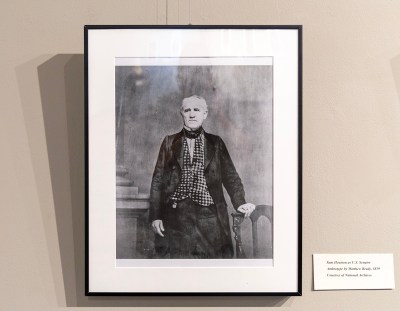
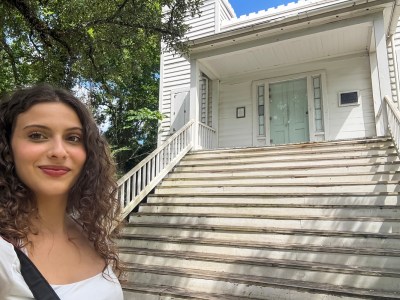
One of the biggest highlights of the day was being invited to the Governor’s Mansion. After a quick security check by DPS, I had the chance to tour one of the most historic and iconic buildings in Texas. The Greek Revival-style mansion was designed by Abner Cook—who, interestingly, also supervised the construction of the Walls Unit in Huntsville. That connection alone was enough to trigger my compulsive need to tie Sam Houston into everything.

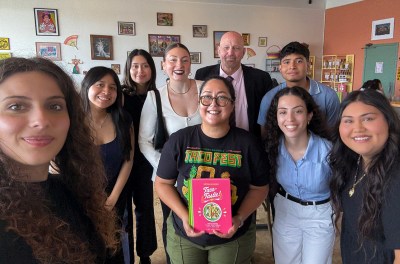
I’ll admit I was a little photo-shy walking through the mansion, but that didn’t stop a few photos from happening. To my surprise, I got to greet Governor Abbott again and take a quick photo with him—inside his house, no less. In that moment, I felt an overwhelming sense of gratitude. Being appointed as a student regent during my undergrad was an incredible opportunity, and I’ve felt supported at every level of my college experience. That support made moments like this possible.

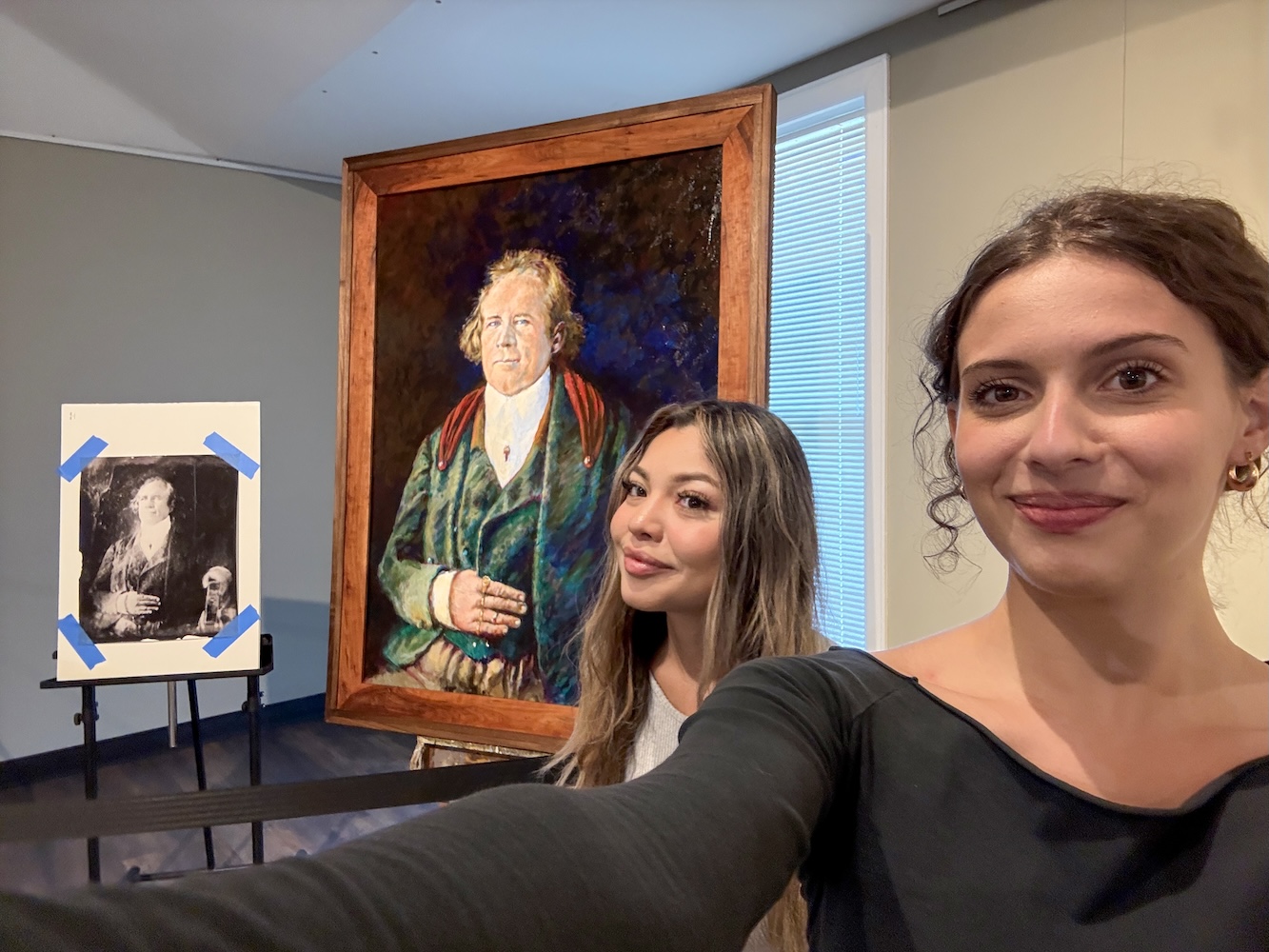
As we made our way through the mansion, we passed through rooms filled with stunning 18th-century furniture—and, of course, nods to Sam Houston in almost every one. They even have a room named after him. Seeing this more glamorous side of Houston’s life, and then comparing it to his final years at the Steamboat House in Huntsville, was oddly moving. He was so committed to his principles that he gave up comfort for conviction. It’s just one of the reasons Huntsville has such a strange charm to me. Somehow, all roads in Texas lead back to it.

Even though the Governor’s Mansion is a historic landmark, it’s still a lived-in space. Just outside the window, we caught a glimpse of the Abbott family’s three golden retrievers playing in the yard. The timing of the visit couldn’t have been better—it was a great reminder of how historic homes can still be part of everyday life, thanks to organizations like the Friends of the Governor’s Mansion.

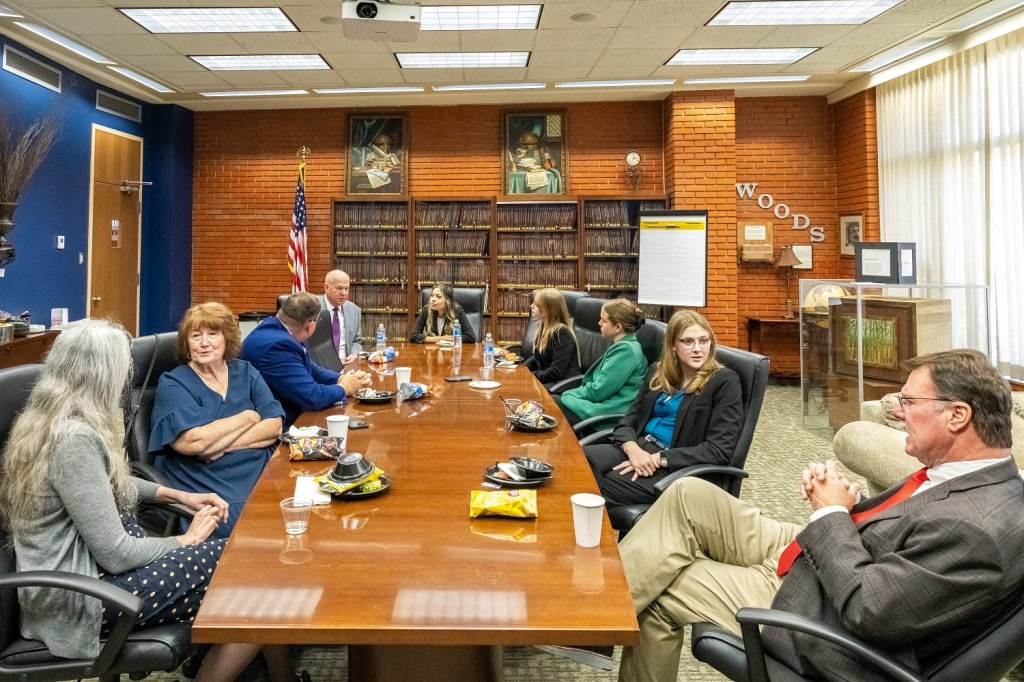
Later that afternoon, I joined Chris Covo, a former student regent for the Texas State University System, and Luke Shwartz, who was recently appointed student regent for the UT System (congrats again, Luke!). We sat down with Brent Connett for a moderated conversation about the role, what surprised us, and what advice we’d offer.

For me, the biggest takeaway was this: being a good representative can open more doors than you might expect. Investing in your professionalism, doing your research, and showing up prepared—not because you’ve “made it,” but because you’re serious about learning—goes a long way. When you present yourself as someone competent and curious, people take notice. You get to be in the room for real conversations and real opportunities.

After the panel, I stopped by to see my good friend Michelle Cardenas, who was deep in the legislative trenches as session wrapped up. She took a much-needed breather and walked me through the Governor’s Reception Hall. Watching her in action, compared to where we started—back when we walked into the Capitol for the first time with LEAP—was surreal. We’re in completely different places now, but there’s something meaningful about knowing LEAP brought us both here.

Electric Gravy
For dinner, I continued on my sappy tirade by joining Cinthia Villarreal and Michelle Cardenas at an Indian fusion restaurant—Electric Gravy.

It’s been getting a lot of local attention, including a recommendation from former LEAP Ambassador Saara Maknojia.

We started with the curry queso (which was excellent), and then I had the chicken tinga curry, Cinthia got the chicken masala, and Michelle went with the pork vindaloo. All of it was solid—definitely a fun place worth checking out.

Mount Bonnell
To wrap up the day, I visited Mount Bonnell for a great view of Lady Bird Lake. It ended up being the perfect spot to close out a long day—quiet, scenic, and full of the kind of quirky passersby you can only find in Austin.

The sun didn’t set until about 8:30 p.m., but once it started going down, it dropped fast.

I might be wrong, but I think this was the first time I ever intentionally watched a sunset. It was a nice experience!

Faith and Childhood in the 20th Century: Insights from Stephen Harrigan

Stephen Harrigan, best-selling novelist and non-fiction author, is a veteran of book-talks. As such, he was able to manage a less-than-smooth moderated discussion of “Sorrowful Mysteries: The Shepherd Children of Fatima and the Fate of the Twentieth Century,” while still providing humor, interesting anecdotes, and his usual graciousness to a full house at First Light Books.

This audience included some impromptu stop-ins by authors Bret Anthony Johnston and Elizabeth Crook, as well as the moderator Sarah Bird, herself a novelist. Following a brief introduction….

…Bird described Harrigan as a “famously moral person,” before asking “an unfair, unanswerable question: ‘on balance, has Catholicism been good or bad for humanity?'”

Harrigan did an admirable job answering the unanswerable. While noting the good and the bad–emphasizing there was a lot of both–he indicated that asking what things would be without religion is something like asking what life would be without the weather. It’s just a part of humanity, even if a person is, like Harrigan, a non-believer.

The strongest parts of the discussion involved Harrigan describing his Catholic upbringing, while drawing parallels to the three Portuguese children who believed they saw the Virgin Mary in Fatima in 1917. Harrigan emphasized how young the children were (they were 7, 9, and 10), noting that they were at impressionable ages.

He tied that to his youth, when he was regularly instructed to “duck and cover” underneath desks, armed with the illusion that such actions could save his life in the event of a nuclear war. Of course, this fear of the apocalypse alternated with soothing lessons of the Virgin Mary’s powers and beneficence. It could be, Harrigan implied, a confusing time.

Mixed in were some discussions that were less relevant to the book. Bird asked not once but twice about the Catholic Church’s “shift to the right,” and she brought her confirmation dress to the event, and she hung it from a speaker at the front of the room.

This prompted an audience member to ask, during the Q & A, whether Ms. Bird “wore underwear with her confirmation dress,” surely one of the stranger questions Harrigan has heard at one of his book discussions.

On this question, Harrigan prudently remained silent. On others, he deftly responded by offering interesting anecdotes, exploring big topics, and mixing the personal with the universal in a manner that is as appealing in person as it is in his writing.

Understanding Pharmacy Fraud: Lessons from the Houston ACFE Lunch

The Houston Chapter of the Association of Certified Fraud Examiners met last week to discuss medical fraud, particularly as it relates to pharmaceuticals. And with former LEAP Ambassador Bianca Saldierna on the Houston ACFE Board, LEAP students found themselves at the Tanglewood Ballroom alongside approximately 25 certified fraud examiners to discuss pill mills, pharmacy shopping, and the black market.

Following an introduction by Robert Rodgers, the Director of ACFE’s In-Person events…

…featured speaker Yasir Shakoor offered an interesting–and even entertaining–discussion of the diverse types of pharmacy fraud over lunch.

Mr. Shakoor has both a BA and an MHC in Health Care Administration, and he is also a Certified Fraud Examiner, and he was clearly qualified to discuss the different types of fraud.

Following a discussion of common myths and an emphasis on the costs associated with pharmacy fraud, Shakoor made a distinction among (1) fraud–falsely representing services rendered; (2) waste–not reasonably conserving resources; and (3) abuse–which may involve exploiting gray areas in laws or policies and, while perhaps not illegal, is unethical and costly.

The case studies were perhaps the most interesting component of the presentation.

Examples included (1) an individual who hacked into an e-prescription service and issued 18,500 prescriptions (in one day) to purchase sport cars, basketball tickets, and to be “entertained” at strip clubs, (2) a doctor who would offer opioids for the flimsiest of pretenses, and (3) underground organizations that offered substandard, black-market drugs (or, sometimes, just any substance available) in place of the specified medication. It is frightening, costly, and, often, deadly.

Apart from the educational aspects of the lunch, our major reason for attending was to see Bianca Saldierna.

A key LEAP Ambassador in 2016-2017, Ms. Saldierna has remained involved in her alumni years, and she generously invited us to attend this event. With many thanks to Bianca and to ACFE, we eagerly await our next such lunch!

Where Texas Rests: A Visit to the Texas State Cemetery

by Sarah-Hope Parohl

I visited the Texas State Cemetery in early February for the first time since I was in fourth grade. Growing up in Austin, I visited almost every historical site in town, but before I could absorb and make connections between the material I was learning at the site and the material I learned in classes.

Upon arriving at the Cemetery, I walked through the Visitor’s Center, reading about the lives of some of the folks buried there and seeing memorabilia to highlight them. There is also a short video in the Visitors Center that goes into detail about the history of the Cemetery, the recent restoration projects, and the geography of the grounds. The grounds, divided into sections, are so named to highlight the individual’s achievements. For example, Confederate Field is home to the headstones of Texas Confederate soldiers; Republic Hill is the resting place of Texas Revolutionaries, Justices, Legislators, Governors, and old Texas Legends; while Monument Hill is home to astronauts, District Judges, and Texas State Cemetery Committee members, to name a few.

The most fascinating aspect was, of course, the stories of individuals that the kind lady at the Visitor’s Center (who happened to be from Calgary, Canada!) shared with me. She informed me that the oldest individual buried in the Cemetery is not a Texan but a French explorer estimated to have died in the late 1600s in a shipwreck in the Gulf of Mexico. A delegation from Texas even reached out to French preservationists to see if they would like the remains back in his home country, but they let him rest in Texas. On the highest point of the Cemetery lay an astronaut, Eugene Cernan, the second American to walk in space.

The Texas State Cemetery is not just a collection of headstones; it’s a place of diverse and deeply meaningful memorials. These memorials pay tribute to those who can never return to Texas. There is a monument recognizing those who lost their lives in the 9/11 terrorist attacks in New York and those who traveled to help New York rebuild. The monument contains two steel columns from Ground Zero, serving as a solemn reminder of the tragedy. There is a monument for Texans who have received the Medal of Honor, those who fought in the War of 1812, received a Purple Heart, fought in World War II, or Vietnam. Each of these monuments is a testament to the courage and sacrifice of these individuals. There is a monument that honors the African American legislators who served during the Reconstruction Era, a tribute to their contribution to Texas history.

While learning about others’ history, I was able to take a trip down memory lane. The only time I remember being at the Texas State Cemetery was for a guided tour that my Girl Scout Troop took in 2012. I do not remember much from that trip, but I have always remembered the story of Josiah Wilbarger.

Wilbarger is one of the few to survive scalping after Native Americans ambushed him and some others. His friends, thinking he was dead, rode away, and the only reason Wilbarger survived with an untreated open wound was because blowflies laid eggs in his wound, and once the maggots hatched, they ate away the infection. While he survived, he never truly recovered from his wound, so his wife made him a raccoon skin hat to protect his skull and brain. Wilbarger died over a decade after his scalping when he hit his head on his workbench without wearing the hat his wife made him. I do not remember much from my fourth-grade trip, but I remember the tour guide saying, “This is why wives are always right” after finishing the tale of Josiah Wilbarger. 

The Bizarre Tale of Treaty Oak’s Poisoning in Austin

Makenna McDaniel

They say “Keep Austin Weird” but nothing is more bizarre than the story of Treaty Oak. Back in the 1980s, there was an attempted murder that took place. Of a person? Even worse, it is the perfect specimen ever to exist. Treaty Oak. 

Treaty Oak, an over 500-year-old tree, is a historic site in Austin, Texas. In 1927, the American Forestry Association named Treaty Oak the most perfect specimen in North America. A tree so perfect that people from around the United States have to visit it whenever they come to Austin.\

Pictured: Treaty Oak, 1941. (Courtesy of the Austin Public Library)

In 1989, a ghastly sight was seen: dead grass surrounding Austin’s beloved tree. John Giedraitis, Austin’s first city forester, was hosting several state foresters from across the United States when he came upon this frightening sight. While leading a tour of the multiple parks in Austin, Giedraitis proudly took them to Treaty Oak. Upon first glance, the foresters noticed that something alarming was at the roots of Treaty Oak, dead grass. Indicating a problem, after months of further tree deterioration, Giedraitis decided to open a full investigation to save the tree. Giedraitis took samples and sent them to the lab for a test. The results were quick but did not contain happy news… Treaty Oak was being poisoned!

Pictured: ‘Murder Mystery Grips City: Just Who Would Kill a Tree?’ on the front page of The New York Times, 1989.

The poisoning seemed to him as intentional, but who could do such a thing? That is a question that Giedraitis would not rest until he got to the bottom of. Austinites were not the only ones invested in this criminal case but the world. Magazines and news stations started to cover the story. One day, after hearing about the tragedy, H. Ross Perot, a billionaire based in Texas, reached out and offered to pay for the expenses of the investigation. Giedraitis and his foresters began to call every scientist they knew; the local police department took up the case; it was a city-wide effort. In the meantime, several treatments were given to Treaty Oak to save its life.

John Jones, a new detective in the Austin City Police Department, thought this case was a joke but soon found out it was anything but. The Austin Forestry Service offered a $11,000 reward to anyone who knew the culprit.

The news spread so fast that people from all over the world started to call, claiming to know something. No one had any helpful information about the case until Cindy Blanco came forward. Blanco would often ride to a local methadone clinic with a man named Paul Stedman Cullen. Blanco recalled an odd conversation with Cullen, who admitted his love for his counselor, but the love was unrequited. Cullen performed rituals and believed that killing the largest thing would also kill his passion for his counselor. Jones got a search warrant after an incriminating audio recording. Cullen’s home was soon investigated, and a trial began. He was ultimately found guilty and sentenced to 9 years for criminal mischief. Treaty Oak was safe at last!