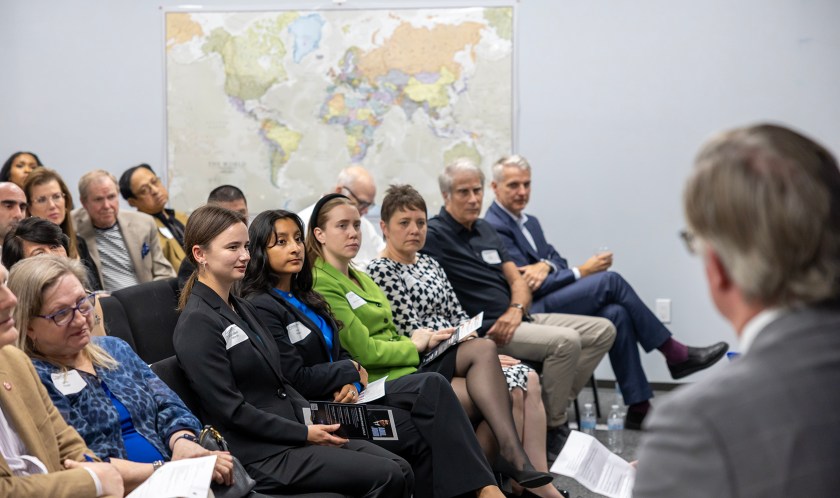
LEAP Ambassadors enjoy learning in the classroom, a fact made evident by a collective 3.81 GPA. But the special part of the program is the learning outside of the classroom, where we work to expand our professional networks, learn new information, and venture outside our comfort zones. Such outcomes were on full display at the World Affairs Council‘s “Inside the CIA” event featuring Michael Ard.
A former CIA Analyst now teaching international affairs at Johns Hopkins University, Ard took us on a far-ranging tour of the CIA and the world in a discussion facilitated by everyone’s favorite moderator, Ronan O’Malley.
The CIA oversees 11 centers and undertakes, according to Ard, four major activities:
Analysis
Collection
Covert Action
Counterintelligence
Obviously, these actions involve sensitive operations, and Ard noted that this can lead to conflict with the rest of the world, the Congress, and, most notably, the President. The President relies heavily on the CIA, and when operations do not go well, it can lead to negative consequences for the Chief Executive, which can, in turn, lead to strained relationships. Nixon, in particular, was distrustful, a fact punctuated by Ard, when he quoted Nixon: “What are those clowns in Langley doing? Reading the newspaper?”
But it wasn’t just Nixon: JFK felt burned after The Bay of Pigs disaster in Cuba; Congress was disillusioned during the Church Hearings in the 1970s, when many of the CIA’s activities came to light; and George W. Bush, according to Ard, was sorely disappointed in the CIA’s investigation into Weapons of Mass Destruction (WMD) in Iraq.
Speaking of which, during Q&A, the audience asked whether the Bush Administration put pressure on the CIA to find what it wanted to find: WMD. Ard said, “No.”
He encouraged the audience to read the Silberman-Robb report, noting that the biggest problem in Iraq was that Hussein wanted some countries (his regional enemies) to believe he had WMD, and he wanted us to believe he didn’t. This caused him to act with much furtiveness, which was then interpreted as guilty behavior. It wasn’t correct, he noted, but it was a reasonable conclusion.
Ard was also asked whether any movies get the CIA right. The former analyst noted he doesn’t watch a lot of movies, and he was generally dismissive (“they’re movies”), but he noted that “Argo” had the right feel, and “The Sum of All Fears” captured some of the banter among analysts.
Following the event, Dr. Ard put on his professorial hat, and spoke to us as students for a while.
Even as he noted the challenges associated with recent budget cuts, he was encouraging, prompting us to dream big, take opportunities, and to be assertive in putting our goals into action.
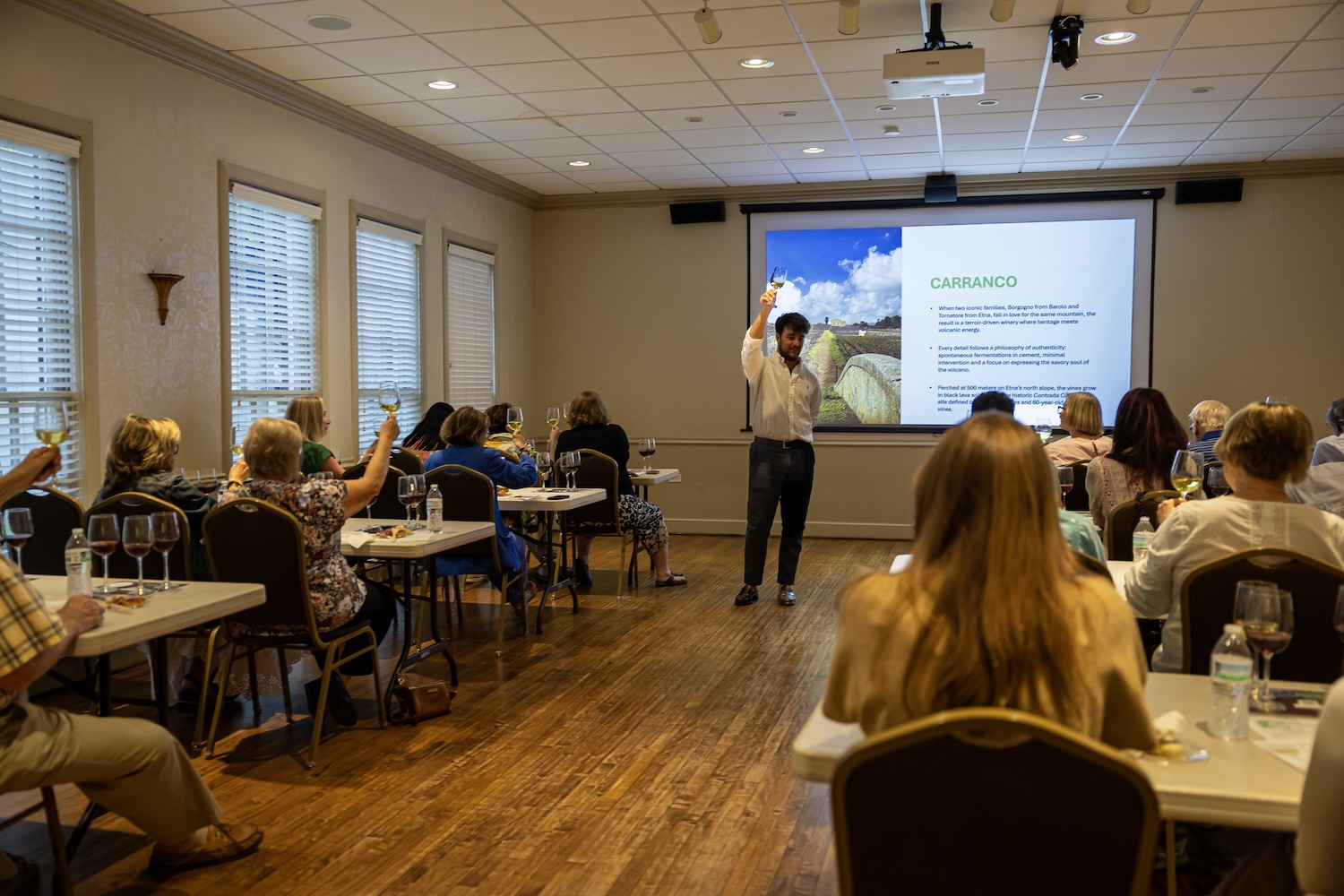
LEAP students added another country to its World Affairs Council culinary passport: Italy. While Italy is most known for pizzas, pastas and their ketchup-despising attitude, it is also known as the wine capital of the world. We learned more about wine and its profound impact on people’s lives.
In true European fashion, there was plenty of snacking to be had, rather than a full-course meal. A variety of cheeses and meats ensued, and we spent time conversing in the beautiful Italian Cultural and Community Center.
The speaker for the evening, Ferdinando Favara, has grown up appreciating this aspect of Italian culture his whole life. His family, who has longstanding roots in the wine industry, have a vineyard in Sicily–which we came to learn is on the up-and-up in terms of regional “quality”. Favara helped his grandmother in the wine fields starting at just 14 years old.
Ferdinando spoke about how wine helps to bring people together. His “philosophy”, so to speak, is that wine creates stories, keeps stories alive, and connects people in a vital way. While LEAP students didn’t personally indulge in any wine tasting, it was fun to partake in the storytelling and learn about the many intricacies that come with a high-quality experience. Much like the efforts of the LEAP Center!
He also talked about the deep history of wine which started 3,000 years ago in Sicily. Sicily, which is the largest island in the Mediterranean, uses a terrace-type farming technique. It uses this form of farming because it has the largest active volcano in Europe! Our discussion then traveled to Piemonte, once the land of the King of Italy. While on the verbal excursion, we learned the king entrusted his vineyard to one of his servants (who was rumored to be one of his lovers!), a legacy that lives on today. This region is home to one of the oldest vineyards in all of Italy.
LEAP students truly appreciated attending another World Affairs Council program which has helped broaden our understanding of the world around us. While we didn’t engage in the wine component of the evening, we definitely appreciated Italy’s culture, history and significance in the wine industry.
When LEAP Ambassadors have the opportunity to travel, they follow a process that is in line with their approach to education: prepare, experience, and reflect–sometimes called the P.E.R. model. In this manner, the Center promotes learning, while also providing the flexibility and individual discretion to have fun and find their experiences personally rewarding.
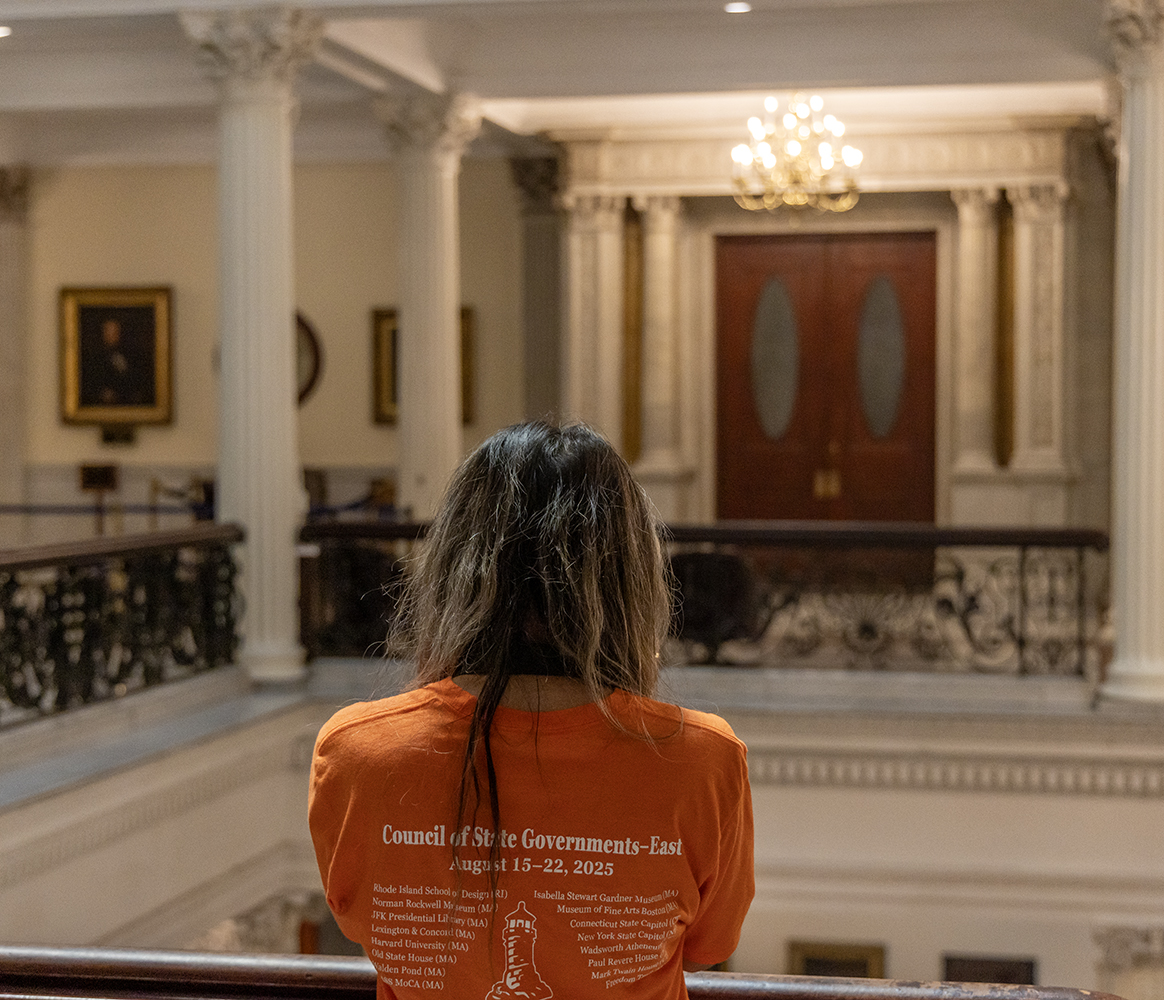
In advance of the students’ participation in the Council of State Governments Conference, they prepared by doing various levels of research on the many sites, people, and locations they would explore. For the students, this also involves research the sites, the costs, allocating their own funds, and creating the trip-themed t-shirt.
The central aspect of the learning process, however, is the experience, and there were many on this eight-day trip. To help with the refection, the students write blogs such as this one, of course, but they also select their favorite experiences from a trip–like all LEAP travel–that involved much diversity in experiences, perspectives, and geography.
Restaurants
The overwhelming favorite among restaurants was Boston’s ‘Fox & the Knife,” which is no surprise in that Chef Karen Akunowicz won the “Best Chef: Northeast,” in 2018. The service was impeccable, and the food was even better, with the Carne Cruda Crostini and the Tagliatelle Bolognese standing out as favorites, with the fried chickpeas as a surprise favorite snack.
Another favorite was Track 15 in Providence, Rhode Island, a refurbished railroad station with half a dozen restaurant choices. We made the most of these, and the combination of the food and the environment made this a favorite.
Art Museum
The clear favorite of the art museums was the Boston Museum of Fine Arts, owing no doubt in part to the Van Gogh exhibit on display when we arrived. The students had a chance to see three different Van Gogh self portraits (Olivia has seen 5-6 or at different museums across the country), a giant piece by Dale Chihuly, and explore some others that became favorites.
Most LEAP Ambassadors come into the program with little knowledge of art, and with varying degrees of art affinity. Olivia came in with a love of art, but with very little experience visiting museums. She had only visited one museum in her life–a science museum–and she has now visited approximately 80 museums across 18 states, all of which she visited on LEAP trips.
Favorite ArtPieces
A favorite among both Michelle and Olivia was Rodin’s “Eternal Springtime,” on display at the Boston Museum of Fine Arts. Interestingly, Olivia was exposed to this at both the Metropolitan Museum of Art in NYC and the High Museum of Art in Atlanta, GA, making this her third viewing of a version of this sculpture.
Another favorite was Thomas Cole’s “Expulsion from the Garden of Eden,” a good example of the Hudson River School–appropriate, since we crossed the Hudson River on this trip!
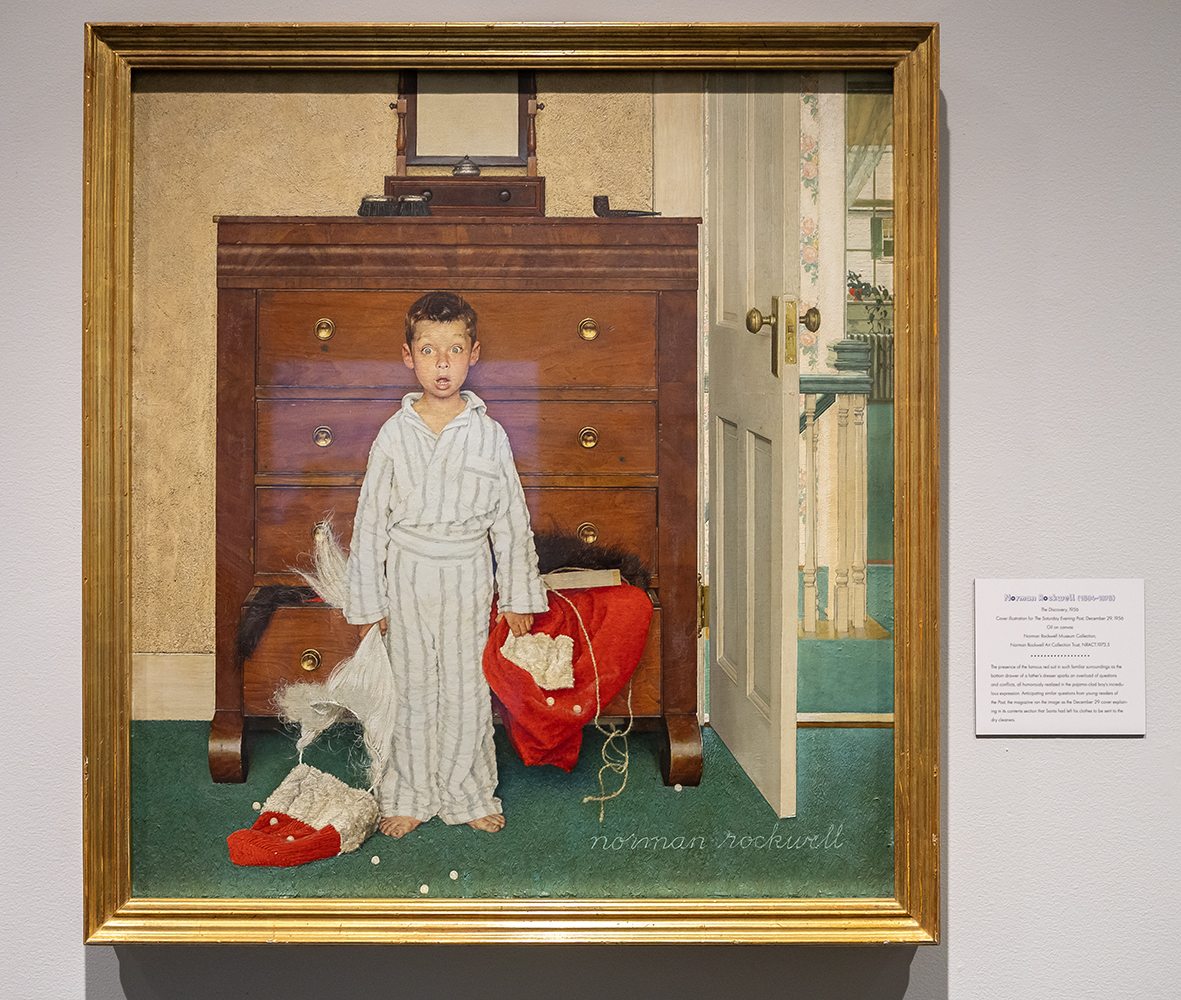
And of course, there were some “comfort favorites” from the Norman Rockwell Museum, including a rendering of Stockbridge, MA, where we stayed; his famous self-portrait; “Freedom from Want,” a copy of which hangs in Huntsville’s Wynne Home Arts Center; and “New Kids in the Neighborhood,” by Norman Rockwell.
Literary Sites
New England is rich in literary landmarks, and Ambassadors carefully planned their travel maximize their exposure to such sites. While many of these involved mere photo ops, they were able to see the homes of Herman Melville, Edith Wharton, Ralph Waldo Emerson, and Mark Twain, while also seeing the graves of Nathaniel Hawthorne, Henry David Thoreau, Emerson, and Louisa May Alcott–not to mention Thoreau’s cabin and Walden Pond!
But the favorite literary site of the trip was Mark Twain’s Hartford home.
Our enthusiastic tour guide (Josh), the home’s beauty, and the monumental stature of Mark Twain separated this site from the others we visited.
State Capitols
As students of political science, the Ambassadors made a point of visiting the capitols of the states they were in: Massachusetts, Rhode Island, Connecticut, and New York. While it’s perhaps not fair to compare (we didn’t receive full tours of all; some were self tours), the overwhelming favorite was the Rhode Island Capitol building.
Our tour guide, Tony was very knowledgeable, and when a special tour arrived, other staff from the tour office came in to relieve Tony, showing us the Museum portion of the capitol. It was a beautiful building, well complemented by the tour, and we believed, a microcosm of the state’s beauty and interesting history.
Favorite Activities
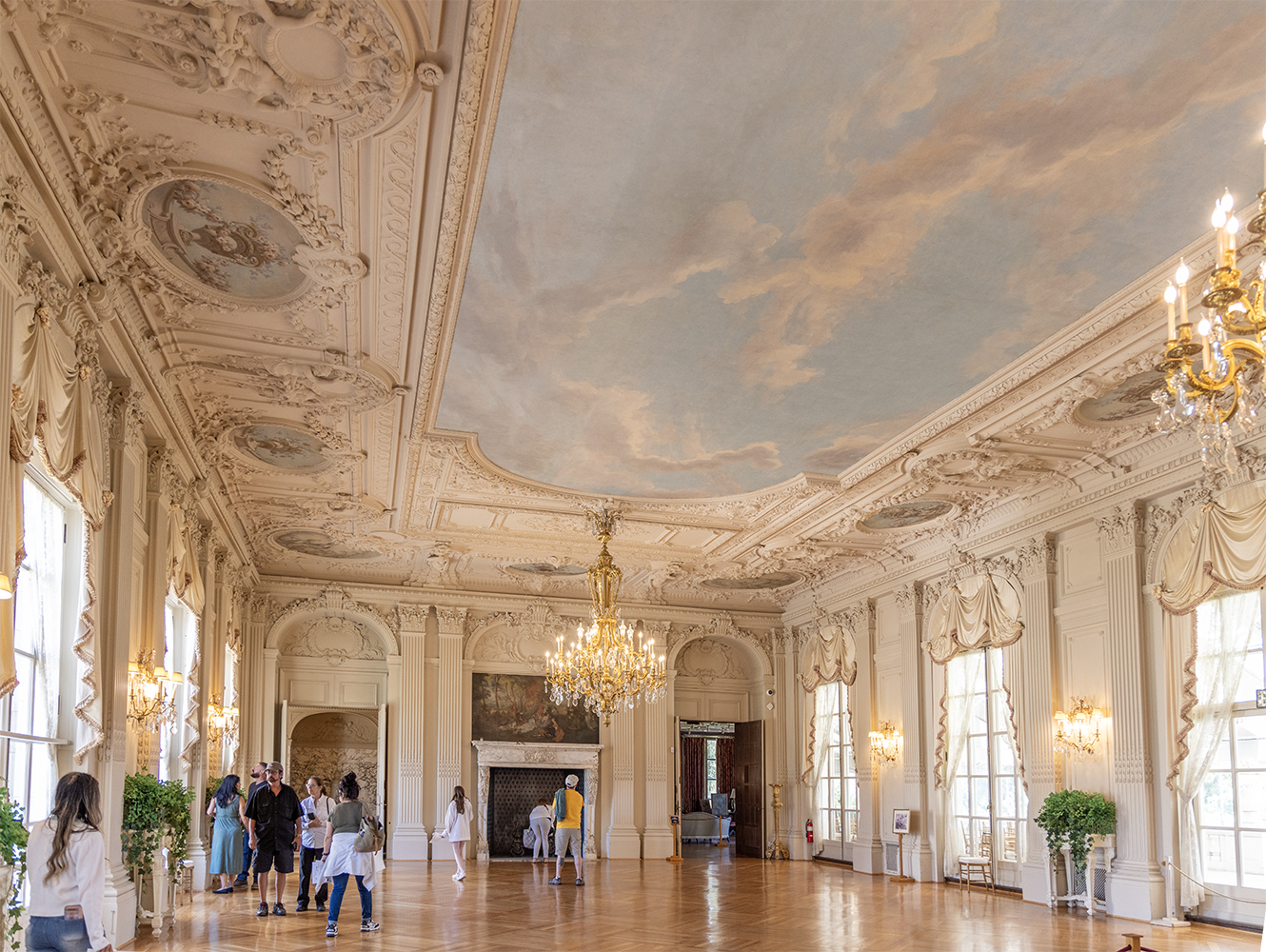
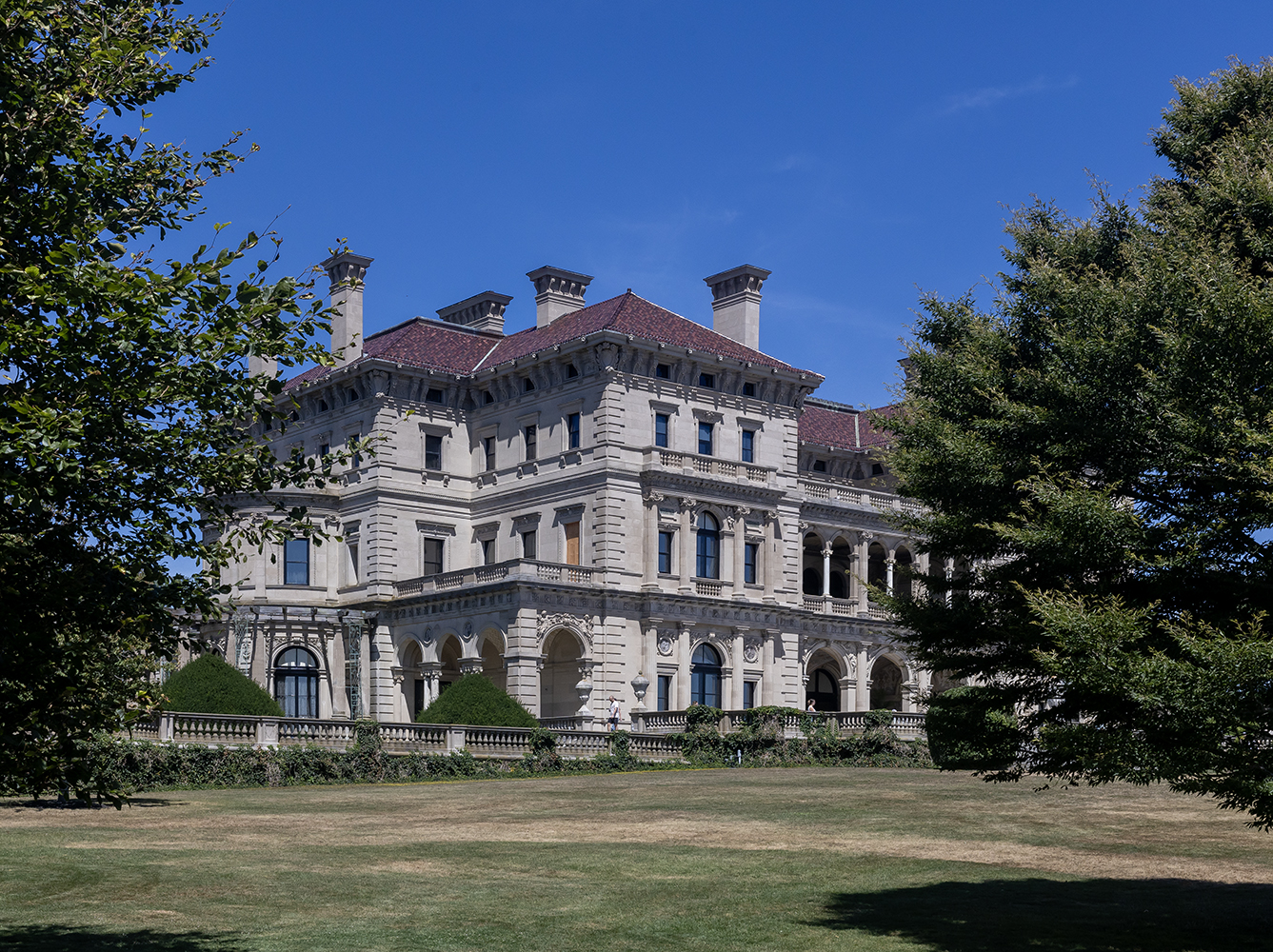
When the students weren’t engaged in conference activities or scheduled tours, they made time for additional fun and educational activities. Their favorites among these including touring the Breakers and Rosecliff (students were split on their favorite).
Of course, when Parasailing in the Atlantic Ocean is one of your activities, it is likely to be a favorite. It was both students’ first time to parasail, and it was Olivia’s first time on a boat!
They made the most of it!
Concluding Thoughts
“They made the most of it,” might just be the best phrase for capturing LEAP Ambassadors’ approach to their college education. These trips can be difficult, involving much preparation, many activities, a lot of writing, photography, and both writing and photo editing, but this is the work that goes into making the travel rewarding.
This program, however, only works with the help of generous donors and a small group of bright, motivated, and civic-minded students who are truly interested in “making the most of it.”
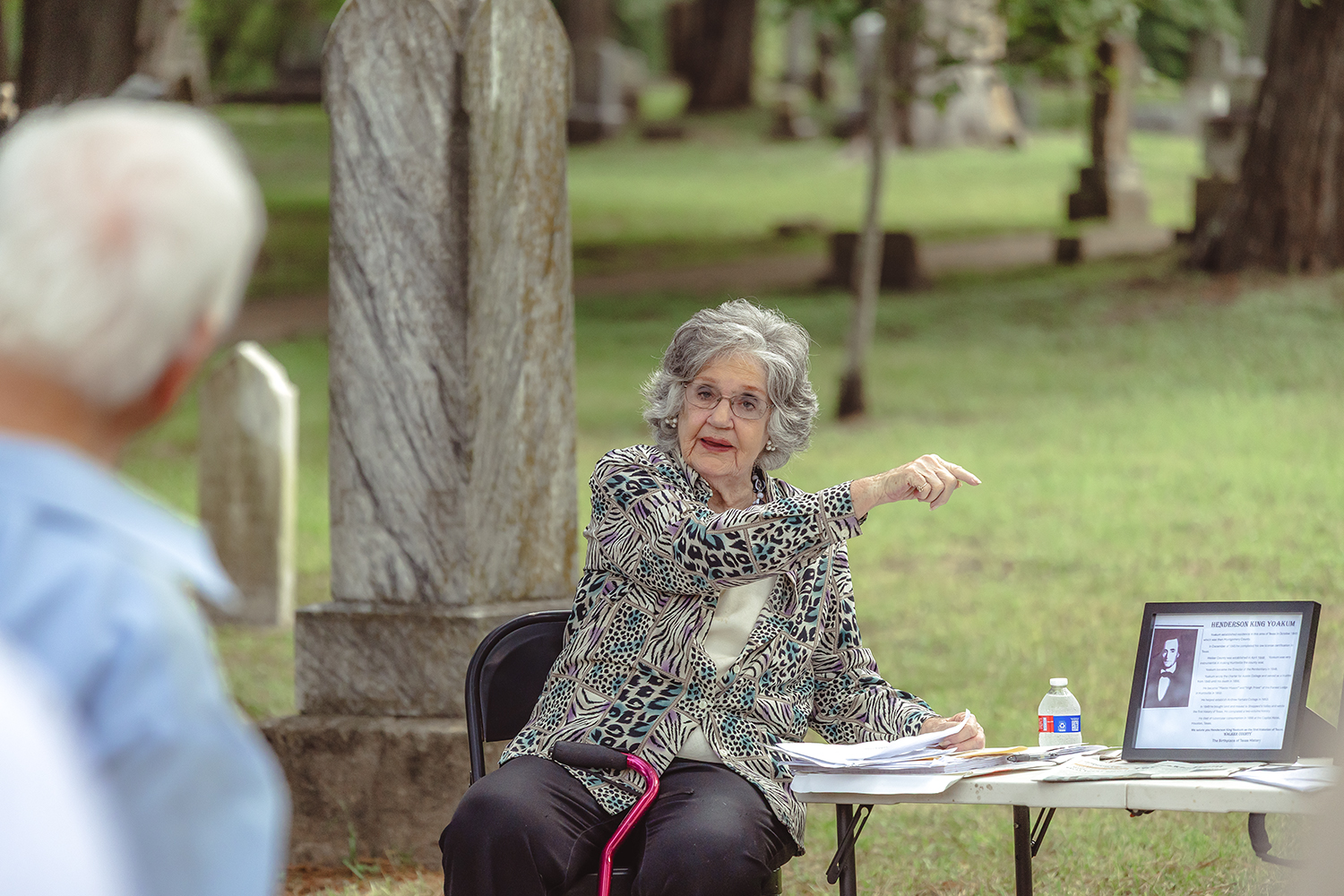
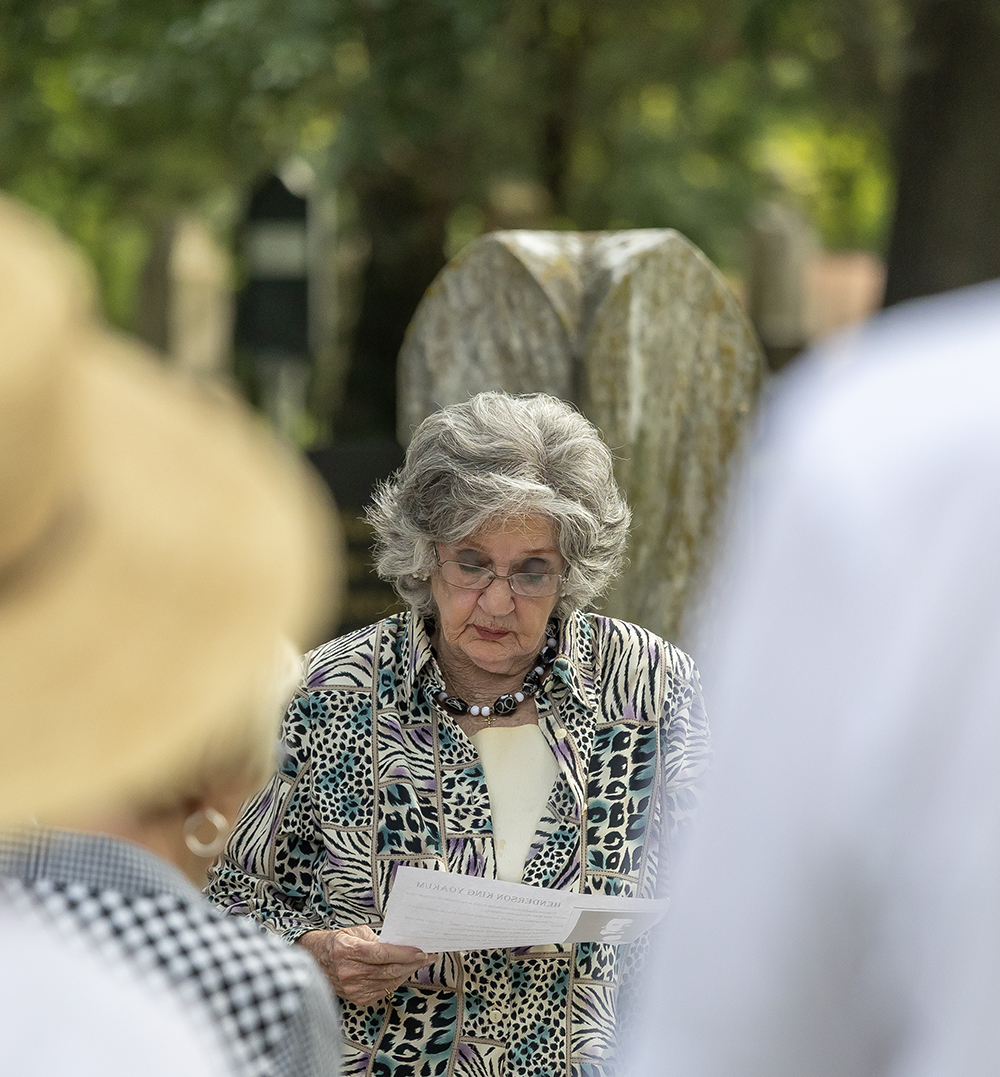
Community leaders help preserve history, and today, members of the Sons of the Republic of Texas, Henderson Yoakum Chapter, gathered at Oakwood Cemetery in Huntsville to honor the birthday and legacy of Henderson Yoakum. The ceremony featured remarks from Tom Rogers of the Walker County Historical Commission, Mac Woodward, a descendant of Yoakum, event organizer Donna Coffen, and historian Dr. Caroline Crimm in front of an audience of 30-40 community members, descendants, and others interested in Texas history.
Born in Tennessee in 1810, Henderson King Yoakum graduated from West Point in 1832 before pursuing law and politics in Murfreesboro, serving as mayor (1837) and in the Tennessee Senate (1839–45), where he advocated for Texas annexation. After relocating to Huntsville, Texas, in 1845, he established his legal career, helped make Huntsville the county seat, served as penitentiary director, and drafted Austin College’s charter, serving as its trustee (1849–56). In 1855, he authored a landmark two‑volume History of Texas covering its first settlement through annexation.
The ceremony went through these accomplishments and others, with Mac Woodward highlighting some of Yoakum’s descendants…
…Dr. Crimm providing a context for Yoakum’s accomplishments and today’s ceremony…
…and Tom Rogers and Donna Coffen illustrating the work done by the Walker County Historical Commission.
The event served as a needed reminder of Henderson Yoakum’s contributions to both local and state history, while also providing a community gathering for those who preserve Huntsville’s rich legacy.
Introduction Our trip through New England and New York was as much a journey through art and history as it was through towns and landscapes. We ended the day in the capitol (Albany) of one of the largest states in the Union, but we began it in the Rockwellian cottage of Stockbridge, MA–the home town of Norman Rockwell.
LEAP Ambassadors at City Hall
Norman Rockwell Museum
By Michelle Moya
For our first stop in Stockbridge, we visited the Norman Rockwell Museum. Before the trip, I had watched a documentary on Rockwell’s life and career, which gave me a deeper appreciation for what we were about to see. It traced his progression from lighthearted Saturday Evening Post covers to later works that confronted civil rights and human rights, and it gave me a better foundation for understanding the galleries.
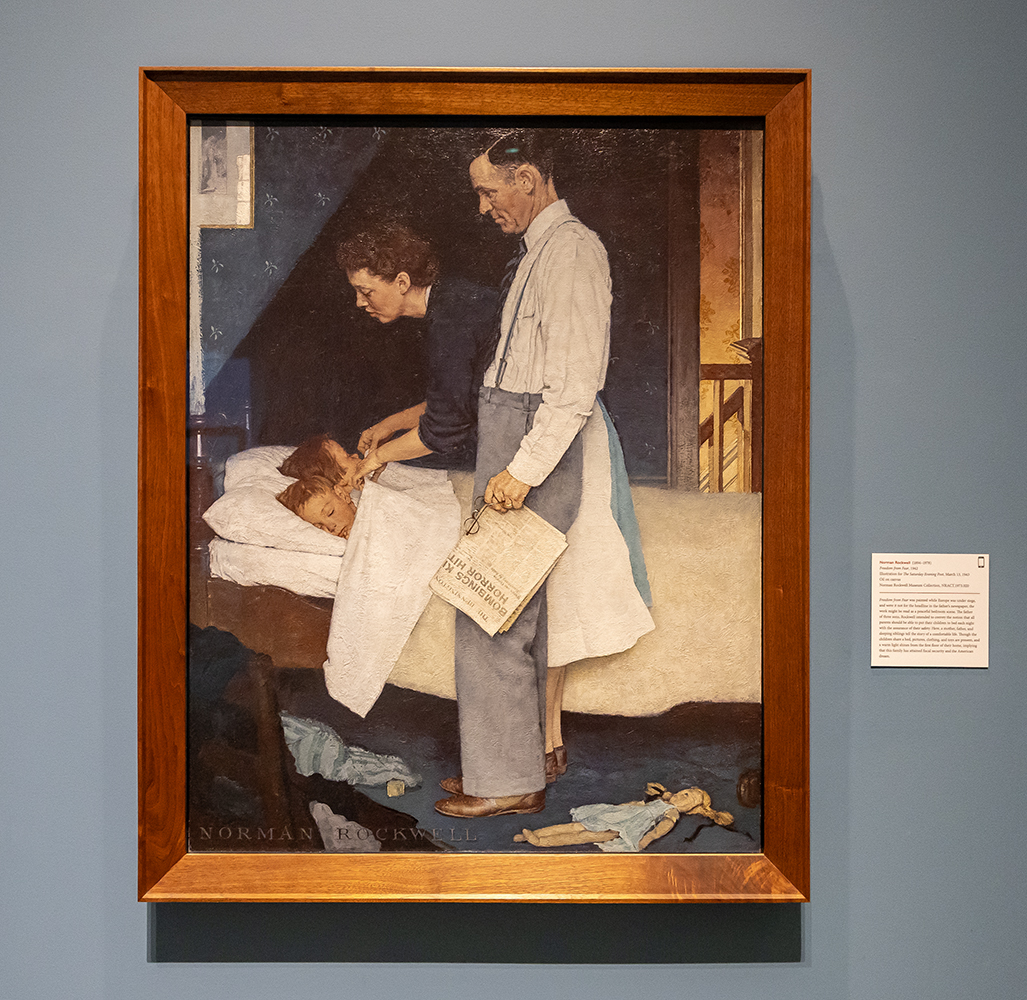
The museum’s collection highlights Rockwell’s most iconic pieces, including the Four Freedoms series. Inspired by Franklin D. Roosevelt’s 1941 speech, these four paintings—Freedom of Speech, Freedom from Want, Freedom to Worship, and Freedom from Fear—remain some of his most recognizable works. Each takes a sweeping political idea and places it in the context of everyday life.
Freedom of Speech shows an ordinary man rising to speak at a town meeting, who appears to have a modest jacket and steady expression. Freedom from Want was Olivia’s favorite: the Thanksgiving turkey at the center of the table, family gathered in warmth and abundance. Freedom to Worship and Freedom from Fear are quieter but equally moving, offering a reminder of how Rockwell could find dignity in ordinary moments.
My own favorite was Main Street, Stockbridge at Christmas, Rockwell’s portrait of his hometown blanketed in snow and glowing with holiday lights. It is a beautiful painting, and as someone who loves Christmas, I couldn’t help but imagine what it would be like to actually visit Stockbridge during the season. It captures Rockwell at his most nostalgic, and it made me want to see the town in person during my favorite holiday.
Some of Rockwell’s later and more serious work also stood out. The Problem We All Live With, sometimes called his “Board of Education” painting, shows six-year-old Ruby Bridges walking to school, escorted by U.S. Marshals. The white wall behind her, scrawled with a racial slur and marked by a thrown tomato, makes the scene even more striking.
There were lighter touches as well. The museum includes some of Rockwell’s early commercial work, such as advertisements for Edison Mazda Lamps published in The Saturday Evening Post. These remind visitors that Rockwell was as much an illustrator as a painter, and that his storytelling instincts carried across everything he created.
A special highlight was the I Spy exhibition by Walter Wick, whose intricate dioramas and search-and-find photographs were a fun, interactive touch for children and adults. The exhibit encouraged visitors to slow down and look closely, much like Rockwell’s paintings.
It was interesting to see how the Norman Rockwell Museum fully captures the range of his career. In one place, you can see the playful, the iconic, and the deeply serious. Between Olivia’s favorite “Freedom from Want” and my own liking to “Main Street, Stockbridge at Christmas,” it was clear how Rockwell continues to connect with people in different ways.
Mass MoCA
by Olivia Discon
Our final (pure) art stop of the trip was Mass MoCA (Massachusetts Museum of Contemporary Art), a museum housed in a former industrial complex that has been repurposed into one of the largest centers for contemporary art in the country.
The building itself is a bit of a maze (ed. note: she got lost), but that only added to the fun of exploring it.
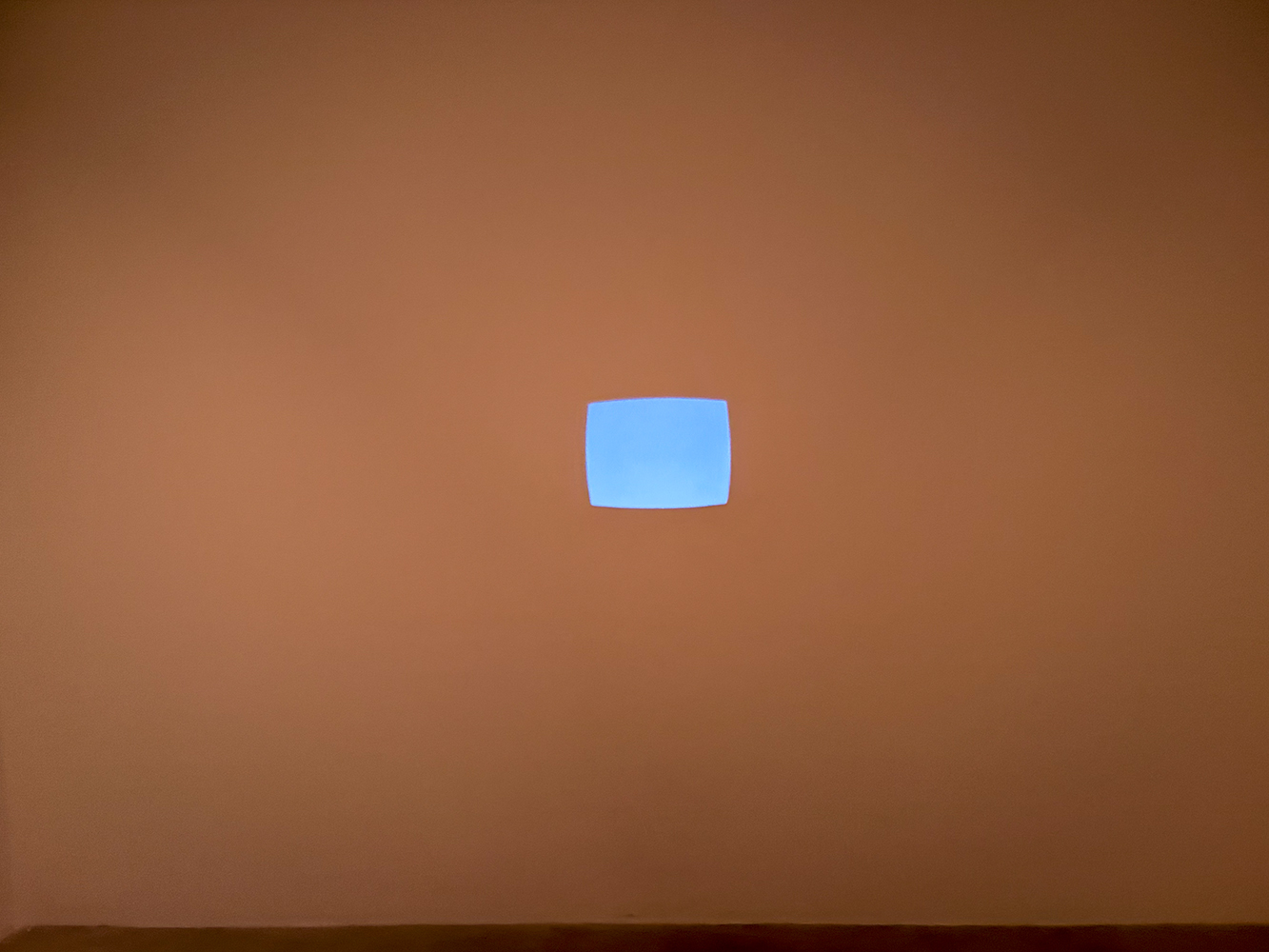
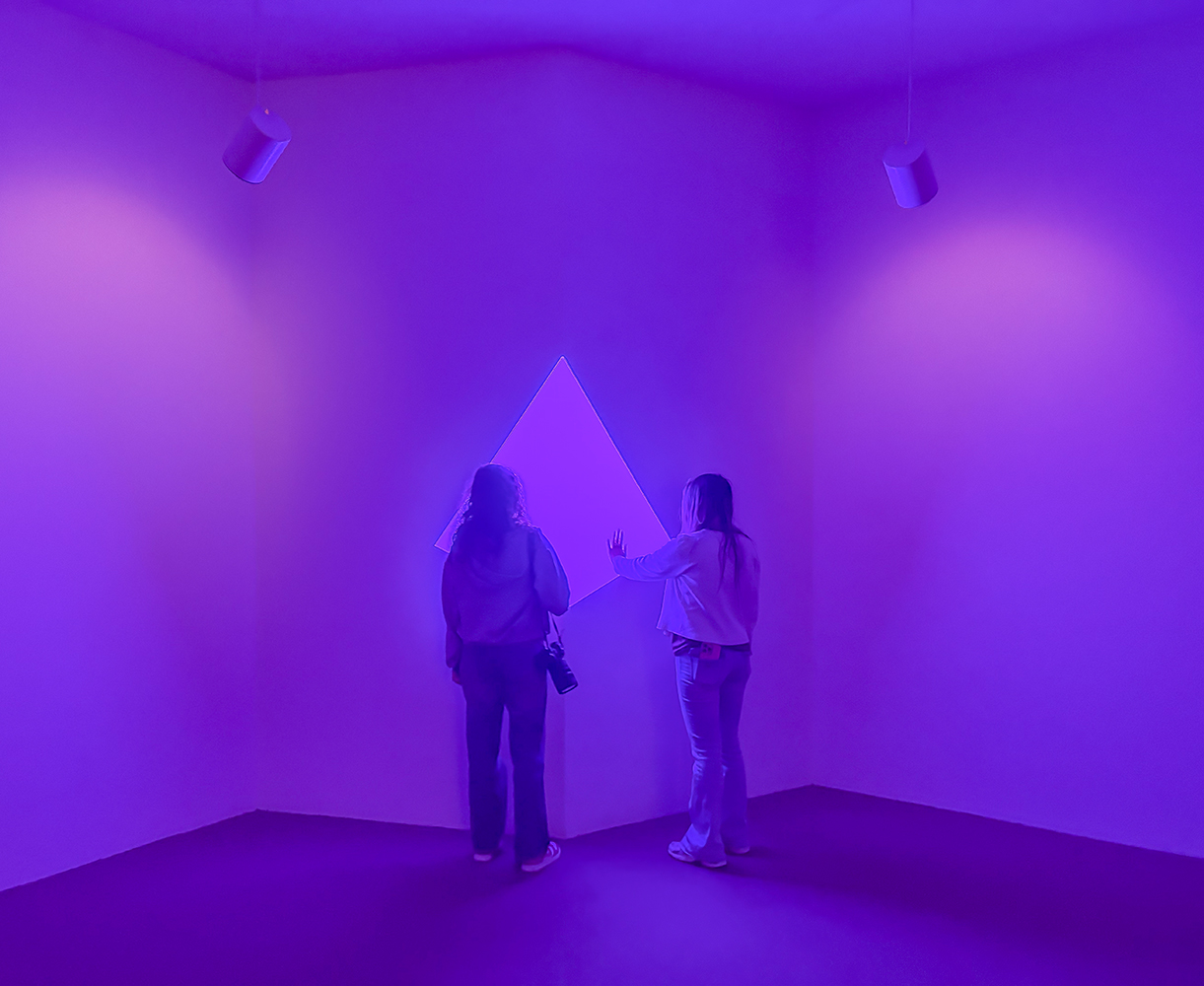
We started with James Turrell’s Roden Crater-inspired exhibit, which featured several surreal experiences centered on light and perception. One room, completely blacked out, challenged visitors to sit in total darkness for 15 minutes. While Professor Yawn and Stephanie lasted the full time, Moya and I called it quits after approximately eight minutes. In the silence, I started to see faint colors—likely just the brain reacting like when you rub your eyes too hard—but still interesting.
Other Turrell works played with color and depth perception.
One installation allowed us to walk into what looked like a glowing square of color—an endless void of pinks, greens, and yellows.
We also stepped into one of his classic Skyspaces, where the ceiling frames the sky in a way that turns shifting clouds and colors into living art.
Beyond Turrell, the museum offered much more. Louise Bourgeois’s exhibit was a highlight for me, especially her piece Entangled, which captured so much emotion through abstract form.
Sol LeWitt’s sprawling wall drawings filled a labyrinthine gallery with bold patterns in both black-and-white and vibrant colors.
We even wandered into a “music room” filled with instruments past their prime—though that didn’t stop us from making enough noise to temporarily damage our own hearing.
Mass MoCA was a perfect way to end the art portion of our trip: immersive, challenging, and just plain fun.
New York State Capitol
by Olivia Discon
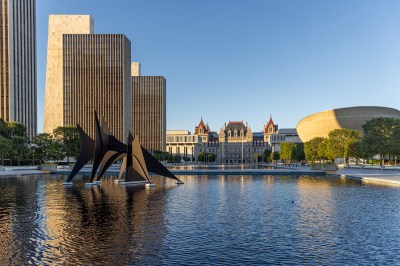
For our final state of the trip, we made our way up to New York. Driving past the Hudson River on the way into Albany felt especially fitting, since the river inspired the Hudson River School painters and many transcendentalist writers, both of which we’ve touched on during this trip.
Our last stop was the New York State Capitol, one of only nine state capitols without a dome. Built over more than three decades and designed by multiple architects, the building makes up for its lack of dome with incredible stonework and elaborate detail. The grand staircase was particularly striking, lit by lamps with exposed bulbs, a symbol of modernity in its time.
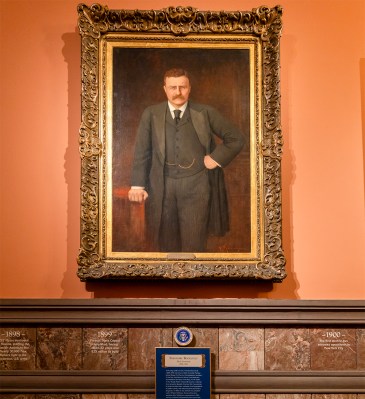
Although the House and Senate chambers were closed, we managed to peek through the glass doors. The stained glass in the Assembly chamber stood out as especially beautiful, making it one of my favorite legislative chambers we’ve seen so far. The Capitol also houses the Hall of Governors, a portrait gallery of past governors—including four who went on to serve as U.S. presidents.
Art is woven throughout the building as well. We saw numerous New York landscapes and scenes…
…along with modern sculptures outside in the Empire State Plaza. Among the recognizable artists were George Rickey, Alexander Calder…
Claes Oldenburg….
…and Ellsworth Kelly.
The New York State Capitol was a wonderful conclusion to our trip. Between the history, the architecture, and the art, it was a reminder of how much one place can tell us about both state and national identity.
Concluding Thoughts
Taken together, the Norman Rockwell Museum, Mass MoCA, and the New York State Capitol highlighted the remarkable range of American creativity and civic expression.
Rockwell’s art reminded us of the power of storytelling in everyday life, while Mass MoCA challenged us to step outside the familiar and embrace new ways of seeing.
The New York State Capitol, with its blend of politics, history, and art, grounded the trip in the institutions that shape public life.
Each stop added its own layer to our journey, leaving us with a deeper appreciation for how art and architecture reflect the spirit of their time—and continue to inspire today.
Every year on the first Monday in September, Americans celebrate Labor Day. While some celebrate with a long weekend of end-of-summer festivities, the Holiday originated as a tribute to the social and economic achievements of our nation’s workers.
The Lions Club and the LEAP Ambassadors celebrate the day by planting flags–early in the morning–across the extended downtown in Huntsville, an activity undertaken on most major holidays.
11th Street, Looking East (6:20am)
For us, it is not only a community-building exercise, but also a way to remind people the meaning behind their day off work.
Michelle Moya Plants the Final Flag
Starting with municipal ordinances in the mid‑1880s and pioneering state laws—Oregon led the way in 1887, followed by states like Colorado, Massachusetts, New Jersey, and New York—more states followed suit. By 1894, 23 states had adopted the holiday—what political scientists call “policy diffusion”—and on June 28 of that year, Congress passed the law making the first Monday in September a national holiday.
Lion Liesa Hackett Distributes Flags to Runners
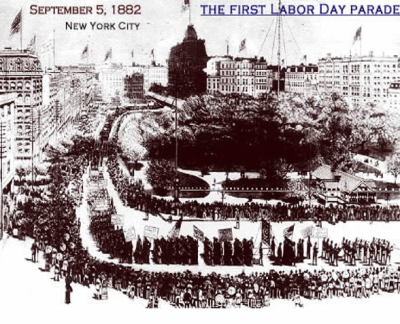
There’s a rivalry of sorts over who first proposed the idea—Peter J. McGuire (a noted labor leader) suggested a “general holiday for the laboring classes,” while others credit Matthew Maguire, secretary of a local union, with proposing the concept in the same year. Regardless, it was the Central Labor Union in New York City that organized the first Labor Day parade, held on September 5, 1882, setting the celebratory template of processions, picnics, and public speeches.
Over time, Labor Day has evolved into an annual celebration of American labor or, at least, a day free from labor. For the Lions Club—and by extension, the LEAP Ambassadors—it’s also a way to build stronger communities and remind people the meaning behind the holiday.
Lions and LEAP Ambassadors/Students
The LEAP Center thanks the Lions Club for permitting them to assist with the Flag Project.
The LEAP Center is known for its interdisciplinary adventures, and today was no different, as we visited another state capitol, the estate of literary lion, and a Guatemalan restaurant–in Hartford, CT, no less!
Connecticut State House
Nestled in the 41-acre Bushnell Memorial Park in Hartford, the Connecticut State Capitol first welcomed the General Assembly in January 1879 after eight years of planning and construction. A commission formed in 1871 selected architect Richard M. Upjohn, whose father also worked on the Boston Commons, providing us with generational and geographical continuity, even as we visit different sites built in different locations.
James G. Batterson supervised construction, and he significantly altered Upjohn’s design. Using marble and granite from New England, he built a beautiful sculpture that prompted the New York Times to note, that in the sun, the building “sparkled like a fairy palace of frost work.”
It didn’t sparkle on the day we visited; it rained, which also discouraged us from getting a shot of the exterior, but the LEAP Ambassadors of 2018 took a photo on a similar trip.
The building features a gold-leaf dome, and the structure is sometimes referred to as “high Victorian” and sometimes as “Eastlake,” a confusion caused, in part, by the competing visions of the architect and construction supervisor.
Both the exterior and interior feature emblems of the state’s past. One of the more interesting of these is the Charter Oak. Connecticut had a royal charter that largely gave it control over its own governance, but this was threatened in the late 1600s, when King James II tried to revoke the Charter and exert more control. When the King’s men tried to take the Charter, the colonists–Captain Joseph Wadsworth, in particular–took the document and hid it in a white oak tree, which is, not surprisingly, the state tree.
That tree became known as the Charter Oak, and although a storm toppled the tree in 1856, the wood was used to create other items, some of which can be found in the capitol. Its image is also featured on the state’s quarter and on a stamp.
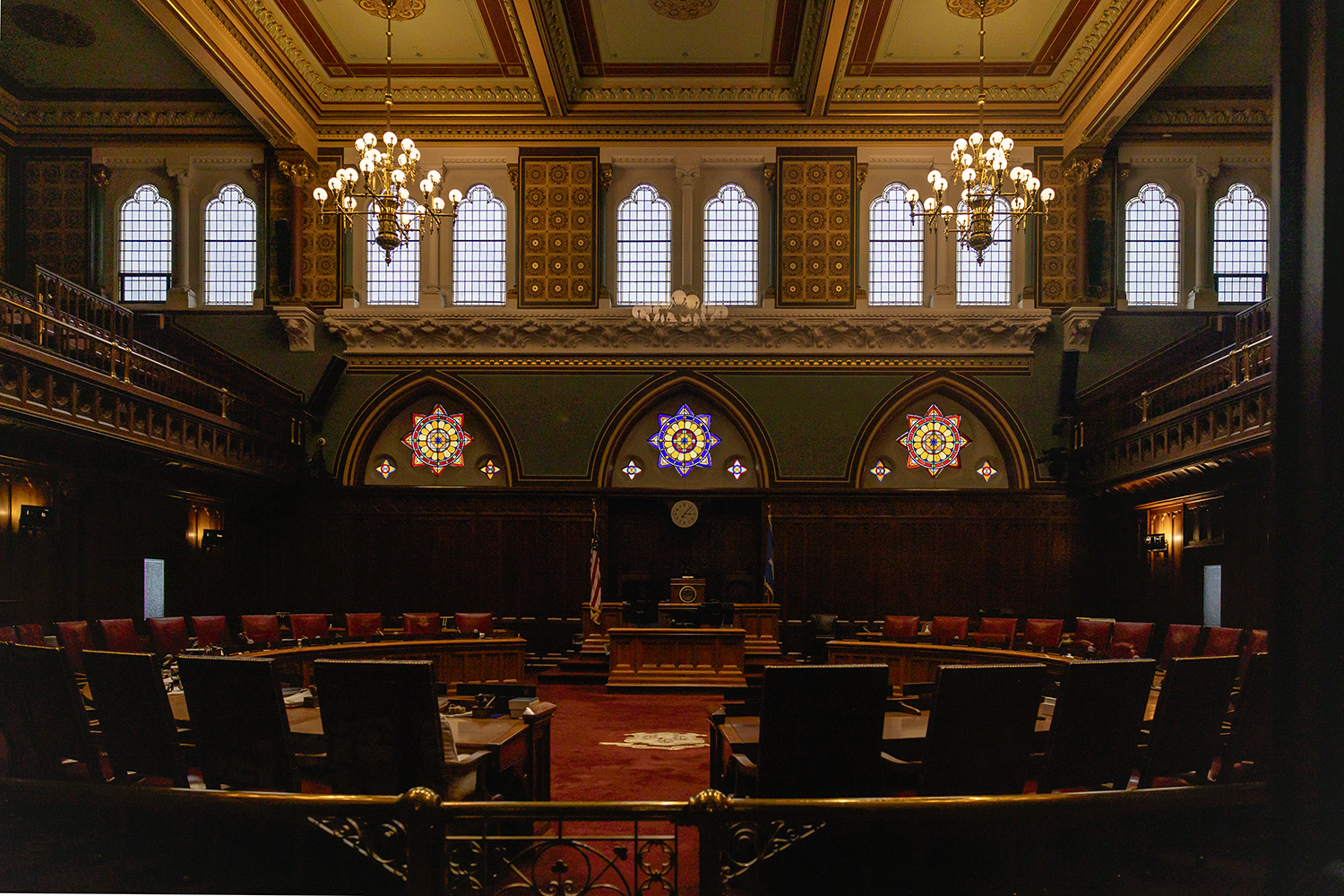
Of course, the Capitol also houses both legislative chambers—the State Senate Chamber and the Hall of the House of Representatives—as well as offices for the Governor, Lieutenant Governor, and Secretary of the State.
It also houses “The Genius of Connecticut,” a 17 foot, 10 inch statue created by Randolph Rogers. The winged figure holds immortalis in her right hand; a mountain laurel (the state flower) in her right; and her head is wreathed in leaves from the white oak.
Formerly, “The Genius of Connecticut” was perched atop the capitol, but she was removed following a hurricane. The statue was melted to make ammunition during World War II. Fortunately, however, the original plaster model was found, and in 2009, a replica of the original was returned to the capitol, albeit in the rotunda rather than in the cupola/dome.
Aurora’s Restaurant
Texans believe that eating Latino cuisine outside of a border state is questionable at best and potentially dangerous. But we are not faint of heart, and we know that immigrants who know food are not limited in where they settle, so we happily braved the rain to visit Aurora’s Restaurant, which serves Guatemalan food, in Hartford, Connecticut.
The staff were welcoming and courteous. They spoke Spanish when not speaking to us, adding to what would prove to be a rewarding an authentic culinary experience.
We sampled a variety of dishes, including the Burrito Bowl, Tortillas con Chorizo, an Aurora Bowl, and plantains–the latter drizzled with crema and topped with queso fresca. All of the dishes were excellent, but the plantains were among the best we had ever had.
We left with full stomachs, and also ever more aware that, to paraphrase Mark Twain, travel is fatal to preconceptions.
Mark Twain House
by Olivia Discon
Samuel Clemens—better known as Mark Twain—was one of America’s most influential authors and storytellers. His works such The Adventures of Huckleberry Finn and Life on the Mississippi are classics. But while his writing is widely known, fewer people know about the man himself, the life he led, or his stunning Victorian home in Hartford, Connecticut.
We weren’t allowed to take photos inside, but our tour guide, Josh, brought the house to life with vivid stories. The home has had many lives—at one point an apartment building, later a school, and even a library—before being restored as a museum. Over time, renovations stripped away original touches, including designs by Louis Comfort Tiffany (which, to my dismay, were once considered unfashionable). Thankfully, the museum has worked to restore the home as closely as possible to how it looked when the Clemens family lived there, guided in part by the memories of their daughter, Clara.
The library was the most charming room. Its mantelpiece, a hand-carved work from Ireland, is extravagant. Whimsical portraits—a cat, a rabbit, and a woman in blue affectionately named Eveline by the Clemens daughters–hung on the walls. Each night, Twain would spin bedtime stories using these characters. If he ever repeated a storyline, his daughters would call him out, forcing him to start fresh. According to Josh, Twain may have done this intentionally just to test whether they were paying attention. The library also included a small conservatory filled with greenery, along with a decorative frog—a playful nod to Twain’s famous short story, The Celebrated Jumping Frog of Calaveras County.
We also visited Twain’s office, which doubled as his billiard room. It was here that he wrote, smoked cigars, played pool, and paced while working through drafts. A shelf of cubbies held his unfinished manuscripts—something I secretly envied.
The house also carries the weight of the family’s tragedies. Their daughter Susy died of meningitis in the home at just 24 years old. And, owing to financial difficulties, the family eventually had to sell the home, much to Twain’s chagrin.
Even with its history of sorrow, Twain often described the Hartford house as the setting for some of the happiest years of his life. It was, he noted, “the loveliest home that ever was.” Walking through its cozy, richly detailed rooms, we found ourselves understanding that sentiment.
Photo Ops
Following our day in Hartford, we headed north, toward Stockbridge, MA, preparing ourselves for another full day tomorrow. But along the way, we stopped to see Herman Melville’s home, “Arrowhead”…
Herman Mellville’s “Arrowhead,” (Photo by Daderot)
…and “The Mount,” the home of Edith Wharton.
Edit Wharton’s “The Mount” (Photo by David Dashiell)
Concluding Thoughts
It’s difficult to organize disparate adventures into a memorable and cohesive learning experience. But through some preparation, a desire for new experiences, and an open mind, we managed to see quite a lot and assimilate almost as much. A beautiful state capitol designed by Richard M. Upjohn, a great Guatemalan restaurant in the heart of Hartford, and the “loveliest home that ever was” by the quintessential American author–all in the day of LEAP Ambassador.
Having already learned a lot at the conference and on our own, we were ready for another day of educational excursions and events. Today’s itinerary included a plenary luncheon focused on challenges associated with the availability of primary care physicians, a site visit concerning education and workforce development, and a state dinner.
Primary Care Shortagesand Challenges
by Olivia Discon
Over a lunch of fish, rice, and broccoli—quite healthy (well, mostly), might I add!—we enjoyed some good company, a brief award ceremony, and a rich educational opportunity to learn about medical care in the 21st century.
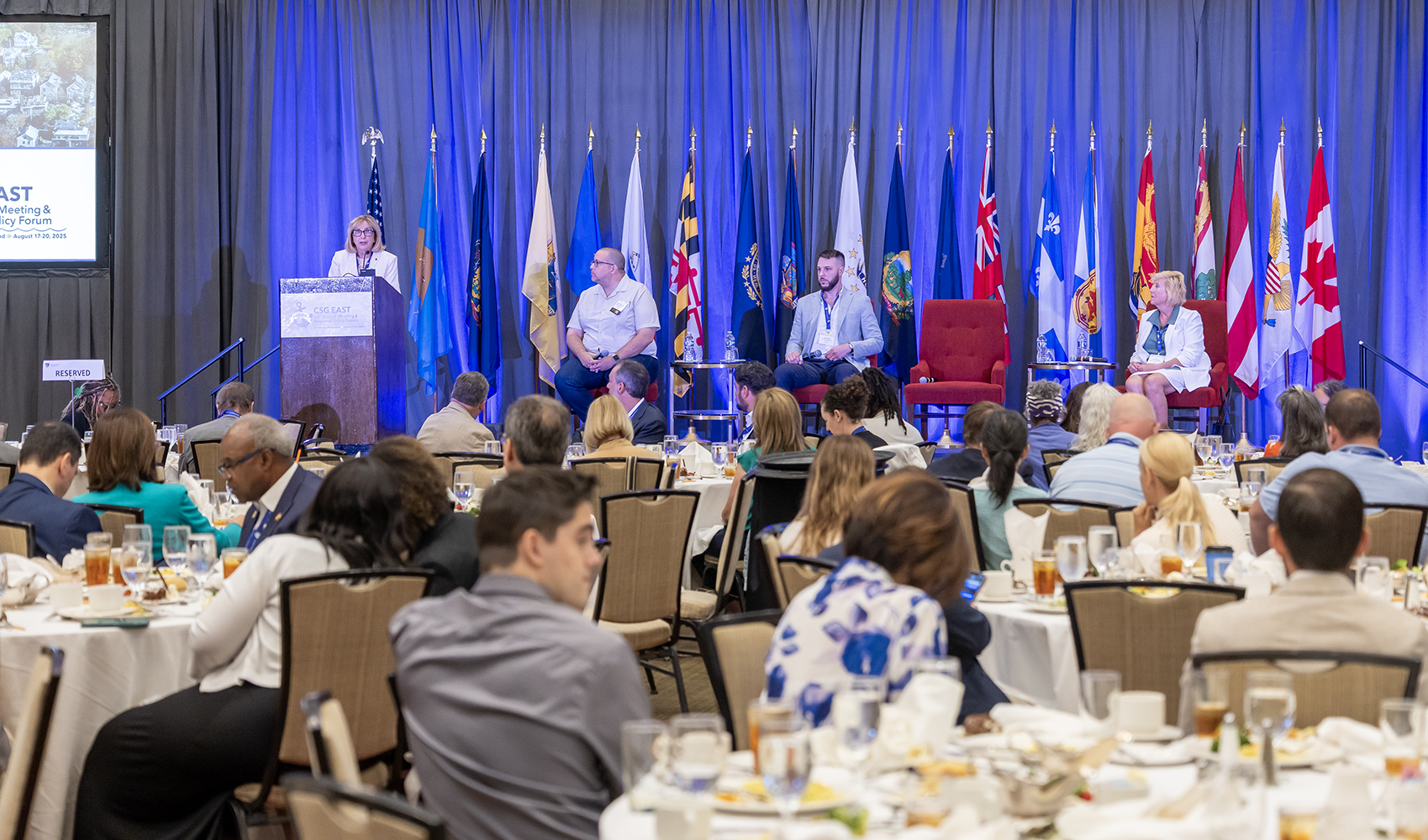
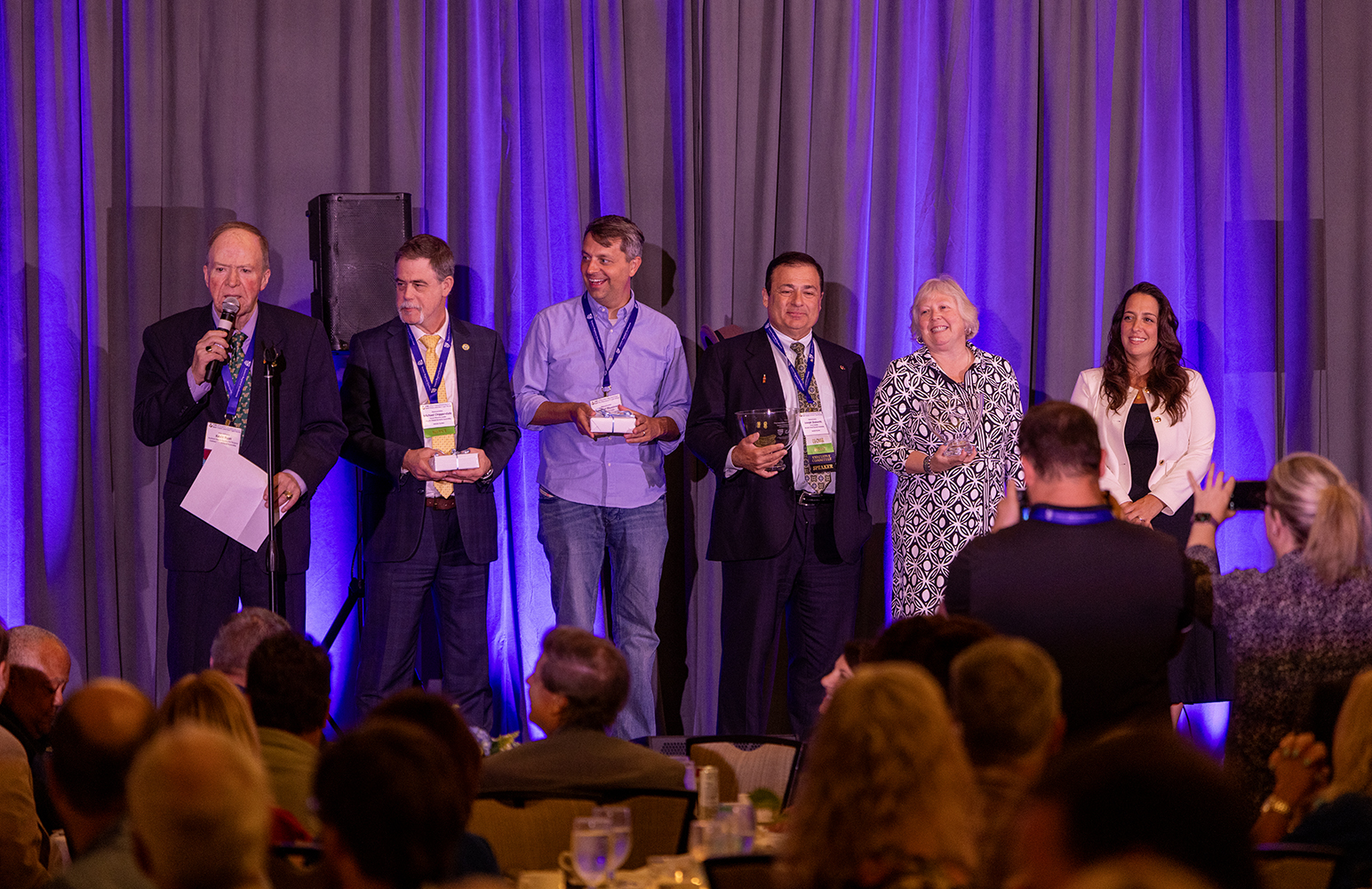
To begin, we were happy for Rep. Kevin Ryan of Montville, NJ, who received the W. Paul White State and Regional Leadership Award.
we enjoyed hearing from Senator Gustavo Rivera of New York, chair of the CSG East Health Policy Committee, who discussed the suboptimal supply of primary care physicians.
Just a generation ago, a primary care physician was a trusted source of care and advice. Today, however, many cities struggle with finding doctors who will accept sufficient numbers of insurance patients to make a real difference in their communities.
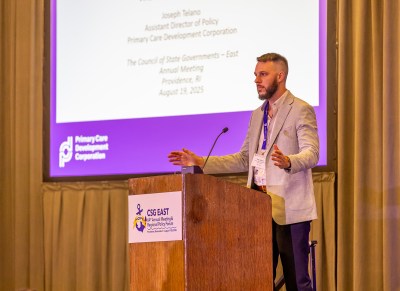
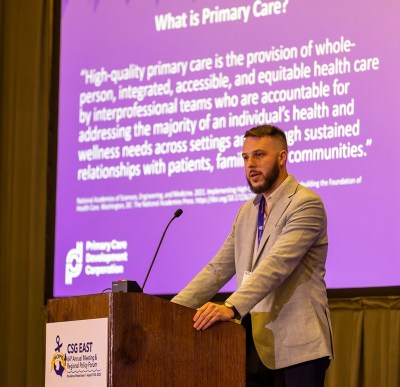
The keynote speaker, Joe Telano, senior policy manager at the Primary Care Development Corporation, laid out the problem.
The existence of quality primary care physicians in communities has been demonstrated to lengthen lives, but not enough communities have access to those physicians. In turn, this creates greater stress on specialized medicine, as patients are delayed in having serious issues diagnosed and referred. Moreover, the lack of primary care physicians adds to community health problems: increased likelihood of pandemics, more suffering from chronic diseases (e.g., diabetes), and even more gun violence.
Currently, only about 5-7 percent of health care expenditures go toward primary care, and a greater investment, according to Telano, is needed. Of course, this is only one part of a comprehensive plan. Other needed changes include: insurance regulations, grants for low-income communities, and a broader perspective of what constitutes “public health.”
Interestingly, part of this expanded view of public health could include education and workforce development…
Building Futures: Apprenticeship and Workforce Development
By Michelle Moya
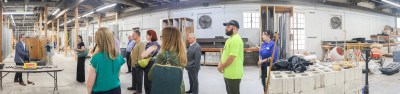
One of the conference highlights was the site visit for our Education and Workforce Development session, which a tour of Building Futures, Rhode Island’s premier pre-apprenticeship program. Olivia and I were joined by a diverse group of senators and representatives from across the country for what would become one of my favorite sessions.
Our visit began in the hands-on training space, where we witnessed day two of a five-week intensive course. The tour was led by Andrew Cortez, president of Building Futures and a former apprentice himself, who shared insight into what the program is and what makes it effective.
Building Futures connects community residents to registered apprenticeship opportunities in the building trades. The program has a dual mission: preparing individuals for apprenticeships through training and readiness while also partnering with project owners to require apprentice participation in construction. This two-pronged approach ensures both workforce preparation and job placement.
Cortez emphasized that success in the trades depends on three essentials: showing up every day on time, working hard, and applying yourself to learn. Technical skills matter, but they rest on these fundamental values of reliability, perseverance, and a willingness to grow. As a student, I found this surprisingly inspiring. It reminded me that success in any field—whether in school or in a career—often comes down to those same habits. Technical skills can be taught, but without consistency and the right attitude, it’s hard to succeed anywhere.
From the active training floor, we transitioned to a classroom setting where our group of legislators and workforce development professionals gathered around tables for a deeper conversation about the program. A highlight of our roundtable was learning about recent legislation that allows apprenticeship pathways to count toward college credit in Rhode Island. Senator Hanna Gallo, who helped lead this effort, joined us for the discussion, along with Matt Weldon, Director of the Department of Labor and Training.
The program’s impact became tangible through the graduates who shared their stories with us. Vennicia Kingston, who transitioned from banking to carpentry, now owns Eagle Eye Construction Services and employs multiple Building Futures alumni—a great example of how networking creates a cycle of opportunity. Another graduate shared how, just months after incarceration, he not only completed his apprenticeship but also bought his first home and eventually built his own million-dollar construction company.
These transformations illustrate what Cortez stressed throughout our visit: the most valuable skills are consistency, work ethic, and a learning mindset. This philosophy mirrors the character development emphasized in LEAP, where academic and career success are built on the foundation of personal responsibility and values.
As we concluded our tour and roundtable discussion, one lesson stood out clearly: good students and successful professionals are people who show up, work hard, and embrace continuous learning. This blend of character and skill creates pathways to both personal transformation and economic opportunity—lessons we will carry forward as we pursue our future goals.
State Dinner
by Olivia Discon
The conference concluded with the State Dinner, the most formal event of the conference, where we dined with some of the event organizers, an event photographer, as well as some fellow southerners. Senator Walter Michel–whom we had lunch with–and his wife, Laura, joined us for a nice meal and delightful conversation.
We also had a chance to see the host committee, who spent years planning for this event, be recognized.
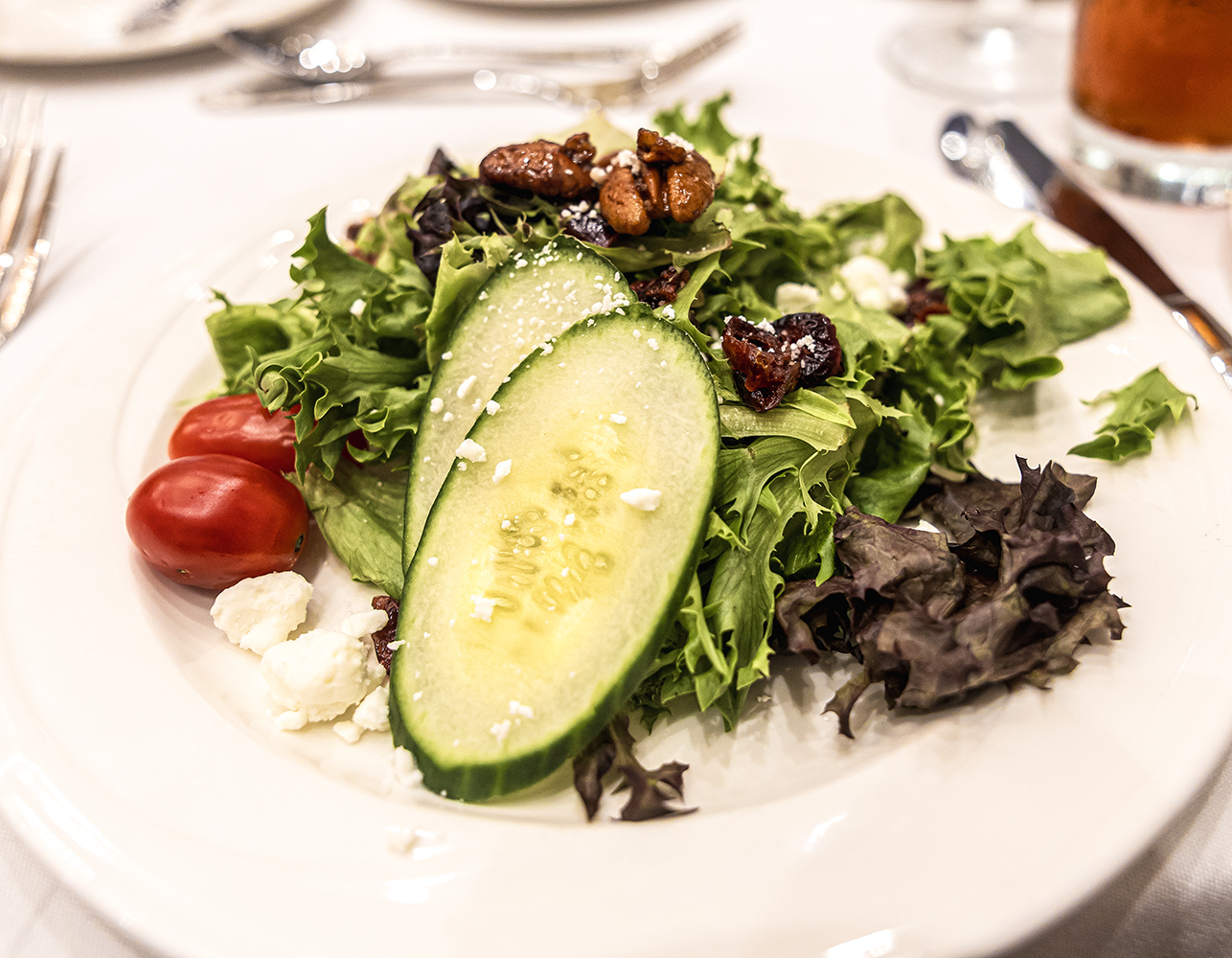
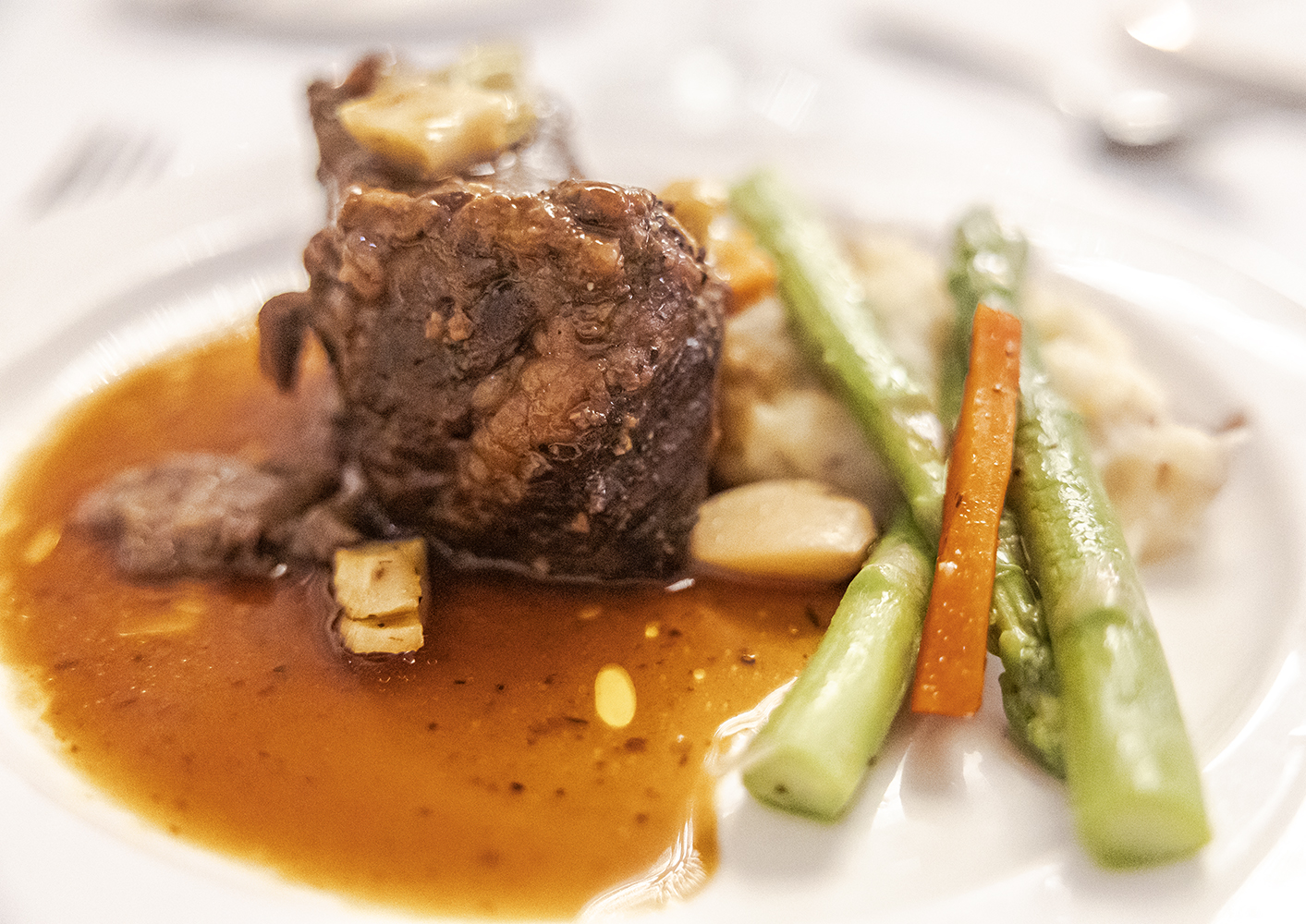
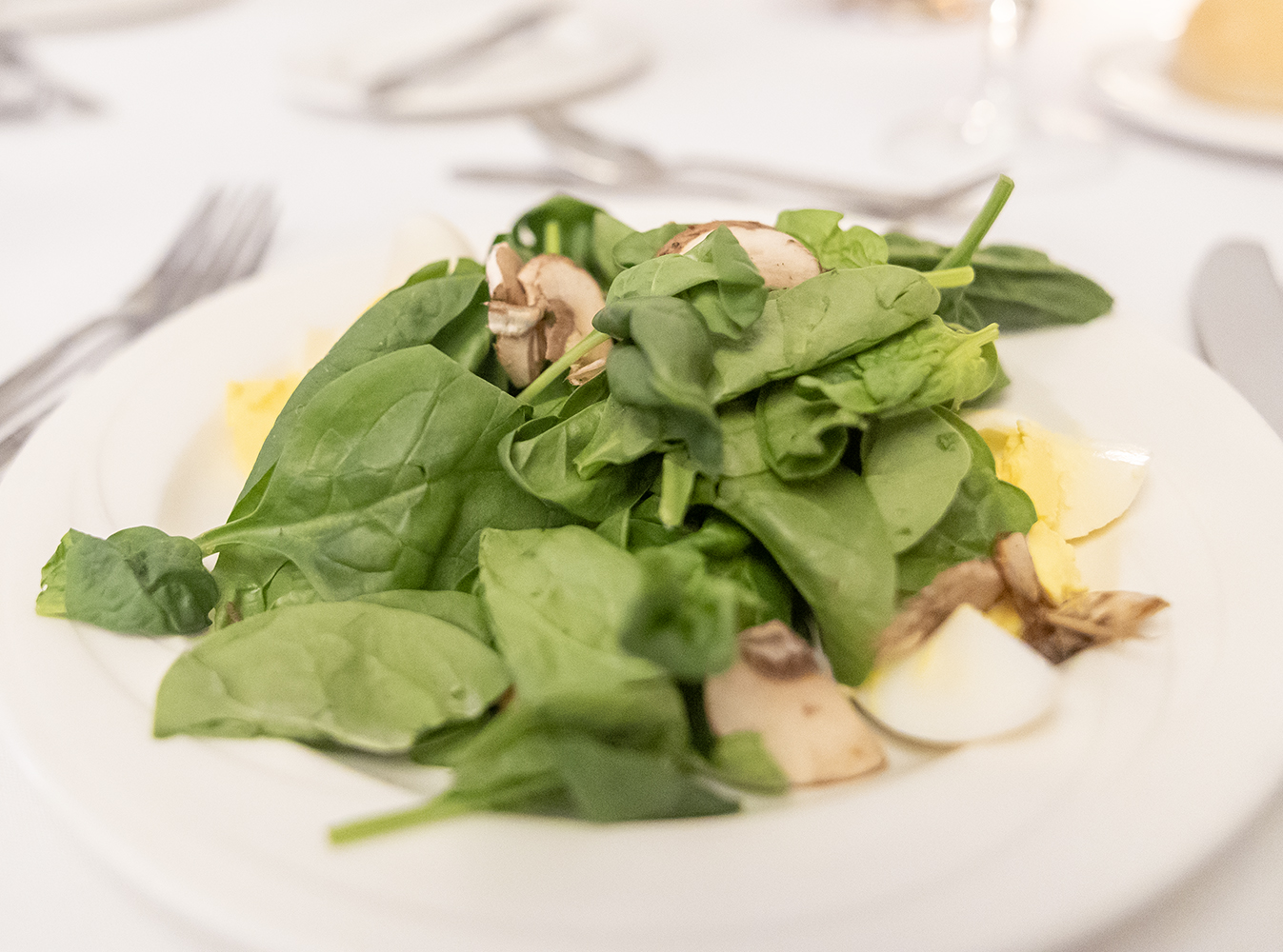
The main event, however, was the meal, which featured a three-course meal including a beef entrée, asparagus, and potatoes as its main course, along with a salad and a scrumptious dessert (Chocolate Mousse).
In the background wafted the swing beat of Sinatra tunes, performed by Michael Dutra: “Simply Sinatra.”
We shared stories about our visits to waterfalls in North Carolina, where one of the event organizers is from, to challenges faced by the Mississippi Legislature, to the decreasing importance of ISO in modern cameras. It was a wonderful way to cap our evening programs at the Council of State Governments–East.









































 Center for Law, Engagement, and Politics
,_Pittsfield,_Massachusetts.JPG)